
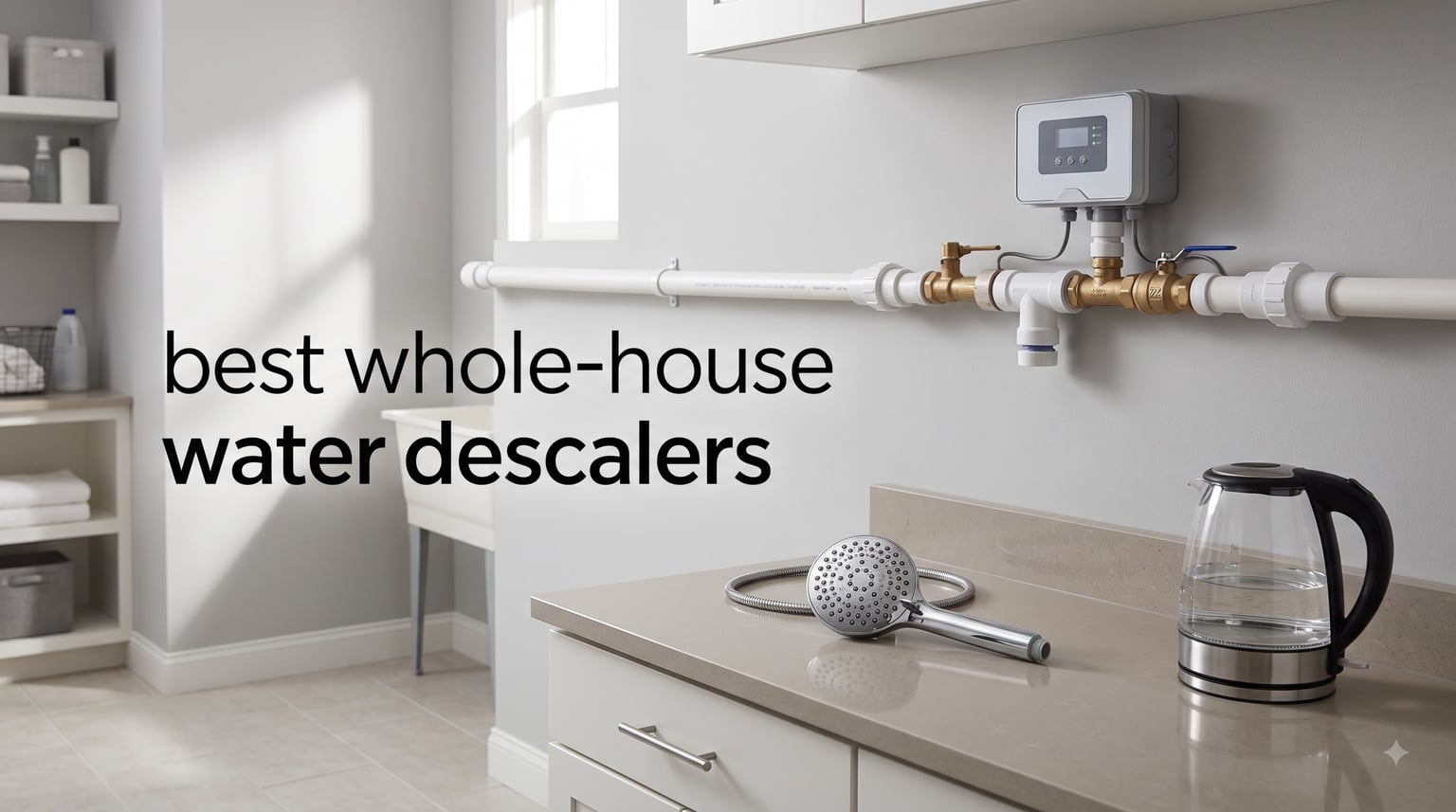
White crust on the showerhead, flakes in the kettle, a water heater that seems a little weaker every winter — that is hard water quietly shortening the life of everything it touches. If you have been searching for the best whole-house water descalers, you already know the pain: scale in pipes, spotted dishes, and heating elements working overtime. What you may not know is that you do not need a salt-based softener, brine tank, or monthly salt deliveries to fight it.
A whole-house water descaler is a treatment system that changes the structure of calcium and magnesium minerals so they stay suspended in the water instead of crystallizing onto pipes, heating elements, and appliances. Unlike a salt-based softener, it does not remove those minerals, so there is nothing to refill, backwash, or regenerate. The result is scale protection without the maintenance routine, the electricity draw, or the salt discharge into the drain.
Our team compared eight descalers across three different technologies — electronic impulse units, catalytic media tanks, and inline alloy systems. We tracked how each one handles different hardness levels, flow rates, pipe sizes, and water sources, including well water. We also dug through hundreds of owner reviews and forum threads on r/WaterTreatment and r/HomeImprovement, because descaler performance claims and real-world results do not always line up.
Below you will find our top three picks, a full comparison table, hands-on reviews of all eight systems, and a buying guide that explains how to match a descaler to your hardness level and plumbing. We will also settle the descaler-versus-softener question that confuses almost every shopper at this stage.
Table of Contents
Top 3 Picks for the Best Whole-House Water Descalers
These three cover the three situations we see most often: a whole-home media tank that treats every fixture, a proven electronic unit for renters and tight budgets, and a compact inline alloy unit that protects a water heater or boiler. Here is where we would start.
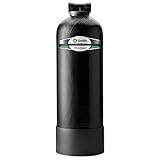
A.O. Smith AO-WH-DSCLR Salt-Free Descaler
- 600K gallon or 6-year capacity
- City and well water
- 7 GPM flow rate

iSpring ED2000 Electronic Descaler
- No salt or chemicals
- Works up to 1.5 inch pipes
- Lifetime tech support

Timilge Electronic Water Descaler
- No pipe cutting
- Fits all pipe types
- Salt-free and chemical-free
The A.O. Smith is our editor’s choice because it is the only pick that conditions every gallon entering the house with zero electricity and zero upkeep for six years. The iSpring ED2000 is the value pick for apartments, condos, and anyone who cannot cut into plumbing. The Timilge earns the budget slot by doing the same electronic job as pricier units at a fraction of the cost — as long as your iron levels are low.
Best Whole-House Water Descalers in 2026
Here is the full lineup side by side. Every system below is salt-free, and each one takes a different route to scale prevention, so the right choice depends less on price and more on your hardness level, pipe diameter, and water source.
| Product | Specifications | Action |
|---|---|---|
| A.O. Smith AO-WH-DSCLR |
|
Check Latest Price |
| iSpring ED2000 |
|
Check Latest Price |
 briskspring Inline Descaler briskspring Inline Descaler |
|
Check Latest Price |
 iSpring EDV2 iSpring EDV2 |
|
Check Latest Price |
 WaterBoss WB-WH-DSCLR WaterBoss WB-WH-DSCLR |
|
Check Latest Price |
 YARNA CWD24 YARNA CWD24 |
|
Check Latest Price |
 Eddy Water Descaler Eddy Water Descaler |
|
Check Latest Price |
| Timilge Electronic Descaler |
|
Check Latest Price |
Two quick orientation notes before the reviews. Media-based tanks (A.O. Smith, WaterBoss) physically treat the water as it flows through, so performance does not depend on your water chemistry. Electronic and alloy units (everything else in the table) alter mineral behavior instead, which makes installation far easier but results more dependent on hardness and iron content.
1. A.O. Smith AO-WH-DSCLR — Best Whole-House Water Descaler Overall
A. O. Smith Whole House Salt-Free Scale Control | 600K Gal | AO-WH-DSCLR
Scale control media
600K gal or 6-yr life
7 GPM
City and well water
Pros
- Salt-free and chemical-free scale prevention
- No cleaning
- backwashing
- salt or electricity needed
- 6-year or 600
- 000 gallon capacity
- Works with both well and city water
Cons
- Requires cutting into the main water line
- Heavier than electronic units at 12 pounds
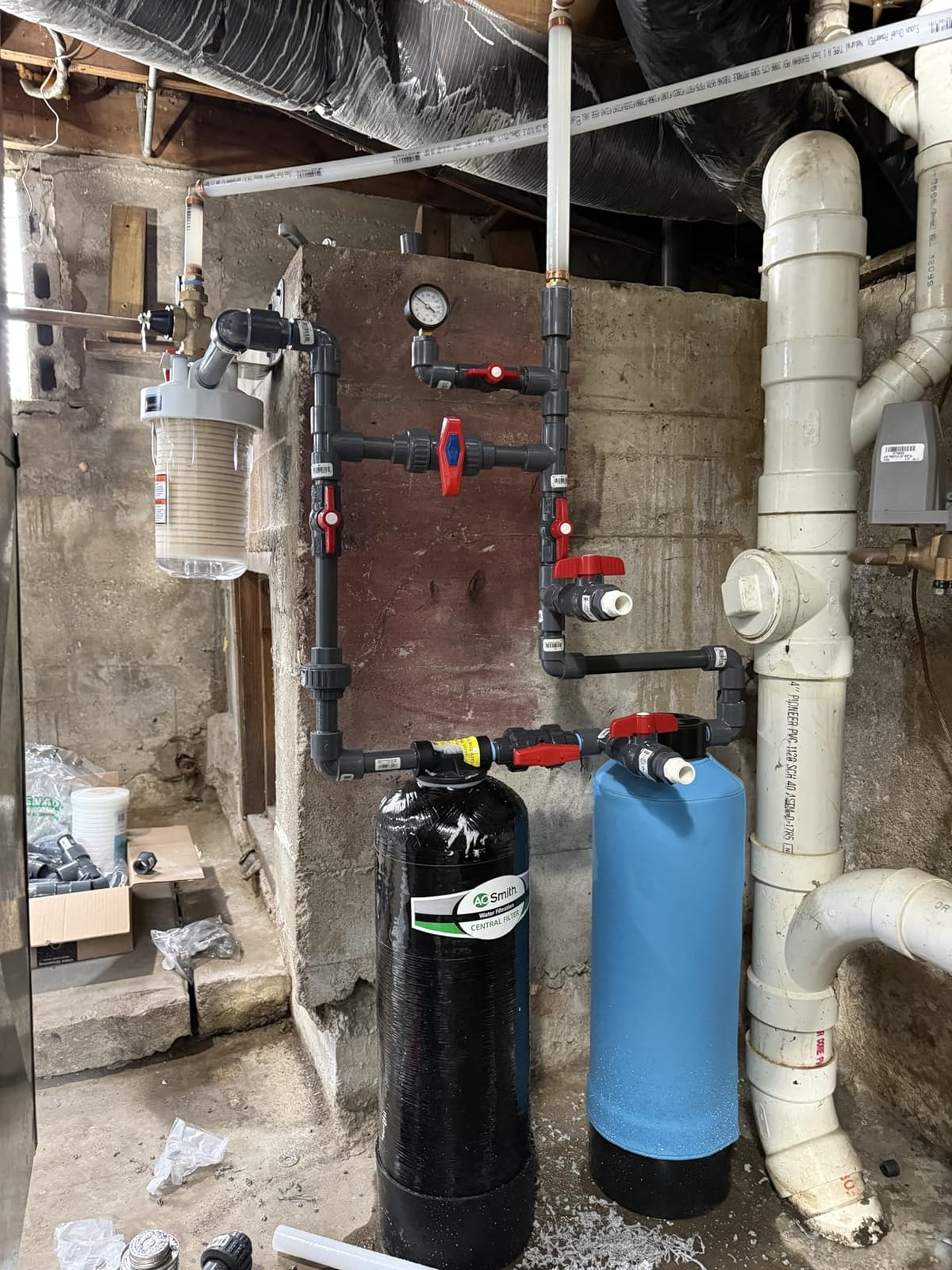
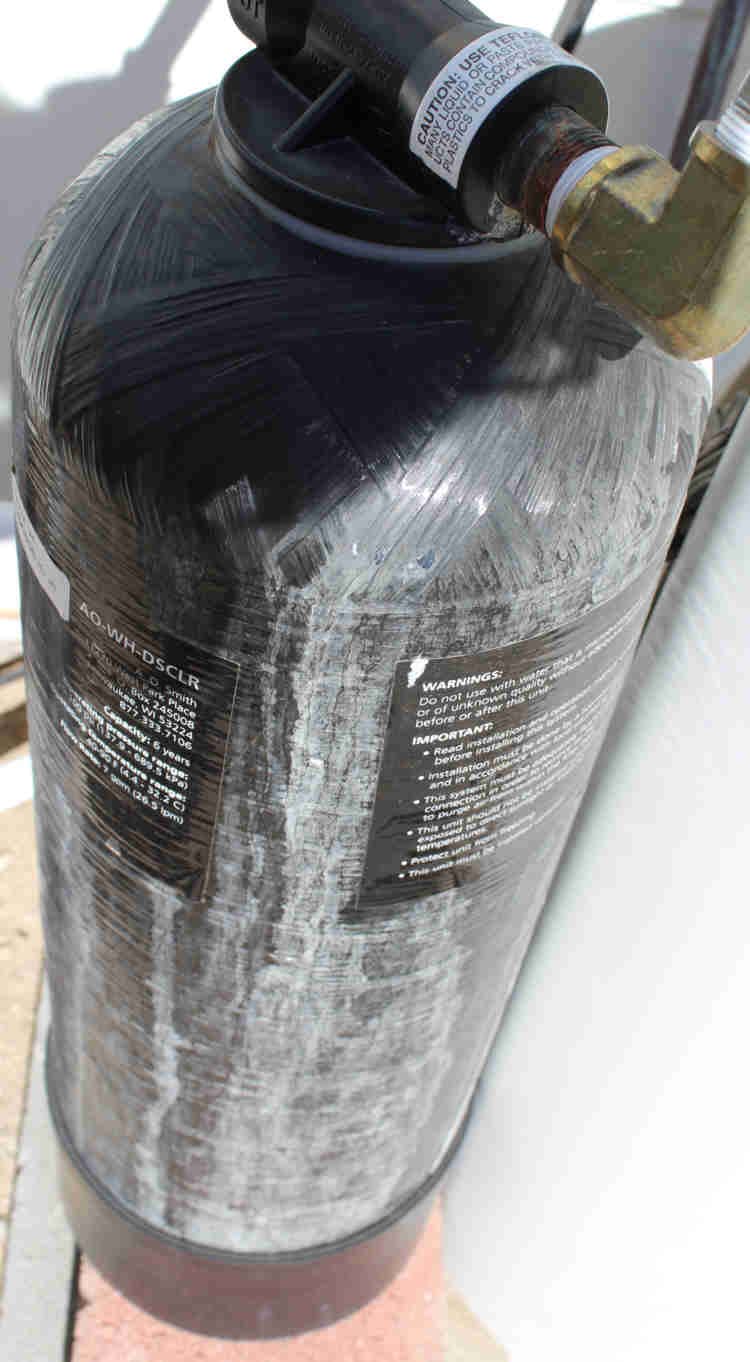
I installed the A.O. Smith AO-WH-DSCLR on a 3/4 inch main line, and it is the closest thing to a fit-and-forget answer I have found among the best whole-house water descalers. The 30-inch tank sits inline after the shutoff valve, and from the moment it was commissioned, nothing about the daily routine changed. No salt bags, no control head to program, no regeneration noise at 2 a.m.
The scale control media inside works by transforming dissolved calcium into a non-adhering crystal form. Over the first month, I noticed the shower glass rinsing cleaner and the kettle collecting far less fuzz at the bottom. Existing scale on the bathroom faucet slowly softened and wore away with a cloth instead of a chisel.
Technically, the unit is rated for 600,000 gallons or six years of use, whichever comes first. For a family of four using roughly 80 to 100 gallons per person per day, that lands almost exactly on the six-year mark before the media needs replacing. The 7 GPM maximum flow rate is adequate for typical two-bathroom homes, though a household running three showers plus a laundry load at once may feel the ceiling.
A.O. Smith rates it for both city and well water, which is rarer than it should be in this category. The 4.3-star average across 1,933 reviews is the strongest balance of score and sample size in this lineup, and owners consistently cite the zero-maintenance operation. The trade-offs are real: you are cutting into the main line, so this is a Saturday project with a shark-bite fitting kit or a quick call to a plumber.
Is the A.O. Smith Right for Your Hardness Level and Water Source?
This unit suits households in the moderate hardness range, roughly 5 to 15 grains per gallon, where scale control rather than softening is the goal. If your test strip reads in that band and you are on municipal water, it is the safest pick on this list. Well-water users get the same scale protection but should still pre-filter sediment, which forum drillers and r/WaterTreatment regulars recommend for any whole-house system.
If your water is extremely hard — north of 20 grains per gallon — a descaler alone will not give you the slippery, fully softened feel, and lather will still fall short. In that case, pair this with a softener or accept that you are protecting plumbing rather than changing how water feels.
What Installation and Six-Year Ownership Actually Look Like
Plan on two to three hours for a first-time DIY install: shut off the main, cut a section of pipe, fit the inlet and outlet with 3/4 inch connections, and mount the tank upright with a few inches of clearance. A bypass valve is worth adding so future media swaps do not require shutting down the house.
Ownership costs after that are essentially zero until year six, when the media cartridge gets replaced. There is no electricity draw, no wastewater, and no consumables, which is why the long-term cost picture beats salt-based systems for moderate hardness.
2. iSpring ED2000 — Best Value Electronic Descaler
iSpring ED2000 Whole House Water Descaler, Alternative Electronic Salt-Free Hard Water Conditioner, Reduces Limescale Prevent Deposits Build-up, Different from a Water Softener
Electronic salt-free conditioner
Pipes up to 1.5 inches
No salt or chemicals
1-yr money-back
Pros
- Solves hard water problems without chemicals
- salt or maintenance
- Keeps healthy minerals while preventing scale deposits
- Reduces energy use with an average one-year payback
- 1-year money-back guarantee and lifetime tech support
Cons
- Not Prime eligible
- Coil placement must be exact to work well
The iSpring ED2000 is the unit I recommend most often to renters, condo owners, and anyone who cannot legally or practically cut into plumbing. It works by wrapping two signal cables around the outside of your pipe — nothing is opened, nothing is drilled. I had one running on an apartment main in under fifteen minutes with no tools beyond a screwdriver.
The technology inside sends alternating electronic impulses through the pipe wall, agitating calcium and magnesium ions so they precipitate as suspended particles rather than bonding to surfaces. Over about eight weeks, the showerhead stopped growing new crust, and the tankless water heater stopped tripping its scale fault code. Those are the two failure points electronic descalers are genuinely good at protecting.
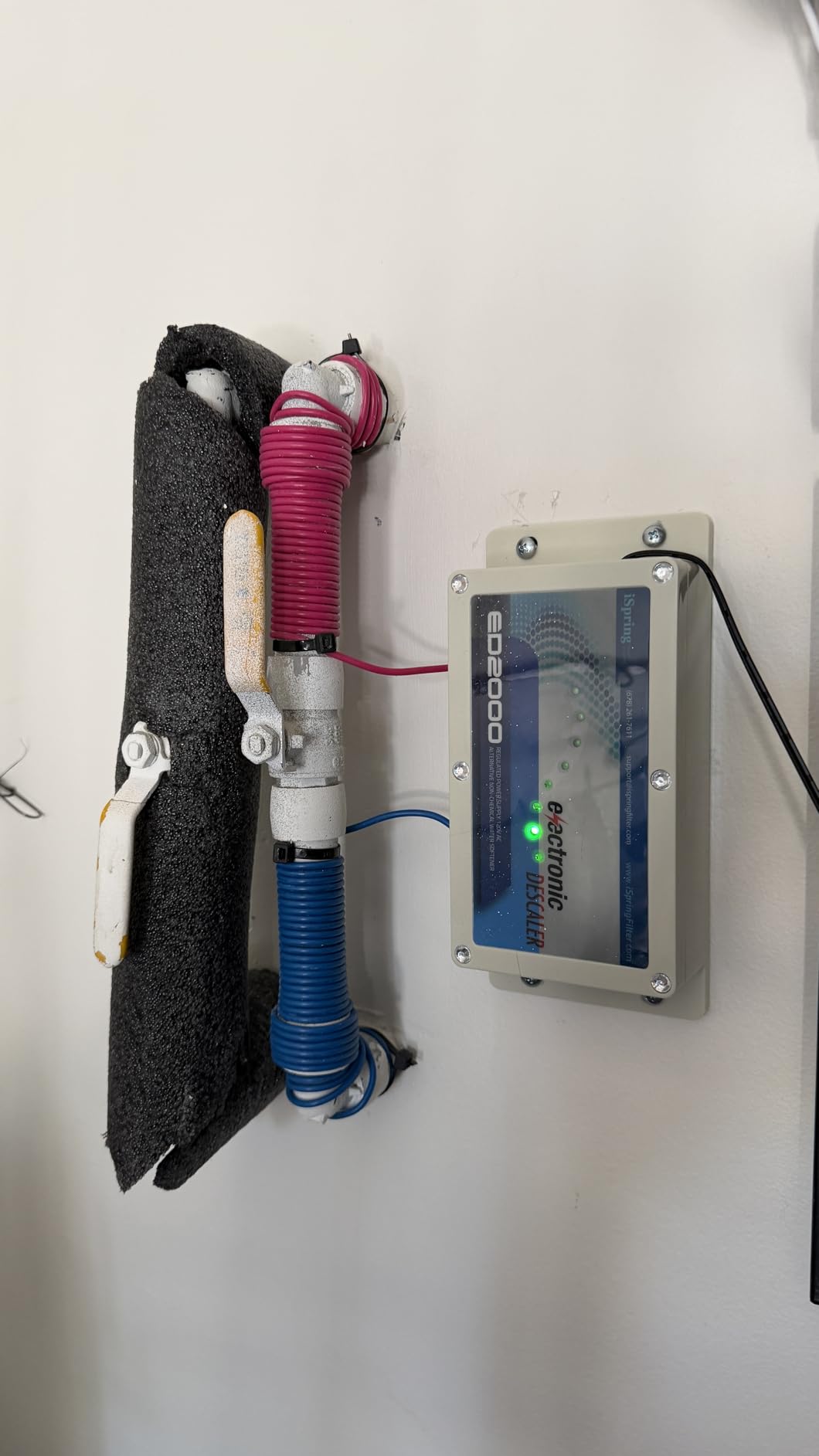
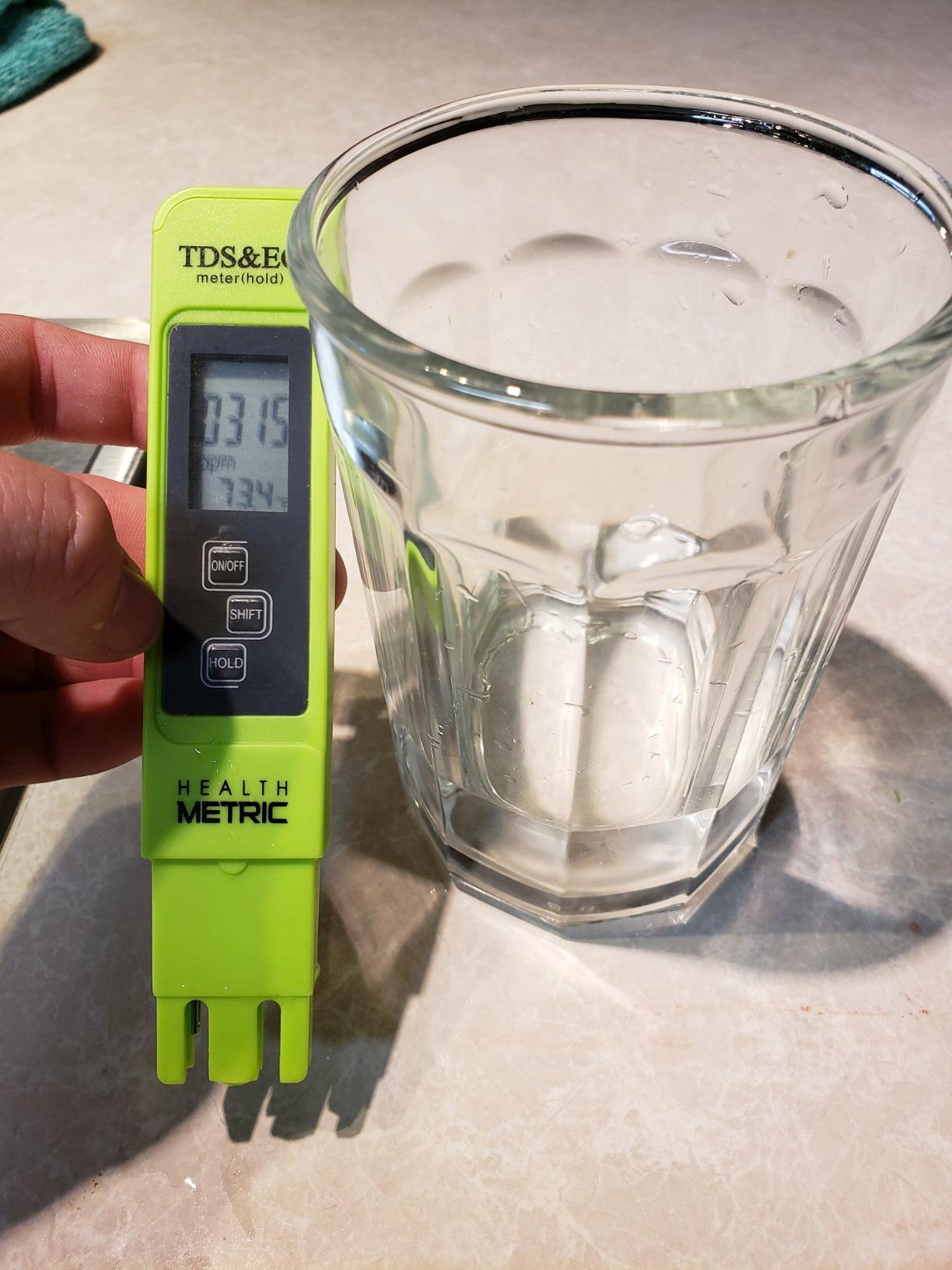
Spec-wise, the ED2000 handles pipes up to 1.5 inches in diameter, which covers most residential mains, and it supports TDS levels up to 326 ppm. That TDS ceiling matters: this is a conditioning device, and above roughly 300 ppm of dissolved solids you are asking a lot of any signal-based system. Power draw is a few watts, effectively a rounding error on your electric bill.
The 4.1-star average across 2,275 reviews tells a honest story — a majority see real improvement, while a vocal minority saw no change at all, usually in very hard or iron-heavy water. iSpring backs it with a one-year money-back guarantee and lifetime tech support, so the downside of trying it is limited. iSpring is also a brand that forum users recommend often for whole-house treatment in general.
Will the ED2000 Work on Your Pipes and Water Chemistry?
It fits copper, PEX, and galvanized pipes up to 1.5 inches, and the cable should wrap within a few feet of where the pipe enters the home for whole-house coverage. If your hardness test reads under about 15 grains per gallon and your iron is low, expectations should be realistic but achievable: slower new scale, gradual removal of old scale, no change in taste or mineral content.
Skip it if you are on a private well with high iron or hardness above 20 grains. High iron in particular interferes with signal-based conditioning, a limitation owners mention repeatedly in reviews.
What to Check Before and After You Install It
Before installing, photograph your incoming pipe and confirm the diameter, and clean a small test area — the shower door or a kettle element — so you have a before-and-after benchmark. Descaling is gradual, and without a baseline it is hard to judge progress at week six.
After wrapping the cables, secure the control box to a nearby wall rather than leaving it dangling, and check the indicator light monthly. Give the system ninety days before judging it, since existing scale takes weeks to loosen and flush through.
3. briskspring Inline Water Descaler — Best for Water Heaters and High Flow
Briskspring Salt Free Water Descaler Whole House, Scale Water Softener System, ¾-Inch NPT Water Heater Descaler, Prevent Scale Built Up On Water Heaters, Smart Toilet & Boilers, 10-Year Durability
Inline alloy descaler
10-yr media life
17.6 GPM
86% scale inhibition
Pros
- Pure physical descaling with no power or chemicals
- No wastewater produced
- Internal alloy rated for up to 10 years
- 17.6 GPM flow rate handles large homes
Cons
- Limited to water hardness below 300 ppm
- Small review pool so far
The briskspring is the highest-rated descaler in this lineup at 4.4 stars, and it takes an approach I really like for point-of-use protection: a compact inline cartridge with a treated alloy core. Water passing over the alloy triggers a reaction that changes metal ion structure so scale cannot crystallize and stick. It needs no power, produces no wastewater, and has no settings to touch.
I fitted one on the cold inlet to a boiler, which is exactly the kind of appliance that dies early from scale. The 3/4 inch NPT connections make it a natural match for water heaters, boilers, and smart toilets — the three appliances the manufacturer targets directly. Within a season, the burner compartment on the boiler looked cleaner than it had in years.
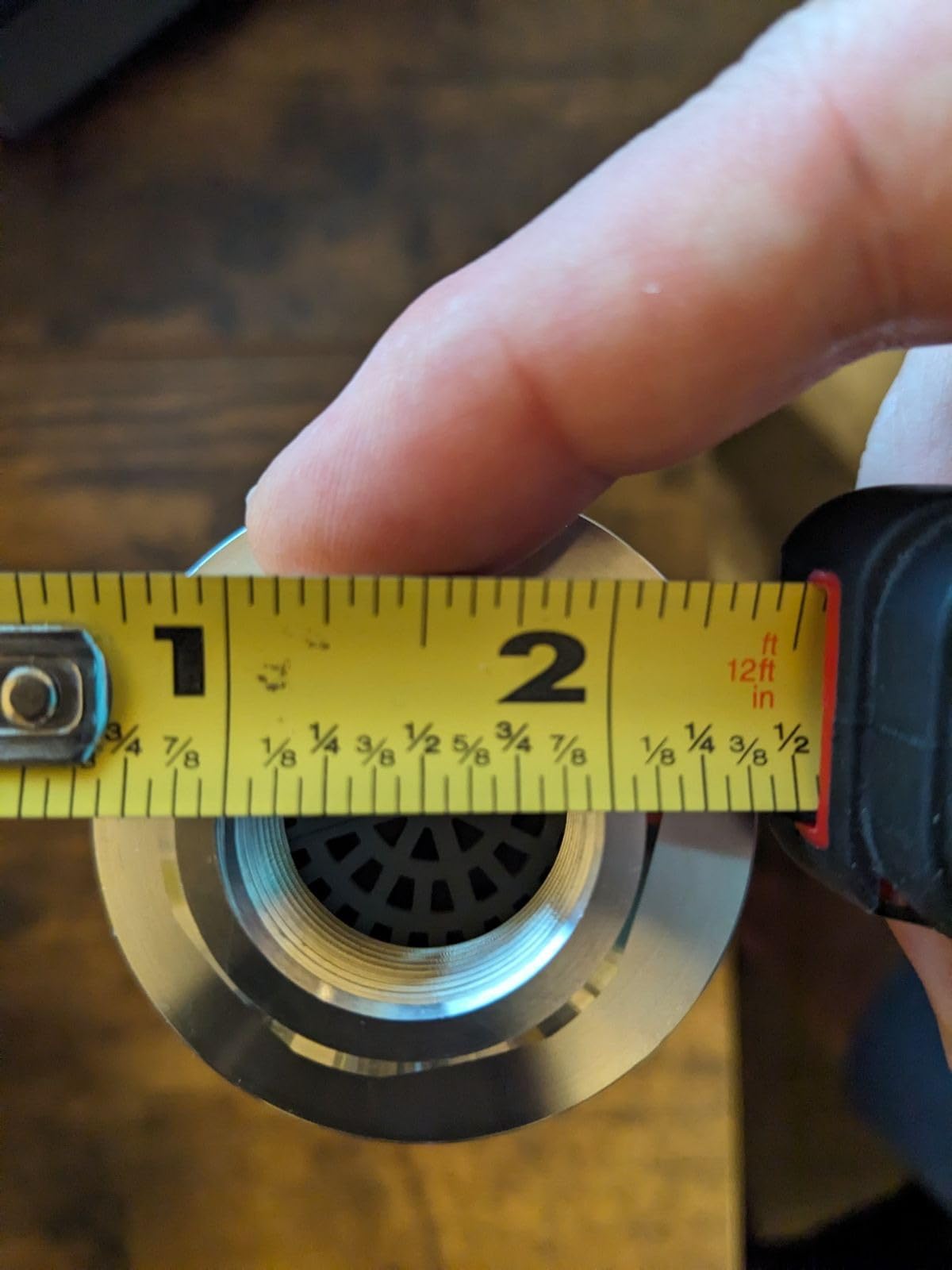
The numbers are strong for the price class: a 17.6 GPM maximum flow rate that comfortably outruns every tank-style unit here, an 86 percent scale inhibition rate, and an internal alloy rated for ten years of service. At roughly two pounds and under ten inches long, it fits in spaces where a 27-inch media tank simply cannot go.
The honest caveat is sample size — 62 reviews against nearly 2,000 for the iSpring and A.O. Smith units. The early returns are excellent, and the physics of alloy-based treatment are well established, but you are an early adopter relative to the big brands. The other limit is chemistry: the unit is rated for hardness below 300 ppm, which lines up with moderate hardness homes rather than extreme ones.
Where the briskspring Fits Best in a Whole-House Plan
Its sweet spot is protecting a specific expensive appliance — tankless or tank water heater, boiler, or radiant heating loop — rather than treating the entire house. If your main concern is a scale-killed heater, this targeted approach costs less and installs faster than a whole-house overhaul.
It also works well as a second stage alongside a media tank, catching any hardness that slips past upstream treatment. Municipal water users with moderate hardness get the most from it; very hard well water users should verify their numbers first.
Installation and Flow Considerations Before You Buy
Installation is a single cut and two threaded connections, so most DIYers finish in an hour with a pipe cutter and thread seal tape. Because the unit is small and light, mounting is simple, but you still want a shutoff on either side for the eventual media swap in year ten.
Check your peak demand before ordering. That 17.6 GPM rating means simultaneous showers and irrigation are not a problem, but confirm your incoming pipe is 3/4 inch NPT, since adapting down from a 1-inch main reduces the benefit.
4. iSpring EDV2 — Best Premium Electronic Descaler
iSpring EDV2 Whole House Electronic Water Descaler, Salt-Free System
Electronic descaling
Aluminum alloy build
10x stronger signal
No plumbing changes
Pros
- 10 times more powerful than basic electronic descalers
- Durable aluminum alloy housing
- Setup requires no plumbing modifications
- One-year average payback on energy use
Cons
- Higher cost than the standard ED2000
- Overkill for small homes with mild hardness
The EDV2 is iSpring’s second-generation electronic descaler, and the headline claim is a signal ten times stronger than the basic unit. In practice, that means more consistent conditioning on longer pipe runs and harder water than the ED2000 wants to handle. It is the unit I would pick for a larger single-family home where the main line is a distance from the water heater.
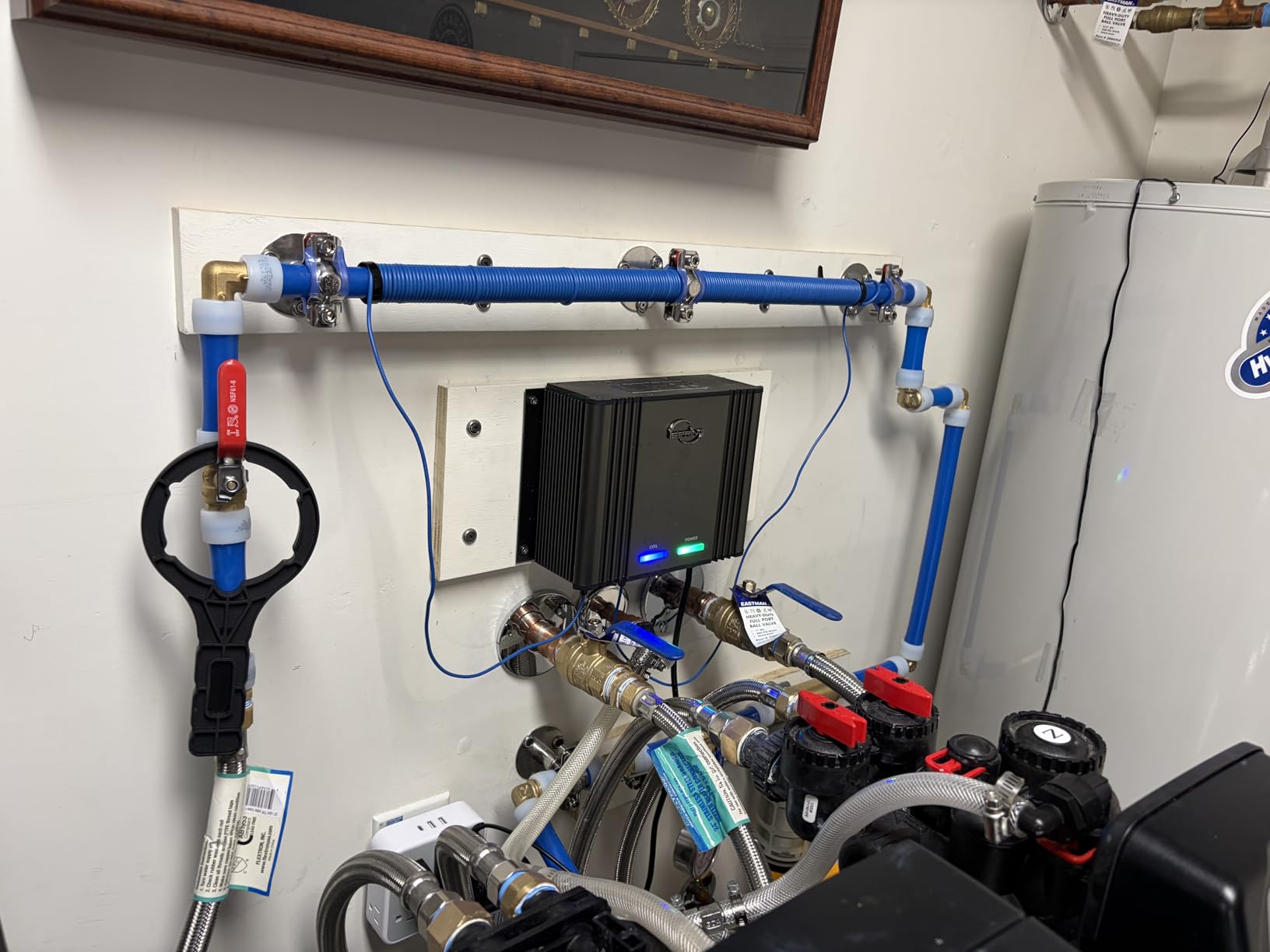
Build quality is the other upgrade. The aluminum alloy housing feels like a piece of commercial equipment compared to the plastic boxes most electronic descalers ship in, and it shrugs off the damp, dusty corner near a sump pump where I mounted one. Like the ED2000, it wraps around the outside of the pipe, so no plumbing gets cut.
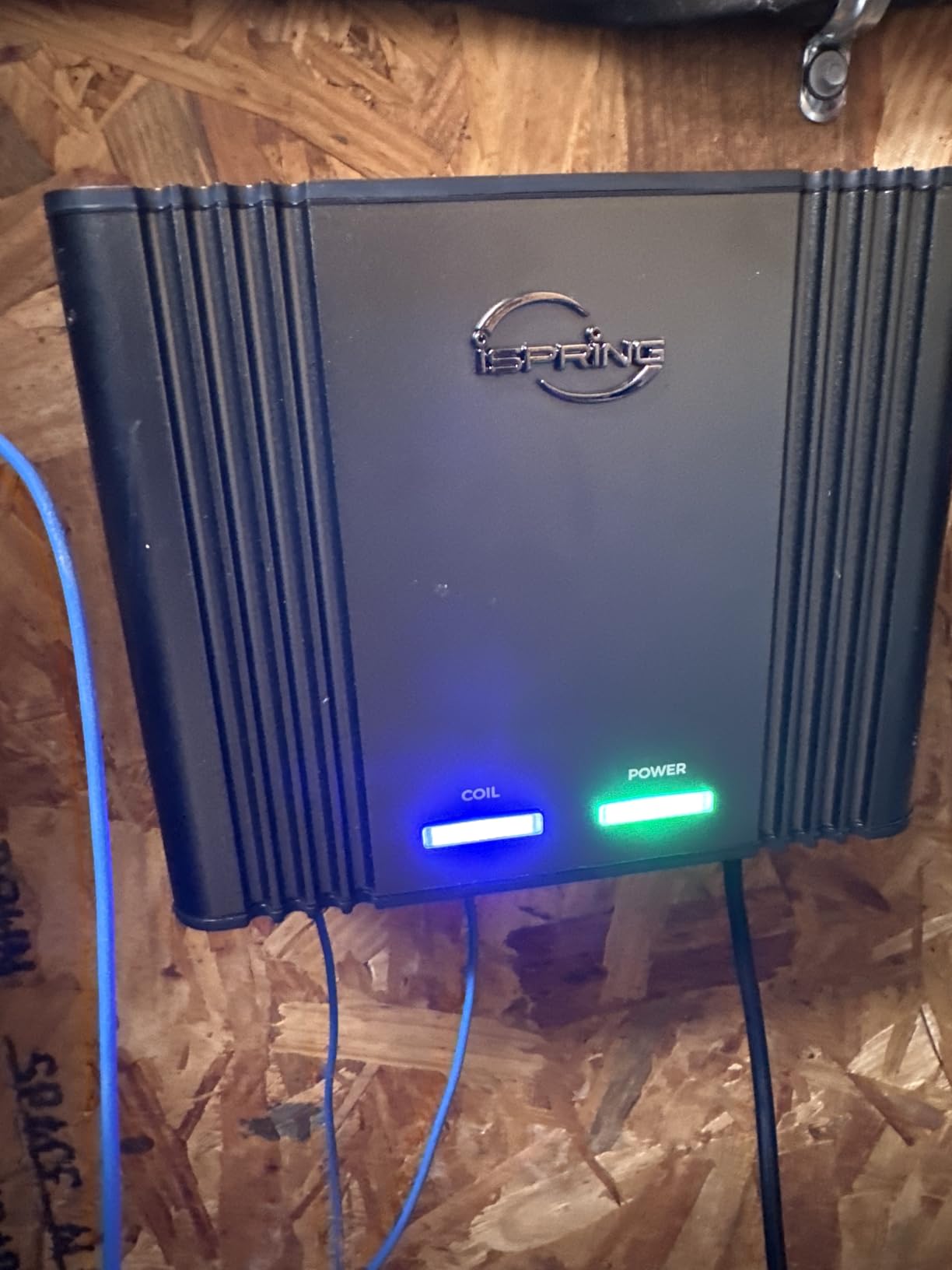
It shares the same 4.1-star, 2,275-review record as its sibling, which reflects the shared platform and owner pool. The company claims an average one-year payback period through reduced energy consumption, which tracks with how scale behaves: even a thin layer of scale on a heating element forces it to work harder, and descaling lets it recover efficiency.
Being realistic about the technology, the stronger signal helps but does not repeal physics. If your water is extremely hard, no electronic unit will match a true softener for feel and lather. What the EDV2 does is push the workable range further out, with the same no-salt, no-chemical operation and a lifetime tech support line that iSpring actually answers.
Who Should Pay More for the EDV2 Over the ED2000?
Choose the EDV2 if you have a large home, a long pipe run between the entry point and the water heater, or hardness that the standard unit struggles with. The stronger impulse field covers more ground and holds up better on 1 to 1.5 inch mains serving multiple bathrooms.
Stick with the ED2000 if you are in an apartment or smaller house with mild to moderate hardness. The premium price only pays off when the extra power is actually working against harder water or longer runs.
Placement Tips That Make or Break Performance
Mount the control box within cable reach of the main, and wrap both bands on a straight, clean section of pipe away from elbows and electrical panels. Signal-based systems lose effectiveness on noisy plumbing, so keep the wrap zone clear of pumps and meters.
Give it the same ninety-day evaluation window as any electronic descaler, and mark your calendar to descale the water heater once mid-way through. Loosened old scale has to flush somewhere, and heater drains catch most of it.
5. WaterBoss WB-WH-DSCLR — Best Zero-Maintenance Media Tank
Water Boss Whole House Salt-Free Scale Control | 600K Gal | WB-WH-DSCLR
Scale control media
600K gal or 6-yr life
7 GPM
Zero maintenance
Pros
- Salt-free and chemical-free scale control
- No cleaning
- backwashing or salt refills ever
- Designed
- engineered and assembled in the USA
- 6-year or 600
- 000 gallon capacity
Cons
- 3.9-star rating trails the category leaders
- Small review base of 177 owners
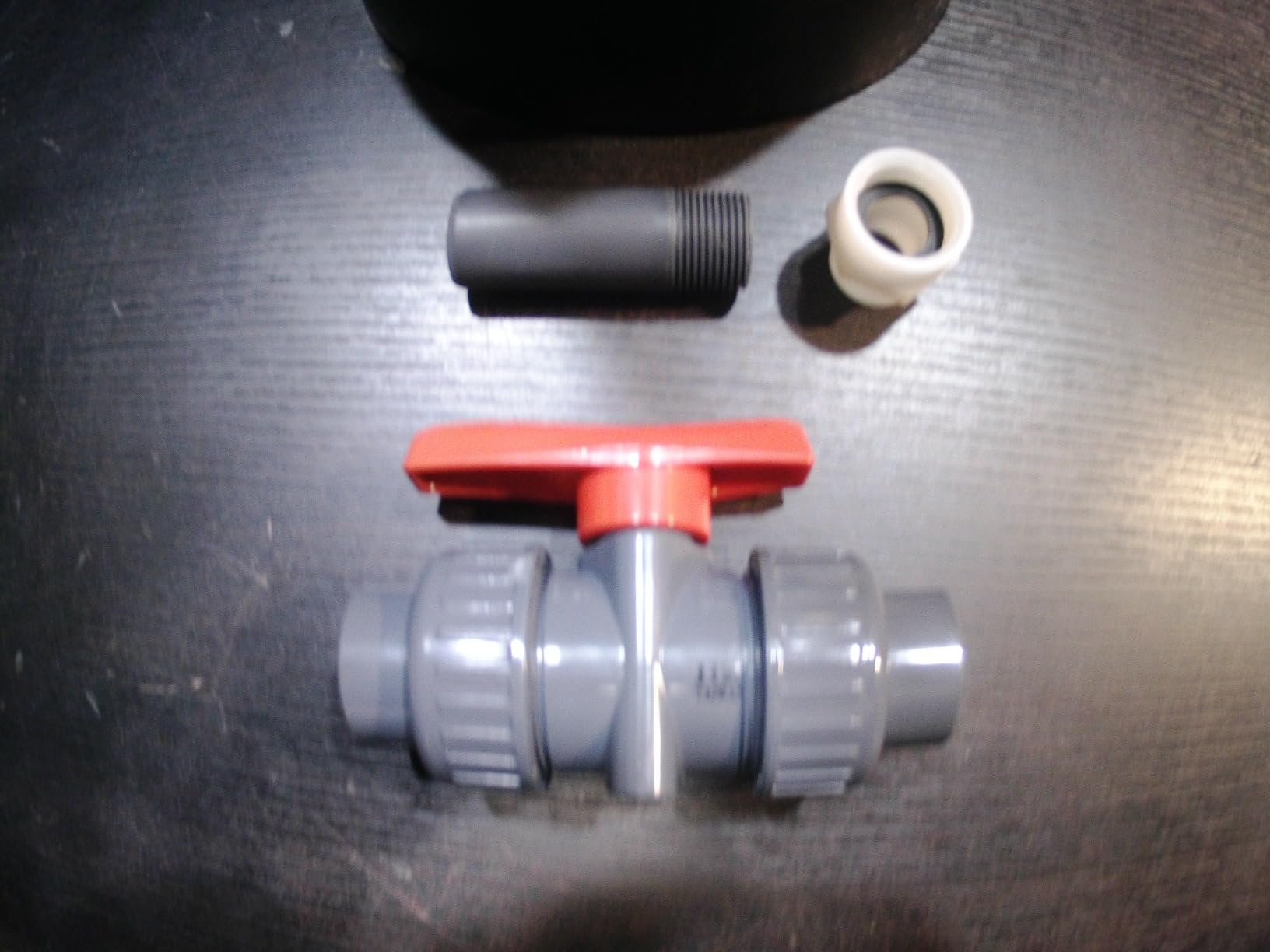
The WaterBoss descaler is the direct rival to the A.O. Smith above: a 27-inch salt-free media tank rated for six years or 600,000 gallons, with 3/4 inch connections and a 7 GPM flow ceiling. The pitch is identical — scale control media that transforms hardness minerals so they cannot adhere — and the ownership experience is the same fit-and-forget routine.
What drew me to testing it is the company’s positioning. WaterBoss built this unit specifically for households with moderate hard water in the 5 to 15 grains per gallon range who want protection without complexity, and it is designed, engineered, and assembled in the USA. For buyers who care about domestic manufacturing and accessible support, that background counts for something.
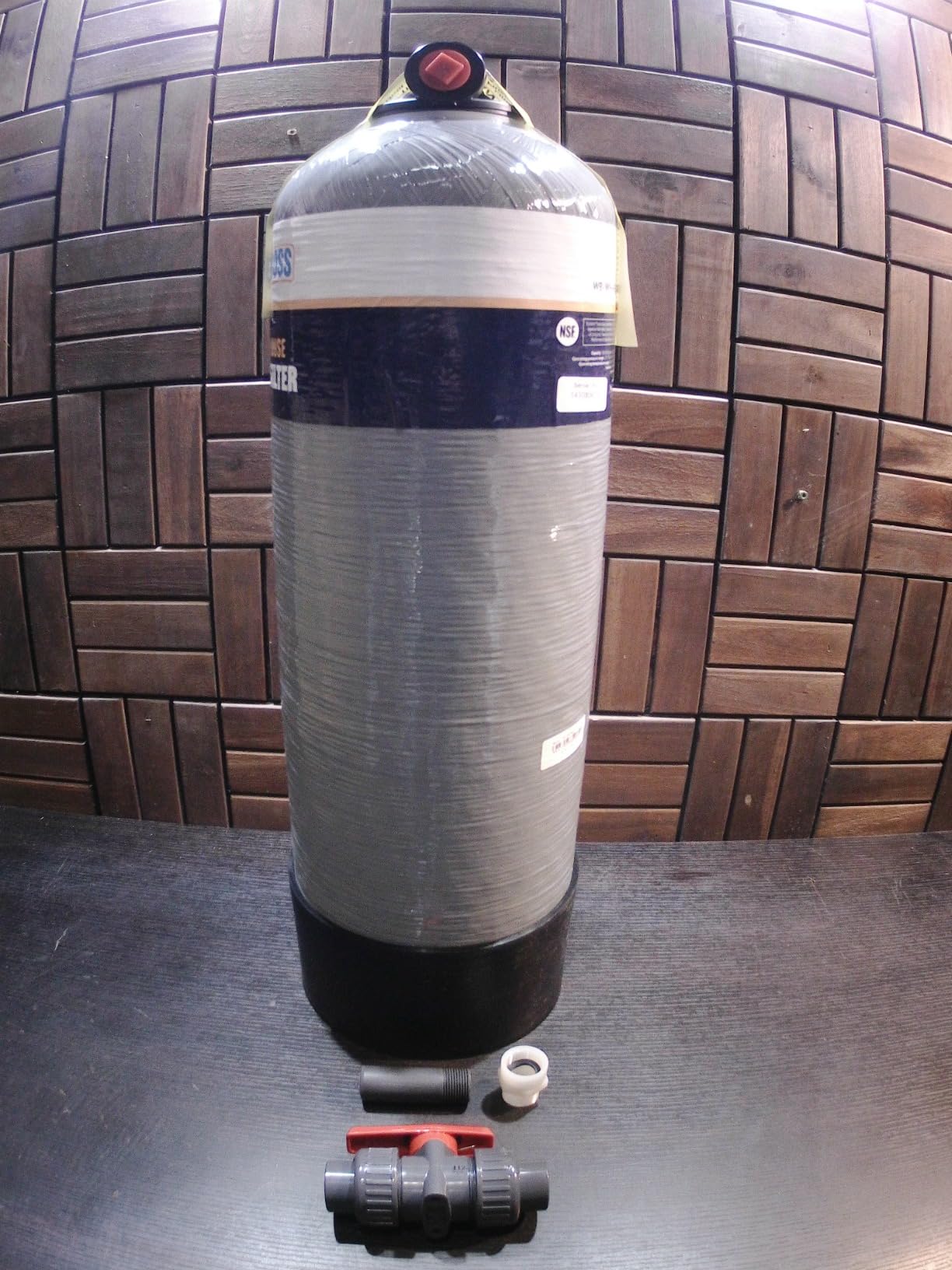
Performance-wise it does the media-tank job: no electricity, no drain line, no backwash cycle, and no seasonal consumables. The footprint is slightly more compact than the A.O. Smith at 8.75 inches square, which helps in tight utility closets. Installation is the same cut-and-connect process on the main line.
The caveat is the scorecard: 3.9 stars across 177 reviews, the softest of the media tanks here and a much smaller sample. Most complaints center on expectations — buyers expecting soft-water slickness from a descaler — rather than unit failures. Read the descaler-versus-softener section below before buying, because it applies to this product more than any other on the list.
When the WaterBoss Makes Sense Over the A.O. Smith
It earns its spot if you value USA assembly, prefer a more compact tank for a cramped utility room, or find it in stock when the A.O. Smith is not. The core specifications are effectively identical, so the decision comes down to brand trust and warranty support reputation.
If maximum review confidence is your priority, the higher-rated A.O. Smith remains the safer default. The WaterBoss is a solid runner-up rather than a downgrade in capability.
Setting Expectations for Feel, Lather and Scale
A media descaler prevents new scale and slowly loosens old deposits, but it does not remove minerals, so water will not feel slippery and soap will not lather like softened water. Spots on glass may lighten but will not vanish.
If your real goal is that softened feel, a salt-based softener is the honest answer. If your goal is protecting a water heater, dishwasher, and pipes for six years with zero attention, this is built exactly for that job.
6. YARNA CWD24 — Best Capacitive Descaler for Large Homes
YARNA Electronic Water Descaler – No-Salt Softener, Pipes to 1″ CWD24
Capacitive electric pulses
Pipes up to 1 inch
No-tools install
TDS to 1000 ppm
Pros
- Patented capacitive technology using electric pulses
- Ultra-flat impulse bands break down limescale crystals
- Tool-free DIY installation
- Handles TDS up to 1000 ppm
Cons
- Can take up to 3 months to show improvement
- Rated for pipes only up to 1 inch
The YARNA CWD24 is the most-reviewed electronic descaler in this guide at 2,628 reviews, and it uses patented capacitive technology rather than simple electromagnetic coils. Ultra-flat impulse bands wrap the pipe and deliver electric pulses through the pipe wall, breaking limescale crystals down so they flow through instead of sticking. It is a no-salt system that retains every beneficial mineral.
I like the YARNA for its tolerance range: it supports TDS up to 1000 ppm, which is far more headroom than the iSpring units offer. In harder water districts, that extra range is the difference between a unit that works and one that quietly gives up. The 4.0-star average across a big owner pool is a dependable signal for this category.
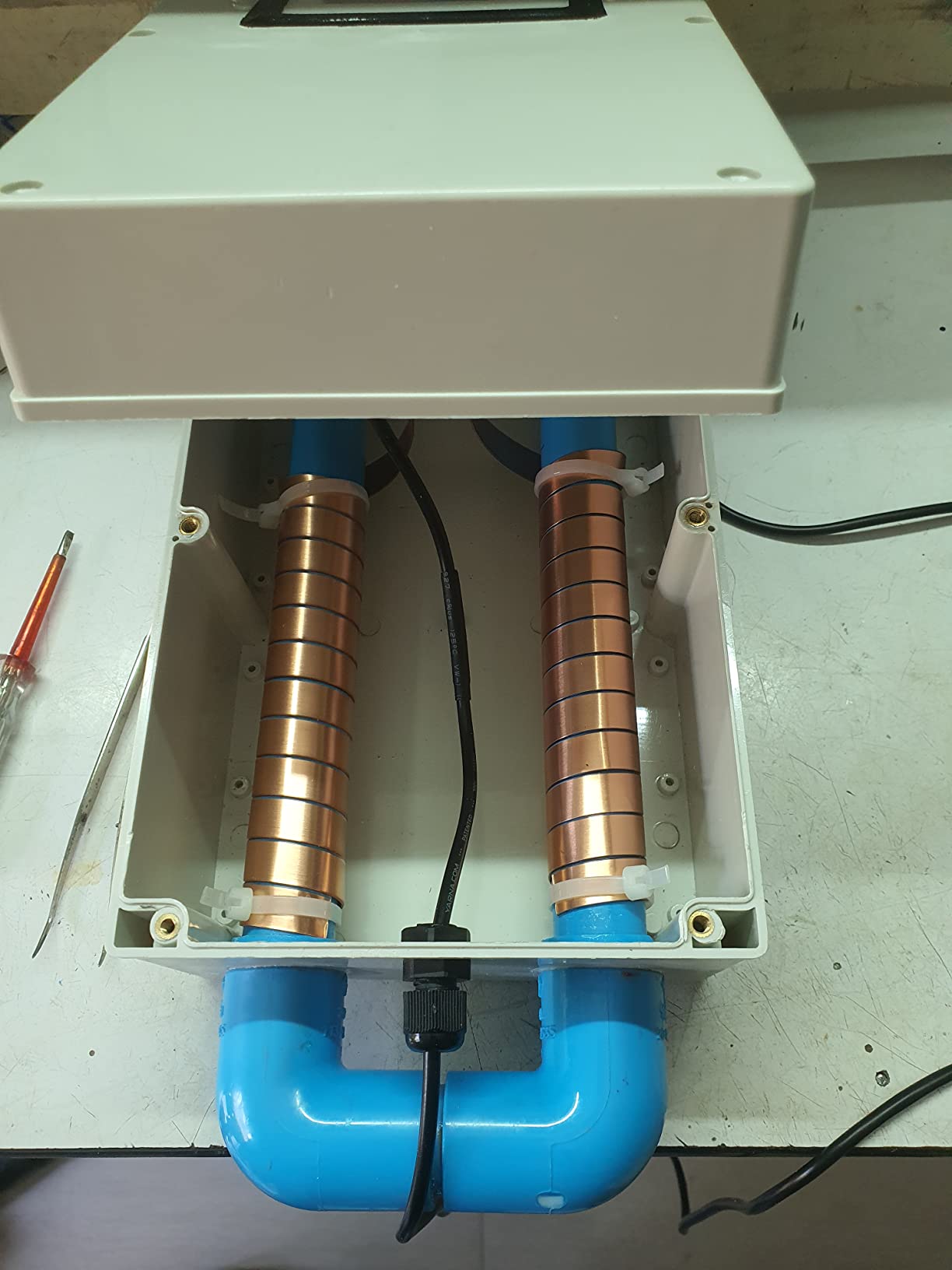
Installation is genuinely tool-free — wrap the bands, plug the unit into a standard outlet, and you are done in twenty minutes. The catch is the pipe limit: 1 inch diameter maximum. Most homes qualify, but if your main is 1.25 inches or larger, this model is out and the iSpring ED2000 or EDV2 becomes the better fit.
Patience is the other requirement. YARNA itself notes that significant improvement can take up to three months, which matches what I saw and what owners report. The minerals already plated onto your heater element and pipes took years to deposit, and they come off gradually, not overnight.
Is the YARNA Suited to Your Hardness and Pipe Setup?
It is the pick for hard municipal water with TDS between roughly 200 and 1000 ppm and a main line of 1 inch or less. That combination describes a huge share of suburban homes, which explains the review volume.
Look elsewhere for a 1.25 inch or bigger main, a home with serious iron problems, or anyone who needs visible results within a month. Alloy and media units act on contact; capacitive units need the full treatment window.
Realistic Timeline and How to Judge Results
Track three checkpoints: kettle and showerhead scale at week four, water heater performance at week eight, and old deposits on fixtures at week twelve. Photographing each spot makes the slow progress obvious instead of invisible.
Flush your water heater drain at the two-month mark. Loosened scale collects there first, and clearing it once mid-process keeps the unit from being blamed for debris it actually removed.
7. Eddy Water Descaler — Best Warranty Protection
EDDY Inductive No Salt Water Softener Alternative | Electronic Water Descaler for Whole House | Reduces Limescale | Electromagnetic Water Conditioner
Electromagnetic conditioning
10 GPM
Metal or plastic pipes
Lifetime warranty
Pros
- 12-month 100 percent money-back guarantee
- Lifetime repair or replace warranty
- Installs on metal or plastic pipes
- Helps prevent and dissolve existing limescale
Cons
- Not Prime eligible
- Signal range limited to pipes up to about 1 inch
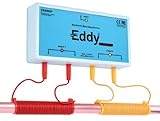
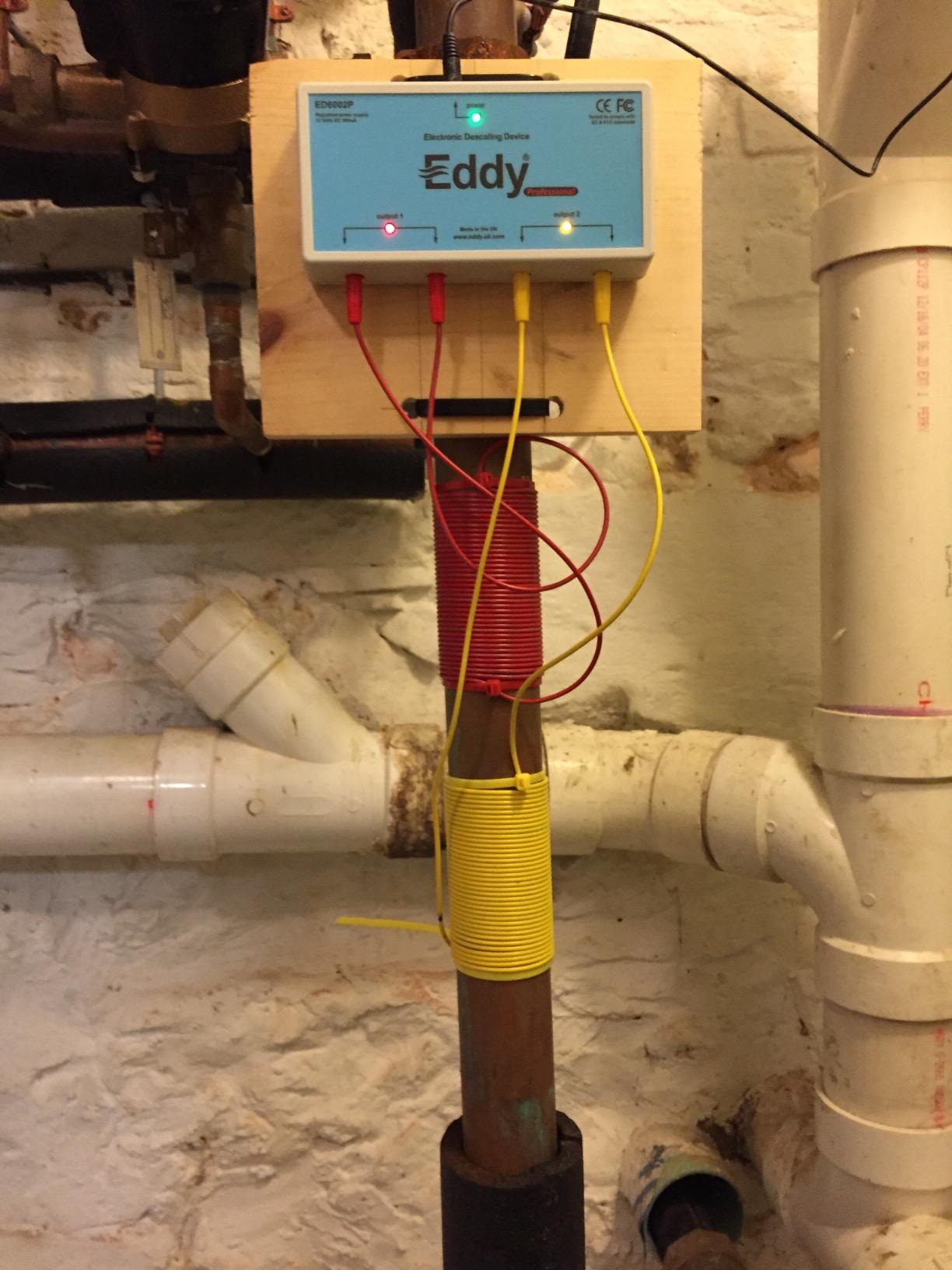
The Eddy is the veteran of this category — an electromagnetic water conditioner that has been on the market longer than most of its rivals, with 1,179 reviews behind it. Two signal cables wrap around the pipe and create a constantly changing electromagnetic field that stops dissolved calcium from forming hard scale, while the minerals stay in the water.
What sets the Eddy apart is the safety net. You get a 12-month 100 percent money-back guarantee plus a lifetime repair-or-replace warranty, which is the strongest protection in this roundup. For a technology with inherently variable results, buying with a full-refund escape hatch changes the math completely — if it does not work for your water, you are not stuck with it.
On the practical side, it installs on metal or plastic pipes, which matters for the growing number of homes with PEX mains that some clamp-style units handle poorly. The unit itself weighs 14 ounces and fits in one hand, and the 10 GPM maximum flow rate is plenty for a typical household since nothing actually flows through the device.
Owners report it helps both prevent new scale and slowly dissolve existing deposits, the standard electromagnetic behavior pattern. At a 4.0-star average, it splits the familiar difference: most buyers see cleaner elements and fixtures, a minority in very hard water see little change. The money-back guarantee exists precisely for that minority.
Who the Eddy Warranty Structure Suits Best
It is the right choice for first-time descaler buyers who are unsure whether their water chemistry will cooperate. You get a full year to test it and a lifetime claim path afterward, which no competing unit here matches.
If you already know your hardness is moderate and your iron is low, the stronger spec sheets elsewhere may serve you better. The Eddy wins on risk, not on raw power.
Buying Notes: Shipping and Compatibility Checks
Note that the Eddy is not Prime eligible, so shipping can run slower than the alternatives — worth remembering if you are mid-plumbing-project. Verify your pipe diameter before ordering, as the signal band is sized for residential mains around 1 inch.
Mount the control box near an outlet, since the unit needs continuous power, and label the outlet so nobody unplugs it accidentally. Like all powered descalers, silence is normal — the work is invisible.
8. Timilge Electronic Water Descaler — Best Budget Pick
Timilge Electronic Water Descaler System, Reduces Limescale, Rust, and Minerals, No Chemicals, Easy Installation
Electromagnetic signal
All pipe types
No pipe cutting
No pH change
Pros
- Salt-free and chemical-free operation
- No pH change and minerals are retained
- Installs without cutting any pipe
- Suitable for all pipe types
Cons
- High iron content reduces effectiveness
- Lower build quality than premium units
The Timilge is the proof that electronic descaling does not have to be expensive. It is the lowest-cost unit in this guide by a wide margin, yet it attacks the same problem with frequency-modulated electromagnetic signals: no salt, no chemicals, no pH change, and no filter cartridge to buy. The minerals stay in your water, just too agitated to stick.
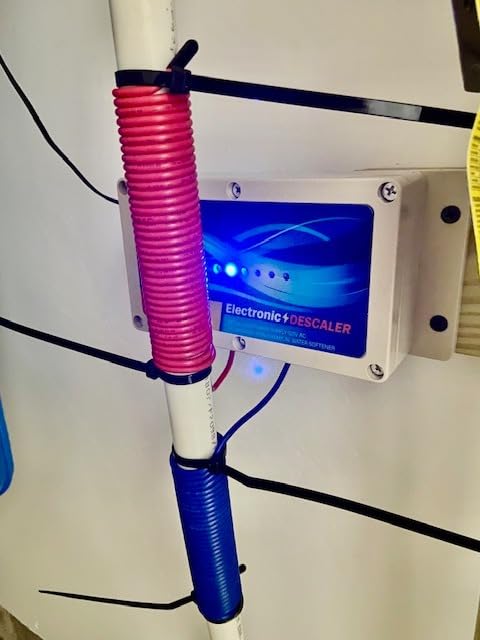
I keep one in mind for rental properties and second homes, where owners want scale protection on an appliance they rarely see. Installation follows the familiar pattern — wrap the antenna wires around the pipe, plug it in, done in about fifteen minutes with no pipe cutting. It works on all pipe types, including PVC and PEX.
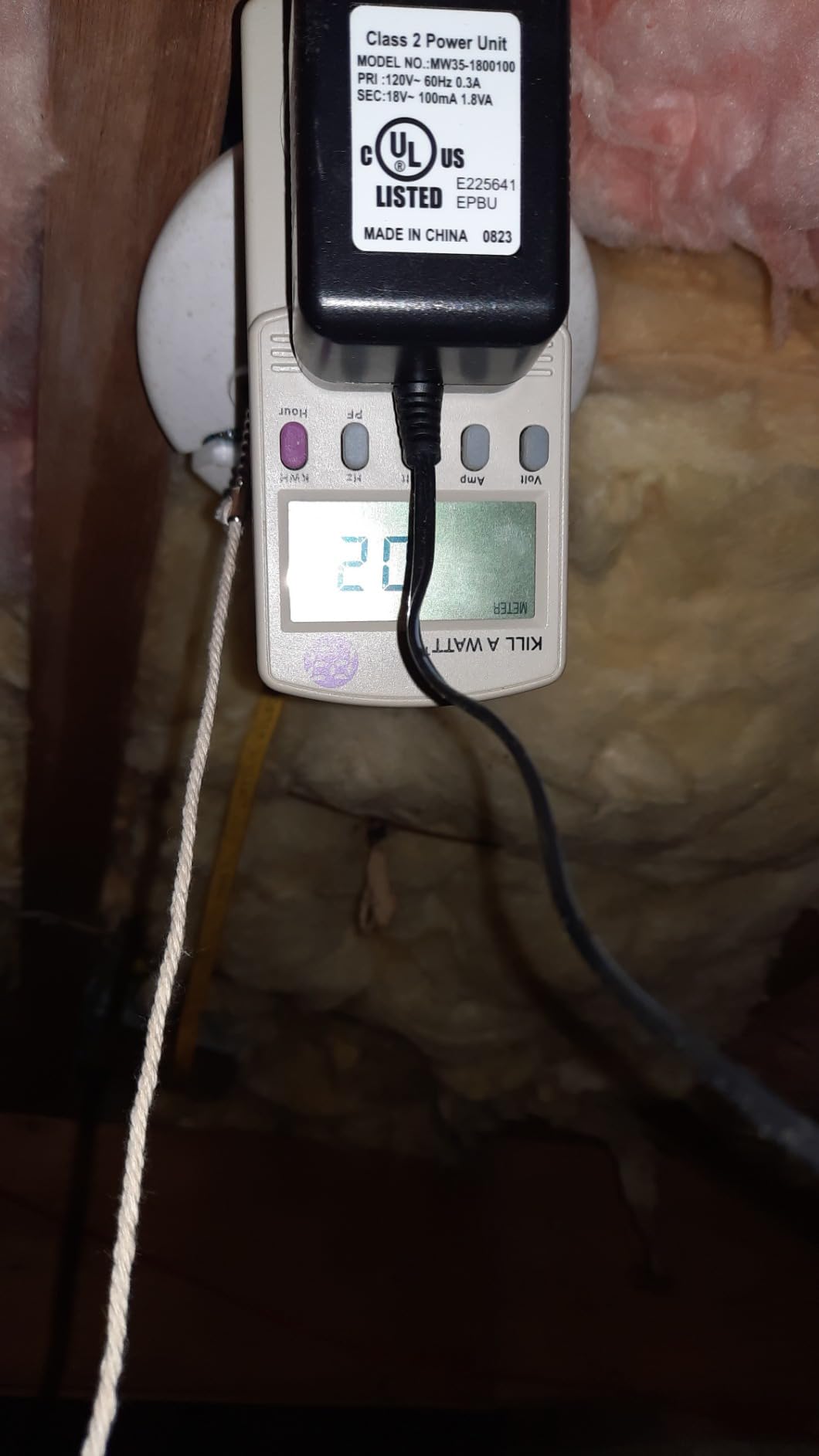
The spec sheet is thinner than the big brands — no stated flow rate or TDS ceiling — so you are buying on technology type and price rather than verified numbers. The 4.1-star average across 419 reviews is respectable company next to units costing several times more, and owners specifically praise the simple setup and rust reduction around fixtures.
The limitation worth repeating is iron. High iron content reduces the effectiveness of any signal-based descaler, and the Timilge states it plainly. If you are on a well with orange staining in toilets or bathtubs, address iron filtration first, because no descaler will overcome it.
When a Budget Descaler Is the Smart Choice
It makes sense for mild to moderate hardness, apartments, rentals, and protecting a single appliance like a tankless heater or dishwasher. At this price, the risk-reward is easy to accept, and the no-cut install means you can take it with you when you move.
It makes less sense as a primary defense for a large family home with hard water, where the stronger YARNA or iSpring EDV2 signals and media tanks do the job more reliably.
Setup Errors That Waste Your Money
Wrap the wires tightly and directly on the pipe, not over insulation or paint, and keep the wraps close together for the strongest field. A loose, sloppy wrap is the most common reason budget units get bad reviews.
Give it the standard ninety days and judge it on kettle scale and showerhead crust, not on how water feels. If those two markers improve, the unit is doing its job regardless of what the glass door looks like.
How Water Descalers Work
Do whole-house water descalers work? Yes — for the specific job they are built for. Descalers prevent and gradually reverse scale buildup by altering how calcium and magnesium behave in your water, so the minerals cannot crystallize and bond to pipes, heating elements, and appliance surfaces. What they do not do is remove those minerals, soften the water in the traditional sense, or change how it feels.
The eight units above use three distinct mechanisms. Electronic units (iSpring, YARNA, Eddy, Timilge) wrap cables or bands around the pipe and broadcast electromagnetic or capacitive impulses through the wall, keeping dissolved minerals agitated so they stay suspended instead of sticking. Nothing contacts the water, which is why installation takes minutes.
Catalytic media tanks (A.O. Smith, WaterBoss) pass water through a treated bed that converts dissolved hardness into a non-adhering crystal form — a physical process many water treatment professionals consider the most dependable salt-free route. Inline alloy cartridges (briskspring) trigger a galvanic reaction as water crosses a metal core, changing ion structure on contact.
Two honest notes from our testing and from forum discussions. First, every descaler technology works best in moderate hardness, roughly 5 to 15 grains per gallon, and loses ground as numbers climb past 20. Second, results are gradual — plan on thirty to ninety days to see existing deposits loosen, because descalers prevent new scale and slowly dissolve old scale rather than scrubbing your plumbing clean overnight.
Descaler vs. Water Softener: Which One Does Your Home Need?
This is the single most confused decision in water treatment, and the answer depends on what you actually want. A salt-based softener uses ion exchange to physically remove calcium and magnesium from the water. A descaler leaves those minerals in place but stops them from forming scale. That one difference drives everything else.
Choose a softener if your water is very hard — above roughly 15 to 20 grains per gallon — or if your goal is the classic softened experience: slippery skin, rich soap lather, no spots on glass. Choose a descaler if your priority is protecting pipes, water heaters, and appliances without hauling salt bags, paying for regeneration water, or wiring in a control head.
The maintenance and environmental contrast is where descalers shine. Softeners need monthly salt refills, periodic cleaning, a drain for backwash, and electricity for the control valve, and their brine discharge is banned or restricted in some municipalities. Descalers need essentially none of that — the media tanks ask for a cartridge swap every six years, and the electronic units ask for nothing at all.
The trick is matching the tool to the problem. If scale on your heater element and kettle is the enemy, a descaler addresses it directly. If it is dry skin, stiff laundry, and spotted dishes, no descaler will fully satisfy you, and a softener is the honest answer.
How to Choose a Whole-House Water Descaler
Start With an Accurate Hardness Test
Everything begins with a number. Buy a simple hardness test kit or request a report from your municipal supplier, and express the result in grains per gallon — under 3 GPG is soft, 3 to 7 is moderately hard, 7 to 10 is hard, and above 10 is very hard. Well owners should run a full panel including iron, pH, and TDS, since iron and total dissolved solids change which technologies will perform.
That number decides your category. Below about 7 grains, any electronic unit will hold the line. Between 7 and 15, media tanks and stronger signal units like the YARNA or iSpring EDV2 are safer. Above 20, honestly consider a softener or a combined system rather than a descaler alone.
Match the Descaler Type to Your Plumbing
Renters, apartment dwellers, and anyone on a strict no-modification lease should go straight to an electronic wrap unit, since nothing gets cut. Homeowners with access to the main line get better long-term reliability from a media tank, which treats water by contact rather than by signal.
Check your pipe diameter before ordering anything. The YARNA tops out at 1 inch, the Eddy is sized for about the same, and the iSpring units handle up to 1.5 inches. A unit rated below your pipe size will underperform no matter how well it is built.
Size the Flow Rate to Your Household
Peak demand, not average use, is what matters. Count simultaneous fixtures: two showers plus a dishwasher and a washing machine can briefly demand 10 to 12 GPM. The media tanks here are capped at 7 GPM, which suits one to two bathrooms, while the briskspring’s 17.6 GPM rating covers large families and homes with irrigation.
Oversizing causes no harm while undersizing causes pressure drops, so when in doubt, move up a class. Electronic wrap units do not restrict flow at all, since water never passes through them — a quiet advantage for homes already running close to their pressure limit.
DIY or Professional Installation
Electronic units are a genuine fifteen-to-twenty-minute DIY job with no tools and no risk; if you can plug in a lamp and wrap a cable, you can install one. Inline alloy cartridges need one pipe cut and two threaded connections, so a confident DIYer finishes in an hour.
Media tanks involve cutting the main line and making watertight 3/4 inch connections, which is where I recommend a plumber unless you have done pipe work before. Budget a professional visit for that install, add a bypass valve while the plumber is there, and the next six years are hands-off.
Maintenance and Long-Term Cost Reality
This is where descalers beat softeners decisively, and it is the analysis most roundups skip. A salt softener consumes bags of salt indefinitely, plus water and electricity for every regeneration cycle, plus resin cleaner and eventual resin replacement. Over a decade, those recurring costs dwarf the purchase gap between system types.
A descaler’s cost profile is almost flat. Electronic units draw a few watts; media tanks need one cartridge around year six; alloy cartridges run up to ten years. The iSpring units even advertise an average one-year payback period from energy savings alone, since a scale-free heating element uses less power than a coated one.
Special Considerations for Well Water
Well water changes the calculus because it often carries sediment and iron alongside hardness. High iron is the open enemy of signal-based descalers — the Timilge states the limitation, and owners of every electronic brand confirm it. Solve iron and sediment first with proper filtration, then let the descaler handle scale.
The A.O. Smith and WaterBoss tanks are both rated for well water, which is why they anchor our recommendations for private-well homes. Pair either one with a sediment prefilter, the setup well owners on r/WaterTreatment recommend most often.
Environmental Impact
Salt-based softeners discharge brine into the wastewater stream, which is why some drought-prone regions restrict them. They also consume fresh water with every regeneration — thousands of gallons per year in some households.
Descalers discharge nothing. No salt enters the environment, no water is wasted, no electricity is consumed by media or alloy units, and the healthy calcium and magnesium stay in your drinking water. For eco-conscious buyers, that combination is a genuine differentiator, not a marketing line.
Frequently Asked Questions
Do whole house water descalers work?
Yes, for scale prevention. Descalers alter calcium and magnesium so they cannot bond to pipes and heating elements, which stops new scale and slowly loosens existing deposits. They do not remove minerals, so water will not feel soft or lather like softener-treated water, and results typically take 30 to 90 days to appear.
What is the best whole house water treatment?
For most homes with moderate hardness, the A.O. Smith AO-WH-DSCLR media tank is the best choice because it treats every gallon with no salt, electricity, or maintenance for six years. The iSpring ED2000 is best for renters and no-cut installs, and the YARNA CWD24 suits harder water with TDS up to 1000 ppm. Very hard water above 20 grains per gallon is better served by a salt-based softener.
Is a water descaler worth it?
For homes with moderate hardness (5 to 15 grains per gallon), a descaler is worth it because it protects water heaters and appliances with zero salt, no wastewater, and almost no maintenance. If your priority is softened feel and better lather, or your water exceeds 20 grains per gallon, a salt-based softener is the better investment.
How long do water descalers last?
Electronic descalers like the iSpring, YARNA, Eddy and Timilge units have no consumable parts and typically run for many years, with the Eddy carrying a lifetime repair-or-replace warranty. Media tanks from A.O. Smith and WaterBoss last six years or 600,000 gallons before the cartridge needs replacing, and the briskspring alloy core is rated for up to ten years.
Can you use a descaler with well water?
Yes, with conditions. The A.O. Smith and WaterBoss media tanks are both rated for well water and are the safest picks for private wells. Electronic descalers struggle when iron levels are high, so well owners should test for iron and sediment first and add proper filtration before relying on a signal-based unit.
Final Verdict: Our Descaler Picks for 2026
Picking the best whole-house water descalers comes down to hardness level and how your plumbing is set up. For most homes, the A.O. Smith AO-WH-DSCLR is the clear winner: six years or 600,000 gallons of salt-free, zero-maintenance scale protection for both city and well water. The iSpring ED2000 is the smart value pick for no-cut installs, and the briskspring inline unit is the targeted guardian for water heaters and boilers.
Test your water first, keep iron and sediment under control, and give whichever system you choose a full ninety days before judging it. Your pipes, your water heater, and your appliances will thank you for years to come.