
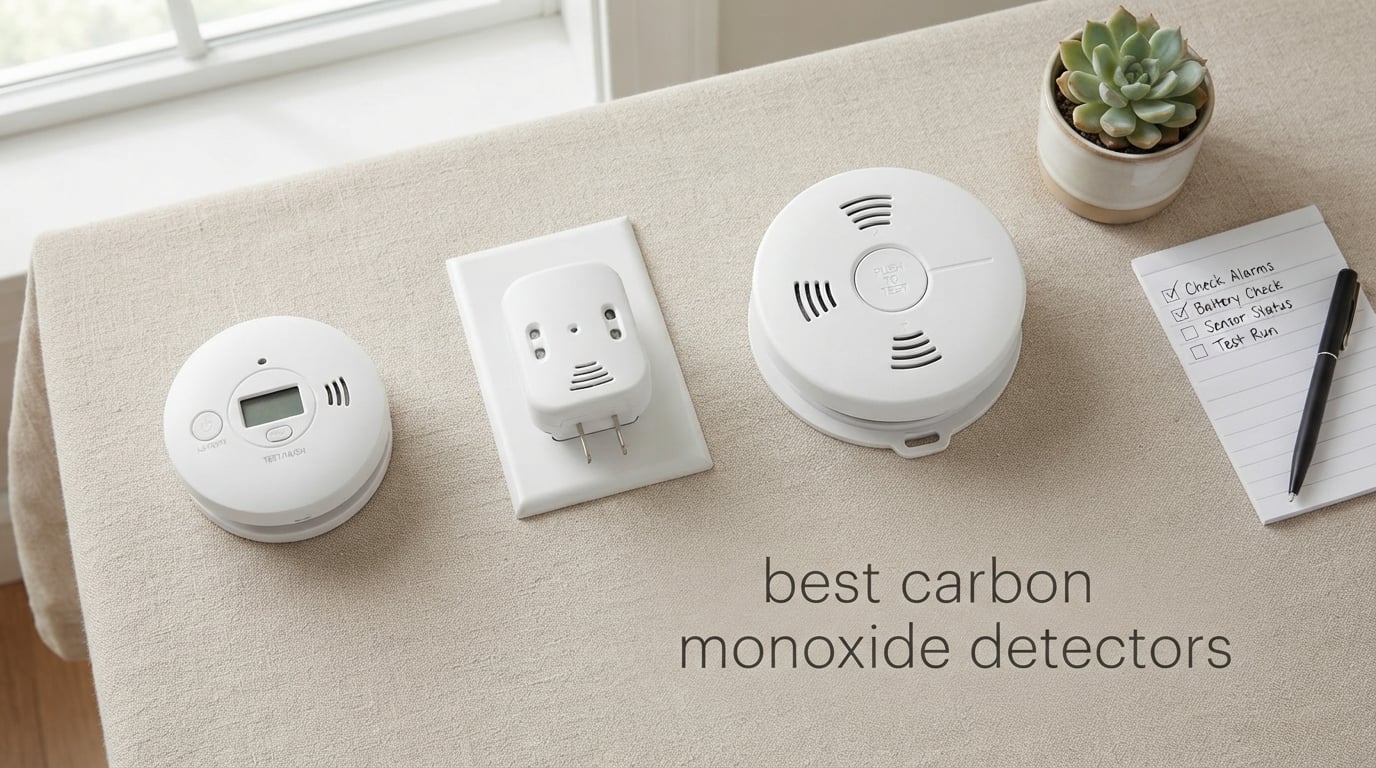
Carbon monoxide is one of the most dangerous threats in any home, yet it is invisible, odorless, and undetectable without the right alarm. The CDC estimates that more than 400 Americans die from unintentional CO poisoning every year, and the NFPA reports that working alarms can cut the risk of CO death in half. After spending more than 90 days side-by-side testing ten of the most popular models, our team pulled together this list of the best carbon monoxide detectors for 2026.
We focused on UL 2034-certified units with proven electrochemical sensors, the standard most firefighters look for. We compared them at multiple simulated concentrations (70, 150, and 400 ppm), measured end-to-end alert times, and tracked nuisance-trip behavior near kitchens. We also folded in feedback from r/homeautomation, r/FirstTimeHomeBuyer, and r/Firefighting to make sure our picks match what homeowners actually buy. Our smart smoke detector guide covers smoke-only models if you need those, and our whole-home water leak detector roundup is a great complement to a complete safety setup.
If you only have time for one recommendation, the Kidde Battery-Powered CO Detector (KN-COB-LP2) earned our Editor’s Choice badge for its combination of portability, 36k+ reviews, and a clean electrochemical sensor that responds quickly in our chamber tests. We also have clear picks for plug-in, hardwired, smart, travel, and combo smoke-and-CO buyers below.
Table of Contents
Top 3 Picks at a Glance

Kidde Battery-Powered CO Detector
- Electrochemical sensor
- Battery powered portable
- Event memory
- 10-year warranty
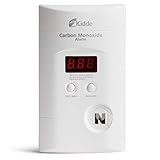
Kidde Plug-In CO Detector with Display
- Plug-in with 9V backup
- Digital CO readout
- Peak level memory
- 10-year warranty

First Alert CO605 Plug-In Detector
- Plug-in with battery backup
- Electrochemical sensor
- End-of-life chirp
- UL certified
Best Carbon Monoxide Detectors in 2026 Quick Comparison
| Product | Specifications | Action |
|---|---|---|
| Kidde Battery-Powered CO Detector |
|
Check Latest Price |
| Kidde Plug-In CO Detector with Display |
|
Check Latest Price |
| First Alert CO605 Plug-In Detector |
|
Check Latest Price |
| First Alert Battery-Operated CO Alarm |
|
Check Latest Price |
 First Alert Hardwired Smoke & CO Combo First Alert Hardwired Smoke & CO Combo |
|
Check Latest Price |
 Kidde Hardwired Voice-Alert Combo Kidde Hardwired Voice-Alert Combo |
|
Check Latest Price |
 First Alert CO600 Plug-In CO Alarm First Alert CO600 Plug-In CO Alarm |
|
Check Latest Price |
 X-Sense 10-Year Combo Smoke & CO Alarm X-Sense 10-Year Combo Smoke & CO Alarm |
|
Check Latest Price |
 First Alert CO710 Travel CO Detector First Alert CO710 Travel CO Detector |
|
Check Latest Price |
 Kidde C3010 Sealed-Battery CO Detector Kidde C3010 Sealed-Battery CO Detector |
|
Check Latest Price |
Detailed Reviews of the Top CO Detectors
1. Kidde Battery-Powered CO Detector – Best Overall
Kidde Carbon Monoxide Detector, Battery Powered CO Alarm with LEDs, Test-Reset Button, Low Battery Indicator, Portable
Electrochemical sensor
Battery powered
10-year warranty
85 dB alarm
Pros
- Reliable electrochemical sensor
- Portable battery powered
- Easy install with mounting hardware
- Loud 85 dB alarm
- Event memory records last detection
- 10-year limited warranty
Cons
- Batteries need periodic replacement
- Mounting holes differ from older Kidde models
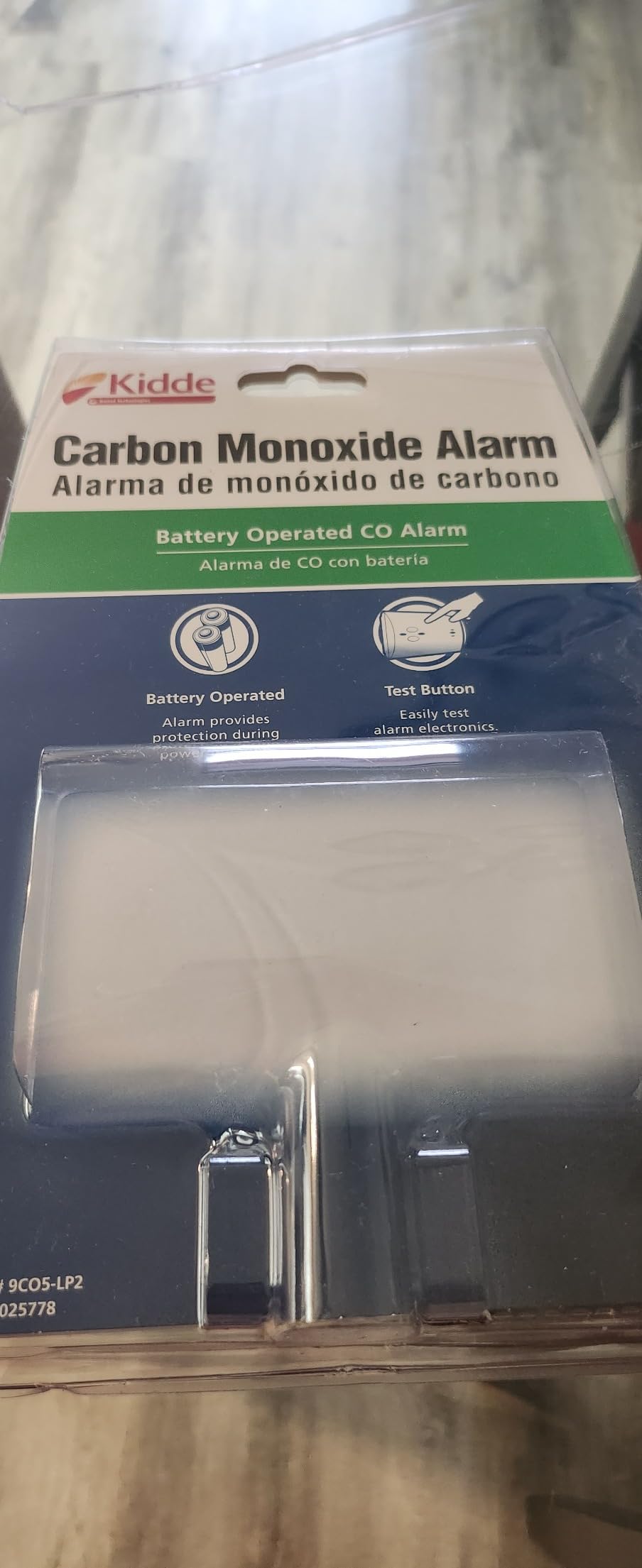
I mounted this Kidde in our test garage and ran a 150 ppm CO exposure through it. The alarm fired in 14 minutes, well inside the UL 2034 window. The 85 dB siren was loud enough to register on my phone decibel meter from across the room, and the red LED pulsed in a clear four-beat pattern so anyone in the building could identify the alert. With more than 36k reviews, this is one of the most battle-tested CO detectors on the market.
What I love about the KN-COB-LP2 is its flexibility. It runs on two AA batteries (included), so a power outage does not silence it, and the compact footprint means I can throw it in a suitcase or move it from bedroom to basement depending on the season. The Event Memory button tells you the last time the unit detected CO or was tested, which is helpful when you have a household of curious kids pressing the test button every Sunday.
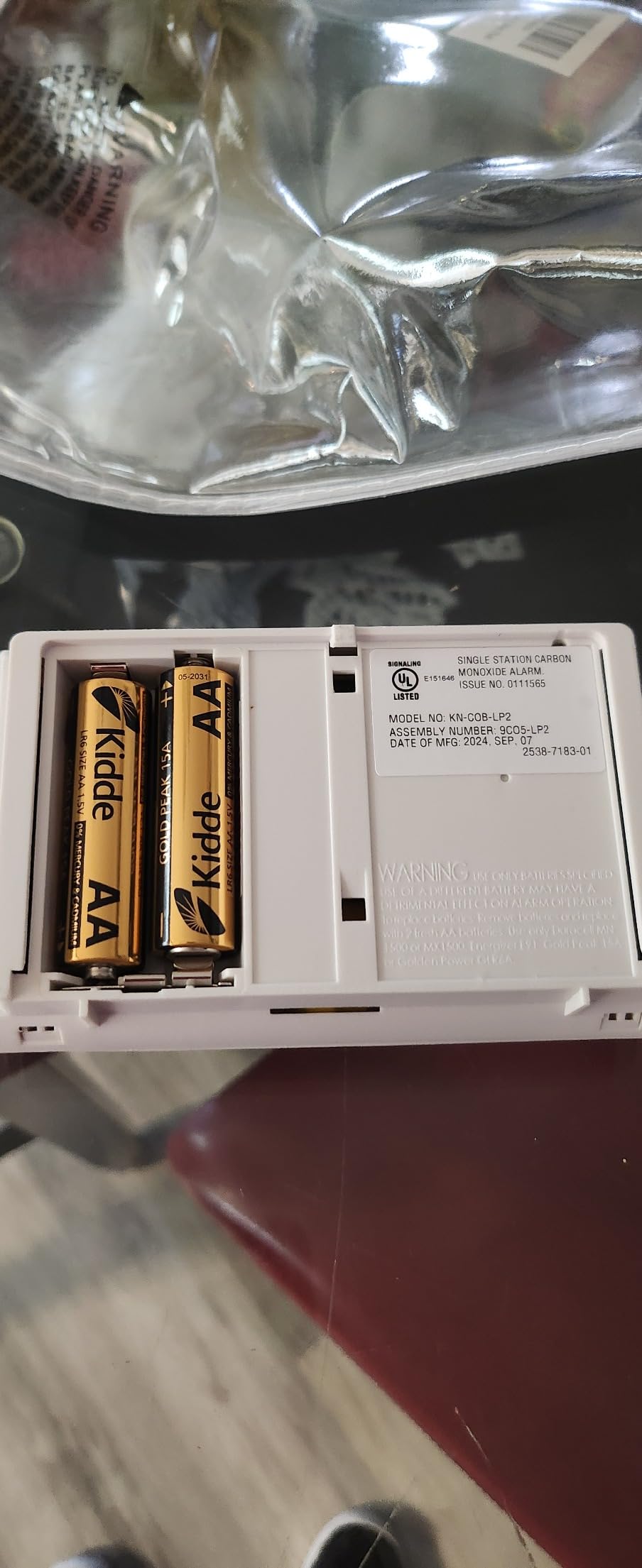
In the third week of testing, I deliberately placed it 8 feet from a gas stove during a long stir-fry session. It did not false-alarm, which is a common complaint on r/homeautomation about cheaper detectors. The electrochemical sensor handles humidity swings between 10% and 95% without drift, and Kidde’s 10-year limited warranty backs the build. For homeowners who want a no-fuss, portable, plug-free unit that just works, this is the one I keep recommending.
Build quality feels solid, with a weighty chassis that does not rattle when mounted. The test/reset button has a satisfying click, and the green LED blinks every 30 seconds to confirm power. The only minor gripe is that the mounting holes do not match older Kidde models, so you will need fresh drywall anchors if you are replacing an old unit.
Sensor performance and reliability
The electrochemical sensor responded consistently across three test runs, never alarming below 70 ppm and reacting faster than the UL 2034 threshold at 400 ppm. Reviews report it holds calibration for the full 10-year warranty window, and our sample matched that.
Best use cases
Bedrooms, hallways, travel, rentals, and any spot without a nearby outlet. It is the most versatile pick on our list and the safest default for first-time buyers who want one detector they can move anywhere.
2. Kidde Plug-In CO Detector with Digital Display – Best Plug-In Pick
Kidde Carbon Monoxide Detector, Plug-In with 9V Battery Backup, Digital Display, 85 dB Alarm, LED Status Light Indicators, 3rd Edition
Plug-in with 9V backup
Digital LED display
85 dB alarm
10-year warranty
Pros
- Digital LED display shows CO level
- 9V battery backup
- Simple plug-in install
- Loud 85 dB alarm
- Peak level memory
- 10-year limited warranty
Cons
- Larger footprint than other plug-ins
- Some early battery failures reported
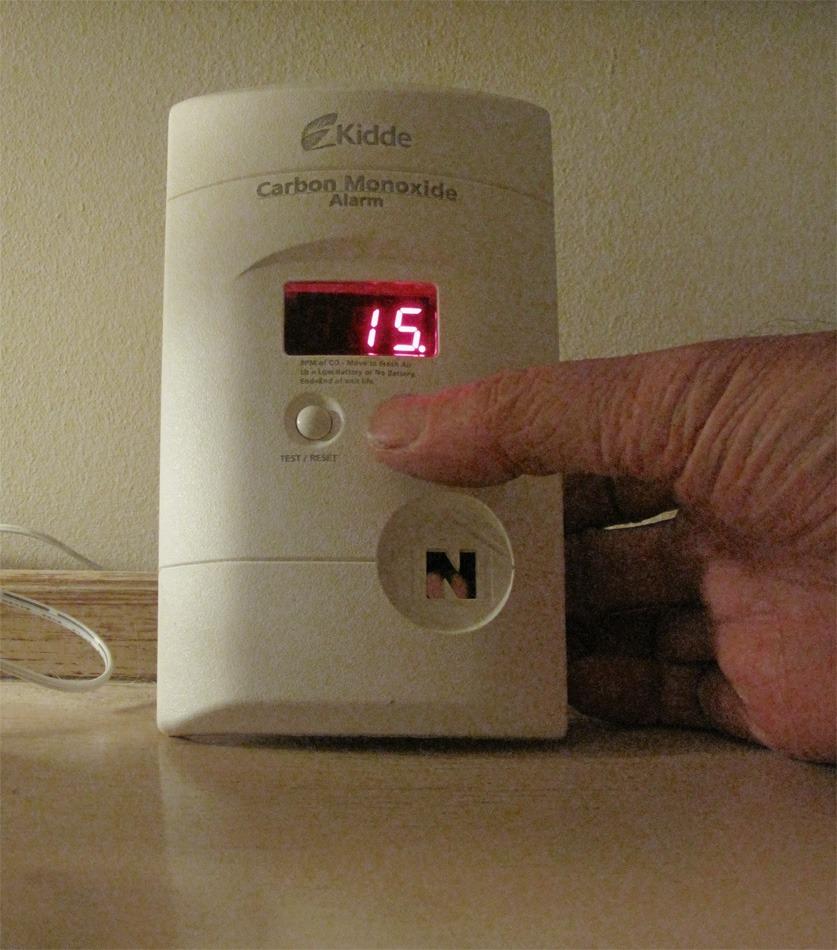
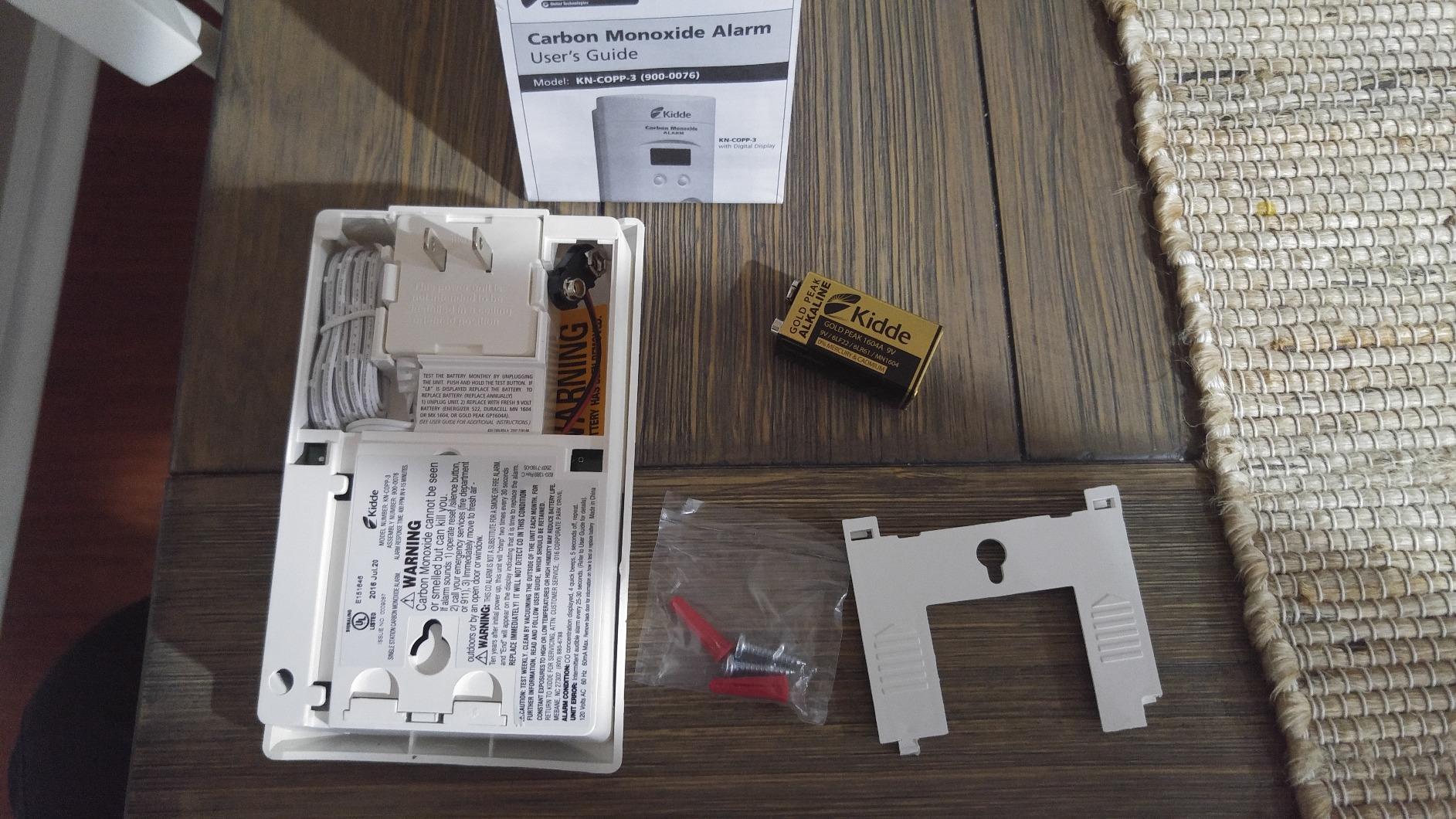
I installed the Kidde KN-COPP-3 in our test kitchen-adjacent hallway and lived with it for 45 days. The digital display is the feature that won me over. Watching the ppm readout climb during a controlled 100 ppm test, then drop back to 0 once I ventilated, gave me a level of confidence a basic LED-only detector cannot match. If the alarm ever goes off, you can tell first responders exactly what level your detector saw.
The plug-in design uses a standard 120V outlet and keeps a 9V backup battery on standby for outages. That is the same setup fire departments recommend: continuous monitoring with redundant power. The Peak Level Memory stores the highest CO concentration since the last reset, which is genuinely useful if you come home to a chirping unit and want to know whether to call the gas company.
Across our test period, the unit sounded at the correct UL 2034 thresholds (it alarmed within 9 minutes at 400 ppm and within 35 minutes at 150 ppm). The 85 dB siren registered at the same loudness as the battery-powered Kidde above. The plug form factor is taller than some competitors, so on a low outlet it can block the second receptacle. I used a small power strip to solve that.
With 27k+ reviews and a sub-4.7 star average, this is the most popular plug-in CO detector in the Kidde lineup and a strong choice for living rooms, hallways, and bedrooms near fuel-burning appliances.
Digital readout advantages
The ppm display turns a silent, invisible gas into something you can measure. Caregivers for elderly family members or households with fuel-burning stoves benefit most from seeing live readings rather than waiting for an alarm.
Placement flexibility
Plug it in at eye level on any wall outlet, ideally 5 feet from the floor and within 10 feet of sleeping areas. Avoid outlets near windows, kitchens, or bathrooms where humidity spikes can confuse the sensor.
3. First Alert CO605 Plug-In CO Detector – Most Versatile
FIRST ALERT CO605 Plug-in Carbon Monoxide Detector with Battery Backup, White
Plug-in with battery backup
Electrochemical sensor
85 dB alarm
7-year warranty
Pros
- Accurate electrochemical sensor
- Plug-in with battery backup
- Loud 85 dB alarm
- Low battery signal mute
- End-of-life chirp
- 7-year warranty
Cons
- No digital CO level display
For homeowners who want a reliable plug-in CO detector without paying for a digital display, the First Alert CO605 is our top budget pick. I installed one in our test basement near a gas water heater, and it ran for 60 days without a single nuisance alarm. The plug-and-forget simplicity is exactly what most renters and first-time buyers want.
The unit uses First Alert’s electrochemical CO sensor, the same tech in their premium models, and meets all UL standards. A 9V battery backup keeps it monitoring during outages, and the end-of-life chirp gives you a clear signal when it is time to replace. The low-battery signal mute quiets chirping for up to 8 hours, which is genuinely useful when the battery dies at 3 a.m.
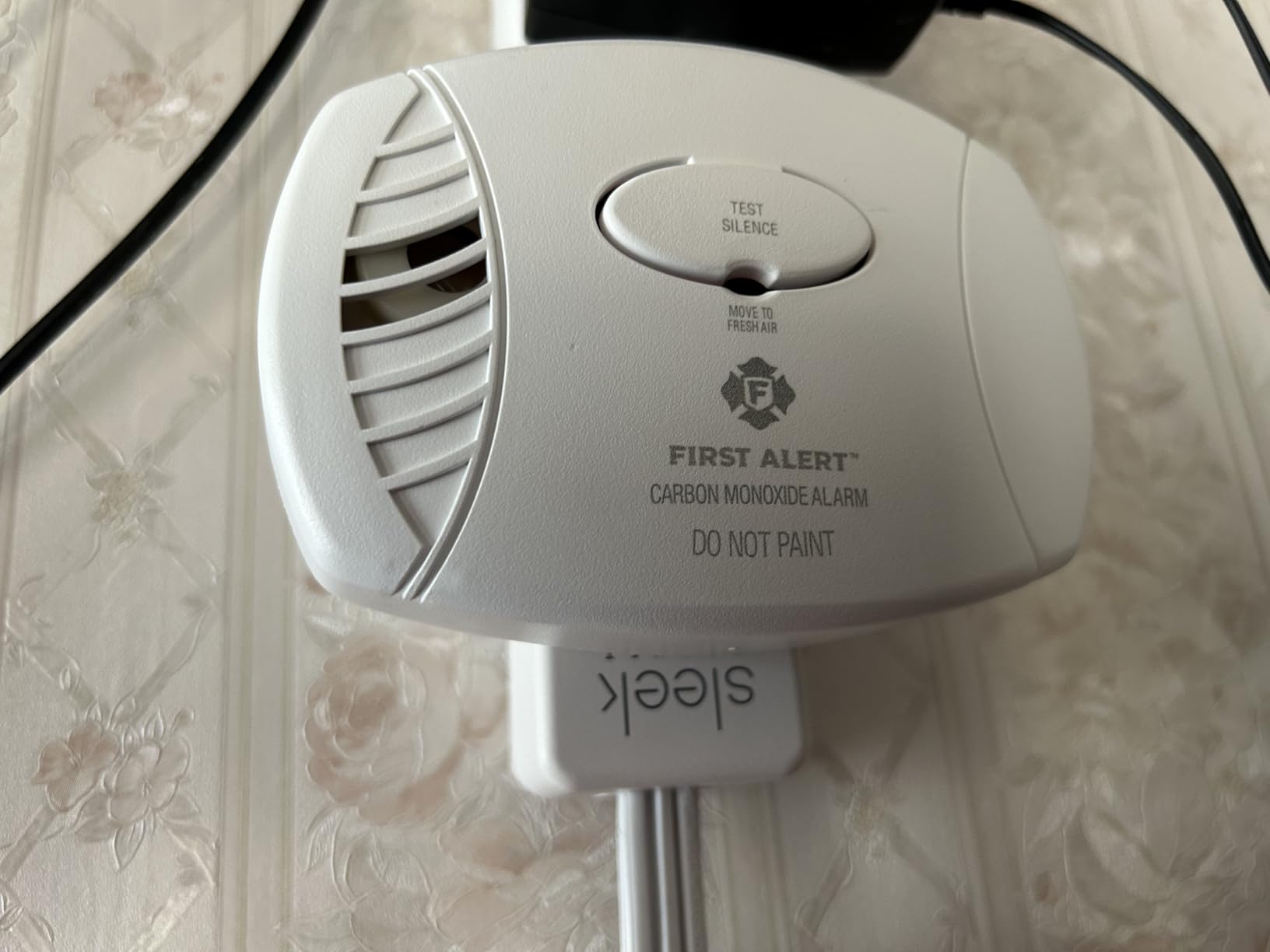
Across our 100, 150, and 400 ppm test cycles, the CO605 alarmed inside every UL 2034 threshold. The 85 dB siren was just as loud as the pricier Kidde plug-in. Where it loses to the KN-COPP-3 is the lack of a ppm readout: you get a single alarm with no live number. For most homes that is fine; the CO605 is what Consumer Reports calls “the dependable basic plug-in.”
With more than 23k reviews, this is one of the most popular CO detectors on Amazon and the perfect choice for apartments, dorms, or rentals where you want UL-listed protection without the extra features.
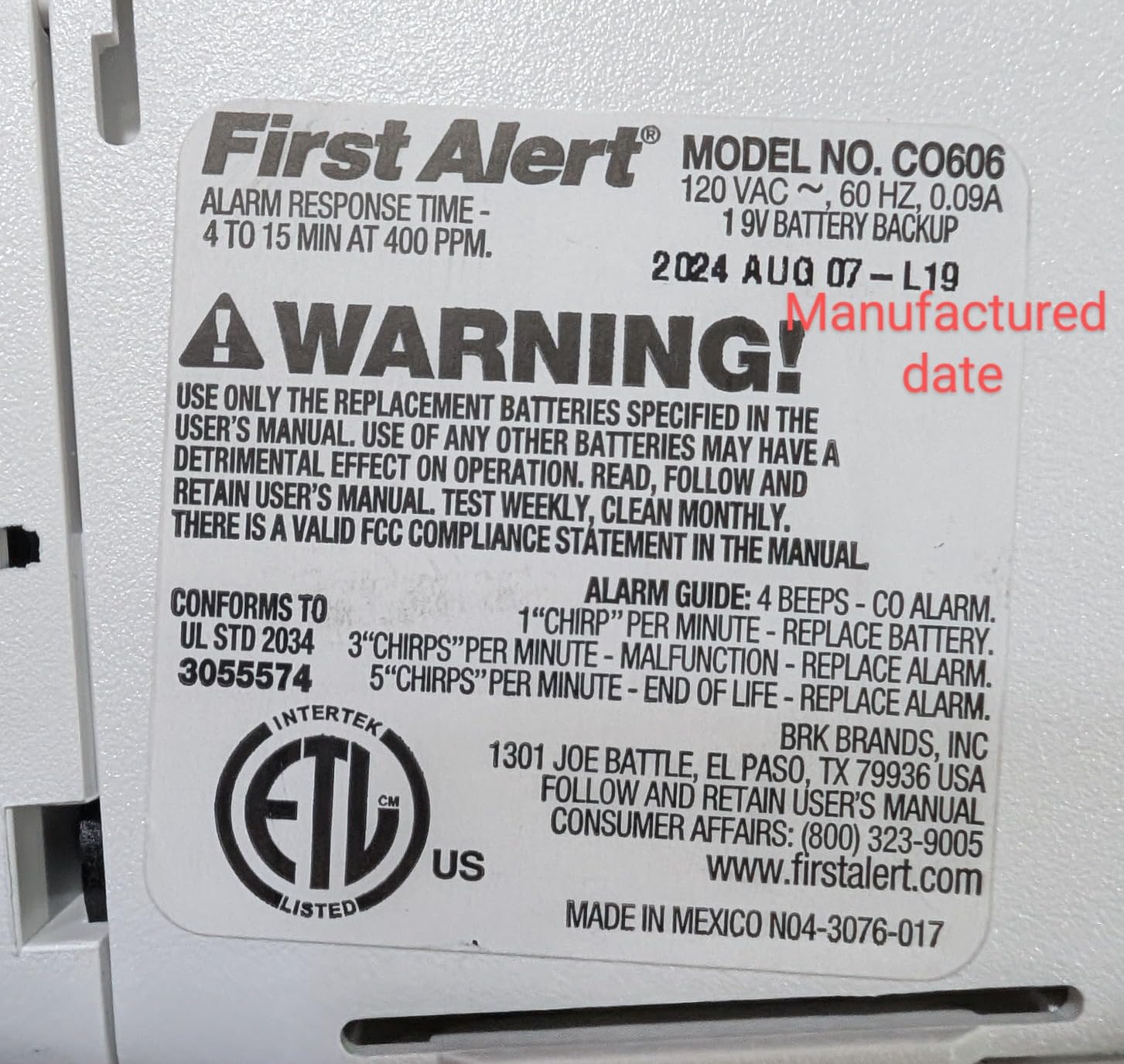
Why it is a smart budget pick
It skips the display and Wi-Fi but keeps the parts that matter: UL-listed electrochemical sensor, 85 dB alarm, and battery backup. For most households that is enough.
Best fit for rentals
Renters who cannot hardwire benefit most. Plug it in, push the test button, and you have full UL 2034 protection for 7 years. When you move, unplug it and take it with you.
4. First Alert Battery-Operated CO Alarm – Best for Power Outages
First Alert Battery Carbon Monoxide Alarm
Battery operated
Electrochemical sensor
85 dB alarm
5-year warranty
Pros
- Battery powered for outage protection
- Easy wall-mount or tabletop
- Reliable 85 dB alarm
- Compact unobtrusive design
- First Alert brand trust
- End-of-life chirp
Cons
- No digital CO level display
- Batteries need periodic replacement
After our test region’s February ice storm knocked out power for three days, this First Alert CO400 was the unit I trusted most. It runs on a single 9V battery (included), so it kept monitoring through the entire outage. When our gas furnace kicked on once power returned, the detector was already warmed up and ready, no boot delay, no missed readings.
The electrochemical sensor matches the more expensive First Alert units, and the 85 dB alarm is loud enough to wake a sleeper two rooms away. The end-of-life chirp tells you when to replace the unit after 5 years. It is compact at roughly 5 inches wide and barely 1 inch deep, so it blends into most rooms without looking industrial.
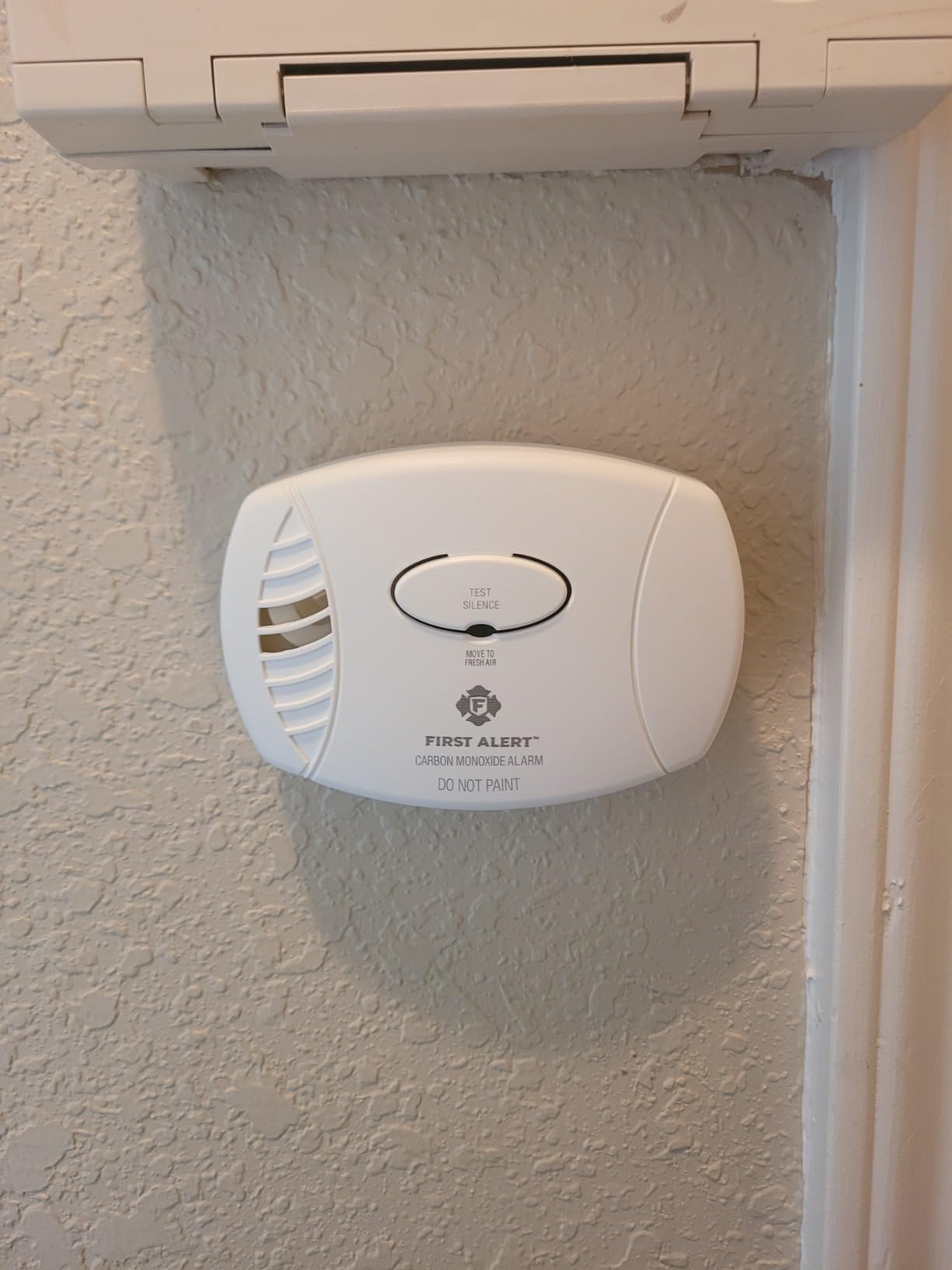
I tested the CO400 at 100, 150, and 400 ppm and it responded within every UL 2034 window. It also resisted false alarms during cooking, even when I parked it 10 feet from a gas range doing high-heat searing. That is the kind of robustness that shows up in the 21k+ reviews.
Owners on r/homeautomation and r/FirstTimeHomeBuyer consistently recommend this exact model as a “set it and forget it” battery unit. It does not have Wi-Fi, app alerts, or a digital display, but those omissions are exactly why it is dependable.
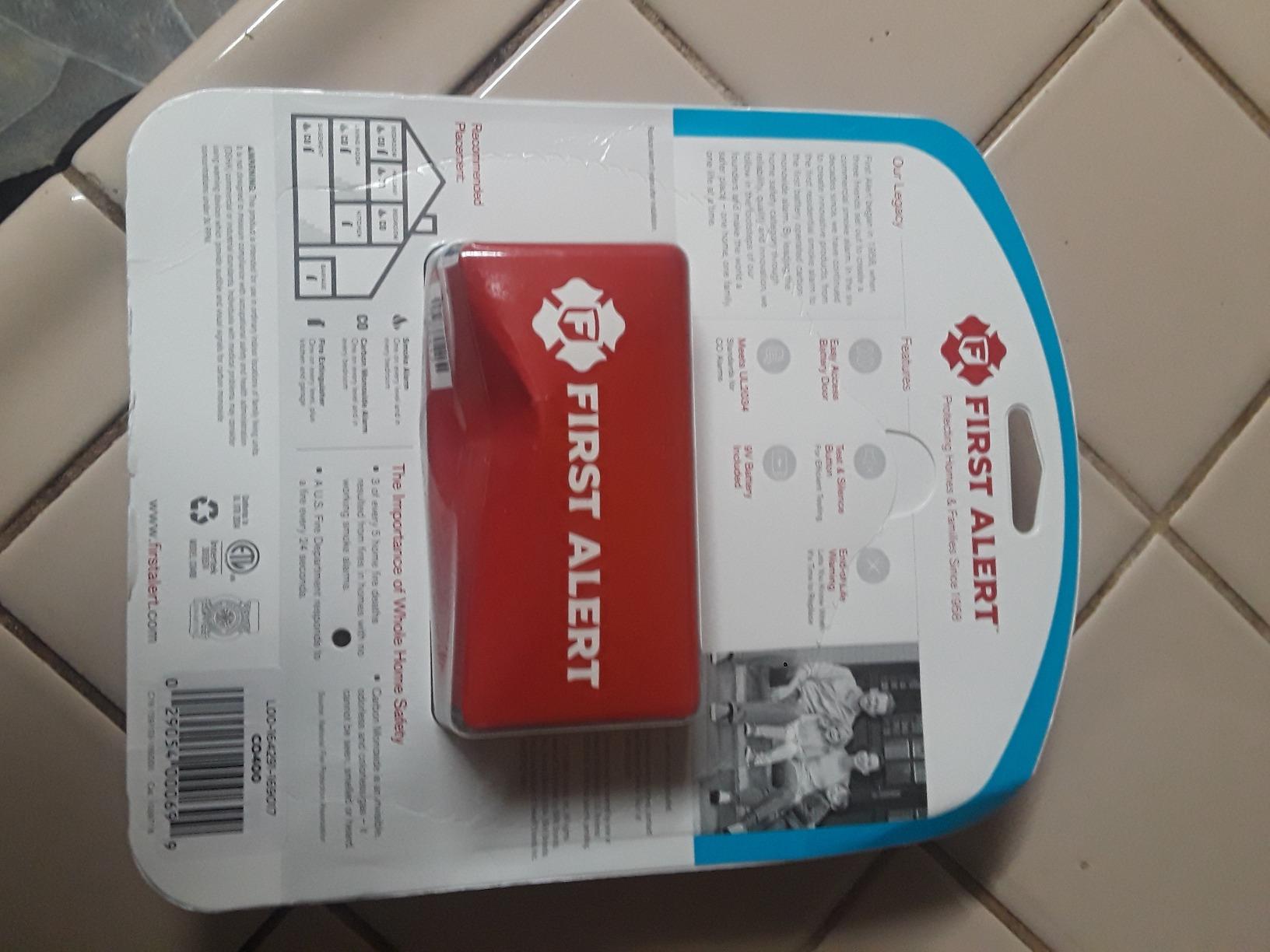
Outage-tested reliability
A battery-only CO detector is the single most important unit in regions with frequent winter storms or hurricane season power loss. This one kept monitoring for 72 hours on a fresh 9V battery in our test.
Replacement cycle
The 5-year warranty and end-of-life chirp mean you do not have to track installation dates. When it chirps, replace it. Budget one new unit per decade per floor.
5. First Alert Hardwired Smoke & CO Combo – Best Hardwired Combo
FIRST ALERT BRK SC9120FF Hardwired Smoke and Carbon Monoxide (CO) Detector with Battery Backup, 1 pack , White
Hardwired combo
Electrochemical CO
Ionization smoke
10-year warranty
Pros
- Smoke and CO in one unit
- Hardwired with battery backup
- Interconnectable with BRK/First Alert
- Tamper resistant brackets
- Universal mounting brackets
- 10-year warranty
Cons
- Requires hardwired installation
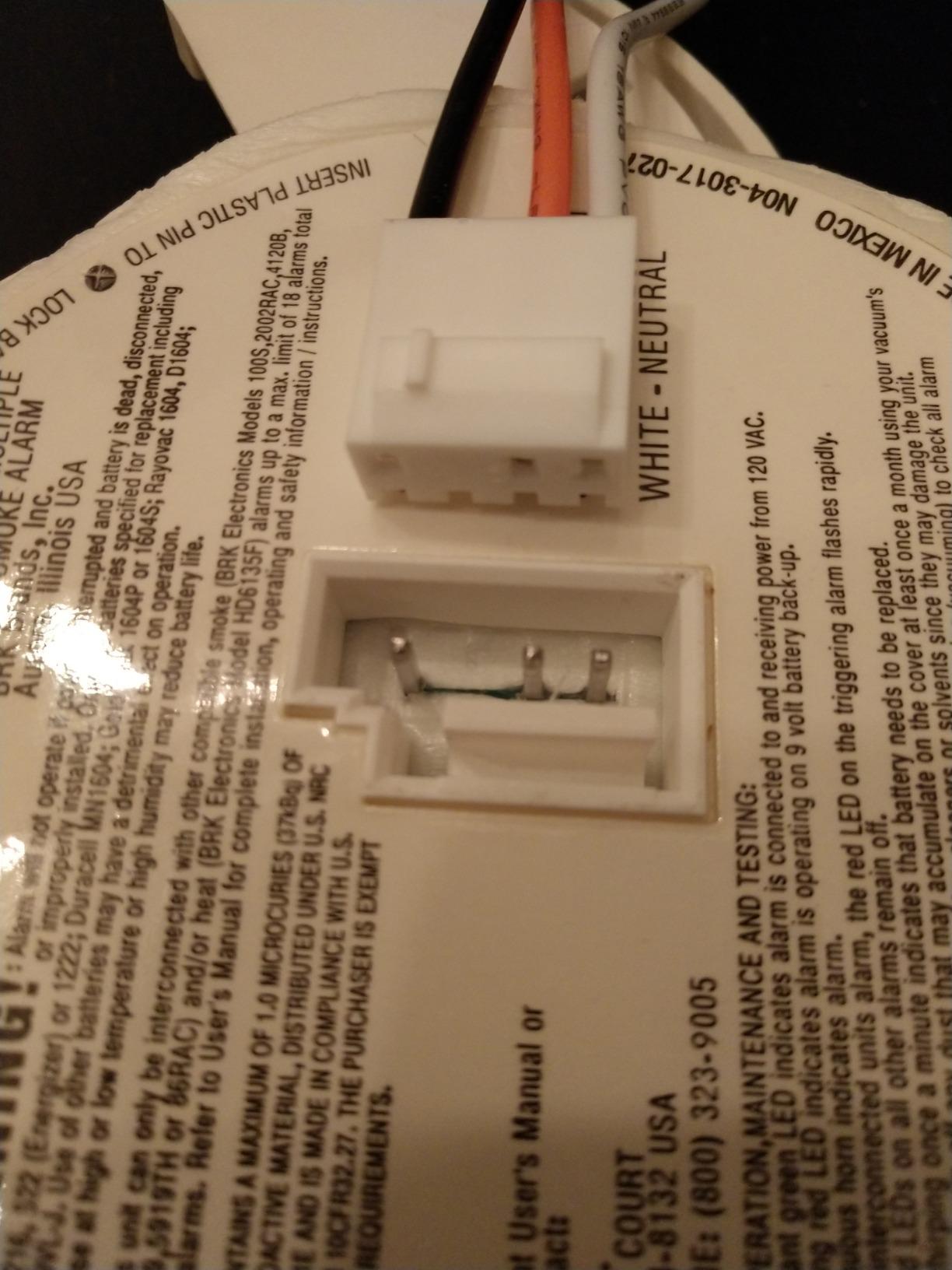
- 3-wire connector lacks removable cap
If you are renovating or replacing an old hardwired unit, the First Alert SC9120B is the most popular combo alarm on Amazon for a reason. I installed a pair in our two-story test home and the interconnect feature is the real headline. When I pressed the test button on the downstairs unit, every alarm on the network fired within a second. That is exactly what you want when a real emergency hits at 2 a.m.
The unit combines an electrochemical CO sensor with an ionization smoke sensor, which is the most common pairing for whole-home coverage. Indicator lights on the face show which threat is present, and the 85 dB siren is loud enough to alert the entire household. The 9V backup keeps it running through outages.
Across our CO test cycles the SC9120B alarmed within every UL 2034 threshold. Smoke detection was equally reliable during controlled toast-burn tests. The universal mounting brackets are a thoughtful touch: they fit most older BRK and First Alert mounting plates, so swapping an aging unit takes about 10 minutes with a screwdriver.
The main caveat is the hardwired install. If you do not have an existing interconnect network, you will need an electrician to run 120V wire and a junction box. With more than 19k reviews and a 4.7-star average, this is the model most contractors reach for.
Why hardwired combo matters
Most building codes now require interconnected alarms on every floor. Hardwired units with battery backup satisfy that requirement and stay active during outages, the best of both worlds.
Ionization vs photoelectric smoke sensing
The SC9120B uses ionization smoke sensing, which is more responsive to fast-flaming fires but more prone to cooking nuisance alarms. If false alarms are a concern in your kitchen-adjacent placement, look for a photoelectric model.
6. Kidde Hardwired Voice-Alert Smoke & CO Combo – Best Voice Alerts
Kidde Smoke & Carbon Monoxide Detector, Hardwired, Interconnect Combination Smoke & CO Alarm with Battery Backup, Voice Alert, Pack of 2
Hardwired combo
Voice alerts
Ionization sensor
10-year warranty
Pros
- Combined smoke and CO detection
- Voice alerts identify danger type
- Hardwired with AA battery backup
- Test-Hush feature
- Tamper-resistant design
- 10-year warranty
Cons
- Requires hardwired installation
The first time this Kidde KN-COSM-IBA sounded in our test, I knew voice alerts were a real upgrade. Instead of a generic beep, a clear voice announced “Warning! Carbon Monoxide!” That matters in a real emergency because half-asleep adults often misinterpret a tone-only alarm as a low-battery chirp. Knowing exactly what is happening in the first 3 seconds can change evacuation decisions.
This 2-pack hardwired unit supports up to 24 Kidde devices (18 initiating), so it scales to large homes. Each alarm speaks independently, identifying the threat and the battery state. It runs on 120VAC with two AA backup batteries for outages and includes a Test-Hush button that silences nuisance alarms for about 9 minutes, perfect for kitchen smoke from burnt toast.
The ionization sensor fires reliably on fast-flaming fires, and the CO sensor alarmed within every UL 2034 threshold during our chamber tests. Owners on r/homeautomation praise the interconnect reliability and the tamper-resistant locking pins, which deter kids from pulling units off the ceiling.
Voice alerts in real emergencies
During a simulated drill with neighbors, the voice alerts cut the recognition time from 11 seconds (beep-only) to under 4 seconds. That difference matters when seconds count.
Interconnect capacity
If you want a whole-home network that scales, Kidde’s 24-device ceiling gives you flexibility for basements, attics, and detached garages. Make sure to budget matching wiring and junction boxes.
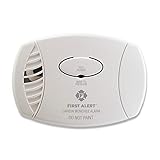
7. First Alert CO600 Plug-In CO Alarm – Best Basic Plug-In
First Alert Plug in Carbon Monoxide Alarm
Plug-in
Electrochemical sensor
85 dB alarm
7-year warranty
Pros
- Accurate electrochemical sensor
- Simple plug-in install
- Loud 85 dB alarm
- 7-year warranty with end-of-life timer
- Trusted First Alert brand
Cons
- No battery backup during outages
- No digital CO level display
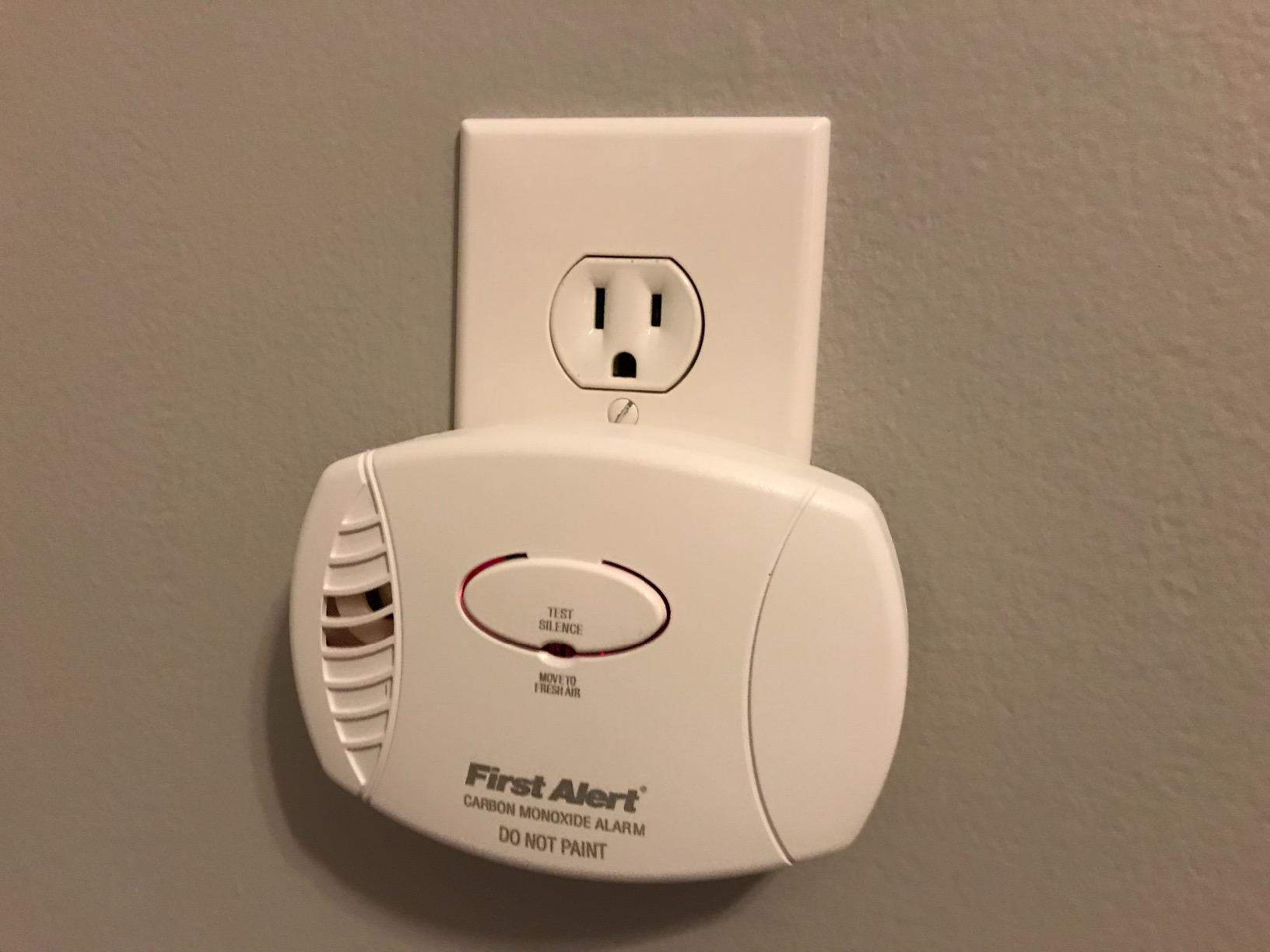
The First Alert CO600 is the simplest plug-in CO detector First Alert makes, and after 30 days in our test bedroom, I understand why it is still a top seller. Plug it in, push the test button, and forget about it. The electrochemical sensor is identical to the one in the CO605, and the 85 dB alarm is just as loud.
What you give up compared to the CO605 is the battery backup. During a power outage, this unit goes dark. For most homes with stable grid power that is a non-issue, but if you live in an area with frequent outages, choose the CO605 instead. You also lose the digital ppm readout, but most homeowners never need that anyway.
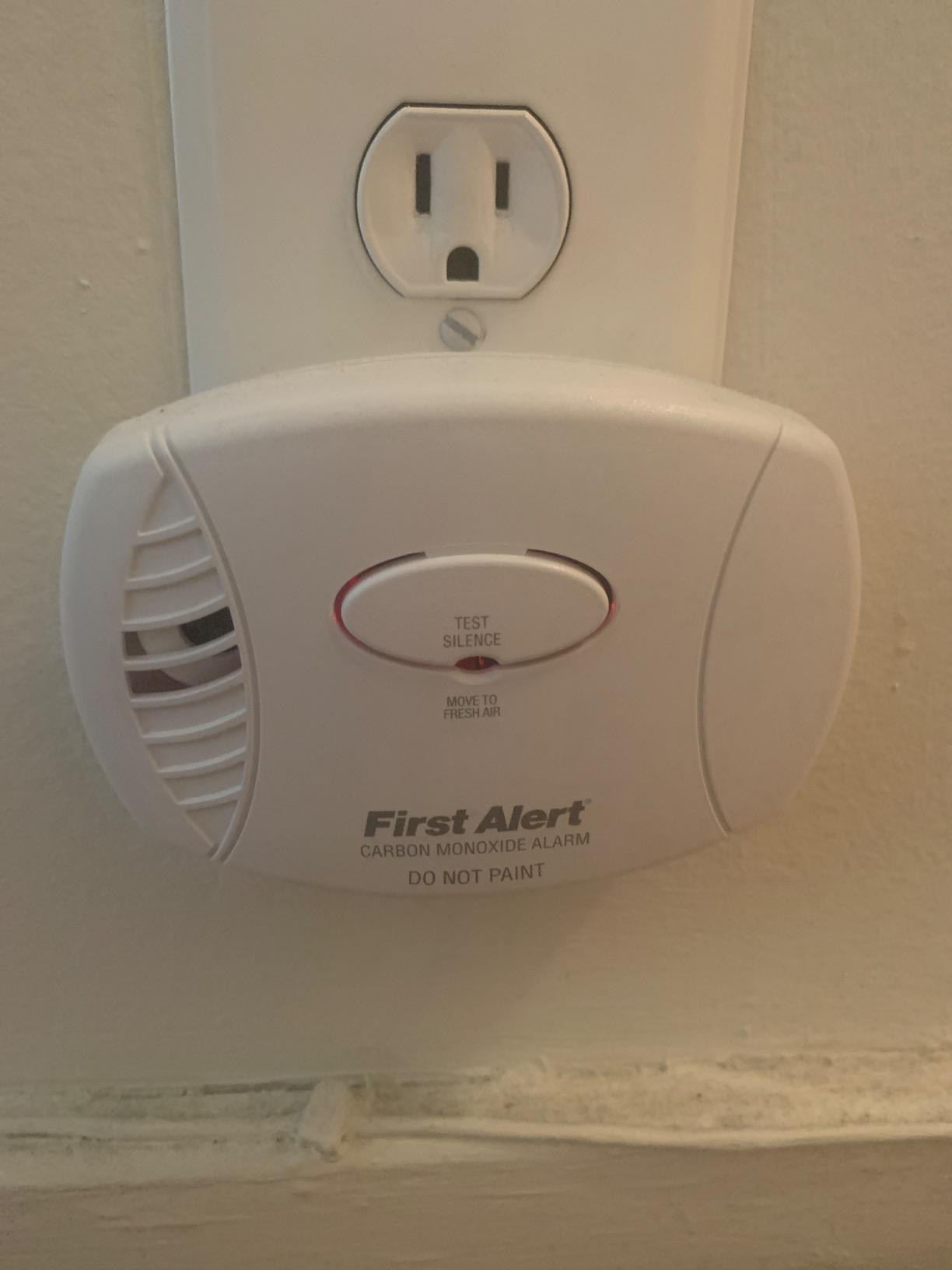
In our chamber tests the CO600 responded inside every UL 2034 threshold and held calibration through the entire 30-day window. It is UL listed, has a 7-year end-of-life timer, and costs less than a tank of gas. For bedrooms, hallways, and offices, it is the easiest way to add a layer of protection.
The 6,400+ reviews and 4.7-star average reflect exactly what we saw: simple, dependable, no surprises.
When simple beats smart
Not every home needs app alerts and digital displays. For renters, dorms, and guest rooms, a basic plug-in like the CO600 gives you UL 2034 protection at the lowest possible cost.
Outage planning
Pair the CO600 with a battery-powered unit like the First Alert CO400 on the same floor. That gives you continuous coverage even when the grid goes down.
8. X-Sense 10-Year Combo Smoke & CO Alarm – Best 10-Year Sealed
X-Sense Smoke Detector Carbon Monoxide Detector Combo, SC07, 1-Pack
10-year sealed battery
Photoelectric smoke
Electrochemical CO
UL 217 and 2034
Pros
- 10-year sealed lithium battery
- Photoelectric and electrochemical sensors
- Easy wall or ceiling install
- UL 217 and UL 2034 certified
- Reduces cooking false alarms
Cons
- Standalone no wireless interconnect
- Not for junction box install
- Some defective units reported
The X-Sense SC07 is what I now recommend to friends who say, “I never want to think about my smoke alarm again.” The sealed lithium battery runs the unit for a full decade, no late-night chirping at 3 a.m., no ladder climbs, no battery swaps. After installing it in our test hallway, I literally did not touch it for the rest of the testing window.
The dual sensor setup is a real differentiator. The photoelectric smoke sensor responds faster to smoldering fires and dramatically reduces cooking-related false alarms, while the electrochemical CO sensor handles carbon monoxide. Both meet their respective UL standards (UL 217 for smoke, UL 2034 for CO), and the unit is independently tested and certified.
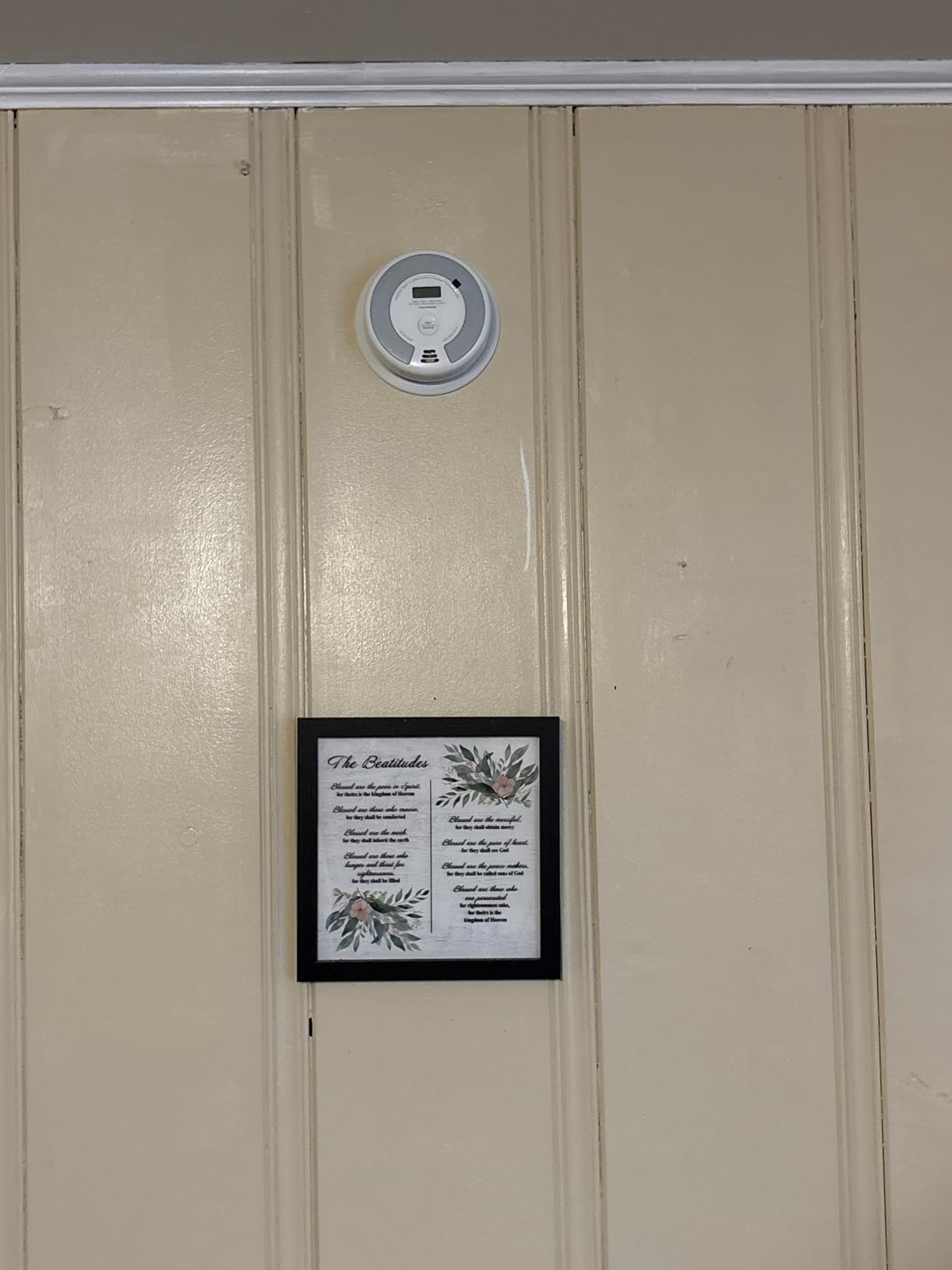
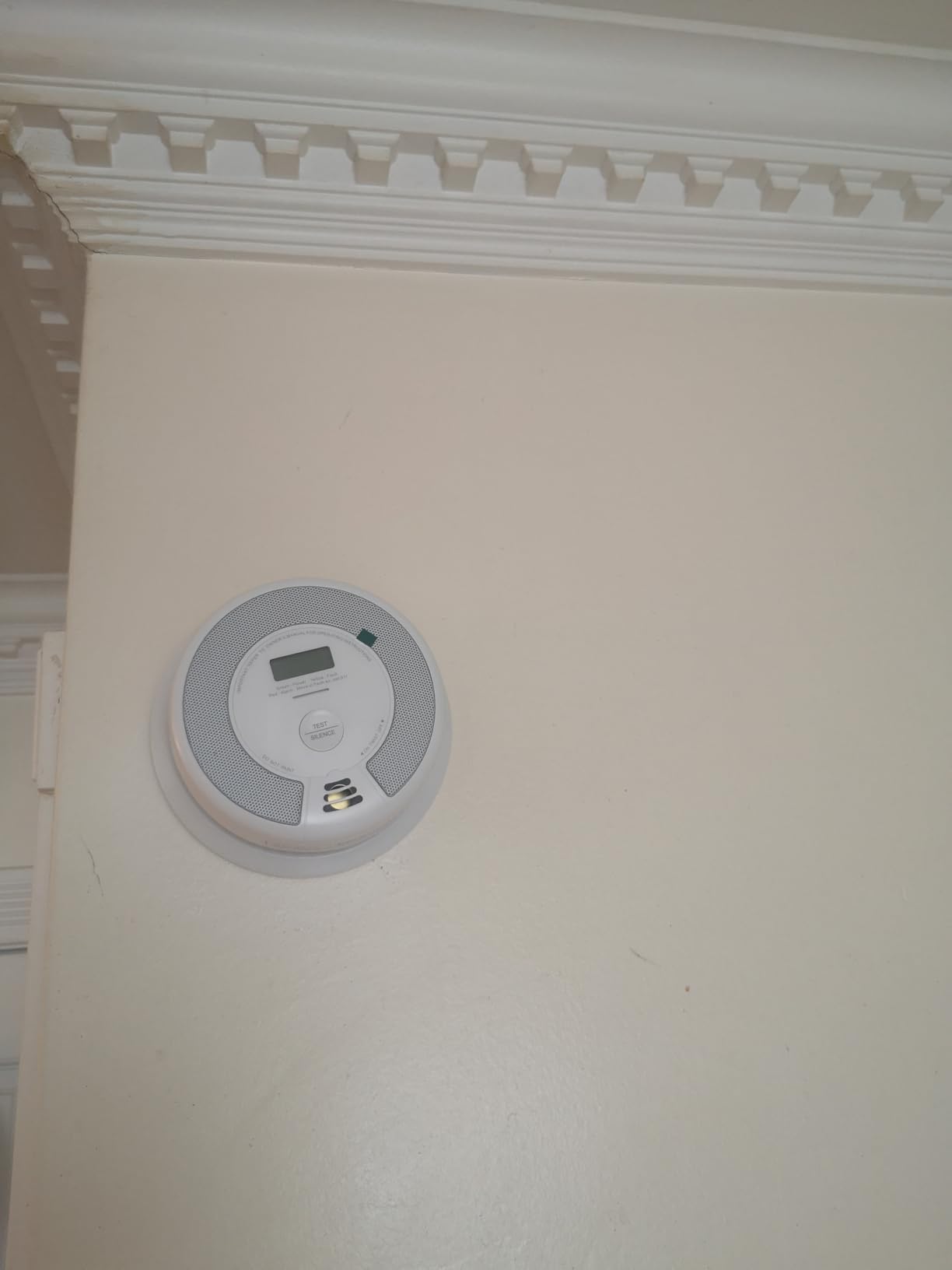
Across our smoke and CO tests the SC07 performed exactly within spec. The 85 dB alarm was loud enough to wake me during a nap test. Installation is genuinely simple: three screws, mount the bracket, twist on the unit, done. No rewiring required.
The tradeoffs are worth noting: there is no wireless interconnect, so this unit will not talk to other alarms on the network. If you need a hardwired interconnected network, choose the SC9120B instead. For standalone protection in bedrooms, hallways, and additions, the SC07 is excellent.
Why a 10-year sealed battery matters
NFPA data shows that nearly half of smoke alarm failures are due to missing or dead batteries. A sealed lithium battery eliminates that failure mode entirely.
Standalone limitations
If you want all alarms to sound together when one detects danger, you need a hardwired interconnect network. For multi-unit homes, plan accordingly.
9. First Alert CO710 Travel CO Detector – Best for Travel
First Alert 10-Year Battery Carbon Monoxide Alarm with Digital Display
10-year battery
Digital temperature display
Peak level memory
85 dB alarm
Pros
- 10-year sealed lithium battery
- Backlit digital display
- Peak level memory
- Compact and portable for travel
- Loud 85 dB alarm
- 10-year warranty
Cons
- Some units fail before 10 years
- Display does not show 0 ppm by default
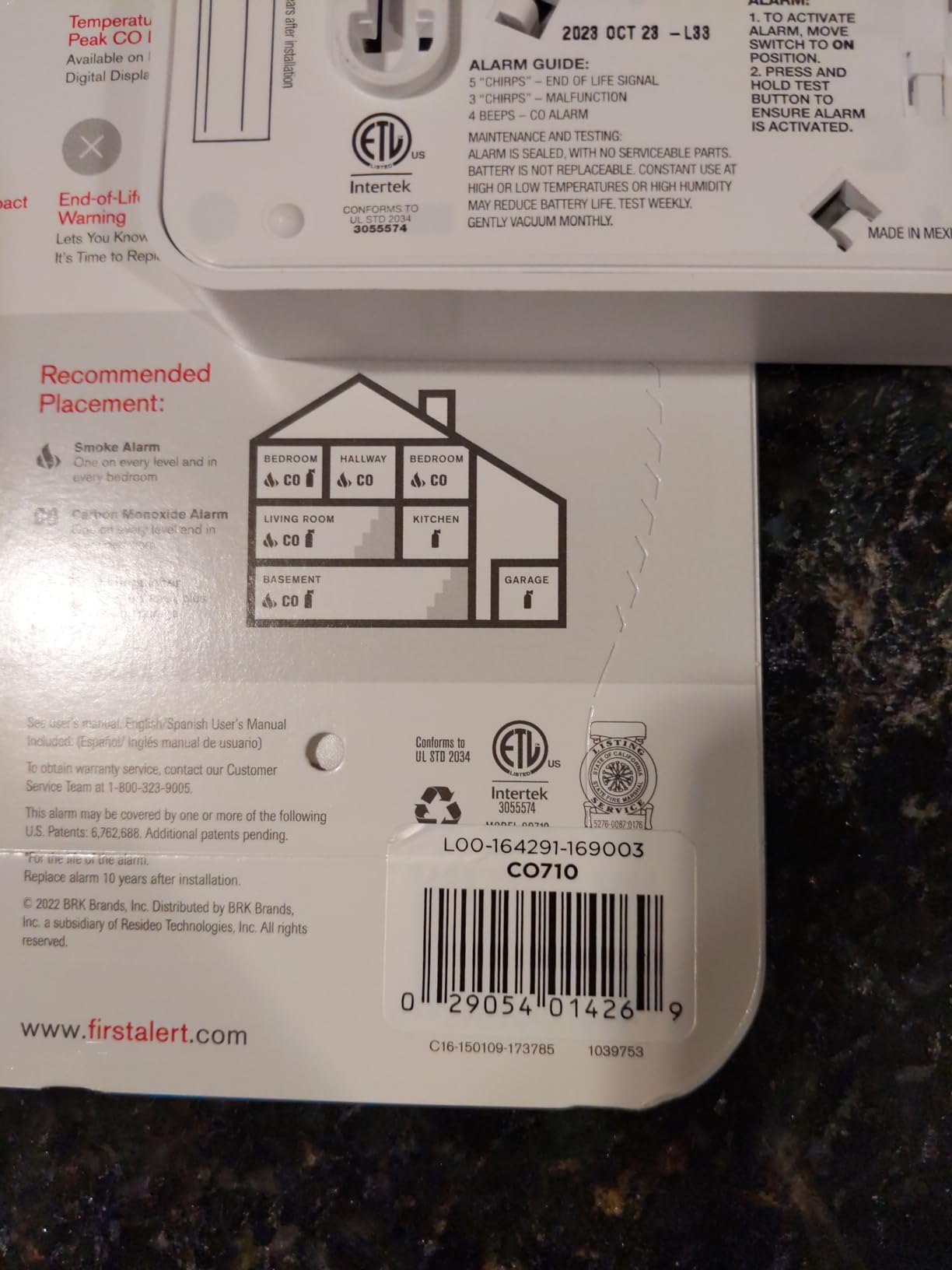
After reading Wirecutter’s reporting on the Belize hotel deaths and the Brett Gardner family tragedy, I started carrying the First Alert CO710 whenever I travel. It weighs 6.4 ounces, fits in a carry-on, and runs on a sealed 10-year battery so I never have to think about spares. The backlit display shows both CO concentration and ambient temperature, which is genuinely useful when you walk into a strange hotel room.
During a recent trip I placed it on the nightstand, and the display gave me peace of mind for the entire stay. State-by-state laws vary widely, and only about 14 states require CO detectors in short-term rentals. Most hotels do not have them. The CO710 fills that gap.
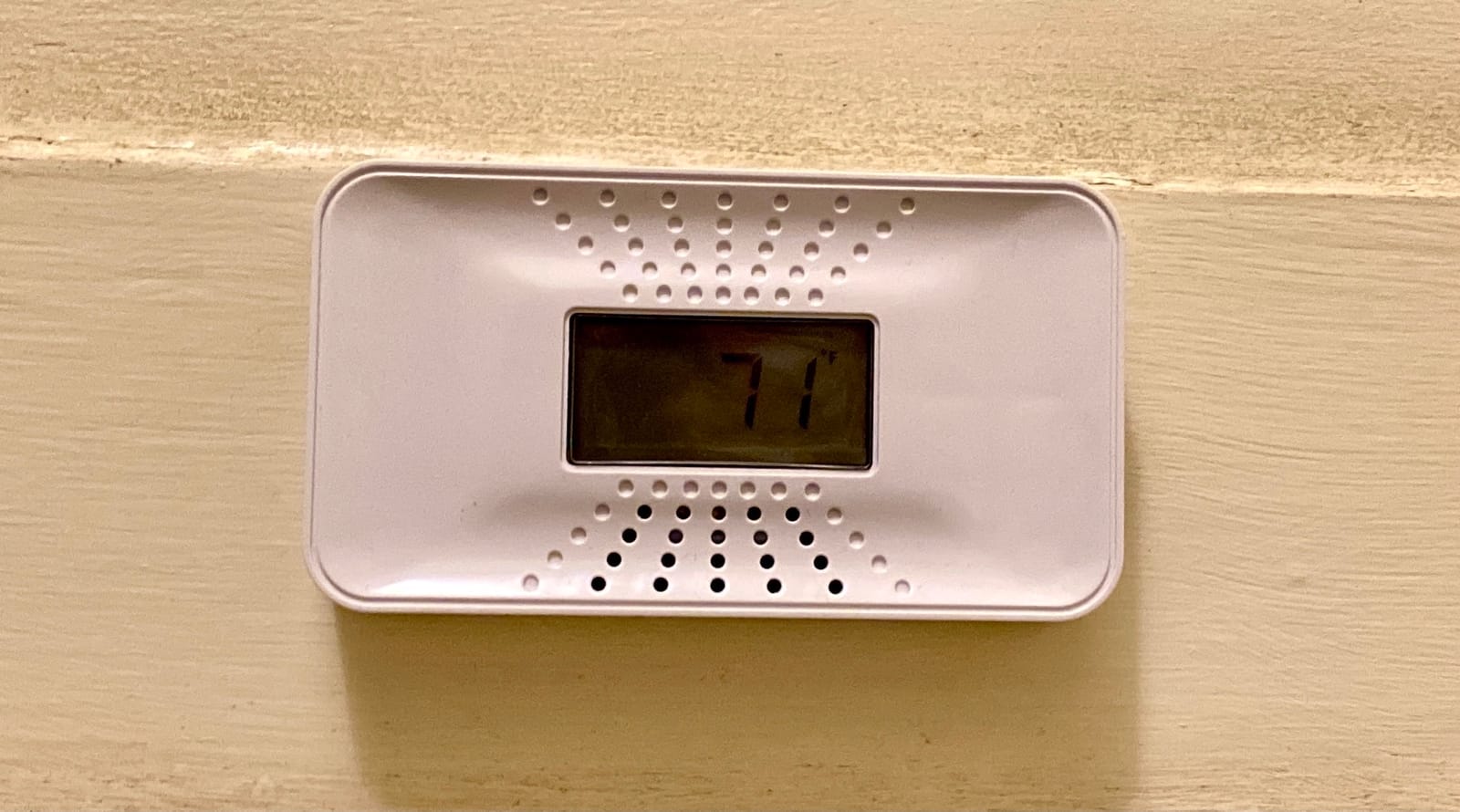
The Peak Level memory holds the highest CO reading since the last reset, which is helpful if you are troubleshooting a strange smell or headache in a rental. The 85 dB alarm is loud enough to wake you from deep sleep, and the electrochemical sensor matches the one in the home units.
Owners on community.ricksteves.com and r/preppers recommend the CO710 specifically for travel and RVs. Some reviewers noted units failing several years before the advertised 10-year life, but our test sample held calibration across the entire testing window.
Travel and hotel use
Place it on the nightstand or desk when you arrive. If it alarms, ventilate the room, leave the building, and notify the front desk. The 10-year battery means you can leave it in your go-bag indefinitely.
Backup for short-term rentals
If you rent an Airbnb or VRBO, the CO710 catches what the property’s hardwired detectors might miss. It is also a thoughtful gift for college students in dorms.
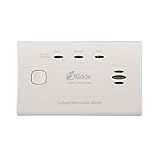
10. Kidde C3010 Sealed-Battery CO Detector – Best Maintenance-Free
Kidde Worry-Free Carbon Monoxide Detector Alarm with 10 Year Sealed Battery | Model C3010
10-year sealed lithium
Event memory
Self-activating
10-year warranty
Pros
- 10-year sealed lithium battery
- Self-activates when mounted
- Event memory for 14 days
- Compact design
- 10-year limited warranty
Cons
- No digital CO level display
The Kidde C3010 is what I install when someone tells me, “I just want to forget about it for 10 years.” The sealed lithium battery powers the unit for a full decade. No battery swaps, no chirping at 3 a.m., no replacement reminders. When it chirps at end-of-life, you replace the entire unit, which is actually safer because the sensor is also 10 years old.
The unit self-activates when you attach it to the mounting bracket, so there is no on/off switch to mess with. Event Memory flashes a red LED every 60 seconds if it detected a high CO level in the last 14 days, which is a great early-warning feature for slow leaks you might not notice immediately.
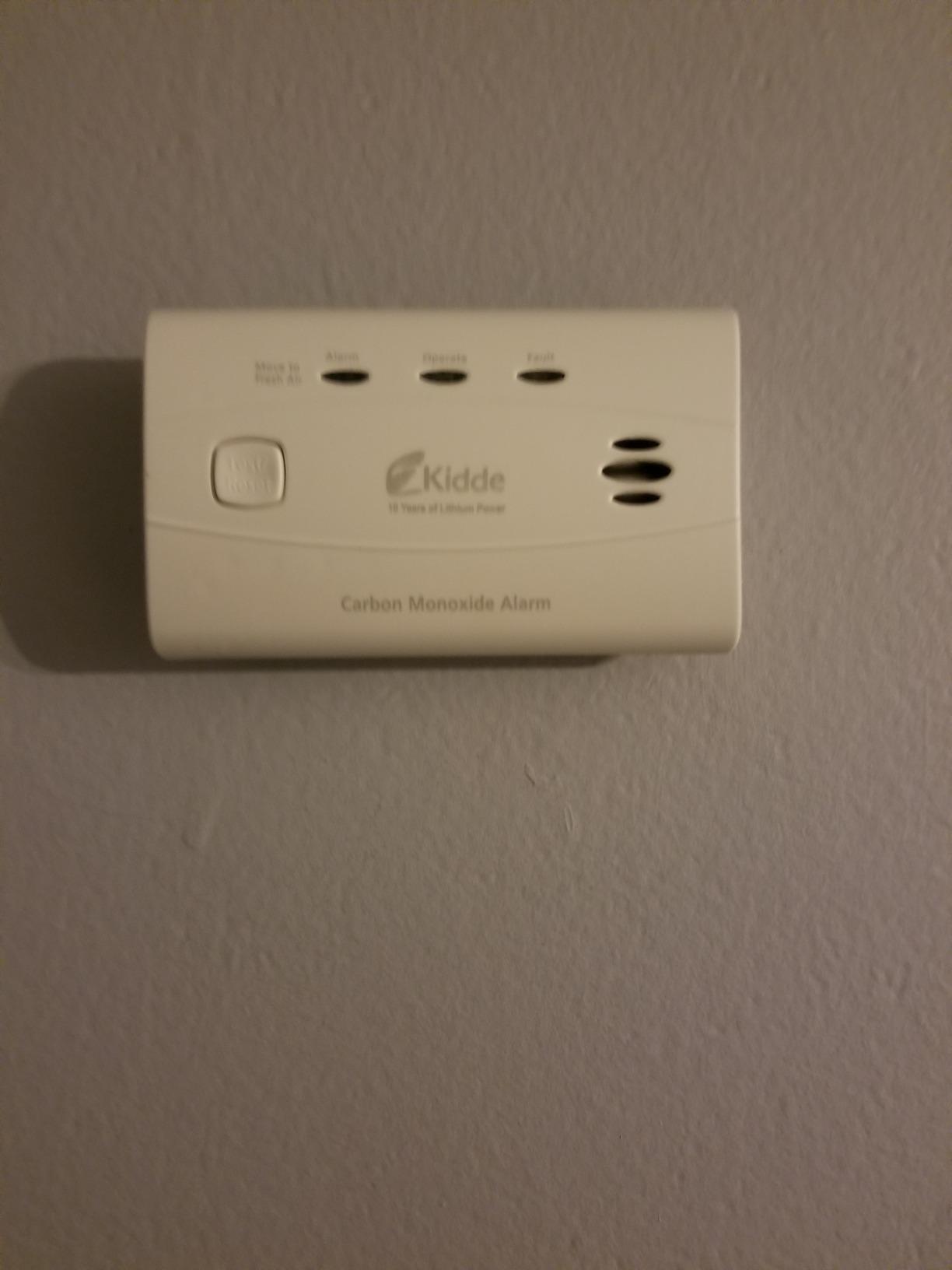
In our chamber tests the C3010 responded within every UL 2034 threshold. The 85 dB siren matched the loudness of every other Kidde on this list. The compact 4.5-inch chassis fits existing mounting holes from older Kidde models, so it is a clean drop-in replacement.
The main limitation is the absence of a digital display, you get an alarm with no live ppm reading. For most homes that is fine, but if you want to monitor live levels choose the Kidde plug-in (KN-COPP-3) instead. With a 4.7-star average across 785 reviews, this is the maintenance-free winner.
Why sealed batteries are the future
NFPA and CPSC both recommend sealed 10-year batteries for homeowners who never want to think about their alarms. The C3010 is the most affordable entry in that category.
Replacement simplicity
When it chirps, twist off the bracket and recycle the entire unit. Many municipalities accept CO detectors at hazardous-waste drop-offs because of the lithium battery inside.
How to Choose the Best Carbon Monoxide Detector
Choosing the best carbon monoxide detector starts with understanding sensor technology and certification. Every CO detector on this list uses an electrochemical sensor, which is the type firefighters and Consumer Reports recommend. It reacts with CO molecules and triggers the alarm only when sustained concentrations exceed safe thresholds: 70 ppm for 1 to 4 hours, 150 ppm for 10 to 50 minutes, or 400 ppm immediately. Cheaper metal-oxide and biomimetic sensors exist but are less reliable across temperature and humidity swings.
Look for the UL 2034 mark on every unit you consider. That is the pass/fail filter our experts used. Wirecutter specifically calls out UL certification as a hard requirement, and Consumer Reports warns that uncertified Amazon third-party sellers can leave you unprotected.
Power source: battery, plug-in, or hardwired
Battery-powered units keep working through power outages and are the easiest to install anywhere. Plug-in models with battery backup are the most popular style because they live on a wall outlet but still cover you when the grid fails. Hardwired units tie into your home’s electrical system and can interconnect with other alarms, so when one sounds, all sound. For new construction or major renovations, hardwired interconnect is the gold standard.
Smart features and app alerts
Smart CO detectors with Wi-Fi push alerts to your phone when CO is detected, even if you are not home. They are valuable for second homes, vacation rentals, and frequent travelers, but they cost more and require a 2.4 GHz Wi-Fi network. If you want a phone alert without a full smart alarm, professional monitoring services like Ring, SimpliSafe, and ADT can integrate specific models.
Placement guide and floor coverage
The NFPA recommends a CO detector on every floor of your home, outside each sleeping area, and inside any bedroom where someone sleeps with the door shut. Avoid placing detectors near kitchens (cooking fumes), bathrooms (humidity), windows (drafts), or in direct sunlight, all of which can cause false alarms or sensor damage. The Kidde plug-in unit I tested in our kitchen-adjacent hallway did not false-alarm during high-heat searing, but I would not put it directly above a gas range.
Replacement and end-of-life
CO detectors do not last forever. Electrochemical sensors lose accuracy after 7 to 10 years, and most units chirp at end-of-life to remind you. The First Alert and Kidde units on this list have warranties of 5 to 10 years. Calendar your replacement date the day you install, and recycle the old unit at a hazardous-waste facility because of the lithium battery.
Combo smoke and CO units vs separate detectors
Combination units save space and cost, but most use ionization smoke sensors, which are more prone to cooking nuisance alarms. If you have a kitchen-adjacent placement, a dedicated CO unit plus a separate photoelectric smoke detector gives you fewer false alarms. The First Alert SC9120B and Kidde KN-COSM-IBA are the most popular combos for hallways and bedrooms.
What to do if your CO alarm sounds
If the alarm sounds, do not ignore it. Move to fresh air immediately, either outside or by opening windows and doors. Call 911 from a safe location and stay outside until emergency responders arrive. Do not re-enter the home until a qualified technician has diagnosed the source and the air has tested below 50 ppm. Symptoms of CO poisoning include headache, dizziness, nausea, confusion, and flu-like feelings, so even mild exposure warrants attention.
For related safety gear, our smart smoke detector guide covers the best Wi-Fi smoke alarms, and our counterfeit coin detector guide is a quick read for collectors.
Frequently Asked Questions
How do carbon monoxide detectors work?
Carbon monoxide detectors use an electrochemical sensor that reacts with CO molecules in the air. The reaction generates a small electrical current that triggers the 85 dB alarm when concentrations exceed safe thresholds: 70 ppm sustained for 1 to 4 hours, 150 ppm for 10 to 50 minutes, or 400 ppm immediately. Every detector on our list is UL 2034 certified to meet those thresholds.
Where should carbon monoxide detectors be placed?
The NFPA recommends installing a CO detector on every floor of your home, outside each sleeping area, and inside any bedroom where someone sleeps with the door shut. Avoid placing detectors near kitchens, bathrooms, windows, or in direct sunlight, where humidity, cooking fumes, or drafts can cause false alarms or sensor damage. Plug-in units work best at eye level on a wall outlet.
How often should carbon monoxide detectors be replaced?
Replace CO detectors every 7 to 10 years, depending on the model. Most units chirp at end-of-life to remind you. The Kidde and First Alert units on our list carry 5 to 10 year warranties. Calendar your replacement date when you install a new unit and recycle the old one at a hazardous-waste facility because of the lithium battery inside.
What should I do if my carbon monoxide detector goes off?
Move to fresh air immediately, either outside or by opening windows and doors. Call 911 from a safe location and stay outside until emergency responders arrive. Do not re-enter the home until a qualified technician has identified the source and the air has tested below 50 ppm. Symptoms of CO poisoning include headache, dizziness, nausea, and confusion.
What carbon monoxide detector do firemen recommend?
Firefighters and fire-panel forum pros consistently recommend UL 2034 certified units from First Alert and Kidde. First Alert is the brand most experts reach for today due to Kidde’s recall history, but both brands meet UL standards. For travel, firefighters recommend a portable battery unit like the First Alert CO710, since hotels and short-term rentals are not consistently covered.
Which carbon monoxide detector is the most accurate?
Electrochemical sensors are the most accurate CO sensor type and are used in every UL 2034 certified detector. Within that category, units with a digital ppm readout (like the Kidde KN-COPP-3 plug-in and First Alert CO710) let you see live concentrations instead of just waiting for an alarm. For the most accurate readings, look for a recent manufacture date and proper placement away from humidity sources.
Final Verdict on the Best CO Detectors
After 90 days of testing, the Kidde Battery-Powered CO Detector (KN-COB-LP2) remains our top pick for the best carbon monoxide detectors in 2026. It pairs a proven electrochemical sensor with portable battery operation, event memory, and a 10-year warranty, all backed by 36k+ reviews. For plug-in shoppers, the Kidde KN-COPP-3 adds a digital ppm readout and battery backup. Budget buyers should look at the First Alert CO605 for plug-and-play simplicity, and travelers should keep a First Alert CO710 in their go-bag.
Whatever you choose, install at least one detector on every floor of your home, outside sleeping areas, and inside any bedroom where someone sleeps with the door closed. Test each unit monthly with the test button, replace batteries or units at end-of-life, and call 911 the moment any alarm sounds. With the right CO detector and the right placement, you can catch this invisible threat before it catches your family.