
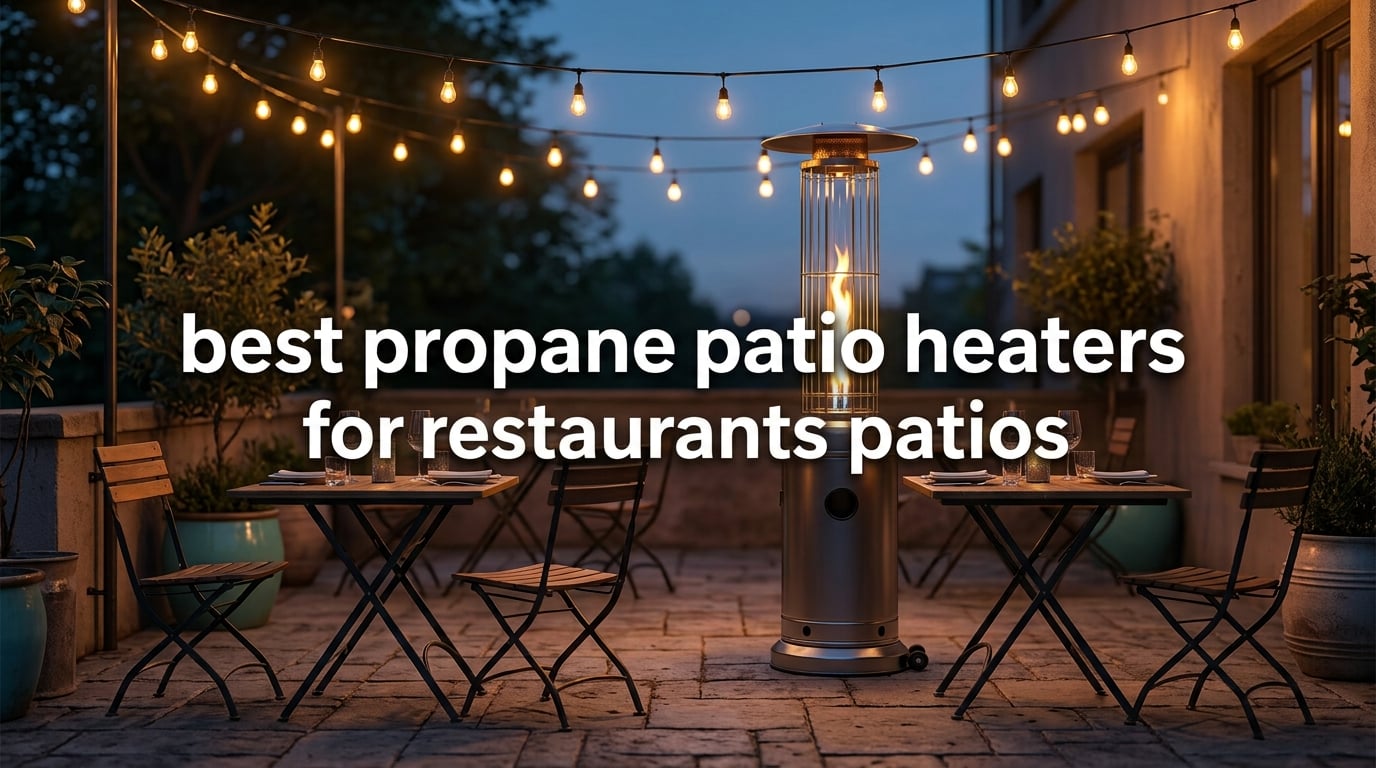
The best propane patio heaters for restaurants are the commercial-grade radiant units that hold a 10-foot to 20-foot warm zone over a table cluster for a full evening service, not the lightweight towers built for a home deck. A restaurant patio runs on guest comfort, table turns and covers, so the deciding factors are BTU output, real heat throw at seated distance, a flame-failure and tip-over shutoff chain, a burner you can still get parts for in year four, and a base that a server can move without a dolly.
What is the best commercial patio heater? Our top pick is the Amazon Basics 46,000 BTU portable propane patio heater, because it combines a 46,000 BTU burner and a nine-foot heating radius with a tilt shutoff valve, a water-filled base and wheels, and it carries a review base larger than every other unit in this roundup combined. The best value is the Pamapic 89-inch pyramid heater with a quartz glass flame column, and the best tabletop option for a two-top is the Cuisinart 11,000 BTU unit. This guide covers twelve propane patio heaters tested against operator criteria: sizing per table, propane cost per service hour, clearances, and the commercial-versus-residential build differences that decide whether a heater survives three seasons of daily service.
Two things shape everything below. First, radiant heat warms bodies and surfaces rather than air, so a patio heater at 60F ambient genuinely changes what a guest feels even though the air temperature barely moves. Second, no propane heater belongs under a canopy unless the unit is rated for indoor use, which is why the safety section later is not optional reading for an operator planning pergola seating.
We wrote this for restaurant and bar owners, general managers and hospitality buyers running outdoor dining, taproom, courtyard and rooftop seating. If you are a homeowner shopping for one deck, the numbers here are overkill and our residential patio heater guide will serve you better. Operators should also read the whole guide, because the cheapest upfront number on a patio heater is the least predictive number in the purchase.
Everything below is desk research: manufacturer specification sheets, dealer catalogs, and published hands-on testing by Better Homes & Gardens and Wirecutter. We have not lab-tested these units, and we say so plainly in the methodology section rather than implying otherwise.
Table of Contents
Top 3 Best Propane Patio Heaters For Restaurants (October 2026)
These three cover the three decisions most operators make first: a general-purpose portable unit for an open patio, a pyramid unit when the look of the flame matters in a courtyard or hotel terrace, and a stainless-burner unit when the patio is exposed and you want the widest warm zone for the footprint.

All 12 Propane Patio Heaters at a Glance (2026)
The table below is the whole roundup in one view: every unit, its form factor, its rated output and the job we would actually assign it on a service patio. A 20 lb propane tank is not included with any of these.
| Product | Specifications | Action |
|---|---|---|
| Amazon Basics 46000 BTU Portable Propane Patio Heater |
|
Check Latest Price |
 Pamapic 89 Inch Pyramid Patio Heater with Quartz Glass Tube Pamapic 89 Inch Pyramid Patio Heater with Quartz Glass Tube |
|
Check Latest Price |
 Thermo Tiki Commercial LP Gas Porch and Deck Heater Thermo Tiki Commercial LP Gas Porch and Deck Heater |
|
Check Latest Price |
 hykolity 50000 BTU Stainless Steel Burner Patio Heater hykolity 50000 BTU Stainless Steel Burner Patio Heater |
|
Check Latest Price |
 Hampton Bay 11000 BTU Tabletop Propane Patio Heater Hampton Bay 11000 BTU Tabletop Propane Patio Heater |
|
Check Latest Price |
 Pamapic 50000 BTU Round Table Patio Heater Pamapic 50000 BTU Round Table Patio Heater |
|
Check Latest Price |
 hykolity 50000 BTU Patio Heater with Sand Box hykolity 50000 BTU Patio Heater with Sand Box |
|
Check Latest Price |
 FOOWIN 48000 BTU Propane Patio Heater FOOWIN 48000 BTU Propane Patio Heater |
|
Check Latest Price |
 LAUSAINT HOME 48000 BTU Pyramid Patio Heater LAUSAINT HOME 48000 BTU Pyramid Patio Heater |
|
Check Latest Price |
 Cuisinart 11000 BTU Tabletop Propane Patio Heater Cuisinart 11000 BTU Tabletop Propane Patio Heater |
|
Check Latest Price |
 EAST OAK 55000 BTU Propane Patio Heater with Round Table EAST OAK 55000 BTU Propane Patio Heater with Round Table |
|
Check Latest Price |
 Cuisinart Perfect Position 38200 BTU Directional Patio Heater Cuisinart Perfect Position 38200 BTU Directional Patio Heater |
|
Check Latest Price |
How We Picked These 12 Restaurant Patio Heaters?
This is a desk-research roundup, and we would rather tell you that up front than dress it up as a test lab. We did not put these heaters on a patio and measure them. Instead we built the list from published hands-on testing by Better Homes & Gardens and Wirecutter, manufacturer specification sheets and installation manuals, and the catalogs of the restaurant-supply dealers that restaurant operators actually buy from.
Every unit had to clear four filters. It had to be propane rather than electric, because a ventless combustion appliance is still the fastest way to add usable service days to an open patio. It had to carry a safety chain of both tip-over and flame-failure shutoff, since a heater that keeps feeding gas after the flame dies is the single most common thing an inspector writes down. It had to have a documented BTU figure and a coverage claim we could compare against other units on the same basis. And it had to be available in a form that a general manager can actually source, either from a restaurant-supply dealer or from a major marketplace.
What we weighed most heavily is the same thing an operator weighs: rated output, real radiant reach at seated height, how long a burner and emitter last under daily service, whether replacement parts exist, and whether one person can move the unit between a lunch zone and a dinner zone. Where Wirecutter and Better Homes & Gardens reported a specific failure, we used it. Wirecutter found that cheap burner screens turned solid black from soot in under thirty minutes, and reported that a non-replaceable emitter screen makes a heater useless after a few years, quoting AZ Patio Heaters EVP Bo McMillen. Better Homes & Gardens documented a large 48,000 BTU unit taking more than four hours to assemble and a 61-pound heater being dented by a storm but continuing to run.
We left off the anonymous marketplace heaters that flood the same category pages, and we left off electric infrared units except in the covered-patio discussion, where combustion is often not permitted. The names that dominate the commercial trade, Detroit Radiant, Crown Verity, Schwank, Infratech, Bromic, Sunpak, Heatstar, Calcana, Backyard Pro and Mr. Heater, are dealer and spec-sheet brands rather than marketplace listings, and they belong in a separate procurement conversation. That is the honest limit of this roundup: it ranks what you can order and spec today, and it flags the build differences that separate a residential tower from a commercial appliance.
1. Amazon Basics 46,000 BTU Portable Propane Patio Heater – Best Overall for Restaurant Patios
Amazon Basics 46,000 BTU Portable Outdoor Propane Patio Heater with Wheels, Commercial & Residential with Water Tank, Adjustable Heat Output, 9-Foot Radius, Slate Gray, 32.1″L x 32.1″W x 91.3″H
46,000 BTU
9-foot heating radius
Tilt auto-shutoff valve
Water box base
91.3 in tall
Pros
- 46000 BTU with adjustable heat dial and 9-foot radius
- One-touch ignition starts fast between services
- Tilt safety auto-shutoff valve plus water box and tank chain
- Wheels make it movable by one person
- Powder-coated finish rated for outdoor exposure
Cons
- Propane tank not included
- 91-inch height is tall for low clearances
- 9-foot radius is tighter than 15-foot pyramid claims
This is the unit we put on a standard outdoor dining patio with mixed table spacing, and it wins for a reason that has nothing to do with the badge number. At 46,000 BTU it sits in the middle of this group, but the safety chain, the weighted base and the wheels are the combination that matters when a server has to reposition it between zones.
Better Homes & Gardens, which selected the Pamapic as its best overall in a residential test, uses the same square-footage-times-twenty rule of thumb we use below. A 46,000 BTU unit is therefore a sensible match for roughly 2,300 square feet of patio before the outdoor penalty, and for a realistic open-air service zone of about 1,000 to 1,200 square feet once wind exposure is accounted for. In practice that is four to six two-tops, or two four-tops and a bar rail.
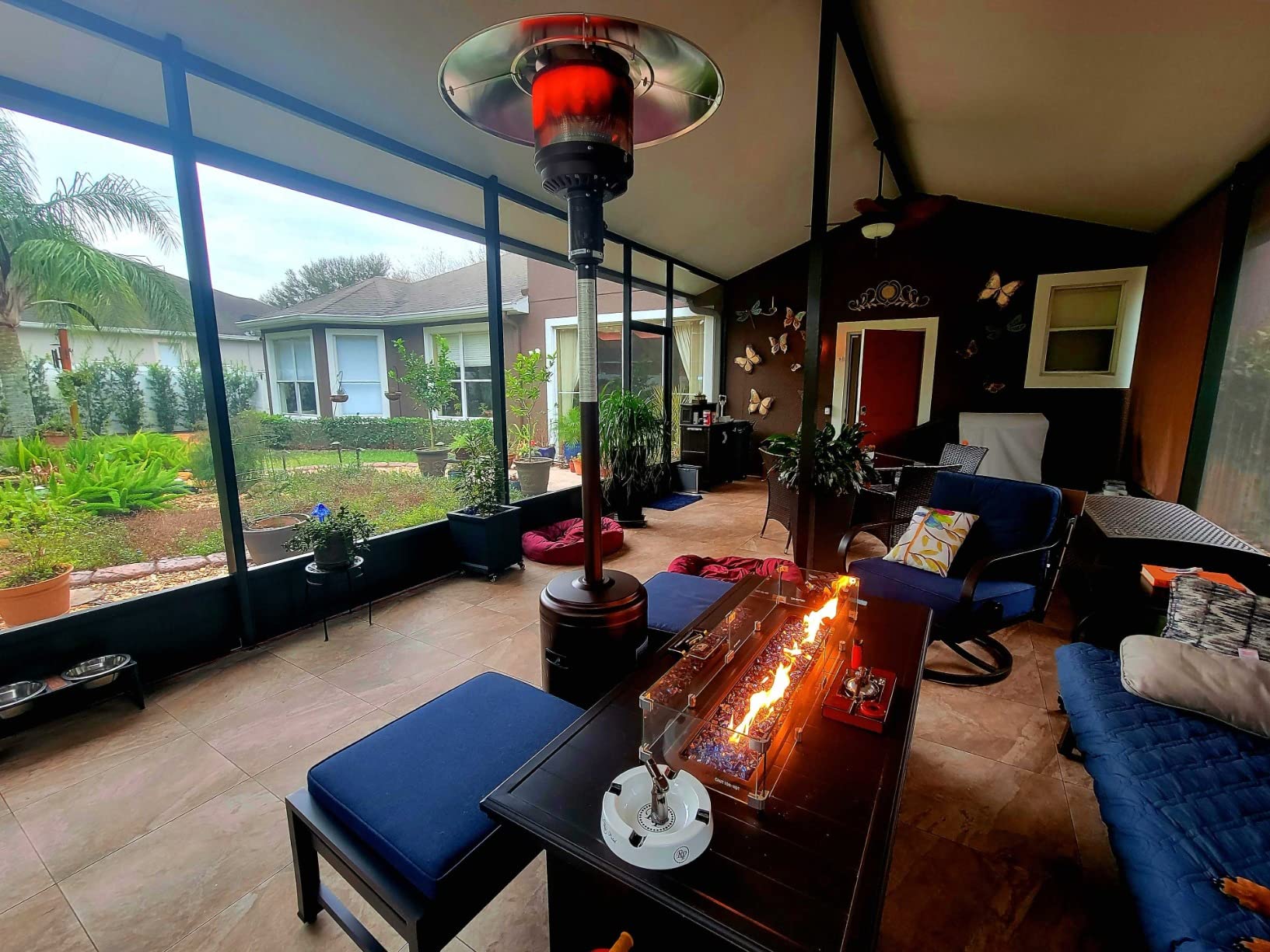
The 46,000 BTU burner with an adjustable temperature dial is the part operators care about. A patio does not run at one temperature for a whole service. It runs warm at 5pm when the sun drops behind the building, then cools as the air mass moves, then spikes again as the crowd arrives. A heat dial lets a manager drop output rather than shutting a burner off and letting the patio go cold during a lull.
One-touch ignition matters commercially in a way it does not at home. Servers are not going to lift a lid, push a button three times and wait. This unit lights from a single press, and the tilt safety auto-shutoff valve, water box and tank chain are the trio that lets an operator put a heater near a table of guests without worrying about a knocked column or a service cart catching a hose.
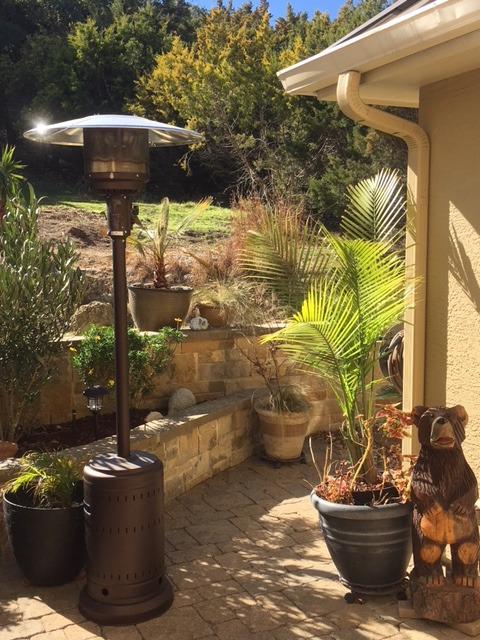
Why operators buy this one?
The review base is the reason. With 11,075 ratings at 4.4 stars, and 74% of those at five stars, you have a failure-rate signal far larger than any other unit in this guide. When a general manager is specifying equipment that will run nightly for years, a large and settled review history is worth more than a tenth of an inch of steel gauge.
It also has the widest parts ecosystem of anything we could find in a portable tower, which matters because Wirecutter reported limited replacement-part availability for some competing models. Wheels, a water box and a burner assembly are all things a local dealer can get, and a manager is not waiting eight weeks on a part to reopen a seating zone.
Where it falls short?
The nine-foot heating radius is the honest limitation. Wirecutter and Better Homes & Gardens both found that radiant heat falls off sharply with distance, and this unit’s rated reach is tighter than the 15-foot and 18-foot claims some pyramid and table models carry. If your tables sit more than nine feet from the nearest column, you are better served by a 50,000 BTU reflector unit or a permanently mounted high-intensity infrared unit.
The 91.3-inch height also needs checking before you buy. If you have umbrellas, a pergola or a low canopy over part of the patio, measure first, because required clearance to combustibles is a fixed number in the manual and it is the number an inspector will check.
2. Pamapic 89 Inch Pyramid Patio Heater – Best Value Commercial Propane Heater
Pamapic 89″ Pyramid Patio Heater Outdoor, Propane Flame Tower with Quartz Glass Tube, Outdoor Heaters with Wheels & Cover for Deck, Porch, Backyard, Garden, Hammered Bronze
48,000 BTU
Up to 15-foot diameter
Quartz glass flame tube
Wheels and cover
89.4 in tall
Pros
- 48000 BTU with coverage claimed to 15-foot diameter
- Visible quartz glass flame column reads well in a courtyard
- 1779 reviews with 72% five-star ratings
- Wheels and a weather cover included
- Seven finish options for matching a venue's finish scheme
Cons
- 89-inch height is taller than most patio clearances allow
- Quartz glass tube is the first part a wind event breaks
- Weight makes it hard to reposition without two people
Better Homes & Gardens named this its best overall propane patio heater for quick, effective heating and easy installation, and that judgment carries into a commercial context even though the test itself was residential. The 48,000 BTU rating and the claimed 15-foot diameter coverage give you more warm zone than the Amazon Basics unit, and the visible quartz glass flame is a real consideration for a hotel terrace or brewery patio where the heater is part of the ambience.
For a restaurant buyer, the practical appeal is the coverage figure meeting a real layout constraint. Fifteen feet of diameter is roughly two four-tops plus a bar rail, which is a much more efficient use of a single propane connection than three smaller units scattered across a patio.
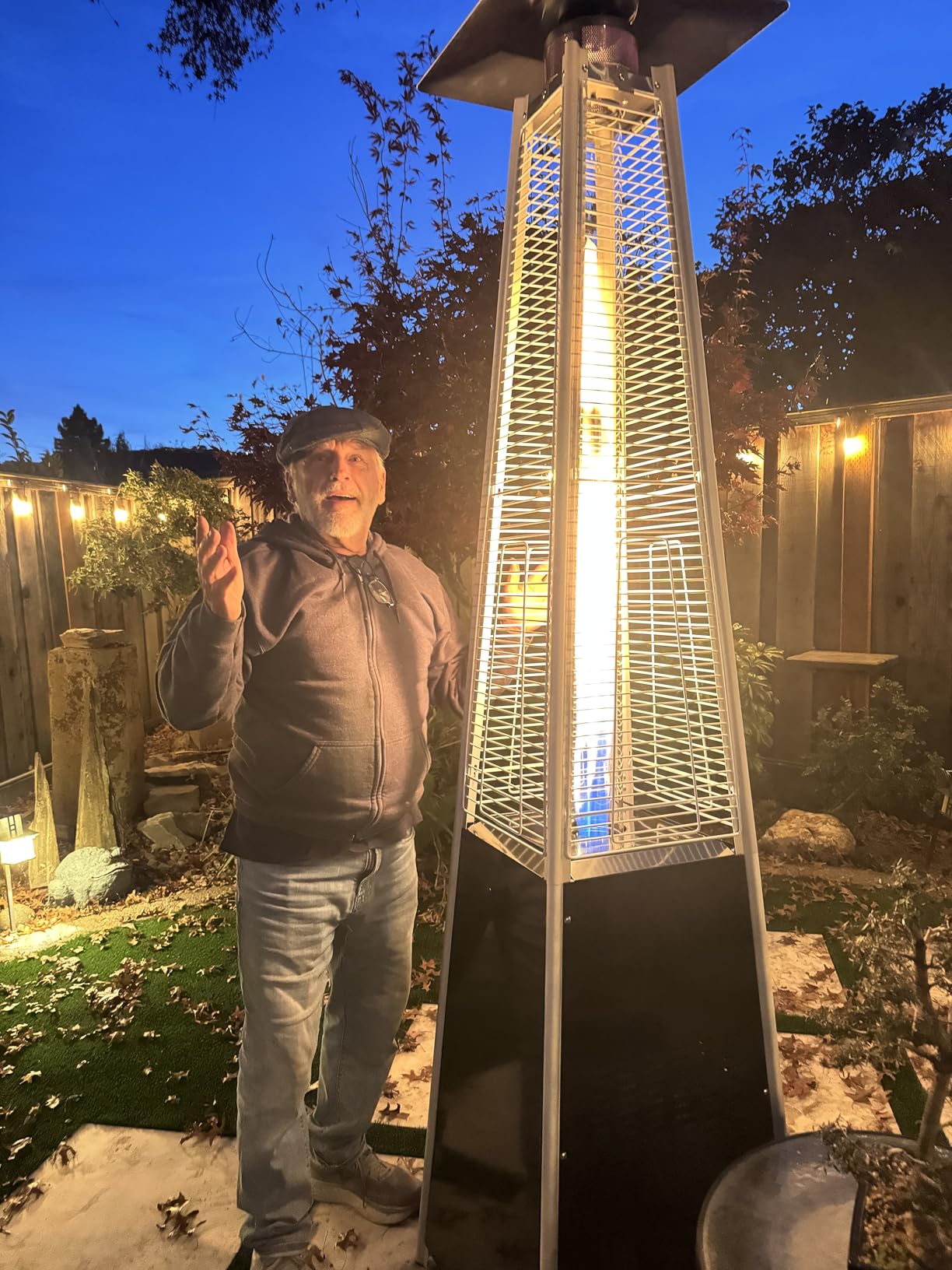
Reviewers consistently single out the flame aesthetics and the way the pyramid form radiates heat, and the 1,779-review base at 4.4 stars with 72% five-star ratings is a mature enough history to plan around. Seven finish options also matter commercially, because a hammered bronze or black tower that clashes with a designed courtyard reads as a rental, not a venue.
Two operational details to note. The unit runs on a standard 20 lb tank and the tank is not included, so your propane logistics are the same as for any other tower. And the cover that comes with it is the difference between a five-year service life and a two-year service life in a salt-laden coastal market, where corrosion on a base and reflector will start a year earlier than inland.
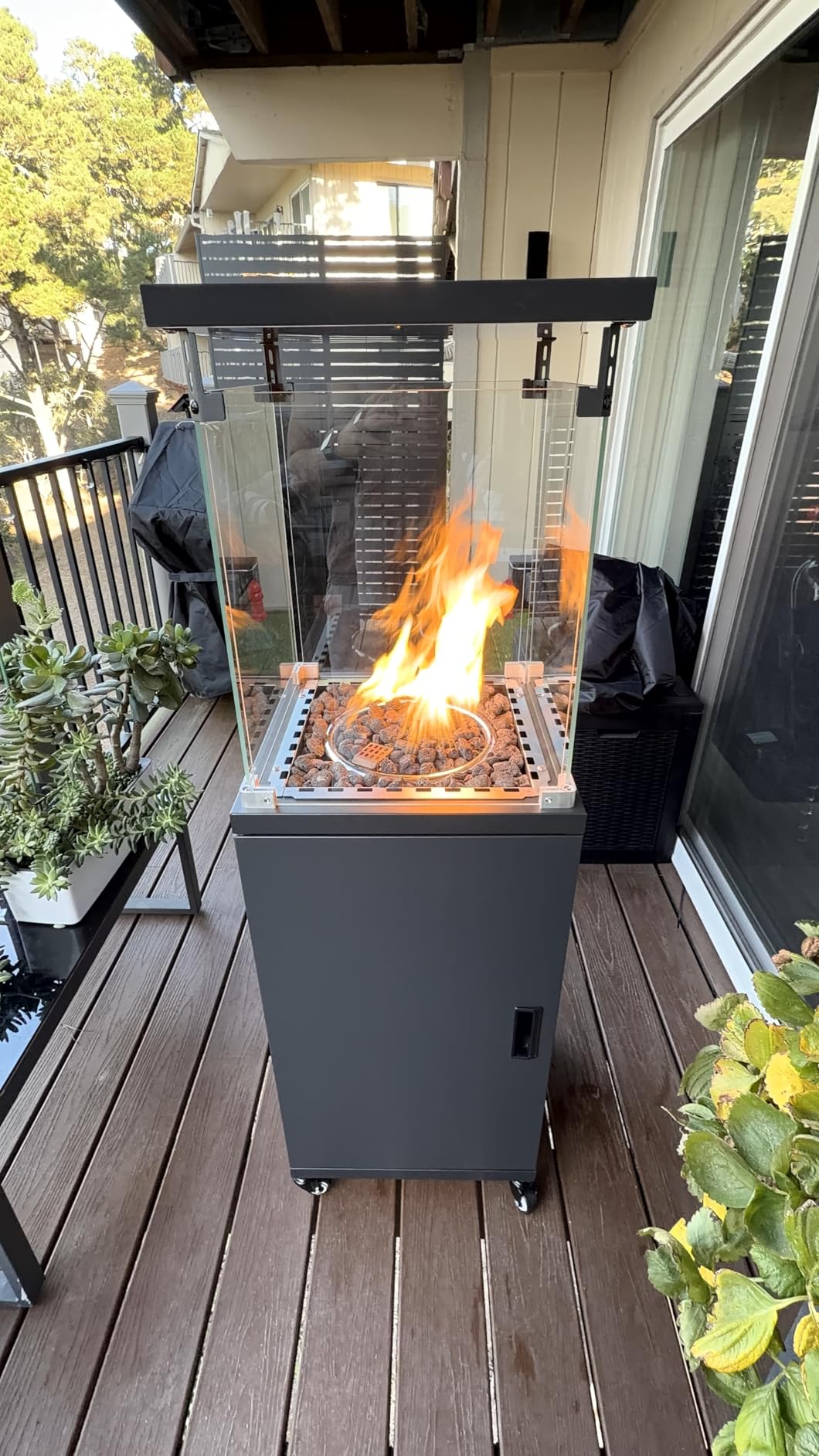
Why operators buy this one?
Coverage per propane connection is the argument. If your patio is a rectangle of tables rather than an open courtyard, one 15-foot unit instead of two 10-foot units halves the floor space given up to hardware, halves the number of tanks your staff has to swap, and removes a trip hazard from a guest walkway.
The glass flame also solves a specific operator problem. Guests on a cold patio are being asked to wait, and a visible flame reads as warmth and comfort. An invisible radiant heater is technically warmer at the table but perceptually colder, and perception is part of what keeps a table occupied through a 45-degree evening.
Where it falls short?
The 89.4-inch height is the constraint to check. That is taller than most restaurant patio umbrellas and very close to the height of many pergola and canopy structures, so a unit placed under a roof line can violate the clearance requirement in its own manual.
Wirecutter also flagged that mushroom and pyramid-style reflectors produce uneven downward heat because the burner sits at the top of the column, so the warmth concentrates close to the unit and falls off across a wide table. If you are seating guests at the far edge of a 15-foot circle, that is a problem the rating does not fix.
3. Thermo Tiki Commercial LP Gas Porch and Deck Heater – Best Commercial Build
Thermo Tiki Outdoor Propane Patio Heater – Commercial LP Gas Porch & Deck Heater – Black
38,000 BTU true rated
15-foot diameter
ANSI, CE and CSA certified
90 day warranty
Pros
- Commercial-grade steel and aluminum construction with corrosion-resistant finish
- ANSI
- CE and CSA certification is unusual at this level
- Protective mesh over the ceramic-glass column
- Built-in tilt safety valve and pilot light
- Regulator and pre-attached hose included
Cons
- Heat does not spread as wide as the glass column design implies
- Assembly takes two people and about an hour
- Thin machined panels can have sharp edges out of the box
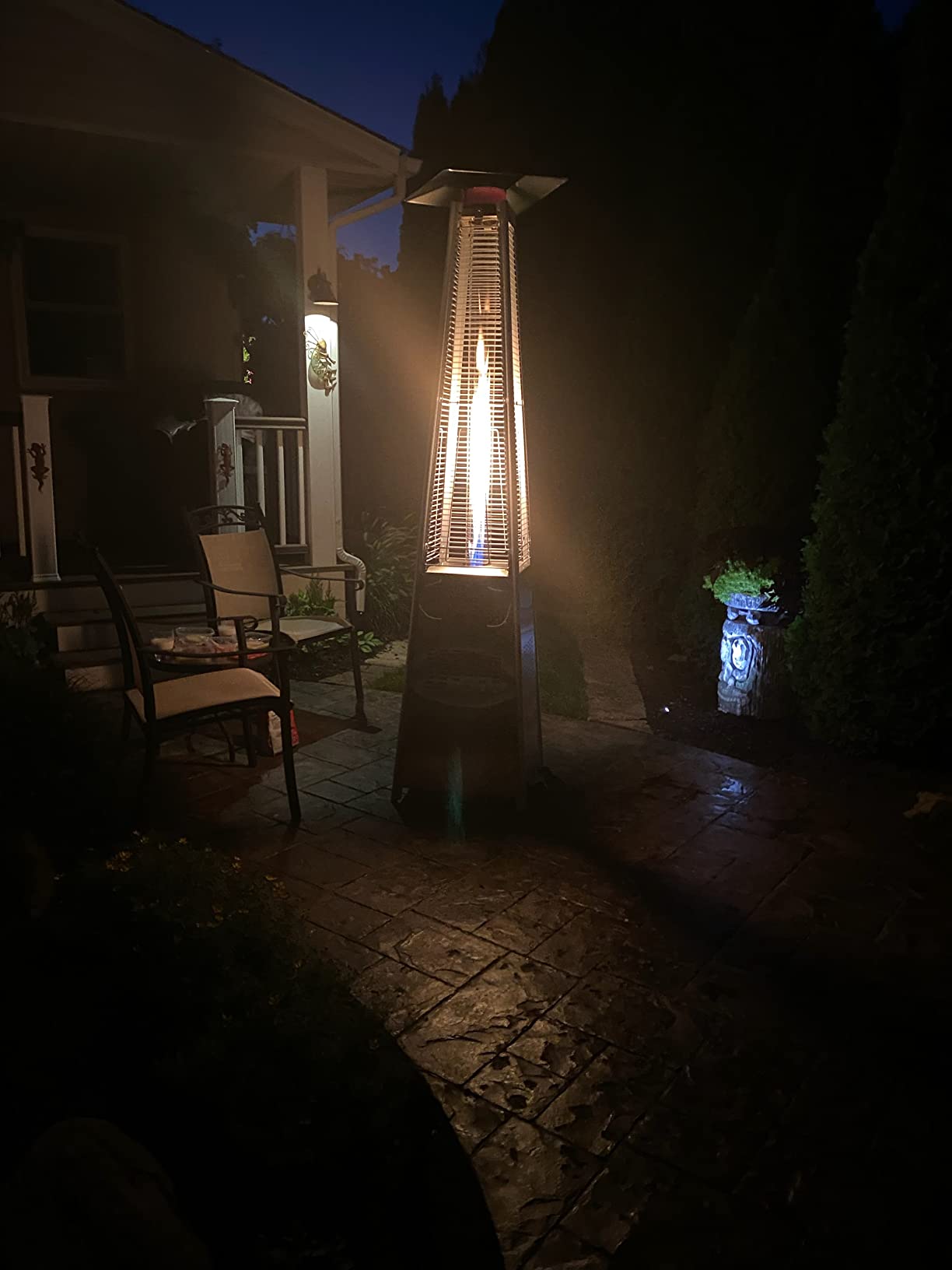
This is the only unit in the roundup that states its commercial certification plainly in the specifications, and that single fact is why it earns a place on any restaurant spec sheet. It is listed as ANSI, CE and CSA compliant, it uses a true-rated 38,000 BTU ceramic-glass heating column rather than a quoted peak figure, and it carries a built-in tilt safety valve and pilot light.
True-rated output is worth pausing on. Several heaters in this category quote a peak number taken at the moment of ignition. A true rated figure is the output you can hold across a service, which is the number that determines whether the far side of a four-top is comfortable at 8pm. At 38,000 BTU true, this unit is honest about where it sits, and it pairs that with a claimed 15-foot field of radiant warmth.
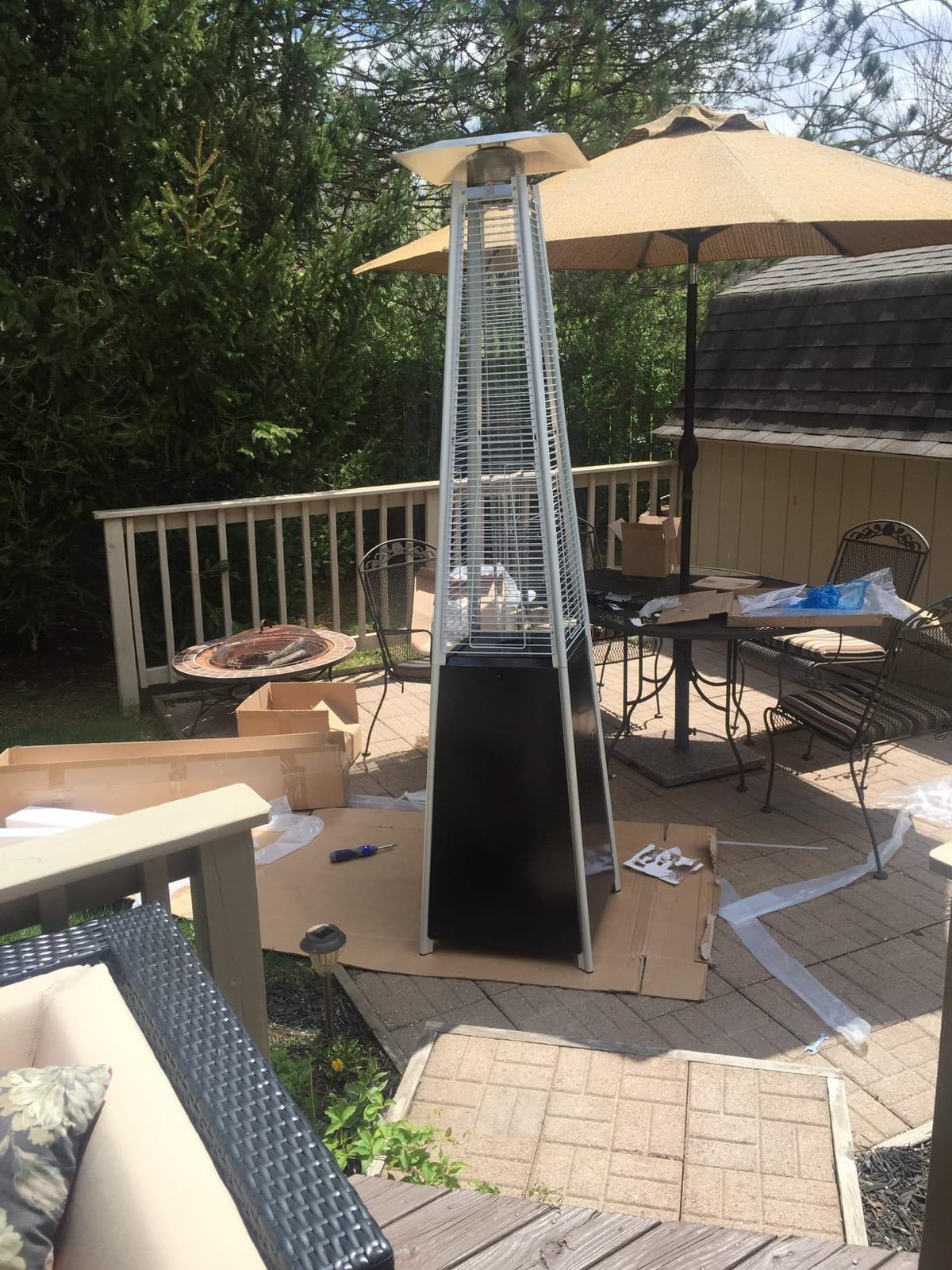
Owners of this unit repeatedly praise the build quality and appearance, and describe straightforward assembly with clear instructions. The construction is described as commercial-grade steel and aluminum with a rust and corrosion-resistant finish, which is the material language you want to hear about a unit that will sit outside through shoulder season for years.
It also includes the regulator and a pre-attached hose, which removes a common delay on installation day. A manager who orders eleven of these across a patio does not want a different fittings problem on each one, and this unit reduces that risk.
Why operators buy this one?
Certification is the reason. When a general manager, a building inspector and an insurer all look at the same unit, an ANSI and CSA listing shortens the conversation. Residential towers rarely carry it, and that gap is the practical dividing line between equipment you approve for a guest patio and equipment you approve for a home deck.
The 7-foot-6-inch deck-mount format also works well where a patio has step changes in level. A deck-mount configuration is easier to secure against a tipping event near an edge than a free-standing tower on casters.
Where it falls short?
The 4.2 rating across 615 reviews is the lowest among the higher-volume units here, and the reason is specific: owners report that heat does not spread as wide as the ceramic-glass column design implies. You are buying an attractive visible-flame column, and the honest tradeoff is that the radiant pattern is narrower than the 15-foot claim suggests.
Assembly is also reported to take two people and about an hour or more, and some owners mention thin machined panels with sharp edges straight out of the box. Plan the install as a two-person job and check the panels before guests walk near them. The stated warranty is a 90-day limited manufacturer warranty, which is shorter than a multi-year residential warranty on a competing tower, so hold that in mind if you are planning a longer service horizon.
4. hykolity 50,000 BTU Stainless Steel Burner Patio Heater – Top Rated
Hykolity 50,000 BTU Propane Patio Heater, Stainless Steel Burner with Wheels, Table Design, Triple Protection System Outdoor Heaters for Garden, Patio, Commercial and Residential, Silver
50,000 BTU
200 sq ft coverage
Triple protection system
Stainless steel burner
39.7 lb
Pros
- 50000 BTU stainless burner for its class
- Triple protection system covers tip-over and flameout shutoff plus mesh shielding
- Umbrella-style top reflector spreads heat around the patio
- One-press ignition with wheels for repositioning
Cons
- Some owners report a heated area smaller than advertised
- Occasional reports of ignition switch failure within the first season
The 50,000 BTU output over a listed 200 square feet is the best balance of reach and manageability in this roundup for an open commercial patio. At 4.5 stars across 512 reviews, with 76% of those at five stars, it also has the strongest rating-to-review relationship of any unit here that is not simply the most reviewed.
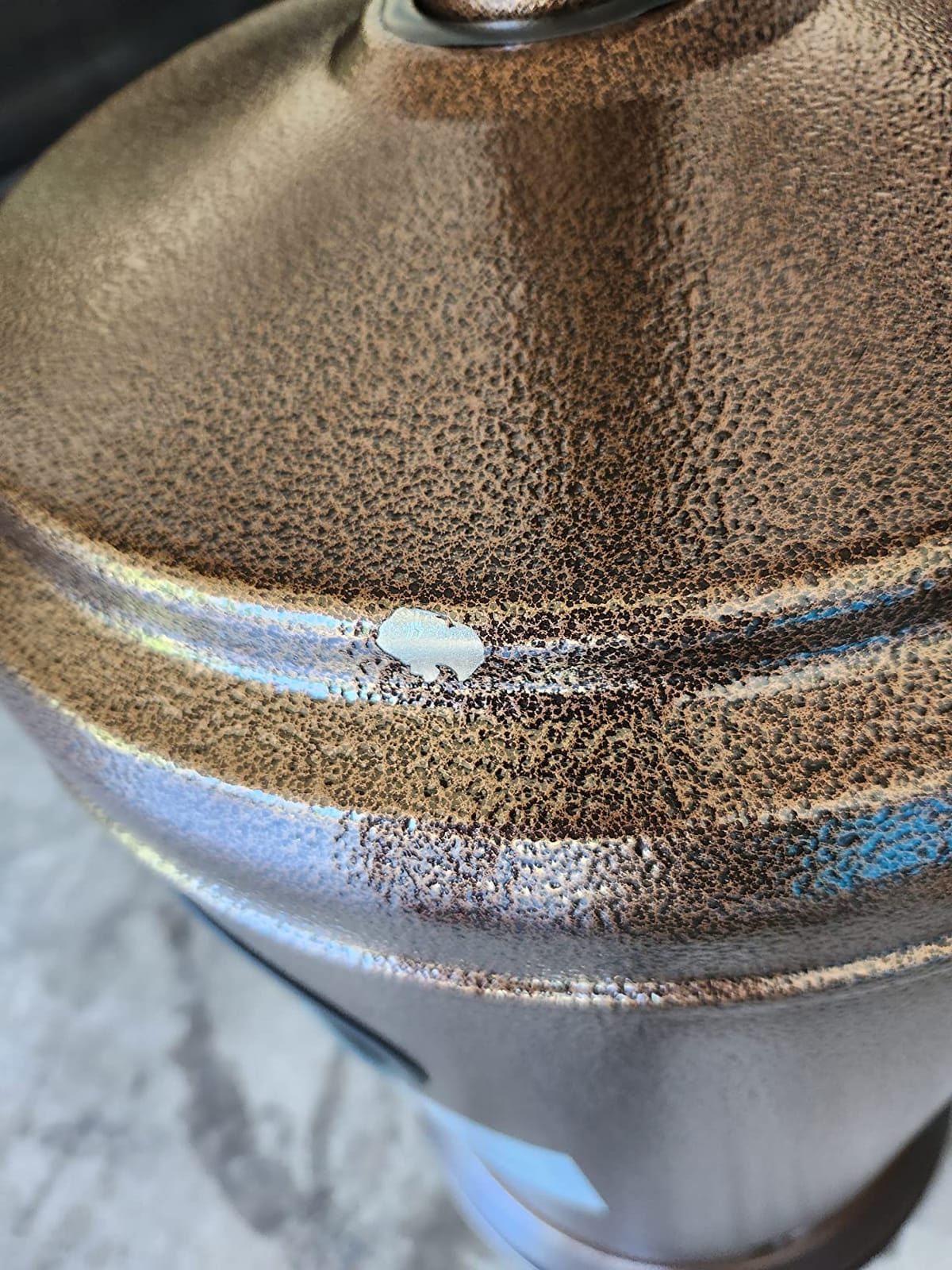
The stainless steel burner is the reason to prefer it over a mesh-burner tower of the same output. Wirecutter reported that cheap burner screens turned solid black from soot in under thirty minutes in testing, and a solid stainless burner assembly does not have that failure mode. For a unit running five nights a week, that is the difference between an annual burner service and a multi-year one.
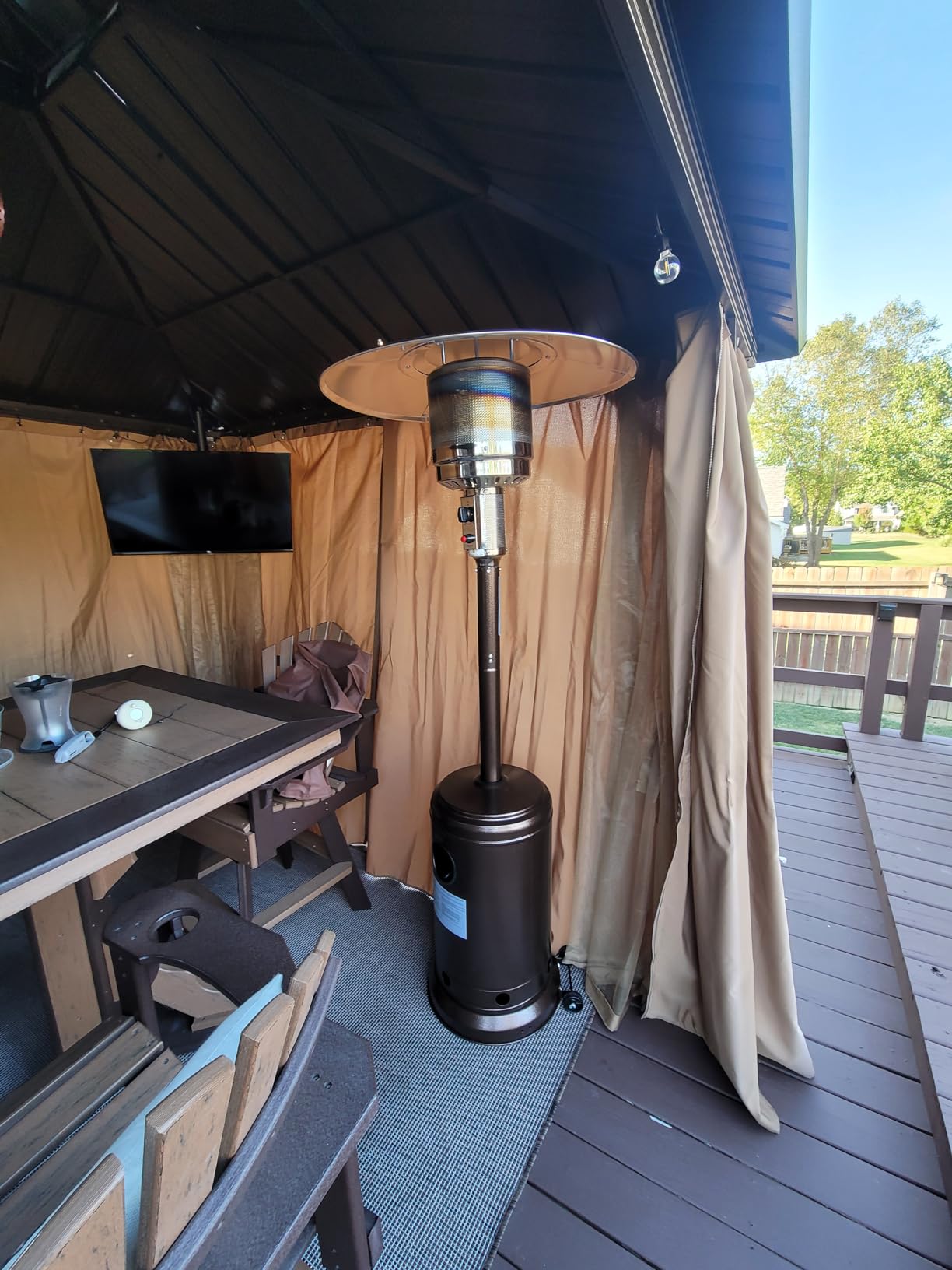
The triple protection system is worth noting in a commercial context because it names all three of the interlocks an operator should confirm exist: tip-over shutoff, flameout auto shutoff and a burner mesh shield. The umbrella-style top reflector is the geometry that sends heat outward and down rather than straight up, which addresses the uneven downward heat pattern Wirecutter flagged on plain tower designs.
One-press ignition and multi-speed temperature adjustment come up repeatedly in reviews as dependable, and the wheels make the difference between a heater that stays in one zone and one that can follow the sun as the afternoon shadow moves across the patio.
Why operators buy this one?
Two hundred square feet of listed coverage per unit is the number that makes zone planning easy. A 30-foot by 30-foot seating area divides into roughly two workable zones, and at 50,000 BTU each zone has enough output to matter once you apply the outdoor penalty for wind and open sides.
It also carries one of the easier install stories in the group. Light enough at under 40 pounds that one person can reposition it, with a reflector top rather than a tall glass column that needs two hands and a clear path.
Where it falls short?
Owners do report that the heated area can be smaller than the advertised coverage, particularly when a wind is coming off the side of the building. Treat 200 square feet as a moderate-weather figure and test a layout before committing the whole patio to one heater type.
There are also occasional reports of an ignition switch failing within the first season. That is a small, usually replaceable part, but it is exactly the kind of failure that closes a seating zone on a Friday night, so keep a spare switch on the shelf rather than waiting on a delivery.
5. Hampton Bay 11,000 BTU Tabletop Propane Patio Heater – Best for Bar Rails and Bistro Twos
Hampton Bay Tabletop Propane Gas Patio Heater 11,000 BTU Stainless Steel
11,000 BTU
175 sq ft listed coverage
Auto shutoff tilt valve
Stainless steel with bronze coat
Pros
- Compact tabletop format that fits on dining and bar tables
- Durable stainless steel body with bronze powder coat
- Auto shutoff tilt valve for tip-over protection
- Useful warmth for small lanais and picnic tables
Cons
- Thermocouple quality issues shut units down after a few minutes
- Assembly is difficult
- 1 lb cylinders run out quickly and hard-to-source adapters for larger tanks
- Modest output for open-air areas
A tabletop heater solves a problem no floor unit solves: it puts heat at the same level as the guest’s hands, in the center of the table, instead of at chest height eight feet away. On a bar rail, a two-top or a high-top cluster, that difference is real.
The catch is capacity, and it is arithmetic rather than opinion. At 11,000 BTU this unit is a table warmer, not a patio heater. Its listed coverage of 175 square feet is a manufacturer figure that applies to a protected, close-use situation, and it should be read that way.
Why operators buy this one?
It costs almost no floor space. On a patio where every square foot is bookable seating or server circulation, a unit that sits on the table instead of standing beside it is the cheapest way to add warmth to an exposed rail or a two-top that no floor unit can reach without stealing a seat.
The bronze powder coat over stainless steel also survives a bar environment better than a light-painted housing, and the auto shutoff tilt valve is the correct interlock for a unit that will be knocked by a tray, a sleeve or a wind gust on an open rail.
Where it falls short?
The thermocouple is the serious complaint, and it appears repeatedly. Owners report units shutting off after only a few minutes, which on a service patio means a table that is warm for five minutes and cold for the next twenty. At 4.1 stars with a 10% one-star band, this is the highest documented failure rate in the roundup, and it is concentrated in one component rather than spread across the design.
Fuel logistics are the second problem. It runs on 1 lb propane cylinders, which run out quickly, and adapters to run it off a larger tank are hard to source. On a busy bar rail you will be swapping cylinders all evening, which is staff time you have to budget. Assembly is also reported as difficult.
6. Pamapic 50,000 BTU Round Table Patio Heater – Best Table Surface for Drinks
Pamapic Outdoor Heaters for Patio with Round Table Design, Premium 304 Stainless Steel Burner, Triple Protection System Propane Patio Heater for Porch Garden, Residential & Commercial Use
50,000 BTU
20-foot diameter coverage
304 stainless burner
Magnetic locking tank door
87.8 in tall
Pros
- 50000 BTU across a 20-foot diameter area
- 304 stainless steel burner outlasts mesh designs
- One-touch ignition lights in about five seconds
- Round tabletop adds a drink and phone surface
- Conical body resists wind better than a straight column
Cons
- Arrives in two boxes that may come separately
- Some owners report a slightly uneven flame across the burner
- Tall enough to require clearance checks under covered patios
The widest coverage claim in this roundup belongs to this unit: 50,000 BTU across a 20-foot diameter. On a 20-foot warm zone, a single heater can cover a four-top cluster plus a bar rail, and the 304 stainless burner with an aluminum top cover is a durable combination for daily service.
Reviews put one-touch ignition at roughly five seconds to flame, with 74% of the 297 ratings at five stars. Rapid light-off matters in service, because the unit can be started at the top of a seating rush and reach useful warmth before the first round of drinks clears the rail.
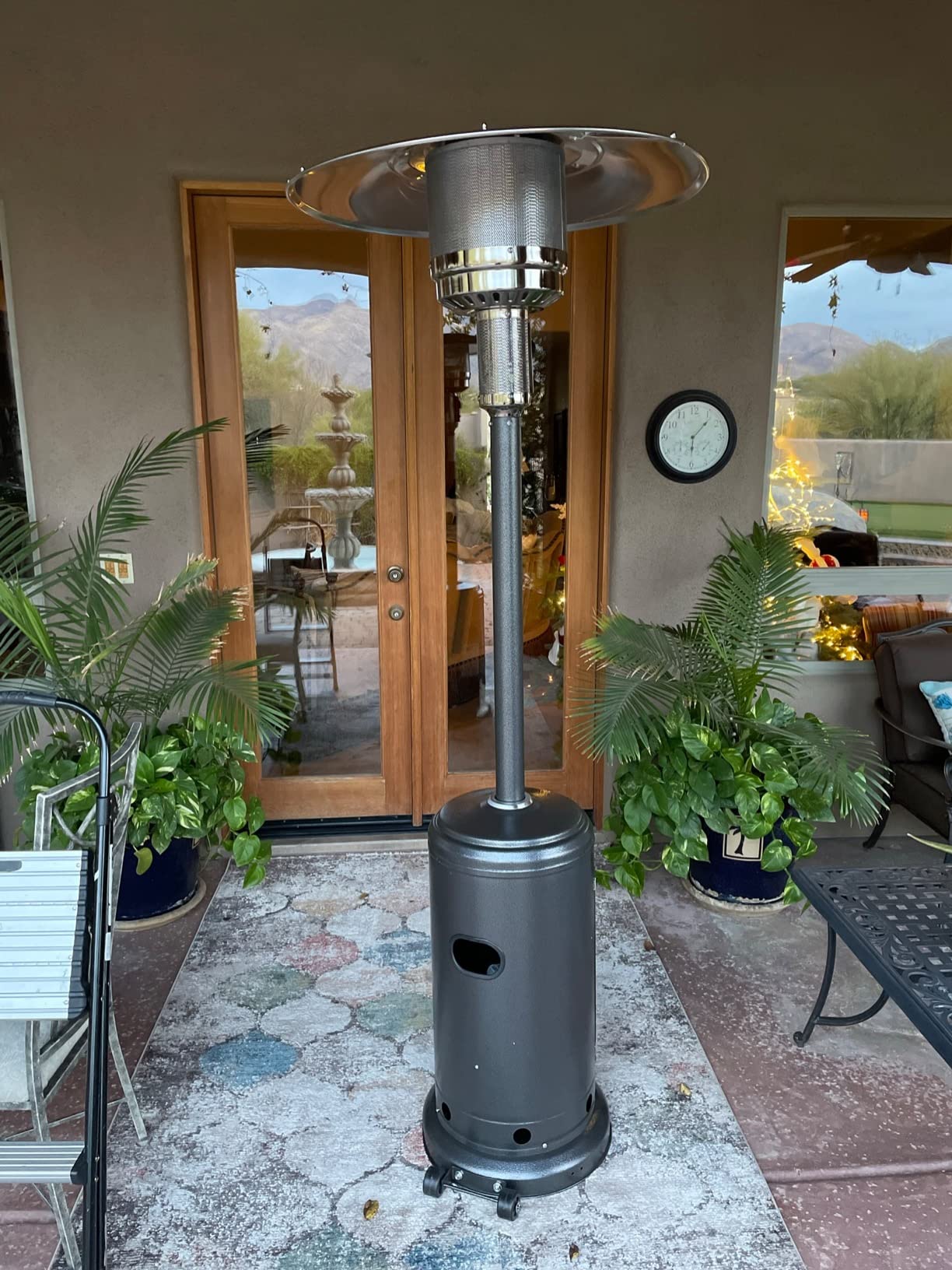
The magnetic locking propane tank door is a detail that only shows up in commercial use. On a public patio, an unsecured tank door is something a server trips over, a child opens, or a wind gust swings wide, and a lock closes that off. The round tabletop is the more obvious win: it gives guests somewhere to set a drink and a phone, which on a two-top or a bar-height cluster is the difference between a table that works and one that does not.
The conical body is worth noting for exposed sites. A taper that widens toward the base is a more stable geometry than a straight column in a crosswind, and stability compounds with the tip-over protection that cuts the flame beyond 45 degrees.
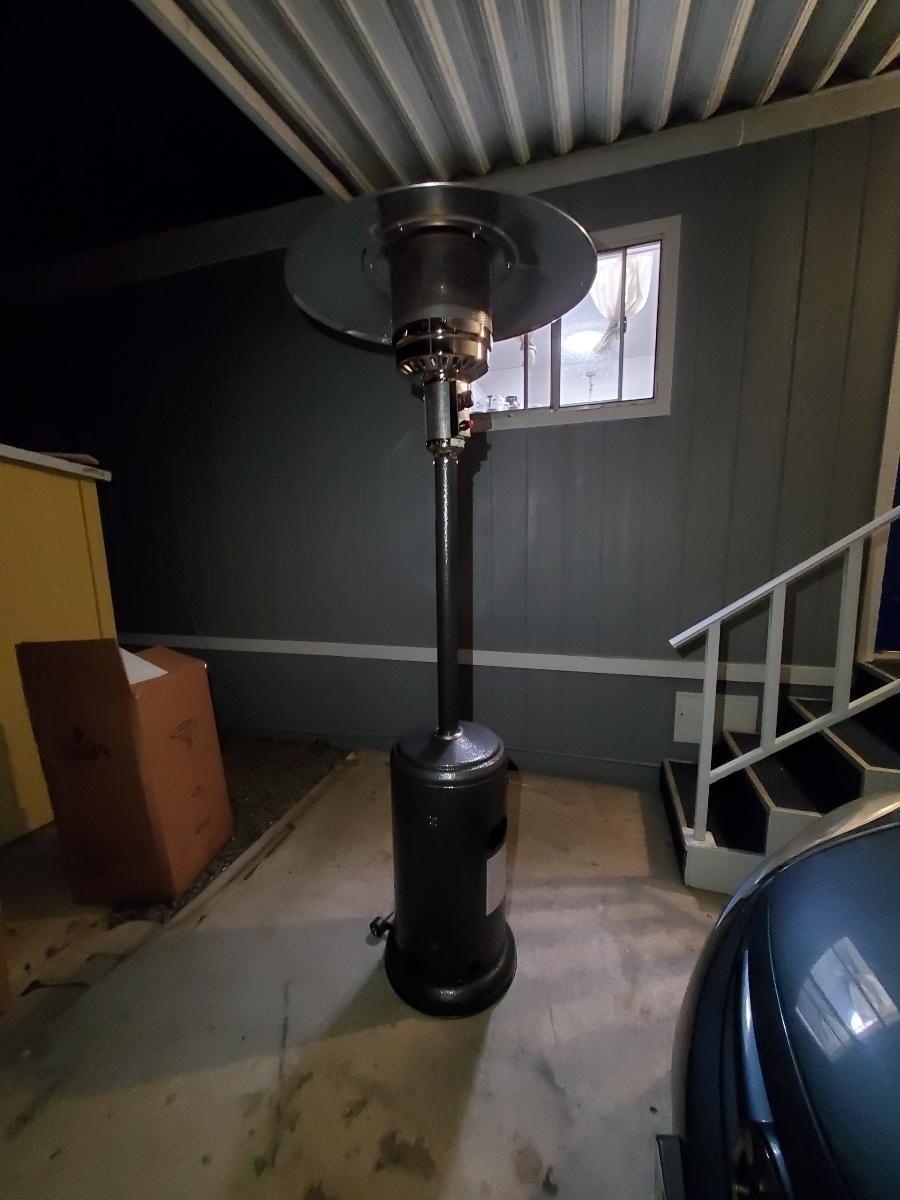
Why operators buy this one?
Twenty feet of diameter is the best coverage-per-tallest-profile ratio here, and for an operator who is running heaters back to back down a long patio it means fewer propane connections and fewer tanks in the swing path. Fewer tanks in the swing path is a service-safety issue, not just a convenience.
The unit is CSA certified for residential and commercial use, which matters for a venue that has to document its equipment.
Where it falls short?
It arrives in two boxes, and those boxes can come separately. For a single unit that is an annoyance. For a patio order of six or eight units, you need a receiving plan that assumes partial deliveries, and you should not mark a zone complete on install day unless every box has arrived.
Some owners report a slightly uneven flame across the burner, and at 87.8 inches the height again needs measuring against umbrellas and canopies before it goes under anything. If the warm zone has to be exactly where the table is, verify placement on a still evening rather than assuming a 20-foot circle.
7. hykolity 50,000 BTU Patio Heater with Sand Box Base – Best for Windy Patios
Hykolity 50,000 BTU Patio Heater with Sand Box, Table Design, Double-Layer Stainless Steel Burner, Wheels, Tip-over Protection System, Outdoor Heater for Home and Residential, Brown
50,000 BTU
200 sq ft coverage
Double-layer 304 stainless mesh
Weight-adjustable water tank
33 lb
Pros
- Double-layer 304 stainless mesh burner rated to outlast single-layer designs
- Weight-adjustable water tank tested up to 26.45 lb for wind resistance
- 50000 BTU heating up to 200 sq ft
- Wheels for moving between service areas
- One-press ignition with control valve
Cons
- Wide 33.6 inch base takes more patio footprint
- Warm zone concentrates near the unit in very cold conditions
If your patio sits in a courtyard, a rooftop with a parapet, or any location where wind funnels between buildings, base weight is the feature to buy. This unit has a weight-adjustable water tank that has been tested up to 26.45 pounds for wind resistance, which is the single most practical stability specification on any portable tower in this roundup.
It also uses a double-layer 304 stainless steel mesh burner, and the 50,000 BTU rating covers up to 200 square feet. Double-layer mesh is a direct response to the soot problem Wirecutter documented, where inexpensive single-layer screens blacked out in under half an hour of testing.
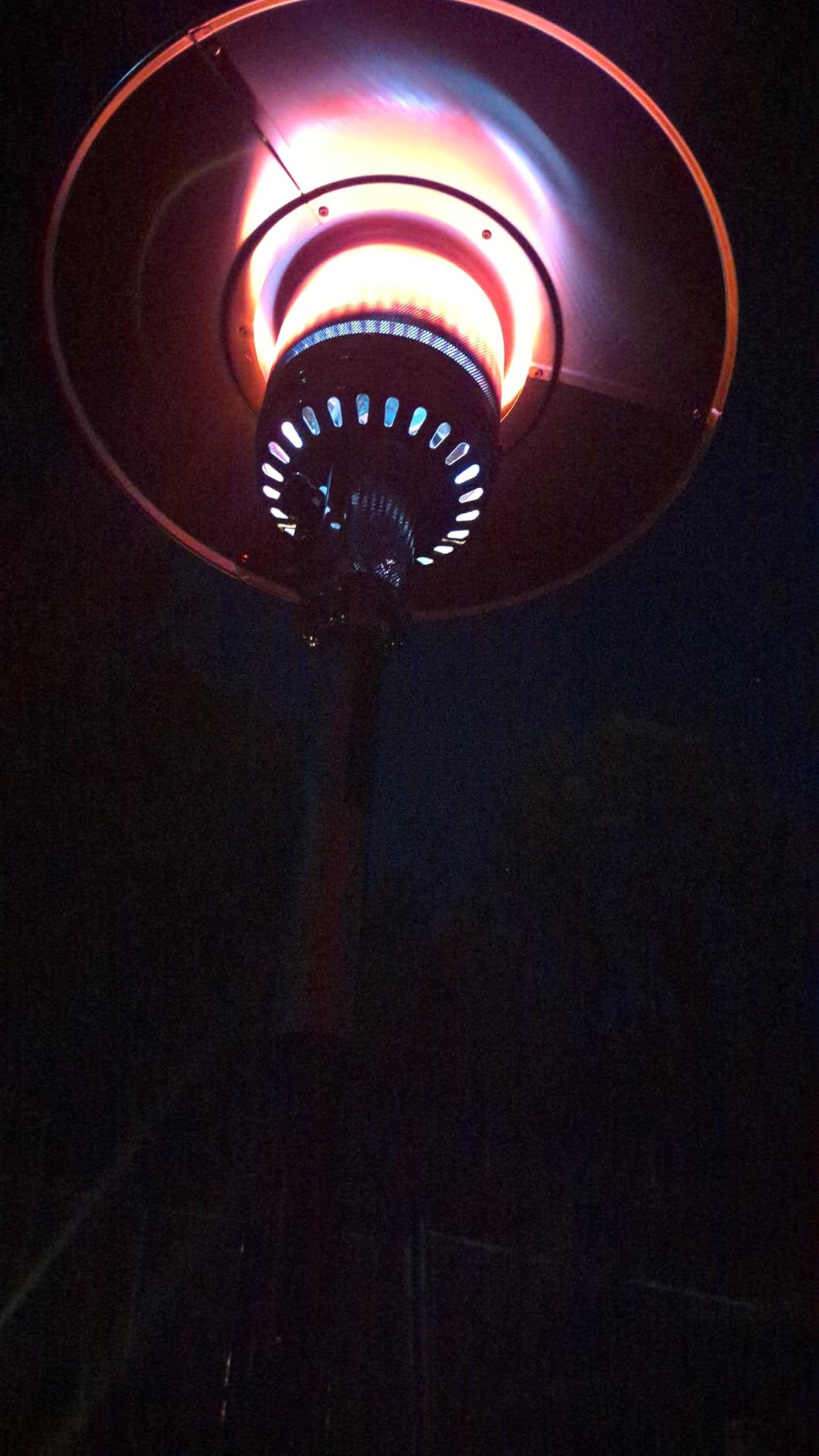
The sand-box base and the stainless burner mesh are the two most-cited upgrades in reviews, which tells you what buyers actually notice. At 4.5 stars across 284 ratings with 75% five-star, the satisfaction is consistent, and the complaints that exist are both about geometry rather than failure.
One-press ignition and multi-speed heat adjustment work the same way as the other hykolity unit, which means if you standardize across a patio you can keep one ignition habit for your staff. Wheels are included, and the whole unit is 33 pounds, light enough for one person to move between zones.
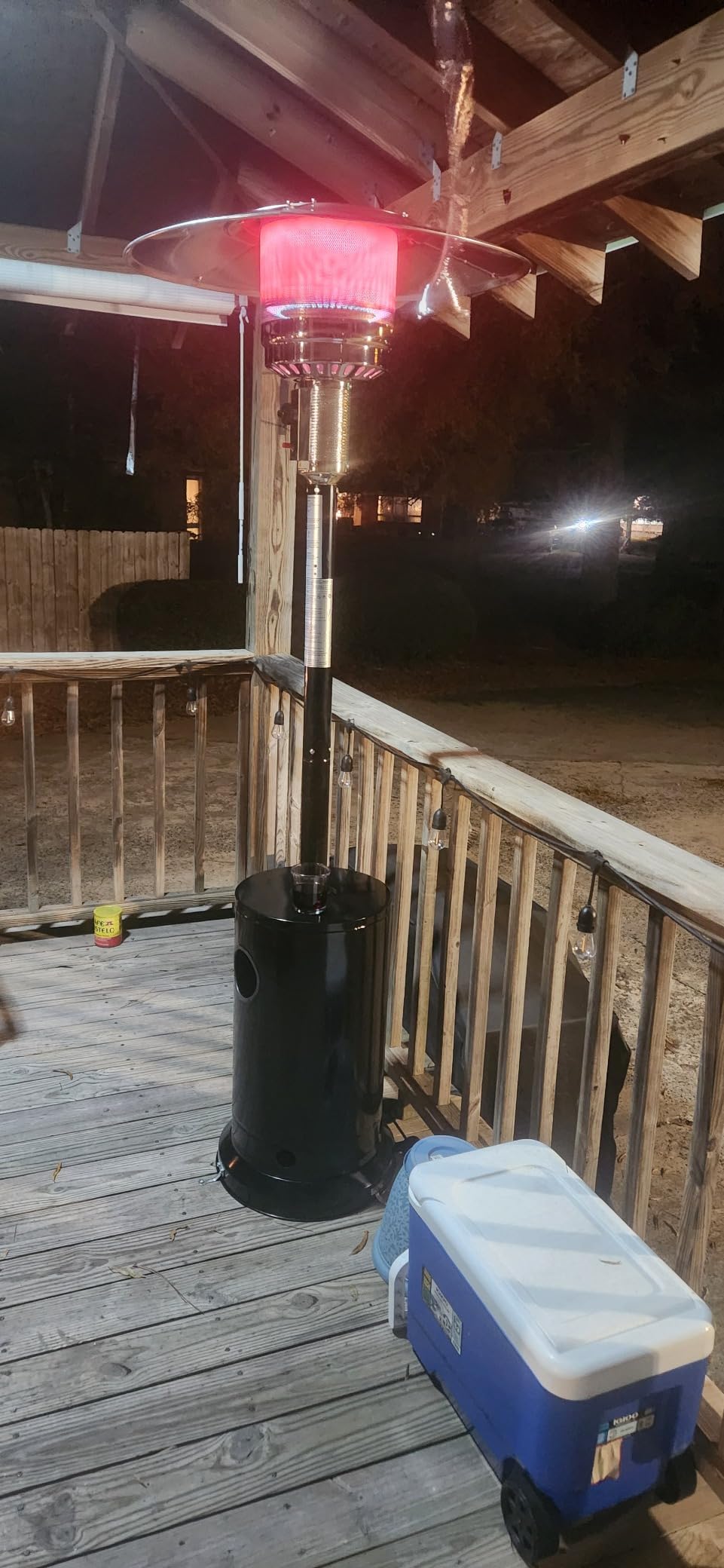
Why operators buy this one?
The adjustable base weight is a genuine differentiator, not a marketing label. A tower that stays upright through a gust does not tip over onto a server, does not spill a hot tank, and does not take a seating zone out of service for a day. On a rooftop or an exposed corner table, that is the difference between a heater and a liability.
Double-layer 304 stainless also means fewer burner service cycles across a five-year horizon, and fewer carbon-charring complaints from staff who are tired of restarting a unit that will not hold a flame.
Where it falls short?
The 33.6-inch base is the widest footprint in the roundup, and on a tight patio that width comes directly out of usable floor area. If you are running these along a wall with tight table spacing, measure the clearance between chairs and the base before you order a full row.
Buyers in severe climates also report that heating performance concentrates near the unit. Radiant heat falls off with distance, and in very cold conditions that falloff happens faster. In shoulder-season conditions around the low 40s, treat the 200 square feet as a moderate-weather figure and consider a second unit rather than one unit pushed to its limit.
8. FOOWIN 48,000 BTU Propane Patio Heater with Quartz Glass Tube – Best for Fast Warm-Up
FOOWIN Patio Heater 48,000 BTU Outdoor Propane Heater with Wheels
48,000 BTU
About 130 sq ft coverage
Quartz glass tube
45-degree auto shutoff
50.7 lb
Pros
- Warms up within about five minutes
- Aluminium and stainless steel body resists corrosion
- Quartz glass tube adds flame aesthetics
- Wheels and weather cover included
- Tested through 10000 flame-out cycles before shipping
Cons
- 10-foot heat radius is tighter than taller reflector models
- Assembly required per the user manual
- About 130 sq ft is the smallest warm zone of the 48000 BTU units
This is the fastest light-off among the 48,000 BTU units here, and fast warm-up is a real operational benefit rather than a novelty. When you open a patio on a cold evening, the difference between a usable zone in five minutes and a usable zone in fifteen is the difference between guests being told to come inside and guests staying for a second drink.
The build specification is unusually specific for a portable tower. The body is aluminium and stainless steel for corrosion resistance, the heating element is a quartz glass tube, and the claim is ten thousand flame-out cycles completed before shipping. Flame-out cycling is exactly the wear pattern that kills a thermocouple or a flame-failure valve over time, so a unit tested through that many cycles is a defensible durability claim.
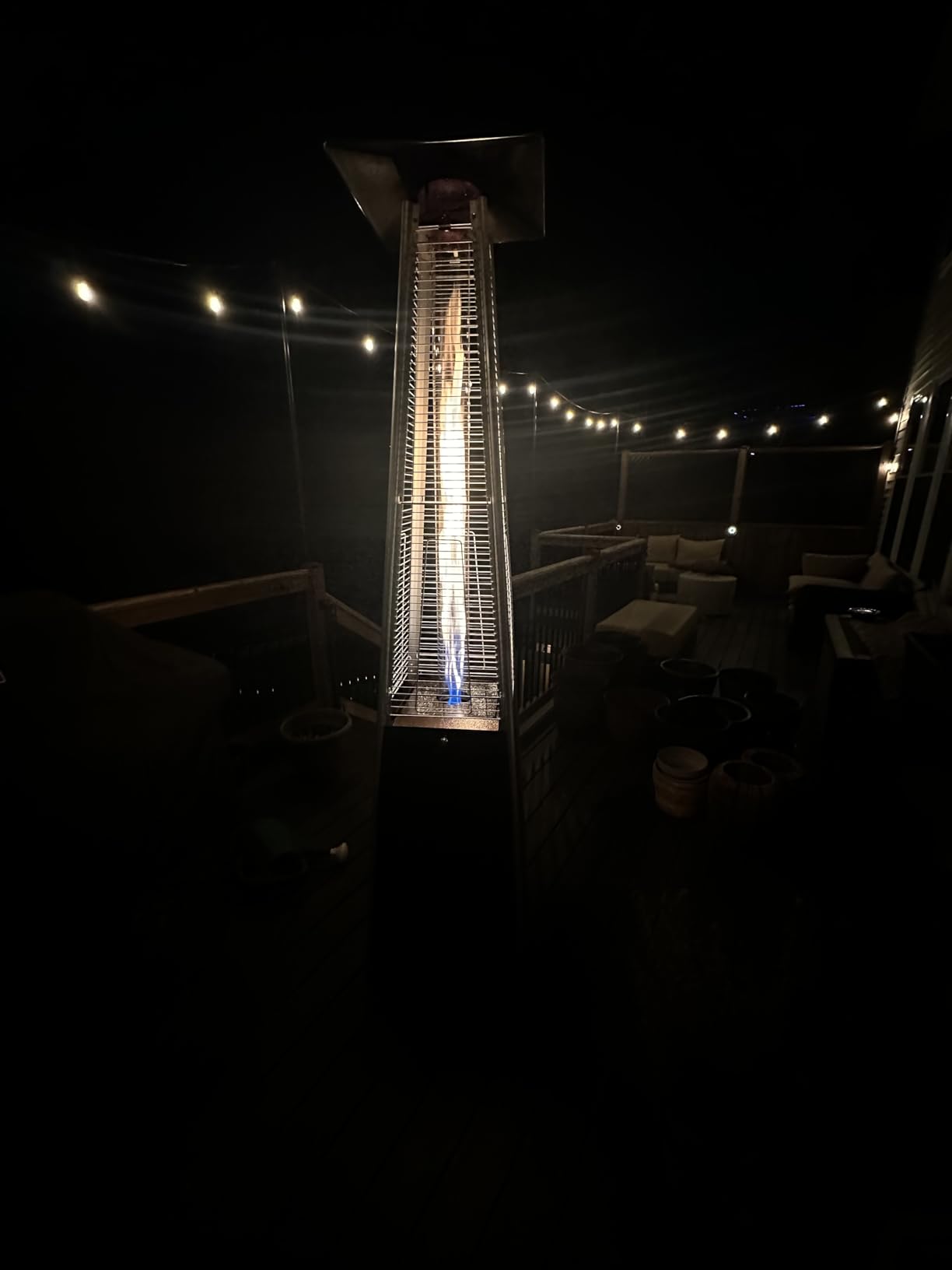
Safety is handled with a 45-degree tilt auto shutoff, explosion-proof pipe and protective nets, and ignition is one-touch with a built-in control valve. A weather cover and gloves are included in the box, which matters for a patio that closes for the off-season and for any site where the unit stands outside year-round rather than being wheeled into storage.
At 4.4 stars across 427 ratings with 69% five-star and 16% four-star, the reviews point at quick warm-up, sturdy materials and the included cover and gloves as the consistent positives.
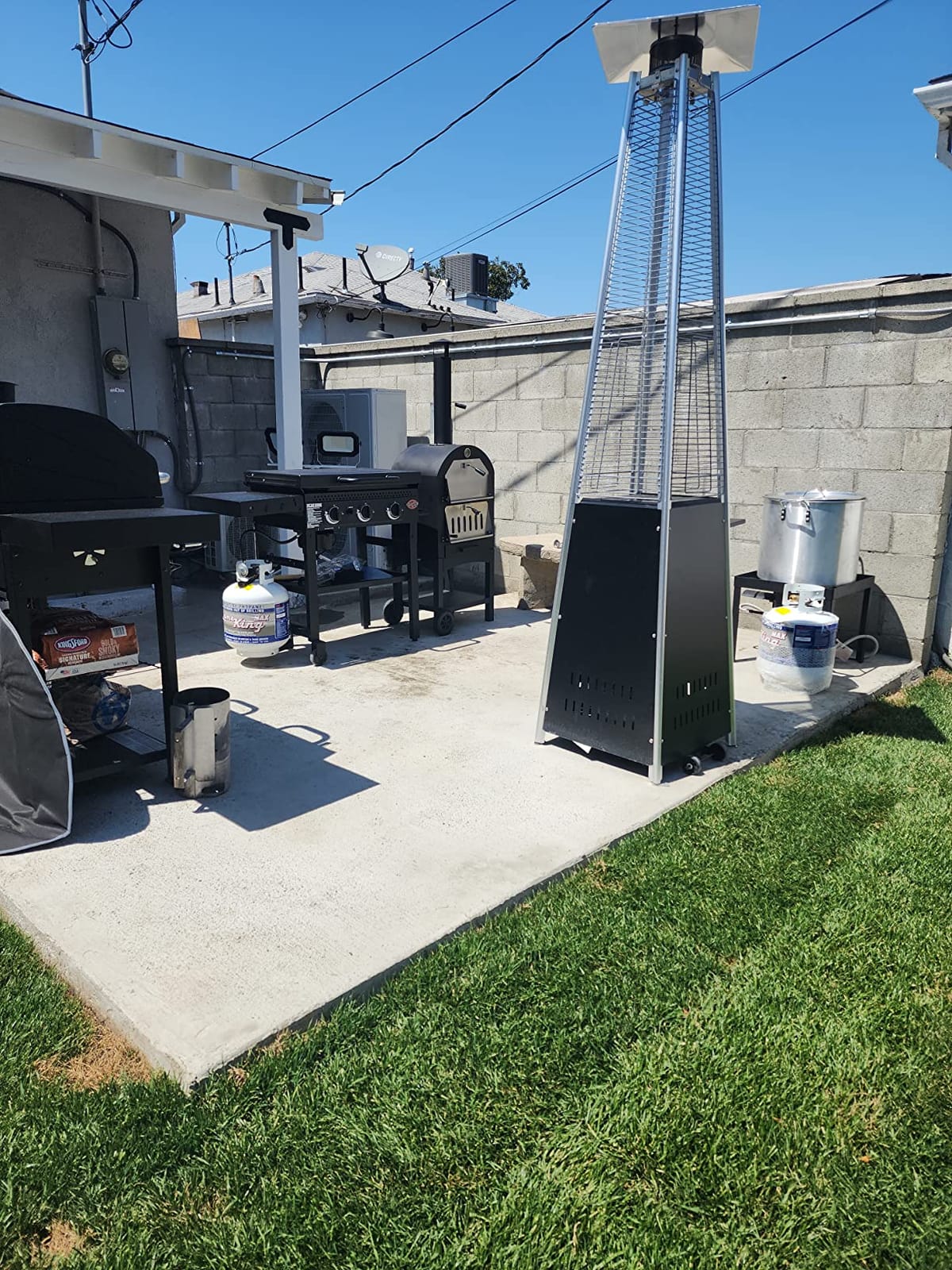
Why operators buy this one?
Short time to useful heat is a scheduling tool. It lets a manager open an underused zone at the start of service instead of holding it closed, and it makes late-season pop-up service possible without a long warm-up period in which the patio is heated but unusable.
The included cover and gloves reduce off-season workload. A patio with six heaters that all need a separate cover order is six more line items on a purchase order, and the covers get left off in practice.
Where it falls short?
The 10-foot heat radius is the tightest reach of any 48,000 BTU unit here, and the listed coverage of roughly 130 square feet is the smallest of the big-output group. Rated output and useful reach are not the same thing, and this is a good example of the gap: a 48,000 BTU burner in a narrow reflector can warm a smaller area than a 50,000 BTU unit with a wide umbrella-style top.
Assembly is required, and at 50.7 pounds this is not a one-person carry up steps or onto a raised deck. Plan two people for any rooftop or split-level patio.
9. LAUSAINT HOME 48,000 BTU Pyramid Patio Heater – Best Budget Pyramid With Cover
LAUSAINT HOME Pyramid Patio Heaters for Outdoor Use, 48,000 BTU Outdoor Propane Heaters for Patio with Cover & Wheels, 87″ Tall Quartz Glass Tube Flame Heater for Deck, Party, Commercial, Restaurant
48,000 BTU CSA certified
Quartz glass flame tube
About 9 hours per tank
Waterproof cover
87 in tall
Pros
- 48000 BTU CSA certified radiant heat
- About 9 hours of run time on a 20 lb propane tank
- Waterproof cover and two smooth-rolling wheels included
- Support has replaced damaged tops after wind events
Cons
- Small deflector sends much of the heat upward
- Warmth reported only within about 2 feet of the unit
- Assembly instructions contain errors and take about two hours
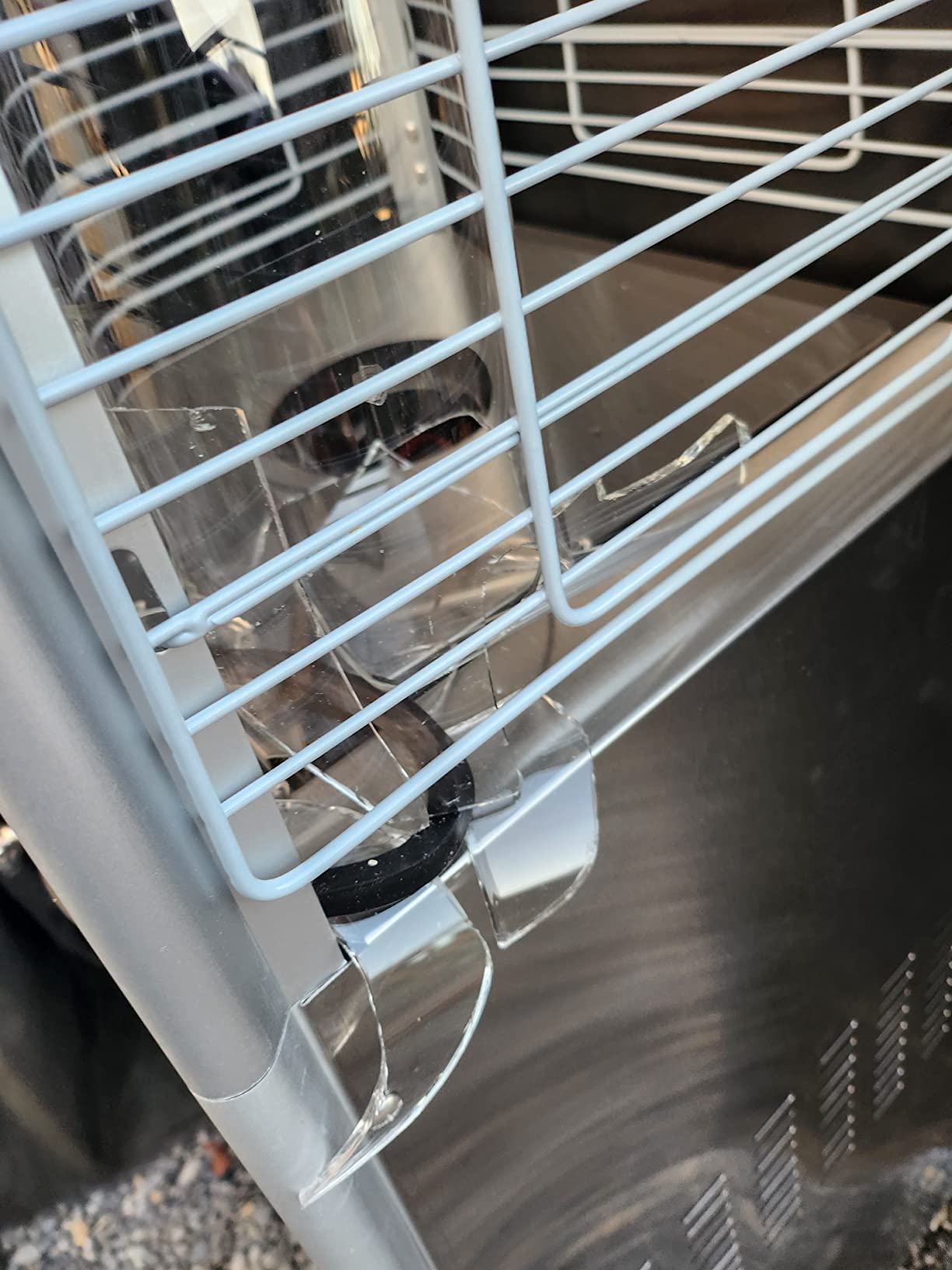
- Quartz glass tube can be damaged by wind
The distinguishing spec on this unit is runtime. At about nine hours on a 20 lb propane tank, this is one of the longer-running heaters in the roundup per tank, and for an operator running four to six heaters through a long evening that translates into fewer tank changes per service.
It is also CSA certified at 48,000 BTU with a heat-resistant quartz glass tube, an 87-inch stainless steel exterior, and a waterproof zippered cover plus two smooth-rolling wheels in the box. Support has replaced damaged tops after wind events, which is the kind of parts responsiveness that matters when a single top puts a zone out of service.
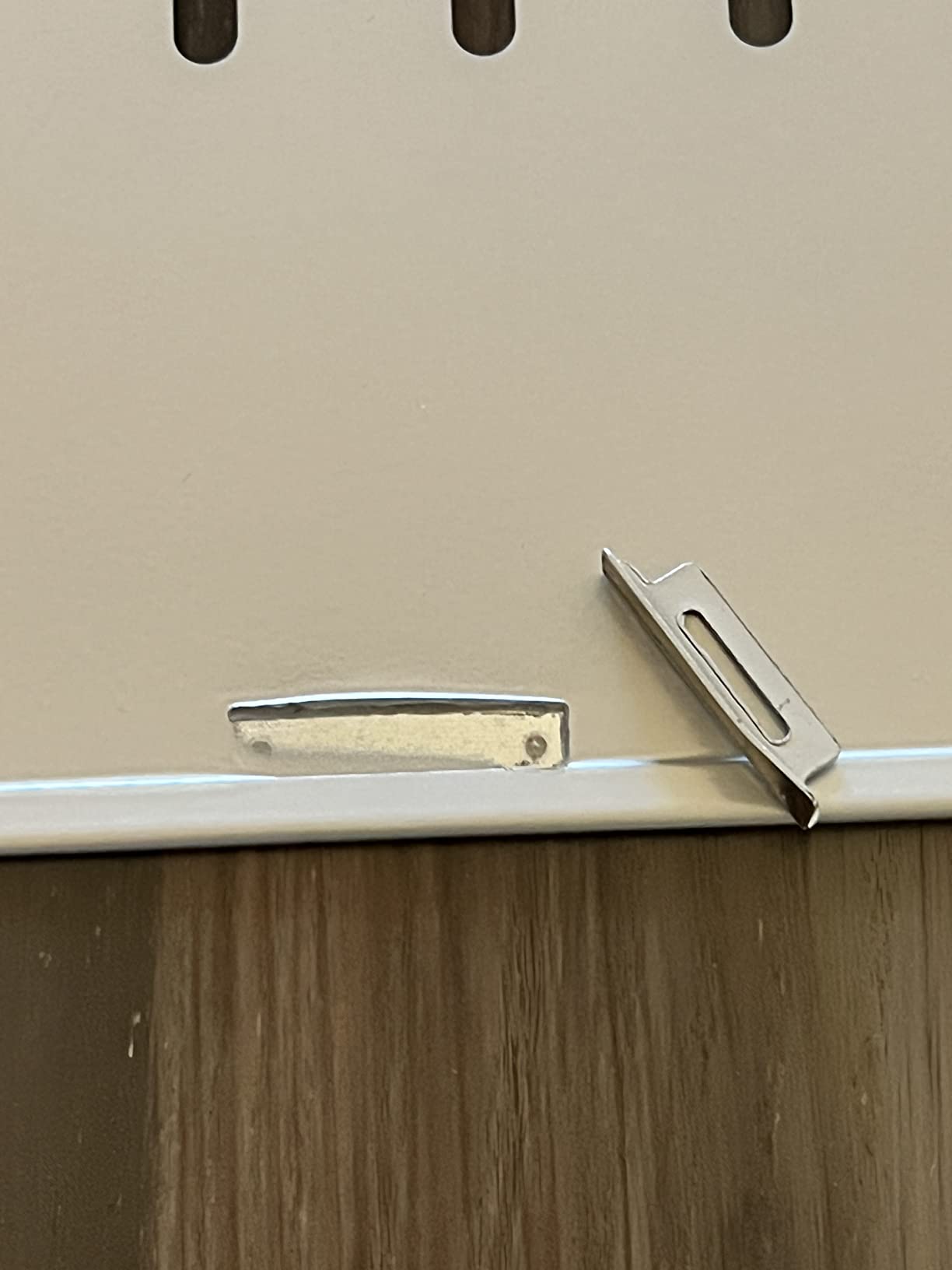
The 4.1 rating across 212 reviews is the second-lowest here, with 62% five-star and a 9% one-star band. The review split is unusually informative, because it is not about reliability. It is about radiant reach: many buyers buy this unit for the flame and the ambience and then find that the warmth is concentrated very close to the heater.
Several owners specifically report warmth only within about two feet of the unit, and others describe a tall body with a small deflector that sends much of the heat upward rather than down toward a table. That is a real problem for a restaurant even though the 48,000 BTU rating sounds impressive on a spec sheet.
Why operators buy this one?
Nine hours per tank is the headline. For a venue running a long dinner service plus a late bar period, fewer tank swaps mean less staff time, fewer hot tanks carried through a guest path, and less chance of running out of heat with guests still seated.
Two smooth-rolling wheels and a full waterproof cover in the box make it a low-friction unit to deploy seasonally and to protect over the off-season, which is where a lot of exterior corrosion damage actually starts.
Where it falls short?
Heat throw is the problem to design around. If you are buying this unit, plan to set guests within a couple of feet of it rather than at the edge of a claimed wide field, and test that seating arrangement on a still evening before you commit a whole patio to it.
Assembly is reported at roughly two hours solo, with instructions containing errors about screws and panel positions. The quartz glass tube is also vulnerable to wind damage, and on an exposed site the combination of a fragile tube and a small deflector is worth weighing carefully before a full order.
10. Cuisinart 11,000 BTU Tabletop Propane Patio Heater – Best Lightweight Tabletop Unit
Cuisinart Patio Heater, Tabletop, Anti-Tilt Safety Switch, 11,000 BTU, Gray
11,000 BTU
Up to 30 sq ft
Anti-tilt shutoff and screen guard
8.5 lb
Dark gray
Pros
- Reliable easy ignition with no repeated tapping
- 8.5 lb body is genuinely portable between tables
- Reflector top plate spreads output over about 30 sq ft
- Anti-tilt auto shutoff and burner screen guard
- No early rusting reported unlike competing models
Cons
- 1 lb cylinders exhaust in roughly 10-14 minutes
- Cylinders can read empty with fuel still inside
- Short heat radius in open or windy areas
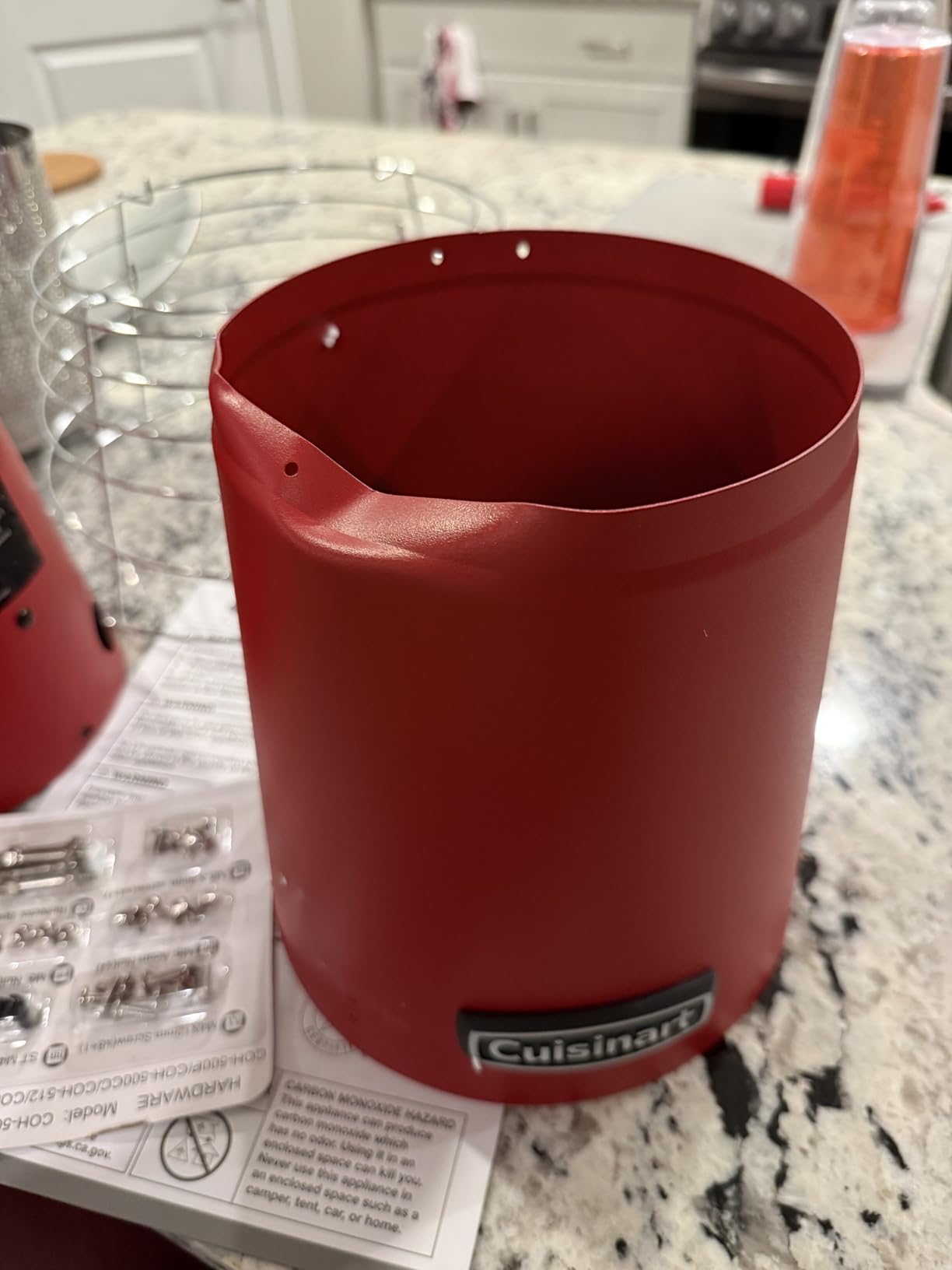
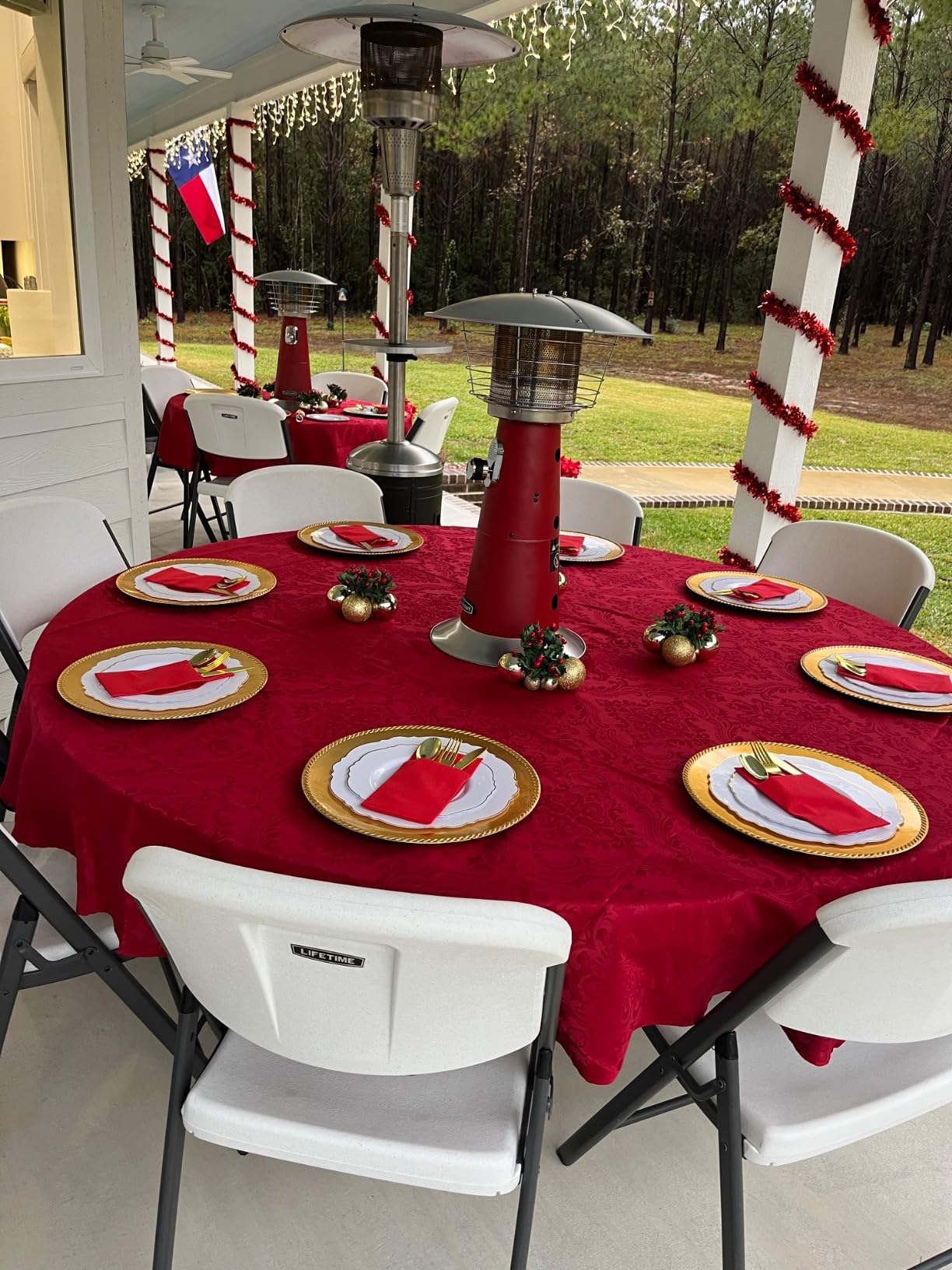
At 8.5 pounds this is the only unit in the roundup a server can carry in one hand, and that changes how you use it. It moves from a two-top to a high-top to a window counter as the sun moves, without a cart, a dolly or a second person.
The safety specification is solid for a tabletop unit: a built-in anti-tilt automatic shutoff and a burner screen guard, plus a reflector top plate for even distribution and a dial knob with two heat settings. The most repeated positive across reviews is that ignition is reliable and does not require repeated tapping, which is the failure mode that kills most small tabletop heaters.
Reviewers also report that it does not show the early rusting seen on competing tabletop models, which matters outdoors. At 4.4 stars across 196 ratings with 69% five-star and 14% four-star, the profile is solid for a small appliance.
The honest limit is coverage: up to 30 square feet. That is a single table or a small conversation cluster, not a seating zone. Think of it as a table-level comfort addition on an exposed rail rather than as the primary heat source for a patio.
Why operators buy this one?
It solves the last row of seats. On a patio where the main heater coverage stops at six tables, a set of lightweight tabletop units can extend warmth to a bar rail or a two-top at the far corner without a floor unit, a gas run or a floor plan change.
It also runs on 1 lb propane tanks or a 20 lb tank with an optional regulator, so you can standardize fuel handling if you buy the regulator and standardize on cylinders if you do not.
Where it falls short?
The 1 lb cylinder run time of roughly 10 to 14 minutes is the defining problem, and it is the most repeated complaint in the reviews. On a busy table that is a cylinder change multiple times an hour, and cylinders that read empty while fuel remains inside waste the tail of every tank.
The heat radius is also short in open or windy areas, so this unit belongs on a protected rail rather than an exposed corner. If your patio is genuinely open on three sides, the money is usually better spent on a 50,000 BTU floor unit covering a wider zone.
11. EAST OAK 55,000 BTU Propane Patio Heater with Round Table – Highest Rated
EAST OAK 55,000 BTU Propane Patio Heater with Round Table & Stainless Steel Burner, Outdoor Heater with Wheels, Ideal For Large Patios, Gardens, Outdoor Events, and Commercial Use, Bronze
55,000 BTU
18-foot coverage
Double-layer stainless burner
30 minute install
33.1 lb
Pros
- 55000 BTU with 18-foot heat coverage
- Burner and igniter arrive pre-assembled for about a 30 minute setup
- Round tank lid doubles as a drink and snack table
- Access hole reaches controls without opening the door
- Support has sent complete replacement units and burner heads
Cons
- Ignition knobs have failed after a season or two on some units
- Aesthetics are plain next to glass-tube pyramid models
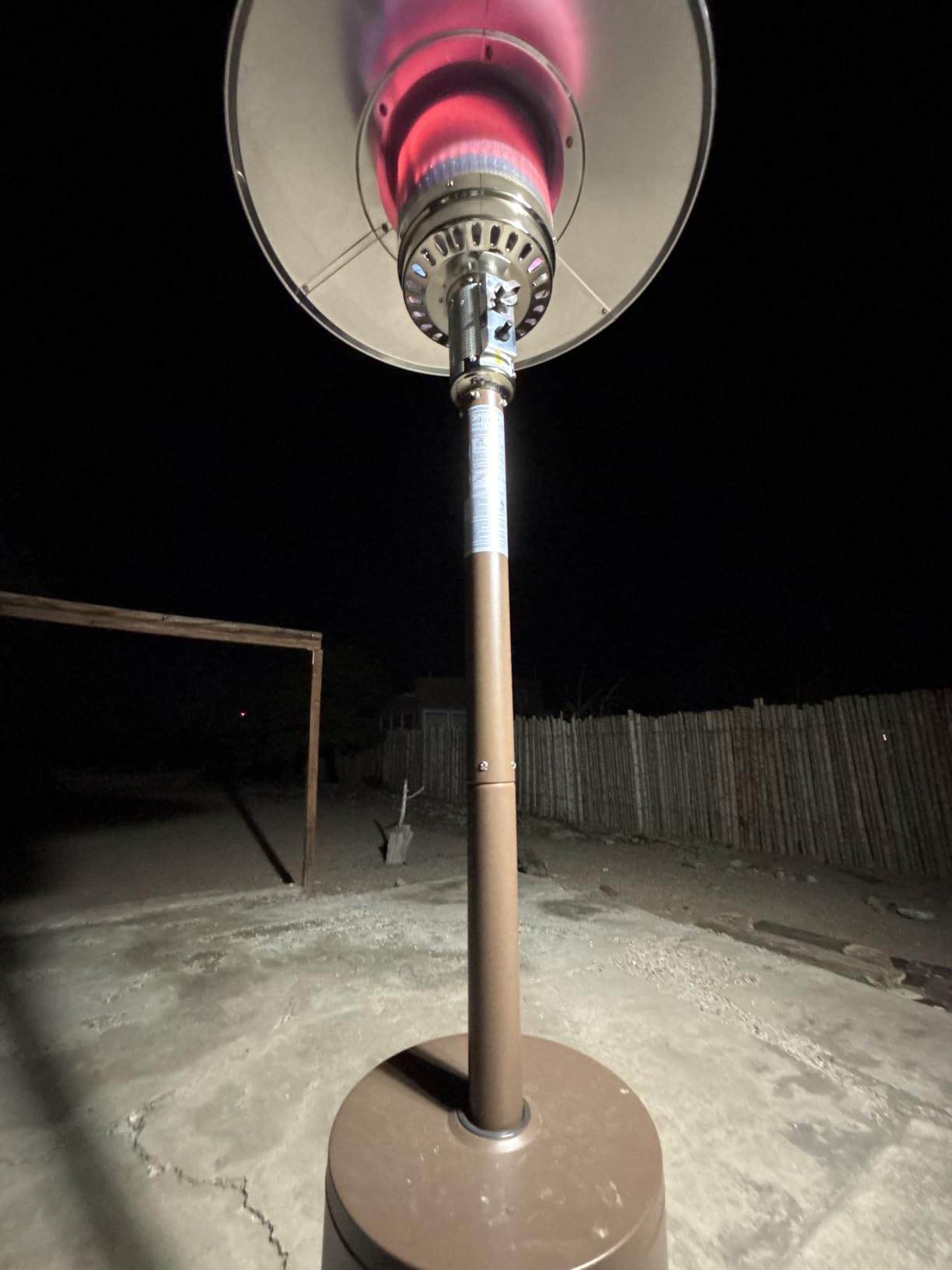
This is the highest-rated unit in the roundup at 4.6 stars, and the spec behind the rating is the largest output on a portable tower here: 55,000 BTU with 18-foot heat coverage. Owners describe furnace-like heat output, and 80% of the 144 ratings are five stars.
The installation story is the commercially decisive detail. The burner and igniter arrive pre-assembled, so the stated setup is about 30 minutes rather than the four hours Better Homes & Gardens recorded on a competing 48,000 BTU unit. Across a patio order, that difference is the difference between a system you can bring online over two evenings and one that needs a contractor on the schedule.
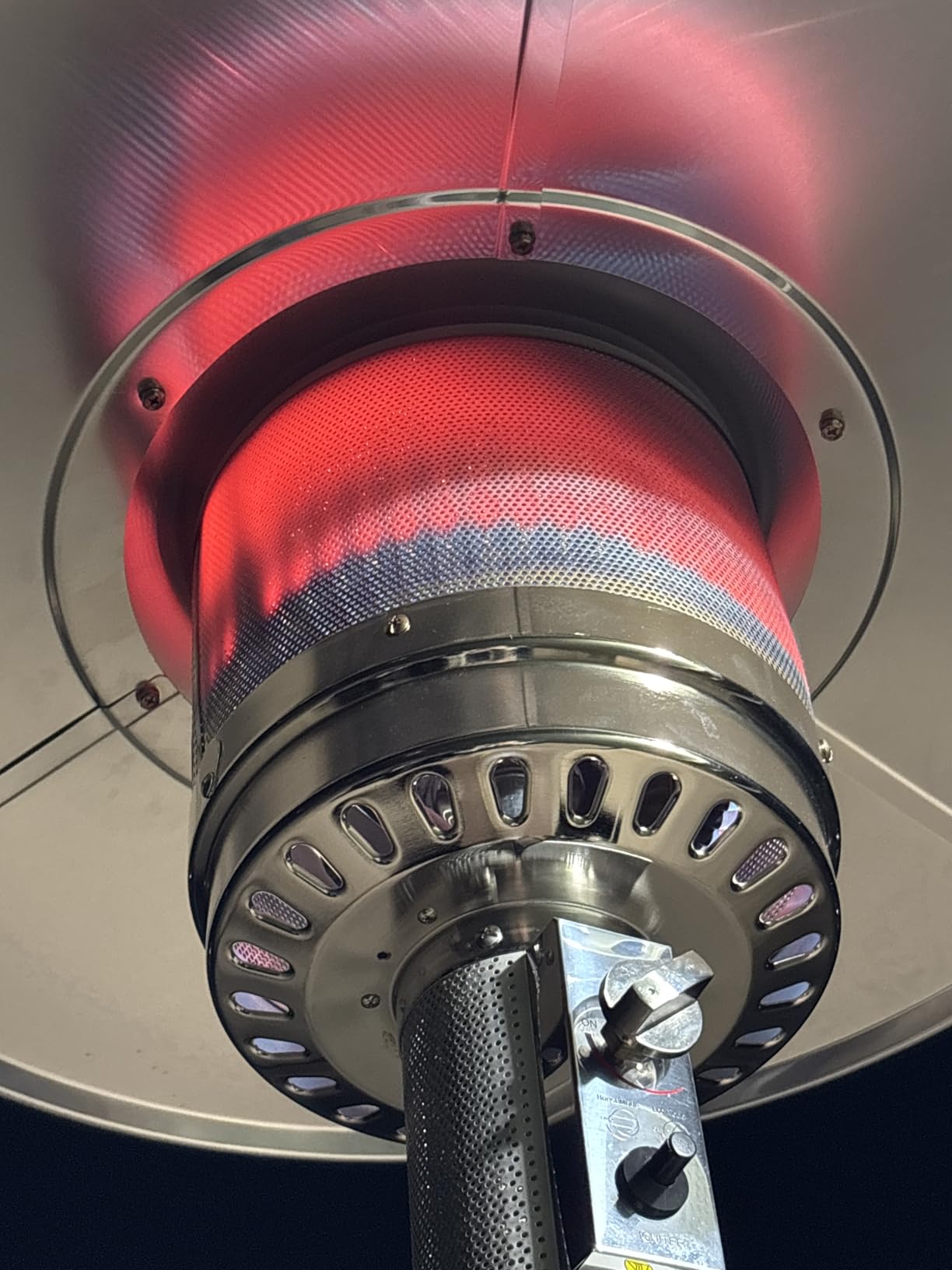
The double-layer stainless steel burner resists the same soot and charring problem that ended up shortening cheaper single-layer screens in Wirecutter testing. Tip-over protection shuts the flame off beyond 45 degrees, and flame-out protection closes the gas supply automatically, so both interlocks an operator needs are present.
Two smaller commercial touches earn their place. The control access hole lets staff reach the heat dial without opening the tank door, which means fewer times a server is bent over a hot burner deck during a rush. And the round tank lid doubles as a drink and snack surface, adding usable guest surface on a bar-height layout.
Why operators buy this one?
Fifty-five thousand BTU at 18 feet of coverage is the widest usable warm zone per portable unit here, which directly reduces the number of propane connections and tanks on a large patio. Fewer tanks on the floor near guest paths is a service-safety improvement as well as a labor saving.
At 33.1 pounds with two wheels, it is light enough for one person to move, and reviews note that support has sent complete replacement units and burner heads. Parts and unit availability at that level is rarer than it should be in this category.
Where it falls short?
Some units have had ignition knobs fail after a season or two of use. That is a small part and a realistic five-year-horizon cost for any burner, but on this specific unit it is the most common complaint, so keep a spare knob rather than a spare heater.
The aesthetics are plain next to the pyramid and glass-tube models. On a designed courtyard or hotel terrace where the heater is visible from every table, that is a legitimate reason to pay more for a different unit, and it is a legitimate reason to buy this one for a service patio where the heater is functional rather than decorative.
12. Cuisinart Perfect Position 38,200 BTU Directional Patio Heater – Best for Targeted Heat Zones
Cuisinart Perfect Position Propane Patio Heater, 38,200 BTU Powerful Directional Stainless Steel Outdoor Heater with Hidden Tank and Drink Table, Swivel Arm and Reflective Heat Shield
38,200 BTU directional
About 175 sq ft
Adjustable swivel arm
33-inch heat shield
100 lb
Pros
- Swivel arm aims heat at a specific seating section
- 33-inch heat shield and cone burner push warmth down and outward
- Enclosed base hides a 20 lb propane tank
- Sand-filled wheeled base is stable and movable
- Built-in stainless steel drink table adds guest surface
Cons
- 100 lb is the hardest unit here to reposition
- 38200 BTU is modest next to 48000 to 55000 BTU competitors
- Premium price point for the category
- Smallest review base in the roundup at 110 ratings
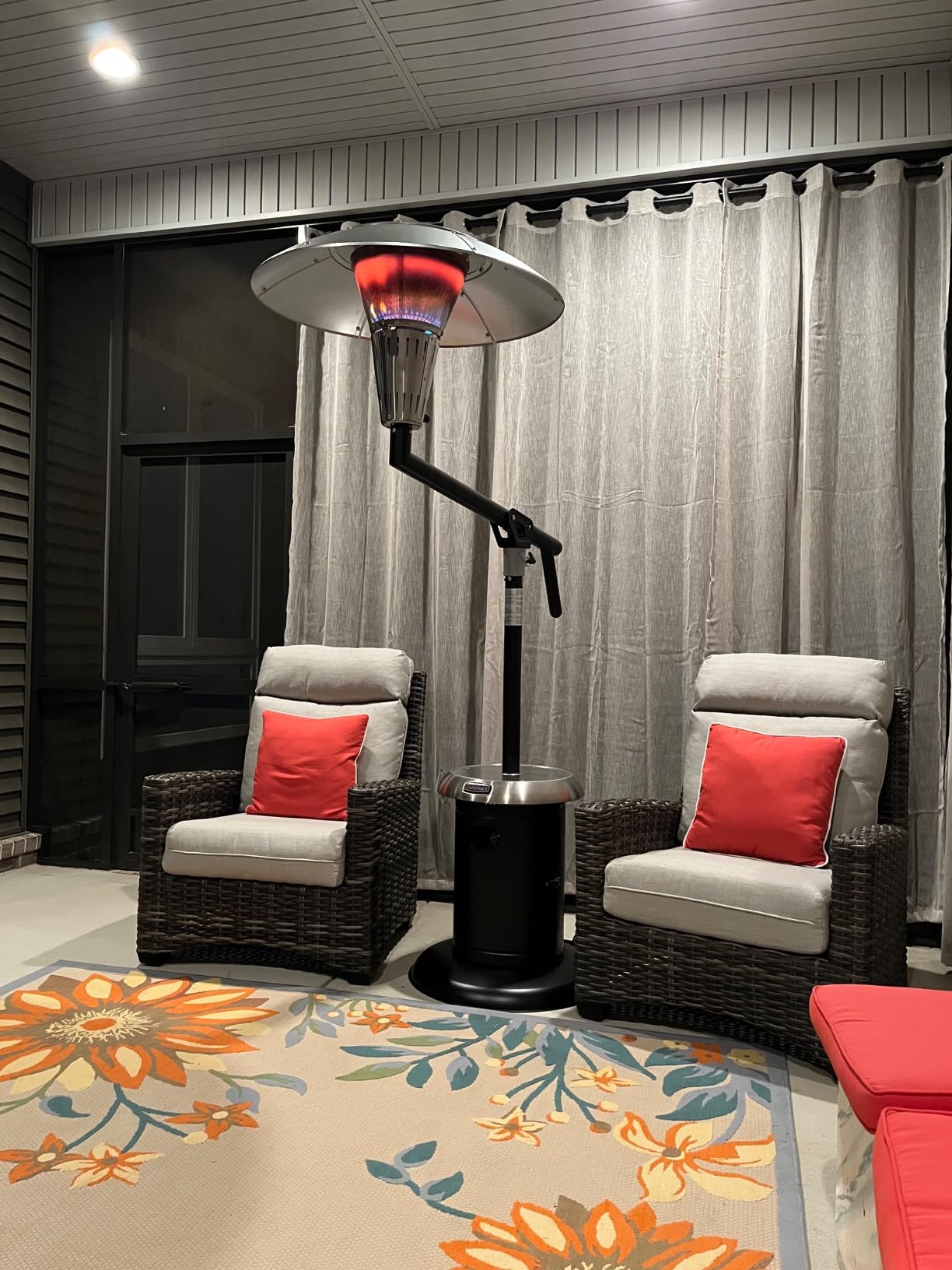
This unit solves a different problem from the rest of the roundup. Instead of trying to warm a symmetric circle, it aims heat at one section of the patio. On a wide outdoor dining area with a bar rail on one side and a dead corner on the other, directional output lets you spend your propane where the guests actually are.
The mechanism is an adjustable swivel arm that directs heat left or right and folds for storage, paired with a 33-inch reflective heat shield and a cone-shaped burner that pushes warmth downward and outward. CNET named the Cuisinart COH-400 its best overall patio heater, and the direction-control design is the specific feature that separates this model from every other unit here.
Two details make it work in a venue. The enclosed base stores a 20 lb propane tank out of sight, which keeps a hot fuel cylinder off the guest floor and out of the frame of a designed patio. The sand-filled wheeled base gives it 100 pounds of stability, and the built-in stainless steel drink table adds guest surface.
At 4.2 stars across 110 ratings, with 67% five-star and 12% four-star, this is the smallest review base in the roundup, so treat the rating as provisional rather than settled. Reviewers consistently praise the swivel arm, the heat shield and the hidden tank as the standouts.
Why operators buy this one?
Directional heat is the whole argument. A patio that is 40 feet wide with a bar at one end does not need two symmetrical heaters, it needs one unit pointed at the bar. A 33-inch heat shield with a cone burner also puts warmth downward and outward, which addresses the uneven vertical distribution that Wirecutter documented on taller reflector towers.
Hiding the tank and adding a drink table solve two problems at once, a cylinder off the guest floor and one more usable surface on a high-top layout.
Where it falls short?
At 100 pounds this is by far the heaviest unit here, and the sand-filled base is the reason. That is a genuine disadvantage for an operator who wants to move heat between a lunch zone and a dinner zone, and it is the hardest unit in the roundup to reposition or to carry up steps. Set it where it belongs and leave it, rather than planning to move it.
Output of 38,200 BTU over about 175 square feet is also modest next to the 48,000 to 55,000 BTU units, so it works best in a sheltered corner rather than an open courtyard, and it carries a 1-year limited warranty alongside the premium price point for the category.
How to Size BTU for a Restaurant Patio?
Size by service area, not by total patio square footage. The working method is four steps: measure the area you actually intend to seat, apply the square-footage-times-twenty baseline, apply an outdoor and wind penalty, and divide by the coverage of a single unit rather than by its BTU.
Step one, measure only what you will use. A courtyard patio with a fenced service yard along one edge is not the same number as the property listing. Measure from the first chair to the last chair in the cold season, because that is the footprint that has to be warm.
Step two, apply the baseline. The industry rule of thumb, used by both Better Homes & Gardens and Wirecutter, is square footage multiplied by 20. A 1,000 square foot seating area therefore wants roughly 20,000 BTU before any penalty, which is why a single 46,000 to 50,000 BTU unit covers a mid-size zone rather than a whole patio.
Step three, apply the outdoor penalty. A basic patio heater rule is about 1,000 BTU per square foot, but open-air, wind-exposed, three-sided restaurant patios need a 30 to 50 percent increase over the baseline, and rooftop terraces exposed to wind need the high end of that range. A patio that catches a steady draft off a building wall can lose a large share of its radiant output before it reaches a table ten feet out.
Step four, divide by coverage, not by BTU. A 50,000 BTU unit with an 18 to 20-foot warm zone is more useful than a 48,000 BTU unit with a 10-foot reach, because radiant heat falls off with distance and the guests at the far edge of a table are the ones you are trying to keep. Work out how many table clusters your warm zone actually contains, then round up.
How many heaters does a restaurant patio need?
Plan one heater per three to four two-top tables, or one per two four-tops, and cluster them so the warm zones overlap slightly at the middle rather than leaving dead air between them. A 30-foot by 30-foot seating area generally works as two zones, which is why the 18 to 20-foot coverage units in this roundup are so popular with operators running a rectangular patio.
For bistro two-tops and bar rails, supplement rather than replace. A floor unit covers the main zone, and a small tabletop unit adds hand-level comfort to an exposed rail that no floor unit can reach without taking a table out of service.
Propane Running Cost per Service Hour
Propane running cost is arithmetic, and it is the number most operators do not work out before buying. Jim Schimmenti of The Grounds Guys, quoted by Better Homes & Gardens, put a 20 lb propane tank at up to 10 hours on a patio heater and about 2 pounds of propane per hour. Wirecutter gives the same 8 to 10 hour range for a 20 lb tank.
Run the math per service hour rather than per tank, because that is how fuel cost actually lands on your invoice. A 20 lb tank at roughly 2 pounds per hour means a heater at full output burns a tank in about 8 to 10 hours. If your dinner service plus late bar runs four to five hours, you are consuming roughly 8 to 10 pounds per heater per night.
Then multiply by the heaters you are actually running, and by the number of nights in your shoulder season. Six heaters on a four-hour service, five nights a week, for an eight-week shoulder season is 960 heater-hours, which is around 1,920 pounds of propane. Take that number to your fuel supplier for a current per-pound figure in your market, because retail propane pricing varies by region and by season, and your own delivered cost is the only number that should drive the decision.
The practical levers on that total are heat setting and zoning. A heat dial set below maximum on a mild evening, or running four of six heaters because two zones are unoccupied, cuts consumption far more than any equipment choice. Manual output adjustment and a layout that lets you shut a zone down are worth more than a marginal difference in burner efficiency.
Safety, Clearances and Code Compliance on a Restaurant Patio
Propane patio heaters are ventless combustion appliances, and that single fact drives every rule below. A ventless heater consumes oxygen and produces carbon monoxide, which is why the same unit that is fine on an open patio is a problem under a canopy. Dor Wand, an operations lead at Hippo, told Better Homes & Gardens that propane heaters may be used under a covered patio only if the unit is rated for indoor use, that adequate clearance to the cover is required, that a heater should never be left unattended, and that it should be inspected annually.
Confirm three interlocks before you buy. Tip-over shutoff closes the gas valve when the unit passes its tilt threshold, which is what stops a knocked heater from venting fuel. Flame-failure protection uses a thermocouple or a flame sensor to close the valve if the flame goes out. And overheat protection shuts down a unit whose temperature exceeds its limit. All twelve units in this roundup have at least two of the three, and the Thermo Tiki and the Hampton Bay are the two to check first for certification labels.
How much clearance does a patio heater need?
Follow the manual, and assume a local inspector will ask to see it. The practical rules operators use are: never run a propane heater under a patio umbrella or a market umbrella, because a fabric canopy with a flame column above it is the most common violation in restaurant patios and it is also the fastest way to scorch a canopy you paid for. If you are planning shade over the seating first, start with our cantilever patio umbrella guide, because a side-mounted canopy clears a flame column far better than a centre-pole umbrella. Keep the required clearance to combustibles published in the unit manual from walls, fences, awnings, canopies and overhead structures, and check the height of your umbrellas against the 87 to 91-inch towers in this roundup before you order.
On carbon monoxide, the rule is simple and non-negotiable. Propane heaters are for open air or for a space the local code treats as open air, with clearance above the unit and no enclosed ceiling. For a covered patio or a pergola where combustion is not permitted, the correct answer is an electric infrared unit, not a propane heater with an umbrella held above it. And no unit is ever left unattended, which means your closing checklist needs to include the heaters by name, not as a general instruction to check the patio.
Finally, check listing and warranty. A unit that is UL listed or certified to ANSI and CSA standards has been evaluated for a specific set of clearances, and that listing is what your insurer will ask about after an incident. Commercial warranty terms also differ sharply from residential ones, and the 90-day limited warranty on the Thermo Tiki is a fair example of how much variation there is in this category.
Commercial vs. Residential Patio Heaters: What Actually Differs?
The difference that matters is the duty cycle, and everything else follows from it. A residential tower is built for a few evenings a week in fair weather. A commercial patio heater is built for nightly service through a shoulder season, which means a heavier burner assembly, marine-grade or heavy-gauge stainless where corrosion is an issue, replacement parts that a dealer can actually source, and a warranty written for commercial use.
Beyond that, the commercial brands that dominate restaurant procurement are a different category entirely. Detroit Radiant, Crown Verity, Schwank, Infratech, Bromic, Sunpak, Heatstar, Calcana, Backyard Pro and Mr. Heater build high-intensity and infrared systems, and many of the strongest of them are permanently mounted rather than portable. Wall-mounted and ceiling-mounted high-intensity infrared units heat people directly with no flame column and no combustion in the guest area, which solves the umbrella clearance problem entirely and frees the floor space a tower occupies. Schwank and Bromic both offer marine-grade 316 stainless lines, which matters on a coastal or rooftop site where salt shortens the life of 304 stainless components.
That is the honest dividing line for a purchasing decision. The units in this roundup are the portable, tank-fed, dealer-independent end of the market, and they are the right choice for a patio that changes season to season, a leased patio where you cannot install anything permanent, or a venue that needs heat next week. Permanently mounted commercial infrared is the right choice for a covered structure, a rooftop with a hard wind problem, or any site where you intend to run heaters for a decade.
Either way, plan the surround. Patio layout and table spacing set the framework the heaters have to work within, and choosing among our best patio dining tables before the heater order can avoid a layout that forces a heater to sit awkwardly for clearance. A heater that has to sit awkwardly to clear an umbrella is a worse buy than a slightly lower-output unit with a clean footprint. Fire features, including our propane fire pit picks, are a different category with different code implications, so treat them as a separate decision from heating.
Frequently Asked Questions
What are the best outdoor heaters for restaurants?
Three form factors dominate restaurant installations: portable tower heaters that cover a zone of tables, wall-mounted or ceiling-mounted high-intensity infrared units that heat guests directly and free up floor space, and heater-with-table units that add a drink surface. For portable propane, the Amazon Basics 46,000 BTU tower is the general-purpose pick, the EAST OAK 55,000 BTU round-table unit gives the widest warm zone, and a Cuisinart 11,000 BTU tabletop unit handles exposed bar rails. The answer changes completely on a covered patio, where combustion appliances are generally not permitted and electric infrared is the correct choice.
What is the best commercial patio heater?
The Amazon Basics 46,000 BTU portable propane patio heater is the best overall commercial patio heater, because it pairs a 46,000 BTU burner and nine-foot radius with a tilt safety auto-shutoff valve, a water-filled weighted base and wheels, and carries by far the largest review base in the category. Best value is the Pamapic 89-inch pyramid heater with a quartz glass flame column and 15-foot diameter coverage. Best wall-mounted alternative is a permanently installed high-intensity infrared unit from a commercial brand.
What type of propane patio heater is best?
Portable mushroom or pyramid towers suit an open patio with movable table zones and no permanent mounting allowed. Tower units with a quartz glass tube suit a venue where flame ambience matters in a courtyard. Heater-with-table units suit bar-height layouts that need a drink surface. Wall-mounted units suit a wall of tables where floor space is the constraint. Ceiling-mounted infrared suits a covered pergola where you need heat from above. Tabletop units suit an exposed rail that a floor heater cannot reach.
Which patio heater gives off the most heat?
By rated output, the 50,000 to 55,000 BTU portable units in this roundup lead: the EAST OAK at 55,000 BTU with 18-foot coverage, the hykolity and Pamapic round-table units at 50,000 BTU, and the Amazon Basics at 46,000 BTU. Raw BTU is not the whole story, though. Radiant heat falls off with distance, so heat throw and reflector geometry decide guest comfort more than headline output, and a 48,000 BTU unit with a 10-foot reach warms fewer guests than a 50,000 BTU unit with a 20-foot warm zone.
How many patio heaters does a restaurant patio need?
Plan one heater per three to four two-tops, or one per two four-tops, with warm zones overlapping slightly so there is no dead air between them. A 30-foot by 30-foot seating area generally works as two zones. Apply the square-footage-times-twenty baseline to your measured seating area, add a 30 to 50 percent outdoor and wind penalty for an open three-sided patio, then divide by the actual warm-zone coverage of the unit rather than by its BTU rating.
How long does a 20 lb propane tank last on a commercial patio heater?
A 20 lb propane tank runs a patio heater for about 8 to 10 hours at full output, which works out to roughly 2 pounds of propane per hour according to Jim Schimmenti of The Grounds Guys, quoted by Better Homes u0026amp; Gardens. A four to five hour dinner service therefore consumes about 8 to 10 pounds per heater per night. A 20 lb tank is not included with any heater in this roundup, and a 100 lb bulk tank with an automatic changeover is the practical choice for a patio running several units.
Can propane patio heaters be used under a covered patio or pergola?
Only if the specific unit is rated for indoor use, and with adequate clearance to the cover. Propane heaters are ventless combustion appliances that consume oxygen and produce carbon monoxide, so a covered space can make them unsafe and non-compliant. Dor Wand, an operations lead at Hippo, told Better Homes u0026amp; Gardens that heaters must never be left unattended and should be inspected annually. For a pergola or covered patio where combustion is not permitted, electric infrared is the correct alternative.
How much clearance does a patio heater need from umbrellas and other combustibles?
Follow the clearance to combustibles published in the unit manual, and never run a propane heater under a patio or market umbrella. Most units in this roundup stand between 86 and 91 inches tall, which is at or above typical umbrella canopy height, so measure your umbrellas and canopies before ordering. Keep the required clearance from walls, fences, awnings and overhead structures, and check your local code and insurer, which will ask for the listing label rather than an opinion.
Conclusion: The Best Commercial Propane Patio Heater for Your Patio
The best propane patio heaters for restaurants are the ones that hold a warm zone over your actual table layout, carry a tip-over and flame-failure shutoff chain, and can be moved by one person between service zones. Our pick, the Amazon Basics 46,000 BTU portable propane patio heater, does all three with a nine-foot radius and the largest review base in the category, and it pairs with the Pamapic 89-inch pyramid heater when you want a wider 15-foot zone and a visible flame.
Size the patio with the square-footage-times-twenty baseline, add a 30 to 50 percent outdoor penalty, and divide by real coverage rather than headline BTU. Then measure your umbrella and canopy heights, because an 86 to 91-inch tower does not fit safely under a market umbrella, and decide honestly whether your patio is open air or a covered space. If it is covered, the answer is electric infrared, not a combustion heater held under a fabric roof.
One last piece of operating advice from an insurer, not from us: never leave a heater unattended, and inspect it annually. Put the heaters by name on your closing checklist for 2026, and your patio keeps selling tables long after the first cold snap would otherwise have ended the season.