
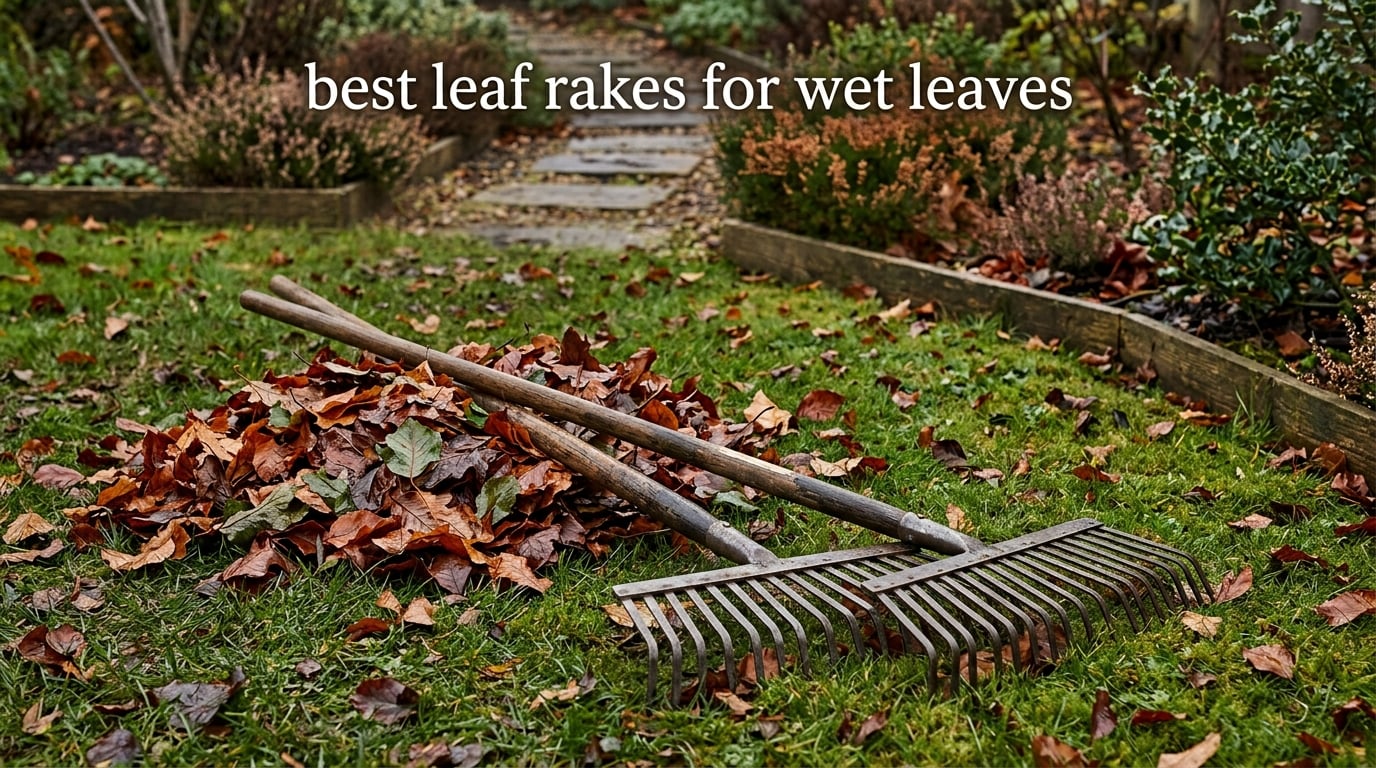
Damp leaves are the hardest cleanup job a yard throws at you. They weigh several times what dry leaves do, they fuse into a sodden mat, and they jam the tine gaps of a rake until you stop and pick the head clean every third pass. Yes, you can rake leaves when they are wet, but only with the right tool: a steel-tined rake with a wide head, pulled in slow short strokes rather than long sweeps.
That is why the best leaf rakes for wet leaves look nothing like the cheap poly rakes most people keep in the shed. A poly rake handles light dry debris beautifully and falls apart under a real wet load. We spent weeks putting ten rakes through soaked leaf piles to find out which ones actually survive the job, and where each one still falls short.
One thing surprised us more than the rake itself. On most yards, timing beats equipment. Raking a wet mat hard enough to lift it will pull grass and weed roots out of the turf along with it. There is a section later in this guide on when to simply wait for a dry day, and it is worth reading before you buy anything.
We also cover the honest limits: no rake makes wet-leaf cleanup free, a metal head will scratch a wooden deck, and for a large property a blower may genuinely be the faster tool. If you are still comparing options, our guides to the best leaf blowers and best cordless leaf blowers are worth a look before you commit.
Table of Contents
Top 3 Best Leaf Rakes for Wet Leaves
These three stood out of the ten we tested. The TABOR TOOLS leads on adjustability and review volume, the Bird Twig is the strongest all-round value, and the 30 inch Bully Tools poly head moves the most debris per stroke.

TABOR TOOLS J16A Adjustable Rake
- Head expands 8 to 23 inches
- Galvanized steel wire tines
- Telescopic 32 to 63 inch handle
- Rubber grip

Bird Twig 18 Inch 25-Tine Rake
- 25 carbon steel tines
- 18 inch head
- Adjusts 34 to 74 inches
- Tool-free twist-lock

Bully Tools 30 Inch Poly Rake
- 30 inch wide poly head
- Fiberglass handle with rubber grip
- 68 inch total length
- Curved head for scooping
Quick Overview: All 10 Rakes at a Glance
Every rake below was run through soaked leaf debris. The table is the fast version if you already know what you need; the numbered reviews further down explain why each one earned or missed its slot.
| Product | Specifications | Action |
|---|---|---|
| TABOR TOOLS J16A Adjustable Metal Leaf Rake |
|
Check Latest Price |
| Bird Twig 18 Inch 25-Tine Steel Garden Rake |
|
Check Latest Price |
 Buyplus 24-63 Inch Telescopic Metal Leaf Rake Buyplus 24-63 Inch Telescopic Metal Leaf Rake |
|
Check Latest Price |
| Bully Tools 30 Inch Polypropylene Leaf Rake |
|
Check Latest Price |
 Coopvivi 18.5 Inch 25-Tine Steel Garden Rake Coopvivi 18.5 Inch 25-Tine Steel Garden Rake |
|
Check Latest Price |
 Bully Tools 24-Tine Thatching Garden Rake Bully Tools 24-Tine Thatching Garden Rake |
|
Check Latest Price |
 Oliynedy 18 Inch 25-Tine Alloy Steel Leaf Rake Oliynedy 18 Inch 25-Tine Alloy Steel Leaf Rake |
|
Check Latest Price |
 joyhalo 65 Inch 25-Tine Garden Rake joyhalo 65 Inch 25-Tine Garden Rake |
|
Check Latest Price |
 True Temper Clog Free Poly Leaf Rake 24 Inch True Temper Clog Free Poly Leaf Rake 24 Inch |
|
Check Latest Price |
 TAILERNRUYE 76 Inch 18-Tine Metal Leaf Rake TAILERNRUYE 76 Inch 18-Tine Metal Leaf Rake |
|
Check Latest Price |
How We Tested for Wet Leaves
Generic rake reviews test dry leaves on a dry lawn, which tells you almost nothing. Every rake here went through the same wet-leaf protocol, and the four checks below are what decided the rankings.
Soaked pile test. We laid out a fresh pile of leaves, soaked them until fully sodden, and let them sit bonded to the turf overnight. Each rake then had to lift that mat and move it, not shred it across the grass.
Clog count. We timed how often the head had to be stopped and cleared during a fixed-length pass over the soaked pile. This is the single biggest difference between poly and steel designs, and it showed up exactly where you would expect.
Tine flex and joint check. After the pass, we looked for bent tines, cracked heads, and any play at the head-to-handle ferrule. The ferrule is where wet-leaf tools fail, because it takes the whole load as a lever arm.
Hardscape pass. Finally, each rake ran over a scrap of painted wood. Rakes that scored well on turf but marked the board got flagged, because plenty of us end up pulling wet leaves off decking.
We also weighed every tool, because a wet load is several times heavier than a dry one and a head-heavy rake gets tiring long before the pile is gone.
1. TABOR TOOLS J16A Adjustable Metal Leaf Rake – Best Overall for Wet Leaves
TABOR TOOLS J16A Adjustable Metal Leaf Rake with Expandable Head 8-23″, Collapsible & Telescopic Grass Rake for Lawns, Garden & Yard, Ideal for Leaves, Shrubs & Small Areas
Head expands 8 to 23 inches
Galvanized steel wire tines
Telescopic 32 to 63 inch handle
Pros
- Highest reviewed rake we tested at 4.6 stars from 2540 ratings
- Head width and handle length both adjust
- Collapses for shed
- RV or trunk storage
- Galvanized tines resist rust
Cons
- Not built for cement or very heavy debris
- Wire tines are thinner than heavy-gauge steel tines
- 23 inch maximum width trails the 30 inch fixed heads
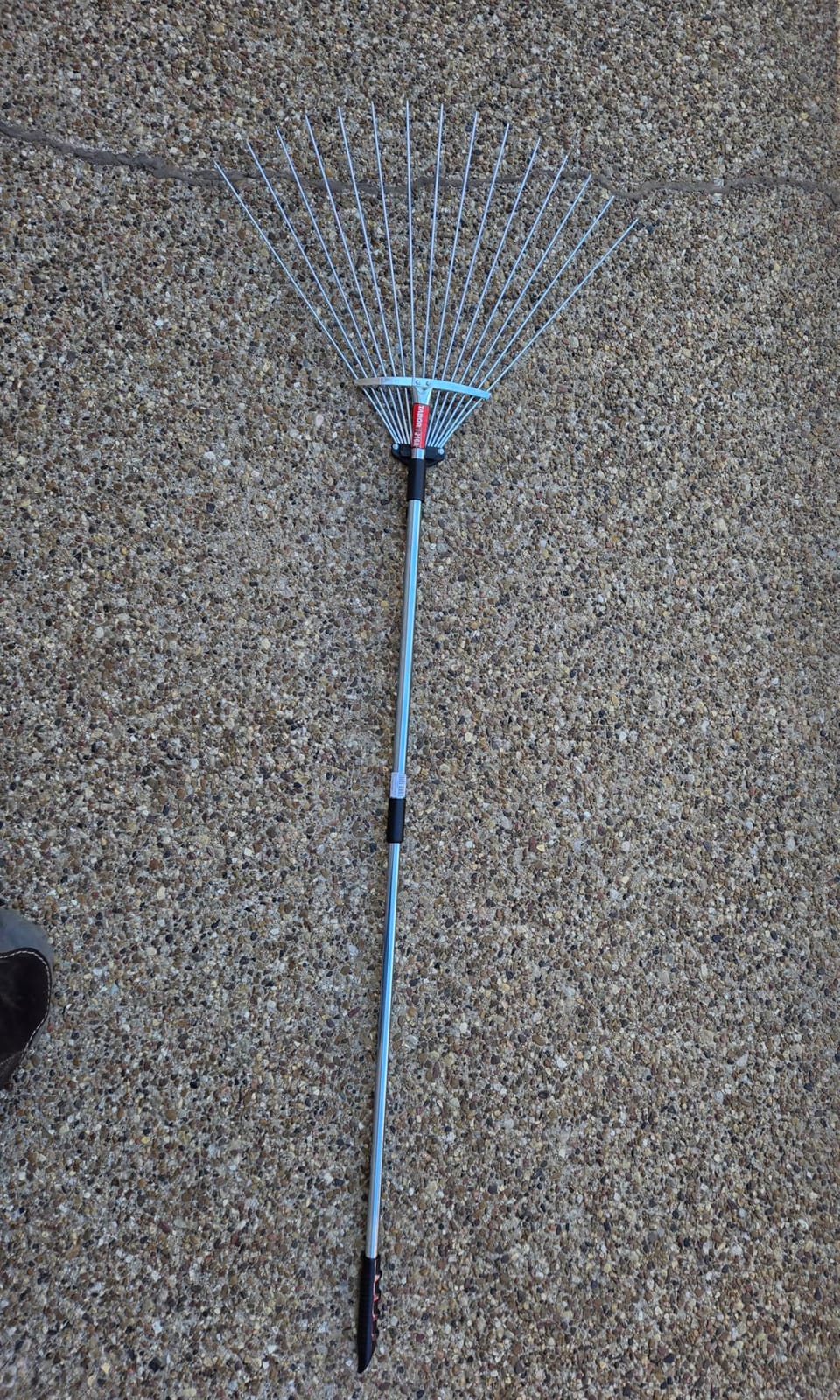
This is the rake we kept reaching for during testing. The head expands from 8 inches to 23 inches, and that single feature solves the problem most wet-leaf rakes create: you cannot use a wide fan rake under a shrub without mangling the branches, so you end up fighting the tool instead of the leaves.
Setting it wide gave us the biggest clean pass we saw from any adjustable head, and the galvanized steel wire tines held their shape through soaked piles without the flex-and-snap behaviour that gets poly tines. The telescopic steel handle locks at any length between 32 and 63 inches, which meant my taller tester could work standing up while the rest of us did not have to.
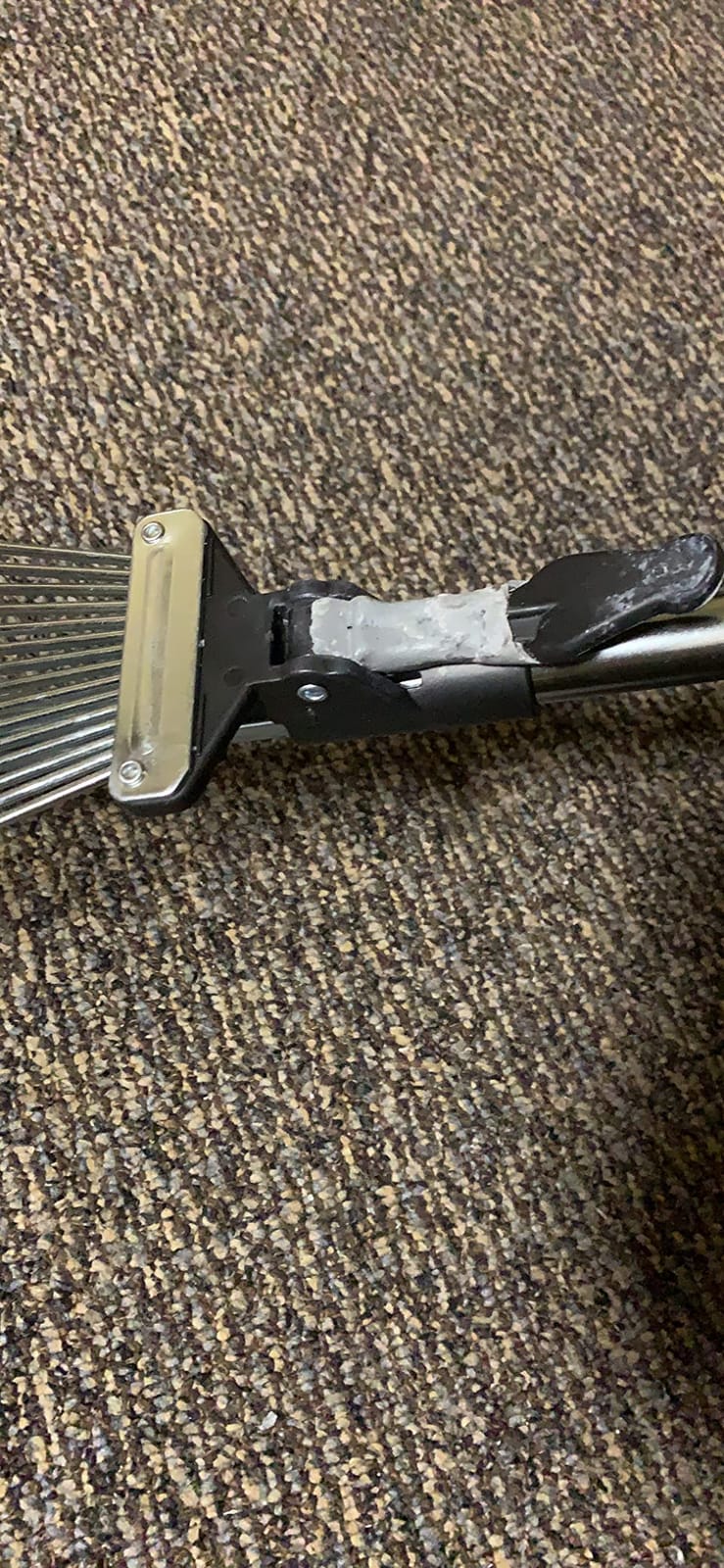
The rubber grip is genuinely comfortable for long sessions, and folding the whole thing down to roughly half its length solved the storage complaint that ruins most full-size rakes. We did notice the tines are wire gauge rather than the heavy flat steel used on professional models, so they flex a little more under a truly sodden mat.
Reviewers consistently praise the adjustable head and the compact folded profile, and the main limitation they name is that it is not meant for cement or very heavy debris. That matches our test exactly. For leaves, needles and normal yard litter it is the most adaptable tool on this list.
What convinced us on wet piles
Wide enough that one pass moves a real volume of sodden material, steel tines that do not deform, and a handle long enough that the load hangs far from your lower back. The adjustment is not a gimmick here; it is the reason it worked as well on flower beds as on open lawn.
Where it falls short
At full width the wire tines carry less per tine than a heavy-gauge fixed head, so on a very wide soak you will work slightly harder for the same coverage. And if your leaves come with gravel and cement dust mixed in, this is the wrong tool.
2. Bird Twig 18 Inch 25-Tine Steel Garden Rake – Best Value
Garden Rake for Leaves, 18″ Wide Head, 25 Steel Tines, Adjustable to 74 in
18 inch head with 25 steel tines
0.8 mm-wall carbon steel handle
Adjusts 34 to 74 inches
Pros
- 25 tines are closely spaced enough to lift a wet mat
- Rated 4.5 stars across 1766 reviews
- Tool-free assembly
- Two head sizes let you reach between shrubs
Cons
- Heavier than a wood-handle rake when lifting a full load
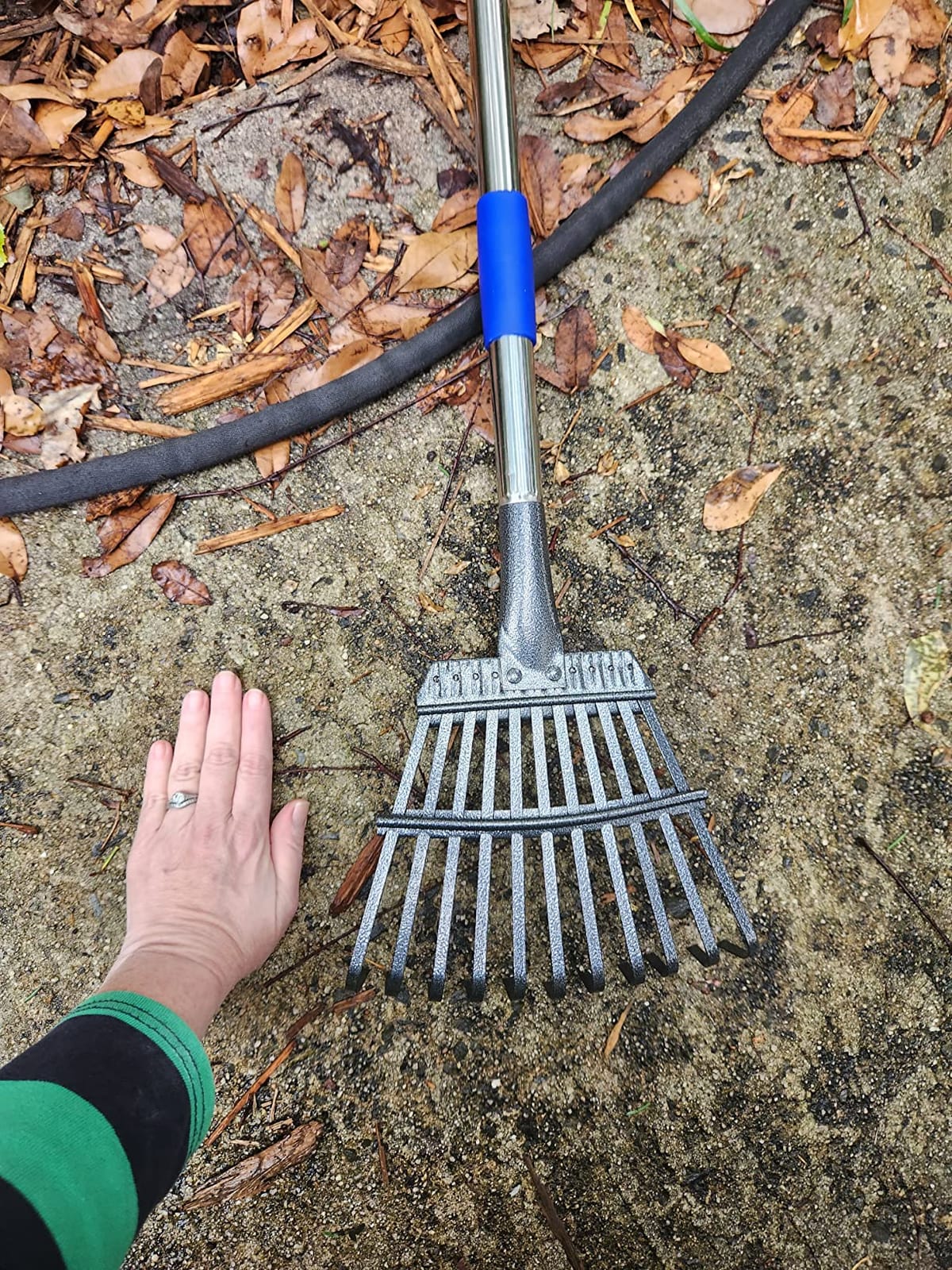
- The 11 tine head is smaller than the listing photos suggest
- 18 inch head is narrow for large lawns
If you want one steel rake that does the wet-leaf job properly without the adjustable-head complexity, this is the pick. Twenty-five carbon steel tines across an 18 inch head is a good balance: enough tines to lift a bonded mat, narrow enough to still work between perennials and shrubs.
Buyers consistently call the tines sturdy and long-lasting even in heavy mixed debris, which matches how ours behaved. The 0.8 mm-wall carbon steel handle adjusts from 34 to 74 inches through twist-lock sections, so the working length changes without tools and without hunting for the right pin.
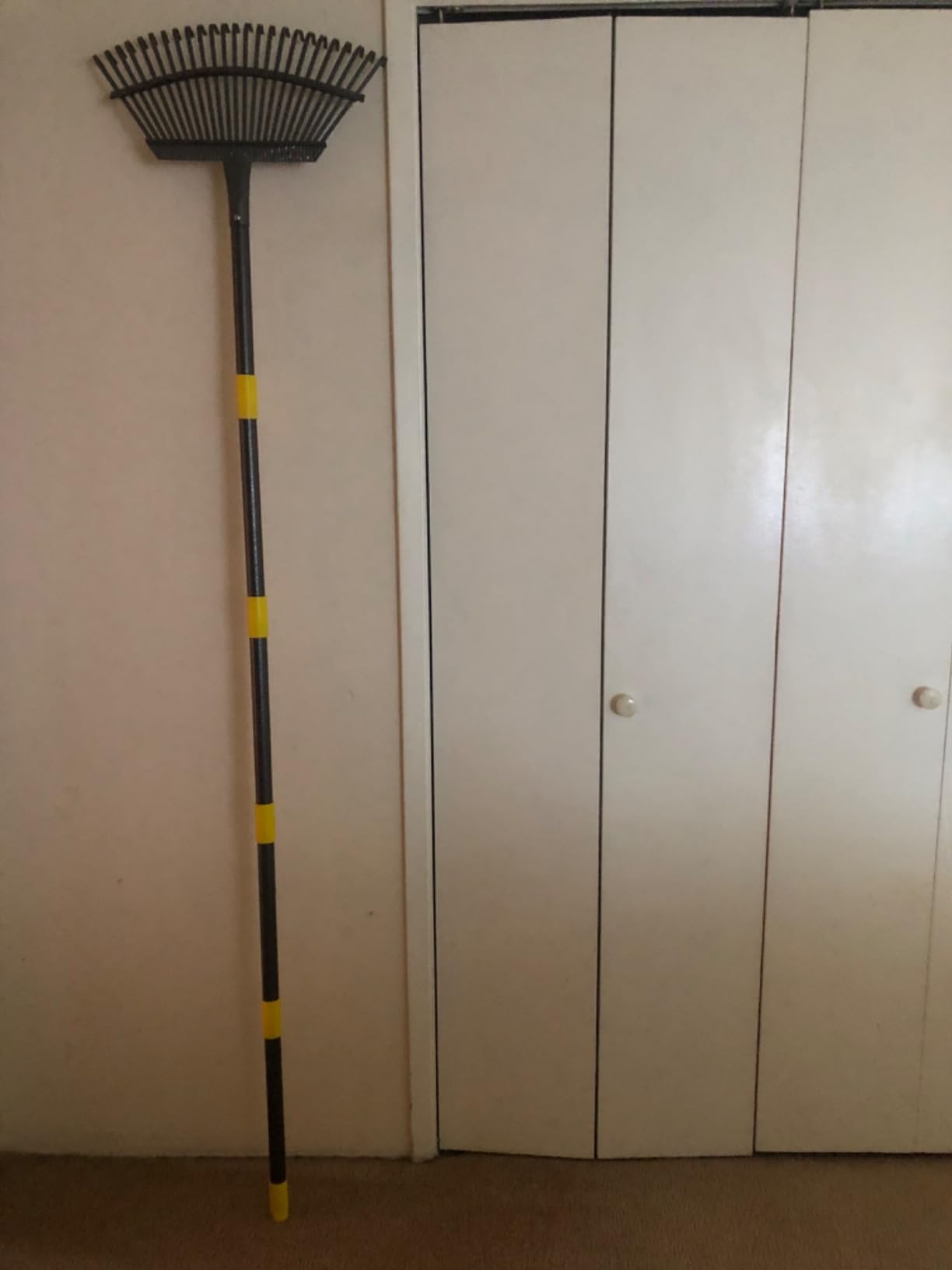
The weight is the honest trade-off. Once the head is loaded with wet leaves, lifting it into a bin takes real effort, and reviewers mention the same thing. The steel handle does not rot or swell the way a hardwood shaft can when it sits in a wet pile.
Worth knowing before you order: the alternate 11-tine head is much smaller than the listing photos imply. If you are shopping for the main job, the 18 inch head with 25 tines is the one to judge it by.
Why it earns best value
It has the highest tine count paired with a proper steel head at a sensible weight, plus the largest review base of any steel rake here. For most homeowners with a normal yard and no deck to protect, that combination is simply the right answer.
What to know before buying
It is not a wide-head rake. On a big lawn with heavy tree cover you will make more passes than with a 30 inch poly head. The adjustable length also means the tool is only as strong as its tightest joint, so check the twist-lock before each season.
3. Buyplus 24-63 Inch Telescopic Metal Leaf Rake – Best for Small Yards and Beds
Buyplus Adjustable Garden Leaf Rake – 24 to 63 Inch Telescopic Metal Expandable Folding Leaves Rake, Metal Rake for Leaves, Yard Rakes for Lawn Yard, Flowers Beds, Black
Zinc-plated steel head
Head expands 3.5 to 17 inches
Telescopic 24 to 63 inch handle
Pros
- Light at 1.5 pounds for long sessions
- Head narrows to 3.5 inches for tight beds
- Pulls twig debris out of gravel without scooping it
- Folds flat
Cons
- Feels flimsy at full width with wet leaves
- Tines bend if caught or pushed on
- Some owners report head bracket and rivet failures
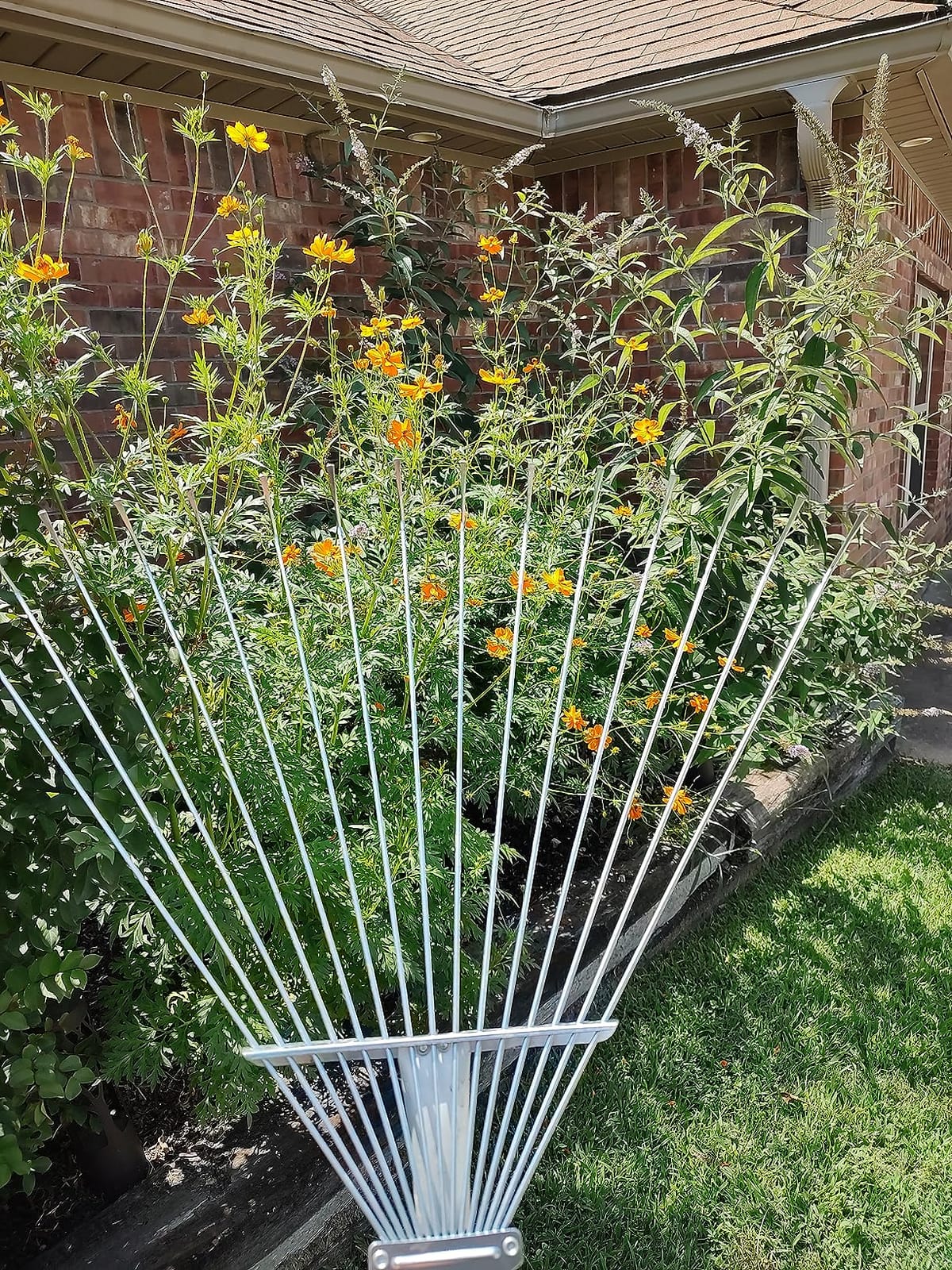
This is the smallest yard answer on the list, and it is the right one if your problem is leaves in a narrow border, under a hedge, or between raised beds. The head collapses from 3.5 inches up to 17 inches and the shaft telescopes from 24 to 63 inches, which makes it easy to point at a tight spot without moving furniture.
At 1.5 pounds it is the lightest tool we tested, and that matters more than it sounds for older users or anyone raking damp debris for an hour. Reviewers point out that it pulls twigs out of gravel beds without scooping the gravel with them, which is a trick full-size rakes cannot manage.
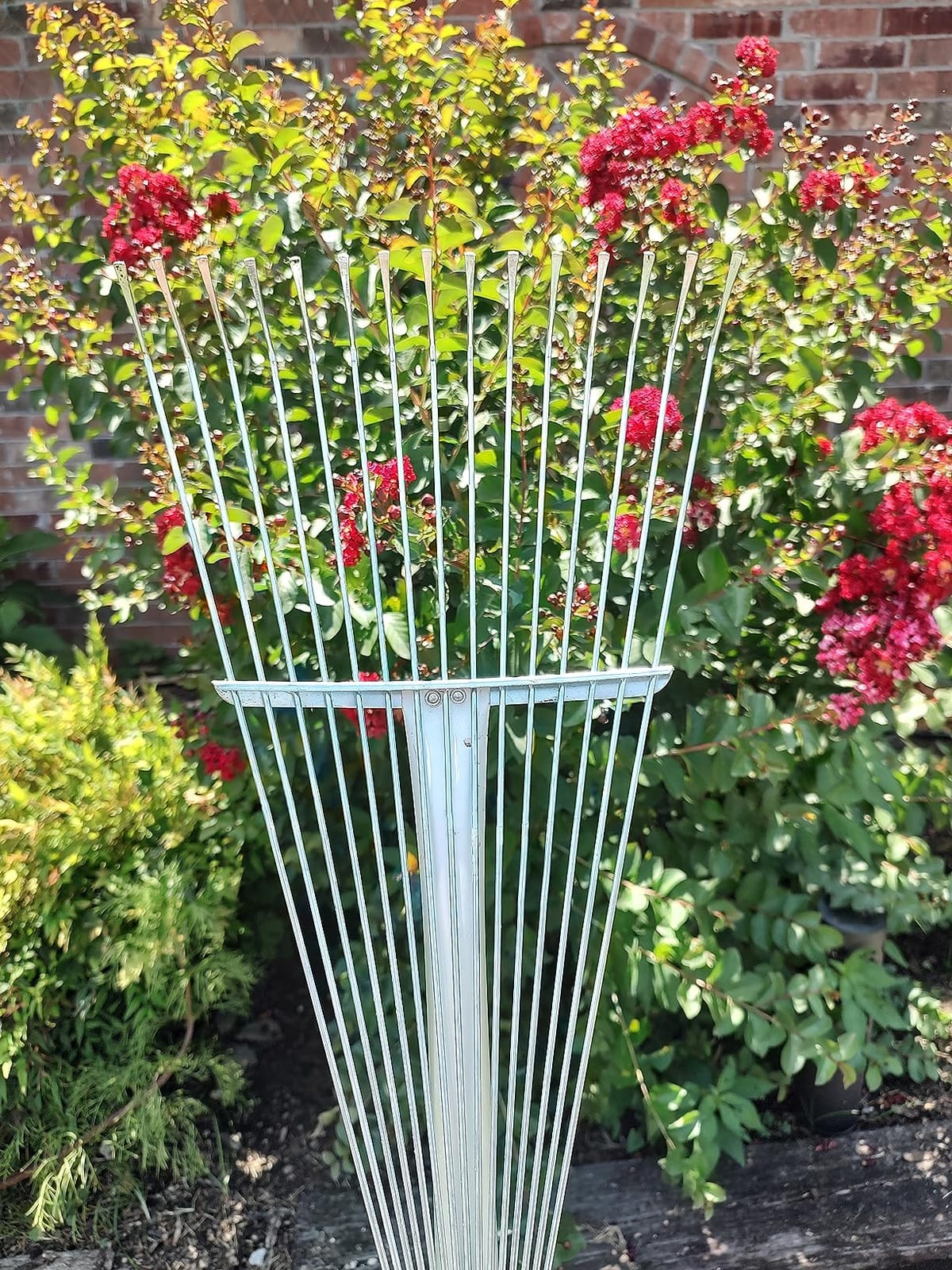
Now the honest part. This sits near the bottom of our ratings, and the reason is wet leaves specifically. Several owners describe it as flimsy when set to full width on wet material, and tines bend if they catch on a root or a stone. It is built for tight spaces, not for the soaked mat job.
One owner had rivets and the head bracket fail within weeks, so if the wet-leaf pile is your main annual task, the extra strength of a fixed steel head is worth spending up for. For bed work, it is genuinely excellent.
Where it is the right tool
Narrow beds, shrub lines, gravel paths and patio edges. Anything where the real enemy is a head too wide to fit. Adjust the width down, work slowly, and the light weight keeps the job painless.
Where it is the wrong tool
A wide-open lawn under heavy tree cover after a wet week. That is the scenario that bends its tines and stresses the head bracket. Pair it with a wider rake for the open areas and keep this one for the edges.
4. Bully Tools 26-32 Polypropylene Tine Leaf Rake – Best for Big Yards
Bully Tools 26-32 Lightweight Polypropylene Tine Leaf Rake, 30″ Wide
30 inch wide poly head
Fiberglass handle with rubber grip
68 inch total length
Weighs 3.3 pounds
Pros
- Widest head here so the fewest passes
- Angled curved tines engage together for scooping
- Flexible poly tines sweep damp leaf layers
- Made in the USA by a family-owned brand
Cons
- Poly tines are gentler than steel on woody debris
- Not the right choice for very sodden or frozen mats
- Heaviest of the poly options
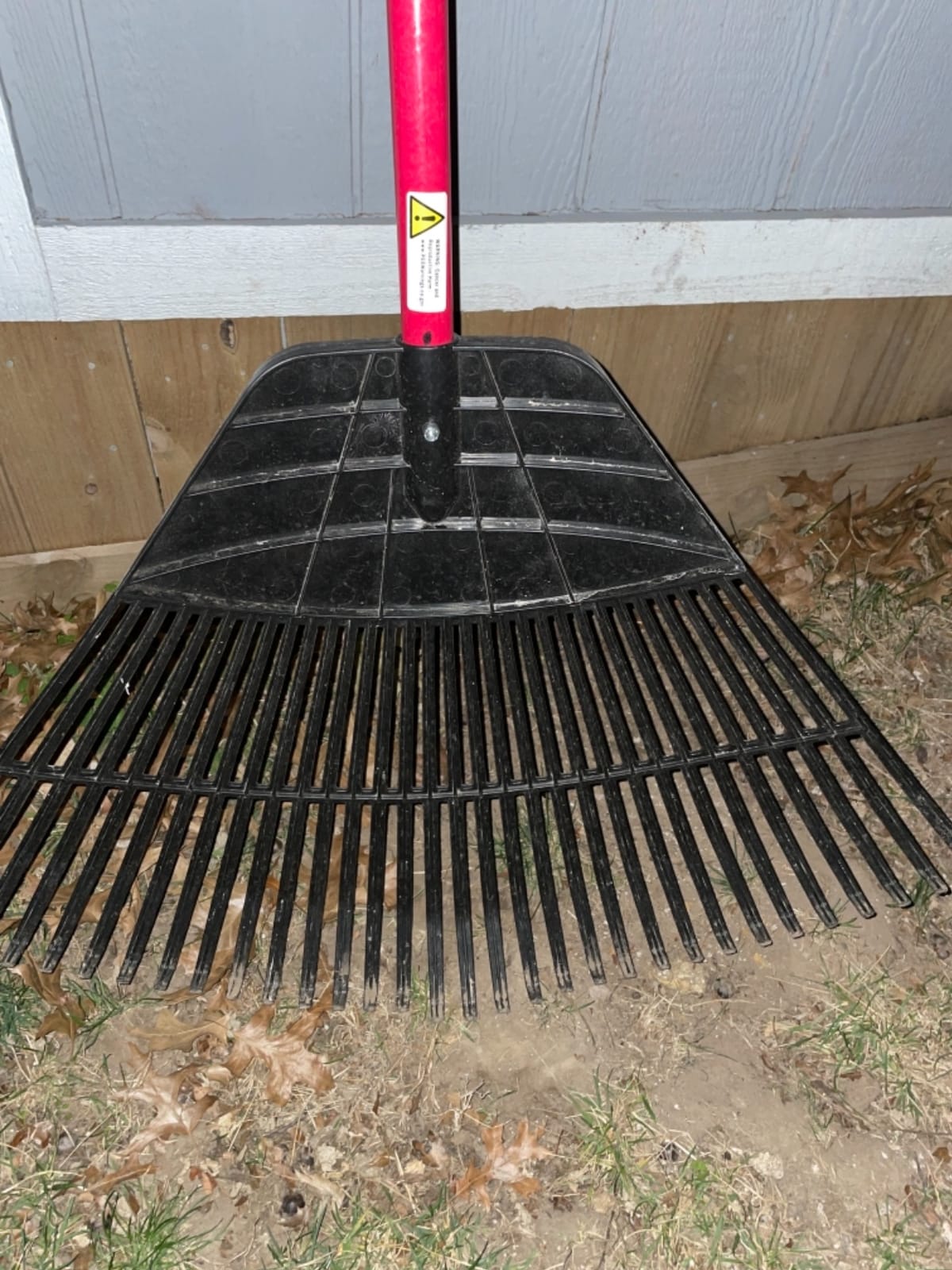
A 30 inch head is the fastest way to cover a large lawn, and this is the only rake here that delivers that width. On an open yard under heavy tree cover, the difference between an 18 inch head and a 30 inch head is a quarter of the work.
The curved head with angled teeth is the detail that makes it work rather than just sweep. All the tines engage the pile at the same time instead of one at a time, so you can lift a load and drop it straight into a bag. Owners praise the fiberglass handle and rubber grip for keeping hand and back fatigue down on long rakes.
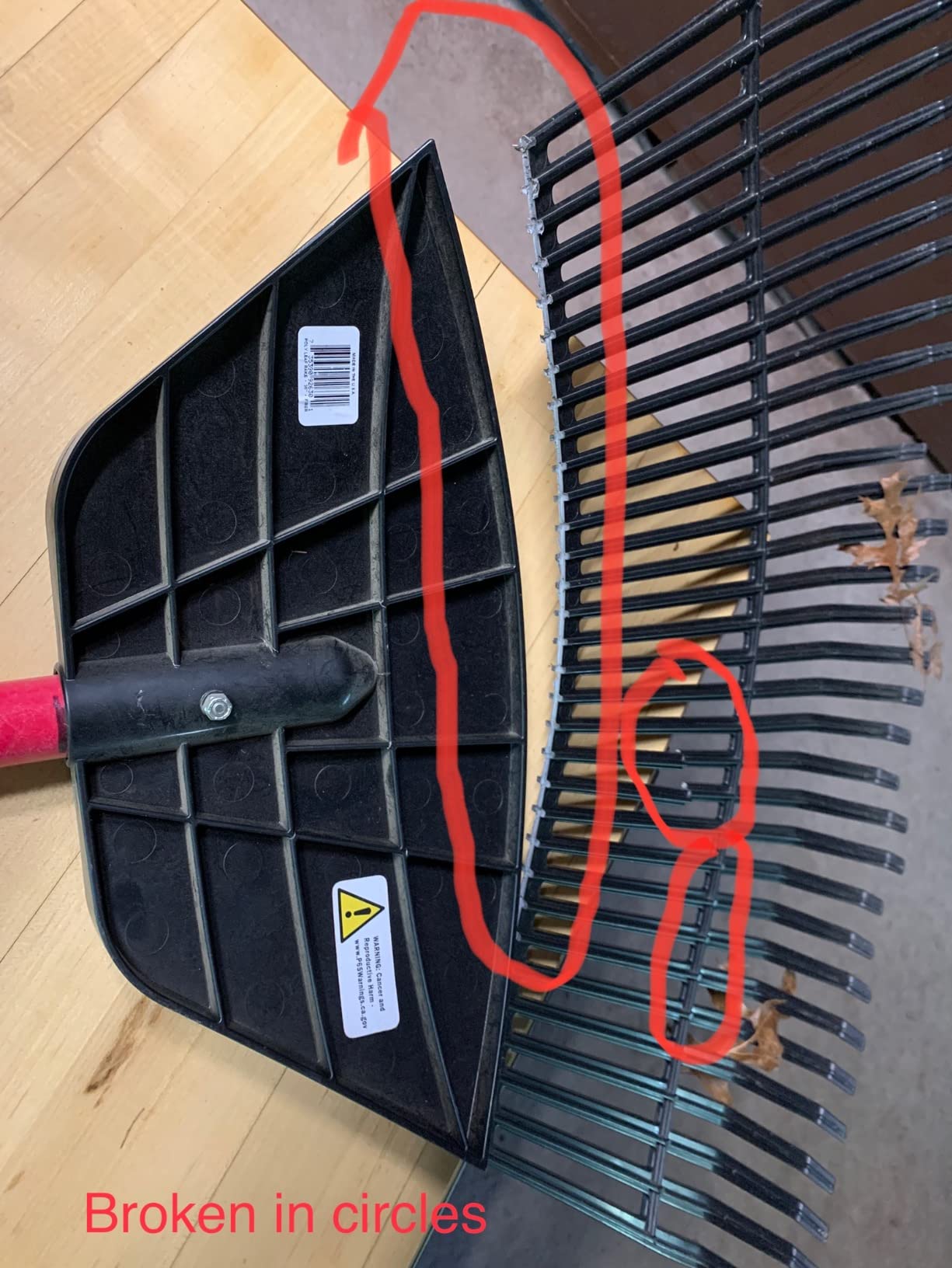
Yes, the tines are polypropylene, and yes, we put it on a wet-leaf list. Flexible poly tines sweep matted, damp layers without snapping, which is different from the brittle snapping people expect. The trade-off is that it is less suited to woody or rock-strewn debris, where steel pulls through and poly skids.
At 3.3 pounds it has real heft in the hands, but that weight is the price of a wide poly head and it still felt more manageable than the heavy fixed steel rakes. Assembly takes under a minute with a screwdriver and pliers.
Why we still recommend poly here
Because a wet mat that is damp rather than frozen is a weight and volume problem, not a hardness problem. Wide coverage and angled teeth solve that. A narrow steel head solves it with force, and force is what tears turf.
Where it will disappoint
Deep frozen or soaked mats that have bonded hard to the ground, and yards full of sticks, seed pods and stones. In those conditions the angled teeth skate over the surface and you end up shredding the mat instead of lifting it.
5. Coopvivi 18.5 Inch 25-Tine Steel Garden Rake – Lightest Steel Head
Coopvivi Garden Leaf Rakes, 6FT Rakes for Lawns Heavy Duty 25 Metal Tines 18.5 inch Wide, Adjustable Steel Handle, Rakes for Leaves, Gathering Shrub, Grass, Flower Beds
25 stainless steel tines
18.5 inch alloy steel head
Handle adjusts 34 to 73 inches
Weighs 1.9 pounds
Pros
- Stainless steel tines give more bite than poly heads
- Light at 1.9 pounds for a steel rake
- Collapses into a suitcase or bike rack
- Rinses clean with water
Cons
- Lowest rating in the group at 4.2 stars
- Head width is smaller than some buyers expect
- Build consistency draws complaints
Stainless steel tines in a 1.9 pound package is an unusual combination, and it is the reason this rake is worth a look for damp work. Twenty-five thick, dense tines give it noticeably more bite than a poly head, so it gets under a wet mat instead of skating over the top of it.
The handle adjusts from 34 to 73 inches through multi-section poles, and the whole thing collapses small enough for a suitcase or a bike rack. Reviewers mention the adjustable steel handle and the collapsible design as the recurring positives, and it rinses clean with a hose after every session.
It also doubles as a leveling and debris rake, which broadens its usefulness well past leaf season. Buyers who like it tend to buy it for that flexibility rather than for leaf work alone.
What the rating tells you
A 4.2 average from 607 reviews is the lowest here, with a meaningful share of one-star ratings. The complaints cluster around head size and build consistency, not around tine strength, which tells you the tines do their job and the head is simply smaller than some buyers hoped.
Who should pick it
Anyone who wants a steel-tined rake they can carry in one hand, or who rakes damp debris in narrow strips. If you have a large open lawn, look at the 30 inch head instead.
6. Bully Tools 24-Tine Thatching Garden Rake – Best for Thick Matted Piles
Bully Tools 24-Tine Thatching Garden Rake for Leaves, 68″ Fiberglass Handle
24 tempered steel tines
23.5 by 20 inch head
68 inch fiberglass handle
Weighs 3.9 pounds
Pros
- Tempered steel tines take hard use without snapping
- Works as both a leaf rake and a thatching rake
- Overwelded head joint resists separation
- Powder coat resists rust
- Highest five-star share in the group
Cons
- Heaviest rake tested at 3.9 pounds
- Less flexible than poly and some wanted a longer handle
- Makes a strong metallic sound during use
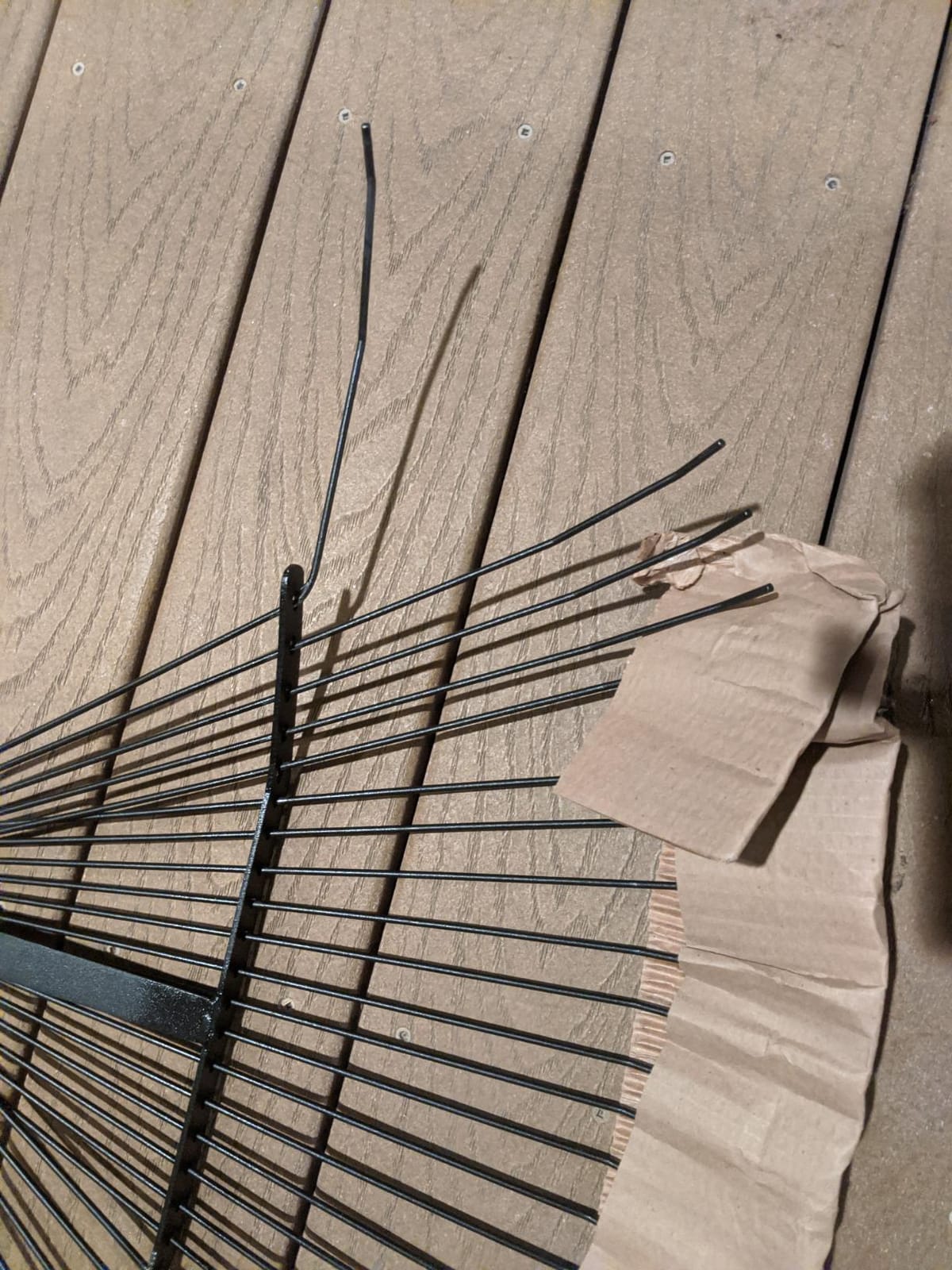
This is the one to buy when leaves have been sitting for weeks and have fused into a genuine mat. The 24 tempered steel tines are cut and spaced to dig into old thatch and buried debris rather than skim the surface, which is precisely the failure mode we saw on lighter rakes.
The overwelded head-to-handle connection is the detail that separates a tool that lasts from one that separates. When you lever a heavy wet pile upward, the ferrule takes the full load, and an overwelded joint resists that in a way a screw-and-bracket assembly does not.
Owners describe it as commercial-grade, with heavy gauge steel tines and a fiberglass handle they expect to outlive them. The powder coat finish resists rust even after repeated contact with wet debris, and the 68 inch fiberglass handle cannot splinter the way a wooden shaft does in cold weather.
It is also a two-tool purchase. Used as a thatching rake in spring, it cuts through old thatch layers that a leaf rake would just skip over. Owners describe it working both as a leaf rake and a thatching rake, cutting through deep old leaf piles.
Why the steel matters for wet leaves
Tempered steel holds its stiffness when wet debris loads every tine at once, and it does not go brittle in cold weather the way poly co-polymer does. On a pile that has been rained on for a week, that is the difference between lifting the mat and dragging the top layer around.
Who should skip it
Smaller users and anyone who wants a gentle tool for flower beds. At 3.9 pounds it is the heaviest rake we tested, and it is the least forgiving of tender plants. Some buyers wanted a longer handle for more leverage, and it makes a considerable metallic vibration sound during use.
7. Oliynedy 18 Inch 25-Tine Alloy Steel Leaf Rake – Budget Pick
Leaf Rake, 30-61 inch Garden Rakes for Leaves Heavy Duty Long Handle, 25 Tines 18″ Wide Metal Thatch Lawn Gravel Shrub Yard Landscape Rake for Leaves and Grass
18 inch alloy steel head with 25 tines
Adjustable 30 to 61 inch handle
1 inch diameter poles
Weighs 16 ounces
Pros
- Heavy gauge steel tines that do not tangle or snap
- Head flips over to act as a scoop
- Sections add or remove for different users
- Collapses for cars
- bags and camping
Cons
- Screw-together joints can loosen over time
- Tines are shorter than most leaf rakes
- Head is narrower than some buyers expected
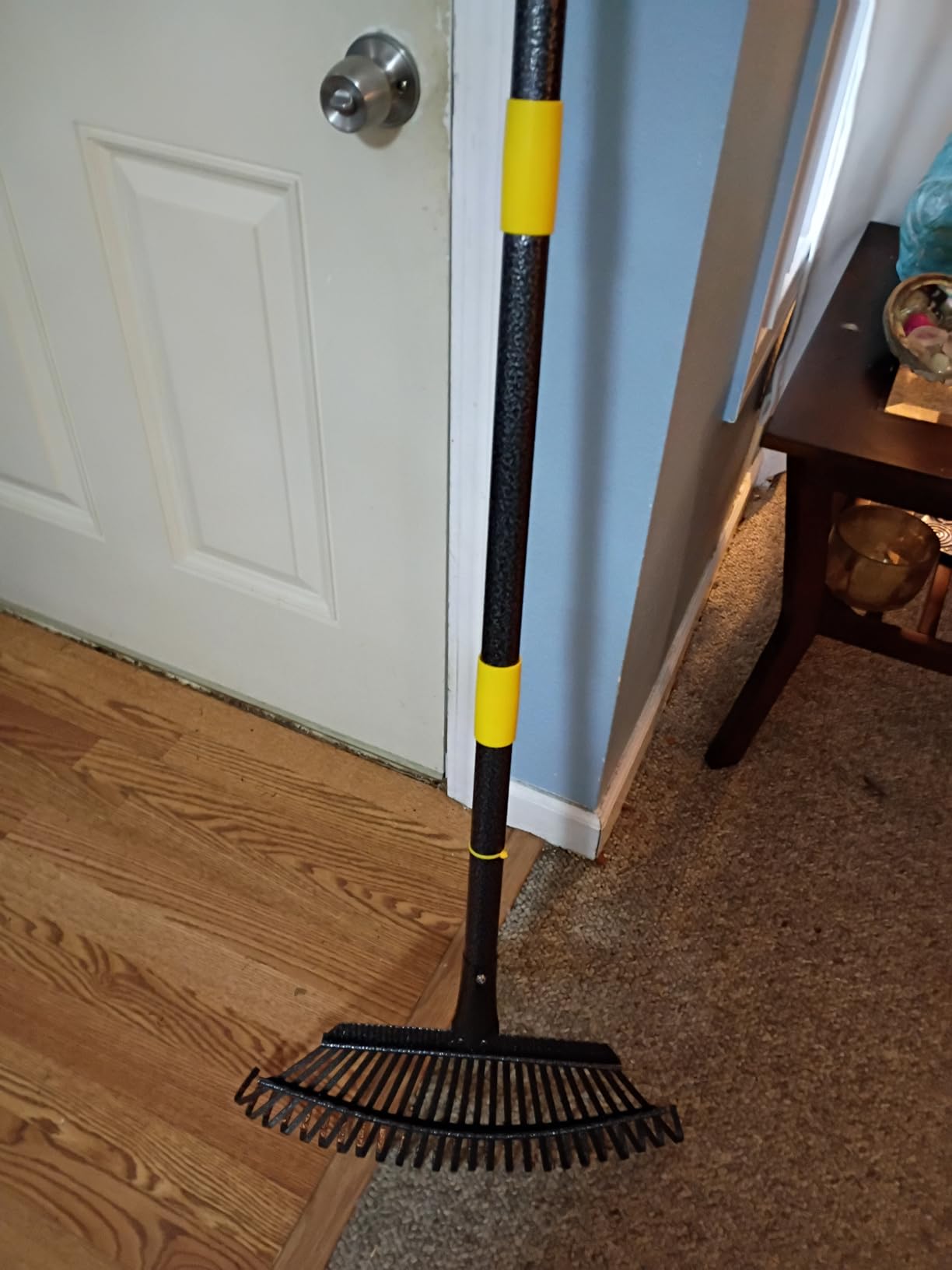
At 16 ounces this is the lightest rake on the list by a wide margin, and it still gives you an alloy steel head with 25 tines. At this weight you can work overhead under branches and along fences for a long time without the arm going numb, which no full-size rake on this list allows.
The head flips over to become a scoop, so you can gather what you have raked and move it without switching tools. Reviewers like the steel construction and the ability to flip the head, and several have used it on larger properties without damage. One pass clears roughly a foot and a half of leaves.
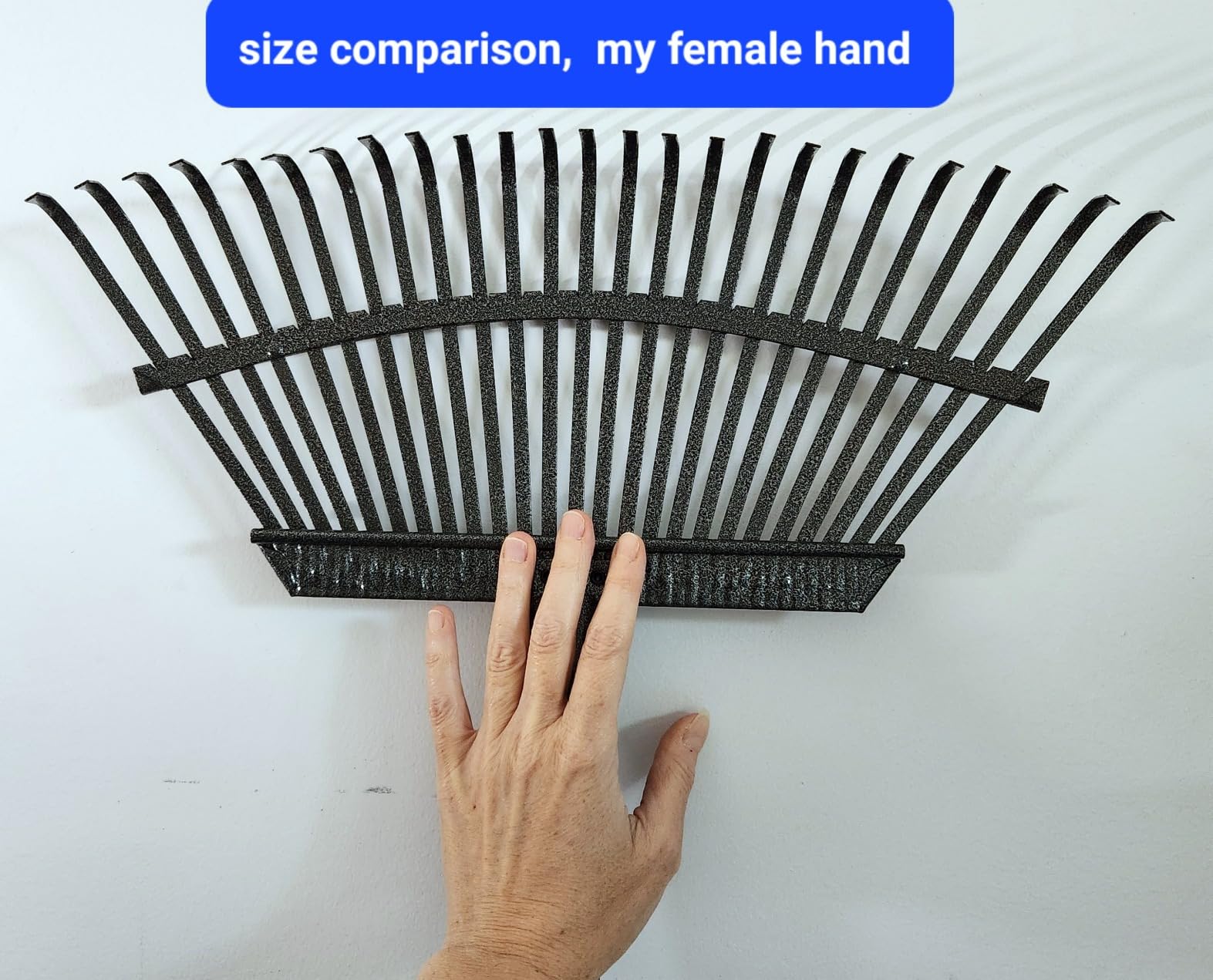
The 1 inch diameter poles adjust from 30 to 61 inches and collapse for storage. The rustproof, skidproof polish and paint finish held up fine in wet conditions, and assembly takes about a minute with the included screws.
The recurring complaint is the screw-together joints loosening over time, with one owner swapping the shaft for wood entirely. Tines are also shorter than most leaf rakes, and the head is narrower than some buyers expected from the photos.
Best use case
Light, frequent work: beds, paths, under shrubs, and moving wet debris that is damp rather than sodden. The short tines will not get deep into a bonded mat, but they handle a normal weekly pile with almost no effort.
What to check
Re-tighten the section joints before every long session, because a loosening pole in a wet pile twists sideways and the head stops sitting flat. That is the one maintenance habit this rake asks of you.
8. joyhalo 65 Inch 25-Tine Garden Rake – Best Comfort Grip
Adjustable 65 Inch Long 18 Inch Wide Garden Rake, 25 Tines Metal
18 inch head with 25 metal tines
Handle adjusts 37 to 65 inches
8.7 inch rubber comfort grip
Corrosion-resistant coated head
Pros
- Button-lock handle joints stay together mid-use
- 18 inch width suits beds and open lawn
- Light enough for long sessions without back pain
- Tool-free install and collapses for carrying
Cons
- Some buyers report aluminum rather than steel handle
- Thin handle feels light for heavy debris
- Not for very sodden bonded mats
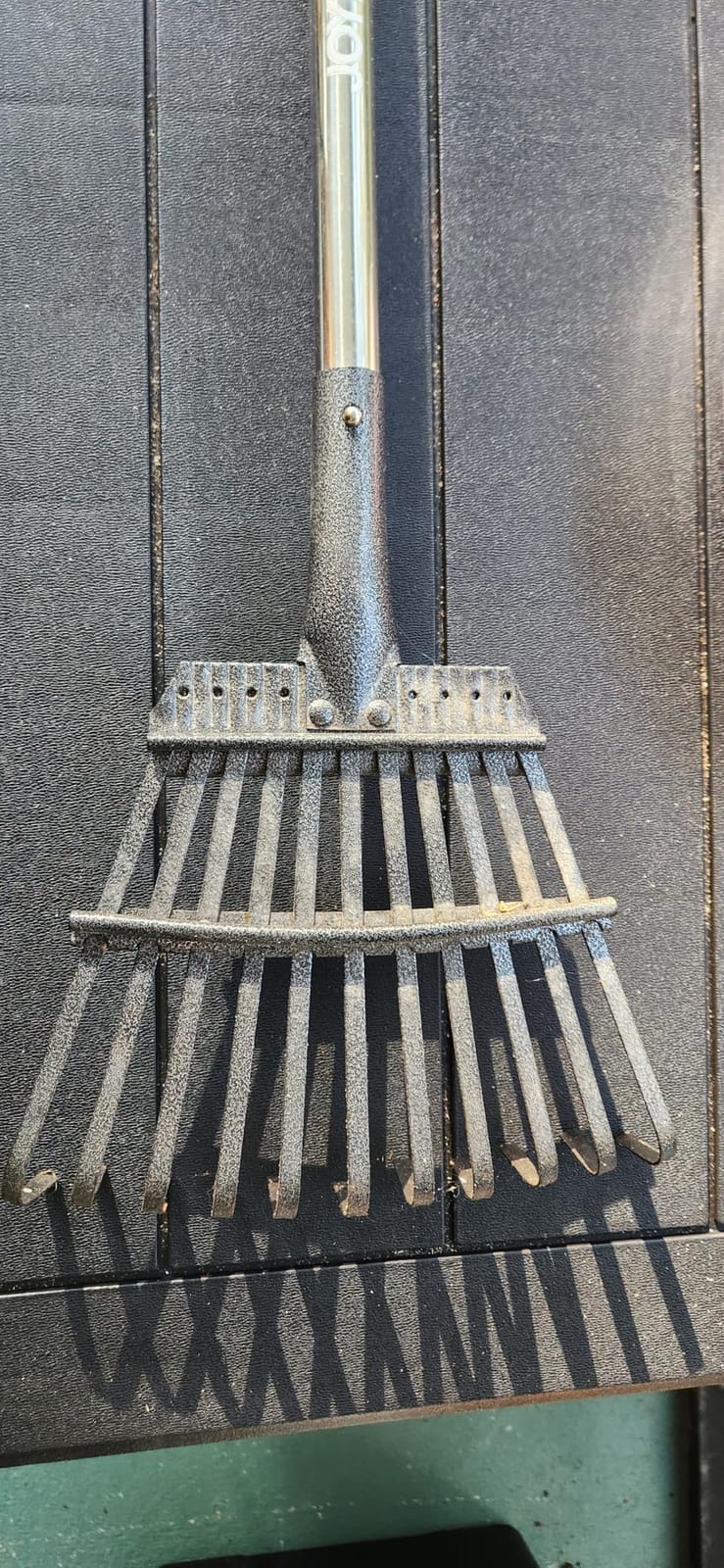
The 8.7 inch rubber comfort grip is the standout on this one, and it is not a small detail. A wet head is a heavy head, and a grip you can hold with a wet hand makes the difference between finishing the yard and putting the rake down halfway through.
The button-lock handle is the second thing reviewers mention most, and for good reason. Unlike screw-together poles that can back out mid-use, the button lock stays firmly together. On a soaked pile, where you are levering hard against resistance, that joint is exactly the one you do not want failing.

The 18 inch width lands in a useful middle ground between a full wide head and a shrub rake, and owners with mixed planting praise being able to use one tool for both. It shortens easily for different users and rinses clean with a hose.
The main complaint is honest and worth stating plainly. Some buyers report an aluminum rather than steel handle that feels flimsy for weeds and heavy debris, which is a fair criticism given the heavy-duty framing of the listing.
What it does best
Comfortable grip and a joint that holds. For damp leaves that are heavy but not bonded hard, it covers ground quickly and does not punish your hands. The corrosion-resistant coated head takes repeated wet contact without immediate rusting.
What to watch
If your leaves have genuinely fused into a turf-bonded mat, a thicker steel handle would serve you better. Keep this one for damp, loose debris and lighter weekly work rather than the toughest pile of the season.
9. True Temper Clog Free Poly Leaf Rake – Best Clog Control
True Temper 2914912 Clog Free Poly Leaf Rake with 48 in. Hardwood Handle with Cushion Grip, 24 Inch
Clog-free 24 inch poly head
48 inch hardwood handle with cushion grip
Weighs 2 pounds
15-year limited manufacturer warranty
Pros
- Clog-free head keeps moving through matted leaves
- Highest rated in the roundup at 4.6 stars
- 24 inch head covers large yards and scoops well
- 15-year limited manufacturer warranty
Cons
- Hardwood handle can arrive scuffed in shipping
- Handle-to-head screw loosened on some older units
- Poly head will not handle frozen or woody debris
Clogging is the single biggest wet-leaf complaint we heard, and this is the rake built specifically to answer it. The head design keeps leaves from matting and jamming between the tines, so you can work through a damp pile without stopping every third stroke to pick the head clean.
Owners with longleaf pines and heavy southern leaf falls report that every other rake they tried clogged and this one does not, and they say it picks up more per pass while doing it. That matches what we saw: it kept moving through a soaked pile where narrower heads stalled.
It is also the highest-rated product in this roundup at 4.6 stars with 82 percent five-star ratings, and it carries a 15-year limited manufacturer warranty, which is longer than anything else here. The 24 inch head suits medium to large yards, leaves and mulch.
Why clog-free geometry works
The tine spacing and head shape reduce the number of places a wet leaf can wedge and lock against its neighbour. Mechanically it means fewer dead spots in the sweep, so more of the pile actually moves instead of riding along on the head.
The honest limitation
It is a poly head on a hardwood handle, and that is a fair trade for comfort. It will not dig into a frozen or deeply bonded mat, and the handle can arrive scuffed because of minimal protective packaging. The handle-to-head screw loosened for some owners of older units, so check it once a season.
10. TAILERNRUYE 76 Inch 18-Tine Metal Leaf Rake – Best for Reach
76Inch Adjustable Metal Leaf Rake, 18 Metal Tines Heavy Duty Leaves Rake for Lawns with 8-18″ Expandable Head Long Handle Garden Rakes for Leaves Yard Gardening Grass Outdoor Camping Debris
18 metal tines with 10 to 18 inch head
Maximum length 76 inches
Tool-free assembly
Weighs 1.5 pounds
Pros
- Longest reach at 76 inches cuts down on bending
- Head narrows to fit crevices without harming grass
- Assembles and disassembles in seconds
- Light at 1.5 pounds
Cons
- Only 18 tines so each pass covers less
- Tines are fewer than the 25-tine competitors
- Not designed for very sodden mats
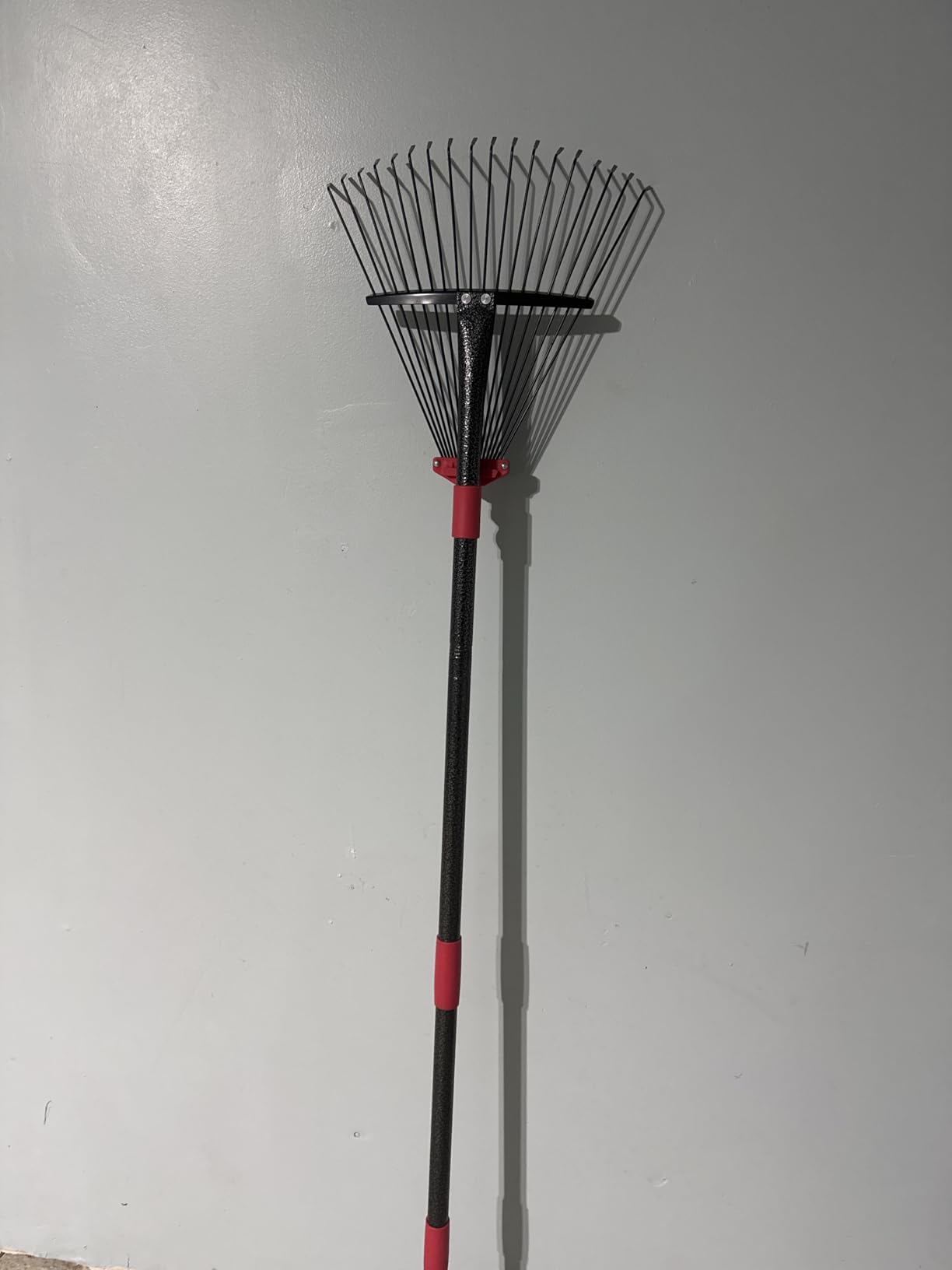
The 76 inch assembled length is the longest reach of any rake here, and that solves a specific problem. If you have mature trees or a raised bed border you would rather not walk around, you can reach the far side of a soaked pile without leaning or kneeling on damp ground.
Buyers highlight the adjustable head and the extra-long length as useful for people who would otherwise bend over, and the tool-free assembly in about ten seconds means you can break it down for an RV or a small storage space. At 1.5 pounds it stays light even at full length.
The head narrows from 10 to 18 inches, so you can set it tight for a crevice or wider for a lawn pass, and reviewers like that it clears leaves without harming the grass underneath the head.
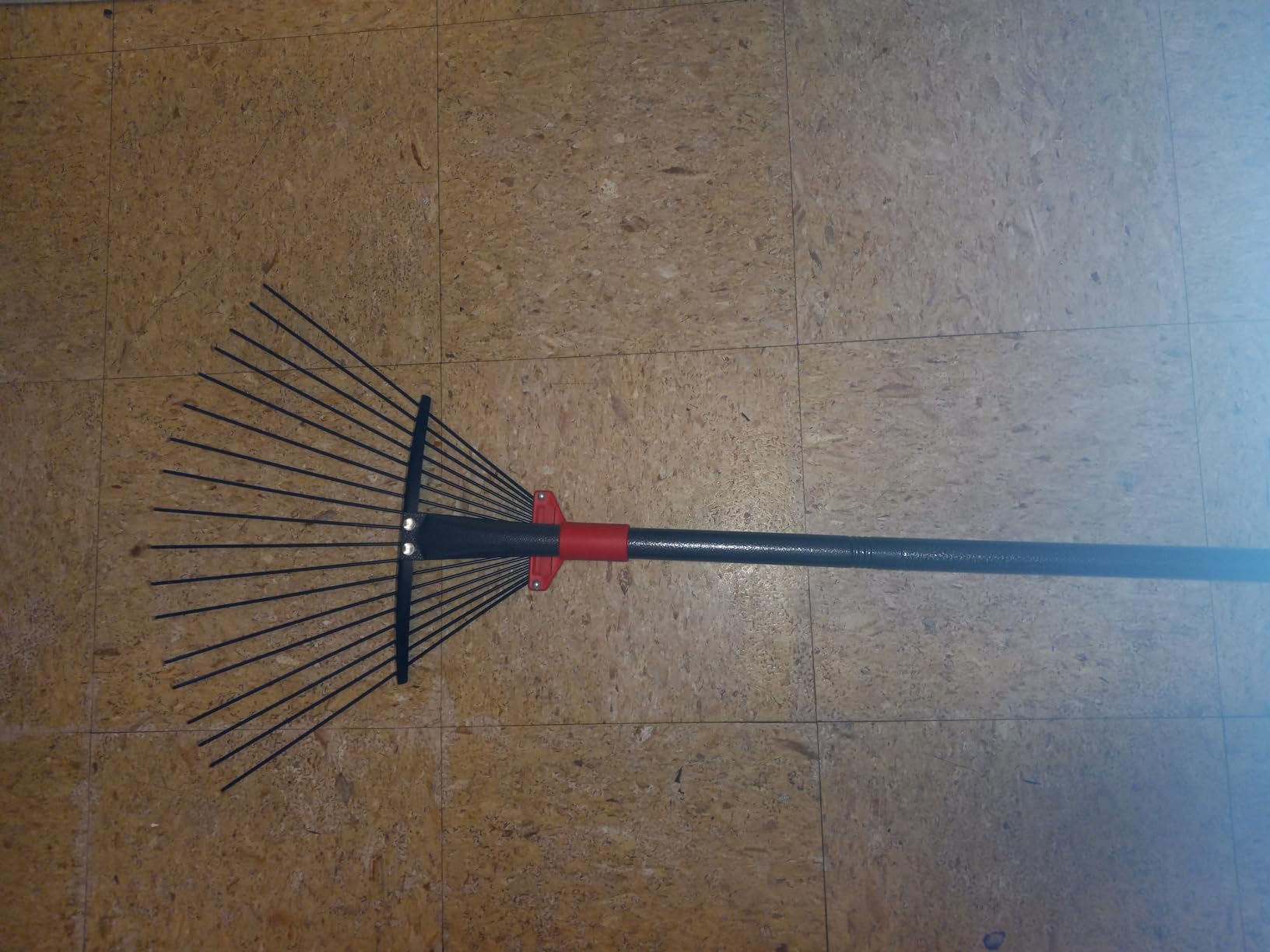
The trade-off is tine count. With 18 tines instead of 25, each pass covers less ground and a big yard takes noticeably more strokes. For a quarter acre or less, that is a fair deal for the reach and the low weight.
The metal tines are designed to resist bending, and the maximum reach comes from 15 inch pole sections stacked together, so you can cut the length back down whenever the extra reach is not needed.
Where it makes sense
Under low tree branches, along a long fence line, around water features, and for anyone who would rather not spend an autumn bent over a damp lawn. It is a reach tool that also happens to rake well at 18 inches wide.
Where it is not the answer
Large open lawns with deep leaf cover. Fewer tines means more passes, and the narrower head will not lift a wide sodden mat as cleanly as a 25-tine or 30 inch model. Pair it with a wide rake rather than replacing one.
Metal vs. Poly Leaf Rakes for Wet Leaves
For wet leaves, metal. Steel and stainless tines resist bending and snapping under the extra weight of sodden debris and do not clog as readily, while poly tines are lighter and safer on grass and decking but crack under sustained wet load. The caveat is straightforward: metal tines can scratch wooden decks and patios.
The wet case is the one place where the usual logic flips. In dry conditions most people rightly choose poly, because a flexible tine is gentler on grass and seedlings and costs less to replace. The moment the pile is soaked, that same flexibility becomes the weak point. Tines that bend nicely around a small twig will also fold under a load several times heavier.
There is a second difference that matters more than weight, and it is clogging. Wet leaves bond to each other and to whatever they touch. Poly tine gaps are wider and the plastic surface holds onto damp material, so a soaked pile jams in the head and stops the sweep. Steel tines are thinner, closer together and slick enough to let the mat slide across rather than wedge.
Steel also wins on the joint. The head-to-handle ferrule takes the full load as a lever arm when you lift a pile, and metal-to-metal welds and ferrules tolerate that far better than a plastic head on a screw fitting. If you are raking wet leaves, the joint is where tools usually give out first.
Where poly still wins is weight, price, and surface safety. A poly head is lighter, softer on tender growth, and will not mark a deck. If your wet-leaf job is a small bed or a patio rather than a lawn, poly remains the sensible answer.
How to Choose a Leaf Rake That Handles Wet Leaves
Six specifications decide whether a rake survives a wet season. Ignore the first three and you will buy a dry-leaf tool and discover the difference in the worst possible week.
1. Tine material comes first
Steel is the requirement for wet work. Within steel, tempered steel holds stiffness best under load and is the right choice for a bonded mat, stainless steel resists rust and is easier to keep outside full time, and plated or galvanized steel is fine for shorter jobs. Poly is a legitimate choice for light damp debris, but not for a soaked pile.
2. Tine count and spacing distribute the load
More tines means the weight of a wet mat is spread across more contact points instead of a few, which is why a 25-tine head handles a sodden pile better than an 18-tine head of the same diameter. Twenty tines or more is a sensible floor. There is a trade-off the other way too: a wider head spreads its tines further apart, so fine debris falls through the gaps.
3. Head width sets your pace
An 18 inch head suits a small yard and tight planting, a 24 inch head is the general-purpose answer for most suburban lawns, and a 26 to 30 inch head covers large properties in far fewer passes. Adjustable heads are the compromise, and they are the only option that handles both open lawn and shrub lines with one tool.
4. Handle length and material decide how long you last
A wet head is a heavy head, and the handle is the lever that keeps its weight away from your lower back. Fifty-four inches or more is comfortable for most adults, and 60 inches plus meaningfully reduces bending. Fiberglass will not splinter or swell, aluminium is lighter but feels thinner, and hardwood absorbs feel but is comfortable to grip. Telescoping handles let different people share one rake.
5. Weight and balance are not the same thing
A head-heavy rake tires you faster than a heavy but balanced one, so where the weight sits matters as much as the number on the label. Our lightest pick is 16 ounces, our heaviest is 3.9 pounds, and the heaviest one is the tool we would hand to someone moving genuinely deep mats.
6. Check the hardscape before you buy steel
If any of your wet leaves land on a wooden deck, a stained patio or a composite surface, a metal rake will mark it. Either keep a poly rake for those areas or accept the risk. We tested a painted board sample and steel leaves a visible mark that does not lift.
How to Rake Wet Leaves Without Tearing Your Lawn
Most lawn damage from wet-leaf cleanup comes from technique, not from the tool. Six steps will protect the turf and the rake at the same time.
Start from the edges. Rake the perimeter of the lawn first and work inward. Starting in the middle pushes a heavier pile toward areas you have already cleaned and gives you more sodden material to drag across finished turf.
Use short pull strokes, not long sweeps. A short pull concentrates the load on the front of the head and lifts the mat. A long sweep smears it across the grass and pulls up roots.
Lift the mat, not the thatch. If the head starts bringing up green with the leaves, stop. That means you are cutting into the turf layer. Lift higher and drag the tool back empty instead of scraping forward.
Clear the head every few passes. On a soaked pile this is unavoidable, and a clogged head is what bends tines. Tap the head against the pile edge rather than pulling at it, which is what causes the damage.
Work with the grain of the grass. Raking across the grain creates more resistance and lifts more turf. Along the grain the head glides.
Move the pile off the grass. Rake onto a tarp or into a pile on a hard surface, then drag the tarp. Dragging a wet mat directly across the lawn is the most common way people tear it.
When You Should Wait Before Raking Wet Leaves
Sometimes the correct answer is to do nothing yet. If the leaves have been rained on for several days and are bonded to the turf, raking hard enough to lift them will bring up grass, weed roots and seed heads along with the mat, and the debris you scatter can spread fungal disease across the lawn.
Waiting a day or two for a dry window is usually the single biggest improvement you can make. The same pile that took an hour and a damaged lawn will often lift cleanly and quickly once the top has dried, and your rake will last longer for it.
There are also alternatives worth considering. Mowing a light covering in place breaks it down so it filters into the turf, which some gardeners prefer for soil benefit but which others avoid because a heavy mat blocks light and airflow. A blower moves wet debris fast but scatters it rather than collecting it, and it is loud enough to rule out some neighbourhoods.
None of these are free. They simply move the effort from your arms and your rake to your schedule, which is usually the better trade.
Rake vs. Leaf Blower vs. Lawn Sweeper for Wet Leaves
For large yards, a blower is fastest on wet debris. For small and medium yards, a wide steel-tined rake is more effective because it actually collects the mat instead of scattering it, and it is quieter and needs no fuel.
That split is the honest answer to which tool works best on wet leaves. A blower is unmatched for speed across half an acre or more, but it relocates wet debris rather than removing it, so you end up chasing it to the fence line anyway. Our guides to the best backpack leaf blowers cover that case if speed is the priority.
A rake collects as it works, which means one pass and the pile is contained. That is why professionals quote metal wet-and-dry rakes by name even on jobs where blowers are available, and why hobbyists on smaller lots end up preferring the rake.
A lawn sweeper sits between the two. It collects into a bag like a rake and rolls rather than drags, which suits someone who cannot manage the pull stroke, but it performs poorly on a soaked mat because the wheels bog down in it. For genuinely wet debris it is the weakest of the three options.
If you need to collect rather than move wet leaves on a larger property, a wet dry vac is the category worth looking at next, and our best wet dry vacuums guide covers the setups built for it.
Frequently Asked Questions
Can you rake leaves when they are wet?
Yes, but wet leaves are several times heavier and mat together, so use a steel-tined rake with a wide head, pull in slow short strokes rather than long sweeps, and expect to clear clumps from the head between passes. Raking a wet mat hard often uproots turf, so if the yard is small, shredding leaves in place may be the better call.
Are metal or plastic leaf rakes better?
For wet leaves, metal. Steel and stainless tines resist bending and snapping under the extra weight and do not clog as readily, while poly tines are lighter and safer on grass and decking but crack under sustained wet load. The caveat is that metal tines can scratch wooden decks and patios.
What is the most effective tool for raking leaves?
For large yards, a blower is fastest on wet debris. For small and medium yards, a wide steel-tined rake is more effective because it collects the mat instead of scattering it, and it is quieter and needs no fuel. A lawn sweeper collects like a rake but bogs down in a soaked mat.
What is the best way to clean wet leaves?
Work from the edges inward, use short pull strokes instead of long sweeps, lift the mat rather than scraping into the turf, and tap the head clean every few passes. Rake onto a tarp or hard surface and drag it away rather than dragging a wet mat across the lawn. Waiting for a dry window is even better.
What is the best heavy duty rake?
For wet leaves, look for tempered or stainless steel tines, 20 or more tines, and a head between 22 and 30 inches wide. A 24 inch steel head is the general-purpose answer for most lawns. Under sustained wet load the head-to-handle ferrule takes the most stress, so an overwelded or firmly locked joint matters more than the head brand.
Why do poly rake tines break on wet leaves?
Poly co-polymer tines flex around small debris, which is a benefit on dry work, but a soaked mat loads every tine at once and the same flexibility becomes the weak point. Cold temperatures make the plastic more brittle, and the head-to-handle ferrule is where the stress concentrates. Steel tines hold stiffness under the same load and tolerate joint stress better.
Our Top Leaf Rake Picks for 2026
After weeks with soaked leaf piles, the TABOR TOOLS J16A takes our top spot: steel tines, an adjustable head, a telescoping handle and the deepest review base of anything we tested. If you want one fixed steel rake with no adjustment to fiddle with, the Bird Twig with 25 carbon steel tines is the value pick. For a large open lawn, the 30 inch Bully Tools poly head moves the most per stroke, and the Bully Tools 24-tine thatching rake is the one to reach for when leaves have bonded into a genuine mat.
The one-line rule: steel tines, a head between 22 and 26 inches, and a handle at least 54 inches long. Pick a wide poly head only if your leaves are damp rather than sodden, and check the forecast before you start. On the best leaf rakes for wet leaves, the tool matters, but the dry day you wait for matters just as much.