
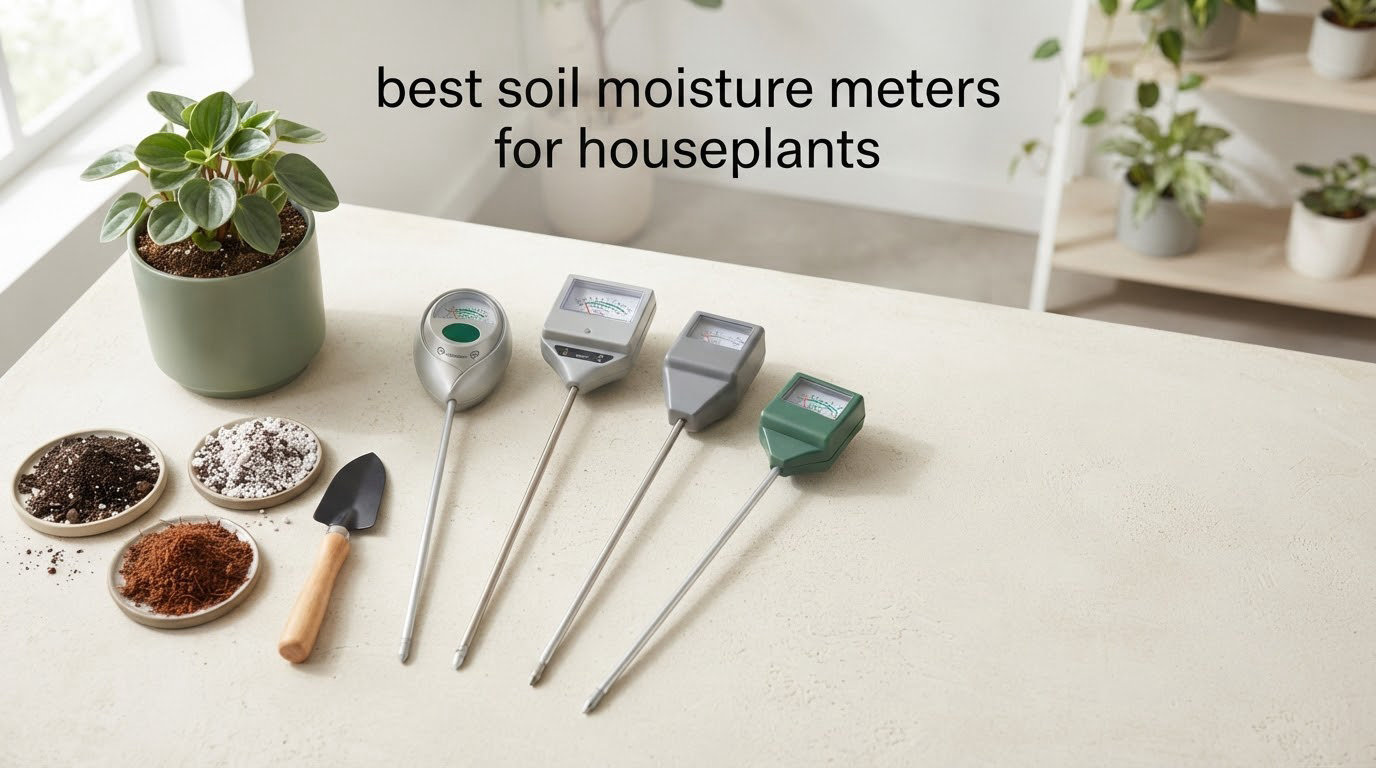
The best soil moisture meters for houseplants are simple resistive probes with a large, color-coded dial and a probe long enough to reach the root zone of your pot. After putting ten of them through real watering routines, the XLUX T10 came out ahead for beginners, the SONKIR MS02 gave us the most measurement from a single device, and the YAMRON 4-in-1 is the pick when you want a backlit number instead of a needle.
Before the list, one honest limitation that decides most of these comparisons: a soil moisture meter measures electrical conductivity, not water content. It tells you how well current moves through your potting mix, which tracks moisture closely in a standard peat-based soil and poorly in gritty, bark-heavy, or salt-loaded mixes.
We spent weeks with these meters in a mixed collection of foliage plants, nursery pots, and a large floor planter, checking each reading against a finger test and a pot lift. Nothing here was picked from a spec sheet alone. Where a number matters, it comes from the manufacturers, and where our experience disagreed with the listing, we said so.
Table of Contents
Top 3 Best Soil Moisture Meters for Houseplants in 2026
XLUX T10
- Battery-free color-coded dial
- Slim 304 stainless steel probe
- Ten-scale dry-moist-wet reading

Gouevn Moisture Meter
- Moisture-only reading
- Large dial with watering guide
- Quick plug-and-read response
All 10 Soil Moisture Meters at a Glance in 2026
| Product | Specifications | Action |
|---|---|---|
| XLUX T10 Soil Moisture Meter |
|
Check Latest Price |
| SONKIR MS02 3-in-1 Soil Tester |
|
Check Latest Price |
| Gouevn Soil Moisture Meter |
|
Check Latest Price |
 Dr.meter S10 Moisture Meter Dr.meter S10 Moisture Meter |
|
Check Latest Price |
 VIVOSUN 3-in-1 Soil Tester VIVOSUN 3-in-1 Soil Tester |
|
Check Latest Price |
 YAMRON 4-in-1 Digital Soil Meter YAMRON 4-in-1 Digital Soil Meter |
|
Check Latest Price |
 Hathdia Long Probe Moisture Meter Hathdia Long Probe Moisture Meter |
|
Check Latest Price |
 HSLGOVE 7-in-1 Soil Test Kit HSLGOVE 7-in-1 Soil Test Kit |
|
Check Latest Price |
 Censinda Soil Moisture Meter Censinda Soil Moisture Meter |
|
Check Latest Price |
 Tennedriv Green Moisture Meter Tennedriv Green Moisture Meter |
|
Check Latest Price |
1. XLUX T10 Soil Moisture Meter – The Best Overall Pick for Beginners
XLUX Plant Soil Moisture Meter, for Indoor and Outdoor use, Battery-Free
304 stainless steel probe
10-scale color dial
2.36W x 10.24H
Battery-free
Pros
- Slim probe slides in without stressing roots
- Large dial readable at a glance
- Battery-free plug-and-read use
- Long-running build with protective sleeve
Cons
- Analog only with no pH or light reading
- Must be pulled within 5 minutes or it degrades
This is the meter we ended up reaching for most, and the reason is not the accuracy so much as the forgiveness. The dial face is large enough to read while you are holding a watering can in the other hand, and the red to green to blue scale gives you a target without a manual.
The single slim probe is the other half of the appeal. Two-prong meters are common in this category, and both prongs have to find soil. A single probe only needs one good contact point, which in a loose mix roughly halves your chance of a misleading dry reading.
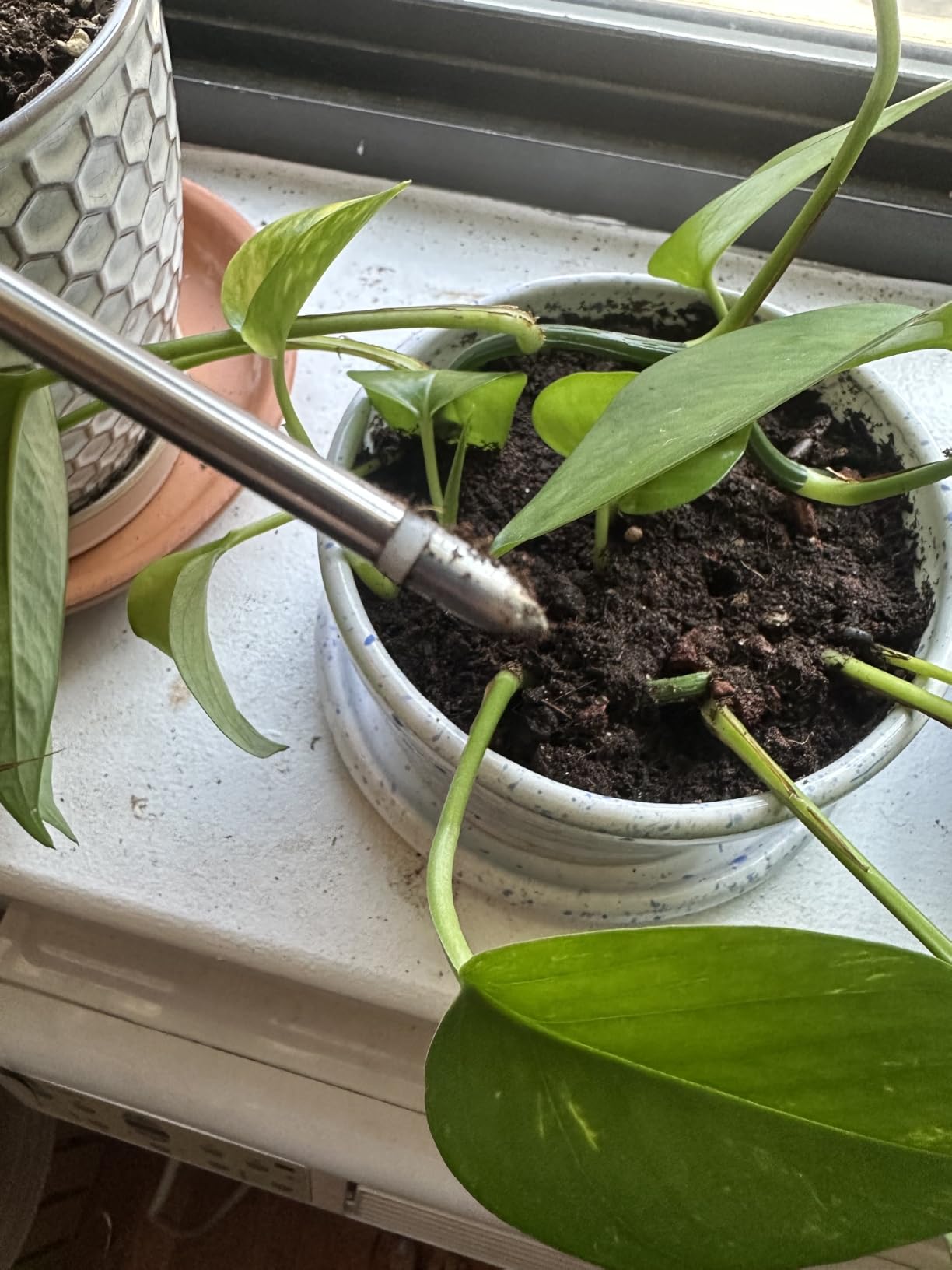
Against a finger check in standard potting mix, the T10 tracked closely for us. The needle settled within a few seconds and the reading moved in the same direction as the soil did after a drink. In a very open mix it did read drier than the soil felt, which is the known weakness of every resistive probe here.
Build quality is the quiet strength. The stainless steel probe resists rust, and the included sleeve protects it in a drawer where it might get knocked about. At 71254 reviews this is also the most thoroughly reported meter in the group, which means failures, if any, are documented.
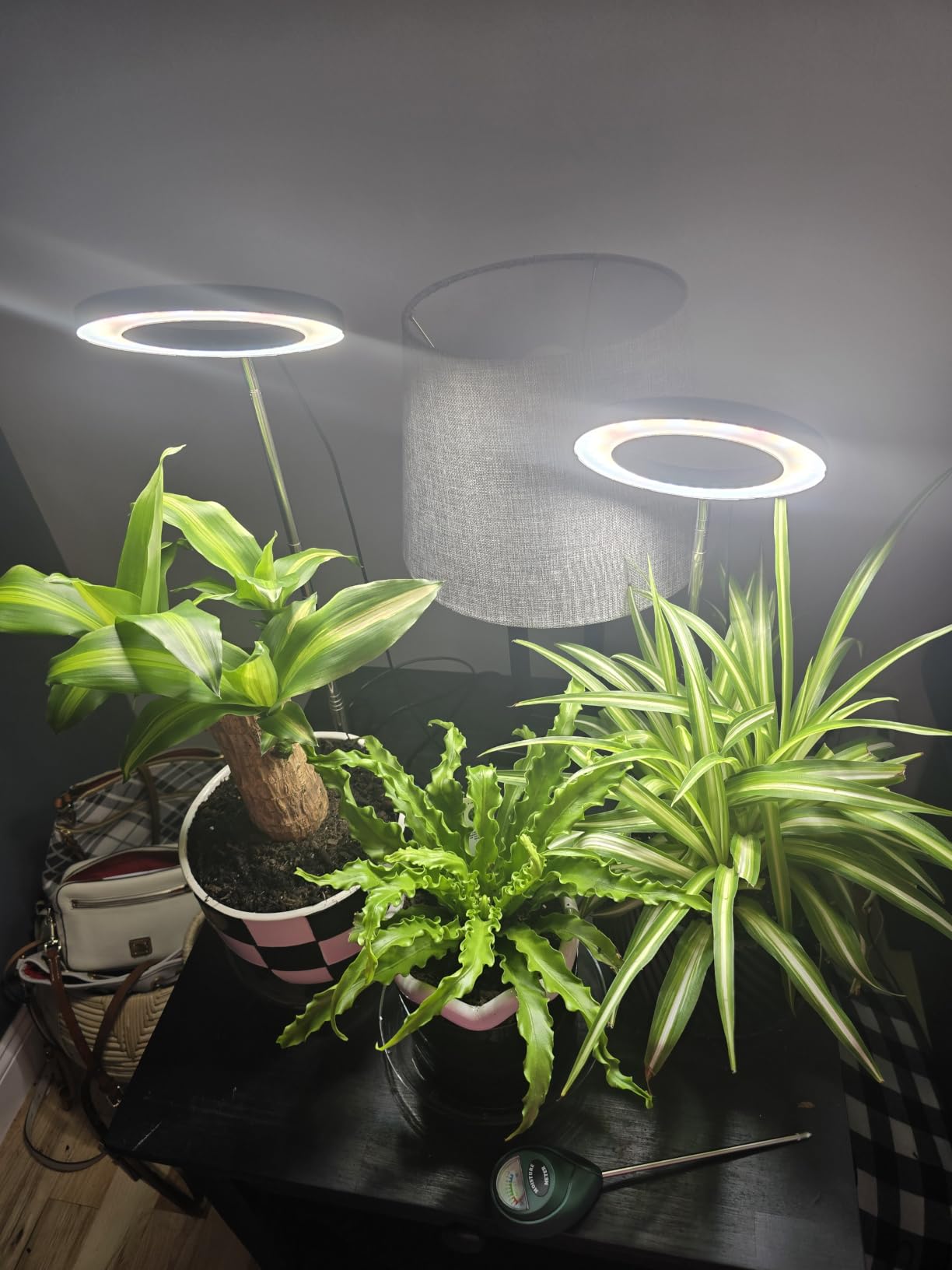
Who the XLUX T10 suits
It suits anyone with a mixed collection of standard houseplants in ordinary potting mix, especially beginners who want a decision aid rather than a precision instrument. The scale is intuitive enough that a new plant owner can use it without instruction.
It also suits deep planters more than most budget analogs, because the body is slim enough to reach the middle of a large pot without levering against the rim. In a ten-inch planter it still only reads the zone it can physically reach, so treat the top of the pot separately.
Who the XLUX T10 is wrong for
Skip it if you grow succulents, cacti, or anything in a mineral or semi-hydro setup. The probe bridges air gaps in those media and reports dry, which pushes you toward the overwatering that kills the plant.
Skip it if you want pH, light, or temperature data from the same device. This is a moisture-only tool, and the extra functions on multi-function testers come from separate sensors, not a smarter probe.
2. SONKIR MS02 3-in-1 Soil Tester – Best Value for More Data
SONKIR Soil pH Meter, MS02 3-in-1 Soil Moisture/Light/pH Tester Gardening Tool Kits for Plant Care, Great for Garden, Lawn, Farm, Indoor & Outdoor Use (Green)
Moisture pH and sunlight
One-button mode switch
No batteries
11.5 x 2 x 1.5 inches
Pros
- Three readings from one device
- Compact and battery-free
- Moisture mode is the useful one
- Works indoors and out
Cons
- pH needle often does not move
- pH values are not lab precise
- Prong can snap in firm soil
- Confusing dial for first-time users
The case for this meter is volume of information at a low outlay. One button cycles between moisture, pH, and light, and the moisture mode is the one you will actually use week to week.
Two probes come out of the housing rather than one. That means both tips need to be in real soil, and in a loose mix it is easier to catch an air pocket, which is the likeliest reason a reading disappoints.
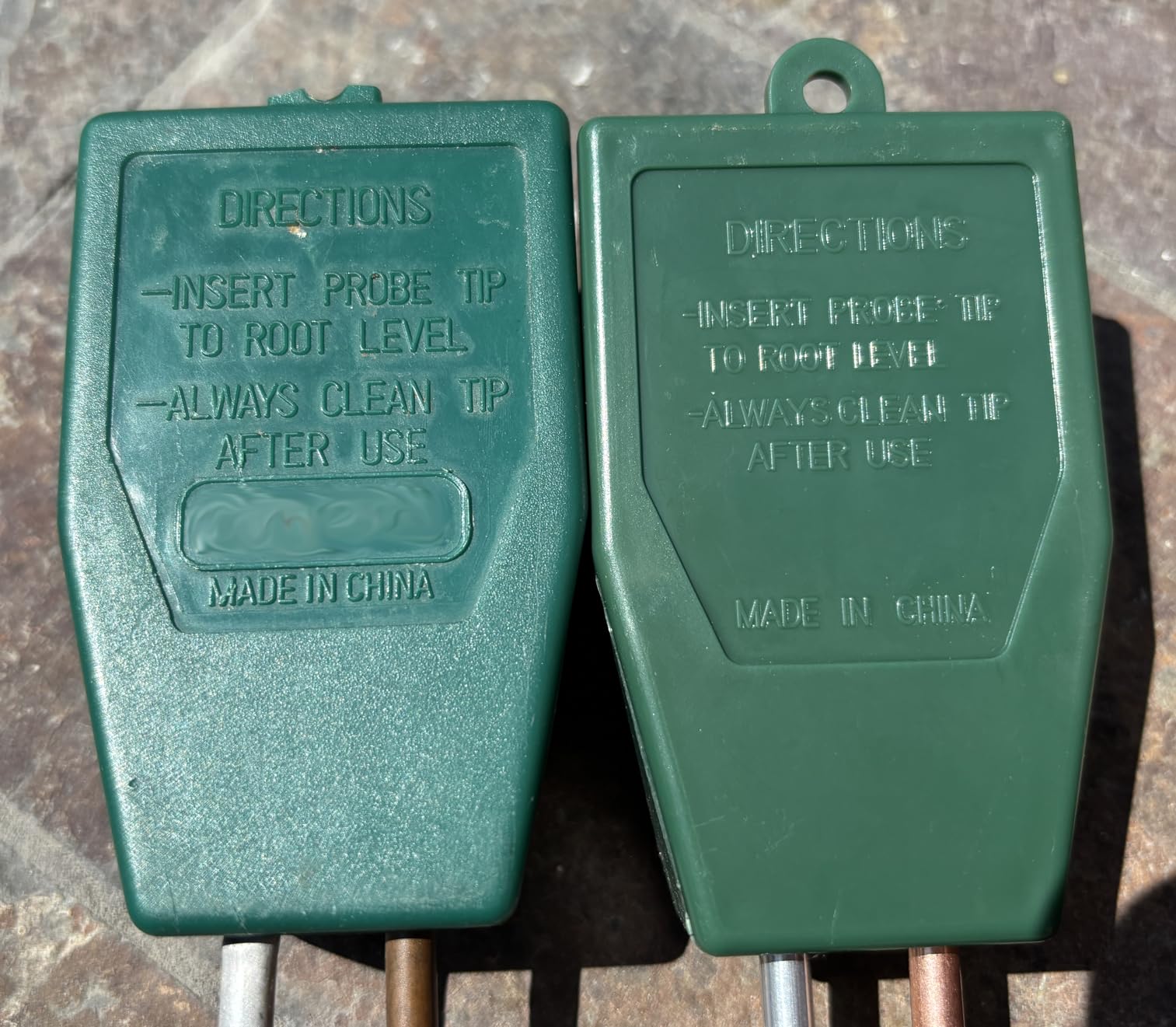
Our moisture readings here were consistent and matched a finger test in the same pot. The pH mode is a different story. It registers a plausible position on the scale for most potting mixes, but it is a chemical indicator rather than a calibrated electrode, so treat it as a broad hint and nothing more.
That distinction matters. A pH number that reads 6.0 when the true value is 6.6 will not change any decision you make, but a number that reads 7.8 will send you hunting for a lime-related problem that may not exist. Use it to rule out extremes, not to fine-tune.
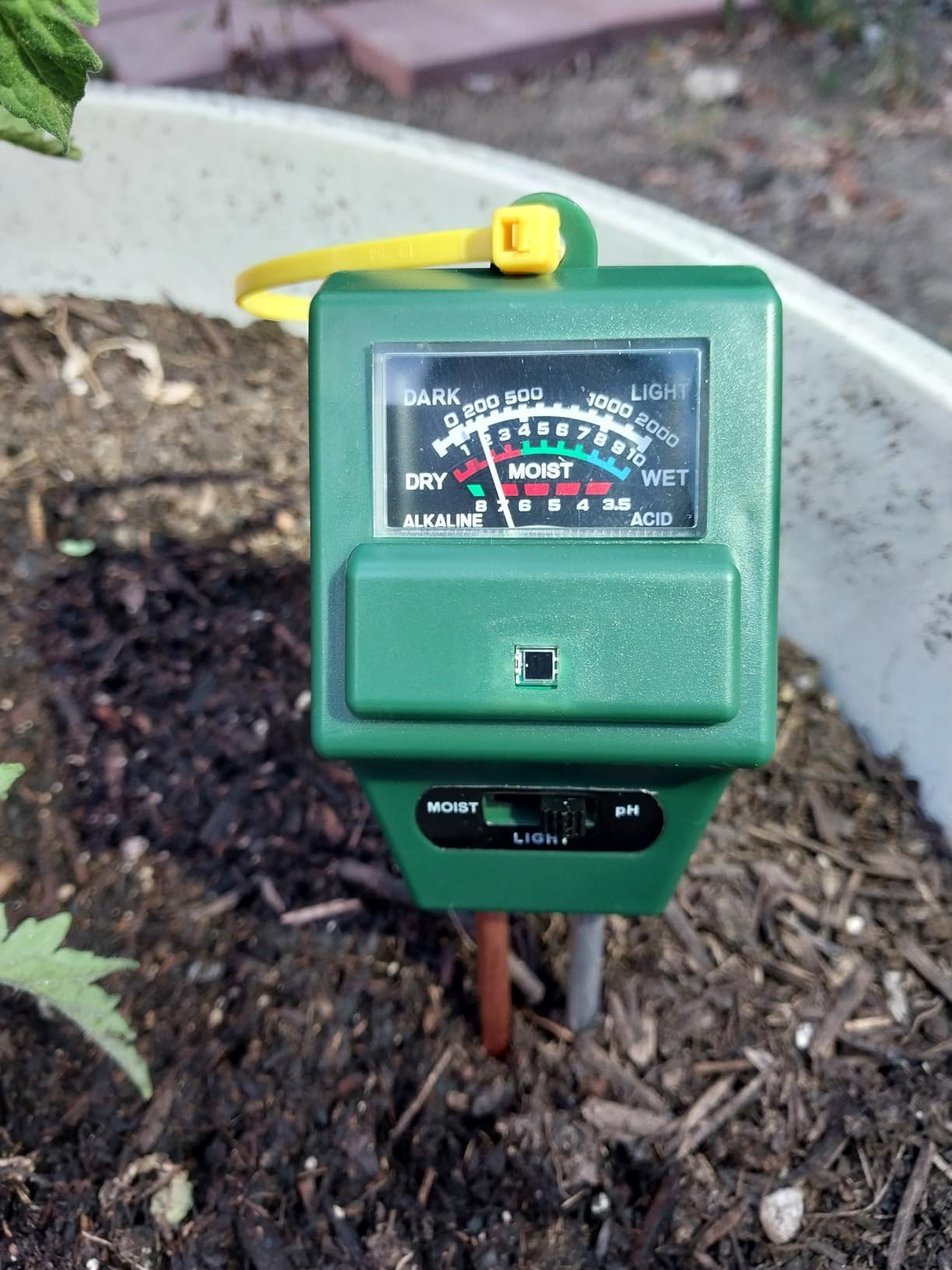
Who the SONKIR MS02 suits
It suits a beginner who wants to know light levels alongside moisture when positioning a plant, and anyone moving plants around a room trying to find a brighter spot. The light scale is a rough guide and it saved us from parking a fern in a genuinely dim corner.
It also suits outdoor container work, where a single carryable tool that reports three things beats juggling devices. The body is compact and needs no power source, so it lives in a pot by the door.
Who the SONKIR MS02 is wrong for
Skip it if you have firm or compacted soil where a thin prong can bend or snap. Press into the mix with fingers first, then insert along the channel you made.
Skip it if you need a defensible pH number for a nutrient or fertilizer program. For that, a proper meter with a calibrated probe or a lab test is the only route worth taking.
3. Gouevn Soil Moisture Meter – Best Budget Moisture-Only Dial
Gouevn Soil Moisture Meter for Plants, Plant Water Meter Indoor Outdoor
Moisture-only tester
Single-probe sensor
No batteries
2.02W x 1.3H
Pros
- Fast stable moisture response
- Large dial with printed guide
- Lightweight and portable
- Suits houseplants and greenhouses
Cons
- Moisture only with no pH or light
- Not for liquids or very hard soil
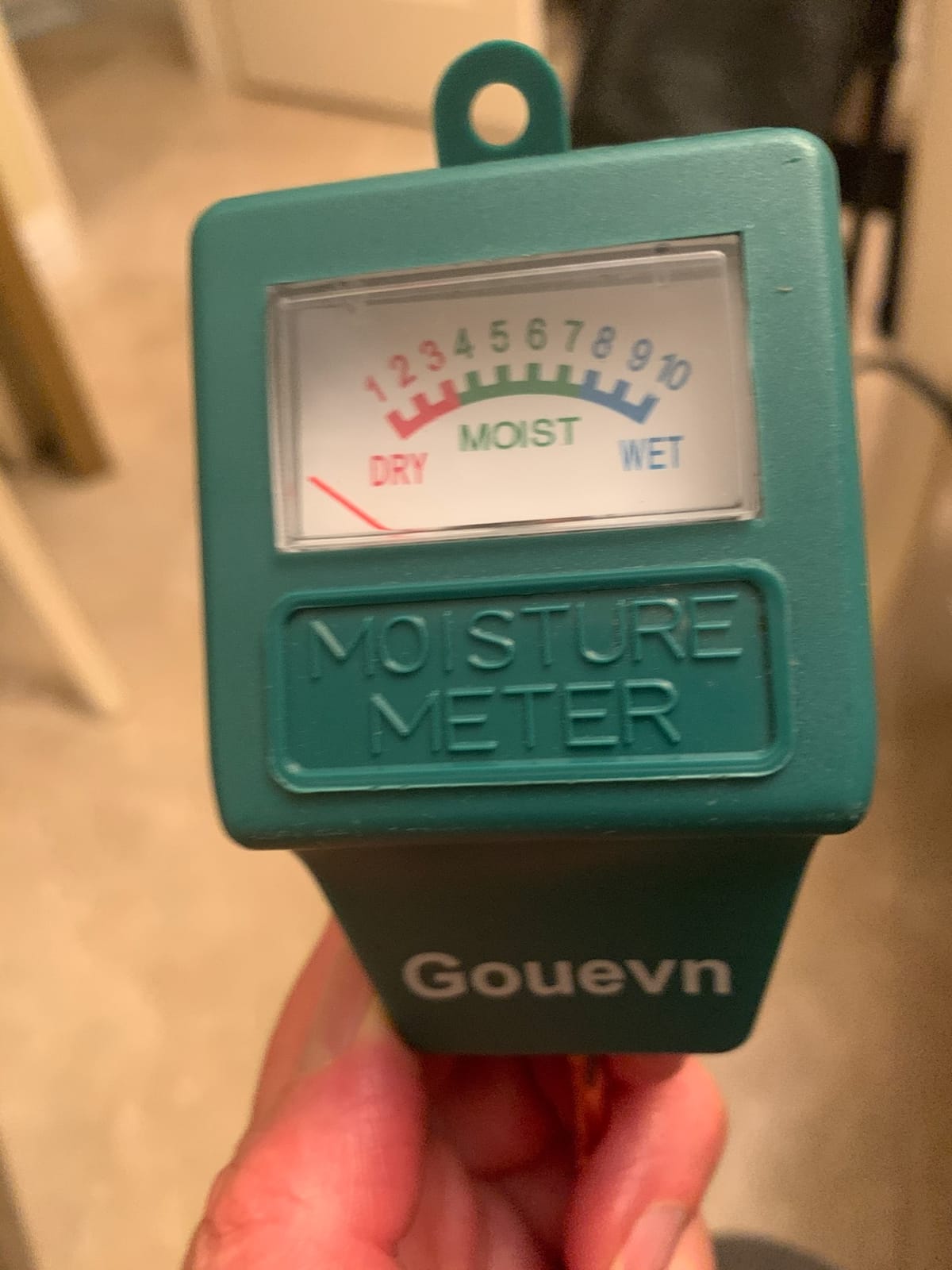
This is a very simple device with little room to confuse you. One probe, one dial, one job. For a first meter in a household of plant owners, that restraint is an advantage rather than a shortfall.
The pointer moved quickly and settled without much needle hunting in our standard potting mix, which is what you want from a tool you will use while deciding whether to pick up the watering can.
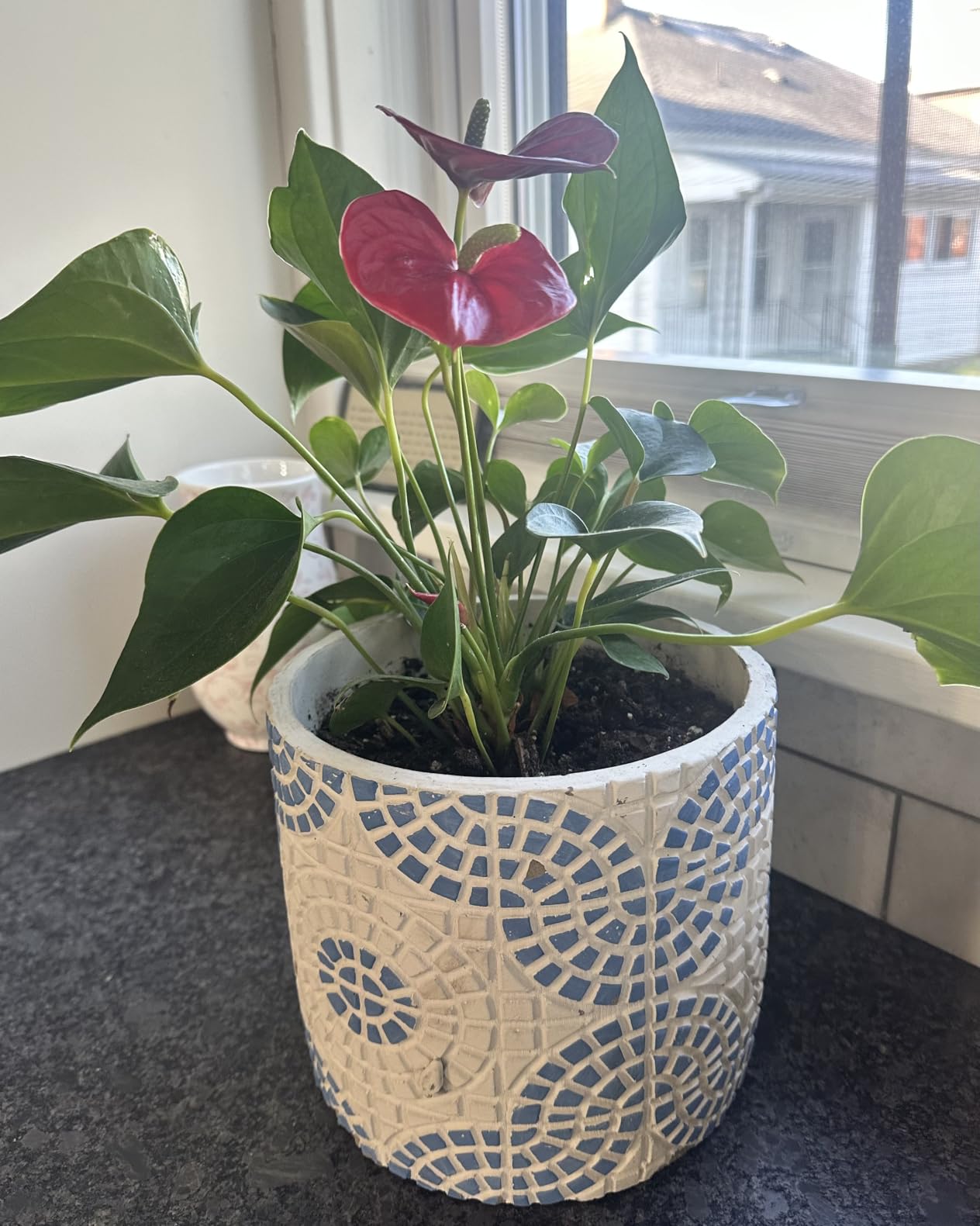
The watering guide printed on the packaging is a genuinely useful touch for beginners. It maps a dial position to a plant type, so you can look up a fern without first working out what number a fern wants.
It is also a short device, and that is the one limitation to plan around. In a shallow nursery pot that is perfect, since the probe reaches the whole root zone. In a deep planter you are only sampling the top few inches, which is the driest part and the part that dries first.
Who the Gouevn suits
It suits beginners and anyone with a small to medium collection of standard houseplants in normal potting mix. If you only want to know when to water a pothos or a rubber plant, it does that job cleanly.
It also suits anyone who prefers a device with nothing to configure. There is no battery, no mode switch, and no screen to misread, which removes a whole category of user error.
Who the Gouevn is wrong for
Skip it for large floor planters and deep decorative pots, where a short probe cannot reach the middle of the root ball. It will tell you the top is dry, which you can already see.
Skip it for airy mixes such as bark-based orchid mixes, chunky aroid blends, or LECA, where air gaps dominate the reading.
4. Dr.meter S10 Soil Moisture Meter – Most Sensitive Ten-Scale Dial
Dr.meter Soil Moisture Meter for Plants, Plant Water Gauge Test Kit
Ten color-coded scales
Copper-based conductor
No batteries
2.02W x 1.6H
Pros
- Very sensitive and responsive dial
- Reads match hands-on soil checks
- Single probe keeps roots intact
- Durable after a year of regular use
Cons
- Reads high in moisture-retentive soils
- Short probe for large pots
- Scale not calibrated for potting mix
The Dr.meter is among the most electrically sensitive meters in this group. Its copper-based conductor reacts faster to small changes in the mix than the stainless units, which produces a needle that visibly moves as you press it deeper.
That sensitivity cuts both ways. In a fast-draining mix the reading was the most responsive of the analog meters we used, and in a moisture-retentive soil it consistently sat wetter than our finger check suggested.
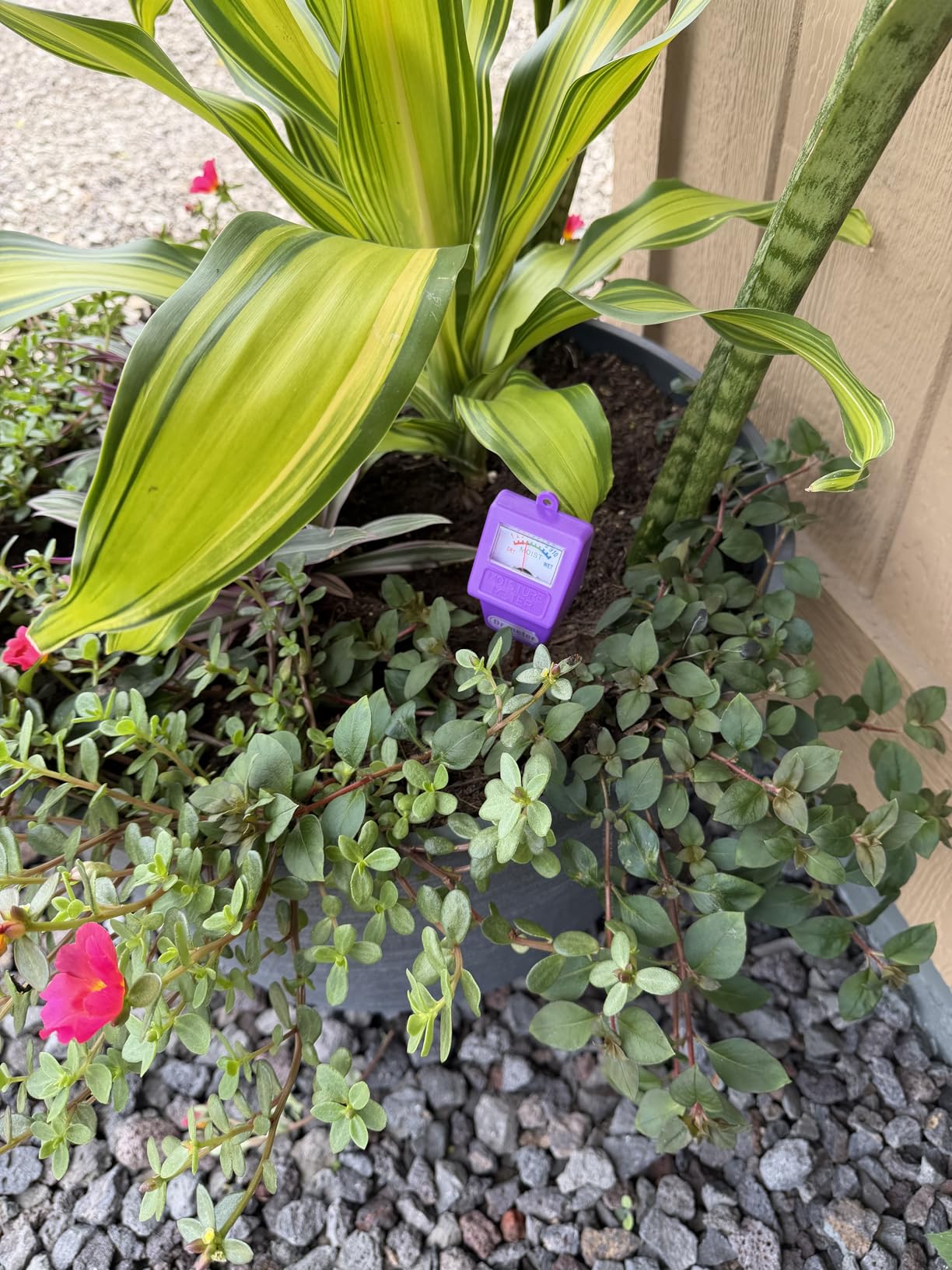
The ten-scale color interface from red through green to blue gives finer resolution than a three-zone dial, so you can watch a trend across a week instead of seeing a binary wet or dry verdict. That trend is what actually helps, because the absolute number matters less than the direction of change.
Durability was not an issue. After months of weekly use and routine wipe-downs, ours still gave a steady reading with no corrosion visible on the probe.
Who the Dr.meter S10 suits
It suits owners of a medium to large collection who want to log readings over time and compare plants against each other. Ten scales give you a usable gradient rather than a single threshold.
It also suits anyone in fast-draining indoor mixes who wants early notice before a plant wilts. High sensitivity means you see the change before the plant looks stressed.
Who the Dr.meter S10 is wrong for
Skip it if your plants sit in rich, moisture-retentive potting mix or heavy peat. The sensitivity that helps in a light mix makes the needle read high and can delay a needed watering.
Skip it for deep planters, since the probe is short relative to a ten-inch pot, and for anyone who wants a number they can record rather than a needle position.
5. VIVOSUN 3-in-1 Soil Tester – Clearest Numeric Ranges on an Analog Dial
VIVOSUN Plant Soil Moisture Meter, 3-in-1 pH Tester, Indoor & Outdoor Use
Moisture 1-10 scale
Light 0-2000
pH 3.5-8
10.8 inches long
Pros
- Specific numeric ranges aid interpretation
- Compact 10.8 inch body fits small pots
- No batteries needed
- Indoor and outdoor use
Cons
- Lowest average rating in this group
- Analog scale less precise than digital
- pH range stops at 8 basic
The VIVOSUN takes the usual three-function format and does one thing better than most of its peers: it labels the ranges. A moisture scale from 1 to 10, a light scale from 0 to 2000, and a pH band from 3.5 to 8 give you numbers to compare between plants instead of vague zones.
That makes it a good fit for people who keep notes. If you are building a spreadsheet of last-watered dates and readings, a number is far more useful than a color band.
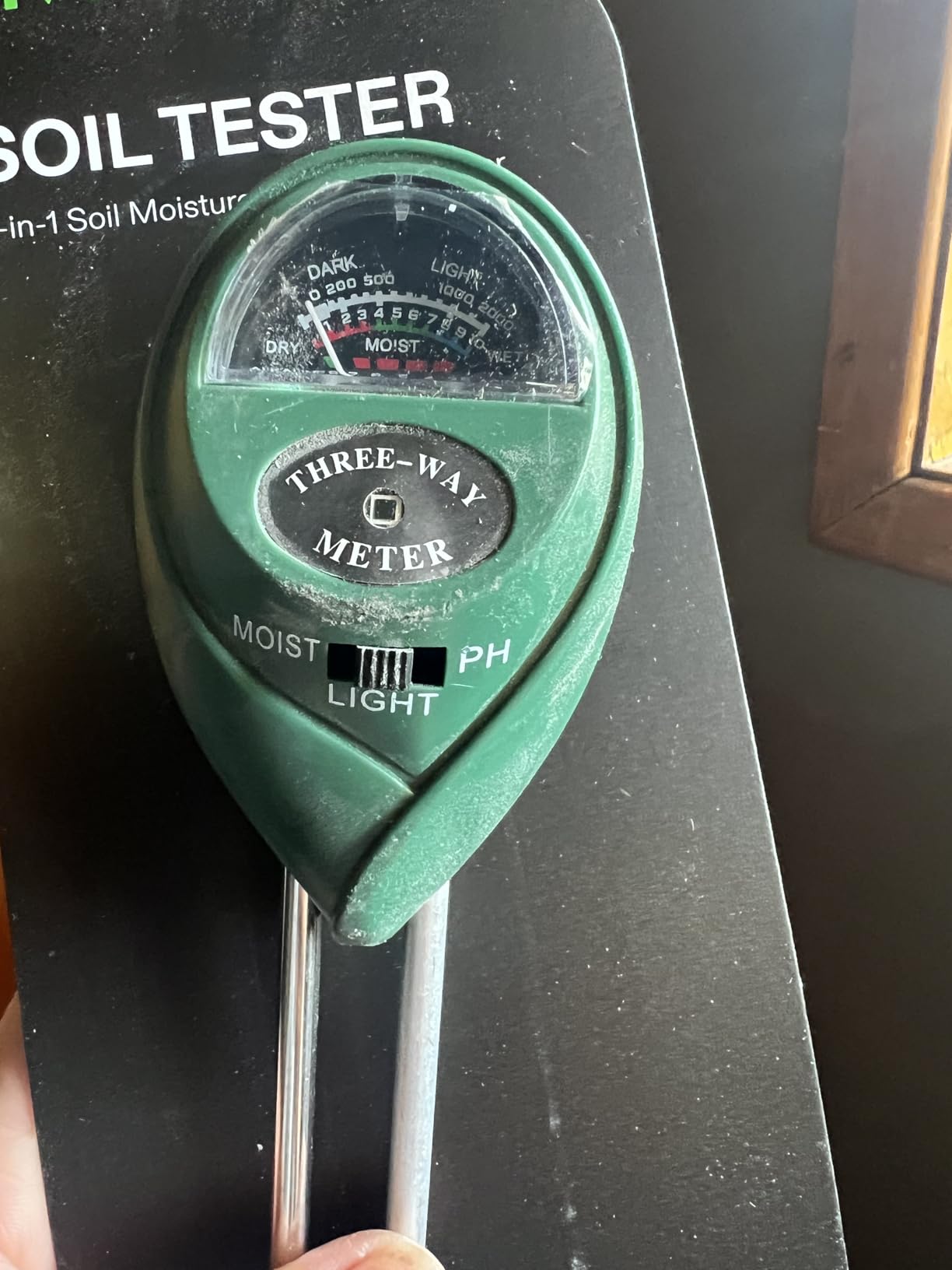
Where it falls short is consistency. The average rating in our group is the lowest of the ten, and the one-star share reflects units that either arrived unresponsive or drifted between pots. Our unit read fine, but if you order a multi-pack, check each one in dry and wet soil before relying on it.
The 10.8 inch body is compact enough for a four-inch nursery pot, which is where this one earns its place more than anywhere else. A short tool in a small pot still covers the entire root zone.
Who the VIVOSUN suits
It suits owners of many small and medium houseplants who want comparable numbers across a collection, and anyone tracking watering in a written log. The labeled ranges make entries meaningful.
It also suits people repositioning plants indoors, since the light scale gives a fast comparison between a windowsill and a darker shelf.
Who the VIVOSUN is wrong for
Skip it if you need a pH value precise enough to adjust a fertilizer program. The scale caps at 8 and is not laboratory calibrated, so it will not resolve the differences that matter for dosing.
Skip it if you have lost plants to overwatering and want the most reliable readout you can get. A backlit digital meter gives steadier numbers than this analog face.
6. YAMRON 4-in-1 Digital Soil Meter – Best Backlit Numeric Readout
YAMRON 4-in-1 Soil Moisture Meter Digital Plant for Indoor & Outdoor Plants
Backlit LCD display
Moisture pH temperature light
45 degree folding head
2.36W x 12.6H
Pros
- Backlit screen is easy to read anywhere
- Numbers beat needle guessing
- Rotating head avoids bending over
- Four readings in one unit
Cons
- Needs four AAA batteries not included
- Water dry soil first to protect the probe
- Best results need several averaged readings
If you dislike translating a needle position into a decision, this is the meter that removes that step. The backlit LCD shows a number immediately, which is the main reason to accept the extra complexity over an analog dial.
The 45 degree folding head is a real comfort feature. You can angle the screen toward yourself instead of crouching over the pot, and in a collection of twenty plants that difference adds up over a year.
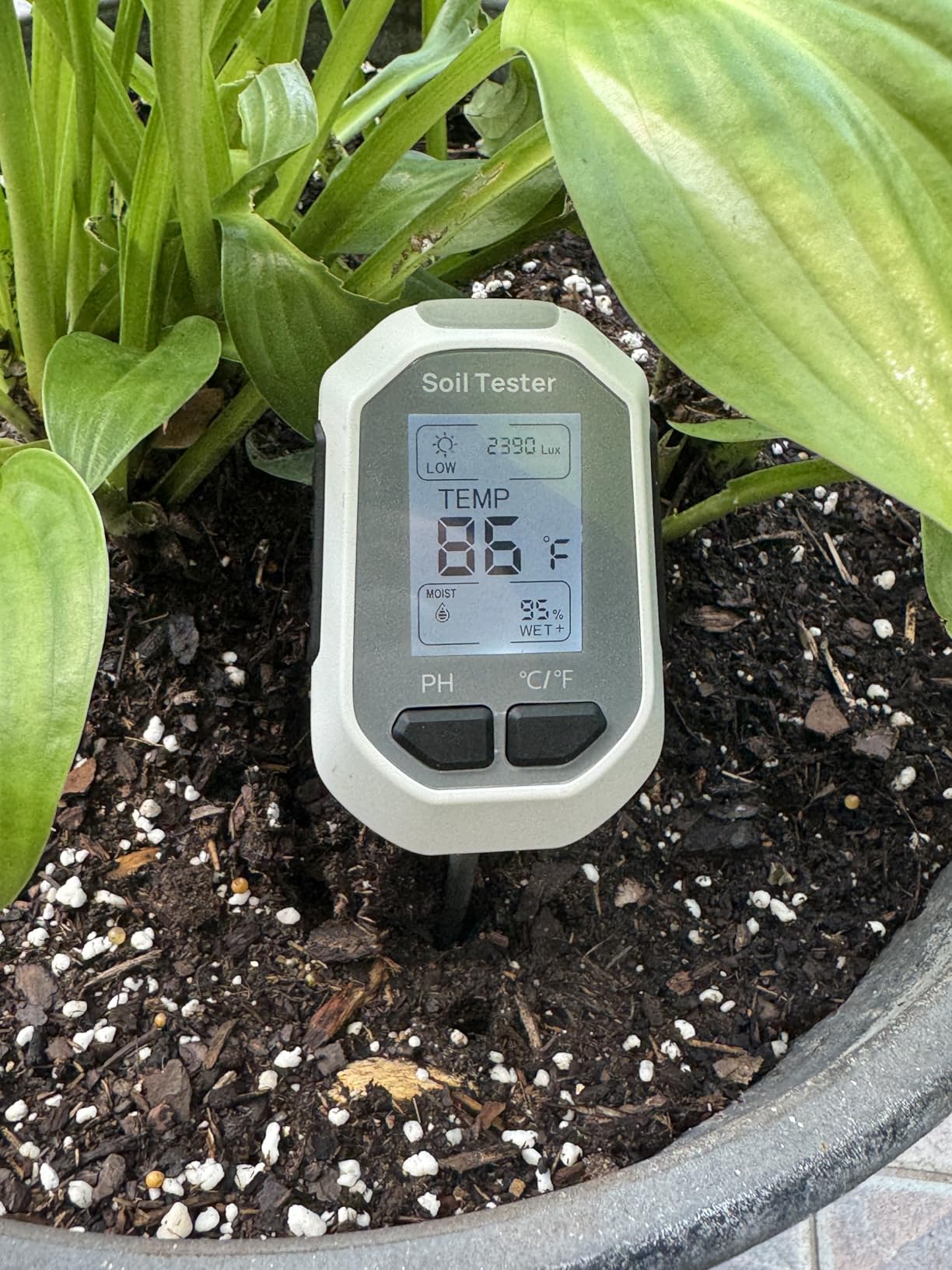
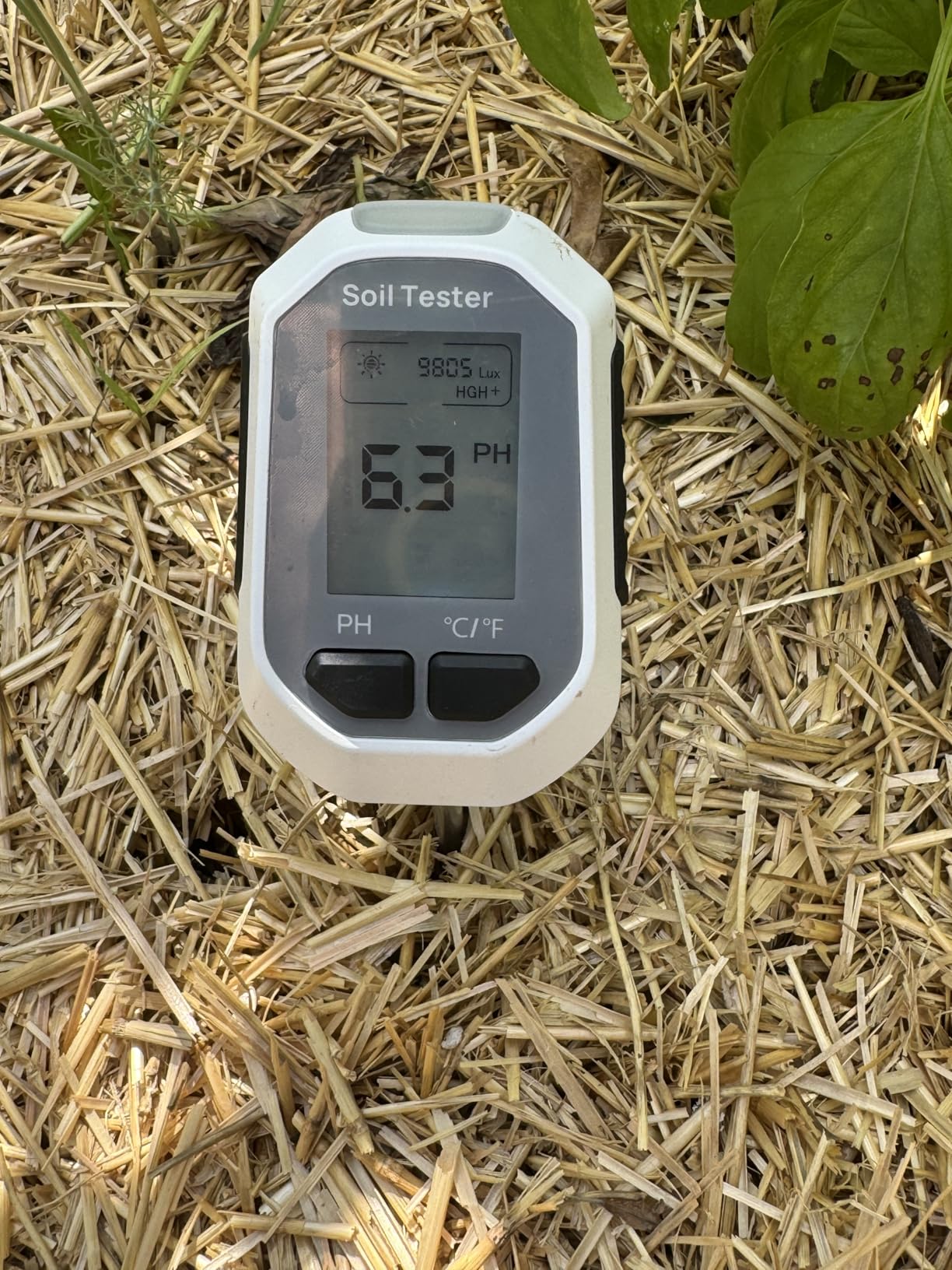
It reports moisture, pH, soil temperature, and sunlight, and the temperature reading is the most quietly useful of the extras. Knowing whether a pot is several degrees cooler than the room tells you something real about root function during a winter.
Two handling rules matter. The unit runs on four AAA batteries that are not included, and the manufacturer asks you to water dry soil before inserting it, because a dry resistive probe can be damaged by the initial current draw.
Who the YAMRON suits
It suits owners of a large collection who will read a screen faster than they will interpret a dial, and anyone who wants a recorded number for a watering log or a smart-home routine.
It also suits people with several plants in different rooms, since the light and temperature readings let you compare conditions rather than guess at them.
Who the YAMRON is wrong for
Skip it for very small pots where a twelve-inch tool will hit the drainage hole or the pot wall. Take readings away from the base and keep the probe clear of any hole.
Skip it if you dislike battery management. The low-battery alert helps, but four cells is more upkeep than a needle and a metal probe that never needs power.
7. Hathdia Long Probe Soil Moisture Meter – Best Reach for Deep Planters
Hathdia Soil Moisture Meter,Plant Hygrometer Moisture Sensor Plant Water Monitor for Potted Plants,Garden,Farm, Lawn(No Battery Needed)
7.6 inch probe length
Immediate pointer reading
No batteries
9.07 g body
Pros
- 7.6 inch probe reaches large potted plants
- Pointer responds quickly
- Lightweight and portable
- No power source needed
Cons
- Moisture only with no extra metrics
- A small share of copies arrive unresponsive
- Must be kept clear of stones
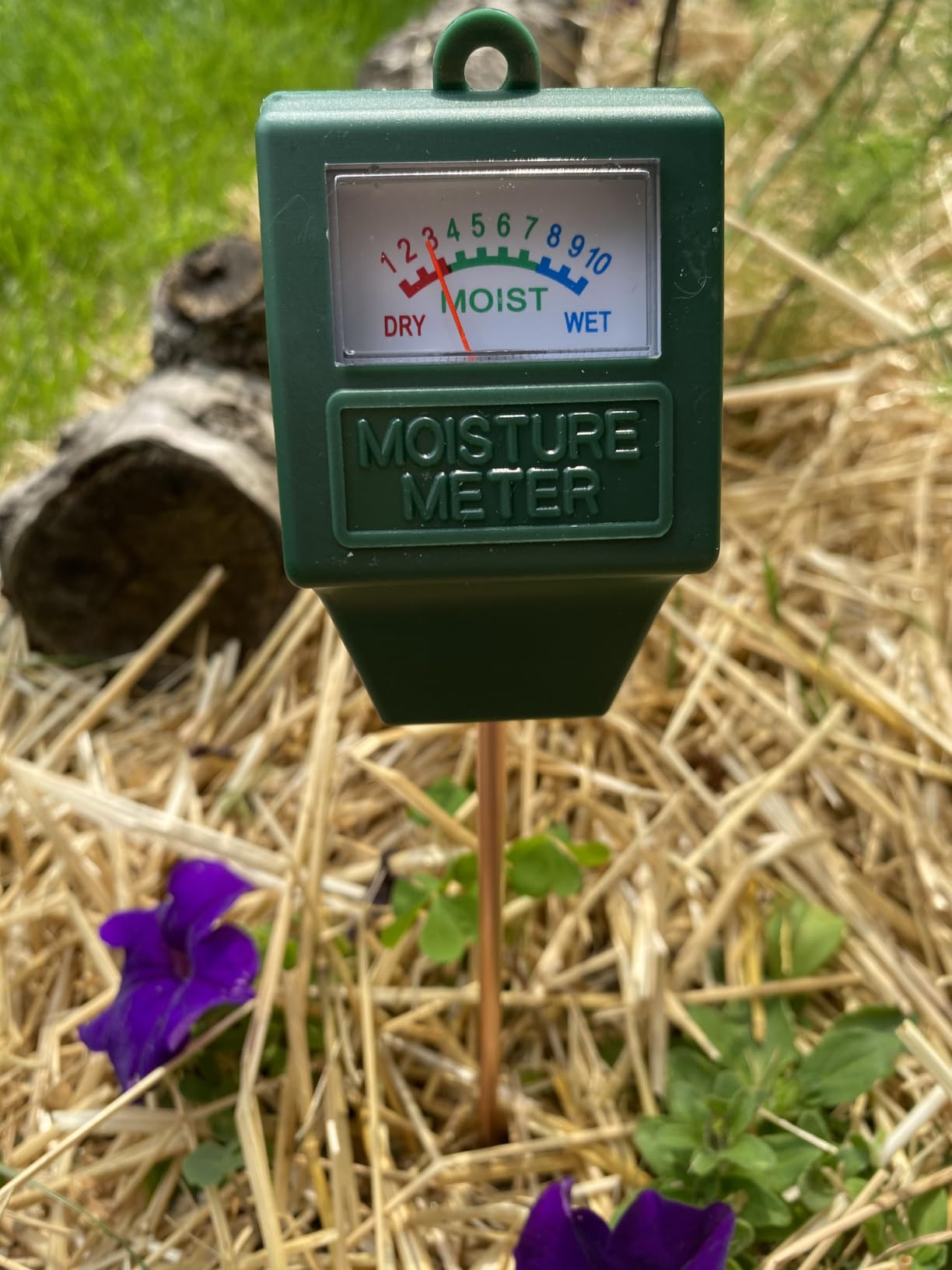
Probe length is the decision rule nobody in this category spells out clearly, and this meter is the answer for anyone with a planter too deep for a finger. A 7.6 inch probe reaches into the middle of a large floor pot instead of only sampling the dry top layer.
The most common complaint from owners of big plants is that a short meter tells them the surface is dry when the root zone is fine. A longer probe fixes that one physical problem. It is not a smarter meter, just a longer one.
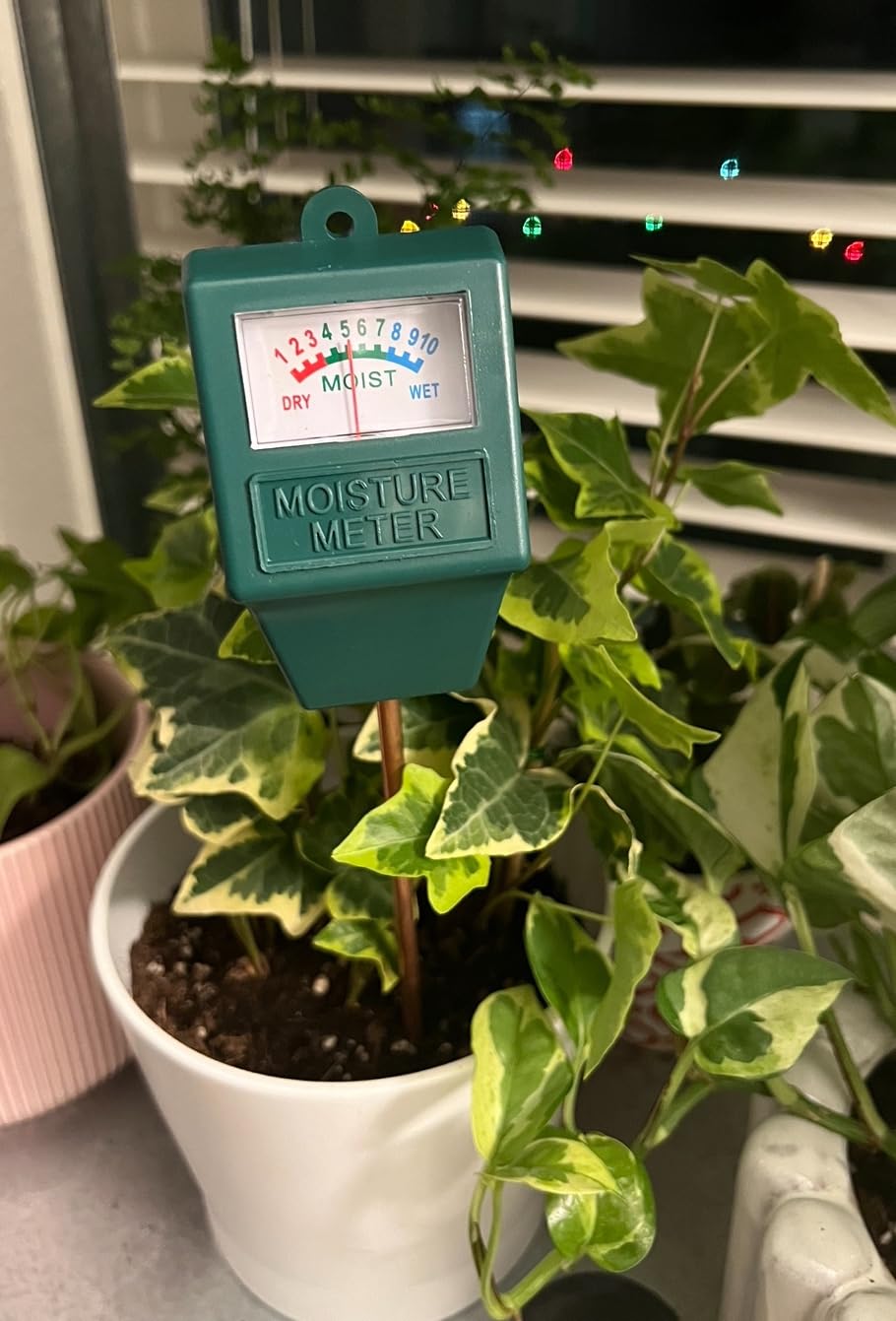
The pointer moved immediately on insertion in our larger planters, with no waiting for the needle to climb. It is a moisture-only tool, so there are no extra functions to misread and nothing to configure.
Keep the probe away from stones and the pot wall, and wipe it after each use. The recurring complaint in reviews is a small number of copies that arrive with a stuck needle, so test yours in dry and wet soil on day one.
Who the Hathdia suits
It suits owners of floor plants, large decorative planters, and hanging baskets on chains, where the root zone sits well below the surface and a finger cannot reach it.
It also suits anyone who wants one inexpensive tool to carry around a mixed property, since it is light and needs no batteries.
Who the Hathdia is wrong for
Skip it for small nursery pots, where a 7.6 inch probe will bottom out against the pot wall or a drainage hole and give you a reading of the base rather than the roots.
Skip it if you want pH or light data. Buying this meter and a separate multi-function tester costs more than one device that does both, and neither does either job superbly alone.
8. HSLGOVE 7-in-1 Soil Test Kit – Best for Diagnosing a Struggling Plant
HSLGOVE Soil Test Kit, 7-in-One Soil Moisture Meter/Soil PH Meter/Fertility, Dual Screen Soil Tester w/Digital Soil Temp/Air Temp&Humidity for Plants Gardening,Lawn,Farm Indoor&Outdoor-Lvory White
Dual dial and LCD display
Seven measurements
6.8 inch probe
4.8 ounces
Pros
- Seven readings in one device
- Dual display shows soil and air together
- Fertility and pH hints aid diagnosis
- Single probe disturbs little soil
Cons
- Three batteries replaced often
- Readings take 3 to 5 minutes
- Battery lid is awkward to open
- Thick probe needs force in firm soil
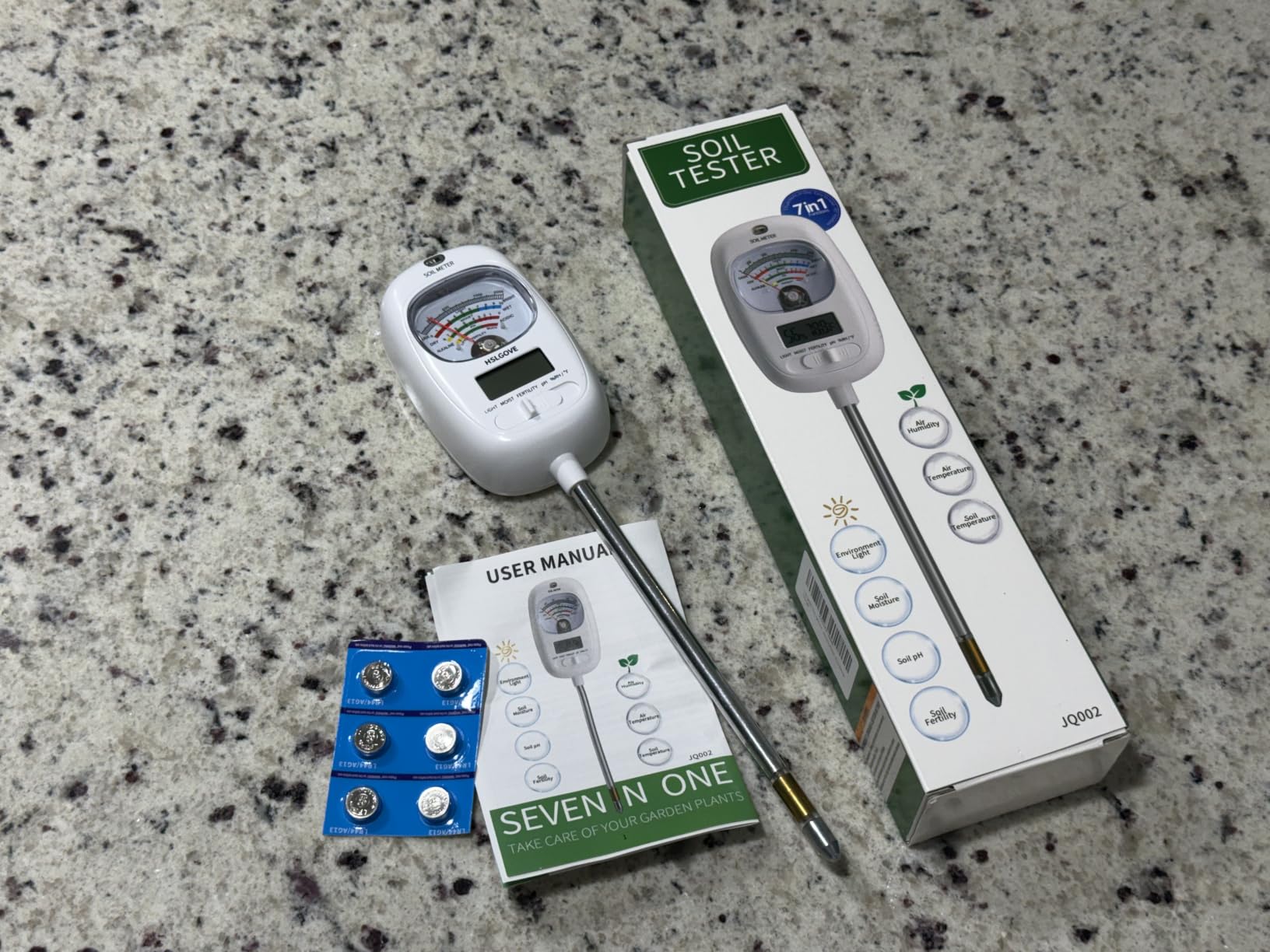
This is the diagnostic tool rather than the watering tool. It reports moisture, pH, fertility, light, soil temperature, air temperature, and humidity, with an analog dial and an LCD screen showing different things at the same time.
The pairing is what makes it useful. You can see the soil moisture needle while reading air conditions on the screen, which tells you whether a plant is struggling because of the mix or because of the room.
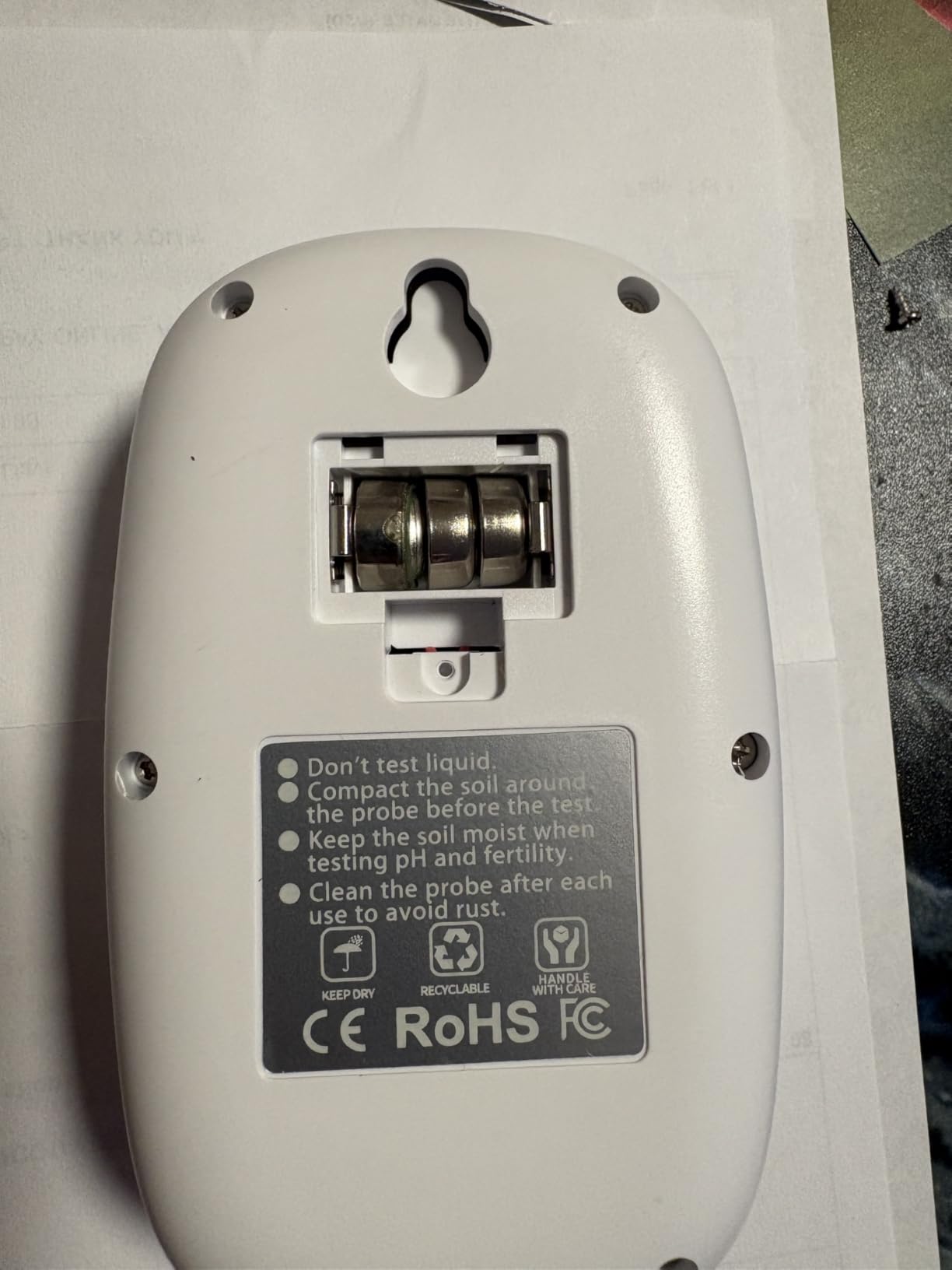
Our honest read on the extra channels: the fertility figure is a vague band rather than a number, and the pH reading has the same limitations as other testers in this roundup.
The air temperature and humidity readings come from their own sensor away from the soil, so they describe the room rather than the mix. That makes them useful context when a plant declines, and useless as a watering trigger. Speed is the real trade-off: readings appear within three to five minutes rather than instantly, and the probe is thick enough that it needs a channel made with your fingers in firm soil.
Who the HSLGOVE suits
It suits someone with a plant that is declining and no clear diagnosis. The pH, light, and temperature channels let you rule out several causes in one sitting instead of changing variables one at a time.
It also suits a room-scale approach, since the air temperature and humidity readings help you judge whether a group of plants sits in a draft or a dry corner.
Who the HSLGOVE is wrong for
Skip it as a weekly watering tool. Waiting three to five minutes per pot turns a quick check into a project, and the fast analogs answer the same question in seconds.
Skip it if you have very firm or compact soil. The three-metal probe is thick, and forcing it can damage both roots and the probe tip.
9. Censinda Soil Moisture Meter – Entry-Level Moisture Check
Censinda Soil Moisture Meter, Soil Moisture Monitor for House Plants, Soil Hygrometer Moisture Sensor for Indoor & Outdoor, Garden, Farm, Lawn Plant Care, No Battery Needed(White)
6.7 inch probe
Instant analog reading
No batteries
2.3W x 10.2H
Pros
- Cheapest way to get a working meter
- Instant reading on insertion
- 6.7 inch probe reaches the root area
- No batteries and fully portable
Cons
- High share of one-star reviews
- Moisture only with no extra readings
- Cannot be left in soil or soaked
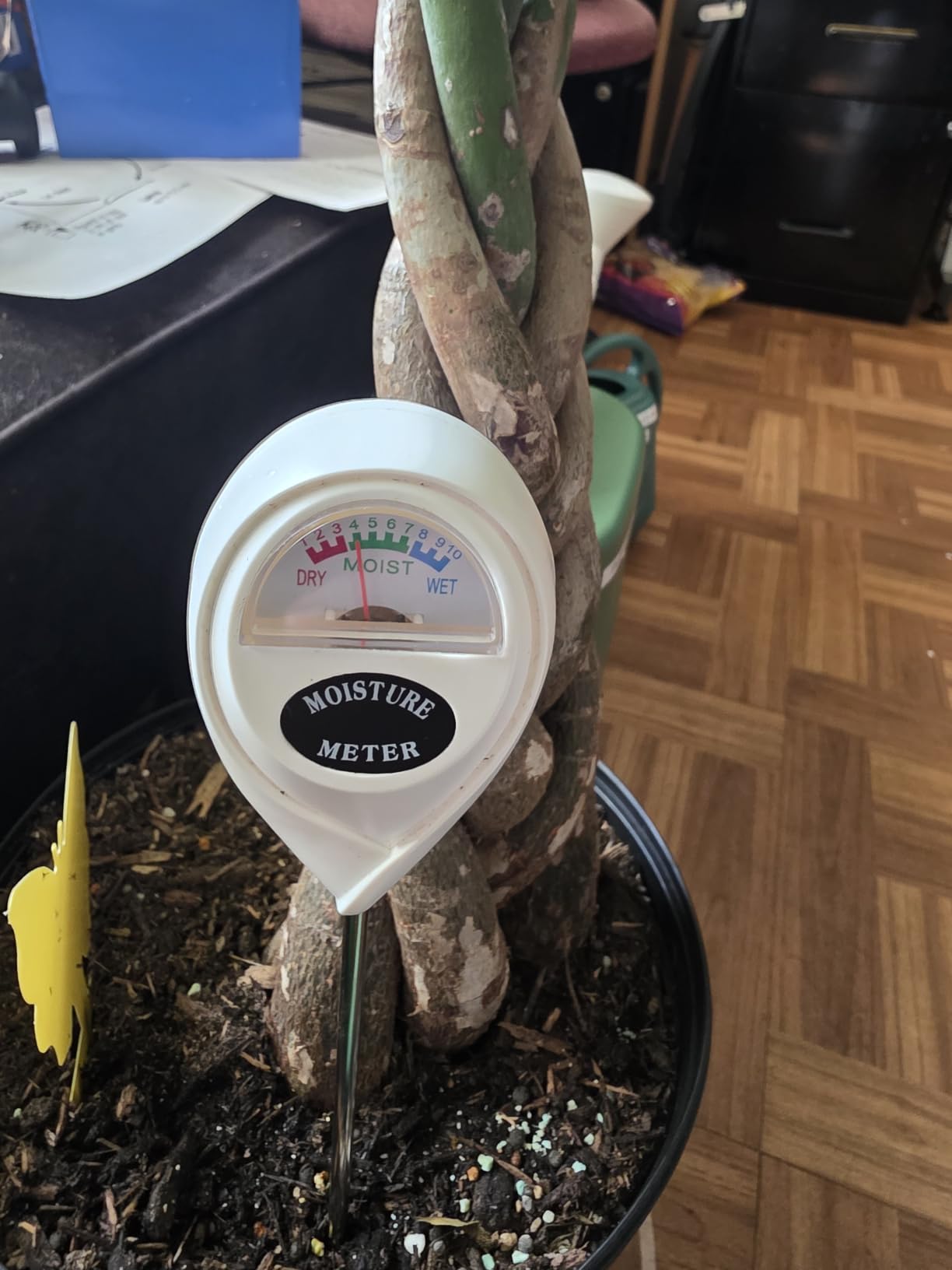
The simplest meter in the roundup does the one thing that matters: it tells you whether a pot is dry. The reading came back instantly in our test and tracked a finger check reasonably well in standard mix.
The 6.7 inch probe is longer than most entry-level analogs, which makes it usable in hanging baskets and medium planters where a four-inch tool would only reach the dry surface.
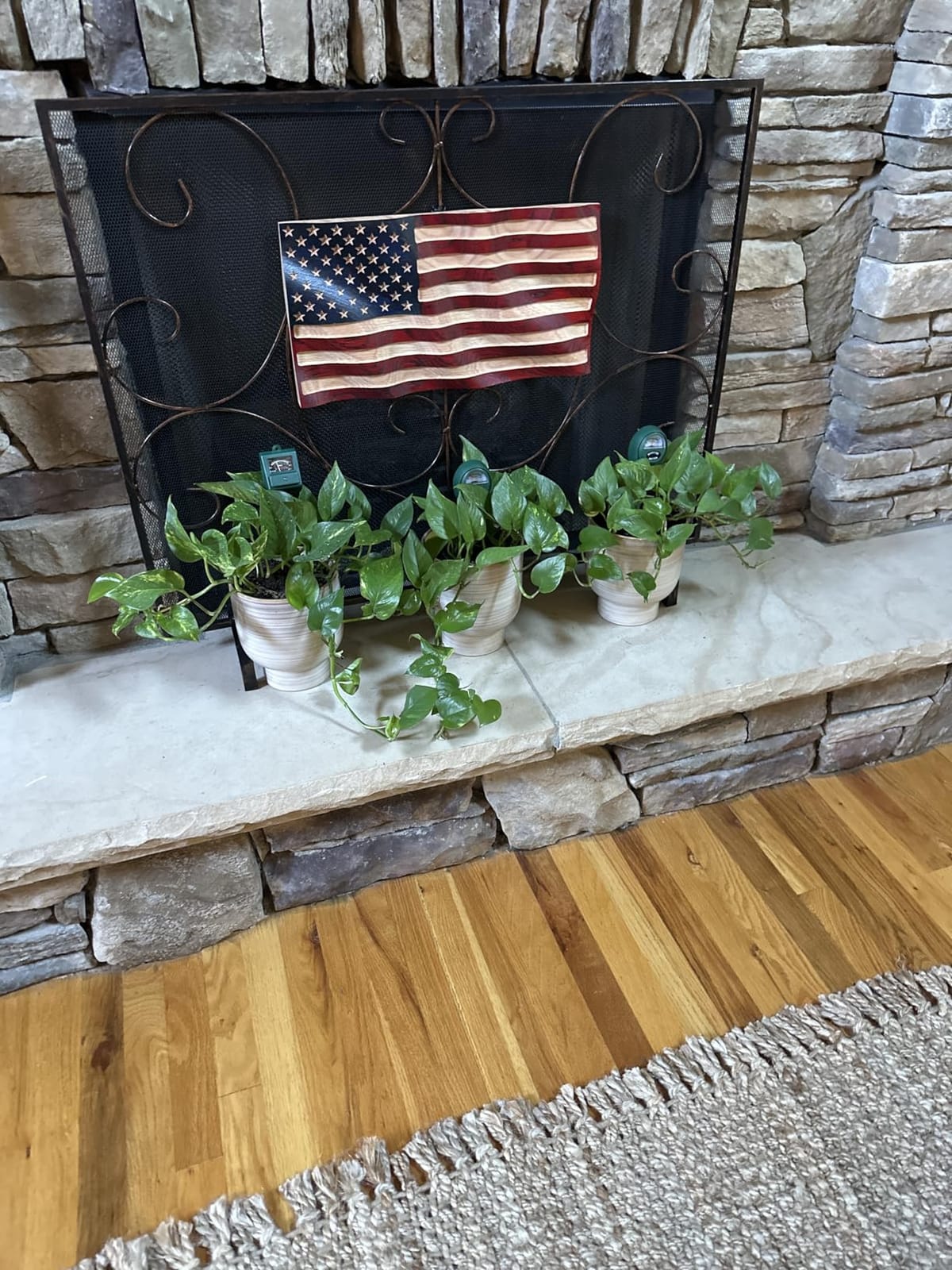
The trade-off is unit consistency. This one carries a high share of one-star reviews in the roundup, and the complaints cluster around copies that arrived unresponsive or gave inconsistent results between insertions in the same pot.
That is a quality-control issue, not a design flaw, and it is manageable. Verify it on arrival, and if the needle does not move in damp soil, replace it rather than trying to learn to read a dead device.
Who the Censinda suits
It suits students, first-time plant owners, and anyone who wants a spare meter for a single shelf of small pots. At this price point you can keep one in several rooms without thinking about it.
It also suits people who just need a nudge before they water. It replaces the guess that leads to overwatering, which is the most common way indoor plants are harmed.
Who the Censinda is wrong for
Skip it as a primary tool for a serious collection. The inconsistency means a single reading should never be the only input before you water, and you will want a steadier device as your plants get more valuable.
Skip it for gritty, chunky, or semi-hydro media for the same reason as every other analog here, and never leave it inserted or submerge it in a cup of water, which ruins the contact.
10. Tennedriv Green Soil Moisture Meter – Oversized Dial, Four-Inch Reach
Soil Moisture Meter for House Plants, Plant Water Meter,Plant Moisture Meter for House Plants and Outdoor Plants, No Batteries Required (Green)
Oversized gauge face
4 inch sensing distance
Analog output
Battery-free
Pros
- Large and very readable dial
- Accurate sensing around roots
- Sturdy enough for mildly firm soil
- No batteries and wipes clean easily
Cons
- Moisture only with no extra metrics
- Cannot be left in soil or soaked
- No published model number or spec sheet
The gauge face is large, which means you can read it from further away or with less direct light, and that matters when you are crouching behind a sofa with a plant on the far side.
Sensing distance is listed at four inches, and the reading around the root zone matched our finger check closely in a standard mix. Variants come in 7 inch and 12.2 inch probe lengths, so the shallow model is best for nursery pots and the long one for floor planters.
Its review spread is among the cleanest here, with 75 percent five-star and 7 percent one-star, which suggests consistent manufacture rather than a lucky sample. Our unit gave a steady reading across repeated insertions.
One detail worth stating plainly: no model number or detailed specification is published for this listing. The function is simple enough that the absence does not matter much, but it is why we placed it last despite a good rating.
Who the Tennedriv suits
It suits older plant owners or anyone with limited vision who wants the largest possible readout. A big dial with a clear needle is a real accessibility benefit.
It also suits owners with a mixed shelf, since the 7 inch version is at home in small pots and the 12.2 inch version covers larger planters.
Who the Tennedriv is wrong for
Skip it if you want recorded numbers or a backlit screen for a dim room. The dial is only as readable as the light falling on it, and there is no digital fallback.
Skip it if you need more than moisture, and skip it for chunky or gritty media where any resistive probe will read on the dry side.
How to Use a Soil Moisture Meter Correctly
Most meter disappointments come from technique rather than hardware. Five steps fix the majority of them, and the whole routine takes about a minute per pot.
First, pick an insertion point about one inch in from the pot wall and well away from any drainage hole. Probes touching plastic, stone, or a saucer give readings that describe the pot, not the soil.
Second, insert to the depth of the probe without stabbing. Push in gently along a channel you made with your finger, and if you meet hard resistance you have hit something that is not soil.
Third, wait for the needle to settle before reading. On analog units that usually takes a few seconds, and on the multi-function digital models the manufacturer asks for three to five minutes. Reading early gives you a number that is still climbing.
Fourth, cross-check before you water. Push a finger to the same depth and compare, and lift the pot to feel its weight. If the meter and your finger disagree, trust the finger and treat the reading as suspect.
Fifth, re-check weekly and record it. One reading tells you very little, while a series of readings for the same pot in the same spot shows you the drying rate of that particular plant and soil combination.
How to Test Whether Your Own Meter Still Works
If a meter has ever told you a visibly damp pot was bone dry, the problem may be the device rather than your watering. This five-step check tells you which, and it takes about ten minutes.
Step one, take a dry-air baseline. Hold the probe in the air away from your hand for a full minute. On a working analog meter the needle should sit at or near the dry end. If it sits anywhere else, the coil or contacts are faulty.
Step two, run a saltwater control. Mix a strong saltwater solution in a shallow dish and dip the probe so the tips are submerged, without touching the sides. A healthy meter pushes toward the wet end immediately. No movement means a dead circuit.
Step three, run a soil comparison. Take two pots of the same standard potting mix, water one thoroughly, and leave the other dry. Insert at the same depth in each. The wet pot should read clearly wetter than the dry one, and a healthy gap between them is the real test.
Step four, re-check weekly. Resistive probes corrode and drift, so a meter that passed today may read flatter in a month. Running the two-pot comparison once a week keeps you honest for a few minutes.
Step five, interpret the result. A meter that passes these checks is measuring correctly and can be trusted as one input. A meter that fails the saltwater test is broken. A meter that passes but reads far drier than your finger in every pot is telling you something real about that mix, and you should rely on the finger.
Who Should Not Use a Moisture Meter
There are four setups where a meter is at best useless and at worst actively harmful, and skipping it entirely is the better call in all of them.
Succulents and cacti in gritty mineral mixes are the clearest case. The probe bridges air gaps between particles, reports dry while the mix is soaked, and the resulting extra watering is a leading cause of rot in exactly the plants that cannot tolerate it.
Semi-hydro and LECA setups are the second. The medium is expanded clay with large internal voids, so a resistive probe has almost no continuous contact. Use a water-level check or transparent container instead, which tells you the actual reservoir state.
Bark-based orchid mixes and chunky aroid blends are the third. Air pockets around the probe produce a dry reading in genuinely moist media. The lift test works better here because it measures the whole pot.
Pots under four inches are the fourth. A finger reaches the root zone easily at that size, and a probe risks stabbing roots in a small volume of soil. Meters earn their place in deep pots and large collections, not in nursery trays.
Plant-Specific Target Moisture Ranges
There is no single ideal moisture level for houseplants, which is why a raw number means so little on its own. Use these targets to interpret what your meter is showing you in each pot.
Ferns and calathea want consistently moist soil and react fast to a dry root zone. Treat a reading in the upper-middle of the scale as a signal to check, and never let one drop to the dry end.
Pothos and philodendrons are the most forgiving tropicals. They tolerate a range, so use the meter as a check on how fast your specific pot dries rather than as a target to hit.
Monstera and fiddle-leaf figs prefer a dry-down between waterings. Let the reading fall into the lower-middle range before watering again, and check deeper than a finger can reach in a large pot.
Rubber plants and most woody foliage plants sit in the middle. Water when the reading approaches the dry end but has not reached it, and confirm with pot weight.
Snake plants and other succulents want a full dry-down. A resistive meter in a gritty mix will read dry constantly, so ignore it here and judge by pot weight, which becomes dramatically lighter as the mix dries.
Cacti want the longest dry period of any common houseplant. If you grow them in a mineral mix, use the calendar and pot weight rather than any meter, because the tool will mislead you in the same direction every time.
How to Choose: Probe Length, Dial vs Screen, and Extra Metrics
Probe length is the first filter because it is the one thing you cannot work around. Match the probe to the pot depth rather than to any other spec, since a short probe in a deep planter only tells you the surface is dry, which you can see without a tool.
As a working rule, a finger reaches the root zone in a pot up to about four inches, so use a short probe there only if you want to avoid touching the soil. For a six to eight inch pot, choose a probe around six to seven inches. For a ten inch or larger floor planter, look for eight inches or more, and treat the reading near the top as a separate question.
Dial or screen is the second filter. An analog dial is faster, never needs power, and is easier to read at a glance while watering. A digital backlit screen gives you a recordable number and works in a dark room, at the cost of batteries and a more complicated routine.
Extra metrics are the third filter, and this is where most people overspend. The moisture reading on a 3-in-1 or 7-in-1 unit is the same resistive probe as a moisture-only meter. The pH and light channels use separate, cheap sensors, and the light reading is often a fixed photocell rather than a true lux meter.
Those extras are worth having for one purpose: ruling out causes. If a plant is fading and the meter shows acceptable moisture, a light or pH channel can point you somewhere else. They are not worth having as precision instruments, and treating them that way is how people end up chasing problems that do not exist.
Resistive probes push a small current through the soil between metal contacts, and those contacts corrode over months in damp conditions. Maker communities widely recommend capacitive probes for this reason, since they measure without a conductive path between electrodes. None of the ten meters here is capacitive, so wipe the probe after every use, keep it out of wet soil when it is not working, and expect to replace a resistive unit eventually rather than treating it as a lifetime tool.
Alternatives That Work Without a Meter
Used together with a meter rather than instead of one, these methods catch what a probe misses. The most accepted advice in plant communities is that no single signal is enough on its own.
Your finger is the most reliable tool available. Push it to the depth of the root zone, not the surface, and note the texture as much as the moisture. Dry and crumbly at depth means water, dark and cold means wait, and soggy means you have a drainage problem rather than a thirst problem.
Pot weight is the best method for large planters and gritty mixes, because it measures the whole volume instead of one spot. Learn how heavy a pot feels two days after watering, then lift it. A clearly lighter pot needs water regardless of what any needle says.
A bamboo chopstick inserted two inches into the mix for ten to fifteen minutes gives a direct look at the wet line. The darkened section shows where the moisture actually stopped, which is exactly the information a short probe misses.
Clear inner pots are the fix for the most common forum complaint about meters reading dry. When roots are visible through plastic, you can see moisture directly and skip the instrument entirely. Slide the plant into a nursery pot inside its decorative cover and the problem disappears.
Frequently Asked Questions
Do moisture meters for plants really work?
They work as a decision aid, not as a measuring instrument. A soil moisture meter reads electrical conductivity, so it tracks moisture well in a consistent peat-based potting mix and poorly in gritty, bark, or LECA media. Use it alongside a finger check and a pot lift, never alone.
Are moisture meters for plants accurate?
Accuracy depends on the meter and the medium. Analog resistive probes are relative indicators, not calibrated sensors, and the same soil can read differently on different units. They are accurate enough to show the direction of change in a standard mix, which is the thing most plant owners actually need.
Can moisture meters give false readings?
Yes, and the causes are predictable: air pockets around the probe in chunky media, fertilizer and hard-water salt buildup, contact with a stone or a fertilizer pellet, a corroded probe, and the perched water layer at the bottom of a pot.
Is soil moisture sensor analog or digital?
Both exist and the choice is about routine rather than accuracy. An analog dial is instant, battery-free, and readable at a glance. A digital unit gives a recordable number, often has a backlight, and usually adds pH, temperature, and light channels that need batteries.
How does a capacitive soil moisture sensor measure soil moisture?
A capacitive sensor uses the soil as the dielectric in a capacitor and measures how that capacitance changes with water content, with no metal electrodes in contact with the soil. Because there is no current path through the probe, it does not corrode, which is the main advantage over a resistive probe.
What are the downsides of using a soil moisture sensor?
The main downsides are that it measures conductivity rather than water content, gives false readings in airy media, drifts as salts accumulate, cannot be calibrated against a standard, pushes you toward overwatering in gritty mixes, and can stab roots if inserted carelessly in a small pot.
How deep should I insert a soil moisture meter?
Insert it to the depth of the probe while staying clear of the pot wall, drainage holes, and stones. Match probe length to pot depth so the tip reaches the root zone, and in a large planter treat the top and the middle as two separate questions.
Should you use a moisture meter?
Use one if you have large or deep planters your finger cannot reach, a collection of twenty plants or more, or a history of overwatering. Skip it for succulents, gritty mixes, semi-hydro setups, and pots under four inches, where a finger or a pot lift is more accurate.
Why does my soil moisture meter always read dry?
The usual cause is air pockets around the probe in loose potting mix, which stop the tip from making continuous contact with damp soil. Run a saltwater control test and a two-pot comparison to rule out a faulty unit, and confirm with a finger at the same depth.
Will inserting a moisture meter damage plant roots?
Rarely, if you insert gently along a channel made with your finger and keep the probe away from the pot wall and drainage holes. Damage happens when a long probe is forced straight down into a small pot or into compacted soil, where it acts as a spear rather than a sensor.
The Verdict
The best soil moisture meters for houseplants are simple, battery-free, single-probe analogs, and the XLUX T10 is the one we recommend first for good reason: a forgiving dial, a slim probe, and the largest review base in the category. Pick the SONKIR MS02 if you want light and pH channels in the same tool, the YAMRON 4-in-1 if you would rather read a backlit number than judge a needle, and the Hathdia if a deep floor planter is your main problem to solve.
Whichever you choose in 2026, remember the rule the forum consensus keeps arriving at: a meter measures conductivity rather than water content, so treat it as one input among a finger check, a pot lift, and your own observation. Read the same pot in the same place once a week, keep a short note, and you will water better in a month than you do now guessing.