
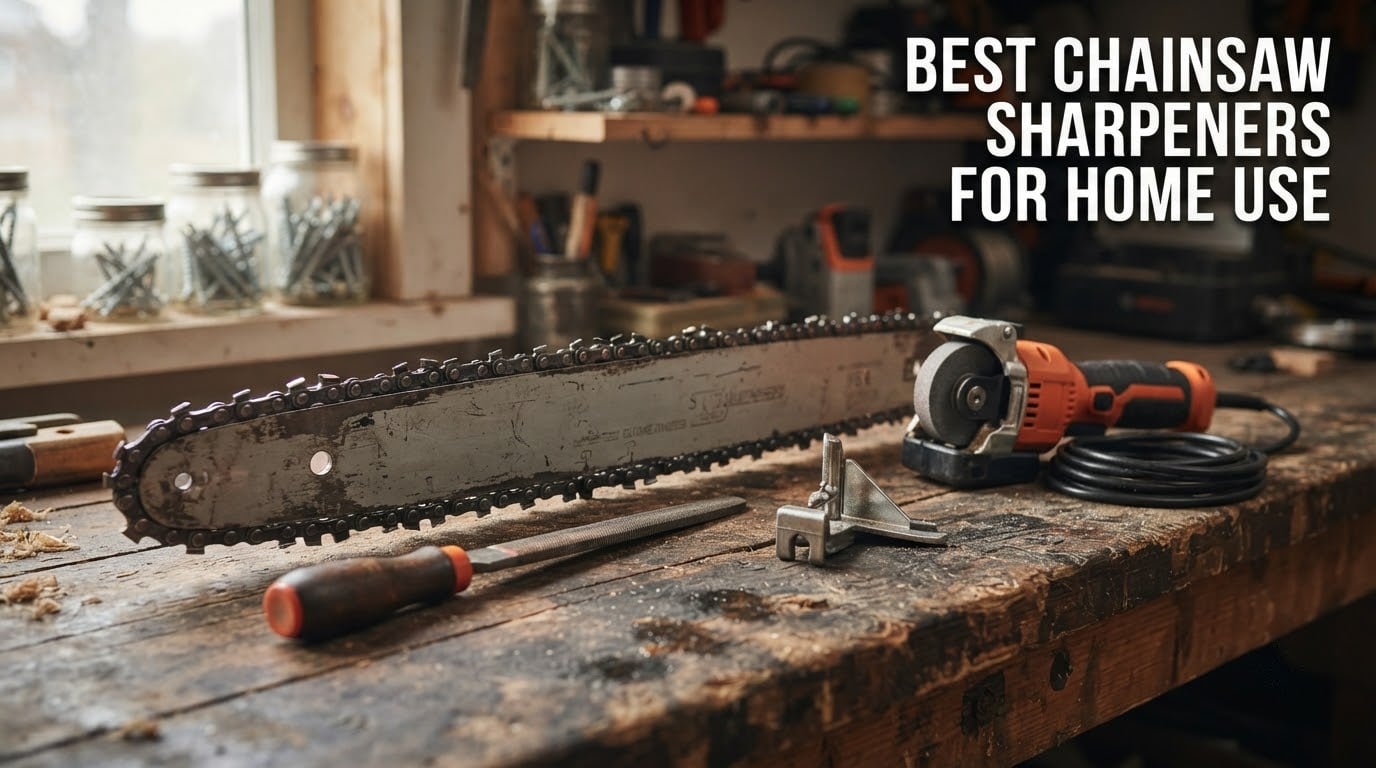
A dull chainsaw chain does not just cut badly, it cuts dangerously. It leaves fine sawdust instead of chips, which means you are pushing the saw harder for less wood, tiring faster, and working a chain that is more likely to bind or kick back. Sharpening is not an optional upgrade for anyone who owns a saw.
Here is the short answer. The Oregon Universal Chainsaw Field Sharpening Kit is the best chainsaw sharpener for home use overall, because it covers every file size most homeowners will ever need and includes the filing guide that keeps the depth gauge consistent. The PFERD CS-X is the most accurate manual holder we found, and the EzzDoo Electric Sharpener Kit is the best pick if hand filing strains your wrists or shoulders.
A chainsaw sharpener is simply a tool that restores the cutting edge and the depth gauge height on your chain. In practice that means four very different kinds of gear: a manual file holder that clamps onto the bar, a guided file kit with several file sizes, a bench-mounted electric grinder, and a rotary-tool attachment. This guide covers all four, because the right choice depends far more on how often you cut than on how much you spend.
Before the picks, one note on how we chose. We compared the specifications, the owner review patterns and the failure modes reported across forum threads for each of these tools, then kept only the ones that hold their angle, cover the pitches real homeowners run, and do not hide a consumable cost. We did not physically bench-test all ten, and we would rather say so than dress up a spec sheet as experience.
If you are also rebuilding other parts of the garage or shed, our guides to the best vibration plates for home use and the best quiet paper shredders for home use cover the neighbouring territory.
Table of Contents
Top 3 Best Chainsaw Sharpeners for Home Use (October 2026)
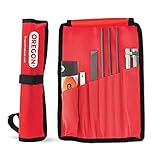
Oregon Universal Field Kit
- 5/32
- 3/16 and 7/32 inch round files
- 6 inch flat file
- Filing guide plus file handle
- Travel pouch

PFERD CS-X 7/32 inch
- Fixed 30 degree guide
- Interchangeable 7/32 inch files
- Depth gauge file included
- Works to 370 HV steel

EzzDoo Electric Sharpener Kit
- Works on chain without removal
- 6 titanium-coated diamond bits
- Dual-direction angle guide
- Spare brushes and collet
All 10 Chainsaw Sharpeners Compared at a Glance
| Product | Specifications | Action |
|---|---|---|
| Oregon Universal Chainsaw Field Sharpening Kit |
|
Check Latest Price |
| PFERD CS-X 7/32 inch Sharpener |
|
Check Latest Price |
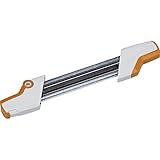 Stihl 2-in-1 Easy File .325 inch Stihl 2-in-1 Easy File .325 inch |
|
Check Latest Price |
| EzzDoo Electric Sharpener Kit |
|
Check Latest Price |
 Dremel A679-02 Sharpening Attachment Kit Dremel A679-02 Sharpening Attachment Kit |
|
Check Latest Price |
 Sharp Pebble Electric Sharpener Kit Sharp Pebble Electric Sharpener Kit |
|
Check Latest Price |
 Oregon 410-120 Bench Chain Grinder Oregon 410-120 Bench Chain Grinder |
|
Check Latest Price |
 Dremel 1453 Chainsaw Sharpening Kit Dremel 1453 Chainsaw Sharpening Kit |
|
Check Latest Price |
 Oregon 12V Sure Sharp Oregon 12V Sure Sharp |
|
Check Latest Price |
 Hipa 12 Piece Chainsaw File Kit Hipa 12 Piece Chainsaw File Kit |
|
Check Latest Price |
1. Oregon Universal Chainsaw Field Sharpening Kit – the best all-round pick
Oregon Universal Chainsaw Field 7 PIece Sharpening Kit
Manual 7 piece kit
5/32, 3/16 and 7/32 inch round files
6 inch flat file
Filing guide and handle
Pros
- Covers three chain pitches in one pouch
- Includes the filing guide most kits leave out
- Files are straight enough to clean a tooth in 3-4 passes
- Packs flat and fits a chainsaw bag
Cons
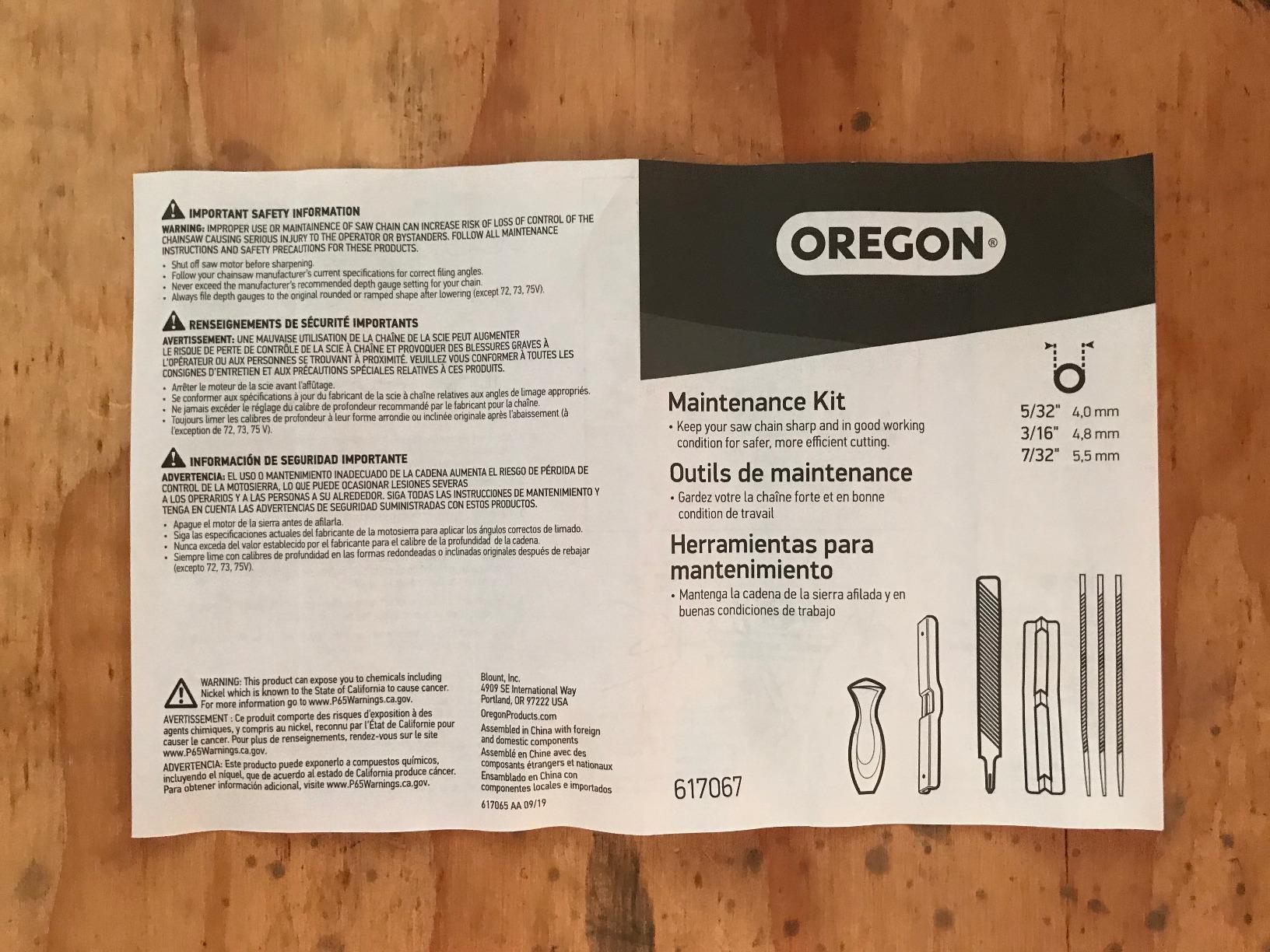
- Instruction sheet is thin on detail
- No second handle for the flat file
- Pouch is not waterproof on the back
The Oregon field kit is the one I hand to people who own more than one saw. It carries 5/32 inch, 3/16 inch and 7/32 inch round files, which between them cover almost every chain a homeowner will run, plus a 6 inch flat file for the depth gauges. Everything lives in a rolled canvas pouch that drops into a chainsaw bag.
What separates it from a bargain bundle of bare files is the filing guide. That little guide is the difference between a chain that comes out even and one that comes out lumpy, because it holds the file at a consistent height against the depth gauge as you work. Owners across thousands of reviews consistently say the same two things: the build quality feels like a real tool, and chains cut better than new afterward.
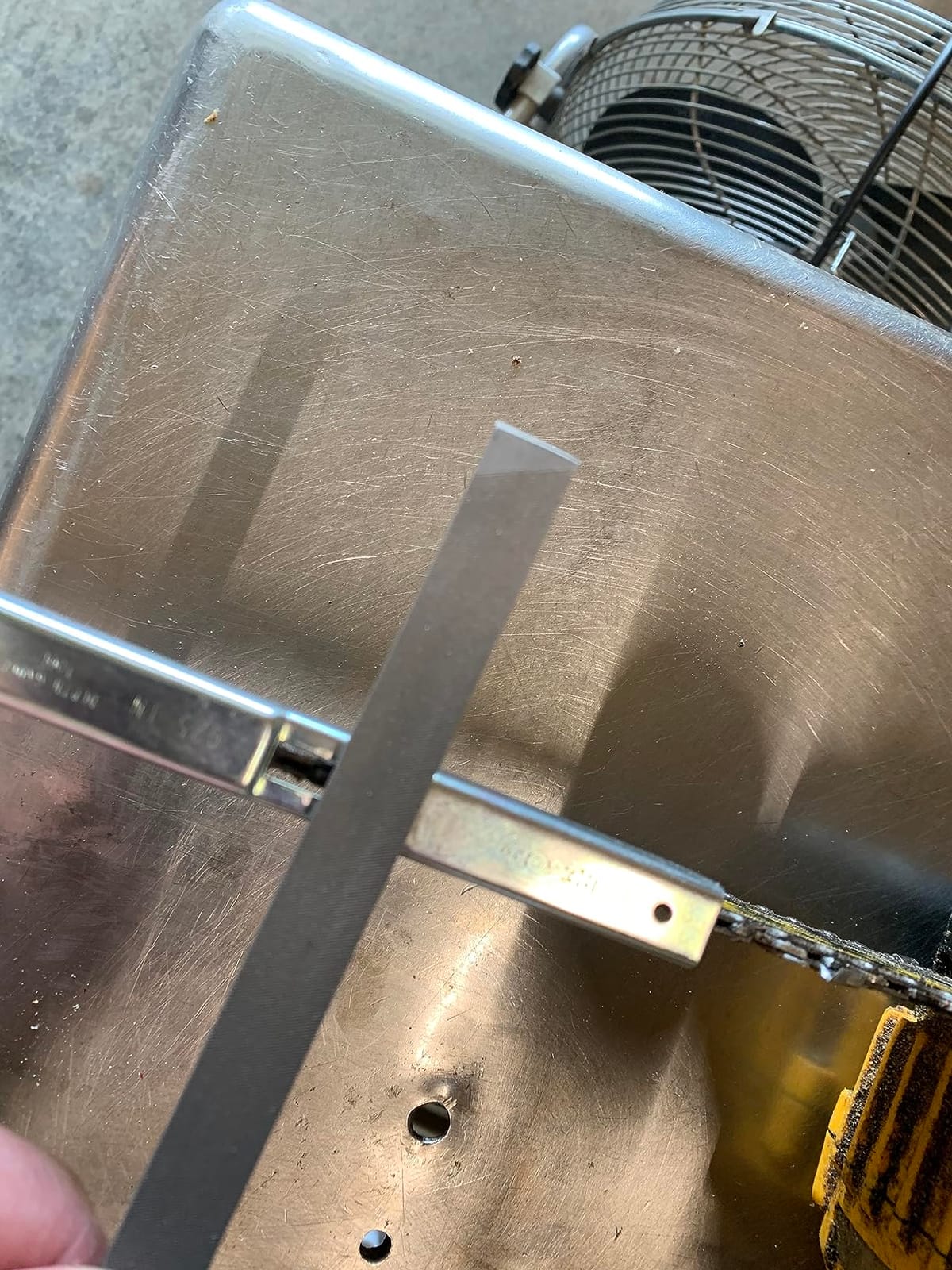
Physically it is small, roughly 2 by 2.28 by 2 inches and about 0.37 kg in the listing, and the files themselves are straight and sharp out of the box. Reviewers report that three or four passes per tooth is enough on a chain that has only gone a little dull, which is the normal case if you sharpen regularly rather than waiting until the saw is labouring.
The guide also does double duty as a depth gauge setting aid, which means you are less likely to file the rakers down by accident. That matters more than it sounds, because a chain with rakers sitting too low grabs the wood, cuts roughly, and is the classic recipe for a kickback.
Who this sharpener suits
This is the pick for the homeowner who runs a 16 inch or 18 inch bar, keeps it in a shed, and sharpens every few weeks during pruning season. It needs no power at all, so it works at the stump, in a truck bed, or during a power outage after a storm.
It is also the right answer if you own two chains of different pitches, which happens the moment you buy a second saw or a pole saw. Buying one kit with three file sizes costs less and wastes less time than tracking down single files later.
Where it falls short
The main drawback is documentation. The instruction sheet leaves some filing detail implicit, so if you have never sharpened a chain, you are learning partly by trial and error. Read a proper tutorial before your first session rather than working it out on the bar you use for firewood.
Two smaller annoyances: there is no second handle for the flat file, and the canvas pouch is not rubberised on the back, so it is not a rain-proof home for a steel file. Keep it in a bag, not on a wet tailgate.
2. PFERD CS-X 7/32 inch Sharpener – the most precise manual holder
PFERD TOOLS Chain Saw Sharpener CS-X, 7/32 inch File – Part 17304
Manual file holder
Fixed 30 degree angle
7/32 inch file
Depth gauge file included
Pros
- Holds a repeatable 30 degree angle
- Removes less material than powered grinding
- Files are interchangeable so one holder lasts
- 13.1 oz body is easy on the hands
Cons
- You must match the file diameter to your chain pitch
- Manual pace is slower than any electric option
The PFERD CS-X is the highest-rated tool in this group, and the reason is simple: it is a purpose-built holder, not a bracket. The file sits in a fixed geometry that puts it at 30 degrees with a 0.030 inch depth gauge distance every single time you engage it. There is nothing to adjust and therefore nothing to get wrong.
That fixed angle is the real story. A hand file held freehand produces a chain that looks sharp and cuts badly, because tooth heights end up uneven and the saw then pulls to one side. The CS-X removes the guesswork, and owners describe the results in exactly those terms, with consistent angles and less material removed per pass than a machine would take.
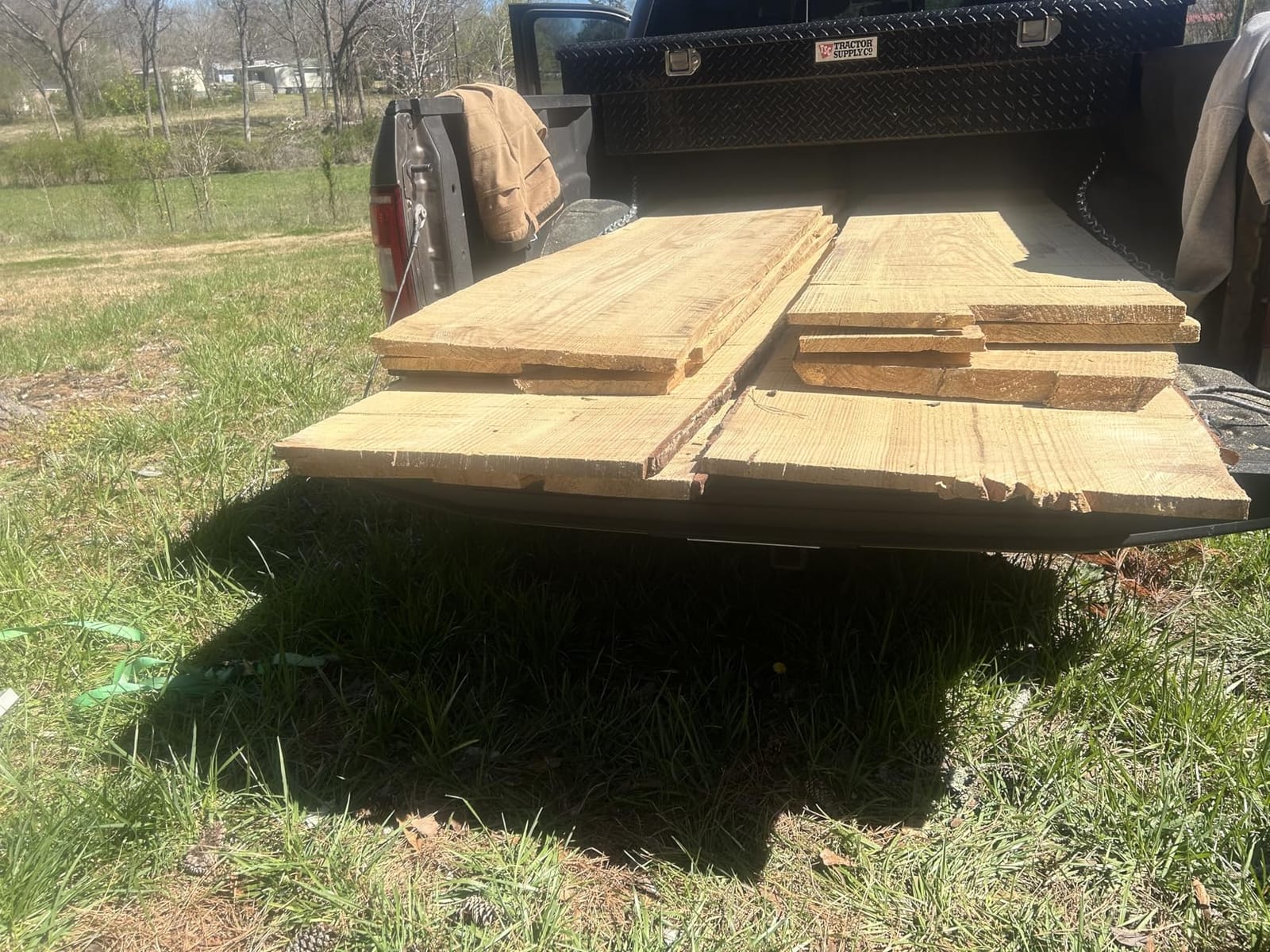
It is rated for steels up to 370 HV, which is 38 HRC on the hardness scale. That covers standard steel chain comfortably. It is not a carbide chain tool, and treating it as one is how people end up with a ruined chain and a ruined file.
Build quality is the other argument. At 13.1 ounces and 12.4 by 3.38 by 0.87 inches it is a genuinely portable object, and the files are interchangeable, so you replace a worn file rather than a worn tool. The delivery kit includes the CS-X holder, a depth gauge file and two chain files.

Who this sharpener suits
Choose the CS-X if you care about the finish more than the speed. Anyone who has ruined a chain by filing it by hand, or anyone who has a saw that cuts rough on one side of the bar, will feel the difference a fixed 30 degree guide makes.
It is also the tool to beat if you want to sharpen away from a wall outlet. No cord, no battery, no motor to fail, and it does the same work in the woods as it does on the bench.
Where it falls short
It comes in fixed file sizes, so you must know your chain pitch before you buy. This model is 7/32 inch for .404 inch pitch chains. Get it wrong and the file will round the cutters instead of sharpening them, which is the single most common complaint across every chainsaw sharpening forum.
The second limitation is honest arithmetic: a hand file holder is slower than any powered sharpener. For someone sharpening a chain every ten days, that is irrelevant. For someone running a firewood saw weekly through winter, it adds up.
3. Stihl 2-in-1 Easy File .325 inch – the easiest sharpener for a beginner
Stihl 2 IN 1 EASY FILE CHAINSAW CHAIN SHARPENER .325″
2-in-1 file and depth gauge
Built for .325 inch low profile chain
0.33 inch gauge, 8.26 mm pitch
39.9 cm overall length
Pros
- Files cutters and depth gauges in one tool
- Long file gives fast even passes
- Compact and light at 0.35 kg
- No setup or adjustment to learn
Cons
- Only fits .325 inch low profile chain
- Manual filing still takes practice
The 2-in-1 design is the idea that changed how most people sharpen a chain, and the reasoning behind it holds up. Traditionally you file the cutters, then stop, then find a separate depth gauge tool. Owners on r/Chainsaw describe the 2-in-1 sharpeners as the community default for exactly that reason, and this Stihl-branded version is the one most of them picture when they say it.
The tool works on the chain while it is still on the bar. You rest it across the bar, file across the top of the cutters, flip it, and the other side handles the depth gauges. There is no chain removal, no clamp, and no angle setting to fiddle with, which is why it is the easiest sharpener on this list to hand to a first-timer.
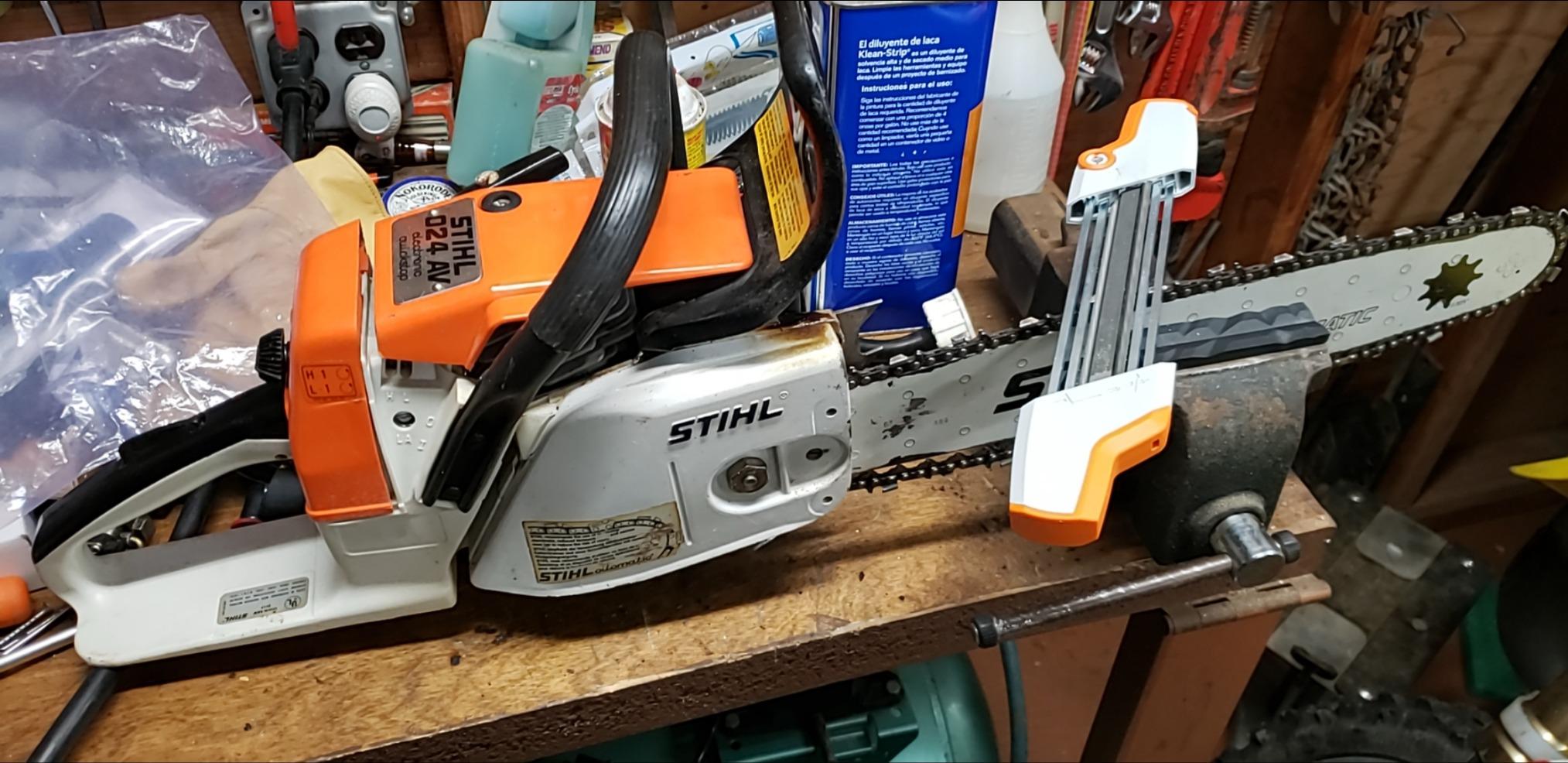
The file is long at 39.9 cm overall, and that length does real work. A short file means many more strokes to cover the same cutter. A long one means you sweep the whole tooth in a couple of passes and keep a steady rhythm, which is how you end up with even teeth instead of a chain that is sharp in places.
It weighs 0.35 kg, which is light enough to use for twenty minutes without your hands complaining. That matters more than any specification when you are doing it regularly.
Who this sharpener suits
This is the right pick if your saw runs .325 inch low profile chain, which is very common on mid-size Stihl models and plenty of other brands. The gauge is 0.33 inch with an 8.26 mm pitch and 72 drive links, so check your bar before you commit.
It also suits anyone who wants a simple tool that will not go wrong. There is no motor to burn out, no angle guide to align, and nothing to lose except a few minutes of filing.
Where it falls short
It is pitch-specific and there is no way around that. If your chain is 3/16 inch, 5/32 inch or 3/8 inch low profile, this tool will not touch it correctly, and you will be filing the wrong diameter into the tooth.
A lesser limitation is speed. Manual filing takes practice and time, and the first chain you do will take longer than you expect. Forum beginners regularly report an awful first attempt followed by a much better second one, which is a technique problem rather than a tool problem.
4. EzzDoo Electric Sharpener Kit – best when hand filing hurts
EzzDoo Electric Chainsaw Sharpener Kit with 6 Titanium-Coated Diamond Bits – Handheld Chain Saw Sharpener Tool for All Chains – No Removal Required, Easy and Fast Chainsaw Sharpening Kit
Handheld electric
6 titanium-coated diamond bits
Sharpens without chain removal
1 year warranty
Pros
- About three times faster than hand filing
- Works on the chain while it sits on the bar
- Titanium bits outlast ordinary rotary stones
- Ships with spare brushes and a backup collet
Cons
- Motor runs warm during extended use
- Angle guide can obstruct the work area
- Small bits can wear mid-chain
The reason to buy an electric sharpener is not speed for its own sake. It is that repetitive pushing strokes, ten thousand times, are how people end up with a wrist or shoulder complaint. The EzzDoo removes the repetition. It runs on the chain in place on the bar, so there is no crouching on the ground with a file either.
It comes with six titanium-coated diamond bits in three common sizes, and the coating is the detail worth paying attention to. Ordinary rotary stones glaze over quickly against the oil film on a chain. Titanium-coated bits hold their edge far longer, and reviewers report one bit typically sharpening five or more chains.
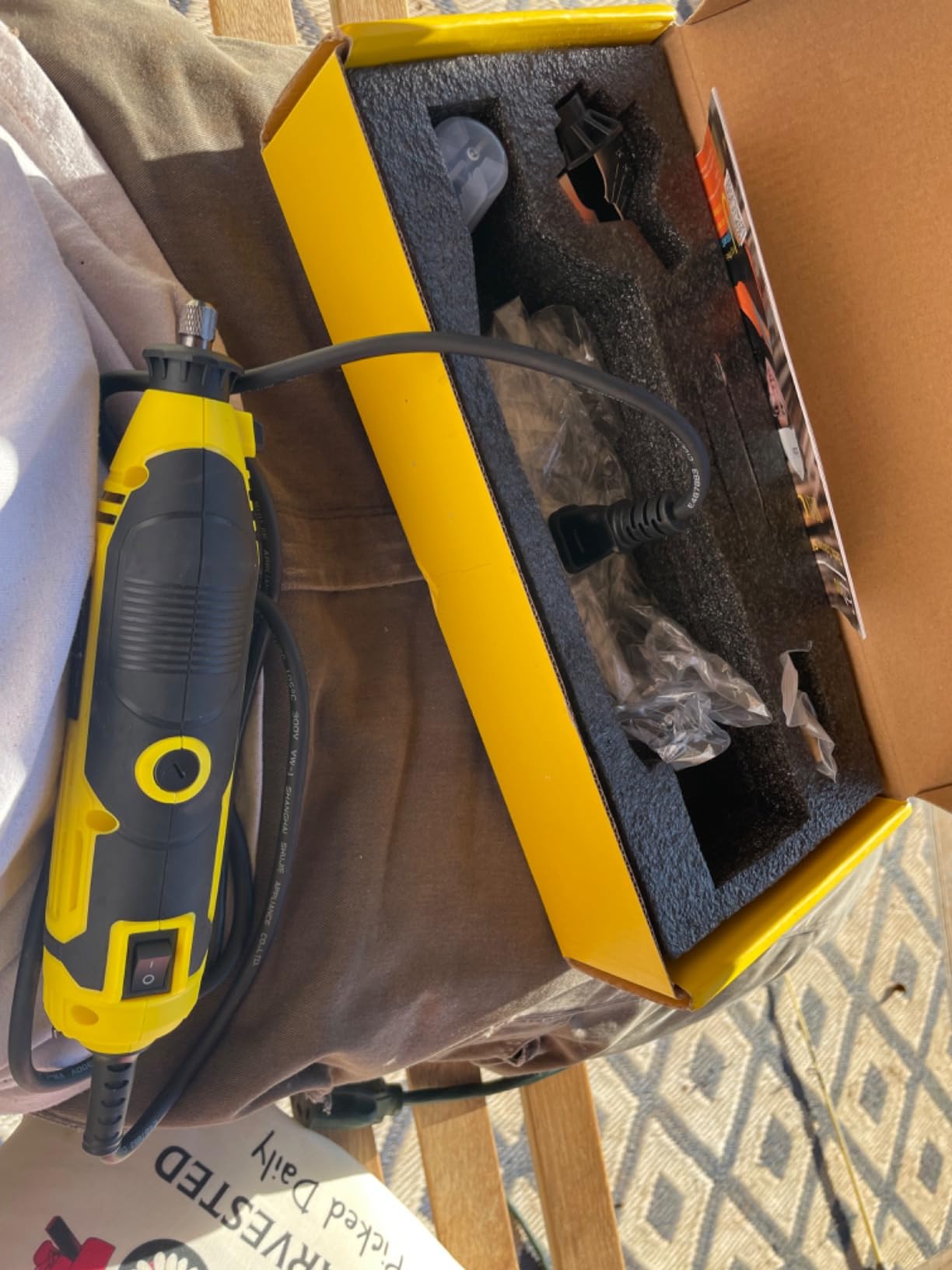
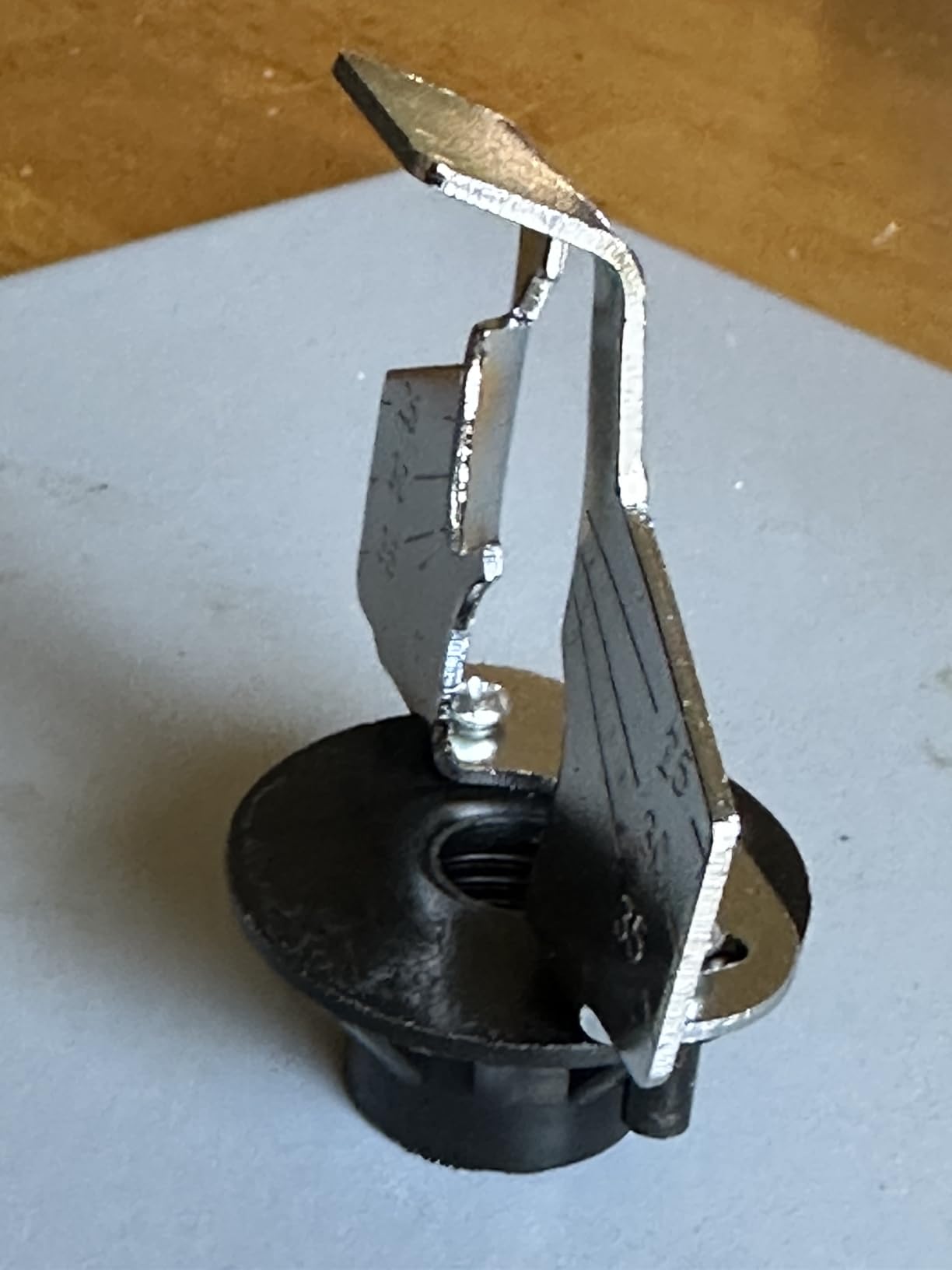
The angle guide works in both directions, which is a small thing that removes a real frustration for left-handed users. Set the angle once on the first tooth and repeat it down the bar. The listing recommends speed setting 2, and there is an upgraded collet meant to hold bits without wobble, which is the failure that makes cheap rotary sharpeners produce uneven teeth.
The box also includes two spare carbon brushes, a backup collet and both wrench sizes. That is generous, and spare brushes matter because a motor that loses its brushes is a motor that stops working mid-chain.
Who this sharpener suits
This is the pick for anyone with hand, wrist or joint trouble, and for anyone who simply does not want to spend twenty minutes filing. It is also genuinely useful for older users or anyone recovering from an injury who still wants to keep their saw sharp.
Because it needs no outlet and no battery platform of its own, it works anywhere with a mains supply, including a garage or a covered porch during storm cleanup.
Where it falls short
The motor runs warm during use, and that is the reason we would not hand this to someone grinding chains eight hours a day as paid work. For occasional and semi-regular home use it is comfortably in its element.
Some users find the angle guide more trouble than help and prefer to work from the chain’s own angle marks, which is a legitimate approach. A few buyers also received a bent angle adapter, so check the accessory before you start.
5. Dremel A679-02 Sharpening Attachment Kit – the multi-tool value pick
Dremel A679-02 Sharpening Attachment Kit, Compatible with Rotary Tools
Rotary tool attachment set
Chain saw, mower and garden tool attachments
Stones 453, 454, 455 and 932
2.29 x 1.69 x 6.5 inches
Pros
- One kit sharpens shears
- mower blades and chains
- Guide attachments hold the angle
- Full chain done in roughly 20 minutes
- Attachments screw straight on
Cons
- Included stones wear fast on oil-soaked chain
- Thread does not fit some non-Dremel rotary tools
- Only one stone per size included
This is the sharpener to buy if you already own a rotary tool and your sharpening backlog is bigger than just the chainsaw. The A679-02 includes a chain saw attachment, a lawn mower attachment and a garden tool attachment, plus a gauge, spacers, a wrench and four stones covering 453, 454, 455 and 932 profiles.
The chain saw stones fit quarter inch, 3/8 inch, 3/8 inch low profile and .325 inch chains, so the coverage is genuinely broad. Reviewers like that the guide attachment holds the correct angle where free-hand grinding on a rotary tool absolutely would not, and that a full chain takes about twenty minutes including setup.
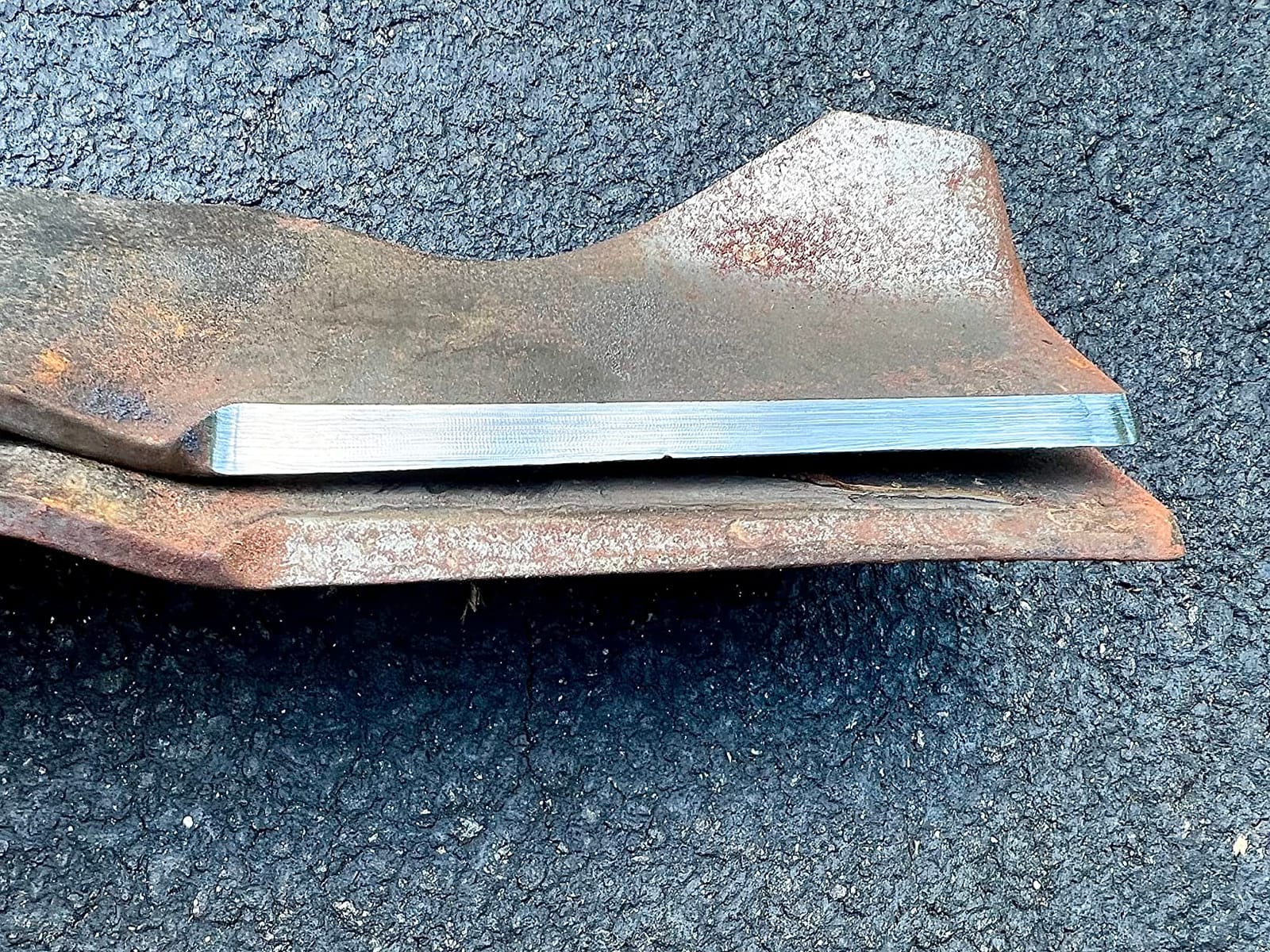
It fits Dremel models 100, 200, 3000, 4000, 7760, 8220, 8240, 8250 and 8260, and the 4300 with a collet and collet nut. The attachment screws straight on with no adapter to fumble with, which is where a lot of competing kits lose you.
The honest weakness is the consumable. The included aluminium oxide stones degrade quickly on an oil-soaked chain, and the most common advice in the reviews is to swap them for titanium-coated bits and keep the attachments.
Who this sharpener suits
Pick this if you want one kit to cover the whole shed, and you already have a Dremel-pattern rotary tool. Shears, mower blades, an axe and a chain all come out of the same box, and many owners report it paid for itself on the first use.
It is also a good first powered sharpener, because the guide attachment does the hard part. You are learning rotary tool handling with a jig that stops you making expensive mistakes.
Where it falls short
Fit is the limitation. The thread does not match every rotary tool on the market, and without a flex shaft some competitors simply will not work. Check your tool’s collet pattern first.
There is also no depth gauge filing function here, so a separate depth gauge tool is needed to reset the rakers. And with only one stone per size, spares are a separate order. This is a tool for occasional home use, not for professional volume.
6. Sharp Pebble Electric Sharpener Kit – the best corded electric for a garage
Sharp Pebble Electric Chainsaw Sharpener Kit – Chain Saw Sharpening Tool
120V corded electric
4 grinding wheel bit sizes
Angle guide attachment
Adjustable speed settings
Pros
- Ranked the top-selling chain saw sharpener in its category
- Angle sets once and repeats
- Four bits cover 5/32
- 3/16 and 7/32 inch
- Light at 16 ounces
Cons
- Grinding bits wear faster than coated alternatives
- Angle guide takes practice to set
- Only covers listed chain pitches
The Sharp Pebble is the one to beat if you want a mains-powered sharpener that lives on a garage shelf. It runs on 120V, weighs 16 ounces, and measures 7.99 by 2.79 by 1.1 inches, so it is compact enough to live next to the saw rather than in a cabinet.
It ships with four grinding wheel bits covering 5/32 inch, 3/16 inch and 7/32 inch, an angle guide attachment and a wrench. The angle guide is the feature that makes the difference: set the angle on the first cutter, then repeat it tooth after tooth, and the chain comes out even instead of arcing.
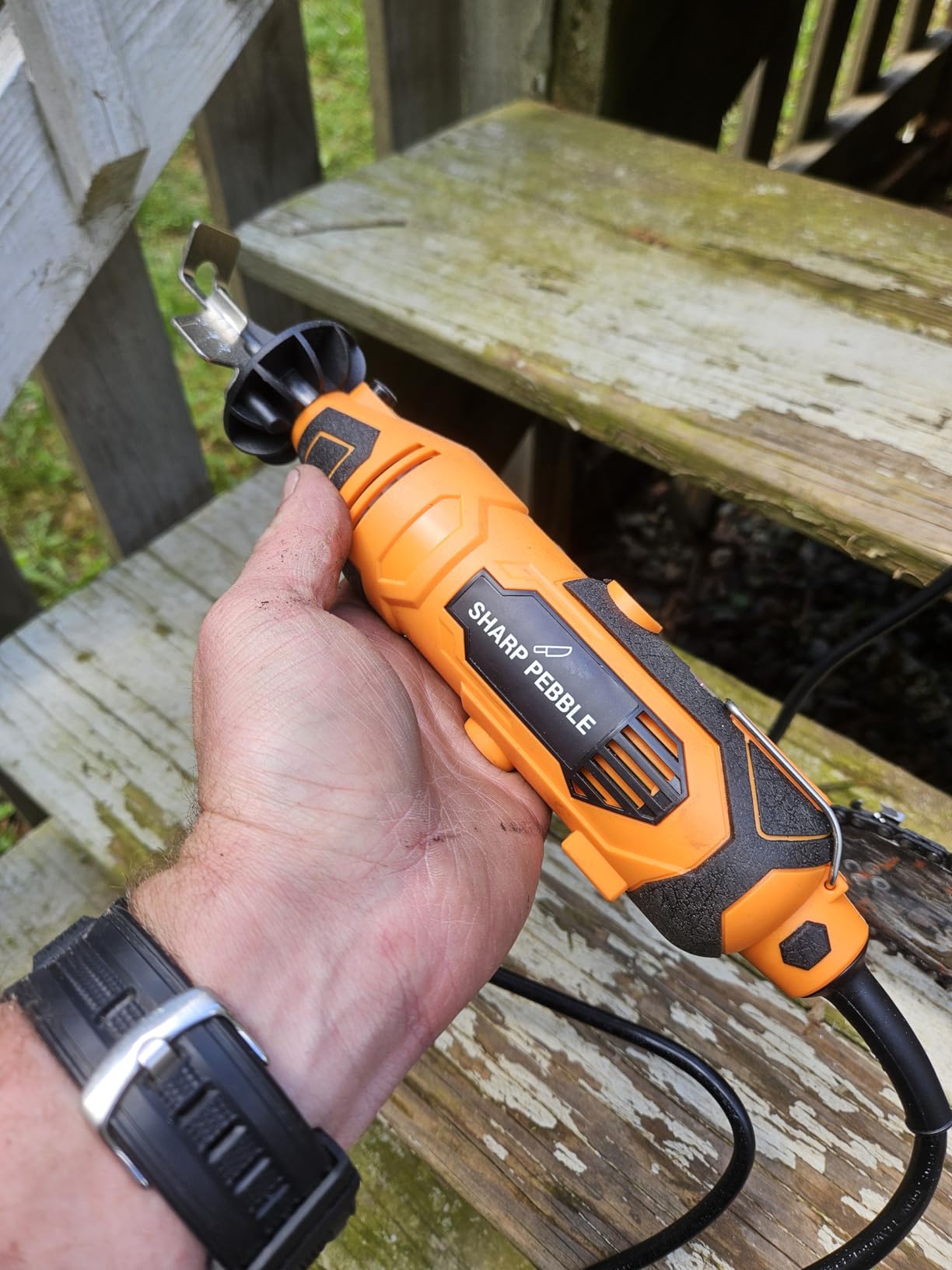
Adjustable speed settings and decent bearings keep the grinding stable, which is the difference between a clean cut and a burnt edge. Buyers like the repeatability and report noticeably faster cutting afterward, and the design works for both right- and left-handed users.
There is a real benefit to the fact that a sharpened chain makes you stop forcing the saw. Less force means less kickback risk, less engine wear and less stress on the bar and chain, which is a quiet argument in favour of any sharpener on this list.
Who this sharpener suits
This suits the homeowner with a garage, a mains outlet and a pruning or firewood habit that runs a few times a month. It is fast enough to keep up with regular use and cheap enough that you do not have to think about the purchase.
It is also a sensible first electric sharpener if you have never used a rotary tool, because the angle guide and the wrench do most of the precision work for you.
Where it falls short
Grinding bits wear down and are not as long-lived as the coated alternatives. If you are the sort of owner who sharpens weekly through winter, you will order replacements sooner than you would like.
Two other limits: the fixed bit sizes mean chains outside the listed pitches are not covered, and the angle guide needs a little practice before you stop adjusting it between teeth.
7. Oregon 410-120 Bench Chain Grinder – the fixed shop installation
Oregon Professional Compact 120-Volt Bench Chain Grinder
220 watt 120V bench grinder
Mounts to bench or wall
3.2mm, 4.7mm and 6.0mm wheels
Covers chains to .404 inch pitch
Pros
- Sharpens chains to .404 inch pitch from major brands
- Permanent mounting means a repeatable setup
- One-way rotation and clamping vice
- 6.0mm disc handles depth gauge work
Cons
- Needs a bench or wall and a 120V outlet
- 17 pounds and not portable
- Disproportionate for one small saw
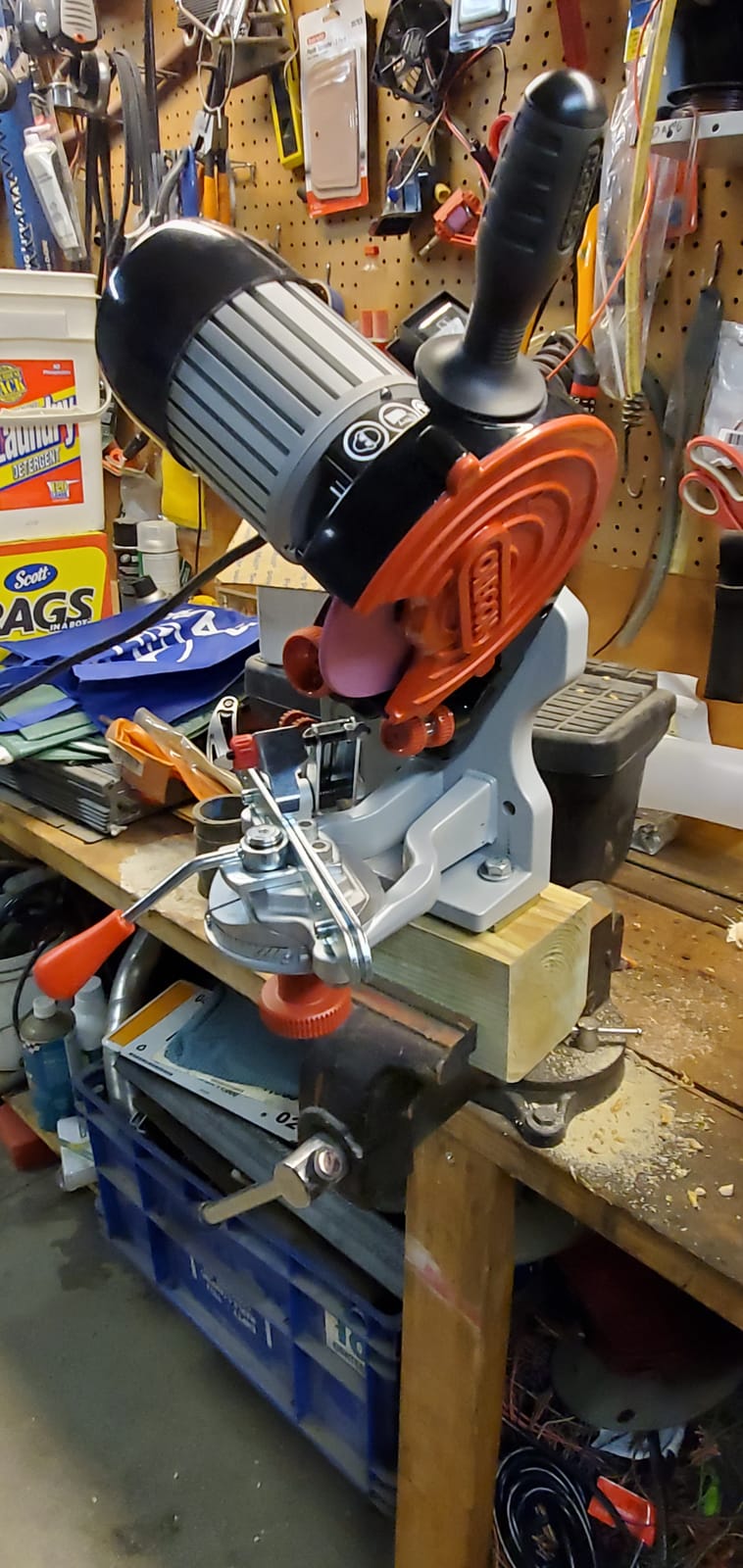
A bench grinder is a different purchase, not a better version of the same purchase. You bolt it down, you plug it in, and you sharpen chains for the rest of your life on a setup that never changes. For someone who runs a saw hard through firewood season, that consistency is the entire argument.
The Oregon 410-120 is a 220 watt corded unit rated at 3150 rpm, supplied with a dressing brick, a quick check grinding template, and three grinding wheels and discs at 3.2mm, 4.7mm and 6.0mm. That 6.0mm flat profile disc is specifically for depth gauge maintenance, which most electric sharpeners cannot do at all.
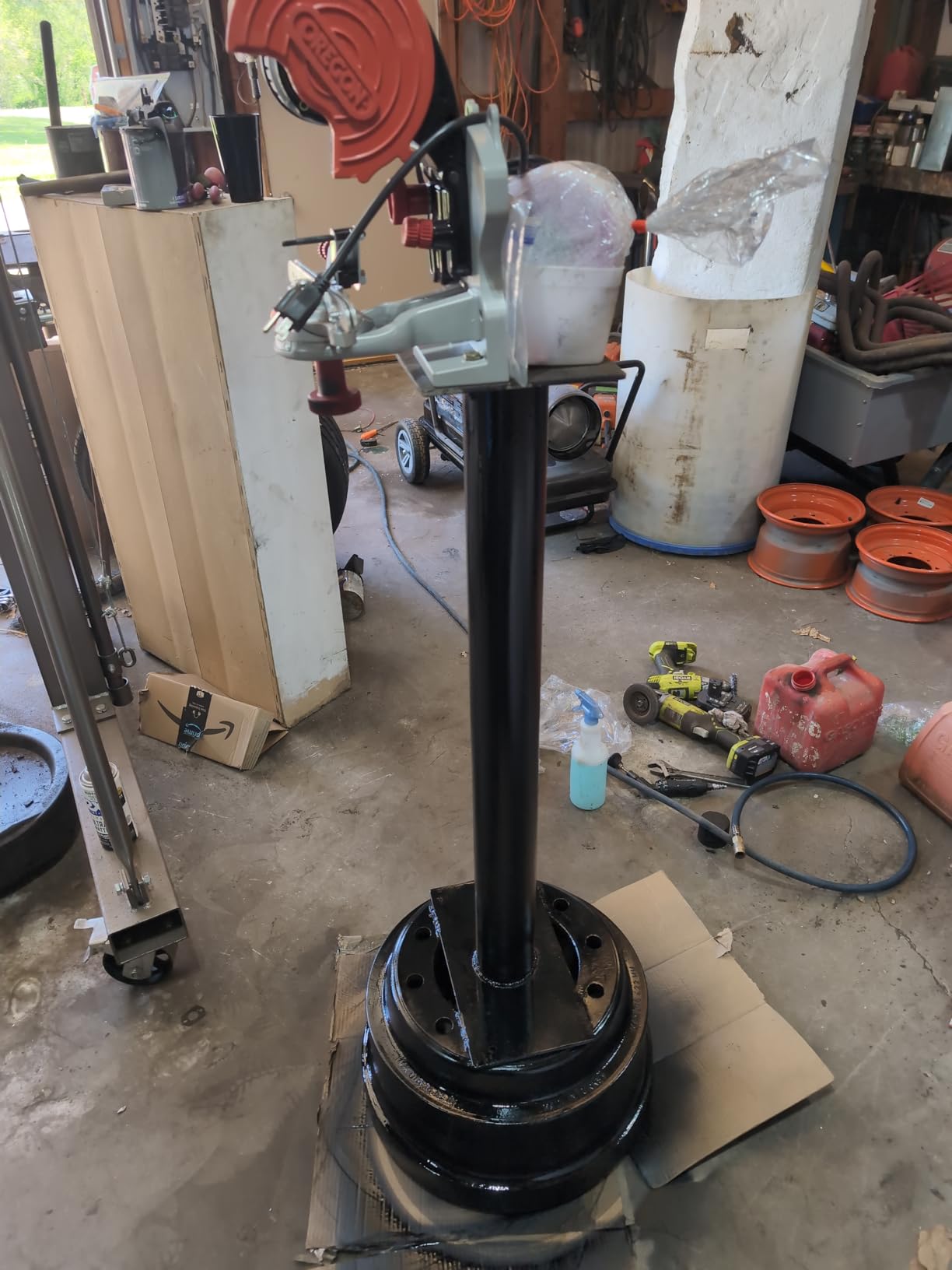
It covers chains up to .404 inch pitch from Oregon, Stihl, Husqvarna and other major brands, so a household with several saws is fully covered. On arboristsite, owners running this class of Oregon bench grinder describe it as staying true, cutting consistent, and worth every penny, with the blunt line aimed squarely at cheap jigs.
Two design choices make it safer than a generic bench grinder: one-way motor rotation and a manual chain clamping vice. You cannot accidentally spin a wheel backwards into the chain, and the chain is held before the wheel touches it.
Who this sharpener suits
It suits the firewood user, the small woodland owner and anyone with several saws who has a bench and an outlet. It also suits people who genuinely cannot manage the strokes of a hand file and need something that removes material fast and evenly.
If you intend to keep the saw for years and sharpen it every week, this is the tool that pays for itself fastest, even though it is the largest outlay on the list.
Where it falls short
It is 17 pounds, it is not portable, and it needs a permanent home. Sharpening at the stump or in a truck bed is simply not possible with it, so you would still want a hand file for field work.
It is also disproportionate for occasional sharpening of one small saw. If you cut a few branches twice a year, a good file kit is the honest answer and this is money you do not need to spend.
8. Dremel 1453 Chainsaw Sharpening Kit – the lighter rotary-tool option
Dremel 1453 Chainsaw Sharpening Kit, Rotary Tool Accessory Set with Sharpening Angle Guide Attachment and Grinding Stones
Rotary tool accessory set
Stones 4.0, 4.5, 4.8 and 5.6 mm
Angle guide and adjustment gauge
30 mm grinding depth
Pros
- Much faster than a hand file
- Angle guide holds the angle without a vise
- Four stone sizes cover common pitches
- Weighs under an ounce and stores with the tool
Cons
- No depth gauge filing function
- Guide is fiddly to set up
- Included stones last one or two sessions
The Dremel 1453 is a simpler, more compact version of the rotary tool approach, and for some people it is the better one. At 5.91 by 3.54 by 1.57 inches and under an ounce, it lives in the same drawer as the tool and is never an obstacle to grabbing.
It includes an angle guide attachment, an adjustment gauge, a key and four grinding stones at 4.0mm, 4.5mm, 4.8mm and 5.6mm. Those four sizes cover the common chain pitches, and grinding depth goes up to 30mm, which is plenty for a chain of any normal length.
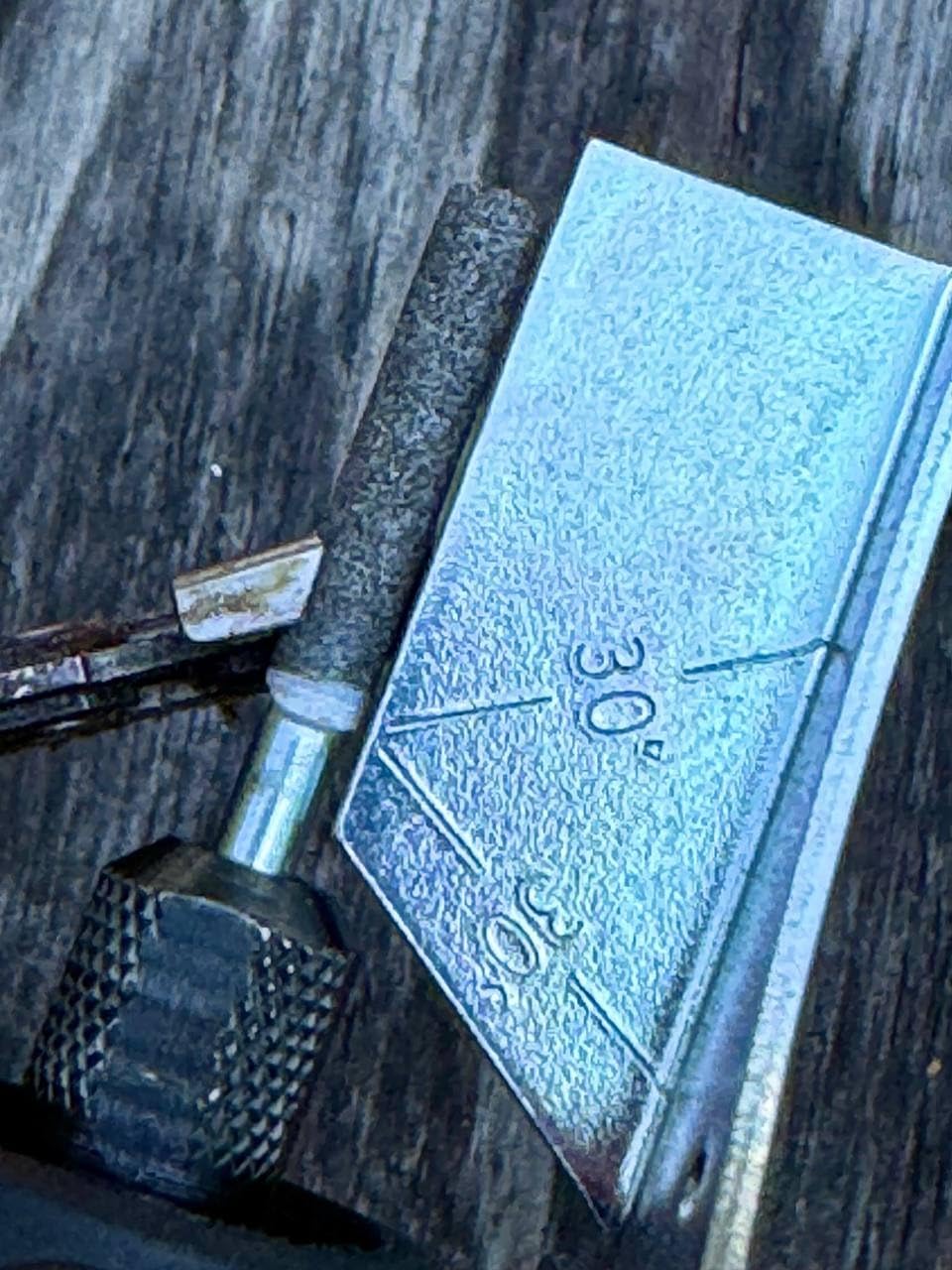
The angle guide means you can work free of a vise, which matters if your sharpening happens on a tailgate or a low workbench rather than a proper bench. Owners report holding an edge through hours of hardwood and softwood clearing, and describe it as faster than a hand file by a wide margin.
Where it differs from the A679-02 is scope. This is a chainsaw kit, not a multi-tool kit, and it is the smaller of the two. If you want shears and mower blades as well, buy the other one.
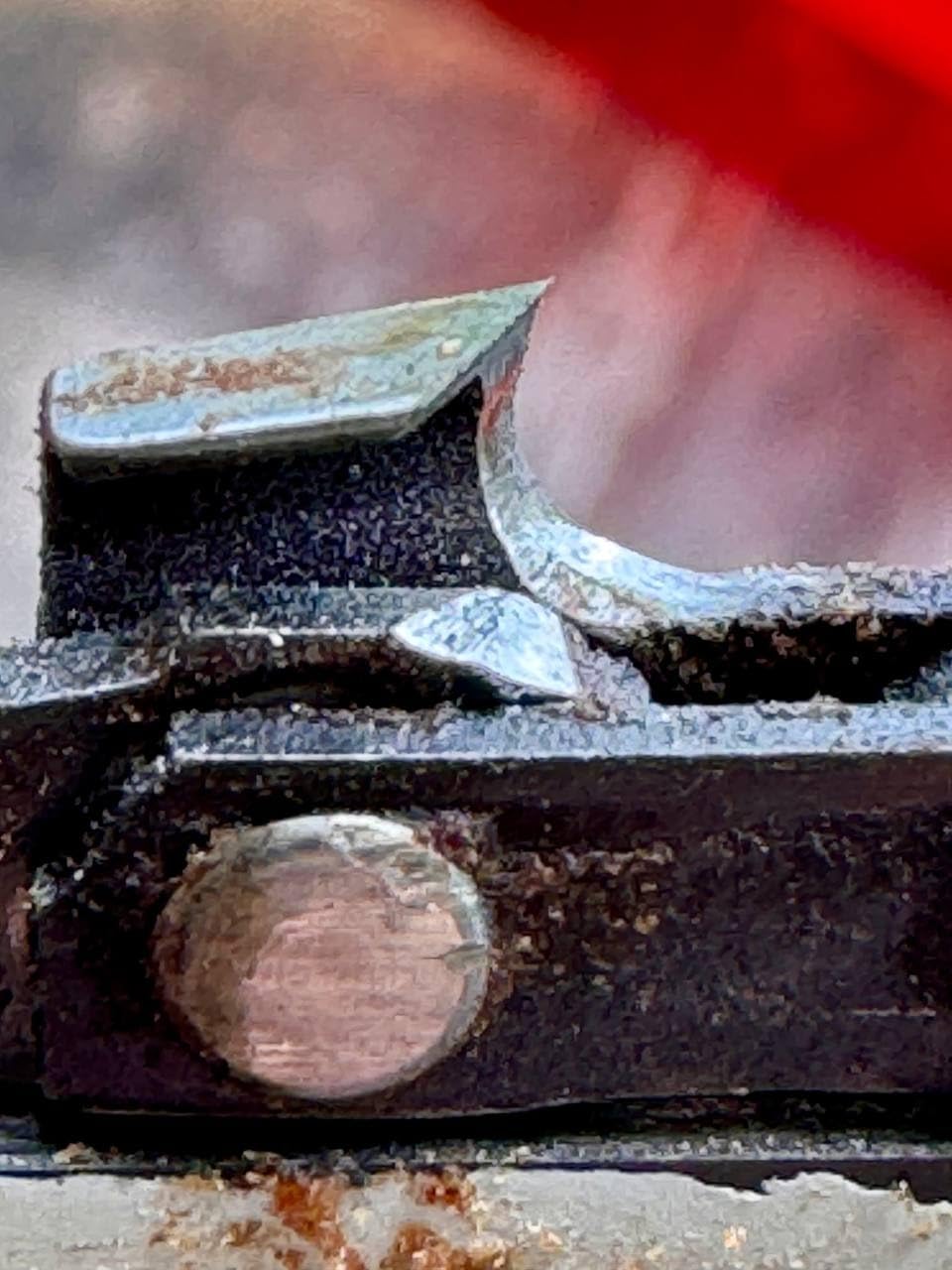
Who this sharpener suits
It suits the owner who wants powered speed, owns a Dremel-pattern rotary tool, and only needs the chain covered. The gauge system makes it workable for beginners once the setup is dialled in.
It is also a good pick for someone who wants a second powered option for field use, since the whole thing is small and light enough to travel.
Where it falls short
There is no depth gauge filing capability at all, so you need a separate depth gauge tool alongside it. Skipping that step is how a chain ends up looking sharp and refusing to cut properly.
Setup is the other complaint: you are positioning the gauge in three dimensions and tightening screws, and if you rush it you can grind the bottom of the chain. The included stones typically last only one or two sharpening sessions, so budget for consumables from the start.
9. Oregon 12V Sure Sharp – the best pick for off-grid and truck use
Oregon 12V Sure Sharp Electric Chain Sharpener
12V handheld electric
Runs from car adapter or battery clips
Covers 1/4 inch to .404 inch chain
16 ounces
Pros
- Widest pitch coverage on this list
- 12V car adapter removes the wall outlet dependency
- Angle adjustment guide improves accuracy
- Replacement stones sold separately
Cons
- Round-ground chain only
- Not a bench or wall unit
- Grinding stones are ongoing consumables
The Oregon Sure Sharp solves a problem none of the other electric tools here address: what do you do when the wood to cut is a long way from an outlet. It runs from a 12V car adapter or straight off battery clips, so you sharpen in the truck bed, at the woodpile, or anywhere else the saw is already working.
It is also the broadest coverage in the group. The specifications list one quarter inch, 3/8 inch low profile, .325 inch, 3/8 inch and .404 inch round-ground chain, and the three included sharpening stones at 5/32 inch, 3/16 inch and 7/32 inch cover most of those.
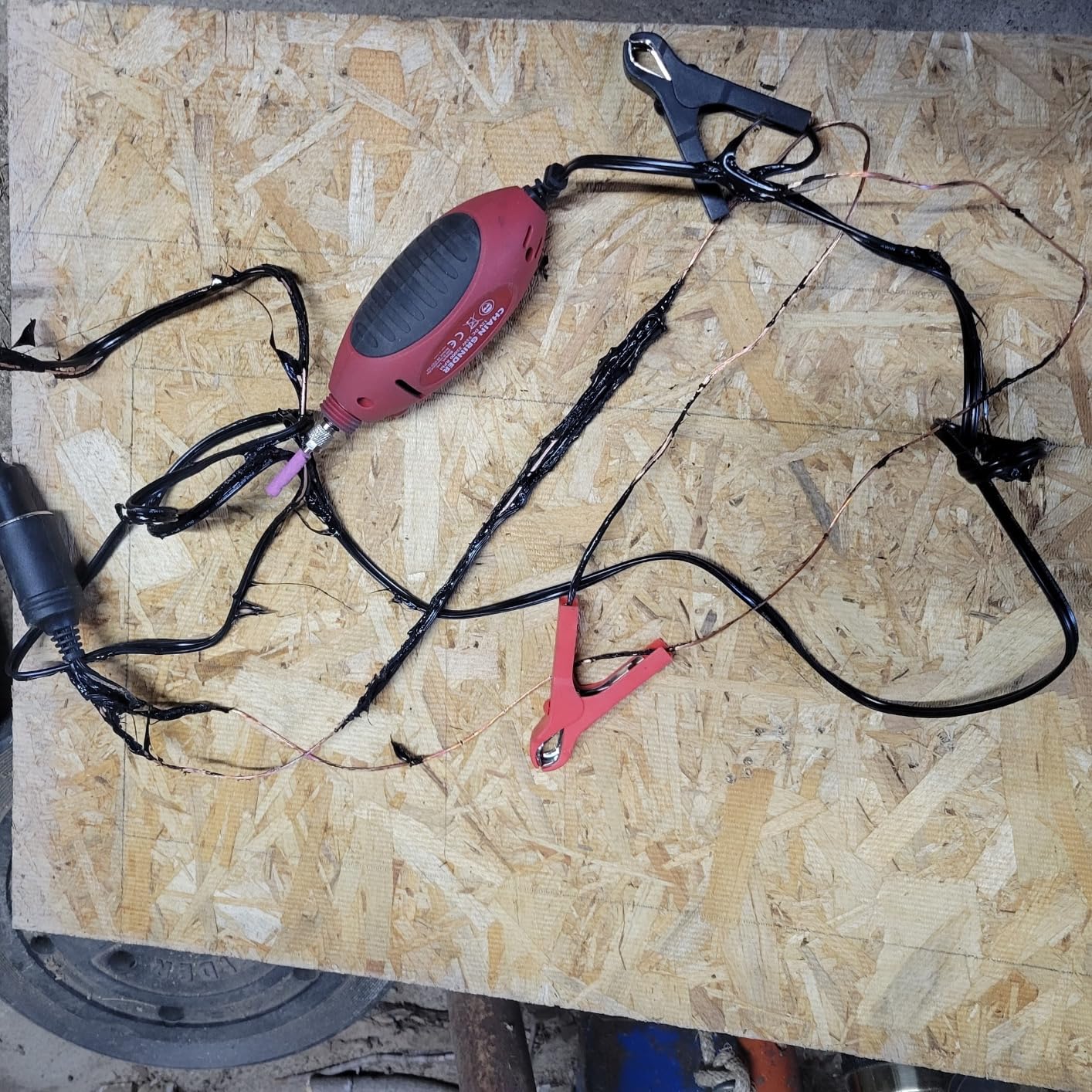
The angled handheld body is easy to run along the bar, and there is a simple angle adjustment guide that improves accuracy without becoming a project to set up. It weighs 16 ounces and measures 10.2 by 5.6 by 2.5 inches, so it is bigger than a hand file but nothing like a bench unit.
Owners with property and firewood work value the convenience most. Being able to fix a chain in the field without driving home is the feature that makes them keep reaching for it rather than the file in the glovebox.
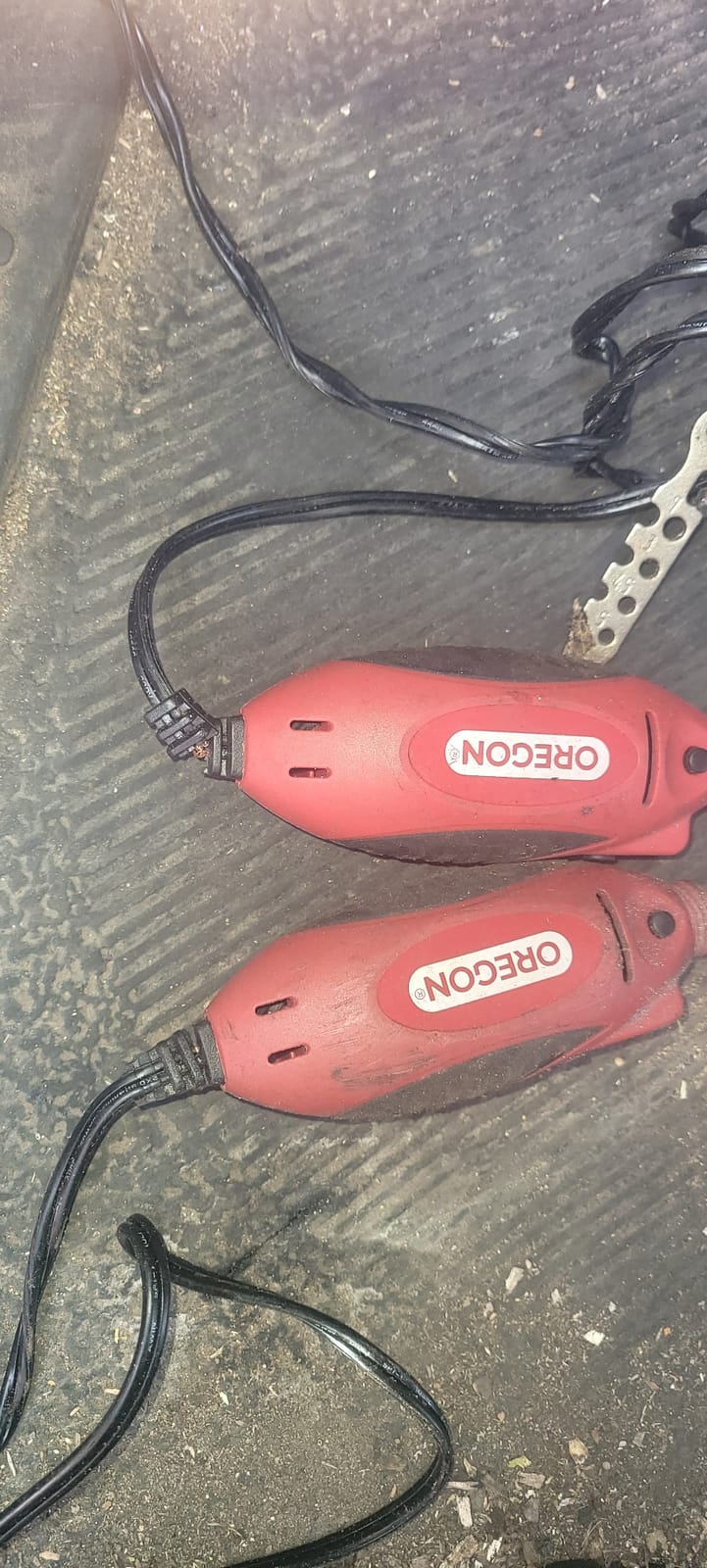
Who this sharpener suits
This is the pick for rural and off-grid owners, anyone cutting firewood away from the house, and anyone who keeps a truck for the work. The 12V power source is the whole point, and it is the only tool here built around that assumption.
It also suits a household running several saws of different pitches, since the coverage spans almost the entire homeowner range in one body.
Where it falls short
It sharpens round-ground chain only, not chisel or semi-chisel profiles. If you run a chisel chain, this is the wrong tool and no amount of adjusting will change that.
Because it is 12V it can never be a true bench or wall unit, and the grinding stones are consumables that need replacing over time. Plan for that cost before you commit to it as your only sharpener.
10. Hipa 12 Piece Chainsaw File Kit – the most file sizes for the least
Hipa 12 Pack Chainsaw File, Chainsaw Sharpener Kit, 5/32″, 3/16″, 7/32″, 1/8″, 11/64″, 13/64″ Round Chainsaw Sharpening, 6 Inch Flat File,Depth Gauge,Quick Check Gauge, Chain Saw Sharpener
12 piece manual kit
Six round file sizes,Flat file and depth gauge
Quick check gauge included
Compatible with Stihl, Husqvarna and Oregon
Pros
- Six round file sizes cover more pitches than any rival
- Quick gauge checks pitch
- angle
- tooth length and depth
- Bar groove cleaner keeps oil channels clear
- Orange pouch is easy to find at the field
Cons
- Manual filing is slower than any powered option
- Depth gauge set manually and checked each session
- Little to no written instruction
The Hipa kit wins on coverage per pound. It carries six round file sizes at 5/32 inch, 7/32 inch, 3/16 inch, 11/64 inch, 1/8 inch and 13/64 inch, plus a 6 inch flat file, a 2-in-1 depth gauge tool covering .025 and .030 inch, a quick check gauge and a bar groove cleaner.
The quick check gauge is the smart part. It checks pitch size, filing angle, tooth length, depth gauge height and grinder wheel thickness, which means you can verify your setup instead of guessing at it. The file sizes are also stamped on each file, so you stop misidentifying them in the bottom of a bag.
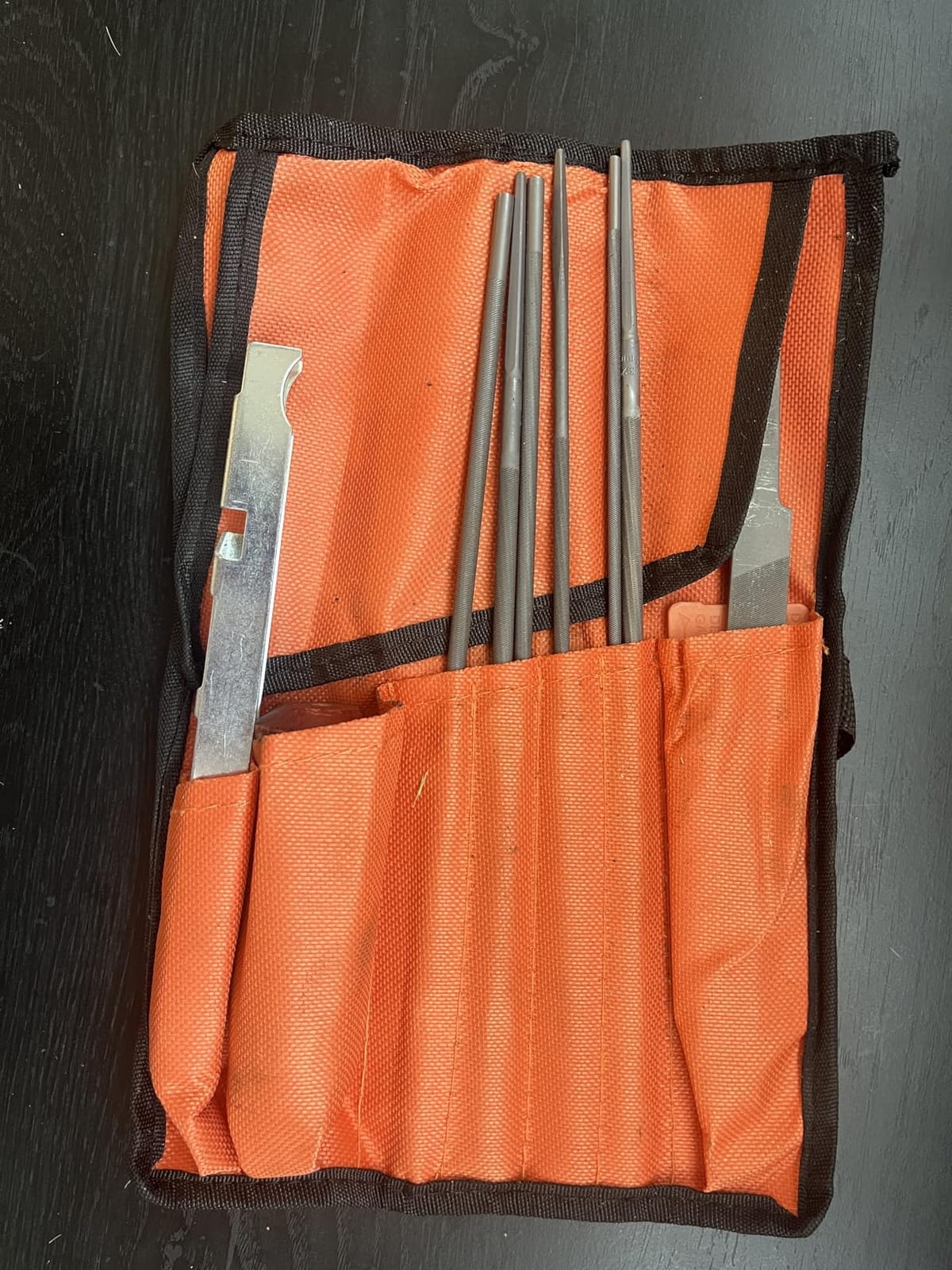
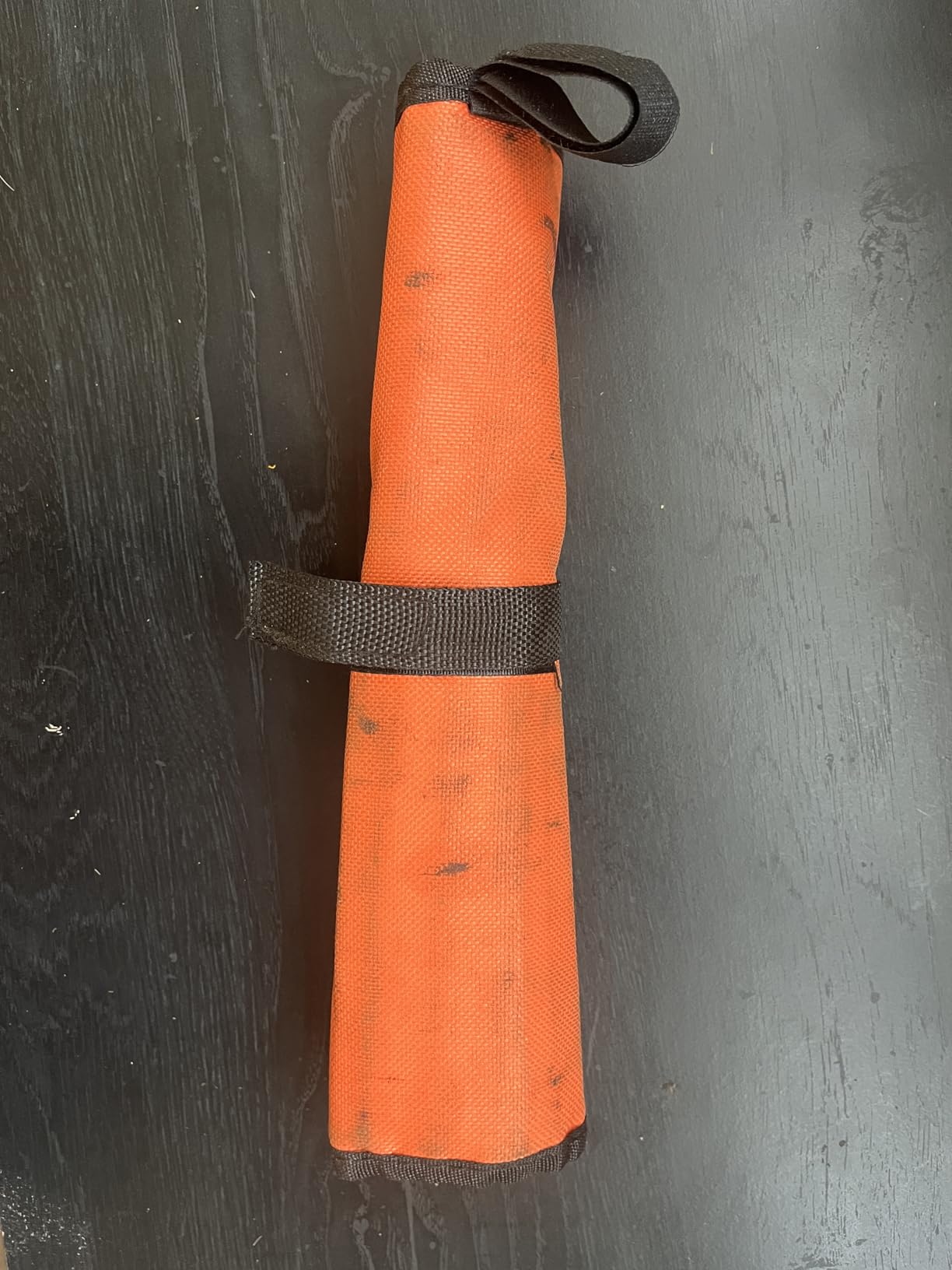
It is compatible with chains from Stihl, Husqvarna, Oregon and others across one quarter inch, .325 inch, 3/8 inch, 3/8 inch low profile, .404 inch, 7/16 inch, .354 inch and one half inch pitches. The ergonomic wooden handle holds both round and flat files securely, and the high-visibility orange pouch is easy to spot in a hay barn or a truck bed.
The bar groove cleaner is an unglamorous extra that deserves credit. Oil holes and bar channels clog with sawdust, and a chain that cannot get oil will go dull again long before it should.
Who this sharpener suits
It suits the collector of saws, the property owner with three or four different chains, and anyone who wants every file size on hand without ordering them one at a time. At this price point it is also the most forgiving place to learn, since a worn file costs almost nothing to replace.
For a brand new owner with a single saw, the extra sizes are harmless. You use one file, and the rest sit in the pouch until the day you need them.
Where it falls short
It is a purely manual system, so results depend entirely on technique. There is no guide holding your angle and no motor smoothing out an unsteady hand, which means a beginner can get a poor result on the first attempt.
Instructions are largely absent, so plan to learn the technique from a proper tutorial rather than the packaging. The depth gauge is also set manually, which means checking it after each session instead of trusting a mechanism to hold the setting.
How to Choose a Chainsaw Sharpener for Home Use
The decision comes down to three questions in order: what is your chain pitch, how often will you sharpen, and where will you sharpen. Get those right and the choice nearly makes itself. Here is how we would work through them.
Find your chain pitch first
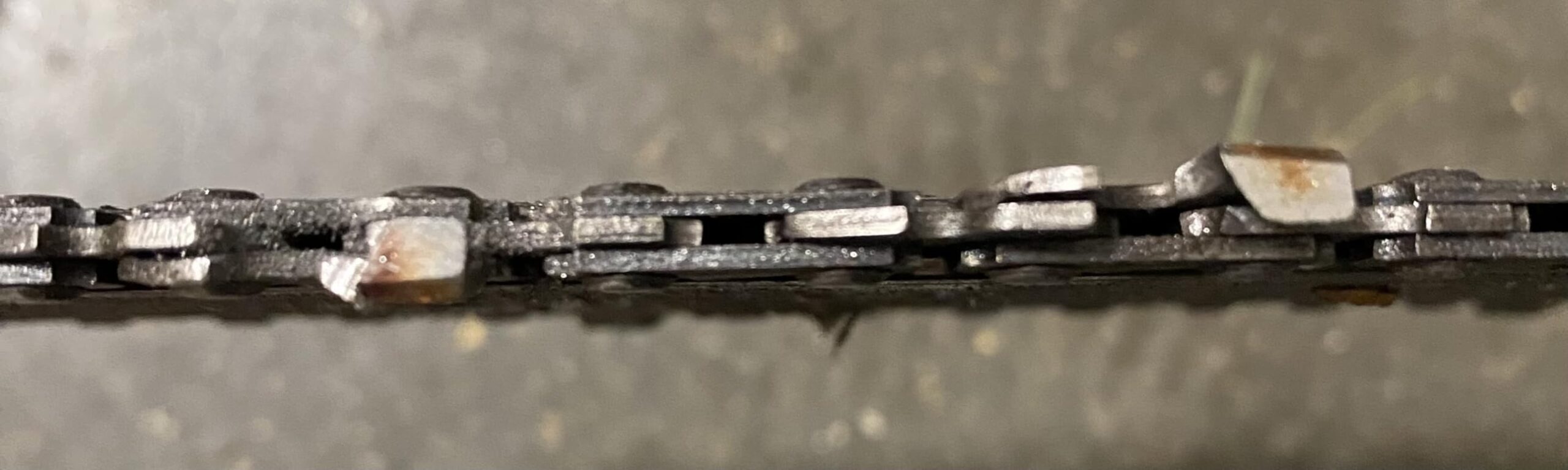
Every file and every grinding wheel has a diameter, and that diameter has to match your chain pitch. This is the mistake that appears over and over in forums, and the symptom is always the same: a chain that was sharp last week goes dull in a single afternoon because the cutters are being rounded rather than sharpened.
There are three ways to find it. Look at the marking stamped on the drive link or the bar, check the manual or the side of the chainsaw, or measure the distance from the centre of one rivet to the centre of the next on a drive link. Most homeowner saws fall into the .325 inch, 3/8 inch low profile and 3/16 inch groups, with 5/32 inch at the small end and .404 inch at the large end.
Which file size matches which chain
Here is the mapping that matters. A quarter inch and 3/8 inch low profile chain works with a 5/32 inch round file. A 3/16 inch pitch chain uses a 3/16 inch file, .325 inch and 7/16 inch and .354 inch pitches use a 7/32 inch file, and 3/8 inch and .404 inch pitch chains use a 3/16 inch or 7/32 inch depending on the chain. Check the tool listing rather than trusting memory, because the boundary cases exist.
The general rule of thumb is that the file diameter should match the chain pitch, and the sharpening angle is normally 30 degrees on the side producing a 60 degree top bevel. Larger chains sometimes want 25 or 35 degrees, which is exactly why jigs with a fixed stop of one angle are a problem for a multi-saw household.
Manual vs electric sharpeners
This is the real trade-off, and it is closer than the marketing suggests. Manual filing removes the least material of any method, which is the strongest argument for it, because tooth height is what determines how long a chain lasts. It is also free of consumable costs beyond the file and completely independent of power.
Electric sharpening is faster and easier on the hands, and an angle guide gives you repeatability that a hand file cannot match. The costs are a consumable that wears out, a cord or a power source, and a real risk of over-grinding if you are careless. Over-grinding is the failure mode nobody warns you about: take too much off, the tooth gets short, and you retire a chain far earlier than its age would suggest.
There is a middle path that plenty of owners like, and it is the one the forums converge on. Use a hand file for routine maintenance every few weeks, and an electric tool when the chain is properly dull and you want it back in cutting shape quickly.
What to avoid in a chainsaw sharpener
Cheap jigs with set screws that slip under pressure are the recurring complaint. If the guide moves mid-stroke, the angle changes mid-chain, and you end up with a saw that cuts to one side. The fix to look for is a rigid mount, ideally one that clamps to the bar or a vise rather than relying on friction alone.
A fixed 30 degree stop is not automatically bad, but it is bad if it is the only angle the tool can do and you run more than one chain type. Over-grinding control matters too: look for a depth stop or a material-removal setting, because the alternative is freehand pressure and a chain that loses tooth height faster than it should.
Beware of consumable cost, too. A cheap tool with a diamond wheel that dies after two chains is not cheap. A file kit where every file is a few dollars and lasts for months is.
Sharpen the chain or replace it
Every chain has a wear limit mark stamped by the manufacturer. When the top of the tooth wears down to meet the wear limit, the chain is finished and sharpening it is a waste of a good file. Check the stamp before you start, because it turns a ten-minute job into a chain purchase.
Below that limit, sharpen it. A chain that is merely dull is not a chain that is finished. Owners put it simply: sharpen often and little, and do not let the chain go blunt in the first place. A few minutes every few weeks keeps you filing a sharp chain, which is fast and easy. A neglected chain takes four times as long and takes tooth height with it.
How to Use a Chainsaw Sharpener Without Ruining Your Chain
Buying a better tool is worth less than using a good one properly. This is the routine we would follow, and it is close to what the most consistent results online all have in common.
Clean the chain first. A chain packed with sawdust and old oil will not sharpen evenly, and the grit under your file damages the tooth rather than cutting it.
Check tension. A slack chain lets the file dig in inconsistently. Tension it until the bar guide bar sits in the groove and the chain snaps into place.
Match the file to the pitch. This is the step people skip. A wrong diameter rounds the cutters and the chain will never hold an edge again.
Find the shortest tooth. File down to the lowest cutter, not to the one you can feel most easily. Setting the whole chain to one short tooth keeps every tooth equal.
Push only, never pull. The cutting stroke of a file runs forwards along the tooth. Pulling backwards scrapes dull metal across the edge and roughens it.
Pick a direction and stay in it. Some sharpeners file left to right, some right to left. Follow whatever the tool is built for, because mixing directions is a common reason teeth end up uneven.
File the cutters evenly, four or five strokes each. Count the strokes rather than going by feel. Even strokes give even teeth, and even teeth cut straight.
Reset the depth gauges last. Use the flat file or the depth gauge side of a 2-in-1 tool, and bring the rakers to level with or just below the cutters.
Test on scrap wood. A correctly sharpened chain throws chips and finishes the cut with one pull. A chain throwing fine dust needs more work on the shortest tooth.
One more habit, and it is the one that saves the most chains: never adjust the rakers before finishing the cutters. Rakers are set relative to the finished tooth height, so filing them first means you set them to the wrong reference point and then have to do it twice.
What Chainsaw Owners Say About These Sharpener Types
Eight of the nine top results for this topic are forums, so the owner consensus is more useful than any marketing copy. The pattern is consistent enough to summarise.
On r/Chainsaw, the community default is the 2-in-1 manual file holder. The recurring line is that the 2-in-1 sharpeners are the best, especially the two-sided ones, because they handle cutters and depth gauges in one pass with no chain removal. On r/stihl, owners also note that the Pferd version is manufactured for Stihl and runs cheaper for what is effectively an identical product, which is a genuinely useful piece of insider knowledge before you buy.
On arboristsite, the endorsement goes to the permanent electric option. One owner described an Oregon bench grinder as working well, staying true and cutting consistent, worth every penny, and closed with a blunt line about cheap jigs. The Garage Journal reaches a similar conclusion, pointing to an Oregon grinder or a File-n-Joint as the best file sharpening system.
Budget electric tools get a more measured verdict. On TractorByNet, an owner reported that a cheap imported electric sharpener works quite nicely after sharpening many chains, and Power Tool Forum owners describe cheap battery sharpeners as impressive for the price and quieter than a rotary tool. That is a fair characterisation: inexpensive electric sharpeners work, they just wear their bits out sooner.
For Dremel-style tools the consensus is speed with a caution. Owners say it works great and is fast, but you have to follow the instructions and not overdo it. That is the over-grinding warning again, from people who have ruined a chain with a rotary tool.
And the philosophy worth adopting comes from the firewood crowd: sharpen often and little, and do not let the chain get blunt in the first place. It is the cheapest advice on this page and it improves results more than any tool.
Frequently Asked Questions
What size file do I need for my chainsaw chain?
Match the round file diameter to your chain pitch. A 5/32 inch file suits quarter inch and 3/8 inch low profile chain, 3/16 inch suits 3/16 inch pitch, and 7/32 inch suits .325 inch, 7/16 inch and .354 inch pitches. Larger 3/8 inch and .404 inch chains need the larger file. If the file is the wrong size it rounds the cutters instead of sharpening them, and the chain will never hold an edge again.
Are electric chainsaw sharpeners any good?
Yes, for regular users. They are faster than hand filing, easier on the wrists and shoulders, and an angle guide gives repeatable results that a free-hand file cannot match. The trade-offs are consumable bits that wear out, a dependence on power, and a real over-grinding risk. Most owners use a hand file for routine maintenance and an electric tool when the chain is properly dull.
Is it better to sharpen a chainsaw chain or buy a new one?
Check the wear limit mark stamped by the manufacturer. When the top of the tooth wears down to meet that stamp, the chain is finished and sharpening it is wasted effort. Below that mark, sharpen it. A dull chain is not a finished chain, and a few minutes of filing every few weeks extends chain life far more than replacing chains does.
What happens if you file the rakers too low?
The chain grabs the wood instead of cutting cleanly, the cut gets rough and slow, and you get aggressive hold that raises kickback risk. A raker that sits level with or just below the cutter gives a clean chip; one filed below the cutter takes a bigger bite out of the wood than the tooth can handle. Reset it with the flat file before you use the saw again.
What angle should I set my chainsaw sharpener to?
For most homeowner chains the side angle is 30 degrees, which produces a 60 degree top bevel. Larger and more aggressive chains sometimes want 25 degrees and smaller chains 35 degrees. This is why a tool with a rigid adjustable guide beats a jig with one fixed stop, especially if you run more than one chain pitch.
Are budget electric chainsaw sharpeners any good?
Generally yes for occasional home use. Owners report that inexpensive electric sharpeners work well after sharpening many chains, and that they are noticeably faster than filing. The catch is consumable wear: the grinding bits degrade faster than titanium-coated alternatives, so expect to order replacements. For weekly firewood work, a file kit or a permanent bench grinder is the better long-term buy.
The Sharpener to Buy for Your Kind of Cutting
If you take one recommendation from this guide, take the Oregon Universal Field Sharpening Kit. It covers three file sizes, it includes the filing guide that most cheap kits leave out, it needs no power, and it has more owner history behind it than anything else we looked at. It is the best chainsaw sharpener for home use in the plain sense that almost any household can pick it up and get a good result on the first afternoon.
Match your pick to your workload, though. Firewood through a full winter, or several saws in the shed, points to a permanent bench grinder or a guided electric tool. Hand or joint trouble points to a handheld electric sharpener. Cutting where there is no outlet points to the 12V Oregon. Already own a rotary tool and want to spend as little as possible, the Dremel attachment kit sharpens your chains and your mower blades at the same time.
Whatever you buy, keep the file size matched to your pitch, file the shortest tooth first, use push strokes only, and set the rakers last. Those four habits will do more for your cutting than any tool on this page.
Sharpen often and little. You can compare more home and workshop gear in our guides to the best treadmills for home use and other equipment roundups.