
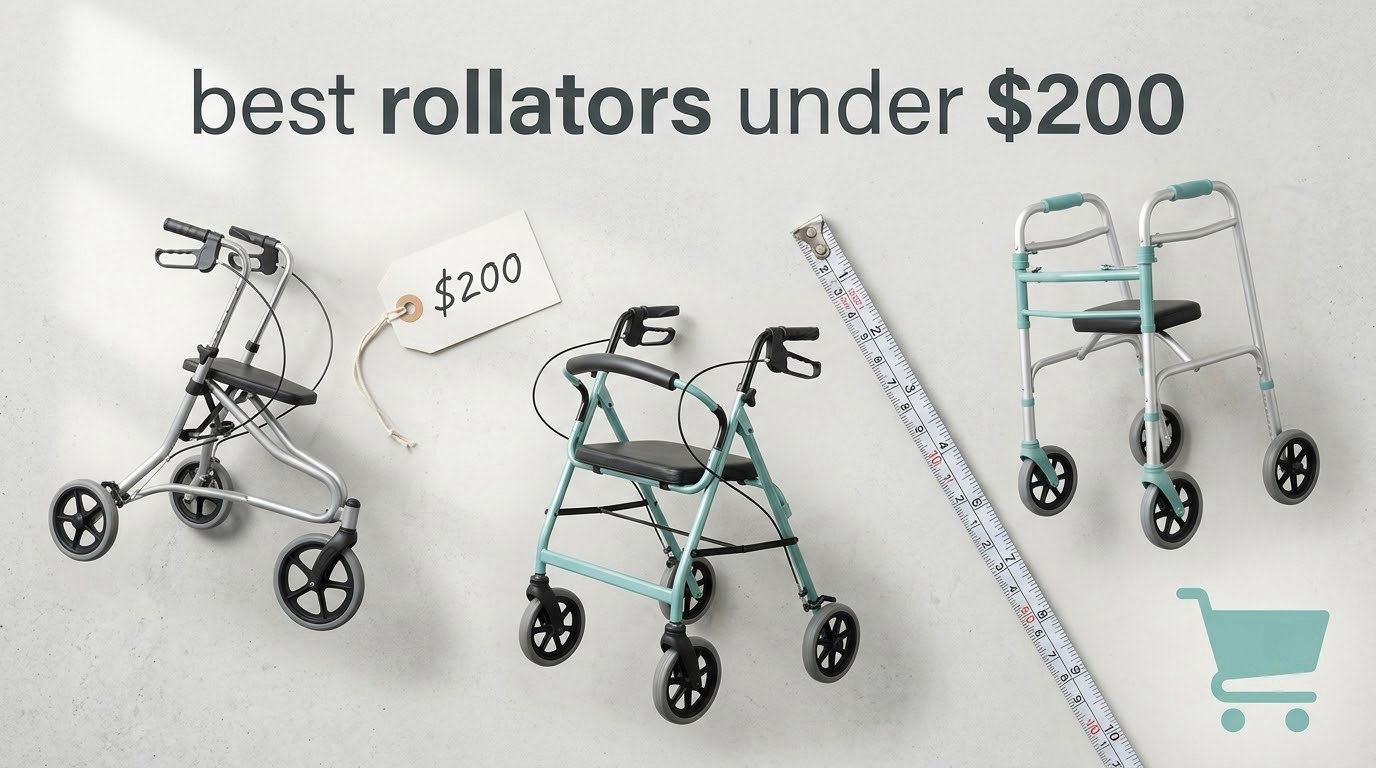
A rollator is a four-wheel walking frame with hand brakes, a padded seat and an under-seat bag, and the best budget rollators cover most of what premium models costing several times more do. You still get loop brakes, a folding frame, adjustable handles and somewhere to sit when your legs get tired. The trade-offs at this budget are frame weight, wheel size on rough ground and seat padding, not braking function.
We compared the ten most-reviewed rollators in this bracket, reading long-term owner feedback and checking rated capacity against frame type. Three variables decide almost everything: weight capacity, frame weight and wheel size. Get capacity wrong and the frame is a liability. Get frame weight wrong and you cannot load the thing into a car. Get wheel size wrong and every cracked sidewalk becomes a stop.
This guide is for adults over 60, for anyone recovering from hip, knee or foot surgery, and for people living with arthritis, Parkinson’s, ALS or Ehlers-Danlos syndrome. For the wider market, our main best rollators tested and compared covers premium models, and our lightweight rollator guide goes deeper on travel-friendly frames.
Table of Contents
Top 3 Best Rollators Under $200
Best Overall: the Drive Medical steel rollator with 7.5 inch wheels, stable and backed by the largest owner review base in this group. Best Rated: the Drive Medical aluminum rollator, the highest average score here at 4.7 stars and light enough for one person to lift. Best Value: the VOCIC Z21, pairing 8 inch all-terrain tires with a 350 lb rating at a level few competitors reach.

Drive Medical Steel Rollator, 7.5 Inch Wheels
- Steel frame
- padded seat
- 7.5 inch casters
- under-seat pouch

Drive Medical Aluminum Rollator, 6 Inch…
- Aluminum frame at 15.6 lb
- 300 lb capacity
- one-handed fold
- storage pouch

VOCIC Z21 8 Inch All Terrain Rollator
- 8 inch puncture-proof tires
- 350 lb capacity
- three-mode brakes
- three-second fold
All 10 Rollators at a Glance
Every model below sits inside the budget tier this guide covers, and the table lists the specs that actually change the buying decision so you can cut the list in half quickly.
| Product | Specifications | Action |
|---|---|---|
| Drive Medical Steel Rollator, 7.5 Inch Wheels |
|
Check Latest Price |
 Medline Steel Rollator, 350 lb Capacity Medline Steel Rollator, 350 lb Capacity |
|
Check Latest Price |
| Drive Medical Aluminum Rollator, 6 Inch Wheels |
|
Check Latest Price |
| VOCIC Z21 8 Inch All Terrain Rollator |
|
Check Latest Price |
 Medline Aluminum Rollator, 250 lb Capacity Medline Aluminum Rollator, 250 lb Capacity |
|
Check Latest Price |
 HOMLAND Rollator with 16 Inch Wide Seat HOMLAND Rollator with 16 Inch Wide Seat |
|
Check Latest Price |
 Hugo Elite Rollator with Basket and Tote Hugo Elite Rollator with Basket and Tote |
|
Check Latest Price |
 Medline Steel Rollator, 8 Inch Wheels Medline Steel Rollator, 8 Inch Wheels |
|
Check Latest Price |
 Drive Medical Nitro Sprint Rollator Drive Medical Nitro Sprint Rollator |
|
Check Latest Price |
 soundfuse Rollator with Ergonomic Arc Seat soundfuse Rollator with Ergonomic Arc Seat |
|
Check Latest Price |
1. Drive Medical Steel Rollator with 7.5 Inch Wheels, Blue
Drive Medical Rollator Walker with Seat, 7.5 Inch Wheels, Blue
Steel frame
Padded seat
7.5 inch casters
Locking hand brake
Under-seat pouch
Pros
- Very stable steel frame
- Long owner-review history
- Quiet on carpet wood and grass
- Folds quickly
- Tool-free assembly
Cons
- Foam backrest is uncomfortable for leaning
- Awkward to load into a car
- No fold retention strap
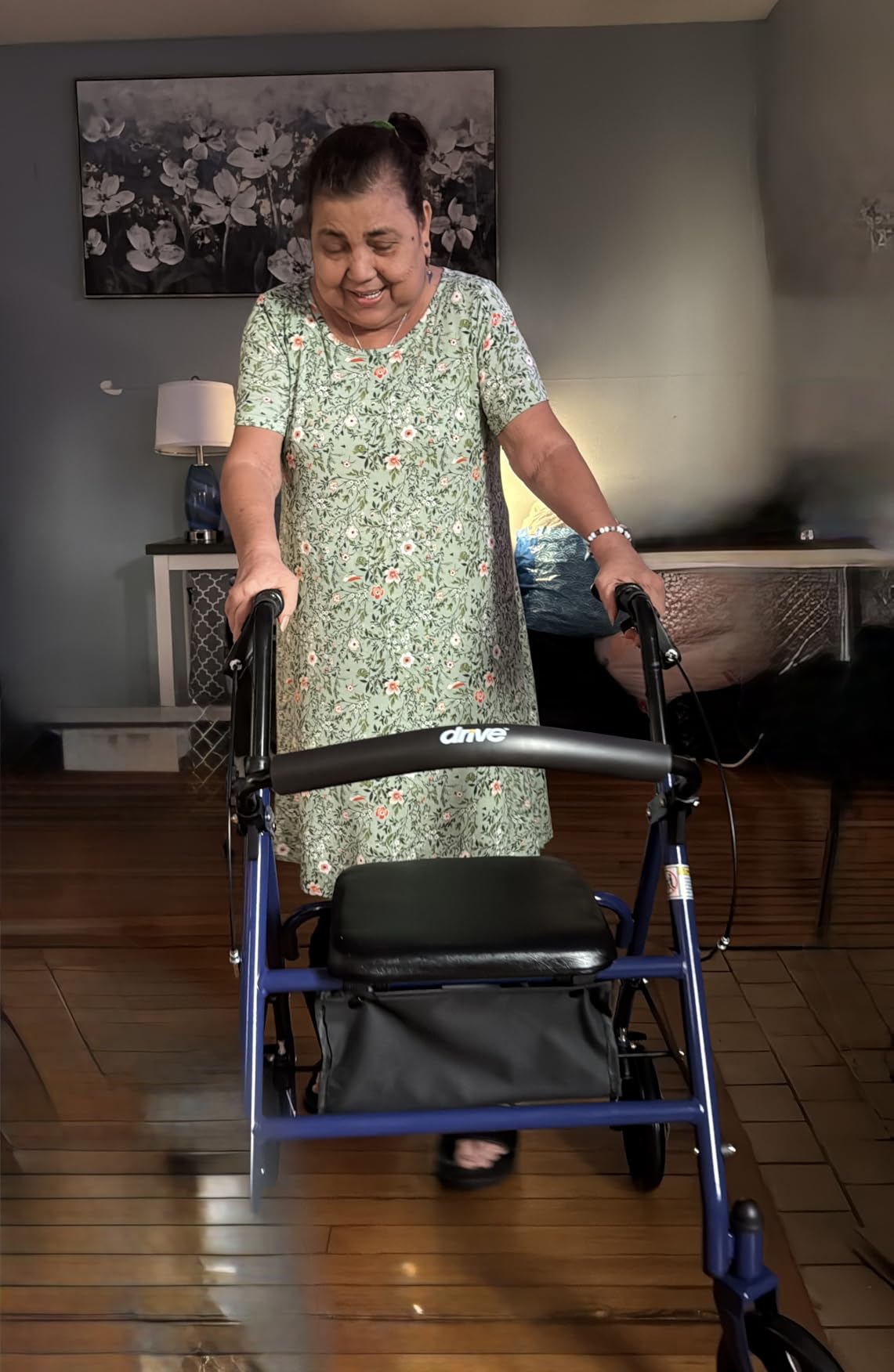
This is the model I keep coming back to. With more than 51000 owner reviews at a 4.6 average, the feedback spans well over a decade of use, and the pattern is consistent: people buy it, it stays stable, and some buy a second one. That durability signal matters on a device you may depend on for years.
The steel frame is why it feels planted rather than tippy, and reviewers call it noticeably steadier than lighter aluminum competitors. The 7.5 inch casters roll quietly over carpet, wood floors and grass, which suits a route that mixes hallways with a yard or driveway.
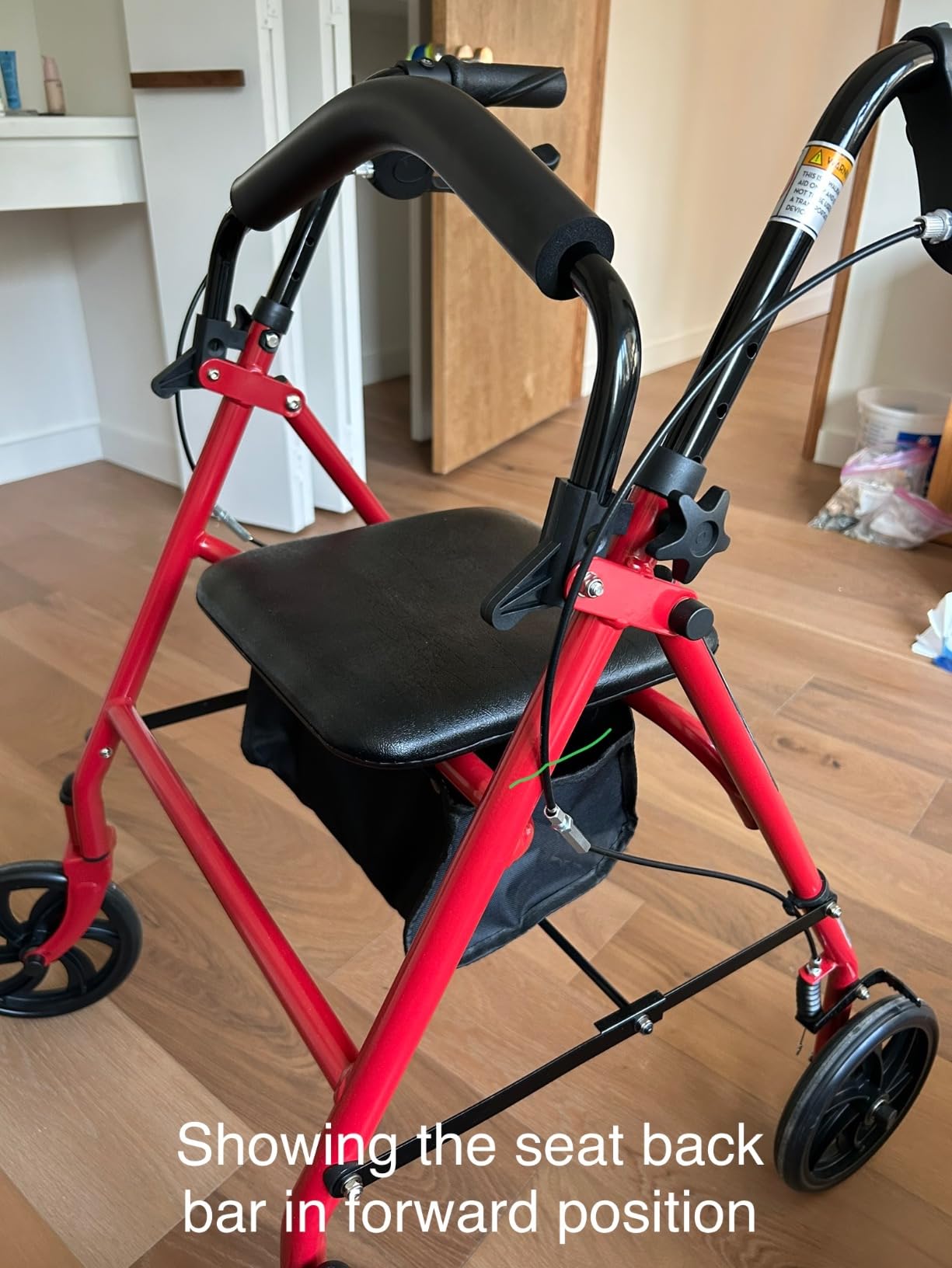
Assembly takes almost no time, the height adjustment lever takes seconds to set, and the under-seat pouch holds a purse or shopping bag. The fold is compact enough for a closet or behind a door.
The honest weaknesses are minor. The backrest is a basic foam-covered tube that gets uncomfortable to lean on after a few minutes, and with no retention strap the frame can spring open when lifted. Loading into a car is awkward for anyone with back problems.
Is this rollator worth it for daily use?
Yes, for someone walking the same neighborhood route most days. Stability, mixed-surface wheels and easily sourced replacement parts all add up, and long-term owners report the frame surviving years without flex. Several bought one for themselves and another for a parent, which is a good durability signal.
Who should skip the steel frame?
Anyone loading the rollator into a car alone or traveling often. At 20 pounds it is a heavy frame here, and a person recovering from hip surgery may not have the upper body strength for it. If you plan to sit and lean back for long stretches, a model with a contoured back panel fits better.
2. Medline Steel Rollator with 350 lb Weight Capacity, Burgundy
Medline Steel Rollator Walker with Seat, Burgundy, 350 lb. Weight Capacity, 6” Wheels, Foldable, Adjustable Handles, Rolling Walker for Seniors, Walker for Mobility Impaired
350 lb steel frame
Loop brakes
31-35 inch handle range
12 x 12 inch seat
Folds flat
Pros
- 350 lb rating on a steel frame
- Loop brakes suit arthritic hands
- Padded seat and backrest
- Under-seat storage
- Folds for transport
Cons
- 6 inch wheels struggle on rough ground
- Heavier than aluminum rivals
- Standard 12 inch seat width
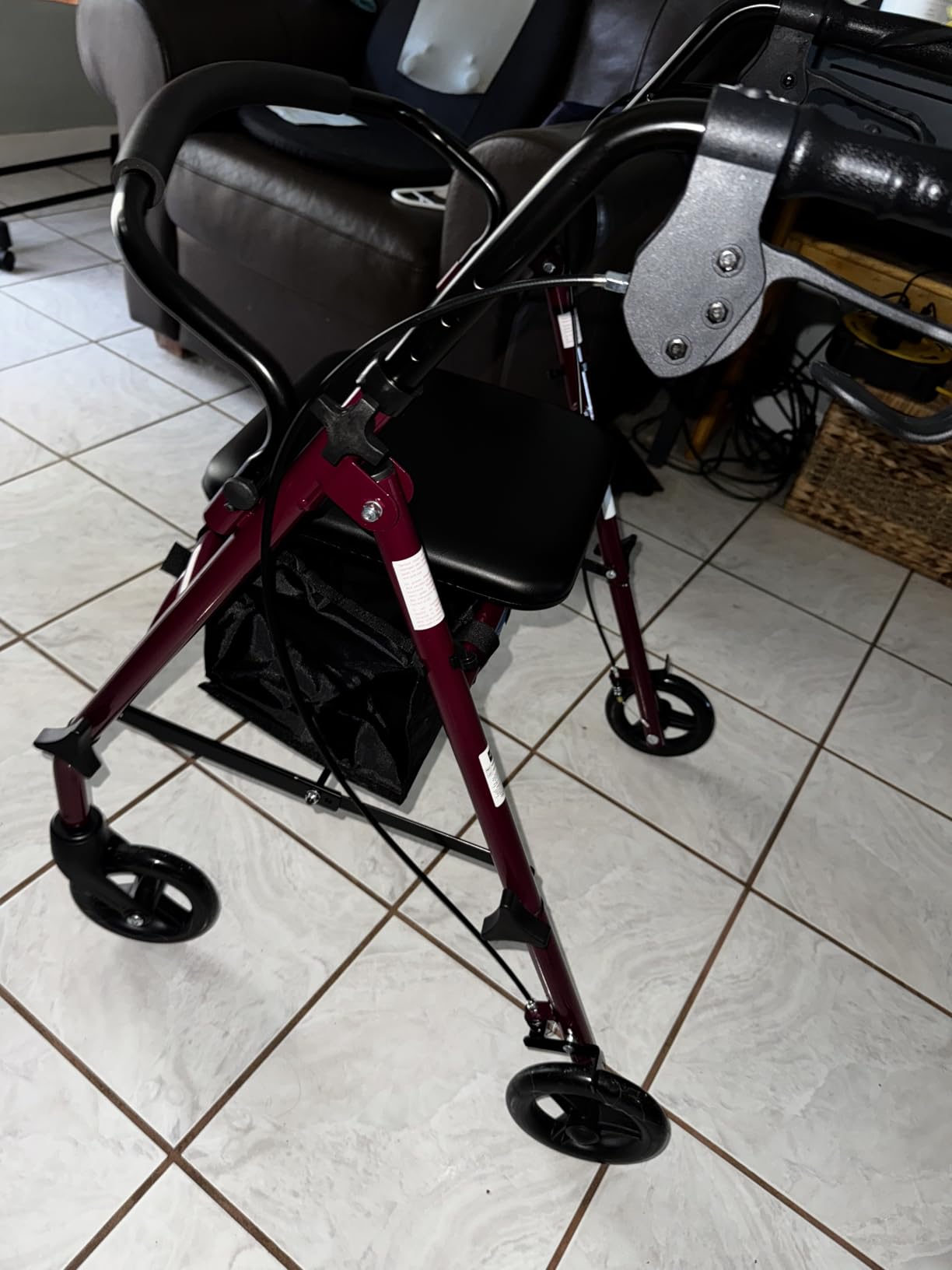
Weight capacity is the first safety variable in this category, and this is the model to look at above 250 pounds. The steel frame is rated to 350 lb, the highest figure in our group, and buyers treat it as the sturdy high-capacity option at this level.
The loop brake handles draw praise from seniors and people with arthritic hands, since pushing up brakes and pushing down locks them. Handles adjust from 31 to 35 inches, and the 12 by 12 inch padded seat and backrest give you a usable rest stop.
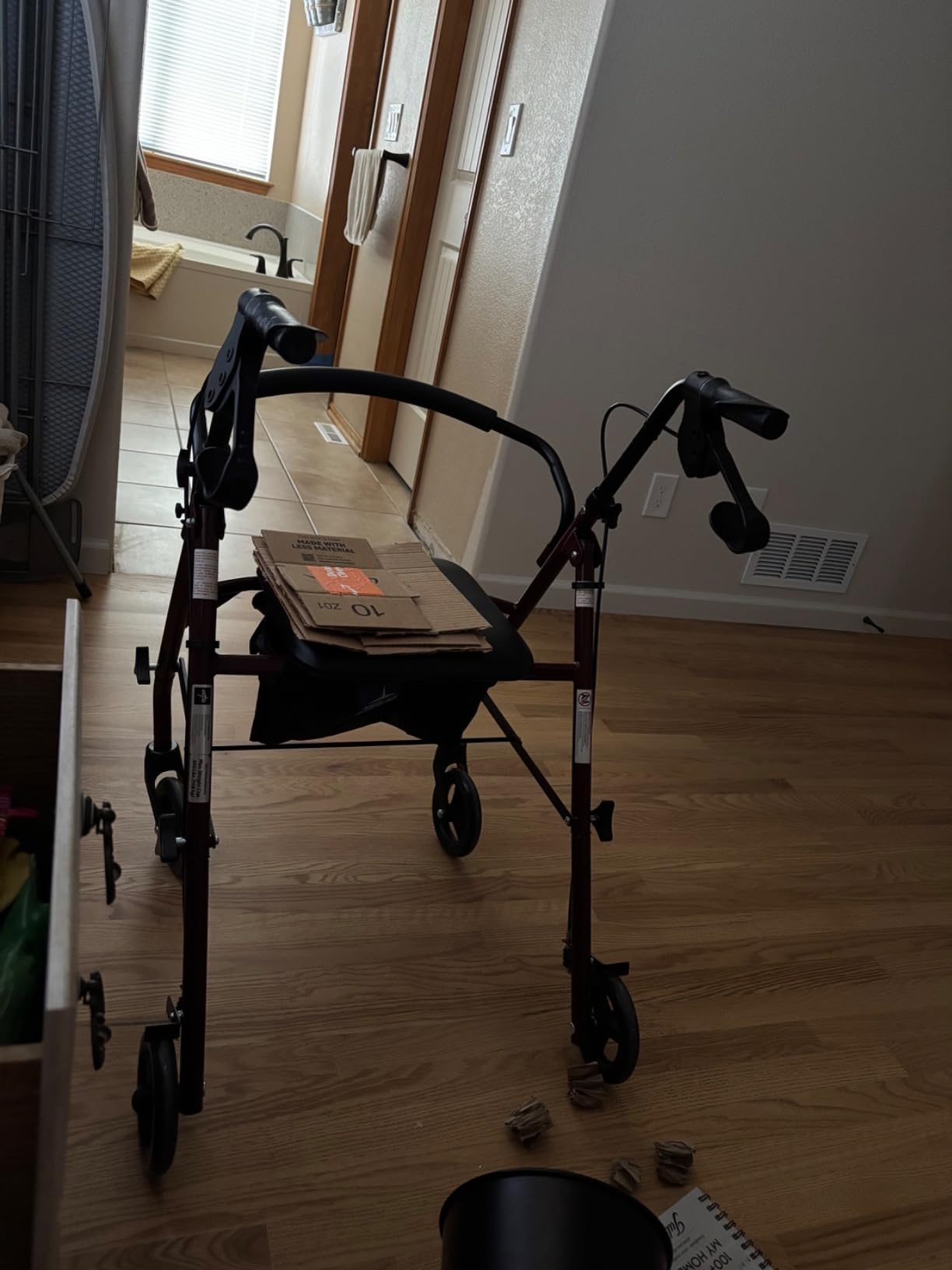
The frame weighs 16.5 lb and folds down for transport. Owners report smooth movement on indoor flooring and out onto regular pavement, and the storage space under the seat takes a bag without getting in the way.
The 6 inch wheels are the trade-off. They are less capable over broken ground, gravel and raised thresholds than the 8 inch models in this list, and small wheel size plus weight are the most repeated complaints in reviews.
Do you need 350 lb of rated capacity?
Only if your build calls for it. A margin matters because a frame rated close to your weight flexes when you push off from a seated position, and flex means the wheels can lose alignment. Under 250 lb, a 300 lb aluminum model gives you more for the same money.
Where will 6 inch wheels hold you back?
Cracked asphalt, tree roots, cobblestone and kerbs, plus more effort in gravel. On smooth floors and even sidewalks they are perfectly serviceable, so match the wheel size to your actual route. Above roughly 350 lb you need reinforced frames and wider wheelbases, which our heavy-duty rollator guide covers.
3. Drive Medical Aluminum Rollator with 6 Inch Wheels, Blue
Drive Medical Aluminum Rollator Walker, Padded Seat, 6-Inch Wheels, Blue
Aluminum frame at 15.6 lb
300 lb capacity
Padded seat with pouch
One-handed side-to-side fold
Pros
- Highest average rating at 4.7 stars
- Light enough to load into a car alone
- Arrives nearly fully assembled
- Strong brakes
- Large under-seat pouch
Cons
- 300 lb ceiling
- No locked parking position
- Exposed brake cables at lowest setting
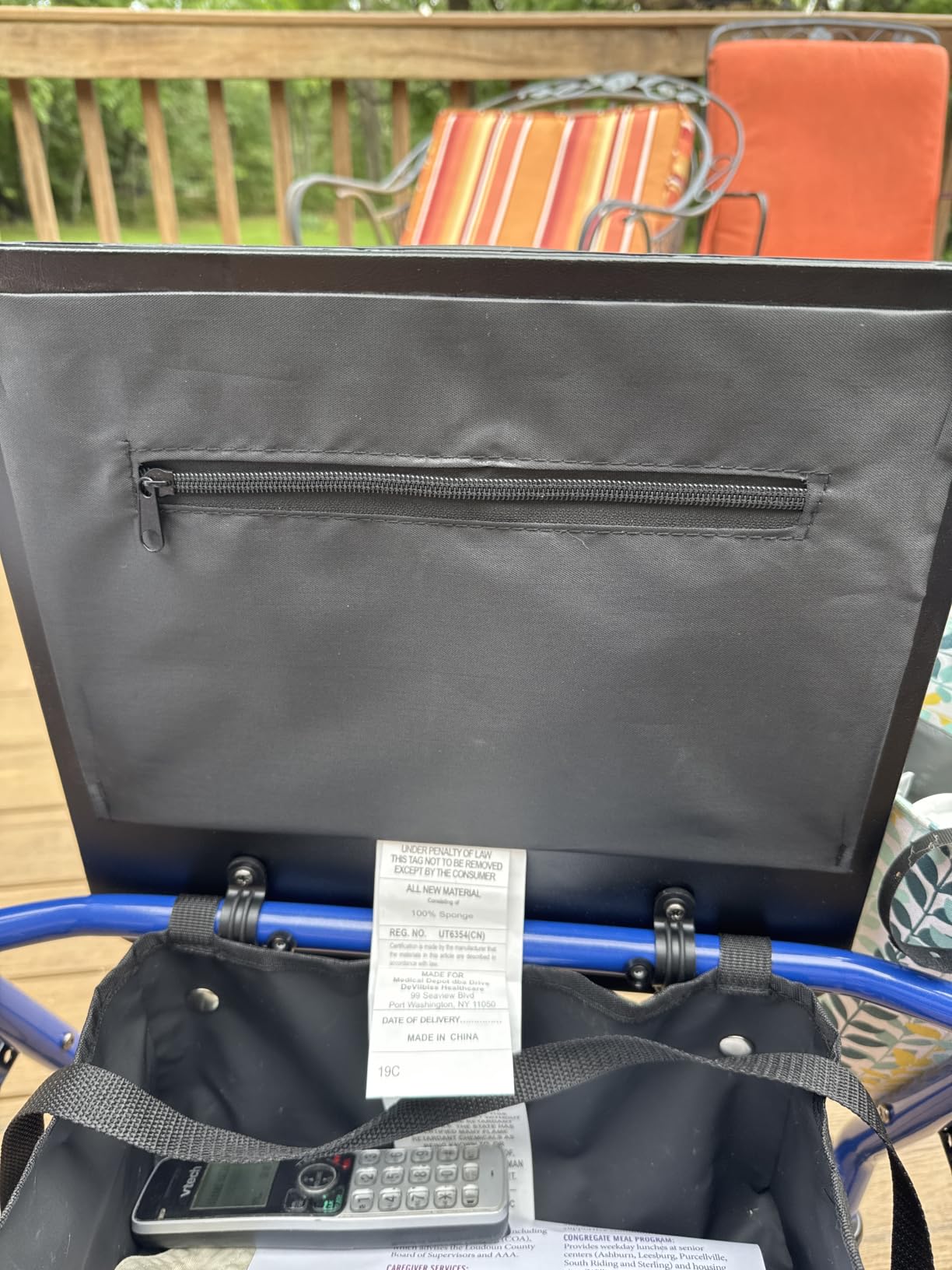
The 4.7 average makes this the highest-rated rollator in the group, and owners describe it as the best value in the lightweight aluminum category. The frame weighs 15.6 lb and is rated to 300 lb, a pairing that is rare at this level.
Two details stood out. It arrives nearly fully assembled, so fitting the handles is the only real assembly task, and it folds side to side one-handed then stands upright when folded, so one person can load a car without wrestling it flat.
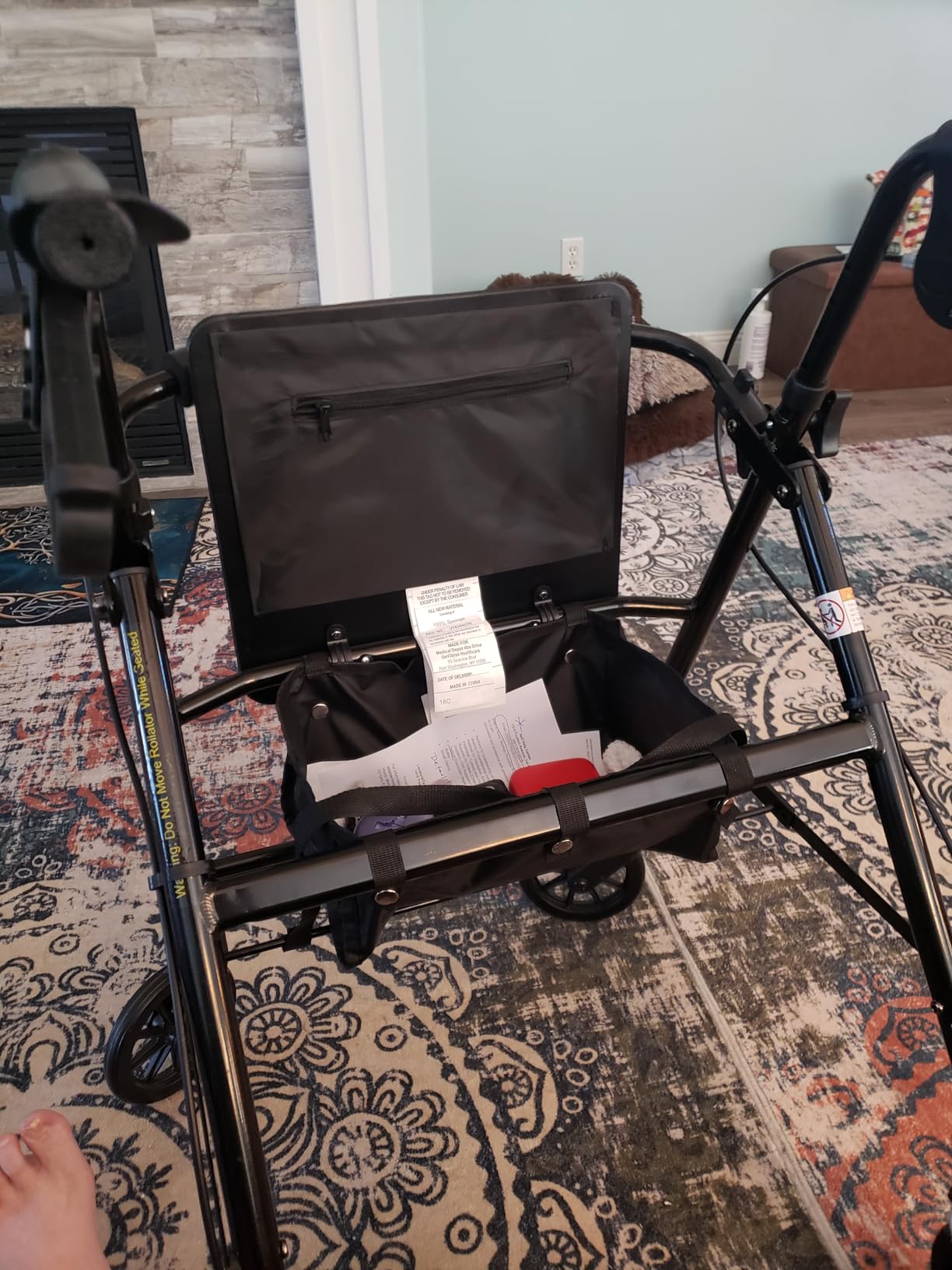
Drive Medical replaces damaged parts and sends install videos with them, which matters on a device you keep for years. The under-seat pouch hides a purse, and the low-profile frame passes through standard doorways.
The real limitation is the brake. There is no locked parking position, so you keep squeezing the handles to stay parked, and the cables sit outside the frame where they can catch a wall at the lowest handle setting. Rear wheels cannot be adjusted inward either.
Is the 300 lb rating enough for you?
For most adults, with room to spare. Check the figure against your own weight and leave clearance if you are near the limit. It is the wrong choice above 250 lb if you need a heavy-duty frame, or if you want a parking brake that locks without hand pressure.
What do exposed brake cables actually affect?
They snag. A cable catching a wall in a narrow hallway can jerk the rollator sideways, and reviewers mention it specifically at the lowest handle setting. Correct sizing helps but does not remove it, so models with concealed routing deserve a higher spot on the list.
4. VOCIC Z21 Rollator with 8 Inch All Terrain Wheels, 350 lb
VOCIC Z21 Rollator Walker for Seniors with Seat, 8″ All Terrain, 350 LBS
8 inch puncture-proof tires
350 lb rating
Three-mode brakes
Three-second fold
Dual height adjustment
Pros
- 8 inch all-terrain tires
- 350 lb rated capacity
- Three-second quick fold
- Fits users 4 ft 11 in to 6 ft 3 in
- Thickened waterproof seat cushion
Cons
- About 22 lb makes solo loading hard
- Height and seat knobs need periodic checks
- Not suitable if you need a powered aid
This is the model that surprised us. It sits at number one in its category and delivers 8 inch puncture-proof textured tires with 360 degree rotating front wheels, a 350 lb rating and a three-second fold, undercutting most 8 inch models.
Buyers focus on those two features. The wheels clear gravel, cracked pavement and thresholds that stop smaller casters, and the fold collapses it to 31.5 by 23.6 by 13.8 inches, which fits a car trunk without drama.
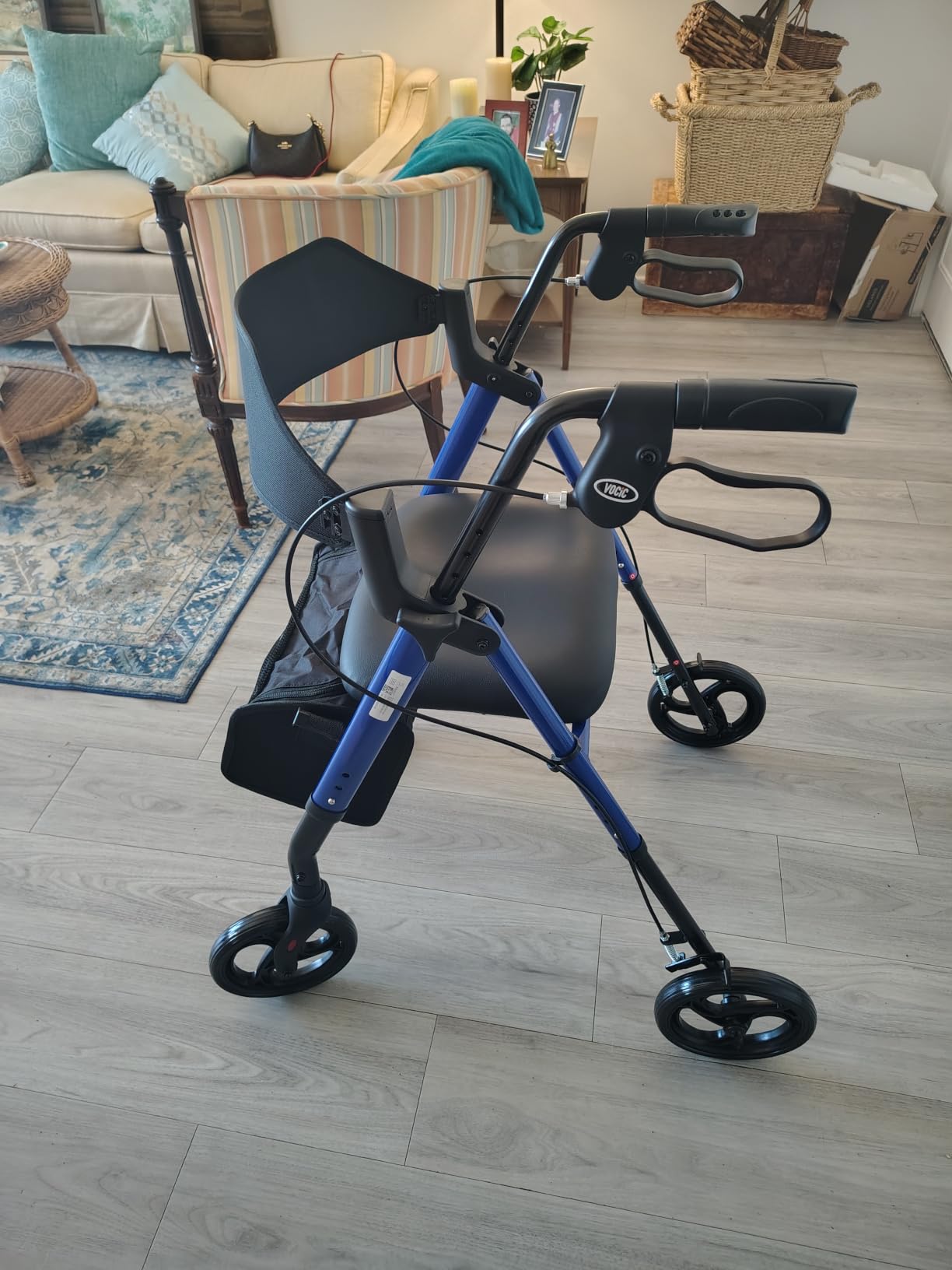
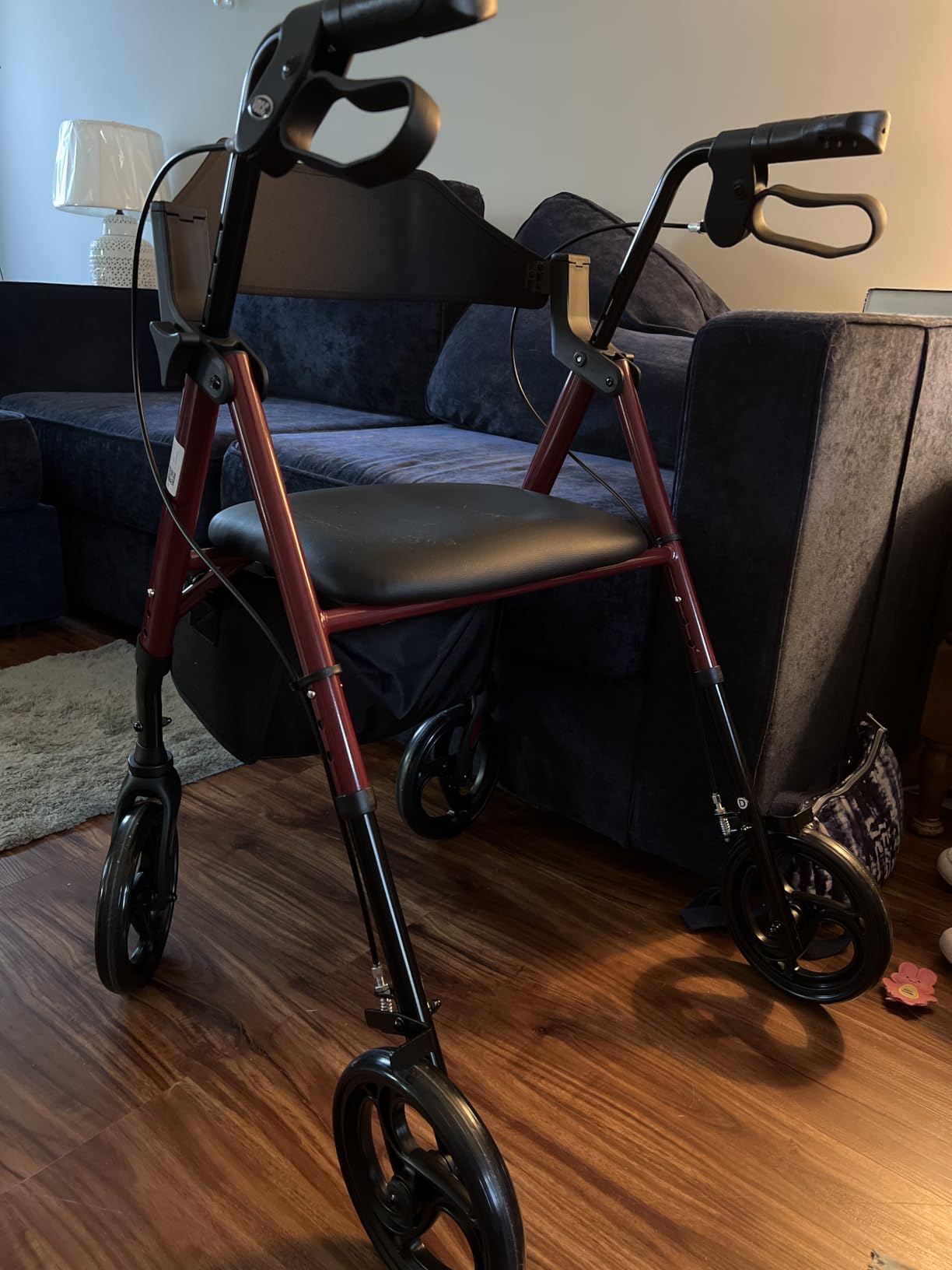
Dual adjustment is generous: seat height 20 to 22 inches across three levels, handles 31.5 to 36.6 inches across five, covering users from about 4 foot 11 inches to 6 foot 3 inches. The bionic seat carries 1.6 inches of thickened waterproof cushioning, and the backrest is widened and breathable.
The honest drawback is weight, at roughly 22 lb with the thickened tubes, and that is the complaint owners raise most. The adjustment knobs and fasteners also want a check before use.
Are 8 inch wheels worth the extra weight?
If you walk on anything other than smooth indoor flooring, yes. Larger wheels roll over obstacles instead of stopping at them, and rotating front casters make tight corners easier, reducing effort per step over a long route.
Does the three-mode brake help on hills?
It is the most refined brake in this group, running free, deceleration and stop modes. Deceleration matters on a slope because it lets you control the roll rather than only stop it, and reviewers call the levers easy to use with weak hands. Reflective strips on the front wheels and bag help in low light. Larger wheel packages are covered in our all-terrain rollator guide.
5. Medline Aluminum Rollator with 250 lb Capacity, Purple
Medline Aluminum Rollator Walker with Seat, Purple, 250 lb. Weight Capacity, Lightweight, 6” Wheels, Foldable, Adjustable Handles, Rolling Walker for Seniors
Aluminum frame at 14 lb
250 lb capacity
31-35 inch handles
12 inch padded seat
Under-seat storage
Pros
- Only 14 lb
- easy to lift and fold
- Brakes hold it steady when seated
- Six color options
- Fits an SUV seat or car trunk
Cons
- 250 lb is the lowest rating here
- Paddle handles can catch jacket pockets
- Small storage pouch straps can unhook
At 14 lb this is the second-lightest frame here, and that number changes who can use it. Short users in particular like that the seat height puts their feet flat on the floor, which reviewers single out repeatedly. Anyone whose feet cannot reach the floor ends up pushing off the frame, and that is where falls start.
The loop brakes work the same push-up to slow, push-down to lock way, and users confirm they hold the rollator steady when you sit. It folds easily, and buyers note it fits an SUV backseat or a trunk without disassembly.
Six color options are unusual in this category, and a number of buyers chose this model for the purple, which matters for a device used daily in public.
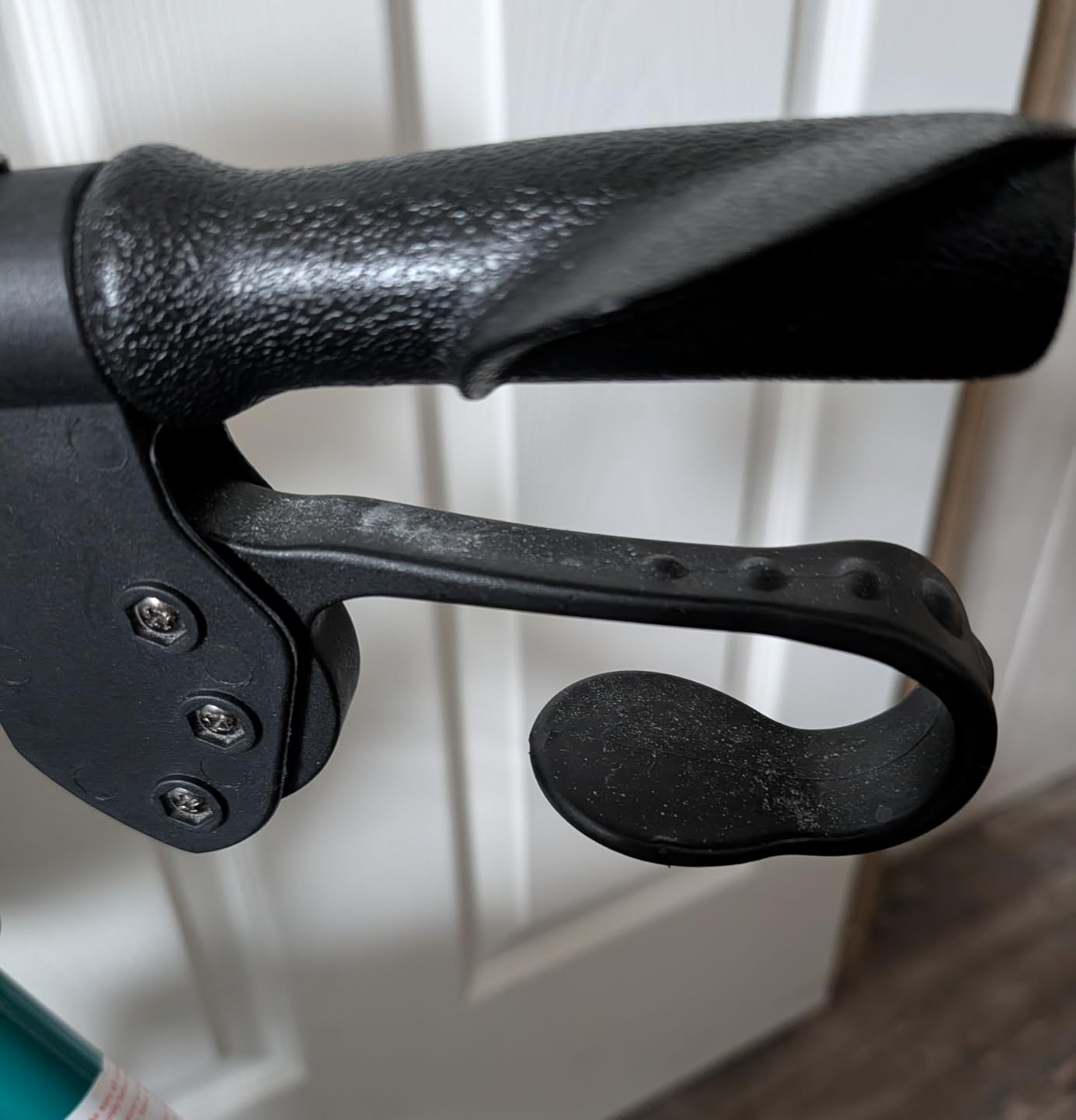
Two problems recur. The paddle-shaped handles can catch a jacket or hoodie pocket as you stand, which some buyers call a real fall risk, and the under-seat pouch is small with short straps that can unhook when the frame is loaded.

Is 250 lb capacity a problem?
Only if you are close to it. It is the lowest rating in this group, so it leaves very little margin, and a frame flexes more when a heavier user pushes off from a seated position. Above roughly 220 lb we would step up to a 300 or 350 lb frame.
What about the handles catching on clothing?
It is a real mechanism, not a hypothetical. Test the stand-up motion in a hoodie before committing, and note that loop handles that close into a partial loop snag less than open paddle grips. Reviewers also mention roughness over textured pavers, the expected limit of 6 inch wheels. If your route is paved but uneven, our rollator with seat roundup has bigger-wheel options.
6. HOMLAND Foldable Rollator with 16 Inch Extra-Wide Seat
HOMLAND Foldable Rollator Walker for Seniors with Seat, 16″ Extra-Wide Seat
16 x 12 inch seat
22 inch frame
8 inch wheels
Lifetime frame warranty
Pinch-proof fold
Pros
- Widest seat in the group
- Fits users from 4 ft 7 in to 6 ft 6 in
- Pinch-proof folding points
- Lifetime metal frame coverage
- Tool-free assembly
Cons
- 20.4 lb is heavy for this band
- 22 inch frame misses narrow doorways
- Knobs need periodic tightening
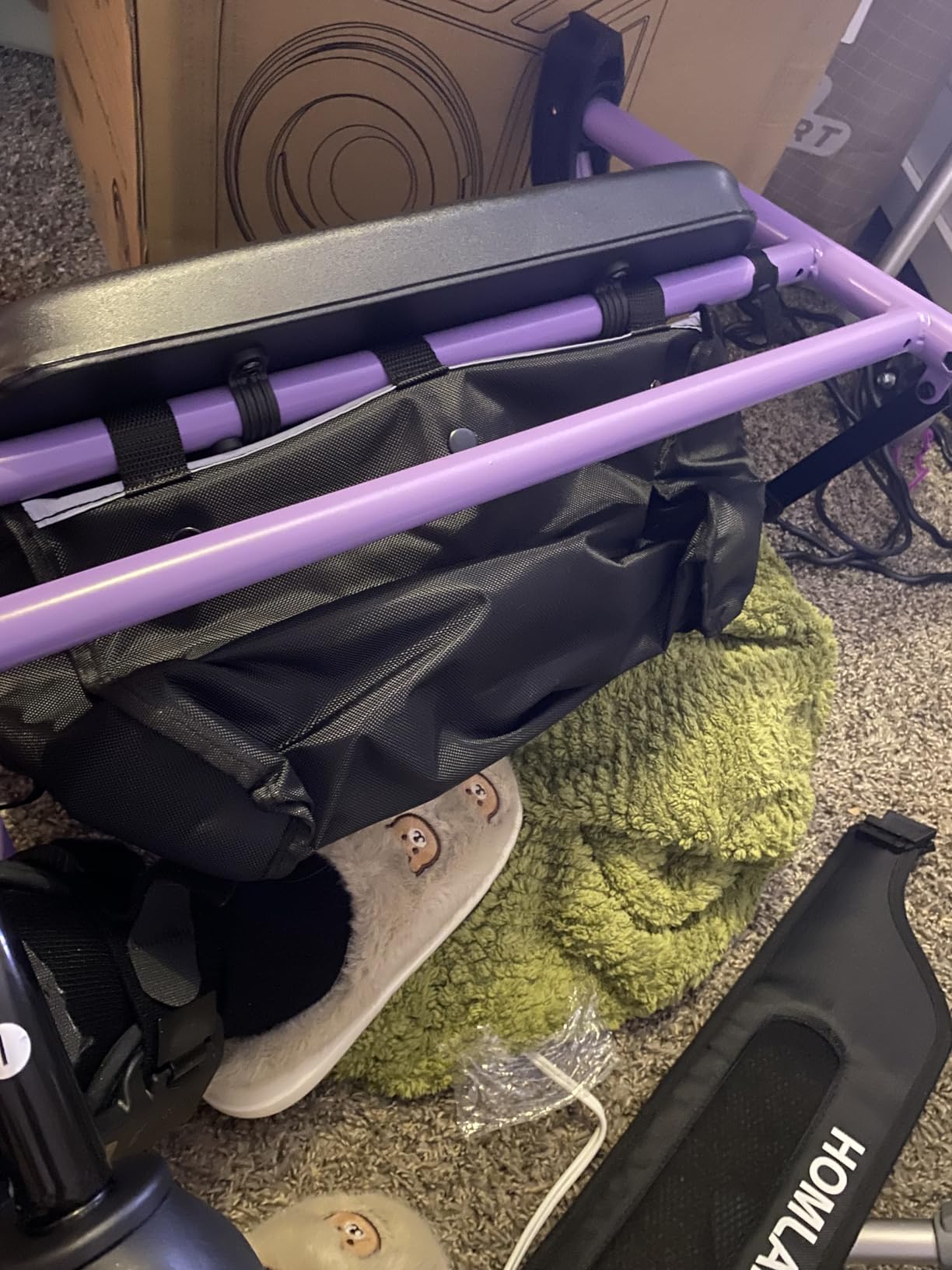
Most budget rollators give you a 12 inch seat. This one gives 16 by 12 inches on a 22 inch wide frame, and that is the whole reason to buy it. If standard seats feel cramped, the extra width changes how long you can sit.
The height range is also the widest we found. Seat height runs 20 to 23 inches and handles 33 to 40 inches, covering roughly 4 foot 7 inches to 6 foot 6 inches, and that upper handle range fixes a tall user bending forward on a standard rollator.
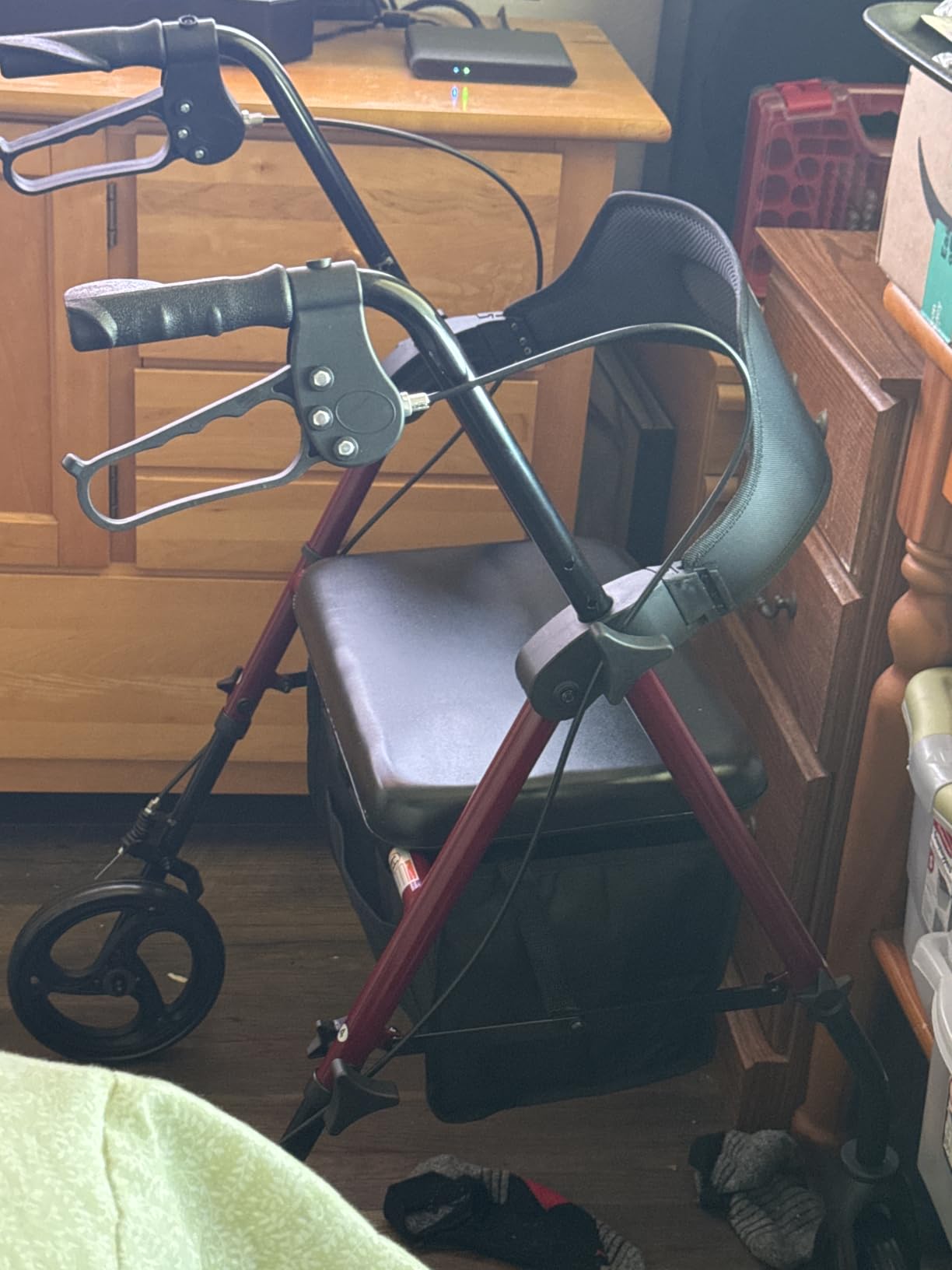
The pinch-proof folding mechanism is worth noting, since finger injuries during folding are among the most common rollator complaints. Enclosed points remove the pinch zone, and the folded size of 33 by 25 by 11.5 inches is reasonable for a trunk.
The warranty is a real differentiator: lifetime coverage on the metal frame and one year on non-metal parts, backed by US-based support. The trade-offs are weight at 20.4 lb and a width that will not clear the tightest doorways.
When does a wider seat matter?
When the seat is a rest stop rather than an emergency pause. A wider seat supports the hips instead of gripping them, and a 1.6 inch cushion spreads pressure over a larger area, which is the difference between a seat you use and one you avoid. It also helps at higher body weights, where a 12 inch seat compresses you into the frame rails.
Will a 22 inch wide frame work in your home?
Measure first. Standard interior doors give roughly 30 to 32 inches of clear opening and hallways narrow further, so a 22 inch frame passes most but not the tightest. Past 20 lb, plan for a two-hand lift or a helper, and choose a lighter aluminum model if you need one-person loading.
7. Hugo Elite Rollator with Seat and Basket, Blue
Drive Medical Hugo Elite Rollator Walker with Seat and Basket, Blue
Aluminum frame rated 300 lb
8 inch swivel casters
Dual storage
Snap-lock fold
Pros
- Stable-feeling aluminum frame
- 8 inch swivel wheels roll over grass
- Two separate storage areas
- Wide padded seat
- Well-established replacement parts
Cons
- Heavier than aluminum rivals
- Long fold strap is hard for shorter users to reach
- Only two wheels touch ground when folded
This is the comfort pick for someone who uses a rollator all day. Long-term owners describe it as the most stable rollator they have owned, and the 8 inch swivel casters roll over carpet, grass and outdoor surfaces without complaint. A swivel front wheel changes direction instantly, which makes tight corners and uneven ground less effort.
Storage is the quiet star. You get a solid-material under-seat basket that will not tip your belongings as you walk, plus a removable handlebar tote that can go over your shoulder. Handles adjust from 30 to 38 inches.
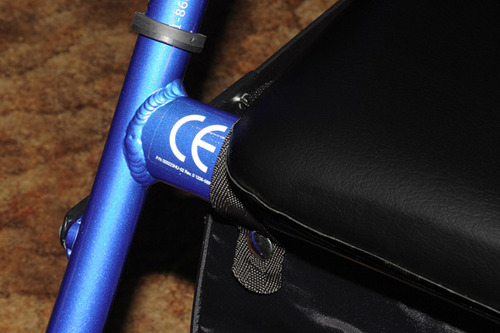
Two details surface only in detailed reviews: the brake cable is routed inside the frame so nothing drags along a wall, and the snap-lock fold holds the walker closed once folded. Both matter daily in ways you notice only when they are missing.
The drawbacks are real. At 18 lb it is heavy for an aluminum frame, the fold strap is a long pull shorter users struggle to reach, and you must work a red pin release and the strap at once while the walker can roll away. Folded, only two wheels touch the ground.
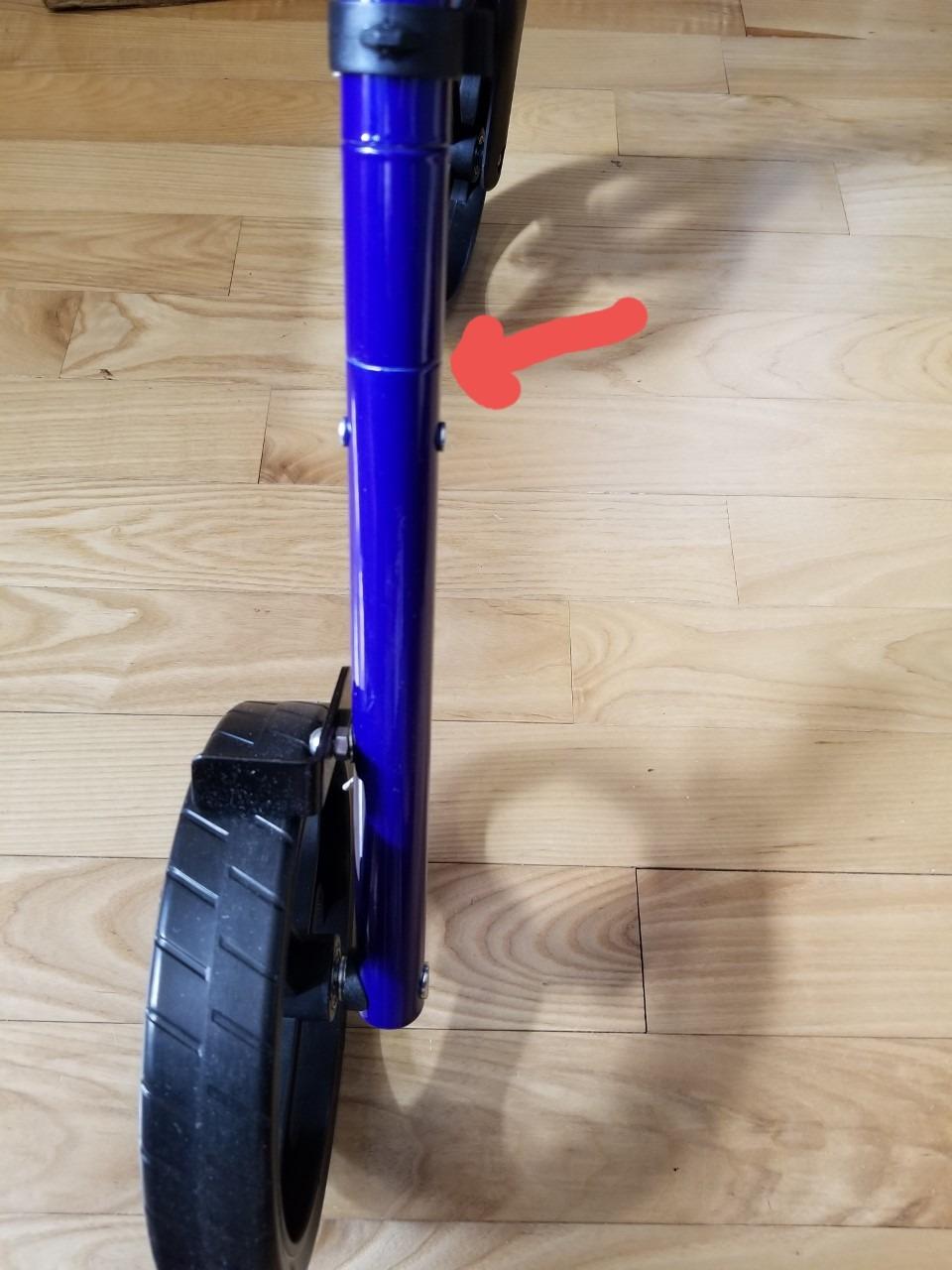
Is the Hugo Elite worth a higher price point?
It sits at the higher end of this group alongside the Nitro Sprint, and the extra spend buys the frame, the swivel casters and a long parts history. If your day involves distance and frequent sitting, the seat width and padding justify it. For short indoor trips, an entry-level model gives you the core function for a good deal less.
What should you know before the first fold?
Two things. The rear rubber gaskets on the leg posts must be removed before assembly and this is not documented on the unit. And later versions dropped the wheel height adjustment, with seat height adjustment limited compared with models offering three or four levels, so verify your version covers the range you need.
8. Medline Steel Rollator with 8 Inch Wheels, Red
Medline Steel Rollator Walker with 8 Inch Wheels, Folding Rolling Walker, Adjustable Arms, Supports 300 lbs, Red
Steel frame rated 300 lb
8 inch non-marring wheels
Folds flat
31-36.5 inch handles
Front basket
Pros
- Steady steel frame at higher body weights
- 8 inch wheels handle uneven outdoor surfaces
- Handles fit a wide height range
- Folds flat for transport
- Tool-free assembly
Cons
- Hard narrow fixed-height seat
- Unpadded grips can be rough and trap small fingers
- Frame is narrow for larger users
Buyers choose this model for one combination that is hard to find: a steel frame with 8 inch wheels at this level. Steel gives the stability lighter aluminum frames lack, the non-marring wheels handle carpet and uneven outdoor surfaces, and the frame is rated to 300 lb.
Handles adjust from 31 to 36.5 inches at 17 inches apart, covering shorter and taller users on one model. The padded seat folds up to double as a carrying tray, the front basket is easy to reach, and assembly takes 10 to 15 minutes with no tools.
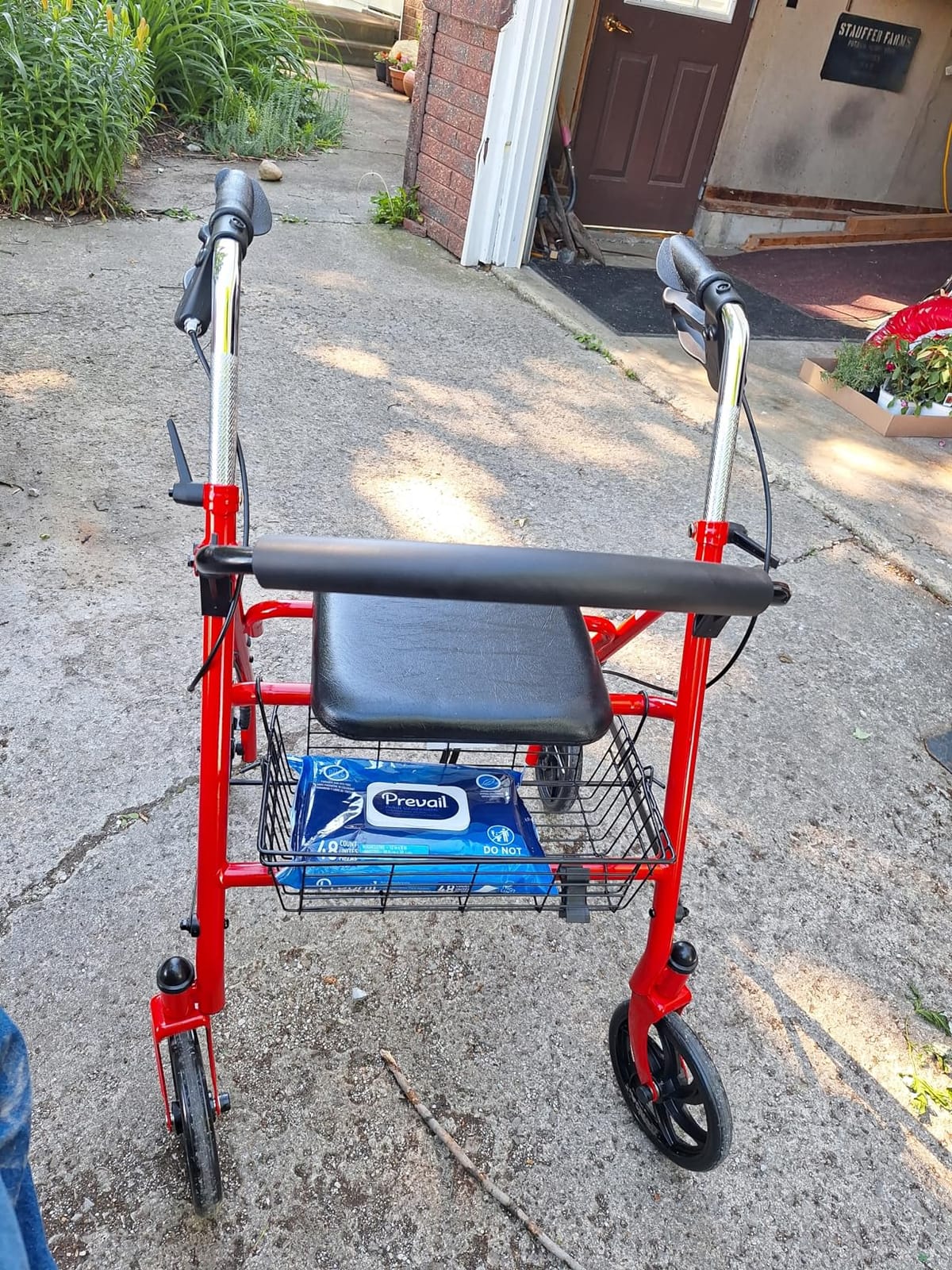
At 19 lb it folds flat for transport and storage, and the removable padded back support lets you reposition it.
The seat is the weak point. It is hard, narrow and fixed at 20.5 inches with no adjustment, and several buyers already plan to move to a wider model. The unpadded grips also concern anyone with arthritic hands or carpal tunnel, since they can feel rough and trap small fingers.
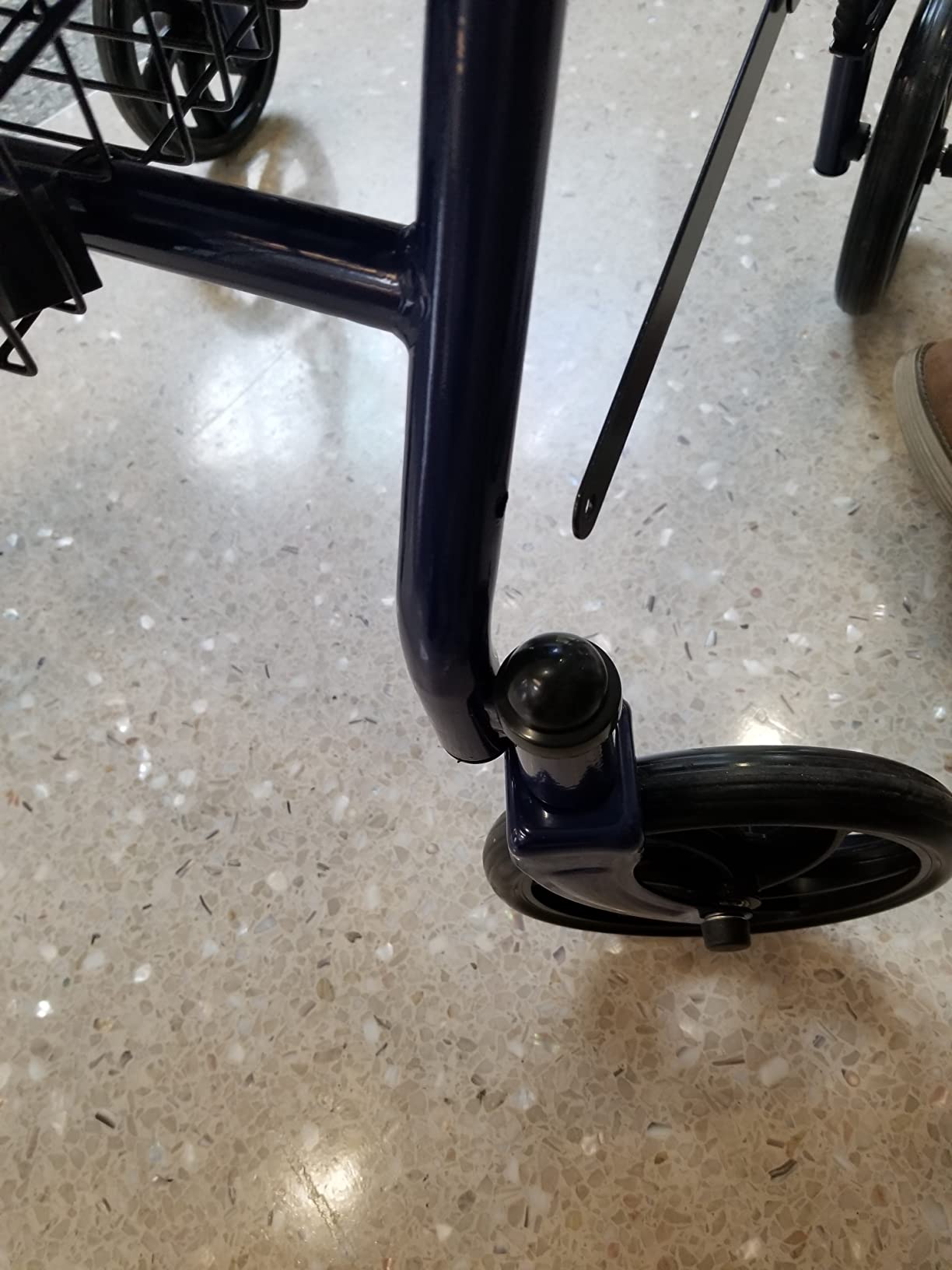
Should you skip a fixed seat height?
If your height sits comfortably in the range the seat suits, no. Near the edges of average height it becomes a coin flip, and some buyers needed a second person to help tighten and adjust the handles, which is awkward alone. Adjustable seat height removes the guesswork for a few dollars more.
Are unpadded hand grips a real problem?
For hands with arthritis, neuropathy or reduced grip, yes. An unpadded grip passes more brake force into the skin and can cramp, so treat padded or larger-diameter grips as a requirement rather than a nicety. For a user with good hands, the steel-plus-big-wheel trade is reasonable, though test the seat if you can.
9. Drive Medical Nitro Sprint Rollator, Blue
Drive Medical Nitro Sprint Rollator Walker with Seat, Standard, Blue
Aluminum frame
One-handed fold
Three size options
Three-mode brakes
Three bag positions
Pros
- Petite Standard and Tall sizes
- Concealed brake cables snag nothing
- One-hand fold that stays closed
- Wide padded seat
- Contoured backrest
Cons
- Heavier than most entry models
- Stiff brake levers for weak grip
- Handles can slip out of position
The Nitro Sprint sits at the top of this price bracket, and the reason is size choice. It comes in Petite, Standard and Tall versions, and Tall owners report a noticeably higher seat that is much easier to rise from, which matters because the push from sitting is exactly when falls happen.
Concealed brake cables route inside the frame so nothing catches while walking. The one-handed fold clicks closed and stays closed when lifted, and rear foot pedals help you lift the front wheels over kerbs.
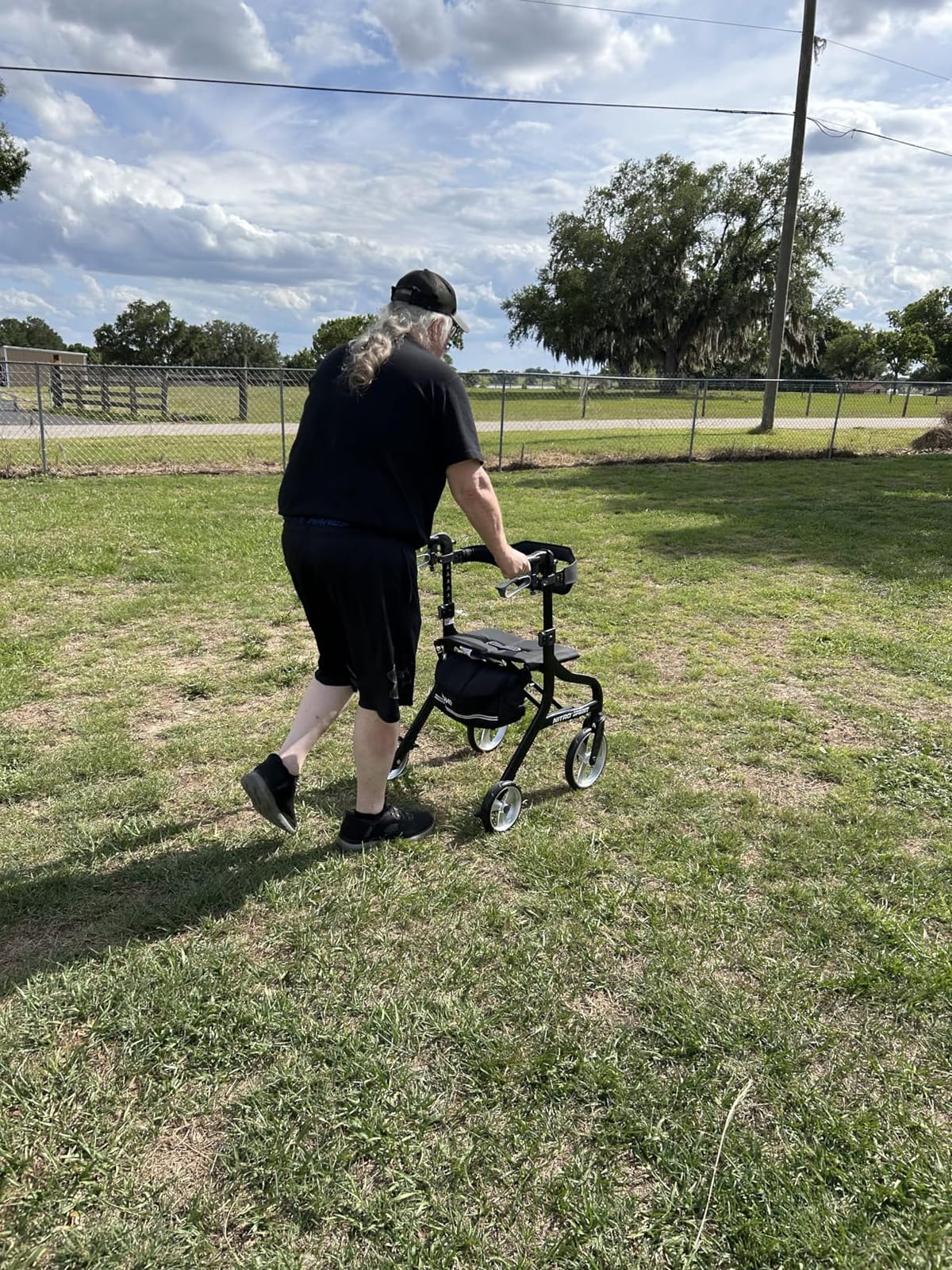
The pouch has three mounting positions plus an accessory port for canes, phones and cup holders, and it can go over your shoulder. The wide padded seat with a contoured backrest supports a real rest, and the adjustable height settings let you set it once and leave it.
The 4.3 average is the lowest in the group for specific reasons: stiff brake levers that are hard to release with weak grip, handles that slip out of their set height, a pouch whose hooks detach, and reported front wheel wobble on very smooth surfaces. At 19 lb it is heavier than most entry models, and the backrest has been reported to detach with slow replacement outside the return window.
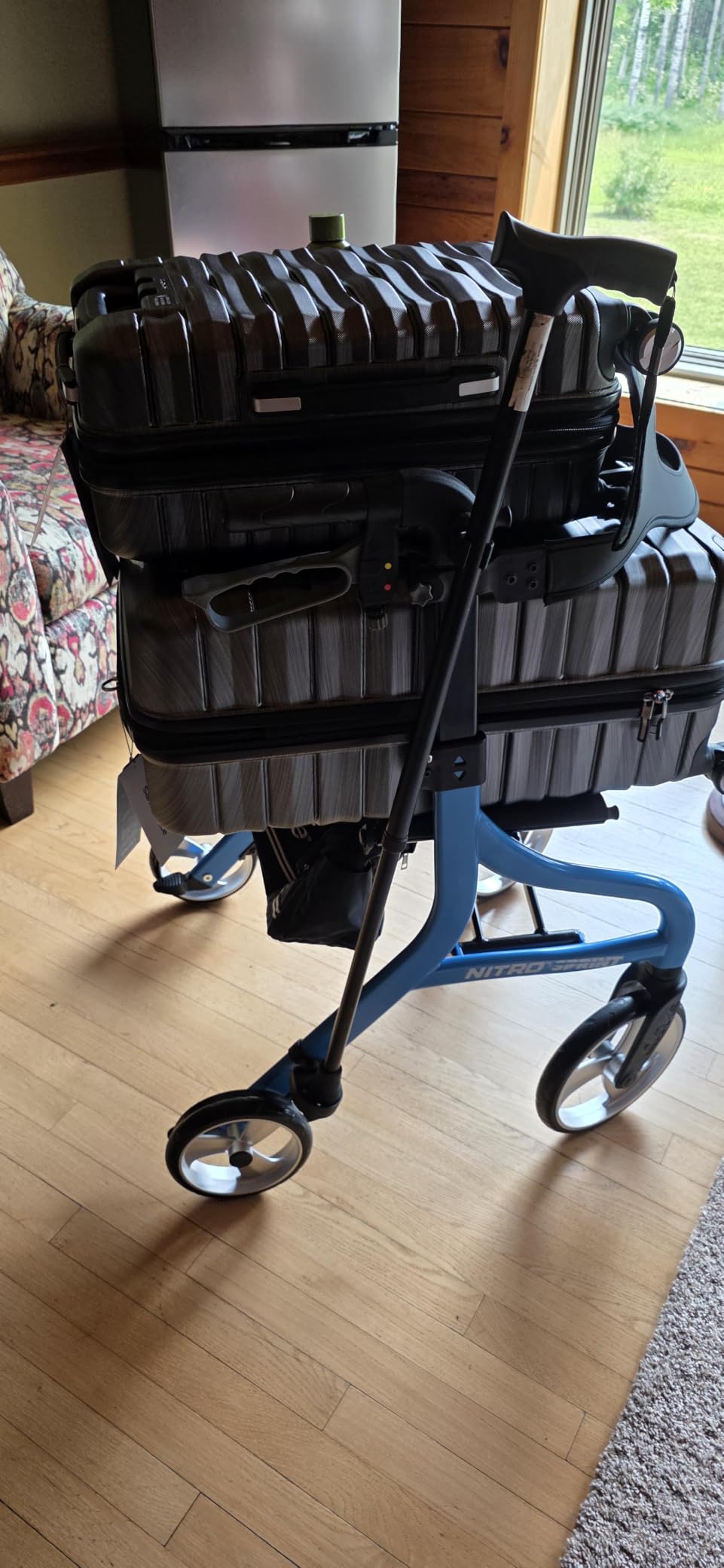
Is the Tall version worth choosing deliberately?
At 5 foot 10 inches or taller, yes, because the raised seat reduces the push needed to stand. Buyers upgrading from an earlier Nitro call the higher seat a top improvement. For shorter users the Petite version does the same job in the other direction, and this is one of the few budget rollators where picking the right size beats picking a better brand.
What do stiff brake levers mean for you?
They demand more hand force to release, which is the wrong direction for arthritis or reduced grip, and buyers upgrading from cheaper models notice immediately. Prefer wider loop levers and a lighter spring. Parts replacement has also been reported as slow outside the return window, so test every function on arrival while returns are easy.
10. soundfuse Foldable Rollator with 16 Inch Ergonomic Arc Seat
soundfuse Foldable Rollator Walkers for Seniors with 16″ Ergonomic Arc Seat
Arc memory foam seat
300 lb rating
8 inch wheels
Pinch-proof fold
Dual height adjustment
Pros
- Arc memory foam seat spreads hip pressure
- One of the wider seats in the group
- Enclosed folding points prevent finger injuries
- 8 inch wheels handle gravel and slippery ground
- Reflective strips on bag and wheels
Cons
- About 22.5 lb makes solo loading hard
- Handle height loosens during use
- Shorter review history than established brands
The arc memory foam seat is what separates this model. It is shaped to the body’s curve with widened thickened padding and a widened backrest, and reviewers point to it as the reason to choose this over a standard sling seat, because pressure distribution matters more than frame weight when you sit several times a day.
The engineering underneath is solid. A reinforced triangular frame with double crossbar support and thickened tubes carries 300 lb, the folding points are fully enclosed so fingers cannot get pinched, and the 8 inch wheels are specified for gravel and slippery ground.

Dual height adjustment covers a wide range, with seat height 20 to 23 inches and handles 33 to 40 inches, fitting roughly 4 foot 7 inches to 6 foot 6 inches. Multi-reflective strips help with night visibility, and the folded size of 25 by 39 by 11.5 inches stores compactly.
At roughly 22.5 lb this is among the heaviest frames here, so loading it into a vehicle is the main drawback. Handle height can loosen during use and needs periodic tightening, and the listing is newer, so 1393 reviews carry less long-term evidence than the 51000 behind the Drive Medical steel model.
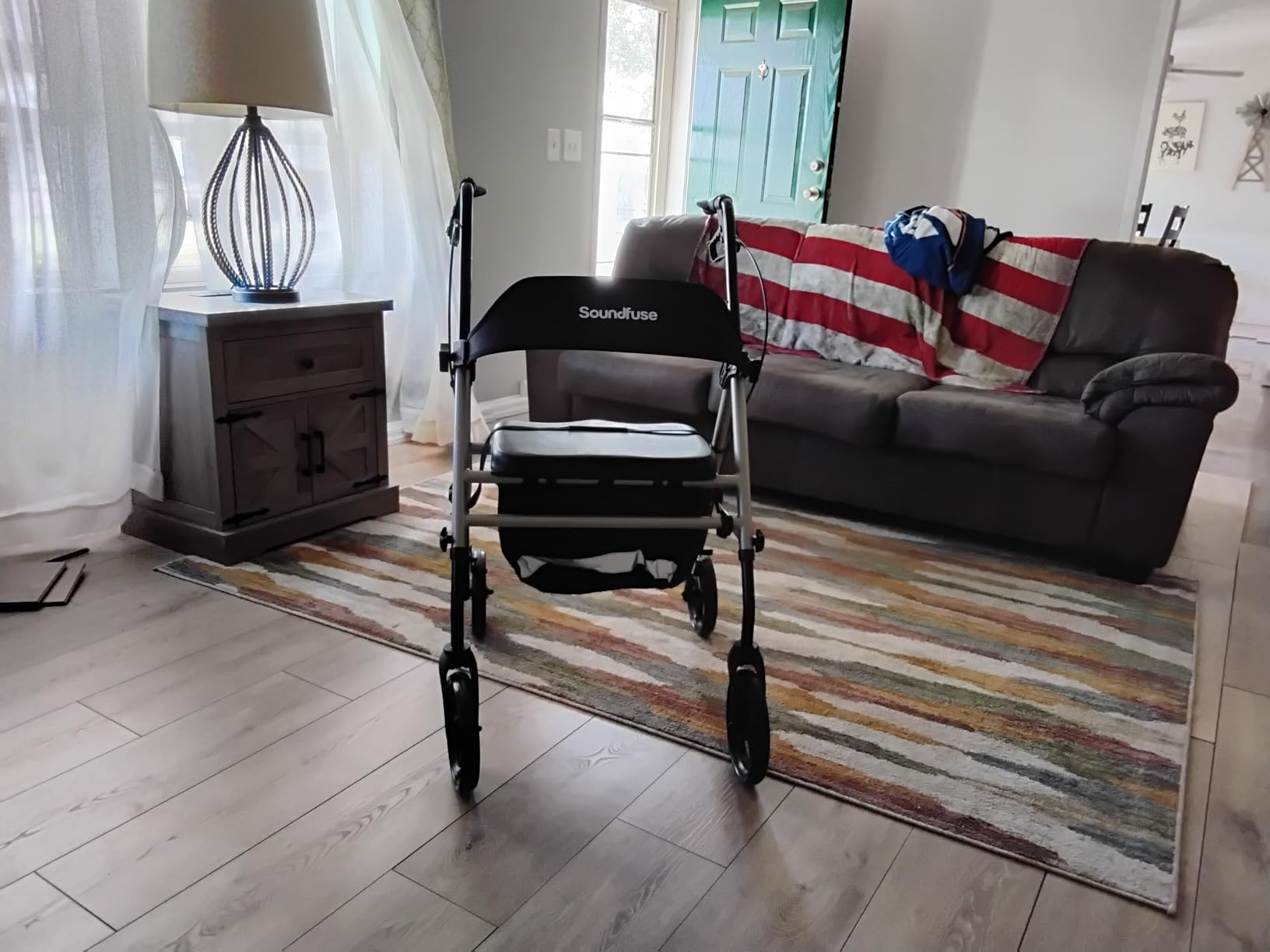
Is a memory foam seat worth more than a lighter frame?
If the seat is your primary rest stop, yes. Foam that follows the body curve reduces pressure on the hip bones over a long sit, and a widened seat stops you feeling hemmed in. If you rarely sit, a lighter frame matters more. Note that foam and mesh backrests soil more easily than flat vinyl, so a spare cover is cheaper than a new seat.
How much should you trust a newer listing?
Read the one and two star reviews rather than the average, and remember that a longer history tells you how the frame and brake cables behave after two years, which is the timeframe most buyers care about. Buy from a seller with straightforward returns so you can test brake engagement, wheel spin and folding stability for a few weeks first.
How to Choose a Budget Rollator
Frame material decides weight and durability
Steel frames are heavier but resist flex and carry higher weight ratings, which is why they dominate this price range. Aluminum frames weigh less and resist corrosion, which matters in a damp garage or car boot, and many budget models mix aluminum tubing with steel welds and leg inserts. Also read the quoted weight carefully: brands often quote the bare frame, and the difference between that figure and assembled weight is often 2 to 4 lb, which decides between a one-hand and a two-hand lift.
Wheel size sets the terrain you can handle
Six inch wheels suit smooth indoor floors, even sidewalks and short routes. Seven and 7.5 inch casters add forgiveness at thresholds, and 8 inch wheels clear gravel, cracked asphalt, tree roots and kerbs with less effort per push. Bigger is not always better, though: larger wheels add weight and can feel twitchy in narrow hallways, so match the size to your route.
Brakes: loop levers and a real parking lock
Loop brake handles let you brake with a closed loop, which is easier for arthritic hands than a bare lever, and you push down to lock. A genuine locked parking position means you can sit with both hands free, while a model without one needs you to keep squeezing the handles, which defeats the seat. Three-mode systems add a deceleration setting for downhill control.
Weight capacity: size up for margin
Check rated capacity against your body weight and leave a margin of 20 to 30 lb, because a frame rated close to your weight flexes when you push off from a seated position. Above 350 lb you move into a different product class with reinforced frames and wider wheelbases.
How to measure yourself for a rollator
Three measurements decide whether a model fits you, and they take about five minutes with a tape measure. First, seat height: kneel and measure from the floor to the crease behind your knee, and your feet should rest flat on the ground when seated. Second, handle height: stand upright and measure floor to wrist crease, so your elbows sit at roughly a 90 degree bend while pushing. Third, seated clearance: note the distance from your knees to your toes in a chair, so the seat does not press into your legs. Compare those numbers against the ranges below, which run from roughly 4 foot 7 inches to 6 foot 6 inches.
Three-wheel, four-wheel or standard walker?
A standard walker is lighter and cheaper but has no seat and must be lifted rather than rolled, so it suits short indoor recovery periods. A four-wheel rollator adds rolling, braking and a seat for long-term daily use. A three-wheel model has a narrower footprint and turns better indoors, but it is less stable outdoors. On arrival, spin every wheel for wobble, lock each brake, confirm the knobs are tight, and test everything while returns are still easy.
Does Medicare or Insurance Cover a Rollator?
Yes, in the United States a rollator is durable medical equipment, so it can be covered when a doctor documents a mobility limitation and prescribes it. You usually go through a supplier rather than buying one yourself, Medicare Part B covers a portion, and private plans and Medicaid vary, so check with your plan rather than assuming.
Flexible spending account and health savings account funds are another option, because a rollator qualifies as medical equipment and those funds can typically be used. Ask your plan administrator whether a specific retailer or prescription is required.
Coverage usually requires a prescription, so talk to your doctor before shopping, and a covered rollator may not be the model you wanted since suppliers work from a limited set of approved frames. If you want features such as 8 inch wheels or a wide seat, paying out of pocket through HSA or FSA funds often gives the better outcome.
What Owners Actually Say About Budget Rollators
The most useful buying signal in this category comes from long-term owner posts, and two Reddit threads came up repeatedly in our research for this keyword.
On a recommendations thread in r/ALS, a user named the Drive Medical Nitro as the model they had settled on, which lines up with the Nitro Sprint appearing here. The same thread recommended a Go Plus Walker for its removable armrests, 5 inch wheels, 9 lb frame weight and flat fold, and removable armrests came up as a genuine purchase driver for people with limited shoulder and arm strength.
On an r/ehlersdanlos thread, users described sourcing a usable rollator on Amazon for about 60 dollars and questioned whether models above 100 dollars were worth it.
That price-versus-durability anxiety is what the under-200 modifier exists to resolve, and the honest answer is that sub-100 models here are not toys: you trade frame weight, wheel size and seat comfort, not braking function. The recurring feature complaint across both threads was brake lever size, and oversized levers are hard to operate with small or weak hands.
Frequently Asked Questions
What is the best-rated rollator brand?
Among the models we tested, Drive Medical earns the highest average rating at 4.7 stars for its aluminum rollator, and the brand also holds the most-reviewed unit in this price range at more than 51000 owner reviews. Drive Medical, Medline, Hugo and VOCIC are the four names worth shortlisting under this ceiling.
What are the best rollators according to Consumer Reports?
Consumer Reports does not publish a continuously updated rollator ranking that shoppers can buy into directly, and its major equipment testing is largely paywalled. The practical approach is to compare rated capacity against your body weight, frame weight against your lifting ability, and wheel size against your terrain, which is the method we used here.
What is the best rollator walker for older people?
The best rollator walker for most older adults is a four-wheel model with loop brakes, a real parking lock and a frame weight one person can lift. Our top pick is the Drive Medical steel rollator with 7.5 inch casters, which pairs a stable frame with the largest review base in this group.
What is better than a rollator?
For short indoor recovery periods, a standard two-wheel walker is lighter and cheaper. A three-wheel rollator is better for narrow indoor spaces because it turns quickly, but it is less stable outdoors and usually has no seat. A rollator remains the better choice for long-term daily use because it rolls instead of being lifted.
How much should you expect to pay for a rollator?
Reliable rollators with loop brakes, a padded seat, adjustable handles and 250 to 350 lb capacity are widely available in the sub-200 range. Below roughly 80 dollars you start trading away frame weight, wheel size and seat comfort. Check the button on any listing for the current figure, since pricing moves regularly.
Can you take a rollator on a plane?
Yes, airlines accept rollators as mobility aids and most allow them in the cabin at no charge, though policies differ, and gate checking is also available. Check the folded width against your airline’s limits, since folded widths range from about 7 inches on the lightest aluminum models to over 11 inches on wide frames.
Conclusion: The Best Rollator Under 200 Dollars by Use Case
For most people buying the best rollators under 200 dollars, the Drive Medical steel rollator with 7.5 inch wheels is the pick, offering a stable frame and mixed-terrain wheels. If you lift the rollator into a car on your own, choose the Drive Medical aluminum model, which rates 4.7 stars at a light weight.
For higher body weights or rough ground, the VOCIC Z21 pairs 8 inch tires with a 350 lb rating, and for a wider seat the HOMLAND 16 inch model is built for it, while the Medline aluminum 250 lb model suits a light frame and short fit.
Whichever you pick, measure yourself before ordering, test every brake and wheel on arrival, and keep the return window open long enough to walk a full day on it.
Medical disclaimer: This guide is general information, not medical advice. A rollator is durable medical equipment, and a frame that does not match your weight, height or mobility needs can cause injury. Ask your doctor, physical therapist or occupational therapist about the right type and fit before buying.
Affiliate disclosure: We earn from qualifying purchases at no additional cost to you. Rankings come from spec comparison, owner review analysis and fit considerations, and we do not accept payment for placement.