
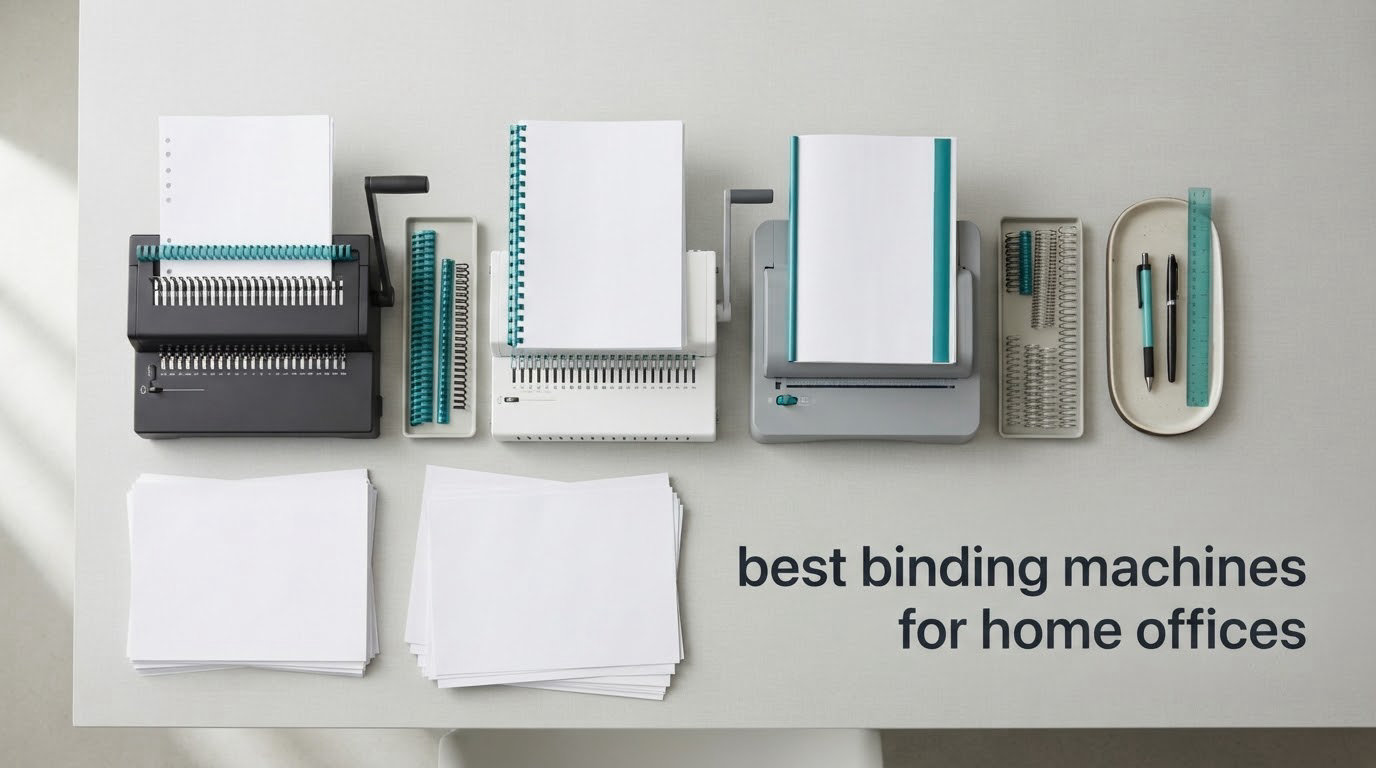
If you assemble client reports, training manuals, meeting workbooks or presentation kits from a home office, the binding machine is the one piece of equipment that turns a stack of printed pages into something a client will keep. Our team compared 12 of them for this guide, and the best binding machines for home offices come down to a very short list once you stop reading the spec sheet at face value.
The trap in this category is numbers. Almost every machine advertises a huge binding capacity, then quietly punches a dozen sheets at a time, meaning a 300-page report takes twenty-five separate handle strokes and a coffee break. We read the punching capacity and the binding capacity separately for every pick, because those two figures decide whether a machine suits your volume or merely impresses on a listing.
We also judged these machines on home-office specifics that showroom roundups skip: how much desk they eat, how heavy they are to move, whether the finished document lies flat, and whether you can reopen it when the client asks for a correction. Binding is a cheap operation once you own the machine, but picking the wrong spine locks you into one consumable ecosystem for years.
Below you will find a short top three, a full comparison table covering all 12 picks, twelve individual reviews, a plain-English breakdown of the four binding styles, a step-by-step walkthrough, and a buying guide built around desk footprint, monthly volume and paper compatibility. If you are also building documents from scanned source material, our guide to the best document scanners for home offices pairs well with this one.
Table of Contents
Top 3 Best Binding Machines for Home Offices in 2026
These three cover the most common home-office situations: a general-purpose binder that produces book-like documents, the strongest value option for short jobs, and the workhorse pick for repeated workbooks.

We R Cinch Book Binding Machine
- 11-hole 2:1 pitch
- Manual punch
- Alignment pegs and punch knobs
- 7.2 pound body

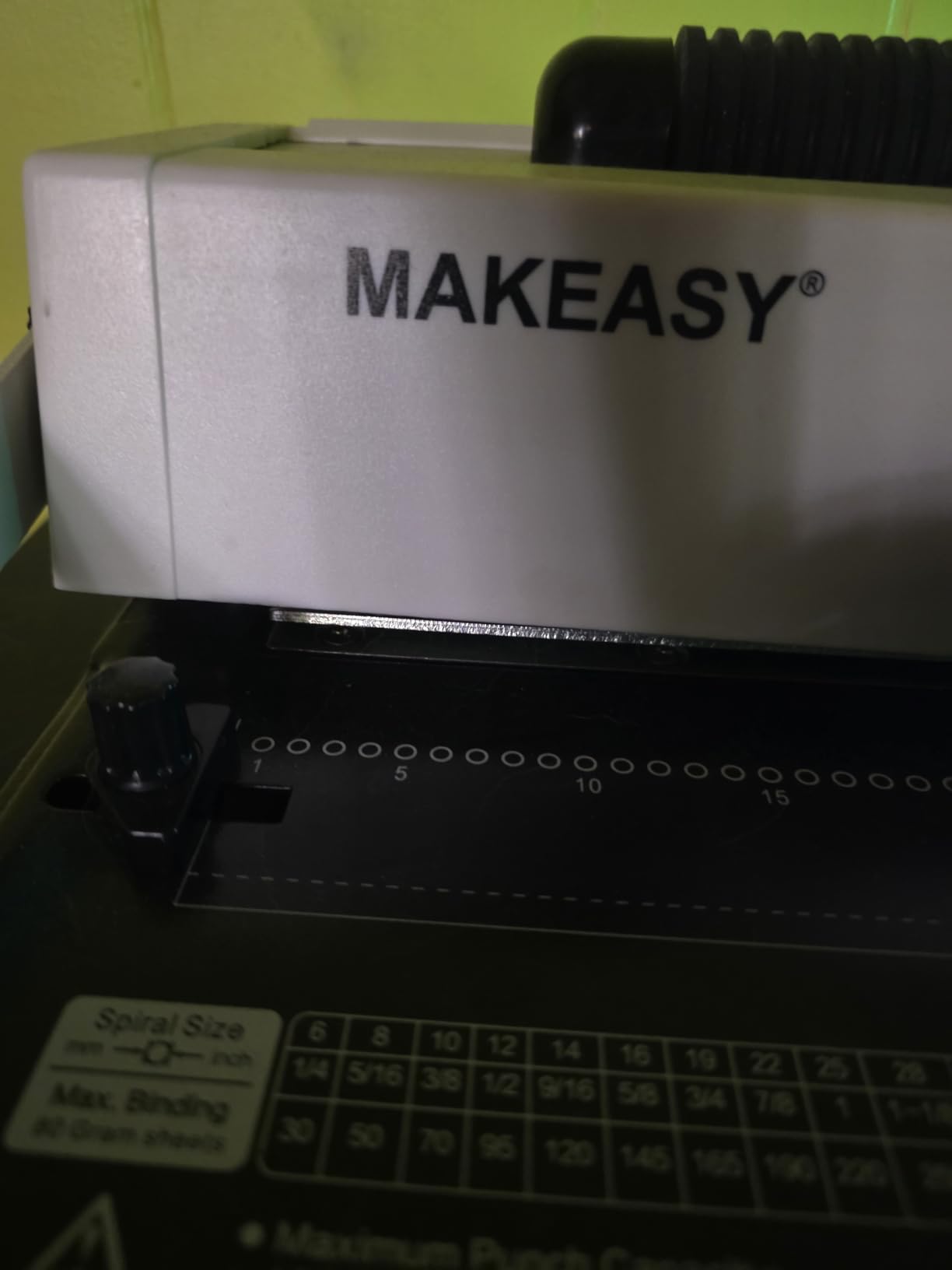
MAKEASY Comb Binding Machine
- Punches 10-12 sheets
- Binds 400 sheets
- Includes 100 comb spines
- Letter A4 and A5 settings

Fellowes Star+ Comb Binder
- 15-sheet manual punch
- Binds 150 sheets
- Built-in comb storage tray
- 2 year warranty
All 12 Picks at a Glance in 2026
Every machine below appears in the individual reviews, in the same order. Punching capacity is how many sheets the machine cuts in one stroke; binding capacity is how many sheets the finished spine holds. Reading the two columns together tells you more than either one alone.
| Product | Specifications | Action |
|---|---|---|
| We R Memory Keepers Cinch Book Binding Machine |
|
Check Latest Price |
| MAKEASY Comb Binding Machine 12 Sheet Punch |
|
Check Latest Price |
 TIANSE 21-Hole 450 Sheet Comb Binder TIANSE 21-Hole 450 Sheet Comb Binder |
|
Check Latest Price |
| Fellowes Star+ 15-Sheet Comb Binder |
|
Check Latest Price |
 OFFNOVA 21-Hole 450 Sheet Comb Binder OFFNOVA 21-Hole 450 Sheet Comb Binder |
|
Check Latest Price |
 GBC ProClick P50 Manual Punch GBC ProClick P50 Manual Punch |
|
Check Latest Price |
 Fellowes Pulsar+ 20-Sheet Comb Binder Fellowes Pulsar+ 20-Sheet Comb Binder |
|
Check Latest Price |
 RAYSON TD-132 3:1 Wire Binding Machine RAYSON TD-132 3:1 Wire Binding Machine |
|
Check Latest Price |
 TruBind S-20 Electric Coil Binder TruBind S-20 Electric Coil Binder |
|
Check Latest Price |
 VEVOR 21-Hole 450 Sheet Comb Binder VEVOR 21-Hole 450 Sheet Comb Binder |
|
Check Latest Price |
 Hoqqf Thermal Binding Machine 500 Pages Hoqqf Thermal Binding Machine 500 Pages |
|
Check Latest Price |
 MAKEASY Coil Binder with Electric Inserter MAKEASY Coil Binder with Electric Inserter |
|
Check Latest Price |
1. We R Memory Keepers Cinch Book Binding Machine – The Best Binding Machine for Home Offices Overall
We R Memory Keepers Cinch Book Binding Machine Version 2, Mint, Easy to Use, Slide Ruler, Spiral Binding, Professional Books, Notebooks, Calendars
11 holes at 2:1 pitch
Manual punch
7.2 pounds
Alignment pegs
Pros
- Punches clean consistently aligned holes with a solid handle
- Pages lie flat and open without binding tension
- Compact footprint that does not dominate a workspace
- Intuitive controls and simple setup for beginners
Cons
- Cinching needs care if the wire is not centred
- Binding wires are not included with the machine
- Better suited to small batches than high-volume runs
The Cinch is the machine we keep reaching for in the office, and the reason is unusual for a manual device: the finished book behaves like a book. Rather than a plastic comb that springs open when you turn a page, it produces a single wire that cinches tight, so pages sit flat and can be written on with both hands free. That one design decision is what separates it from every budget comb machine in this roundup.
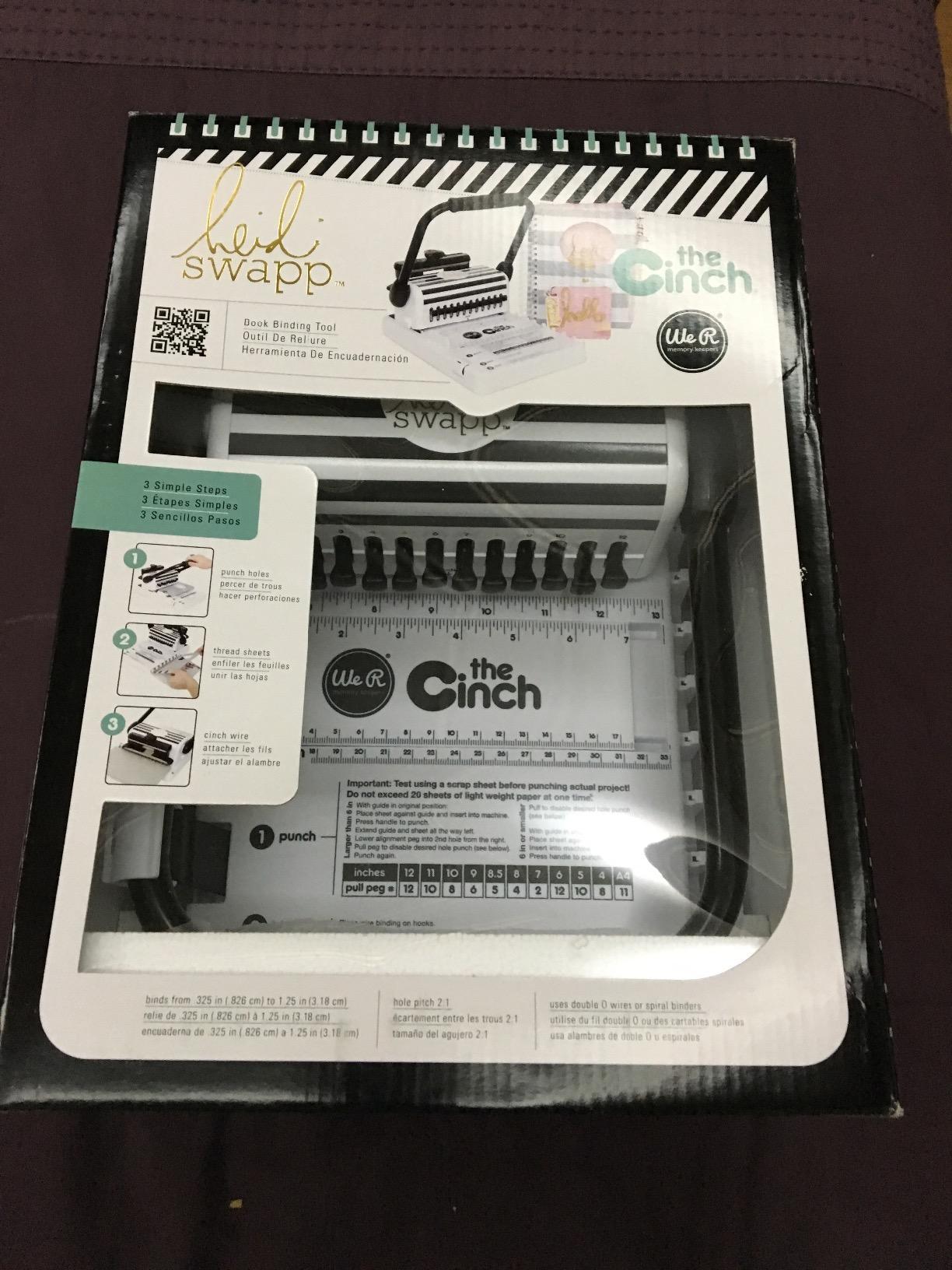
Hole placement is handled by alignment pegs and a slide ruler rather than a fiddly edge guide. You set the pins for your paper size, drop the stack onto the pegs, close the handle, and the holes land in the same place every time. Customizable hole-punch knobs let you switch between round, elongated and square holes, which matters if you also make journals or planners. The 2:1 pitch with 11 holes is a wider spacing than a standard 19-hole Letter punch, and that spacing is precisely what allows the book to open flat.
Weighing 7.2 pounds and measuring 10.5 by 6.6 by 14.15 inches, it is a genuinely desk-friendly machine. It will sit beside a monitor rather than demanding its own shelf, and it can be moved one-handed to a dining table at the end of the day. At 4.7 stars across more than 7,000 reviews, it is also the most thoroughly proven binder we tested, which matters a great deal when the manufacturer does not sell replaceable punch dies separately.
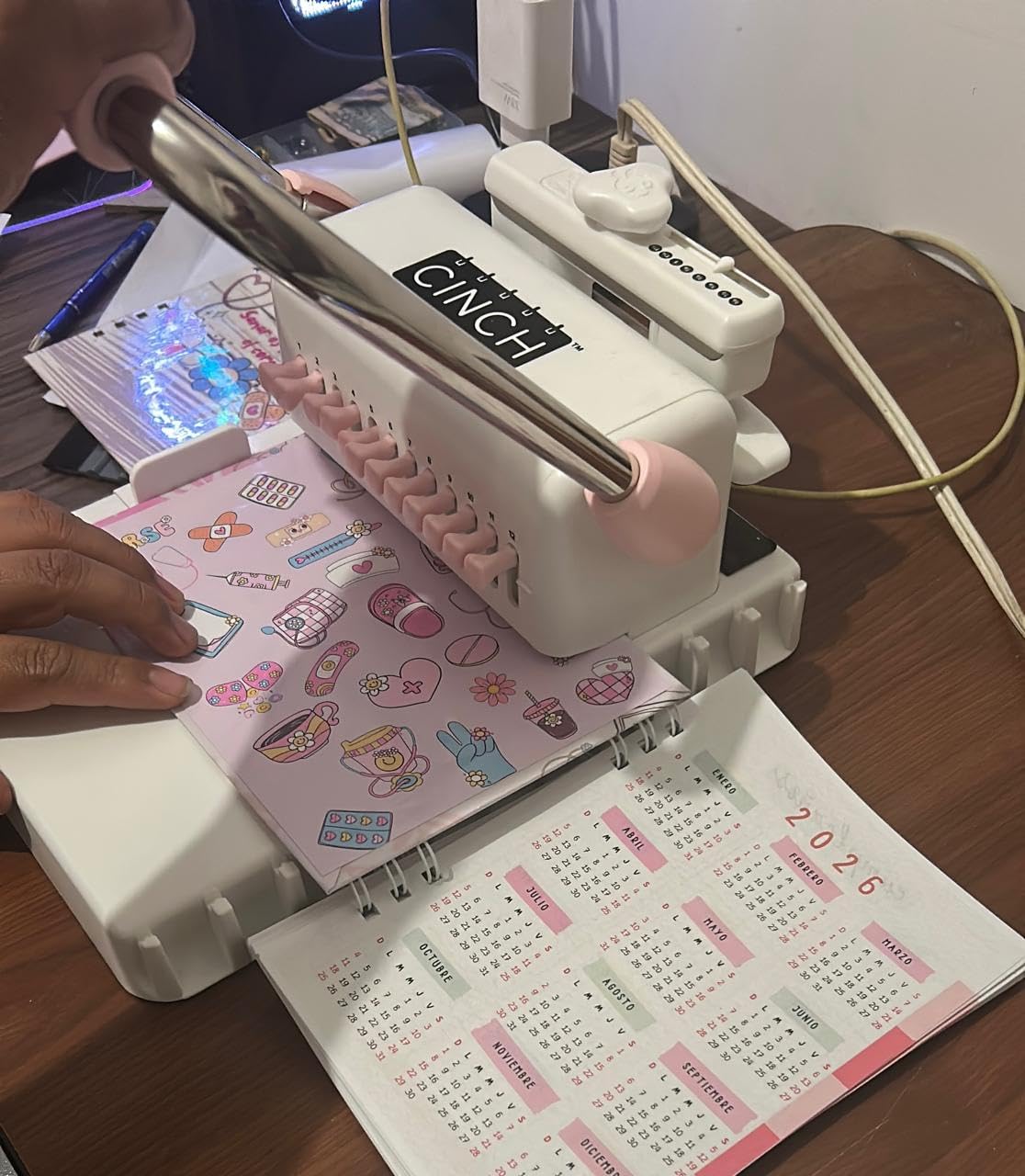
The mechanical honest caveat: the Cinch is a two-handed wire machine, not a comb machine. You cannot use plastic combs with it, and you cannot use it to bind a document that a client intends to add pages to later, because the wire has to be cut off. If your work is mostly short proposals, this is the wrong tool.
Second caveat, and it is the one that catches beginners: if the wire teeth are not centred and fully pushed back before you cinch, the finished spiral comes out uneven. Several reviewers describe this as a learning curve rather than a defect. Spend ten minutes practising on scrap paper before touching a client deliverable.
Who the Cinch Suits Best
It suits anyone producing books, planners, workbooks or manuals that will be read, annotated and kept. Journals and homeschool materials are the most common uses owners describe, and the professional-looking result is the reason people come back to it.
It also suits people who hate consumable compatibility puzzles. Wire binding is a self-contained system: you buy wire in a chosen length and the machine handles it. There is no cross-brand matching to worry about.
Where the Cinch Falls Short
It is not a high-volume machine. One reviewer put it plainly: this is small-batch personal binding, not industrial work. If you expect to bind dozens of 200-page documents a month, a comb or coil machine with a bigger punch will serve you better.
Binding wires are not included with the machine, so budget for a first pack separately. And removing an existing soft binding takes real practice, so plan for one ruined reprint while you learn.
2. MAKEASY Comb Binding Machine – Best Value for Short Home Office Jobs
MAKEASY Comb Binding Machine – Punch 12 Sheet, Easy Punch No Jam, Heavy-Duty Metal Build, Book Binder for Office Reports & Home School Projects, Includes 100 Combs, Letter/A4/A5 Compatible
Punches 10-12 sheets
Binds 400 sheets
100 combs included
Metal build
Pros
- Includes 100 comb spines so there is nothing to buy first
- Lightweight but sturdy metal construction
- Easy to adjust between Letter A4 and A5
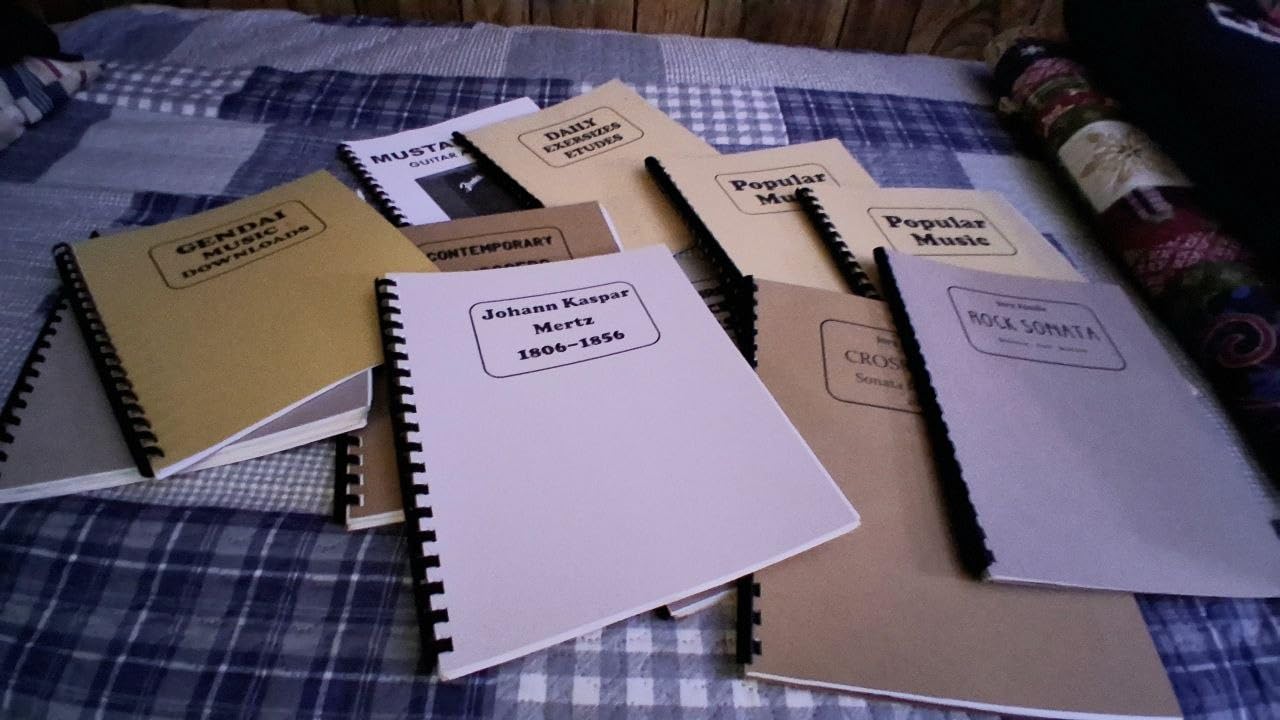
- Works well for music scores and short manuals
Cons
- Real punching is closer to 6-8 sheets than advertised
- Included combs are small for long documents
- Handle must sit perpendicular to the tray to engage
This is the machine most home offices should actually start with, because it arrives complete. A box of 100 black PVC comb spines ships in the box, so on day one you can punch and bind a document without opening a second parcel. That removes the single most common disappointment with cheap binders, where you discover the machine is sold bare.
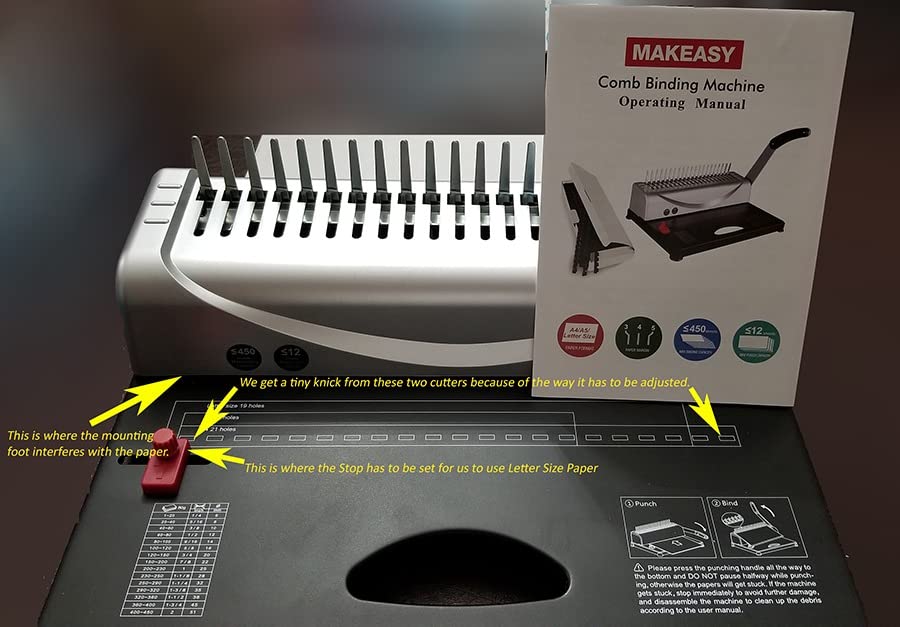
Construction is metal rather than plastic, and at 8.2 pounds the machine has enough mass to stay put while you pull the handle. Marked settings cover Letter with 19 holes, A4 with 21 holes and A5 with 15 holes, and the edge guide adjusts from 3mm to 5mm for controlling how much margin sits inside the binding. The handle is a low-force design, so a single stroke punches a usable stack without a two-handed wrestling match.
Quoted capacity is 10 to 12 sheets of 80g paper per stroke and up to 400 sheets of bound material with 2-inch spines. In real use owners put the honest figure at 6 to 8 sheets per stroke, which is normal for a manual machine of this class. Plan for roughly twice the number of strokes you would on an electric punch.
The combs included are 3/8-inch, rated for 50 to 60 sheets. That is fine for a short report, a proposal or a set of meeting notes, and it is a reminder that binding capacity figures depend entirely on which spine you buy. Longer documents need a wider comb, and wider combs cost more per bind.
Two practical notes from owners. First, the handle must be installed perpendicular to the tray or the punch will not engage at all, which is a genuinely confusing first-hour experience. Second, loading the rings evenly is easier if you insert pages in small batches or square the stack against the packaging foam rather than dropping the whole document in at once.
What MAKEASY Is Good For
Short-to-medium documents: client proposals, short reports, homeschool workbooks, music scores and internal manuals of a few dozen pages. It handles all three common paper sizes without retooling, which matters if you work with mixed Letter and A4 paperwork.
It is also the sensible choice if the machine will live in a shared room. The metal frame and non-slip feet survive being moved, and the low-force handle means anyone can produce a usable document without training.
What to Watch Out For
One detailed review reports an internal punch mechanism failure after a few uses. That is a minority report against 4,865 reviews, but it tells you the die is not a replaceable part, so treat the machine as consumable-adjacent rather than heirloom.
The other limit is time. A 200-page report means roughly twenty-five full handle strokes, each one a deliberate event. At that volume, an electric inserter or a larger punch is a better use of your afternoon.
3. TIANSE 21-Hole Comb Binding Machine – Best Starter Kit for Classrooms and Small Teams
TIANSE Binding Machine, 21-Holes, 450 Sheets, Comb Binding Machines with Starter Kit 100 PCS 3/8” Comb Binding Spines, Comb Binder Machine Book Maker Perfect for Letter Size, A4, A5 or Smaller Sizes
Punches 12 sheets
Binds 450 sheets
100 comb spines included
6.3 pounds
Pros
- Includes a 100-piece starter kit of comb spines
- Light at 6.3 pounds and easy to move with one hand
- Two-step punch and bind needs little force
- Adjustable edge guide keeps holes consistent
Cons
- Cannot punch laminated paper
- Punching must be one uninterrupted stroke or paper jams
- 450-sheet capacity needs separate 2-inch combs
The TIANSE is among the lightest full-size comb machines in this group at 6.3 pounds, and that is not a detail in a home office. A binder you can lift with one hand is a binder that gets used; a 15-pound binder that lives in a cupboard does not. It also ships with 100 of the 3/8-inch 21-ring combs already in the box.
The mechanism is a two-step all-in-one design with a high-leverage punch arm, so the force needed at the handle is modest relative to the sheets it cuts. Margin settings at 3mm, 4mm and 5mm let you control the depth of the punched margin, which determines whether the bound edge looks neat or whether the plastic spine sits uncomfortably far from the paper edge.
Quoted figures are 12 sheets of 80g paper per stroke and up to 450 bound sheets with 2-inch combs. It is sized for Letter, A4 and A5, with 19, 21 and 15 hole settings respectively. The solid metal housing and non-slip feet keep it stable during the stroke, which is where most budget machines start skating across the desk.
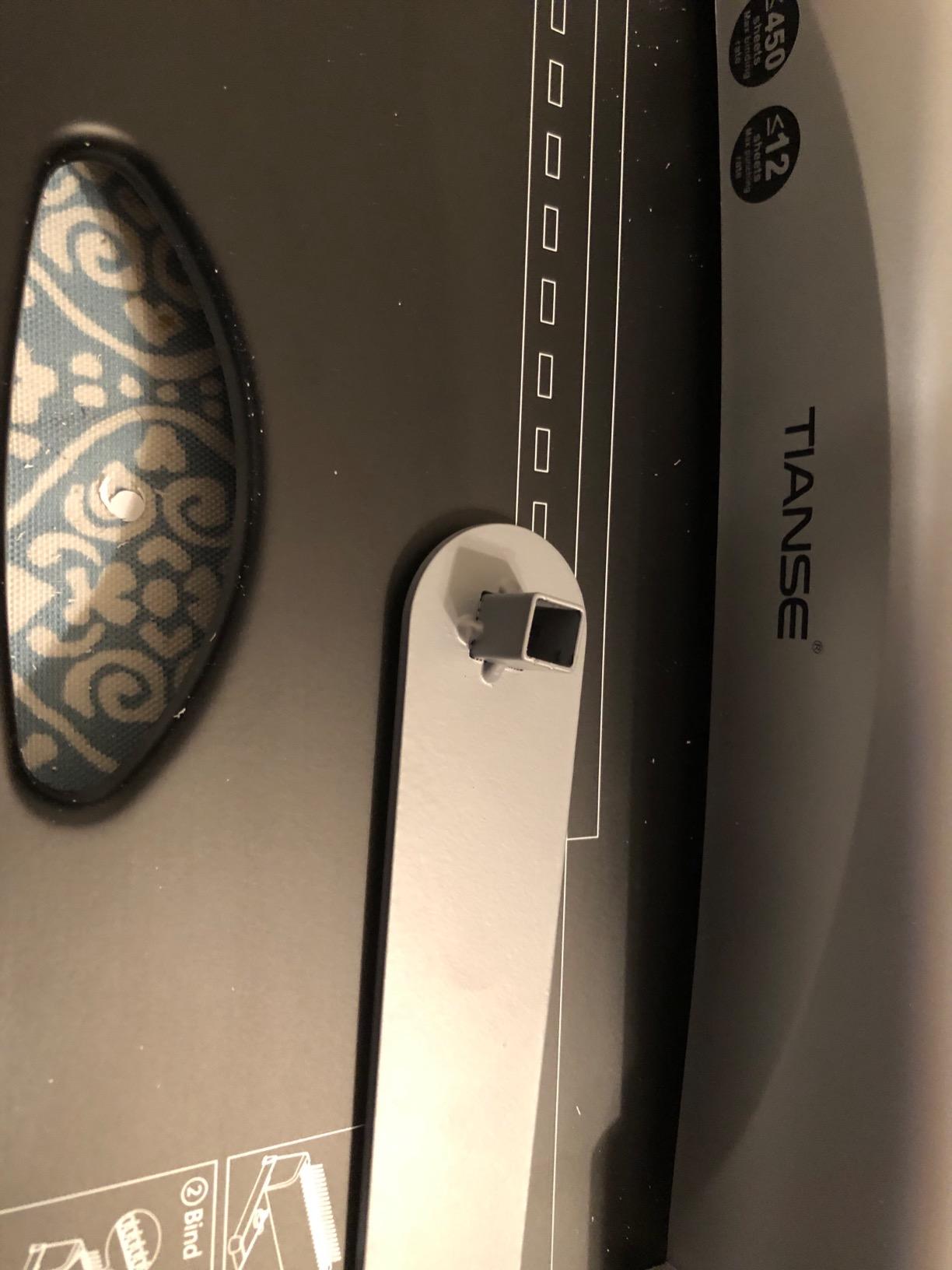
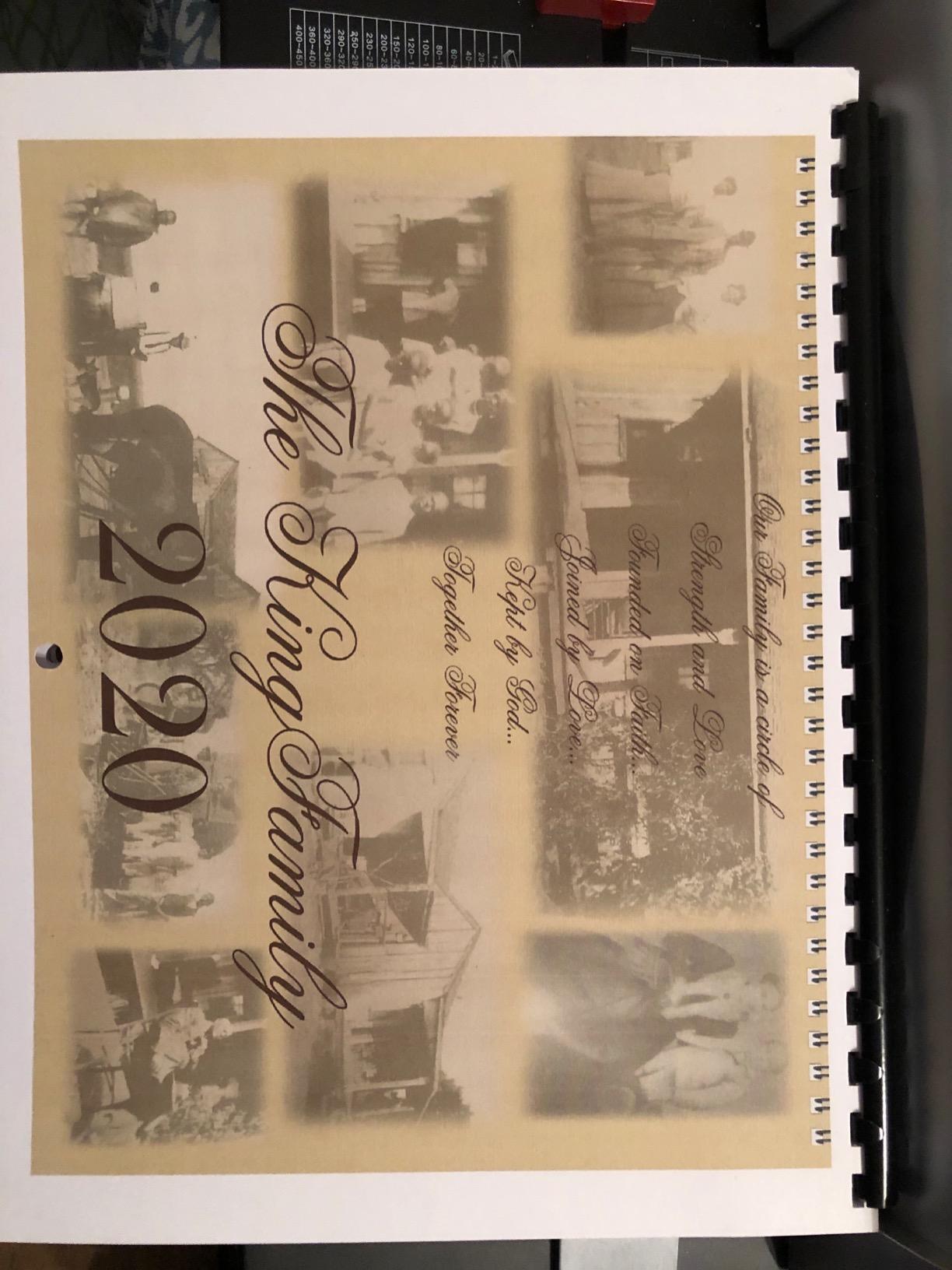
Two honest limits sit alongside the starter kit. The machine cannot punch laminated paper, so a laminated cover has to be bound with a different approach, such as punching first and laminating after. And the handle must be driven in one uninterrupted stroke: pausing partway jams the paper, which is the most common cause of torn sheets on this style of punch.
Note also that the advertised 450-sheet binding capacity assumes 2-inch combs, which are not part of the box. The combs you receive are 3/8-inch, and those suit far shorter documents.
Why This One Works in a Home Office
Portability and completeness are the two reasons. It moves between a desk, a shelf and a shared table without becoming a two-person job, and it works out of the packaging with consumables already supplied.
For homeschool families, small training providers and micro-businesses producing the same document for many people, that combination removes almost all friction. You hand a finished binder to someone and start the next one.
Where It Falls Down
Laminated covers rule it out for high-end presentation work. If your deliverables routinely have a laminated or plastic-wrapped front, this is the wrong machine and you should be looking at a wire or thermal route instead.
The single-stroke rule is the other friction point. It is a discipline issue rather than a quality one, but on a deadline it is the difference between a clean document and a reprint.
4. Fellowes Star+ Comb Binding Machine – Best for Workbooks That Get Reprinted Monthly
Fellowes Star+ Comb Binding Machine, Classroom Must-Haves Manual Binder, 15-Sheet Punch Capacity, Perfect for School Supplies & Classrooms (5006501)
15-sheet manual punch
Binds 150 sheets
Built-in comb tray
2 year warranty
Pros
- Compact design with smooth mechanical flow for daily prep
- Accuracy edge guide and vertical loader centre the holes
- Built-in comb tray and measurement tool speed up spine choice
- Two-year warranty from an established office brand
Cons
- 15-sheet punch limits it to smaller jobs
- Binds 150 sheets with a standard 3/4 inch comb
- Larger footprint than a compact desktop punch
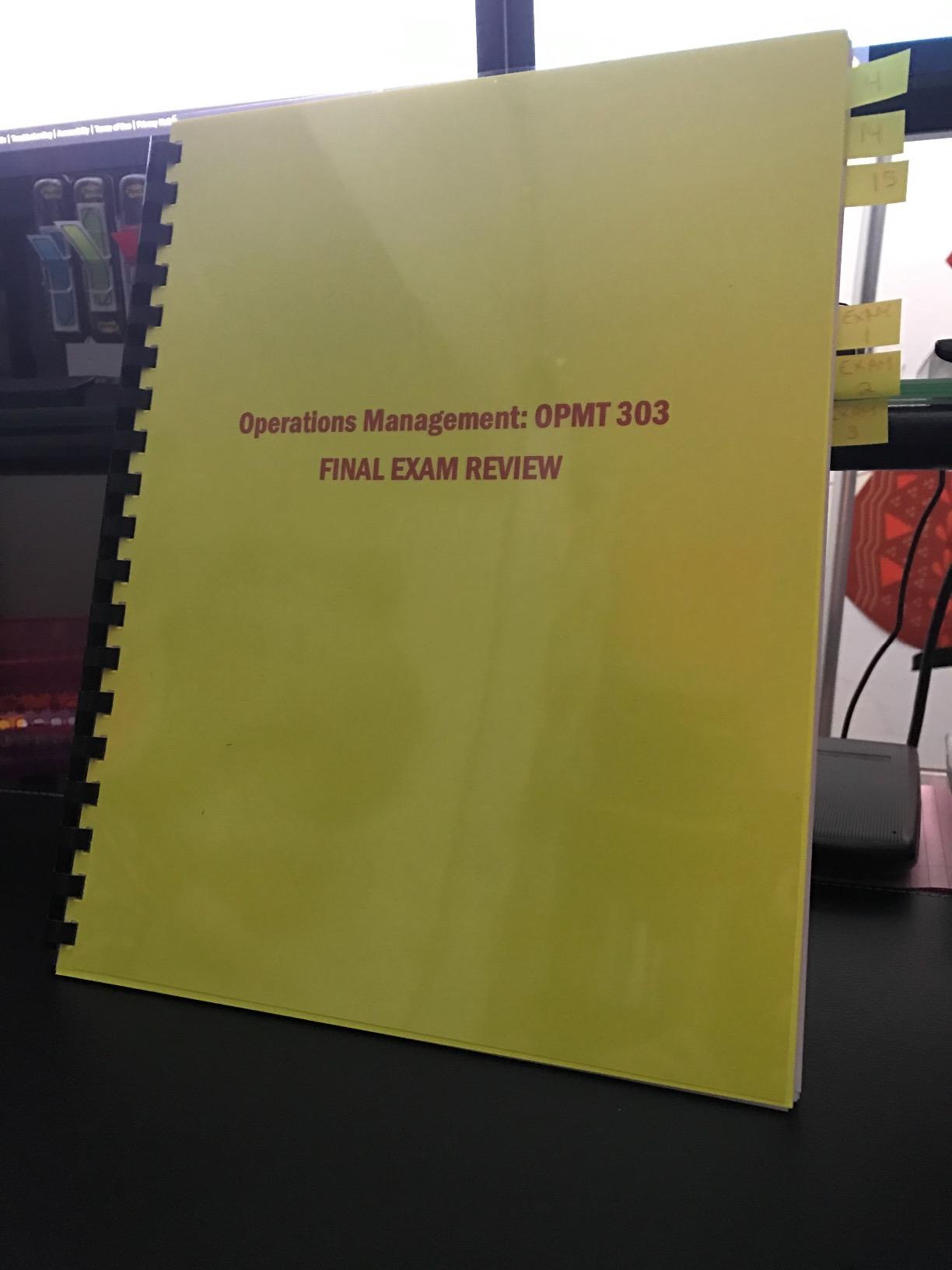
The Star+ is the pick for anyone who produces the same workbook or manual every month and wants the job to look identical each time. Its selling feature is not raw capacity but repeatability: a vertical document loader and an enhanced accuracy edge guide keep the holes consistently centred, so a 60-page workbook punches the same way in June as it did in January.
It punches up to 15 sheets per operation manually, which is a step up from the 10-to-12-sheet class, and binds up to 150 sheets with a standard 3/4-inch plastic comb. At 4.7 stars across 2,179 reviews, it is one of the highest-rated machines we examined, and the two-year warranty is longer than most machines in this roundup offer.
The built-in comb storage tray with an integrated measurement device is the feature home offices notice first. You lay the document in the tray, read off the sheet thickness, and pick the right comb without guessing. It is a small thing that removes a repeated source of wasted combs and mis-bound documents.
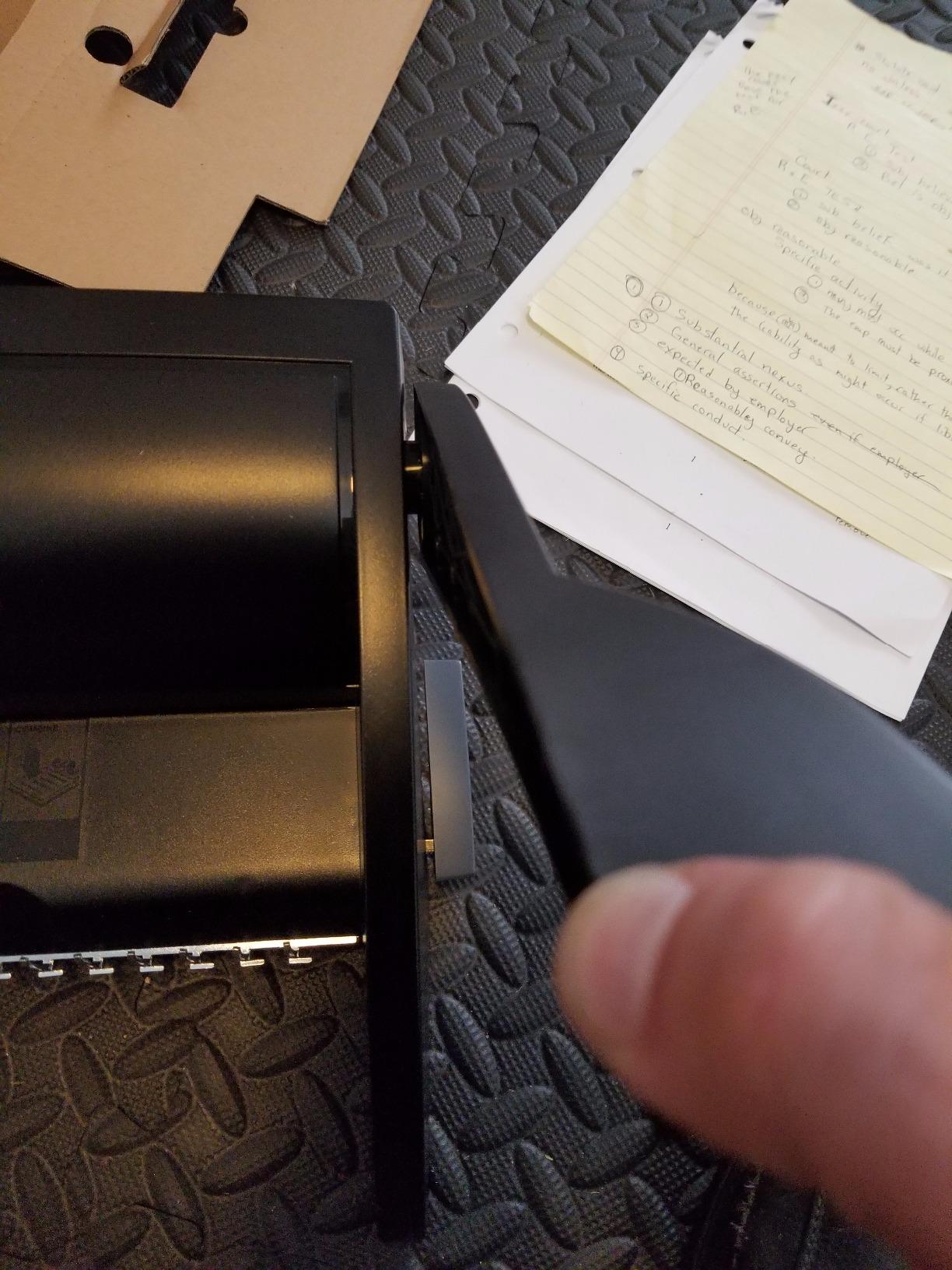
Physical facts worth knowing before you buy: 9.7 pounds and an L-shaped body measuring 11.02 by 17.72 inches. The L-shape and the storage tray make it wider than a minimal desktop punch, so it wants a real corner of the desk rather than a gap beside the keyboard.
The binding ceiling of 150 sheets is the honest constraint. A 150-sheet document is roughly a 75-page report, which suits training manuals, SOP binders, workbooks and short client reports. Push past that and you need a wider comb and a machine with more punch capacity.
Where It Earns Its Place
Recurring document production where consistency matters more than maximum thickness. Meeting handbooks, curriculum packs, internal procedure manuals and any document you reprint and re-send.
The comb tray also makes it a good first machine for someone who is new to binding, because the most common beginner mistake is choosing the wrong comb width and producing a spine that is either crushed or gaping.
Where It Is the Wrong Choice
Long documents. At 15 sheets per stroke and a 150-sheet ceiling, a 300-page manual means many repetitions and a machine that physically cannot finish the job in one spine.
It is also the wrong pick if desk depth is tight. Check the 17.72-inch width against your workspace before committing; the tray exists for a reason and it does not fold away.
5. OFFNOVA 21-Hole Comb Binding Machine – Most Versatile with a Cast Iron Base
OFFNOVA Binding Machine, 21-Hole 450 Sheets Paper Comb Punch Binder Machine for Letter Size / A4 / A5 Paper, Easy to Punch Handle, Adjustable Margin
Punches 10-12 sheets
Binds 450 sheets
Cast iron base
100 combs included
Pros
- Comes with 100 combs a comb protector and oil-absorbing paper
- Punches cleanly and looks professional when finished
- Stable base prevents lifting while punching
- Suitable for home homeschool church and small office work
Cons
- Handles about 5-10 sheets per cycle in practice
- Included plastic combs wear out faster than wire
- Handle must be one uninterrupted stroke
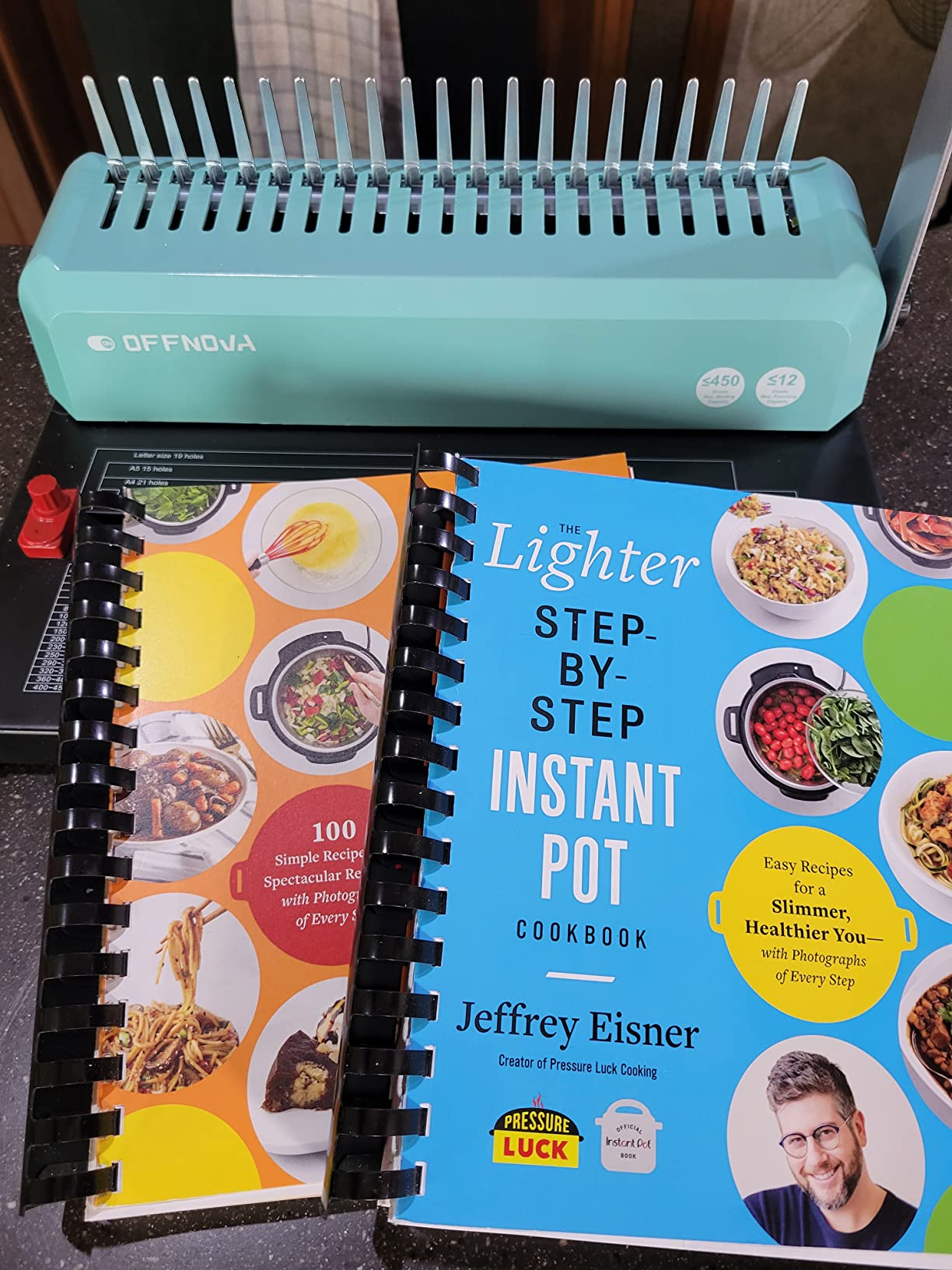
The OFFNOVA is the machine to buy when the budget is the deciding factor and the work is short. At 4.6 stars from 1,027 reviews it punches well above its class, and the accessory bundle is unusually generous: 100 comb spines, a comb protector and an oil-absorbing sheet are all in the box.
The cast iron base is the detail that separates it from cheaper machines. During a punch stroke the handle throws upward force, and a machine that slides or lifts mid-stroke produces misaligned holes or torn pages. A powder-coated cast iron base and a wear-resistant ABS shell stay planted, which owners consistently mention as the reason their results look clean.
Quoted capacity is 10 to 12 sheets of 80g paper per stroke, 2 sheets of 230g cover, or a single sheet of 5-to-12 mil PVC cover. Binding capacity reaches 450 sheets with 2-inch spines. A positioning knob and adjustable edge guide handle Letter, A4 and A5 with 3mm, 4mm and 5mm margins, and the curved handle reduces the force needed at the top of the stroke.
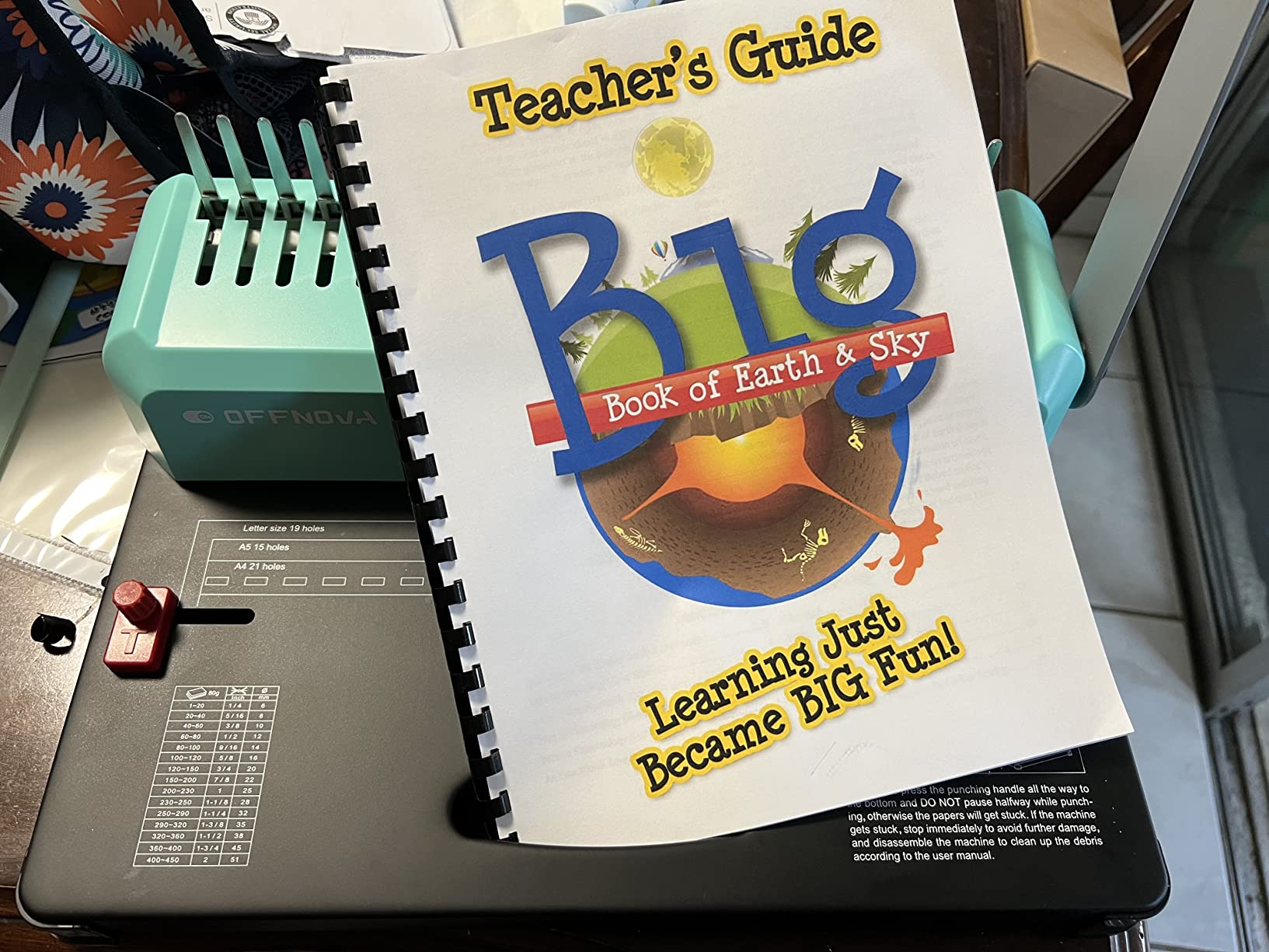
In practice owners report around 5 to 10 sheets per cycle, so treat the 10-to-12 figure as a ceiling rather than a daily average. For a 20-page booklet you are punching two or three batches, which is unremarkable. For a 200-page report it is a workout, and that is the honest limit of this machine.
The included plastic combs are also the weak link. For documents that will be handled repeatedly or archived on a shelf, plastic combs fatigue faster than wire, and reviewers comparing the two reach for wire once a book needs to survive years of use.
Best For
Occasional binding in a home office: a quarterly report, a small client pack, church or homeschool materials, or a batch of short booklets. The bundled supplies mean the first document goes out the same day the machine arrives.
The mint finish and stable base also make it a reasonable choice for a shared study rather than a dedicated office, since it can be carried between surfaces at 9.04 pounds.
What to Manage Your Expectations About
It is a small-job machine with a large headline number. The 450-sheet figure describes the spine you could buy, not the workflow you can sustain in an afternoon.
Two setup points: the comb attachment takes a few attempts to master, and pausing the handle mid-stroke jams the paper. Practise once on scrap before a deadline document.
6. GBC ProClick P50 – Best Binding Punch for a Very Small Desk
GBC Binding System, Manual, Desktop Binding Punch, 6 Sheet Punch Capacity, ProClick P50 (2515650)
6-sheet punch capacity
3 ProClick holes
2.2 pounds
Slim profile
Pros
- Slim profile takes almost no workspace and weighs 2.2 pounds
- ProClick spines can be opened and closed by hand or with a tool
- Handles regular and oversized documents
- Sturdy metal construction
Cons
- Only punches 6 sheets at a time
- ProClick spines are sold separately
- Only three holes means one fixed binding position
Every other machine in this roundup is a lever you swing across a desk. The GBC ProClick P50 is the opposite proposition: a low-profile metal punch that weighs 2.2 pounds and measures 18.25 by 3.56 by 3.06 inches. It stores in a drawer, and it is the only machine here that genuinely disappears into a home office.
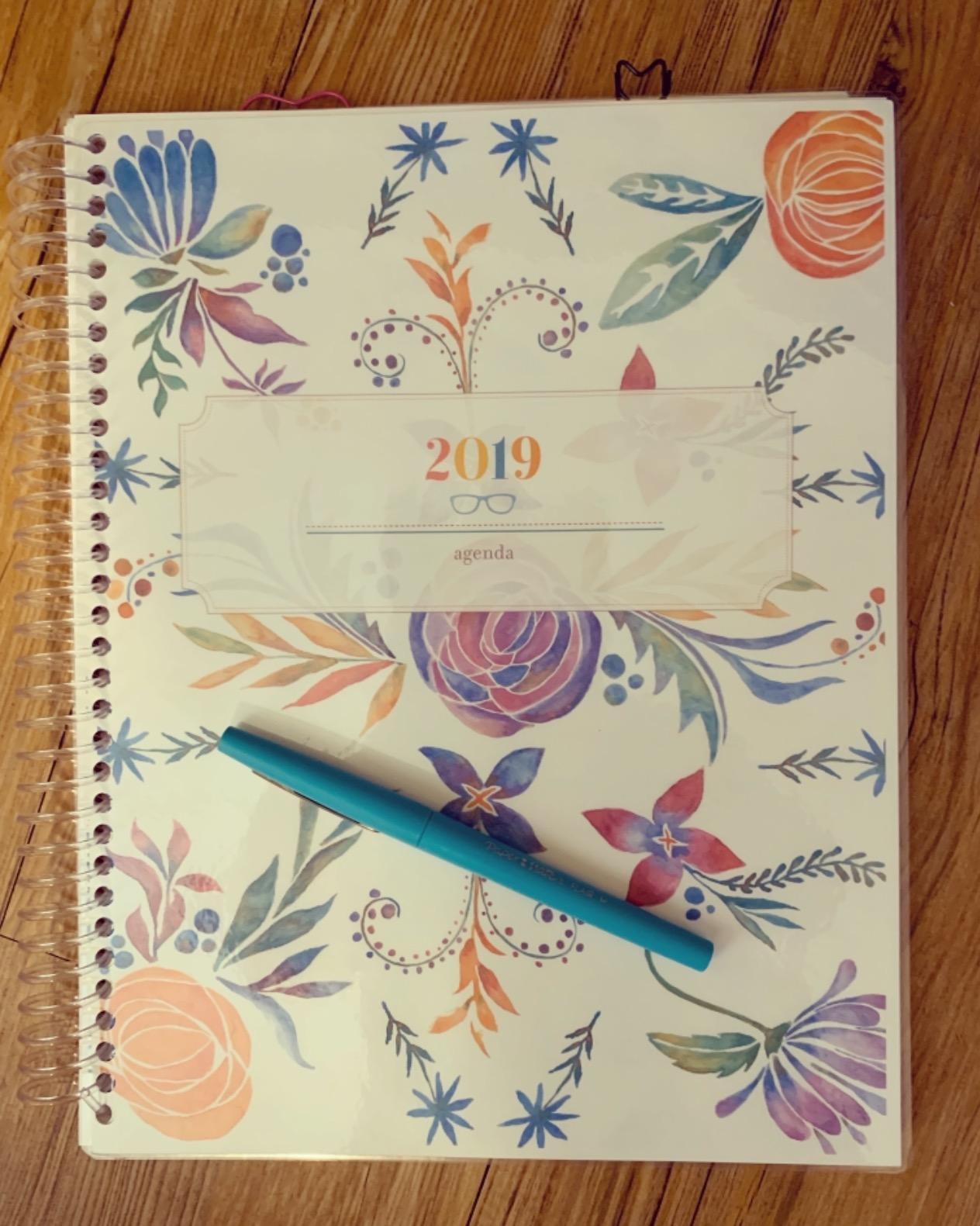
What you get is a three-hole ProClick punch that cuts 6 sheets at a time. The spines that fit it zip open and closed, either with a machine, a simple editing tool or your fingers, which is the distinguishing feature. A ProClick document can be opened, a page added, and closed again. For meeting packs, workbooks and SOP manuals that get amended, that reversibility is worth more than capacity.
Construction is metal, and the guarantee is a limited one-year warranty, which is the shortest in this group. The punch holes measure 8 millimetres, and the machine accommodates both regular and oversized documents.
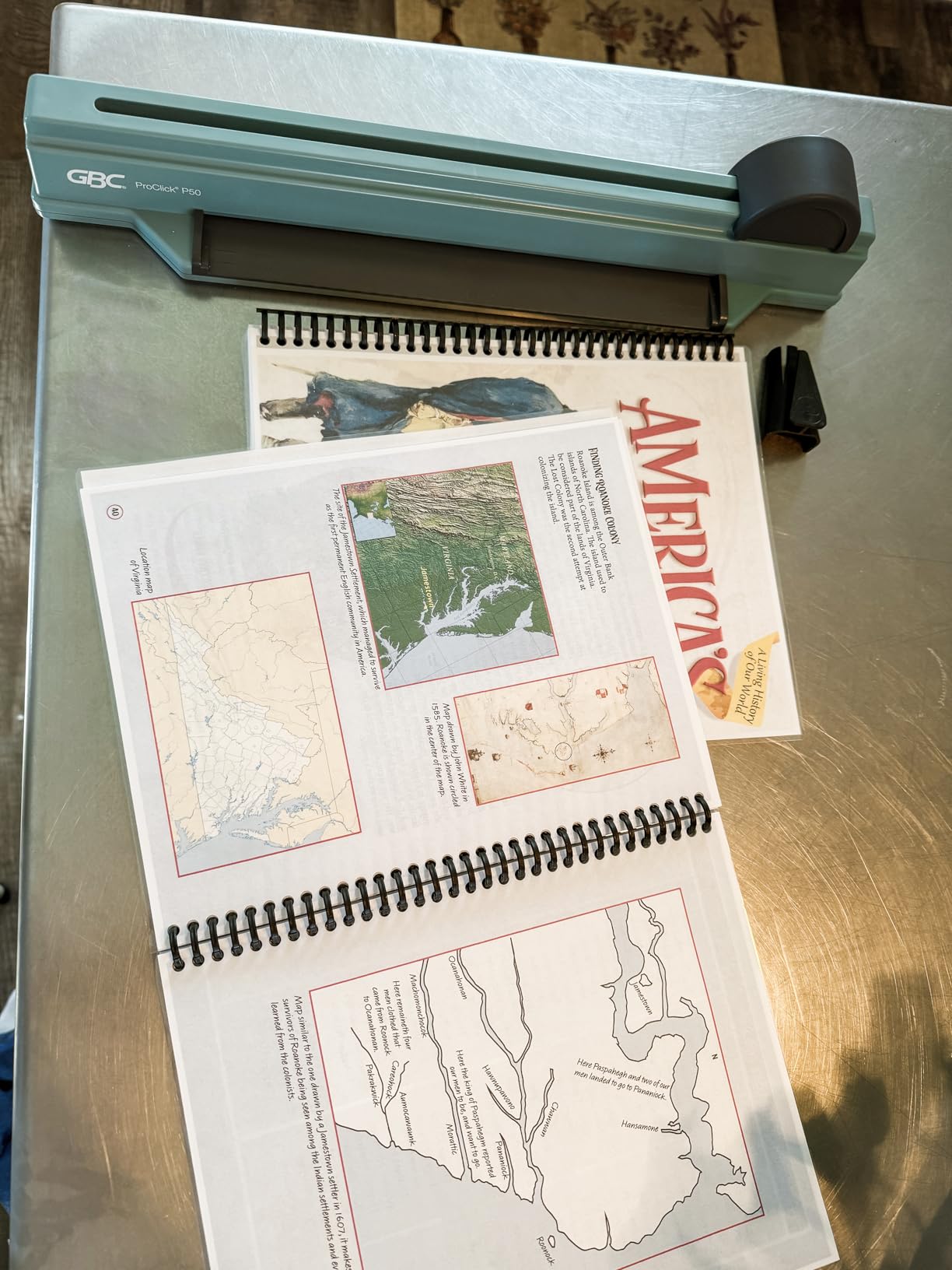
The six-sheet limit is severe. It is the smallest punching capacity we reviewed, and a 30-page document means five passes. There is also no width adjustment to think about because the pattern is fixed at three holes, which also fixes the binding position on the page.
Spines are sold separately, and because ProClick is a proprietary system the per-document cost adds up faster than with a bulk box of plastic combs. For light personal use that is a fair trade; for a monthly document run it is not.
Why It Still Belongs on the List
Space. If your binding happens on a shared kitchen table, in a studio apartment or in a home office where every square inch of desk is spoken for, footprint beats capacity. Nothing else here is this small.
Reversibility is the second reason. A ProClick document can be opened and re-closed without being destroyed, which is the closest thing to a do-over that this category offers.
Where It Falls Short
Six sheets per stroke, three holes, and no path to thicker documents. It is a personal punch for short items, not a machine for a report line of work.
It is also the wrong tool for archival workbooks, since the spines are a recurring cost and the spine width caps the document at a modest size.
7. Fellowes Pulsar+ Comb Binding Machine – Best Rated for High-Volume Workbooks
Fellowes Pulsar+ Comb Binding Machine, School Supplies & Classroom Organization Manual Binder, 20-Sheet Punch Capacity, Includes 10-Pack Starter Kit (5006801)
20-sheet manual punch
Binds 300 sheets
Storage bins
15.4 pounds
Pros
- Highest rated in the group at 4.8 stars with 89 percent five-star reviews
- Largest punch capacity among the light-duty machines at 20 sheets
- Vertical loading path and accuracy guide produce consistent holes
- Integrated storage bins keep combs organised
Cons
- Heaviest machine in the roundup at 15.4 pounds
- Highest cost in the group
- Still needs a full handle stroke per batch
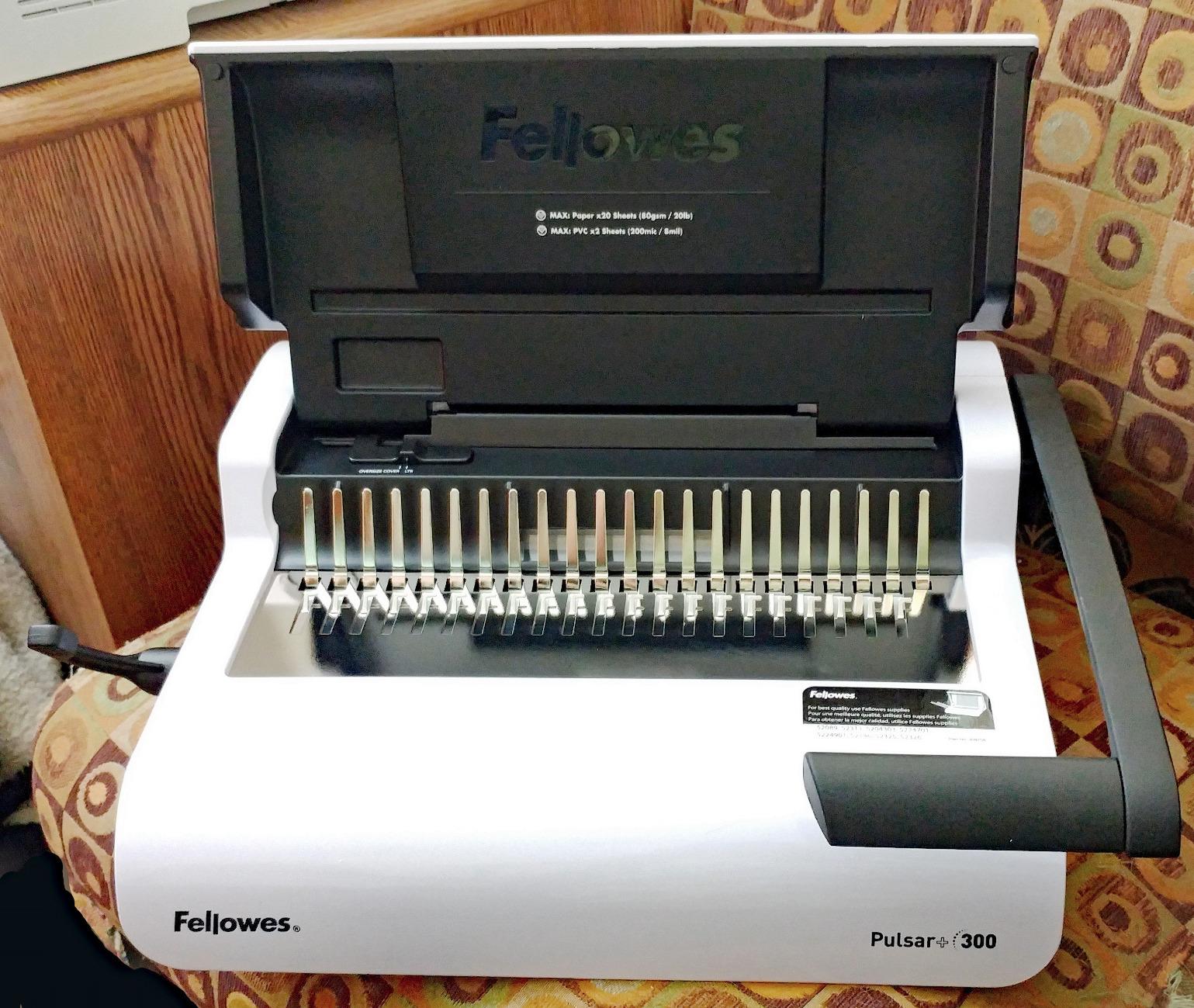
The Pulsar+ is the best-rated machine we examined, at 4.8 stars with 89 percent of reviews at five stars across 573 ratings. It reaches 20 sheets per manual stroke, which is the largest punch capacity of any manual machine in this roundup and a real productivity difference once you are producing dozens of workbooks at a time.
The design is a continuous punch-and-bind system with a vertical loading path. You load the paper from above, and the accuracy guide holds it square so the holes are uniform without wrestling the stack into position. It binds up to 300 sheets with a standard 1-1/2 inch plastic comb, roughly double the ceiling of the smaller Fellowes model, and it includes a 10-pack starter kit.
Integrated comb storage bins with a document measurement tool live in the body. For someone producing custom student workbooks or lesson planners, having the combs to hand in the machine rather than in a drawer is a genuine time saving over a month of use.
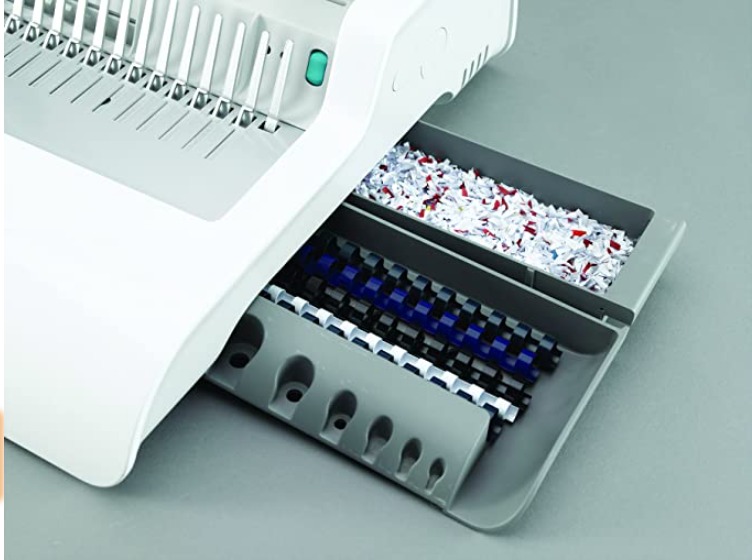
The trade-off is physical. At 15.4 pounds and 15.38 by 18.13 by 5.13 inches, this is the heaviest and bulkiest machine in the roundup, and it also sits at the top of the price range among the manual comb models here. It wants a dedicated stretch of desk and it does not travel well between rooms.
It is also still fully manual. Twenty sheets per stroke is the ceiling per stroke, and every additional twenty pages means another full lever pull. If your volume runs to hundreds of pages a day, no manual machine in this list is the right answer.
Best For
High-volume light-to-medium documents: student workbooks, lesson planners, training packs and any job where you are producing twenty or more copies of the same title. The 20-sheet stroke is what makes that workflow tolerable.
It also suits anyone who judges quality by finish rather than by cost. The combination of alignment guide, vertical loading and integrated storage produces the most consistent output here.
Where It Is the Wrong Choice
Small or shifting workspaces. Fifteen pounds of machine that only earns its place if you use it heavily is a poor fit for an occasional binder.
It is also fully manual at the top of its class, so very large documents still demand many strokes. For a single thick report, a lighter comb machine plus a wider comb is the sensible route.
8. RAYSON TD-132 – Best Multi-Format Binder for Wire, Coil and Click in One
RAYSON TD-132 3:1 Wire Binding Machine, 12-Sheet Punch, 120-Sheet Capacity
3:1 pitch, 32 square holes
Punches 12 sheets
Binds 120 sheets
Corner rounder included
Pros
- Handles coil click and wire-O spines at 3:1 pitch in one machine
- Long lever handle makes punching efficient
- Horizontal paper insertion keeps holes aligned
- Includes a corner rounder and scraps drawer
Cons
- Letter size only and will not punch A4
- Loud and vibration-heavy while punching
- Build quality feels inexpensive
The TD-132 is the format-flexible pick: it punches a 3:1 pitch pattern of 32 square holes measuring 4 by 4 millimetres, and that pattern accepts coil, click and wire-O spines. Most machines in this roundup lock you into one consumable family. This one lets you switch spine types as the job changes, which is useful when you move between client reports and internal workbooks.
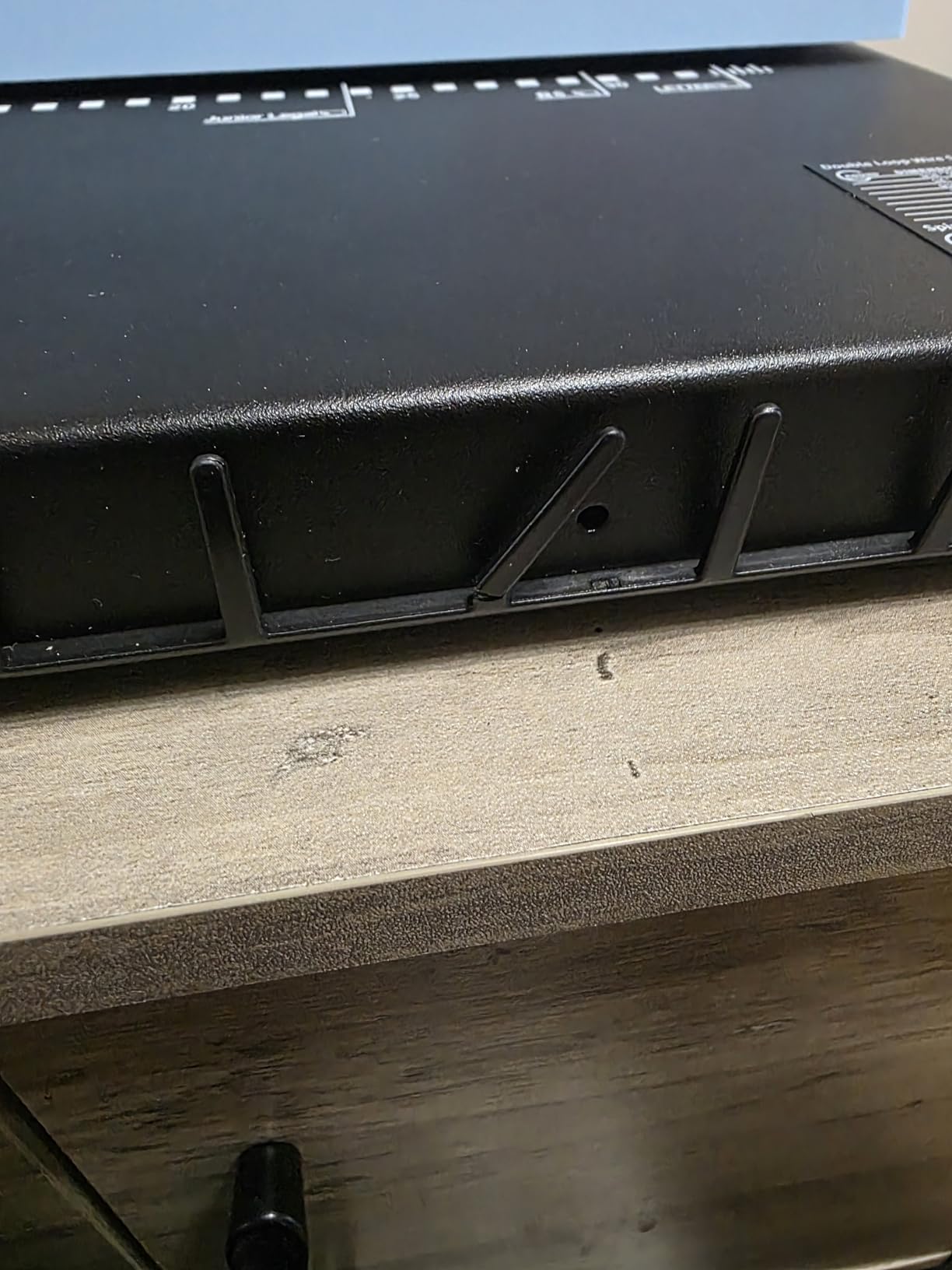
Mechanically it is straightforward. The long lever handle reduces the effort per stroke, and horizontal paper insertion keeps the punched holes aligned with the sheet rather than offsetting them. A built-in paper scraps drawer collects debris from every punch, and a corner rounder puncher is included, which gives finished documents a neater corner at very little cost.
Capacity is 12 sheets of 80g paper per stroke and up to 120 bound sheets. Wire spines from 1/4 inch to 9/16 inch work, and the included starter spines are on the small side for thicker projects.
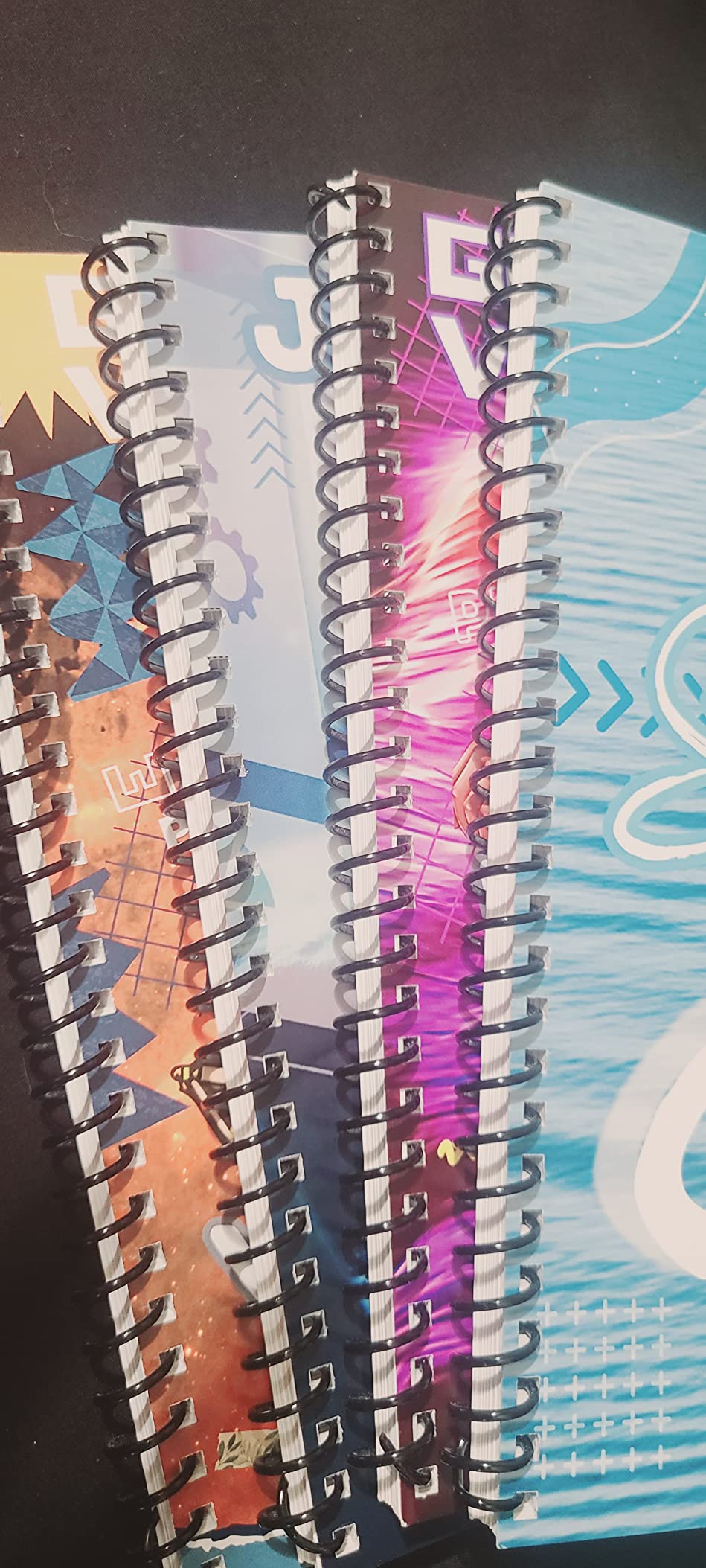
The two limits are decisive for many home offices. It is letter size only and will not handle A4, which rules it out immediately if you work with European paper. And the operation is genuinely loud and vibration-heavy, which matters in a shared room or on a conference call.
Build quality is the other concern. Owners describe it as feeling inexpensive from the handle to the knobs, and the front plastic page guides are called out as breakable. That is a comment on longevity, not on whether the machine works today.
When to Choose This One
Choose it when you genuinely need more than one spine system, particularly wire-O alongside coil. A 3:1 pitch with 32 holes also produces a tighter, more book-like spine than a 2:1 pattern.
It suits people producing landscape or oversized documents too, since the horizontal insertion path and the corner rounder handle wide material better than a vertical desktop punch.
When to Choose Something Else
If you work in A4, choose something else. There is no adjustment or accessory that changes the maximum sheet size on this machine.
If you work in a shared home or bind during calls, the noise and vibration are a real drawback. And for heavy repeated use, the feel of the controls is not reassuring.
9. TruBind S-20 Electric Coil Binder – Best Electric Option for Real Volume
TruBind Coil Binding Machine with Electric Coil Inserter and Adjustable Side Margin | 20 Sheet Punch Capacity | Bind up to 440 Sheets | 46 Fully Disengageable Dies | 4:1 Pitch | 2-Year Warranty
20-sheet punch, electric inserter
Binds 190 electric or 440 manual
46 dies
2 year warranty
Pros
- Electric coil inserter speeds up binding considerably
- 46 fully disengageable dies stop holes overhanging small pages
- Open punch throat handles legal tabloid and A4
- Full-width handlebar suits either hand
- Two-year warranty with crimping pliers included
Cons
- Documentation is thin and tutorials are needed
- Electric rollers run fast and take practice
- Very thick books will not run through the electric inserter
The TruBind S-20 is the first machine on this list where electricity changes the workflow rather than just the speed. It punches up to 20 sheets manually, then the electric coil inserter opens the coil, threads the stack and closes it in one motion. Long-term owners report reliably binding five to fifteen booklets of 40-plus pages, and they consistently say they prefer coil over comb because the finished book lies flat and opens fully.
The 46 fully disengageable dies are the quietly important feature. Most machines punch a fixed rectangle of holes, so on a smaller page some holes land outside the paper edge and tear it out. Because these dies can be switched off individually, you can punch a narrow card, a half-sheet insert or a non-standard page without wasting it.
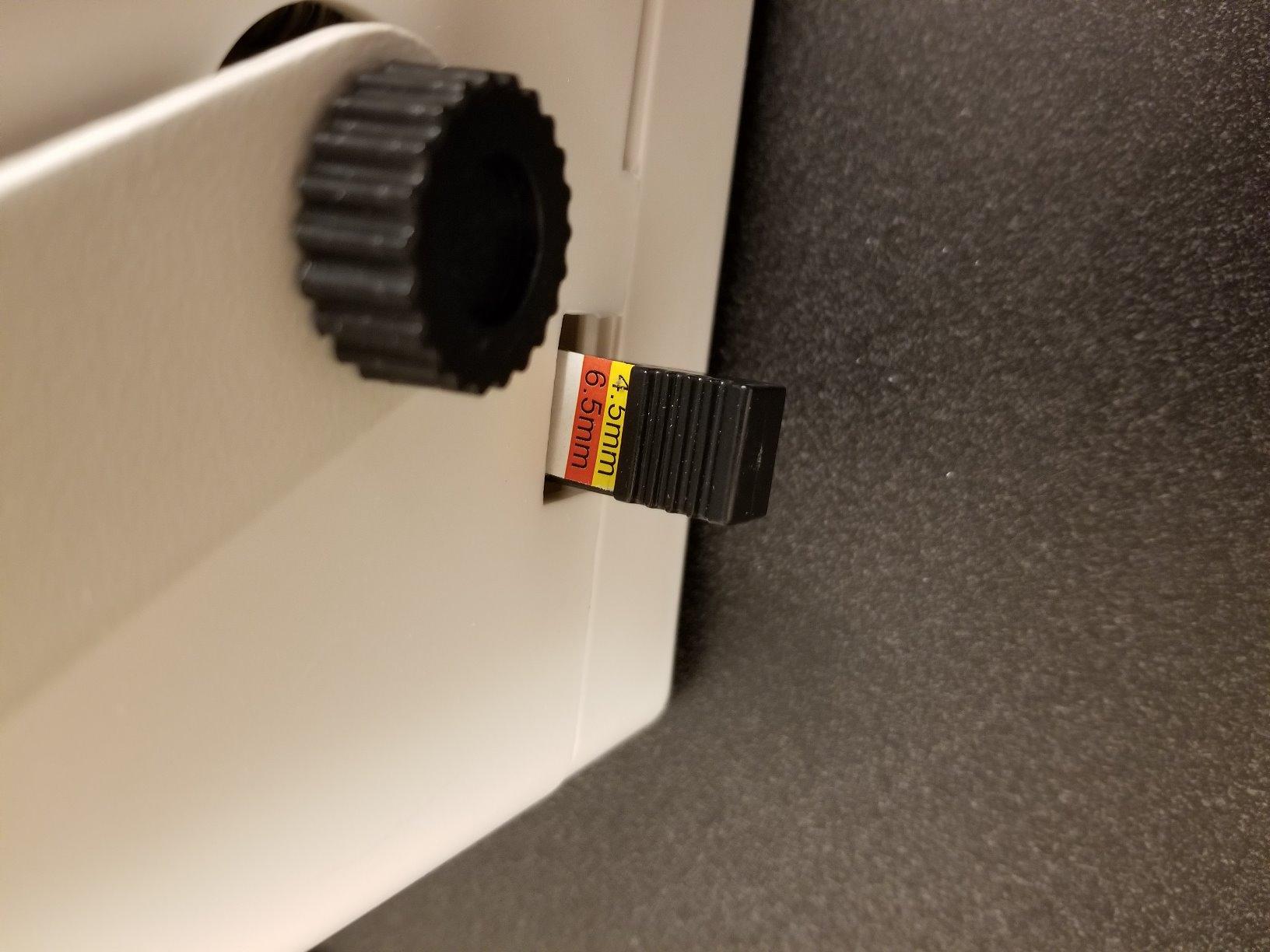
Paper handling is unusually flexible. The open punch throat accepts anything larger than 8.5 by 11 inches, including legal, tabloid and A4. Margin depth is adjustable to 2.5mm, 4.5mm and 6.5mm with side margin control, and the full-width handlebar can be used one-handed or two-handed. The guarantee is two years, with spare part availability reported for the same period.
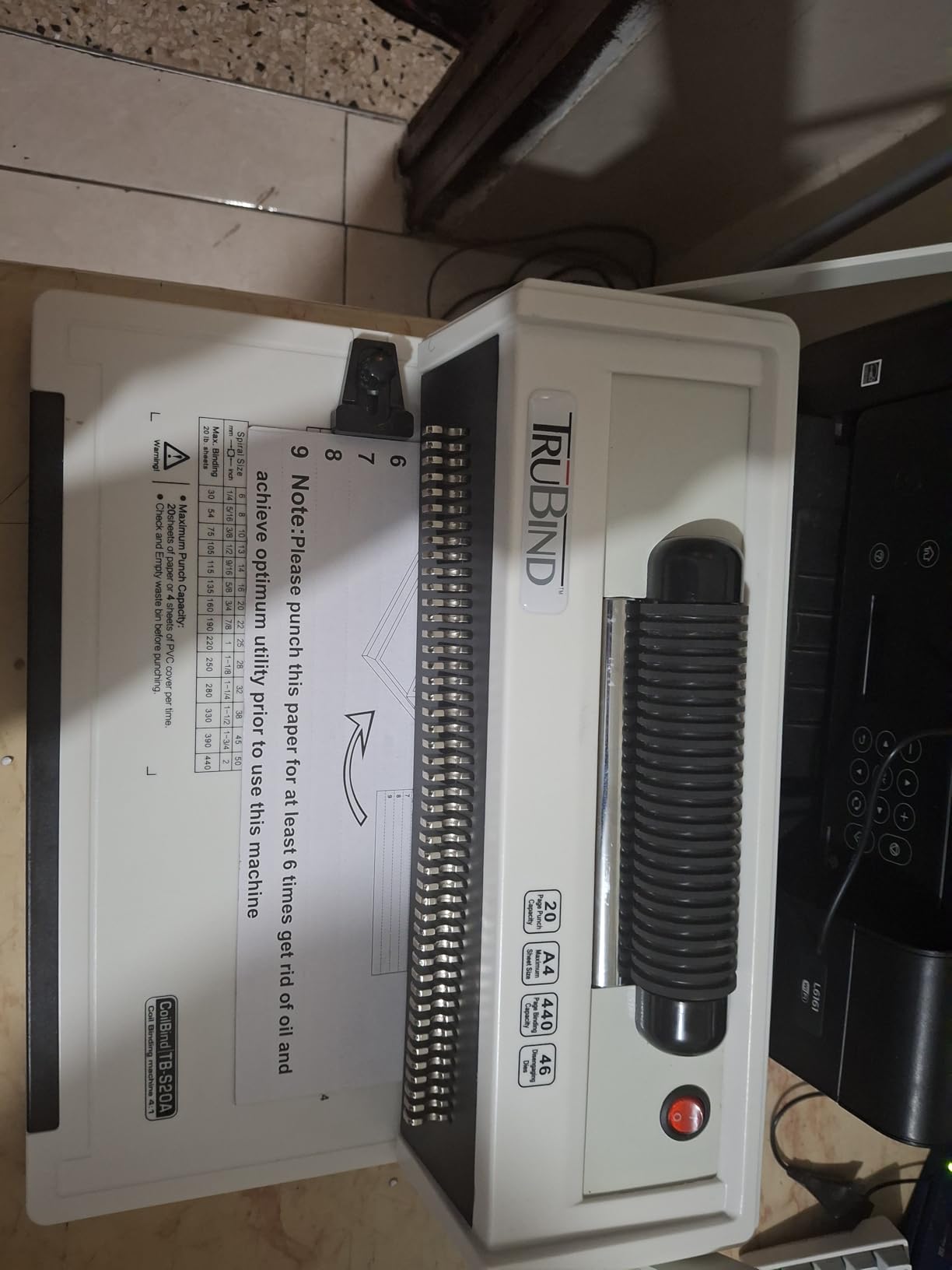
Binding capacity splits two ways: up to 190 sheets on the electric inserter, or up to 440 sheets bound manually. A very thick book, on the scale of a 400-page manuscript, will not run through the electric coiler, so the machine has a soft ceiling that the headline number does not show.
The lubrication on the punch dies is worth knowing about. It keeps the mechanism running smoothly but can stain the first few sheets you punch, so waste a test batch of scrap paper before your first client document.
What You Gain by Going Electric
Throughput per hour, mostly. The manual work is the punch, and once that is done the electric inserter removes the fiddly part that takes beginners longest, which is threading a coil by hand without bending it.
Long-term owners describe the electric inserter as paying for itself quickly against commercial binding services, particularly for people who produce regular client kits. Add a 4:1 pitch coil and the result looks like a professionally produced workbook.
What You Have to Accept
Documentation is the recurring complaint. Several reviewers state that the included manual is close to useless and that the electric inserter and crimping pliers need video instruction before they make sense. Budget an hour of that upfront.
The electric rollers also run fast. Feeding the coil without a misfeed takes practice, and misfeeds waste coils as well as time.
10. VEVOR 21-Hole Comb Binding Machine – Most Stable Metal-Frame Budget Binder
VEVOR Binding Machine, Comb Binding Machine 21-Holes Binding 450 Sheets, Book Binder Machine with 100 PCS 3/8” Comb Binding Spines, for Letter Size, A4, A5
21 holes, 12-sheet punch
Binds 450 sheets
Cast iron base
100 combs included
Pros
- Lowest cost among the metal-frame comb machines
- Heavy cast iron base resists rust and stays stable
- Includes 100 combs and oil-absorbing paper so it works out of the box
- Adjustable margins and removable chad tray
Cons
- Included 3/8 inch combs are flimsy for bigger projects
- Real punching is closer to 6-8 sheets
- Instructions are too thin to set the machine up quickly
The VEVOR is the cheapest metal-frame comb binder we reviewed, and at 4.5 stars from 394 reviews it holds up. The cast iron base with a powder-coated surface, metal side arms and carbon steel blades is a genuinely robust specification at this cost, and owners single out the stability during the punch stroke as the reason their holes come out clean.
It punches 21 holes and up to 12 sheets per stroke, and binds up to 450 sheets with expandable combs running from 3/8 inch to 2 inch. Letter, A4 and A5 are all supported via an adjustable edge guide and side margin settings. The operating logic is unusual and, once understood, fast: press the handle upward to punch and downward to bind.
The box contains 100 of the 3/8-inch comb spines and an oil-absorbing paper sheet, which absorbs residue from the blade and keeps it cleaner between jobs. A removable rear chad tray collects the punched chads so they do not scatter across the desk.
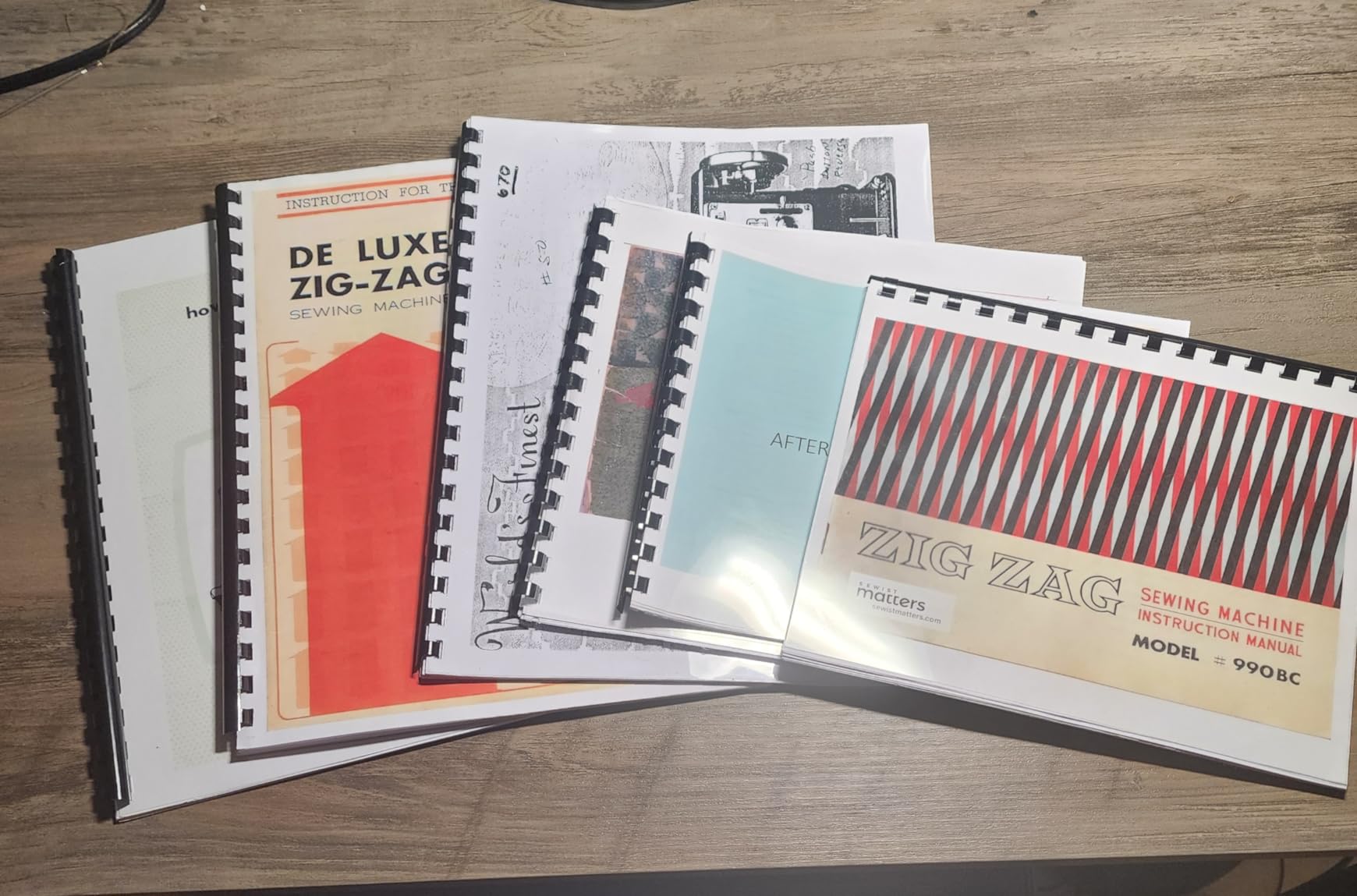
The consensus criticism is the learning curve rather than the hardware. Instructions are not detailed enough, and several owners report that rushing leads to missed punches and ruined sheets. The realistic punch capacity is 6 to 8 sheets, below the quoted 12, and the bundled combs are described as flimsy for larger projects.
It is also heavy and awkward to move at 7.7 pounds despite the compact handle, and clearing a jam takes longer than on a lighter machine because of the metal frame. For a first binding attempt under time pressure, that is a poor combination.
Best For
Value-focused home offices and small institutions that want a durable frame without a premium cost. The stability and the included supplies make it a sensible first machine for a classroom, a church group or a home study.
Owners also report it handling 3/4-inch projects comfortably, so it is not limited to the very short booklets its starter combs suggest.
Where It Falls Short
The instruction booklet. If you are buying this expecting to be productive in the first ten minutes, you will be watching a reviewer’s video instead of reading a manual.
Alignment is unforgiving. Square the stack before you close the handle, because a misaligned document produces holes that tear rather than punch.
11. Hoqqf Thermal Binding Machine – Best Thermal Binder for Permanent Softcover Books
Thermal Binding Machine 500 Sheets Capacity, Book Binding Material
500 pages per cycle
350-400 pages recommended
Under 5 pounds
CPU temperature control
Pros
- Produces the most professional permanent book of any machine here
- Handles thick documents up to 500 pages
- Lightweight at 4.84 pounds and simple to assemble
- Fast cycle with audible ready and completion beeps
Cons
- Instructions are unclear and there is a learning curve
- Thermal binding cannot be edited or undone
- Cover paper is sold separately and the included sheets are for trial use
Thermal binding works in a completely different way from every other machine here. There are no holes. The machine heats a glue spine, presses the page edges into it, and produces a permanent softcover. That is why it handles thick or slippery stock that a punch would tear, and why the finished product looks like a book rather than a report.
Capacity is up to 500 pages per cycle at 50mm of thickness, with 350 to 400 pages recommended for the most reliable results. The control system uses CPU temperature control with PTC ceramic heating elements and infrared detection, which is what keeps the bond consistent rather than gluing some books harder than others. Hand-operated clamping plates hold the first and last pages so nothing slips while the glue sets, and an over-time protection feature cuts glue waste.
Paper handling covers Letter, A4, A5 and A3 on the short edge, making it the broadest size range of any binder here. At 4.84 pounds it is also light enough to carry between rooms, and one reviewer notes a nine-year-old assembled it unaided.
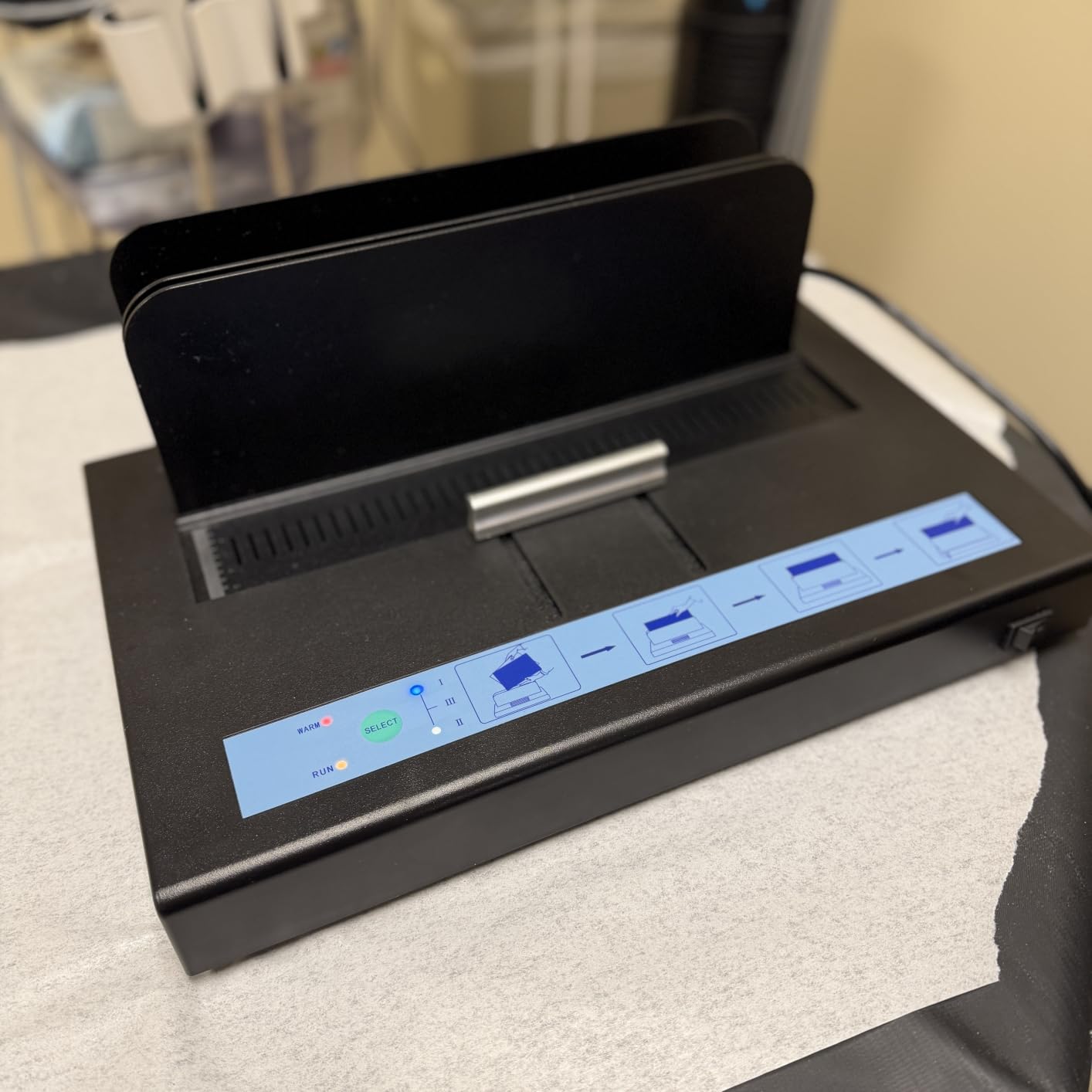
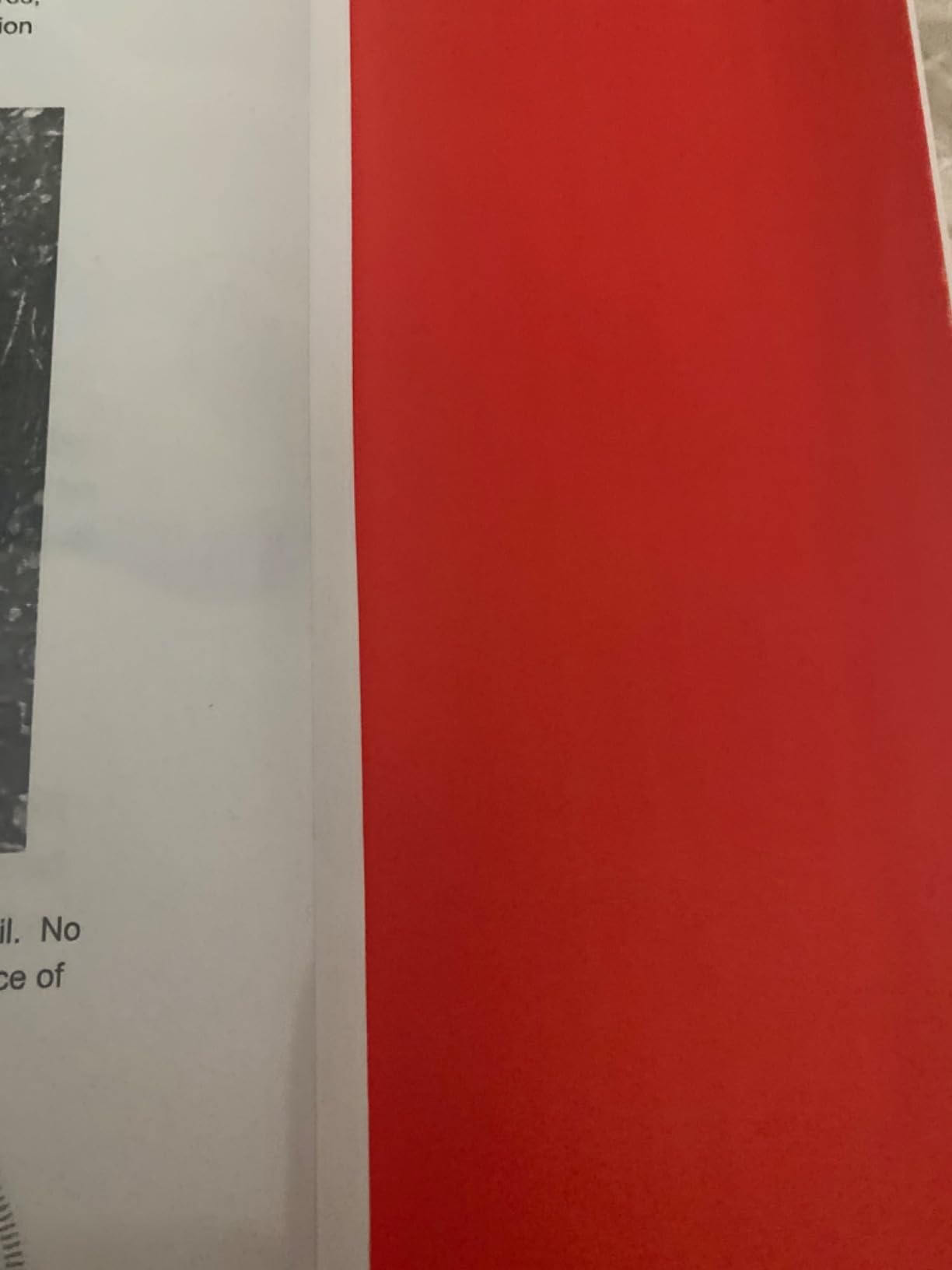
The permanence is the trade-off, and it is absolute. A thermally bound book cannot be opened, a page cannot be added, and a single mistake cannot be reprinted without a fresh cover and another cycle. Before you commit a document to glue, proof-read it.
The box contains ten sheets of 6mm cover paper, each of which binds 35 to 50 pages, which is enough to test the machine and nowhere near enough for real work. Molten glue can get onto the machine during use, so owners recommend laying parchment paper down first.
Where Thermal Wins
Any document thick enough that a comb would struggle, and any document with a cover. Textbooks, workbooks, manuals, curriculum packs and self-published material are the natural fits. Users report binding entire textbook runs at home and repairing older books.
It is also forgiving about the paper itself. Because nothing is punched, laminated, coated and heavy stock are not a problem, which is exactly the failure mode that rules out several cheaper comb machines.
Why It Is Not the Only Machine You Need
Thermal is a finishing decision, not a working tool. The moment a client asks for a change, you start again from blank paper. Keep a reversible machine alongside it for anything that might be amended.
The storage footprint is also awkward: a bulky body at 16.81 by 13.29 by 4.02 inches with nothing that folds down, so it wants shelf space rather than drawer space.
12. MAKEASY Coil Spiral Binding Machine – Best for A4 Coil Work with Electric Insertion
MAKEASY Coil Spiral Binding Machine, Punch 15 Sheet – Manual Hole Punch – Electric Coil Inserter – Adjustable Side Margin – for Letter Size/A4/A5, Comes with 1 Box 5/16” Binding Coils & Plier
15-sheet punch
Electric coil inserter
46 holes for A4
4:1 pitch
Pros
- Electric coil inserter speeds up larger workloads
- Largest hole count at 46 holes allows A4 binding at 4:1 pitch
- Comes with a full box of 5/16 inch coils and crimper pliers
- Adjustable side and edge guide with three margin settings
Cons
- Lowest average rating in the group at 4.0
- Highest share of one-star reviews at 16 percent
- Binding requires holding the paper down by hand
What this machine does well is specific and valuable: a 46-hole pattern at 4:1 pitch, which is the correct configuration for A4 documents. If your paperwork is A4 rather than Letter, most 19-hole and 21-hole machines will not handle it, and this one is built for it. It also covers Letter with 44 holes and A5 with 33 holes.
The electric coil inserter handles the opening, threading and closing of the coil in one action, and the box includes a full set of 5/16-inch 4:1 pitch black PVC coil spines plus crimper pliers for finishing the tail. Punching is up to 15 sheets of 80g paper per operation, and the side and edge guide is adjustable across 2.5mm, 4.5mm and 6.5mm margins.
Construction is metal, and the stated product listing places it at 4:1 pitch coil binding throughout. In practice this is a compact machine that handles a single working width of paper rather than a wide-format desktop unit.
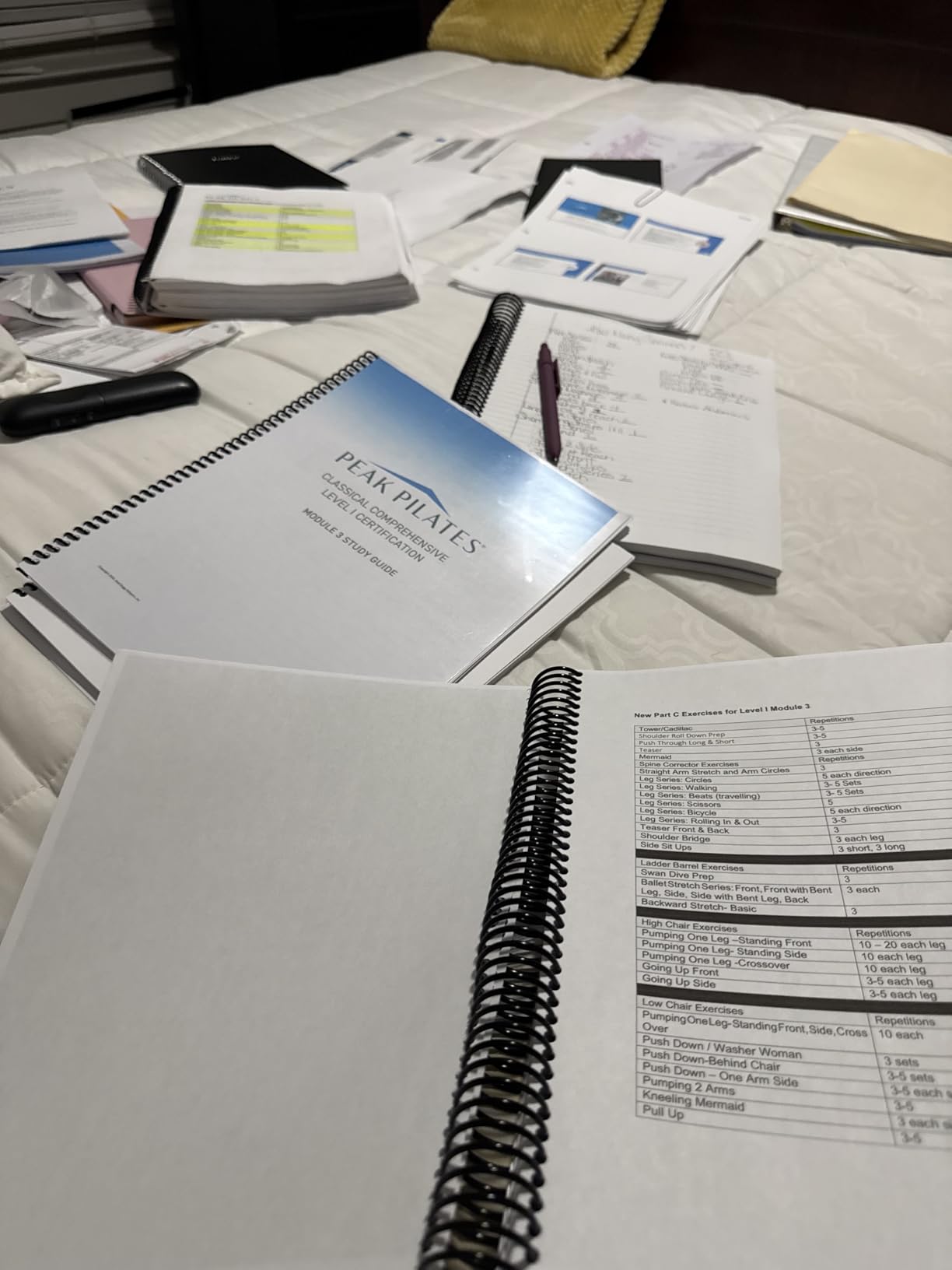
The honest headline is the rating. At 4.0 stars with 16 percent of reviews at one star, it has the weakest review profile of the twelve machines here, which is a signal about consistency between production batches. We include it because the A4 capability is genuinely useful, not because the build quality is the strongest.
Two practical issues recur. The listed weight is very heavy for a machine this compact, which makes it awkward to move between a desk and a shelf. And binding requires you to hold the paper down by hand throughout the insertion, which adds friction over a long run of booklets.
Who Should Buy It
A4 users, specifically. If your source documents are A4 and you want a professional 4:1 coil finish, this solves a problem that Letter-focused machines create. The bundled coil box and crimper mean you can start immediately.
It is also a reasonable choice for a home office that already knows coil binding and wants the electric inserter at a lower step than the TruBind.
Who Should Look Elsewhere
Anyone buying on track record. Sixteen percent one-star reviews is enough to warrant reading recent feedback before committing, particularly if you are producing client-facing documents.
If you also handle Letter and want a heavier punch, one of the 20-sheet machines here gives you more capacity per stroke and a steadier record of reliability.
Comb vs Coil vs Wire vs Thermal: Which Binding Style Fits Your Work
Every machine in this roundup does one of four jobs, and choosing the wrong family is the most expensive mistake a home office can make. Once you pick, you are locked into that hole pattern and that spine ecosystem for the life of the machine, so it is worth two minutes of clear thinking.
Comb binding is the default and the cheapest. A rectangular punch cuts a row of holes, and a plastic spine with matching teeth is opened, slid onto the pages and closed. It is fast, cheap per bind and completely reversible, which makes it the right answer for workbooks, meeting packs and anything a client may want amended. What it does not do is lie flat, and long spines eventually fatigue.
Coil and spiral binding punches a longer row of holes and threads a plastic or metal coil through them. Because the coil is a single spine rather than separate rings, a well-bound coil book opens flat and can be annotated with both hands on the page. This is the format for SOP manuals, training workbooks and anything that lives on a desk. A 2:1 pitch with 11 holes gives a looser spine, a 3:1 pitch with 32 holes gives a tighter book-like result, and a 4:1 pitch with 46 holes is the standard for A4.
Wire binding uses a wire loop that is crimped closed after the pages are threaded on. It has the most professional, permanent-look spine of the reversible options, it lies flat, and it handles heavier papers well. The cost is that removing or reopening a wire bound document means cutting the wire off. Wire is the classic choice for annual reports and client presentations where appearance matters and revision is finished.
Thermal binding skips holes entirely. An adhesive spine is heated and pressed to the page edges, producing a softcover book. It handles thick documents, laminated and coated stock that a punch would tear, and it looks like a published book. It is also absolutely final: no page can be added, removed or corrected once the glue sets. If you own only one machine, do not make it a thermal one.
How to Bind a Document (and How to Reopen One)
Nothing about a home binding machine is difficult once you understand the order of operations. Almost every frustrating first attempt comes from skipping a step, so this is the sequence we use.
1. Square your stack. Align all four edges firmly on a flat surface. Misaligned paper is the number one cause of torn sheets, because the punch catches the corner instead of the edge.
2. Set the edge guide and margin. Match the paper size setting, Letter, A4 or A5, then adjust the margin depth. 3mm to 5mm is normal for comb machines, and 2.5mm to 6.5mm covers most coil machines. The margin is how much paper sits inside the spine, so set it once for a given spine and stop thinking about it.
3. Test the spine width. Lay your document in the machine’s built-in measuring tray, or hold it against the spine and read off the sheet count. Comb widths are typically 1/4 inch for 50 sheets up to 2 inch for 450. Under-sizing crushes the spine and over-sizing leaves it gaping.
4. Punch in one full stroke. Do not stop partway. On most manual machines, a partial stroke jams the paper and can tear the sheet or bend the punch arm.
5. Open the spine and load the pages. For a comb, pinch and twist the spine open, hold it at an angle, slide the stack on until every tooth is through a hole, then close it. For a coil or wire, thread from the last page backwards so the pages sit in the correct order.
6. Close and check. For wire, centre the wire and push it fully closed with the crimper. For coil, run the tail through the crimping pliers. Then flip to a random page and confirm the holes align.
Reopening a document. A comb slides off: pinch and twist it open, pull it sideways off the stack, correct the page, and close it again. A coil can be unwound with a small tool or, in a pinch, by hand on a thick document. A ProClick spine zips open with a dedicated tool or even fingers. A wire binding has to be cut off and replaced, and a thermal bind cannot be reopened at all. This is why we keep a reversible machine even after adding a thermal one.
One maintenance habit pays for itself: keep the oil-absorbing paper or a clean scrap sheet under the punch area. Blade residue transfers to the first sheets you punch and can leave faint marks, and a sheet in the tray catches it before the document does.
Home Office Binding Machine Buying Guide
Punching capacity versus binding capacity. These are different numbers and the confusion costs real time. Punching capacity is how many sheets the machine cuts in one stroke, typically 6 to 20 on the machines here. Binding capacity is how many sheets the finished spine holds, typically 120 to 450. A machine that binds 450 sheets but punches 10 at a time needs 45 handle strokes to finish one document. Do the division before you buy.
Monthly volume. Under roughly ten documents a month, any manual machine is fine and the field narrows to comb, coil or wire. Between ten and fifty documents a month, look at punch capacity of 15 sheets or more and at a machine with a built-in comb tray. Above fifty, or if you regularly bind manuals over 200 pages, an electric coil inserter pays for itself in saved time, and a thermal machine becomes worth considering for anything that needs a cover.
Manual versus electric. The difference is not the punch, it is the binding step. Manual machines require you to open a comb or thread a coil by hand, which is the slowest and least accurate part of the process. An electric inserter opens, threads and closes the coil in one motion. For occasional work the manual route is entirely adequate; for repeated work the electric inserter is the single biggest time saving available.
Hole pattern and paper size. This is the decision you cannot reverse. 19 holes is US Letter, 21 holes is A4, 15 holes is A5, 32 holes is 3:1 pitch, 44 to 46 holes is 4:1 pitch, and some machines offer 46 fully disengageable dies so you can punch smaller pages without tearing the edge. If you work with more than one paper size, buy a machine with marked settings for each, or one with disengageable dies. The RAYSON TD-132 in this roundup is letter size only, which is exactly the kind of limit that ends a purchase.
What the binding does to the paper. Laminating or coating a cover and then punching it is where most budget machines fail. Several machines here cannot punch laminated paper at all. The fix that works with a comb machine is to punch first and laminate afterwards, or to bind with wire or thermal, neither of which puts a punch through a plastic cover. Glossy and coated stock also punch badly on any machine, so test a corner before committing a batch.
Lay-flat behaviour. A book that lies flat is one you can write in with both hands, which is the whole point of a workbook or a training manual. Wider hole spacing and coil or wire spines lie flatter than plastic combs. A 2:1 pitch with 11 holes is the loosest and flattest, a 3:1 or 4:1 pitch is tighter and more book-like, and a comb binder is the least flat of the four. More hole distance generally means a flatter book and a smaller margin.
Consumable compatibility. Spines are not interchangeable across machine families. A 21-ring comb, a 44-hole coil and a 32-hole wire spine each bind only to their own hole pattern. Before buying, confirm which spine type the machine takes and check that you can restock that type. Machines that ship with a box of combs, such as the MAKEASY, TIANSE, OFFNOVA and VEVOR, remove a whole category of first-day frustration.
Desk footprint, weight and noise. In a home office the machine competes for the same surface as everything else. The GBC ProClick P50 stores at 3.06 inches high and 2.2 pounds, the We R Cinch sits comfortably beside a monitor at 7.2 pounds, and the Fellowes Pulsar+ at 15.4 pounds needs a dedicated stretch of desk. Loud models matter too: the RAYSON TD-132 is described as loud and vibration-heavy, which is a genuine problem if you bind during calls or share the room.
Warranty and support. Two-year guarantees appear on the Fellowes Star+, the Fellowes Pulsar+ and the TruBind S-20, and a two-year warranty with two-year spare part availability is the most specific support commitment in this roundup. GBC offers a limited one-year warranty. In a category where punch dies are often not replaceable, warranty length is a reasonable proxy for build confidence.
Maintenance. Dull blades tear paper and a bent handle ruins alignment, and neither is always a replaceable part. Keep the machine dry, clear the chad tray, run a clean scrap sheet under the punch area between jobs, and avoid forcing a jam. Poor or missing instruction booklets are the most repeated complaint in this category, so set aside an hour with a tutorial before your first deadline job rather than during one.
If you are also planning the physical workspace around the machine, our picks for the best standing desks for home offices will help you decide how much surface to reserve for punching and binding. For longer-form work that the finished binder ends up supporting, the best book binding machines for self-publishing guide goes deeper on permanent binding and outsourced alternatives.
Frequently Asked Questions
What is the best binding machine for home use?
For most home offices the We R Memory Keepers Cinch is the best all-round choice, because the wire spine it produces makes pages lie flat and open properly. If your work is short documents and reversibility matters more than appearance, a comb machine such as the Fellowes Star+ is easier to live with. Choose based on volume: manual below roughly ten documents a month, electric coil above fifty.
What is the best book binding machine for home use?
For a real book rather than a report, thermal binding is the closest match, and the Hoqqf thermal machine in this roundup handles up to 500 pages per cycle. If you want a flexible book that can still be reopened or repaginated, coil binding is the better answer. For print runs of genuine full-length books, a print shop remains more efficient than any home machine.
How much is a perfect binding machine?
Perfect binding equipment sits far above the manual comb range, and true production-grade machines with glue and trimming capability run well into commercial territory. A home office rarely needs that. A thermal binder handles a 350 to 500 page softcover on its own, which covers most self-published and manual work at a fraction of the investment.
Which wire binding machine is the best?
The RAYSON TD-132 is the most flexible wire option here, punching a 3:1 pitch pattern of 32 square holes that accepts coil, click and wire-O spines. Its two limits are decisive: it handles letter size only and will not punch A4, and it is loud and vibration-heavy. If A4 matters, the We R Cinch is the better route to a flat, professional wire finish.
What is the best comb binding machine?
The Fellowes Star+ is the best comb machine for a home office that repeats the same document, thanks to its accuracy edge guide, built-in comb storage tray and two-year warranty. The Fellowes Pulsar+ punches more sheets per stroke at 20 and is better for volume, but it is heavier. For a first machine on a tight budget, the MAKEASY comb binder arrives with 100 spines already in the box.
What is the best thermal binding machine?
The Hoqqf thermal machine is the strongest pick here, supporting up to 500 pages per cycle with 350 to 400 recommended, and it handles Letter, A4, A5 and A3 on the short edge. It also manages heavy and coated stock that a punch would tear. The trade-off is absolute permanence: a thermally bound book cannot be edited, added to or reopened.
Can you open a bound document and rebind it?
It depends entirely on the binding style. A plastic comb slides off and closes again, a coil can be unwound, and a ProClick spine zips open with a tool. A wire binding must be cut off and replaced, though you can reuse the wire on fewer pages. A thermal binding cannot be reopened at all, which is why keeping one reversible machine is sensible even if you own a thermal binder.
Is a manual or electric binding machine better for a home office?
Below about ten documents a month, manual is entirely adequate and cheaper to own. Above roughly fifty documents a month, an electric coil inserter removes the slowest, least accurate step, which is threading the spine by hand. The TruBind S-20 is the clearest example here, with a 20-sheet manual punch and electric binding up to 190 sheets, backed by a two-year warranty.
Verdict: Which Binding Machine Should a Home Office Buy in 2026?
Start with the We R Memory Keepers Cinch if you want finished documents that lie flat and open properly. It is the best binding machine for home offices in 2026 for the simple reason that its output looks and behaves like a book rather than a ring-bound report, and it is backed by more than 7,000 reviews.
If your work is short documents where being able to reopen the file matters, pick a comb machine. The Fellowes Star+ is the dependable all-rounder, the MAKEASY comb binder is the best value with 100 spines in the box, and the Fellowes Pulsar+ is the choice when you produce workbooks in volume and can live with its weight. When a single machine has to handle several spine systems, the RAYSON TD-132 does coil, click and wire, provided you work in Letter only.
Add the TruBind S-20 once coil binding becomes routine, and the Hoqqf thermal machine when you need covers and thick books. Whichever you choose, confirm the paper size, check the real punch capacity, and run a test document before a client deadline.