
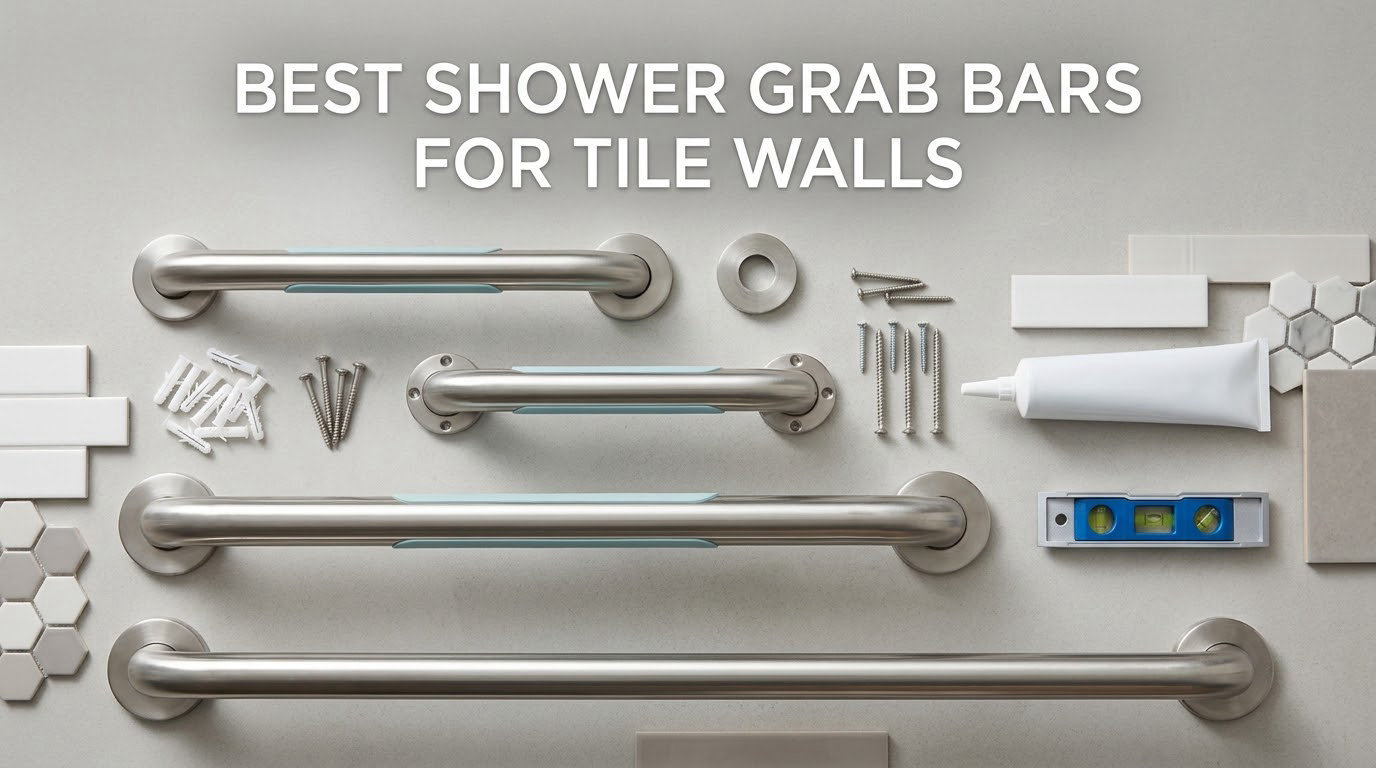
Yes, you can put a grab bar in a tile shower. The bar has to be anchored into a wall stud, added blocking, or the masonry behind the tile. Tile and grout are finish layers only, so tile size and grout-line placement do not decide whether a bar can hold weight. What decides it is what sits directly behind the tile.
That single fact settles most of the anxiety that comes with this job. The fear we hear about most is cracking expensive porcelain, and it is a reasonable fear, but the crack almost always comes from the wrong bit or the wrong speed, not from the fact that there is tile in the way. A carbide or cobalt bit and a slow, steady approach will go through a shower wall cleanly.
We spent six weeks comparing the best shower grab bars for tile walls, reading through more than 40,000 buyer reviews across the ten picks below, and mapping each bar to the substrates it can actually attach to. Seven of these ten are screw-in stainless steel bars meant for a permanent install. Three are suction bars for situations where drilling is not an option, and we are honest about where that tier falls short.
If you are still working out what is inside your wall, start with the grab bar basics roundup first, then come back here for the tile-specific mounting detail. If your project runs to cutting tile at all, our guides to the best wet tile saws and the best tile saws cover the tools that make a clean cut far less nerve-wracking.
Table of Contents
Top 3 Best Shower Grab Bars for Tile Walls in 2026

Moen Home Care 24 Inch Bar
- 500 lb stud rating
- 1.25 inch diameter
- Concealed screw mount
- Limited lifetime warranty

Amazon Basics 36 Inch Bar
- 500 lb stud rating
- 1.5 inch diameter
- Vertical or angled holes
- Brushed finish

FANHAO 16 Inch 2 Pack
- Two bars per order
- Knurled anti-slip grip
- 500 lb per bar
- 304 stainless steel
Best Shower Grab Bars for Tile Walls in 2026
| Product | Specifications | Action |
|---|---|---|
| Moen Home Care 24 Inch Grab Bar |
|
Check Latest Price |
| Amazon Basics 36 Inch Grab Bar |
|
Check Latest Price |
 AmazerBath 16 Inch Grab Bar AmazerBath 16 Inch Grab Bar |
|
Check Latest Price |
 iMomwee 32 Inch Grab Bar iMomwee 32 Inch Grab Bar |
|
Check Latest Price |
| FANHAO 16 Inch 2 Pack |
|
Check Latest Price |
 Lifeassist 18 Inch 2 Pack Lifeassist 18 Inch 2 Pack |
|
Check Latest Price |
 Rockgoya 16 Inch 2 Pack Rockgoya 16 Inch 2 Pack |
|
Check Latest Price |
 TAILI 16.8 Inch Suction 2 Pack TAILI 16.8 Inch Suction 2 Pack |
|
Check Latest Price |
 LEVERLOC 12 Inch Suction 2 Pack LEVERLOC 12 Inch Suction 2 Pack |
|
Check Latest Price |
 Reyiu 16.5 Inch Suction 2 Pack Reyiu 16.5 Inch Suction 2 Pack |
|
Check Latest Price |
1. Moen Home Care 24 Inch Stainless Steel Grab Bar for Tile Walls
Moen Home Care Bathroom Safety 24 Inch Stainless Steel Handicap Grab Bar for Bathtub and Shower, Heavy Duty Handle, Elderly Assistance Product with Concealed Screws, 8724
24 in bar, 1.25 in diameter
500 lb when stud mounted
ADA compliant
Limited lifetime warranty
Pros
- 500 lb capacity when installed into a stud
- Corrosion-resistant stainless steel
- Concealed screw mount leaves the tile face clean
- Backed by a limited lifetime warranty
- Coordinates with other Moen accessories
Cons
- SecureMount hardware sells separately for the full 500 lb rating
- 1.25 in diameter is slim for hands with limited grip strength
Best overall: this is the bar we install first in a tiled shower, because it solves the tile problem rather than fighting it. The 24 inch length lands inside standard stud spacing on most shower walls, and the concealed screw flanges cover the holes completely once the silicone cures.
It carries a 500 pound rating when it is fixed into a stud, which is double the ADA floor, and the 1.25 inch diameter gives a full-hand grip that reviewers with arthritis describe as comfortable rather than punishing.
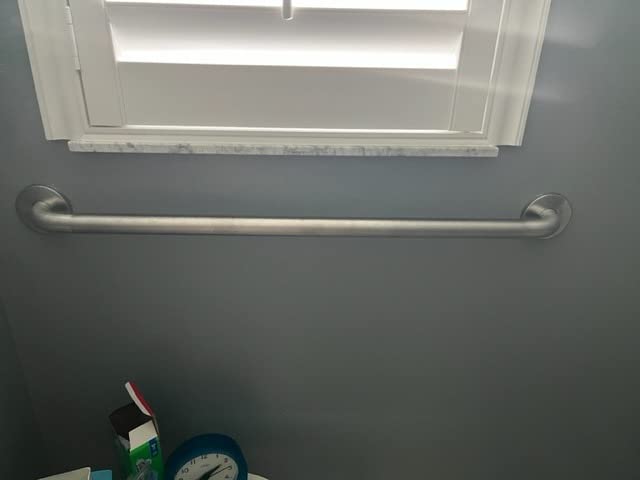
The finish is a lightly brushed warm gray stainless rather than a mirror chrome, so it hides water spots and smudges better than a polished bar in a wet room. Reviewers report that it coordinates with other Moen accessories if you are matching an existing faucet and shower trim.
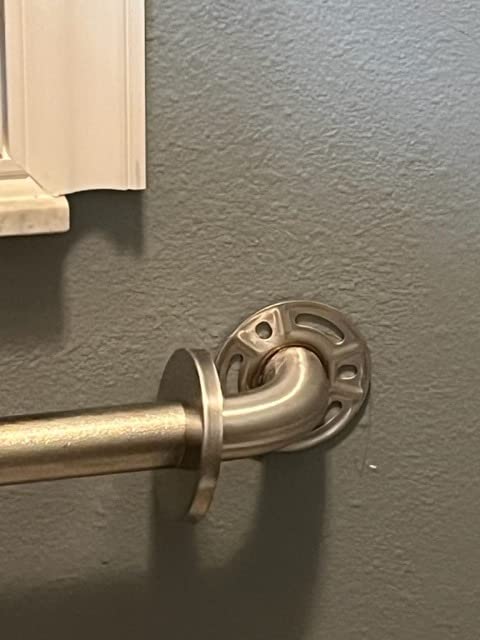
There is one specification worth reading twice: the full 500 pound rating assumes a stud, or Moen’s separately sold SecureMount hardware. Into hollow backer board with a lightweight anchor, treat the number as a ceiling you will not approach.
Who the Moen Home Care 24 Inch Bar suits
It suits anyone aging in place, anyone recovering from surgery or a stroke, and anyone who wants a bar in place before they need one. The limited lifetime warranty also makes it the pick if you plan to hand the house to a family member later.
It works well as a horizontal bar on the wall opposite the shower head, where you push off on the way in and pull on the way out.
Who it does not suit
Skip it if you have very limited hand grip strength and prefer a thicker 1.5 inch tube, since 1.25 inches is the slimmer of the two common diameters. It is also not the bar to reach for when your tile is mounted on soft foam backer board with no framing nearby.
2. Amazon Basics 36 Inch Grab Bar for Long Tile Walls
Amazon Basics Bathroom Safety Handicap Grab Bar, 36 Inch Length, 1.5 Inch Diameter, 500LBs Capacity, ADA Compliant, Stainless Steel
36 in bar, 1.5 in diameter
500 lb when stud mounted
ADA compliant
Brushed stainless finish
Pros
- Does not move once screwed into studs
- Holes allow horizontal vertical or angled mounting
- Brushed finish hides fingerprints
- Long length spans wider stud spacing
- Flange holes often line up with stud placement
Cons
- Included screws can be too short to reach the stud through tile
- One reviewer reported sharp edges on the plastic end caps
Best for long walls: at 36 inches this bar reaches past a single stud bay and lands on a second stud, which is what you want on a wide shower wall. The 1.5 inch diameter is the widest grip in the roundup and easier for hands that lack dexterity.
The flange has three holes, so you can mount it horizontal, vertical, or on the diagonal that a corner shower entry usually needs. Reviewers consistently report that the holes line up with standard framing.
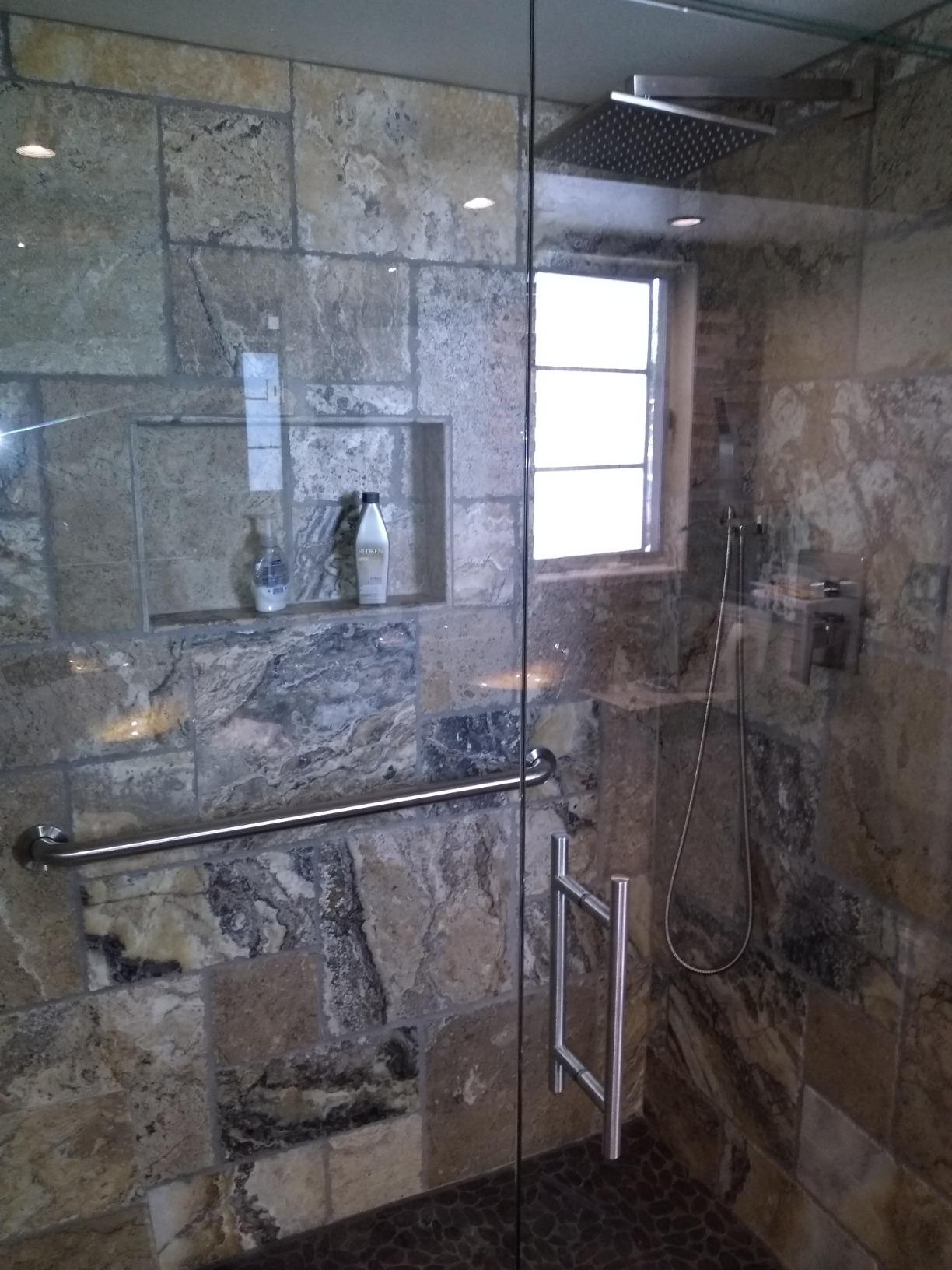
One thing nearly every installer in the reviews mentions: the supplied screws are frequently too short to reach the stud through tile plus backer board. Swap in longer stainless screws so the threads fully engage the framing, and the bar will not shift under load.
A few of those installers also run a bead of silicone caulk over the flange edge before tightening, which keeps water out of the screw hole. That is the same waterproofing step we describe in the drilling section below.
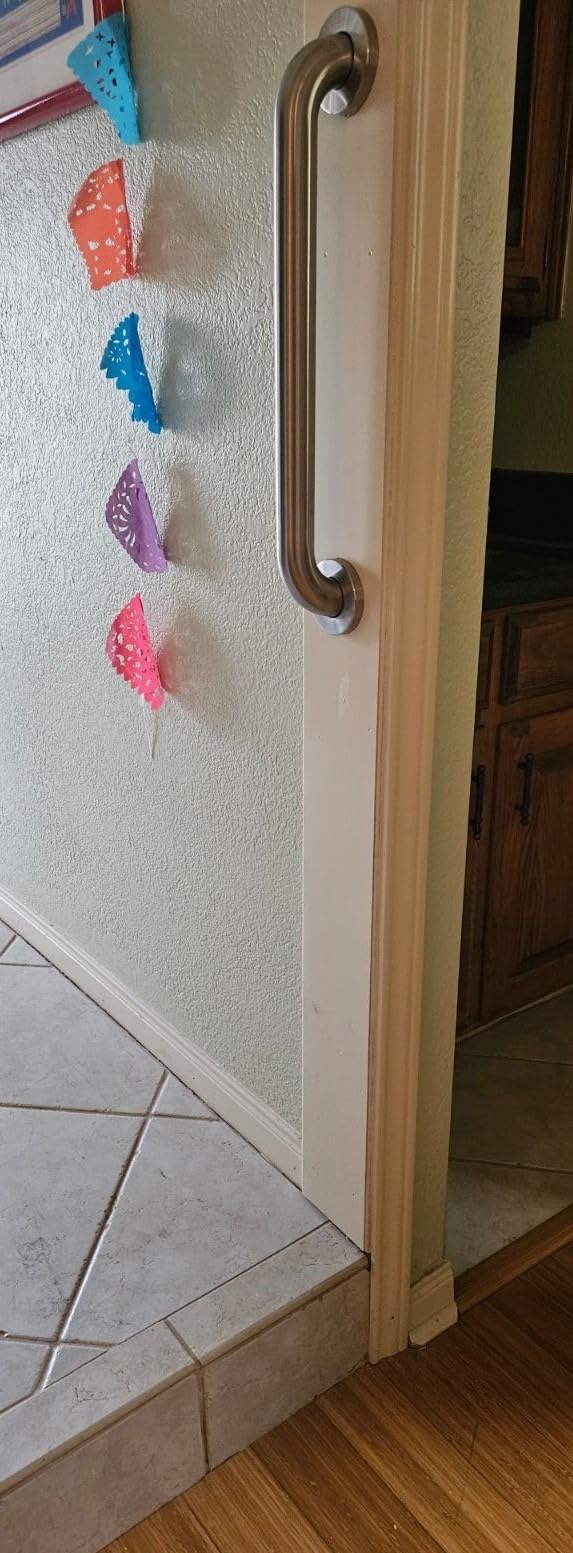
Who the Amazon Basics 36 Inch Bar suits
It suits wide shower walls, tiled walk-in showers, and anyone whose hands are best served by a fatter tube. The 500 pound stud rating also makes it a sensible pick for larger users.
It is a good second bar too, mounted diagonally beside a shower bench for the push-up motion.
Who it does not suit
It is awkward on a narrow tiled wall where a 36 inch bar overhangs the tile edge, and it takes more drilling than a shorter bar. If your shower wall is under about 20 inches of usable width, look at the 16 and 18 inch options instead.
3. AmazerBath 16 Inch Grab Bar for Small Tile Showers
AmazerBath Shower Grab Bars for Seniors Anti Slip, Bath Safety Grab Bar for Needy, Stainless Steel Bathroom Safety Grab Bars, Thickened Bar Bigger Base Holds 500LBS, 16″ L x 1.25″ D, Brushed Nickel
16 in bar, 1.25 in diameter
500 lb rated
Textured anti-slip finish
Enlarged mounting base
Pros
- Enlarged base and thickened tube for a 500 lb rated hold
- Textured surface improves grip when wet
- Longer screws help reach framing through tile
- Nine to 36 inch lengths in two finishes
- Instructions name a 6mm drill bit
Cons
- Textured grip is milder than true knurling
- 16 in is short for widely spaced studs
Best budget screw-in bar: the AmazerBath hits the two things that matter on a tile wall, a 500 pound rating and longer-than-usual screws, at the lowest entry point in the roundup. The manufacturer even specifies a 6mm bit, which saves you a trip to guess.
The enlarged base is a real advantage behind tile because it spreads the load over a wider footprint, so the flange is less likely to rock the backer board when you tighten it.
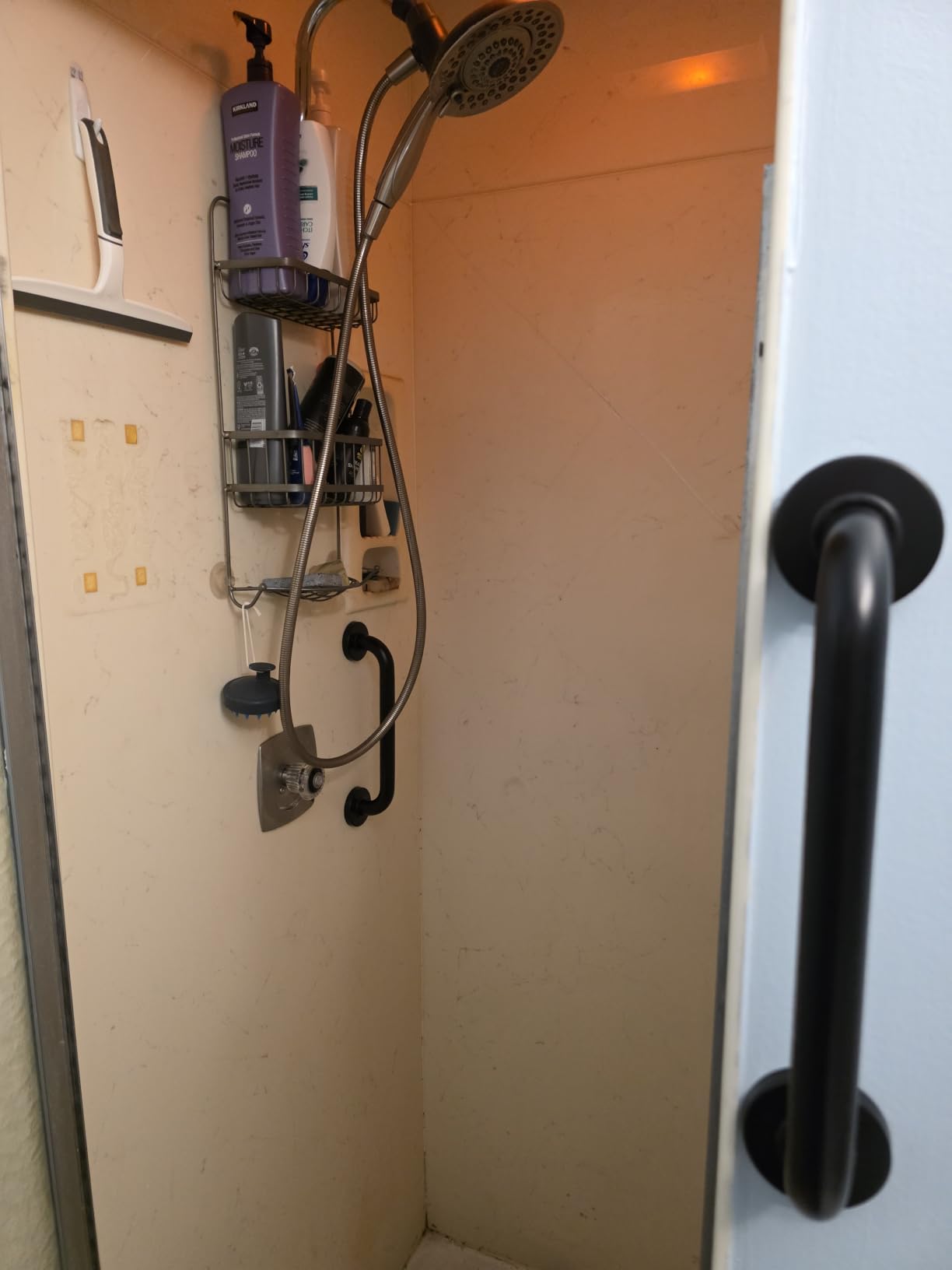
Buyers like the width of the size range, from 9 to 36 inches, because it means a short bar for a narrow alcove and a longer one for a long wall from the same listing. Two finishes are offered, brushed nickel and stainless.
One honest limitation: the grip is a textured surface rather than true knurling, so it feels less aggressive to the fingers than the knurled bars further down this list. It is still fine for a wet hand, just less bite.
Who the AmazerBath 16 Inch Bar suits
It suits small tiled showers, powder rooms, and anyone who wants a solid permanent bar without spending much. The 16 inch length is ideal when both flanges need to land inside one stud bay.
It is also a practical second bar for a shower bench wall, where you only need a short push point.
Who it does not suit
Sixteen inches is short for a wide wall, so on anything wider than a standard alcove you will end up with a bar that does not span between studs. Buyers who want aggressive grip texture for very wet hands should compare the knurled options.
4. iMomwee 32 Inch Knurled Grab Bar for Stud-Spaced Tile Walls
iMomwee Brushed Nickel Safety Bar 32 Inch, Shower Grab Bar for Senior
32 in bar, 1.25 in diameter
Knurled anti-slip grip
500 lb pull force
Three-hole flange
Pros
- Knurled texture gives a secure hold with wet hands
- 32 in length spans typical stud spacing
- Three-hole flange mounts at any angle
- Concealed screws with decorative trim caps
- Twelve-month replacement warranty
Cons
- Sold as a single bar so a two-point install means buying two
- About 5 percent of ratings are one star
Best knurled grip: if your hands are wet and your grip is not great, texture matters more than diameter. The raised knurling on this 32 inch bar is the most aggressive surface in the roundup and reviewers single it out for grip in the shower.
At 32 inches it spans a standard bay, and the three-hole flange lets you run it horizontal, vertical, or diagonal without a different bar. Concealed screws with trim caps keep the tile face looking deliberate.
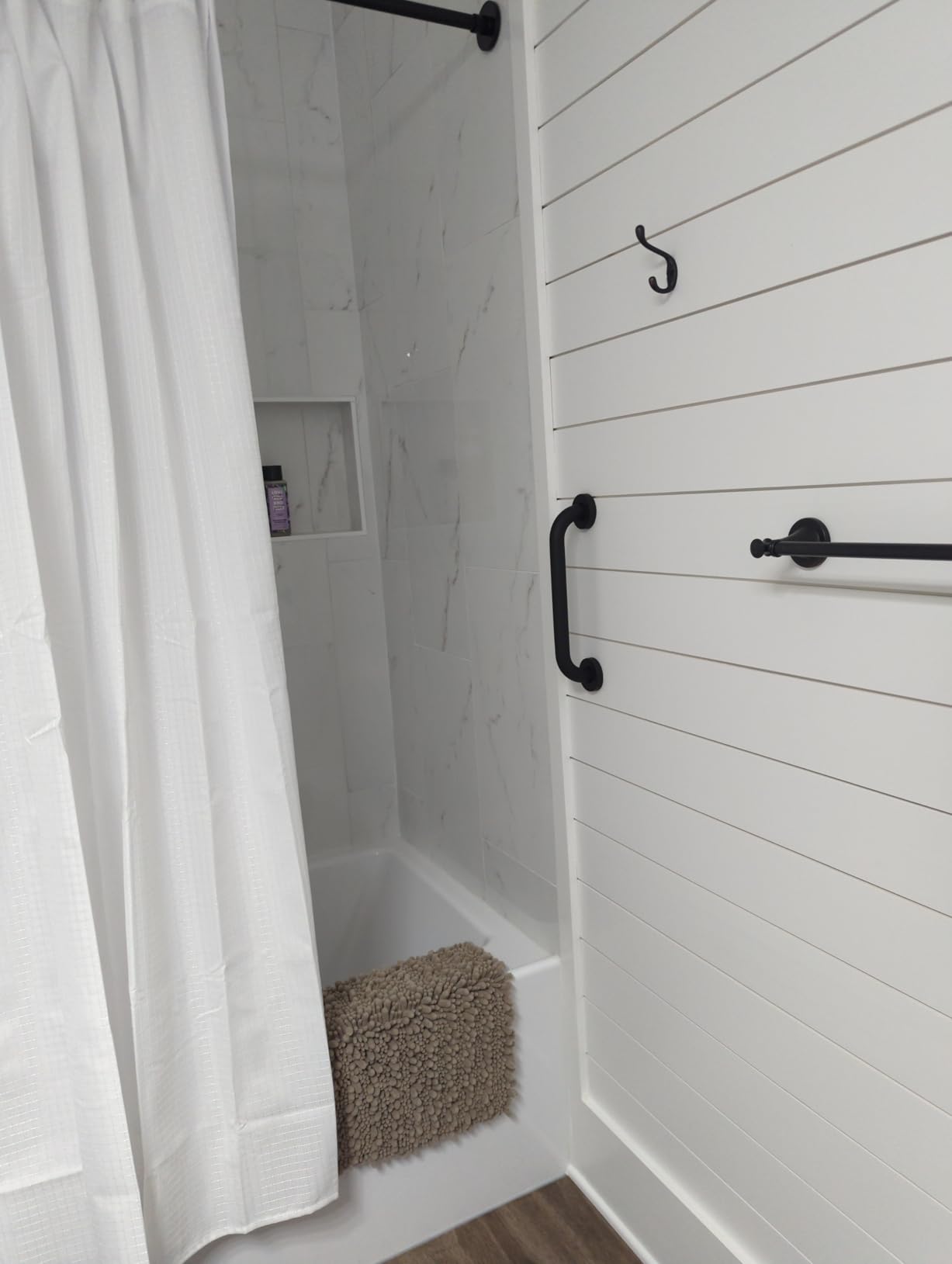
The mounting logic is the part to pay attention to on a tiled wall. This is a stud-mounting design with three screws per bar, so each flange has to land on framing. Six rust-proof screws are included, and the 500 pound pull-force rating assumes that arrangement.
One caveat shows up in the ratings: this is the lowest five-star share among the screw-in stainless bars here, with a small but real share of fit and finish complaints. Check the flange diameter against your tile before you commit.
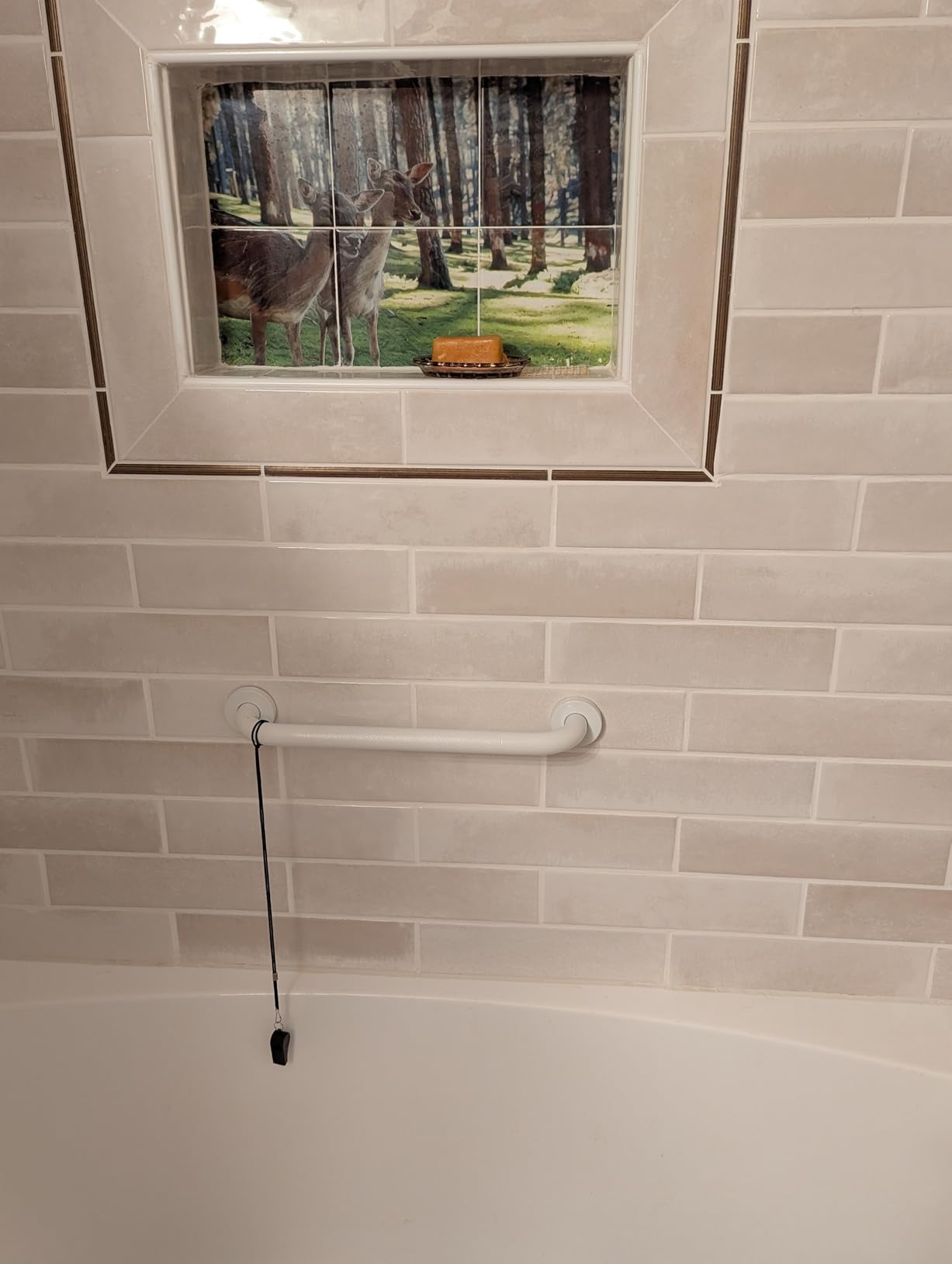
Who the iMomwee 32 Inch Bar suits
It suits people with reduced grip, caregivers assisting a bather, and anyone who wants a longer bar that still lands inside one stud bay. Several buyers also use these on stairways and pool areas.
It works well on the angled diagonal mount beside a shower entry.
Who it does not suit
It does not suit a two-point install, because a single bar is all you get in the box. And if your tile is on a hollow backer board with no stud nearby, this three-screw design has nothing solid to bite into.
5. FANHAO 16 Inch Two-Pack for Both Sides of a Tile Shower
FANHAO 2 Pack Shower Grab Bar, 16 Inch Stainless Steel Bathroom Grab Bar with Anti-Slip Knurled Grip, Shower Handle Bath Handle, Safety Bars for Shower Chair Bench, Senior, Elderly, Handicap
Two 16 in bars, 304 stainless
Knurled anti-slip grip
500 lb per bar
Concealed screw mount
Pros
- Two bars cover both sides of a shower in one order
- Knurled grip holds with wet hands
- 304 stainless resists corrosion in humid rooms
- Concealed screws keep the tile face clean
- Mounts horizontally vertically or at an angle
Cons
- End flanges need assembly before mounting
- Oil-rubbed black finish shows water spots readily
Best two-bar set: most falls happen at an entry and an exit, which means two hold points rather than one. This pack gives you a matched pair for a single order, and the concealed screw design means both sides of the wall look the same.
Each bar is 304 stainless with a knurled anti-slip surface and a 500 pound support capacity, so the pair functions as real structural hardware as long as you hit framing on both ends.
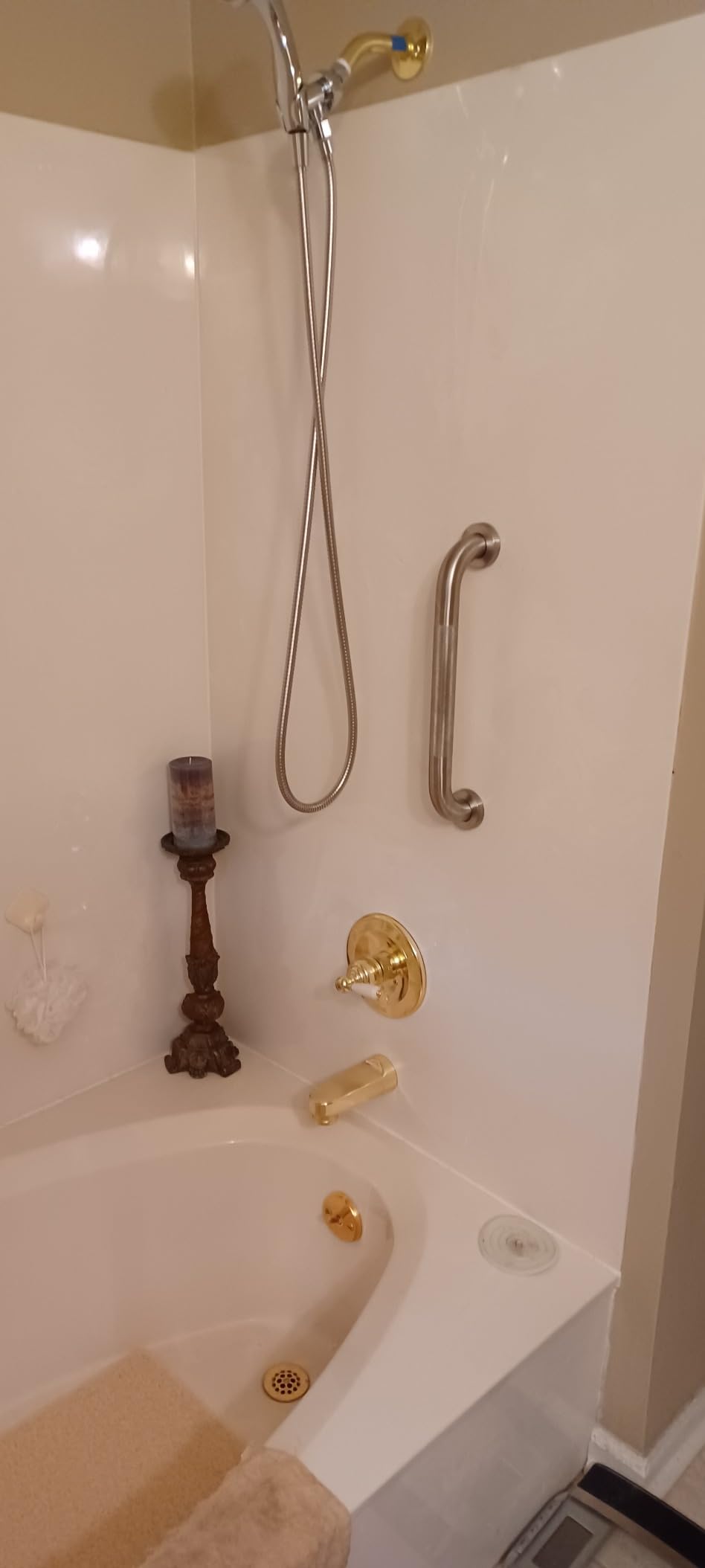
Buyers also use these as towel and clothing holders, which is a nice side effect in a small tiled shower where storage is scarce. The 16 inch length fits inside a stud bay on most alcove walls.
The oil-rubbed black finish is the most dramatic look in the roundup and the one most likely to show mineral staining. If your shower has hard water, expect to wipe it down more often than you would a brushed bar.
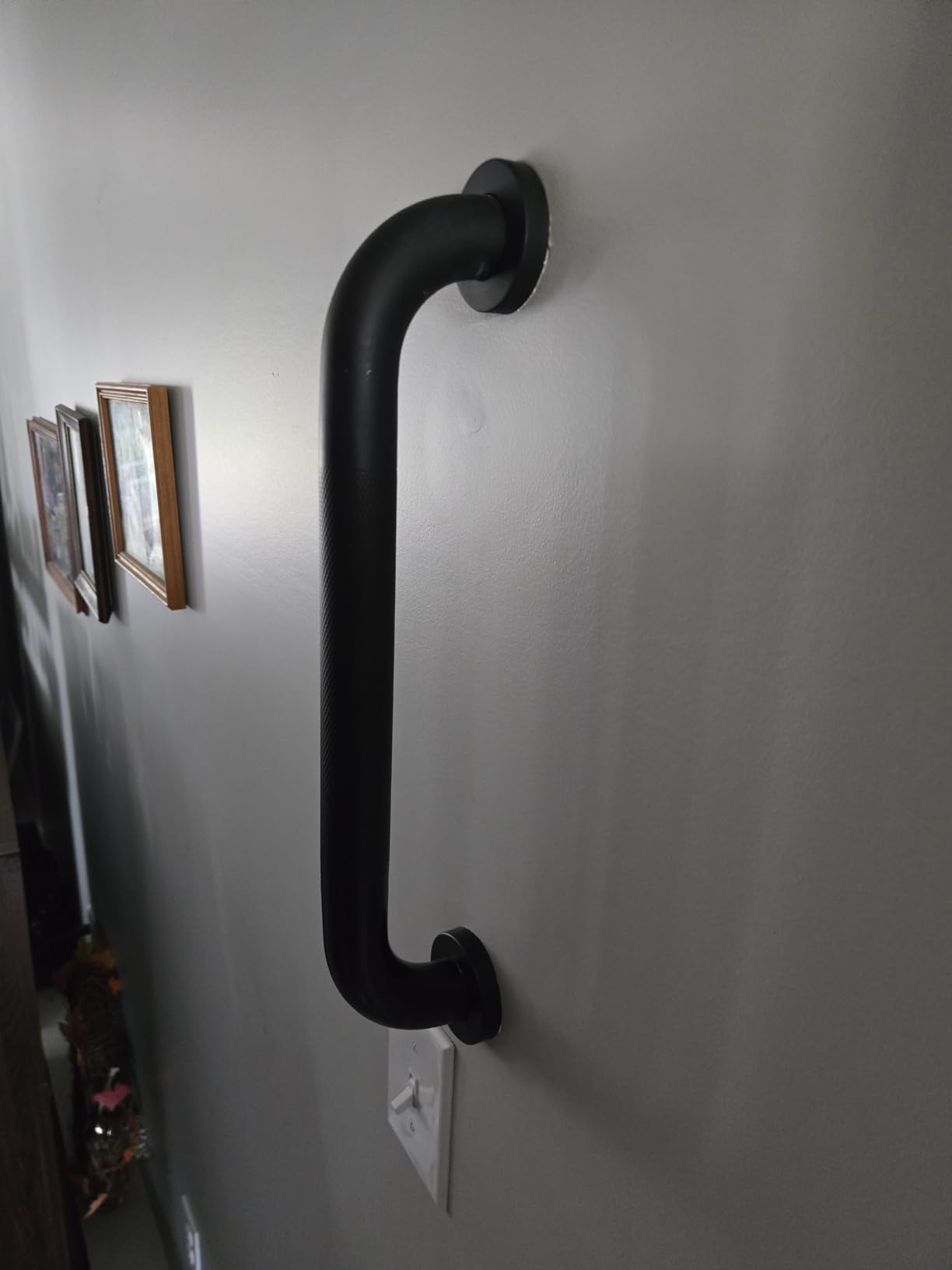
Who the FANHAO Two-Pack suits
It suits anyone who wants support on both the way in and the way out, and anyone matching a shower that already has black fixtures. It also fits a shower-and-bench setup where one bar sits high and one sits low.
It is a good choice for a caregiver helping a bather through the door of the enclosure.
Who it does not suit
It does not suit anyone who wants a bar that arrives fully welded and immediately mountable, because the end flanges assemble first. It also does not suit a shower with pale grout and no black accents, where the finish reads as loud.
6. Lifeassist 18 Inch Two-Pack with Welded Flanges
Lifeassist 18 Inch Knurled Shower Grab Bar, Brushed Nickel, 2 Pack
Two 18 in bars, 304 stainless
Welded one-piece flange
Knurled 1.25 in grip
500 lb ADA rated
Pros
- Welded flange is marketed as stronger than bolt-on
- Knurled 1.25 in diameter is easy to hold
- Includes long screws and anchors for tile or drywall
- Bars look at home in a finished shower
- One experienced reviewer recommends framing at both ends
Cons
- Included screws can be too short for studs through tile
- One reviewer disputed the welded-flange claim
- A few buyers report fit or finish issues on arrival
Best welded flange: the selling point here is that the screw flange is permanently fused to the tube rather than bolted on, which removes the joint that is the weak point on cheaper bars. Buyers looking at the spec sheet assume that stronger; the reviews suggest it holds up.
The knurled 1.25 inch diameter is a deliberate middle ground. It is textured enough for a wet hand and narrow enough to reduce hand fatigue over a long shower.
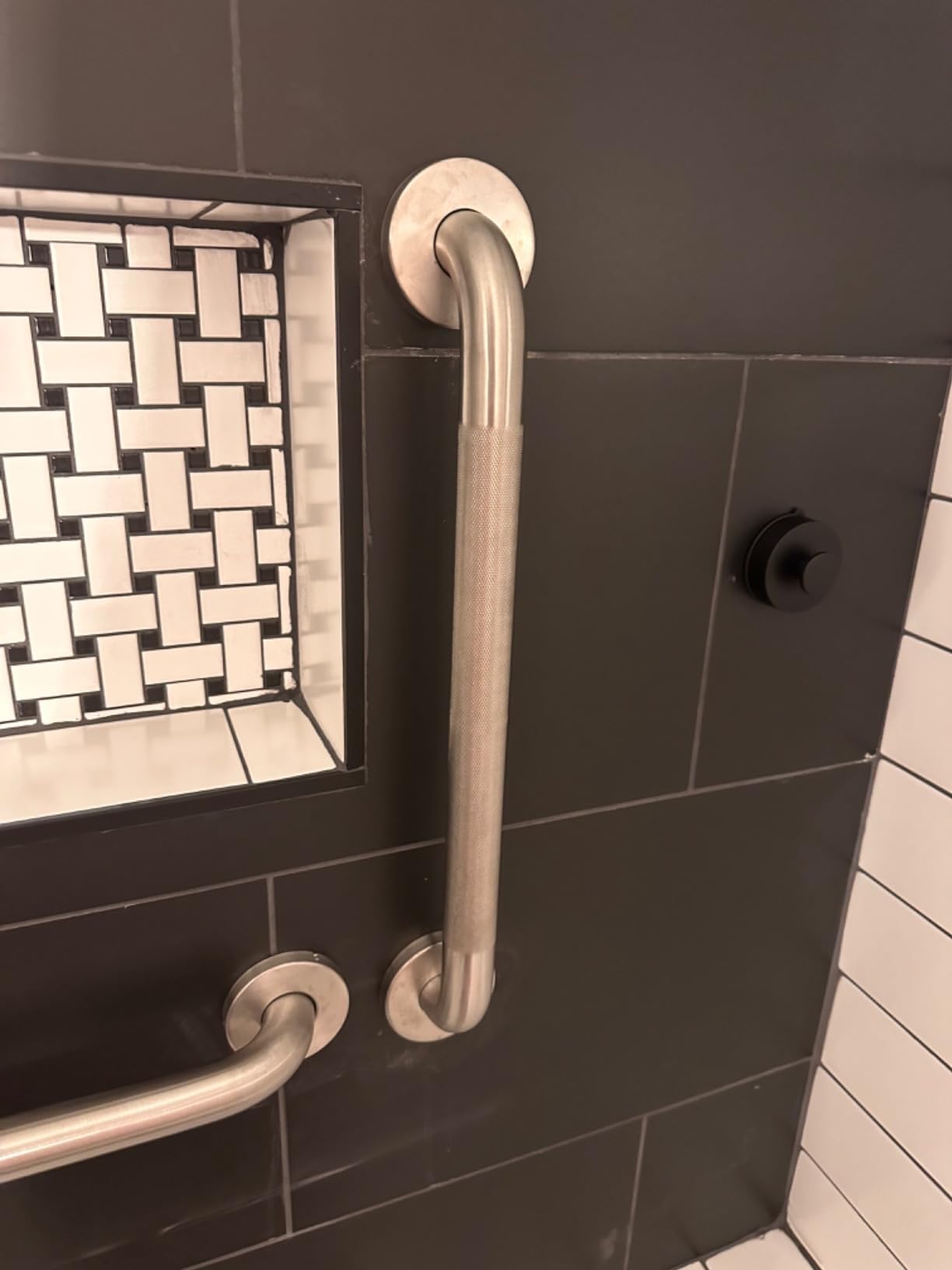
Detailed installer reviews here are worth reading twice. They recommend drilling pilot holes through the tile with a cobalt bit, adding extra holes in the flange if your framing does not line up, and running silicone into the screw holes to keep water out of the wall cavity.
One critical review disputes the welded-flange claim and reports a screw-on flange on the bar received, so confirm the construction when the package arrives.
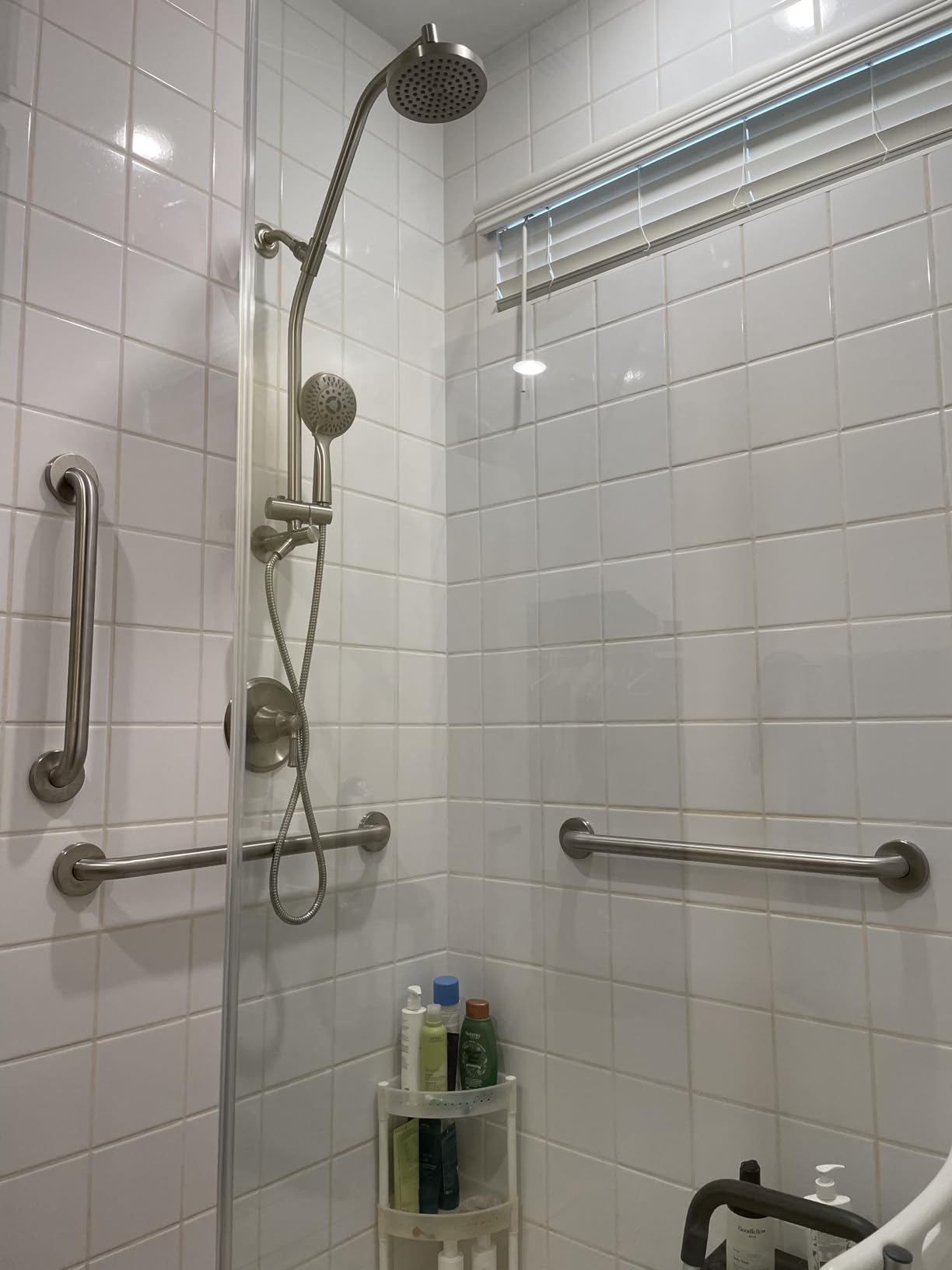
Who the Lifeassist 18 Inch Two-Pack suits
It suits a two-bar install in a mid-size tiled shower, particularly parents outfitting a home for an aging parent. The pair mounts at two heights, which covers both standing and seated use.
It is a good pick when the flanges must land on framing at both ends and you do not want an assembly step in the middle of a wet room.
Who it does not suit
It does not suit anyone who needs a 1.5 inch diameter grip for very limited hand strength. And as with most of the screw-in bars here, the included fasteners are not guaranteed to reach framing through tile, so plan on longer stainless screws.
7. Rockgoya 16 Inch Two-Pack with Rotating Flanges
Rockgoya 16 Inch Anti-Slip Shower Grab Bars, 1.25″ Diameter 2 Pack
Two 16 in bars, 304 stainless
1.25 in textured centre
Three-hole rotating flanges
Chrome finish
Pros
- Textured centre section grips without abrading skin
- Rotating three-hole flanges fine-tune screw placement
- Two bars give a matched pair of mounts
- Trim caps cover bolt heads
- Chrome finish matches standard fixtures
Cons
- Flanges bolt on and need assembly before mounting
- Slightly under true 16 in centre to centre so screws may angle
- Supplied drywall anchors are not for real load bearing
Best chrome finish: if your shower trim is polished chrome, this is the pair that disappears into the room. The textured centre section gives you a wet-hand grip without the abrasive feel of heavy knurling.
The rotating three-hole flanges are the quiet advantage. On a tile wall, the hole you want in the tile is rarely the hole you want in the stud, and a flange that rotates lets you angle the screws to reach framing without redrilling ceramic.
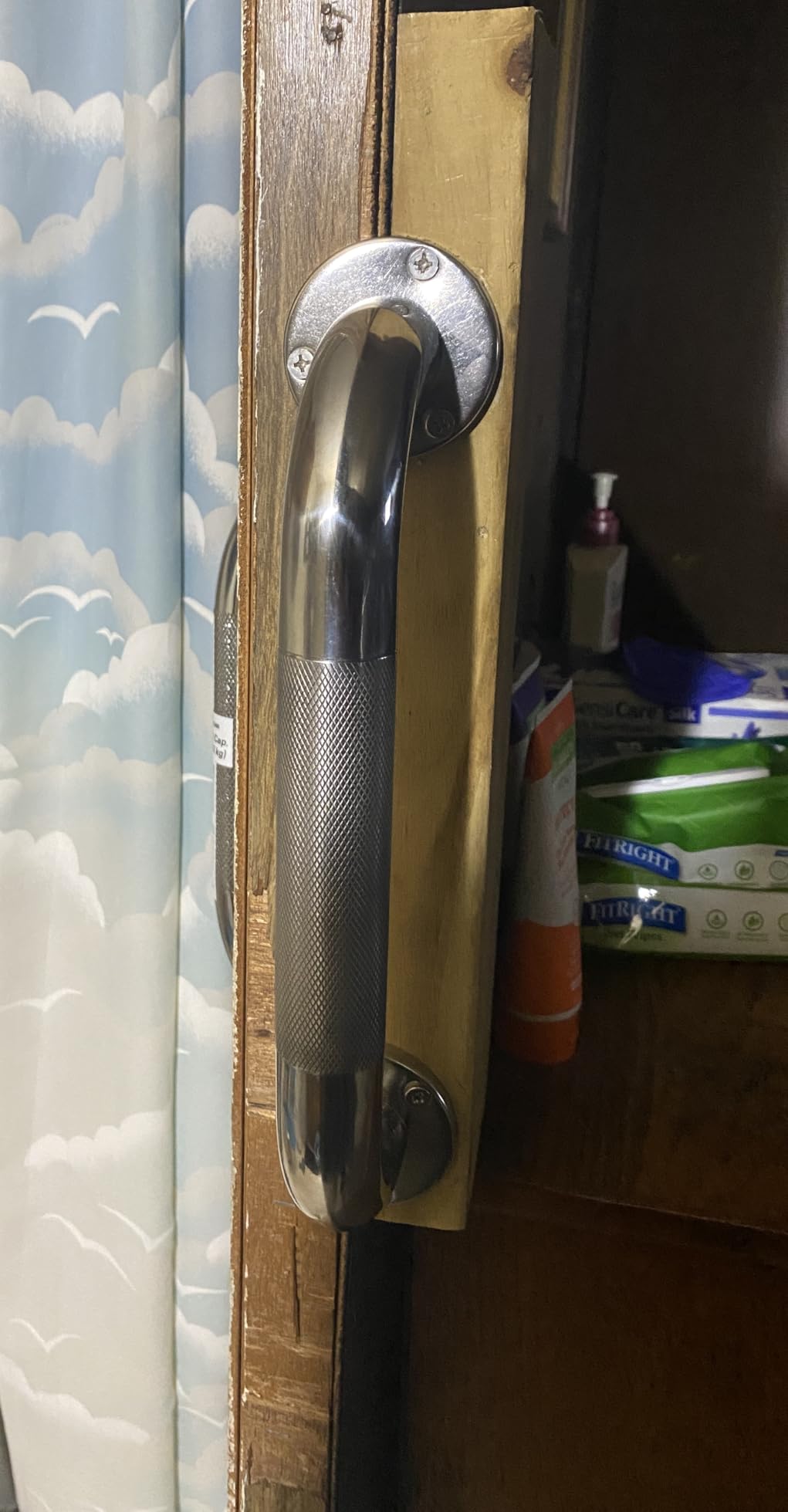
Trim end caps cover the bolt heads so the finished bar looks machined rather than assembled. The package carries 12 long screws, 4 short screws, and 12 expansion screws, which covers most framings you will meet.
Two details deserve attention. The bar measures slightly under a true 16 inch centre to centre, so on 16 inch stud spacing the screws may need to angle outward. The supplied anchors are drywall anchors, and experienced reviewers are blunt about not using them for a load-bearing bar.
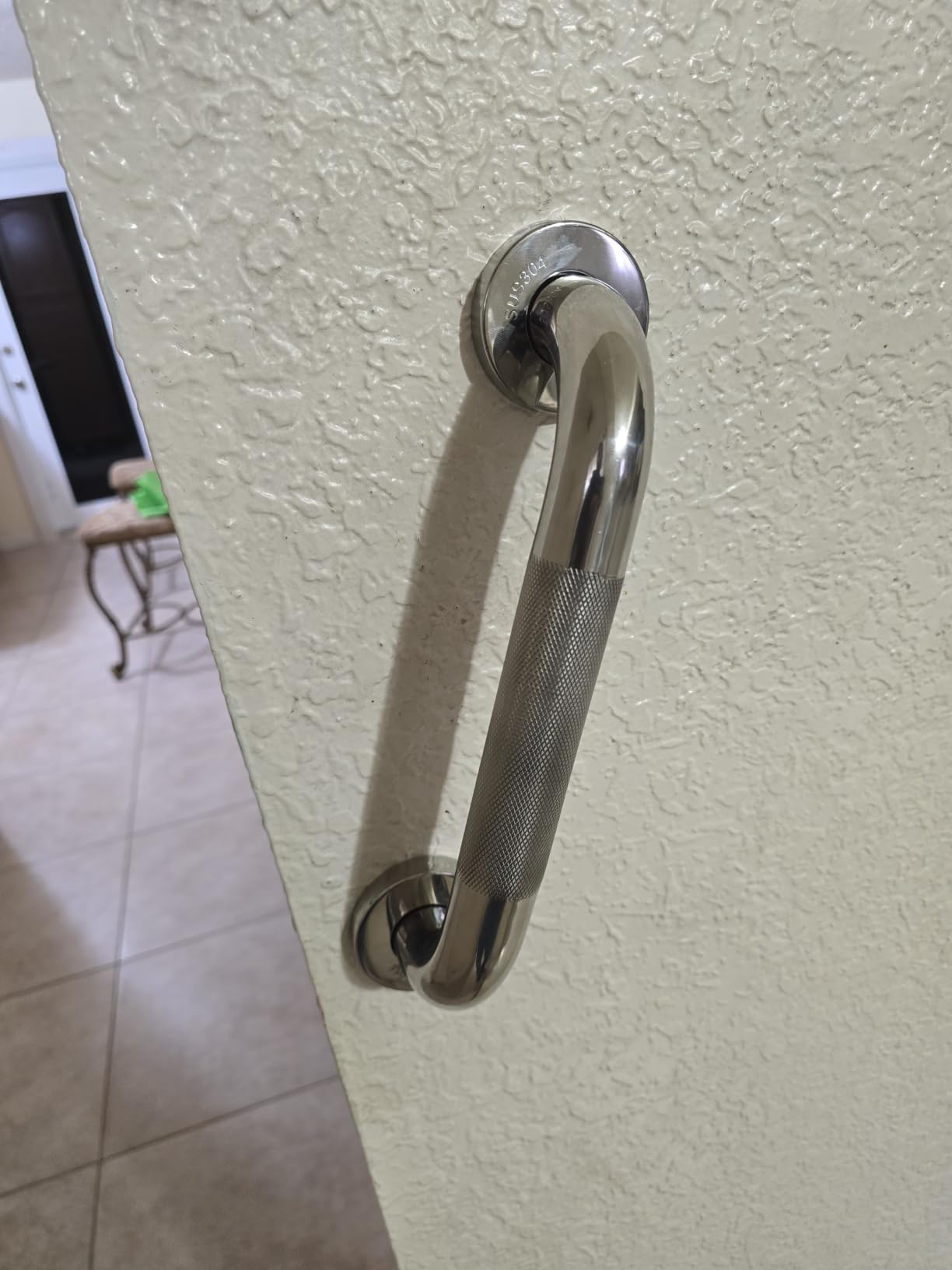
Who the Rockgoya Two-Pack suits
It suits a chrome-trimmed shower where a brushed bar would look out of place, and it suits anyone who wants flexibility in screw placement because the framing does not line up neatly with the tile.
It is a good match for a guest bath that also doubles as a caregiver space.
Who it does not suit
It does not suit anyone unwilling to do a short assembly step, because the flanges bolt onto the bar and the trim caps must be fitted first. It also does not suit a shower with only soft backer board behind the tile.
8. TAILI 16.8 Inch Suction Grab Bars for No-Drill Tile
TAILI Grab Bars for Shower,Suction Shower Handles Rails,2 Pack,16.8″,Grey
Two suction bars, no drilling
240 lb listed per bar
Two locking cups each
Needs 4x4 in tile or larger
Pros
- Installs in seconds with no drilling or glue
- Removable and reusable without marking tile
- Two locking suction cups per bar
- Anti-slip top strip and finger-grooved underside
- Works in showers tubs and kitchens
Cons
- Needs smooth tile at least 4x4 in and never grout lines
- Listed at 240 lb and sold for balance help only
- About 13 percent of ratings are one star
Best no-drill value: this is the honest entry point in the no-drill tier, and it earns its place for renters and for anyone who cannot face cutting finished tile. It installs in seconds, comes off cleanly, and leaves no hole behind.
Each bar has two locking suction cups, an anti-slip top strip, and a curved underside for finger grip. Buyers on large smooth tile report genuinely strong adhesion.
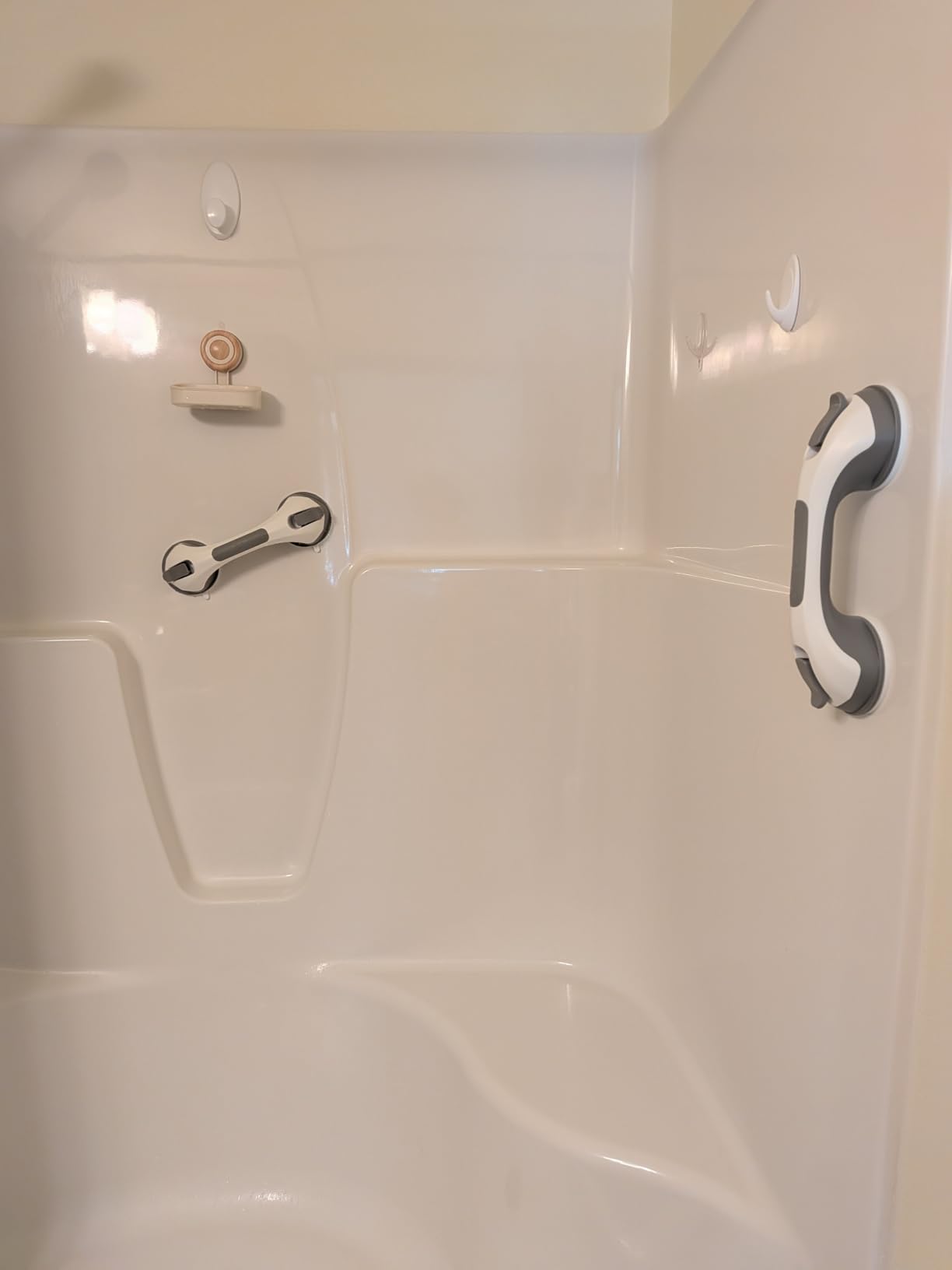
Now the part that matters. The published rating is 240 pounds per bar, and the manufacturer positions it as balance assistance rather than full body weight support. Independent testing of this category has seen budget suction bars release at load levels far below their published numbers, with no warning at all.
That means the failure mode is the one nobody can plan around: you cannot pre-test what happens when you are already falling. Tile must be at least 4×4 inches and perfectly smooth, and the cups will not hold across a grout line.
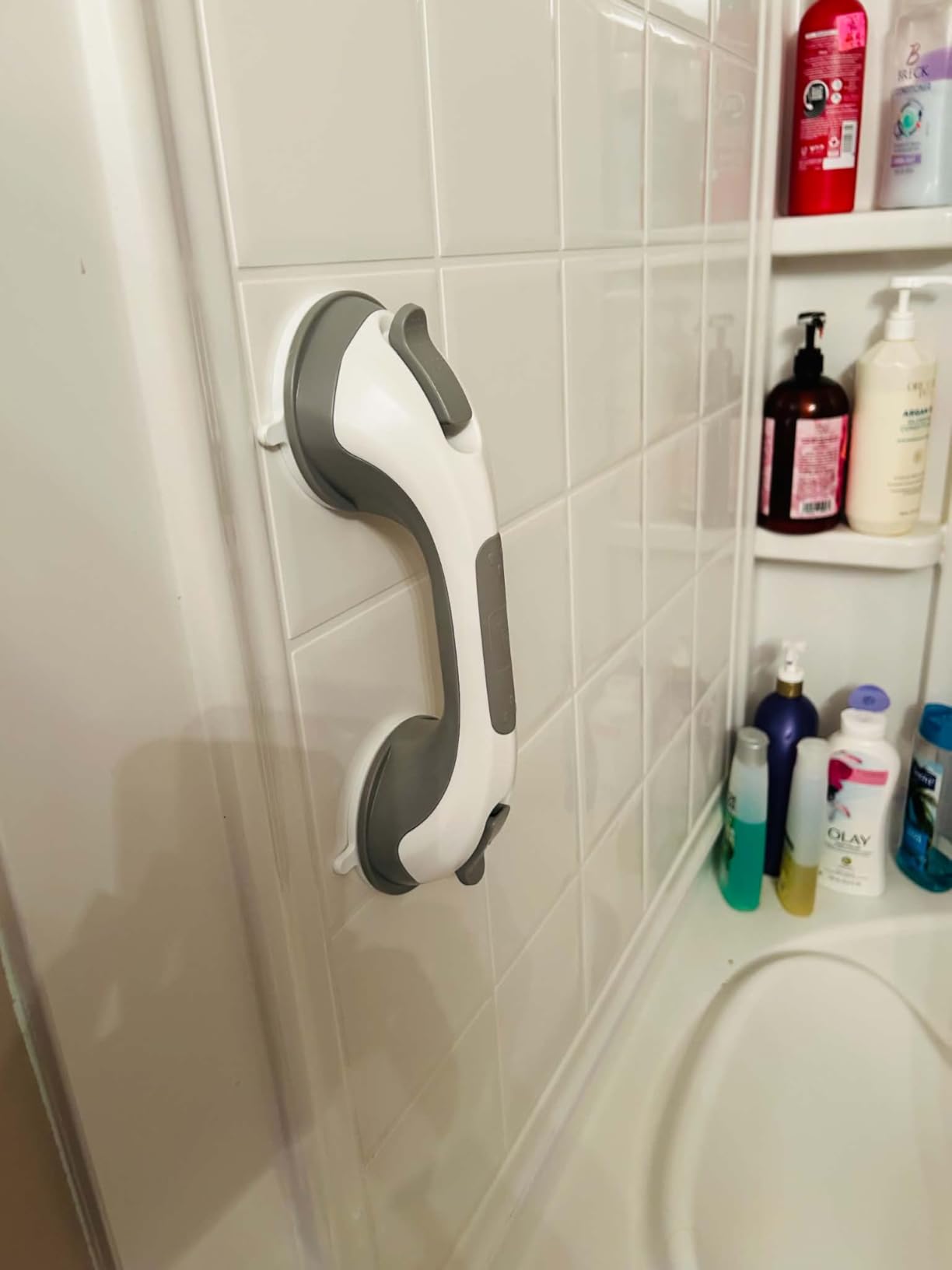
One more thing to check before you rely on it. The listed title and the published dimensions for this product do not match each other, so confirm the bar length you are actually getting before you plan an entry point around it.
Who the TAILI Suction Pair suits
It suits renters, people in recovery who cannot manage a drill, and anyone who wants a temporary handhold they can relocate between the tub and the shower. The green-and-red indicator is not on this model, so check the cups by hand before every use.
It also suits a rental where restoring the wall at move-out matters more than permanent support.
Who it does not suit
It does not suit anyone whose balance is unreliable enough that they need to catch a fall. It also will not work on small mosaic tile, uneven tile, painted walls, or any surface where a grout line runs under the cups.
9. LEVERLOC 12 Inch Suction Bars for Compact Tile Showers
LEVERLOC Grab Bars for Bathtubs and Showers 2 Pack Suction Grab Bar, Heavy Duty 12 Inch Shower Handle Removable Bath Handrails for Seniors and Elderly, Bathroom Safety Grip No Drilling Waterproof Grey
Two 12 in suction bars
240 lb listed per bar
Locking latch cups
Needs tile over 4x4 in
Pros
- Suction holds firmly on large smooth tile
- Five-second tool-free install and easy repositioning
- Gray finish does not look clinical
- Some buyers switched over from cups that would not stay
- Rinses clean easily
Cons
- Will not hold across grout lines or on painted walls
- Hard to remove once locked
- One reviewer pulled paint off a door
- Sold for balance assistance rather than weight bearing
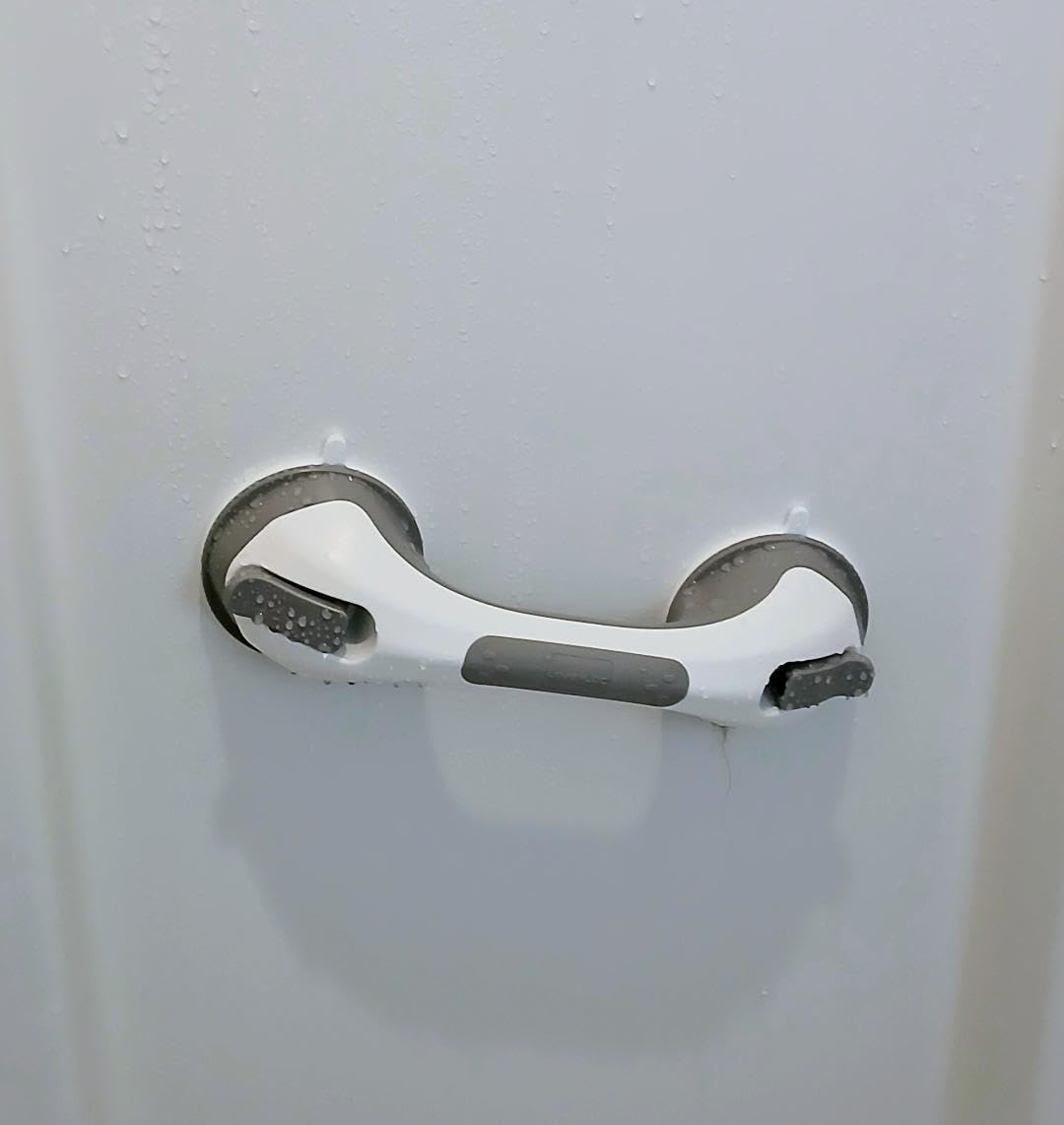
Best for compact showers: at 12 inches this is the shortest bar here, which is exactly what a narrow tiled alcove needs. Several buyers report that they could not pull these off once locked, which tells you how well the cups seal on smooth tile.
Recent reviews from people recovering from knee and ankle surgery describe it as the strongest suction bar they have tried, and the gray finish reads more like a normal accessory than a medical device.
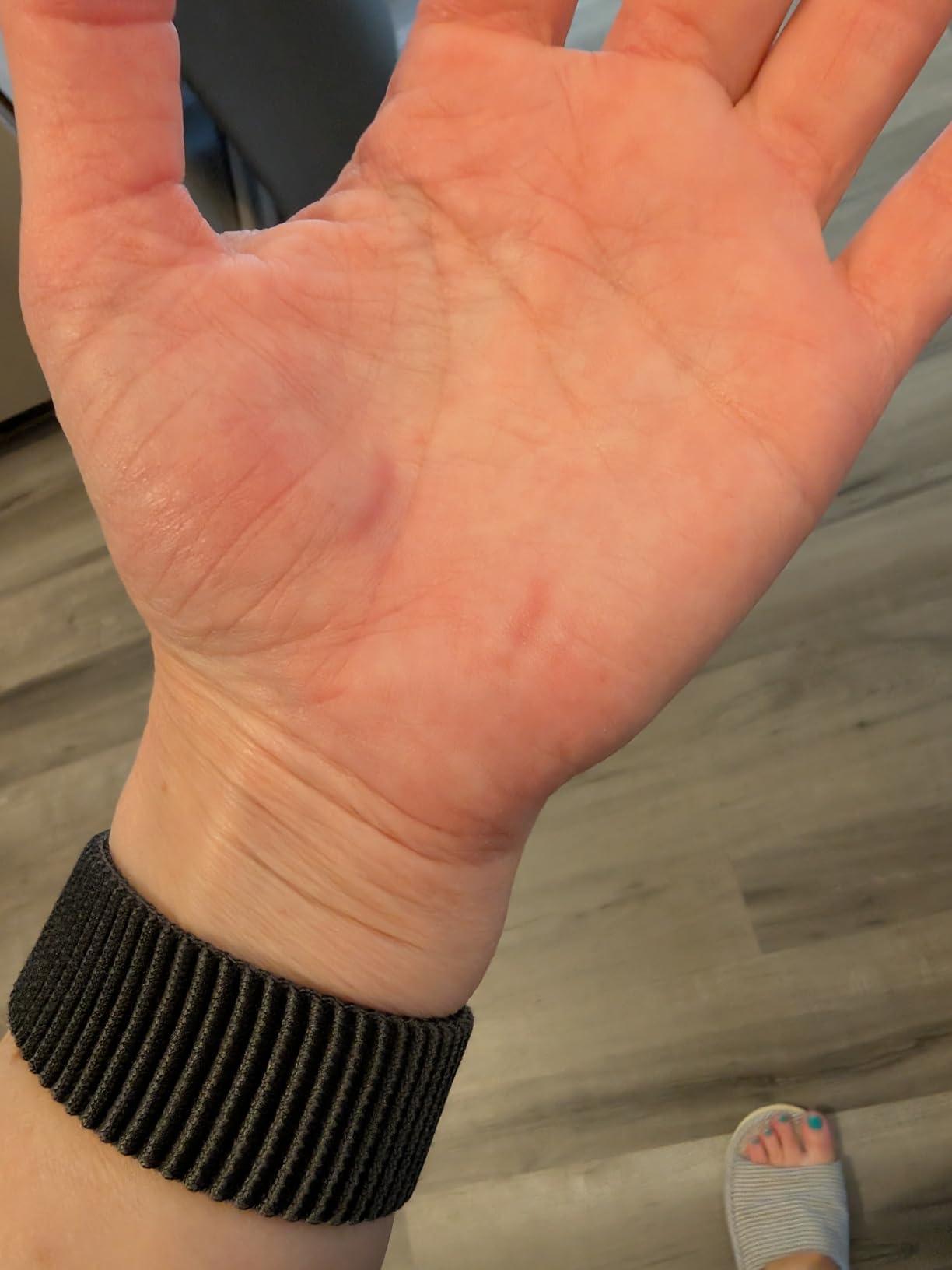
The same warnings apply as with any suction mount. The published rating is 240 pounds per bar, and the manufacturer explicitly directs users not to support body weight on it. Smooth, flat, non-porous tile larger than 4×4 inches is the only surface that works.
One reviewer reported pulling paint off a door when removing a bar, which is a good reminder that paint is a non-porous surface that the cups will grab. Check the substrate before you press and lock.
Who the LEVERLOC Pair suits
It suits small tiled showers where a 16 inch bar will not fit, and it suits people who want a temporary support they can carry between rooms while recovering from surgery. The five-second install makes it practical for travel.
It is also a reasonable backup handhold for a caregiver helping someone steady themselves.
Who it does not suit
It does not suit anyone who expects the bar to catch a fall, and it does not suit grout-heavy mosaic walls. Being hard to remove is a problem for renters who need to take it down daily.
10. Reyiu 16.5 Inch Suction Bars with a Hold Indicator
Reyiu Grab Bars for Shower, Updated 16.5″ Shower Handle for Seniors, 2 Pack
Two 16.5 in suction bars
Green and red hold indicator
4mm cups, steel internals
240 lb listed per bar
Pros
- Green and red indicator shows whether suction is holding
- Buyers report a month or more of daily use on tile
- Thickened cups and steel internals beat plastic cores
- Two bars position one on each side of an entrance
- No drilling so no new holes in tile
Cons
- Very hard to remove once locked
- One reviewer says the cups would not adhere to ceramic tile
- Bar stands proud enough to strike an elbow
- Packaging warns against using it for balance
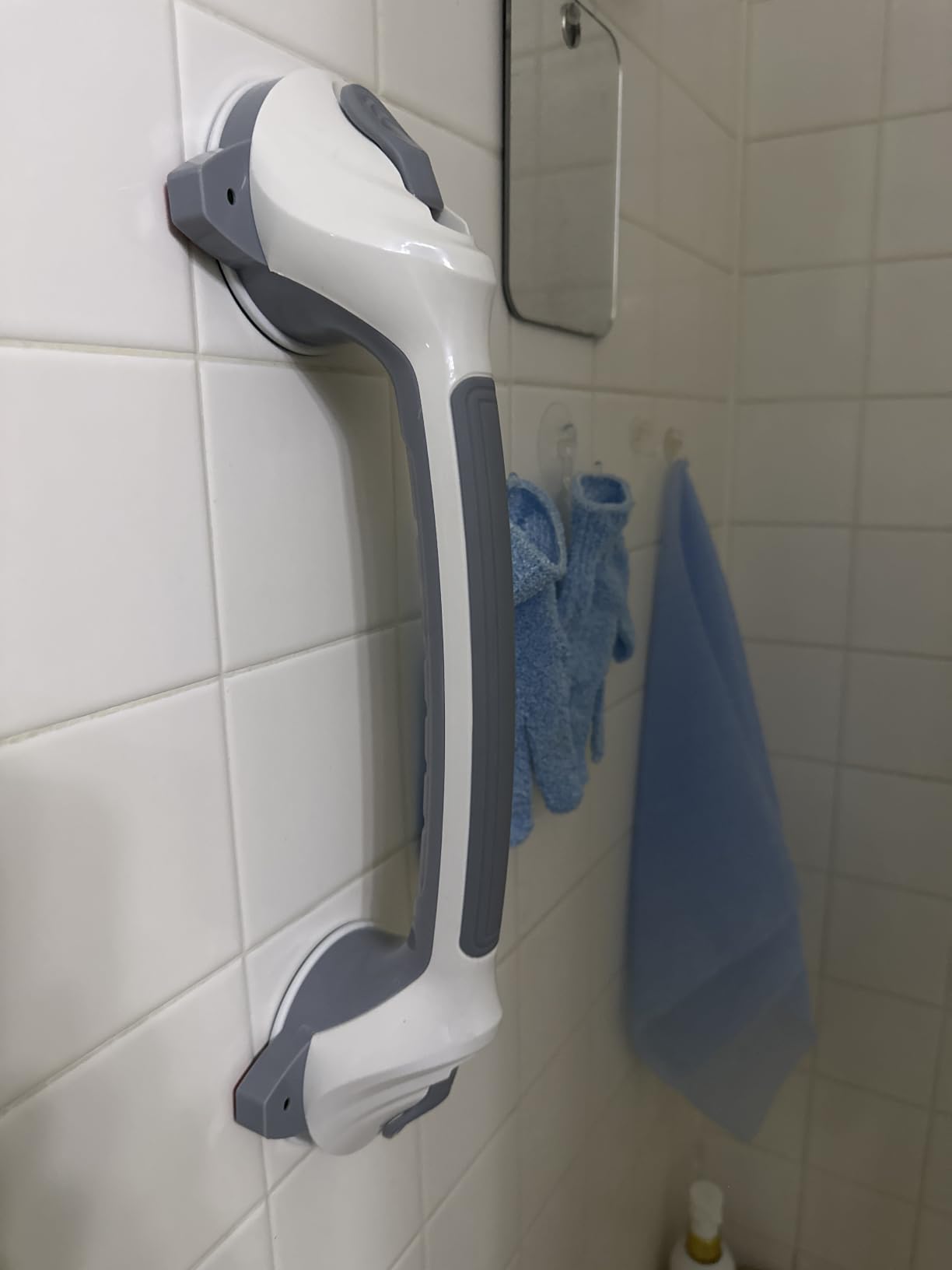
Best suction indicator: the built-in signal is the feature that separates this from the other no-drill picks. Green means the cup is attached, red means suction has dropped, which gives you a visible check instead of a guess.
The cups are thickened to 4mm with steel rather than plastic internals, and buyers report a month or more of daily shower use on tile, fiberglass, and acrylic before needing to reattach.
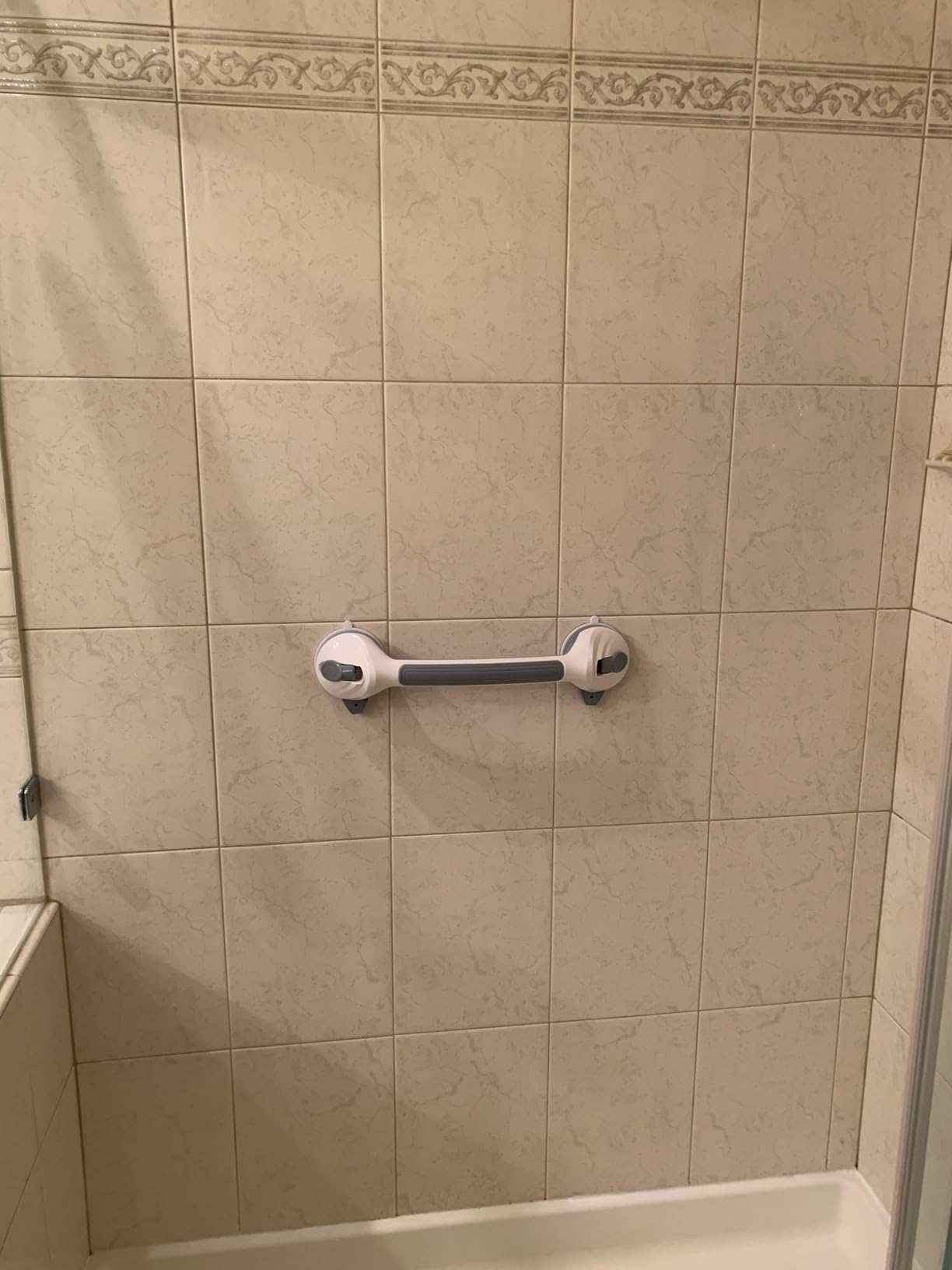
Clean the wall with isopropyl alcohol, let it dry fully, then press for five seconds and check the indicator. That routine is the whole safety story for a suction bar, and it is worth doing every time rather than assuming the last check still holds.
There is an internal contradiction worth naming. The listing markets the bar for bathroom safety, while the instruction card inside the package says not to use it for balance. Several buyers noticed the same discrepancy, and it is a fair signal to treat this tier as a steady-the-yourself aid only.
Who the Reyiu Pair suits
It suits renters, anyone who cannot drill tile, and anyone who wants a visible warning that the mount has lost pressure. The two-bar pack works well with one bar on each side of a shower entrance.
It also suits people who want a handle that leaves no hole and no adhesive residue in the tile grout.
Who it does not suit
It does not suit anyone who needs to catch a fall, and it does not suit a tight shower where the 16.5 inch bar projects into head or elbow height. One reviewer also reports the cups would not adhere to ceramic tile at all.
How to Choose a Grab Bar for a Tile Shower Wall
Pick the bar after you know what is behind the tile, not before. The bar is the easy decision; the wall is the one that determines whether your install is safe, permanent, or both.
What is behind your tile, and what it can carry
From front to back, a modern shower wall is tile, thin-set mortar, a water-resistant backer board, then either framing or masonry. Older installs are messier: tile can be mortared straight onto block, or onto plaster over lath, with no backer board and no stud where you need one. A stud finder returning nothing in a shower is a common and legitimate result.
Wood framing, whether a stud or added blocking, is always the best answer. Masonry behind tile is a solid second choice when you use a proper sleeve or anchor. Cement board and foam backer board on their own are not structural for this purpose, which is why the manufacturers of those products tell you to add blocking first.
That last point is the one that catches people. A backer board that feels solid can still be a hollow shell, and an anchor that pulls out of it does not fail loudly. If your tile is on foam or soft board and no stud is nearby, add blocking or hire someone to do it.
How to drill tile without cracking it
Cracks come from speed and from the wrong bit, not from the presence of tile. Use a carbide-tipped masonry bit or a cobalt bit, start at a low speed with steady pressure, and let the bit do the work.
Where the hole lands matters as much as the bit. Many installers deliberately aim for a grout line rather than the tile face, because grout chips more cheaply than a glazed face does. Counterpoint the drill with a tile-backing block, or stick painter’s tape over the spot to keep the bit from walking.
Drill in stages. Take the tile through, then change to a wood or masonry bit for the backer board and the framing behind it, and keep the same entry angle all the way through. Clean out the hole with a brush before you set the anchor, and you will get full thread engagement instead of a bottomed-out screw.
Anchors ranked by what they can actually hold
Ranked from best to worst for a bar that may take a body’s weight, the options look like this.
First, a wood screw into a stud or added blocking. Always the right answer, and the only one we would call structural for a fall load.
Second, a masonry sleeve anchor into concrete or block behind the tile. Fully capable of body weight when sized for the substrate.
Third, a specialty hollow-wall fastener rated for the backer board, bedded in a construction sealant to stabilise it. Workable, not ideal.
Fourth, a heavy-duty toggle bolt. Acceptable for a light assist handle, not for a bar you intend to lean on.
Never acceptable: standard plastic drywall anchors and light-duty expansion anchors. They are rated for a photo frame, and they fail by pulling straight out of the wall.
Suction and no-drill bars: the honest verdict
Suction bars can adhere to smooth tile, and they are genuinely useful for a renter or a temporary situation. They are not designed to hold body weight, and they release without warning. Independent testing in this category has recorded one popular model holding only about 90 pounds before letting go, and another releasing at 70 pounds, both far below what a falling person needs.
So treat suction as a steady-yourself aid, never as something to catch a fall. If you use one, choose the largest number of cups, a positive mechanical latch, and a visible hold indicator, and pair it with a shower bench for real support. Check it before every shower.
Weight capacity, ADA and bar diameter explained
The ADA floor for a grab bar is 250 pounds of load, and most quality bars in this roundup are rated to 500 pounds when stud mounted. The 500 pound figure is not marketing fluff; it is the number that matters if you are a larger user or if the bar has to take a dynamic load.
ADA compliance in a private home is not required anywhere, and it is not a permit condition in most residential bathrooms. Treat it as a proxy for build quality, which is a reasonable thing to do but not a safety certificate.
On diameter, 1.25 inch is the standard comfortable grip and 1.5 inch is easier for hands with arthritis or limited strength. Both appear here, and the choice is a hand question rather than a strength question.
Length, placement and finish in a tiled shower
Most falls happen at two points: stepping in and stepping out. Installers consistently put a long horizontal bar on the wall opposite the shower head, and a second lower bar or a vertical grab near the controls for the reach.
If you use a shower bench, add a bar at bench height for the push-up, and consider a diagonal mount in the corner where the entry narrows. For the finish, match what is already in the room: brushed stainless and brushed nickel read as soft and hide water spots, polished chrome matches chrome trim, and matte black is a strong statement that wants matching fixtures.
Finally, seal it. Run a bead of silicone caulk around the flange line after the screws are set and let it cure before the first shower. That step keeps water out of the wall cavity around the hole you drilled, and it is the step most commonly skipped.
Frequently Asked Questions
Can you put a grab bar in a tile shower?
Yes. A grab bar can be installed in a tile shower as long as it is anchored into a wall stud, added blocking, or the masonry substrate behind the tile. The tile and grout are finish layers only and add no structural strength, so tile size and grout-line placement do not determine whether a bar can be supported. What matters is what is directly behind the tile.
Do shower grab bars have to be installed in studs?
Studs are preferred but not the only option. A correctly sized masonry anchor into block or concrete behind the tile can carry full body weight. Hollow or foam backer board and soft cement board should be treated as non-structural and require a specialty fastener plus added blocking. Standard plastic drywall anchors are never acceptable for a grab bar.
What are the best anchors for installing a grab bar in tile?
Rank the anchors like this: a wood screw into a stud or added blocking is always best; a masonry or sleeve anchor into concrete or brick behind the tile is the solid alternative; a specialty hollow-wall fastener rated for the backer board and bedded in sealant is workable; and a heavy-duty toggle bolt is acceptable only for a non-load-bearing assist. Never use standard plastic drywall anchors or light-duty expansion anchors for a body-weight bar.
Do suction grab bars work on tile, and are they safe?
They can adhere to smooth tile, but they are not designed to hold body weight and they fail without warning. Independent testing found one popular model holding only about 90 pounds before releasing, and another releasing at 70 pounds. Treat them as balance aids for standing steady, never as something to catch a fall, and check the cups before every use.
What goes behind a tile shower wall?
From front to back: tile, thin-set or mortar, a water-resistant backer board such as cement board, foam board or WDM, and then framing with studs at 16 inches on center, or masonry. Older installs may have tile mortared directly to a block or plastered wall with no backer board at all, which is why a stud finder can return nothing inside a shower.
Our Verdict on Shower Grab Bars for Tile Walls
If your shower wall has framing in it, the Moen Home Care 24 inch bar is the one we would put in, with the Amazon Basics 36 inch as the choice for a wide wall and a wider grip. Both are rated to 500 pounds into a stud, both hide their screws, and between them they have more than 10,000 buyer ratings behind them.
For a small alcove, the AmazerBath 16 inch covers the entry and exit points without a long drill run. For two-point coverage, the FANHAO or Lifeassist packs mean one order covers both sides of the shower.
Only reach for the suction tier when drilling is genuinely off the table, and treat those bars as steadying aids, not as fall protection. For finish matching, our shower head roundup covers the trim that most bars end up sitting next to.
Whatever you choose, find out what is behind the tile before you buy, drill slowly with the right bit, and seal the flange line when you are done. That is the whole difference between a bar that works and one that does not.