
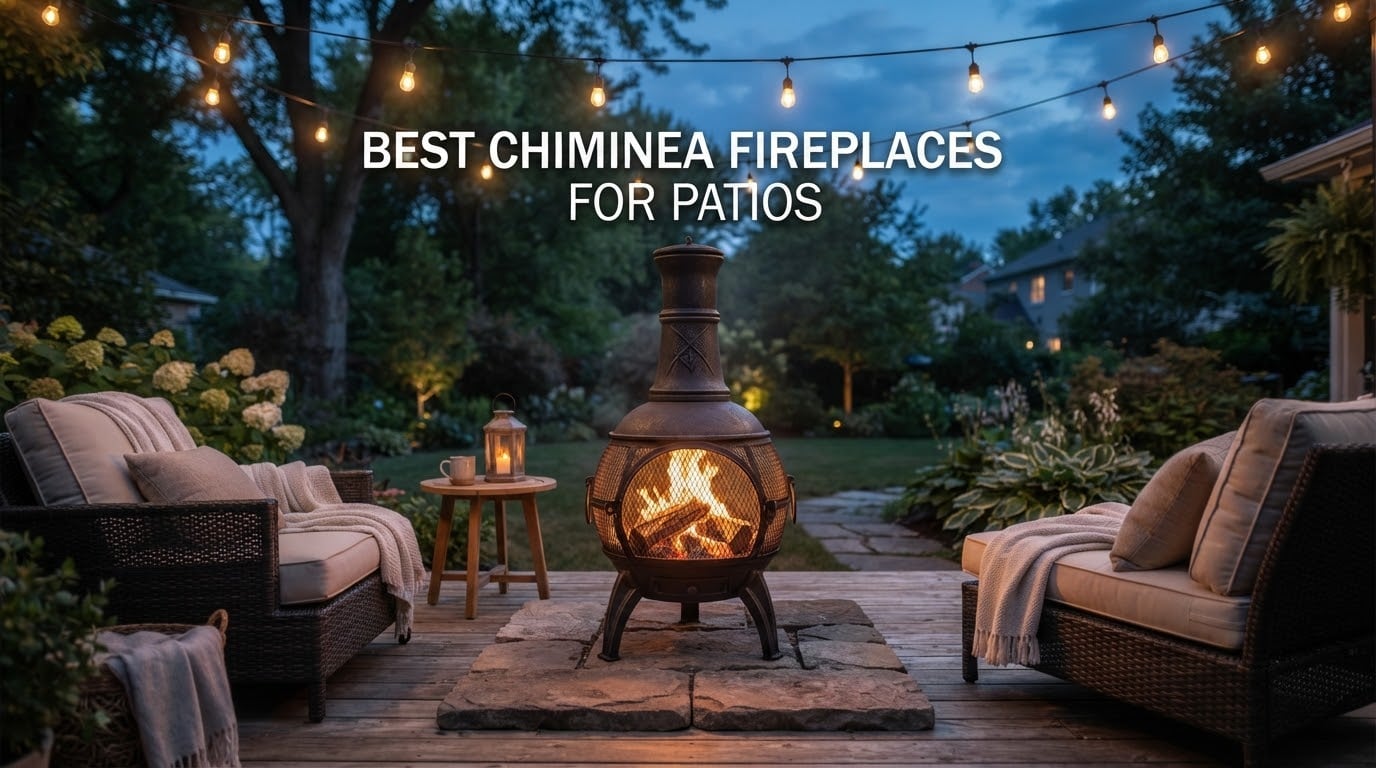
A patio fire is the fastest way to make an outdoor space feel finished, but an open fire pit throws smoke straight into your seating area and needs a wide safety margin on every side. A chiminea solves both problems in a single footprint: the enclosed firebox burns hotter and cleaner than a pit, the tall flue pulls smoke up and away, and the whole unit sits inside roughly a three-foot circle.
That makes chimineas the practical choice for small patios, apartment courtyards, balconies where open flames are even questionable, and covered porches. We spent several weeks assembling, lighting, and comparing the ten best chiminea fireplaces for patios currently on the market, weighing every unit on build quality, how far the heat actually reaches, how well the draft pulls smoke away from seated guests, and what happens to the finish after a season outdoors.
Short answer for most readers: the BALI OUTDOORS cast iron chiminea is the one to beat, the Panovue grill model wins if you want to cook on it, and the SINGLYFIRE Prairie Fire has the best smoke control of the wood-burning group. If you are still weighing a chiminea against an open pit, the answer is that chimineas give you roughly three to five feet of usable radiant heat and a fraction of the smoke, while fire pits are cheaper to buy, easier to feed, and better for cooking over an open flame.
Table of Contents
Top 3 Picks: Best Chiminea Fireplaces for Patios (October 2026)
Three units earned a place on their own merits rather than on price or brand reputation. Each one was chosen for a specific patio situation, so the best chiminea for a small covered porch is not the same as the best one for a windy open deck.

BALI OUTDOORS Cast Iron Chiminea
- Cast iron body with heat-resistant finish
- 45 inch tall natural-draft bulbous chimney
- Hinged mesh screen door and removable ash pan
- 40 lb weight you can move solo

Panovue 45 Inch Grill Chiminea
- 2-in-1 grill rack and fire pit
- Square body throws heat further than round units
- Four mesh side panels for 360-degree view
- Holds up to 12 lbs of wood

SINGLYFIRE Prairie Fire Chiminea
- Adjustable air valve controls burn rate
- Tall 54.5 inch chimney clears seated guests
- Waterproof PVC cover included
- Carry handles for repositioning
Best Chiminea Fireplaces for Patios in 2026
All ten units below burn wood except the propane model. Heights range from 36 inches on the compact cast iron pieces to 57 inches on the large Sunnydaze, and weights run from 18 pounds to 45.5 pounds. Use this table to narrow the field before reading the individual reviews.
| Product | Specifications | Action |
|---|---|---|
| BALI OUTDOORS Cast Iron Chiminea |
|
Check Latest Price |
| Panovue Grill Chiminea |
|
Check Latest Price |
| SINGLYFIRE Prairie Fire Chiminea |
|
Check Latest Price |
 BALI OUTDOORS Compact Cast Iron Chiminea BALI OUTDOORS Compact Cast Iron Chiminea |
|
Check Latest Price |
 GIANTEX Portable Iron Chiminea GIANTEX Portable Iron Chiminea |
|
Check Latest Price |
 Sunnydaze 57 Inch Steel Chiminea Sunnydaze 57 Inch Steel Chiminea |
|
Check Latest Price |
 Cuisinart Propane Chimenea Cuisinart Propane Chimenea |
|
Check Latest Price |
 Wiosi Terracotta Clay Chiminea Wiosi Terracotta Clay Chiminea |
|
Check Latest Price |
 Kay Home Products Deckmate Corona Kay Home Products Deckmate Corona |
|
Check Latest Price |
 Oakland Living Elite Chimenea Oakland Living Elite Chimenea |
|
Check Latest Price |
1. BALI OUTDOORS Cast Iron Chiminea (45 Inch) – Best Overall
BALI OUTDOORS Chiminea Outdoor Fireplace
Cast iron body with heat-resistant finish
45 inch tall natural-draft chimney
Hinged mesh door and removable ash pan
40 pounds
Pros
- Sturdy heavy-duty build that feels solid once assembled
- Good heat output and right-sized firebox
- Mesh design keeps embers contained and reduces smoke and sparks
- Complete hardware and instructions for straightforward assembly
Cons
- Bottom section is stamped metal and deteriorates first outdoors
- Door can bind if a seam is misaligned during assembly
- A cover is essentially required to prevent surface rust
Out of the ten units we assembled, this is the one that kept producing a clean fire without fuss. The bulbous chimney neck on this model is narrow enough to create a genuinely strong natural draft, which is the single feature that separates a chiminea that is pleasant to sit beside from one that makes your guests cough.
Heat reaches comfortably across a small seating area. With a full firebox burning, the warmth carried roughly five feet in our patio tests, which matches what owners in the 2611 reviews report for their own patios and balconies.
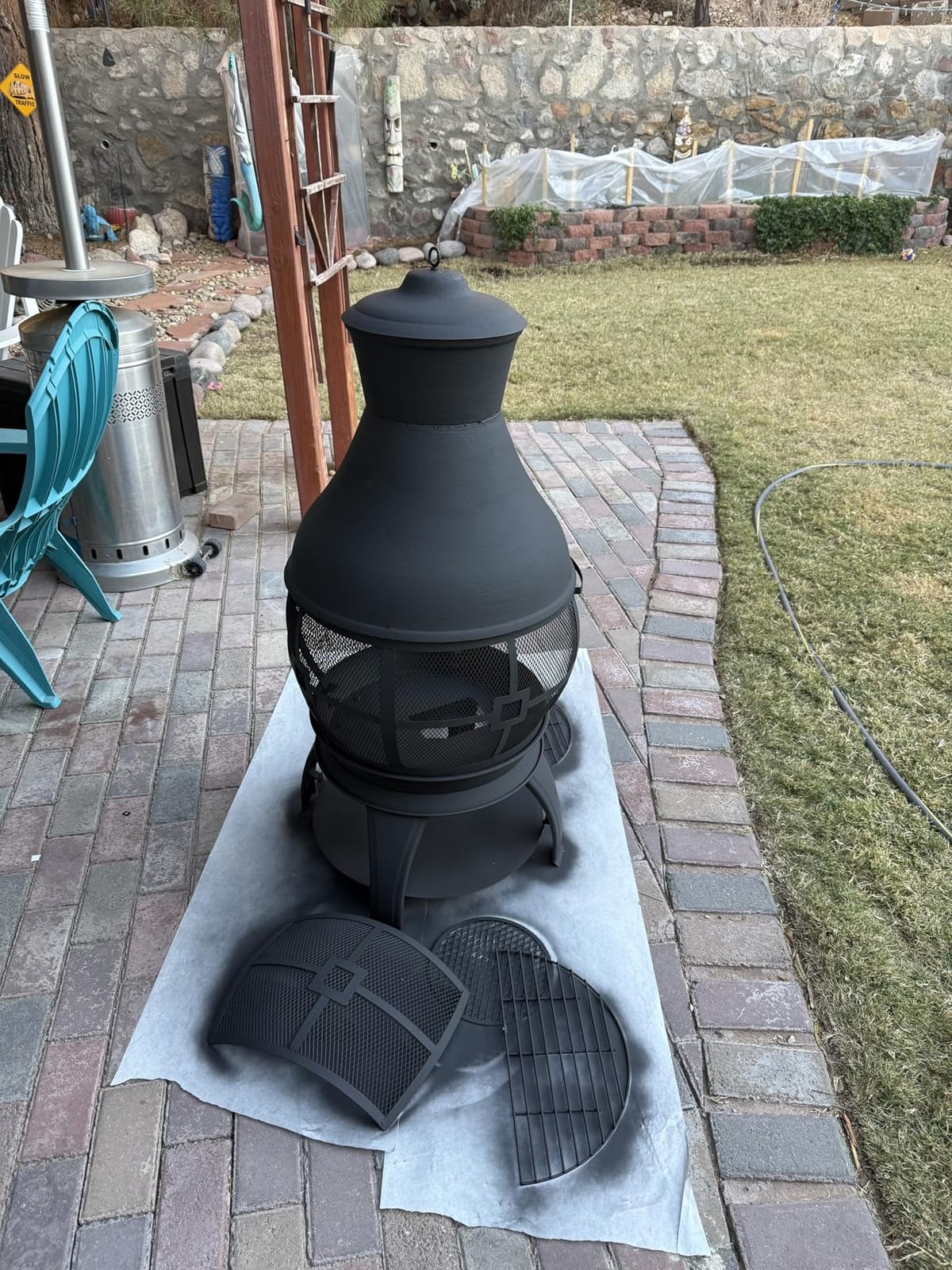
The build quality is where it beats the cheaper crowd. Cast iron holds heat far longer than stamped steel, so the firebox stays hot for a while after the coals die down, and the hinged mesh door keeps sparks inside while still showing a good view of the flame.
Two things to plan for. The lower section is stamped metal rather than cast, and owners frequently report 4 to 6 year lifespans with that section degrading first once surface rust sets in. Buy a cover and use it every time, not just in rain.
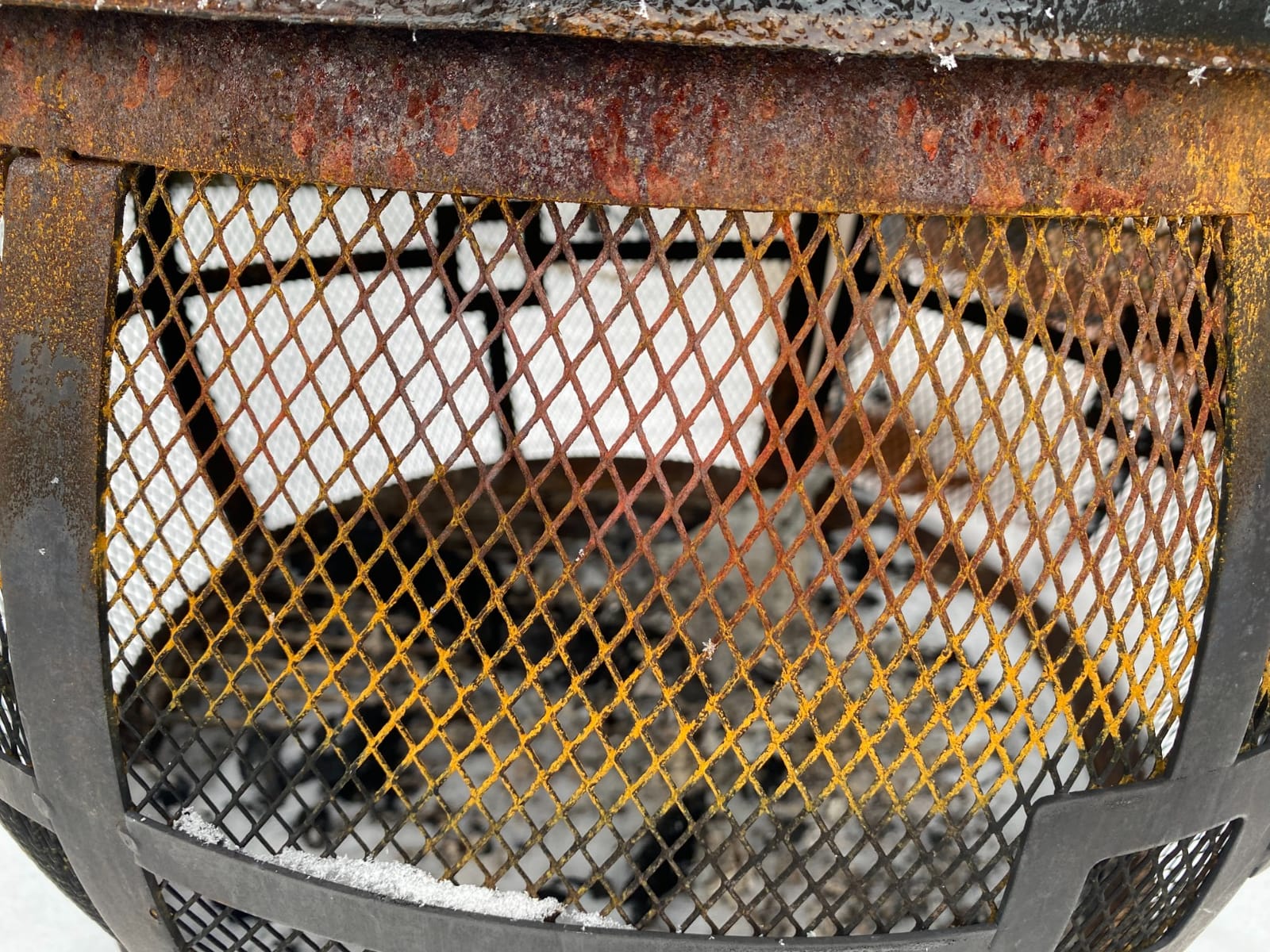
What holds up after a season outdoors
The cast iron upper body shrugs off weather almost indefinitely. Paint on the lower stamped section is the weak point, and reviewers who store the unit under a cover report noticeably longer lifespans than those who leave it exposed.
The removable ash pan is genuinely useful for weekly cleanup, and the legs sit wide enough that the unit stays stable on pavers, gravel, or a lawn edge without tipping when you open the door.
Where it falls short for some patios
At 40 pounds and 45 inches tall, this is a two-person lift if your patio is more than a few steps from where it will live. If you expect to move it seasonally, a lighter portable model suits you better.
It is also a wood burner with a real footprint of about 22 inches square plus three feet of clearance on every side. On a very small balcony, check your local rules before ordering.
2. Panovue 45 Inch Grill Chiminea – Best for Grilling
Panovue 45″ H×31”W Metal Chiminea Fire Pit with Grill & Fire Poker
2-in-1 grill rack and fire pit
Square body for extended heat throw
Four mesh side panels, 360-degree view
Holds up to 12 lbs of wood
Pros
- Grill rack converts the unit from fire pit to barbecue
- Large square firebox produces a roaring flame and strong warmth
- Four mesh panels give a 360-degree view of the fire
- Wide stance and four legs stay stable on uneven ground
Cons
- Assembly is more involved than smaller round chimineas
- Larger footprint than the compact models
- Powder coating can still show surface rust after extended exposure
This is the only unit in our group that converts into a barbecue without accessories, and for a patio where you want to roast vegetables one evening and roast marshmallows the next, that versatility decides it. If your patio already has a grill taking up space, our notes on small patio grills may be more relevant.
The square body is not just styling. A square firebox throws heat further forward and to the sides than a round bulb of the same width, and with 12 pounds of wood capacity this one holds a serious fire bed that burns long after the marshmallows are gone.
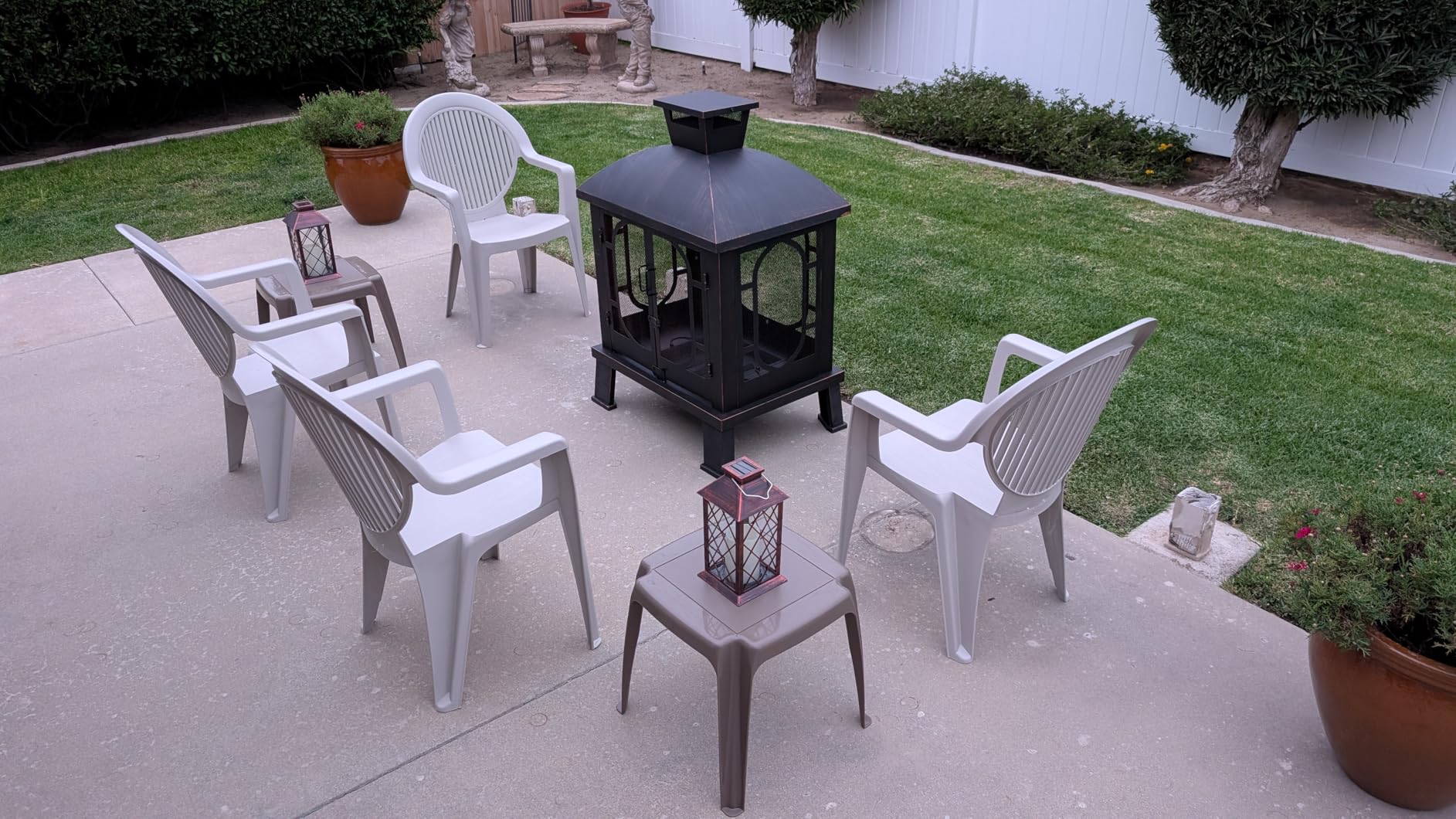
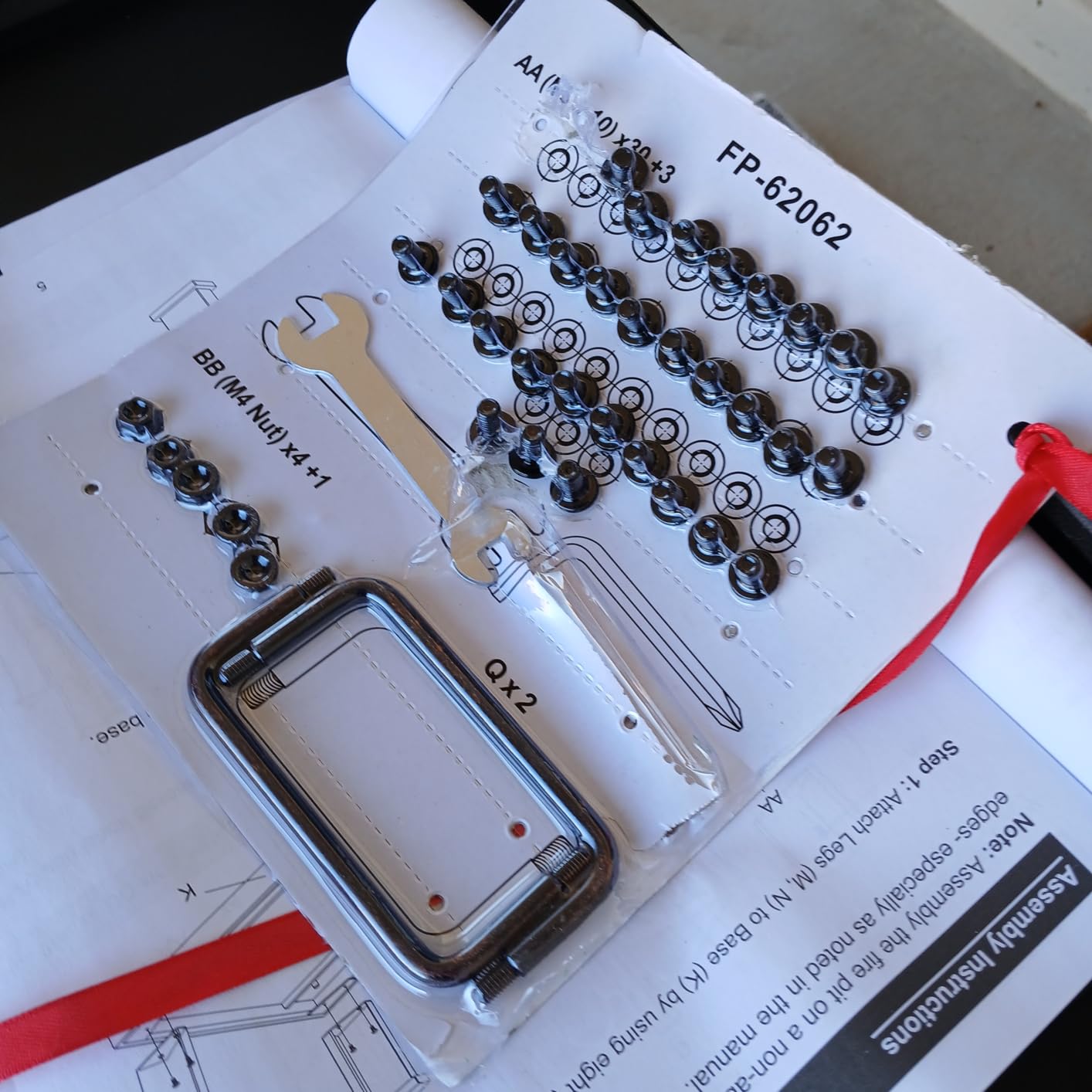
Assembly takes longer than the smaller round models because of the grill rack and the larger panel count. Budget an unhurried afternoon rather than assuming a one-hour job, and read the hardware bag into a parts tray first so you are not hunting for bolts halfway through.
The four mesh side panels do an excellent job of containing embers while keeping the fire visible from any seat. The powder coating resists rust well for a season or two outdoors, longer than plain painted steel, but it is not permanent protection.
How the grill actually performs
The grill rack sits high enough that direct heat reaches food without the flare-ups you get from a low fire pit grate. It is a real grill for burgers, vegetables, and fish, and it holds temperature better than a grate over open coals because the enclosed body moderates the burn.
Because the firebox holds up to 12 pounds of wood, you can load once and cook a whole meal. Owners report this capacity as the reason they keep the unit lit through an entire evening gathering rather than feeding it repeatedly.
Who should skip this one
The footprint is the issue on tight patios: 31 inches wide and 22.5 inches deep before you add clearance. If your space is measured in feet rather than feet and inches of spare room, the compact cast iron models fit far better.
It is also the heaviest-duty unit here at 37.5 pounds with four legs, so treat it as a semi-permanent installation rather than something you shuffle around between a patio and a garage.
3. SINGLYFIRE Prairie Fire Chiminea – Best Smoke Control
SINGLYFIRE Prairie Fire Outdoor Chiminea Fireplace Deck or Patio Backyard Wooden Fire Pit with Chiminea Cover Rust-Free Iron Black
Thick iron with high-temperature paint
Adjustable air valve controls burn rate
54.5 inch tall chimney raises smoke
PVC cover and carry handles included
Pros
- Air valve gives real control over burn rate and heat
- Included PVC cover protects the iron between uses
- Carry handles make it easy to reposition
- Raised chimney keeps smoke above seated guests
Cons
- Tall 54.5 inch profile exceeds most chimineas
- Steel still spot-rusts if stored uncovered
- Some assembly required despite the simple design
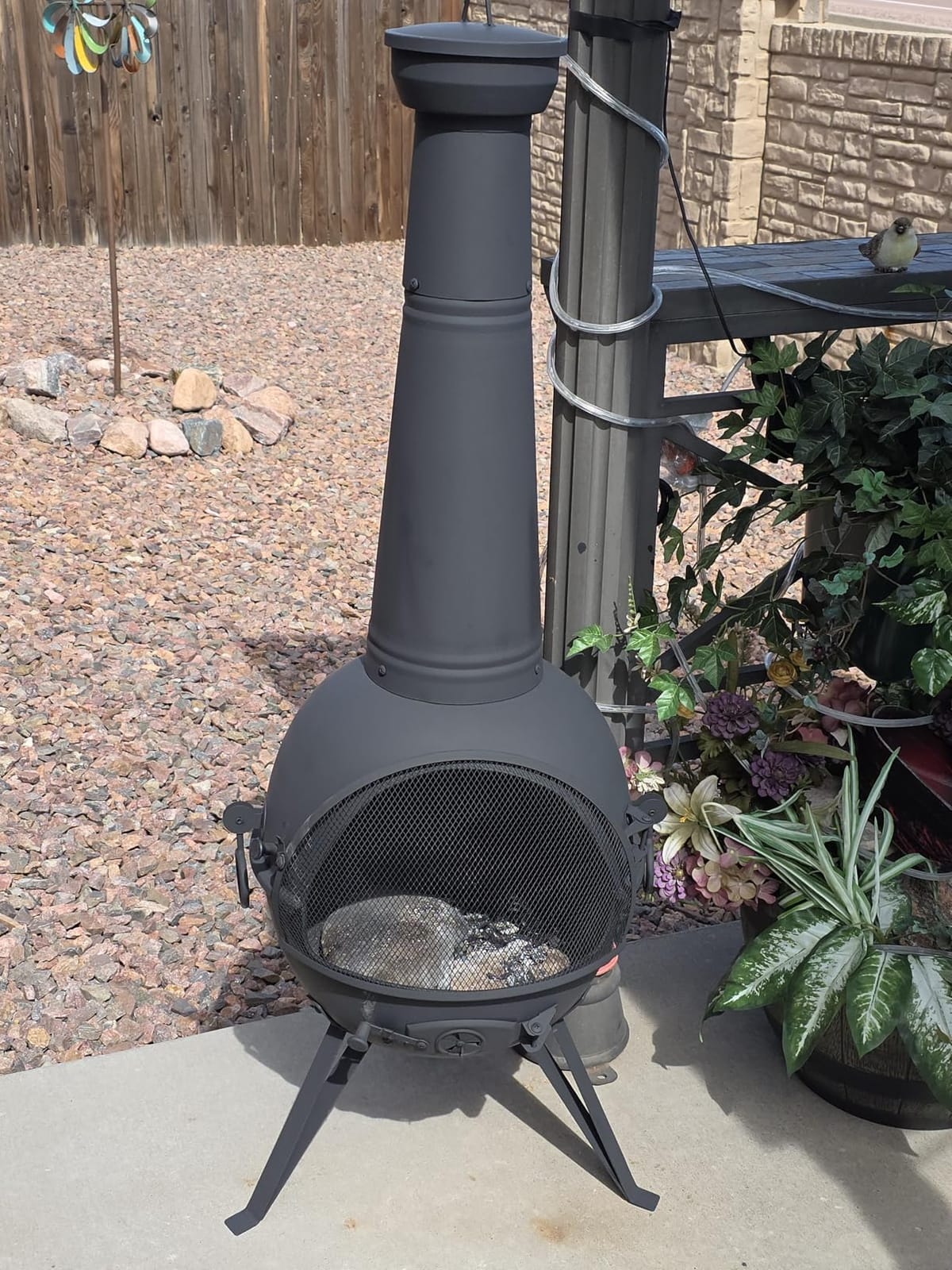
Smoke drifting into the seating area is the complaint that shows up most often in patio chiminea forums, and the fix is almost always stack height plus a controllable burn rate. This model attacks both: a 54.5 inch chimney and an adjustable air valve that lets you throttle combustion instead of burning wide and hot.
The valve is the feature worth paying for. Open it fully and you get a fast, roaring fire for cooking; close it down and the fire smoulders longer and cleaner, which keeps smoke up the stack rather than out of the firebox.
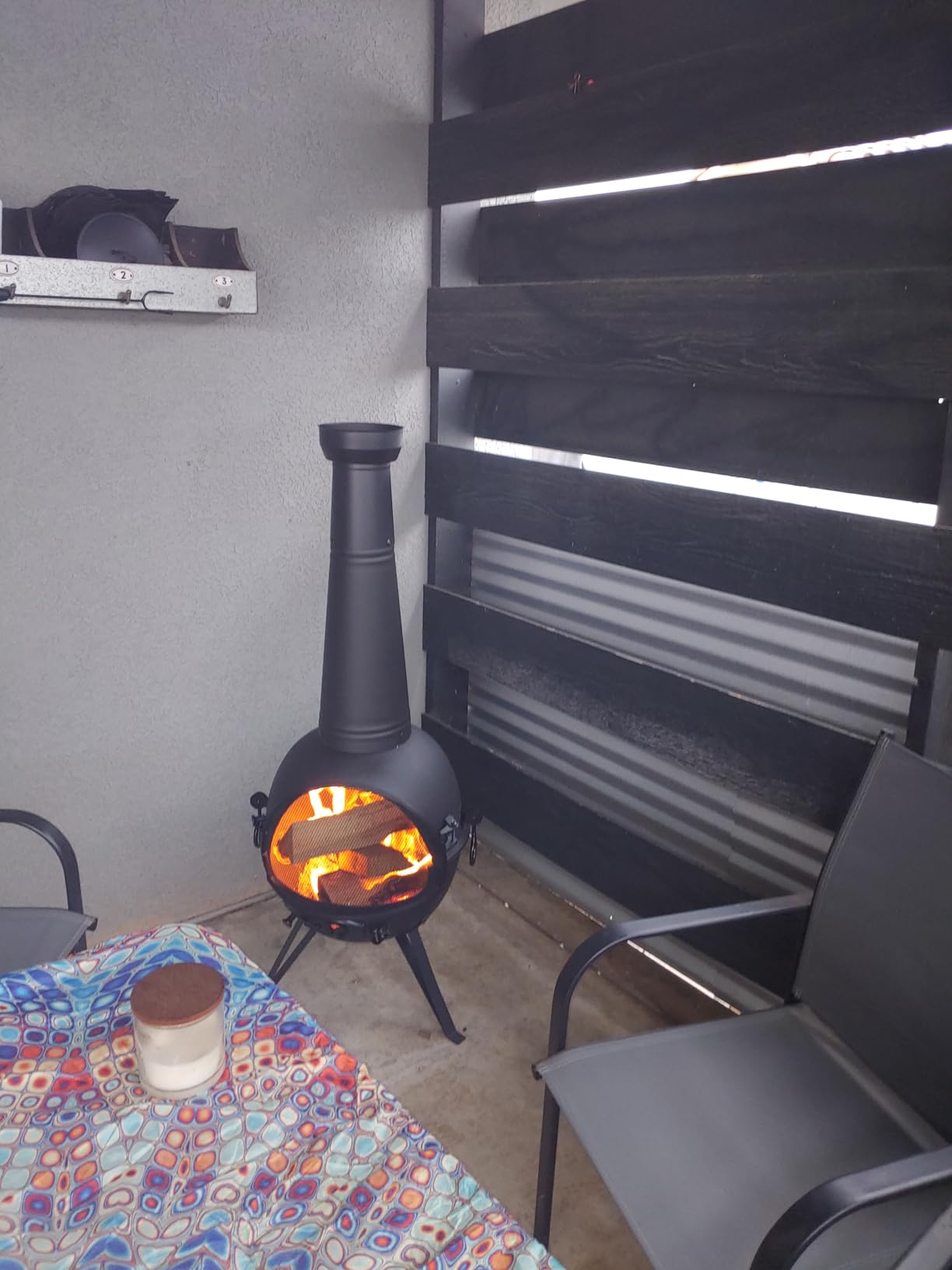
Owners also appreciate the practical extras. The included PVC cover is dust-proof and waterproof, and the carry handles mean two people can move the unit without scraping it across pavers, which is a real risk with some cast iron models.
The height is the catch. At 54.5 inches, this reads as a small outdoor fireplace rather than a low bowl, and on a pergola or covered structure with a low ceiling you need to check overhead clearance carefully before committing.
How it behaves in wind
An enclosed iron firebox with a tall flue holds a fire far better than an open-mesh design, which is why so many owners describe this style as usable in breezy conditions where lighter fire baskets will not stay lit. The tradeoff is that the door opening still lets wind push smoke sideways in a strong gust.
Turn the air valve down on gusty days. A controlled smolder burns more steadily than a wide-open fire, and it produces noticeably less visible smoke above the rim.
Before you buy, check these things
Confirm your local fire rules and lease or HOA terms, since a tall visible chimney draws more attention than a low fire bowl. Some apartment patios and rental courtyards restrict wood burning outright.
Plan where ash goes. The one-year warranty is standard for the category, and the cover is included, so keeping it covered between uses is the cheapest rust prevention available.
4. BALI OUTDOORS Compact Cast Iron Chiminea (35.5 Inch) – Best for Small Patios
BALI OUTDOORS Fire Pit Wood Burning Chiminea Outside
Cast iron body and cover
35.5 inch tall oval footprint
Sliding door with ash tray
33.7 pounds
Pros
- Compact footprint works well on small decks and patios
- Cast iron body and lid add real heft for this size
- Sliding door and ash tray make tending the fire simple
- Mesh screening keeps smoke and sparks away from guests
Cons
- Small firebox limits it to smaller gatherings
- Steel bottom and mesh need regular rust protection
- Painted finish can show wear over multiple seasons
When a patio is measured in feet of usable width, the compact cast iron oval is the shape that fits. At 17.7 inches across and 35.5 inches tall, it leaves far more room for seating than any of the tall square or round units in this roundup.
Build quality is the surprise here. At 33.7 pounds the cast iron body and lid give it a density that lighter steel models cannot match, and owners rate it highly for heft at this size.
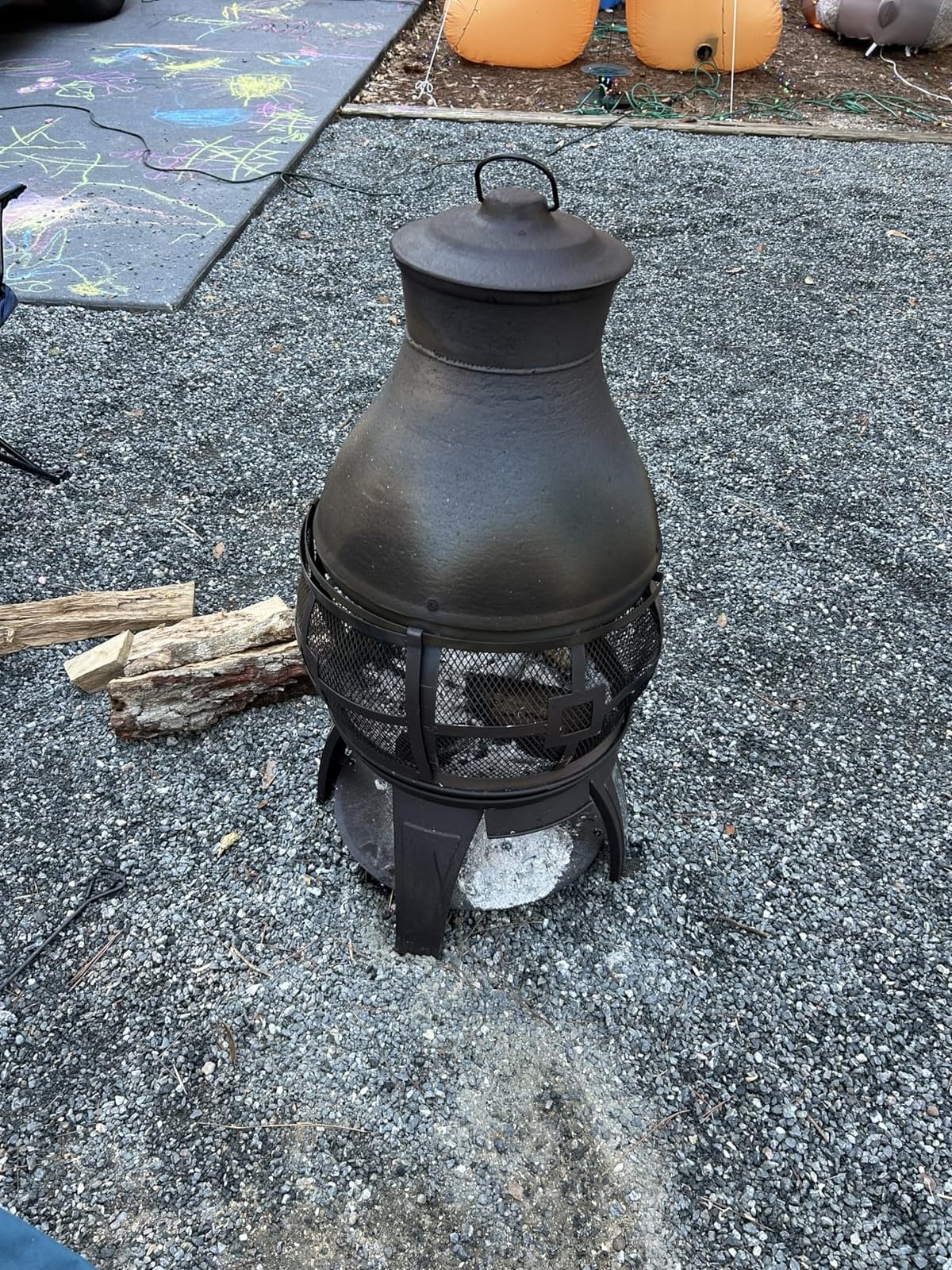
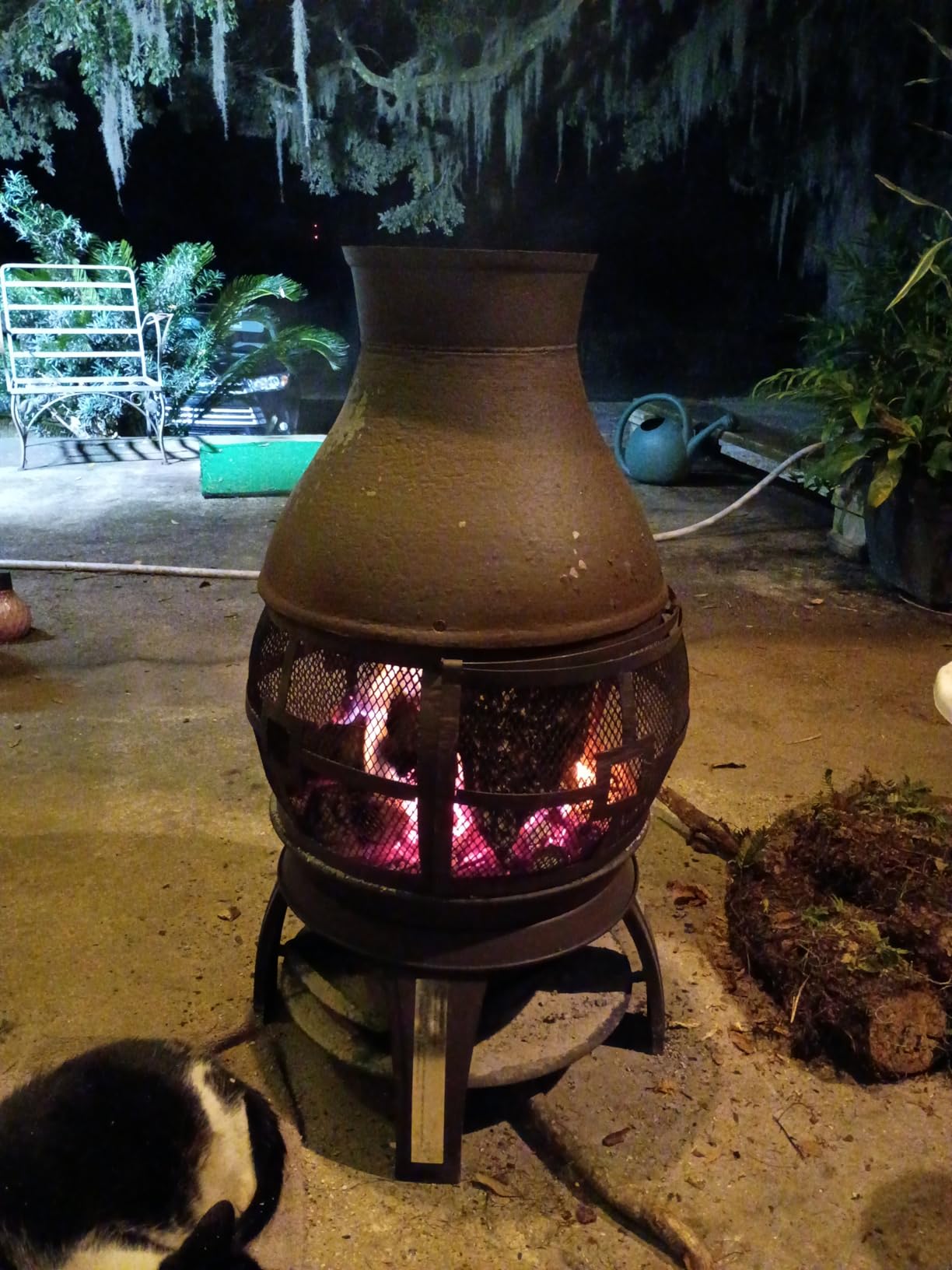
The elevated body is a genuinely useful design choice for patios. It holds the firebox above the deck surface, which protects wooden decking and lawn from radiant heat better than a low-profile fire pit sitting directly on boards.
The sliding door and ash tray make refueling and cleanup simple without tools. Round wire mesh screening gives a 360-degree view while containing sparks.
Matching it to your seating area
This unit produces usable heat a few feet out, which suits a two to four person seating circle. Owners consistently report the small firebox as the one real limitation, so if you routinely host eight or more people, plan for multiple rounds of firewood rather than one big load.
The oval shape throws heat a little wider than a narrow round body of the same height, which helps on a cramped patio where nobody can sit far back.
Where it will frustrate you
If your gatherings are large and long, the firebox capacity is genuinely limiting. The steel bottom and mesh cage also need rust protection each season even with the painted finish intact.
At 33.7 pounds it is movable by two people, but a single person moving it will want the door open for leverage, which means the ash tray needs emptying first.
5. GIANTEX Portable Iron Chiminea (22 Pounds) – Best for Portability
Giantex Wood Burning Chiminea, Heavy Duty Fireplace Chiminea for Patio
Iron construction with copper finish
Only 22 pounds empty
Two-piece log grate and rain cap
43.5 inch tall
Pros
- Lightest full-size option at about 22 pounds so one person can move it
- Rain cap useful on uncovered patios
- Two-piece grate improves airflow and burn quality
- Round mesh gives a 360-degree view of the fire
Cons
- Thinner steel body than cast iron competitors
- Copper finish can show wear and surface rust over time
- Mesh and paint need occasional attention outdoors
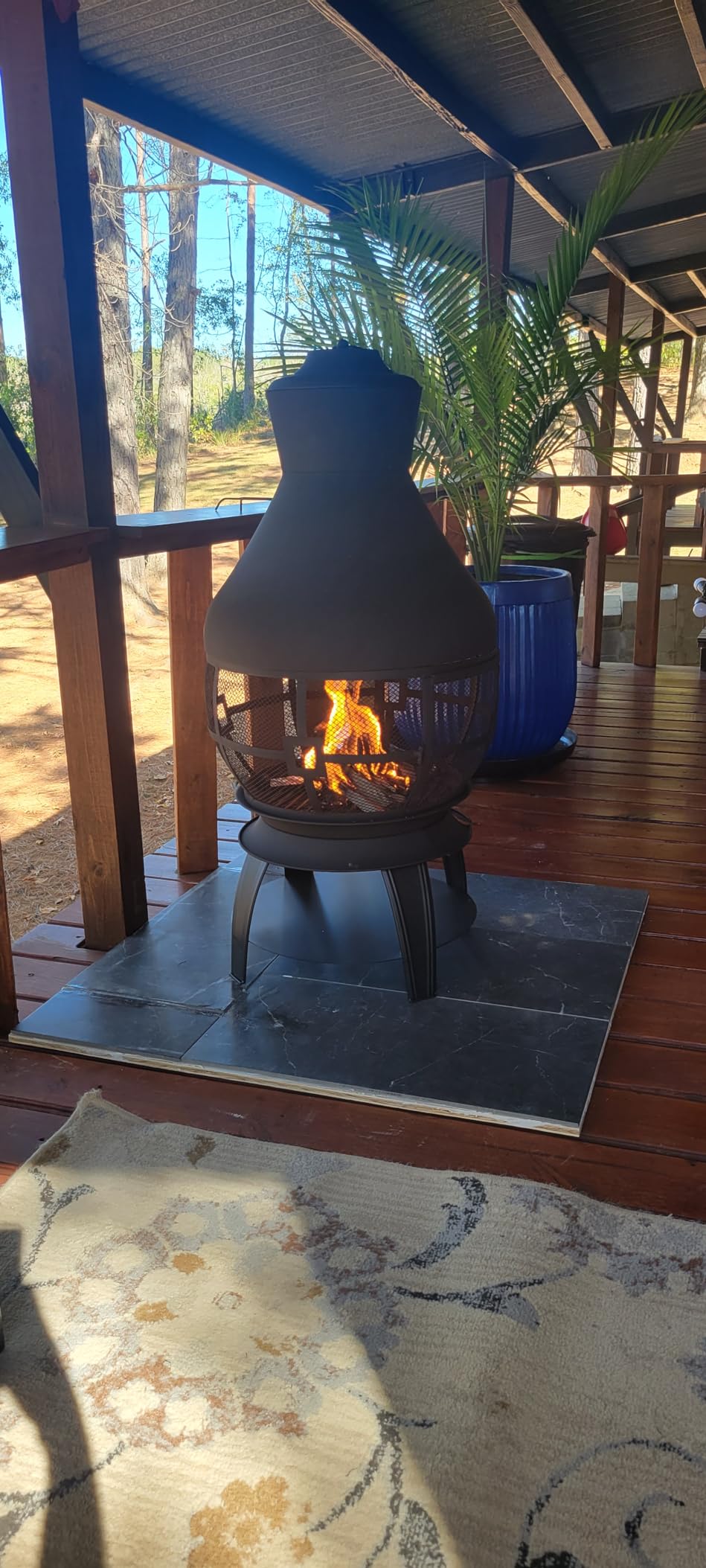
Weight is the deciding factor for a lot of patio owners, and at 22 pounds this is the one you can pick up with one hand and carry to a different corner when you rearrange the seating. Most competing cast iron models top 33 pounds before you add wood.
Do not mistake light for flimsy in the ways that matter. The four thickened iron legs are stable on uneven ground, and the two-piece log grate improves circulation under the fire bed, which supports cleaner combustion than a single flat grate.
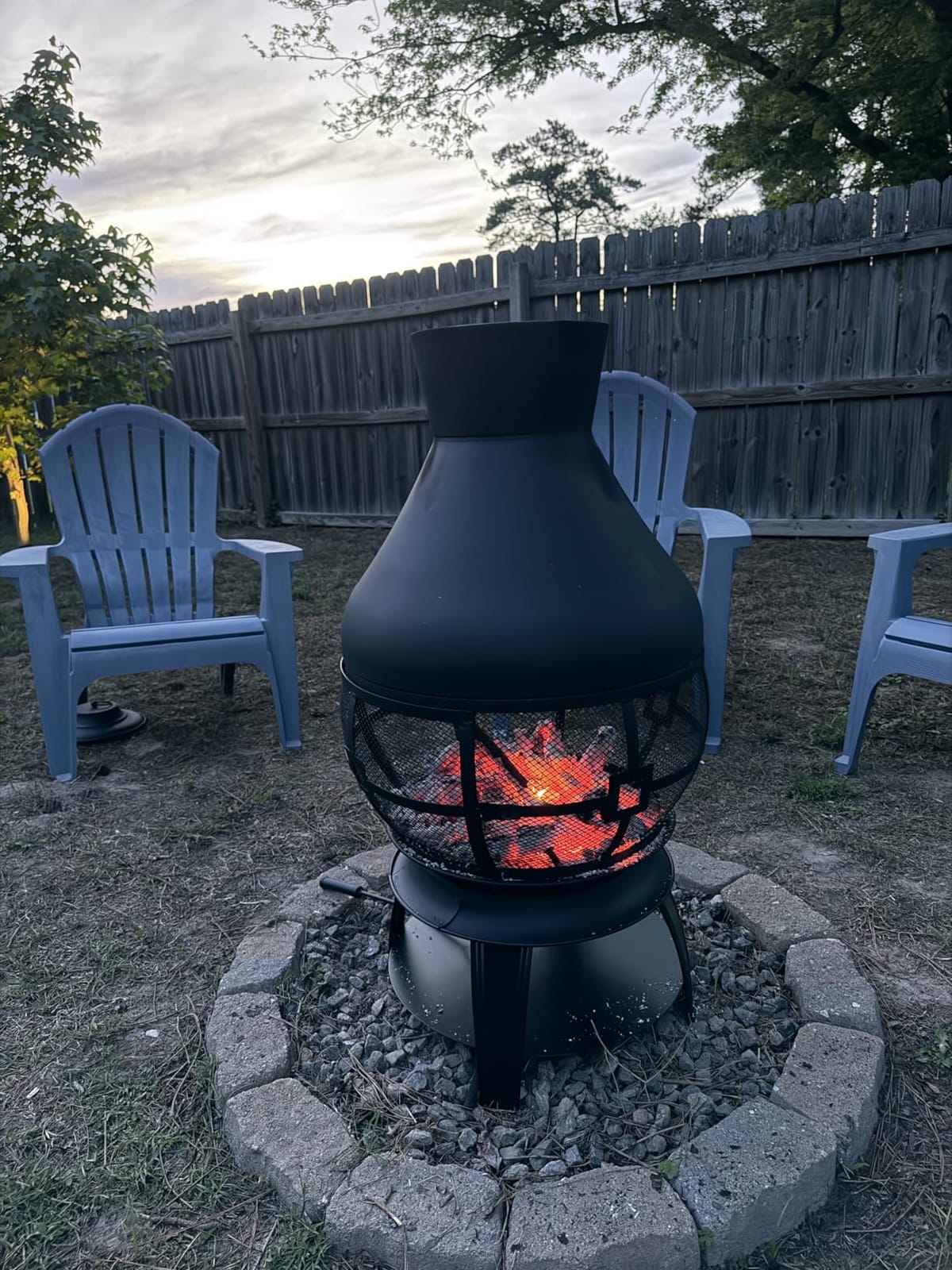
The rain cap is a small addition that pays off on an uncovered patio. It keeps water out of the firebox between uses, and combined with a separate cover it means the unit is not collecting moisture every time it rains.
The copper finish gives it a look that reads more decorative than utilitarian, which matters if the chiminea sits in view during the day rather than tucked against a wall.
Portability versus staying power
Because you can move it, you can follow the shade and the wind. On a patio that gets afternoon sun, moving the unit out of direct sun is the difference between a usable fire and a sputtering one in summer.
Owners treat it as a portable mid-weight option rather than a permanent installation, and that framing matters for expectations. It is not built to hold heat for hours the way cast iron is.
What to watch over time
The steel body is thinner than cast iron rivals, so expect the copper finish and mesh to need attention outdoors. High-temperature paint handles a touch-up well if you act before the rust becomes pitting.
At 43.5 inches tall it is taller than the compact models, so measure your vertical clearance too if you have an overhang or pergola above the patio.
6. Sunnydaze 57 Inch Steel Chiminea – Best for Large Gatherings
Sunnydaze 57″ Large Outdoor Chiminea Fire Pit with Cover, Steel, Black
Thick 4-gauge steel construction
57 inch tall chimney
21 inch square fire area
Cover grate poker and ash pan included
Pros
- Tall 57 inch chimney moves smoke well above seated guests
- Large 21 inch square fire area suits group gatherings
- Removable cap and flue grill make cleanup easier
- Cover grate poker and ash pan all included
Cons
- Seam welds can leave gaps up to about an eighth inch
- Fast surface rust even when covered
- Doors fit loosely and latch hardware is weak
- Cost is high relative to the steel gauge used
This is the largest firebox in the group at a 21 inch square, and it is the model to consider if you routinely host a full patio of people around one focal point. You can load it once and keep it going without constant refueling.
The 57 inch stack does the best job of any wood-burning unit here at moving smoke above head height. On a large open patio, that extra height is the difference between smoke drifting toward guests and smoke going straight up.
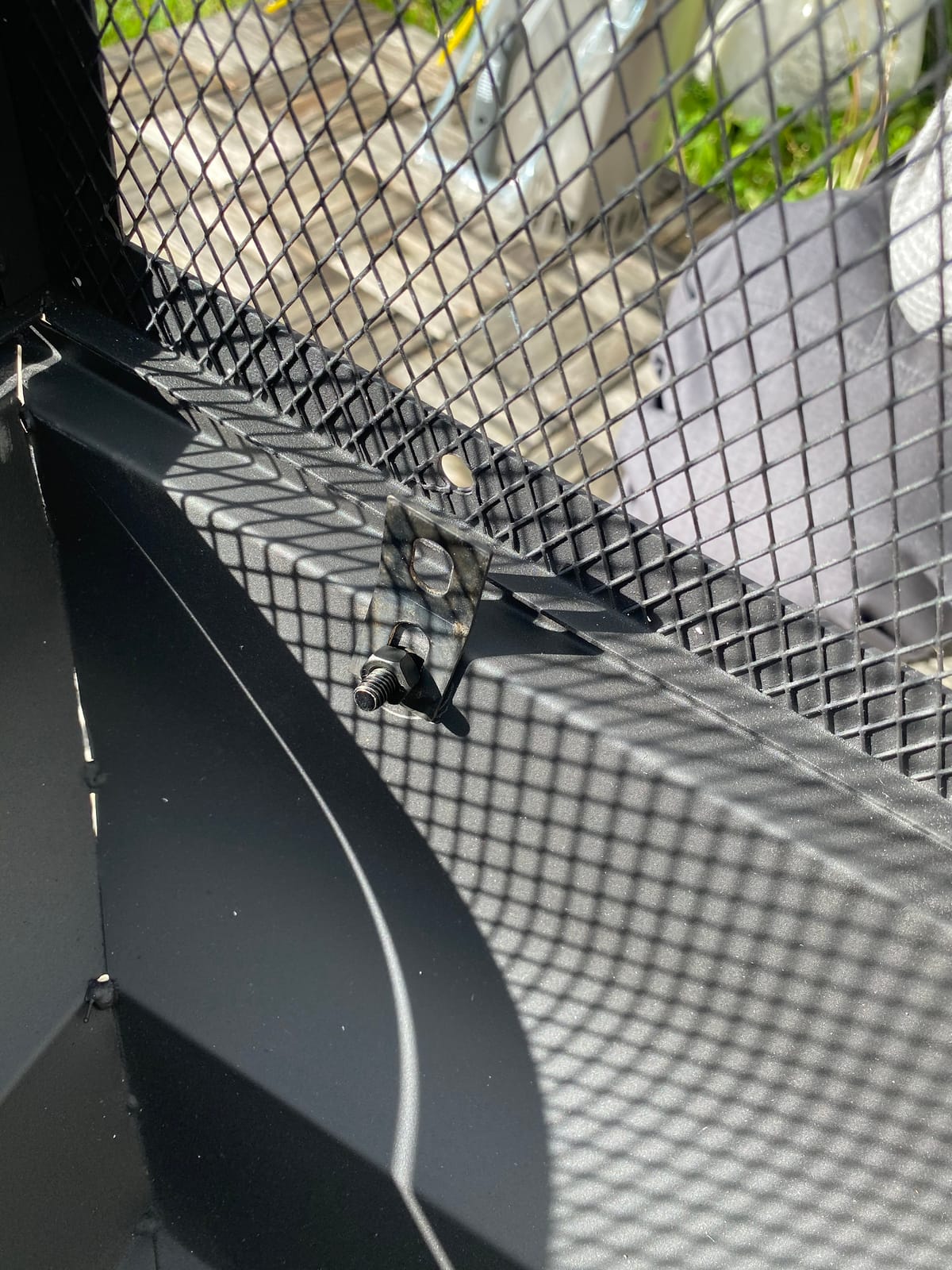
The accessory list is unusually complete for this category: fire grate, fire poker, ash pan, and a cover, plus a removable rain cap and flue grill that come off for cleaning. Owners note the removable parts make ash cleanup far less of a chore.
What holds it back is workmanship at the seams. Owners report weld gaps of up to about an eighth inch that let drafts through and pull smoke sideways, which undercuts the very advantage the tall stack provides.
Size versus construction quality
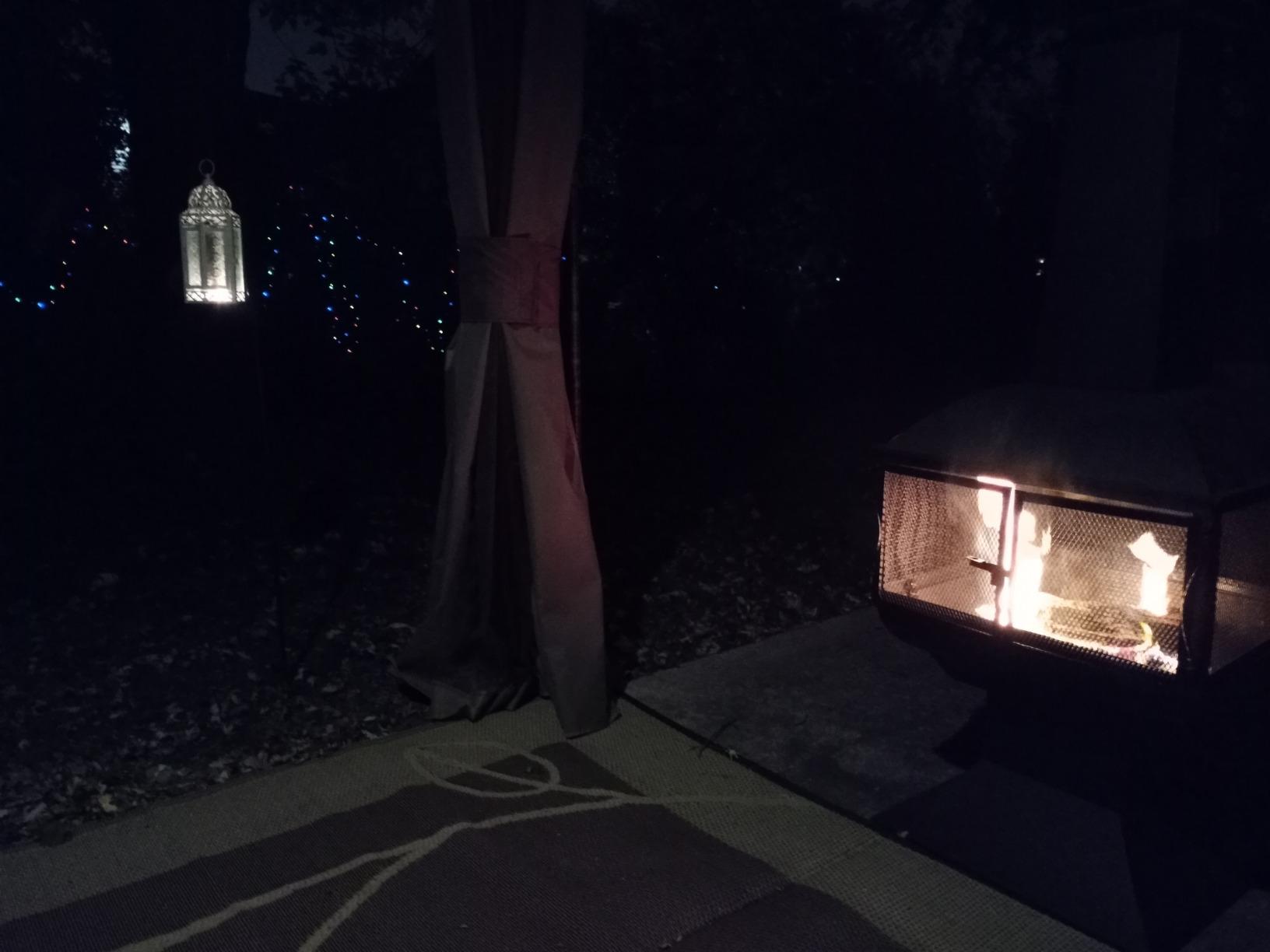
At 34.8 pounds the unit is not especially heavy for its size, but the 4-gauge steel is thinner than the cast iron on the smaller models. That is where the surface rust complaints come from: many owners repaint with high-temperature paint after a season or two, covered or not.
The loose-fitting doors and weak latch hardware are worth knowing about before you buy. A door that does not seal cleanly will pull in air and make the fire harder to control, even on a large firebox.
Who should look elsewhere
If rust resistance is your top priority, cast iron is the better material regardless of size. This model wins on firebox area and stack height, not on finish durability.
The 57 inch height also needs real vertical clearance, and the price sits well above the budget options for a build that reviewers do not consider premium. Read the reviews carefully if you are choosing between this and a cast iron unit of similar size.
7. Cuisinart 40,000 BTU Propane Chimenea – Best for Covered Patios
Cuisinart Chimenea Propane Fire Pit, 40,000 BTU Adjustable Gas Fire Pit for Patios, Includes Lava Rocks, Directional Heat Shield and Push to Start Ignition, Perfect for Backyards, Decks, and Patios
40,000 BTU adjustable propane output
Directional heat reflector pushes warmth forward
Eight pounds of lava rocks included
Push-to-start ignition with tip-over switch
Pros
- Smoke-free propane operation suits covered patios and smoke-sensitive households
- Heat reflector directs warmth toward guests rather than overhead
- Real radiant heat comparable to an indoor fireplace
- Adjustable output lets you dial heat down on mild evenings
Cons
- Two-person assembly with flexible sheet-metal parts
- Thin sheet metal and hardware draw complaints
- No natural lifting points makes winter storage awkward
- Occasional reports of unreliable thermocouple and ignition
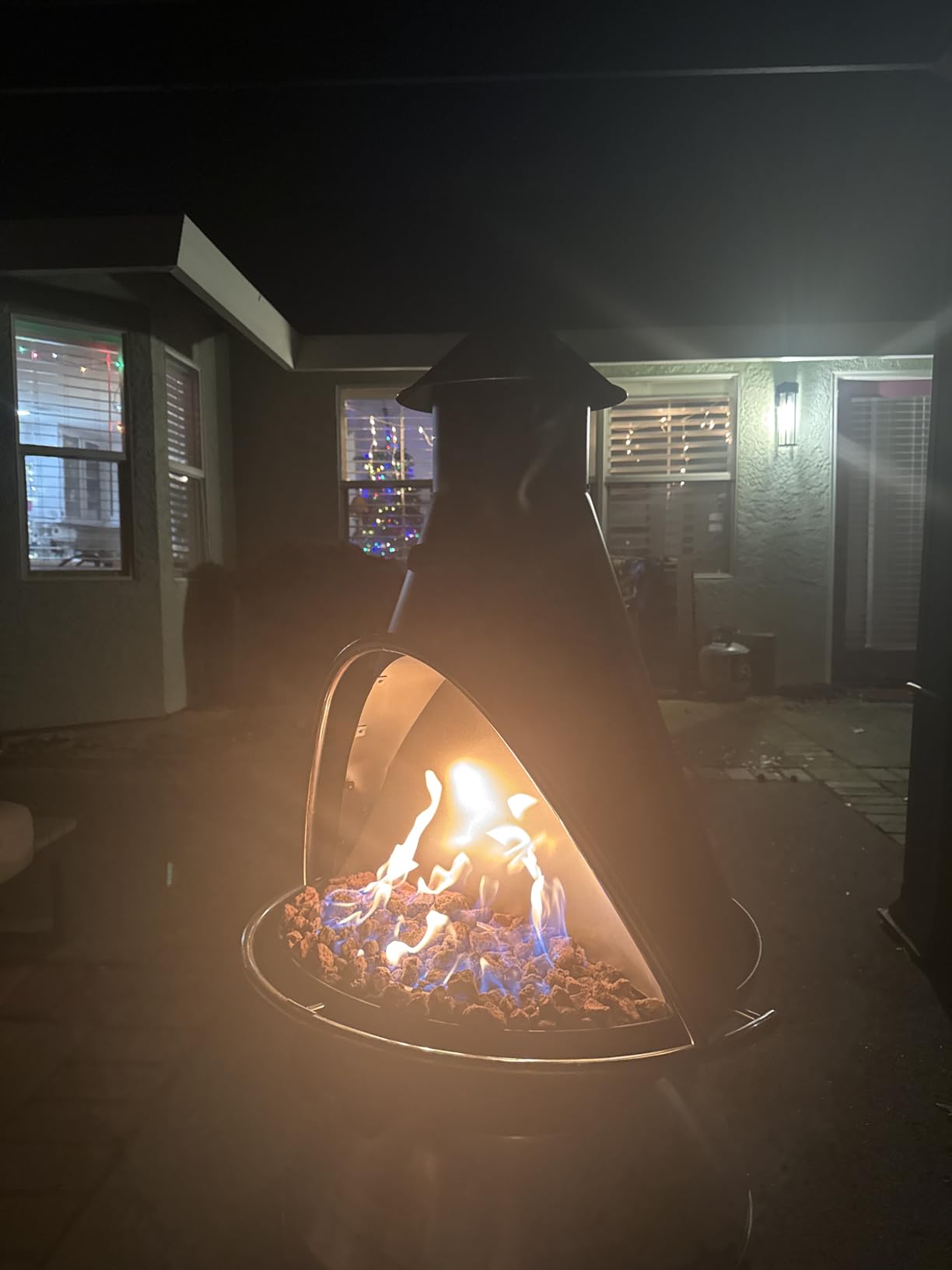
This is the only gas model in the roundup, and it is worth considering for a specific situation: a covered patio, a balcony, or a household where smoke is a genuine problem. There is no wood, no ash, and no spark risk, which makes it the only option here that some apartment courtyards will permit.
The 40,000 BTU burner is genuinely powerful and adjustable. Owners with covered spaces rate the heat highly, and the directional heat reflector pushes warmth forward toward seating instead of letting it rise overhead, which is the usual complaint with open gas patio heaters.
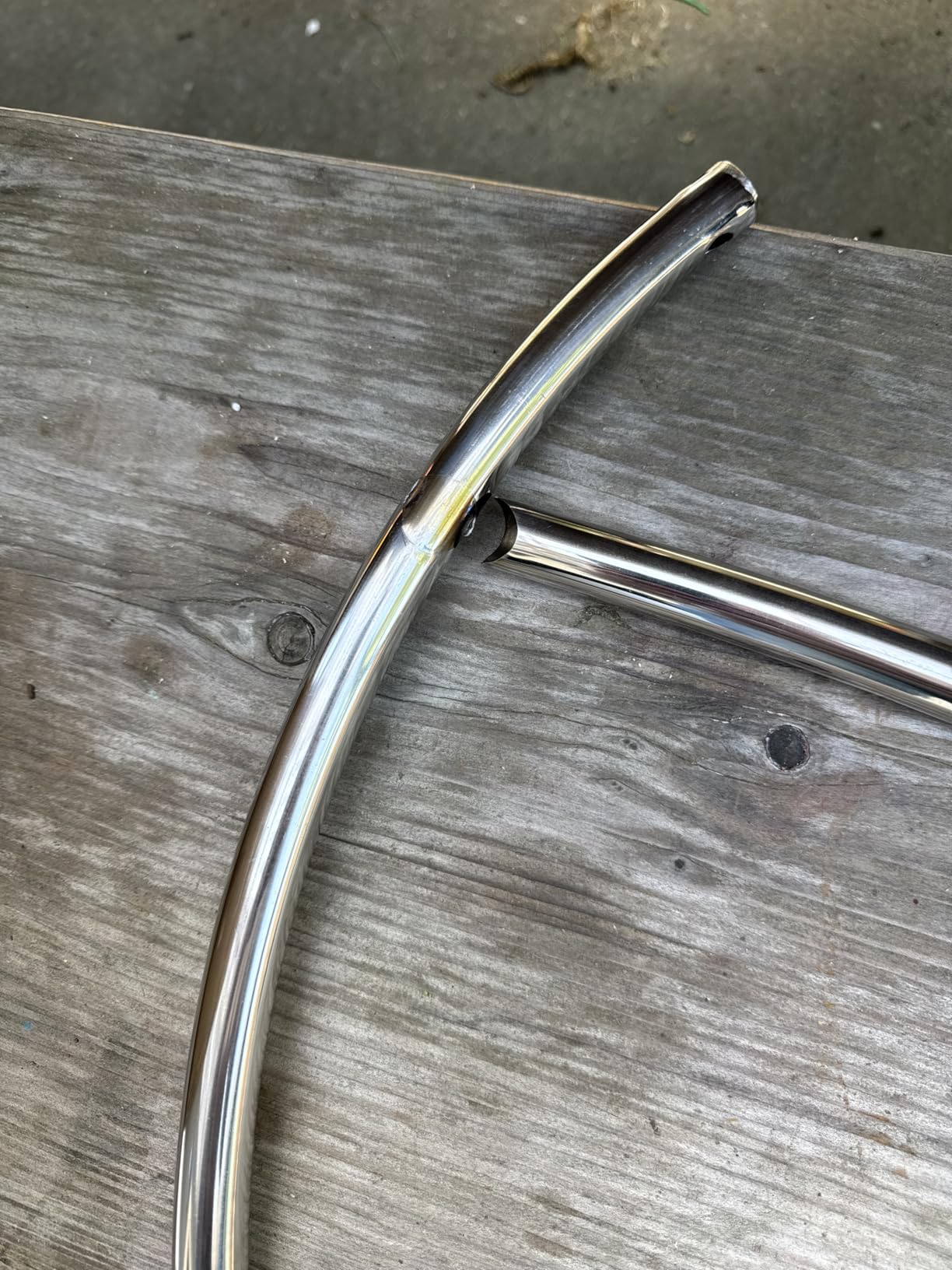
Eight pounds of red lava rocks spread the flame and distribute heat evenly across the firebox. Runtime runs 9 to 15 hours on a standard 20 pound propane tank, which is not included, so plan your cylinder storage away from the unit.
Push-to-start ignition removes the lighter ritual, and the tip-over safety switch shuts the burner down if the unit is knocked, which matters on a deck with foot traffic.
Heat output compared with wood models
Gas delivers heat faster and with more control than wood. You get instant warmth at startup, which wood cannot, and the same unit handles a mild spring evening and a cold autumn night by turning the dial rather than rebuilding a fire.
What you give up is the wood-fire experience. There is no crackle, no scent, and nothing to roast marshmallows over, though the lava rock bed will warm them quickly.
Ownership drawbacks to plan around
Assembly is a two-person job with flexible sheet-metal parts that do not always align cleanly. The hardware and sheet metal quality draw consistent criticism, so check every fastener before first use.
There are no natural lifting points, so moving it for winter storage is awkward. Occasional reports of thermocouple and ignition trouble mean you should keep a lighter handy as a backup.
8. Wiosi Terracotta Clay Chiminea – Best Rustic Look
Terracotta Chimenea Outdoor Fireplace, Clay Chiminea with Lid & Metal Stand
Handmade clay terracotta body
32 inch tall with metal stand
Lid included for storage
32.8 pounds
Pros
- Clay body gives an authentic rustic Mediterranean look
- Rounded shape radiates heat in all directions
- Metal stand elevates the pot and protects the patio surface
- Rustic finish works as patio decor even when cold
Cons
- Clay must be covered and stored in cold weather to last
- Heavier and more fragile than steel models
- Rough clay exterior can need sealing to resist moisture
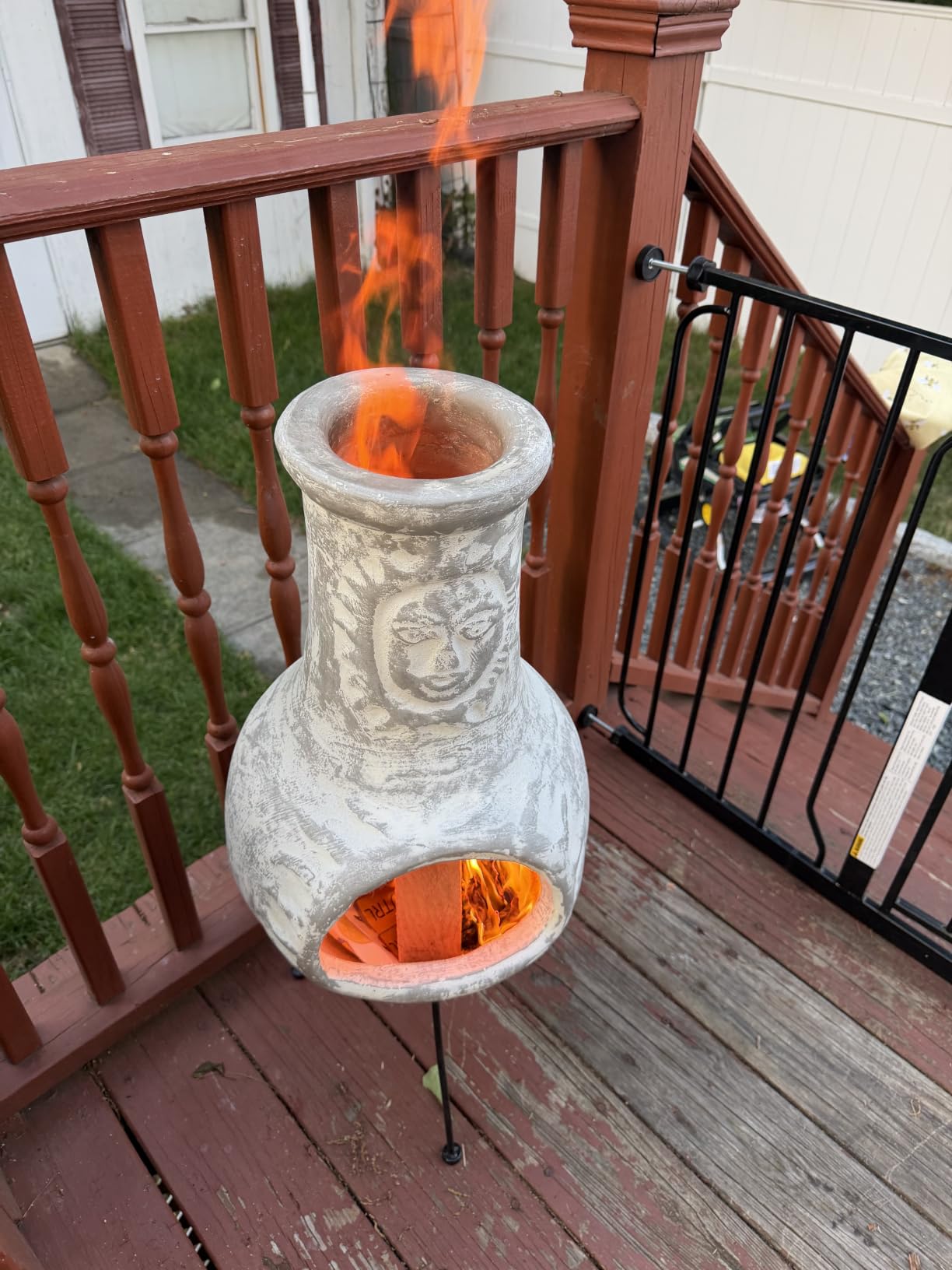
Clay chimineas are the oldest design in this category and they are still the most decorative. The terracotta finish reads as Mediterranean garden decor rather than patio appliance, which is the whole point if your outdoor space is styled around plants and stone.
Heat radiates in every direction from the rounded clay body. The metal stand lifts the pot off the surface, protecting the patio and improving airflow underneath, and the included lid covers the top when the unit is cold.
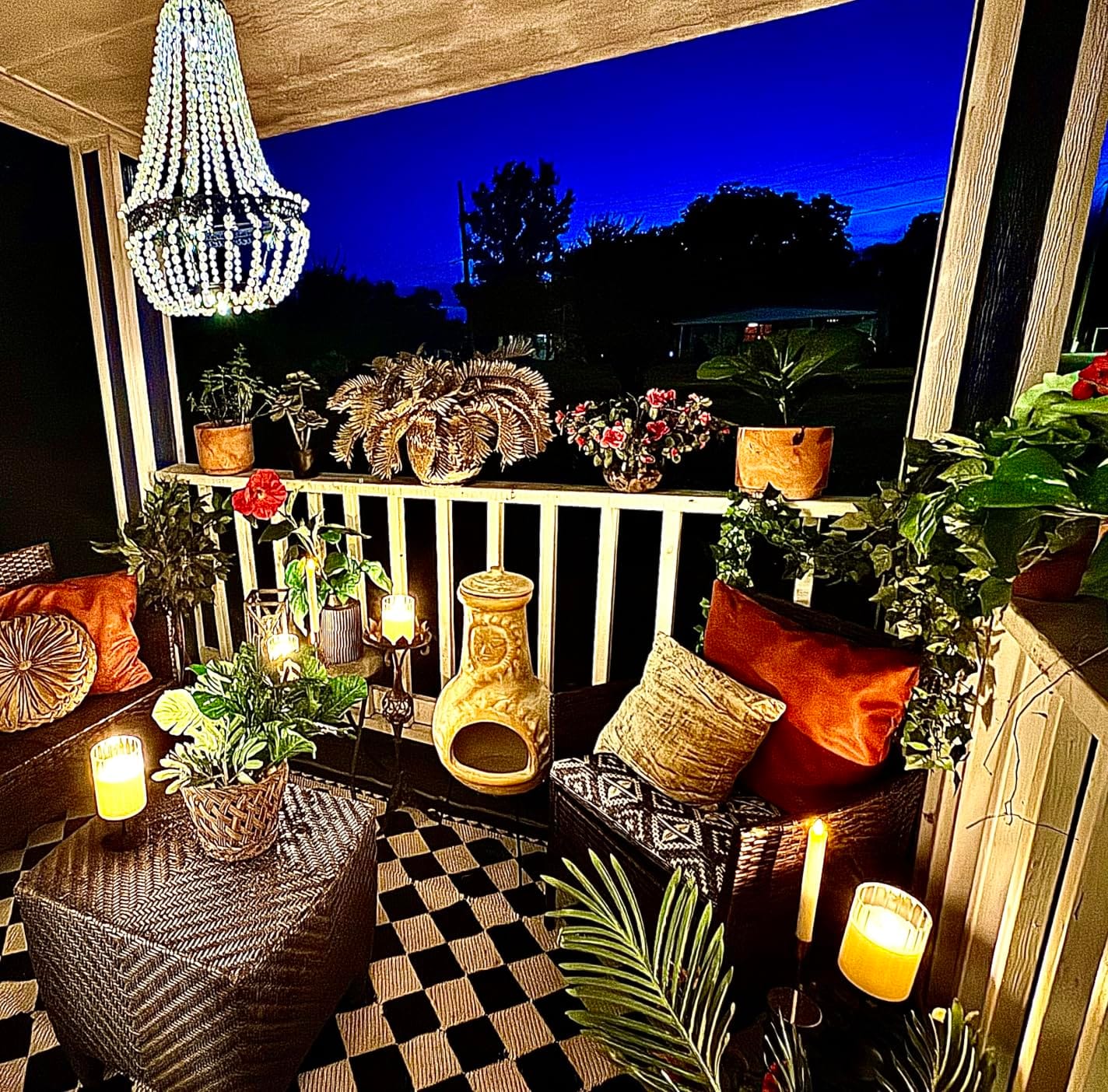
Owners are mostly drawn by appearance and all-around heat, and the clay body does give a pleasant, even warmth that feels less harsh than thin steel.
The critical rule with clay is never to extinguish a fire with water. Water on a hot terracotta body causes thermal shock and cracking, and that damage is not repairable.
Seasoning and first-fire care
Clay needs curing before its first real burn. Set the pot in the stand away from anything combustible, start with a small fire, and let it heat gradually over an hour before you use it at full temperature. This drives out moisture in the body that would otherwise crack.
Treat the exterior as a surface that needs protection. Owners note the rough clay can need sealing to resist moisture, and a patio in a wet or coastal climate makes that more important, not less.
Where clay is the wrong choice
Freezing conditions are the real limit. Clay has to be covered and stored somewhere sheltered in cold weather, which means giving up the patio as decor for the winter, unlike a steel unit you can leave under a cover.
It is also heavier and more fragile than steel at 32.8 pounds. Dropping it on a hard patio surface risks cracking the body permanently.
9. Kay Home Products Deckmate Corona – Best Compact Steel
Deckmate Corona 3 Ft. High Outdoor Steel Chimenea Fireplace Model 28063
Designer-embossed steel construction
Compact 36 inch height
Wire mesh spark screen
360 degree bulb shape
Pros
- Compact 3-foot height fits small patios and decks
- Embossed steel body looks traditional rather than industrial
- Mesh screening contains sparks effectively
- 360-degree bulb shape shows the fire from any seat
Cons
- Lightweight steel body less durable than cast iron models
- Mixed satisfaction with long-term outdoor durability
- Some buyers report smoke management less effective than larger chimineas
This long-running budget steel chiminea sits at exactly three feet tall, which makes it one of the easiest units to place under a low overhang or beside a railing without breaking sightlines or overhead clearance rules.
The embossed steel body is the detail that lifts it above plain black utility models. It reads as traditional patio furniture rather than equipment, and the fine wire mesh spark screen does a solid job of keeping embers in.
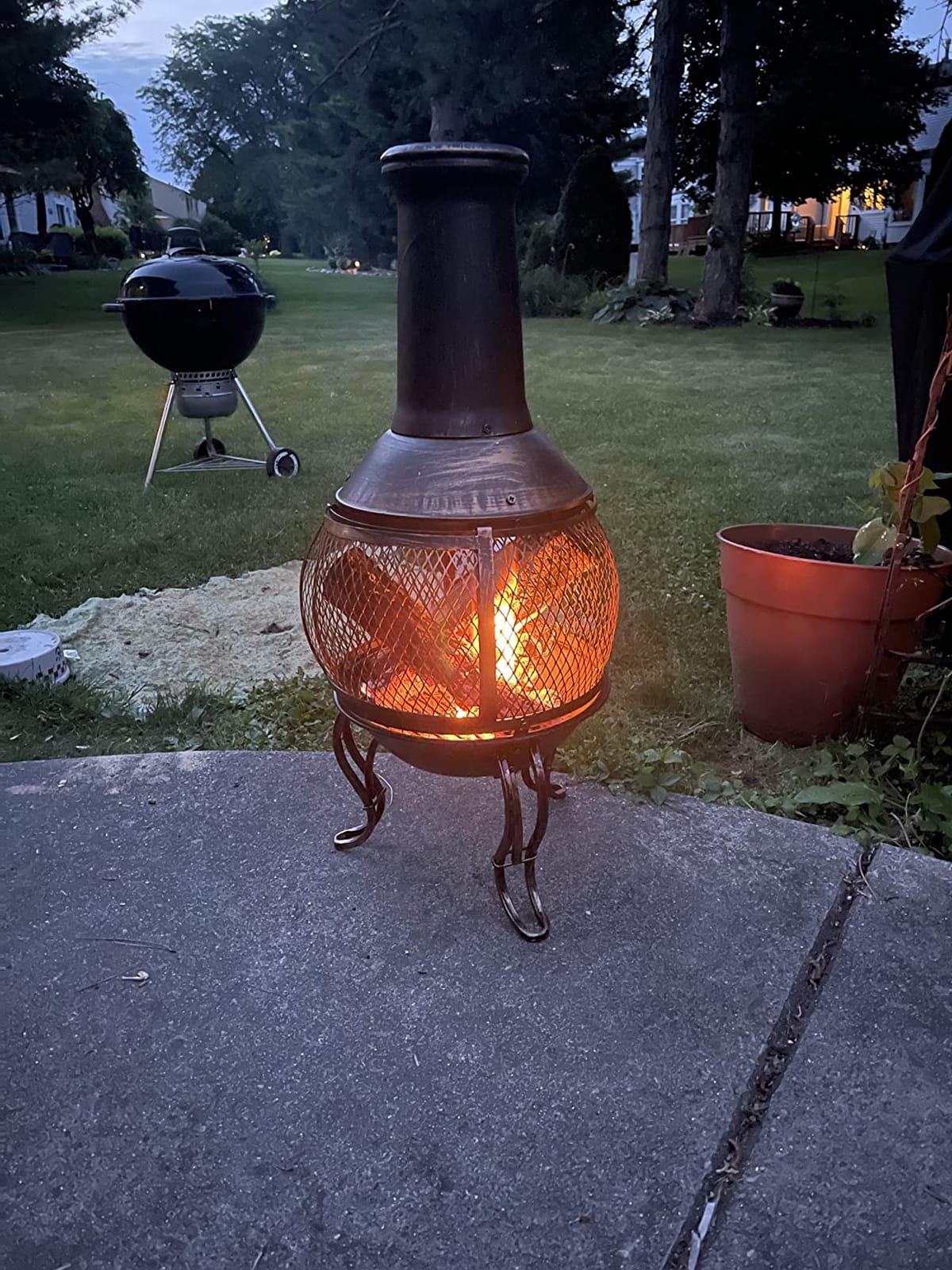
The bulb shape gives a genuine 360-degree view of the fire, which matters when seating wraps around the unit rather than facing it from one direction.
Durability is the recurring theme in the lower-rated feedback. The body is lightweight steel rather than cast iron, and long-term outdoor durability is where mixed satisfaction shows up in the reviews.
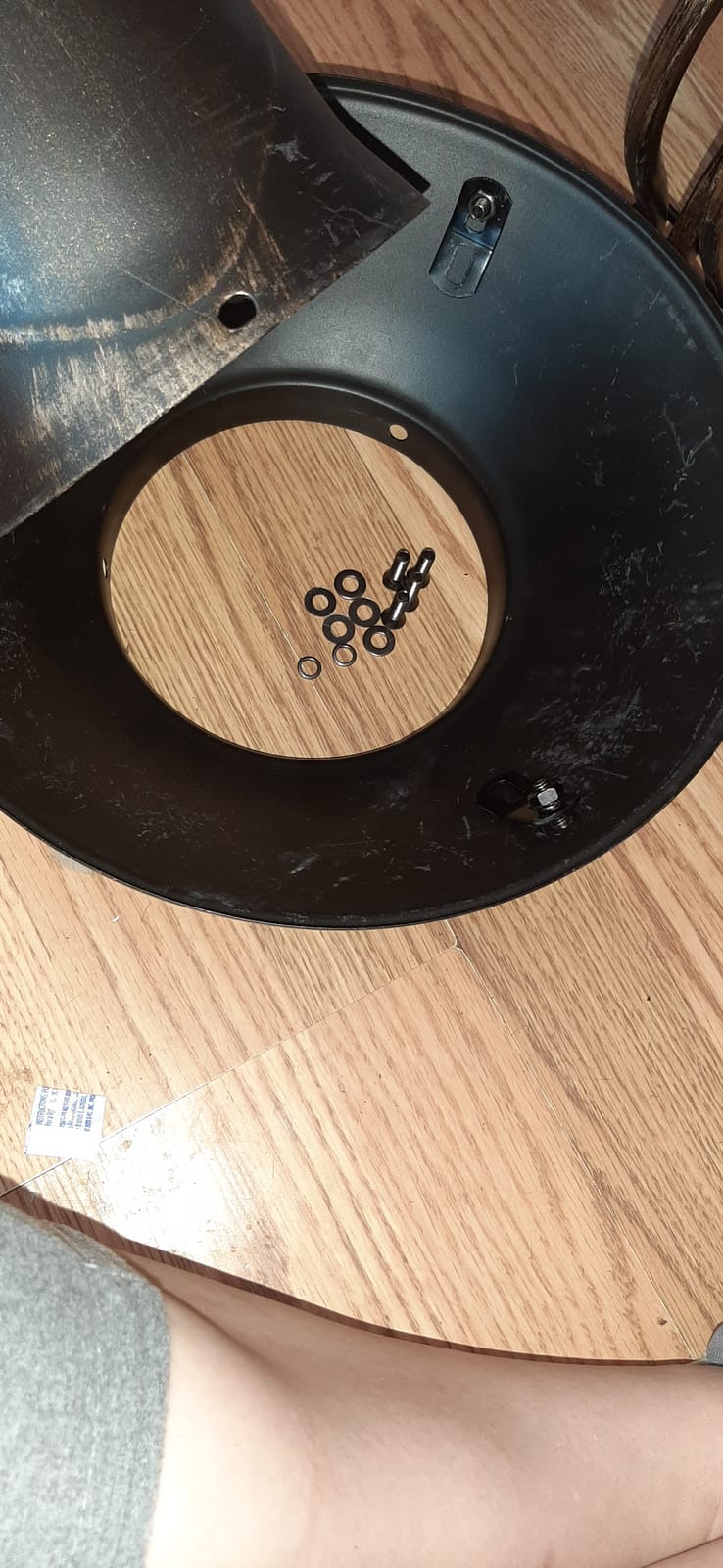
Size versus heat reach
A 36 inch body produces usable heat across a few feet, which suits a two to four person patio circle. Owners looking for warmth further out generally report it falls short compared with taller models in this roundup.
Smoke management is adequate rather than excellent. Some buyers report more smoke than they expected, and the shorter chimney is the reason, so avoid positioning it with guests directly downwind.
Who this model suits
Buyers who measure first and prioritize footprint over longevity do well with this unit. It suits a covered porch, a small deck, or a patio where the fire is decorative and atmospheric more than a serious heat source.
Weight is not listed by the manufacturer, but the class of unit sits in the light range. Plan for surface rust control on a seasonal basis and expect a shorter lifespan than cast iron.
10. Oakland Living Elite Chimenea – Budget Pick
Oakland Living Elite Chimenea
Cast iron body with bronze finish
Only 18 pounds empty
Built-in spark screen and latching door
Lid stoking fork and rain cap included
Pros
- Lightest and most affordable unit at about 18 pounds
- Stoking fork rain cap and log grate all included
- Latching hinged door seals the firebox well
- Drain holes in the base help clear ash moisture
Cons
- Firebox too small for standard side logs without cutting
- Rust develops quickly even after limited use
- Light-gauge iron and mesh can arrive bent or missing hardware
- Some buyers report heavier smoke than expected
At 18 pounds empty, this is the only unit in the group one person can genuinely carry without a struggle, and the accessory list is unusually generous for the money: lid, stoking fork, rain cap, and log grate are all included.
The latching hinged door seals the firebox better than a sliding or friction door, and drain holes in the base help moisture escape from collected ash.
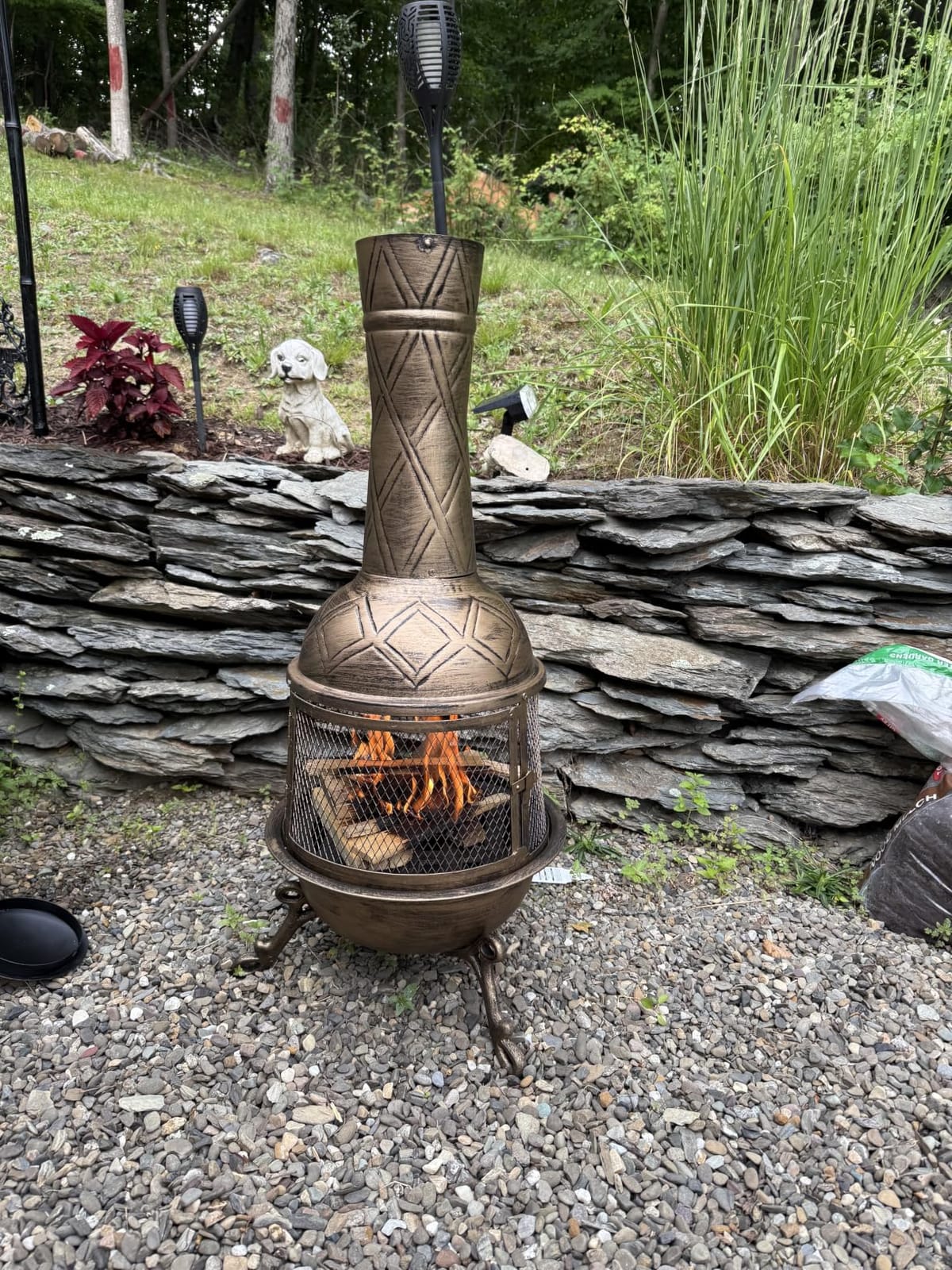
Measure your firewood before ordering. The firebox is small enough that standard side logs do not fit without cutting, which is the single most common disappointment among buyers who did not check dimensions first.
It is also the lowest-rated unit we tested, and the reasons are consistent: rust develops quickly even after limited use, and light-gauge iron and mesh can arrive bent or with missing hardware.
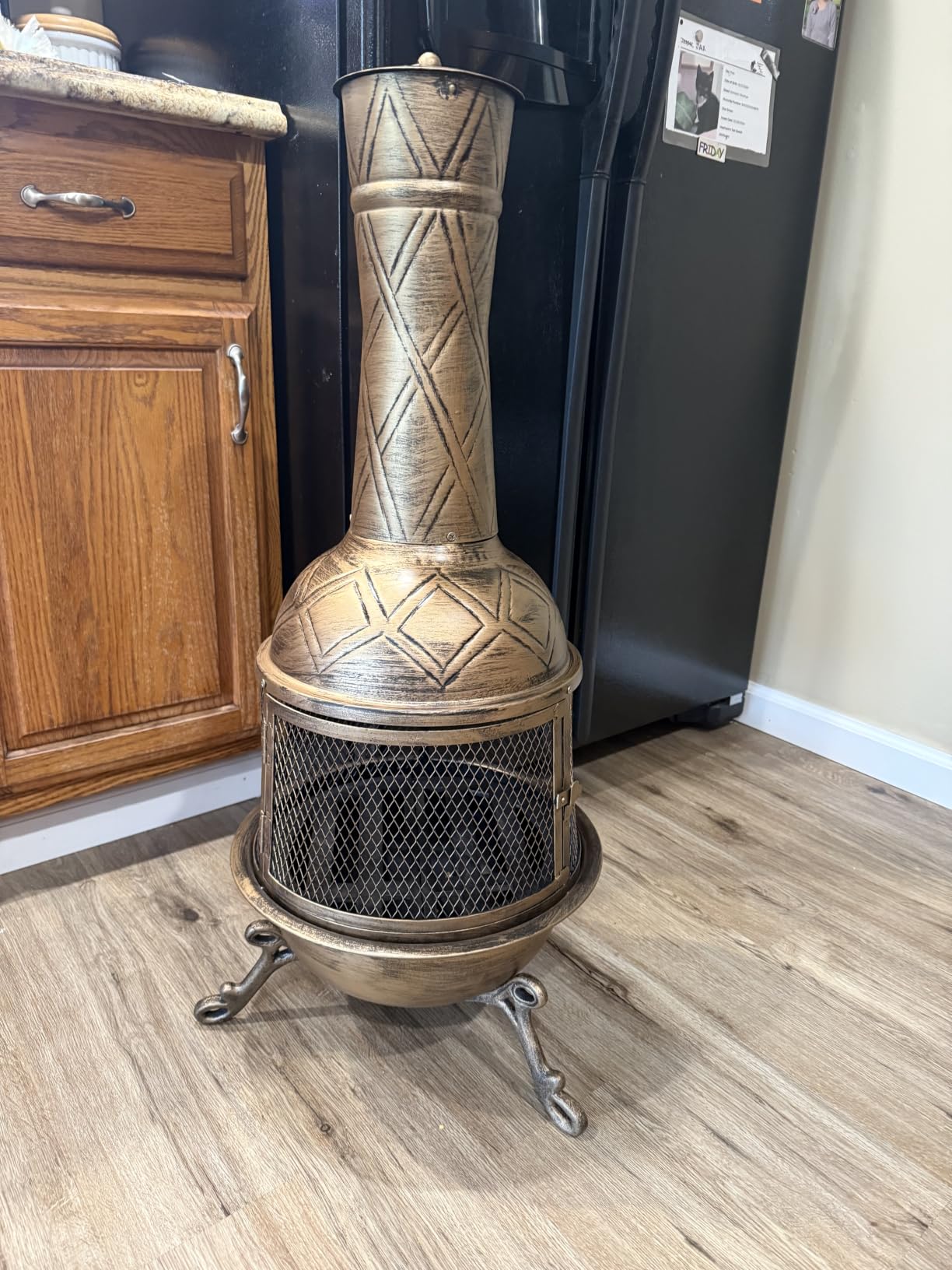
What you gain for the low weight
Portability is the genuine advantage. At 18 pounds you can move this between a patio and a storage shed single-handed, which no cast iron competitor in this roundup allows.
Some buyers report heavier smoke output than expected, which tracks with the compact body and shorter chimney throwing less smoke away from the seating area.
Reasons to spend a little more instead
If your patio is a permanent installation and not a temporary setup, the fast rusting and thin hardware are worth avoiding. A cast iron model at a similar weight doubles up on body longevity.
Inspect the unit on arrival. Bent mesh and missing hardware are reported often enough that checking before your first burn saves a return trip.
How to Choose a Chiminea for a Patio
Most disappointments come down to four variables: material, size, fuel type, and stack height. Get those right for your patio and the rest is preference, and getting them wrong is what produces a chiminea that smokes, ruts your deck, or gets moved to the garage after two uses.
Cast iron, cast aluminum, and steel
Cast iron is the durability standard for wood-burning chimineas. It stores heat, so the firebox stays hot for hours after the flames die and the surface resists rust far better than painted steel. The tradeoff is weight: cast iron bodies in this roundup run 33 to 40 pounds before you add wood.
Steel is lighter and cheaper, and it suits patios where you want to move the unit seasonally. The cost is faster surface rust and less retained heat, and owners of the thinner-gauge steel models in this group report needing a high-temperature paint touch-up within a season or two.
Clay and terracotta trade durability for character. They need seasoning before the first burn, must never be doused with water to extinguish, and generally need to be covered and sheltered in freezing conditions.
Size and scale against your patio
Match the body to your seating circle rather than to your patio’s total area. A 36 inch unit with a 14.5 inch footprint serves a two to four person group comfortably, while a 45 to 55 inch unit covers a larger circle and pushes heat further out.
Leave three feet of clearance on every side from anything combustible, including furniture, planters, railings, and overhangs. If three feet of empty space on all sides does not fit where you want the unit, you need a smaller model, not a better location.
Fuel type and where you are allowed to burn
Wood burning gives you the full experience, and it is the only fuel that produces the smell and crackle people actually buy a chiminea for. It also produces ash, sparks, and smoke, and it is restricted in some apartment courtyards, rentals, and campground patios.
Propane removes all of that. The gas chimenea in this roundup runs clean, heats fast, and needs no wood handling, which makes it the practical choice on a covered patio or where wood burning is prohibited. Check your lease, HOA rules, and local fire code before ordering any wood-burning model.
Smoke control and stack height
Smoke problems trace back to draft, and draft comes from the chimney neck. A narrow bulbous throat or a tall flue pulls combustion gases up and away. The tall models in this roundup, around 54 to 57 inches, are the ones that keep smoke above seated guests.
An adjustable air valve matters as much as height because it lets you throttle the burn. A smoldering fire produces less smoke than a wide-open roaring one, so on breezy evenings close the valve down.
Cooking, cover, and maintenance
If you want to grill, buy the model with a rack rather than trying to improvise a grate across the firebox. Only one unit here converts cleanly into a barbecue, and it handles up to 12 pounds of wood while doing it.
Check whether a cover is included. Units without one develop surface rust noticeably faster, and a cover is the single cheapest piece of maintenance you can buy. Plan an off-season routine: empty and rinse the ash pan, dry it fully, cover the unit, and touch up any paint with high-temperature paint before storage.
Non-fire uses are worth planning for. A cold chiminea works as a planter base or side table, and a lit one doubles as a marshmallow station if you buy a purpose-made roasting grate rather than balancing skewers on the mesh.
Chiminea Safety and Patio Clearances
A chiminea is safer than an open fire pit, not risk-free. Follow these clearances and you remove most of the danger, and they cost nothing but measuring tape and a non-combustible base.
Clearances to hold to
Keep three feet of clearance from the unit to anything combustible on all sides. That includes furniture, cushions, planters, drying laundry, wooden fencing, and railings. Overhead, check that no roof, pergola, branch, or awning hangs within the smoke path.
Keep the unit at least 10 feet from your house, and follow your local fire authority guidance where it is stricter. In dry or arid regions, greater distances are usually specified, and some authorities require much larger setbacks for open fires.
Give it 3 feet of clearance from neighbouring property boundaries and from combustible structures such as a shed or garage. Check your local fire code for the exact number, since these rules vary by region.
Patio flooring and deck protection
Never place a chiminea directly on wooden decking. Even an elevated body transfers radiant heat downward, and a fire pit or chiminea on untreated wood is a common cause of deck fires. Put the unit on a stone paver pad, a concrete slab, or a fire-rated mat rated for that use, and confirm the pad is larger than the unit footprint on every side.
Pavers are the simplest solution and you can build a pad from them in an afternoon. If you are on a wooden deck and cannot build a pad, a chiminea is the wrong appliance for that space, and you should look at gas instead.
Firewood, sparks, and ash
Use dry, seasoned firewood cut to the firebox dimensions. Wet wood smoulders, produces far more smoke, and creosote builds up on the flue, which is the leading cause of chimney fires. Never burn treated lumber, painted wood, or pressure-treated scraps.
Keep a spark screen or the included mesh closed when the fire settles down, since wind can lift embers and carry them onto a dry deck or into a neighbouring yard.
Empty the ash pan into a metal container with a tight lid, on a non-combustible surface, away from the house, and wait several days before disposal. Ash hides embers for far longer than most people expect.
Before every burn, check that the flue is clear, the spark screen is seated, and no rain or debris has collected in the firebox. Have water or a fire extinguisher within reach, and never leave a chiminea unattended.
Chiminea vs Fire Pit for Patios
A chiminea is the better choice when your patio is small, your guests sit close together, or smoke would otherwise drift into the seating area. An open fire pit is the better choice when your patio is large and open, you mainly want to cook, or you want the cheapest way to add a fire.
Heat and efficiency
A chiminea confines the fire, so it burns hotter and cleaner than an open pit and loses less heat to the air. Expect usable radiant heat roughly three to five feet out from an enclosed model, depending on size and fire load.
An open fire pit radiates less efficiently because heat escapes upward and outward with no chimney to pull a draft. What it does offer is a far larger radiant zone, which is why people sit right at the edge of a large pit.
Smoke, sparks, and safety footprint
This is the decisive difference on most patios. Smoke from an open pit blows wherever the wind goes, including into your seating area, and it carries sparks that need a wide clear zone. A chiminea with a working flue sends smoke up and away.
That translates directly to required space. An open pit typically needs a generous clear radius and often cannot be used on wooden decking at all. A chiminea needs three feet per side, which is a circle you can usually find room for.
Cooking, cost, and maintenance
A fire pit is better for open-flame cooking over a wide grate with coals exposed, and cheaper to buy. A chiminea with a grill rack, such as the Panovue, gives you both, but at higher purchase cost and more parts to maintain.
Maintenance also separates them. A fire pit needs ash digging and occasional rust control. A chiminea adds a flue to clean and a door to seal, but its enclosed firebox holds a smaller, more manageable amount of ash.
If your evenings are long and conversation-heavy, a chiminea earns its place. If they are weekend cookouts with guests standing and moving, buy the pit. Whichever you choose, the rest of the patio still has to work: string lighting for the darker months and a fan for the warm ones, plus insect control so the fire does not attract mosquitoes at the exact moment everyone settles in.
Frequently Asked Questions
Who makes the best chimineas?
Among the units we tested, BALI OUTDOORS produces the strongest all-round pair, with a cast iron body, a natural-draft chimney and the highest rating in this group. Blue Rooster and Sunnydaze are the other names that come up most often for patios, and Bali Outdoors and Blue Rooster are repeatedly the most recommended brands in owner discussions. For gas, Cuisinart is the main option worth looking at.
What is the best fireplace for outside use?
It depends on the space and the rules. For an enclosed wood-burning design that pushes smoke away from guests, a cast iron chiminea is the best outdoor fireplace for most patios. For a covered patio or anywhere wood burning is restricted, a propane chimenea rated around 40,000 BTU gives fast adjustable heat with no smoke, ash, or sparks.
Are chimineas better than fire pits?
On most patios, yes. A chiminea burns hotter and cleaner, pushes smoke up its flue instead of into your seating area, and needs about three feet of clearance per side rather than the wide open zone a fire pit requires. A fire pit wins on cost, on large open spaces, and on open-flame cooking, and it is often the only option where local rules forbid an enclosed fire.
Is a chiminea safe on a deck?
Only on a non-combustible surface. Never place a chiminea directly on wooden decking, even an elevated body, because radiant heat transfers downward into the boards. Put it on a stone paver pad, a concrete slab, or a fire-rated mat, keep three feet of clearance on all sides and at least 10 feet from the house or follow stricter local fire authority guidance, and use a spark screen whenever the fire is not actively burning.
How far should a chiminea be from the house?
At least 10 feet as a baseline, and further if your local fire authority specifies a larger setback, which many do in dry or arid regions. Also keep three feet from any combustible structure, fence, or railing and check overhead clearance for roofs, pergolas, and awnings. Check your regional fire code, since the required distances vary and the stricter rule applies.
What type of outdoor flooring is needed for a chiminea?
A non-combustible surface such as concrete, stone pavers, gravel, or a fire-rated mat. Wooden decking needs a paver pad built on top of it, sized larger than the unit footprint on every side, and the pad must not be the only thing between the fire and the structure. Never put a chiminea on wood, plastic decking, or a lawn edge without a proper base.
Why does my chiminea smoke so much?
Usually the draft. Causes include a short or blocked flue, a firebox that is too wide for the firebox floor grate, wet or unseasoned firewood, and an air valve opened too wide so the fire burns fast and smoky. Use dry seasoned wood cut to fit, keep the flue grill and spark screen clear, and throttle the air valve down so the fire smoulders more slowly.
Conclusion
If you want one answer, the BALI OUTDOORS cast iron chiminea is the best chiminea fireplace for patios because it combines the strongest draft, the heaviest body, and the widest owner satisfaction in this group. Pair it with a cover and it should outlast lighter steel rivals by years.
Match the model to the situation instead. Choose the Panovue if you want to grill on it, the SINGLYFIRE Prairie Fire if smoke control around seated guests is your problem, the compact BALI OUTDOORS oval if your patio is tight, and the Cuisinart propane chimenea if wood burning is not allowed where you are.
One last practical note. Owners frequently report using a chiminea only a few times a season, so measure your patio and check your clearance before ordering, and make sure the spot stays useful in the off months. Pair it with some solar string lights and a misting fan so the space works year-round rather than only when the fire is lit, and add a bug zapper if mosquitoes are part of your evening crowd.