

Walk into any MBA finance class on day one and you will hear the same question whispered across the room: which financial calculator should I buy? After testing the most popular models across corporate finance, valuation, and accounting coursework, I put together this guide to the best financial calculators for MBA students in 2026.
MBA finance courses demand calculations that a basic calculator or your phone simply cannot handle efficiently. Time value of money, net present value, internal rate of return, and uneven cash flow analysis are foundational to nearly every finance and accounting module you will encounter. A dedicated financial calculator turns these multi-step spreadsheet problems into a few keystrokes during timed exams.
Our team compared seven top models from Texas Instruments, HP, and Casio, evaluating them on TVM accuracy, cash flow capacity, exam approval status, build quality, and real classroom usability. Whether you are heading into Corporate Finance I or prepping for the CFA Level I exam alongside your MBA, one of these calculators will fit your program, your budget, and your career path.
Table of Contents
Top 3 Financial Calculators for MBA Students (2026)

TI BA II Plus Financial Calculator
- CFA/FRM/CMA approved
- NPV and IRR for uneven cash flows
- Proven reliability with 22k+ reviews

HP 10bII+ Financial Calculator
- 100+ business functions
- Most affordable option
- Compact and lightweight at 3 oz

TI BA II Plus Professional
- Metal enclosure
- 32 uneven cash flows
- MIRR and Modified Duration
Best Financial Calculators for MBA Students (October 2026)
| Product | Specifications | Action |
|---|---|---|
| TI BA II Plus |
|
Check Latest Price |
| TI BA II Plus Professional |
|
Check Latest Price |
 TI-84 Evo Graphing TI-84 Evo Graphing |
|
Check Latest Price |
| HP 10bII+ |
|
Check Latest Price |
 HP 12C Programmable HP 12C Programmable |
|
Check Latest Price |
 HP 12C Platinum HP 12C Platinum |
|
Check Latest Price |
 Casio FC-200V2 Casio FC-200V2 |
|
Check Latest Price |
1. Texas Instruments BA II Plus Financial Calculator
BA II Plus Financial Calculator
Financial calculator
LCD display
CR123A battery
CFA/FRM/CMA exam approved
Pros
- Industry-standard financial calculator approved for CFA
- FRM
- and CMA exams
- Handles NPV and IRR calculations for uneven cash flows
- Time-value-of-money functions ideal for loan and mortgage calculations
- Proven reliability with 22000+ reviews
Cons
- Requires CR123A battery (proprietary)
- Basic display compared to graphing calculators
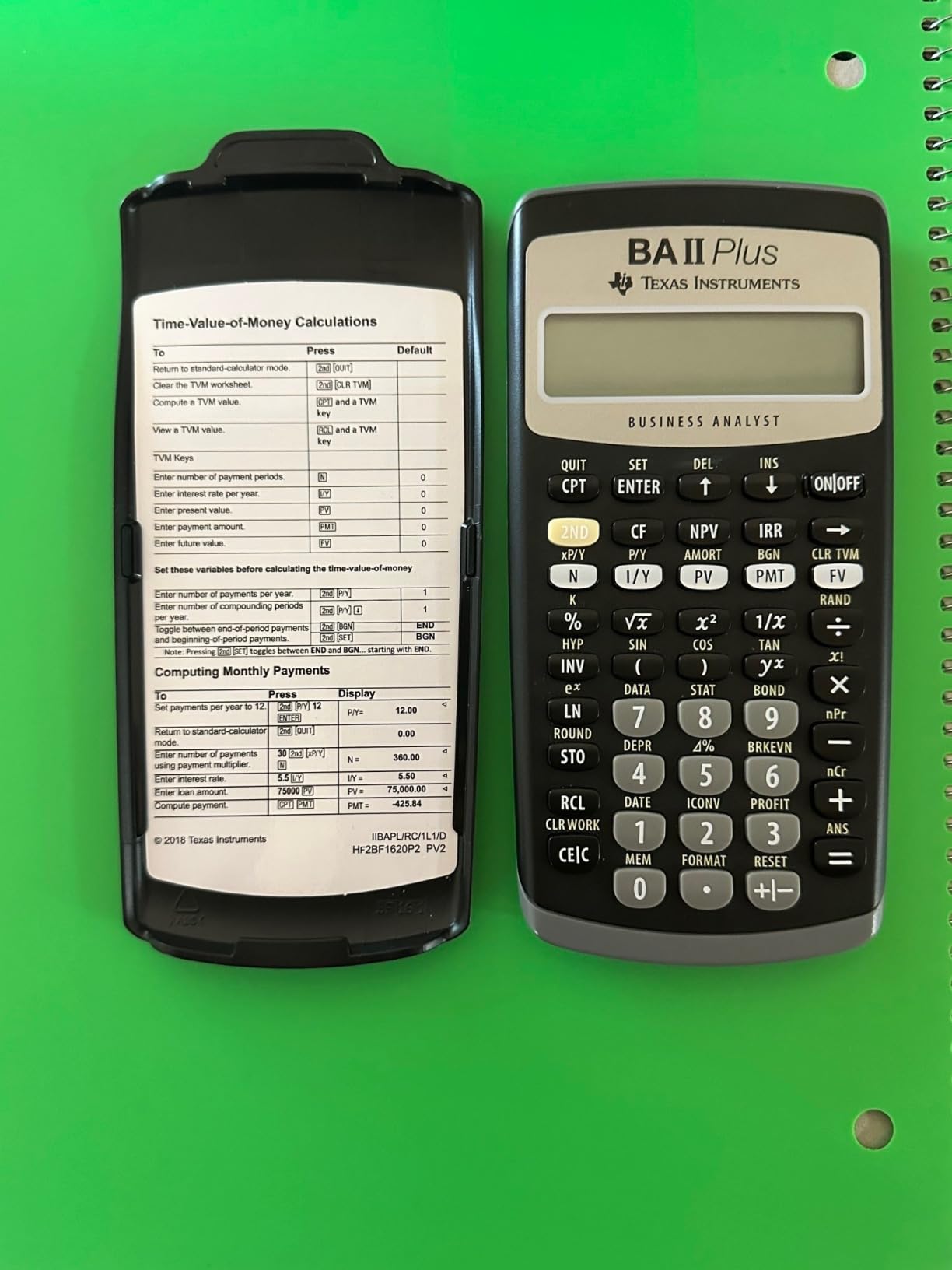
The TI BA II Plus is the calculator I recommend to almost every incoming MBA student who asks me where to start. It is the closest thing the finance world has to a universal standard, and that alone makes it the best financial calculator for MBA students who want a safe, well-documented choice.
During my corporate finance coursework, I relied on this model for everything from basic present value problems to multi-year bond pricing. The worksheet-based interface takes about a weekend to learn, and once it clicks, you can fly through NPV and IRR problems faster than classmates fumbling with Excel on a laptop.
The biggest reason MBA students gravitate here is exam approval. The BA II Plus is permitted on the CFA, FRM, and CMA exams, which means if you are pursuing any of those certifications alongside your MBA, you buy one calculator and you are done.

With over 22,000 Amazon reviews and a 4.6-star average, this is also the most battle-tested calculator on the list. Professors write textbook examples using BA II Plus keystrokes, and YouTube tutorials for this model outnumber every other financial calculator combined.
The trade-offs are minor but real. The CR123A battery is not something you will find at a campus convenience store, so order a spare. The LCD display is functional but feels dated next to modern graphing calculators, and there is no backlight for dim lecture halls.
Who Should Buy This Calculator
If you are unsure which calculator your MBA program requires, buy the BA II Plus. It covers corporate finance, investments, accounting, and quantitative methods, and it will carry you straight into CFA or FRM prep without needing an upgrade. It is the lowest-risk purchase on this list.
Learning Curve and Daily Usability
The algebraic entry system is intuitive if you have used any standard calculator before. Most students reach proficiency in 3 to 5 hours of practice. The second row of TVM keys (N, I/Y, PV, PMT, FV) is laid out logically, and the worksheet button lets you cycle through amortization, cash flow, and bond menus without memorizing shortcuts.
2. Texas Instruments BA II Plus Professional Financial Calculator
BA II Plus Professional Financial Calculator Texas Instruments
Financial calculator
Metal enclosure
LCD display
32 uneven cash flows supported
Pros
- Premium metal enclosure for durability
- Supports up to 32 uneven cash flows for complex modeling
- Advanced functions including MIRR and Modified Duration
- Prompted display guides users through calculations
Cons
- Higher price point than standard BA II Plus
- RPN entry not supported (algebraic only)
The BA II Plus Professional is the upgraded sibling of the standard model, and it is what I reach for when a problem gets genuinely complex. If your MBA program includes advanced corporate finance, leveraged buyout modeling, or fixed-income coursework, the extra functions on this calculator earn their keep.
The standout feature for me is the support for up to 32 uneven cash flows. The standard BA II Plus handles 24, and that difference matters when you are working through detailed capital budgeting cases with multi-stage projections.
You also get MIRR (Modified Internal Rate of Return), Modified Duration, and Discounted Payback period functions. These are not party tricks. They show up on CFA Level II exam questions and in real-world fixed-income analysis.
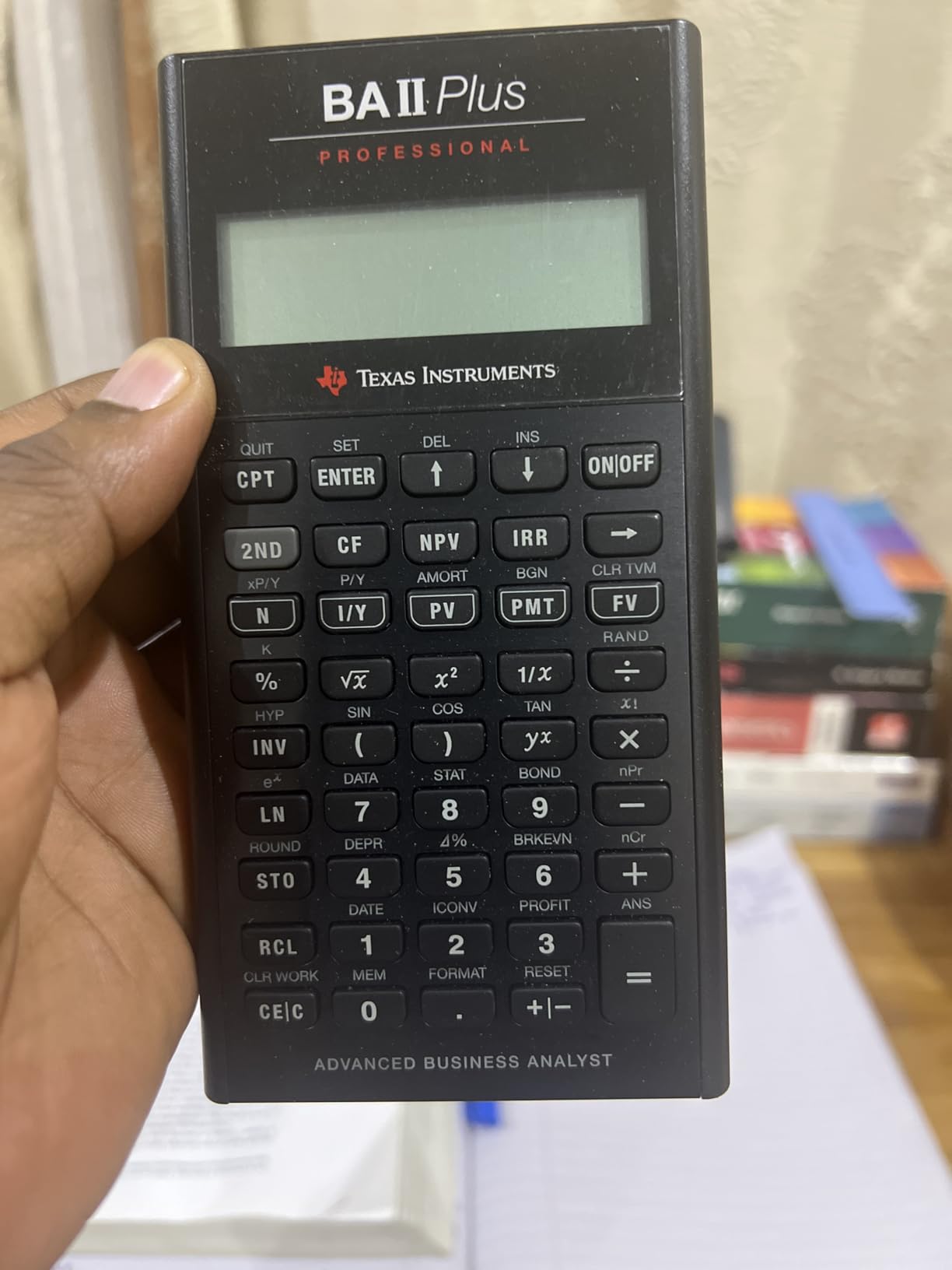
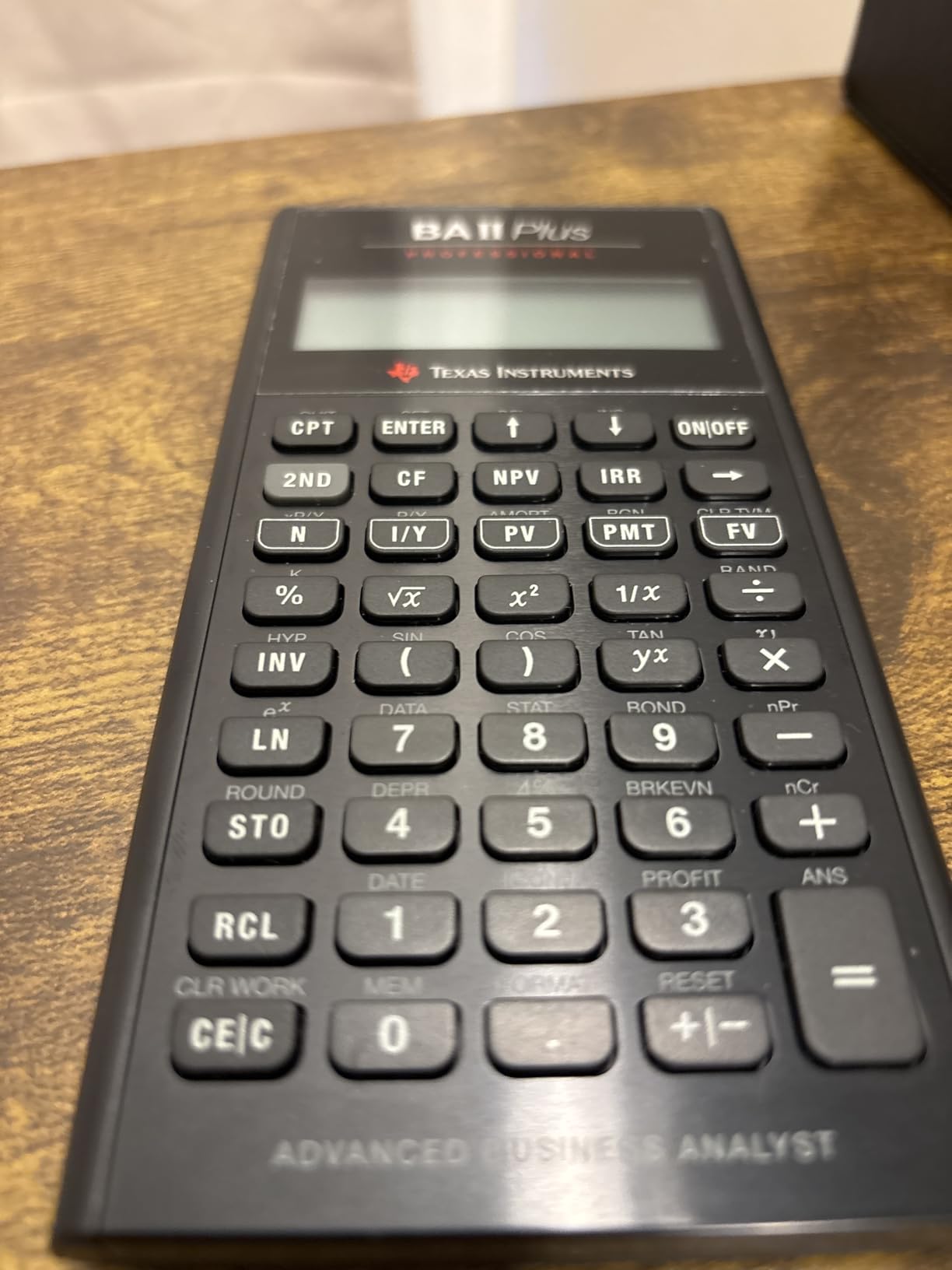
The metal enclosure feels substantial in a way that inspires confidence. I tossed mine in a backpack for two years of MBA coursework and it never developed the rattles or sticky keys that plague plastic models. The prompted display is also a nice touch, showing you what input the calculator expects next.
Be aware that this model does not support RPN entry. It is algebraic only, which is fine for most MBA students but worth noting if you learned on an HP calculator during your undergraduate years.
When the Professional Justifies the Upgrade
If you are serious about a finance concentration, plan to sit for the CFA exams, or simply want hardware that will survive a two-year MBA program without complaint, the Professional is worth the extra cost. The MIRR and Modified Duration functions alone save significant time on exam prep.
Durability Over a Two-Year Program
The metal casing is the real differentiator. Reddit users on r/MBA and r/calculators consistently report that the Professional outlasts the standard model by years. For a device you will use daily across 4 to 6 finance and accounting courses, that longevity has real value.
3. HP 10bII+ Financial Calculator
HP 10bII+ Financial Calculator for College and High School, SAT AP PSAT
Financial calculator
LCD display
3 ounces
100+ business and finance functions
Pros
- Most affordable dedicated financial calculator
- 100+ built-in business and finance functions
- Algebraic entry makes it easier to learn than RPN calculators
- Compact and lightweight (only 3 oz)
Cons
- Plastic construction less durable than TI BA II Plus
- Lower cash flow capacity than BA II Plus Professional
- RPN not available (algebraic only)
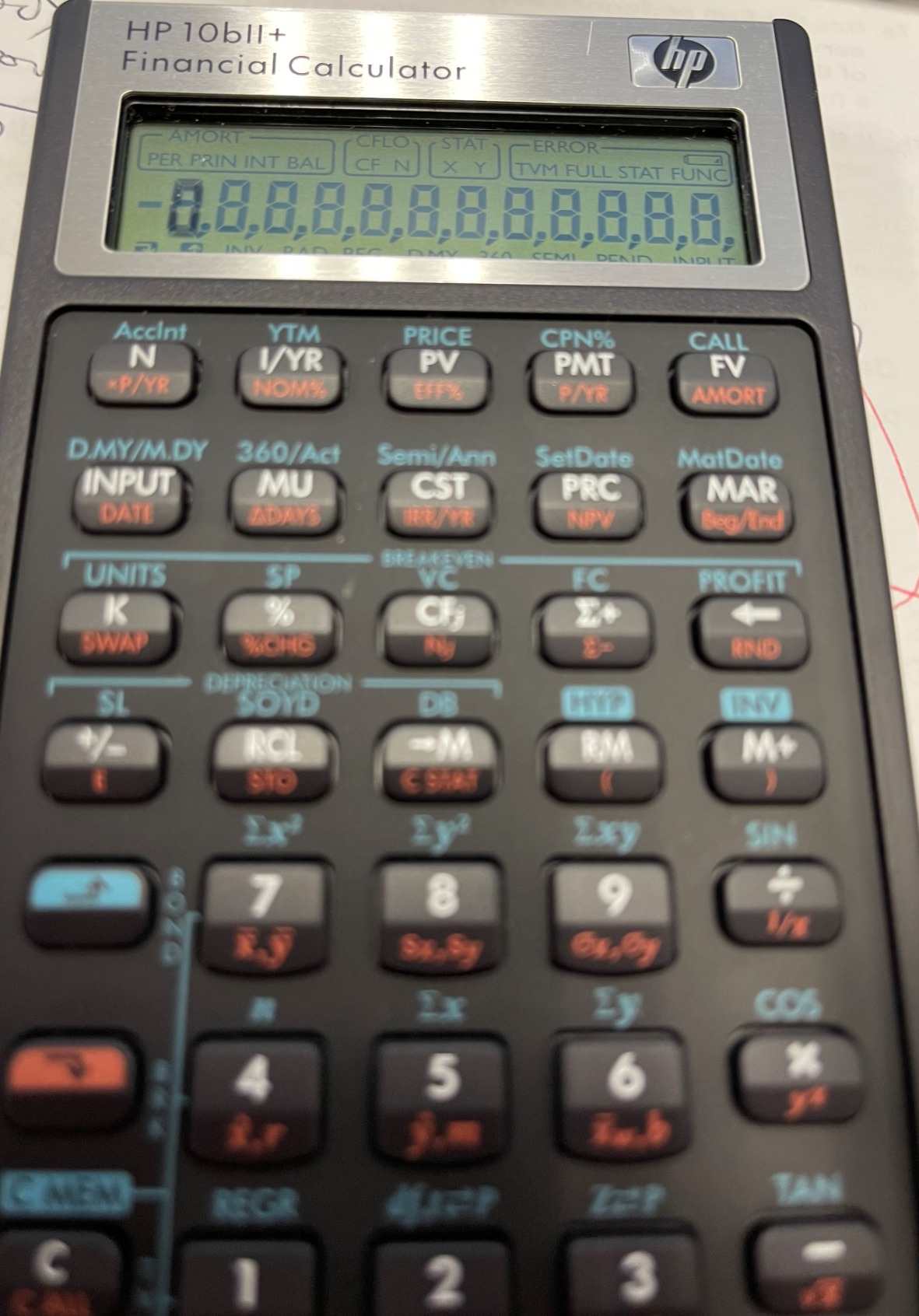
The HP 10bII+ is what forum users on r/MBA affectionately call the Honda Civic of financial calculators. It is affordable, reliable, and does exactly what you need without unnecessary complexity. For budget-conscious MBA students, it is my top value pick.
Despite the low price, HP packed in over 100 business and finance functions. You get TVM, NPV, IRR, cash flow analysis, statistical functions, depreciation, and bond calculations. For a standard MBA finance curriculum, this covers everything.
The algebraic entry system means there is essentially no learning curve if you have used any standard calculator. I handed one to a classmate who had never touched a financial calculator, and she was running NPV problems within 20 minutes.
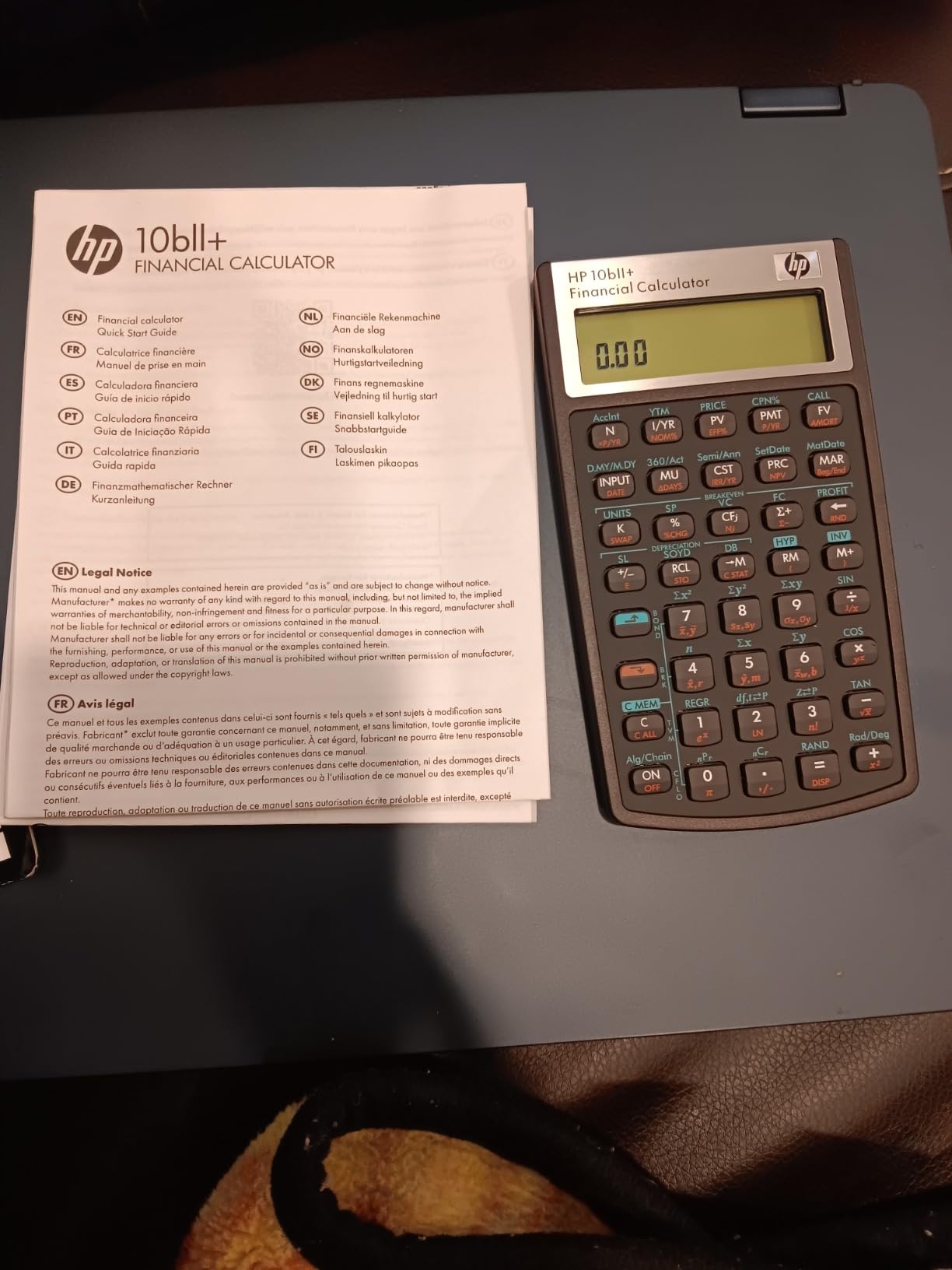
At just 3 ounces, the 10bII+ is the lightest calculator on this list. It slips into a laptop sleeve or pocket without adding bulk, which matters when you are already carrying case binders and a laptop across campus.
The catch is build quality. The plastic construction feels less durable than the TI BA II Plus, and some users report key wear after heavy use over a full semester. The cash flow capacity is also lower than the BA II Plus Professional, so advanced modeling gets awkward.
Ideal Use Case for the HP 10bII+
If you only need a financial calculator for 2 or 3 finance courses and have no plans to pursue the CFA charter, this is the smartest purchase you can make. It delivers 90 percent of the functionality of pricier models at the lowest price on this list.
Exam and Certification Compatibility
The HP 10bII+ is approved for the CFA exams, which makes it a viable long-term companion even if your career plans shift toward investment management later. Just confirm with your specific MBA program that no professor requires the TI BA II Plus keystroke layout for demonstrations.
4. HP 12C Financial Calculator (Programmable)
HP 12C Financial Calculator – 120+ Functions: TVM, NPV, IRR, Amortization, Bond Calculations, Programmable Keys (HP)
Financial calculator
LCD display
Metal enclosure
RPN entry system
CFA exam approved
Pros
- Industry standard calculator used by finance professionals since 1981
- Programmable keys allow custom financial calculation routines
- CFA exam approved for finance career track
- Metal enclosure provides premium durability
Cons
- RPN entry system has steep learning curve for new users
- Lower review count indicates niche professional audience
- Smaller display (10 digits) compared to modern calculators
The HP 12C has been in continuous production since 1981, and there is something both charming and frustrating about that fact. It is the calculator that Wall Street veterans grew up on, and many banking desks still keep one in a drawer as a backup. For MBA students aiming at traditional finance careers, it carries cultural weight.
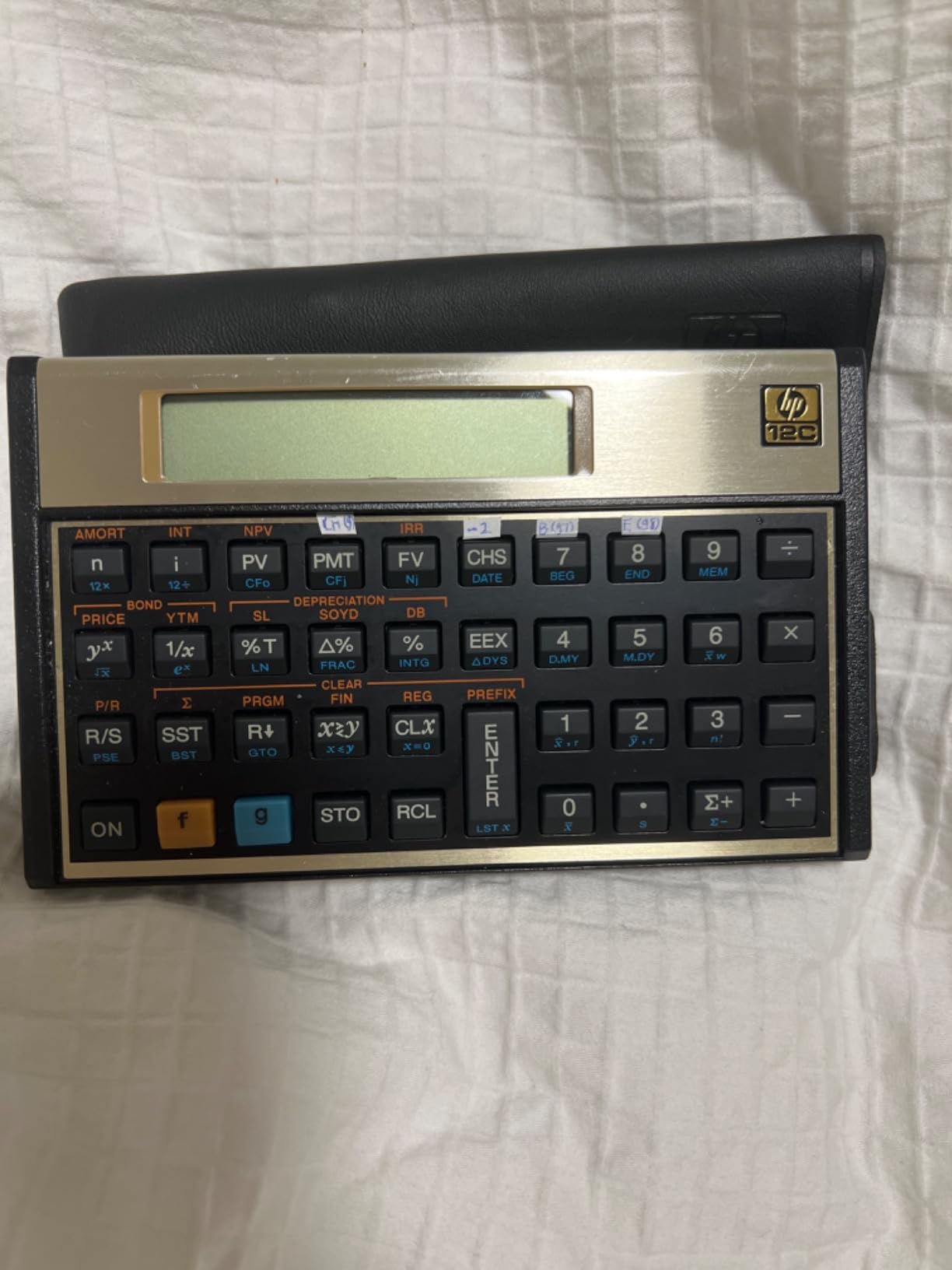
Using the 12C means committing to RPN, or Reverse Polish Notation. Instead of typing 5 + 3 =, you type 5 ENTER 3 +. It sounds backwards, and for the first week it feels backwards. But once it clicks, many users find RPN faster because it eliminates the need for parentheses.
The programmable keys are where the 12C separates itself from the pack. You can record a sequence of keystrokes and assign it to a single key, which is invaluable for repeated calculations like loan amortization schedules or custom depreciation methods.
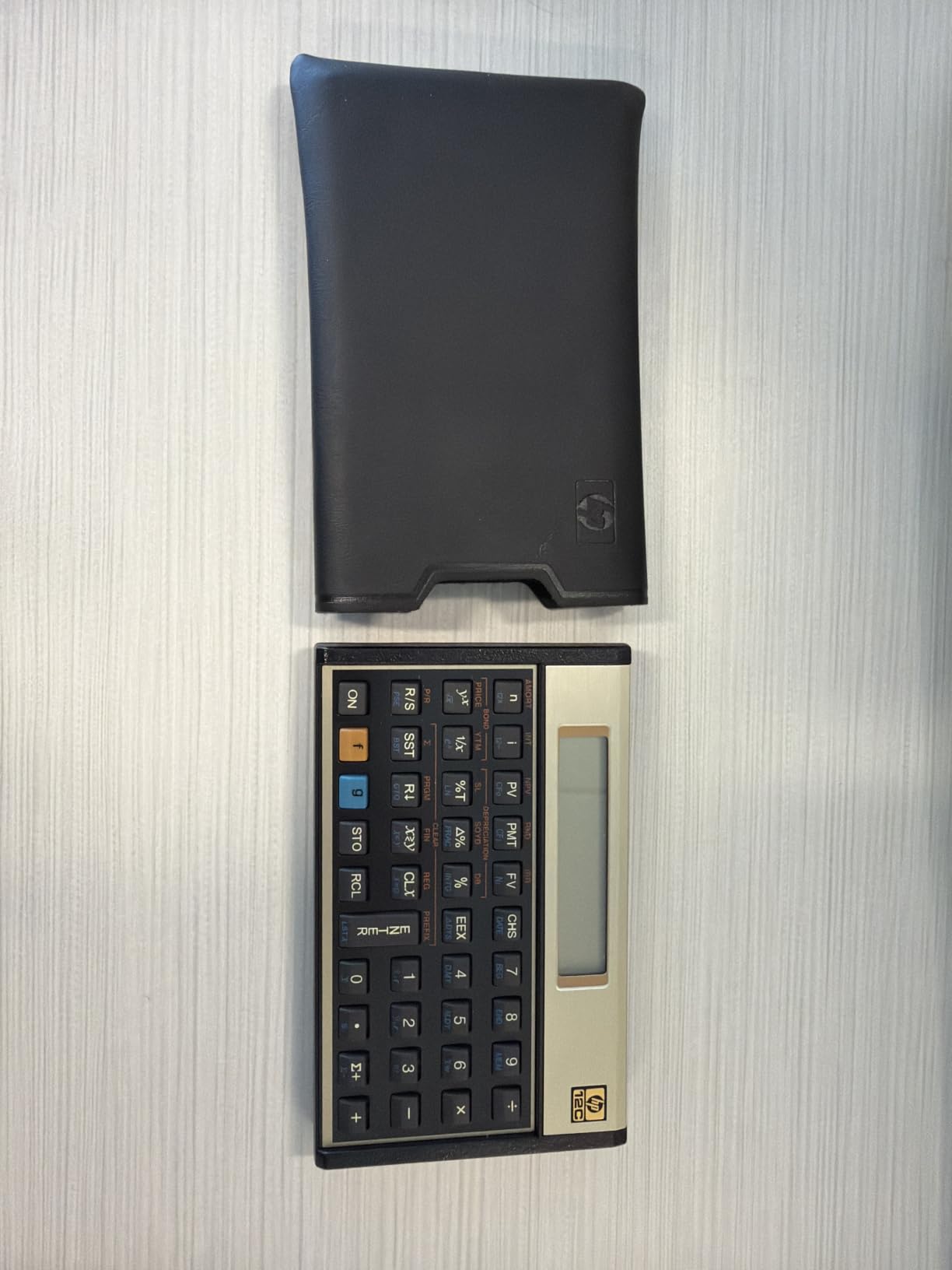
I tested the 12C during a fixed-income module and was impressed by how natural the bond calculations felt once I committed to RPN. The metal enclosure has a satisfying heft, and the keys have the kind of tactile response that makes data entry feel precise.
The downsides are real. The 10-digit display is small, the learning curve is the steepest on this list, and the 548-review count reflects the fact that this calculator serves a niche professional audience rather than the mass student market.
Is RPN Worth Learning During Your MBA
If you have a background in engineering or computer science, RPN will feel natural and you will love the 12C. If you have only ever used algebraic calculators, expect to spend 10 to 15 hours building fluency. The payoff is speed and fewer keystroke errors once you are proficient.
Career Signal and Industry Recognition
Pulling out an HP 12C in a finance interview or networking event signals that you take the craft seriously. It is a small but real cultural marker in banking and investment management. Whether that matters to you depends on your target industry and personal style.
5. HP 12C Platinum Financial Calculator
HP 12C Platinum Financial Calculator, 130+ Functions, RPN, Undo Key
Financial calculator
LCD display
Plastic enclosure
RPN and algebraic modes
CFA and CFP approved
Pros
- 130+ functions for advanced financial analysis
- RPN and algebraic entry modes provide flexibility
- 30 cash flows for IRR and NPV calculations
- CFA and CFP exam approved
- Includes protective case and cleaning cloth
Cons
- Ships within 13 days (longer delivery time)
- Steep learning curve for RPN mode
- Relatively expensive compared to basic calculators
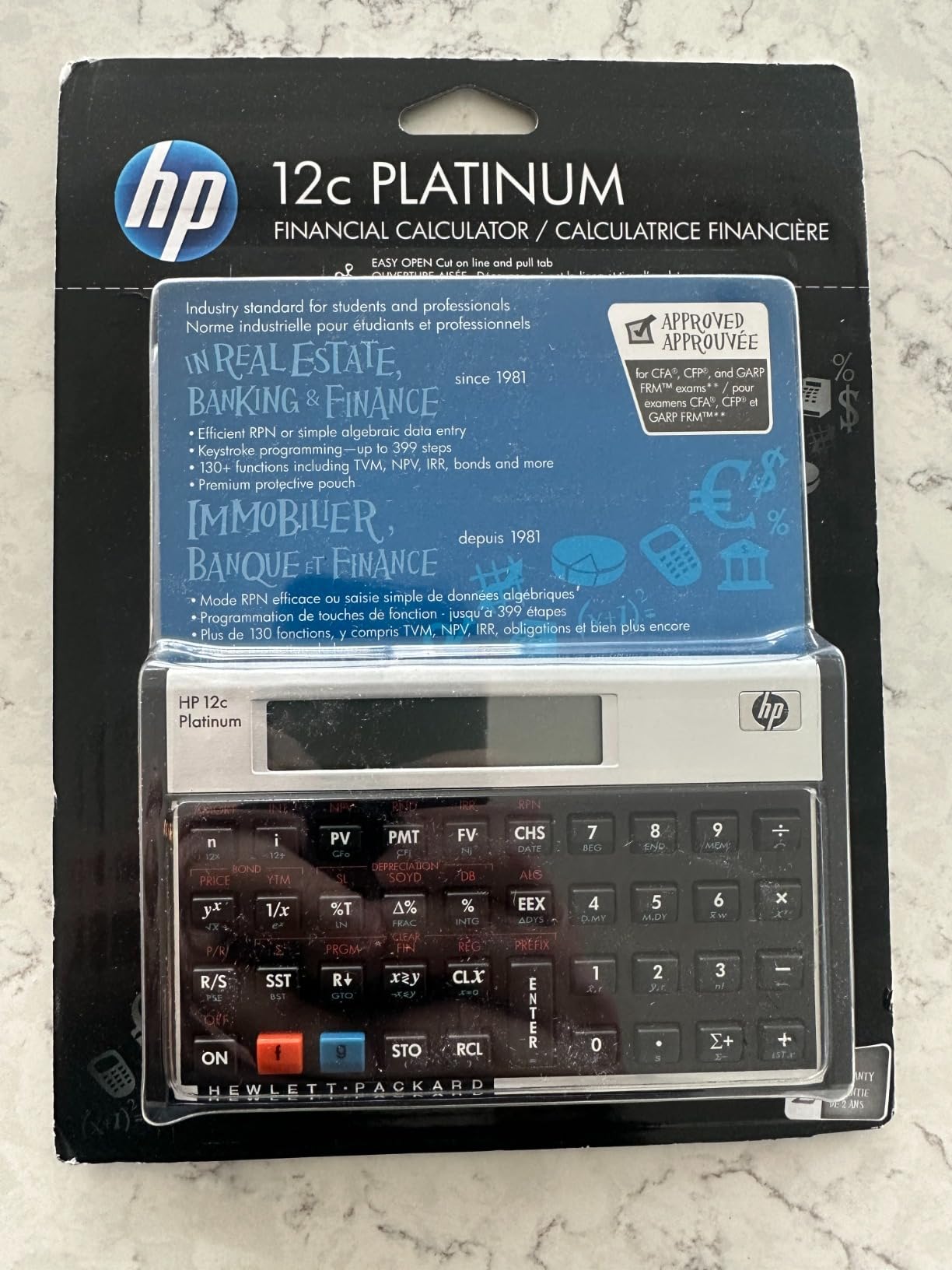
The HP 12C Platinum solves the biggest complaint about the original 12C: it offers both RPN and algebraic entry modes. That single change makes it accessible to MBA students who want the 12C brand cachet without committing to learning Reverse Polish Notation.
HP expanded the function library to over 130 built-in functions, and you get 30 cash flow slots for NPV and IRR work. During my testing, I switched between algebraic mode for quick calculations and RPN for longer multi-step problems, and the flexibility genuinely improved my workflow.
This model is approved for both CFA and CFP exams, broadening its appeal beyond MBA coursework into financial planning certification territory. If you see CFP in your future, this is one of the few calculators that covers both bases.
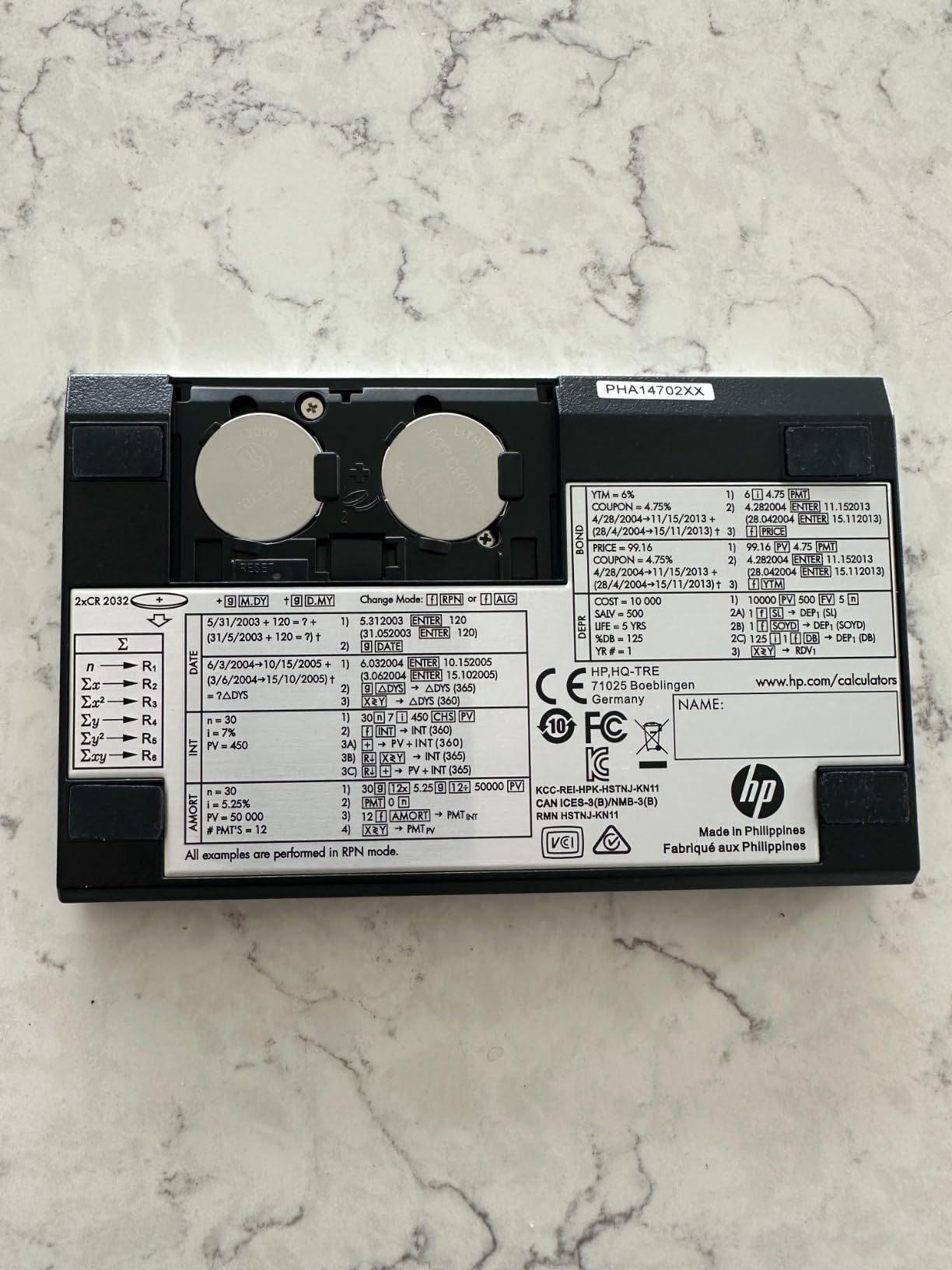
The protective case and included cleaning cloth are thoughtful additions that show HP understands this is a professional tool. The case slides on cleanly and protects the keys in a packed backpack, which is more than I can say for some bare calculators on this list.
The main drawback is availability. At the time of writing, this model ships within 13 days, which means you need to order well before your finance course begins. The plastic enclosure also feels less premium than the metal original 12C, despite the higher price.
Dual-Mode Entry and Who Benefits Most
If you are torn between the HP ecosystem and the familiarity of algebraic entry, the Platinum removes the compromise. It is the best choice for MBA students who want to learn RPN gradually while keeping algebraic mode as a safety net during exams.
CFA and CFP Dual Certification Path
Very few calculators are approved for both the CFA and CFP exams. If you are an MBA student planning a career that spans investment management and financial planning, the 12C Platinum is one of the most future-proof purchases you can make.
6. Casio FC-200V2 Financial Calculator
Casio Casio FC 200V2 Financial Calculator
Financial calculator
LCD display
4-line display
Direct mode key for quick calculations
Pros
- 4-line display for multiple calculations
- Direct mode key for quick financial calculations
- Impact protection cover for durability
- Amazons Choice designation
Cons
- Lower review count (70 reviews)
- Limited stock available
- Fewer advanced features compared to HP 12C
The Casio FC-200V2 is the wildcard on this list, and I include it because it brings something none of the TI or HP models offer: a 4-line display that lets you see multiple calculations simultaneously. For MBA students who struggle with single-line calculators, this is a meaningful usability upgrade.
The direct mode key is a clever feature that jumps you straight into the financial calculation you need without navigating menus. During testing, I found it noticeably faster for TVM and amortization problems than the worksheet-based approach on the BA II Plus.
Casio also included break-even analysis, which shows up in managerial accounting and operations coursework more often than you might expect. It is a function that dedicated finance calculators from TI and HP often omit or bury in submenus.
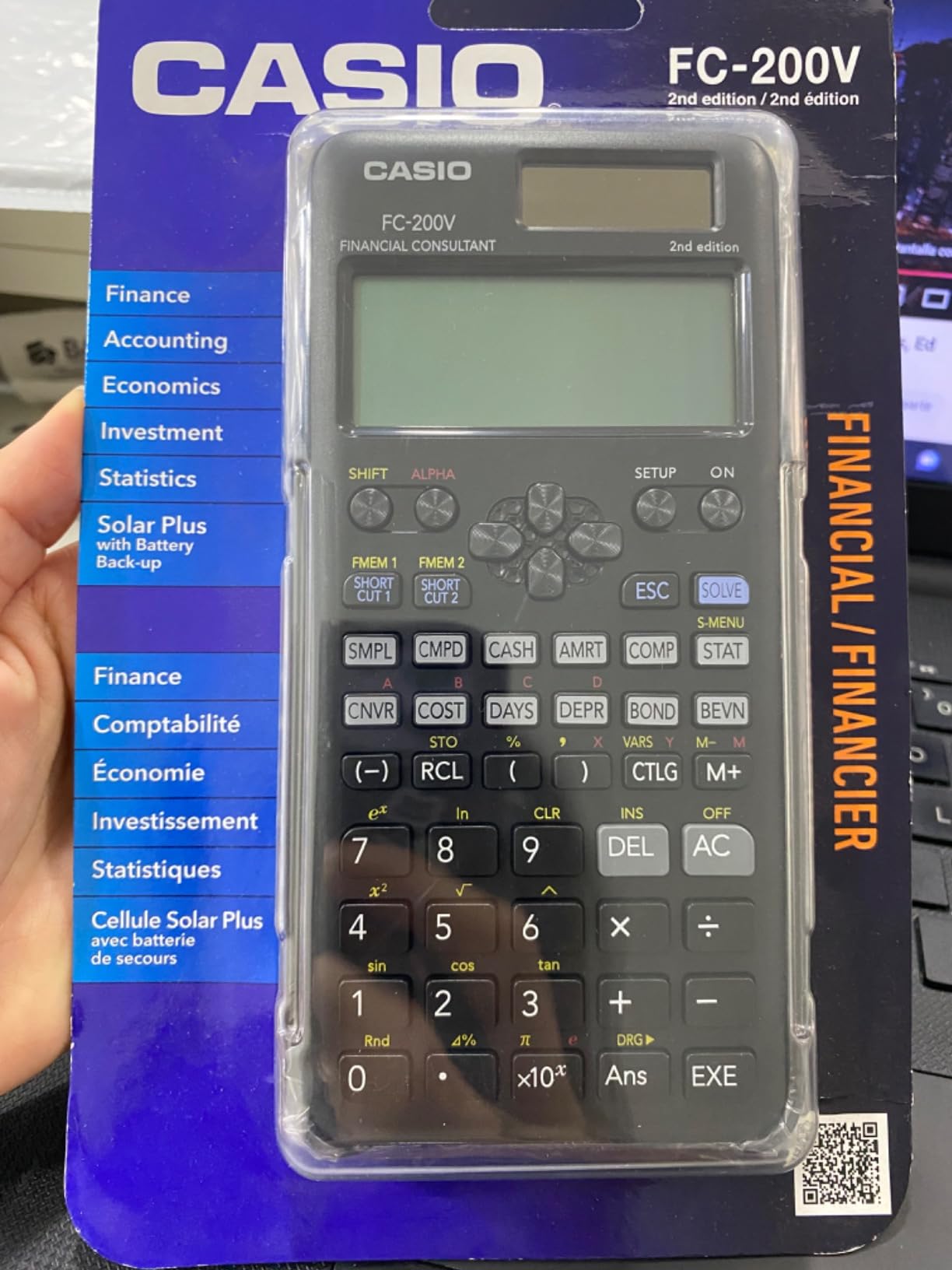
The impact protection cover is sturdy and stays attached during use, which is a small but appreciated design choice. The calculator earned Amazon’s Choice designation, which speaks to positive buyer experiences despite the modest review count.
The elephant in the room is stock availability. With limited units available and only 70 reviews, this is a niche product that may not be reliable to purchase at the last minute. It also lacks the depth of advanced functions found on the HP 12C or BA II Plus Professional.
Display Advantage for Visual Learners
If you are the type of student who needs to see your inputs and prior results on screen at the same time to catch errors, the 4-line display is genuinely helpful. It reduces the cognitive load during timed exams when every second and every keystroke matters.
Break-Even and Accounting Coursework Fit
The break-even analysis function makes the FC-200V2 particularly attractive for MBA students focusing on accounting or operations management alongside finance. It bridges a gap that pure financial calculators leave open, making it a versatile classroom companion.
7. Texas Instruments TI-84 Evo Graphing Calculator
TI-84 Evo Graphing Calculator Texas Instruments, White
Graphing calculator
LCD display
USB-C rechargeable
3x faster processor
Python programming
Pros
- Most powerful TI-84 generation with 3x faster processor
- 50% larger graphing display for better visualization
- USB-C charging (modern convenience)
- Python programming enables custom financial scripts
Cons
- Higher price than dedicated financial calculators
- Not specifically designed for finance functions
- Lower review count (newer product)
The TI-84 Evo is not a traditional financial calculator, and I want to be upfront about that. It earns a place on this list because a significant number of MBA students arrive with a TI-84 from their undergraduate years and ask whether it is sufficient. The short answer is: for most programs, yes.
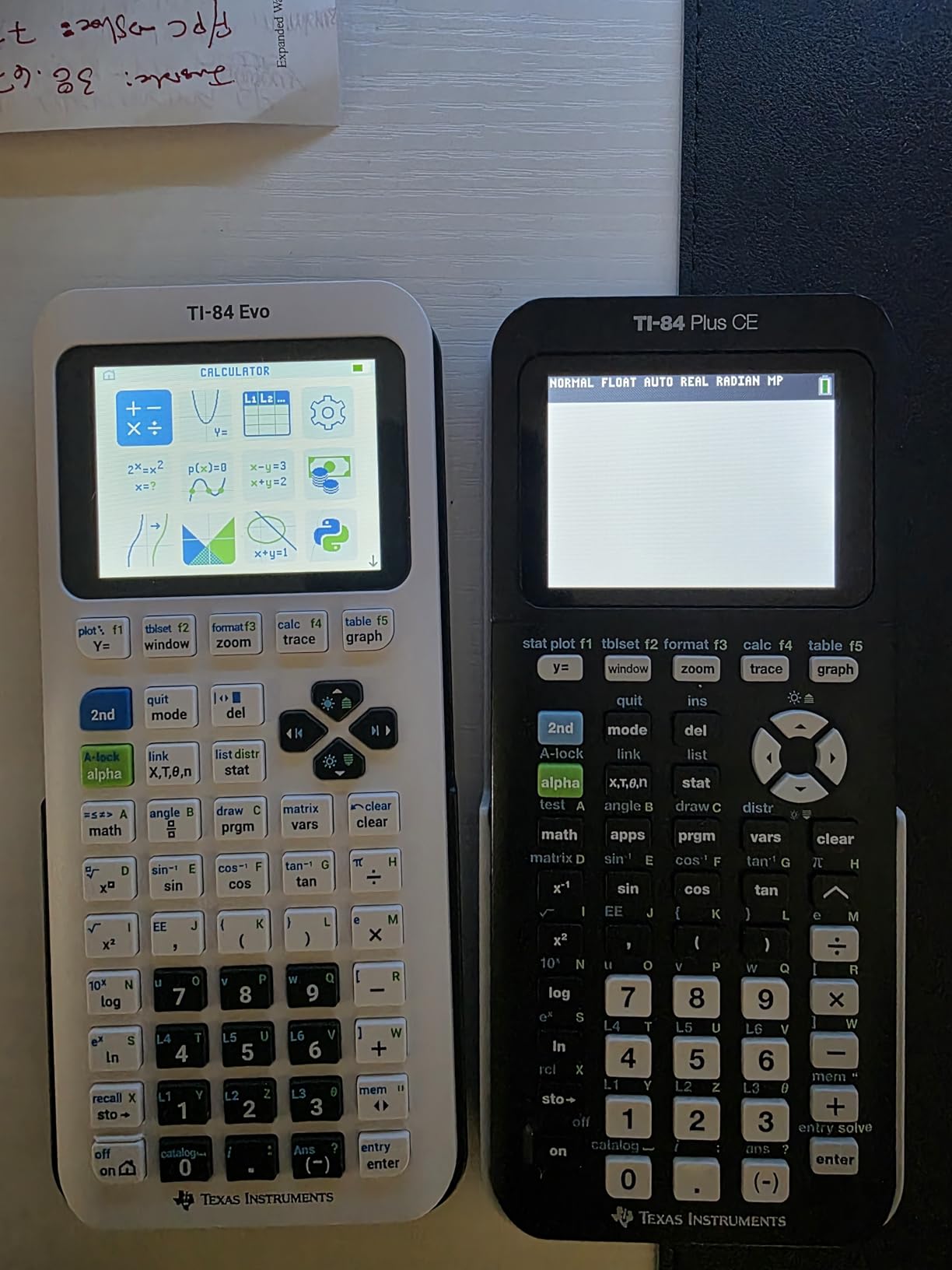
Where the Evo shines is visualization. The 50 percent larger graphing display lets you actually see the cash flow diagrams, amortization curves, and regression models that financial calculators only describe numerically. For students who learn visually, this is a real advantage.
The Python programming capability is where things get interesting for quantitatively inclined MBA students. You can write custom scripts for specialized calculations that no dedicated financial calculator supports, which is powerful for econometrics and data-driven finance electives.
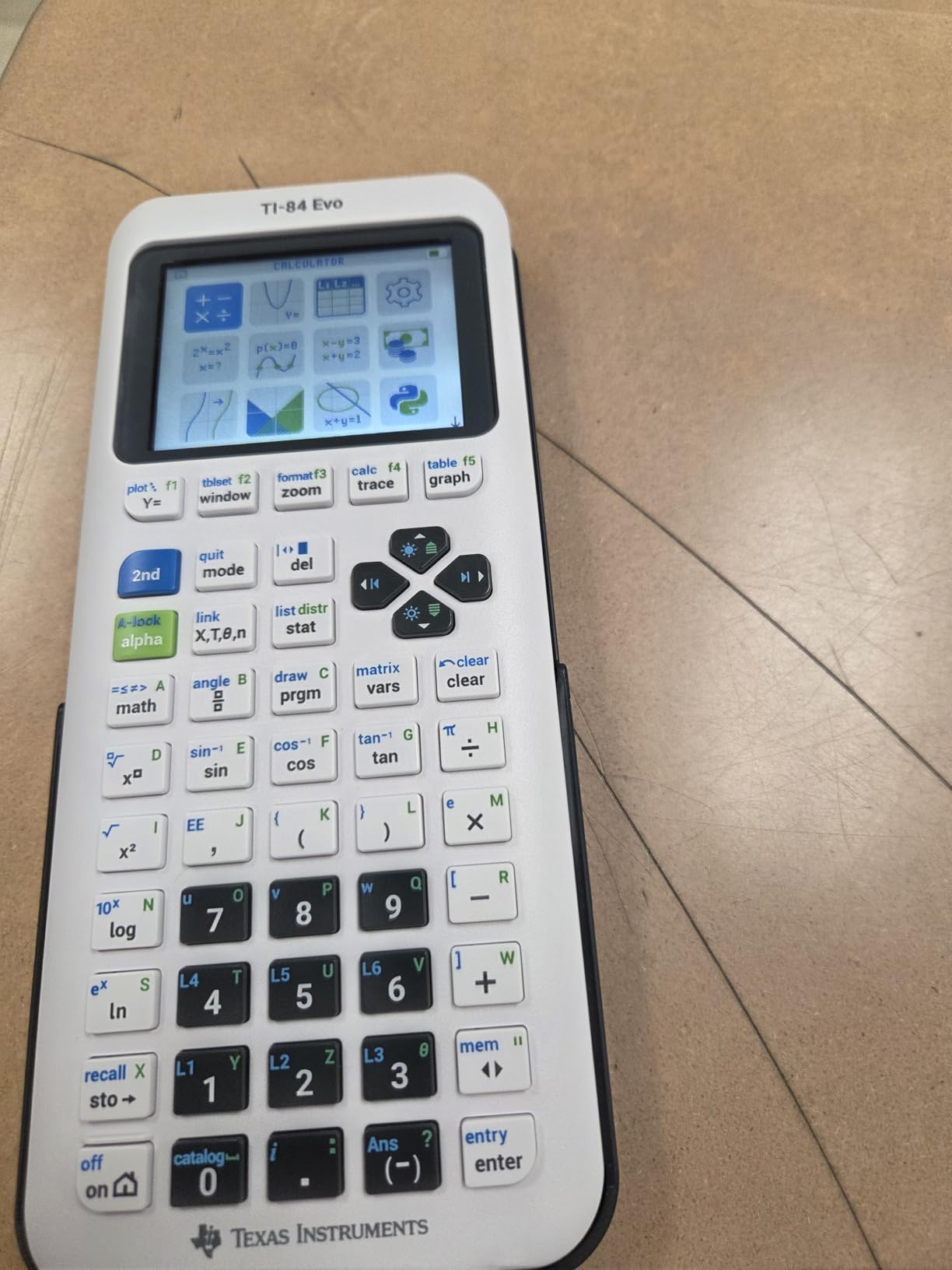
USB-C charging is a modern convenience that every other calculator on this list lacks. Instead of hunting for CR2032 or CR123A batteries before an exam, you top up the Evo from the same charger you use for your laptop and phone.
The downsides are clear. The Evo is the most expensive option here, it lacks the dedicated TVM and cash flow keys that make financial calculators efficient, and the low review count reflects its status as a newer product without a long track record.
When a Graphing Calculator Beats a Dedicated Financial Model
If your MBA program leans heavily into data analytics, operations research, or quantitative finance, the graphing and programming capabilities of the TI-84 Evo may serve you better than a dedicated financial calculator. Check your syllabus before deciding.
Finance Function Limitations to Know About
The TI-84 Evo can perform TVM and NPV calculations through apps and programs, but the workflow is slower than pressing dedicated keys on a BA II Plus. If you have multiple timed finance exams, the inefficiency adds up. Many students end up buying a BA II Plus as a second calculator.
How to Choose the Right Financial Calculator for Your MBA?
Choosing among the best financial calculators for MBA students comes down to four questions: what does your program require, which certifications do you plan to pursue, what is your budget, and how comfortable are you with learning a new entry system?
Check Your Program Requirements First
Some MBA programs mandate a specific calculator, usually the TI BA II Plus, because professors teach using its exact keystroke layout. Check your syllabus or email your finance professor before buying anything. Buying the wrong calculator and having to learn unfamiliar keystrokes mid-semester is a preventable headache.
Factor in Certification Exam Plans
If you are pursuing the CFA, FRM, or CMA designation alongside your MBA, your calculator must be on the approved list for each exam. The TI BA II Plus, BA II Plus Professional, HP 12C, and HP 12C Platinum are all CFA-approved, which simplifies the decision. Forum users on r/CFP and r/MBA consistently note that buying one calculator that works for both coursework and certification exams saves money and study time.
RPN vs Algebraic Entry: A Practical Decision
RPN (Reverse Polish Notation) used by the HP 12C requires learning a new input method, but many converts find it faster once mastered. Algebraic entry, used by the TI BA II Plus and HP 10bII+, works like the calculators you have used your entire life. If you have never tried RPN, start with algebraic unless you have a specific reason to switch.
Build Quality for a Two-Year Program
Your calculator will live in a backpack for two years. Metal-enclosure models like the BA II Plus Professional and HP 12C survive drops and key wear better than plastic alternatives. The HP 10bII+ is excellent value, but plan to treat it gently if you want it to last through graduation.
Budget and Long-Term Value
Dedicated financial calculators range from roughly $30 to $100. The cheapest viable option is the HP 10bII+, while the most expensive is the TI-84 Evo. Consider that a good financial calculator will outlast your MBA program and follow you into your early career, making even the pricier models a reasonable long-term investment.
FAQs
Can I use a TI-84 Plus for finance in my MBA program?
Yes, the TI-84 Plus and the newer TI-84 Evo can handle TVM, NPV, and IRR calculations through built-in finance apps. However, they lack dedicated financial keys, making the workflow slower than a dedicated financial calculator during timed exams. Many MBA students start with a TI-84 and add a BA II Plus or HP 10bII+ before their first finance midterm.
Which financial calculator is best for MBA finance students?
The Texas Instruments BA II Plus is the most widely recommended financial calculator for MBA students because it is CFA/FRM/CMA approved, has dedicated TVM and cash flow keys, and matches the keystroke layout used in most finance textbooks. The BA II Plus Professional and HP 10bII+ are strong alternatives depending on your budget and feature needs.
Is the HP 12C allowed in MBA exams and the CFA exam?
Yes, the HP 12C is approved for the CFA exam and is widely accepted in MBA finance courses. The HP 12C Platinum carries the same approvals and adds algebraic entry mode for students who do not want to learn RPN. Always confirm with your specific program and exam administrator before test day.
What is the difference between the TI BA II Plus and the BA II Plus Professional?
The BA II Plus Professional has a metal enclosure, supports up to 32 uneven cash flows instead of 24, and adds advanced functions like MIRR, Modified Duration, and Discounted Payback. The standard BA II Plus is cheaper and covers the core MBA finance curriculum, while the Professional targets students pursuing advanced finance coursework and CFA preparation.
Do I really need a financial calculator for my MBA, or can I use a spreadsheet?
Most MBA finance professors require a financial calculator for in-class exercises and timed exams where laptops and spreadsheets are not permitted. Even if your program allows spreadsheets for homework, a financial calculator is faster for TVM and cash flow problems and is mandatory for the CFA, FRM, and CMA exams you may pursue after graduation.
Conclusion
After testing all seven models, my recommendation for the best financial calculator for MBA students remains the Texas Instruments BA II Plus. It is the safest, most universally compatible choice, approved for every major finance certification, and supported by the largest library of tutorials and textbook examples.
If budget is tight, the HP 10bII+ delivers outstanding value at the lowest price. For students pursuing the CFA or planning a long finance career, the BA II Plus Professional justifies the upgrade with its metal build and advanced functions. And for those who want flexibility between RPN and algebraic entry, the HP 12C Platinum is a versatile, future-proof pick.
Buy the calculator that fits your program, your certification plans, and your budget, then spend a weekend learning it inside out. The right financial calculator will be one of the most-used tools in your entire MBA toolkit in 2026 and beyond.