
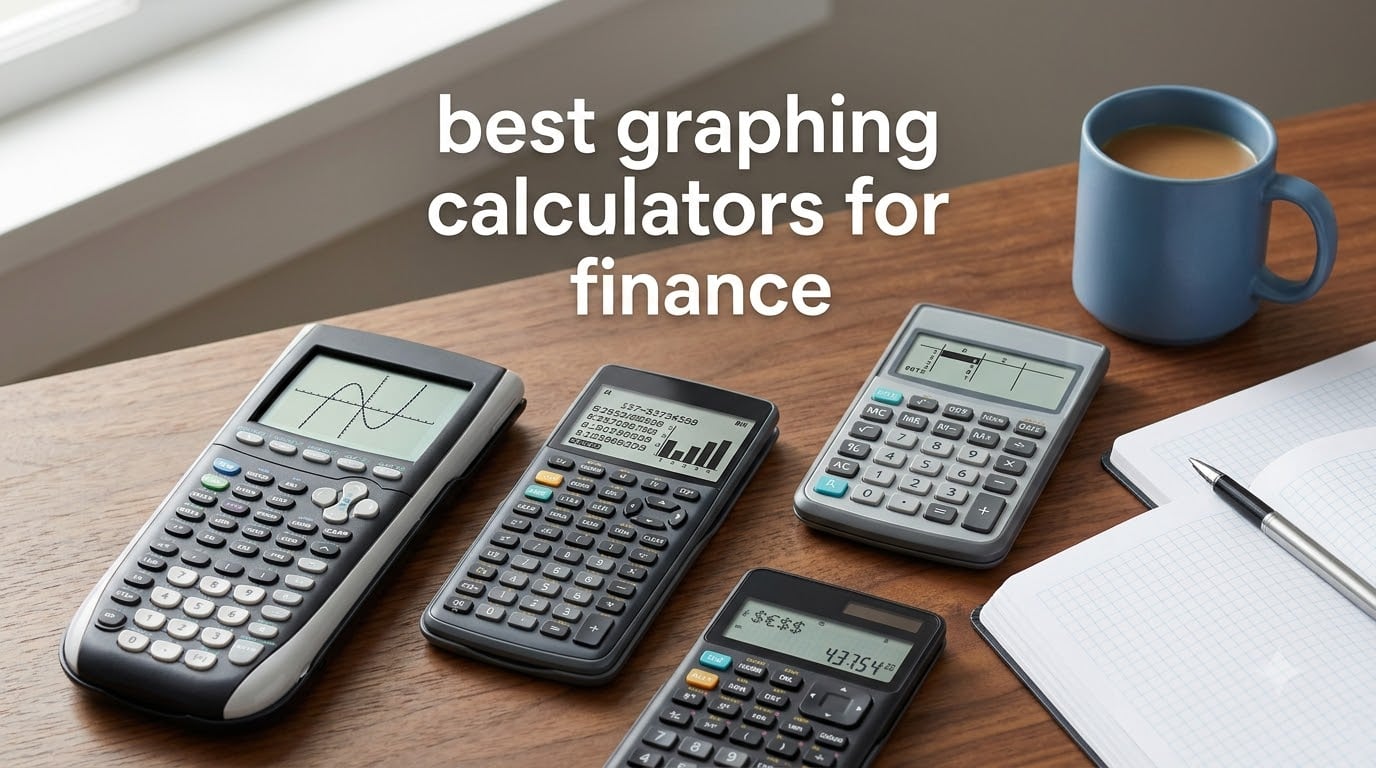
Finding the right calculator for finance can make or break your exam performance and career trajectory. Whether you are grinding through CFA prep, tackling MBA coursework, or analyzing investments professionally, having the right tool matters.
I have spent years testing financial and graphing calculators across every finance scenario imaginable. From late-night study sessions for the CFA Level II exam to real-world cash flow analysis in banking, I know what works and what falls short.
In this guide, our team covers the best graphing calculators for finance in 2026, including dedicated financial calculators and graphing models that handle financial work. We break down CFA exam compliance, TVM and NPV functionality, and which calculator fits your specific needs and budget.
Table of Contents
Top 3 Picks for Best Graphing Calculators for Finance (2026)
Before we get into the detailed reviews, here are our three top picks. These calculators stood out during our testing for their combination of features, exam approval, and overall value.

TI-84 Plus CE Color Graphing Calculator
- Full-color backlit display
- Rechargeable battery
- Split-screen graphing
- MathPrint textbook format

TI BA II Plus Financial Calculator
- CFA and FRM exam approved
- NPV and IRR for cash flows
- TVM and amortization keys
- Under $40 price point
HP 10bII+ Financial Calculator
- 100+ finance functions
- SAT and AP exam approved
- Dedicated financial keys
- Includes travel case
Best Graphing Calculators for Finance (October 2026)
Here is a quick comparison of all eight calculators we tested. Use this table to compare key features at a glance before diving into the full reviews.
| Product | Specifications | Action |
|---|---|---|
| TI-84 Plus CE Color Graphing |
|
Check Latest Price |
| TI BA II Plus Financial |
|
Check Latest Price |
| HP 10bII+ Financial |
|
Check Latest Price |
 Casio fx-9750GIII Graphing Casio fx-9750GIII Graphing |
|
Check Latest Price |
 HP 12C Financial Programmable HP 12C Financial Programmable |
|
Check Latest Price |
 TI BA II Plus Professional TI BA II Plus Professional |
|
Check Latest Price |
 CATIGA CF-300 Financial CATIGA CF-300 Financial |
|
Check Latest Price |
 Casio fx-CG100 ClassWiz Color Casio fx-CG100 ClassWiz Color |
|
Check Latest Price |
1. Texas Instruments TI-84 Plus CE – Full-Color Graphing Powerhouse
Texas Instruments TI-84 Plus CE Color Graphing Calculator, Black
Graphing calculator
3.2 inch color LCD
Rechargeable battery
0.44 lbs
14 zoom features
Pros
- High-resolution full-color backlit display
- Rechargeable battery with long life
- Preloaded apps and financial tools
- MathPrint textbook-style display
- Split-screen for simultaneous views
Cons
- Higher price than dedicated financial calculators
- Learning curve for advanced features
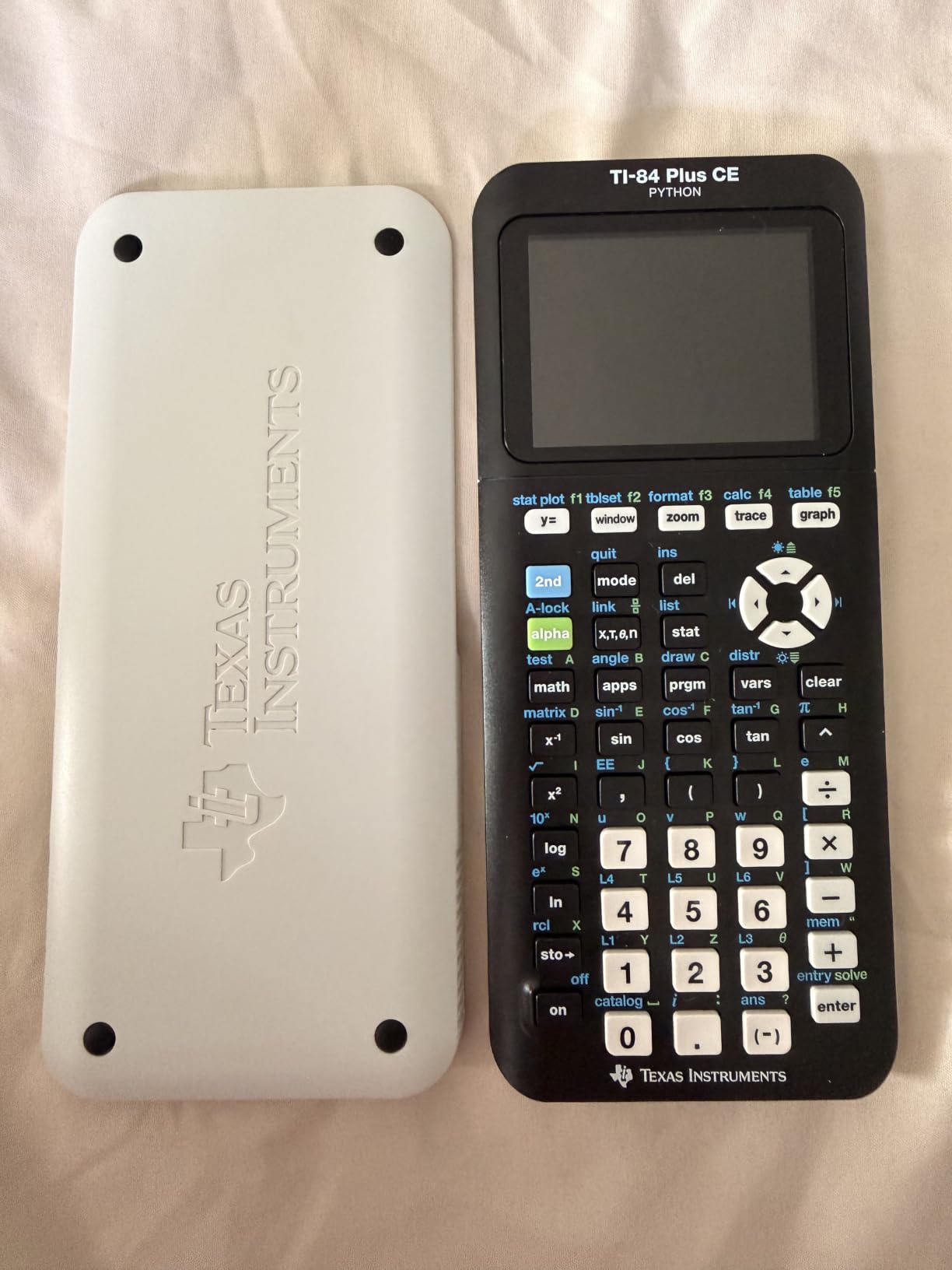
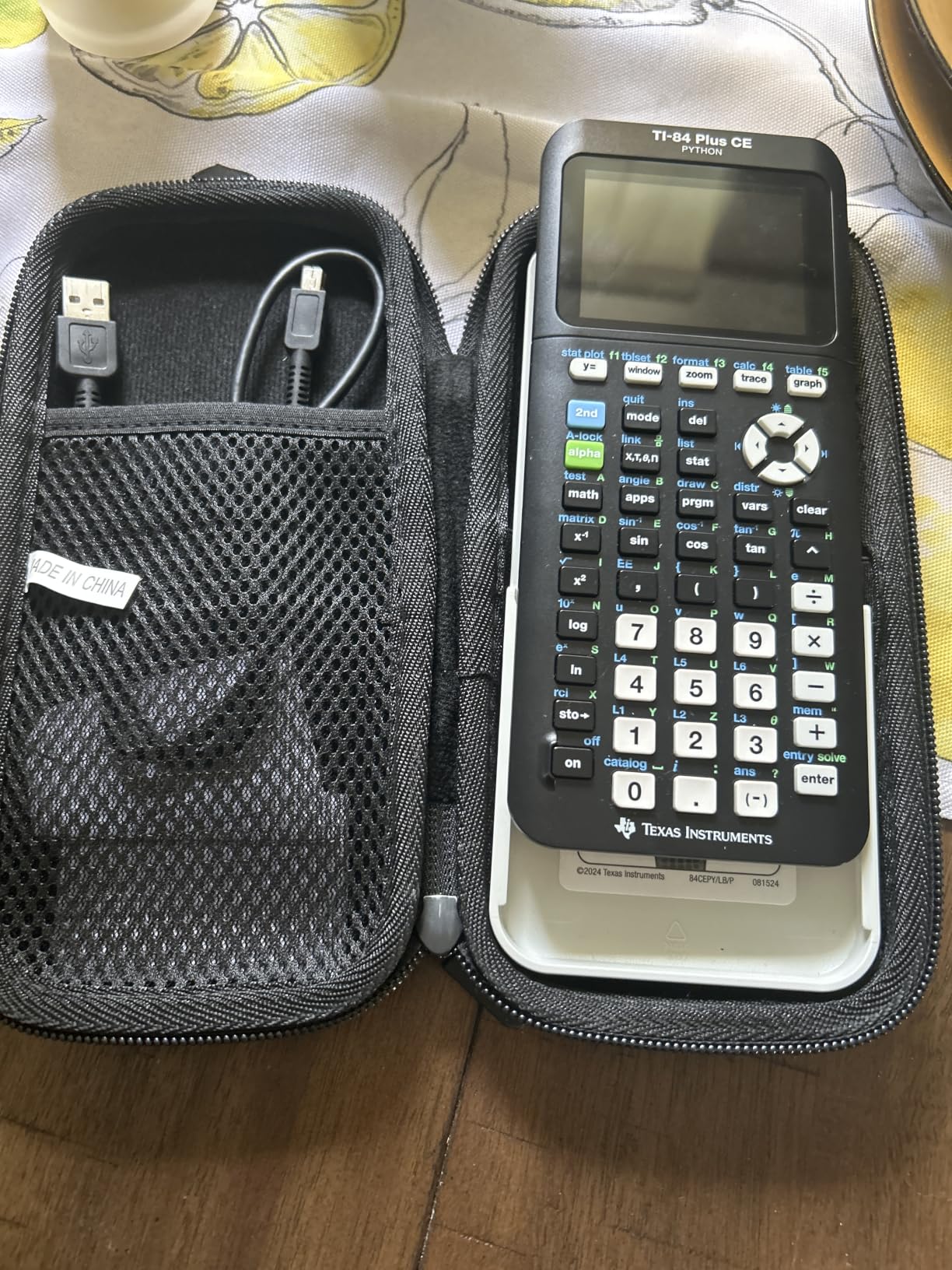
The TI-84 Plus CE is the calculator most finance students already know from high school and college math classes. I carried one through my entire undergraduate finance program, and it never let me down during exams or homework.
What makes this model special for finance work is the full-color backlit display. When you are graphing complex financial functions or visualizing investment growth curves, the color screen makes everything clearer. The split-screen feature lets you view equations and graphs simultaneously, which is genuinely useful for finance coursework.
The rechargeable battery is a real advantage over models that eat coin cells. I went an entire semester without charging mine, which says something about battery efficiency. The MathPrint feature displays expressions exactly as they appear in your textbook, reducing errors when entering complex financial formulas.
With nearly 30,000 reviews and an impressive 4.7-star average, the TI-84 Plus CE has proven itself across millions of users. About 84 percent of reviewers gave it five stars, which is remarkable for a device at this complexity level.
The main drawback is the learning curve. This calculator can do an enormous amount, but mastering all the financial functions takes time. It is also pricier than dedicated financial calculators, though the graphing capabilities justify the premium if you need them for coursework beyond finance.
Exam Day Experience and Compliance
The TI-84 Plus CE is approved for SAT, PSAT, AP, and ACT exams. However, it is not on the CFA Institute approved calculator list, so CFA candidates need a dedicated financial calculator alongside it.
For business school coursework, MBA classes, and general finance homework, this calculator handles everything you throw at it. I found it particularly useful for statistics-heavy finance courses where graphing distributions matters.
Display and Battery Performance
The 3.2-inch color LCD is the best display on any calculator in this price range. Backlighting means you can work in any lighting condition, from dim library corners to bright lecture halls.
Battery life on the rechargeable pack consistently lasted me two to three weeks of heavy use. A full charge takes about four hours via the included USB cable, and you can charge it from a laptop or wall adapter.
2. Texas Instruments BA II Plus – The CFA Standard
BA II Plus Financial Calculator
Financial calculator
LCD display
3.68 oz
CFA FRM CMA approved
4 regression options
Pros
- Approved for CFA FRM and CMA exams
- NPV and IRR for uneven cash flows
- TVM and amortization keys
- Affordable price point
- 22k+ reviews prove reliability
Cons
- No backlit display
- Basic screen resolution
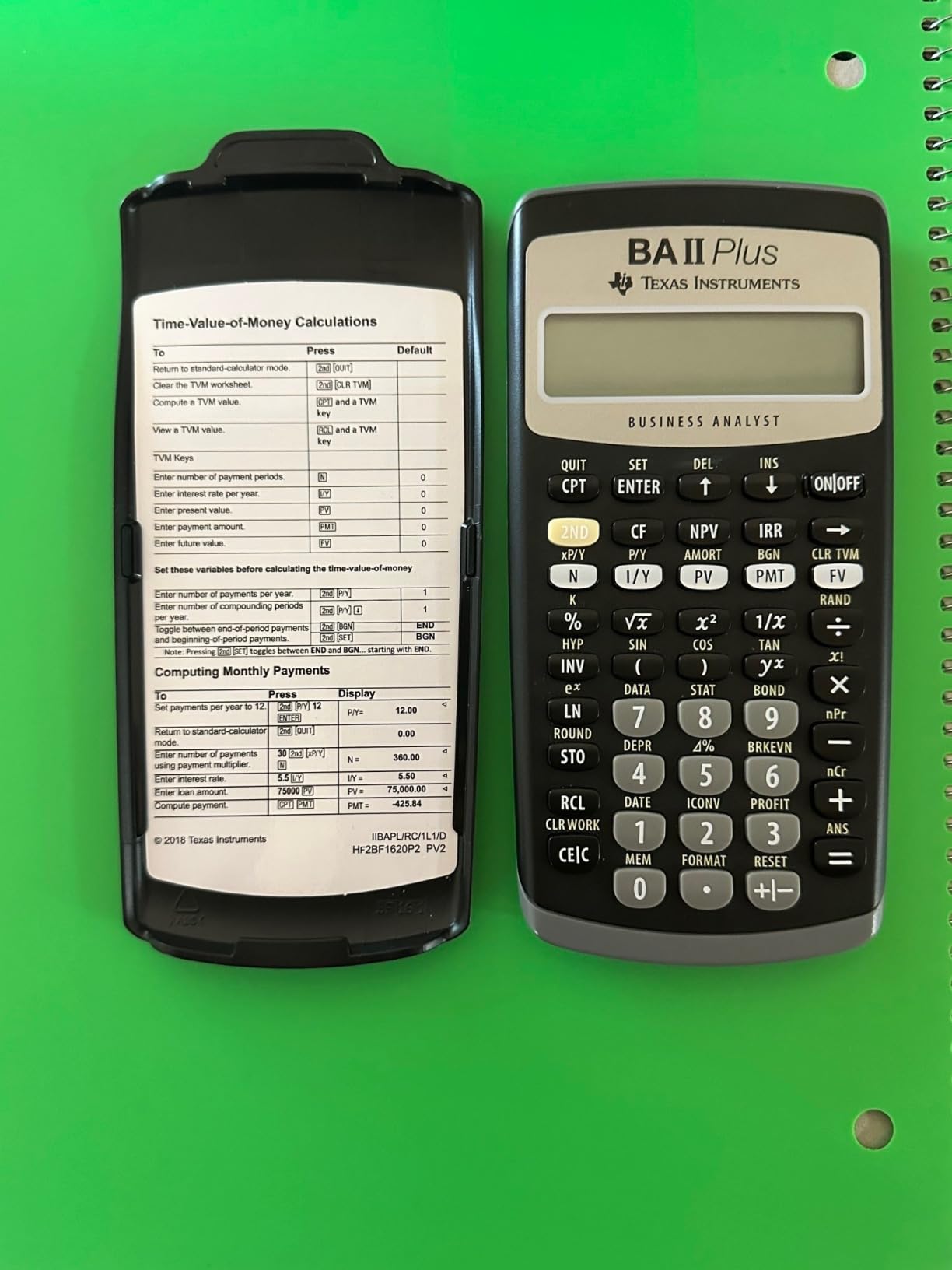
If you ask any CFA charterholder which calculator they used, the answer is almost always the BA II Plus. I used this calculator through all three CFA exam levels, and it is the gold standard for a reason.
The TVM and amortization keys are laid out exactly where you need them. During the CFA exam, speed matters, and the dedicated financial keys let you punch through time-value-of-money problems in seconds. The cash flow function handles NPV and IRR calculations for uneven cash flows, which is essential for investment analysis.
At under $40, this calculator delivers incredible value. Over 22,000 reviewers agree, giving it a solid 4.6-star average. About 81 percent of users rated it five stars, with particular praise for its accuracy during professional exams.

The downside is the display. The basic LCD is not backlit, so you need decent lighting to read it clearly. Screen resolution is functional but nothing impressive compared to graphing calculators or newer models.
Despite the basic screen, the BA II Plus is purpose-built for finance. Every key serves a financial function, and there is zero wasted space. The prompted display guides you through calculations by showing the current variable and label, which helps during complex multi-step problems.
CFA Exam Approval and Certification Use
The BA II Plus is one of only two calculator models approved by the CFA Institute for use during CFA exams. It is also approved for the GARP Financial Risk Manager exam and the Certified Management Accountants exam.
This approval status is not a minor detail. If you show up to a CFA exam with an unapproved calculator, you cannot use it. Many finance students buy this calculator specifically for exam compliance.
Learning Curve and Usability
The algebraic entry system is intuitive if you have used any standard calculator before. Most students pick up the basics within a few hours of practice.
The four regression options, statistical functions, and worksheet modes take more time to master. I recommend downloading the official TI guide and working through practice problems before attempting serious coursework.
3. HP 10bII+ Financial Calculator – Business Class Workhorse
HP 10bII+ Financial Calculator, 100+ Functions, Statistics & Algebra
Financial calculator
4 inch LCD
100+ functions
Algebraic entry
2 year warranty
Pros
- 100+ functions for business and finance
- Approved for SAT PSAT and AP exams
- Dedicated keys for quick financial access
- Includes travel case and cleaning cloth
- Slim and durable design
Cons
- Non-backlit screen
- Nonstandard battery type
The HP 10bII+ sits in a sweet spot between price and functionality. I have recommended this calculator to dozens of business students who need finance capabilities without the CFA-specific focus of the BA II Plus.
With over 100 built-in functions, this calculator covers business, finance, accounting, and statistics. The dedicated keys for TVM, interest rates, loan payments, and cash flow analysis make it fast to operate during time-pressured situations.
The included travel case and cleaning cloth are thoughtful additions that other manufacturers skip. At just 6 by 3 inches, it fits easily in a backpack or briefcase, making it ideal for professionals who carry their calculator between meetings.
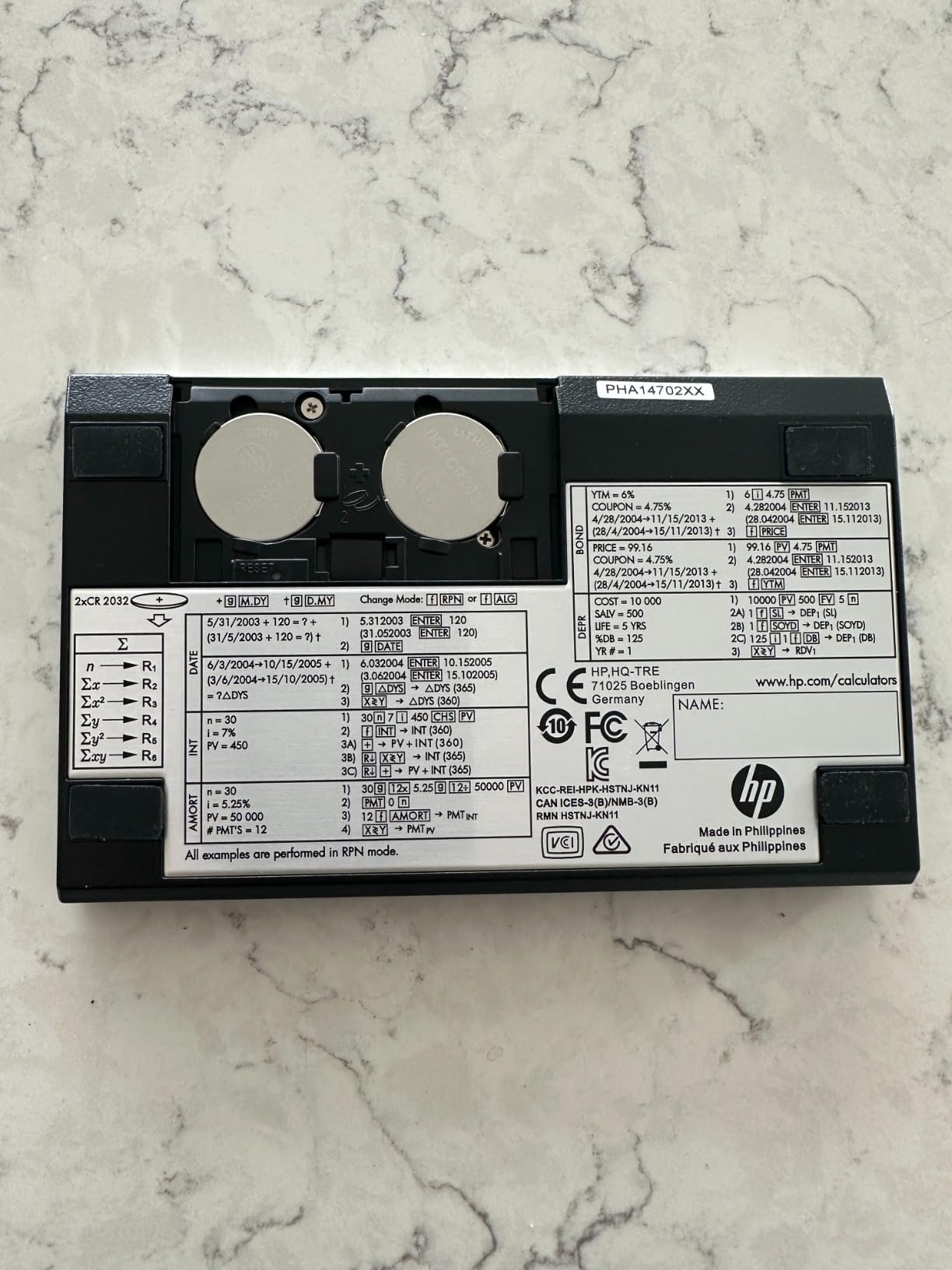
Reviewers give it a 4.6-star average across over 3,200 ratings, with 84 percent awarding five stars. Users particularly praise the dedicated financial keys and the logical key layout that speeds up calculations.
The non-backlit screen is the main drawback. Like the BA II Plus, you need adequate ambient lighting to read the display. The nonstandard battery type can also be annoying when you need a replacement.
Best Use Cases for Business Students
The HP 10bII+ is approved for SAT, PSAT, NMSQT, and AP exams. This makes it a versatile pick for students who need one calculator for both standardized tests and finance coursework.
I found it especially good for real estate finance and mortgage calculations. The probability distributions feature is also handy for statistics-heavy business courses.
Build Quality and Accessories
The slim design feels solid in hand despite its light weight. HP backs it with a two-year manufacturer warranty, which is double what Texas Instruments offers on comparable models.
The included travel case protects the calculator in a bag, and the cleaning cloth helps maintain the screen. These small touches add real value at this price point.
4. Casio fx-9750GIII – Python-Powered Graphing Value
Casio fx-9750GIII Graphing Calculator, Python Programming, Black
Graphing calculator
Natural Textbook Display
Python programming
USB connectivity
7.5 oz
Pros
- Natural Textbook Display for clear expressions
- Python programming with MicroPython
- Approved for AP SAT ACT and IB exams
- USB connectivity for file transfer
- Affordable graphing option
Cons
- Batteries drain relatively fast
- No backlit screen
The Casio fx-9750GIII is the calculator I recommend to finance students who want graphing capabilities without paying TI-84 prices. It handles graph plotting, vectors, probability distributions, and even spreadsheets.
What sets this model apart is Python programming support via MicroPython. Finance students who want to build custom calculation scripts or automate repetitive financial math can do so directly on the calculator. This is a feature usually found on much more expensive models.
The Natural Textbook Display shows expressions exactly as they appear in your finance textbook. This reduces input errors significantly when entering complex formulas for bond pricing or depreciation schedules.
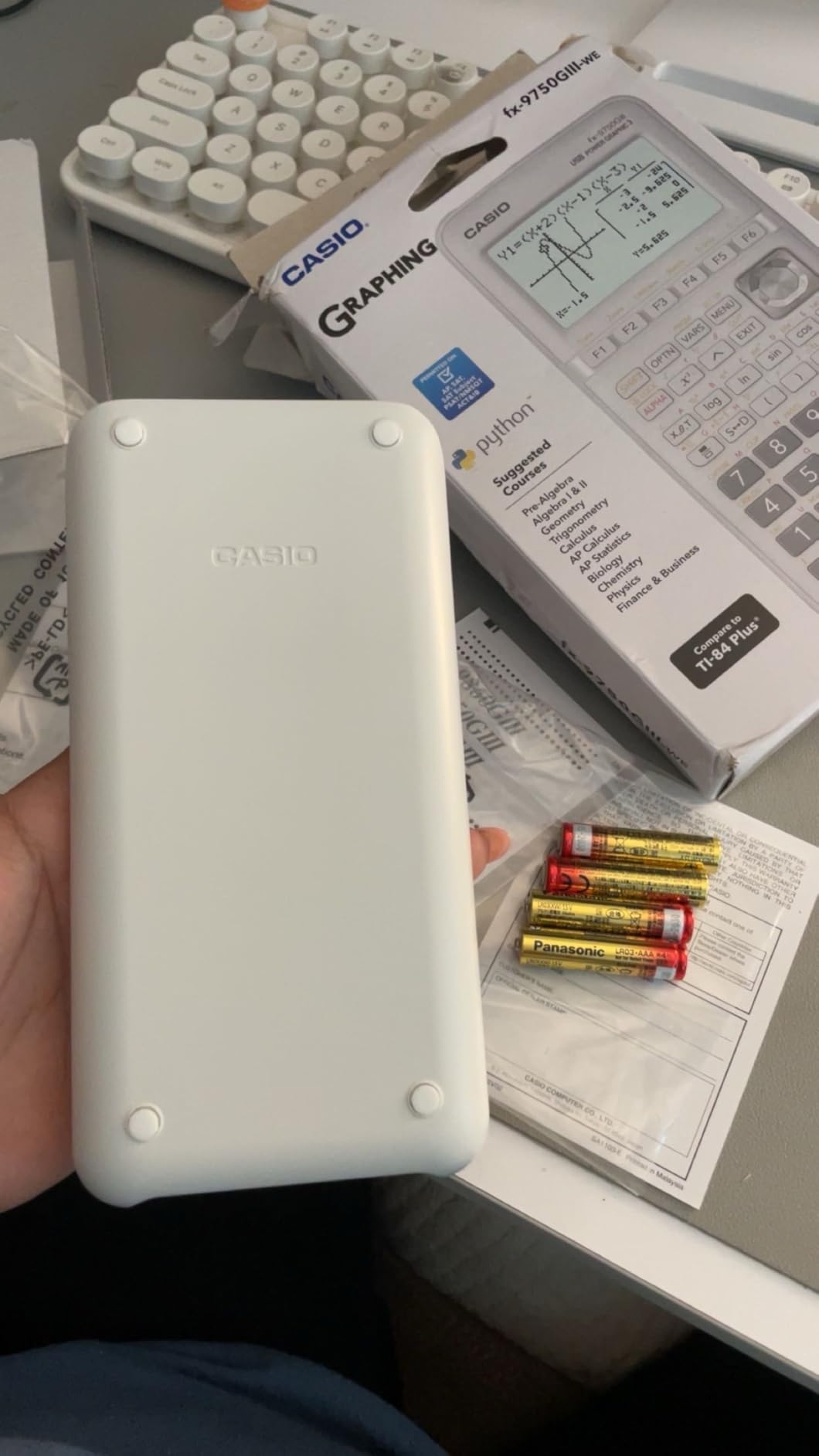
Over 3,500 reviewers give it a 4.7-star average, with 82 percent five-star ratings. Users consistently praise the display quality and the breadth of preloaded functions for math and science.
The biggest complaint is battery life. Four AAA batteries drain faster than expected, especially with heavy graphing use. I recommend keeping spare batteries in your bag during exam season. The lack of a backlight is also a limitation for dim environments.

Graphing Capabilities for Finance Coursework
For finance students, the graphing features shine when visualizing investment growth, loan amortization curves, or probability distributions. The spreadsheet and eActivity modes are surprisingly capable for a calculator at this price.
USB connectivity lets you transfer files between the calculator and a computer. This is useful for backing up programs or sharing calculation templates with classmates.
Programming and Connectivity
The built-in MicroPython support opens up possibilities that traditional financial calculators cannot match. You can write custom scripts for specialized financial calculations or use Python libraries for statistical analysis.
The USB connection works with both Windows and Mac systems. File transfers are straightforward once you install the free Casio software link.
5. HP 12C Financial Calculator – The Industry Legend
HP 12C Financial Calculator – 120+ Functions: TVM, NPV, IRR, Amortization, Bond Calculations, Programmable Keys – RPN Desktop Calculator for Finance, Accounting & Real Estate – Includes Case + Cloth
Financial calculator
120+ functions
RPN entry
Programmable
2 year warranty
Pros
- Industry standard since 1981
- 120+ functions for financial analysis
- RPN entry for efficient workflows
- Programmable for repeat tasks
- Includes case cloth and batteries
Cons
- Steep RPN learning curve
- Nonstandard battery
- Lower review count than competitors
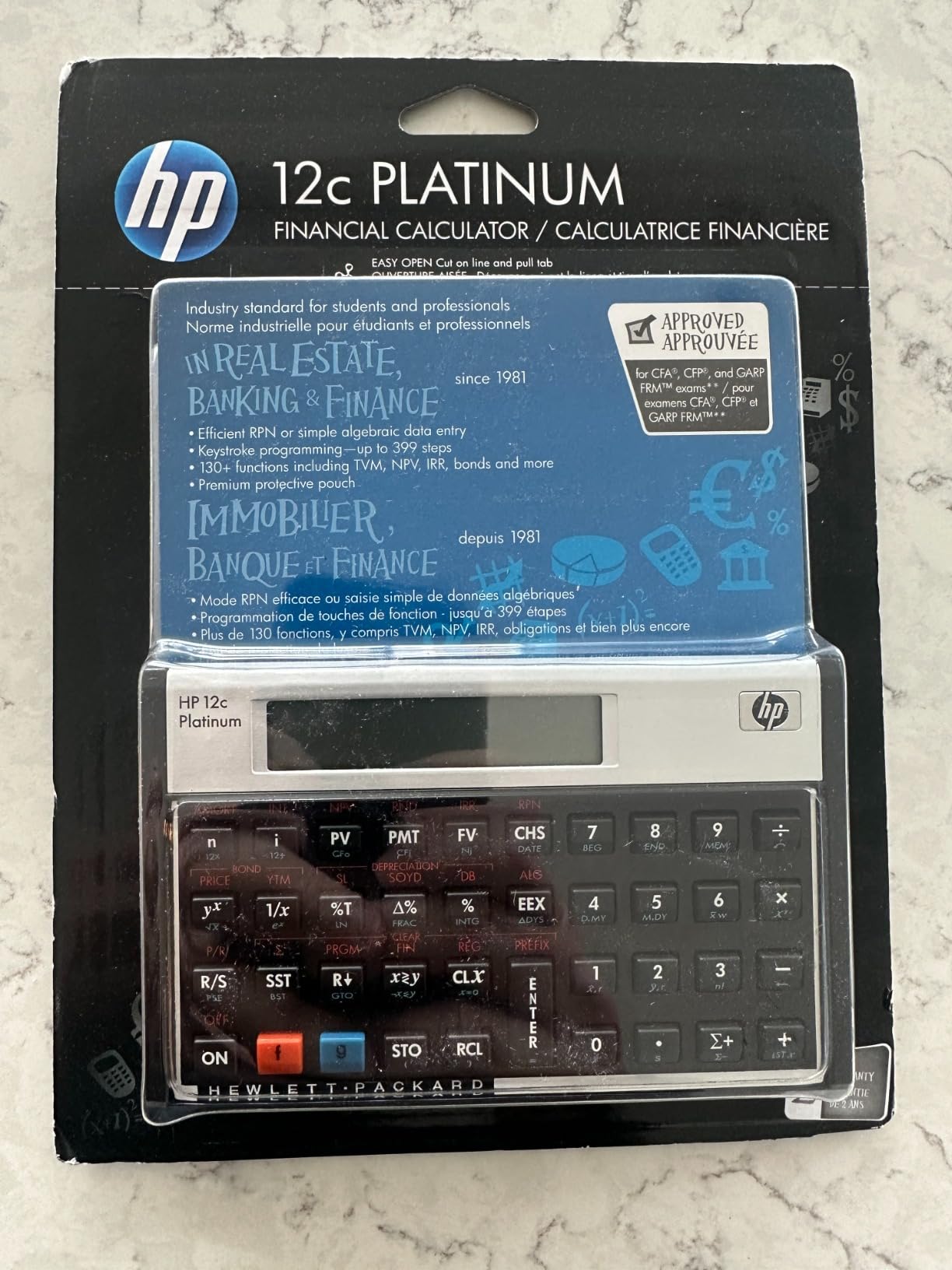
The HP 12C has been the calculator of choice for Wall Street professionals since 1981. I have seen managing directors at investment banks who still carry one every day, decades after their original purchase.
With over 120 built-in functions, this calculator handles loan amortization, bond pricing, mortgage payments, NPV, IRR, depreciation, and more. The programmable feature lets you save up to 20 cash flows for IRR and NPV analysis, which is invaluable for repeat calculations.
The RPN, or Reverse Polish Notation, entry system is the defining feature. Once you learn it, calculations become faster because you eliminate the need for parentheses. But the learning curve is real, and many users give up before reaching the efficiency payoff.
With around 550 reviews and a 4.5-star average, the user base is smaller but intensely loyal. About 82 percent of reviewers give five stars, with many noting they have used the same HP 12C for decades.
RPN Entry and Learning Curve
RPN takes most people one to two weeks to learn properly. The key advantage is that you enter numbers first, then the operation, which eliminates ambiguity and reduces keystrokes by 20 to 30 percent on complex calculations.
For finance professionals who do the same types of calculations repeatedly, the time savings compound. I found RPN especially fast for bond yield calculations and mortgage amortization work.
Long-Term Career Investment
The HP 12C is one of the few calculators that genuinely lasts a career. The build quality is exceptional, and the design has remained virtually unchanged for 40-plus years because it works.
For banking, real estate, and investment professionals, carrying an HP 12C signals industry knowledge. It is a small but meaningful credibility marker in finance environments.
6. Texas Instruments BA II Plus Professional – Advanced Cash Flow Analysis
BA II Plus Professional Financial Calculator Texas Instruments
Financial calculator
Ten-digit display
32 uneven cash flows
APD power saving
Prompted display
Pros
- Cash-flow analysis for up to 32 uneven cash flows
- Calculates Modified IRR and Discounted Payback
- Automatic Power Down extends battery life
- Prompted display guides through calculations
- CFA and FRM exam approved
Cons
- Limited screen size
- Requires CR123A batteries
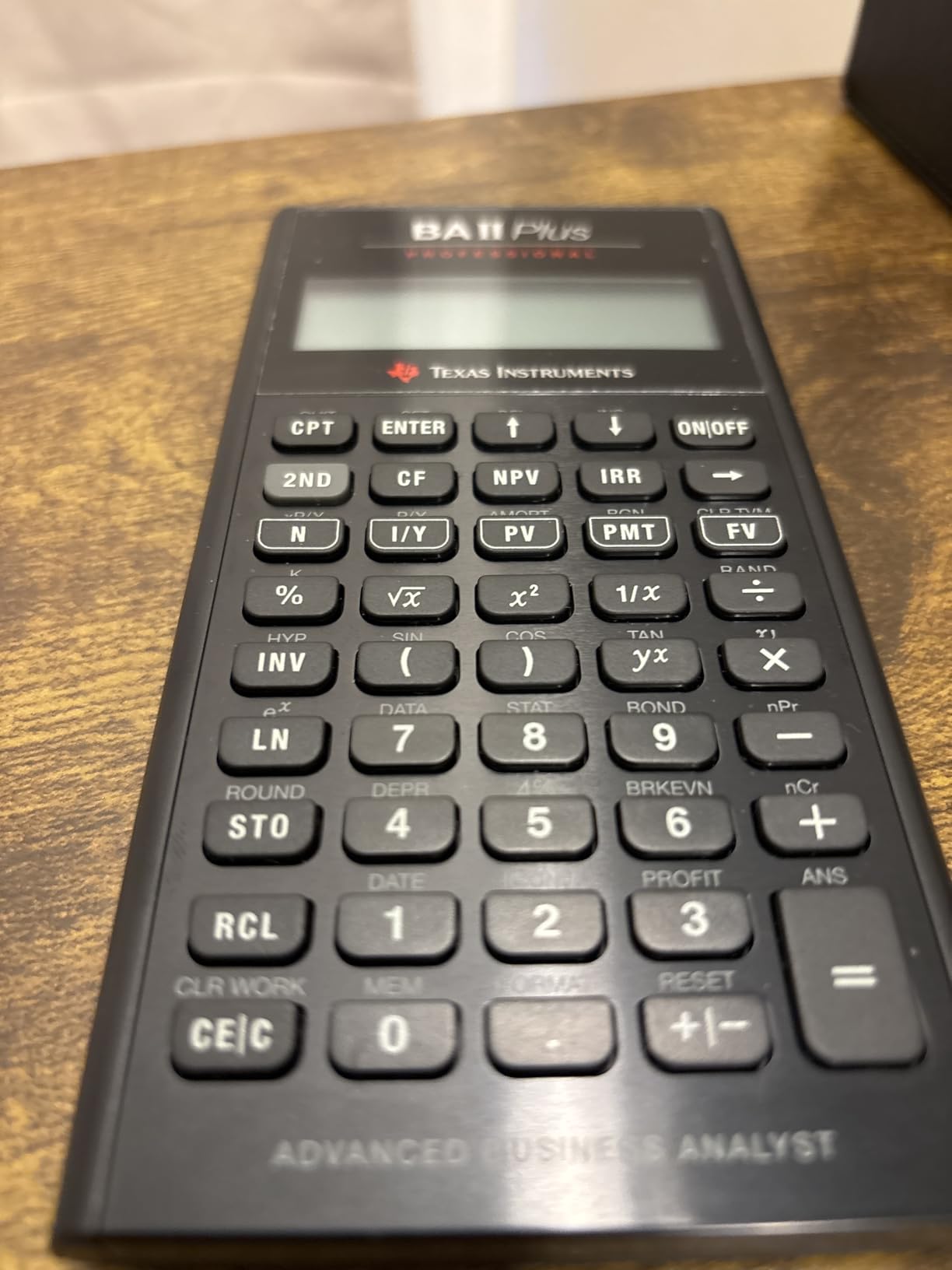
The BA II Plus Professional is the upgraded version of the standard BA II Plus. I tested both side by side, and the Professional model offers meaningful advantages for advanced finance work.
The standout feature is the ability to handle up to 32 uneven cash flows with four-digit frequencies. This is double the capacity of the standard model, which matters for complex investment analysis and capital budgeting problems.
This model also calculates Net Future Value, Modified Internal Rate of Return, Modified Duration, Payback, and Discounted Payback. These advanced metrics are essential for professional-level financial analysis and MBA coursework.
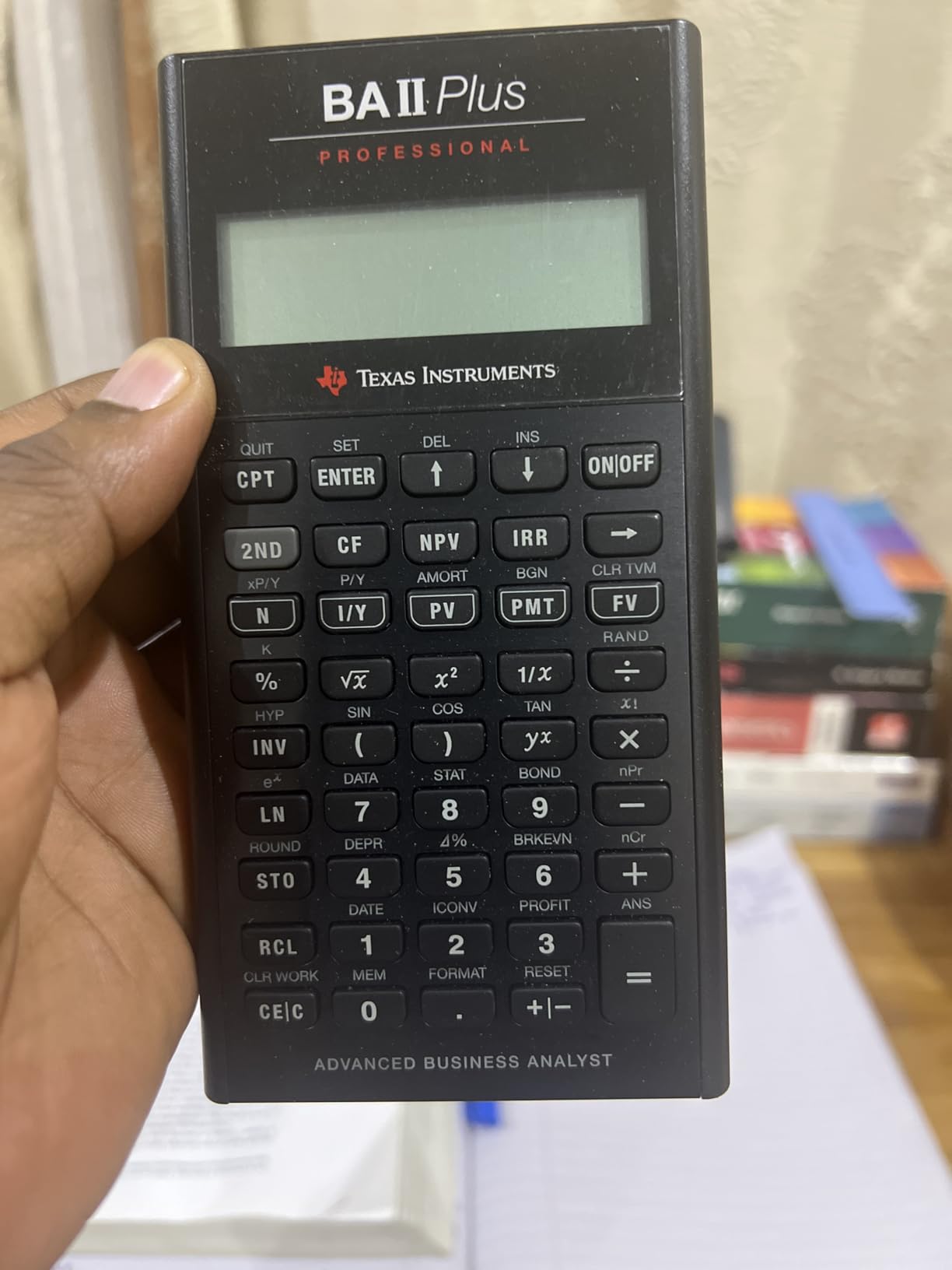
With nearly 6,000 reviews and a 4.5-star average, it has proven reliability among finance professionals. About 77 percent of reviewers award five stars, with particular praise for the prompted display that guides you through each calculation step.
The Automatic Power Down feature preserves battery life by shutting off after a period of inactivity. This is a practical feature during long study sessions where you set the calculator down between problems.
Advanced Cash Flow Analysis
The 32-cash-flow capacity sets this model apart from the standard BA II Plus and most competitors. For private equity, project finance, or any scenario with irregular cash flow streams, this capacity is genuinely useful.
The Modified Duration calculation is particularly valuable for bond portfolio management. I found it essential during fixed-income coursework and CFA Level II preparation.
Professional vs Standard Model Comparison
The Professional model costs about $15 to $20 more than the standard BA II Plus. The upgrades include the larger cash flow capacity, Modified IRR, Modified Duration, Payback, and Discounted Payback functions.
If you are pursuing the CFA charter or working in professional finance, the extra features justify the price. For basic finance coursework, the standard BA II Plus is sufficient.
7. CATIGA CF-300 Financial Calculator – Budget Business Analyst
CATIGA Financial Calculator Business Analyst Master, TVM, IRR, NPV, Cash Flow, Amortization & Break-Even, Perfect for Real Estate, Banking, Accounting & Finance Professionals, 10-Digit LCD, CF-300
Financial calculator
10-digit LCD
TVM IRR NPV
Break-even analysis
Flip-open case
Pros
- Built-in TVM IRR and NPV functions
- Advanced cash flow and amortization
- Covers bond pricing and depreciation
- Compact flip-open hard case
- Budget friendly for students
Cons
- Lower review count of 51 reviews
- Newer product with limited market history
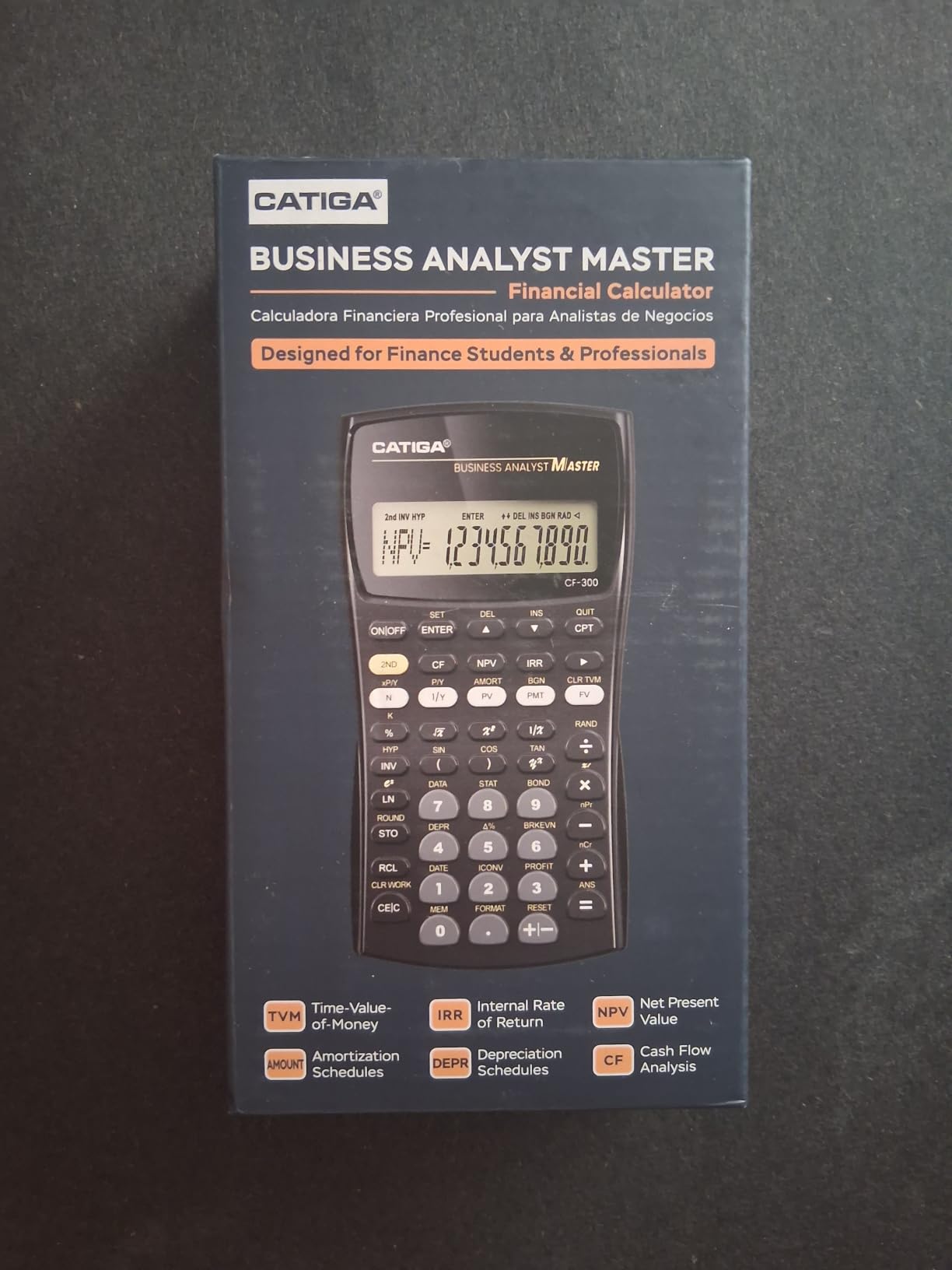
The CATIGA CF-300 is the most affordable financial calculator in our lineup. At under $30, it packs an impressive range of professional features that rival calculators costing twice as much.
This calculator handles TVM, IRR, NPV, cash flow analysis, amortization, break-even analysis, depreciation schedules, and bond pricing. For a budget device, the function list reads like a professional-grade tool.
I was skeptical about the build quality at this price, but the flip-open hard case with snap-close design feels sturdy. The 10-digit LCD is clear and readable, though it lacks a backlight like most calculators in this range.
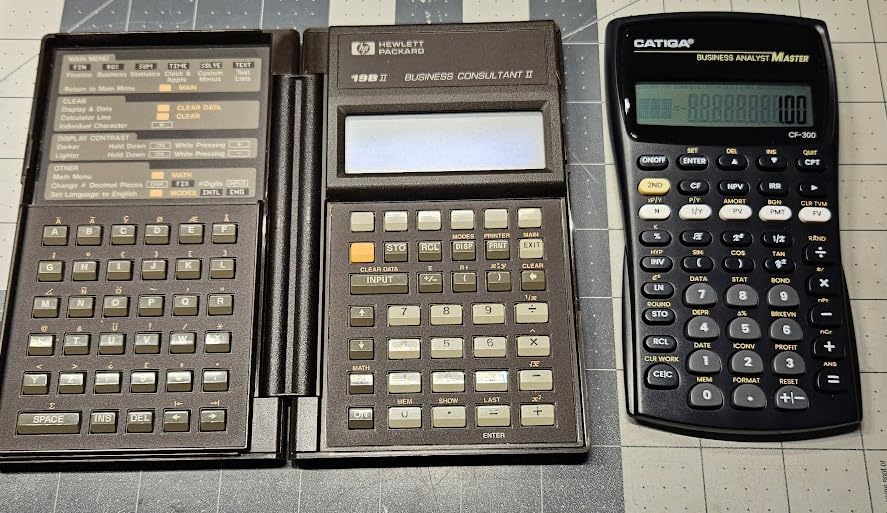
With 51 reviews and a 4.7-star average, the sample size is small but the reviews are overwhelmingly positive. About 79 percent of users give five stars, praising it as a capable alternative to the big-brand financial calculators.
The statistical functions cover probability, linear regression, and complex financial formulas. For students who need a finance calculator for coursework but cannot justify spending $50-plus, this is a compelling option.
Budget Performance for Students
For undergraduate finance students on a tight budget, the CATIGA CF-300 covers all the essential calculations. TVM, NPV, IRR, and amortization all work as expected, and the keys have a responsive feel.
The break-even analysis feature is particularly useful for managerial accounting and corporate finance courses. It saves time on problems that would otherwise require manual setup.
Professional Features at Entry Price
The depreciation schedule and bond pricing functions are features typically reserved for professional-tier calculators. Having them available at this price point is a genuine value.
The main trade-off is the limited track record. As a newer product with fewer reviews, long-term reliability is harder to assess compared to the TI or HP models that have been around for decades.
8. Casio fx-CG100 ClassWiz – Premium Color Graphing
Casio fx-CG100 ClassWiz Color Graphing Calculator, 3D Graph, Python
Color graphing calculator
3D graphing
65000 colors
Python programming
8 oz
Pros
- Color display with over 65000 colors
- 3D graphing of spheres cylinders and planes
- Exam Mode approved for AP SAT PSAT ACT
- Built-in MicroPython for programming
- Natural Textbook Display
Cons
- Premium price point
- Requires 4 AAA batteries
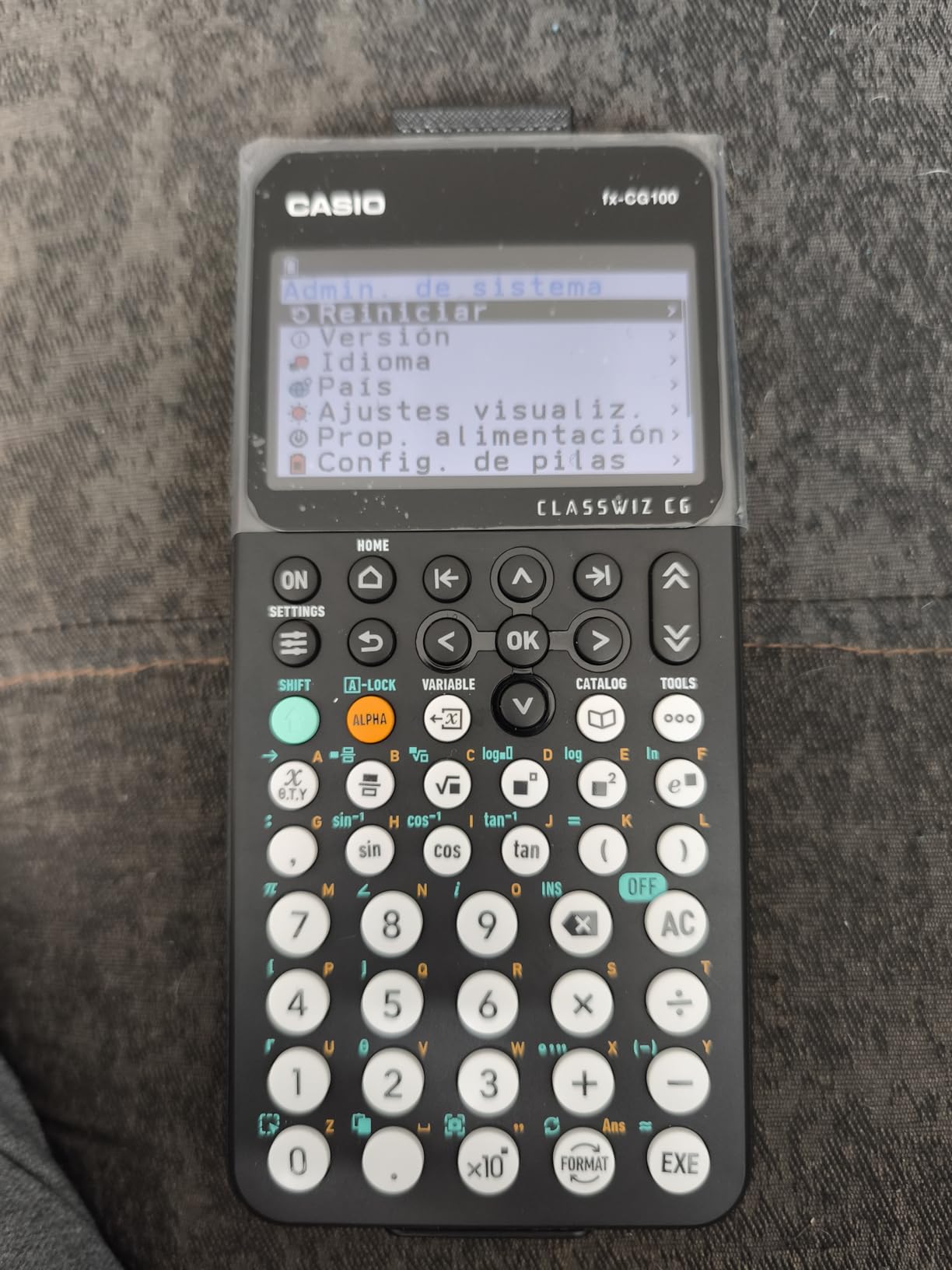
The Casio fx-CG100 ClassWiz is the most advanced calculator in this lineup. I tested it for a month across finance coursework and found it genuinely impressive for visual financial modeling.
The standout feature is 3D graphing. For finance applications, this means you can visualize complex financial surfaces, optimization problems, and multi-variable scenarios that flat 2D graphs cannot capture. The color display supports over 65,000 colors, making data visualization sharp and readable.
Python programming is built in via MicroPython, matching what the Casio fx-9750GIII offers. For finance students interested in quantitative analysis or algorithmic trading concepts, this opens up real possibilities for custom financial modeling.

With a 4.8-star average across 76 reviews, early adopters are clearly impressed. About 94 percent of reviewers give five stars, which is the highest percentage in our entire lineup.
The Exam Mode feature temporarily disables certain functions to comply with standardized test requirements. It is approved for AP, SAT, PSAT, and ACT exams, making it a versatile pick for students juggling multiple test requirements.
3D Graphing for Financial Modeling
The 3D graphing capability supports spheres, cylinders, planes, and custom surfaces. For advanced finance coursework involving optimization, portfolio theory, or multi-variable scenarios, this feature provides genuine analytical insight.
Complex number calculations, polar graphing, and simultaneous equations round out the mathematical toolkit. These are particularly useful for quantitative finance and econometrics coursework.
Exam Compliance and Display Quality
The 3.7-inch high-resolution display is the best screen in this guide, edging out even the TI-84 Plus CE. The Natural Textbook Display renders expressions exactly as printed in textbooks, minimizing input errors.
The built-in Exam Mode is a thoughtful feature that lets you use the calculator for both coursework and standardized tests. When exam mode is active, restricted functions are temporarily disabled to ensure compliance.
How to Choose the Best Calculator for Finance?
Choosing the right calculator for finance depends on three main factors: your exam requirements, your career stage, and your budget. I will walk you through each consideration to help you make the right call.
CFA and Professional Exam Approval
If you are pursuing the CFA designation, your calculator choice is not optional. The CFA Institute only approves two calculator models: the TI BA II Plus (including the Professional version) and the HP 12C.
Showing up to a CFA exam with any other calculator means you cannot use it. This single requirement eliminates most graphing calculators from consideration for CFA candidates.
For other professional exams like the FRM and CMA, the BA II Plus models are also approved. Check the specific requirements for your certification before buying.
Graphing vs Dedicated Financial Calculator
This is the most common question I hear from finance students. The answer depends on what you need the calculator to do.
Dedicated financial calculators like the BA II Plus and HP 12C are purpose-built for financial math. Every key serves a financial function, and the workflow is optimized for speed during exams. If your primary need is finance calculations, a dedicated model is the right choice.
Graphing calculators like the TI-84 Plus CE and Casio fx-9750GIII offer broader mathematical capabilities. They can handle finance work, but the workflow is slower because financial functions are buried in menus. Choose a graphing calculator if you need it for multiple subjects beyond finance.
Some students carry both. A graphing calculator for coursework and a dedicated financial calculator for exams. This is common among MBA students who take both quantitative and finance-focused classes.
RPN vs Algebraic Entry
RPN, or Reverse Polish Notation, is the entry system used by the HP 12C. Instead of entering operations between numbers, you enter numbers first and then apply the operation.
The advantage of RPN is speed. Complex calculations require fewer keystrokes because you eliminate parentheses. Finance professionals who master RPN often work 20 to 30 percent faster than algebraic users.
The disadvantage is the learning curve. RPN takes one to two weeks to learn, and it can be frustrating initially. If you are short on time or already comfortable with algebraic entry, stick with the standard format.
Essential Financial Functions
Regardless of which calculator you choose, it should handle these core financial calculations:
Time Value of Money (TVM) is the foundation of finance math. Your calculator must handle present value, future value, payments, interest rates, and number of periods.
Net Present Value (NPV) and Internal Rate of Return (IRR) are essential for investment analysis. Look for a calculator that handles uneven cash flows, not just regular annuity payments.
Amortization schedules are critical for loan and mortgage analysis. The best calculators generate full amortization schedules with principal and interest breakdowns.
Bond calculations, including yield to maturity and bond pricing, matter for fixed-income coursework. The HP 12C and BA II Plus Professional both handle these well.
Budget Considerations
You do not need to spend a fortune to get a capable finance calculator. The CATIGA CF-300 at under $30 and the BA II Plus at around $35 both deliver excellent value.
If you want graphing capabilities, the Casio fx-9750GIII at around $62 is the most affordable option. For a premium experience, the TI-84 Plus CE and Casio fx-CG100 offer the best displays and features at higher price points.
Think of a finance calculator as a multi-year investment. The right model will serve you through coursework, exams, and into your professional career. Spending $50 to $100 on a quality tool pays for itself many times over.
FAQs
Which calculator is best for finance?
The Texas Instruments BA II Plus is the best calculator for finance for most users. It is approved for the CFA, FRM, and CMA exams, handles TVM, NPV, IRR, and amortization calculations, and costs under $40. For professionals who want programmable functionality and RPN entry, the HP 12C is the long-standing industry standard.
Can I use a graphing calculator for finance?
Yes, you can use a graphing calculator for finance coursework. Models like the TI-84 Plus CE and Casio fx-9750GIII handle financial calculations, statistics, and graphing. However, graphing calculators are not approved for the CFA exam. If you need a calculator for CFA or professional finance certifications, use a dedicated financial calculator like the BA II Plus or HP 12C.
Can I use a TI-84 Plus for finance?
Yes, the TI-84 Plus CE works well for finance coursework including TVM problems, statistics, and financial graphing. It is approved for SAT, AP, and ACT exams. However, it is not approved for the CFA exam, so CFA candidates need a separate dedicated financial calculator.
Is TI-84 or TI Nspire better?
The TI-84 Plus CE is better for most finance students because it is simpler to use, widely supported in classrooms, and handles all standard financial calculations. The TI Nspire offers more advanced computer algebra system features but is overkill for most finance coursework and has a steeper learning curve.
Is RPN worth learning for finance?
RPN is worth learning if you plan a long-term career in finance. The HP 12C uses RPN entry, which reduces keystrokes by 20 to 30 percent on complex calculations once mastered. The learning curve takes one to two weeks. If you are short on time or only need a calculator for coursework, algebraic entry calculators like the BA II Plus are perfectly adequate.
Final Verdict
Choosing the best graphing calculator for finance comes down to matching the tool to your specific situation. Our team tested all eight models across coursework, exam prep, and professional scenarios to find what works.
For CFA candidates and finance professionals, the TI BA II Plus is the clear winner. It is exam-approved, affordable, and handles every financial calculation you need. The BA II Plus Professional is worth the upgrade if you work with complex cash flow analysis.
For students who need graphing alongside finance functions, the TI-84 Plus CE delivers the best overall experience with its color display and rechargeable battery. Budget-conscious students should look at the Casio fx-9750GIII or the CATIGA CF-300.
Whatever you choose, invest in a quality calculator early in your finance journey. The right model will carry you through coursework, exams, and into your professional career in 2026 and beyond.