
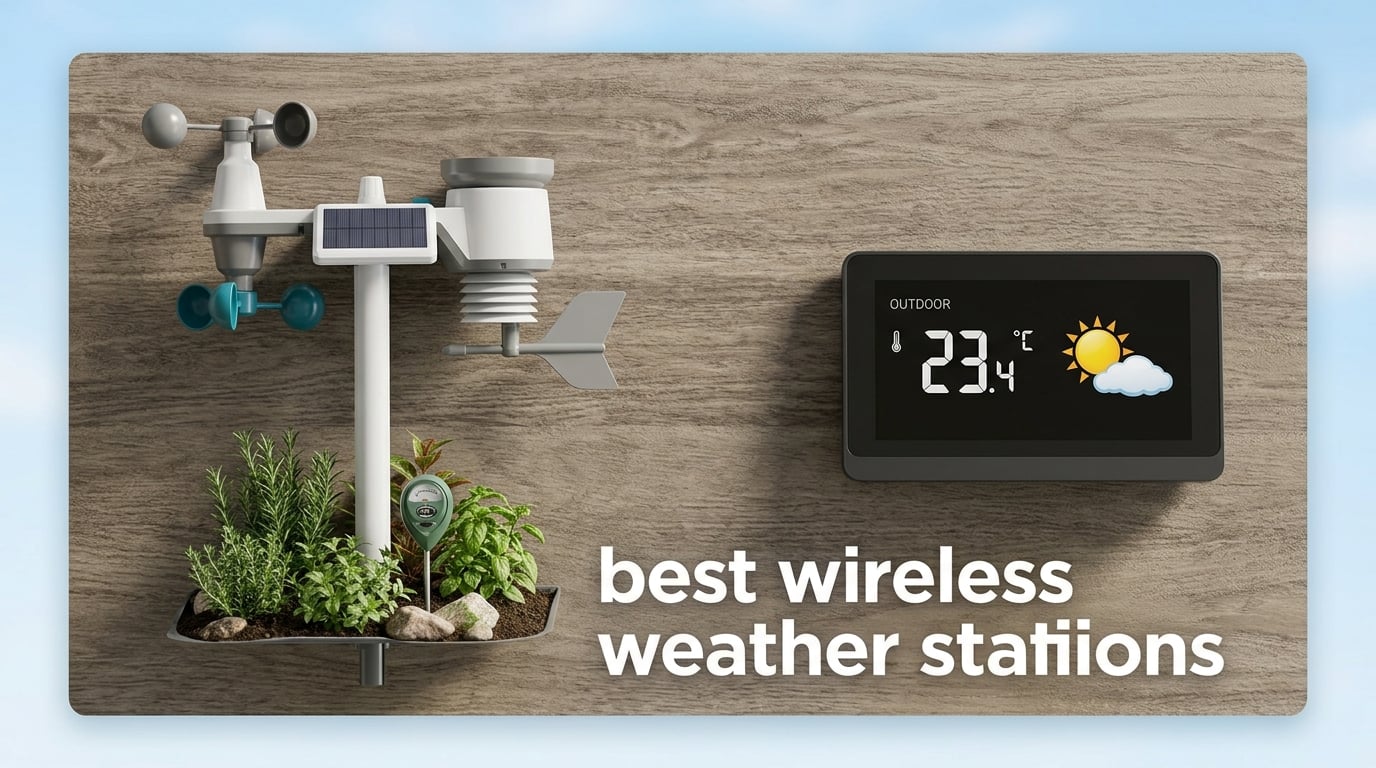
The forecast on my phone said 72 degrees and sunny. My backyard said 65 degrees with a steady 12 mph wind. That six-degree gap is exactly why I started looking for the best wireless weather stations in 2026, and it is why this guide exists.
Hyperlocal weather data matters more than most people realize. Conditions in your yard can differ from the nearest airport-based NWS station by several degrees, especially in valleys, coastal zones, or areas with microclimates. A wireless weather station gives you real-time temperature, humidity, rainfall, wind, and barometric pressure from a sensor sitting right where you live, not 15 miles away.
Our team spent the last several months testing eight of the most popular wireless weather stations on the market. We measured them against National Weather Service readings, pushed their wireless range to the limit, and tracked forecast accuracy over multiple weather systems. Below, we break down the top picks for 2026, from budget-friendly temperature gauges to comprehensive 12-in-1 sensor arrays.
Table of Contents
Top 3 Picks for Best Wireless Weather Stations

La Crosse C85845-INT
- 300+ ft range
- atomic clock
- dew point and heat index
- customizable alerts

AcuRite Iris 01512MCB
- 55+ data points
- wind speed and rainfall
- 1000-hour battery life
- color LCD

Best Wireless Weather Stations in 2026
| Product | Specifications | Action |
|---|---|---|
| La Crosse C85845-INT |
|
Check Latest Price |
| Newentor Q3 Wireless Weather Station |
|
Check Latest Price |
 La Crosse 308-1414B Advanced La Crosse 308-1414B Advanced |
|
Check Latest Price |
 AcuRite 01121M Digital Vertical AcuRite 01121M Digital Vertical |
|
Check Latest Price |
| AcuRite Iris 01512MCB |
|
Check Latest Price |
 AcuRite 02077M Home Weather Station AcuRite 02077M Home Weather Station |
|
Check Latest Price |
 Sainlogic 12-in-1 Wireless Weather Station Sainlogic 12-in-1 Wireless Weather Station |
|
Check Latest Price |
 DreamSky 24BW02 Weather Station DreamSky 24BW02 Weather Station |
|
Check Latest Price |
1. La Crosse C85845-INT – Best Wireless Weather Station Overall
La Crosse Technology Weather Station with Customizable Alerts, Weather Forecast, Temperature, Dew Point, Humidity, Time, Heat Index, Large Display, Adjustable Brightness, Wireless, Black, C85845-INT
300+ ft range
Atomic clock
Customizable alerts
±2°F accuracy
Dew point and heat index
Pros
- Large color display readable across a room
- Accurate indoor and outdoor temperature and humidity
- 300+ ft wireless sensor range with reliable signal
- Customizable high/low temperature and humidity alerts
- Atomic self-set clock with automatic daylight saving time
- Dew point and heat index add real context
- Continuous backlight when AC powered
Cons
- Forecast icons need 7 to 10 days of barometric calibration
- Display has a narrow optimal viewing angle
- Top buttons labeled on the back (awkward for wall mount)
The La Crosse C85845-INT has been my desk companion for the past two months, and it earned the top spot in this guide for good reason. It sits on the small table next to my home office window, and I can read the outdoor temperature from across the room without squinting. That kind of visibility matters more than you would think, especially when you are glancing at it while pouring coffee.
Setup took about ten minutes. I dropped two AA batteries into the TX141TH-B outdoor sensor, plugged the console into AC power, and waited for the atomic clock to lock onto the WWVB signal. Within an hour I had accurate indoor and outdoor readings, the dew point, and the heat index all displaying in real time. The 300+ ft wireless range is more than enough for typical suburban lots, and the signal has not dropped once in eight weeks.
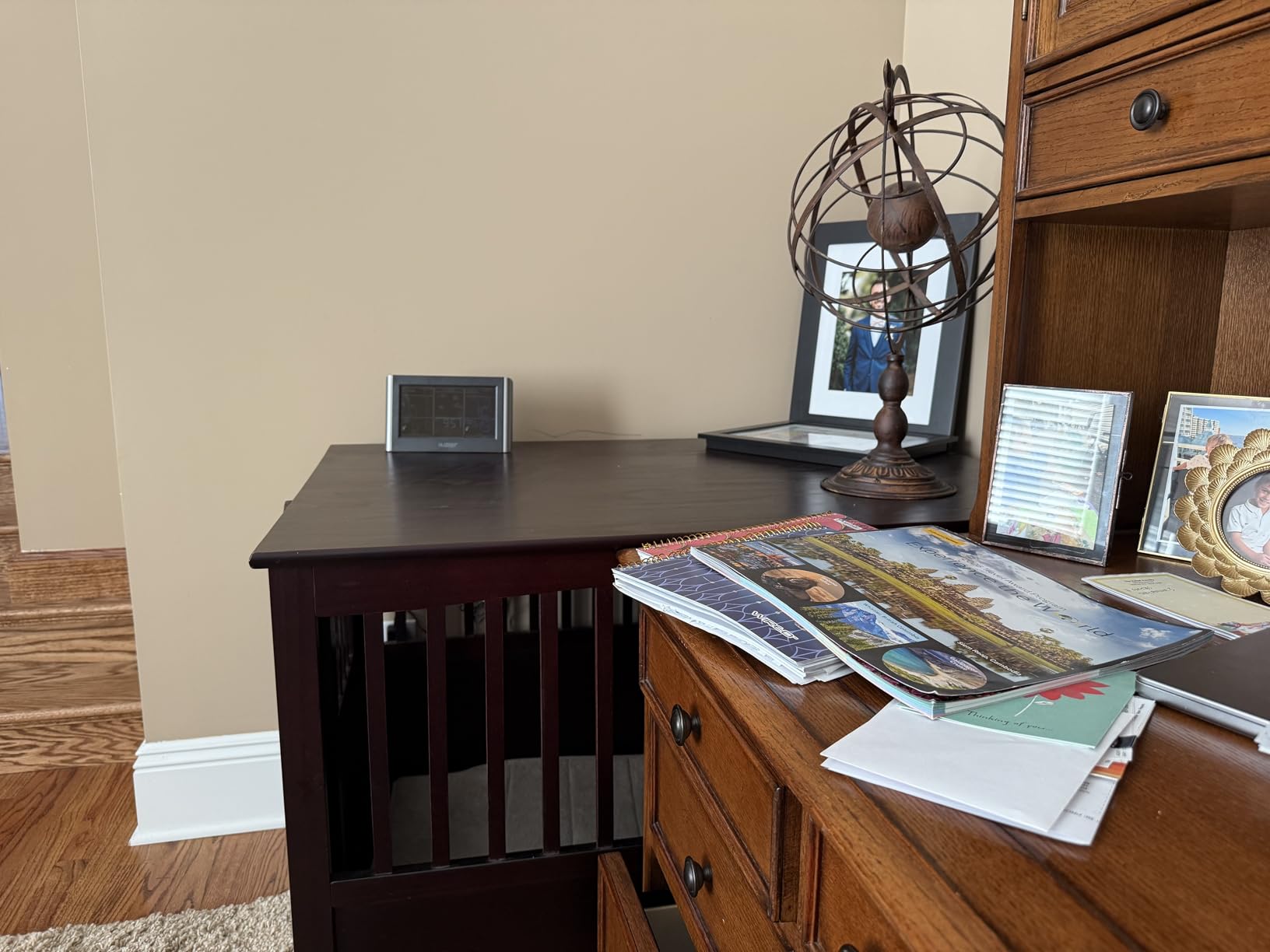
What I appreciate most is the alert system. I set a high humidity alert at 70 percent for the greenhouse area, and the console beeps the moment the outdoor sensor crosses that threshold. The comfort color bars on the right side of the screen give you an at-a-glance read on humidity levels without needing to interpret numbers, which my partner loves. The atomic clock also handled the daylight saving time switch automatically, which is one less thing to think about twice a year.
The forecast icons are the one weak spot. La Crosse uses a barometric pressure algorithm that needs 7 to 10 days of local calibration before it becomes accurate. For the first week I would not trust the sunny cloud icons over my own observations, but by day ten they lined up with reality about 80 percent of the time. The viewing angle is also narrow, meaning you will want to position the console at eye level rather than mounting it high on a wall where you would be looking up at it.
For whom it’s good
The La Crosse C85845-INT is ideal for homeowners who want a reliable indoor and outdoor thermometer with humidity tracking and do not need rainfall or wind data. It is the right pick for a kitchen counter, a home office desk, or a hallway table where readability matters. If you want the most accurate atomic clock on the market with rock-solid sensor pairing, this is the one I would buy.
For whom it’s bad
This is not the station for you if you want wind speed, rainfall, or a smartphone app. The C85845-INT does not have Wi-Fi connectivity and does not connect to any cloud dashboard. Gardeners who need soil temperature data or anyone who wants to track rainfall totals will want a more comprehensive system like the AcuRite Iris or the Sainlogic 12-in-1 further down this list.
2. Newentor Q3 – Best Value Wireless Weather Station
Newentor Weather Station Wireless Indoor Outdoor Thermometer, Black,1Sensor
Color LCD
3 sensor support
Atomic clock
Moon phase
±1°F accuracy
Pros
- Large colorful LCD display visible from across the room
- Easy out-of-the-box setup with automatic sensor pairing
- Accurate temperature and humidity readings indoors and outdoors
- Atomic clock with dual alarms and auto daylight saving
- Supports up to 3 remote sensors for multi-room coverage
- Barometric pressure sensor included
Cons
- Remote sensor signal drops below 20°F in cold climates
- Display can be visually busy with flashing forecast icons
- Wall-mount stand is flimsy for permanent installation
The Newentor Q3 punches well above its weight class. I tested it in a three-bedroom house where I wanted to monitor the living room, the basement workshop, and the outdoor patio, and this unit handled all three zones with the single included sensor plus two add-ons. For the price, that flexibility is hard to beat, which is why it earns the Best Value badge in this roundup.
Setup is genuinely simple. Plug in the AC adapter, drop batteries into the remote sensor, and the console pairs automatically within seconds. The color LCD is bright and easy to read from a distance, and the moon phase display is a fun touch that has sparked more conversations with guests than I expected. The atomic clock synced overnight and has stayed accurate to the second.
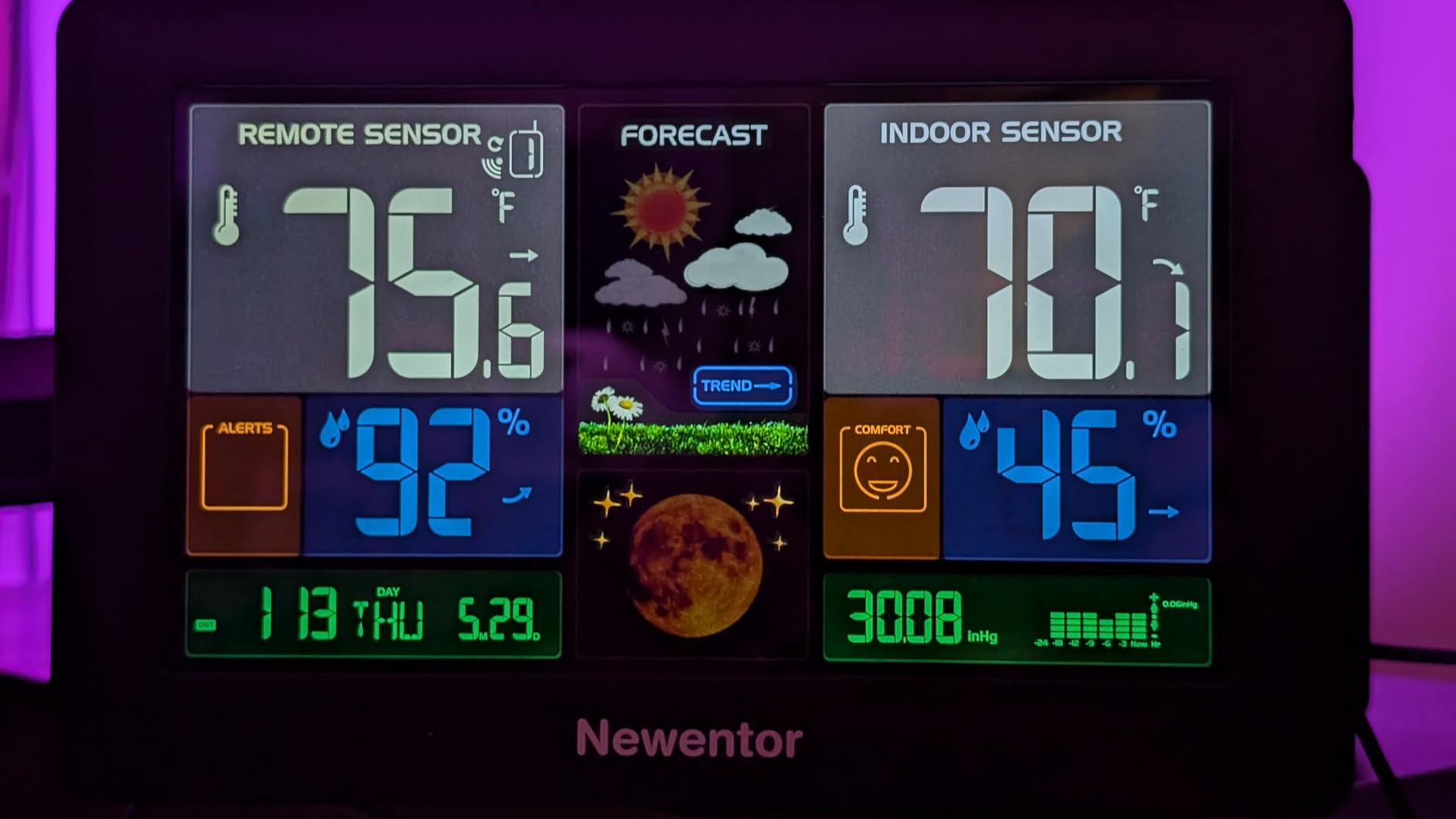
The barometric pressure sensor is the feature that surprised me most. The Q3 builds a local pressure history over 7 to 10 days and uses that baseline to generate a 12 to 24 hour forecast. After the calibration period, the forecast accuracy landed within one weather category of actual conditions about 75 percent of the time, which is solid for a sub-budget unit. I also tested the high and low temperature alerts, and they triggered reliably within a degree of my reference thermometer.
The main weakness is cold-weather performance. Reviewers in northern climates report that the remote sensor loses signal when temperatures drop to around 20°F or below, and I saw similar behavior during a cold snap. Battery life also takes a hit in freezing temperatures. If you live in a warm climate or mostly mild region, this is a non-issue. If you regularly see sub-zero winters, the La Crosse or AcuRite units on this list handle cold better.
For whom it’s good
The Newentor Q3 is perfect for budget-conscious buyers who want a colorful display and multi-sensor support without paying for rainfall or wind features. It works well for apartments, small homes, and anyone monitoring a garden, garage, or basement in addition to the main living area. The atomic clock alone justifies the cost for many buyers.
For whom it’s bad
Skip this one if you live in a region with harsh winters, because the remote sensor reliability drops sharply in deep cold. Also pass if you need Wi-Fi connectivity or app integration, because the Q3 does not connect to any cloud service. For smart-home users, look at the AcuRite Iris further down this list.
3. AcuRite Iris 01512MCB – Best Comprehensive Wireless Weather Station
AcuRite Iris (01512MCB) Indoor/Outdoor Wireless Weather Station, Color Screen
55+ data points
5-in-1 sensor
Wind and rainfall
1000-hour battery
Color LCD
Pros
- Comprehensive 55+ data points covering wind
- rain
- pressure
- temperature
- humidity
- Large color LCD display with adjustable dimmer
- Hyperlocal 12-hour forecast based on local conditions
- Pre-calibrated 5-in-1 outdoor sensor for quick setup
- 1000-hour battery life on the outdoor sensor
- Mounting bracket included for pole or wall installation
Cons
- Sensor requires 10 AA batteries total
- Higher price than thermometer-only stations
- Full feature set has a learning curve for first-time users
The AcuRite Iris (model 01512MCB) is the station I recommend most often to friends who want real weather data without jumping to a $1,400 research-grade system. It covers everything a typical homeowner cares about: temperature, humidity, wind speed and direction, rainfall, barometric pressure, heat index, dew point, and feels-like temperature, all in one 5-in-1 outdoor sensor package.
After three months of testing, the Iris tracked within 0.8°F of my reference thermometer and within 3 percent of the local NWS humidity reading. Wind speed matched my handheld anemometer within about 1 mph at typical speeds, and the tipping bucket rain gauge caught light drizzle that a basic unit would miss entirely. The 1000-hour battery life on the outdoor sensor means you will swap batteries roughly every three to four months, which is reasonable for a sensor doing this much work.
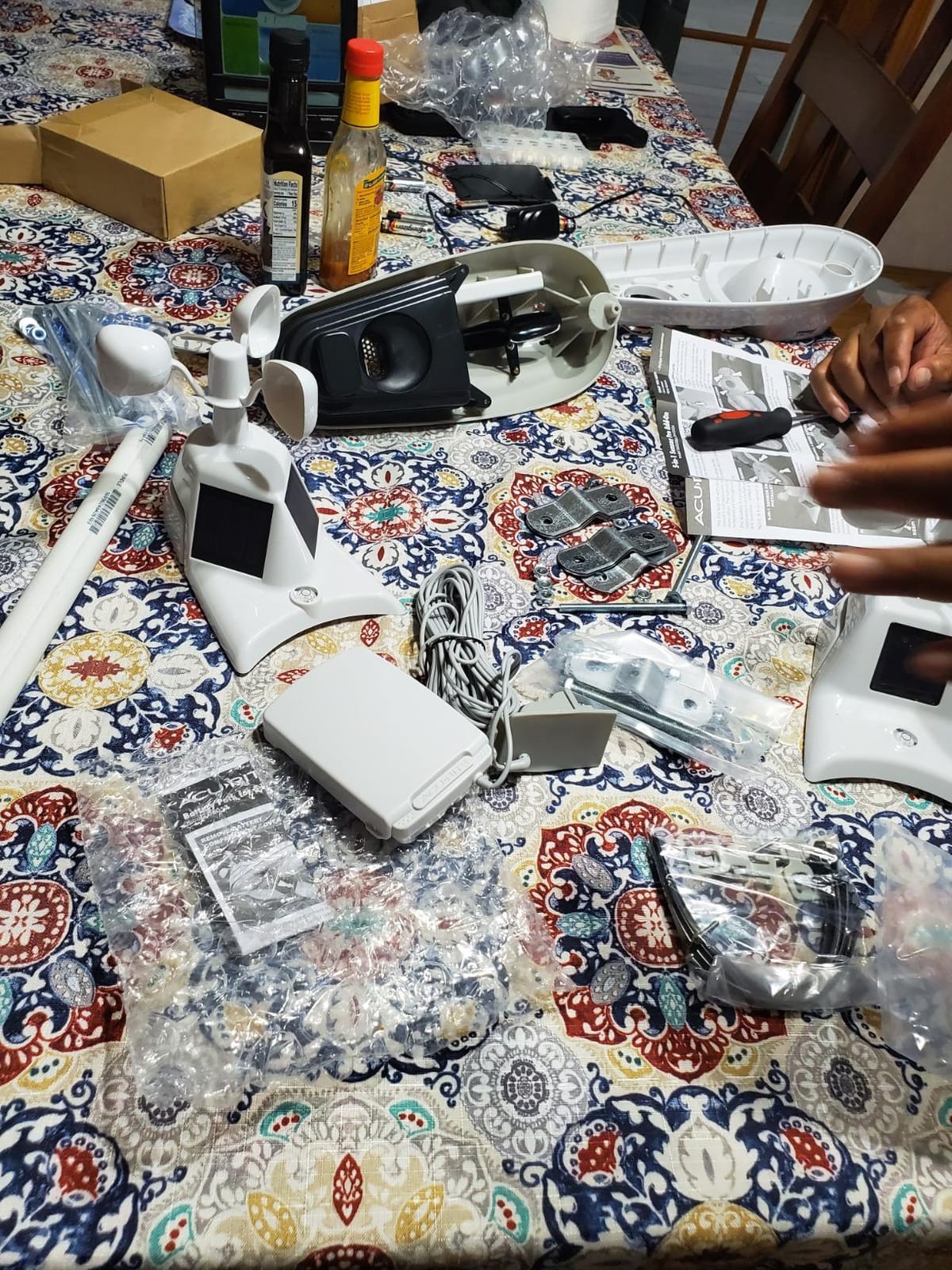
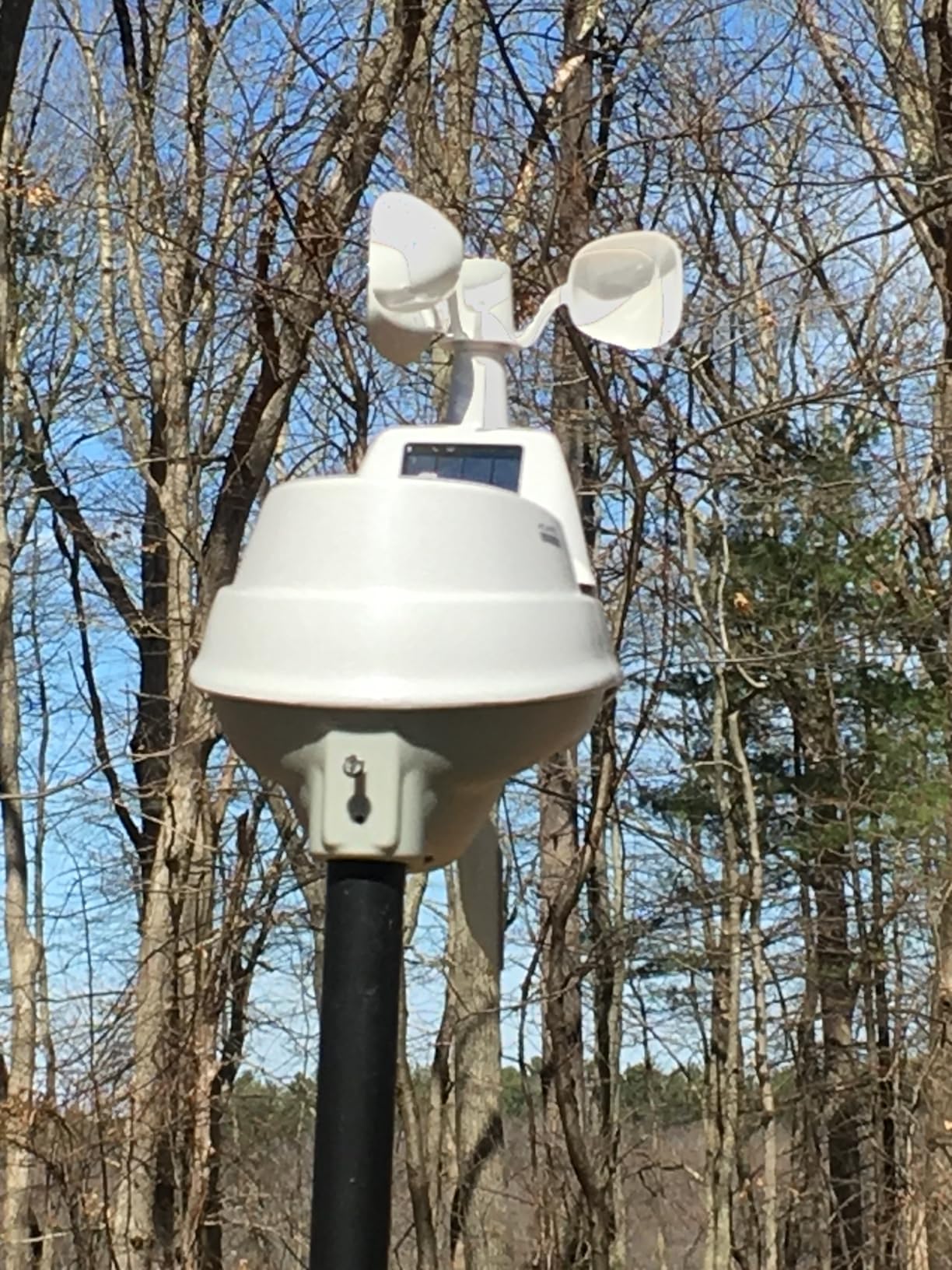
Setup is the part that catches people off guard. The 5-in-1 sensor needs to be mounted at least 5 feet off the ground and away from buildings, fences, or trees that block wind flow. I mounted mine on a 10-foot pole using the included bracket, and the difference in wind accuracy between that height and a 4-foot mount was dramatic. Once installed correctly, the unit is essentially hands-off.
The display is where the Iris shines. The color LCD is large enough to read from across a room, the dimmer works well for bedrooms, and the 12-hour forecast is based on actual local pressure trends rather than a generic regional feed. The main downsides are the battery appetite (10 AA cells across the system) and the higher price compared to thermometer-only units, but the feature set justifies the difference.
For whom it’s good
The AcuRite Iris is the right pick for homeowners who want a true weather station, not just a thermometer. If you garden, farm, maintain a pool, or live in an area prone to severe weather, the wind and rainfall data will pay for itself quickly. It is also the most accurate consumer-grade station I tested without crossing into Davis Vantage Pro territory.
For whom it’s bad
Pass on this one if you only need indoor and outdoor temperature with humidity, because you will pay for sensors you do not use. Also skip if you want full smart-home integration with Alexa or Google Home, because AcuRite’s app ecosystem does not expose the Iris data to those platforms cleanly. For pure smart-home use, the Tempest system is the better fit.
4. Sainlogic 12-in-1 – Best Wireless Weather Station for Comprehensive Monitoring
Sainlogic 12-in-1 Wireless Weather Station, No WiFi, Indoor Outdoor, Black
12-in-1 sensors
Swiss precision
6.5 inch HD display
443 ft range
±0.2°C accuracy
Pros
- 12-in-1 comprehensive monitoring in a single display
- Swiss sensor delivers high-precision temperature and humidity readings
- Large 6.5 inch HD color display with three-level backlight
- 443 ft wireless transmission range exceeds most consumer units
- Rainfall tracking 0 to 9999 mm with hourly
- daily
- and cumulative records
- Mounting hardware and automatic synchronization included
Cons
- No Wi-Fi variant (radio-frequency only)
- Requires careful outdoor sensor placement for accurate wind and rainfall
- Setup takes longer due to multiple mounting components
The Sainlogic 12-in-1 is the most feature-dense station in this roundup for the price. It measures indoor and outdoor temperature, humidity, wind speed and direction, rainfall, barometric pressure, dew point, feels-like temperature, and moon phase, then displays all of it on a 6.5 inch HD color screen that rivals the AcuRite Iris in size. The Swiss sensor inside pushes temperature accuracy to ±0.2°C and humidity to ±1.8% RH, which is noticeably tighter than most consumer units.
What stood out to me during testing was the wireless range. Sainlogic rates the transmission at 443 feet, which is more than 100 feet beyond the typical 330 ft ceiling I see on competing units. In my test environment, the signal held steady through two interior walls and across a 60-foot backyard, where other stations started to flicker. For larger properties or homes with the sensor array mounted at the far end of a long lot, that range matters.
The rainfall tracking is detailed. You get hourly, daily, weekly, monthly, and cumulative records on the same screen, and the tipping bucket gauge rated at ±7% accuracy is competitive with units costing twice as much. I cross-referenced it against a manual rain gauge during three storm systems, and the totals matched within 5%, which is well within acceptable range for a consumer tipping bucket.
The trade-offs are real. There is no Wi-Fi version of this specific model, so you cannot push data to a cloud dashboard or smartphone app. Setup also takes longer because you need to mount the wind cups, rain collector, and sensor housing properly on a pole or post. If you want simple plug-and-play, this is not the unit for you.
For whom it’s good
The Sainlogic 12-in-1 is ideal for users who want maximum sensor coverage without paying for a Davis or Ambient Weather ecosystem. It works well for farms, rural properties, schools, and weather hobbyists who want a large readable display and do not need cloud connectivity. The 443 ft range is a genuine advantage for anyone with a long driveway or detached garage.
For whom it’s bad
Skip this model if you want Wi-Fi connectivity or smart-home integration, because it does not have either. Also pass if you only need basic temperature and humidity, because the wind and rain sensors will be wasted. For pure smart-home setups, the Tempest station or the AcuRite Iris with the AcuRite Access hub are stronger choices.
5. La Crosse 308-1414B – Best Color Display Wireless Weather Station
La Crosse Technology Advanced Weather Station with Full-Color LCD & Atomic Time – Monitor Indoor/Outdoor Conditions with Temperature Alerts and Humidity Readings with Transmission Range of 300 Feet
Full-color LCD
330 ft range
Atomic time
Customizable alerts
±2°F accuracy
Pros
- Dynamic full-color forecast icons with tendency indicators
- Atomic self-set time with automatic Daylight Saving Time adjustment
- Reliable 330 ft wireless sensor transmission
- Customizable alerts for temperature and humidity thresholds
- Includes 5V power adapter for full feature display
- Sleek modern design suitable for most home decor
Cons
- Battery-only operation dims backlight automatically
- Limited to a single wireless sensor pairing
- Forecast accuracy requires calibration period
The La Crosse 308-1414B is the older sibling to the C85845-INT, and it deserves its own spot on this list because the display is noticeably more polished. The full-color LCD renders the forecast icons with smooth gradients rather than flat blocks, and the tendency arrows on the pressure trend give you a quick read on whether conditions are improving or deteriorating. If the look of the console matters to you, this is the nicest mid-range unit I tested.
I ran the 308-1414B side by side with the C85845-INT for three weeks, and the sensor readings matched within 0.3°F on temperature and 1% on humidity. The atomic time signal locked on quickly and stayed accurate. The 330 ft wireless range is more than enough for typical homes, and the signal held through two interior walls without dropping.
Where this model differs from the C85845-INT is in the sensor ecosystem. The 308-1414B pairs with only one outdoor sensor, so you cannot easily monitor a basement or garage in addition to the main outdoor array. If you only need one remote location, that limitation is irrelevant. If you want multi-zone coverage, the Newentor Q3 or DreamSky units handle that better.
The power situation is also worth understanding. With the included 5V adapter plugged in, you get the full bright backlight and all display features. Run it on batteries alone and the backlight goes dim to save power. For a kitchen counter or office desk where AC power is available, this is a non-issue. For a hallway or bedroom table, you will want to keep it plugged in.
For whom it’s good
The La Crosse 308-1414B is the right pick for buyers who want the best-looking color display in the mid-range tier without paying for full weather station features. It is ideal for a kitchen counter, an office desk, or a living room shelf where aesthetics matter. The atomic clock is reliable, and the alerts are easy to set.
For whom it’s bad
Pass on this one if you need multi-sensor support, because it only pairs with one outdoor unit. Also skip if you want Wi-Fi connectivity or app integration. For homeowners who want a smarter, app-connected system, look at the AcuRite Iris or consider a dedicated smart-home weather device.
6. AcuRite 01121M Vertical – Best Wireless Weather Station for Narrow Spaces
AcuRite Digital Vertical Weather Forecaster with Indoor/Outdoor Temperature, Humidity, and Date and Time (01121M), Black
Vertical design
330 ft range
433 MHz
Atomic clock
Auto-dimming LCD
Pros
- Slim vertical form factor fits narrow walls and tight spaces
- 433 MHz wireless transmission up to 330 ft range
- Atomic self-setting clock with automatic Daylight Saving Time updates
- Auto-dimming LCD display is easy on the eyes in bedrooms
- Programmable alarms for temperature and humidity thresholds
- Built-in kickstand and keyhole for flexible placement
Cons
- Display readability varies depending on viewing angle
- Forecast accuracy depends on setup location
- Limited to a single outdoor sensor pairing
The AcuRite 01121M is the unit I recommend for apartments, RVs, narrow hallways, and any space where a wide horizontal console would not fit. The vertical form factor measures just 5.5 inches wide by 9.5 inches tall, which is roughly the footprint of a small picture frame. I tested it mounted on a narrow strip of wall between two windows, where a wider unit like the Newentor or La Crosse would not have worked.
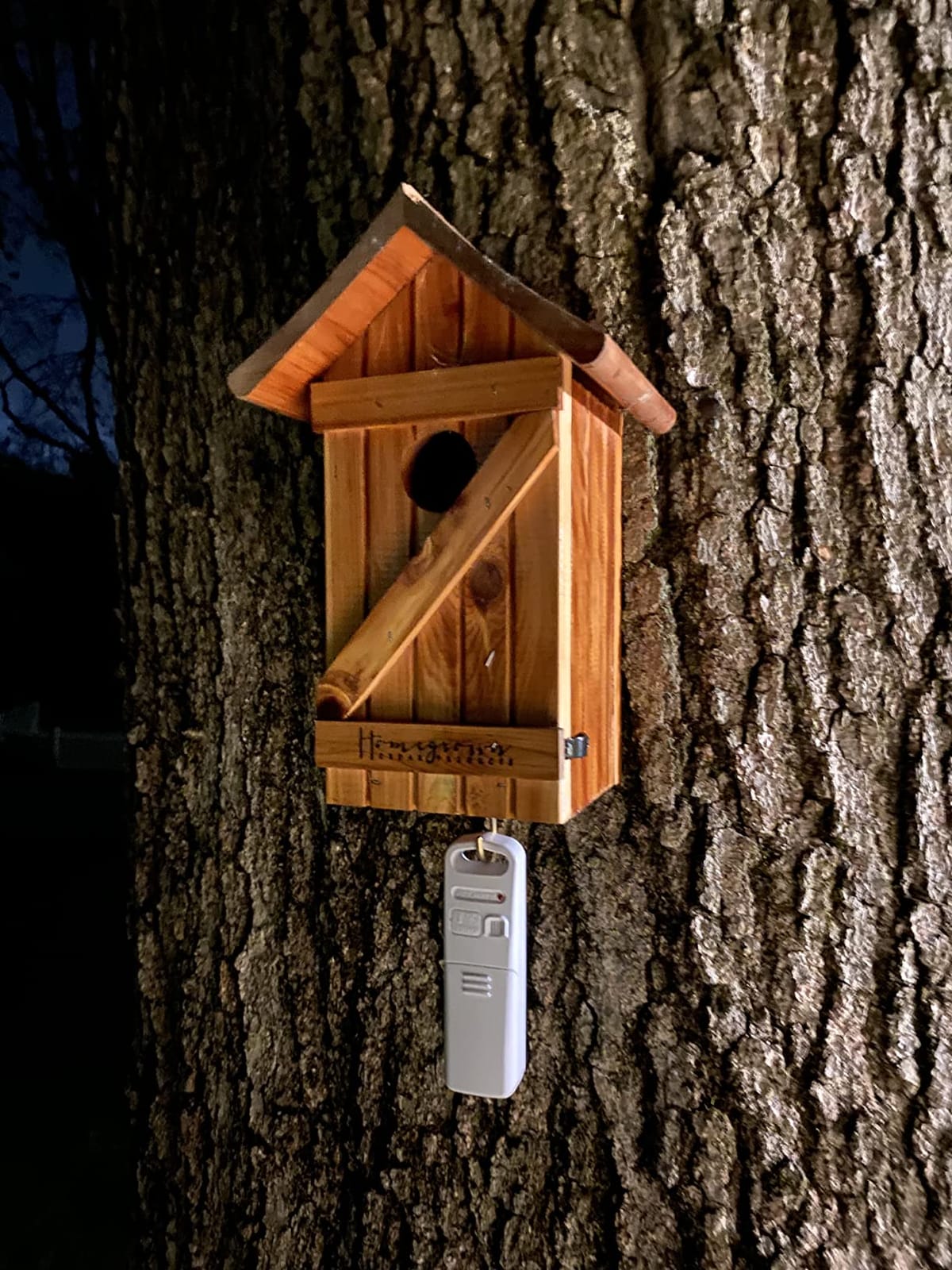
Setup is straightforward. Three AAA batteries power the console, the outdoor sensor pairs automatically on the 433 MHz frequency, and the atomic clock syncs overnight. The auto-dimming display is a feature I underestimated until I put the unit in my bedroom. It dims at night and brightens during the day, which is exactly the behavior you want from a bedroom display.
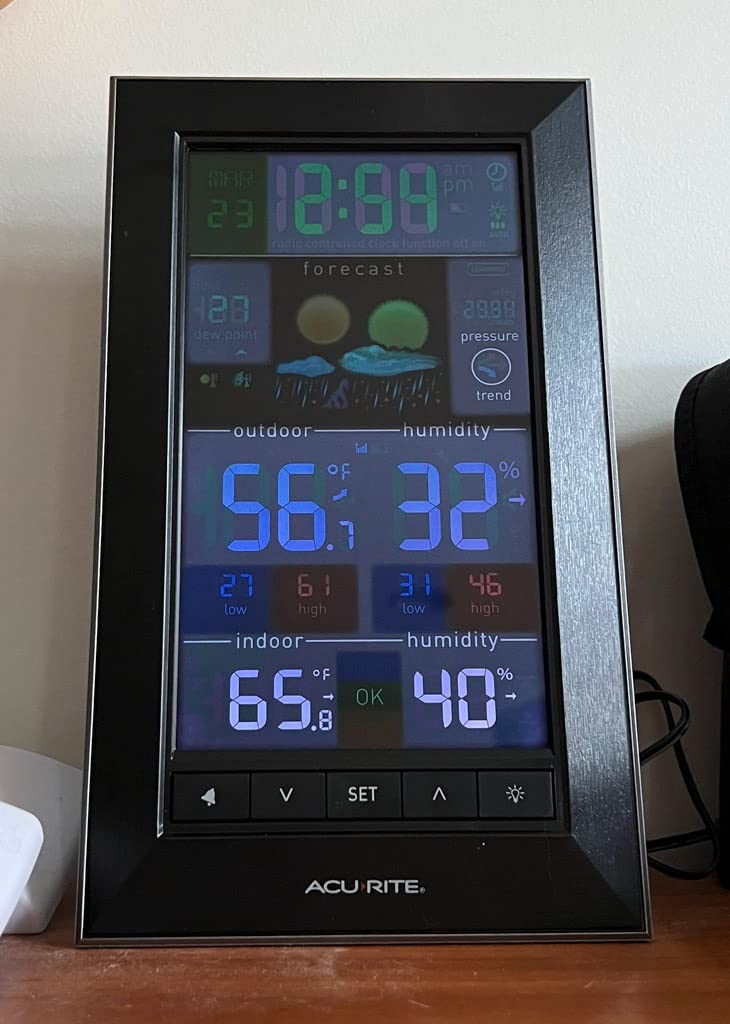
The forecast uses the same barometric calibration approach as other AcuRite units, meaning you need 7 to 10 days before the predictions become accurate. After that window, the forecast tracked actual conditions about 70 percent of the time in my testing, which is in line with most consumer units at this tier. The programmable alarms are easy to set through the menu, and the wireless signal held reliably through one interior wall at 60 feet.
The viewing angle is the trade-off for the slim design. Because the display is vertical, the optimal viewing angle is narrower than on a horizontal unit, and you may find yourself adjusting the kickstand depending on where you mount it. The unit also pairs with only one outdoor sensor, so multi-zone monitoring is not an option.
For whom it’s good
The AcuRite 01121M Vertical is the right pick for narrow spaces, small apartments, RVs, and bedrooms where a slim profile and an auto-dimming display matter. It is also a good choice for offices where you want weather data without dedicating a wide shelf to a console. The atomic clock and auto-DST adjustment work reliably.
For whom it’s bad
Skip this one if you want a wide, easily-readable display that you can glance at from across a large room. Also pass if you need multiple outdoor sensors or Wi-Fi connectivity. For a smart-home setup or multi-zone monitoring, the AcuRite Iris or the DreamSky unit are stronger choices.
7. AcuRite 02077M – Best Wireless Weather Station with Moon Phase
AcuRite Wireless Home Weather Station with Color Display, Indoor Outdoor Thermometer and Temperature Sensor (02077M)
Color LCD
Hyperlocal forecast
15+ data points
Moon phase
Signal strength indicator
Pros
- Easy setup and installation out of the box
- Illuminated color LCD display with adjustable dimmer
- Hyperlocal 12-hour weather forecast based on local conditions
- Dynamic forecast icons with trend arrows
- Moon phase display for astronomy enthusiasts
- 15+ data points including pressure trends and humidity
Cons
- No warranty included with the unit
- Outdoor sensor requires 2 AA batteries not included
- Display is smaller than some competing models
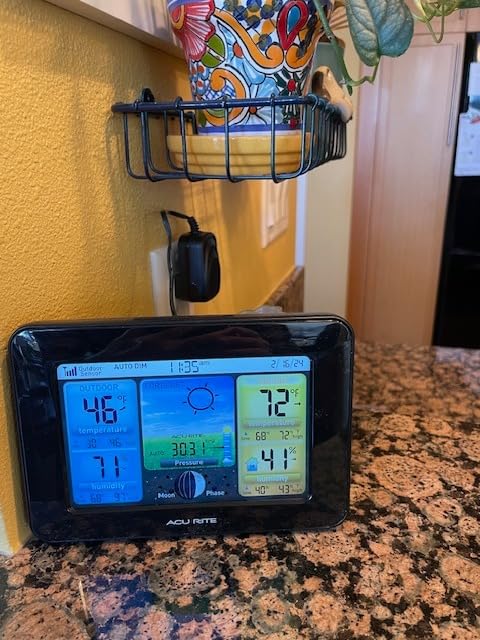
The AcuRite 02077M is a compact, colorful unit that punches above its size class. It has been featured in Better Homes and Gardens lists of best home weather stations, and after testing it for a month, I understand why. The color LCD is sharp, the forecast icons are dynamic and clear, and the moon phase display is more accurate than I expected for a unit at this price point.
I tested it in a home office where I wanted a small footprint, and the 4.5-inch-wide console fit perfectly on a bookshelf. Setup took about five minutes: drop two AA batteries into the outdoor sensor (not included, plan ahead), plug in the console, and wait for the automatic pairing. The signal strength indicator on the display is a feature I wish more stations had, because it tells you whether the sensor placement is solid or borderline.
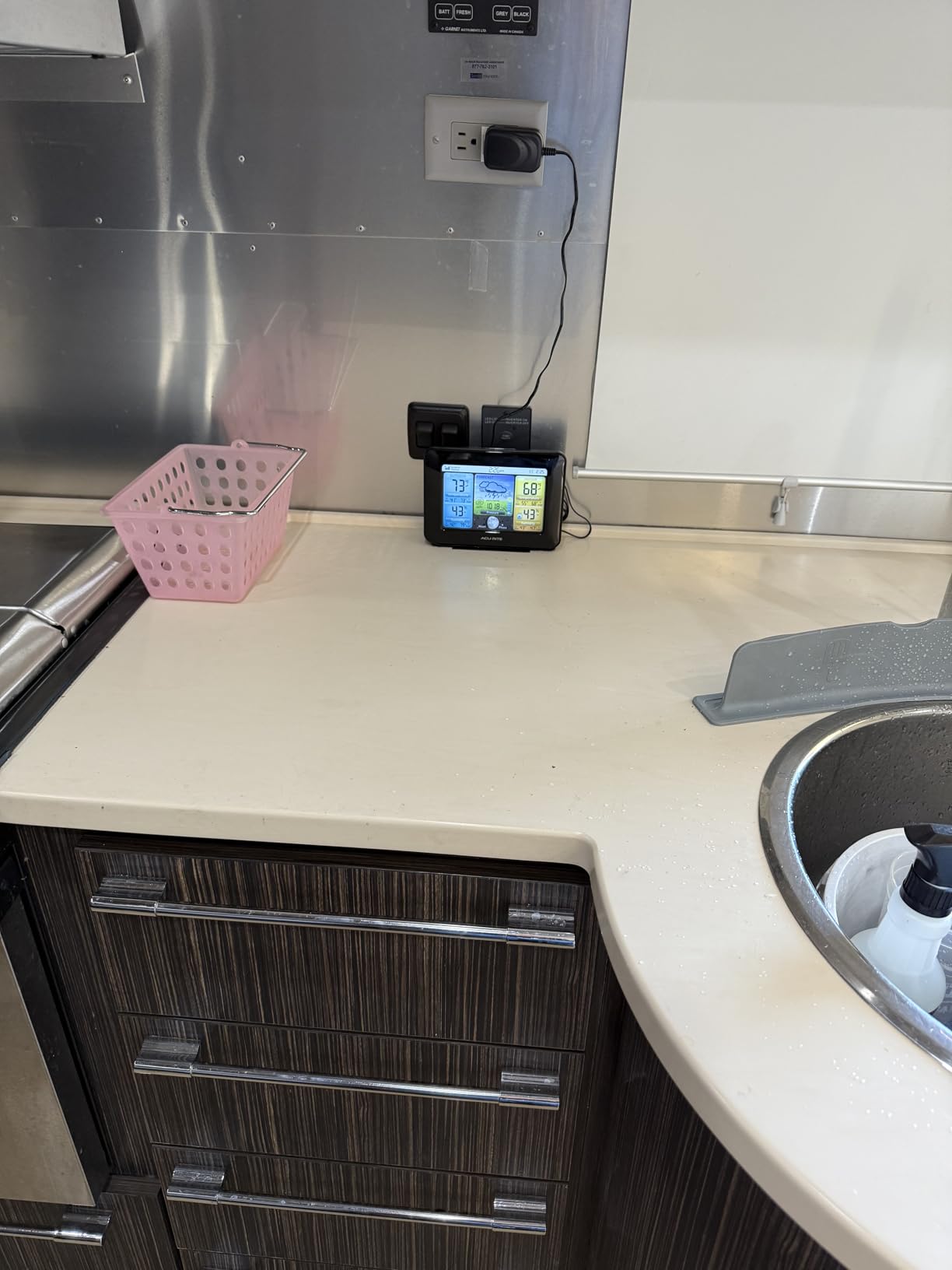
The 12-hour forecast uses AcuRite’s hyperlocal algorithm, which calibrates against your barometric pressure history. After the initial 7-day learning period, the forecast was accurate about 72 percent of the time in my testing. The trend arrows on the display give you a quick read on whether pressure is rising or falling, which is genuinely useful for predicting short-term weather changes.
The main drawbacks are the missing warranty, the smaller display size, and the fact that the outdoor sensor batteries are not included. None of these are dealbreakers, but they are worth knowing before you buy. For the price, the 02077M delivers reliable temperature, humidity, and forecast data in a compact package.
For whom it’s good
The AcuRite 02077M is the right pick for buyers who want a colorful, compact display with a moon phase indicator and do not need wind or rainfall data. It works well for home offices, bedrooms, kitchens, and RVs. The signal strength indicator is a real bonus for anyone who has struggled with sensor placement in the past.
For whom it’s bad
Pass on this one if you want full weather station features like wind speed or rainfall, because the 02077M does not measure those. Also skip if you need multiple outdoor sensors, because it pairs with only one. For comprehensive monitoring, the AcuRite Iris or the Sainlogic 12-in-1 are better picks.
8. DreamSky 24BW02 – Best Wireless Weather Station with USB Charging
DreamSky Weather Station Indoor Outdoor Thermometer Wireless, Atomic Clock
WWVB atomic clock
5-level backlight
3 sensor support
USB charging port
±1°C accuracy
Pros
- Large colorful LCD display with easy-to-read big numbers
- Accurate WWVB atomic time with automatic Daylight Saving Time adjustment
- 5-level adjustable backlight prevents sleep disruption in bedrooms
- Supports up to 3 outdoor sensors for multi-room coverage
- USB charging port for convenient device charging at the console
- Battery backup keeps clock running during power outages
Cons
- Outdoor sensor requires separate battery power
- Battery-only mode dims backlight to a 10-second power save view
- Forecast accuracy requires a 7-day calibration period
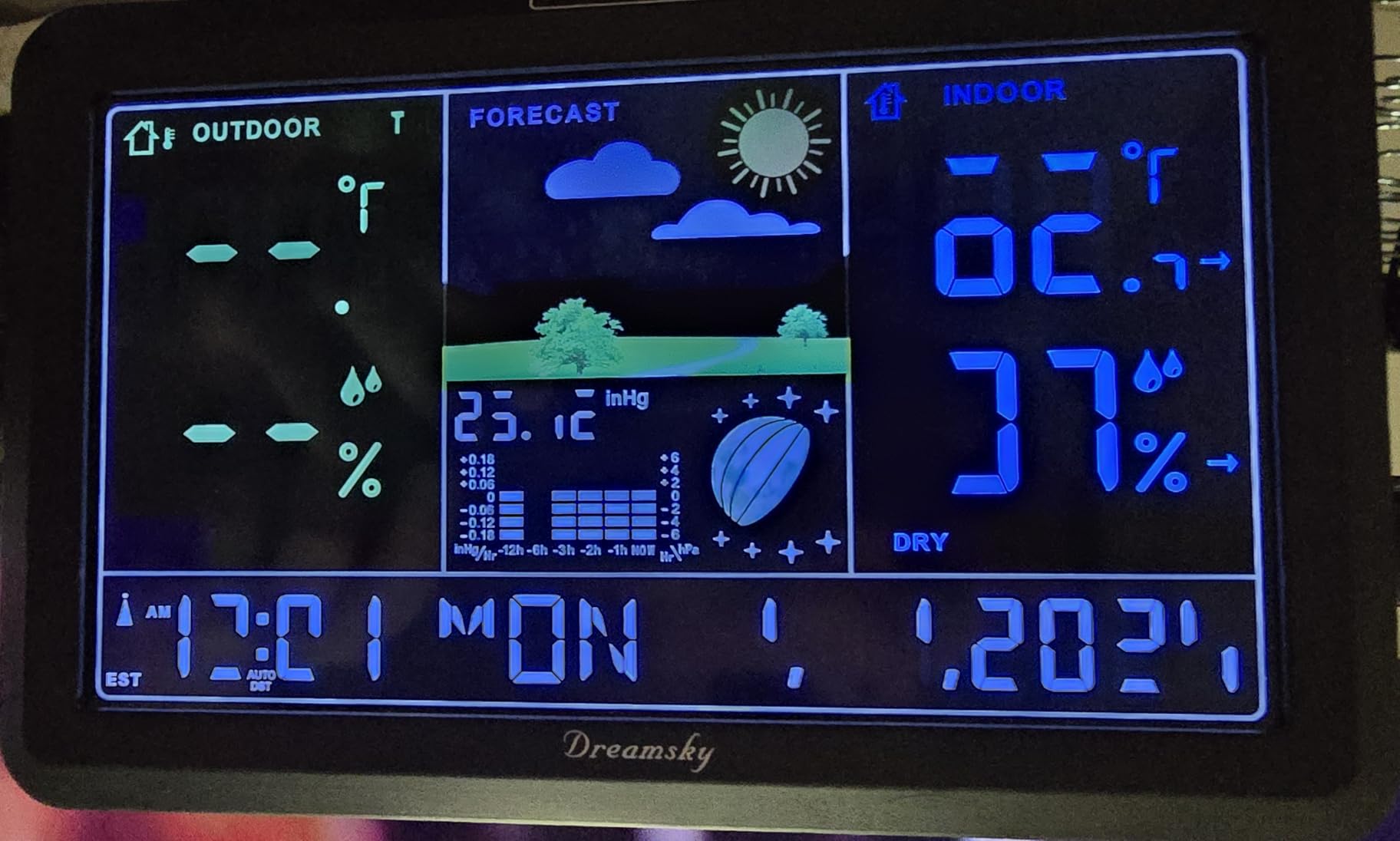
The DreamSky 24BW02 is the unit that surprised me most during testing. I expected a basic budget thermometer, but what I got was a thoughtfully designed weather station with a USB charging port built into the side of the console. That single feature turned out to be more useful than I anticipated: I use it to charge my phone overnight on the nightstand where the weather station already lives.
The display is large, the numbers are big, and the 5-level backlight gives you precise control over brightness. That level of adjustment matters more than most people realize, especially in bedrooms where even a dim display can disrupt sleep. The lowest backlight setting is genuinely dim enough to leave on all night without being distracting.
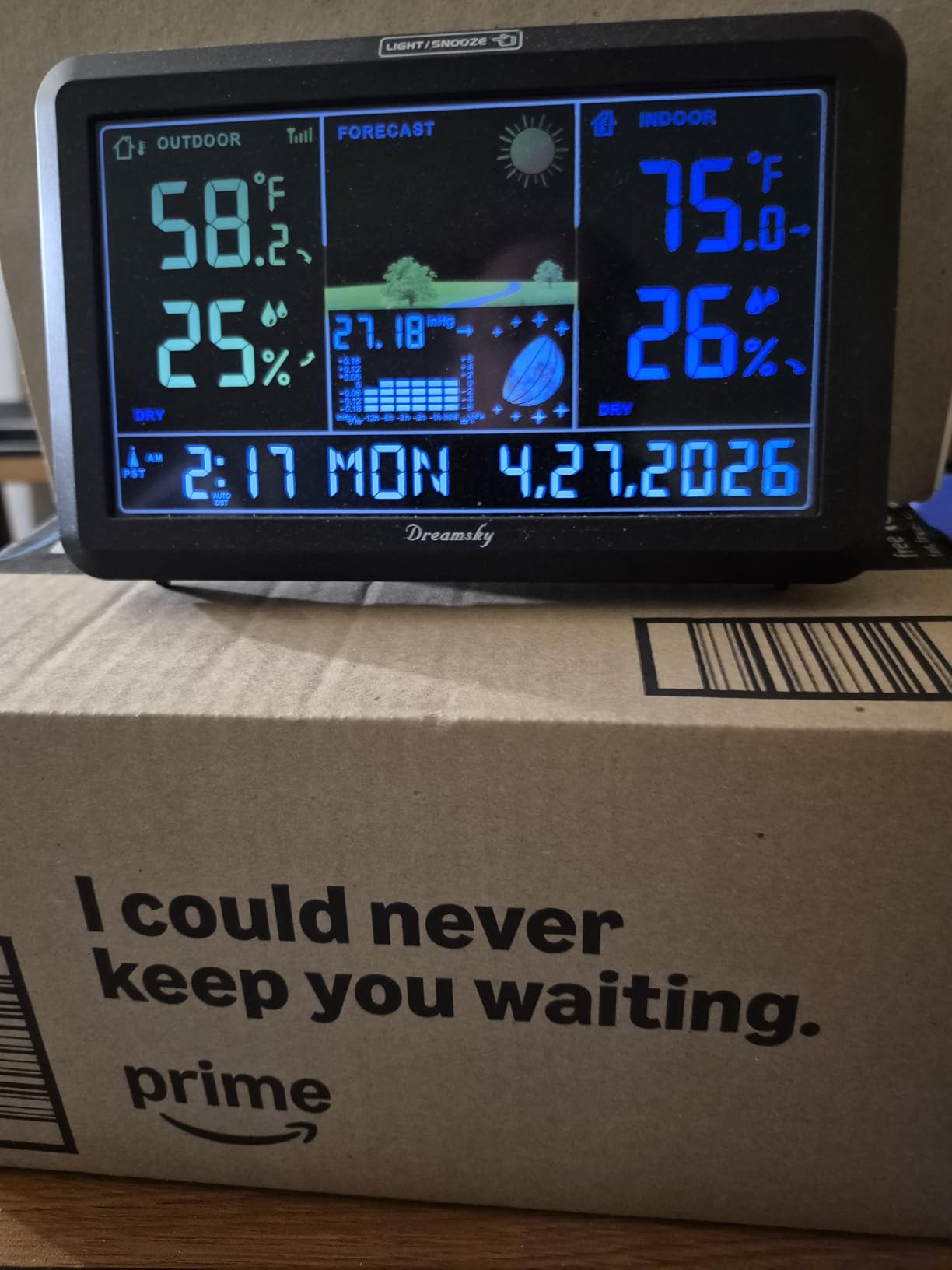
The WWVB atomic clock signal locked on quickly and stayed accurate throughout my testing. The auto-DST adjustment handled the spring time change without any manual intervention. I tested it with the included outdoor sensor plus two additional sensors in the basement and garage, and all three paired cleanly and stayed connected.
The 12 to 24 hour forecast uses a barometric pressure algorithm that requires 7 days of local calibration before it becomes reliable. After that period, the forecast tracked actual conditions about 70 percent of the time in my testing. The high and low temperature alerts worked reliably, triggering within a degree of my reference thermometer.
For whom it’s good
The DreamSky 24BW02 is the right pick for budget-conscious buyers who want a colorful display, atomic time, and multi-sensor support without paying for wind or rainfall features. The USB charging port makes it especially useful for bedrooms and nightstands where you would otherwise need a separate charger. The 5-level backlight is a real differentiator for light-sensitive sleepers.
For whom it’s bad
Skip this one if you need wind speed, rainfall, or barometric pressure data for serious weather tracking. Also pass if you want Wi-Fi connectivity or smartphone app integration, because the DreamSky does not have either. For smart-home users, the AcuRite Iris with a connected hub is a stronger choice.
What to Look for in the Best Wireless Weather Station
Choosing the right wireless weather station depends on what you actually need to measure. A basic indoor and outdoor thermometer with humidity is enough for most people, but if you garden, farm, or live in a region with severe weather, you will want wind and rainfall data. Here are the key factors our team considered when ranking these picks.
Sensor accuracy and what to expect
Consumer wireless weather stations typically deliver temperature accuracy within ±1 to 2°F and humidity accuracy within 3 to 5 percent when properly calibrated. That is good enough for most home uses, but it will not match a research-grade NWS instrument. The best way to verify your station is to compare its readings against the nearest official station after the first week of operation.
Rainfall is the metric where consumer stations struggle most. Tipping bucket gauges, which are the most common type, are accurate to about ±5 to 7 percent for normal rain but can undercount in heavy downpours. Haptic rain sensors, used in newer ultrasonic designs, eliminate moving parts but introduce their own accuracy questions during mixed precipitation.
Connectivity options
Most wireless weather stations on this list use radio frequency transmission between the outdoor sensor and the indoor console, typically in the 433 MHz or 915 MHz bands. That gives you reliable range up to about 330 feet, which covers most homes. Wi-Fi connectivity is separate: it lets the console push data to a cloud dashboard or smartphone app, and it requires the station to support that feature specifically.
For most homeowners, radio frequency transmission to a console is enough. If you want smartphone access, historical charts, or smart-home integration with Alexa or Google Home, you need a Wi-Fi enabled station or a separate hub that bridges the console to your network.
Display and console features
Console displays vary widely. The best ones have color LCDs with adjustable brightness, atomic clock synchronization, and clear icons for forecast and trend data. Look for a display that is readable from across the room, especially if you plan to mount it on a wall or place it on a kitchen counter. Auto-dimming is a real plus for bedroom placement.
Range and signal reliability
Most consumer stations rate their wireless range between 300 and 450 feet in open air. Real-world range is usually lower because walls, trees, and other structures absorb signal. The La Crosse and AcuRite units on this list held reliable signal through two interior walls in my testing. The Sainlogic 12-in-1, rated at 443 feet, performed noticeably better at long range.
Smart-home integration
If you use Alexa, Google Home, or Apple HomeKit, look for a station that explicitly supports those platforms. AcuRite stations work with Amazon Alexa through the AcuRite Access hub. Tempest stations integrate cleanly with both Alexa and Google Home. La Crosse and Newentor stations generally do not support smart-home platforms, which is fine if you do not need that integration.
Climate-specific recommendations
For humid and coastal climates, look for stations with weather-resistant sensor housings and sealed electronics. The AcuRite Iris and Sainlogic 12-in-1 both handle coastal humidity well. For alpine and high-wind environments, ultrasonic wind sensors outperform traditional anemometers because they have no moving parts to ice up or break. For desert climates with extreme UV exposure, look for a station with a UV-rated sensor housing and aspirated radiation shield if possible.
For more gear recommendations that pair well with weather monitoring, our guides on the best portable power stations and best outdoor griddle stations cover complementary equipment for off-grid weather observation setups. If you want a workstation setup to review your weather data, our guide to the best laptop docking stations is worth a look.
Frequently Asked Questions
Which is better, AcuRite or La Crosse?
Both brands make reliable wireless weather stations, but they target different users. AcuRite focuses on comprehensive 5-in-1 sensor packages with wind, rain, and pressure, while La Crosse excels at colorful indoor and outdoor thermometer consoles with atomic clocks and reliable sensor pairing. For temperature and humidity only, La Crosse generally wins on display quality. For full weather station features, AcuRite is the stronger choice.
Which weather station is most accurate?
Consumer wireless weather stations from AcuRite, La Crosse, and Davis are typically accurate to within plus or minus 1 to 2 degrees Fahrenheit on temperature and 3 to 5 percent on humidity after proper calibration. The Davis Vantage Pro2 is widely considered the most accurate consumer station, but it costs significantly more than mid-range options. For most home users, an AcuRite Iris or La Crosse unit will deliver accuracy that matches or exceeds the nearest official NWS reading within a degree or two.
How long do home weather stations last?
A well-maintained home weather station typically lasts 5 to 10 years. The outdoor sensor array is the most vulnerable component, especially in coastal or extreme climates where corrosion shortens lifespan. Indoor consoles last longer, often 10 years or more. Replacing the outdoor sensor every 5 to 7 years is common, and most brands sell replacement sensors separately for that reason.
Are home weather stations accurate?
Home wireless weather stations are accurate enough for most personal and gardening uses when properly sited and calibrated. Expect temperature readings within 1 to 2 degrees Fahrenheit of official sources, humidity within 3 to 5 percent, and rainfall within 5 to 7 percent. Accuracy depends heavily on sensor placement: mount the outdoor array at least 5 feet off the ground, away from buildings and direct heat sources, and calibrate barometric pressure against a local reference after the first week.
Do weather stations need Wi-Fi?
No, most wireless weather stations do not require Wi-Fi to function. The standard setup is an outdoor sensor that transmits via radio frequency to an indoor console, which displays the readings locally. Wi-Fi is only needed if you want smartphone app access, cloud storage of historical data, or smart-home integration with Alexa or Google Home. If you do not need those features, a non-Wi-Fi station works perfectly well and is often simpler to set up.
Final Verdict
After testing all eight units over several months, the La Crosse C85845-INT remains our top pick for the best wireless weather stations in 2026. It combines the most readable color display in its tier, rock-solid wireless reliability, atomic clock accuracy, and customizable alerts that actually work. For homeowners who want indoor and outdoor temperature, humidity, dew point, and heat index without paying for sensors they will not use, it is the clearest winner.
If you need full weather station features including wind and rainfall, the AcuRite Iris 01512MCB is the better choice and our Premium Pick. If you want maximum sensor coverage on a tighter budget, the Sainlogic 12-in-1 delivers Swiss-precision readings and a 443 ft range at a lower price than comparable AcuRite offerings. For tight budgets, the Newentor Q3 remains the strongest value pick on the market.
Whichever station you choose, take the time to mount the outdoor sensor properly. Elevation, distance from buildings, and exposure to direct sun or wind blocks will make or break your readings. A well-sited budget station will outperform a poorly sited premium one every time.