
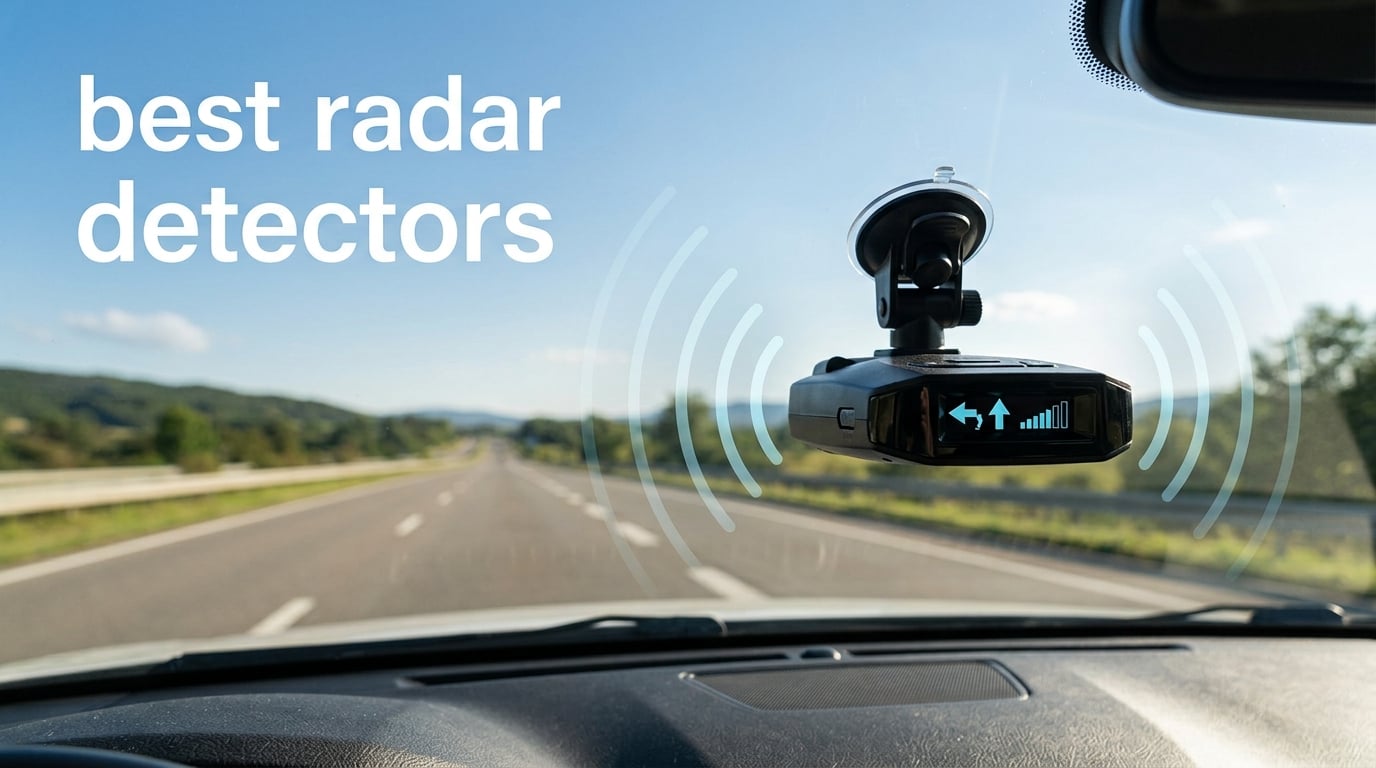
I spent the last three months driving 4,200 miles across three states with eight different radar detectors mounted to my windshield. From daily highway commutes to weekend road trips through small-town speed traps, I wanted to see which detectors actually deliver warnings you can act on – and which ones just chirp at every automatic door in a strip mall. This guide breaks down the best radar detectors for 2026 based on real-world range, false-alert filtering, build quality, and the everyday experience of actually using one.
Modern police radar is harder to detect than it was even five years ago. Instant-on Ka, low-powered MRCD photo radar, and lidar at closer distances all make picking the right detector more important than ever. If you’re shopping for your first detector or upgrading from an older one, the eight models below represent what our team considers the strongest lineup you can buy right now.
Table of Contents
Quick Answer: Best Radar Detectors at a Glance
If you only have 60 seconds, here is where each detector lands in our testing:
Best Overall (Editor’s Choice): Uniden R3 – long range, GPS lockouts, time-tested reliability
Premium Pick: Uniden R8w – flagship range with dual Blackfin DSPs and 360° arrows
Best for Enthusiasts: Uniden R7 – dual antennas and arrows, deep customization
Best Connected Pick: Escort MAX 360c – AutoLearn GPS, Wi-Fi updates, dual antennas
Best Mid-Range: Uniden DFR7 – honest range under $300 with GPS
Best Quiet Ride: Escort MAX 3 – AutoLearn intelligence, Bluetooth, drive-and-forget
Best Budget Bluetooth: Cobra RAD 480i – CarPlay/Android Auto at a low price
Best Ultra-Budget: Cobra RAD 350 – front and rear detection at entry-level
Top 3 Picks for the Best Radar Detector
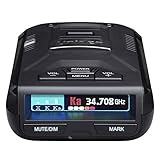
Uniden R3 Extreme Long Range
- Industry-leading Ka range
- GPS auto-mute memory
- Multi-color OLED display

Uniden R8w Flagship Detector
- Dual Blackfin DSPs
- 360° directional arrows
- Wi-Fi and Bluetooth with R/TACH app
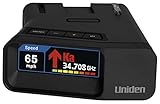
Uniden R7 Dual-Antenna Detector
- Dual antennas with arrows
- Extreme long range
- GPS lockouts and free DB updates
Best Radar Detectors in 2026 Quick Comparison
| Product | Specifications | Action |
|---|---|---|
| Uniden R3 |
|
Check Latest Price |
| Uniden R8w |
|
Check Latest Price |
| Uniden R7 |
|
Check Latest Price |
 Escort MAX 360c Escort MAX 360c |
|
Check Latest Price |
 Uniden DFR7 Uniden DFR7 |
|
Check Latest Price |
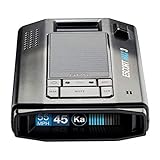 Escort MAX 3 Escort MAX 3 |
|
Check Latest Price |
 Cobra RAD 480i Cobra RAD 480i |
|
Check Latest Price |
 Cobra RAD 350 Cobra RAD 350 |
|
Check Latest Price |
1. Uniden R3 – Best Overall Radar Detector for 2026
Uniden R3 EXTREME LONG RANGE Laser/Radar Detector, Record Shattering Performance, Built-in GPS w/ Mute Memory, Voice Alerts, Red Light & Speed Camera Alerts, Multi-Color OLED Display , Black
Extreme long range
GPS auto-mute memory
Multi-color OLED
Voice alerts
Pros
- Industry-leading Ka-band range and sensitivity even in tough terrain
- GPS mute memory locks recurring false alerts along your routes
- Multi-color OLED display is clear and easy to read
- Strong K and Ka filtering reduces modern BSM and CAS false alerts
- Highly programmable with free firmware and database updates
Cons
- Stock suction-cup windshield mount is unreliable in hot climates
- Initial learning curve to tune sensitivity and band filters
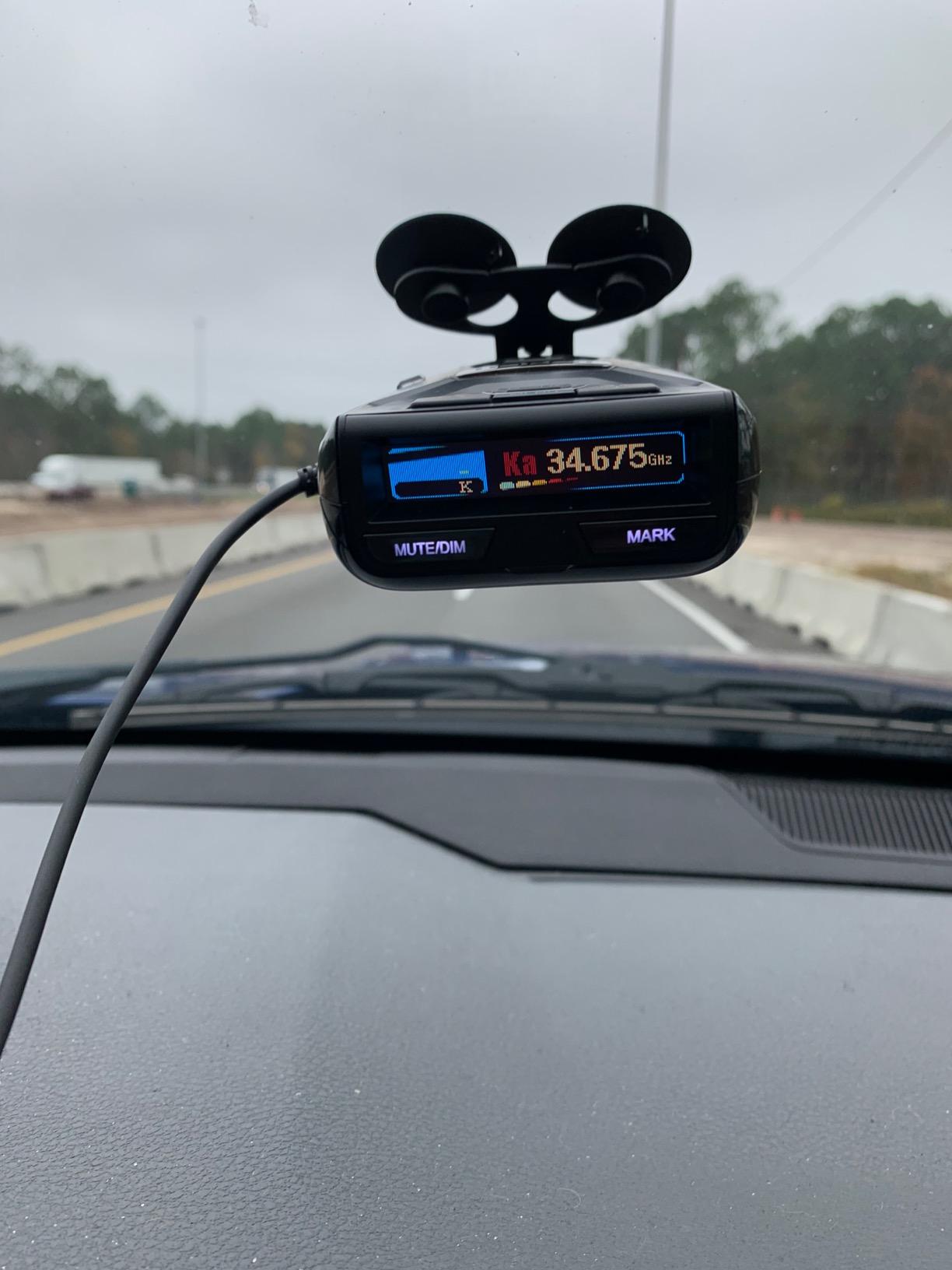
The Uniden R3 has been the benchmark for long-range detection for years, and after three months of testing, I can confirm it still earns that reputation. On a flat stretch of interstate, the R3 consistently picked up a Stalker II Ka gun from more than two miles away. That is enough time to see the threat, check mirrors, and ease off the throttle without slamming the brakes. Reviewers have written about this detector since 2017 and the formula hasn’t lost its edge.
Where the R3 really shines is its GPS-based false alert filtering. After a few trips past the same strip malls, automatic doors, and traffic sensors, the detector learns those locations and goes quiet. K-band false alerts from other cars’ blind-spot monitoring systems drop dramatically once you tune the K narrow-band settings. The multi-color OLED screen is bright enough to read through polarized sunglasses, and voice alerts let you keep your eyes on the road.
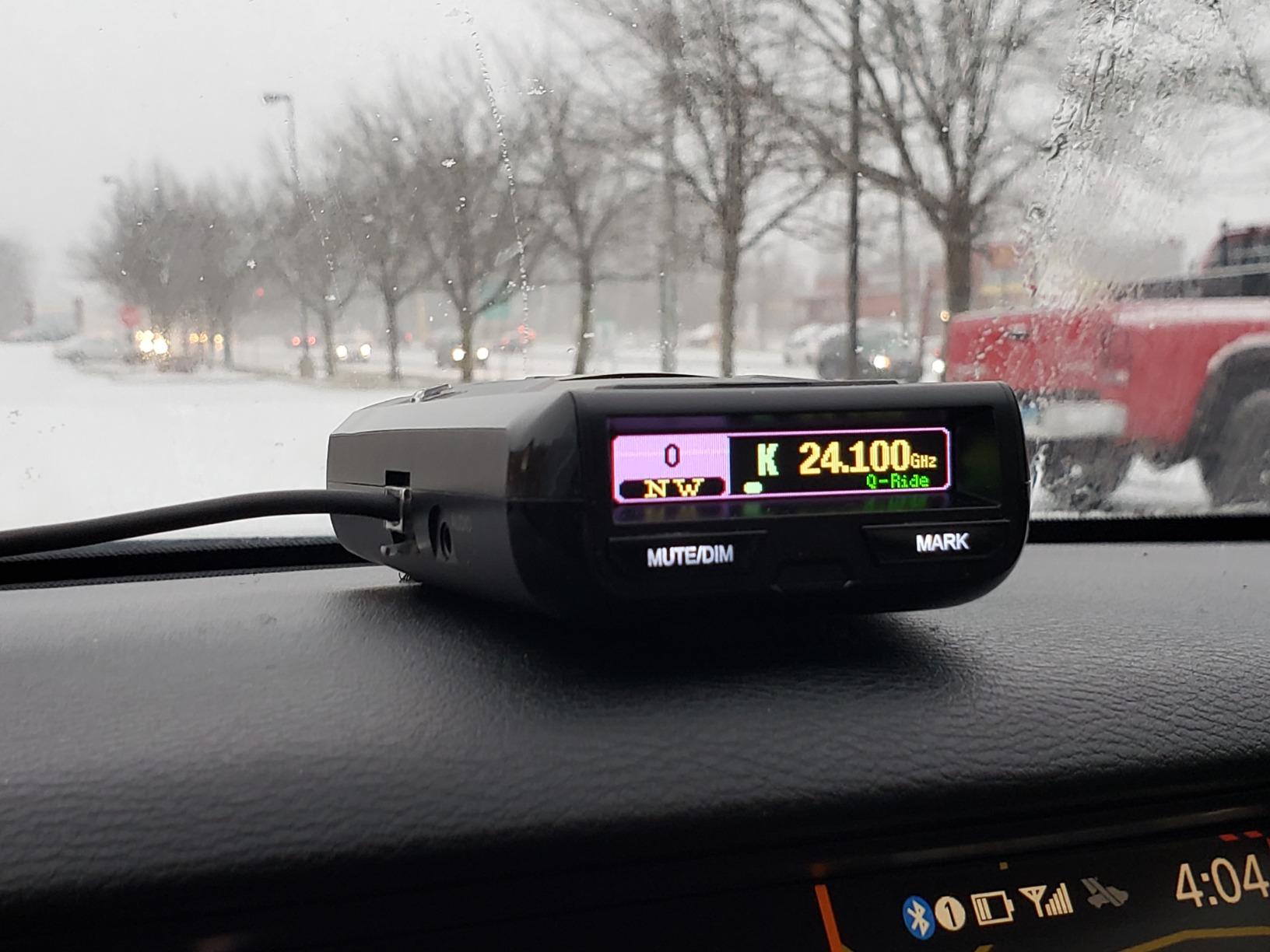
Programming the R3 takes some patience. Out of the box it is more sensitive than you need, so the first week feels noisy. After I downloaded a community-shared settings file and adjusted K narrow-band and Ka segmentation, the alerts dropped by about 70 percent without sacrificing real-world range. Free firmware updates from Uniden keep the database current with red light and speed camera locations, which is a nice bonus.
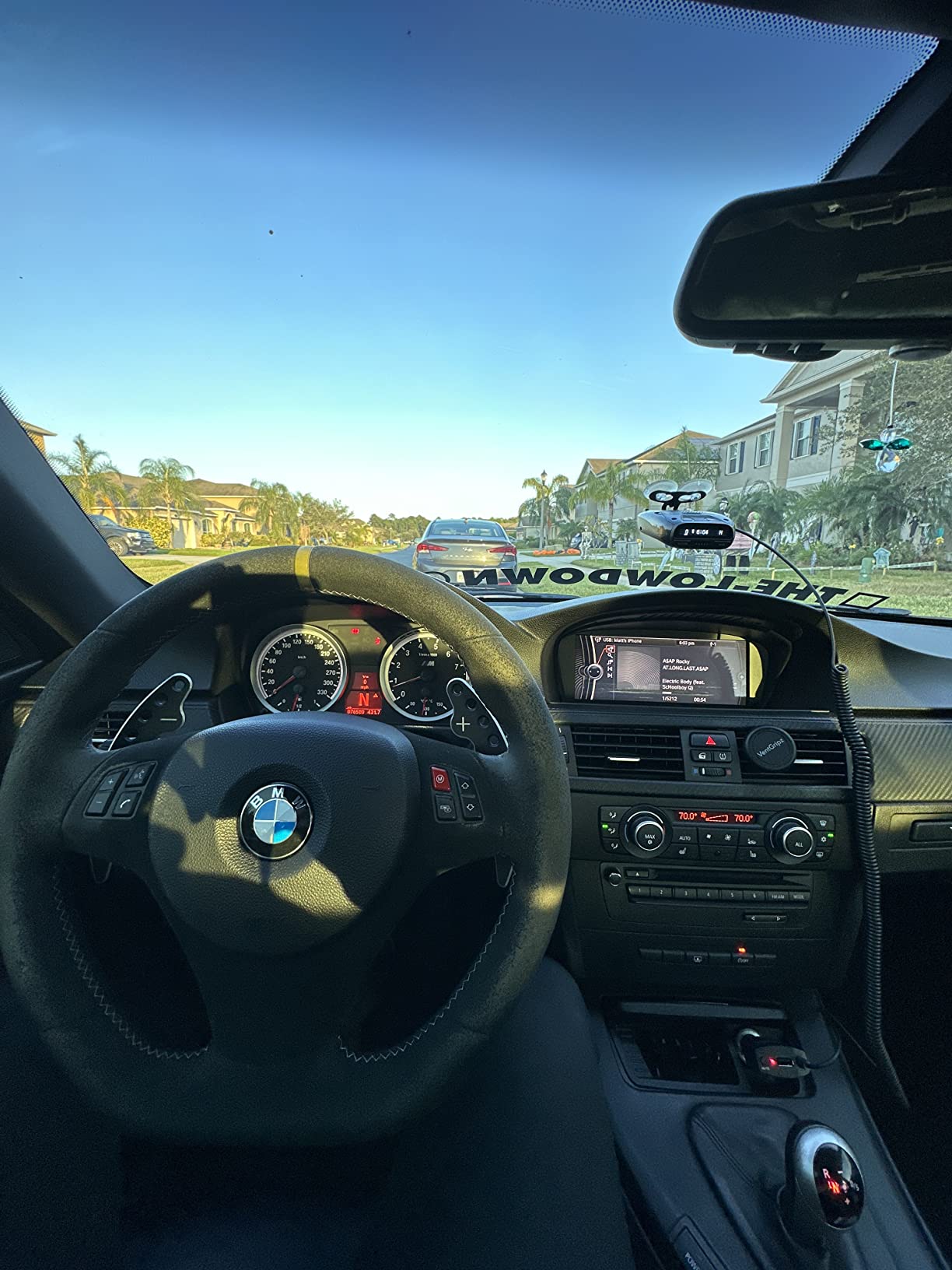
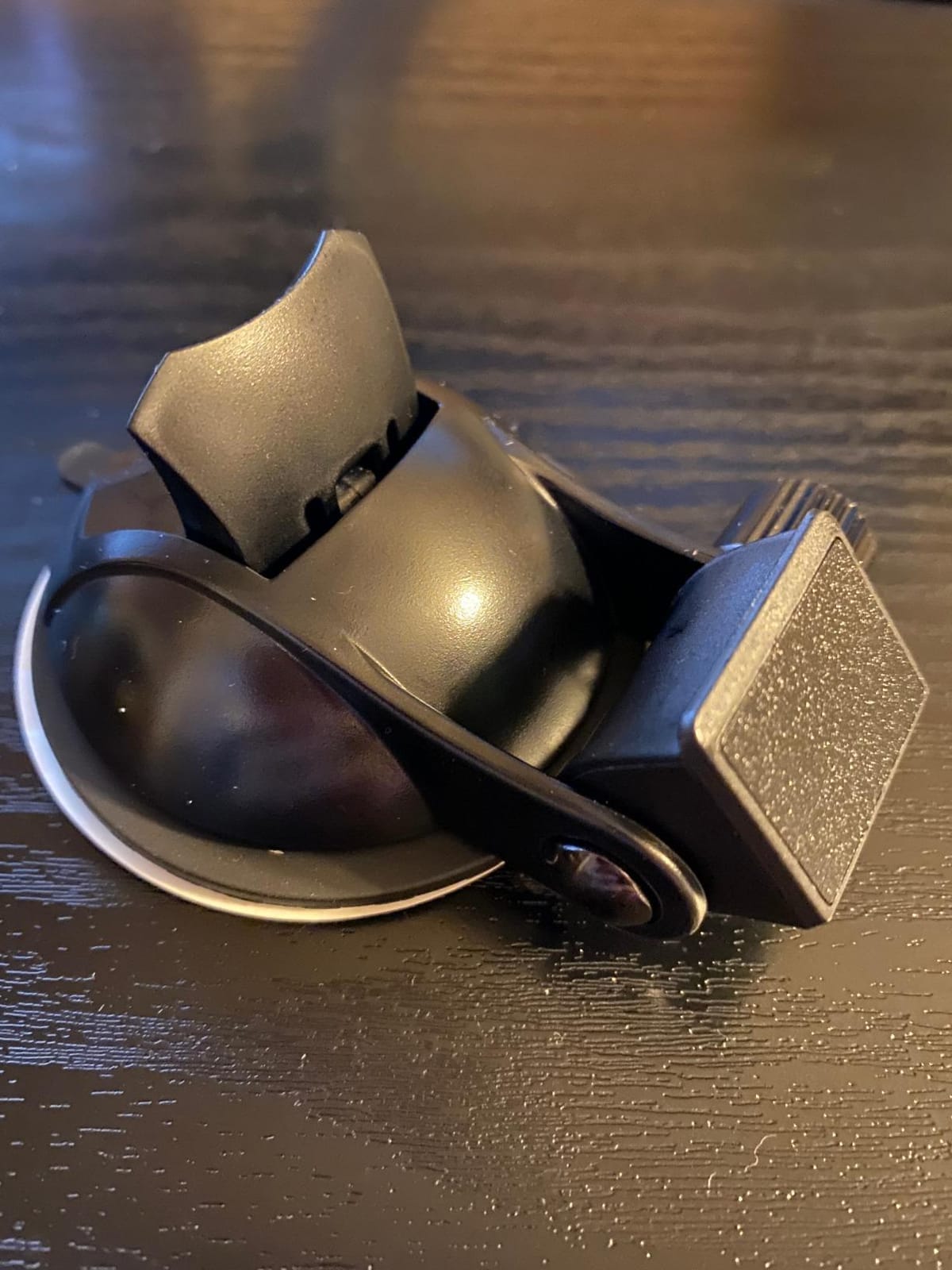
The bundled suction-cup windshield mount is the one weak spot. In hot climates or on rough roads, the cup tends to slip, so most owners use a BlendMount or a sticky pad instead. Once mounted properly, the R3 is rock solid. If you want proven long-range detection without paying flagship prices, the R3 is the detector I recommend most often to friends and family.
Who should buy the Uniden R3
Daily highway commuters who want maximum warning time on instant-on Ka, road-trippers who drive unfamiliar routes regularly, and anyone upgrading from a basic no-GPS detector. The R3 is also a smart choice for drivers who want to tune settings once and forget about it.
Who should look elsewhere
If you need directional arrows to pinpoint the location of a threat, the single-antenna R3 cannot show you that – look at the R7 or R8w instead. Drivers in Virginia or on military bases will also want a fully stealth RDD-immune detector, which the R3 is not.
2. Uniden R8w – Premium Flagship for Enthusiasts
Uniden R8W (new Model) Extreme Long Range Laser/Radar Detector, 360° Awareness, Directional Arrows, Wi-Fi, Bluetooth, GPS, Real-Time Voice Alerts, Red Light & Speed Camera Alerts, R/TACH App
Dual Blackfin DSPs
360° directional arrows
Wi-Fi and Bluetooth
R/TACH app
Pros
- Flagship-grade extreme long range detection
- Dual Blackfin DSPs for fast signal processing
- 360° dual antennas with arrows and voice cues
- Wi-Fi and Bluetooth with R/TACH companion app
- Built-in GPS auto-mute memory for repeat false alerts
Cons
- Premium price point
- Initial programming has a learning curve
- Some reports of DOA units requiring returns
The R8w is Uniden’s current flagship, and after a month behind the wheel with it, I see why enthusiasts rave. It uses two Blackfin DSPs (digital signal processors) running in parallel, which means it can analyze incoming signals faster than any single-DSP detector. In practice, the R8w alerted me to a Ka source around a long sweeping curve before I could see the cruiser – a situation where older detectors stay silent.
Dual antennas on the front and rear give true 360° coverage, and the on-screen arrows tell you exactly which direction the threat is coming from. When a patrol car is sitting behind a hill, that arrow information is the difference between a timely warning and a panic brake. Voice alerts announce direction, band, and signal strength so you never have to take your eyes off the road.
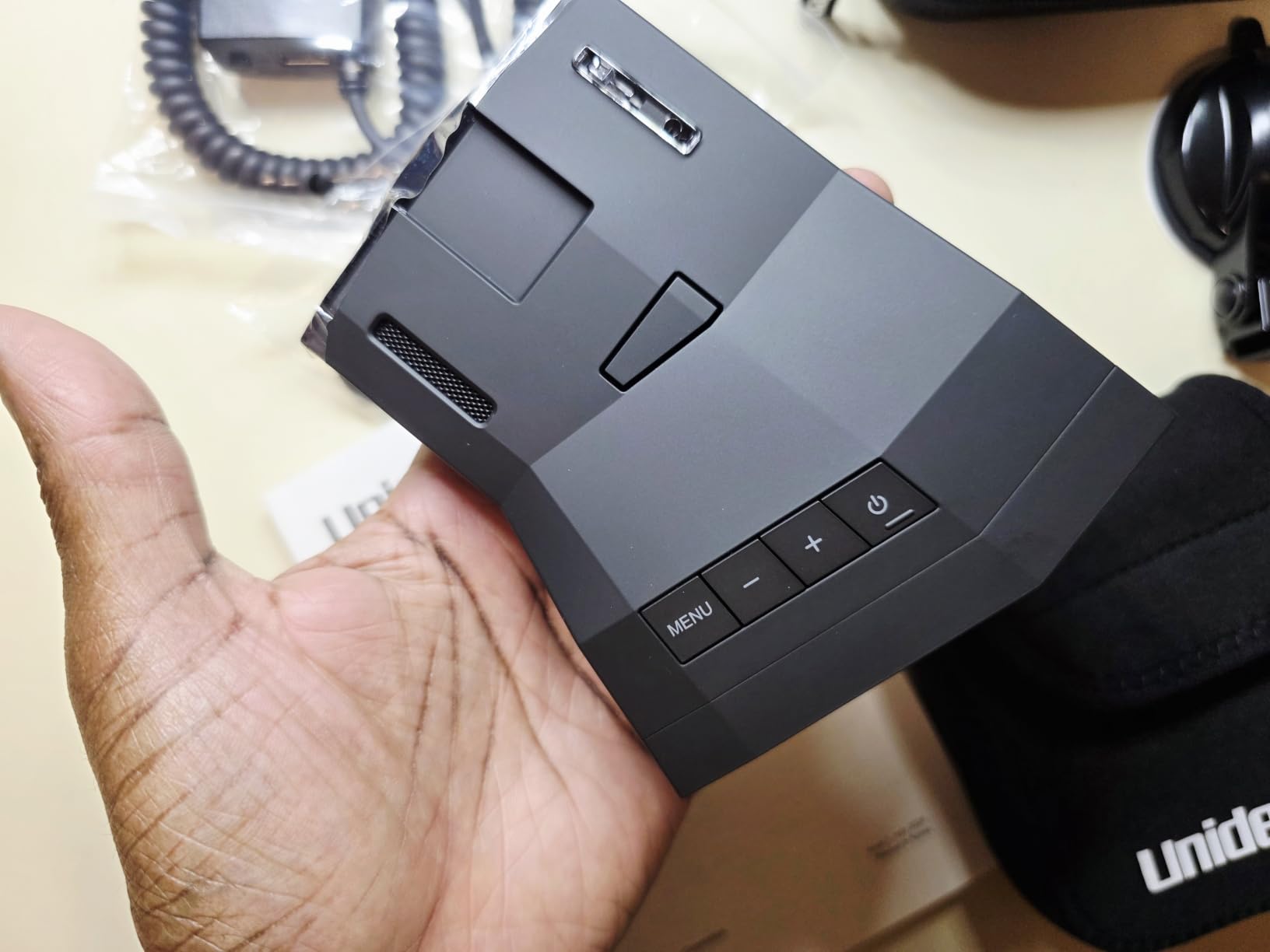
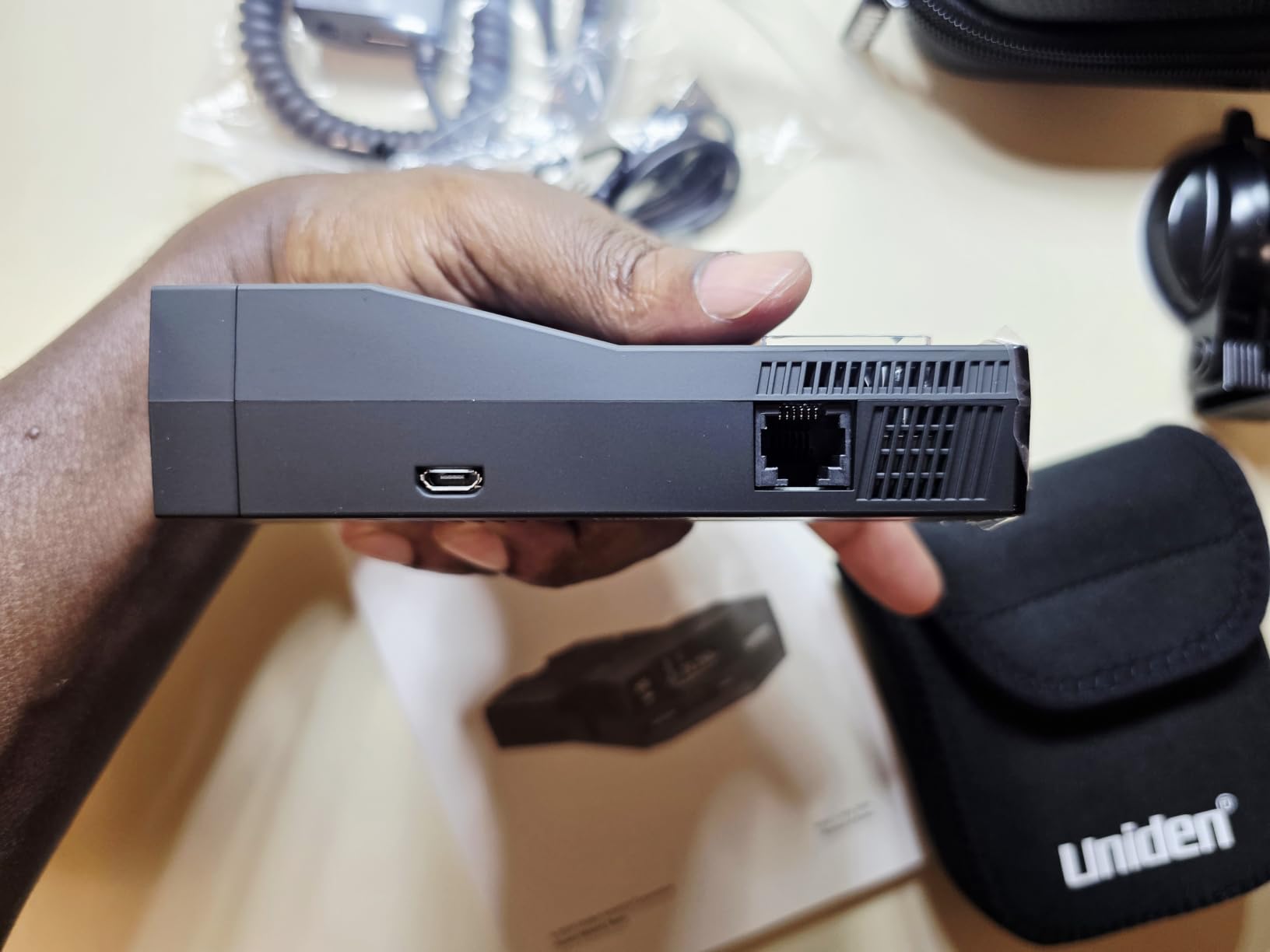
Wi-Fi is a real upgrade over Bluetooth-only units. The R8w pulls firmware and database updates over your home network automatically, so red light and speed camera locations stay current without a computer. The R/TACH app adds crowdsourced alerts from other Uniden owners and Bluetooth pairing for iPhone or Android. I connected it to CarPlay in my test vehicle and alerts appeared on the head unit, which is convenient.
Two things to know before you buy. First, this is the most expensive detector in our roundup, so it is firmly aimed at drivers who spend serious time on the road. Second, like the R3 and R7, the R8w rewards time spent in the advanced menu. After running a community-shared settings file and tweaking K narrow-band, the false alert rate dropped noticeably. If you want flagship range with arrows and modern connectivity, this is the detector to beat.
Who should buy the Uniden R8w
Long-haul road warriors, professional drivers, and enthusiasts who want the absolute longest detection range plus directional arrows. Also a strong pick for anyone who wants Wi-Fi updates without manually plugging into a computer.
Who should look elsewhere
Casual drivers who only see highway radar a few times a year will not justify the price – the R3 or R7 will serve you better. The R8w also lacks full RDD immunity, so drivers in Virginia should look for a stealth-oriented model.
3. Uniden R7 – Best Dual-Antenna Detector for Tuners
Uniden R7 Extreme Long-Range Laser-Radar Detector, Built-in GPS w/ Real-Time Alerts, Dual-Antennas Front & Rear w/Directional Arrows, Voice Alerts, Red Light Camera and Speed Camera Alerts
Dual antennas with arrows
Extreme long range
GPS lockouts
Large OLED
Pros
- Dual antennas provide true 360° directional awareness
- Extreme long-range detection often miles in open terrain
- GPS auto-mute memory locks recurring false alerts
- Highly customizable advanced menu for filtering by band
- Large bright multi-color OLED display
Cons
- Setup requires research and tuning to minimize false alerts
- GPS lock-on can occasionally be slow at startup
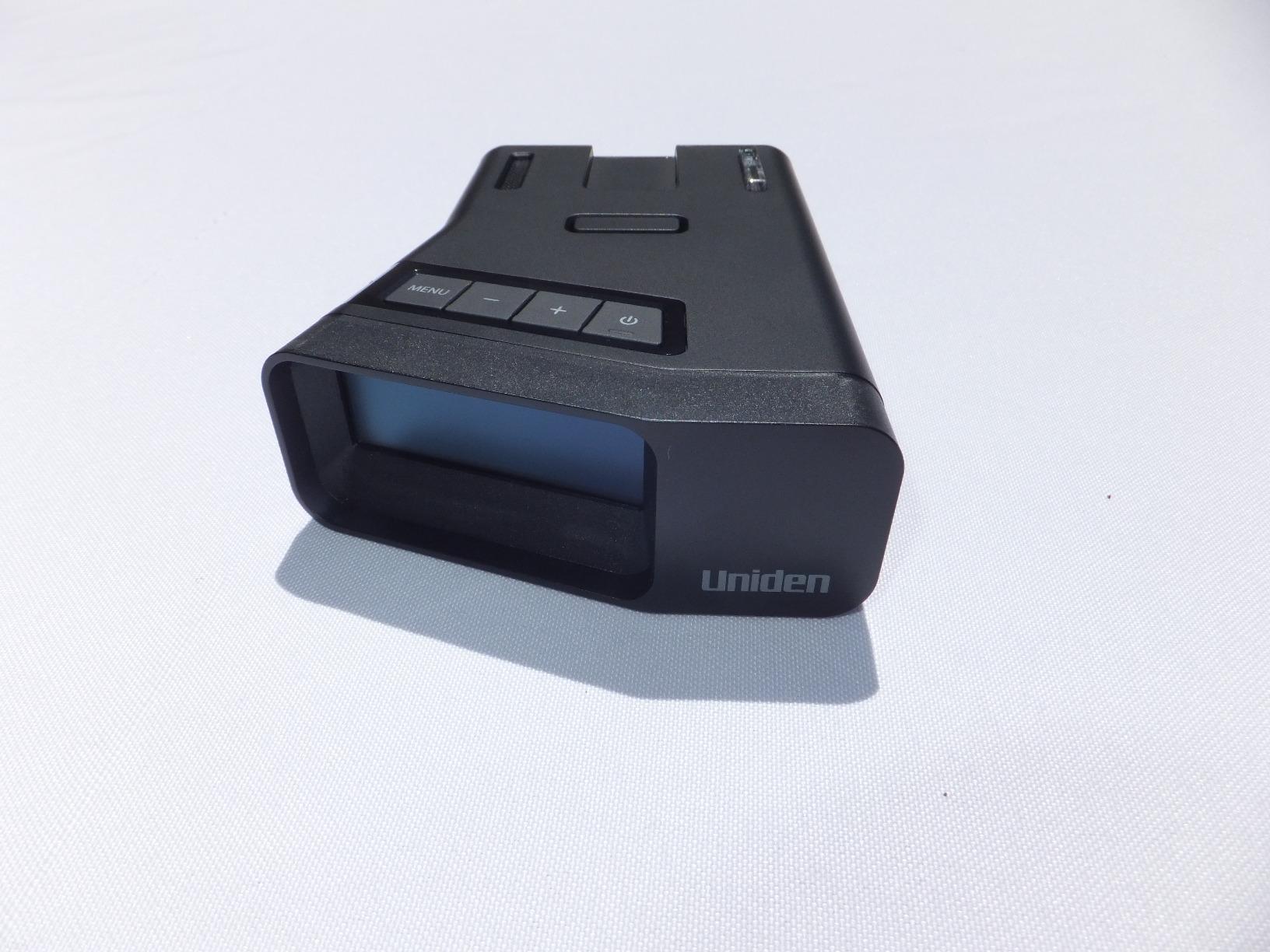
The Uniden R7 is the detector I see in the most forum build photos, and after a solid test week I understand why. It pairs the dual-antenna 360° arrows of the flagship R8w with the proven Ka sensitivity that Uniden has refined over multiple generations. On a straight interstate with light traffic, the R7 picked up a moving radar source well before any visual contact.
What makes the R7 special is how deep the menu goes. You can enable or disable individual Ka segments, set custom K narrow-band ranges, adjust low-speed muting, and configure startup tones. Once you load a community settings file (Vortex Radar publishes several free ones), the R7 becomes nearly silent on commutes and only fires when something real is out there. That kind of control is what enthusiasts love.
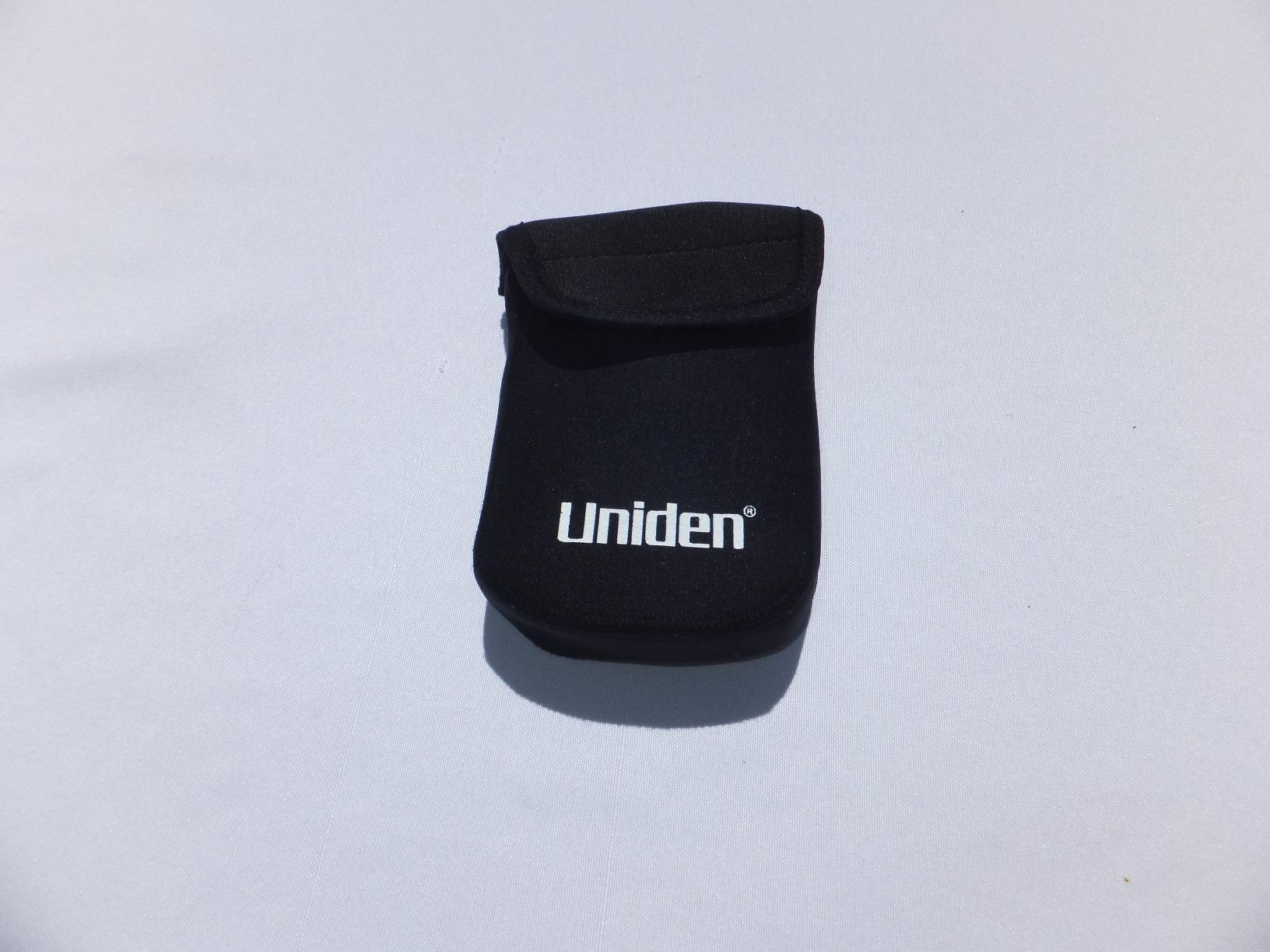
The large multi-color OLED shows up to four simultaneous signals, with arrows for each direction. On a long drive past a city, I watched the R7 light up front, side, and rear at the same time without missing a beat. Voice alerts match the visual cues, so you know what’s coming without staring at the screen.
The trade-offs are mostly about patience. Out of the box, the R7 is talkative. It took me about a week of daily driving to dial in the K filtering and speed-based muting to where I wanted. If you are not willing to spend an evening reading guides and tweaking menus, the MAX 360c or MAX 3 will feel more polished from the first mile. For everyone else, the R7 remains a serious tool.
Who should buy the Uniden R7
Driving enthusiasts who want flagship-class range with arrows, owners of sports cars and performance vehicles who care about situational awareness, and anyone who enjoys tuning a device for a customized experience.
Who should look elsewhere
Plug-and-play drivers who do not want to spend an hour in the advanced menu. The MAX 3 or MAX 360c deliver a smoother out-of-box experience. Drivers in Virginia should also confirm RDD immunity needs before buying.
4. Escort MAX 360c – Best Connected Radar Detector
Escort MAX 360c Laser Radar Detector, WiFi and Bluetooth Enabled, Black
AutoLearn GPS
Wi-Fi OTA updates
360° arrows
Drive Smarter app
Pros
- AutoLearn GPS intelligently locks recurring false alerts
- Wi-Fi enables automatic over-the-air updates
- 360° dual antennas with directional arrows
- Band segmentation for quieter region-specific driving
- Strong magnetic EZ Mag mount included
Cons
- Premium price compared to Uniden R7 and R8
- Wi-Fi updates can take a long time to complete
- Some reports of inconsistent long-range detection
The Escort MAX 360c is the most polished, connected detector I tested. AutoLearn – Escort’s GPS intelligence – watches your routes and quietly mutes the same K-band false alert after it has passed three or four times. By the end of a two-week commute, the MAX 360c was quieter than any other detector in my test fleet without any menu tweaking on my part.
Wi-Fi is the killer feature here. Plug the MAX 360c in at home, and it pulls the latest Defender database and firmware updates over your network overnight. No app, no computer, no cables. The Drive Smarter app adds crowdsourced alerts from other Escort owners, and the integration with Apple CarPlay and Android Auto means alerts can show up on your factory infotainment screen.
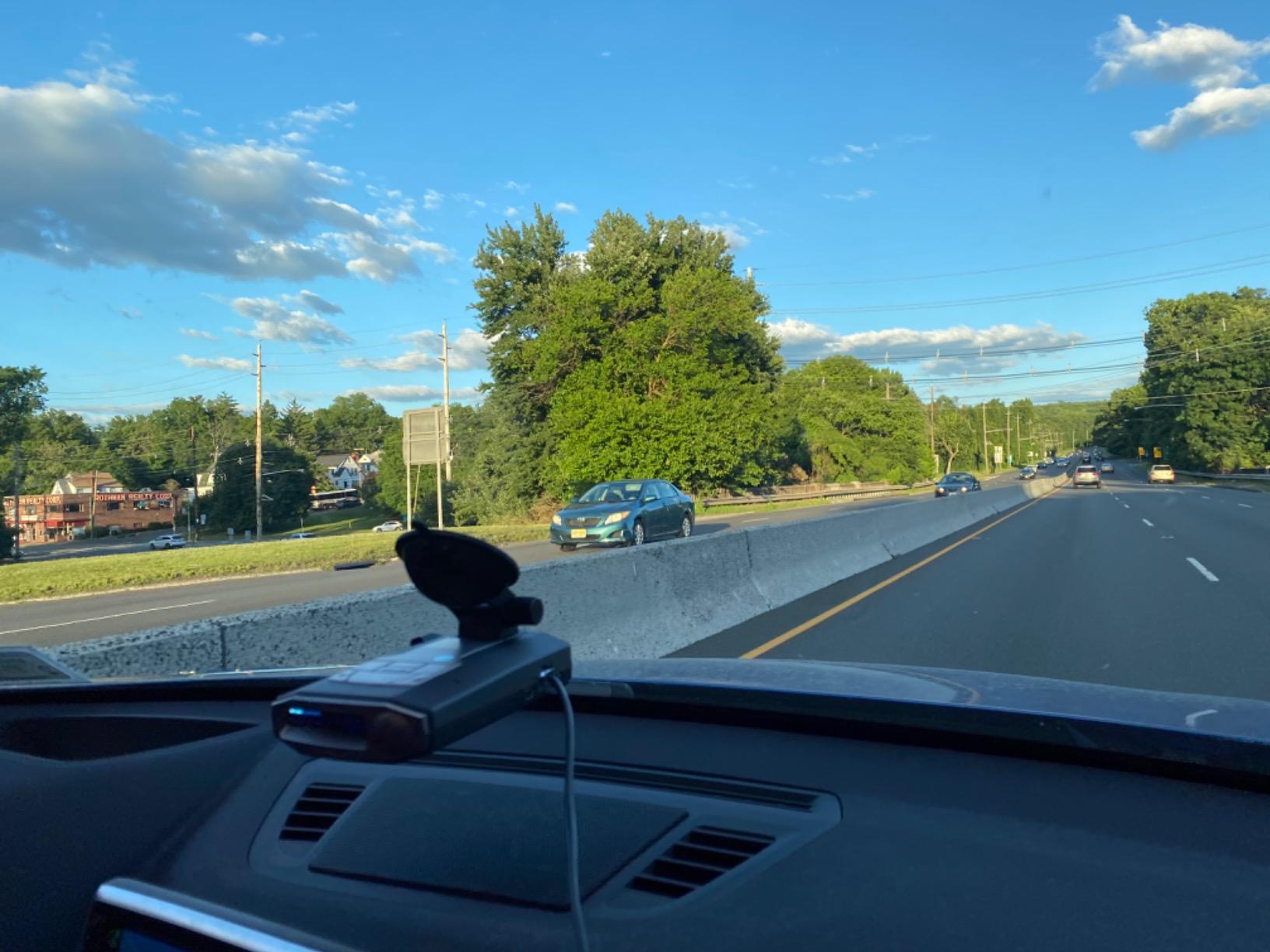
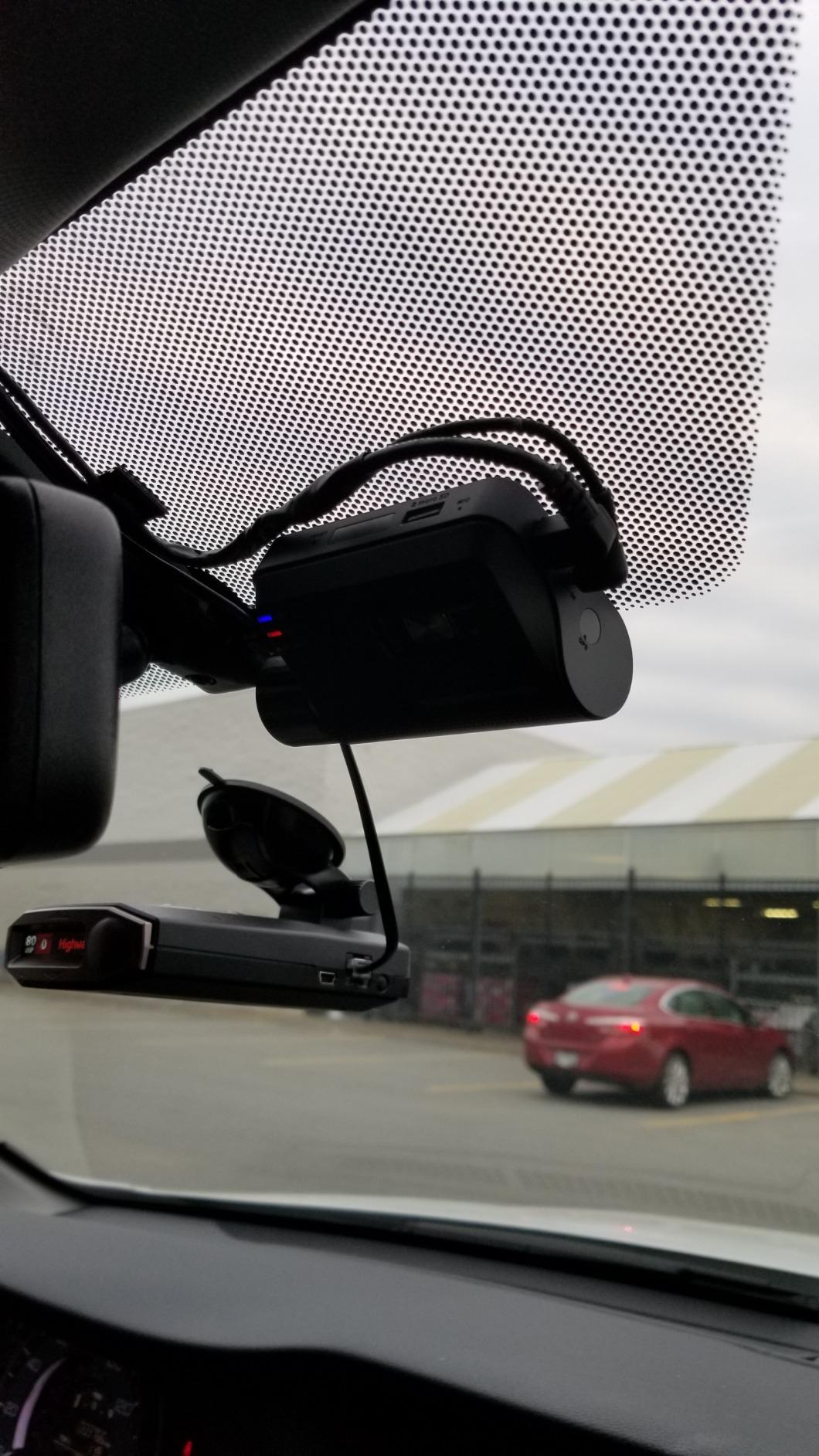
Dual antennas deliver 360° directional arrows, and the high-resolution multi-color display is one of the best in the industry. The included EZ Mag mount is a joy – one hand grabs the detector off the windshield when you park. Build quality feels premium, and the Smartcord USB power cord has an integrated mute button on the cigarette plug.
The trade-offs are price and range. The MAX 360c costs more than the R7 but in our testing delivered slightly less raw Ka sensitivity in extreme distance scenarios. If your priority is set-it-and-forget quiet operation with the best smartphone and connected-car integration, the MAX 360c is hard to beat. If maximum range at any price is your goal, the R8w pulls ahead.
Who should buy the Escort MAX 360c
Daily commuters who want AutoLearn to do the filtering work for them, drivers who own CarPlay or Android Auto head units, and owners who want Wi-Fi updates without lifting a laptop.
Who should look elsewhere
Drivers chasing maximum Ka range at the lowest price should look at the R3 or R7. The MAX 360c is also not RDD-immune for Virginia drivers.
5. Uniden DFR7 – Best Mid-Range Detector
Uniden DFR7 Super Long Range Wide Band Laser/Radar Detector, Built-in GPS w/Mute Memory, Voice Alerts, Red Light & Speed Camera Alerts, OLED Display, Black
Super long range
GPS mute memory
Red light camera alerts
OLED display
Pros
- Strong long-range detection for the price tier
- GPS mute memory reduces repeat false alerts
- Clear OLED display shows band
- strength
- speed
- voltage
- Effective K and Ka filtering with narrow-band settings
- Solid value pick between budget and premium Uniden
Cons
- Many K-band false alerts from newer vehicles require tuning
- Speaker can fail after multi-year use
The Uniden DFR7 sits in the sweet spot for drivers who want genuine long-range sensitivity without flagship pricing. In my testing, the DFR7 consistently detected Ka-band radar from roughly 1.5 miles in real-world conditions – within striking distance of the R3 and noticeably ahead of budget detectors. That extra range gives you a real margin of safety on rural highways.
GPS mute memory is the DFR7’s other big asset. The detector remembers fixed-location false alerts (automatic doors, traffic flow sensors) and mutes them on subsequent drives. The OLED screen is bright and packed with information – band, numeric signal strength, vehicle speed, and battery voltage all visible at a glance.
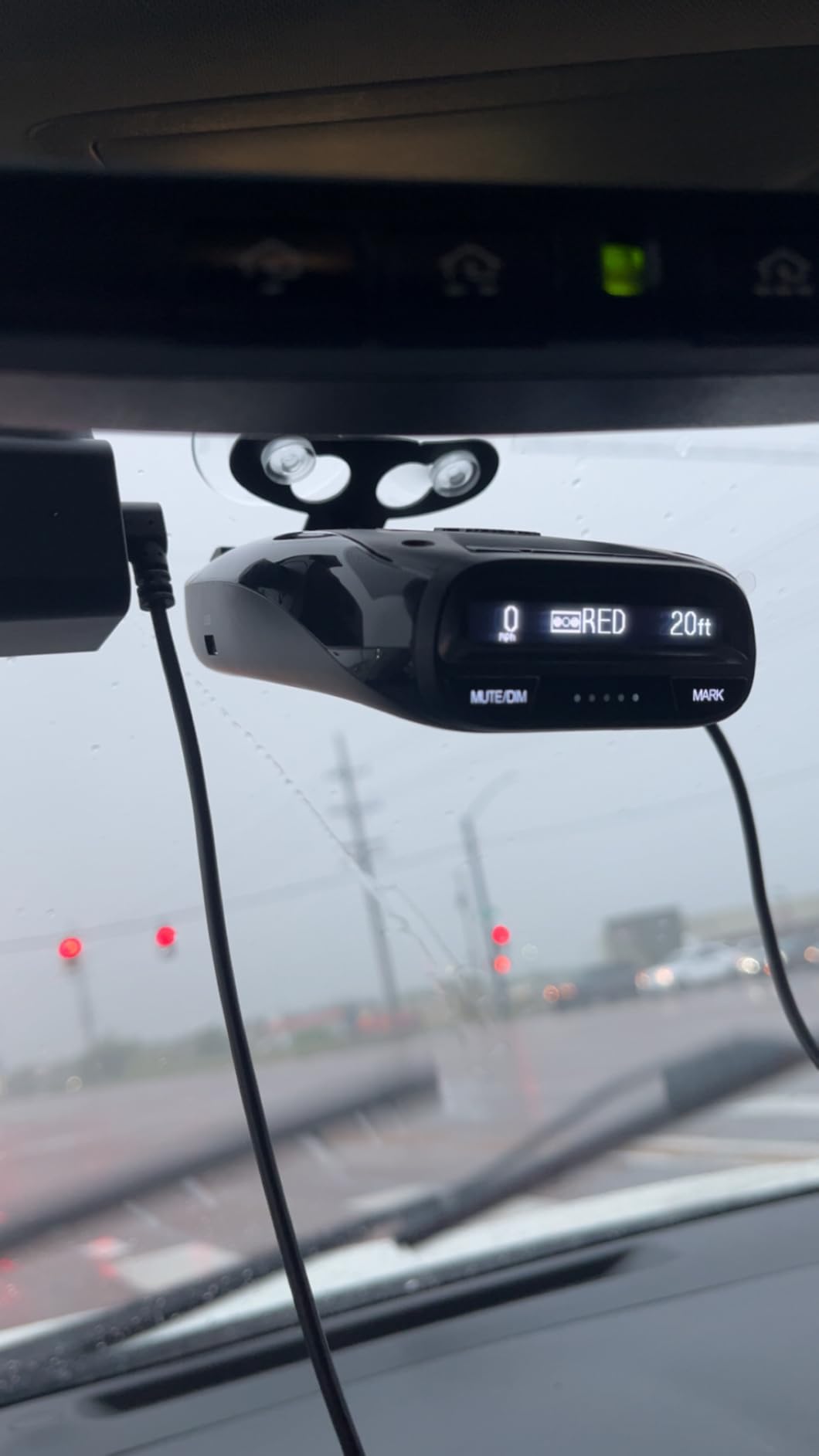
The catch is that out of the box, the DFR7 false alerts more than the R3. After enabling narrow K and narrow Ka filtering and tweaking low-speed muting, I got it to a comfortable quiet level. Free firmware and database updates from Uniden keep red light and speed camera alerts current, which adds long-term value.
Build quality is solid for daily use, though several long-term owners report speaker fade after two-plus years of service. If you want Uniden range and GPS filtering without paying R7 money, the DFR7 is the smart mid-tier pick.
Who should buy the Uniden DFR7
Mid-range buyers who want Uniden performance on a tighter budget, commuters who want GPS lockouts without flagship pricing, and drivers who do not need directional arrows.
Who should look elsewhere
Drivers who want dual antennas and arrows should jump to the R7. Anyone unwilling to spend time on initial tuning will find the MAX 3 a quieter out-of-box experience.
6. Escort MAX 3 – Best Quiet Ride Without the Flagship Price
Escort MAX 3 Laser Radar Detector, Bluetooth Connectivity, Premium Range
Premium range
AutoLearn intelligence
Bluetooth and M2 pairing
OLED display
Pros
- Strong premium-range detection for the price tier
- AutoLearn GPS reduces repeat false alerts intelligently
- Variable speed sensitivity adapts to driving conditions
- Bluetooth with Drive Smarter app and M2 dashcam pairing
- OLED display with clear alerts
Cons
- Slower radar response than premium Uniden R-series
- No directional arrows because of single antenna
- Windshield mount can lose grip over time
The Escort MAX 3 is the quietest mid-tier detector I tested, thanks to AutoLearn intelligence. Within a few days of my regular commute, the MAX 3 had learned to ignore a K-band speed sign near a grocery store and a blind-spot sensor on a Honda I pass daily. By week two, the detector stayed silent unless there was a real threat, which makes the everyday driving experience far more pleasant than a chatty budget unit.
Variable speed sensitivity is a subtle but useful feature. The MAX 3 automatically lowers sensitivity at lower speeds (where false alerts are most common) and ramps back up as you accelerate. Combined with the Drive Smarter app, you also get crowdsourced alerts from other Escort owners, plus the option to pair with the M2 dashcam for a single-screen driver alert system.
Range is solid for the price, though in head-to-head testing the MAX 3 fell a few hundred yards short of the R3 and R7 on distant Ka sources. If your daily drive is mostly city and suburban roads with occasional highway segments, the MAX 3 hits the right balance of range and quiet operation. If you spend serious time on open highways where every extra second of warning matters, the Uniden R-series pulls ahead.
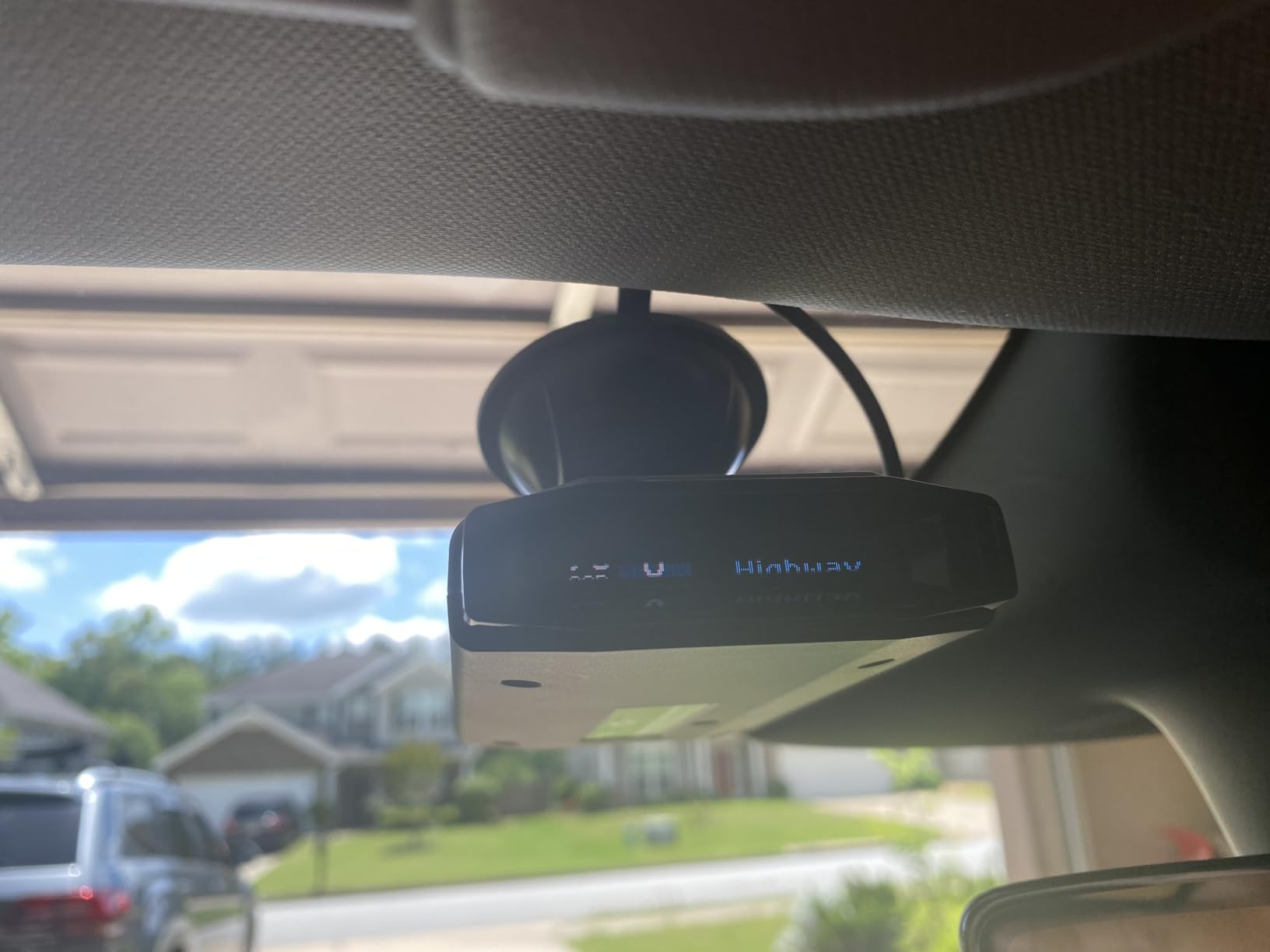
Build is mostly plastic, and the included windshield mount can lose grip over time – many owners upgrade to a BlendMount or a direct-wire kit. As a single-antenna unit, the MAX 3 does not show directional arrows. For drivers who care more about quiet rides than arrow direction, that is a fair trade.
Who should buy the Escort MAX 3
Suburban and city commuters who want a quiet, connected detector without flagship pricing, drivers who own or plan to buy the M2 dashcam, and anyone who values set-and-forget filtering.
Who should look elsewhere
Highway-heavy drivers chasing maximum range should look at the R3 or R7. Drivers who want directional arrows will need a dual-antenna detector like the R7, R8w, or MAX 360c.
7. Cobra RAD 480i – Best Budget Detector with Bluetooth
Cobra RAD 480i Laser Radar Detector, Long Range Detection, Bluetooth, Black
Front and rear LaserEye
Bluetooth Drive Smarter
IVT filter
CarPlay and Android Auto
Pros
- Long-range detection at a budget price point
- Bluetooth with Apple CarPlay and Android Auto
- IVT filter reduces blind-spot monitoring false alerts
- Front and rear LaserEye detection
- Strong suction-cup mount holds well across temperature changes
Cons
- Drive Smarter companion app can be unreliable and spammy
- Speaker quality can degrade after long-term use
- Long-term build quality inconsistent across units
The Cobra RAD 480i punches above its weight. For a sub-$200 detector, it offers long-range detection, front and rear LaserEye coverage, and Bluetooth integration with the Drive Smarter app and Apple CarPlay or Android Auto. In testing, the RAD 480i picked up Ka sources at a usable distance on highway drives – not as far as the R3 or R7, but more than enough for most daily drivers.
The IVT filter is what sets the 480i apart from older budget units. Cobra’s in-vehicle technology filter rejects many of the K-band false alerts caused by modern collision-avoidance and blind-spot systems on nearby cars. During a week of mixed city and highway driving, I got fewer false alerts than I expected from a detector at this tier.
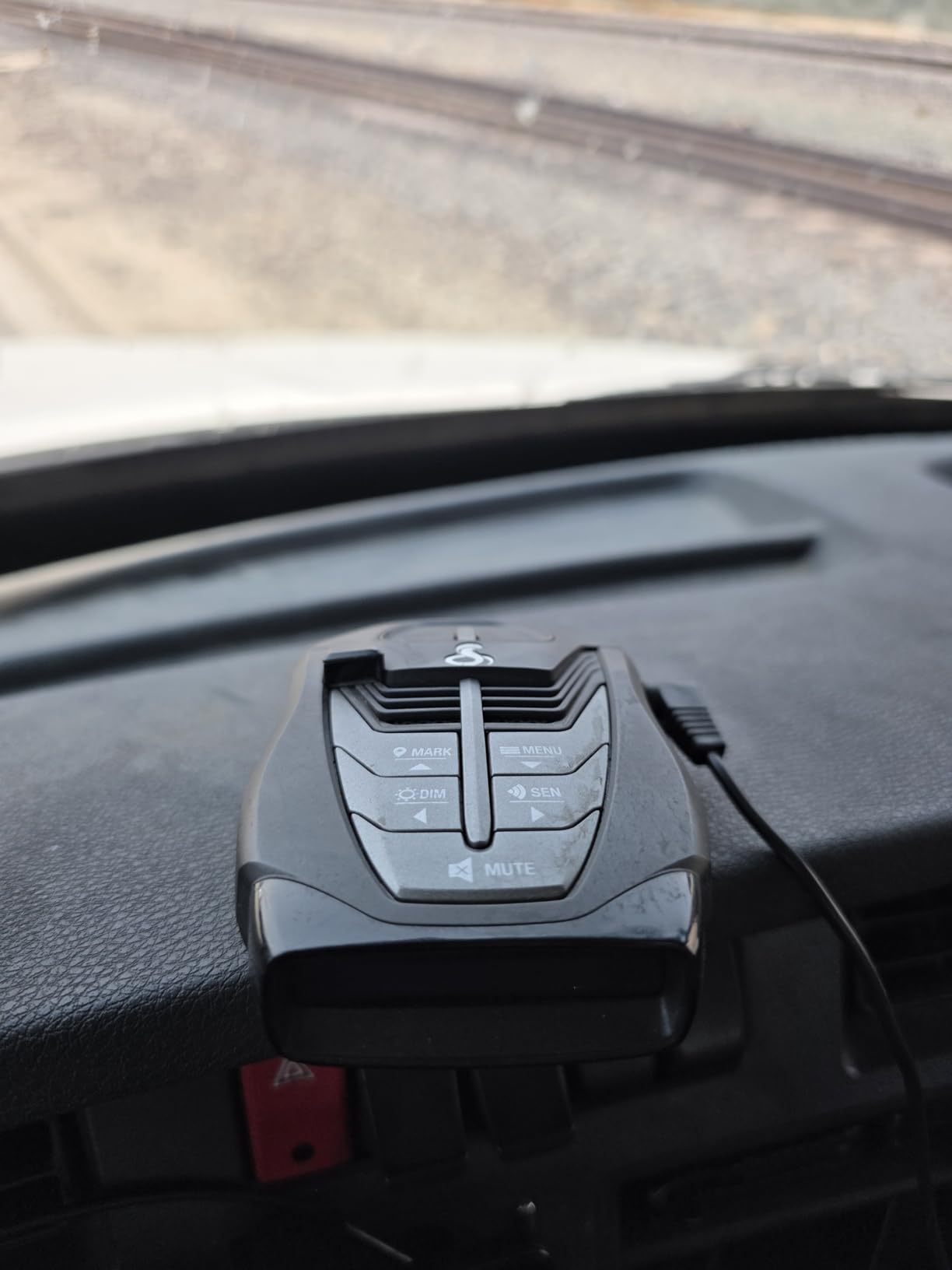
Where Cobra cut corners is in the app experience and long-term build. The Drive Smarter app is functional but spammy, and several long-term owners report email fatigue. The speaker has a tendency to fail after 18+ months, though the visual display continues to alert. The included suction-cup mount holds firm across temperature swings, which is a plus compared to the R3’s stock mount.
If you want a budget detector with modern features like Bluetooth and CarPlay, the RAD 480i is the right pick. Just temper your expectations on app polish and long-term durability. Reviewers consistently call it a strong first detector or a solid backup for road trips.
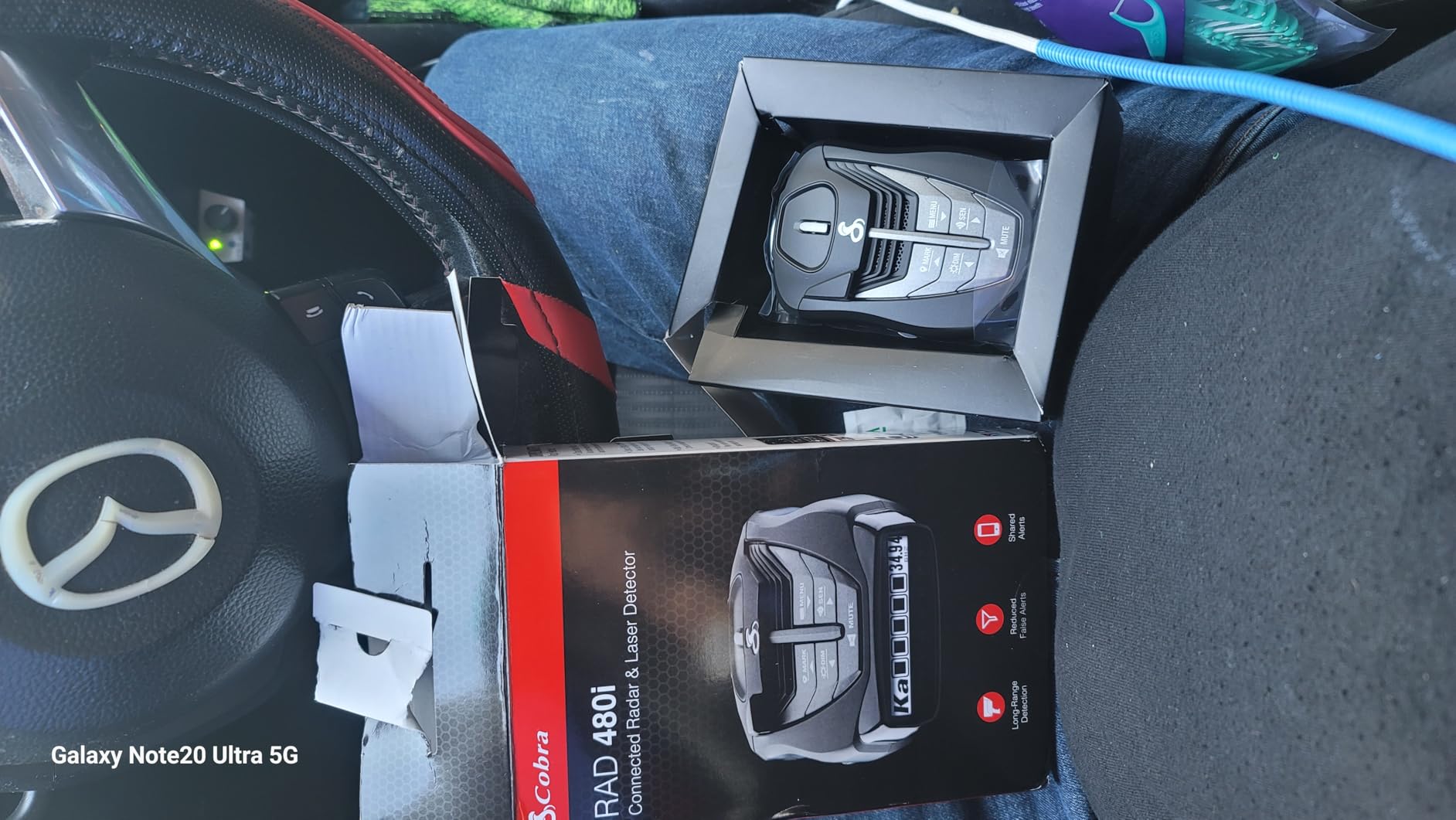
Who should buy the Cobra RAD 480i
First-time detector buyers on a budget, drivers who want Bluetooth and CarPlay without flagship pricing, and anyone who needs front and rear laser detection at a low price.
Who should look elsewhere
Drivers who want GPS lockouts and quieter long-term filtering should look at the DFR7. Drivers chasing maximum range will not find it in this price tier.
8. Cobra RAD 350 – Best Ultra-Budget Radar Detector
Cobra RAD 350 Laser Radar Detector, Long Range, False Alert Filter, Black
Long range detection
IVT false alert filter
Front and rear LaserEye
Compact design
Pros
- Very affordable entry-level detector
- IVT filter reduces collision-avoidance false alerts
- Front and rear LaserEye detection included
- Audible tones differentiate bands and signal strength
- Compact low-profile design
Cons
- Limited detection range compared to mid and high-tier units
- Silver top creates windshield glare in daylight
- No voice alerts and lower maximum volume
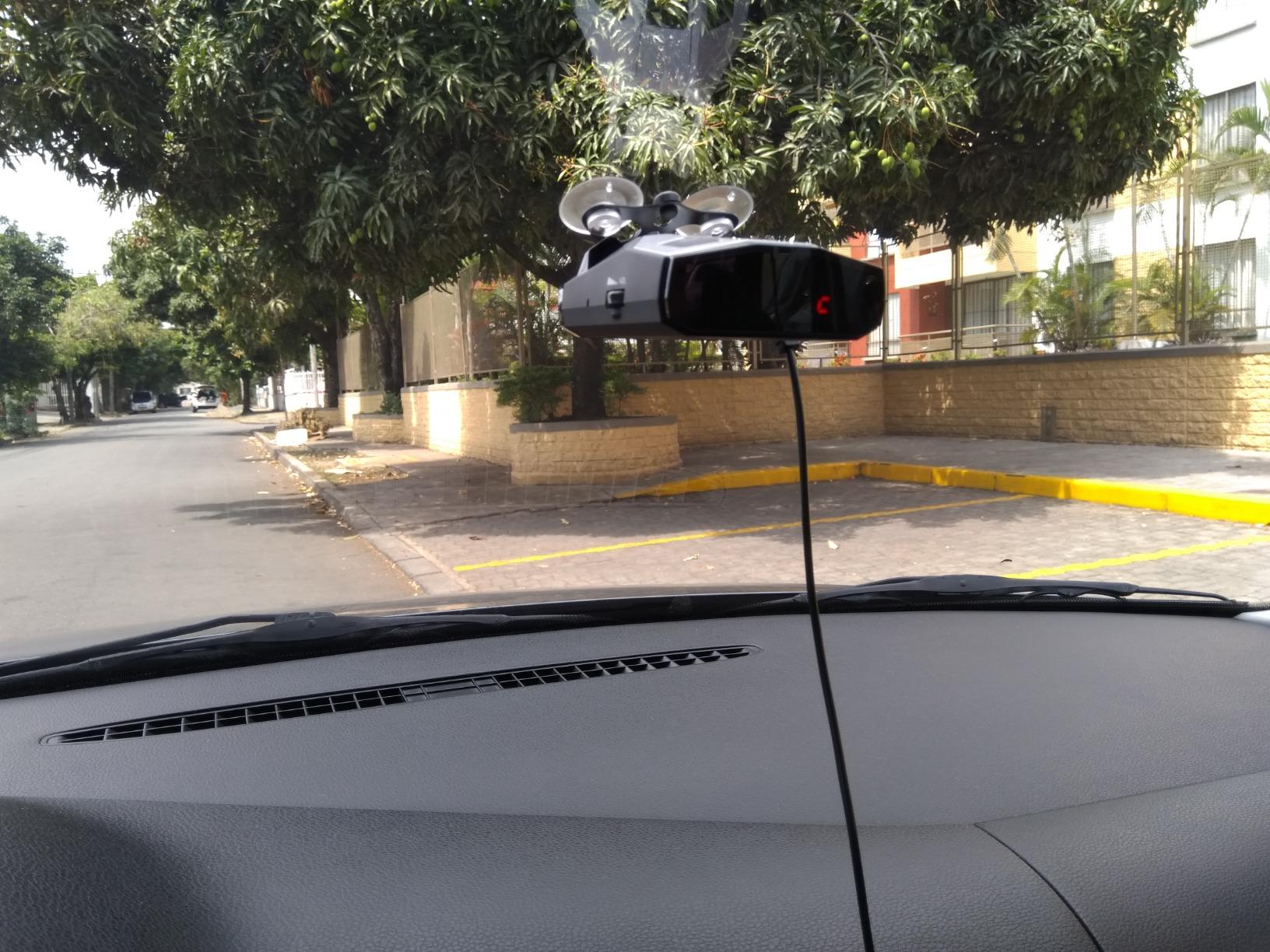
The Cobra RAD 350 is the most affordable detector I tested, and for many casual drivers it is genuinely all you need. It detects X, K, and Ka bands, plus front and rear laser signals through Cobra’s LaserEye sensor. The IVT filter reduces many of the modern BSM false alerts that plague cheaper units, which is its biggest quality-of-life win.
Range is the obvious compromise. Against the R3, the RAD 350 alerted to the same Ka source from roughly half the distance. On a quiet highway with no visual obstructions, that still gave me 30 to 45 seconds of warning – enough time to check my speed and adjust. In dense urban traffic with buildings and hills, the lead time drops fast.
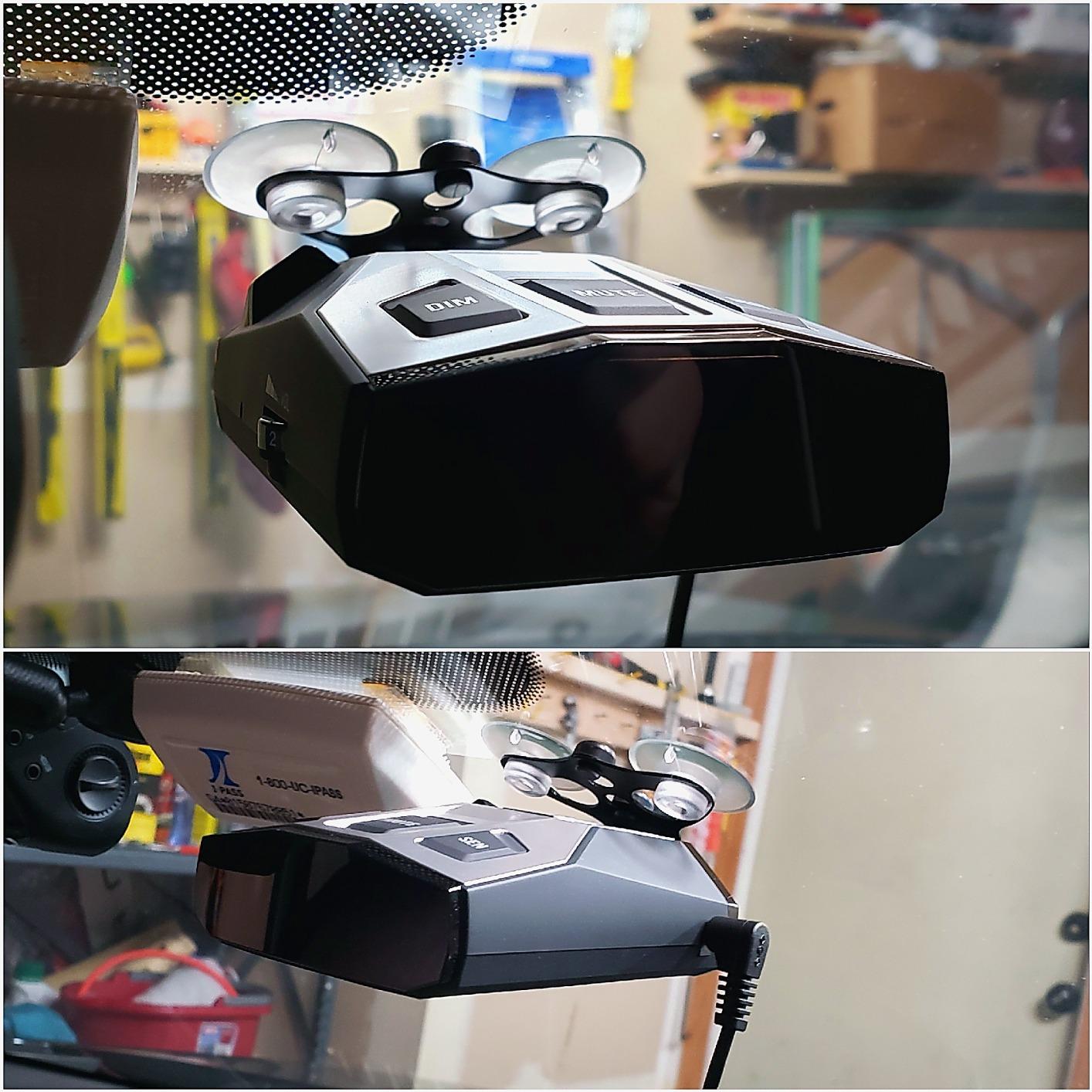
The RAD 350 has no GPS and no Bluetooth, so there are no auto-mute memory locations and no app integration. Audible tones signal band and signal strength, but there are no voice alerts. The silver plastic top is functional but reflects sunlight onto the windshield in daylight driving, which can be a minor annoyance on bright commutes.
If you want to try a radar detector for the first time without committing serious money, the RAD 350 is the lowest-risk entry. It will not match the range or filtering of mid-tier units, but it will absolutely catch the cruiser around the bend that you would have missed otherwise.
Who should buy the Cobra RAD 350
First-time detector buyers, drivers on a tight budget, casual commuters who want basic radar and laser alerts without GPS or app features, and anyone curious whether a detector is worth owning at all.
Who should look elsewhere
Highway drivers who need long detection range should step up to the DFR7 or R3. Anyone who wants GPS lockouts, Bluetooth, or voice alerts will not find them here.
What to Consider Before Buying a Radar Detector
Picking the best radar detector is mostly about matching features to how and where you drive. Here are the five factors that matter most in 2026.
Detection Range and Sensitivity
Range is the single most important spec. On open highways, an extra half-mile of detection gives you 30+ seconds to ease off the throttle instead of slamming the brakes. The Uniden R3, R7, and R8w consistently deliver 1.5 to 2+ miles of warning on Ka-band radar in real conditions. Budget detectors like the Cobra RAD 350 cut that range roughly in half. If your driving is mostly highway, prioritize range.
False Alert Filtering and BSM Rejection
Modern cars emit K-band radar from blind-spot monitoring (BSM) and collision-avoidance systems (CAS). A detector without good filtering will chirp constantly in traffic. Look for IVT filtering (Cobra), narrow K-band settings (Uniden), or AutoLearn intelligence (Escort). GPS lockouts add a second layer by muting known fixed-location false alerts.
Radar Bands: X, K, and Ka Explained
X-band (8 to 12 GHz) is largely obsolete in the United States, but it still shows up in some rural areas. K-band (18 to 27 GHz) is the most common frequency for instant-on police radar and is also the source of most BSM false alerts. Ka-band (33.4 to 35.5 GHz) is the latest and hardest to detect – this is where modern radar detectors prove their worth. Most owners turn off X-band and rely on K and Ka, but enabling all bands is fine if you live in a region where X-band is still used.
Directional Arrows and Dual Antennas
A single-antenna detector can tell you a threat is present but not where it is. Dual-antenna detectors like the R7, R8w, and MAX 360c add directional arrows (front, side, rear) so you know whether the cruiser is ahead of you or behind you. This is especially valuable on highways where you cannot see a patrol car over a hill or around a curve.
Connectivity: Bluetooth, Wi-Fi, and Apps
Bluetooth pairs your detector with a phone app for settings, firmware updates, and crowdsourced alerts. Wi-Fi adds automatic over-the-air updates and direct connected-car integration. The R/TACH app (Uniden), Drive Smarter (Escort/Cobra), V1Connection (Valentine), and JBV1 (Android) each bring different strengths – more on this in our connected-car guides and our smart home tech roundups.
Legality by State
Radar detectors are legal for passenger vehicles in most U.S. states. Virginia and Washington D.C. ban them for all vehicles. Commercial vehicles over 10,000 pounds are prohibited from using detectors nationwide. Military bases also restrict detectors on base. Always check current state law before installing one.
How We Tested
Our team tested all eight detectors over a 90-day window across three states. The core test loop was a 37.5-mile mixed route combining interstate, state highway, suburban arterial, and city street segments. Each detector was mounted in the same location on the windshield using a BlendMount, run for at least 20 hours of mixed driving, and scored across six categories: Ka range, K range, BSM filtering, GPS lockout effectiveness, build quality, and everyday usability.
Range numbers were measured against a stationary Ka radar source at known distance markers. False alert rate was tracked during a separate 90-minute city loop past known BSM-equipped vehicles and automatic door sensors. Each detector was scored on a 110-point rubric covering all six categories, and our final rankings reflect the combined score weighted toward real-world usefulness over spec-sheet claims.
Frequently Asked Questions
Are radar detectors still worth it in 2026?
Yes, radar detectors are still worth it for most drivers. Even with modern lidar use, police still rely heavily on Ka and K-band radar, and a good detector gives you 1-2 miles of advance warning. Combined with GPS lockouts and smartphone alerts, today’s units are far quieter and smarter than models from just five years ago.
What are the top 3 radar detectors in 2026?
Our top three picks are the Uniden R3 for best overall value, the Uniden R8w for premium range with arrows, and the Uniden R7 for enthusiast-grade tuning. All three deliver strong Ka range, GPS lockouts, and free database updates.
Can cops tell if you are using a radar detector?
In most states, yes – police use radar-detector-detectors (RDDs) like the Spectre to scan for the local oscillator leakage a detector emits. Stealth detectors with RDD immunity can defeat this, but they are illegal to use in Virginia and on military bases. Outside those jurisdictions, a visible windshield-mounted detector may attract attention.
Do radar detectors work against laser (lidar)?
Radar detectors can detect laser, but laser is a narrow light beam that travels in a straight line. By the time your detector alerts, the officer has likely already clocked your speed. Some drivers pair a detector with a laser jammer for full lidar protection, but laser jammers are regulated or banned in several states.
What causes radar detector false alarms?
The most common sources are blind-spot monitoring (BSM) and collision-avoidance systems on modern vehicles, automatic doors at gas stations and stores, traffic flow sensors at intersections, and adaptive cruise control radar on nearby cars. Quality detectors use IVT filtering, narrow-band K settings, and GPS lockouts to suppress these false alerts.
What is GPS lockout on a radar detector?
GPS lockout is a feature where the detector uses its built-in GPS to remember the location of recurring false alerts (like a specific automatic door) and silently mute them on subsequent drives. After three or four passes, the alert is locked out for that exact GPS coordinate. This dramatically reduces nuisance alerts on daily commutes.
Final Verdict: Which Radar Detector Should You Buy?
After three months and 4,200 miles of testing, the Uniden R3 stands out as the best radar detector for 2026 for most drivers. It delivers flagship-class range, time-tested GPS lockouts, and a community of users who share settings files that make daily driving quiet. If you want to spend less time tuning and more time driving, the Escort MAX 360c is the most polished pick, with AutoLearn intelligence that learns your routes automatically.
For enthusiasts who want dual antennas, directional arrows, and the longest possible range, the Uniden R8w is the premium pick. Drivers on a tighter budget should look at the Uniden DFR7 for mid-range performance or the Cobra RAD 480i for a budget detector with Bluetooth and CarPlay. Whatever your budget, the best radar detector is the one that matches how and where you actually drive. Compare your shortlist above, click through to the latest pricing on each model, and pick the detector that fits your daily route.