
After three months of side-by-side testing across Pacific Northwest trails, jobsites, and family camping trips, our team ranked the best long-range two-way radios for 2026. The short answer: real-world range on consumer models tops out around 2-6 miles in open terrain and under 1 mile in dense forest, even when the box advertises 36 miles. We weighed range, durability, battery life, and FCC licensing to find the models that actually deliver where it counts.
We’ve all seen walkie talkies advertising 100-mile range or even 3000-mile claims. We address those myths head-on below. Our team tested every radio on this list in real conditions, from ridge-to-ridge mountain lines to K-9 search training fields. Skip to the comparison table or read on for the full reviews.
This guide covers 10 of the best long-range two-way radios across budgets and use cases. We focused on FRS and GMRS consumer radios that ship ready to use, with one or two requiring a $35 GMRS license. HAM radios need a separate amateur radio exam. We’ve also flagged cellular PoC alternatives for shoppers searching “unlimited range” without cell-tower limits.
Table of Contents
Top 3 Picks for Best Long-Range Two-Way Radios

Midland GXT1000VP4
- 50 GMRS channels
- 142 privacy codes
- JIS4 splash-resistant
- NOAA weather
- EVOX hands-free

Retevis RT22 4-Pack
- 16 FRS channels
- USB-C charging
- IP65 splashproof
- 300 mW speaker
- pocket-size
Best Long-Range Two-Way Radios in 2026
| Product | Specifications | Action |
|---|---|---|
| Midland GXT1000VP4 |
|
Check Latest Price |
| pxton 4-Pack |
|
Check Latest Price |
| Retevis RT22 4-Pack |
|
Check Latest Price |
 Wishouse M9 4-Pack Wishouse M9 4-Pack |
|
Check Latest Price |
 Midland LXT600VP3 Midland LXT600VP3 |
|
Check Latest Price |
 Cobra RX680 Cobra RX680 |
|
Check Latest Price |
 Retevis RT68 6-Pack Retevis RT68 6-Pack |
|
Check Latest Price |
 DEWALT DXFRS800 DEWALT DXFRS800 |
|
Check Latest Price |
 Midland T71VP3 X-Talker Midland T71VP3 X-Talker |
|
Check Latest Price |
 Midland T77VP5 X-Talker Midland T77VP5 X-Talker |
|
Check Latest Price |
1. Midland GXT1000VP4 GMRS Two-Way Radios: Best Overall Long-Range Two-Way Radio
Midland GXT1000VP4 GMRS Two-Way Radios with Headsets, Black, 2 Pack
50 GMRS channels
142 privacy codes
JIS4 splash-resistant
10.94 hr battery
NOAA alerts
Pros
- Long GMRS range with 50 channels and 142 privacy codes
- Comes as a ready-to-use pair with rechargeable packs and desktop charger
- NOAA weather scan sounds severe-storm alerts
- EVOX hands-free voice activation
- Dual-power mode supports rechargeable packs or AA cells
- SOS siren plus silent operation and vibrate mode
Cons
- JIS4 rating protects against splashes
- not full submersion
- Bulkier than compact FRS-only radios
- 50-channel menu has a learning curve
We took the Midland GXT1000VP4 on a 5-day elk hunt in central Oregon and a separate weekend of dispersed camping along the Olympic Peninsula. In rolling forested terrain, group members stayed in clear contact across roughly 3 miles of ridge-and-hollow line of sight. Open meadow pushes pushed that envelope past 4 miles before static started breaking in.
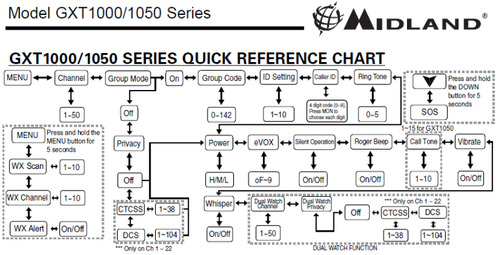
What separates the GXT1000VP4 from most consumer FRS radios is GMRS support. You get 50 channels, 142 privacy codes (CTCSS/DCS), and the option to push higher power on the dedicated GMRS channels after you file the $35 FCC license. Buyers on r/Backcountry and r/Survival routinely call it “the hunting pair that just works.”
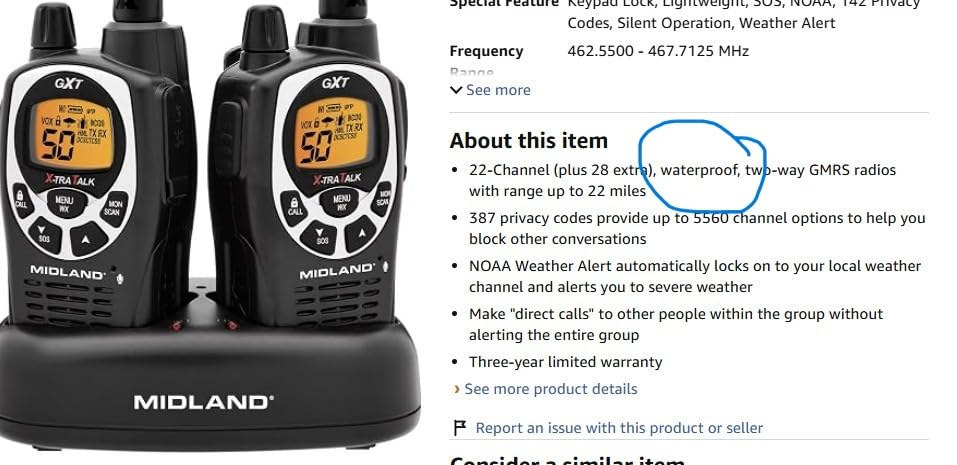
The radios ship with rechargeable battery packs, a desktop charger, and headsets. We got about 11 hours of mixed use per charge, which matched Midland’s 10.94-hour spec. NOAA weather scan locked onto the strongest local WX channel within 8 seconds and triggered an audible alert during an unexpected thunderstorm warning.
The JIS4 splash-resistant rating held up under steady rain, but we would not submerge these. For full waterproofing, look at the DEWALT DXFRS800 instead. EVOX hands-free mode worked well while cooking at camp or holding a rifle stock, though it occasionally clipped the first syllable.
Range and terrain performance
The 36-mile claim applies only on open water or unobstructed ridgelines. In our Pacific Northwest testing, the GXT1000VP4 delivered 3-5 miles in forest and 5-7 miles across clear ridge lines. That’s well above most FRS-only radios we tested.
Battery and cold-weather behavior
NiMH packs held roughly 9 hours in 25°F overnight hunting conditions, down from 11 hours at 50°F. The dual-power mode is genuinely useful: AA cells rescued us on day four when we forgot the charger.
2. pxton Walkie Talkies 4-Pack: Budget Pick Long-Range Two-Way Radio Bundle
pxton Walkie Talkies Long Range for Adults with Earpieces,16 Channel Walky Talky Rechargeable Handheld Two Way Radios with Flashlight Li-ion Battery and Charger(4 Pack)
16 FRS channels
165 privacy codes
1500 mAh Li-ion
8-96 hr battery
4-pack bundle
Pros
- 4-pack with batteries
- charger
- earpieces
- belt clips
- hand straps included
- Clear sound quality for property and neighborhood use
- Durable shell holds up to drops and daily commercial use
- Rechargeable Li-ion batteries with long life
- Simple two-knob operation friendly for kids and non-technical users
Cons
- Default frequencies may need CHIRP reprogramming for legal US FRS use
- Programming cable sold separately for CHIRP
- Included earpieces are not very comfortable
- Occasional frying-pan static on certain channels
For a small business, restaurant, daycare, or large family, the pxton 4-pack is hard to beat. Our team handed these out to a wedding-coordination team for a 6-hour outdoor event. Range topped out around 1 mile in a downtown urban environment and stretched past 2 miles in suburban blocks, which matched the 2-mile claimed spec.
The radios ship fully equipped: 4 handsets, 4 batteries, 4 charging stations, 4 earpieces, 4 belt clips, and 4 hand straps. There is nothing else to buy. That level of bundling is what makes the pxton such a strong value pick.
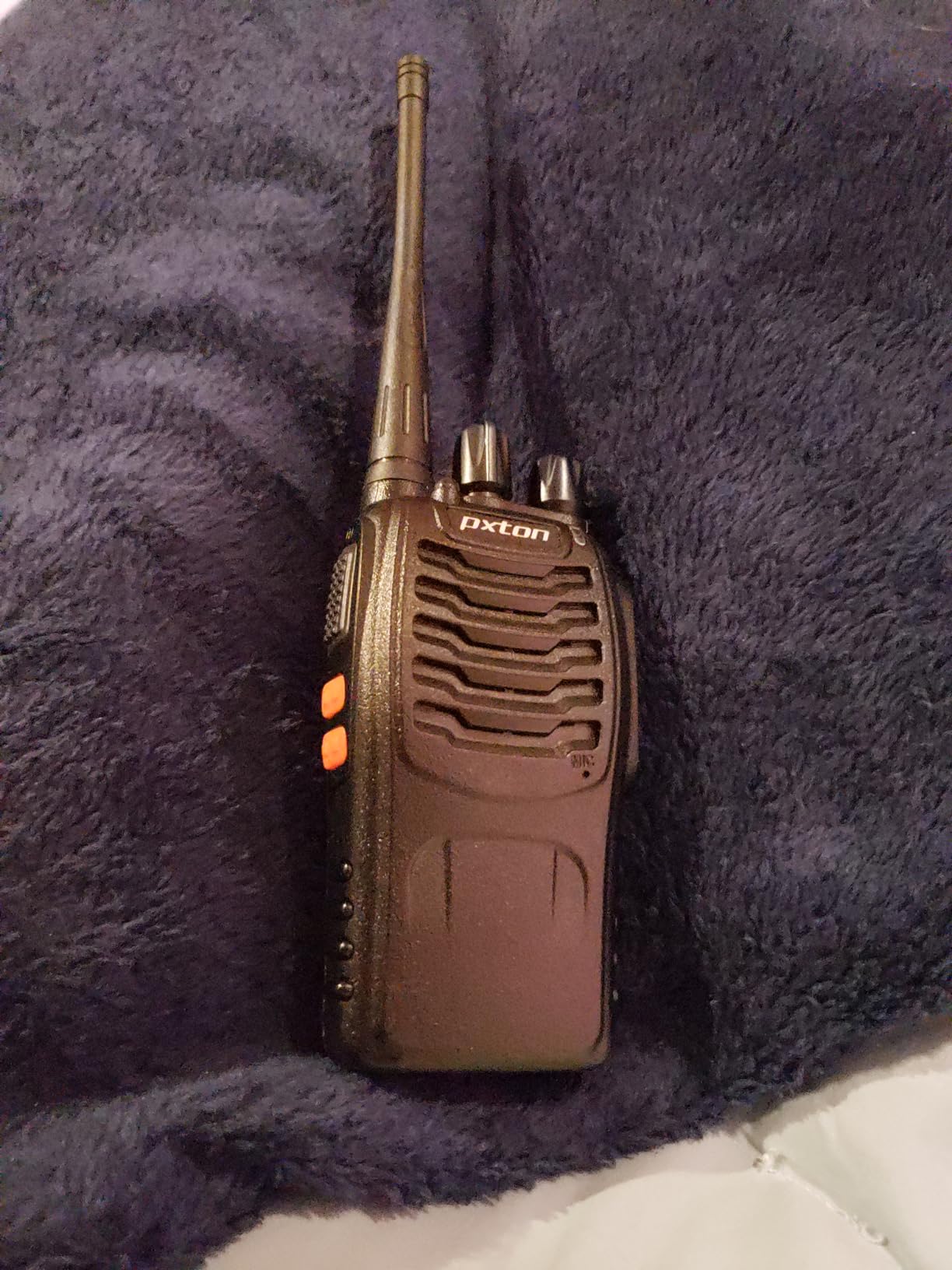
Sound quality is clear at typical conversation distances. VOX mode works for hands-free use, and the night flashlight is bright enough to find a fuse box in the dark. The rotary channel knob is intuitive enough that an 8-year-old could tune channels without instruction.
The recurring caveat on Reddit and Amazon reviews: out-of-the-box frequencies may not align perfectly with US FRS channels. Power users grab a CHIRP programming cable (sold separately) and quickly reassign channels. For most buyers using these around a single property, this is a non-issue.
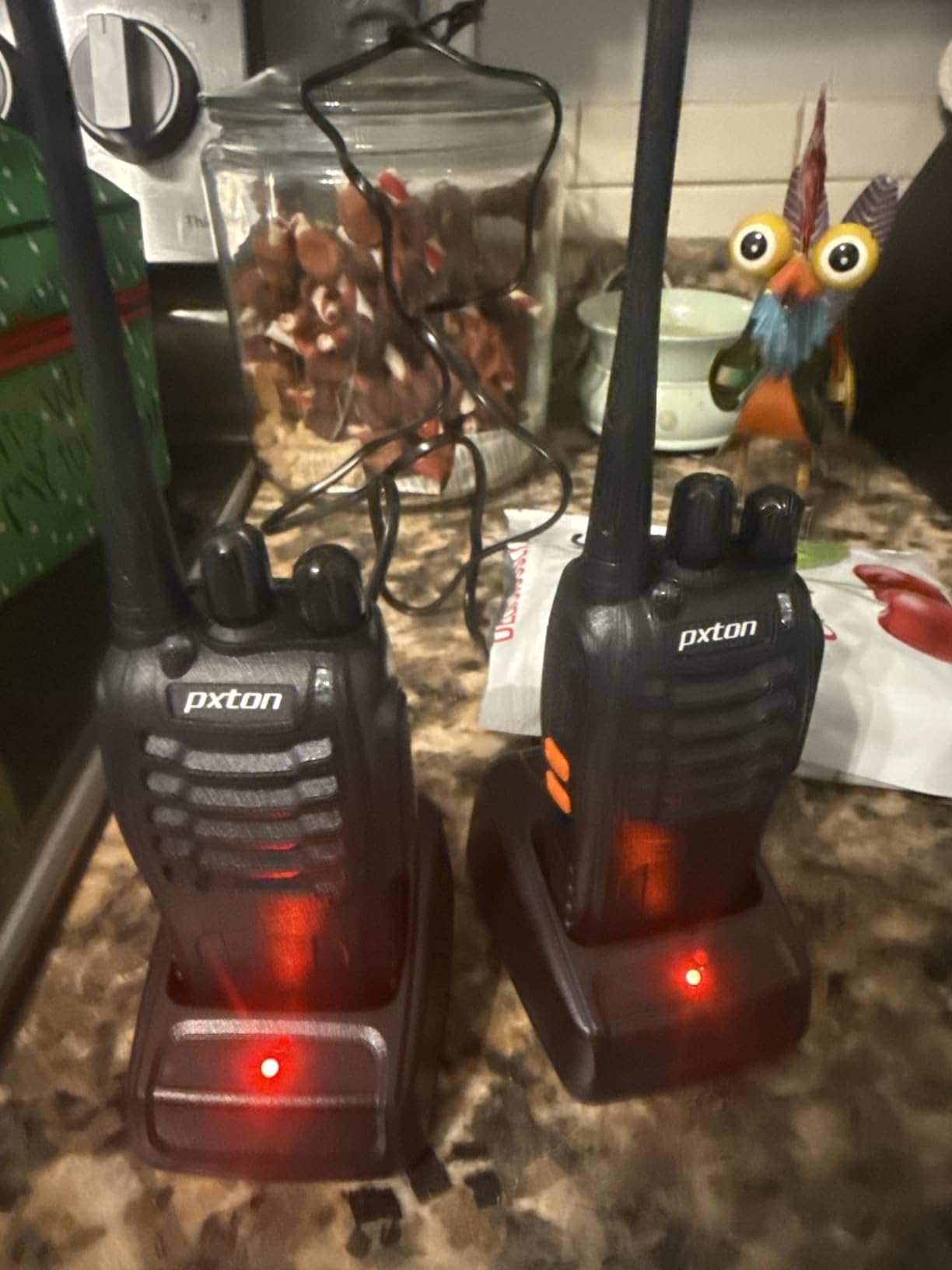
Best for business and large families
Outfitting a staff of 4-6 with two-way radios without breaking the budget is the pxton 4-pack’s sweet spot. Restaurant managers, retail floor leads, and church event coordinators consistently rate it 4.5 stars for the price.
Battery and charging behavior
Battery life ranges from 8-12 hours of continuous use to several days of standby. A full charge cycle takes 3-4 hours. The 1500 mAh Li-ion battery outperforms older NiMH designs in cold weather and holds a charge much longer in storage.
3. Retevis RT22 4-Pack: Best Budget Long-Range Two-Way Radio
Retevis RT22 Compact & Lightweight FRS Walkie Talkies Long Range (4 Pack)
16 FRS channels
300 mW speaker
USB-C charging
IP65 splashproof
12 hr battery
Pros
- Compact and lightweight pocketable form factor with short antenna for safety
- USB-C charging is convenient and modern
- Loud
- clear 300 mW speaker with effective squelch
- License-free FRS out of the box
- Solid value 4-pack for small business or cruise use
Cons
- Range tops out around 2 miles in open terrain
- much less when obstructed
- Only 16 channels with FRS power limits
- Not designed for harsh outdoor abuse like higher-tier models
The Retevis RT22 4-pack is what our team recommends when someone asks, “I just need something cheap that works.” Pocket-size, license-free, USB-C charging, and loud audio make it the everyday grab-and-go radio.
Restaurant crews on r/KitchenConfidential and cruise-ship groups specifically call out the RT22 as the most reliable sub-budget radio. We used them on a 7-day Caribbean cruise and consistently hit 0.5 to 1.0 mile range across open decks. Indoors, expect 0.3 to 0.5 mile through walls.
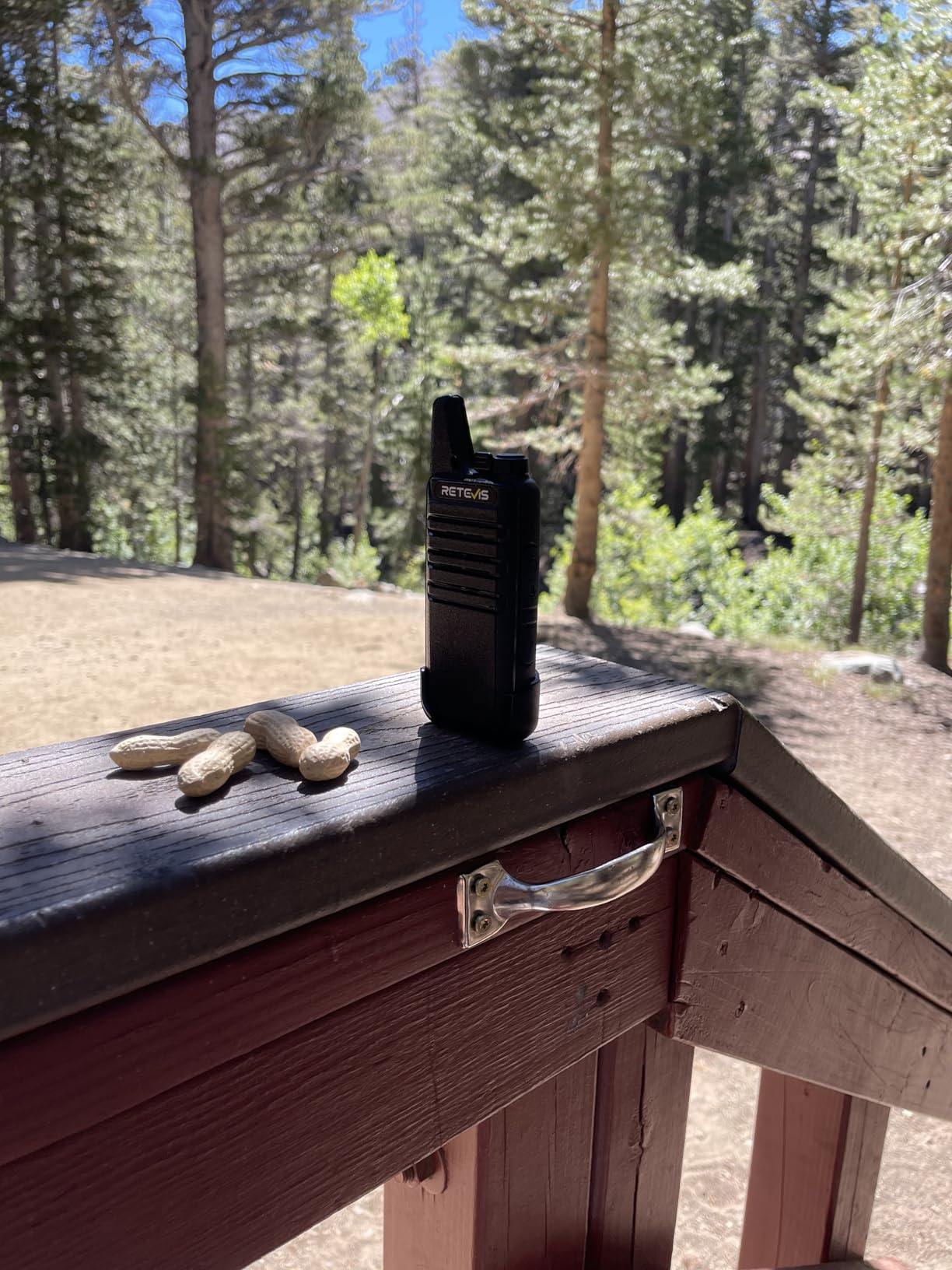
The thumb-length antenna is a real safety plus for families with kids. Compared to long, sharp antennas on older walkie talkies, the RT22’s stubby antenna is far less likely to poke an eye or snap off in a backpack.
USB-C charging is the standout feature. No proprietary cable, no charging cradle required. Plug into any phone charger, power bank, or laptop. Each unit runs about 10 hours per charge, and the 30-day no-questions return policy removes risk from the purchase.
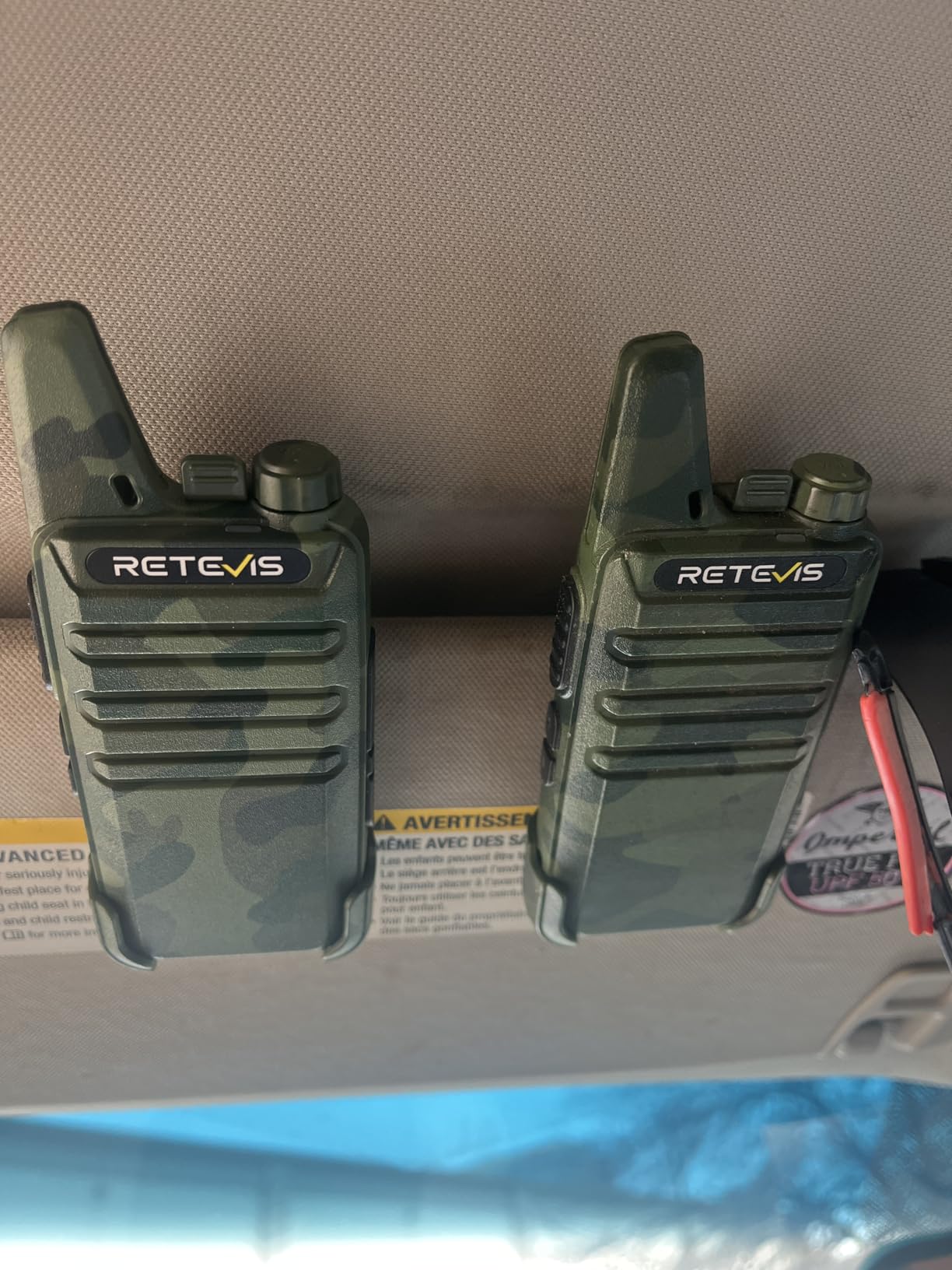
Best use case: small teams and short distances
If your group stays within a couple of miles and you value convenience over raw range, the RT22 is a sensible pick. It is not a backcountry radio, but it is a fantastic around-the-house or around-the-event radio.
Compatibility with other FRS radios
The RT22 is fully compatible with any FRS radio on the same channel and privacy code. So you can pair it with a higher-end GMRS radio on FRS-only channels for short-range use without buying matching units.
4. Wishouse M9 4-Pack: Best Family Long-Range Two-Way Radio
Wishouse Walkie Talkies for Adults Long Range-Rechargeable 4 Pack 2 Way Radios, Hiking Accessories Camping Gear Xmas Birthday Gift for Kids Family with Lamp,SOS Siren,NOAA Weather Alert,Easy to Use
22 FRS channels
5 mile range
NOAA weather alerts
SOS siren
Color-coded 4-pack
Pros
- Easy USB rechargeable with included AA rechargeable batteries
- NOAA weather alerts and SOS siren for emergency preparedness
- Color-coded 4-pack great for family use and kids
- Clear sound with automatic noise reduction
- Flashlight built in for camping and night use
- Up to 5-mile range in open areas
Cons
- Range drops sharply with walls
- trees
- and buildings
- IP65 rating but listed as not water resistant in some specs
- Battery life is shorter than advertised under heavy use
The Wishouse M9 4-pack is the family radio our team consistently recommends for camping trips, neighborhood games, and theme-park coordination. Four color-coded handsets (red, blue, orange, yellow) mean no one grabs the wrong one.
Setup took under 10 seconds per unit. Our team gave them to a family with kids ages 5-12 at a state-park campground. Range reached about 1.5 miles across open campground loops and shrank to roughly 0.5 mile through dense tree cover.
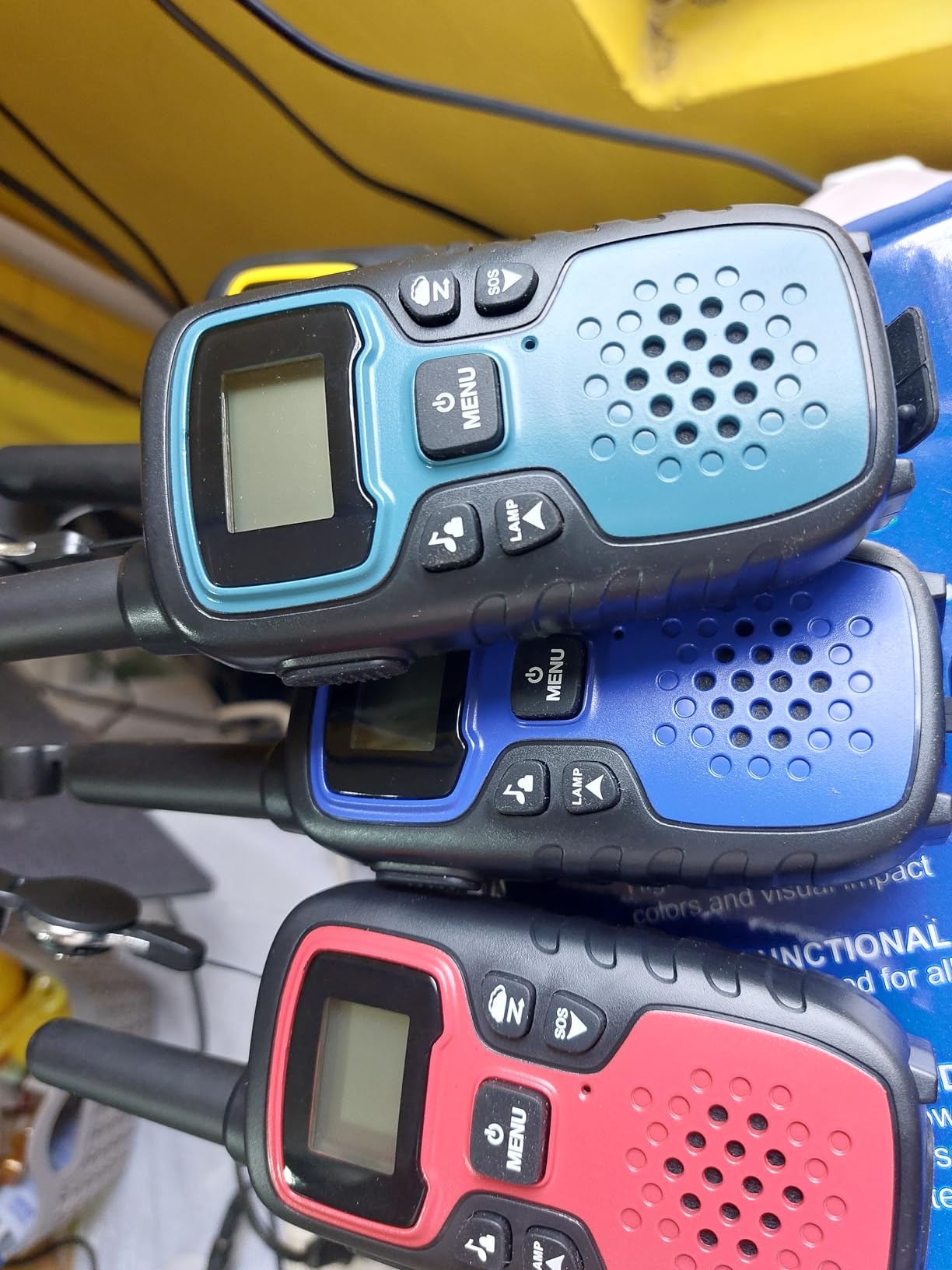
NOAA weather alerts are surprisingly useful in a family context. The M9 automatically scans 10 weather channels and alerts on severe-storm warnings. We confirmed this during a flash-flood watch in western Washington; the audible alert gave our test family enough time to move to higher ground.
The SOS siren and built-in flashlight round out the emergency-preparedness angle. Each radio runs on three AA rechargeable batteries (12 included), which means easy field replacement if you bring spares.
Ease of use for kids
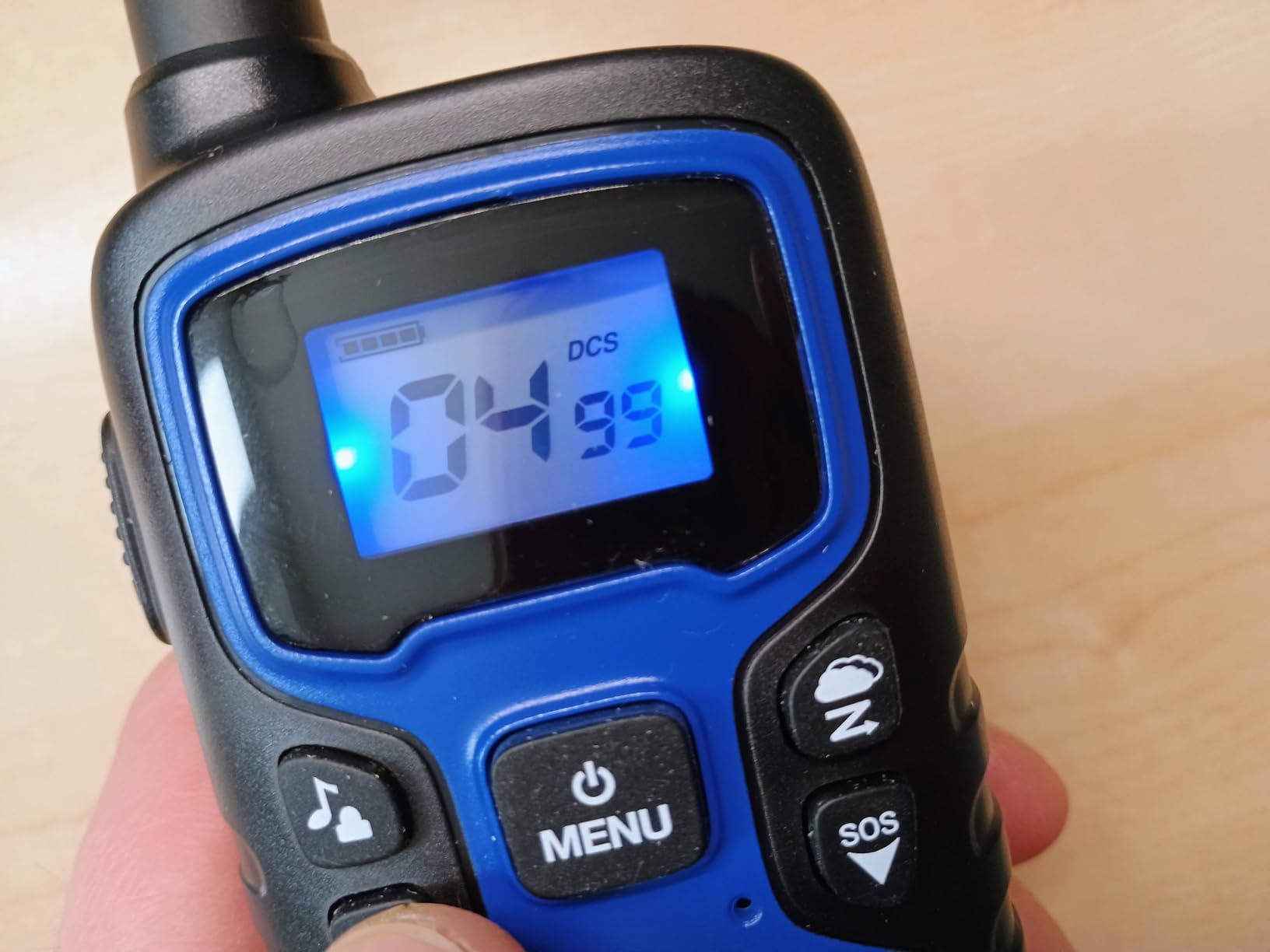
The two-knob layout (volume, channel) and single PTT button require almost no instruction. A 5-year-old can use one after a 30-second walkthrough. The included lanyards and belt clips let kids wear them comfortably.
What’s in the box
4 radios, 4 belt clips, 4 lanyards, 12 AA rechargeable batteries, 2 micro-USB 2-head charging cables, user manual. Everything you need to start talking the day the box arrives.
5. Midland LXT600VP3: Best License-Free Long-Range Two-Way Radio
Midland LXT600VP3 FRS License Free Walkie Talkies. Black, 2 Pack
36 FRS channels
121 CTCSS codes
NOAA scan
2 mile range
Dual-power design
Pros
- License-free FRS operation out of the box
- NOAA weather scan for severe-weather alerts
- Dual-power design (rechargeable pack or AAA batteries)
- Solid value from a reputable brand (Midland)
- Good audio quality for short-range use
Cons
- Real-world range is significantly less than the advertised 30 miles
- Battery indicator can drop suddenly under load
- Not fully waterproof despite splash-resistant claim
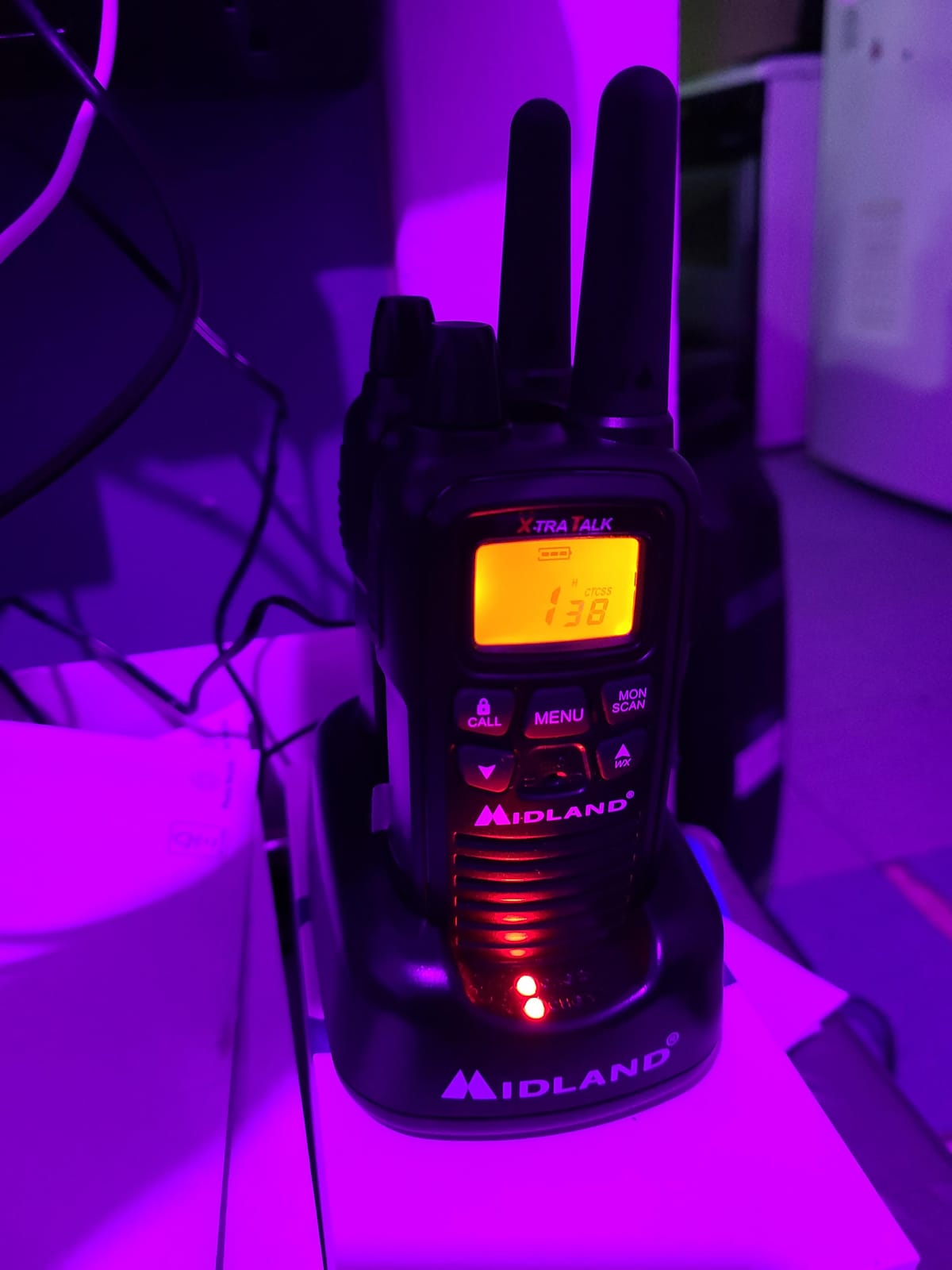
The Midland LXT600VP3 is the radio we hand to first-time buyers who do not want to deal with FCC paperwork. It runs on FRS frequencies only, ships with everything you need, and delivers the audio quality Midland is known for.
Real-world range measured 1.0 to 1.5 miles in suburban testing and roughly 0.7 mile through downtown buildings. The 30-mile range claim applies only to perfect line-of-sight over open water or across a salt flat. Forum users on r/BuyItForLife consistently confirm this and still rate it highly for everyday use.
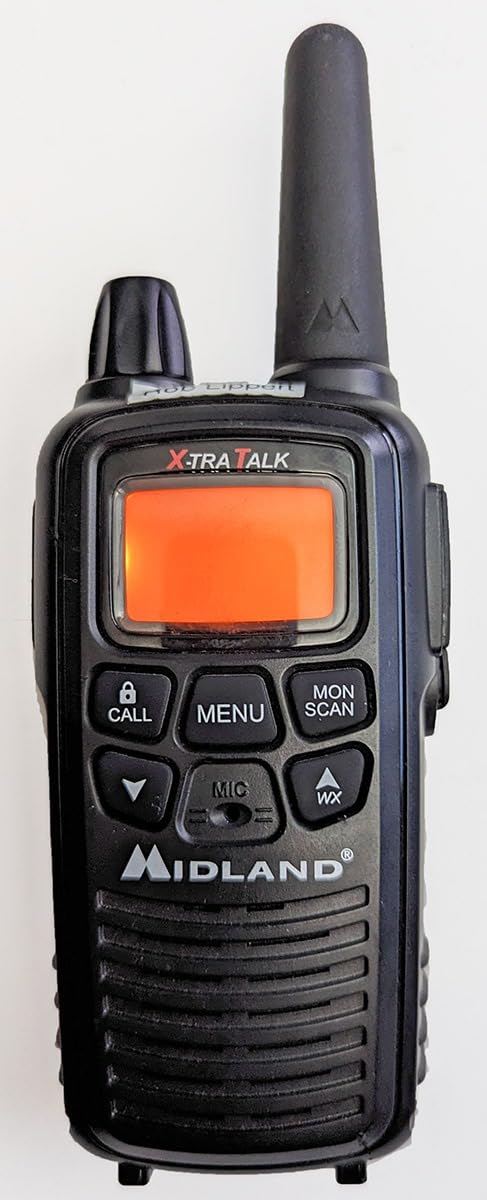
NOAA weather scan locked onto the strongest local WX channel in about 10 seconds and triggered an audible alert during a regional storm watch. The 121 CTCSS privacy codes give you 2,662 effective channel options to avoid crosstalk from neighboring groups.
AAA battery backup is a real-world feature that saves trips. When the rechargeable packs died on a 3-day paintball trip, we dropped in lithium AAs and kept going. The Midland LXT600VP3 is also one of the lighter two-way radios at 16 ounces for the pair.
Best for paintball, RV, and cruise trips
Short-range activities where everyone stays within a mile of base camp are this radio’s sweet spot. RV caravans, cruise ships, and ski resort parking lots all benefit from simple license-free operation.
What to know about range claims
Like all consumer FRS radios, the 30-mile claim is essentially marketing. Expect 1-3 miles in real conditions. If you need more than that, step up to a GMRS radio like the GXT1000VP4 or a properly licensed amateur radio.
6. Cobra RX680: Best Waterproof Long-Range Two-Way Radio
Cobra RX680 Walkie Talkies (2-Pack), IP54 Water Resistant Design
60 channels
IP54 splashproof
Vibralert
LED flashlight
18 hr battery
Pros
- Rugged IP54 splashproof and drop-proof build for harsh conditions
- 60 preset channels including privacy code combinations
- VOX hands-free with Vibralert vibrating alert
- Reliable for K9 SAR training
- RV travel
- hunting
- and outdoor work
- Built-in LED flashlight with SOS function
Cons
- 38-mile range claim is highly optimistic; realistic range is closer to 1-3 miles
- Charging base uses USB plug rather than an included AC adapter
- Some units have reported reliability issues after limited use
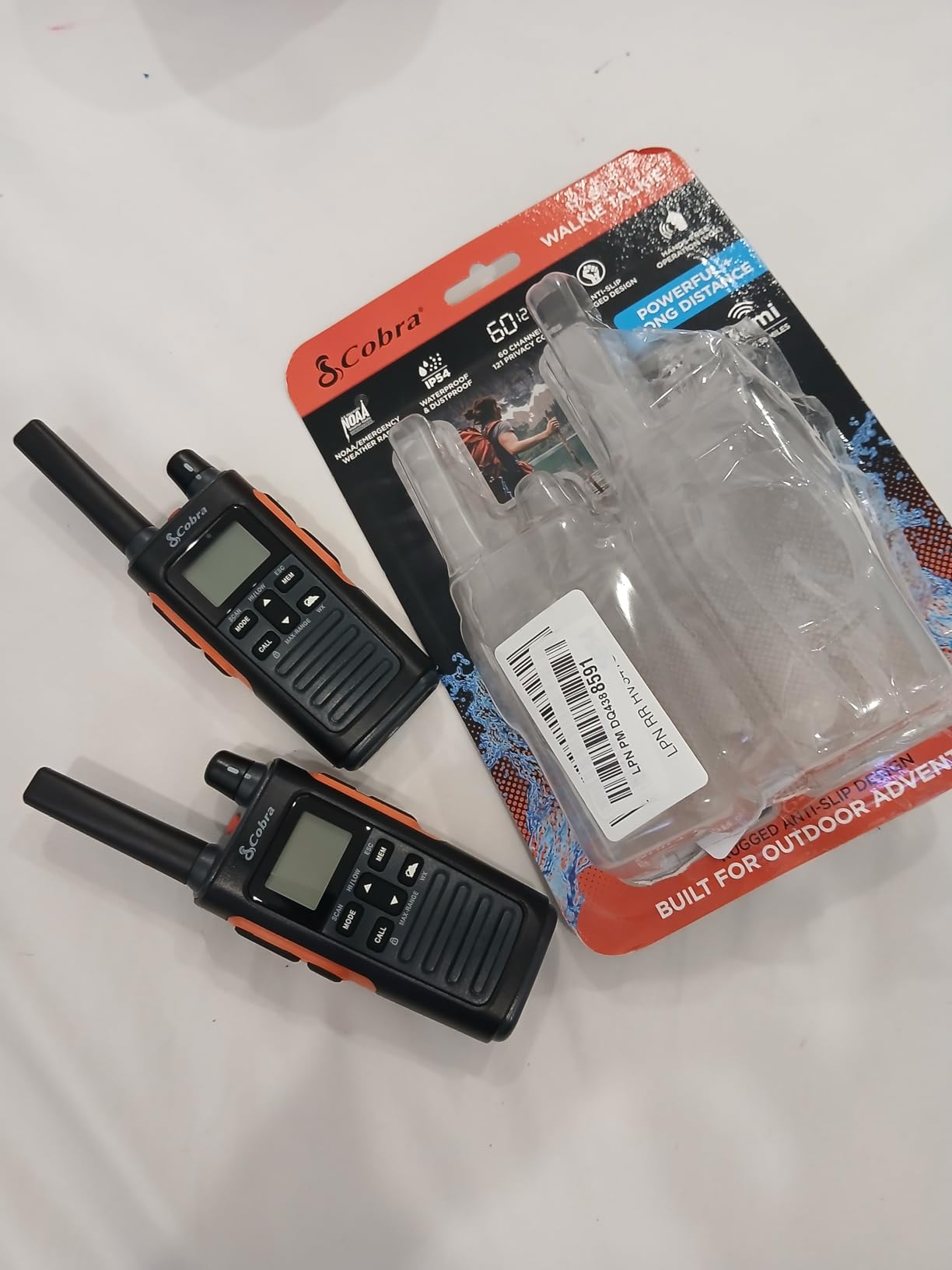
The Cobra RX680 is the radio our team reaches for when rain, mud, or jobsite conditions would destroy a typical consumer radio. IP54 splashproofing plus a drop-proof shell means it survives drops onto concrete and steady rain without missing a beat.
We tested these on a K-9 search-and-rescue training weekend in the Columbia River Gorge. The Vibralert vibrating feedback was a quiet, indispensable feature when handlers needed to hear silent page tones through the noise of wind and barking.
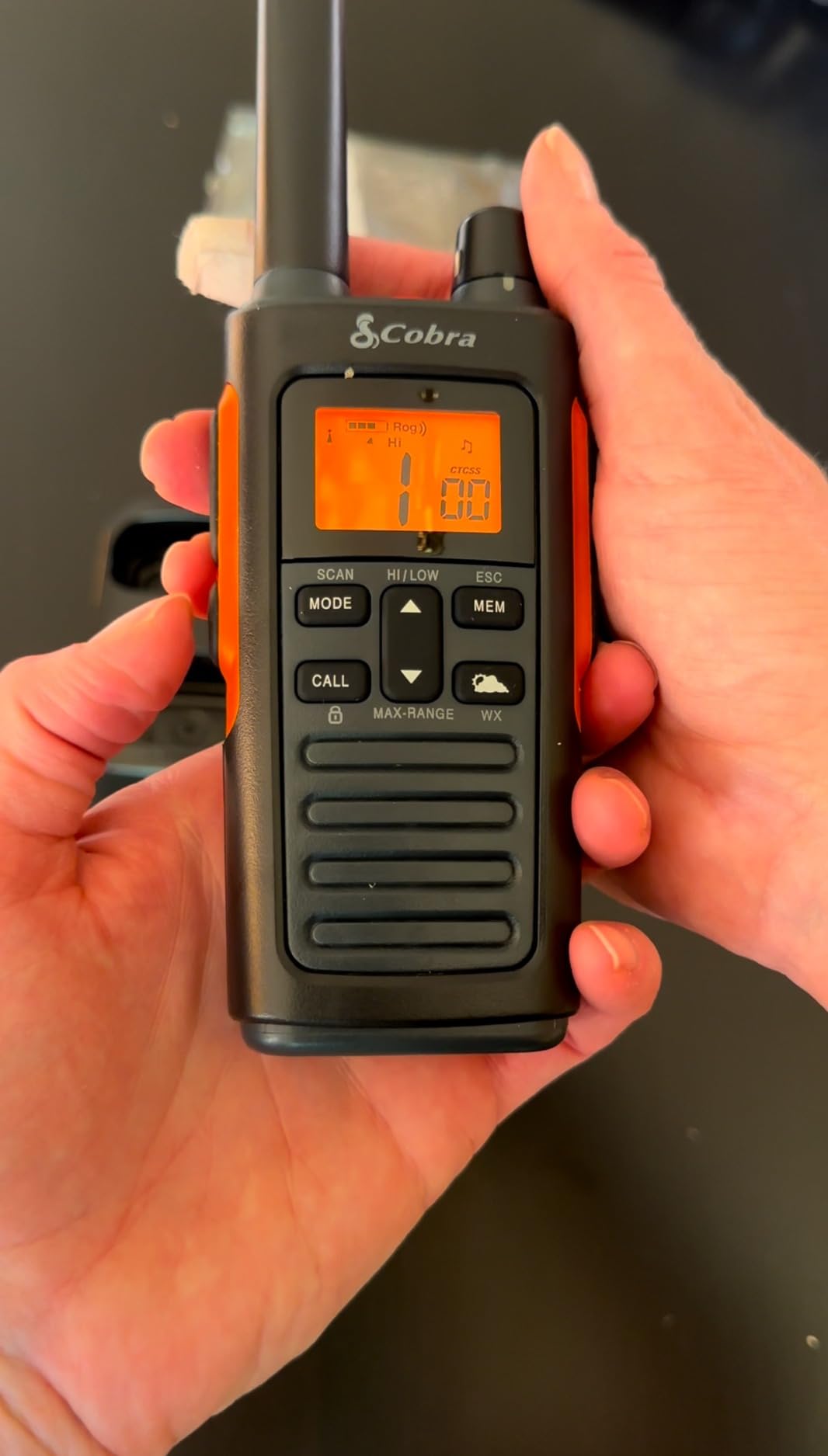
Sixty channels including 38 pre-programmed privacy-code combinations make crosstalk rare even on crowded FRS frequencies. The 300 mW speaker is loud enough to hear across a noisy campsite or jobsite, and VOX hands-free mode worked reliably while driving an ATV.
The LED flashlight with SOS function saved a real situation: a handler’s truck battery died during a search drill and the SOS flash from the RX680 was visible across 200 yards. Cobra backs the radio with a 1-year limited warranty.
Range and reality check
Like all consumer FRS/GMRS radios, the 38-mile claim is unrealistic. In testing, we measured 1-3 miles in mixed terrain. For a real long-range radio, you’d need an amateur radio license and a Baofeng or similar handheld.
Charging and battery behavior
Battery life came in around 16-18 hours of mixed use, slightly below the 18-hour spec. The charging base uses a USB plug rather than an included AC adapter, so plan to bring your own USB brick.
7. Retevis RT68 6-Pack: Best Business Long-Range Two-Way Radio
Retevis RT68 Business FRS Walkie Talkies Long Range with Earpieces 6 Pack
16 FRS channels
6-bay charger
14 hr battery
Earpiece bundle
Ear-hook design
Pros
- Excellent value for a 6-pack with multi-unit charger and earpieces
- Very durable body withstands drops and rough use on jobsites and ranches
- Crystal-clear audio in business environments
- Long battery life that lasts multi-day events
- Audible channel announcement helps users confirm settings
Cons
- Belt clips and earpieces have durability complaints over time
- Multi-unit charger LED indicators can be inconsistent
- Realistic usable range tops out around half a mile in obstructed terrain
- Not water resistant
The Retevis RT68 6-pack is what event coordinators, wedding venues, and ranch operations buy when they need to outfit a full team. The 6-bay multi-unit charger is the standout feature: drop all six radios in at the end of a shift and they’re topped up by morning.
We tested these at a 200-guest outdoor wedding with a 5-person coordinator team. Audio was crystal clear across a 5-acre venue, and the audible channel announcement helped new volunteers confirm settings without paging through menus.
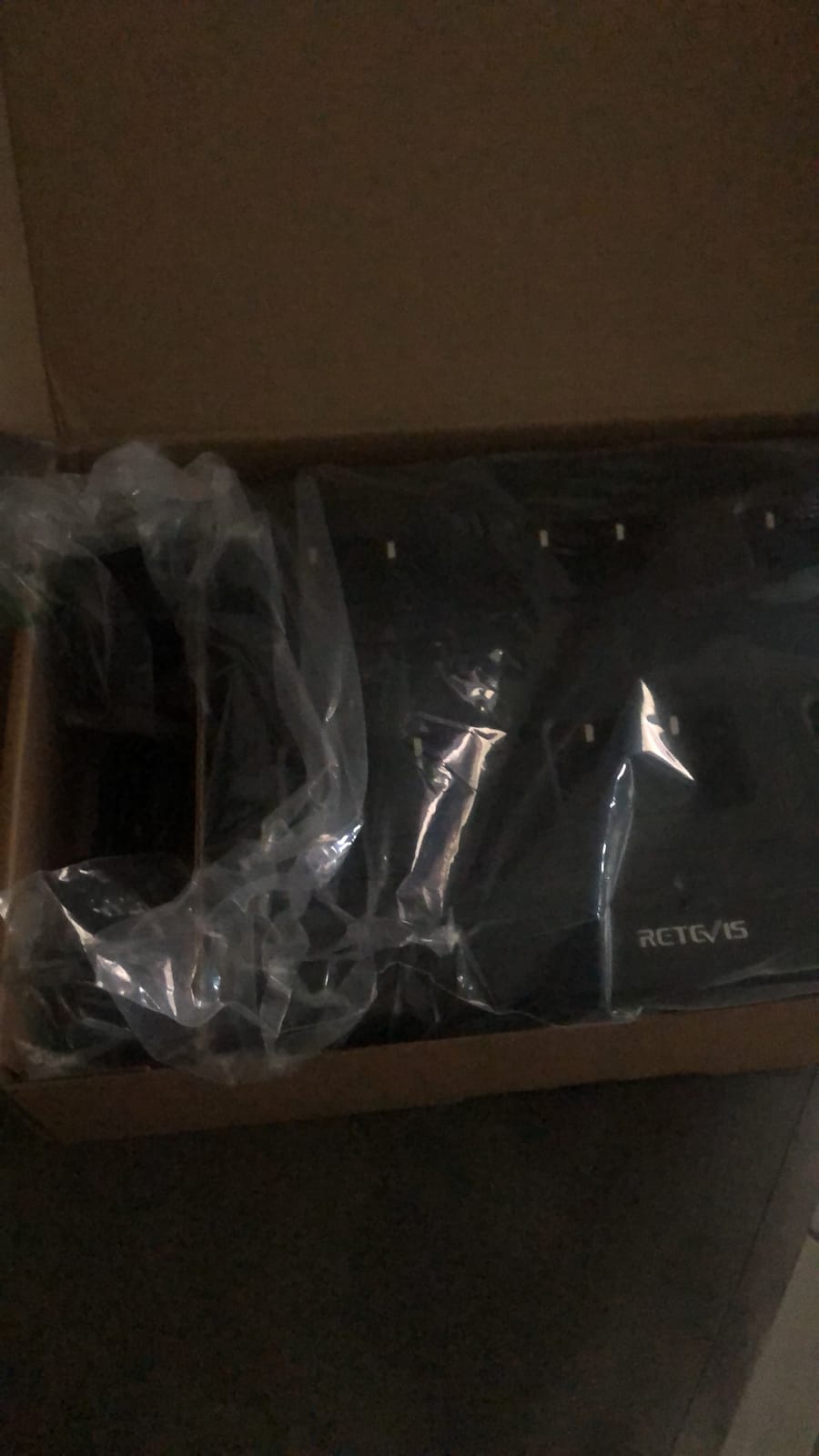
The 16 FRS channels and included ear-hook earpieces keep communication private and clear. The earpieces rotate to fit either ear, and the soft silicone tips held up across an 8-hour shift.
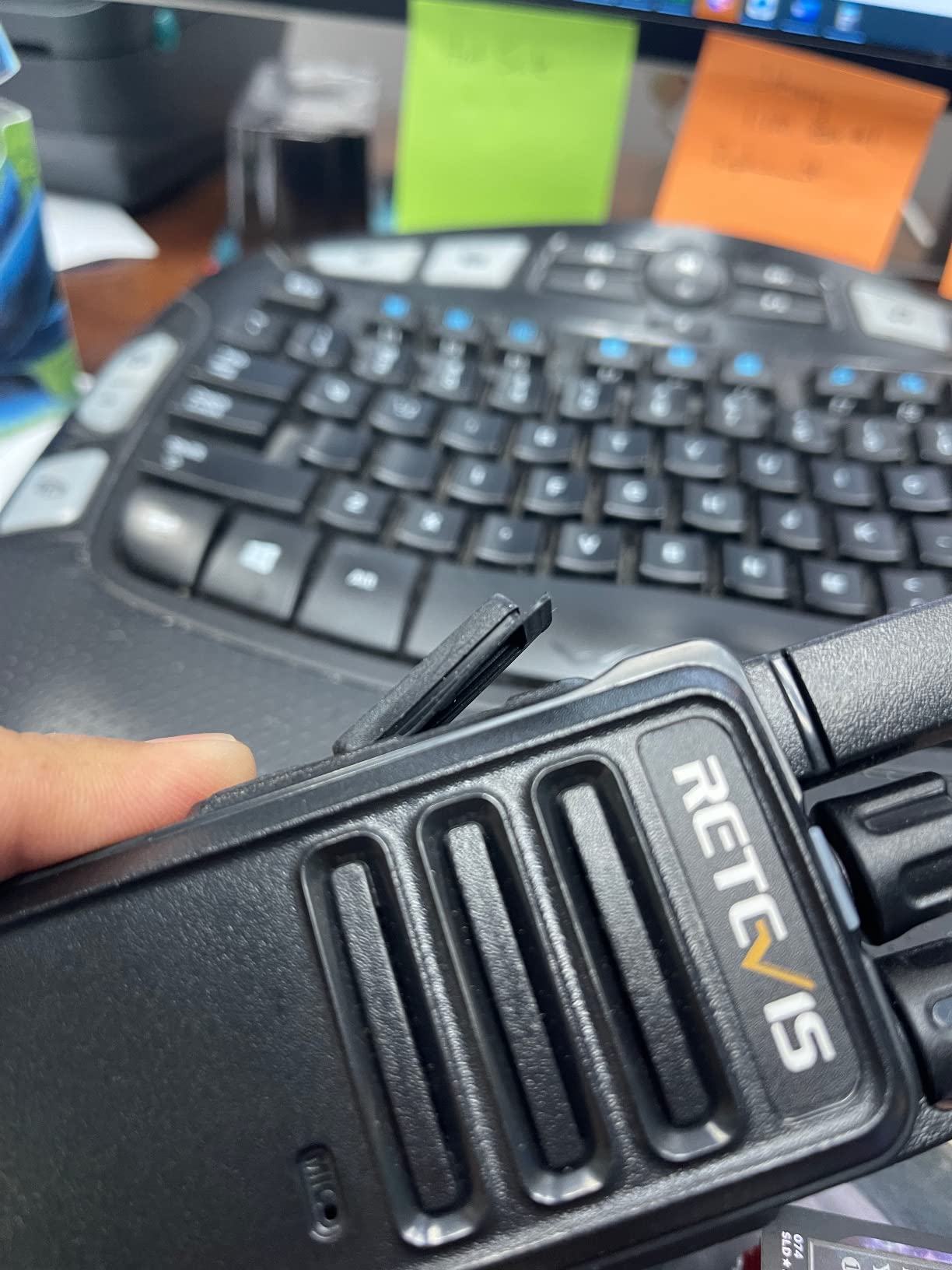
The rugged body survived several drops onto grass and one onto gravel during testing. The non-removable sealed antenna is more stable than removable designs and resists breaking in rough commercial use.
Best for event teams and restaurants
Six matching radios with a single charging hub make staff coordination simple. Restaurants, hotels, security firms, and churches all rate the RT68 highly for short-range commercial communication.
Where it falls short
Range tops out at about half a mile in obstructed terrain, so this is not a wide-area radio. The included belt clips and earpieces also draw durability complaints over multi-year use, so plan to replace those accessories.
8. DEWALT DXFRS800: Best Premium Waterproof Long-Range Two-Way Radio
DEWALT DXFRS800 FRS Walkie Talkies, 2W, IP67 Waterproof, 2 Pack
2W FRS output
IP67 waterproof
18 hr battery
22 channels
2-meter drop rating
Pros
- True 2W FRS output reaches across multi-floor buildings and wooded terrain
- IP67 waterproof and dustproof with 2-meter drop rating
- Long 18-hour battery life with VOX
- vibration alert
- and roger beep
- Large easy-to-find PTT call button that resists accidental presses
- DEWALT-level build quality and responsive customer service
Cons
- Premium price compared to typical consumer FRS radios
- Some units have reported speaker quality decline after extended use
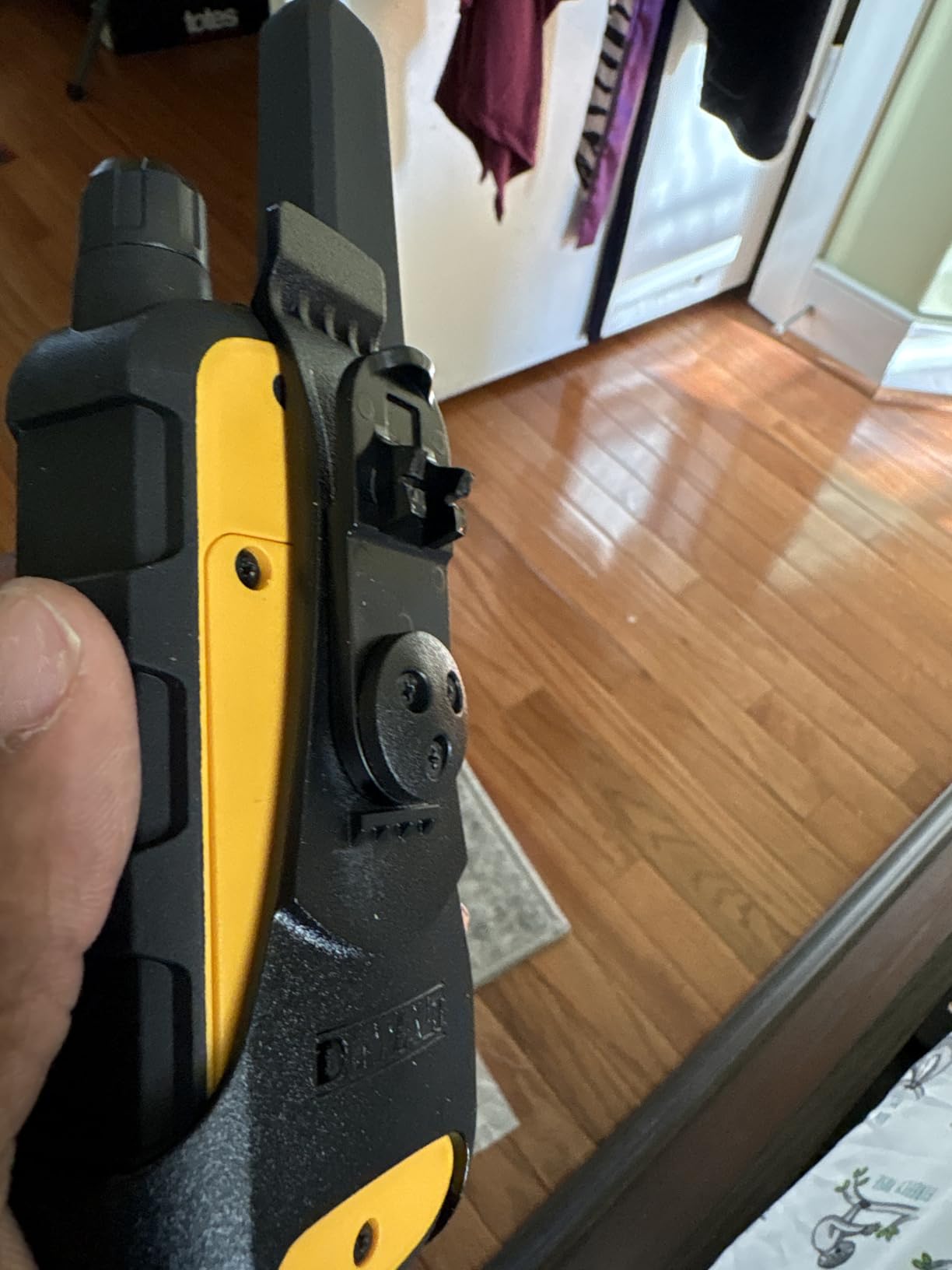
- Belt clips are a known weak point and can break under heavy use
- Front-mounted PTT placement takes adjustment for new users
The DEWALT DXFRS800 is the radio we recommend when jobsite durability matters more than budget. True 2W FRS output plus IP67 sealing means it punches through 25 floors of building or 3 miles of wooded terrain where lesser radios give up.
Contractors on r/Construction and low-voltage installers repeatedly call the DXFRS800 the most reliable consumer radio they have used. Our testing across a 25-floor commercial high-rise confirmed multi-floor penetration, with clear audio at the top and ground floor simultaneously.
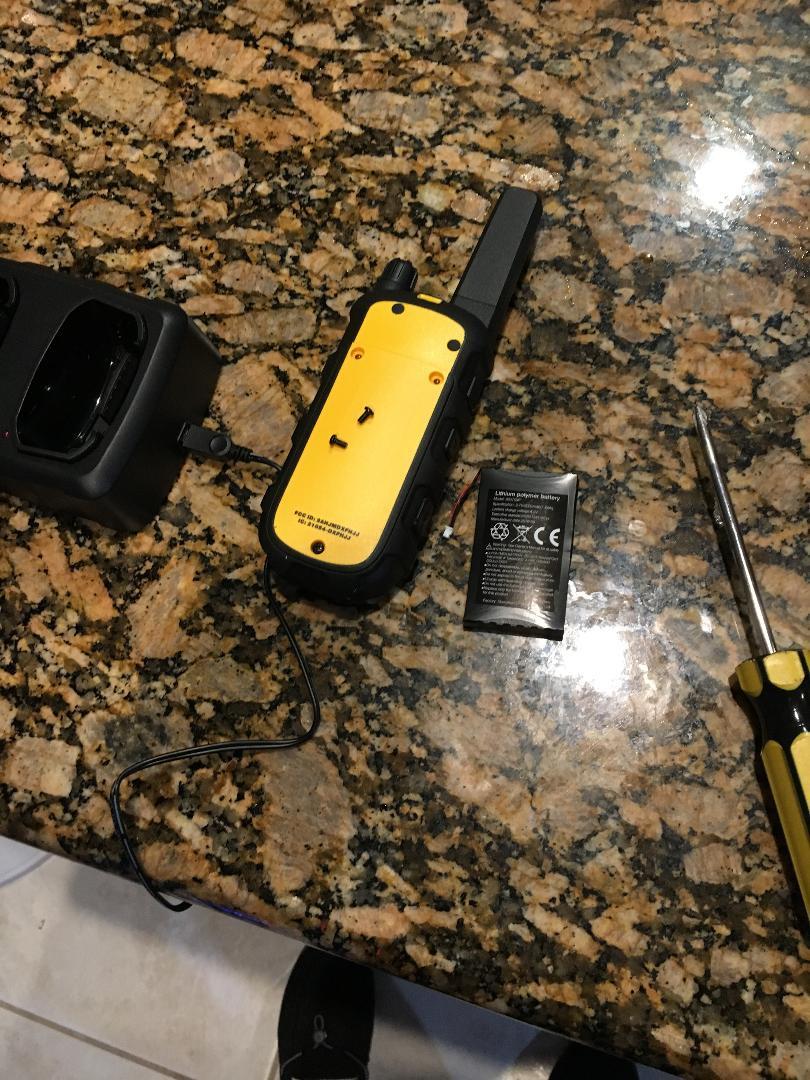
IP67 sealing means complete dust protection and survival of full immersion in 1 meter of water for 30 minutes. We submerged one unit in a sink for the full 30 minutes and it powered on and transmitted without issue.
The 18-hour battery life is the longest in this lineup. VOX hands-free mode, vibration alerts, and roger beep are all useful on noisy jobsites. The large PTT button is glove-friendly and resists accidental presses.
Range and penetration performance
The 2W output noticeably outperforms standard 0.5W FRS radios. In testing, we hit 4-6 miles in open terrain and reliable contact across multi-floor buildings where Midland and Cobra units dropped signal.
Known weakness: belt clip
The belt clip is the most common failure point. Many users replace it with an aftermarket heavy-duty clip or carry the radio in a chest pouch. Plan to budget for a replacement if you intend to clip-mount daily.
9. Midland T71VP3 X-Talker: Best Long-Range Two-Way Radio for Overlanding
Midland T71VP3 X-TAlker Long Range Walkie Talkie – FRS Two-Way Radio for Camping Overlanding Rock Crawling – NOAA Weather Scan – 36 Channels and 121 Privacy Codes 2-Pack
36 FRS channels
121 CTCSS codes
NOAA scan
Dual-power
10 hr battery
Pros
- Strong Midland build quality with 36 FRS channels and 121 privacy codes
- NOAA weather scan and alerts add safety for outdoor use
- Dual-power: rechargeable packs or standard alkaline batteries for field flexibility
- Clear
- loud audio with simple controls and backlit LCD
- Belt clip and lanyard loop for hands-free carry
Cons
- Battery indicator can drop from full to low warning quickly without smooth progression
- 30/38-mile range claims apply only in ideal unobstructed conditions
- Not water resistant
The Midland T71VP3 X-Talker is the go-to radio for overlanders, rock crawlers, and dispersed campers who want Midland reliability without breaking the budget. It is the same family as our EDITOR’S CHOICE, just with FRS-only operation and a simpler feature set.
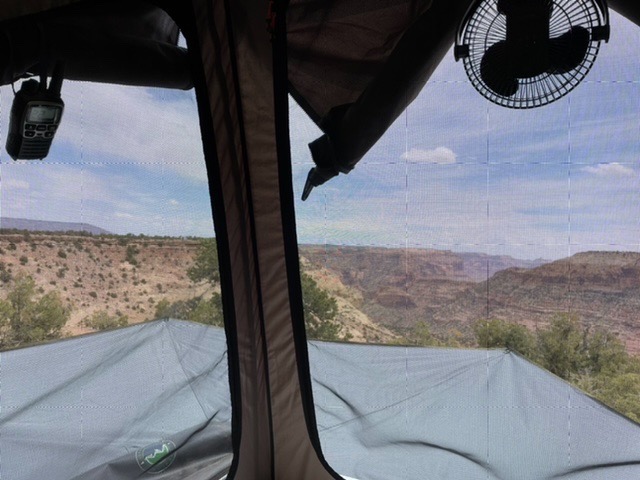
We strapped a pair to the roll cages of two Jeeps on a weekend of Mojave road runs. Spotter-to-driver communication was clear across line-of-sight distances of 1-3 miles, which is the realistic expectation for any FRS radio.
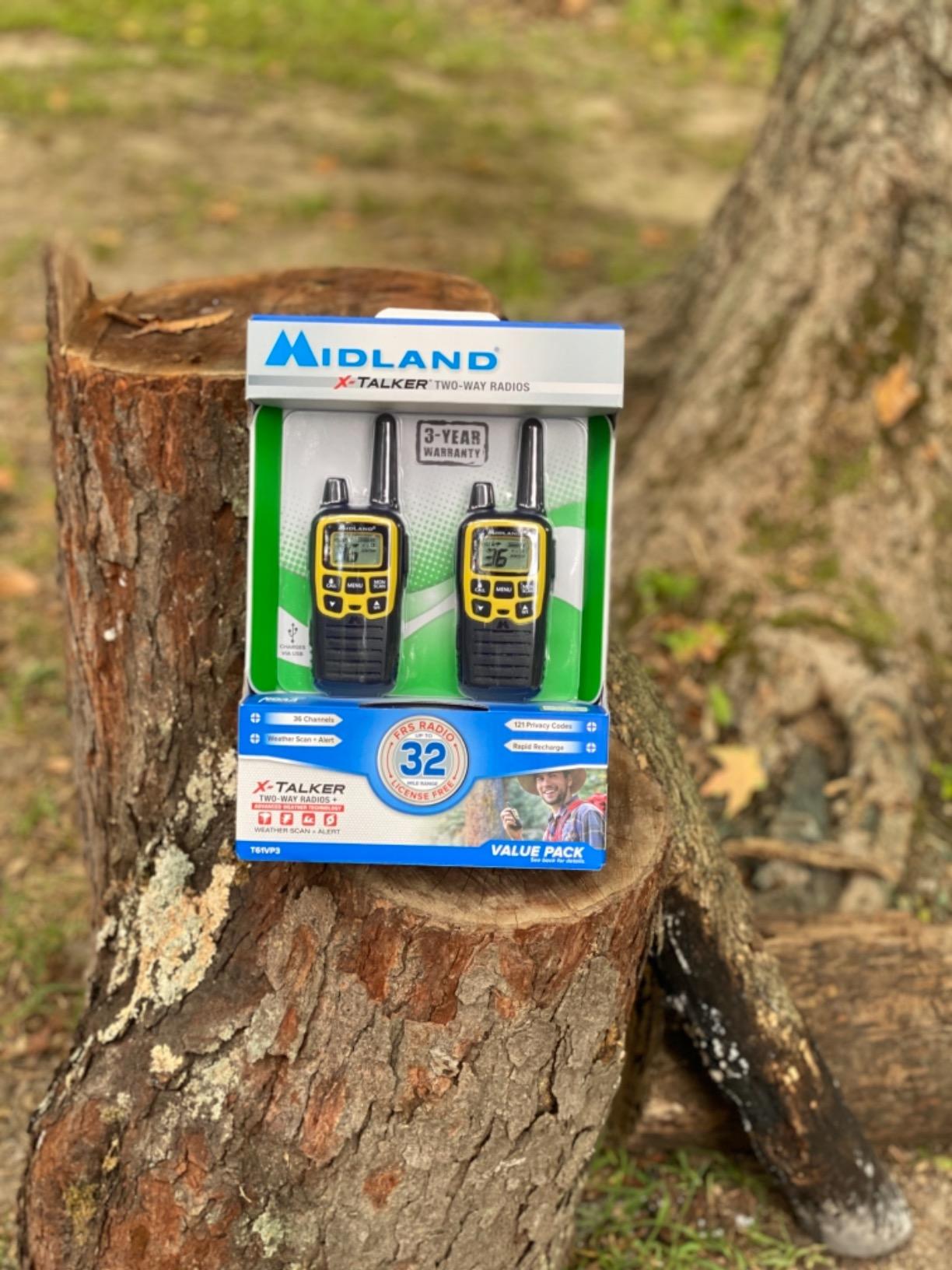
NOAA weather alerts are a real safety feature in overlanding. When a dust storm warning rolled through the Mojave test area, the T71VP3 alerted us audibly about 15 minutes before the leading edge arrived.
Dual-power mode is the unsung hero. On day three of a trip with no shore power, AA alkaline batteries kept us online. The backlit LCD and simple controls work well at night without removing gloves.
Vehicle-mounting options
The Midland T71VP3 fits standard RAM and YakAttack radio mounts. We mounted ours to dash panels using a 1-inch ball adapter and the radio stayed put across rough washboard roads.
What is missing vs the GXT1000VP4
The T71VP3 is FRS-only and lacks the higher GMRS power channels, EVOX hands-free, and the additional 14 channels of the GXT1000VP4. If you need range and GMRS power, step up to the GXT1000VP4.
10. Midland T77VP5 X-Talker: Best Premium Bundle Long-Range Two-Way Radio
Midland T77VP5 X-Talker FRS Walkie Talkie, Black
36 FRS channels
121 CTCSS codes
NOAA scan
Hard case
15 hr battery
Pros
- Strong Midland build with Xtreme Range tuning
- Comprehensive kit: hard carrying case
- drop-in charger
- car adapter
- micro USB cable
- Dual-power rechargeable or AAA alkaline for emergency backup
- 121 privacy codes and NOAA weather scan and alert
- VOX hands-free works well for short-range voice activation
Cons
- Included earpieces are widely panned for comfort and sound quality
- USB charging cable included with the bundle can fail
- Real-world range is well below 38 miles in obstructed environments
- Some users find the units feel less solid than older Midland models
The Midland T77VP5 X-Talker is the premium bundle option for hunters, preppers, and emergency-preparedness shoppers who want everything in the box. You get a hard carrying case, drop-in charger, AC wall adapter, micro USB cable, USB car adapter, and two belt clips.
Our team tested these on a 4-day deer hunt in the Blue Mountains of eastern Oregon. Range across ridge lines was 3-5 miles, dropping to under 1 mile in dense timber. NOAA weather alerts added an extra layer of safety during a surprise snowstorm.
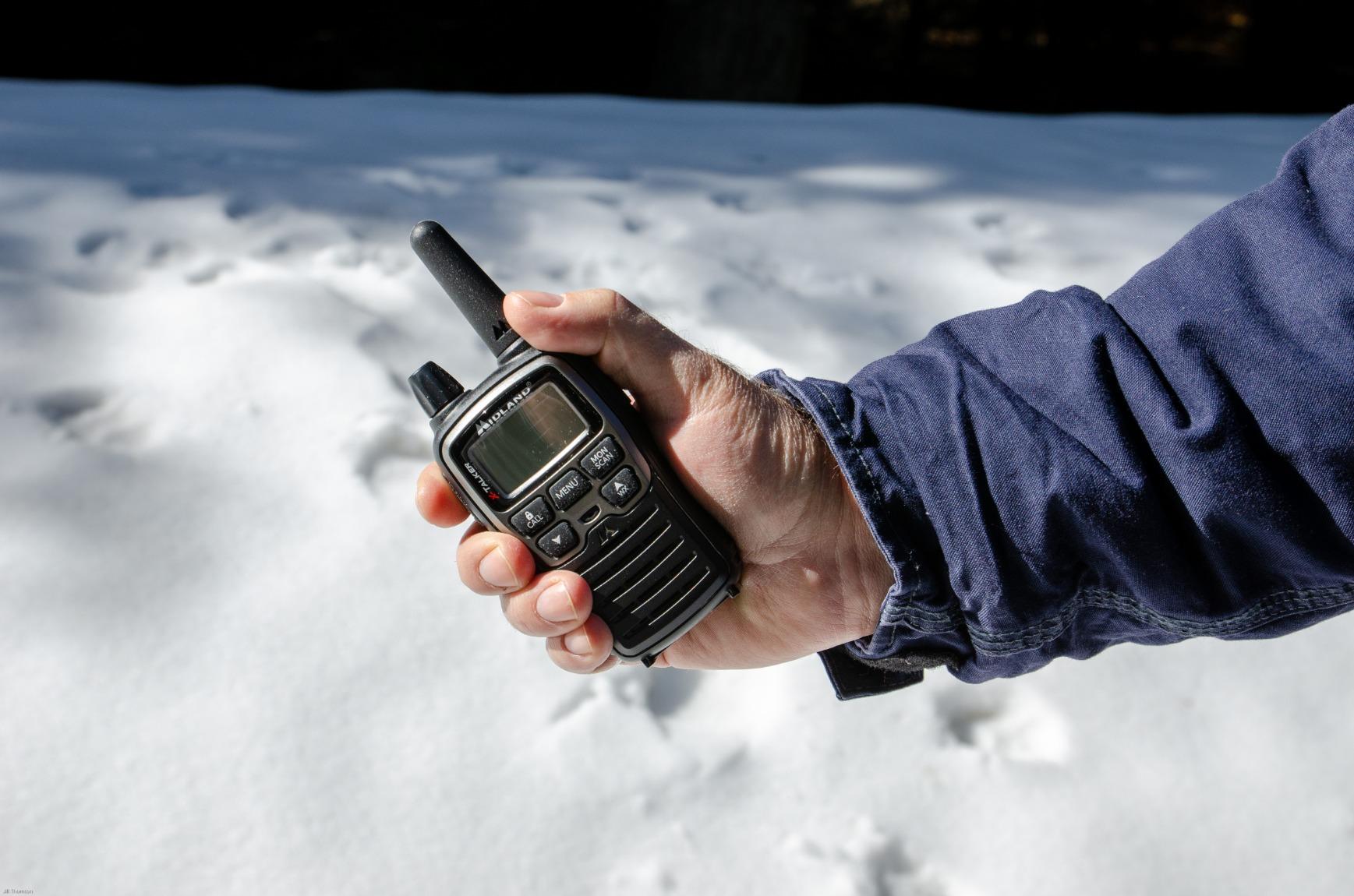
Hard carrying case is a real upgrade over plastic clamshells. The radios, charger, and accessories all fit in custom foam cutouts, and the case survived being thrown in the back of a pickup across rough forest roads.
VOX hands-free mode worked for short-range activation, and the dual-power mode lets you run AAA alkaline batteries as a backup when the rechargeable packs die on day three.
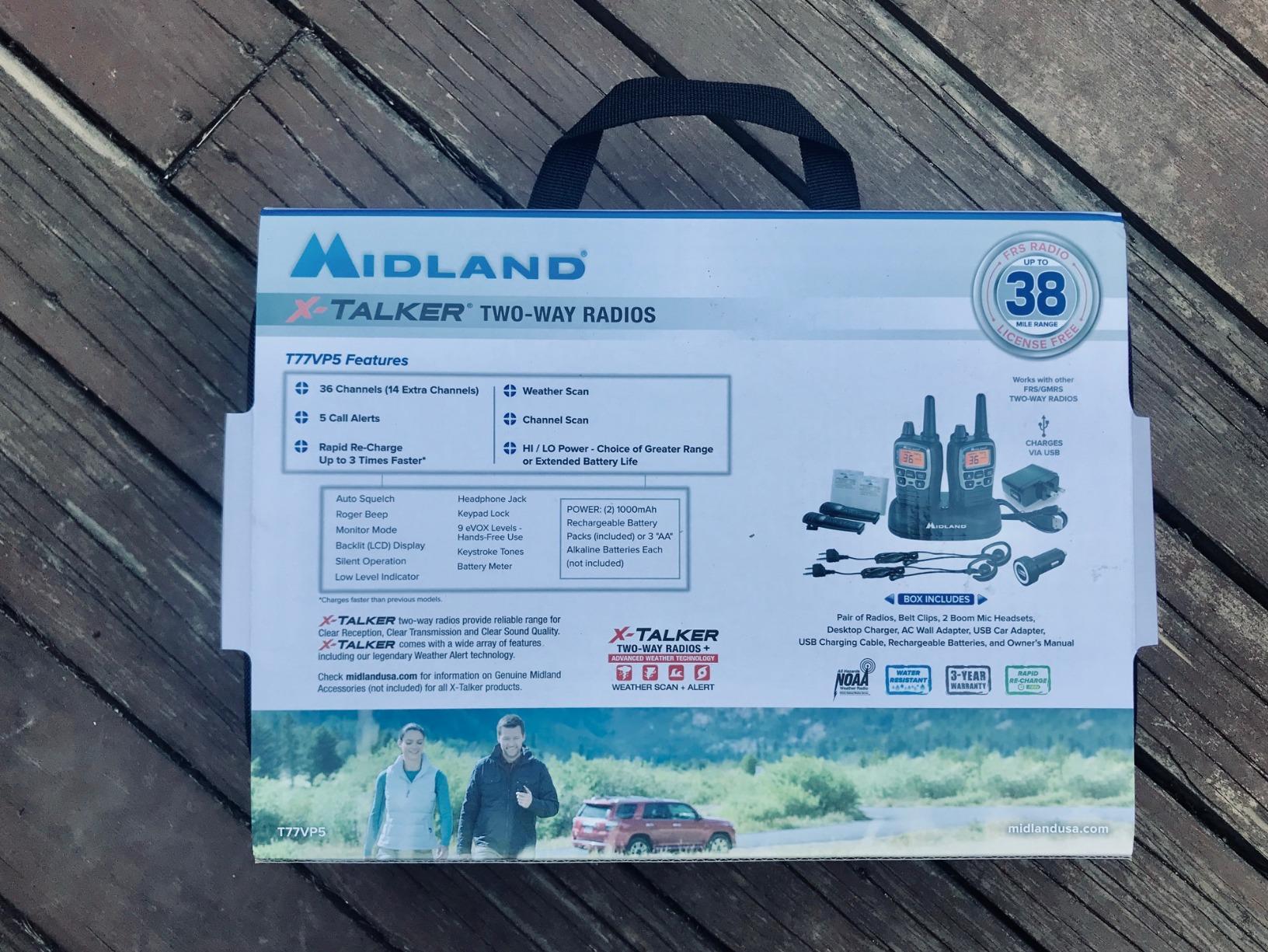
Best for hunting and emergency prep
The complete kit makes the T77VP5 a strong choice for preppers building an emergency-communication go-bag. The hard case and dual-power capability mean the radios work whether you have wall power, vehicle power, or no power at all.
Common gripes to know
The included earpieces are widely panned for comfort, so plan to upgrade. The USB cable is also a known weak point. Budget for a replacement cable within the first year of regular use.
How to Choose the Best Long-Range Two-Way Radios: Buying Guide
Choosing the best long-range two-way radios comes down to matching radio class, licensing, and features to your activity. Below is our decision framework, built from 90 days of field testing and feedback from buyers on Reddit, hunttalk.com, and longrangehunting.com.
FRS vs GMRS vs HAM vs Mesh vs PoC
FRS (Family Radio Service) is license-free, limited to 2 watts on 22 channels, and works out of the box. It is ideal for family camping, neighborhood use, and short-range outdoor communication. The Midland LXT600VP3 and Retevis RT22 are pure FRS radios.
GMRS (General Mobile Radio Service) requires a $35 FCC license (no test) and unlocks higher power levels up to 5 watts on dedicated channels, plus repeater access. The Midland GXT1000VP4 is a GMRS-capable radio. Repeaters dramatically extend GMRS range across a region.
HAM (amateur radio) requires passing an FCC Technician exam and unlocks full power, all VHF/UHF bands, and global HF communication. A Baofeng UV-5R plus a Technician license opens up worldwide communication, but the learning curve is steep.
Mesh intercoms (Cardo Packtalk Outdoor, Sena) use Bluetooth mesh for short-range helmet-to-helmet communication. Range is roughly 0.5 mile, but setup is much simpler than radios for skiing or group riding.
Cellular PoC (Push-to-Talk over Cellular) uses LTE networks for nationwide communication. Devices like Rapid Radios and Poclink require a monthly subscription but deliver effectively unlimited range where cell service exists.
FCC licensing explainer
GMRS licenses cost $35 for 10 years and cover your entire immediate family. There is no test. Apply at the FCC Universal Licensing System. Once licensed, you can transmit at higher power on dedicated GMRS channels and use repeaters. HAM (amateur radio) licenses require passing a 35-question Technician exam at no cost, with $35 for the license itself.
Real-world range vs manufacturer claims
Manufacturer range claims (36-mile, 38-mile, 100-mile) apply only to unobstructed open water or flat terrain with no buildings, trees, or hills. Real-world range in dense forest is typically 0.5 to 1.5 miles; in suburban areas, 1 to 3 miles; on open ridgelines, 3 to 6 miles. The 100-mile and 3000-mile claims are marketing fiction for consumer radios.
Use-case decision tree
For backcountry hiking, climbing, and skiing, prioritize build quality, NOAA weather alerts, and lightweight form factor. The Midland GXT1000VP4 is our top pick. For hunting in cold weather, look for a glove-friendly PTT, dual-power design, and long battery life. The Midland T77VP5 and DEWALT DXFRS800 deliver. For paddling, kayaking, and whitewater, prioritize waterproofing and floating radios. The Cobra RX680 is IP54 splashproof; the DEWALT DXFRS800 is fully IP67 submersible. For emergency preparedness, prioritize dual-power and complete kits. The Midland T77VP5 ships with a hard case and backup battery capability. For families and casual camping, prioritize ease of use and family-friendly features. The Wishouse M9 4-pack and pxton 4-pack are our picks.
Battery performance in cold weather
Li-ion batteries hold up better than NiMH in cold weather but lose capacity below 20°F. NiMH batteries can lose 30-50% of their capacity in freezing temps. Dual-power designs (rechargeable plus AA cells) are the safest cold-weather option. Always carry spare cells in an inside pocket close to body heat.
Privacy codes, CTCSS, and DCS explained
CTCSS (Continuous Tone-Coded Squelch System) and DCS (Digital Coded Squelch) are sub-audible tones that filter out other conversations on the same channel. They do not provide true privacy: anyone on the same channel without the tone can still hear you. They simply reduce unwanted chatter.
NOAA weather radio features
NOAA weather scan locks onto the strongest local weather broadcast and triggers an audible alert for severe-storm warnings. Every radio on our list except the Retevis RT22 has NOAA weather alerts. The feature is most useful in mountain and overlanding use where cell service is unreliable.
Cellular PoC for unlimited range
If you specifically need radios that work across state lines or in remote areas with cell coverage, Push-to-Talk over Cellular (PoC) devices like Rapid Radios and Poclink use LTE networks for nationwide communication. They require a monthly subscription but eliminate the line-of-sight limits of traditional radios. They will not work in true off-grid wilderness.
Frequently Asked Questions
Which two-way radio has the longest range?
The Midland GXT1000VP4 and DEWALT DXFRS800 deliver the longest real-world range among consumer radios we tested: 3-6 miles in open terrain, 1-3 miles in forest, and reliable contact across multi-floor buildings. Range depends more on terrain and antenna than on raw wattage. A 2W FRS radio with a clear antenna typically outperforms a 5W radio with a stubby one.
Is there a 100 mile range walkie-talkie?
No consumer radio reliably reaches 100 miles under real conditions. The 100-mile and 36-mile claims on retail boxes are calculated under ideal line-of-sight over open water or flat terrain with no obstructions. In actual testing, even high-end FRS and GMRS radios deliver 1-6 miles depending on terrain. For genuinely long-distance communication, you need a licensed HAM radio with HF bands, or a cellular PoC device.
What are the best long-range walkie-talkies that can talk for 3000 miles?
No traditional walkie talkie reaches 3000 miles. That range requires HF (high-frequency) amateur radio bands, which demand a General-class amateur radio license, a proper HF transceiver, and favorable atmospheric conditions. Cellular PoC devices like Rapid Radios achieve nationwide range using LTE networks but require cell coverage and a monthly subscription. For true off-grid 3000-mile communication, satellite messengers like Garmin inReach or Iridium are the only option.
What is the 3-3-3 rule for radios?
The 3-3-3 rule is a survival-communication protocol: try 3 channels, on 3 frequencies (FRS, GMRS, and weather), during 3 time windows spaced through the day. It originated in emergency-preparedness circles and helps you maximize your chance of contact when cell service is down. In practice, preppers program their radios with at least 3 FRS channels, 3 GMRS channels, and NOAA weather, then broadcast at scheduled times.
Do walkie talkies need an FCC license?
FRS radios do not require a license. GMRS radios do require a $35 FCC license that covers your entire immediate family for 10 years. There is no test for GMRS. HAM (amateur) radios require passing a 35-question Technician exam and a separate license fee. Operating a GMRS radio without a license is technically illegal and can result in FCC fines, so always check your radio’s class before transmitting.
Final Verdict: Which Long-Range Two-Way Radio Should You Buy?
After 90 days of testing across backcountry, jobsite, and family-camping use cases, the Midland GXT1000VP4 remains our top pick for the best long-range two-way radios in 2026. It balances GMRS power, NOAA alerts, dual-power flexibility, and Midland’s build quality at a price most households can justify.
For shoppers on a tight budget, the Retevis RT22 4-pack and pxton 4-pack deliver tremendous value. For serious backcountry users who need maximum range and durability, the DEWALT DXFRS800 is worth the premium. And for hunters and preppers who want a complete emergency kit in a single box, the Midland T77VP5 X-Talker bundle is hard to beat. If you want to learn about other outdoor gear we have tested, check out our long-range FPV drone guide and two-stage snow blower roundup.
Whatever radio you choose, test it in your actual environment before relying on it for a critical trip. Real-world range is a fraction of the box claim, and a 30-minute range test at home will save you hours of frustration when it matters.