
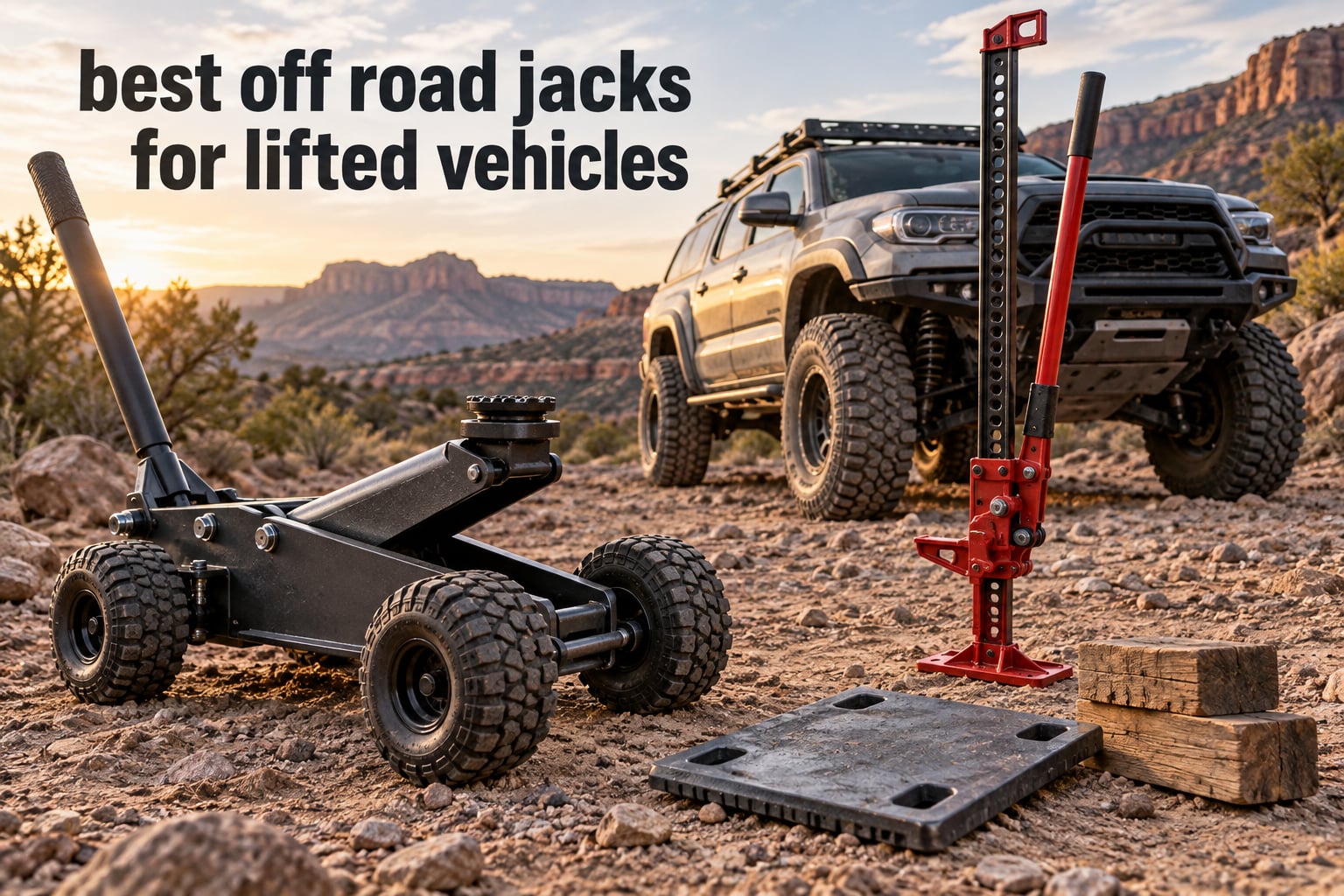
Three jack families cover almost every situation a lifted vehicle creates: a big-wheel off-road floor jack for driveway and campsite work where you can roll the jack into position, a bottle jack for raw lifting force on soft ground, and a hi-lift (high-lift farm) jack for tall frame rails and recovery work. Pick the wrong one and the saddle simply will not reach your lift point, or the whole unit slides off a round axle tube in the sand.
That is the problem I ran into first when I started putting together this list. A factory floor jack lives under a rocker panel or a pinch weld that a 4-inch lift has already carried a foot further from the ground. Once a truck is on 37s with a 2-inch lift kit, the lowest usable frame point on a Gladiator-style build measures around 19 inches, and that single number decides which jack you can carry.
Below is our list of the best off road jacks for lifted vehicles available now, spanning every type from scissor jacks to 20-ton bottle jacks. We weighed tonnage against measured lift height rather than marketing reach, checked the real complaints in buyer reviews, and pulled field reports from owners who use these tools in sand, mud and rock. If you also shop for the garage side of the job, our floor jack roundup for home and pro shop use covers the shorter, low-profile end of the market.
Table of Contents
Top 3 Best Off Road Jacks For Lifted Vehicles (October 2026)


Quick Overview: Best Off Road Jacks for Lifted Vehicles in 2026
Every jack below is listed in our preferred order, with the specs that actually decide whether it fits under your truck. Tonnage is the rated lifting capacity; lift height is the distance from the base plate to the saddle at full extension.
| Product | Specifications | Action |
|---|---|---|
| Hi-Lift 48 Inch All-Cast HL-485 |
|
Check Latest Price |
 VEVOR 48 Inch Utility High Lift 7000 lb VEVOR 48 Inch Utility High Lift 7000 lb |
|
Check Latest Price |
 CAT 3 Ton Big Wheel Off Road Hybrid Jack CAT 3 Ton Big Wheel Off Road Hybrid Jack |
|
Check Latest Price |
 Road DAWG 3 Ton High-Reach Floor Jack Road DAWG 3 Ton High-Reach Floor Jack |
|
Check Latest Price |
| Powerbuilt 3 Ton Bottle Jack and Stand Combo |
|
Check Latest Price |
| BIG RED Torin 3 Ton Trolley Floor Jack |
|
Check Latest Price |
 Powerbuilt 1.5 Ton Mechanical Scissor Jack Powerbuilt 1.5 Ton Mechanical Scissor Jack |
|
Check Latest Price |
 BUNKER INDUST 48 Inch High Lift Jack and Traction Boards BUNKER INDUST 48 Inch High Lift Jack and Traction Boards |
|
Check Latest Price |
 XtremepowerUS 48 Inch 3 Ton High Lift Farm Jack XtremepowerUS 48 Inch 3 Ton High Lift Farm Jack |
|
Check Latest Price |
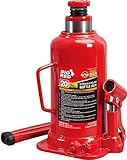 BIG RED Torin 20 Ton Hydraulic Bottle Jack BIG RED Torin 20 Ton Hydraulic Bottle Jack |
|
Check Latest Price |
1. Hi-Lift Jack 48 Inch All-Cast HL-485: The Benchmark Farm Jack
Hi-Lift Jack 48″ All-Cast Jack HL-485
All-cast iron body
48 inch lift reach
Ratcheting lead screw
Winch-point handle
Pros
- All-cast iron construction
- 48 inch reach reaches high frame rails
- Handle doubles as a manual winch connector
- Powder-coated finish with zinc-plated hardware
- Safe use stickers carry the rated load data
Cons
- Ratcheting needs several full strokes per inch of lift
- Long handle is awkward to load solo
Out of the ten jacks we compared, this is the one we kept reaching for. The Hi-Lift HL-485 is one of only two all-cast high-lift jacks in the group, and that difference shows the moment you pick it up. Where the competing 48-inch jacks use stamped and cast parts bolted together, this one is cast throughout, which is why it carries the deepest review pool of any high-lift jack in our research with 3449 ratings.
Roughly 85 percent of those reviews are five star and another 10 percent are four star, which is the kind of distribution you almost never see on a tool that gets used in mud. Owners credit the same three things repeatedly: the cast iron body, the 48-inch reach, and the fact that the handle ends in a winch point so the same tool can pull a bumper back into shape after the lift.
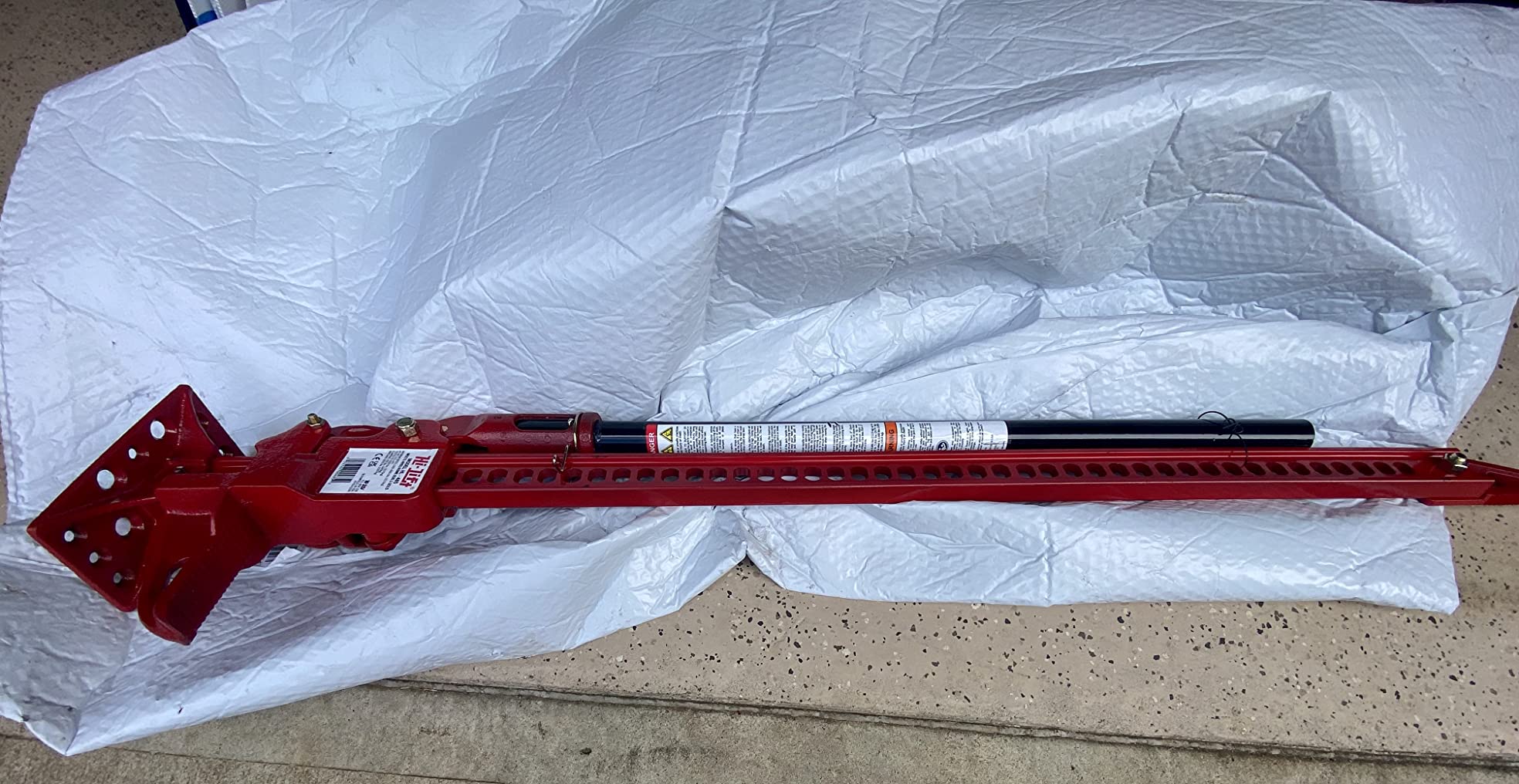
Operationally, it is a ratcheting lead screw jack, which means every inch of lift costs you several full handle strokes. That is the honest trade-off: this is a slow jack for routine garage work and a fast one when you have already made your lift point and just need more height. Owners doing bump-jack and clamping work also use the ram section as a spreader and puller.
For a lifted truck it earns its place on reach alone. 48 inches of extension clears a frame rail that no 3-ton trolley jack will touch, which is why we put it first in this list of the best off road jacks for lifted vehicles.
What you gain with the all-cast build?
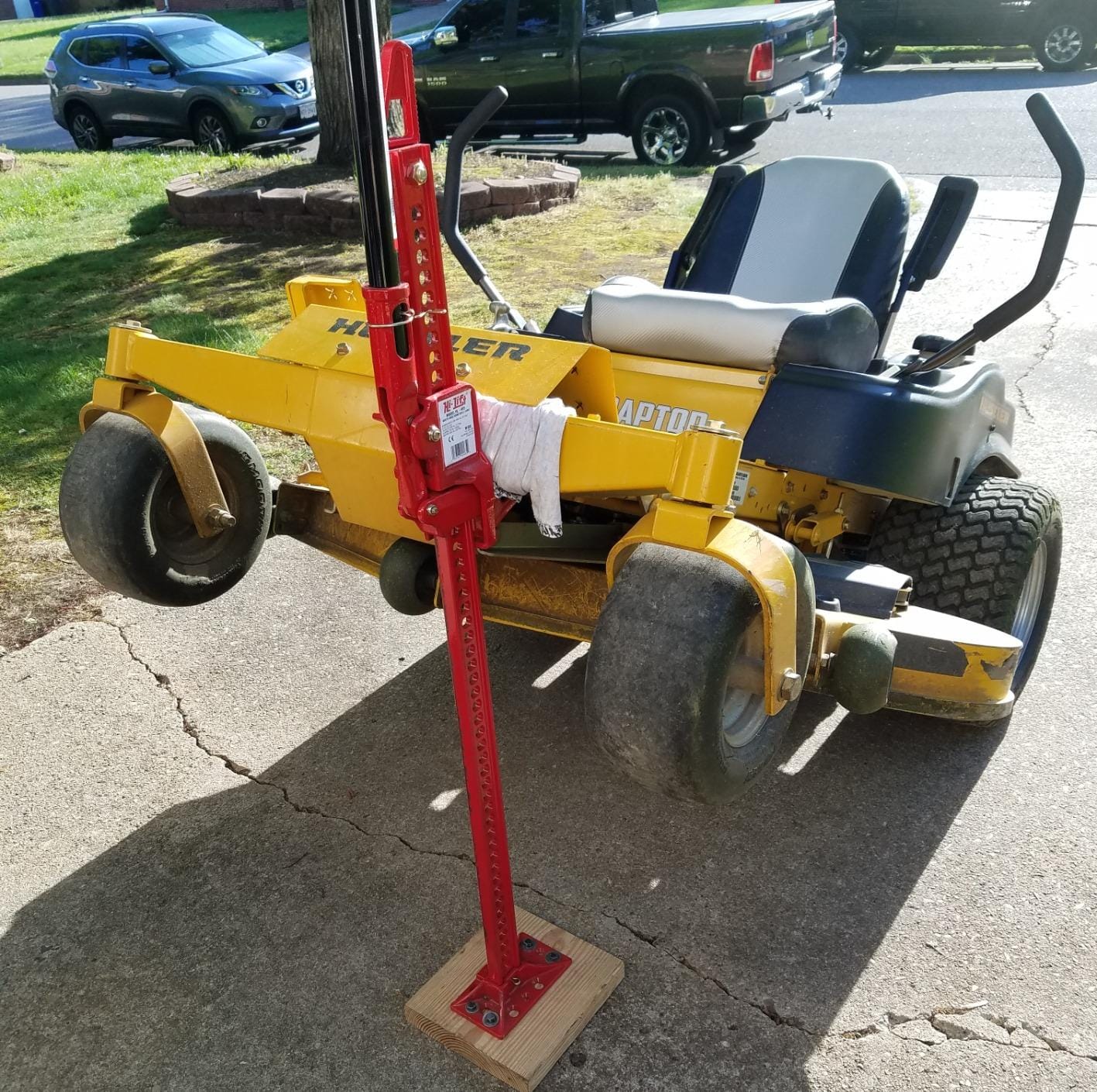
The cast construction resists the two failure modes that kill stamped farm jacks: cracked ratchet teeth and a bent frame at the base. Owners running hi-lifts as bumper stabilizers report the base survives being pinned under a lifted corner for hours.
The rated load stickers are affixed to the handle itself, so the number travels with the tool instead of sitting on a box in your garage. That matters more than it sounds when you are checking capacity at a trailhead in the dark.
Where the ratcheting mechanism frustrates owners?
The mechanism is the source of most complaints. Each incremental inch takes several strokes, so a 20-inch lift is a workout, and the long handle is awkward for one person to wrestle into a truck bed alone.
Buyers who expected a floor jack’s speed were disappointed. Buyers who wanted a jack that doubles as a recovery winch and a clamp tend to rate it near the top of the category, which is a fair description of exactly what it is built for.
2. VEVOR 48 Inch Utility High Lift: 7000 lb of Farm Jack Muscle
VEVOR Farm Jack 48 inch Utility High Lift, 7000 lbs Capacity Ratcheting Off Road Jeep Jack, Heavy for Tractor, Truck, SUV, Bumper Lift, Orange
7000 lb rated capacity
4.13-40.74 in range
750 mm handle
Galvanized coating
Pros
- 7000 lb rated capacity
- 48 inch clearance suits tall trucks and SUVs
- Hot-dip galvanized coating resists rust
- 20 mm ratchet holes lock height precisely
- 750 mm handle needs less effort per stroke
Cons
- Wide base and heavy build are bulky to transport
- 7 percent of reviews are 1-star on occasional models
The VEVOR sits at the top of the ratcheting capacity range here, rated at 7000 lb with a 48-inch lift clearance and a documented range from 4.13 to 40.74 inches. That combination is unusual: most 48-inch farm jacks cannot get their saddle down into the low teens, and that low number is what tells you whether the jack can double as a general-purpose shop jack.
About 74 percent of its 1235 reviews are five star and 86 percent sit at four stars or better, and the review theme is almost entirely work rather than trail adventure. Tractor three-point implements, boat trailers, fence posts and stump pulling come up again and again, which tells you this is a farm-and-property jack that happens to be excellent on a trail.
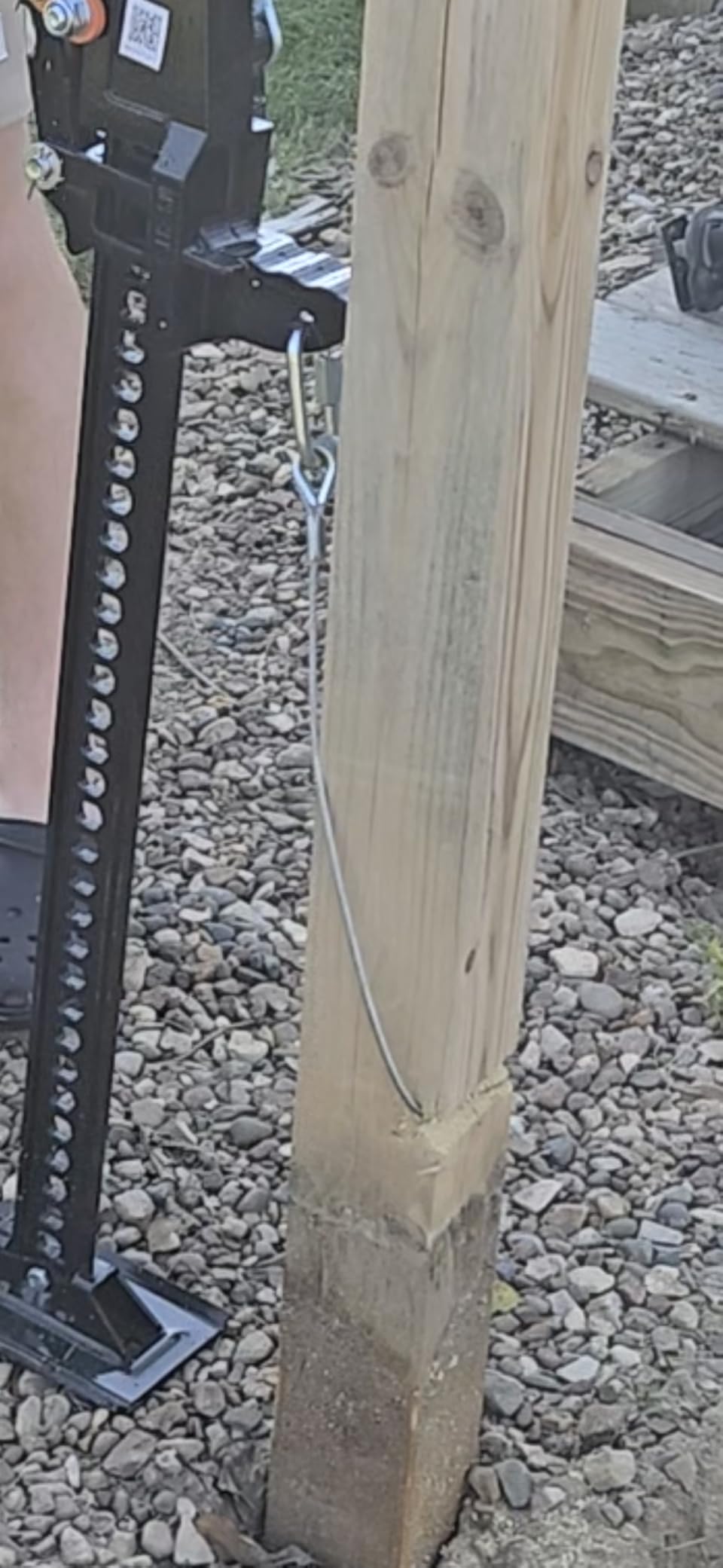
Two design details impressed us. The 20 mm ratchet holes let you lock the height in finer increments than most lead-screw jacks, and the rubber sleeve on the handle keeps your grip when the steel is wet or gloved. The wide base is also genuinely wider than the competition, which matters on soft shoulders.
The hot-dip galvanized powder coating is the right call for a tool that lives outside. Some owners note the finish needs rust-preventive oil after a season of outdoor storage, which is a fair expectation for any coated steel jack.
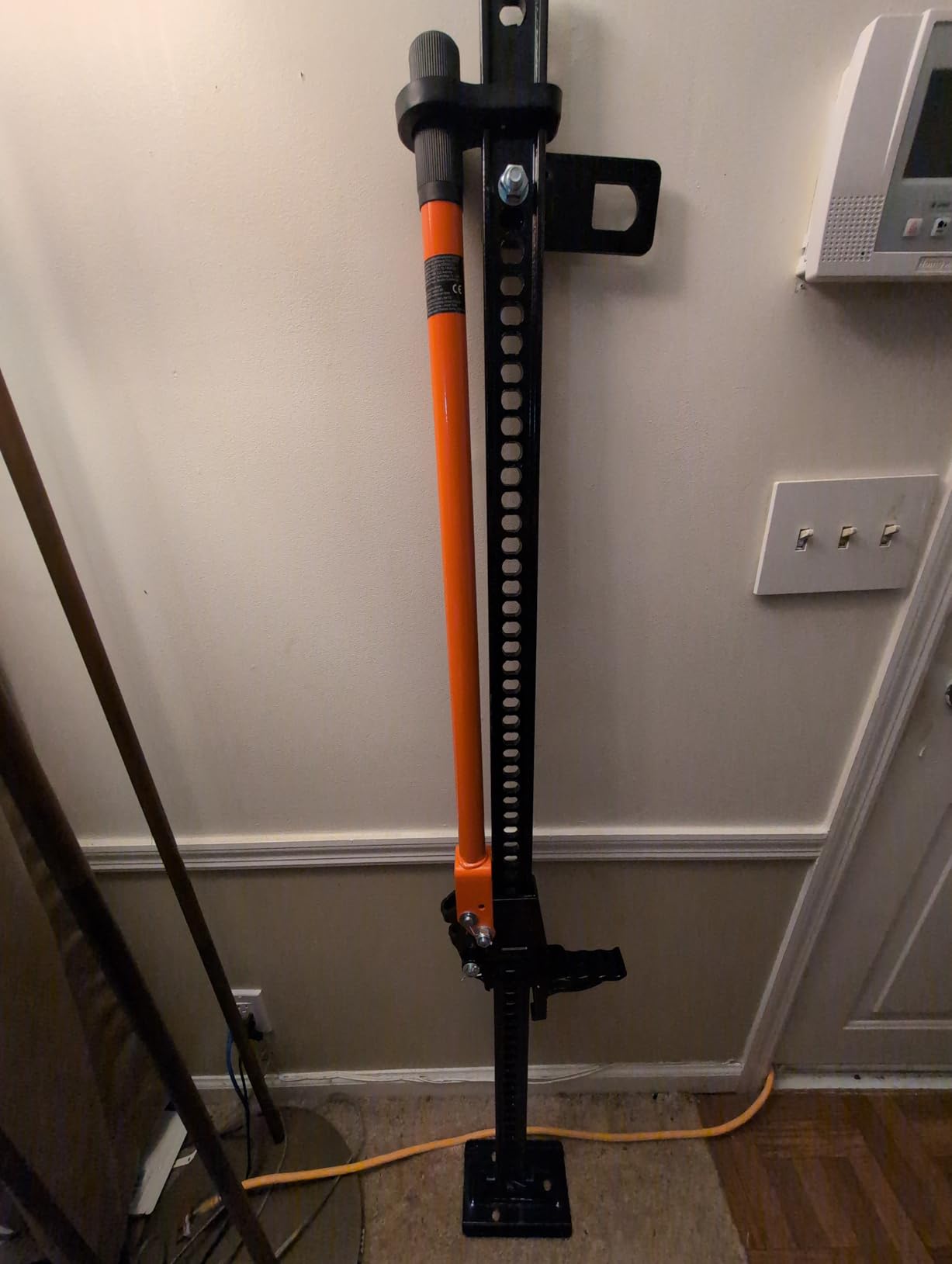
What the extra tonnage actually buys you?
That is 7000 lb of rated capacity in a 48-inch frame, matching the top of the ratcheting category, and owners report lifting truck corners without any creep in the ratchet, which is the failure you are really buying insurance against.
That headroom is also what makes it useful for a heavier class of vehicle than a passenger 4×4, such as a loaded full-size truck with a plow or a farm tractor with a cab.
Where quality control gets inconsistent?
Seven percent of reviews are one star, and that is the highest negative share among the high-lift jacks we reviewed. The complaints cluster around occasional models arriving with bent handle parts or finish defects rather than failing in service.
At 27.1 lb with a broad base, this is also one of the harder 48-inch jacks to move solo. Plan on a second pair of hands when you load it into a bed.
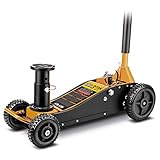
3. CAT 3 Ton Big Wheel Off Road Hybrid Jack: Built to Roam
Cat 3 Ton Big Wheel Off Road Hybrid Jack, Vehicle Lift for Trucks, SUVs, ATVs Offroad Vehicles – 240330
6000 lb capacity
6-21.5 in lift range
Adapter adds 7.75 in
Seven pumps to full height
Pros
- Four large wheels roll across dirt and gravel
- Dual-piston pump reaches full height in 7 pumps
- Adapter puck adds 7.75 in of clearance
- Hybrid steel and aluminum build
- Reviewers report slow controlled lowering
Cons
- Body is wide for some U-bolt and rocker lift points
- One report of a missing handle section on arrival
- One report of hydraulic fluid leaking
This is the jack we would hand to someone who wants floor-jack ergonomics in the dirt. Instead of two small casters, it rides on four large wheels that roll over gravel, brush and hardpack without being dragged, and the wide footprint between them is what keeps the frame from walking while a corner of a truck hangs in the air.
At 6000 lb rated capacity and a 6 to 21.5 inch range, the CAT will not reach a high-lift’s extremes, but the included adapter puck adds 7.75 inches of extra clearance under the vehicle. Owners report using that puck against rock sliders to lift a whole side of a truck, which is a technique that trades a little control for a lot of speed on frequent trail repairs.
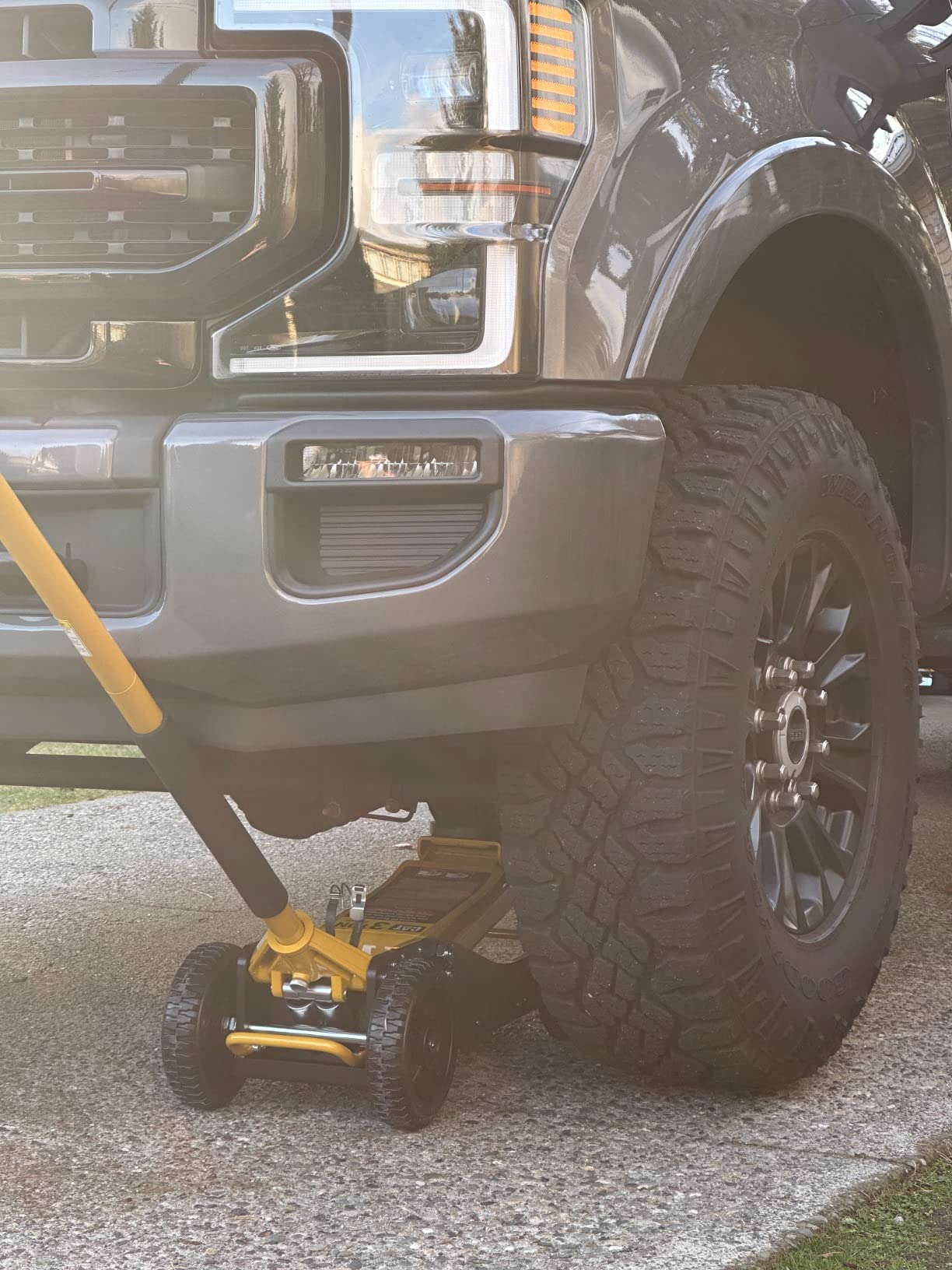
Speed is the standout. A dual-piston pump reaches full height in seven strokes, which is a completely different experience from cranking a ratcheting jack. The hybrid steel and aluminum construction is how the whole thing lands at 89.5 lb rather than well over 100 lb, and one person can still reposition it once the pump is locked.
Slow, controlled lowering is the other thing reviewers mention most, and it is genuinely useful. You can set a wheel down gently instead of dropping the corner, which is kinder to your suspension and to your hands.
What the four-wheel base solves?
Small-footprint jacks on soft ground sink and tilt, and when they tilt the vehicle shifts. A wide wheelbase spreads that load across a much larger area, so the jack stays level while the saddle is loaded. The bottom skid plate adds a second layer of protection against digging in.
Rolling matters too. You are not carrying 89.5 lb across a campsite; you are wheeling it from the truck to the front corner, which is a completely different task.
Where the extra width gets in the way?
Wider is not always better. The body can be too wide to slide under some rocker-panel and U-bolt lift points on full-size trucks, so on a Ford or a Chevy with tight factory points you may need the adapter or a different saddle approach.
With 191 reviews this is the smallest review pool among the big-wheel picks, and a few buyers report packaging damage or a light hydraulic leak on arrival. Neither complaint described long-term failure, but the pool is too thin for us to call it a proven workhorse.
4. Road DAWG 3 Ton Low-Profile High-Reach Jack: Reach That Clears Frame Rails
Road DAWG Low‑Profile High‑Reach Hydraulic 3 Ton Floor Jack, Black
6600 lb capacity
3.86-30.12 in lift range
Foldable reinforced arm
Dual-piston cast pump
Pros
- Widest lift range in the group at 3.86-30.12 in
- Reinforced foldable arm with thick channel plates
- Sealed cast iron pump base with dual pistons
- 360 degree rear casters reposition easily
- Owners lift a one-corner load on a Jeep running 37s
Cons
- Small rubber saddle pads fall out in transit
- Capacity differs between low and high configurations
- Handle can pull from the socket when you pull on it
- Slow to lift compared with a low-profile jack
- At 102.2 lb it needs breaking down to move far
The Road DAWG covers the widest lift range in this roundup. A 3.86-inch minimum height gets the saddle under a lowered car, and 30.12 inches of reach clears a frame rail on a lifted truck, all from one 6600 lb floor jack. No other jack here spans that much vertical travel in a single unit.
Owners describe a specific two-position technique with it. Low, the saddle meets the skid plate at the shock tower; high, it meets the frame rail itself. That flexibility is why 74 percent of its 159 reviews are five star, and why people who use it repeatedly describe it as a buy-once tool.
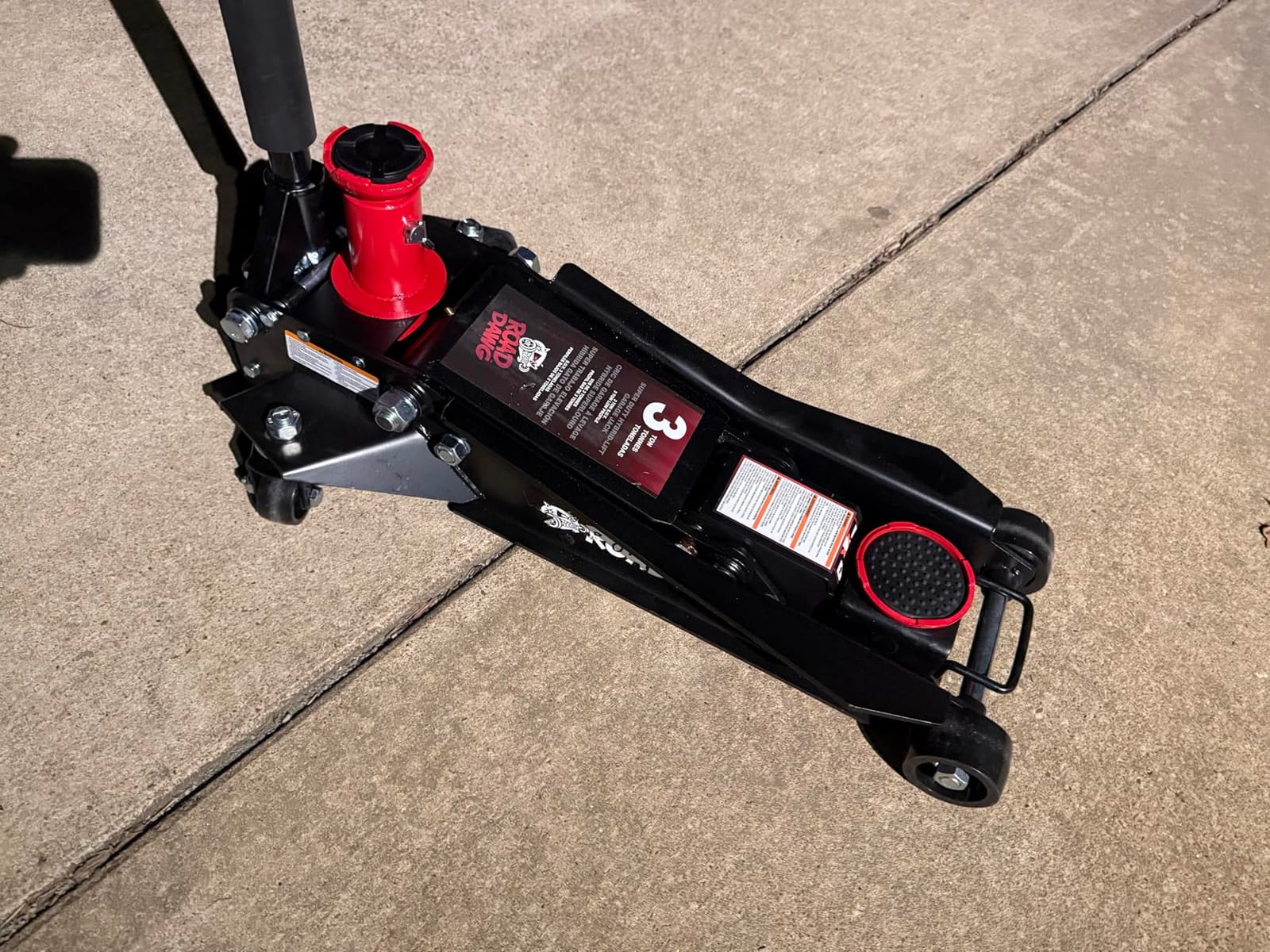
Structurally it is more serious than the price band suggests. The lifting arm is a reinforced foldable design with thick u-channel frame plates, and the pump base is sealed cast iron running two pistons, which is why it rises smoothly under load instead of creeping.
Two adjustable safety pins lock the arm position, and a safety overload system stops you from using it beyond its 3-ton rating. The extendable saddle bar and foam bumper protect the vehicle, which matters more than most buyers realise on a truck with a painted frame.
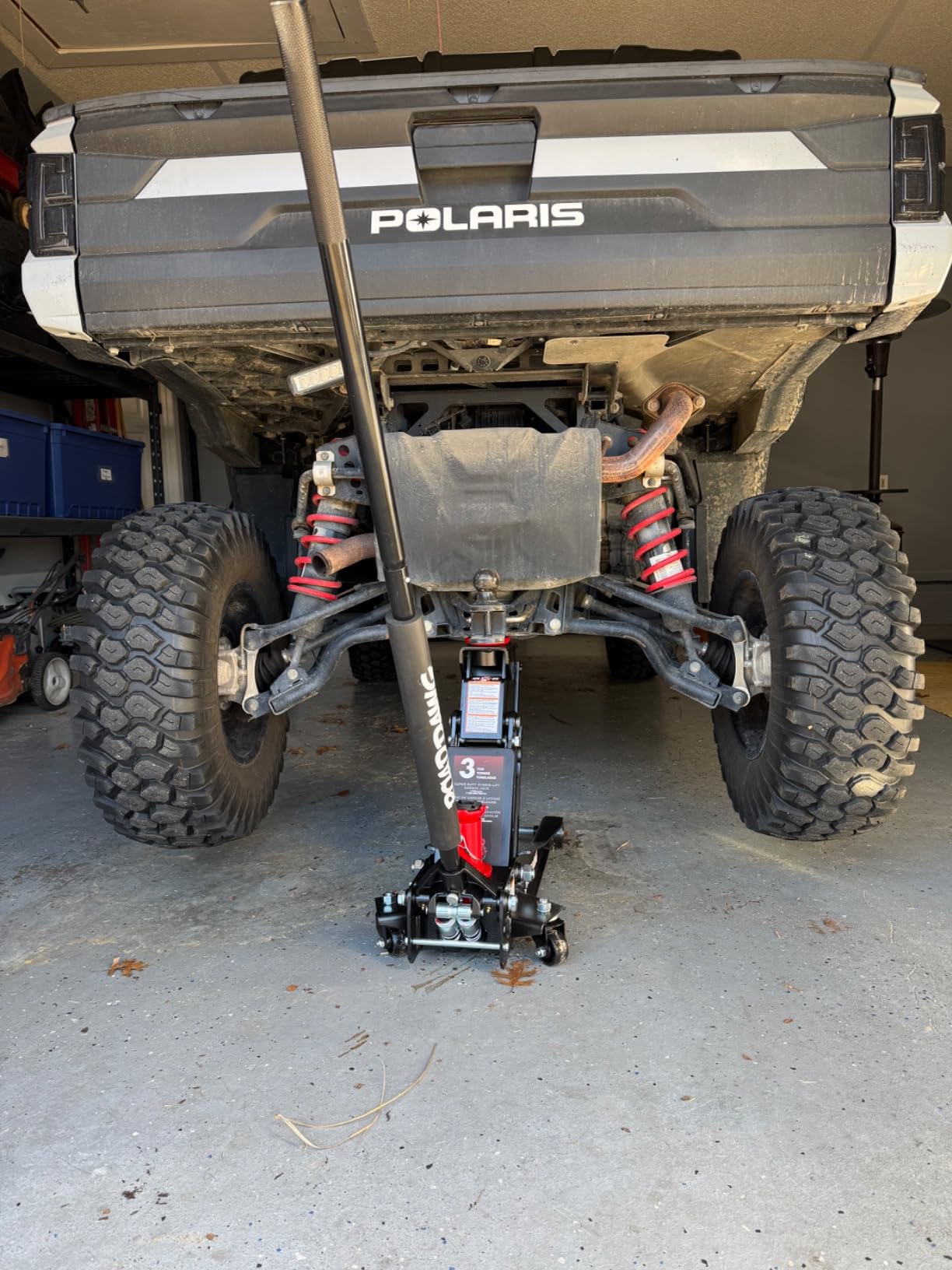
Why the 26-inch of travel changes the plan?
When one jack works from a low car to a tall truck, you stop stacking wood blocks and stop buying two different tools. On a build with a 19-inch lowest jack point, the extra reach over a standard trolley jack is the difference between a usable saddle height and a jack that tops out short.
The 360-degree rear casters make repositioning under a raised corner quick, and the single 6,600 lb rating is enough headroom to lift one corner of a Jeep running 37-inch tires, which owners confirm they do.
Where the compromises show up in use?
At 102.2 lb this is among the heaviest units in the roundup, and it has to be broken down to travel any distance. That is a real cost if you are hauling it to a trail rather than working in a driveway.
The recurring complaints are small and specific: rubber saddle pads that fall out in transit and can be torn on a skid plate, and a handle that can pull out of its socket when you pull hard on it, meaning the jack has to be moved by pushing the body.
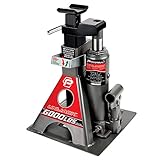
5. Powerbuilt 3 Ton Unijack: One Tool Instead of Two
Powerbuilt 3 Ton, Bottle Jack and Jack Stands in One, 6000 Pound Capacity, All-in-One Car Lift, Heavy Duty Vehicle Unijack, Wide Base, 620471
6000 lb capacity
11-21 in lift range
Jack and stand combined
Locking safety bar
Pros
- Bottle jack and jack stand in one unit
- Built-in ratcheting safety bar locks it raised
- 11-21 in range matches pickup and Jeep frames
- Wide base resists sinking on soft ground
- Light at 22.7 lb for repositioning
Cons
- 11 in minimum height cannot reach low rocker panels
- Lifting is slow because it does not roll on casters
Forum consensus on this category has a consistent message: owners care far more about safe, verifiable capacity and base stability than about brand name, and they carry a jack that locks in place. The Unijack answers both in one body. Pump it up and the ratcheting safety bar holds the stand position, so the same unit that raises the corner is the unit supporting the vehicle.
That design removes a whole step from the workflow, and it is why this jack carries 3184 reviews with 78 percent five star. It is one of the most-reviewed products in our list and, for a lot of owners, the only one they carry.
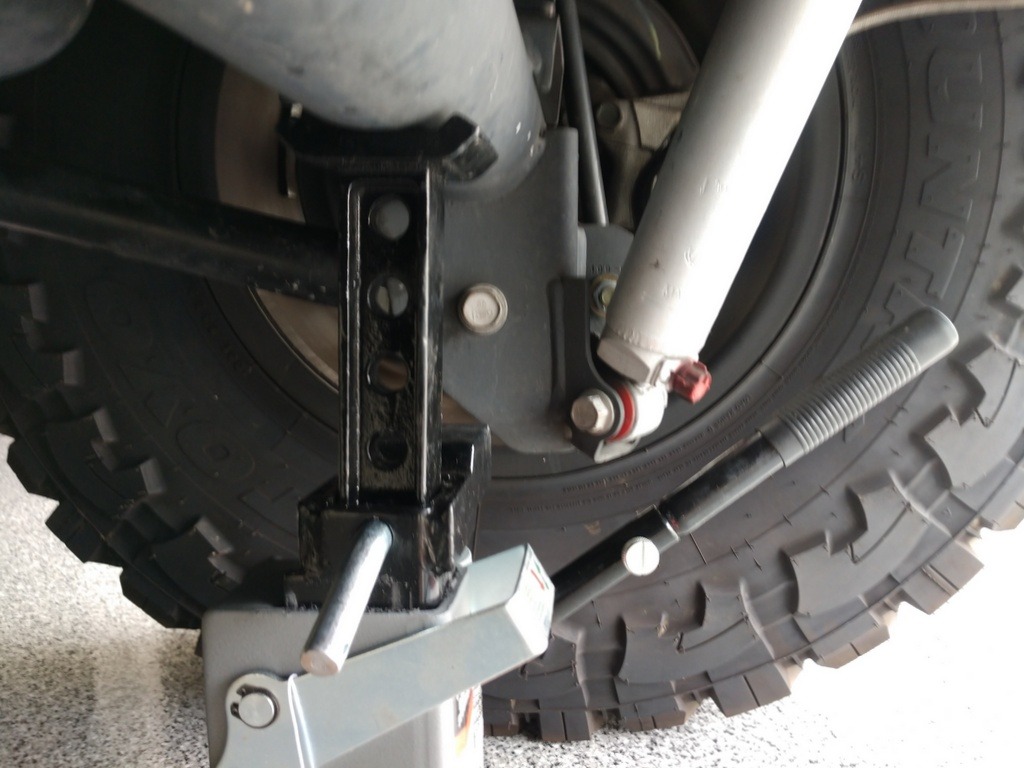
The 11 to 21 inch range lines up with the frame heights of most pickups, SUVs, vans and Jeeps, including moderately lifted ones, and the wide base is what stops it sinking into sand or grass during RV leveling and off-road work.
At 22.7 lb it is light enough to carry to a lift point in one trip, and it meets or exceeds ANSI standards with a one-year factory warranty behind it.
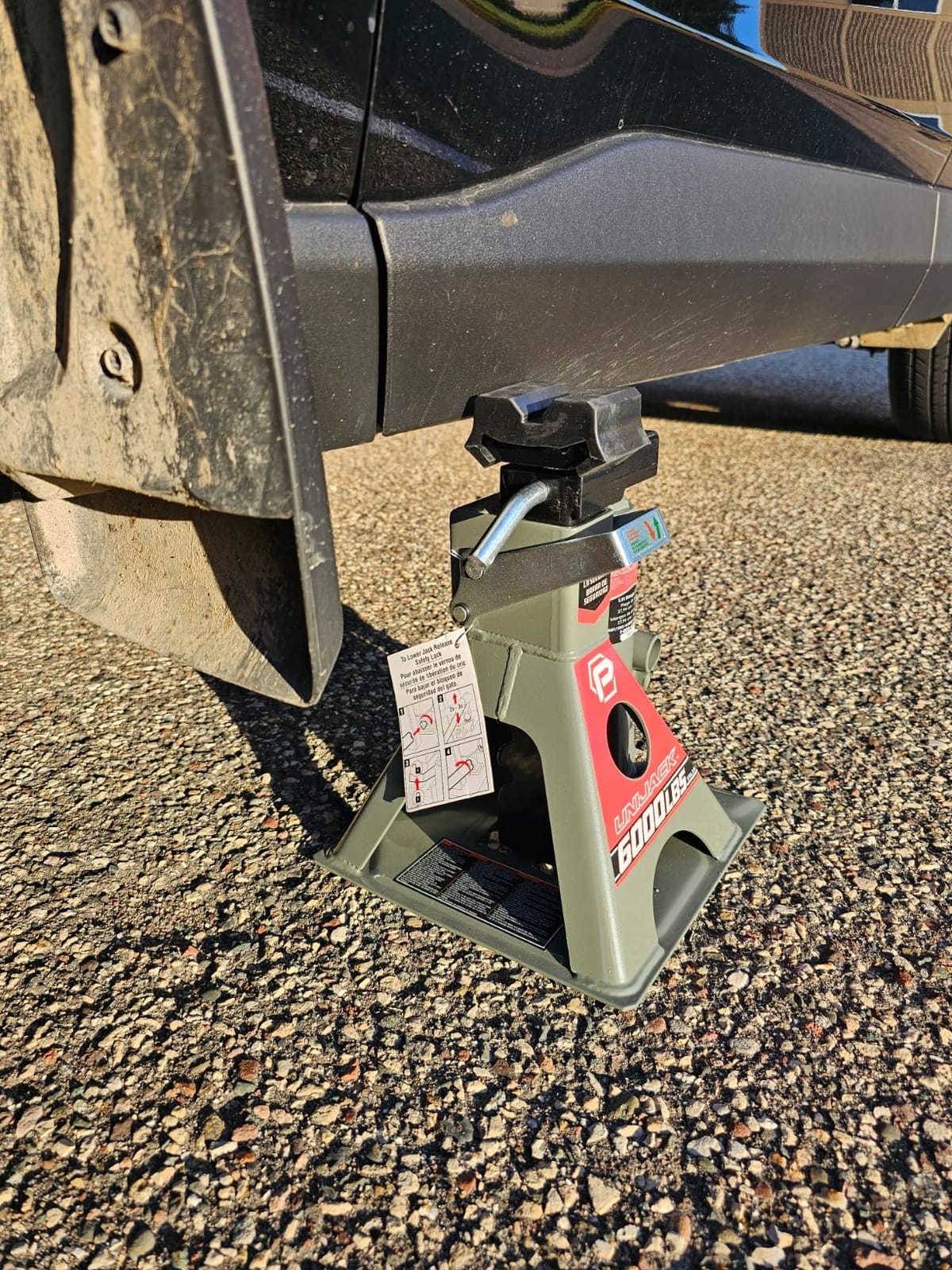
Why locking the stand in place changes the risk?
A jack alone is never a safe place to work. The built-in ratcheting bar means the moment you stop pumping, the height is mechanically held rather than balanced on hydraulic pressure, and owners single out that bar as the reason they trust it under a vehicle.
Wide base stability is the second trust signal. On sand or a grassy lawn, a stand with a broad footprint resists the tilt that puts a vehicle on its side.
Where the 11-inch floor rules it out?
An 11-inch minimum height is the whole limitation. It cannot reach a low rocker panel, a lowered car, or a heavily modified truck sitting closer to the ground than its stock height. If your lowest jack point is under about 12 inches, this is the wrong tool.
It also does not roll on casters, so each new lift point is another carry. For a jack that lives in a garage and moves four times a year, that is a fair trade for the combined safety feature.
6. BIG RED Torin 3 Ton Trolley Jack: The Long Saddle Neck Workhorse
BIG RED Hydraulic Trolley Service/Floor Jack with Extra Saddle (Fits: SUVs and Extended Height Trucks): 3 Ton (6,000 lb) Capacity, Red, T83006
6000 lb capacity
5.88-20.88 in reach
Extra long saddle neck
Four casters
Pros
- Extended saddle neck reaches higher lift points
- Two steel plus two swivel casters roll well
- Quick lift pump raises with few strokes
- Safety bypass prevents overloading
- 24.5 inch handle gives mechanical advantage
Cons
- 20.88 in max height is short for true high-lift work
- 8 percent of reviews are 1-star
- Some owners report slow lifting
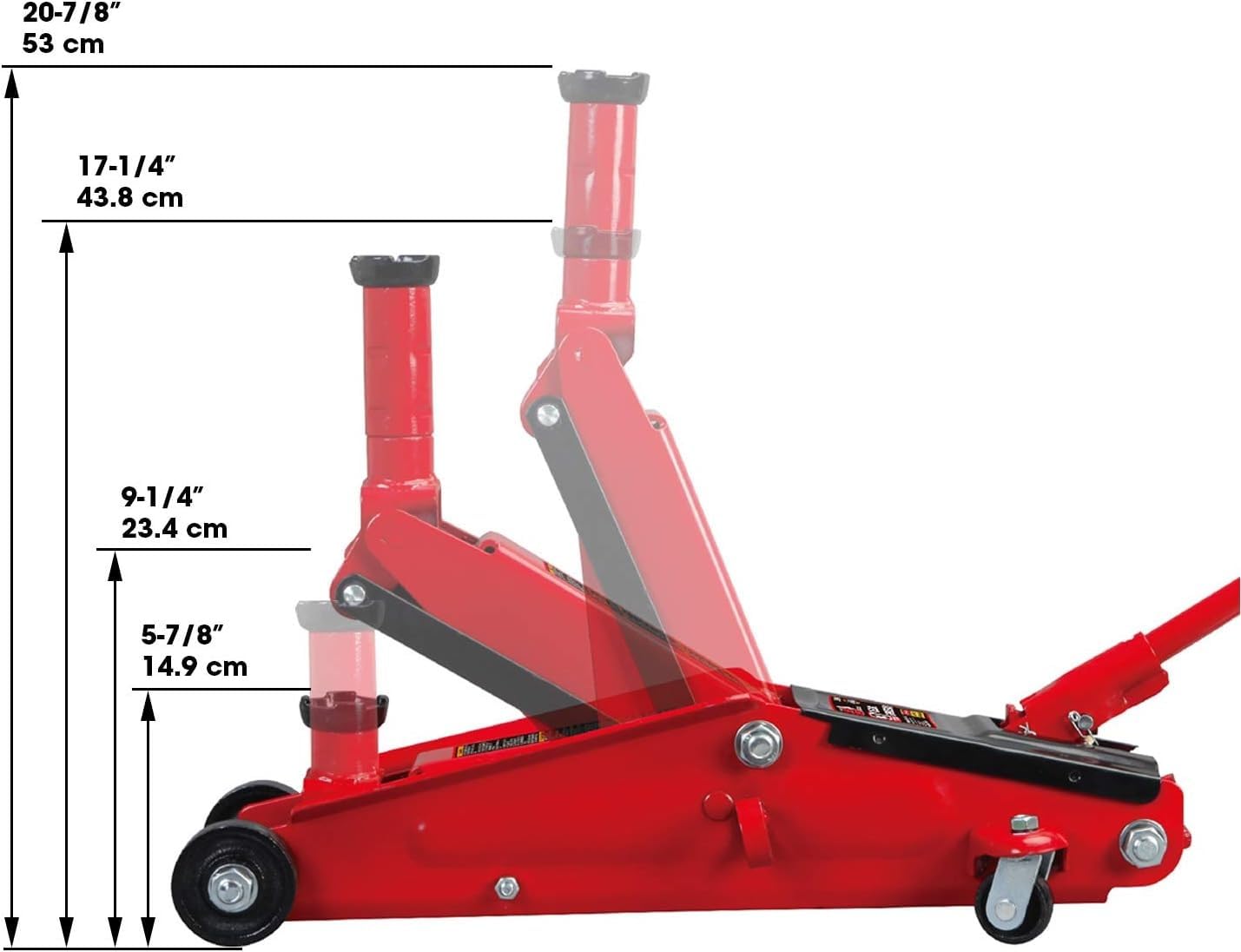
With 3919 reviews, this is one of the most-reviewed products in our roundup, and the reasons are unglamorous and reliable. It is a conventional 3-ton trolley jack with one meaningful modification: an extra long saddle neck designed to reach the higher lift points on SUVs and extended-height trucks.
About 69 percent of its reviews are five star and 84 percent are four star or better. The pattern in the feedback is that buyers understand exactly what they bought, a solid general-purpose shop jack with better than average reach, and they rate it on the quality of the casters and pump rather than on features.
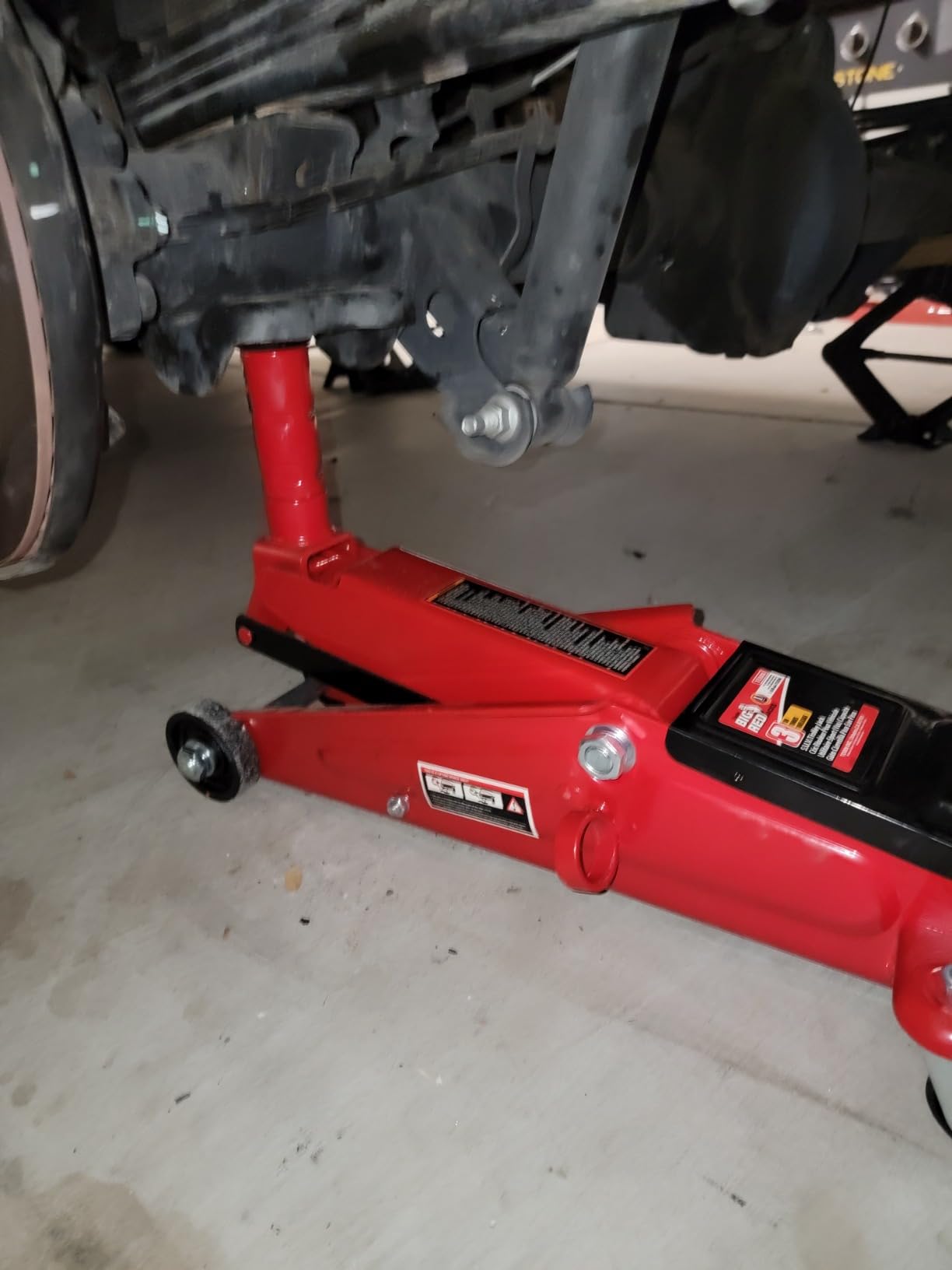
Maneuverability is the practical strength. Two large steel casters carry the load while two 360-degree swivel casters steer, so you can roll it under a raised vehicle and reposition without dragging. The 24.5-inch handle gives real mechanical advantage, and the quick lift pump raises the jack with relatively few strokes.
A safety bypass system protects the hydraulics from overloading, and the rubber-tipped tongs keep the handle from slipping in wet hands.
What the extended saddle actually fixes?
On a stock or lightly lifted truck, a standard low-profile jack’s saddle tops out just under the frame. The longer neck on this model bridges that gap, so the same jack that works under a sedan also engages the pinion on a taller truck without a block or an adapter.
It is a simple design solution, and simplicity tends to survive. Nothing about this jack is exotic, which is why it carries a large review pool of 3919 ratings.
Where 20.88 inches is not enough?
On a seriously lifted build the reach is genuinely short. Owners on forum threads measure the lowest jack point of a 2-inch-lift Gladiator running 37s at about 19 inches, and once the tire is off the ground and the vehicle is set on stands, the saddle can be left with almost nowhere to go.
It also draws an 8 percent one-star share, among the higher negative shares we saw, mostly around slow lifting and finish quality. Expect a conventional jack, not a premium one.
7. Powerbuilt 1.5 Ton Scissor Jack: The One That Lives in the Door Pocket
Powerbuilt 1.5 Ton Mechanical Scissor Jack, Offroad Jack – 640819
3000 lb capacity
4-14 in range
Weighs 7.1 lb
Oversized base
Pros
- Lightest option at 7.1 lb and fits a factory storage spot
- Rigid steel frame with an oversized base
- 4-14 in range covers normal lift points
- Reliable OEM replacement
- Two year manufacturer warranty
Cons
- 3000 lb rating is the lowest here
- 14 in max height will not reach a modified frame
- Some models ship with a rough threaded rod
- Short crank handle is awkward to reach
- One report of a bent handle pivot after four tire changes
At 7.1 lb it is the lightest product in our list, and it is the only one you can move with one hand while carrying a spare tire.
It is also the lowest rated product in this list at 3000 lb and 4.0 stars, with 12 percent one-star reviews, the highest negative share among the ten we reviewed. The rating reflects what it is: a compact emergency and light maintenance tool, not a lifted-truck workhorse.
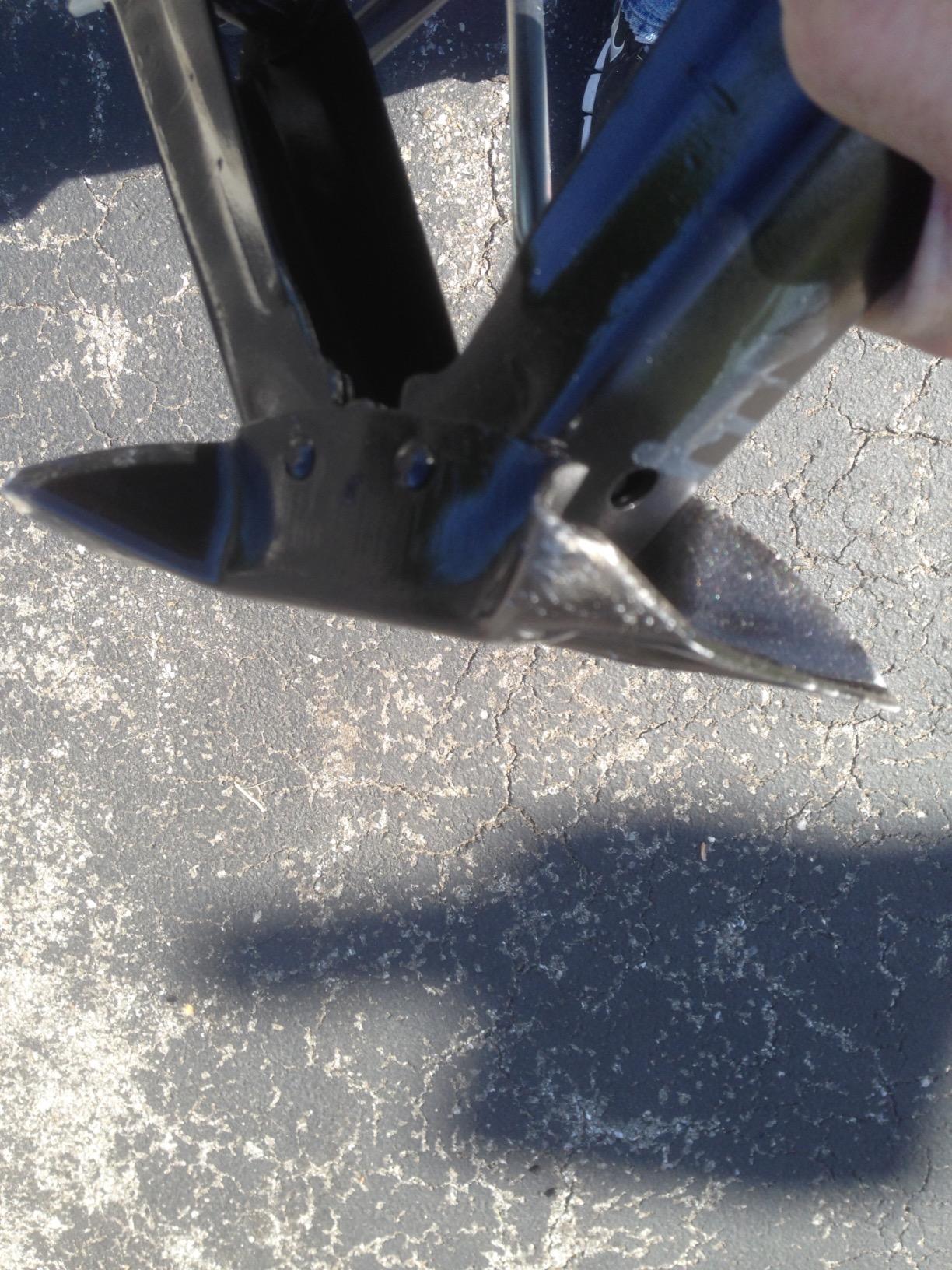
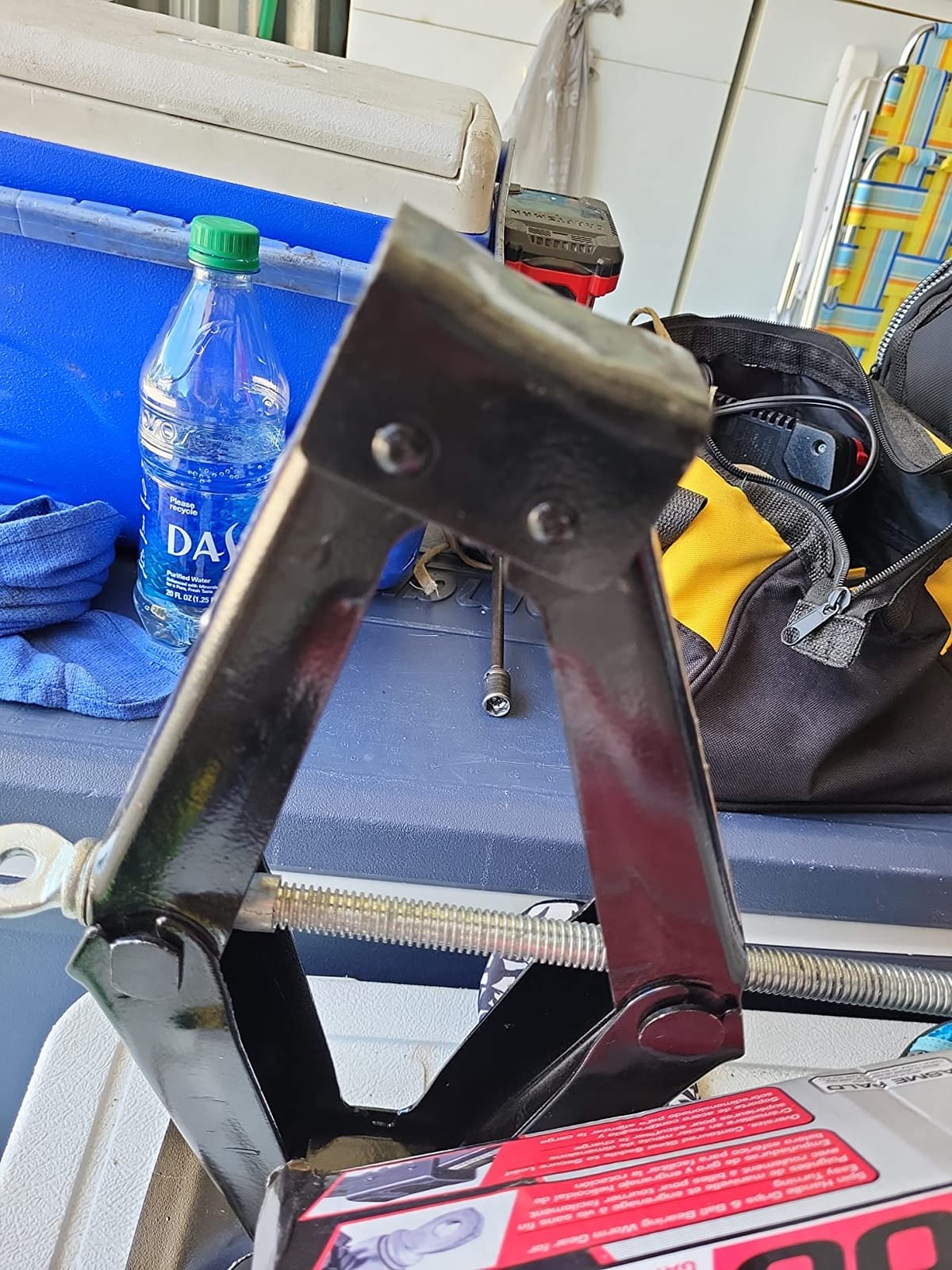
Where it does well is the job it was designed for. The oversized base resists tipping on uneven ground, the 4 to 14 inch range covers normal passenger-car and light-truck lift points, and it meets or exceeds ASME and PALD standards as a certified scissor jack with a two-year warranty.
It also solves a storage problem that heavy jacks create. If your truck has a factory jack storage spot under a seat or behind a panel, this fits it and a 48-inch farm jack never will.
When a scissor jack is the safer choice?
The failure mode of a hi-lift is a tip-over, and a scissor jack has a low, wide, rectangular base that resists that in a way no tall narrow jack can. Multiple forum veterans describe the scissor as their default for level ground and short jobs, with the high lift held back as an emergency tool.
On a lift point that is close to the ground and easy to reach, that stability profile is worth more than reach.
Where the 1.5-ton rating bites?
3000 lb is not enough for a full-size lifted truck, and 14 inches of maximum height will not reach a frame point on a modified suspension. Lift kit installation, control arm work and 37-inch tire changes on a tall build are all outside its envelope.
The specific complaints are build quality: some models arrive with a bent, rough-finished threaded rod that is hard to crank, and one owner reported the riveted handle pivot bending after four tire changes. If you buy this for a full-time off-road truck, buy the spare too.
8. BUNKER INDUST 48 Inch High Lift Jack and Traction Boards: The Boxed Recovery Kit
BUNKER INDUST Offroad High Lift Jack with Pair Traction Board Mate,48″ FarmJack with Sand Mud Snow Track Mat Board, Offroad Tire Recovery Kit for Car Truck Jeep ATV SUV UTV
48 inch all-cast jack
7000 lb with shear bolt
Two traction boards included
Quick-release pin
Pros
- Jack and two traction boards in one package
- Boards rated 10 tons on flat ground
- Shear bolt prevents loads past 7000 lb
- Zinc-coated clamp hardware resists rust
- Each board has a jack base recess in the centre
Cons
- Switching from lift to lower under load is difficult
- Owners rate the traction boards as merely adequate
Almost every jack solves a lifting problem and creates a ground problem. You get the vehicle up, and then the jack sinks into the sand or you slide under a tire and lose traction. This package addresses both halves: an all-cast 48-inch high lift jack plus two traction boards, each with a recessed jack base moulded into the centre.
That recess is the smart part. The board spreads the jack’s load across a wide area on soft ground, and the shovel edge on each board is for digging yourself out of mud, snow or sand. Eighty percent of its 138 reviews are five star, and the set is described as solid, well-packaged equipment.
What the shear bolt does for you?
A shear bolt is a designed failure point. If you overload the jack past its 7000 lb rating, the bolt shears instead of the frame or the ratchet gear deforming, and you replace a bolt rather than a jack. On a tool that gets pinned under a loaded truck corner, that is a meaningful safety difference.
The spring-loaded quick-release pin is the second field-friendly feature. You can set and change lift height without fumbling with a loose pin in the dark, and the zinc-coated clamp and winch hardware resists rust in wet conditions.
Where the boards disappoint?
Owners consistently rate the traction boards as merely adequate rather than good, and the price of the bundle is the reason. You are getting a strong jack at a discount and paying for the boards at a markup.
Switching the jack from lifting to lowering while a load is on it is described as difficult, which is a real field annoyance when the vehicle is hanging on the saddle and you need it down. With 138 reviews the pool is also small, so treat the set as a good-value bundle rather than a proven long-term investment.
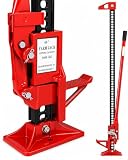
9. XtremepowerUS 48 Inch High Lift Farm Jack: The 4-in-1 Budget Farm Jack
XtremepowerUS 48-Inch High Lift Farm Jack, 3 Ton (6,600 lbs) Heavy Duty Ratcheting Utility Jack for Tractor, Truck, SUV, Jeep, Off-Road Recovery, Winching, Pulling, Clamping & Bumper Lifting
3 ton 6600 lb capacity
5.12-41.14 in range
4-in-1 lift pull clamp winch
Powder-coated steel
Pros
- 6600 lb with a 48 inch class lift range
- High-strength steel with corrosion-resistant finish
- 4-in-1 lifting pulling clamping and winching
- Non-slip handle lifts hundreds of pounds one-handed
- Popular for tractor implements and fence posts
Cons
- Only a 60-day manufacturer warranty
- At 30 lb it is a two-handed carry
- Full handle stroke needed per increment of lift
The XtremepowerUS is the pick if one tool has to do four different jobs. It is rated 3 ton, or 6600 lb, with a documented 5.12 to 41.14 inch range, and the same frame lifts, pulls, clamps and winches. That is a broader brief than the other farm jacks here, and owners use it accordingly.
Seventy-three percent of its 221 reviews are five star and 86 percent are four star or better. The feedback skews heavily toward property and farm work rather than trail recovery, with tractor implements, landscape trailers, railroad ties and fence posts as the recurring job list. That is a useful signal: this is a work jack that will handle recovery duties, not a recovery jack that happens to do farm work.
What the 4-in-1 design actually covers?
Lifting is only one of the four modes. Owners report using the handle as a manual winch with tow straps, and using the frame as a clamp and spreader. On a remote property where you are working alone, having one tool cover all of that removes a real dependency on a second item.
The ratcheting handle is genuinely good for the class, lifting hundreds of pounds one-handed according to owners, and the powder-coated steel finish is specified for outdoor storage.
Where the warranty and the weight disappoint?
A 60-day manufacturer warranty is the shortest coverage of any pick here, and it is the drawback reviewers mention most. For a tool that is expected to live in a truck bed through a decade of trail work, that is a real gap you should price into your thinking.
At 30 lb it is a two-handed carry, and the ratcheting mechanism still needs a full stroke per increment of lift. Buy this one for property and farm duty, and keep the all-cast Hi-Lift in the truck.
10. BIG RED Torin 20 Ton Bottle Jack: Force Per Pound, Nothing Else
BIG RED T92003B Torin Hydraulic Welded Bottle Jack, 20 Ton (40,000 lb) Capacity, Red
20 ton 40000 lb capacity
9.44-17.75 in range
Unscrewable top extension
Sealed welded body
Pros
- 40000 lb rating gives huge headroom over vehicle weight
- Drop-forged alloyed steel with welded inner and outer
- Serrated heat-treated saddle grips well
- Glide-action pump lifts with little setback
- Unscrewable top extension reaches low frame rails
- Compact at 18 lb
Cons
- Needs roughly 50 to 70 pump strokes
- 17.75 in max height is short once a truck is on stands
- Some models arrive needing hydraulic fluid and bleeding
- Underside release screw has no stop
- Short pump handle may require reaching under the vehicle
A bottle jack generates force more cheaply than anything else we tested. At 20 ton, or 40000 lb, this one carries roughly seven times the rated capacity of a 3-ton floor jack in a package that weighs 18 lb. Owners who researched the category deliberately report lifting a fully loaded step van and a 16000 lb RV without creep, which is a different class of problem from a tire change.
Seventy-five percent of its 2096 reviews are five star and 87 percent are four star or better, and the feedback praises the drop-forged alloyed steel construction, the welded inner and outer body, and the glide-action pump with minimal setback. The serrated, heat-treated saddle gives a secure grip over a generous lifting area, which is the whole point of a bottle jack.
Why the unscrewable top extension matters?
A bottle jack’s weakness is that it is a tall object that has to get under something. The screw top extension unscrews so the jack can slip beneath a low frame rail and then be re-extended once it is in position. That small feature is the difference between usable and useless on some frame rails.
At 18 lb it is compact enough to live permanently in a recovery kit, and the integrated oil-bypass and overload valve protect the hydraulics. It meets ASME PASE safety standards with a one-year manufacturer warranty.
Where the trade-offs are real?
Speed. Raising a vehicle takes roughly 50 to 70 full pump strokes, which is minutes rather than seconds, and the pump handle is short enough that on some vehicles you have to reach under to stroke it.
Height. At 17.75 inches of maximum lift, a fully lifted truck on stands can be beyond it, which is the single most common complaint. Owners of lifted builds add a longer bottle jack or reach for a hi-lift for that reason, and the saddle pad also needs to be checked, since owners report pads slipping off rounded axle tubes.
Which Off Road Jack Type Do You Need?
Every jack family solves a different problem, and the honest answer to what type of car jack is best for lifted trucks depends on which problem you have. Start by measuring your lowest jack point, then match the mechanism to the terrain and the job.
Scissor jacks win on stability and storage. A wide, low base resists tipping, and at 7 lb it fits where nothing else will. They lose on reach and tonnage, so they suit normal-height vehicles and roadside duty rather than a modified truck.
Bottle jacks win on force per pound carried. 20 tons of rated capacity in an 18 lb package is a hard combination to match, and the small footprint is easy to stabilise. They lose on speed and on maximum height, and they need a broad base plate under them on soft ground.
Big-wheel off-road floor jacks win on workflow. Four large wheels and casters let you roll the jack to the lift point instead of carrying it, and dual-piston pumps raise a corner in seconds. They lose on reach, with most topping out around 20 to 21 inches, so heavily lifted builds need an adapter puck or stacked blocks. Our floor jack picks for home and pro shop use cover the low-profile end of that category in more detail.
Hi-lift and high-lift farm jacks win on reach and versatility. A 48-inch jack clears frame rails nothing else touches, and the handle doubles as a winch point and clamp. They lose on speed, on stability in soft ground, and on safety, which is why experienced owners treat them as an emergency tool rather than a first choice.
How to Jack Up a Lifted Truck Safely?
No jack, at any capacity, is a safe place to work. Owners in off-road forums repeatedly state the same rule: never get under a vehicle supported only by a jack, and never treat a bottle jack on a plate as a stand. What follows is the sequence we use.
1. Level the ground first. A jack on a slope will slide no matter how wide its base is. If you are on a hillside, dig a flat pad or level the corner with a shovel before anything else.
2. Put the transmission in park, engage the parking brake, and select 4WD if the transfer case is available. Owners on forum field reports credit 4WD with part of the reason their bottle jack never moved.
3. Chock the wheels. Chock the two wheels diagonally opposite the one you are lifting. Short pieces of 4×4 lumber serve double duty as chocks and as extra lift height on uneven ground, which is the most commonly recommended piece of kit in owner threads.
4. Give the jack a base. A 12×12 inch steel plate a quarter inch thick is the most frequently recommended stabilizer in off-road communities, and some owners weld a lip onto the plate to stop the jack walking. A pressure-treated 4×4 base is a lighter alternative that works for a 2-ton jack and a bottle jack.
5. Check the saddle has solid contact. On a rounded axle tube, add a cradle or axle tube adapter. Slipping saddles are the most common unsolved problem bottle jack owners report.
6. Lift only as high as the job needs, then transfer the load. Set the vehicle on properly rated jack stands matched to the vehicle weight, then lower the jack and remove it before starting work. Never work under a vehicle held by a jack alone.
7. On soft ground, recheck after the first minute of load. Watch for the jack plate sinking, which shows up as the vehicle getting lower while you work.
Matching Jack Capacity and Lift Height to Your Truck
Tonnage is the constraint people plan for, but lift height is the one that actually stops you. A 3-ton jack can be rated for 6000 lb and still be useless on a truck with a 19-inch lowest jack point, because you need the saddle above the frame before the tire clears the ground.
Measure it yourself. Park on level ground, kneel beside the frame rail, and measure from the ground to the lowest solid structure you would be willing to put a saddle under. Add four to six inches of extra height so the tire drops far enough to change, and write that number on the jack. This is the measurement no competitor guide publishes, and it is the one that decides the purchase.
On capacity, the common shop rule is that a floor jack should be rated to at least three quarters of the load it will lift, and lifted vehicles routinely exceed their curb weight. Check the door jamb gross vehicle weight rating rather than the sticker on the tailgate, since a lifted truck with big tires and a steel bumper can be well over what the factory number suggests. A 3-ton jack handles a lifted Jeep or a half-ton pickup at one corner; heavier trucks deserve a 4-ton or larger rating, and 20-ton bottle jacks cover recovery work on much bigger vehicles.
Then think about how many jacks you carry. Owners on these threads mostly land on a two-jack kit: one wide-base floor or scissor jack for everyday work, and one hi-lift or bottle jack for the day it goes wrong. A 3-ton big-wheel floor jack is heavy and bulky to haul in a truck bed, so a compact second jack that weighs under 20 lb is the practical complement. If the kids’ off-road toys also need lifting, our kids electric ATV picks cover that side of the hobby.
Accessories Every Lifted Truck Owner Should Carry
A jack is only half of a jacking kit, and the accessory list is where most of the safety gains actually come from. A 12×12 inch steel jack plate is the first item, because it is the difference between a stable base and a jack that sinks into sand.
Properly rated jack stands come next, matched to your vehicle weight. Wheel chocks or 4×4 dunnage blocks are the cheapest safety improvement available. Axle tube cradle adapters solve the slipping-saddle problem on round axle tubes, and high-lift jack stabilizers widen the footprint of a 48-inch jack, which is the accessory named in forum threads and missing from most published guides.
Add hi-lift jack base pads sized to your lift point, and a flashlight or headlamp, because you will be doing this in the dark more often than you expect. If your build has no bumper or rock slider jack point, a hi-lift has nowhere safe to sit, and that alone should decide your purchase.
Frequently Asked Questions
What type of car jack is best for lifted trucks?
A big-wheel off-road floor jack is the best general choice for a lifted truck, because four large wheels let you roll it across dirt and gravel to the lift point and a hydraulic pump raises a corner in seconds. Add a bottle jack for soft ground and recovery force, and a 48-inch hi-lift for frame rails no floor jack can reach. Measure your lowest jack point before buying anything, because reach matters more than tonnage.
What is the best high lift jack for off-roading?
The Hi-Lift 48-inch all-cast jack is the strongest all-round high-lift pick, and its 4.7 rating across 3449 reviews is the largest pool in the high-lift category. The all-cast iron body resists the cracked ratchet teeth and bent frames that kill stamped jacks, and the handle ends in a winch point so the tool doubles as a recovery winch. Expect a slow ratcheting action with several full strokes per inch of lift.
Which is better for trucks, a floor jack or a bottle jack?
A floor jack is better for routine work on a lifted truck because it rolls to the lift point and raises a corner in seconds, while a bottle jack needs 50 to 70 full pump strokes. A bottle jack is better when you need raw force, when the ground is too soft to roll anything across, or when you need a 20-ton rating to recover a heavier vehicle. Many owners carry one of each, and a jack-and-stand combination unit covers both roles in a single tool.
What is the 3/4 rule for floor jacks?
The 3/4 rule states that a floor jack should be rated to at least three quarters of the load it will lift, so the jack runs well below its limit. The reason is heat and hydraulic stress: a jack working continuously near its rating creeps, builds heat and fails sooner. Use it as a minimum, not a target, and remember a lifted truck with big tires and a steel bumper can weigh considerably more than its curb weight suggests.
What is the best way to jack up a lifted truck safely?
Level the ground, park in park, set the parking brake and select 4WD, then chock the two wheels diagonally opposite the lift point. Put a 12×12 inch steel plate under the jack so it cannot sink or walk, confirm the saddle has solid contact, and add an axle cradle if the jack point is a rounded axle tube. Lift only as high as the job needs, transfer the load to properly rated jack stands, then lower and remove the jack before working underneath.
Do I need 3 ton or 6 ton jack stands?
Match your stands to the vehicle, not to the jack. A lifted Jeep or half-ton pickup lifted at one corner is fine on 3-ton stands, while a full-size truck with a bumper, winch and 37-inch tires should sit on 6-ton stands. Buy a matched pair plus spares, and confirm each stand is stamped with its rating before you trust it under a vehicle, since stands are the only support you will actually be working under.
Final Verdict: The Best Off Road Jack for Lifted Vehicles
After comparing ten jacks on capacity, reach, base stability and real buyer complaints, the Hi-Lift 48-inch all-cast HL-485 remains our pick as the best off road jack for lifted vehicles, because reach is the constraint that actually ends the decision. If you want speed and mobility instead, the CAT 3-ton big-wheel hybrid and the Road DAWG 3-ton high-reach jack cover the two ends of the travel range.
Whatever you choose, measure your lowest jack point first, carry a 12×12 inch steel plate and rated jack stands, and never work under a vehicle held by a jack alone. That procedure matters more than the brand name on the handle.