
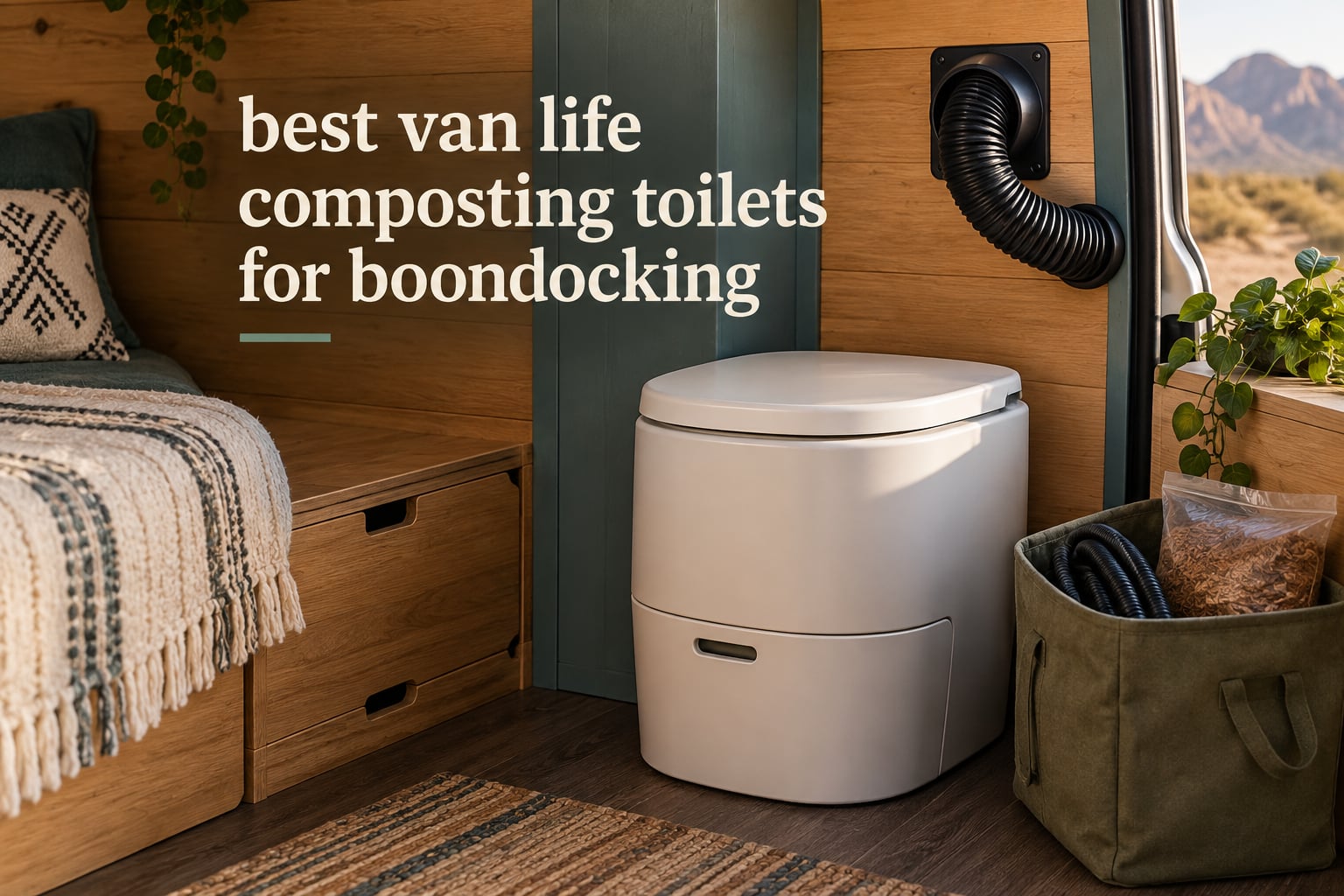
The best van life composting toilets for boondocking are the Nature’s Head for couples who want the longest stretch between emptyings, the OGO Origin if your build space is tight, and the BOXIO if you want a real separating toilet without wiring anything. All three run without water, without chemicals, and without a dump station in sight. The right one comes down to how many people are aboard, how much floor you have, and whether your van has a working 12V circuit.
We put ten of the most-reviewed waterless and separating toilets through the same comparison: solids capacity, liquids capacity, weight, footprint, whether they need power, and what real owners say about odor after months of use. Everything in this roundup comes from published specifications and owner review data, not from marketing copy.
One thing worth understanding before you shop. Almost none of these units actually compost. They dehydrate. Urine is diverted to a bottle, solid waste sits in a bin with a dry medium like coconut coir or hemp litter, and moving air pulls the moisture out. That matters for boondocking because dried waste can go in a sealed bag and into a regular bin, while anything still wet becomes a problem you have to solve in the backcountry. We explain the difference in full further down. If you also want a broader look at household fixtures, our guide to the best toilets tested and ranked covers conventional setups, and the smart toilet picks covers the connected end of the market.
Table of Contents
Top 3 Composting Toilets For Van Life (October 2026)
Nature’s Head Spider Handle
- 4-6 weeks between emptyings for two
- 5 year warranty
- Spider handle design
- Fixed wall install


BOXIO Toilet
- 1.5 gal separation container
- 8-10 uses per fill
- 11.4 pounds
- Hemp litter included
All 10 Composting Toilets Compared in 2026
| Product | Specifications | Action |
|---|---|---|
| Nature’s Head Spider Handle |
|
Check Latest Price |
| BOXIO Toilet |
|
Check Latest Price |
| Separett Villa |
|
Check Latest Price |
 OGO Origin OGO Origin |
|
Check Latest Price |
 OGO NOMAD OGO NOMAD |
|
Check Latest Price |
 Trelino Evo S Trelino Evo S |
|
Check Latest Price |
 TROBOLO WandaGO TROBOLO WandaGO |
|
Check Latest Price |
 Compo Closet Cuddy Lite Compo Closet Cuddy Lite |
|
Check Latest Price |
 TROBOLO WandaGO Lite TROBOLO WandaGO Lite |
|
Check Latest Price |
 TROBOLO DIY Set TROBOLO DIY Set |
|
Check Latest Price |
The Honest Downsides Before You Buy
Most buying guides skip this part, so here it is first. These are the real complaints that show up repeatedly in owner reviews and on van life forums.
They dehydrate, they do not compost. What comes out is a dry, bagged solid you still have to dispose of responsibly.
Urine in the solids bin ruins the result. Miss the funnel and the whole bin stops drying properly.
There is a two to four week learning curve. Too much medium and it will not dry. Too little and odor arrives fast.
You still empty a container. The solids bin needs emptying on a schedule, just more slowly than a cassette.
Powered models need a real 12V circuit. A small battery and a cheap fan will not ventilate a unit properly.
Big models eat floor space. Some weigh over 30 pounds and are permanently fixed to a wall.
Owners on r/vanlife and vanlivingforum.com describe the same pattern: the first few weeks can smell while you dial in the medium ratio, then it settles down. Multiple owners running a 12V fan continuously through a wall vent report no odor at all. Treat that as the target, not the exception.
1. Nature’s Head Self Contained Composting Toilet – Longest Emptying Cycle
Nature’s Head Self Contained Composting Toilet with Close Quarters Spider Handle Design
28 pounds
20.98 by 19.02 by 20.98 inch
5 year warranty
Empty every 4-6 weeks for two
Pros
- Largest review base in the group at 1112 ratings
- Two people full time empty every 4-6 weeks
- Emptying takes about five minutes
- Installable by a reasonably handy owner
- Backed by a 5 year warranty
Cons
- Heavy at 28 pounds compared with portable units
- Fixed wall install so it is not removable between trips
- The urine chamber is small relative to the solids bin
This is the unit most full-time couples end up with, and the review data backs up why. Out of 1112 ratings averaging 4.5, 77% are five-star and another 9% are four-star. That is the largest review pool of any toilet in this roundup by a wide margin, and it is dominated by people actually living with the unit rather than trying it once.
The number that matters for boondocking is the 4 to 6 week emptying interval for two people living in it full time. Nothing else in this roundup publishes an interval that long, and it is the reason the Nature’s Head keeps winning comparisons. Where a cassette forces a dump station every few days, this buys you a month of not thinking about waste.
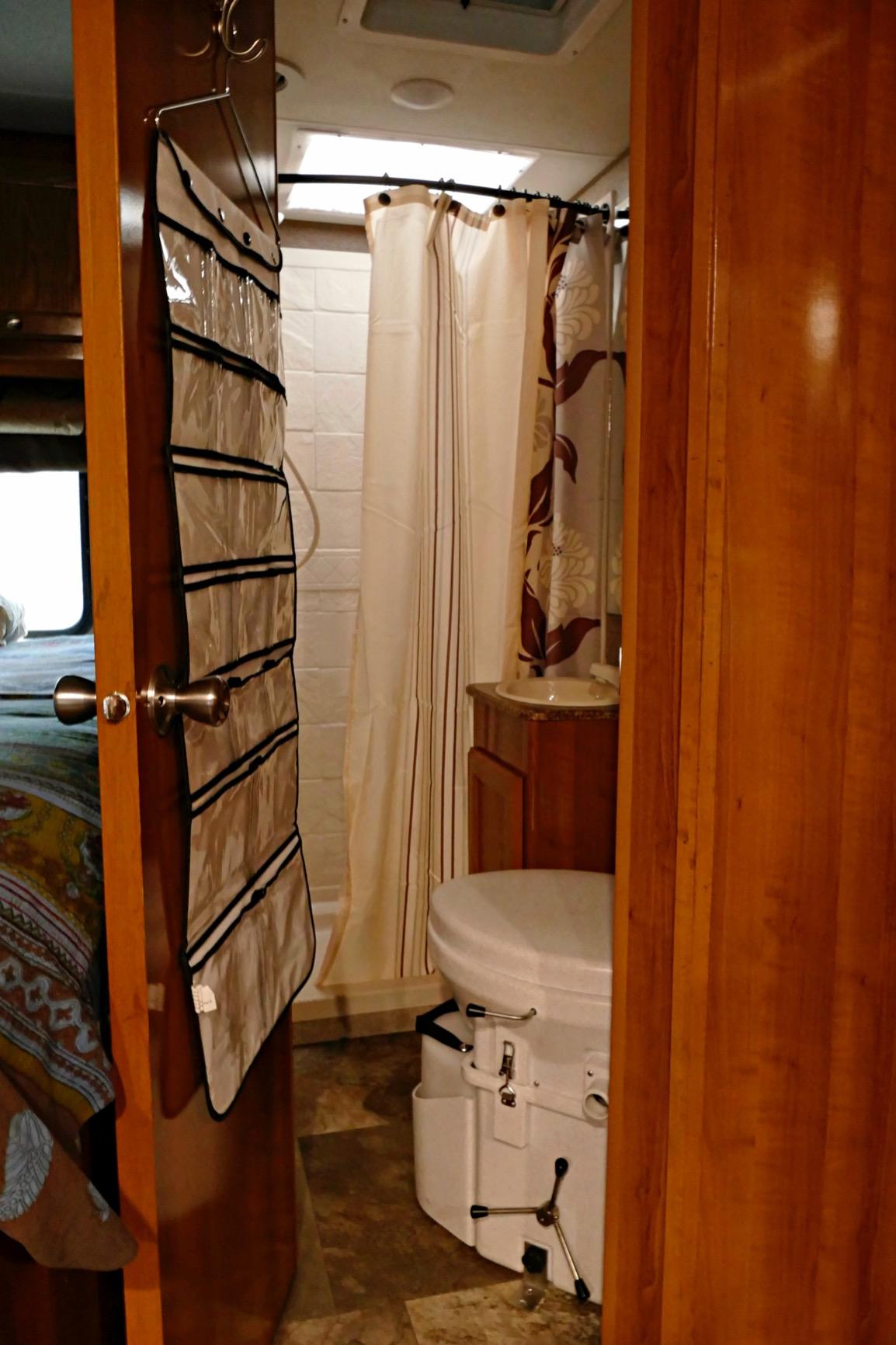
Emptying is described as a five-minute job. You crack the spider handle, pull the solids container out of the wall cavity, tie off the bag and drop it. The spider handle design exists specifically because a crank sticking out sideways is unusable in a tight van build where the toilet is boxed between studs.
Owner sentiment on this model is unusually consistent. The phrase that keeps repeating is that it feels like a real toilet rather than a campsite workaround, and several reviewers mention that the manufacturer support was responsive when they had questions about setup. That matters more than it sounds, because the vent hose and wall adapter have to be routed correctly for the fan to move air.
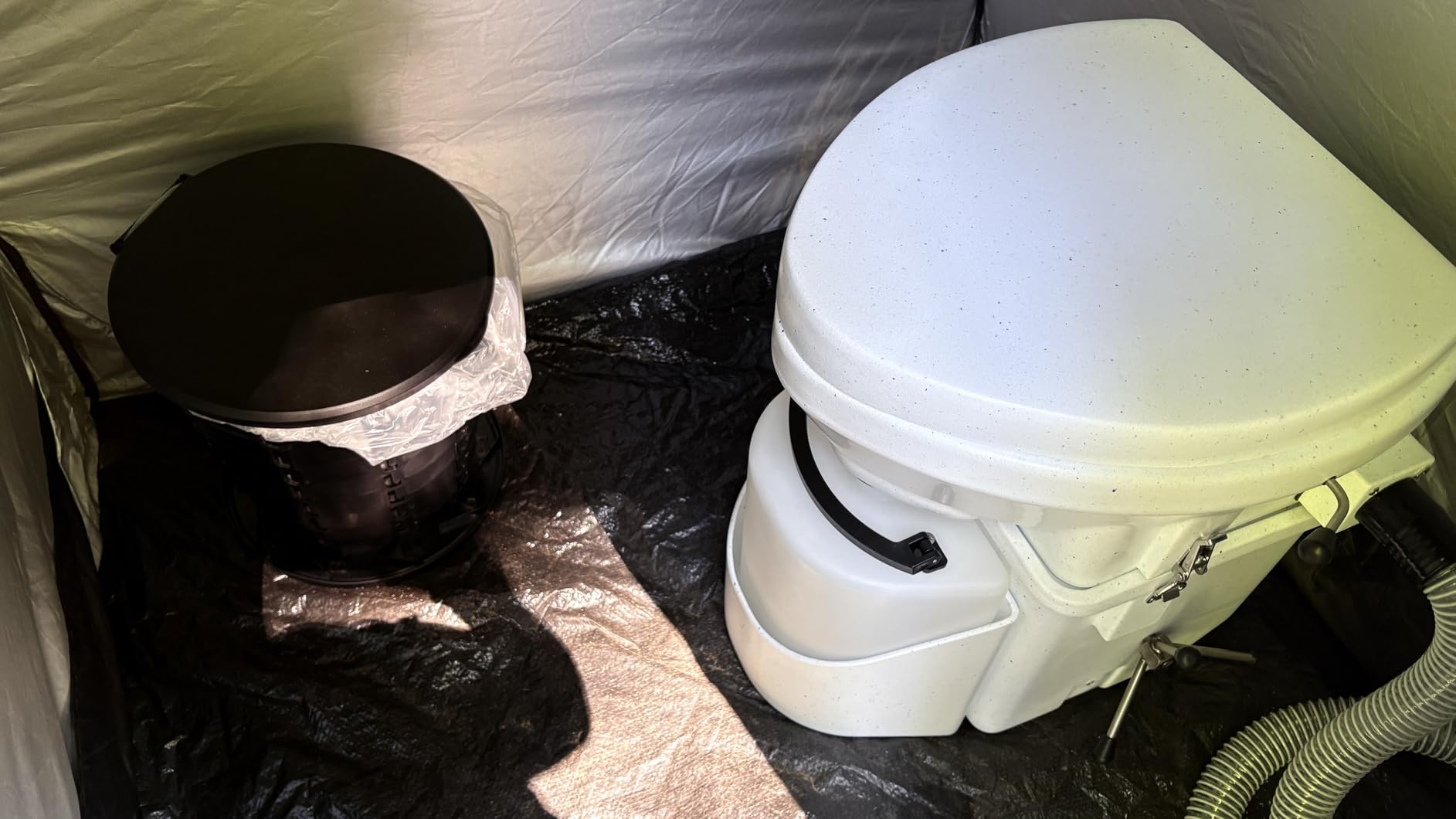
Who the Nature’s Head suits?
A couple, or a solo traveler who boondocks for a month at a stretch and has a real 12V circuit. If your empties are measured in weeks rather than days, the capacity here is the single biggest quality-of-life upgrade in the category. It is also the option we would pick for a build you are never taking apart.
Who should skip it?
Anyone in a small van who needs to reclaim the footprint between trips. At 28 pounds and wall mounted, this is a permanent fixture. The urine chamber is also small relative to the solids bin, so if you are not disciplined about sitting square, expect some liquid to reach the solids side.
2. BOXIO Toilet – Compact Separation With No Power Needs
BOXIO Toilet MAX+ Complete Set, Mobile Separator Toilet, Compact Camping Toilet 40 x 30 x 28 cm, Includes Toilet UP Seat, Plug, 3 x Bags, 2 x Hemp Litter, 6 Clips Black
11.4 pounds
11.8 by 15.7 by 15.7 inch
1.5 gal separation container
8-10 uses before disposal
Pros
- Made in Germany from ABS and HDPE
- Comes with hemp litter
- bio bags
- clips and a seat riser
- Emptying keeps your hands away from the waste
- Sturdy enough to take full adult weight
- Small enough for a van
- boat or car trunk
Cons
- Section clips pop off easily and need a better fastener
- Sits very low without the seat riser
- Urine canister is hard to shake fully dry
The BOXIO is the one that converts people coming from a bucket. With 612 ratings averaging 4.2, it has the second-largest review base here, and 64% of those ratings are five-star. The appeal is straightforward: it separates properly, it needs no power, and it fits in a boot or a wet bay.
Capacity is 8 to 10 uses before the solids container needs disposal, which is not a month of freedom but is far better than a bucket. The 1.5 gallon separation container sits under the seat with a leak-proof canister, and the supplied hemp litter and plug do most of the odor work. Owners consistently credit the German ABS and HDPE construction with feeling more substantial than the price suggests.
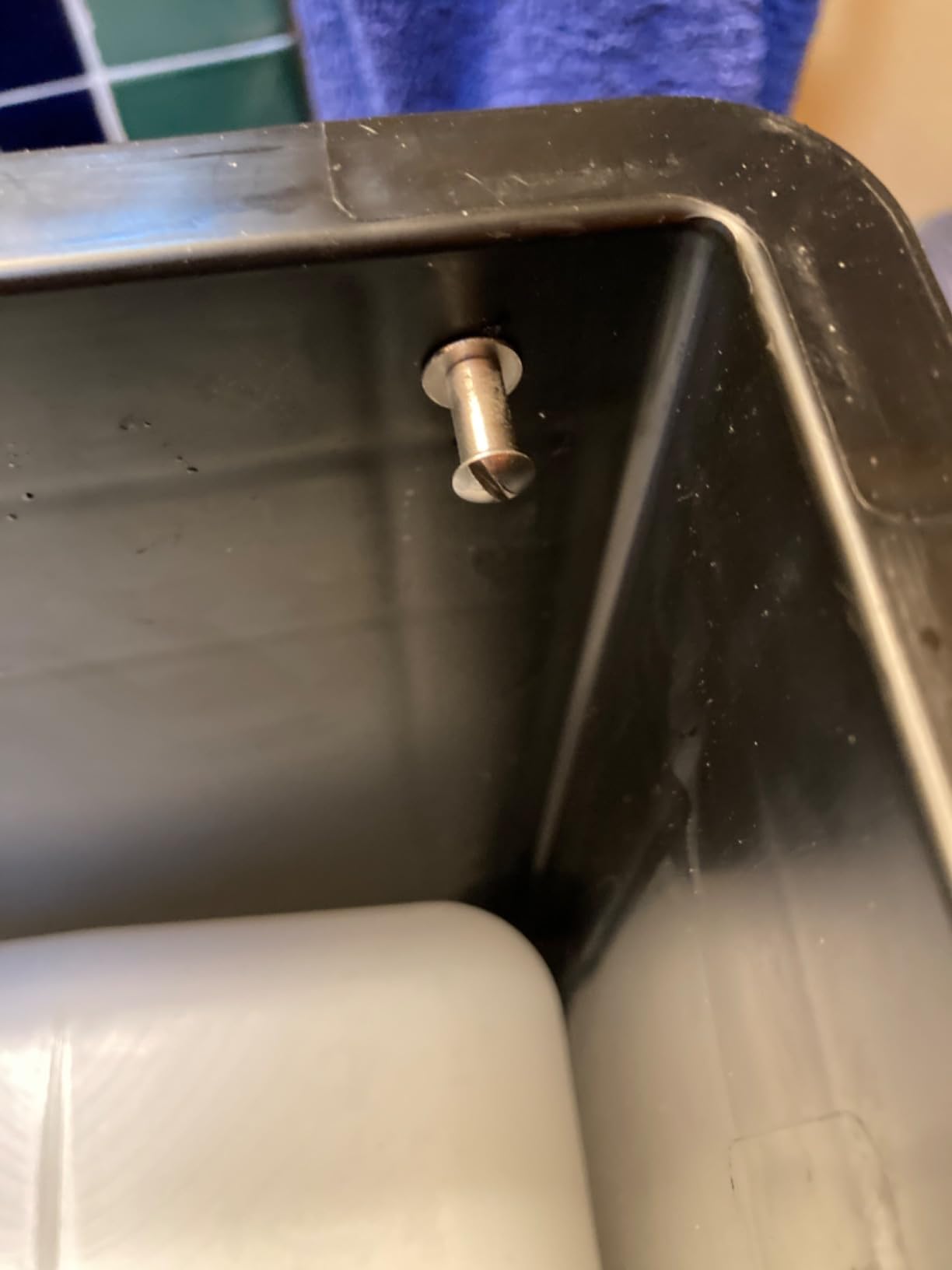
The most repeated complaint is mechanical rather than hygienic. The plastic clips that join the sections pop off, and owners recommend a dab of silicone or a swap to a different fastener. If you are building this in permanently, secure those joints yourself on day one and the issue disappears.
A second, quieter note: the base sits low unless you add the booster riser, and the Max+ version of this toilet includes one. The urine canister also needs a firm shake to drain, since it has no grip indent for one-handed handling.
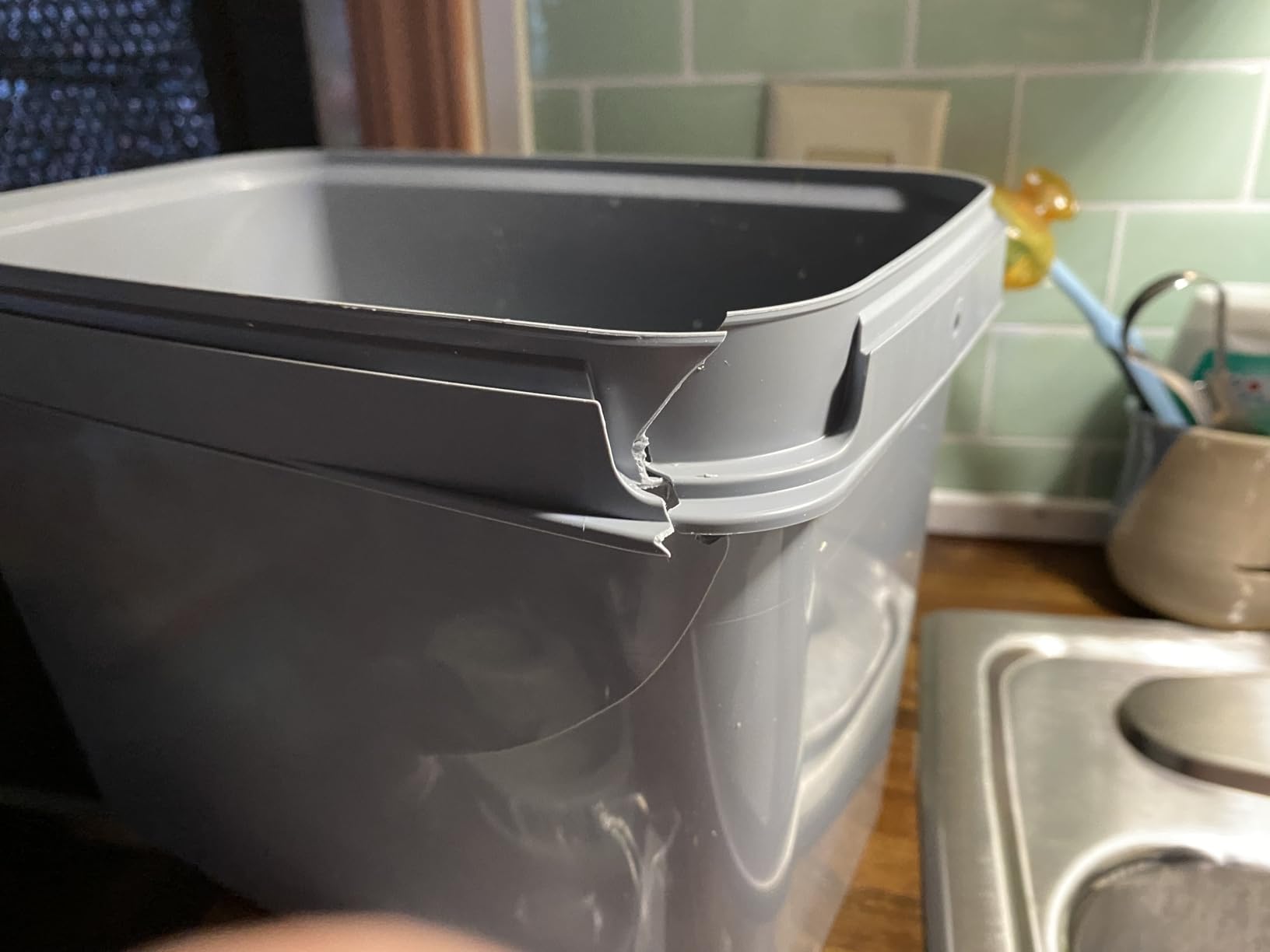
Who the BOXIO suits?
Weekend travelers, seasonal van dwellers, and anyone who wants a genuinely hygienic separation without a wiring job. It is also the most flexible option in the roundup, working in a van, a boat, a poptop car trunk or even a gazebo if you are static. At 11.4 pounds it is genuinely carryable.
Who should skip it?
Tall users who cannot get their knees over a low seat without the riser, and anyone with a narrow storage bay, since at 15.7 inches wide it is not the smallest separating toilet we tested. It can also slide on a smooth van floor, so seal it down if you install it permanently.
3. Separett Villa Urine-Separating Compost Toilet – Built for Long Off-Grid Stretches
Separett Villa Urine-Separating Compost Toilet
34 pounds
26.5 by 18 by 21.3 inch
Urine separating
Wall mounted, no plumbing
Pros
- No chemical additives and no mixing required
- High capacity for extended emptying cycles
- No water or plumbing connection needed
- Proven in buses
- cabins
- cottages and homesteads
- 4.5 star average across 351 ratings
Cons
- Heaviest toilet in this roundup at 34 pounds
- Bulky at 26.5 inches deep for a small van
- Fixed wall mount cannot be removed
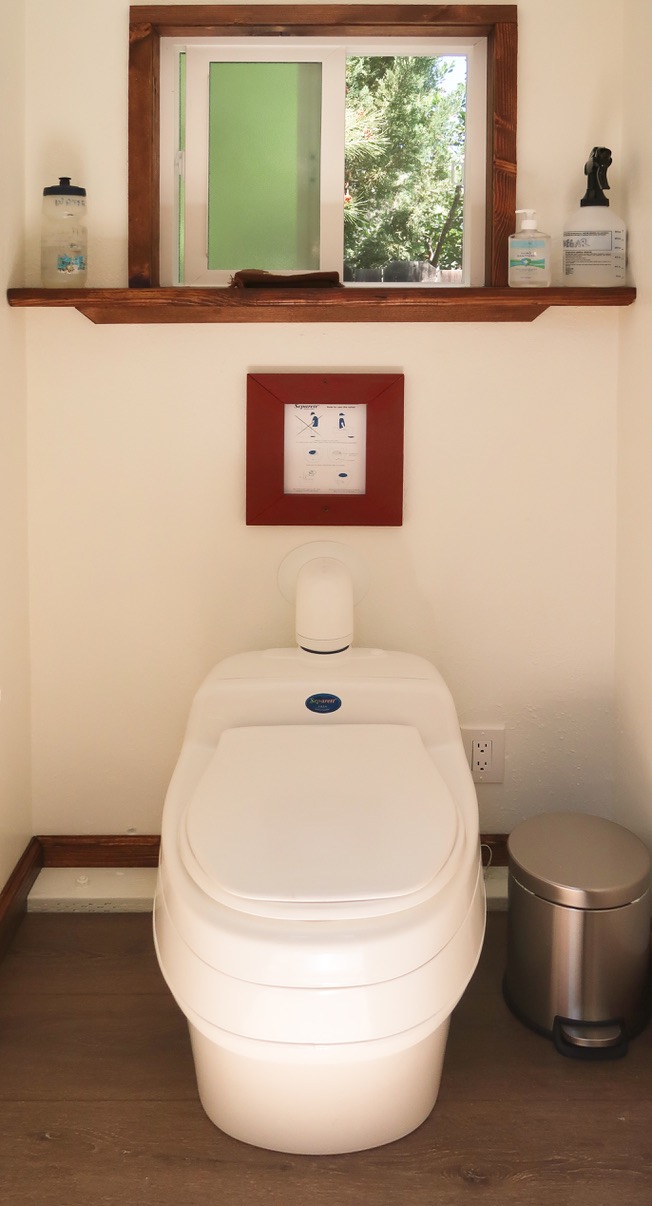
The Separett Villa is the odd one out in this list, and that is a strength if you have the space. Where most of these are marketed to van life, the Villa’s owners tend to be school bus conversions, cottages, cabins and homesteads. That is the honest read of a 26.5 inch deep, 34 pound, wall-mounted unit.
What it does well is exactly what it claims: urine diverts away, and the solids dry without additives or any mixing. No chemicals, no water, no plumbing. Buyers describe the daily routine as simple, and with 351 ratings averaging 4.5 including 77% five-star, the satisfaction level is tied for the highest in the group.
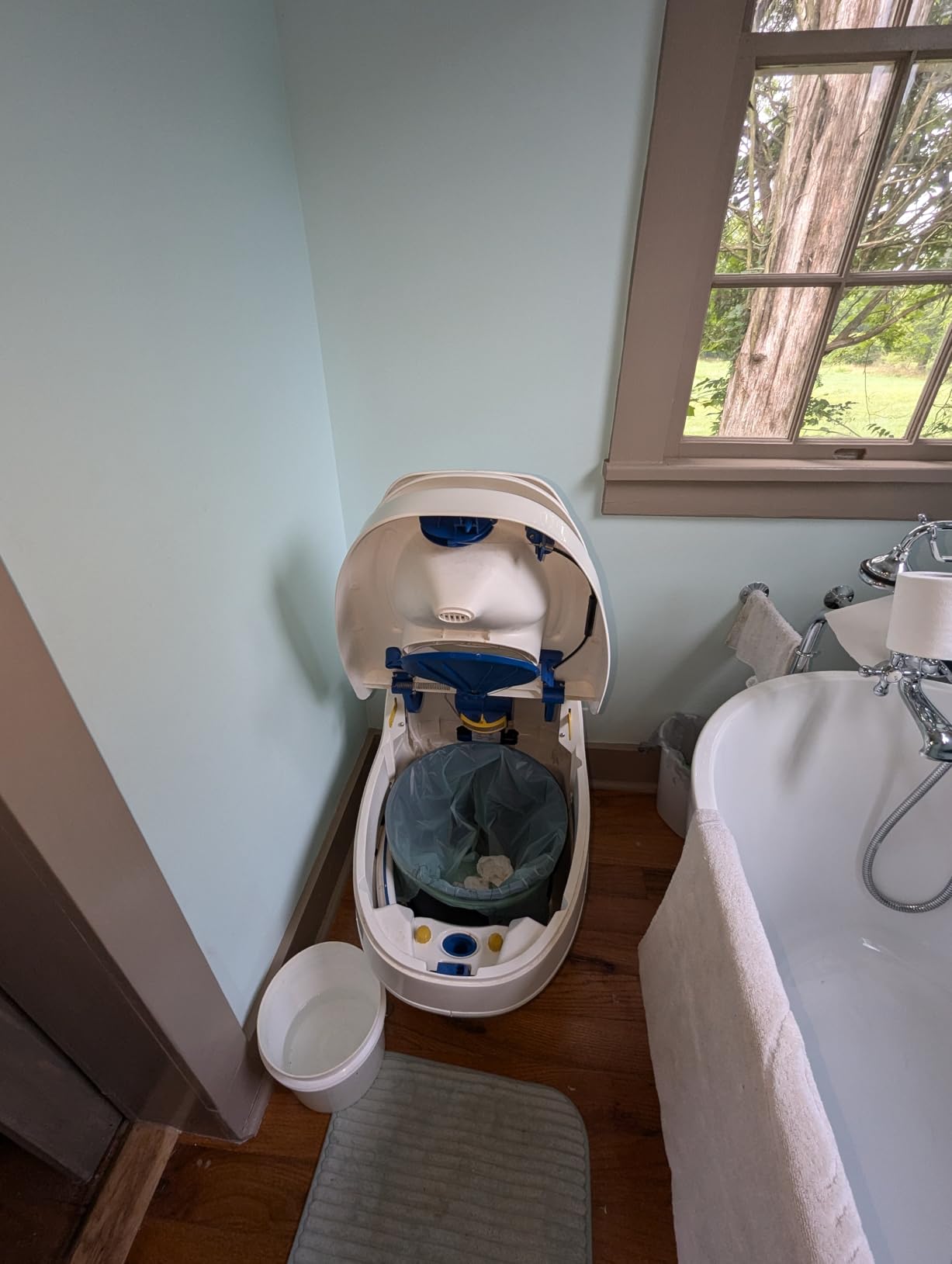
Because the design is a genuine separating system rather than a bag-and-toss, the waste stream stays manageable over long stretches. That matters if you are living off-grid in a fixed structure rather than bouncing between campsites, where emptying logistics are predictable and you can plan around them.
The catch is footprint. A 26.5 inch depth is deep enough that you should mock up the cavity before you cut anything into a wall. Owners in vans report it works, but it consumes floor area that most smaller vans simply do not have.
Who the Separett Villa suits?
Anyone in a bus conversion, a small cabin, or a van with a proper storage bay who wants long intervals between emptying and does not want to think about chemicals or mixing media. If you have a permanent structure rather than a touring setup, this is a strong choice.
Who should skip it?
Small vans, and anyone who plans to move the toilet between vehicles. At 34 pounds it is the heaviest thing in this roundup by a wide margin, and the deep body plus wall mount mean the install is a commitment rather than an accessory.
4. OGO Origin Composting Toilet – Smallest Footprint For Tight Builds
OGO Origin Composting Toilet for Van Life, Tiny Home & Boat – 12V Electric
28 pounds
15 by 16 inch footprint
12V electric agitator
2.4 gallon liquid bottle
Pros
- Smallest footprint here at 15 by 16 inches
- Push button 12V agitator removes manual cranking
- 2.4 gallon urine bottle keeps solids dry
- Solids bin holds 25-30 uses
- Serviceable parts and quiet fan ventilation
Cons
- Requires 12V power and wiring to function
- 16 percent one-star reviews reflect early build issues
- Costlier and heavier than portable dry toilets
The OGO Origin exists because of one number: 15 by 16 inches. That footprint is smaller than the Nature’s Head on every axis, and the manufacturer designed it around a specific problem, fitting into corners of a Sprinter or Transit where bulkier units force a layout redesign.
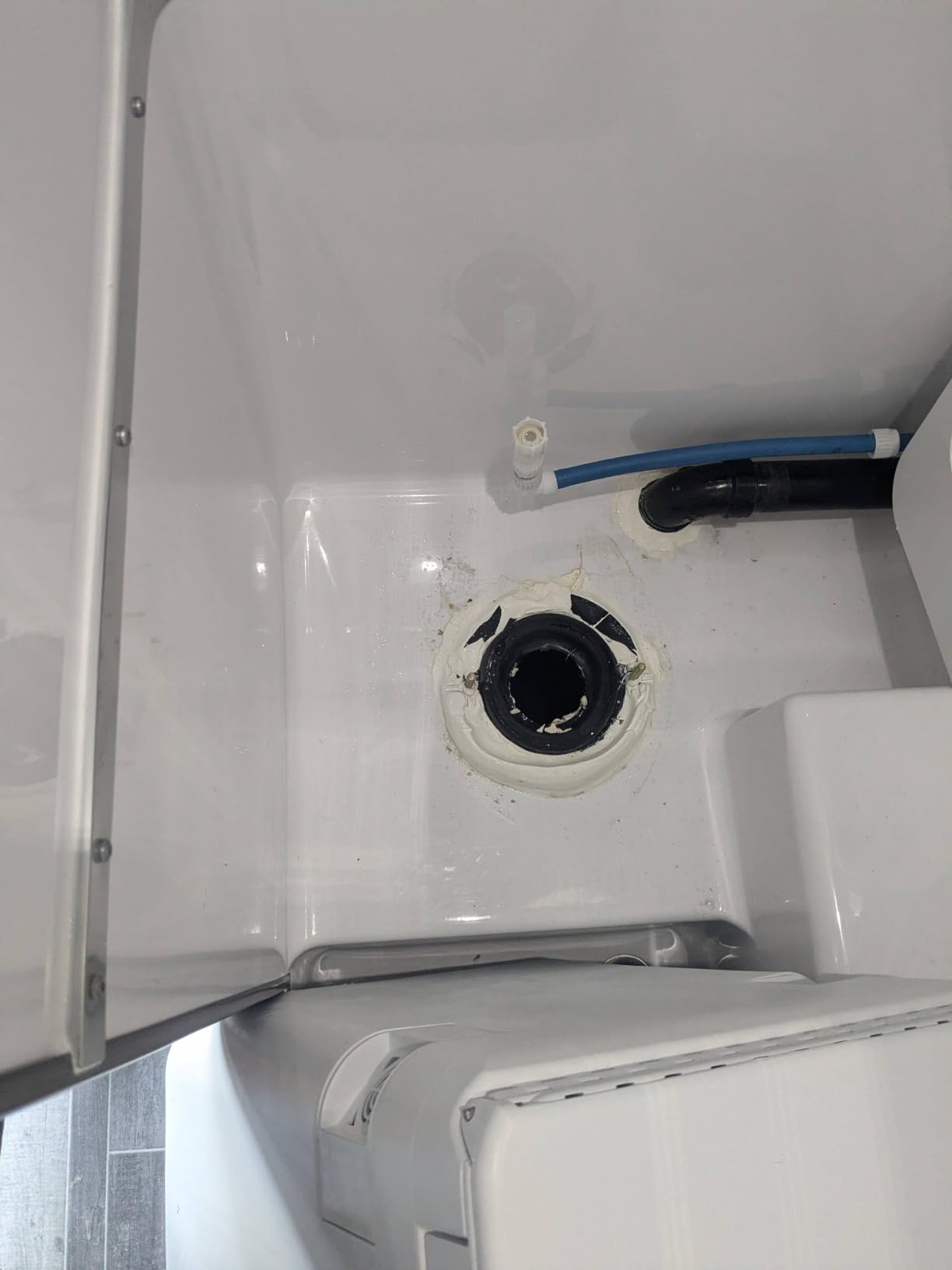
The other standout is the push-button 12V agitator. Instead of a spider handle or a crank you turn after every use, a small motor mixes the solids on a tap. Several owners list this as the single feature that removed a chore from their daily routine, and it improves breakdown, which in turn helps odor control.
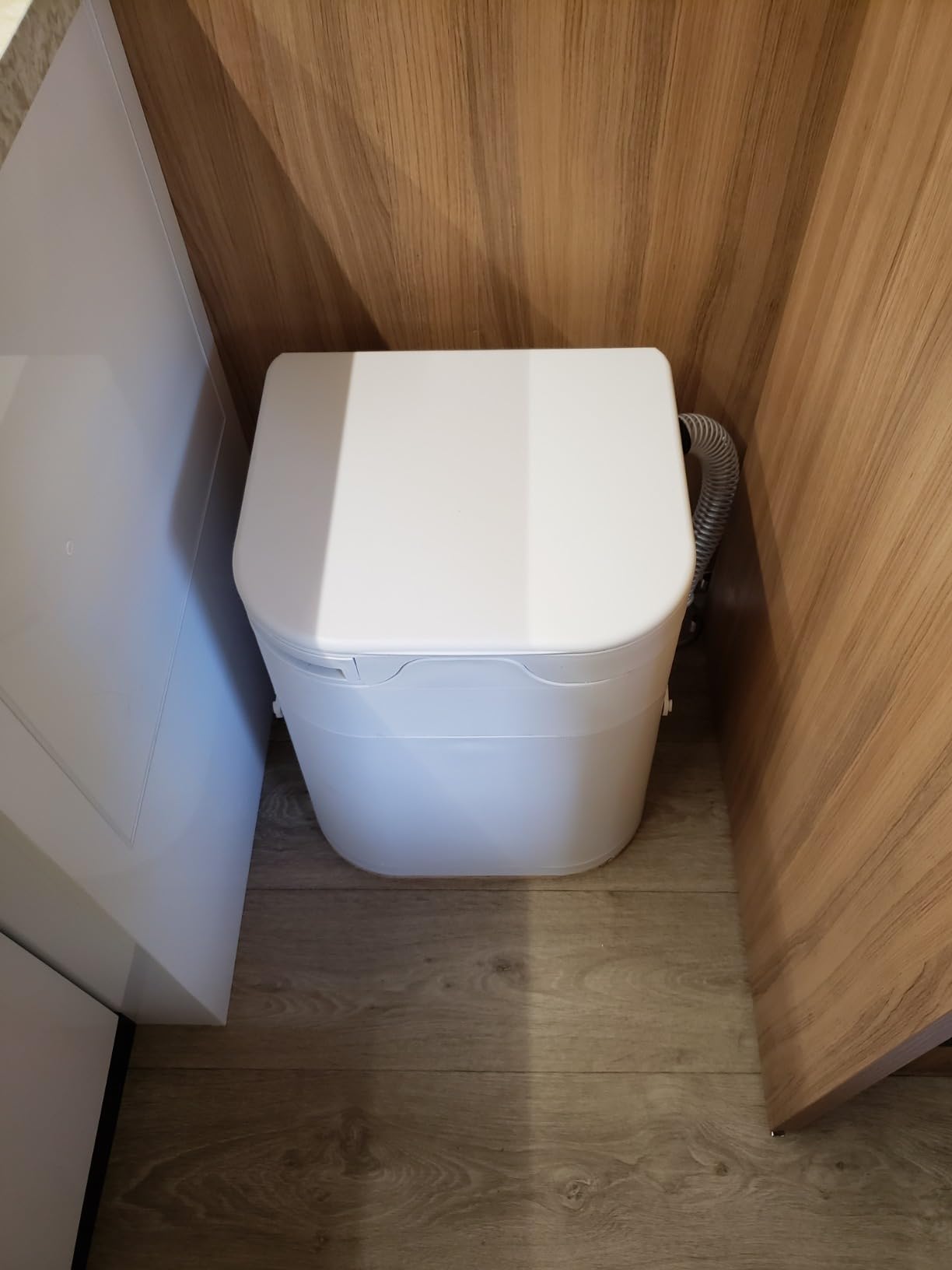
Capacity is 25 to 30 uses in the rear bin, with liquids diverting to a 2.4 gallon bottle. That is a real jump over the portable separating toilets, and it moves the OGO into full-time territory. It is also built in the USA from durable polypropylene with serviceable parts, which matters for a van that will be driven hard.
The rating spread here is the widest in the roundup. At 4.0 across 145 ratings, 16 percent are one-star, with owners dividing over build quality and installation experience. Treat that as a brand with a learning curve rather than a flawless unit. Early buyers had a rougher experience than recent ones.
Who the OGO Origin suits?
Van builders working with a Sprinter, Transit, boat or tiny home where every inch of floor counts and you already have 12V power. If you dislike manual cranking, this removes the most tedious part of the routine entirely.
Who should skip it?
Anyone without a reliable 12V circuit, since the agitator and fan both depend on it. Also worth pausing on if you are sensitive to brand consistency, because the one-star share is genuinely higher here than anywhere else in the list.
5. OGO NOMAD Waterless Composting Toilet – Best With No Battery At All
OGO NOMAD Waterless Composting Toilet – No Plumbing, Off-Grid RV & Van
12 pounds
15.4 by 13 by 12.38 inch
No electric, plumbing or wiring
Urine diverting design
Pros
- No power source or wiring needed at all
- Light at 12 pounds for easy carrying
- Urine diversion suppresses odor without chemicals
- Works with standard 8 gallon bags
- Coco coir and compostable bags included
Cons
- Bag and toss disposal means regular trash in most places
- Lowest five-star share here at 51 percent
- Entry level capacity for long-term living
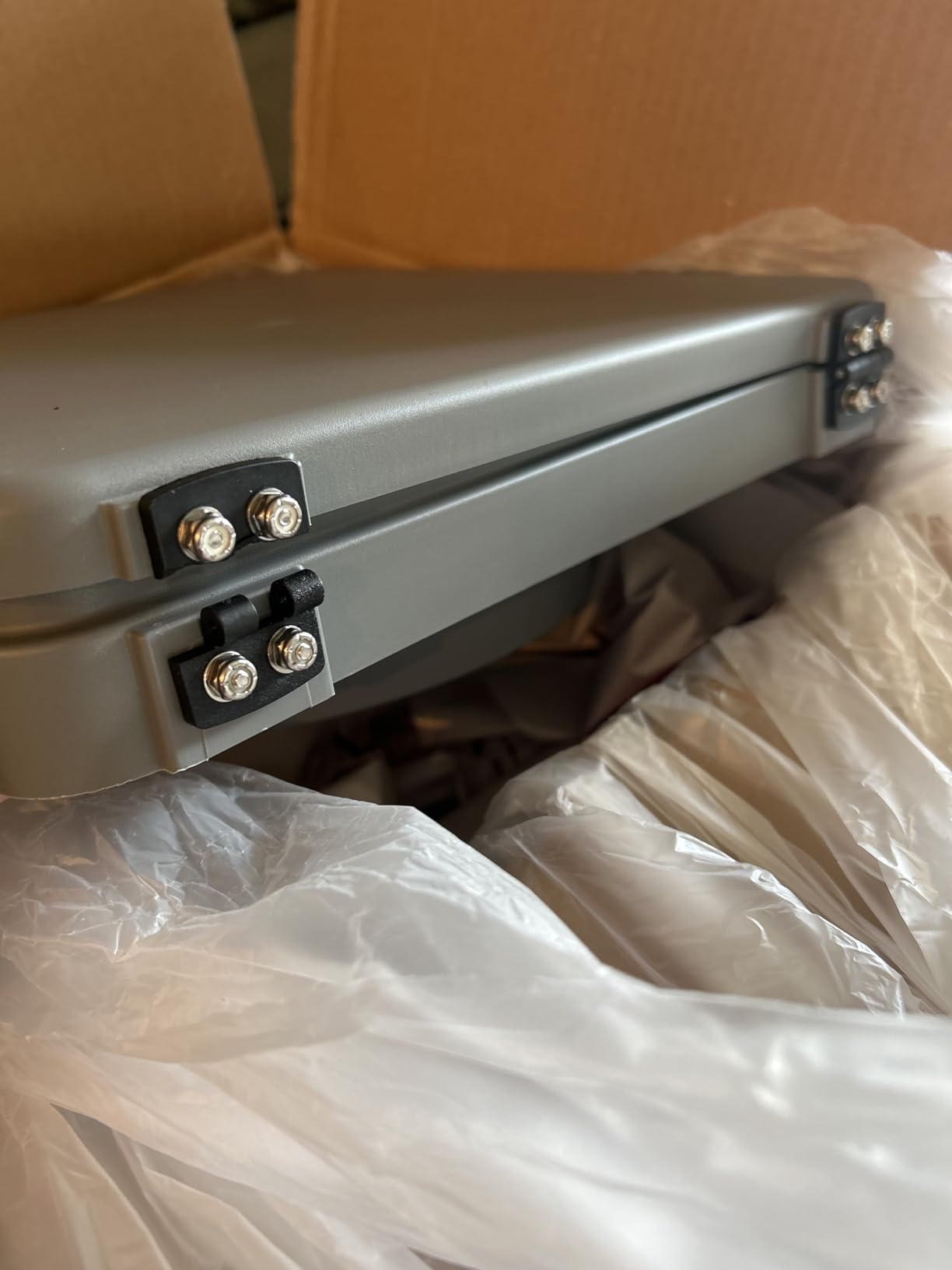
If your van has no electrical system at all, the NOMAD is the clean answer. At 12 pounds and 15.4 by 13 by 12.38 inches, it fits a truck bed, a car trunk, a rooftop tent or a small boat, and it needs no power source, no wiring and no plumbing connection.
Despite the name, the separation design is real. Urine diverts away from the solids, which is what keeps odor in check without chemicals, and the bag system works with widely available 8 gallon bags so turnaround is quick. The box includes compostable bags, a bag of coco coir and a spray bottle for cleaning.
The honest limitation is capacity. This is designed for weekend trips and primitive setups, not for a couple living off-grid for a month. Reviewers consistently describe it as a capable travel toilet rather than a full-time system, and the 51 percent five-star share with 14 percent three-star ratings reflects that split.
Disposal is also simpler but less virtuous. Because you tie off a bag and dispose of it per local guidelines, most people end up putting it in regular trash. That is fine for a weekend and worth thinking about carefully for full-time use.
Who the OGO NOMAD suits?
Truck campers, overlanders, hunters, guides, and anyone running a van without a 12V system who still wants urine separation instead of a chemical toilet. It also works as a backup toilet alongside a cassette.
Who should skip it?
Full-time dwellers and families. The capacity math below shows how quickly a short-interval design becomes a daily chore, and the disposal reality gets harder to live with the longer you are away from facilities.
6. TRELINO Composting Toilet Evo S – Budget German Separating Unit
TRELINO Composting Toilet Evo S Gray, Portable Toilet for Camping & Outdoor, Odorless, 1.2 gal & 1.6 gal Capacity, 13 x 15.4 x 11.7 inches
3.9 kg
15.35 by 12.99 by 11.65 inch
1.2 gal urine and 1.6 gal solids
Holds 9-11 uses
Pros
- Made in Germany from recyclable ABS plastic
- Two genuinely separate canisters for easy cleaning
- Supports up to 330 pounds
- 2 year manufacturer warranty
- Compact for small van
- tent or car spaces
Cons
- Modest capacity of 9-11 number one uses
- 12 percent one-star reviews on inconsistent odor
- At 3.9 kg it is one of the heavier portable designs
The Trelino Evo S is the one that shows up most often in van build recommendations, and at 109 ratings averaging 4.0 it holds a 65 percent five-star share. The appeal is a properly manufactured German separating toilet at a price point most DIY builders actually budget for.
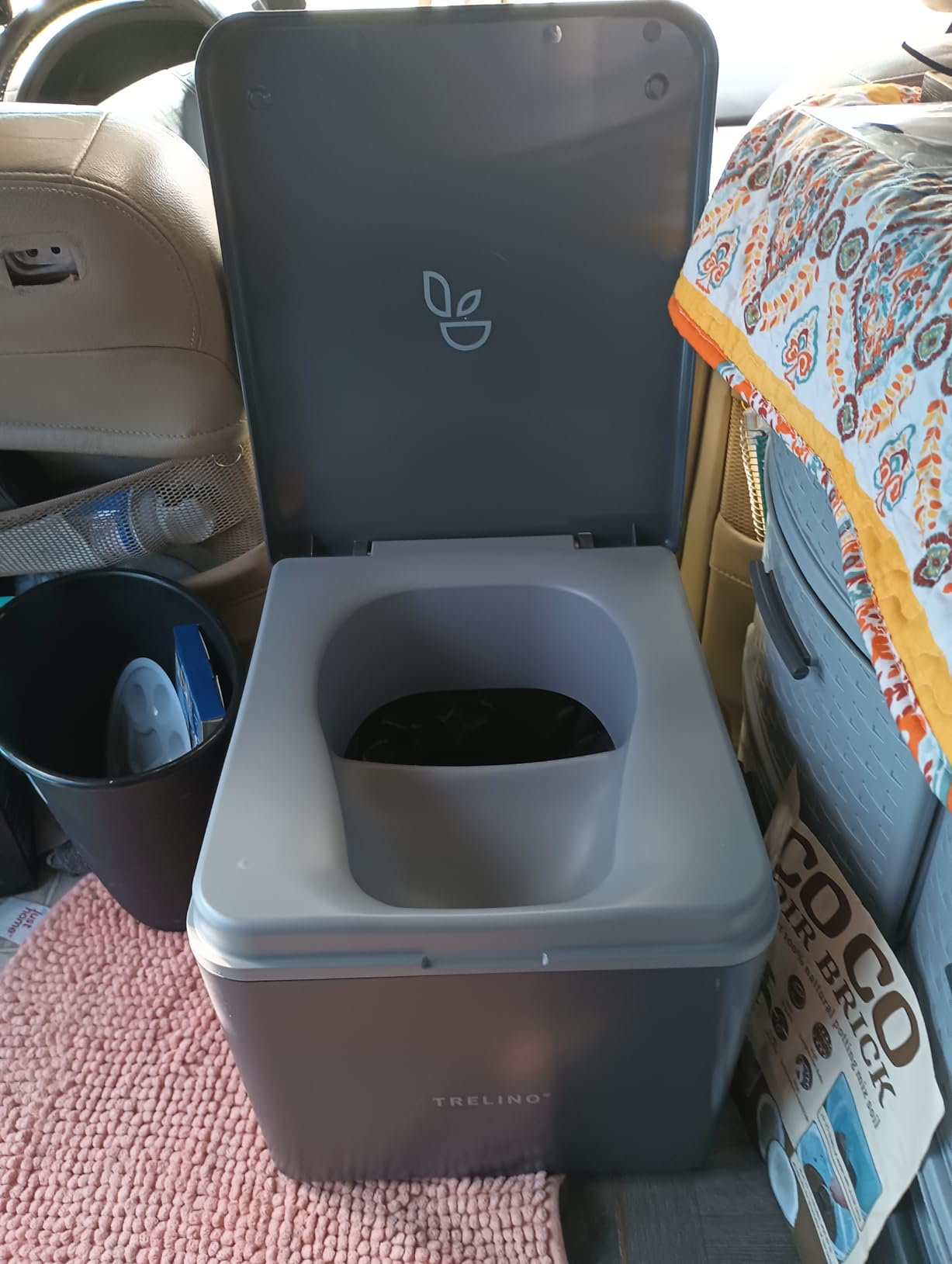
The separation is textbook. A 1.2 gallon urine container and a 1.6 gallon solids container sit side by side and empty independently, which means the messier job happens far less often than in a bag-and-toss design. The body is water-resistant ABS, stable, and rated to support 330 pounds.
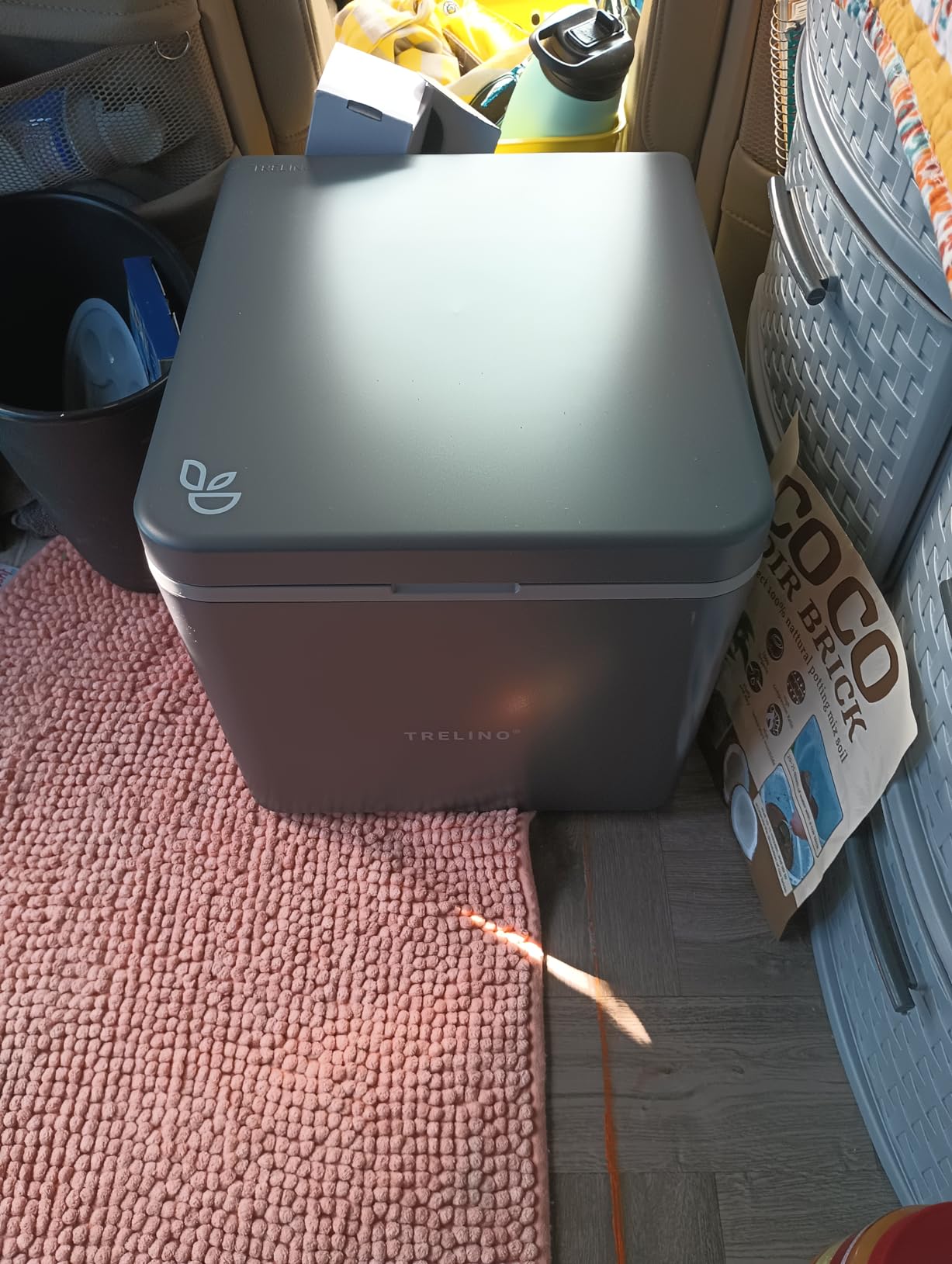
Capacity is the limitation to plan around. The manufacturer states 9 to 11 number one uses or 6 to 8 number two uses per emptying. For a couple on a week-long trip that is workable. For a month of boondocking, you are emptying the solids container several times over.
The other recurring note is that odor control is not consistent for every user, with 12 percent one-star reviews pointing at it. The fix is the same one that applies across this whole category: vent it, keep the fan running, and get the medium ratio right.
Who the Trelino Evo S suits?
Couples and solo travelers on trips of a week or two, and van builders who want a manufactured separating unit without the cost of a fixed install. German production and a 2 year warranty are real quality signals at this tier.
Who should skip it?
Long-term boondockers. At 1.6 gallons of solids capacity, this becomes a weekly chore rather than a monthly one, and at 3.9 kg it is the heaviest portable design in the roundup, which defeats some of the point of a portable toilet.
7. TROBOLO WandaGO Composting Toilet – The Adjustable Seat Fixes Low Stools
TROBOLO WandaGO Composting Toilet, Portable Outdoor Camping Toilet, Urine Diverting Dry Toilet With Height Adjustment
10.4 pounds
15 by 13.4 by 12.4 inch
Seat adjusts to 12 or 17.2 inch
1.7 gal solids container
Pros
- Two position seat solves the low stool problem
- Lightweight at 10.4 pounds
- Handles body weight up to 330.7 pounds
- SafeShell system adds spill and odor protection
- Urine level indicator built in
Cons
- Lid hinge often lifts the seat with it when opening
- Urine can miss the receptacle if the seat is not seated right
- Awkward to clean with many internal angles
Height is the quiet issue with portable separating toilets, and the WandaGO solves it. The seat sets to either 12.0 inches or 17.2 inches, which means a 5 foot 4 inch user and a 6 foot 2 inch user can both use the same toilet without a separate stool. Owners single this out as the feature that distinguishes it from everything else at this size.
At 10.4 pounds and 15 by 13.4 by 12.4 inches, it stows in a campervan storage compartment without drama. Capacity is 10 to 20 urinations and 8 to 12 defecations per fill, with a 1.7 gallon solids container and a 1.2 gallon liquids container, and the SafeShell system handles separation with spill protection.
What owners like and what they do not?
With 67 ratings averaging 4.3 and 66 percent five-star, sentiment is positive, and the closing lid with a fastening system is appreciated by people who drive rough roads. The complaints are about build quality rather than function: a flimsy hinge that lifts the seat when you open the lid, thin plastics, and a shape with many internal angles that is tedious to scrub.
There is one report of persistent odor despite following instructions, which is worth taking seriously. If you buy this, vent it properly from day one rather than treating ventilation as optional.
Who the WandaGO suits?
Anyone who has sat too low on a portable toilet and regretted it, plus couples who want separate containers and a forgiving capacity range. The two-position seat also makes it a good shared toilet for a household with two very different body sizes.
Who should skip it?
People who prioritise cleanability. This is a well-designed object with a lot of corners, and if scrubbing a toilet is the part you will dread, choose a simpler geometry.
8. Compo Closet Cuddy Lite Portable Compost Toilet – Indicator Light And A Covered Solids Side
Cuddy Lite Portable Compost Toilet – for Camping, RVs, Campervans, Boats & Tiny Houses – LED Full Indicator, Liquid-Diverting, Separating, Solids Cover, Easy Clean – Portable & Compact
12.3 kg
17 by 15.2 by 16.5 inch
LED liquid full indicator
Flush fit or freestanding
Pros
- LED indicator removes the guesswork from emptying liquids
- Solid cover blocks visual contact with the bin
- XL drop zone cover improves accuracy and hygiene
- Fits under a van sofa where bulkier units cannot
- Removable bin can be bag lined
Cons
- 9V battery for the indicator is not included
- No integrated handles so owners add their own
- Carbon crystals can form in the liquid side without periodic cleaning
The Cuddy Lite solves two specific irritants. The first is the liquid bottle: an LED indicator light alerts you when the front container is full, so you are not lifting a lid to check. The second is visual: a solids cover means you are not looking at the waste bin every time you sit down.
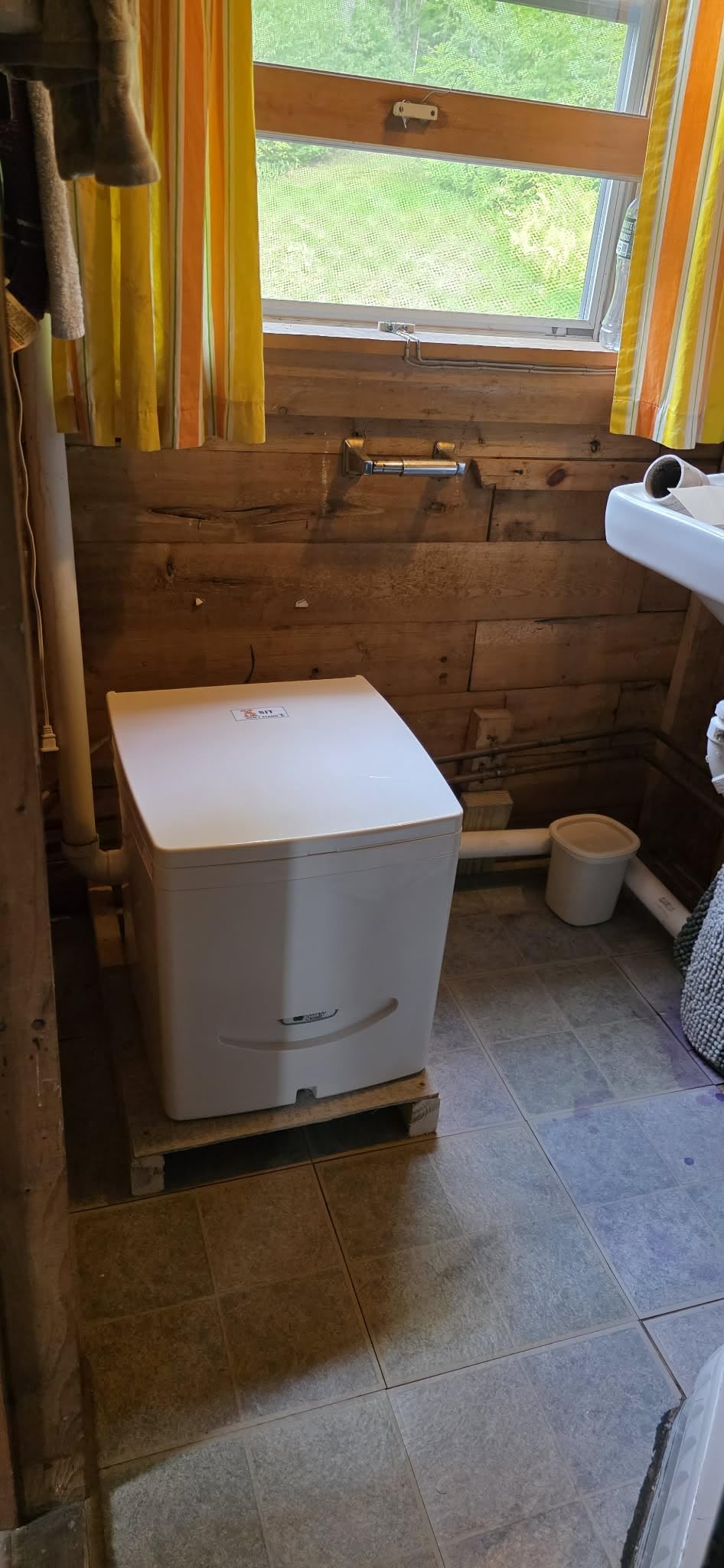
Despite the name carrying a 12V cable in the box, the Cuddy Lite needs no external electricity. The indicator runs off a standard 9V battery, which is not included. The unit itself is flush-fit or freestanding, so it can slide under a van sofa in a way that fixed 28 pound toilets cannot.
Owners report that two people can go about two days before dumping liquid, and multiple reviewers describe it as genuinely odorless when vented. The XL drop-zone two-plate cover is credited with cutting down on splashes and mis-aiming, which is where most separation toilets lose their users.
The evidence base is the thinnest of any well-reviewed product here, with 22 ratings at 4.3. Multiple owners actually use it to replace a bulkier installed unit because it is smaller and more discreet, which is a good sign, but 22 ratings is not a long-term track record.
Who the Cuddy Lite suits?
People who are squeamish about the visual and manual side of a dry toilet. If the covered solids bin and the full indicator are the two things that have kept you from going dry, this is the one to look at first. It also suits small vans where under-sofa space is the only option.
Who should skip it?
Anyone who wants a long-term record of reliability, and anyone who dislikes adding hardware. Owners report needing to fit their own handles, and the liquid side needs periodic boiling water or vinegar cleaning to stop carbon crystals building up.
9. TROBOLO WandaGO Lite – The Lightest Thing To Stow And Carry
TROBOLO WandaGO Lite composting toilet, compact camping toilet for on the go, portable urine diverting dry toilet
7.9 pounds
15 by 13.4 by 11.8 inch
10-20 urinations per fill
Urine level indicator built in
Pros
- Lightest toilet in this roundup at 7.9 pounds
- Seat attaches to the lid so nothing gets misplaced
- Diverter keeps liquids and solids separate
- Built in urine level indicator
- Firmly closing lid with a travel fastening system
Cons
- Seat is small and awkward for taller or larger users
- No height riser so it sits low
- Flat topped jug will not fully drain
At 7.9 pounds, the WandaGO Lite is the one you can genuinely forget is in the van. It stows in a campervan storage compartment without removing anything else, and the whole point of the design is that moving it takes seconds rather than a plan.
The separation works. Owners report a diverter that genuinely keeps liquids and solids apart with no odor, and the capacity of 10 to 20 urinations and 8 to 12 defecations is the same generous range as the full-size WandaGO. The SafeShell system handles spills, and the firmly closing lid with a fastening system is a genuine safety feature on washboard roads.
The size trade is real
With 30 ratings averaging 4.3 and 67 percent five-star, the feedback is clear about the compromise. The seat is small and awkward for taller or larger users and for children to aim, there is no riser, and the jug has a flat top with no nozzle so it will not drain completely until you shake it.
Who the WandaGO Lite suits?
Vanlife, overlanding and small-boat users for whom weight and stowability matter more than comfort. It is also a strong choice as a second toilet, or as a seasonal addition to a cassette setup you only bring out in summer.
Who should skip it?
Tall or large occupants, and families. The small seat is the defining feature of this design rather than a flaw to be worked around, so if seat comfort is your priority, spend the extra weight on the full-size WandaGO instead.
10. TROBOLO DIY Composting Toilet Set – For Builders Who Want To Raise The Seat
TROBOLO DIY Composting Toilet Set With Urine Diverter and Containers, Build Your Own Urine-Diverting Dry Toilet
2.9 gal solids and 2.6 gal liquids
6.7 by 14.8 by 12.7 inch diverter
Cutting template included
Build your own housing
Pros
- Build to whatever height your van needs
- Large 2.9 gallon solids container cuts emptying frequency
- Adapter system allows draining liquids via a hose
- Works with all standard toilet seats
- 2 year warranty and clear instructions
Cons
- No enclosure included so you must build the housing
- Thin light plastics compared to a 5 gallon bucket
- Some accessories pictured in the booklet are not in the box
This is the only set in the roundup that is not a finished toilet. You get a urine diverter, a 2.9 gallon solids container, a 2.6 gallon liquids container, a cutting template and a urine-diverting insert, then you build the box around them. For a van builder who wants a custom height and a finished look, that trade can be worth making.
Capacity is the draw. At 2.9 gallons of solids capacity, owners report going ten days and emptying twice, which puts it ahead of most portable separating designs. The anatomical opening is generous at 12.2 inches longitudinal by 9.5 inches transverse, and the adapter system lets you drain liquids internally or externally through a hose.
Why the rating is the lowest here?
At 3.8 stars from 19 ratings, this is the lowest-rated product in the roundup, with 15 percent one-star. The complaints are consistent: thin-walled plastics that owners compare unfavorably to a plain bucket, no wooden box or enclosure in the kit, and a SafeShell sealing cap that is not included and not sold separately. The instruction booklet also shows a third adapter and a spray bottle that do not appear in the box.
None of that matters if you enjoy building. It matters a great deal if you want a finished product on day one.
Who the DIY set suits?
Van builders who want a permanent install at their preferred seat height, plan to build a proper housing anyway, and want more solids capacity than any portable option in this list. Owners who built a real enclosure report being happy with the result.
Who should skip it?
Anyone who wants something that works straight out of the box, and anyone on a tight build deadline. You need a cutting template, a jigsaw and a plan, and you will be sourcing fasteners and a finish that are not in the kit.
How Often Do You Empty A Composting Toilet?
Emptying frequency is the number that should drive your decision, and almost every guide gets it wrong by only quoting couples. The honest way to think about it is person-days, not weeks. Take the published use count for each toilet, multiply by the number of people aboard, and you have your real interval.
A unit rated for 8 to 10 uses is fine for one person for ten days. Put two people on the same toilet for ten days and you are emptying mid-trip. The 4 to 6 week figure the Nature’s Head publishes for two people is a genuinely different category from everything else in this roundup, and that is why it wins for full-time use.
Solo traveler on a portable unit rated 8-10 uses: expect to empty the solids container every 7 to 10 days, and the liquids bottle every 2 to 3 days.
Couple on the same portable unit: the same container empties every 3 to 5 days, which is the number most people find demoralising.
Couple on a high-capacity installed unit rated 25-30 uses: you are looking at 4 to 6 weeks between solids emptyings.
Family of four on an installed unit: 25 to 30 uses becomes roughly 6 to 8 weeks, and liquids emptying becomes the limiting factor at 2 to 3 days.
Anyone on a long trip: the liquids bottle, not the solids bin, is almost always what sets your schedule.
That last line is the one owners on the forums repeat most often. The solids problem is solvable by planning. The liquids bottle needs attention every couple of days no matter how large the bin is, which is the real reason people buy a 2.4 gallon bottle over a 1.2 gallon one.
12V Power And Ventilation For Boondocking
A composting toilet does not generate gas that needs scrubbing. What it does need is airflow, because moving air is what carries moisture out of the solids bin. Without that airflow, the medium never dries and odor arrives within days. This is the single most important install decision in the whole category.
Powered units run a 12V fan continuously, and the vent hose exits through the wall to the outside. Multiple owners on r/vandwellers and r/RVLiving credit running that fan 24 hours a day, with no other change, for eliminating odor entirely. If you buy a unit with a fan, treat that fan as non-optional. The cheapest fix for a smelly toilet is almost always a properly routed vent hose, not a different product.
The battery question is legitimate, especially on a solar-only build. A small continuous fan is modest draw compared to a fridge or a diesel heater, but it runs every hour of every day, so it becomes a background load you should account for rather than ignore. Budget for it alongside your other always-on electronics, and check the amp rating on the fan before you size the circuit.
If you have no 12V system at all, you are not disqualified. The BOXIO, the Trelino, both WandaGO models, the OGO NOMAD and the TROBOLO DIY set all run with no power. The trade is that you are relying on a passive design, so separation accuracy matters more. Owners of non-powered models are commonly advised to treat a small fan as worth adding anyway, and that is the sensible middle path for a build that has a battery but not much of one.
What To Look For When Buying A Van Composting Toilet?
Capacity first, and capacity means two numbers. Solids capacity sets how long you can stay out. Liquids capacity sets how often you handle the messier job, and it is the number people underweight. A 1.2 gallon liquids bottle on a 4 gallon solids bin is a poor balance for boondocking, because you will be draining the bottle twice as often as you empty the bin.
Footprint second, measured against the cavity you actually have. The OGO Origin at 15 by 16 inches and the WandaGO models at roughly 15 by 13.4 inches fit where a 26.5 inch deep Separett Villa simply will not. Mock up the box in cardboard before you commit.
Agitator type third. Manual spider handles and foot pedals cost nothing and work, but they are a recurring chore. A 12V motor like the OGO Origin removes it entirely if you have the power to spare.
Replaceable parts fourth. A carbon filter and a 9V indicator battery are consumables. If a brand does not sell them separately, your unit becomes dead when the filter goes, and that is a common complaint across portable designs.
Warranty fifth, as a rough proxy for manufacturer confidence. The Nature’s Head carries 5 years, the BOXIO and Trelino carry 2 years, the TROBOLO set carries 2 years.
Installation style sixth. Decide early between a fixed wall mount you never move and a portable unit you pull out when you need it. A wet-bath layout, where the shower and toilet share one enclosure, suits a portable unit. A separate cubicle with an access panel suits a fixed install, because you need to be able to reach the bin without dismantling the van.
Ventilation seventh, and treat it as a selection criterion rather than an accessory. If a unit does not support a vent hose and fan, understand that you are choosing passive separation and a higher chance of odor.
Emptying A Composting Toilet While Boondocking
This is the question that comes up most on the forums and the one most guides dodge. When the solids bag is full and you are two hundred miles from a town, you have a real decision to make. Here is how experienced owners handle it.
Plan the trip around emptying, not around fuel. The Nature’s Head’s 4 to 6 week interval for two people means you pick your camps in advance rather than reacting mid-trip.
Carry two bags. Tie off the full bag, seal it, and stash it in a secondary container until you reach a proper facility. This is the single most common practice we saw described.
Know your local rules before you bury anything. Burial of human waste is illegal in many national parks, on Bureau of Land Management land, and in most of the developed world. Do not assume.
Use a dump station or a certified collection point when you can. Many national parks and private campgrounds run RV waste facilities, and portable toilets are a normal sight there.
Know the packing-out rule where you are. In desert and alpine regions the Leave No Trace guidance is explicit about removing everything, including toilet waste.
Pour the liquids bottle away responsibly, not anywhere. Away from water sources, camps, and anywhere people might collect water.
One more topic worth addressing directly: what happens when someone is ill. If you have diarrhea, do not put loose waste into the solids bin. Line the container, add extra medium on top, and seal the bag for removal at the first opportunity. For travelers with ongoing GI conditions, a composting toilet is genuinely life-changing because it removes the constraint of finding a restroom, but it demands a bag liner and a disciplined emptying routine rather than a casual one.
Frequently Asked Questions
What is the best composting toilet for a camper van?
For most couples the Nature’s Head wins because two people full time empty it every 4 to 6 weeks, the largest interval in our roundup. If your floor space is the constraint, the OGO Origin fits a 15 by 16 inch footprint and adds a 12V electric agitator. For a no-wiring build, the BOXIO separates cleanly with no power at all.
What are the downsides of a composting toilet?
The main ones are that these units dehydrate rather than compost, urine reaching the solids bin and stopping the drying process, a two to four week learning curve on the medium ratio, a weekly-ish solids chore, a dependency on 12V power and venting for the bigger models, and significant floor space and weight on the fixed installs.
Do composting toilets stink?
A well-ventilated unit run with its 12V fan continuously should not. Odor almost always traces to one of three causes: the fan is off or the vent hose is not routed outside, too much liquid reached the solids bin, or the medium ratio is wrong. Owners who run the fan 24 hours a day report no odor at all.
How often should a composting toilet be emptied?
It depends on the unit and the occupant count. A portable rated 8 to 10 uses lasts 7 to 10 days for one person but only 3 to 5 days for two. An installed unit rated 25 to 30 uses gives a couple 4 to 6 weeks. The liquids bottle needs emptying every 2 to 3 days in almost every configuration.
How much power does a 12V composting toilet fan use?
The fan is a small continuous draw, but it runs every hour of every day, so it behaves as a background load rather than a spike. Check the amp rating printed on your specific fan and budget for it alongside other always-on electronics. Running it non-stop is the single most effective anti-odor measure, so do not treat it as an optional convenience.
Can you empty a composting toilet anywhere?
No. Burial of human waste is illegal in many national parks and on federal land, and desert and alpine regions carry strict pack-it-out rules under Leave No Trace. Use a dump station, a certified collection point, or carry the sealed bag out to a facility. Pour the liquids bottle away only well clear of water sources and camps.
What are common problems with composting toilets?
Urine in the solids bin, a vent hose that is not routed outside, a medium ratio that is too wet or too dry, aging carbon filters, a unit that slides around on a smooth van floor, and hardware that is not sold separately when it eventually fails. Most odor problems are installation problems rather than product problems.
What if you have diarrhea in a composting toilet?
Do not put loose waste into the solids bin. Line the container with a bag, add extra dry medium on top to absorb moisture, and seal the bag for removal at the first proper facility. Travelers with ongoing GI conditions find a composting toilet removes the constraint of finding a restroom, but they need a disciplined liner and emptying routine.
What are people saying about Nature’s Head self-contained composting toilets?
Across 1112 ratings averaging 4.5, with 77 percent five-star, owners consistently cite three things: no odor in daily use, capacity for two full-time people at 4 to 6 weeks between emptyings, and a five-minute emptying process. The most common reservation is the fixed 28 pound wall-mounted install.
Is a composting toilet worth it for van life?
For full-time van dwellers, couples, and anyone who wants to stop hunting for dump stations, yes. The payback is freedom of movement plus freshwater saved. For hookup-heavy routes, sub-freezing winters without a heat plan, or trips measured in days rather than weeks, a portable cassette is simpler and carries fewer compromises.
The Best Van Life Composting Toilets For Boondocking
There is no single best van life composting toilet for boondocking, because the answer is a function of how long you stay out. Couples living off-grid for weeks want the Nature’s Head, because a 4 to 6 week interval between emptyings is the difference between planning trips and reacting to them. Its 1112 ratings at 4.5 and 5 year warranty make it the unit with the deepest review history in the roundup.
Builders working in a tight van with 12V power should look at the OGO Origin, where a 15 by 16 inch footprint and a push-button electric agitator solve the two problems that cause owners to abandon dry toilets. Anyone without a battery should start with the BOXIO, which separates properly, weighs 11.4 pounds, and works in a van, a boat, or a car trunk.
For trips measured in days rather than months, the TROBOLO models and the Trelino Evo S are more than enough, and the WandaGO’s adjustable seat is worth the extra weight if you are tall. Whatever you pick, vent it properly, run the fan continuously, get the medium ratio right in the first fortnight, and carry a spare bag. That routine is what separates people who love a composting toilet from people who quietly go back to a bucket.