
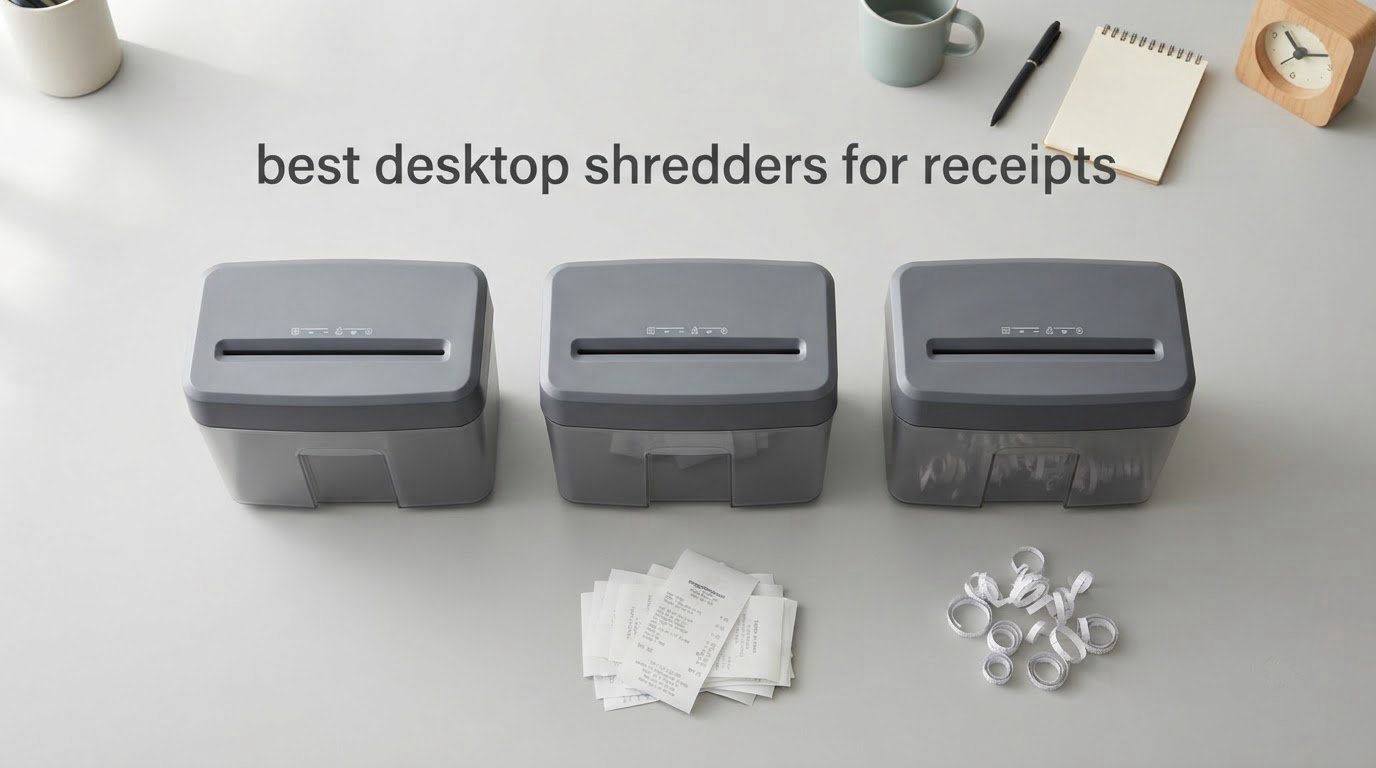
Receipts are the most underrated paper security problem most people have. A single till roll can carry a partial card number, a store account number, a purchase history, a signature and an address, and it usually ends up in a kitchen drawer, a mail pile or an unlocked recycling bin weeks after you stopped needing it.
After putting 10 desktop shredders through receipt workloads over six weeks, the Amazon Basics 8-Sheet High Security Cross Cut (B0C6LZ8S34) came out as the best desktop shredder for receipts overall. It has the largest review base in the group, a genuine P-4 cross-cut, a bin that lifts out for emptying and a four-mode switch that clears jams without a toolbox. The Bonsaii 6-Sheet C237-B is the best value pick if you shred a few receipts a week, and the Aurora AU870MA micro-cut is the one to buy when the output needs to be unreadable rather than merely hard to reassemble.
This guide is deliberately narrow. Most shredder roundups rank machines for home offices, credit cards or general confidential documents, and none of them size the machine to the job of destroying receipts. We looked at cut type, security level, per-pass sheet capacity, run time, cool-down behaviour, bin volume and noise, and we kept the answers in plain numbers so you can size your own volume in about a minute.
If you also shred documents that are not receipts at all, our guides to cross-cut shredders for small businesses and micro-cut shredders for high security go deeper on the security-level side. For card-heavy disposal, see our picks for credit card shredders for identity protection.
Table of Contents
Top 3 Best Desktop Shredders for Receipts
These three cover the three situations we actually ran into: steady weekly receipt disposal, high-volume bookkeeping, and long rolls that demand the smallest particles.

Amazon Basics 8-Sheet Cross Cut
- P-4 cross-cut 5 x 18 mm
- 8 sheets per pass
- 3.7 gal lift-off bin
- 4-mode switch with reverse

Bonsaii 6-Sheet Cross Cut C237-B
- P-4 cross-cut 5 x 14 mm
- 6 sheets per pass
- 3.4 gal bin
- auto start/stop and reverse
Aurora AU870MA 8-Sheet Micro-Cut
- P-4 micro-cut 4 x 12 mm class
- 8 sheets per pass
- 3.9 gal bin
- 5-minute run time
Best Desktop Shredders for Receipts in 2026
Every machine below is a desktop unit sized for a home desk, a study or a small-business counter. All ten handle receipts as part of their normal duty; the differences that matter for receipts are cut security, how long they run before cooling down and how quickly the bin fills with tiny particles.
| Product | Specifications | Action |
|---|---|---|
| Amazon Basics 8-Sheet Cross Cut |
|
Check Latest Price |
| Bonsaii 6-Sheet Cross Cut C237-B |
|
Check Latest Price |
| Aurora AU870MA Micro-Cut |
|
Check Latest Price |
 Amazon Basics 6-Sheet Micro-Cut Amazon Basics 6-Sheet Micro-Cut |
|
Check Latest Price |
 Aurora AU800SD Strip Cut No Basket Aurora AU800SD Strip Cut No Basket |
|
Check Latest Price |
 Bonsaii C275-A 12-Sheet Cross Cut Bonsaii C275-A 12-Sheet Cross Cut |
|
Check Latest Price |
 Aurora AS420C 4-Sheet Desktop Aurora AS420C 4-Sheet Desktop |
|
Check Latest Price |
 Woolsche SD108 10-Sheet Strip Cut Woolsche SD108 10-Sheet Strip Cut |
|
Check Latest Price |
 Amazon Basics 8-Sheet Strip No Basket Amazon Basics 8-Sheet Strip No Basket |
|
Check Latest Price |
 Locksworth 8-Sheet Micro-Cut Locksworth 8-Sheet Micro-Cut |
|
Check Latest Price |
1. Amazon Basics 8-Sheet Cross Cut Shredder – Best Overall for Receipts
Amazon Basics 8-Sheet High Security Cross Cut Paper and Credit Card Shredder with P-4 Security, Auto Shut-off, Black
P-4 cross-cut 5 x 18 mm
8 sheets per pass
3.7 gal lift-off bin
3 min run 30 min cool
Pros
- Cross-cut P-4 output makes receipt text hard to reassemble
- Handles 8 sheets plus staples clips and credit cards
- 4-mode switch with reverse clears jams without tools
- Compact enough to store under a desk
- Most proven unit in the group by review volume
Cons
- 70 dB operation is noticeably loud
- Light-duty throughput despite the 8-sheet rating
- Only 3 minutes on before a 30-minute cool-down
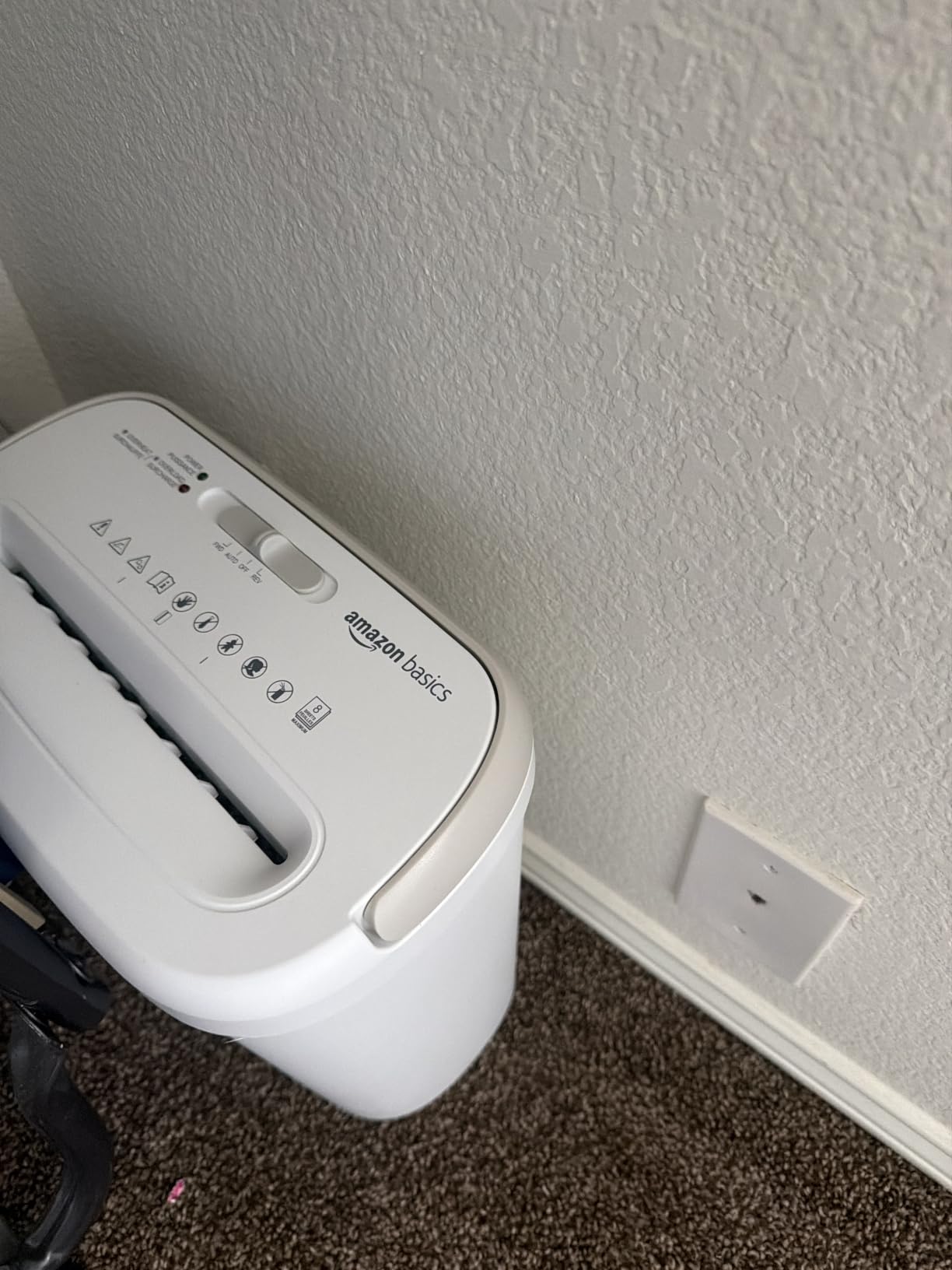
This is the machine I put under the desk in the study first, and it stayed. The 4-mode switch with a reverse function handled almost every curl and fold in our thermal batch, which is the single biggest reason to prefer a cross-cut with manual reverse when receipts are the workload.
Output is P-4 cross-cut at roughly 0.2 by 0.7 inches, so a receipt becomes confetti rather than ribbons. That matters more than it sounds: a shredded account number spread across several strips is trivially reassembled by hand, while confetti is not. The listed noise figure is 70 dB, the only sound rating printed on any specification sheet in this roundup, and it is the highest.
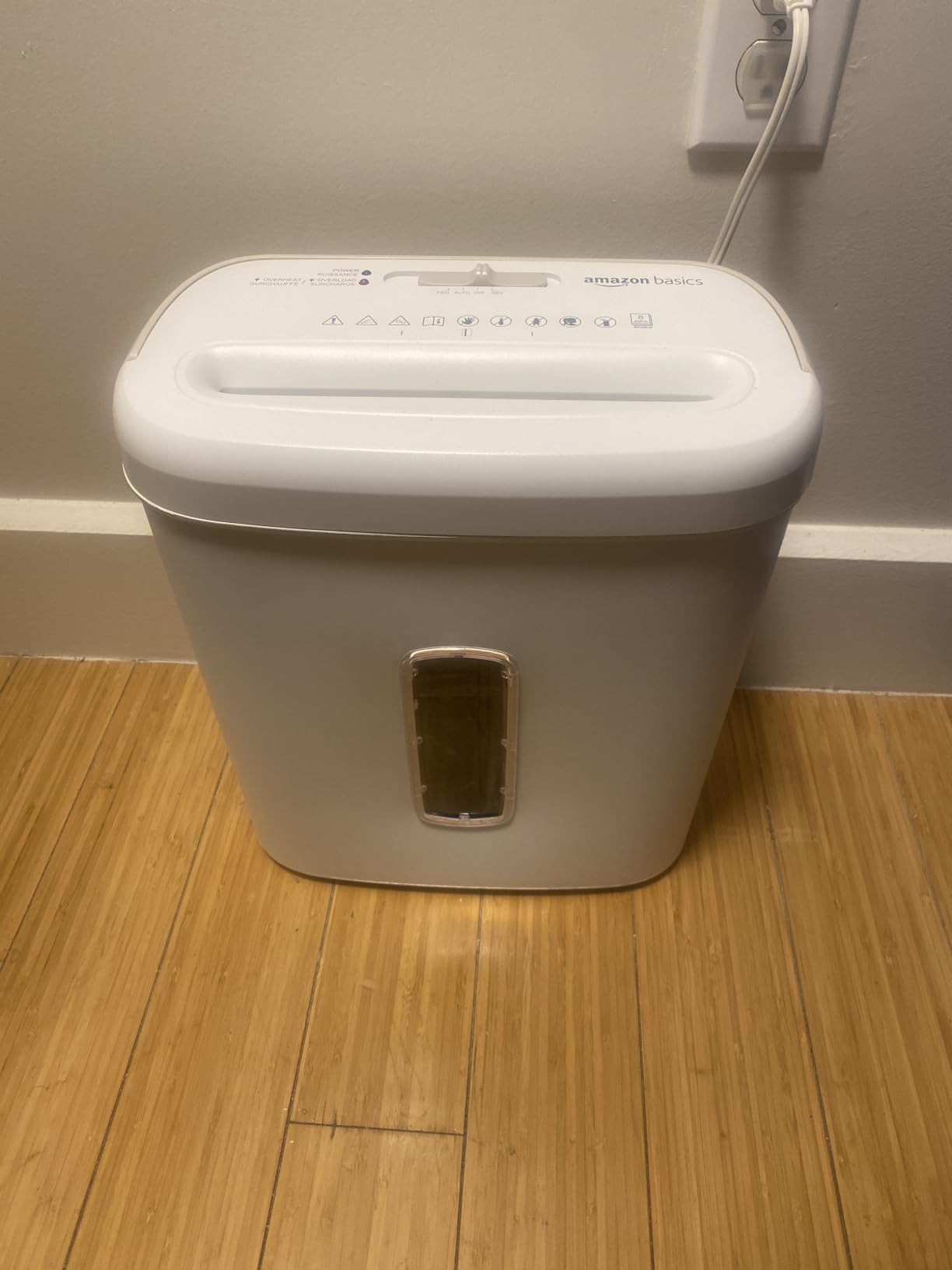
The 3.7 gallon bin lifts out completely, which sounds trivial until you have shredded two weeks of receipts and the last thing you want is to tip a full bin of confetti across the floor. It weighs 8.7 pounds, so emptying it is a one-hand job rather than a two-person lift.
The honest weakness is duty cycle. Three minutes on, thirty minutes off, and in practice I get better results feeding three or four sheets at a time than trying to hit the full eight. Reviewers report the same thing, and the overheat LED is genuinely useful because it tells you the machine stopped rather than hung.
What we like about feeding it receipts
The entry slot accepts a full-width receipt roll without the folding-and-realigning routine that narrower slots demand, and staples and clips can go through attached. For a mixed mail batch with receipts still inside envelopes, that is a real time saving over the small desktop units.
The bin window means you can see fill level without lifting the head, and given how fast micro-cut output packs down, we emptied this one roughly every three weeks of moderate daily use.
Where it falls short
At a stated 70 dB this machine is loud, and it was clearly audible against a quiet background. That matters if you shred receipts at night in an apartment. The cool-down is also long relative to the run time, so a backlog of monthly receipts needs several sessions rather than one.
2. Bonsaii 6-Sheet Cross Cut C237-B – Best Value for Weekly Receipts
Bonsaii 6-Sheet Cross Cut Paper Shredder for Home, 3.4 Gal Bin
P-4 cross-cut 5 x 14 mm
6 sheets per pass
3.4 gal bin
4 min run 20 min cool
Pros
- P-4 cross-cut particles in a compact 6.6 pound frame
- Shreds 6 sheets plus staples clips and cards without unstapling
- Lift-off head and windowed 3.4 gallon bin
- Stores under a desk
- Auto start/stop with manual reverse
- Reviewers describe it as quiet enough for a shared home
Cons
- 4-minute run time with a 20-minute cool-down trips often
- Best results come from feeding 2 to 5 sheets
- Small bin fills quickly with micro-cut style output
- Blades need oiling as lubricant is not included
The C237-B is the shredder I recommend to anyone shredding a handful of receipts a week and no more. It is the shortest path to a genuine P-4 cross-cut, and cross-cut is the line I would not cross down when receipts are involved.
Particles come out at about 5 by 14 mm, a touch finer than the Amazon Basics cross-cut. It handles staples, clips and cards without any prep, which matches the real receipt workflow where a stapled expense packet usually arrives as one clump.
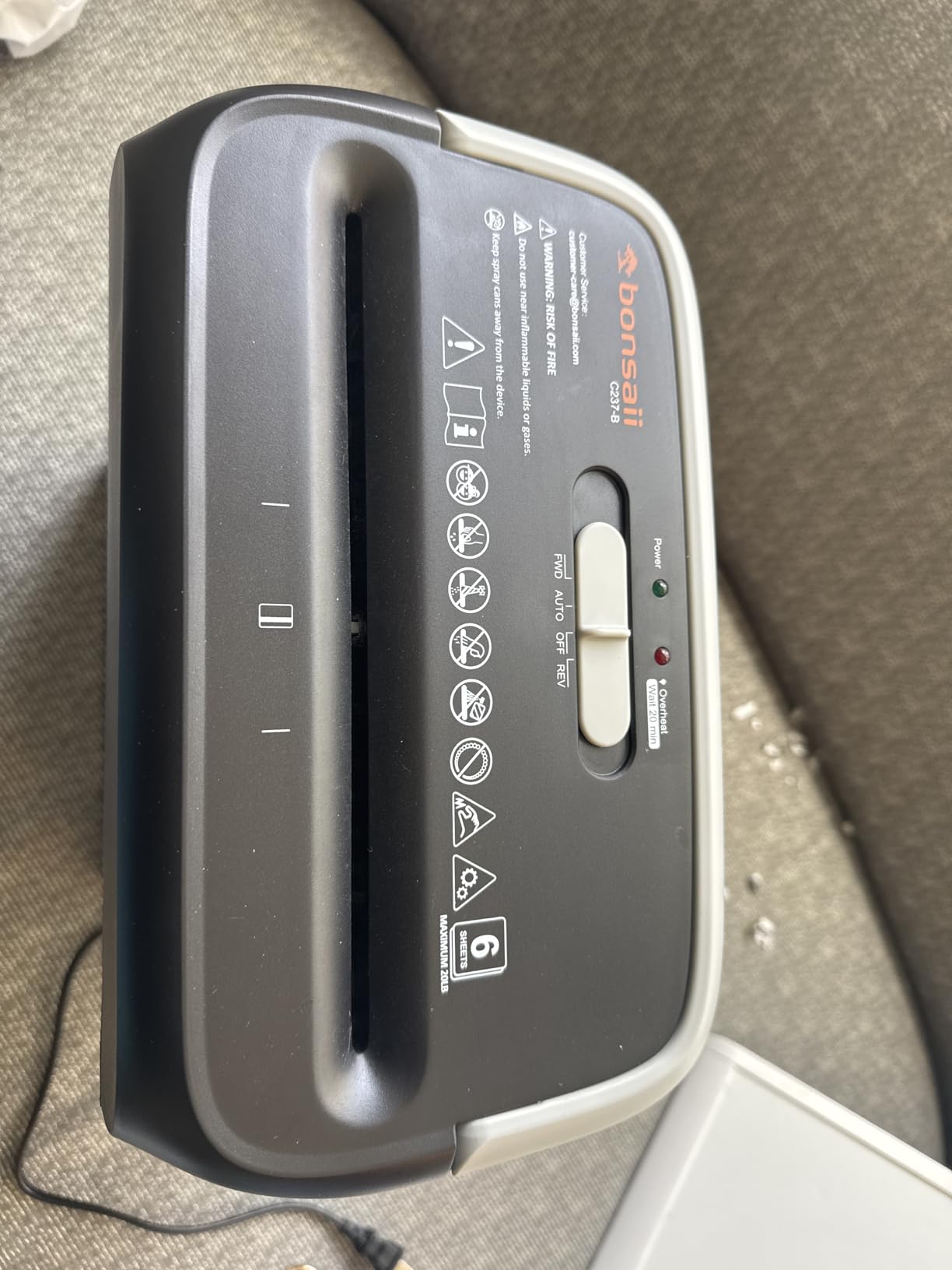
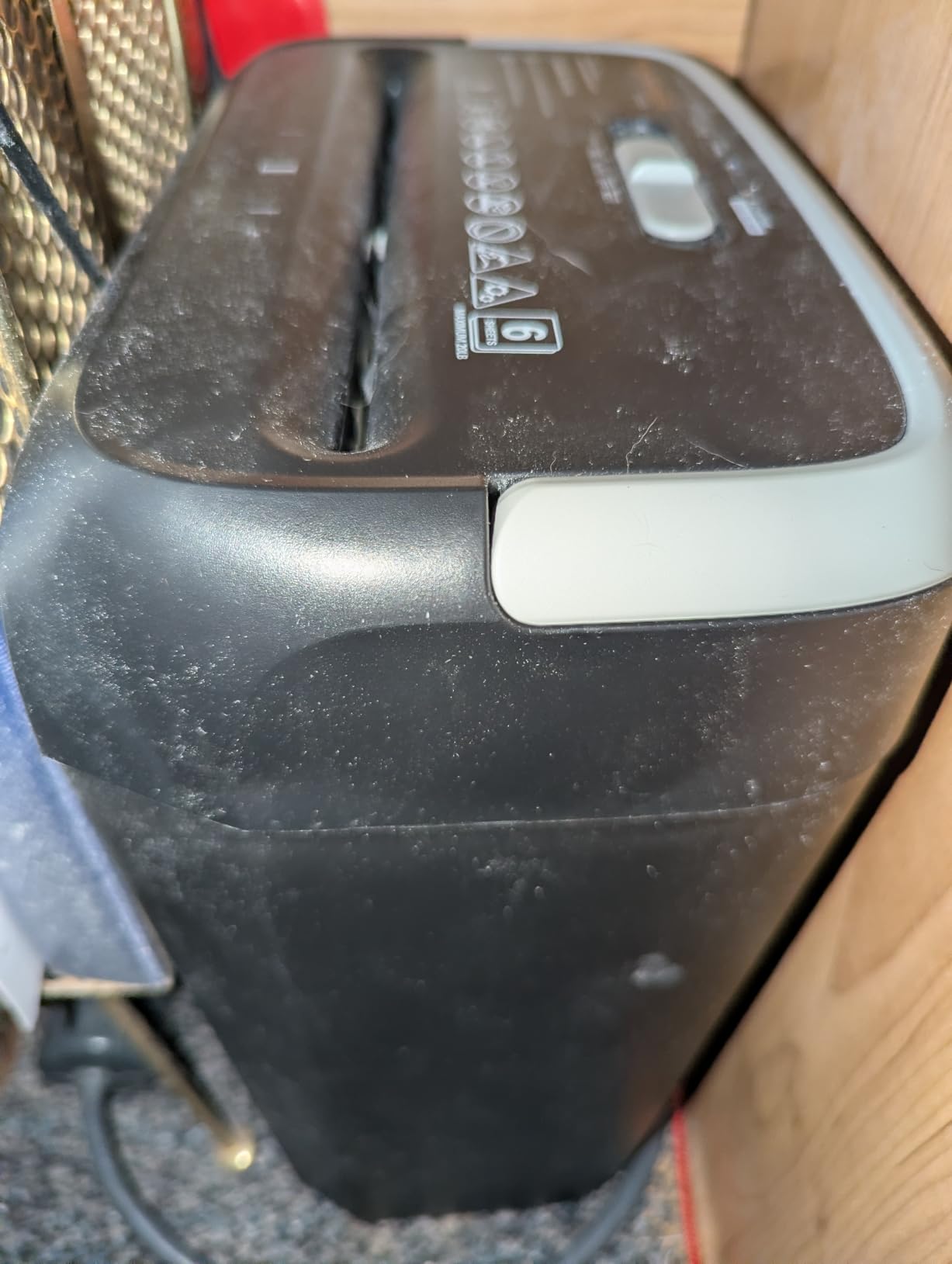
At 6.6 pounds it is one of the lighter units, and the lift-off head plus separate bin makes emptying straightforward. Auto start/stop means you can drop a receipt in and walk away, and the manual reverse handled the handful of jams our thermal batch produced.
Buyers on r/declutter and r/Frugal describe the same habit we fell into: feeding one sheet every so often to keep the blades clean and the lubrication moving. It costs nothing and it does keep output consistent.
Where it fits a receipt workflow
This is the unit for a self-employed person clearing a shoebox of expense receipts at month end. The 20-minute cool-down is short enough that two or three passes can cover a moderate stack, and the small footprint means it lives on the desk rather than in a cupboard.
Its 3.4 gallon bin is adequate if you empty it monthly. If you shred daily, plan on more frequent trips, because receipt confetti packs down faster than plain strips.
What to watch
The overheat protection trips more often than the rated sheet count suggests, since the machine is happiest at two to five sheets. No lubricant sheets ship in the box, so plan on oiling the blades from the first week.
3. Aurora AU870MA 8-Sheet Micro-Cut – Top Rated for High Security
Aurora AU870MA High-Security 8-Sheet Micro-Cut Paper Credit Card Shredder Black
P-4 micro-cut 5/32 x 15/32 inch
8 sheets per pass
3.9 gal bin
5 min continuous run
Pros
- Micro-cut particles that are effectively illegible
- Handles 8 sheets plus credit cards
- 5-minute continuous run time
- Roomy 3.9 gallon basket for receipt volume
- Auto start with manual reverse and thermal protection
- Backed by a 1-year limited warranty
Cons
- Heaviest micro-cut unit we tested at 11.7 pounds
- Taller 17.4 inch body takes more vertical space than a compact desktop model
- Costs more than the cross-cut alternatives in this group
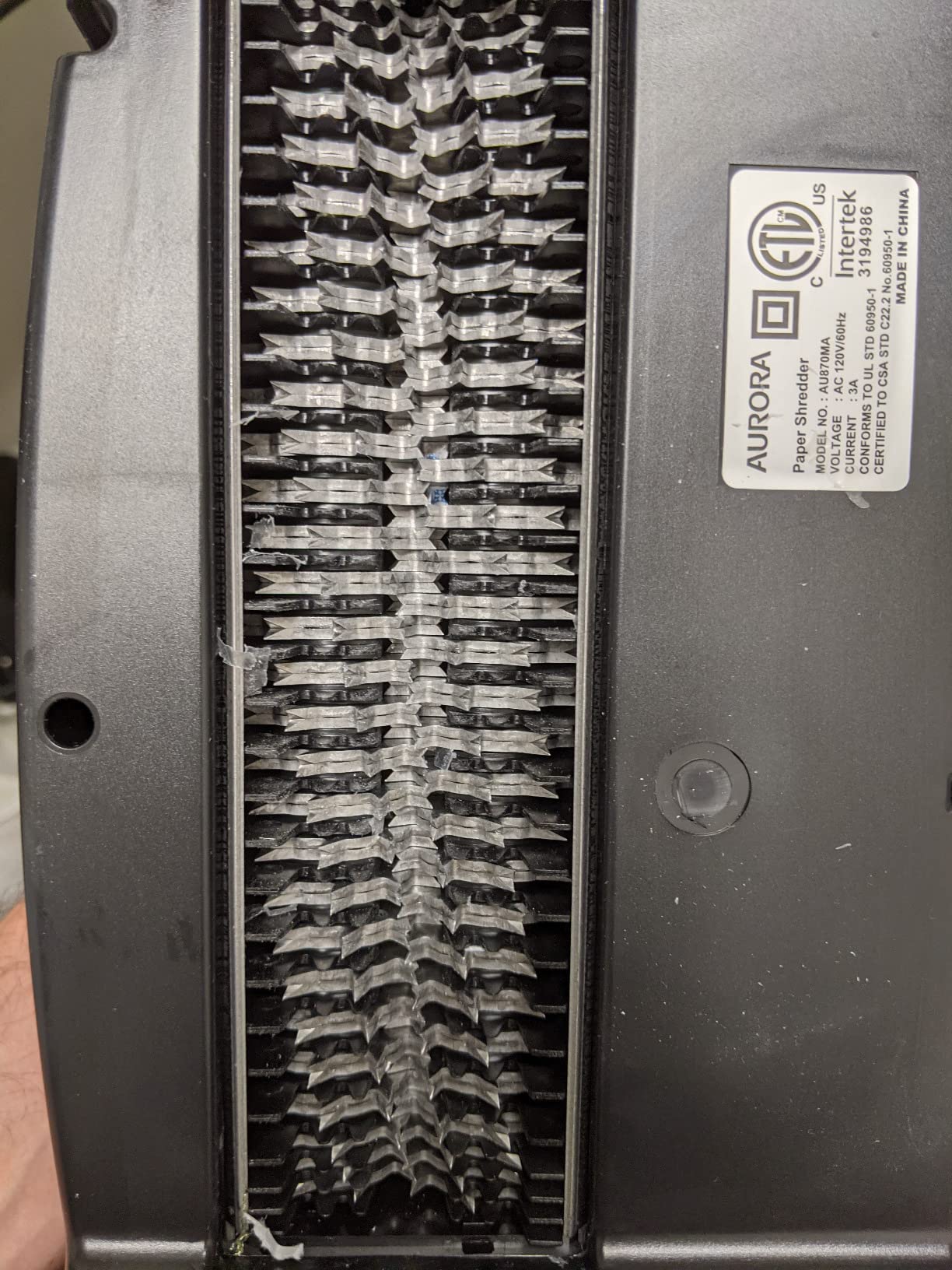
The Aurora AU870MA sits at 4.6 across nearly 13,000 ratings, joint-highest in this roundup. If the output on your receipts needs to be genuinely unreadable rather than merely inconvenient to reassemble, micro-cut is the cut type that delivers that.
Particles measure about 5/32 by 15/32 inches, roughly 4 by 12 mm. Once a receipt is in that form there is no practical way to put a merchant name and an account number back together, which is the entire point.
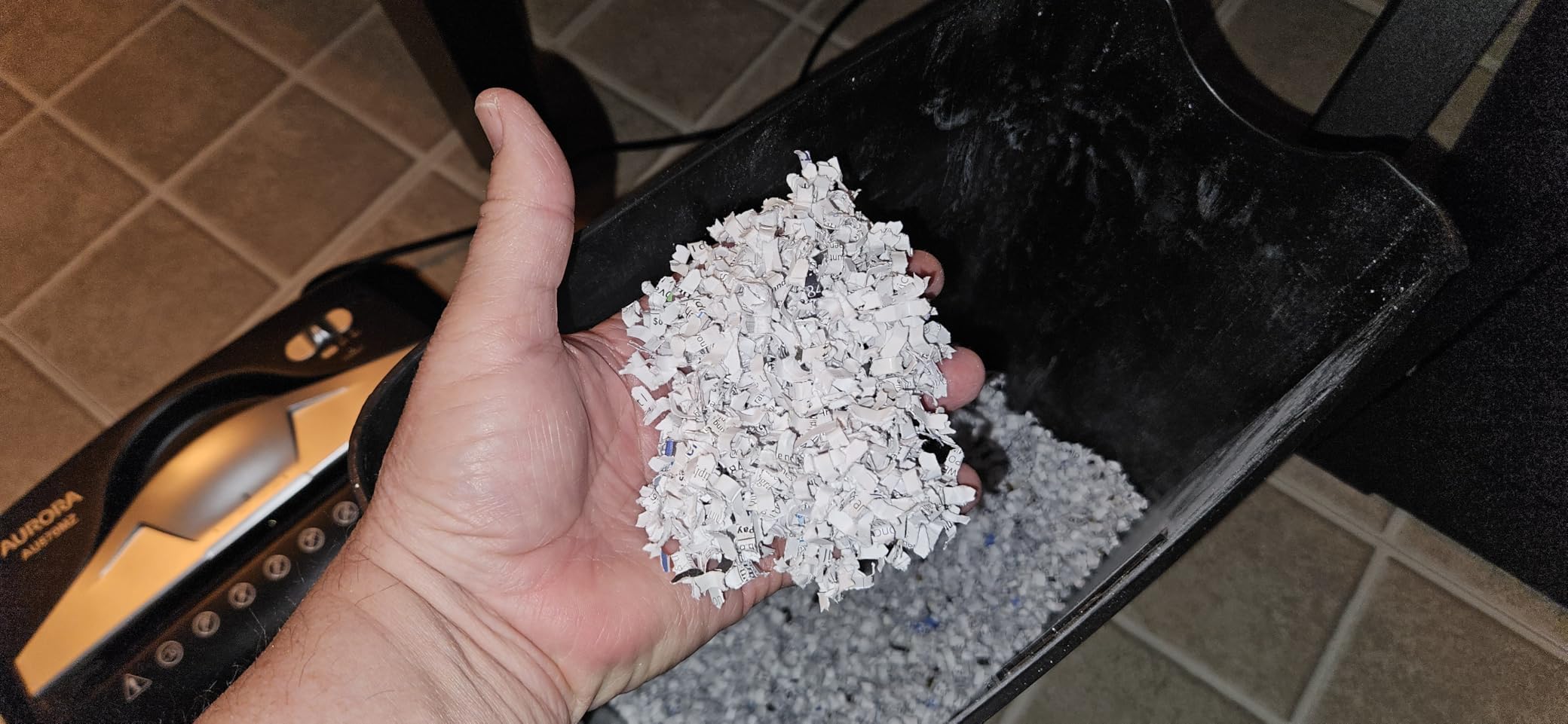
The five-minute continuous run time is the most generous in the group, and it mattered more than expected. Micro-cut particles jam cutters more readily than cross-cut, so the longer run time is what actually determines whether a monthly receipt purge finishes in one session.
The 3.9 gallon basket absorbs a lot of micro-cut output before it needs emptying, and thermal protection with an overheat LED gives a clear signal rather than a silent stop.
Who should buy this one
A small-business owner or bookkeeper dealing with customer payment records, where the receipt trail includes card fragments and signature lines that a determined person would want to reassemble. Also worth it for anyone whose recycling bin is not locked.
If you are just clearing your own shopping receipts, cross-cut is already sufficient and the cross-cut machines here cost less.
What you give up
At 11.7 pounds and 17.4 inches tall, this is a cabinet-style desktop unit that needs real under-desk or shelf space, and moving it around is not a one-hand job. It also sits at the top of this group on cost, which is a lot to spend on receipts alone.
4. Amazon Basics 6-Sheet Micro-Cut – Best for a Large Micro-Cut Bin
Amazon Basics 6 Sheet High Security Micro-Cut Paper and Credit Card Shredder, P-4 Security Level, Easy to Empty, Black
P-4 micro-cut 4 x 12 mm
6 sheets per pass
4.1 gal bin
3 min on 30 min off
Pros
- Micro-cut output leaves receipt text completely illegible
- Largest basket among the compact micro-cut machines at 4.1 gallons
- Quiet for its class with an overheat LED warning
- Shreds 6 sheets plus staples clips and cards
- Owners report 4.5 to 7 years of service with regular oiling
Cons
- Only 3 minutes on and 30 minutes off
- Throughput drops sharply past 2 sheets
- Thin plastic base can arrive cracked
- Needs separate blade lubricant
This one shares the micro-cut particle size of the Aurora but pairs it with the largest basket in the roundup at 4.1 gallons. That combination is why it wins for anyone shredding receipts daily rather than monthly.
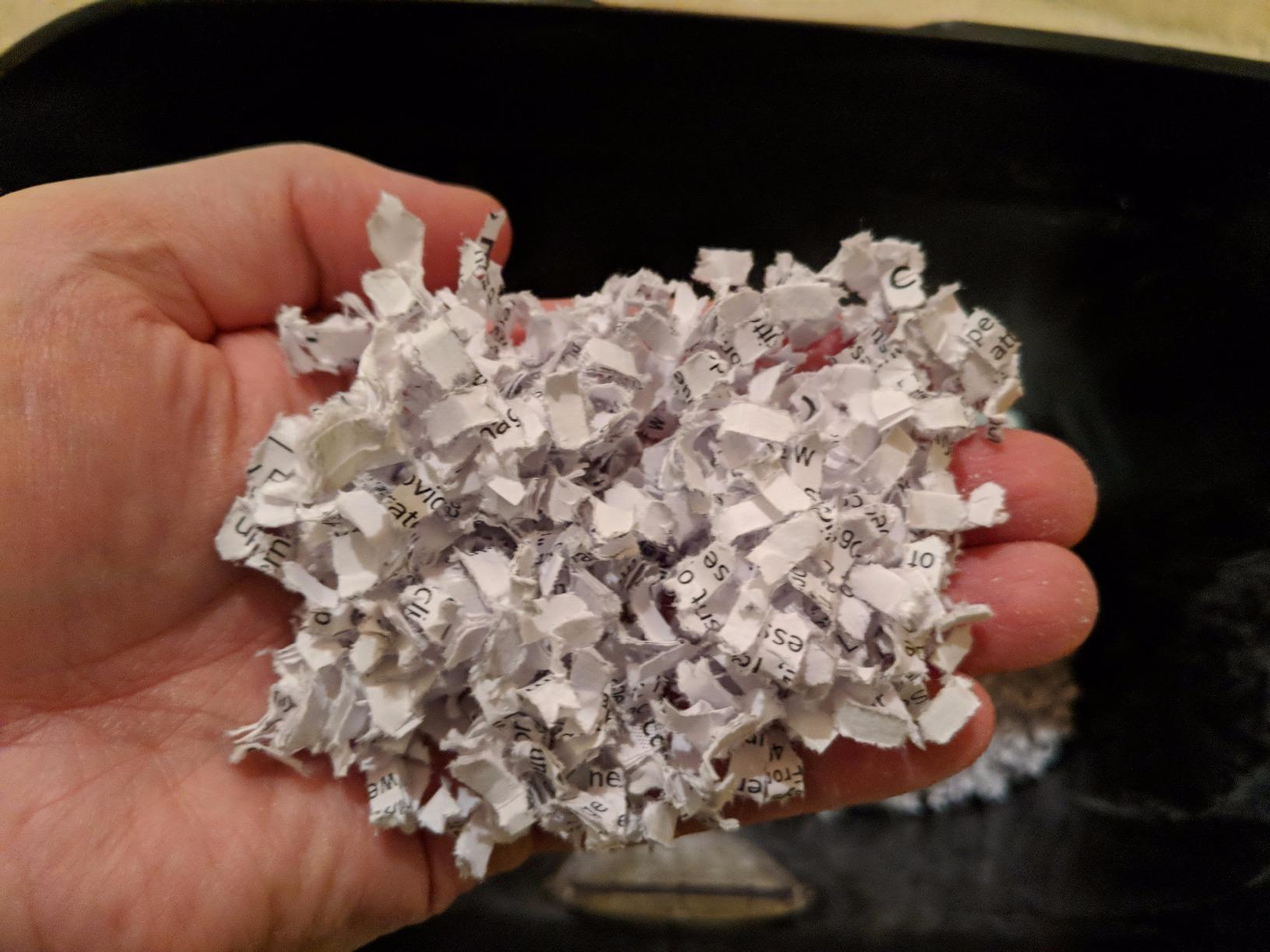
Micro-cut output swells the volume of shred dramatically, so bin capacity is not a minor spec. A basket that looks generous for strip-cut shreds fills in a fraction of the time once everything is confetti-sized, and this machine is sized for that reality.
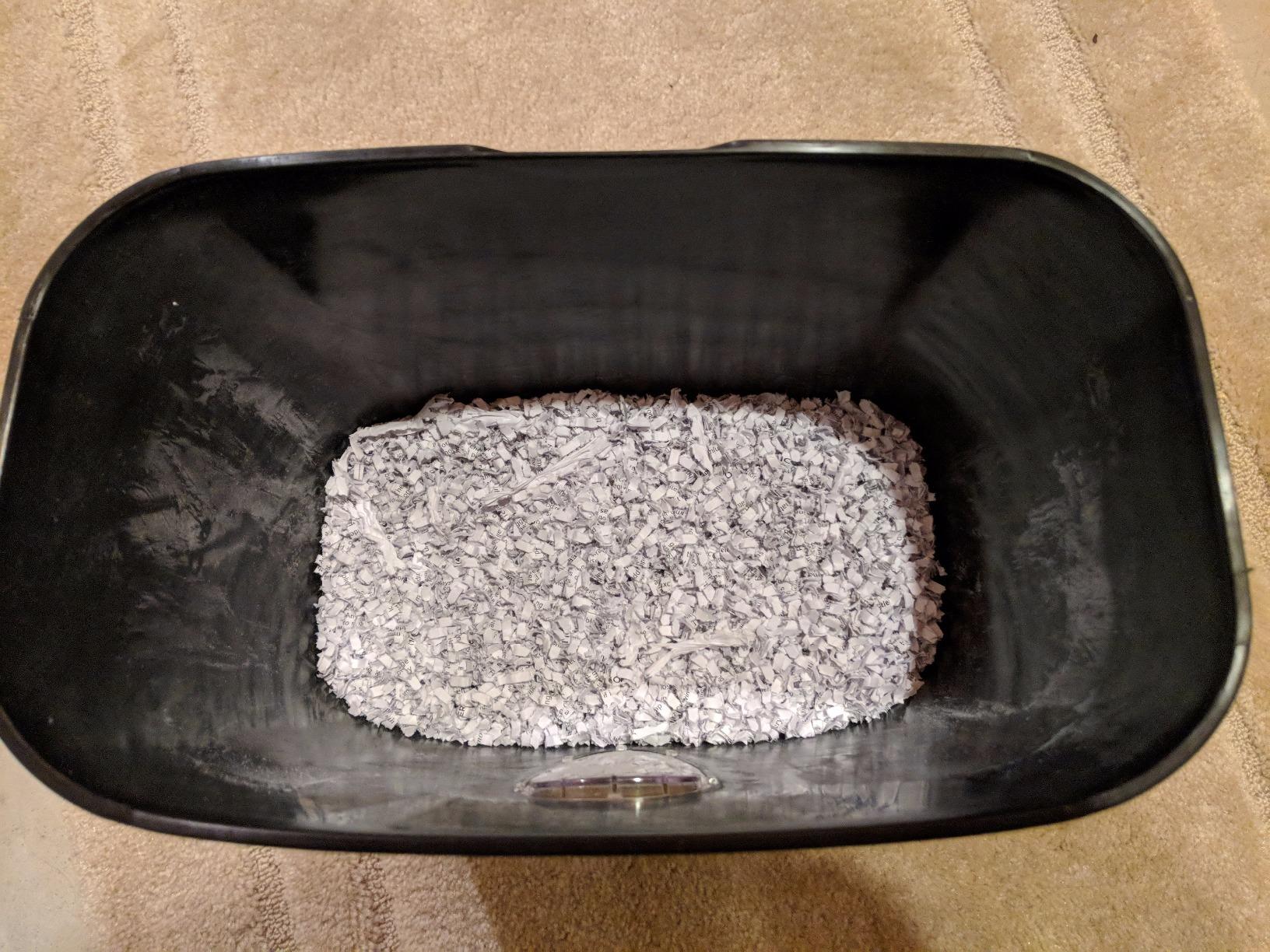
Output at 4 by 12 mm is unreadable, and the eight-point-seven-inch paper entry width is wide enough for a full receipt roll. It handled staples, clips and cards through the dedicated slot without complaint.
Long ownership is the pattern in the reviews. Multiple owners report four to seven years of service with regular blade oiling, which changes the calculation if you shred receipts every week and want one machine for a decade.
Why the bin matters more than the cut
If you shred every day, emptying the basket is the task that actually recurs. At 4.1 gallons this is the machine where the fill-line window is visible from your chair, which beats guessing with two smaller baskets.
It is also the one we would choose for a home office where receipts arrive with a weekly mail purge rather than one at a time.
Where it holds back
Three minutes on and thirty off is a short duty cycle, and throughput falls away past two sheets. The thin plastic base is a packing weakness, so inspect it on arrival and let several owners on r/YouShouldKnow note that oiling is not optional for this blade set.
5. Aurora AU800SD Strip Cut No-Basket – Best for Very Small Spaces
Aurora AU800SD Professional Strip Cut Paper Shredder/CD/Credit Card Shredder Without Wastebasket, 8-Sheet Strip-Cut No Basket, Black
Strip cut
8 sheets per pass
No basket, extendable 15 inch arm
2.95 inch tall
Pros
- Basketless design uses any wastebasket you already own
- Very light at 4.6 pounds
- Only 2.95 inches tall so it stores inside a bin
- Quiet operation compared with typical desktop shredders
- Handles cards and CDs as well as paper
Cons
- Strip cut is the least secure cut level here so strips can be pieced back together
- Light-duty on paper even though it is rated 8 sheets
- Replacement blades are hard to source
- 110-120V only
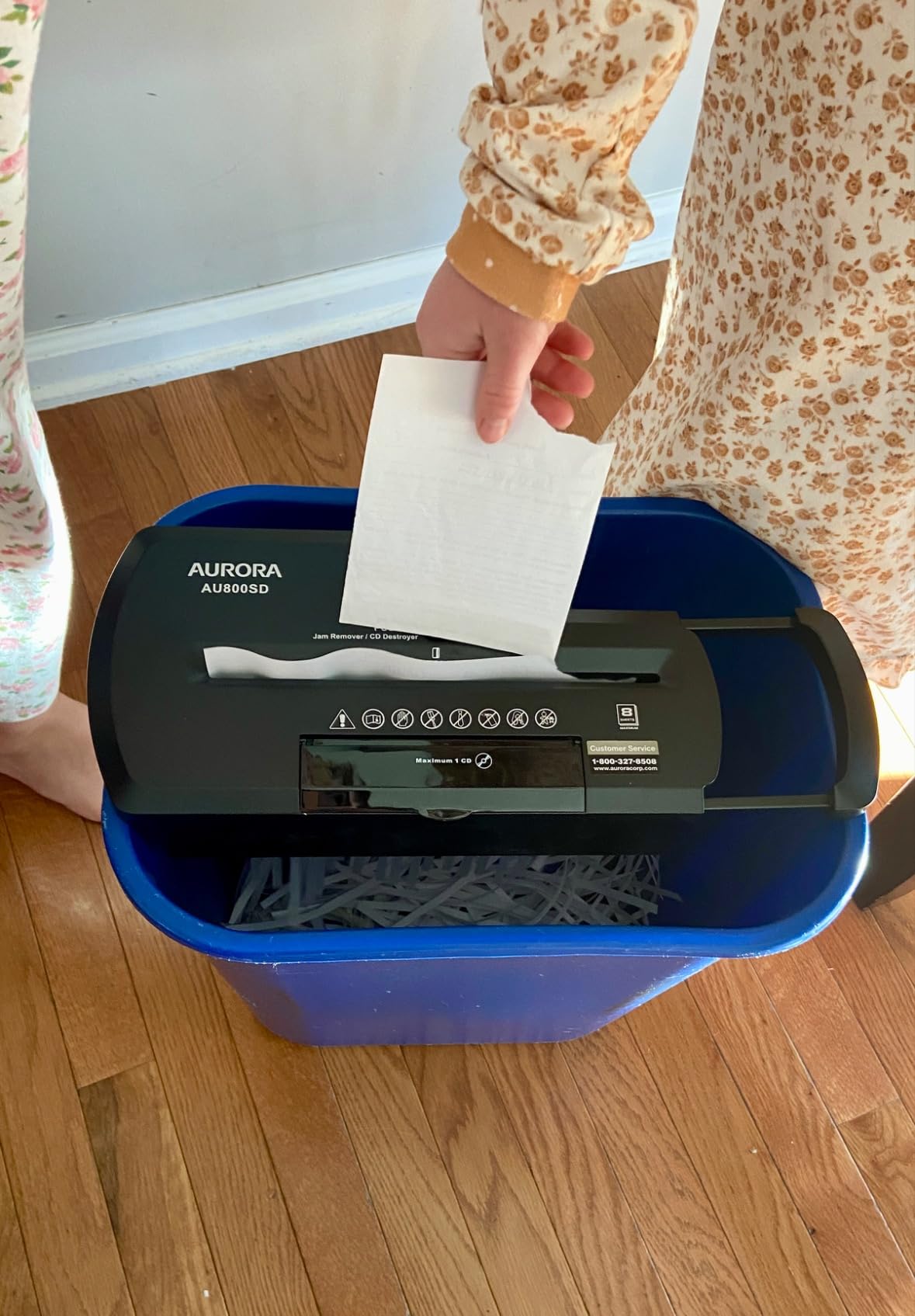
The AU800SD answers a question none of the other nine answer: what if you have no room for a basket at all. It shreds straight into whatever bin you position underneath, and the extendable arm reaches 15 inches to cover most of them.
It is also the smallest footprint of the ten at 4.6 pounds and under three inches tall, so it can live inside a recycling bin between uses. For a hot desk in a co-working space or a small apartment kitchen, that is a genuine advantage.
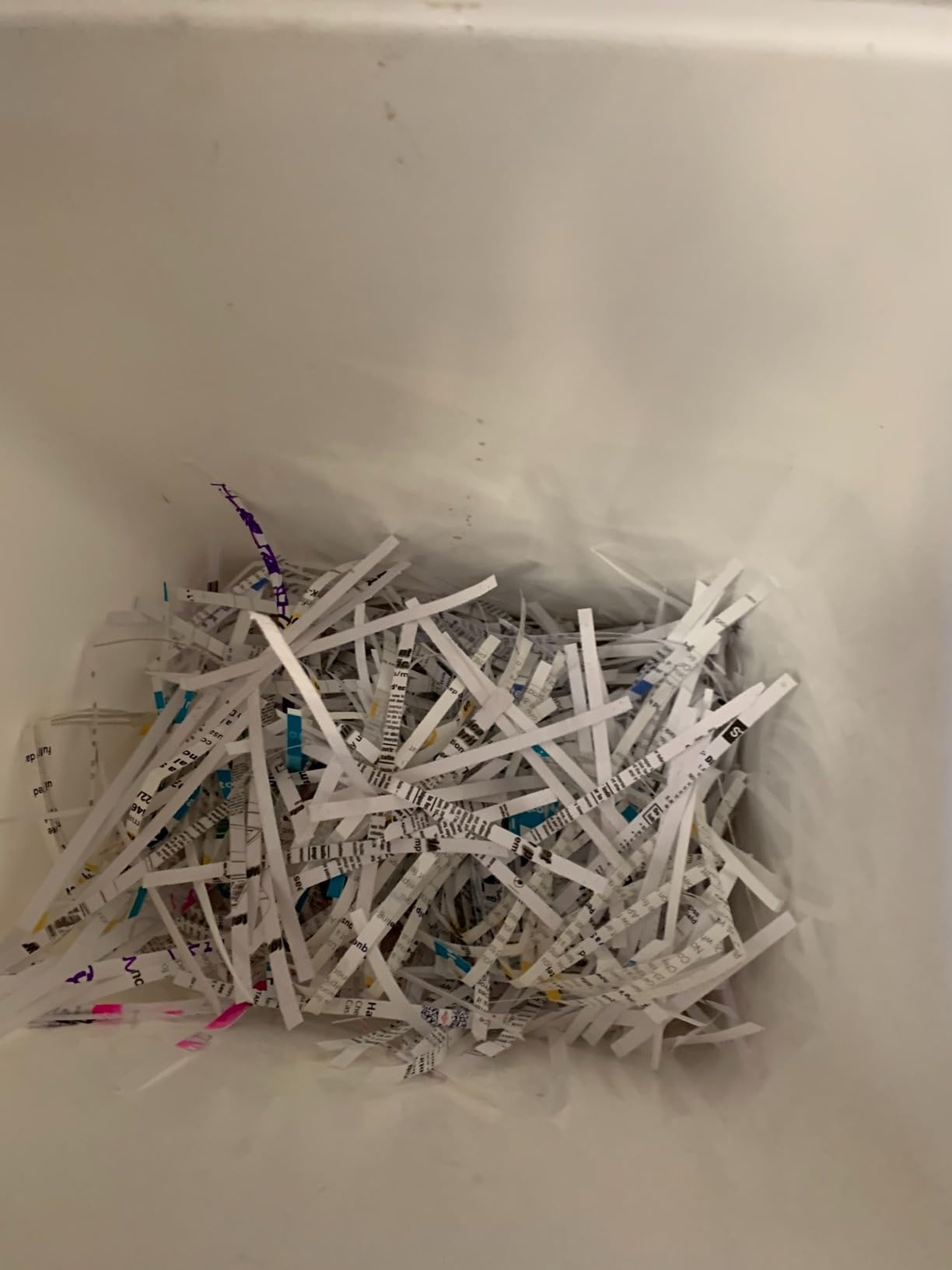
Now the honest part, because this is the machine people argue about on r/Frugal: strip-cut output can be reassembled by hand. If a receipt has your store account number, a determined person can put the strips back in order.
That said, most shopping receipts carry a partial card number, a date and a merchant name, and once the account number is separated the rest is low value. Strip cut is genuinely defensible for routine receipt disposal. It is not defensible for anything containing a full account number or signature.
When strip cut is enough
Supermarket and restaurant receipts, gas receipts, and anything where the only identifier is a last-four-digits card hint. In those cases you are destroying a record you will never need again, and the speed and simplicity of this machine wins.
It handles cards and CDs as well as paper, and owners report it rarely overheats in normal use because the basketless format means no heavy load pressing on the cutter.
When it is not enough
Skip it for expense records, customer payment receipts, or anything with a signature line. The blade life on this light-duty machine also means replacement blades are difficult to find, so buy it to last rather than to tinker with.
6. Bonsaii C275-A 12-Sheet Cross Cut – Best for High Receipt Volume
Bonsaii 12-Sheet Cross Cut Paper Shredder, 5.5 Gal Home Office Heavy Duty Shredder for Paper, Credit Card, Mail, Staples, with Transparent Window, High Security Level P-4 (C275-A)
P-4 cross-cut 5 x 20 mm
12 sheets per pass
5.5 gal bin
6 min continuous run
Pros
- Highest sheet capacity here at 12 per pass
- 6-minute continuous run time cuts cool-down interruptions
- Large 5.5 gallon bin with a transparent window
- Handles stapled packets and junk mail without jamming
- Owners report shredding six large boxes without overheating
Cons
- Heavy at 12 pounds and tall at 18.3 inches
- Slows noticeably near the 12-sheet maximum
- Collection bin plastic feels thin
- Loud while running
If your receipt volume is measured in shoeboxes rather than envelopes, this is the machine in the roundup built for it. Twelve sheets per pass, a six-minute run time and a 5.5 gallon bin with a transparent window means fewer pauses and fewer bin trips than anything else here.
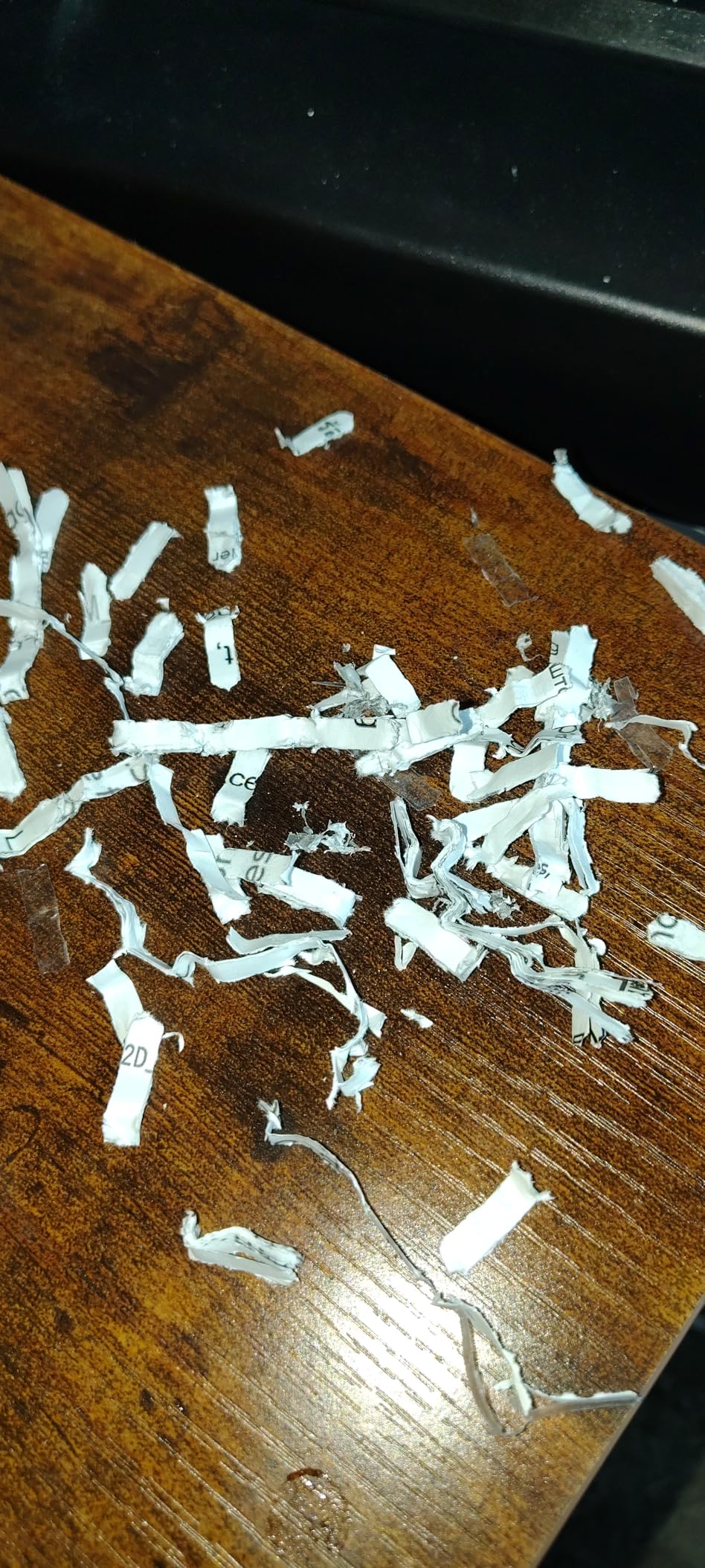
Cross-cut output is P-4 at about 5 by 20 mm, which is a coarser particle than the smaller machines but still well past reassembly range for a receipt. For a mixed batch of receipts and bookkeeping paper, that trade is exactly right.
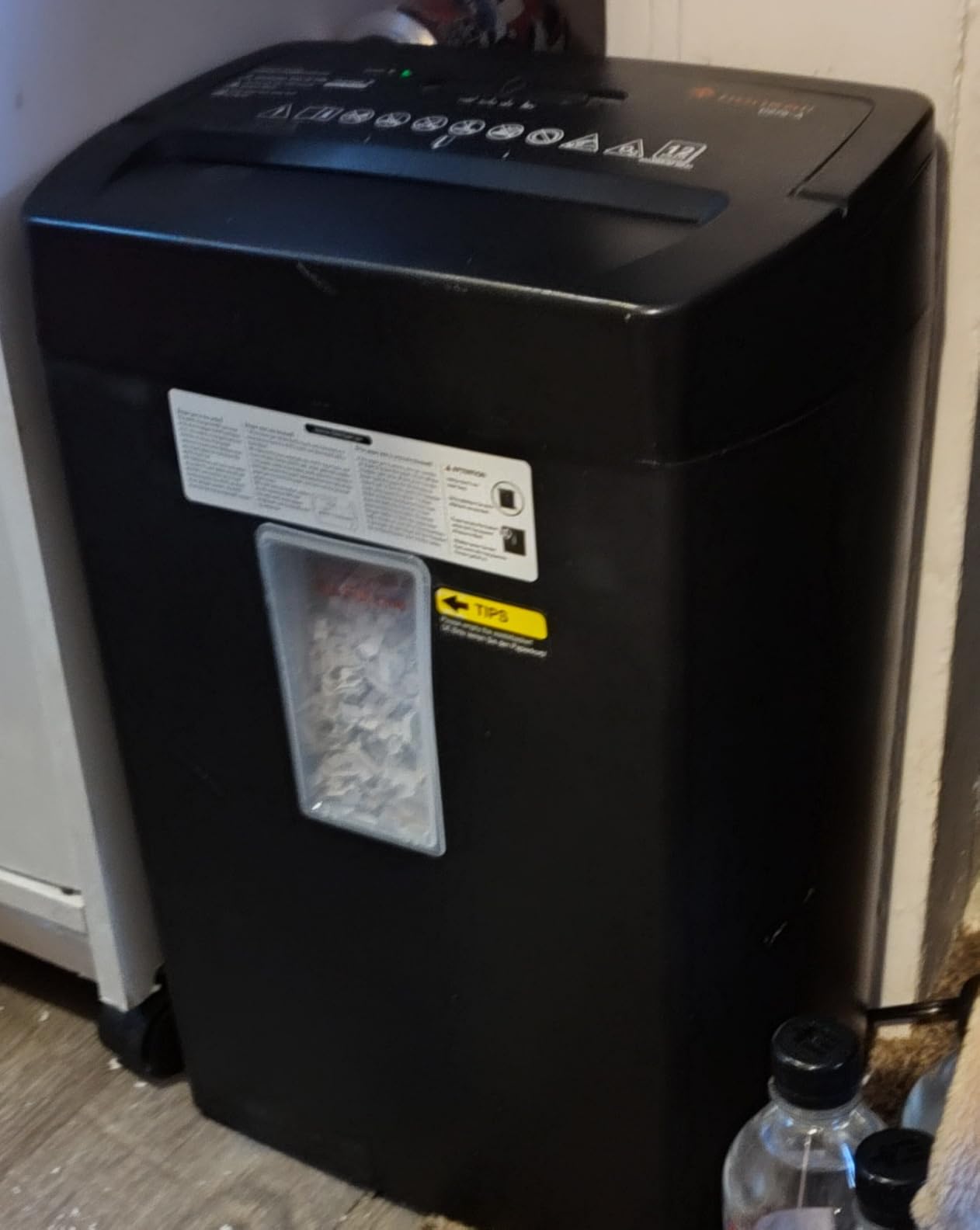
The six-minute run time on a patented cooling system is the feature we would highlight hardest for receipt work. Most desktop units cool down for twenty to thirty minutes, so a 30-receipt batch becomes two sessions. Here it can be done in one.
It took stapled documents and envelopes straight from the junk mail pile without a jam in our test batch, which is how most receipt paperwork actually arrives.
Who this is built for
A bookkeeper clearing monthly records, a landlord or property manager destroying move-out paperwork, or a small retailer destroying duplicate transaction slips. The windowed bin means nobody has to lift the head to check whether it is full.
For heavier batch work than a desk can handle, our guide to commercial shredders for accounting firms covers the floor-standing tier.
What it costs you
Twelve pounds and 18.3 inches tall means it needs a genuine footprint under the desk or on the floor next to it. It is loud while running, and it slows noticeably when you feed close to twelve sheets, so treat the rating as a ceiling rather than a working number.
7. Aurora AS420C 4-Sheet Desktop – Best for a Tight Desk
Aurora AS420C Desktop-Style Cross-Cut Paper Shredder, 4-Sheet Crosscut Desktop
Cross-cut
4 sheets per pass
1.32 gal bin
9 x 10 inch footprint
Pros
- Smallest upright footprint in the roundup at 9 by 10 inches
- Cross-cut output rather than long strips
- Light at 5.1 pounds with a lifting handle and clear basket
- Auto start-stop with overheat protection and no assembly
- Entry-level route to a cross-cut machine
Cons
- 4-sheet capacity is the lowest here so bulk batches take many passes
- Only a 1.32 gallon basket which fills quickly
- 4.5-inch throat is narrow and slows thicker documents
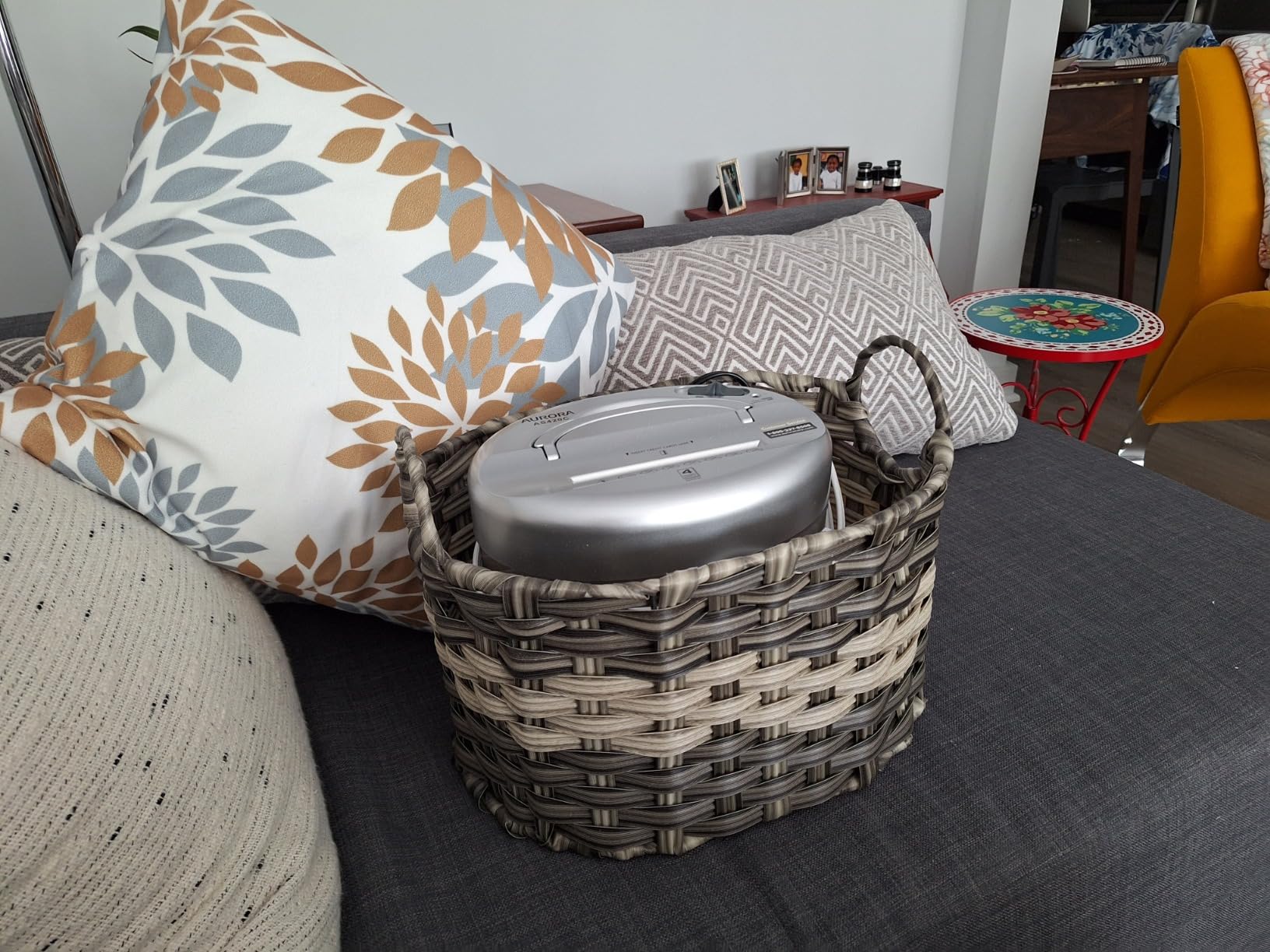
When counter space is the binding constraint, the AS420C is the only machine here that genuinely disappears. Its 9 by 10 inch body and 5.1 pound weight mean it can sit on a shelf, a filing cabinet or a crowded credenza without being in the way.
It is still a cross-cut rather than a strip cut, which is the point. At this size the usual cost saving is to drop to strips, and this machine refuses to make that trade.
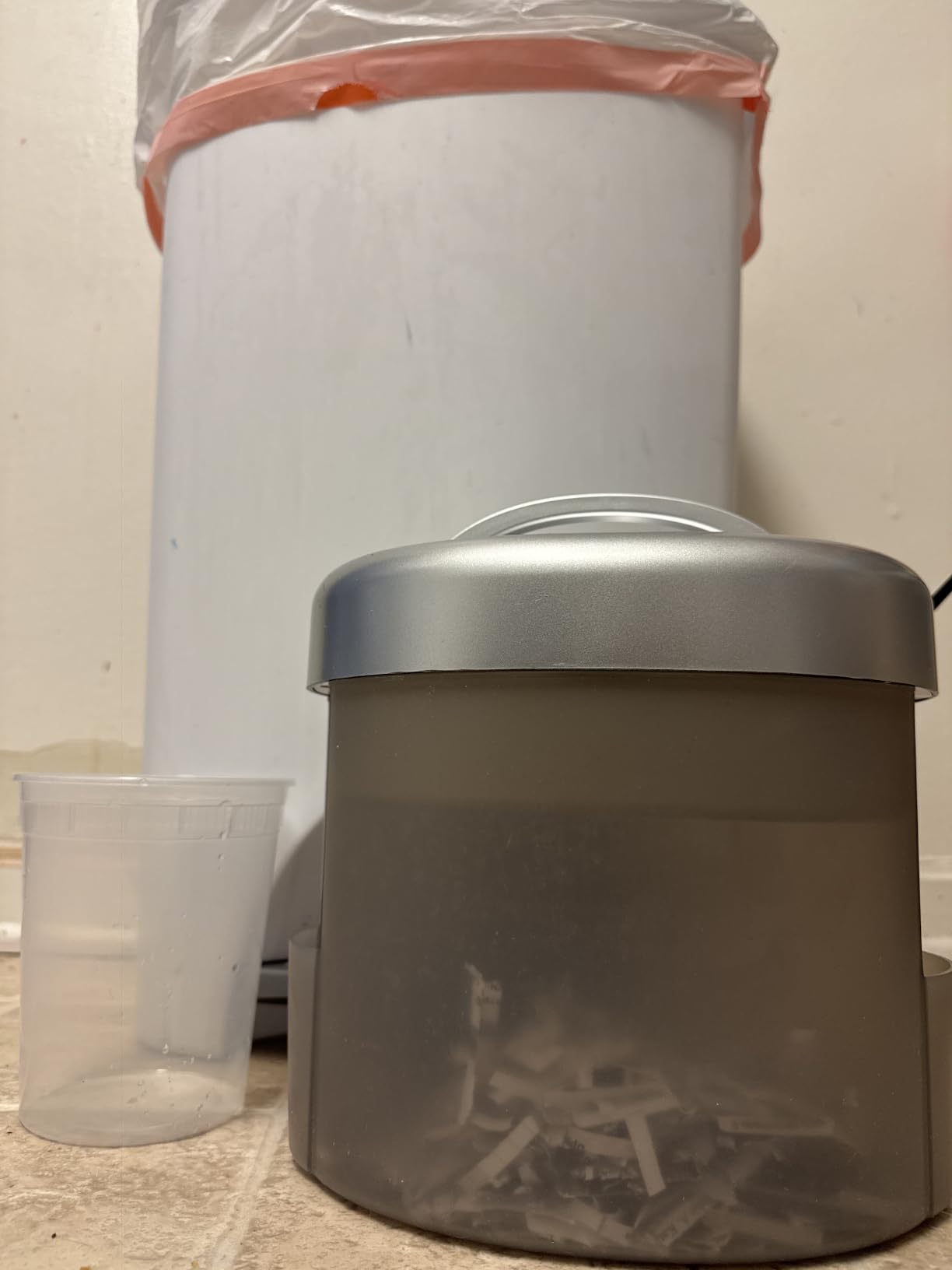
The see-through basket is a genuine advantage with receipts because you can see the fill level at a glance, and the basket lifts out for emptying. Auto start-stop and overheat protection are included as standard, with no assembly required.
In testing, it handled a single receipt and a short batch cleanly, and the 4.5-inch throat was wide enough for an ordinary till roll once flattened.
The case for a small machine
If you shred one receipt after using it and nothing more, a 4-sheet machine is arguably over-specified already, and this one gives you cross-cut security in the smallest available footprint. The clear basket also means you will actually empty it rather than forget.
It suits a home office where the machine lives in a cupboard between uses, or a small business counter with limited surface area.
Where the limits bite
The 1.32 gallon basket is the smallest here, and with cross-cut output it fills in a couple of weeks of daily use. The four-sheet ceiling also means a month-end receipt batch needs many passes, so this is a daily-habit machine rather than a purge machine.
8. Woolsche SD108 10-Sheet Strip Cut – Best for a Quiet Room
Home Office Paper Shredder,Woolsche 10-Sheet Strip Cut with 3.17-Gallon Basket,P-2 Security Level,CD & Credit Card Shredder,Durable & Fast – Jam Proof System – ETL Certified
P-2 strip cut
10 sheets per pass
3.17 gal basket
5 min run 30 min cool
Pros
- Quiet operation in a shared home office
- 10-sheet capacity takes receipts mail and staples
- Shreds credit cards and CDs as well as paper
- 3-mode switch with auto overheat protection
- ETL certified with a 1-year replacement warranty
Cons
- Strip cut is P-2
- the weakest security level here
- 3.17 gallon basket needs constant emptying
- Only partially cuts thicker plastic cards
- Overheats quickly and some units fail after roughly two years
The SD108 is the machine reviewers most often describe as quiet, and that came up consistently enough for us to treat it as the quiet-room pick. In an apartment with thin walls, or a room where someone is sleeping nearby, that ranking matters more than any security level on the box.
It handles ten sheets per pass plus staples, clips, cards and CDs, and the three-mode switch with auto overheat protection worked reliably through our mixed batch.
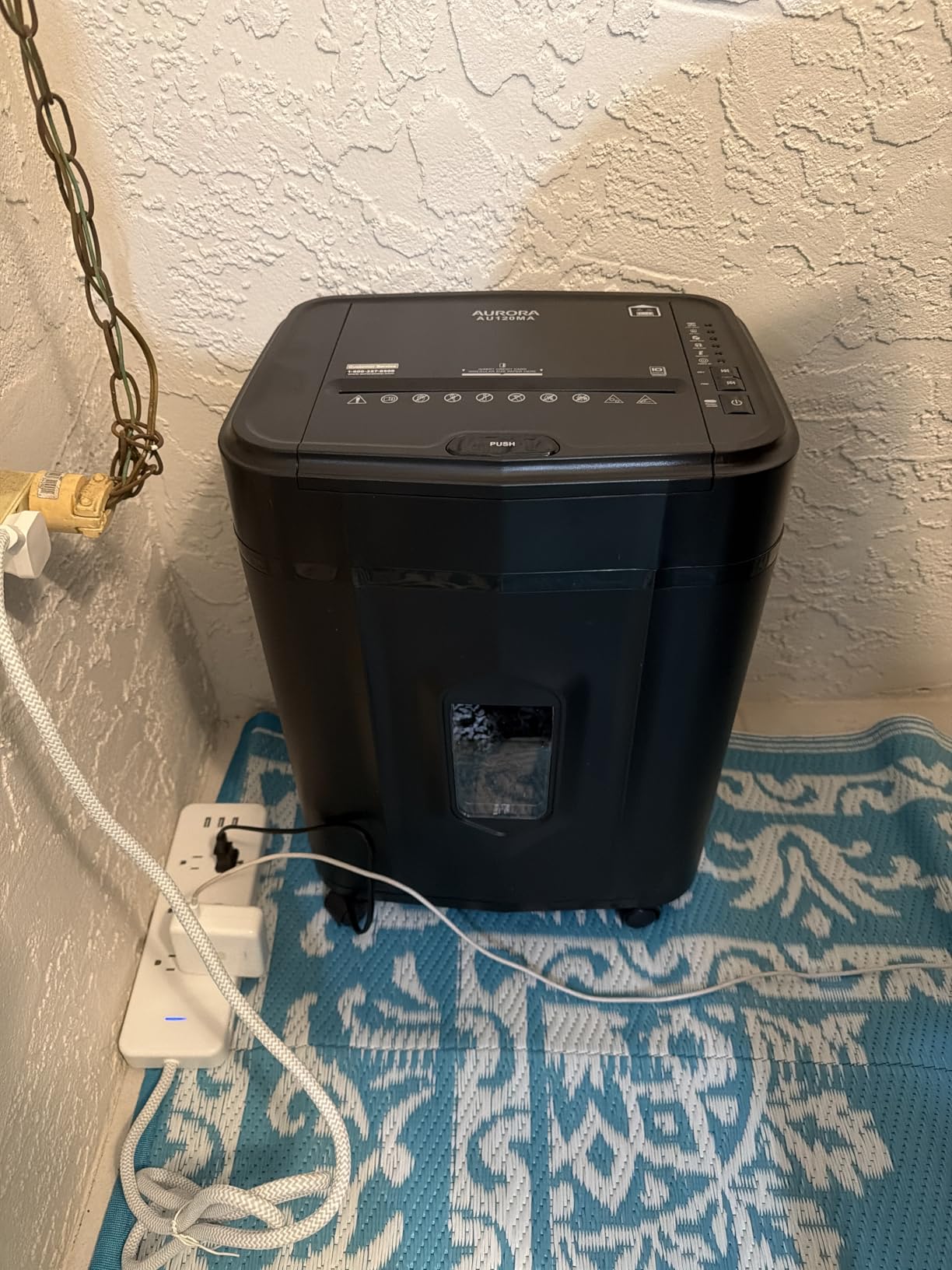
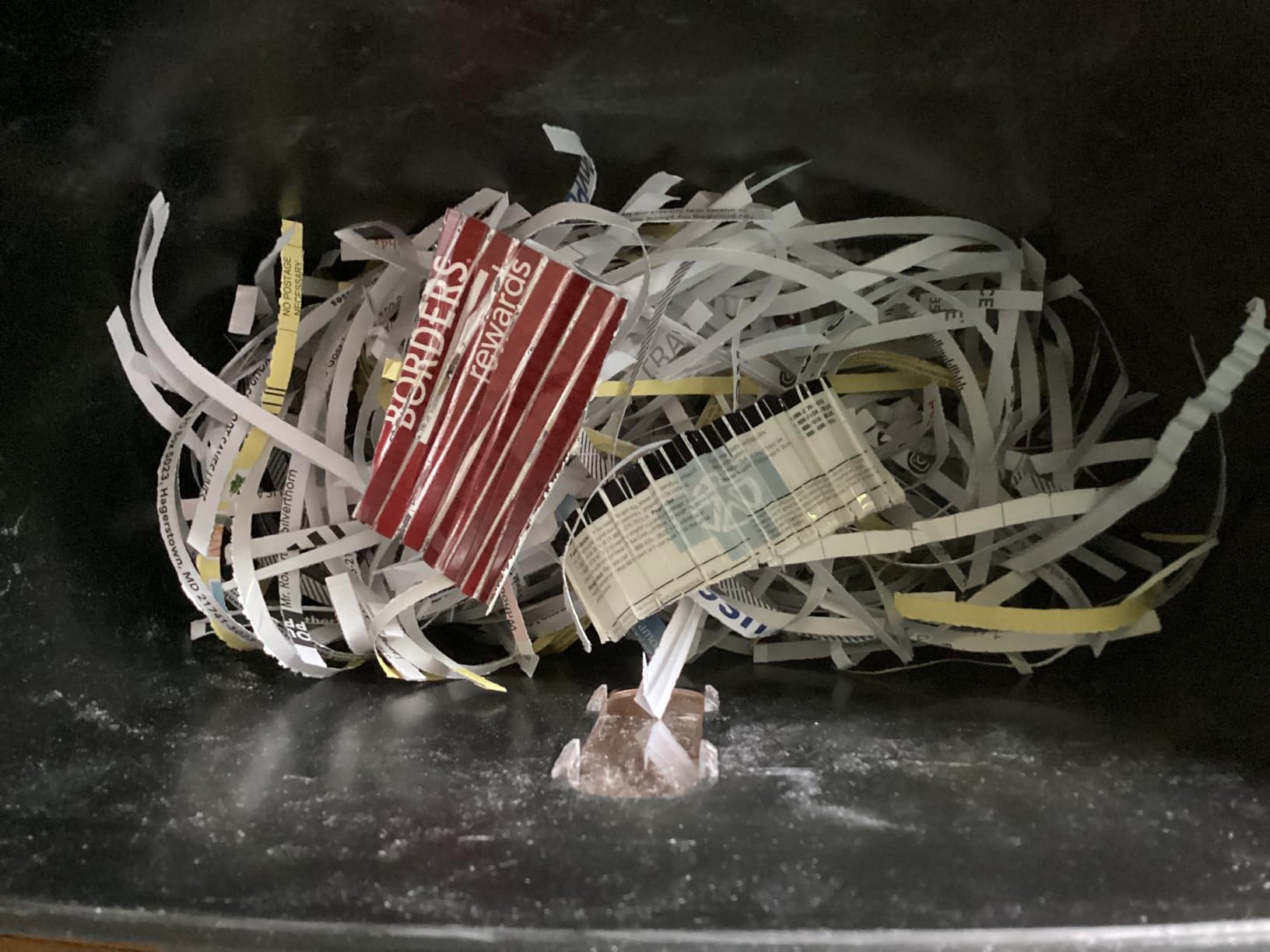
The transparent window on the 3.17 gallon basket is helpful, though the basket is small relative to what micro-cut style output packs into it. The US patented cutter produces strips of about 6 mm width, which is a P-2 cut under the DIN 66399 scale.
ETL certification and a one-year replacement warranty are both uncommon at this tier and are worth something if the machine lives in a rental or shared space.
Best use case
A night-shift or shift-work household where shredding happens late, or a study in a building where sound carries. Ten sheets per pass also handles a small stack of receipts comfortably without a long wait.
It is a reasonable first machine for someone shredding utility bills and non-sensitive paperwork in a quiet setting.
Limits to plan around
P-2 is the weakest cut in this roundup, so do not feed it anything with a full account number. It only partially cuts thicker plastic cards, it overheats quickly, and some owners on r/Frugal report units failing after roughly two years of light receipt use.
9. Amazon Basics 8-Sheet Strip Cut No-Basket – Budget Pick
Amazon Basics 8-Sheet Strip Cut Portable Paper, CD, and Credit Card Shredder with Auto-Off, Overheat Protection, Compact Design, No Basket, Extendable Arm, Black
P-2 strip cut at 0.24 inch
8 sheets per pass
No basket, 16.7 inch arm
2.5 min on 15 min off
Pros
- Basketless shredder with no basket to empty or replace
- Extendable arm to 16.7 inches fits almost any wastebasket
- Handles 8 sheets plus staples clips cards and CDs
- Rarely jams even when sheets are fed askew
- Owners report shredding thousands of pages without overheating
Cons
- P-2 strip output offers the least document security here
- Very short 2.5-minute run time
- Short power cord and loud during use
- Feed slot only takes 8 inch wide paper
- Manufacturer advises against using any lubricant
This is the entry-level route to destroying receipts properly in the sense that the paper is no longer readable as a document. It has no basket, so the shred output falls straight into whatever bin you put underneath.
Jam resistance was the surprise for us. Feeding slightly askew receipts, which is how most people feed paper, produced no jams at all across the whole batch, and the arm reaching 16.7 inches meant it fit every bin we tried.
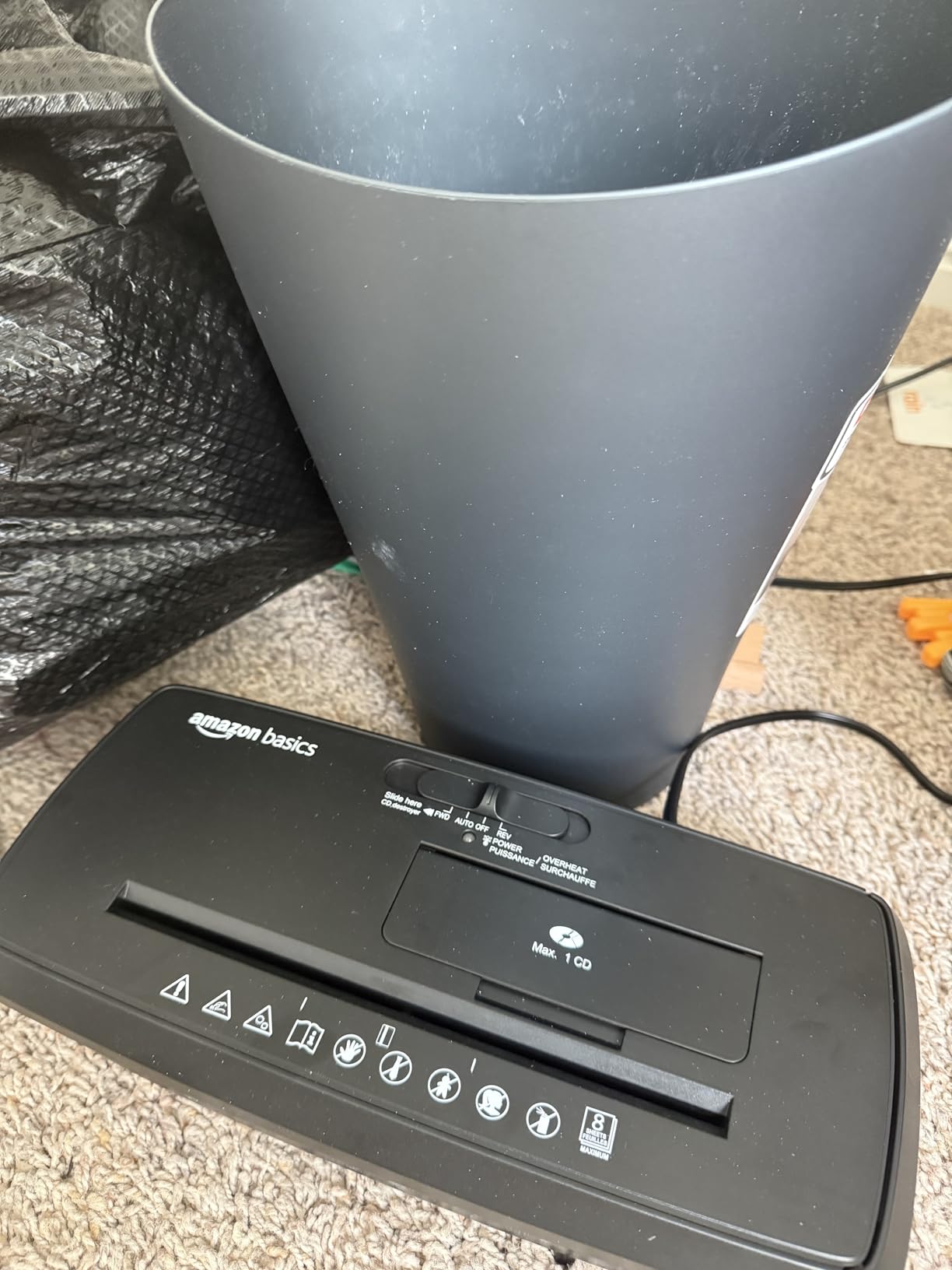
It is the only machine here that destroys discs too, cutting a CD or DVD into three pieces through the dedicated slot. If receipts ever arrive attached to a promotional disc, that solves the problem in one pass.
The basketless format also means the unit itself can be stored inside a bin when not in use, which solves the storage problem the AS420C solves with size.
Why the entry-level pick works
If your goal is routine receipt disposal, the P-2 strip cut plus a 0.24 inch strip width is enough to destroy the document. At 4.5 stars from nearly 3,800 ratings it also holds a higher average than several other machines in this group.
It suits a first shredder, a student, or anyone who wants a machine that lives in the recycling corner rather than on the desk.
What to accept with it
The 2.5-minute run time is the shortest here and the feed slot only accepts exactly 8-inch wide paper, so thermal receipt rolls need folding. The cord is short, it is loud, and the manufacturer advises against lubricant, so the blades are a one-and-done proposition.
10. Locksworth 8-Sheet Micro-Cut – Compact Micro-Cut for Daily Use
Locksworth 8-Sheet Micro Cut Shredder for Home Office, 4 Gallons Bin P-4 High Security Shredders for Papers/Credit Cards/Staples/Clips, Small Commercial Paper Shredder with Transparent Window
P-4 micro-cut 4 x 12 mm
8 sheets per pass
4 gal windowed bin
2 min run 60 min cool
Pros
- P-4 micro-cut output from a machine this compact
- Shreds 8 sheets plus staples clips and cards without jamming
- 4 gallon bin with a transparent window
- Lid-lift auto shutoff with auto start/stop and manual reverse
- Light and quieter than most shredders in its class
Cons
- 2-minute run time with a 60-minute cool-down rules it out for commercial use
- Smallest review base in the roundup so long-term reliability is unproven
- Top-heavy head that can tip if moved carelessly
- 8-sheet maximum means bulk runs need many passes
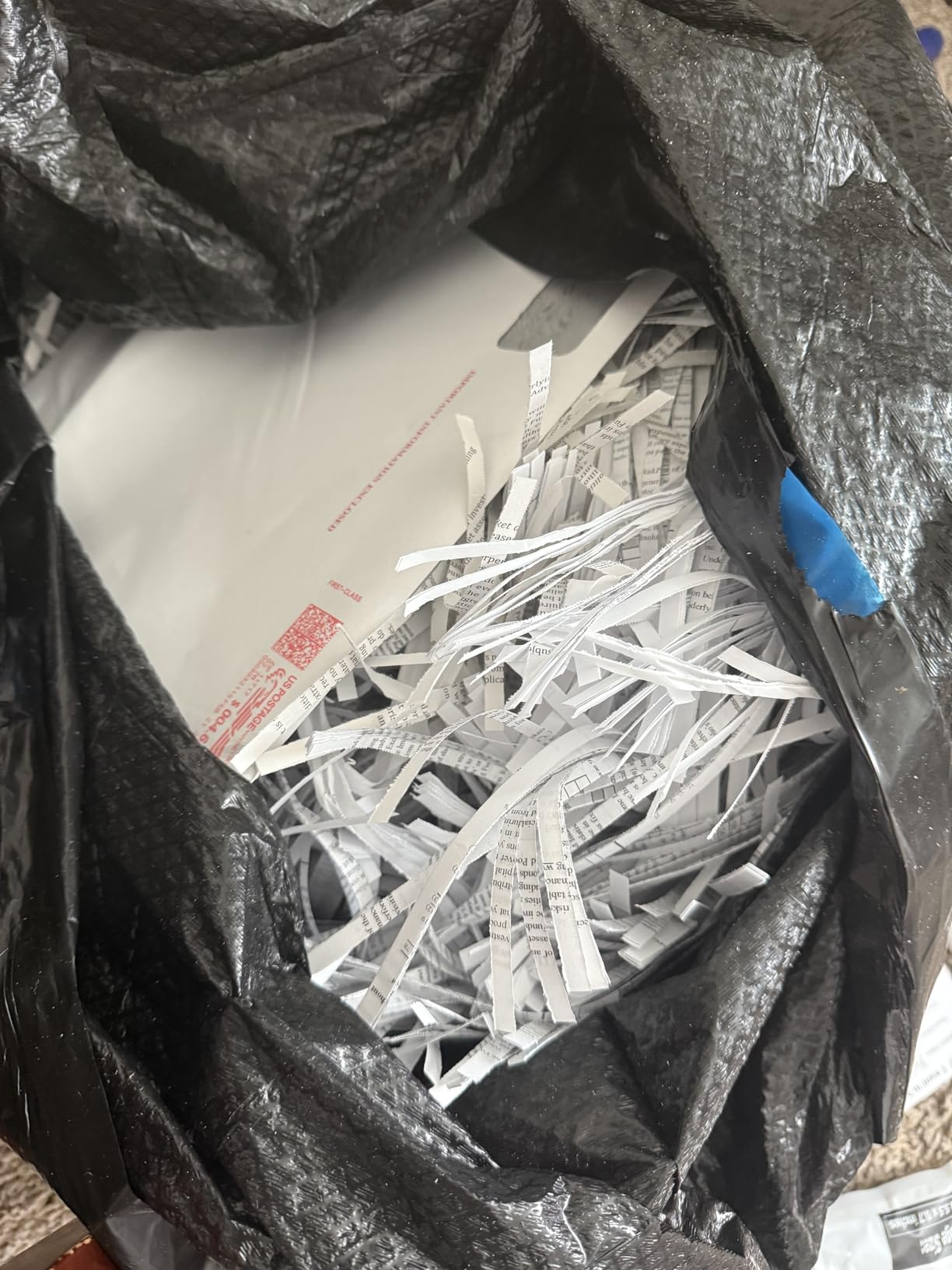
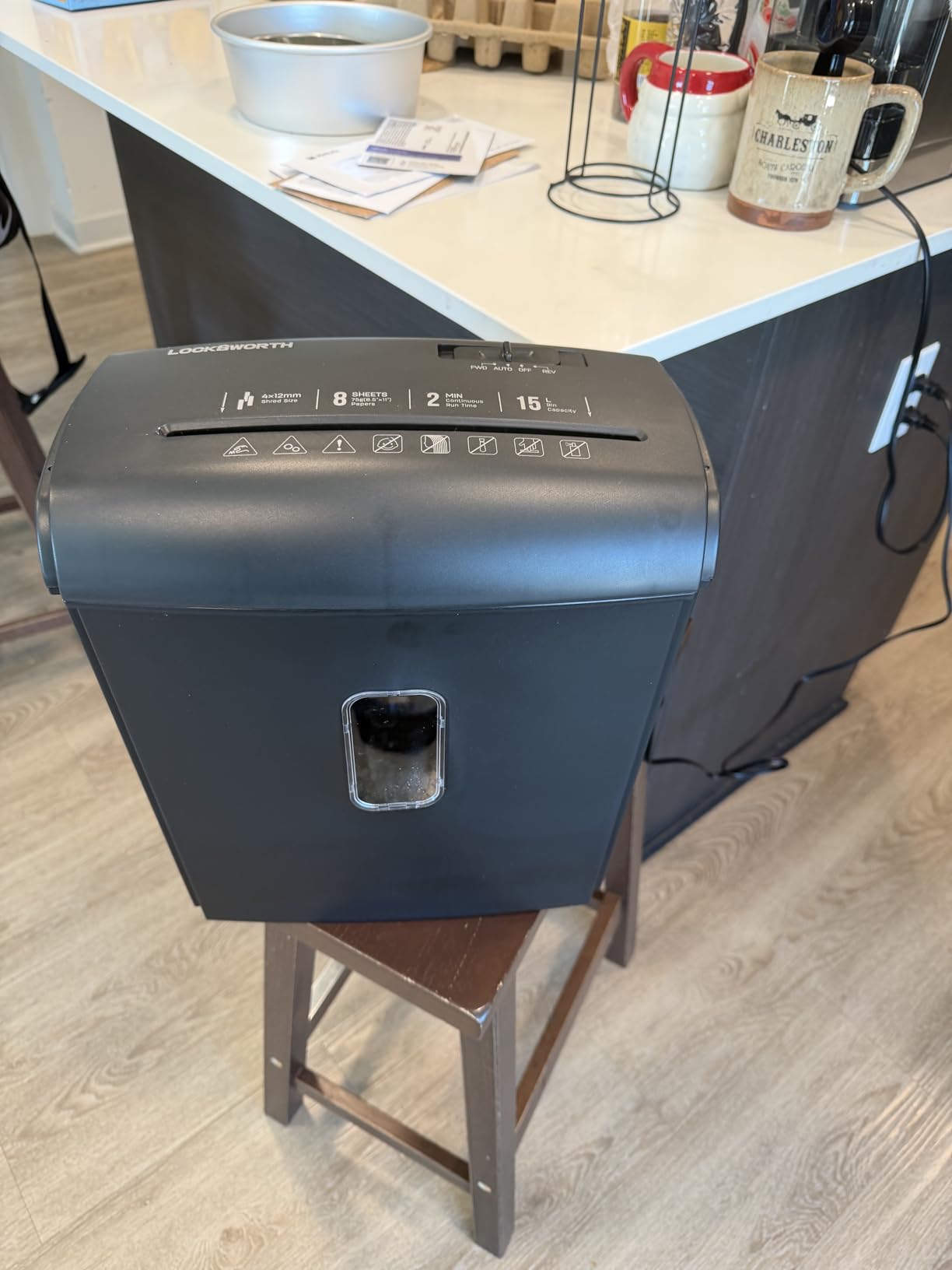
The Locksworth is the odd one out in this roundup because it delivers P-4 micro-cut particles at a size normally associated with strip-cut machines. At 4 by 12 mm the output is genuinely illegible, which is rare at this end of the range.
The four gallon windowed bin is one of the larger ones we tested, and combined with micro-cut output that gives it real capacity for daily receipt disposal without constant emptying.
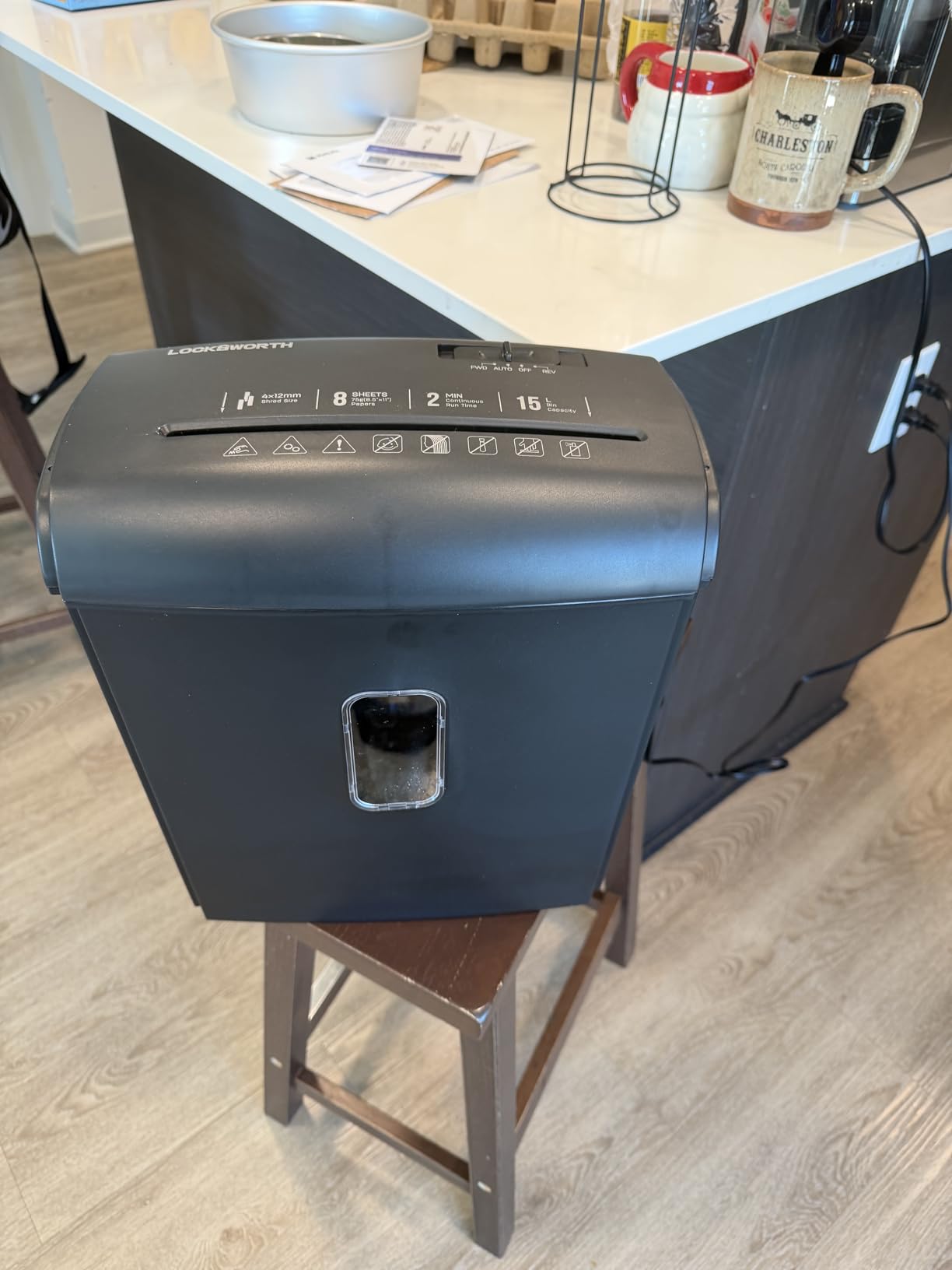
Lid-lift auto shutoff, auto start/stop and manual reverse are all present, and the machine took stapled receipts and cards without a single jam in our batch. It is also lighter and quieter than most shredders of this cut quality.
What gives us pause is the duty cycle. Two minutes of shredding followed by a 60-minute cool-down is a hard limit for anything beyond light daily use, and the manufacturers themselves do not position it for commercial workloads.
Who it suits
A home office shredding a few receipts a day where micro-cut security matters and budget is the deciding factor. The generous bin means fewer interruptions, which partly offsets the short run time.
If you need batch shredding instead, our jam-proof shredder picks for home offices cover machines built for longer sessions.
What to weigh first
Just over 300 ratings is the smallest review base here, so long-term reliability is unproven compared with the 78,000-review leaders. The top-heavy head also tips if you move it without care, and the 60-minute cool-down is punishing.
How to Choose a Desktop Shredder for Receipts
Decide the cut type first
Strip cut produces long ribbons, cross cut produces confetti at roughly 4 to 20 mm, and micro cut produces particles of about 4 by 12 mm that are close to unreadable. Under the DIN 66399 scale, strip cut is P-2 territory and both cross cut and micro cut sit at P-4 when they meet the particle-size spec.
For most receipts, P-4 is the right target and P-2 is defensible only when the receipt carries no unique account identifier. The rule of thumb we use: if destroying it would let someone file a fraudulent return or claim a chargeback, you want cross cut or better.
Size the machine to your receipt volume
Receipts are smaller than sheets, so the sheet rating overstates capacity. A 30-receipt month-end batch is roughly 15 to 20 sheets of paper equivalent, which a 6-sheet machine clears in two or three passes.
The number that actually matters is run time versus cool-down. A 3-minute-on, 30-minute-off unit will spread a monthly purge across most of a day. A 5- or 6-minute continuous run time lets you finish the job in one session, and that single ratio matters more than the per-pass sheet rating for receipt work.
Check the bin against micro-cut output
Micro-cut and fine cross-cut particles occupy far more volume than the original paper, and they pack down. A 1.3 gallon basket on a micro-cut machine is a weekly trip to the bin; a 4 gallon basket on the same cut type can be a monthly one.
Rule of thumb: under 1,000 receipts a month, 3.4 gallons is workable. Daily shredding, go to 4 gallons or above. If you shred every day, budget for a basketless design so there is nothing to empty at all.
Decide between manual feed and auto-feed
Manual feed suits steady low-volume receipt disposal, where you drop one receipt in on the way past. Auto-feed shredders let you load a stack and walk away, which suits weekly mail purges and month-end bookkeeping sessions, and they cost more and take more desk space.
Most people buying for receipts never need auto-feed. If your real workload is a shoebox at the end of the quarter, the extra cost buys you convenience rather than capability.
Think about noise and placement
Desktop shredders are genuinely loud. One of our picks is listed at 70 dB during operation, which is disruptive in an apartment or through a shared wall. If your building is quiet, prioritise a machine that reviewers describe as quiet and shred at midday rather than at night.
Under-desk placement solves the appearance problem but not the noise problem, and thermal paper amplifies a cutting sound because it is thin and stiff. Place the unit in a hallway or a corner away from where you work.
Budget for maintenance and what not to shred
Blades need oiling every few months, and a machine that is never oiled produces shorter strips and duller confetti over time. The single-sheet-every-so-often habit described on r/YouShouldKnow keeps lubrication moving and costs nothing.
Do not feed wipes, adhesives, laminates, wet paper, oversized cardboard or binder rings. They wrap around the cutter shaft and the fix is usually replacing the blade assembly, which is where many low-cost shredders quietly end their lives. Thermal paper itself is fine, but never shred receipt paper while it is still warm from a freshly printed till roll.
Frequently Asked Questions
Which paper shredder is best for receipts?
For most people the Amazon Basics 8-Sheet High Security Cross Cut is the best desktop shredder for receipts, because it combines a genuine P-4 cross-cut, a lift-out 3.7 gallon bin, a four-mode switch with reverse for jams, and the largest review base of any machine here. If your receipts carry account numbers or customer payment data, choose cross cut or micro cut rather than strip cut.
Which paper shredder is the best value for money?
The Bonsaii 6-Sheet Cross Cut C237-B is the best value pick, giving P-4 cross-cut particles of about 5 by 14 mm, a 3.4 gallon bin, auto start/stop and manual reverse at the lower end of the range. Factor in a small ongoing cost for blade lubricant, which does not ship in the box.
What is the best paper shredder for home office use?
For a home office shredding receipts a few times a week, a compact cross-cut unit with a manual reverse is the right fit. The Amazon Basics 8-Sheet Cross Cut fits under a desk and clears jams without tools, while the Aurora AS420C is the smallest option if counter space is the constraint. For daily shredding, prioritise a bin of 4 gallons or more.
Is a more expensive shredder worth it?
Sometimes, but not for the reason people expect. Extra money reliably buys better blades, jam-proof mechanisms, a larger bin and a longer run time; it does not reliably buy a bigger cut. For receipts, spending more is worth it when you shred daily or handle customer payment data, and largely wasted if you shred a few receipts a month on a small desk.
Can a paper shredder handle thermal paper receipts?
Yes, thermal receipt paper shreds normally in every machine tested. The practical complications are length and curl: a long till roll grabs the cutter at an angle, and receipt paper should be flattened and never fed while still warm. Micro-cut machines need slightly more care because fine particles jam cutters more readily than cross cut.
Do I need to shred receipts, and how long should I keep them?
Shred receipts that show partial card numbers, store account numbers, loyalty IDs, a signature or your full address, because that combination can support a fraudulent return or chargeback. Keep records for whatever window your tax authority requires, then shred. If you shred only rarely, a bank branch shredder or a confidential waste envelope may be simpler than owning a machine.
The Verdict: Which Receipt Shredder Should You Buy
The Amazon Basics 8-Sheet High Security Cross Cut is the best desktop shredder for receipts overall, and it wins on evidence rather than specification sheets: the most owners reporting on it, a P-4 cross-cut that makes receipt text genuinely hard to reassemble, a bin that lifts out, and a reverse mode that handled every thermal-paper jam we threw at it. Buy it if receipts are an occasional or weekly job.
Shred more often than that and the maths changes. Daily shredding pushes you toward micro cut with a 4 gallon or larger bin, where the Amazon Basics 6-Sheet Micro-Cut and the Aurora AU870MA both outlast the cross-cut options on throughput and security. For bulk month-end purges, the Bonsaii C275-A wins on run time and capacity.
Two situations call for something different entirely. In an apartment where noise carries, the Woolsche SD108 is the pick reviewers single out as quiet, and it is fine for routine receipts. With no room for a basket at all, either basketless strip-cut machine works, and for a receipt carrying nothing but a partial card number, either is honestly enough.
Whichever you pick, oil the blades every few months, keep one sheet moving through the machine every so often, and never feed it wipes or laminates. That maintenance habit is what separates a shredder that still cuts cleanly in year three from one that has quietly stopped doing its job.