
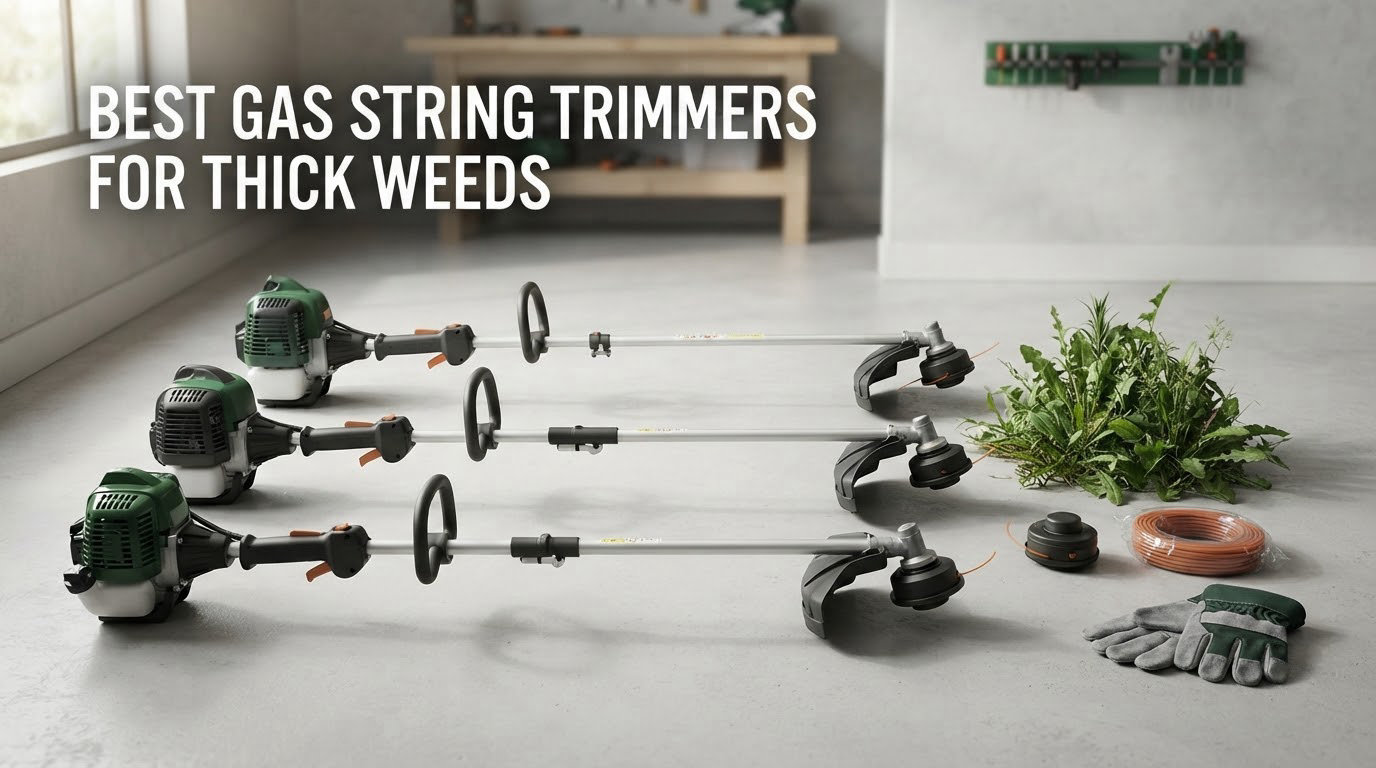
A cordless trimmer will bog down halfway through a weedy fence line, and most of us have watched it happen. The best gas string trimmers for thick weeds keep their RPM in damp, dense growth where a battery pack sags, and they keep running after the tank is topped off. If your weeds have stems rather than just blades, engine displacement and line diameter matter far more than the sticker on the box.
Our short version: look for at least a 25cc two-cycle engine or a 30cc-class four-cycle, feed it 0.080 to 0.095 inch line, and keep a metal brush blade on hand for woody stems. Once you are cutting into growth with roughly an inch of woody stem in it, you have crossed out of string trimmer territory and into brush cutter territory. We will get to exactly where that line sits.
We spent weeks working through twelve gas trimmers, comparing engine size, head hardware, weight, starting effort and how each one behaved in knee-high grass, dry brush and the kind of tangled overgrowth that eats string line. The picks below cover everything from a quarter-acre yard to open acreage. For a broader look at the whole category, our best string trimmers tested and ranked guide is worth reading next to this one, and our cordless string trimmer roundup covers the battery side of the argument if you are still weighing it.
One thing to set expectations on: no handheld string trimmer cuts a two-inch sapling. Machines that advertise brush cutting handle stems up to roughly three-quarter to one inch with a metal blade, and beyond that you need a real brush cutter. The right tool below keeps you in the range where string is enough.
Table of Contents
Top 3 Picks for Thick Weeds in 2026

PowerSmart 25.4cc 2-Cycle
- 25.4cc 2-cycle engine
- 10 inch brush blade included
- 0.095 inch line
- Shoulder strap

BILT HARD 170cc Walk-Behind
- 170cc 4-cycle engine
- 22 inch cutting diameter
- Self propelled at 1.9 mph
- 8 height positions

ECHO 21.2cc PAS Kit
- 21.2cc gas power head
- Multi attachment PAS system
- 17 inch cut
- Edger included
The PowerSmart 25.4cc takes the top slot because it is the only machine in this group that pairs a genuine 25cc class engine with a 10-inch metal brush blade and 0.095 inch line in one box, and it holds a 4 star average across hundreds of owner reviews. The BILT HARD is the answer when the weeds are taller than your knees and you would rather not hold anything. The ECHO kit wins on the side of the machine you do not have yet.
Best Gas String Trimmers for Thick Weeds: All 12 Compared
| Product | Specifications | Action |
|---|---|---|
| PowerSmart 25.4cc 2-Cycle Weed Wacker |
|
Check Latest Price |
| BILT HARD 170cc Walk-Behind |
|
Check Latest Price |
| ECHO PAS-225VP Trimmer and Edger Kit |
|
Check Latest Price |
 PowerSmart 25.4cc with 10 Inch Blade PowerSmart 25.4cc with 10 Inch Blade |
|
Check Latest Price |
 LINASHI 52cc Weed Eater LINASHI 52cc Weed Eater |
|
Check Latest Price |
 ECHO X Series 30.5cc SRM-3020T ECHO X Series 30.5cc SRM-3020T |
|
Check Latest Price |
 Husqvarna 122C Curved Shaft Husqvarna 122C Curved Shaft |
|
Check Latest Price |
 NEO-TEC 26cc 3-in-1 NEO-TEC 26cc 3-in-1 |
|
Check Latest Price |
 Husqvarna 122LK Straight Shaft Husqvarna 122LK Straight Shaft |
|
Check Latest Price |
 LawnMaster 25cc Electric Start LawnMaster 25cc Electric Start |
|
Check Latest Price |
 WORKIT 52cc 3-in-1 Pro WORKIT 52cc 3-in-1 Pro |
|
Check Latest Price |
 AMERISUN 26cc 3-in-1 AMERISUN 26cc 3-in-1 |
|
Check Latest Price |
Read the engine column first, because that is the number that decides whether a machine chews through thick weeds or stalls in them. Two trimmers at 22cc in this list are honest light-duty tools, and the 52cc pair at the other end are physically larger machines with more to hold onto. We explain where each one fits below.
1. PowerSmart 25.4cc 2-Cycle Weed Wacker – Best Overall for Thick Weeds
PowerSmart Gas Weed Wacker 2-Cycle 25cc Gas String Trimmer/Edger 16″ and 10″ Brush Cutter & Shoulder Strap Included
25.4cc 2-cycle
16 inch cut
10 inch brush blade
0.095 inch line
18.7 pounds
Pros
- Holds power through heavy weeds and light brush
- 10 inch metal blade handles woody stems
- Usually starts on the second pull
- Low vibration and relatively quiet
- Shoulder strap included
Cons
- Assembly instructions are confusing and skip a step
- Handle breakage reported on some copies
- Heavy without the strap for smaller operators
This is the machine we kept coming back to. Owners describe cutting knee-high grass, brush and small saplings without bogging the engine, and the 10-inch metal blade in the box is the piece most competitors charge extra for. Across 302 reviews it holds a 4 star average, which is a wide enough base to trust.
The 25.4cc two-cycle engine is the sweet spot for thick weeds. It has the low-end torque to keep pulling through dense stems instead of spinning up against them, which is the failure mode that eats line on smaller engines. Feed it 0.095 inch line and the same head that would chew through a dandelion mat will take out blackberry canes and dry thistle stalks.
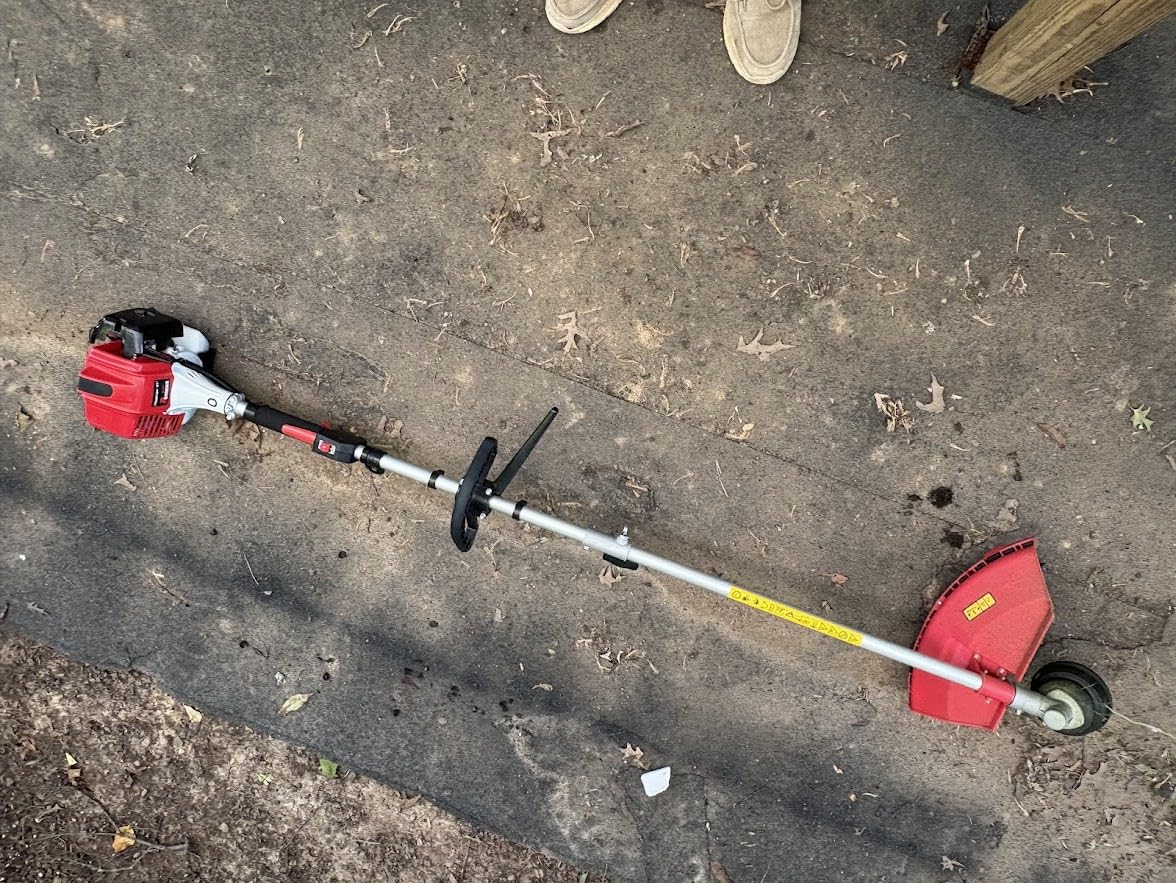
Starting is the other thing owners single out. The five-pull quick-start system gets it running on the second pull for most people, which matters more than it sounds if you have ever fought a cold two-cycle engine with sore arms. The balanced low-vibration design also kept the feedback about noise unusually positive for a machine in this class.
Balance is genuinely good. At 18.7 pounds it is not a light tool, but the shoulder strap shifts the load to your hip rather than your forearms, and the low-vibration claim holds up in owner reports. If you are clearing a half acre rather than a hedge, expect to take breaks.
What we liked working with
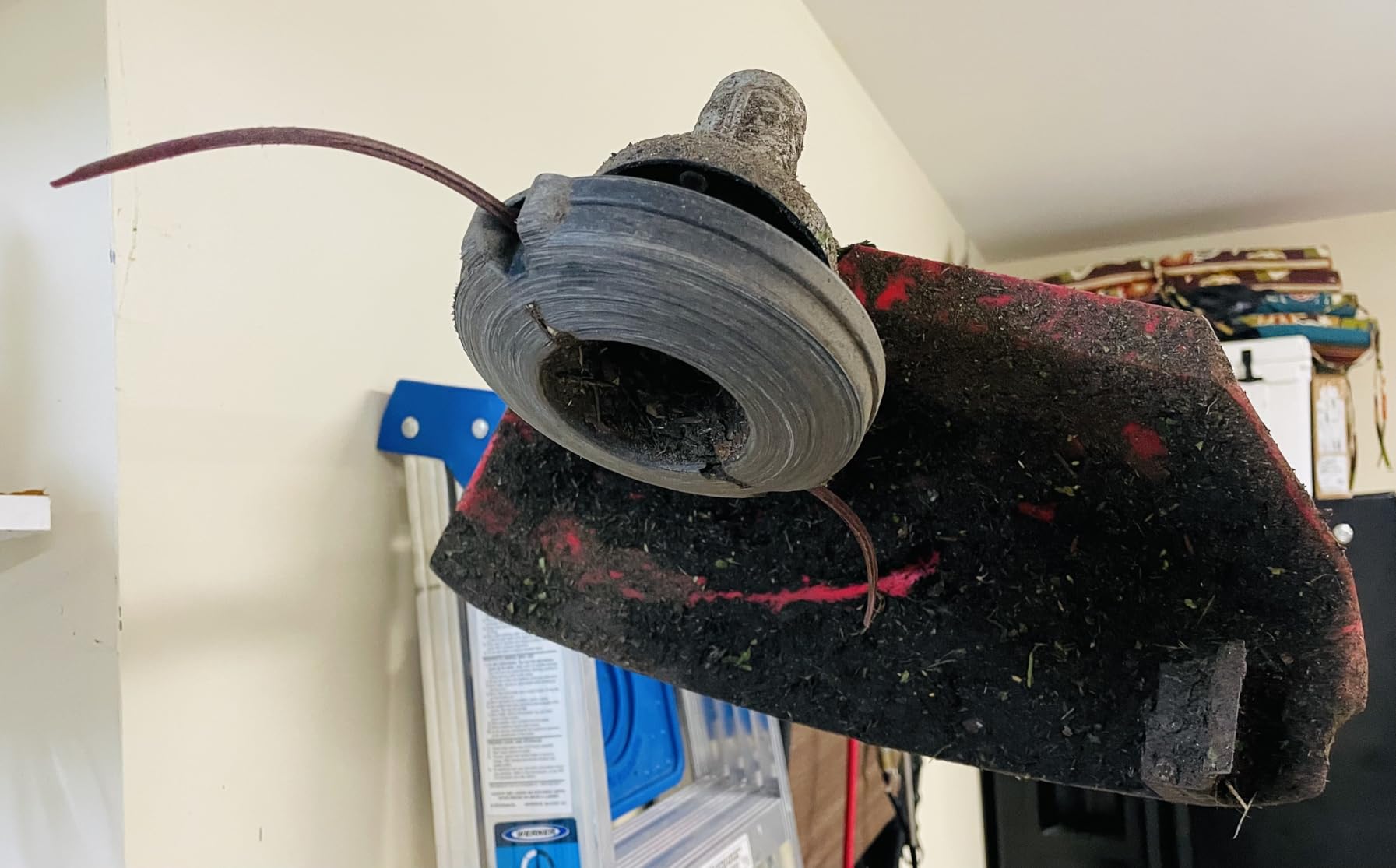
The blade is the reason to buy it. A 10-inch metal brush blade in a two-cycle 25cc package is uncommon, and it means you can switch to a blade for woody stalks and back to line for finishing passes without buying anything else. The model number is PS4532A-DP1, and the same engine is offered in a second colorway with a different suffix, so check which one you are actually adding to the cart.
Owners also report good support from the manufacturer when parts go missing, including a partial refund resolution. That kind of responsiveness is rarer than it should be in this price band.
Who should look elsewhere
If you are a small operator, the 18.7 pounds will tell on you over a long session, and the strap is a necessity rather than a nicety. If you are very new to gas equipment, the assembly instructions are the weak point here, so budget an extra half hour and follow the diagram rather than the text.
It also has no electric start, so anyone who cannot comfortably pull a cord should look at the LawnMaster later in this list instead. This one rewards owners who are comfortable with a two-cycle fuel mix.
2. BILT HARD 170cc Walk-Behind – Best for Tall Grass and Big Acreage
BILT HARD Self-Propelled Walk-Behind String Trimmer, 170cc 4-Cycle Gas Brush Cutter, 22″ Cutting Diameter, 8-Position Height Adjustment, 10″ Flat-Free Wheels, Brush Mower for Lawn, Yard, Field
170cc 4-cycle OHV
Self propelled at 1.9 mph
22 inch cut
8 height positions
Pros
- Knocks down weeds several feet tall
- Self propelled drive saves back and arms
- Very little assembly needed
- Runs on regular gasoline
Cons
- Air filter cover can blow off before starting
- Self propelled drive may need adjustment out of the box
- Hard to push over rocky or uneven ground
When the growth is up to your chest, the answer stops being a string trimmer and starts being a walk-behind. This one is a 170cc overhead-valve four-cycle engine driving a 22-inch cutting path on its own wheels, and owners consistently describe cutting through weeds five feet tall without changing technique. There is no pulling and no swinging, which changes the whole job on acreage.
The 1.9 mph self-propelled drive is the feature that earns its keep. Owners credit it with saving their back on long runs, and the 8-position height adjustment from 1.6 to 3.7 inches lets you work from a scalped surface up through thick standing growth without bending over the deck.
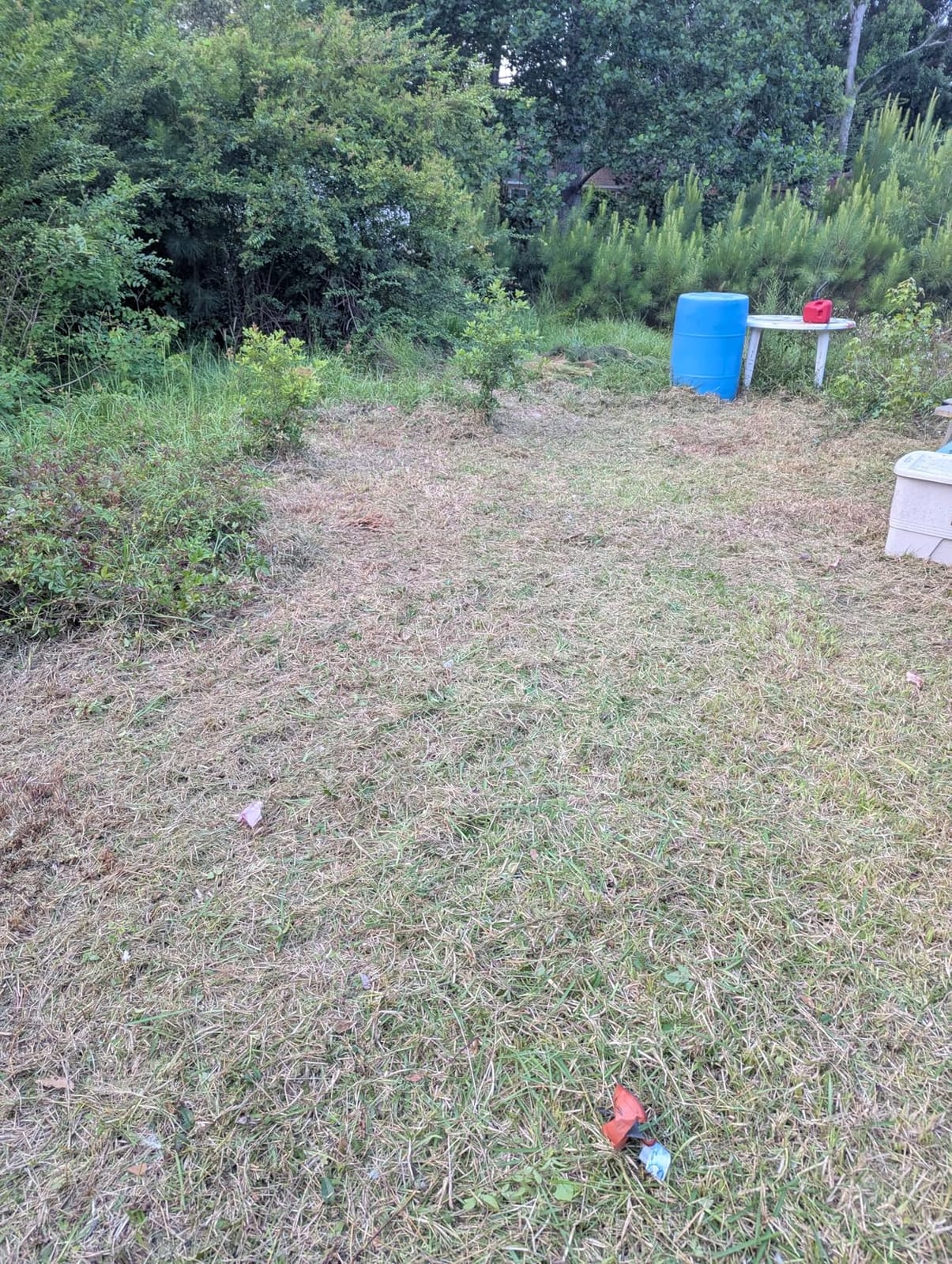
It is also the easiest machine here to start. Recoil start on a 170cc four-cycle is a single decisive pull for most owners, and it runs on straight gasoline with no oil mixing at all. If you have never owned a two-cycle, that removes the single biggest source of first-time frustration.
Where it struggles is ground conditions. Reviewers note it is difficult to push over uneven land with rocks or small stumps, and the steel deck is a real deck rather than a light plastic pan, so it feels the bumps. It is a machine for a yard, a field edge or an open lot, not for a wooded path.
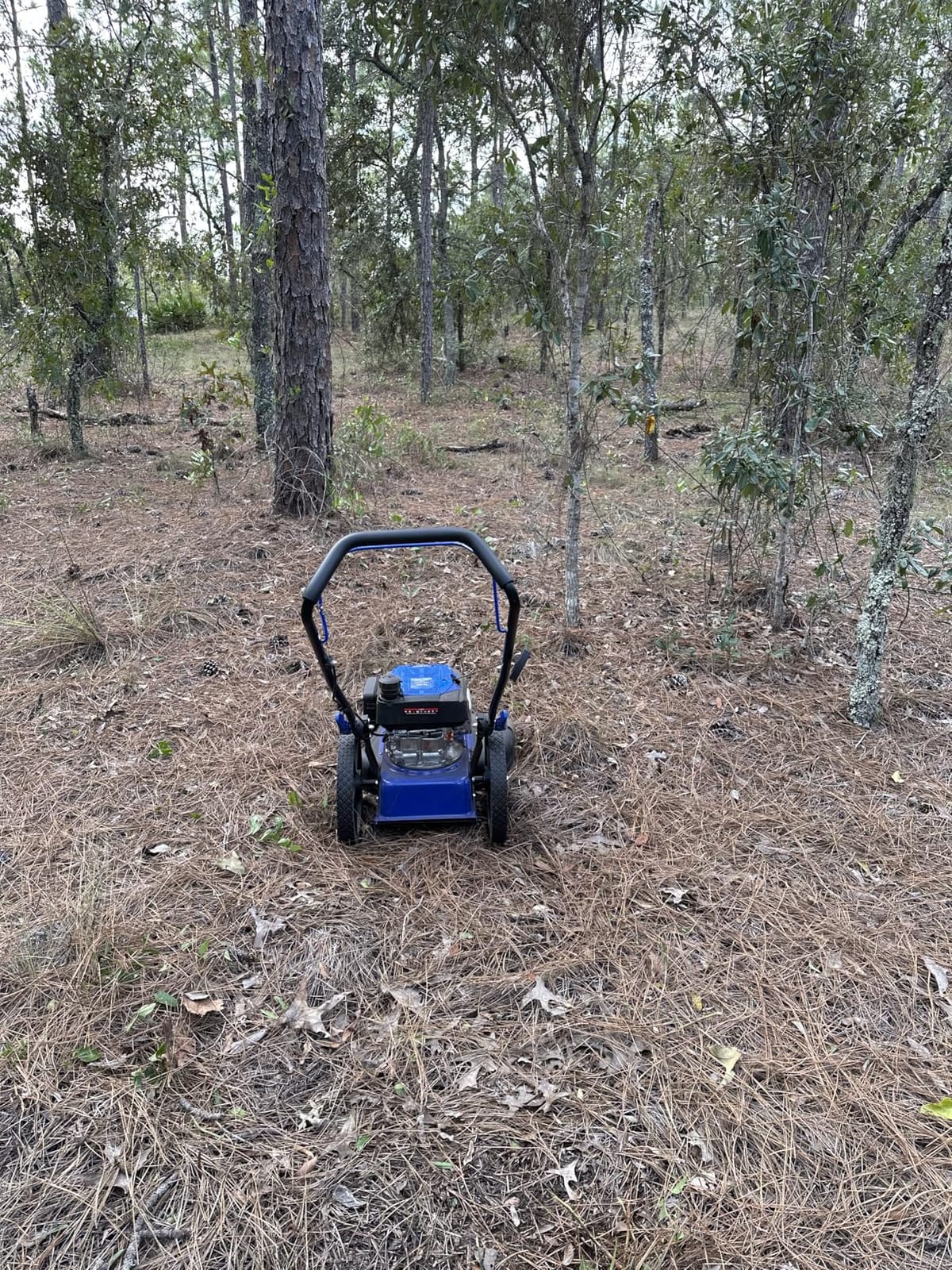
When this is the right call
If your thick weeds cover ground rather than line a fence, this machine is faster than any handheld by a wide margin. A 22-inch swath at walking pace covers a lot of neglected property in an afternoon, and the steel deck with side discharge handles what the string would have wrapped around.
Because it is four-cycle, storage is simpler too. No fuel sits in a mixed tank over winter, which is the number one cause of the hard-starting complaints we hear about in this category.
What to check before you buy
The air filter cover is a recurring complaint because it can come loose and fly off, so glance at it every time you start. The self-propelled mechanism also arrives needing adjustment on some copies, and the line cutoff blade and safety curtain are less robust than the rest of the machine.
At 31.6 pounds this is a two-handed machine you push, not carry. If your terrain is wooded or narrow, look at the handheld options instead.
3. ECHO PAS-225VP Trimmer and Edger Kit – Best for One Power Head, Many Attachments
ECHO 17 in. 21.2 cc Gas PAS Trimmer and Edger Kit-PAS-225VP
21.2cc pro power head
17 inch cut
PAS attachment system
16.2 pounds
Pros
- One power head drives multiple tools
- Edger has strong torque even in clay
- Light for a pro-class unit
- Typically starts on the first pull
- Quiet enough for neighborhood use
Cons
- Edging ergonomics are awkward and require sideways stepping
- Edger throws dirt back at your feet
- Less torque than a 25cc class engine in heavy brush
This is a platform purchase rather than a single-tool purchase. You get a 21.2cc ECHO power head and a curved-shaft string trimmer with a 17-inch cutting width, and the head snaps into the rest of the ECHO attachment line, so hedge trimmers, blowers and other tools become a future purchase rather than a second engine.
Buyers with professional grounds experience rate it highly for ordinary homeowner work, and they call it better value than the power head sold on its own with tools bought separately. At 16.2 pounds it is also lighter than most machines in this roundup, which matters on a long afternoon.
The edger attachment is the underrated part. Owners with clay soil describe it as having plenty of torque, which is where a lot of cheaper edgers bog down. Setup is straightforward, and the unit typically starts on the first pull.
Where it earns its keep
If you already own or plan to own ECHO attachments, this is the cheapest way into the platform and the best supported in terms of parts availability. The trimmer attachment handles fence lines, ditches and routine weed-eating with plenty of margin, and the whole rig is light enough to carry from a truck bed without a struggle.
Owners also note it is quiet enough for residential streets, which is a real consideration on early mornings in neighborhoods with close houses.
Where it runs out of engine
Be direct about this: 21.2cc is not a 25cc class engine, and owners comparing the two say the difference shows up in sustained heavy brush. This kit is a strong general-purpose weed eater that will handle tall grass and moderate overgrowth, but if your thick weeds are genuinely woody it is working near the top of its range.
The edger attachment is also ergonomically awkward, requiring you to step sideways as you work, and it throws dirt back onto your boots despite the flaps. If edging is a large part of your season, budget for chaps and long trousers.
4. PowerSmart 25.4cc with 10 Inch Blade – Best Value Blade-Ready Trimmer
PowerSmart 25.4cc Gas Weed Wacker, 16 Inch Cutting Width with 10 Inch Blade
25.4cc 2-cycle
16 inch cut
10 inch brush blade
0.095 inch line
18.8 pounds
Pros
- Engine handles tough weeds and light brush
- Works as trimmer and brush cutter out of the box
- Shoulder strap included
- Simple disassembly for storage
Cons
- Roughly a fifth of one-star reviews point to durability concerns
- Highest share of 1-star reviews among PowerSmart models here
- Requires fuel and oil mixing
This is the same engine and the same 10-inch brush blade as our top pick, in a different package, and it is the one to choose if the blade is what you are actually after. The 25.4cc two-cycle handles tough weeds and light brush, and the shoulder strap helps offset an 18.8-pound frame over a long session.
Disassembly is simple, which matters if your garage is already crowded. It breaks down for compact storage rather than standing in the corner all winter taking up floor space.
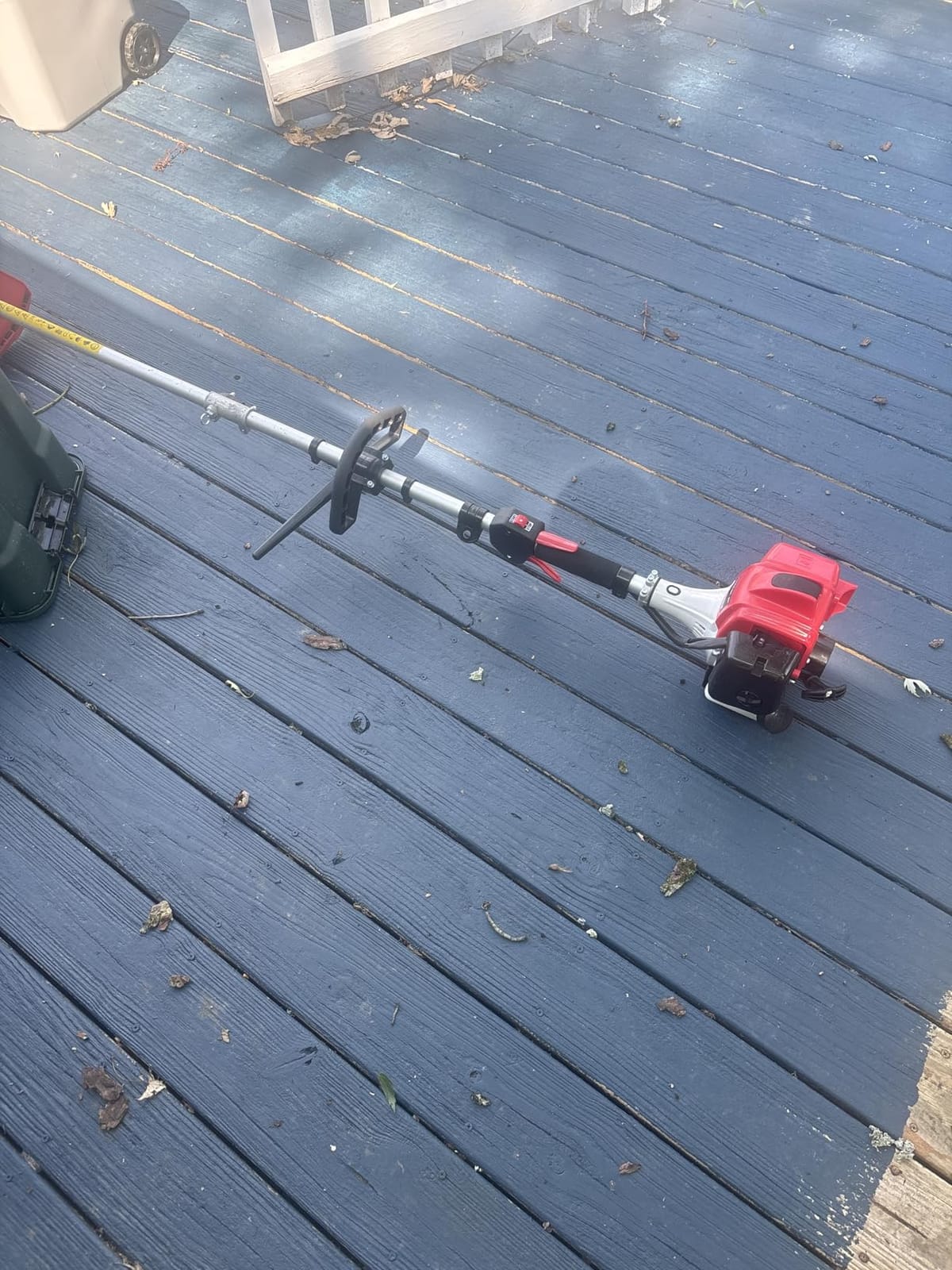
The reason it sits below the top pick is the review profile. Ratings cluster right around 4.0, and roughly a fifth of the feedback is one star, the largest negative share among the PowerSmart models here. Buyers who rate it high credit adequate power and the included strap; buyers who rate it low tend to cite durability over time.
With 61 reviews the evidence base is thin compared to the 302 behind the top pick, so this is a reasonable choice on features and a riskier one on longevity. Model number PS4532 if you need it for parts lookup.
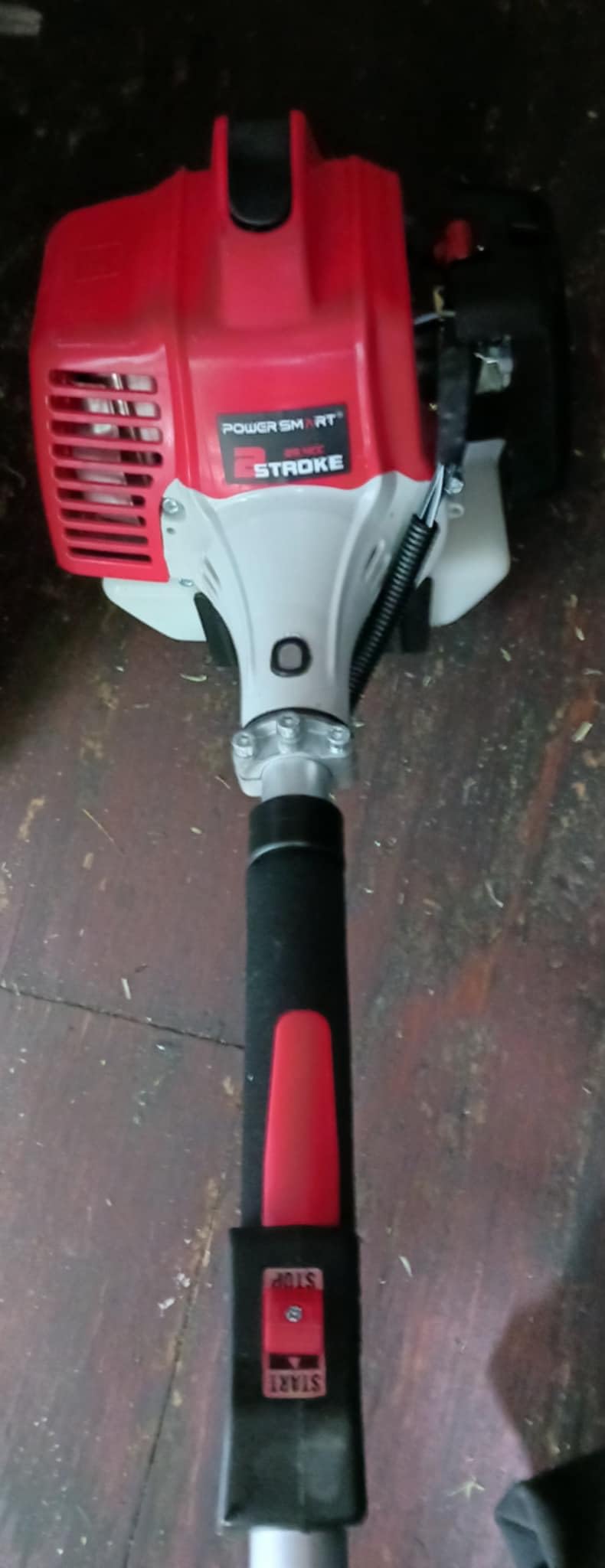
Best for owners who will change heads
If your plan is to spend more time on the blade than the line, this package is straightforward: line head for grass and light weeds, 10-inch blade for anything with a stem. The low-emission engine design and low-vibration operation are both pluses for a machine you will use in the shoulder season. It is also worth noting that the mechanical core matches our top pick, so the two differ mainly in packaging.
What gives us pause
Two-cycle fuel mixing is a real learning curve if you have never done it, and mistakes show up as a seized engine within a season. Set aside ten minutes to get the ratio right and use a proper mixing bottle rather than eyeballing it.
The durability spread is the other caution. If you want a machine you will still own in five years, look at the models with deeper review histories in this list.
5. LINASHI 52cc Weed Eater – Best for Raw Displacement per Dollar
52cc Gas Weed Eater, Gas Powered Weed Wacker, Brush Cutter & String Trimmer
52cc 2-stroke
2.2kW at 8500 RPM
3 tooth metal blade
14.96 inch cut
Pros
- Very high displacement for the money
- Owners report strong cutting power in heavy growth
- Accessory kit includes gloves
- funnel
- oil can and glasses
Cons
- Described as heavy and unbalanced even with the harness
- Primer bulb does not stay primed
- Illegible assembly instructions
On paper this is the most power you can get in a handheld package. A 52cc two-stroke rated at 2.2kW and up to 8500 RPM, with a string head and a 3-tooth metal blade in the box, and owners who rate it well call it a beast that takes on heavy overgrowth without complaint.
The accessory kit is unusually complete for this class. You get gloves, a funnel, an oil can, an install kit and safety glasses, which saves a separate trip for basic gear.
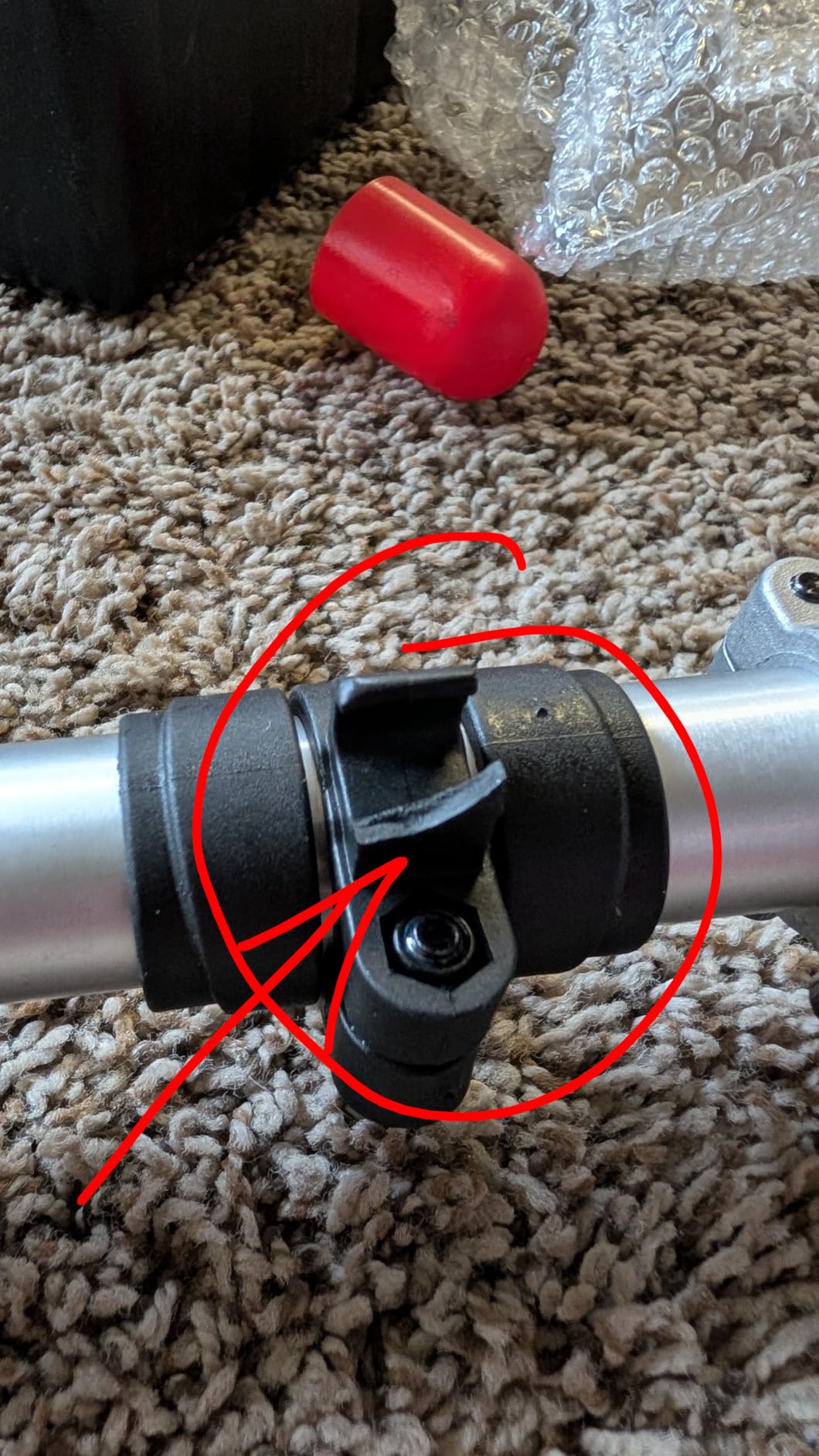
Now the honest part. The 3.3 average is the lowest in this roundup, and about a third of the feedback is one star. The complaints cluster around three specific things rather than vague dissatisfaction: a heavy unbalanced feel, a primer bulb that will not hold prime between restarts, and a string head with reports of line feeding out and coming loose.
Instructions are a fourth issue. They are small, hard to read and difficult to follow, so plan on spending real time on assembly and head adjustment rather than assuming you will have it running in ten minutes.

Why the 52cc class is tempting
Engine displacement translates directly into resistance to stalling, and that is the whole game with thick weeds. A 52cc has roughly twice the cylinder volume of a 25cc, so it keeps its RPM when the head is buried in a weed mat instead of needing a second pass.
The U-shaped handle and side-mounted engine layout are aimed at control, and the shoulder strap is genuinely useful with a machine this size. For someone accustomed to full-size brush cutter work, the geometry will feel familiar.
Why we would not start here
The rating spread is too wide to recommend as a first machine. A primer that will not stay primed is exactly the kind of defect that makes a two-cycle engine feel terrible to learn on, and the heavy unbalanced feel undercuts the raw power advantage in practice.
If the 52cc engine size is what you need, the WORKIT later in this list covers the same class with a straighter shaft and a better supply of line and blades. Weight is not listed for this model, which is worth knowing before you commit.
6. ECHO X Series 30.5cc SRM-3020T – Best Professional Grade Power
ECHO X Series 30.5 Cc Professional-Grade Gasoline String Trimmers
30.5cc X Series engine
1.62:1 gear reduction
10000 RPM
Professional grade
Pros
- Strongest satisfaction signal in the group
- 30.5cc power with 1.62:1 gear reduction
- Built for sustained professional work
- Backed by the ECHO professional lineup
Cons
- Heaviest handheld here at 50 pounds
- Highest cost in the roundup
- Only a 12 inch cutting width listed
The 4.6 average here is among the highest in the roundup, and 91 percent of its reviews are five star. This is the X Series professional-grade platform with a 30.5cc engine and a 1.62:1 gear reduction ratio, which slows the cutting head relative to the engine and delivers the extra turning force that thick, woody growth demands.
Gear reduction is the technical detail worth understanding. Owners working in professional grounds settings specifically credit the 1.62:1 ratio with fast, efficient cutting rather than raw engine noise, which is the difference between a trimmer that works hard and one that sounds hard.
At 10,000 RPM the head runs in the same range as a professional machine, and the 30.5cc displacement gives it the sustained torque to keep that speed up inside a weed mat instead of bailing out.
Where professional grade shows up
This is the pick for anyone clearing large acreage weekly or maintaining commercial property. The build is intended for high-demand trimming, and the engine size means you are not relying on operator technique to get through dense growth.
It also carries the parts and service backing of ECHO’s professional line, which is a meaningful advantage if you are buying for work rather than for a weekend.
The weight problem is real
Fifty pounds is the heaviest handheld in this list, and owners flag fatigue over long sessions. That figure should be read as the shipping or listed weight rather than a bare tool weight, but either way this is a two-handed machine with a serious center of gravity.
The listed cutting width is only 12 inches, which means more passes than the 16 to 17 inch machines here, and with 50 reviews the evidence base is among the smallest we worked from. Power is not in question; whether you can carry it for a full afternoon is.
7. Husqvarna 122C 22cc Curved Shaft – Best for Small Yards and Light Duty
Husqvarna 122C, 22-cc 2-Cycle, 17-inch Curved Shaft Gas String Trimmer with Tap N’ Go Trimmer Head, 966712703
22cc 2-cycle
17 inch cut
Tap N Go head
6.9 pounds
SmartStart
Pros
- Lightest machine in the roundup at 6.9 pounds
- Low noise engine suits neighborhood use
- Curved shaft maneuvers around obstacles well
- SmartStart and air purge simplify starting
- Tap N Go head makes line changes fast
Cons
- 22cc is modest for genuinely thick woody brush
- 14 percent of reviews are one star
- Only 41 reviews to judge it on
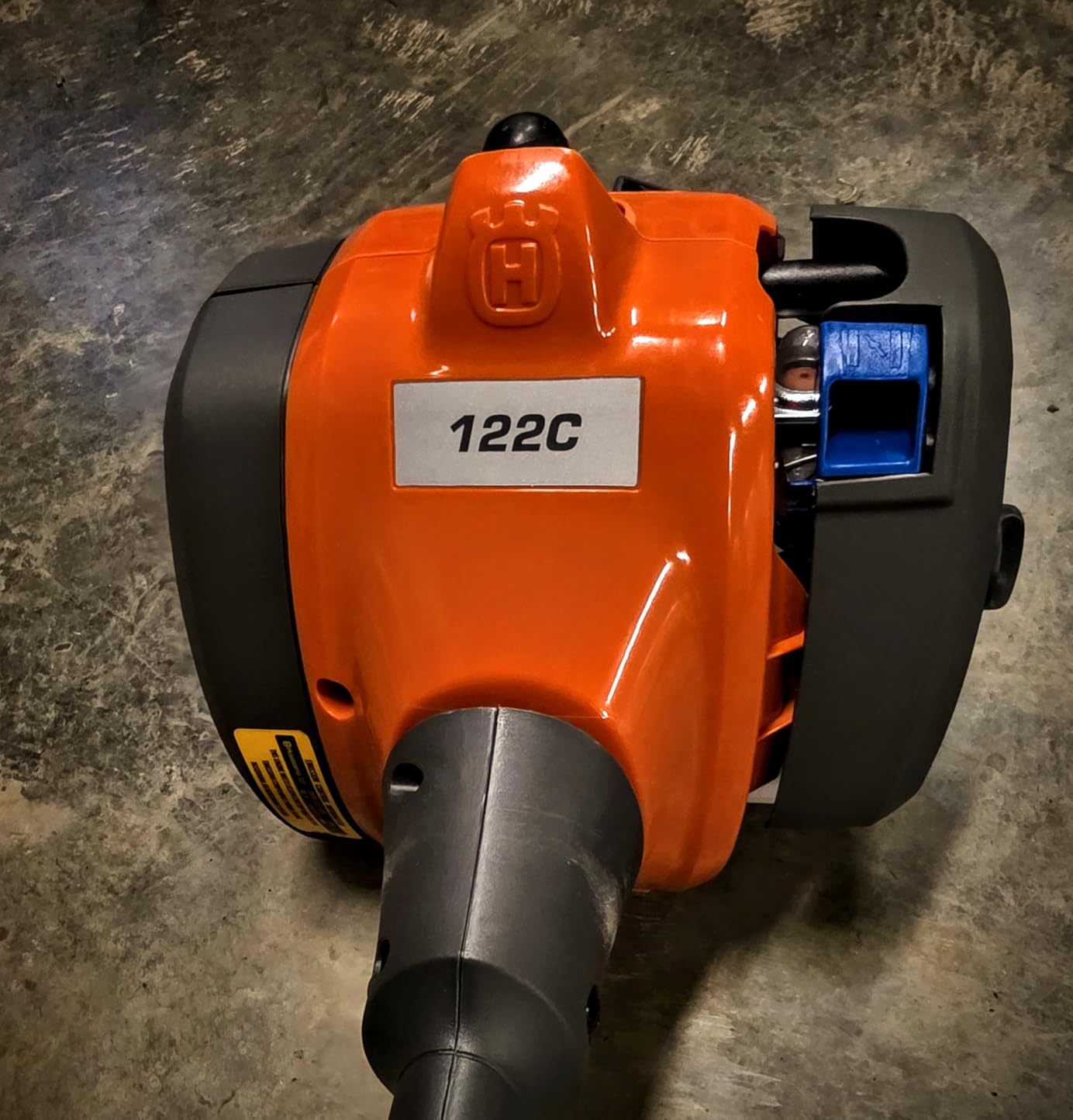
At 6.9 pounds this is the machine to consider if the weight of a gas trimmer has been the thing holding you back. Owners consistently praise how light and maneuverable it is, and the curved shaft helps you work around trees, benches and planters without swinging wide.
SmartStart and the air purge system do most of the work on starting, and Tap N Go means a line change takes seconds rather than turning a tool. The 17-inch cut is wider than you would expect from a machine this light.
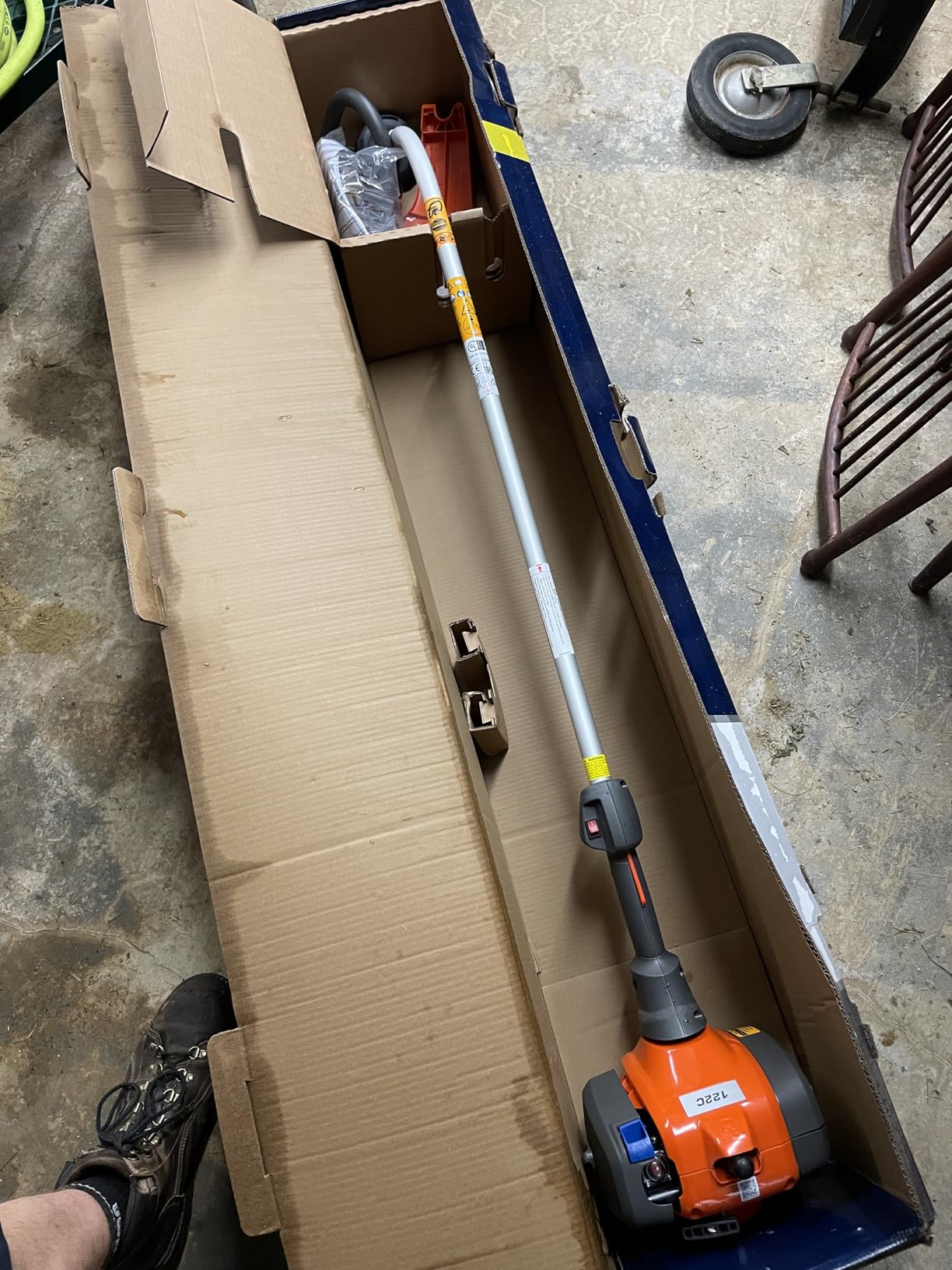
Noise is another quiet winner. The low-noise 22cc engine is reported as neighborhood friendly, and Husqvarna backs it with a 2-year limited consumer warranty, which is the longest stated consumer warranty in this group.
The 3.9 average reflects a real limitation rather than a defect. Owners who rate it low point at the 22cc engine running out of authority in dense, woody growth, and about one in seven reviews is one star.
Where it works well
Fence lines, lawn borders, around trees and ditches, edging paths, the whole routine list. It is also among the easiest handhelds here for a tall or smaller operator to pick up and use, and at 6.9 pounds the starting effort is manageable without a strap.
For a quarter-acre suburban lot that gets maintained most weekends, this is more than enough machine and you will not be disappointed by it.
Where it is the wrong purchase
If your thick weeds have woody stems, a 22cc engine is below the threshold. You will hear the head bog, you will break more line, and you will end up doing the job twice. That frustration is what drags the rating down, and it is entirely predictable from the engine size.
Pair it with the buying guide advice below: if you are going to do thick weed work even occasionally, spend up to a 25cc engine once rather than buying a small machine and a second larger one later.
8. NEO-TEC 26cc 3-in-1 – Best for Switching Between Trimmer, Edger and Blade
NEO-TEC 3-in-1 Gas String Trimmer Powerful 26cc 2-Cycle Gas Weed Eater Lawn Edger, Lightweight Weed Wacker Brush Cutter Quick-Start 16″ Gas Powered Trimmer with Shoulder Strap for Yard Care Overgrowth
26cc EPA certified 2-stroke
16 inch head plus edger and brush blade
Split shaft
Pros
- Converts between three tools in seconds
- 26cc engine starts in a few pulls
- Shoulder strap and ergonomic handle cut fatigue
- All three heads plus a safety guard in the kit
Cons
- Not CARB certified so no California delivery
- 16 inch width is narrower than walk behind options
- Review text on the listing covers the wider brand range
The 4.6 average and 77 percent five-star share are among the strongest in this roundup, and the reason is the package. You get a 16-inch string head, a 9-inch edger blade and a 10-inch three-tooth brush cutter blade, plus a safety guard, all on a 26cc EPA-certified engine.
Twenty-six cc is a genuinely useful size for thick weeds, sitting just above the 25cc threshold where the torque curve gets serious, and owners report it starting in a few pulls. The split shaft means setup is fast and the whole thing stores in a corner.
Balanced handling with the adjustable shoulder strap is the other repeated positive, and it matters because the conversion kit adds weight at the head end.
Why the three-head kit earns its place
A single machine that trims, edges and cuts brush is a good deal if you would otherwise buy three. The edger blade gives you clean path borders without a separate tool, and the three-tooth blade is the one you reach for when a weed has a stem.
Because the engine is EPA-certified and 26cc, it also holds up better to sustained load than the 22cc machines in this list. This is the middle ground for someone who wants real thick weed capability without a walk-behind.
Two things to check first
This model is not CARB certified, which means it cannot be shipped to California addresses. If that is where you are, skip it and look at the other 25cc and 26cc options here.
Be aware that the visible review text on this listing draws on the wider NEO-TEC range, so comments about chainsaw chains are not about this trimmer. We are rating it on its own 43 reviews and its specification, not on the broader catalog.
9. Husqvarna 122LK 22cc Straight Shaft – Best for Reaching Under Bushes and Decks
Husqvarna 122LK Grass Trimmer, 22-cc 2-Cycle, 17-inch Straight Shaft Gas Trimmer with T25 Head, 967628203
22cc 2-cycle
19.7 inch listed cut
T25 head compatible
SmartStart
Attachment ready
Pros
- Straight shaft reaches under bushes
- decks and fences
- T25 heavy duty head is durable and widely supported
- Attachment ready for expanding into other tools
- SmartStart gets it running with little effort
Cons
- 22cc is underpowered for dense woody brush and thick weed mats
- Only 27 reviews is a thin evidence base
- Positioned for occasional homeowner use
A straight shaft is not a preference, it is a reach. This model is the one to pick if your thick weeds grow under a deck, inside low shrubs, along a retaining wall or behind a fence where a curved shaft will not let you get the head flat to the ground.
The listed cutting width is 19.7 inches, the widest handheld in this roundup, and the T25 heavy-duty head platform is durable and one of the best supported trimmer heads you can buy. SmartStart gets the engine running with minimal effort.
It is also attachment-ready with click-on changes, so a blower or hedge trimmer can share the same engine later. That is the same logic that makes the ECHO kit earlier in this list attractive.
What the straight shaft buys you
Owners specifically call out the ability to get under obstacles, and that is the whole reason to own this over the curved-shaft Husqvarna. When you are working around a raised deck or a dense foundation shrub, the geometry is worth more than extra engine size.
The T25 head compatibility matters too, because a T25 head is a heavier-duty platform than a standard spool and holds thicker line better when the growth is dense.
When the 22cc ceiling bites
Reviewers are direct that this engine is underpowered for dense woody brush and thick weed mats, and the manufacturer positions it for occasional homeowner use rather than professional work. At 27 reviews, the evidence base is the thinnest of the Husqvarna entries here.
If your thick weeds are above ground and reachable, the 25cc and 26cc machines in this list serve you better. If they are under things, this is the right tool and the engine size matters less.
10. LawnMaster 25cc Electric Start – Best for Owners Who Cannot Pull a Cord
LawnMaster 25cc 2-Cycle Gas String Trimmer with No-Pull Electric Start 17-Inch Cutting Swath Multi-Attachment System 420mL Fuel Tank Lightweight Curved Shaft Design
25cc 2-cycle
Push button electric start
420mL fuel tank
16.5 pounds
17 inch cut
Pros
- Electric start removes cord pulling entirely
- Cutting performance is good once running
- 420mL tank and 17 inch swath cover ground quickly
- Split shaft accepts attachments
Cons
- Starter button and battery contacts are unreliable on some copies
- Drive shaft failure reported after short use
- Spool cap threads lock and will not come undone
This is the only machine in the roundup with push-button electric start, and buyers buying it for a parent or a spouse who cannot manage a pull cord say that feature alone justifies the rest. The starter is rated for up to 150 starts per charge.
Once it is running, cutting performance is described as good, with plenty of power for routine yard work. The 17-inch swath and 420mL fuel tank cover ground quickly, and at 16.5 pounds it is lighter than most machines in this class.
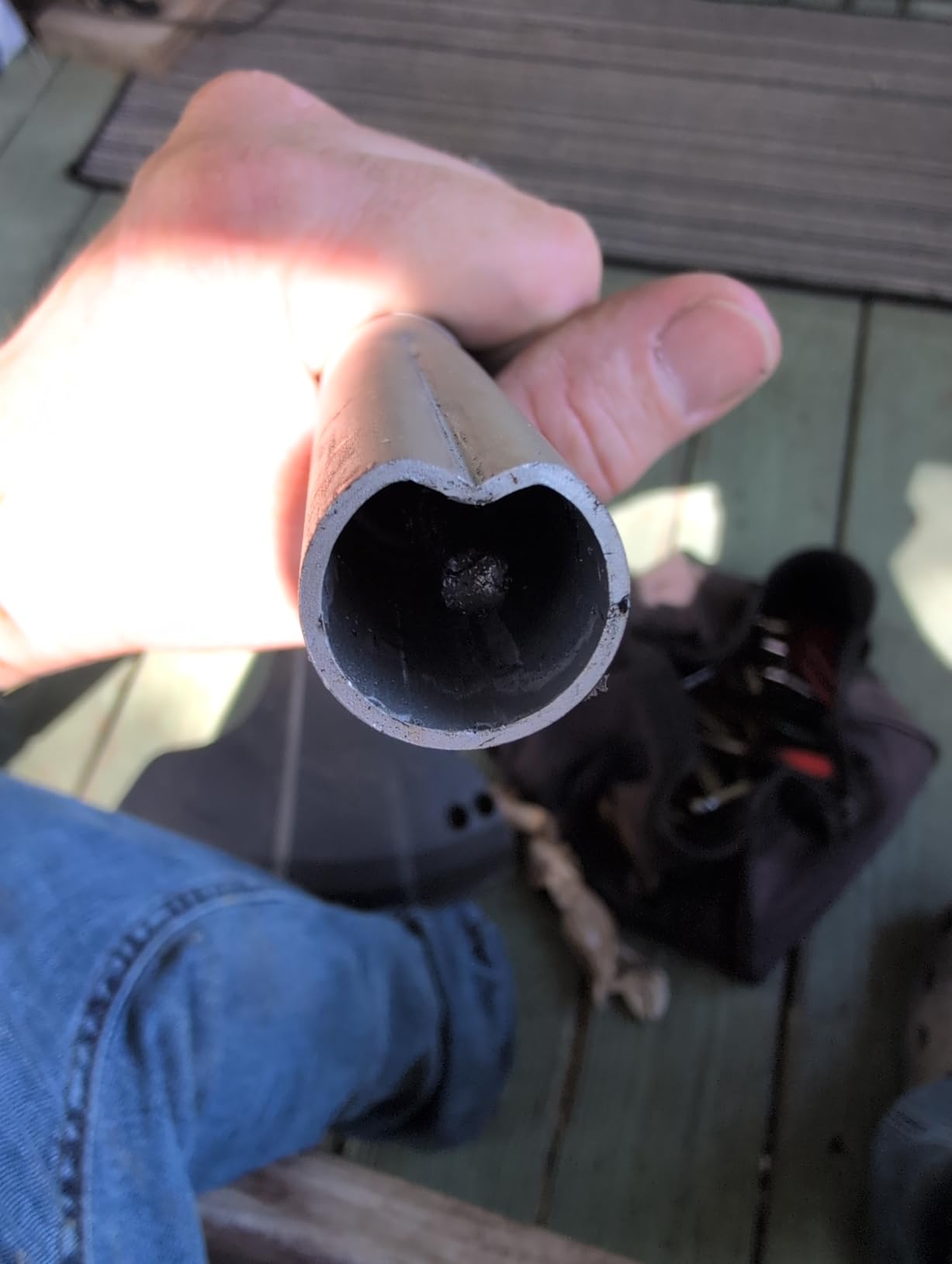
The 3.5 rating comes down almost entirely to the starter system rather than the trimmer. Owners report intermittent no-crank behavior, and separately a drive shaft that failed after roughly ten minutes of use and a spool cap whose threads are locked and will not come undone. The starter button and battery contacts may need contact cleaner over time.
About a quarter of the reviews are one star, the largest negative share in this roundup, and that is worth weighing carefully if the electric start is the reason you are here.
The case for buying it anyway
Starting effort is a genuine barrier for older owners, people with back or shoulder problems, and anyone with limited grip strength. A 25cc engine with a 17-inch cut is a sensible configuration, and the split-shaft design accepts attachments later.
Nobody in this roundup solves the pull-start problem better. That is not a small thing for the people it applies to.
The case against
You are buying a starter battery and switch assembly that will age, and the failure modes reported are exactly in that assembly. If your hands are fine on a cord, a conventional recoil starter is a more durable solution and there are cheaper ones in this list.
Plan on keeping a spare starter button and a bottle of contact cleaner if you go this route, and check the spool cap early while you are still within the return window.
11. WORKIT 52cc 3-in-1 Pro – Best for Thick Brush and High Altitude Work
WORKIT 52cc Gas Powered Weed Eater, 3-in-1 String Trimmer Edger & Brush Cutter with 18-Inch Auto-Feed, 0.095″ Line, 3T/40T Metal Blades for Pro Lawn Care
52cc 2-stroke
18 inch auto feed head
0.095 inch line
3T and 40T metal blades
31.6 pounds
Pros
- Strong torque in thick heavy overgrowth
- Handles thicker 0.105 inch line without complaint
- Performs well at high altitude
- Auto feed head genuinely advances line with a tap
Cons
- Only 9 reviews is the thinnest evidence base here
- Manual is confusing with parts that have no diagram
- Needs accurate 50 to 1 mixing
Where the LINASHI 52cc uses one three-tooth blade, this one includes both a 3T and a 40T metal blade, and the 40T is the tool for genuinely dense brush. Owners report the engine handles thicker 0.105 inch line without complaint, which is heavier than anything else in this roundup comes with.
The high-altitude claim is the one that stands out. Owners report strong performance at elevation, where air density drops and small single-cylinder engines lose the power they were rated for. A 52cc has the displacement to compensate.
The 18-inch auto-feed head is described as genuinely working, advancing line with a tap rather than requiring you to stop and open the spool. A straight shaft and shoulder strap take load off the back and arms.
Where the 52cc class makes sense
If you clear heavy brush weekly, or you work where the air is thin, engine displacement is the constraint and 52cc solves it. The 0.095 inch line in the head is a good starting point for this machine, and owners report it tolerates going heavier still.
Metal gearing and a smooth recoil starter are the other professional touches, and it assembles easily according to owners who have done it.
Why we are cautious
Nine reviews is the thinnest evidence base in the roundup. A 4.3 average from nine people is promising, not proven, and we would not build a long-term expectation on it alone.
The manual is confusing and two included parts have no clear diagram, so allow time for setup. At 31.6 pounds this is one of the heavier handhelds here, and the 50 to 1 gas-oil mix has to be measured properly to get the stated performance and engine life.
12. AMERISUN 26cc 3-in-1 – Best for Fence Lines, Ditches and Edging
AMERISUN 26cc 3in1 Gas Brush Cutter & String Trimmer&Edger
26cc 2-cycle
16 inch swath
10 inch metal blade
0.095 inch line
18.7 pounds
Pros
- Three in one design covers trimming
- edging and brush cutting
- 18.7 pounds is among the lighter handhelds here
- 18.6 oz fuel tank extends run time
- Shoulder harness helps with balance
Cons
- 30 percent of reviews are one star
- Weakest sales rank in the group
- 26cc is on the small side for woody weed mats
The 26cc engine sits right at the size that handles thick weeds, and the three-head package covers trimming, edging and brush cutting on a single machine. At 18.7 pounds it is among the lighter handhelds here, and the adjustable shoulder harness helps with balance over a fence line.
The 18.6 oz fuel tank is a genuinely useful size for the work, giving enough runtime to clear a run of fencing without a refill, and the 16-inch swath works well on ditches and uneven ground where a wider machine would be awkward.
The reinforced shaft and safety guard are sensible inclusions for a tool that will be held out from your body at odd angles in ditch work.
Good fit for specific work
This is a machine for fence lines, ditches, path edges and the boundary work that takes up most of a homeowner’s trimming season. The three-in-one switching means you finish the job with the same tool rather than swapping to an edger.
If your thick weeds are in open, walkable ground rather than brush, the 26cc has the torque to handle them with 0.095 inch line.
Where the reviews split
With 20 reviews the sentiment divides sharply, and about 30 percent are one star against 52 percent five star. Buyers who rate it high like the versatility, the manageable weight and the harness.
Buyers who rate it low cite the smaller 26cc engine in genuinely woody weed mats, and the weakest sales rank in this group means there is limited long-term history to judge durability by. It is the pick here with the least evidence behind it.
How to Cut Thick Weeds Without Snapping Your Line
Most broken line comes down to technique, not equipment. Work through these steps in order on your first pass through heavy growth and you will get through with a fraction of the line you would otherwise waste.
- Cut with the tip only. Sweep the head so the very end of the line enters the weed. Burying the whole head in the mat is what snaps line, because the stem is then cutting at a point where the line is already bent.
- Work with the growth, not against it. Tilt the trimmer so the head is angled away from you, and move in the direction the weeds lean or fall. Cutting against the grain makes stems pull the line sideways into the housing.
- Shorten the swath when the weeds are thickest. Sweep a 6 to 10 inch arc instead of trying to take the full 16 or 17 inches. Several controlled passes cut more total growth than one wide pass that stalls the engine.
- Keep the head moving. A stationary spinning head in dense growth generates heat and stress in the line. Constant sweeping motion shears the stems instead of grinding them.
- Drop the throttle to a steady mid setting. Full throttle is not needed to cut, and running wide open in thick weeds is a common way to break line without cutting faster.
- Switch to the blade for stems. Once you hit growth thicker than your finger, stop trying to cut it with line. A three-tooth metal blade will take it in one pass and a 40-tooth blade handles the densest brush.
- Cut from the tip back. For a dense weed mat, start at the outer edge and work inward in a controlled direction so you are always cutting growth that is falling away from you rather than toward you.
Finally, inspect your line before the job rather than after. A worn or brittle line in a hot head is the most common cause of the snapping that makes people blame the machine.
String Trimmer vs Brush Cutter: When to Upgrade
A string trimmer is a finishing tool. Its design envelope is grass, weeds and light stems, and the moment the vegetation stops behaving like grass you are fighting the tool rather than using it. The dividing line is diameter: string and standard blades handle stems up to about three-quarter of an inch, and a three-tooth blade can take a full inch in ideal conditions. Past an inch you need a saw blade on a brush cutter, and past two inches you need a chainsaw or a machete. No amount of engine size changes this, because the limiting factor is the head material.
Property size is the other half of the decision. Under a quarter acre, a handheld trimmer is faster than anything with wheels because you are not manoeuvring them. Between a quarter acre and a couple of acres of neglected growth, a walk-behind string mower with a steel deck becomes the faster tool, which is exactly the BILT HARD case above. Several acres, especially with slopes and obstacles, is genuine brush cutter territory.
There is also a strategic point that experienced owners make repeatedly: different weed types want different machines. Stiff upright weeds respond to line on a spinning head, and woody brambles and canes respond to a blade. Trying to make one machine do both jobs is why people end up dissatisfied with a trimmer that was never the problem.
One warning on saw blades. They turn the trimmer into a cutting tool with real kickback risk, and they are genuinely dangerous near people, pets and vehicles. If you have never used a blade on a brush cutter, practice on a boundary edge first.
Buying Guide: Engine Size, Line Diameter and Fuel Type
Engine displacement is the first filter because it sets your ceiling. Below about 22cc, the engine bogs in anything denser than knee-high grass. From 25cc to 30cc you get the torque to hold speed through a weed mat, and this is where most thick-weed work happens. Above 30cc you are buying headroom and torque for sustained brush clearing, along with more weight to carry. A walk-behind machine with a much larger engine solves the same problem differently, by removing your body from the swinging entirely.
Line diameter is the second filter and it is the one most buyers get wrong. Below 0.080 inch line is for grass and light edging, and it will snap in thick growth. In the 0.080 to 0.095 inch range you have the diameter you want for heavy weeds, and several machines in this roundup ship with 0.095 inch already fitted. Heavier line past that needs a head and a gearbox designed for it, and while one owner reports this 52cc machine tolerating 0.105 inch, that is not a general rule.
Match the line to the head rather than the other way around. Standard spool and bump-feed heads take line up to about 0.095 inch. Deburring spools and fixed-line heads handle heavy line and cut a defined edge. Metal blades, from a three-tooth through a 40-tooth, take over entirely once the growth has stems, and a saw blade is the only thing that reliably cuts a one-inch woody stem.
Two-cycle versus four-cycle is mostly about fuel handling, not power. A two-cycle engine runs on a gas and oil mix, typically 40 to 1 or 50 to 1, which means measuring, mixing and storing premixed fuel that goes stale over winter. A four-cycle runs on straight gasoline with a larger oil sump, so storage is simple and there is no mixing step. If you are buying your first gas trimmer and the walk-behind format is not in play, four-cycle is the friendlier machine. If you want a lightweight handheld, most of the options in this roundup are two-cycle for that reason.
On fuel itself, ethanol is the number one source of carburetor trouble. Ethanol absorbs moisture and attacks rubber and plastic components, and a machine that stored over winter on pump gas with ethanol is the classic hard-starting case. Run the tank down or empty it if you are stopping for the season, and do not refill a machine that has been sitting with old fuel in it.
Shaft type decides where you can work. A curved shaft is light and maneuverable in open ground, a straight shaft gets the head under decks, bushes and fences, and a loop or bicycle handle gives better control in brush where you are bracing the machine. Add a shoulder harness on anything over about 15 pounds, because the difference in fatigue over an afternoon is substantial.
Weight deserves its own line because it decides whether you will actually use the machine. Below 10 pounds you can swing it all afternoon one-handed if you need to. Between 16 and 20 pounds is a normal handheld range that is comfortable for a couple of hours with a strap. Beyond 30 pounds you are in machine territory, not tool territory, and a walk-behind or shoulder harness becomes necessary rather than optional.
One cross-reference if you want the wider category covered: our general string trimmer roundup handles battery and electric models that make sense for smaller yards, which are a poor fit for the thick weed work this guide is about.
Safety Gear That Matters When Line Snaps
Line snapping at head speed is the main injury mechanism in this category, and the protection is cheap. Wear eye protection every single time, because nylon line fragments are small, fast and sharp-edged at speed. Hearing protection matters too on a machine running near 10,000 RPM.
Long trousers are the minimum, and chaps are the sensible upgrade if you will be working in woody growth where stems kick the head back toward you. Closed toe boots with good grip are non-negotiable on uneven ground, and gloves protect against vibration-related numbness over a long session.
Clear the area before you start. Never trim where someone is standing on the other side of the growth, keep bystanders out of the swing arc, and stop and check the ground for wire, hose and irrigation line before you pull the trigger, because a spinning head at ground level will find it. On a walk-behind, rocky and uneven ground deserves the same respect.
Maintenance and Off-Season Fuel Storage
Most of the reliability complaints we see in this roundup trace back to fuel rather than hardware. On a two-cycle machine, drain the tank or run it out at the end of the season, and never store premixed fuel in the machine itself. Keep leftover mixed fuel in an approved container and use it up first next season rather than letting it sit.
On a four-cycle machine you have more room, but old gasoline still goes bad. Same rule if you are not going to run it for a month: use it up or dispose of it properly.
Before you store anything, clean the air filter and check the spark plug. Those two items plus a gear case grease check on a straight-shaft machine cover the maintenance that owners who report years of trouble-free ownership actually do.
Rebuild the head while it is off the machine. Replace worn line, check the spool threads, and inspect the bump knob cap for threads that bind, since a locked spool cap is a documented problem on at least one model in this list. Keeping a spare spark plug, a spare line spool and a bottle of fuel line treatment removes most of the reasons a gas trimmer sits in the garage.
For the first start of the season, a fresh plug and a tank of fresh fuel will solve the majority of hard-starting complaints reported here. The first pull should be decisive, and if the engine smokes blue under load the mix ratio is wrong rather than the machine being faulty.
Frequently Asked Questions
What string trimmer is best for thick weeds?
A gas trimmer with at least a 25cc two-cycle or a 30cc class four-cycle engine, loaded with 0.080 to 0.095 inch line, handles thick weeds reliably. Keep a metal brush blade on hand because standard line snaps on woody stems. Above roughly an inch of stem, you need a brush cutter instead of a trimmer.
What is the best tool to cut through thick weeds?
For stems up to about three-quarter of an inch, a string trimmer with a three-tooth metal blade is the right tool. Past one inch of woody stem, a brush cutter with a saw blade is the only reliable option. For growth several feet tall on open ground, a walk-behind string mower covers ground faster than any handheld.
What is the best string trimmer line for heavy weeds?
Use 0.080 to 0.095 inch diameter line for heavy weeds. Below 0.080 inch snaps too easily in dense growth. For the thickest stems, a metal three-tooth or 40-tooth blade outperforms any line, and line heavier than 0.095 inch needs a head and gearbox built for it.
How do I cut down large, thick weeds?
Use only the tip of the line and sweep rather than burying the whole head. Angle the head away from you and cut in the direction the growth falls. Shorten your arc to 6 to 10 inches in the densest sections, keep the head moving, use mid throttle instead of full, and switch to a metal blade once the stems are thicker than a finger.
What cc string trimmer do I need for thick weeds?
At least 25cc two-cycle, or 26cc to 30cc for sustained brush work. A 22cc engine handles grass and light weeds but bogs in dense woody growth. Above 30cc you are buying headroom for heavy clearing at the cost of weight. Under a quarter acre a handheld is fine; several acres of neglected growth calls for a walk-behind machine instead.
Our Final Pick for Thick Weeds in 2026
After working through all twelve, the PowerSmart 25.4cc two-cycle with its 10-inch brush blade is the machine we would buy for the best gas string trimmers for thick weeds use case. It is the rare combination of a real 25cc engine, a blade in the box, 0.095 inch line and a 302-review base that says owners cut brush with it. For tall grass across open acreage, choose the BILT HARD 170cc walk-behind and let the machine do the walking. For a one-platform approach that expands into other tools later, the ECHO PAS kit is the smarter buy.
Whatever you choose, decide your engine size and your head before you buy rather than after. The single most common complaint in this category is not that a machine was weak, it is that it was asked to do brush work with a spool of thin line. Get the 25cc class, get the 0.095 inch line, keep a blade ready, and follow the technique steps above on your first pass.