
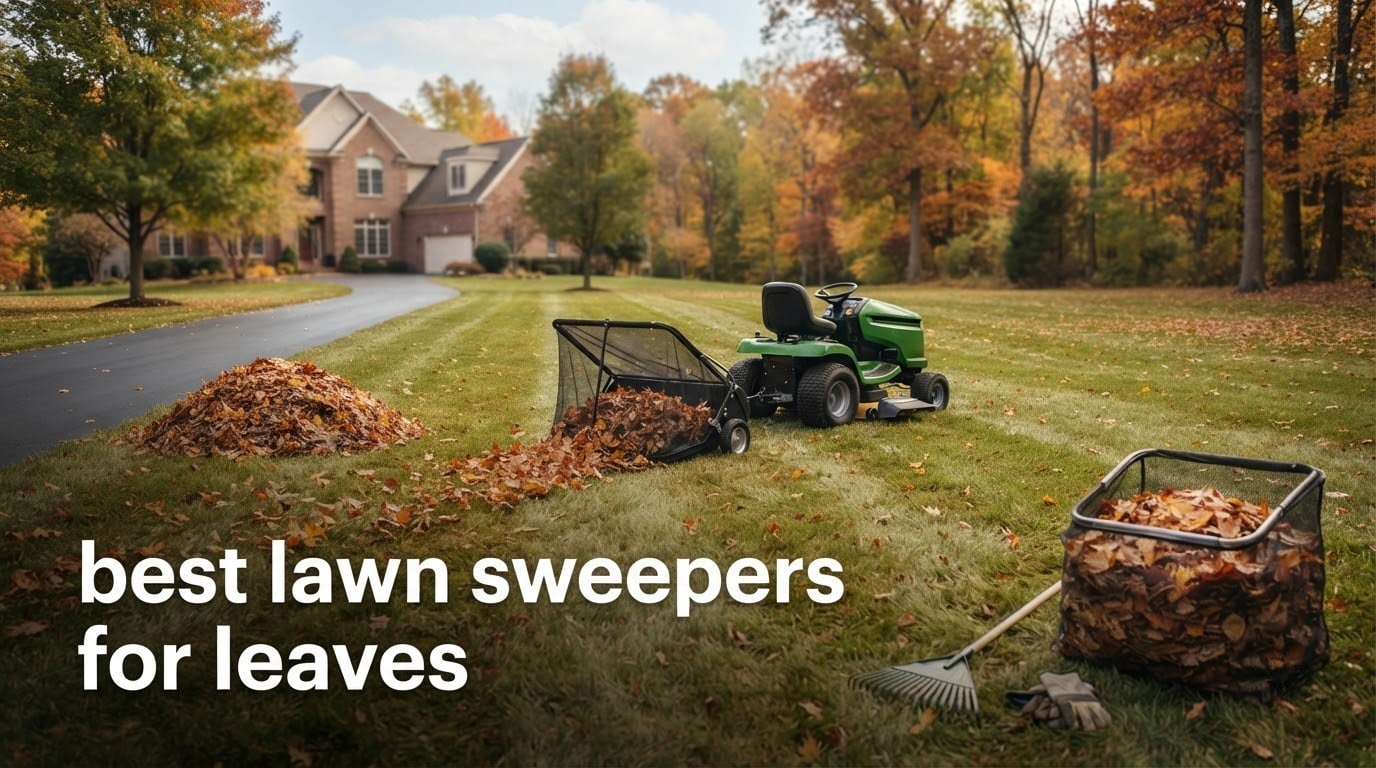
If you own a riding mower or lawn tractor and have more than a quarter acre with heavy tree cover, the Agri-Fab 44-Inch Tow-Behind Lawn Sweeper is the best lawn sweeper for leaves for most people. On a small lot with no tractor, a push sweeper like the VEVOR 26-Inch is the smarter buy, because the deciding factor is not the brand or the price but whether the sweep width and hopper capacity match your lawn and your leaf volume.
We spent weeks reading thousands of owner reviews on eight of the most-reviewed lawn sweepers on the market, comparing the two specs that actually decide how a machine performs on leaves: brush-to-wheel ratio, which is how fast the bristles spin relative to the ground, and hopper capacity in cubic feet, which is how often you stop to empty. Everything else on the spec sheet is secondary to those two numbers.
This guide covers tow-behind and push sweepers side by side, explains the technique that makes the difference between a clean lawn and a disappointing afternoon, and covers what a sweeper simply cannot pick up. If you are still choosing a mower to tow behind, our riding lawn mower guide and lawn tractor guide cover the tow-vehicle side of the equation.
Table of Contents
Top 3 Lawn Sweeper Picks for Leaves in 2026

Agri-Fab 44-Inch Tow-Behind
- 28 cu ft hopper
- 5.6:1 ratio
- 44 inch width
- Dump-from-seat handle
VEVOR 26-Inch Push Sweeper
- 26 inch width
- 7 cu ft hopper
- 4 spinning brushes
- 5 height positions

Gardena 20.5-Inch Collector
- 20.5 inch width
- 3.2 cu ft hopper
- 5 year warranty
- Folds for storage
Best Lawn Sweepers for Leaves at a Glance
| Product | Specifications | Action |
|---|---|---|
| Agri-Fab 44-Inch Tow-Behind |
|
Check Latest Price |
 Earthwise 21-Inch Push Sweeper Earthwise 21-Inch Push Sweeper |
|
Check Latest Price |
| VEVOR 26-Inch Push Sweeper |
|
Check Latest Price |
 MAXLANDER 42-Inch Tow-Behind MAXLANDER 42-Inch Tow-Behind |
|
Check Latest Price |
 Ohio Steel 4222V2 Ohio Steel 4222V2 |
|
Check Latest Price |
 Brinly 42-Inch Tow-Behind Brinly 42-Inch Tow-Behind |
|
Check Latest Price |
 Scotts 26-Inch Push Sweeper Scotts 26-Inch Push Sweeper |
|
Check Latest Price |
| Gardena Lawn and Leaf Collector |
|
Check Latest Price |
1. Agri-Fab 44-Inch Tow-Behind Lawn Sweeper – Best Overall for Large Yards
Agri-Fab 44 In Tow-Behind Lawn Sweeper with 28 Cu Ft Flow-Through Hopper Bag, Adjustable Brush Height, and Dump From Seat Handle
44 inch sweep
28 cu ft flow-through hopper
5.6:1 brush-to-wheel ratio
92 lb
Pros
- Largest hopper here at 28 cu ft
- Highest published ratio at 5.6:1
- Dump-from-seat handle avoids getting off the tractor
- 12 in x 3 in tires roll over uneven ground
- Bronze brush shaft bushings for longevity
Cons
- Fabric hopper corners wear and need reinforcing
- Bag support rods pop out easily
- Single-wheel brush drive can lift off ridged lawns
This is the sweeper we come back to for any yard over a quarter acre. The 28 cu ft flow-through hopper fills from the back of the bag forward, which is a smarter design than filling front to back because the front section stays seated on the frame while the loose material is at the rear where the dumping handle lifts it clear. With that volume, a heavily wooded property can be finished in a small number of stops rather than a dozen.
The 5.6:1 brush-to-wheel ratio is the highest published figure in this group, and owners consistently report that the pickup holds up on pine needles, small branches and grass clippings in a single pass. Adjustable brush height plus the offset drawbar means you can sweep close to fences and driveways rather than leaving a strip. If you mow and sweep together, the offset hitch is the feature that makes the two-in-one pass possible.
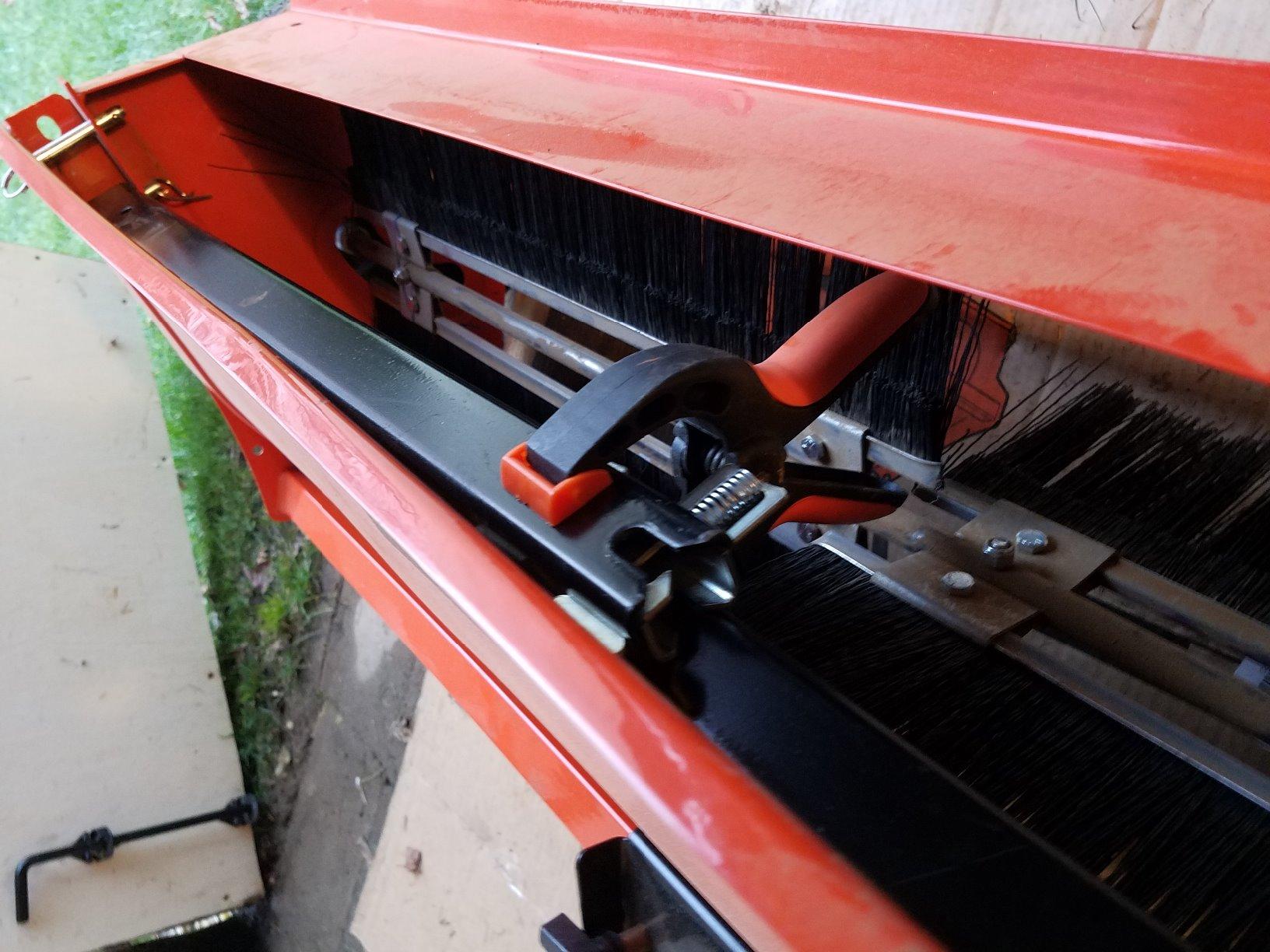
What we found in the reviews is a split verdict that is worth understanding before you buy. Multi-year owners report years of solid use, and several mention that Agri-Fab customer service sent replacement parts quickly. But nearly every complaint lands on the fabric bag rather than the steel chassis: lightweight mesh, unreinforced corners, snap fasteners that release and let the bag bottom drag, and support rods that pop free and get lost.
Who should buy the Agri-Fab 44-Inch Tow-Behind
Buy this if you have a riding mower, a half acre or more, and oaks, maples or sweetgums overhead. It is also the right call if you intend to compost the collected material, because the volume means fewer trips to the pile. Owners of zero-turn machines should note that the turning radius matters more than it does with a lawn tractor, and this unit needs space to swing.
Where the Agri-Fab 44-Inch falls short
The one-drive-wheel brush design is a real limitation on ridged or uneven ground, where the drive wheel can lift and the brushes spin without touching the canopy. Assembly instructions draw repeated complaints, and some owners report missing or bent hardware. Watch the bag hardware more closely than anything else on the frame, because that is where this category fails first.
2. Earthwise 21-Inch Push Lawn Sweeper – The Lightest Way to Skip the Rake
Earthwise LSW70021 21-Inch Width Leaf & Grass Push Lawn Sweeper, Black
21 inch sweep
2.6 bushel removable bag
Four-brush pickup
14 lb frame
Pros
- Lightest machine here at 14 pounds
- No gas cord or battery needed
- Bag lifts off for easy emptying
- Folds down for winter storage
Cons
- 21 inch width means many more passes
- Bag fills fast and needs constant stops
- Plastic bag retaining bar cracks or bends
At 14 pounds, this is the machine we would hand to anyone with a bad back, a bad knee, or a small lot and no tractor. It is a pine and cold-rolled steel frame with four brushes, two per section, and a removable 2.6-bushel collection bag. Owners with small flat yards and light to moderate dry cover say it takes a fraction of the time raking used to take, and the bag lifts straight off to empty.
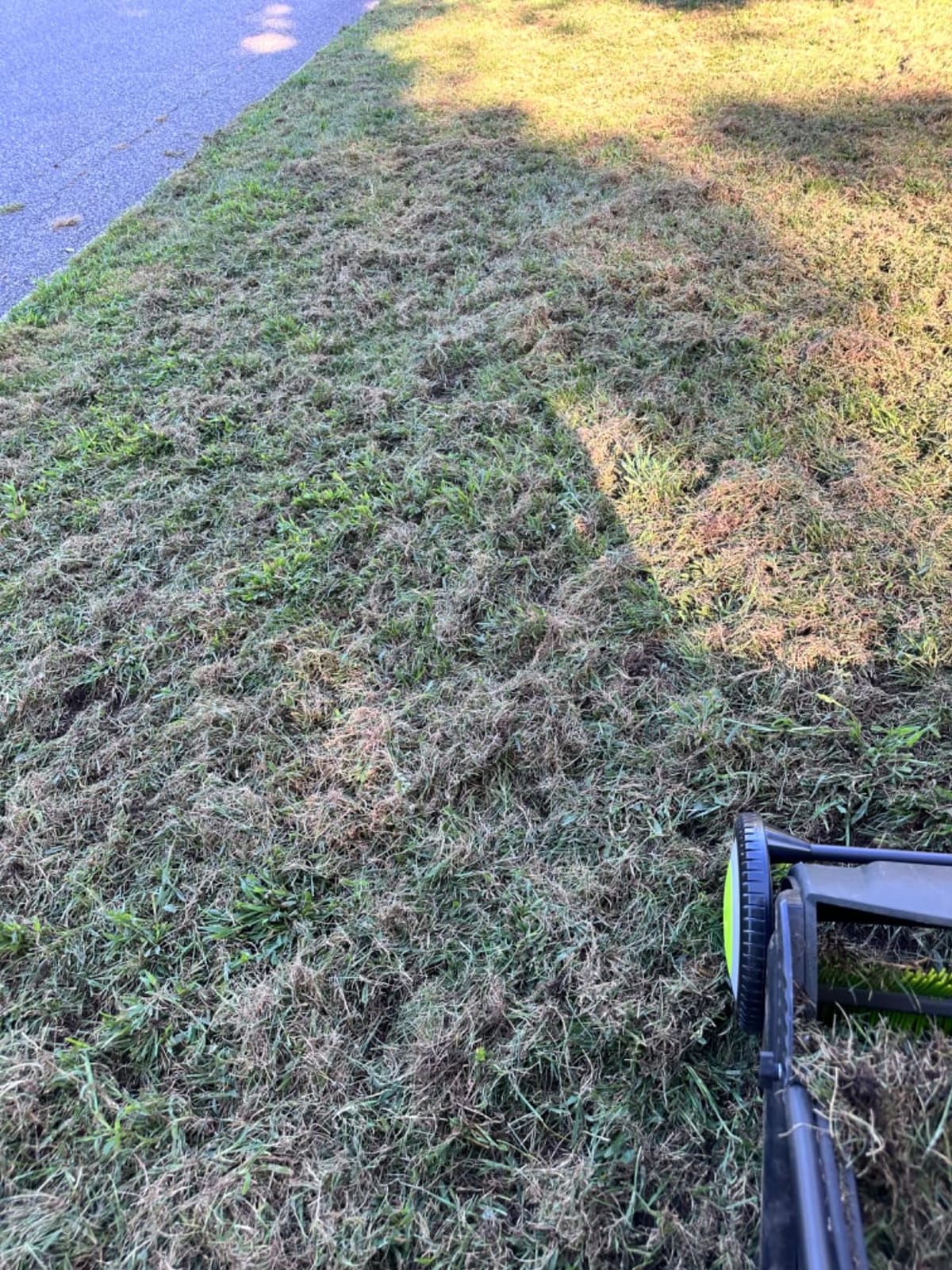
The rating on this one is low for a reason that is entirely about yard size. Critics find it ineffective on deep leaf blankets, pine needles, wet leaves, twigs and bumpy ground, and they point constantly at the 21-inch width as the limit on anything bigger than a small lot. The plastic clasp bar that retains the bag is the other recurring complaint, cracking or bending after limited use.
One technique detail matters more here than on any bigger machine. Because the manufacturer recommends moving the sweeper in different directions, a second cross pass costs little and pulls up material the first straight pass leaves sitting in the canopy. Owners who commit to that two-pass habit are the ones who report it works well.
Who should buy the Earthwise 21-Inch Push Sweeper
It suits a small lot, a cottage property, or anyone who wants to stop raking but does not want a machine that outweighs their tolerance for pushing. It also works as a light top-up tool for a front yard where a tow-behind would be overkill, and it is a reasonable companion for a property without any riding equipment at all.
Where the Earthwise 21-Inch falls short
The narrow width is the whole story. It is weak along edges and fences, on uneven ground, and against pine needles, and leaves often bounce back out of the bag. On wet leaves or a dense mat, do not bother. Expect to empty the bag repeatedly, which on a larger lawn quietly erases the time saving that made you buy it.
3. VEVOR 26-Inch Push Lawn Sweeper – Best Budget Pick
VEVOR Push Lawn Sweeper 26 Inch Leaf & Grass Collector 7 cu. ft. Hopper Bag
26 inch sweep
7 cu ft hopper bag
Four spinning brushes
5 position knob
Pros
- 26 inch width covers more per pass than most push models
- 7 cu ft bag is large for a walk-behind
- Tool-free knob for five brush height positions
- Quiet manual operation with no power source
Cons
- Turning is difficult and handle poles twist
- Bag mouth clogs so you push leaves back in
- Mesh bag and plastic hardware tear quickly
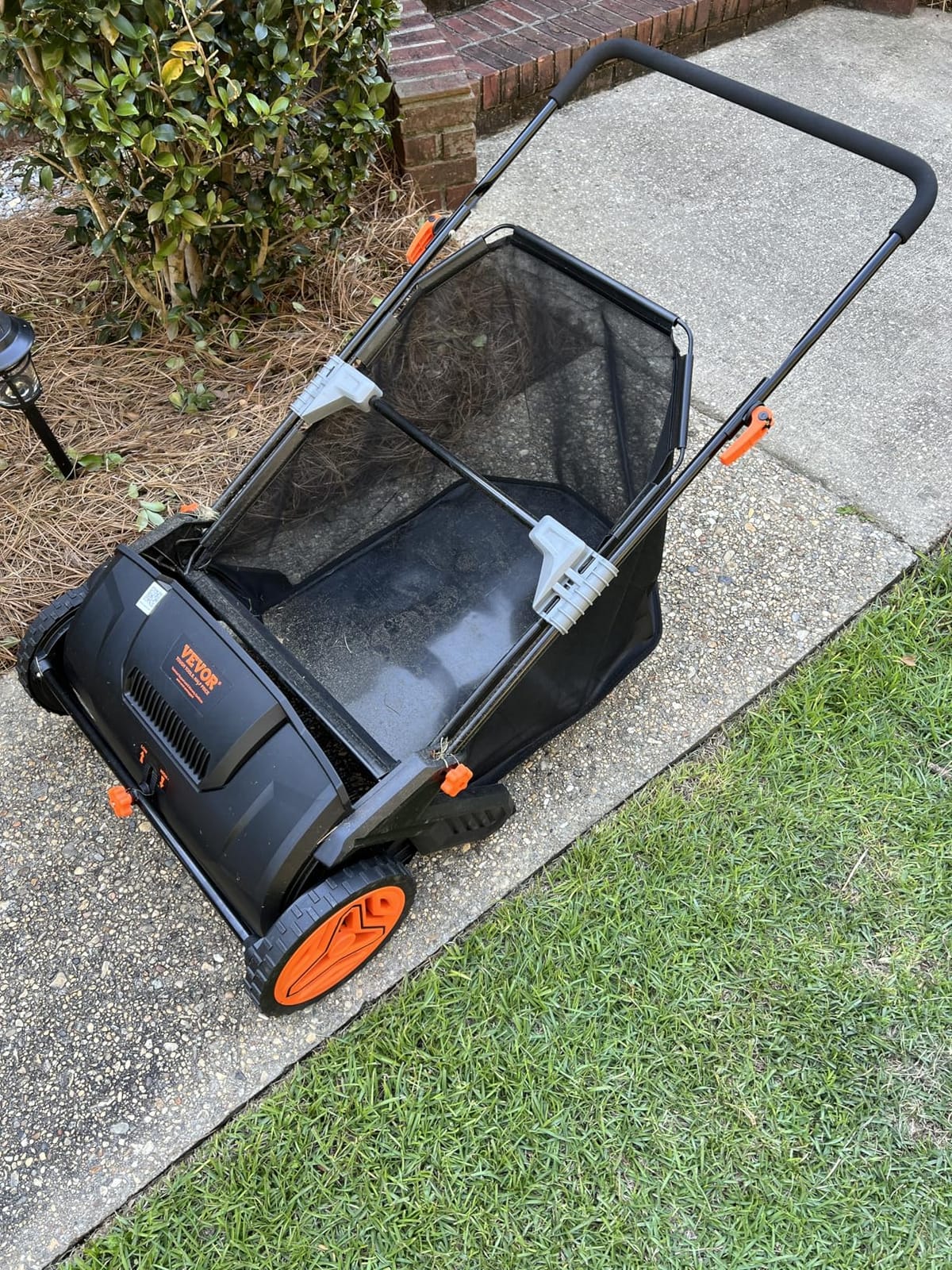
The VEVOR is the pick if you have a small-to-medium yard, no tractor, and you want more per pass than a 21-inch machine gives you. The 26-inch sweep, the four spinning high-density brushes and the five-position tool-free height knob form a genuinely capable package for a walk-behind, and the 7 cu ft hopper bag is the second largest in this group. It claims to collect up to 80 percent of leaves and clippings in one pass, and on a level lawn with dry debris that is roughly what owners report.
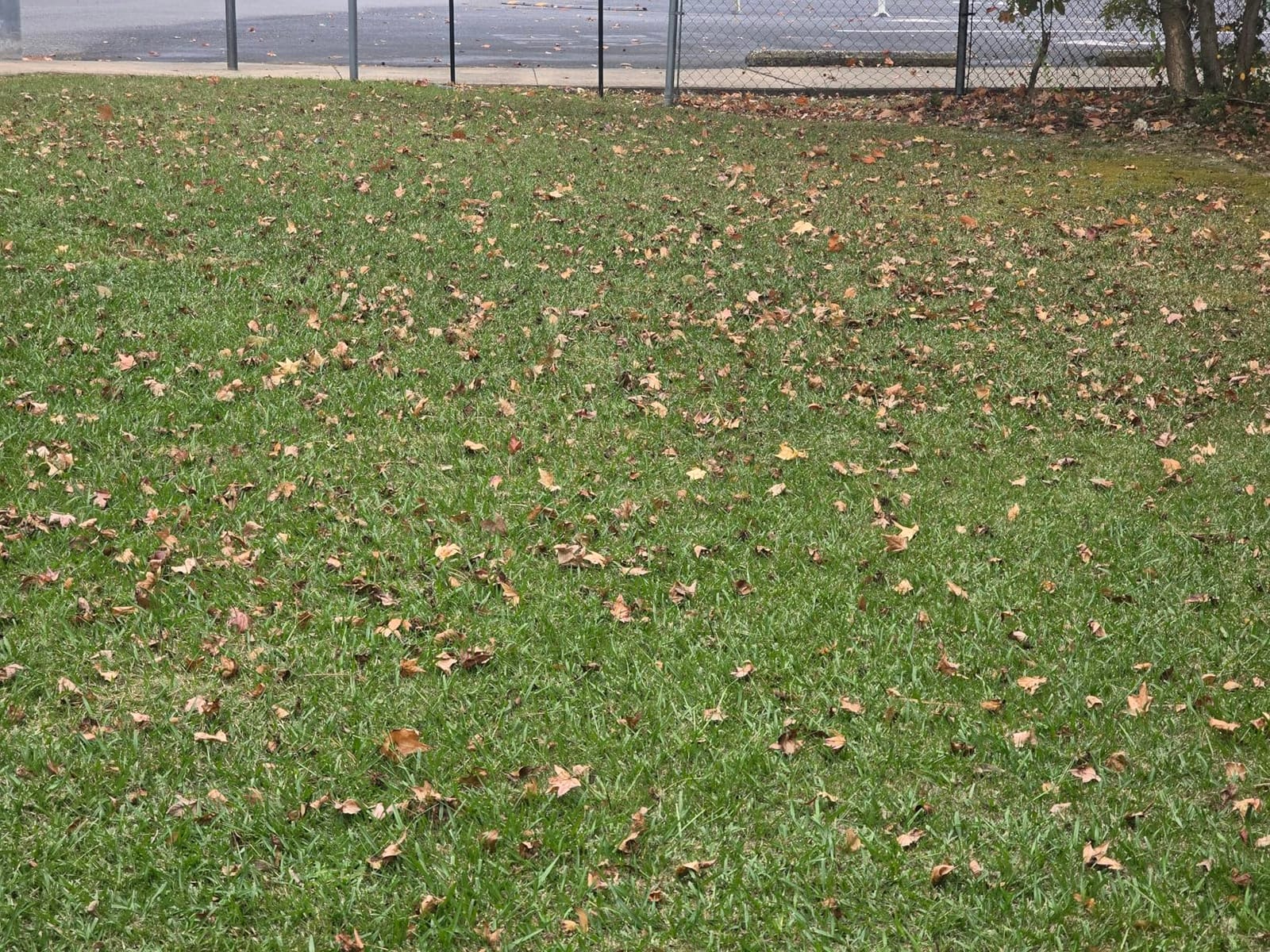
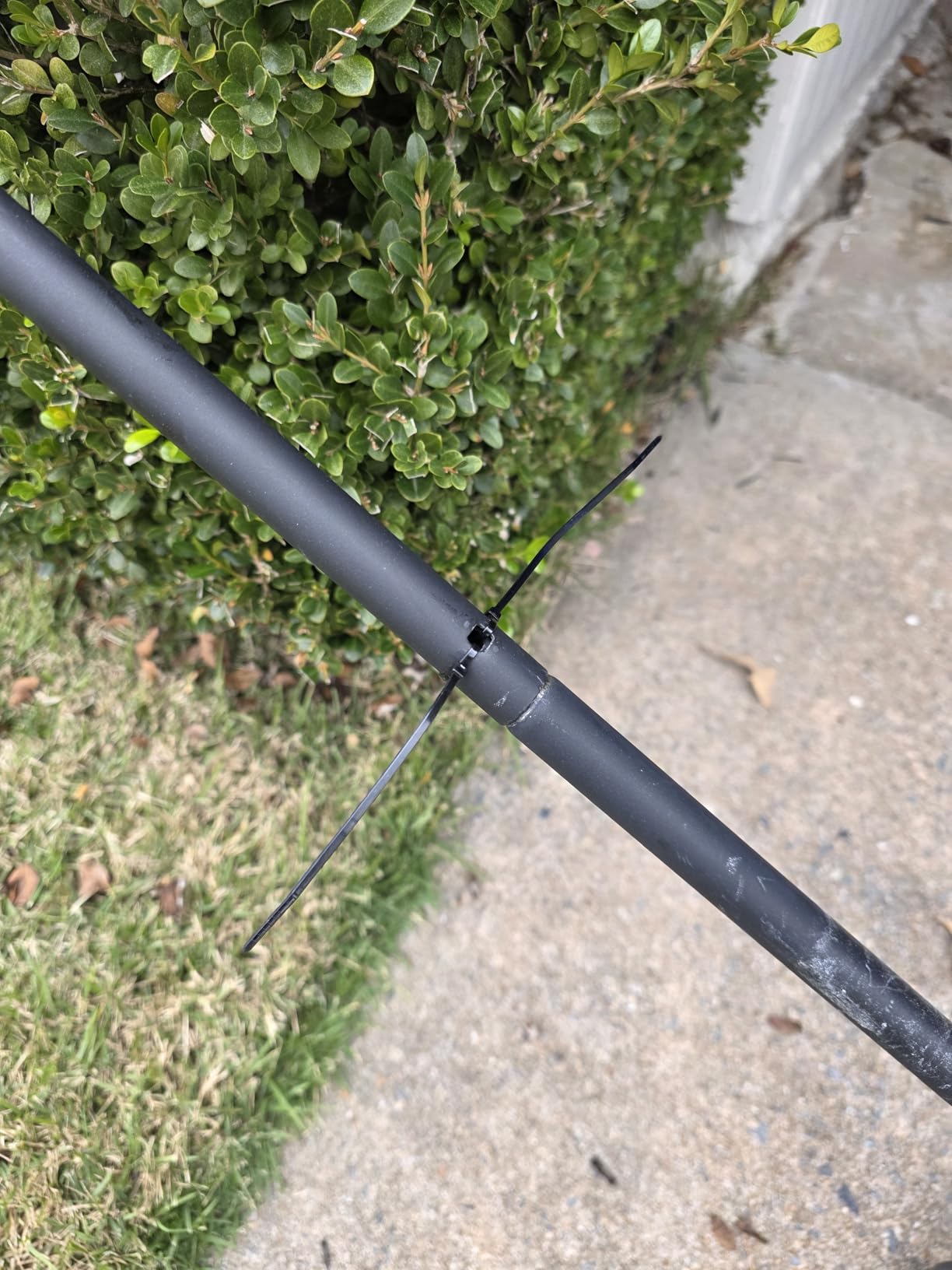
Where it loses is handling, not pickup. Owners report the wheels grinding and the handle poles twisting every time you turn, the machine bogging down on uneven ground or grass taller than a few inches, and a bag opening that clogs as it fills so you stop and hand-push leaves back inward. The mesh bag and plastic bag hardware are called flimsy, and no replacement bag is offered. Assembly takes roughly 10 to 20 minutes with a Phillips screwdriver.
The ergonomically angled handle reduces lower back strain during long sessions, which matters more than it sounds on a machine you push rather than tow. It runs short for taller users though, and it flexes on elevation changes, so check your stride against the handle before you commit.
Who should buy the VEVOR 26-Inch Push Sweeper
This is the one we recommend for a quarter acre or less of flat lawn with regular tree cover, especially if you have previously found the 21-inch machines too narrow. It suits a homeowner who wants a cheap, quiet, no-maintenance second tool to complement a blower. The five height positions also let you shift between lawn, pavement and a driveway without hunting for a setting.
Where the VEVOR 26-Inch falls short
It is not a machine for broken ground or long grass, where the drive wheels lose grip and the whole frame strains. Turns are the daily annoyance, and the bag mouth clogging mid-job will test your patience on a heavy drop. If your yard is a quarter acre or larger, or you have a tractor, spend up and step up to a tow-behind.
4. MAXLANDER 42-Inch Tow-Behind Sweeper – Best for Dethatching and Cleanup
MAXLANDER 42-Inch Tow Behind Lawn Sweeper, 12 Cu.Ft. Hopper Grass & Leaf Collector, Pull Behind Yard Sweeper with Adjustable Brush Height, Dumping Rope & Universal Hitch for Lawn Tractor
42 inch sweep
12 cu ft non-woven bag
10.5 in diameter brushes
63.7 lb
Pros
- 42 inch path clears a lot of ground per pass
- Light weight for a tow-behind makes it easy to handle
- Partly pre-assembled to cut setup time
- Dumping rope empties from the seat
Cons
- Bag is small enough that owners skip using it
- Unlabelled parts make assembly error-prone
- Cheap plastic and grommets that can rip out
This 42-inch tow-behind is the middle ground of the group: a real sweeping path, a 12 cu ft bag with a dumping rope, and a tool-free lever that adjusts brush height across lawns, driveways, sidewalks and uneven ground. The 10.5-inch diameter brushes with a reinforced metal-to-brush connection are the mechanical upgrade here, and several owners use it primarily for dethatching and general spring cleanup rather than leaves alone.
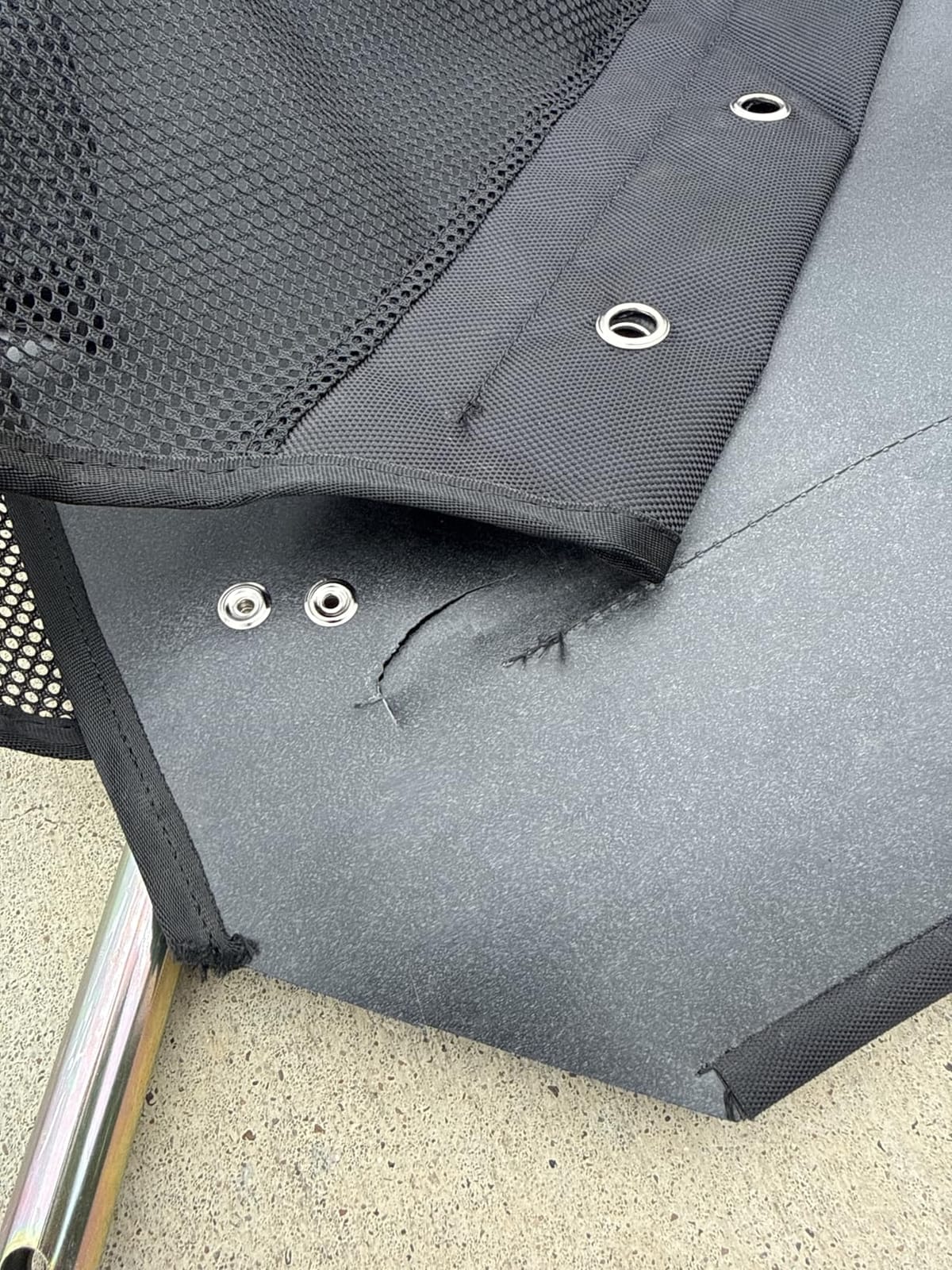
The honest weakness is the bag. It is the most common complaint in the reviews: the capacity is described as too small to be worth the emptying effort, and several owners end up falling back on a mower or blower instead. Hopper top grommets can rip out and make the bag hard to secure, and the plastic feels cheap enough that some owners needed binder clips and tape. A few report the handle breaking.
Assembly is the other theme. The unit arrives partly pre-assembled, which genuinely cuts setup time, but unlabelled parts and unclear instructions have led some owners to misconfigure the hopper angle bars badly enough that the bag fouled the wheels. Budget an hour and check the geometry before you tow anything.
Who should buy the MAXLANDER 42-Inch Tow-Behind
Pick it if you want tow-behind width without the weight of a full-size steel machine, and if your leaf volume is moderate. The foldable design and light 63.7-pound frame make it easy to store in a tight shed, and the universal hitch fits most lawn tractors, riding mowers and ATVs. It is also a solid dethatching tool for a lawn you are cleaning before fall fertilizer or overseeding.
Where the MAXLANDER 42-Inch falls short
The 12 cu ft bag is the reason many owners quit using it for leaves. If you have heavy oak cover, you will spend more time stopping than sweeping, and the grommet failure mode can end that entirely. The plastic construction also ages faster than the alloy steel on the Ohio Steel. For a property with serious tree cover, pick the bigger hopper instead.
5. Ohio Steel 4222V2 Lawn Sweeper – Best for Sticks and Heavy Debris
Ohio Steel 4222V2 Lawn Sweeper, 22 cu.ft, Gray
42 inch width
22 cu ft hopper
11 in spiraled brushes
4.5:1 ratio
Pros
- Highest customer rating in this group
- Handles sticks pine needles and Spanish moss
- 22 cu ft hopper means fewer dump trips
- Offset drawbar sweeps and mows in one pass
Cons
- Hopper bag bottom bar can crack and the bag tears
- A full damp bag can strain lower-powered mowers
- Dump rope has no handle
This is the machine for a property that is not just leaf-covered but genuinely littered. Owners describe it handling sticks, pine needles, Spanish moss and cypress needles while leaving a clean stripe, and at 4.4 stars it carries the highest customer rating of the eight we examined. The 11-inch spiraled polypropylene brushes are a patented Ohio Steel design, and the offset drawbar that shifts left or right is what lets you sweep and mow in a single pass.
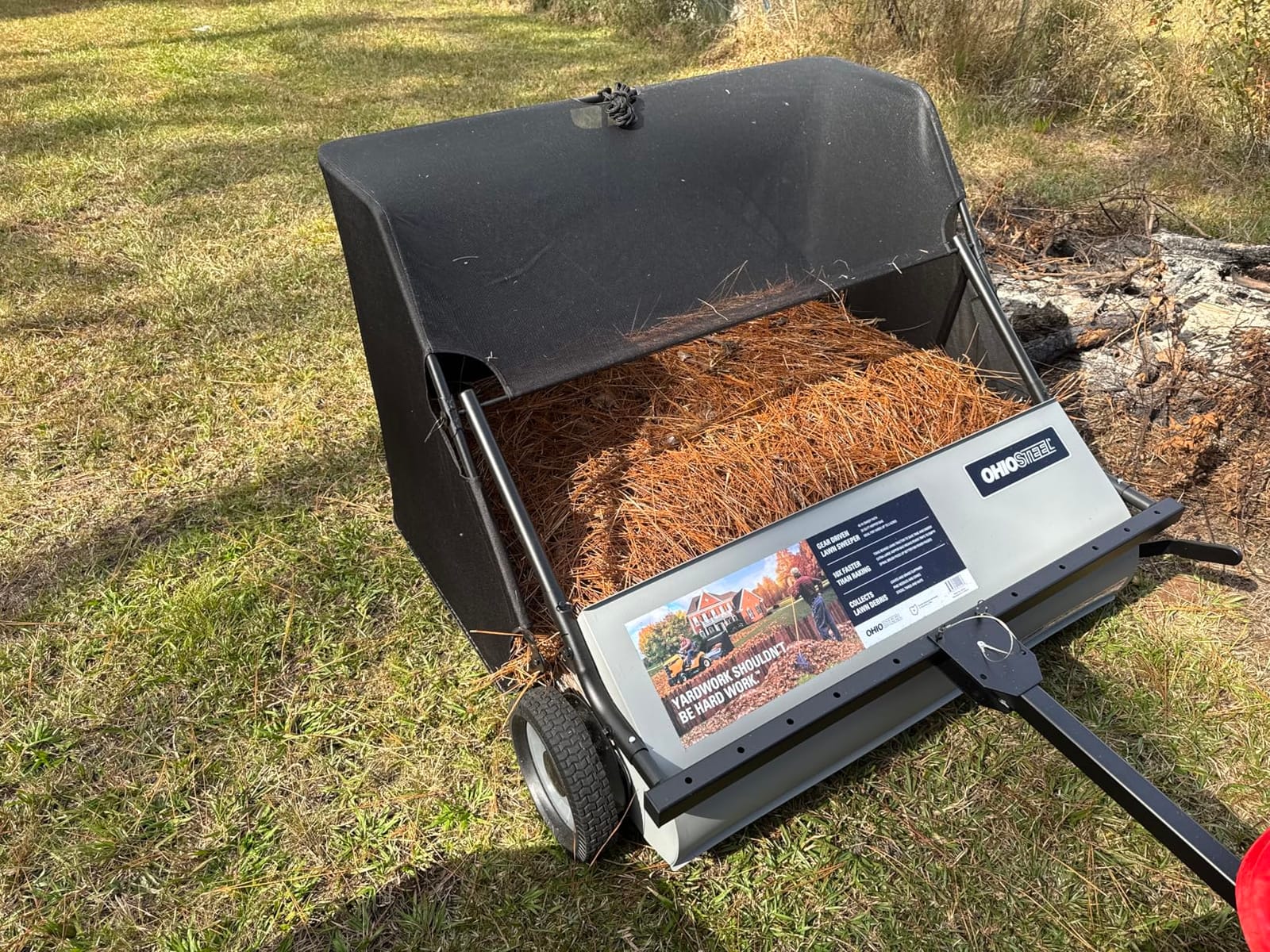
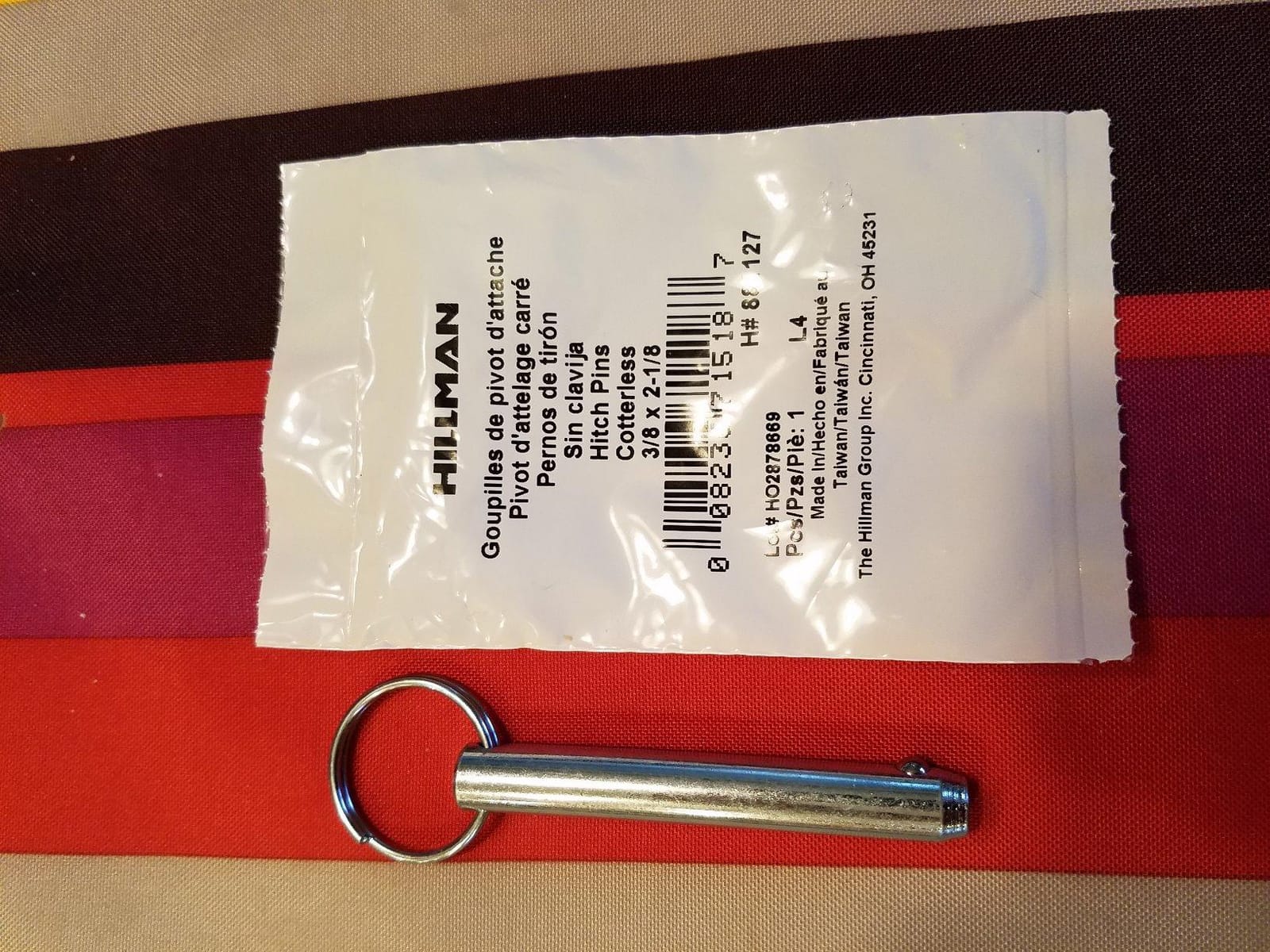
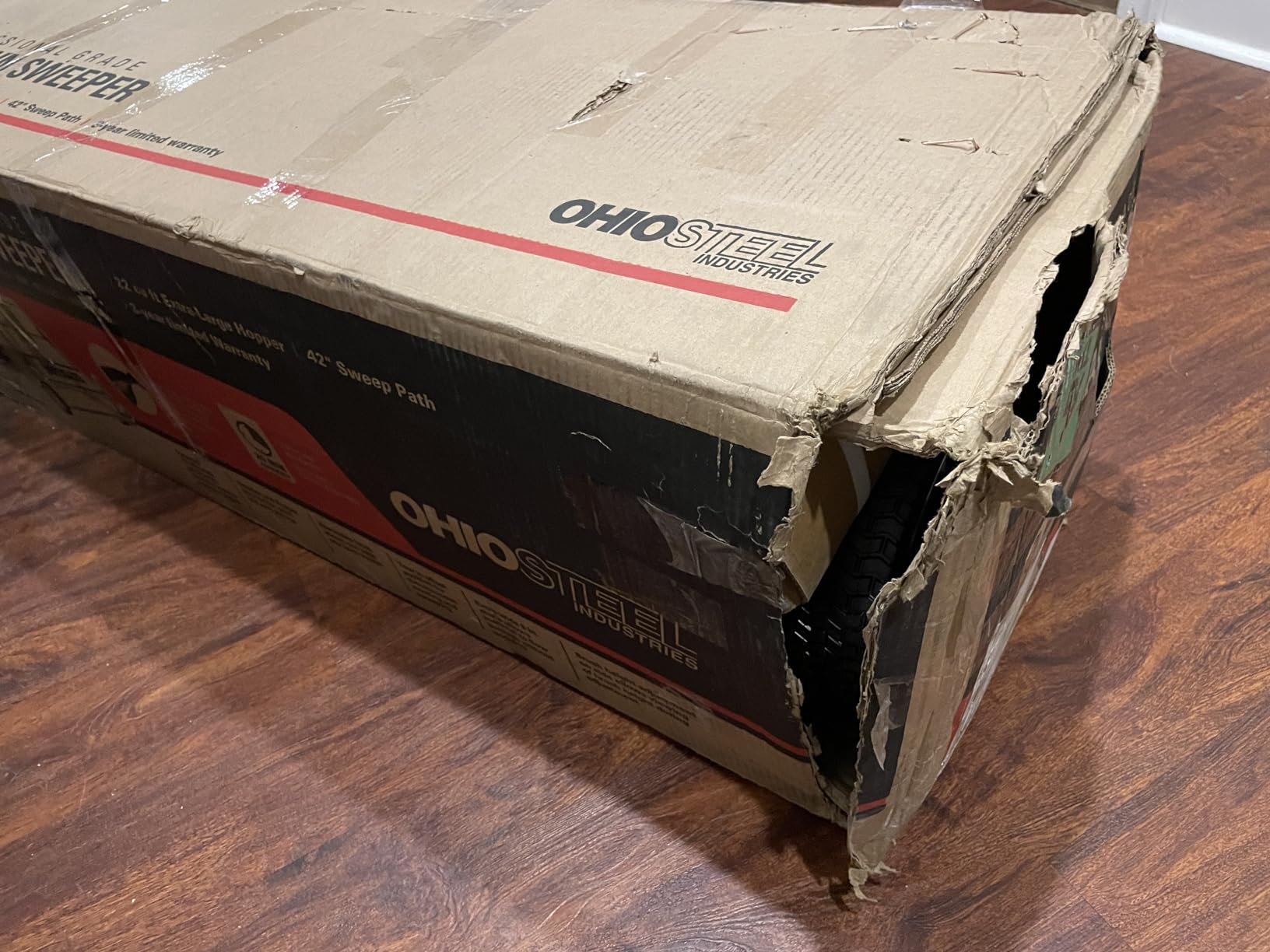
Build quality is the story on the chassis: alloy steel, sealed ball bearings on the brush axle, 11-inch semi-pneumatic wheels and a powder-coat finish. It assembles in about 30 minutes with one tool and the hitch pin is included, which is a better assembly experience than most tow-behinds manage. The 22 cu ft hopper means far fewer dump stops than the mid-size machines.
Almost all the criticism again lands on the fabric. The bottom support bar cracked after two years of light use for one owner, the bag cracked after a handful of sessions on sloped ground, and the bag support screw repeatedly falls out and can puncture the bag. Owners also flag that a full bag of damp grass adds real drag and can bog the transmission of a lower-powered riding mower on a hill, and that the dump rope has no handle, so gloves are not optional on a heavy load.
Who should buy the Ohio Steel 4222V2
Buy it if you have Spanish moss, long pine needles, sticks, or a big southern yard where the debris is heavier than leaves. It is also the one to pick if you mow and sweep together on a riding mower, thanks to the offset drawbar. The three-year warranty and sealed bearings make it a reasonable long-term hold for anyone tired of replacing fabric bags every other season.
Where the Ohio Steel 4222V2 falls short
The 4.5:1 brush-to-wheel ratio is the lowest published figure here, so on flat, dry leaf blankets the Agri-Fab or Brinly will lift material faster. The hopper bag is the weak point on every report, and a full wet load can strain a smaller mower on a slope. Some units also arrived from the factory with brushes loose, twisted or bent, so inspect before the first pass.
6. Brinly 42-Inch Tow-Behind Sweeper – Strongest Brush Setup on Paper
Brinly 42″ Tow-Behind Lawn Sweeper in Hammered Finish with High-Velocity Brushes, Hammered Black
42 inch sweep
20 cu ft hamper
Six brushes at 5:1
Twist-Lock height
Pros
- Six high-velocity brushes hold pickup mid-turn
- 20 cu ft hamper cleans a large yard in one or two loads
- Twist-Lock height stays set on uneven ground
- Partly assembled so only bars and wheels need fitting
Cons
- Poor printed instructions and difficult assembly
- Hopper fabric fits very tight
- Bulk even when collapsed for storage
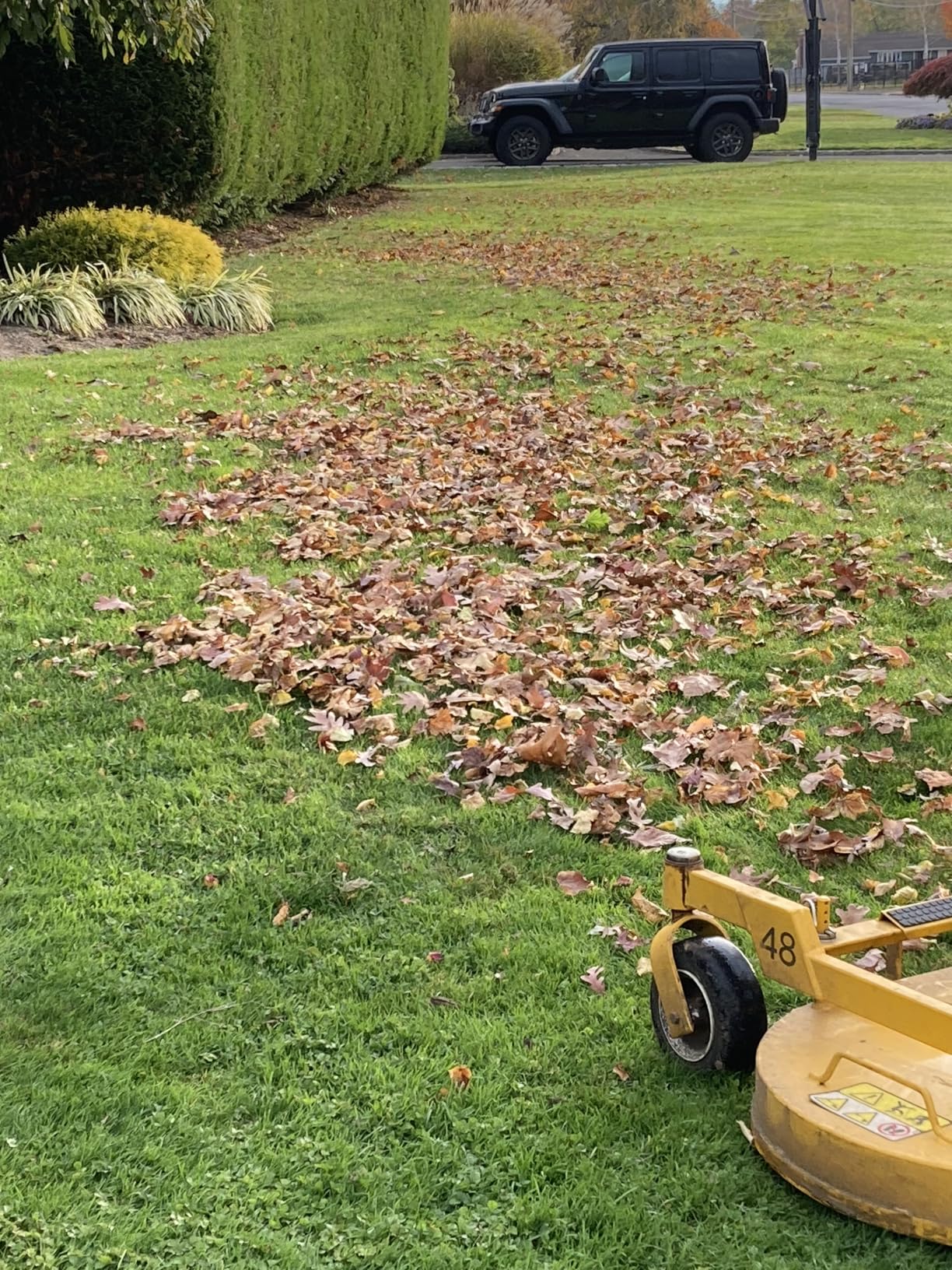
Six high-velocity brushes running at a 5:1 gear ratio is the most aggressive brush package in this lineup, and owners specifically call out that pickup holds up even during tractor turns, when the wheels are off the ground and a lesser brush slows down. The 20 cu ft hamper with a 42-inch width means a large yard can be cleaned in one or two loads, and the Twist-Lock height adjustment is engineered to stay where you put it over uneven terrain rather than creeping.
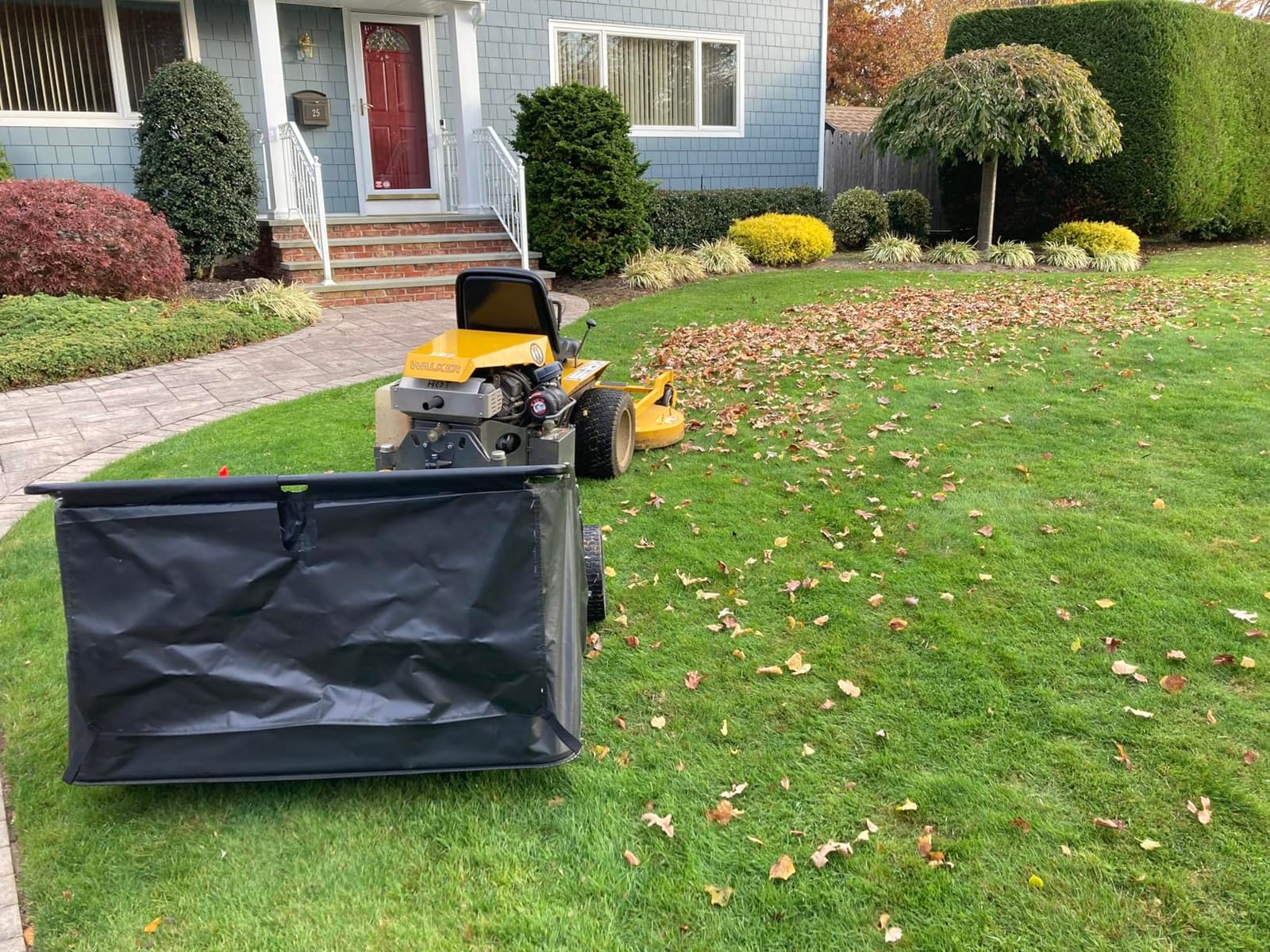
The full-swing hamper empties by pull cord and T-handle from the seat, and collapsible hamper braces plus upright storage keep the footprint manageable. Brinly’s customer service drew explicit praise for shipping a replacement part at no charge outside the warranty window, which is worth something on a machine with a thinner review history.
That thin history is the caveat. With 47 reviews, this is the least-proven sweeper here, and the sentiment is positive but thin. Assembly is the headline drawback, with multiple reviewers needing a YouTube video to get the hamper and tow bar together, and a one-star review reacting purely to the bad directions. Several also question the durability of hopper fabric that fits very tight, which also makes one-handed dumping of a heavy grass load harder.
Who should buy the Brinly 42-Inch Tow-Behind
It suits owners with a riding mower who want maximum brush aggression and large capacity in a compact 68-pound package. The Twist-Lock height setting is genuinely useful on yards with roots and ruts, and the seat-side dumping setup suits anyone with a bad back who does not want to climb down. If you dethatch as well as sweep, the six-brush roll is built for it.
Where the Brinly 42-Inch falls short
Plan for assembly, and treat it as a two-hour job with a video open. The review base is small, so there is not a long ownership record to reassure you about multi-season durability, and the tight hopper fabric is questioned. The collapsed package still takes up real storage space, which matters if your shed is already full.
7. Scotts 26-Inch Push Lawn Sweeper – Best for Light Dry Cover
Scotts Outdoor Power Tools LSW70026S 26-Inch Push Lawn Sweeper, Black/Green
26 inch sweep
3.6 bushel removable bag
Adjustable brush height
No power source
Pros
- Removes 90 to 100 percent of leaves with parallel passes
- Light and quiet with nothing to fuel or charge
- Assembles in about 30 minutes
- Bag lifts and tips for emptying
Cons
- All-plastic frame wobbles side to side
- Bag brackets and crossbar break within a season or two
- Pushes dense piles around instead of collecting them
The Scotts is the cheapest way to cover a lot of ground on a small flat lawn with light dry cover, and the technique is what unlocks it. Owners who use straight parallel passes with a deliberate overlap report 90 to 100 percent leaf removal and a genuine cut in hours of raking. The 26-inch width and adjustable brush height handle both lawn and hard surfaces, and there is no fuel, cord or battery to service.
What divides owners is yard size and debris depth, not quality of idea. On moderate yards with deep leaf blankets, twigs or uneven soil, the same machine is described as overpriced and ineffective, needing three or four passes and an emptying after every two. Durability complaints are specific and consistent: the all-plastic hopper brackets break, sometimes on the first bag removal, the bag channels and the crossbar pop out of place on their own, and a replacement bag is sold separately.
Height must be adjusted by hand for each patch, and there is no handle-height adjustment, so the same setting serves every user. Two-year manufacturer coverage is the shortest warranty among the products we looked at.
Who should buy the Scotts 26-Inch Push Sweeper
It works for small, flat, well-maintained lawns with light dry leaf cover, and for people who want frequent touch-ups rather than a single big cleanup. It is easy to maneuver and empties by lifting and tipping the whole machine, which makes it a good apartment and small-lot option. If the goal is to avoid mower bagging entirely, this does that job on a modest lawn.
Where the Scotts 26-Inch falls short
It pushes dense piles around rather than collecting them, so it is the wrong tool for a mature oak or a heavy drop. The all-plastic chassis feels flimsy and the frame wobbles, and the bag hardware is the component most likely to end the machine’s usefulness. On anything larger than a small lot, the 3.6-bushel bag means emptying so often that the time saving disappears.
8. Gardena 20.5-Inch Lawn and Leaf Collector – Best Small-Yard and Long-Term Pick
Gardena Manual Lawn and Leaf Collector Sweeper, Large Bag – 03565
20.5 inch sweep
3.2 cu ft mesh hopper
Foldable frame
5 year warranty
Pros
- Removes 90 to 95 percent of leaves in two passes
- Cuts raking time roughly in half
- Light enough for a child to push
- Folds for storage against a shed wall
Cons
- Only about 8.5 cm of clearance beyond the wheels
- Small hopper fills fast and the brace hampers dumping
- Poor at grass despite the product name
The Gardena is the one push machine here with a warranty worth reading: five years, plus multilingual illustrated instructions and long-term availability of replacement parts. That matters because the internal brush roll is replaceable, and owners report the machine cutting several hours of raking down to roughly 30 to 90 minutes on a typical yard once the height is dialled in correctly. It is light enough for a child to push, which tells you how much easier it is on a back than a rake.
The height adjustment is the entire learning curve. Set it too high and the machine pushes leaves ahead of itself; set it right and pickup reaches 90 to 95 percent within two or three passes. The adjuster screw can also loosen on uneven soil, so re-check it mid-job. It handles lawns, artificial turf and hard surfaces, which is broader than most competitors claim.
Capacity is the main functional limit, with a 3.2 cu ft hopper that needs frequent emptying and a center brace that makes dumping awkward. The roughly 8.5 cm of clearance beyond the wheels means it cannot collect along fences and edges at all. Despite the name, it is poor at grass, and Spanish moss, string-like debris and long twigs wrap around the brush roll.
Who should buy the Gardena Lawn and Leaf Collector
It is a strong choice for a small lot, a courtyard or a garden with artificial turf where no tractor fits. Pick it if the five-year warranty and the availability of spare brush rolls matter to you more than raw width. It folds up for vertical storage against a shed wall, which solves the storage problem for most people who only use a sweeper for a few weeks a year.
Where the Gardena 20.5-Inch falls short
The 20.5-inch width means a lot of passes on anything but a small lawn, and the small hopper fills quickly. You will always finish edges and fences with a rake or blower. If your yard is large or your debris is stringy, choose a wider machine with a bigger hopper instead.
What r/lawncare Owners Say About Lawn Sweepers
The most honest discussion of lawn sweepers is not on a retailer site. A r/lawncare thread asking whether lawn sweepers are worth it ranks on the first page for this search, and the tone there is skeptical. That skepticism is fair, and it is worth answering directly rather than ignoring.
The recurring objection is that a sweeper is a marketing gimmick rather than a real time saver. In practice, the owners who report that it is a gimmick are almost always describing a mismatch: a small 7 cu ft hopper on a half acre of oak, or a push sweeper on ground that is not flat and level. The same people who match width and capacity to their yard report that the machine works exactly as advertised, and one owner running the larger metal VEVOR push version reports collecting leaves in less time and with less effort than manual cleanup, with no meaningful caveats on a small yard.
Three other points come up repeatedly in those discussions. First, the consensus posture is that a sweeper is the right second tool: it is not a replacement for a rake or blower, it is what you use to collect across open turf at speed while the rake handles beds and corners. Second, owners trust spec transparency far more than brand, and a stated brush-to-wheel ratio with a real hopper volume are the credibility markers, which is why listings that quietly omit the ratio make people nervous. Third, frustration with assembly instructions and thin hopper fabric is the most common post-purchase complaint, and it matches what we saw in the review data.
Leaves also arrive in waves rather than all at once, and that is the argument people make for keeping a machine rather than renting or reaching for the rake. Multi-week comments note that these machines keep working across the season but require the hopper emptied after every use, and that the brush adjustment matters more than any other setting.
Tow-Behind or Push: Which Lawn Sweeper Do You Need?
The deciding question is whether you already own something to tow. A tow-behind needs a riding mower, lawn tractor or zero-turn, and it delivers a sweeping path roughly twice as wide as a push sweeper, which is the difference between one and two passes. If you do not own a tractor, the decision is made for you.
Under about a quarter acre on flat ground, a push sweeper with a 20.5 to 26 inch width is genuinely viable. From a quarter acre up, or on any yard with real tree cover, the walk-behind math stops working: you cover a fraction of the ground per pass and stop to empty far more often, so the job takes longer than the raking it replaced. If you already tow a mower, a 42-inch tow-behind is the sensible default.
Sweep width is also the number most people overthink. Matching the sweeper width to your mowing deck width is a nice idea, but only a few of these machines have an offset drawbar, which is what actually allows sweeping and mowing in the same pass. Measure your real open turf area, not your property line, and buy to that. If you would rather skip mowing entirely, our robot lawn mower guide covers that option.
How to Sweep Leaves Well With Any of These Machines
Sweep dry leaves. This is the single most validated technique claim in owner discussions, and it is the one most often ignored. Wet leaves mat down, ride up over the brushes and clog the chute, and a sweeper that works beautifully on a dry Saturday does nothing useful on a wet one. Sweep the day the leaves fall, not the day after the rain.
Tow at 3 to 5 mph, no faster. The gears multiply wheel speed, so pace sets brush tip velocity. Walking or driving slower than you think means the bristles do not spin fast enough to lift flat leaves, and owners who rush a pass report the machine pushing debris instead of collecting it. Set the brushes to touch the lawn lightly, roughly half an inch into the canopy, using the height lever or knob as the first thing you adjust.
Overlap passes rather than crossing tracks. Two parallel passes with a small overlap collect far more than one pass followed by a cross pass, and the bags of the push models specifically work best when you change direction to catch what the first pass missed. When you hit a deep pile, stop and windrow it into a line first, then run the sweeper along the windrow so the brushes see a steady stream instead of a wall.
Empty before the bag packs rather than after. A full bag of damp material is dramatically heavier than a full bag of dry material, and owners on both tow-behind models report the extra drag straining lower-powered mower transmissions on hills. Clear the chute of debris at the end of each session, and do a walk of the lawn first to pick up sticks, rocks and pinecones, because a sweeper is not a stick collector.
What to Look for When Buying a Lawn Sweeper
Five specs decide a lawn sweeper, and three of them are numbers most listings bury.
Brush-to-wheel ratio. This is the multiplier that determines how fast the bristles spin relative to the ground. A higher ratio lifts flat leaves rather than letting them slide underneath. Look for 5:1 or better; Agri-Fab publishes 5.6:1, Brinly 5:1 and Ohio Steel 4.5:1, while most push listings publish nothing at all, which is a reason to be cautious with cheap models.
Hopper capacity in cubic feet. Dry leaves fill a hopper by volume, not weight, which is why a big bag matters more than most shoppers expect. The Agri-Fab 28 cu ft, Ohio Steel 22 cu ft and Brinly 20 cu ft bags finish a big yard in a handful of stops. The MAXLANDER 12 cu ft, VEVOR 7 cu ft and the small push bags generate the emptying routine that owners most often complain about.
Sweep width against your lawn. A 42 or 44 inch tow-behind covers a typical 21 or 22 inch deck in two passes. A 20.5 inch push sweeper needs many more, and that is the reason the narrow models frustrate people on anything but a small lot. Buyers routinely over-focus on width and under-focus on capacity.
Brush height adjustment that locks. The adjuster is the setting owners say matters more than any other. Look for multiple locking positions and a mechanism that holds position over uneven ground; the Brinly Twist-Lock and the MAXLANDER tool-free lever both do this well, while some push models require a manual reset for each patch.
Storage footprint and warranty. You will use this machine for a few weeks a year, so where it lives matters. The Brinly and Ohio Steel fold down, the Gardena folds to vertical storage, and the Agri-Fab is simply large. Warranties range from two years on the Scotts to five on the Gardena, and Ohio Steel and Agri-Fab each carry three.
Two more things are worth checking before you buy. A dump rope or handle reachable from the seat saves a great deal of climbing on and off a tractor. And a replaceable brush roll, as offered on the Gardena, extends the life of a machine you only run seasonally.
Sweeper, Rake, Blower or Leaf Vacuum?
None of these replaces the others, and pretending otherwise is the main reason people get disappointed. A leaf blower is the fastest tool for moving dry debris off a surface into a pile, and it is the right tool for beds, edges, stairs and corners where nothing with wheels can go. A rake is slower but reaches under shrubs and along fences, and it handles the debris a sweeper pushes around.
A mower bagger is a different proposition again. It captures what the deck lifts, which is useful for grass clippings and for light leaf cover in the same pass, but it clogs easily on heavy leaves and wet material. A sweeper is the only one of the four built to collect across open turf at speed without an engine, and it collects rather than merely relocates.
Our verdict: own a sweeper and still keep a blower and a rake. The sweeper earns its place on the open lawn, the blower handles the edges, and the rake finishes the corners. If you are planning fall overseeding work afterwards, clear the leaf mat first and read our lawn aerator guide for the next step.
Frequently Asked Questions
Do lawn sweepers really work on leaves?
Yes, on dry leaves over open, level lawn. The wheels drive the brushes through a gear ratio, and the spinning bristles comb leaves out of the grass canopy and throw them into the hopper. Dry leaves on a maintained lawn are the condition these machines are built for; wet leaves, dense mats, sticks and edges are not.
Do lawn sweepers work with wet leaves?
Poorly. Wet leaves mat down, ride up over the brushes and clog the chute, and owners on r/lawncare describe the machine doing nothing useful on a damp lawn. The recovery is to let them dry, sweep in stages as they fall, and use a blower to move the wet bulk to a pile you can collect once it dries.
Which is better for my yard, a lawn sweeper or a leaf blower?
Both, because they do different jobs. A blower is faster for moving dry debris off hard surfaces, out of beds and along edges, and it relocates rather than collects. A sweeper collects across open turf at speed without an engine and without bending. A rake still finishes corners of beds that neither tool can reach.
What is the best commercial grade lawn sweeper?
Among the machines we compared, the Ohio Steel 4222V2 is built closest to commercial duty: alloy steel construction, sealed ball bearings on the brush axle, semi-pneumatic wheels and a 22 cu ft hopper that handles sticks, Spanish moss and pine needles. The Agri-Fab 44-Inch is the stronger all-round choice for dry leaf volume.
Can a lawn sweeper pick up pine needles, acorns and grass clippings?
Dry pine needles, small acorns and grass clippings are all within reach of a properly adjusted sweeper, and several owners report good results. What these machines cannot collect is long sticks, rocks, pinecones, string-like debris such as Spanish moss, and leaves that are wet or matted down. Walk the lawn first to remove the large debris.
What size lawn sweeper do I need?
Under a quarter acre on flat ground, a push sweeper with a 20.5 to 26 inch width works. From a quarter acre up, or on any yard with heavy tree cover, you want a tow-behind with at least 20 cu ft of hopper capacity, because dry leaves fill a bag by volume. Match the width to your real open turf area, not your property line.
Are lawn sweepers worth it?
They are worth it when the sweep width and hopper capacity match your lawn and your leaf volume, and you sweep dry material at 3 to 5 mph. Owners on r/lawncare describe the machines as gimmicky mostly when a small hopper is fighting a heavily wooded yard. You still need a rake and a blower for beds, edges and corners.
The Bottom Line
For most people with a tractor and a tree-heavy yard, the Agri-Fab 44-Inch Tow-Behind with its 28 cu ft hopper and 5.6:1 brush-to-wheel ratio is the best lawn sweeper for leaves, and it is our top pick for 2026. Small lot with no tractor, the VEVOR 26-Inch covers more per pass than most push models at a cost that makes it an easy decision, while the Gardena wins on warranty and replaceable parts. For sticks, moss and heavy southern debris, the Ohio Steel 4222V2 is the one that holds up.
Match the width to your turf, buy hopper volume over width, sweep only when the leaves are dry, and keep the rake and blower for the edges. If you want help choosing the tow vehicle, our electric lawn mower guide covers the walk-behind end of the range.