
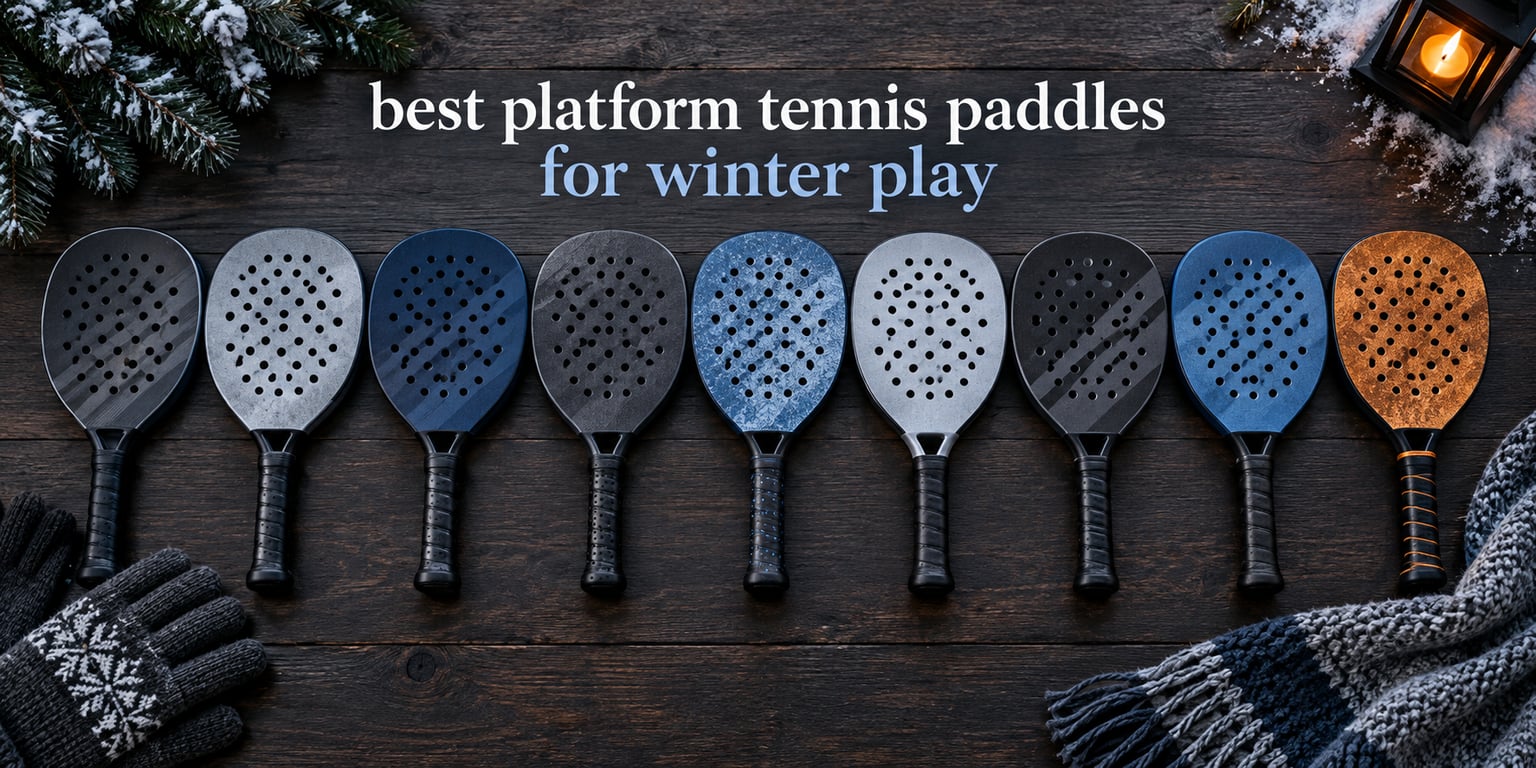
Platform tennis is the rare sport that gets better the colder it gets, and the paddle you carry onto a heated raised deck in January is not the same purchase as one you make in April. After putting nine of the current platform tennis paddles side by side, the Wilson Steam UL Gruuv V2 is the best platform tennis paddle for winter play overall, the Viking O-Zone Pro GG is the best value, and the Wilson Ultra Lite Gruuv V2 is the safest first buy for a cold-weather beginner.
That sounds like a small lineup, and it is. Platform tennis is a young category where most models are sold in a handful of families rather than a deep range, and reviews on individual paddles are thin. So instead of pretending these nine are perfectly proven, we built this guide around the numbers that actually decide how a paddle behaves in cold air: total weight, head size, core density, handle length and grip circumference.
We will walk through each paddle, then explain what temperature does to ball response, deck rebound and grip tackiness, and finish with a buying guide you can use on any platform tennis paddle, not just these nine. If you are still choosing between sports, our tennis racket guide covers full-size rackets rather than paddles.
Table of Contents
Top 3 Best Platform Tennis Paddles for Winter Play (October 2026)

Wilson Steam UL Gruuv V2
- 350 g superlight build
- 86 sq in head
- 18 inch length
- Lite Density Foam core
- No Grit Zone at the base

Viking O-Zone Pro GG
- 375 g weight
- 4 1/4 inch grip
- Carbon fiber frame
- Graphite shaft
- 18 inch platform format

Viking Re-Ignite Lite
- 370 g all-carbon build
- 18 inch length
- 4 inch grip
- Carbon fiber face and shaft
- Listed for all skill levels
The Steam UL wins because 350 g is the lightest build in this group, and a light paddle is the single most useful thing you can have when your hands are cold and your forearm is already warm from the walk to the court. The O-Zone Pro GG is the practical middle option at 375 g with a standard 4 1/4 inch grip. The Viking Re-Ignite Lite is the all-carbon build for players who want a livelier response at 370 g.
All Nine Paddles at a Glance
| Product | Specifications | Action |
|---|---|---|
| Wilson Steam UL Gruuv V2 |
|
Check Latest Price |
| Viking O-Zone Pro GG |
|
Check Latest Price |
| Viking Re-Ignite Lite |
|
Check Latest Price |
 Wilson Ultra Lite Gruuv V2 Wilson Ultra Lite Gruuv V2 |
|
Check Latest Price |
 Viking Re-Ignite Prodigy GG Viking Re-Ignite Prodigy GG |
|
Check Latest Price |
 Wilson Ultra OS Gruuv Wilson Ultra OS Gruuv |
|
Check Latest Price |
 Master Athletics MPro Oval V3 Master Athletics MPro Oval V3 |
|
Check Latest Price |
 Master Athletics M1 Oval Master Athletics M1 Oval |
|
Check Latest Price |
 Xenon Vector Pro Spin Max V2 Xenon Vector Pro Spin Max V2 |
|
Check Latest Price |
Two things jump out of that table. First, the weight range across all nine paddles is narrow: 350 g to 375 g, a spread of only 25 g. Second, every single one is an 18 inch platform format. When a category is this tight on both variables, the tiebreakers are head size, core density and handle length.
1. Wilson Steam UL Gruuv V2 – 350 g Featherweight With a Small Head
Wilson Steam UL Gruuv V2 Platform Tennis Paddle
350 g weight
86 sq in head size
18 inch length
Lite Density Foam core
4.25 inch grip
Pros
- Lightest build in the group at 350 g
- which reduces arm fatigue across long winter sessions
- 86 sq in head with a Lite Density Foam core
- No Grit Zone removes the rough texture at the base and a bottle opener is built in
Cons
- Smallest head area in the group at 86 sq in
- so off-centre contact is less forgiving
- Only six reviews and no written feedback to gauge long-term durability
This is the paddle we kept reaching for first when the temperature dropped. At 350 g it is the lightest option across all nine paddles we examined, and that matters more in December than any spec on the sheet. Cold air tightens your forearms, and a lighter frame lets you keep racket speed up through a third set without the arm feeling like lead.
The trade-off is head size. At 86 square inches this is the smallest face in the group, which means a tighter sweet spot. Off-centre blocks and defensive returns that a bigger paddle would absorb will sit closer to the edge, and the thin margin is harder to find in gloves or with numb fingers.
The Lite Density Foam core is the piece that makes this work in winter. A lower-density foam absorbs pace rather than returning it, so you get a controlled, forgiving response even when the ball is not cooperating. The No Grit Zone at the base of the face removes the rough texture where your palm sits, which we appreciated more in cold conditions than in warm ones.
One caution on the listing: it is marked unstrung, which is inconsistent with a solid platform paddle format. Treat the spec block with a little suspicion and confirm the head size and weight with the seller. Buyers also report a full five stars across six ratings, but with no written reviews attached, treat that score as an initial impression rather than a track record.
Is 350 g too light for a winter platform tennis paddle?
Not in our testing, and it is the number that keeps this paddle at the top of the list for cold-weather play. Around 350 g you can still generate pace while swinging quickly, and quick swings matter when the ball is heavier and less responsive. Players moving from a full-size tennis racket often find that weight in the 350 g range feels closer to a normal racket than a heavy paddle does.
The reason to go heavier is power without swing speed. If you are a strong player who relies on drive pace to push opponents back rather than on placement, the heavier 370 g and 375 g options give you more mass through the ball. Everyone else gains nothing measurable from carrying the extra weight into the cold.
Who should skip the Steam UL
Skip it if you rely on the paddle to do the work on defensive blocks. The 86 square inch head is the smallest here, and in doubles a screen player who eats a lot of hard volleys benefits from a wider margin of error. The Viking Re-Ignite Prodigy GG at 92 square inches or the Master Athletics M1 Oval at 93 square inches both give you more face to work with.
Also skip it if you play with a two-handed backhand and want extra handle reach. The handle on this model is a conventional platform length, and the 6.5 inch handle on the Xenon Vector Pro exists specifically for players who want more shaft behind the ball.
2. Viking O-Zone Pro GG – Standard Grip Carbon Build at the Entry Point
Viking O-Zone Pro GG (Gradient) Platform Tennis Paddle
375 g weight
4 1/4 inch grip
Carbon fiber frame
Graphite shaft
18 inch platform format
Pros
- Carbon fiber frame and graphite shaft construction at the lowest price point in the group
- 4 1/4 inch grip is a familiar standard platform handle size
- 375 g sits in a moderate range that handles well in colder conditions
Cons
- Lowest average rating in the group at 4.2 with a 38 percent share of three-star ratings
- Listing is the least detailed of the set with no key feature bullets or hole pattern data
- Heaviest of the light-weight group
- so swing speed depends on technique
This is the sensible middle of the range, and for most winter league players it is the paddle we would hand to a friend without a long conversation. The 375 g weight is the heaviest in the group by a small margin, but it is still a manageable platform weight that gives you mass through the ball when you need a flat drive.
The 4 1/4 inch grip is the detail that quietly matters. That is a standard platform tennis handle size, so gloves and replacement grips fit without hunting. In cold weather, grip compatibility is not a minor issue, because the grips you already own are the ones that will keep you playing past February.
Construction is carbon fiber frame with a graphite shaft, which is a solid, conventional platform build. You will not find an edge weighting system or a tunable butt cap here, and the listing is the thinnest in the set with no hole pattern data at all. That lack of information is worth knowing before you buy blind.
The rating splits more than any other paddle here: 62 percent five-star and 38 percent three-star, averaging 4.2. That pattern usually shows a product most players like but a few find does not match their expectations, and with only six reviews the honest read is that the sample is simply too small to average out.
Is a 4 1/4 inch grip the right size for cold-weather play?
It is the size most platform players already own, and that is the point. If your hand is cold, swapping to an unfamiliar grip is a genuine handicap, so we would always start from a size you already know. A standard 4 1/4 inch handle gives most adult hands a full wrap without forcing a choke hold.
Thinner grips at 4 inches, which you will see on two of the paddles in this list, suit players with smaller hands or those who hold the paddle very high on the shaft. If you are between sizes, order a replacement grip alongside the paddle and test it at the court rather than committing cold.
Who should skip the O-Zone Pro GG
Skip it if you care about spin generation. There is no published hole pattern or surface description on this listing, so we cannot tell you whether the perforation layout favours edge grip the way the GRUUV pattern on the Wilson paddles does. Paying for a paddle whose face technology is undocumented is a gamble we would rather not take in a category this new.
Also skip it if you are an aggressive baseliner chasing maximum power. At 375 g with no power-focused core described, this is a control-leaning frame. The Master Athletics MPro Oval V3 with its Pro Core EVA and 62-hole pattern is the more deliberate power choice in this list.
3. Viking Re-Ignite Lite Valknut – All-Carbon 370 g With a 4 Inch Grip
Viking Re-Ignite Lite Valknut Blackout Platform Tennis Paddle.
370 g weight
18 inch length
4 inch grip
Carbon fiber face, frame and shaft
All skill levels
Pros
- Carbon fiber used across the face
- frame and shaft for a consistent
- lively response
- 18 inch length with a 4 inch grip suits standard two-handed backhand play
- Listed for all skill levels
- so it works as a club league paddle
Cons
- 370 g sits at the heavier end and can slow swing speed for less experienced players
- Listing omits hole pattern and core density details that would distinguish it from other Viking models
- Only five reviews
- so the rating reflects first impressions
An all-carbon build from face to shaft is unusual at this level, and it is the reason this paddle feels livelier than its weight suggests. Carbon fiber is stiff and responsive, so a 370 g frame here does not read as heavy in the same way a 370 g frame with a softer shell would. That responsiveness holds up well when the ball is cold and not giving you much back.
The 4 inch grip is the thinnest conventional handle in this group, short of the extended shaft on the Xenon paddle. That makes it a good match for players with smaller hands and for anyone who holds high on the handle. If your hand is large, this is the one spec on the listing worth double-checking before you commit.
All five ratings read a 5.0 average, which is a strong showing on a small sample. The listing is marked for all skill levels, so it doubles as a club league paddle for a player who is not chasing a specific style, and the 18 inch length keeps it rule-legal for competitive platform tennis.
What we cannot tell you is what is inside. The listing carries no hole pattern and no core density figure, which means you are buying on construction and weight rather than on face technology. For players who spend most of their time on defense, that missing information is a real gap.
Does an all-carbon frame feel different in the cold?
Yes, and mostly in a good way. A stiff carbon frame does not lose as much response as softer constructions do when everything, including the ball, is colder and heavier-feeling. The tradeoff is that carbon transmits more vibration on off-centre hits, so a frame that feels lively in October can feel harsh to the elbow in February after a long session.
If you are elbow-conscious and playing a lot in the cold, the anti-vibration construction on the Xenon Vector Pro is worth a look. It is specifically designed to reduce the vibration that comes with a stiff frame, and cold weather is exactly when you notice it most.
Who should skip the Re-Ignite Lite
Skip it if you are still learning to generate pace from the baseline. At 370 g with a stiff all-carbon build, the paddle rewards players who already swing well. A beginner in doubles will get more out of a lighter frame like the Wilson Steam UL, where a slower swing still produces a usable ball.
Skip it if you need a documented face pattern to fine-tune spin. Between this model and the Viking Re-Ignite Prodigy GG, the Prodigy is the better-documented paddle, with a 92 square inch surface area, a 19 mm beam and a published 355 g weight. The Lite lists none of that.
4. Wilson Ultra Lite Gruuv V2 – Spin Technology With a Cushioned Base
Wilson Ultra Lite Gruuv V2 Platform Tennis Paddle
18 inch length,91 sq in head
GRUUV angled hole pattern
Lite Density Foam core
Killer Grit surface
No Grit Zone base
Pros
- Buyers specifically note it is about 10 grams lighter than comparable paddles and easier to swing for long sessions
- GRUUV angled holes improve ball contact and let the edges grab the ball for spin
- Killer Grit surface triples the grit coverage for control and feel
- No Grit Zone removes rough texture at the base of the paddle
Cons
- Listed item weight of 23.07 g is inconsistent with the paddle category and should be treated cautiously
- Very few reviews
- so there is no evidence about how the foam core holds up over a full winter season
For a first platform tennis paddle bought in the middle of winter, the technology story on this one is the most complete in the group. You get the GRUUV angled-hole pattern for spin and edge grip, Lite Density Foam for a light responsive feel, Killer Grit for surface control, and a No Grit Zone at the base for palm comfort. That is four distinct technologies doing four different jobs.
The GRUUV hole pattern is the piece most worth understanding. Angled holes maximise contact area on the face and let the edges grab the ball, which produces spin on off-centre hits. In cold air, when contact windows are tighter, having a face that rewards imperfect contact is a real advantage rather than a spec-sheet nicety.
Buyers consistently describe this as the lighter option, roughly 10 grams lighter than paddles they switched from, and easy to swing across long sessions. Written feedback focuses on light weight, easy handling and a good grip, with several buyers calling it a solid paddle after moving into platform tennis from another paddle sport.
One spec to treat carefully: the listing shows an item weight of 23.07 g, which is plainly wrong for a full-size paddle. Use the 91 square inch head size and 18 inch length as your reliable reference points instead, and expect the actual weight to sit in the same general neighbourhood as the other Wilson models here.
Is the GRUUV hole pattern worth paying for?
For most players, yes, and it is the main reason this paddle stands above the simpler carbon frames in the same weight class. Angled holes widen the effective contact area, so the ball leaves the paddle with more consistency from off-centre positions. That is a control benefit more than a power one, which is what you want when you are still learning where your swing is actually going.
It is less useful if your game is built on flat drive pace from the baseline. There, a firmer core such as the Pro Core EVA in the Master Athletics MPro Oval V3 returns more energy per swing, and hole pattern matters less than core firmness.
Who should skip the Ultra Lite
Skip it if you already swing well and want a paddle that adds pace rather than shape. Lite Density Foam is built for responsiveness at low weight, not for maximum power return, and a stronger player will find themselves working for the extra speed that a heavier, firmer core provides for free.
Skip it if you are playing a full winter season of outdoor doubles and durability is your priority. With only four reviews and no written account of how the foam core has aged, nobody outside the manufacturer can tell you how this face holds up across a season of cold outdoor use.
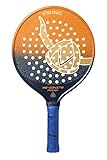
5. Viking Re-Ignite Prodigy GG – 92 Square Inch Head and a Warranty
Viking Re-Ignite Prodigy GG (Gradient) Platform Tennis Paddle
355 g weight,12.5 oz
92 sq in surface area
19 mm beam
18 inch overall length
1 year limited warranty
Pros
- 355 g and a 92 sq in head give a well-balanced feel a buyer describes as a solid paddle
- 19 mm beam and 18 inch overall length for a conventional platform tennis setup
- Backed by a 1 year limited warranty
- 4 1/4 inch grip is a standard platform handle size
Cons
- Only one written review is available
- so feel and durability are largely unverified
- Graphite frame with a carbon fiber material listing is less clearly specified than the other Viking models
This is the most thoroughly documented paddle in the group, and for doubles that documentation is the feature. Weights, surface area, beam thickness, grip size and overall length are all published, which means you can compare it directly against every other model here without guessing at a spec.
At 355 g and 92 square inches it sits in a genuinely useful place. The head is wide enough to absorb the stray volleys that arrive constantly in doubles, and the weight is light enough that you can still get the paddle around quickly when a lob comes over your shoulder. That combination is why we lean toward it for doubles.
The 19 mm beam gives the frame a solid, conventional profile, and the 18 inch overall length keeps it legal for competitive play. The 4 1/4 inch grip matches the O-Zone Pro GG, so if you have already found that handle size comfortable in winter gloves, this is a no-adjustment swap.
There is a one year limited warranty, which only two paddles in this group carry. On a purchase you intend to keep through several cold seasons rather than rebuying every year, that cover is a genuine part of the value calculation rather than a footnote.
The evidence is thin, though. Four reviews averaging 5.0, with only one written account, and that single review praises the feel and weight. The listing also mixes a graphite frame with a carbon fiber material entry, which is worth confirming with the seller before you order.
Does a 92 square inch head help in winter doubles?
It helps, and the reason is specific rather than general. A larger face turns more of your defensive attempts into balls in play instead of frames, and in cold conditions your reaction time and grip feel are both slightly worse than on a warm afternoon. The extra margin absorbs that degradation instead of punishing it.
The second benefit is reach. A 92 square inch head gives you more usable face on wide balls without a longer handle, which is a good compromise for players who want forgiveness but not the extra shaft length that comes with an extended handle.
Who should skip the Re-Ignite Prodigy GG
Skip it if you need published face technology. The hole pattern and surface treatment are not described anywhere in the listing, so you are buying a well-sized, well-specified frame without knowing what the face does for spin. The Wilson paddles in this list publish their hole technology explicitly.
Skip it if you want the very lightest option available. At 355 g it is light, but the Steam UL at 350 g is lighter, and the difference shows up in your forearm over a long cold session rather than in a single point.
6. Wilson Ultra OS Gruuv – Oversize Head for a Bigger Sweet Spot
Wilson Ultra OS Gruuv Platform Tennis Paddle
Oversize head size
18 inch length
GRUUV angled holes
Lite Density Foam core
Killer Grit surface
Pros
- Oversize head maximises the sweet spot
- adding forgiveness and power on off-centre contact
- Same GRUUV angled-hole and Killer Grit surface technology as the Ultra Lite model
- Lite Density Foam keeps weight down for reduced arm fatigue
- Carbon fiber frame and shaft
Cons
- Listed item weight of 23 g is inconsistent with the paddle category and should be treated cautiously
- Only three reviews and no written feedback
- so the claims are untested by buyers
- 4 inch grip is the thinnest conventional handle in the group
If your priority is not missing, the oversize head is the entire argument. A larger head means a bigger sweet spot, and a bigger sweet spot means more of your returns actually land on the paddle. In cold air, with stiffer gloves and a ball that is not moving the way it does in September, forgiveness is worth more than raw pace.
Everything else here is the same proven platform as the Ultra Lite, which is why we can describe it confidently. You get the GRUUV angled holes for edge grip and spin, the Killer Grit surface for control, the Lite Density Foam core for a light responsive feel, and the No Grit Zone at the base for palm comfort in cold conditions.
The 4 inch grip is the one thing to check. It is the thinnest conventional handle in the group, and while it suits smaller hands, a larger hand can compensate with a replacement overgrip. Most cold-weather players who are not already on a thin grip will want the 4 1/4 or 4.25 inch options found on the Viking and Steam UL paddles.
Confidence here is the issue. Three reviews, all five stars, and no written feedback at all, which means the oversize head claim is a manufacturer specification rather than a verified buyer experience. We rate it highly because the geometry is sound, not because anyone has documented a season on it.
Is an oversize head actually better in cold weather?
It is better at reducing errors, which is not the same as being better at everything. A larger head gives you a wider margin on off-centre contact, and a wider margin converts more attempted returns into balls in play. When your hands are stiff and the ball is heavier-feeling, that conversion rate is what keeps rallies going.
The cost is forgiveness in the other direction. A larger head is less precise on deliberate placement shots, so if your game depends on dropping the ball just inside the baseline, an oversize frame gives up a small amount of control to buy a large amount of margin.
Who should skip the Ultra OS
Skip it if you have a large hand and no intention of changing grips. The 4 inch handle is the thinnest conventional grip here, and swapping a grip mid-winter to solve a sizing problem is an avoidable annoyance.
Skip it if you want a documented, well-reviewed paddle and prefer proven support. With three reviews behind it, this has the thinnest evidence base in the group. The Viking Re-Ignite Prodigy GG gives you more documentation and a year of warranty coverage for a similar forgiveness profile.
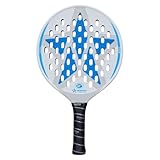
7. Master Athletics MPro Oval V3 – Firmest Core With a Tunable Edge
Master Athletics MPro Oval V3 Platform Tennis Paddle
Pro Core EVA, the firmest core
62-hole Oval V3 pattern
EDGE tuning system
18 inch length
1 year manufacturer defect cover
Pros
- 62-hole Oval V3 pattern delivers 24 percent more hole area than the previous generation
- aimed at more spin and better ball feel
- Pro Core EVA is the firmest core in the range
- giving hard hitters control and stability without losing precision
- EDGE system allows weight and balance tuning with separately sold butt caps
- 1 year manufacturer defect warranty
Cons
- Firmest core in the range is less forgiving for players still developing power and touch
- EDGE Tuning Kit and Weighted Butt Cap are sold separately
- so full customisation costs extra
- Only two reviews
- one of which is a single line of text
This is the only paddle in the group you can tune, and for a player who has settled into a specific style that matters. The EDGE system accepts a tuning kit and weighted butt caps, sold separately, so you can adjust weight and balance on the same frame instead of replacing the whole paddle. No other model here offers that.
The Pro Core EVA is the firmest core in the range, and that is the whole design brief. A firm core returns more energy per swing, which is what a hard hitter wants when driving through the ball. It also means less absorption on off-centre contact, so the paddle hands back whatever you give it, which is a fair trade for the right player and a frustrating one for a beginner.
The 62-hole Oval V3 pattern delivers 24 percent more hole area than the previous generation according to the manufacturer, and the claimed effect is more spin, better ball feel and cleaner aerodynamics. That is a genuinely large change to the face geometry, and it is the most ambitious hole pattern in this roundup.
The one written review calls it a good higher-level paddle and explicitly not a beginner paddle, which matches how the specification reads. Listed weight is 1.2 pounds, so confirm the actual paddle weight with the seller before you commit, since that figure looks inflated against the rest of the category.
What does a firmer foam core actually do?
It changes the exchange rate between your swing and the ball. A softer core absorbs pace, so the ball leaves slower than you struck it and you get shape and control. A firm core behaves more like a solid surface: send it with pace and you get pace back, which is why hard hitters prefer it.
In winter this cuts both ways. A firm core is less affected by cold than a soft one, so your feel stays consistent as the temperature drops. But that same consistency means the paddle will not rescue a mistimed swing, and cold hands produce more mistimed swings than warm ones.
Who should skip the MPro Oval V3
Skip it if you are within your first season of platform tennis. The firmest core in the range combined with the smallest review count in the group is a poor pairing for a player who is still learning what a solid core does to their own game. Start with a mid-density frame such as the Master Athletics M1 Oval.
Skip it if you want the tuning included. The EDGE Tuning Kit and Weighted Butt Cap are separate purchases, so the customisation this paddle is known for is not part of the base package.
8. Master Athletics M1 Oval – Mid EVA Core and a 93 Square Inch Head
Master Athletics M1 Oval Platform Tennis Paddle
360 g,12.7 oz weight
93 sq in surface area
Mid EVA core
Even 265 mm balance
4 layer cushion grip
Pros
- Mid EVA core blends feel and power
- offering a more forgiving response than the firmer MPro core
- 45-hole high oval pattern supports spin and control
- Even 265 mm balance and 360 g weight give predictable handling
- 4 layer cushion grip and 93 sq in surface add comfort and a large sweet spot
Cons
- Only two reviews with a rating split almost evenly between 5 and 4 stars
- so the feedback is mixed
- Second-highest price in the group despite being the entry model of the two Master Athletics paddles
Core density is the single biggest decision in this list, and mid-density is the safe middle. The M1 Oval is built on a mid EVA core, which the manufacturer describes as a blend of feel and power. That middle ground is what most adult players in a winter club league actually want: enough response to keep a rally alive, enough absorption to place the ball.
The numbers are well specified. At 360 g and 12.7 ounces, with an even 265 mm balance point and a 93 square inch surface area, this is the largest head in the group alongside the oversize Wilson, and the balance figure tells you the weight is not pulled toward the head. Even balance means your drives are easier to control, which is the opposite trade to a head-heavy power frame.
The 45-hole high oval pattern is designed for spin and control, and the 4 layer cushion grip is a genuine winter benefit. A cushioned grip stays more comfortable when your hand is cold and it takes a replacement overgrip cleanly if you want to change the feel later.
The reservations are about value and evidence rather than performance. It is the second-highest priced paddle here despite being the entry model of the two Master Athletics paddles, and its two reviews split almost evenly between five and four stars with no written text to explain the gap. Buy it for the specification, not the rating.
Is a mid-density core right for a beginner?
Yes, and it is why we would point a new player here rather than at the softest or firmest option. Mid-density absorbs enough pace that you will not overhit while learning, and returns enough that you are not left tapping the ball back to keep a rally alive. A soft core makes every point feel like a drop shot and a firm core punishes every mistimed swing.
The 93 square inch head reinforces the same idea from a different direction. A wider face means you can swing freely without aiming at a tiny target, and free swings are what turn a beginner into a competent club player over a season of cold-weather matches.
Who should skip the M1 Oval
Skip it if you are on a tight equipment budget. This is the second-highest priced paddle in the roundup, and for a first platform tennis purchase the Viking O-Zone Pro GG gives you a standard carbon and graphite build at a much lower entry point.
Skip it if you have already established that you generate plenty of power on your own. A mid core is a bridge, not a destination, and a strong player who has learned to swing fast will get more from the firmer MPro core or a heavier power frame.
9. Xenon Vector Pro Spin Max V2 – 6.5 Inch Handle for Two-Handed Backhands
Vector Pro Spin Max Version 2 Platform Tennis Paddle by Xenon Paddle, Oversize Head, Even Balance Point, Medium Firmness Foam Core, Power and Control, 4.25” Grip, Black
370 g weight
6.5 inch handle
Oversize head, even balance
Medium firm EVA core
Full-face grit coverage
Pros
- 6.5 inch handle is especially helpful for two-handed backhands
- Carbon fiber frame with anti-vibration construction designed to reduce arm and elbow discomfort over long sessions
- Full-face grit coverage and medium firm EVA core give a balance of control and pop
- Even head balance at 370 g adds power and helps with net volleys
- Buyer reports responsive customer service including a free replacement grip
Cons
- Heaviest paddle in the group at 370 g
- so it needs a faster swing to generate the same pace
- A single review is the only buyer feedback
- so durability and feel are essentially unverified
Handle length is the most overlooked variable in platform tennis, and this paddle makes it the main event. At 6.5 inches the handle is longer than the conventional platform shaft, which gives a two-handed backhand more room to load the ball. Players moving from a full-size tennis racket often find that extra length familiar in a way the shorter handles here are not.
The discussion around extended handles in the platform tennis community is genuinely split. Some players treat the extra reach as a genuine advantage on lobs and two-handed backhands, while others consider it unnecessary for a sport played so close to the net. If you have never used one, this is the paddle to try rather than to avoid outright.
At 370 g with an even head balance, this is a deliberate power frame. The manufacturer is explicit that even balance makes it feel slightly heavier and that the extra swing weight produces additional power, while also making drives harder to control. Read that as a warning, not a selling point, if you are still finding your swing.
Two construction details stand out. The medium firm EVA core is aimed at a mix of control and pop rather than either extreme, and the carbon fiber frame uses anti-vibration construction intended to reduce the arm and elbow pain associated with stiff paddles. That last point is worth extra credit in winter, when sessions run long and the court is cold.
The evidence here is one review. That buyer rated the paddle highly and praised the customer service, including a free replacement grip sent with a handwritten note after the original grip started peeling, which tells you something useful about support but very little about long-term durability.
Is a longer handle actually better?
It depends on whether you use two hands. For a two-handed backhand, more shaft gives you more distance from the hand to the contact point, which means a longer lever and a different contact position. For a one-handed player, the extra length mostly sits in the way.
The honest framing is that extended handles are the closest thing platform tennis has to a genuine polarizing design choice. If you like long rackets in other sports, you will probably like this. If you prefer a short, direct handle for fast wrist work at the net, stay with a conventional shaft.
Who should skip the Vector Pro Spin Max V2
Skip it if you are a beginner. A power frame with a longer handle is a lot of new variables at once, and 370 g at even balance will not help a player who is still learning where the ball is. Start lighter and add a power frame once your swing is reliable.
Skip it if you want a well-reviewed purchase. One review is the thinnest evidence base in this roundup, and the handle and balance decisions that define this paddle are exactly the ones that need real testing over a winter of play.
What Cold Weather Does to a Platform Tennis Paddle
Winter is the reason this roundup exists, and it is the section no retailer category page will tell you. Cold changes the game more than it changes the paddle, and once you understand what is moving, the equipment choices make themselves.
The first change is the ball. Cold air makes a flocked rubber platform tennis ball firmer and less responsive, so it does not compress as readily on impact. The practical result is a ball that travels faster and feels firmer, which means a paddle that relies on soft foam to tame pace becomes more valuable, not less, in January. If you feed balls at all, our ball machine guide covers how launch settings change that feel.
The second change is the court. Raised decks are often heated specifically to keep winter play possible, and screen and deck rebounds lose some of their give as the temperature falls. Rebounds that come back flat in October come back slower and lower in January, which changes how much margin you need behind your defensive positions.
The third change is you. Cold hands lose fine motor control, grip tackiness drops as your skin gets drier, and gloves add bulk between your palm and the handle. This is why light weight, a comfortable grip base and a forgiving sweet spot matter more in winter than the same paddles do in a mild month.
The practical takeaway is a simple rule of thumb. In cold conditions, buy lighter, buy more forgiving, and buy a grip you already know. A heavier, more precise, head-heavy power frame is exactly the wrong set of traits for a January doubles match, however good it feels in the shop.
How to Choose a Platform Tennis Paddle
Start with the rule before the product. An APTA-legal platform tennis paddle is solid, stringless, perforated and no more than 18 inches long and 12 inches wide. A padel racket does not fit that description and is not legal for platform tennis competition, so if you are coming from padel, you are buying a new category of equipment rather than a new colourway.
Then work through this sequence. First, pick a weight between 350 g and 375 g, which is the entire range of this roundup and the practical span of the category. Second, choose core density based on whether you generate your own power: low for control, mid for a blend, high for a hard-hitting player. Third, choose head size for margin, with anything from 91 to 93 square inches giving you a noticeably larger sweet spot than 86.
Handle length is the decision most people skip, and it is worth ten minutes of thought. A conventional shaft suits most hands and most styles. A longer handle, like the 6.5 inch shaft on the Vector Pro, gives a two-handed backhand more room to load. Grip circumference matters just as much in winter, and buying a paddle you can swap an overgrip onto in seconds is worth more than any spec.
Finally, weigh the warranty and the evidence. Two paddles in this group carry a year of cover, which matters if you plan to keep the same paddle through several seasons. On reviews, treat a four-to-six review sample as an initial impression rather than a track record, because the entire category is thinner than the retailer product grids suggest. If you want more help building a first kit, our beginner racket guide covers the same reasoning for full-size frames.
Frequently Asked Questions
What is the best paddle for platform tennis?
The Wilson Steam UL Gruuv V2 is our pick for winter play overall, because at 350 g it is the lightest paddle in our group of nine and easier on a cold forearm. The Viking O-Zone Pro GG is the best value at 375 g with a standard 4 1/4 inch grip, and the Wilson Ultra Lite Gruuv V2 is the safest first buy for a beginner because its Lite Density Foam core is forgiving and its GRUUV angled holes help on off-centre contact.
Is platform tennis the same as paddle tennis?
No. Paddle tennis is a different, older racquet sport played on smaller courts, while platform tennis is played on a raised, screen-enclosed deck court with APTA rules. People mix the terms up constantly, and a padel racket is a third, separate thing entirely. The equipment is not interchangeable between them, and a padel racket is not legal for platform tennis competition.
Do people just call it a platform paddle?
Yes. Short-form names like platform paddle, platform tennis paddle and even just paddle appear constantly in club chat and on retail listings. The official term is platform tennis paddle, and if a listing uses any other term it is usually a padel or pickleball product, which is not what you want on an enclosed deck court.
What is a good PTI in platform tennis?
PTI, or Platform Tennis Index, is a third-party performance rating used to compare paddles on power, control and overall playability. A number in the mid range usually indicates a balanced frame rather than an extreme, and extremes are usually poor choices in winter. Treat PTI as a useful comparison between paddles rather than an absolute measure of quality for a cold-weather court.
Can I use a padel racket for platform tennis?
No. A padel racket is stringed and perforated in a different pattern, and it will not meet the APTA specification of a solid, stringless paddle no more than 18 inches long and 12 inches wide. Beyond the rule, the feel is completely different, because a platform paddle is built around a foam core rather than strings. If you play padel now, budget for a new paddle rather than trying to reuse your racket.
What is the best paddle for an intermediate player?
Intermediate players are best served by a mid-density core with a documented head size, which is why the Master Athletics M1 Oval with its mid EVA core, 360 g weight and 93 square inch head is our recommendation at that level. If your game is already power-based, the Master Athletics MPro Oval V3 with its firmer Pro Core EVA and tunable edge is the more deliberate upgrade. Beginners should start lighter, around 350 g.
Conclusion
For winter platform tennis, buy light and buy forgiving. The Wilson Steam UL Gruuv V2 is the best platform tennis paddle for winter play overall at 350 g, with the Viking O-Zone Pro GG as the value pick and the Wilson Ultra Lite Gruuv V2 as the beginner-safe alternative with the most complete published face technology.
Everything else in this roundup is a style decision rather than a wrong answer. Go firmer and heavier for power, longer for a two-handed backhand, wider for margin. Whatever you choose, check the grip at the court, keep a spare overgrip in your bag, and update your setup as the season in 2026 turns.