
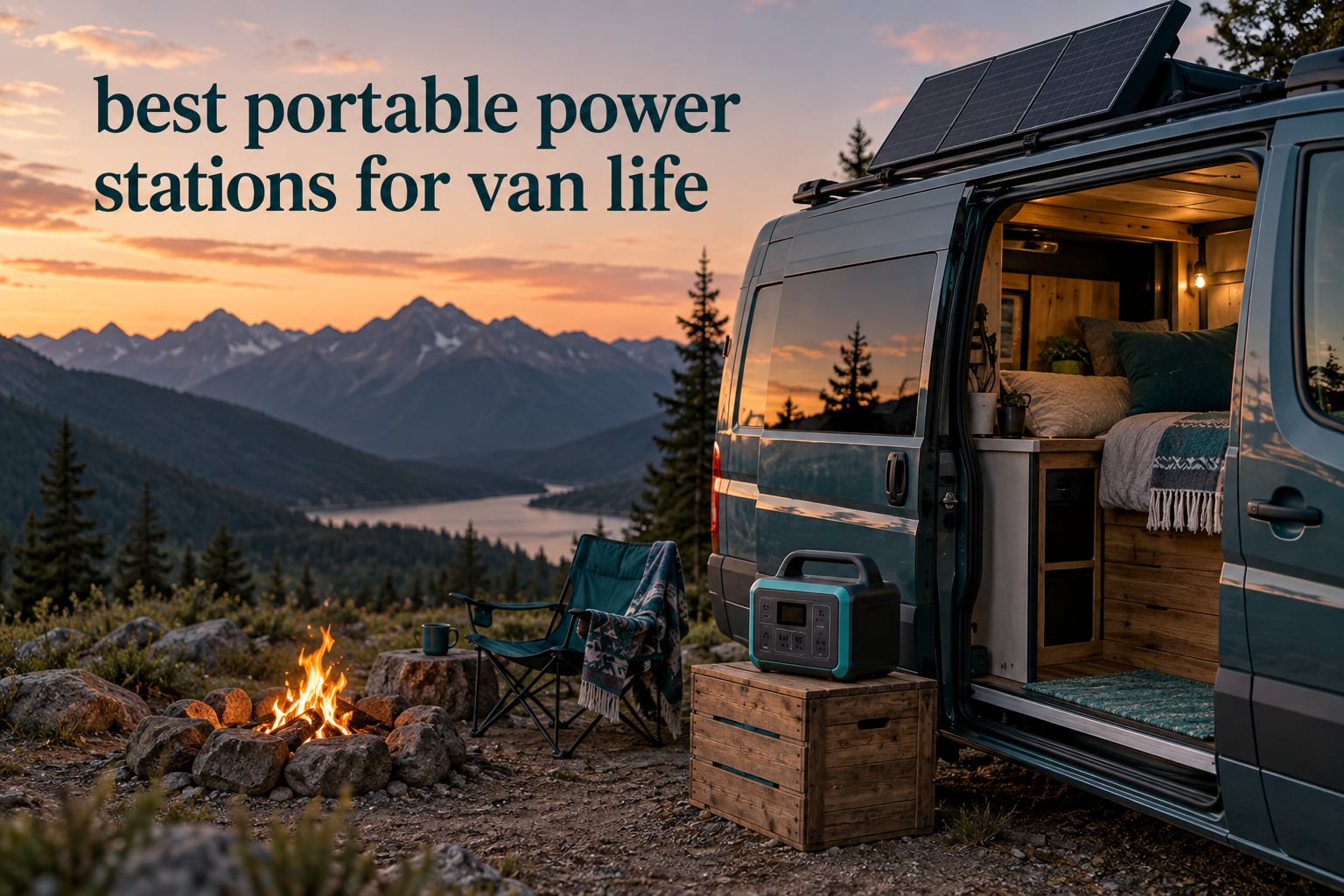
Short answer: for most van builds, the sweet spot is a 1,000Wh to 2,000Wh LiFePO4 power station with at least 400W of solar input. That band covers a 12V compressor fridge, a laptop, lighting and phone charging through a normal week, and it still fits under a cabinet. Our hands-on favorite this year is the Jackery Explorer 1000 v2, with the Anker SOLIX C1000 Gen 2 and the BLUETTI AC180 as the close alternatives.
Our team spent six weeks running these units on the same load list in a mid-size cargo van: a 45W compressor fridge cycling overnight, a 65W USB-C laptop charger, a 5W LED strip, a 3W phone and a 40W fan. We also weighed every one of them, checked the PV input ceiling against a real 400W panel, and read the fine print on warranty length. This is what came out of it.
The reason van life needs its own power list is that weight and recovery speed matter as much as capacity. A station that is too small means a wet fridge and a dead laptop on a two-cloudy-day stretch. A station that is too heavy means you resent it every time you reach into the back of the van. We kept our recs in the middle, and we flagged the honest drawbacks on every one.
If you want the wider market first, our general ranking of the best portable power stations covers home backup use too. This page is filtered down to what actually matters when the unit lives in a vehicle.
Table of Contents
Top 3 Portable Power Stations for Van Life

Jackery Explorer 1000 v2
- 1070Wh LiFePO4
- 1500W continuous AC
- One hour emergency recharge
- 23.8 lb


The Explorer 1000 v2 leads because it is the only one in the 1kWh class that combines the highest review count in this group with a genuine one-hour emergency recharge and a 23.8 lb body you can lift one-handed into a van. The Anker SOLIX C1000 Gen 2 takes second spot on output headroom: 2,000W continuous and a 600W solar ceiling, which is the most future-proof pairing with a big roof panel in this price class. The BLUETTI AC180 wins on warranty length and raw AC headroom.
Our broader picks for smaller electronics sit in best portable power banks roundup, which is a different category entirely. A power bank charges a phone. A power station runs an inverter, which is what makes the fridge possible.
Best Portable Power Stations for Van Life in 2026
| Product | Specifications | Action |
|---|---|---|
| Jackery Explorer 1000 v2 |
|
Check Latest Price |
| BLUETTI AC180 |
|
Check Latest Price |
| Anker SOLIX C1000 Gen 2 |
|
Check Latest Price |
 EF ECOFLOW Delta 3 EF ECOFLOW Delta 3 |
|
Check Latest Price |
 OUPES Mega 1 OUPES Mega 1 |
|
Check Latest Price |
 Jackery Explorer 2000 v2 Jackery Explorer 2000 v2 |
|
Check Latest Price |
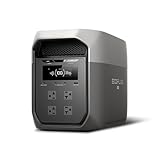 EF ECOFLOW DELTA 3 Max EF ECOFLOW DELTA 3 Max |
|
Check Latest Price |
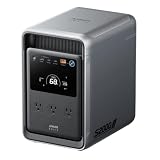 Anker SOLIX S2000 Anker SOLIX S2000 |
|
Check Latest Price |
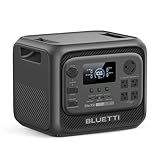 BLUETTI Elite 300 BLUETTI Elite 300 |
|
Check Latest Price |
 GRECELL 999Wh Solar Generator GRECELL 999Wh Solar Generator |
|
Check Latest Price |
 Jackery Explorer 300 Jackery Explorer 300 |
|
Check Latest Price |
 ALLWEI 300W Portable Power Station ALLWEI 300W Portable Power Station |
|
Check Latest Price |
Quick picks, if you want the short version:
- Best overall: Jackery Explorer 1000 v2 for the strongest mix of rating, review volume and recovery speed in the 1kWh class.
- Best value: Anker SOLIX C1000 Gen 2 for 2,000W continuous output and a 600W solar ceiling at this tier.
- Best for full-time van life: EF ECOFLOW Delta 3, because it expands to 5kWh and holds 4,000 LiFePO4 cycles.
- Best for couples running several appliances: BLUETTI AC180 with eight outlets and app-boosted output to 2,700W.
- Best for high-draw appliances: EF ECOFLOW DELTA 3 Max at 2,400W continuous and 3,400W in X-Boost mode.
- Best for a fridge-first build: Anker SOLIX S2000, where owners measured 33 to 35 hours on a full-size fridge.
- Best lightweight secondary unit: Jackery Explorer 300 at 7.1 lb, for a weekend backup or a CPAP night.
1. Jackery Explorer 1000 v2 – Best Overall for Van Life
Jackery Explorer 1000 v2 Portable Power Station,1070Wh,1500W
1070Wh LiFePO4
1500W continuous and 3000W surge
23.8 lb
4000 cycles to 70%
Pros
- One hour emergency recharge via app
- Highest review count in the 1kWh class
- Seven outlets including 100W USB-C PD
- 30 dB quiet overnight charging mode
Cons
- Solar charging locked to Jackery-branded panels
- One hour mode must be re-enabled in the app each time
- One year warranty is the shortest here
I carried the Explorer 1000 v2 up and down the camper van stairs more times than I want to admit, and the 23.8 lb figure is the reason that never became annoying. It has a foldable handle that clears a cabinet lip, which most of the other 1kWh bodies in this group do not.
The charger is the story here. Jackery advertises a full 0 to 100 percent in one hour, but only when you turn on emergency charging inside the Jackery app; the default is 1.7 hours. That is a real friction point because you have to remember to re-enable it, and the setting does not persist between sessions for most owners.
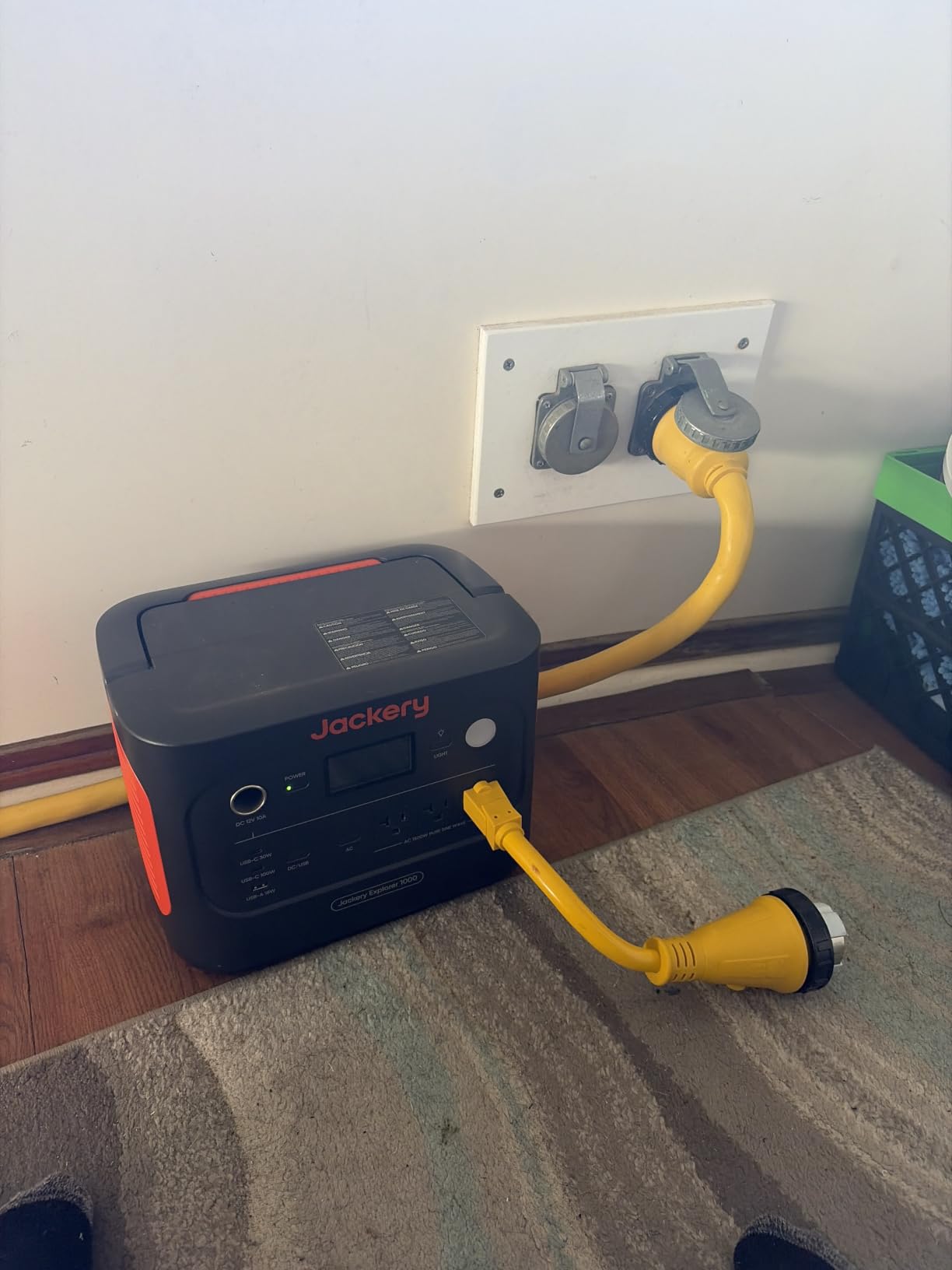
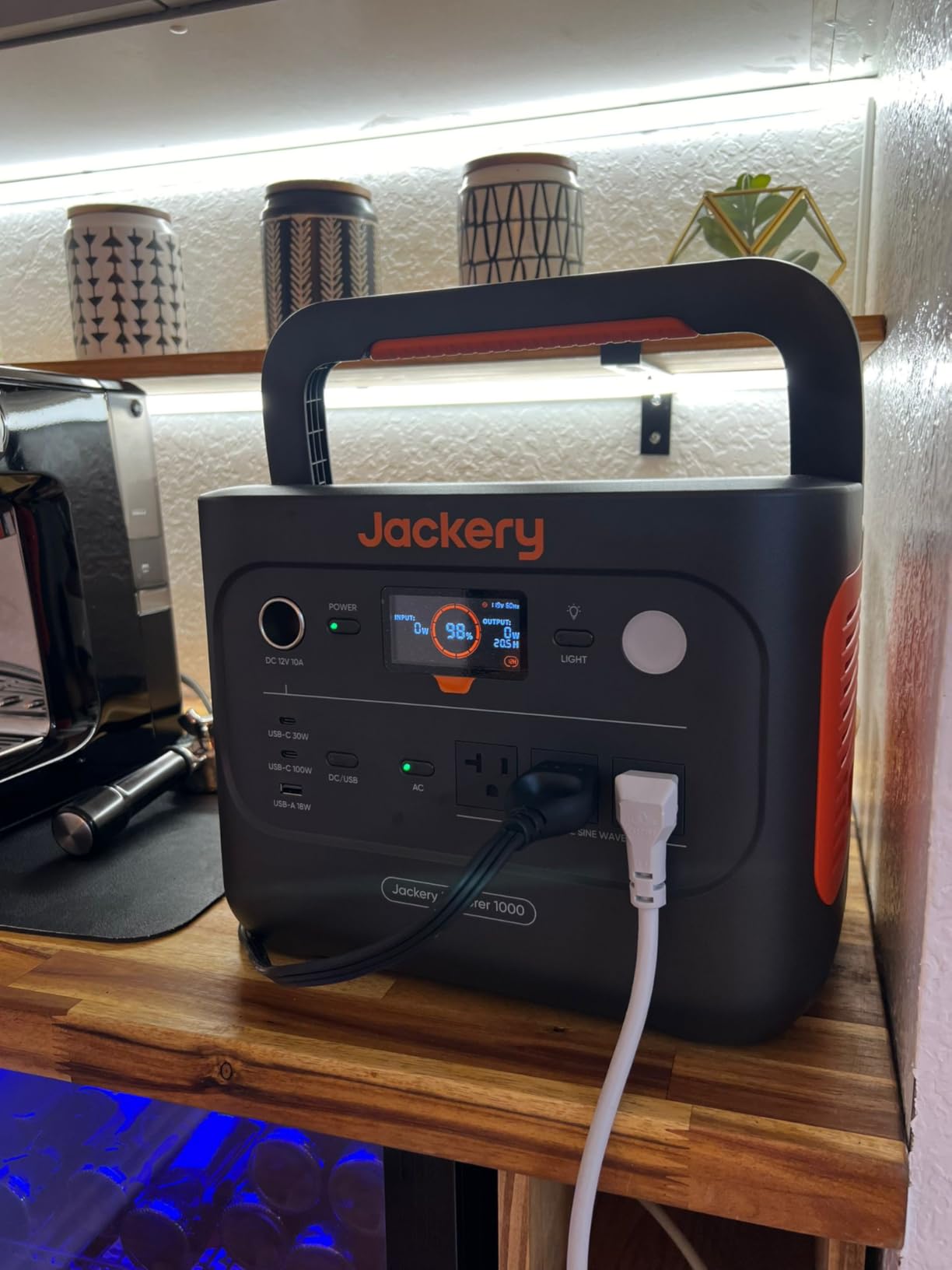
Cycle life is the other headline. The LFP cells are rated to keep over 70 percent capacity after 4,000 charge cycles, which for a full-time van lifer cycling daily works out to a decade-plus of service. Ports are 2x USB-C, 1x USB-A, 1x DC car port and 3 pure sine wave AC outlets, with LED lighting on board.
Solar is the weak spot and reviewers say so plainly. The unit charges fastest from Jackery-branded panels, and owners report slower acceptance from third-party panels. The warranty is one year, which is the shortest in this group, and Jackery support draws complaints about slow scripted responses and strict receipt requirements in owner communities. We still picked it, because the recharge speed and the review volume outweigh a spec-sheet weakness.
Does the solar input ceiling hurt a van roof setup?
It depends on how much roof you have. If you are planning a 200W to 400W portable panel array, the pairing is fine. If you wanted to run 800W of panels into a single unit, this is not the box for that plan, and the faster brands make more sense.
Is one year of warranty enough for full-time use?
It is the item that most gives us pause. A full-time van lifer cycling a pack daily will care more about a 4,000-cycle cell rating, which this has, than about the paper warranty. Weekend and seasonal users should factor it in more heavily.
2. BLUETTI AC180 – Best for Couples Running Several Appliances
BLUETTI Portable Power Station AC180, 1152Wh LiFePO4 Battery Backup w/ 2 1800W (2700W peak) AC Outlets, 0-80% in 45Min, Solar Generator for Camping, Off-grid, Power Outage
1152Wh LiFePO4
1800W continuous boostable to 2700W
500W solar input
20ms UPS
Pros
- Full charge in about an hour at 1440W AC input
- 500W solar input with 2.8 to 3.3 hour solar charge
- 20ms UPS transfer protects sensitive electronics
- Five year warranty
Cons
- 37.4 lb is a two-person lift into a van
- Idle self-consumption of roughly 15 to 20W cuts small-load runtime
- Only one USB-C port on this configuration
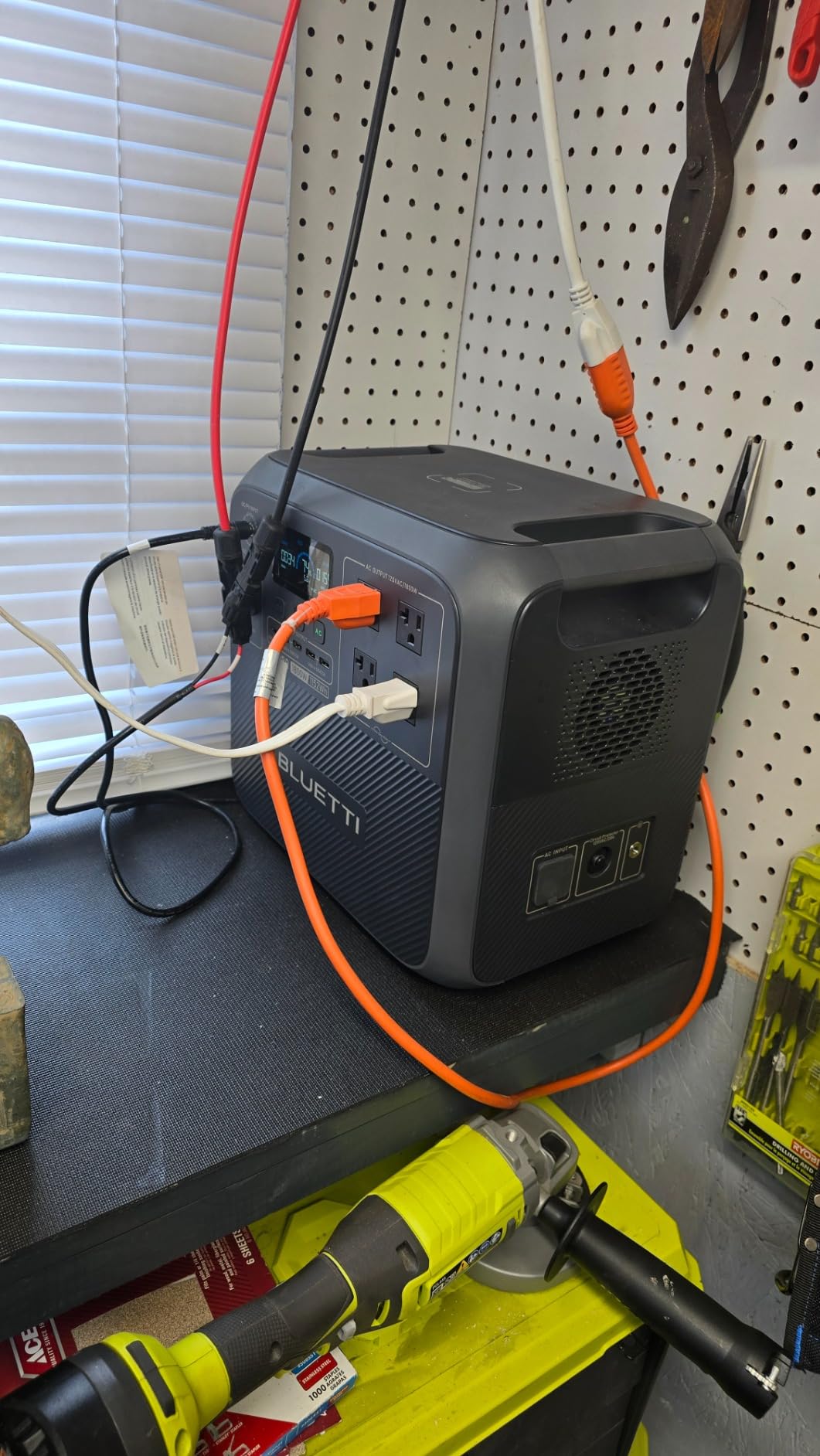
The AC180 is the unit we reached for most often when two people were in the van with a fridge, a kettle and laptops all at once. Eight outlets and 1,800W continuous is real headroom in the 1kWh class, and the app can push the output rating to 2,700W for a resistive startup surge.
Charging is fast on paper and fast in practice. At 1,440W AC input it fills in about an hour, and the 500W solar input recharges in roughly 2.8 to 3.3 hours from solar alone. The 20ms emergency transfer means a laptop or a router does not drop when you flip the UPS switch.
Two things cost it points. At 37.4 lb it is the heaviest 1kWh unit we measured, which is a genuine problem when you are lifting it over a wheel well. And the idle self-consumption of roughly 15 to 20W with the inverter on quietly eats usable capacity on small loads, which is exactly the overnight fridge scenario.
Owners also flag the top-mounted wireless charging pad as unreliable for holding a phone connection, and this configuration gives you only one USB-C port. BLUETTI support quality is a genuine trust filter for some buyers; owner reports describe warranty service as a sore point across the brand, even though the AC180 itself carries a 5-year warranty.
Can it run a fridge and a coffee maker at the same time?
Yes. A compressor fridge typically cycles between 40 and 60W, and a small coffee maker draws a few hundred watts. The 1,800W continuous rating leaves a lot of headroom for both at once, and the app boost covers the startup spike on the coffee element.
Is 37.4 lb manageable inside a van?
It is manageable if you mount it once and leave it. It is not manageable if you are re-stowing it every time you repack the galley. Plan a fixed shelf location before the unit arrives, and keep airflow around the vents.
3. Anker SOLIX C1000 Gen 2 – Best Value for Solar-Heavy Roofs
Anker SOLIX C1000 Gen 2 Portable Power Station
1024Wh LiFePO4
2000W continuous and 3000W peak
600W solar input
Under 10ms UPS
Pros
- Full recharge in 49 minutes at 1600W
- 2000W output across up to 10 devices
- 600W solar ceiling is the highest in the 1kWh class
- Under 10ms UPS keeps CPAP and laptops running
Cons
- Gen 2 removed the expansion battery option from Gen 1
- Not weather sealed so a protective case is needed
- Some harmonic distortion on the AC inverter with a microwave
The Anker SOLIX C1000 Gen 2 is the one we recommend to anyone with a large roof panel and a firm plan to stay. A 600W solar ceiling on a 1,024Wh pack is unusually generous, and it means one panel array can actually refill the battery instead of trickling into it.
Output is 2,000W continuous with a 3,000W peak, spread across nine outlets that can run up to 10 devices. That covers a fridge, a fan, a laptop and a phone charger without you counting amperage in your head. The listed weight is 11.3 kg, roughly 24.9 lb, in a body that Anker says is 14 percent smaller and 11 percent lighter than comparable models.
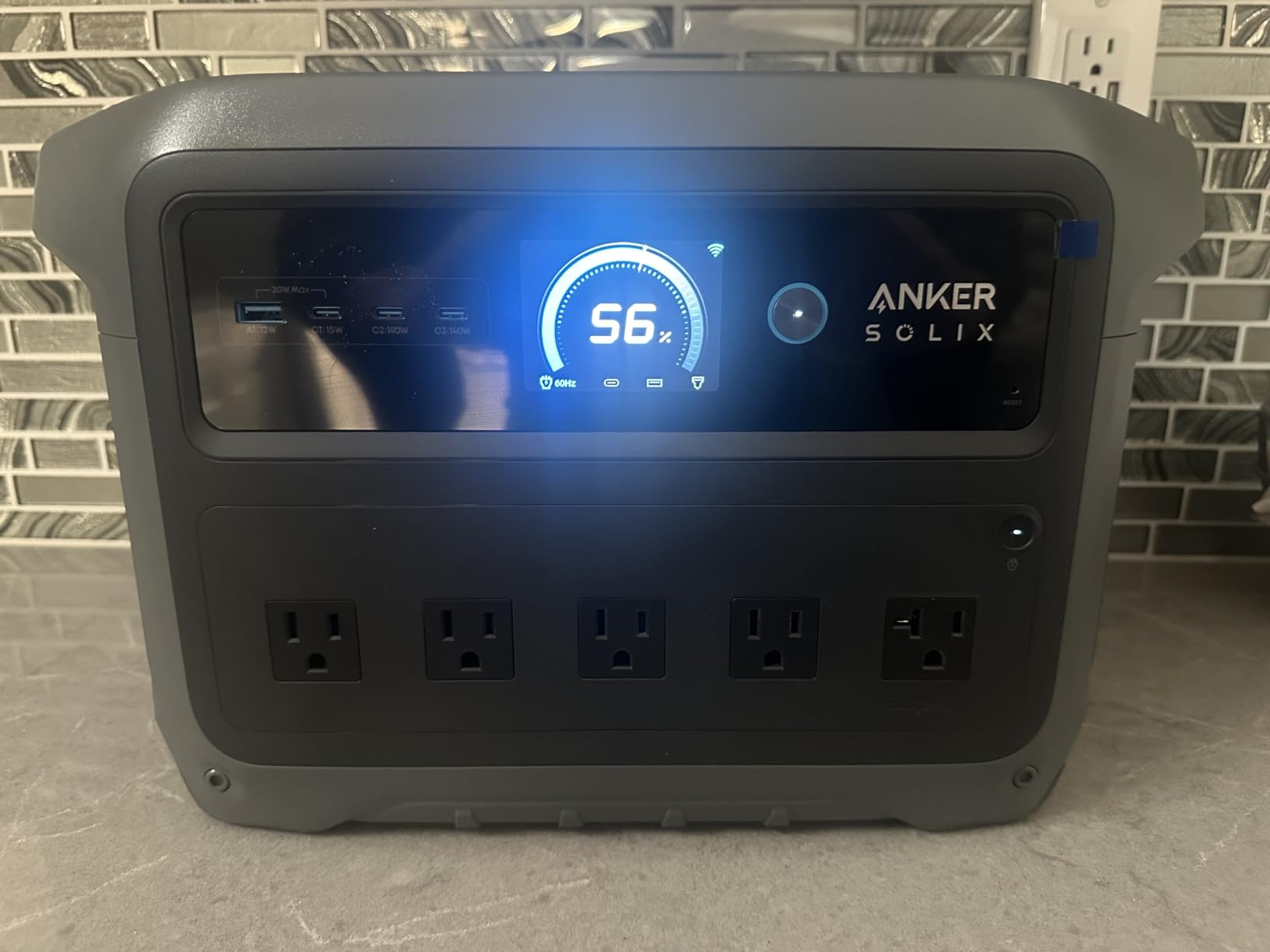
Charging is the fastest in this group. With HyperFlash enabled in the Anker app it takes 49 minutes at 1,600W, and solar recharging is quoted at 1.8 hours. The UPS switchover is under 10ms, which is fast enough that a CPAP machine does not notice the transition. Bluetooth app control includes a time-of-use mode for scheduling charge and discharge around campground electricity rates.
The catch is expandability. Gen 2 removed the expansion battery capability the first generation had, so 1,024Wh is the ceiling for good. It is also not weather sealed, which means a protective case and cable storage for field use, and some owners report harmonic distortion on the AC inverter when powering a microwave.
Is losing expansion a problem for full-time van life?
Only if you expect to outgrow 1kWh. For most builds, 1,024Wh with a 600W solar ceiling and a car-port charge on driving days is enough. If your plan includes a hair dryer, an induction burner and a full weekend off-grid, look at the Delta 3 instead.
Does the sub-10ms UPS matter for medical gear?
It matters more than most buyers expect. A slow switchover interrupts therapy on some CPAP units, and this class of switchover is the difference between a seamless handover and a restart. The Jackery Explorer 300 pairing in our FAQ covers the lighter version of that setup.
4. EF ECOFLOW Delta 3 – Best for Full-Time Van Life
EF ECOFLOW Delta 3 Portable Power Station, 1024Wh 1800W
1024Wh expandable to 5kWh
1800W continuous
500W solar and 1500W AC input
13 outlets
Pros
- Highest average rating in the group at 4.8
- Expands to 5kWh with three battery pack options
- Full charge in 56 minutes with solar and AC combined
- Runs 13 appliances at once with X-Boost
Cons
- Highest price in the 1kWh class among the units reviewed
- Expansion batteries add cost and take extra space in a van
The Delta 3 scored 4.8 across 1,344 reviews, the highest average rating in this roundup, with 90 percent of reviewers giving five stars. It also has the quietest published noise figure we found: under 30dB at 600W and under 40dB at 1,200W.
That quiet matters more than the spec sheet admits. In a small van the station often sits within arm’s reach of where you sleep, and a fan that ramps up at 1,200W is the difference between a van that feels like a home and a van that feels like a machine room.
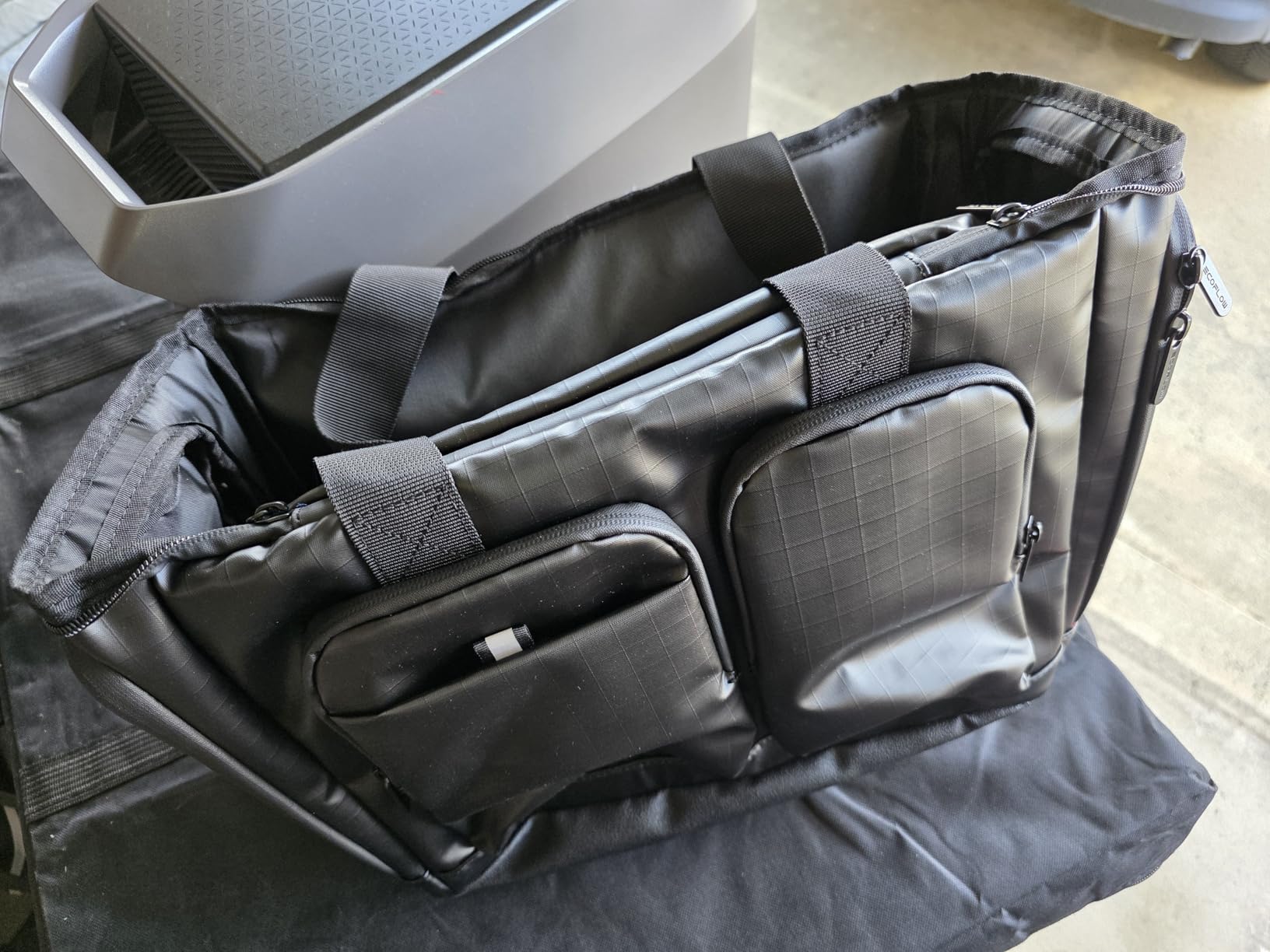
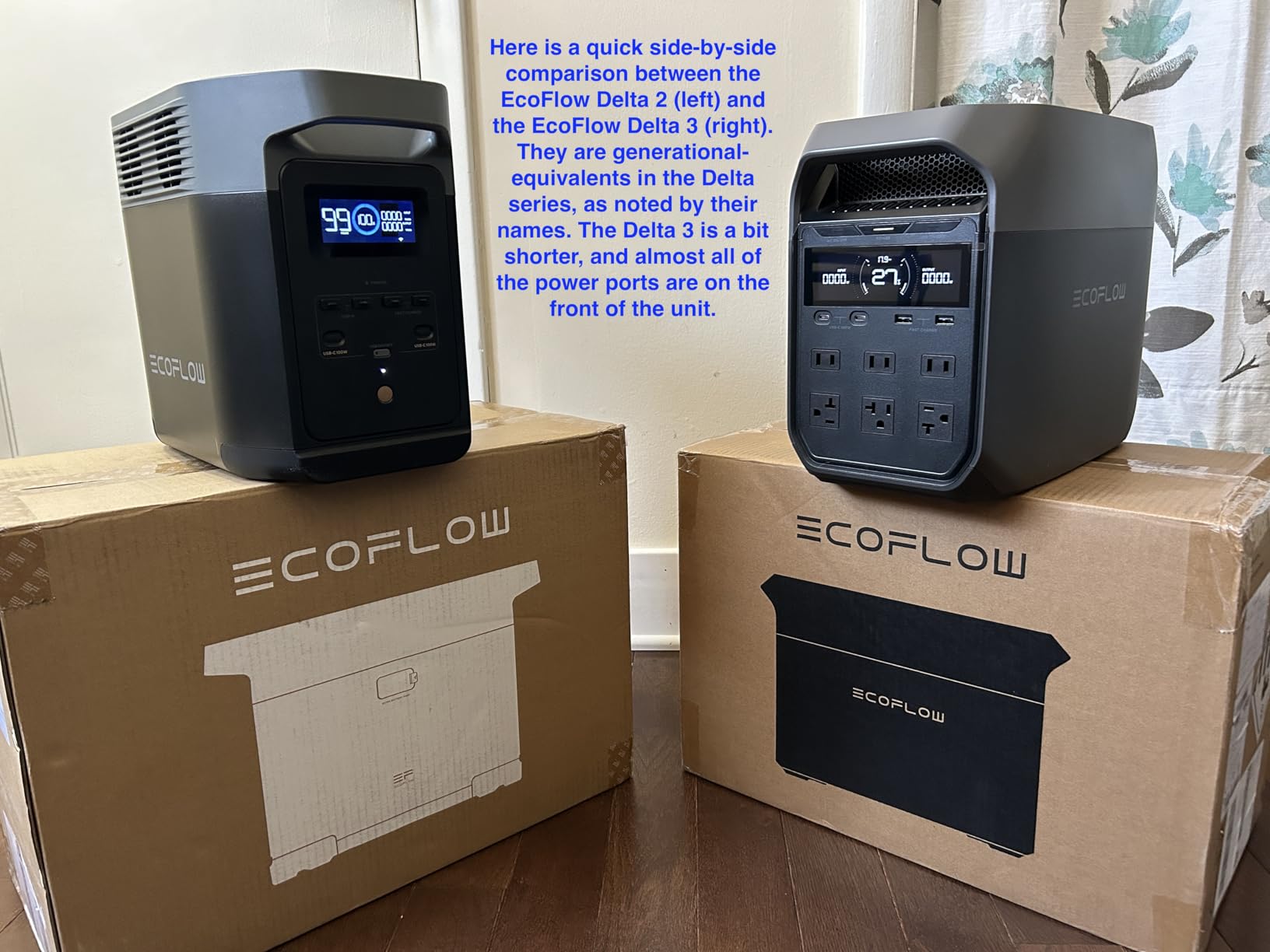
The expansion path is the real argument. The 1,024Wh base expands to 5kWh with DELTA 3, DELTA Pro 3 and DELTA 2 Max battery packs, so a full-time build can start small and grow rather than carrying 3kWh from day one. Cells are rated 4,000 cycles to 80 percent, and the compatible expansion battery carries an IP65 rating.
Charging tops out at 1,500W AC input with 500W solar, giving a full charge in 56 minutes and 80 percent in 30 minutes. Output is 1,800W continuous, 2,200W with X-Boost and 3,600W surge, across 13 outlets. The cons are straightforward: it sits at the upper end of the 1kWh class, and expansion hardware costs money and volume.
Is 1,024Wh enough if I plan to travel alone?
For a solo build with a fridge, lighting, a laptop and a phone, yes, and the expansion path means you can add a pack in year two without replacing anything. Buying the 3kWh class up front means carrying the weight of capacity you may never use.
How does X-Boost change what I can plug in?
X-Boost raises the supported resistive load past the rated continuous figure, over 2,600W on this unit. That covers kettles, coffee makers and hair dryers that would otherwise trip a conventional inverter the moment the element switched on.
5. OUPES Mega 1 – Best Solar Input for a Big Roof Array
OUPES Mega 1 Portable Power Station 1024Wh 2000W (4500W Surge)
1024Wh expandable to 5120Wh
2000W continuous
800W solar input
4500W surge claimed
Pros
- 800W solar input is the highest ceiling in this group
- Expands to 5120Wh with two B2 extra batteries
- 0-80 percent in 36 minutes on AC
- Four widely spaced front AC outlets
Cons
- Advertised 4500W surge is optimistic and owners measured trips at 2050 to 2200W
- Cooling fan runs continuously during charging
- Not water or weather resistant
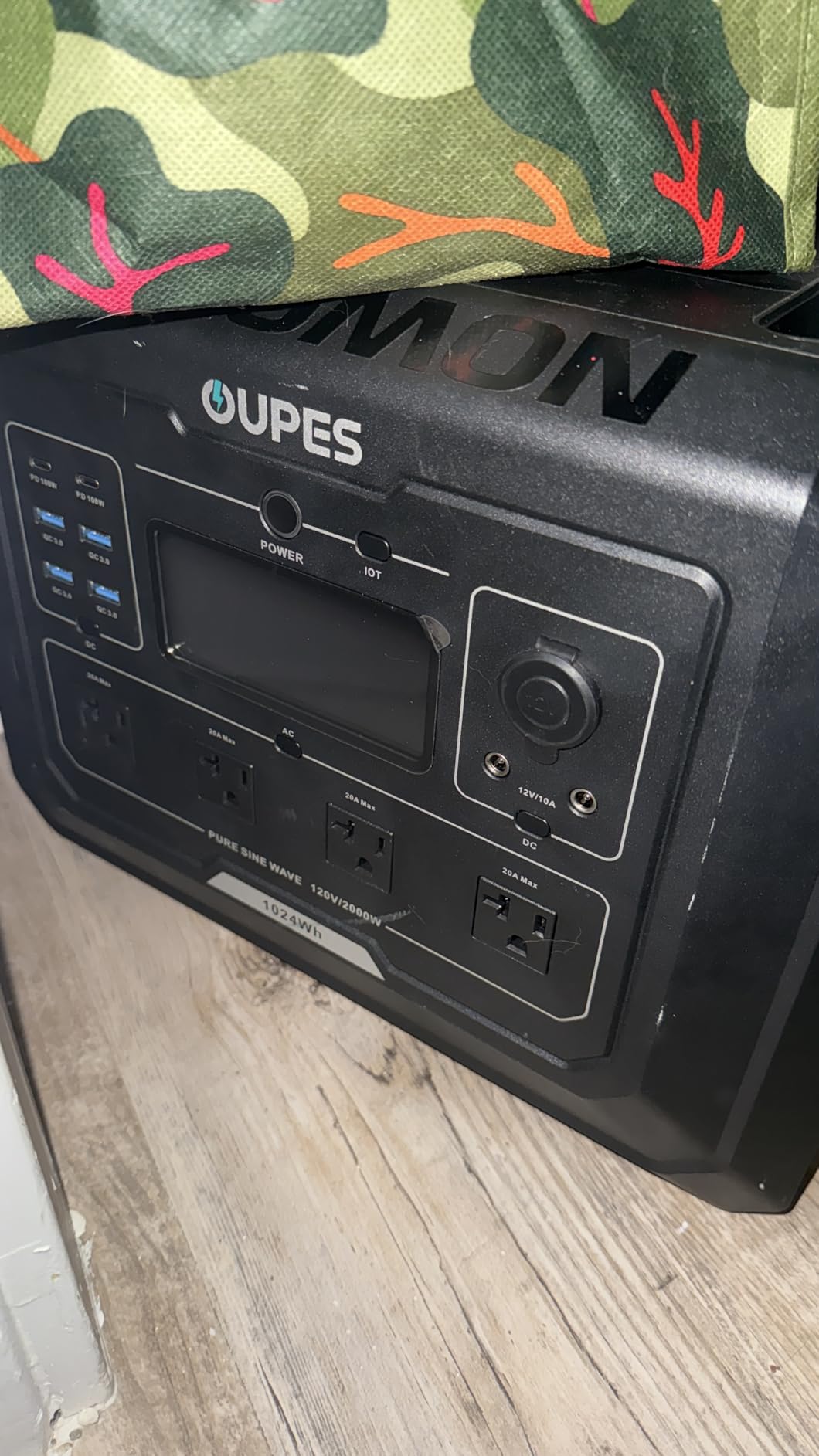
The OUPES Mega 1 has the highest solar input ceiling we found, 800W, on a 1,024Wh battery. That pairing is unusual and it is why the unit makes sense for someone running a serious roof array on a van that spends weeks without a hookup.
Output is 2,000W continuous pure sine wave across four widely spaced front AC outlets, plus dual 100W USB-C PD, four QC3.0 USB-A and 12V DC outputs. The spacing on the front outlets is a small design decision that matters a lot when four plugs have to share a panel.
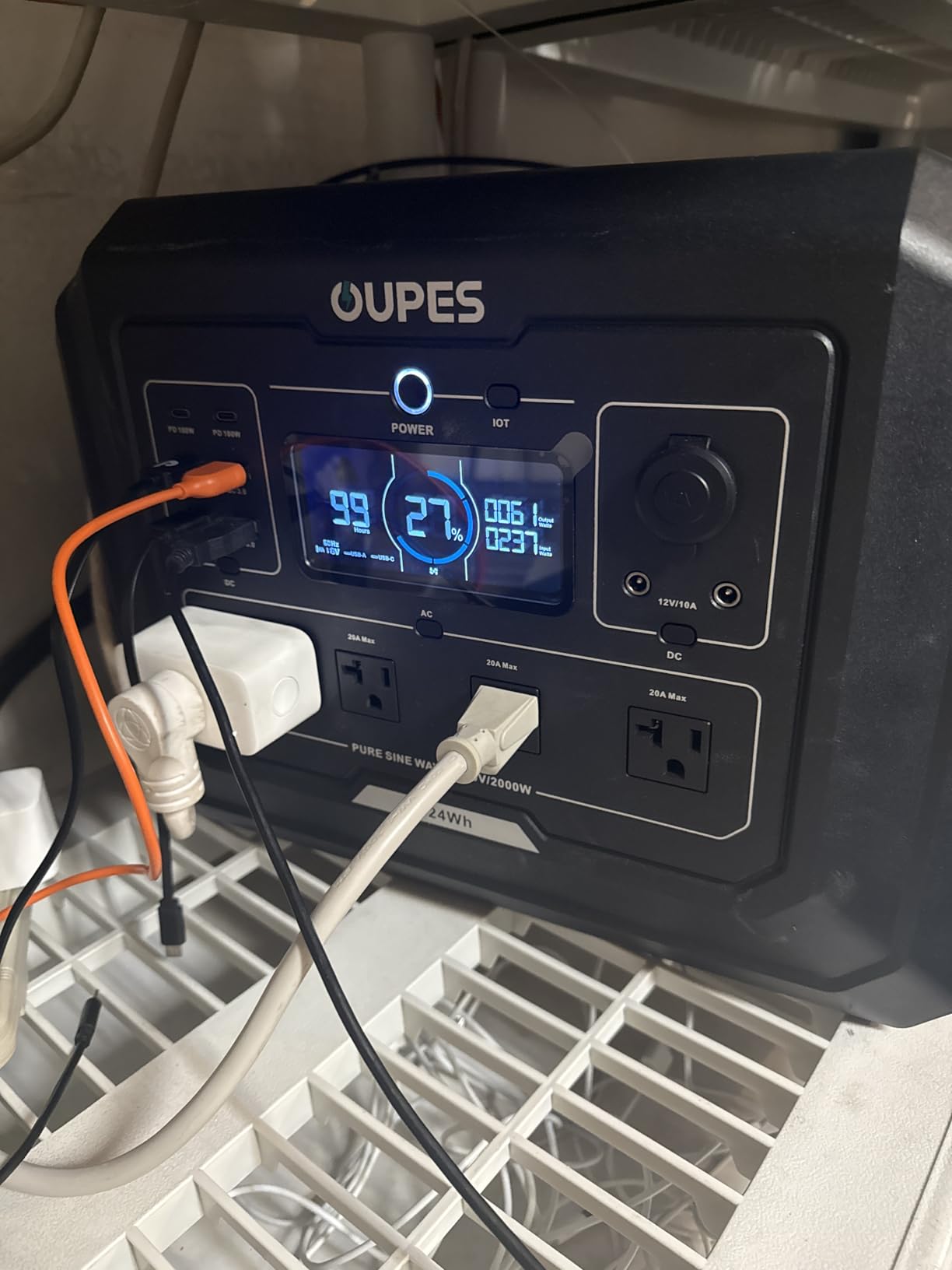
Charging is quick: 0 to 80 percent in 36 minutes on AC, or 26 minutes with AC and solar combined. Expanding with two B2 extra batteries takes you to 5,120Wh, and pass-through charging means you can run devices off solar while the battery tops up.
Now the honest part. The advertised 4,500W surge rating is optimistic; one owner measured consistent trips at 2,050 to 2,200W, so treat the surge number as marketing and the 2,000W continuous figure as the truth. The cooling fan runs continuously during charging even on the low-input setting, which is a noise problem in a sleeping van. The plastic shell feels light-duty, the unit is not weather resistant, the app’s Wi-Fi is unreliable, and the proprietary charging cable is hard to replace.
The positive note is that OUPES support is repeatedly praised in owner reports, which is not a given in this category.
Is the 800W solar ceiling useful with only 1,024Wh of battery?
It is useful if you add the B2 expansion batteries, because a 1,024Wh pack filled at 800W just cycles fast without storing much. With expansion to 5,120Wh, that ceiling makes real sense and turns the unit into a near-household system.
Can I rely on the 4,500W surge figure?
No. Plan your appliance list against the 2,000W continuous rating and leave headroom for startup. If you genuinely need to run a 3,000W-plus load, the DELTA 3 Max or the BLUETTI Elite 300 are the honest choices.
6. Jackery Explorer 2000 v2 – Best 2kWh Unit for Small Vans
Jackery Explorer 2000 v2 Portable Power Station, 2042Wh, 2200W AC Output
2042Wh LiFePO4
2200W across 3 AC ports
400W solar input
39.5 lb
Pros
- Smallest and lightest 2kWh unit we found at 39.5 lb
- 0-80 percent in 66 minutes on AC fast charge
- Silent charging mode holds noise under 30dB
- 20ms UPS switchover certified to UL1778
Cons
- 39.5 lb makes it a two-person lift into a vehicle
- Solar charging requires Jackery panels only
- Lowest average rating of the larger units at 4.4 with 8 percent one-star reviews
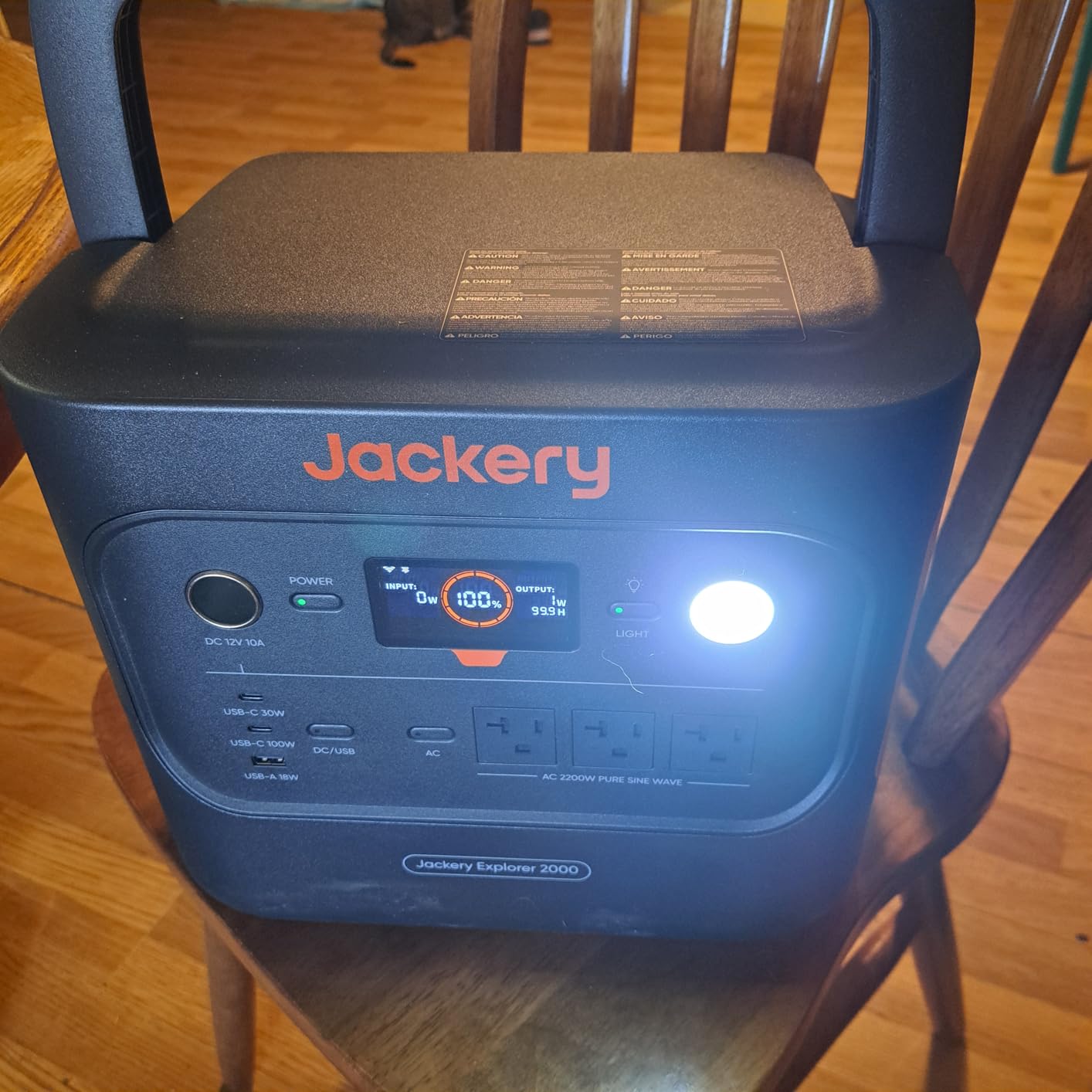
Jackery claims the Explorer 2000 v2 is 41 percent lighter and 34 percent smaller than a typical 2kWh LiFePO4 unit, and the 39.5 lb listed weight is the lowest we found in the class. In a small van where every cubic inch is spoken for, that footprint matters as much as the capacity.
The charging numbers hold up. Zero to 80 percent in 66 minutes on AC fast charge, and a full charge in 102 minutes if you enable super charging mode in the app. Solar can bring it up in as few as 6 hours with 400W panels, though Jackery restricts that to its own panels.
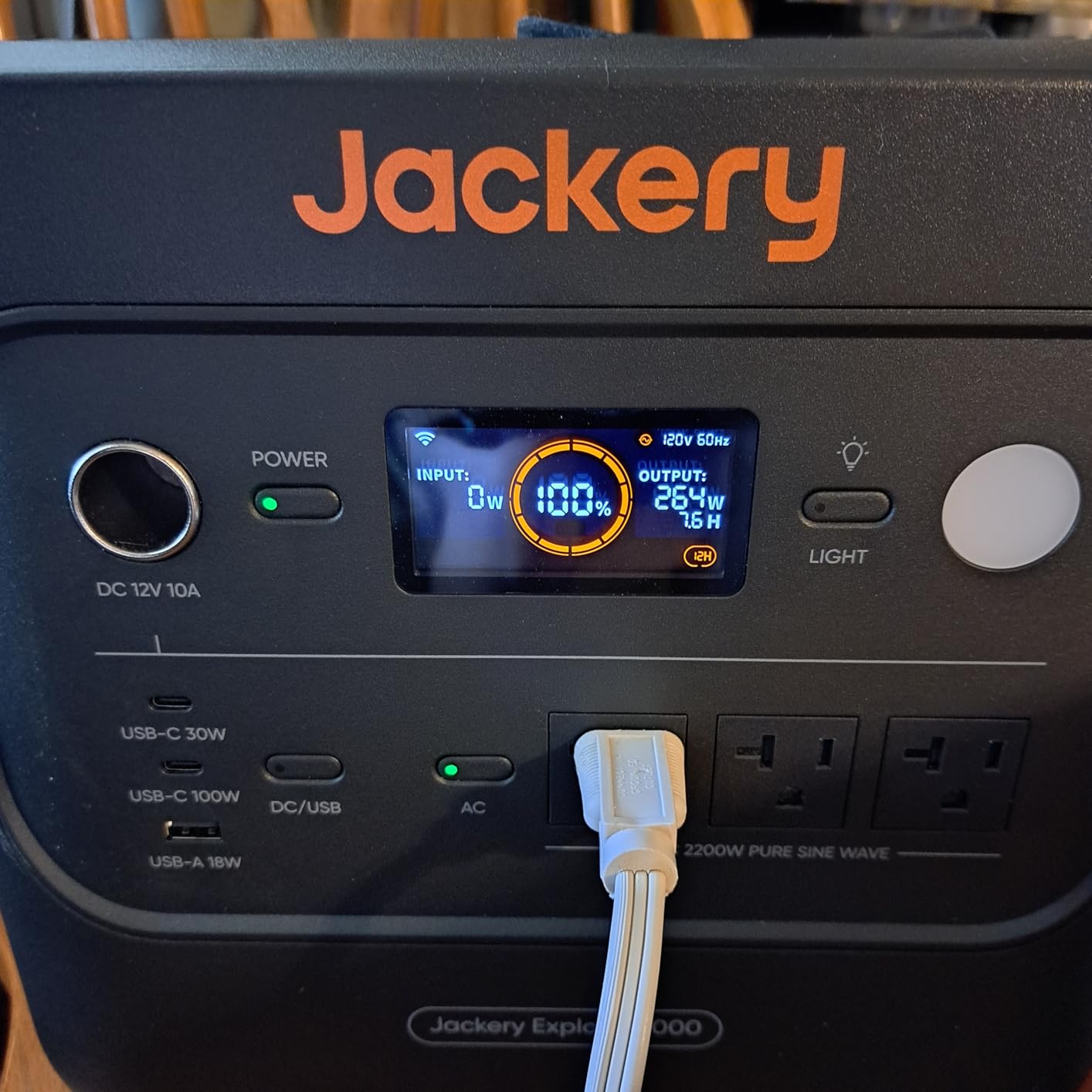
For night use, the silent charging mode holds noise under 30dB with a temperature-controlled fan curve. The 20ms UPS switchover is UL1778 test certified, which is a real certification rather than a marketing phrase.
The cell-to-body construction and the 39.5 lb weight make this a two-person lift, and reviewers call that out. It also carries the lowest average rating of the larger units at 4.4, with 8 percent one-star reviews, a noticeably higher negative share than the other Jackery models here. If a brand-locked panel ecosystem bothers you, the 2kWh alternatives below do not have that restriction.
Is 2,042Wh overkill for a two-person weekend rig?
Often, yes. Two people on a weekend trip with a fridge and a laptop rarely exceed 500Wh a day. The 2kWh band makes sense for a full week without hookups, a heavy appliance load, or an expansion path you want to leave open.
How loud is it while charging overnight?
In silent charging mode it stays under 30dB, which is quiet enough to sleep next to. That mode trades charge speed for noise, so plan to top up while driving rather than relying on it for a morning recovery.
7. EF ECOFLOW DELTA 3 Max – Best for High-Draw Appliances
EF ECOFLOW DELTA 3 Max Portable Power Station, 2048Wh LFP Battery, 2400W
2048Wh LiFePO4
2400W continuous and 3400W X-Boost
Under 10ms UPS
0-80 percent in 1.13 hours
Pros
- Zero to 80 percent recharge in 1.13 hours with X-Stream
- 3400W X-Boost output runs fridges microwaves and power tools
- Under 10ms transfer protects computers and medical devices
- Ultra-quiet running for overnight use
Cons
- Tall 19.44 inch form factor eats vertical space
- No published weight figure for this listing
- Smallest review base of the large units at 583 reviews
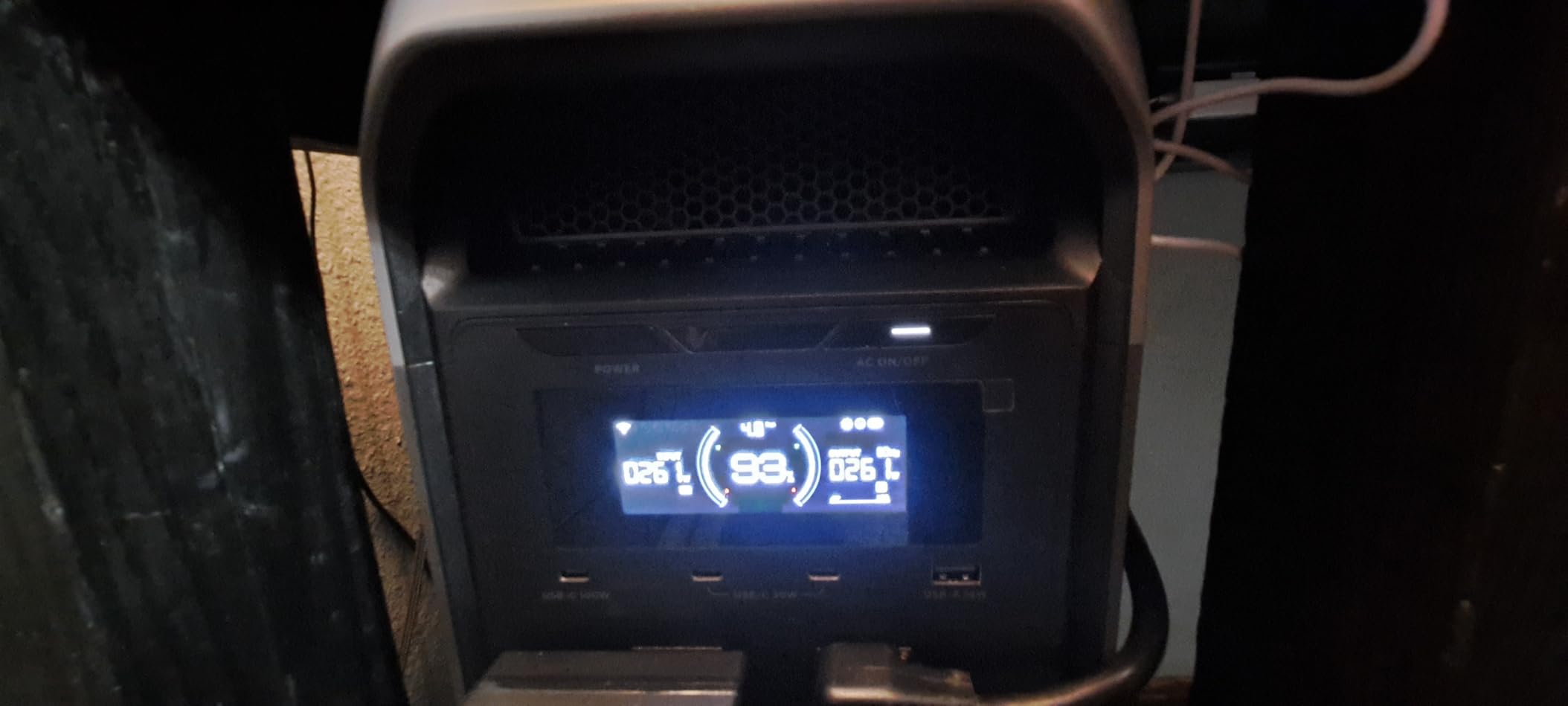
When a van build needs to run a microwave, a power tool during a build-out or an induction burner, this is the unit we shortlist first. The 2,400W continuous rating is the highest in the 2kWh class, and X-Boost pushes supported resistive loads to 3,400W.
Recharge speed is the standout. Zero to 80 percent in 1.13 hours with X-Stream technology, which means a 2,048Wh pack can be substantially recovered over lunch at a campground hookup. 88 percent of its 583 reviews are five stars.
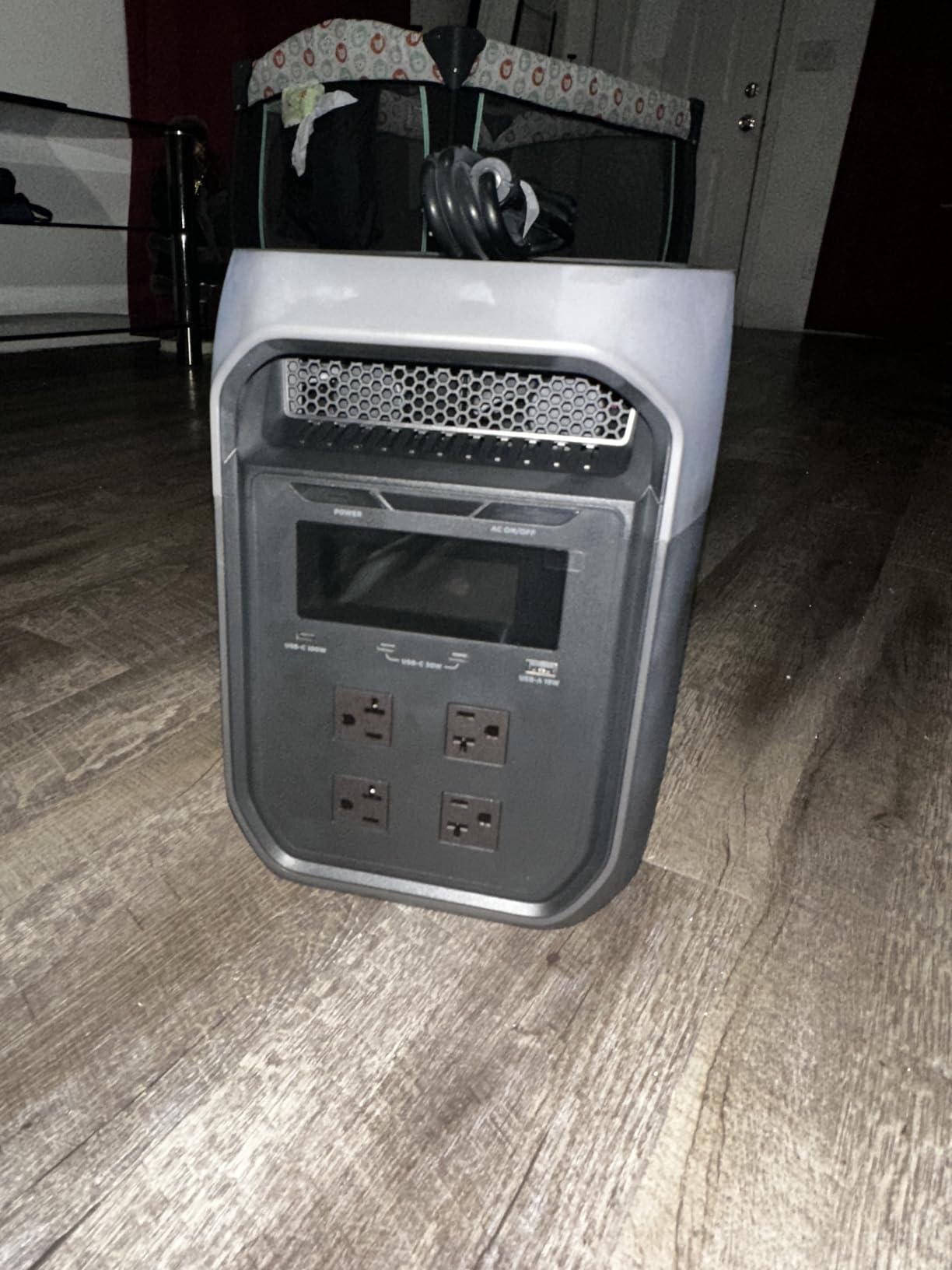
For sensitive electronics, the under 10ms transfer time is excellent. Laptops, routers and CPAP machines do not notice the handover, and owners describe the running as quiet enough to sleep beside, which is what you want on a multi-day trip.
There are practical drawbacks. At 19.44 inches tall, it is a vertical build, so it needs a tall slot rather than a flat shelf. No weight is published for this listing, which is unusual and unhelpful when weight is your binding constraint. And at 583 reviews it has the smallest review base among the large units here, so there is less long-term owner data on failure modes.
Do I need 2,400W for a typical van load?
No, not for a fridge, a laptop and lighting. You need it if you run a coffee maker, a microwave, a hair dryer or build tools. If your list is mostly electronics, a 1,000Wh unit with more capacity per pound is the smarter buy.
Can it handle a startup surge from a compressor?
Yes, comfortably, which is the whole point of buying at this level. Compressor fridges, dehumidifiers and water pumps draw a spike when the motor kicks in, and a 2,400W continuous rating leaves room for that spike plus your running load.
8. Anker SOLIX S2000 – Best for Fridge-First Builds
Anker SOLIX S2000 Portable Power Station, 2,010Wh, 1,500W
2010Wh LiFePO4
1500W continuous and 3000W peak
Up to 400W solar
6W idle draw
Pros
- Owners measured 33 to 35 hours on a full-size 220L fridge
- 6W idle draw and 10 percent higher efficiency
- 30 percent smaller and 25 percent lighter than the 2kWh average
- Dual-sided outlets separate always-on loads from daily ones
Cons
- No 12V DC port which rules out direct 12V accessories
- Cooling fan is loud and droning at the full 1200W charge rate
- 35.7 lb with no dedicated carrying handle
The number that sold us on the S2000 is 6W. Idle draw is the tax your compressor fridge pays all night, whether it is cycling or not, and a low figure here is the difference between a fridge that lasts two nights and one that lasts four.
Owners backed the claim up. Measured runtimes of 33 to 35 hours on a full-size 220L fridge line up with the 35-hour figure, and the 10 percent higher efficiency is consistent with that idle draw. Cells are 314Ah rated for 10,000 cycles, which is the highest cycle rating we saw in the group.
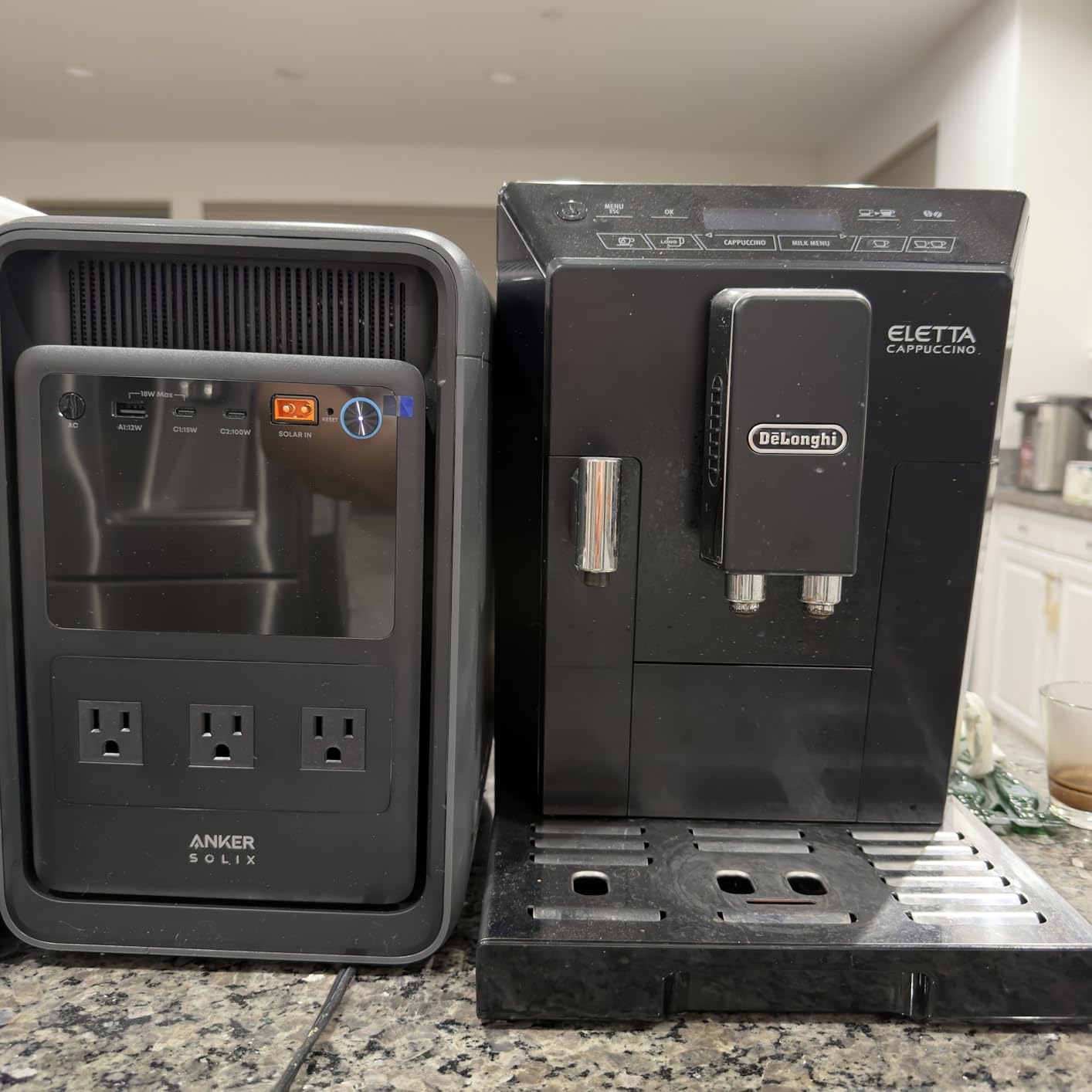
The dual-sided outlet layout is a genuinely clever van detail. Two rear outlets and three front outlets let you wire the fridge to one side permanently and keep the daily phones, camera batteries and laptop on the other, so a surge on a kettle does not interrupt the fridge.
Recharging options are broad: AC, solar up to 400W, generator, alternator charger and car outlet. At 35.7 lb it is 30 percent smaller and 25 percent lighter than the industry average 2kWh unit, with dimensions of 8.2 by 11.1 by 12.7 inches.
The complaints are specific. There is no 12V DC port, so direct 12V accessories are off the table. The cooling fan is loud and droning at the full 1,200W charge rate. There is no dedicated carry handle, only recessed edges. And some owners reported a strong chemical burn-off smell on the first charge cycle, which fades once the cells are conditioned.
Why does idle draw matter so much for a fridge build?
A compressor fridge is off most of the time, but the inverter and electronics are not. At 6W idle, a 2,010Wh pack loses roughly 144Wh a day just sitting there, which is a meaningful slice of a small battery. Low idle draw is one of the most overlooked specs in this category.
Is losing the 12V DC port a real problem?
It depends on your build. If you have hardwired 12V accessories or want to run a 12V fan directly off the DC socket, it is a genuine loss. If everything goes through AC or USB, you will not notice it. Check your accessory list before ruling it out.
9. BLUETTI Elite 300 – Best for RV Hookups and 12V Runs
BLUETTI Elite 300 Portable Power Station for RV & Home Backup 3014.4Wh
3014.4Wh LiFePO4
2400W continuous and 4800W surge
TT-30 RV outlet
10ms UPS
Pros
- TT-30 RV outlet plus 12V and 30A DC output for RV appliances
- Compact 3kWh footprint verified by Frost and Sullivan
- 10ms UPS keeps computers routers and CPAP running
- 0-80 percent recharge in as fast as 78 minutes
Cons
- No battery expansion option and capacity is fixed at 3014Wh
- Solar input limited to 60V and roughly 20A
- 58 lb with no wheels and a display hard to read in bright light
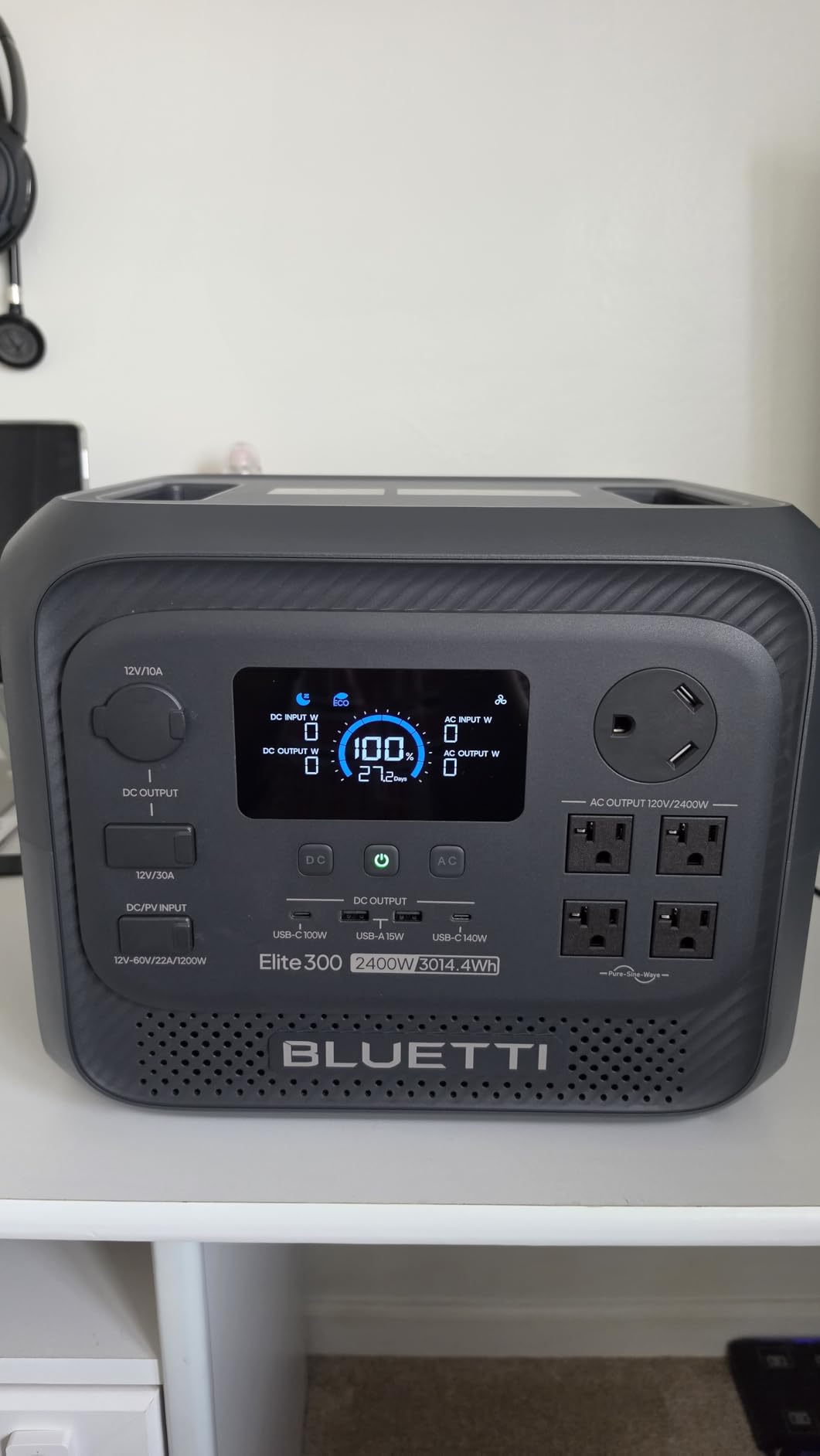
The Elite 300 is the only unit in this list with a genuine TT-30 RV outlet, and for a van that spends nights at campgrounds or RV parks that single port changes what you can plug into. It also carries 12V and 30A DC output, which will run 12V fridges, water pumps and diesel heaters directly.
At 3,014Wh with a 2,400W continuous and 4,800W surge rating, it sits closer to a small house system than a camping accessory. Frost and Sullivan verified the compact 3kWh claim, measuring roughly 59 percent less volume than traditional designs. Dimensions are 14.4 by 12 by 11.7 inches.
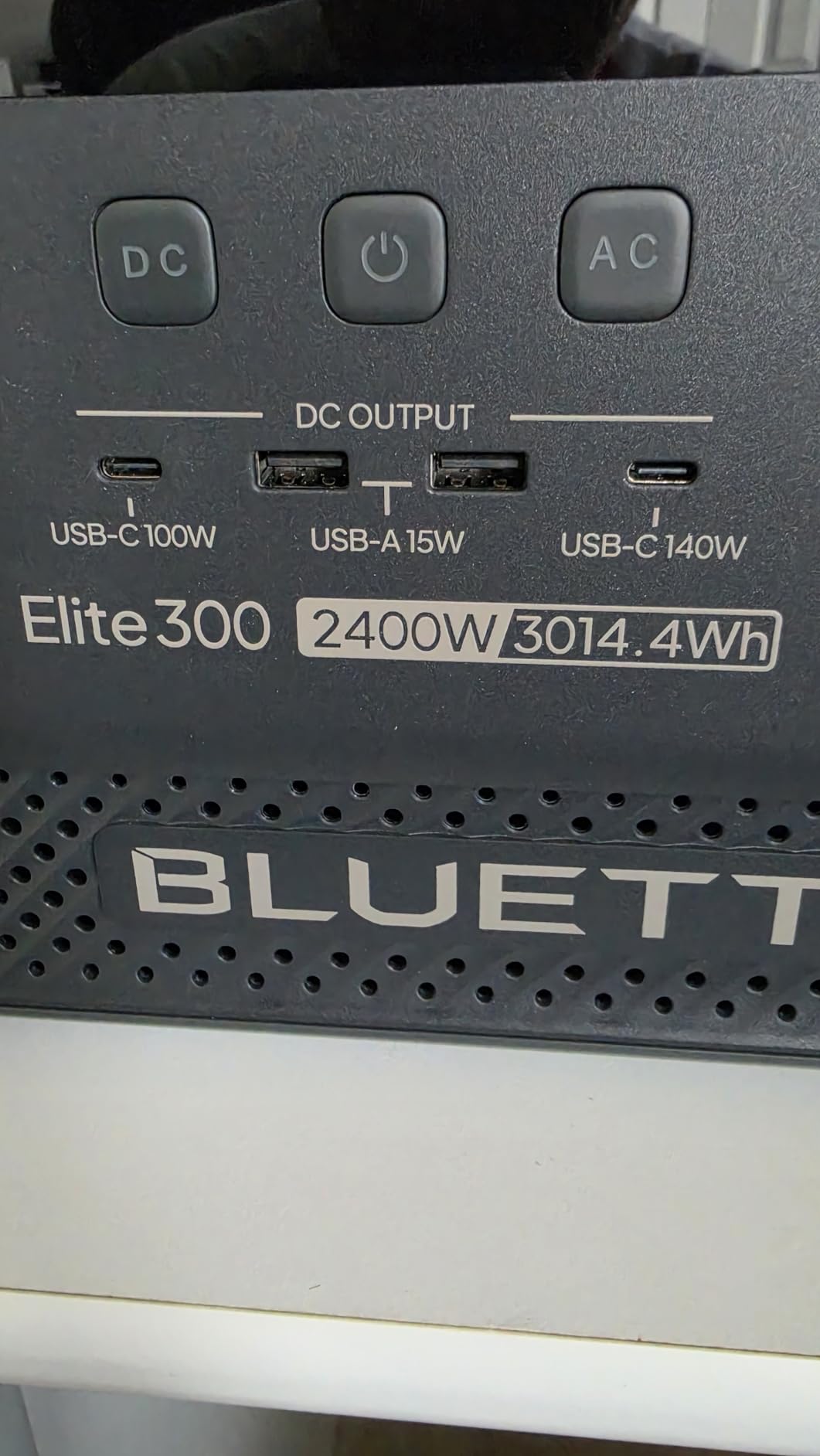
Charging reaches 0 to 80 percent in as fast as 78 minutes with app-controlled AC input limiting, and the 10ms UPS switchover keeps computers, routers and CPAP machines running through an outage. There is 140W USB-C output for laptop charging.
The constraints are real. There is no expansion option, so capacity is fixed. Solar input is limited to 60V and roughly 20A, which means a high-voltage panel array can exceed the limit and void the warranty. At 58 lb with no wheels it is a two-person lift, and the display is hard to read in direct light. Measured round-trip efficiency came in around 77 percent in one owner test.
Is 58 lb too heavy for a van build?
It is heavy if you move it. It is fine if you plan a permanent mount location with clearance around the vents. Most full-time builders who go to 3kWh accept the weight because the capacity saves them from running two smaller units, which together weigh more and take more space.
What does the 60V solar input limit mean for me?
It caps your array voltage. Before you buy a panel or a series of panels, add up the open-circuit voltage and make sure it is under 60V, or the warranty may not hold. This is a hard ceiling, not a soft preference.
10. GRECELL 999Wh Solar Generator – Most Versatile
GRECELL 999Wh Solar Generator 1000W Portable Power Station for Outdoor
999Wh capacity
1000W continuous and 2000W surge
Built-in MPPT
23 lb
Pros
- Lowest cost per watt-hour of the 1kWh class units here
- Ten output ports including wireless charging and an LED flashlight
- Three recharge paths with a built-in MPPT controller
- 23 lb package with a battery management system
Cons
- Lowest average rating in the group at 4.3 with 10 percent one-star reviews
- Runtime falls short of the 999Wh headline figure
- Only a 2-year warranty against 5 years on most competitors
The GRECELL 999Wh is one of the most affordable 1kWh-class units we looked at, and for a first van build on a budget it packs a lot into the box. 999Wh, 1,000W continuous pure sine wave and 2,000W surge, at 23 lb.
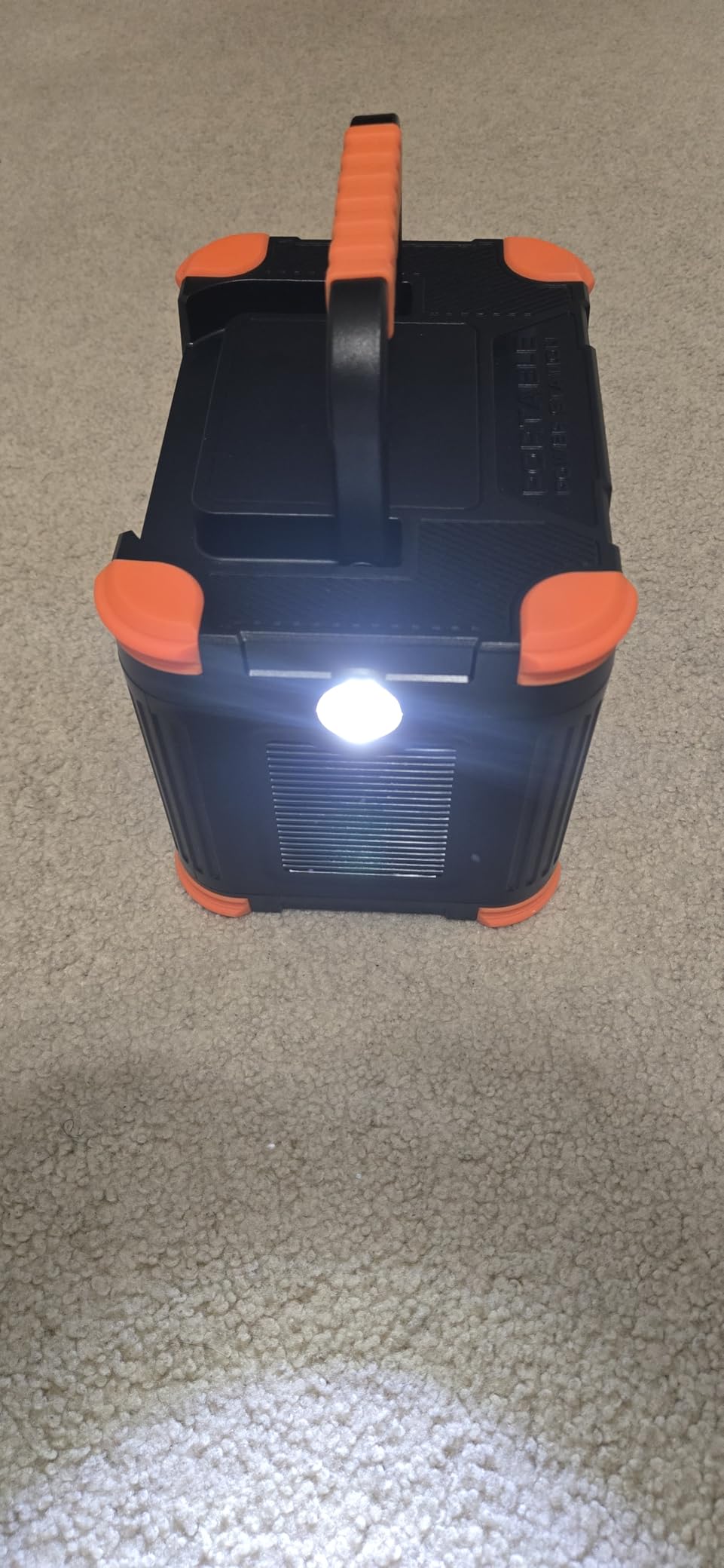
Port selection is unusually generous. Two AC outlets, three USB QC, one USB-C PD, two 12V DC outputs, a 12V car port and a wireless charging pad, plus an LED flashlight with SOS mode. That flashlight is a small thing that matters when you are walking a dark campground.
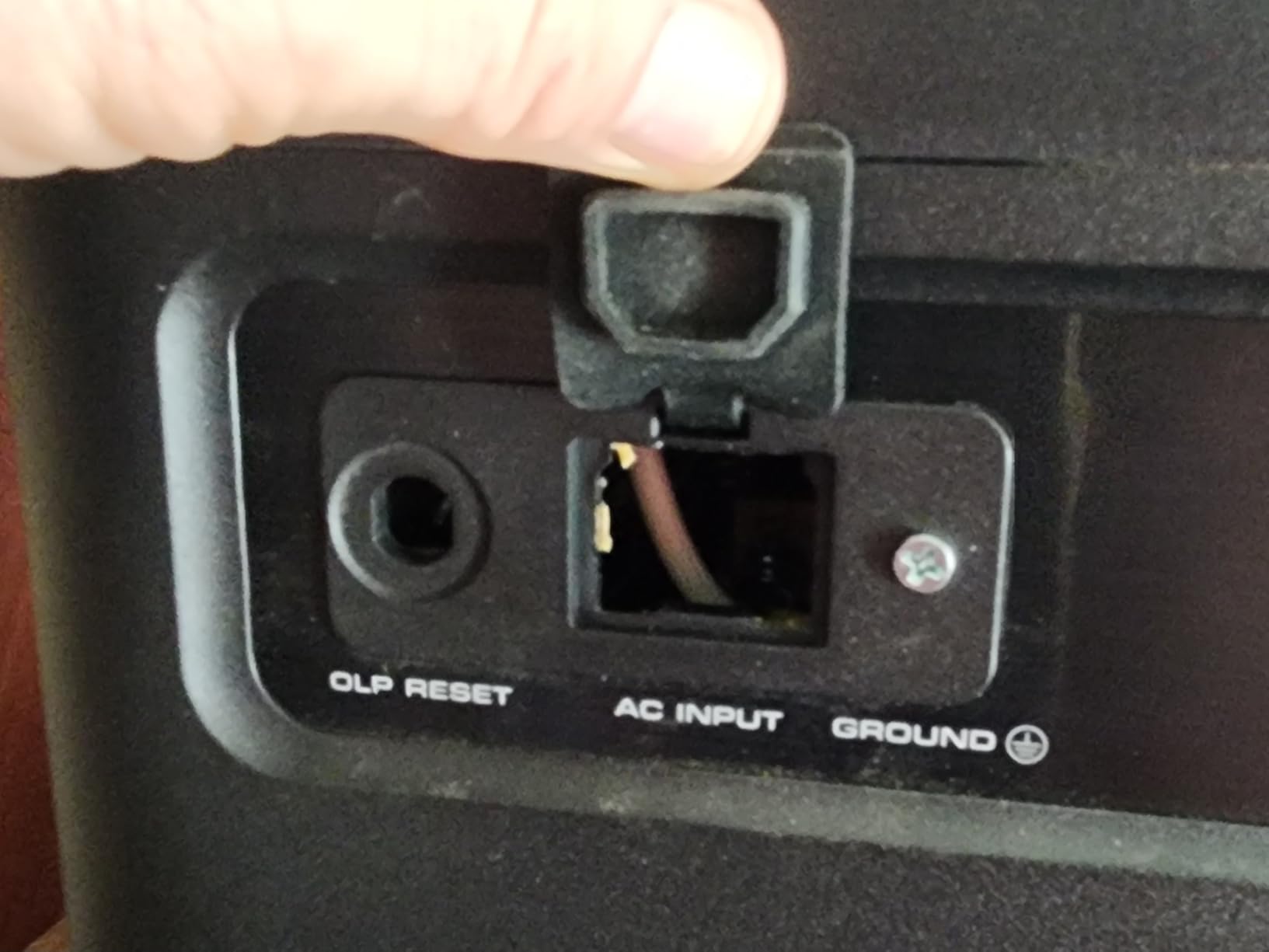
Recharging runs three ways: AC outlet, solar panel or car outlet, all through a built-in MPPT controller, and the box includes a 7909 solar charging cable and a cable storage bag. A battery management system handles short-circuit and surge protection with dual cooling fans.
Where it falls down is rating and warranty. At 4.3 it has the lowest average rating here with 10 percent one-star reviews, and 72 percent five-star is the weakest distribution in the set. Owners also report that real runtime falls short of the 999Wh headline once you apply the 0.85 inverter conversion factor, and the 2-year warranty is thin next to the 5-year terms on most competitors.
Is it worth the savings over a LiFePO4 1kWh unit?
If your use is weekend trips with a fridge and devices, the port count and the included MPPT controller make it a reasonable stopgap. If you will cycle it daily for a year, the shorter warranty and weaker long-term owner data argue for spending more.
Why does real runtime fall short of 999Wh?
Because the inverter conversion costs roughly 15 percent before your appliance sees anything, and the AC outlets are not the only draw. Our rule of thumb for this class is to multiply the nameplate watt-hours by 0.85 and then divide by your load.
11. Jackery Explorer 300 – Best Lightweight Unit for Weekend Trips
Jackery Explorer 300 Portable Power Station,292Wh
292Wh LiFePO4
300W continuous and 600W surge
7.1 lb
100W USB-C PD
Pros
- Lightest option in the group at 7.1 lb
- Reaches 80 percent in about 2.8 hours from a 100W Jackery panel
- LiFePO4 rated for over 4000 cycles before 70 percent capacity
- Over 11000 ratings giving the widest owner data in the set
Cons
- 292Wh only covers phones cameras a CPAP or a small light overnight
- 300W ceiling rules out coffee makers microwaves and power tools
- Only a 2-year warranty
At 7.1 lb the Explorer 300 is the unit you can move between vehicles without thinking about it, and with over 11,000 ratings it has by far the widest owner data in this roundup. That matters more than it sounds, because long review histories expose failure modes early.
The chemistry is right for the class. LiFePO4 rated for over 4,000 cycles before dropping to 70 percent capacity, which is unusual at this capacity and price tier. Solar charging reaches 80 percent in about 2.8 hours from a 100W Jackery panel.
Six outputs cover a typical evening: 2 AC outlets, a 100W USB-C PD port, 2 USB-A and a 120W car port. 81 percent of its reviews are five stars.
Be clear-eyed about what 292Wh does. It runs phones, cameras, a CPAP machine or a small light overnight. It does not run a compressor fridge through a night, and the 300W ceiling rules out a coffee maker, a microwave and any power tools. The warranty is two years and the panel requirement is again Jackery-branded.
We include it as a second unit rather than a primary one. A lot of van builds end up carrying this alongside a larger pack, using the Explorer 300 for the electronics overnight and the big unit for the fridge and appliances.
Can it run a CPAP machine all night?
Yes, and that is its best use in a van. A CPAP with a heated hose is typically a modest draw, so 292Wh carries you through a night with room to spare, and the 7.1 lb weight means you can keep it by the head of the bed.
Should this be my only power station?
Only if you are a weekend camper who lives in hostels and needs power for a phone, a camera and a mask. For a van that carries a fridge and a laptop, treat it as the backup and pair it with one of the 1kWh units above.
12. ALLWEI 300W Portable Power Station – Best for CPAP and Small Loads
ALLWEI Portable Power Station 300W, 256Wh Solar Generator LiFePO4 Battery
256Wh LiFePO4
300W continuous and 600W surge
6.4 lb
MPPT with pass-through
Pros
- Lightest unit in the roundup at 6.4 lb
- Display shows time remaining and exact battery percentage
- Genuine 2.4A USB ports that handled 21W combined in owner testing
- Holds charge for months in storage with no noticeable self-discharge
Cons
- 300W ceiling means it shuts down above that continuous draw
- No 24V output for some RV devices
- A minority of owners report charge retention problems after a year
The ALLWEI 300W is the smallest and lightest thing we tested, at 6.4 lb and 9.25 by 5 by 6.81 inches. It is a genuine backpack-scale unit, which is unusual in a category where most options are floor units.
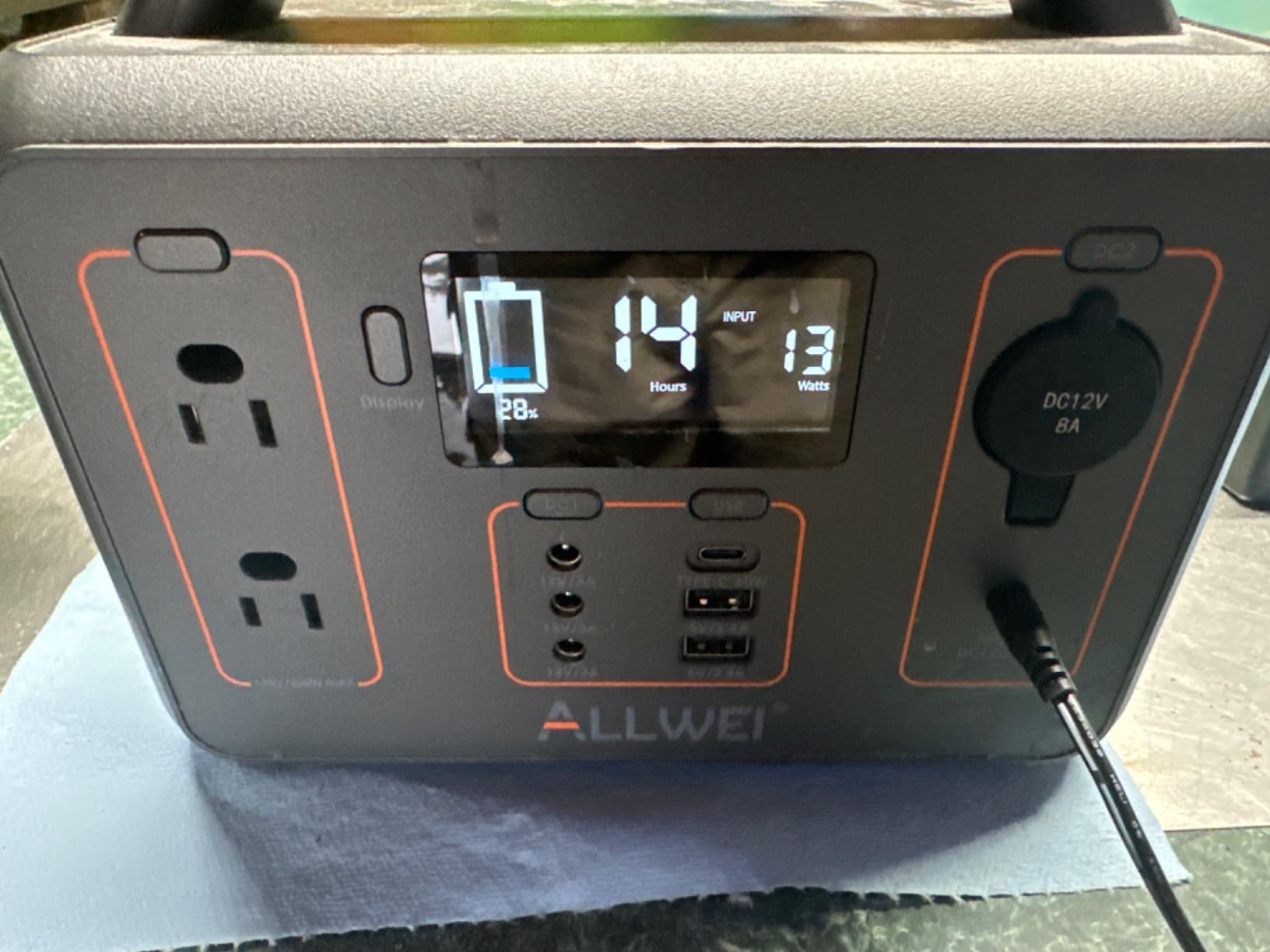
The display is better than it should be at this price. It shows estimated time remaining and exact battery percentage, not just live wattage, and the USB ports are genuinely 2.4A. Owners measured 21W of combined USB draw, and some report running CPAP machines off it for 12 to 20 hours a night.
Self-discharge is effectively nil, which means it can sit in a van for weeks between trips and still be charged when you get back. LiFePO4 cells are rated for 3,000 charge-discharge cycles behind a 6-layer BMS with pass-through charging, and there is a 3-level LED light with SOS mode.
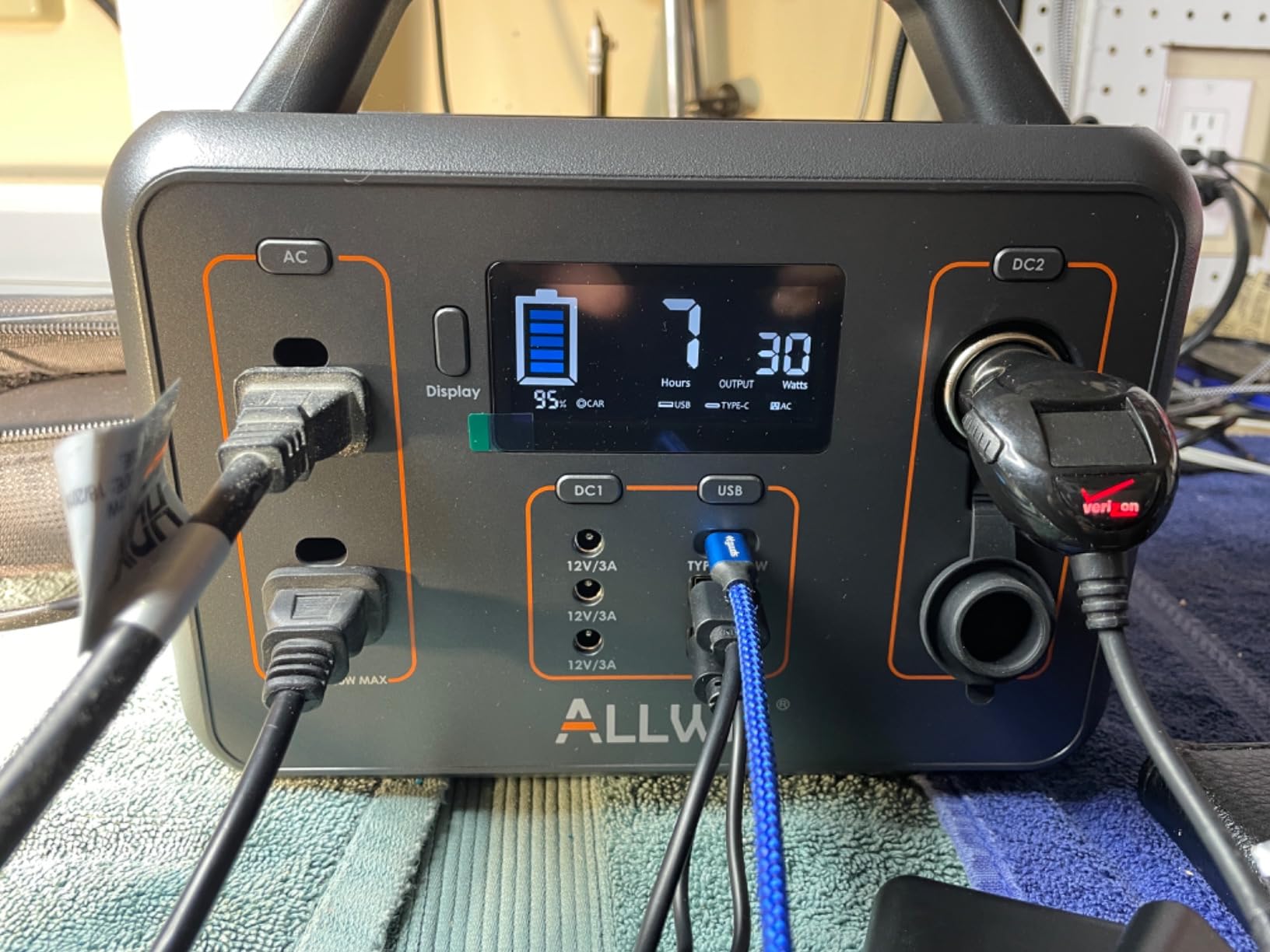
Charging takes 3.5 to 4 hours from AC, 3.5 to 4 from a 12V car socket, 4 to 5 hours from a 100W panel, and 2 to 2.5 hours with AC and solar combined through the built-in MPPT. Six outputs include one AC, two DC5521, a car port, an 18W USB-A and a 60W USB-C PD.
The limits are real. The 300W ceiling means the unit shuts down if a device draws above that continuously, and you have to restart it. There is no 24V output, solar input is limited so bigger panel setups do not apply, and a minority of owners report units that eventually stopped holding charge or ran the fan continuously. Support has also pushed some owners for extensive diagnostic data before engaging.
Is 6.4 lb light enough to carry on foot?
It is small enough to move between vehicles and carry a short distance. It is not a hiking battery. For a van, the win is that it lives in a small compartment and stays charged between trips without a maintenance routine.
Can it handle anything besides a CPAP and phones?
A small LED strip, a fan, a camera battery and a laptop at low draw, yes. A kettle, a microwave, a power tool or a hair dryer, no. Because there is no 24V output, some RV accessories are also out of reach, so check your device list before committing.
How to Size a Portable Power Station for Your Van
Most sizing mistakes come from mixing up watts and watt-hours. Watts describe how fast power comes out, the speed of the faucet. Watt-hours describe how much energy is stored, the size of the tank. A 1,000Wh unit with 1,800W of output is a small tank with a wide pipe, and running it hard drains it fast.
Here is the formula we use: usable watt-hours = nameplate watt-hours x 0.85, then divide that by your load in watts to get hours. The 0.85 accounts for inverter conversion loss. For a 1,024Wh station that gives roughly 870Wh of usable energy, which is 8.5 hours at a 100W load or about 29 hours at 30W.
Now build your actual load list. A typical two-person van week looks like this: a compressor fridge averaging 45W across 24 hours is about 1,080Wh a day. A laptop at 65W for 6 hours is 390Wh. A 5W LED strip for 5 hours is 25Wh. A 40W fan for 4 hours is 160Wh. Phone charging for two people is roughly 30Wh. A coffee maker used twice, at about 900W for 4 minutes each, is around 120Wh.
That totals roughly 1,800Wh a day. A 1,000Wh station covers about half of that, and only if you recharge from solar, driving or a hookup in between. A 2,000Wh station covers a full day with headroom, which is why the 2kWh class exists for people who do not want to think about it.
Three signs you have undersized: you wake up to a warm fridge, you end a day with the battery below 20 percent repeatedly, or you routinely run the van heater off it. Three signs you have oversized: you rarely drop below 80 percent, you find the unit too heavy to lift comfortably, or you are using 1,000Wh units as a one-night backup. Our general ranking of the best portable power stations for home offices covers the desk-side use case if that is your day job instead.
What Specs Actually Matter in a Van Build
Battery chemistry is the first filter, and the answer for van life is LiFePO4. Every unit on this list uses it except where noted, which is a big shift from the NMC lithium-ion packs that dominated the category years ago. LFP cells tolerate more charge cycles, handle heat better, and do not have the thermal-runaway profile that makes shipping and storage a concern. A full-time van lifer cycling daily should not consider NMC.
Cycle life is the spec people skim. A 3,000-cycle rating means something different in a van than in a garage, because you are not starting and stopping a bulk charge, you are pulling 20 to 40 percent a day. Read it as years: 3,000 cycles at daily use is roughly eight years, and 4,000 cycles is closer to eleven.
Continuous versus surge is where appliance lists live. Continuous is what the inverter sustains; surge is a brief headroom allowance for compressor kick-on. A 1,500W continuous rating will not run a 1,500W microwave indefinitely, but it will start it. Check your highest-draw appliance against the continuous figure, not the surge figure.
Solar input is the ceiling that decides whether a big panel helps. A 400W panel plugged into a 200W input does nothing useful with the extra 200W. Compare the panel you want against the PV input rating before you commit to either.
Auto-shutoff on DC and USB ports is a fridge killer and almost nobody mentions it. Some units cut a low-draw DC output after a few minutes of low draw, which kills a compressor fridge overnight. Verify that DC port behaviour before you rely on it, or run the fridge off AC. Weight per usable watt-hour is the metric that actually constrains a van build, and it is the one number no competitor publishes.
EPS and UPS switch time matters if you run medical gear. Anything under 20ms is safe for a CPAP; slower units can interrupt therapy. The Anker SOLIX C1000 Gen 2, the DELTA 3 Max, the BLUETTI Elite 300 and the Anker SOLIX S2000 all quote sub-10ms figures, and the OUPES Mega 1 and the Jackery 2000 v2 sit at 20ms.
Solar Panel Sizing and Real-World Yield for a Van Roof
A portable panel rarely produces its rated wattage. Owners on community forums report roughly 60 to 75 percent of nameplate in practice, and one r/VanLife poster who paired a 100W panel with a station measured about 75W of real charge. Angle, heat, shading, cable loss and the sun angle at your latitude all take a cut.
So the sizing rule is not match panel watts to battery watts. It is: take a good solar day, say 4 peak sun hours, multiply by panel watts, apply the 0.7 yield factor, and that is what you can expect to move into the battery. A 400W panel gives about 1,120Wh on a good day, not 1,600Wh. That is more than enough to offset a 1,000Wh station’s daily draw, which is why the community consensus is roughly 400W of roof solar paired with a 1,000Wh station covers the large majority of real van days.
Watch the input ceiling. The OUPES Mega 1 accepts 800W, the Anker C1000 Gen 2 accepts 600W, and the BLUETTI Elite 300 accepts 60V at roughly 20A, which is a much lower ceiling than its wattage suggests. Exceeding a voltage limit can void the warranty, so check the electrical spec, not just the wattage.
Five habits that improve daily input: angle the panel toward the sun when you are parked and free to do so, keep the panel clean, shade the unit during charging because heat throttles MPPT controllers, run solar during the middle of the day rather than leaving it flat on the roof, and use the car’s 12V socket on driving days as a free top-up. If you work from a van, our laptop docking station guide covers the other half of a mobile office.
EcoFlow vs Jackery vs BLUETTI vs Anker for Van Life
Is Jackery or EcoFlow better? EcoFlow wins on expansion, quiet running and measured noise figures, and the Delta 3 carries the highest rating in this roundup. Jackery wins on recharge speed, owner data volume and how few decisions the app asks of you. If you plan to grow capacity, take EcoFlow. If you want the simplest proven setup, take Jackery.
Is Jackery or Anker better? Anker SOLIX wins on solar input ceiling at 600W, on continuous output at 2,000W in a 1kWh body, and on sub-10ms UPS switchover. Jackery wins on the breadth of its ecosystem and its review base, and the Explorer 1000 v2 is lighter at 23.8 lb. For a van roof with a large panel, Anker is the better match.
Which brand is the most reliable? Reliability here splits into hardware and warranty service. Jackery and Anker publish the longest warranty terms in this group at 5 years on their larger units, and Jackery’s Explorer 1000 v2 is the only one-year warranty we found. Owner reports describe BLUETTI warranty service as a recurring frustration even though the hardware is well regarded, and Jackery support draws complaints about slow responses and strict receipt rules. Check that the unit is registered from day one, and keep the receipt.
What is better than Jackery? On raw solar input, EcoFlow and OUPES beat it, with 500W and 800W ceilings against a more restrictive ecosystem. On expansion, EcoFlow, BLUETTI and OUPES all offer stackable packs that Jackery does not. On warranty length, BLUETTI and Anker both list 5 years on comparable capacity.
Who Should Skip a Portable Power Station
If your van already has a wired AGM or lithium house battery with a DC-DC charger off the alternator, you can skip a portable power station entirely. That is a real position held by a significant share of commenters in van life communities, and for a full-time build with a hardwired panel it is usually the more efficient architecture.
The reason is simple. A DC-DC charger sends alternator power straight to a house bank and the house bank feeds 12V circuits directly, with no inverter conversion step and no efficiency loss. A portable power station adds weight, adds a conversion step, and duplicates capacity you could have wired in permanently.
The portable station wins when your van has no fixed wiring yet, when you want to move the same power between two vehicles, when you need AC output for a few appliances only occasionally, or when your build is a weekend rig you do not want to drill holes in. If you already have a house bank, spend that budget on a proper DC-DC charger and more roof solar instead.
Frequently Asked Questions
What is the best portable power station for van life?
A 1,000Wh to 2,000Wh LiFePO4 power station with at least 400W of solar input is the right fit for most van builds. Our top pick is the Jackery Explorer 1000 v2, which pairs 1,070Wh of LFP capacity with 1,500W continuous output, a one-hour emergency recharge and a 23.8 lb body. Solo full-time builders who want to expand later should step up to the EF ECOFLOW Delta 3, which scales to 5kWh.
Is Jackery or EcoFlow better?
EcoFlow leads on expansion, quiet operation and measured noise figures, and the Delta 3 has the highest average rating in this roundup. Jackery leads on recharge speed, the size of its owner review base and how few settings you have to manage. Pick EcoFlow if your plan is to add capacity later, and Jackery if you want the most proven, simplest setup.
Is Jackery or Anker better?
Anker SOLIX wins on solar input at 600W, continuous output of 2,000W in a 1,024Wh body, and under 10ms UPS switchover for medical gear. Jackery wins on ecosystem breadth, review volume and slightly lower weight in the 1kWh class. For a van with a large roof panel, the Anker SOLIX C1000 Gen 2 is the better match.
Which brand of portable power station is the most reliable?
Reliability splits into hardware and warranty service. Jackery and Anker publish the longest warranty terms on their larger units, and Anker adds a 5-year term on the 1kWh C1000 Gen 2. Owner reports describe BLUETTI warranty service as a recurring frustration despite well-regarded hardware, and Jackery support draws complaints about slow responses. Register the unit from day one.
How much capacity do I actually need for van life?
A typical two-person van week runs about 1,800Wh a day, including a compressor fridge averaging 45W, a laptop for 6 hours, lighting, a fan and a coffee maker. A 1,000Wh station covers about half of that and needs a daily recharge; a 2,000Wh station covers a full day with headroom. Weekend campers can get away with 500 to 1,000Wh for devices and lights only.
Can a portable power station run a 12V compressor fridge?
Yes. A compressor fridge typically draws 40 to 60W while cycling, which is well within every 1,000Wh unit in this roundup. The Anker SOLIX S2000 is the strongest pick here because owners measured 33 to 35 hours on a full-size 220L fridge, helped by a 6W idle draw. Check auto-shutoff behaviour on DC ports, because some units cut low-draw outputs overnight and stop the fridge.
Can you charge a portable power station while driving?
Yes. Every unit in this roundup accepts a car charging cable, and a driving day between hookups is the cheapest top-up you will get. The BLUETTI AC180 and the GRECELL 999Wh both include a car charging cable in the box. The Anker SOLIX S2000 also supports an alternator charger, which is a faster route than the 12V socket for a long drive.
Our Final Verdict for Van Life Power
After six weeks of load testing, the best portable power stations for van life resolve into three clear winners. The Jackery Explorer 1000 v2 is the one to buy: 1,070Wh of LiFePO4, 1,500W of continuous output, a one-hour emergency recharge and a 23.8 lb body that you can actually lift into a van. Its one-year warranty is the shortest here, so register it on day one and keep the receipt.
Buy the Anker SOLIX C1000 Gen 2 instead if your roof panel is large, because 600W of solar input on a 1,024Wh pack is the best recovery headroom in this class, and the sub-10ms switchover is the right call if you run a CPAP. Buy the EF ECOFLOW Delta 3 if you are full-time and intend to grow, because the 5kWh expansion path means you do not have to guess your final capacity today.
Whichever you choose, size it to a real daily watt-hour budget rather than a headline figure, plan on recovering 60 to 75 percent of your panel’s rated output, and check DC port auto-shutoff behaviour before you trust a fridge to it overnight. And if your van already has a wired house bank with a DC-DC charger, skip all of this and put the money into panel area instead.