
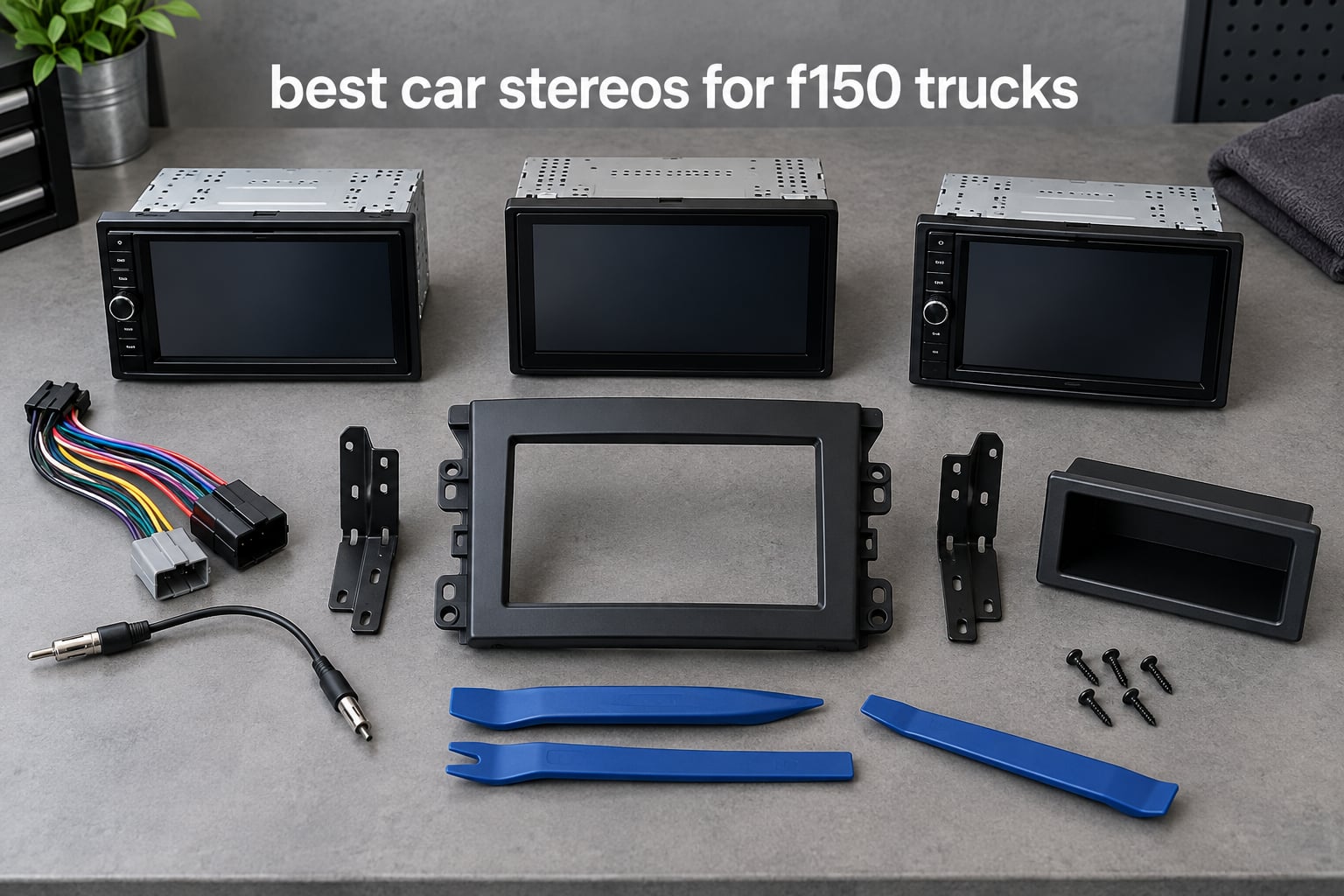
Short answer: an F-150 almost always takes a double-DIN head unit, but the head unit alone is never the whole job. You also need a generation-specific dash kit, a wiring harness, an antenna adapter and usually an integration module, because the factory opening in the F-150 dash has been reshaped three times since 1997. Pick the right kit for your model year and a mainstream double-DIN unit drops straight in; pick wrong and the faceplate sits proud of the dash or the steering wheel controls go dead.
That last part is why so many F-150 radio swaps go sideways. The unit powers up, the screen lights, and then you realise the volume buttons on the steering wheel do nothing, the factory camera never appears in reverse, or the climate control trim panel no longer sits flush. None of those failures announce themselves in advance.
We spent six weeks going through owner install reports and review data to build this roundup of the 10 best car stereos for F150 trucks. The list is weighted toward units that physically fit an F-150 dash opening without cutting plastic, keep the steering wheel controls alive, and hold up when a truck spends its life on gravel rather than a showroom floor. We also flagged the ones that will not suit you, and why.
One note before we start. Nearly every truck part on the market, from dash kits to portable car canopies for the bed, is sold against a year range rather than a model name, so year accuracy matters more here than it does in most buying guides. The same fitment-by-year logic is why we grade accessories like the RC trucks in our hobby roundup the same way. If you have ever been burned by a part that listed your truck but shipped one built for a different generation, the fitment section below is the part to read first.
Table of Contents
Top 3 Best Car Stereos for F150 Trucks in 2026

BOSS BV9358B 7 Inch Touchscreen
- Apple CarPlay and Android Auto
- 80 watts x 4 peak
- Front and rear camera inputs

SJOYBRING 7 Inch QLED Double DIN
- 1280x720 QLED screen
- Backup camera included
- Dual subwoofer outputs

Kissound 7 Inch HD Touchscreen
- Wireless CarPlay and Android Auto
- Physical volume knob
- Rear camera included
Those three cover the three realistic budgets. The BOSS BV9358B is the most proven unit in the list by review volume, the SJOYBRING is the sharpest screen for the money, and the Kissound is the cheapest way to get wireless CarPlay into an F-150 dash. The other seven each win a narrower fight, and the reviews below explain which one.
All 10 F-150 Friendly Head Units at a Glance
Screen size is the real differentiator here, running from a 6.8-inch unit to 7-inch panels, and wireless CarPlay or Android Auto is effectively standard above the budget tier. All ten below are standard double-DIN format and all ten need a vehicle-specific dash kit for the F-150. The table is sorted by how confident we are recommending them, not by screen size.
| Product | Specifications | Action |
|---|---|---|
| BOSS Audio Systems BV9358B 7 Inch Touchscreen |
|
Check Latest Price |
 PLZ 7 Inch Wireless Double DIN PLZ 7 Inch Wireless Double DIN |
|
Check Latest Price |
 BOSS Audio Systems BVCP9700A 7 Inch Touchscreen BOSS Audio Systems BVCP9700A 7 Inch Touchscreen |
|
Check Latest Price |
| SJOYBRING 7 Inch QLED Double DIN |
|
Check Latest Price |
 Pioneer MVH-S622BS Double DIN Pioneer MVH-S622BS Double DIN |
|
Check Latest Price |
 ATOTO S8L 7 Inch Android Double DIN ATOTO S8L 7 Inch Android Double DIN |
|
Check Latest Price |
 Pioneer DMH-130BT 6.8 Inch Touchscreen Pioneer DMH-130BT 6.8 Inch Touchscreen |
|
Check Latest Price |
 BOSS Elite BE7ACP 7 Inch Touchscreen BOSS Elite BE7ACP 7 Inch Touchscreen |
|
Check Latest Price |
 Alpine iLX-W670 Mechless Double DIN Alpine iLX-W670 Mechless Double DIN |
|
Check Latest Price |
| Kissound 7 Inch HD Touchscreen |
|
Check Latest Price |
1. BOSS Audio Systems BV9358B – The Most Proven Unit in an F-150 Dash
BOSS Audio Systems BV9358B CarPlay Android Car Stereo, 7 Inch Touchscreen
7 inch touchscreen
80 watts x 4 peak
Front and rear camera inputs
USB SD A/V
Pros
- Largest review base of any unit here at 5528 ratings
- Color coded wiring that suits a first time dash job
- Front and rear camera inputs
- Good EQ control for a screen unit
Cons
- Touchscreen needs more than one tap
- Sparse one-star band with some early failures
- Steering wheel control interface sold separately
This is the unit we keep coming back to for a reason that has nothing to do with specs: 5528 ratings is by a wide margin the deepest review base in this roundup, and when a product survives that many owners the failure modes are documented rather than mysterious. At 4.1 stars it is not the highest rated thing we list, but it is the one where the known problems are known.
In an F-150 it wants a standard double-DIN opening and a generation-specific faceplate, which makes it a natural fit for the 2004-2008 and 2015-2020 trucks. The camera inputs on both front and rear are the detail that matters most in a truck, because bed cameras and front-facing dirt cameras are common additions on working F-150s and most competing units at this level offer only one.
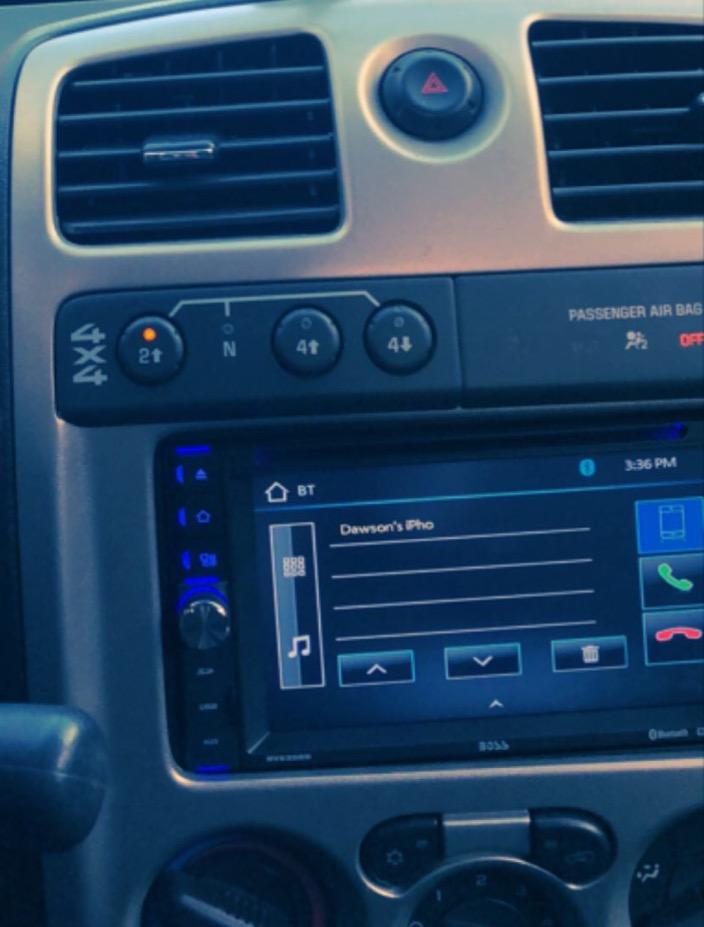
Output is 80 watts x 4 peak, which is honest rather than inflated, and it drives factory or basic aftermarket truck speakers without complaint. The subwoofer and front and rear pre-amp outputs mean you can add an amplifier later, which is the sensible order of operations for anyone planning a system build.
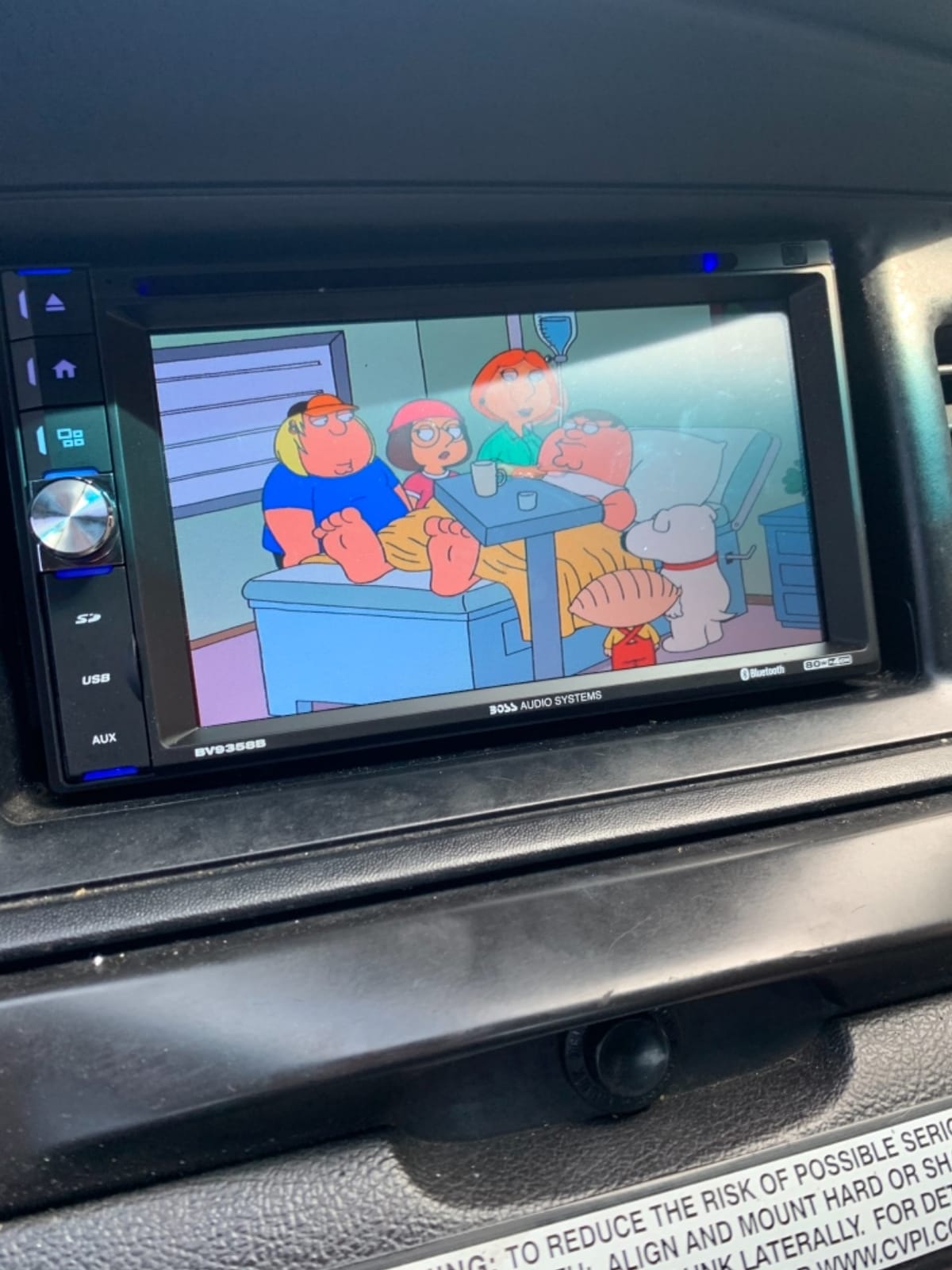
What we checked before recommending it for an F-150
The dash fit is straightforward at standard double-DIN size, and the colour-coded harness labelling is genuinely helpful if this is your first time behind a F-150 bezel. You will still need a dash kit and a wiring harness for the truck, and the steering wheel control interface is a separate purchase rather than an included item, which is the single most common complaint from installers.
Where owners report problems
Touchscreen sensitivity is the recurring theme: some owners describe needing two or three taps for a reliable response, which becomes genuinely annoying when you are trying to change a song on a rough road. A thin but real share of owners also report units that stopped working or began popping intermittently after several months, so the warranty matters here. Bluetooth audio quality is another soft spot, described as muddy by some rather than crisp.
2. PLZ MP-902W – Most Feature-Rich Head Unit in the Roundup
PLZ 7″ Wireless Double Din Car Stereo Apple Carplay Radio Screen for Car Audio Receivers, Bluetooth 5.3 Car Play Android Auto Touchscreen, 240W 4.2 CHN 2 Subwoofers Outputs, Backup Camera, SWC, FM/AM
7 inch IPS 1024x600
Bluetooth 5.3 with external antenna
4.2 channel pre-amp 240W
Dual subwoofer outputs
Pros
- Wireless CarPlay and Android Auto
- Independent Bluetooth 5.3 module cuts static
- Two subwoofer outputs plus 10 band EQ
- Large heat sink for long sessions
Cons
- Largest one-star share here at 13 percent
- Wired mirroring only
- No Wi-Fi hotspot function
- Needs its own harness and dash kit
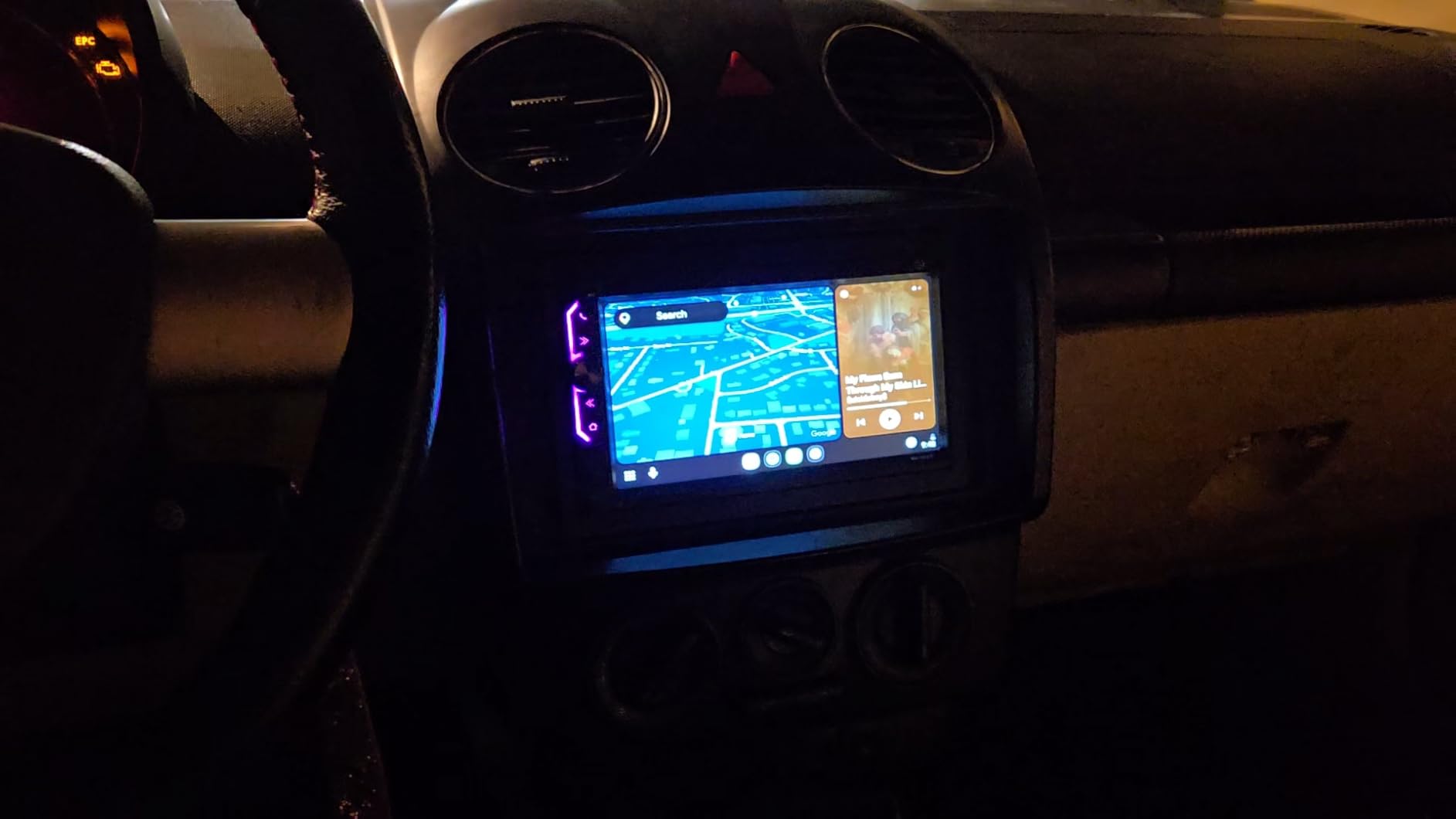
On paper this is the most complete unit we reviewed. Built-in DSP driving a 4.2-channel pre-amp with up to 240W claimed output, two subwoofer speaker outputs, a 10-band equaliser and a 7-inch IPS panel at 1024×600, all from a listing that also carries both wired and wireless CarPlay. Very few units at this level give you dual subwoofer outputs, and for anyone who wants to run more than one sub without an extra amp, that is the reason to look here.
The independent Bluetooth 5.3 module with its own external antenna is a smart piece of engineering. Truck cabs are electrically noisy, and separating the Bluetooth radio from the main board is the difference between clean streaming and the static that owners of cheaper units complain about constantly.
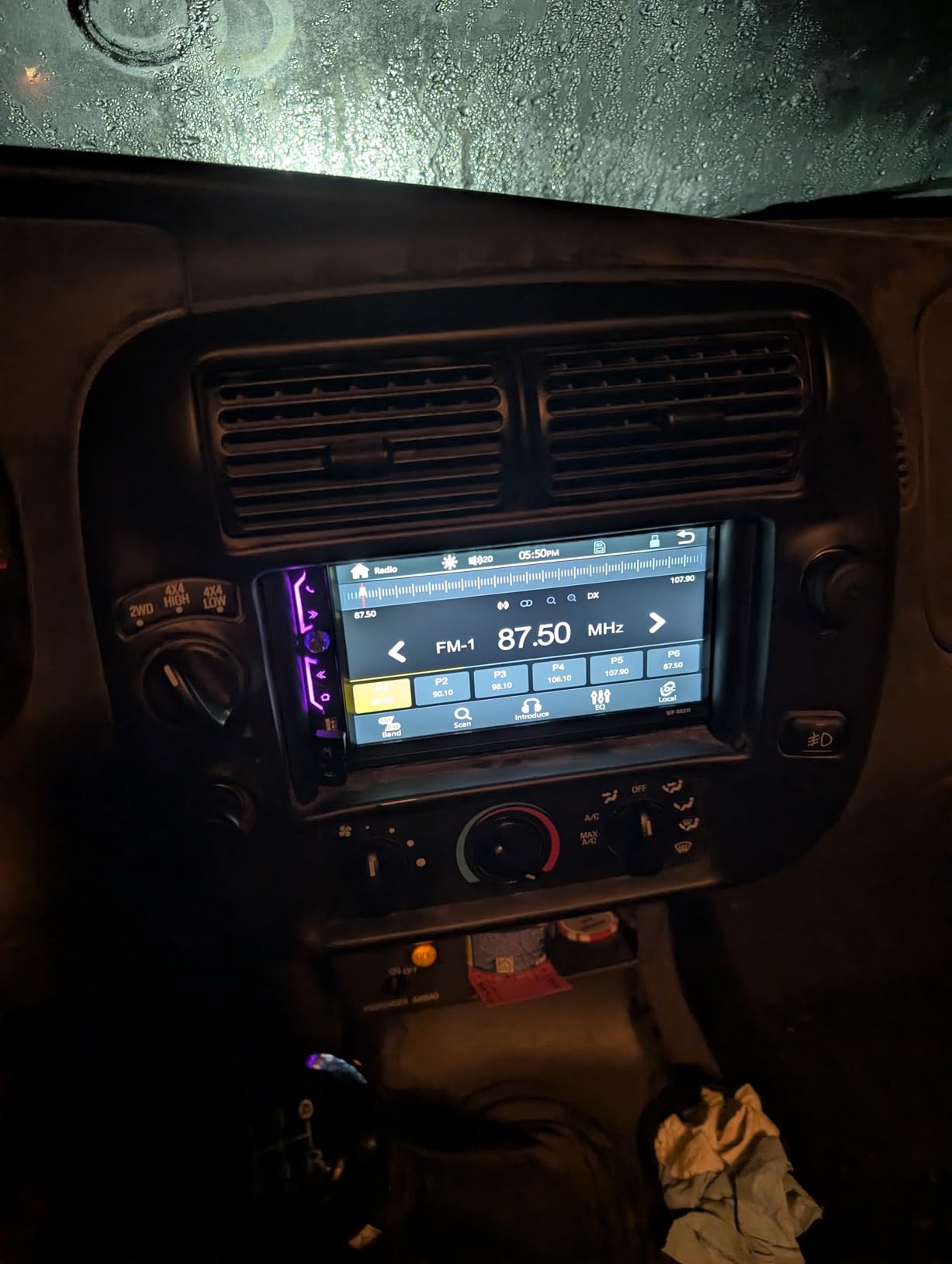
The listing is specific about fitment, which is refreshing. It states a minimum dash opening of 6.69 by 3.81 inches and includes a 7.44 by 4.61 inch outer trim frame, so you can measure before you commit. On a 2015-2020 F-150 with a standard double-DIN cavity this fits cleanly. On a 2009-2014 truck with the 4.2-inch screen you are relying entirely on the faceplate kit to fill the surrounding bezel.
Why truck owners keep coming back to it
The wireless CarPlay and Android Auto works first try for most buyers, which is not something we can say for every sub-cost unit in this price bracket. The large rear heat sink is a detail that matters on a truck because a hot cab behind a sealed cab is a genuinely hot environment, and units that thermally throttle mid-drive are a known complaint elsewhere in this category.
The honest drawback
The 4.0 star rating is the lowest in this roundup and the one-star share, at 13 percent, is the highest, which points to a higher early-defect rate than the branded units here. Treat that as a real signal, not noise. Mirroring is wired only and there is no Wi-Fi hotspot function, so any phone feature that needs an internet connection outside of CarPlay or Android Auto will need a cable or a separate hotspot.
3. BOSS Audio Systems BVCP9700A – Wireless CarPlay With Real Output Headroom
BOSS Audio Systems BVCP9700A CarPlay Android Car Stereo, 7 Inch Touchscreen
7 inch double DIN touchscreen
320W plus output
Wireless Apple CarPlay
Rear USB hub
Pros
- Wireless Apple CarPlay included
- 320W plus output for factory truck speakers
- Bright clear screen
- Colour coded labelled wiring
- 3 year warranty
Cons
- No physical volume knob
- Weak supplied microphone
- CarPlay can run laggy in warm conditions
- Needs a brake-bypass switch for video
The reason this unit stands out from other BOSS models in the list is the wireless CarPlay. At this tier it is unusual, and owners consistently single it out as the feature that justified the choice over a similarly priced unit from a competitor. For an F-150 owner who wants their phone on the big screen without a cable running out of the console, that is not a small thing.
The output rating of 320W is the highest total figure of any double-DIN unit in this roundup, and owners repeatedly praise the wattage for the money. Factory F-150 speakers are not demanding, but a truck at highway speed is a loud environment, and extra clean headroom is worth more in a cab than it is in a sedan.
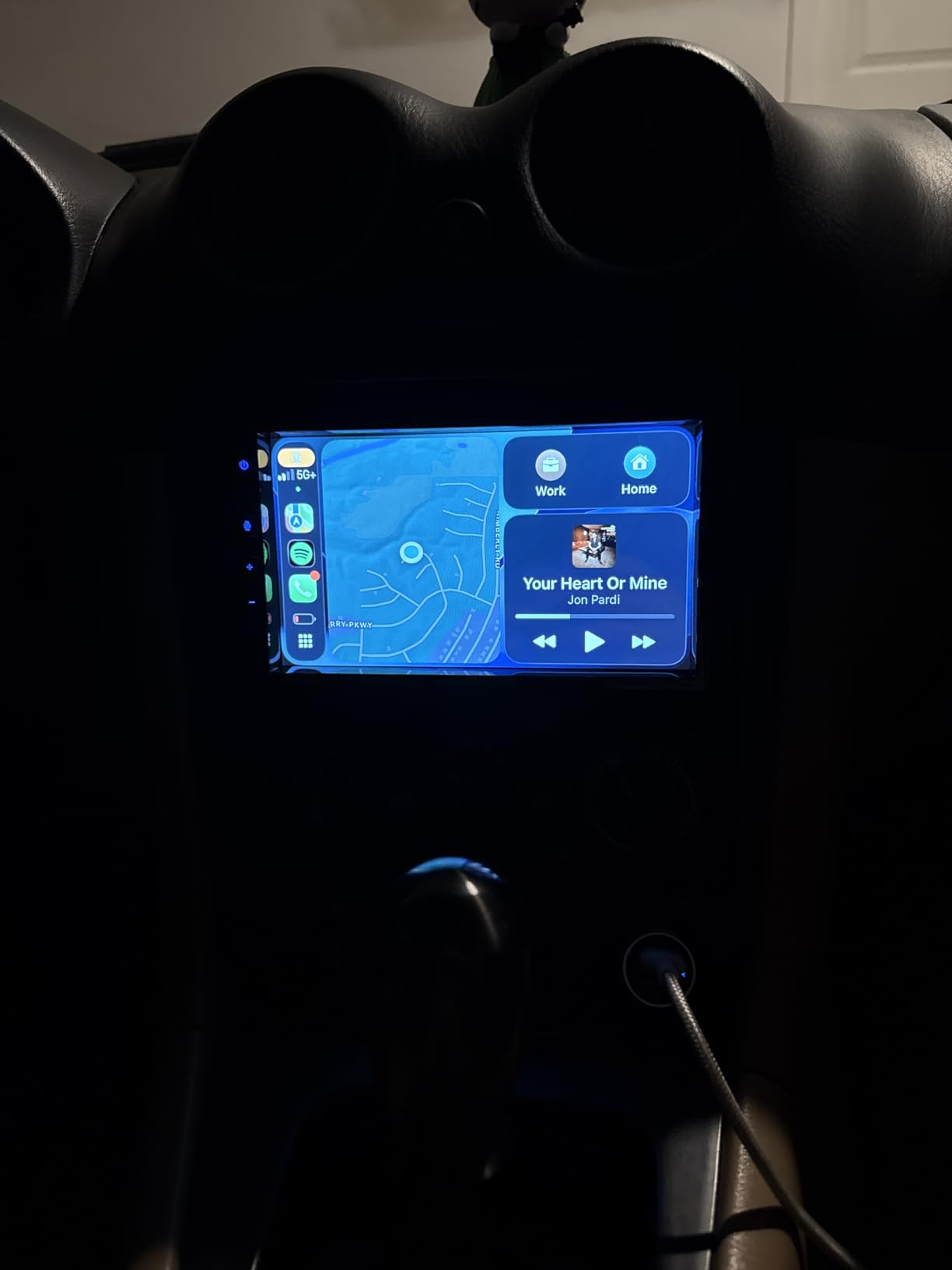
The rear USB hub is a truck-specific nicety. It lets you run a fixed phone cable into the console for charging and CarPlay while keeping a second port free for media, which is exactly the arrangement most installers end up building by hand anyway.
Fitment in an F-150 dash
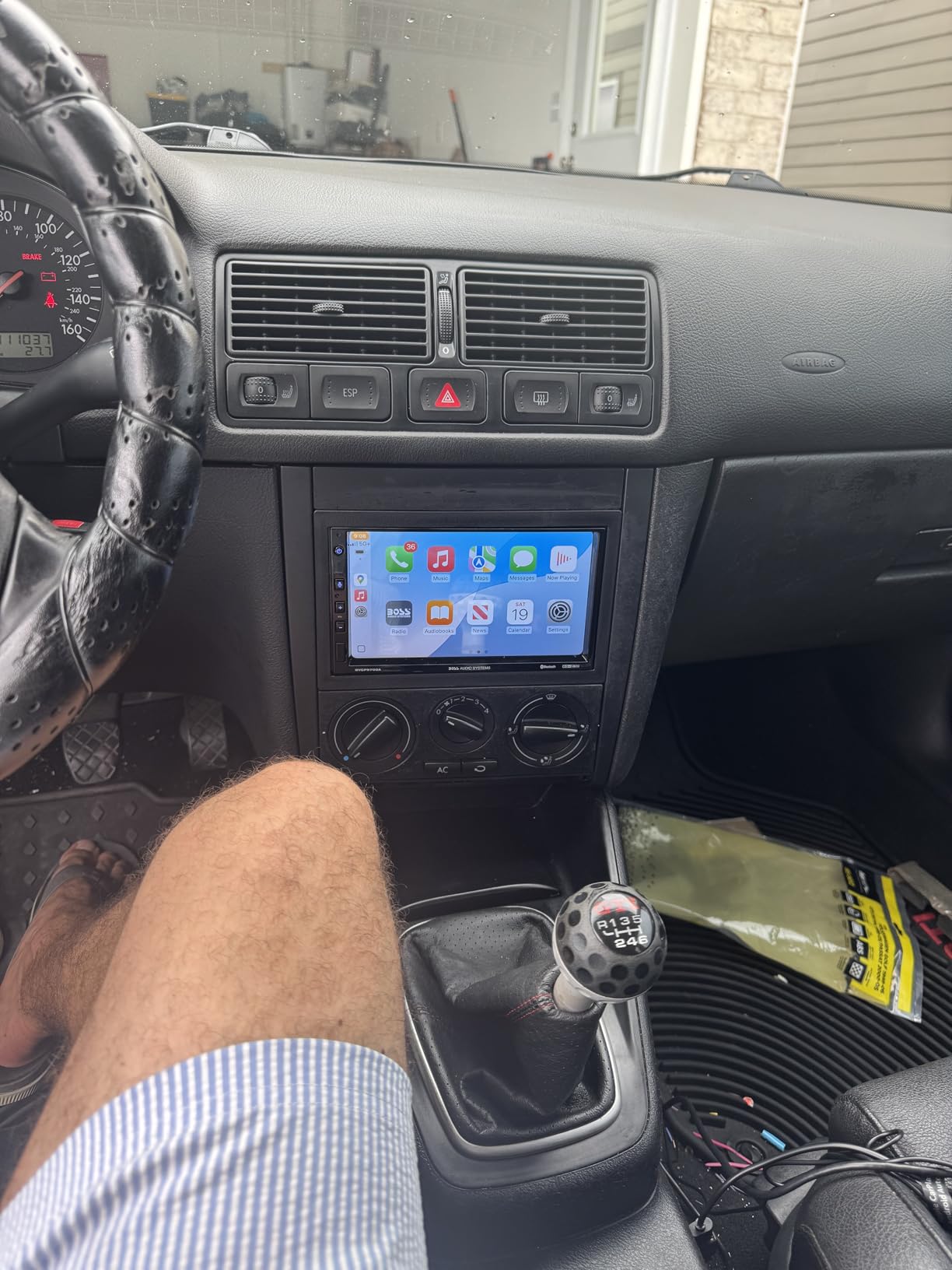
Standard double-DIN format, so it suits the 2004-2008 and 2015-2020 generations with the right faceplate. The colour-coded, labelled wiring makes it one of the friendlier units to install for a first-timer, and the unit weighs 2.1 pounds, which makes handling it in a deep F-150 cavity manageable.
Who should pass on it
There is no physical volume knob, only on-screen plus and minus buttons, and that is the most persistent owner complaint. On a truck with genuine road noise, being able to adjust volume by feel without looking at the screen has real value. The supplied microphone is also widely considered poor for hands-free calls, and CarPlay performance can degrade in high ambient temperature.
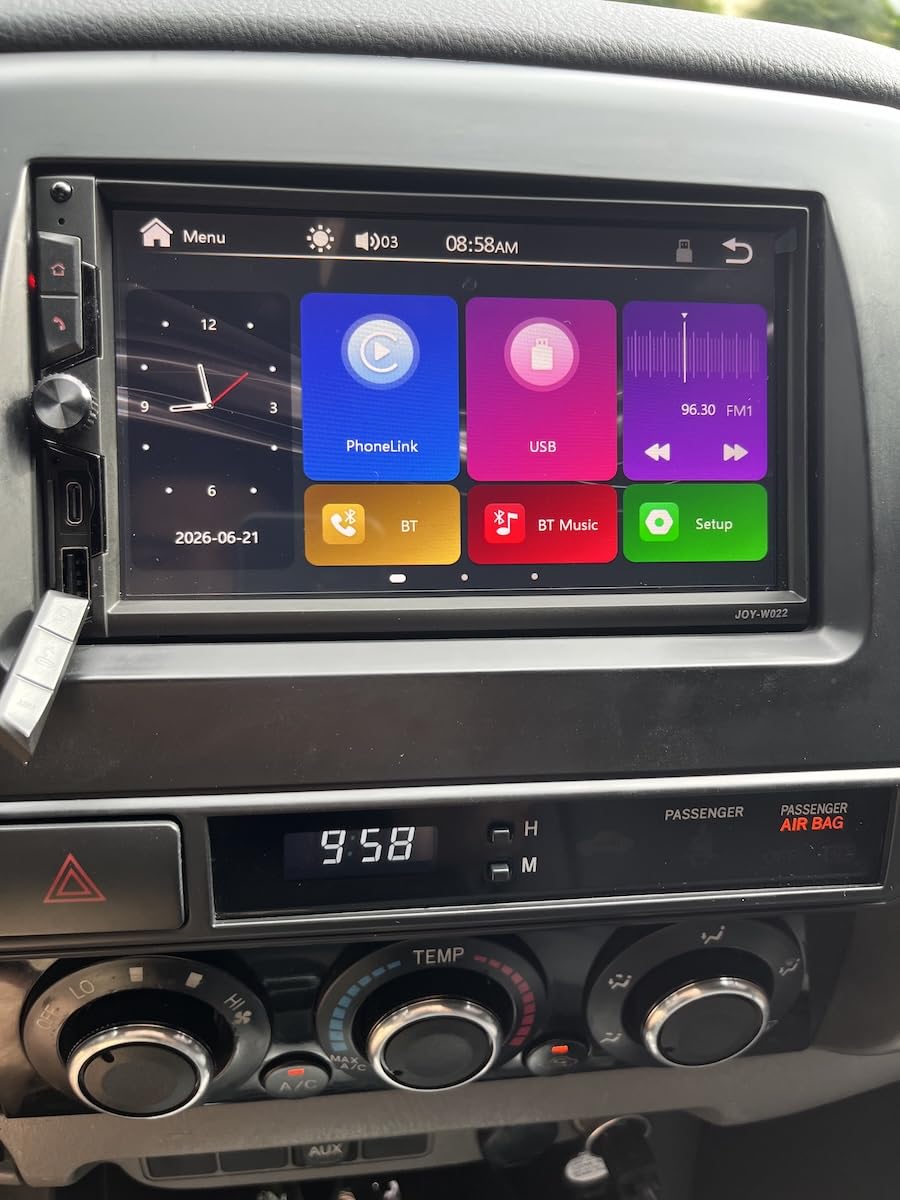
4. SJOYBRING JOY-W022 – Sharpest Screen and an Included Backup Camera
SJoyBring 7″ QLED Double Din Car Stereo – Wireless Apple CarPlay & Android Auto, 240W 4.2CHN, SWC, Bluetooth, FM/AM Car Radio, 2 Subwoofers Outputs, Backup Camera
7 inch QLED 1280x720
240W 4.2 channel output
Backup camera in the box
Wireless CarPlay
Pros
- Highest rated unit in the roundup at 4.3 stars
- 1280x720 QLED screen is sharper than rivals
- Backup camera actually included
- Dual subwoofer RCA outputs
Cons
- Steering wheel control module not included
- Dash kit and harness sold separately
- Wired mirroring only
- No Wi-Fi hotspot
This is the highest-rated unit we reviewed, at 4.3 stars with 70 percent of owners giving five stars and only 8 percent giving one. That distribution is unusual in this category, where cheap electronics usually drag a score down. The screen is the reason: 1280×720 on a 7-inch QLED panel, which is visibly sharper than the 1024×600 IPS panels that dominate the budget tier.
The backup camera in the box is the detail that changes the maths for an F-150 owner. Trucks are the one vehicle class where almost everyone wants a camera, and at this level most competitors sell the input and leave the camera as an extra purchase. Including an HD night-vision camera removes one line item and one install step from the project.
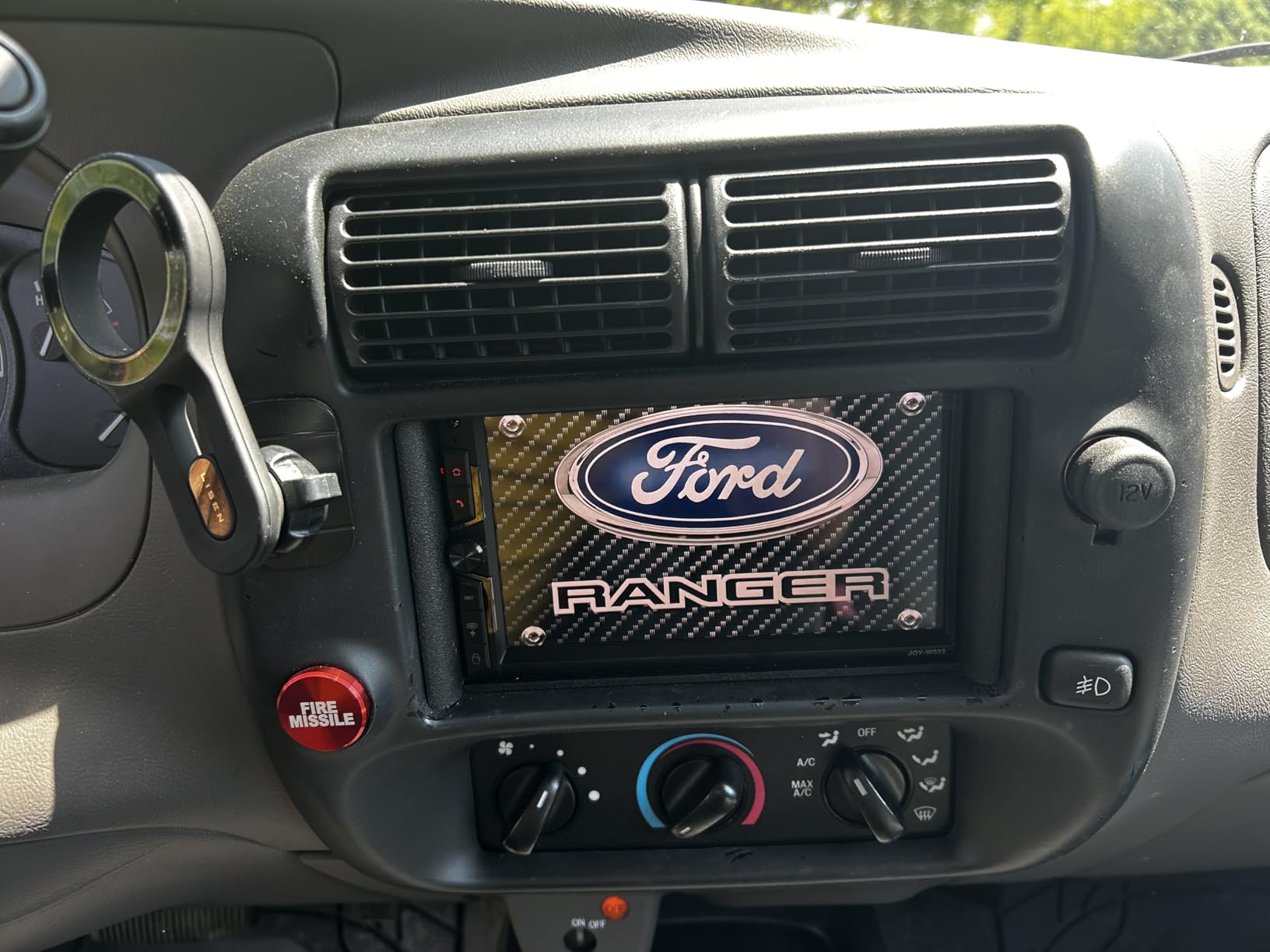
Output is 4.2 channels at 240W with custom EQ, plus dual subwoofer RCA outputs. That configuration is aimed squarely at someone who wants to add bass later without replacing the unit, which is a sensible plan for a truck that tows.
What the reviews confirm about fitment
The listing is clear that the standard double-DIN opening is 6.69 by 3.81 inches and that a dash kit may be required. On an F-150 that is always required. The reviews themselves, which are mostly feature-and-price praise rather than long-term reliability reports, point to fitment rather than performance as the main source of friction: adapters and kits simply are not in the box.
Where it falls short
The steering wheel control interface module is not included, so budget for it alongside the dash kit and wiring harness. There is no Wi-Fi hotspot support and mirroring is wired only. The brand also carries a much shorter track record than Pioneer, Alpine or BOSS, and for a truck that will live in the elements that is a fair consideration, even though nothing in the reviews suggests an elevated failure rate.
5. Pioneer MVH-S622BS – The One With a Real Volume Knob
Pioneer MVH-S622BS Double Din Car Stereo with Bluetooth, USB
Non-touch double DIN
50W x 4 with 4V Hi-Volt pre-outs
13 band EQ
Bluetooth and USB
Pros
- Highest rated unit here at 4.5 stars
- Physical volume knob and buttons
- 4V Hi-Volt pre-outs give clean signal
- Smart Sync app unlocks 31 band EQ and time alignment
Cons
- No touchscreen and no CarPlay or Android Auto
- Display often too bright at night
- Awkwardly placed pause button
- Some units arrive without mounting hardware
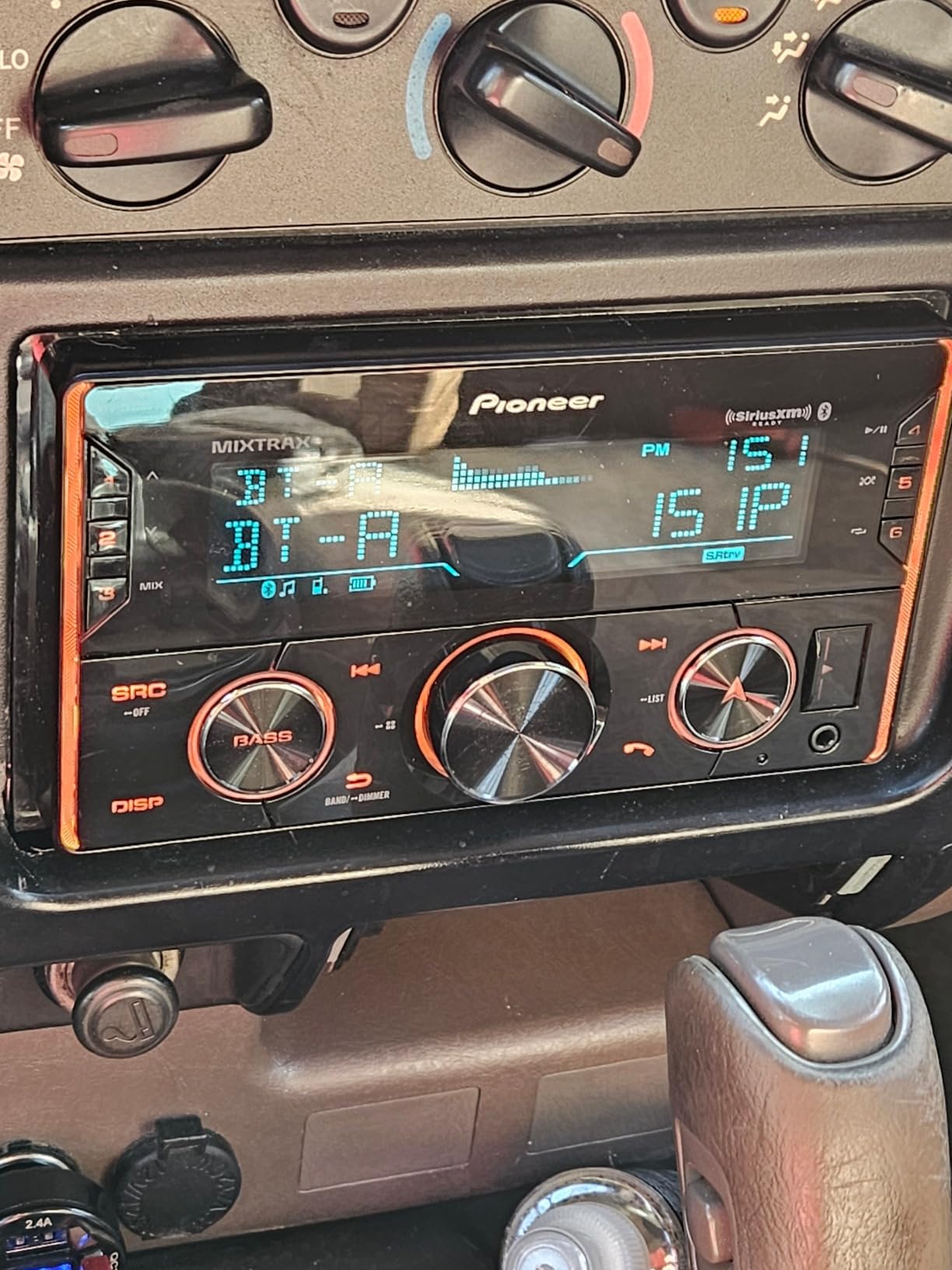
This one scores 4.5 stars from 836 ratings, the highest rating in the roundup, and the reason is not a feature list so much as a design decision that most of the industry abandoned. It has physical buttons and a rotary volume knob. For anyone who drives a truck in daylight, on gravel, or wearing gloves, a real knob is a better interface than a touchscreen, and the reviews make that case repeatedly.
On sound quality it is genuinely strong. 50W x 4 output with Hi-Volt 4V RCA pre-outs means a clean handover to an external amplifier, and the 13-band graphic EQ plus Advanced Sound Retriever gives real adjustment. The Smart Sync companion app opens up a 31-band EQ and time alignment, which is close to mini-DSP territory from a phone.
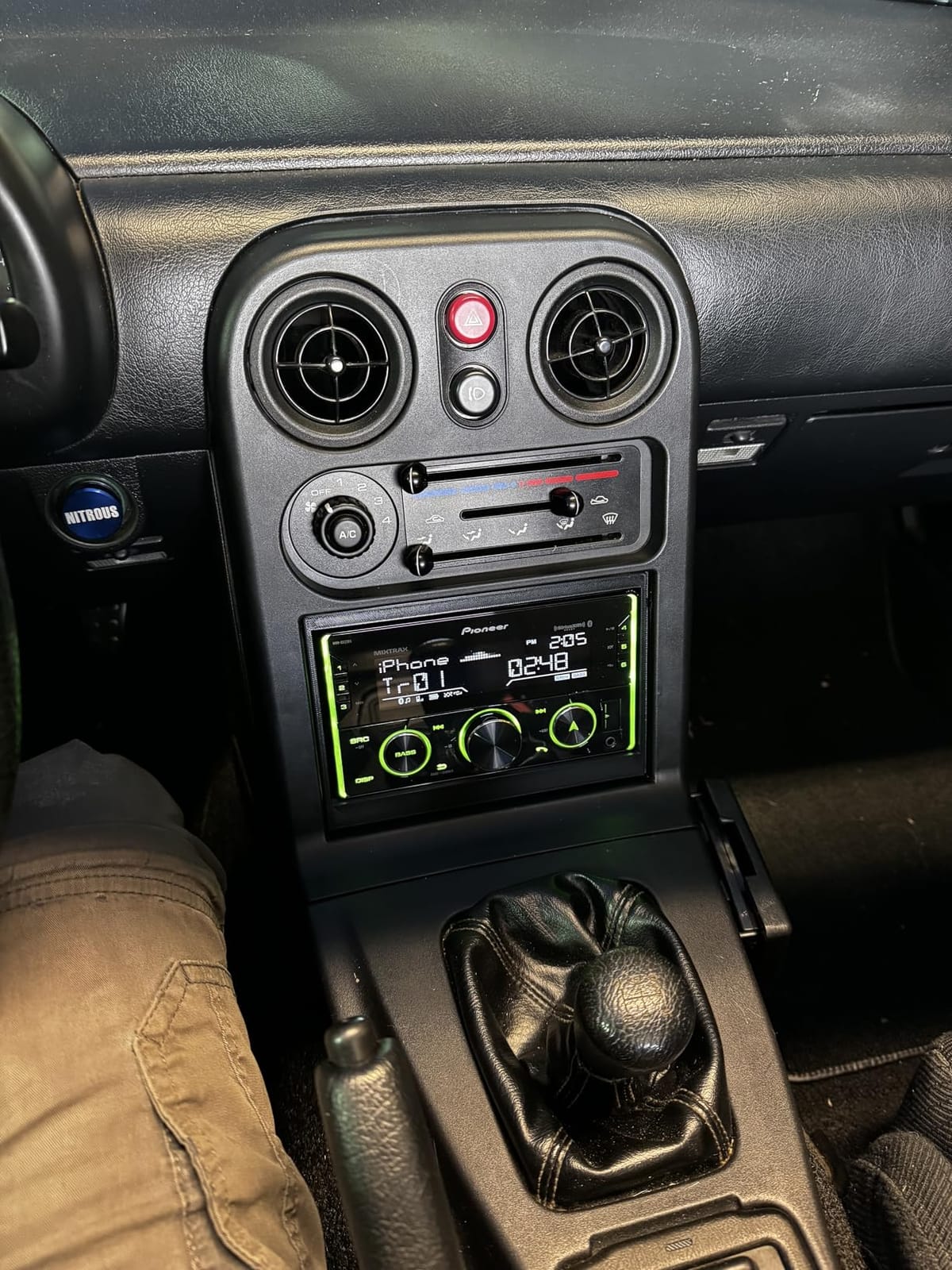
Fitment is the easy part: non-touch double-DIN with a rotary knob, and it is a natural choice for the 1997-2003 and 2004-2008 trucks where the opening rewards a simple, button-driven unit over a screen. It also works well in a 2009-2014 truck if you are more interested in sound than navigation.
The brightness problem you need to know about
Several owners covering their dash at night to read the display is the most common complaint, and the reason is that there is no proper night mode and even the dimmest setting reads as too bright. Multi-colour illumination lets you match the dash lighting colour, but it does not solve overall brightness. If you do a lot of driving after dark, factor in a small dial or an inline dimmer.
What you give up
There is no touchscreen, no Apple CarPlay and no Android Auto, which makes this the wrong choice if navigation is the reason you are upgrading. SiriusXM is ready but needs a subscription. It is also worth knowing the Smart Sync app is pushed as required for Bluetooth setup and can then be removed, and that some units ship without mounting hardware.
6. ATOTO S8L – The Only True Android Head Unit Here
ATOTO S8L 7inch AI Android Double Din Car Stereo, w/OBD, 4G SIM+WiFi,4G+64G
Android 15 with 4GB RAM
7 inch QLED optically bonded
32 band EQ and time alignment
OBD2 scanner included
Pros
- Full Android 15 so you can install real apps
- 4G LTE SIM slot keeps it online
- 32 band EQ time alignment and crossovers
- OBD2 Bluetooth scanner included
- Screen readable in direct sunlight
Cons
- Cameras sold separately
- A few reports of Bluetooth failures
- One report of low output into a factory amplifier
Every other unit on this list is a CarPlay or Android Auto shell. The ATOTO S8L runs Android 15 with 4GB of RAM and 64GB of storage, so you can install actual applications rather than mirroring a phone. For a work truck or an overland build that spends time where there is no signal, that is a categorically different proposition.
The 4G LTE SIM slot is the detail we did not expect to care about and now do. CarPlay and Android Auto occupy the Wi-Fi connection, so a unit with only Wi-Fi has nothing left for anything else. With a SIM slot, navigation and traffic data keep working independently of the phone link.
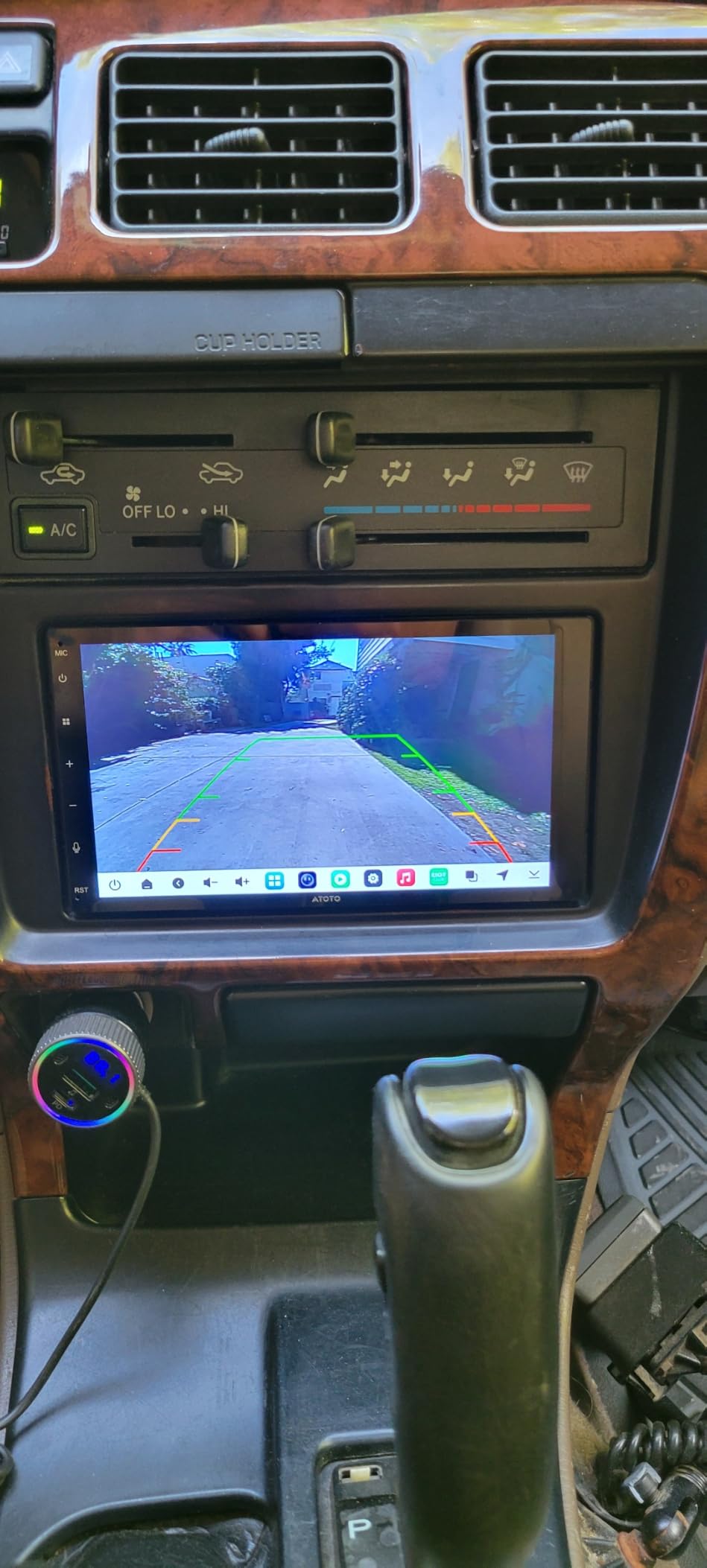
The audio processing is the most serious in the roundup: 6 assignable channels, a 32-band EQ, 6 presets, time alignment, adjustable crossovers and a 24-bit DAC, driving 4x45W peak and 4x25W RMS with 3V RCA pre-out and optical S/PDIF. If you intend to build a system in stages, this is the unit that will not be the bottleneck.
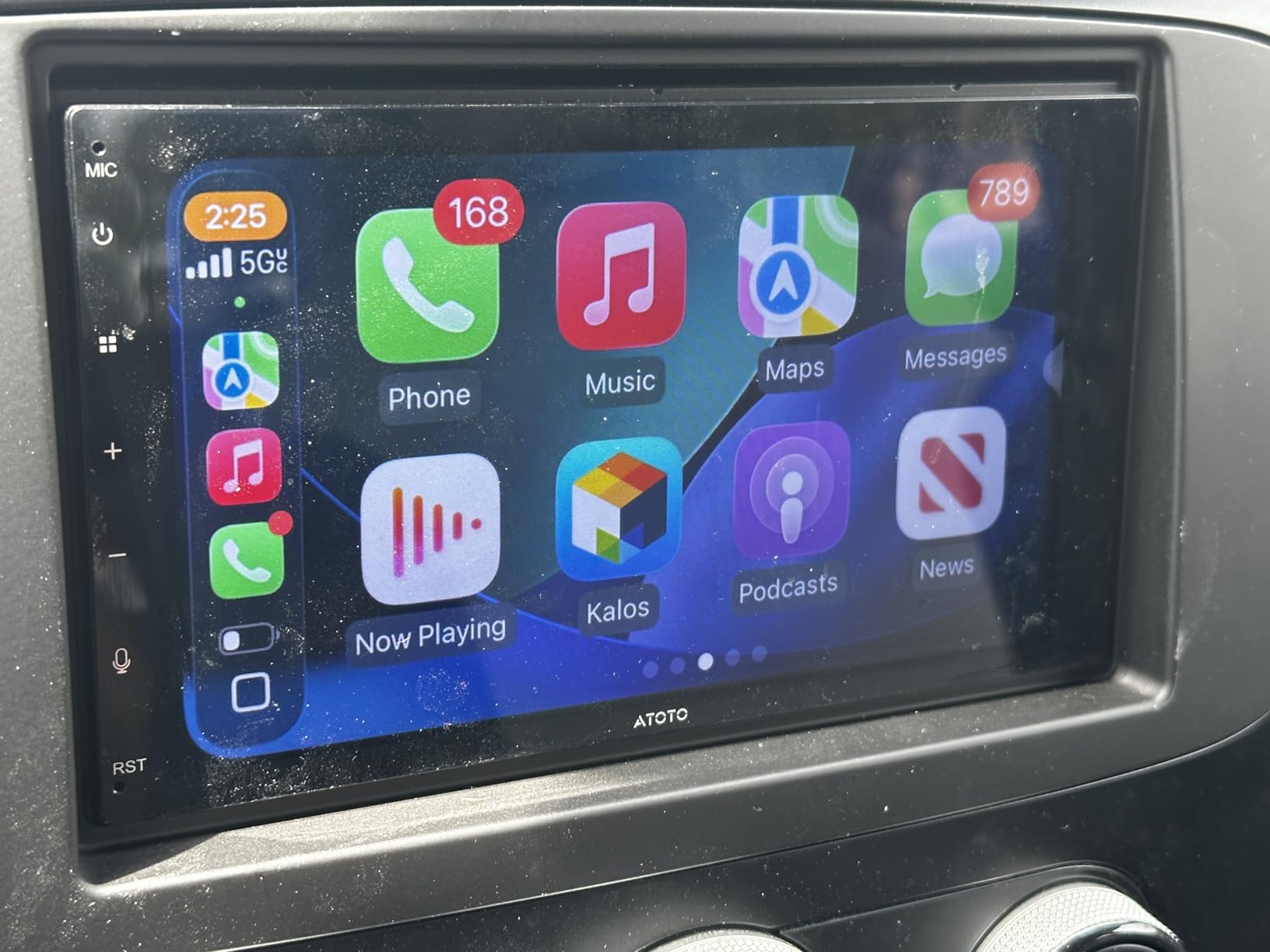
Built for a working truck
The 7-inch QLED panel is optically bonded, rated at 550 nits with a 178-degree viewing angle, and it auto-dims at night. Readability in direct sunlight is exactly the spec that matters on a truck, where the screen is high and lit through a windscreen rather than shaded in a cabin. The included AC-4450 Bluetooth OBD II scanner is a genuine bonus for anyone who watches engine data, and owners report it working with Torque-style apps.
What to watch
Cameras are supported on front and rear inputs but sold separately, which matters more here than elsewhere because this unit skews toward trucks that already have a camera. Reliability is not perfect: a handful of owners reported Bluetooth failing or buzzing soon after purchase, and one reported insufficient output volume when driving a factory amplifier. The brand also publishes over-the-air updates, and older units in the same line have occasionally needed an Android reboot.
7. Pioneer DMH-130BT – Easiest to Fit in a Tight F-150 Opening
Pioneer DMH-130BT 6.8″ Capacitive Touchscreen Double Din Car Stereo
6.8 inch capacitive screen
Short chassis design
50W x 4 with FLAC
Amazon Alexa ready
Pros
- Short chassis makes tight dash openings far easier
- Brand-backed Pioneer build with a warranty
- Illumination customisation to match factory dash
- Good clean sound for the money
Cons
- No CarPlay or Android Auto
- Video and maps locked without a brake-bypass switch
- Some reports of the screen going dark
- Faceplate and some hardware not included
If your F-150 has a cramped opening, chassis depth is the spec that decides whether your install is pleasant or frustrating. The DMH-130BT uses a short-chassis design, which is the single most valuable physical characteristic for fitting into a 2009-2014 truck with the 4.2-inch SYNC screen, where the cavity behind the bezel is shallower than most double-DIN units assume.
71 percent of its 553 ratings are five stars, and the praise is consistent: build quality, fitment in truck dashes and the ability to match the factory dash illumination across 100-plus options with 5 display colours. It also supports Amazon Alexa through the Vozsis and WebLink apps, which adds voice control beyond basic Bluetooth.
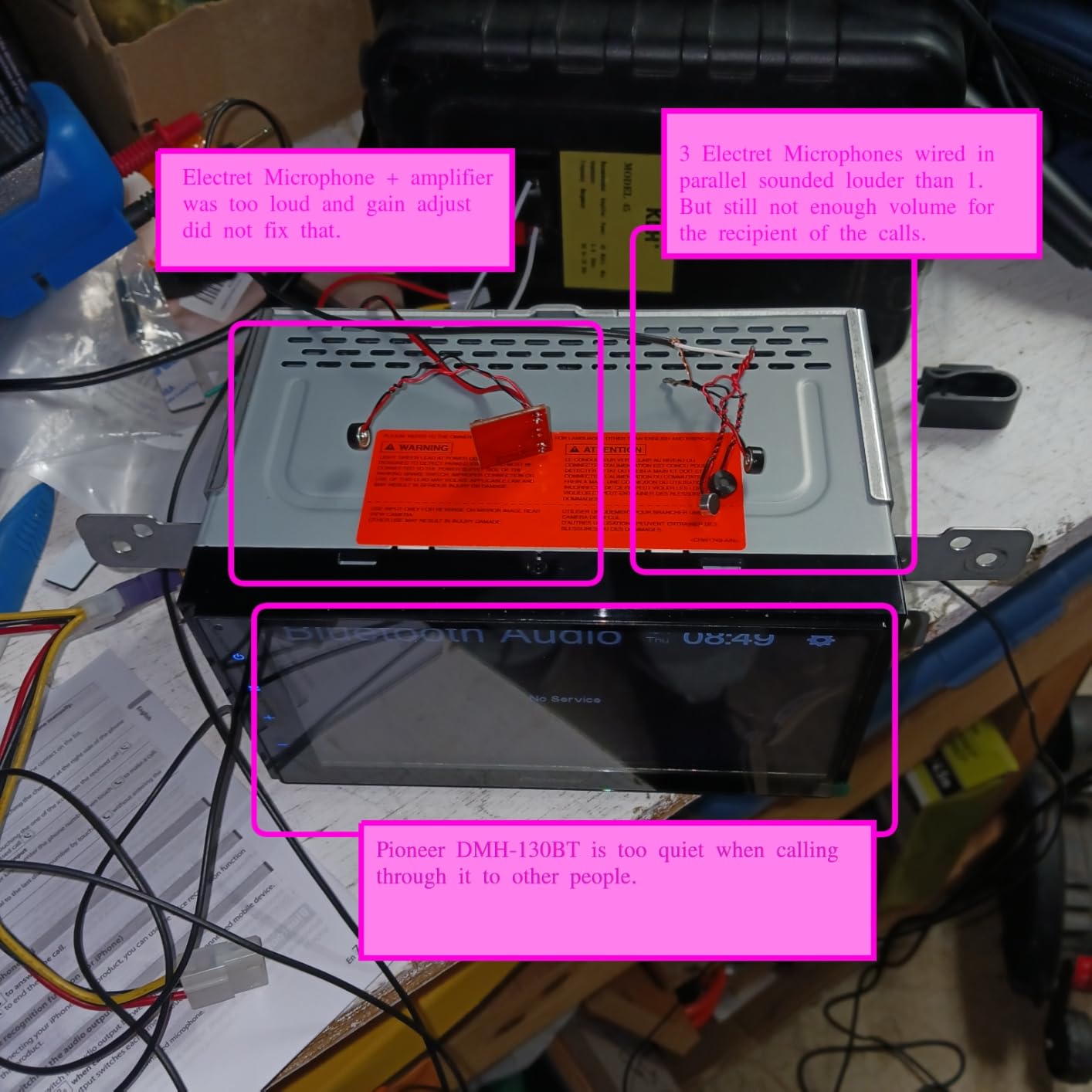
Audio output is 50W x 4 with FLAC and WAV playback, and the reviews describe the sound as clean and simple rather than elaborate. A rear-view camera input is present and works well with a camera added, which means the 2009-2014 owner can keep their OEM camera or supplement it.
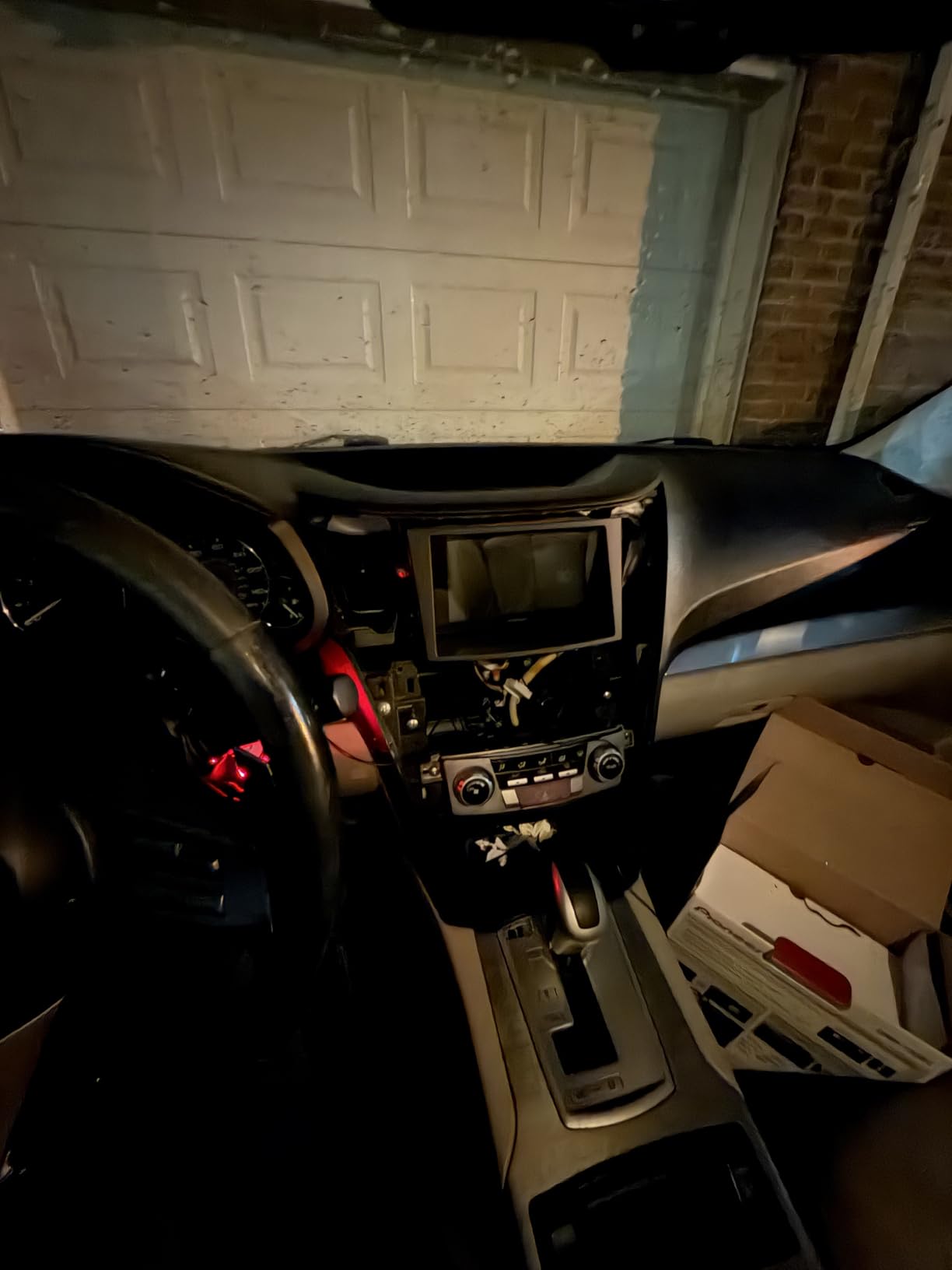
The install detail that catches people
Video and map features stay locked until a brake-bypass switch is wired in. This is a standard safety arrangement across the category and is not a defect, but it surprises people who open the box expecting maps to work on day one. The illumination customisation is also a genuine advantage in an F-150, where a mismatched backlight is the most obvious sign of a cheap install.
Who this is not for
Anyone upgrading because they want modern smartphone integration. This unit stops at Bluetooth, with no Apple CarPlay and no Android Auto, so navigation means your phone on a mount rather than on the dash. A small set of owners also reported the screen going dark or cutting out after a few months, and the faceplate trim ring and some hardware are not in the box.
8. BOSS Elite BE7ACP – Most Power for Factory Truck Speakers
BOSS Audio Systems Elite BE7ACP Car Stereo – 7″ Display, Apple CarPlay & Android Auto Head Unit, Double DIN Touch Screen Car Stereo, Bluetooth, AM/FM Radio Receiver, USB, SD, No CD/DVD Player
7 inch capacitive touchscreen
85W x 4 with pre-amps
340W total output
Wired CarPlay
Pros
- 85W x 4 output gives real headroom for factory speakers
- Clear responsive touchscreen
- USB SD and A/V inputs give more media options
- 3 year warranty
Cons
- CarPlay and Android Auto are wired only
- Mic echo on CarPlay calls
- No volume knob and a dim screen
- Video playback is Windows Media only
This is the unit to look at if you are keeping your factory F-150 speakers and simply want them louder. 85 watts x 4 into four channels, with front, rear and subwoofer pre-amp outputs for later, is the highest per-channel figure in the roundup. Owners installing it in older trucks report it as a decisive upgrade over dated OEM head units.
The input flexibility is better than most at this level: USB, SD and A/V inputs alongside AM/FM radio and inputs for two exterior cameras, front and rear. On a work truck, SD card media and a front camera are both more useful than a feature list of smartphone integration would suggest.
Apple CarPlay and Android Auto work, but over a USB cable only. There is no wireless option here, which is the main functional gap against the BOSS BVCP9700A at a similar price and against several of the unbranded units lower down this list.
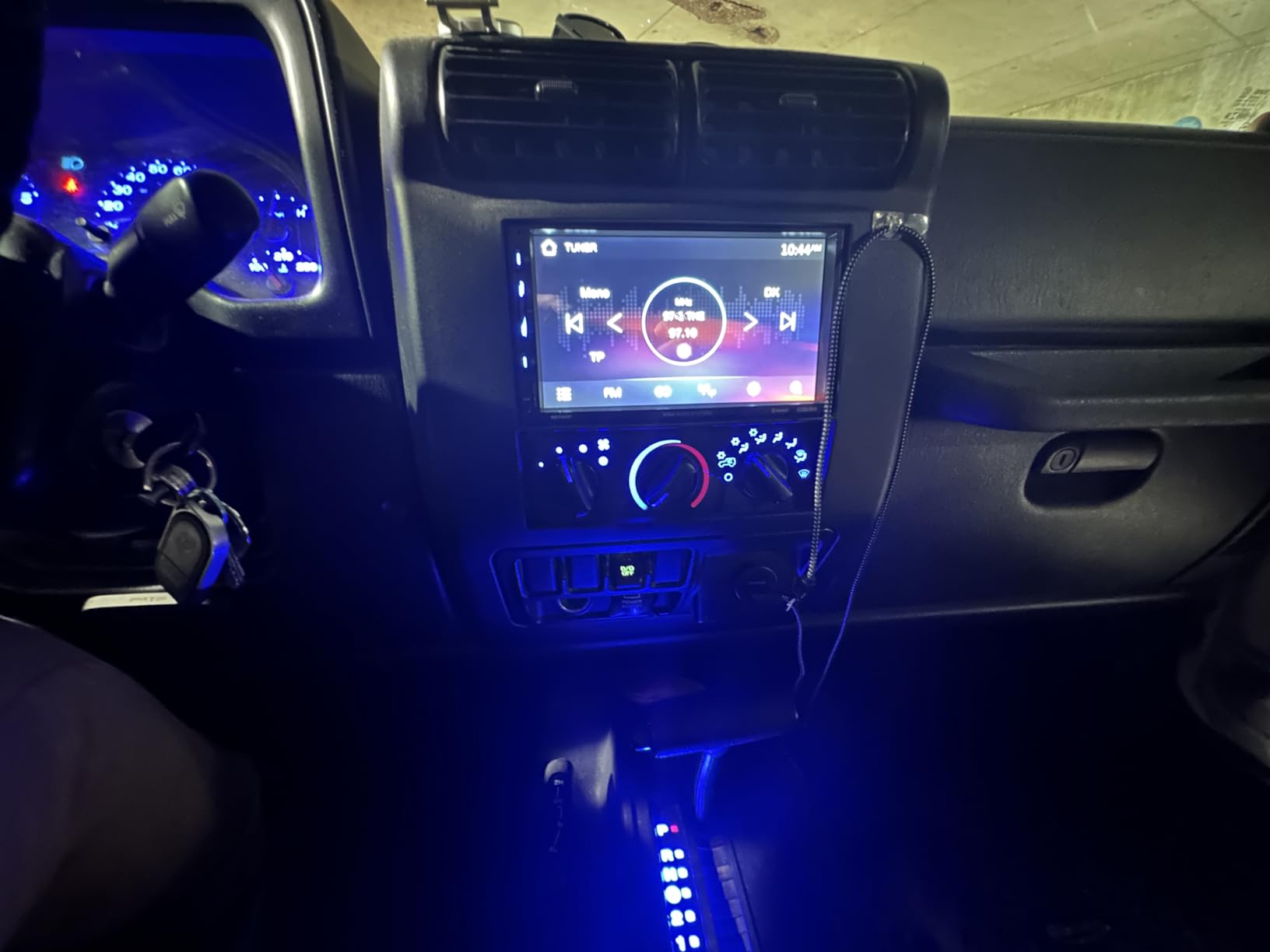
Where the weaknesses show up in daily use
Two themes dominate the negative reviews. Microphone echo during CarPlay calls is reported repeatedly, which is annoying in a truck cab where road noise already forces you to speak up. The volume control is a small rocker at the edge of the faceplate rather than a proper knob, and the screen is not bright even at maximum, which hurts on a sunny trail.
Two more things to check before you buy
Video playback is limited to Windows Media video files rather than MP4, so do not plan to use this unit as a media player. A minority of units arrived defective with black screens or a failure to power on, though the three-year BOSS warranty handled replacements in at least one reported case. Steering wheel controls need a separately sold interface, as with the other BOSS models here.
9. Alpine iLX-W670 – The One Built For Sound Tuning and Amplifiers
Alpine iLX-W670 Digital Multimedia Receiver with CarPlay and Android Auto Compatibility
7 inch mechless touchscreen
13 band EQ and 6 channel time correction
PowerStack amplifier mounting
Pros
- Genuinely serious sound tuning controls
- Very shallow chassis fits where other double-DIN units will not
- CarPlay connects instantly with no lag
- Microphone cuts road noise well
Cons
- Full settings menu locked until a brake-bypass wire is connected
- Music does not resume after shifting out of reverse
- No RDS or song title display on the tuner
- CarPlay is wired only
If the plan is to add amplifiers and build a real system, the Alpine iLX-W670 is the most capable-sounding unit in this roundup. It offers a 13-band graphic EQ, 6-channel time correction and versatile crossover settings, plus a Sound Boost menu with expanded bass and mid-bass boost controls and dedicated subwoofer adjustments. Reviewers with external amplifiers rate it very highly, with several reporting it outperforming comparable Kenwood units.
The chassis is mechless and very shallow, which owners repeatedly praise and which is exactly what you want inside an F-150 dash cavity. Several people have gone as far as 3D-printing custom housings for very tight installations. The PowerStack capability also lets Alpine amplifiers mount directly to the back of the unit, cutting down on wiring length and noise.
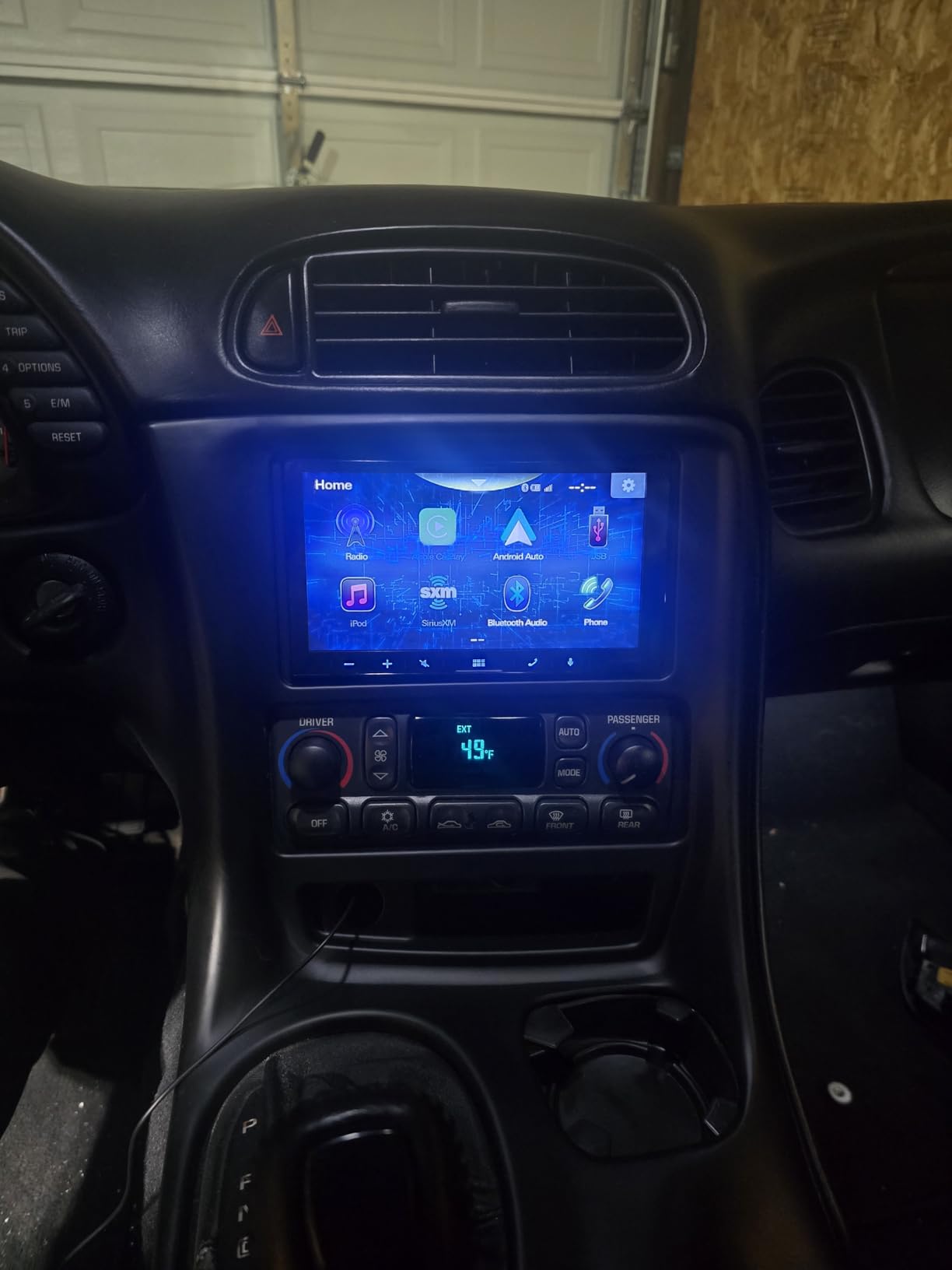
On fitment, this is a safe recommendation for the 2015-2020 generation with a proper double-DIN kit, and the shallow body makes it the most forgiving option for the 2009-2014 trucks with a 4.2-inch screen. The 2-year manufacturer warranty is also the longest explicit warranty alongside the BOSS units in this list.
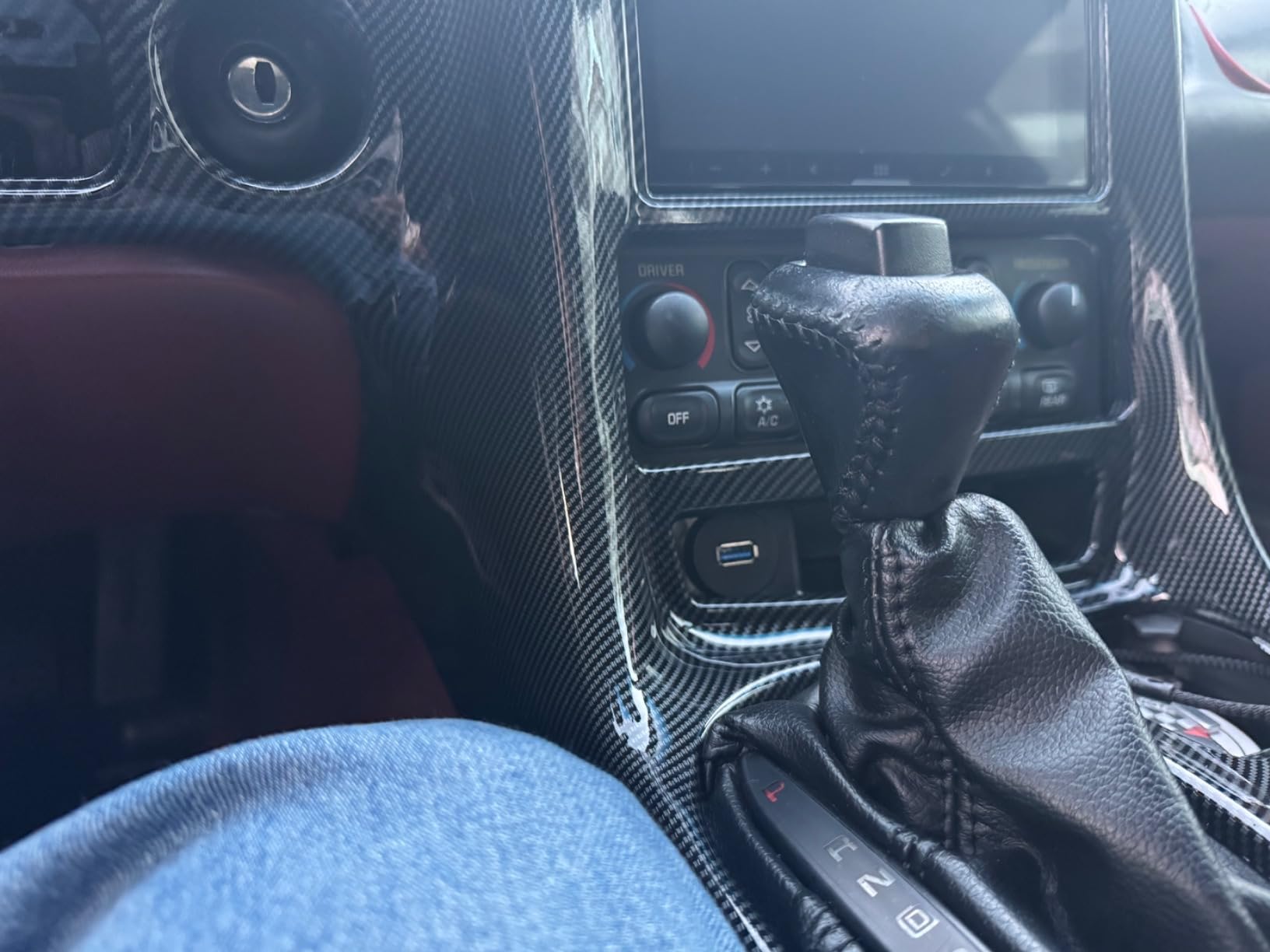
The brake-bypass step nobody warns you about
The full settings menu is locked until a parking-brake or brake-bypass wire is connected. This is the universally cited gotcha in reviews, and it should be wired in at install time rather than discovered a week later when you cannot reach the EQ. Owners consistently suggest budgeting a small part and doing it immediately.
Smarter details worth knowing
Several small annoyances are documented and worth weighing. Music does not resume after shifting out of reverse, except when it is coming from the radio tuner. The tuner shows no RDS station or song title information. CarPlay and Android Auto are wired only, with no wireless option. Owners also recommend running a firmware update from a USB drive straight after installation, and a minority of units failed with a black screen within a few months.
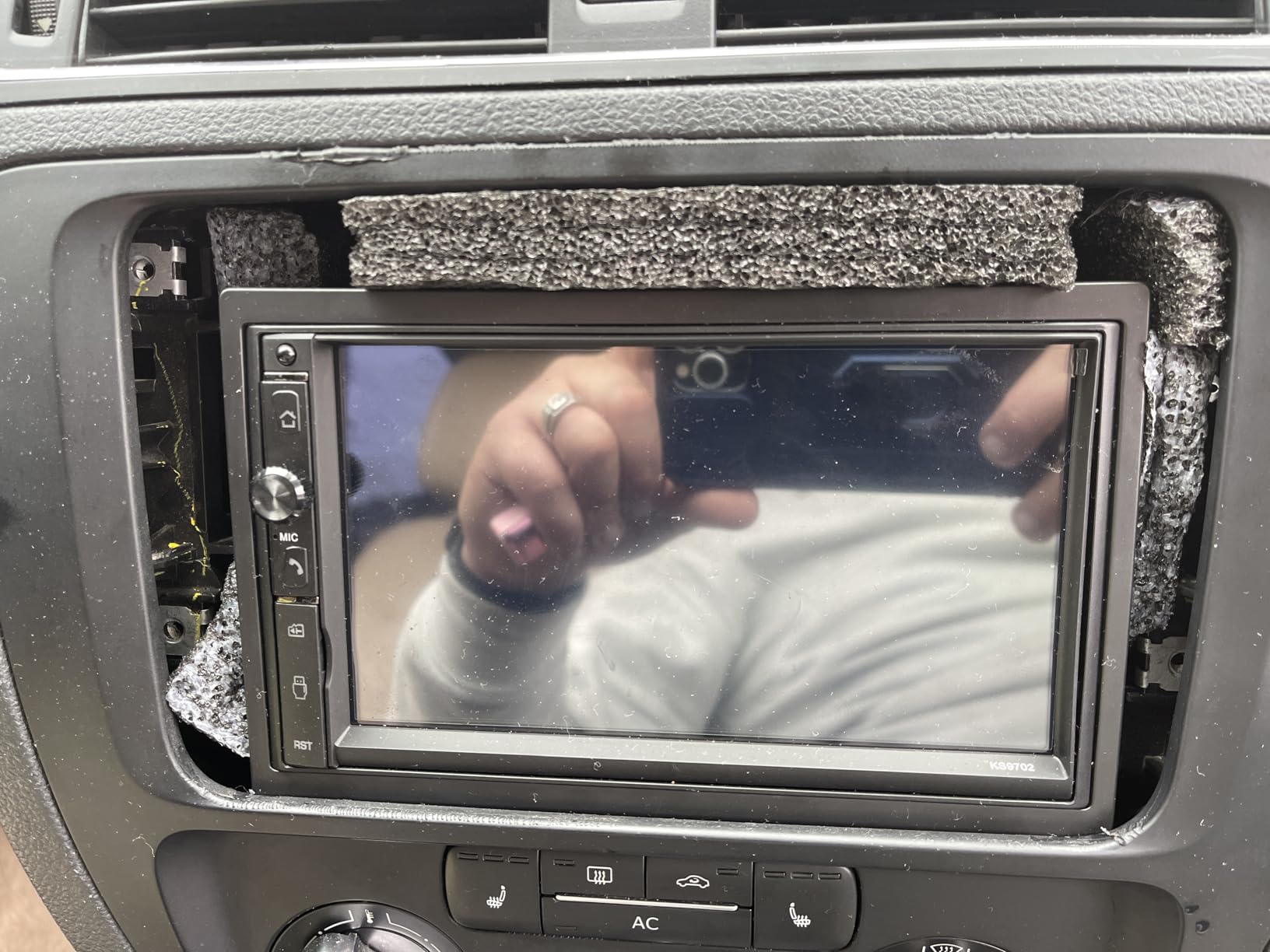
10. Kissound KS9702 – Cheapest Way to Get Wireless CarPlay in a Truck
Kissound Double Din Car Stereo with 7″ HD Touchscreen, Wireless Apple Carplay & Android Auto, Bluetooth, 240W, SWC, Subwoofer Output, Mirror Link, FM/AM Car Radio Receiver, Backup Camera
7 inch IPS 1024x600
Wireless CarPlay and Android Auto
240W 4.1 channel output
Rear camera included
Pros
- Lowest cost entry in the roundup
- Physical volume knob at this price is rare
- Rear-view camera included in the box
- Bright responsive IPS screen
- Customer support responds quickly
Cons
- One subwoofer output and roughly 2V pre-outs
- No time delay or adjustable crossovers
- Dash kit and harness not included
- Wired mirroring only
This is the value pick, and the reason is the combination of wireless CarPlay, a physical volume knob and an included backup camera at the lowest entry point in the whole roundup. Most sub-cost units give you exactly one of those three. A physical volume knob in particular is unusual here, and several owners report the unit replacing a more expensive branded head unit whose phone integration was unreliable.
Output is 240W across 4.1 channels with a 10-band EQ and a dedicated Bluetooth chip, plus a built-in microphone and an external mic port. The 7-inch IPS touchscreen runs at 1024×600 with wide viewing angles, and the 8-LED rear camera in the box comes with a 19.7 foot cable, which is long enough to route cleanly.
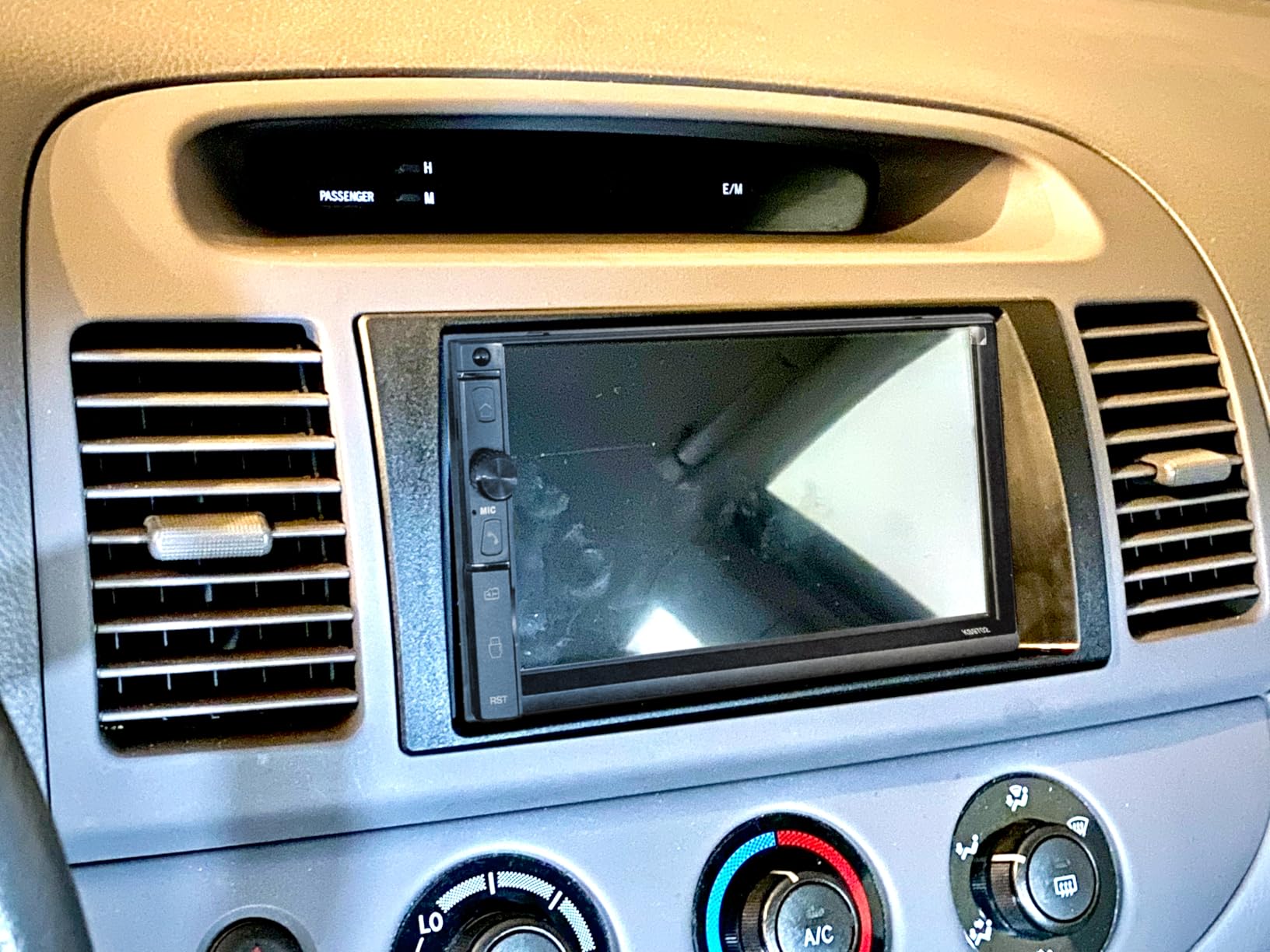
Fitment is standard double-DIN, so it suits the same F-150 generations as the other universal units here with a vehicle-specific kit. Note that the dash kit, wiring adapter and antenna adapter are all sold separately, and the listing itself recommends a steering wheel control interface module to make the truck’s buttons work.
What you get that name-brand rivals do not
Customer support is genuinely responsive, with a stated response within 24 hours, and the company will send a custom boot logo and background on request. That sounds trivial until you are trying to make an unbranded unit look like it belongs in a Ford dash, which is a real concern for anyone who cares about the interior.
The audio processing is where it gives up ground
There is one subwoofer output and roughly 2V RCA pre-outs, with no time delay, no adjustable crossovers and no multi-channel RCA. A reviewer moving from a name-brand unit with proper DSP and 4V pre-outs felt that loss clearly. If you plan to add an amplifier later, budget for an external processor, because this unit will not supply one. One owner also reported the unit overheating and shutting down after about four months.
The Four Parts Every F-150 Stereo Install Needs
Do I need a dash kit for an F-150 radio? Yes, on every single generation. The dash kit is a generation-specific faceplate and mounting bracket that adapts a universal head unit to the F-150 opening, and without it the unit either will not mount or will sit proud of the bezel with a visible gap. Vehicle-specific plug-and-play bundles include it as part of the box; buying a universal unit means you source it separately.
Here is the full list of what the install needs beyond the head unit itself.
1. The dash kit. Generation-specific, and the single most important part. It includes the faceplate, brackets and often the trim pieces needed to fill the opening. For the 2009-2014 trucks with the 4.2-inch screen, this is the part that turns a standard double-DIN unit into something that looks factory rather than added.
2. The wiring harness. A plug-and-play harness terminates the F-150 connector into labelled wires, so you are not cutting and soldering factory connectors. Higher-specification versions also carry the parking brake, reverse trigger and illumination wires the head unit needs.
3. The antenna adapter. F-150 antennas use a powered or amplified connection that a plain aftermarket radio cannot drive correctly. Without the adapter, FM reception is weak and some units have no signal at all. It is a small part and the easiest thing to forget.
4. The integration module. An iDatalink or Maestro-style module bridges the truck’s CAN bus and carries the steering wheel control, factory amplifier, vehicle settings and camera trigger signals. This is the part that determines whether your steering wheel volume buttons still work after the swap, and it is the piece most often skipped in a budget install. Not all harnesses include it.
Behind the dash, the fourth hard part is the hardware itself rather than the electronics. F-150s use snap-in trim, and the centre console cover is consistently named the worst. For anyone comparing accessories for a weekend, our car ramp guide is a useful companion for working on a truck safely at home.
What You Lose When You Leave the Factory System ?
The most common reason an F-150 upgrade disappoints is not the head unit. It is the list of factory functions that quietly stop working after the swap, because the installer did not use an integration module rated for that truck. Here is what to check before you commit, and what it takes to keep each one.
The factory amplified system. Premium F-150 trims shipped with a branded amplified system, and those amps are driven over an A2B bus that a standard head unit cannot talk to. Without an amplifier interface, you get silence or a very quiet system. This is the biggest single cost surprise in the whole project and the reason plug-and-play bundles that include an amp interface are worth comparing carefully against bare units plus a kit.
The OEM backup camera. Usually retained through the integration module, which passes the camera trigger and video signal through to the new unit. Confirm that the unit has a dedicated camera input and that the harness you bought carries the camera trigger line. Owners adding cameras to a truck often need a front input too, which narrows the choice to units with two camera inputs.
SYNC features. Voice commands, factory navigation, climate controls integrated on screen and vehicle settings displayed on the display all come from the factory system. An aftermarket unit gives you your phone’s navigation and music, not Ford’s. In-vehicle data like tire pressure and fuel range may also stop displaying depending on the harness.
HVAC and console trim. On some generations the climate control panel is integrated into the factory screen assembly. If yours is, the trim pieces around the opening need to come from the kit, and aftermarket faceplates without the original clip slots are the direct cause of the post-install rattle that owners complain about most.
The anti-theft and truck setting menus. Some trucks lose certain vehicle settings, and coded systems can complicate the swap. On the 2021-and-newer trucks the factory system is integrated deeply enough that this becomes a deciding factor rather than a footnote, which is why we do not recommend standard double-DIN units for that generation.
None of this makes an aftermarket unit a bad decision. The practical point is that most of it is solved by the right harness, and most of it is caused by the wrong one. Decide which features matter to you before you pick a unit, because the harness follows the unit.
Single-DIN, Double-DIN or Floating Screen: What Actually Fits
These terms describe the size and shape of the head unit, and getting them straight is the difference between a confident purchase and a return. A single-DIN unit is the standard narrow rectangle, roughly 7 by 2 inches of faceplate. A double-DIN unit is twice the height, which is what allows a touchscreen of 6.2 to 7 inches to sit in the same footprint.
Most F-150 dash openings from 2004 onward take a standard double-DIN unit, which needs a 6.69 by 3.81 inch opening. The 1997-2003 trucks are narrower, which is where single-DIN and shallow-chassis double-DIN units earn their place. Mechless units have no moving disc mechanism, so they are shallower and fit cavities where a CD-equipped double-DIN will not go.
A floating screen is a third category that does not fill the opening at all. The screen sits proud of the faceplate on a bracket, which is how 8-inch and 12-inch displays are made to look large in a truck. It is the right answer for a 2015-2020 truck with the big factory screen or a 2021-and-newer panel, and the wrong answer for a 2009-2014 truck with a 4.2-inch screen, where the opening is small and a floating display looks like an add-on.
On sound quality specifically, the unit class matters less than people assume. A single-DIN head unit with a good digital-to-analog converter and decent front speakers can outperform a large touchscreen with no tuning, and the Pioneer MVH-S622BS in this roundup is proof of it. Screen size and smartphone integration are the features people actually upgrade for, not raw fidelity.
DIY or Shop: Realistic Time and Difficulty by Generation
How long does an F-150 radio install take? Roughly two to three hours for a confident DIYer working in a driveway, about four hours for a careful first-timer, and under an hour at a shop that has done it before. That range comes from a real owner report of a full 8-inch to 12-inch screen swap on a 2019 Lariat that took about four hours, with the console cover removal being the hardest single step.
Before anything else, verify the SYNC version on your truck and update it if an update is available. Owners consistently describe this as a required step, and it is one that most guides skip. The newer module changes what the harness has to negotiate, and finding out after the dash is open costs you the dash.
Six steps covers the whole job: confirm SYNC version, order the head unit with the generation-specific dash kit, harness, antenna adapter and integration module, remove the centre console and HVAC trim, mount the unit and connect the harness, then wire in the brake-bypass switch and any amplifier interface before reassembling.
One tip prevents the single most common post-install complaint. The rattle that owners report from aftermarket faceplates is usually a missing clip or screw tab. The fix reported by owners is to transfer the small tab from the original factory faceplate, which holds the screw holes and three tray clip slots, onto the new one using a razor blade. It costs nothing and it removes the noise that otherwise makes a good install feel cheap. The same is true of the centre console cover, which pops out with patience even when it feels welded in.
If the F-150 job is only the start of a weekend in the garage, the RC monster truck roundup covers a lighter-weight build that shares none of the trim-clip frustration, and for anyone with younger helpers in the house our ride-on truck guide is the other end of the scale entirely.
Frequently Asked Questions
Who makes the best double din stereo?
Pioneer leads on ecosystem breadth, with NEX and DMH models covering everything from a button-driven receiver to a touchscreen. Kenwood is strong on multi-camera and Maestro integration. Stinger and Eonon lead on F-150-specific plug-and-play fit rather than universal units. Sony, JVC and BOSS win on price-to-feature, and JBL is often quoted for sound quality per dollar.
Will any double din work with any car?
In many cases yes, when it is paired with a compatible dash kit for the exact year. In an F-150 that means matching the kit to your model year before anything else, because the dash opening was reshaped several times between 1997 and today. A standard double-DIN unit needs roughly 6.69 by 3.81 inches of clear opening.
Do I need a dash kit for an F-150 radio?
Yes, on every generation. The dash kit is a generation-specific faceplate and bracket that adapts a universal head unit to the F-150 opening and fills the surrounding bezel. Vehicle-specific plug-and-play bundles include it. Without it the unit either will not mount or will sit proud of the dash with a visible gap.
Can I keep my steering wheel controls after an F150 radio swap?
Yes, through the steering wheel control adapter included with a correct iDatalink or Maestro-style harness. Not every harness includes it, and several of the budget head units in this roundup require a separate interface module. This is the most commonly missed part of a budget install, and it is the part that should never be skipped.
Will my backup camera work with an aftermarket F-150 stereo?
Usually yes. The integration module passes the factory camera trigger and video signal through to the new unit, provided the head unit has a dedicated camera input. Truck owners who want a bed or front camera as well need a unit with two camera inputs. Confirm the harness carries the camera trigger line before you buy the head unit.
How long does an F150 radio install take?
Roughly two to three hours for a confident DIYer, about four hours for a careful first-timer, and under an hour at a shop that has done the job before. The hardest physical step is removing the snap-in centre console cover. Verify your SYNC version and update it before the dash comes apart, and wire in the brake-bypass switch while the trim is still off.
What year to stay away from F-150?
As an audio-upgrade question rather than a reliability one, the 2009-2014 trucks with the 4.2-inch screen have the tightest dash opening and the most involved kit path. The 2021-and-newer trucks are the most locked down, with the display bonded into a wide panel and the factory system deeply integrated. Everything from 2004 to 2020 is straightforward with the right hardware.
What is the best stereo system for a truck?
For a truck, prioritise readable screen brightness, physical controls you can use with gloves on, and enough clean output to overcome cab noise. Overlanders and work trucks should also look for a screen that is readable in direct sunlight and, where the unit supports it, a rating for dust and weather resistance. Our top pick covers all three at a mid-range budget.
The Best Car Stereos for F-150 Trucks in 2026
Start with your model year, because it decides everything else. A 2004-2008 or 2015-2020 F-150 with a standard double-DIN opening is the easy case, and in that group the BOSS Audio Systems BV9358B is our pick: the largest review base of anything we tested, front and rear camera inputs for a truck that may want both, and pre-outs for an amplifier later. If the budget is tighter, the SJOYBRING JOY-W022 has the sharpest screen in the roundup and includes a backup camera.
The 2009-2014 trucks with the 4.2-inch screen need a short-chassis unit and a dedicated faceplate kit. The Pioneer DMH-130BT is built for exactly that cavity, and the BOSS BE7ACP adds power if you are keeping factory speakers and want them louder. The Pioneer MVH-S622BS suits anyone who wants a real volume knob and better sound rather than a bigger screen.
For 2021-and-newer trucks, a standard double-DIN unit is the wrong shape for the job. You are looking at a vehicle-specific large-screen plug-and-play kit or a full Android head unit such as the ATOTO S8L, which also brings offline navigation and diagnostic tools. If you build a proper system with amplifiers, the Alpine iLX-W670 is where the tuning controls are.
Whichever you pick, buy the dash kit, the wiring harness, the antenna adapter and the integration module in the same order, and wire in the brake-bypass switch before the trim goes back on. Get those five right and the install is straightforward. Get them wrong and none of it matters what the head unit can do.