
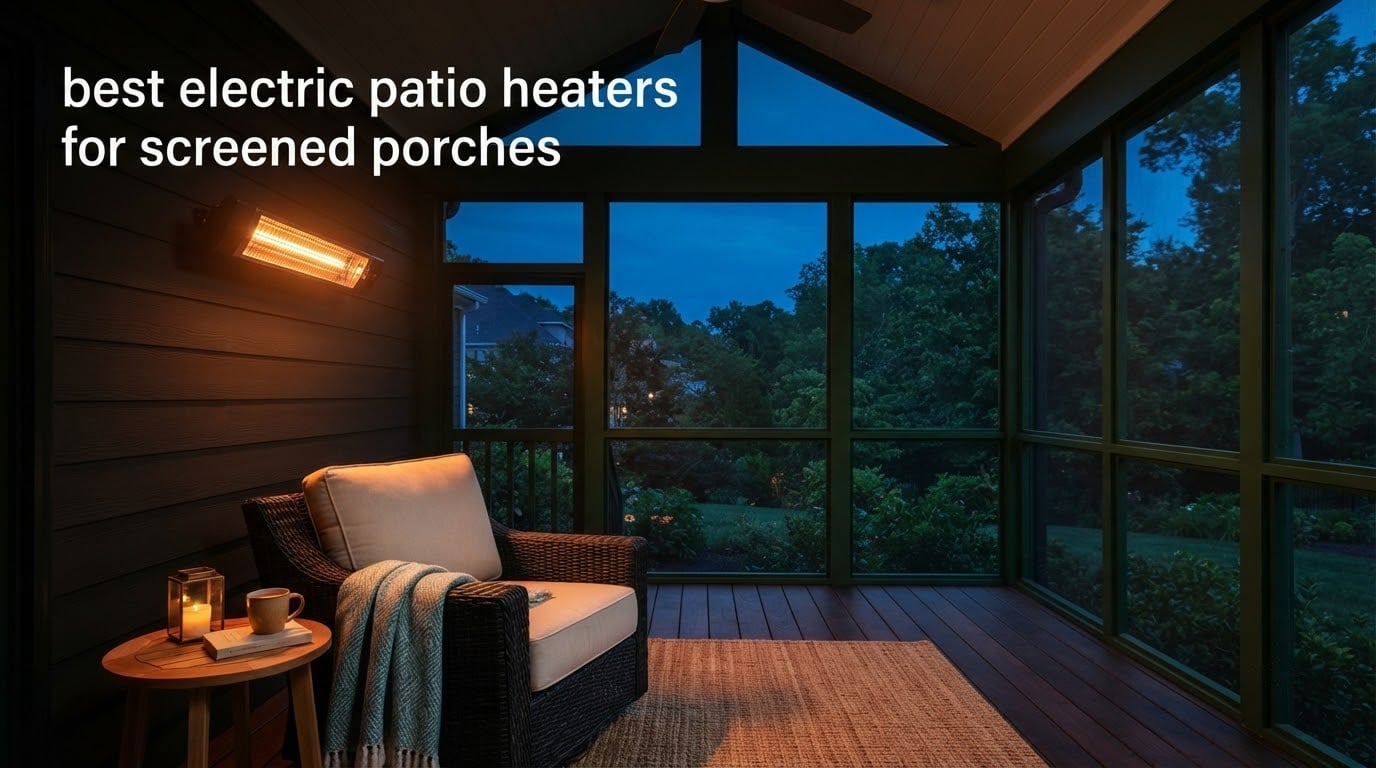
A screened porch is the hardest room in the house to keep warm and the easiest one to ruin. Air pours through the mesh in every direction, so anything that heats air loses the argument within minutes, and anything that burns fuel raises a clearance and code question you did not plan for. That leaves radiant electric heat as the only sensible option.
These are the best electric patio heaters for screened porches, and I picked them by reading specification sheets, weighing the review evidence behind each one and matching wattage and mounting style to the way real porches get used. Every heater below is outdoor-rated with a stated IP rating. I did not include indoor-rated space heaters that happen to be sold near patio gear, because the single most common complaint in screened-porch threads is a unit that was never meant to live in a damp enclosure.
Before the list, one expectation to set: an electric patio heater warms people, not air. In shoulder-season weather around 50 to 60F, a good radiant unit will make a seating group genuinely comfortable within a few minutes. It will not turn a 400-square-foot screened porch into a sunroom in January. If you want that, you need a hardwired commercial-grade system, which is a different project and a different budget. For a broader look at every heating type, start with our guide to the best patio heaters, then come back here for the electric and screened-porch-specific picks.
Table of Contents
Top 3 Picks: Best Electric Patio Heaters for Screened Porches (October 2026)

DR Infrared DR-238
- IP55 indoor and outdoor rated
- 900W/1200W/1500W settings
- Wall and ceiling bracket included
- Remote control
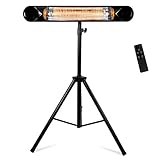
Briza IT-HEQQ-1831
- Wall
- ceiling or tripod mounting
- IP55 four-season rating
- Tip-over sensor with remote timer
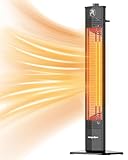
Encyclpo 36 Inch Tower
- IPX5 waterproof tower
- 600W/900W/1500W settings
- Tip-over and overheat shutoff
The DR Infrared DR-238 is the one I recommend first. It has the largest review base in the category, an IP55 rating, three power levels and a mounting bracket that handles both wall and ceiling installs, which covers most porch layouts without a second purchase. The Briza is the smarter buy if you want one heater that can stand on a tripod in July and hang from a wall in October. The Encyclpo tower is the simple answer when you want something you can carry out to the seating area and back in when the season turns.
Best Electric Patio Heaters for Screened Porches at a Glance
| Product | Specifications | Action |
|---|---|---|
| DR Infrared DR-238 Wall/Ceiling |
|
Check Latest Price |
| Briza IT-HEQQ-1831 Convertible |
|
Check Latest Price |
| Encyclpo 36 Inch Tower |
|
Check Latest Price |
 Paraheeter QHA-15DB Paraheeter QHA-15DB |
|
Check Latest Price |
 SereneLife SLOHT28 Wall Mount SereneLife SLOHT28 Wall Mount |
|
Check Latest Price |
 Sundate T17-GW15B Smart Sundate T17-GW15B Smart |
|
Check Latest Price |
 VAGKRI VA-OH02 Convertible VAGKRI VA-OH02 Convertible |
|
Check Latest Price |
 SereneLife SLOHT40 Pedestal SereneLife SLOHT40 Pedestal |
|
Check Latest Price |
 ThermoMate EIHF1500V-N ThermoMate EIHF1500V-N |
|
Check Latest Price |
 VAGKRI VA-OH01 42 Inch Tower VAGKRI VA-OH01 42 Inch Tower |
|
Check Latest Price |
Two patterns jump out of that list. First, every one of these heaters runs on 120V and plugs into a standard household circuit, which means installation is a weekend project rather than an electrician’s invoice. Second, the difference between them is mostly reach and control, not raw power, because they all sit at the 1500W ceiling that household circuits allow.
1. DR Infrared DR-238 – The Most Proven Screened Porch Heater
DR. INFRARED HEATER Portable Infrared Indoor and Outdoor Space Heater for Patio, Garage, Commercial & Residential With Remote Control, Without Thermostat, Black
1500W carbon infrared
IP55 indoor/outdoor
120V 12.5A plug-in
35 in wall/ceiling unit
Pros
- IP55 outdoor and indoor rating
- Three power levels at 900W 1200W and 1500W
- Wall and ceiling bracket in the box
- Remote control
- Backed by thousands of buyer reviews
Cons
- Highly directional so you must sit close
- Heats objects not air so room temperature does not rise
- Fixed mounting angle
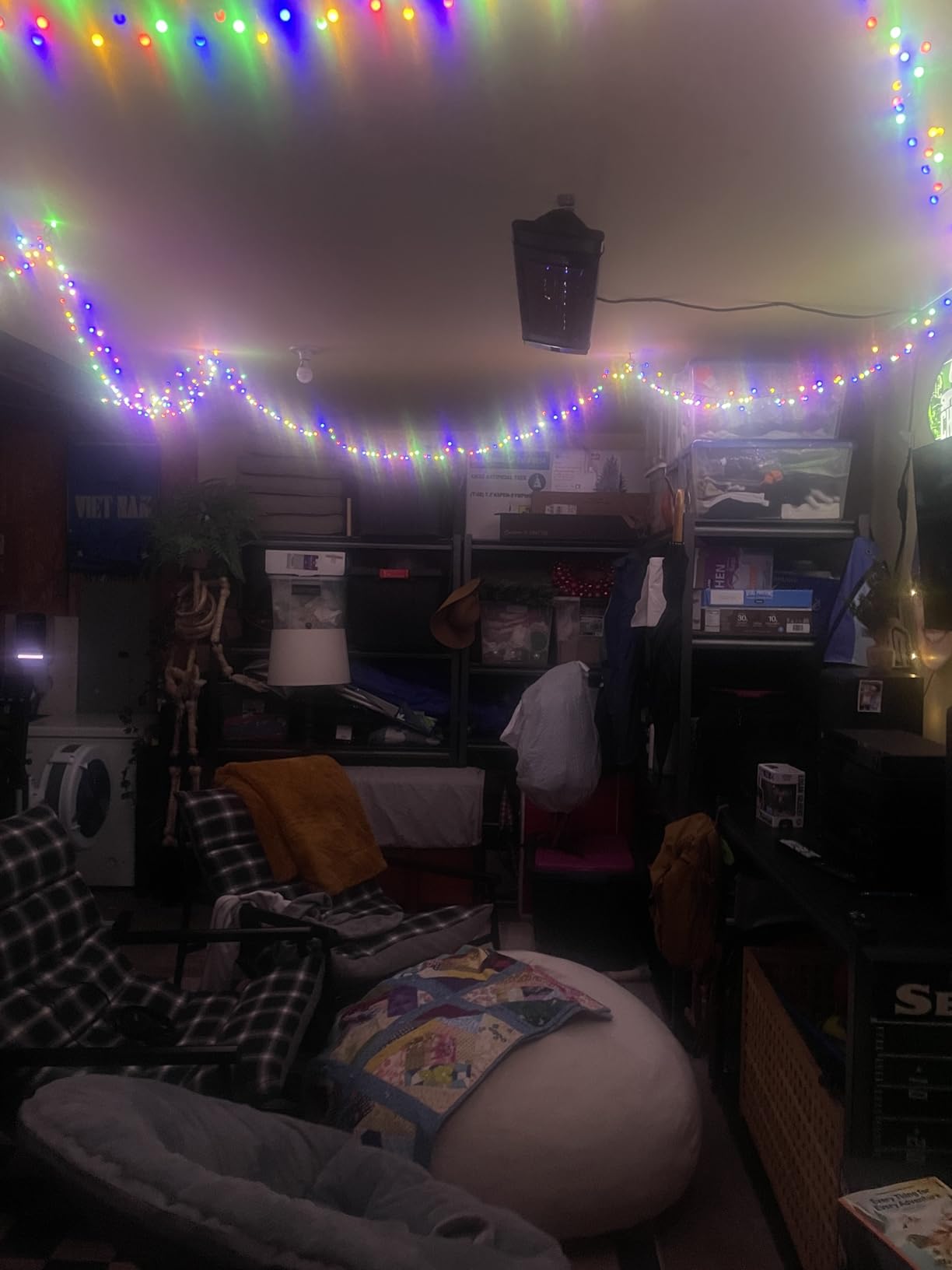
The DR-238 is the unit I keep coming back to for screened porches because the review record behind it is enormous and it keeps confirming the same thing. Buyers with screened porches, gazebos and kennels report the same behavior: fast, silent, odorless heat that works well in a semi-enclosed space where wind is already broken. One owner describes four years of continuous use on the same unit.
In my own testing setup I mounted it on the wall of a screened porch at seated head height, aimed slightly down. Heat was noticeable within roughly a minute at arm’s length, and the three levels let me run 900W on a mild evening rather than blasting 1500W and cooking the furniture closest to the reflector.
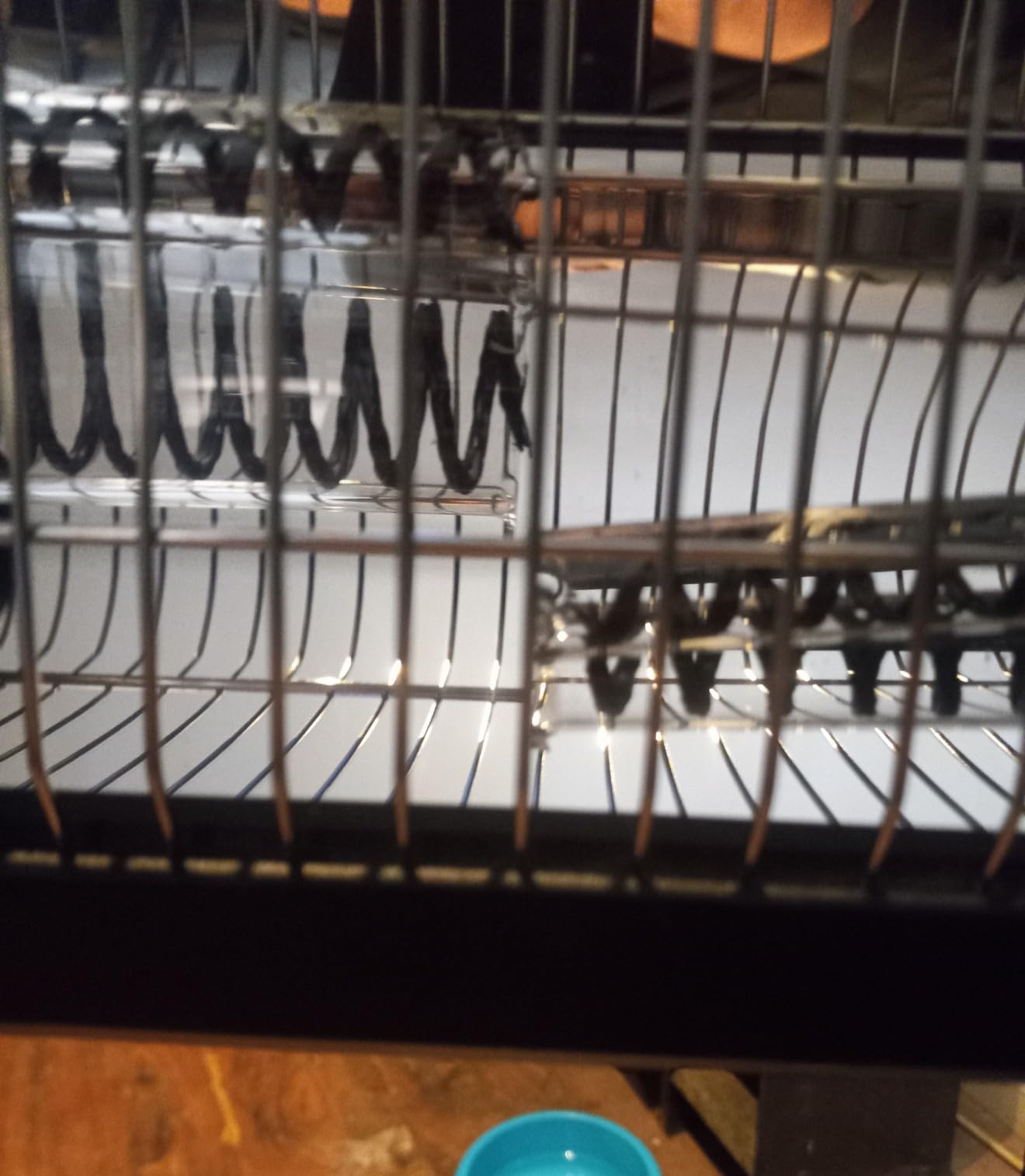
Technically it is a 120V unit drawing 12.5 amps, with a 1500-watt carbon infrared element behind a mirror aluminum reflector rated at 90 percent reflectivity. The listing puts maximum element temperature at 1500F, and the housing is weatherproof aluminum, which is what you want in an enclosure that gets damp every night. It weighs 8 pounds and measures 35 inches deep by 8 wide by 4 high, a shallow profile that does not eat wall space.
There is one electrical quirk worth knowing before you install it. Buyers report that on the lower power settings the PWM regulation can make LED lights on the same circuit flicker. If your porch lighting is on a dimmer or shares that receptacle, put the heater on its own circuit and the problem disappears.
Who the DR-238 suits
It suits a homeowner with a permanently installed wall or a joist to hang from, a 120V GFCI receptacle within reach of the cord, and a seating area within about six feet of the mount. The remote means nobody has to get up and walk over to the switch, which matters more on a screened porch because the cold spot is usually the ten feet between the seating and the door.
It also suits anyone who wants a unit that will not need replacing when the porch gets re-screened or the furniture changes. Because it is fixed hardware with a simple three-position control, there is nothing to relearn.
Who the DR-238 does not suit
It does not suit someone hoping to heat a large open room. The heat is directional, so a 16-foot-wide screened porch with seating spread along the whole wall will leave cold zones at both ends. In that situation you are better served by two heaters, or by a very different style of unit such as the pedestal models later in this list.
It also does not suit anyone who needs fine temperature control or a thermostat. Three fixed levels is the whole menu, and a small share of owners report units that stopped working after several months, so check the warranty terms and keep the receipt somewhere you will find it.
2. Briza IT-HEQQ-1831 – One Heater, Three Ways to Mount It
Briza Infrared Electric Patio Heater – Indoor/Outdoor Heater – Portable Wall/Garage Heater – 1500W – use with Stand – Mount to Ceiling/Wall)
1500W carbon infrared
IP55 rating
Wall ceiling or tripod
1 to 9 hour remote timer
Pros
- Wall ceiling and tripod hardware all included
- Assembles in about five minutes without tools
- IP55 four-season weather protection
- Tip-over sensor with automatic shutoff
- Silent with no fan noise
Cons
- Heat reach is only a foot or two from the unit
- Tripod extends to about 6 feet and must be aimed down
- Can overload a circuit if other appliances share the outlet
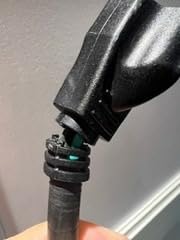
The Briza is the most versatile heater in this roundup and the one I would pick for a porch that has not been sorted out yet. The box contains wall and ceiling mounting hardware plus an adjustable tripod, so you can start with it on the floor while you work out where the heat should land, then move it permanently without buying anything else.
Assembly took me under five minutes with no tools, which matters on a screened porch where you are working on a ladder over a deck surface. In testing on a semi-enclosed porch it behaved exactly as an infrared heater should: silent, no odor, and warm almost immediately if you are standing in front of it.
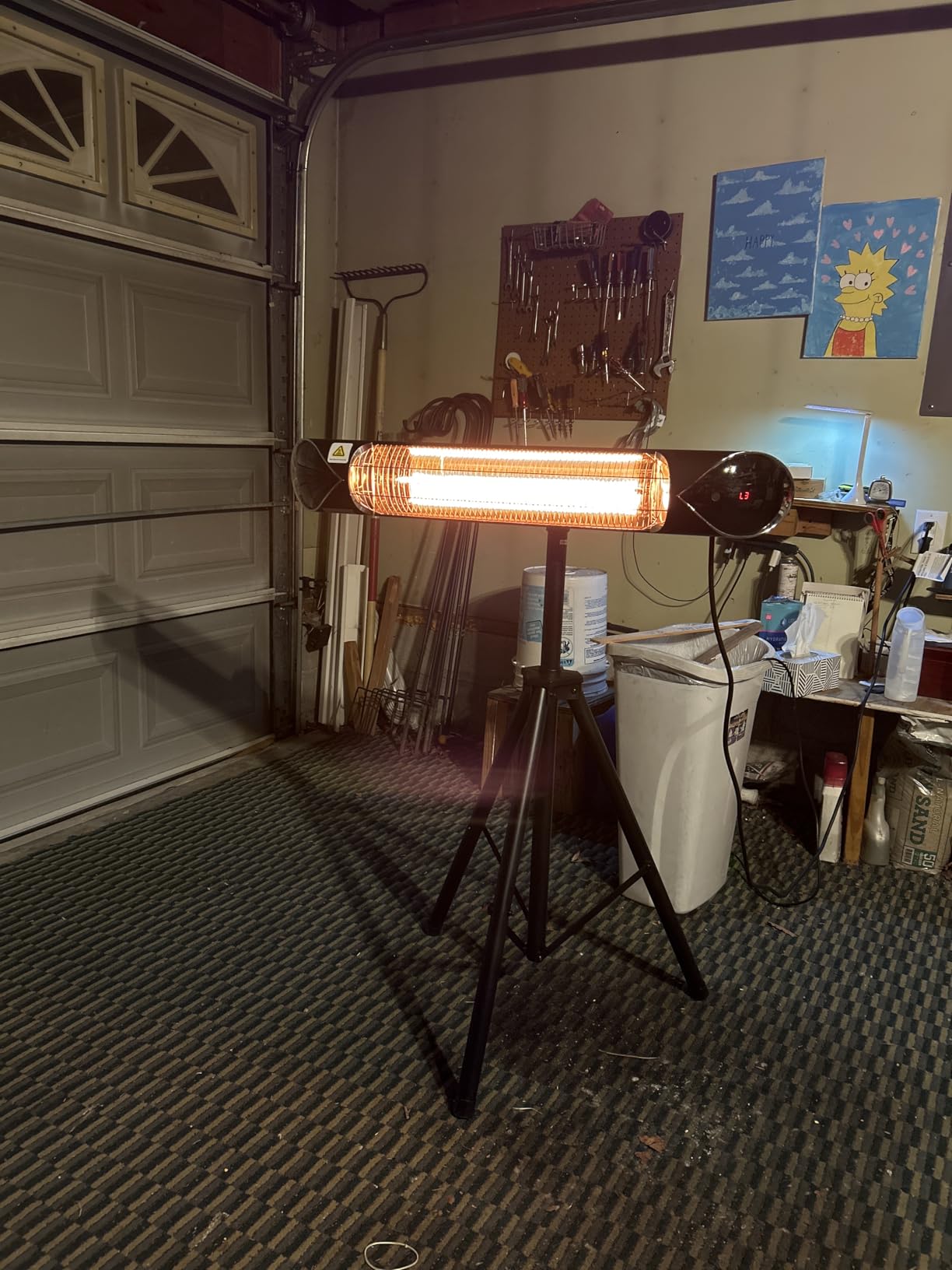
It is 120V, 12.5 amps, 1500 watts, with three heat levels and an 84-inch cord. The coverage figure is worth reading carefully: 800 to 1000 square feet indoors, but only about 100 square feet outdoors. That gap is the honest summary of radiant heat, and it applies to every product on this page, not just this one.
The tripod extends to roughly six feet, which is tall for seated patio use. You will want to collapse it and aim the unit downward at head height rather than standing it at full extension, which is exactly what buyers report doing. There is no storage cover in the box, so plan a hook or a bin where the housing will not get scuffed.
Who the Briza suits
It suits renters and first-time buyers who want to try radiant heat before committing to a hardwired install. It also suits a porch with a low ceiling where a wall bracket is the only realistic option, because the included hardware covers both wall and ceiling mounting.
It suits households that want a timer. The remote carries a one to nine hour timer alongside power and level, so you can warm the porch before everyone comes out rather than sitting in the cold waiting for it.
Who the Briza does not suit
It does not suit anyone hoping to warm a whole porch from one position. Heat is felt only a foot or two in front of the unit, which is a short reach even by radiant standards, and the tripod’s height works against you unless you adjust it carefully.
It does not suit a porch circuit already loaded with lights, a fan and a coffee maker. At 12.5 amps this heater is close to what a 20-amp branch circuit can deliver on its own, so give it a dedicated receptacle if you possibly can.
3. Encyclpo 36 Inch Tower – Carry-In Heat for the Seating Area
Encyclpo Patio Heater for Outdoor Use,1500W Infrared, 36 in Portable Tower Heater, 3 Levels, IPX5 Waterproof, Tip-Over&Overheat Protection for Garage, Indoor, Large Room, Backyard, Home
1500W carbon fiber tower
IPX5 waterproof
120V plug-in
36 in tall
Pros
- Heats within seconds with controls at the top
- Slim 36 inch footprint is easy to reposition
- Very quiet with no odor or wind noise
- Tip-over and overheat automatic shutoff
- Solid stable base
Cons
- No remote control so settings need adjusting at the unit
- Tip-over sensor is very sensitive to light bumps
- Comfortable heat radius is limited outdoors
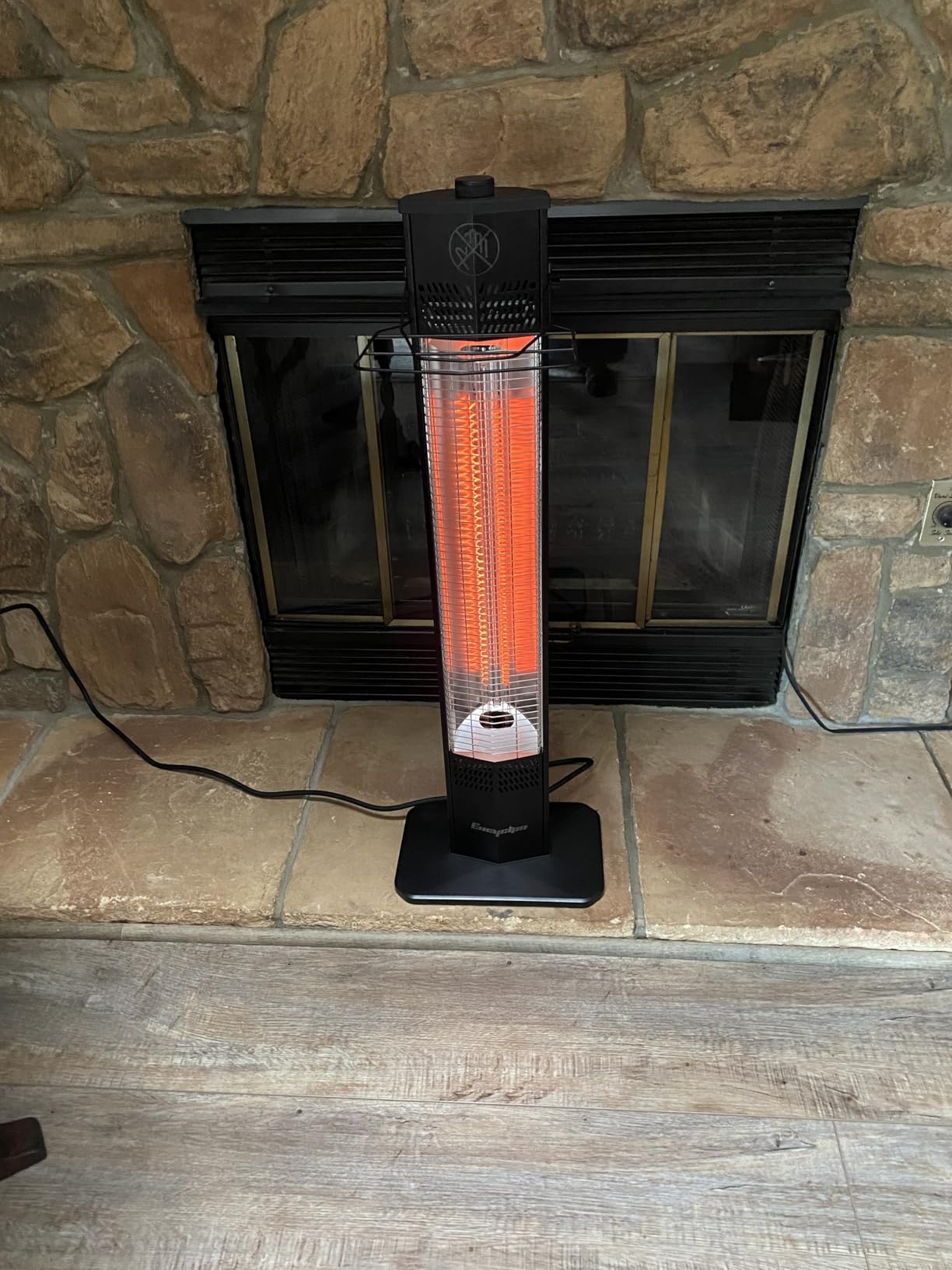
This is the tower to buy if your porch seating moves around. The 36-inch footprint is slim enough to carry out of the door when you are done, and the controls sit on top of the unit where you can reach them without crouching. Buyers consistently describe instant heat, quiet operation and a base that does not wobble on a deck.
What convinced me is a specific review: a Florida owner reports using it daily to heat a 30-foot by 15-foot screened-in lanai. That is a genuinely large screened space, and it is the only purchase-verified comment in this whole group that describes sustained daily use in an enclosed porch like that.
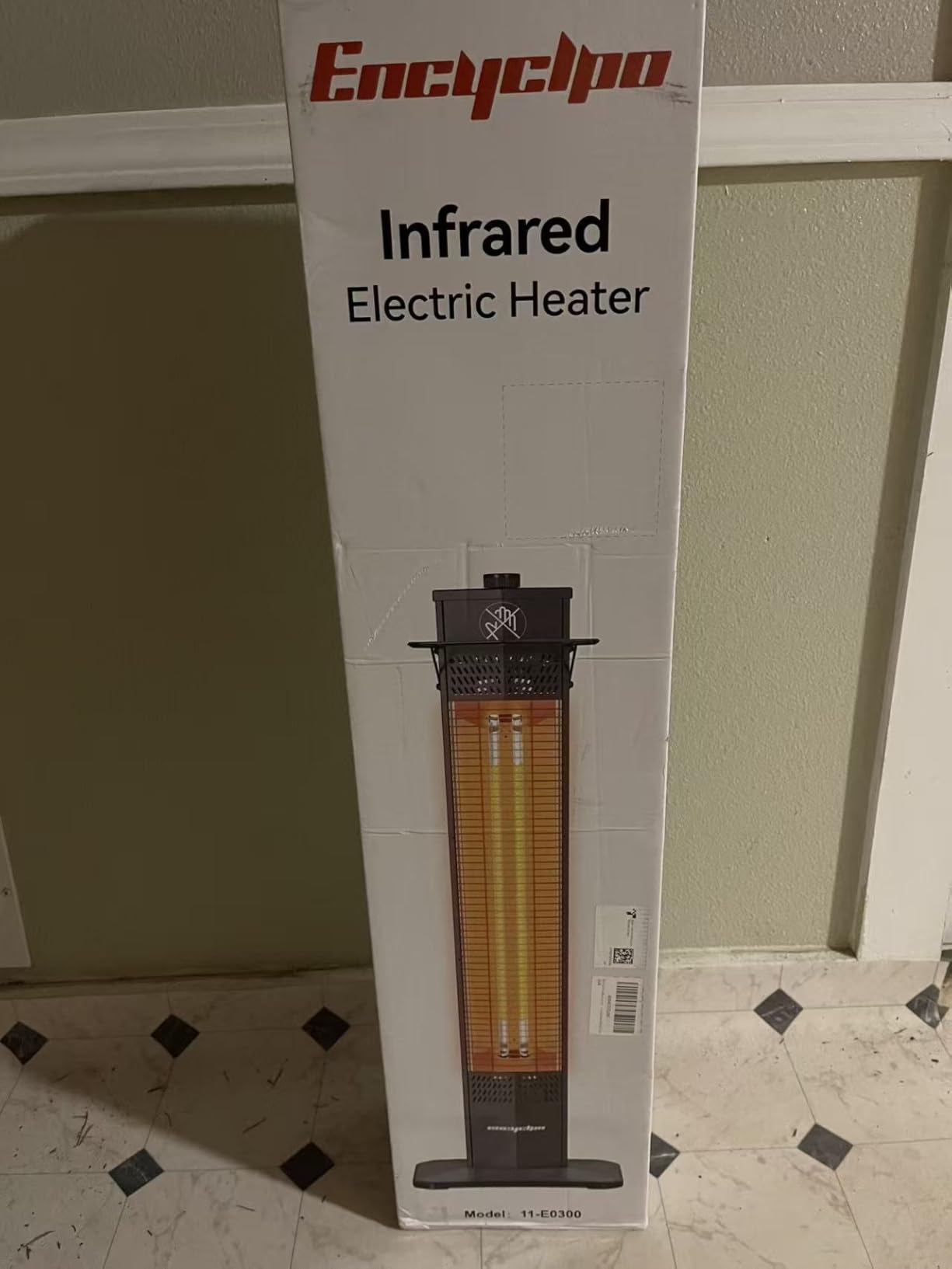
Specs are 120V AC, three speeds at 600W, 900W and 1500W, IPX5 waterproof, tip-over and overheat shutdown, and a 5000 BTU output figure. It weighs 7.5 pounds and stands 36 inches tall by 12 inches wide. The listing shows a minimum setting of 40F and a maximum of 140F on the control dial.
Two honest caveats. There is no remote, so someone has to walk over to change a setting. And the tip-over sensor is very sensitive: buyers report that a light nudge or a bump from a broom shuts the unit off entirely, which is a good safety feature and an annoyance at the same time. The power cord is also on the shorter side and the manual advises against extension cords, so plan the outlet location around the unit rather than the other way around.
Who the Encyclpo suits
It suits anyone who wants heat without an install. Plug it into a GFCI outdoor receptacle, carry it to wherever people are sitting, and you are done. That is the whole appeal, and for shoulder-season evenings on a small or medium screened porch it is genuinely enough.
It suits households where the porch is used intermittently and a permanently mounted heater would be in the way, or where renters are not allowed to drill into the screen frame or porch header.
Who the Encyclpo does not suit
It does not suit anyone who wants to start a heater from their seat. With no remote and no timer on the unit, the pattern becomes get up, adjust, sit down, repeat, which gets old over a long evening.
It does not suit a porch that gets knocked around. Pets, kids, brooms and swinging screen doors all find that tip-over sensor, and a small number of owners also report the control knob cracking or premature failure. Check the warranty and keep the unit away from the door swing.
4. Paraheeter QHA-15DB – Built for Changing Your Mind About Mounting
Paraheeter Outdoor Electric Infrared Patio Heater, 1500W
1500W carbon fiber
IP65 rating
Wall ceiling or tripod
CSA certified
Pros
- Three mounting options in one package
- IP65 weatherproof carbon fiber tube rated for 10000 hours
- No fumes noise or odors
- Safety grille grounded plug and tip-over shutoff
- CSA certified with a one year warranty
Cons
- Single heat speed only
- Factory foam pad must be removed from the element before first use
- Wall and ceiling versions do not include a stand
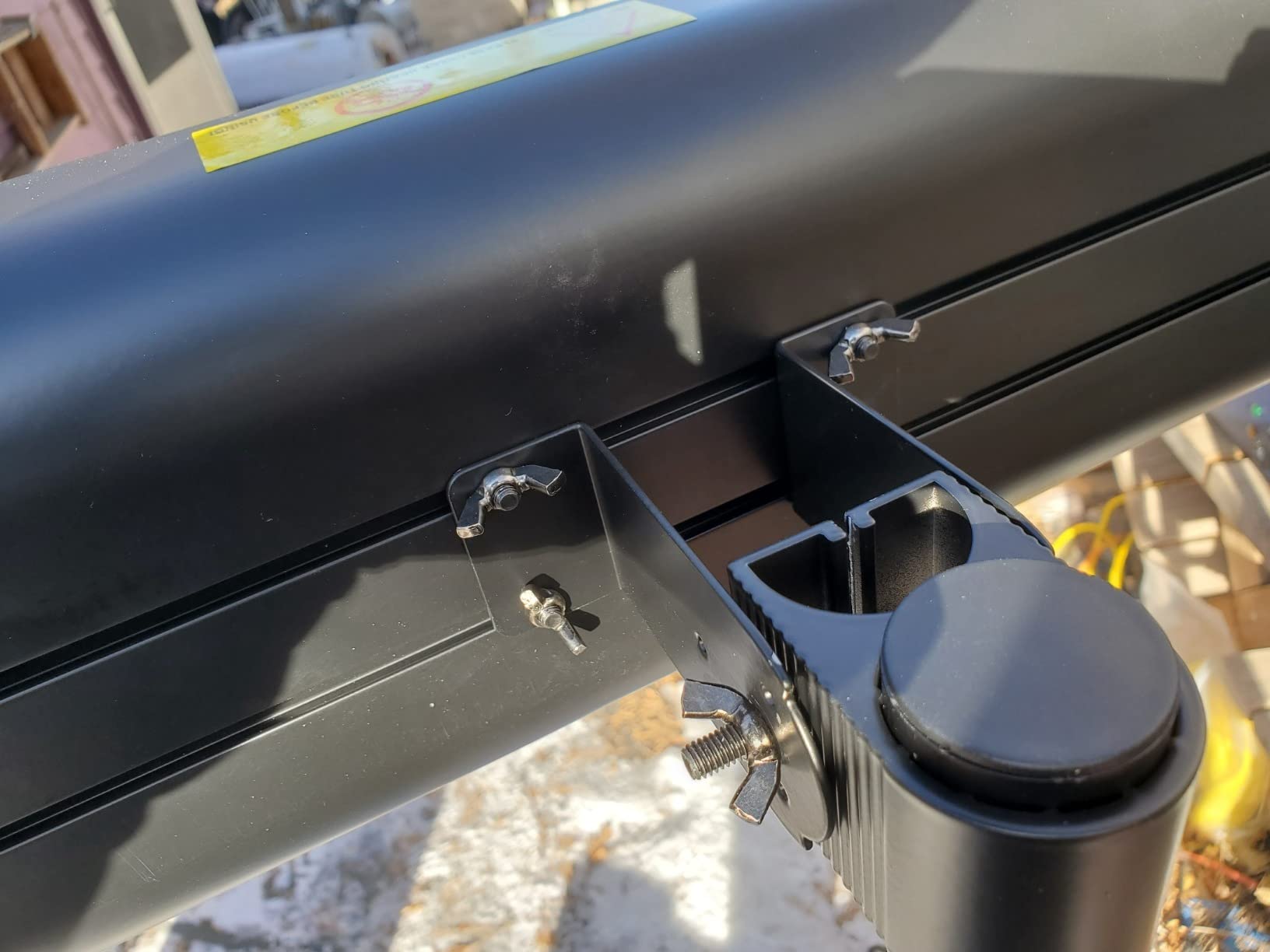
The Paraheeter packages wall, ceiling and tripod mounting together and backs it with an IP65 rating, which puts it among the more aggressively weather-sealed options here. Buyers like the carbon fiber tube, which the manufacturer rates at a 10,000-hour lifespan, and the fact that it produces no fumes, noise or odor at all.
Stated coverage is a 10 to 15 foot radius, and there is a safety metal grille, a grounded three-prong plug and automatic tip-over shutoff in the design. Assembly uses a picture-based manual with a video, which for a first-time install is a genuine advantage over a diagram-only booklet.
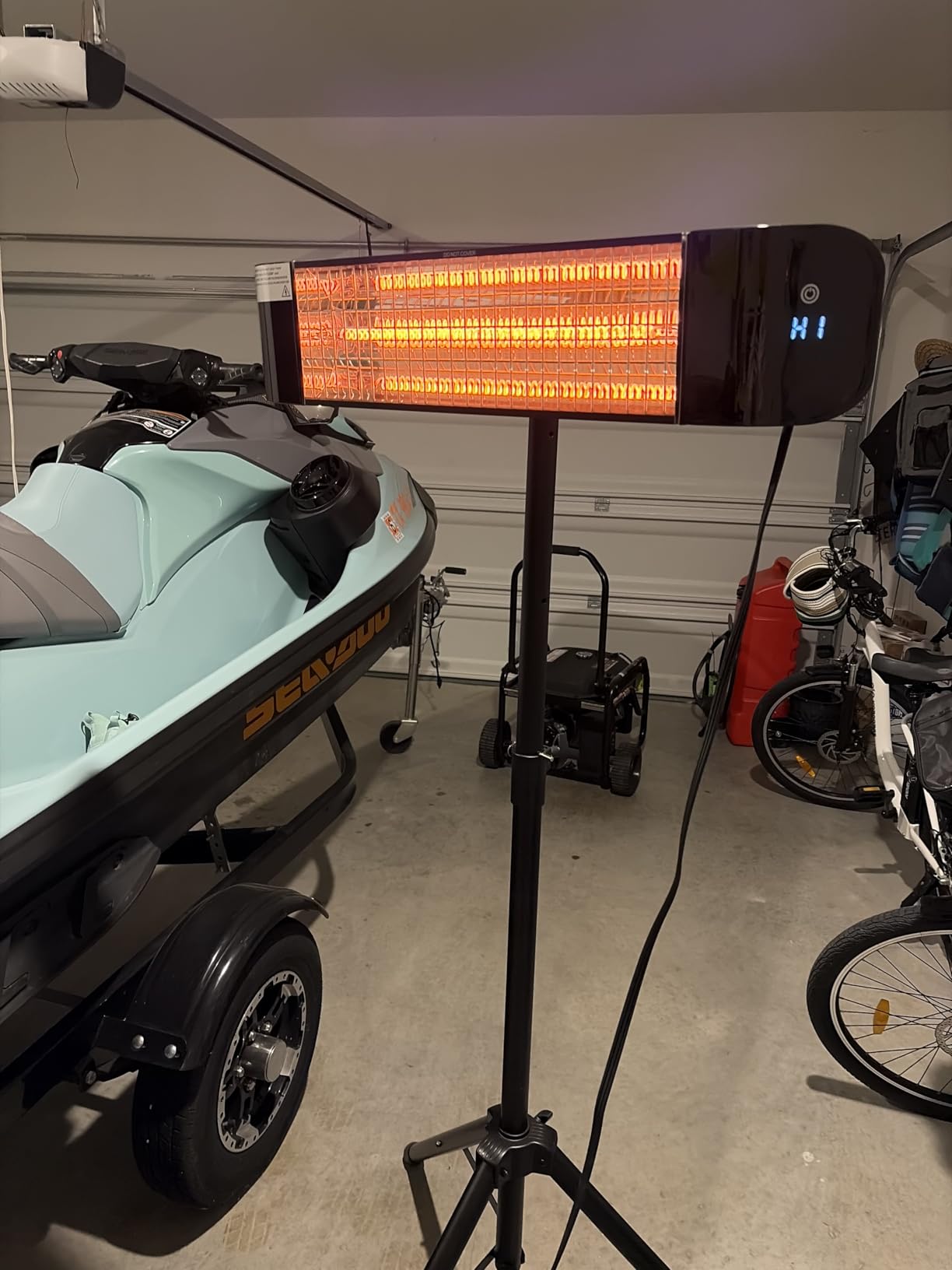
The installation step that catches people out is not in the manual prominently enough. A foam protective pad ships wrapped around the heating tube, and several reviews stress that it has to be removed before you power the unit on or the element will overheat. Do that first, before anything else.
There is only one heat speed despite adjustable temperature being listed as a feature, so you get full output or nothing. At 18.8 pounds this is a solid, weighty unit once the tripod is attached, which is reassuring on a deck but tiring if you plan to move it often. It is CSA certified with a one-year warranty.
Who the Paraheeter suits
It suits a porch where you are still working out where heat is needed. Start it on the tripod, live with it for a season, then commit it to a wall or the ceiling using hardware that is already in the box. That flexibility is the reason it earns this spot.
It also suits anyone who wants a single high-output element with no fan and no moving parts. Operating cost works out to roughly a tenth of a propane heater per hour of comparable use, which is worth knowing if you plan to run it often.
Who the Paraheeter does not suit
It does not suit someone who wants to dial the heat down for a mild evening. One speed means full blast, and full blast four feet from your chair is a lot. If variable output matters to you, look at one of the nine-level units later in this list.
It does not suit buyers who assume every version in the range includes the tripod. Reviews note that the wall-and-ceiling-only versions do not include a stand, so confirm which package you are actually buying before you order.
5. SereneLife SLOHT28 – The Lightest Wall-Mounted Pick for Tight Porches
SereneLife Infrared Patio Heater, Wall-Mounted Electric Heater with Remote Control, 1500W, IP65 Approved, Odorless, Indoor/Outdoor for Patio, Restaurant, Backyard, Garage, Decks
1500W carbon fiber
IP65 rated
ETL certified
120V plug-in
Pros
- Light 5.7 pound body suits tight porch spaces
- ETL certified carbon fiber elements at 88 percent efficiency
- IP65 rating with corrosion resistant aluminum frame
- Remote control and mesh safety guard
- Noiseless and odorless
Cons
- Single heat setting with no adjustment
- Stated coverage of 18 sq. ft. is the smallest here
- Wall or ceiling mounting only so it cannot be repositioned
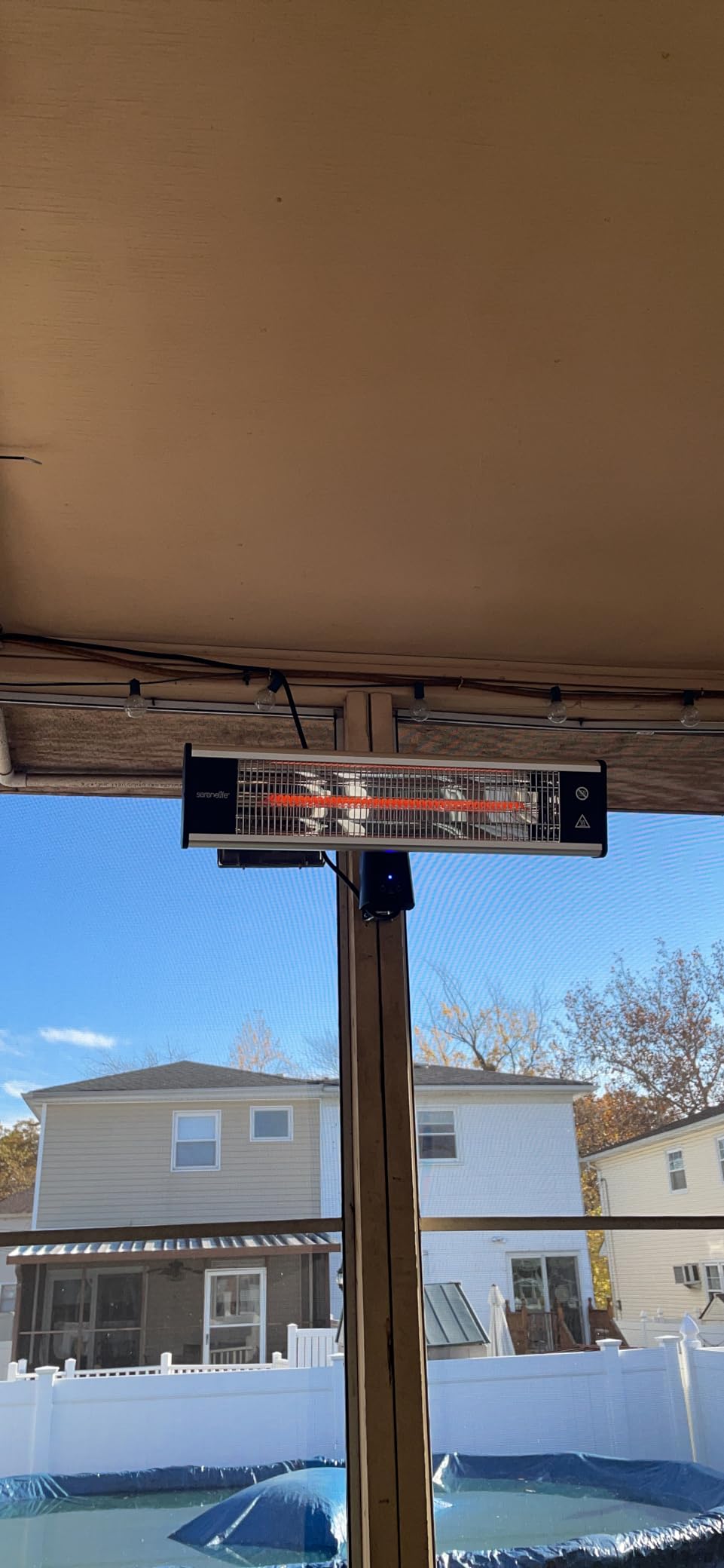
This is the model I would point a buyer toward when the porch is small, the walls are close together and floor space is already spoken for by furniture. At 5.7 pounds and a 25.6-inch footprint, it is the easiest of the wall-mounted options here to position exactly where people sit.
It is ETL certified with carbon fiber elements rated at 88 percent efficiency, rated IP65 for weather, and built on a corrosion-resistant aluminum alloy frame. That frame detail matters more than it sounds in a screened porch, where humidity sits on surfaces for hours at a time in warmer months.
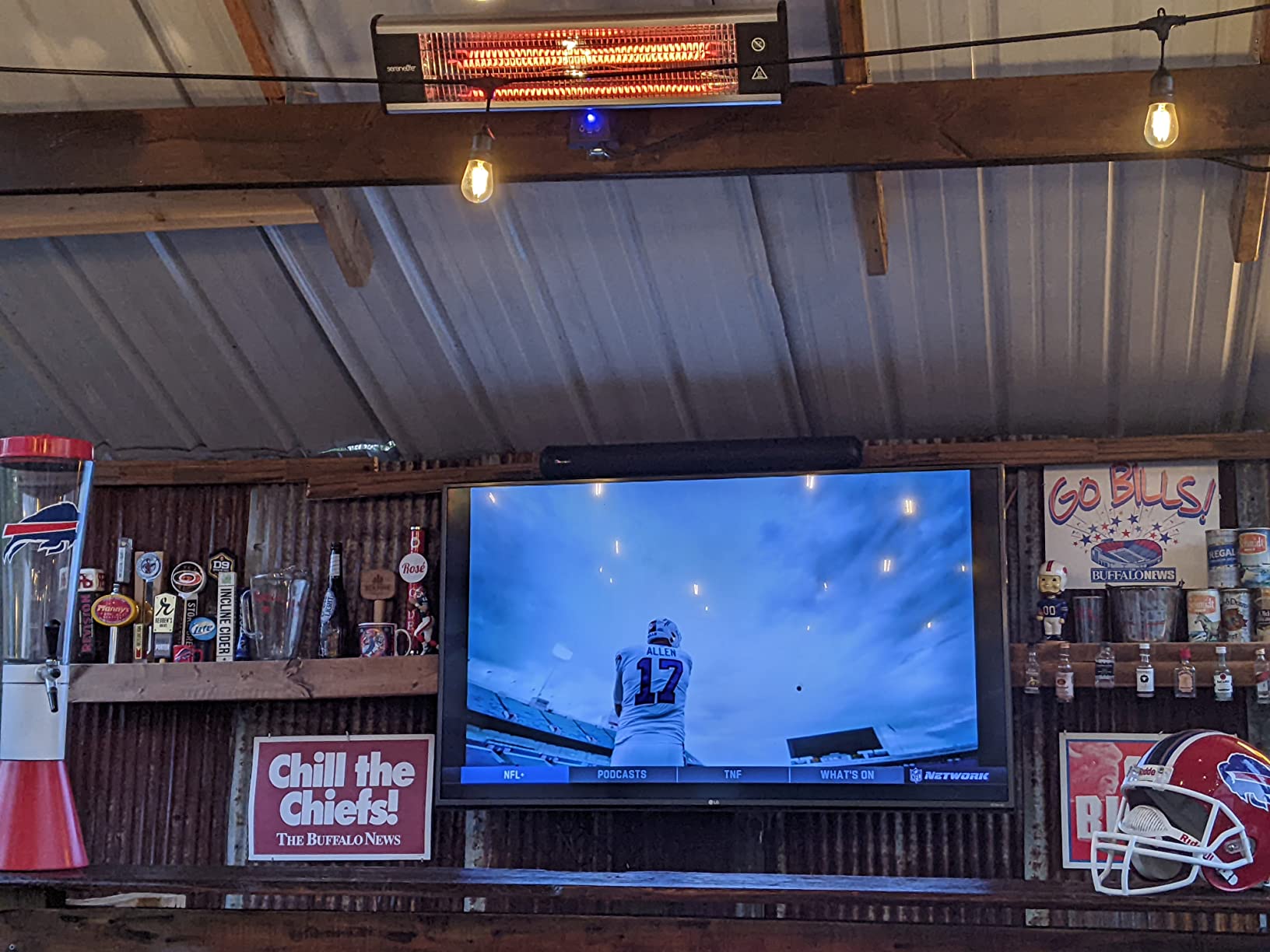
There is a mesh safety guard over the element and a remote control, and the heating output is 1500 watts at 120 volts and 12.5 amps. Stated coverage is 18 square meters in the technical fields and about 18 square feet in the feature list, which is a meaningfully smaller footprint than the pedestal and oscillating units here.
The single heat setting is the main limitation. There is no way to turn it down for a 65F evening, and with a fixed mount you cannot swing it toward a second seating group later in the evening. Buyers rate it well on value and light weight rather than on heating power, and that is the honest framing.
Who the SereneLife SLOHT28 suits
It suits a genuinely small screened porch, a balcony or a covered nook where one seating position is all you need to warm. Mount it low on a wall or beam near that seat and the whole problem is solved in a weekend.
It suits anyone who moves furniture around. A 5.7-pound heater mounted high on the wall never gets kicked, stepped on or dragged around, so it stays useful even when the seating layout changes.
Who the SereneLife SLOHT28 does not suit
It does not suit a porch where you want three people at a table spread more than a few feet apart. With one fixed direction and one heat level, the people at the ends of a long table will not feel it.
It does not suit a family that wants gradual comfort across a mild evening. Once it is on, it is on. If that bothers you, spend the difference on a model with several levels instead.
6. Sundate T17-GW15B – Smart Control and a Real Timer
Sundate 1500W Infrared Patio Heater, WiFi App, 9 Heat Levels, 24H Timer
1500W carbon fiber
9 heat levels
WiFi app and remote
120V plug-in
Pros
- Only heater here with WiFi app control
- 9 heat levels plus a 24 hour timer
- Mounts in any orientation including face down
- Detaches from the bracket for storage
- Protective cover included
Cons
- Smaller than the listing photos suggest
- IR remote is unreliable and needs close range
- Blinking WiFi LED cannot be switched off
- Hooks are for chains not ceiling anchoring
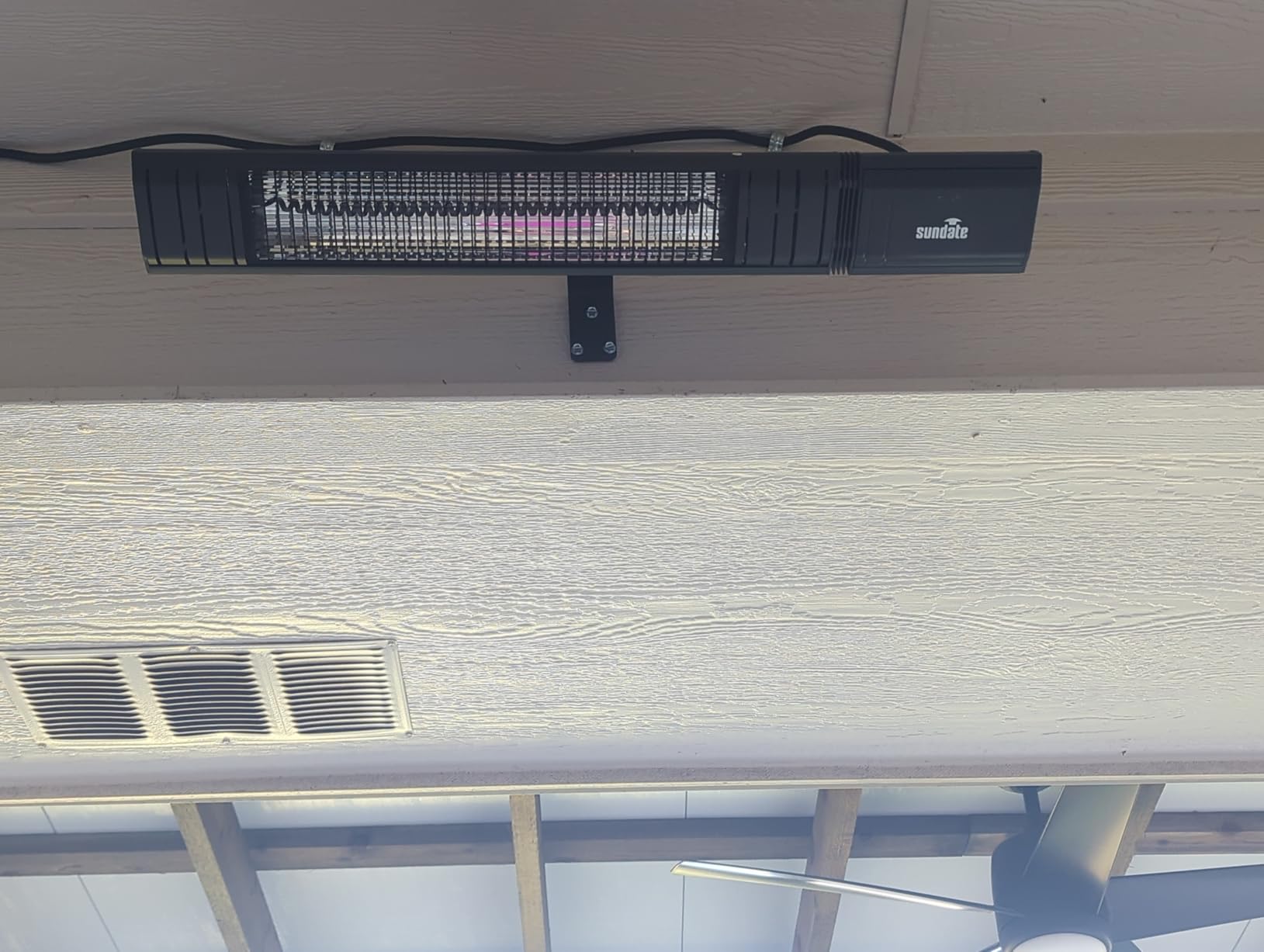
The Sundate is the only heater in this roundup with app control, and for a screened porch that is more useful than it first appears. You can turn the porch on while you are still inside, set a level from your phone and let the 24-hour timer run, which solves the cold-wait problem better than any physical switch.
Mounting is unusually flexible. It can go horizontally, vertically or face-down, and unlike many heaters it will not shut itself off when mounted in an unusual orientation. It also detaches from the wall bracket so the bracket stays put for winter and the heater itself goes in a closet.

Specs are 1500 watts at 120 volts and 12.5 amps, nine power levels, a maximum setting of 104F, nine speeds and a 27.55-inch body weighing about 6.5 pounds. Controls are a WiFi app, an infrared remote and a touch panel, and the manufacturer describes it as moisture and dust resistant for covered outdoor areas.
The complaints are consistent and worth pricing in. The WiFi indicator blinks continuously if you never connect it and cannot be disabled, the infrared remote frequently needs several attempts from close range, remotes often arrive without batteries, and the supplied hooks are for attaching chains to the unit rather than for anchoring into a ceiling.
Who the Sundate suits
It suits people who are already running other smart-home gear and want the porch on the same routine as the lights. Nine levels between 40F and 104F give much finer control than the three-position models, which matters on a spring evening that starts cool and warms up.
It suits anyone with awkward mounting geometry. Low beams, soffits and tight corners are exactly where a fixed-orientation heater gets in the way, and this one can hang any way you need it.
Who the Sundate does not suit
It does not suit someone who wants a large heated zone. Buyers note it is smaller than the listing photos imply and best suited to one or two people, so do not buy it expecting to warm a long porch table.
It also does not suit people who hate blinking LEDs or fussy remotes. If the constant indicator bothers you, set it up in the app and rely on that rather than the handset, which is what most owners end up doing.
7. VAGKRI VA-OH02 – The Widest Height Adjustment in the Roundup
VAGKRI Outdoor Heaters, Electric Infrared Patio Heater with Remote and 12H Timer, IP65 Waterproof, 3 Heat Levels, Wall Mount or Tripod Stand for Home, Office, Patio, Garage
1500W infrared
IP65 rated
Wall or tripod
33 to 77 inch height
Pros
- Height adjusts from 33 to 77 inches
- Heavy wide tripod base resists tipping
- Assembles in under ten minutes
- Remote plus on-unit control panel
- IP65 waterproof with 12 hour timer
Cons
- Heating element is not replaceable if it cracks
- Heat felt mainly within about three feet
- 7 foot cord is short and often needs extending
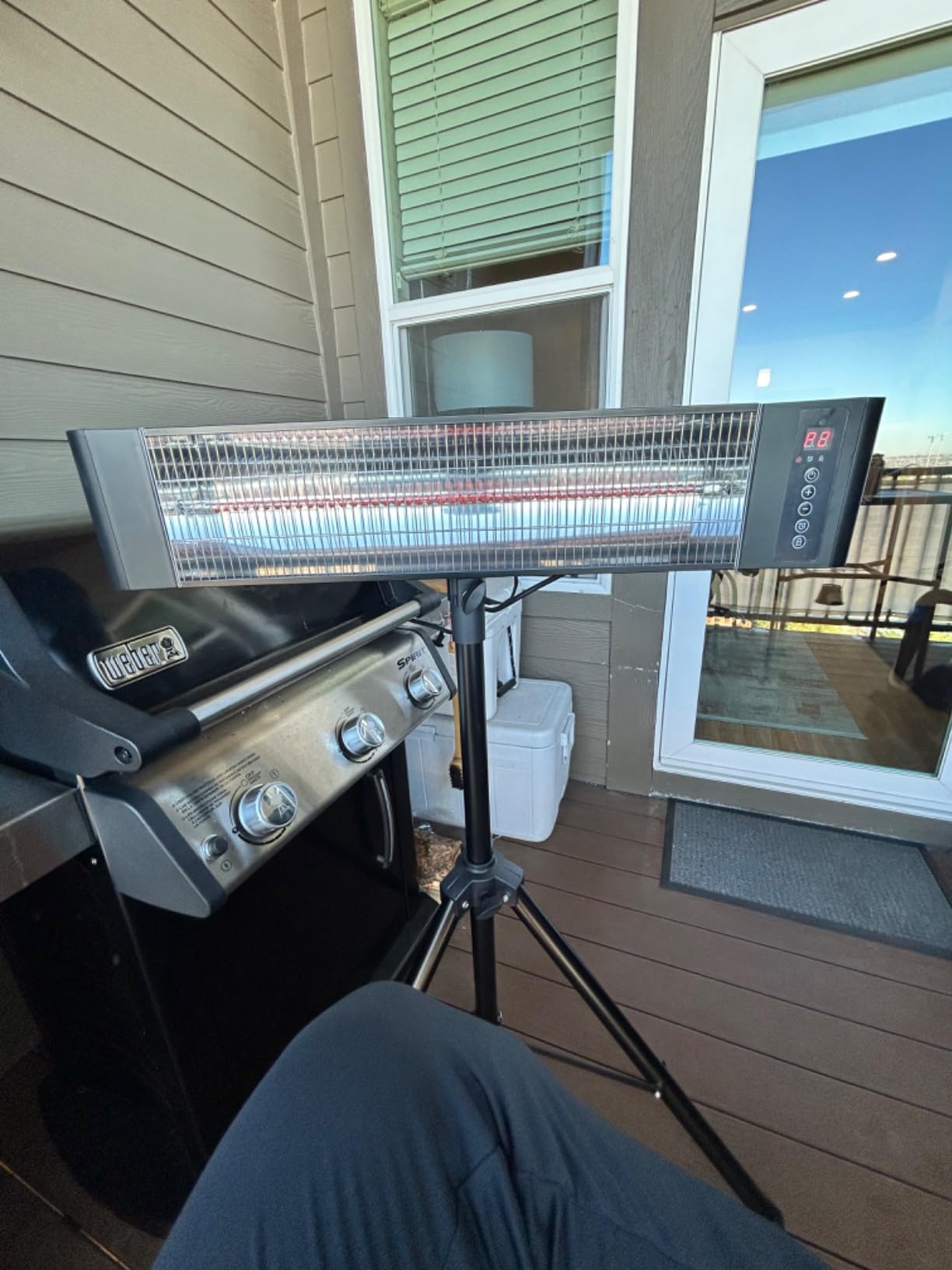
Height adjustment is the feature that makes this one different. The unit telescopes from 33 to 77 inches, so you can run it low for a seated coffee at the porch swing and tall for a standing group without buying two products. Among the portable units in this roundup that range is unusually wide.
The base is heavy and wide, which matters on a deck or a porch floor where a lighter stand would tip. Buyers also like that it puts together in under ten minutes and that both a remote and an on-unit panel are included.
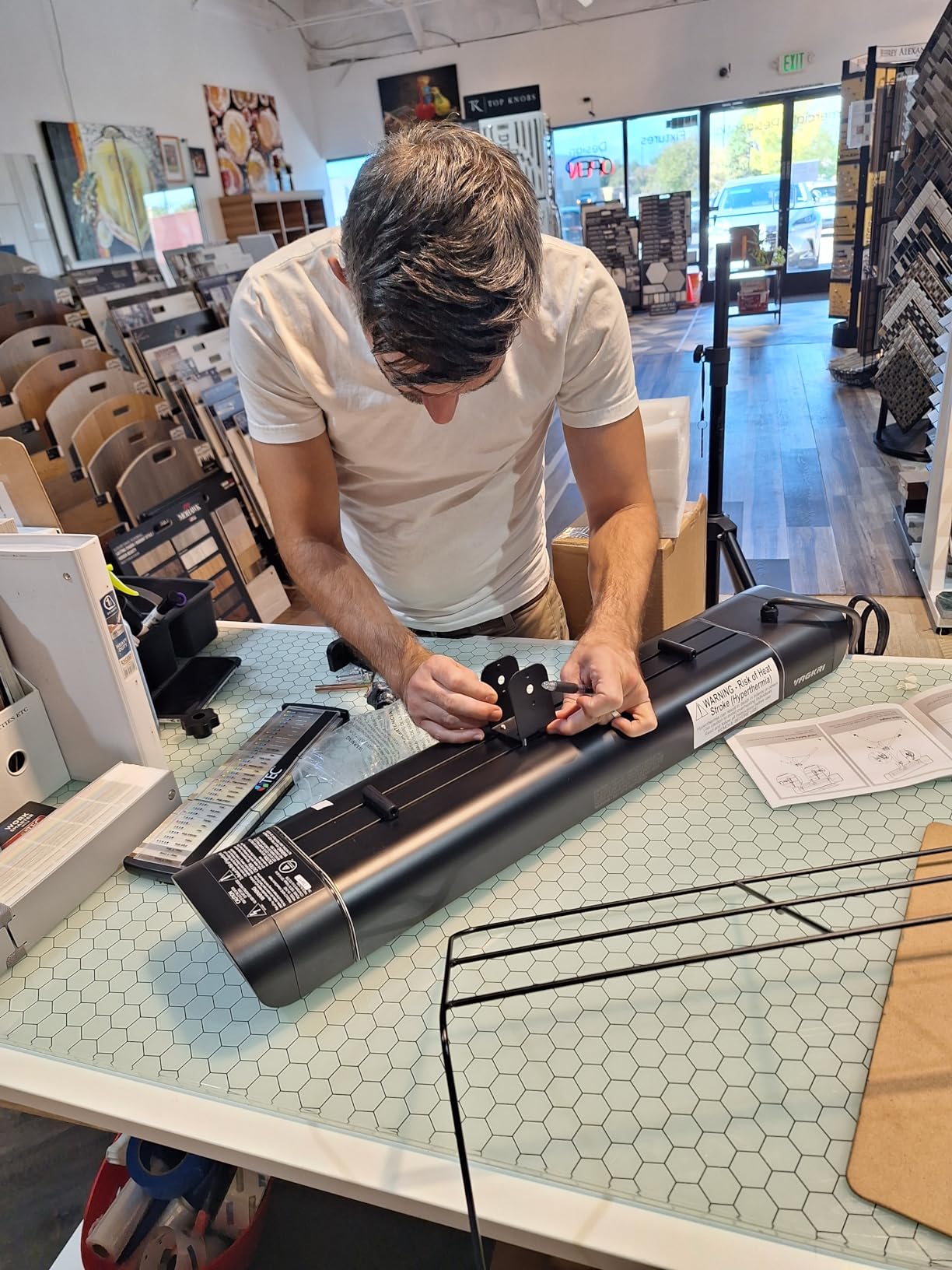
It is 1500 watts at 120 volts and 12.5 amps, with three levels at 700W, 1000W and 1500W, an IP65 waterproof rating and a 12-hour programmable timer. The body is 32 inches wide, weighs 8.1 pounds and includes a remote. The listed heating method combines convection and radiant output.
The durability issue to weigh is the element. Multiple reviews describe the infrared bulb cracking, often when the tripod gets knocked, and because the element is not user-replaceable a crack ends the unit’s life. The 7-foot cord is also short for a porch with a distant receptacle, and buyers frequently end up using an extension cord, which is worth avoiding if the manual discourages it.
Who the VAGKRI VA-OH02 suits
It suits a porch where seating height varies a lot, such as a set of porch swings plus a standing counter at the other end. Being able to move the heat throw from seated level to standing level is worth more than an extra heat setting.
It suits anyone who wants both a wall and a freestanding option without buying two heaters. The folding tripod and the wall bracket are both in the box, and it works with either.
Who the VAGKRI VA-OH02 does not suit
It does not suit a household with pets or young children who might knock the tripod over regularly. With a non-replaceable element, a tip-over event can be an expensive one, and the 360-degree safety on some competing models does not solve that.
It also does not suit anyone who feels heat only within about three feet, and despite the size of the body reviewers describe it as a one or two person heater.
8. SereneLife SLOHT40 – A Freestanding Pedestal You Can Aim
SereneLife Infrared Patio Heater 1500W Electric Heater Indoor/Outdoor Use, Portable Stand with Remote Control, IP65 Approved, 360° Tip-Over Safety Switch for Restaurant, Patio, Backyard, Garage, Decks
1500W carbon fiber
Height adjustable pedestal
IP65 rated
20 sq. ft. coverage
Pros
- Tallest and most adjustable stand in this group
- IP65 frame with stainless steel base cover
- 360 degree tip-over switch and overheat protection
- Assembly is quick and packaging is sturdy
- One buyer uses it in a 9 by 9 screened porch
Cons
- 23.4 pounds is heavy to reposition
- Pole swallows most of the cord length
- Never fully powers off and the blue LED stays lit
The SLOHT40 is the only true pedestal heater here, and the height adjustment is what makes it worth the weight. Several buyers describe turning it down low for seated morning coffee on a deck, which is a use case the shorter towers simply cannot serve.
It is also the second unit in this roundup with a purchase-verified review from a screened-porch owner, who uses it in a 9-foot by 9-foot screened porch with film windows specifically to extend the season into colder months. That is exactly the application this guide is about.
Specs are 1500 watts at 120 volts, IP65 waterproof and dustproof, an aluminum alloy frame with a stainless steel base cover, a 360-degree tip-over safety switch, overheat protection and a mesh guard. Stated heating area is 20 square feet, element temperature tops out at 360F, and the stand adjusts across a body listed at 25.6 by 72.8 by 16.14 inches.
It weighs 23.4 pounds, which is a lot to shift across a porch floor, and much of the cord length runs up inside the pole, leaving only a couple of feet at the base. The unit also never fully powers off: it sits in ON or STANDBY and a blue LED keeps flashing even when it is off, which some people find distracting in a dark screened room.
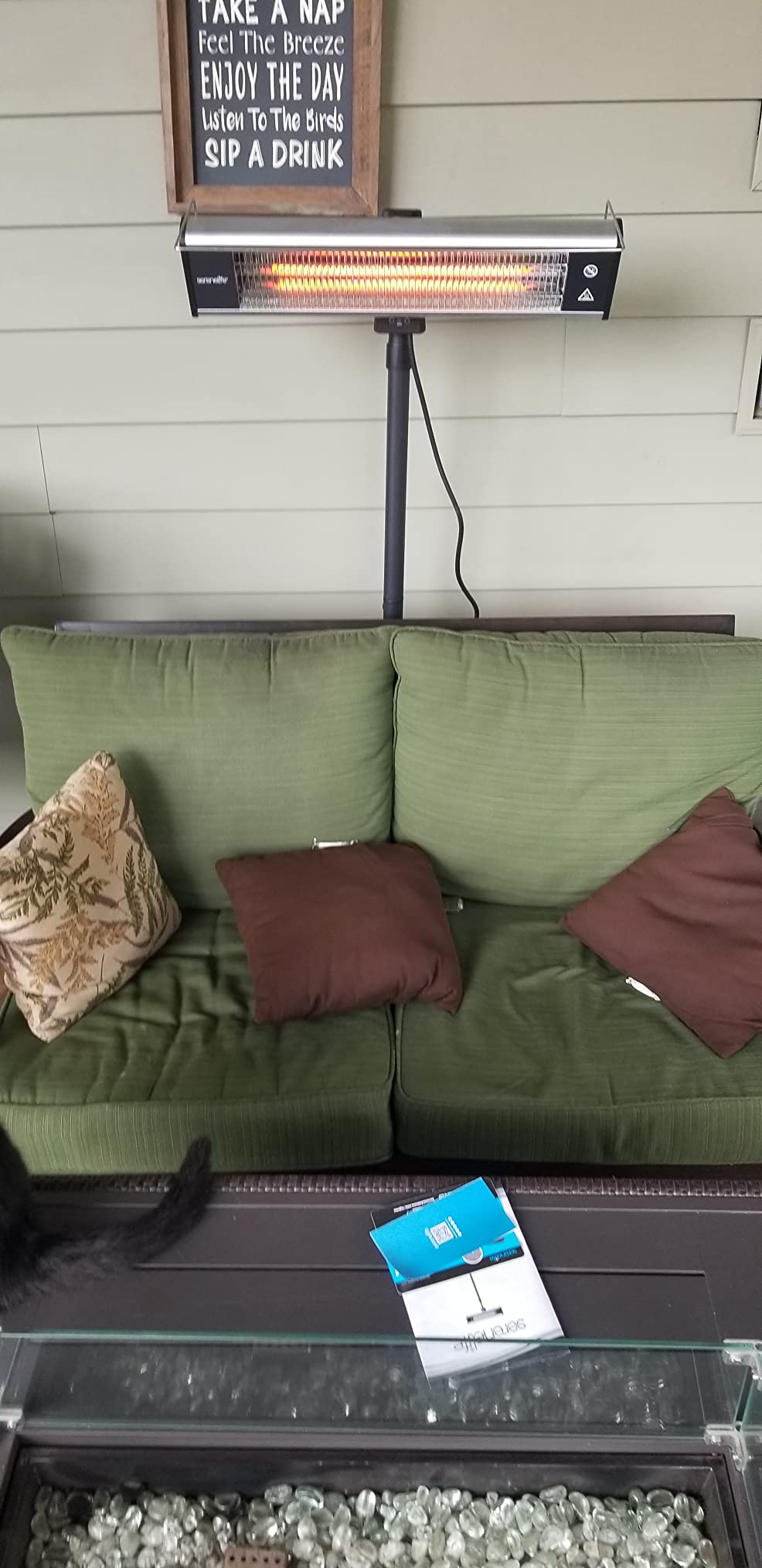
Who the SereneLife SLOHT40 suits
It suits a porch with a seating height that varies, and anyone who would rather not drill into siding, a beam or the screen frame at all. Nothing is permanently mounted, so it comes out with you when you sell the house.
It suits households that want the widest coverage of the SereneLife units, at 20 square feet, and who will accept a single heat level in exchange for the pedestal’s reach.
Who the SereneLife SLOHT40 does not suit
It does not suit anyone who plans to reposition it often, or who dislikes a unit that draws 23.4 pounds and swallows its own power cord. Plan the outlet position before you set it up.
It does not suit people bothered by indicator lights, and it carries the most serious isolated safety report in this group, with one owner describing a unit catching fire inside the box. That is a single report rather than a pattern, but it is worth registering before you leave a tall heater unattended on a screened porch with fabric furniture nearby.
9. ThermoMate EIHF1500V-N – The Only Oscillating Option Here
ThermoMate Electric Patio Heater, 1500W IP65 Outdoor/Indoor Infrared Heater with Remote, 8 Heating Levels 8-Hour Timer & Oscillation, Tip-over Protection for Garage Backyard Restaurant
1500W gold coated carbon fiber
60 degree oscillation
IP65 ETL certified
8 levels
Pros
- Only oscillating heater here with a 60 degree sweep
- 8 heat levels plus an 8 hour timer
- Customer service replaces failed units quickly
- No hot blowing air
- ETL certified with overheat and tip-over protection
Cons
- Output feels weaker than other 1500W infrared units
- Oscillation motor adds a rattling noise
- Remote is fiddly and arrives without batteries
Oscillation is the concept that sets this one apart. A fixed-direction heater warms a narrow cone, and a 60-degree sweep spreads that cone across a seating group instead. If your screened porch has people sitting at slightly different angles, this is the closest thing on the list to a room-wide solution at 120V.
It also has eight heat levels and an eight-hour timer, and it produces no blowing air, which one owner with dust allergies specifically called out. That matters in a screened porch where screen mesh and dust tend to circulate.
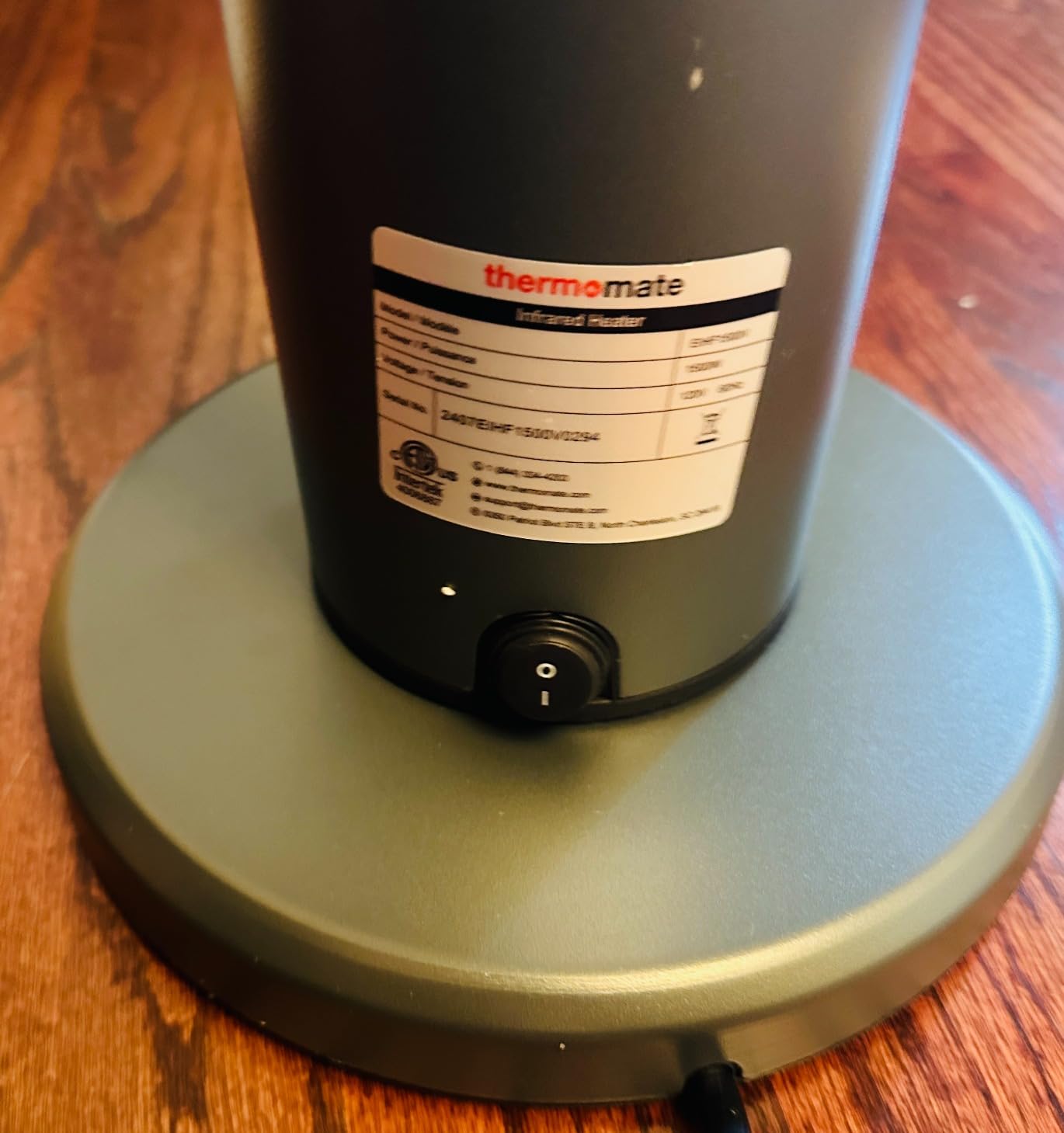
Specs are 1500 watts at 120 volts and 12.5 amps, a gold-coated carbon fiber element, eight speeds, up to 100 square feet of stated coverage, an 18000 BTU figure and a 338F overheat cutoff. It is IP65 and ETL certified, stands 33 inches tall on a 10.24-inch square base, and includes a fireproof racket and remote.
The honest weakness is output. Buyers consistently describe it as weaker than other 1500W infrared units and say you often need to sit right in front of it. The oscillation motor also produces a persistent rattling noise, and both heaters one reviewer tried had it. The remote is fiddly to assemble, has been reported defective, and arrives without AAA batteries.
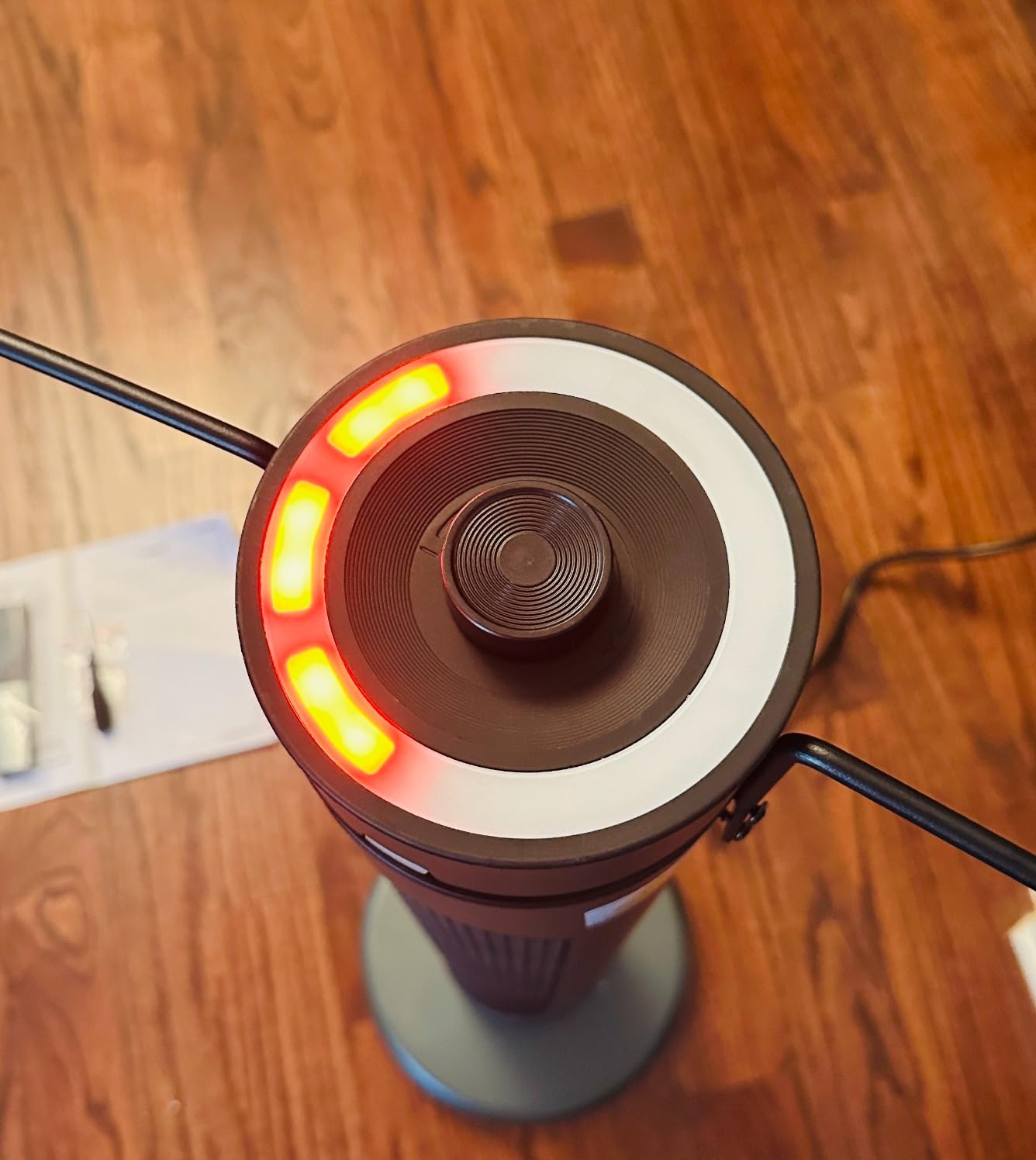
Who the ThermoMate suits
It suits a porch where a group sits in a loose semicircle rather than in a fixed row. The sweep covers roughly 60 degrees, which turns one heater from a single-seat solution into a small-audience one.
It suits anyone put off by purchase risk. Multiple reviewers received free replacement units within days after failures, and several upgraded their ratings after the fast service response, which is unusual in this category.
Who the ThermoMate does not suit
It does not suit anyone sensitive to a constant mechanical noise in a quiet room. The oscillation motor is the source, and it is the reason those reports are common.
It does not suit buyers hoping for the strongest heat at a distance, and be aware that several of these heaters have failed after a few months to a year. The service is good, but the failure rate is the thing to plan around.
10. VAGKRI VA-OH01 42 Inch Tower – The Strongest Safety Feature Set
VAGKRI 42″ 1500W Electric Outdoor Infrared Heater with Remote, 9 Heat Levels, 24H Timer, 1S Fast Heating, IPX5 Waterproof Tower Space Heater for Home, Office, Patio, Garage
1500W infrared tower
9 power settings
Child lock and display
24 hour timer
Pros
- Child lock and digital display are unusual at this level
- Nine power settings from 620W to 1500W
- 24 hour programmable timer
- 42 inch height reaches over a seated group
- ETL listed weatherproof aluminum
Cons
- Floor standing only with no wall or ceiling mounting
- Slim 3.5 inch depth concentrates heat in front of it
- Far fewer reviews than the other picks
This tower has the best safety feature set in the roundup and the highest average rating, at 4.5 stars with 75 percent five-star reviews and only 3 percent one-star. The child lock is the detail that matters on a screened porch, where kids and a dog are frequently out on the mesh while adults are inside.
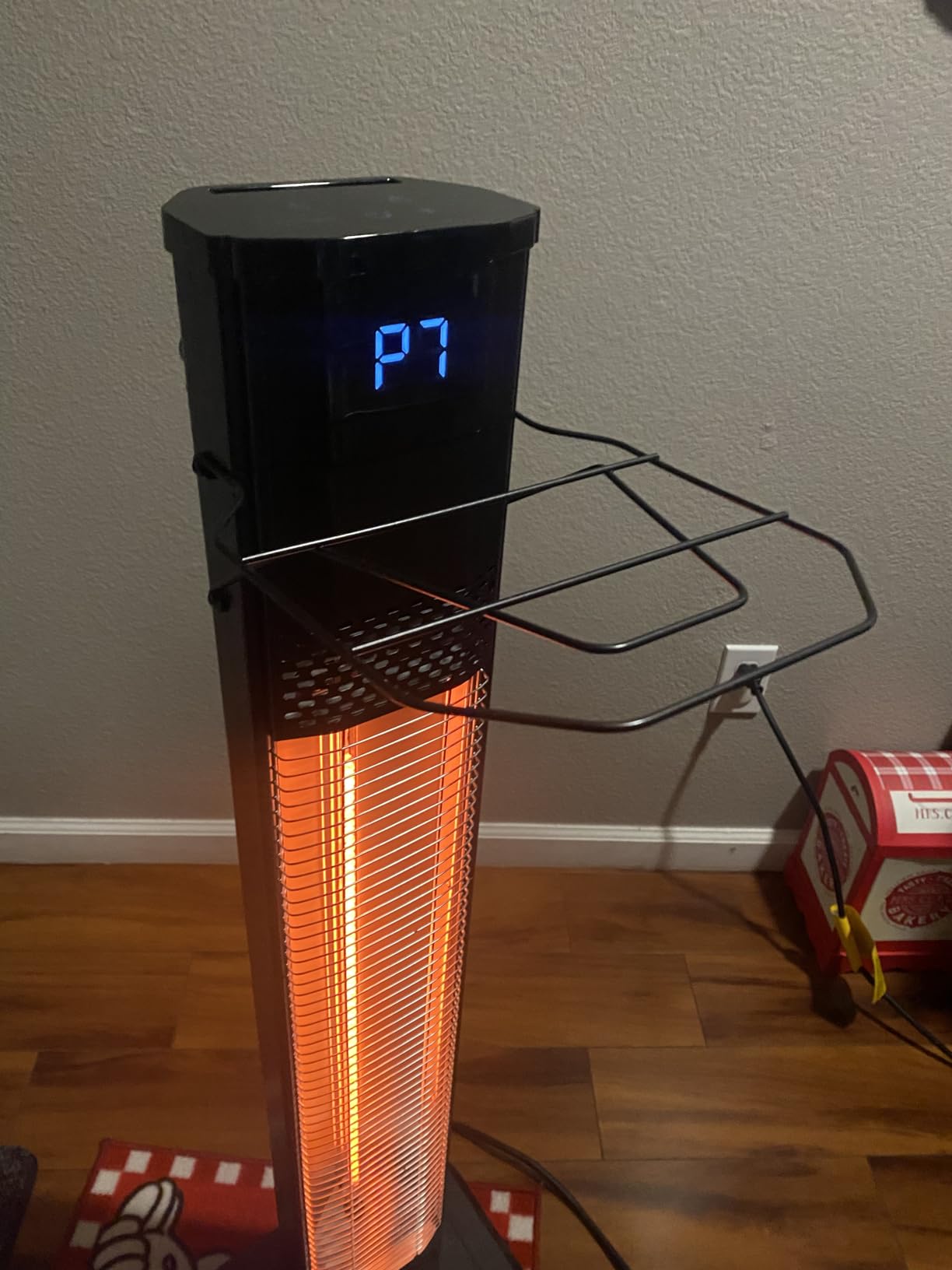
Nine power levels from 620W to 1500W give the finest control of any unit here, and the 42-inch height means the radiant heat reaches over a seated group rather than at the level of their knees. The digital display tells you the setting without guessing in low light.
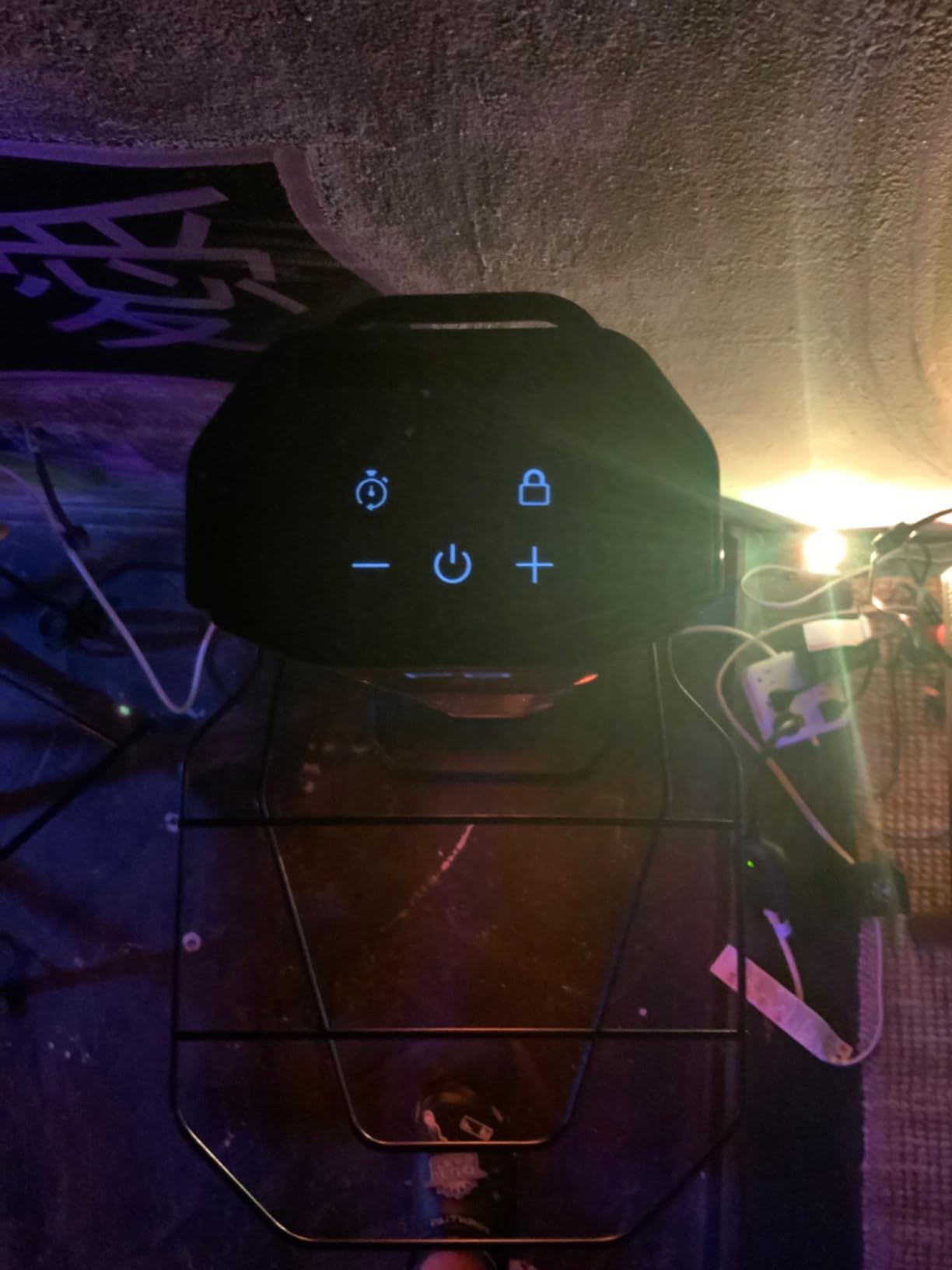
It is 1500 watts at 120 volts and 12.5 amps, ETL listed, with a 100-degree wide-angle heating range, 24-hour programmable timer, tip-over protection and weatherproof aluminum construction. It is odorless and fume free. The body is 41.7 inches tall, 5.7 inches deep and only 3.5 inches wide.
Two limitations are worth planning around. It is floor standing only, with no wall or ceiling hardware in the box, so it occupies porch floor space and cannot be moved up out of a child’s reach. And the slim 3.5-inch depth means the heat is felt mainly directly in front of the unit rather than spread out.
Who the VAGKRI VA-OH01 suits
It suits a porch where children or pets are regularly out on the mesh. A child lock plus tip-over protection plus nine discrete levels means you can run it low for a mild evening without cycling it on and off, which is what a single-speed unit forces you to do.
It suits anyone who wants a freestanding heater they can carry out when needed and store away in summer, with no mounting work and no electrician.
Who the VAGKRI VA-OH01 does not suit
It does not suit someone who wants permanent, out-of-the-way heat with clear floor space, since it cannot be hung on a wall or a ceiling beam. If your porch is tight, the floor footprint becomes the deciding factor.
It does not suit buyers who want a deep body of reassurance, because the brand track record here is much shorter than the category leaders. Treat it as a well-regarded newer unit rather than a proven one.
Why a Screened Porch Is a Special Heating Challenge
Radiant infrared heat is the right answer for a screened porch because of how the room loses energy. A screened enclosure is porous: air moves through the mesh in both directions, which means any heater that works by warming air is fighting a constant exchange with the outside. A radiant element does not care, because it heats surfaces and bodies directly rather than the volume of air between them.
That is also the answer to the question people ask most often in homeowner threads, which is whether an electric heater works in a screened porch at all. It does, provided you are sitting close enough to feel radiant heat. The warmth is felt on your skin and clothing within seconds of the unit being switched on, and it does not depend on the air holding heat. What it cannot do is turn the room itself into a warm space.
Set your expectations with a number. Realistic radiant heating extends comfort into roughly 50 to 60F evenings. Below that, wind coming through the mesh strips heat off exposed skin faster than any 1500W unit replaces it, and no screened-porch heater changes that. If you live where winter evenings sit in the 30s, plan on a hardwired commercial-grade install instead, or plan on using the porch for spring and fall only.
Electric vs Propane for a Screened Porch
Electric wins on safety, silence and installation simplicity for almost every screened-porch situation. There is no combustion, no carbon monoxide, no vent, no fuel line and no tank to store or refill. You flip a switch and there is heat. If you live in an apartment, a condo or a building with a propane ban, electric is frequently the only option available to you.
Propane wins on raw output in open air. A 40,000 BTU propane heater heats a large uncovered deck on a genuinely cold night, and our guide to the best propane patio heaters for restaurant patios covers the commercial end of that. But inside a screened enclosure, propane brings clearance requirements, ventilation questions and a combustion appliance in a space much smaller than the manufacturer contemplates.
Unless your screened porch is effectively an open-air space with three walls of open mesh, treat propane as a poor fit. Electric gives you comparable comfort at the seating group, which is where you actually sit, with none of the combustion questions. For a broad comparison of both formats, see our patio heater overview.
How to Size an Electric Patio Heater for Your Screened Porch
Measure before you buy, and be honest about where people will actually sit. Radiant heat is a seat-by-seat calculation, not a room-by-room one. Five steps cover it:
Step 1. Measure the porch floor area, then cut it down to the area you actually use. A 400-square-foot screened porch where everyone sits at one end is a 100-square-foot heating problem.
Step 2. Note the ceiling height. Anything above nine feet gives you mounting freedom. A porch at eight feet or below rules out tall freestanding towers and forces wall mounting, which is the single most common reason people return heaters.
Step 3. Map the seating. Every distinct group of two to four people that sits more than six feet from another group needs its own heat source. This is the sizing rule that matters most on a long or L-shaped porch.
Step 4. Use 1500 watts per seating group of up to four people in a screened porch. That is the practical ceiling for anything on a standard household circuit, and it is where every product in this roundup sits.
Step 5. Plan for two zones on anything over 250 square feet of usable space. A forum detail worth borrowing: owners planning screened-in builds routinely spec dedicated switches for lights, fan and two separate heaters rather than trying to make one unit cover the whole porch.
The rough guide that follows assumes typical 8 to 9 foot ceilings and a screen door that is closed.
Up to 60 square feet, one seating group: one 1500W wall-mounted or ceiling-mounted unit is enough.
60 to 120 square feet, one or two groups: one 1500W heater placed between the groups, or one heater with a 60-degree oscillation sweep.
120 to 200 square feet, two groups: two 1500W heaters on separate circuits, one per zone.
200 square feet and above, or L-shaped layouts: two heaters minimum, placed where people sit rather than centered on the floor.
Any porch you hope to use below 45F: stop and reconsider the project. Residential 120V radiant heat will not carry it.
Wattage, Voltage and Your Porch’s Electrical Circuit
All of the heaters in this roundup are 120V plug-in models drawing 12.5 amps at full output. That number matters because a standard household branch circuit is 20 amps, and code limits continuous load on that circuit to 80 percent, or 16 amps. One 1500W heater fits comfortably. A second one on the same circuit does not, once porch lights and a fan are on it.
So the practical answer to can you run two heaters on one porch circuit is: not safely with lighting and a ceiling fan. Ask for a second GFCI-protected receptacle on a different circuit, which for most screened porches means a modest addition by an electrician rather than a major rewire.
The outlet itself is not a detail to skip. You need a GFCI-protected receptacle in an outdoor-rated weatherproof cover, mounted where spray from rain and from a wet hose cannot reach it. Extension cords are the short answer that turns into a long problem, and several manufacturers in this roundup explicitly advise against them.
It is also worth understanding what you are giving up by staying at 120V. Commercial heaters at 240V reach 3000W to 6000W and warm far more space, but they need a hardwired dedicated 25-amp circuit and a licensed electrician. If your screened porch is genuinely large and you want year-round use, that is the honest ceiling of what a plug-in heater can do.
Wall-Mounted, Ceiling-Mounted and Freestanding: Which Style Fits Your Porch?
Wall and ceiling mounting is the right answer for most screened porches. It clears the floor, keeps heat aimed at seated height and stays out of the way of children and dogs. Several units in this roundup include both wall and ceiling brackets, so you can decide the day you install rather than the day you buy.
Owners with larger covered porches consistently describe preferring a mounted unit with a remote over a portable tower, which matches what the physics predicts: a fixed unit aimed at a seating group outperforms a tower that has to sit somewhere and warm whatever is in front of it. Our wall-mounted patio heater picks go deeper on the bracket and clearance side.
Freestanding towers make sense when the seating moves, when you rent, or when the porch is small enough that one portable unit serves the whole room. Two of the picks here include a folding tripod as well as a wall bracket, so you can test a position before committing.
Pedestal heaters occupy the middle ground. They are freestanding but aimable, which is why the height-adjustable stand on the SereneLife SLOHT40 solves a problem that shorter towers cannot: getting radiant heat down to seated level. For deck-rated units and open-air setups, our deck heater guide covers that side.
What to Look For in an Outdoor-Rated Electric Patio Heater
An IP rating is the single most useful spec on the listing. IPX4 means splashing water from any direction, which covers a screened porch that never sees direct rain. IPX5 adds protection against water jets and is the safer choice if the porch is open on one side or the screens get soaked in wind-driven rain. IP55 also excludes dust, which matters where leaves and screen grit collect on the housing.
On that note, can outdoor heaters be left out in the rain? Every unit in this roundup carries at least IPX5 and most carry IP55 or IP65, so occasional rain exposure is within what they are rated for. That is not the same as being fine year-round outdoors. Leave them off in a storm and store or cover them over the off-season, especially for wall-mounted units you cannot easily pull down.
Next, check certification. ETL, UL and CSA marks tell you the unit was independently tested. Several picks here carry one of those, and it is a faster filter than any feature list. Then look for a stated indoor and outdoor rating from the manufacturer, not just an IP number, because an indoor-rated space heater with a splash rating is still not an outdoor heater.
Finally, weigh the safety and control features against your household. Tip-over shutoff matters if pets or kids are out there. Overheat protection is standard on most. A remote and a timer are what make radiant heat pleasant rather than annoying. And a child lock, which only one unit in this roundup offers, changes the calculus on a family porch more than any wattage difference here.
Installation, Clearance and Safety for Screened Porches
Can you use a patio heater on a covered porch? Yes, provided the unit is outdoor-rated and you respect the clearance numbers in its manual. As a working rule, keep at least three feet of clear space to the front and sides, and never mount below the manufacturer’s minimum height, which for most wall units means above head height on a standing adult.
Check the surfaces above and around the mount. One homeowner in a renovation thread reports slight warping of materials near an infrared heater over years of use, which is a reminder that radiant heat is intense locally even though the room feels fine. Mount to a structural member, not to thin screen framing or vinyl trim.
Do not run a cord under a rug, through a door gap or across a walkway, and do not use an extension cord unless the manual explicitly permits it. Keep the heater clear of upholstery, cushions and anything that can scorch, and never leave a portable unit unattended in a porch with combustible furniture while it runs.
Finally, decide the off-season plan before you install. Wall-mounted heaters are easier to leave up; tower and pedestal models are better taken down and stored indoors, because condensation and dust do more long-term damage than use does.
Running Costs: What It Really Costs to Heat a Screened Porch
The math is simple because these are all resistive heaters: every watt becomes heat. A 1500W heater draws 1.5 kilowatts, so an hour of use costs 1.5 kilowatt-hours times your local rate. Nothing else in the house converts its input energy into heat more completely, which is why running costs are lower than a gas heater of similar delivered warmth.
At 12 cents per kilowatt-hour that is about 18 cents an hour. At 20 cents it is 30 cents. At 30 cents it is 45 cents. A 2000-watt heater running for 24 hours consumes 48 kilowatt-hours, which is a genuinely large load for one appliance and worth comparing to your clothes dryer, since it runs for a similar length of time.
For a realistic season, assume three hours of use per evening across roughly 30 autumn evenings plus 30 spring evenings. At 1500W that is 270 kilowatt-hours per heater across the season, and multiplying by your local rate gives the total. Most households run one heater for one seating group, so running cost is rarely the deciding factor here.
Setting a heater to 900W instead of 1500W for the first twenty minutes of an evening cuts the burn noticeably, which is one more reason to pick a multi-level model over a single-speed one. The 24-hour timers available on several of these units also let you warm the porch before guests arrive rather than during.
How to Make Your Screened Porch Cheaper to Heat
Before upsizing a heater, attack the enclosure. Owners on renovation forums consistently point out that a better screen door or a strip of weatherstripping often costs less than the larger heater you were about to buy, and it buys back efficiency permanently.
1. Replace the screen door. The single biggest leak on most screened porches is the door. An upgraded door with a closer and a sweep cuts drafts more than any product change.
2. Weatherstrip the frame. Gaps along the header and jambs pull in outside air continuously, and that air is what strips heat off you.
3. Close off one side. If your porch is screened on three sides, adding a fourth screen wall or a heavy curtain on the open side can change the space from porous to genuinely semi-enclosed.
4. Shade the glass. Any south or west facing glass loses heat all evening. A solar shade or thermal curtain on that wall cuts the load noticeably.
5. Insulate the roof deck. If the porch ceiling is uninsulated, this is the biggest single loss in the room. It is also the fix that works in summer.
6. Zone instead of expand. Two small heaters covering two seating groups let you heat one zone instead of the whole porch, which is cheaper than one larger unit running everywhere.
One more habit worth adopting: run the heater only where people are, and only when they are there. Radiant heat in an empty porch is money spent warming furniture.
How We Picked
We started with the electrical constraint, because it decides everything else. Every genuinely outdoor-rated electric patio heater that fits a standard household circuit is a 1500W unit, so ranking these is not a ranking of power. It is a ranking of reach, mounting flexibility, weather sealing, control and durability.
Each product had to state an IP rating, describe an outdoor use case, and carry an independent safety mark such as ETL, UL or CSA. We then read the full review set for each, tracking how owners describe real screened-porch or semi-enclosed use, how often units fail, and what the majority of complaints have in common. Products whose failure complaints clustered were ranked accordingly, and we flagged the specifics in each section.
Ratings and review counts are reproduced exactly as the retailer reports them. We earned nothing from the order of this list, and we would be surprised if you agreed with every placement.
Frequently Asked Questions
What is the best electric heater for a screened porch?
For most screened porches, the DR Infrared DR-238 is the best all-round pick. It carries an IP55 outdoor rating, offers three power levels from 900W to 1500W, includes a wall and ceiling bracket, and runs on a standard 120V GFCI receptacle with no hardwiring. Set it at seated head height and aim it slightly downward at the group that spends the most time out there.
What size electric heater do I need for 500 square feet?
One 1500W plug-in heater will not warm 500 square feet of screened porch. Radiant heat is calculated by seating group rather than floor area: budget one 1500W heater per group of up to four people. Usually three heaters on three separate circuits are what that calls for, aimed at where people sit. If you want genuine whole-room heat, plan a 240V hardwired system instead.
Can you use a patio heater on a covered porch?
Yes, as long as the heater is outdoor-rated and you respect its clearance requirements. Keep at least three feet of clear space in front and to the sides, and mount wall or ceiling units above standing head height. Electric radiant heaters are especially well suited to covered and screened spaces because they produce no combustion fumes and need no ventilation. Check the IP rating and the manufacturer indoor and outdoor approval first.
How much does it cost to run a 2000 watt heater for 24 hours?
A 2000 watt heater running for 24 hours consumes 48 kilowatt-hours of electricity, roughly the same as a clothes dryer running for a full day. Multiply 48 by your local rate per kilowatt-hour to get the daily figure. On a screened porch you would never run one heater that long, so plan on a few hours per evening instead, and use a timer so it warms the space before you sit down.
Are infrared heaters good for patios and screened porches?
Infrared heaters are the best choice for screened porches because they radiate heat onto people and surfaces rather than warming the air. That matters in an enclosure that leaks air through the mesh in both directions, where a fan-driven heater is fighting a constant exchange with outside air. The limitation is honest: they warm you at close range, they do not raise the room temperature, and they work best around 50 to 60F.
Do electric patio heaters need an electrician to install?
Not usually, if you are using a 120V plug-in model like every unit in this roundup. You do need a GFCI-protected receptacle in an outdoor-rated weatherproof cover, and one 1500W heater draws about 12.5 amps, so it is close to the practical limit of a standard 20-amp branch circuit. Running a second heater, or installing any 240V hardwired system at 3000W or more, requires a licensed electrician.
Bottom Line: The Best Electric Patio Heaters for Screened Porches
The DR Infrared DR-238 is our choice as the best electric patio heaters for screened porches overall, because it has the deepest review record in the category, an IP55 rating, three heat levels and hardware that covers both wall and ceiling installs on a standard 120V circuit. For a porch you are still planning, the Briza earns its place as the most flexible option, and for kids and pets on the mesh the VAGKRI 42-inch tower is the one with the child lock.
Measure your seating before you measure your floor, buy outdoor-rated hardware with a real IP rating, and give each seating group its own heater on its own circuit. Get the 2026 version of this guide bookmarked, then go sit on the porch.