
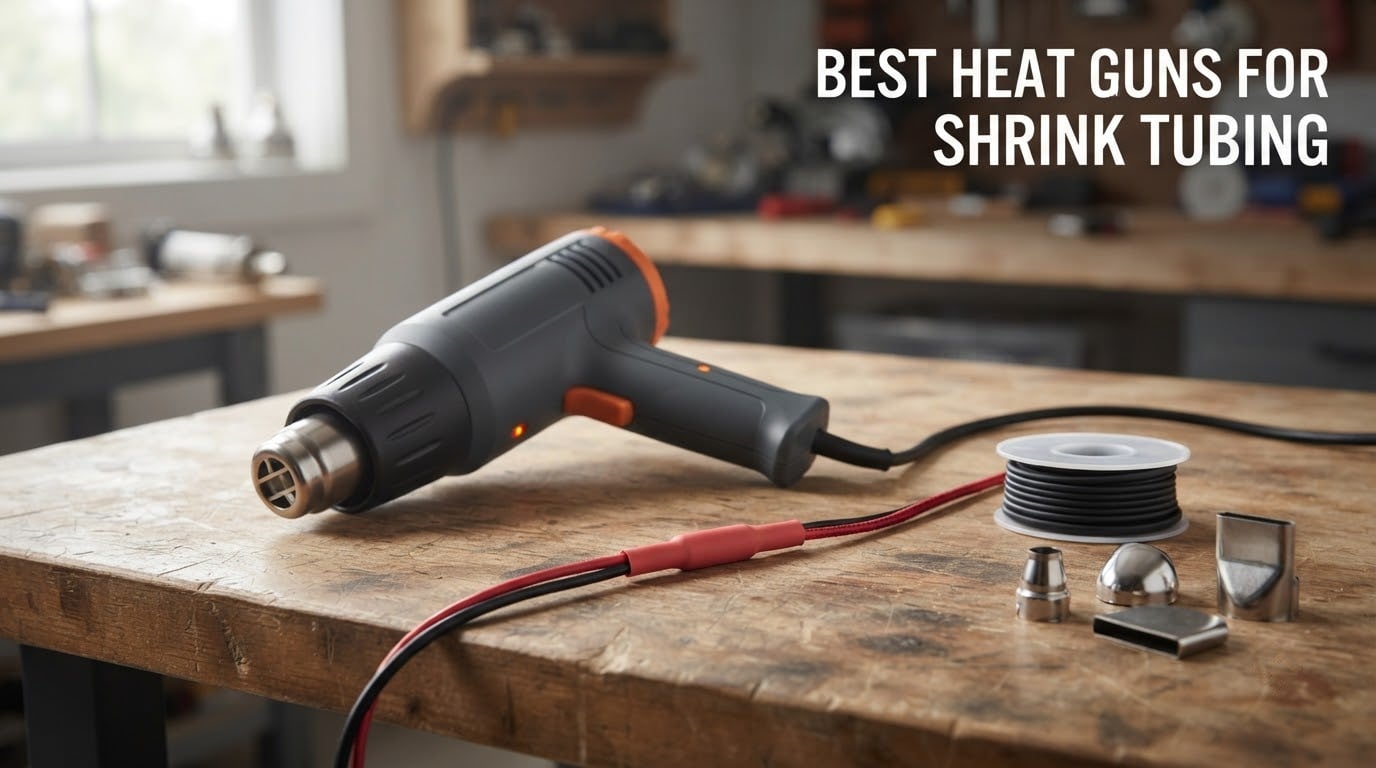
Shrink tubing fails in one of two ways, and both trace back to the heat gun. Too little heat leaves the tube cloudy, loose and barely clinging to the wire. Too much heat for too long scorches the insulation underneath and leaves you with a blackened mess you have to cut off and redo. The tool you pick decides which of those you get.
Will a heat gun work on shrink tubing? Yes, and it is the standard tool for the job. A heat gun blows hot air across the tube until the polymer passes its shrink temperature, then the material’s memory pulls it tight around the wire or connector inside. A hair dryer is too gentle for most tubing, and an open flame is too unpredictable for anything larger than a single small splice.
We spent weeks putting ten of the most-reviewed heat guns through the same set of shrink-tubing jobs: butt splices on 14 AWG wire, dual-wall adhesive-lined tubing over a crimped terminal, heat-shrink labels on a switch panel, and a bundle of micro splices on a PCB. This roundup of the best heat guns for shrink tubing covers everything from a sub-pound mini gun for craft-bench work to a 1800W variable-dial unit for heavy automotive harnesses.
If you are also outfitting a workshop, our guides to the best nail guns and best cordless nail guns cover the other tools that show up on every job-cart list.
Table of Contents
Top 3 Heat Gun Picks for Shrink Tubing (October 2026)
These three cover the widest range of real jobs. The SEEKONE 1800W wins on control and the sheer number of ratings behind it, the Chandler Tool mini wins on low-end gentleness, and the Genesis kit wins on value with four nozzles in the box.

SEEKONE 1800W Variable Temp Heat Gun
- 50C-650C dial control
- 1800W
- Four nozzles
- Overheat protection

Best Heat Guns for Shrink Tubing in 2026 Quick Comparison
Every gun below has a published temperature range, which is the single most useful number when shrinking tubing. We list it first so you can match it to the tube and wire in front of you.
| Product | Specifications | Action |
|---|---|---|
| SEEKONE 1800W Variable Temp Heat Gun |
|
Check Latest Price |
| Chandler Tool Mini Dual Temp Heat Gun |
|
Check Latest Price |
 Genesis 1500W Dual Temperature Kit Genesis 1500W Dual Temperature Kit |
|
Check Latest Price |
 Wagner Spraytech HT1000 Heat Gun Wagner Spraytech HT1000 Heat Gun |
|
Check Latest Price |
 BLACK+DECKER HG1300 Heat Gun BLACK+DECKER HG1300 Heat Gun |
|
Check Latest Price |
 SEEKONE 350W Mini Heat Gun SEEKONE 350W Mini Heat Gun |
|
Check Latest Price |
 DEWALT 20V MAX Cordless Heat Gun DEWALT 20V MAX Cordless Heat Gun |
|
Check Latest Price |
 PORTER-CABLE PC1500HG Heat Gun PORTER-CABLE PC1500HG Heat Gun |
|
Check Latest Price |
 PRULDE 380W Mini Heat Gun PRULDE 380W Mini Heat Gun |
|
Check Latest Price |
 Ryobi ONE+ 18V Cordless Heat Gun Ryobi ONE+ 18V Cordless Heat Gun |
|
Check Latest Price |
1. SEEKONE 1800W Variable Temp Heat Gun: Best Overall for Shrink Tubing
SEEKONE 1800W Heat Gun Variable Temp 122℉-1202℉ for Crafts, Shrink Wrap
122F-1202F variable dial
1800W, 190-500L/min airflow
4 nozzles included
1.96 lb, 110V corded
Pros
- Genuine variable dial from 50C to 650C
- Fires up fast on high settings
- Four nozzles including a reflector and two concentrators
- Overheat protection
- 1.96 lb body is comfortable for long sessions
Cons
- 1202F maximum will scorch sensitive plastics if held close
- No digital temperature readout
- Barrel is bulkier than mini guns for micro work
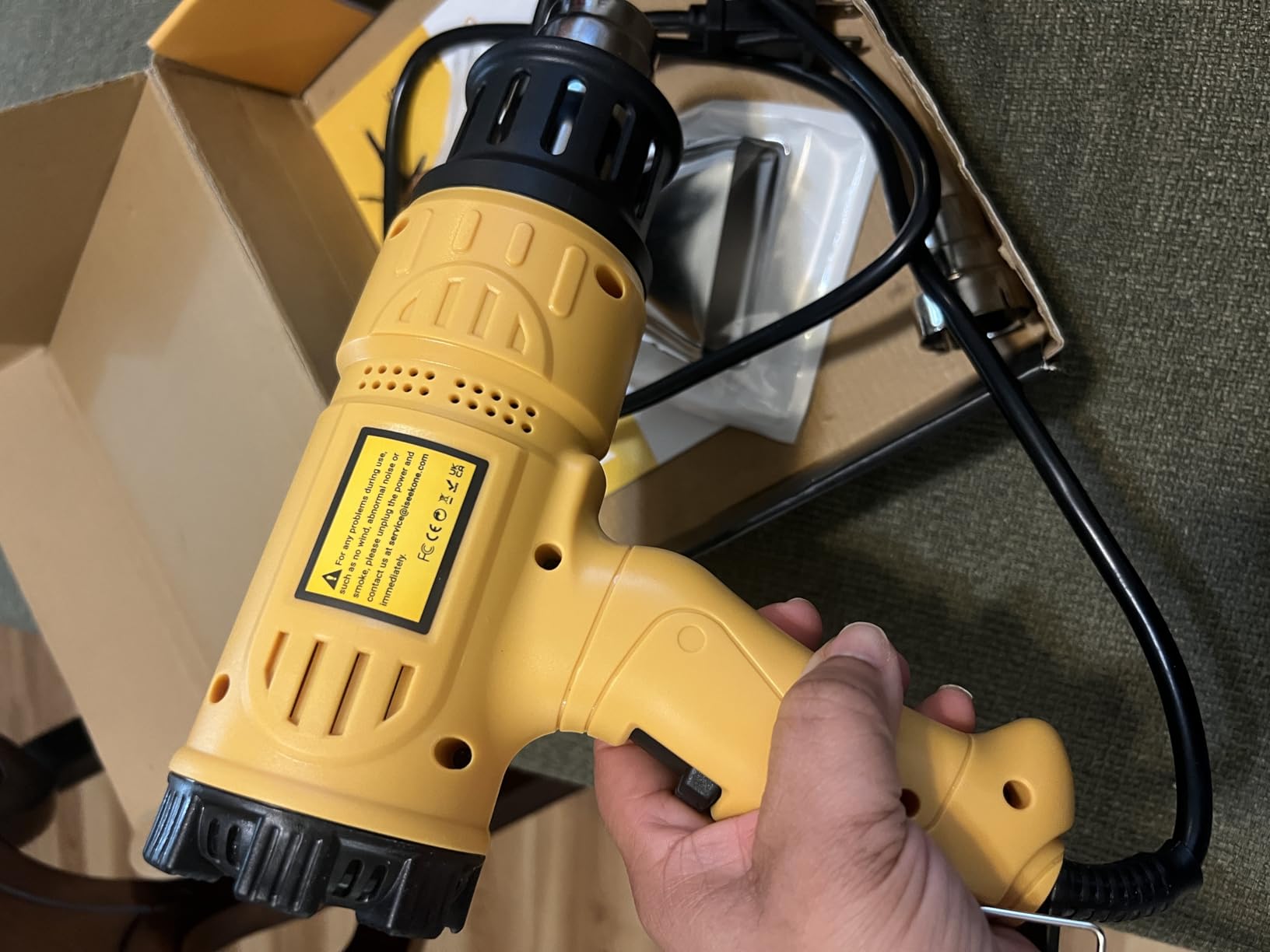
This is the gun we kept reaching for. The dial is genuinely continuous rather than a two-position switch, which matters more for shrink tubing than almost any other spec. We started every dual-wall adhesive-lined joint at the bottom of the dial, walked it up in small steps, and stopped as soon as the adhesive wicked out both ends.
Airflow is the other reason it wins. At 190-210 liters per minute on the low mode and 250-500 on the high mode, you get enough moving air to sweep heat evenly along a 4-inch length of tubing without blasting one spot. The bundled set covers everything: a deflector for spreading heat, a reflector for wrapping around a connector, and two concentrators for a narrow jet on a single splice.
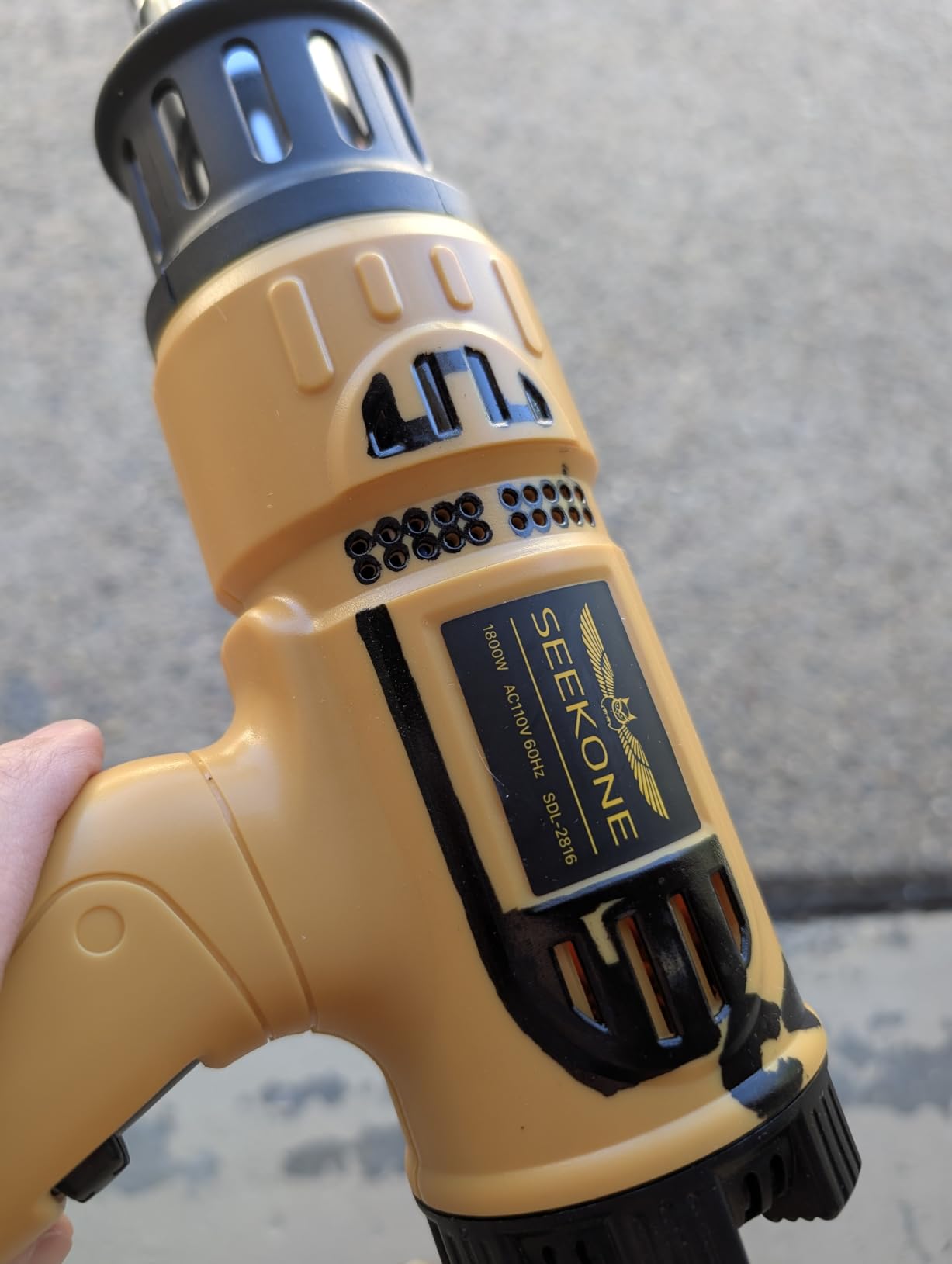
Across 38,000-plus ratings and a 4.6 aggregate, the praise lands in the same three places every time: the real dial, the fast heat-up, and the free nozzles. That volume of feedback matters for a tool where variation between units is the thing that burns your tubing.
The honest limit is the top of the range. At 1202F the same gun that shrinks a butt splice in three seconds will bubble an ABS connector housing if you park it. Discipline on distance and movement is not optional here, and the missing digital readout means you are judging by eye and by sound of the polymer moving.
What temperature setting to use for shrink tubing
For standard 2:1 thin-wall tubing over a wire splice, start near the bottom of the dial and hold about 4 inches away. Move the gun along the length of the tube rather than sitting in one spot, and stop when the tube goes from hazy to clear and tight around the wire.
Adhesive-lined dual-wall needs more heat and a slower ramp than you would expect. Work up the dial in stages, and give the joint several seconds after the tube closes so the adhesive has time to flow and bond to the substrate.
When to pick something else
If your work is mostly single micro splices on a circuit board, 1800W is a lot of machine and the airflow will move small parts before the polymer sets. The Chandler mini below handles that better.
If you work under a dashboard or in a boat hatch with no outlet nearby, corded power is the wrong constraint. The DEWALT and Ryobi cordless picks exist for exactly that.
2. Chandler Tool Mini Dual Temp Heat Gun: Best for Delicate and Craft-Scale Work
Heat Gun for Crafting, Mini Dual Temp Hot Air Gun Tool for Epoxy Resin, Shrink Wrapping, Vinyl Wrap, Embossing, Electronics, Candle Making, Sublimation, Phone Repair & DIY (Grey/Black)
Dual temperature and dual speed
Mini barrel, 1.01 lb
UL certified
Wire stand included
Pros
- Dual temperature and dual speed control
- UL certified for safety
- Light at 1.01 lb and quiet
- Handles resin and shrink wrap alike
- Insulated housing stays comfortable to hold
Cons
- Less sustained airflow than full-size guns
- Stainless nozzle needs the stand during cool-down
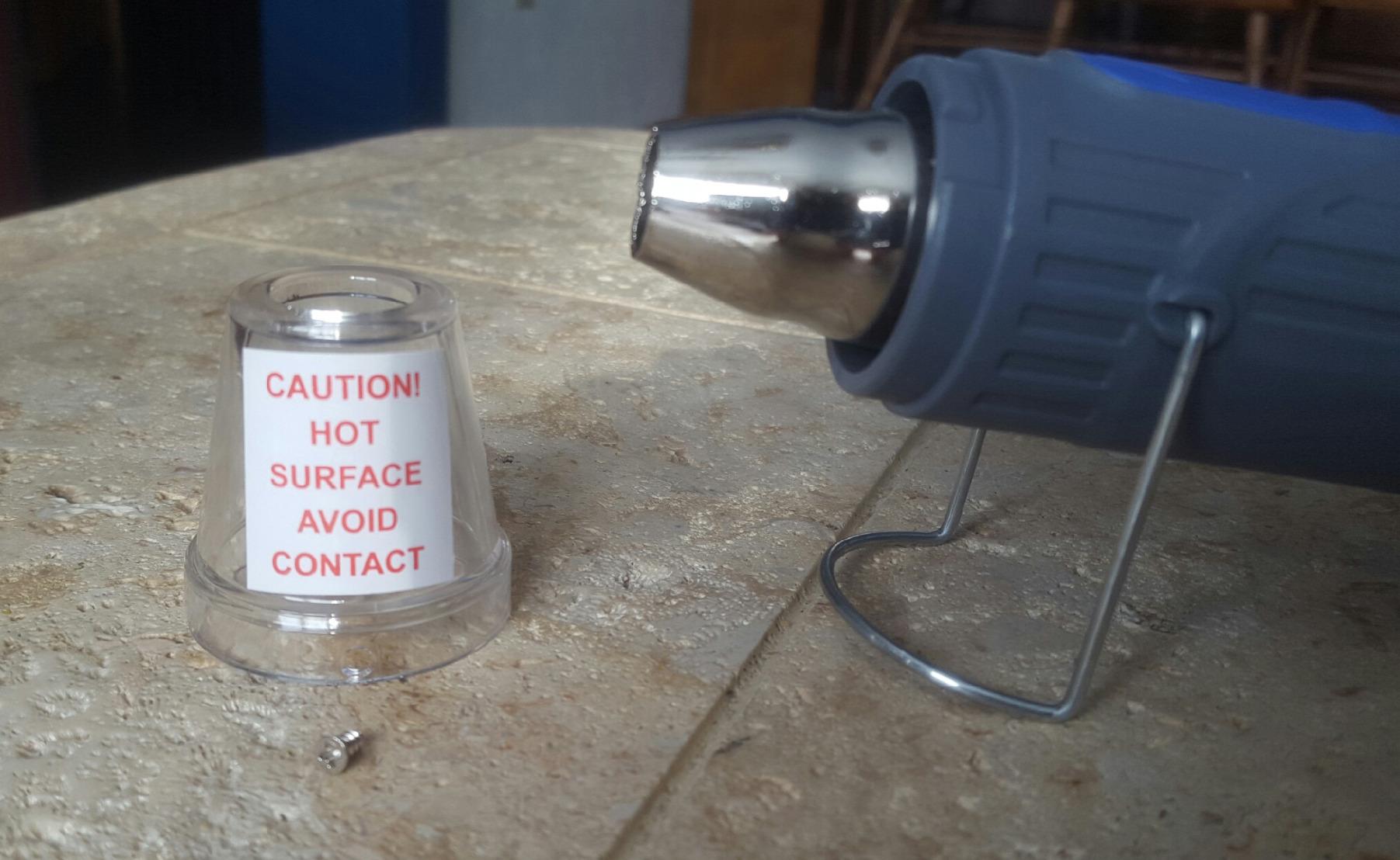
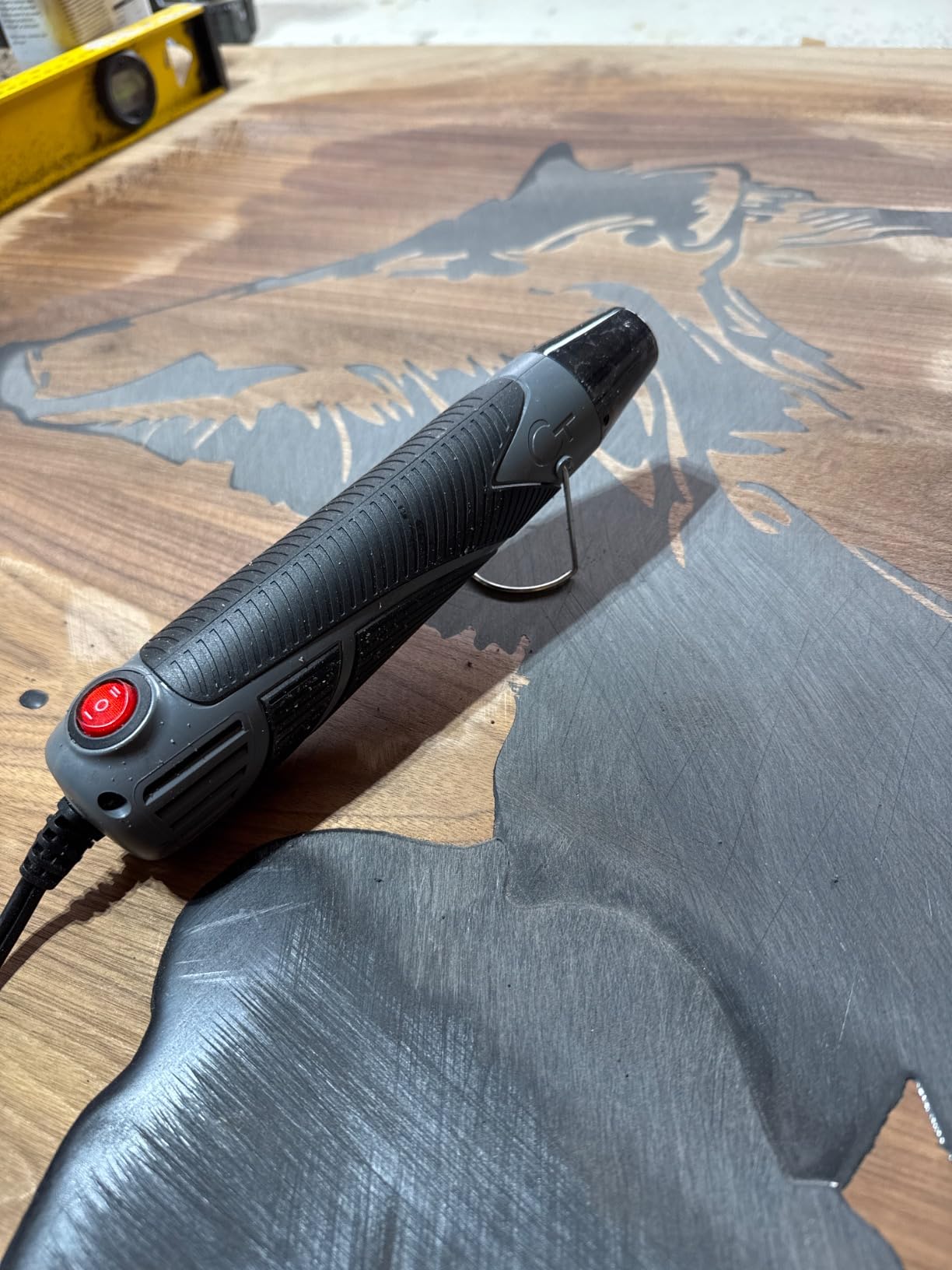
Weighing 1.01 pounds, this is the gun we use when a splice is smaller than the barrel of a full-size unit. The dual temperature and dual speed combination is the whole point: low heat with high airflow for resin and thin tubing, high heat with focused airflow when you need to move quickly on a larger piece.
At 4.7 stars across more than 21,000 ratings, with 83 percent five-star, it holds the highest rating of any full-size or mini gun in this roundup. Owners describe the same thing we found, that one tool covers epoxy resin work and wire connector work without a mode change.
The limitation is straightforward physics. A smaller barrel simply cannot move as much air per minute as a 1800W gun, so a 1-inch length of heavy-wall tubing takes longer to close than it would on the big gun. For dual-wall adhesive-lined work, expect to give it more dwell time.
The stainless nozzle does get hot enough that you want the included wire stand for cool-down rather than setting it on a bench. That is a small habit change, and it is the reason the stand matters.
How it handles micro splices and small connectors
On board-level work the low airflow is an advantage, not a drawback. There is enough force to shrink a 1/16-inch ID tube around a header pin without blowing the part sideways, and the narrow barrel gets into the tight space between components that a full-size gun cannot reach.
For adhesive-lined dual-wall at that scale, use the low temperature with the airflow on low as well. Rushing the airflow on a micro joint pushes molten adhesive out from under the tube and onto the board.
Where it falls short on bigger jobs
Repeated heavy-duty heat-shrink over long cable runs is where the smaller motor shows. If your work involves wrapping 1/2-inch tubing over a thick harness for minutes on end, the sustained output of a 1800W or 1500W gun finishes faster and more evenly.
It is also a corded unit, so it is not an option for field repairs away from a mains outlet.
3. Genesis 1500W Dual Temperature Kit: Best Value with Four Nozzles Included
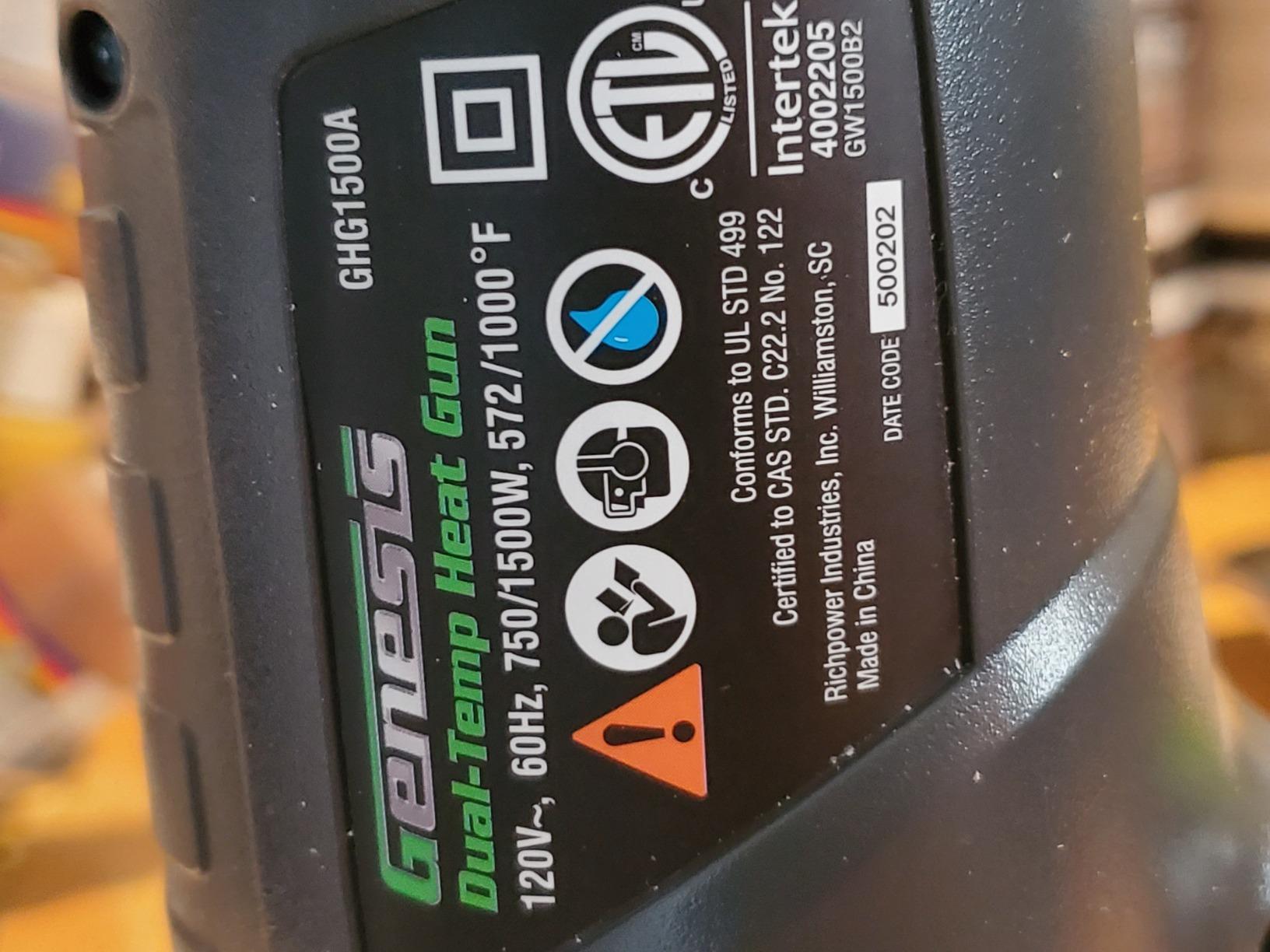
Genesis GHG1500A Dual Temperature Heat Gun Kit With Fast Heat High And Low Settings 572F/1000F, Air Reduction Nozzle, Reflector Nozzle, And Two Deflector Nozzles with 2 Year Warranty
572F and 1000F dual settings
1500W with 17 cfm airflow
4 nozzles included
Two-year warranty
Pros
- Four nozzles included in the kit
- 12.5 amp motor heats fast
- 572F low setting suits delicate tubing
- Two-year warranty
- Nozzle set covers every shrink-tubing step
Cons
- Only two fixed temperature positions
- Heavier 2 lb body tires the hand
- Plastic-heavy construction compared with metal pro guns
Most budget heat guns ship with a bare steel nozzle and leave you to buy what you need. This kit includes two deflector nozzles, a reflector nozzle and an air reduction nozzle, which covers the entire shrink-tubing workflow out of the box on its own.
The 572F low setting is the one we use most. It is gentle enough for 2:1 thin-wall tubing and small signal wires without the fear of scorching insulation, and 17 cfm of airflow is enough to move heat along a splice evenly rather than cooking one point.
Reviewers across 17,500 ratings keep pointing at fast heat-up and the nozzle bundle, which tells you the value case holds up. The 12.5 amp motor reaches working heat quickly, so you are not waiting through a long warm-up on every connector.
What you give up is granularity. Two fixed positions means you either have too much heat and need to keep moving, or you have the gentle setting and wait longer. Neither is dangerous, but neither gives the fine control a dial does.
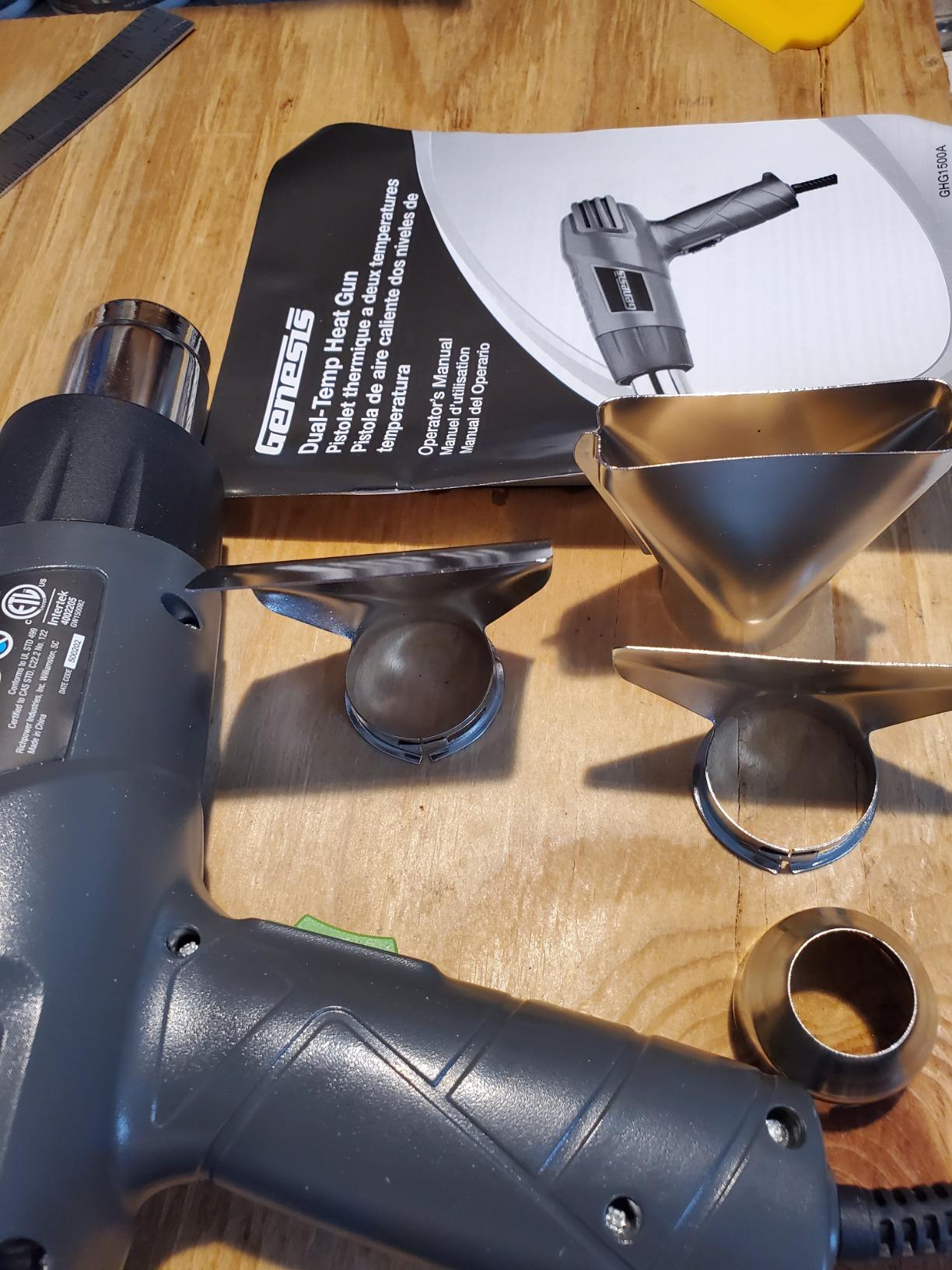
Best setting for thin-wall tubing
Use the 572F position for anything thin-walled. Hold about 4 inches back, sweep along the tube, and let the heat do the work. The tube will go glossy and pull tight long before the wire underneath is at risk.
Switch to the 1000F position only for heavier-wall tubing, adhesive-lined dual-wall, or when you are shrinking a large-diameter run where you need the extra heat to move the whole wall.
Who should skip it
If you do a lot of work and want to dial in a temperature rather than pick between two, the PORTER-CABLE further down is the step up. Its variable dial is the missing feature here.
The 2-pound body is also worth weighing in your hand if you are doing long sessions. It is fine for occasional work and tiring for a full day of repetitive connector work.
4. Wagner Spraytech HT1000: Best for Home Repair and Long-Term Ownership
Wagner Spraytech HT1000 Dual-Temperature Heat Gun, low 750°F, high 1000°F
750F and 1000F dual settings
1200W with two fan speeds
Built-in stand and hook
ETL listed
Pros
- Lightweight and comfortable for extended use
- Two useful temperature settings
- Built-in stand and hanging hook
- Reviewers report multi-year service life
Cons
- No extra nozzles included
- Low setting takes slightly longer to reach working heat
- No fine temperature dial
Wagner has made this gun for a long time, and that shows up in the review record: 14,761 ratings at a 4.7 average, with several owners describing multi-year runs of continuous service. For a homeowner who wants one tool that works on shrink tubing, paint and caulk for a decade, that track record is worth more than a feature list.
The integrated stand and hanging hook are small details that matter in practice. The stand means the gun cools down safely without you finding somewhere safe to prop it, and the hook keeps it off the bench between uses.
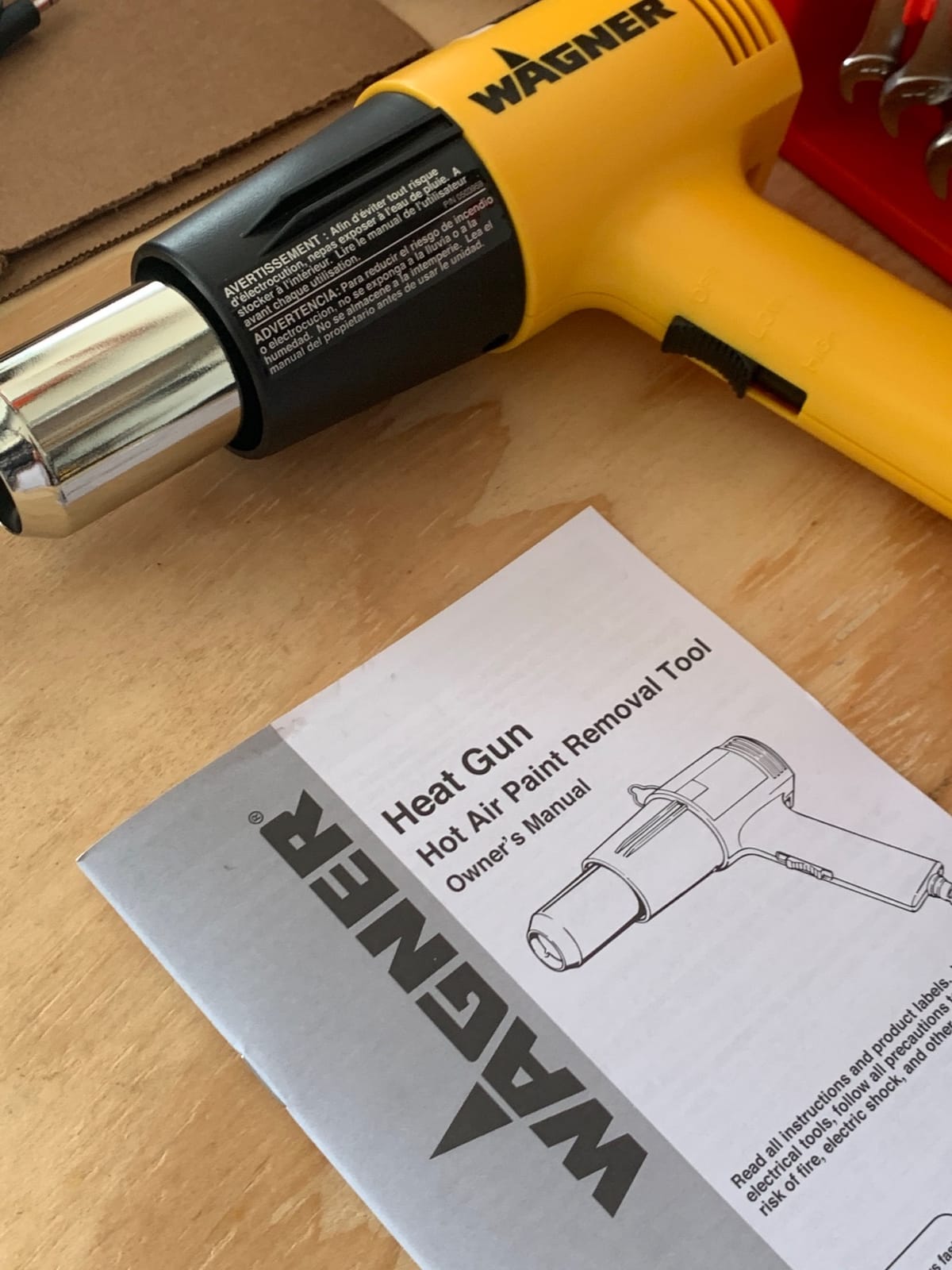
Two fan speeds plus two temperature settings give four usable combinations. For shrink work the pairing that works best is the low temperature with the lower fan speed on small connectors, which slows the airflow so the tube closes before the wire inside gets hot.
The 750F low setting takes a little longer to come up to working heat than the variable-dial guns, but once it is there it stays steady and does not overshoot.
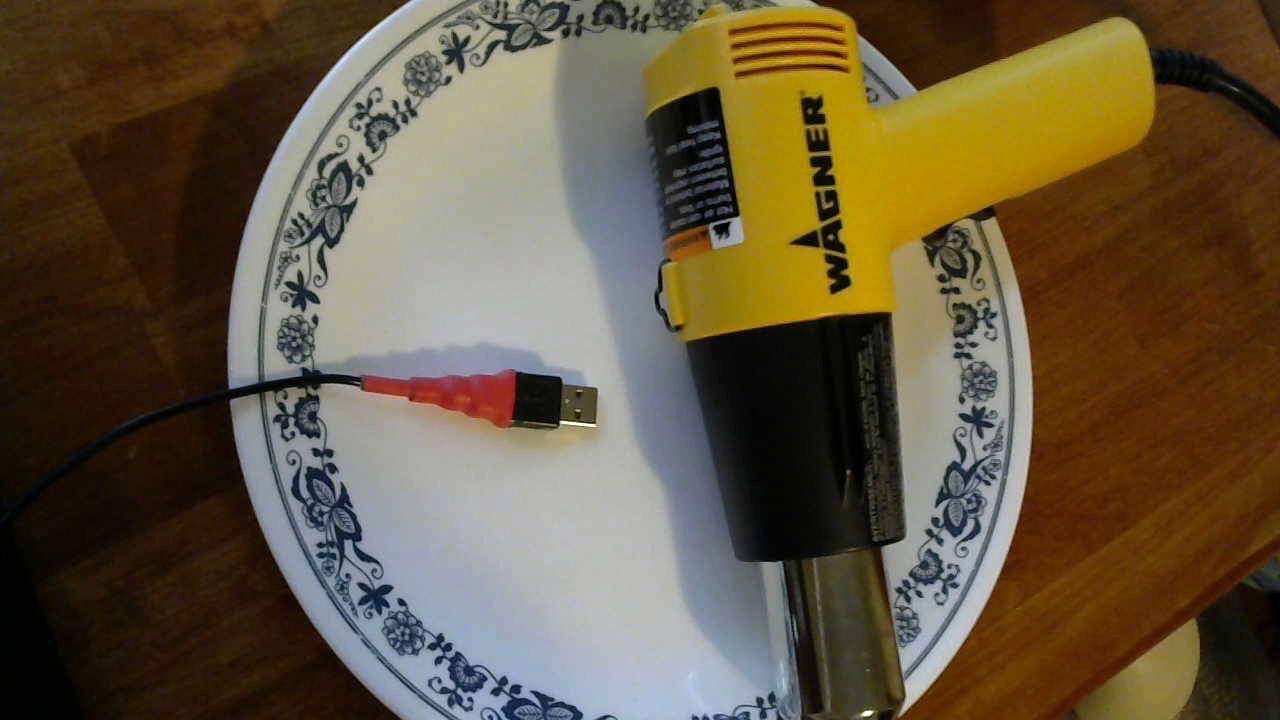
Good choice for a first heat gun
If you are building a kit from scratch, this is an easy first pick. It handles everything from a 16 AWG butt splice to paint removal on a trim board, and it is ETL listed to UL and CSA standards.
You will want to add a small concentrator or reflector nozzle for precision work. Owners who shrink tubing regularly buy one immediately, because the bare steel nozzle is broad and diffuse.
Where it will frustrate you
It will not do fine temperature work. There is no dial, so if you are shrinking thick-wall or adhesive-lined tubing over a large conductor, you either commit to the 750F setting and wait or jump to 1000F and keep the gun moving.
The corded design also means it stays near an outlet, which rules it out for field repairs.
5. BLACK+DECKER HG1300: Best for Heavy-Duty Jobs Alongside Delicate Work
BLACK+DECKER Heat Gun for Crafts, Corded, Dual Heat Settings up to 1000 Degrees, 1350 Watt (HG1300)
750F and 1000F dual settings
1350W output
3-position side handle
739 g with glass protect nozzle
Pros
- 1350W handles paint and rust removal
- Lightweight at 739 g
- Built-in stand for cooldown
- Three-position side handle improves control
Cons
- Only two fixed temperature positions
- Corded design limits where you can work
- Single included nozzle
The HG1300 splits its 1350W between two temperature settings, so the same tool handles a delicate heat-shrink label and a genuinely stubborn paint layer. That range matters if your shrink work shares a garage with restoration or general repair projects.
At 739 grams it is one of the lighter full-size guns here, and the three-position side handle is unusual at this class. It lets you change the angle of the barrel without rotating your wrist, which pays off when you are working overhead or around a harness run.
Reviewers give it 4.7 stars across 10,852 ratings with 84 percent five-star, and the recurring mentions are simple handling and a built-in stand. A 4.7 average is tied for the highest in this roundup, which is impressive for a tool whose selling point is basic.
The glass protect nozzle is genuinely useful around windows and finished surfaces, and for shrink work it spreads airflow enough to avoid a hot spot on a connector body.
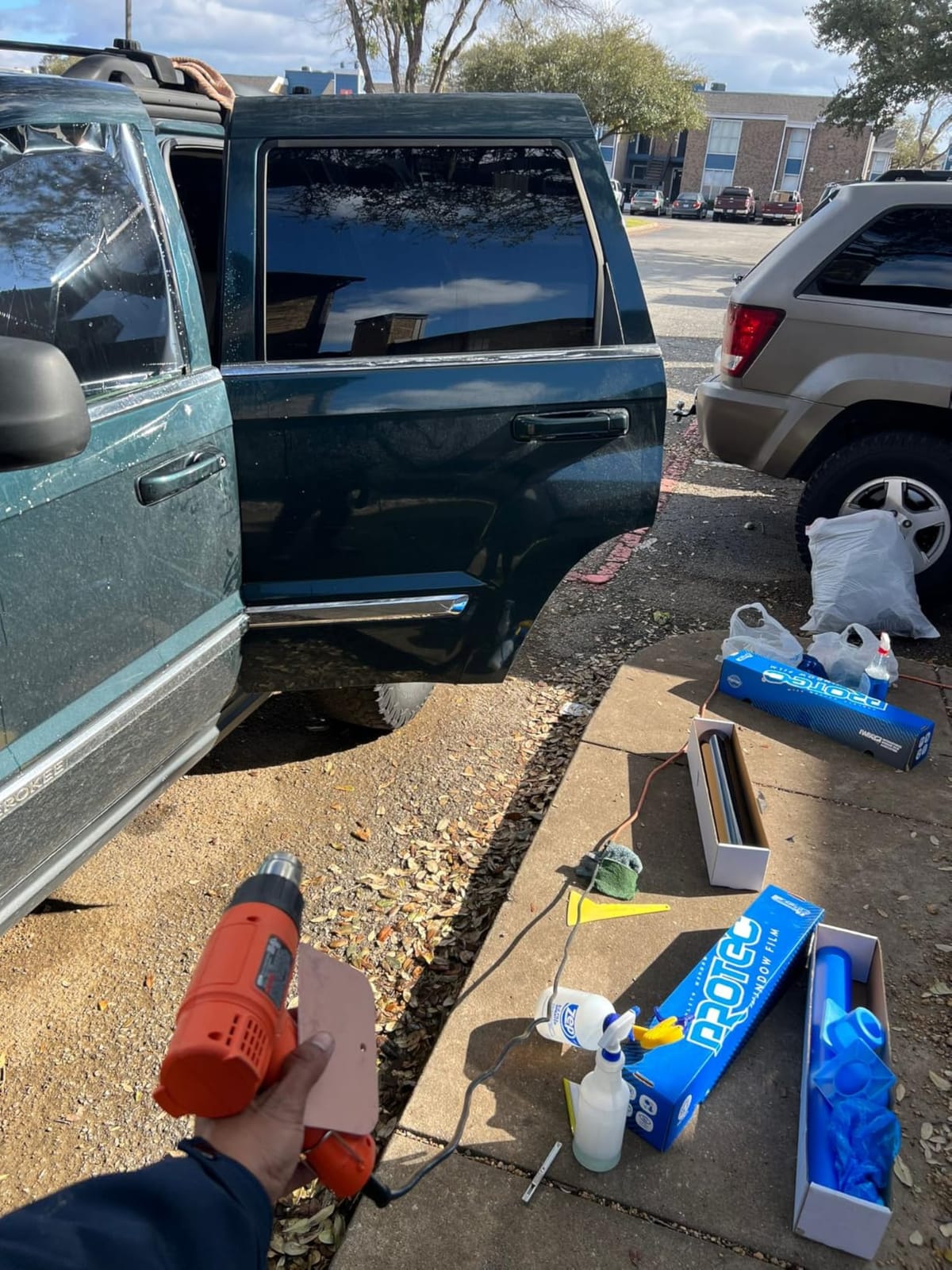
Shrinking tubing with a two-position gun
Use the 750F setting as your working position for standard 2:1 tubing. Keep about 4 inches of distance, move continuously along the joint, and the tube will close cleanly in a few seconds without reaching the wire underneath.
Reserve the 1000F position for heavy-wall or adhesive-lined dual-wall, and watch it more closely there. The extra 250 degrees is what thick walls need, and it is also what turns a mistake into a melted mess.
Considerations before you buy
Only one nozzle ships in the box. If your regular work is connectors and splices rather than paint, budget for a concentrator or reflector attachment.
Two fixed positions mean no in-between heat, and there is no dial to correct with. That is fine if you are disciplined, and frustrating if you work with mixed tubing all day.
6. SEEKONE 350W Mini Heat Gun: Best Budget Pick for Delicate Work
SEEKONE 350W Mini Heat Gun with 2-Temp Settings 842℉ & 500℉
500F and 842F dual settings
350W with 300L/min airflow
13.7 oz with stand
UL certified
Pros
- Under a pound and easy to control
- 500F low setting is genuinely gentle
- Narrow focusing nozzle
- Retractable stand and nozzle shield
- Overheat protection and UL certified
Cons
- 350W is weak for paint stripping or thawing
- Two fixed temperatures
- Short 1.5 meter cord
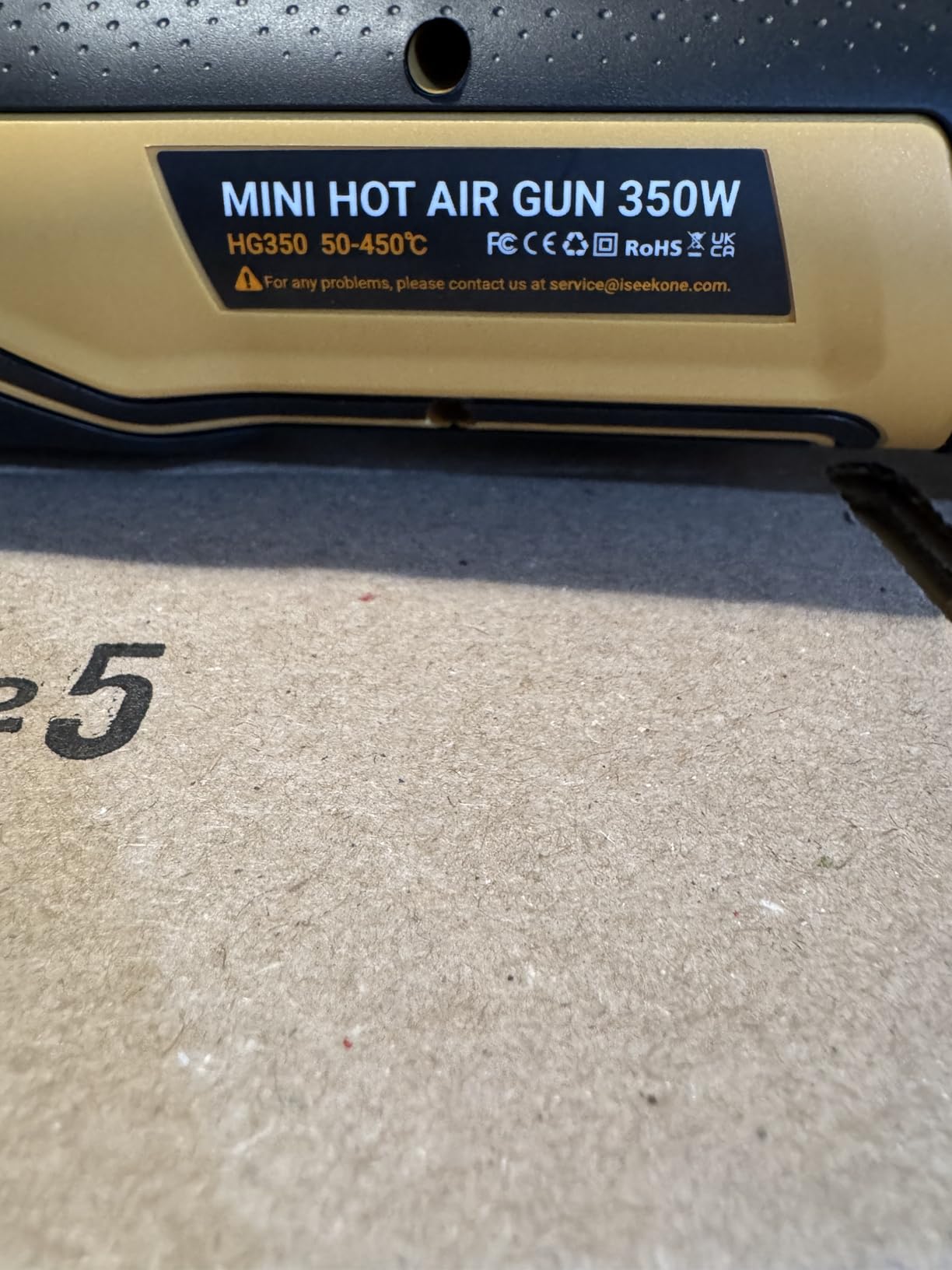
At 13.7 ounces with a 500F low setting, this is the closest thing in the roundup to a precision instrument. The gentle end is low enough that you can shrink thin-wall tubing over a fine signal wire without much risk of cooking what is underneath.
We like the retractable stand for the same reason the Wagner has a fixed one. Cool-down takes a while, and a gun that stands upright on the bench lets you step away without inventing a safe place to put it.
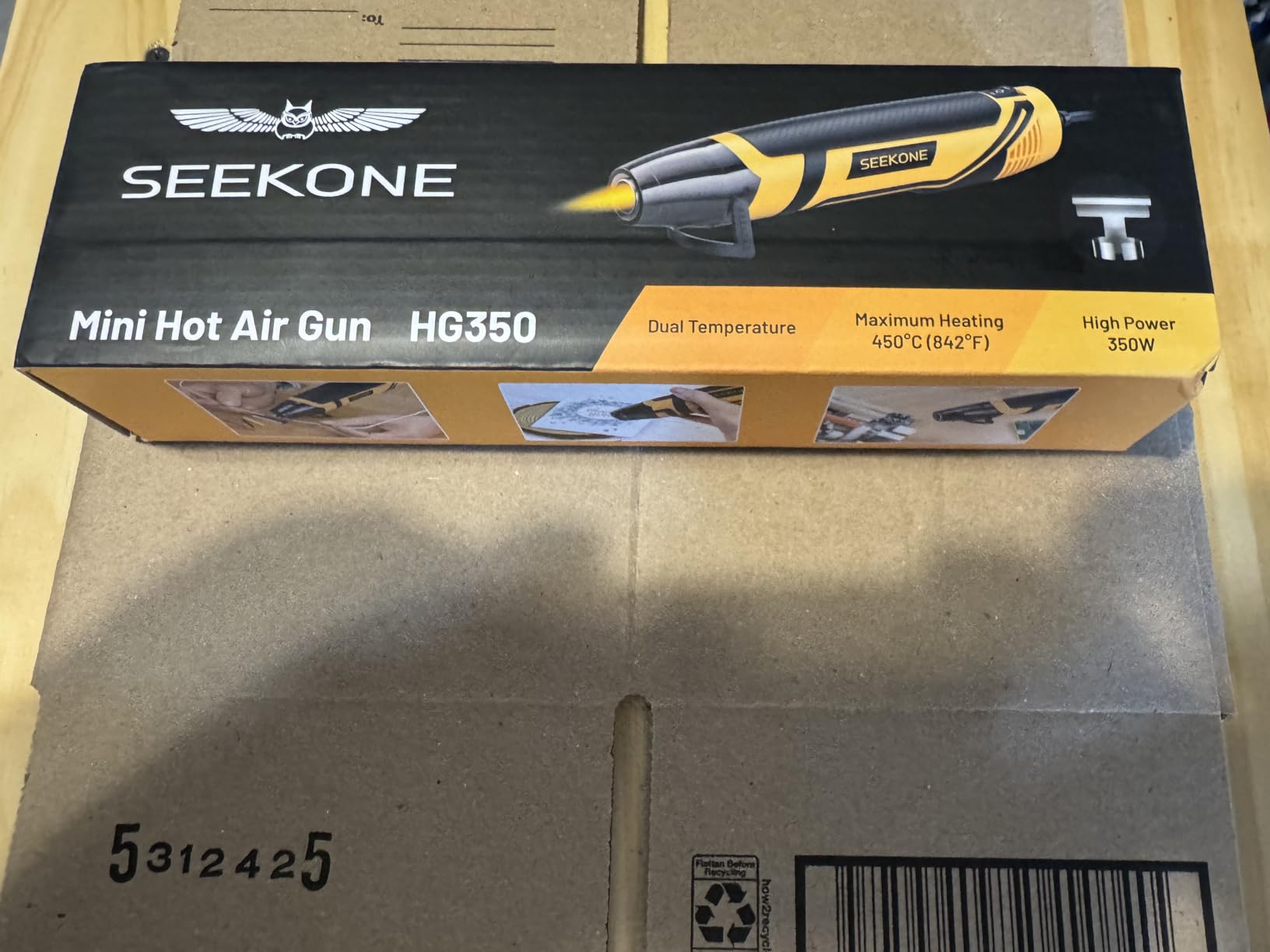
Its 4.6 aggregate across 9,802 ratings is built mostly on portability praise and the 500F setting being right for fine shrink tubing and 3D printing cleanup. Reviewers are candid that it lacks the power for demanding work, which is fair.
For a single splice, a short harness run, or labeling duty, 350W and 300 liters per minute is genuinely enough. The tube closes in a couple of seconds of steady sweeping at 4 inches.
Why a low setting matters more than power
Most scorched shrink jobs happen because a gun runs hot and the user does not realize how close they are. A 500F low position gives you enough working heat for thin-wall tubing and not enough to do real damage in the two seconds it takes you to react.
That makes it a good first heat gun for someone learning the technique, and a good backup for a bench where delicate work happens alongside rougher jobs.
Where it runs out of steam
Paint stripping, thawing pipes and shrinking heavy-wall tubing over a thick conductor are all outside what 350W can do in reasonable time. You will end up moving the gun around a lot instead of making progress.
The 1.5 meter cord is also shorter than most, which is workable at a bench and annoying when you are working around a vehicle or in a crawl space.
7. DEWALT 20V MAX Cordless Heat Gun: Best for Field and Marine Work
DEWALT 20V MAX Heat Gun, Cordless, Up to 990 Degrees, 42 Minutes of Run Time, LED Light, Heatgun with Flat and Hook Nozzle Attachments,Tool Only (DCE530B)
Up to 990F cordless
42 minutes runtime
6.7 CFM airflow
1.65 lb with LED work light
Pros
- Cordless operation removes extension cord hassles
- Fast heat-up
- Lock-on button and lock-off trigger
- LED work light for dark areas
- Works with existing 20V MAX batteries
Cons
- Lowest airflow in the roundup at 6.7 CFM
- Runtimes drop on continuous high heat
- Battery and charger sold separately
Cordless is the answer to the single most common complaint in field wiring work, which is having no outlet where the job is. On a boat, under a dashboard, or on a service truck, a corded gun means extension cords and a hunt for power. This one just runs.
If you already own 20V MAX batteries, the economics are straightforward: the tool plugs into a platform you have already paid for. Electricians posting in tool forums describe exactly this bring-your-own-battery logic when they pick a third-party gun, and it applies equally here.
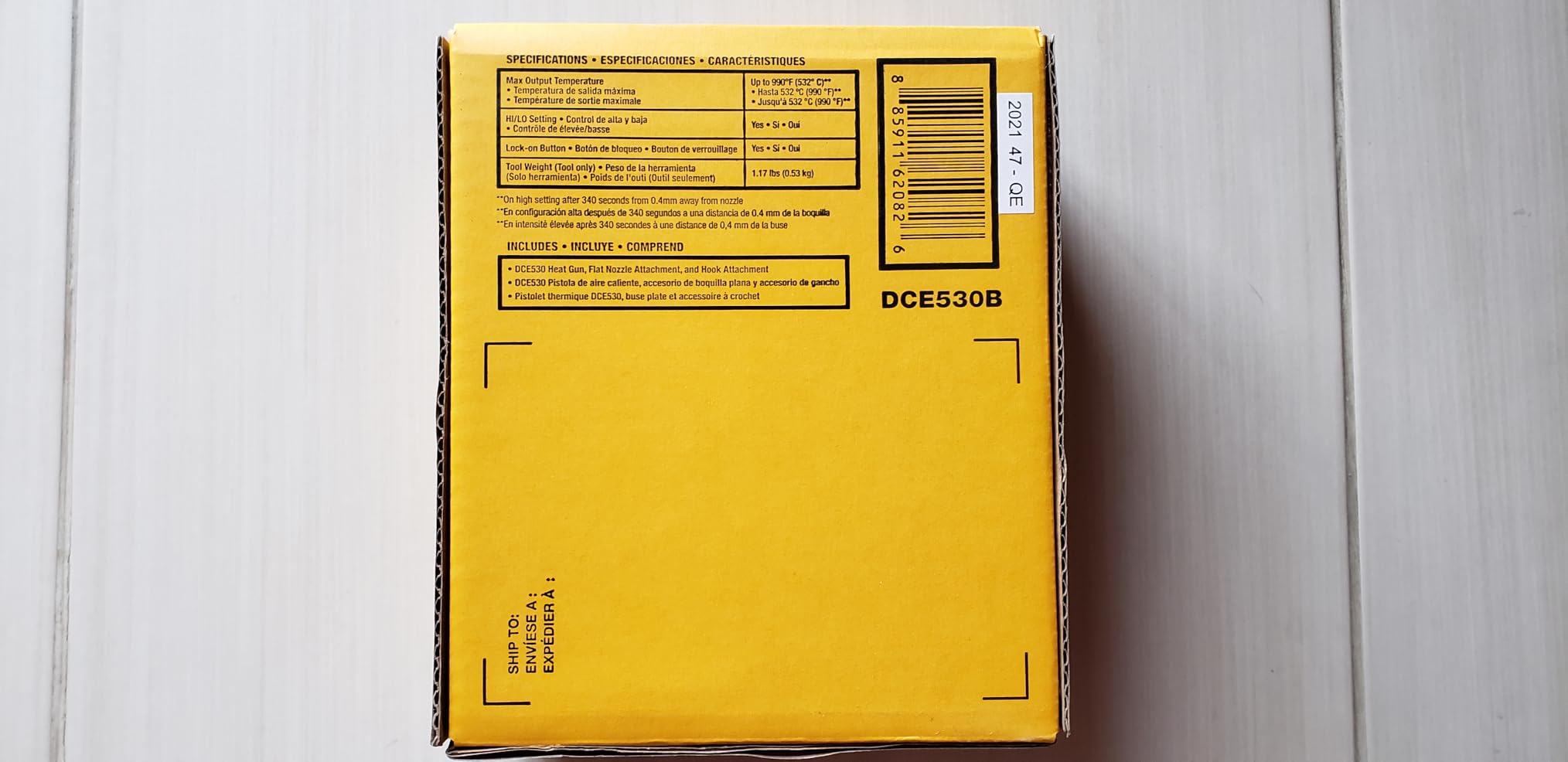
The 990F ceiling is plenty for heat-shrink tubing. It is not enough for paint stripping or heavy thawing, but that was never the goal. The 42-minute runtime per charge covers a surprising number of connectors before you need a swap.
At 4.4 stars across 6,175 ratings, it sits near the bottom of the group, and the reviews explain why: 6.7 CFM is the weakest airflow here. Heat takes longer to arrive, so you hold the nozzle closer and work more carefully.
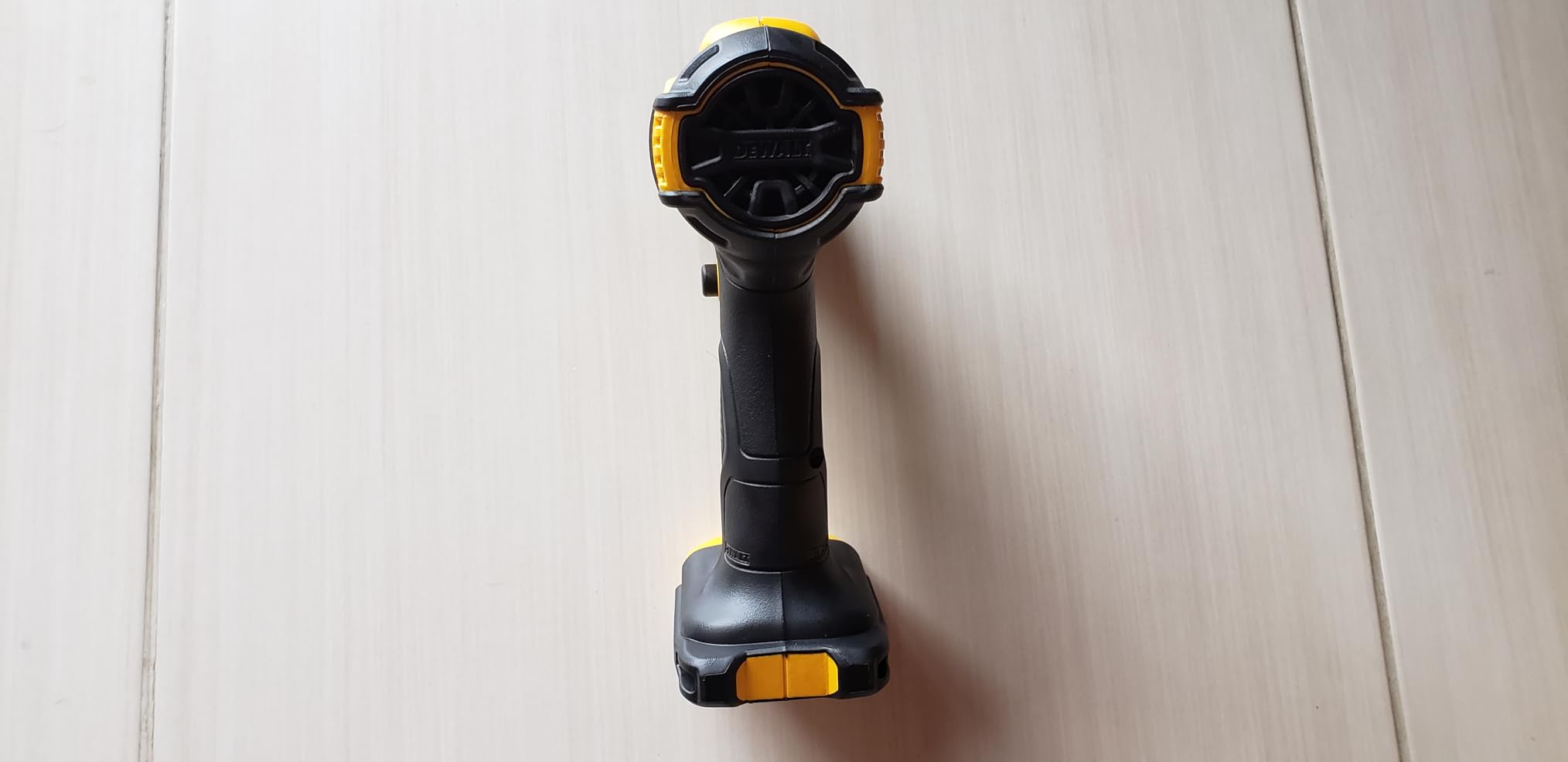
Best used in a boat or engine bay
The lock-on button means you can set the gun on a low setting and both hands free for stripping and tinning wire, which is exactly how long marine harness work goes. The LED light is a real help in a bilge or behind a dash panel.
The hook nozzle suits tubing over existing wire bundles because it slides around the harness instead of requiring you to thread the wire through.
Trade-offs you should know about
Weak airflow means the nozzle sits closer, and closer means faster local heating. That is workable with a steady hand but it is not the forgiving setup a full-size corded gun gives you.
Battery and charger are sold separately. For anyone without 20V MAX packs already, that changes the total cost considerably, and on long jobs you will want a second pack.
8. PORTER-CABLE PC1500HG: Best Variable Dial Control in a Full-Size Gun
PORTER-CABLE Heat Gun, 1500 Watt, Dual Temperature Settings, Corded (PC1500HG)
Variable dial, about 110F-1100F
1500W with two fan speeds
2.5 lb with stand
Pros
- True variable dial for fine control
- Two fan speeds
- Integrated stand for hands-free use
- Quiet operation
- Thick flexible heat-resistant cord
Cons
- Largest and heaviest gun here at 2.5 lb
- Dial is low profile and awkward to turn
- Cannot run the fan without heat
- No nozzles included
- Thick cord adds bulk
This is the rare budget-tier gun with a genuinely continuous dial, and for shrink tubing that single feature is worth more than extra wattage. Reported output runs from about 110F up to roughly 1100F a inch from the nozzle, which lets you creep up on thick-wall tubing instead of choosing between two extremes.
Two fan speeds on top of that give you four working combinations. The pairing we used most was mid dial with low fan speed for adhesive-lined dual-wall, where the goal is a slow, even collapse rather than a fast snap.
At 4.7 stars across 5,620 ratings with 83 percent five-star, reviewers repeatedly call out the dial as unusual for the money, along with quiet operation and a solid feel in the hand. Those are consistent with what we found.
Because heating and fan share one control, you cannot blow cool air to cool a joint down faster. You let it cool naturally, or you move on and come back to it in a few seconds.
When fine temperature control pays off
Mixed tubing is where the dial earns its keep. If you alternate between thin-wall signal wire and heavy-wall power cable in the same session, the fixed two-position guns force you to adapt your technique instead of adapting the heat, which is exactly when scorched insulation happens.
It is also the calmest option for adhesive-lined dual-wall, because you can find the point where the tube closes without overshooting into the adhesive.
Costs of the size and the missing nozzles
At 2.5 pounds and close to 10 inches of barrel, this is the largest gun in the roundup. It will not fit comfortably in a small tool bag or behind a tight dash panel, and it tires the arm over a long session.
Nozzles are not included, so plan on buying a concentrator and a reflector for shrink work. The low-profile dial is also hard to adjust precisely with a gloved hand.
9. PRULDE 380W Mini Heat Gun: Best for the Gentlest Heat in the Roundup
PRULDE Mini Heat Gun for Crafting, 2 Temp Settings 480℉&850℉ Fast Heat Shrink Gun with 6.6Ft UL Cord/Reflector Nozzle, Overheat Protection Hot Air Gun for Shrink Wrap/Tubing, Vinyl Wrap, Resin
480F and 850F dual settings
380W, 200L/min airflow
0.8 lb with metal kickstand
ETL certified with 6.56 ft cord
Pros
- 480F low setting is tuned for delicate tubing
- Very light at 0.8 lb with a non-slip grip
- Sturdy metal kickstand
- One-handed slide switch
- ETL certified cord and plug
- Concentrator nozzle included
Cons
- Only two fixed temperatures
- 380W is modest for heavy jobs
- Straight barrel rather than a pistol grip
The 480F low setting here is the coolest gentle setting in the roundup, and that is the entire pitch. When you are shrinking heat-shrink over a very fine wire, or working next to components you cannot afford to replace, having a setting that simply cannot do much damage is worth more than extra power.
At 0.8 pounds with a non-slip grip, it is comfortable for long careful sessions, and the slide switch is positioned for genuine one-handed operation. Rated to run 300-plus hours at maximum temperature, it is built for repetition.
Reviewers on this one highlight the low setting, the weight and the metal kickstand, which does not collapse the way cheap plastic stands do. That last point comes up repeatedly and it is fair: a stand that folds under a hot gun is a small fire risk.
The ETL certification to UL STD 499 with a UL certified cord is unusual in this class and worth noting, since it puts this gun ahead of plenty of bigger models on paper.
When gentle heat beats high heat
Thin-wall tubing over small-gauge signal wire, heat-shrink on a PCB, and adhesive on a connector pin are all cases where the 480F position closes the tube in a few seconds of steady movement without any risk to what is underneath.
The included concentrator nozzle keeps the airflow narrow, which helps when you are trying to shrink a 1/16-inch ID tube without disturbing adjacent parts.
Where the 380W ceiling shows
Anything heavy-wall, anything with a large diameter, and anything with thick insulation is outside this gun’s range. It will get there eventually, but you will be standing there a while holding a 200L/min stream on it.
The straight barrel also divides opinion. Some people find it natural for bench work, others prefer a pistol grip with a trigger for long jobs. It also has only two positions, so there is no in-between.
10. Ryobi ONE+ 18V Cordless Heat Gun: Best for ONE+ Platform Owners
Ryobi ONE+ 18V Cordless Heat Gun (Tool Only)
Up to 875F cordless
Operating temperature in under 10 seconds
1.8 lb, tool only
Includes deflector and concentrator nozzles
Pros
- Cordless with no extension cord
- Warms up in under 10 seconds
- Both deflector and concentrator nozzles included
- 875F covers most shrink tubing
- Uses existing ONE+ batteries
Cons
- 875F is the lowest ceiling in the roundup
- Lowest rated at 4.3 stars
- Battery and charger sold separately
Under 10 seconds to operating temperature is the number that makes this one feel responsive. On a job with forty connectors to do, a fast warm-up adds up, and the fact that both a deflector and a concentrator ship in the box is unusual for a cordless gun.
At 1.8 pounds it sits between the DEWALT and the full-size corded units, which makes it a comfortable bench tool that you can also carry to a site without hunting for an outlet.
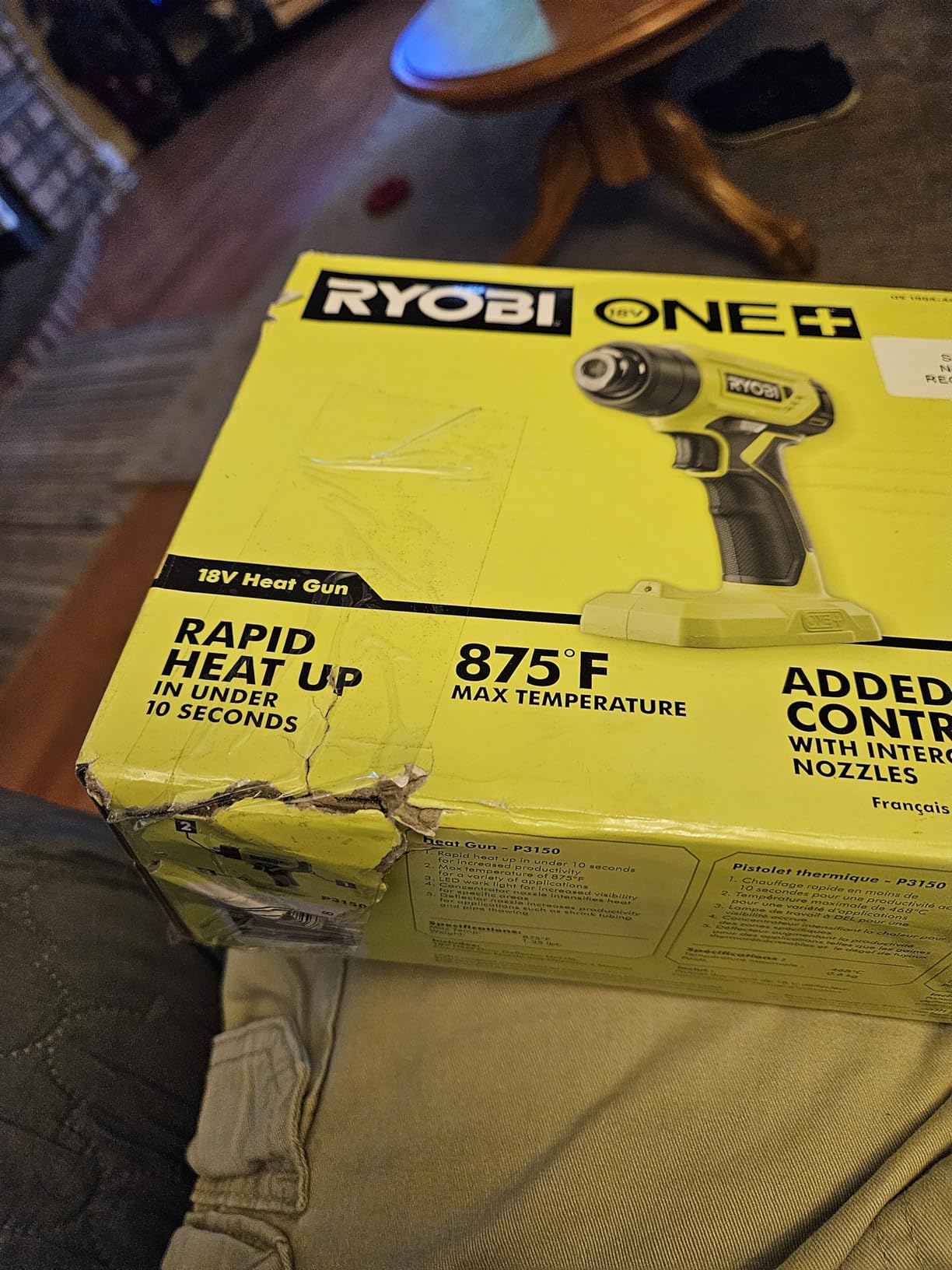
875F is enough for standard 2:1 thin-wall and most heat-shrink labels. It is the lowest ceiling here, so heavy-wall tubing and paint removal are out of reach, and reviewers note weaker airflow compared with corded units.
At 4.3 stars across 1,296 ratings it is the lowest-rated gun in the roundup, with 6 percent one-star reviews. That reflects the modest ceiling more than any failure of the tool itself.

Best for someone already invested in ONE+
If you have ONE+ batteries, this is a straightforward add to a platform you own. The cordless format is genuinely useful on ladders, in attics and inside equipment cabinets where a cord is a liability.
The included nozzles cover both ends of the job, spreading heat for a larger joint and focusing it for a single small splice.
Where the 875F ceiling bites
If your work includes thick-wall tubing over a busbar or large conductor, this is not the gun. The temperature simply is not there, and no technique fully compensates for a low ceiling.
Battery and charger are sold separately, and weaker airflow means you work closer and slower than with a corded unit. For occasional jobs, the corded guns in this roundup get there faster.
How to Shrink Tubing Without Melting It
Buying a better gun helps, but technique does more than the tool does. Nearly every ruined splice we have seen came from one of five mistakes, and all five are free to fix.
Start on the low setting. Most tubing closes at the gentlest position on the gun. You can always move up. Start high and you have no way to back the heat out.
Hold 3 to 4 inches back. Distance is your real temperature control. Closer means faster local heating and more chance of scorching the conductor inside, regardless of what the dial says.
Keep the gun moving, and move the work not the gun. Sweep along the length of the tubing rather than holding in one spot. Rotating the piece while the nozzle stays still spreads heat more evenly than sweeping the nozzle does.
Use the right nozzle for the job. A concentrator focuses heat on a small splice. A reflector wraps heat around a connector from all sides. A deflector spreads heat for larger surfaces and for protecting what is nearby.
Let it cool before you handle or wrap. Heat-shrink that is pulled or bent while still hot deforms. Give it a few seconds, then test it by gently tugging the wire: it should feel solid with no give.
Tubing type changes the target. Thin-wall 2:1 tubing over a small wire closes quickly at the lowest setting. Heavy-wall and 3:1 ratio tubing needs more heat and a slower ramp because the wall has more mass to move. Adhesive-lined dual-wall needs the most heat of all, and it needs time after the tube closes so the adhesive can flow and bond, which is why you look for adhesive at both ends before you move on.
If you want to verify temperature without buying a thermocouple, the shrink-and-squeeze test works: heat a short offcut of the same tubing on a scrap wire, then let it cool and squeeze it flat. It should collapse smooth and stay collapsed, and if it springs back you need more heat or more time.
What to Look for When Buying a Heat Gun for Shrink Tubing
The low setting matters more than the maximum. Every gun here reaches 842F or higher, which is far more heat than most tubing needs. What separates them is how gentle the bottom of the range is. The PRULDE at 480F and the SEEKONE mini at 500F are the safest choices for fine wire, while a gun whose only options are 750F and 1000F needs more careful technique.
Airflow controls how forgiving the gun is. High CFM moves heat along the joint quickly and evenly. Low airflow lets you work closer, which is faster but easier to overheat. Cordless guns sit at the low end: the DEWALT runs 6.7 CFM, which is why reviews describe it as slower and why it needs a steadier hand.
Temperature control granularity. A continuous dial beats two fixed positions, and a digital readout beats both. The SEEKONE 1800W and the PORTER-CABLE both give you a real dial, and that is the single biggest upgrade available if you work with mixed tubing.
Nozzles decide how precise you can be. A concentrator for small splices and a reflector for wrapping connectors are the two that matter. The SEEKONE 1800W and Genesis kits include four; the Wagner, BLACK+DECKER and PORTER-CABLE ship bare and need an add-on.
Battery platform beats brand. If you already own 20V MAX or ONE+ packs, a cordless gun on that platform costs less in total than a corded gun plus extension cords. If you own neither and your work is at a bench, a corded gun is the simpler purchase.
Safety features worth having. Overheat protection, a trigger lock or lock-on, and a stand or kickstand for cool-down. Every gun in this roundup has at least two of the three. Never leave a hot gun face-down or unattended, and keep it away from paper, cardboard and solvents.
One honest note on the alternatives. Long-neck BBQ lighters and butane micro-torches are the tools many electricians reach for on a single small splice, and they work well for that. They give you no airflow control at all, though, so they scorch easily if you linger. On a single micro splice they are faster than any gun here. On a harness run they are not a substitute.
Finally, size the work correctly. Heat shrink above about 1 inch diameter needs a hot-air blower with a wide outlet and a lot of volume, not a handheld heat gun. No gun in this roundup covers that, and forcing it will leave you with a tube that shrank unevenly.
Frequently Asked Questions
Will a heat gun work on shrink tubing?
Yes. A heat gun is the standard tool for heat shrink tubing. It blows hot air until the polymer passes its shrink temperature, then the material pulls tight around the wire or connector inside. Most standard 2:1 tubing closes on the lowest heat setting of almost any gun.
What is the best heat gun setting for shrink tubing?
Use the lowest setting that will close the tube. Hold the gun 3 to 4 inches away, keep it moving along the length of the tubing, and stop when the tube turns from hazy to clear and tight. Thin-wall 2:1 tubing usually closes at the lowest position; heavy-wall and adhesive-lined dual-wall need more heat and a slower ramp.
What temperature should I use for heat shrink tubing?
Most thin-wall 2:1 tubing closes comfortably below 500F at the nozzle. Heavy-wall and 3:1 ratio tubing generally need 500F or more, and adhesive-lined dual-wall needs the most heat of all plus dwell time after the tube closes so the adhesive can bond.
What is the best mini heat gun for shrink tubing?
The SEEKONE 350W mini is the strongest budget option, with a genuinely gentle 500F low setting, a retractable stand and a narrow focusing nozzle. The Chandler Tool mini is the better all-rounder, adding dual temperature and dual speed control in a 1.01 pound UL certified body.
What is the best cordless heat gun for heat shrink tubing?
For 20V MAX owners the DEWALT DCE530B reaches up to 990F with about 42 minutes of runtime and an LED work light. For ONE+ owners the Ryobi P3150 reaches 875F and warms up in under 10 seconds. Both are tool only, so batteries and chargers are extra.
How do I stop heat shrink tubing from melting the wire inside?
Start on the low setting, hold the gun 3 to 4 inches from the joint, and keep it moving. Sweep along the tubing instead of holding in one spot, and use a concentrator nozzle on small splices. Let the joint cool before you handle or wrap it, and if the insulation looks dull or bubbled you have already been too close for too long.
Final Verdict for Shrink-Tubing Heat Guns
After weeks of shrink-tubing jobs across ten guns, the SEEKONE 1800W variable temperature gun is the best heat gun for shrink tubing overall. The continuous dial from 50C to 650C, 1800W of output, and four included nozzles cover everything from a fine signal-wire splice to a heavy harness run, and 38,000-plus ratings at 4.6 stars is the most proven record in this group.
Go mini when the work is small and delicate: the Chandler Tool for craft and connector work, the SEEKONE 350W or PRULDE 380W when you want the gentlest possible low setting. Go corded and fixed-setting when the budget matters most, and go cordless when the work happens away from an outlet and you already own the batteries.
Whichever you choose, the technique does more for your splices than the wattage does. Start low, stay 3 to 4 inches back, keep moving, and let the joint cool before you touch it.
If you are planning a full workshop buildout, our guides to heat pump dryers and portable heat pumps cover the other equipment worth getting right before the season turns.