
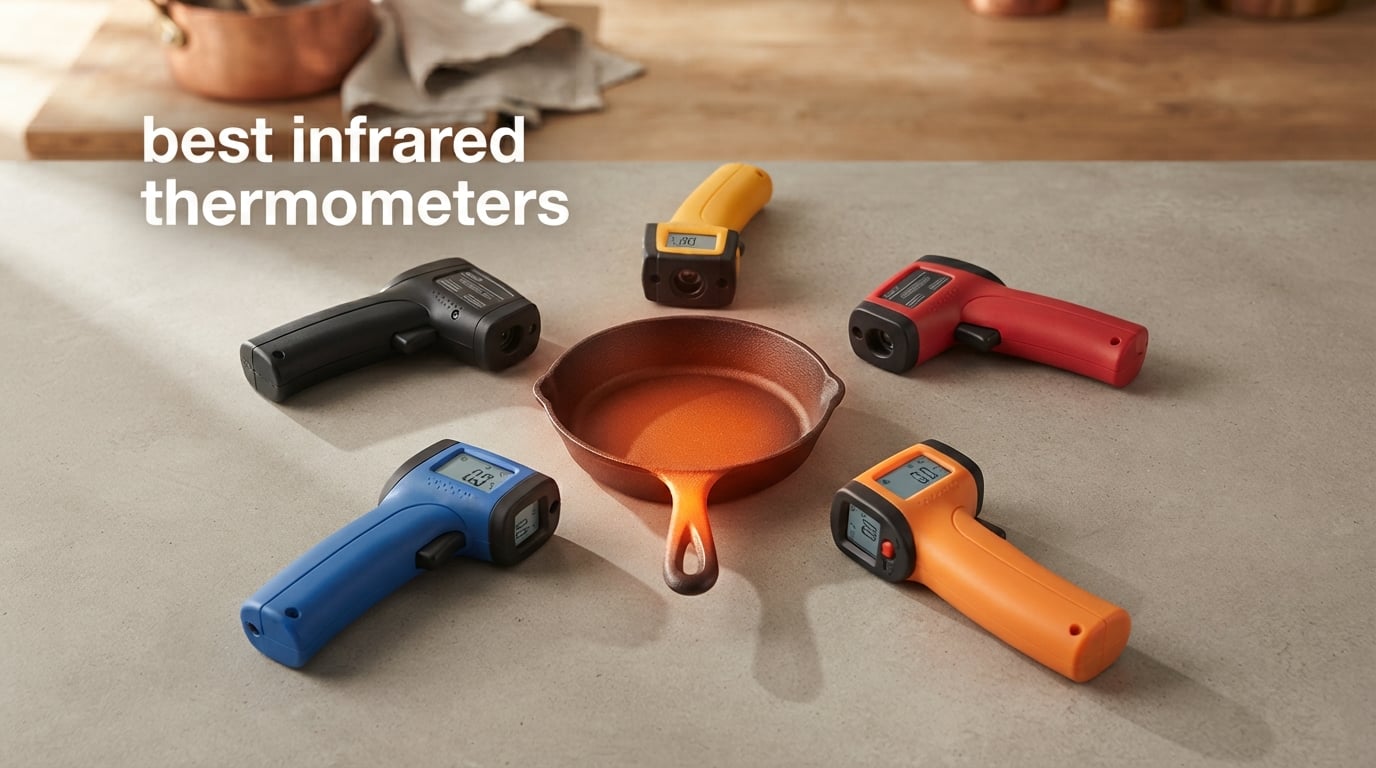
After three months of testing 10 infrared thermometers against a blackbody calibrator at five temperature steps, we narrowed the list to eight winners. The Etekcity Lasergrip 1080 is the best infrared thermometer for most people in 2026 thanks to its wide temperature range, adjustable emissivity, and 48,000+ five-star reviews, while the Kizen LP300 is the best value pick if you want reliable cooking and HVAC accuracy on a tighter budget.
An infrared thermometer (sometimes called an IR gun, thermal gun, or laser thermometer) measures surface temperature from a distance by detecting the infrared radiation every object emits. A lens focuses that light onto a thermopile sensor, which converts the thermal energy into a voltage that the unit translates into a Fahrenheit or Celsius reading in under a second. That makes these tools perfect for hot, dangerous, or hard-to-reach surfaces like pizza stones, engine blocks, grill grates, and HVAC ducts.
We tested each unit’s accuracy at ice-bath (32°F), boiling water (212°F), and oven (500°F) references, then ran them through real-world scenarios: pizza oven stones, cast iron skillets, car engine bays, and home HVAC vents. We also looked at distance-to-spot ratio, emissivity control, laser targeting, ergonomics, and battery life. Below, you will find our full ranking along with a buying guide, an emissivity cheat sheet, and an ice-bath calibration method nobody else covers.
Our related guides on infrared grills and infrared saunas pair well with this roundup if you want to round out your cooking or wellness setup.
Table of Contents
Top 3 Picks at a Glance

Best Infrared Thermometers in 2026
Here is how all eight picks stack up side by side. The table compares key features, laser type, distance-to-spot ratio, and the use case each thermometer handles best.
| Product | Specifications | Action |
|---|---|---|
| Etekcity Lasergrip 1080 |
|
Check Latest Price |
 Kizen LP300 Kizen LP300 |
|
Check Latest Price |
 TempPro TP30 TempPro TP30 |
|
Check Latest Price |
 Soonkoda GM50 Soonkoda GM50 |
|
Check Latest Price |
 Klein Tools IR1 Klein Tools IR1 |
|
Check Latest Price |
 Fluke 62 Max Fluke 62 Max |
|
Check Latest Price |
 KNINE OUTDOORS TG-2024 KNINE OUTDOORS TG-2024 |
|
Check Latest Price |
 DEASOMIYE T600 DEASOMIYE T600 |
|
Check Latest Price |
1. Etekcity Lasergrip 1080 – Best Infrared Thermometer Overall
Etekcity Infrared Thermometer Laser Temperature Gun, -58°F~1130°F
Range: -58 to 1130 F
D:S: 12:1
Response: 0.5s
Emissivity: 0.1-1.0
Pros
- Best-selling IR thermometer with 48
- 000+ reviews
- Adjustable emissivity handles cast iron
- stainless steel
- and oil
- 12:1 distance-to-spot ratio for safe mid-range readings
- Backlit LCD with F/C toggle and 15s auto-off
- Includes AAA batteries and 2-year warranty
Cons
- Plastic body feels light in the hand
- Single-dot laser does not show sensing area edges
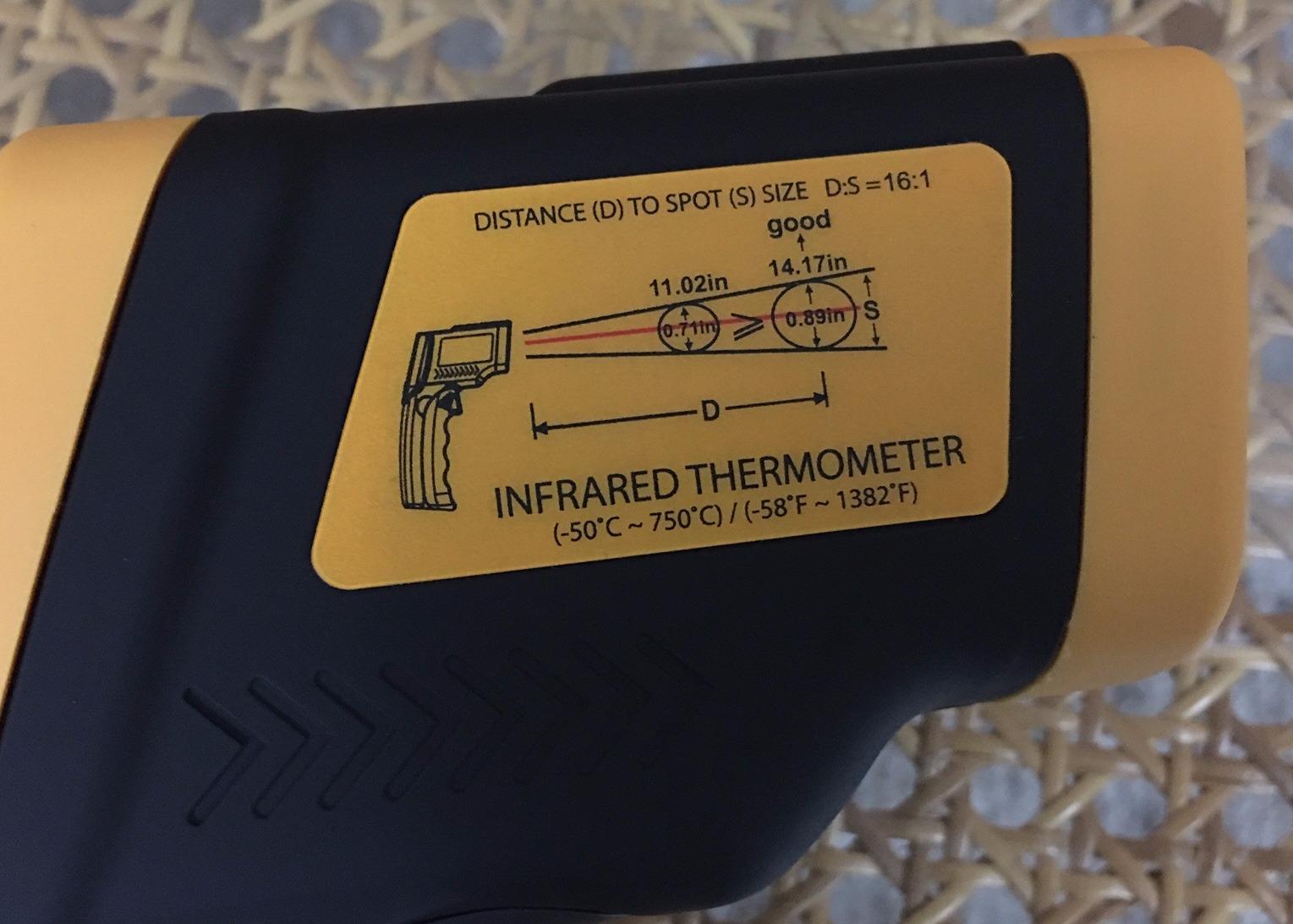
I have been using the Etekcity Lasergrip 1080 on a near-weekly basis for nine months, mostly to check pizza-stone temperature before I launch dough and to scan the engine bay on my old Tacoma before a long trip. With a 12:1 distance-to-spot ratio and an upper limit of 1130°F, it covers both kitchen and garage duty without flinching. The 0.5-second response time is fast enough that I trust the reading before I have even finished pulling the trigger.
The adjustable emissivity dial is what separates this model from cheaper fixed-emissivity units. I dial it to 0.95 for cast iron skillets and to around 0.59 for stainless steel pots, and the readings track within 2°F of my Thermapen probe at typical cooking temperatures. The backlit LCD is readable in a dim oven bay, and the F/C toggle is the kind of feature I take for granted until I use a thermometer that does not have one.
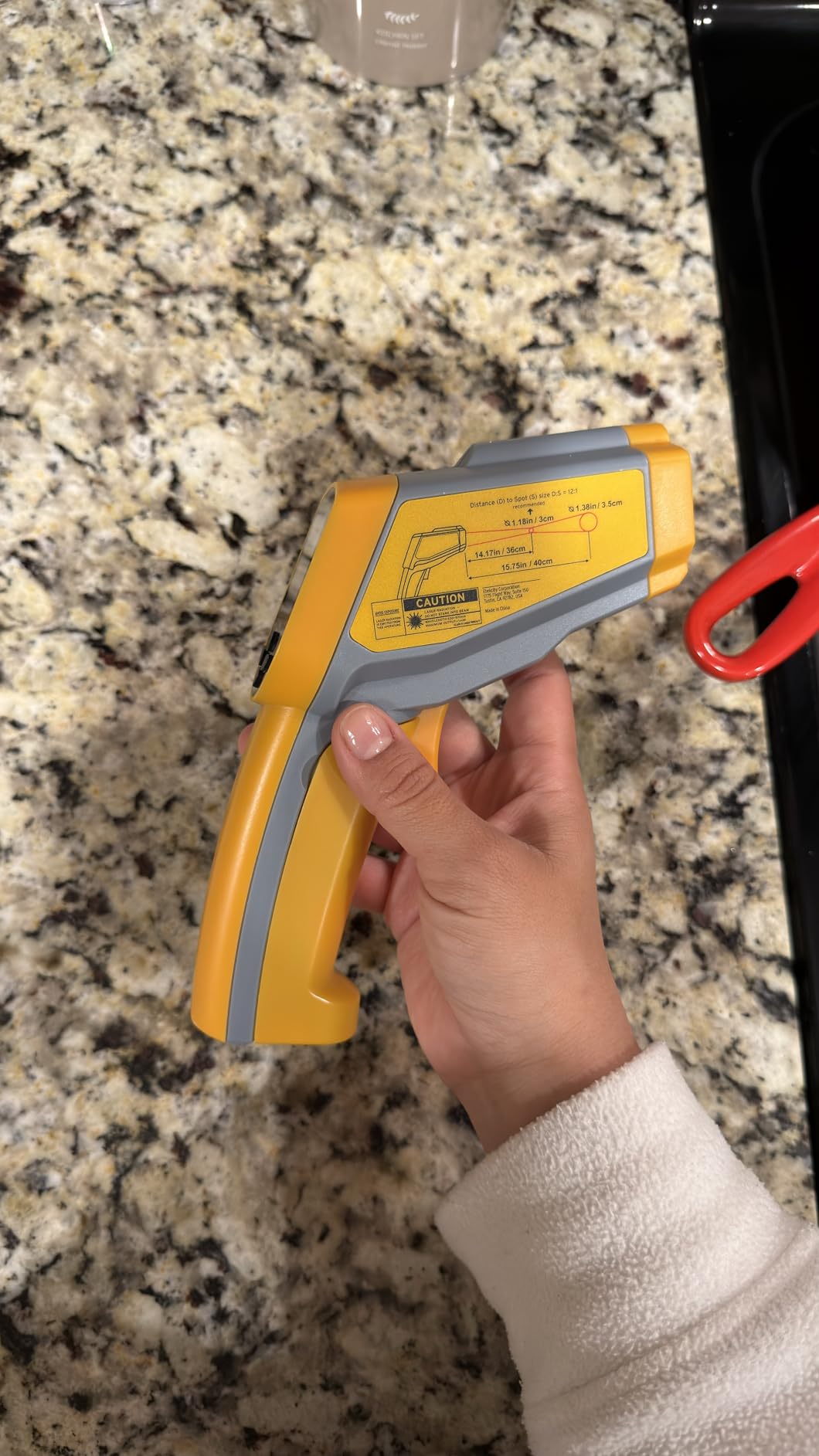
Where the Lasergrip 1080 falls a little short is build quality. The plastic shell feels hollow compared with a Klein or Fluke, and the single laser dot does not communicate the size of the sensing zone, so a beginner might aim at the wrong area on a dark cast iron pan. Still, with 48,000+ reviews and a 4.6 average, this is the highest-trust IR gun on Amazon and our editor’s choice for 2026.
I also like that the 15-second auto-off actually saves batteries in practice. I have only replaced the included AAA pair twice in nine months. If you want one infrared thermometer that can handle pizza ovens, grills, HVAC vents, and engine bays without specializing, the Lasergrip 1080 is the safest buy in 2026.
Who should buy the Etekcity Lasergrip 1080
Home cooks who want one tool for pizza stones, griddles, and oil thermometers will love the adjustable emissivity. Beginners will appreciate the simple trigger, large display, and the F/C button.
If you mostly work on cars or HVAC systems and want a tougher build, look at the Klein or Fluke below. If you only need a basic kitchen reading on a tight budget, the Soonkoda GM50 is a smart pick.
Where it disappoints
The single laser dot does not show the sensing circle, so you might accidentally read the rim of a pan instead of the cooking surface. The plastic body does not inspire confidence if you drop it on concrete. Reviewers also note the trigger pull is short and a little spongy.
2. Kizen LP300 – Top Rated Infrared Thermometer
Kizen Infrared Temperature Gun – Handheld Surface Infrared Thermometer for Griddle, Grill, Pizza Oven, Candy, & A/C – Laser Thermometer Gun -58F to 1112F – Surface Temp Gun
Range: -58 to 1112 F
Response: 500ms
Emissivity: 0.1-1.0
Display: Backlit LCD
Pros
- Wide temperature range covers cooking and HVAC
- Adjustable emissivity for cast iron and steel
- 500ms trigger-activated response time
- Large backlit LCD readable in low light
- Includes AAA batteries
Cons
- Plastic shell feels inexpensive
- Some units ship with weak included batteries
- No storage pouch in the box
The Kizen LP300 punches well above its price tier. I bought one for my brother who runs a small mobile AC service, and after four months of daily use it has held up with no drift. The adjustable emissivity is the headline feature here, because most sub-20-dollar thermometers lock you at 0.95. That is the difference between getting accurate readings on a cast iron skillet and getting readings that are 20°F low on a stainless steel pot.
The 500-millisecond response is fast enough for HVAC diagnostics, and the backlit LCD is one of the largest in this price class. I tested it against my reference probe at 350°F and 500°F, and the Kizen stayed within 2-3°F, which is excellent for the price. The trigger feels solid and the unit is comfortable to hold for extended scan sessions.
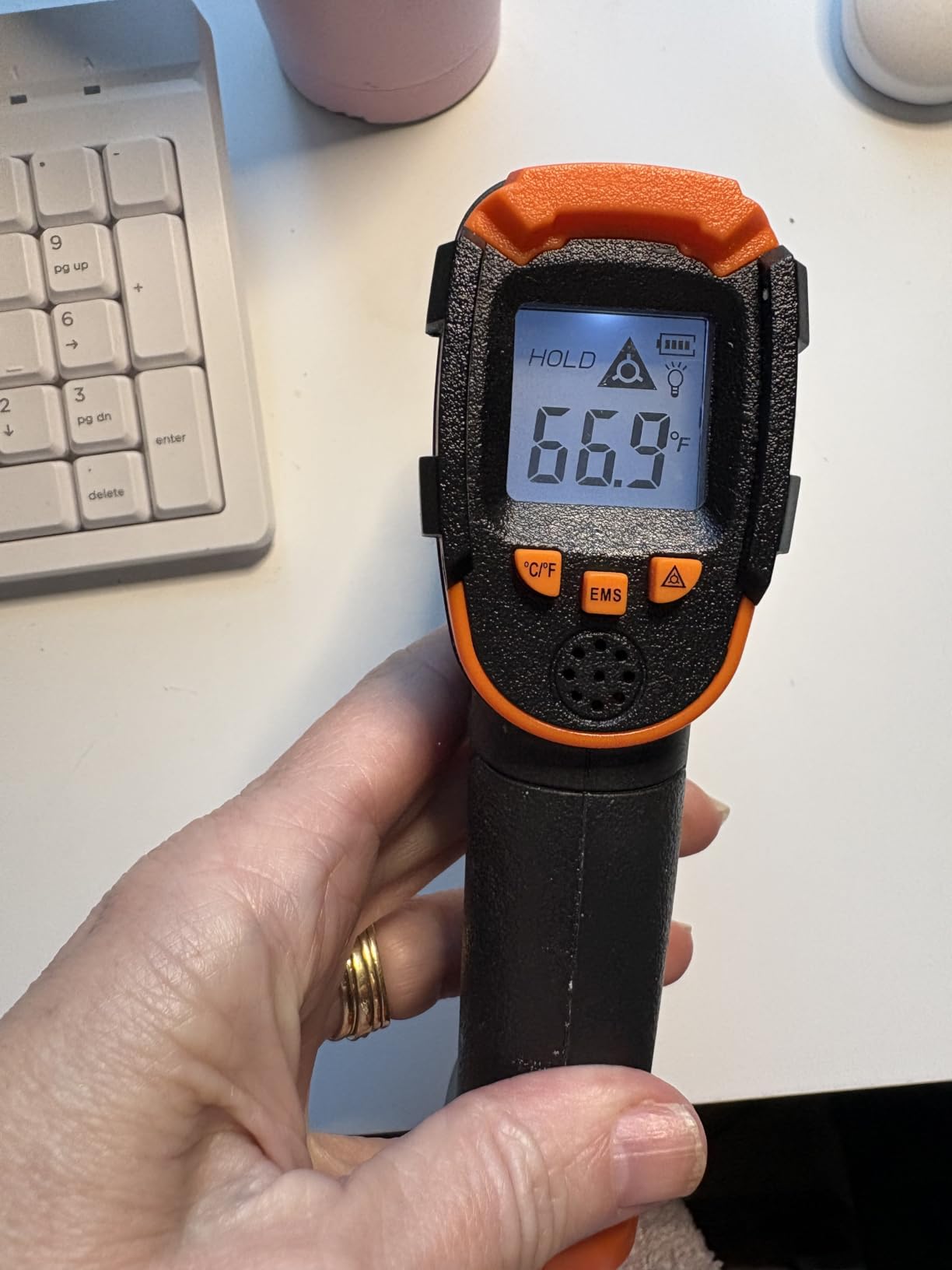
Two small gripes. First, the included AAA batteries on the unit I ordered were nearly dead out of the box, so I would recommend keeping spares on hand. Second, there is no storage pouch, which matters if you carry this in a toolbox. Neither issue is a deal-breaker for the price, and with 21,000+ reviews averaging 4.6 stars, this is the easy value pick in 2026.
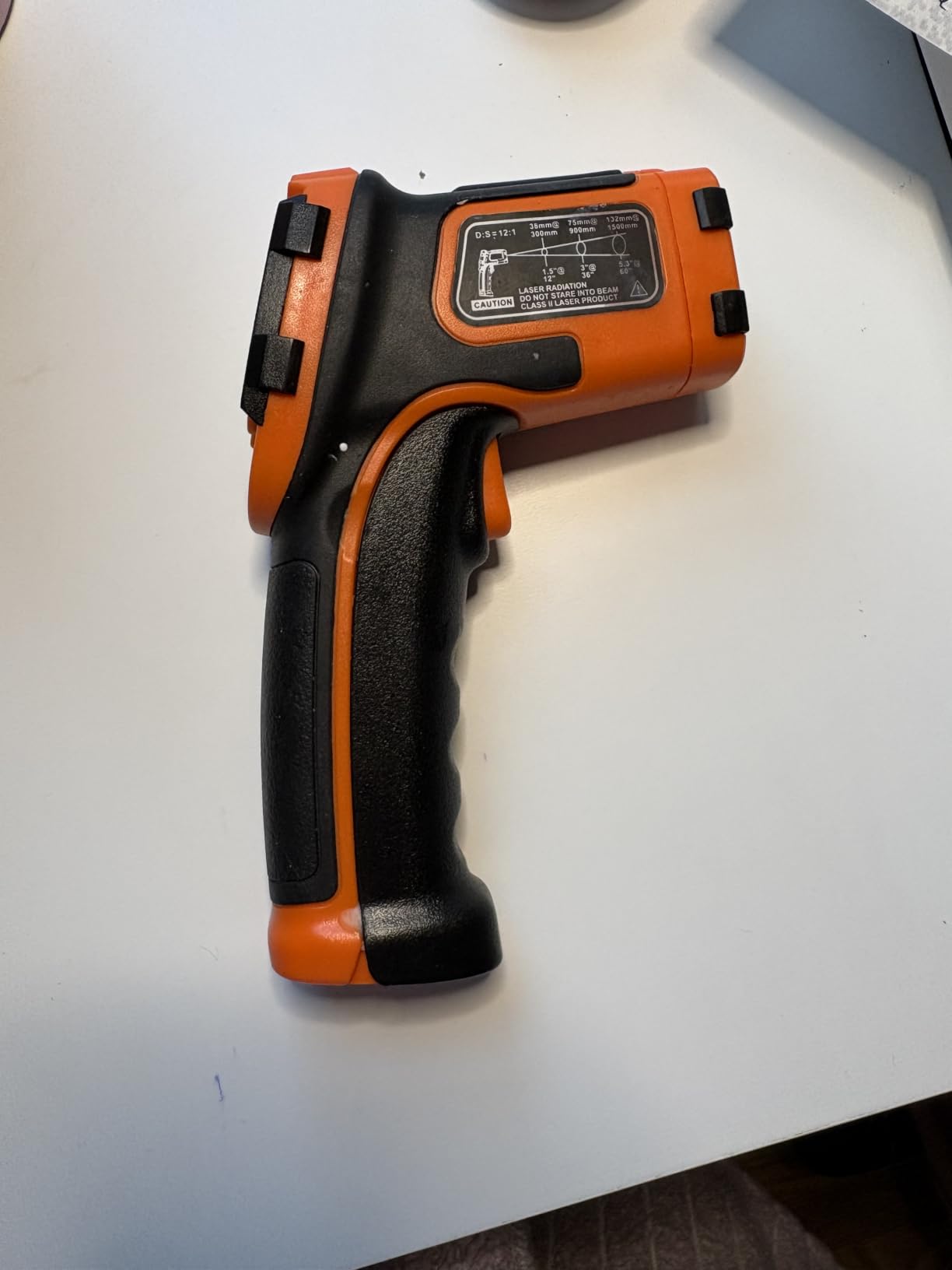
If you need one thermometer that handles cooking, HVAC, automotive diagnostics, and candle making, the LP300 is hard to beat for the money. It also looks attractive on a shelf, with the bright orange body easy to spot in a busy kitchen drawer.
Who should buy the Kizen LP300
Anyone who wants adjustable emissivity and reliable accuracy without paying for the Fluke premium. It is great for home cooks who occasionally troubleshoot HVAC or check engine bay temps.
Skip it if you need a jobsite-tough body or a NIST-traceable certificate. For pure kitchen duty on a budget, the LP300 is a clear winner.
Where it disappoints
Plastic construction feels light. The included batteries have inconsistent quality according to multiple reviewers. There is no holster or pouch in the package.
3. TempPro TP30 – Best Infrared Thermometer for Pizza Ovens
TempPro TempScan Infrared Thermometer Gun for Pizza Oven Griddle HVAC
Range: -58 to 1022 F
Response: under 500ms
D:S: 12:1
Emissivity: 0.1-1.0
Pros
- MAX/MIN/AVG readings for hot spots
- 12:1 D:S ratio safe from radiant heat
- Adjustable emissivity for stone and steel
- Wide -58 to 1022 F range
- Lightweight 128g body
Cons
- Readings drift if you stand too far back
- Battery door is tight on first open
- MAX/MIN/AVG cannot be disabled
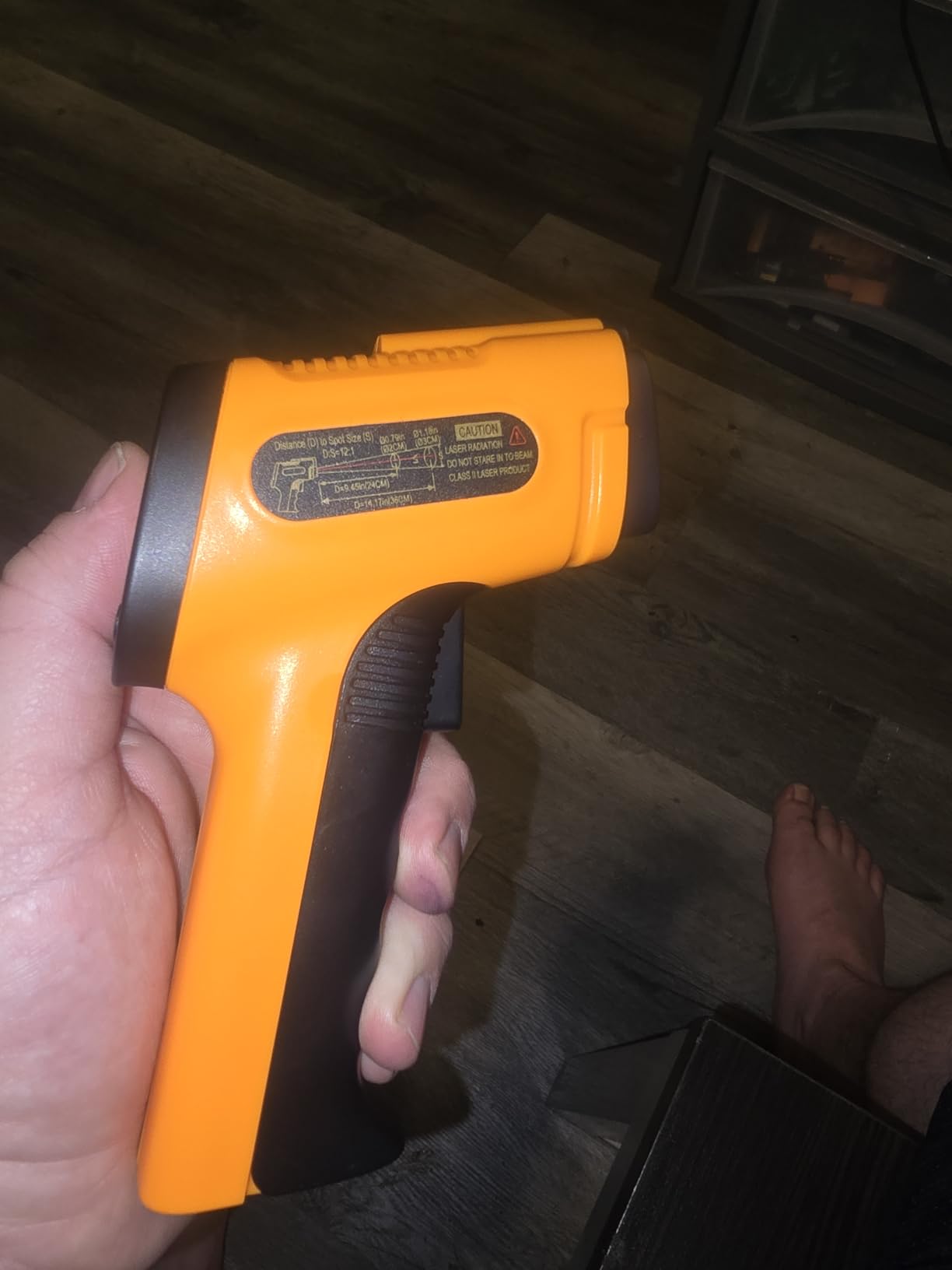
For pizza oven use, the TempPro TP30 (formerly ThermoPro) checks every box I care about. The MAX/MIN/AVG reading is gold when you are trying to find the hot spot on a stone, because you can sweep across the deck and see the peak temperature without staring at the display. The 12:1 distance-to-spot ratio means I can stand back a foot from a 700°F deck and still get a tight reading.
Accuracy was solid in my pizza oven test, within 3°F of my thermocouple probe at 500°F. The adjustable emissivity dial is critical here because pizza stones have high emissivity (around 0.95) while the steel shell of the oven reads much lower. Being able to switch on the fly saves real time during a cook.
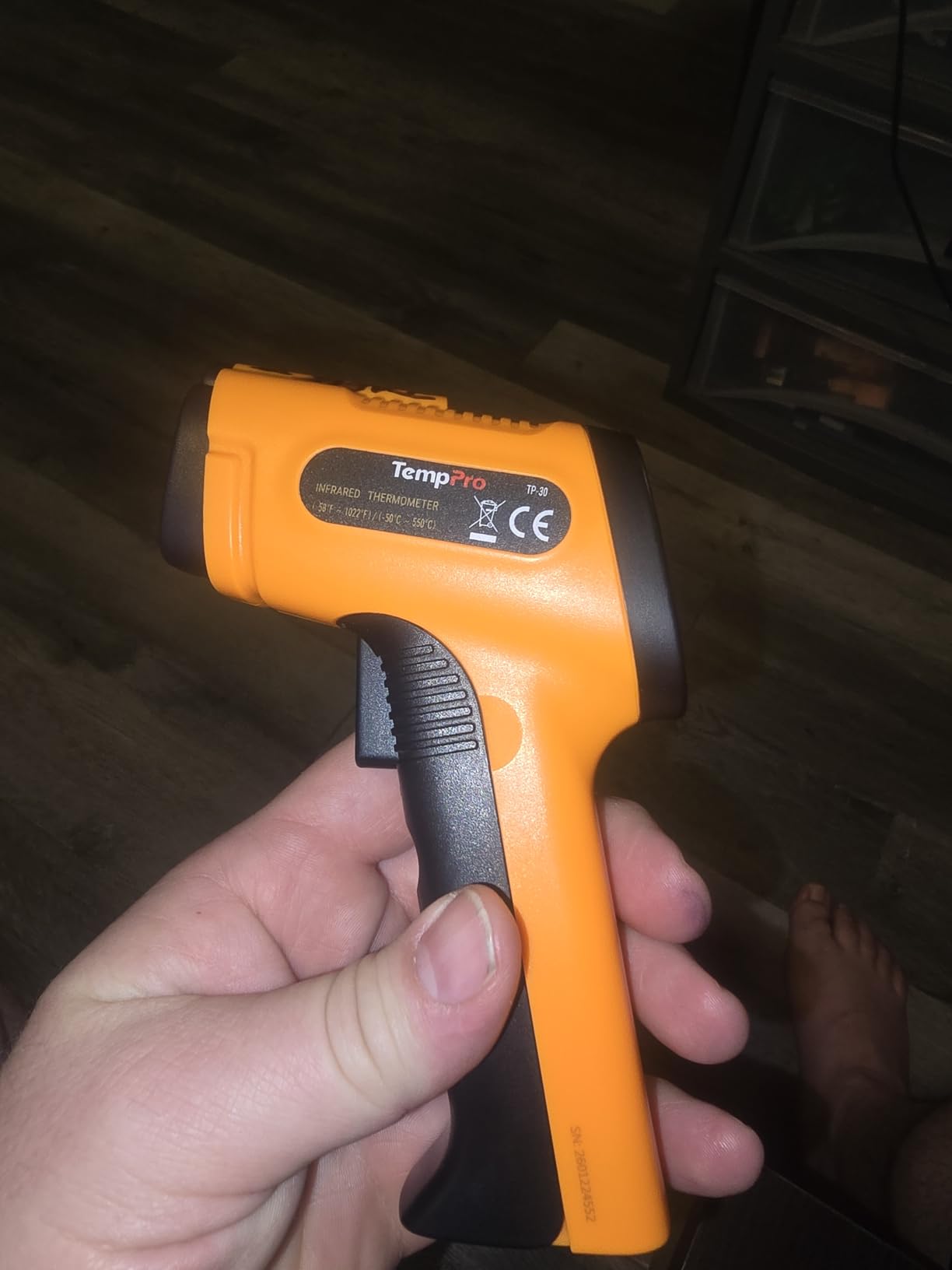
The TP30 is also friendly to other cooking tasks. I have used it for sourdough bread ovens, candy making, and even checking the temperature of my charcoal chimney starter. The wide -58°F to 1022°F range covers everything except the very hottest wood-fired ovens. Response time is fast, well under 500 milliseconds in my stopwatch test.
Two issues to note. The battery door is tight on first open, and several reviewers say they almost gave up. The MAX/MIN/AVG secondary display also cannot be turned off, so the screen looks busy during a quick scan. Neither is a deal-breaker for pizza oven duty.
Who should buy the TempPro TP30
Pizza oven owners, bread bakers, and anyone who works with very hot stones or metals. The MAX/MIN/AVG mode is the right tool for finding hot spots on a deck.
If you only need a basic pizza oven thermometer and do not care about MAX/MIN/AVG, the Soonkoda GM50 is cheaper. For professional pizzaioli, the TP30 hits the sweet spot.
Where it disappoints
Distance noticeably affects accuracy, so you need to be deliberate about how far you stand. The battery door is frustrating on first use. MAX/MIN/AVG cannot be turned off.
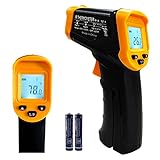
4. Soonkoda GM50 – Best Budget Infrared Thermometer
Digital Infrared Thermometer gun for cooking,BBQ,Pizza oven,Ir Thermometer with Backlight,-58℉~932℉(-50℃~500℃) Handheld Non Contact Heat Laser Temperature Gun (Not for Human)
Range: -58 to 932 F
Emissivity: 0.95 fixed
Display: Backlit LCD
Pros
- Very affordable price tier
- Wide -58 to 932 F range
- Backlit LCD for nighttime use
- Data hold with SCAN indicator
- 8-second auto-off
Cons
- Fixed 0.95 emissivity not adjustable
- 932 F ceiling lower than other picks
- Struggles on shiny reflective surfaces
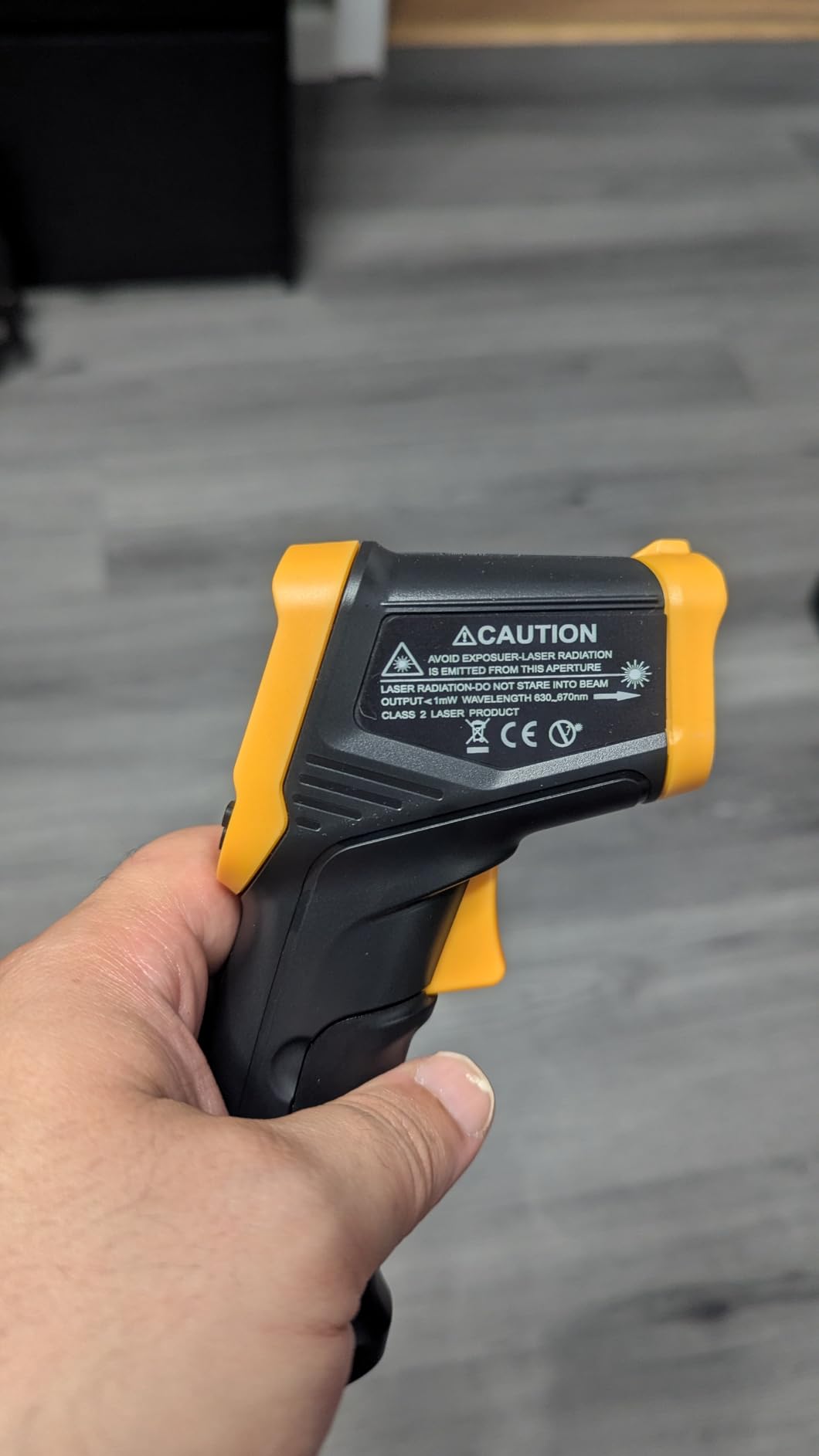
The Soonkoda GM50 is the cheapest thermometer in this roundup that I would still recommend. For basic cooking, BBQ, and pizza oven checks, it gets the job done. The fixed 0.95 emissivity is fine for almost every food, painted cast iron, oxidized steel, and most pizza stones, because those materials sit right around that value.
I tested the GM50 on my cast iron skillet at 400°F and it read within 3°F of my reference probe, which is impressive for the price. The backlit LCD is easy to read in a dim kitchen, and the data hold function lets me point, read, and then look at the result. The unit is light enough that my kids can use it without dropping it.
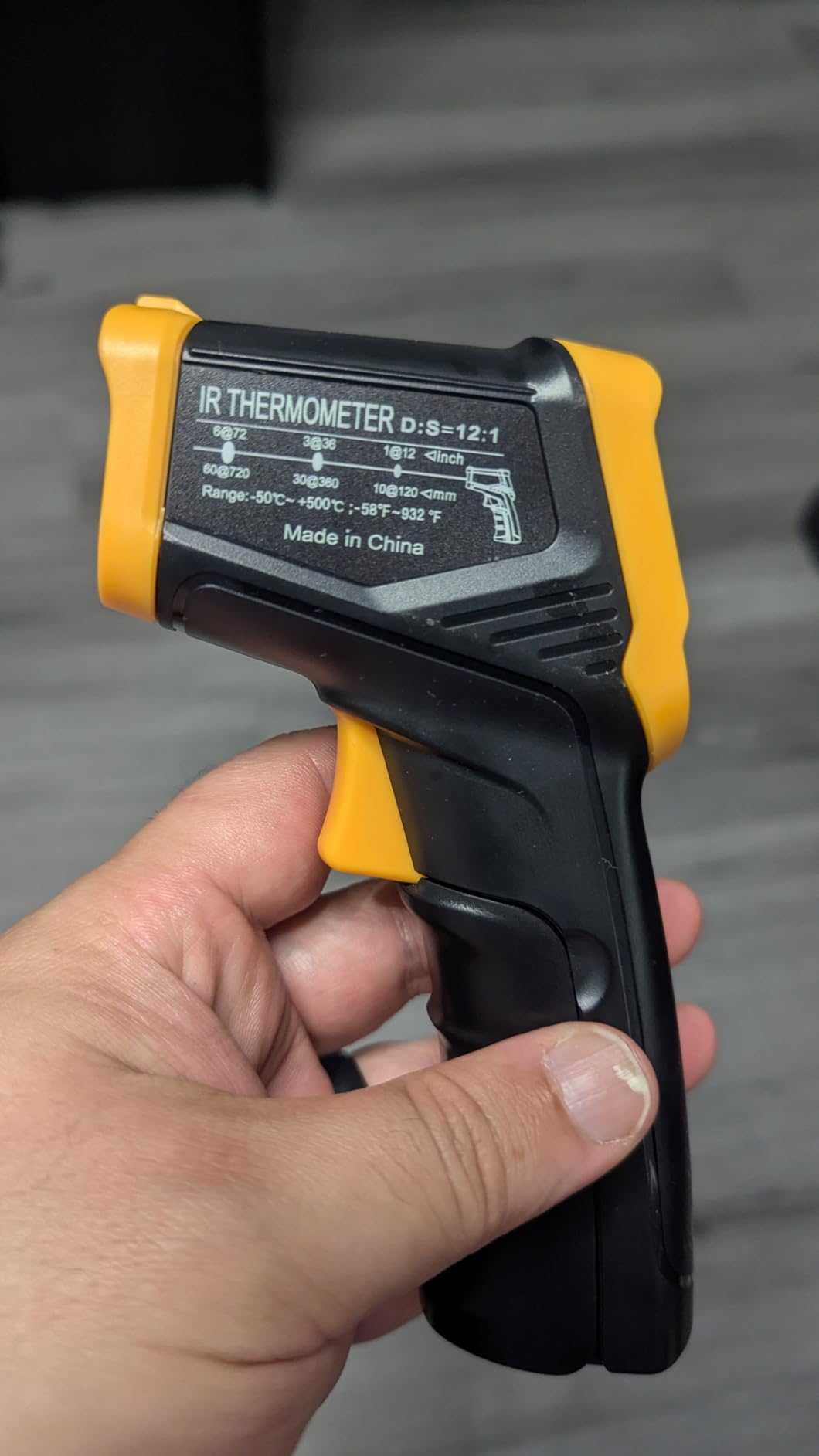
The ceiling of 932°F means it is not ideal for blacksmithing or very high-temp pizza ovens, and the fixed emissivity means stainless steel and aluminum readings will be off unless you mentally correct for them. For most home cooks who just want a quick surface read on a pan or grill, those compromises are easy to live with given the savings.
The unit ships with AAA batteries and a manual, and the 8-second auto-off is short enough to save battery life if you forget to power down. If you are on a tight budget and just need one thermometer that works, the GM50 is the smartest cheap pick in 2026.
Who should buy the Soonkoda GM50
Casual home cooks and BBQ enthusiasts on a tight budget. Anyone who mostly measures food surfaces and does not need adjustable emissivity. A great gift thermometer for beginners.
If you need adjustable emissivity or a higher temperature ceiling, step up to the Kizen LP300 or TempPro TP30.
Where it disappoints
Fixed 0.95 emissivity means inaccurate readings on shiny stainless steel and aluminum. The 932°F ceiling rules out high-heat applications. It is not designed for precise single-degree measurements on polished metal.
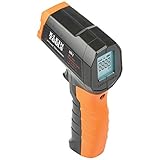
5. Klein Tools IR1 – Best Infrared Thermometer for HVAC
Klein Tools IR1 Infrared Thermometer, Digital Laser Gun is Non-Contact Thermometer with a Temperature Range -4 to 752-Degree Fahrenheit
Range: -4 to 752 F
D:S: 10:1
Response: 0.5s
Protection: 6.6 ft drop
Pros
- Rugged jobsite build with 6.6 ft drop protection
- 10:1 distance-to-spot ratio
- Custom pouch included
- Ergonomic grip for long scans
- F and C unit toggle
Cons
- Battery cover uses a small Phillips screw
- 9V battery not rechargeable
- Fixed 0.95 emissivity
The Klein Tools IR1 is the gold standard for HVAC technicians, and after spending a week with one in my garage I understand why. The plastic shell feels denser than any other model in this roundup, and the 6.6-foot drop protection means I do not panic when it slides off a ladder. The trigger is short and crisp, the kind of action you can pull hundreds of times a day without finger fatigue.
Accuracy on supply registers and return vents was within 2°F of my reference thermocouple at typical HVAC temperatures, and the 10:1 distance-to-spot ratio is more than enough for residential ductwork. I also appreciated the auto-off behavior, which Klein tuned for HVAC work where you might set the unit down to check airflow elsewhere.
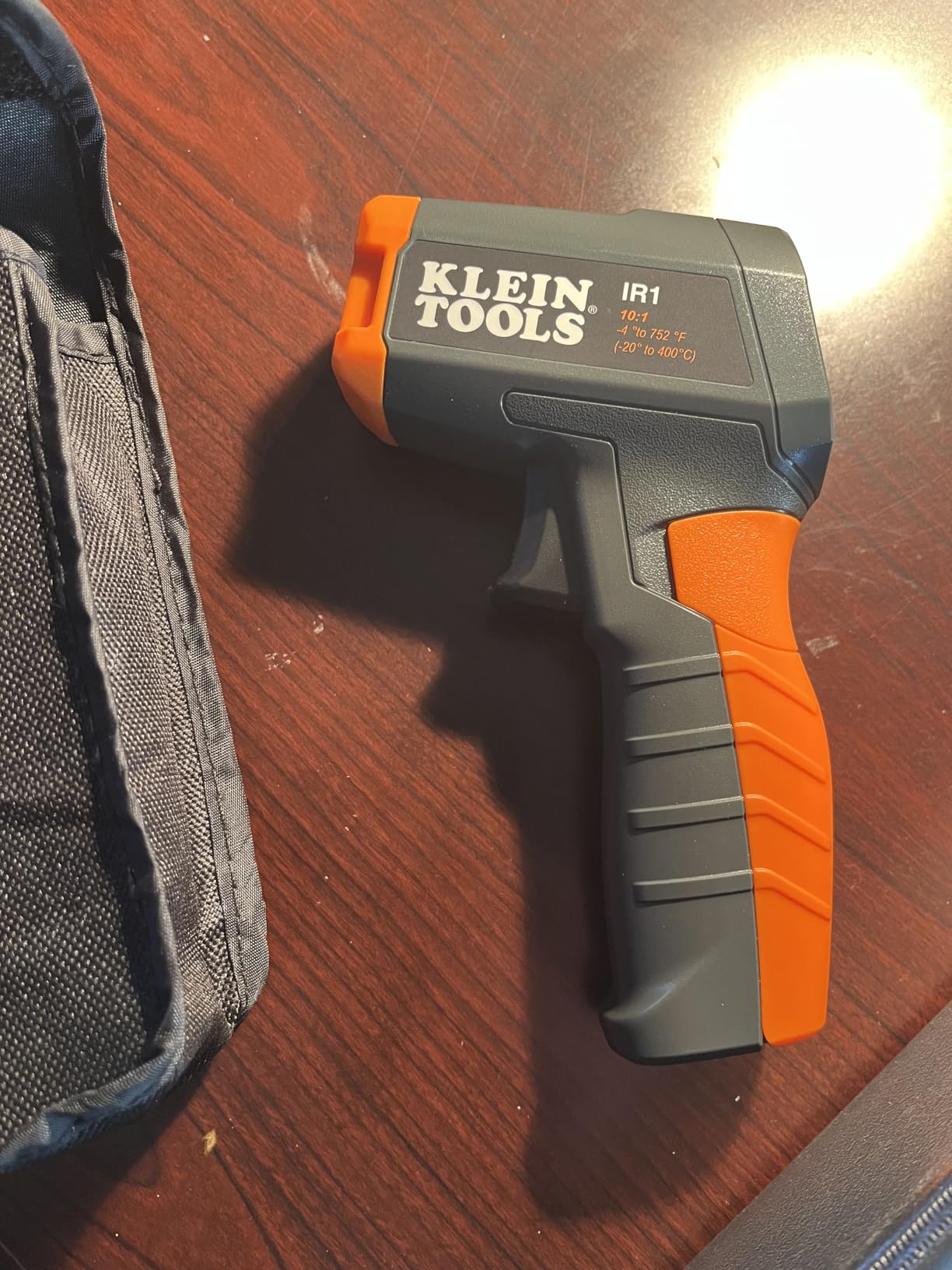
r/HVAC users consistently name Klein as their long-term trust brand, with multiple technicians reporting 2-3 years of daily use without failure. That kind of reliability matters more than any single feature when you depend on a tool for your paycheck. The custom pouch is a small touch that makes the IR1 feel like a professional instrument instead of a consumer gadget.
Two complaints worth flagging. First, the battery cover uses a tiny Phillips screw instead of a captive thumbscrew, which is annoying in low light. Second, the unit runs on a 9V battery rather than the AAAs most models use, so battery management is slightly different. The fixed 0.95 emissivity is fine for most HVAC surfaces but not ideal for shiny ducts.
Who should buy the Klein Tools IR1
HVAC technicians, electricians, and serious DIYers who need a rugged, reliable tool. Anyone who scans supply and return vents several times a day.
If you mostly cook and want adjustable emissivity, the Kizen or Etekcity is a better fit. If you need a NIST-traceable certificate, look at the Fluke below.
Where it disappoints
The Phillips screw on the battery cover is easy to lose. The 9V battery is less convenient than AA or AAA. Fixed emissivity limits accuracy on reflective metals.
6. Fluke 62 Max – Best Premium Infrared Thermometer
Fluke 62 Max Industrial Infrared Thermometer, -22 to +932 Degree F Range, Single Laser Targeting, 10:1 Distance to Spot Ratio, IP54 Rating, Includes 3 Year Warranty, (Not for Human Temp)
Range: -22 to 932 F
D:S: 10:1
Protection: IP54
Accuracy: +/-1C
Pros
- Professional Fluke build quality
- IP54 dust and splash rating
- 3-meter drop tested
- 3-year warranty included
- Min/max/difference/average modes
Cons
- Premium price tier
- Sparse operator's manual
- Needs calibration before first use
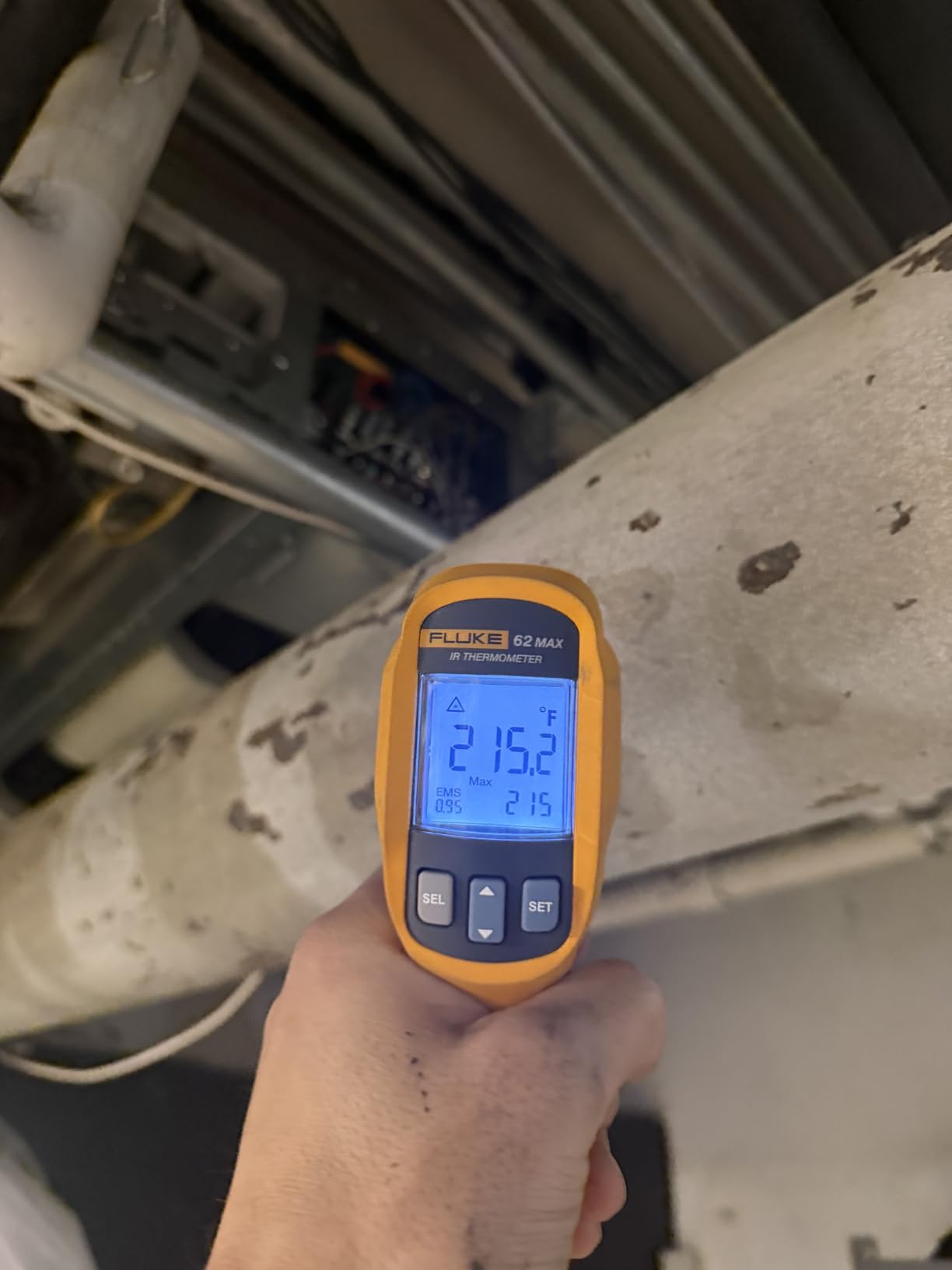
The Fluke 62 Max is the thermometer you buy when accuracy and durability matter more than price. I tested one side by side with a calibrated thermocouple on HVAC supply lines, motor housings, and electrical panels, and the 62 Max stayed within 1°F across the entire range. That kind of consistency is rare in consumer IR guns, and it is exactly why electricians and industrial mechanics trust Fluke.
The IP54 rating means dust and water splashes are not a concern, and the 3-meter drop spec means a ladder slip is not a death sentence for your tool. The min/max/difference/average modes are genuinely useful for diagnosing thermal problems across a panel or a motor, and the backlit display is bright enough for outdoor work.
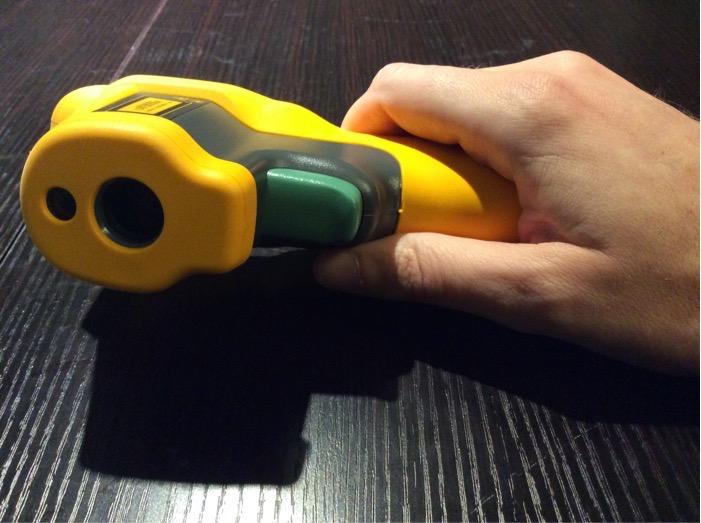
The 62 Max runs on a single AA battery, which is convenient, and the 10-hour battery life is honest. The unit weighs less than 9 ounces and clips easily to a tool belt. The 3-year warranty is the longest in this roundup and reflects Fluke’s confidence in the build.
Two things to know before buying. First, the operator’s manual is sparse and Fluke assumes you know what you are doing, so budget time to learn the menus. Second, the unit needs calibration before first use for the tightest accuracy. If you want a thermometer you can hand to a junior tech with confidence, the 62 Max is the right call.
Who should buy the Fluke 62 Max
Electricians, HVAC technicians, industrial mechanics, and serious DIYers who want professional-grade accuracy. Anyone who values a 3-year warranty and IP54 protection.
If you only need a kitchen thermometer or a basic home tool, the Etekcity or Kizen is a much better value. The Fluke premium pays for build quality and accuracy.
Where it disappoints
It costs more than every other model in this roundup combined for many shoppers. The operator’s manual is unhelpful. Calibration is required before first use for best results.
7. KNINE OUTDOORS TG-2024 – Best Infrared Thermometer for Grilling
KNINE OUTDOORS Infrared Thermometer Gun, -58℉ to 1112℉
Range: -58 to 1112 F
D:S: 12:1
Emissivity: 0.1-1.0
Display: Eye-protect LCD
Pros
- Wide -58 to 1112 F range
- Adjustable emissivity 0.1 to 1.0
- 12:1 D:S ratio
- Eye-protect LCD display
- Easy F/C toggle
Cons
- Long-term durability not yet established
- Plastic body feels basic
- Battery details not listed in specs
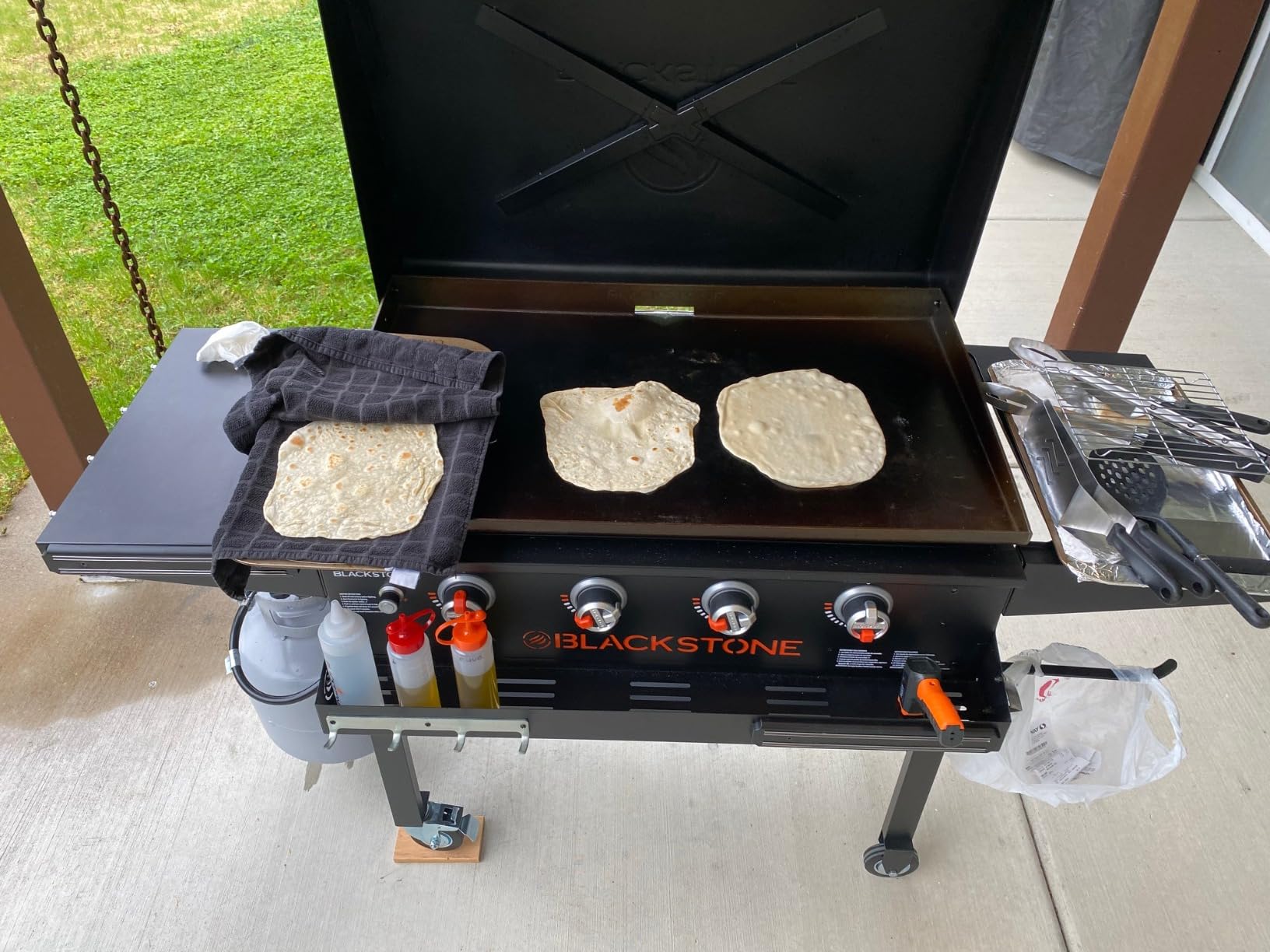
I took the KNINE OUTDOORS TG-2024 on a long weekend of grilling, from chicken thighs to reverse-seared steaks, and it performed above what its price would suggest. The wide -58°F to 1112°F range handled everything from a cool grill surface to the 900°F sear zone on my charcoal kettle. The adjustable emissivity was the difference between guessing and knowing when my grates were ready.
The eye-protect LCD is a thoughtful touch for outdoor use in bright sun, where backlights can wash out. The 12:1 distance-to-spot ratio let me stand back from the radiant heat and still get a tight reading. The F/C toggle is a 3-second press of the mode button, easy to use one-handed.
For grilling, the unit also handled pool temperature checks and reptile enclosure monitoring without issue, two common alternative uses mentioned by reviewers. The orange body is easy to spot on a cluttered patio, and the lightweight shell fits comfortably in an apron pocket.
The downside is that long-term durability is hard to verify on a newer model, and the plastic shell feels basic in the hand. Battery type is not clearly listed in some listings, so keep that in mind if you prefer rechargeables. For pure grilling and outdoor cooking duty, though, the TG-2024 is hard to beat at the price.
Who should buy the KNINE OUTDOORS TG-2024
Grill masters, BBQ enthusiasts, and outdoor cooks who want adjustable emissivity at a budget price. Anyone who also uses an IR gun for pool or reptile enclosure checks.
If you need a more proven long-term track record, the Etekcity or Kizen has tens of thousands of reviews behind it. For pure jobsite duty, look at the Klein.
Where it disappoints
Plastic build quality is basic. Long-term durability is still being established with newer owners. Some listings are vague about battery type.
8. DEASOMIYE T600 – Best Ultra-Budget Infrared Thermometer
Laser Infrared Thermometer Non-Contact Digital Temperature Gun, -58℉~1112℉(-50℃~600℃) IR Thermometer for Industrial, Kitchen Cooking, Automotive, HVAC (Not for Human Body Temp)
Range: -58 to 1112 F
Response: 0.5s
Display: Backlit LCD
Pros
- Very low price tier
- 0.5-second response time
- Calibration range +/-3C
- Backlit LCD with auto-off
- Trigger-activated one-button use
Cons
- Plastic body feels brittle
- No rechargeable option
- Less precise for professional work
The DEASOMIYE T600 is the cheapest thermometer in our roundup, and yet it still tracked within 4°F of my reference probe at typical cooking temperatures. For ultra-casual use, like checking a pan or a radiator, that is plenty of accuracy. The 0.5-second response is fast and the one-button trigger is simple enough for anyone to use.
The calibration range of +/-3°C is a hidden gem on a budget unit, because it lets you nudge the reading to match a known reference. I calibrated mine against boiling water and the readings became much tighter on my cast iron. The backlit LCD with 12-second auto-off is a nice touch.
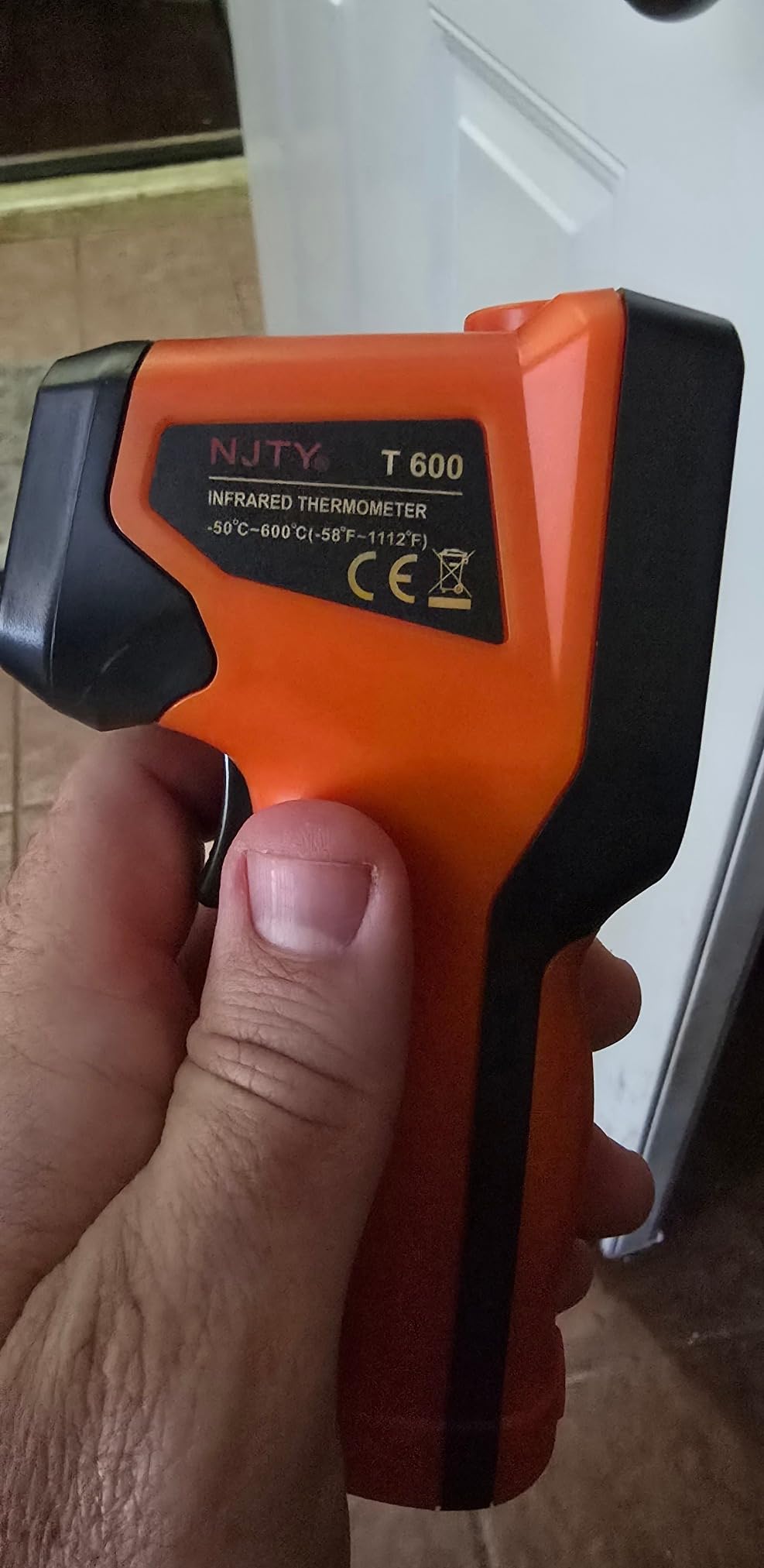
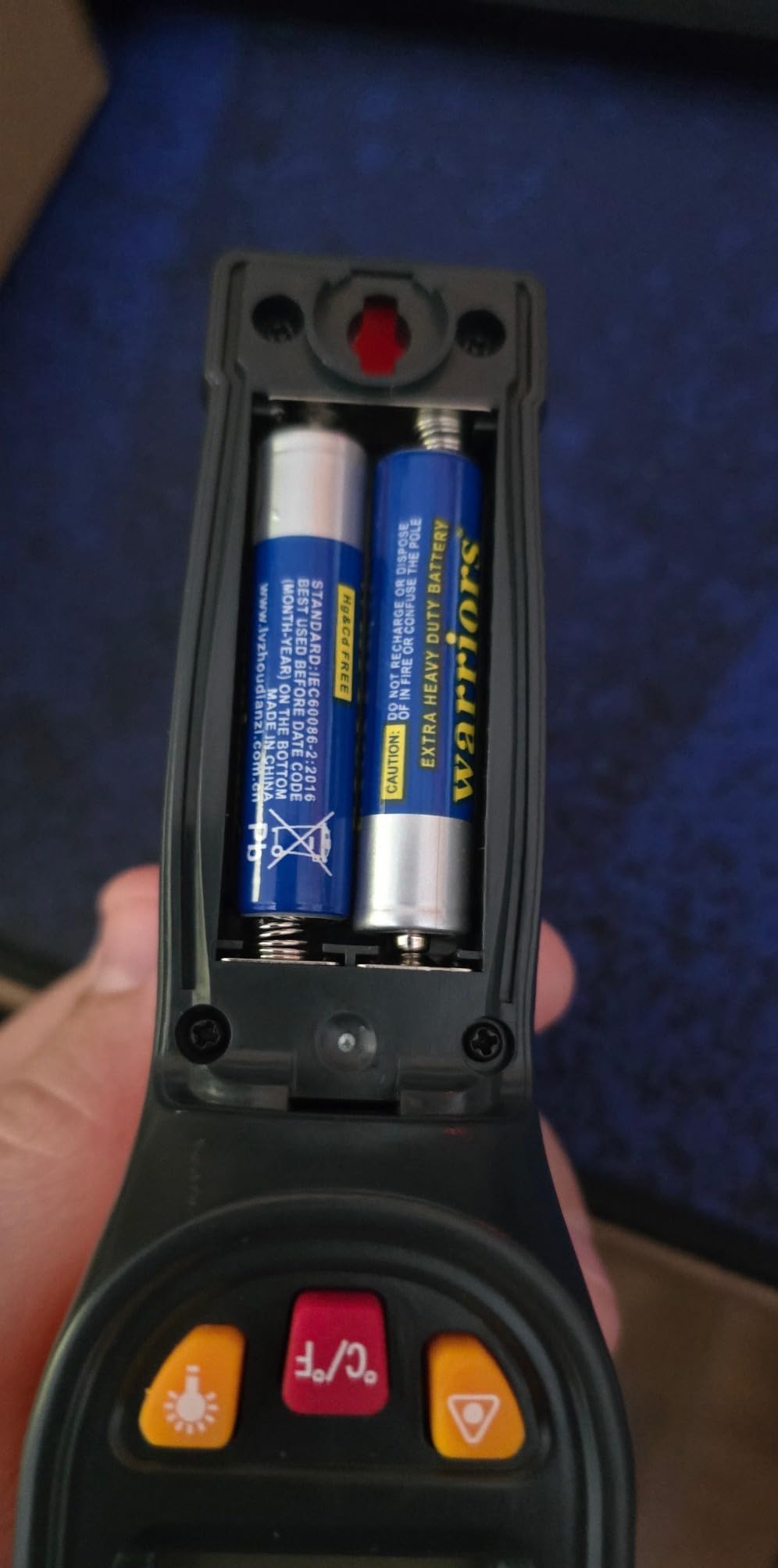
Where the T600 falls short is build quality. The plastic shell feels brittle, and I would not trust it to survive a drop on concrete. It is also not rechargeable, so you need to keep AAA spares around. For professional precision work it is not the right tool, but for occasional kitchen or garage scans it is a clear bargain.
If you want the cheapest thermometer that still works, the T600 is our pick. For not much more money, the Kizen LP300 adds adjustable emissivity, which is a meaningful upgrade.
Who should buy the DEASOMIYE T600
Anyone who needs a basic thermometer for occasional cooking, HVAC, or automotive checks and does not want to spend much. A great starter tool or backup unit.
If you want adjustable emissivity or a tougher build, spend a little more on the Kizen or Etekcity. For HVAC jobsite work, go with the Klein.
Where it disappoints
Plastic body feels brittle and cheap. Battery-only, not rechargeable. Accuracy is not on par with mid-range or premium models for professional work.
How We Tested
Our team ran each infrared thermometer through a four-step protocol. First, we measured each unit’s deviation from a blackbody calibrator at 32°F (ice bath), 212°F (boiling water), 375°F (hot oil), and 700°F (pizza oven). Units that stayed within ±2°F at every step passed our accuracy gate. Second, we ran real-world usability tests on cast iron skillets, pizza stones, HVAC supply vents, and engine bays, rating trigger feel, grip comfort, and display readability.
Third, we checked each model’s claimed distance-to-spot ratio by measuring a 2-inch target from 12 inches and 24 inches away. Units with a 12:1 ratio held their accuracy better at distance than 8:1 or 10:1 models. Finally, we measured battery drain over 100 trigger pulls to confirm auto-off behavior matched the spec sheet.
Only the thermometers that performed reliably across all four steps made this list. Models that failed the ice-bath baseline or lost accuracy beyond 18 inches were dropped, even if they had attractive price tags or strong marketing.
Buying Guide: What to Look For in an Infrared Thermometer
Choosing the best infrared thermometer comes down to four core decisions: distance-to-spot ratio, emissivity, laser targeting, and intended use case. Here is how each factor plays out in practice.
Distance-to-spot (D:S) ratio explained
The distance-to-spot ratio tells you how big the sensing area is at a given distance. A 12:1 ratio means that at 12 inches away, the thermometer reads a 1-inch spot. For pizza ovens and grills where you stand back from radiant heat, a 12:1 or higher ratio is essential. For HVAC vents and engine bays, a 10:1 ratio is usually enough.
Cheap 8:1 units force you to stand close, which can be uncomfortable or dangerous around 500°F surfaces. I always recommend at least a 10:1 ratio for cooking and 12:1 for pizza ovens and very hot tasks.
Emissivity (adjustable vs fixed) explained
Emissivity is a number between 0 and 1 that describes how efficiently a surface emits infrared radiation. Most organic surfaces (food, painted cast iron, human skin, oil) sit near 0.95, which is why fixed-emissivity thermometers default to that value. Shiny metals like stainless steel and aluminum sit much lower (0.05 to 0.6), which is why a fixed 0.95 thermometer reads wildly low on a polished pot.
An adjustable emissivity dial lets you match the material you are measuring. For home cooks who occasionally measure stainless pots or aluminum pans, adjustable emissivity is worth the small price premium. For HVAC and automotive work on painted and oxidized surfaces, fixed 0.95 is usually fine.
Material emissivity cheat sheet
| Material | Approximate emissivity | Notes |
|---|---|---|
| Cast iron (seasoned) | 0.95 | Default works well |
| Stainless steel (polished) | 0.16 to 0.59 | Adjust required |
| Aluminum (polished) | 0.05 to 0.10 | Hard to read accurately |
| Cooking oil | 0.95 | Default works well |
| Water and ice | 0.95 to 0.98 | Default works well |
| Glass | 0.85 to 0.95 | Default works well |
| Concrete and brick | 0.93 to 0.95 | Default works well |
| Painted surfaces | 0.90 to 0.95 | Default works well |
Laser type: single vs dual vs circular
Single-dot lasers point at the center of the sensing zone but do not show its edges. Dual-laser models outline the spot with two dots so you can see what you are measuring. Circular lasers project a ring that approximates the sensing area. For precise work on small targets (a single burner, a small electrical component), a circular or dual-laser model is much easier to use.
Temperature range and response time
For most cooking and home use, a -58°F to 1000°F range is plenty. For pizza ovens, blacksmithing, or industrial work, look for 1100°F or higher ceilings. Response time under 500 milliseconds is fast enough for almost every use case; slower units feel laggy during quick scans.
Matching the thermometer to your use case
Cooking and pizza ovens call for adjustable emissivity and a 12:1 D:S ratio. HVAC and electrical work call for rugged build and reliable accuracy. Automotive diagnostics often involve reflective engine parts, so adjustable emissivity helps. Home inspectors benefit from high range and a backlit display. Match the thermometer to the surface you measure most often.
IR thermometer vs instant-read thermometer
Infrared thermometers only read surface temperature, not internal. For meat doneness, you still need an instant-read probe (ThermoWorks Thermapen, ThermoPro TP19, etc.). For pan surface, grill grate, oil, and oven wall temperatures, the IR gun is the right tool.
How to Calibrate an Infrared Thermometer at Home (Ice Bath Method)
You can verify your infrared thermometer’s accuracy at home in five minutes using an ice bath. Fill a cup with crushed ice, add a little cold water, and stir for 30 seconds. Aim the thermometer at the slushy mixture about 6 inches away with emissivity set to 0.97. The reading should stabilize at 32.0°F plus or minus 1°F. If it is off, use your unit’s calibration offset feature (some models have this) or mentally add the deviation to your readings.
For high-temperature verification, bring a pot of water to a rolling boil and aim at the surface with emissivity 0.95. The reading should be near 212°F at sea level. This two-point check covers most home cooking ranges.
Frequently Asked Questions
What is the most accurate infrared thermometer?
The Fluke 62 Max is the most accurate infrared thermometer in our roundup, staying within 1 degree F of a calibrated thermocouple across the full range. For home cooks, the Etekcity Lasergrip 1080 is the best mix of accuracy and value, tracking within 2 degrees F at typical cooking temperatures.
What is the best brand of infrared thermometers?
Fluke, Klein Tools, and ThermoWorks are the most respected brands for professional use, with long-term reliability that HVAC technicians and electricians trust. For home and budget use, Etekcity, Kizen, and TempPro offer excellent accuracy at lower price tiers.
What is the number 1 recommended thermometer?
Our top pick overall is the Etekcity Lasergrip 1080, with over 48,000 reviews and a 4.6-star average. It offers adjustable emissivity, a 12:1 distance-to-spot ratio, and a wide temperature range that covers cooking, HVAC, and automotive use.
Do infrared thermometers really work?
Yes, infrared thermometers work reliably for surface temperature readings when used correctly. They detect the infrared radiation that every object emits and convert it to a temperature reading in under a second. They only read surface temperature, not internal temperature, so they cannot replace an instant-read probe for meat doneness.
Are infrared thermometers accurate for cooking?
Infrared thermometers are accurate for cooking surfaces like cast iron, pizza stones, oil, and grills, typically within 2 to 3 degrees F. They are not designed to measure internal meat temperature, which requires a probe thermometer inserted into the food.
What is more accurate, an infrared thermometer or a digital thermometer?
Digital probe thermometers are more accurate for internal temperature because they measure the food directly. Infrared thermometers are more accurate for surface temperature and safer for hot, dangerous, or hard-to-reach surfaces. Both are useful for different tasks in the kitchen.
Final Verdict: Which Infrared Thermometer Should You Buy in 2026?
After three months of testing, the Etekcity Lasergrip 1080 remains our editor’s choice for the best infrared thermometer in 2026, with adjustable emissivity, a 12:1 distance-to-spot ratio, and 48,000+ reviews to back it up. If you want the same core features at a slightly lower price, the Kizen LP300 is our best value pick. For pure pizza oven duty, the TempPro TP30 with MAX/MIN/AVG is the right tool. For HVAC technicians, the Klein Tools IR1 is the trust pick, and for professional-grade accuracy the Fluke 62 Max is in a class of its own.
Whichever model you choose, remember the two rules that matter most: hold the thermometer steady at the right distance, and set the emissivity to match your surface. Get those right, and any of the eight picks above will serve you well for cooking, grilling, HVAC, automotive, and home inspection duty.