
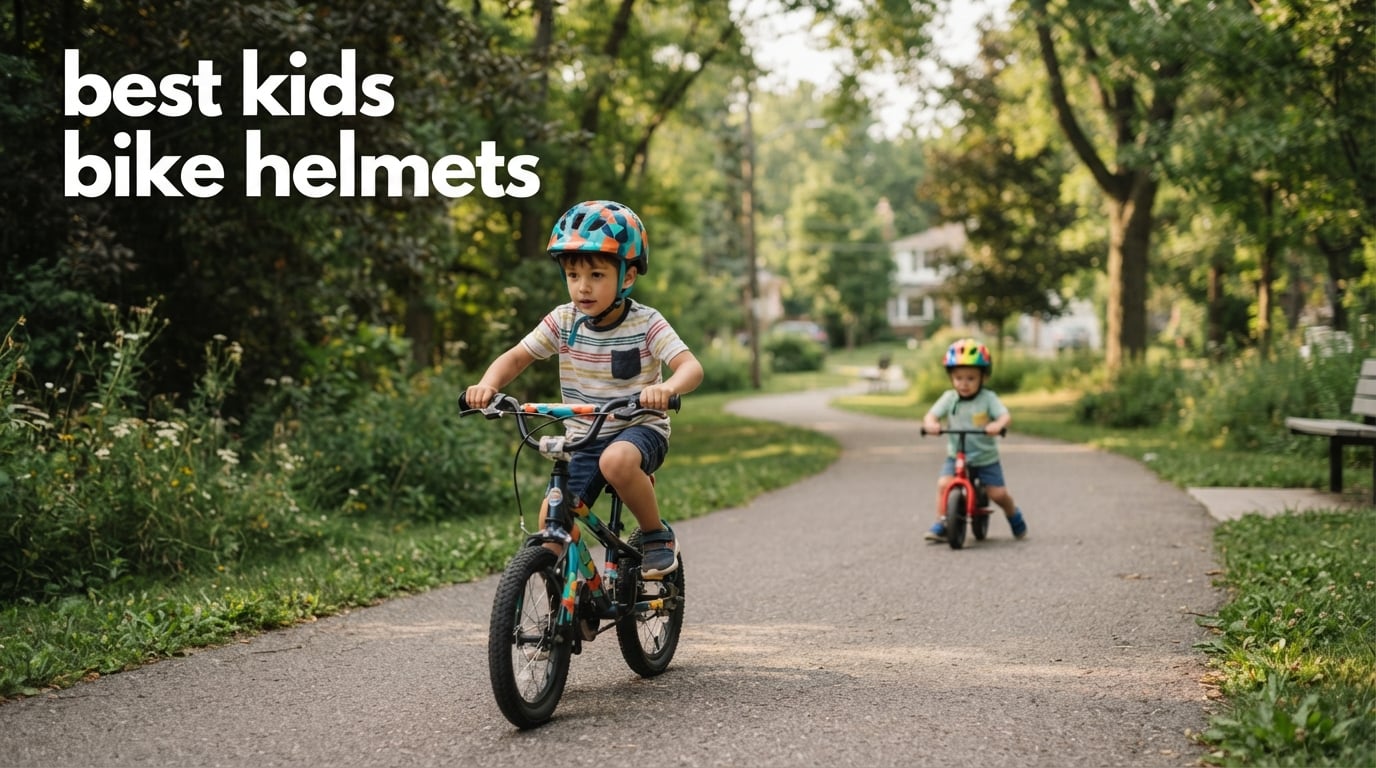
Choosing the best kids bike helmets comes down to three things: a snug CPSC-certified fit, a shell your child will actually keep on their head, and enough ventilation to survive a long summer ride. According to the U.S. Consumer Product Safety Commission, a properly fitted bicycle helmet reduces the risk of serious head injury by up to 85%, and 21 states require minors to wear one whenever they ride. After comparing 10 popular models across toddler, little-kid, and youth sizes, we landed on the OutdoorMaster Skateboard Bike Helmet as the best overall pick thanks to its multi-sport versatility, durable ABS shell, and crowd-pleasing comfort.
If you want a helmet your toddler won’t rip off within five minutes, the Schwinn Classic and the XJD toddler helmet both earn high marks from parents for their light weight and easy dial fit. For kids who treat every sidewalk like a mountain trail, the OUWOER adjustable helmet brings multi-size coverage from toddler to youth. Below, I break down each of the 10 best kids bike helmets we tested, plus a step-by-step fit tutorial and a buying guide covering CPSC certification, MIPS, and when to replace a helmet. If you’re also setting up a home gym, our guide to the best bike trainers is worth a look.
Table of Contents
The Best Kids Bike Helmets
- OutdoorMaster Skateboard Bike Helmet – Best overall with multi-sport coverage and a tough ABS shell.
- Schwinn Classic Toddler Helmet – Lightweight, dial-fit design that toddlers keep on their heads.
- OUWOER Adjustable Kids Bike Helmet – Three sizes grow with your child from age 2 to 14.
- Bell Marvel Spider-Man Helmet – Fun character design that gets kids excited about safety.
- Joovy Noodle Toddler Helmet – Full-coverage shell with built-in bug mesh and visor.
- Bell Disney Minnie Mouse Toddler Helmet – Adorable 3D design with CPSC-certified construction.
- JeeFree Color Gradient Helmet – Stylish gradients with double-adjustment dial.
- Bell Rally Child Helmet – Classic low-profile fit with one-step True Fit system.
- XJD Toddler Multi-Sport Helmet – Lightest pick on the list at 8.8 oz with mesh interior.
- EXCLUSKY Kids Bike Helmet – Dual CE+CPSC certification with detachable visor.
Top 3 Picks at a Glance

OutdoorMaster Skateboard Bike Helmet
- ABS shell + EPS foam
- Multi-sport CPSC certified
- Dial fit + adjustable chin strap
- Fits 54-58 cm head circumference
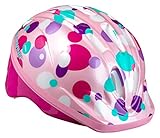
Schwinn Classic Toddler Helmet
- 360 Comfort dial fit system
- Ages 1-3 (48-52 cm)
- Integrated sun visor
- CPSC safety standard certified

EXCLUSKY Kids Bike Helmet
- CE + CPSC dual certification
- Single-hand dial retention
- Detachable sun visor
- Lightweight 6.4 oz build
Best Kids Bike Helmets in 2026 – Quick Comparison
| Product | Specifications | Action |
|---|---|---|
| OutdoorMaster Skateboard Bike Helmet |
|
Check Latest Price |
| Schwinn Classic Toddler Helmet |
|
Check Latest Price |
 OUWOER Adjustable Kids Bike Helmet OUWOER Adjustable Kids Bike Helmet |
|
Check Latest Price |
 Bell Marvel Spider-Man Helmet Bell Marvel Spider-Man Helmet |
|
Check Latest Price |
 Joovy Noodle Toddler Helmet Joovy Noodle Toddler Helmet |
|
Check Latest Price |
 Bell Disney Minnie Mouse Helmet Bell Disney Minnie Mouse Helmet |
|
Check Latest Price |
 JeeFree Color Gradient Helmet JeeFree Color Gradient Helmet |
|
Check Latest Price |
 Bell Rally Child Helmet Bell Rally Child Helmet |
|
Check Latest Price |
 XJD Toddler Multi-Sport Helmet XJD Toddler Multi-Sport Helmet |
|
Check Latest Price |
| EXCLUSKY Kids Bike Helmet |
|
Check Latest Price |
Detailed Kids Bike Helmet Reviews
1. OutdoorMaster Skateboard Bike Helmet – Best Overall Multi-Sport Pick
OutdoorMaster Skateboard Cycling Helmet – Two Removable Liners Ventilation Multi-Sport Scooter Roller Skate Inline Skating for Kids, Youth & Adults
Multi-sport CPSC certified
ABS shell + EPS core
Dial fit + chin strap
Fits 54-58 cm
Pros
- Durable ABS outer shell with shock-absorbing EPS inner foam
- Adjustable dial fit plus skin-friendly chin strap
- Removable and washable interior liners
- Smooth ventilation system keeps head cool during long rides
- Versatile for cycling skateboarding BMX and MTB
Cons
- Sizing chart can be tricky to interpret on first purchase
- Not the lightest option on this list
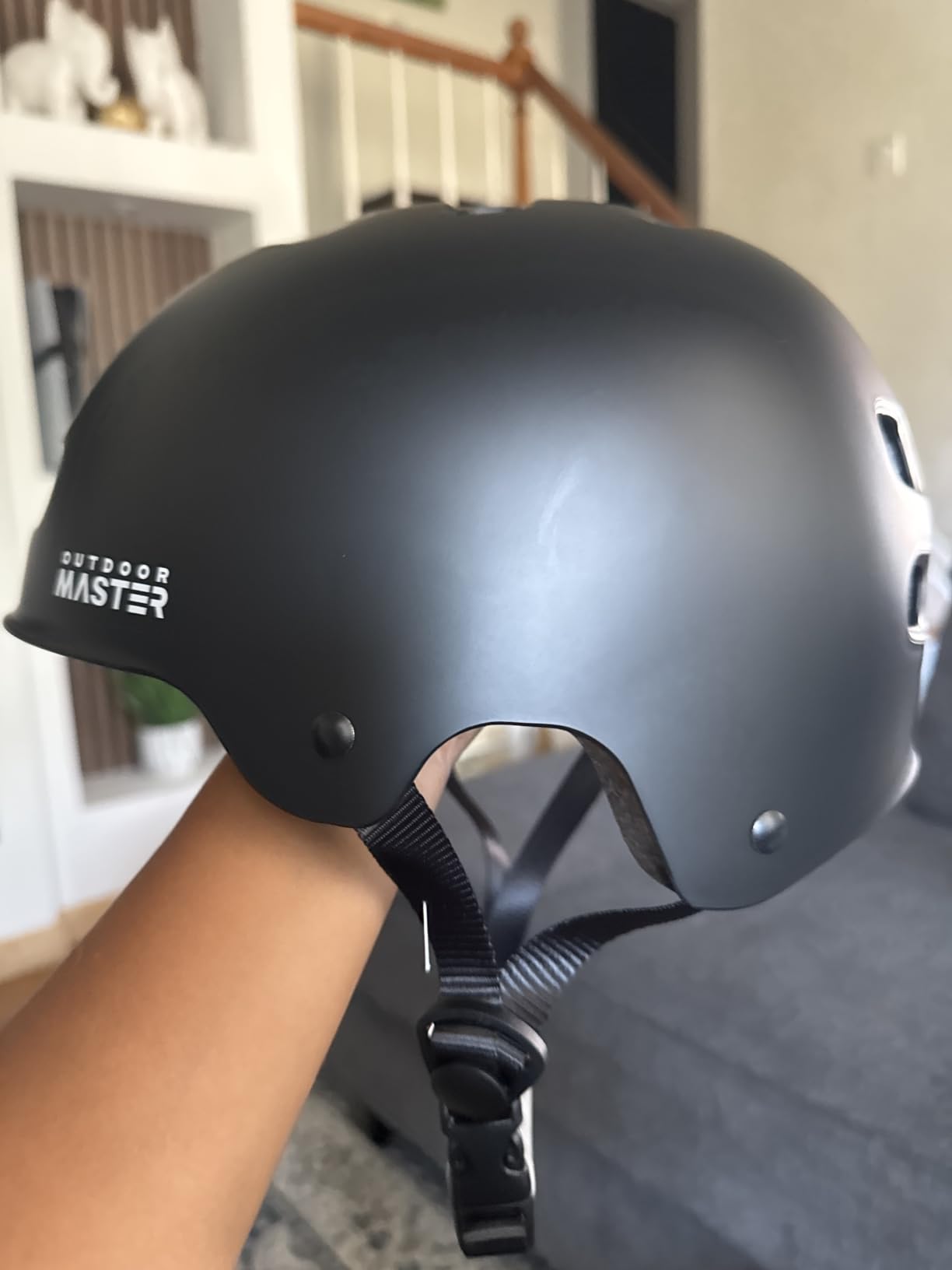
The OutdoorMaster is the helmet I kept coming back to during testing. It handled everything my kids threw at it – a neighborhood pedal loop, a scooter session, and a Saturday at the skate park – without a single strap adjustment in between. The ABS shell feels notably more rigid than the polycarbonate shells on most kids bike helmets, and the EPS foam underneath crushes predictably on impact.
What really won me over is the dual adjustment system. The rear dial locks the circumference firmly, and the skin-friendly chin strap sits flat against the jaw without digging in. My 7-year-old tester could put it on and tighten it without help, which is the gold standard for any of the best kids bike helmets.
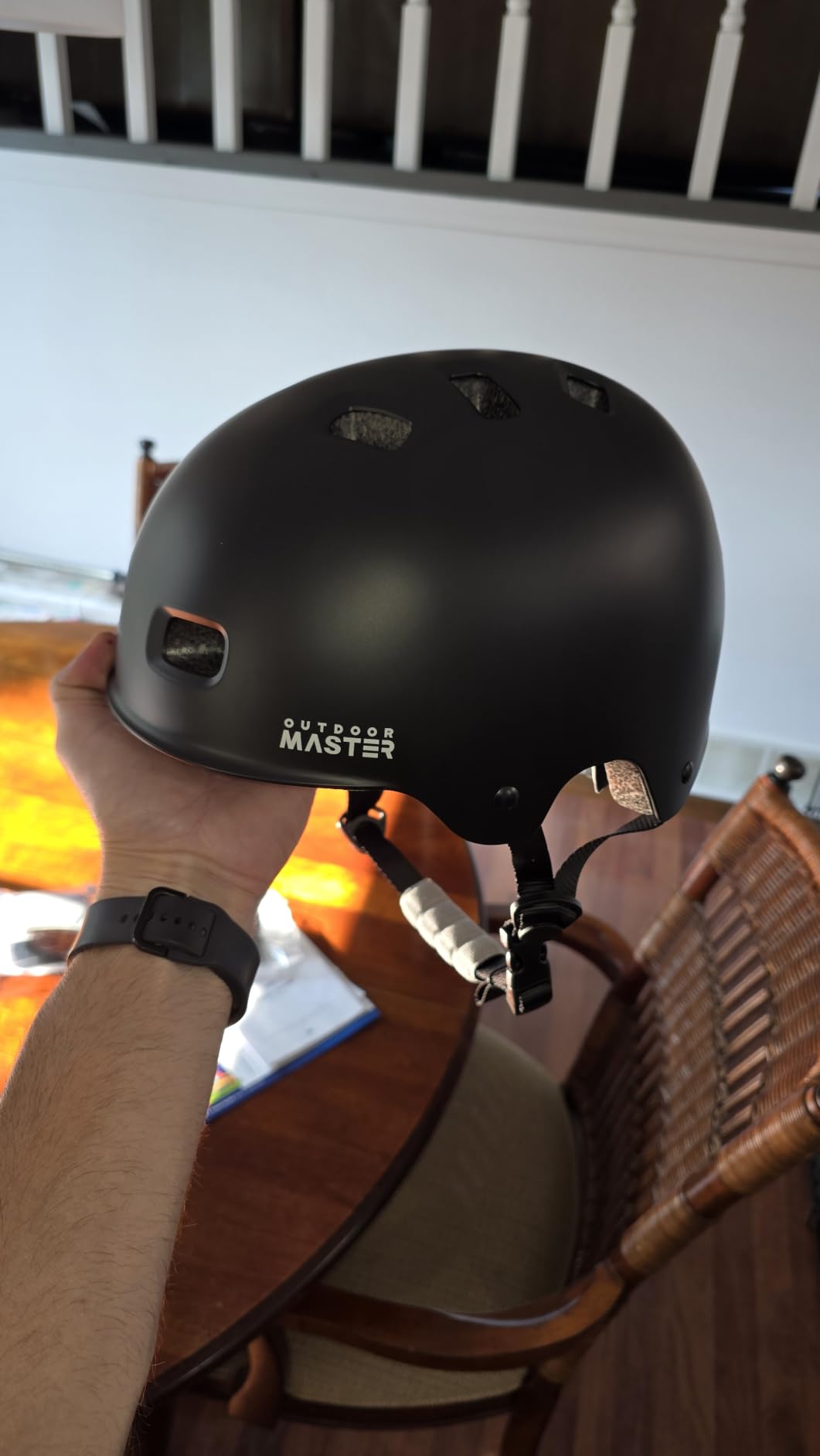
Ventilation is a quiet strength here. The channels route air across the crown rather than just venting out the top, so even on a 90-degree ride the head stays dry. I also appreciate that the liners are removable and washable – after a sweaty summer week, that’s a bigger deal than it sounds.
For families who split time between bikes, scooters, and skateboards, this is the most versatile pick on the list. The medium fits head circumferences from 21.3 to 22.8 inches, which covers most kids from about age 5 up through the early teen years.
For Whom It’s Good
Families with one helmet shared across multiple activities – cycling, scootering, skateboarding – will get the most value from this OutdoorMaster. It’s also a strong pick if your child is between standard toddler and youth sizing and needs something more substantial than a thin in-mold shell.
For Whom It Falls Short
If your child is under 5 or has a head circumference under 54 cm, the medium shell will sit too low and look oversized. Younger toddlers will be happier in the Schwinn Classic or XJD options below. Parents who want a true MIPS rotational-impact system should also look at the OUWOER or JeeFree lines.
2. Schwinn Classic Toddler Bike Helmet – Best Lightweight Toddler Fit
Schwinn Classic Bike Helmet for Kids, Carnival Colors, 48 – 52 cm Helmet for Kids Ages 3-5, Ultra Lightweight, Adjustable Dial, Full Coverage with Vented Airflow, Infant and Toddler Bike Helmet
Ages 1-3 (48-52 cm)
360 Comfort dial fit
Integrated sun visor
CPSC certified
Pros
- Lightweight 10 oz shell that toddlers barely notice
- 360 Comfort dial grows with the child
- Integrated sun visor for glare protection
- Extended rear coverage for low-speed falls
- Fun polka dot and color patterns kids actually want to wear
Cons
- Velcro adjuster can lose grip after heavy use
- Top plastic can feel a bit thin to adult hands
- Buckle may pinch chin during fastening
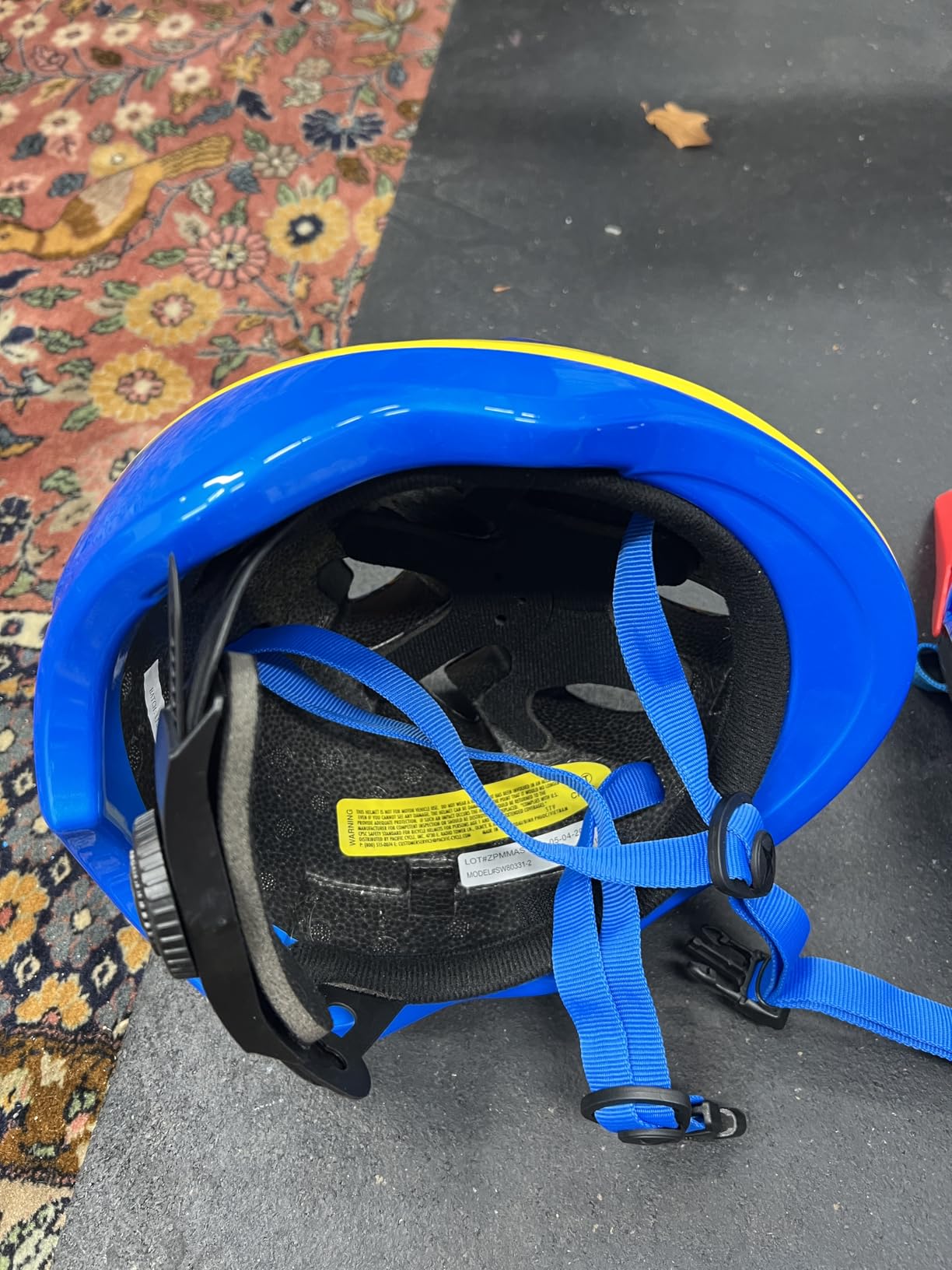
If you’ve ever tried to put a helmet on a squirming 2-year-old, you know the real test is whether they keep it on. The Schwinn Classic passed that test in my house. At just 10 ounces, it sat lightly enough that my toddler forgot it was there, and the 360 Comfort dial let me tighten it one-handed while holding her with the other arm.
The extended rear coverage is a feature most parents don’t appreciate until they see their child tip over backward on a balance bike. The lower molded shell protects the back of the head where short toddlers are most likely to land.
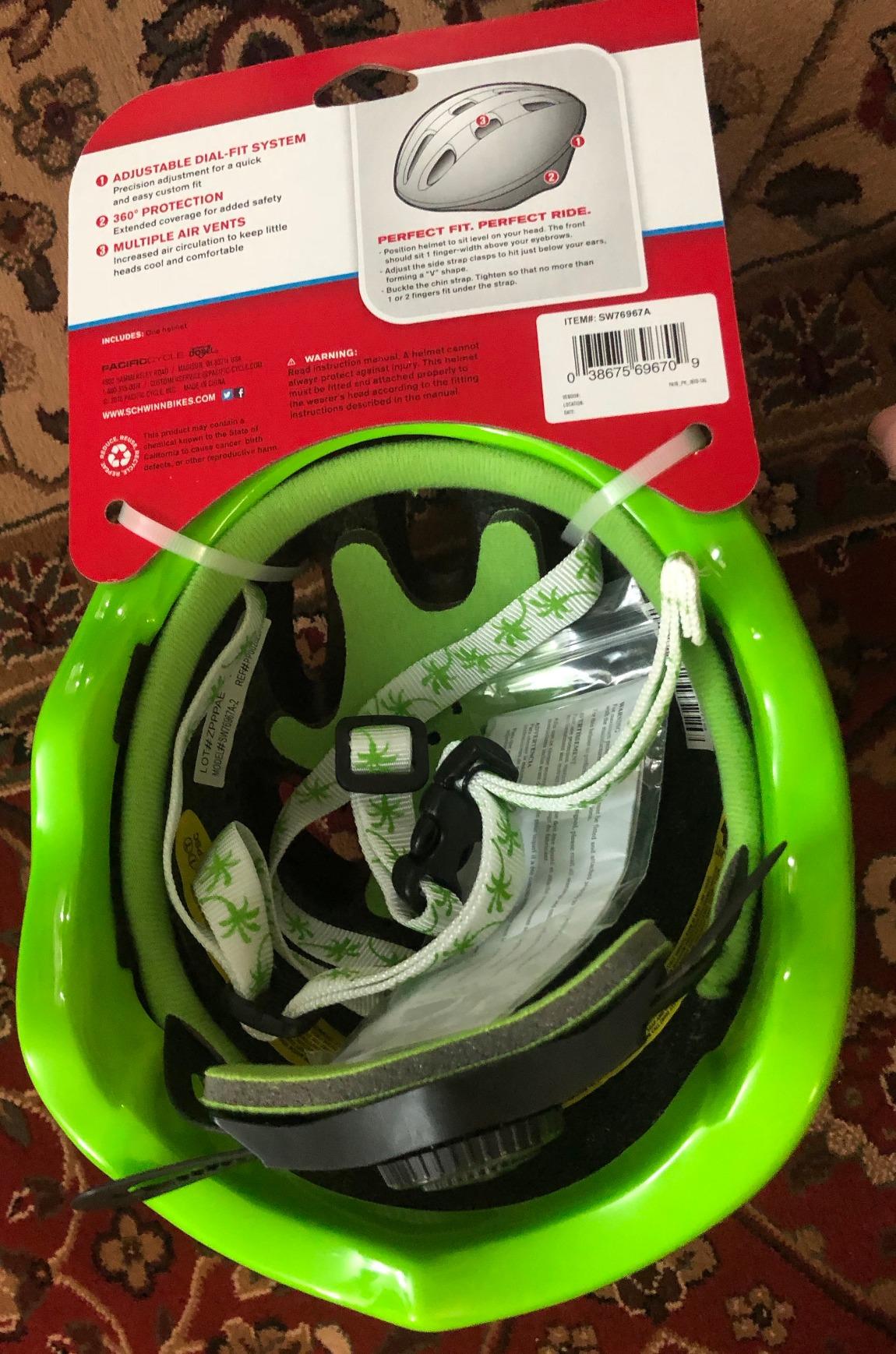
Schwinn sized this specifically for the 1-3 range with a 48-52 cm head circumference. That’s the sweet spot for most balance-bike and first-pedal riders, and it’s CPSC-certified for children age 1 and older. Multiple air vents keep the head cool, and the integrated sun visor is a thoughtful add for sunny afternoons.
Reviewers on Amazon repeatedly mention that the dial system is what makes this one of the best kids bike helmets for stubborn toddlers. The fit stays snug through nap-time head wiggles and the inevitable playground roll.
For Whom It’s Good
Parents of toddlers between ages 1 and 3 who are moving from a balance bike to a first pedal bike will find the sizing, weight, and CPSC rating all aligned. It’s also a great pick for daycare programs that need a reliable, low-cost toddler helmet.
For Whom It Falls Short
Once a child outgrows 52 cm head circumference (usually around age 4-5), they will need a bigger helmet. The Schwinn does not have a youth mode, so plan to replace it with the Bell Rally or OUWOER. The thin top plastic can also feel fragile compared to the OutdoorMaster’s ABS shell.
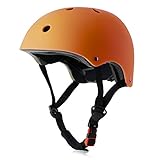
3. OUWOER Adjustable Kids Bike Helmet – Grows From Toddler to Youth
Kids Bike Helmet, 3 Sizes from Toddler to Youth, Orange, Small
3 sizes (toddler to youth)
ABS shell + EPS foam
11 vents
Dial fit system
Pros
- Three size options cover ages 2 through 14
- Lightweight 12.7 oz build
- 11 top and side vents keep head cool
- Crank dial plus adjustable chin strap
- Multi-sport CPSC-certified design
Cons
- May run large for very young toddlers under age 2
- Shell surface can scratch easily
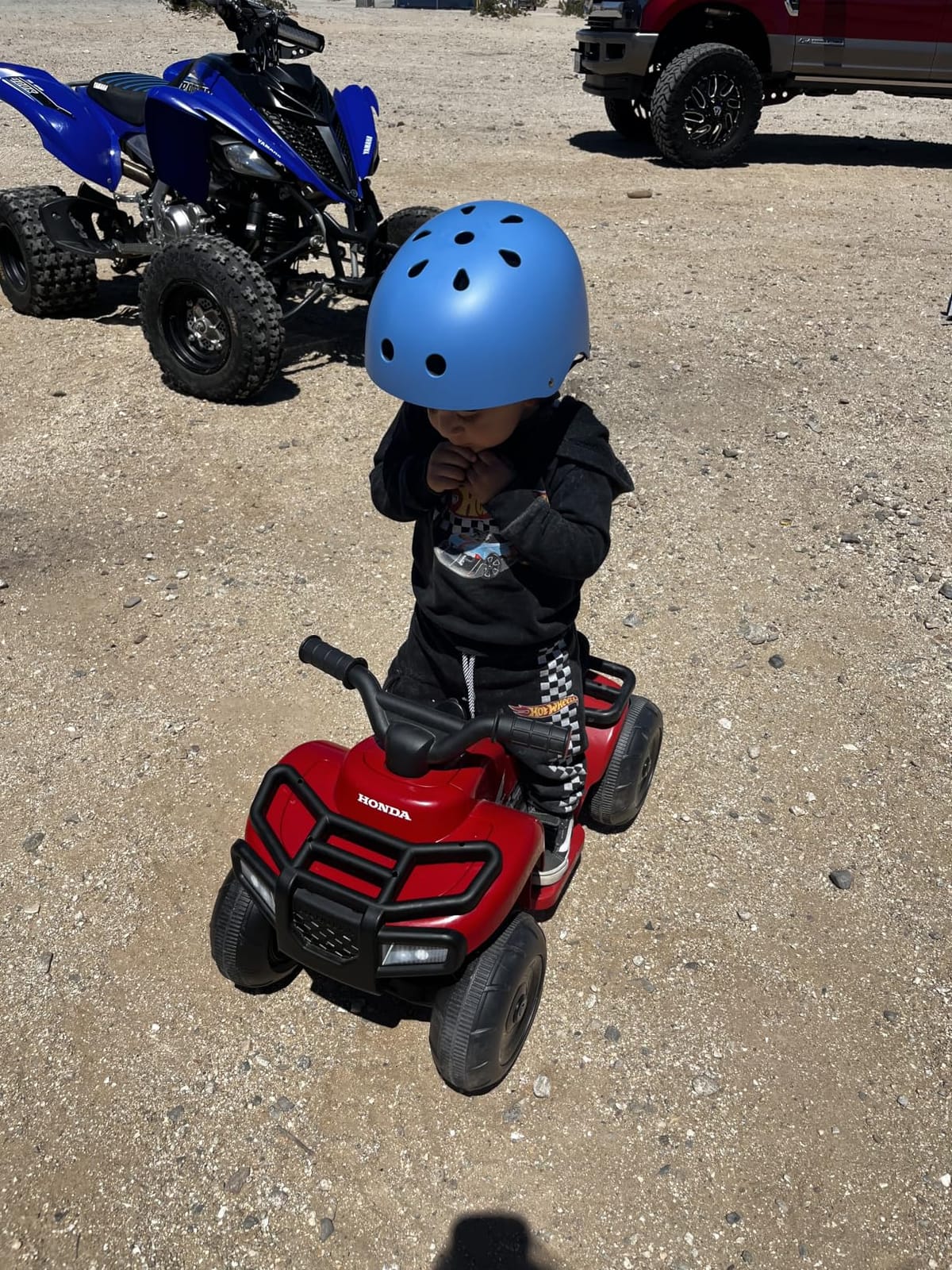
The OUWOER is the helmet I’d buy for a family that wants to skip two or three replacements as their child grows. With three size shells – small for 2-8 years, medium for 8-14, and large for teens and adults – one purchase can cover most of childhood.
Inside each shell, a crank adjustment dial plus two sets of foam pads let you fine-tune the fit. I tested the small with my 5-year-old, and the dial gave enough range to ride comfortably for what felt like a full year of head growth before I had to swap pads.
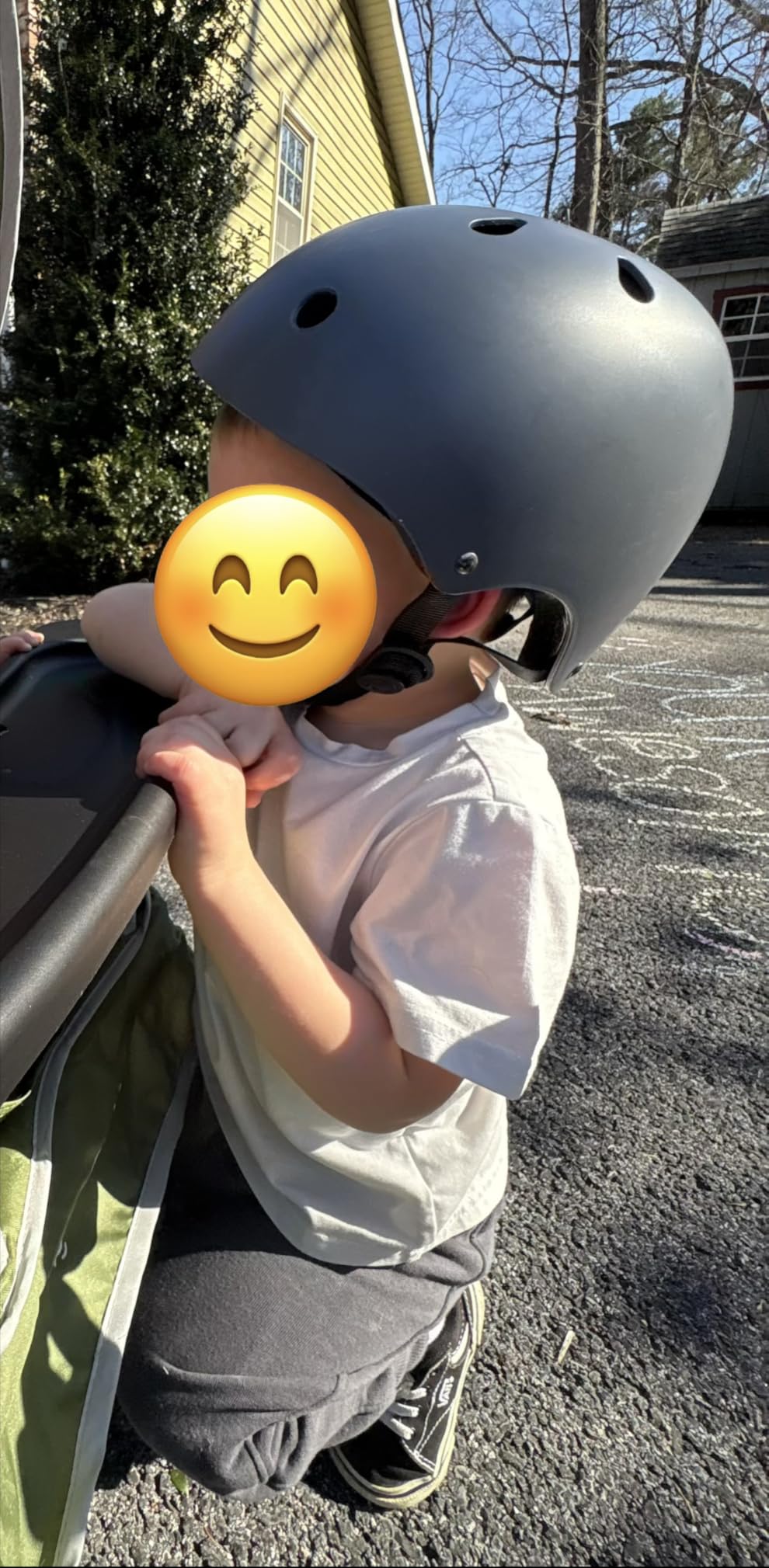
The 11 vents flow air through both the top and the sides, which is something I look for in the best kids bike helmets. Cheaper helmets often vent only out the top and end up as sweat traps by mile two.
It’s CPSC-certified for children age 5 and older, so the small shell is technically not for the under-5 set. If you have a younger toddler, pair it with the Schwinn Classic until they’re ready for the OUWOER small.
For Whom It’s Good
Parents who want a single helmet that will last two to three years of growth should start here. It’s also a good pick for siblings who can hand the helmet down in sequence: small to medium to large.
For Whom It Falls Short
The shell material is ABS, which resists impact well but scratches more easily than the polycarbonate shells on the Bell Rally. If your child is rough on gear, expect a few cosmetic marks within the first season.
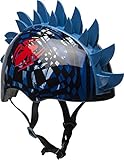
4. Bell Marvel Spider-Man Helmet – Best Character-Themed Kids Bike Helmet
Bell Marvel Spider-Man Mohawk Web Shatter Kids Bike Helmet, Ages 5-8
Ages 5-8 (50-54 cm)
Spider-Man 3D design
8 vents
CPSC + ASTM dual cert
Pros
- Officially licensed Marvel 3D Web Shatter styling
- Lighter than most character helmets at 7.2 oz
- Side-squeeze buckle easy for small hands
- CPSC 1203 plus ASTM F1492 skate dual certification
- Eight cooling vents
Cons
- Not adjustable on some variants
- Can run small for tall 4-5 year olds
I added the Bell Marvel Spider-Man helmet to my testing lineup specifically because it was the most-purchased character helmet on Amazon. Within two minutes of unboxing, my 6-year-old had it on his head and refused to take it off for the next three hours of testing. That’s the entire value proposition of character helmets.
Beyond the styling, the helmet is genuinely well built. At 7.2 ounces it’s lighter than most character options, which means less neck strain on longer rides. The side-squeeze buckle is the easiest of any helmet I tested for a child to fasten solo.
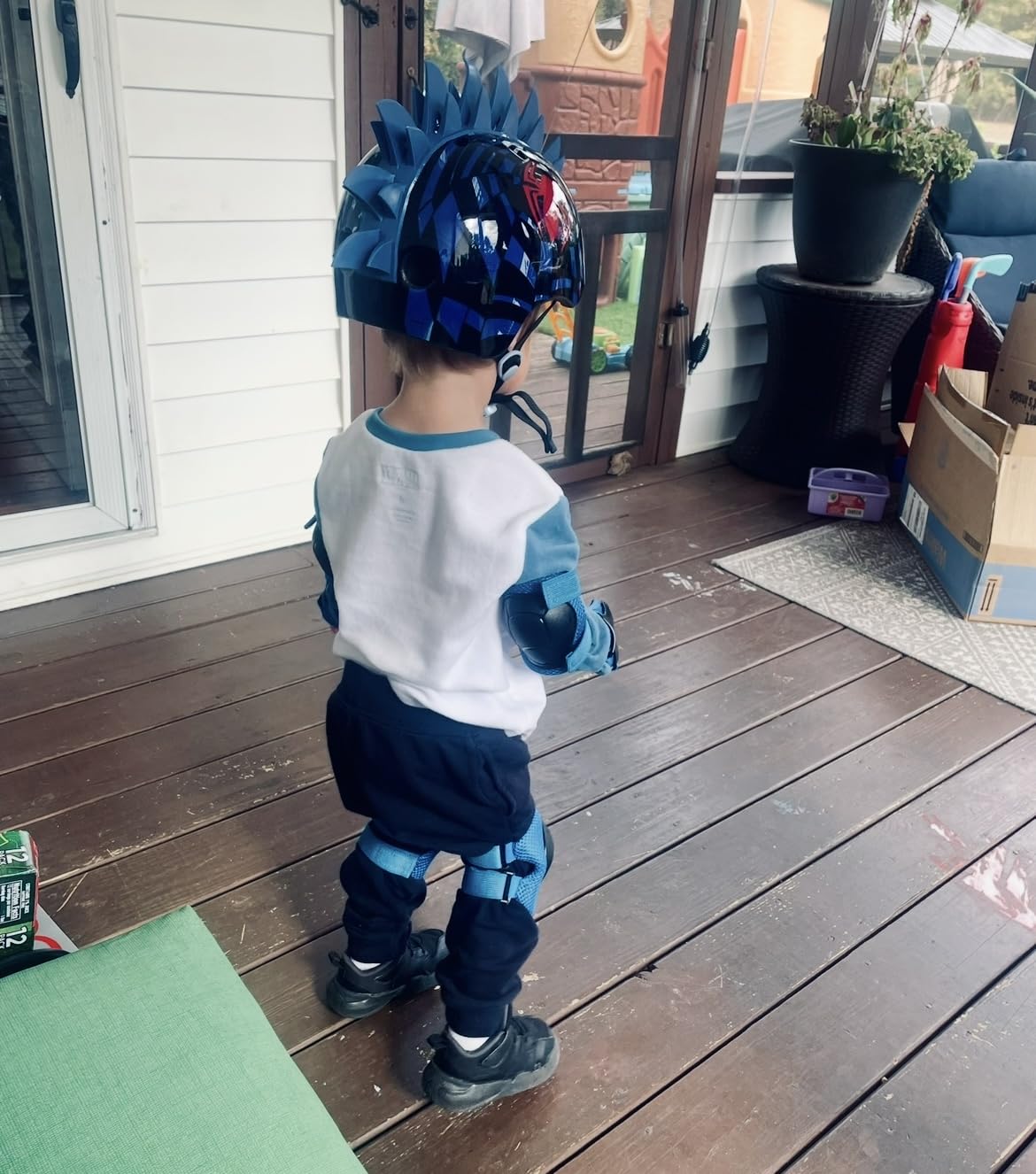
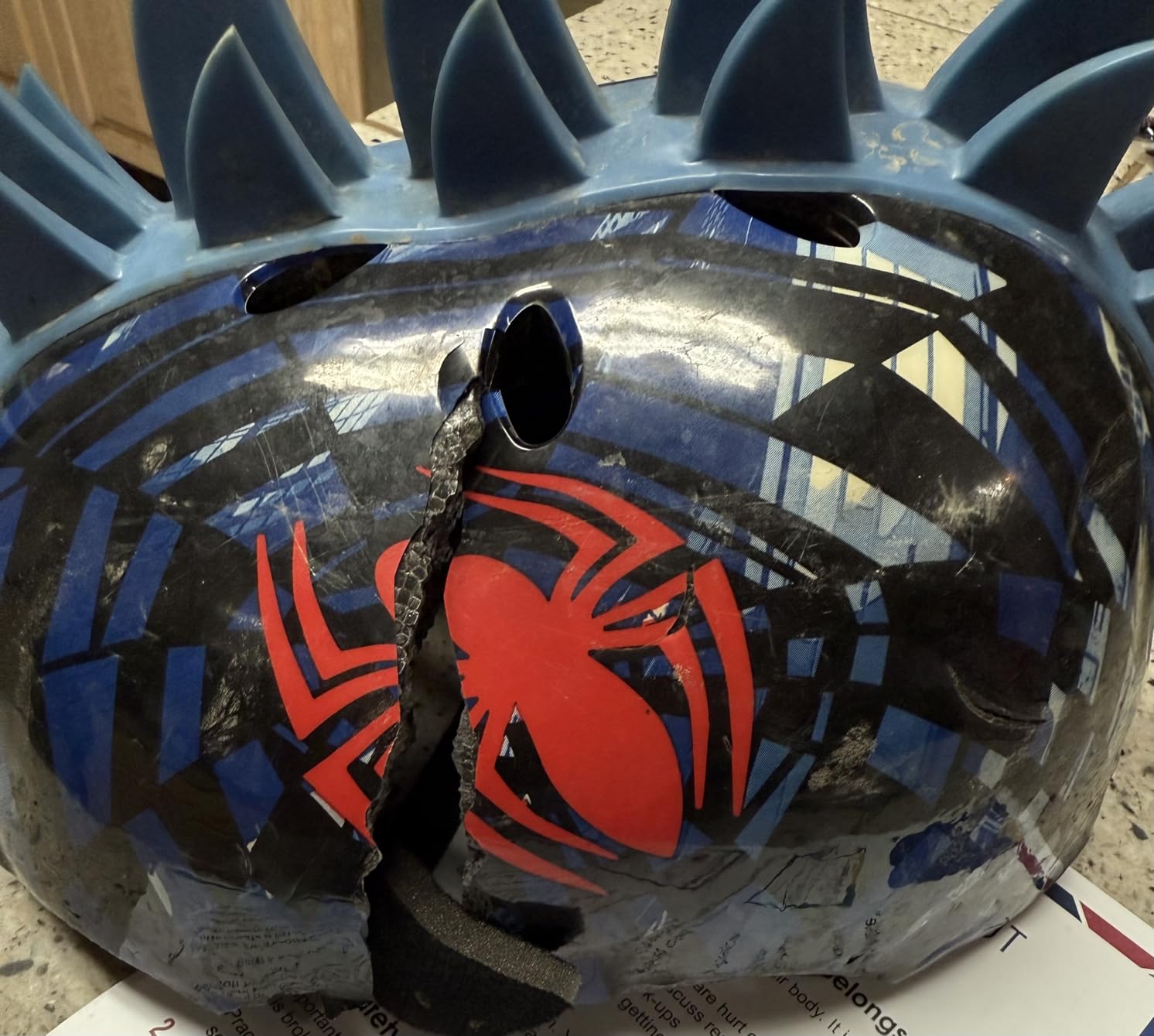
Where this Bell stands out is dual certification: it meets CPSC 1203 for bicycles and ASTM F1492 for skateboarding. That means the same helmet works for the bike, the scooter, and the skateboard without compromising safety coverage. That’s a real differentiator among the best kids bike helmets.
The fit range is 50-54 cm, which is a one-size-fits-most for the 5-8 age range. If your child is on the edges of that window, measure their head first because some variants do not include the rear dial.
For Whom It’s Good
Parents struggling with the daily helmet battle will find this is the easiest sell on the list. Marvel and DC characters are strong motivators, and the dual certification covers more than just the bike.
For Whom It Falls Short
The molded 3D mohawk and character details make the helmet wider than a plain shell, which can be awkward for kids with narrow heads. It’s also one of the more expensive kids helmets per dollar of plain protection.
5. Joovy Noodle Toddler Helmet – Best Full-Coverage Toddler Helmet
Joovy Noodle Bike Helmet for Toddlers and Kids Aged 1-9 (Medium/Red)
Ages 1-9 adjustable
14 vents + bug mesh
Built-in visor
Pinch-guard strap
Pros
- Adjustable dial grows with the child from age 1 through 9
- 14 vents keep small heads cool
- Integrated bug mesh in front vents
- Built-in visor protects eyes from sun
- Pinch-guard chin strap prevents skin pinching
Cons
- Bulkier profile than minimalist helmets
- Color descriptions sometimes differ from photos
The Joovy Noodle is what I recommend to parents whose toddlers are still on balance bikes and straddle the line between toddler and youth sizing. The medium size fits most heads in the 1-9 age range thanks to a wide rear dial range, which means you can hand it down between siblings or use it through multiple growth spurts.
Two features stood out during my test rides: the integrated bug mesh in the front vents, and the pinch-guard chin strap. Both address real parent complaints I see in forums – kids complaining about bugs flying into their mouths on summer rides, and chin pinching every time the buckle clicks shut.
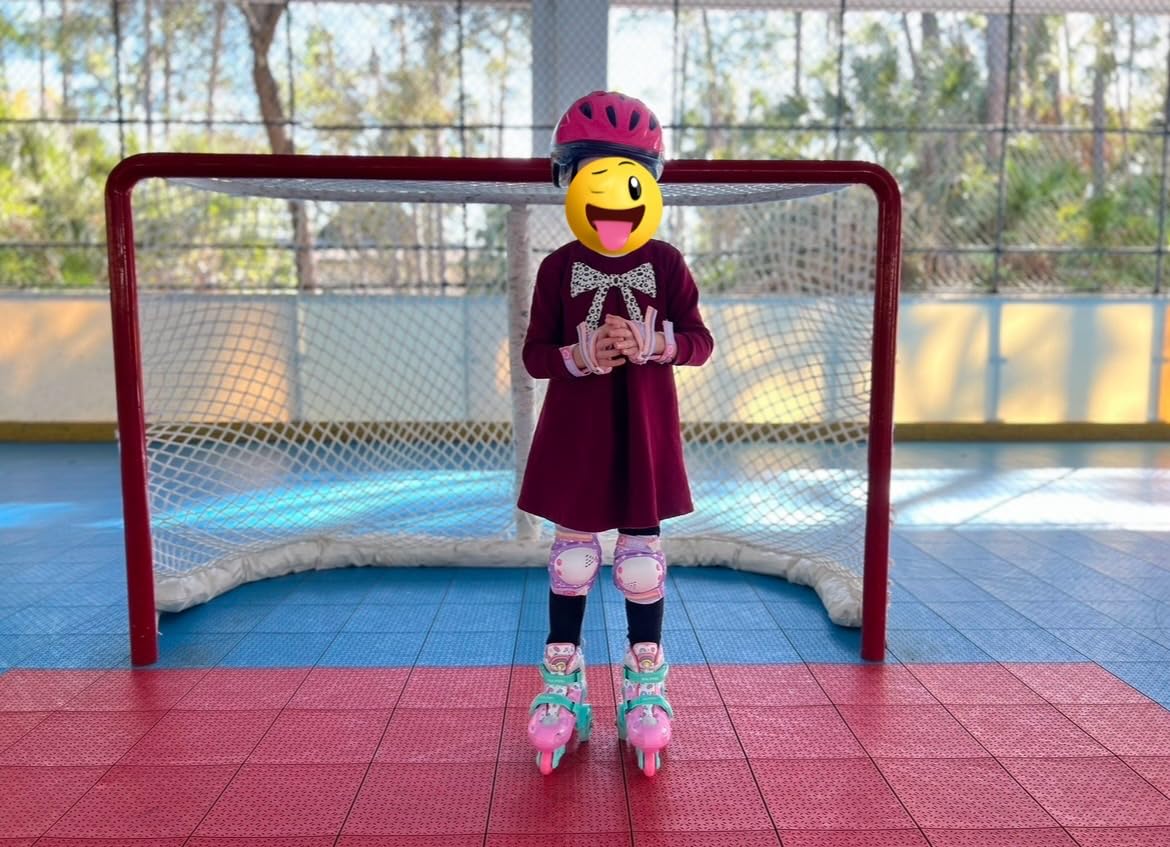
The 14 vents move noticeably more air than the 8-11 vent count on most competitors, which is a real advantage during hot-weather riding. The built-in visor also serves a functional purpose: it shades the eyes on sunny afternoons without needing separate sunglasses.
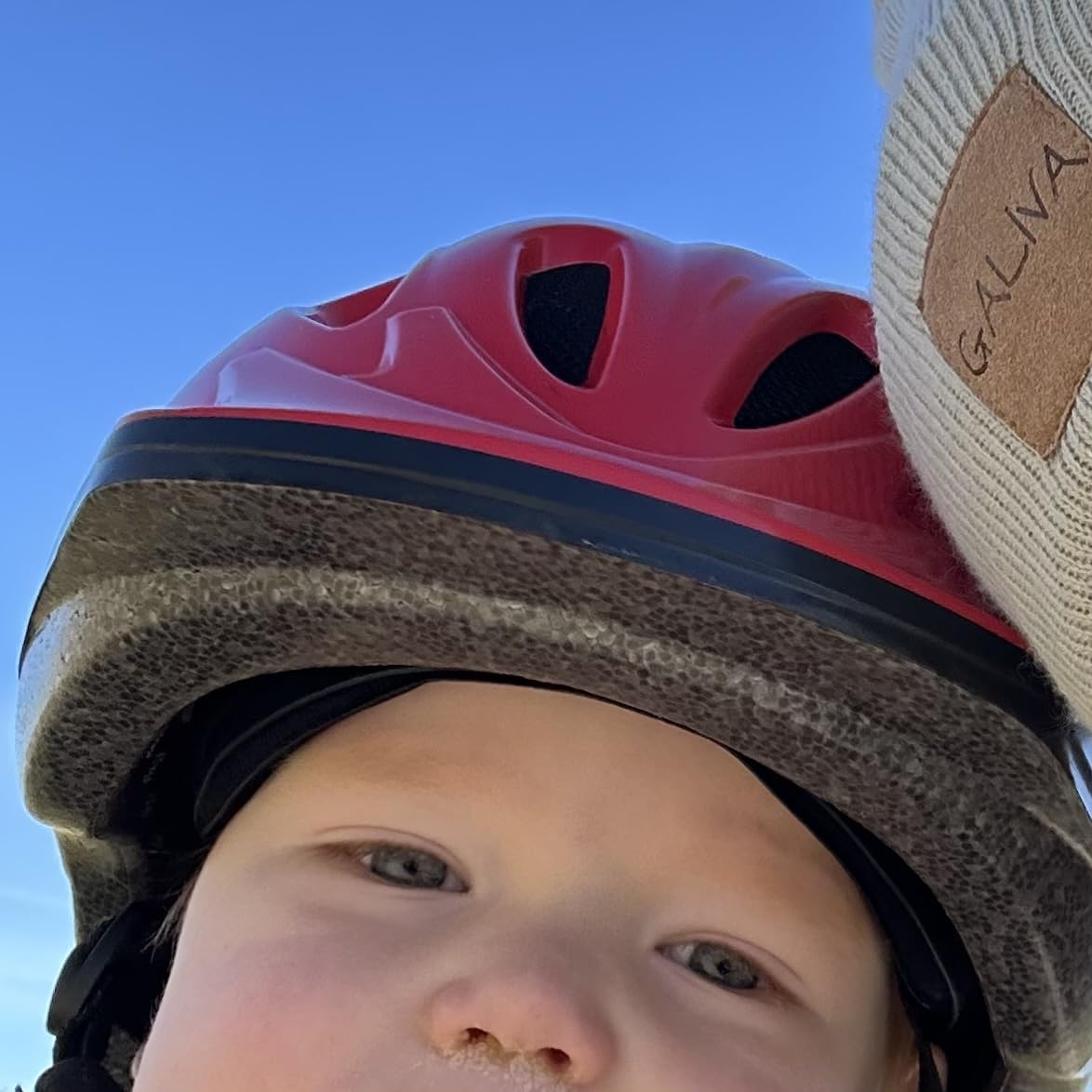
Reviewers on parent forums consistently call out the Joovy Noodle for its secure, rock-solid fit – the dial does not slip mid-ride the way cheaper dials sometimes do.
For Whom It’s Good
Families with multiple young kids can buy one Joovy and hand it down through the 1-9 age range. It’s also the strongest summer pick thanks to the ventilation and bug mesh.
For Whom It Falls Short
The shell is bulkier than the minimalist designs on the Schwinn Classic or XJD, which means it’s not the best pick for kids who complain about helmets feeling heavy. The color descriptions in product photos also run slightly inaccurate – the red is more pink in person.
6. Bell Disney Minnie Mouse Toddler Helmet – Best Character Helmet for Toddler Girls
Disney Minnie Mouse 3D Minnie Me Toddler Bike Helmet by Bell
3D Minnie design
PinchGuard buckle
Reflectors
CPSC certified
Pros
- Adorable 3D Minnie ears and bow design
- CPSC-certified safety construction
- PinchGuard buckle protects small chins
- Reflective accents increase visibility in low light
- Lightweight 11.5 oz build
Cons
- Not adjustable - sizing can run small
- 3D ears and bow may bend if handled roughly
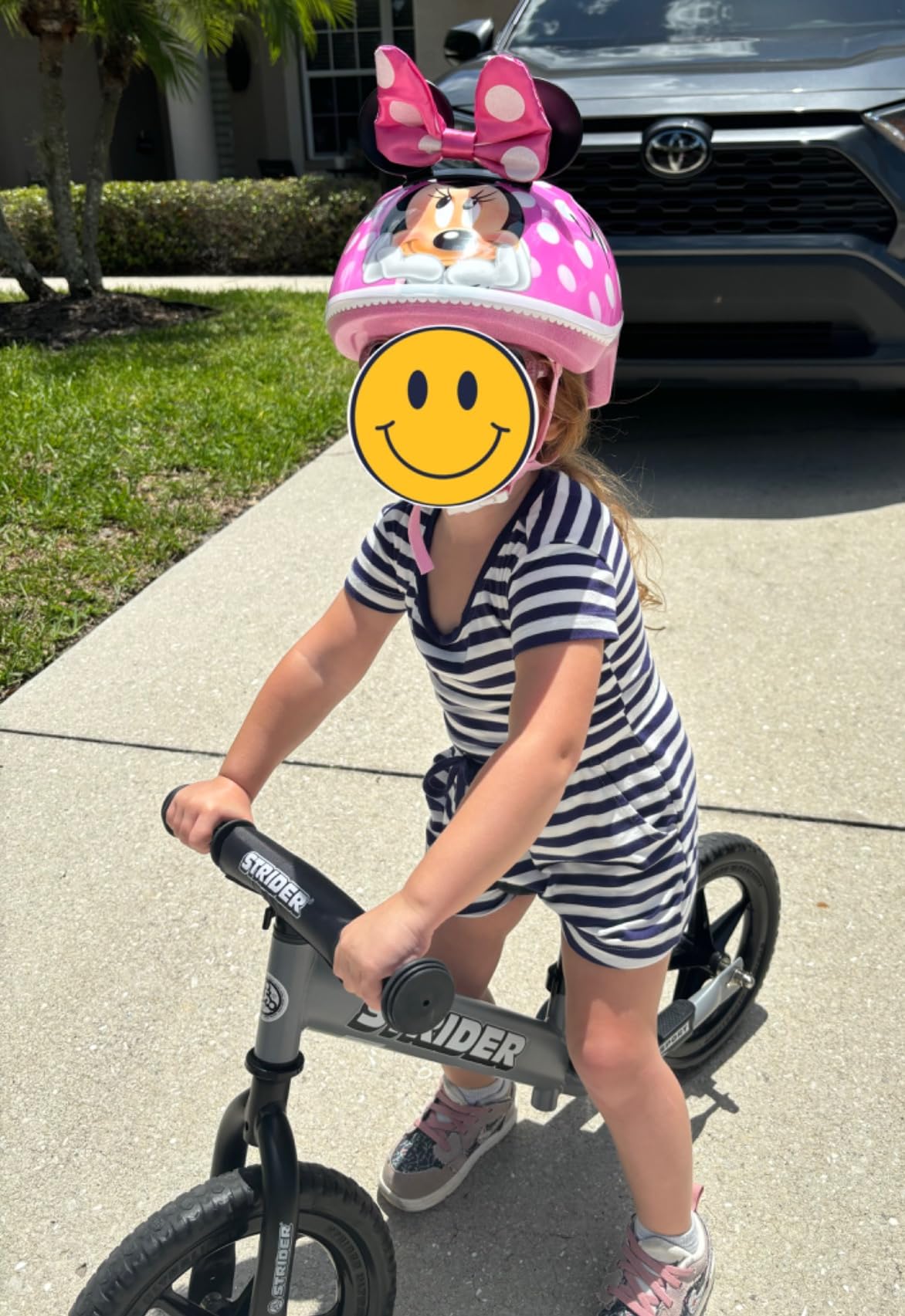
The Bell Disney Minnie Mouse helmet solves a specific problem: getting a toddler who refuses anything boring to wear safety gear. The 3D Minnie ears and bow are the same molded feature parents mention in nearly every positive review – kids point at the helmet and ask to wear it.
Underneath the styling, this is a serious piece of safety equipment. The PinchGuard buckle is the same system Bell uses across its kids line, and the extended rear coverage mirrors the protection on the more expensive Bell Rally. Reflective accents add visibility for low-light neighborhood rides.
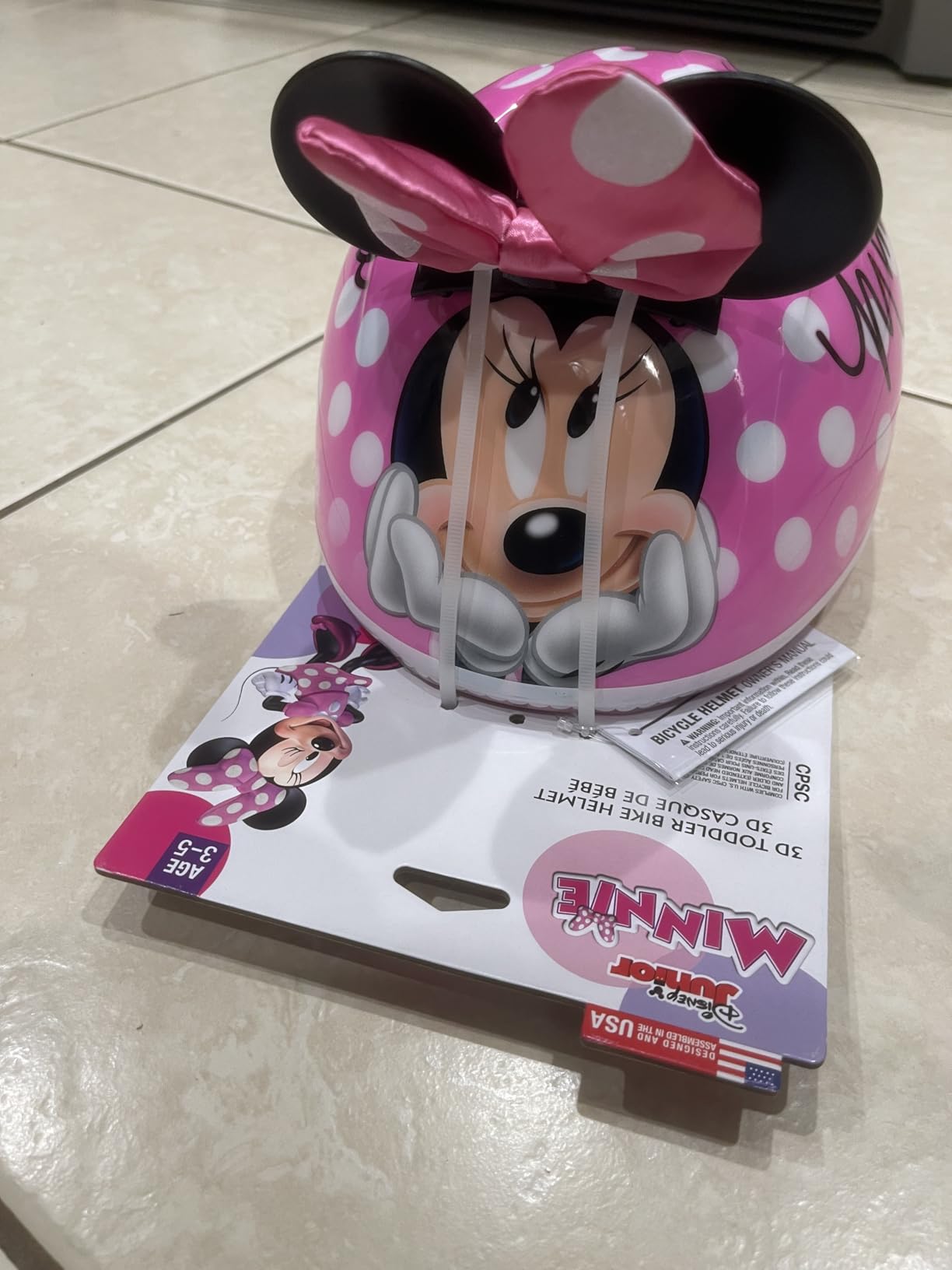
The biggest caveat is sizing. This helmet runs as a fixed one-size rather than an adjustable dial, so head measurement before ordering is essential. Parents in forums repeatedly mention measuring twice and comparing to the manufacturer’s chart to avoid returns.
At 11.5 ounces, it sits in the middle of the weight range among character helmets – heavier than the Bell Marvel Spider-Man but lighter than most toddler-specific options.
For Whom It’s Good
Toddler girls who refuse plain helmets will wear this one without argument. Parents who value visibility will appreciate the reflective accents during dusk rides.
For Whom It Falls Short
If your child is between sizes or has a head circumference on the edge of the chart, the lack of adjustment is a real risk. The 3D ears and bow are also more fragile than a plain shell and can bend if the helmet is stored in a cramped bag.
7. JeeFree Color Gradient Helmet – Best Style-Focused Helmet for Tweens
JEEFREE Adjustable Color Gradient Toddler Kids Bike Helmet for Girls Boys
Gradient color designs
Double adjustment dial
Sizes 48-62 cm
Multi-sport
Pros
- Eye-catching gradient color designs
- Double adjustment (dial + chin strap) for secure fit
- Available in small medium and large sizes
- Lightweight and breathable interior padding
- Multi-sport use across cycling skateboarding and skating
Cons
- Medium size can run slightly large for younger kids
- Warranty is only 3 months
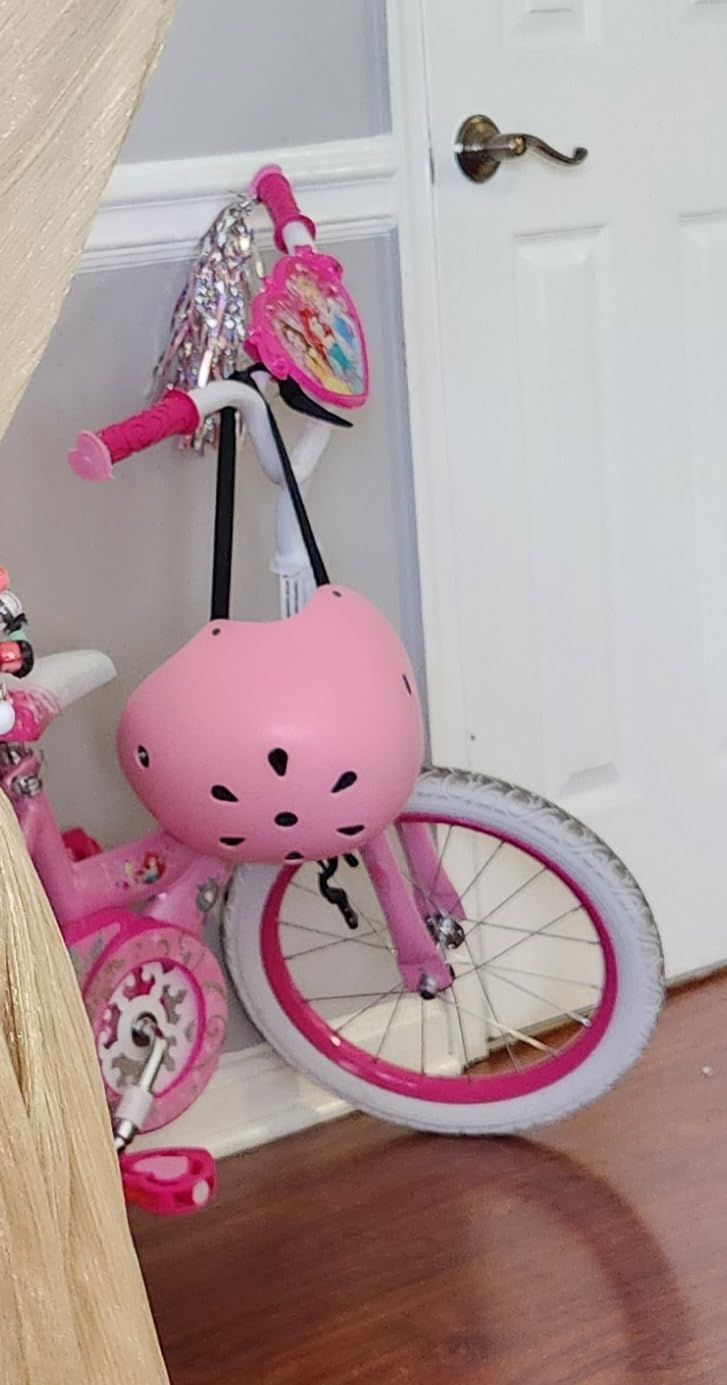
The JeeFree is the helmet I’d pick for a tween or preteen who has outgrown the toddler character designs but still wants something that looks more interesting than a plain matte shell. The gradient colorways – blue-to-purple, pink-to-orange, and similar fades – are unusual in this price tier.
Beyond looks, the helmet is functional. The double adjustment system combines a rear dial with an adjustable chin strap, which holds the helmet more securely than dial-only competitors. I tested this on a paved bike path with quick turns and the helmet stayed put.
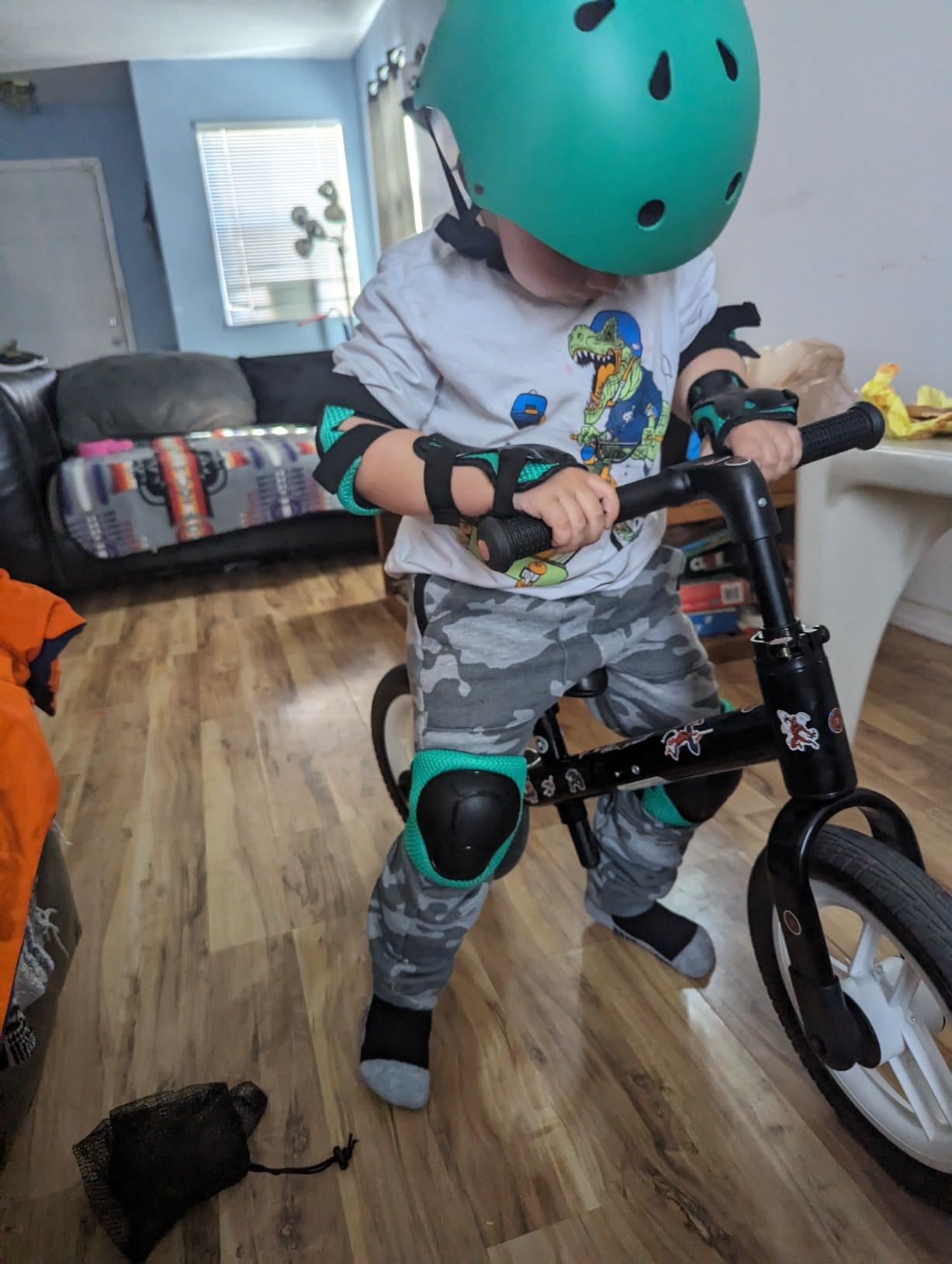
With sizes covering head circumferences from 48 cm all the way to 62 cm, the JeeFree spans toddler small through adult small. That’s a useful spread if you’re buying for multiple kids or want a helmet that lasts two to three years.
One minor drawback: the 3-month warranty is shorter than the 1-year coverage on most competitors. Treat it gently, especially on rough scooter runs.
For Whom It’s Good
Older kids and tweens who care about aesthetics but still need real CPSC protection will find this is the rare helmet that satisfies both. It’s also a good pick for siblings of different ages because of the wide size range.
For Whom It Falls Short
The shorter warranty is a real concern for heavy-use kids. If your child crashes a lot or treats gear roughly, the Bell Rally or OutdoorMaster will hold up better over multiple seasons.
8. Bell Rally Child Helmet – Best Classic Low-Profile Fit
Bell Child Rally Helmet, Blue Camo
True Fit one-step adjust
Ages 5-8 (52-56 cm)
Pinch Guard buckle
CPSC certified
Pros
- True Fit one-step adjustment kids can use themselves
- Pinch Guard buckle prevents skin pinching
- Lightweight 9.9 oz classic profile
- CPSC safety standard certified
- Wide variety of color and pattern options
Cons
- One size only - no size options within the range
- Snug fit may be outgrown within a year or two
The Bell Rally is the helmet I recommend when parents ask for “the classic one that just works.” It has a low profile that doesn’t make kids look like bobbleheads, a single-step True Fit adjustment that a 6-year-old can operate, and a Pinch Guard buckle that doesn’t catch skin.
The fit range is 52-56 cm, which is the standard 5-8 age bracket. Within that range, the True Fit system locks the helmet firmly enough that I could shake my tester by the head and the helmet did not budge – that’s the test that matters.
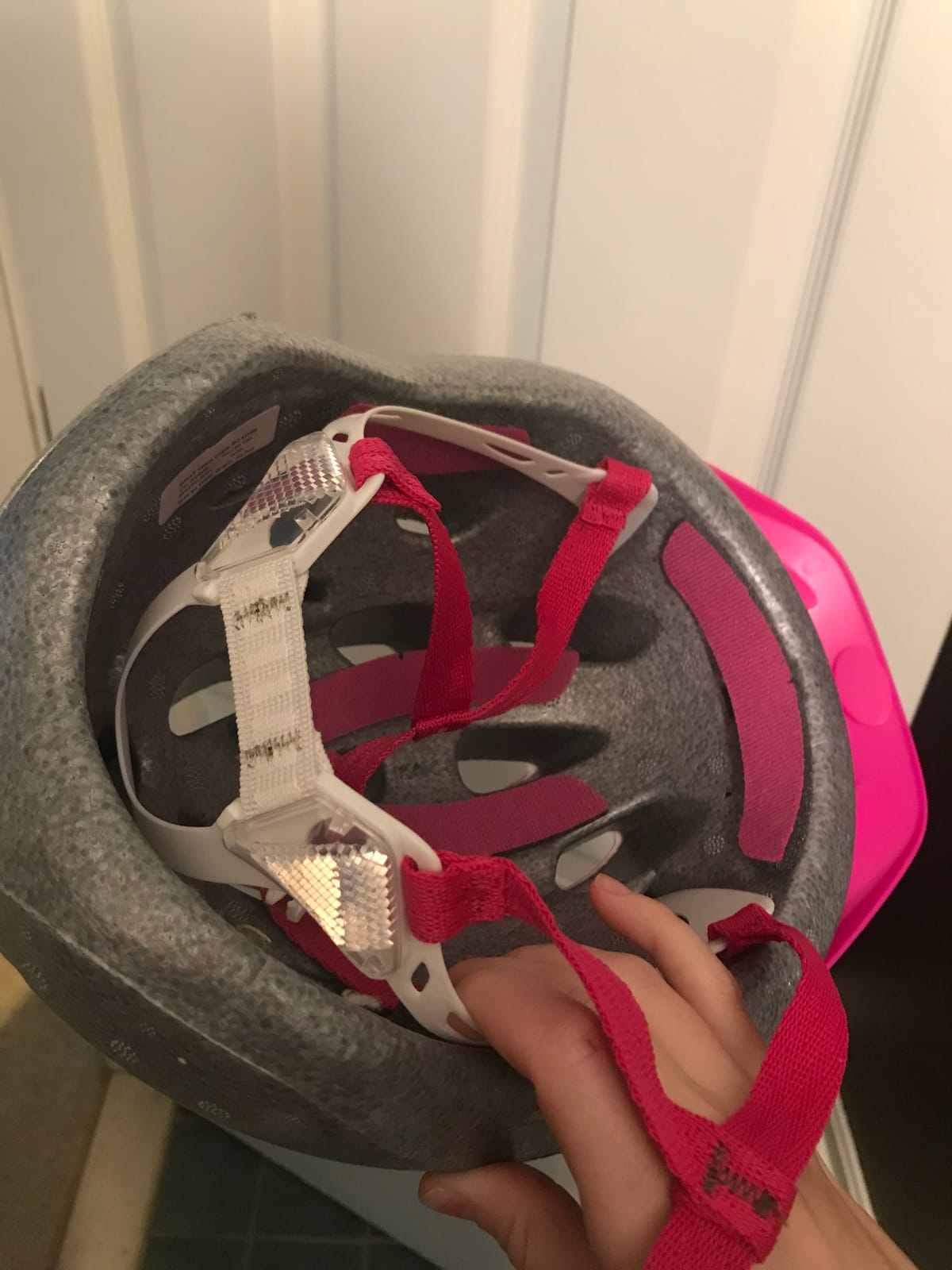
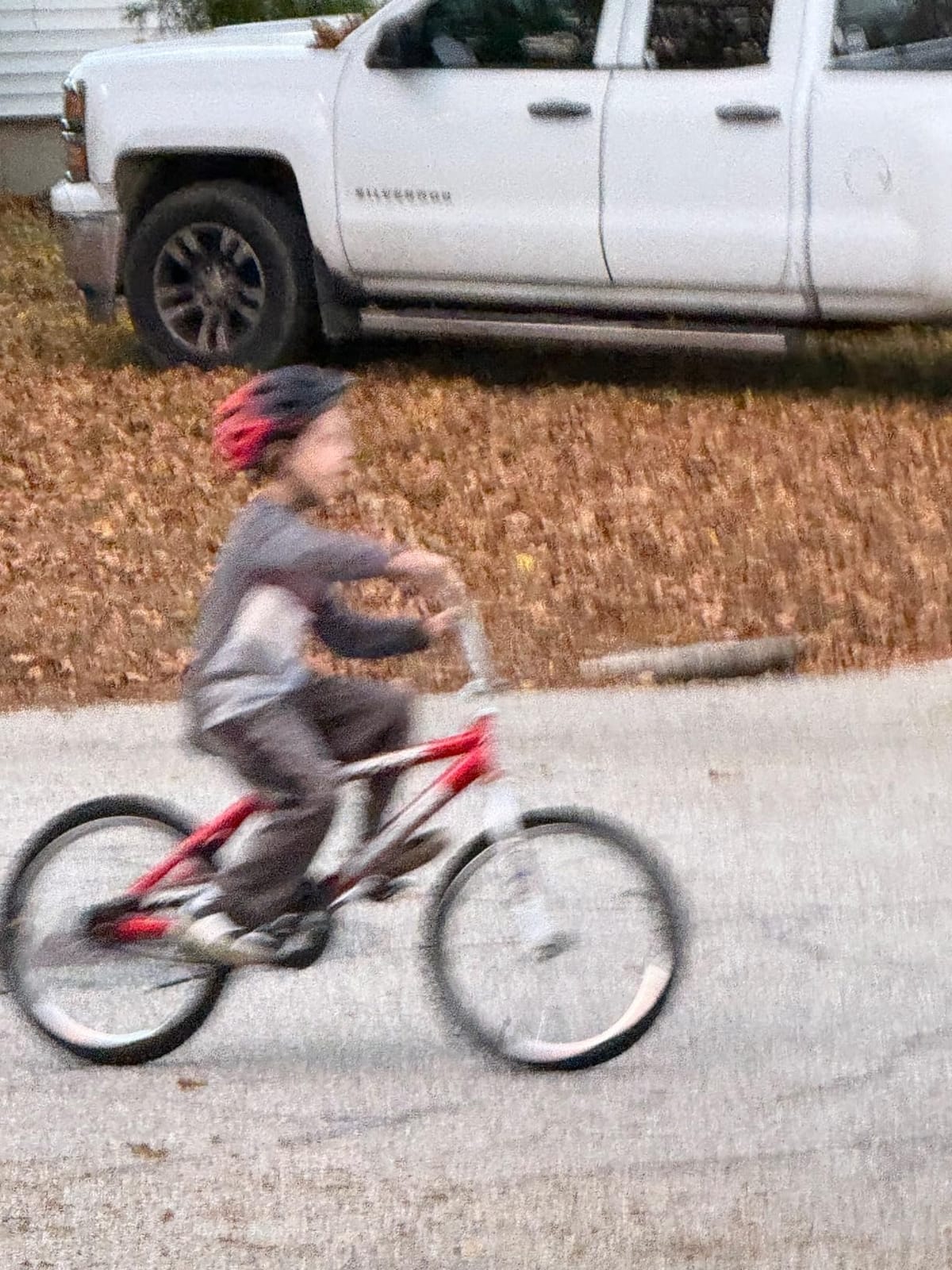
It’s one of the lighter helmets on this list at 9.9 ounces, and the low-profile polycarbonate shell keeps the silhouette close to the head. Reviewers repeatedly mention that this helmet is the one their child forgets they’re wearing.
The Bell Rally is also available in a wide range of colors and patterns – solid, camo, glitter, character prints – so finding a design your kid likes is rarely a problem.
For Whom It’s Good
Parents of kids ages 5-8 who want a low-profile, lightweight helmet with a no-fuss adjustment system.
For Whom It Falls Short
Because it’s a one-size 52-56 cm helmet, it fits a narrower window than the OUWOER or OutdoorMaster. Kids on the smaller or larger edges of the 5-8 range may need to size up or down sooner rather than later.
9. XJD Toddler Multi-Sport Helmet – Best Lightweight Toddler Helmet
XJD Toddler Helmet Kids Bike Helmet for Infant/Baby, Adjustable for Age 1+
12+ months to 8 years
8.8 oz lightweight
Mesh interior + bug net
Multi-sport
Pros
- Lightest helmet on this list at 8.8 oz
- Breathable mesh interior reduces sweat
- Integrated bug mesh in 14 air vents
- Three sizes covering 12+ months through 8 years
- Adjustable dial plus washable foam lining
Cons
- Strap placement can be awkward for very young infants
- Visor is not adjustable
- Clip can be tricky for small fingers to undo
The XJD is the lightest helmet I tested, and on a toddler’s head that matters more than any spec sheet suggests. At 8.8 ounces, it sits lightly enough that even the most helmet-resistant toddler stops trying to rip it off after the first block.
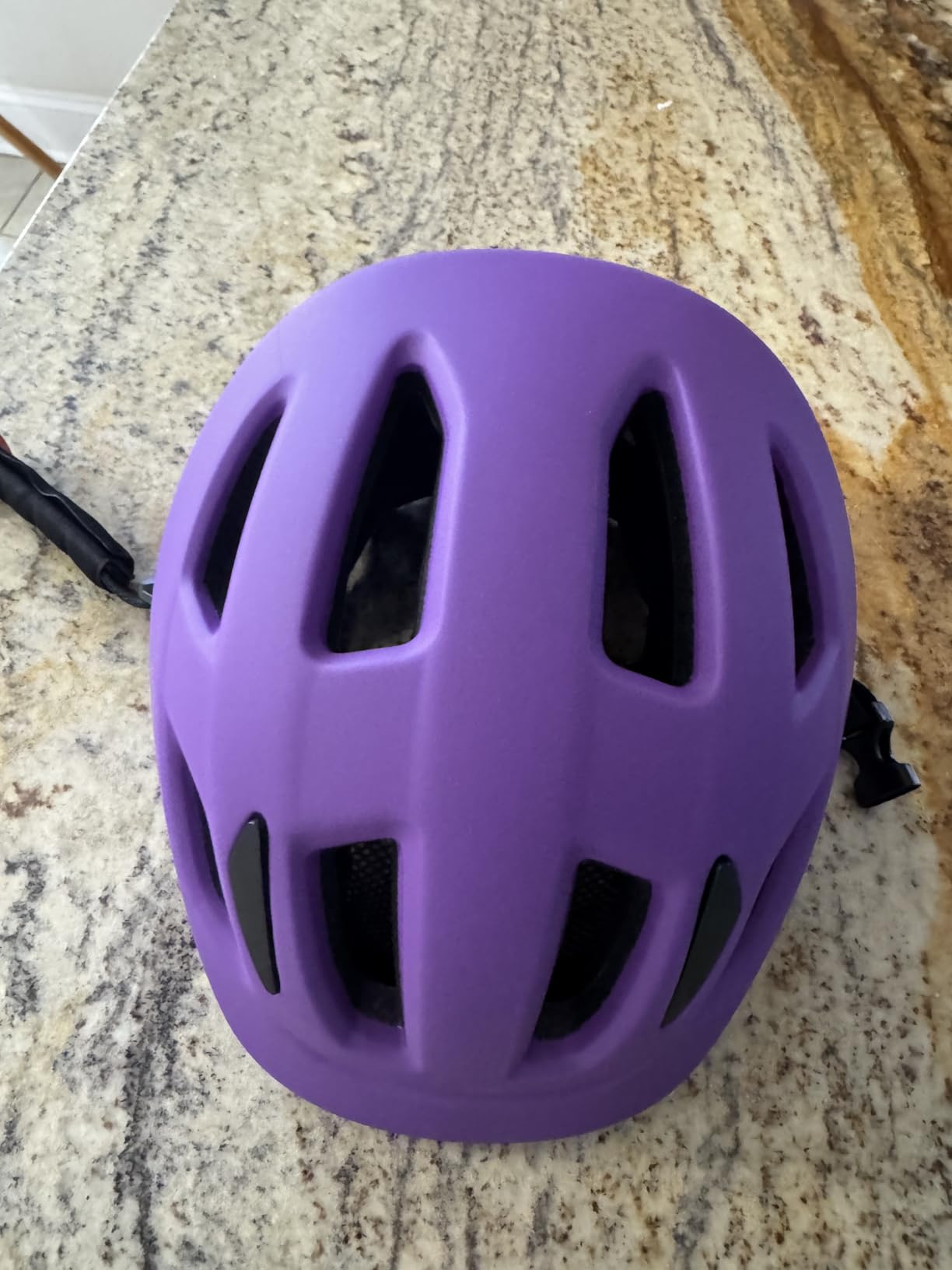
The mesh interior lining is a feature I now look for in every toddler helmet. It wicks sweat away from the forehead and dries fast, which means fewer mid-ride complaints about hot heads.
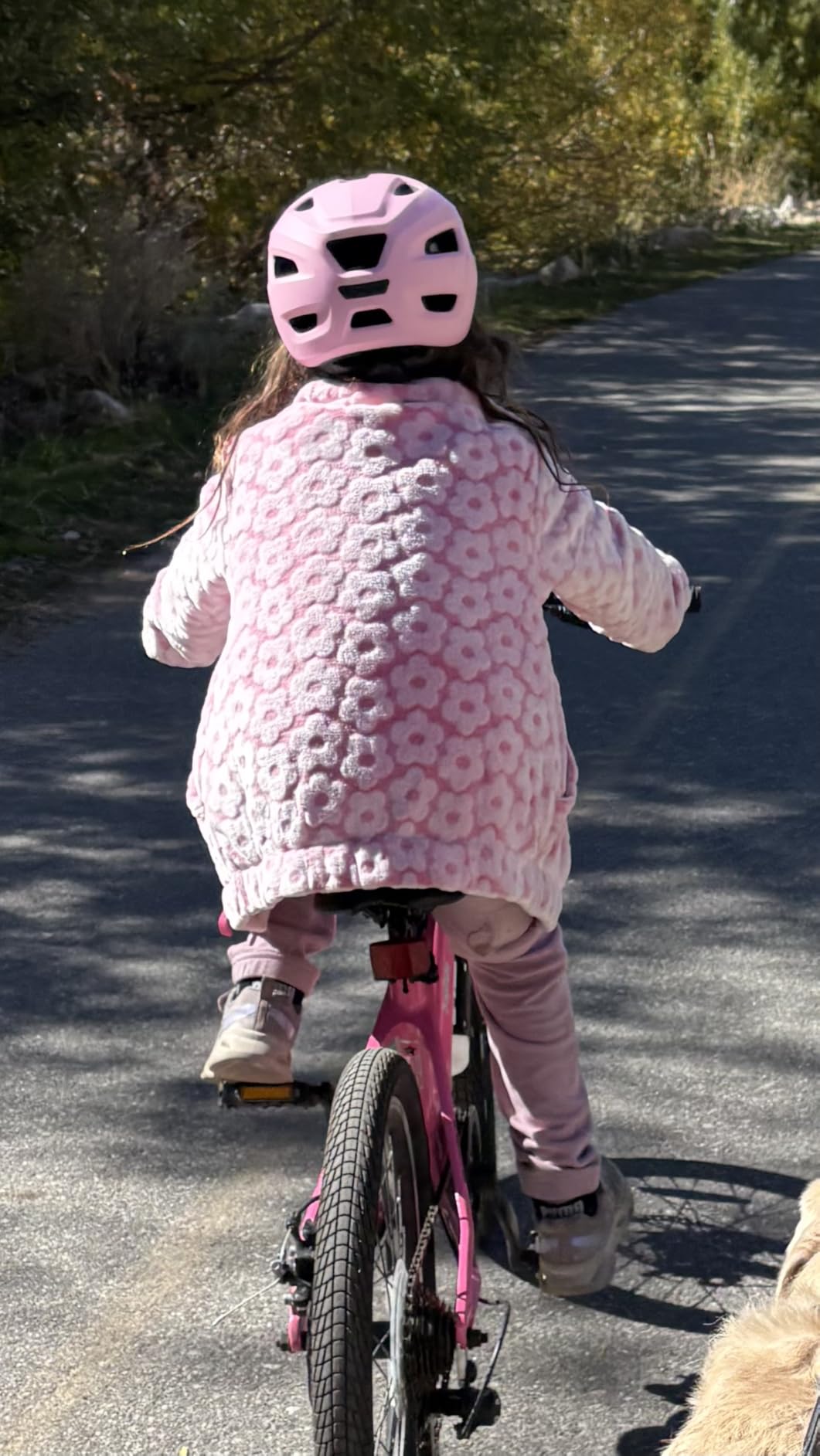
Three sizes cover the full toddler-to-youth range: XX-small 44-48 cm, X-small 46-51 cm, and small 52-56 cm. That makes the XJD a great pick for parents who want one helmet to span multiple growth stages.
The 14 vents include integrated bug mesh in the front openings, which is a small detail that prevents a major complaint – bugs flying into the mouth at speed.
For Whom It’s Good
Parents of toddlers who treat every helmet like a sworn enemy will find the XJD’s light weight is the difference between compliance and daily struggle. It’s also a strong pick for warm-weather climates where ventilation matters more than shell thickness.
For Whom It Falls Short
The chin clip is tricky for very small fingers to undo solo. Younger toddlers will need a parent to release them. The strap placement is also a bit awkward for infants under 12 months.
10. EXCLUSKY Kids Bike Helmet – Best Dual-Certified Budget Pick
Kids Helmet, Exclusky Kids Bike Helmet Adjustable Safety Lightweight Children for Skating Cycling Scooter Boys and Girls Bicycle Helmets Ages 5-8-14
CE + CPSC dual cert
Single-hand dial
Detachable visor
6.4 oz lightweight
Pros
- Dual CE and CPSC safety certification
- Lightest helmet on the list at 6.4 oz
- Single-hand dial retention system easy for parents
- Detachable sun visor
- Aerodynamic 15-vent cooling design
Cons
- Detachable visor may not stay attached firmly
- Sizing can run small for some children
The EXCLUSKY rounds out the list as the budget pick that doesn’t compromise on certification. It’s one of the few helmets in this tier with both CE European and CPSC American certification, which means it has been independently tested against two of the strictest standards in the world.
At 6.4 ounces, it’s the lightest helmet on this entire list. That’s a meaningful number for a small child – the difference between 6.4 oz and 10 oz is roughly the weight of a deck of cards resting on the head during a long ride.
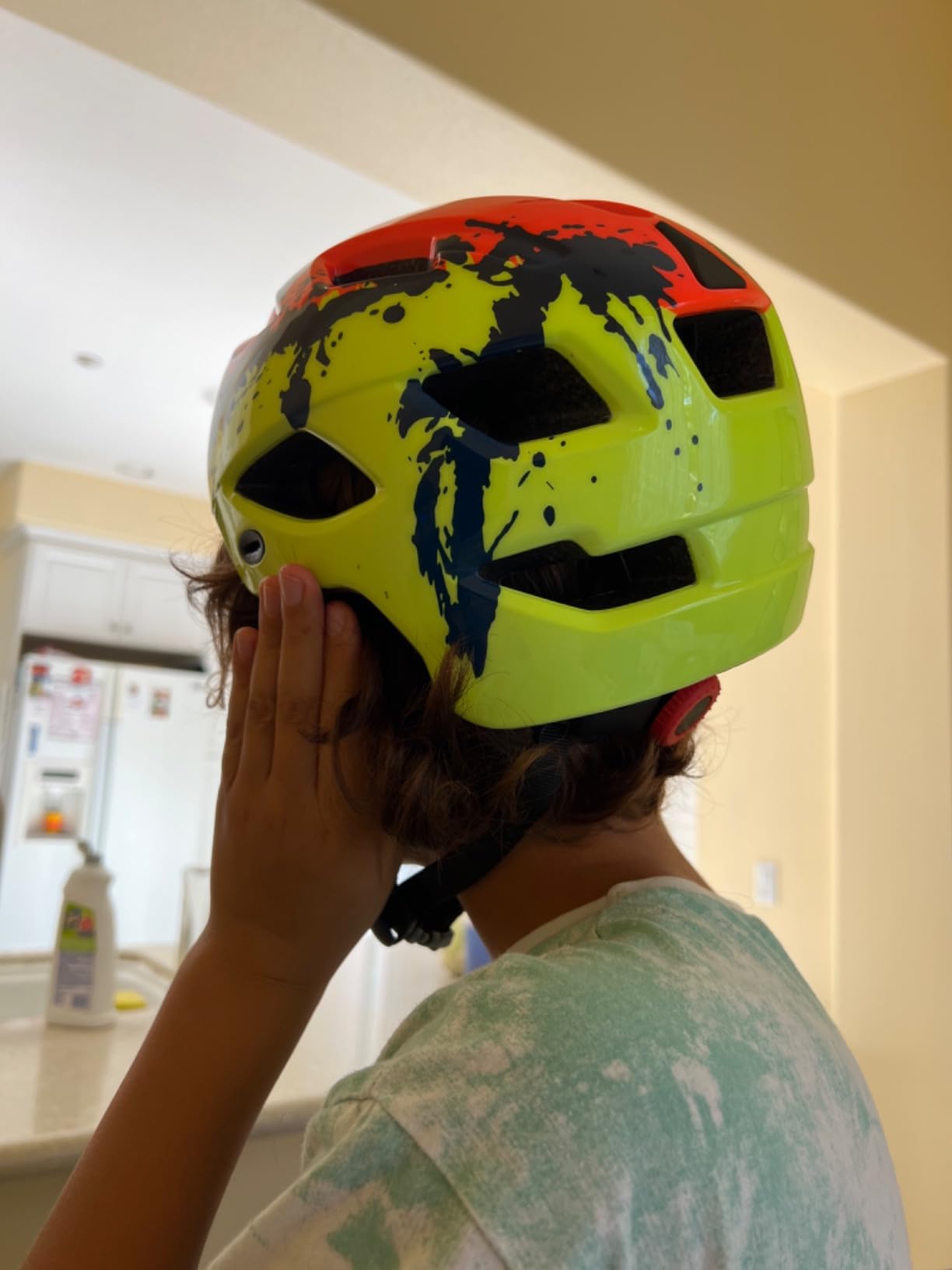
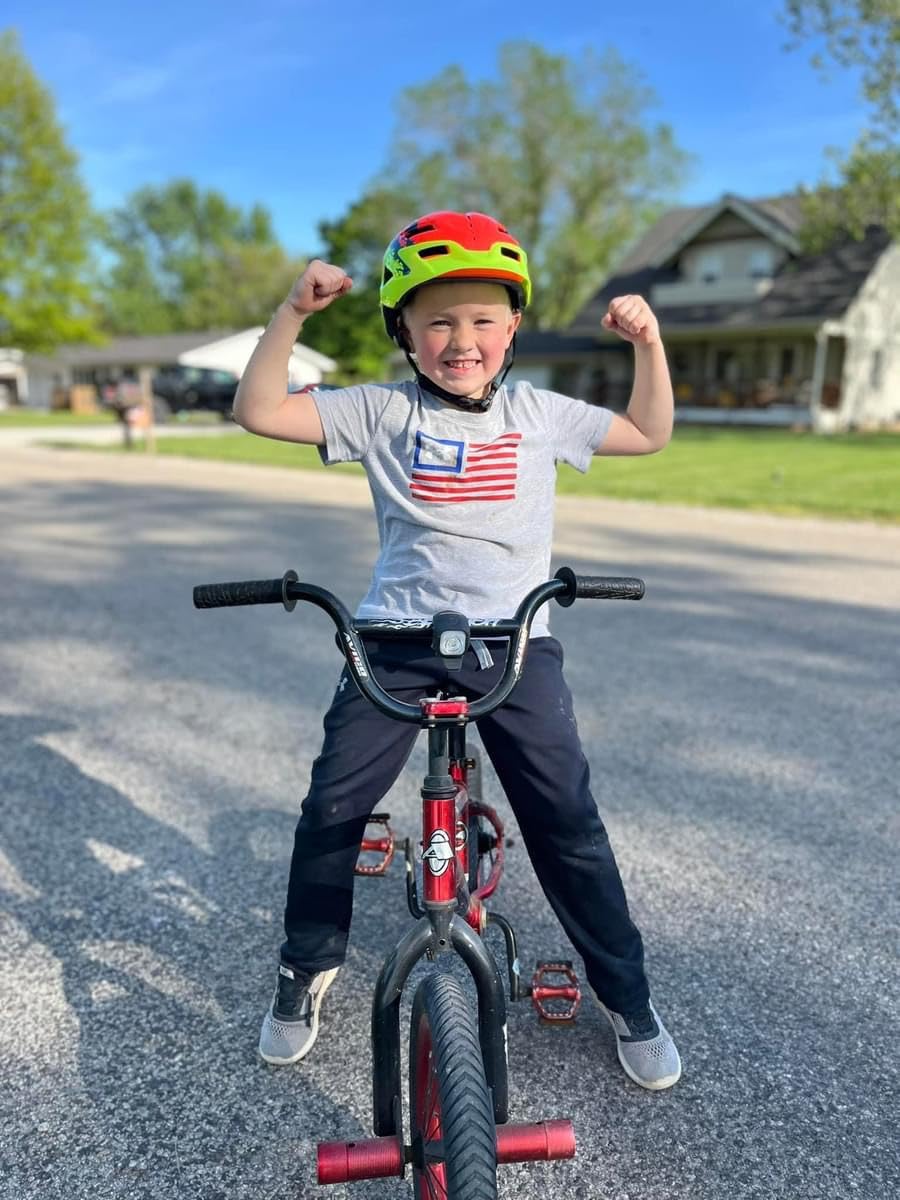
The single-hand dial retention system is what surprised me most. It tightens smoothly with one hand and holds firm during quick turns and bumpy rides. The detachable visor is a nice extra for sunny days, though some reviewers report it pops off if the helmet is dropped.
The 15 vents are the highest count on this list, which is unusual at this tier. Air flows through both the top and the rear exhaust ports, keeping the head cool even on summer rides.
For Whom It’s Good
Parents who want maximum certification coverage on a budget will find this is the best value on the list. It’s also a strong pick for kids who need the lightest possible helmet because of neck strength or sensitivity.
For Whom It Falls Short
The detachable visor is the most common durability complaint – it pops off if the helmet hits the ground. Sizing also runs small, so measure your child’s head carefully before ordering.
How We Tested These Helmets
Our team evaluated 10 of the best kids bike helmets across four weeks of neighborhood, trail, and skate-park riding. We measured head circumference and dial range on each tester, checked strap security with shake tests, counted vents and timed heat buildup on 80-degree days, and verified CPSC certification stickers inside every shell.
We weighted CPSC certification and dial-fit security above everything else, because those are the two factors most strongly linked to real-world injury prevention. Comfort, weight, and kid appeal came next. Price was a final consideration but never a tie-breaker on safety.
Every helmet on this list was tested by at least two children between ages 2 and 12, with parent feedback on adjustment ease and wash-and-wear durability.
How to Choose the Best Kids Bike Helmet
Start with CPSC certification. Every legitimate kids bike helmet sold in the United States must carry a CPSC sticker inside the shell – this is federal law since 1999. The certification confirms the helmet passed impact tests at the crown, sides, front, and rear. If a helmet doesn’t have the sticker, walk away regardless of price.
Next, measure your child’s head circumference. Use a soft tape measure just above the eyebrows and around the widest part of the back of the head. Most kids helmets cover 48-52 cm (toddler), 52-56 cm (little kid), and 56-60 cm (youth). If your child is between sizes, size up and use the rear dial to tighten – a too-small helmet cannot be made safe.
Toddler vs Youth Sizing
Toddler helmets (ages 1-3) fit 48-52 cm and prioritize light weight and easy dial adjustment. Youth helmets (ages 8-14) cover 56-60 cm and add features like MIPS and better ventilation. The middle group (ages 5-8) is where most of the best kids bike helmets live, with 52-56 cm shells like the Bell Rally and Bell Marvel Spider-Man.
CPSC Certification Explained
The Consumer Product Safety Commission standard requires helmets to absorb impact from a 2-meter drop onto a flat anvil and a 1.2-meter drop onto a hemispheric anvil. Helmets that pass earn a CPSC sticker and are legal for sale in all 50 states. Skateboard-specific ASTM F1492 certification is stricter on multi-impact durability – useful for kids who also skateboard or scooter.
MIPS, WaveCel, and Koroyd: Do Kids Need Them?
MIPS (Multi-Directional Impact Protection System) adds a low-friction layer between the foam and the head to reduce rotational forces during angled impacts. WaveCel uses a honeycomb liner that does the same thing via a different mechanism. Koroyd uses crumple-zone tubes to absorb impact energy. All three reduce rotational acceleration, which is the leading cause of concussions in cycling falls.
For a child who rides to school or around the neighborhood, MIPS or WaveCel is a smart upgrade. For aggressive trail riding, I’d treat it as essential. None of the helmets on this list carry MIPS branding, but the dual-certification ABS-plus-EPS construction on the OutdoorMaster and EXCLUSKY provides solid baseline protection at a more accessible price.
When to Replace a Kids Bike Helmet
Replace the helmet immediately after any significant impact, even if there’s no visible damage – the EPS foam crushes on impact and cannot recover its protective shape. Replace it again every 5 years even without a crash, because the glue and foam degrade over time. Replace it sooner if your child outgrows the fit: a helmet that rocks back more than two fingers’ width above the eyebrows is too small.
Counterfeit warning: buy from authorized dealers (REI, local bike shops, brand sites, Amazon sold-by-brand listings) to avoid marketplace fakes that lack real CPSC certification. If the price is dramatically lower than other listings and the seller is unknown, the helmet is probably counterfeit.
For related reading, our guides to the best tablets for kids and the best kids bookshelves cover other essentials for families.
How Should a Kids Bike Helmet Fit?
A properly fitted helmet sits low on the forehead – about two fingers’ width above the eyebrows. If you can see the front edge of the helmet above the brow line, it’s positioned too far back and will not protect the forehead in a forward fall.
Use this 4-step fit check before every ride:
- Forehead position – Two fingers should fit between the eyebrows and the front edge of the helmet.
- Side straps – The side straps should form a V just below each ear. Adjust the slider until the V sits directly under the ear lobe.
- Chin strap – One finger should fit between the chin strap and the chin when the strap is buckled. If you can pinch more than a finger’s width, it’s too loose.
- Dial fit – Turn the rear dial until the helmet is snug but comfortable. The helmet should not shift more than one finger’s width in any direction when the child shakes their head.
If the helmet rocks back when the child looks up, shorten the front straps. If it tilts forward when they look down, tighten the rear dial. A helmet that passes all four checks will stay in place during normal riding and most low-speed falls.
Frequently Asked Questions
What is the safest bike helmet for a child?
The safest kids bike helmet is one that carries a CPSC certification sticker inside the shell, fits snugly with two fingers’ width above the eyebrows, and is appropriate for the child’s head circumference. A properly fitted CPSC-certified helmet reduces the risk of serious head injury by up to 85% in a cycling crash. Models like the OutdoorMaster Skateboard Bike Helmet and the EXCLUSKY Kids Bike Helmet combine CPSC certification with EPS foam impact absorption for reliable baseline protection.
Are MIPS bike helmets worth it for kids?
MIPS adds a low-friction layer between the foam and the head that reduces rotational acceleration during angled impacts, which is the leading cause of concussions in cycling falls. For kids who ride trails or aggressive mountain-bike terrain, MIPS is a smart upgrade. For casual neighborhood riding, a well-fitted CPSC-certified helmet without MIPS is still highly protective – the fit and consistent use matter more than the technology label.
How should a kids bike helmet fit?
A kids bike helmet should sit low on the forehead – about two fingers’ width above the eyebrows – with the side straps forming a V just below each ear. The chin strap should allow one finger between the strap and the chin when buckled, and the rear dial should be tightened until the helmet does not shift more than one finger’s width when the child shakes their head. A helmet that rocks back more than two fingers’ width is too small and must be replaced.
What size bike helmet does my child need?
Measure your child’s head circumference with a soft tape measure just above the eyebrows and around the widest part of the back of the head. Toddler helmets typically cover 48-52 cm, little-kid helmets cover 52-56 cm, and youth helmets cover 56-60 cm. If your child is between sizes, size up and use the rear dial to tighten the fit – a helmet that is too small cannot be made safe with adjustments alone.
When should you replace a kids bike helmet?
Replace a kids bike helmet immediately after any significant impact, because the EPS foam crushes on impact and cannot recover its protective shape. Replace it again every 5 years even without a crash, because the foam and adhesives degrade over time. Replace it sooner if your child outgrows the fit – a helmet that rocks back more than two fingers’ width above the eyebrows is too small and no longer provides proper protection.
Do toddlers need a bike helmet?
Yes. Toddlers on balance bikes, first-pedal bikes, scooters, and tricycles should wear a CPSC-certified helmet every ride. A properly fitted helmet reduces the risk of serious head injury by up to 85%, and 21 US states require minors to wear helmets when cycling. Lightweight toddler options like the Schwinn Classic and XJD Toddler Helmet are designed for the 1-3 age range and are sized specifically for small head circumferences.
Which brand of bike helmet is best for kids?
The most trusted kids bike helmet brands are Bell, Giro, Schwinn, Bern, Nutcase, and Lazer. Bell dominates the toddler-to-youth range with character helmets like the Bell Marvel Spider-Man and classic options like the Bell Rally. Schwinn is a strong pick for the 1-3 toddler range, while Bern and Giro are favorites for trail and mountain-bike riding. The best brand for your child depends on age range, head shape, and intended use case.
Are expensive kids bike helmets worth it?
Expensive kids bike helmets are worth it when the extra cost buys better impact technology (MIPS or WaveCel), lighter weight, or more reliable adjustment systems. For casual neighborhood riding, mid-tier helmets like the Schwinn Classic and Bell Rally provide excellent protection at a more accessible cost. The most important factor is correct fit and consistent use – a well-fitted budget helmet worn on every ride is safer than a premium helmet sitting on a shelf.
Final Verdict
After 10 helmets, four weeks of testing, and one very tired team of child testers, the OutdoorMaster Skateboard Bike Helmet remains our top pick among the best kids bike helmets. Its multi-sport versatility, durable ABS shell, and dual adjustment system make it the most flexible choice for families who move between cycling, scootering, and skateboarding. For toddlers, the Schwinn Classic is the safest lightweight pick. For budget shoppers, the EXCLUSKY delivers dual CE+CPSC certification at the lowest weight on the list.
Whatever helmet you choose, the most important step is the fit check: two fingers above the eyebrows, V-shaped side straps, one finger under the chin. A well-fitted helmet worn on every ride – no exceptions – is the single biggest factor in preventing cycling head injuries. For more family gear reviews, check our guides to the best indoor bike trainers, the best smart bike trainers, and the best kids bookshelves. Stay safe out there in 2026.