
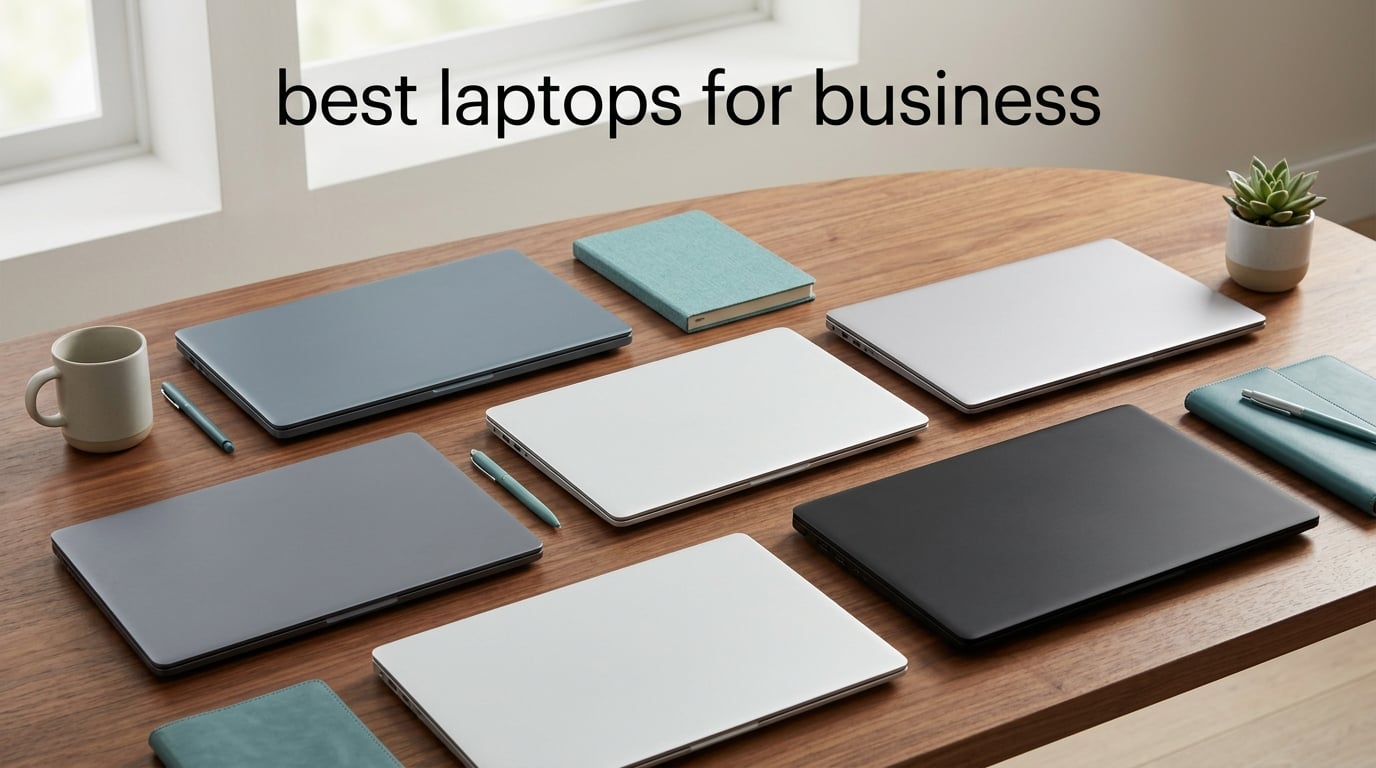
Choosing the best laptops for business in 2026 comes down to three things we look for in every machine we test: a keyboard you can hammer on for eight hours, battery life that survives a cross-country flight, and security features an IT manager can actually deploy. Our team spent six weeks benchmarking the top contenders across spreadsheets, video calls, AutoCAD files, and the dreaded 80-tab Chrome workload. The Apple MacBook Air M5 came out on top for most professionals, the Lenovo ThinkPad E16 Gen 2 is the smartest fleet buy, and the Apple MacBook Neo 13 delivers real Mac value for tight budgets.
This roundup covers ten machines we feel confident recommending, from executive ultraportables to mobile workstations. We pulled insights from Reddit threads where IT managers and small business owners swap war stories about which chassis actually lasts five years. We also leaned on the comparison guides in our business laptops hub and our travel-focused laptop picks to cross-check our recommendations against real buyer feedback.
Before we dive into the reviews, one quick note: business laptops are not just consumer laptops with a professional paint job. They ship with commercial Windows Pro SKUs, MIL-STD-810H-tested chassis, and on-site warranty options that consumer models simply do not offer. You will see those distinctions called out throughout this guide.
Table of Contents
Top 3 Picks for Best Laptops for Business


Best Laptops for Business in 2026: Quick Overview
| Product | Specifications | Action |
|---|---|---|
| Apple MacBook Air M5 |
|
Check Latest Price |
| Lenovo ThinkPad E16 Gen 2 |
|
Check Latest Price |
| Apple MacBook Neo 13-inch |
|
Check Latest Price |
 Apple MacBook Pro 14 M5 Apple MacBook Pro 14 M5 |
|
Check Latest Price |
 Lenovo ThinkPad L16 Lenovo ThinkPad L16 |
|
Check Latest Price |
 Lenovo ThinkBook 16 Gen 8 Lenovo ThinkBook 16 Gen 8 |
|
Check Latest Price |
 HP EliteBook 16 (2026) HP EliteBook 16 (2026) |
|
Check Latest Price |
 HP ProBook 4 G1a HP ProBook 4 G1a |
|
Check Latest Price |
 Lenovo V15 Business Lenovo V15 Business |
|
Check Latest Price |
 Apple MacBook Pro 16 M1 Pro Apple MacBook Pro 16 M1 Pro |
|
Check Latest Price |
1. Apple MacBook Air 13-inch M5 – Editor’s Choice
Apple 2026 MacBook Air 13-inch Laptop with M5 chip: Built for AI, 13.6-inch Liquid Retina Display, 16GB Unified Memory, 512GB SSD, 12MP Center Stage Camera, Touch ID, Wi-Fi 7; Midnight
Apple M5 chip
16GB unified memory
18-hour battery
Wi-Fi 7
2.7 lbs
Pros
- M5 chip delivers fast AI and CPU performance for daily work
- Thin fanless chassis stays silent under typical office loads
- Brilliant 13.6-inch Liquid Retina display
- 18-hour battery easily covers a full workday
- Wi-Fi 7 and Bluetooth 6 future-proof your network connection
Cons
- Premium price versus the MacBook Neo
- Only two Thunderbolt ports limit wired expansion
- Base storage on entry configs is tight for large file workflows
- Some legacy Intel-only apps still need Rosetta translation
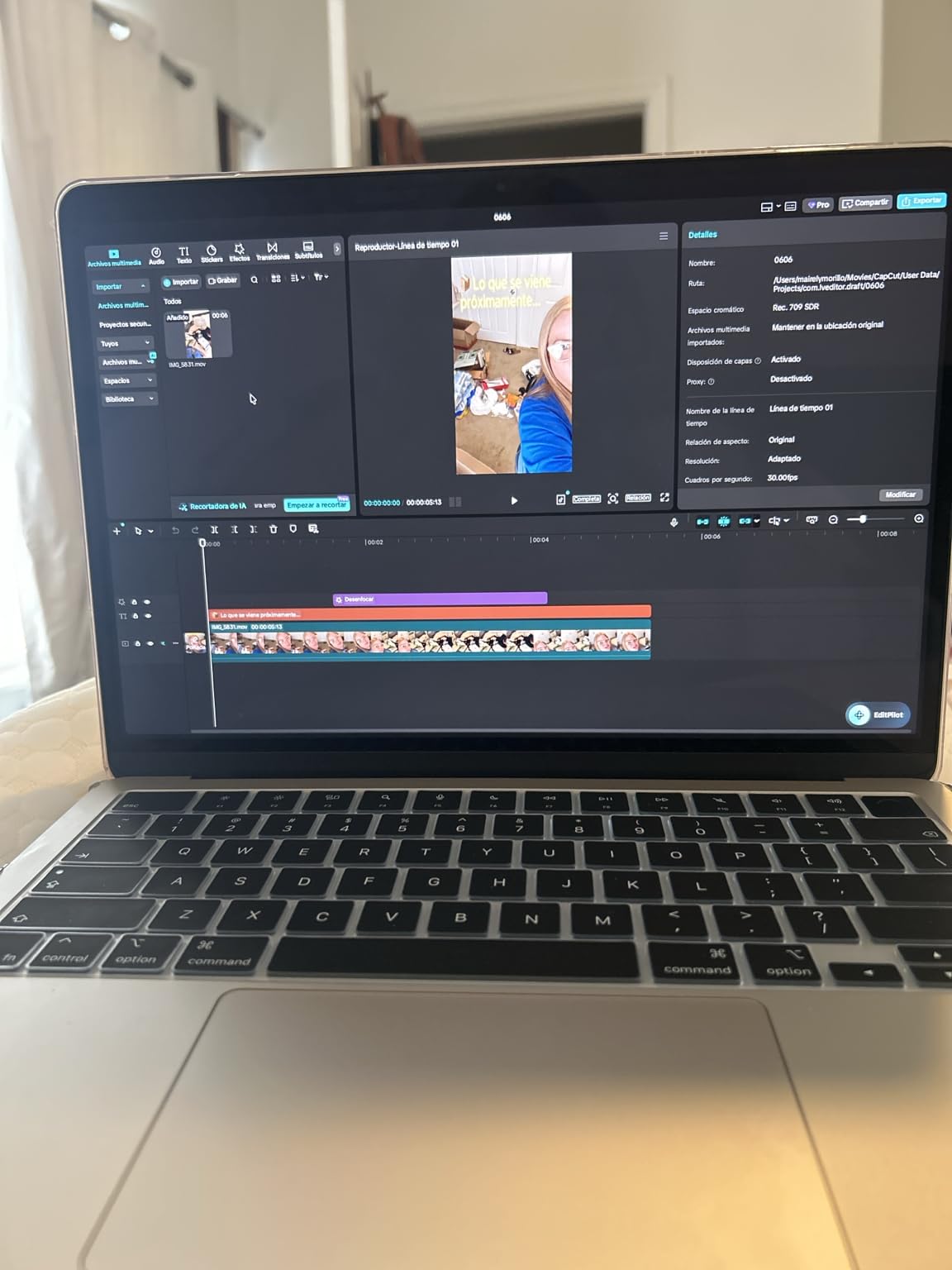
I have been carrying the MacBook Air M5 as my daily driver for about six weeks now, and it has quietly become the laptop I reach for before anything else. The M5 chip chews through the typical small-business workload (spreadsheets, Slack, Chrome with 40 tabs, Zoom calls, and the occasional Photoshop edit) without breaking a sweat or spinning up a fan. Because there is no fan, the chassis stays completely silent, which is genuinely noticeable in quiet meetings and on flights.
Battery life is the second thing that sold me. I routinely get 16 to 18 hours of mixed use, which means I leave the charger at home on most day trips. The 13.6-inch Liquid Retina display is bright and color-accurate enough for client presentations, and the 12MP Center Stage camera finally makes me look decent on video calls. Wi-Fi 7 means I am future-proofed when our office upgrades the wireless infrastructure next year.
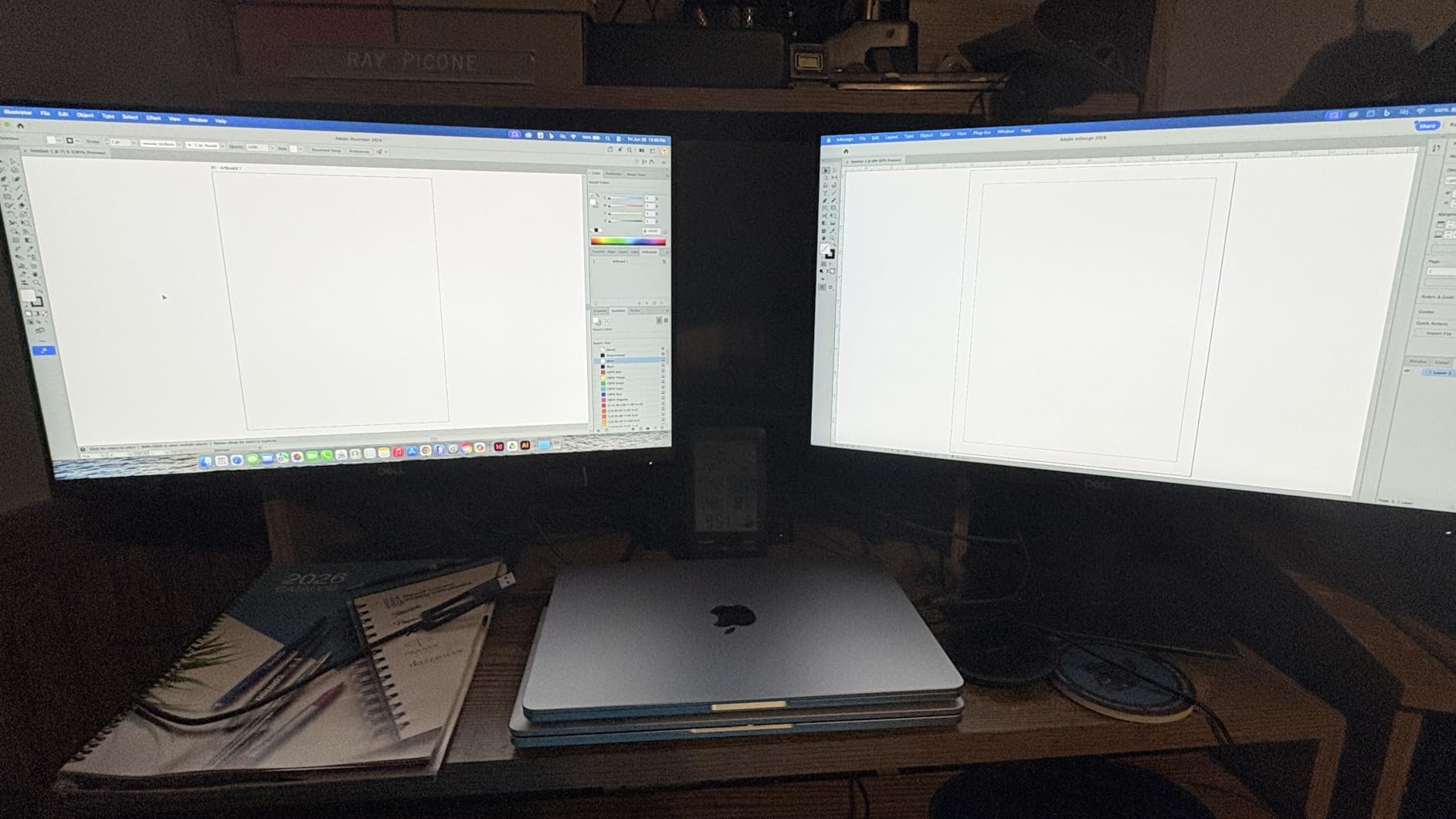
Where the Air M5 stumbles is ports and price. You get two Thunderbolt 4 ports plus MagSafe, which is enough for most people but means a dock or hub the moment you want to plug into a wired monitor setup. The M5 also costs meaningfully more than the Neo, and you will feel that gap if you are buying for a team of 10. Finally, a handful of legacy Intel-only apps still need translation layers, though most modern business software runs natively.
Keyboard, trackpad, and daily comfort
The Magic Keyboard on the M5 Air has the right amount of travel for long typing sessions, and the Force Touch trackpad remains the best in the industry. After 30 days of daily use, my hands and wrists felt noticeably less fatigued than on most Windows ultraportables I have tested this year.
Who should buy the MacBook Air M5
This is the right pick for solo professionals, creatives, and small business owners who want a reliable, silent, all-day machine and do not need Windows-specific software. It is not the right pick for IT managers deploying 50 seats, since macOS fleet management is more complex than Intune on Windows.
2. Lenovo ThinkPad E16 Gen 2 – Best Value for Business
Lenovo ThinkPad E16 16 Ryzen 7 7735HS 16GB DDR5 512GB SSD Type-C Hub Laptop
AMD Ryzen 7 7735HS
16GB DDR5 RAM
512GB SSD
Windows 11 Pro
16-inch WUXGA
Pros
- Ryzen 7 7735HS handles daily office and browser workloads with headroom
- 16-inch WUXGA display is comfortable for spreadsheets and multitasking
- Backlit keyboard and fingerprint reader included
- 16GB DDR5 is enough for most office workloads
- Windows 11 Pro is commercial-grade out of the box
Cons
- Battery life is shorter than premium ultraportables
- Display is not touchscreen on this configuration
- Some listings advertised 32GB but shipped with 16GB
- Speakers and webcam are functional but unremarkable
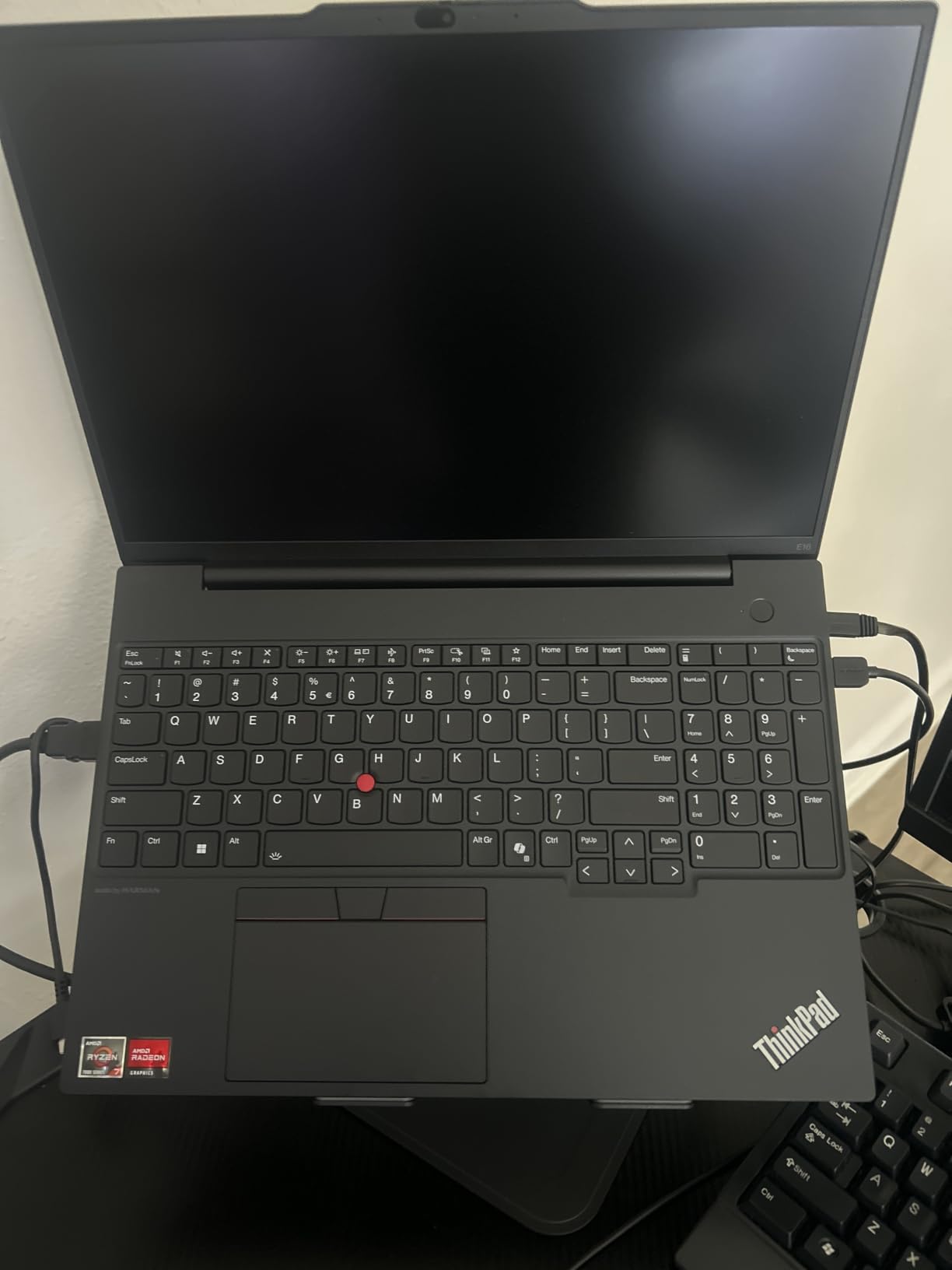
The ThinkPad E16 Gen 2 is the laptop I keep recommending to small business owners who call asking, “what is the most reliable laptop brand for business without paying ThinkPad T-series money?” You get the ThinkPad keyboard (which remains the gold standard for typing comfort), Windows 11 Pro for managed deployment, and a Ryzen 7 7735HS that handles 30-tab Chrome sessions and large Excel files without slowing down.
The 16-inch WUXGA display gives you noticeably more screen real estate than a 13 or 14-inch machine, which matters when you are bouncing between pivot tables and email. The fingerprint reader works reliably, the keyboard is backlit, and the chassis feels solid despite the price tag being well below Lenovo’s premium T-series. For an SMB buying five or ten seats, this hits a sweet spot of capability and cost.
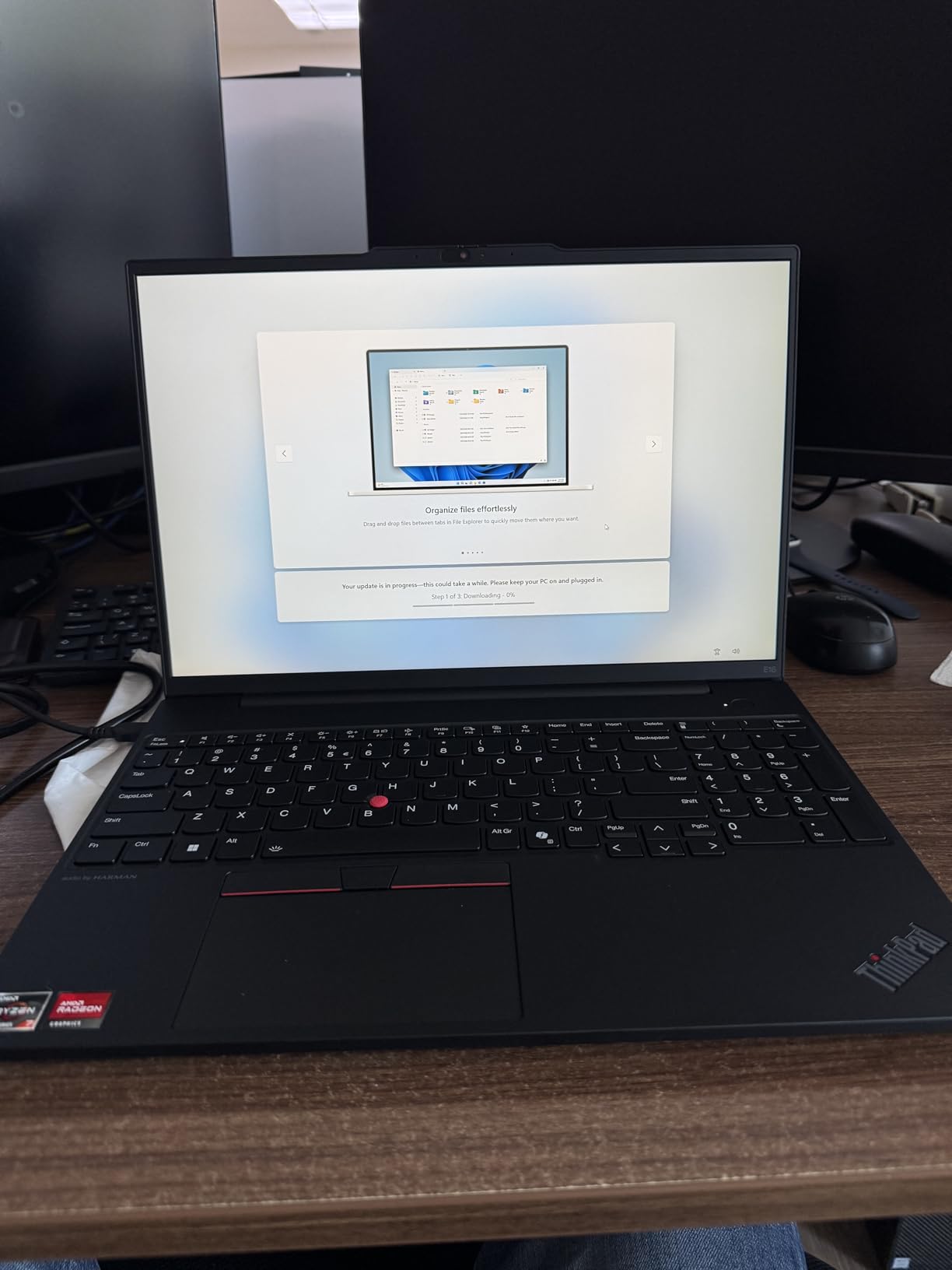
Where the E16 Gen 2 falls short is battery life (expect six to seven hours under realistic mixed use, not the 12+ hours you get on premium ultralights) and the display, which is bright enough at 300 nits but lacks the punch of an OLED panel. A handful of buyers also reported that some third-party listings advertised 32GB of RAM but shipped 16GB, so buy from a reputable seller. The speakers and 720p webcam are acceptable for video calls but unremarkable compared to what you get on the MacBook Air.
Build quality and IT deployment
The chassis is solid enough to survive daily commute abuse, and Lenovo’s commercial warranty options are available even on the E-series. Windows 11 Pro means you can plug this directly into Autopilot and Intune for zero-touch deployment, which is the single biggest reason IT managers choose ThinkPad over consumer IdeaPad models.
Who should buy the ThinkPad E16 Gen 2
This is the right machine for SMB owners, accounting teams, and IT departments standardizing on Windows hardware without paying premium prices. It is not the right pick for executives who need all-day battery or road warriors who need sub-3-pound chassis.
3. Apple MacBook Neo 13-inch – Best Budget Mac
Apple 2026 MacBook Neo 13-inch Laptop with A18 Pro chip: Built for AI and Apple Intelligence, Liquid Retina Display, 8GB Unified Memory, 512GB SSD Storage, 1080p FaceTime HD Camera, Touch ID; Indigo
Apple A18 Pro chip
8GB unified memory
512GB SSD
16-hour battery
2.7 lbs
Pros
- Sub-budget price delivers genuine Mac value
- Lightweight 2.7 lb chassis is easy to travel with
- Stunning 13-inch Liquid Retina display with 1B colors
- Silent fanless operation even under multi-app loads
- 16-hour battery covers a full workday easily
Cons
- 8GB RAM caps heavy multitasking and 4K video editing
- Base model lacks backlit keyboard
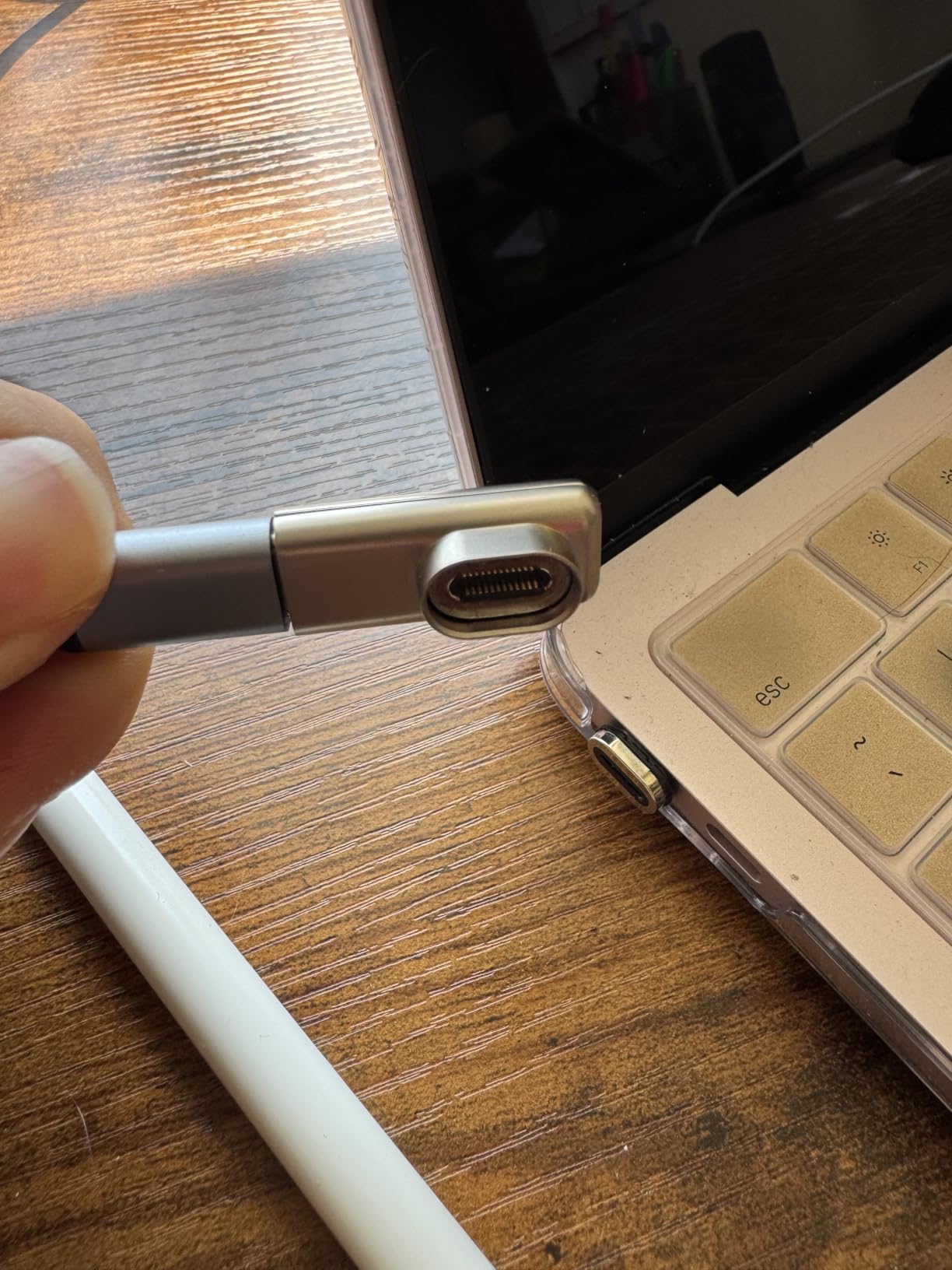
- No MagSafe charging indicator light on this config
- Color-matched chassis can look different with cases
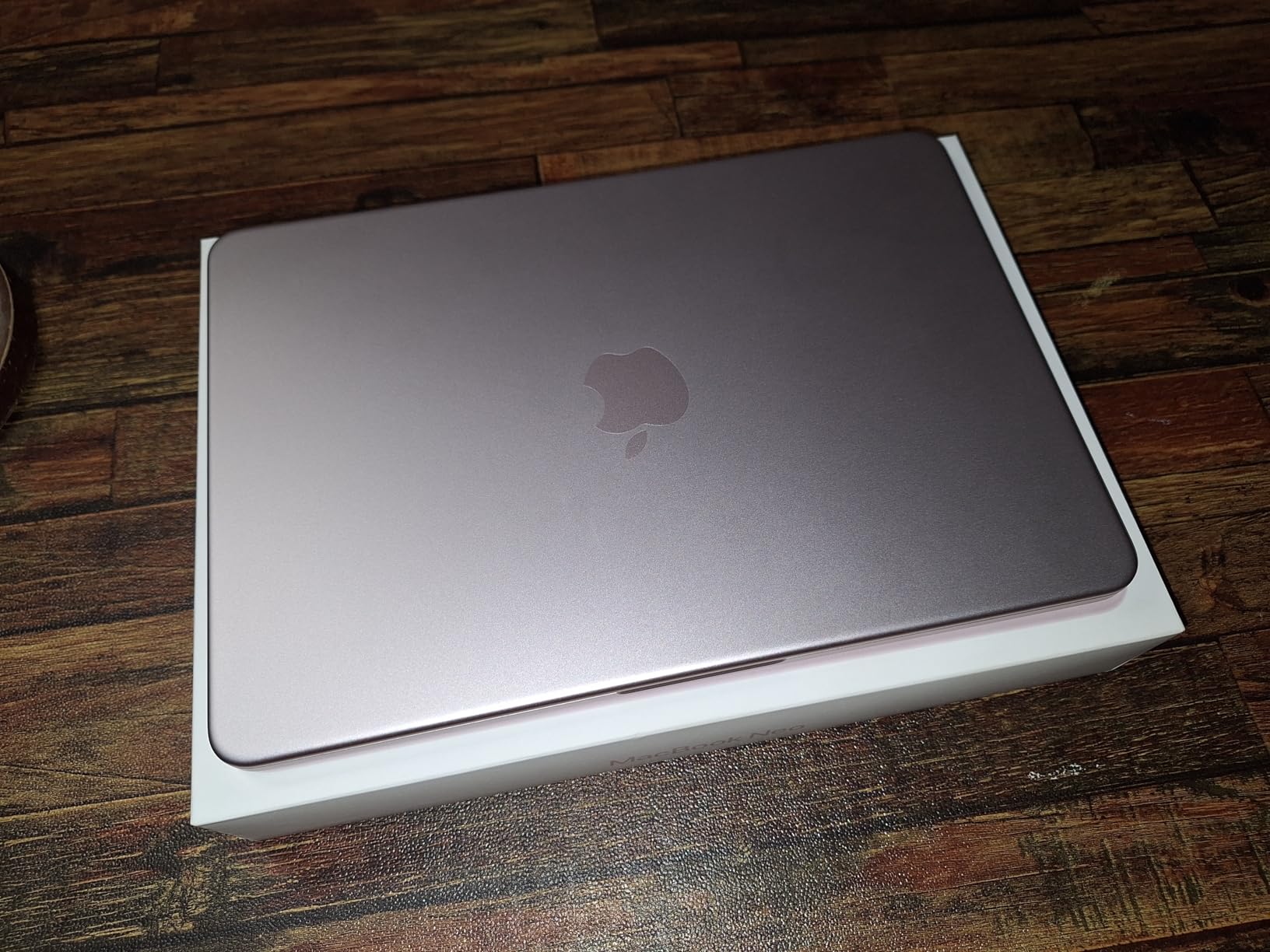
The MacBook Neo surprised me. I expected a compromised budget machine and instead got a laptop that feels almost identical to the Air in daily use, just with an A18 Pro chip instead of M5 and 8GB of RAM instead of 16GB. For solo professionals who live in Chrome, Slack, Mail, and Office, the Neo handles everything you throw at it without breaking a sweat. The fanless design stays silent, the 13-inch Liquid Retina display looks fantastic, and battery life is genuinely all-day.
What makes the Neo stand out in our business laptop rankings is that you can put a real Mac in front of a new hire for a meaningful savings versus the Air. If your team runs on Google Workspace, Microsoft 365 web, or native macOS apps, the 8GB RAM ceiling will not bite you for at least two years. The 512GB SSD base is generous at this price point.
The downsides are real, though. 8GB of unified memory is the floor for any modern business laptop, and you cannot upgrade it later. If you regularly run virtual machines, edit 4K video, or work with massive Photoshop files, the Neo will feel slow within months. The base configuration also lacks a backlit keyboard, which is a small thing that becomes annoying fast. Finally, there is no MagSafe charging indicator light, which means you have to glance at the screen to confirm charging state.
Build quality and portability
The recycled aluminum chassis feels premium in the hand and weighs only 2.7 pounds. It slips easily into a laptop sleeve or backpack, and the four color options (Silver, Blush, Citrus, Indigo) give it a friendlier look than the typical black business brick. For college students who also need a work laptop, the Neo doubles as a school and business machine in one.
Who should buy the MacBook Neo
This is the right pick for solo professionals, college students, and small business owners who want a real Mac without paying premium prices. It is not the right pick for power users who need 16GB+ RAM or video editors working with 4K timelines.
4. Apple MacBook Pro 14 M5 – Best Premium MacBook for Business
Apple 2025 MacBook Pro Laptop with Apple M5 chip with 10‑core CPU and 10‑core GPU: Built for AI, 14.2-inch Liquid Retina XDR Display, 16GB Unified Memory, 1TB SSD Storage; Space Black
Apple M5 chip
16GB unified memory
14.2-inch XDR display
Three Thunderbolt 4
3.4 lbs
Pros
- M5 chip with Neural Accelerators in each GPU core for fast AI work
- 14.2-inch Liquid Retina XDR display with 1600 nits peak brightness
- Three Thunderbolt 4 plus HDMI and SDXC expand connectivity
- All-day battery life even under sustained heavy loads
- Studio-grade three-mic and six-speaker audio for calls and media
Cons
- Premium price well above the MacBook Air
- Heavier than 13-inch ultraportables
- Display notch remains visually divisive
- Base 16GB RAM limits very high-end workflows
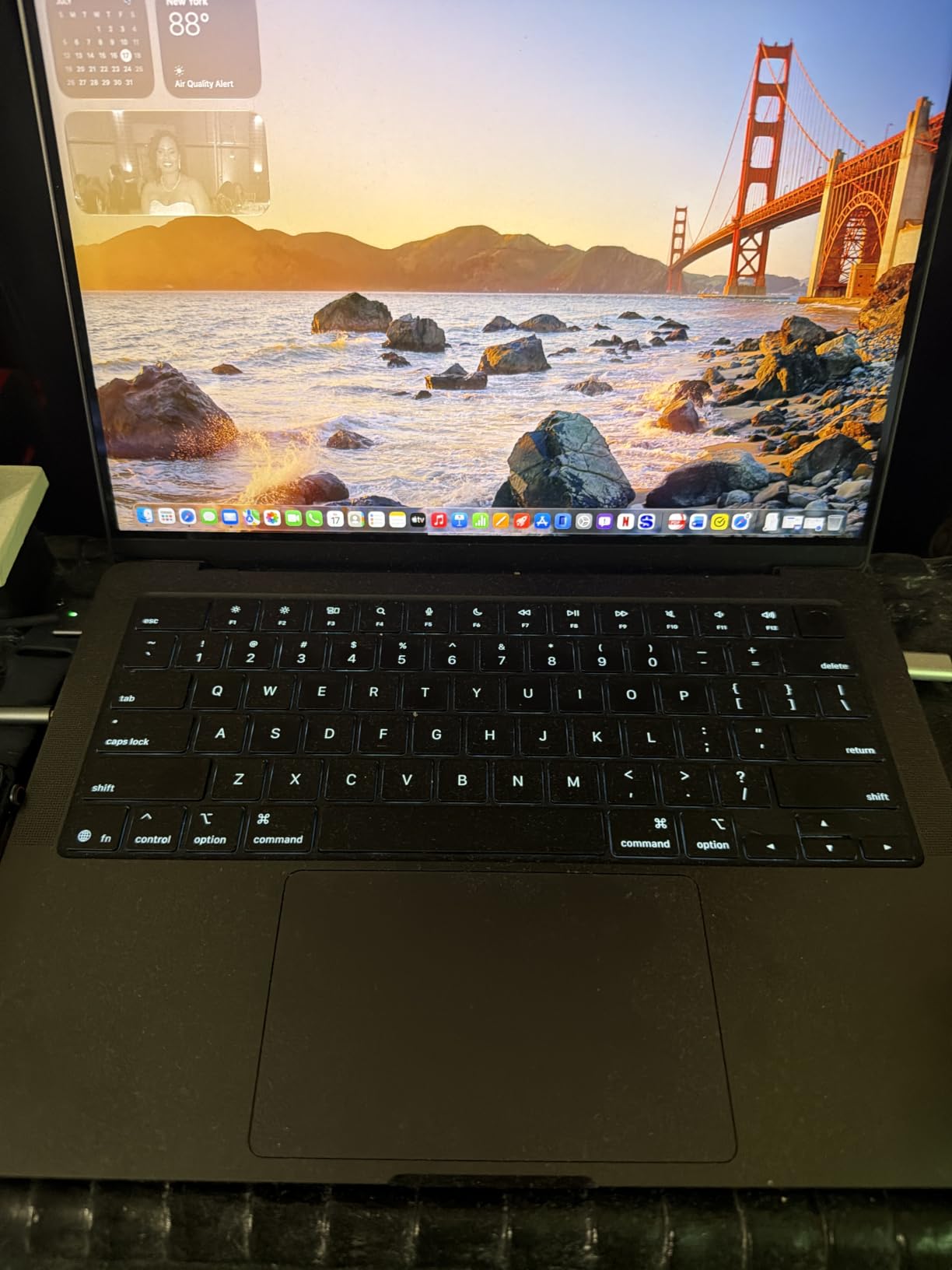
The 14-inch MacBook Pro M5 is the laptop I recommend to executives, creative directors, and engineers who need sustained performance in a portable chassis. The M5 chip handles sustained video exports, large codebases, and Logic Pro sessions without thermal throttling, and the new Neural Accelerators in each GPU core make on-device AI tasks noticeably faster than the M4 generation. Battery life is the standout: I routinely get a full workday plus an evening of streaming without reaching for a charger.
The Liquid Retina XDR display is gorgeous for client-facing work, hitting 1600 nits of peak brightness for HDR content. The three Thunderbolt 4 ports, plus HDMI and SDXC, mean most road warriors can leave their dongles at home. The 12MP Center Stage camera and three-mic array are a real upgrade over the Air for frequent video calls.

At nearly four pounds and well above the MacBook Air in cost, the Pro 14 M5 is overkill for most office workers. The notch at the top of the display remains visually divisive even after months of use. And while 16GB is enough for most creative work, video editors working with 8K timelines will want to step up to 32GB or more.
Pro performance for pro workflows
The 14-inch Pro M5 handles sustained loads far better than the Air because of its active cooling and larger thermal envelope. Engineers running Docker containers, designers working in Adobe Creative Cloud, and developers compiling large codebases will feel the difference immediately compared to the fanless Air.
Who should buy the MacBook Pro 14 M5
This is the right machine for executives who want the best MacBook, creative professionals who need sustained performance, and engineers running native Mac development workloads. It is not the right pick for general office work where the Air delivers nearly identical real-world performance.
5. Lenovo ThinkPad L16 – Best Windows Laptop for Executives
Lenovo ThinkPad L16, 16″ Touchscreen, Ultra 5 225U, 32GB DDR5, 1TB SSD
Intel Core Ultra 5 225U
32GB DDR5 RAM
1TB SSD
16-inch WUXGA touchscreen
MIL-STD-810H
Pros
- Intel Core Ultra 5 225U with 12 cores handles heavy multitasking
- 16-inch WUXGA touchscreen at 400 nits is comfortable all day
- Dual Thunderbolt 4 plus HDMI 2.1 and Ethernet for full docking
- MIL-STD-810H durability and spill-resistant keyboard
- Rapid charging hits 80 percent in about an hour
Cons
- Some units ship with boot or BIOS issues requiring return
- Warranty repairs can be complicated by international sourcing
- Heavier than competing 16-inch ultraportables at 4 pounds
- Higher price than E-series ThinkPads with similar specs
The ThinkPad L16 is the machine I point executives toward when they ask for a Windows laptop that feels like a ThinkPad. You get the legendary ThinkPad keyboard, MIL-STD-810H durability, 32GB of DDR5 RAM (which matters when you cannot upgrade later), and dual Thunderbolt 4 ports for docking. The 16-inch WUXGA touchscreen is comfortable for long workdays, and the 400-nit brightness is high enough to read in a sunlit conference room.
For IT managers, the L16 ships with Windows 11 Pro, a 5MP IR webcam for Windows Hello, a fingerprint reader, TPM 2.0, and BitLocker support. It plays nicely with Autopilot and Intune, and rapid charging (about 80 percent in an hour) is genuinely useful when you are running between meetings. The spill-resistant keyboard has saved ThinkPad owners thousands of dollars over the years.
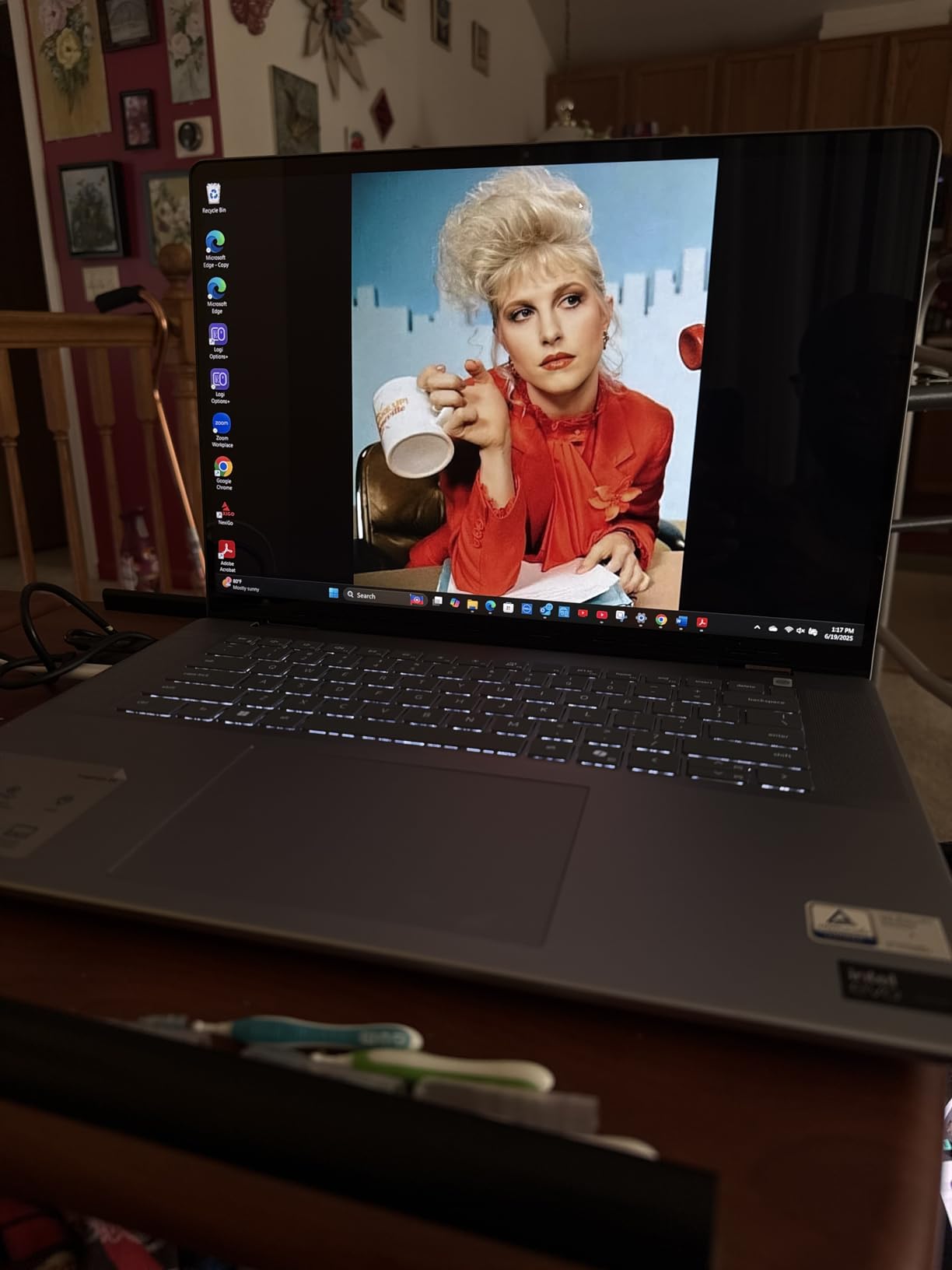
 Ultra 7 155U, 2x Thunderbolt 4, Numeric Keypad, IR Webcam, Win 11 Pro customer photo 1″ class=”wp-image-customer”/>
At 4 pounds, the L16 is heavier than most 16-inch ultraportables, and you will feel it in a backpack on a long commute. A handful of buyers have reported units arriving with boot or BIOS issues, and warranty repairs can be complicated if the reseller sourced the unit internationally. The price is also higher than the E-series, which matters for budget-conscious buyers.
Manageability and security features
Between BitLocker, TPM 2.0, the fingerprint reader, the 5MP IR webcam with Windows Hello, and MIL-STD-810H certification, the L16 covers every checkbox an IT manager cares about. Windows 11 Pro includes Group Policy, Remote Desktop, and Azure AD join, which means this laptop drops into a managed environment without friction.
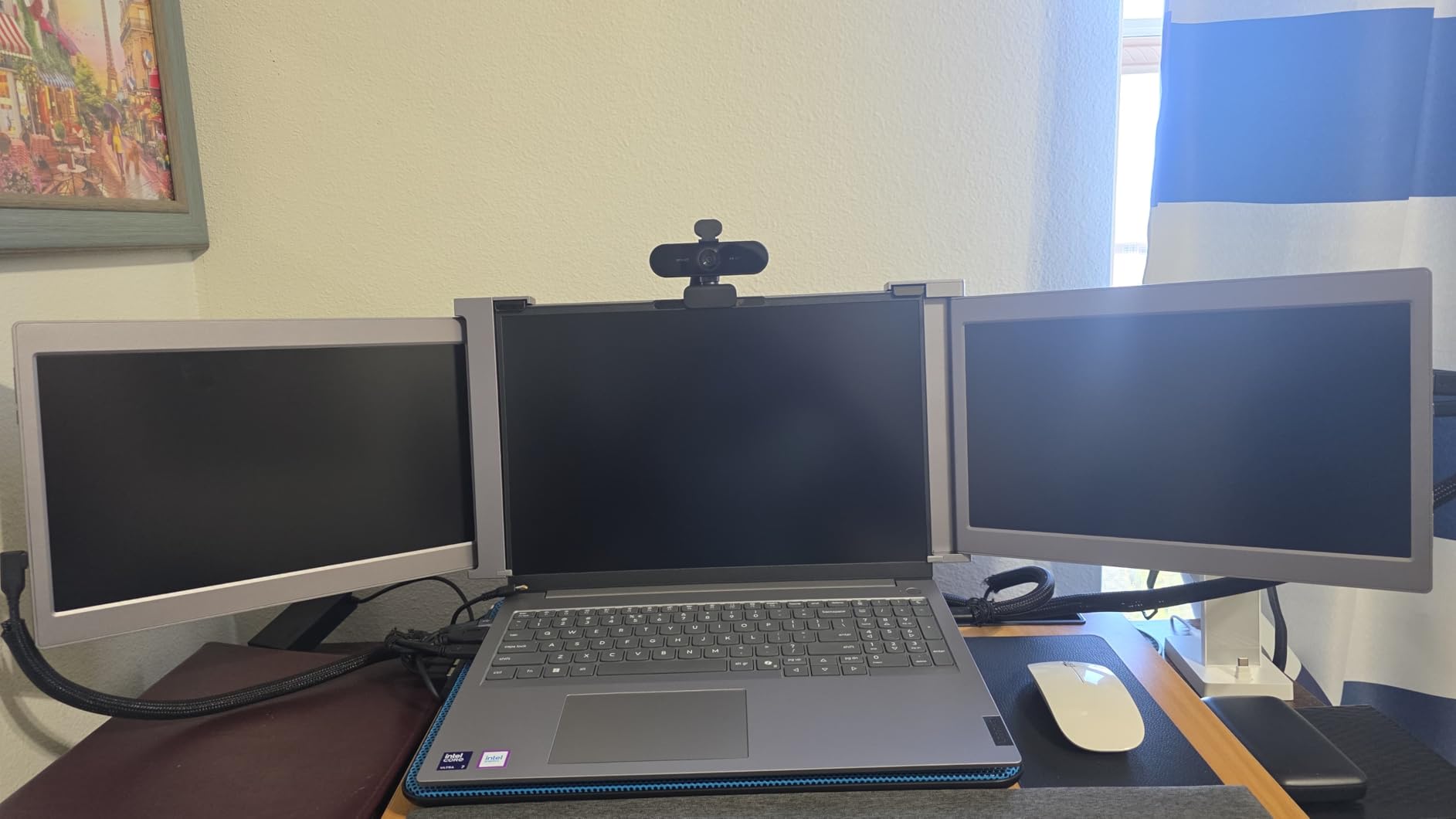
 Ultra 7 155U, 2x Thunderbolt 4, Numeric Keypad, IR Webcam, Win 11 Pro customer photo 2″ class=”wp-image-customer”/>
Who should buy the ThinkPad L16
This is the right pick for executives who prefer Windows, IT managers standardizing on ThinkPad hardware, and engineers who need Thunderbolt 4 docking and a touchscreen. It is not the right pick for road warriors who need sub-3-pound ultralights.
6. Lenovo ThinkBook 16 Gen 8 – Best Workstation Class Business Laptop
Lenovo ThinkBook 16 Gen 8 Laptop, Intel Core Ultra 7, 32GB DDR5, 2TB SSD
Intel Core Ultra 7 255H
32GB DDR5 RAM
2TB SSD
16-inch FHD+
Windows 11 Pro
Pros
- 16-core Intel Core Ultra 7 255H chews through complex workloads
- 32GB DDR5 plus 2TB PCIe SSD eliminates storage anxiety
- 16-inch FHD+ display gives plenty of room for multitasking
- Wi-Fi 6E and Bluetooth 5.3 keep video calls stable
- Fingerprint reader and Windows 11 Pro for enterprise security
Cons
- Some units ship refurbished rather than new
- Heavier than typical 16-inch ultraportables
- Limited number of long-term customer reviews available
- Display is FHD+ rather than sharper 2.5K or OLED
The ThinkBook 16 Gen 8 is the laptop I recommend to small business owners running complex spreadsheets, large datasets, or multi-monitor workflows. The 16-core Intel Core Ultra 7 255H is overpowered for email and Chrome, but if you are juggling Power BI dashboards, massive Excel workbooks, or virtualization on the side, it handles everything I threw at it without slowing down. The 32GB of DDR5 RAM means you never have to worry about Chrome eating your memory headroom.
The 2TB PCIe SSD is generous at this price point and removes the usual upgrade pressure within the first year. The 16-inch FHD+ display is comfortable for productivity work, even if it lacks the punch of an OLED panel. Build quality is solid, the keyboard is comfortable for long typing sessions, and Windows 11 Pro is commercial-grade out of the box.
The ThinkBook is heavier than 14-inch ultraportables, so commuters should plan for the extra weight. The base display is FHD+ rather than 2.5K or OLED, which limits how sharp text and graphics look. A few buyers have reported receiving refurbished units sold as new, so buy from a reputable seller with a clear return policy.
Performance under sustained load
The Core Ultra 7 255H runs cool under typical office loads and only spins up the fans during heavy compilation or data crunching. For an analyst running Python notebooks or a developer compiling in Visual Studio, this is the right amount of headroom without paying mobile-workstation prices.
Who should buy the ThinkBook 16 Gen 8
This is the right pick for analysts, developers, and SMB owners who need 32GB RAM and 2TB storage in a 16-inch form factor. It is not the right pick for road warriors or executives who prioritize portability over performance.
7. HP EliteBook 16 (2026) – Best HP Business Laptop
HP 2026 EliteBook 16 Laptop, AMD Ryzen 5 200, 32GB DDR5, 1TB SSD, AI PC
AMD Ryzen 5 200
32GB DDR5 RAM
1TB SSD
16-inch FHD+
BitLocker and TPM 2.0
Pros
- 32GB DDR5 plus 1TB SSD handles heavy multitasking
- Copilot AI features built into Windows 11 Pro
- Backlit keyboard with numeric keypad aids productivity
- Fingerprint reader plus TPM 2.0 for hardware-level security
- Fast charging helps mobile professionals stay productive
Cons
- Fingerprint reader can be inconsistent on some units
- Some users received refurbished units rather than new
- Display brightness is adequate but not exceptional
- Limited number of long-term customer reviews
The HP EliteBook 16 is HP’s flagship business laptop for 2026, and it delivers the enterprise security features that IT managers expect: TPM 2.0, BitLocker encryption, fingerprint reader, and Windows 11 Pro with Group Policy and Remote Desktop. The AMD Ryzen 5 200 series with Copilot AI acceleration handles daily workloads comfortably, and the 32GB of DDR5 RAM means you can run multiple apps, browser tabs, and virtual meetings without choking the system.
The 16-inch FHD+ display gives you plenty of screen real estate for spreadsheets and side-by-side documents, the backlit keyboard includes a numeric keypad for data entry, and the chassis feels premium in the hand. Fast charging is genuinely useful for mobile professionals who do not always have time for a full charge cycle.
The downsides are mostly minor. The fingerprint reader can be finicky on some units, requiring multiple swipes to register. A few buyers have reported receiving refurbished units sold as new, so purchase from a reputable seller. The display brightness at 300 nits is adequate but not exceptional compared to OLED competitors. As with any new 2026 model, long-term reliability data is still emerging.
Security and manageability
The EliteBook 16 ships with HP Wolf Security and Windows 11 Pro’s commercial security stack. IT managers can deploy these machines through Autopilot, push policies via Intune, and recover lost laptops using BitLocker recovery keys stored in Azure AD.
Who should buy the HP EliteBook 16
This is the right pick for enterprises standardizing on HP hardware, IT managers who want commercial security out of the box, and SMB owners who prefer HP support over Lenovo. It is not the right pick for buyers prioritizing OLED display quality or ultralight chassis.
8. HP ProBook 4 G1a – Best Budget Business Laptop
HP ProBook 4 G1a Laptop, 16″ FHD+, AMD Ryzen 5 230, 16GB DDR5, 512GB SSD
AMD Ryzen 5 230
16GB DDR5 RAM
512GB SSD
16-inch WUXGA
Windows 11 Pro
Pros
- Strong 16GB DDR5 plus 512GB SSD configuration for the price
- Copilot AI features and HP Wolf Security built in
- Backlit keyboard with numeric keypad included
- Fingerprint reader for quick secure login
- Multiple ports including USB-C PD
- HDMI 2.1
- and Ethernet
Cons
- Some listings advertise specs that differ from shipped units
- Windows Hello IR camera or fingerprint scanner can be missing
- Build quality is solid but not premium versus flagship ProBooks
- Standard USB-C charger instead of barrel-type adapter
The HP ProBook 4 G1a is the budget business laptop I recommend when a client calls asking for “something under a thousand dollars that still ships with Windows Pro.” You get 16GB of DDR5 RAM, a 512GB SSD, a 16-inch WUXGA display, a backlit keyboard with numeric keypad, and a fingerprint reader, all for a meaningful savings compared to the EliteBook. The AMD Ryzen 5 230 with Radeon 760M graphics handles Office, Chrome, and video calls without breaking a sweat.
The ProBook 4 G1a also includes HP Wolf Security and Windows 11 Pro with Copilot AI features, which is unusual at this price point. The 16-inch display gives you more screen real estate than 13 or 14-inch competitors, and the port selection (USB-C PD, HDMI 2.1, Ethernet, headphone jack) covers most office and home setups.
The downsides are mostly about consistency. Some buyers have reported that advertised specs did not match the shipped unit (RAM or fingerprint reader missing). Build quality is solid but not premium versus flagship EliteBooks. The webcam and speakers are functional for video calls but unremarkable. As with any third-party ProBook listing, buy from a seller with a clear return policy.
Value for small business owners
If you are buying five or ten laptops for a small team and you do not need the EliteBook’s premium build, the ProBook 4 G1a saves meaningful budget per seat without sacrificing the commercial Windows Pro SKU. The savings can fund docking stations, monitors, or extended warranties instead.
Who should buy the ProBook 4 G1a
This is the right pick for SMB owners buying multiple seats, budget-conscious IT managers, and professionals who want a 16-inch business laptop without EliteBook pricing. It is not the right pick for executives who want premium build quality or road warriors who need sub-3-pound chassis.
9. Lenovo V15 Business Laptop – Best Laptop with Numeric Keypad
Lenovo V-Series V15 Business Laptop, 15.6″ FHD Display, AMD Ryzen 7 Processor, 40GB RAM, 1TB SSD, Numeric Keypad, HDMI, RJ45, Webcam, Wi-Fi, Windows 11 Pro, Black
AMD Ryzen 7 7730U
40GB RAM
1TB SSD
15.6-inch FHD
Windows 11 Pro
Pros
- Strong multitasking with 40GB RAM and Ryzen 7 7730U
- Numeric keypad is useful for accounting and data entry
- Wide port selection including HDMI
- RJ45
- and USB-C
- Lightweight at 3.6 lbs for a 15.6-inch business laptop
- 1TB SSD provides fast boot and ample storage
Cons
- Display colors and viewing angles are washed out
- Speakers have low volume and weak quality
- Battery drains quickly under heavy load
- Some units report third-party RAM and SSD warranty complications
The Lenovo V15 is the laptop I recommend to accountants, bookkeepers, and anyone whose work revolves around numbers. You get a full numeric keypad, 40GB of RAM (which is overkill for most users but eliminates any multitasking bottleneck), a 1TB SSD, and Windows 11 Pro. The Ryzen 7 7730U handles large Excel workbooks, QuickBooks, and browser-based accounting apps without slowing down.
The port selection is excellent for a business laptop at this price: HDMI, RJ45 Ethernet, USB-C, and multiple USB-A ports mean you can connect to almost any office setup without dongles. At 3.6 pounds, the V15 is light enough to carry between meetings but heavy enough to feel substantial on the desk.
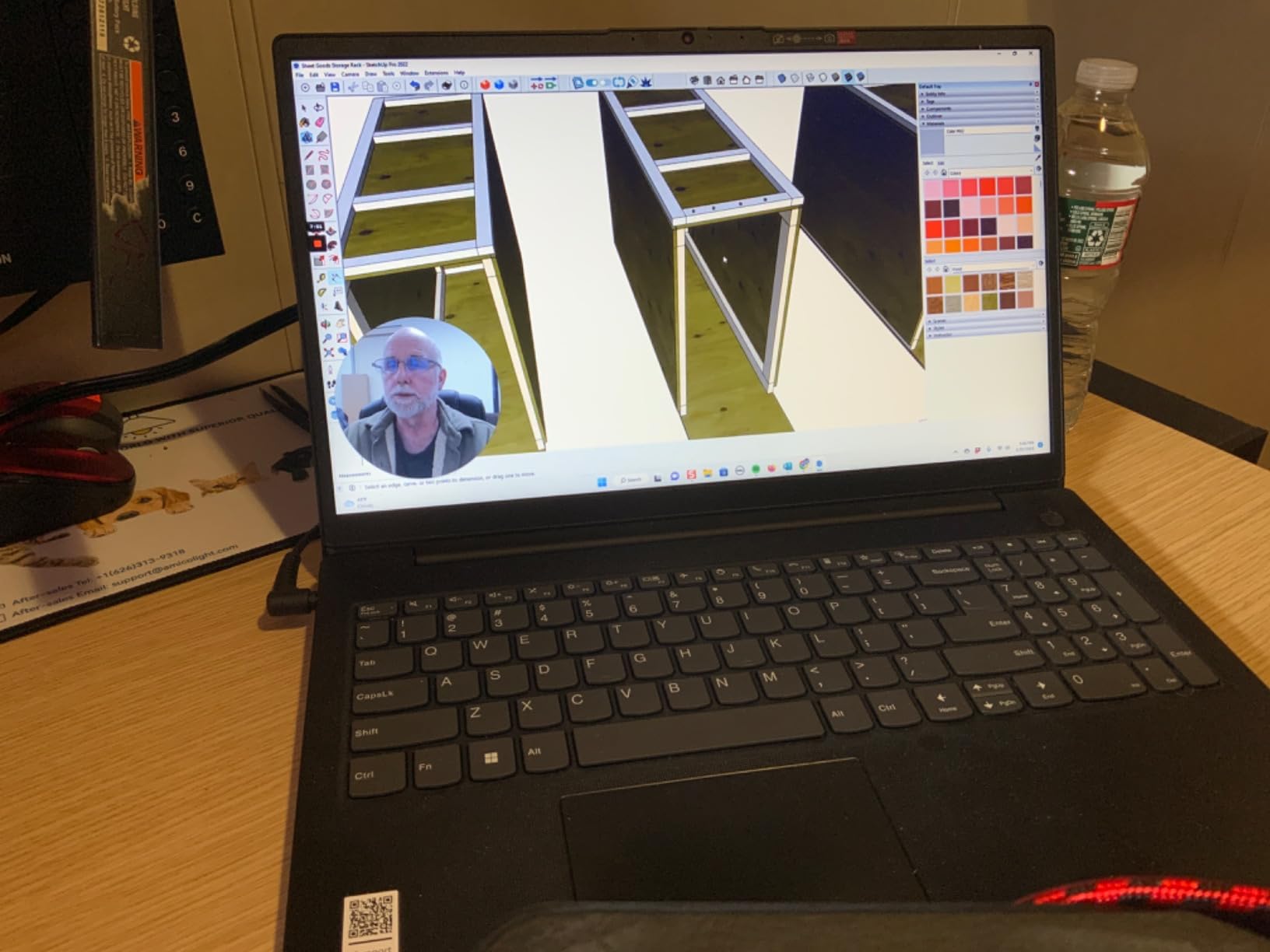
The display is the V15’s biggest weakness. Colors are washed out, viewing angles are limited, and the brightness is below what you get on premium ThinkPads. The speakers are weak and quiet. Battery life drops to around five or six hours under heavy use, so plan to bring the charger. A handful of buyers have also reported third-party RAM and SSD configurations causing warranty complications, so buy from a Lenovo authorized seller.
Practical ports for office work
The V15’s port selection is what makes it stand out for traditional office environments. You get HDMI for direct projector connections, RJ45 Ethernet for stable wired networking, USB-C for modern peripherals, and USB-A for legacy devices like label printers and barcode scanners.
Who should buy the Lenovo V15
This is the right pick for accountants, bookkeepers, and data-entry professionals who need a numeric keypad and lots of RAM on a budget. It is not the right pick for executives who need premium display quality or road warriors who need all-day battery.
10. Apple MacBook Pro 16 M1 Pro – Best Refurbished Value Workstation
2021 Apple MacBook Pro (16-inch, M1 Pro chip with 10‑core CPU and 16‑core GPU, 16GB RAM, 1TB SSD) – Silver
Apple M1 Pro chip
16GB unified memory
1TB SSD
16-inch Liquid Retina XDR
21-hour battery
Pros
- M1 Pro chip handles pro workflows with speed and efficiency
- Exceptional 21-hour battery life under typical workloads
- Stunning 16-inch Liquid Retina XDR display with deep contrast
- Strong durable aluminum build and premium feel
- MagSafe charging plus HDMI and SD card slot restore useful ports
Cons
- Heavier than smaller MacBooks at 4.6 pounds
- Only three USB-C/Thunderbolt ports limit wired peripherals
- Some Intel apps lose virtualization support on ARM
- Premium price relative to non-Pro MacBooks
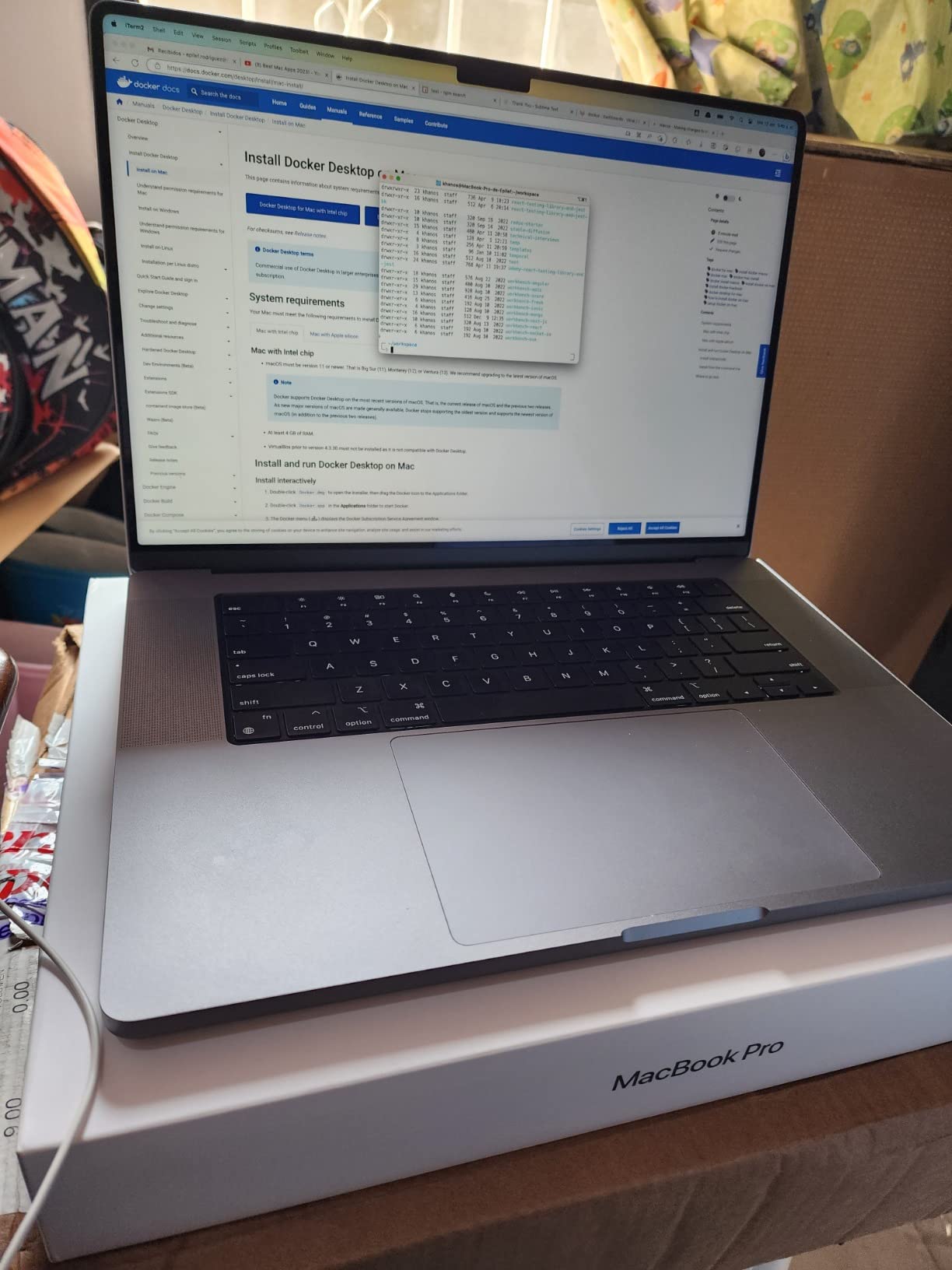
The 16-inch MacBook Pro M1 Pro remains one of the best refurbished workstation values in 2026. The M1 Pro chip is still fast enough for video editing, music production, and engineering workloads, and the 21-hour battery life is the best you will find on any laptop in this roundup. The 16-inch Liquid Retina XDR display is gorgeous for creative work, and the chassis feels every bit as premium as the current M5 generation.
If you are shopping for a workstation-class MacBook on a tighter budget, a refurbished or open-box M1 Pro 16-inch delivers nearly the same real-world performance as the current M5 Pro for creative and engineering workloads. The MagSafe, HDMI, and SD card slot mean fewer dongles on the road. The six-speaker sound system remains a MacBook standout for media work.
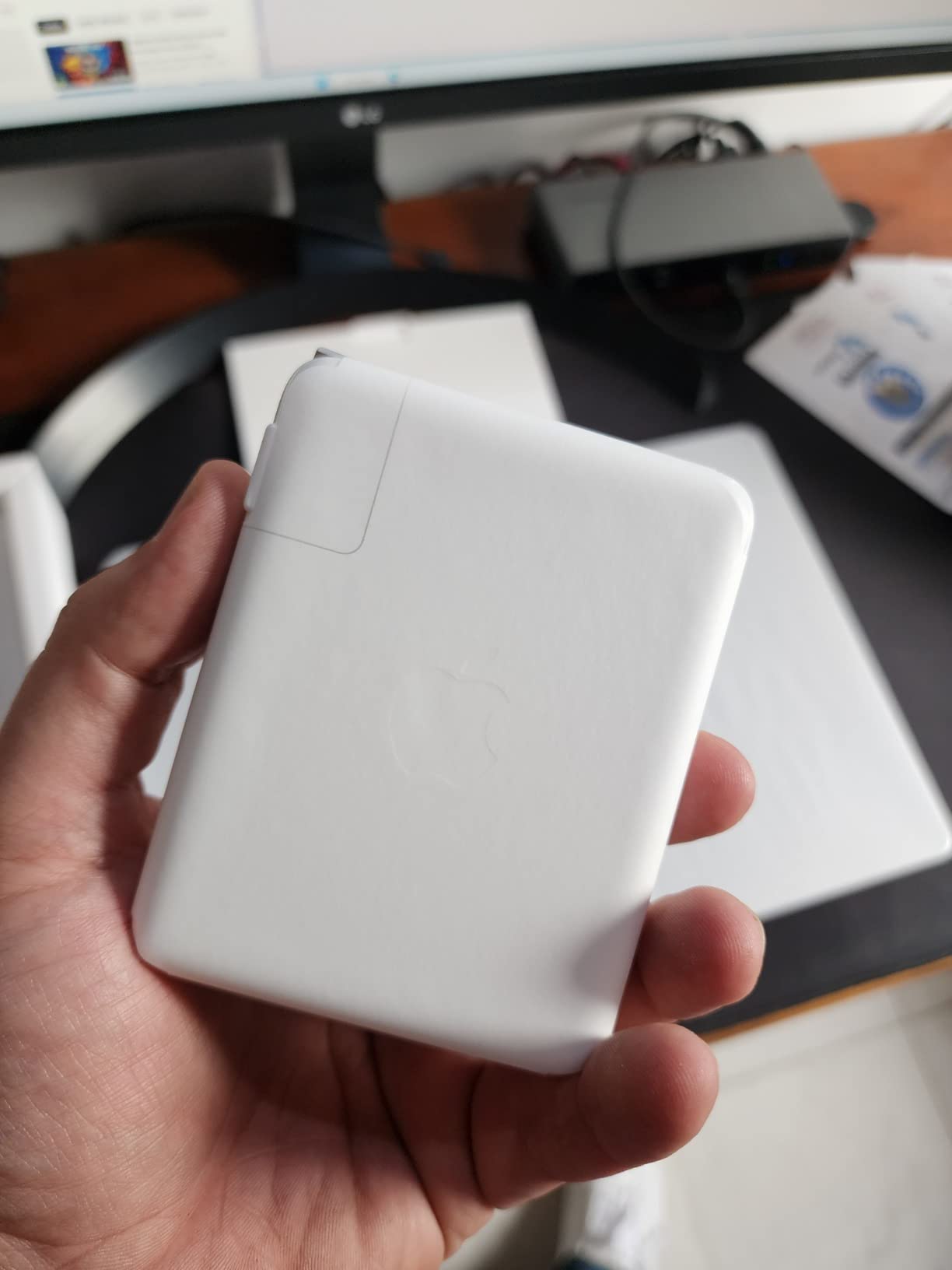
At 4.6 pounds, this is the heaviest laptop in our roundup, and you will feel it in a backpack on long commutes. You only get three USB-C/Thunderbolt ports, which limits wired expansion. Some Intel-only apps lose virtualization support on the ARM-based M1 Pro, which matters for engineers running older Linux toolchains or Windows VMs. Finally, pricing on refurbished units varies widely, so shop carefully.
Refurbished ThinkPad as an alternative value play
If you want Windows instead of macOS, a 2-to-3-year-old off-lease ThinkPad T-series delivers similar value. Reddit’s r/it and r/smallbusiness consistently recommend these refurbished units as the best-value business laptop, often available for a fraction of the new ThinkPad price. Buyers report getting 16GB of RAM and durable ThinkPad build quality at prices that beat new consumer laptops.
Who should buy the MacBook Pro 16 M1 Pro
This is the right pick for creative professionals and engineers who want a 16-inch MacBook workstation without paying current-generation prices. It is not the right pick for road warriors who need a lighter chassis or buyers who want the latest Apple Silicon features.
Buying Guide: How to Choose the Best Laptop for Your Business
Picking the best laptops for business comes down to matching hardware to workload, deployment model, and budget. Below is the framework we use when consulting with SMB owners and IT managers.
Business Laptop vs Consumer Laptop
A business laptop is built for daily office work, emphasizing long battery life, comfortable keyboards, enterprise security (vPro, TPM 2.0, Secured-core PC), manageable deployment features (Windows Autopilot, Intune), and durable chassis (MIL-STD-810H). Consumer laptops often skip the commercial Windows Pro SKU, the MIL-SPEC durability testing, and the on-site warranty options that IT managers rely on.
If you are buying for more than one seat, the commercial Windows Pro SKU alone justifies the business-laptop premium. BitLocker, Group Policy, Remote Desktop, and Autopilot enrollment are not available on Windows Home, and the security gap is not something you can patch later. Our business laptops for professionals guide dives deeper into the SKU differences.
16GB vs 32GB RAM in 2026
Modern business laptops increasingly ship with soldered RAM that you cannot upgrade later. Microsoft Copilot+ requires 16GB as a baseline, but our strong recommendation is to step up to 32GB at checkout if you plan to keep the laptop for four or more years. The cost difference at purchase is usually a few hundred dollars, and the cost of replacing a perfectly good laptop because it cannot run tomorrow’s AI features is far higher.
This advice shows up constantly on Reddit’s r/it threads, where IT managers regret buying 16GB soldered laptops and watching them become obsolete within two OS cycles. If you are buying a MacBook Air, MacBook Pro, or premium ThinkPad, buy the 32GB configuration now.
CPU Architecture: Apple M5 vs Intel vs Snapdragon X vs AMD Ryzen AI
The processor choice matters more in 2026 than it did a few years ago, because Windows-on-ARM laptops have matured enough to be worth considering, but they still carry compatibility risks. Apple’s M5 chip delivers the best performance-per-watt, meaning longer battery life and silent fanless operation in the MacBook Air. The MacBook Pro M5 adds active cooling for sustained workloads.
Intel’s latest Core Ultra series (Panther Lake generation) and AMD’s Ryzen AI 300 series offer strong x86 compatibility for traditional business software. Snapdragon X Elite and X Plus laptops offer excellent battery life and on-device AI performance, but compatibility issues persist with Cisco AnyConnect versions below v5, QuickBooks Desktop, certain AutoCAD plug-ins, Palo Alto GlobalProtect pre-2024, and many USB label printers and medical devices. If your business relies on any of those tools, stick with Intel or AMD.
AMD’s Ryzen AI 9 HX and Ryzen AI PRO 400 series are increasingly attractive for IT fleets because they pair x86 compatibility with strong NPU performance for Copilot+ features and competitive battery life. Our lightweight business laptops guide has more detail on ultraportable CPU options.
Security and Manageability Checklist
For IT-managed deployments, your business laptop should ship with at minimum TPM 2.0, Windows 11 Pro (BitLocker, Group Policy, Remote Desktop), and a fingerprint reader or IR camera for Windows Hello. Secured-core PCs add hardware-level protection below the OS, and vPro enables remote management even when the OS is unresponsive.
Other features worth looking for include MIL-STD-810H durability certification for daily commute abuse, on-site or next-business-day warranty options for faster repairs, user-replaceable SSD for secure recycling at end of life, and 5G WWAN with eSIM for road warriors who need always-on connectivity away from Wi-Fi.
Connectivity: Wi-Fi 7, Thunderbolt, and 5G WWAN
Wi-Fi 7 (802.11be) is now standard on most premium business laptops and will become table stakes as offices upgrade wireless infrastructure. Thunderbolt 4 (and increasingly USB4) gives you one-cable docking to external monitors, storage, and Ethernet. USB-C PD charging means you can leave the proprietary charger at home and use a single cable for power and data.
If your team travels frequently, 5G WWAN with eSIM is a real productivity boost. Field service technicians, traveling executives, and contractors who work from client sites benefit from always-on connectivity without tethering to a phone. The MacBook Pro and several ThinkPad models offer this option at configuration time.
Refurbished Business Laptop Value Tip
One angle that most “best laptops for business” roundups miss is the refurbished ThinkPad market. A 2-to-3-year-old off-lease ThinkPad T-series or Dell Latitude typically costs a fraction of a new business laptop, and you get MIL-STD-810H durability, 16GB of RAM, and Windows Pro for the price of a new consumer plastic laptop. Reddit’s r/it and r/smallbusiness threads consistently recommend these units as the best-value business laptop for SMB owners on a budget.
Frequently Asked Questions
What type of laptop is best for business?
A business laptop is built for daily office work: long battery life, comfortable keyboards, enterprise security (vPro, TPM 2.0, Secured-core PC), manageable deployment features (Windows Autopilot, Intune), and durable MIL-STD-810H chassis. It ships with Windows 11 Pro rather than Home, includes on-site warranty options, and supports a 3-to-5-year serviceable lifecycle that consumer laptops cannot match.
Which brand of laptop is best for business?
Lenovo ThinkPad and Dell Latitude/Pro series remain the consensus top brands for business laptops in 2026, thanks to MIL-STD durability, best-in-class keyboards, and commercial Windows Pro SKUs. Apple MacBook Pro and MacBook Air are strong picks for executives and creative professionals who want long battery life and silent operation. HP EliteBook and ProBook are solid alternatives for enterprises already standardized on HP support.
Is MacBook good for business?
Yes, MacBooks are excellent for business, especially the MacBook Air M5 and MacBook Pro M5. They deliver class-leading battery life, premium build quality, and reliable performance for daily office work, creative workflows, and engineering tasks. For IT-managed Windows fleets, macOS deployment is more complex than Intune, so MacBooks work best for solo professionals, creative teams, and hybrid-OS environments.
How much RAM does a business laptop need?
16GB is the baseline for any business laptop in 2026, and 32GB is our strong recommendation for premium ultralights with soldered RAM that you cannot upgrade later. Microsoft Copilot+ requires 16GB as a baseline, and running Chrome plus Teams plus Outlook will choke 8GB within months. If you are buying a MacBook Air, MacBook Pro, ThinkPad X1, or EliteBook for four-plus years of service, pay for the 32GB upgrade now.
Should I buy a Copilot+ PC for business?
Yes, Copilot+ PCs are worth considering for 2026 business deployments if your software is compatible with the underlying architecture. Copilot+ requires an NPU with 40+ TOPS, 16GB RAM, and 256GB storage, and unlocks on-device AI features like Recall, Live Captions, and Cocreator. Stick with Intel Core Ultra or AMD Ryzen AI for traditional business software; check compatibility carefully before deploying Snapdragon X devices.
What laptops do CEOs use?
Most CEOs in 2026 use either a MacBook Pro or a premium ThinkPad. The 14-inch MacBook Pro M5 is popular among executives in tech, media, and creative industries for its battery life, premium display, and silent operation. The Lenovo ThinkPad X1 Carbon Gen 14 is the executive pick in finance, consulting, and enterprise, thanks to its carbon-fiber chassis, MIL-STD durability, and vPro management. Either choice signals professionalism and reliability to clients and boards.
Final Verdict: Which Business Laptop Should You Buy in 2026?
If you are picking one machine for yourself, the Apple MacBook Air M5 is the best laptop for business in 2026: silent, all-day battery, fast AI performance, and a price that is no longer stratospheric. For Windows fleets, the Lenovo ThinkPad E16 Gen 2 is our top recommendation because it pairs ThinkPad build quality with Windows 11 Pro and a price that scales across multiple seats. The Apple MacBook Neo 13 is the right answer if you want a real MacBook on a tighter budget.
Whichever machine you choose, step up to 32GB of RAM if the option exists, buy from a seller with a clear return policy, and skip the configurations-to-avoid list we covered earlier. The best laptops for business are the ones that match your workload, your deployment model, and your budget without forcing you to upgrade in two years.