
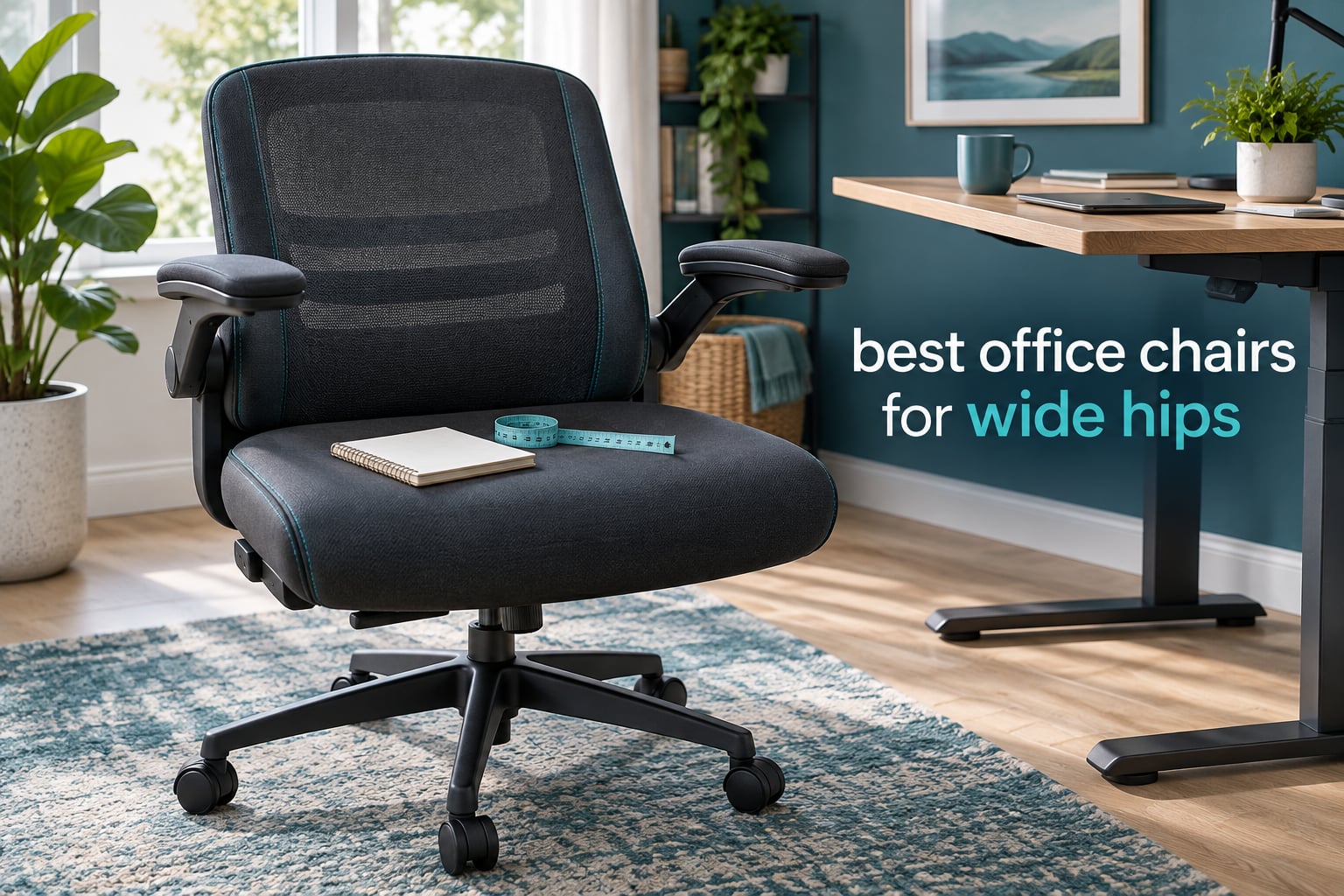
The best office chairs for wide hips have a flat, wide seat pan with no raised side wings pressing into the outer thighs, plus armrests that flip, slide, or detach so nothing narrows your usable seat. A weight rating of 400 lb or higher matters too, but it is not the same thing as a wide fit, and we explain the difference below.
Most standard task chairs are built around a seat pan somewhere between 19 and 21 inches wide. Sit on one with wider hips and you notice it within a month: you perch on the front edge, the armrests push your knees outward, and by the afternoon you have a dull ache across the lower back and numbness down the back of your legs. The chair is not broken. It was simply cut for a different body.
We compared ten big-and-tall and wide-seat chairs across the price spectrum, reading the actual fit measurements rather than the marketing width printed on the box. For each one we checked the usable seat dimensions, how the armrests move, the weight rating, the gas lift certification, and what buyers report breaking after a few months. Our [wide-seat roundup of office chairs](/best-office-chairs-with-wide-seats/) covers the general category, while this guide is narrowed to wide hips specifically.
Two ideas run through everything below. First, overall chair width is a marketing number; the honest limit is the distance between the inside of the two armrests. Second, big and tall does not mean the same thing as wide-hip friendly, and plenty of tall-chair listings quietly conflate the two. We call that out for every pick.
Table of Contents
Top 3 Best Office Chairs For Wide Hips (October 2026)

GTPLAYER Big and Tall 400lb Chair
- 400 lb capacity
- 21.26 inch seat length
- Integrated spring lumbar
- 90-135 degree recline

COMHOMA Big and Tall with Footrest
- 150 degree recline
- Height-adjustable arms
- 22 inch wide backrest
- Built-in footrest
EXCEBET Wide Seat Executive Chair
- Saddle-shaped wide seat
- Retractable footrest
- Armrests adjust in width
- SGS Class 4 gas cylinder
Our three leads are not the three heaviest chairs, and they are not the three with the largest box dimensions. They are the three where buyers most often describe the same outcome: sitting back with both hips fully supported and nothing touching the sides of the legs.
All 10 Chairs at a Glance
| Product | Specifications | Action |
|---|---|---|
| GTPLAYER Big and Tall 400lb Chair |
|
Check Latest Price |
| COMHOMA Big and Tall with Footrest |
|
Check Latest Price |
| EXCEBET Wide Seat Executive Chair |
|
Check Latest Price |
 HOMRELEXA Big and Tall Flip Armrest Chair HOMRELEXA Big and Tall Flip Armrest Chair |
|
Check Latest Price |
 BestOffice 400lb Wide Mesh Chair BestOffice 400lb Wide Mesh Chair |
|
Check Latest Price |
 WAILOR 400lb Executive Chair with Footrest WAILOR 400lb Executive Chair with Footrest |
|
Check Latest Price |
 HYLONE 400lb Mesh Chair with Flip Arms HYLONE 400lb Mesh Chair with Flip Arms |
|
Check Latest Price |
 Indulgear 500lb Heavy Duty Chair Indulgear 500lb Heavy Duty Chair |
|
Check Latest Price |
 Luckyear Wide 3D Molded Foam Chair Luckyear Wide 3D Molded Foam Chair |
|
Check Latest Price |
 Indulgear 5D Flip Arm 600lb Chair Indulgear 5D Flip Arm 600lb Chair |
|
Check Latest Price |
Two entries in that list deserve a second look before you read on. The HYLONE and the Luckyear both rate 4.4 or higher on the most consistent rating profiles in the set, and the GTPLAYER at number one carries more than 34,000 reviews, a review base large enough that its weaknesses are well documented rather than anecdotal.
How We Picked: Three Tests Every Chair Had to Pass?
Every chair here had to clear three tests. A 400 lb or higher weight rating, which on this category is the bare minimum and a sign the gas lift and base were built for a load rather than a pose. A certified gas cylinder, ideally SGS Class 4, because that is the part that fails first. And arms that move, meaning they flip up, slide outward, or come off, so the usable seat is not permanently narrowed by two fixed pads.
The second test is the one that catches the great majority of chairs we rejected. We measure the usable seat at its narrowest point, which is often not where the listing claims. On the HYLONE, for example, the seat is genuinely wide, but inward-curving plastic behind the arms narrows the lower backrest to roughly 14.5 inches at its tightest, which a buyer measured directly. A wide seat with a pinched backrest still leaves you perching.
Where manufacturers do not publish a usable seat width, we say so rather than estimating. Several of the chairs below list an overall width and a backrest width but no separate seat pan measurement, and for those we use the armrest mechanism as the deciding factor instead. Our [back pain relief chair guide](/best-office-chairs-for-back-pain-relief/) covers the spine side of the same problem.
1. GTPLAYER Big and Tall 400lb Chair with Footrest – Best Overall
GTPLAYER Big and Tall Gaming Chair 400lbs Heavy Duty Office Chair with Footrest, High Back Pocket Spring Lumbar Support, Ergonomic Wide Comfy Seated Cushion for Lower Back Pain Relief, Earth-Black
21.26 inch seat length
19.69 inch seat depth
400 lb capacity
41.5 lb chair weight
Pros
- Genuinely deep seat that spreads thigh and hip pressure
- Integrated spring lumbar support
- Metal frame and heavy duty base rated to 400 lb
- 135 degree recline across 6 lock positions
- PU leather wipes clean and shrugs off pet hair
Cons
- PU leather runs warm over 8 hour days
- Armrests move up and down only
- 41.5 lb is heavy to reposition
- Gaming chair styling does not suit a formal office
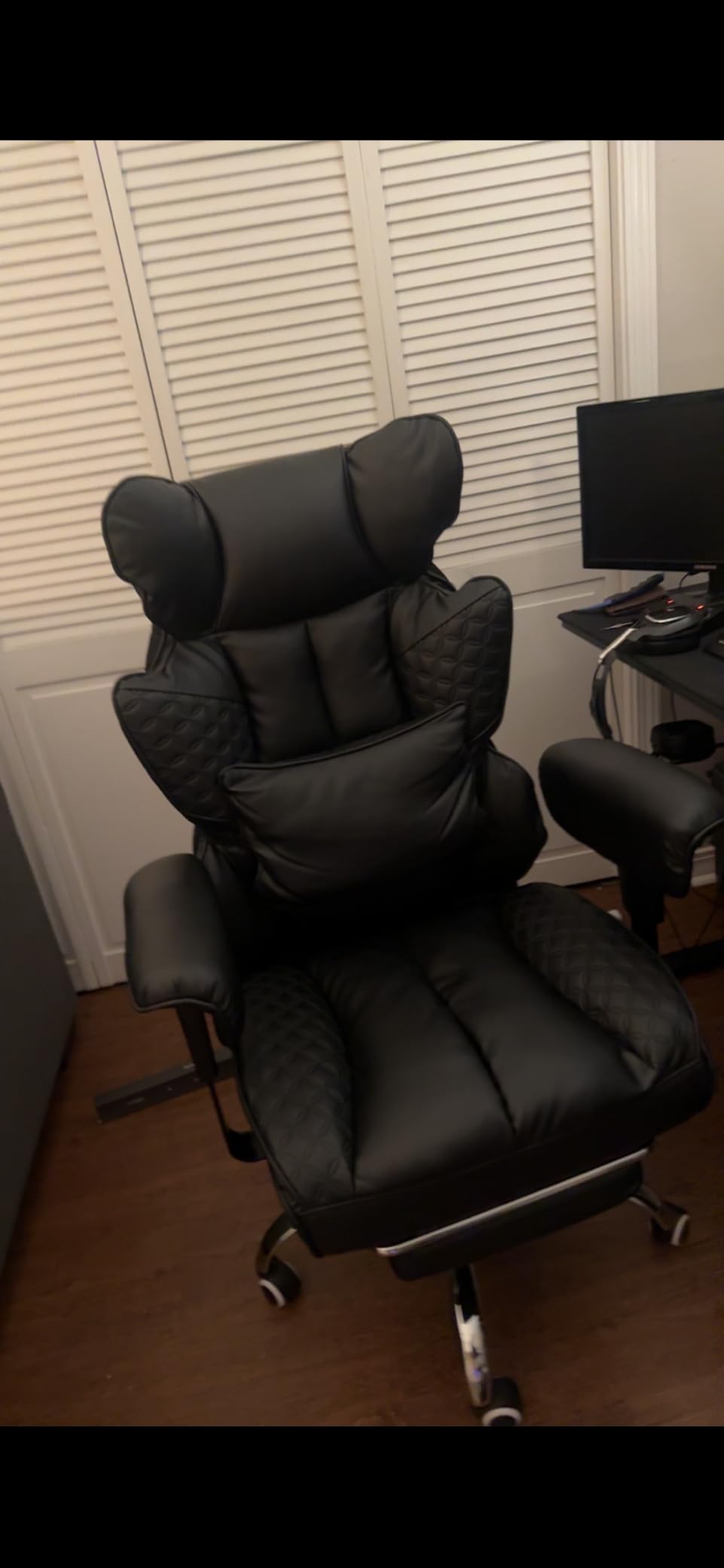
This is the chair we kept coming back to. The seat length is listed at 21.26 inches with a 19.69 inch depth, which is a full two to three inches more usable surface than the average big-and-tall listing, and that extra few inches is what stops you sliding forward onto the edge. Buyers consistently describe it as the first chair where their hips sit flat instead of hanging off the front.
Spring lumbar support is built into the backrest rather than added as a separate pad, and the back reclines from 90 to 135 degrees across six lock positions. Six settings gives you more postural control than most of the chairs in this list, and it means you can lean back at a shallow angle mid-afternoon without losing the upright posture you need for typing.
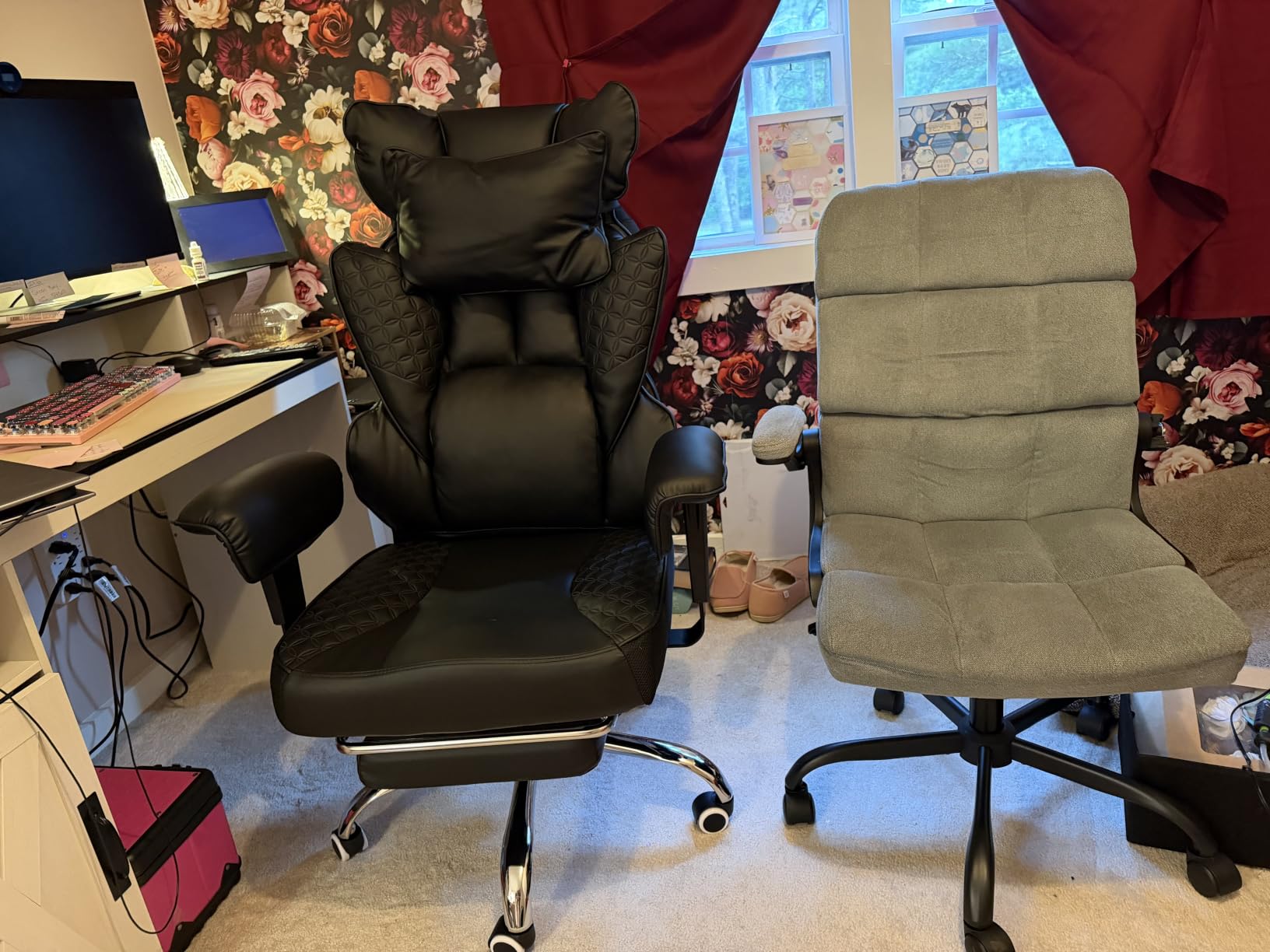
The metal frame, three-level gas lift, and heavy duty base are what justify the 400 lb rating in practice. Assembly takes 15 to 30 minutes with all hardware included, and the removable throw pillow is a small touch that lets you adjust the lower-back gap without moving the whole chair.
Long-term reports are mixed in one specific way worth knowing: the same cushion that feels cloud-like in month one can flatten, and PU leather warms up noticeably in a hot room. If you sit eight hours in summer without air conditioning, the mesh picks further down this list may serve you better.
Who this chair suits?
This suits anyone who wants a genuinely deep, soft seat with a 400 lb rating and does not need the armrests to move inward or outward. The three-level gas lift range, 19.29 to 23.22 inches, covers a wide band of desk heights, and the included hardware means you are not hunting for a spare hex key.
Who should skip it?
Skip it if you run hot, because PU leather traps heat that mesh would let escape, or if you sit cross-legged, since the wrap-around wings and fixed-width arms keep closing the seat. Users who want a formal office look should also know the styling reads as a gaming chair in most professional settings.
2. COMHOMA Big and Tall Wide Chair with Footrest – Best Value
COMHOMA Big and Tall Office Chair Heavy Duty Wide Ergonomic Gaming Chair with Deluxe Embossing Designed Leather with Foot Rest,150°Reclining Adjustable Armrests Pocket Spring Back Support and Pillow
22 inch backrest width
19.68 inch seat depth
400 lb capacity
3 position recline to 150 degrees
Pros
- Seat is wide and deep enough to cross legs
- Height-adjustable arms
- uncommon at this tier
- Integrated pull-out footrest
- Memory foam over pocket springs
- Multiple color options
Cons
- Only 3 recline positions
- Embroidered pattern is polarizing
- Handmade construction varies slightly between chairs
- 44 lb is heavy to move
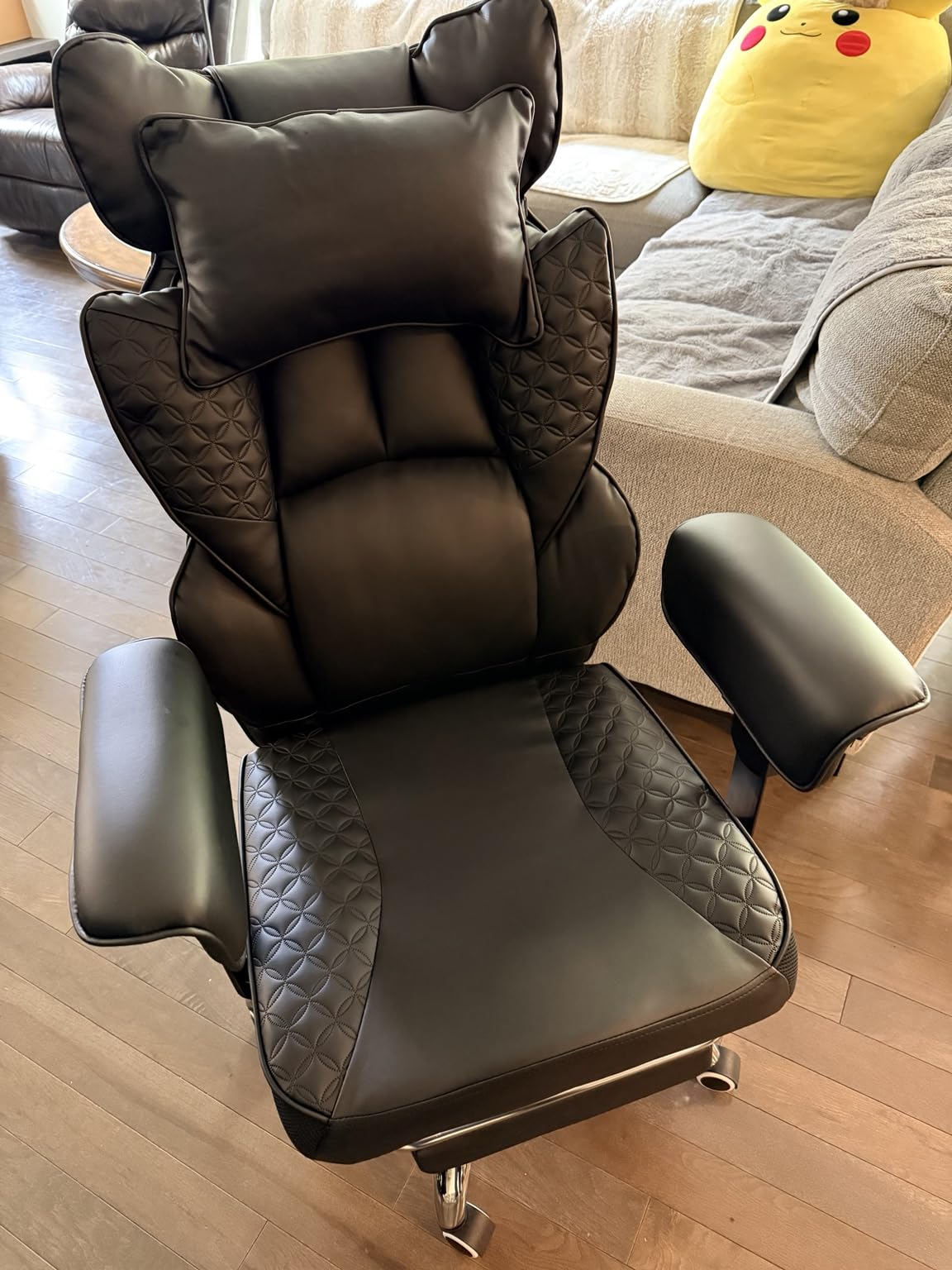
The distinguishing spec here is a 22 inch backrest paired with a sofa-like seat deep enough to cross or bend your legs, and that combination is less common below this price point. Height-adjustable armrests are also uncommon at this tier, and for wide hips that matters because you can drop them low enough to open the seat rather than sitting between two fixed vertical posts.
Recline runs to 150 degrees across three lock positions, with a pull-out footrest that extends when you want to take a break. The fill is memory foam over pocket springs in the backrest, which gives a softer landing than a flat foam slab and does not bottom out as quickly under a heavier user.
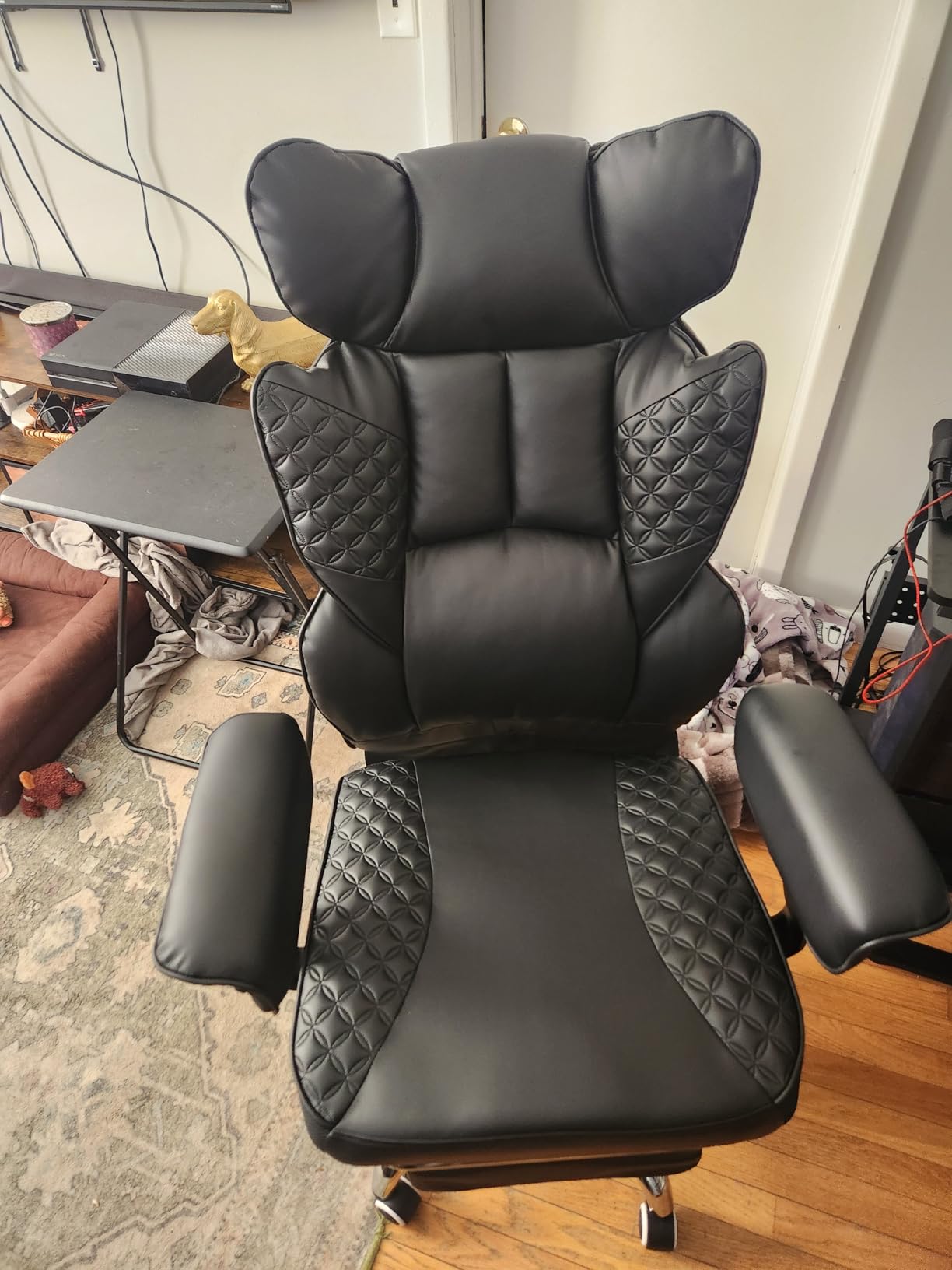
Owners like the relaxed posture options. Sitting with one leg folded up or crossed is genuinely feasible here in a way it is not on most big-and-tall chairs, because the seat width does not pinch once you move your knees.
The trade-off is the recline range. Three positions is fewer than the six on the GTPLAYER and the 155 degrees on the WAILOR, so if you like to change your back angle frequently this feels limited. At 44 lb it is also a two-person job to move across a room.
Who this chair suits?
This suits people who want to move their legs around while working, who run cool rather than hot, and who want a footrest without a separate accessory. Embroidered floral and solid finishes give you a decor option that most black executive chairs do not.
Who should skip it?
Skip it for a formal corporate office where visible embroidery will not fly, or if you need fine-grained recline control. Buyers should also expect slight curve variation between chairs, since each one is handmade rather than machine-assembled from identical parts.
3. EXCEBET Big and Tall Wide Seat Executive Chair – Best With a Footrest
EXCEBET Big and Tall Office Chair 400lbs Wide Seat, Leather High Back Executive Office Chair with Foot Rest, Ergonomic Chairs Lumbar Support for Lower Back Pain Relief (Black)
29.8 inch overall width
19.6 inch seat depth
Saddle-shaped seat
58.4 lb chair weight
Pros
- Saddle-shaped wide seat spreads weight off the thighs
- Footrest extends far and tucks under the seat
- Armrests adjust in width and height
- SGS Class 4 gas cylinder and BIFMA-approved base
- Buyers from 5 foot 9 to 6 foot 4 report a roomy fit
Cons
- Gas cylinder cannot be replaced without disassembly
- Hard front seat edge reported by some buyers
- Heavy at 58.4 lb
- Tilt tension knob has a narrow useful range
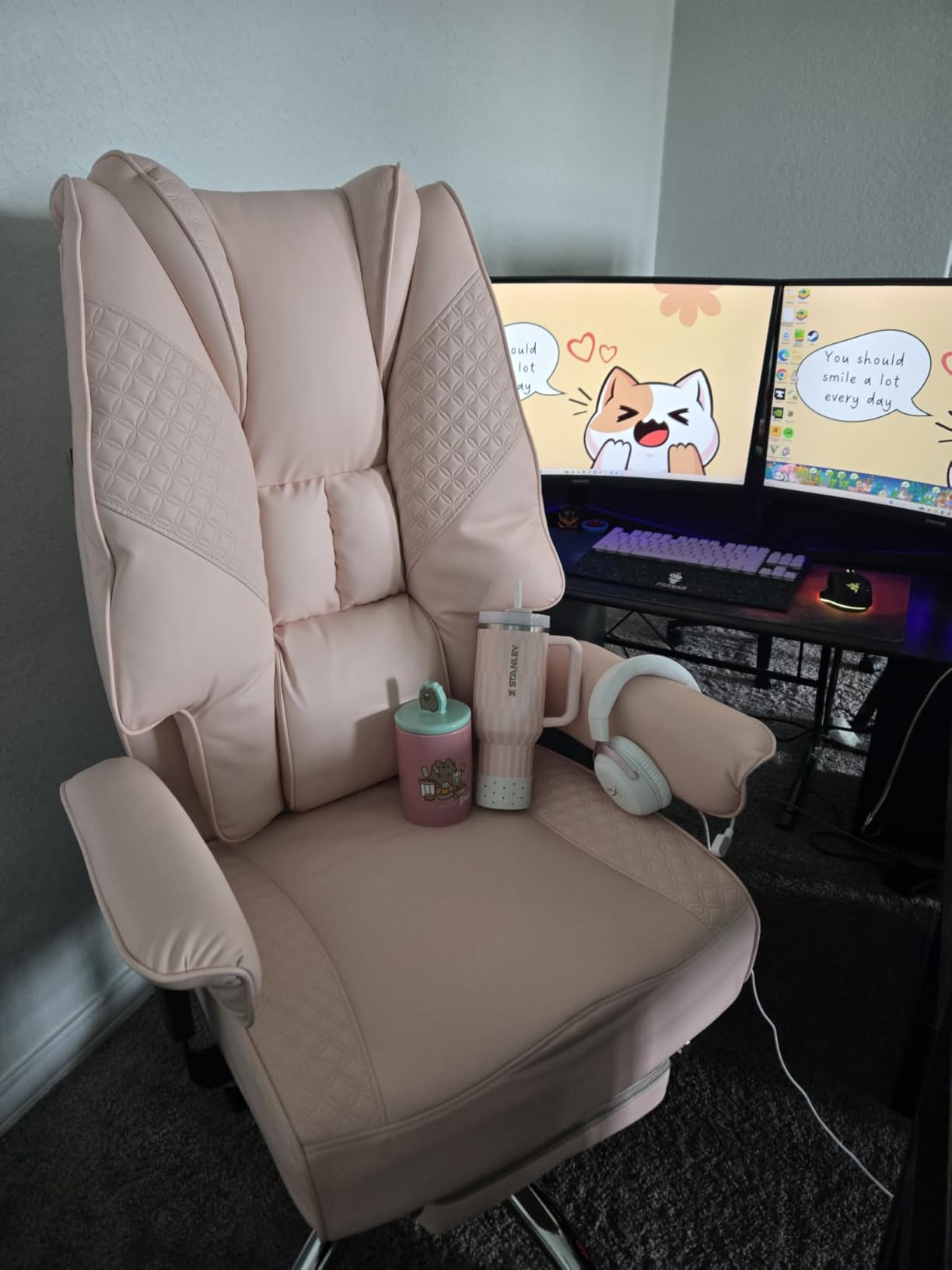
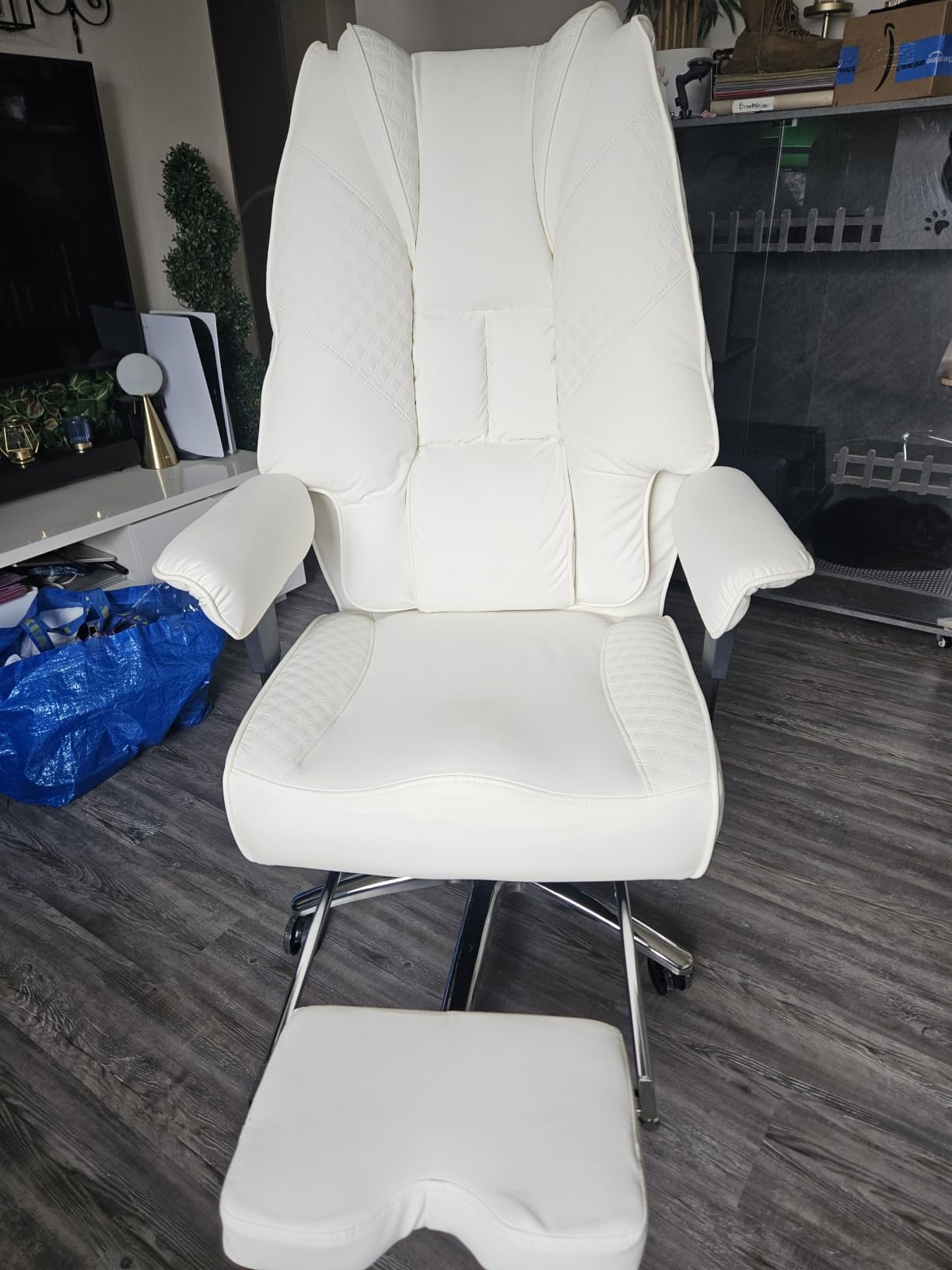
The saddle-shaped seat is the point here. Rather than a flat pan with a raised lip, the cushion dips slightly at the centre, which spreads weight across the backs of both thighs instead of concentrating it on the outer edges. Multiple owners between 5 foot 9 and 6 foot 4 in the 215 to 375 lb range say it is the first chair that has not felt cramped.
Armrests are adjustable in both width at assembly and height afterwards, and they drop low enough to slide under a desk. The footrest is retractable, extends a useful distance when reclined, and tucks neatly under the seat when you are working, which is a better arrangement than a separate footrest that lives under the desk.
Component quality is above average for this tier. The gas cylinder is SGS-certified Class 4, the metal base carries a BIFMA approval, and the cushion frame is FSC-certified wood. Assembly is 20 to 30 minutes with clear instructions.
The durability reports are the reason this is third rather than higher. A number of owners report the gas cylinder losing pressure around the one-year mark, and the catch is that it is not user-replaceable once the chair is assembled. Some also note a hard front edge that digs into the backs of the thighs, and occasional creaking on a new unit as the frame settles.
Who this chair suits?
This suits buyers who want genuine big-and-tall proportions rather than a standard chair stretched by two inches, who want a footrest built in, and who value certified components. The 360 degree swivel and adjustable recline make it workable for long focused sessions.
Who should skip it?
Skip it if you move the chair often, because 58.4 lb is the second heaviest here, or if you need a replaceable gas lift. Anyone prone to a sensitive lower back should test the hard front edge first, and buyers who want true rocking motion will not find it despite the marketing on some listings.
4. HOMRELEXA Big and Tall Chair with Flip-Up Armrests – Best for Sitting Cross-Legged
Big and Tall Office Chair, Flip Armrests for Pets & Cross Legged Sitting
26.8 inch depth
20.1 inch seat depth
32.3 inch backrest interior height
400 lb capacity
Pros
- Flip armrests open the seat completely for cross-legged sitting
- Plush pocket spring seat with fiber and high-density foam
- Very deep seat and tall backrest
- Work-to-recline-to-footrest flexibility
- TUV-tested base and SGS gas lift
Cons
- Only one seat-height position
- Velvet and teddy fabric trap heat
- Bulky 26.8 inch footprint
- Only 2 recline positions
This chair answers a question almost no other listing on this list answers. The padded armrests flip outward on a hinge, which fully opens the seat so you can cross your legs, stretch out, or put a pet in your lap without the arms pushing your knees aside. For buyers whose hips are the problem but whose posture changes constantly, that mechanism is worth more than another inch of seat width.
The cushion layers pocket springs, soft fiber filling, and high-density foam, and owners report it staying responsive rather than flattening over long sessions. Seat depth is 20.1 inches with a 32.3 inch backrest interior height, which is among the roomier figures in this roundup.
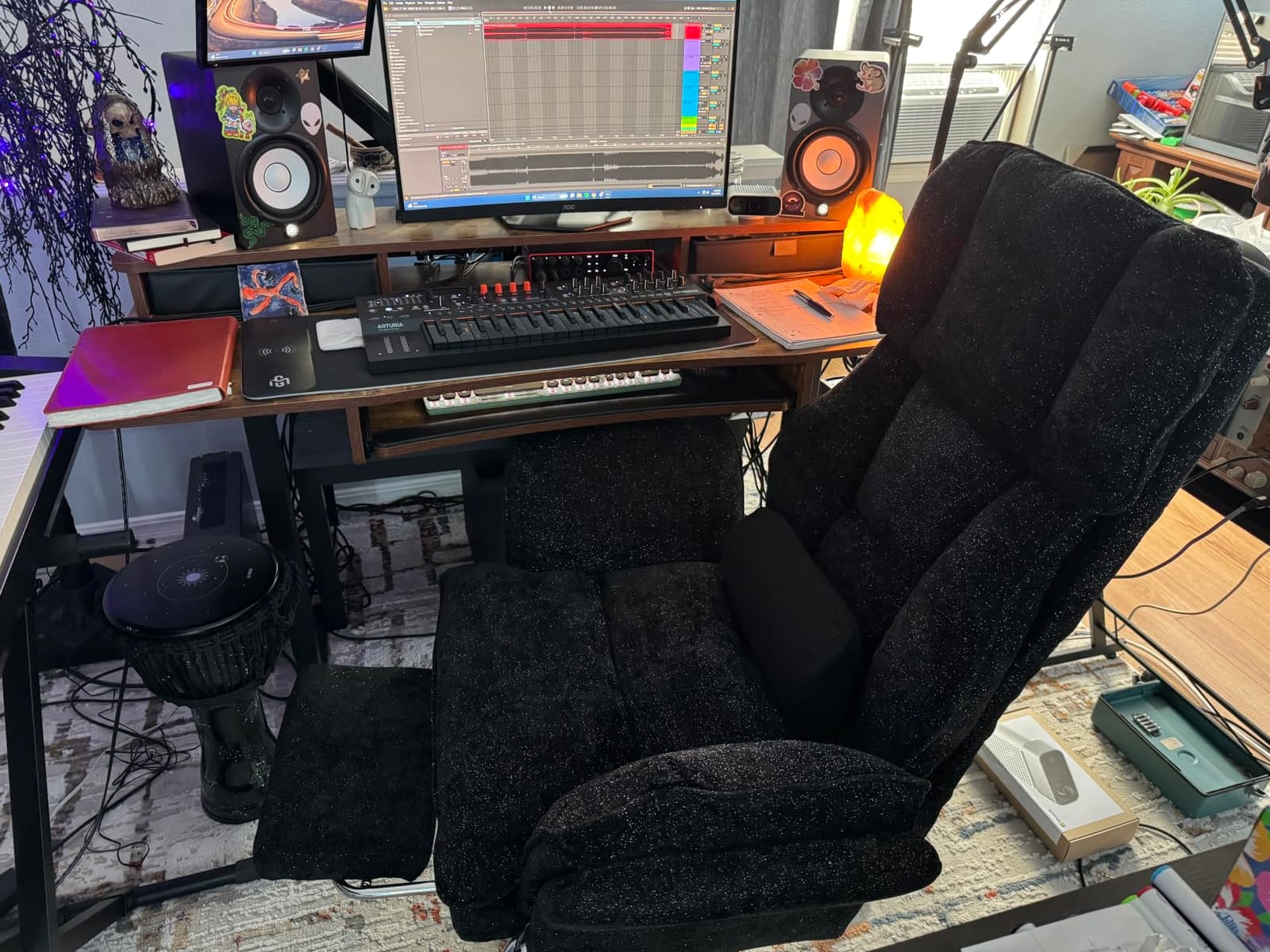
You also get a pull-out footrest, 2-position recline, and 360 degree swivel, so the chair moves between work mode and rest mode without any extra purchases. Assembly is listed at about 15 minutes, and the base is TUV-tested with an SGS-certified gas lift and BIFMA-compliant casters.
The compromise is height adjustment. There is a single seat-height position, so this is a poor choice if your desk is fixed at an unusual height or if you alternate between two very different desks. The teddy fabric and velvet upholstery also hold heat more than mesh, and the 26.8 inch depth makes it one of the larger footprints here.
Who this chair suits?
This suits buyers who work in varied postures rather than one fixed position, and anyone sharing a chair with a pet. The flip arms also help in a small home office, since the closed footprint is narrower than the 52.4 inch total width suggests.
Who should skip it?
Skip it if you need real height adjustment, if you overheat easily, or if your room is tight. Two recline positions is among the fewest in this list, and the single-height mechanism is the biggest limitation we found in owner reports.
5. BestOffice 400lb Wide Mesh Chair – Best Budget Pick
Big and Tall Office Chair 400lbs Wide Seat Desk Chair Computer Chair with Lumbar Support Adjustable Arms Task Rolling Swivel Mesh Executive High Back Ergonomic Chair for Adults Women,Black
Listed 25 inch seat depth
11 seat-height positions
400 lb capacity
41 lb chair weight
Pros
- Breathable mesh back stays cool
- 11 height positions are unusually generous
- Armrests adjust in width at assembly
- Commercial grade components for a 400 lb rating
Cons
- Seat slopes forward and down
- Armrest fasteners loosened within months for some buyers
- Noisy plastic casters
- One report of the metal base snapping at about six months
This is the value entry point, and the mesh back is the reason it earns a place on a hip-focused list at all. Mesh does not trap heat the way PU leather does, and for a wide-hip user sitting through a long hot day that difference is real. Eleven seat-height positions is a far wider adjustment range than anything else at this tier, most of which offer three or four.
Owners consistently confirm the seat is large enough to fit wider bodies without pinching, and the lumbar support, adjustable arms, and rolling swivel base cover the basics properly. At 41 lb it is not a light chair, but it is manageable.
Armrests adjust in width during assembly and then lock, so the inside-armrest measurement is a decision you make once rather than an ongoing adjustment. That is a limitation worth weighing if your hip width sits right on the boundary.
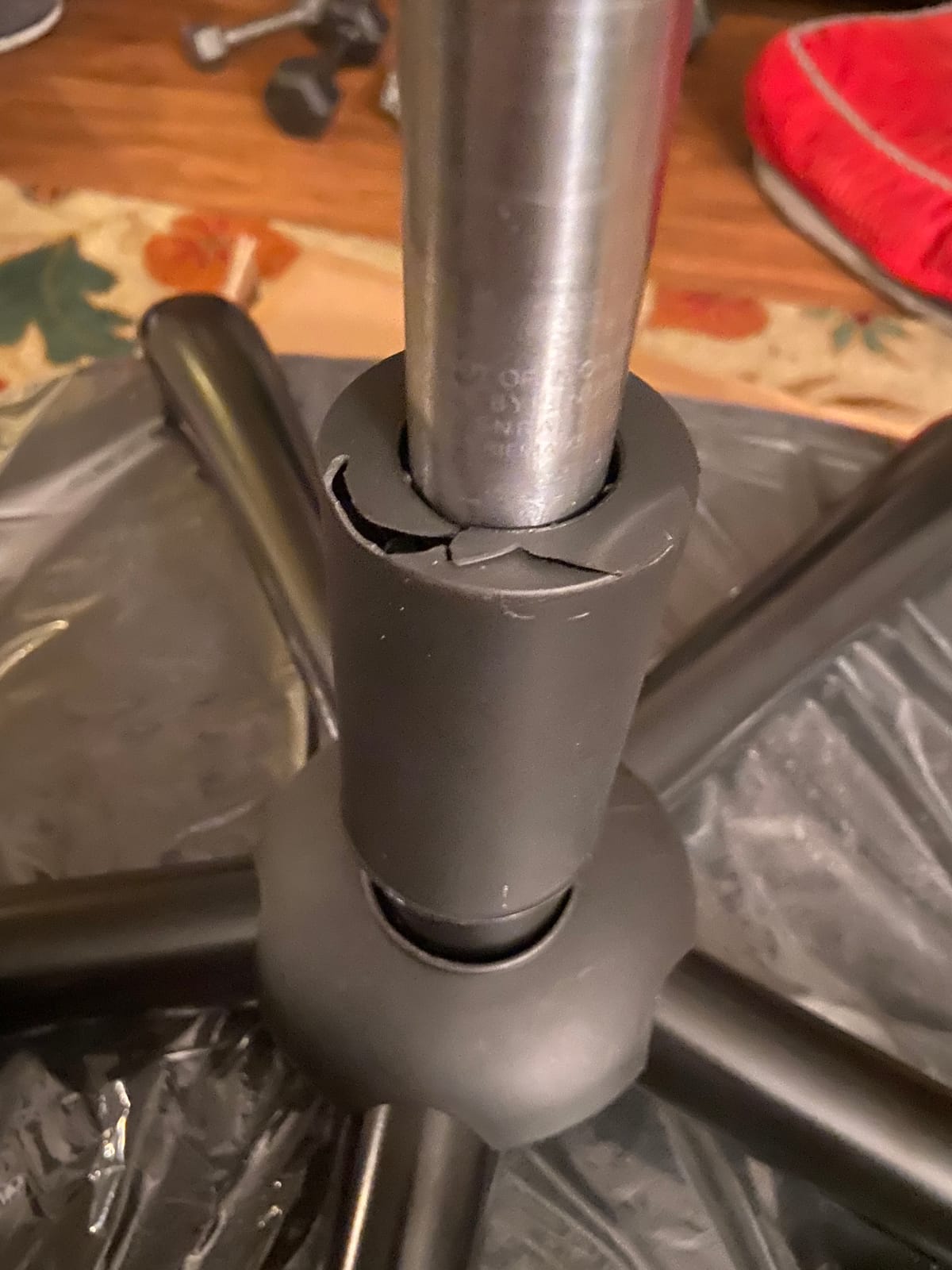
The seat has a pronounced forward and downward slope, and it is the most common complaint we found. Some shorter users also report the lumbar support does not adjust low enough, and durability is a genuine question mark: thin-looking bolts, plastic casters, and one report of a metal base snapping at the cylinder in about six months at 298 lb.
Who this chair suits?
If you want a low-cost way to find out whether a wide seat solves your problem before spending significantly more, this is the place to start.
Who should skip it?
Skip it if you are sensitive to a slanted seat, if you are around 5 foot 5 or shorter, or if you want a warranty longer than a year. Metal replacement casters are sold separately, and assembly has proved unusually long for some owners because of hard-to-align holes.
6. WAILOR 400lb Executive Chair with Auto-Sync Arms – Best for Reclining
400lbs Executive Office Chair with Foot Rest for Heavy People, Ergonomic Big and Tall Desk Chair with Adjustable Headrest, High Back PU Leather Comfy Heavy Duty Computer Chair with Spring Cushion
21.25 inch seat length
20.07 inch seat depth
90-155 degree recline
SGS Class 4 gas lift
Pros
- ErgoSync linkage armrests follow the backrest through the full recline
- Widest recline range here at 155 degrees
- 4-layer foam seat over a steel-reinforced frame
- Enclosed armrest hinges remove common pinch points
- 1 year warranty with free part replacement
Cons
- PU leather runs warm
- Recline lock positions are not documented
- Wood base adds weight versus metal
- Headrest adjustment range is unspecified
The engineering detail that separates this one is the ErgoSync linkage. The armrests move with the backrest as it reclines from 90 to 155 degrees, so your elbows stay supported instead of the armrests staying flat while the seat falls away from them. On a chair meant for wide hips, that matters because a fixed armrest is a fixed obstruction at exactly the angle where you might want to shift your weight.
The seat itself is widened to 21.25 inches with four layers of foam over a steel-reinforced frame, which is the construction most likely to keep its shape over years rather than months. A curved lumbar cushion and an optional retractable footrest round out the pressure-relief options, and the SGS Class 4 gas lift moves smoothly through its range.
The armrest hinges are fully enclosed, which removes the pinch points that catch skin and clothing on this style of chair. Silent 360 degree casters glide on hardwood and tile, and the one-year warranty covers free replacement of casters, gas lifts, and bases.
Two gaps in the published specification are worth knowing. The recline count is listed as three with no documented lock positions, and the headrest adjustment range is not specified, so if precise head positioning matters to you, that is a question to ask before buying.
Who this chair suits?
This suits people who alternate between upright work and leaning back, and who want their armrests to move with their posture. The 4-layer foam over a reinforced frame is also a good sign for anyone who has previously bought a chair whose cushion went flat within a few months.
Who should skip it?
Skip it if you run hot, since PU leather is not breathable, or if you need documented recline lock positions. The FSC-certified wood base is heavier than an all-metal base, and this chair is the one to check carefully on the front edge if you are very sensitive at the backs of the thighs.
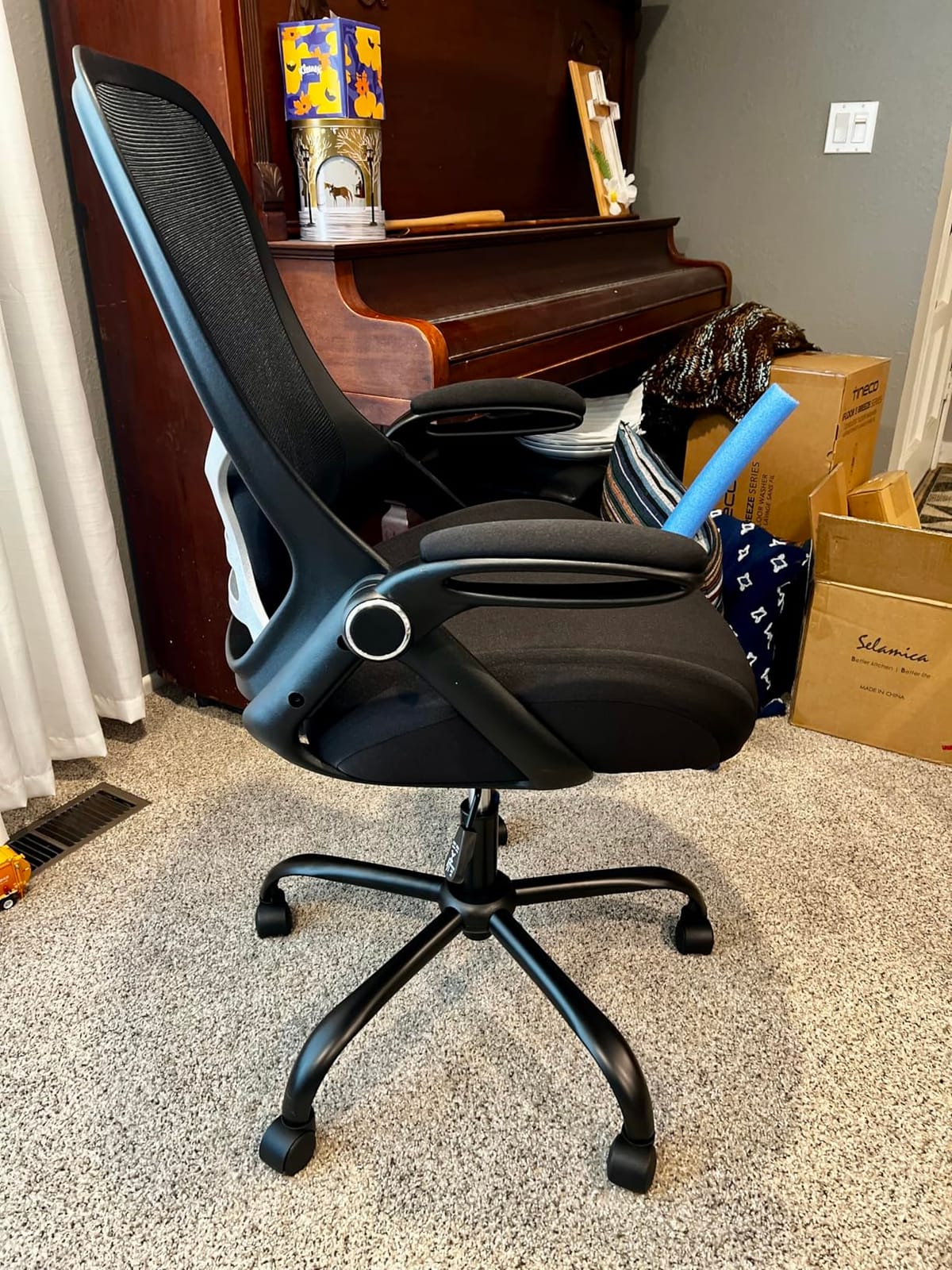
7. HYLONE 400lb Mesh Chair with Flip-Up Armrests – Best for Hot Climates
HYLONE 400lb Office Chair Big and Tall,Desk Chair with Lumbar Support,Black
5 inch thick seat cushion
21.5 inch seat length
19 inch seat depth
32 lb chair weight
Pros
- Consistent 4.4 rating with a 75 percent five-star share
- 5 inch cushion described as the most comfortable by owners
- Mesh back stays coolest in long sessions
- Flip-up arms slide fully under a desk
- 28 inch 5-star base is stable at full height
- 24 month free parts warranty
Cons
- Listed height range tops out at 6 foot 2
- Lower backrest narrows sharply behind the arms
- No footrest and no headrest
- Wood frame feels lighter duty than metal
A 5 inch thick sponge cushion over a breathable nylon mesh back is the combination that makes this the cool-running option in the list, and buyers rate it consistently. At 4.4 stars with a 75 percent five-star share, the ratings here are unusually consistent, which is rare in a category normally full of split opinions.
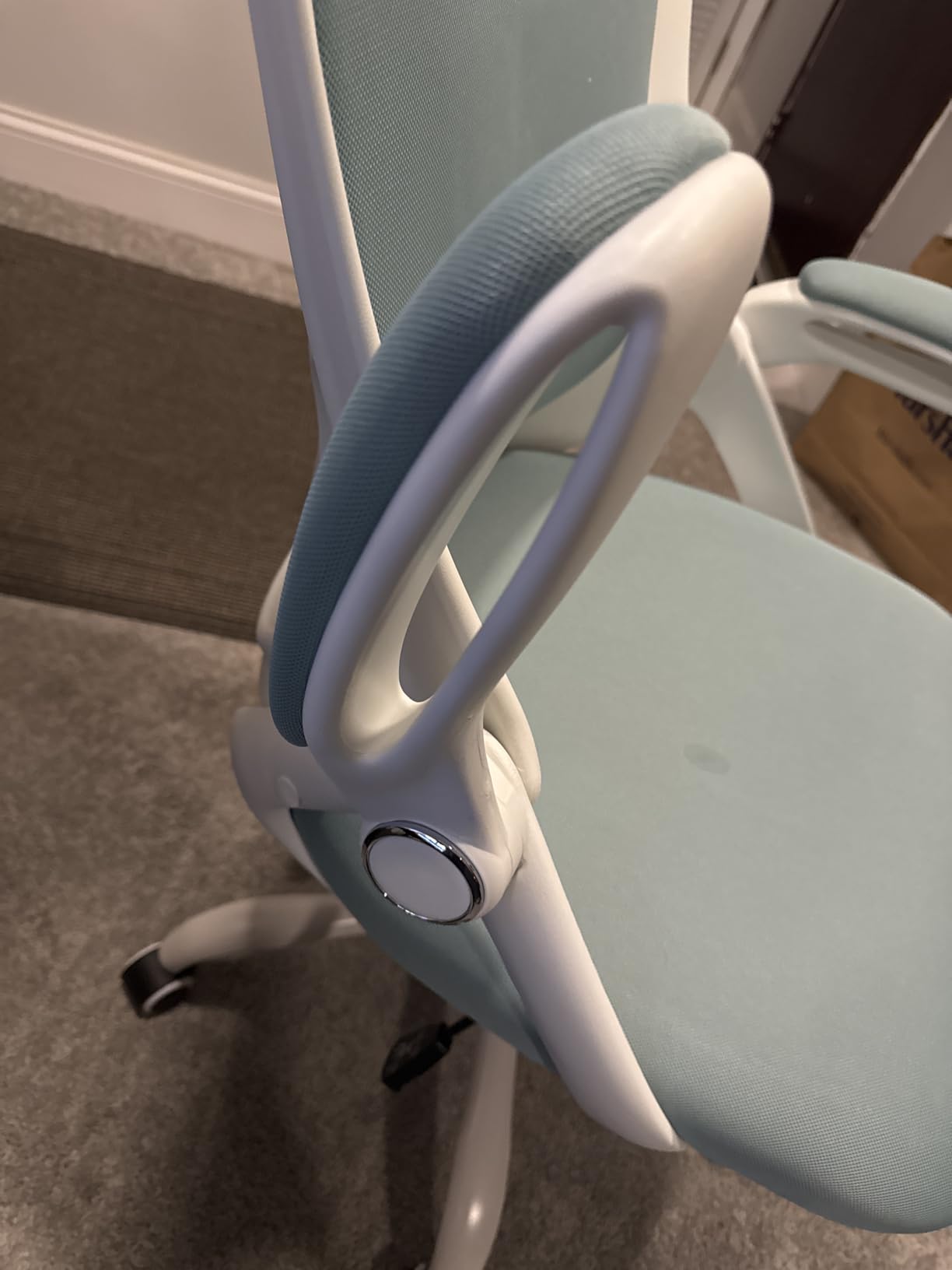
Flip-up armrests are the fit feature that matters most for wide hips, because pressing them down opens the seat fully and lets the whole chair slide under a compact desk. The 28 inch 5-star base gives real stability at maximum height under the 400 lb rating, and durable casters roll on tile, wood, and carpet.
At 32 lb this is the lightest chair in the roundup, which makes it the easiest to reposition when you move rooms or change desks. A 24 month free parts program and a 24 hour customer response window are also the most generous support terms we saw outside the Luckyear.
Here is the caveat that matters most for this specific audience. Inward-curving plastic behind the armrests narrows the lower backrest sharply, and one reviewer measured roughly 14.5 inches at the narrowest point. The seat is wide while the lower back is not, so you can sit with your hips fully supported and still feel your shoulders drawing inward.
Who this chair suits?
This suits people in warm climates or poorly cooled rooms, and anyone who moves between rooms and desks often. If your hips are the problem and your back is fine, the wide seat and cool mesh make it an easy daily choice.
Who should skip it?
Skip it if you are tall, since the listed user range tops out at 6 foot 2, or if you need lumbar support that fits a wide lower back, because that narrow point below the arms defeats the purpose. There is no footrest and no headrest, and the wood frame feels less substantial than the metal-base alternatives.
8. Indulgear 500lb Heavy Duty Office Chair – Best for Extra-Wide Seats
Big and Tall Office Chair, Heavy Duty Office Chair for Heavy People
23.62 inch seat depth
27.56 inch backrest width
500 lb capacity
80 lb chair weight
Pros
- Widest seat depth in the roundup at 23.62 inches
- 500 lb weight rating
- Adjustable lumbar support that actually moves
- Floor-safe rubber casters that will not scratch wood or tile
- Breathing PU leather that resists fading and flaking
Cons
- At 80 lb it is by far the heaviest chair here
- No real recline and no footrest
- Very large footprint that will not suit small rooms
- PU leather is warm in summer
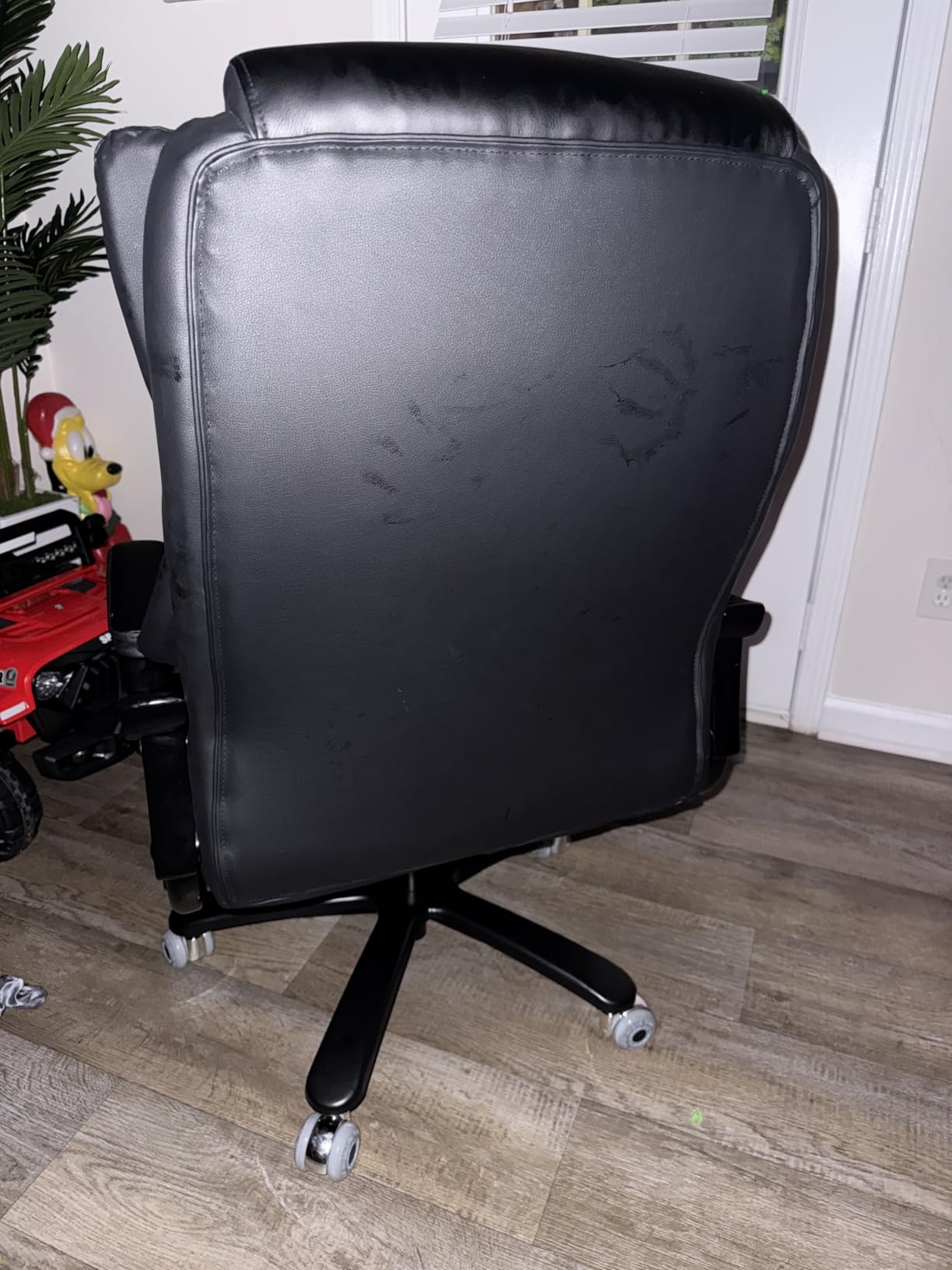
If raw interior dimensions are what you are after, this chair leads the roundup on depth. A 23.62 inch seat depth and a 27.56 inch backrest width are the largest published figures here, and at 27.16 by 27.55 inches the overall footprint is substantial. For a buyer who has never found a wide enough pan, that is the pitch.
The 500 lb rating is the second highest we reviewed, and the lumbar support is a genuine adjustable component rather than a fixed pad, which is rare at this size. Rubber casters with a polyurethane outer glide quietly and will not mark hardwood, laminate, tile, or vinyl, so you do not need a mat.
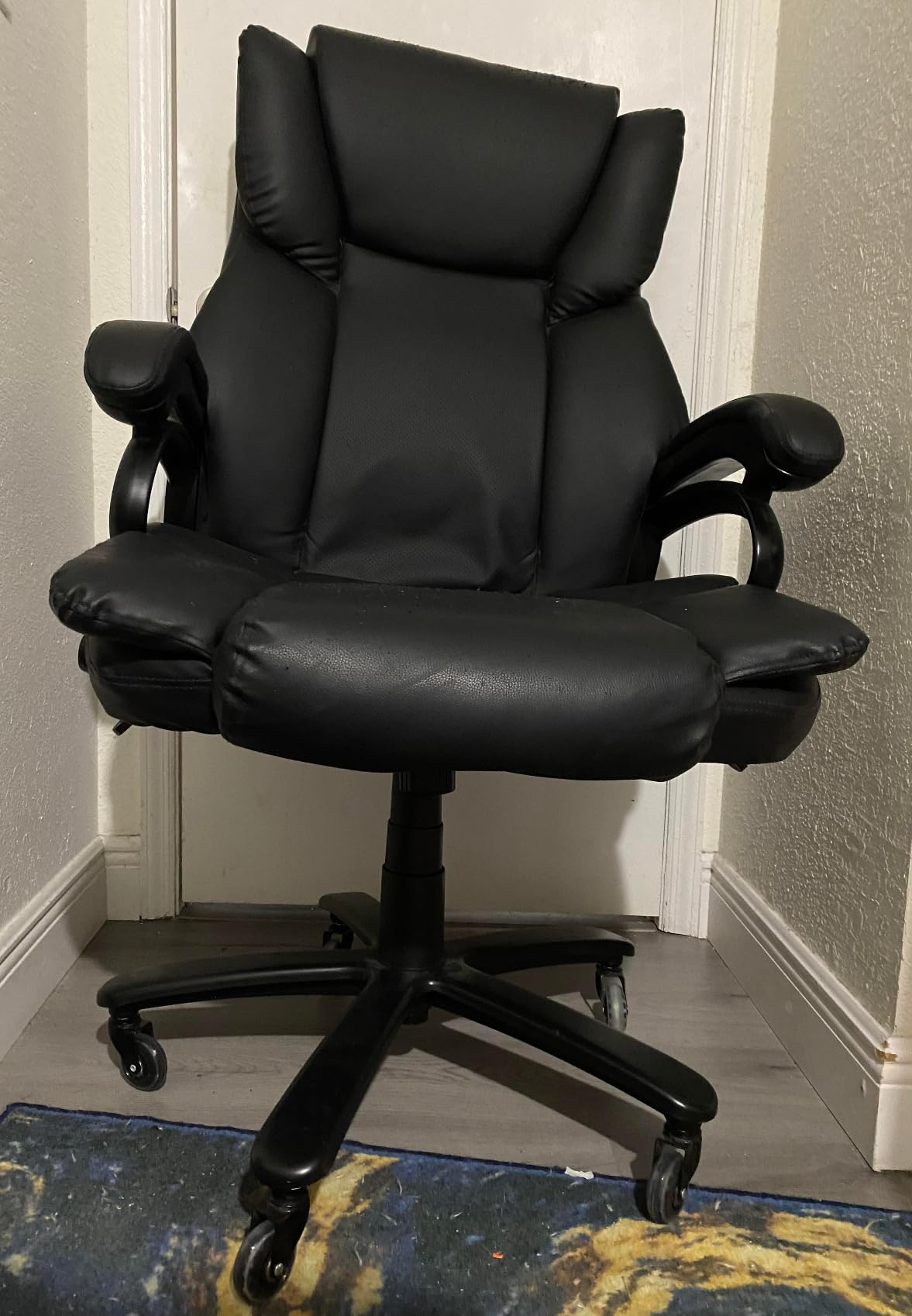
The double-layer sponge cushion and extra-wide backrest are what buyers describe as wrapping the body rather than gripping it, and the breathing PU leather is rated to resist fading and flaking over time. Assembly is about 20 minutes, and the 4-level gas lift gives a usable height range.
The cost of all that size is mass and floor space. At 80 lb this is the heaviest chair we tested in this roundup, and moving it between rooms is a two-person job. There is essentially no recline function and no footrest, so it is a chair for working, not for resting.
Who this chair suits?
This suits people who have measured their hips and found that a standard wide seat still falls short, and who have the floor area to accommodate a 27 inch square footprint. The adjustable lumbar is a bonus if your back is also a concern.
Who should skip it?
Skip it if you work in a small home office, if you move your chair regularly, or if you want to lean back at the end of the day. Eighty pounds is heavy enough that stairs and thresholds become a genuine problem, and there is no footrest to compensate.
9. Luckyear Wide 3D Molded Foam Chair – Best Warranty Coverage
Luckyear Office Chair Ergonomic Desk Chair-400lbs Big and Tall Heavy Duty, Wide & Soft 3D Modeling Foam Cushion Home Office Desk Chair with Adjustable Seat Height, Executive Computer Task Chair
21.06 inch wide cushion
5.2 inch thick foam
400 lb capacity
35.9 lb chair weight
Pros
- 21.06 inch wide molded cushion designed for hip protection
- 5.2 inch thick foam
- Breathable PE polyester mesh back
- Flip-up arms slide under a compact desk
- 5 year warranty
- BIFMA base and 4-level SGS gas cylinder
Cons
- Slightly raised front edges can restrict circulation
- One report of cushion softening and a stripping arm pad screw
- Plastic screw covers fall off easily
- No headrest and no footrest
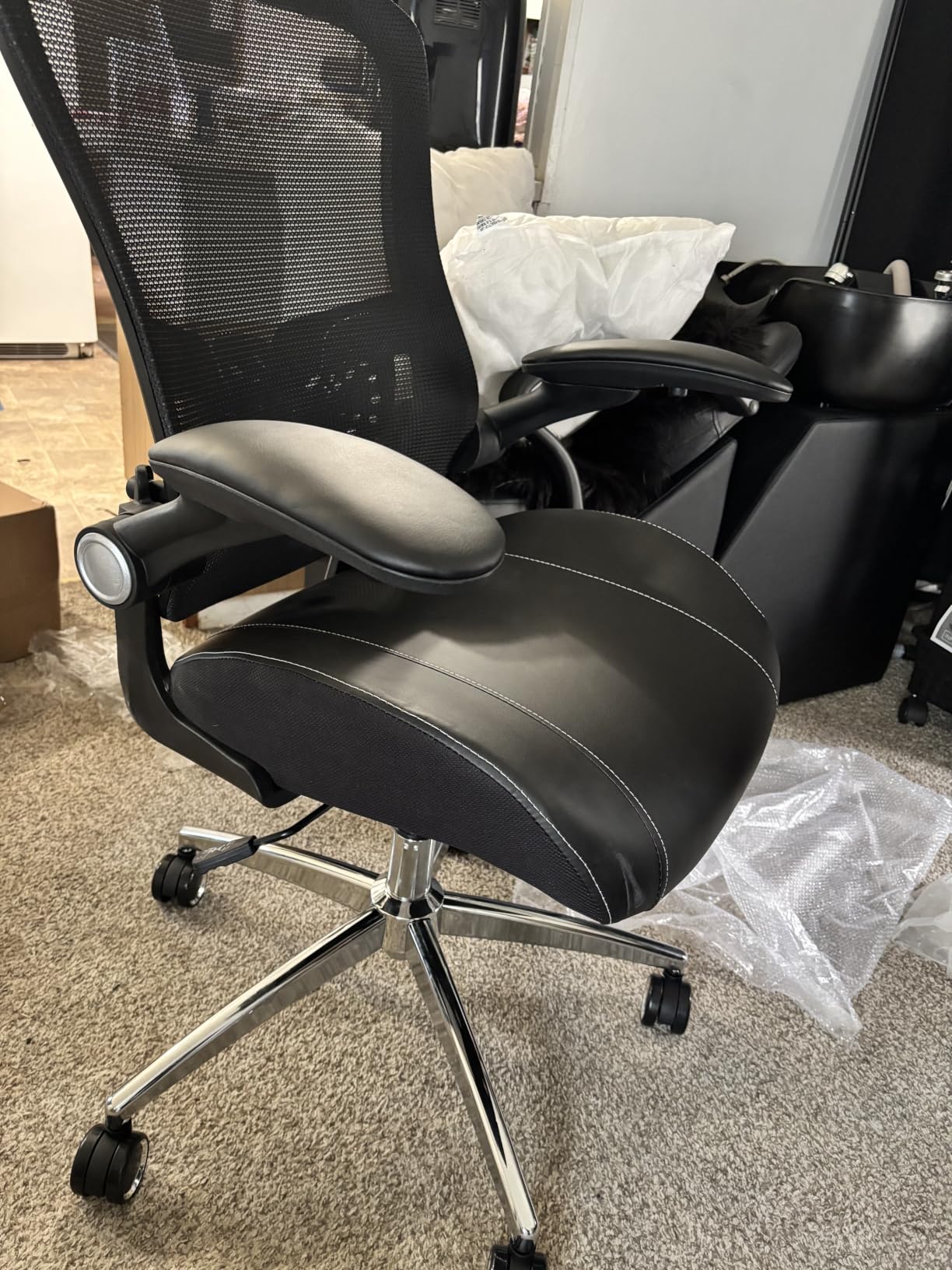
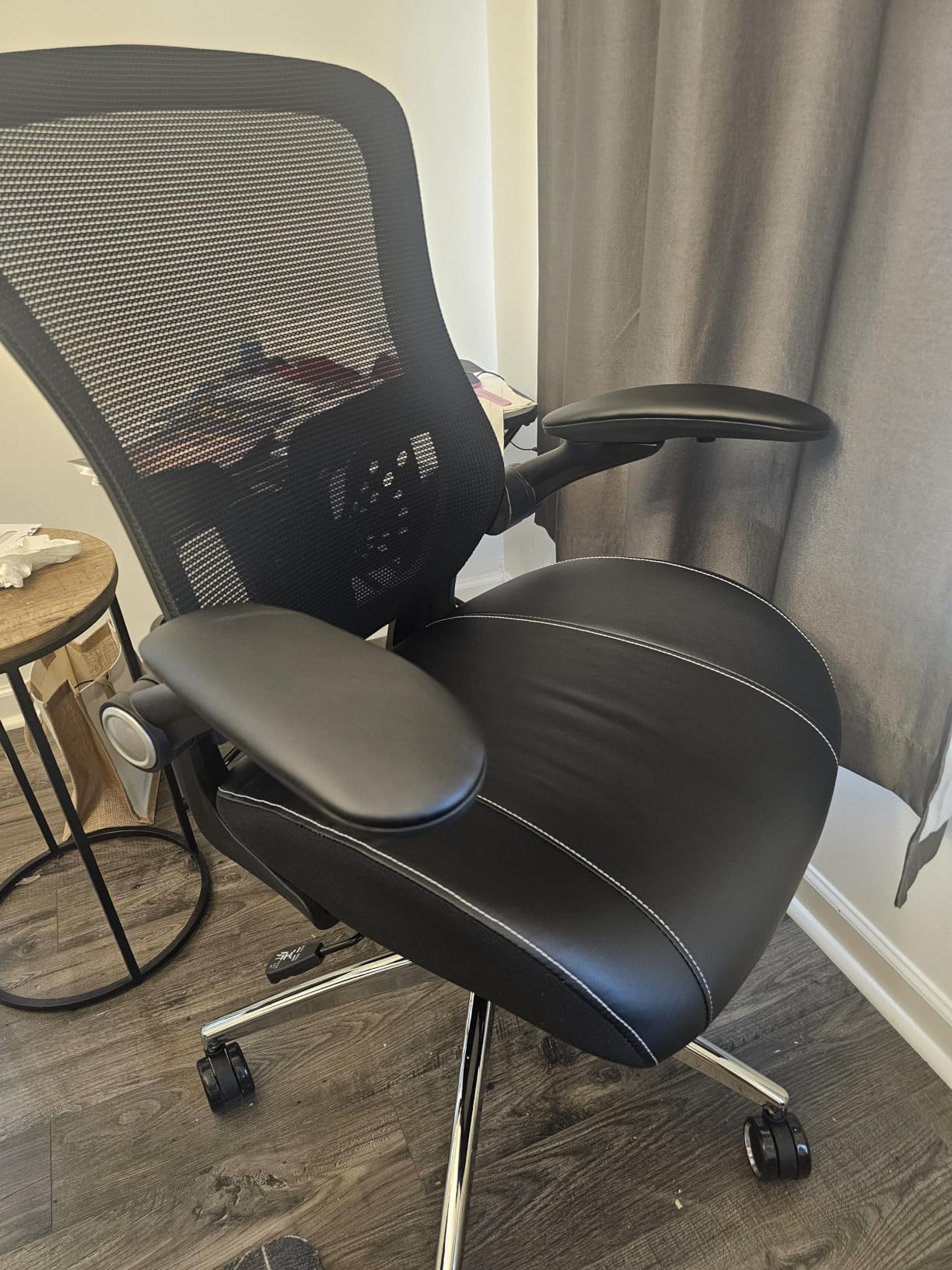
The Luckyear carries the highest average rating in the roundup at 4.6, with 80 percent of reviews at five stars, which is an unusual level of consistency for this category. The cushion is a 21.06 inch wide, 5.2 inch thick molded foam piece that was shaped specifically to protect the hips and spread pressure rather than to look thin and minimal.
Flip-up armrests mean the chair slides fully under a compact desk, and the breathable PE polyester mesh back keeps airflow going through long work sessions. At 35.9 lb it is the second lightest option here, and assembly is 15 to 20 minutes.
Where this one separates itself from the field is the warranty. Five years of manufacturer coverage is the longest warranty in the roundup, against one year for several others and two years for the HYLONE. The base is BIFMA-certified and the gas cylinder is a 4-level SGS-certified unit, so the two components most likely to fail are the two that are actually tested.
Two limitations are worth taking seriously. The front of the molded cushion sits slightly raised, and one reviewer noted this can restrict circulation for very wide thighs, which is precisely the group this chair is meant to serve. There is an isolated durability report of the cushion softening and an arm pad screw stripping in its hole.
Who this chair suits?
This suits buyers who want the highest satisfaction rate and the longest warranty in the same chair, and who want mesh for airflow without giving up a thick seat. Flip-up arms and a 17.6 inch seat height suit a compact desk setup.
Who should skip it?
Skip it if you have very wide thighs and are sensitive at the front of the seat, since the raised edge is the most relevant complaint for this audience. It has no headrest and no footrest, and the mesh back gives less upper-back padding than a fully upholstered chair.
10. Indulgear 5D Flip Arm 600lb Chair – Best for Heavy Duty
Indulgear Large Heavy Duty Office Chair with 5D Flip Arms,Comfy Big and Tall Executive Office Desk Chair with Pocket Spring Cushion,High Back Computer Chair with Lumbar Support,Dual Rubber Wheel
21.65 inch seat depth
32.7 inch overall width
600 lb capacity
55 lb chair weight
Pros
- 5D flip arms can be pushed aside into a no-armrest setup
- Inflatable airbag lumbar support is genuinely adjustable
- Seats wide enough to sit cross-legged
- 600 lb weight rating
- Class 4 gas cylinder and heavy duty metal base
- Dual rubber casters safe on every floor type
Cons
- Backrest height is fixed and suits users above 5 foot 7
- 5D arms ratchet sideways and cannot be locked forward
- Seat angle gave one buyer lower-back pain
- Rocking only with no true recline
- Oversized wheels are a hazard to pet paws
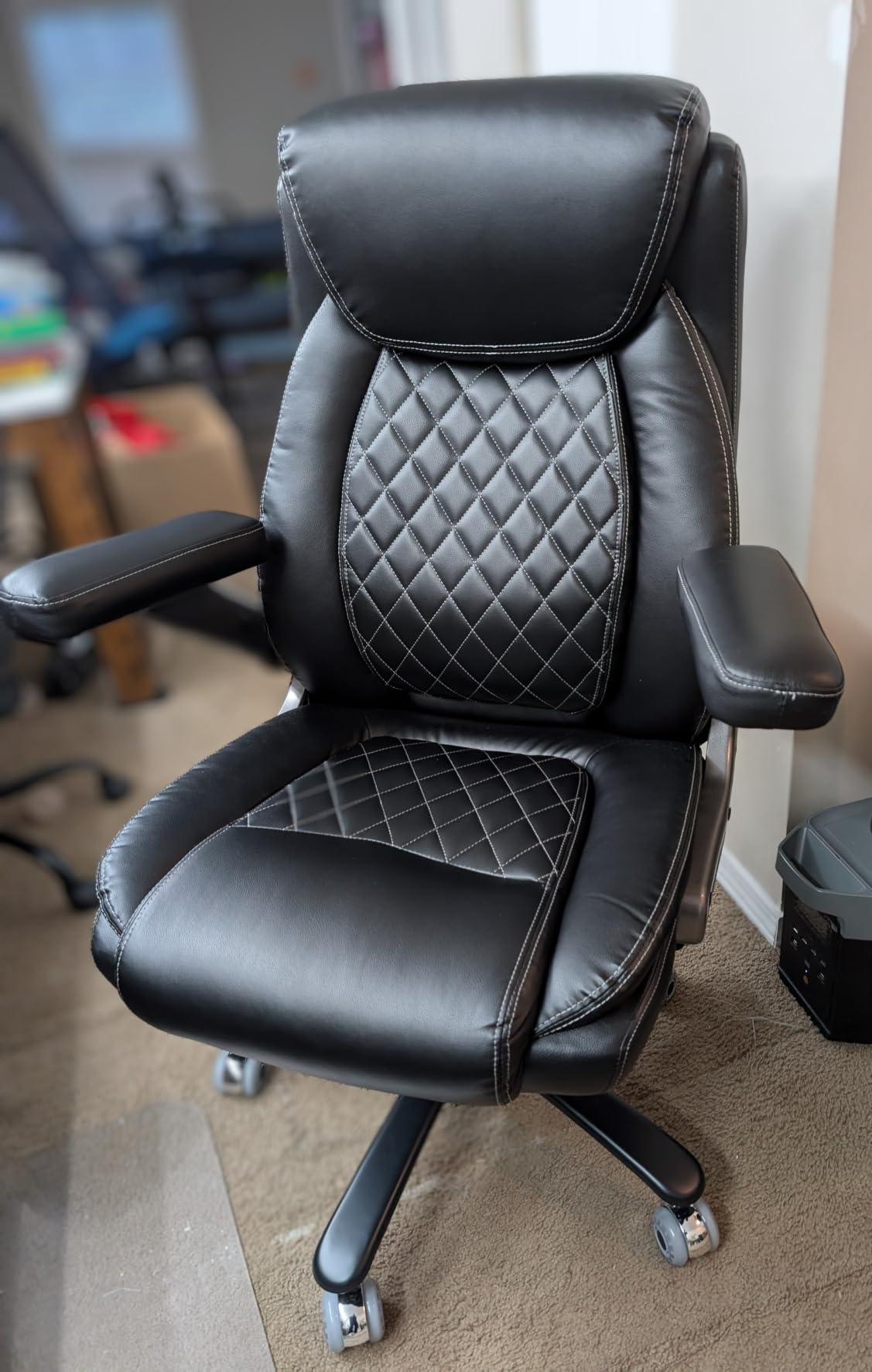
This is the heaviest-rated chair in the roundup at 600 lb, and the arm mechanism is unusually versatile. The 5D flip arms can be mounted to the back and pushed away entirely, giving you a genuine no-armrest configuration, which is the cleanest solution to the armrest problem for anyone whose hips do not fit between two vertical posts.
The seat is 21.65 inches deep, and one owner reports fitting themselves plus two small children with space to spare, still cross-legged. Inflatable airbag lumbar support lets you set the back support precisely rather than sliding a fixed pad up and down, and reviewers call it excellent.
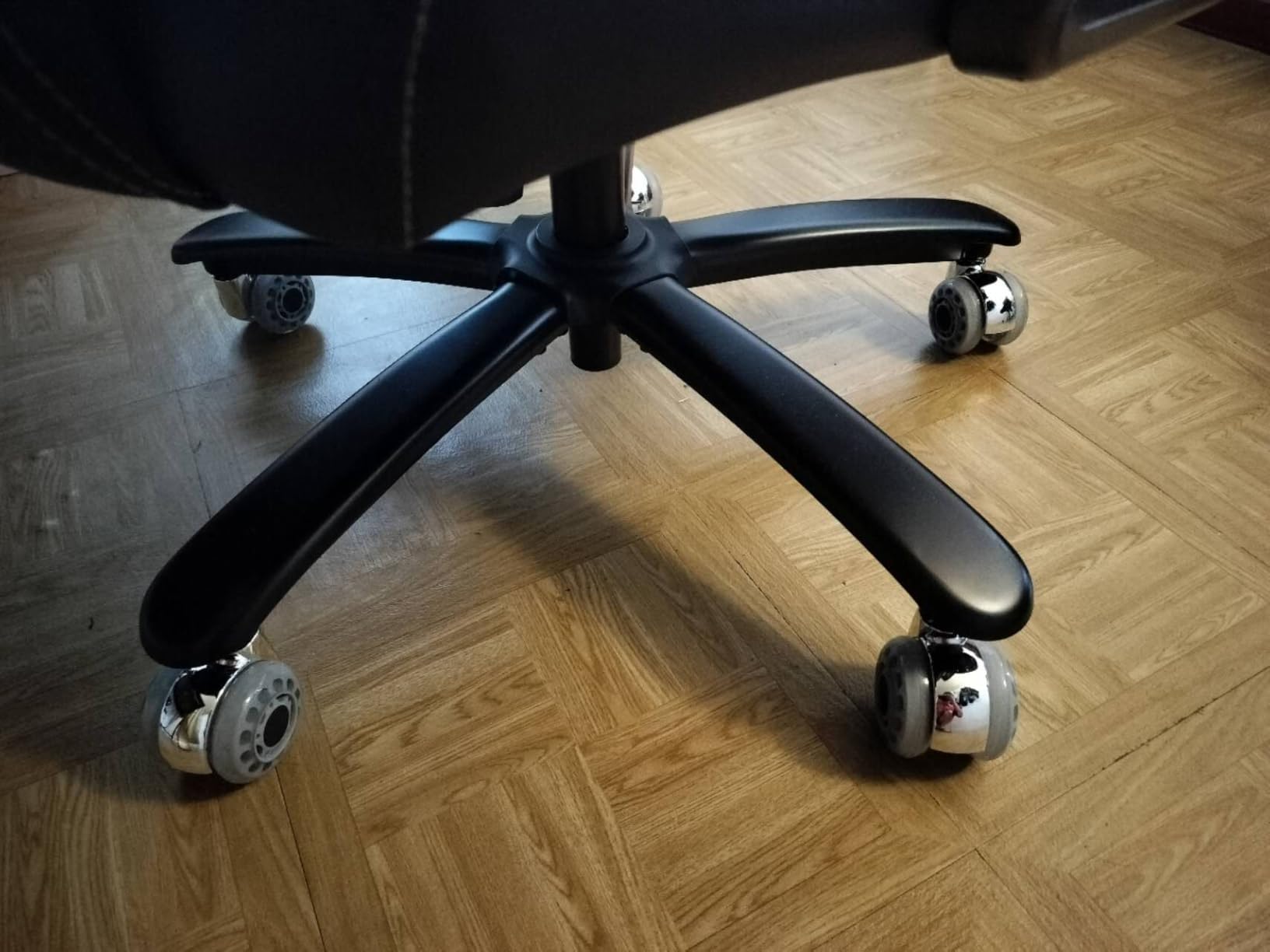
The frame is sturdy enough that it does not sink when you sit down, the gas cylinder is Class 4, and the dual rubber casters with a polyurethane outer roll quietly across medium-pile carpet while leaving no marks on wood, laminate, tile, or vinyl. Assembly is about 20 minutes.
Two constraints are genuine. The backrest height is fixed and not independently adjustable, and reviewers warn it is unsuitable for anyone under about 5 foot 7. The 5D arms also ratchet sideways when the chair is pushed, angling unpredictably, and cannot be locked forward.
Who this chair suits?
This suits buyers who want the arms to disappear entirely, who need a high weight rating for reassurance, and who can work in a relaxed cross-legged posture. The removable arm configuration is the closest thing to a true armless wide-seat chair in this roundup.
Who should skip it?
Skip it if you are shorter than about 5 foot 7, because the fixed backrest height is not adjustable. The 24.8 by 32.7 inch footprint is large for a home office, the oversized wheels are a hazard to pet paws and tails, and the rocking function is not a true recline.
Why Standard Chairs Pinch Wide Hips?
Three physical features cause almost all of the discomfort people describe, and none of them have anything to do with your posture. Understanding them lets you test a chair in a shop in about ninety seconds instead of owning it for three months.
Side bolsters and wings are the first cause. A raised wing on either side of the seat contacts the widest part of your thighs, and the contact point is not cushioned by the seat cushion because it sits above it. Force concentrates on a small area of the outer thigh, which is uncomfortable directly and indirectly, since tension there pulls the pelvis slightly forward and off the backrest. Racing and bucket-style gaming chairs are the worst offenders, and so are executive chairs with rigid side lips on the seat rather than the back.
Fixed armrests are the second cause, and they are more limiting than most buyers expect. Two vertical posts set closer together than your hips turn a genuinely wide seat into a much narrower usable seat, and they also force the knees outward, which changes how you sit and how you reach a desk. The useful measurement is not the chair width printed on the listing but the distance between the inner edges of the armrests.
A shallow seat is the third cause, and it produces the familiar pattern of perching forward. When the seat does not support the full length of the thigh, weight transfers to the underside of the thighs, pressure builds behind the knees where the sciatic nerve runs, and the lower back picks up the load. That combination is what produces the numbness, tingling, and end-of-day ache that drives people to replace a chair they assumed was simply uncomfortable.
Many buyers experience hip symptoms and back symptoms from the same chair for the same reason. Our [office chairs for long hours guide](/best-ergonomic-office-chairs-for-long-hours/) covers the endurance side of this, and the [high-back chairs for tall professionals](/best-high-back-office-chairs-for-tall-professionals/) roundup handles the seat depth variable specifically.
How to Measure Your Hips for a Chair in 60 Seconds?
You need a tape measure, a wall, and about a minute. Most listings publish a seat width or an overall width, and comparing those numbers to a real measurement of your body is the fastest way to avoid a return.
Stand flat against a wall with your feet together and your weight even. Do not measure across the widest part of your jeans, and do not hold your breath. Wrap the tape around the widest point of your hips and buttocks, keep it snug but not tight, and read the number in inches. This is your hip-to-hip width.
Add four to six inches to that figure for your target usable seat width. A body measurement alone is uncomfortable to sit on; the extra few inches account for clothing thickness, the compression of the cushion under load, and the movement you need to shift position during a long day. If your hips measure 22 inches, look for a usable seat of 26 to 28 inches or wider.
Next, measure the chair rather than trusting the listing. Sit in it, push your back against the backrest, and measure the distance between the inner edges of the two armrests. That is your real number. If the arms flip, slide, or detach, measure again with them open, and use the open figure, because that is how you will actually sit during a workday.
Finally, check the front edge. Sit with your knees bent at roughly 90 degrees and slide your hand under the front lip of the seat. If you can fit two or three fingers between your thigh and the edge without pressing, the depth works. If the edge contacts the back of your leg, the seat is too shallow and you will perch, which brings the problems above straight back.
If your hip measurement puts you beyond the widest chair on any list, that is a signal to look at armless and criss-cross designs rather than a bigger number on a box. Our [mesh chairs for hot climates roundup](/best-mesh-office-chairs-for-hot-climates/) covers the breathable options in case heat is the factor pushing you toward mesh anyway.
What to Look For in a Chair for Wide Hips?
A flat seat pan with no raised side wings is the single most important feature, and it is the one most often hidden. Look at the seat cushion in profile: the top surface should be essentially level from back to front, with no raised lip on either side and no bucket shape. Words like waterfall edge are fine, because a waterfall is a rounded front edge that eases pressure behind the knees, not a raised wing.
Adjustable or removable armrests come next. Four dimensions of movement is ideal, then height adjustment, then flip-up, then removable entirely. Height-only adjustment is the weakest option because it changes nothing about how wide the seat is, which is the dimension causing your problem.
A 400 lb or higher weight rating is the practical floor on this category. Lower ratings are not a verdict on quality, they are a signal about the gas lift, the base, and the joinery. Above that, a certified cylinder is the differentiator: SGS Class 4 and BIFMA-certified bases appear repeatedly on the stronger picks here, and neither certification is expensive to obtain.
Weight capacity is not the same as fit, and this is where big-and-tall listings mislead. A tall chair solves leg length and back height. A wide chair solves hip width. A chair can be 500 lb rated and still have a 20 inch usable seat, and a chair can fit your hips perfectly while its backrest is too short for your torso. Measure both, or at least measure the hip dimension properly and read the user height range.
Mesh or foam is a climate and durability question. Mesh breathes and does not flatten, but it gives less padding and can lose tension over years. Foam and pocket springs feel better initially and compress over time, particularly under heavier loads. Warm rooms and long days favour mesh; cool rooms and shorter sessions favour foam. Warranty length is a useful proxy for how seriously a manufacturer expects the cushion to last, and it ranges from one year to five across this roundup.
Seat depth deserves a number of its own. You want two to three fingers of clearance behind your knees when you sit back. A deeper seat is not automatically better, because a seat that is too deep leaves you sliding forward, which reproduces the perching problem that you are trying to escape. And if you raise the seat height to lengthen your thigh contact, plan on a footrest so your feet reach the floor properly.
What to Avoid?
Racing-style bucket seats with pronounced side wings are the first thing to rule out. The wings contact the outer thigh directly, and no amount of adjustment changes the contact point. This is the single clearest pattern in owner complaints about chairs that look roomy on paper.
Fixed-width armrests with height adjustment only are the second. They look adjustable in photos and are not in practice, and they are the reason some wide chairs still pinch. If the arms cannot move in or out, flip, or come off, treat the chair as armless for width purposes only.
Weight ratings above 400 lb with no mention of cylinder or base certification deserve a second look. Very high ratings sometimes mean very little engineering elsewhere, and the gas lift is the part that fails first regardless of what the listing claims.
Chairs with no published usable seat width are not automatically bad, but they are a gamble. If a listing gives an overall width and a backrest width but never a seat measurement, assume the usable pan is smaller than the headline number. Our rounding of the two Indulgear chairs shows why: a 32.7 inch overall width does not mean a 32.7 inch seat.
Warranties of one year on a cushion you will sit on daily for years is a fair reason to keep looking. Where two chairs cost a similar amount, the one with the longer warranty is usually the better long-term bet, and the Luckyear at five years shows the gap can be wide.
Frequently Asked Questions
What kind of office chair is best for hip pain?
A chair with a flat, wide seat pan of at least 27 inches, no raised side bolsters, and adjustable or removable armrests. Pressure across the outer thighs and behind the knees is the usual cause of hip pain from sitting, and width plus open arms removes both. Pair it with a 400 lb or higher rating so the frame does not deflect under your weight.
What are the best chairs to support my hips?
Prioritise seat width first, then seat depth, then the front edge. Look for a level seat pan with no side wings, enough depth to leave two or three fingers between the front edge and the backs of your thighs, and a rounded waterfall edge rather than a hard lip. Adjustable arms matter as much as width because fixed posts narrow the usable seat by several inches.
What is the best office chair for people with wide hips?
Measure your hip-to-hip width, add four to six inches, and look for a usable seat at or above that figure. Verify the inside-armrest width rather than the overall width printed on the box, and confirm the arms flip, slide, or detach. The GTPLAYER and Luckyear both offer wide seats with moveable arms and 400 lb ratings.
Should I get an armless office chair?
If fixed or narrow-set armrests are what pinch your hips, then yes, armless is the cleanest solution. A chair whose arms flip fully aside, such as the Indulgear 5D flip-arm model, or flip outward for cross-legged sitting, gives you the open seat of an armless chair without giving up arm support the rest of the day. Measure the open configuration, since that is your real usable width.
What is the best office chair for an overweight person?
Weight capacity is a starting point, not a fit test. A 400 lb rating with an SGS Class 4 cylinder and a BIFMA-certified base gives you a sound structure, but you still need a wide flat seat with no side bolsters. Very heavy users should also check warranty length, since cushion compression and gas lift failure are the two most common long-term complaints on this category.
Is a wider office chair better for plus size?
Yes, provided width is measured in the place that matters. Overall chair width is a marketing figure, and the honest number is the distance between the inner edges of the armrests with your normal posture. A 32 inch wide chair with fixed narrow armrests can seat less comfortably than a 24 inch wide chair whose arms flip open.
The Verdict: Which Chair Wins for Wide Hips?
The GTPLAYER Big and Tall 400lb Chair is our pick for 2026 because it pairs a 21.26 inch seat length with a 400 lb rating, a metal frame, six recline lock positions, and a review base large enough that its weak points are already documented rather than discovered later. It is not the widest chair here and it does not have the longest warranty, and the PU leather is a real tradeoff for anyone in a hot room.
Pick the COMHOMA if you want to cross your legs and want a footrest in the frame. Pick the HYLONE if heat is the problem. Pick the Luckyear if you want the highest satisfaction rate and a five-year warranty, and the Indulgear 5D if you want the arms to disappear completely. All ten clear the width and weight tests, and the one that suits your posture best is the one you will actually keep using.