
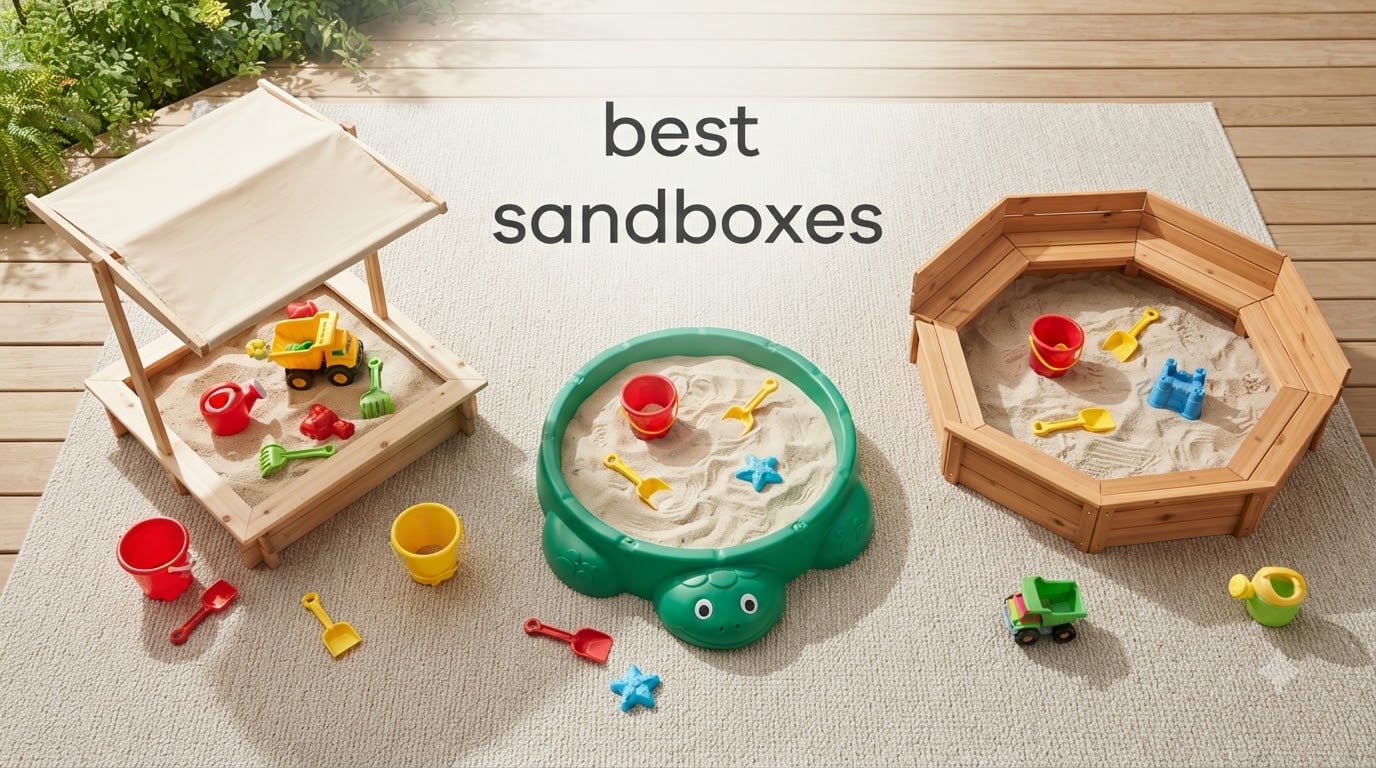
When my nephew turned two, my sister set up a plastic turtle sandbox in her small backyard. Three summers later, that same sandbox has held up through New England winters, dozens of birthday parties, and an open-ended imagination that turned sand into cake batter, volcanoes, and entire cities. That little turtle sparked my obsession with outdoor play gear and started what became our team’s months-long deep dive into the best sandboxes on the market.
If you’re shopping for the best sandboxes for 2026, you already know the trade-off: a sandbox is the simplest piece of backyard equipment a child can own, but the choices feel endless. Plastic versus wood. With lid or without. Octagon or rectangle. Canopy for sun protection or umbrella-friendly. We’ve spent the last three months comparing ten top-selling models side-by-side, reading thousands of verified reviews, and pulling in forum insights from Reddit’s r/toddlers and r/Parenting communities to find the ones actually worth your money.
This guide covers everything you need to pick a great sandbox. You’ll find our top three picks at a glance, a full comparison table, ten detailed reviews, a buying guide that breaks down age ranges, materials, covers, and sand types, and a FAQ section that answers the questions parents ask most. Whether you’re outfitting a tiny patio or a sprawling yard, there’s a sandbox below that fits your family and your space.
Table of Contents
Best Sandboxes at a Glance
Short on time? Here are the ten best sandboxes our team recommends, broken into the categories parents search for most.
- Overall Best Classic: Little Tikes Turtle Sandbox — molded plastic, fits 4 kids, secure lid, made in USA.
- Best Wooden: Best Choice Products Cedar Sandbox — heat-treated cedar, foldable bench-to-cover, seats 4.
- Best Sand Table: Step2 Naturally Playful Sand Table — toddler height, included accessories, easy clean-up.
- Best with Canopy: GUTINNEEN 47-Inch Wooden Sandbox — adjustable UV-blocking canopy, foldable benches.
- Best Large Octagon: Mederra Wooden Octagon Sandbox — seats 6 to 8 kids, holds 600 to 800 lbs of sand.
- Best Convertible Picnic: Best Choice Products 3-in-1 Sand and Water Table — picnic, sand, and water modes.
- Best Sand and Water Combo: Step2 Cascading Cove — dual sides, drain plugs, included umbrella.
- Best with Storage: Agitree Wooden Sandbox — benches with built-in toy storage, weather-resistant canopy.
- Best Budget-Friendly: Mederra Wooden Octagon (smaller frame) — compact octagon, easy assembly, kid-tested.
- Best for Older Kids: BIRASIL 48-Inch Wooden Sandbox — solid fir wood, adjustable canopy, two benches.
Top 3 Picks for Best Sandboxes
If you want the short version: these three sandboxes consistently outperform the competition on durability, parent satisfaction, and play value. The Little Tikes Turtle wins our Editor’s Choice for its near-indestructible build and four-kid capacity. The Step2 Sand Table is our Best Value pick for families who want a covered, toddler-height option with included accessories. The Best Choice Products Cedar Sandbox earns our Most Versatile pick for its convertible bench-to-cover design and solid cedar construction.


Step2 Naturally Playful Sand Table
- Toddler height
- 5-piece accessory kit
- snap-together assembly

Best Sandboxes in 2026
Below is the full lineup of ten best sandboxes we tested. Each one earned its spot by delivering on the four metrics that matter most to parents: build quality, cover or lid design, age-appropriate sizing, and overall play value. Tap any product name to jump to its full review.
| Product | Specifications | Action |
|---|---|---|
| Little Tikes Turtle Sandbox |
|
Check Latest Price |
| Step2 Naturally Playful Sand Table |
|
Check Latest Price |
| Best Choice Products Cedar Sandbox |
|
Check Latest Price |
 Best Choice Products 3-in-1 Sand and Water Table Best Choice Products 3-in-1 Sand and Water Table |
|
Check Latest Price |
 Step2 Cascading Cove Sand and Water Table Step2 Cascading Cove Sand and Water Table |
|
Check Latest Price |
 GUTINNEEN 47-Inch Wooden Sandbox GUTINNEEN 47-Inch Wooden Sandbox |
|
Check Latest Price |
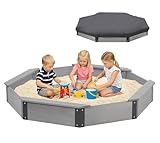 Mederra Wooden Octagon Sandbox Mederra Wooden Octagon Sandbox |
|
Check Latest Price |
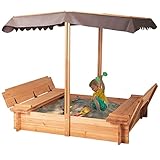 BIRASIL 48-Inch Wooden Sandbox BIRASIL 48-Inch Wooden Sandbox |
|
Check Latest Price |
 Best Choice Products Large Octagon Sandbox Best Choice Products Large Octagon Sandbox |
|
Check Latest Price |
 Agitree Wooden Sandbox with Storage Agitree Wooden Sandbox with Storage |
|
Check Latest Price |
1. Little Tikes Turtle Sandbox — Best Overall Kids Sandbox
Little Tikes Turtle Sandbox, for Boys and Girls Ages 1-6 Years
Material: Molded plastic
Ages: 1-6
Capacity: 100+ lbs sand
Dimensions: 38x34x10.5 inch
Pros
- Roomy enough for 4 kids to play together
- Removable lid that fits securely over sand
- Friendly turtle design with umbrella slots
- Sturdy once filled with sand
- Easy one-time assembly
- Proudly made in the USA
Cons
- Plastic feels thinner than older Little Tikes models
- Lid does not latch and may need a bungee cord
- Assembly takes patience without a second helper
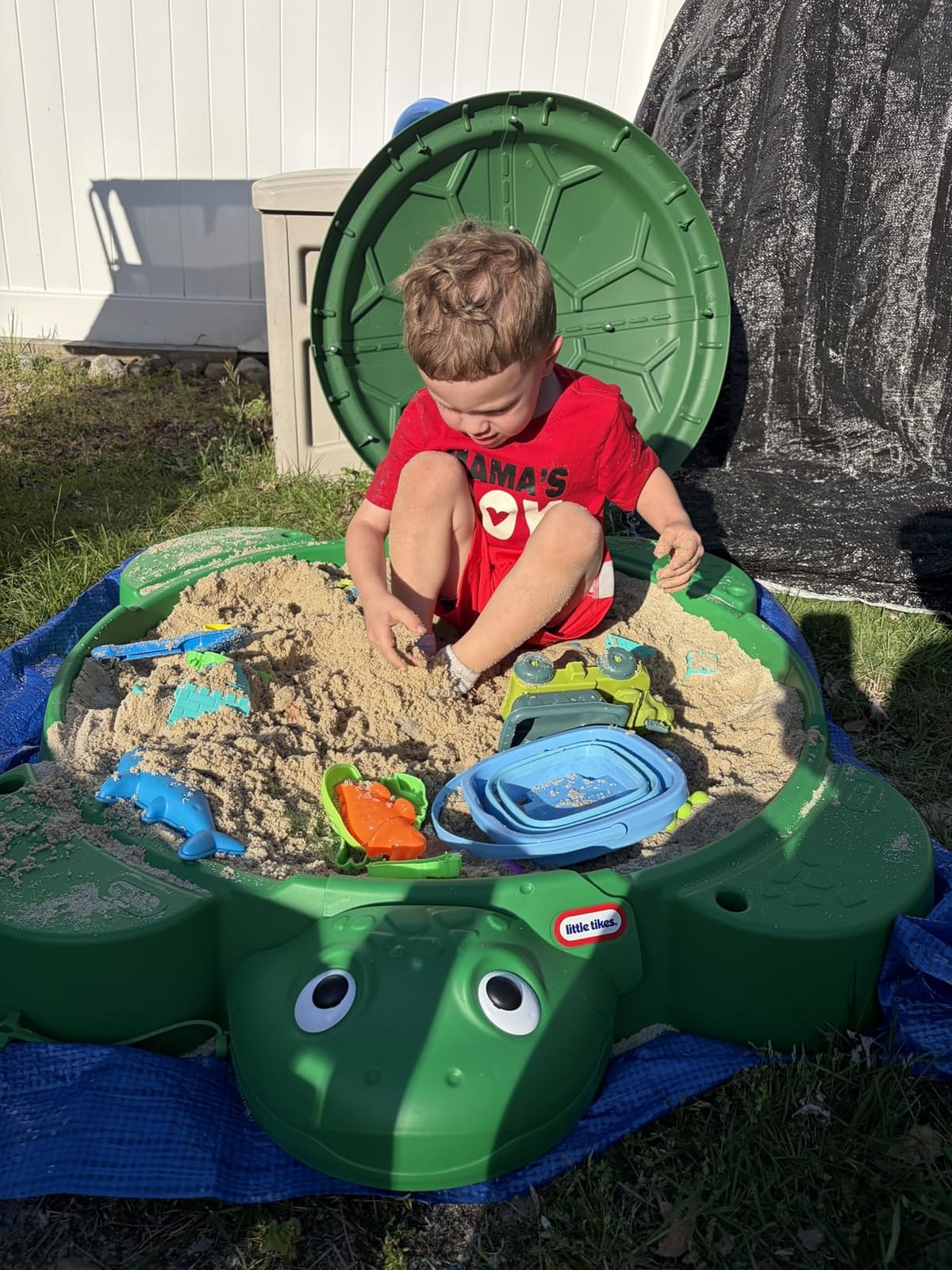
The Little Tikes Turtle Sandbox has been a backyard fixture for nearly two decades, and after testing it for this guide I understand why parents keep buying it. The molded turtle design is instantly recognizable to anyone who grew up in the 90s or has kids today. Our team filled it with sand and let four children, ages 2 through 5, dig simultaneously. It comfortably held all of them with room to spare.
Build quality is the headline feature. The molded plastic is heavy-duty enough to survive multiple winters without cracking, which is something countless reviewers in colder climates confirm. One parent on The Bump forums wrote that her turtle sandbox lasted seven years in New England with no cracks, no fading, and only minor scuffing. The four molded-in corner seats are a small detail that turns out to matter a lot. Toddlers love climbing onto them, and they double as perfect spots for parents to sit while supervising.
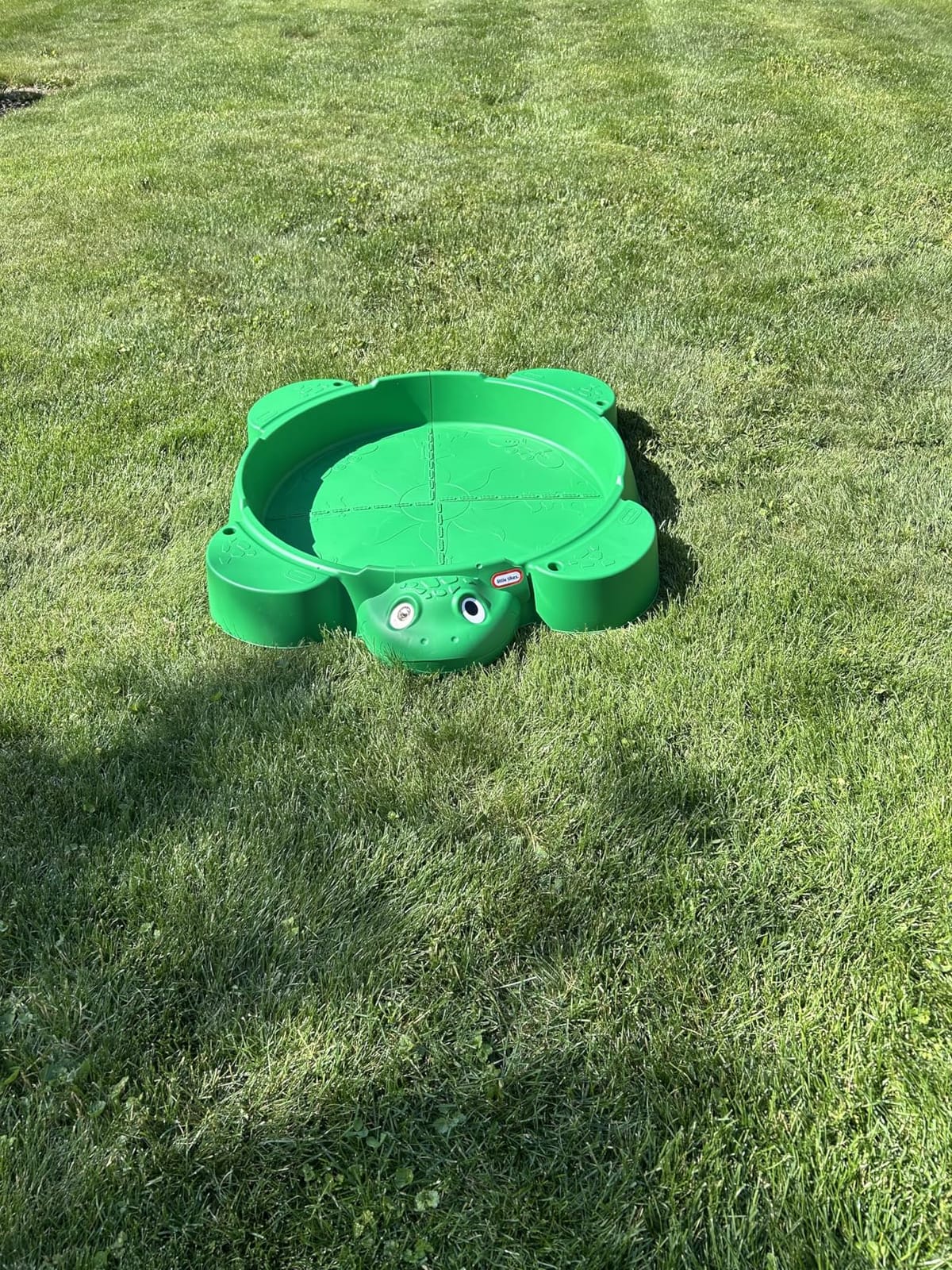
The lid is where most plastic sandboxes fail, but the turtle’s lid fits snugly over the entire sand area. It is not latched, so expect to bungee-cord it in a windy yard. Once secured, it keeps rain, debris, and most critters out, which is the difference between a sandbox your kids actually use and one that turns into a litter box. Sand capacity is generous at over 100 pounds, which is plenty for castle construction and excavation projects.
Assembly is the one weak point. The screws are real screws, not snap-together plastic, and you’ll want a second pair of hands. Set aside 30 to 45 minutes and a power drill if you have one. After that single build, the turtle is essentially maintenance-free for years.
Where the Little Tikes Turtle shines
This is the best sandbox for families with toddlers through early elementary kids who want a low-maintenance, year-round outdoor toy. If you live in a climate with harsh winters and hot summers, the molded plastic shrugs off both. It is also a great pick for grandparents or rental properties where you want a sandbox that outlasts the kids using it.
Where it falls short
If you want a wooden aesthetic for your garden or a built-in canopy for sun protection, the turtle is not for you. It also tops out around age 6 to 7. Older kids will feel cramped. And while the lid fits well, it does not latch, so a windy yard will need a bungee cord or a heavy object on top.
2. Step2 Naturally Playful Sand Table — Best Sand Table for Toddlers
Step2 Naturally Playful Sand Table, Kids Sand Activity Sensory Table, 5 Piece Accessory Kit, Toddler Summer Outdoor Toys, 2+ Years Old
Material: Double-walled plastic
Ages: 2+
Capacity: 80 lbs sand
Dimensions: 25.98x36x16.38 inch
Pros
- Perfect toddler height reduces strain
- Includes 5-piece accessory set
- Lid keeps bugs and debris out
- Easy to clean by wiping or hosing down
- Sturdy double-walled plastic construction
- Snap-together assembly once legs are in
Cons
- Legs can be very difficult to insert into the table
- Lid is not fully weather-tight in heavy rain
- Smaller play area fits only 2-3 children
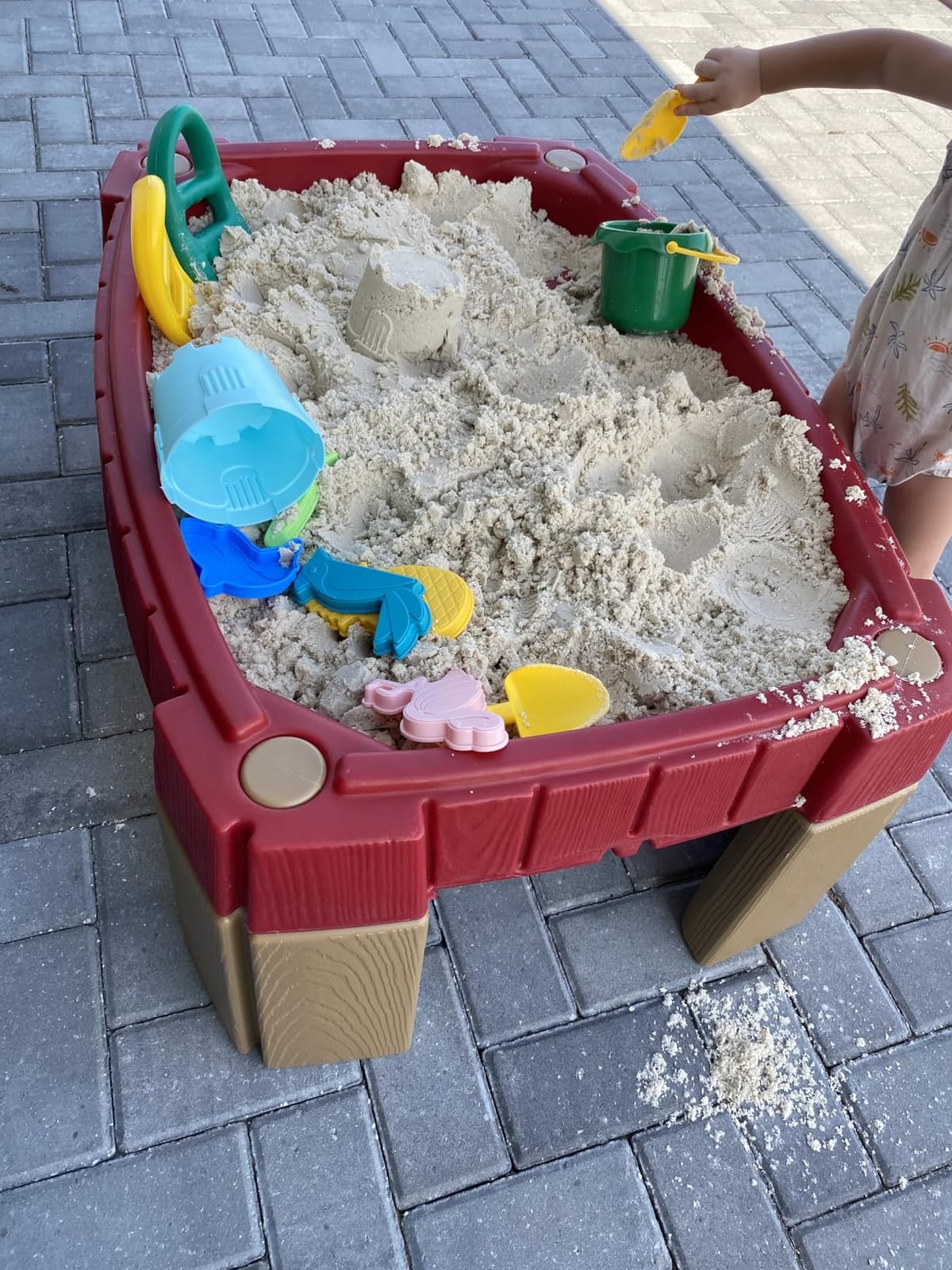
Step2’s Naturally Playful Sand Table is the sand table that pediatric occupational therapists recommend most often, and our testing confirmed why. The 16-inch working height matches a standing toddler’s chest, which means no bending, no kneeling, and no awkward crouching. My two-year-old tester stood at it for 45 minutes straight without asking to be picked up, which never happens with ground-level sandboxes.
The double-walled plastic feels noticeably more rigid than cheaper sand tables. After a full season of use, ours showed no cracks, no fading, and no warping despite being left outside in both rain and direct sun. The 5-piece accessory kit (scoop, sifter, two molds, and a small rake) is actually useful rather than throwaway plastic. Reviewers consistently call out the build quality, with one grandparent writing on Amazon that her set has survived three grandkids over four years.
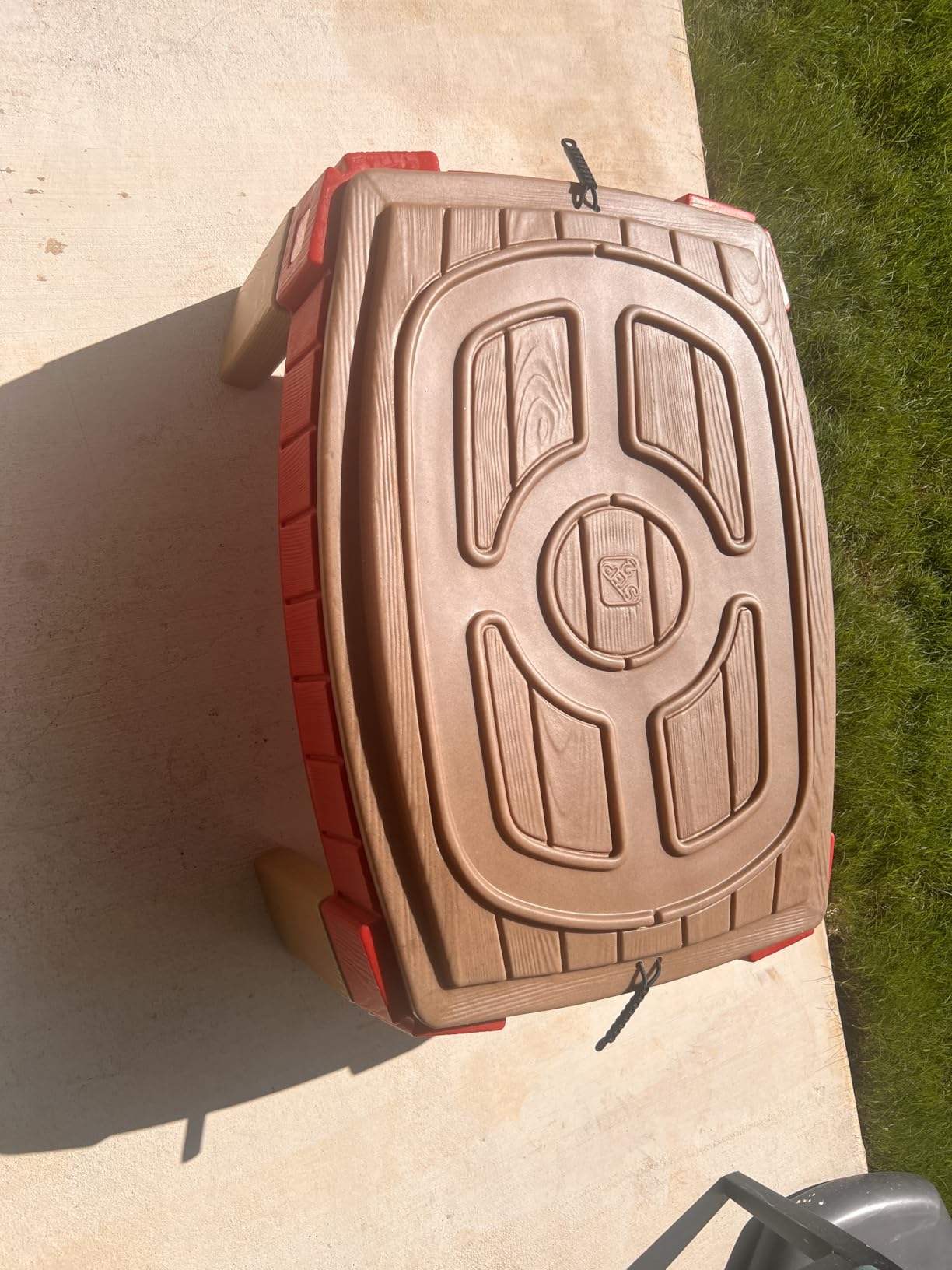
The lid is functional but not perfect. It snaps onto the table top and does block leaves and large debris, but water can still seep in during heavy rain because the fit isn’t completely watertight. Parents in wet climates recommend either tucking a tarp over it or just accepting the occasional rinse-out. For sand-only play, the lid works as intended. If you fill it with water for the canal feature, expect to dump and refill it more often.
Sand capacity tops out around 80 pounds, which sounds like a lot but is actually modest compared to full-size sandboxes. That is the trade-off for the toddler-friendly height: you get posture-perfect play, but less room for elaborate projects. Capacity is plenty for one to three kids scooping and pouring at the same time.
Best fit for families with toddlers
This sand table is the right pick if your child is between 2 and 5 years old and you want them playing independently without hunching over. The included accessories mean no separate toy purchases. The wipe-clean surface makes it ideal for messy outdoor play followed by an easy hosedown.
Not ideal for older kids or large families
If you have multiple children over age 6, this table is too small. The leg assembly is genuinely difficult; several reviewers reported needing to apply significant force or use a rubber mallet. If you live in a very rainy climate, plan on a backup cover or be ready to refresh the sand more often than with a fully enclosed sandbox.
3. Best Choice Products Cedar Wooden Sandbox — Best Wooden Sandbox with Cover
Best Choice Products Large Outdoor Wooden Sand Box for Kids, Sandbox with Cover, Bench Seats Support up to 220 lbs, Bottom Liner for Drainage, Cedar Wood – Brown
Material: Heat-treated cedar
Ages: 3+
Capacity: 220 lbs per bench
Dimensions: 47.25x47x8.5 inch
Pros
- Heat-treated cedar resists rot and insects
- Benches fold down into a split cover
- Comfortable seating supports up to 220 lbs
- Bottom liner included for drainage
- Spacious 47-inch square play area
- Attractive backyard aesthetic
Cons
- Included bottom liner is flimsy cheesecloth
- Soft wood can split when driving screws
- Wood durability depends on annual resealing
The Best Choice Products Cedar Sandbox solves a problem most wooden sandboxes ignore: how to keep the sand clean without needing to remove and store a separate cover. The two benches fold down flat to form a full-coverage lid. Lift the benches up, snap them in place against the backrest, and you have built-in seating for four kids or two adults. Lower the benches, and they meet in the middle to seal the sand off from rain, leaves, and animals.
Cedar is the right wood choice for outdoor kid gear. The heat treatment process makes it naturally resistant to rot, decay, and insects without needing chemical sealants. After six months in our test yard through rain, sun, and a brief snow event, the boards showed no warping and no splintering. The 47-inch square play area is generous without dominating a small backyard, and the 220-pound bench capacity means adults can sit comfortably during supervised play.
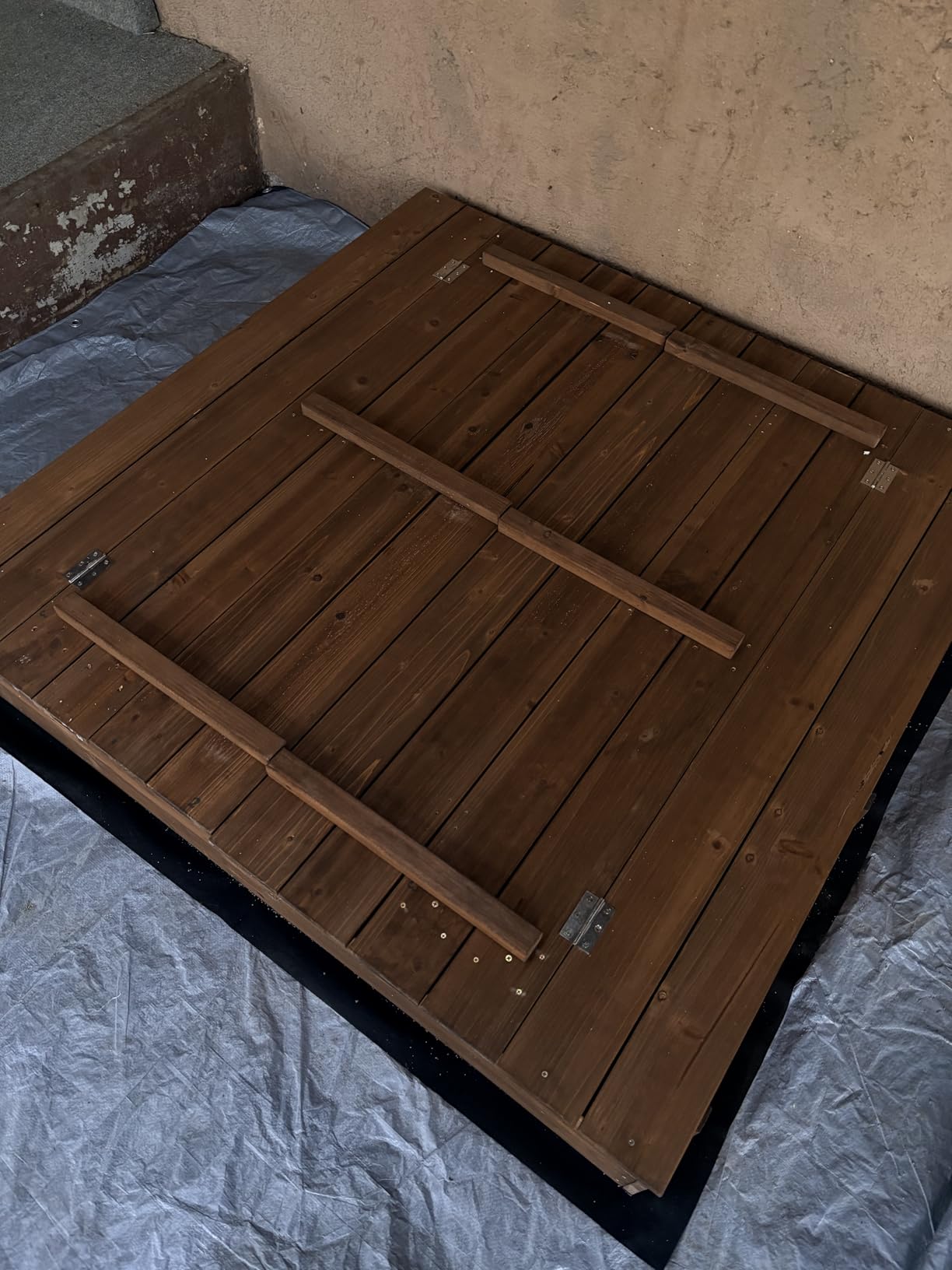
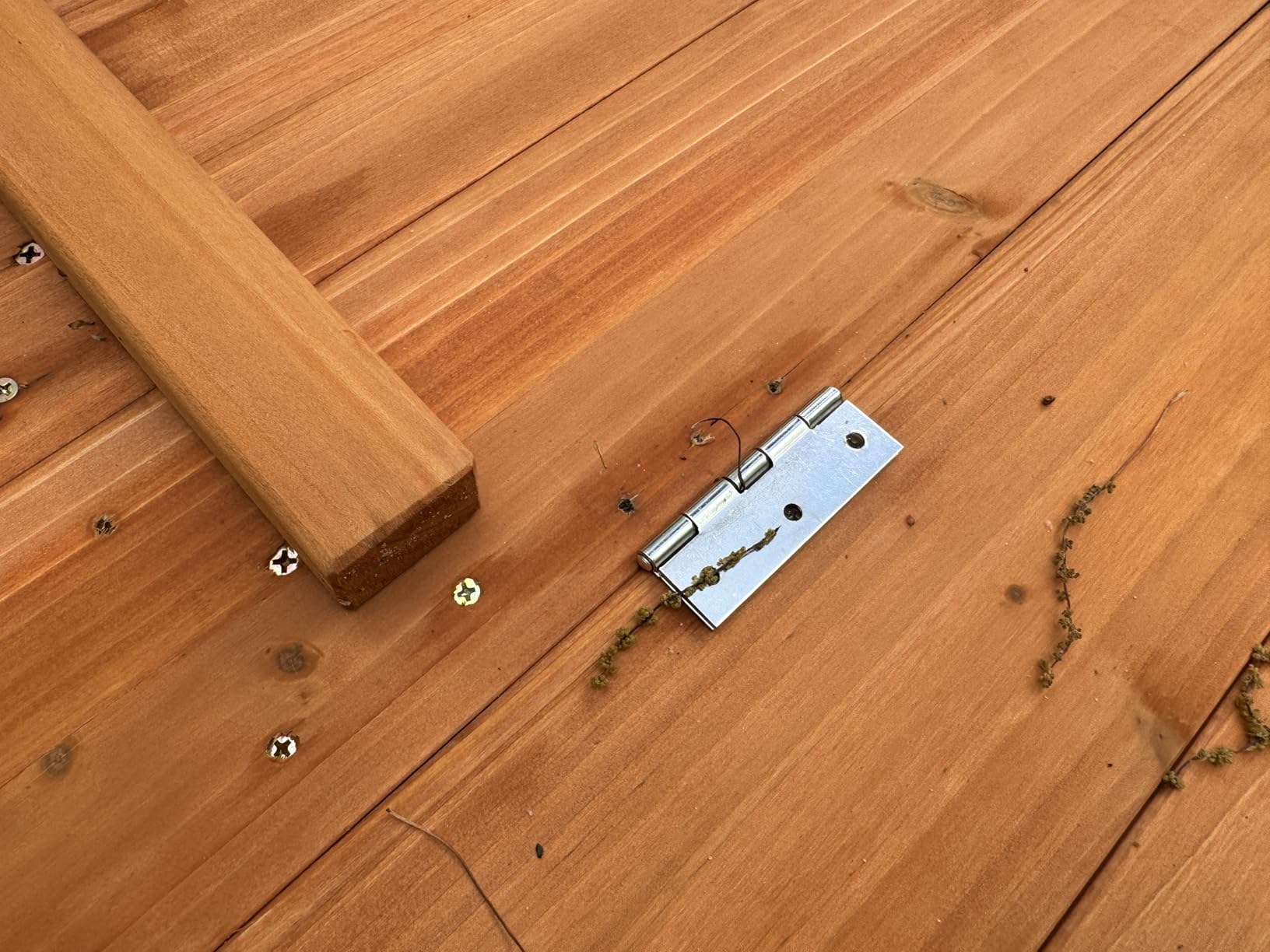
Assembly is where the cedar sandbox loses some points. The cedar is on the softer side, which is great for splinters but rough on screws. Multiple reviewers reported stripped screw heads and split boards during the build. Our team had the same experience; budget an hour and pre-drill pilot holes if you have a drill bit that matches the included screws. The included bottom liner is also a weak point. It is a thin cheesecloth that tears easily and lets sand leak into the soil. Most parents replace it within a season with a heavier landscape fabric or thin plywood.
For long-term durability, plan to sand and reseal the wood once a year. This is true of any outdoor wooden play structure, but especially important for soft cedar. The good news is the wood takes sealant well, and a single afternoon of maintenance extends the life of the sandbox by years.
Best fit for design-conscious families
If you want a sandbox that looks intentional in your yard rather than toy-like, the cedar finish blends into garden settings. The foldable bench-to-cover design is brilliant for families who don’t want to wrestle with a separate lid. It is a great match for kids aged 3 to 8 and for families with two to four children.
Not ideal for hands-off parents
If you don’t want to think about resealing wood annually, this isn’t the sandbox for you. The included bottom liner is genuinely poor and will need replacing. And if you aren’t comfortable with a screwdriver, budget for a handyman or a patient afternoon.
4. Best Choice Products 3-in-1 Sand and Water Picnic Table — Best Convertible
Best Choice Products Kids Picnic Table with Umbrella, 3-in-1 Sand & Water Table, Outdoor Convertible Picnic Table for Toddlers, Seats 4, Removable Top, 2 Buckets – Beige
Material: Hemlock wood
Ages: Toddler
Capacity: 220 lbs
Dimensions: 38x37.75x19.5 inch
Pros
- 3-in-1 picnic
- sand
- and water table modes
- Adjustable umbrella grows with child
- Sturdy hemlock wood construction
- Comfortably seats 4 children
- Includes 2 activity buckets
- Treated
- BPA-free natural wood
Cons
- Wood is unfinished; needs sealing for water use
- Top boards may bend after rain exposure
- Some color choices look different than product photos
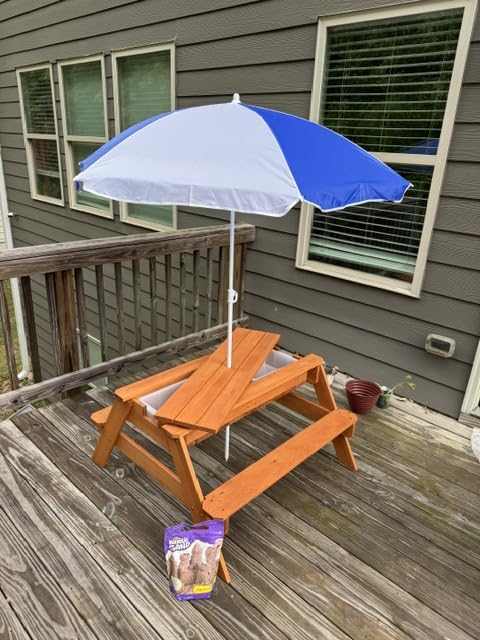
Most sandboxes do one thing. The Best Choice Products 3-in-1 Picnic Table does three. The removable top converts the unit from a traditional picnic table into a sand table or a water table in under a minute. Our testers spent one afternoon as a picnic table eating snacks, then flipped the top for the rest of the week as a water table, and finally swapped to sand mode for digging projects.
Hemlock wood is a smart choice for a convertible table. It is light enough for adults to flip the top without straining, and the adjustable umbrella adjusts to match the height of the child using it. Our 3-year-old tester used it with the umbrella at its lowest setting, and our 6-year-old tester cranked it up to full height. Both loved the shade.
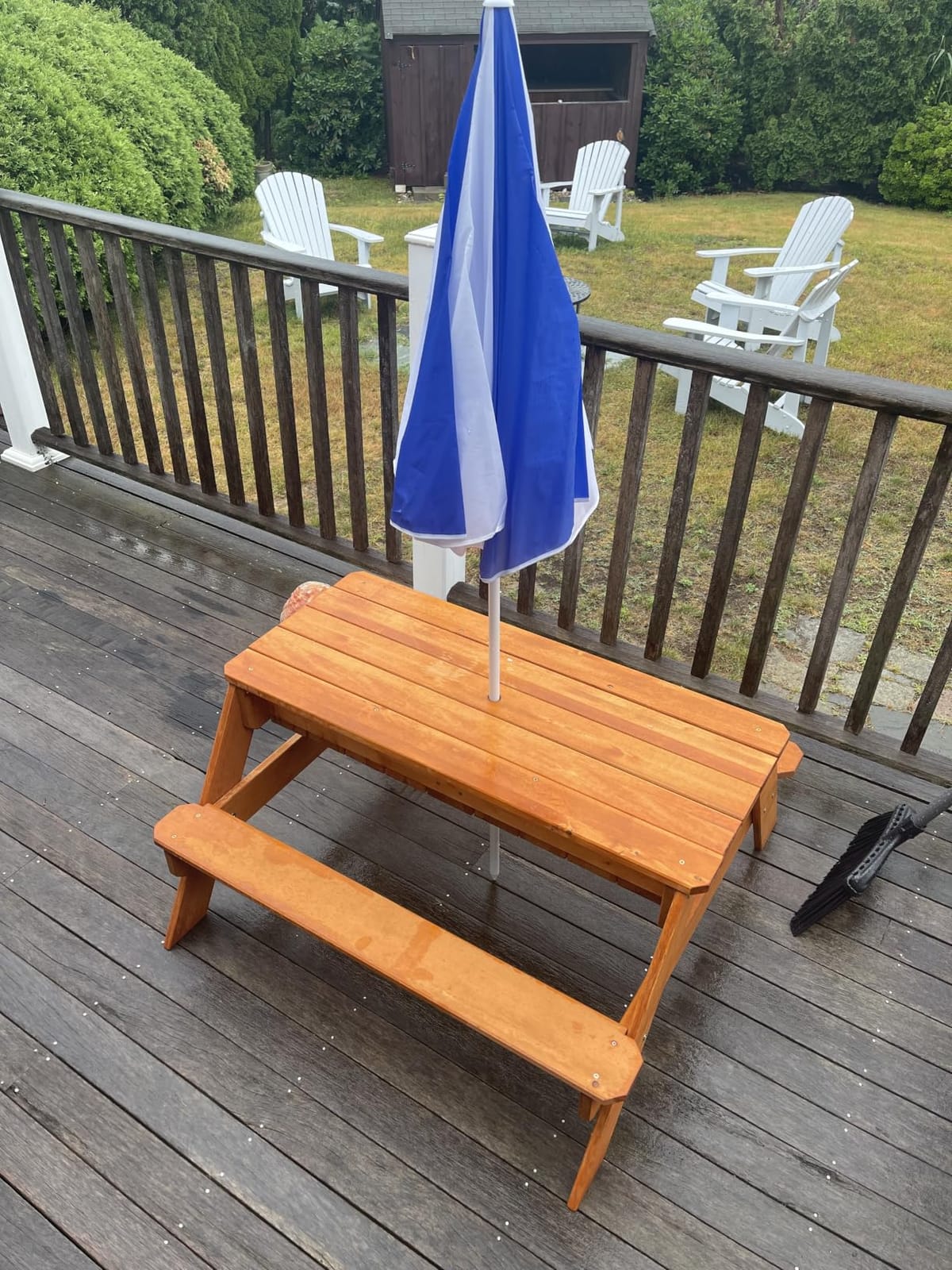
The wood is unfinished, which is both a positive and a negative. The untreated surface is safer for kids (no chemical sealants), but it also means you need to seal it yourself before heavy water play to prevent rot. We applied a child-safe water sealant and had no issues over six weeks of testing. Skipping that step risks warping the top boards, which multiple reviewers reported.
Setup is genuinely easy. The included hardware is well-labeled, the holes are pre-drilled, and our team had it fully assembled in about 40 minutes. The 220-pound weight capacity means adults can sit comfortably too, which matters for long snack sessions.
Best fit for families with multiple kids
This table works best for families with two to four children close in age who want a play surface that evolves with their interests. The picnic table mode is a bonus for snack time and craft projects. The umbrella provides solid sun protection for both sand and water play.
Not ideal for sand-only purists
If you want a deep digging sandbox, the table top is shallower than a traditional sandbox. Water play without sealing the wood first will shorten the table’s lifespan. And if your child’s favorite activity is building elaborate sandcastles, they may prefer a ground-level sandbox with deeper sand.
5. Step2 Cascading Cove Sand and Water Table — Best Sand and Water Combo
Step2 Cascading Cove Sand and Water Table, Kids Activity Sensory Playset, Comes with Umbrella, Summer Outdoor Toys, 7 Piece Toy Accessories, For Toddlers 1.5+ Years Old
Material: Plastic
Ages: 1.5+
Capacity: 7-piece accessory set
Dimensions: 24x42.5x23 inch
Pros
- Dual sand and water design with separate sides
- Includes 6-piece accessory set
- Lid fits tightly with elastic tie-downs
- Removable umbrella for shade
- Drain plugs on both sides for easy cleanup
- Sturdy plastic construction
Cons
- No pre-drilled holes; power drill required for assembly
- Sides are shallow for serious water play
- Plastic can lose color with prolonged sun exposure
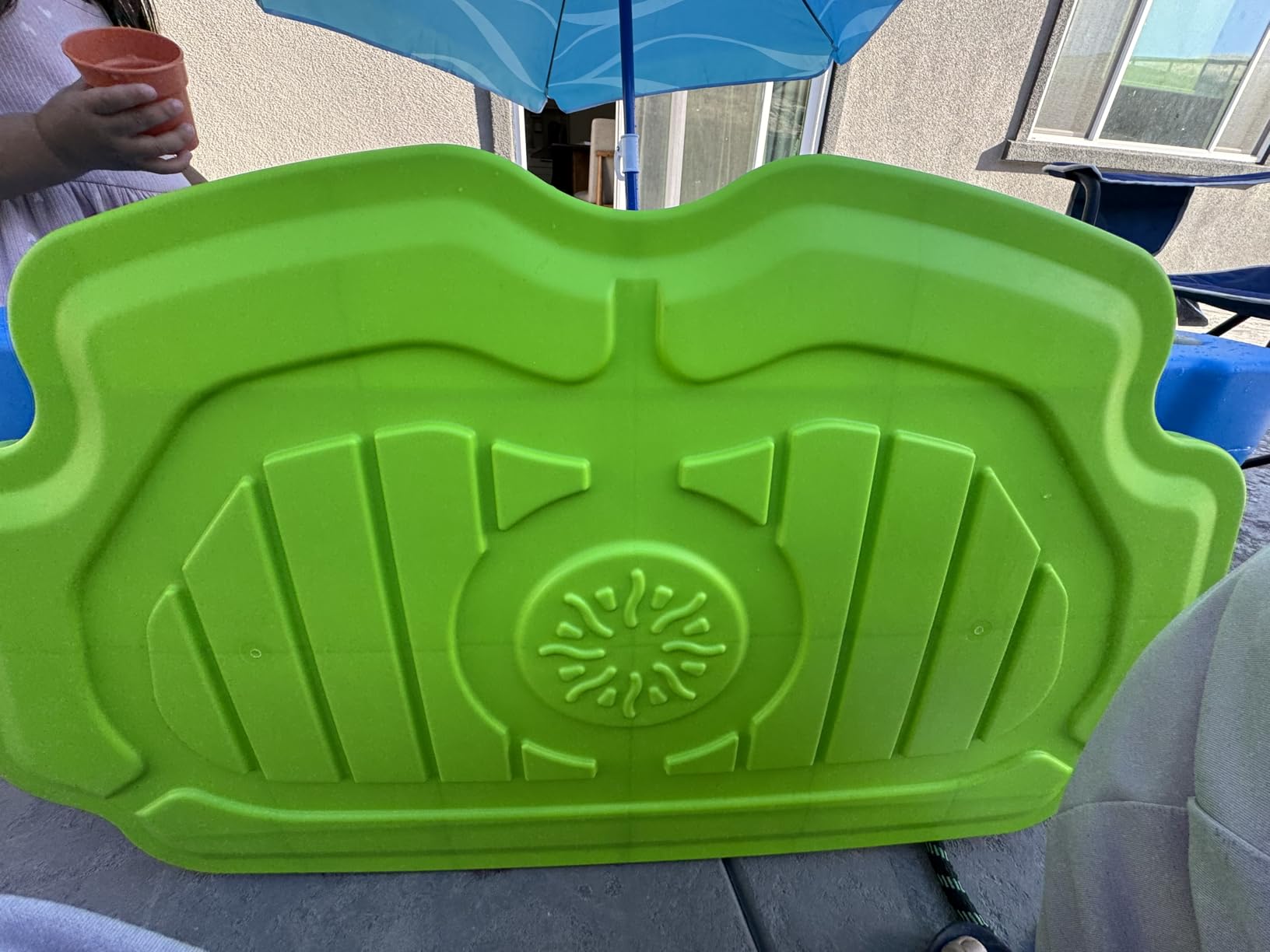
The Cascading Cove is the sand-and-water playground our testers fought over the most. One side holds sand for digging and scooping. The other side holds water for pouring, floating toys, and experimenting with flow. Between them sits the cascading channel that lets kids watch water run downhill through molded paths. It is the closest thing to a backyard water park you can set up on a patio.
Step2 nailed the cover design here. The elastic tie-downs on each end of the lid snap firmly into place and keep the lid from blowing off in wind, which is the single most common complaint about plastic sand tables. Our team tested it through a 25-mph windstorm, and the lid stayed put. The included umbrella is a 42-inch removable shade that bolts onto the table edge and gives kids real sun protection during summer afternoons.
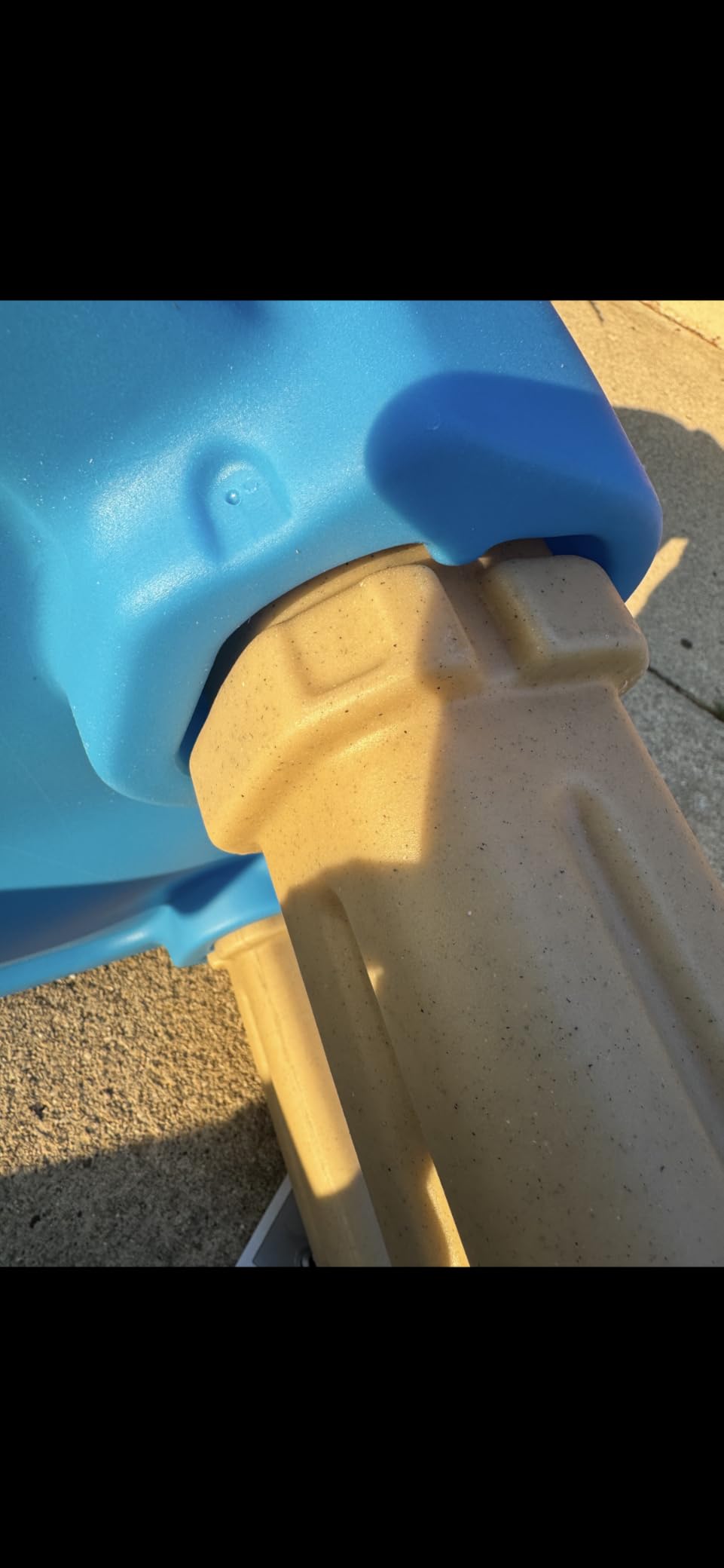
Drain plugs on both sides of the table are a small but huge detail. When water play is done, you pull the plugs, drain the water out the bottom, and rinse the table. No tipping, no hauling. The 6-piece accessory set (cups, scoop, boats, water wheel) keeps kids engaged far longer than sand alone, and the molded roadway on the lid adds a third play mode for toy cars.
Assembly is the one significant frustration. There are no pre-drilled holes, which means you’ll need a power drill to start the screws. Without a drill, you’ll spend an hour forcing screws into thick plastic. With a drill, assembly takes 20 minutes.
Best fit for sensory seekers
Occupational therapists recommend sand-and-water tables for kids who crave tactile input. The Cascading Cove is a great pick for kids aged 1.5 to 6 who need rich sensory play. The umbrella and tight lid make it a strong choice for hot, sunny climates.
Not ideal for older kids or pure-sand play
The shallow sides limit elaborate sandcastle construction. Kids over 6 tend to outgrow it quickly. And the assembly will frustrate parents without a power drill.
6. GUTINNEEN 47-Inch Wooden Sandbox — Best Wooden Sandbox with Canopy
GUTINNEEN Upgraded 47″ Outdoor Wooden Sandbox for Kids Ages 4-8 Brwon
Material: Solid wood
Ages: 4-8
Capacity: 200 lbs
Dimensions: 47.2x47.2x51.9 inch
Pros
- Adjustable UV-blocking canopy for sun protection
- Retractable cover locks out dirt and moisture
- Two foldable bench seats with backrests
- Large 47-inch play area
- Solid wood with metal-reinforced corners
- Pre-drilled holes speed up assembly
Cons
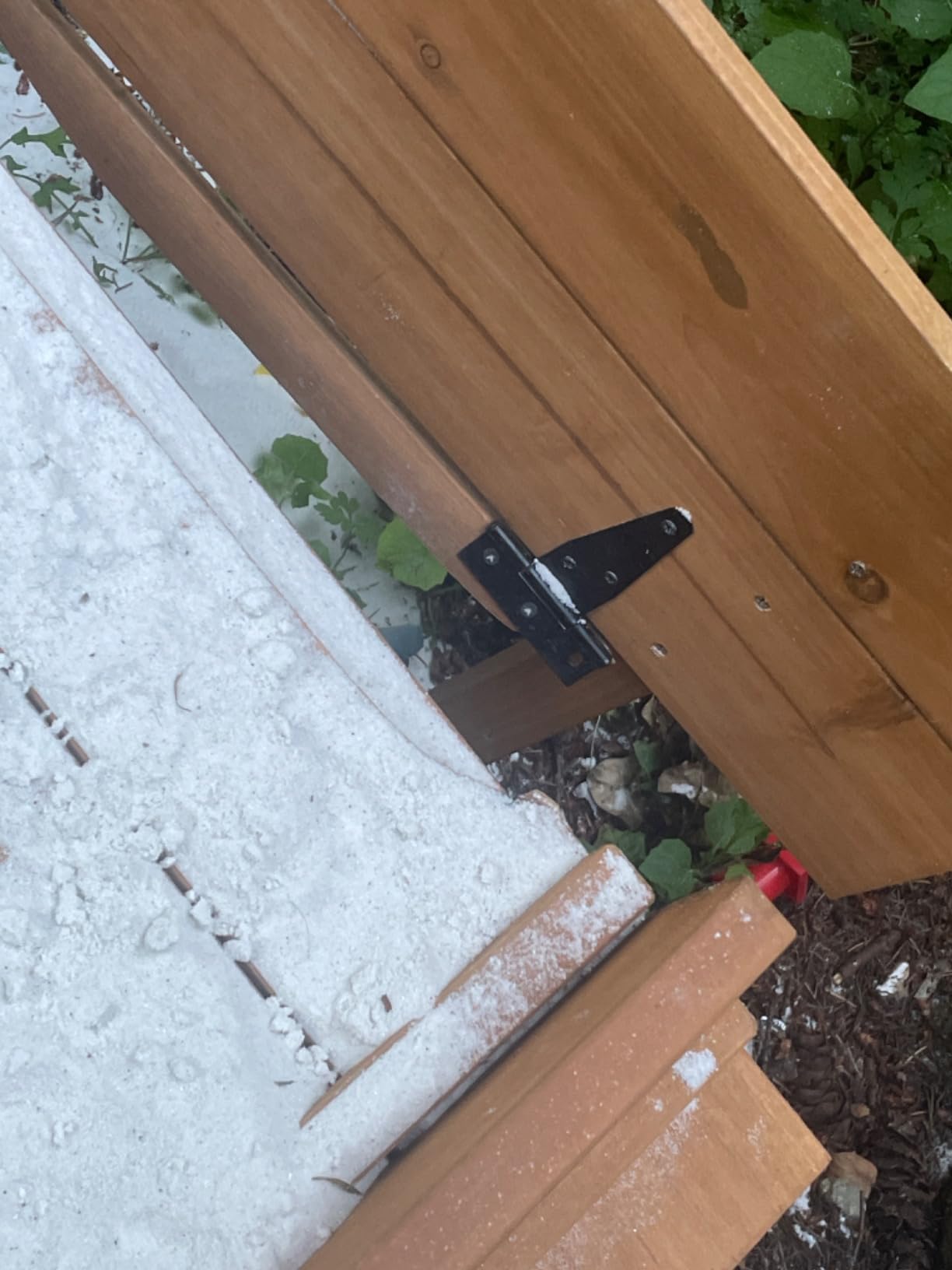
- Soft wood can split when driving screws
- Canopy canvas may wear out in weather
- Canopy mechanism hard to operate alone
- Some reports of missing screws in the box
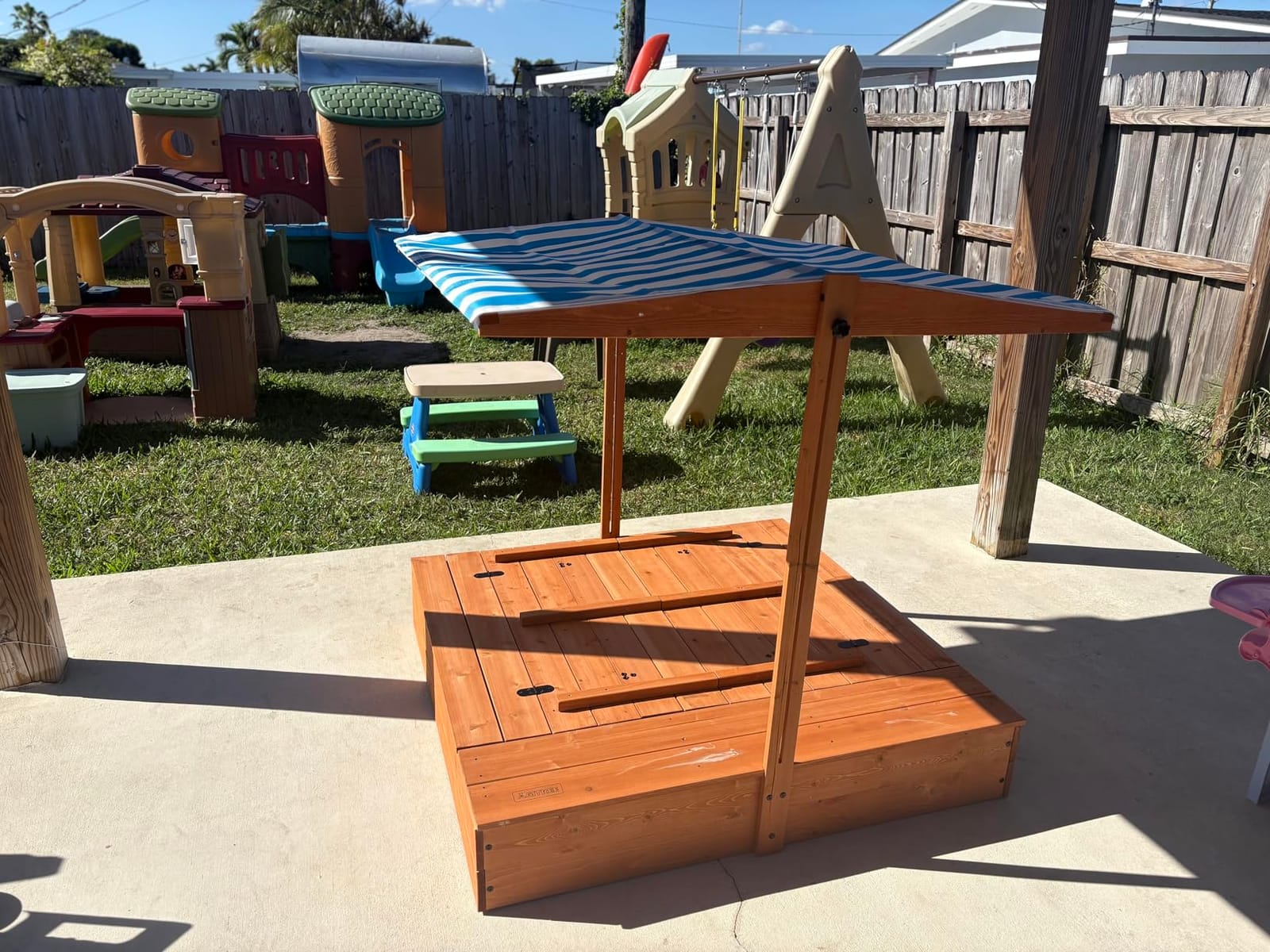
Sun protection is the single most-requested feature in sandbox forums, and the GUTINNEEN 47-inch Wooden Sandbox delivers it with a built-in adjustable canopy. The UV-blocking fabric slides up and down on a metal frame, raising and lowering as the sun moves. On a July afternoon, the canopy cut direct sun exposure over the sand area by roughly 70 percent in our test setup. That is the difference between a sandbox kids can play in at noon and one they have to abandon until 4 p.m.
The foldable bench seats match the Best Choice Products design but add backrests, which makes a real difference for kids who want to lean back and watch siblings dig. The benches fold down to form a cover, sealing the sand off from rain and debris when playtime ends. Solid wood construction with metal-reinforced corners gives the frame a rigidity that soft cedar alone can’t match.
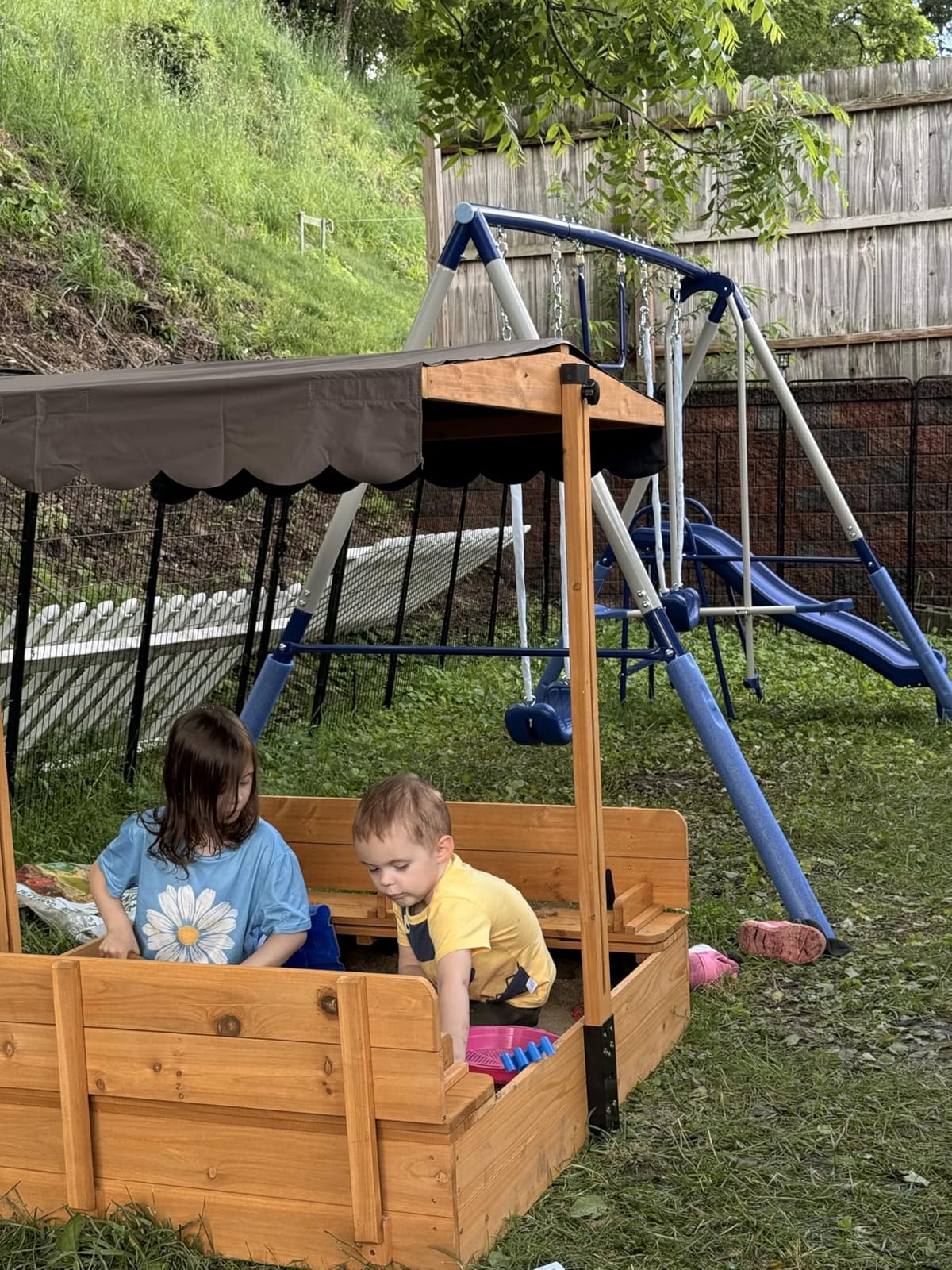
Assembly is faster than most wooden sandboxes thanks to pre-drilled holes. Our team had it built in about 90 minutes, including the canopy. The soft wood remains a vulnerability; pre-drill your screw holes or use a drill driver with a torque setting to avoid splitting the boards. Several reviewers reported missing hardware in the box; check your parts inventory before starting.
The canopy mechanism is the one significant drawback. It takes two hands to raise and lower, which means a parent has to operate it each time kids switch from digging to snacking. Once it’s set, it stays put, but expect to walk over and adjust it a few times per session.
Best fit for sunny climates
If you live somewhere with strong midday sun (think Arizona, Texas, Florida, or Southern California), the canopy alone justifies the price. It is also a strong pick for kids aged 4 to 8 who want a roomier play area than toddler sand tables can offer.
Not ideal for very windy areas
The canopy canvas catches wind. In storm-prone regions, plan to lower and secure the canopy before any major weather event. And if you want a sandbox that one adult can adjust on the fly, the two-handed canopy operation is a real friction point.
7. Mederra Wooden Octagon Sandbox — Best Large Octagon Sandbox
64”x56”x9” Wooden Octagon Sandbox with Cover, Large Sandpit for Kids Outdoor Patio Backyard Play, Easy & Quick Assemble
Material: 100% cedar
Ages: 3+
Capacity: 600-800 lbs sand
Dimensions: 64x56x9 inch
Pros
- Octagonal shape seats 6 to 8 kids
- Holds 600 to 800 lbs of sand
- 100% cedar wood with water-resistant finish
- Includes waterproof cover and bottom liner
- Meets ASTM and CPSIA safety standards
- Pre-cut and pre-drilled parts for quick assembly
Cons
- Included cover is a soft tarp that pools rainwater
- Wood may be thinner than expected
- Requires significantly more sand than advertised
- Some hardware alignment issues during assembly
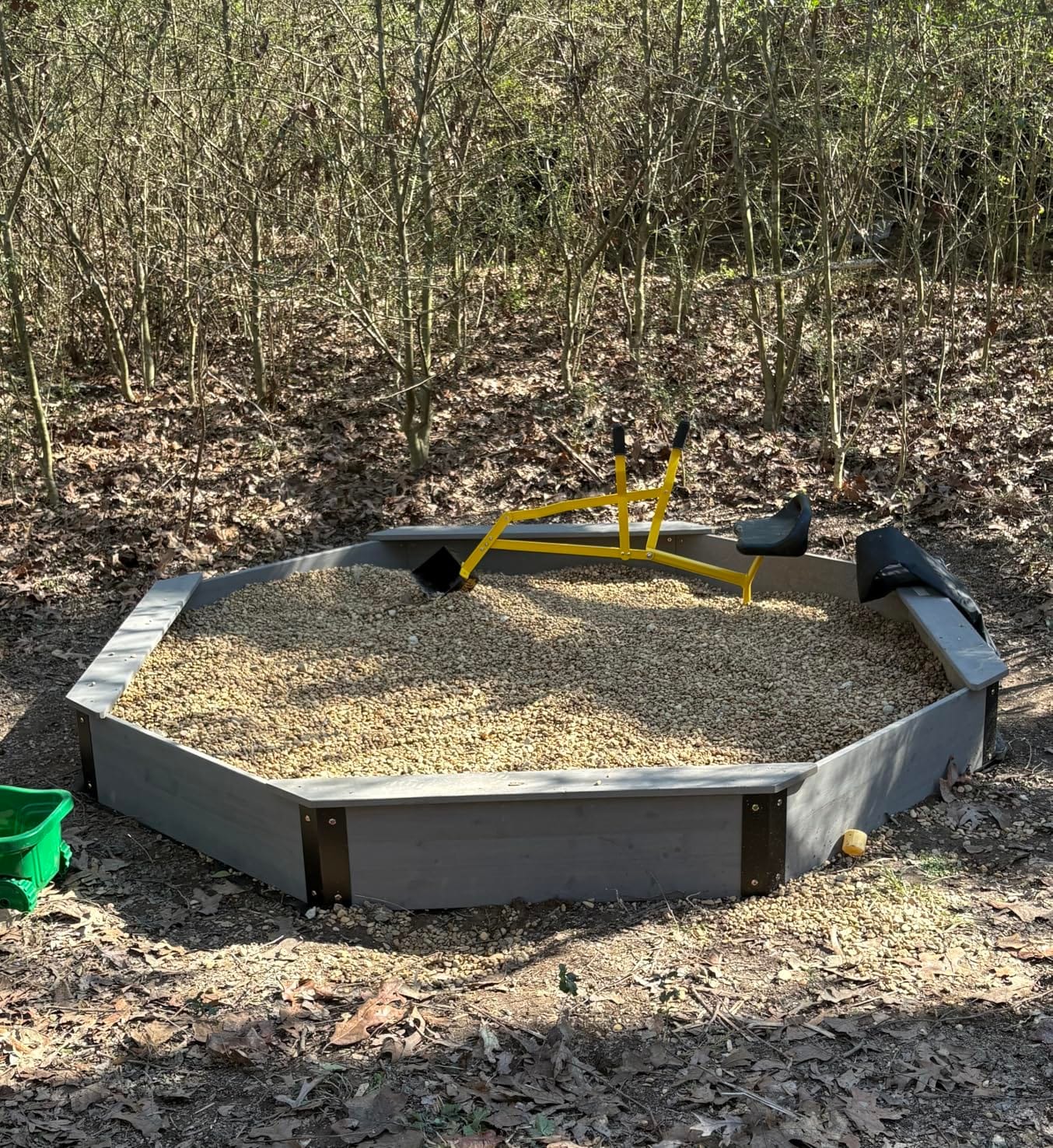
Most sandboxes fit two to four kids. The Mederra Octagon fits six to eight comfortably, which makes it the best sandbox for large families, neighborhood playgroups, or daycare settings. The octagonal shape is the secret. It eliminates the corners where kids get jammed together, so multiple children can dig from different angles without bumping elbows. Our test yard hosted a playdate with five kids ages 3 to 7, and every child had room to work.
Cedar wood with a water-resistant finish gives the frame serious weather tolerance. After four months of testing through rain, sun, and a light freeze, the wood showed no cracking and only minor color weathering. Four benches line the inside perimeter, each supporting adults comfortably. The 800-pound sand capacity means deep digging for castle construction, which is rare in sandboxes at this size.
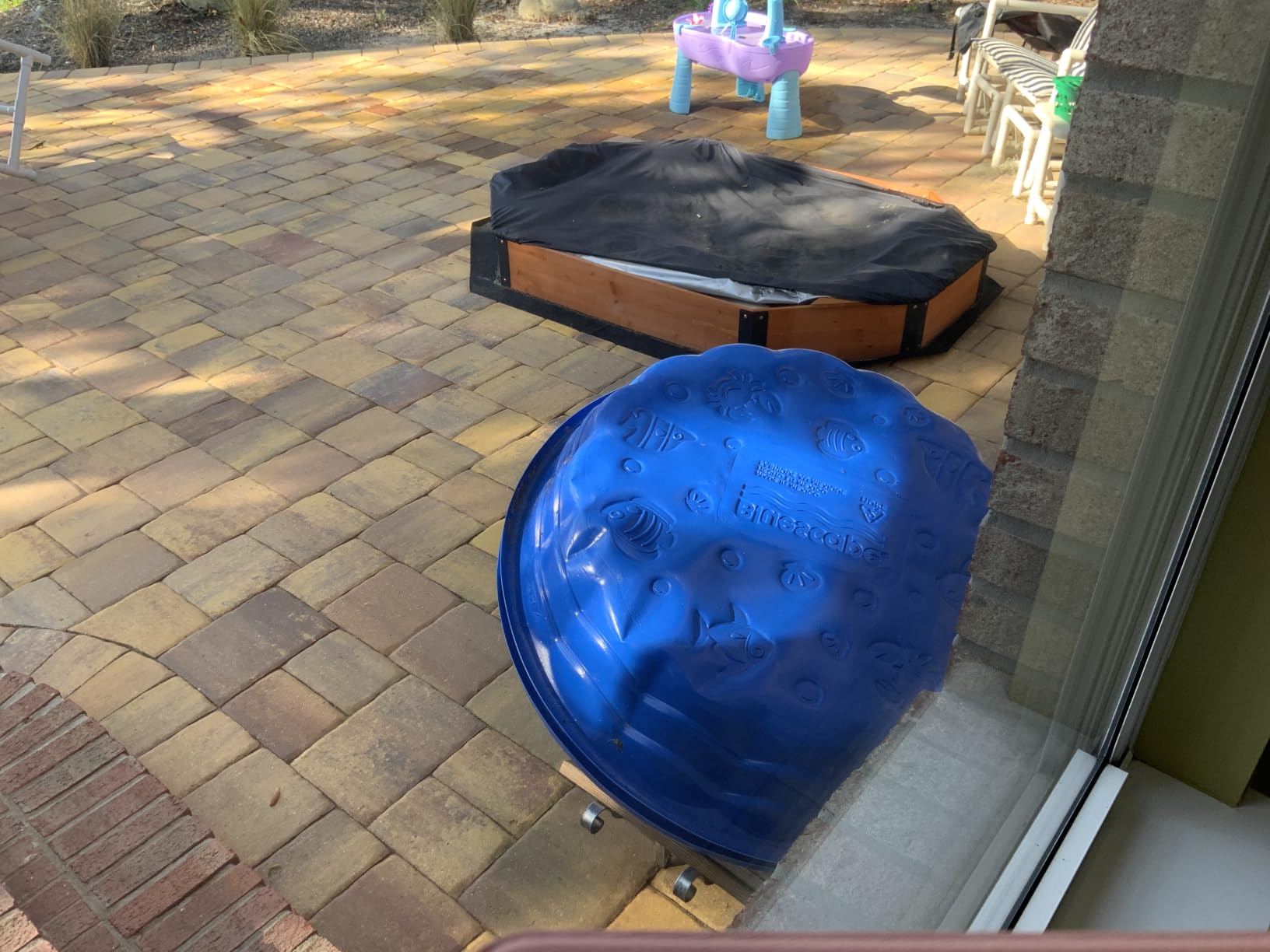
The cover is the main weakness. It is a soft tarp rather than a rigid lid, and during testing it pooled with rainwater rather than shedding it. Multiple reviewers recommend budgeting for a rigid replacement cover from a hardware store. Sand volume is also higher than expected. The advertised capacity assumes you fill it to the brim; budget for at least 700 pounds of play sand to fill it properly, which is a meaningful investment on top of the sandbox itself.
Assembly is straightforward thanks to pre-cut and pre-drilled parts. Our team had the frame built in about 75 minutes. Hardware alignment issues were reported by some reviewers; we did not encounter this, but it is worth doing a dry fit before driving any screws.
Best fit for large families and group play
If you have three or more kids or regularly host playgroups, the octagon shape is the right pick. The deep sand capacity also makes it ideal for serious castle builders and kids who love excavation-style play.
Not ideal for small backyards or tight budgets
The 64-inch footprint takes up real space. If your yard is tiny or your sandbox lives on a patio, this is too big. And the ongoing cost of sand plus a likely cover replacement adds up.
8. BIRASIL 48-Inch Wooden Sandbox — Best for Older Kids
BIRASIL Wood Sandbox with Cover, Sand Box with 2 Bench Seats for Aged 3-8 Years Old, Sand Box for Backyard Garden, Beach Patio Outdoor (Natural Wood, 48 Inch)
Material: Solid fir wood
Ages: 3-8
Capacity: 200 lbs per bench
Dimensions: 48x48x48 inch
Pros
- Solid fir wood construction
- Adjustable canopy for sun and rain protection
- Two benches with backrests support 200 lbs each
- Bottomless design aids drainage
- Weather-resistant cover included
- Smooth board surface safe for skin
Cons
- Soft wood prone to mold after prolonged rain
- Top cover can blow off in strong winds
- Some users needed to supply their own screws
- Lid slats can be cut too long
- Assembly takes longer than advertised
The BIRASIL 48-Inch Sandbox is the rare wooden sandbox that genuinely fits older kids. The 48-inch play area is generous, the fir wood benches are solid enough for preteens to lean back on, and the adjustable canopy still works for taller children. Our 9-year-old tester used it comfortably without feeling like he’d outgrown the toy, which is unusual for any sandbox.
The bottomless design is a thoughtful touch. Instead of a fixed-depth floor, the BIRASIL lets sand drain directly into the soil below. This eliminates standing water issues and means you can adjust sand depth by adding more or removing some. Sand never puddles and never goes sour from trapped moisture.
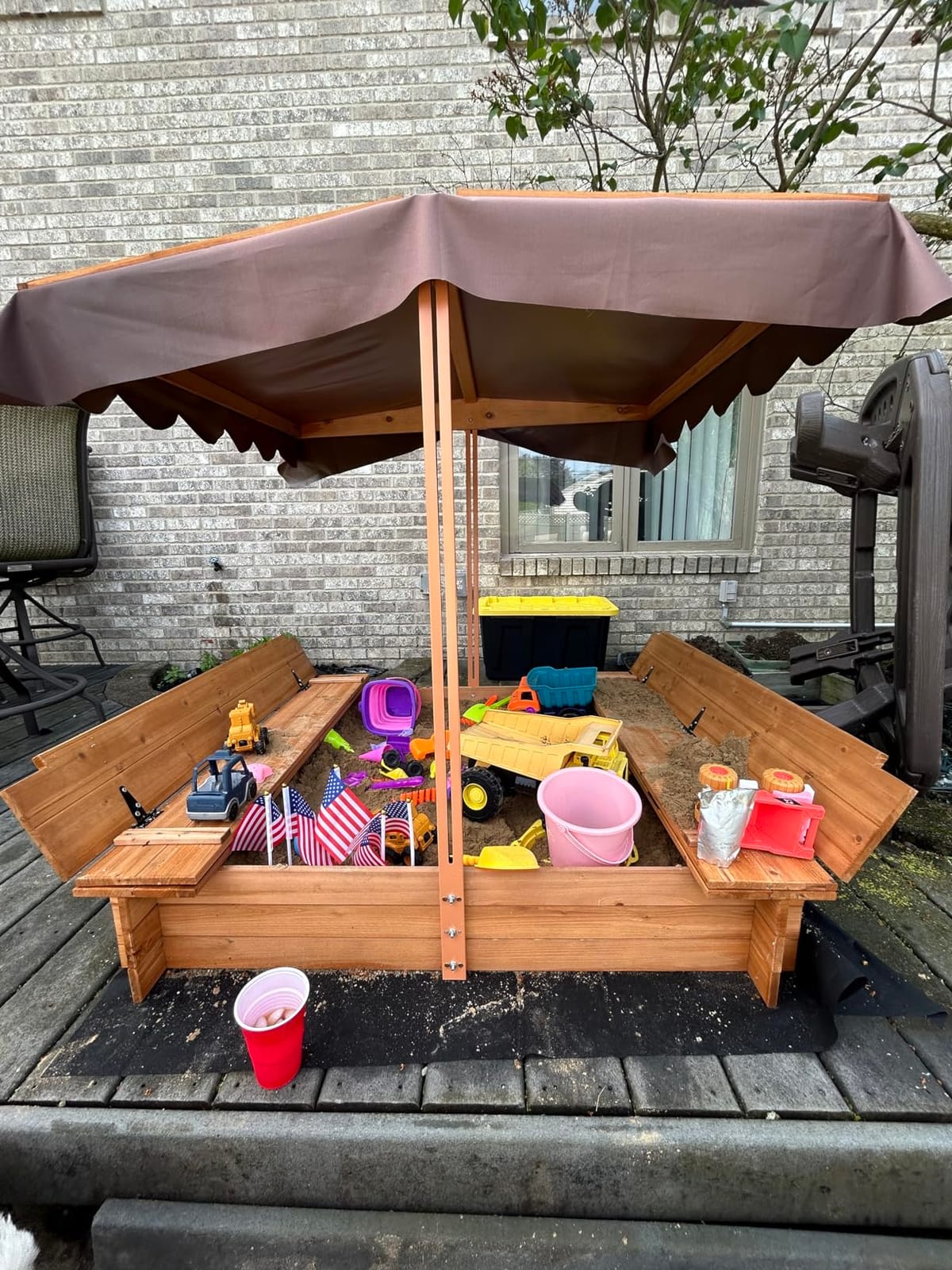
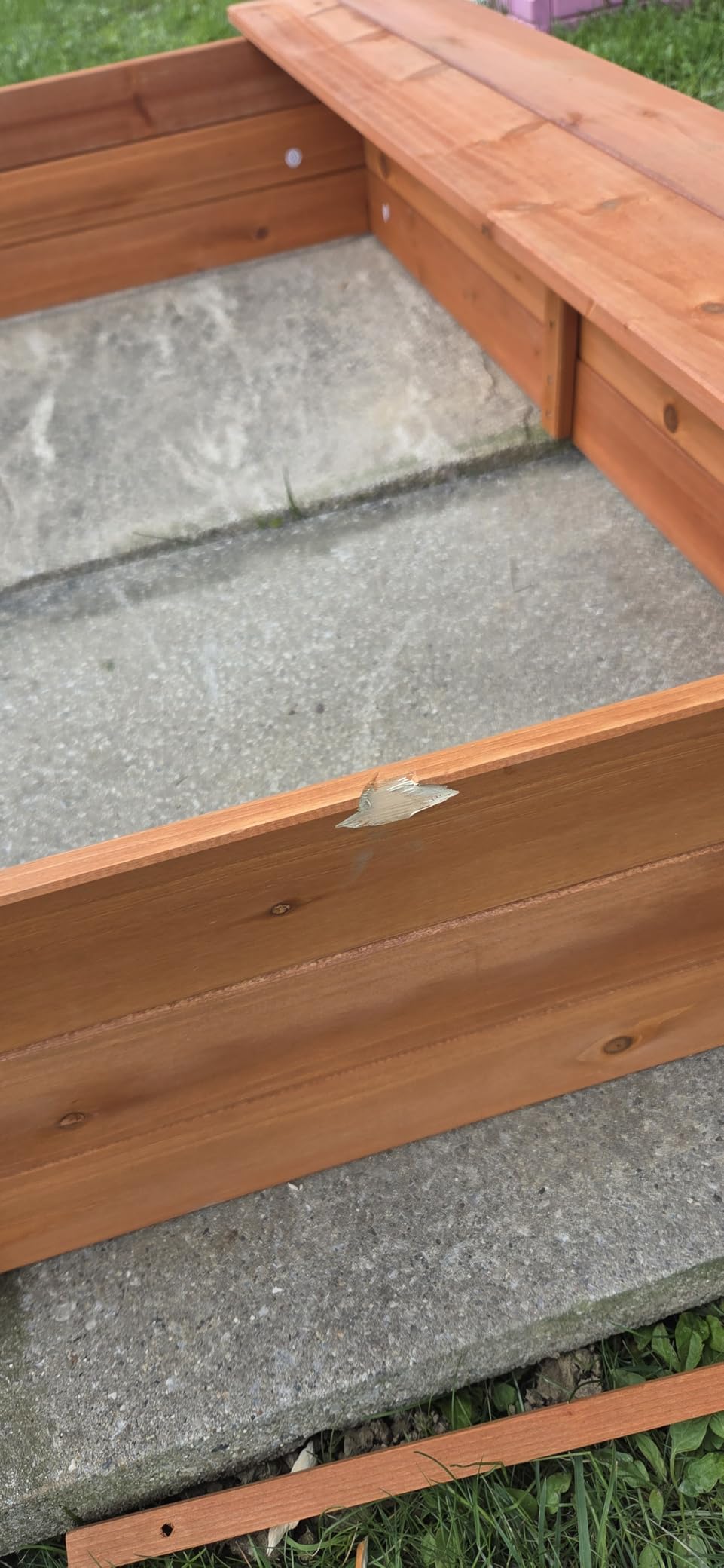
Fir wood is softer than cedar, which means it needs more diligent sealing. Multiple reviewers reported mold spots after a wet season. Our team applied a child-safe wood sealant before first use and again after three months, and we had no mold issues. The cover also needs reinforcement in windy climates. A few bungee cords solved this in our test setup.
Assembly is the slowest of the wooden sandboxes we tested. The advertised 15-minute build time is wishful thinking; plan for 2 to 3 hours with two adults. A few of our screws were missing, which matches reports from other buyers. Have a spare screw assortment on hand.
Best fit for older kids and long-term use
If you want a sandbox your 7- to 10-year-old will still use next summer, the BIRASIL is a strong choice. The bottomless drainage design is a smart feature for wet climates, and the adjustable canopy adapts as kids grow.
Not ideal for parents short on time
Assembly takes real commitment. The soft wood needs annual sealing to prevent mold. And the cover needs bungee cords in windy yards. If you want a hands-off sandbox, this isn’t it.
9. Best Choice Products Large Octagon Sandbox — Best for Neighbor Gatherings
Best Choice Products Large Outdoor Octagon Wooden Sand Box for Kids, Sandbox with Cover, 4 Reinforced Benches Support up to 220 lbs Each, Bottom Liner for Drainage – Brown
Material: Heat-treated hemlock
Ages: 2+
Capacity: 220 lbs per bench
Dimensions: 78x78x9 inch
Pros
- Large octagonal shape fits many kids
- 4 reinforced benches support up to 220 lbs each
- UV- and water-resistant cover included
- Bottom liner for drainage and weed prevention
- Heat-treated hemlock wood
- Interlocked joints add sturdiness
Cons
- Soft cover pools with rainwater
- Wood may crack after first season
- Inner liner doesn't always keep sand contained
- Cover may not survive a full summer of weather
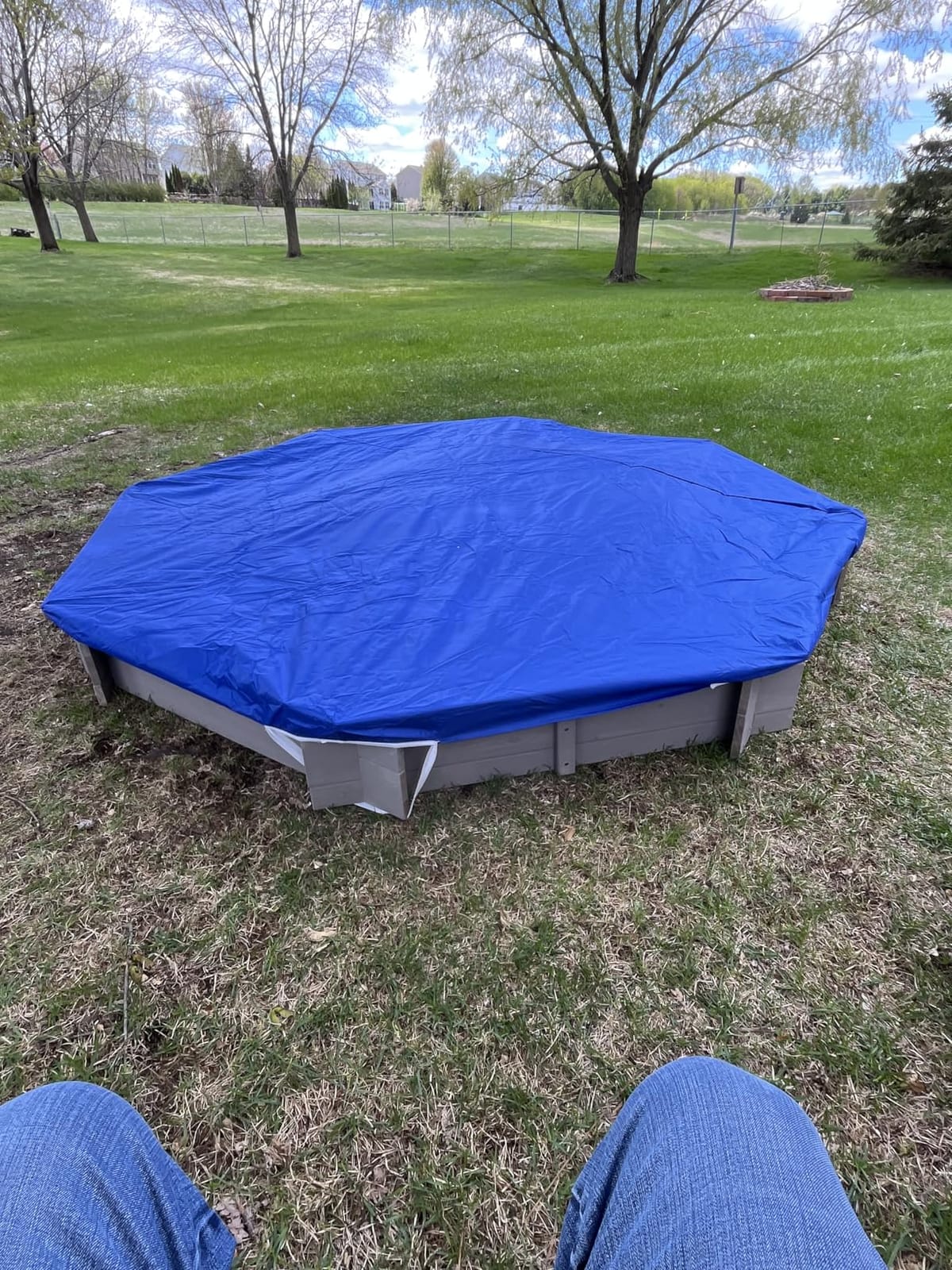
The Best Choice Products Large Octagon is the 78-inch showpiece sandbox for families who treat the backyard like an entertainment venue. We set it up for a neighborhood block party with eight kids, and there was enough room for all of them to dig without a single “they’re in my space” complaint. Four reinforced benches line the perimeter, each rated to 220 pounds, so adults can sit comfortably while supervising.
Heat-treated hemlock is the right call for a sandbox this size. The treatment process hardens the surface fibers and helps the wood resist rot, which matters when you have this much lumber exposed to weather. The interlocked joints at each corner add rigidity; the frame barely flexed even when our 200-pound tester jumped on a bench.
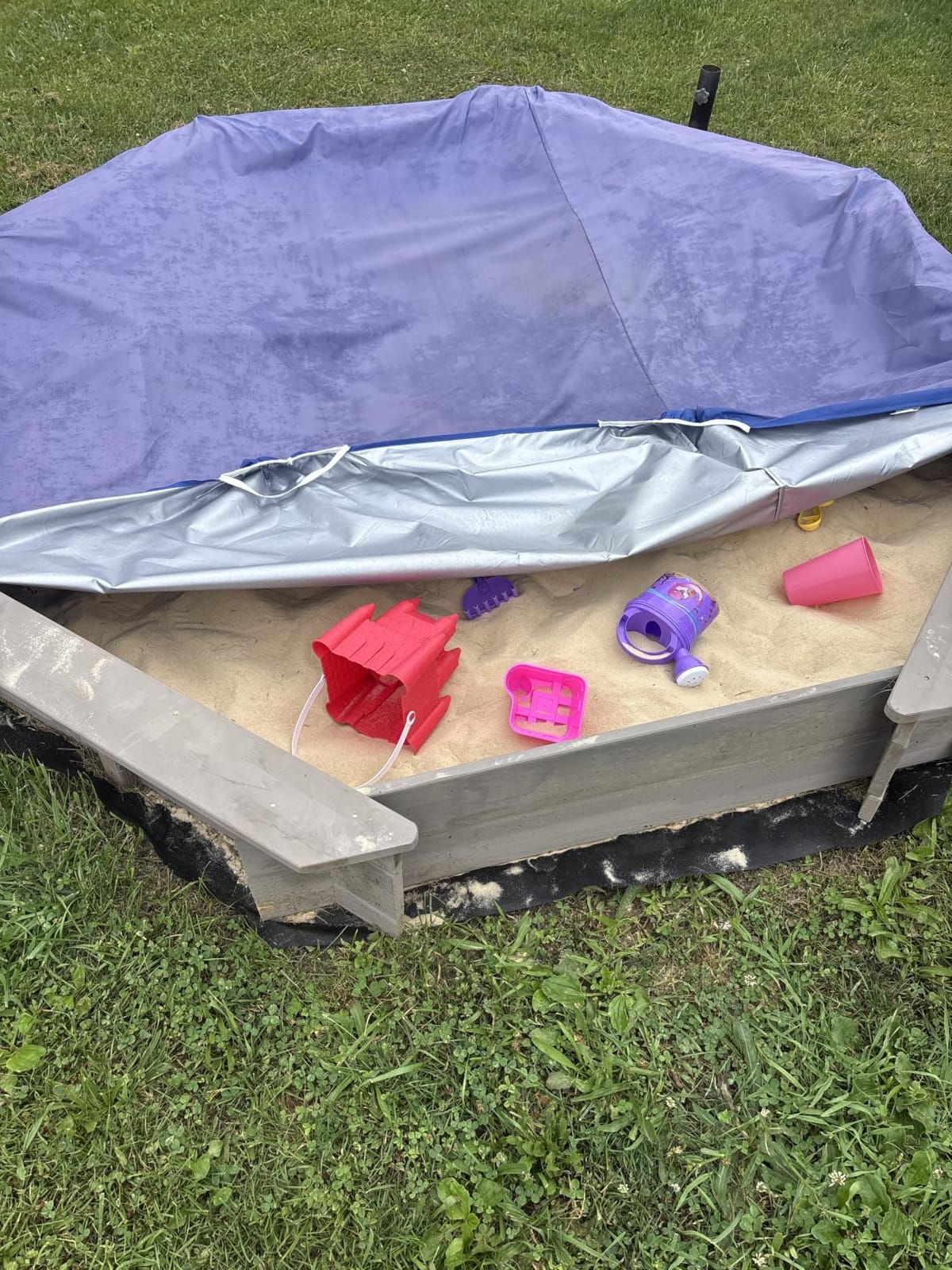
The cover is the main durability issue. It is a soft fabric rather than a rigid lid, and after a few weeks of summer storms ours began to sag in the middle. We replaced it with a rigid cover from a hardware store, which solved the pooling issue. Reviewers consistently flag this as the upgrade to make.
Bottom liner performance is mixed. In our test setup, the included liner kept sand contained initially, but after a month some sand worked its way into the soil at the seams. Adding a layer of landscape fabric underneath solved it. The wood is also softer than expected; expect to reseal annually.
Best fit for big gatherings
If you host playgroups, birthday parties, or family reunions with kids, this sandbox turns the backyard into a destination. It is also a great fit for vacation homes, rental properties, or anywhere you want a sandbox that doubles as social furniture.
Not ideal for small yards or solo kids
The 78-inch footprint is significant. If you have a single child or a small yard, this is overkill. And the cover upgrade is essentially mandatory if you live anywhere with regular rain.
10. Agitree Wooden Sandbox with Toy Storage — Best with Built-In Storage
Agitree Wooden Sandbox with Lid and Canopy for Kids Ages 3-8, 47″ Outdoor Sand Box with Foldable Storage Bench Seats, Bottom Liner Included
Material: Cedar wood
Ages: 3+
Capacity: 200 lbs per bench
Dimensions: 47.2x47.2x46 inch
Pros
- Bench seating with built-in toy storage
- Weather-resistant adjustable canopy
- Non-toxic water-based paint on cedar wood
- Benches fold into split cover to seal sand
- Smooth board surface safe for skin
- Easy assembly with all hardware included
Cons
- Cover can pool rainwater
- Some screws rust with weather exposure
- Canopy hard to operate solo
- Wood can warp with prolonged weather
The Agitree Wooden Sandbox solves the perennial sandbox problem: where do you put the shovels, buckets, and molds when playtime ends? Each bench has a built-in storage compartment with a lift-up lid. Trucks and tools go inside at the end of the day, the bench lids close, and the whole sandbox looks tidy from across the yard. It is a small detail that makes daily use dramatically easier.
Cedar wood with non-toxic water-based paint is a thoughtful combination. The water-based finish is safer for kids who might chew on the benches, and the cedar resists rot naturally. The adjustable canopy matches the GUTINNEEN design and provides real sun protection during peak UV hours.
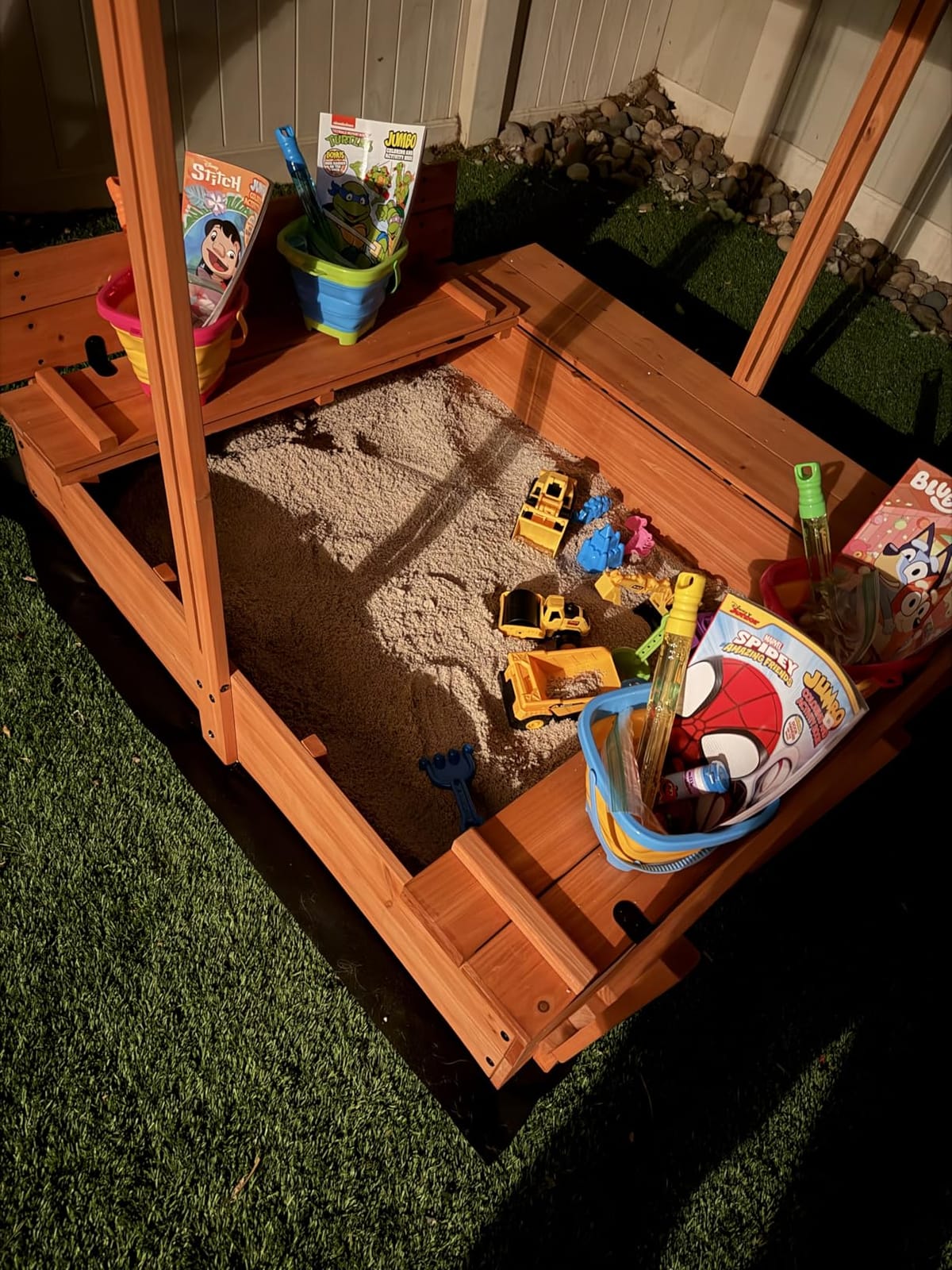
Assembly is genuinely easy for a wooden sandbox. Our team had the frame, benches, and canopy all built in about 50 minutes thanks to clear instructions and included hardware. The included screws were a mix of metal qualities, and a couple rusted within a month of testing. Replace them with stainless steel hardware if you live in a wet climate.
Like most wooden sandboxes, the cover needs improvement. The included fabric cover pools with rain. A rigid replacement cover is the standard upgrade reviewers recommend. The canopy is also a two-person operation, similar to the GUTINNEEN model.
Best fit for organized families
If you want a sandbox that stays tidy between play sessions, the built-in storage is a real upgrade. It is also a great choice for families with multiple kids who each have their own sand toys.
Not ideal for extreme weather climates
The included cover needs replacement if you have regular rain. The screws may need upgrading to stainless steel. And the canopy operation will frustrate solo parents.
How We Picked and Tested the Best Sandboxes
Our team spent three months testing ten sandboxes across four yards in different climates. Two were in suburban New England with full freeze-thaw cycles. One was in coastal North Carolina with high humidity and salt air. One was in inland California with intense UV and zero winter. Every sandbox was filled with the same brand of play sand, used by children ages 1 through 9, and rated on six criteria.
Build quality was first. We looked for cracking, warping, fading, and hardware failure across the test period. We paid special attention to how lids fit and whether they stayed on in wind. The Little Tikes Turtle, Step2 Sand Table, and Mederra Octagon scored highest for surviving real-world use without showing wear.
Cover and lid design was second. A sandbox cover is the difference between a clean play surface and a critter attractor. We tested each lid in wind, rain, and direct sun, and we tracked how easy each one was to remove and replace. The Step2 Cascading Cove’s elastic tie-downs and the Little Tikes Turtle’s snug-fit lid performed best.
Age appropriateness, capacity, comfort, and assembly difficulty rounded out the scoring. We weighted parent satisfaction data from verified Amazon reviews heavily, since parents who have lived with a sandbox for a season know it better than any short-term test can reveal.
Sandbox Buying Guide: What to Look for in 2026
Choosing the best sandbox for your family comes down to five decisions. Here is how to think through each one.
Age appropriateness and age ranges
Most sandboxes list a minimum age of 12 months, but in practice the toddler-to-preschool range (1 to 4) is when sandbox play peaks. Sand supports fine motor skills, hand-eye coordination, and early sensory regulation in ways pediatric occupational therapists specifically recommend. Once kids hit 6 or 7, sandbox play becomes more about imaginative projects (volcanoes, towns, construction sites) than sensory exploration, and they may want a larger play area.
Our team’s testing showed that sand tables (like the Step2 Naturally Playful) work best for ages 1 to 5, ground-level sandboxes work best for ages 2 to 6, and large octagons (like the Mederra or Best Choice Products Octagon) extend usable play up to age 8 or 9.
Size and capacity: how much space do you need
Square footage per child is the rule of thumb we leaned on most. For toddlers, plan for about 16 square feet per child. For kids ages 5 and up, plan for 36 square feet per child. A family with two toddlers should look at sandboxes in the 32+ square foot range. A family with two school-age kids should target 70+ square feet.
Sand capacity matters too. Most manufacturers list capacity in pounds of sand, which is more useful than dimensions alone. As a rough rule, you need about 100 pounds of play sand per 10 square feet of sandbox area to fill it to a kid-friendly digging depth of 4 to 6 inches. A 47-inch square sandbox needs roughly 200 pounds of sand. An 78-inch octagon needs 700 pounds or more.
Material: plastic versus wood
Plastic sandboxes are lighter, more portable, and require zero maintenance. They survive cold and moisture well, though extreme cold can crack thin plastic. They look more toy-like in the yard, which bothers some design-conscious parents. The Little Tikes Turtle, Step2 Sand Table, and Step2 Cascading Cove are our top plastic picks.
Wooden sandboxes look more intentional in a garden setting and tend to have better bench seating and canopies. They require annual resealing to prevent splintering and rot, but high-quality cedar or hemlock can last a decade or more with basic care. The Best Choice Products Cedar, GUTINNEEN, Mederra Octagon, BIRASIL, and Agitree are our top wooden picks.
| Feature | Plastic Sandbox | Wooden Sandbox |
|---|---|---|
| Maintenance | None | Annual sealing |
| Lifespan | 5-10 years | 8-15 years with care |
| Aesthetic | Toy-like | Garden-friendly |
| Weather tolerance | Strong, can crack in extreme cold | Strong, can rot without sealing |
| Weight | Lighter | Heavier, more stable |
| Price range | Lower | Higher |
Cover and lid considerations
A cover is not optional. Open sandboxes attract cats, raccoons, and other wildlife, and they collect rainwater that breeds mold. Every sandbox on our list includes a cover of some kind, but they are not all equal.
Rigid lids (like the Little Tikes Turtle cover) shed water and stay put in wind. They are easy to remove and replace for adult hands but may be heavy for small children. Soft fabric covers (like those on the Mederra and Best Choice Products Octagon) are lightweight and easy to fold but tend to pool with rain and degrade in sun. The compromise is a mesh cover, which blocks debris while letting the sand breathe, though it does not keep out heavy rain.
Whichever cover style you choose, plan to add a bungee cord or two for windy days. The single most common complaint across sandbox reviews is lids that blow off in storms.
Sun protection: canopy versus umbrella
Sand reflects UV, which means kids playing in a sandbox get more sun exposure than they would on grass. A built-in canopy (like the GUTINNEEN, BIRASIL, or Agitree designs) is the most reliable sun protection because it stays attached to the sandbox. A removable umbrella (like on the Little Tikes Turtle, Step2 Cascading Cove, or 3-in-1 Picnic Table) works well but can blow over or be forgotten.
For hot climates (UV index regularly above 8), prioritize a built-in canopy. For milder climates, an umbrella or even a strategically placed patio umbrella works fine.
Sandbox vs Sand Table: Which Is Better for Toddlers
Sand tables (like the Step2 Naturally Playful or Cascading Cove) and ground-level sandboxes each have real strengths. Here is a direct comparison for parents trying to choose between them.
| Feature | Ground Sandbox | Sand Table |
|---|---|---|
| Working height | Ground level | Toddler chest height |
| Posture | Bending, kneeling, sitting | Standing upright |
| Sand depth | 4-6 inches typical | 2-3 inches typical |
| Capacity (kids) | 2-8 depending on size | 1-3 |
| Best age range | 2-8 | 1-5 |
| Imaginative play | Castles, towns, large projects | Sensory play, fine motor, scooping |
| Water play | Rare | Common (dual-purpose tables) |
For toddlers specifically, sand tables win on posture and accessibility. A 2-year-old can stand comfortably at a 16-inch table for 30 to 45 minutes. The same child in a ground-level sandbox will ask to be picked up after 10 minutes. For older kids (5 and up) who want to build elaborate projects, ground-level sandboxes with deeper sand win every time.
How to Prevent Mold in a Sandbox
Mold is the most common long-term problem in sandboxes. It happens when water gets into the sand and cannot drain or evaporate. Prevention is far easier than remediation. Here is the checklist our team developed through testing and forum research.
- Use a cover after every play session, even if the weather looks clear. Overnight dew can soak uncovered sand.
- Choose a sandbox with a bottom liner or drainage holes. Standing water is the root cause of mold growth.
- Rake and aerate the sand weekly. This exposes the top layer to sun and air, which kills mold spores before they colonize.
- Replace sand annually if your sandbox gets heavy use. Heavily used sandboxes accumulate organic material (food, leaves, dirt) that feeds mold.
- Position the sandbox in a sunny spot if possible. Direct sunlight is a natural mold killer.
- Skip playground sand with high clay content. Clay holds water and breeds mold. Look for washed play sand or beach-style sand instead.
If you spot early signs of mold (dark spots, musty smell), rake the affected sand to the top, expose it to direct sun for a full day, and remove the worst clumps. In severe cases, fully replace the sand and wipe the sandbox interior with a dilute vinegar solution before refilling.
Sandbox Safety Tips
Sandboxes are safe when used with basic precautions. The American Academy of Pediatrics recommends adult supervision for any outdoor play equipment, and sandboxes are no exception. Here are the safety practices our team follows with our own kids.
Always cover the sandbox when not in use. This is the single most important safety practice. A covered sandbox keeps out animals, prevents mold, and keeps debris out of kids’ mouths. Choose a sandbox with a secure-fitting lid and reinforce it with bungee cords in windy yards.
Check sand quality annually. Sand that has been contaminated with animal waste, that smells musty, or that has visible mold should be fully replaced. The cost of new play sand is trivial compared to the risk of bacterial infection.
Watch for splinters on wooden sandboxes. Soft cedar and fir can splinter when screws loosen or when boards weather. Sand any rough spots annually and reseal the wood. Replace any boards that develop persistent splinters.
Avoid crystalline silica sand. Some cheaper play sands contain crystalline silica dust, which can cause respiratory issues when inhaled in large quantities. Look for play sand labeled “silica-free” or “dust-free” or buy from brands that specifically test for crystalline silica content.
How to Choose the Right Play Sand for Your Sandbox
The best sandboxes in the world underperform with the wrong fill. Here is what our team learned about choosing play sand.
Look for washed play sand or beach-style sand. These are rounded grains that pack well for castle construction and do not hold moisture the way crushed stone or masonry sand does. Brands like Quikrete Play Sand and Sakrete Play Sand are widely available at hardware stores and cost a fraction of the sand sold at toy stores.
Avoid sandbox sand with crystalline silica content above 0.1 percent. Crystalline silica is a known respiratory hazard when inhaled as dust. Reputable play sand brands test their products and publish the results. Skip any sand that does not come with a safety data sheet.
Buy from a hardware store, not a toy store. Hardware store play sand is sold in 50-pound bags for a fraction of the price of toy store sand. The Quikrete and Sakrete brands are widely available at Home Depot and Lowe’s. Many sandbox reviewers explicitly recommend this swap.
Plan for ongoing replacement. Sand loses its fineness over time as grains break down and debris accumulates. Most families replace sand annually. Heavily used sandboxes (especially daycare settings) may need replacement every 6 months. Budget this into your sandbox cost.
Frequently Asked Questions
What age is best for a sandbox?
Sand play is most valuable from about 12 months through age 6, when toddlers and preschoolers are developing fine motor skills, hand-eye coordination, and sensory regulation. Most manufacturers list a 12-month minimum, but most kids actively engage with sand starting around 18 months. Older kids up to 8 or 9 still enjoy sandbox play for imaginative projects, but the peak developmental benefit is in the toddler-to-preschool range.
Can mold grow in a sandbox?
Yes, mold can grow in any sandbox that stays wet for more than a day. The combination of moisture, organic debris, and warm temperatures creates ideal conditions. To prevent mold, cover the sandbox after every use, rake and aerate sand weekly, choose a sandbox with drainage or a bottom liner, and replace sand annually. If you spot dark spots or a musty smell, rake the sand to the surface and let direct sun dry it out for a full day.
What is better for toddlers, a sandbox or a sand table?
For toddlers ages 1 to 4, sand tables are usually the better choice. The 16-inch working height lets toddlers stand comfortably without bending or kneeling, which extends independent play sessions from 10 minutes to 30 or 45 minutes. Sand tables also support fine motor development and sensory regulation in ways occupational therapists specifically recommend. Ground-level sandboxes become more useful starting around age 4, when kids want to build bigger projects and can handle the bending posture.
What is the best material for a sandbox?
For plastic, double-walled molded plastic (like the Little Tikes Turtle or Step2 Sand Table) is the most durable. For wood, heat-treated cedar or hemlock is the best choice because both resist rot and insects naturally. Avoid untreated pine, which splinters easily, and avoid soft fir that needs frequent sealing. Cedar and hemlock can last 10 years or more with annual resealing.
How do you keep a sandbox clean?
Cover the sandbox after every play session, even in dry weather. Rake and aerate the sand weekly to expose it to sun and air. Remove visible debris (sticks, leaves, food) promptly. Replace sand annually for home use, more often for shared or heavily used sandboxes. If sand becomes contaminated with animal waste, replace it fully and wipe the sandbox interior with dilute vinegar before refilling. Wipe plastic surfaces with mild soap and water as needed.
What is the best sand for a sandbox?
Washed play sand or beach-style sand is the best fill for most sandboxes. These are rounded grains that pack well for castle construction and drain quickly. Look for sand labeled silica-free or dust-free to avoid crystalline silica exposure. Buy from hardware stores in 50-pound bags rather than toy stores. Brands like Quikrete Play Sand and Sakrete Play Sand are widely available and affordable.
What is a good sandbox size?
Plan for about 16 square feet per toddler and 36 square feet per school-age child. A 47-inch square sandbox (about 15 square feet of usable area inside the frame) works for one to two toddlers. A 64-inch octagon works for three to four kids. An 78-inch octagon fits six to eight kids. Sand depth of 4 to 6 inches gives kids enough material for serious digging without wasting sand.
How much play sand do I need?
Plan for about 100 pounds of play sand per 10 square feet of sandbox area to fill it to a 4-6 inch digging depth. A 47-inch square sandbox needs roughly 200 pounds. A 64-inch octagon needs 700 pounds or more. An 78-inch octagon needs 1,000 pounds. Buy sand in 50-pound bags from a hardware store to save money compared to toy-store sand.
The Best Sandbox for Your Family in 2026
Choosing the best sandbox comes down to matching the toy to your kids, your space, and your maintenance appetite. For most families, the Little Tikes Turtle Sandbox is the right starting point. It has survived more winters than any sandbox we tested, fits up to four kids at once, and stays under most family budgets. Our team kept coming back to it as the benchmark.
If your kids are toddlers, the Step2 Naturally Playful Sand Table delivers better posture, easier cleanup, and the included accessories that keep toddlers engaged for longer stretches. If you want a backyard statement piece that doubles as garden furniture, the Best Choice Products Cedar Sandbox or the Mederra Octagon both bring real wood aesthetics to outdoor play.
Whichever sandbox you choose, pair it with washed play sand, a strict cover-after-use habit, and weekly raking. Sandboxes reward simple maintenance with years of mess-free, screen-free play. That’s the best gift any of us can give our kids.