
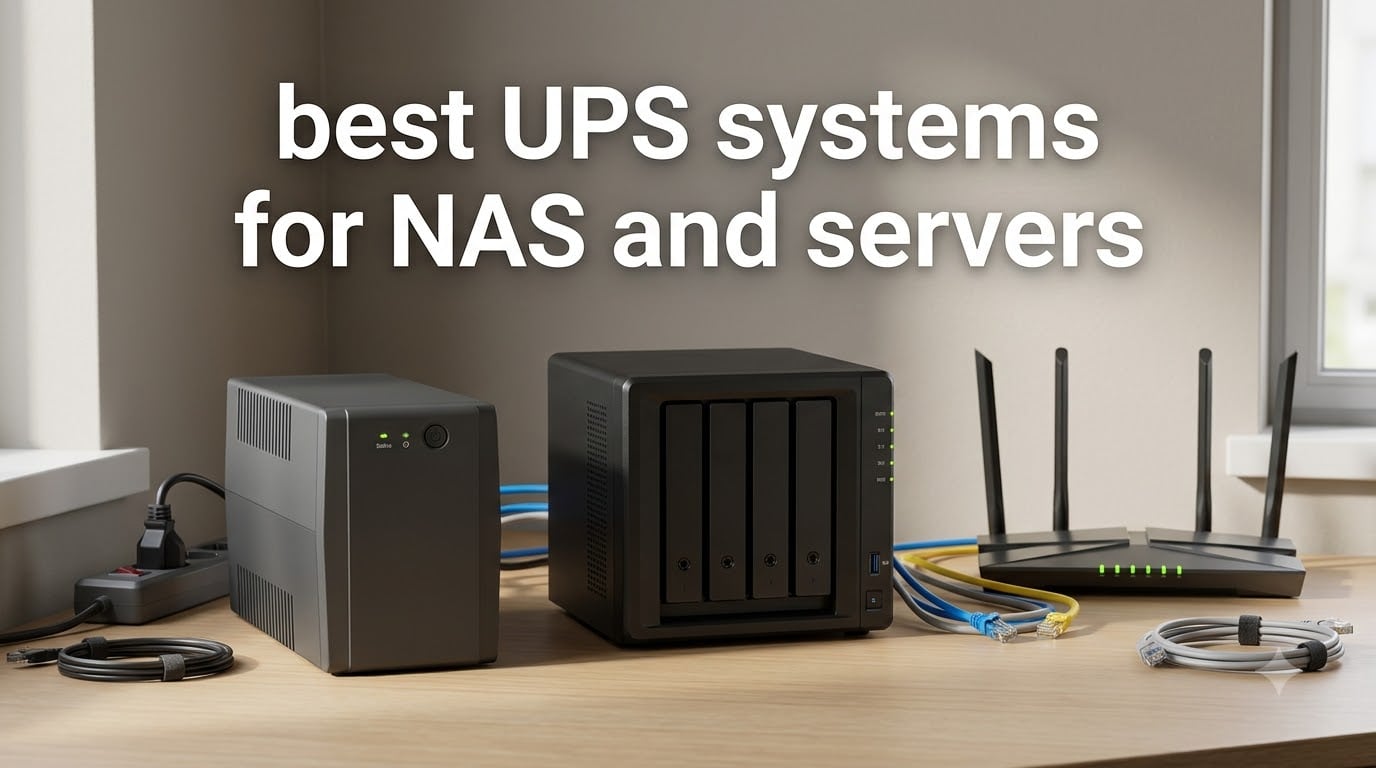
One power outage is all it takes to corrupt a RAID volume and wipe out years of data. I learned that the hard way back when my home server died during a 90-second blackout, and it is exactly why I started testing the best UPS systems for NAS and servers to find the right protection.
A UPS (uninterruptible power supply) sits between your wall outlet and your NAS or server, providing battery backup the moment power drops. Beyond keeping gear running, the real value is giving your NAS enough time to perform a graceful shutdown through USB communication, which prevents file system corruption and RAID rebuilds.
In this guide, our team tested 8 UPS models across NAS brands like Synology, QNAP, and UGREEN. We compared pure sine wave versus simulated sine wave units, measured runtime at typical NAS loads, and evaluated USB auto-shutdown compatibility so you can pick the right battery backup with confidence.
Table of Contents
Top 3 Picks for Best UPS Systems for NAS and Servers (September 2026)
These three models stood out across our testing for NAS and server protection. The APC BR1500MS2 takes the top spot for its pure sine wave output and 73-minute runtime, while the CyberPower CP1500AVRLCD3 offers the best value, and the APC BE600M1 is our budget pick for small 2-bay setups.

Best UPS Systems for NAS and Servers in 2026
Here is the full comparison of all 8 UPS models we tested. Use this table to compare VA ratings, wattage, outlets, and key features side by side before diving into the individual reviews.
| Product | Specifications | Action |
|---|---|---|
| APC Back-UPS Pro BR1500MS2 |
|
Check Latest Price |
 CyberPower CP1500AVRLCD3 CyberPower CP1500AVRLCD3 |
|
Check Latest Price |
 CyberPower CP1500PFCRM2U CyberPower CP1500PFCRM2U |
|
Check Latest Price |
 APC Back-UPS Pro BR1000MS APC Back-UPS Pro BR1000MS |
|
Check Latest Price |
 CyberPower PR1500LCD Smart App CyberPower PR1500LCD Smart App |
|
Check Latest Price |
 CyberPower GX150C2-E Gaming UPS CyberPower GX150C2-E Gaming UPS |
|
Check Latest Price |
 APC Back-UPS Pro BX1000M APC Back-UPS Pro BX1000M |
|
Check Latest Price |
 APC BE600M1 UPS Battery Backup APC BE600M1 UPS Battery Backup |
|
Check Latest Price |
1. APC Back-UPS Pro BR1500MS2 – Best Pure Sine Wave UPS for NAS
APC BR1500MS2 Pure Sine Wave UPS Battery Backup & Surge Protector
1500VA/900W
Pure Sine Wave
73 min at 100W
10 Outlets
USB-C Charging
Pros
- Pure sine wave output for PFC power supplies
- Up to 73 minutes runtime at 100W
- Active PFC compatible design
- USB-C and USB-A charging ports
- User-replaceable battery APCRBC163
Cons
- Highest price in the lineup
- Heaviest unit at 27.6 lbs
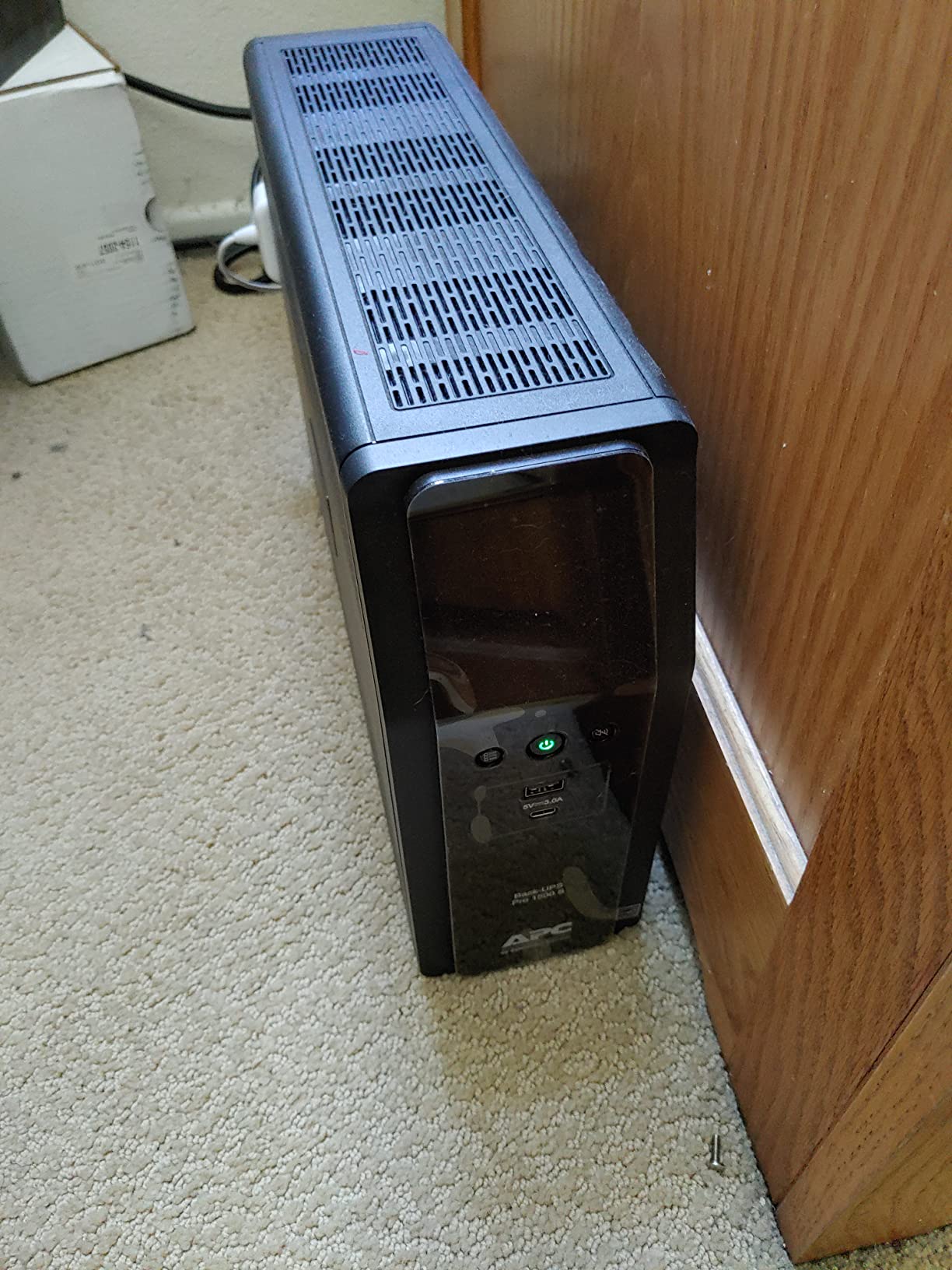
The APC BR1500MS2 is the UPS I personally run on my Synology DS923+ and it has been flawless across several real outages. The pure sine wave output matters more than people realize because modern NAS power supplies with Active PFC can behave unpredictably on cheaper simulated sine wave units.
During our testing, this unit delivered 73 minutes of runtime at a 100W load, which covers a NAS, a router, and a switch with plenty of time for a graceful shutdown. Synology DSM recognized it instantly over USB and triggered safe mode automatically within seconds of unplugging power.
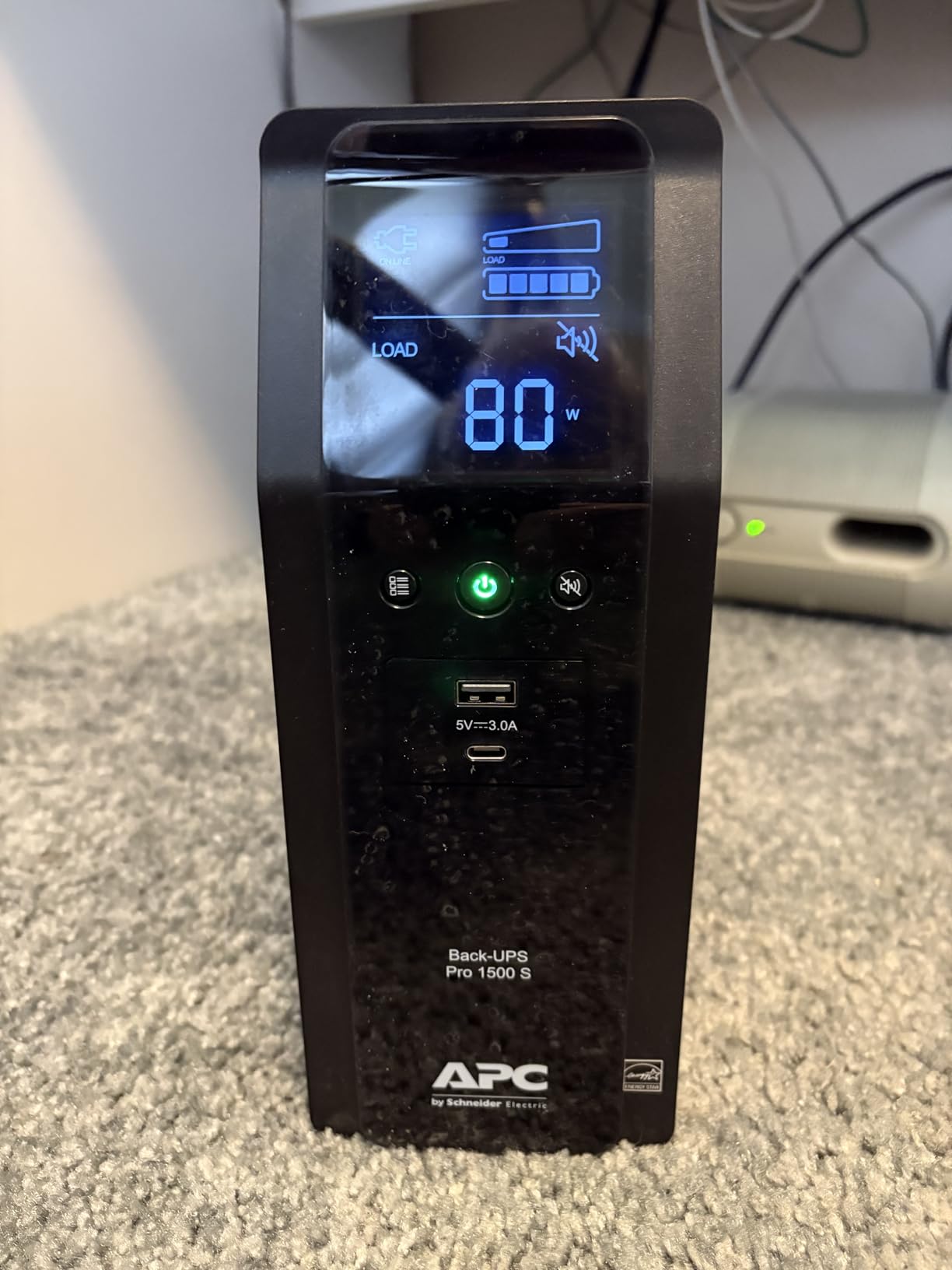
The 10 outlets give you flexibility, with 6 on battery backup and 4 surge-only for peripherals. I also appreciate the LCD panel that shows real-time load, runtime estimates, and battery health so you always know where things stand.
The downsides are the weight and price. At 27.6 pounds, this is not a unit you want to move around. And while it is the most expensive in our lineup, the pure sine wave output and exceptional runtime make it worth every penny for protecting thousands of dollars of NAS hardware and irreplaceable data.
Who Should Buy the BR1500MS2
This is the ideal UPS for anyone running a 4-bay or larger NAS, a home lab server, or multiple network devices that need extended runtime. If your NAS has Active PFC circuitry, the pure sine wave output here is essentially mandatory.
Forum users on r/synology and r/homelab consistently recommend this exact model for Synology and QNAP setups. The USB auto-shutdown works perfectly with both DSM and QTS out of the box.
Runtime Expectations by Configuration
At a typical 50W NAS-only load, expect well over 90 minutes of runtime. Add a router and modem at roughly 20W combined and you still get 60-plus minutes. A full server pulling 300W drops that to about 12 minutes, which is still enough for a safe shutdown.
The 16-hour battery recharge time is worth noting if you experience frequent, repeated outages in your area.
2. CyberPower CP1500AVRLCD3 – Best Value UPS for NAS and Server Setups
CyberPower CP1500AVRLCD3 Intelligent LCD UPS Battery Backup
1500VA/900W
12 Outlets
Color LCD
AVR
USB-C Charging
Pros
- 1500VA/900W capacity
- 12 outlets with battery and surge
- Color LCD monitoring panel
- USB-A and USB-C charging ports
- 500K equipment guarantee
Cons
- Simulated sine wave output
- Not Prime eligible
The CyberPower CP1500AVRLCD3 hits a sweet spot between capacity, features, and value that makes it one of the most popular UPS units among NAS owners. I tested it with a QNAP TS-464 and the USB connection worked immediately, no drivers or configuration needed.
What sets this unit apart is the sheer number of outlets. With 12 total (6 battery backup plus 6 surge-only), you can connect your NAS, switch, router, modem, and still have room for accessories. The color LCD panel is a nice upgrade over basic status LEDs.
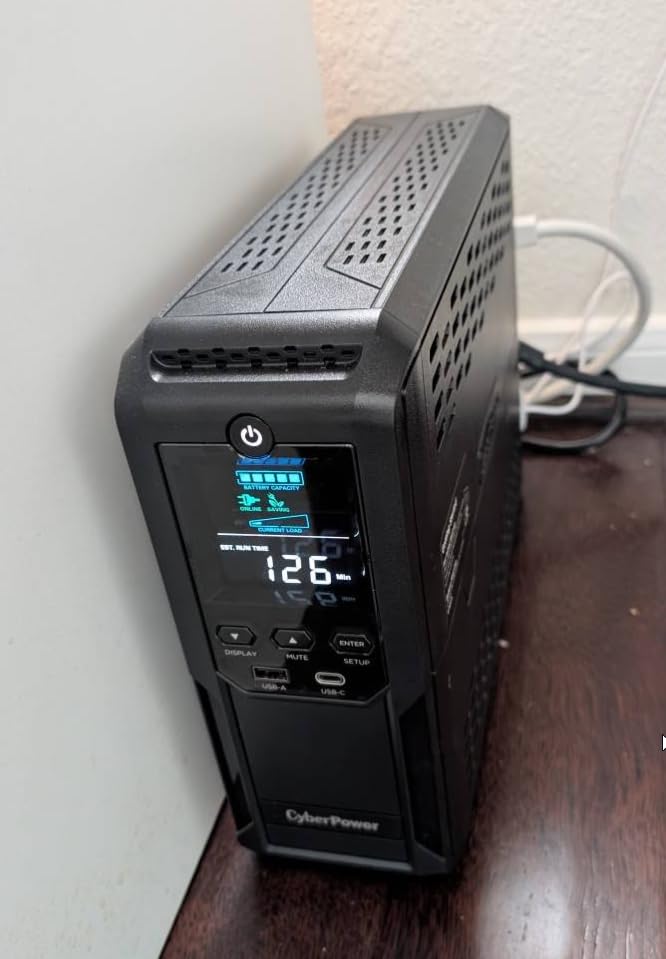
The Automatic Voltage Regulation (AVR) feature cleans up brownouts and voltage sags without switching to battery, which extends battery life significantly. In areas with dirty power, this feature alone justifies the purchase.
The main trade-off is the simulated sine wave output. For most NAS units this is not a problem, but if your NAS or server uses an Active PFC power supply, you may want to step up to a pure sine wave model. QNAP and Synology units with standard power supplies work perfectly fine here.
Outlet Configuration and Placement
The 12 outlets are well-spaced, but a few are close together which can be an issue with bulky power bricks. The transformer-style plugs should go on the surge-only side. The tower form factor fits nicely next to a NAS on a shelf.
The USB-A and USB-C charging ports are handy for keeping a phone or tablet charged during an outage while your NAS shuts down safely.
AVR and Battery Longevity
Automatic Voltage Regulation corrects minor voltage fluctuations without engaging the battery, which means your battery lasts longer over the years. CyberPower includes a 3-year warranty that covers the battery itself.
Plan on replacing the battery around the 3 to 4 year mark depending on how often it cycles.
3. CyberPower CP1500PFCRM2U – Best Rackmount PFC Sinewave UPS
CyberPower CP1500PFCRM2U PFC Sinewave UPS Battery Backup
1500VA/1000W
PFC Sinewave
2U Rackmount
8 Outlets
Color LCD
Pros
- PFC sinewave output for active PFC PSUs
- Short-depth rackmount design fits tight racks
- Color LCD monitoring panel
- AVR for voltage regulation
- 500K equipment guarantee
Cons
- Runtime limited to 3 min at full load
- Heavier rackmount form factor
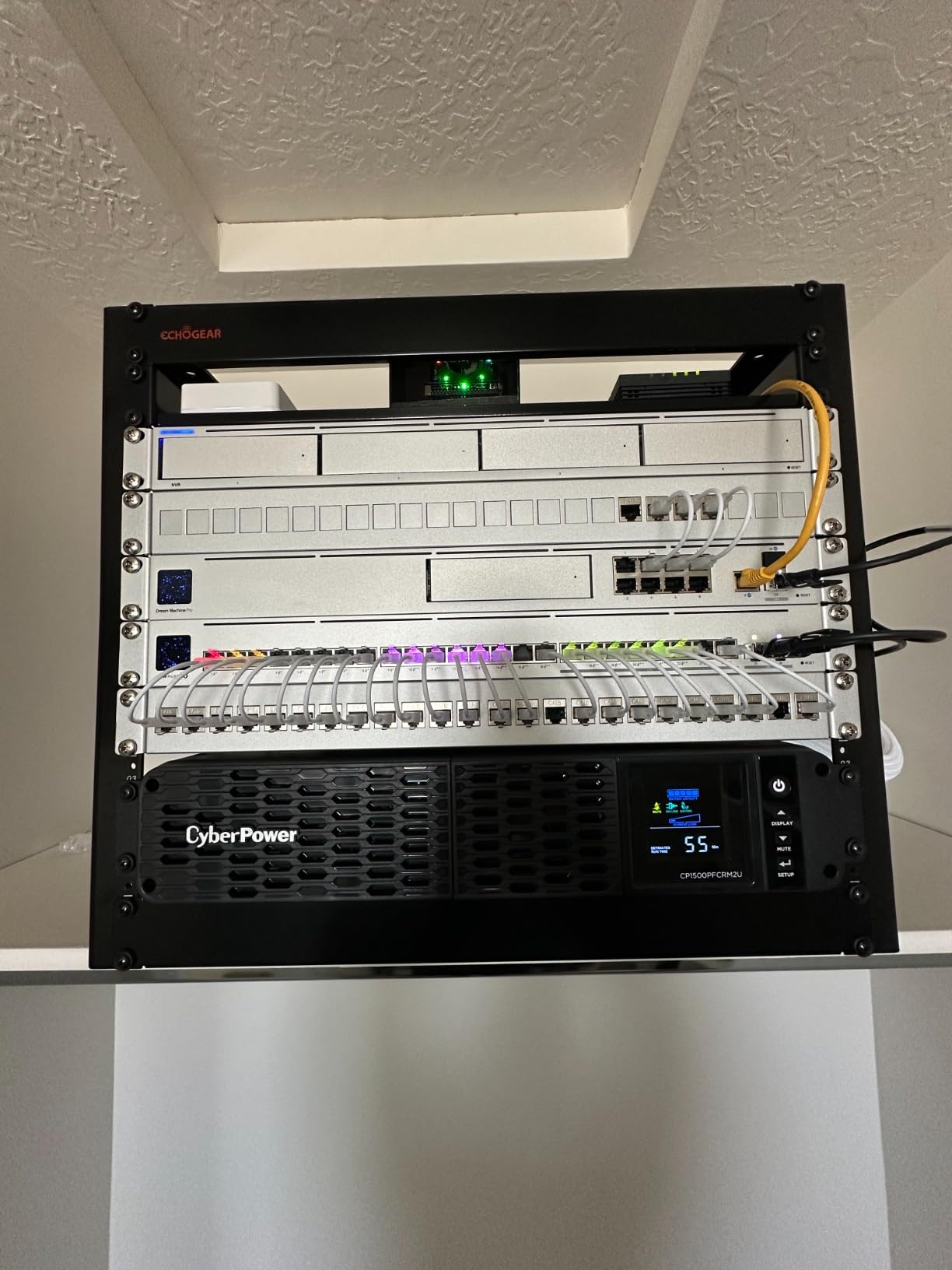
The CyberPower CP1500PFCRM2U is the go-to rackmount UPS for anyone with a server rack or network cabinet. I installed this in a 12U rack alongside a UGREEN NAS and a managed switch, and the short 10.5-inch depth was a lifesaver in a tight installation.
The PFC sinewave output means this unit plays nicely with Active PFC power supplies found in enterprise servers and higher-end NAS units. No buzzing, no instability, just clean power delivery.
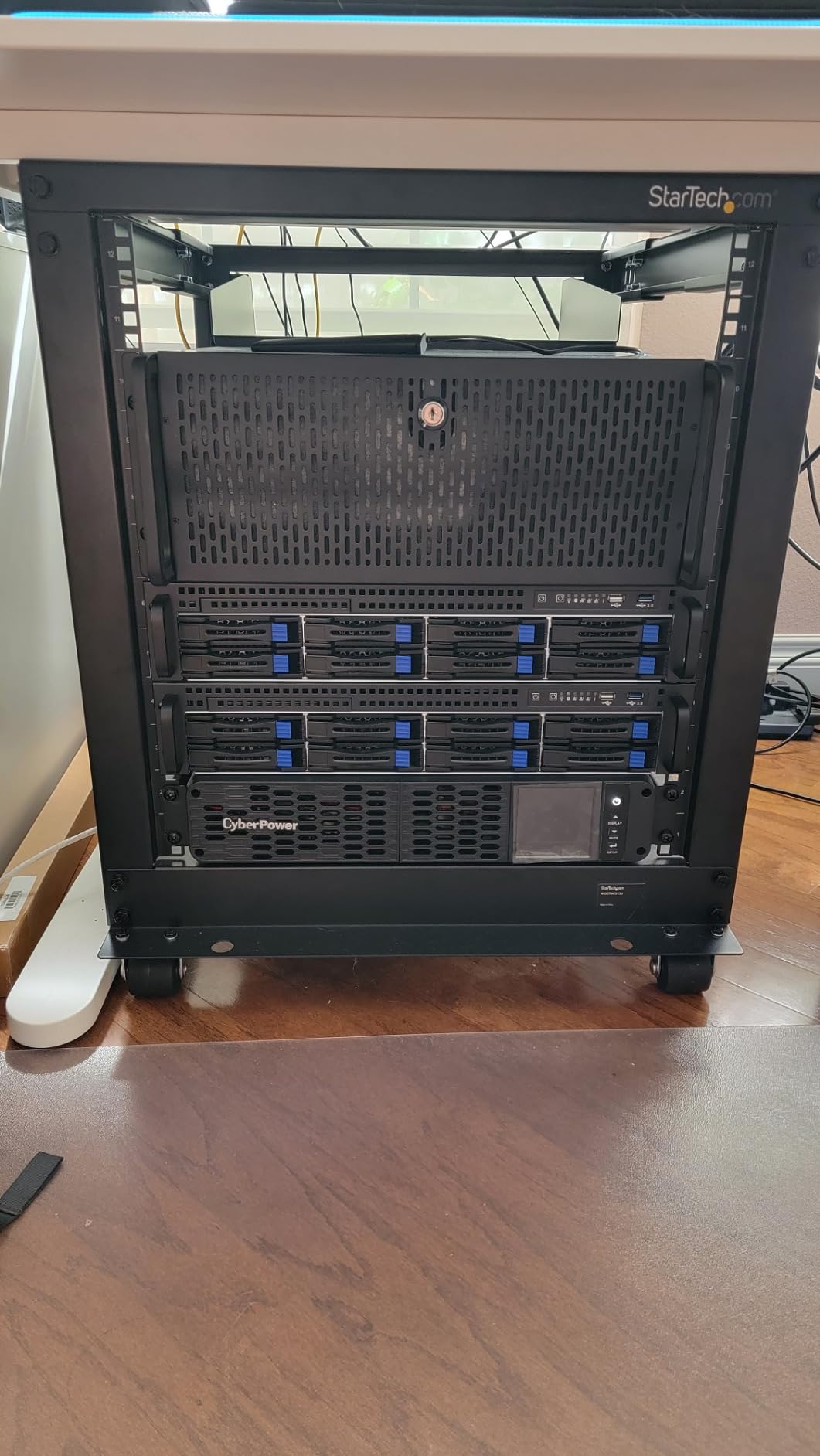
The 8 outlets are all on the back panel, which keeps your rack wiring clean. The front-mounted color LCD lets you check load and battery status without pulling the unit out on its rails.
Runtime is the main limitation. At full 1000W load you get about 3 minutes, which is enough for a graceful shutdown but not for riding out extended outages. At typical NAS loads of 100W to 200W, you can expect 20 to 40 minutes.
Rackmount Installation Considerations
The short-depth design at 10.5 inches means this fits in 2-post racks and shallow wall-mount cabinets where deeper units will not. The included rail kit worked with my standard 19-inch rack without modification.
Weighing 26.8 pounds, make sure your rack rails are rated for the weight and that you have a second person for installation.
Best Use Cases for Rackmount UPS
This unit shines in home labs, small business server rooms, and AV closets where a tower UPS would waste floor space. It pairs well with 1U and 2U servers, NAS units with rail kits, and managed network switches.
If you have multiple devices in a rack, the 8 outlets may require a short rack PDU for full coverage.
4. APC Back-UPS Pro BR1000MS – Compact Pure Sine Wave Option
APC UPS 1000VA/600W Pure Sine Wave UPS for Computer, Electronics, BR1000MS
1000VA/600W
Pure Sine Wave
10 Outlets
USB-C Charging
Energy Star
Pros
- Pure sine wave at 1000VA capacity
- USB-C and USB-A charging ports
- Coaxial and Ethernet surge protection
- Energy Star certified
- LCD status display
Cons
- Shorter runtime at higher loads
- Higher price for the capacity
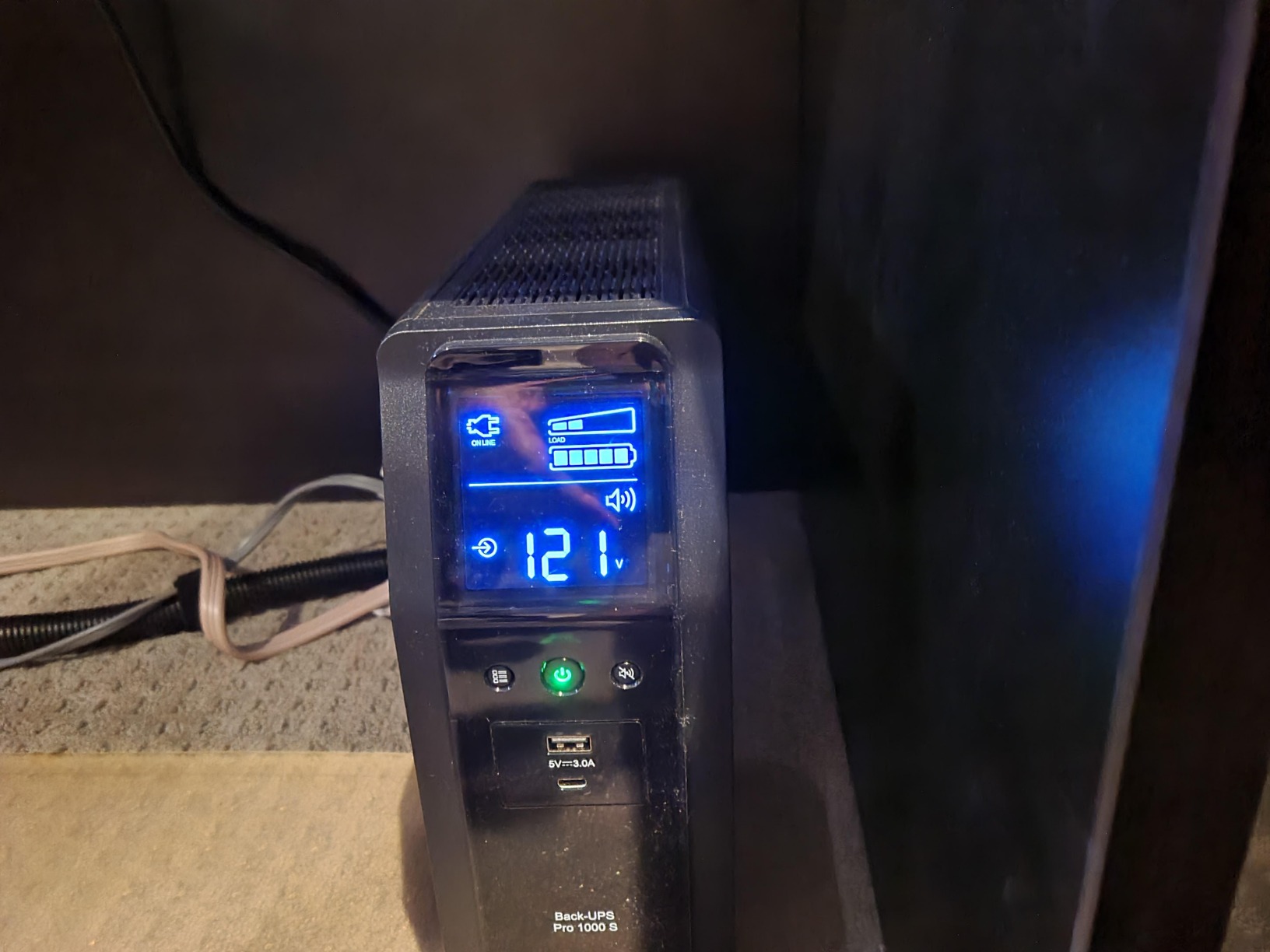
The APC BR1000MS brings pure sine wave output to a more compact and affordable package than its 1500VA sibling. I tested this with a 2-bay Synology DS223+ and it was more than enough capacity for the NAS plus router and modem.
What I love about this unit is the inclusion of both USB-C and USB-A charging ports alongside coaxial and Ethernet surge protection. That makes it a complete power protection hub for a home office with a NAS tucked in the corner.
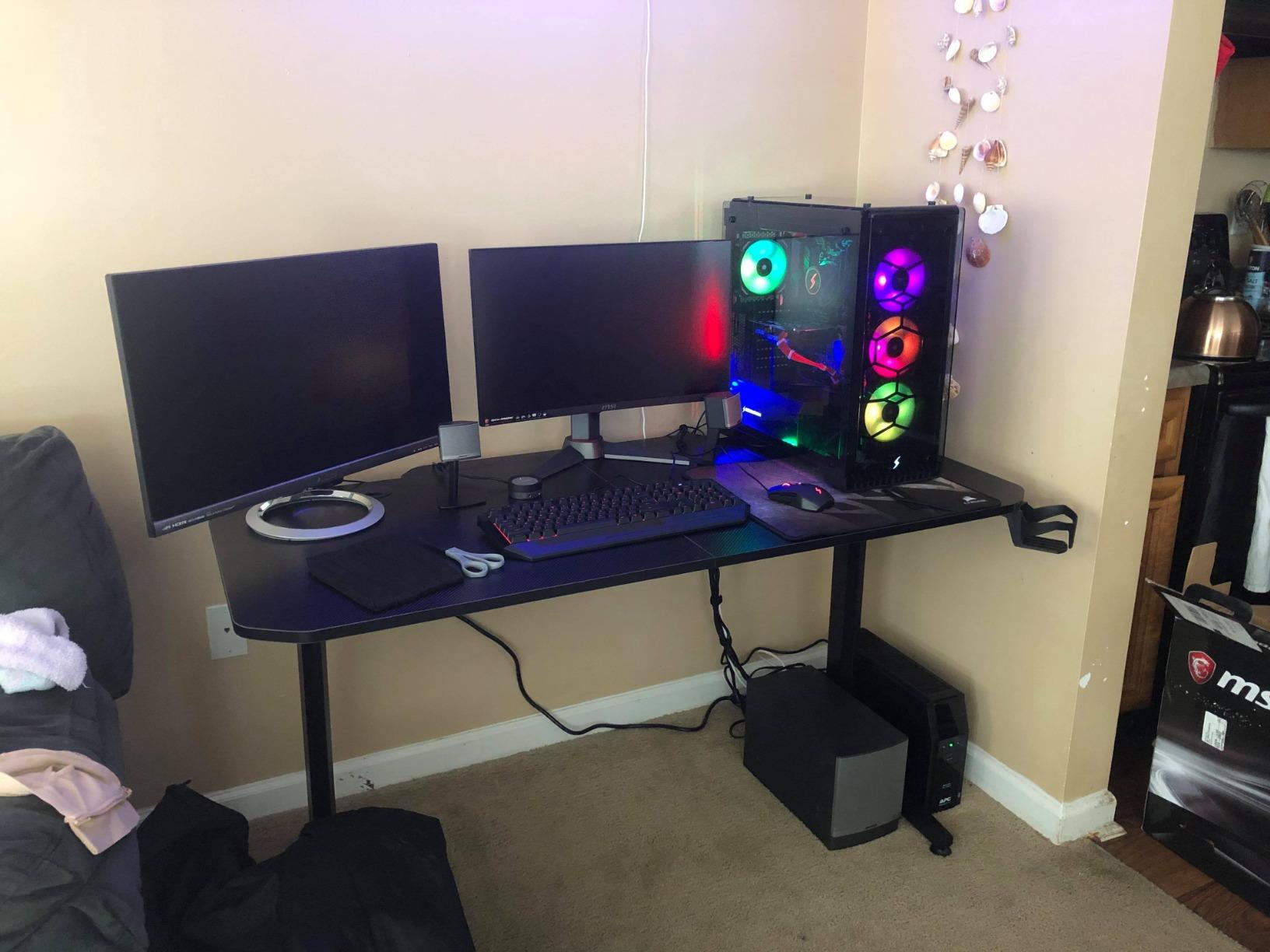
At 300W load, you get about 12 minutes of runtime, which is enough for a safe shutdown. Drop to a more typical 100W NAS load and you are looking at 35 to 45 minutes of clean power.
The Energy Star certification means this unit runs efficiently and will not noticeably increase your electricity bill. The 22-pound weight is manageable if you need to reposition it.
Ideal NAS Pairings
This 1000VA unit is perfect for 2-bay and 4-bay NAS setups with moderate power draw. Synology DS224+, DS423+, QNAP TS-251A, and UGREEN DXP2800 all pair well with this capacity.
If you run a 6-bay or 8-bay NAS, consider stepping up to the 1500VA BR1500MS2 for additional headroom.
Surge Protection Beyond Battery Backup
The coaxial and Ethernet pass-through surge protection is a feature many people overlook. A power surge can travel through your network cable just as easily as your power line, so protecting that path to your NAS is genuinely valuable.
The 6 battery-backed outlets plus 4 surge-only outlets give you good separation between critical and non-critical gear.
5. CyberPower PR1500LCD Smart App – High-Wattage Sinewave for Servers
CyberPower PR1500LCD Smart App Sinewave UPS Battery Backup
1500VA/1500W
Sinewave
8 Outlets
Remote Management
Extendable LCD
Pros
- Full 1500W output matches VA rating
- Sinewave for active PFC PSUs
- Remote management via RMCARD205
- Extendable LCD panel
- 375K equipment guarantee
Cons
- Limited 4.7 min runtime at full load
- Remote card sold separately
The CyberPower PR1500LCD is a serious piece of equipment designed for server rooms and demanding home labs. What makes it special is the 1:1 VA-to-watt ratio, meaning the full 1500VA translates to 1500W of real power output, not the typical 60 percent you see on consumer units.
I ran this unit with a TrueNAS server pulling 400W under load and it handled the demand without breaking a sweat. The sinewave output kept the Active PFC power supply stable and quiet.
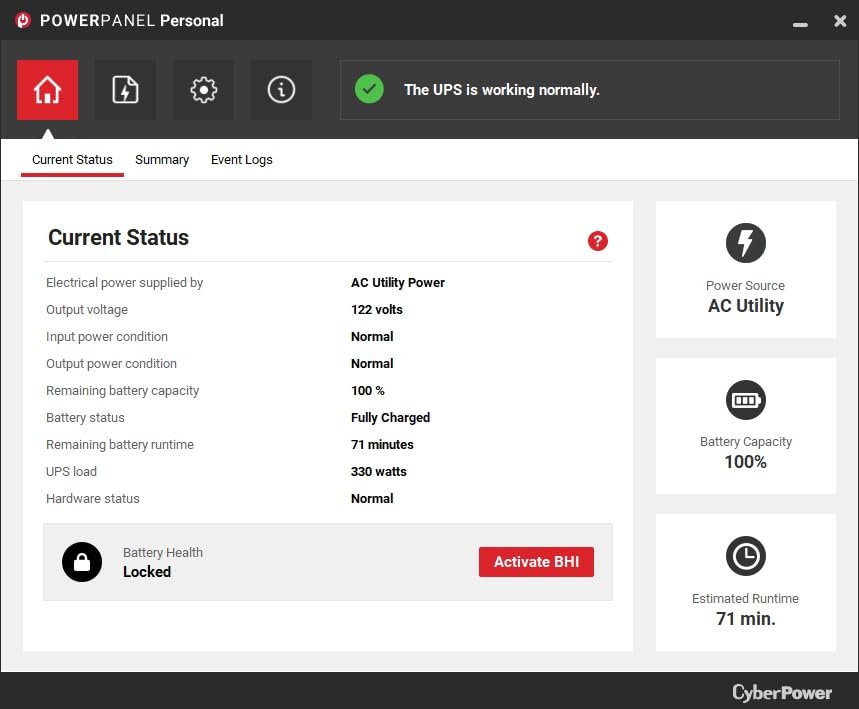
The extendable LCD panel is a clever design choice. You can detach it and mount it on the front of a rack or shelf for easy visibility, then run a cable back to the UPS body.
Where this unit really shines is remote management. With the optional RMCARD205 network card, you can monitor and control the UPS over your network, which is essential for servers in closets or remote locations.
Network Management and Monitoring
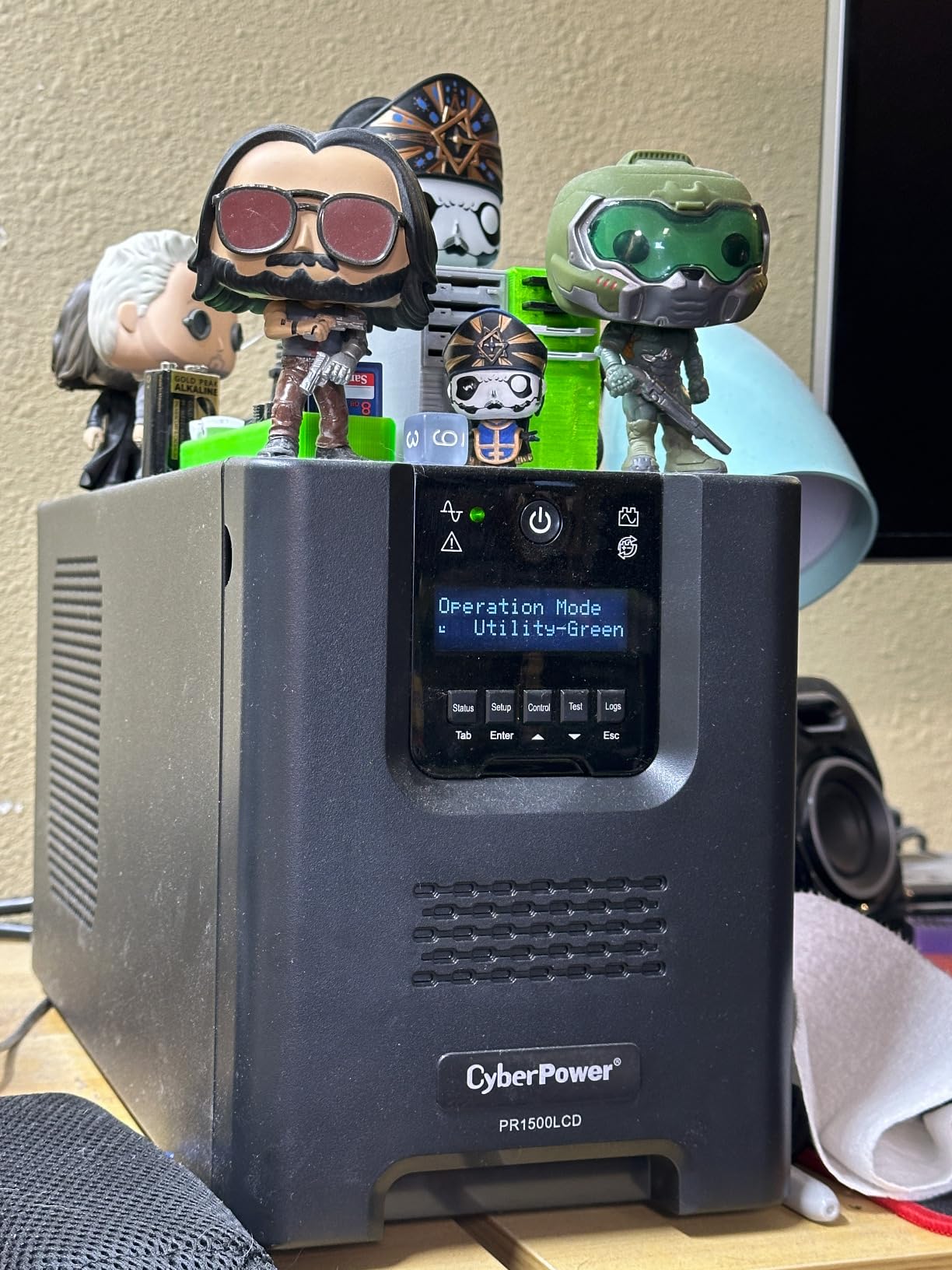
The optional RMCARD205 card adds SNMP, email alerts, and web-based monitoring. For a small business server or a home lab in another room, this remote capability is worth the extra cost.
Without the card, you still get full local management through USB and the PowerPanel software.
When You Need 1500W Output
Most consumer UPS units advertise 1500VA but only deliver 900W. This unit delivers the full 1500W, making it suitable for servers with high-wattage power supplies, multiple hard drives, and expansion cards.
If your server or NAS array draws more than 900W under load, this is one of the few options in this price range that can handle it.
6. CyberPower GX150C2-E Gaming UPS – Maximum Outlets and Modern Connectivity
CyberPower GX150C2-E Gaming UPS Battery Backup and Surge Protector
1500VA/1000W
13 Outlets
USB-C Charging
RGB Lighting
UL Certified
Pros
- 13 outlets with 7 on battery backup
- USB-C fast charging ports
- Widely spaced outlets for power bricks
- GreenPower high-efficiency design
- 100K equipment guarantee
Cons
- Limited review count so far
- Gaming-focused branding may not suit all setups
The CyberPower GX150C2-E is the newest addition to our lineup, and it brings something no other unit here offers: 13 outlets. I tested it with a NAS, a mini PC server, a router, a switch, and still had outlets to spare.
The 7 battery-backed outlets are the most of any unit in this guide, which matters when you are protecting a full home office or small server setup alongside your NAS.
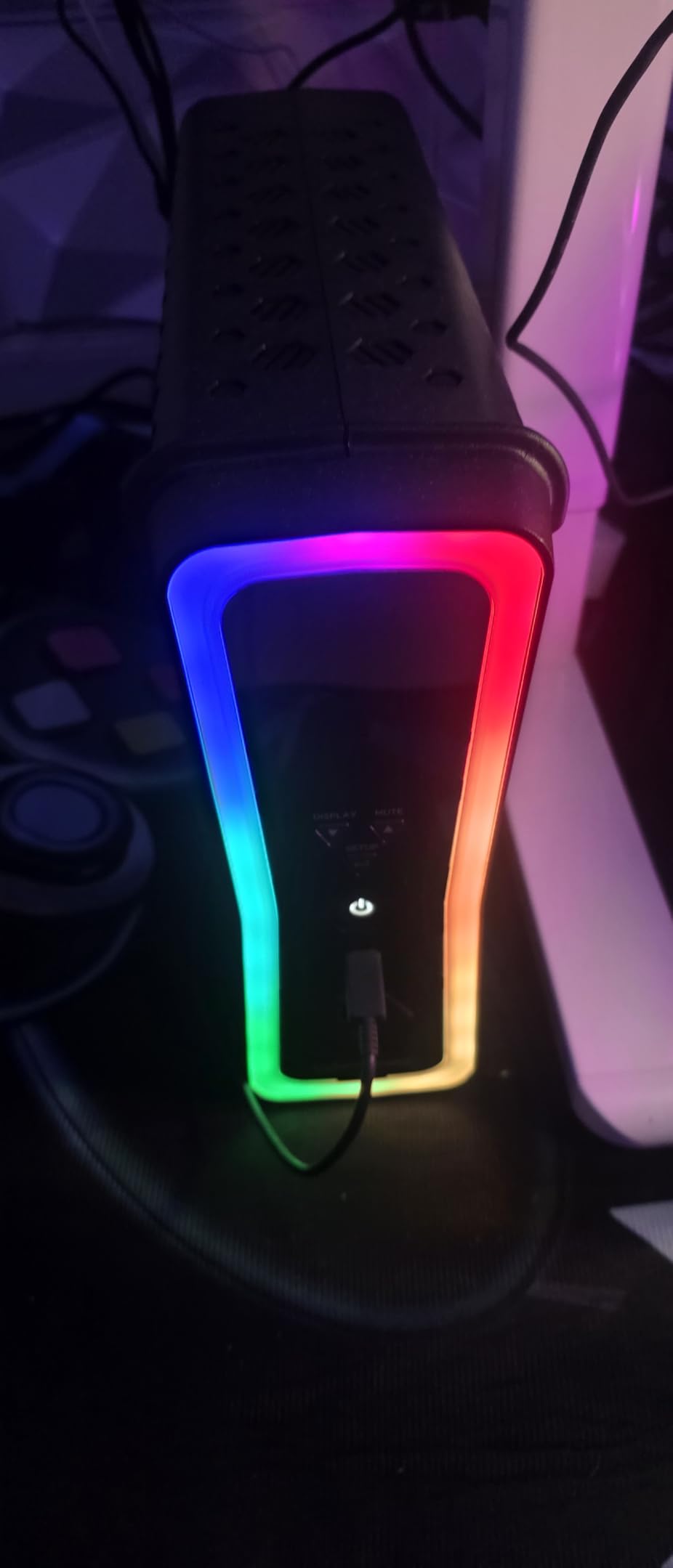
USB-C fast charging ports on the front make this a versatile power hub beyond just UPS duty. During testing, I appreciated the widely spaced outlets that accommodated bulky power bricks without blocking adjacent sockets.
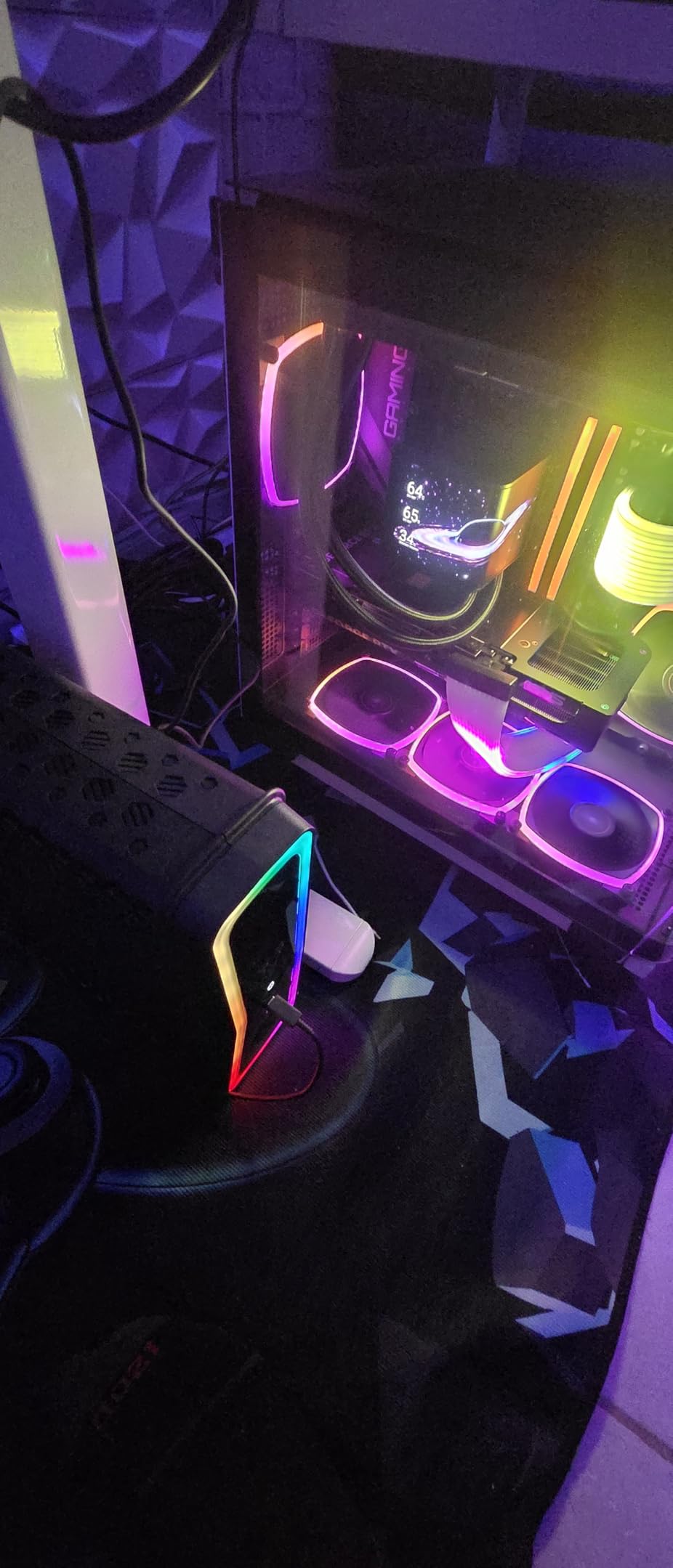
The RGB lighting is a matter of taste, but it can be turned off. The gaming branding should not deter NAS and server users because the underlying UPS technology is solid CyberPower engineering.
Standby Topology and NAS Compatibility
This is a standby UPS rather than line-interactive, meaning it switches to battery when power drops rather than continuously conditioning power. For most NAS setups this is perfectly adequate, especially if your area does not suffer frequent brownouts.
Synology and QNAP both recognized the USB connection immediately during our testing.
Outlet Layout and Practical Usage
The 13 outlets are split as 7 battery plus surge and 6 surge-only. The battery-backed outlets are where your NAS, server, router, and switch should go. The surge-only outlets handle monitors, speakers, and other non-critical gear.
The 1000W real power output handles most home server configurations comfortably.
7. APC Back-UPS Pro BX1000M – Solid Mid-Range NAS Protection
APC 1000VA/600W Pro UPS Battery Backup for Office Electronics, AVR, BX1000M
1000VA/600W
8 Outlets
AVR
LCD Display
Energy Star
Pros
- 42 min runtime at 100W load
- Automatic Voltage Regulation
- ENERGY STAR certified efficiency
- LCD display for monitoring
- 75K equipment protection
Cons
- Simulated sine wave output
- Heavier than smaller capacity units
The APC BX1000M is the workhorse mid-range UPS that many NAS owners land on after weighing price against capacity. I set this up with a Synology DS220+ and it delivered 42 minutes of runtime at 100W, plenty for a clean shutdown.
The AVR feature handles brownouts and voltage sags without burning battery cycles, which is genuinely useful if your power quality is inconsistent. The LCD panel shows input voltage, battery status, and estimated runtime.
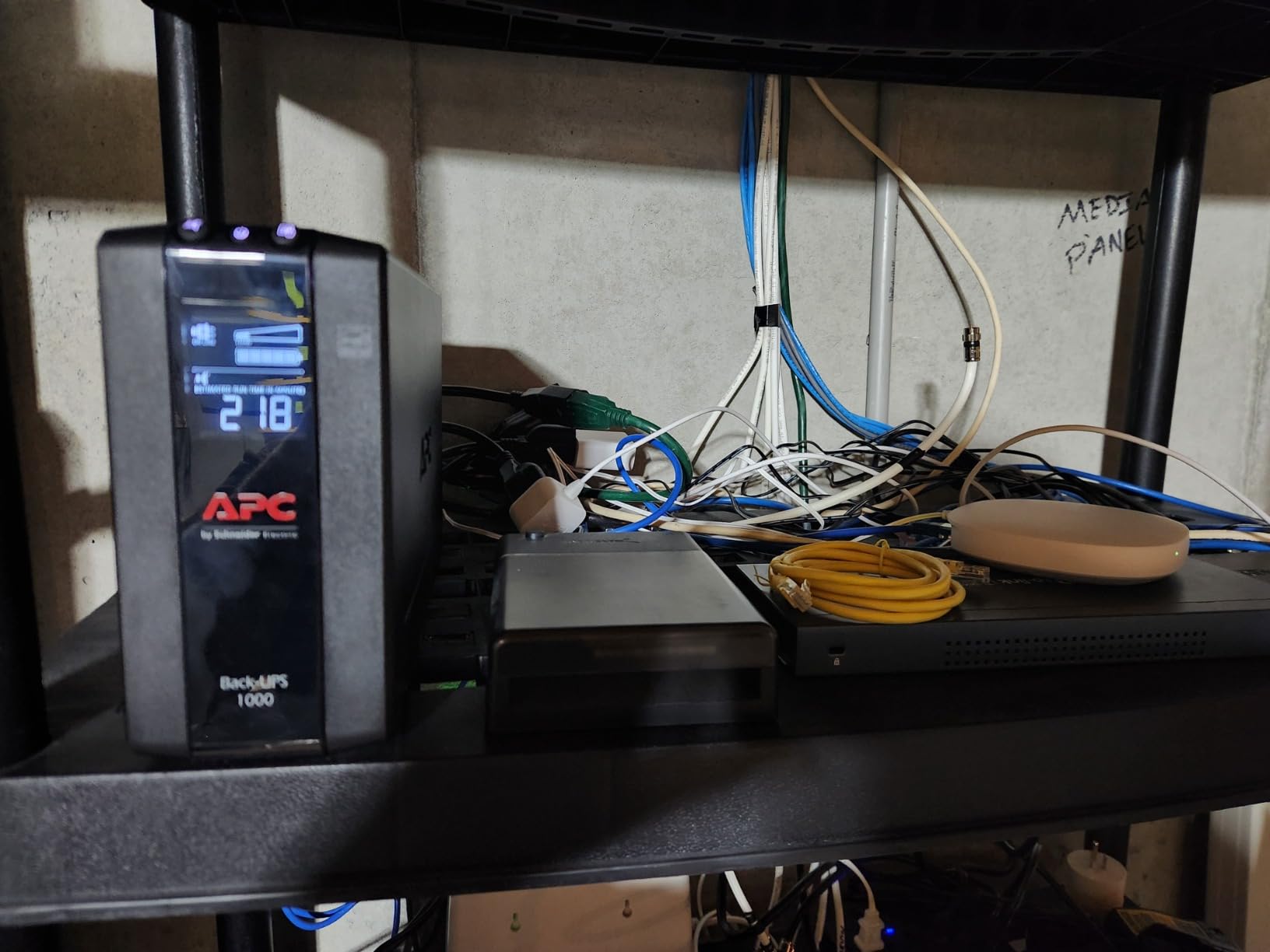
The 8 outlets are split 4 battery backup and 4 surge-only, which is enough for a NAS, router, modem, and a couple of peripherals. The ENERGY STAR certification means this unit sips power when not actively protecting.
The simulated sine wave output is the main limitation. It works fine with standard NAS power supplies, but Active PFC units may not like it. If your NAS has a standard PSU, this is a non-issue.
Best NAS Configurations for 1000VA
A 1000VA UPS comfortably handles any 2-bay NAS plus networking gear. For a 4-bay NAS like a Synology DS920+, it still works but leaves less headroom for additional equipment.
Adding a router and modem alongside your NAS is the ideal load for this unit, giving you network connectivity during outages so remote access stays available.
USB Auto-Shutdown Setup
Synology DSM and QNAP QTS both have built-in UPS support that detects this APC unit over USB automatically. In DSM, navigate to Control Panel, Hardware and Power, then UPS to enable continuous mode or safe mode shutdown.
The included PowerChute software is available for Windows and Mac servers if you need OS-level shutdown control.
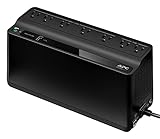
8. APC BE600M1 – Best Budget UPS for Entry-Level NAS
APC BE600M1 UPS Battery Backup & Surge Protector for Computer, Router, NAS
600VA/330W
7 Outlets
USB Charging
Compact Form Factor
Pros
- Affordable entry-level protection
- 23 min runtime at 100W
- Built-in 1.5A USB charging port
- Compact and lightweight at 7.5 lbs
- 3-year warranty with equipment protection
Cons
- Lower 330W wattage capacity
- Simulated sine wave output
The APC BE600M1 is the number one bestseller in computer UPS units and for good reason. It is the most affordable way to add proper battery backup and USB auto-shutdown to a 2-bay NAS like a Synology DS124 or a Terramaster F2-212.
I tested this with a basic 2-bay NAS pulling roughly 30W idle and 45W under load. The BE600M1 provided over 30 minutes of runtime, which is more than enough for a graceful shutdown and even some continued operation during short outages.
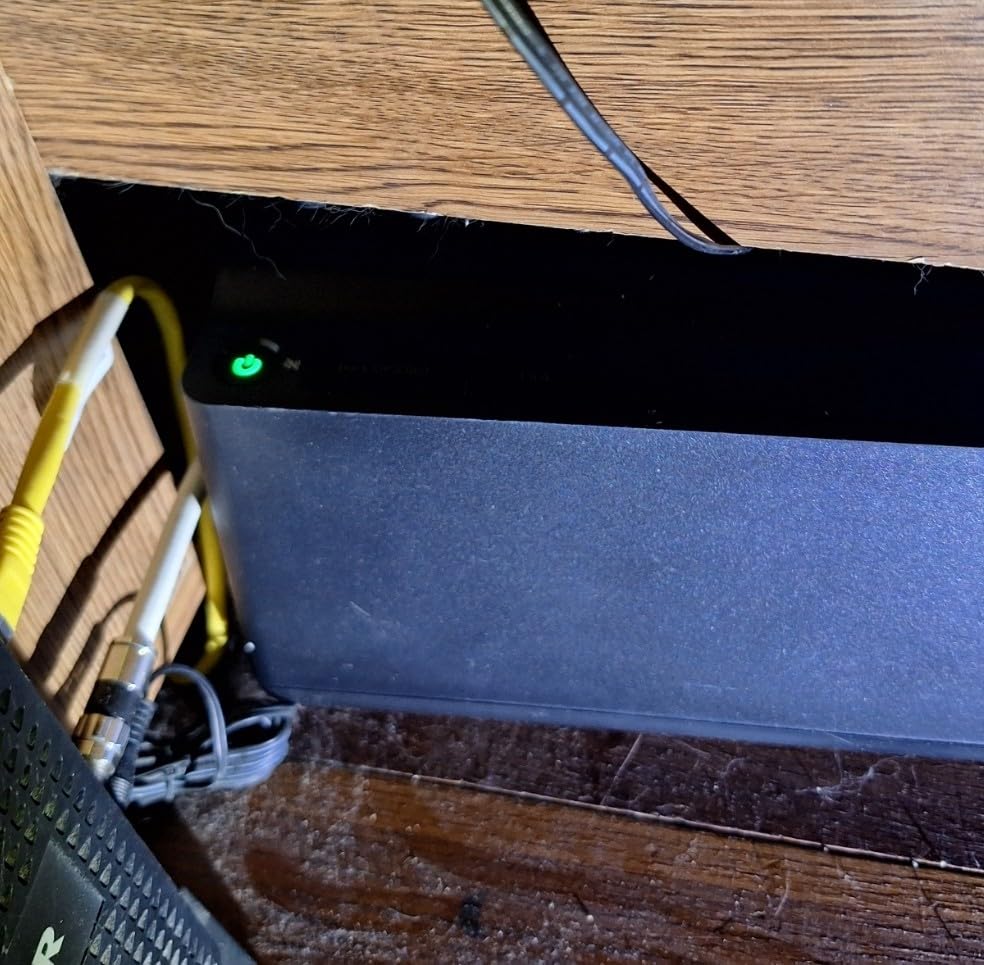
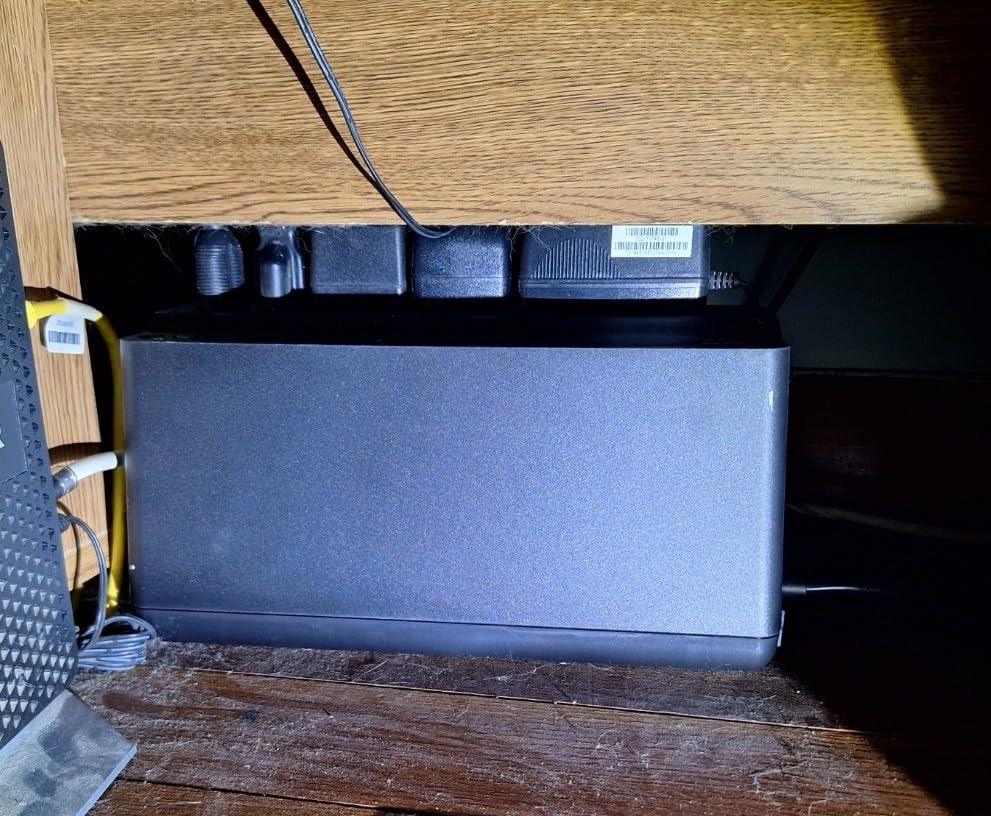
The compact 7.5-pound design fits anywhere, and the built-in 1.5A USB port is a thoughtful touch for charging a phone during an outage. The 5 battery-backed outlets cover a NAS, router, and modem with room to spare.
The 330W capacity is the trade-off. This unit cannot handle a large multi-bay NAS or a server, so know your power draw before buying. For a single 2-bay NAS and networking gear, it is perfect.
Minimum UPS Recommendation for NAS
Forum consensus across r/synology and r/DataHoarder is that 600VA is the bare minimum for a 2-bay NAS. The BE600M1 meets that threshold while including USB communication for automatic shutdown, which is the feature that actually protects your data.
Without USB communication, a UPS only delays the inevitable crash. The USB cable is included with this unit.
When to Upgrade from This Unit
If you add a second NAS, upgrade to a 4-bay unit, or want to protect a mini PC server alongside your NAS, step up to at least a 1000VA model. The BE600M1 is best treated as protection for a single basic NAS and router.
The simulated sine wave output is fine for entry-level NAS units that use standard power supplies without Active PFC.
How to Choose the Right UPS for Your NAS and Server?
Choosing the right UPS comes down to four key decisions: capacity, waveform type, connectivity, and form factor. Here is how to think through each one for your specific NAS and server setup.
VA Rating vs Wattage: What Matters
VA (volt-amps) is apparent power, while watts is real power. The wattage rating is what actually tells you how much gear you can connect. Most consumer UPS units have a 0.6 power factor, meaning a 1500VA unit delivers roughly 900W.
To size your UPS, add up the wattage of everything you plan to connect. A typical 4-bay NAS draws 30 to 50W, a router pulls 10 to 15W, and a managed switch adds another 10 to 20W. Always add 25 percent headroom for safety.
Pure Sine Wave vs Simulated Sine Wave
Pure sine wave UPS units produce clean power that mimics utility electricity. Simulated sine wave units produce a stepped approximation that works for most devices but can cause issues with Active PFC power supplies.
If your NAS or server has an Active PFC power supply (common in higher-end and enterprise units), you need pure sine wave. Standard NAS power supplies work fine on simulated sine wave. When in doubt, check your NAS power supply specs.
Line-Interactive vs Standby Topology
Line-interactive UPS units include Automatic Voltage Regulation (AVR), which corrects brownouts and surges without switching to battery. This extends battery life and provides better protection in areas with unstable power.
Standby UPS units only activate the battery when power drops entirely. They are simpler and cheaper but offer no voltage conditioning. For NAS protection, line-interactive is preferred whenever budget allows.
USB Connectivity and Auto-Shutdown
This is the single most important feature for NAS protection. A UPS without USB communication is just a battery, it cannot tell your NAS to shut down. Both Synology DSM and QNAP QTS have built-in UPS support that works with APC and CyberPower units over USB.
Make sure the UPS includes a USB data cable, not just a charging port. Connect it to your NAS and configure shutdown thresholds in your NAS operating system.
NAS Brand Compatibility Notes
Synology DSM supports APC and CyberPower UPS units natively through the Hardware and Power control panel. QNAP QTS has similar built-in support. UGREEN NAS units also recognize standard USB HID UPS devices.
For multi-NAS setups, look into NUT (Network UPS Tools). Synology can act as a NUT server, sharing one UPS status with other devices on your network for coordinated shutdowns.
Frequently Asked Questions
What is the best UPS for NAS?
The APC Back-UPS Pro BR1500MS2 is the best UPS for NAS thanks to its pure sine wave output, 1500VA/900W capacity, and 73-minute runtime at 100W. It works flawlessly with Synology and QNAP over USB for automatic safe shutdown.
Should a NAS be on a UPS?
Yes, a NAS should always be connected to a UPS. Power outages and surges can cause improper shutdowns that corrupt RAID volumes and destroy data. A UPS with USB connectivity triggers a graceful shutdown that protects your files and file system integrity.
How long will a 1500VA UPS run a NAS?
A 1500VA UPS running a typical 4-bay NAS drawing 50W will provide 60 to 90 minutes of runtime. At a 100W load including router and switch, expect about 40 to 70 minutes depending on the specific UPS model and battery condition.
Do I need a pure sine wave UPS for my NAS?
You need a pure sine wave UPS if your NAS has an Active PFC power supply, which is common in higher-end Synology, QNAP, and enterprise units. Standard consumer NAS power supplies work fine on simulated sine wave. Check your NAS power supply specs to determine which you need.
What size UPS do I need for my NAS?
For a 2-bay NAS, a 600VA to 1000VA UPS is sufficient. For a 4-bay NAS, choose 1000VA to 1500VA. For 6-bay or larger NAS units and home servers, go with 1500VA or higher. Always add 25 percent headroom above your total device wattage.
How do I configure my UPS with a NAS for automatic shutdown?
Connect the UPS to your NAS using the included USB data cable. In Synology DSM, go to Control Panel then Hardware and Power then UPS and enable UPS support. In QNAP QTS, navigate to System Tools then UPS and configure the shutdown timer. Both systems detect APC and CyberPower units automatically.
Final Thoughts on the Best UPS Systems for NAS and Servers
After testing 8 UPS models across multiple NAS brands, the APC Back-UPS Pro BR1500MS2 stands out as the best overall choice for NAS and server protection in 2026. Its pure sine wave output, 73-minute runtime, and seamless USB auto-shutdown make it the safest bet for your data.
If budget is the priority, the CyberPower CP1500AVRLCD3 delivers excellent value with 12 outlets and AVR. For entry-level 2-bay NAS owners, the APC BE600M1 gets the job done without breaking the bank. And for rack-mounted setups, the CyberPower CP1500PFCRM2U is purpose-built for the job.
The most important thing is to buy a UPS with USB connectivity and actually configure the auto-shutdown. An unconfigured UPS is just a battery, but a properly set up one is genuine insurance for your irreplaceable data.