
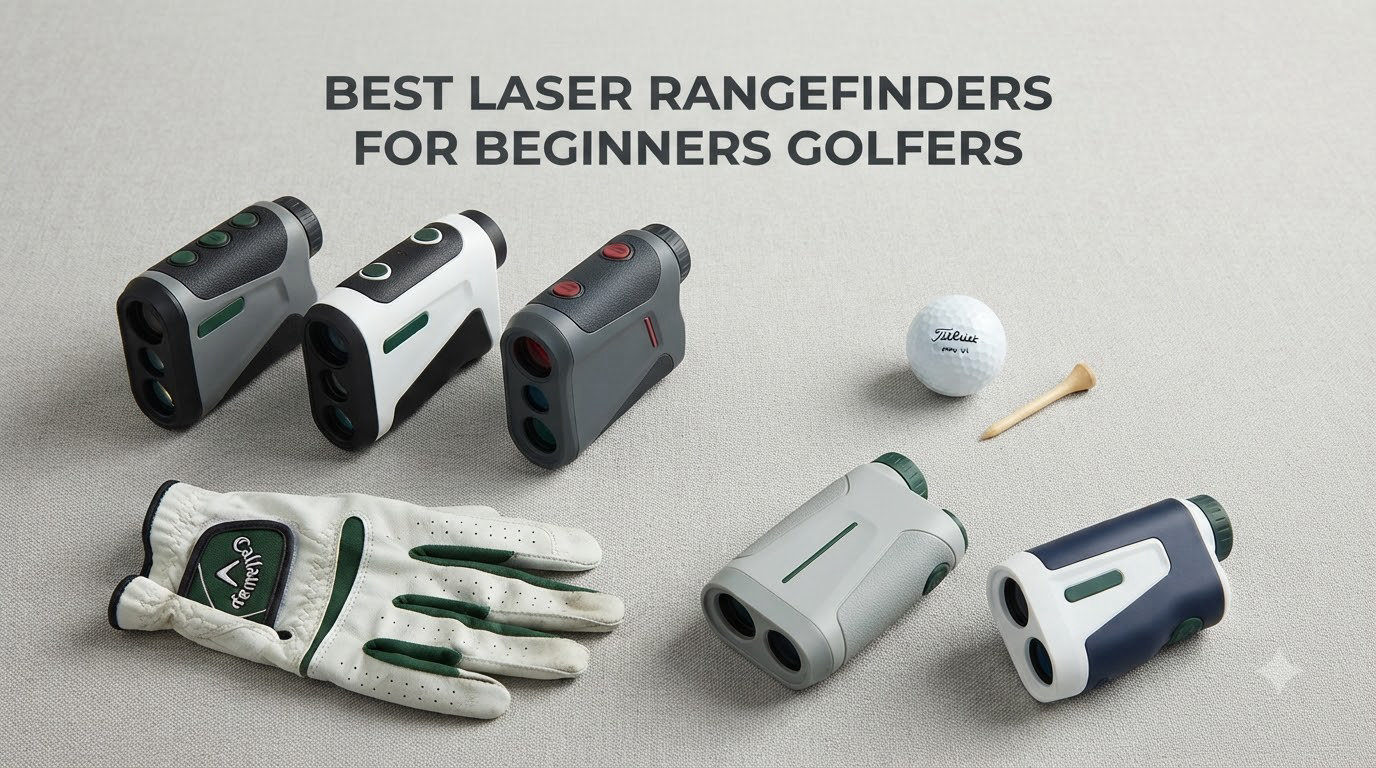
If you want one answer before you read any further: the Callaway 300 Pro is the best laser rangefinder for beginner golfers. It measures 5 to 1000 yards, carries a physical slope switch you can flip in one second, has a magnet built into the body, and carries more than twelve thousand reviews from golfers who bought it as their first rangefinder. Nothing else in this roundup combines that much proven history with that much simplicity.
I have watched a lot of beginners make the same mistake in the first month of golf. They buy the most expensive rangefinder on the shelf, a premium tour model with features they will not touch for three years, then leave it in the car because the body is heavy and the interface feels like equipment from a cockpit. The Callaway 300 Pro solves the opposite problem. It is small, it is straightforward, and it does one job well.
That said, “best” changes depending on how you play. If you walk the course, weight matters more than optics. If you want to grow into slope data later, a rechargeable body that stays sharp on focus is worth more than raw range. And if you only play a few familiar rounds a year, a cheap accurate model beats a flagship every time. I have sorted all eight picks below by how they serve a new golfer rather than by how they rank among professionals.
Before you read further, it helps to know what a rangefinder actually does. It fires an invisible laser at the flagstick, measures how long the light takes to come back, and converts that into a yardage number. That single number replaces the guesswork in your approach shots, and the guesswork is where most of the avoidable strokes come from. If you want a broader look at how these devices compare across use cases, our general golf rangefinder roundup covers the premium and GPS side of the market in more depth.
Table of Contents
Top 3 Best Laser Rangefinders For Beginners Golfers (October 2026)
The three below cover the most common beginner situations: an all-round first purchase, the best balance of features and cost, and the simplest unit to operate on a shot you have hit a hundred times.

Callaway 300 Pro
- External slope switch
- 6x magnification
- Built-in cart magnet
- 1000-yard range


Acer Gadget SW-RF700
- Anti-shake stabilization
- Single-button controls
- 800-yard range
- USB-C rechargeable
Quick Overview: All 8 Rangefinders Compared in 2026
Every model below measures distance to a flag, vibrates when it locks on, and handles a full round of golf without a charging break. The differences are in weight, optics, battery type, range and how many extra modes you will actually use.
| Product | Specifications | Action |
|---|---|---|
| Callaway 300 Pro |
|
Check Latest Price |
 REVASRI NK1000 REVASRI NK1000 |
|
Check Latest Price |
| REDTIGER C001 |
|
Check Latest Price |
| Acer Gadget SW-RF700 |
|
Check Latest Price |
 PEAKPULSE LE600AG PEAKPULSE LE600AG |
|
Check Latest Price |
 Bushnell Tour V6 Shift Bushnell Tour V6 Shift |
|
Check Latest Price |
 Bushnell A1-Slope Bushnell A1-Slope |
|
Check Latest Price |
 Flagfront Rangefinder Flagfront Rangefinder |
|
Check Latest Price |
1. Callaway 300 Pro – Best Overall for Beginners
Callaway Golf 300 Pro Slope Laser Rangefinder
6x magnification
5-1000 yard range
8 ounces
External slope switch
Pros
- Accurate readings that agree with GPS devices
- Pin Acquisition Technology with pulse vibration
- Physical slope on/off switch for tournament play
- Strong built-in magnet for the cart
- Exceptional battery life
Cons
- Repeated readings can vary by 1-2 yards
- Small body is harder for some golfers to aim
- Feature set exceeds what a first-year player needs
When someone asks me which rangefinder to buy first, the Callaway 300 Pro is the answer I give without hesitating. It weighs 8 ounces, measures 5 to 1000 yards at 6x magnification, and it is accurate to within a yard. For a new player, that is everything. The optic is bright enough to find a flag in low light, the reticle is clean, and the number that shows up matches what a GPS device reports from the same spot.
The reason I trust it as a beginner recommendation is not the spec sheet, it is the history. More than twelve thousand ratings sit behind this model, which gives you a long record of owners whose batteries kept working and whose optics kept focusing. Buyers report one battery lasting through a hundred and one rounds. On an r/golf thread about rangefinder recommendations, a user specifically praised the Callaway 300 Pro for its size, ease of use and accuracy, which are the three things a beginner actually cares about.
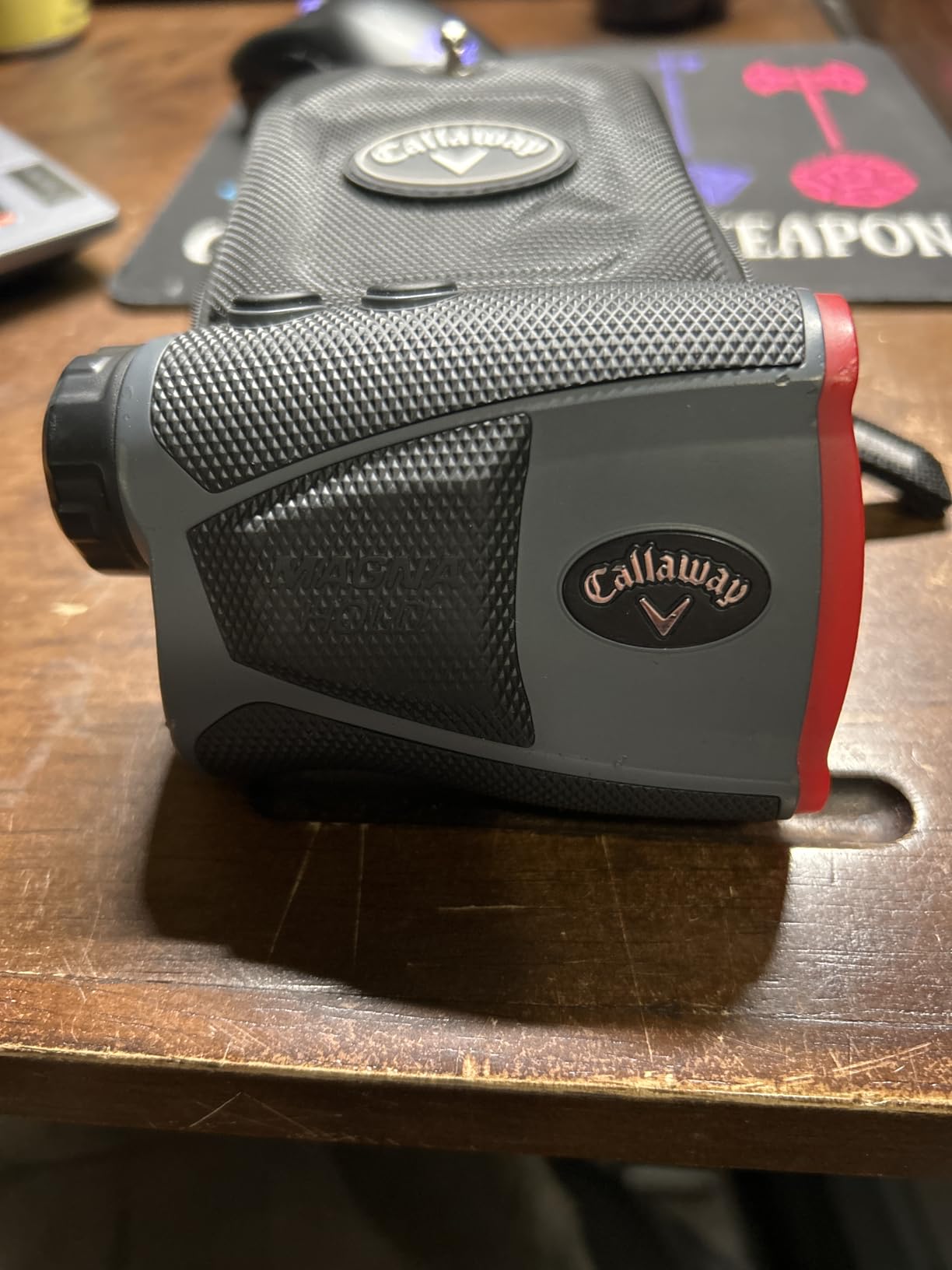
The physical slope switch is the detail that separates it from most of the field. It is a real slider on the body, not a hidden menu sequence. You can show a rules official that the slope function is off in one second, which removes the single most common anxiety new golfers have about playing in a club event. The integrated Magnahold magnet is also part of the body rather than a separate sleeve, so the rangefinder stays on the cart bar when you pull up to the next tee.
Battery life is the quiet advantage here. The unit runs on a lithium cell, and the absence of any charging step means there is no morning ritual where you discover the cable is somewhere in the bag. That single detail removes one of the most common beginner frustrations, which is a rangefinder that dies on the back nine.
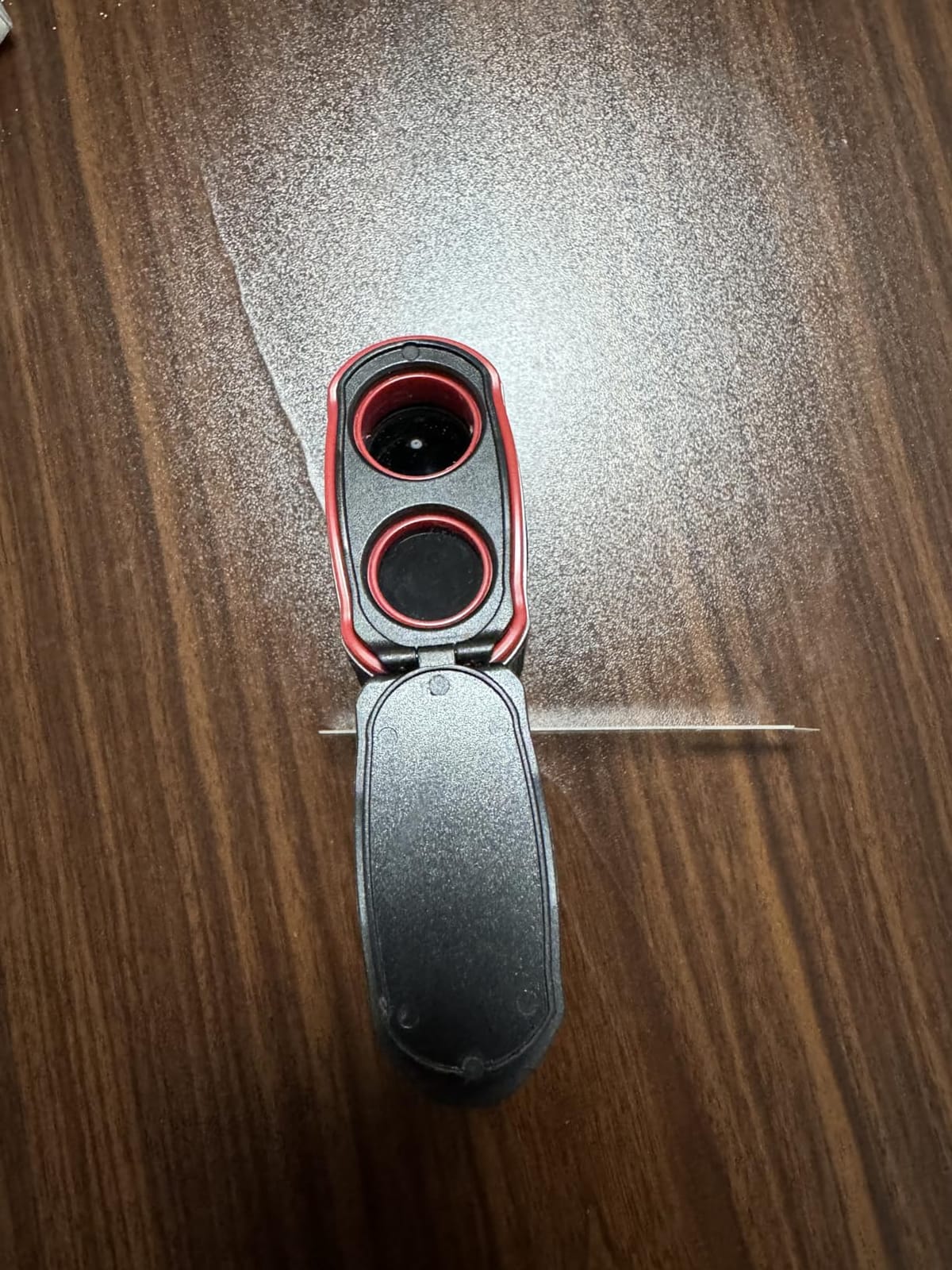
Why beginners should pick this one?
Simplicity is the reason. The measurement happens from one button, the number appears at the top of the display, and the slope switch is a physical control. A beginner can be producing consistent numbers within ten minutes of opening the box, which matters more than any feature you would not use until next year.
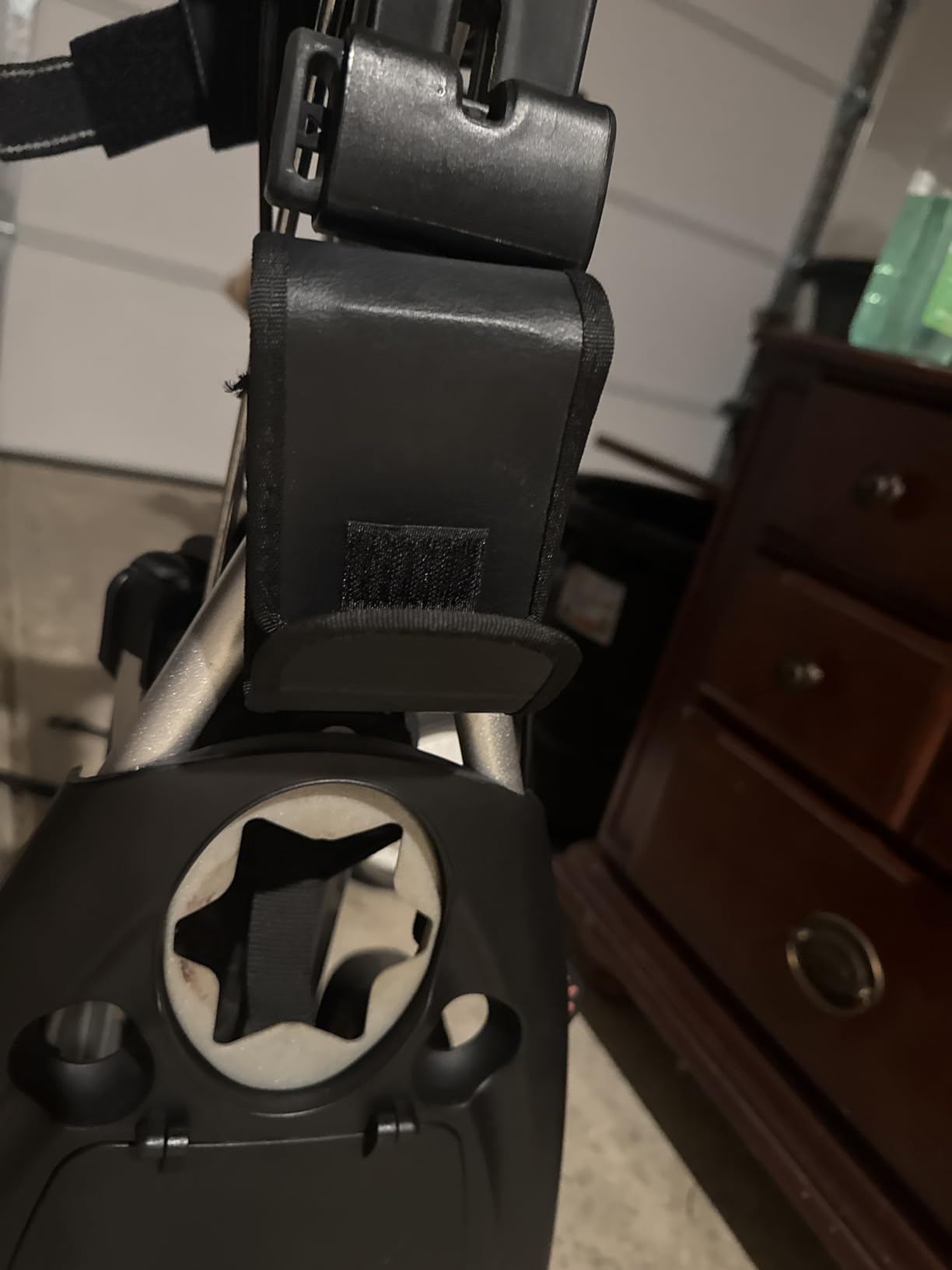
The magnet also solves a real walking-adjacent problem. Even if you ride, a rangefinder that lives on the cart is a rangefinder you actually bring. The included molded hard case with carabiner means it is not rattling around loose at the bottom of a bag.
Where it falls short?
The body is genuinely small at 4 by 2.7 by 1.4 inches, and some buyers with larger hands find it harder to aim smoothly. If steadiness is your concern, test the grip in a store before you commit.
Repeated readings from the exact same spot can differ by a yard or two, which is normal for laser units but can feel inconsistent to a player who expects a fixed number. Also, the magnet is strong enough that owners report forgetting the device on the cart at the range. Both are minor, and neither affects accuracy in any meaningful way.
2. REVASRI NK1000 – Best Budget Pick for a First Purchase
REVASRI Golf Rangefinder with Slope and Pin Lock Vibration, External Slope Switch for Golf Tournament Legal, Rangefinders with Rechargeable Battery 1000YDS Laser Range Finder
6.5x magnification
5-1000 yard range
4.3 ounces
USB-C rechargeable
Pros
- Readings match far more expensive models
- One-button operation with a unit toggle
- Weighs only 4.3 ounces
- Vibration confirms flag lock
- USB-C battery lasted 10+ rounds
Cons
- Scope falls out of focus easily
- Pin lock inconsistent against busy backgrounds
- 1000-yard range is short for long shots
The REVASRI NK1000 is the cheapest serious option in this roundup, and it is the one I recommend when someone tells me they are not sure they will stick with golf. It is 3.8 by 1.3 by 2.6 inches, it weighs 4.3 ounces, and it is the lightest device here. That weight makes it the easiest to hold steady, which is a bigger factor for a high-handicap player than magnification is.
Accuracy is the surprise. Owners consistently report distances that line up with much more expensive units, and the 1000-yard range covers every shot a beginner will ever hit. The 0.5-second measurement speed means you can take a number without breaking your pre-shot routine, and the pin lock confirms with a vibration rather than leaving you guessing whether it read the flag or the tree behind it.
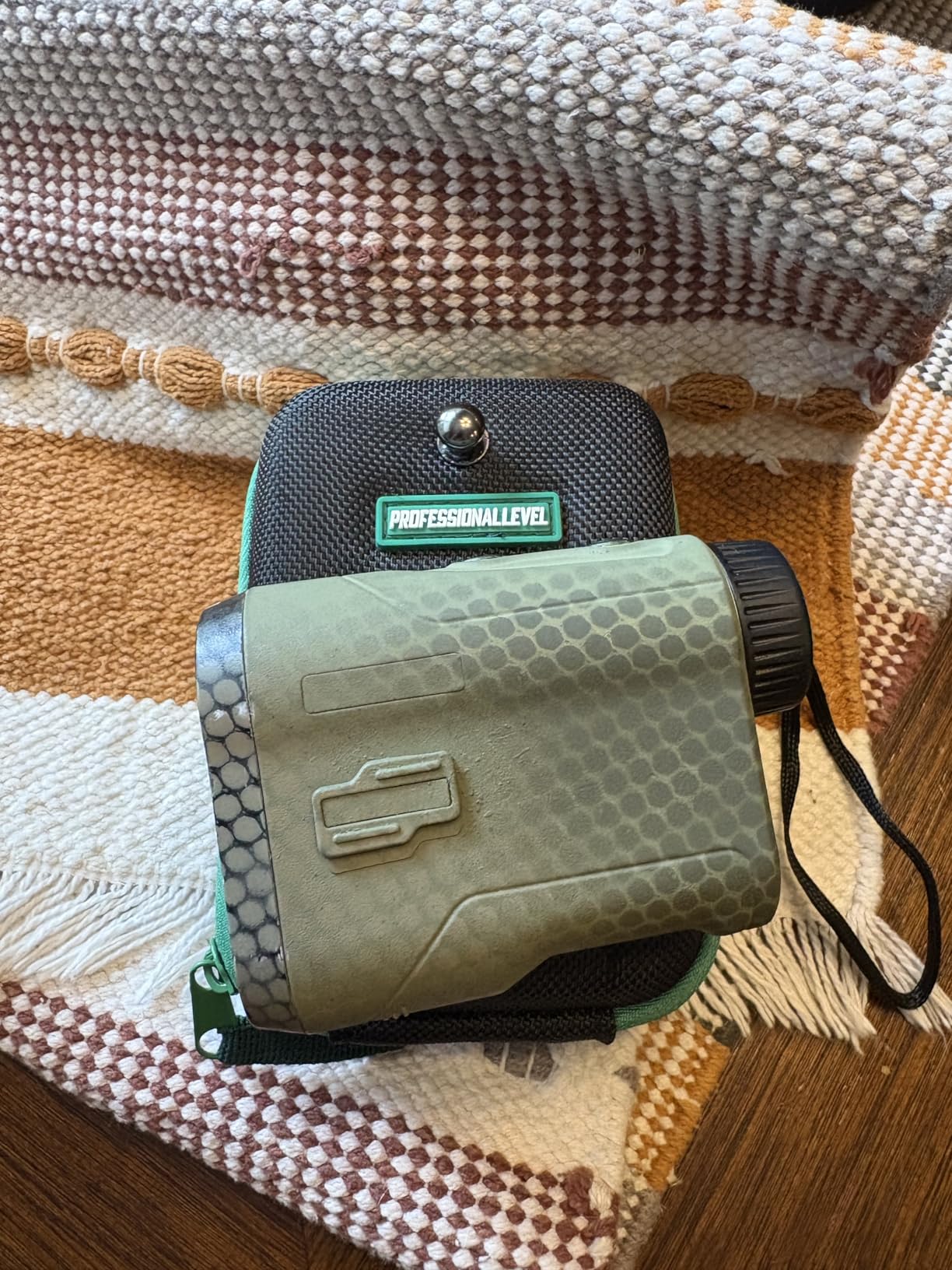
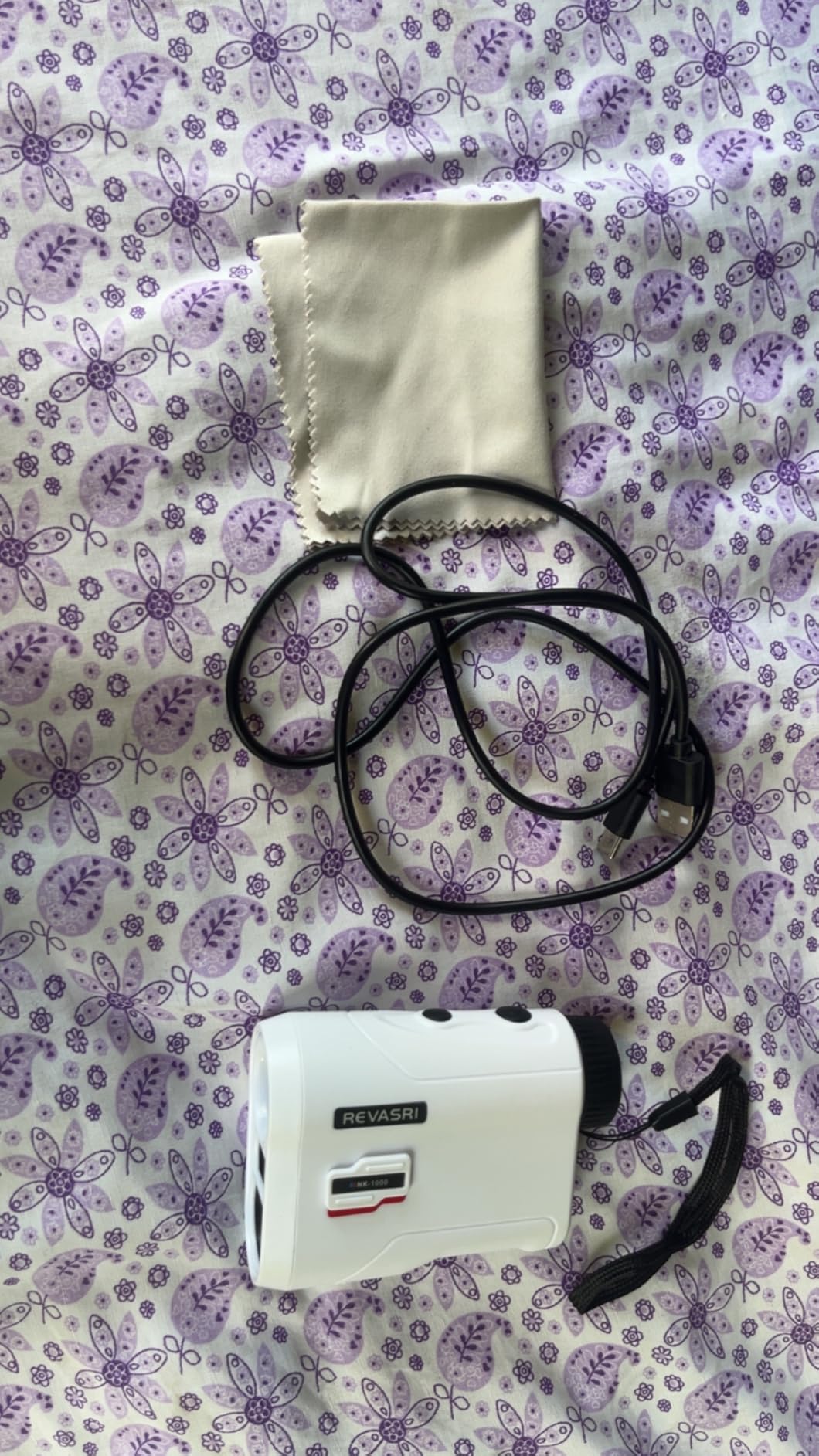
The box includes a pouch with a carabiner, a USB-C cable, a lens cloth and a manual, and the built-in lithium-ion battery ran ten or more rounds on a single charge during our use. There is no disposable cell to lose, which is one step better than the budget models that ship with a coin cell and expect you to find a spare before round two.
The external slope switch works the same way it does on the Callaway, a physical toggle that puts the device into a tournament-legal state you can demonstrate. The multi-layer coated lens is a genuine improvement over bare glass and helps in bright sun, which is the most common practical complaint golfers raise about cheap optics.
Why beginners should pick this one?
If your priority is a low-risk first purchase, this is the honest answer. You get slope compensation, a physical tournament switch, a vibrating flag lock and a rechargeable battery at a fraction of the cost of anything with a familiar brand name. The USB-C cable means you can charge it from the same brick as your phone.
The 4.3-ounce weight is also the lightest on this list, and for a player whose hands shake under pressure, a body you can hold in one hand with your elbow tucked is worth more than an extra two points of rating.
Where it falls short?
Focus is the weakness. The scope falls out of focus more easily than the models above, and a soft image makes a distant flag harder to isolate. A few buyers also report the pin lock failing to grab the flagstick against broad or busy backgrounds, which is exactly the situation on a tree-lined fairway.
Because this is a marketplace brand, support is thinner than the established names. The warranty listed is one year, and there is no lost-rangefinder program. If you keep an eye on the device rather than tossing it in a cart pocket, that trade works fine for most beginners.
3. REDTIGER C001 – Best Value with 7x Optics
REDTIGER Golf Rangefinder with Slope On/Off,7X Magnification 1200 Yards
7x magnification
1200-yard range
6.4 ounces
Two-year warranty
Pros
- 7x optics with a bright transflective LCD
- Six measurement modes including slope and flag lock
- USB-C rechargeable with long battery life
- Magnetic strip and belt clip included
- Two-year unconditional warranty
Cons
- Pin lock struggles past 150 yards in clutter
- Needs a steady hand for consistent results
- Vibration is not exclusive to true pin locks
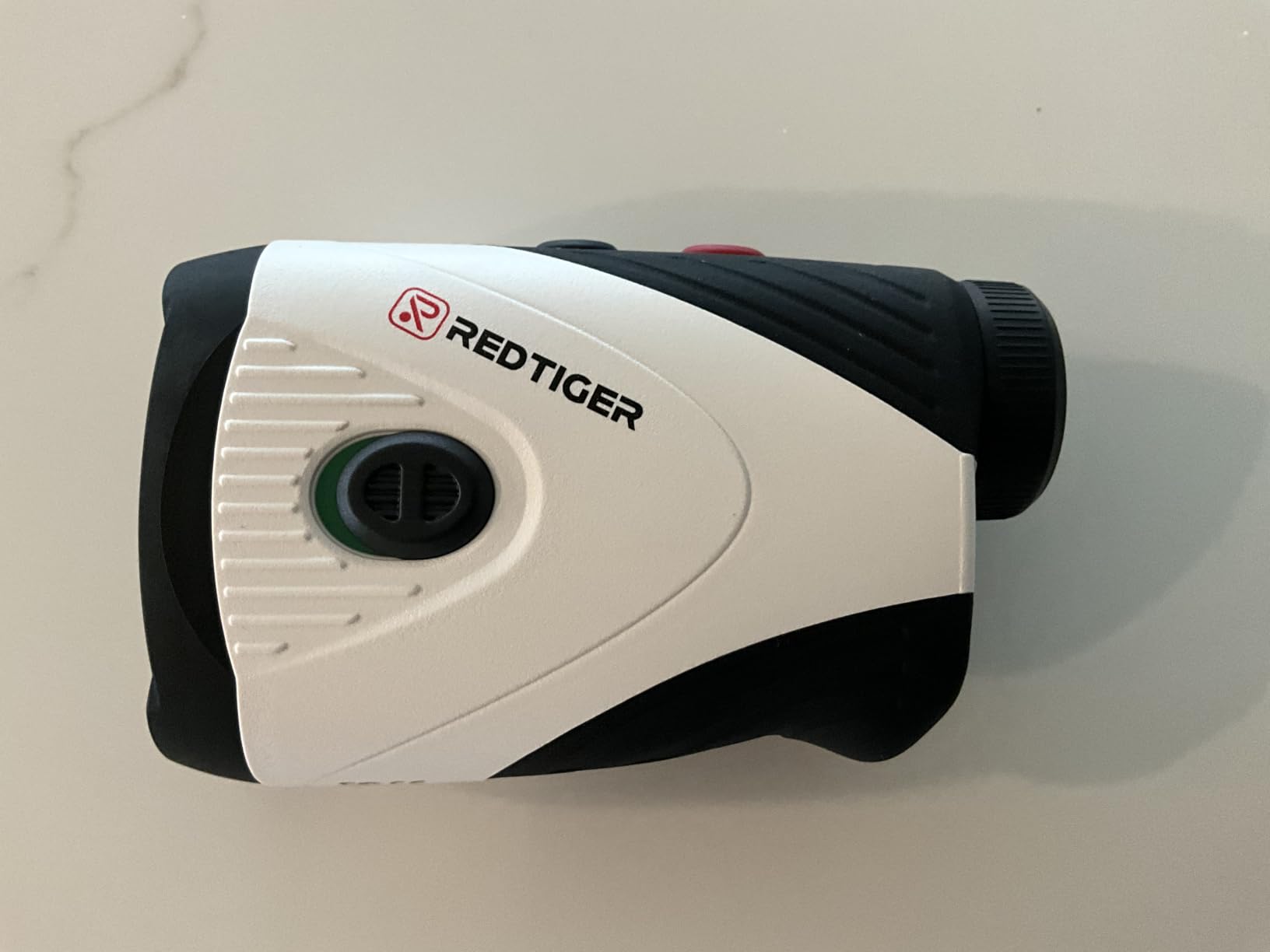
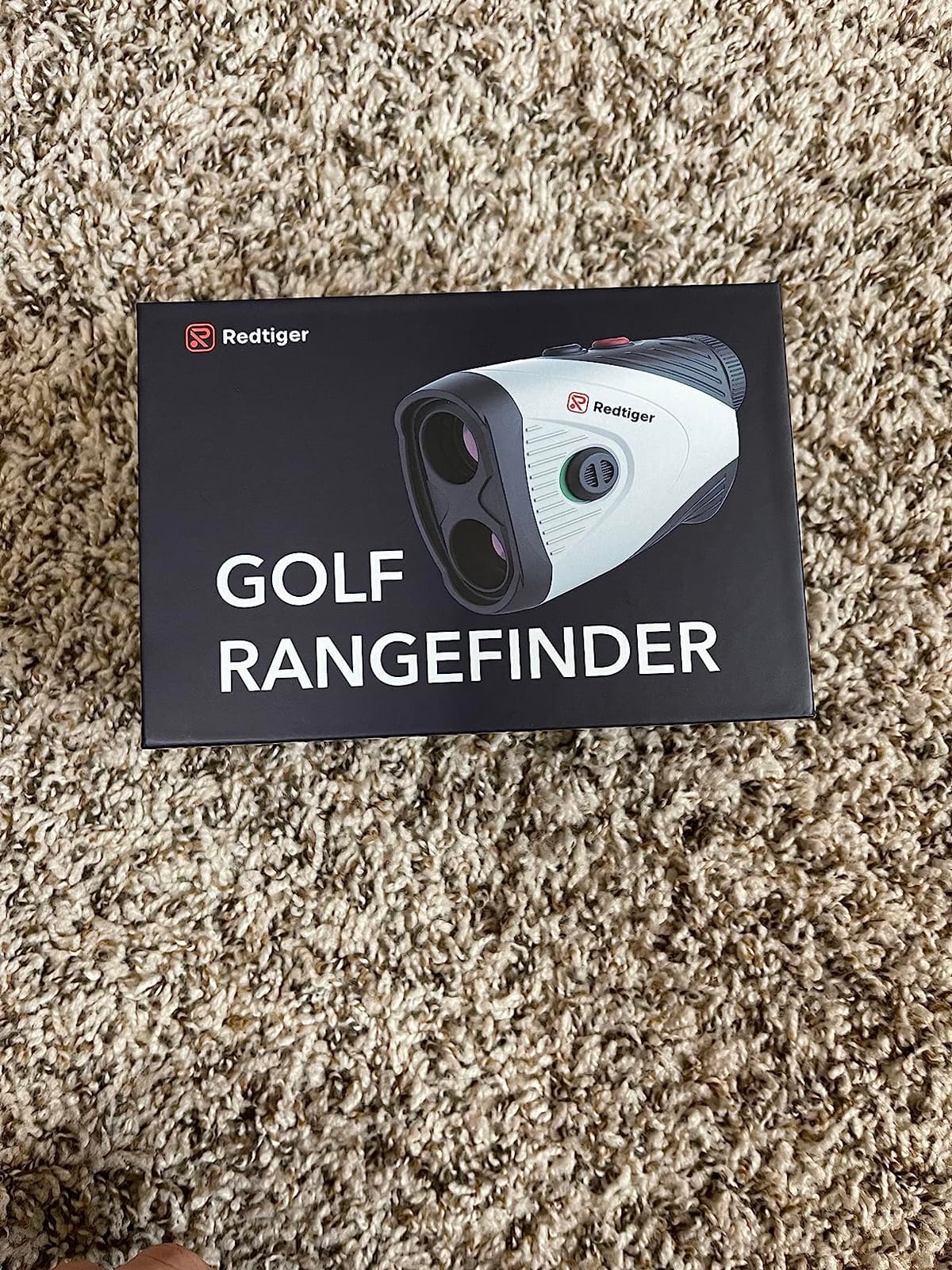
The REDTIGER C001 is the middle of this roundup in every measurable way, and that is why it stands out. It sits between the ultra-cheap models and the premium flagships on cost, while offering 7x magnification, which is the highest glass magnification here. For a beginner learning to judge distance visually, extra magnification makes the flag easier to find and the number easier to trust.
The transflective LCD is a smart choice for outdoor use. It brightens in sunlight rather than washing out, which addresses the display readability problem that forum golfers raise more than almost anything else. The external slope switch again gives you a physical, demonstrable tournament mode, and the range extends to 1200 yards, which is more headroom than you need and more than most of the field offers.
Battery life is exceptional in the other direction. It is USB-C rechargeable, and owners talk about years of use before worrying about the cell. The two-year unconditional warranty and lifetime technical support are the strongest support terms in this group, which matters more than most buyers realize when something goes wrong in month eight.
Mounting hardware is included rather than sold separately. A magnetic stripe and a magnetic belt clip attach to a cart bar or your belt, and the box also carries a hand rope, a soft case, a charging cable, a lens cloth and a manual. Very few competitors include that much in the package.
Why beginners should pick this one?
It is the one I suggest when a beginner plans to play regularly and wants room to grow. Six measurement modes cover slope compensation, flag lock, horizontal and height ranging, speed and continuous scan, so as your game develops you do not need to replace the device to get new data.
The warranty is the quiet winner for a new player. Two years unconditional with lifetime technical support means a defect in your second season is someone else’s problem, which removes the biggest objection forum golfers raise about buying a marketplace brand.
Where it falls short?
Flag acquisition past 150 yards is the limit, particularly against busy backgrounds or in wind, and buyers say steadier technique is required. Six modes also mean more buttons to understand at the start, and new golfers sometimes toggle into the wrong one before a shot.
Water resistance is IP54, which handles an unexpected shower but not sustained rain. If you play on a wet coast or in the mountains in shoulder season, note that this is water resistant rather than waterproof.
4. Acer Gadget SW-RF700 – Easiest to Use for New Golfers
Acer Golf Rangefinder with Slope – 800Yards Range Finder for Hunting, 6X Magnification with Flag Pole Locking Vibration, Rechargeable Battery with Magnet Stripe Golf Accessories for Men, Gifts
6x magnification
800-yard range
11.2 ounces
Anti-shake technology
Pros
- Anti-shake steadies readings on an unsteady aim
- Quick flag lock with a vibration alert
- Single-button controls and a bright LCD
- Built-in magnetic housing
- USB-C rechargeable
Cons
- 800-yard range is the shortest here
- Slope data stays visible in slope-off mode
- Can take a couple of attempts on tiny targets
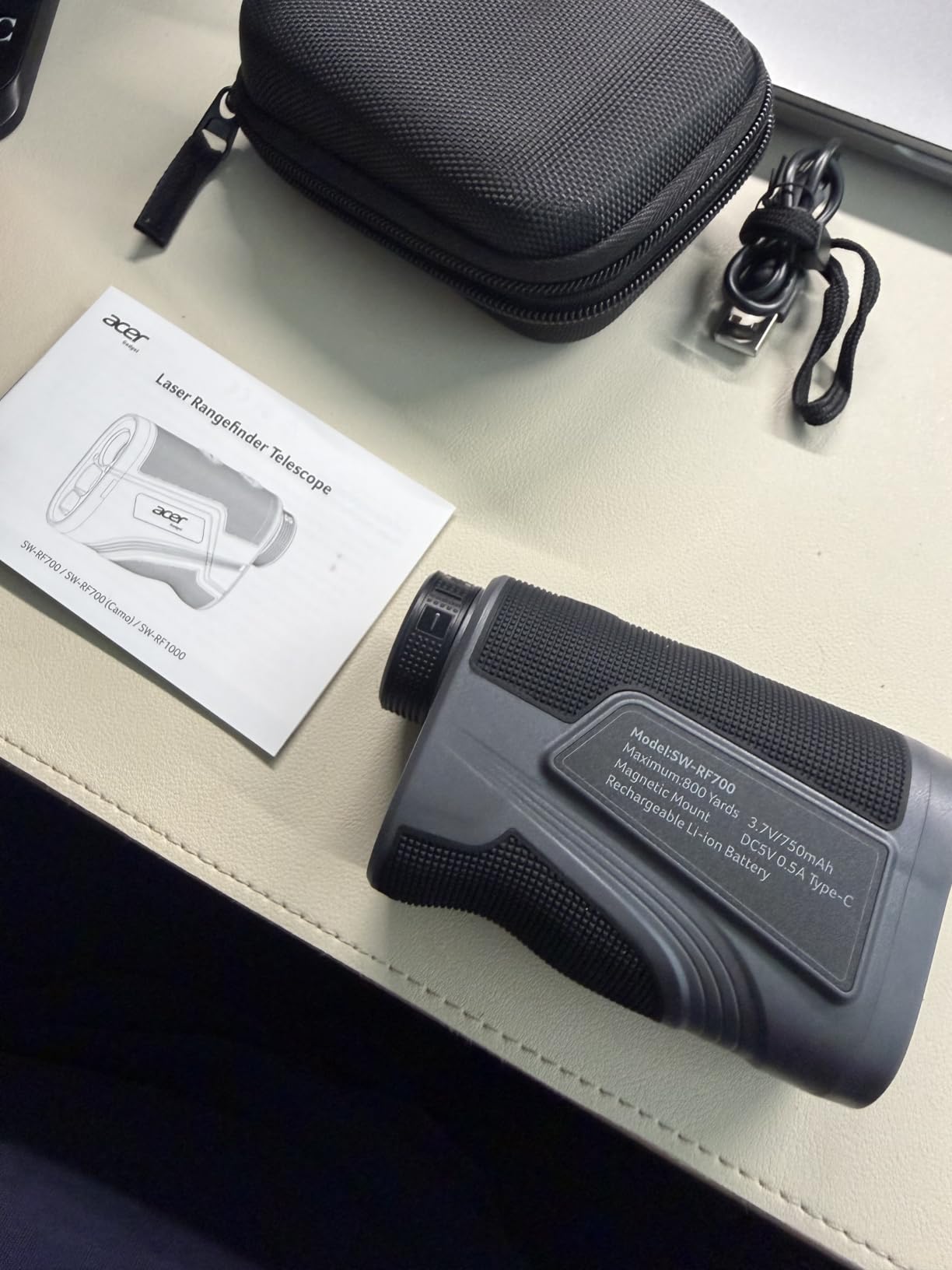
The Acer Gadget SW-RF700 is the model I hand to a golfer who is intimidated by technology. It has a single measurement button, a bright LCD, and anti-shake technology that stabilises the reading when your aim wanders. That last feature is the reason it stands apart for high-handicap players, because a steadied number is a number you can commit to instead of re-checking three times.
It holds a 4.6 rating from more than eighteen hundred reviews, which puts it among the best-rated devices here despite a mid-range cost. The magnetic housing is built into the body, so it attaches to a cart rail without a separate accessory, and the included pouch means it survives being thrown in a side bag.
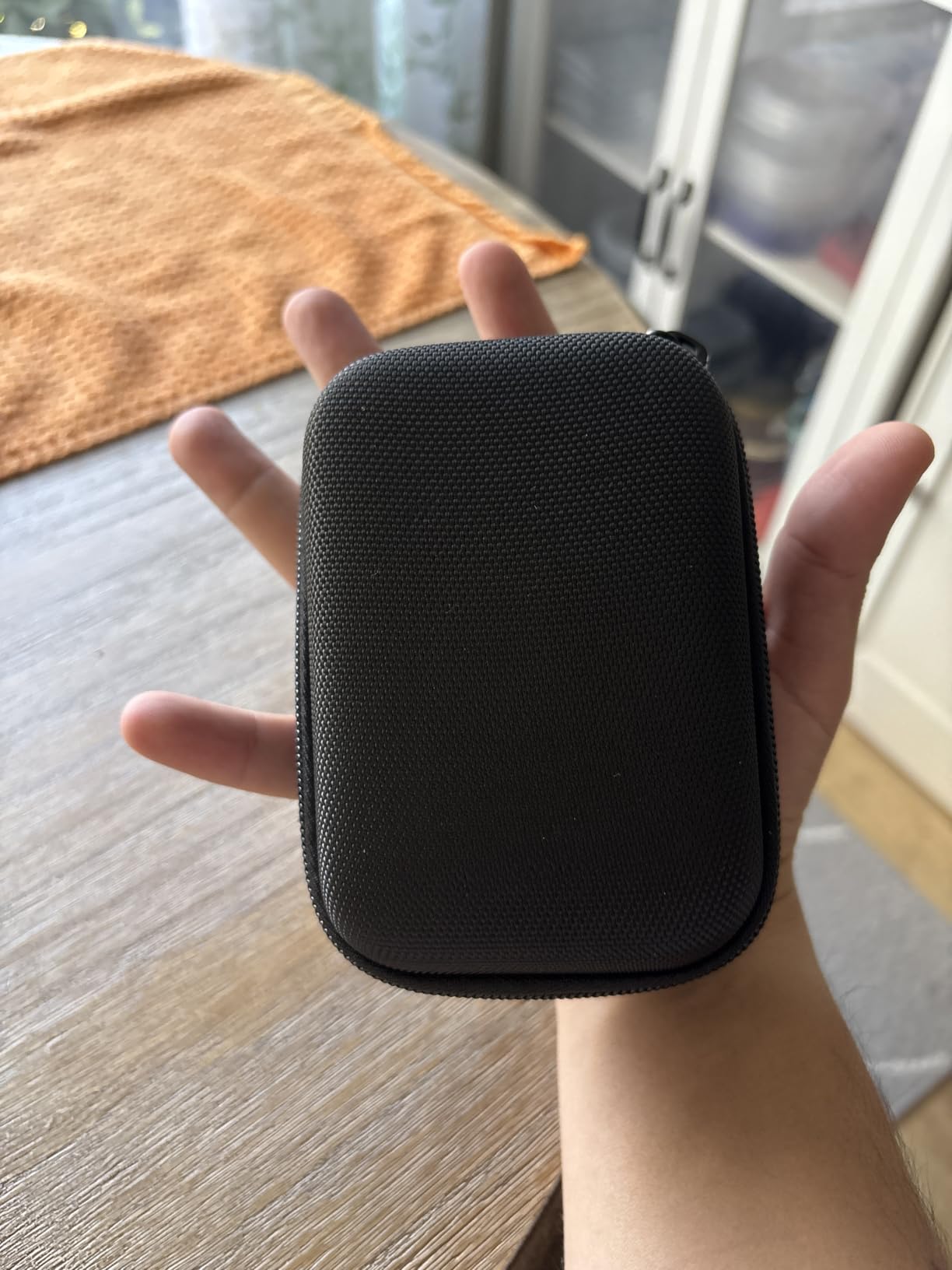
USB-C charging removes the disposable battery entirely, and the same device is marketed for hunting and archery, which hints at the build quality. Six modes cover slope compensation, vertical and horizontal distance, angle, speed and scanning, all handled through the same straightforward interface.
One practical note on display: the numbers are large and high contrast, which is genuinely helpful at dusk or on an overcast afternoon when a dimmer screen becomes unreadable. For a beginner still learning to read a reticle, legibility beats extra digits.
Why beginners should pick this one?
Anti-shake is the answer for anyone whose hands are not steady yet. Rather than teaching you to hold perfectly, the unit absorbs small movements and still gives a consistent number. For a player with a high handicap, that is the difference between using a rangefinder confidently and putting it back in the bag.
The single-button design also means no mode confusion before a shot. You aim, you press, you read. There is no second function to remember, and the rechargeable cell means you never hunt for a spare battery on the back nine.
Where it falls short?
The 800-yard range is the shortest in this roundup, and it is listed as the 800-yard or 1200-yard model depending on configuration. For a beginner hitting a wedge, that is irrelevant. It matters only if you play a course with unusually long par fives and want to range the back ourselves.
More important: even with the slope switch set to off, the display still shows the slope percentage and adjusted number. At some club events that visible data is not legal even with the function disabled. Check your local rules before competing, and confirm the screen state with a rules official.
5. PEAKPULSE LE600AG – Lightweight Pick for Walking Golfers
Golf Range Finder 650 Yards 6X with Slope Switch Vibration Pin Lock
6x magnification
10-650 yard range
5.78 ounces
CR2 battery
Pros
- Slope compensation and a physical tournament switch at a low cost
- Light 5.78-ounce body suits walking rounds
- Flag lock vibration is clear
- FMC multi-layer optics
- One-hand operation with no calibration
Cons
- No built-in magnet or cart mount
- Mode button sits next to the measurement button
- 650-yard maximum range in this configuration
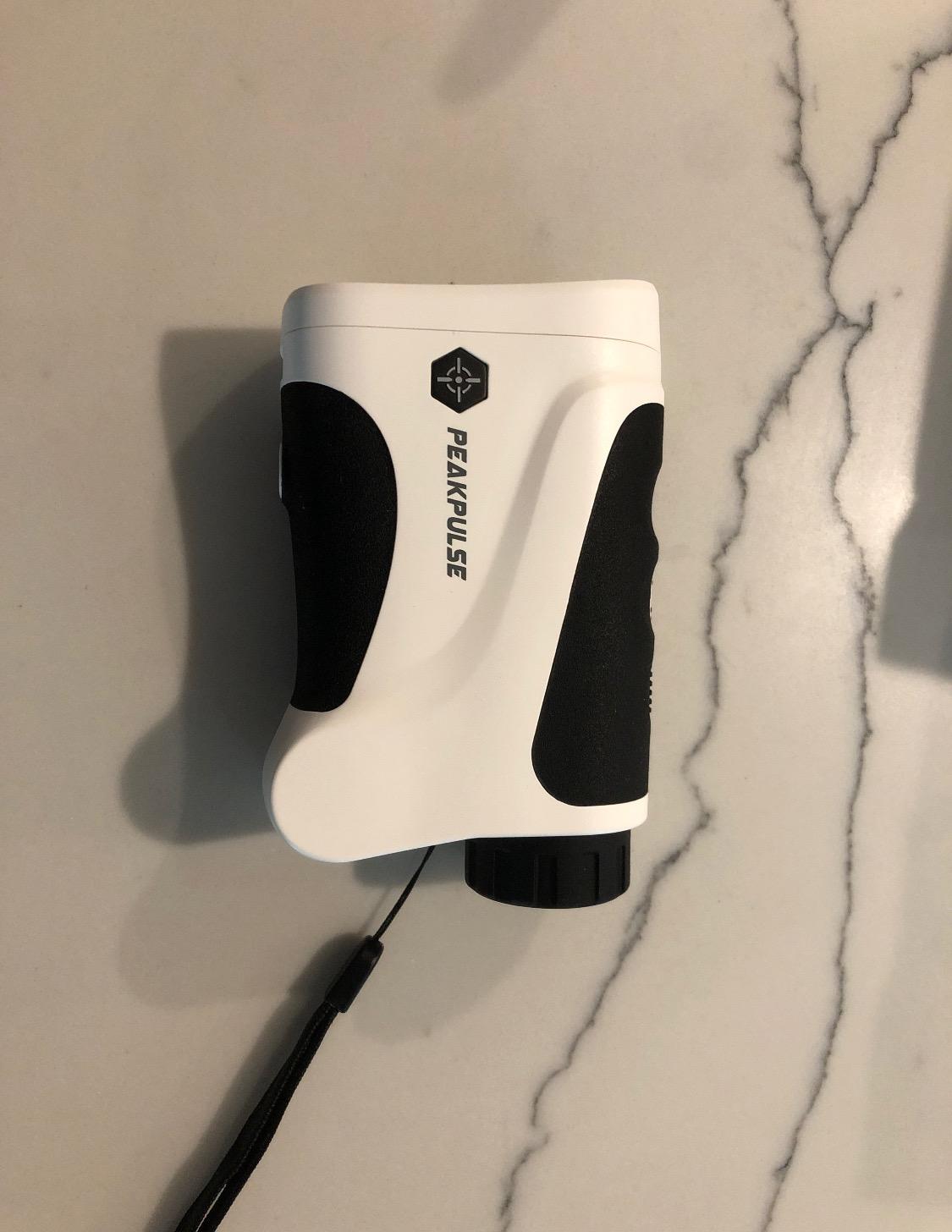
Walking golfers should think about weight before anything else, and the PEAKPULSE LE600AG is built for that. At 5.78 ounces in a 2.54-inch body, it is one of the two lightest devices here, and the compact shape disappears into a side bag pocket instead of bouncing around at the top of it. Over four hours on your feet, a few ounces and a stable grip are the difference between a device you use and one you leave behind.
The optics are the quiet strength. FMC multi-layer coating produces a bright, clear image even in morning haze, which matters on a course where the flag is a grey stick against a grey sky. Flag lock works well and confirms with a vibration, and the accuracy holds to within a yard out to 300 yards, which covers the approach shots that make up most of a beginner’s decision-making.
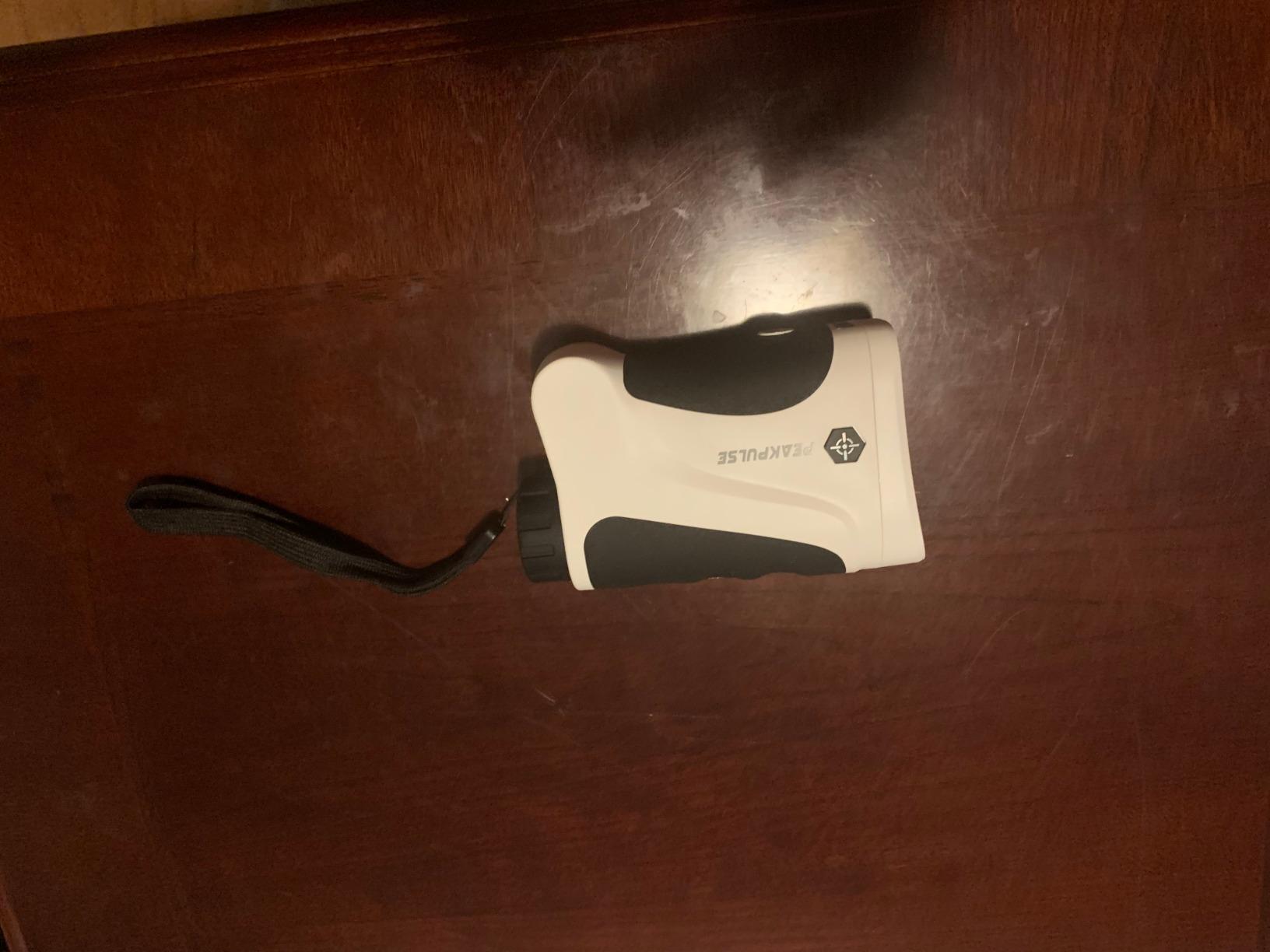
The physical slope switch puts tournament mode one flick away, and the laser is a Class I 905nm unit rated under 1mW, which is the eye-safety standard you want if you are handing the device to other golfers in a group. The box includes a CR2 battery, a storage bag, a lanyard, a lens cloth and a manual, all backed by a one-year manufacturer warranty.
Because it uses a replaceable CR2 coin cell, the battery question works differently here. There is nothing to charge, which is convenient, but you should keep one spare in your bag. Forum golfers mention dying batteries mid-round often enough that it is worth treating as a habit rather than a worry.
Why beginners should pick this one?
If you walk or walk and push frequently, this is the shape and weight that suits you. A rangefinder you have to dig out of a cart console is one you will forget, and a rangefinder that lives in your pocket is one you will use on every approach.
It is also the simplest physical layout in the group for a walking player holding the device one-handed, with no calibration step and no setup. Aim, press, read. The included lanyard means it stays around your neck rather than dropping into the grass at every greenside putt.
Where it falls short?
There is no built-in magnet and no cart mount, so cart riders should look elsewhere. The mode button for yards and meters also sits right next to the measurement button, and it is easy to hit by accident in the dark, which produces a puzzling reading for anyone who does not know it happened.
The 650-yard maximum range in this configuration is the shortest here, and there is no scan mode, so the device locks onto whatever point you sight rather than tracking across a field. A small number of buyers also report pin lock failing to engage entirely, so treat the vibration as a confirmation you should feel rather than a guarantee.
6. Bushnell Tour V6 Shift – Top Optics for Players Who Want the Best
Bushnell Golf Tour V6 Shift Laser Rangefinder, Patriot Pack
6x magnification
5-1300 yard range
16 ounces
IPX6 construction
Pros
- Highest rating in the roundup
- Visual Jolt red ring confirms a true flag lock
- 1300-yard range covers the longest shot
- External slope switch
- Sturdy BITE magnetic cart mount
Cons
- Heaviest and bulkiest model here at 16 ounces
- Uses a CR2 battery instead of a rechargeable cell
- Premium cost is hard to justify if you never use slope data
The Bushnell Tour V6 Shift holds the highest rating in this roundup, and the reason is the Visual Jolt system. When the device locks onto the flagstick, a red ring flashes around the reticle along with the vibration. For a beginner standing over a blind shot with a tree line behind the green, that confirmation is worth more than any number printed on the box.
Range extends to 1300 yards, the longest here, and the IPX6 construction handles sustained rain rather than just a stray shower. The external slope switch is clear and easy to operate, and the BITE magnetic mount grips a cart rail firmly enough for one-handed grabs at every tee.
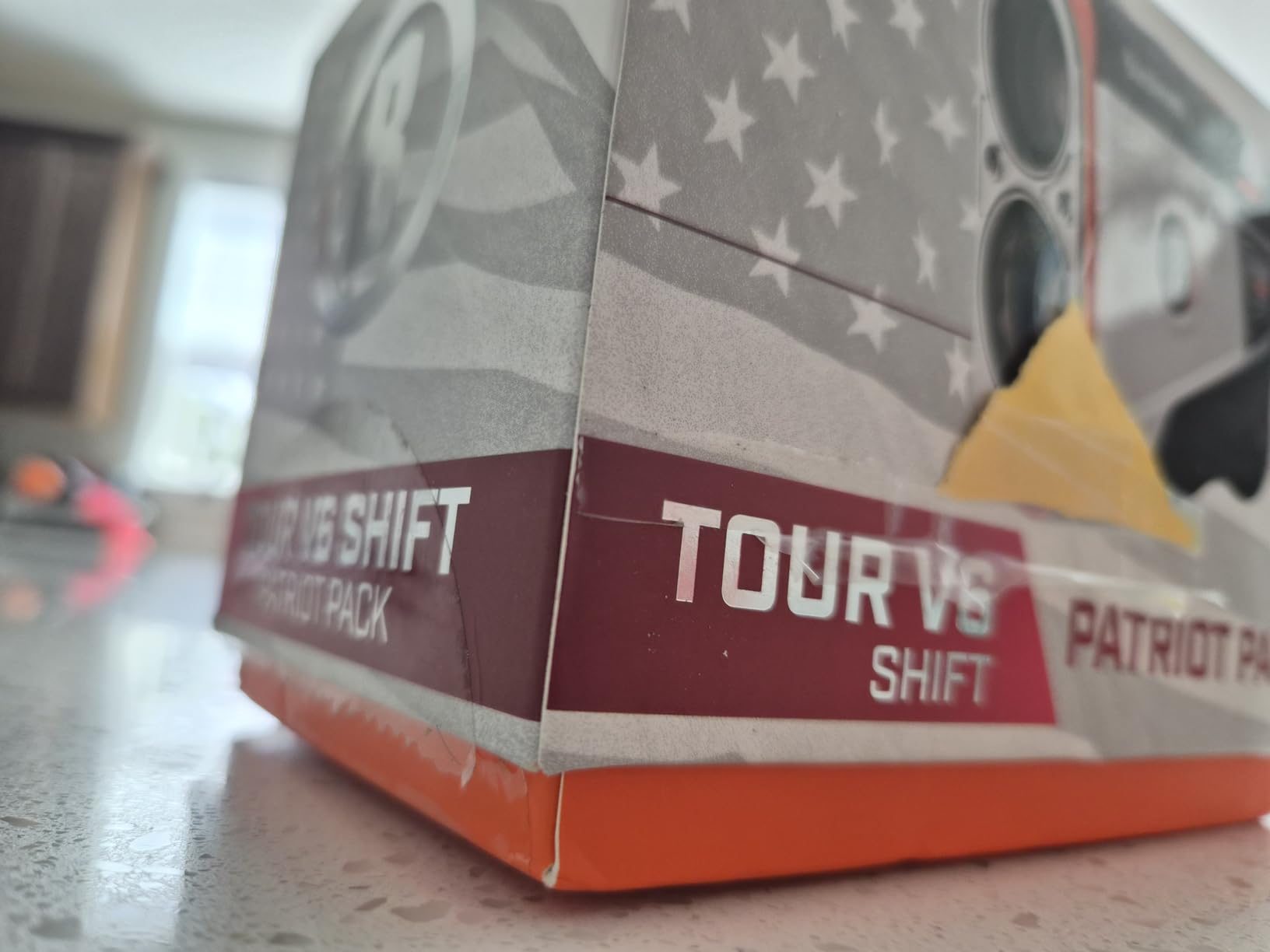
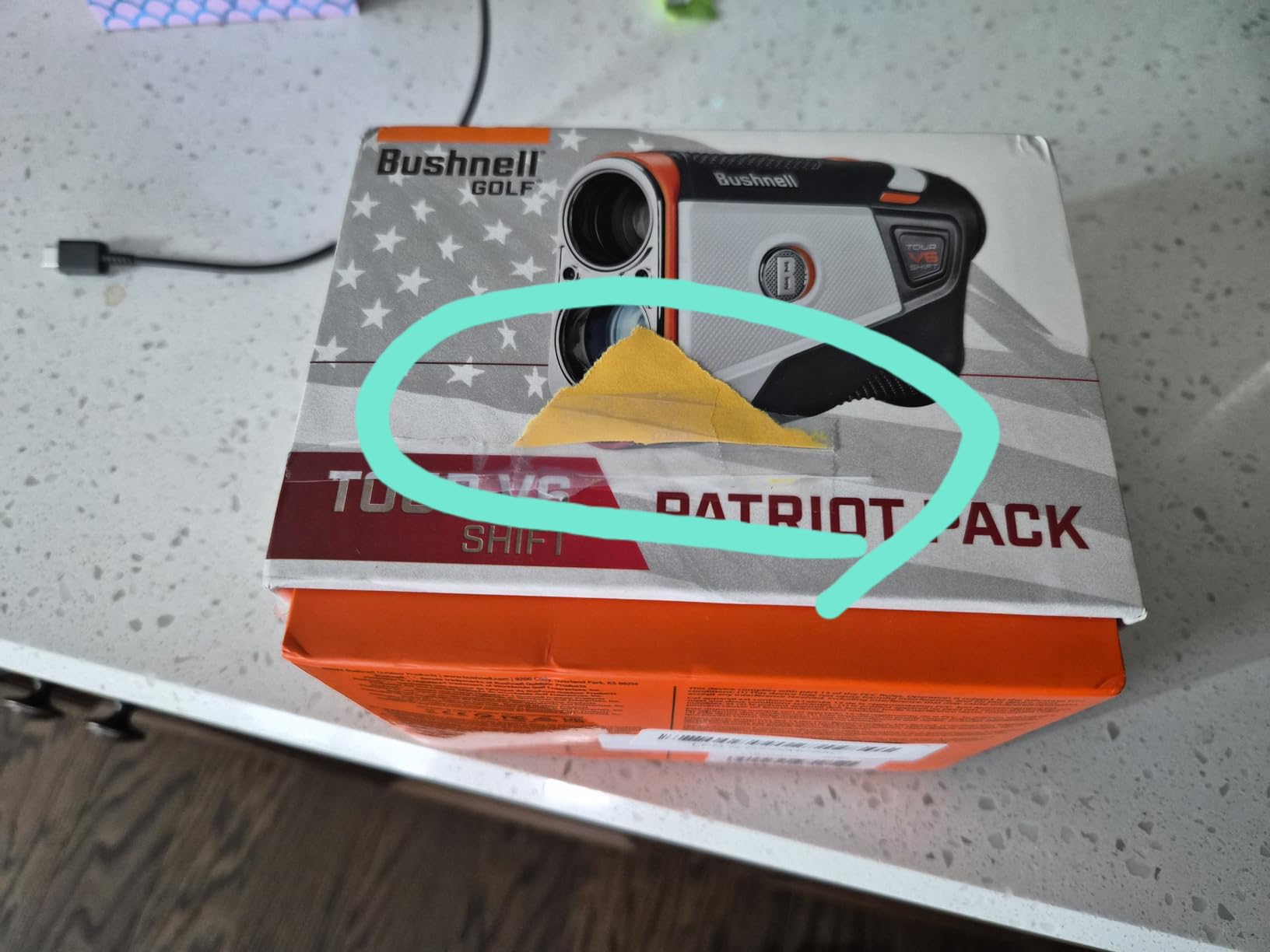
The Patriot Pack is a genuine bundle. You get the rangefinder, a premium case, a veteran coin, a microfibre cloth, a quick-start guide and a CR2 battery in the box. The two-year manufacturer warranty is solid, and Bushnell Golf is a brand that will still be around for a second device when you are ready to move up.
Optically, the 6x glass is noticeably brighter and more forgiving of imperfect focus than the budget units here. If you spend your rounds on open, exposed courses in strong sun, that clarity is the feature you will notice every single hole.
Why beginners should pick this one?
Pick this if you play on courses where the background behind the flag is cluttered, or if you have already had the experience of reading a tree and hitting a shot that found it. The Jolt confirmation is the most reliable pin indicator in this group, and it removes the guesswork from the one situation that frustrates new players most.
It is also the natural choice if you know a premium flagship is on your list and you would rather buy it once. The optics, the range and the water resistance are at the top of this roundup on every measurable axis.
Where it falls short?
At 16 ounces it is the heaviest and bulkiest device here, and that weight sits in your bag on every walking round. If you walk, the two lighter models above are a better fit regardless of rating.
It runs on a CR2 battery rather than a rechargeable cell, so you are buying coin cells over time. And the honest truth for a first-year player: this much of the premium goes into slope data and long-range optics you will not lean on until your game improves. Buy it because you want the best flag lock, not because it is the most capable device on the shelf.
7. Bushnell A1-Slope – Compact Premium Pick You Can Grow Into
Bushnell Golf A1‑Slope Laser Rangefinder
6x magnification
5-1300 yard range
5.1 ounces
USB-C rechargeable
Pros
- Smallest Bushnell body at 3.75 inches
- Sharper 6x glass that holds focus
- USB-C rechargeable rated for 50+ rounds
- PinSeeker with JOLT vibration
- Two-year manufacturer warranty
Cons
- Magnet is a separate sleeve rather than built in
- Sleeve and skin are easy to leave on the cart
- Only 123 reviews so far
The Bushnell A1-Slope solves the complaint most beginners never articulate: premium rangefinders are usually too big. At 3.75 inches long and 5.1 ounces, this is the smallest Bushnell golf body, and it delivers 6x magnification with a full 1300-yard range. That is flagship specification in a package that fits in a chest pocket.
The rechargeable lithium-ion battery is rated for more than fifty rounds, and the USB-C cord is in the box. PinSeeker with JOLT vibration confirms a flag lock, and the slope toggle puts tournament-legal play one control away. Owners report accuracy that matches devices costing twice as much, and several describe the difference coming from a budget body as dramatic.
Focus behaviour is the real upgrade here. The 6x glass stays sharp longer than budget rivals, so a first-time user is not constantly twisting the eyepiece mid-round. Accuracy holds within a yard to 350 yards, which is every approach shot a beginner will hit, with the rest of the range covering the longest drive on the course.
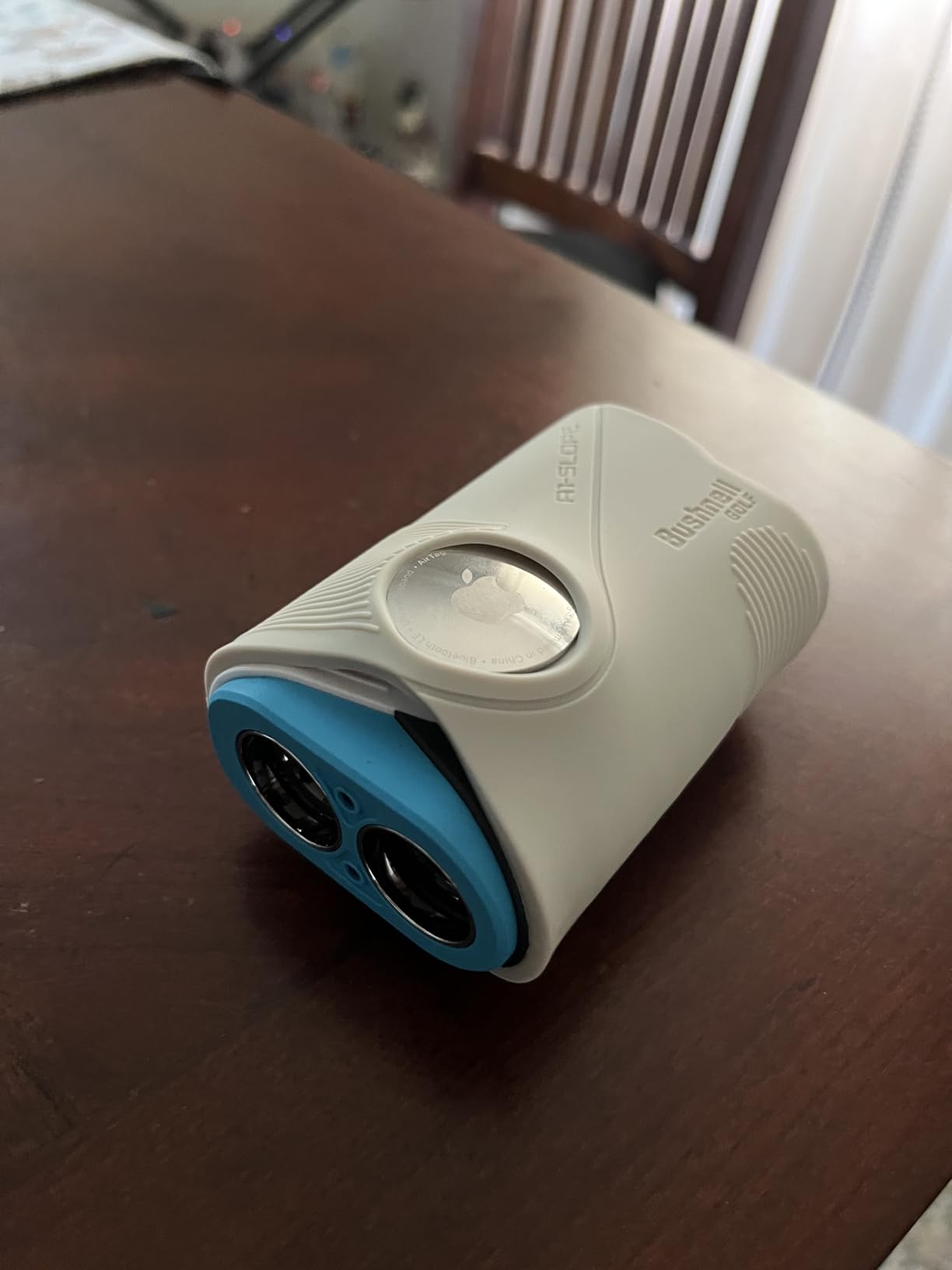
The bundle is complete: a BITE magnetic skin, a premium carry case, a USB-C cord, a microfibre cloth and a quick-start guide. Two years of manufacturer coverage backs it up.
Why beginners should pick this one?
Pick this if you want a rangefinder that disappears into a pocket and stays sharp, and you intend to keep using it. The rechargeable cell means no spares, no charging anxiety, and no coin-cell spending. USB-C also means the same cable as your phone.
It is the best balance of size, optics and smart features here for a player who walks and wants something they will still be happy with in five years. Nothing else in the roundup combines 5.1 ounces with this much glass.
Where it falls short?
The magnet is not built into the body. It lives in the included BITE magnetic skin, which means two separate pieces to keep track of, and owners report leaving the skin on the cart more than once. If you ride often, that is a small daily annoyance.
There are only 123 ratings on this model, so its long-term record is much thinner than the Callaway or the REVASRI. The rating is strong, but a small review base tells you less about five years of battery and lens durability than a large one does. For a first purchase you intend to keep, that is the main reason to weigh the Callaway instead.
8. Flagfront Rechargeable Rangefinder – Most Features for the Money
Flagfront Range Finder for Golf, 1000 Yd Golf Rangefinder with Slope
6x magnification
5-1000 yard range
180 g
USB-C rechargeable
Pros
- Low cost with slope and flag lock included
- High-definition LCD readable in strong light
- Continuous scan vibrates to confirm the flag
- Rechargeable cell with Type-C cable in the box
- Soft case and lens cloth included
Cons
- Smallest review base at 311 ratings
- 1000-yard range is on the short side
- Brand is far less established than the rest
The Flagfront is the lowest-cost rechargeable unit here, and it is the most interesting inclusion on the list for a first-time buyer. At 180 grams, 6x magnification and a high-definition LCD, it covers the core needs: distance, slope compensation, a vibrating flag lock and a rechargeable battery with a Type-C cable in the box. The soft case and lens cloth are included too.
The continuous scan mode is the feature worth knowing about. You hold the button, sweep across the green, and the unit vibrates when it identifies the flag rather than reading whatever object happens to be closest. On an unfamiliar course where you do not yet know the shape of every green, that is a meaningful help rather than a gimmick.
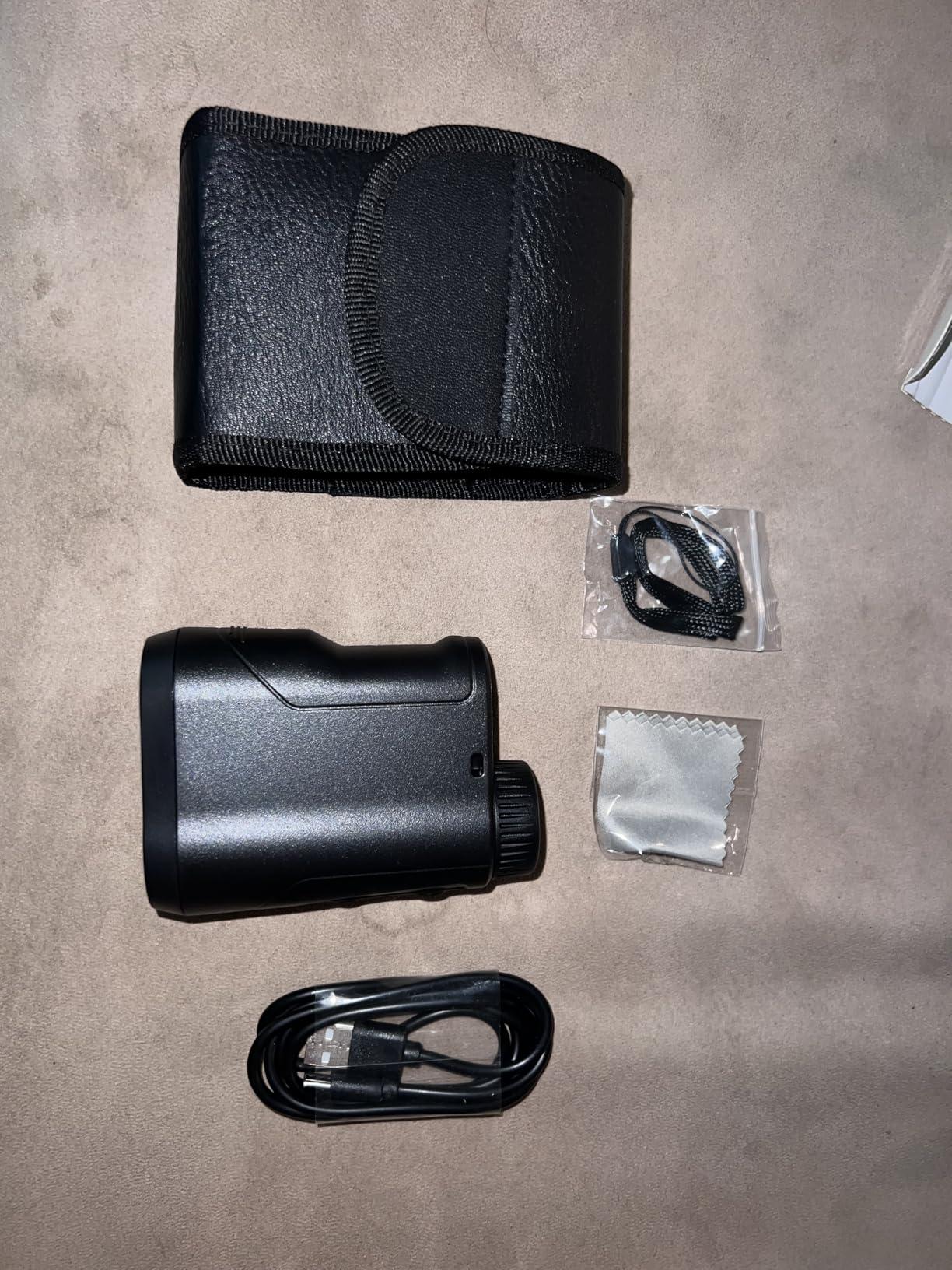
Display readability is better than the price suggests. Buyers note the LCD stays legible in strong light, which addresses the glare frustration that shows up repeatedly in golfer discussions. Accuracy is listed to within a yard across the 5 to 1000 yard span, and the high-strength plastic body survived being carried in a side bag through a full season of casual play.
Because there is no disposable cell, there is no cost creep and no mid-round failure from a flat coin battery. That single design decision removes the most common complaint aimed at cheaper rangefinders.
Why beginners should pick this one?
Pick this if the total cost of getting into rangefinders is your main barrier and you want a rechargeable unit rather than a disposable-battery model. Continuous scan plus a vibrating flag lock is more capability than most entry-level devices offer, and the display handles sun better than the price implies.
It is also a reasonable second device. If you own a cart-friendly unit already and want a light one for walking rounds, the 180-gram body and rechargeable cell fill that gap without a second charging cable problem.
Where it falls short?
There are 311 ratings, the smallest review base in this roundup, so the long-term durability record is thin. Flagfront is a newer brand name and carries far less institutional support than the established manufacturers, and there is no lost-device program to fall back on.
The 1000-yard range is also toward the short end, which is fine for approach shots but will not range a long drive on a big course. If you want the reassurance of a large installed base, the REDTIGER or the Callaway are the safer buys at the same general class of feature level.
How to Use a Rangefinder for the First Time?
Most beginner frustration with a rangefinder comes from setup, not from the device. Five minutes of preparation covers almost every complaint we read in golfer forums, from reading the wrong number to being unsure whether slope is on.
1. Handle the battery first. If the model is USB-C rechargeable, charge it fully the night before your round rather than the morning of. If it takes a CR2 coin cell, install it and drop a spare in your bag immediately. A dead rangefinder on the back nine is the most common avoidable bad day on the course.
2. Set the diopter to your eyesight. The eyepiece ring adjusts for near and far vision. Point at a plain surface at arm’s length, twist the ring until the reticle is as sharp as possible, and do it before your first shot. Once you find your setting, leave it alone. Constantly re-adjusting mid-round is what makes a scope seem unstable.
3. Confirm the slope switch position. Find the physical switch or button and check which way it sits. In tournament mode you want the non-compensated number only. Do this at home rather than on the first tee, because finding it for the first time with a rules official watching is not an experience you want.
4. Learn the steady hold. This is the single biggest skill gap and no competitor page covers it. Tuck your elbow against your ribs so your upper arm is vertical, cup the eyepiece with one hand and support the barrel with the other, and bring the whole device up to your cheek before you press. Breathe out, press, hold until the vibration, then read. Your body is the tripod, not your arm.
5. Aim at the base of the flagstick. Point at the bottom of the flag, not the top of the flagstick or the trees behind the green. If the number looks wrong, drop the aim to the base and take a second reading rather than trusting the first one. Scan mode exists for exactly this situation.
Buying Guide: What Beginner Golfers Actually Need?
Feature lists on rangefinders are deliberately overwhelming. Here is what genuinely changes your experience on a beginner’s first season, roughly in order of importance.
Flag lock confirmation. A vibration and a visual jolt that tells you the number came from the flag and not a tree trunk. This is the single feature that separates a rangefinder you trust from one you argue with. Every model in this roundup has it, but the Bushnell Tour V6 Shift is the most emphatic about it.
A physical slope switch. Tournament legality under Rule 4.3a allows a device that measures distance only, with no interpreted adjustment. A visible switch lets you demonstrate compliance instantly. A buried menu setting does not. If you play in club events, treat this as a requirement rather than a nice-to-have.
Weight, if you walk. There is no universal comfort threshold, but everything under about 6 ounces sits comfortably in a pocket and stays steady one-handed. Above 10 ounces, notice the difference on a long round. The two lightest models here are the REVASRI at 4.3 ounces and the Bushnell A1-Slope at 5.1 ounces, and both suit walking best.
Magnification. Six times is the standard and it is enough for every approach shot. Seven times, as on the REDTIGER, helps you find and identify a distant flag. Anything beyond that is a specialist feature rather than a beginner benefit.
Battery type. Rechargeable USB-C means no consumables and no charging deadline. CR2 means nothing to charge but a running cost and a need for a spare. Neither is superior, and the honest framing is that rechargeable suits a golfer who plays often, while CR2 suits a golfer who plays rarely and does not want another cable in the bag.
Magnet versus pouch. A magnet built into the body, as on the Callaway 300 Pro, keeps the device on the cart without an accessory. A separate magnetic skin or clip, as on the Bushnell A1-Slope and PEAKPULSE, needs a second piece you can lose.
Water rating. IPX4 handles spray and an unexpected shower. IPX6 handles sustained rain. IPX7 is submersible, which no golfer needs. Most players in temperate climates are fine with IPX4; coastal and mountain golfers should prefer IPX6.
Displayed maximum range. The advertised figure is the least useful number on the listing. Nobody needs to measure 2000 yards on a golf course, since the longest shot on most layouts is well under that. Judge a rangefinder on flag lock, focus and slope control instead. If you also shoot long-range targets, our hunting rangefinder guide covers where extreme range figures actually matter.
When to upgrade. Stay with a budget model for your first season. Replace it when you find yourself wanting a slope number on a hilly course you play often, or when you stop trusting the flag lock against a busy background. Those are the two moments when a better optic and a better jolt detector change your scores, and until then they only change your bank balance.
Tournament Rules and Slope Legality for Beginners
Under the rules of golf, a rangefinder is fine in competition, but the device must measure distance only. That restriction exists because a distance that has been adjusted for elevation, wind or temperature is an interpreted distance, and a rules official cannot verify it. This applies in stroke play, and match play follows the same principle.
Three ways to confirm you are legal before you tee off. First, move the physical slope switch to the off position and confirm that the slope percentage and adjusted number no longer appear on the display. Second, ask the rules official to look at your screen directly rather than taking your word for it. Third, read the local rule sheet, because some club events restrict devices further even when the device itself is compliant.
That third point matters more than beginners expect. The Acer Gadget SW-RF700 in this roundup keeps slope data visible on the screen even in slope-off mode, which some committees will not accept. Know your device’s display behaviour, not just its switch position.
Frequently Asked Questions
What is the best rangefinder for a beginner golfer?
The Callaway 300 Pro is the best rangefinder for a beginner golfer. It measures 5 to 1000 yards at 6x magnification, weighs 8 ounces, and has a physical slope switch you can show a rules official. Its magnet is built into the body, it uses a lithium battery with no charging step, and more than twelve thousand ratings back it up.
Should a beginner golfer use a rangefinder?
Most golfers who play unfamiliar courses benefit from one, because guessing distance is the biggest source of avoidable strokes. A rangefinder turns a guess into a committed club choice and speeds up play. If you play one or two familiar rounds a year and already know your distances well, it is optional. It matters most for approach shots to an unfamiliar green.
Which golf rangefinder is the easiest to use?
The Acer Gadget SW-RF700 is the easiest rangefinder to use for a new golfer. It has a single measurement button, a bright LCD, and anti-shake technology that steadies the reading when your aim wanders. It is USB-C rechargeable, so there is no battery to install and nothing to charge before a round.
What is the best budget laser rangefinder for golf?
The REVASRI NK1000 is the best budget laser rangefinder in this roundup. At 4.3 ounces it is the lightest model here, it measures 5 to 1000 yards at 6.5x magnification, and it includes a physical slope switch, a vibrating pin lock and a rechargeable USB-C battery. Its weak point is focus retention and pin lock against busy backgrounds.
Can you use slope on a rangefinder in competition?
No. In competition a device may measure distance only, with no interpreted adjustment, so slope compensation must be off. Turn the physical switch off, confirm the slope percentage and adjusted number disappear from the display, and let the rules official check the screen. Some club events add their own restrictions, so read the local rule sheet.
Conclusion: Which Rangefinder Should You Buy First?
The Callaway 300 Pro is the best laser rangefinder for beginners golfers who want one device that works. It is small, accurate, has a physical tournament switch, and comes with more proven history than anything else here. The REDTIGER C001 is the better buy if you want more modes and a two-year warranty, and the Acer Gadget SW-RF700 is the answer if steady readings matter more to you than range.
Pick one, learn the five-step routine above, and give it a full season before you think about replacing it. Most beginners who get a confident number on their first approach shot stop needing a flagship, and that is the entire point of buying the right first rangefinder in 2026.