
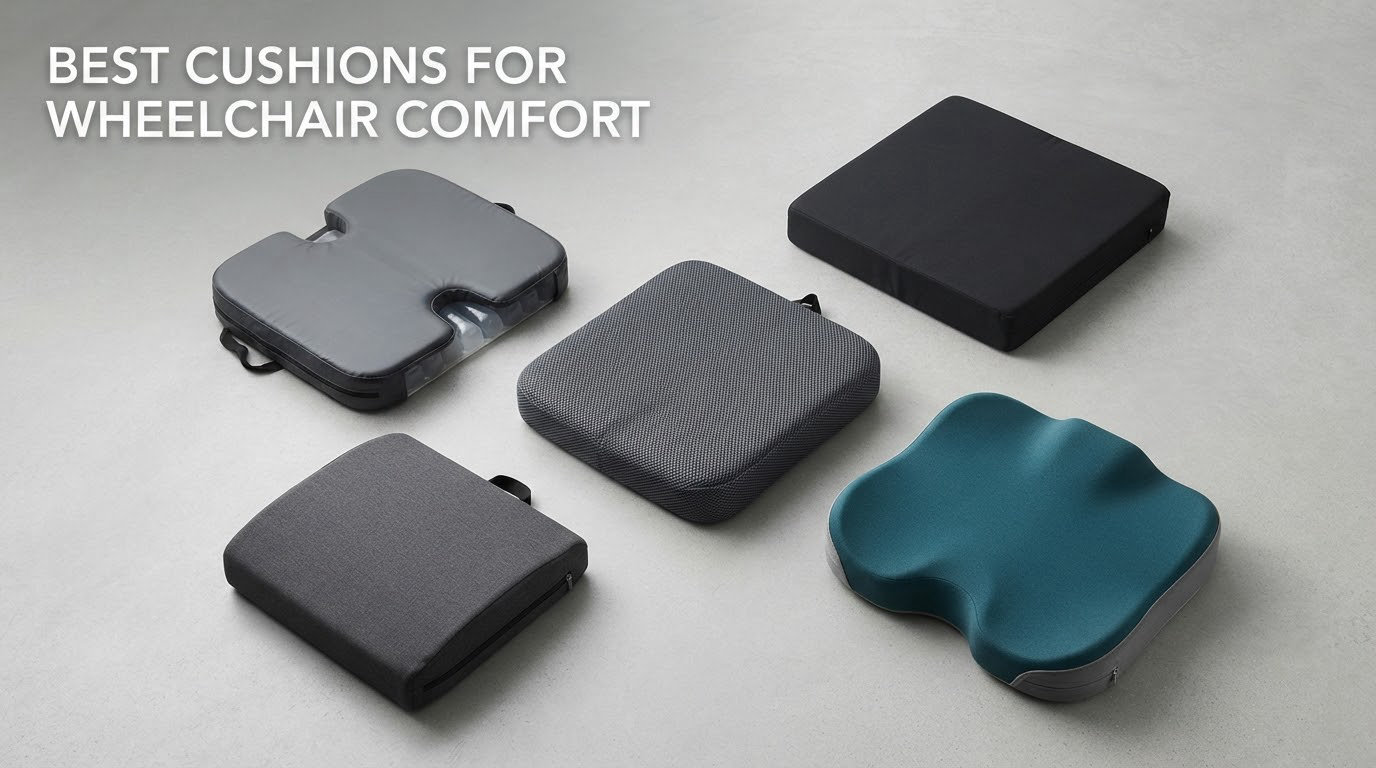
A wheelchair seat cushion is a removable pad that sits between you and the wheelchair sling. It spreads your weight over a wider area, reduces pressure on the tailbone and hip bones, and stops the slow build-up of pain that comes from sitting on flat upholstery for hours. That is the whole idea, and it is the difference between a chair you tolerate and a chair you can sit in all day.
We spent weeks comparing the twelve best cushions for wheelchair comfort in 2026, reading the spec sheets, weighing the construction, and looking hard at what buyers report after months of daily use rather than after a first impression. The list covers ventilated gel, memory foam, high-density foam, an adjustable air cell design, and a couple of contoured options with tailbone cutouts, so there is something sensible whether you are a full-time power chair user, a manual chair user, or someone who just needs a comfortable seat for appointments and travel.
A note before we start: if you already have skin that is red, broken, painful, or draining, stop shopping and talk to a physical therapist, occupational therapist, or wound care clinician first. A cushion is a tool for managing pressure, and a tool chosen without an assessment can hide a problem that is getting worse. For everyone else, here is how to pick one that fits your body and your chair.
Table of Contents
Top 3 Best Cushions for Wheelchair Comfort in 2026

Everlasting Comfort Ventilated Gel Cushion
- Ventilated gel memory foam
- Non-slip rubberized base
- Machine washable cover
- 2.29 lb

Vive 4-Layer Gel Seat Pad
- Four layer foam and gel build
- Waterproof sealed cover
- 16 x 16 x 3 inch
- Non-slip base
Drive Medical 14886 Gel Cushion
- Liquid gel bladder in foam shell
- Replaceable low-shear cover
- Waterproof vinyl base
- 275 lb capacity
Those three cover very different situations. The Everlasting Comfort pad is the one most people end up on first because it cools well and stays put. The Vive pad is the pick if you want more depth and a sealed waterproof cover. The Drive Medical cushion is the one clinicians hand out when skin protection is the priority, and it behaves nothing like a plush memory foam pad.
The 12 Best Wheelchair Seat Cushions at a Glance (October 2026)
| Product | Specifications | Action |
|---|---|---|
| Everlasting Comfort Ventilated Gel Wheelchair Cushion |
|
Check Latest Price |
| Vive Wheelchair Gel Seat Pad with 4 Layer Foam |
|
Check Latest Price |
 Essential Medical Supply Rehab 1 Foam Cushion Essential Medical Supply Rehab 1 Foam Cushion |
|
Check Latest Price |
 Roho Mosaic Air Cushion 18 x 16 Roho Mosaic Air Cushion 18 x 16 |
|
Check Latest Price |
 Hvllyan Thick Large Gel Seat Cushion Hvllyan Thick Large Gel Seat Cushion |
|
Check Latest Price |
 AUVON Gel Cushion with U-Cutout and Strap AUVON Gel Cushion with U-Cutout and Strap |
|
Check Latest Price |
| Drive Medical 14886 Skin Protection Gel Cushion |
|
Check Latest Price |
 AUVON Ventilated Memory Foam Cushion AUVON Ventilated Memory Foam Cushion |
|
Check Latest Price |
 Kolbs Gel Extreme 24 x 18 Cushion Kolbs Gel Extreme 24 x 18 Cushion |
|
Check Latest Price |
 CYLEN Gel Infused Memory Foam Cushion CYLEN Gel Infused Memory Foam Cushion |
|
Check Latest Price |
 YOUFI Thick Memory Foam and Gel Cushion YOUFI Thick Memory Foam and Gel Cushion |
|
Check Latest Price |
 CUSHIO 2-Piece Pressure Relief Cushion Set CUSHIO 2-Piece Pressure Relief Cushion Set |
|
Check Latest Price |
1. Everlasting Comfort Ventilated Gel Cushion – Best Overall for Everyday Sitting
Everlasting Comfort Ventilated Wheelchair Cushions for Pressure Relief – Gel Memory Foam Wheel Chair Seat Cushion Pad for Seniors and Adults & Pain Relief – Soft Non-Slip Cover – Office Accessories
18 x 16.93 inch ventilated gel memory foam
2.29 lb non-slip base
Machine washable cover
Pros
- Ventilated gel design stays cool during long sits
- Contours to the body and holds its shape
- Non-slip base keeps it anchored
- Removable machine washable cover
- Works in wheelchairs office chairs and scooters
Cons
- May feel too soft for stability during transfers
- Some occasional durability complaints
This is the cushion we kept coming back to. The gel memory foam is vented through the core rather than sealed in a solid block, and you can feel the difference within the first hour on a warm day. It is also the one with the deepest review history in our group, so the long-term picture is well documented rather than a guess.
Buyers consistently describe the same thing: it moulds to your shape and stays moulded. That matters more than first-day softness, because a pad that collapses after two months is not a pressure management tool any more, it is just a pad. If you have been reading forum threads about cushions going flat, this is the behaviour buyers report here.
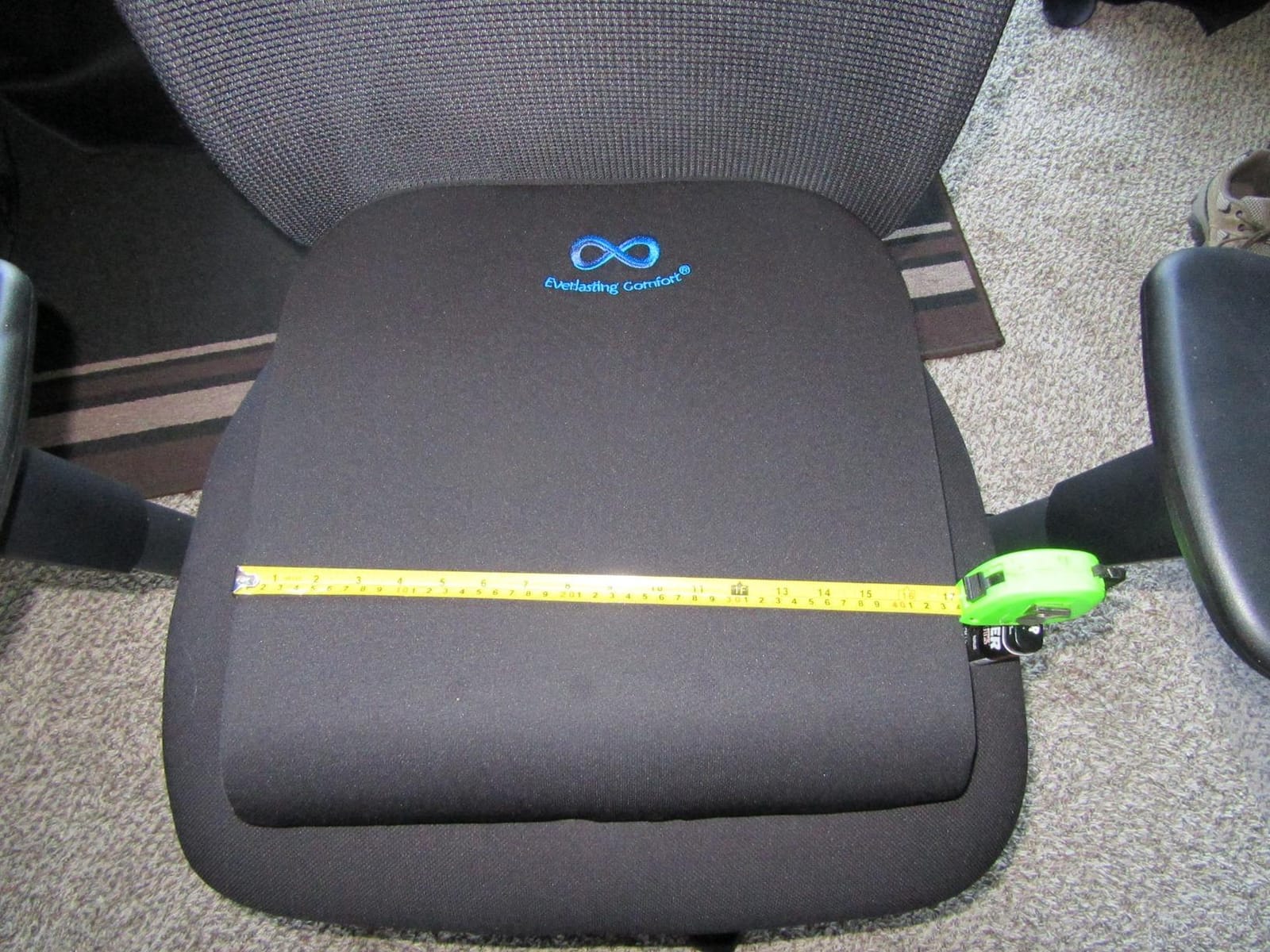
At 2.29 pounds it is light enough to move between a wheelchair, an office chair and a car without thinking about it, and the rubberized base holds it in place on a sling seat without any modification. The removable cover goes into a washing machine, which matters more than it sounds if you are dealing with sweat or incontinence.
The one thing to know before you buy: the foam is soft, and genuinely soft. If you transfer by lifting your body and you need a firm surface to push off from, a softer gel pad is not your friend. Test the transfer with a therapist present if that applies to you.
Who this cushion suits
Anyone sitting for a few hours at a stretch in a manual or power chair who is warm easily and wants a cushion that stays put. It also works as a secondary cushion in a car or on a hard bench.
If your main problem is tailbone pain rather than general pressure, look at a contoured cushion with a cutout instead, since this one spreads pressure evenly but does not take pressure off a single point.
Who should skip it
Skip it if your transfers depend on a firm, stable surface, or if you are managing an existing wound and need a clinician-selected cushion. Buy a firmer gel and foam model or speak to a therapist first.
It is also a soft pad, so if you sit on hard seating surfaces for ten hours a day, the softest option is not automatically the most comfortable one. Layering matters more than thickness.
2. Vive 4-Layer Gel Seat Pad – Best Value for Coccyx and Sciatica Pain
Vive Wheelchair Cushion – Gel Seat Pad for Coccyx, Orthopedic Back Support, Sciatica & Tailbone Pain Relief – Waterproof Cover + 4 Layer Foam Support & Comfort for Pressure Sore & Ulcers
16 x 16 x 3 inch four layer build
3.5 lb with gel interior
Waterproof sealed washable cover
Pros
- Four layer build balances comfort and pressure distribution
- Waterproof seal and washable cover
- Dynamic gel interior in high density foam
- Non-slip base
- Available in several sizes
Cons
- Three inch profile can raise seat height past footplate clearance
- Gel can lose some support over long term daily use
The Vive pad is the one we recommend when someone tells us their problem is a specific pain rather than general discomfort. Reviewers talk about the tailbone and the sciatic area by name, and the four layer construction, with a dynamic gel interior encased in two high density foam layers, is the reason.
It is a substantial cushion at three inches, and reviewers notice the difference under the ischial bones compared with a flat two inch pad. The waterproof seal on the cover is genuinely sealed rather than a splash resistant fabric, so spills clean off instead of soaking in.
At 3.5 pounds it is on the heavier side for a cushion you move several times a day, though still manageable for most users. The non-slip base is a real rubberised layer rather than a coating, and it does not creep forward on a sling seat.
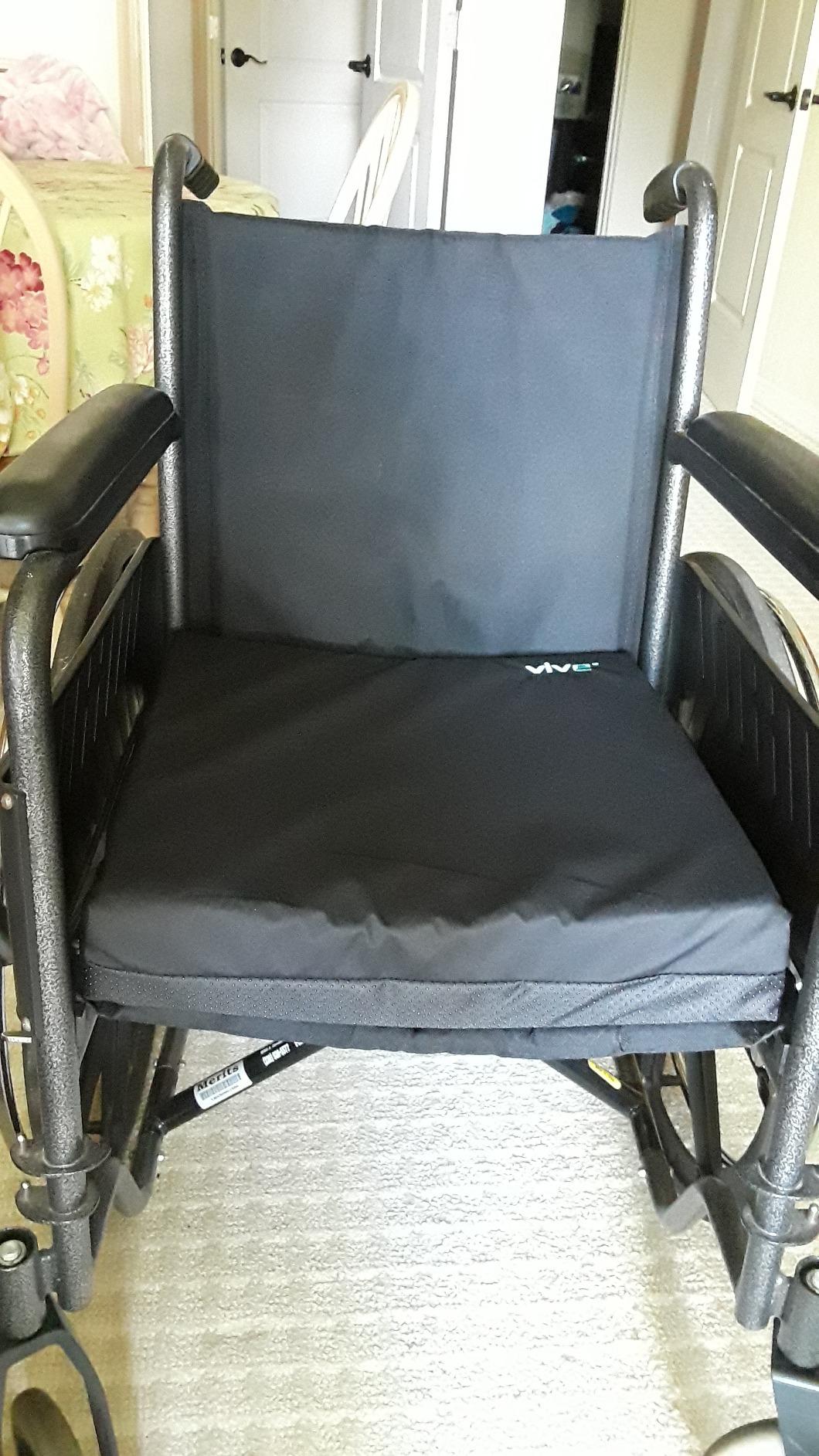
The recurring complaint is fit rather than quality. Three inches of cushion raises your seat height, and that can push your knees into an armrest or change how your footplates sit. Measure your clearance before you order.
Check your seat height before ordering
Sit down in your chair and measure from the top of the seat to the underside of your armrest and to your footplate. If you have less than three inches of clearance, this pad will not work as it is.
Size also matters here, and this cushion comes in a spread of dimensions. Match the cushion width to the usable width of your seat sling, not the overall width of the chair frame.
Who this pad suits
It suits people with named pain, tailbone or lower back or sciatica, who want more depth than a thin foam pad and who want a cover that survives caregiving situations. It is a good first serious cushion.
If your priority is cooling in hot weather, a ventilated design does more for that than a sealed waterproof cover does, even though the sealed cover is easier to keep clean.
3. Essential Medical Supply Rehab 1 Foam Cushion – Best Budget Pick for a Supportive Base
Essential Medical Supply Rehab 1 Foam Seat Cushion – Denser Cushion for Office Chairs, Wheelchairs, and More – Chair Seat Pad Provides Additional Support and Pain Relief for Seniors – 18″ x 16″ x 2″
18 x 16 x 2 inch high density foam
1.3 lb and latex free
Removable hand washable cover
Pros
- Dense foam resists collapsing and holds its height
- Lightweight and easy to move between chairs
- Fits standard wheelchair and office chair sizes
- Removable cover wipes clean
- Also offered in 3 and 4 inch depths
Cons
- Two inch version is thin and some report low density in it
- Limited pressure relief for users at high risk of skin breakdown
- Needs a break in period before it feels soft
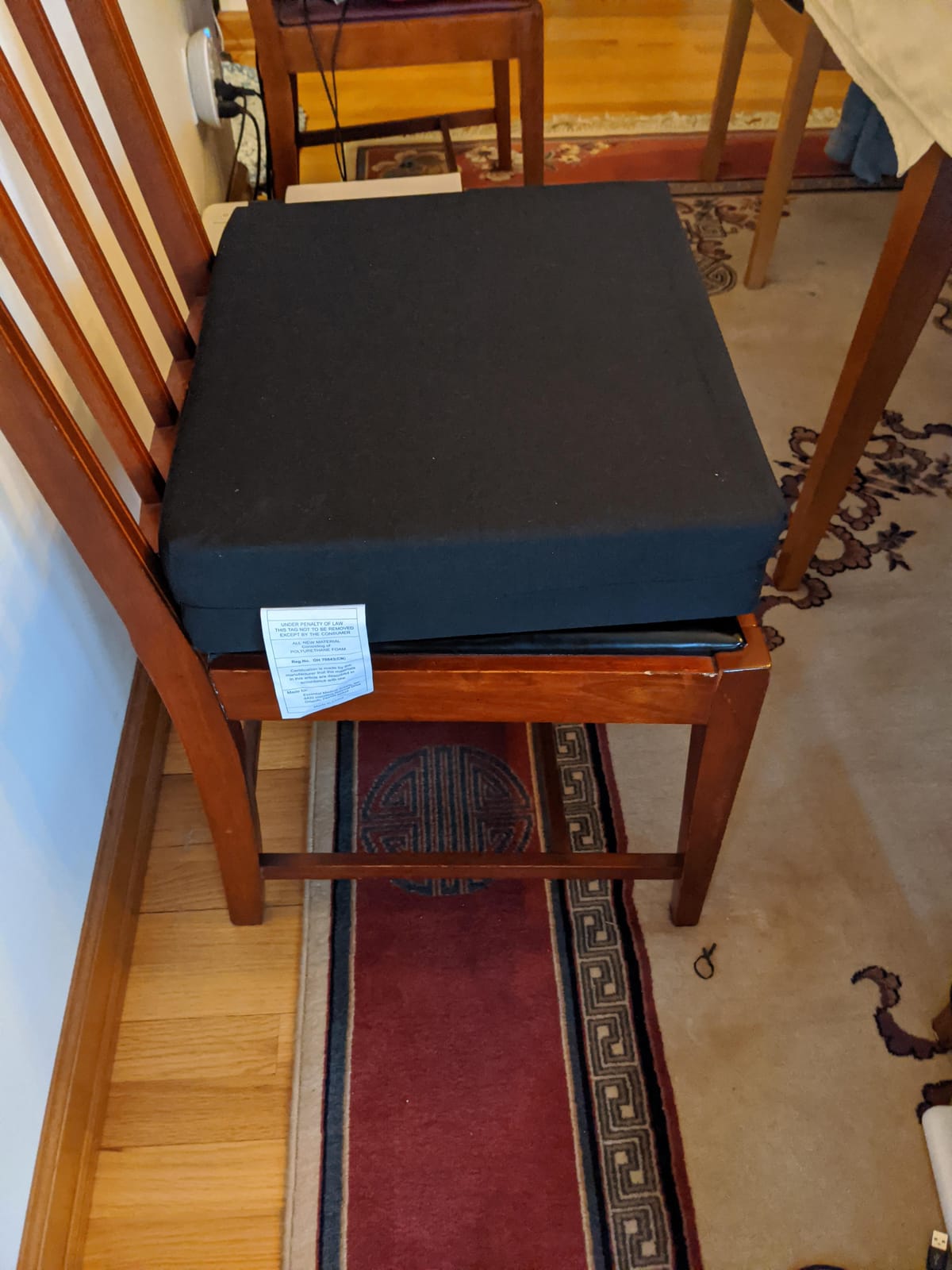
This is the plain foam cushion that shows up in clinic supply rooms, and for good reason. It is denser than a typical office chair pad, which means it holds its height for years instead of flattening, and it is 1.3 pounds, so it is the easiest cushion on this list to move.
What we like most is how often reviewers describe using it as a base layer under a softer top cushion. A firm bottom that does not collapse gives the softer layer above it something stable to work against, and that combination is how most seating specialists build a two cushion system.
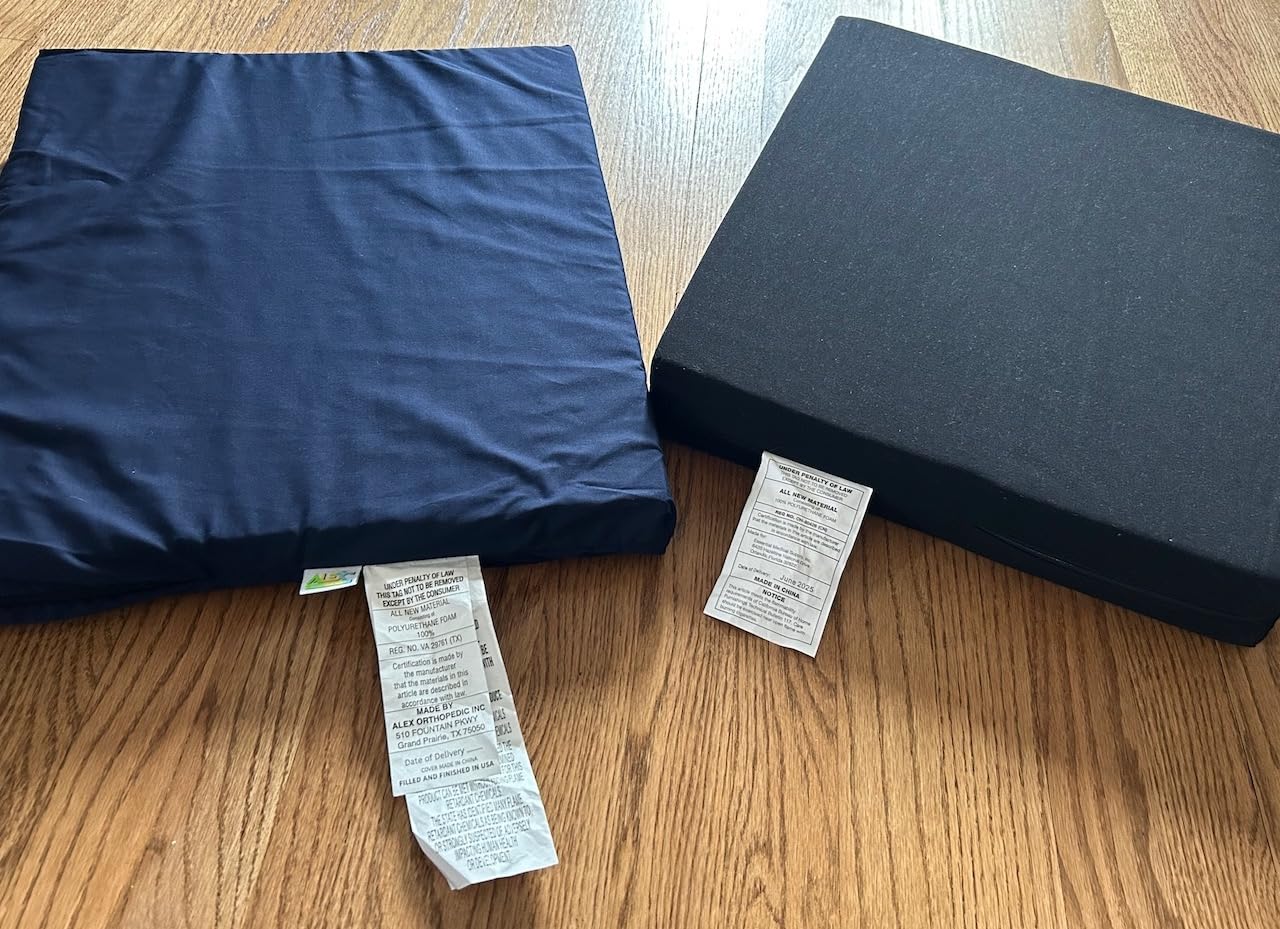
It is also latex free with a removable cover that wipes down, and it fits standard chair dimensions without any adaptation. There are thicker versions of the same cushion if you want more elevation, and the 18 x 16 footprint matches the most common sling seat.
Be clear about what this is. It is a firm, supportive foam pad, not a pressure relief pad. Reviewers managing ulcers say plainly that it is not sufficient on its own, and the two inch version in particular draws comments about density being lower than expected.
How to use it as a base layer
Place this cushion on the seat sling first, then add a softer contoured or gel cushion on top. The firm base stops the lower cushion bottoming out and keeps your hips from sinking into the same spot all day.
If you are layering, check the combined height against your armrests and footplates. Two cushions can add four inches of elevation in total, and that changes how you sit.
Who this pad suits
It suits anyone who wants a durable, no fussy base layer, travels with their chair, or is building a two cushion system. It also suits users who prefer a firm seat and find soft pads annoying.
Do not choose it as your only cushion if you have any history of skin breakdown, or if sitting on a firm surface already causes pain. Firm is not the same as supportive.
4. Roho Mosaic Air Cushion – Premium Pick for Adjustable Pressure Relief
Roho Mosaic Wheelchair Air Cushion, Standard Cover, 18 x 16 Inches
18 x 16 inch interconnected 3-inch air cells
Adjustable firmness with hand pump
Supports up to 315 lb
Pros
- Adjustable air cells let you tune firmness for your body
- Light at 2.4 pounds and easy to move between chairs
- Kit includes pump cover and patch kit
- Machine washable cover with non-slip bottom
- Long standing category sales rank
Cons
- Air cells need periodic pressure checks and manual pumping
- Soft feel for users who want a firm surface
- Some reports of air loss over time
- Bulkier than flat foam when inflated
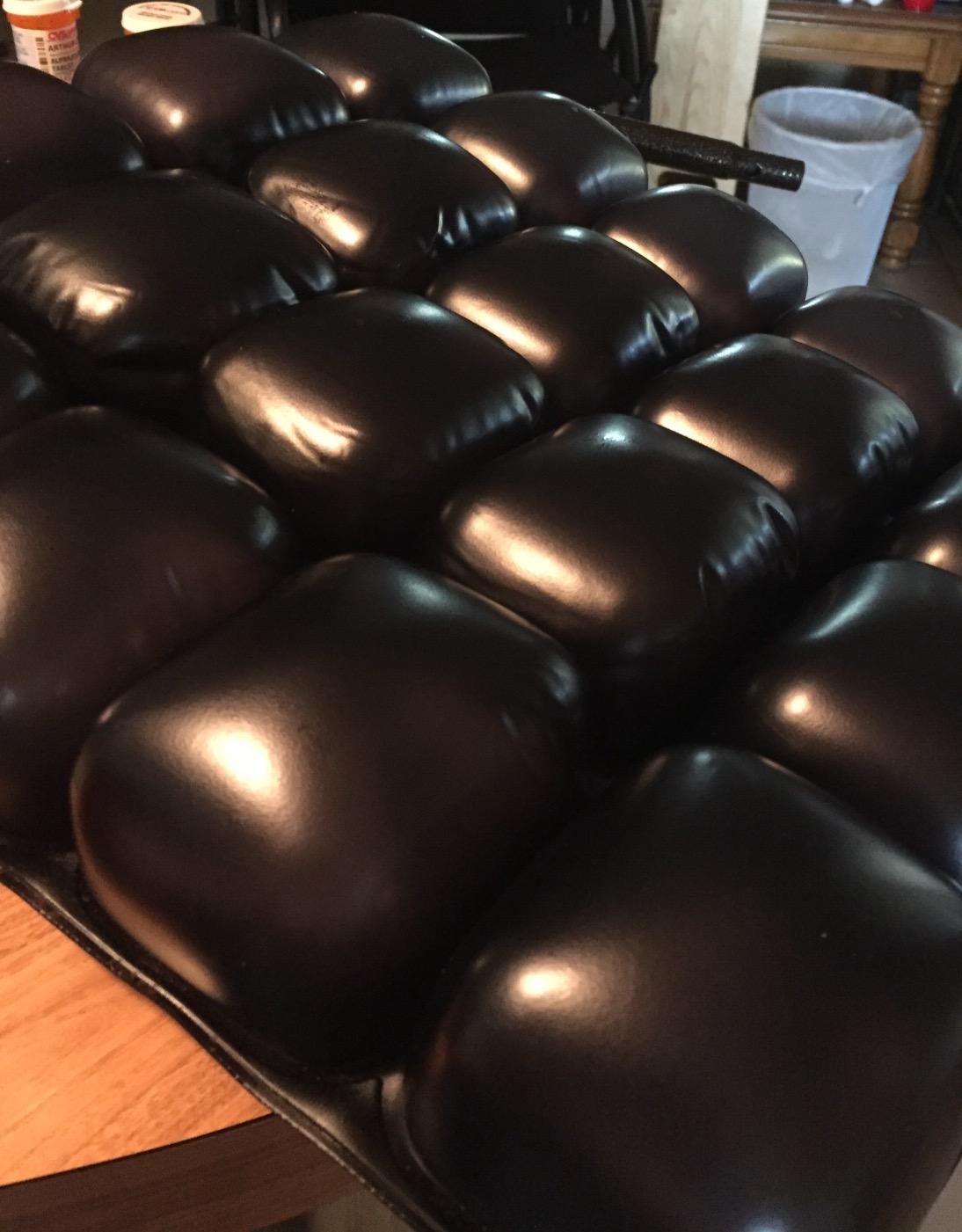
The Roho Mosaic is the only true air cell design here, and it behaves in a category of its own. A grid of interconnected three inch cells holds air, and you inflate or deflate them with the included pump until the immersion feels right for your body. Nothing else on this list lets you change the cushion after you sit in it.
For anyone whose needs have changed, or whose body has changed, that adjustability is the whole appeal. It is also the most broadly sized option we reviewed for weight, with a capacity up to 315 pounds.
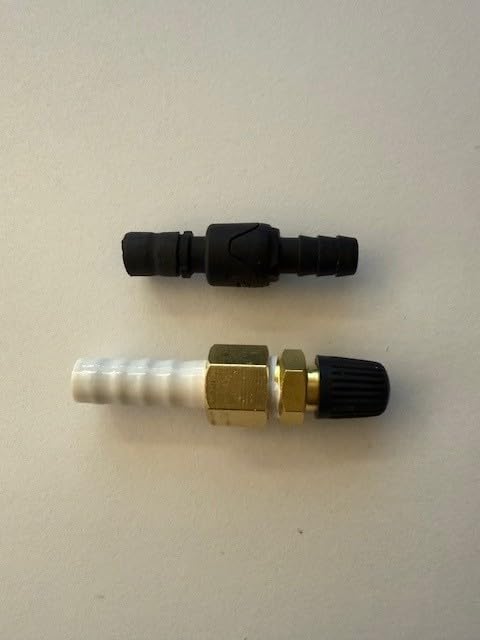
At 2.4 pounds it is light for what it does, and the complete kit includes the cushion, a pump, a removable cover and a patch kit, so you are not hunting for accessories afterwards. The non-slip bottom and machine washable cover are standard here, not an upgrade.
The trade-off is maintenance. Air cells lose a little pressure over time and need checking, usually a few times a week at first. If you will not add that to your routine, a foam or gel cushion that holds its shape on its own is a better fit.
Setting your firmness level
Start slightly firmer than feels comfortable and add air a small amount at a time. Most people end up with enough immersion that the ischial bones sink in slightly without feeling like they are falling into the cushion.
Check the firmness the same time of day for a few weeks before deciding. Body swelling and how you transfer change the answer, and morning and end of day settings can differ.
Who this cushion suits
It suits full time wheelchair users, anyone with a history of pressure problems, and anyone up to a higher weight who needs real offloading. It is the closest thing here to a clinician prescribed air cushion.
Skip it if you want a firm seat, if you travel frequently without room for a pump, or if the maintenance routine is genuinely unrealistic for you. Reports of slow air loss are the other reason people move on from it.
5. Hvllyan Thick and Large Gel Cushion – Best for Oversized Seats
Gel Seat Cushion for Long Sitting, (Thick & Large) Cushion for Wheelchair
18.9 x 17.7 inch extra large gel pad
1.6 inch thick with honeycomb vent
3.1 lb with washable cover
Pros
- Extra large surface fits oversized seating
- Honeycomb vent layer reduces sweating
- Grip bumps on the underside reduce sliding
- Machine washable cover
- Reviewers report even weight distribution
Cons
- Thin at 1.6 inch for prolonged hard-surface sitting
- Less structured support for all day use
- Cover can slip on some chair surfaces
- No cutout for targeted tailbone relief
The Hvllyan pad wins on footprint. At 18.9 by 17.7 inches it covers more seat than anything else here, which is the point if you are in a wide chair or want the cushion to reach the edges of a contoured seat rather than leaving a bare strip.
The double layer honeycomb vent structure is the other feature worth knowing about. It is a genuine airflow path through the pad, not just a mesh cover, and reviewers single out the reduction in sweating as the reason they stay with it.
The underside has grip bumps rather than a flat rubberised base, and that does a better job of resisting movement on a sling seat, including during transfers. The cover is machine washable and the material is PVC free.
Where it falls short is thickness. At 1.6 inches it is thinner than most wheelchair specific cushions here, and several reviewers say it is not enough support on a hard surface for a full working day. It is a good extra layer, a weaker solo cushion.
When an oversized pad actually helps
An oversized pad fills gaps in a contoured or sling seat, so your weight is carried across the full seat rather than perched on a narrow contact patch. That is the difference between sitting in a chair and sitting on a chair.
Measure your usable seat width first. If your seat is a standard 18 by 16, this pad overhangs on every side, which is fine for comfort but can catch on door frames and transfer surfaces.
Who this pad suits
It suits users in a wide chair, users who run warm, and anyone building a stack where a large, cool base layer sits under a contoured top cushion. Several reviewers cite sciatica relief from the even weight spread.
Do not rely on it alone for tailbone pain, because there is no cutout and pressure is spread rather than removed. If a specific point is the problem, choose a contoured design instead.
6. AUVON Gel Cushion with U-Cutout and Buckle Strap – Best for Tailbone Relief
AUVON Gel Wheelchair Seat Cushion with Waterproof Cover, Ergonomic Chair Cushion with U-Cutout for Tailbone, Back Pain Relief, Memory Foam Cushion for Office, Anti-Slip, Buckle Strap
18 x 16 x 3 inch with U-shaped cutout
Extra thick gel blocks plus memory foam
Waterproof membrane and buckle strap
Pros
- U-cutout floats the coccyx and shifts load to the thighs
- Gel and memory foam holds shape without early flattening
- Dual anti-slip plus buckle strap anchors it during transfers
- Waterproof membrane handles sweat and fluids
- Reviewers report durability past a year of daily use
Cons
- Temperature sensitive foam starts firm
- Could feel firm for buyers wanting a plush surface
- Three inch height affects clearance under desks
A cutout is a specific tool. The U shaped opening in this cushion removes the tailbone from the load entirely, and the sloped sides move what is left onto the thighs, which have far more tissue between bone and surface. If your pain is concentrated in one spot, this is the design to buy.
The gel blocks underneath the memory foam are listed at three times the thickness of typical gel pads, and reviewers note that the combination keeps its shape rather than bottoming out, which is the failure mode that makes contoured cushions disappointing after a few months.
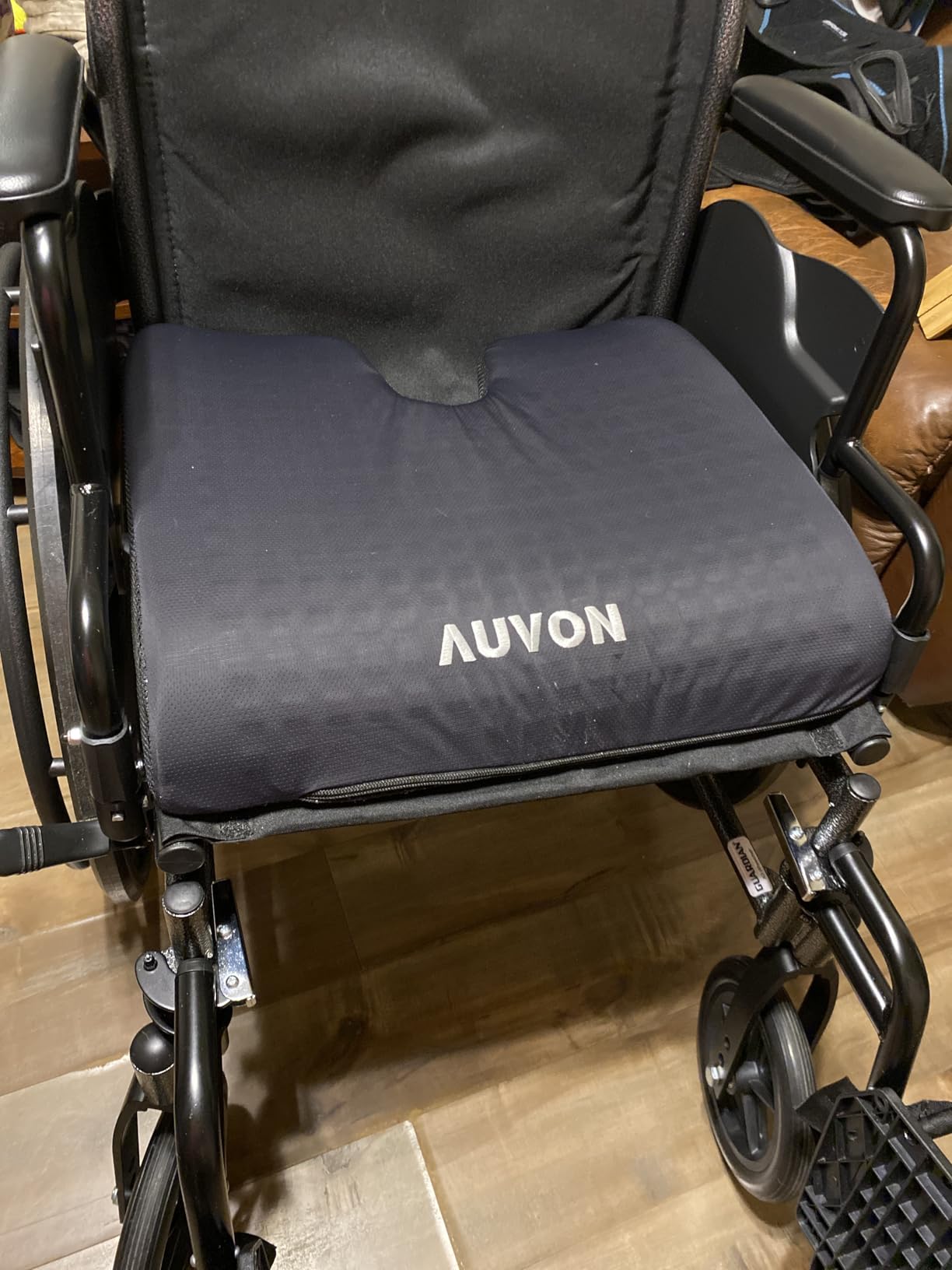
Two details set this one apart from other contoured cushions. The cover has a waterproof membrane, not just a coated fabric, so sweat and fluids never reach the foam. And the dual anti-slip base plus adjustable buckle strap means it stays anchored through a transfer, which is when most cushions slide out from under you.
It is also the one we would most want to see on a caregiver’s checklist. A cushion that survives daily caregiving and daily washing is worth more than a slightly plusher one that does not.
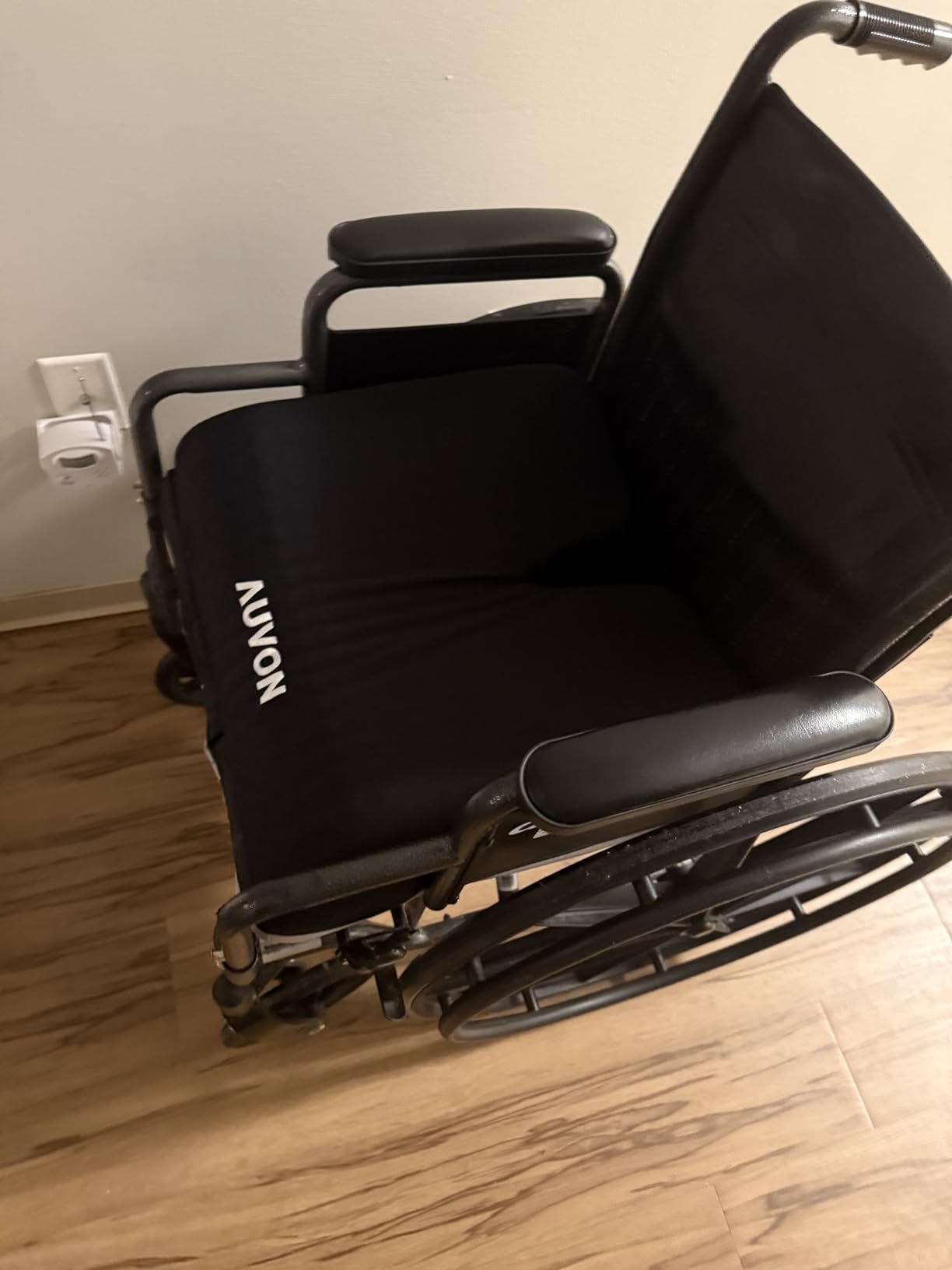
Why a cutout beats a flat pad for tailbone pain
A flat pad spreads pressure, so the tailbone still takes the highest load. A cutout removes contact entirely from the sore point, so healing tissue gets no pressure at all rather than a reduced amount.
The cost of a cutout is that the surrounding foam does more work, so the cushion needs to be substantial to do it well. That is why contoured designs like this are almost always three inches or more.
Who this cushion suits
It suits anyone with diagnosed or suspected tailbone pain, anyone with a caregiver involved in transfers, and anyone who has struggled with cushions sliding forward. The strap system alone justifies it for independent transfers.
Note the temperature sensitive foam. It starts firm in a cold room and softens with body heat, which some buyers read as a quality problem when it is just the material working as designed.
7. Drive Medical 14886 Gel Cushion – Best for Clinical Skin Protection
Drive Medical 14886 Skin Protection Gel Wheelchair Seat Cushion
18 x 16 x 3 inch gel bladder cushion
6.3 lb with waterproof vinyl base
275 lb weight capacity
Pros
- Clinical design focused on pressure ulcer prevention and management
- Waterproof base and fluid resistant top suit incontinence
- Cover is removable and replaceable
- Low-shear vapour permeable cover reduces skin shear
- Substantial and stable at 6.3 pounds
Cons
- Heaviest cushion here at 6.3 pounds
- Fixed 18 x 16 footprint does not suit every chair
- Foam shell feels less plush than memory foam
- Capacity limited to 275 pounds
This cushion has been listed since the mid 2000s, and that longevity is the point. It is a clinical design, not a comfort design: a viscous liquid gel bladder inside a fire retardant polyurethane foam shell, built specifically for pressure ulcer prevention and management rather than for softness.
The liquid gel redistributes load gradually instead of pushing back like foam, so it allows immersion without creating the high pressure peaks that cause skin damage. Low-shear is the other word worth understanding here, since shear, the sideways drag between skin and surface, breaks down skin as surely as pressure does.
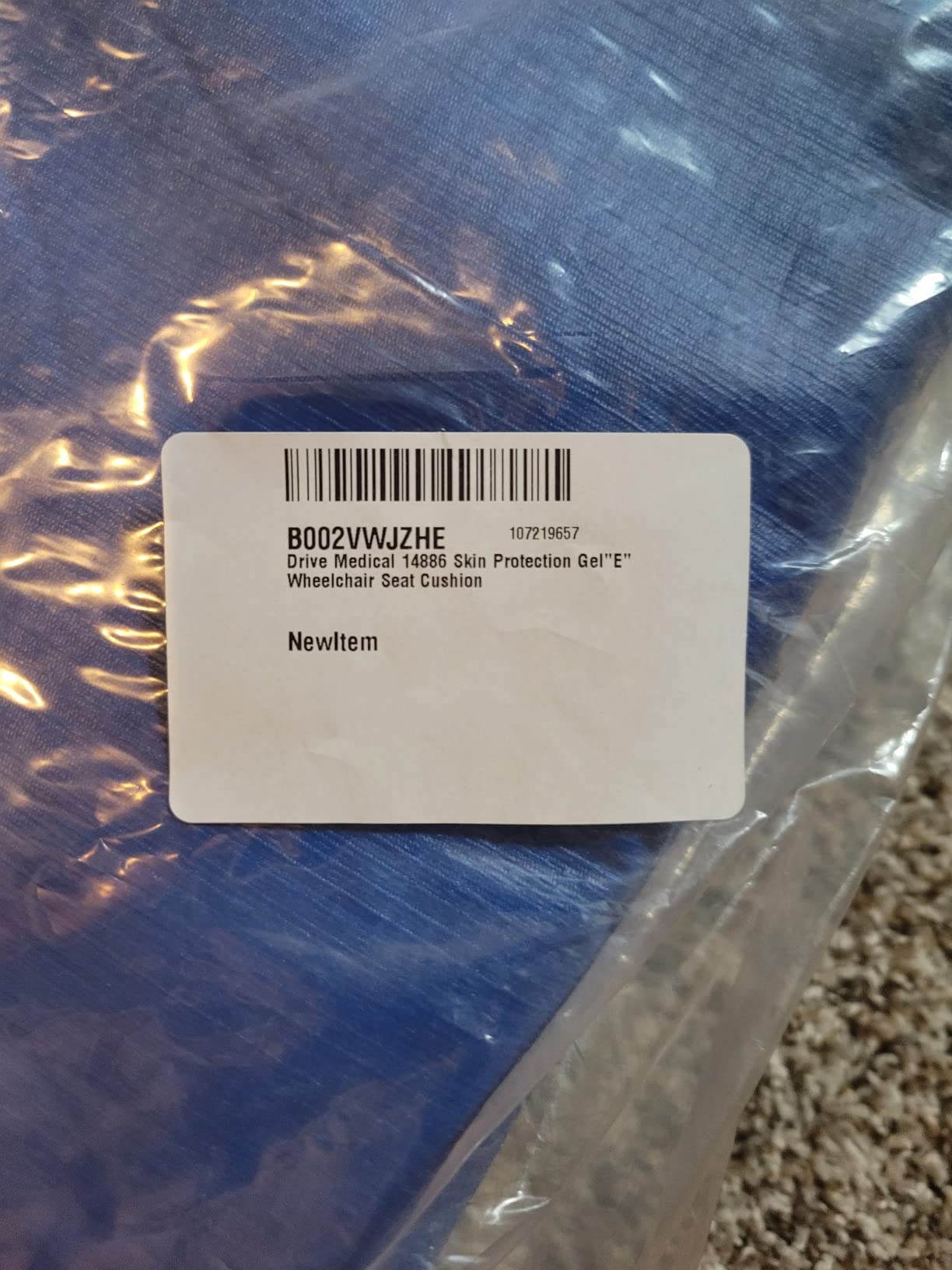
Two practical wins for caregivers. The top cover is removable and replaceable, so when it wears out you replace a component rather than the whole cushion. And the base is waterproof vinyl with a fluid resistant nylon top, which is what you want if incontinence is part of the picture.
The 6.3 pound weight is the honest drawback. It is the second heaviest cushion we reviewed, and it is noticeably harder to lift onto a seat or reposition in a car. Anyone doing independent transfers should test the weight before committing.
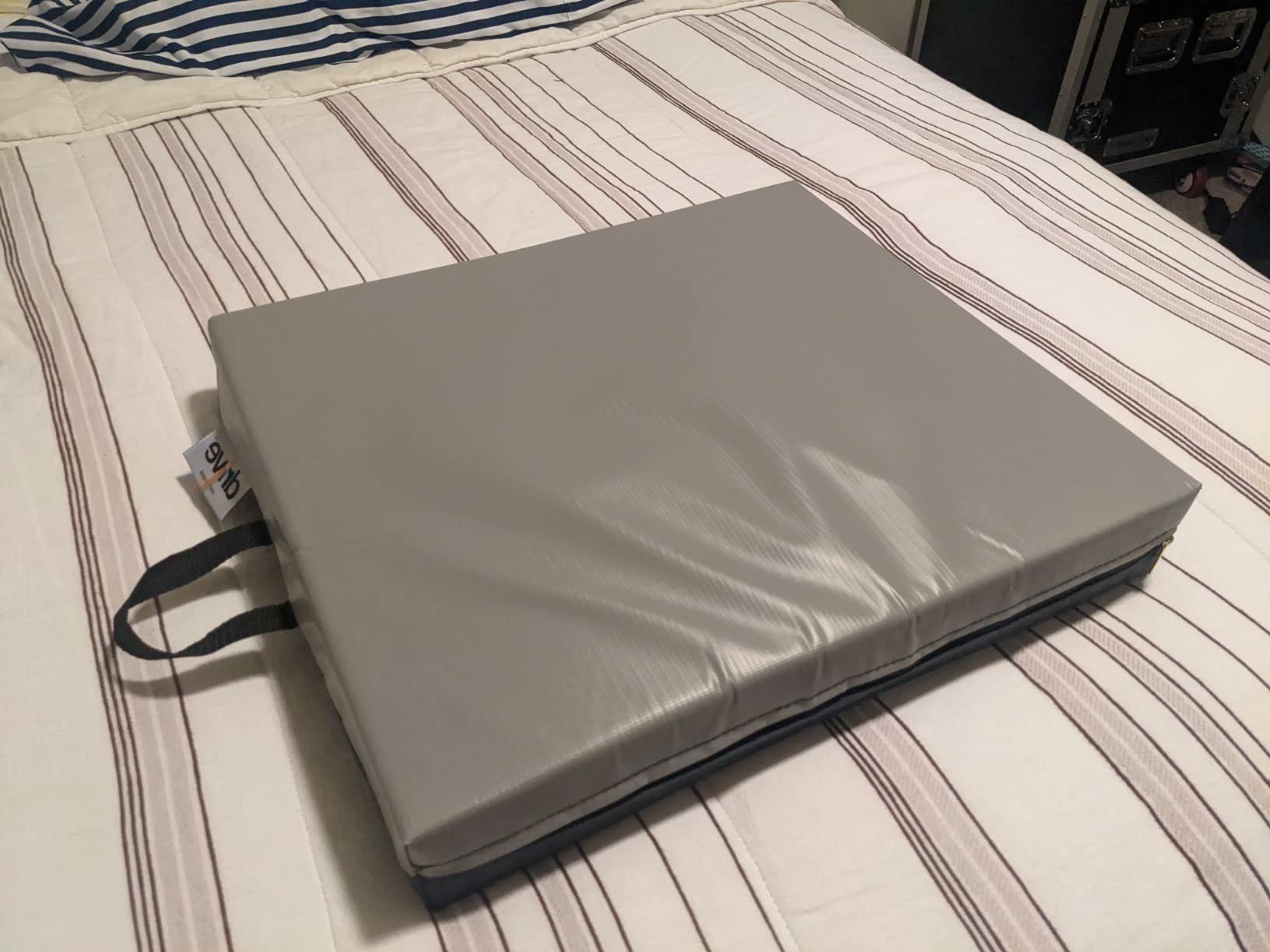
Understanding shear and why the cover matters
Shear is the sideways movement of skin against the cushion surface as your body slides. It damages soft tissue even when the pressure reading looks acceptable, so a low-shear cover is a clinical feature rather than a comfort nicety.
Because the cover is removable, you can wash it, replace it when it stops performing, and keep the gel bladder and foam shell in service for years. That changes the long term cost picture completely.
Who this cushion suits
It suits full time users, anyone with a pressure injury history, anyone caring for a person with incontinence, and anyone at or below a 275 pound working limit who values durability over plushness.
Skip it if you are above that capacity, if you transfer independently and the weight is a problem, or if you want a soft seat. It is a clinical tool and it feels like one.
8. AUVON Ventilated Memory Foam Cushion – Best for Hot Weather
AUVON Ventilation Seat Cushion with Innovation Heat Dissipation Design, Wheelchair Cushion with Supportive Memory Foam, Waterproof & Anti-Slip Cover, Improve Lower Back Comfort (Black, X-Large)
18 x 16 x 3 inch with 30 air holes
11 ventilated grooves and memory foam
Waterproof membrane velour cover
Pros
- Thirty air holes and eleven grooves reduce stuffiness and sweating
- Memory foam moulds and resists flattening
- Waterproof membrane keeps the foam dry
- Anti-slip bottom holds position
- Machine washable cover with carry handle
Cons
- No coccyx cutout so relief is general rather than targeted
- Firm three inch foam for users wanting soft
- Foam raises seat height under some desks
Heat is the most under-discussed problem in this category, and this cushion attacks it directly. Thirty air holes and eleven ventilated grooves run through the pad, so air moves through the cushion instead of trapping body heat against your skin, which is exactly the complaint that shows up in wheelchair forums every summer.
It also has the best rating among the highly reviewed cushions here, and reviewers note the memory foam moulds to the sitter and resists flattening rather than degrading into a hard block.
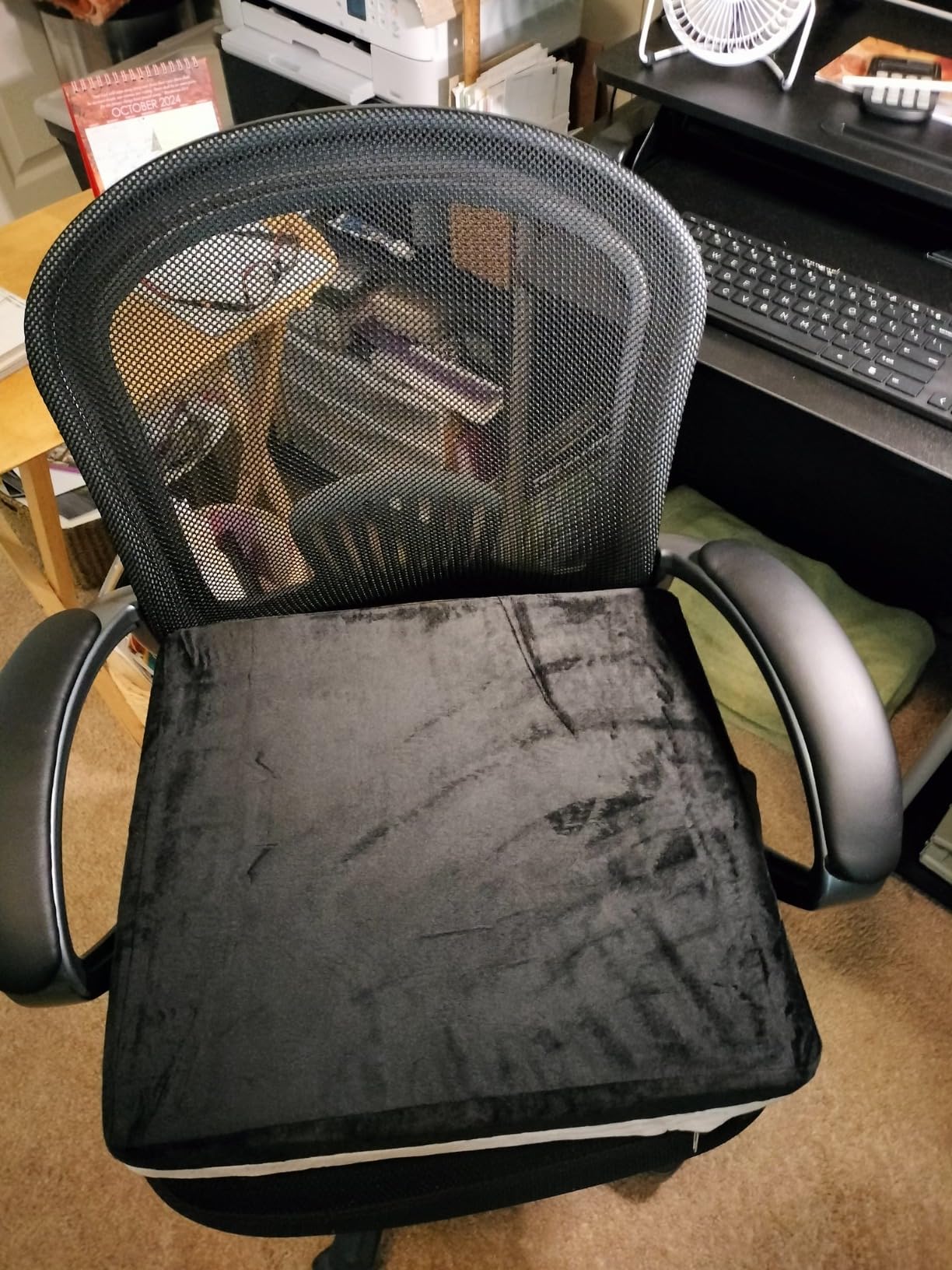
The velour cover has a waterproof membrane, so sweat never reaches the foam, and it is machine washable. There is an anti-slip bottom for hard chair surfaces and a built-in carrying handle for moving between a wheelchair, a desk and a car.
It comes in Large, X-Large and XX-Large, which is useful if you are between sizes or move between chairs with different seat widths. Check which one matches your sling before ordering.
Managing heat beyond the cushion
No cushion solves heat on its own. Breathable clothing, a lightweight or moisture wicking cover, and opening your clothing where you can all reduce the load on the cushion’s ventilation system.
If you use a two cushion system, put the ventilated pad on the bottom and the softer layer on top. Ventilation only helps if air can actually pass through the whole stack.
Who this cushion suits
It suits users in hot climates, anyone with sweating issues, and office or school users who move between a wheelchair and a desk chair. The general pressure relief works well when your pain is spread rather than localised.
If your pain is concentrated at the tailbone, choose a cutout design instead. Spreading pressure evenly is not the same as unloading a specific sore point.
9. Kolbs Gel Extreme 24 x 18 Cushion – Best for Deep Immersion
Kölbs Gel Extreme Wheelchair Cushions Seat Cushion, Coccyx, Sciatica & Tailbone Pain Relief Seating Pad Ideal for Office, Kitchen Wheelchairs and Auto, 24 x 18, 3 Inch Thick
24 x 18 x 3 inch five layer build
6.8 lb with extra thick gel bladder
Waterproof cover and non-slip base
Pros
- Five layer build gives the deepest immersion in the foam and gel group
- Extra thick gel bladder suited to sore management
- Water resistant cover handles spills and fluids
- Available in an oversized 24 x 18 format
- Non-slip bottom layer keeps it stable
Cons
- Heaviest here at 6.8 pounds
- Too large for many standard wheelchairs and office chairs
- Deep immersion can hinder transfers with limited hip motion
- Firm multi-layer foam feels less soft than memory foam
The Kolbs builds depth in a way nothing else here does. Five layers, from a water resistant top cover through high density support foam, a gel bladder, and a medical grade foam base, give a cushion that lets the sitter sink in further than anything else in this group. Immersion and envelopment are the whole point, because surrounding the body in soft material is what spreads load.
For a sitter whose bony points are the problem, that depth is the mechanism that does the work. Reviewers caring for people with existing sore problems repeatedly point to the extra thick gel layer as the reason it helps.
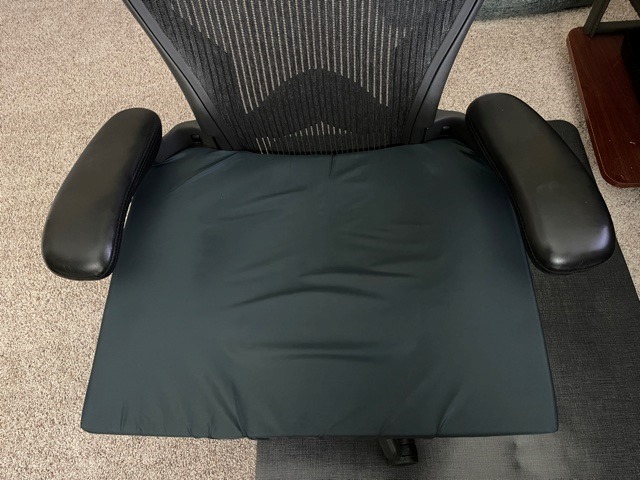
It comes in a 24 by 18 inch size as well as 18 by 16 and 18 by 18, which is what makes it usable in a wide bariatric chair. The cover is water resistant, and the bottom layer is non-slip so a deep cushion does not shift when you lean into it.
Depth has a cost. At 6.8 pounds this is the heaviest cushion we reviewed, and deep immersion means rising out of the cushion is harder, which is exactly where users with limited hip range of motion struggle.
Immersion, envelopment and why depth helps
Immersion is how far the body sinks into the cushion. Envelopment is how completely the cushion wraps around the shape of the sitter. Both increase the contact area, which is what lowers peak pressure.
More layers do not automatically mean better cushioning, but they do give a wider range between too soft and too hard. If you cannot get comfortable on a thin pad, a deep multi layer design is often easier to live with.
Who this cushion suits
It suits users in a wide chair, users with a history of pressure damage, and caregivers who want a cushion that does not bottom out under a heavy load. Reviewers consistently describe it as clinical rather than plush.
Avoid it if you transfer independently and a heavy, deep cushion would make that harder. Practising a transfer with the actual cushion in place is the only reliable test.
10. CYLEN Gel Infused Memory Foam Cushion – Best for Lightweight Transfers
Ifoam Gel Infused Memory Foam Layer Wheelchair Cushion – Seat Cushion for Wheelchair-OfficeChair, Kitchen Chair-Pressure Sore and Tailbone Pain Relief-High Dense Polyfoam Base (Black,18x16x3 inch)
18 x 16 x 3 inch two layer cushion
0.6 kg with gel infused memory foam
Washable mesh cover and non-slip base
Pros
- Plush memory foam top over a supportive high density core
- Lightweight for daily transfers
- Gel infusion keeps it cool and conforming
- Removable washable mesh cover
- Non-slip bottom stays put in a wheelchair or scooter
Cons
- Slipcover is less waterproof than a sealed membrane cover
- Firm core can be uncomfortable for light users
- No integrated tailbone cutout
- Ice silk cover can slide on some surfaces
The CYLEN is the cushion we would hand to someone who does several transfers a day. At 0.6 kg it is roughly a quarter of the weight of the deep foam and gel options, and for a user who moves between a chair, a bed and a car, that difference shows up in the day.
The two layer design is the other reason it works. A plush memory foam top for comfort sits over a high density core that resists collapsing, so you get softness where you feel it and support where you need it, without the bottoming out that ruins a single layer cushion.
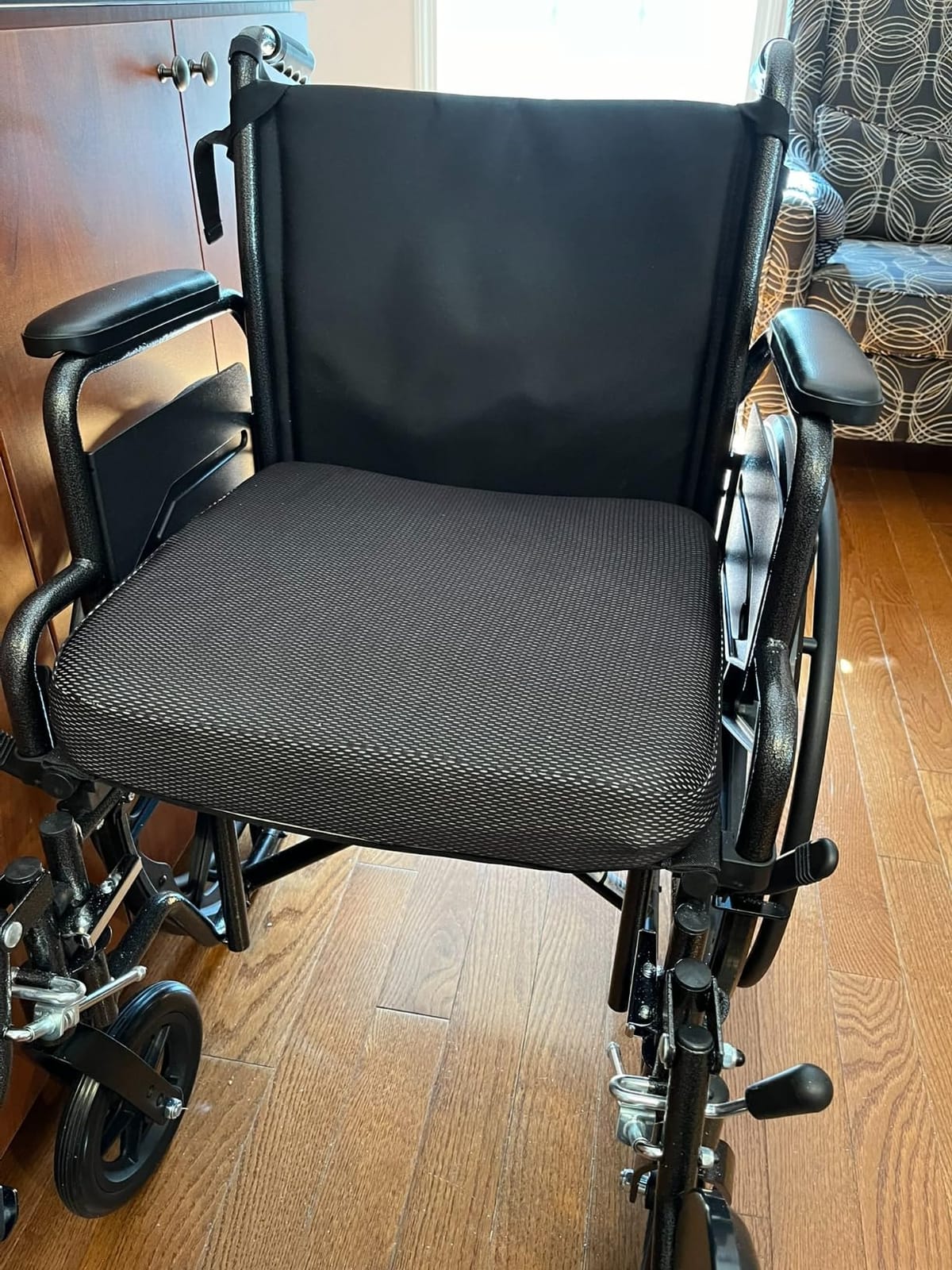
The gel infused foam helps with temperature and conforms to shape, and the removable mesh slipcover washes easily and breathes well. The non-slip bottom holds position in a wheelchair or scooter, which is what stops it migrating during transfers.
Be aware of the tradeoff on the cover. A mesh slipcover is breathable but not sealed, so if you are managing incontinence you would want a membrane cover instead. Sizes run from 16 by 16 up to 24 by 24.
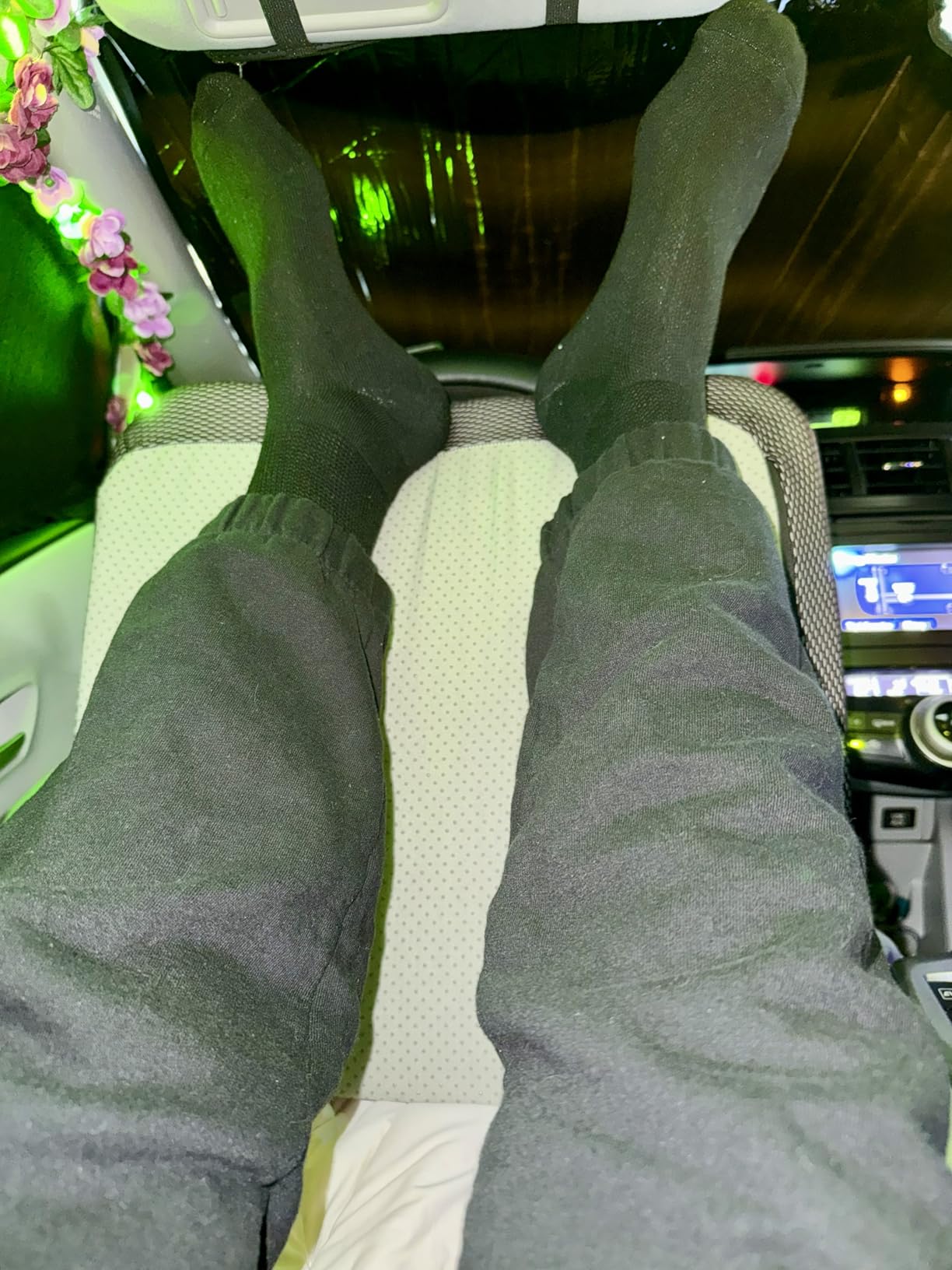
When weight matters more than depth
Cushion weight shows up in every transfer, in getting the cushion into a car, and in loading the chair. If you transfer several times a day, a light cushion is a safety feature rather than a convenience.
Light weight is not the same as thin. This cushion is three inches thick, so you get depth and elevation as well as a light weight, which is unusual in this group.
Who this cushion suits
It suits frequent independent transfers, anyone building a cushion stack, and users who move between a wheelchair, an office chair and travel seating. The washable mesh cover suits people without incontinence concerns.
Pick something else if you need a sealed waterproof cover, or if you want a contoured cutout for a specific sore. The light weight here comes partly from a design that spreads pressure generally.
11. YOUFI Thick Memory Foam and Gel Cushion – Best for Extra Thickness
YOUFI Thick Memory Foam & Gel Seat Cushion, 18″X16″X4″ Large Chair Cushion for Wheelchair Mobility Scooters, with Non-Slip Bottom and Carry Handle (Black)
18 x 16 x 4 inch extra thick profile
3.1 lb full memory foam core
3D mesh washable cover with handle
Pros
- Four inch profile elevates pressure off sensitive areas
- Full memory foam core resists flattening better than thin pads
- 3D mesh cover gives strong airflow
- Non-slip bottom and carry handle
- Suited to higher weight users needing a thicker seat
Cons
- Four inch height significantly raises seat height
- May be too tall for transfers from a low chair
- Curved design less suitable where a flat surface is needed
- Smaller review base than the leading picks
Four inches is a lot of cushion, and it is the reason to buy this one. Raising the sitting surface moves load off sensitive areas and changes the angle of the hips and knees, which is the mechanism some users find relieves low back pain better than anything added behind them.
Unlike thinner foam and gel pads, the core here is full depth memory foam rather than a thin layer over foam, and that is why reviewers report it holding its shape instead of flattening.
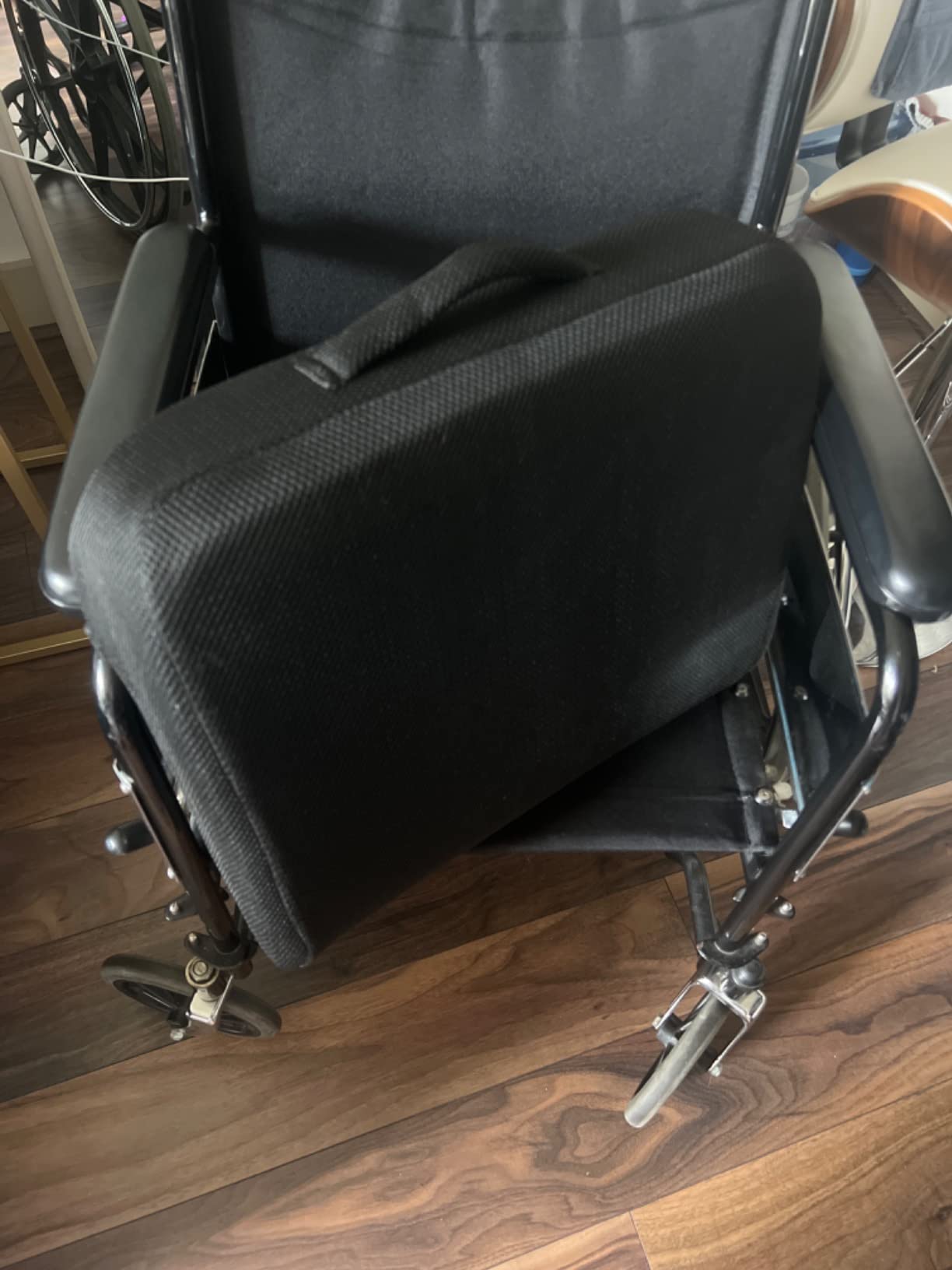
The 3D mesh cover is genuinely breathable rather than fabric backed, and it is removable and machine washable. A non-slip bottom and a carry handle make it practical to move between a wheelchair, a scooter and a car, and it works for travel as well as daily use.
The curved shape is intentional, moulding slightly to the sitter rather than presenting a flat surface. That helps pressure distribution and hurts if your posture needs a flat plane, which is uncommon but real.
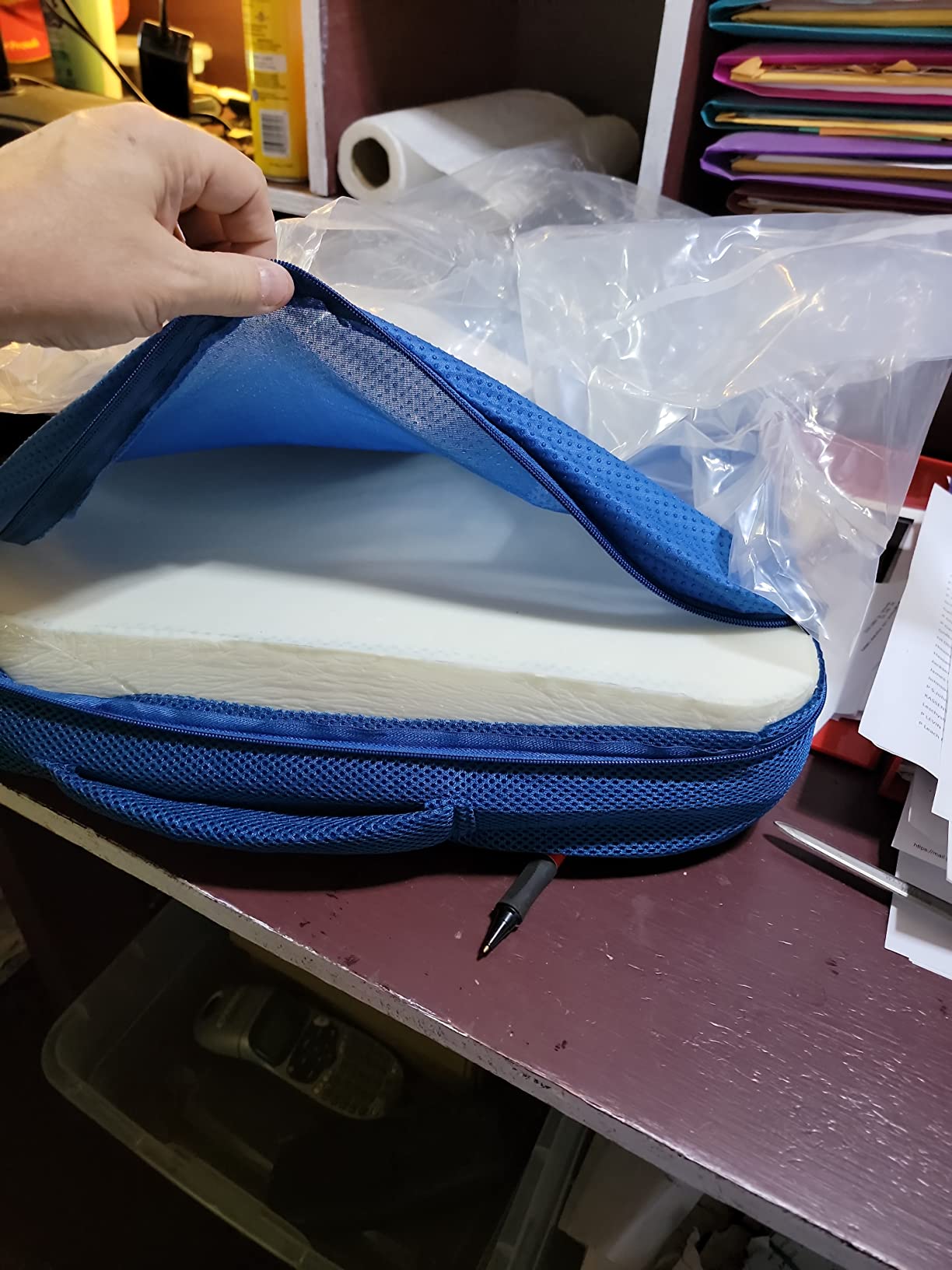
Measure clearance twice, not once
Four inches of cushion changes the geometry of your seating, so check the underside of your armrests, the position of your footplates, and the clearance under any desk or table you use. Getting this wrong is the most common complaint in the reviews.
Practise a transfer with the cushion in place before you commit. If you come from a low chair, the change in height can be more disruptive than it sounds.
Who this cushion suits
It suits higher weight users who want a thick seat, and users whose low back pain responds to a higher sitting height rather than to back support. The breathable cover also helps anyone who runs warm.
It is not the pick for tight spaces, flat-surface seating needs, or anyone who cannot manage a higher transfer. Its review base is also the thinnest in this roundup, so long term evidence is limited.
12. CUSHIO 2-Piece Pressure Relief Set – Best for Back Support
Wheelchair Cushion for Pressure Relief – (2-Piece Set) 18”x16” Anti-Slip Wheelchair Seat Cushions for Adults, Seniors with Lumbar Pillow and Removable Strap, Gel Cushion for Wheelchair
18 x 16 x 3 inch cushion plus lumbar pillow
U-shaped cutout with memory foam
Waterproof washable cover and strap
Pros
- Two piece set includes a lumbar pillow for lower back support
- U-cutout targets tailbone pressure
- Double anti-slip plus removable strap anchors the cushion
- Waterproof machine washable cover
- Built-in handles for moving between chairs
Cons
- Newer listing with a smaller review base
- Lumbar pillow adds bulk for limited storage space
- Firm three inch foam for users wanting softness
- Ice silk cover can slip without the strap
This set solves two problems at once, which is why it made the list. You get a contoured seat cushion with a U shaped cutout for the tailbone, plus a separate lumbar pillow for the lower back, and the two together cost you one purchase instead of two.
For low back pain from sitting, the lumbar piece fills the gap between the curve of your spine and the back of the chair, which is the kind of support a seat cushion alone cannot provide. It is a straightforward answer to a common problem.
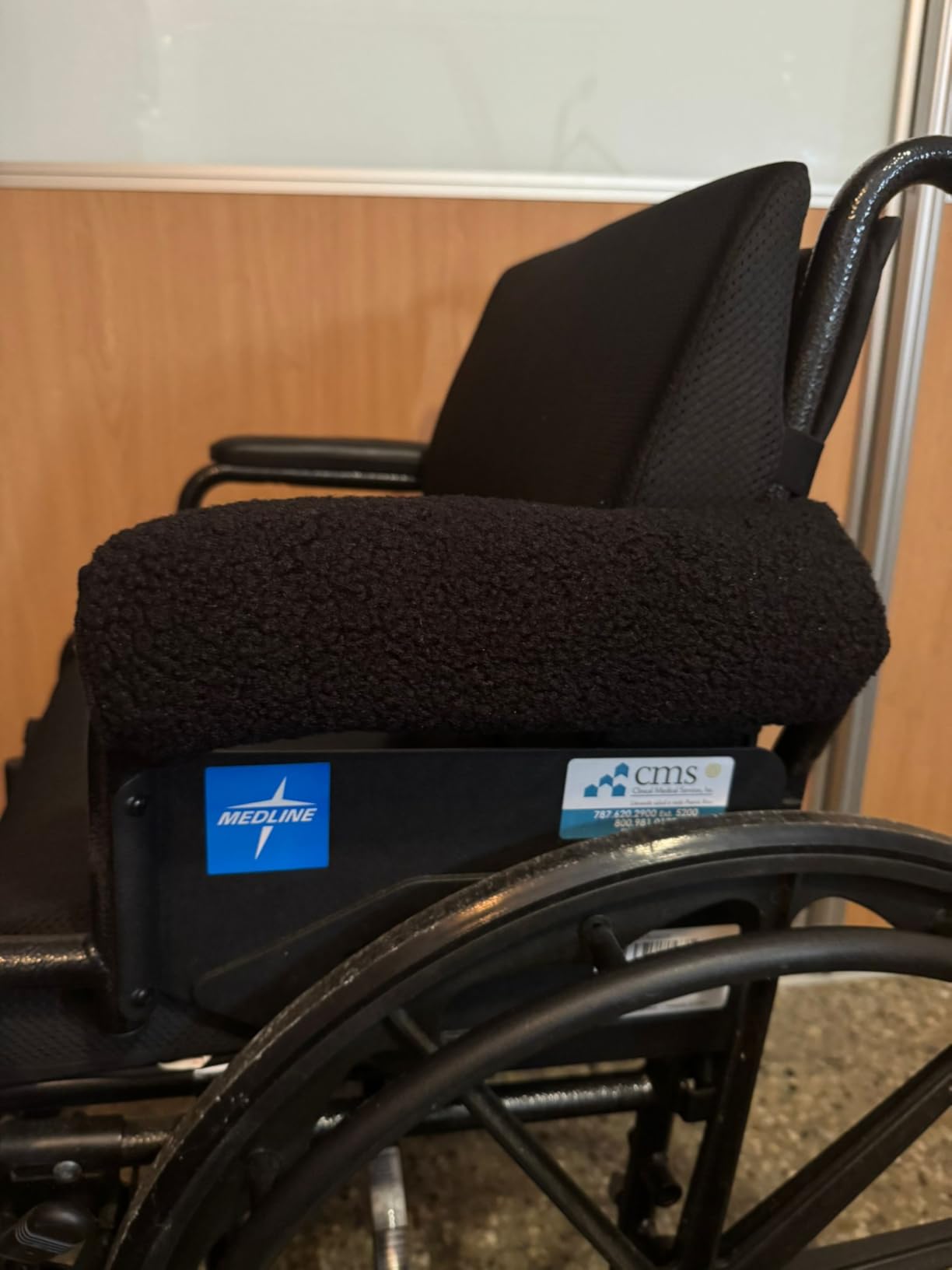
The cushion itself uses breathable memory foam under an ice silk cover with a waterproof, machine washable removable cover. Double anti-slip design plus a removable strap keeps it anchored, and the material is free from formaldehyde, PBDE and lead.
Built-in handles on both pieces make it easy to move between a wheelchair, an office chair and a car, and the whole thing folds down if you travel. That is genuinely useful for intermittent users.
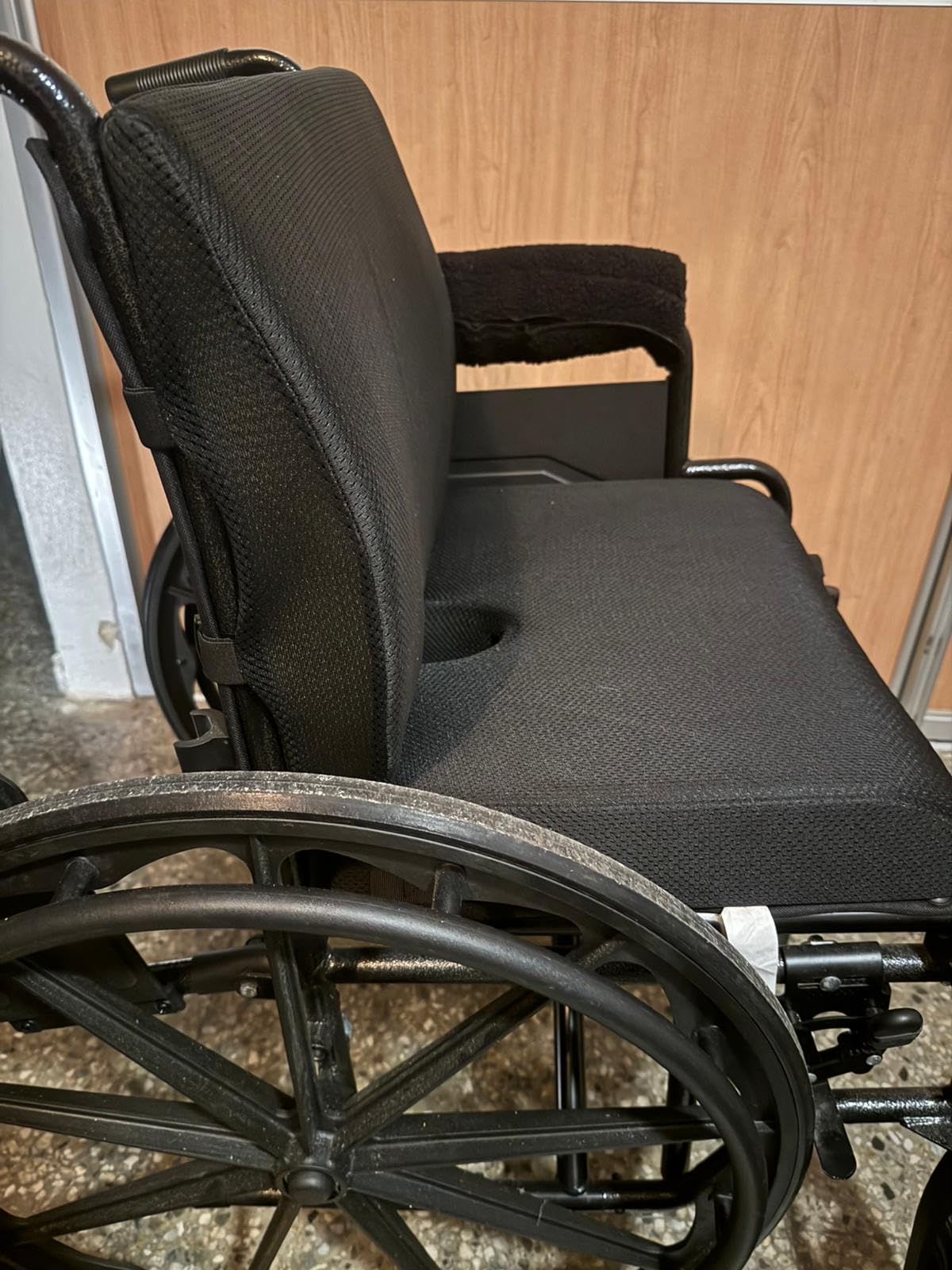
What a lumbar support actually does
A seat cushion works upward, spreading load and letting your pelvis settle. A lumbar support works backward, filling the space between your lower spine and the chair back so you do not have to hold that curve with muscle all day.
People with low back pain from long sitting often need both, and they are not interchangeable. If your pain is in the lower back rather than the tailbone or hips, a cutout alone will not fully address it.
Who this set suits
It suits intermittent users, anyone with both back and tailbone discomfort, and anyone who wants a self contained two piece system without assembling a stack. The washable waterproof cover suits caregiving situations.
Consider alternatives if you already have a back support that works, or if you have very limited storage, since the lumbar pillow adds bulk. This is also the newest listing here, with the smallest body of long term reviews.
How to Choose a Wheelchair Cushion
The most common mistake is choosing by softness. Comfort on day one and pressure management after six months are different questions, and a pad that feels wonderful in a showroom can be the one that lets you bottom out by week three. Decide on your sitting time, your skin history, and your chair geometry first, and let the cushion type follow from that.
Foam, gel, air, or hybrid: what each one does
High density foam is firm, durable, and maintenance free, which makes it a good base layer or a good choice for a firm seat. Gel cushions add a viscous layer that redistributes load gradually and often feels cooler and more stable, at the cost of a little weight. Air cell cushions let you tune firmness after the fact and give the deepest pressure relief, but need periodic pumping. Hybrid builds, usually foam over gel or a gel bladder in a foam shell, are the most common clinical configuration and the most forgiving all round.
How to measure your wheelchair seat for a cushion
Measure the usable width of your seat sling, not the overall width of the chair frame, since the frame is wider than the seating surface. Then measure the depth from the back of the sling to the front edge, and the height from the top of the seat to the underside of your armrests and footplates. A cushion that is too wide overhangs and catches on things during transfers, and a cushion that is too tall changes how you sit. If you are stacking two cushions, measure the combined height, not each cushion separately.
Which features actually matter
Non-slip base and a proper anchor matter more than most buyers expect, because a cushion that slides forward changes your posture and your hip angle every time you transfer. A waterproof membrane cover matters if there is any fluid risk. A cutout matters if your pain is concentrated at the tailbone. Adjustable firmness matters if your body or your needs change over time. Vented construction matters if you run hot, which is a very common complaint among full time wheelchair users.
Heat, sweat and ventilation
Foam and gel both trap heat, and a sealed waterproof cover makes that worse. Vented pads, honeycomb structures, air holes and 3D mesh covers all help, and layering matters, because air needs a path through the entire stack to do anything. If heat is your main complaint, prioritise a vented design and a breathable cover over maximum thickness. Screen glare and eye strain add to the discomfort of a long day in a chair, so our guides to monitor light bars for eye comfort and ergonomic vertical mice for wrist comfort cover that side of the setup.
Cleaning, lifespan and when to replace
Wash the cover regularly, and follow the care label rather than assuming, since sealed membranes and slipcovers are cleaned differently. Look at replacement signals rather than the calendar: a foam cushion that no longer returns to its original height, a gel pad that feels lumpy or has a hardened area, an air cushion that needs pumping constantly, or a cover with a split seam or a failing waterproof layer. Memory foam in particular tends to be reported as disappointing over time because it stops springing back, and that is a foam characteristic rather than a fault in any one product.
Medicare, Medicaid and insurance coverage
This is the question that surprises people most. Original Medicare generally does not cover a wheelchair seat cushion as a standalone item, and the answer to how often it pays is not straightforward. A cushion can sometimes be covered when it is documented as medically necessary as part of a broader seating or positioning supply, which is often arranged through a therapist and a DME supplier rather than by buying one yourself. Medicaid rules vary by state, and some state Medicaid programmes and managed care plans are more generous. If cost is the barrier, ask your occupational therapist whether a prescribed supply is an option before you pay out of pocket, and check with your plan in writing rather than assuming.
When to ask a PT or OT instead of buying
Ask a clinician before buying if you have an existing wound, a history of pressure ulcers, significant scoliosis or kyphosis, a spinal cord injury with changes in sensation, or pain that is getting worse rather than settling. A therapist can use pressure mapping to see where your load actually peaks, which no product listing can tell you. Forum users consistently say the cushion their PT or OT chose in rehab still works years later, and that professional fit beats a popular retail pick. If you already have a good cushion, get it checked rather than replaced on principle.
One more thing worth doing while you are in the chair all day, whether you are in a wheelchair or a desk chair: the same posture habits apply to both. Our guide on supporting your legs while seated for hours covers the surrounding setup that determines how comfortable any seat feels.
Frequently Asked Questions
What are some good comfort cushions for a wheelchair?
The strongest general options are a ventilated gel memory foam cushion for cooling and everyday use, a four layer foam and gel pad for deeper support and named pain such as tailbone or sciatica, and an adjustable air cell cushion if you want the deepest pressure relief and the ability to change firmness over time. For localised tailbone pain specifically, choose a contoured design with a U-shaped cutout. Match the cushion to your seat width and check your armrest and footplate clearance before ordering.
How can I make my wheelchair seat more comfortable?
Start with a cushion matched to your seat width and to how long you sit. Add a contoured or cutout cushion if your pain is concentrated at the tailbone, and a lumbar support if the pain is in your lower back. Then work on the rest of the setup: a correctly positioned footplate, a backrest that supports the curve of your spine, breathable clothing and a breathable cover, and scheduled pressure relief breaks every 30 minutes to an hour. If any skin is broken or painful, get a clinical assessment first.
How often will Medicare pay for a wheelchair cushion?
Original Medicare generally does not cover a wheelchair seat cushion as a standalone purchase, so it is not something you can expect to pay for repeatedly on your own. A cushion may be covered when it is documented as medically necessary as part of a broader seating or positioning supply, and that is usually arranged through an occupational therapist and a durable medical equipment supplier rather than as a direct purchase. Medicaid rules differ by state. Ask your therapist whether a prescribed supply is available to you and confirm with your plan in writing before you assume you must pay out of pocket.
What is best for low back pain from sitting in a wheelchair?
Low back pain from sitting is usually a posture and support problem, so a seat cushion alone rarely fixes it. The most effective approach combines a cushion that spreads load across the pelvis with a lumbar support that fills the gap between your lower spine and the chair back. A thicker cushion can also help by raising the sitting height and changing the hip angle, which some users find relieves pain better than anything added behind them. Persistent or worsening pain needs a clinician assessment rather than another cushion.
How do I measure my wheelchair seat width for a cushion?
Measure the usable width of the seat sling, not the overall width of the chair frame, because the frame is wider than the surface you actually sit on. Also measure the seat depth from the back of the sling to the front edge, and the height from the top of the seat to the underside of your armrests and to your footplates. A cushion that is too tall will change your posture and may stop your knees clearing an armrest, so check that before ordering. If you are stacking two cushions, measure the combined height.
Why does my wheelchair cushion get so hot, and how do I fix it?
Foam and gel both trap body heat, and a sealed waterproof cover makes it worse because air cannot pass through. Fixes that work include choosing a vented cushion with air holes, grooves or a honeycomb structure, using a breathable 3D mesh or velour cover instead of a sealed membrane, wearing moisture wicking clothing, and making sure any cushion stack has an air path through the whole stack. Establishing a pressure relief break every 30 minutes to an hour also takes heat off the skin directly.
Our Verdict on the Best Cushions for Wheelchair Comfort in 2026
After working through all twelve, the Everlasting Comfort ventilated gel cushion comes out on top for most people. It cools better than the sealed options, it holds its shape over months rather than weeks, it weighs 2.29 pounds, and it has the deepest review history here, which means the durability claims are evidenced rather than promised.
Choose the Vive four layer pad if your pain is specific and you want more depth, the Drive Medical 14886 if skin protection and a replaceable cover matter more than comfort, and the Roho Mosaic if you want an air cushion you can adjust yourself. For heat, the AUVON ventilated model wins on airflow. For a tailbone problem specifically, buy a cutout design, not a flat pad.
Whichever you choose, measure your seat before you order, check your clearance under armrests and footplates, and buy the cover you would actually wash. And if you have any broken skin, speak to a therapist first. The best cushions for wheelchair comfort are the ones matched to your body, your chair, and your day, which is a short conversation to have and an expensive mistake to avoid. See how the wider comfort picture compares in our long duration seating comfort test.