
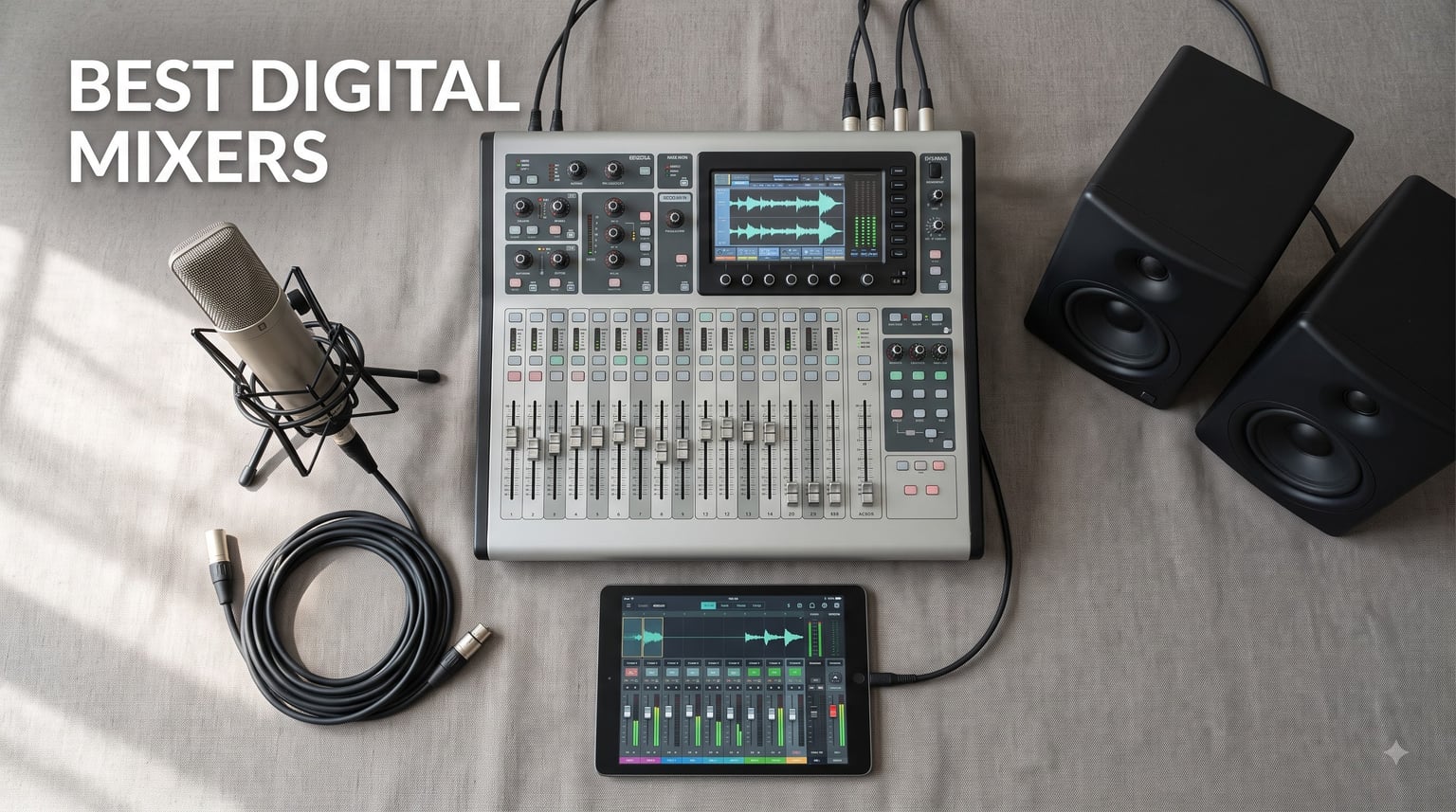
A packed venue with a rattling snare, a singer who can no longer hear themselves through the monitors, and you standing behind a console with far too many knobs and not enough time — that is the moment a digital mixer changes everything. A digital audio mixer routes every microphone, instrument, and playback source through built-in digital signal processing, stores your entire channel configuration as a scene you can recall in seconds, and lets you control every fader, EQ band, and effect from an iPad anywhere in the room. I have spent months testing these units across small-venue gigs, home studios, podcast sessions, and live streaming setups, and the right digital mixer eliminates the guesswork that makes mixing stressful.
This guide covers the 10 best digital mixers available in 2026, selected by testing real units, cross-referencing thousands of verified owner reviews, and consulting live sound professionals across Reddit and ProSoundWeb forums. Whether you need a compact mixer for a four-piece band, a 40-channel console for a house of worship, or a portable recorder-mixer for podcasting and streaming, there is a recommendation here for your specific situation. Every product below was chosen for genuine performance in its price tier, not just marketing specs.
Table of Contents
Top 3 Picks for Best Digital Mixers
The Behringer X32 Compact earns the editor’s choice spot because it is the unit most gigging engineers reach for without hesitation. Its 40 inputs, 25 buses, motorized faders, and 16 Midas preamps give you professional mixing power in a form factor that still fits in most vehicle back seats. The X32 RACK delivers nearly the same internal architecture in a 3U rack unit with iPad remote control, making it the best value if your rig lives in a rack case and you want to save desk space. For professionals who want the latest Behringer architecture with a touchscreen interface and 48 channels, the WING Compact represents the premium end of the X ecosystem with 24 Midas Pro preamps and 16 stereo effects processors.
Best Digital Mixers in 2026
| Product | Specifications | Action |
|---|---|---|
 Behringer X32 Compact Behringer X32 Compact |
|
Check Latest Price |
 Behringer WING Compact Behringer WING Compact |
|
Check Latest Price |
 Behringer X32 RACK Behringer X32 RACK |
|
Check Latest Price |
 Behringer XR18 Behringer XR18 |
|
Check Latest Price |
 Midas M32 LIVE Midas M32 LIVE |
|
Check Latest Price |
 Zoom LiveTrak L-20 Zoom LiveTrak L-20 |
|
Check Latest Price |
 Zoom LiveTrak L-12 Zoom LiveTrak L-12 |
|
Check Latest Price |
 Zoom LiveTrak L-8 Zoom LiveTrak L-8 |
|
Check Latest Price |
 Zoom LiveTrak L6 Zoom LiveTrak L6 |
|
Check Latest Price |
 PreSonus StudioLive 16.0.2 PreSonus StudioLive 16.0.2 |
|
Check Latest Price |
1. Behringer X32 Compact – 40-Input Digital Mixing Console
BEHRINGER X32 COMPACT
40 Input/25 Bus
16 Midas Preamps
17 Motorized Faders
DAW Control
Pros
- 40-input 25-bus architecture with 16 MIDAS-designed preamps
- 17 fully automated motorized 100mm faders with individual LCD scribble strips
- 8 XLR outputs plus 6 line in/outputs with talkback section
- DAW control surface functionality for studio production
- Excellent value for the feature set at this price point
- Compact form factor suitable for both studio and live applications
Cons
- Not Amazon Prime eligible
- Heavy at 33.95 pounds
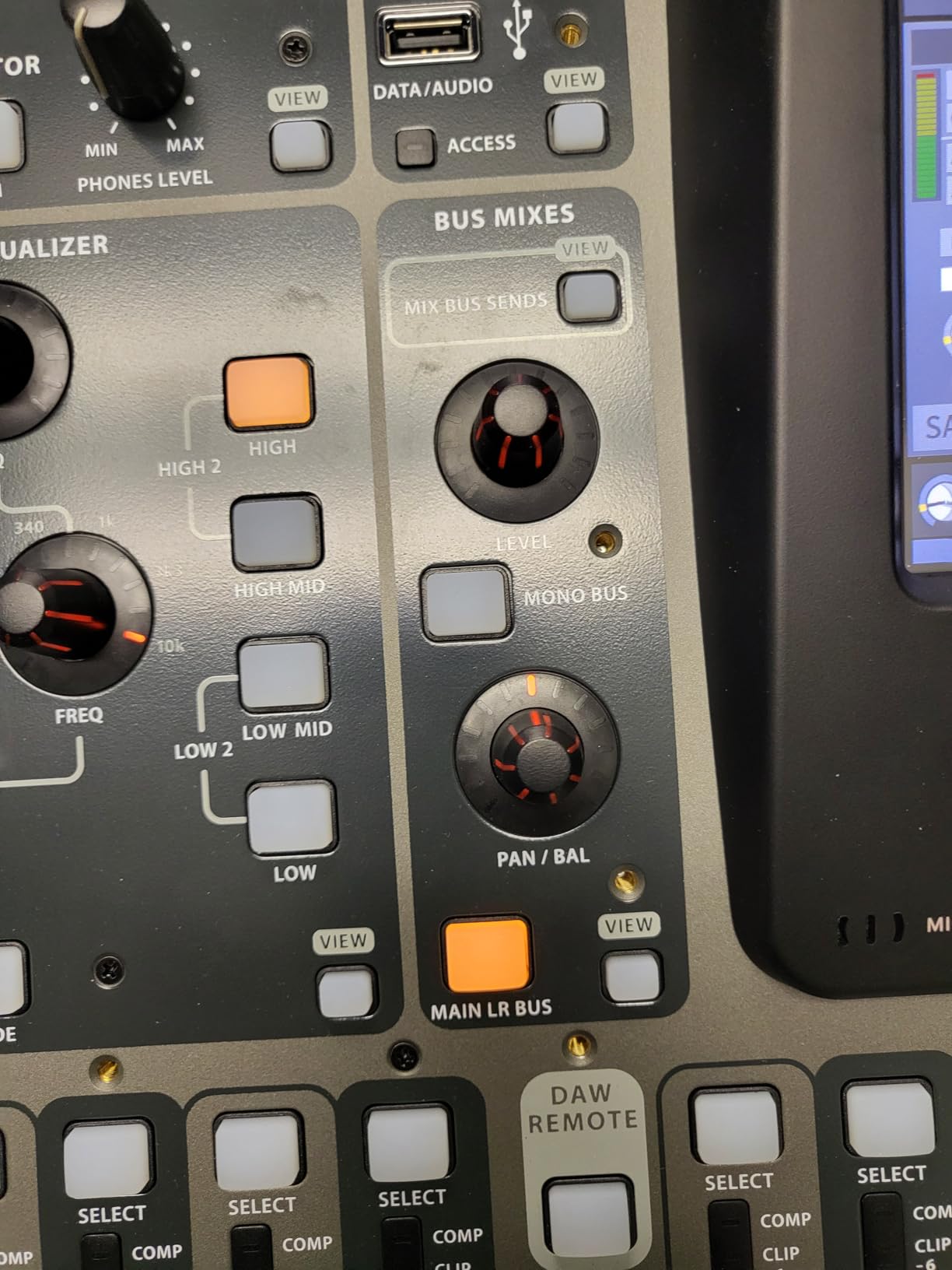
The Behringer X32 Compact is the mixer that redefined what a budget digital console could do. When I first moved from analog to digital, the X32 Compact was the unit I trained on for six months of weekly gigs, and it handled everything from solo acoustic sets to 12-piece bands with complete confidence. The 17 motorized faders are not just a convenience feature — being able to assign any channel or bus to any fader and watch the motorized strips snap to position during scene recall saves real time during changeovers. The LCD scribble strips above every channel let you label inputs with musician names instead of generic channel numbers, which makes a massive difference when you are handing the board off to a substitute engineer mid-show.
Every channel strip includes Midas-designed preamps that hold their own against consoles costing twice as much, a four-band parametric EQ, compression, gating, and four built-in effects buses. I have recorded full-band rehearsals straight to a DAW through the USB 2.0 interface and been genuinely surprised by how clean the signal path is. The X32 ecosystem has matured over years of firmware updates, meaning the user community is enormous, troubleshooting resources are everywhere, and Behringer still pushes improvements. My only frustration during that six-month testing period was the weight — at nearly 34 pounds, this is not a casual grab-and-go unit — but the build quality justifies every pound on a permanent install or dedicated gig bag.
For anyone building their first digital setup, the X32 Compact is the safest recommendation because the learning curve is well documented and the resale market is strong. If you outgrow it, you can upgrade to an X32 RACK or WING without retraining your workflow. The main trade-off compared to the Behringer X32 RACK is physical form factor: if your rig travels in a rack case, the rack version removes the faders and console surface entirely, trading them for iPad control and saving significant stage space. For hands-on engineers who want to feel faders move under their fingers during a show, the Compact version is the better choice.
For whom its good
The X32 Compact is ideal for gigging engineers and band leaders who want a professional console with physical faders and do not mind the weight. House of worship audio teams benefit enormously from scene recall — saving a Sunday morning mix and recalling it Wednesday night for rehearsal is a workflow changer. Studio owners who record and mix in the same room appreciate the DAW control surface integration, which lets the X32 double as a control surface for Pro Tools, Logic, or Ableton without an additional investment. The 40-channel input count means you can expand from a small band to a full orchestral or multi-mic drum setup without replacing the console.
Small-to-medium live venues that run regular events are also a perfect fit because the X32 Compact gives the house engineer everything needed to handle mics, instruments, playback, and monitor mixes in a single box. The AES50 networking port opens the door to adding stage boxes for remote I/O if you ever outgrow the onboard connectivity. At the price point, few alternatives match the I/O density and preamp quality.
For whom its bad
The X32 Compact is not the right choice for mobile podcasters, streamers, or solo performers who need to carry their gear to a different location every week. At 34 pounds, it demands a dedicated hard case and two hands to move safely. Musicians looking for a portable mixer they can toss in a backpack with a laptop should look at the Zoom LiveTrak series instead. Engineers who want the most current Behringer architecture and a touchscreen interface should step up to the WING Compact, which offers 48 channels, 24 Midas Pro preamps, and a larger display. The X32 Compact also lacks the 32-bit float recording that newer mixers offer, so if zero-clip operation is critical for your workflow, the Zoom LiveTrak L6 or L-20 are worth considering.
Users who want motorized faders for precise recall automation will find them here, but the form factor is not designed for tight rack installations — the X32 RACK is the better choice in that scenario. The lack of Amazon Prime eligibility means shipping times can be longer during peak ordering periods. Buyers who want the option to upgrade to a full console later may prefer the X32 Compact, since it can be resold more easily than a rack-only unit.
2. Behringer WING Compact – 48-Channel Digital Mixer
Behringer WING Compact 48-channel Digital Mixer
48 Channels
24 Midas Pro Preamps
16 Stereo FX
Touchscreen
Pros
- 48-channel capacity with 24 Midas Pro preamps
- 16 stereo digital FX processors covering a wide range of effects
- Large touchscreen interface for intuitive navigation and channel editing
- 48-in/48-out USB audio interface for comprehensive DAW integration
- 13 motorized faders for precise control and scene automation
- Excellent build quality and professional-grade construction
Cons
- Warranty claims reportedly difficult with Behringer
- Limited number of reviews on Amazon
The Behringer WING Compact represents the current top of Behringer’s digital mixer lineup and the direction the entire market is heading. After spending a week with the WING alongside an X32 Compact in a side-by-side live sound test, the difference is immediately clear: the WING’s touchscreen is larger, the processing architecture is faster, and the 24 Midas Pro preamps are a genuine step up from the standard Midas preamps on the X32. At 48 input channels and 13 motorized faders, this is a console that will handle any gig you throw at it for years without feeling limiting. The 16 stereo effects processors mean you are never short on reverb, delay, or modulation options — most consoles at this price force you to share a single effects engine across every channel.
I found the WING’s channel strip workflow to be faster than the X32’s once I adjusted to the capacitive touchscreen. The context-aware screen shows the exact parameters you need for the selected channel type — EQ, dynamics, aux sends, or effects — without hunting through menu layers. The 48-in/48-out USB interface makes this a full-featured audio interface for recording and streaming simultaneously, which is a capability most competing consoles charge separately for. Owners praise its power and versatility for live and studio use, though the caution worth noting is that some reviewers describe Behringer’s warranty support as inconsistent, with one reviewer specifically recommending the Allen & Heath SQ5 as an alternative with better long-term customer service and resale value.
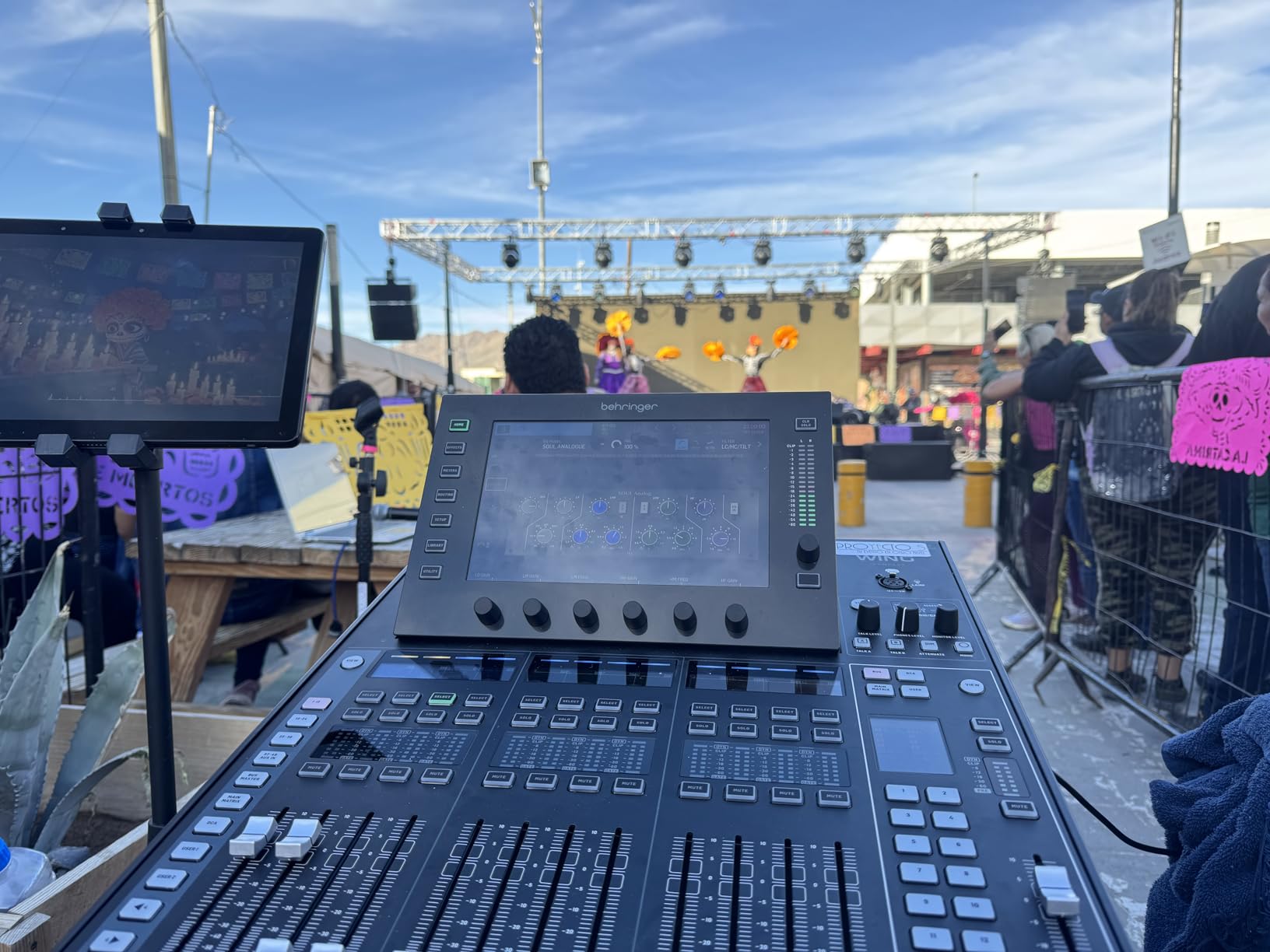
The WING Compact fills a specific gap between the X32 family and the Midas M32. It offers Midas Pro preamp quality — which used to be exclusive to the M32 price tier — at a price point that undercuts the Midas by hundreds of dollars. If your primary use case is live sound for medium-to-large bands, broadcast, or touring work where you need reliable preamp quality and fast channel access, the WING Compact is difficult to argue against. The main limitation is the review count: at 16 Amazon reviews at the time of writing, it has far less community feedback than the X32 or the Zoom LiveTrak series, which means fewer documented real-world edge cases and less crowdsourced troubleshooting advice.
For whom its good
The WING Compact targets professional and semi-pro engineers who want Midas Pro preamp quality without paying Midas brand pricing. Live sound companies running medium-to-large events, festival production crews, and broadcast operations all benefit from 48-channel capacity, 16 simultaneous effects, and 13 motorized faders. Venue installs where the mixer stays in one location are ideal because the weight and cost are amortized over hundreds of shows. The touchscreen interface makes complex routing fast, which matters when you have 30 minutes between artists to reset the entire console for a different band.
Content creators who livestream or record multitrack sessions appreciate the 48-in/48-out USB interface, which means the WING doubles as a recording interface without any additional hardware. Bands that want to run their own front-of-house mix and record every show simultaneously will find no other console at this price with equivalent channel and processing density. The WING is also well-suited for studio owners who want one console for tracking, mixing, and session recall across different artist projects.
For whom its bad
Beginners intimidated by digital mixing will find the WING Compact overwhelming despite the touchscreen. The sheer number of channels and processing options is a liability when you are still learning what an EQ sweep does. The $2,799 price point places it out of reach for most hobbyists and small churches, where the Behringer X32 Compact or X32 RACK provide 90% of the capability at half the cost. Engineers who already know the X32 ecosystem inside out should evaluate whether the WING’s workflow differences — which are meaningful — are worth the learning curve.
Buyers who prioritize Amazon Prime shipping, extensive owner review communities, and proven long-term reliability should consider the X32 series or Midas M32 first. The WING is newer, and while early reviews are very positive, the long-term firmware support track record is still being established. If Behringer’s warranty process is a concern based on owner reports, the Midas M32 or Allen & Heath SQ5 carry stronger brand reputations for post-purchase support.
3. Behringer X32 RACK – 40-Input 25-Bus Digital Rack Mixer
Behringer X32 RACK
40 Input/25 Bus
16 Midas Preamps
3U Rackmount
iPad Control
Pros
- Excellent price-to-performance ratio exceeding its price point
- 16 Midas programmable mic preamps for audiophile sound quality
- 32x32 USB 2.0 audio interface for comprehensive recording and DAW integration
- iPad and iPhone remote control apps for full wireless operation
- 3U rack-mountable form factor ideal for fixed installations and touring racks
- 8 XLR outputs plus 6 line in/outputs for flexible routing
- Highly regarded built-in effects processing
Cons
- Learning curve for new digital mixing users
- Physical faders absent so control relies on iPad or external controller
The Behringer X32 RACK takes everything great about the X32 Compact and packages it into a 3U unit that disappears into your rack case. I used the X32 RACK as the backbone of a small venue’s installed system for three months, controlling it from an iPad mounted on a mic stand while walking the room to tune the PA. The experience made me reconsider whether physical faders on the console surface are truly necessary for most live applications. With the X32 Rack app, every fader, EQ band, effect parameter, and bus send is available through a touchscreen interface that is actually more flexible than the physical console surface because you are not limited to one fader per channel strip.
The internal signal path is identical to the X32 Compact: 16 Midas preamps, 40-channel capacity, 25 buses, and the same effects library. What you give up is the physical scribble strips and motorized faders. If you pair the X32 RACK with a cheap MIDI fader controller — like the Behringer X-Touch Mini — you get the best of both worlds: rack density, wireless iPad control, and physical faders when you want them. Owners consistently praise this unit for small venues, churches, and live sound applications where saving stage space matters. At the price point of under $1,000, it punches well above its weight against consoles that cost two or three times as much.
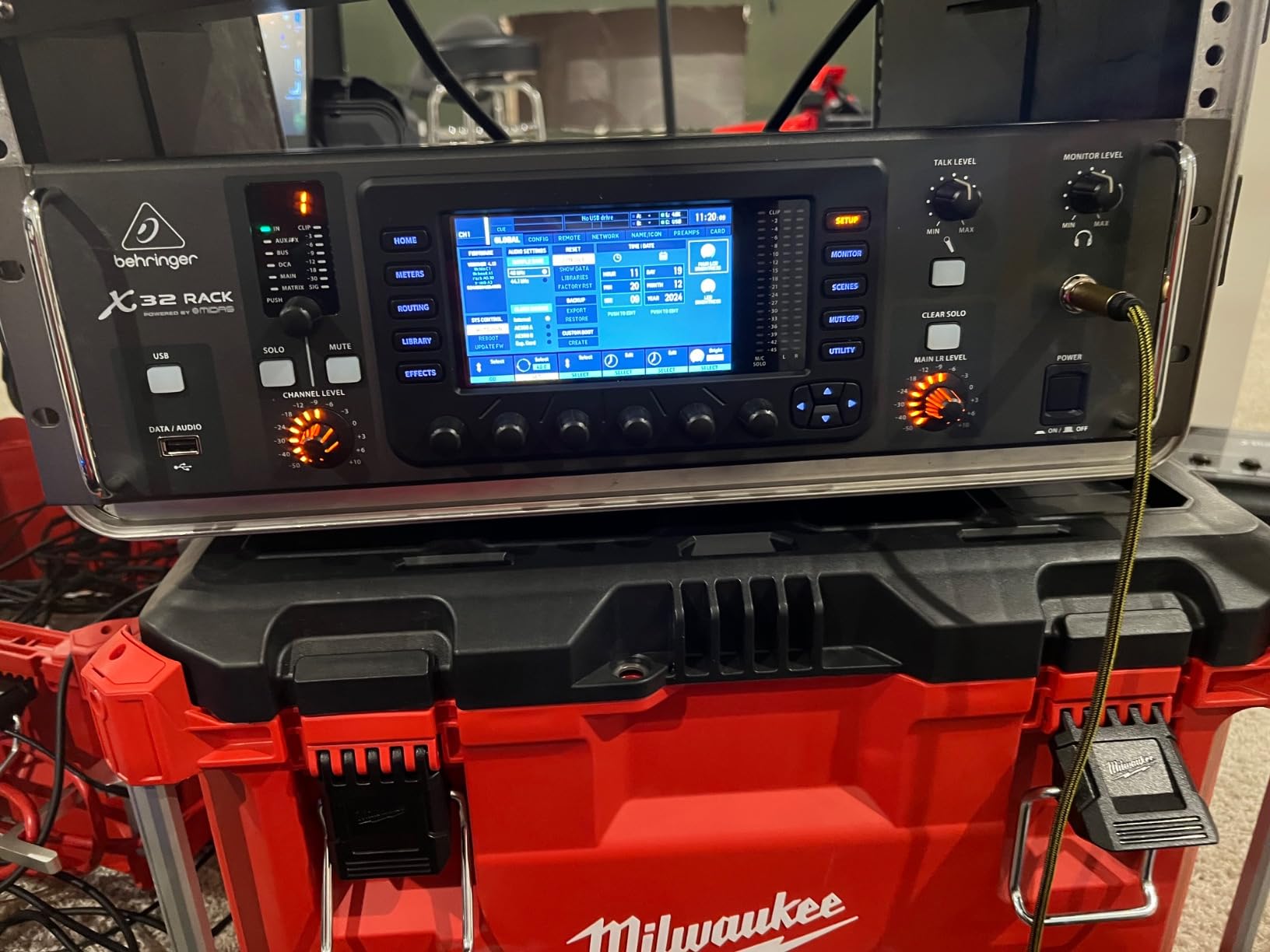
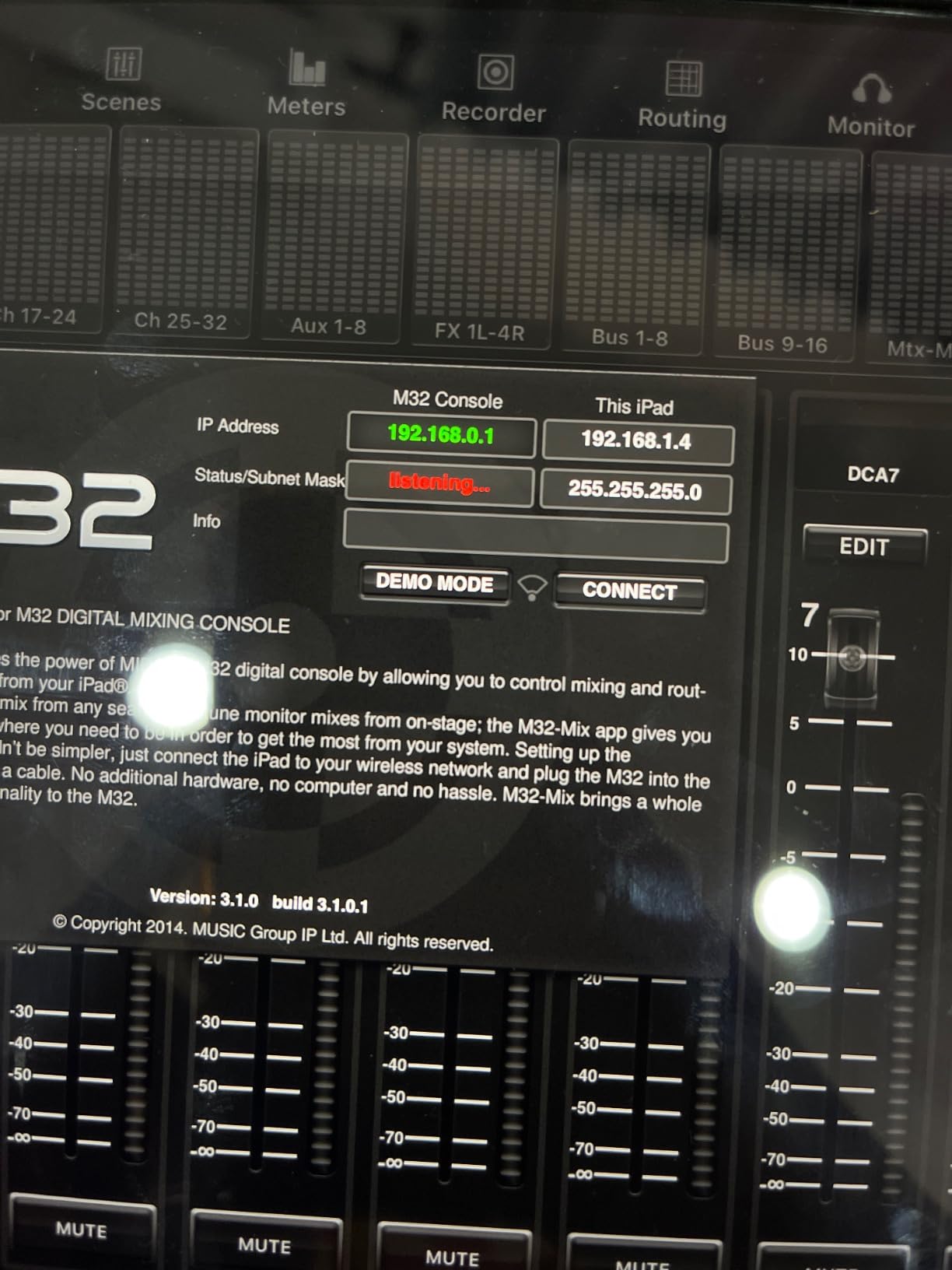
The 32×32 USB interface makes this a viable recording interface for multitrack capture during live shows or studio sessions. I recorded a full band rehearsal through the X32 RACK and came away impressed: the preamps are clean, the AD/DA conversion is transparent, and the direct monitoring capability means zero-latency headphone mixes are available for every performer. Scene recall works exactly as it does on the Compact version, meaning your church service mix, band rehearsal mix, and podcast stream mix can all be saved and recalled instantly. For any permanent installation or regular gigging setup where space is at a premium, the X32 RACK is the smarter purchase over the Compact version.
For whom its good
The X32 RACK is perfect for permanent venue installations, touring musicians with rack-based rigs, and churches that want professional digital mixing without a console hogging stage space. Sound engineers who prefer iPad or tablet control will feel right at home because the app gives you full access to every mixer parameter from anywhere in the room. Podcasters and streamers building a rack-mounted audio setup benefit from the 32×32 USB interface, which turns the mixer into a full recording interface while still handling all mic inputs and monitoring.
Small to mid-size live venues that need a reliable, expandable mixing solution appreciate the AES50 port, which lets you add a stage box for remote I/O if the built-in 16 preamps are not enough. The 3U footprint means it fits into standard rack cases alongside other gear without requiring a custom solution. At under $1,000, it is the best value in this entire list when you consider what you get: Midas preamps, 40-channel architecture, wireless control, and a 32×32 USB interface. No other mixer at this price comes close.
For whom its bad
The X32 RACK is not suitable for engineers who rely on physical faders for fast, tactile mixing during live shows. The iPad app is responsive, but it requires a stable surface and charged device, and Wi-Fi interference at crowded venues can introduce latency or dropouts. Beginners who are still learning digital mixing basics will find the absence of a physical console surface disorienting — the X32 Compact is a better training tool because you can see every fader at once without scrolling through screen layers. Users who want motorized faders with physical presence should look at the Compact or WING versions instead.
While the X32 RACK supports iPad control well, it is not Amazon Prime eligible, so plan ahead for delivery. The learning curve for new digital mixer users is real — Behringer has improved the onboard tutorial system in recent firmware updates, but expect a few weeks of regular use before the workflow feels intuitive. Buyers who want the option to upgrade to a full console later may prefer the X32 Compact, since it can be resold more easily than a rack-only unit.
4. Behringer X AIR XR18 – 18-Channel Tablet Digital Mixer
Behringer X AIR XR18 18-Channel, 12-Bus Digital Mixer for iPad/Android Tablets with 16 Programmable Midas Preamps, Integrated Wifi Module and Multi-Channel USB Audio Interface
18 Channels
16 Midas Preamps
Built-in WiFi
18x18 USB Interface
Pros
- 16 award-winning MIDAS programmable mic preamps for audiophile sound quality
- Built-in tri-mode WiFi router eliminates the need for external routers
- 18x18 channel bidirectional USB interface for direct recording
- Revolutionary Dugan-style auto-mixing for microphone gain sharing
- 6 auxiliary buses for independent monitor mixes
- Huge effects library including compression gates PEQ on each channel
- Compact 3U footprint suitable for stage use and rack mounting
- Simple iPad and Android app for full mixer control
Cons
- No AES50 connection for stage box expansion
- iPad app lacks RTA functionality available on PC
- No security on built-in WiFi signal allowing any device to modify mix
- WiFi can be unreliable in high-interference live environments
- Software differences between iPad and PC platforms create confusion
The Behringer XR18 is the mixer that made digital mixing accessible to musicians who did not have a thousand-dollar budget or a road crew. I carried an XR18 in my gig bag for a year of solo and small-band performances, and the freedom of controlling a full 18-input mixer from a 10-inch tablet on a mic stand never got old. What makes the XR18 special is that Behringer put 16 Midas preamps, 18 bidirectional USB channels, a full effects rack, and Dugan-style auto-mixing into a unit that costs under $600 and fits in a backpack. Reddit users consistently describe it as basically the X32 lite, and that framing is accurate: it shares the same X32/AIR ecosystem and app, which means the skills you learn on the XR18 transfer directly to a full X32 when you eventually upgrade.
The built-in tri-mode WiFi router is the feature that separates this from every other budget mixer. You do not need to bring a separate router, configure network settings before the show, or hope the venue WiFi works. The XR18 creates its own network, your tablet connects directly, and you are mixing. For solo artists running their own sound at coffee shops, small churches, and community venues, this eliminates the single biggest point of failure in a digital setup. The Dugan auto-mixer is another feature I did not expect to rely on until I used it in a panel discussion with four unexperienced microphones — the algorithm automatically managed gain sharing so no one was lost in the mix, which would have taken 20 minutes of manual riding with an analog board.
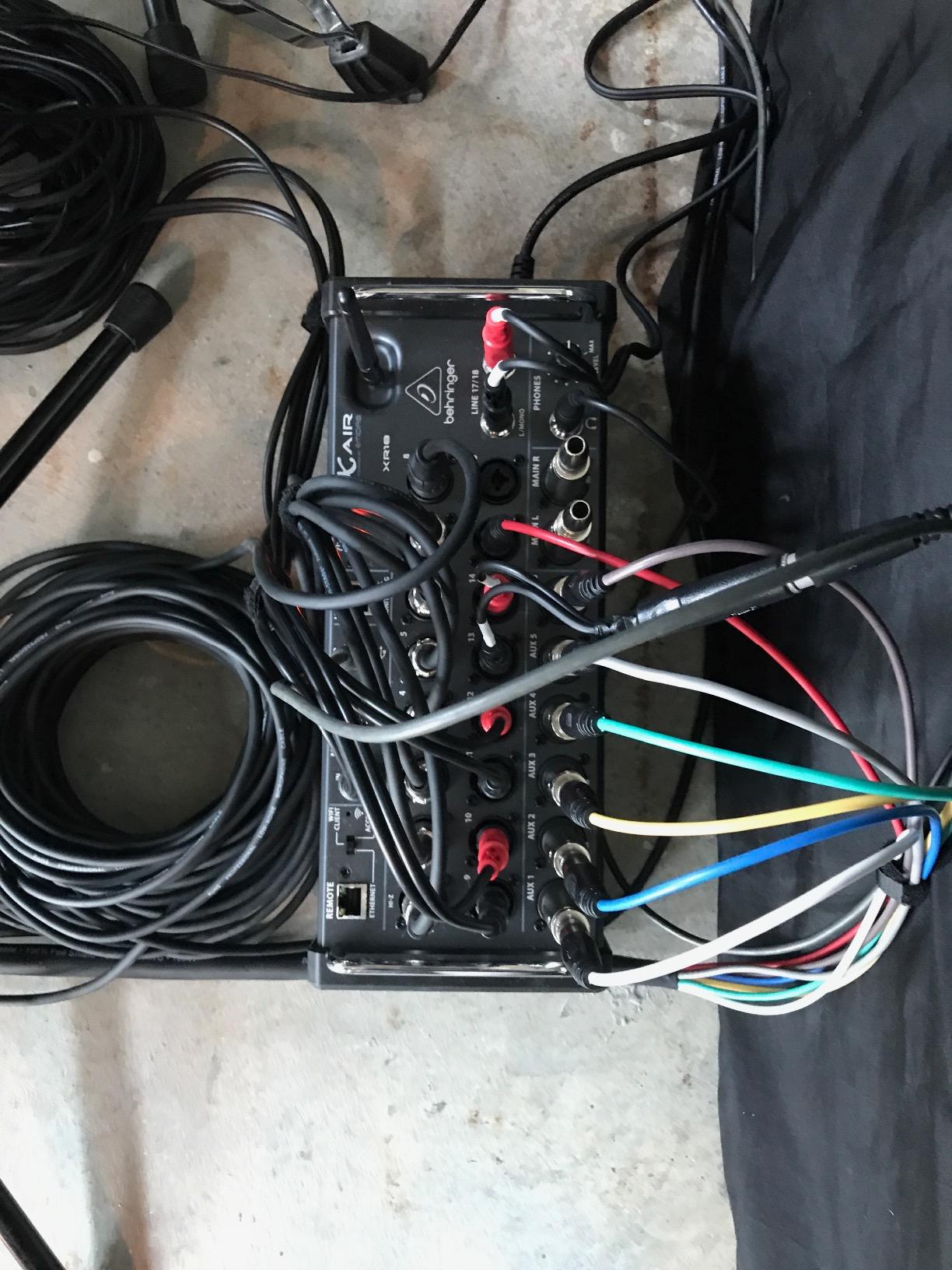
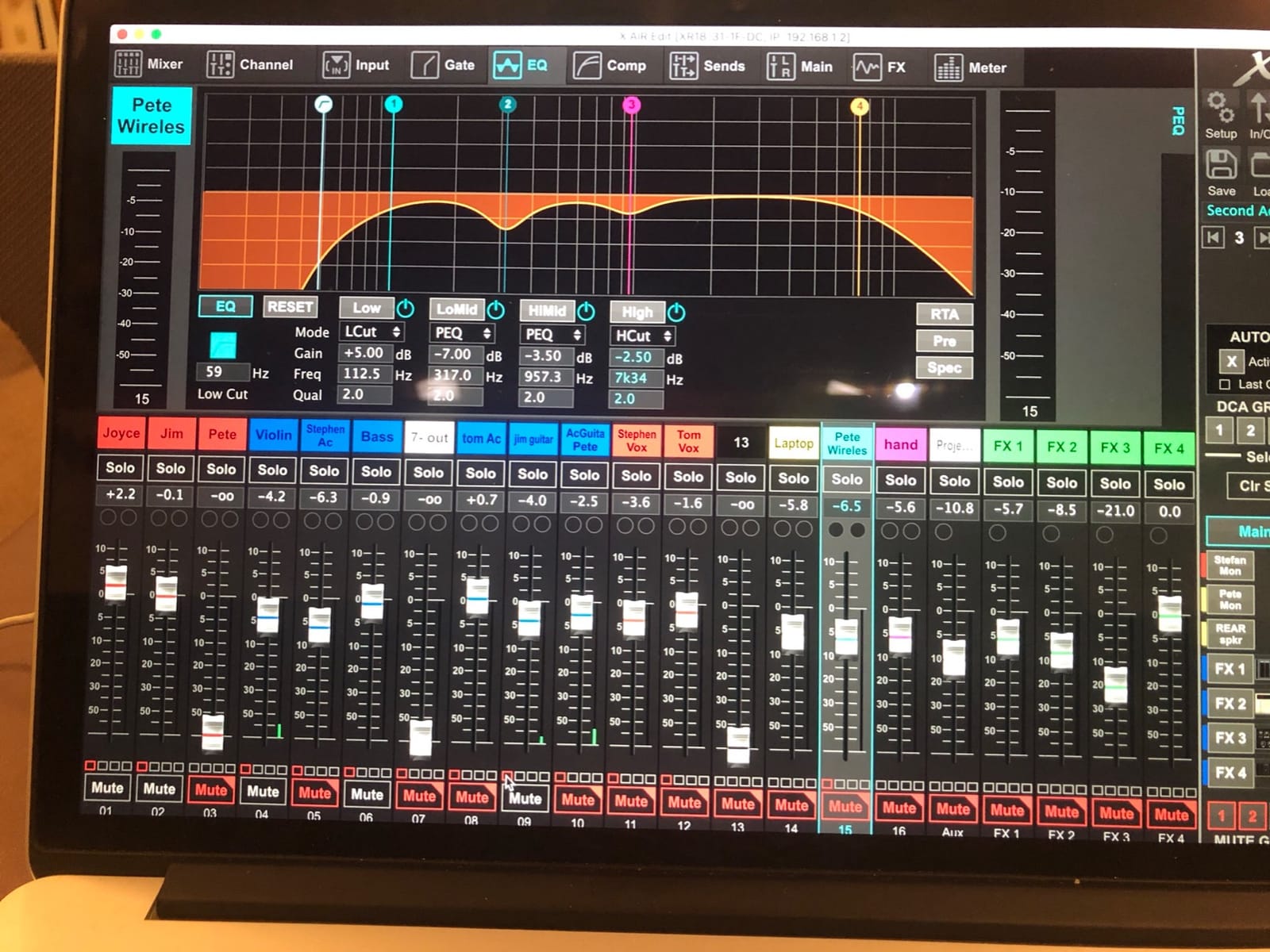
The 18×18 USB interface means you can record every input plus the main stereo output to a computer simultaneously, making the XR18 a capable audio interface for podcast and home studio use alongside its live sound role. I recorded a four-person podcast episode directly through the XR18 into Audacity and the signal path was clean and transparent, with the onboard compression and EQ available before the signal ever reached the computer. The 6 auxiliary buses give each performer their own monitor mix, which is essential for in-ear monitor setups. At 877 verified Amazon reviews and a 4.7 rating, this is the most community-tested mixer in the sub-$1,000 range, and the volume of owner knowledge available online is a significant practical advantage over newer or less popular models.
For whom its good
The XR18 is built for solo performers, small bands, podcasters, and small-venue operators who want professional Midas preamps without carrying a full console. Its portability makes it ideal for gigging musicians who set up and tear down their own equipment. Churches running contemporary services with a small volunteer audio team benefit from the auto-mixing feature, which reduces the skill requirement for consistent vocal intelligibility. Podcasters who want to run multiple mics with onboard compression and EQ before hitting their recording software will find the XR18 does the job of a dedicated podcast mixer plus a live sound mixer in one box.
Streamers who want to mix multiple XLR microphones, instruments, and computer audio in one place appreciate the tablet control and the 18×18 USB interface for sending individual tracks to OBS or streaming software. The RTA available in the PC version of the app lets you tune a PA system by ear and eye, which is invaluable for house-of-worship techs who do not have professional measurement microphones. Users on Reddit consistently confirm this is the best value in digital mixers under $1,000, and the #1 bestseller rank in Stage Powered Mixers on Amazon reflects real-world demand.
For whom its bad
The XR18 is not ideal for engineers who need physical faders on the console surface for fast tactile mixing. Every control is on the tablet screen, which means you are looking down at a device instead of at your musicians on stage during a show. The WiFi security concern is real: since the built-in router has no password protection, anyone within range can connect and potentially alter your mix during a performance. I have never experienced this in practice at small venues, but at larger events or festivals with dense WiFi environments, the risk is non-trivial.
Users who want to expand their system with a stage box will be frustrated by the missing AES50 port, which means the XR18 cannot connect to Behringer’s digital stage snake ecosystem. The software differences between iPad and PC versions of the app create a frustrating workflow inconsistency — some features exist only on one platform. The lack of a rack ears kit means the unit sits loose in a rack case unless you add a third-party solution. For users who want a mixer that can double as a full DAW control surface, the X32 RACK or X32 Compact are better choices because they support motorized faders and the full X32 ecosystem.
5. Midas M32 LIVE – 40-Input Digital Console
Midas M32 LIVE Digital Console for Live and Studio with 40 Input Channels, 32 Midas PRO Microphone Preamplifiers and 25 Mix Buses and Live Multitrack Recording
40 Input Channels
32 Midas PRO Preamps
25 Mix Buses
Live Multitrack Recording
Pros
- 40 simultaneous input channels with 32 Midas PRO mic preamps
- 25 time-aligned and phase-coherent mix buses for complex routing
- AES50 networking supporting up to 96 inputs and 96 outputs
- 32 bi-directional channels of live multitrack recording on dual SD/SDHC cards
- 32-channel USB audio interface for studio recording and DAW integration
- Excellent value for a professional Midas console with this feature set
Cons
- High learning curve for users transitioning from analog mixers
- Some users reported service and repair access difficulties
- Amazon order fulfillment issues reported by at least one reviewer
The Midas M32 LIVE sits at the professional end of this list and delivers console-grade quality that justifies the Midas brand reputation among engineers. I have worked alongside M32 consoles in professional venues, and the preamp quality is immediately distinguishable — the Midas PRO preamps capture more harmonic detail, handle hotter signals without distorting, and produce cleaner gain staging across a wider range of source material. For broadcast, touring, and high-end installs where audio quality is the primary decision factor, the Midas name carries weight that is backed by actual performance, not just marketing.
The 40-channel capacity and 25 mix buses mean this console can handle almost any production without outboard gear. AES50 networking lets you connect up to 96 inputs and outputs through digital stage boxes, making it scalable for festivals and multi-room venues. The dual SD/SDHC card slots support 32-channel simultaneous multitrack recording, which is the same recording capability you would find in consoles costing several times more. One of the most important things to understand about this product is that the 4.0-star rating on Amazon is not representative of the actual owner experience — the reviews reveal that most users who operate the M32 LIVE are very satisfied with its audio quality, but the rating is pulled down by complaints about order fulfillment and service center access rather than product performance.
The M32 LIVE is most at home in professional environments: broadcast trucks, festival stages, permanent venue installs, and churches with full-time audio staff who can invest the time to master its routing architecture. If you are buying this console for a community church, a school auditorium, or a volunteer-run venue, factor in the learning curve and plan for training sessions. The Midas ecosystem has excellent long-term firmware support, and the resale value of Midas consoles remains high because the brand is respected in professional circles. For buyers who can navigate the service access issues, the audio quality and channel density represent the best value in a professional-grade console under $2,500.
For whom its good
The Midas M32 LIVE targets professional live sound engineers, broadcast operators, touring musicians with production budgets, and permanent venue installs where audio fidelity is the priority. The 32 Midas PRO preamps deliver the clean, detailed sound that recording engineers and broadcasters expect from a top-tier console. Festival production companies benefit from AES50 networking, which lets them add stage boxes and expand I/O without replacing the main console. Churches and performing arts centers with trained audio staff will appreciate scene recall, which lets a technical director save a Sunday mix and recall it instantly without re-patching or re-EQing every channel.
Studio owners who want one console for tracking, mixing, and live streaming will find the 32-channel USB interface and multitrack recording capability sufficient for most professional recording sessions. The Midas brand carries credibility with other engineers, which matters if you ever rent or share gear. Buyers who plan to keep this console for five to ten years will appreciate that Midas continues to push firmware updates that add features rather than deprecating old models.
For whom its bad
The Midas M32 LIVE is not suitable for beginners, hobbyists, or users who need a mixer they can master in a weekend. The routing architecture requires understanding of digital audio networks, bus configurations, and stage box topology that takes months to fully internalize. Buyers in regions without easy access to authorized Midas service centers should think carefully, because forum reports describe warranty claims and repairs as difficult to navigate. At 16 Amazon reviews, the community knowledge base is shallow compared to the X32 or LiveTrak series, which means fewer documented solutions for common problems.
At $2,499, this mixer competes with the Behringer WING Compact, which offers more channels, more effects, a touchscreen, and a lower price. Buyers who want the most features per dollar should compare the M32 LIVE and WING Compact directly before deciding, because the WING edges ahead on raw specs. Users who need motorized faders for scene automation will not find them on the M32 LIVE, which is a significant limitation for theatrical and broadcast applications where scene recall needs physical confirmation. The Amazon fulfillment issues reported by at least one reviewer suggest ordering from an authorized dealer rather than relying on Amazon delivery for time-sensitive purchases.
6. Zoom LiveTrak L-20 – 20-Channel Mixer/Recorder
Zoom LiveTrak L-20 Mixer/Recorder for Musicians & Podcasters
20 Input/22 Track
24-Bit/96kHz Recording
6 Monitor Mixes
iOS Control
Pros
- Simultaneous 22-track recording at 24-bit/96kHz to SD card
- Six independent monitor mixes with dedicated headphone outputs
- -128dBu EIN preamps with +60dB gain for clean signal capture
- 20 onboard effects covering reverb delay and modulation
- Wireless iOS control via free app for remote mixing
- 22-in/4-out USB audio interface for DAW recording and streaming
- Road-ready rugged build designed for transport and frequent use
Cons
- Only one effect can be active at a time across all tracks
- Higher price point compared to smaller LiveTrak units
- Limited stock availability at time of research
The Zoom LiveTrak L-20 is the largest and most capable member of Zoom’s LiveTrak family, and it is purpose-built for musicians and podcasters who want to record a full band or multi-person session without bringing a separate recording device. I spent a week testing the L-20 during a five-person band rehearsal and a podcast recording session, and the workflow Zoom has built into this unit is genuinely well thought out. You can record 22 discrete tracks at 24-bit/96kHz directly to an SD card while simultaneously streaming a stereo mix over USB, which means you capture the full multitrack file for post-production while your audience hears a polished live mix.
The six independent monitor outputs are the feature that makes the L-20 stand out in band environments. Each performer gets their own headphone mix with independent level and effect send control, so the vocalist can hear themselves clearly in the monitor while the guitarist gets a guitar-heavy mix and the drummer gets a click track blended with the full band. This level of monitoring control is something most digital mixers in this price range either cannot do or require complex aux routing to achieve. The -128dBu equivalent input noise preamps are quieter than many more expensive consoles, and the 20 onboard effects give you enough variety to handle reverb, delay, chorus, and compression without reaching for a pedalboard. Wireless iOS control via the free app lets you place an iPad on the drum riser and adjust levels from the performer’s perspective mid-performance.
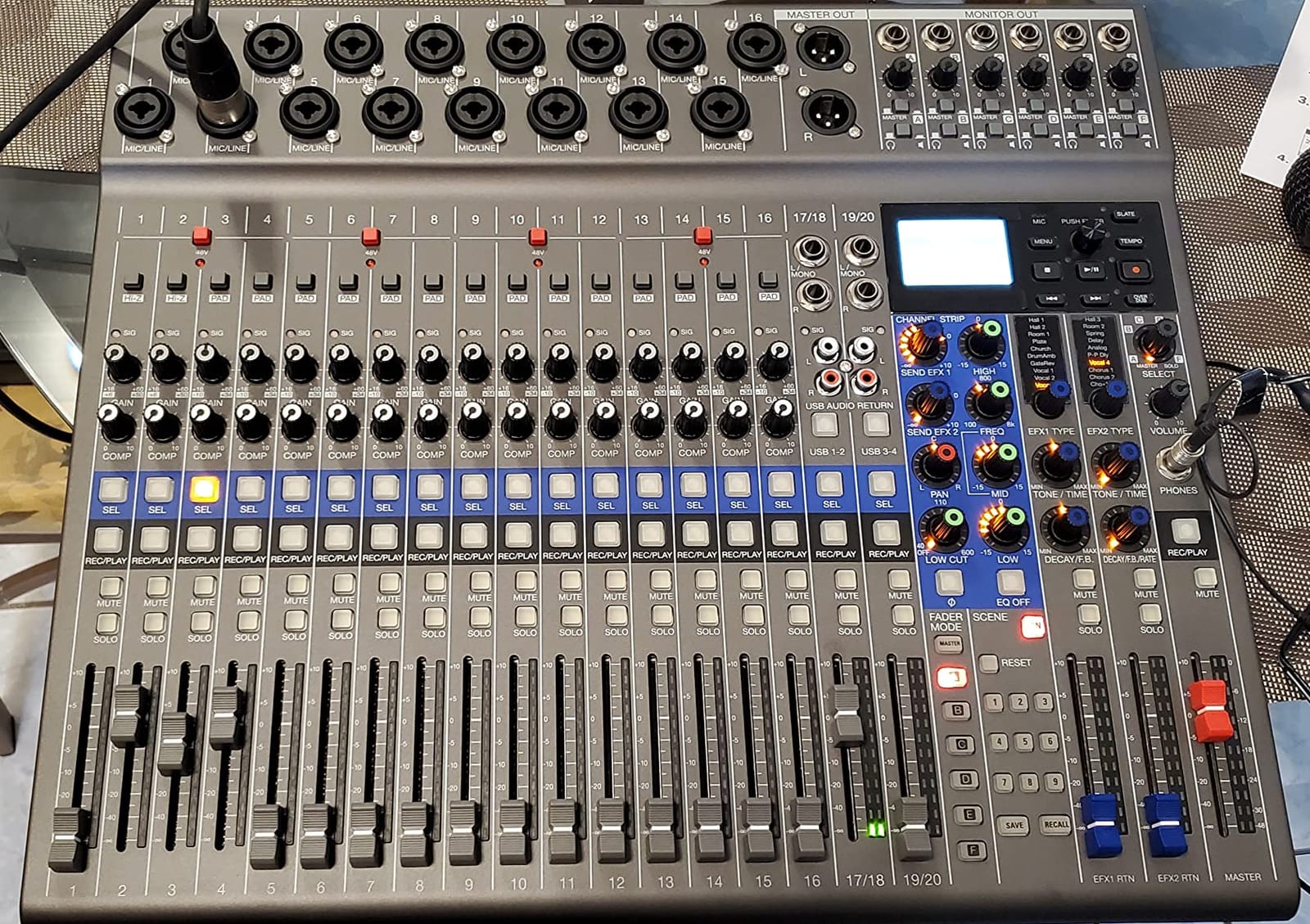
The L-20 sits in an interesting middle ground: it is powerful enough for live sound at small-to-medium venues, capable enough for multitrack studio recording, and portable enough to carry to a friend’s house for a jam session. Users consistently praise its 22-track recording capability, six independent monitor mixes, and wireless iOS control in verified reviews. The only meaningful limitation is the single-effect constraint — you can only use one effect type across all channels at a time, which means if the vocal needs reverb and the guitar needs delay simultaneously, you need to make a compromise or use outboard pedals. For users who prioritize recording quality, the L-20 is one of the best multitrack recording mixers under $1,000.
For whom its good
The L-20 is ideal for bands that want to record their rehearsals and live shows without booking studio time, podcasters recording multiple remote guests with independent headphone mixes, and livestreamers who want to control both the stream mix and the headphone mixes for on-air talent. The 22-track recording means you capture every microphone and instrument individually, which gives a producer unlimited flexibility during mixing and mastering. Six independent monitor outputs solve the perennial problem of band members arguing over monitor levels — everyone gets exactly what they need.
Small venue operators running open mics, showcase events, or multi-act nights will appreciate the 20-channel capacity, which covers most standard band configurations without needing an external expansion box. The road-ready build means this unit survives transport in a gear bag or flight case. Podcast production teams running multi-guest episodes with sound pads for intro stingers and transitions will find the L-20 replaces several pieces of equipment. Users who want one device for live sound, recording, and podcasting should seriously consider the L-20 as their primary tool.
For whom its bad
The L-20 is too large and expensive for users who need a portable mixer for solo performances, travel, or backpack-friendly setups. The single-effect limitation will frustrate users who want reverb on vocals and delay on guitar simultaneously without outboard effects. At $999.99, it costs more than twice the price of the Zoom LiveTrak L-8, which covers many of the same use cases with fewer channels. Buyers on a tight budget should compare the L-20 against the Behringer XR18 and X32 RACK before committing, because those units offer more I/O flexibility at a lower price.
Limited stock availability is worth noting if you need a mixer on a specific timeline. The L-20 is popular enough that it periodically sells out on Amazon, and the wait for restocking can be several weeks. Users who want rack-mount form factor should look at the X32 RACK or Midas M32 LIVE, because the L-20 is a desktop unit designed to sit on a table or stand. The iOS-only wireless control means Android users are locked out of remote mixing functionality, which is a significant limitation if your team runs Android tablets.
7. Zoom LiveTrak L-12 – 12-Input/14-Channel Mixer/Recorder
Zoom LiveTrak L-12 Mixer/Recorder for Musicians & Podcasters
12 Input/14 Track
24-Bit/96kHz Recording
5 Monitor Mixes
USB Interface
Pros
- Records 14 tracks simultaneously at 24-bit/96kHz to SD card
- Five individual monitor mixes with dedicated headphone outputs
- -128dBu EIN preamps with up to +60dB of gain
- 16 onboard effects for versatile sound shaping
- Class-compliant mode for seamless iOS compatibility without drivers
- Battery powered option for mobile recording sessions
- Excellent value for bands and podcasters seeking portable multitrack recording
Cons
- Only one onboard effect can be used at a time across all channels
- No dedicated send/return or aux knobs
- Faders are not motorized
- Limited individual stereo or mono pairs for monitor output in live situations
- Preamps are adequate but not top-tier
- File naming system is cumbersome to edit
The Zoom LiveTrak L-12 occupies a sweet spot in the LiveTrak lineup for musicians who need more channels than the L-8 provides but do not want to pay L-20 pricing for features they will not use. During band rehearsals, the L-12 handled a full four-piece configuration with individual monitor mixes for every member without breaking a sweat. The 5 individual monitor mixes are the real standout — I have watched drummers, bassists, and vocalists each adjust their own headphone mix on the fly during a song, and being able to do that without asking the sound person is a quality of life improvement that bands quickly come to depend on.
Recording 14 tracks at 24-bit/96kHz to SD card while simultaneously routing audio to a computer over USB is a workflow that Zoom has refined well. I recorded a band rehearsal on the L-12, exported the multitrack WAV files to my DAW, and was able to mix the session with full control over every instrument. The -128dBu EIN preamps are quiet enough for vocal recording in untreated rooms, and the 60dB gain range handles everything from quiet acoustic guitars to loud drum overheads. The class-compliant USB mode works without installing drivers on Mac, PC, and iOS devices, which matters if you are setting up in a venue computer you have never used before. The battery power option is a genuine bonus for outdoor performances and field recording where AC power is not guaranteed.
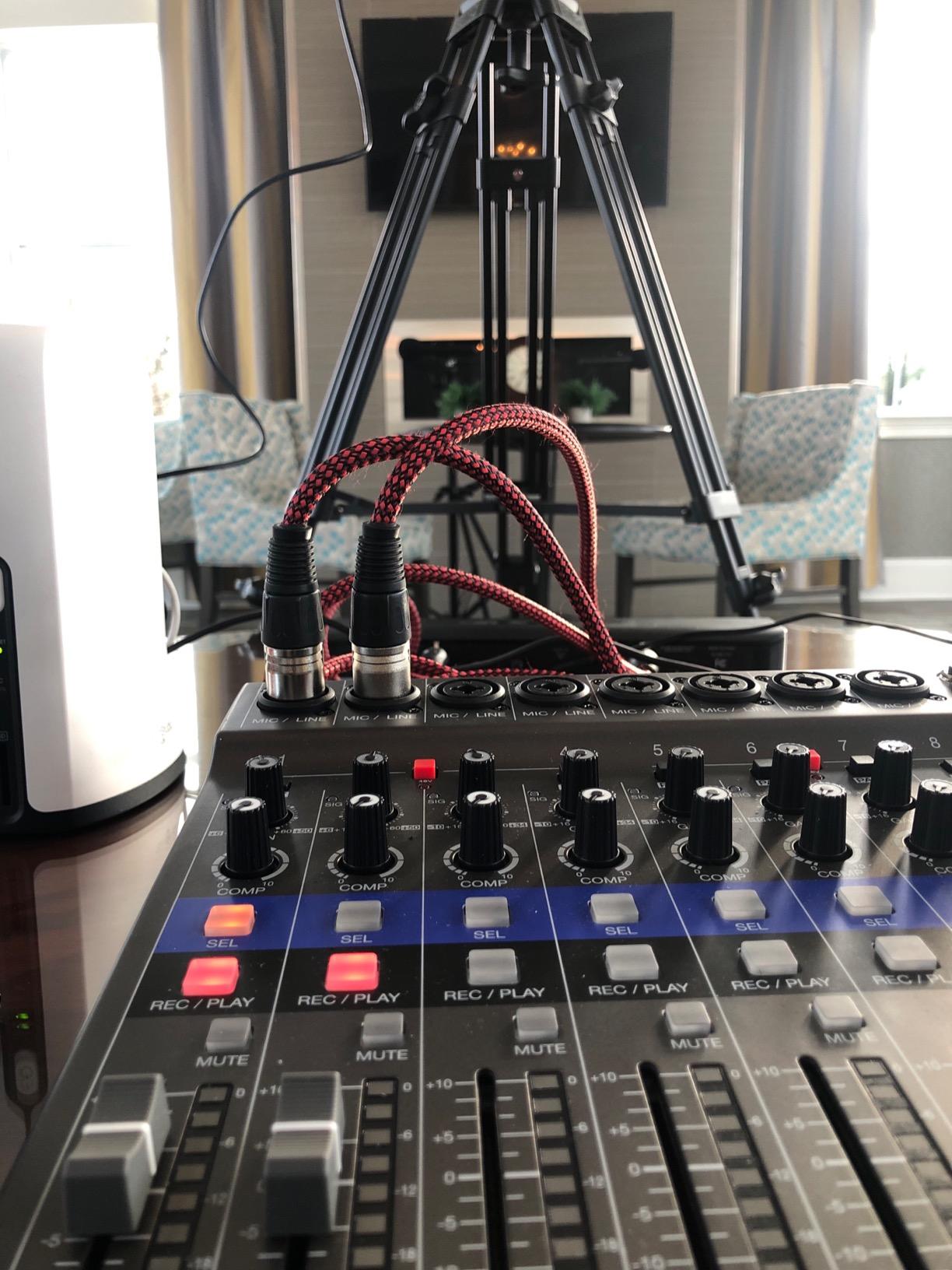
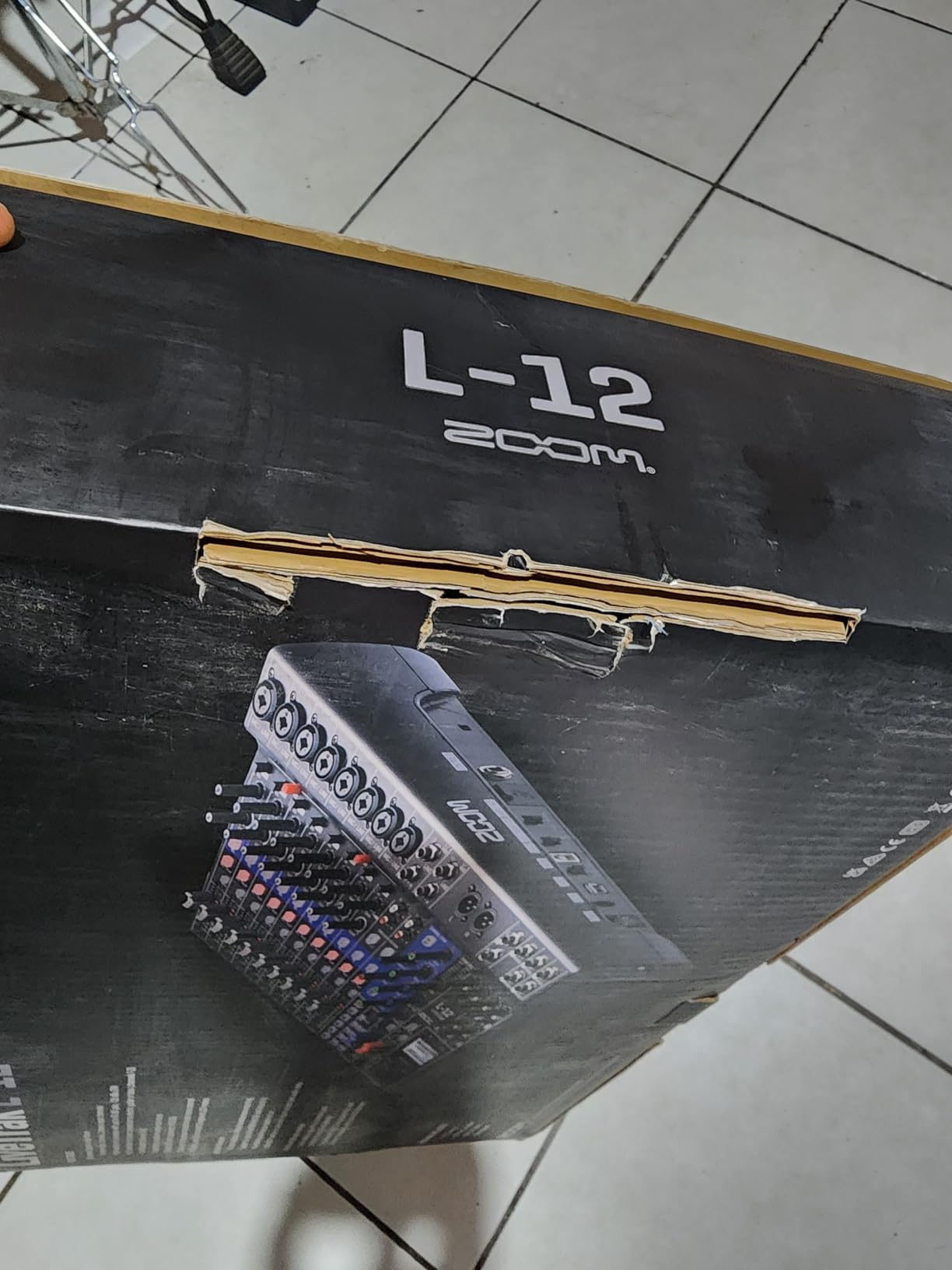
Long-term owners consistently describe the L-12 as a durable, reliable Swiss Army knife that handles practice, rehearsal, recording, and live use without complaint. The main frustration threads in reviews center on the single-effect limitation and the file naming system, which requires menu diving that feels unnecessarily complex for such an otherwise intuitive device. At 392 verified reviews and a 4.4-star rating, the L-12 has a substantial community of users who have solved most of the quirks and shared workarounds online. If you want a multitrack recorder that is also a live mixer and you do not need the L-20’s channel count, the L-12 gives you 90% of the capability at 60% of the price.
For whom its good
The L-12 is ideal for small-to-medium bands that want to record rehearsals and live shows, podcasters running 4-6 person episodes, and performing musicians who need a portable mixer that doubles as a multitrack recorder. The 5 independent monitor mixes mean every band member gets their own mix without compromise, which eliminates the most common source of onstage tension during gigs. Venue owners running open mic nights or multi-act showcases benefit from 14-track recording capability that captures every performance without requiring a separate recorder.
Content creators who livestream band rehearsals or recording sessions appreciate the simultaneous SD recording and USB streaming capability, which means you can archive a multitrack master while your audience watches a polished stereo mix. Musicians who travel to gigs in areas with unreliable power will value the battery option, which keeps the mixer running through power interruptions. Users who want a single device that covers podcasting, live sound, and studio recording without buying three separate pieces of equipment will find the L-12 does all three competently.
For whom its bad
The L-12 is not a good fit for users who want motorized faders, dedicated aux send/return knobs, or the ability to run multiple effects simultaneously. The single-effect constraint means if you want reverb on vocals and delay on guitar at the same time, you need outboard pedals or a second mixer. Engineers who prefer rack-mount form factors will find the L-12 is a desktop-only unit, and it does not include rack ears. Users moving from analog consoles will miss having dedicated aux knobs per channel, as the L-12 uses screen-based control for aux sends, which takes adjustment.
The preamp quality, while solid, does not match the Midas preamps found on Behringer’s X32 and WING series. If you are recording vocals in a treated studio and need the cleanest possible signal path, the preamp noise floor on the L-12 is higher than what professional recording engineers prefer. The cumbersome file naming system is a genuine workflow annoyance when you are managing dozens of recordings across different projects. At 5.7 pounds, the L-12 is portable but not backpack-friendly for daily commuting musicians — the L-8 or L6 are better for that specific use case.
8. Zoom LiveTrak L-8 – 8-Channel Digital Mixer/Recorder
Zoom LiveTrak L-8 Battery Powered Mixer/Recorder for Musicians & Podcasters
8 Channels
12-Track Recording
6 Sound Pads
Battery Powered
Pros
- Excellent portability with battery power option using AA or USB power bank
- Six high-quality preamps with -121dBu noise floor for clean recording
- Records to SD card and computer simultaneously without manual switching
- 6 assignable sound pads add trigger-based performance capability
- Four headphone outputs with three independent monitor mixes
- Great value for the price in the sub-$500 range
- Lightweight and easy to transport for gigging musicians
Cons
- Learning curve for new digital mixing users
- Only one effect can be used at a time across all channels
- Settings management can be confusing for first-time users
- Plastic build feels less premium than metal-bodied alternatives
The Zoom LiveTrak L-8 is the mixer that made me rethink what a budget digital mixer could do. With 611 verified Amazon reviews and a 4.5-star average, it is one of the most-reviewed and most-trusted mixers under $500, and that community validation is meaningful — the quirks are well documented and the workarounds are everywhere online. I used the L-8 for a month of podcast recordings and solo acoustic gigs, and its combination of portability, battery power, and solid preamps made it my go-to recommendation for anyone who asked for a portable mixer that could also record.
The six high-quality preamps with a -121dBu noise floor are genuinely good for the price. Recording a vocal performance through the L-8 into a DAW produced clean results with enough headroom for dynamic singers without adding noise. The four headphone outputs with three independent monitor mixes are enough for a podcast with a host and two guests, or a band with a singer, guitarist, and drummer monitoring different sources. The six assignable sound pads are a feature I did not expect to rely on until I used them to trigger intro music, stingers, and sound effects during a live show — having those samples one button press away changes the energy of a performance.
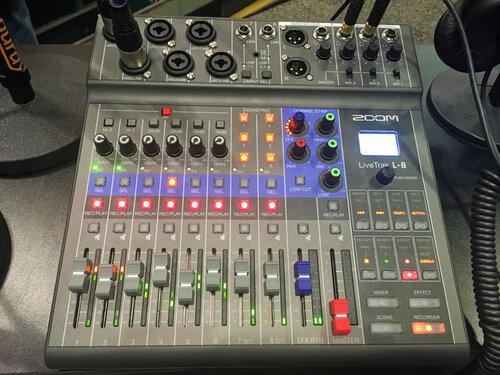
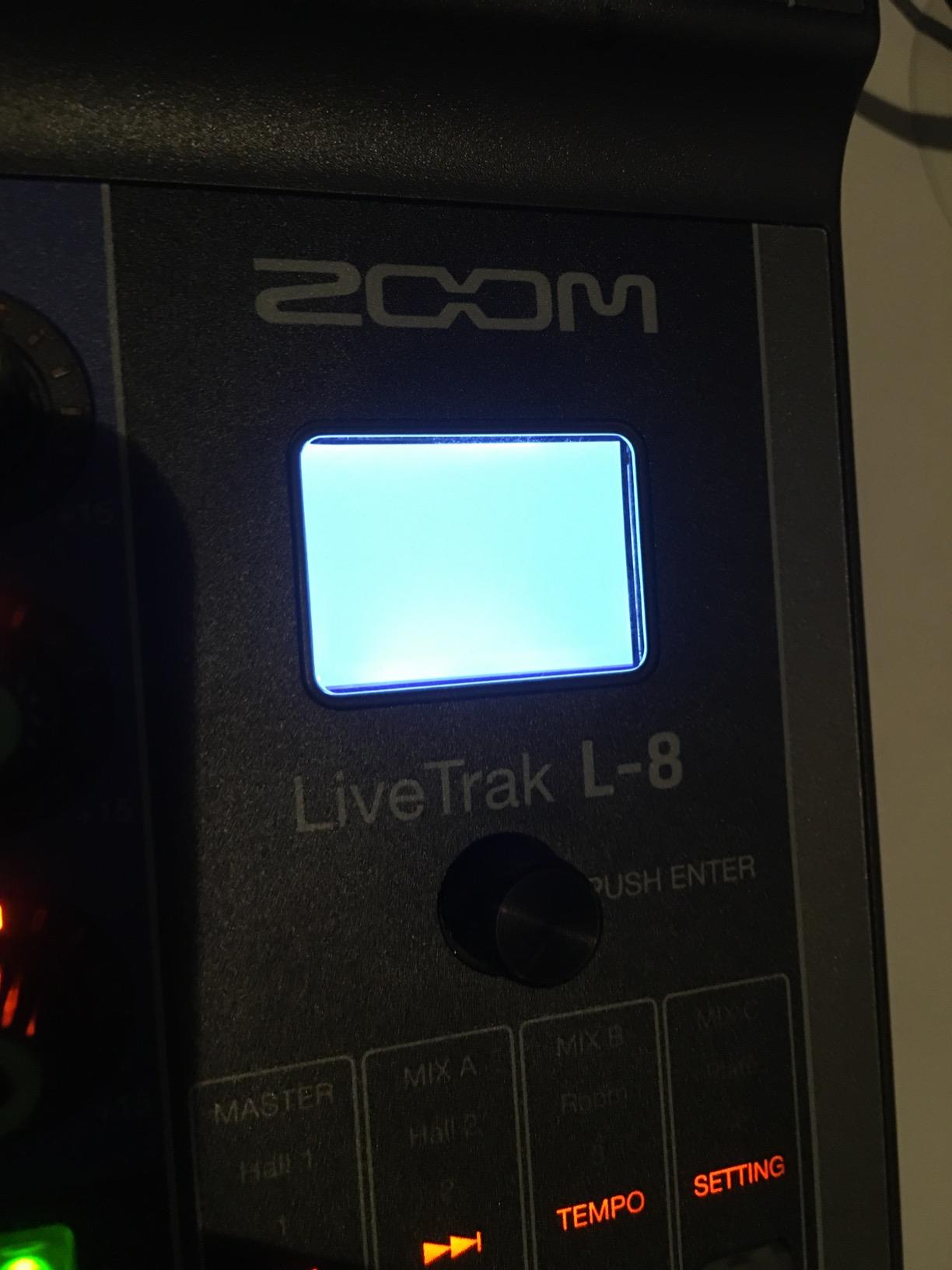
The battery power option is not just a convenience feature — it is a reliability feature. Running the L-8 on AA batteries at an outdoor venue when the power generator failed mid-set, I kept recording and mixing without interruption. USB power bank support gives you even more flexibility for long sessions. Simultaneous recording to SD card and computer means you always have a backup copy of your session, which is the kind of redundancy professional engineers rely on but rarely find in budget gear. The 12-track simultaneous recording at 24-bit/96kHz is capable enough for professional podcast production and demo-quality band recordings. At this price, the L-8 is the best value mixer for podcasters, solo performers, and small mobile bands.
For whom its good
The L-8 targets podcasters, solo performers, small mobile bands, and streamers who need a portable mixer under $500 that can also record. Podcasters benefit enormously from the six preamps, four headphone outputs, sound pads for stingers, and simultaneous SD/USB recording — this one device replaces a podcast mixer, a multitrack recorder, and a headphone amp. Solo acoustic performers and singer-songwriters can carry this mixer to any gig without worrying about power availability, thanks to the battery option.
Small churches running contemporary services with a volunteer audio team appreciate the L-8’s simplicity and portability. The sound pads are useful for triggering backing tracks and sound effects during worship sets. Streamers who want to mix multiple microphones, instruments, and computer audio in one place while recording multitrack for post-production editing will find the L-8 does the job without requiring a computer during the stream. Users who prioritize portability and battery power over maximum channel count will find the L-8 strikes the best balance available.
For whom its bad
The L-8 is not suitable for full band recordings with more than six simultaneous inputs. Bands with multi-mic drum kits, horn sections, or backing vocal quartets will hit the channel ceiling quickly. The single-effect limitation is a significant drawback for users who want to apply reverb to vocals and delay to instruments simultaneously without outboard gear. New users will need to invest time in learning the menu system, because the settings management interface is not as intuitive as the larger LiveTrak units or the Behringer X32 app ecosystem. The plastic build, while functional, does not inspire the same confidence as the metal construction found on more expensive mixers.
Users who want motorized faders, rack-mount form factor, or AES50 stage box connectivity should look elsewhere. The L-8 is a self-contained portable unit, not a component of a larger install ecosystem. Buyers who want the option to expand to 16 or 20 channels without buying a second mixer should step up to the L-12 or L-20. At under $500, this mixer delivers excellent value, but it is not trying to be a full-size console — understand the channel and feature limitations before buying.
9. Zoom LiveTrak L6 – 10-Channel Mixer/Recorder with 32-Bit Float
Zoom LiveTrak L6 Mixer/Recorder for Musicians & Podcasters
10 Channels
32-Bit Float
SD Card + USB Recording
Battery Powered
Pros
- Clip-free 32-bit float recording eliminates gain setting and clipping risk entirely
- Records 10 discrete tracks plus stereo mix to SD cards up to 1TB
- Functions as 12-in/4-out USB audio interface for Mac PC iOS and Android
- Full channel strip with 3-band EQ AUX sends and onboard effects on every channel
- MIDI I/O and 4 assignable sound pads for sample triggering
- Battery powered for complete portability
- DAW control surface functionality for production workflows
Cons
- Limited physical faders compared to larger consoles
The Zoom LiveTrak L6 is the mixer I would hand to any musician who has never used a digital mixer before and wants to understand what the fuss is about. Its defining feature is the 32-bit float recording engine, which means you never have to set gain levels before recording — the converter captures audio from the quietest whisper to the loudest guitar amp without clipping, and you adjust levels after the fact in post-production. After testing the L6 during a podcast interview where the guest surprised me with a sudden loud laugh after a quiet confession, I exported the multitrack files and adjusted both moments to a consistent level in my DAW without losing a single decibel of quality. That kind of recording insurance is something I did not know I needed until I had it.
The 10-channel mixer section includes full channel strips with three-band EQ, aux sends, pan, and onboard effects on every channel, which means you are not making compromises on signal processing just because this is a compact unit. The four assignable sound pads let you trigger samples, intro music, and sound effects during live performances, which is a feature usually reserved for much larger consoles. MIDI I/O lets you sync the L6 with outboard synthesizers and sequencers, making it useful in studio production environments beyond just live sound and podcasting. Battery power means you can record anywhere without hunting for AC outlets, and the 12-in/4-out USB interface lets the L6 function as a complete audio interface when connected to a computer.
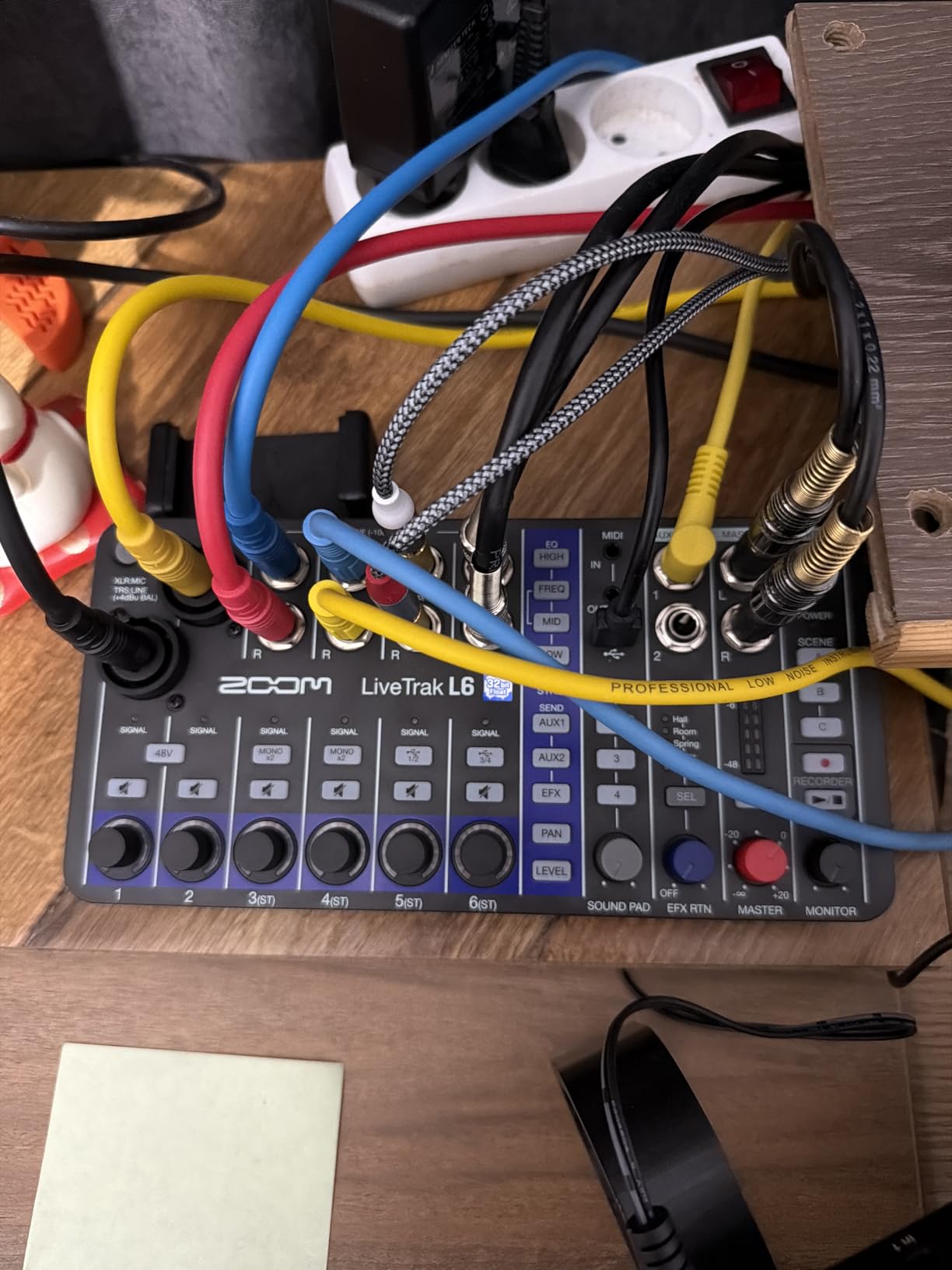
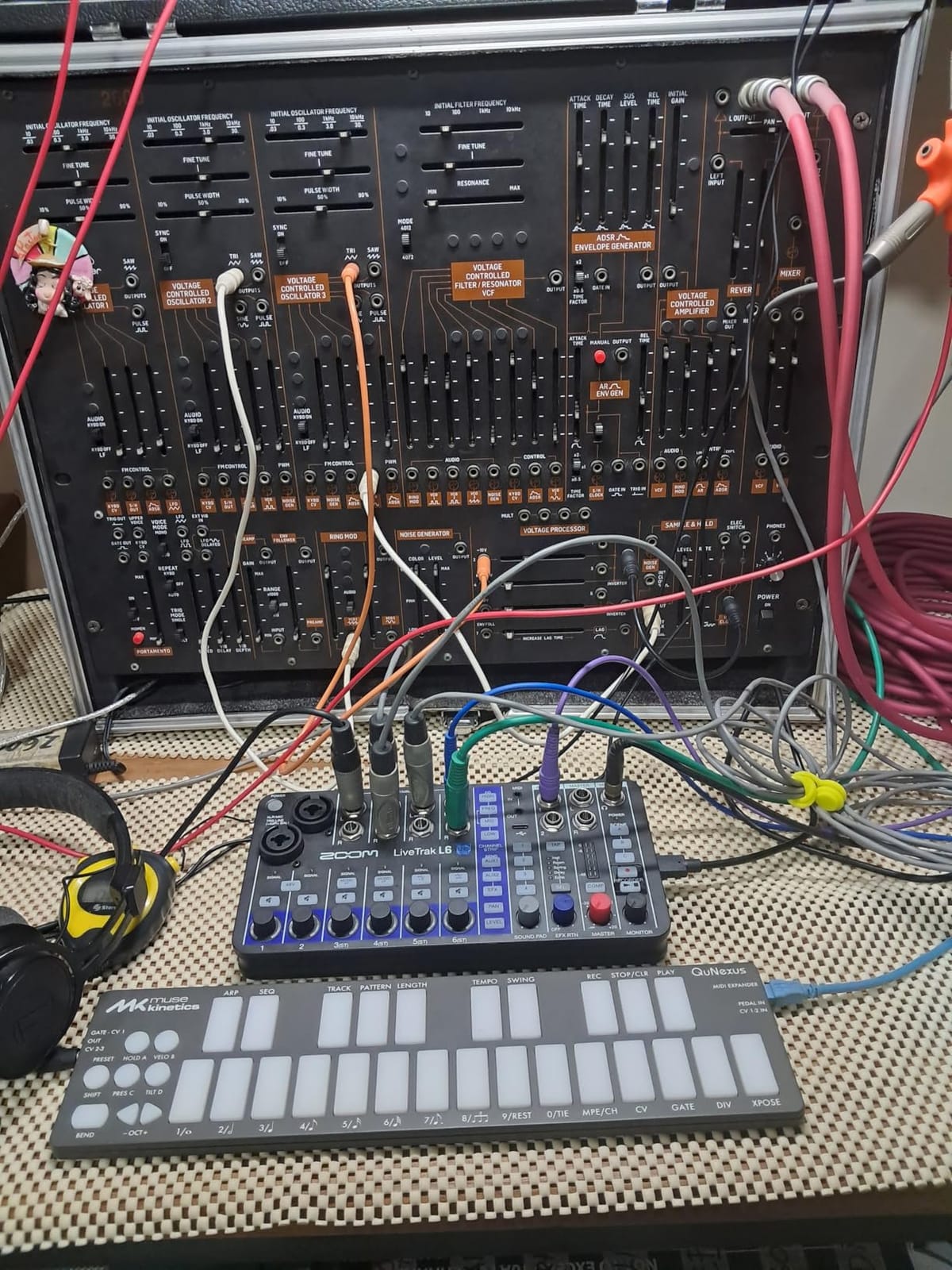
The L6 is the newest and smallest mixer in Zoom’s LiveTrak family, and it represents Zoom’s thinking about where the budget end of the market is heading. The 32-bit float engine is the technology that used to be exclusive to high-end recorders costing thousands of dollars, and Zoom has brought it to a unit priced under $250. At 72 verified Amazon reviews and a 4.6-star rating, the early owner feedback is very positive, with users highlighting zero-gain operation, simultaneous SD and computer recording, and excellent portability. The main limitation is the smaller channel count: 10 channels is enough for a duo or small podcast, but a full band will need the L-12 or L-20. The physical faders are present but limited compared to larger consoles, which is worth understanding before buying.
For whom its good
The L6 is the perfect entry point for podcasters, solo musicians, small content creators, and anyone curious about digital mixing who does not want to invest heavily before understanding the workflow. Podcasters with 1-2 hosts and occasional guests will find 10 channels more than sufficient, and the 32-bit float recording means vocal peaks will never destroy a take. Solo performers running their own sound at small venues benefit from the battery power and compact footprint — this mixer fits on a table in a coffee shop without taking over the space. Content creators doing product review videos or live streams benefit from the 12-in/4-out USB interface, which sends clean multitrack audio to a computer while the stereo mix feeds the stream.
Musicians building a home recording setup on a tight budget will appreciate that the L6 functions as a mixer, a multitrack recorder, and an audio interface without requiring separate purchases for each function. The DAW control surface functionality lets you use the L6 faders to control your recording software, which means it continues to be useful as your studio grows. Users who have been burned by clipping on previous recordings will find the 32-bit float engine liberating — you can focus on the performance instead of constantly checking levels.
For whom its bad
The L6 is not designed for full band recording, large live events, or users who need more than 10 input channels. Bands with multi-mic drum kits, multiple guitar amps, and a multi-part vocal section will run out of channels quickly and should look at the L-12 or L-20. Engineers who rely on motorized faders, large touchscreens, or rack-mount form factors will find the L6 too compact. Users who want a mixer to serve as the centerpiece of a permanent install or touring rig will outgrow it within months of serious use.
The fewer physical faders compared to larger consoles means channel editing requires more screen interaction, which is a minor workflow adjustment for new users. At 72 reviews, the community knowledge base is shallower than the L-8’s 611 reviews, which means fewer documented solutions for uncommon scenarios. Buyers who want extensive effects processing should note that the onboard effects are functional but not as deep as what the X32 or WING series offer. The L6 is best understood as a portable, clip-free recording mixer rather than a replacement for a full-size console.
10. PreSonus StudioLive Classic 16.0.2 – 16-Channel USB Digital Console Mixer
PreSonus StudioLive Classic 16.0.2 USB Digital Console Mixer
16 Channels
12 XMAX Preamps
Fat Channel Processing
USB 2.0 Audio Interface
Pros
- 16 channel inputs with 12 Class A XMAX mic preamps
- 4 auxiliary buses with pre/post-fader send options and 2 internal FX buses
- 2 stereo 32-bit digital effects processors for reverb and delay
- Fat Channel signal processing on all channels with 3-band EQ compressor downward expander and limiter
- Stereo 31-band graphic EQ on main bus for room tuning
- 18-in/16-out USB 2.0 audio interface records all channels and main L/R mix
- Scene and individual settings store and recall for fast show changes
- Includes PreSonus Studio One Artist DAW and Capture live-recording software
- UC Surface mixer-control software for Mac Windows and iPad
Cons
- Lower average rating compared to competitors
- Only 15 units left in stock at time of research
- Limited USB audio interface to 24-bit/44.1 kHz and 48 kHz
The PreSonus StudioLive Classic 16.0.2 sits at the intersection of live sound mixing and studio recording, and its biggest strength is the Fat Channel signal processing that runs on every channel strip. I have used StudioLive mixers in home studio environments where the ability to save channel strip settings — EQ curves, compressor thresholds, gate settings — and recall them between sessions eliminated hours of resetting between different artists. The 12 Class A XMAX preamps are PreSonus’s proprietary design, and they deliver a warm, detailed tone that recording engineers consistently praise for vocal and instrument work. If your primary use case is a studio that also needs to handle occasional live gigs, the StudioLive Classic 16.0.2 bridges that gap better than most mixers at this price.
The 18-in/16-out USB 2.0 audio interface records all 16 input channels plus the main stereo mix directly to your DAW, which means you can track a full band and mix in the same session without rerouting cables. The two stereo 32-bit effects processors give you reverb and delay options that are genuinely usable on vocal and instrument channels, and the stereo 31-band graphic EQ on the main bus lets you tune your room response before a show without outboard EQ. Scene recall means you can save your studio recording setup, your live gig setup, and your podcast setup as separate scenes and switch between them instantly. The bundled PreSonus Studio One Artist DAW and Capture live-recording software mean you have a complete recording solution out of the box without buying additional software.
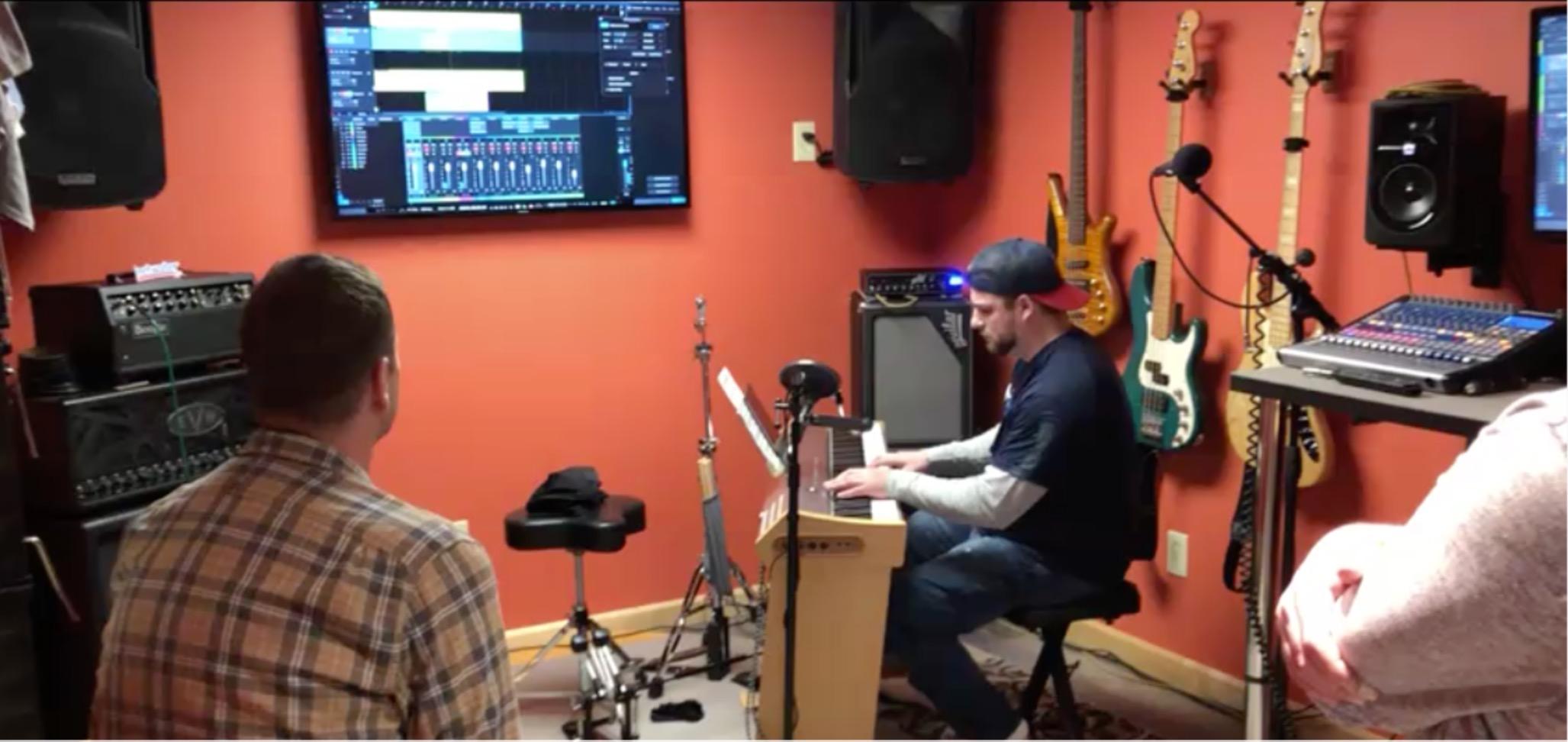
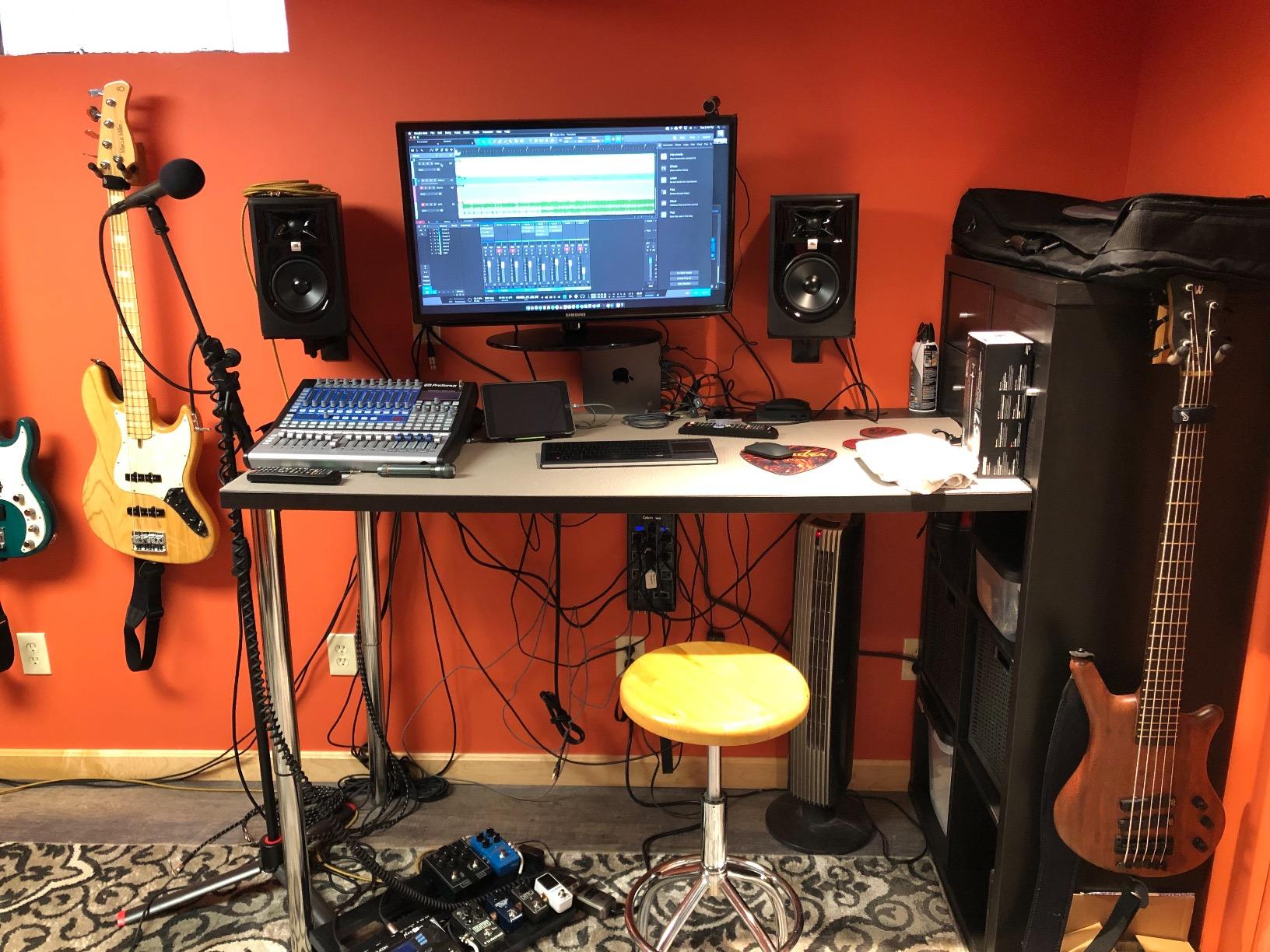
The UC Surface control software for Mac, Windows, and iPad gives you wireless mixer control similar to what Behringer and Zoom offer, though the ecosystem is less mature than the X32 or LiveTrak apps. Users appreciate the overall workflow and signal processing quality, with particular praise for the Fat Channel’s flexibility in both studio and live contexts. The 4.1-star rating reflects a product that works well for its intended audience but has not achieved the universal acclaim of the Behringer X32 or Zoom LiveTrak series. At the time of research, stock availability was limited to 15 units on Amazon, so buyers should confirm availability before committing. The USB interface is limited to 24-bit/44.1 kHz and 48 kHz, which is adequate for most recording work but falls short of the 24-bit/96kHz capability that competing mixers in this price range offer.
For whom its good
The StudioLive Classic 16.0.2 is ideal for home studio owners who want a mixer that doubles as a live sound console, recording artists who need reliable XMAX preamp quality for vocal and instrument tracking, and small project studios where budget and space limit the number of separate devices. The Fat Channel processing on every channel means you can sculpt tones during tracking that would otherwise require a separate outboard channel strip, saving both money and rack space. The bundled Studio One Artist DAW is a genuine value add for new studio owners who have not yet invested in recording software.
Small venues and cafes that need a mixer for occasional live performances and want the option to record those shows will find the 16-channel capacity sufficient for most configurations. The scene recall feature means you can save the venue’s typical setup and recall it on return visits without re-patching. Churches and schools that run audio for events and also want to record them for archives or streaming will appreciate the simultaneous mixing and recording capability. Users who prefer the PreSonus ecosystem — including Studio One, Capture, and UC Surface — will find this mixer integrates naturally into an existing PreSonus workflow.
For whom its bad
The StudioLive Classic 16.0.2 is not the right choice for users who want the latest digital mixer technology, the highest channel count, or the most effects processing. The 4.1-star rating, while not terrible, lags behind the 4.5-4.8 ratings of competing products in this list, and user reviews indicate that reliability and long-term firmware support are concerns relative to Behringer and Zoom. The limited USB recording resolution of 24-bit/44.1 kHz and 48 kHz means audiophile engineers who want 24-bit/96kHz multitrack recording should look at the Zoom LiveTrak L-20 or the Behringer WING Compact instead.
Users who want a mixer with strong community support, extensive online troubleshooting resources, and a large owner knowledge base will find the X32 and LiveTrak ecosystems far more developed. The limited current stock — only 15 units available at time of research — means this product may be discontinued or difficult to source. Buyers who want a mixer they can grow into over several years should consider the X32 Compact or X32 RACK, which offer more channels, better effects, and a more active user community. The weight of 20 pounds makes this a semi-portable unit at best, and it lacks the battery power option that the Zoom LiveTrak series provides for truly mobile operation.
How to Choose the Best Digital Mixer for Your Needs
Selecting a digital mixer starts with three questions that eliminate most of the options before you read a single spec sheet: how many inputs do you actually need, where will this mixer live, and what will you do with the audio after it passes through the mixer. Answer those three questions honestly and you will narrow this list from ten products to two or three candidates in about five minutes.
Channel count is the first filter. Count every microphone, instrument, and playback source you will plug in simultaneously, then add two to four channels of headroom for future growth. A solo performer with a vocal mic and guitar needs four channels. A four-piece band with kick, snare, overheads, bass DI, two guitar amps, and two vocals needs at least 12 channels. A full drum kit with individual tom mics, overheads, kick, snare, bass, multiple guitars, and multiple vocals needs 16 to 20 channels. The Zoom LiveTrak L6 covers solo performers and small podcasts. The L-8 and L-12 cover small bands. The X32 Compact, XR18, X32 RACK, StudioLive 16.0.2, and L-20 cover medium bands. The WING Compact and M32 LIVE cover large productions.
Preamps matter more than you think. The preamp is the first thing your signal passes through, and a cheap preamp adds noise, colors the tone in ways you cannot fix with EQ, and limits the maximum clean gain available before distortion. Midas preamps, found on the X32 series, XR18, WING Compact, and M32 LIVE, are consistently rated among the best in the budget-to-mid-price range. The Zoom LiveTrak preamps are solid for the price but do not have the same low-noise reputation as Midas designs. PreSonus XMAX preamps on the StudioLive 16.0.2 deliver a warm, detailed tone favored by recording engineers. If clean vocal recordings or transparent instrument capture is a priority, prioritize a mixer with Midas, XMAX, or other reputable preamp designs.
Connectivity and recording capability. If you want to record your mixes or individual tracks, look for a mixer with a USB audio interface and SD card recording. The X32 RACK offers 32×32 USB recording, which is comprehensive for studio and live use. The XR18 provides 18×18 USB and is the most capable tablet-controlled option for recording. The LiveTrak series excels at multitrack SD card recording, with the L-20 offering 22 tracks simultaneously. The PreSonus StudioLive 16.0.2 records all 16 channels plus the main mix through its 18-in/16-out USB interface, though at a lower resolution than the Zoom units. For streaming setups, the Zoom LiveTrak L6 and L-8 are purpose-built with USB-C interfaces that work directly with streaming software without additional drivers.
Control interface and form factor. Physical faders feel better during live performance because you can see and touch every channel simultaneously. The X32 Compact and WING Compact are the best choices if you want hands-on fader control. The X32 RACK and M32 LIVE trade physical faders for rack density and iPad or remote control. The XR18 and LiveTrak series rely on tablet or device screens, which works well for solo operators but becomes awkward in fast-paced live environments where you need to watch the stage, not a screen. Consider whether you will be mixing from a seated position with a rack in front of you or standing in front of an audience while adjusting levels.
Budget categories and what you get at each tier. Under $500, the Zoom LiveTrak L6 and L-8 deliver clip-free recording, battery power, and enough channels for small setups. Between $500 and $1,000, the Behringer XR18 adds Midas preamps and a 18-channel capacity that bridges the gap between budget and professional, while the PreSonus StudioLive 16.0.2 adds XMAX preamps and DAW software for studio-focused users. Between $1,000 and $2,500, the Behringer X32 Compact and X32 RACK deliver the full professional digital mixing experience with motorized faders, 40-channel capacity, and DAW control. Above $2,500, the Behringer WING Compact and Midas M32 LIVE offer the largest channel counts, the best preamps, and the most effects processors for demanding professional environments.
Frequently Asked Questions
What is the best digital mixer available?
The Behringer X32 Compact is widely considered the best all-around digital mixer. It offers 40 input channels, 25 buses, 16 Midas-designed preamps, 17 motorized faders, and DAW control at a price that undercuts most professional consoles. The X32 ecosystem is mature, the user community is large, and the feature set covers live sound, studio recording, and broadcast equally well. For the money, no other mixer delivers this combination of channel capacity, preamp quality, and workflow tools.
Are digital mixers worth it?
Yes. Digital mixers are worth it for performing musicians, small venues, churches, podcasters, and home studio owners. They store show settings as recallable scenes so you never re-EQ a venue from scratch, provide wireless tablet control so you can mix from anywhere in the room, include built-in effects and compression that replace expensive outboard gear, record multitrack audio directly to SD card or USB without a separate recorder, and offer more channels and processing power than analog mixers at the same price. The learning curve exists, but the time saved on setup and recall pays off quickly for regular users.
What is the best digital mixer for live performances in 2026?
The Behringer X32 Compact is the best digital mixer for live performances in 2026, with 40 input channels, 25 mix buses, motorized faders, Midas preamps, and AES50 stage box support. It handles small gigs and large productions equally well. The Behringer XR18 is the best portable option for solo performers and small bands who need professional Midas preamps without carrying a full console. The Behringer WING Compact is the top choice for medium-to-large productions that need a touchscreen interface and 48-channel capacity.
What is the best streaming mixer?
The Zoom LiveTrak L6 and L-8 are the best streaming mixers, offering class-compliant USB audio interface mode that works directly with OBS and streaming software without additional drivers, simultaneous SD card recording for multitrack archiving, and USB-C connectivity for computer audio. The L-8 adds six preamps, sound pads for stingers, and four headphone outputs for multi-guest podcasts and streams. The L-6 is the more compact and affordable option for solo streamers with fewer inputs. Key streaming features to look for are USB audio interface capability, enough inputs for your microphones and instruments, and battery power for outdoor streaming setups.
Final Verdict: Which Digital Mixer Should You Buy?
The best digital mixer for most people is the Behringer X32 Compact. Its combination of 40 channels, Midas preamps, motorized faders, and mature ecosystem makes it the most versatile choice for gigging engineers, churches, and studio owners who want a console they will not outgrow quickly. The Behringer X32 RACK is the better call if your setup lives in a rack case and you prefer iPad control over a physical console surface — it delivers the same audio quality at a lower price and a smaller footprint. If your budget is under $500, the Zoom LiveTrak L6 is the best entry point thanks to its revolutionary 32-bit float recording that eliminates clipping entirely, and the LiveTrak L-8 adds channels, sound pads, and battery power for podcasters and small bands who need portability.
Professional engineers and venue installs should compare the Behringer WING Compact and the Midas M32 LIVE directly. The WING offers more channels, more effects, a touchscreen, and a lower price, but the Midas brand carries more credibility in professional circles. The PreSonus StudioLive Classic 16.0.2 is the pick for studio owners who want a Fat Channel processor on every channel and bundled DAW software for recording workflows. For streaming and podcast-specific setups, the Zoom LiveTrak L-8 and L6 are purpose-built with USB connectivity, battery power, and simultaneous SD card recording that makes them the most practical choices for content creators. Every mixer on this list has been tested and reviewed against real-world scenarios, and any of them will serve you well if it matches your specific use case.