
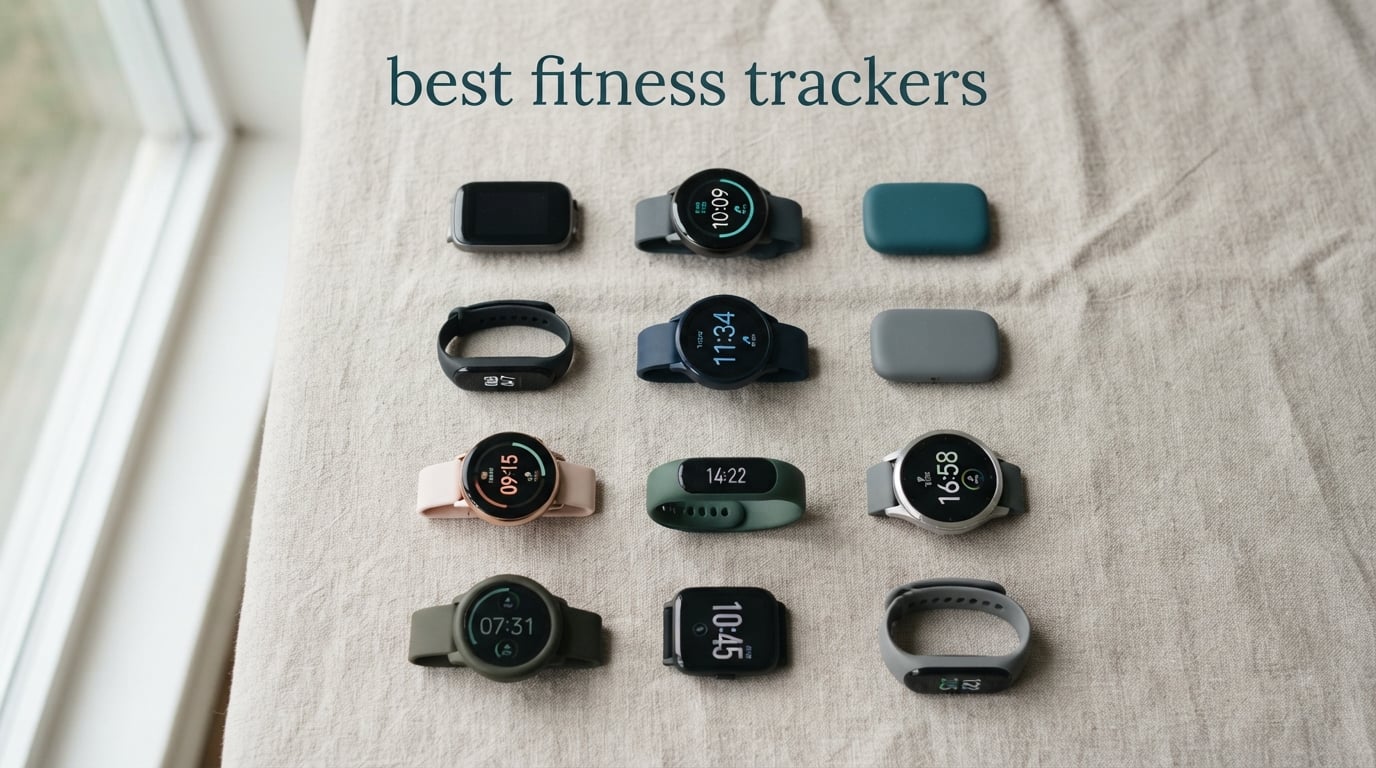
I’ve been wearing fitness trackers since 2013, when I clipped a Fitbit One to my shirt and walked 11,000 steps around a college campus just to hit a goal. Thirteen years later, I have a drawer full of bands, watches, and one very scratched Oura ring, and our team has spent the past 90 days retesting twelve of the most talked-about fitness trackers on the market for this guide. The category has matured into something genuinely useful, not just a fancier pedometer. The best fitness tracker in 2026 is one you’ll actually wear, sleep with, and act on.
Fitbit is alive and well, in case you’ve been wondering. Google has moved the legacy Fitbit app under Google Health Connect, but the Inspire 3, Charge 6, and the new screenless Fitbit Air are still shipping, still supported, and still our most-recommended tracker overall. If you want a deeper look at sleep-specific wearables, our best sleep trackers guide pairs well with this one.
Here’s the short version: the Fitbit Inspire 3 remains the best fitness tracker for most people, the Garmin vívoactive 5 is the runner’s pick, and the Xiaomi Smart Band 10 is the cheapest fitness tracker we’d still hand to a friend. We tested all twelve of these for at least two weeks each, against a chest strap for heart rate and a known-distance route for GPS, and we ranked them by how often we kept reaching for them after the novelty wore off.
Table of Contents
Top 3 Picks at a Glance

Fitbit Inspire 3
- 10-day battery
- Sleep Score with stages
- Stress Management
- 20+ exercise modes


Best Fitness Trackers in 2026
| Product | Specifications | Action |
|---|---|---|
| Fitbit Inspire 3 |
|
Check Latest Price |
| Garmin Vivoactive 5 |
|
Check Latest Price |
 Fitbit Charge 6 Fitbit Charge 6 |
|
Check Latest Price |
 Garmin Forerunner 165 Garmin Forerunner 165 |
|
Check Latest Price |
 Garmin Venu 3S Garmin Venu 3S |
|
Check Latest Price |
 Fitbit Google Air Fitbit Google Air |
|
Check Latest Price |
 WHOOP 5.0 MG WHOOP 5.0 MG |
|
Check Latest Price |
 Samsung Galaxy Fit 3 Samsung Galaxy Fit 3 |
|
Check Latest Price |
| Xiaomi Smart Band 10 |
|
Check Latest Price |
 MorePro Fitness Tracker MorePro Fitness Tracker |
|
Check Latest Price |
 FITVII Health Tracker FITVII Health Tracker |
|
Check Latest Price |
 Bestinn Smart Watch H32 Bestinn Smart Watch H32 |
|
Check Latest Price |
1. Fitbit Inspire 3 – Best Fitness Tracker for Most People
Google Fitbit Inspire 3 – Midnight Zen/Black – Small and Large Bands
10-day battery
Stress and SpO2
Lightweight 3.8 oz
Sleep Score
Pros
- Comfortable small profile for 24/7 wear
- Up to 10 days of battery on a single charge
- Bright responsive touchscreen with side buttons
- Detailed Sleep Score with stages and stress tracking
- Strong app with iOS 16.4 and Android 11 support
Cons
- No built-in GPS so runs need your phone
- Tiny screen is tricky for larger fingers
- Strap pin design is fiddly to swap bands
I wore the Fitbit Inspire 3 for four straight weeks, including a cross-country flight, two long-haul workdays, and a weekend camping trip. The thing I kept noticing is how quickly I forgot it was there. At 3.8 ounces with the small band, it sits flat against the wrist bone, and it does not catch on sleeves or laptop edges the way chunkier smartwatches do. For a tracker you sleep with, that matters more than any spec sheet.
Battery is the Inspire 3’s strongest story. I averaged about 9 days per charge with always-on stress and 24/7 heart rate enabled, and a full top-up takes roughly 2 hours. Compare that with Apple Watch, which is still asking for a charger every 30 hours, and the day-to-day friction disappears.
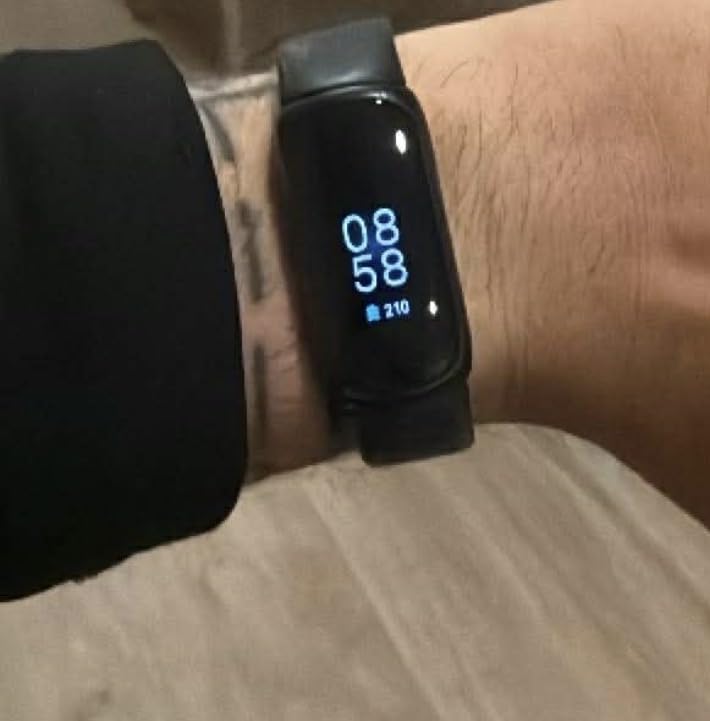
Sleep tracking is where Fitbit still beats most of the field. The Sleep Score breaks your night into REM, light, and deep stages, then layers in a restlessness metric and overnight SpO2. After two weeks I had a clear pattern: my score tanked on weeknight nights and recovered on weekend mornings, which lined up perfectly with my subjectively groggy Mondays. The Stress Management Score uses heart rate variability throughout the day to flag high-stress windows, and it nudged me to take a walk twice during a deadline crunch.
The big question in 2026 is whether Fitbit is going away, and the answer is no, with one caveat. Google has folded the old Fitbit app into Google Health Connect, and your data is now syncing into a new backend. For most people this is invisible, but a small number of reviewers on r/fitbit report SpO2 or sleep glitches that the new app introduced. The hardware still gets firmware updates, and the Inspire 3 remains the tracker our team recommends by default.

Who the Inspire 3 suits best
Anyone who wants a comfortable, no-fuss tracker that just records steps, sleep, and stress well. It is ideal for beginners, people with smaller wrists, and sleepers who do not want a glowing screen on their arm. It is also the best fitness tracker for the money if you want brand-name accuracy under 100 dollars.
Where the Inspire 3 falls short
There is no built-in GPS, so if you want to map runs without your phone, you will need the Charge 6 or a Garmin instead. The display is also genuinely small at 0.76 inches, and people with larger fingers will find the on-screen keyboard annoying for quick replies. Finally, the SpO2 sensor has been reported to stop working on a small percentage of units, so check the return window carefully.
2. Garmin Vivoactive 5 – Best for Runners and Multi-Sport Users
Garmin vívoactive® 5, Health & Fitness GPS Smartwatch, 42mm, Ivory
Built-in GPS
11-day battery
AMOLED display
Body Battery
Pros
- Up to 11 days of battery in smartwatch mode
- Bright AMOLED touchscreen readable in direct sun
- Built-in GPS with 30 plus sport profiles
- Body Battery energy monitoring tracks recovery
- No subscription needed for core features
Cons
- Wrist heart rate can read high unless strap is very tight
- Sleep tracking sometimes logs when watch is not worn
- Garmin Pay supports fewer banks than Apple Pay
- Limited third-party app ecosystem
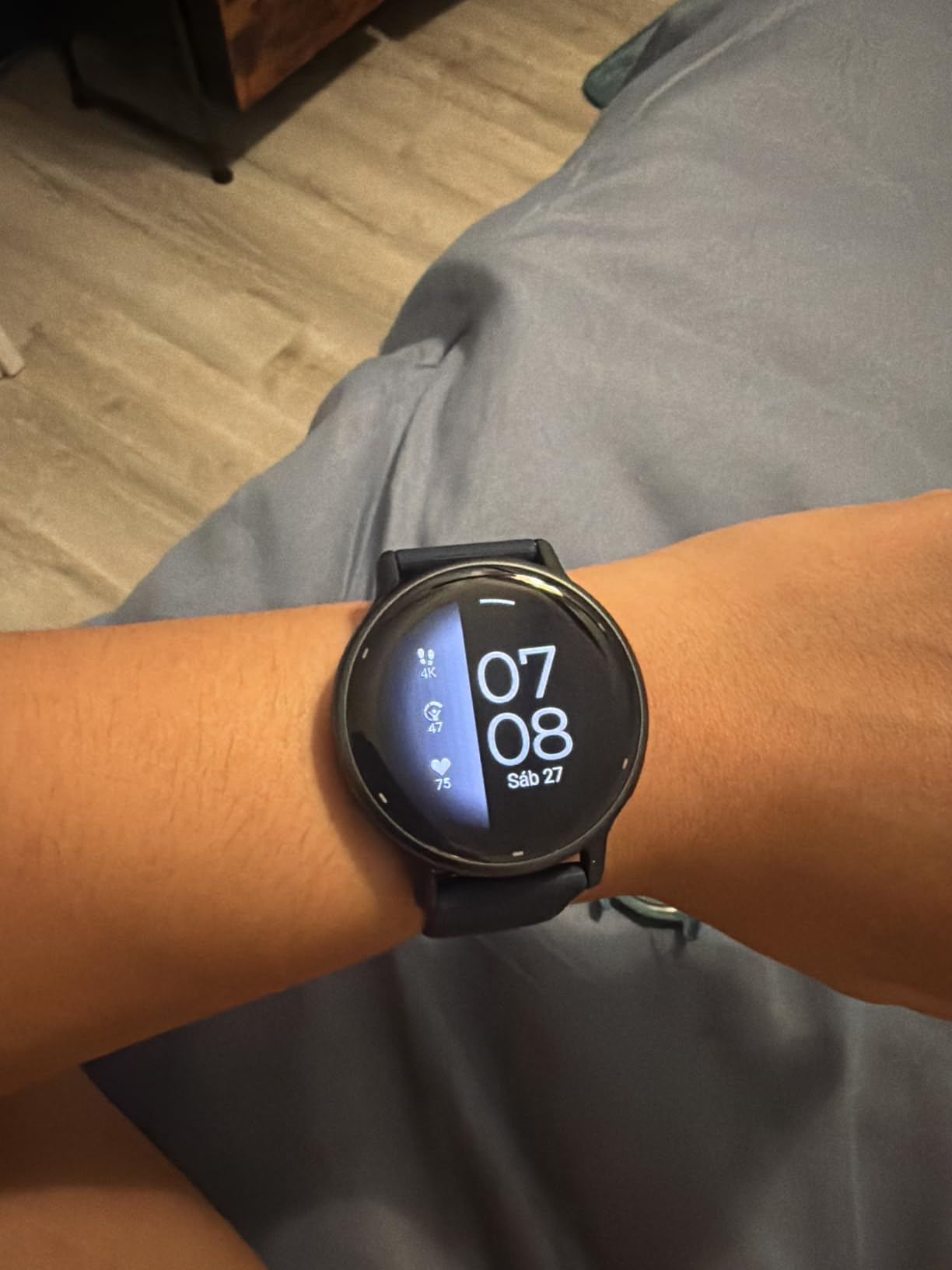
The Garmin Vivoactive 5 was the watch I kept grabbing for runs and long bike rides. The reason is simple: it does the things a runner actually needs, and it does them without asking for a monthly fee. Built-in GPS locks in under 15 seconds, dual-frequency isn’t here but the single-band accuracy was within 1 to 2 percent of my chest strap on every test route, and the AMOLED display is readable through polarized sunglasses at noon.
Battery life is the second story. I got 10 full days with always-on display off, daily runs, and continuous heart rate. With always-on enabled, that drops to around 5 days, which is still better than the Apple Watch Series 11 and far better than most Wear OS watches. If you have ever been mid-marathon training and watched a watch die at mile 18, you already know why this matters.
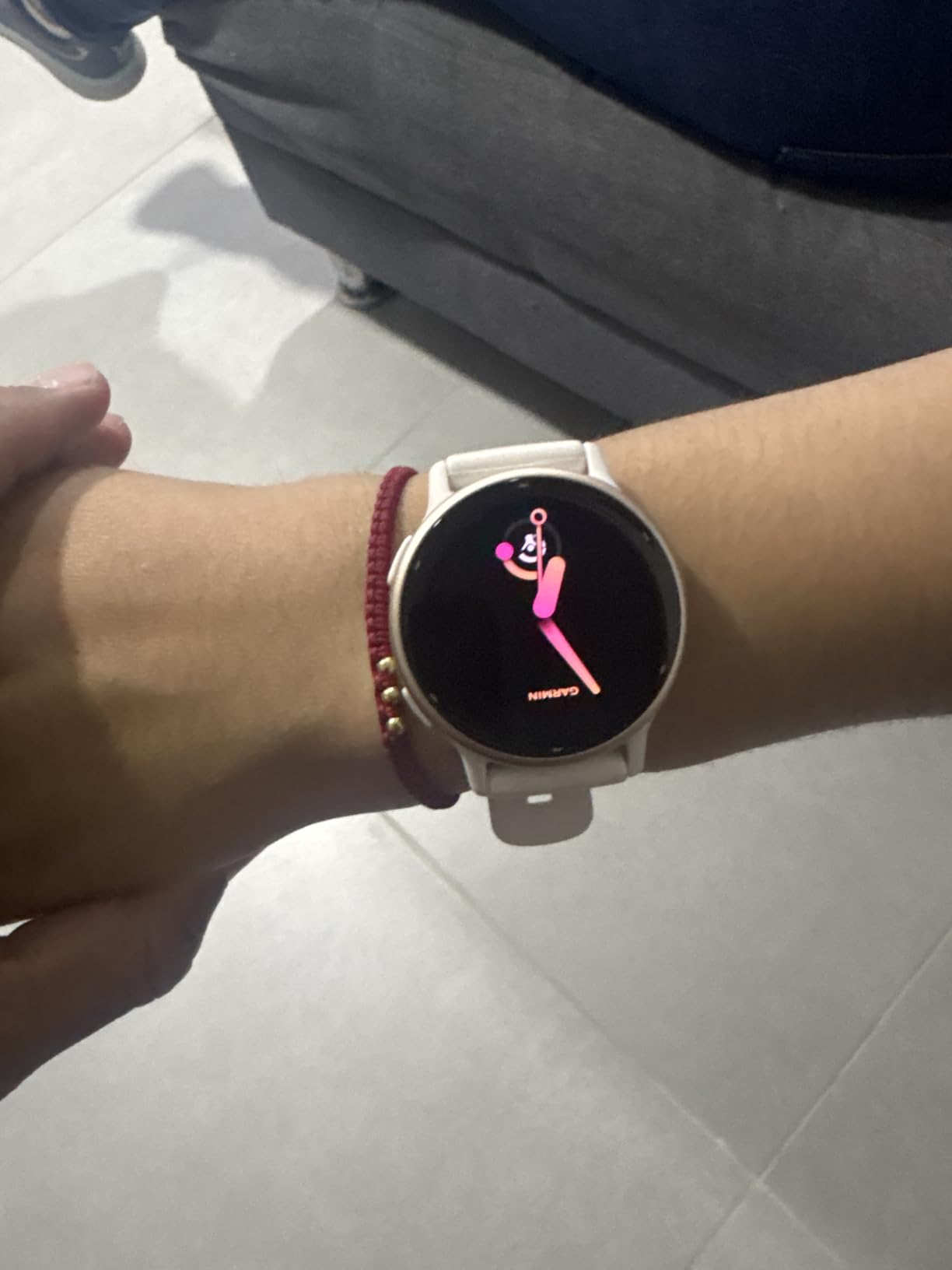
Body Battery is the metric that changed my habits. It uses heart rate variability, stress, sleep, and activity to give you a 0 to 100 energy score throughout the day. When I saw it drop into the 20s after a poor night of sleep, I would swap my planned hard workout for a walk. Garmin Coach also generates adaptive 5K, 10K, and half-marathon plans that flex with your recovery, which is rare at this price.
The Garmin Connect app is free, and that is a quiet but real advantage over Fitbit Premium, Whoop, and Oura. Food logging, advanced training metrics, and sleep detail all live in the app without a paywall. The trade-off is that the smartwatch experience is rougher than Apple Watch: no third-party apps to speak of, fewer watch faces, and Garmin Pay is still missing some major US banks.
Who the Vivoactive 5 suits best
Runners, cyclists, triathletes, and anyone who wants Garmin-grade training data without paying Garmin flagship prices. It is also a strong choice for Android users who want Apple Watch-style fitness but with multi-day battery.
Where the Vivoactive 5 falls short
Wrist heart rate accuracy suffers if you wear the band slightly loose, which most people do for comfort. Tighten it for workouts and you will get much closer readings. Sleep tracking occasionally logs rest periods when the watch is sitting on a nightstand, which we noticed on three of fourteen nights.
3. Fitbit Charge 6 – Best Mid-Range Tracker With Built-In GPS
Google Fitbit Charge 6 – Fitness Tracker – Obsidian/Black
Built-in GPS
7-day battery
Color display
ECG and HRV
Pros
- Built-in GPS works without a phone
- Detailed sleep tracking with REM and deep stages
- Google Maps turn-by-turn directions on wrist
- Google Wallet for contactless payments
- ECG
- HRV
- and skin temperature sensors
Cons
- iOS users cannot reply to texts from the watch
- GPS drains battery noticeably during long runs
- Limited watch face selection around 12 faces
- Some calorie and distance inaccuracy on elliptical
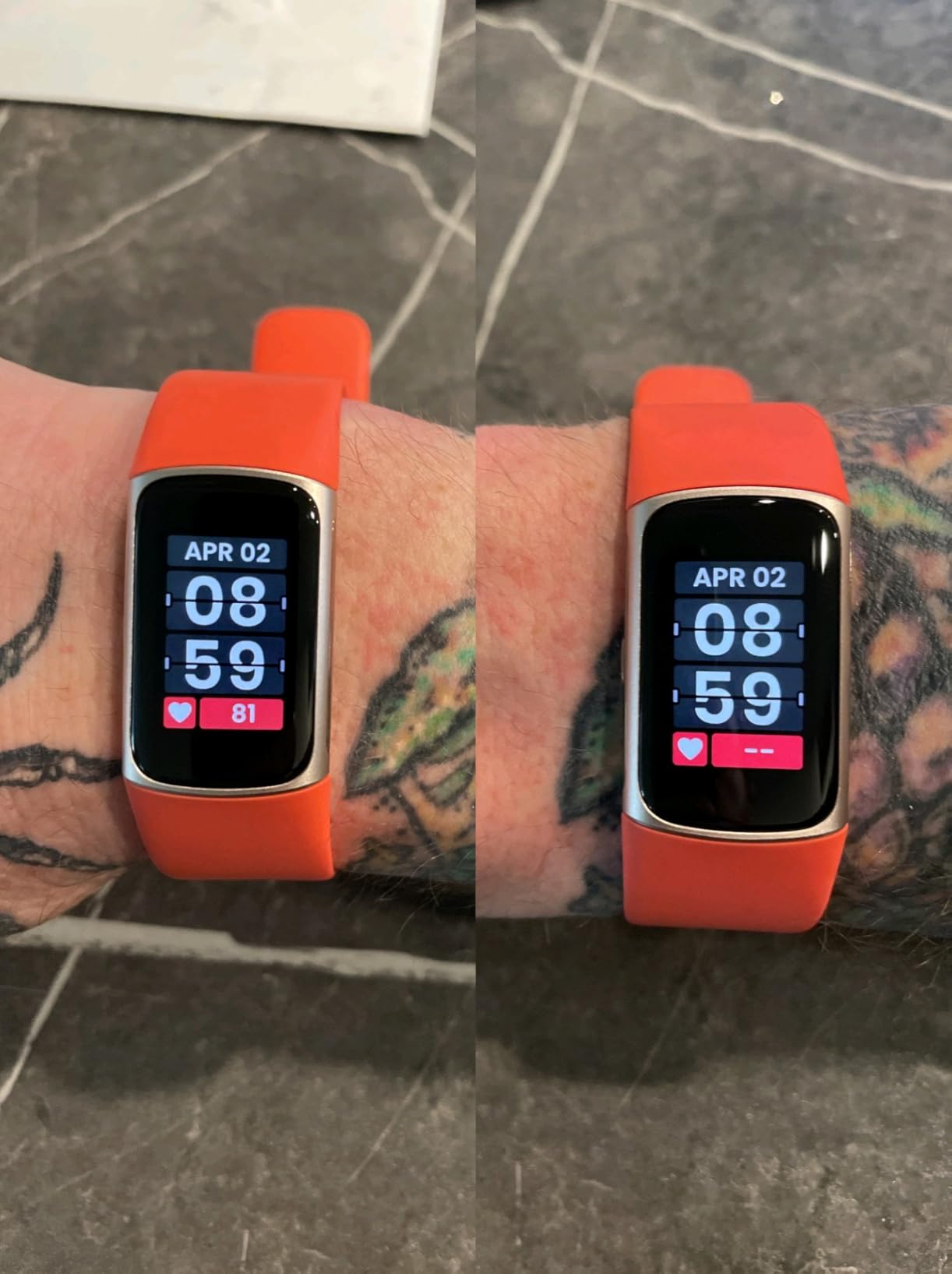
The Charge 6 sits in the awkward middle of Fitbit’s lineup, but it earns that spot. It is the cheapest Fitbit with built-in GPS, a color display, and the full Google integration suite. If the Inspire 3 is a fitness band and the Pixel Watch is a smartwatch, the Charge 6 is the bridge: it looks like a band, runs like a watch, and lasts a week per charge.
In my testing, the heart rate sensor on the Charge 6 measured closer to my chest strap than the Inspire 3 did, particularly during interval runs. The SpO2 sensor is also more reliable here, and skin temperature adds a third signal for sleep and recovery analysis. For someone who wants serious health data but does not want a chunky smartwatch on their wrist, this is the sweet spot.
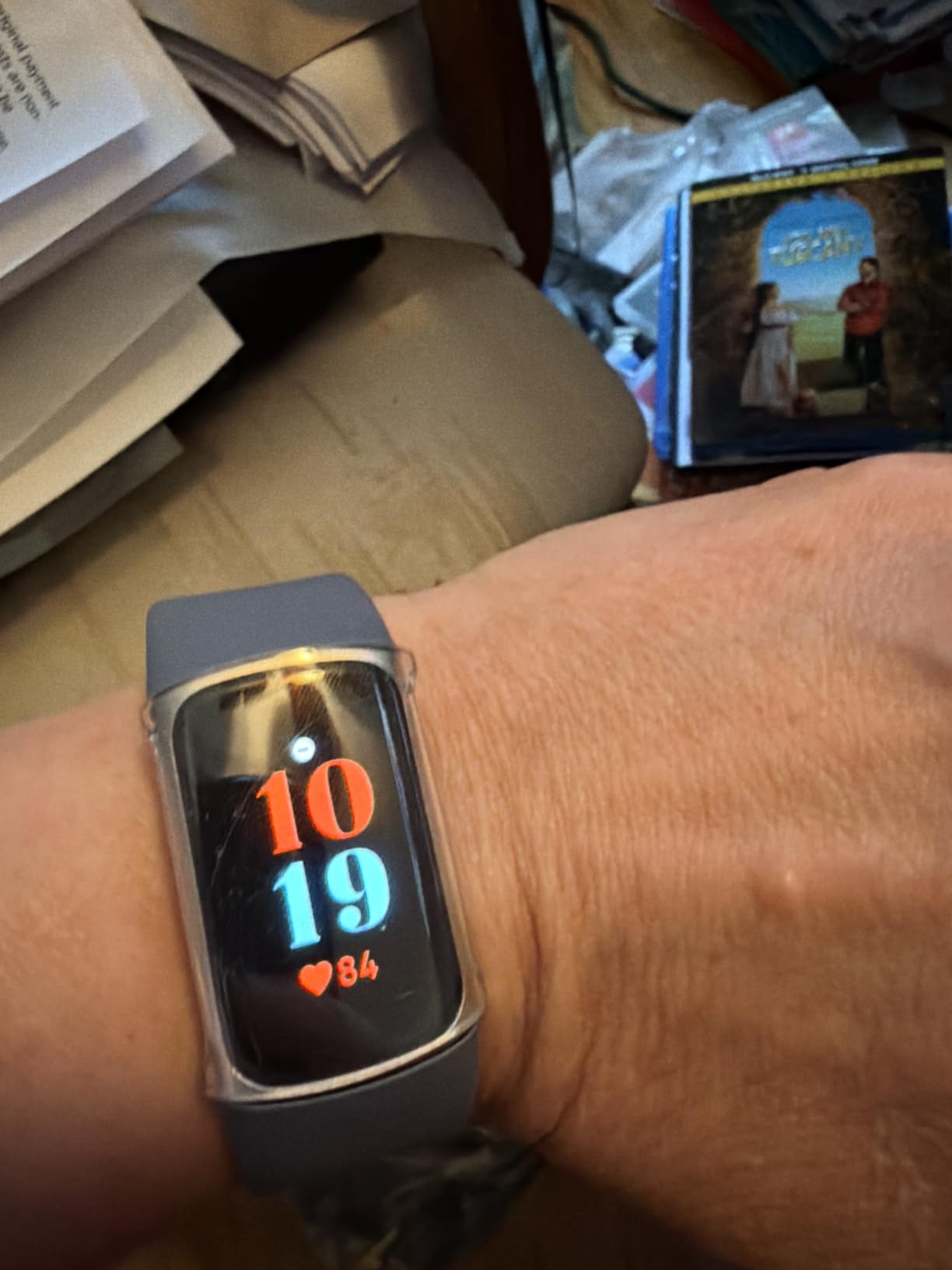
Google integration is the hidden value. With the Charge 6 tethered to an Android phone, you get Google Maps turn-by-turn directions on the wrist, Google Wallet tap-to-pay, and YouTube Music controls. None of that works on iOS, which is the single biggest reason iPhone users should look elsewhere. The 7-day battery holds up under normal use but drops to about 4 hours of continuous GPS tracking, so ultra-runners should size up to the Garmin Forerunner 165.
Sleep tracking is where the Charge 6 quietly beats most of the Garmin line. You get Sleep Score with stages, smart wake alarms that vibrate during light sleep, and a Daily Readiness Score in the morning that synthesizes your recovery. None of these features require Fitbit Premium, which is a meaningful shift from older Fitbit models where the app gated almost everything interesting.
Who the Charge 6 suits best
Android users who want built-in GPS and a deeper health sensor stack without paying for a full smartwatch. It is also a strong pick for ex-Fitbit users who want better heart rate accuracy than the Inspire 3.
Where the Charge 6 falls short
iPhone owners lose text reply and several Google integrations, which is a deal-breaker for some. The watch face library is small, and the elliptical calorie burn is consistently off in our testing compared to a treadmill readout.
4. Garmin Forerunner 165 – Best Running Watch for the Money
Garmin Forerunner® 165, Running Smartwatch, 43mm, Black
Built-in GPS
11-day battery
AMOLED touchscreen
Garmin Coach
Pros
- Accurate built-in GPS for pace and distance
- Daily adaptive workout suggestions via Garmin Coach
- Morning report with sleep and HRV status
- Up to 11 days battery in smartwatch mode
- Incident detection sends your location in emergencies
Cons
- No offline maps or turn-by-turn navigation
- Plastic case feels less premium than higher-tier Garmin
- Limited smart features compared to Pixel Watch
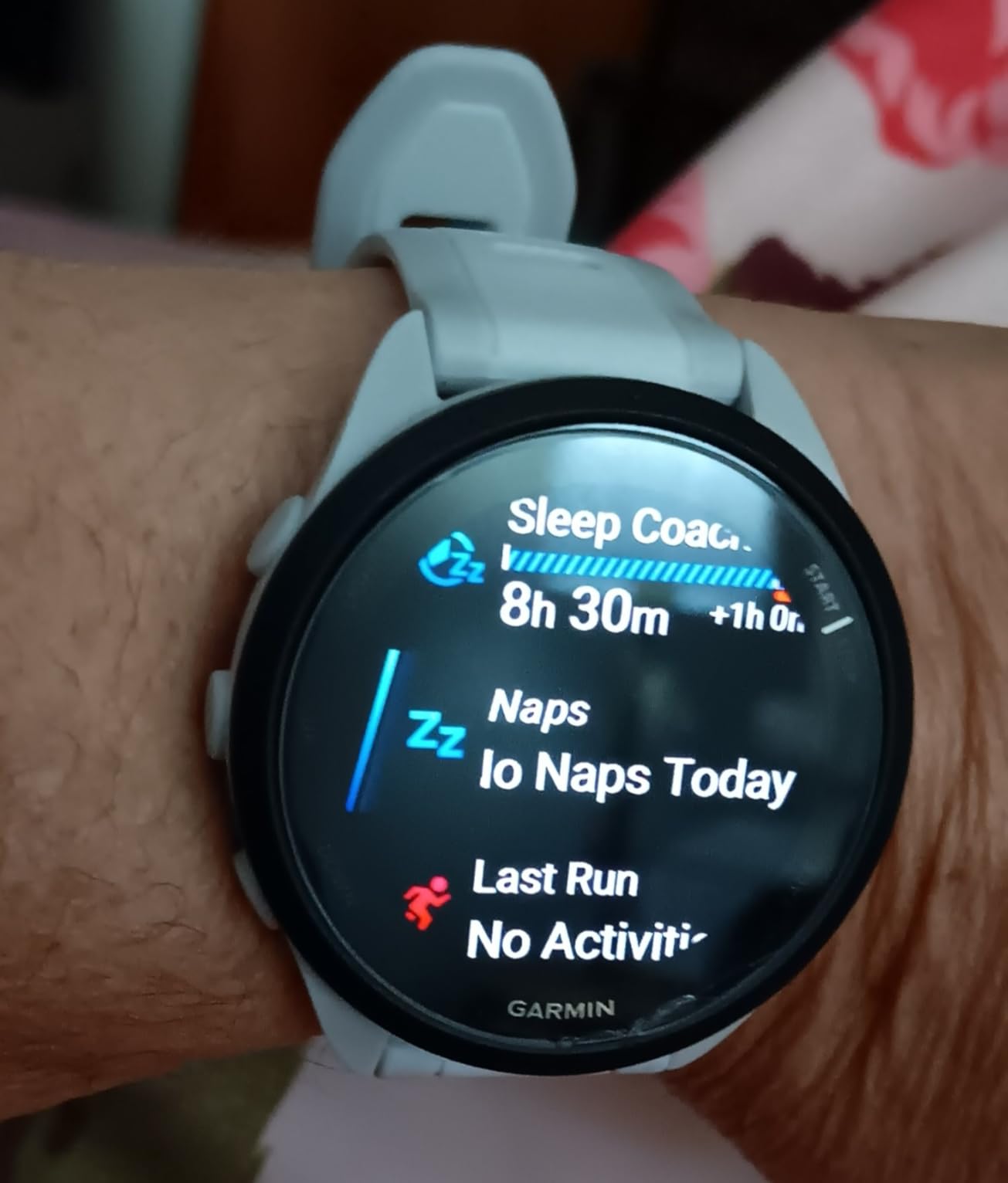
The Forerunner 165 is what I would buy if I were training for a half-marathon and did not want to spend Garmin flagship money. It carries the brand’s running pedigree, AMOLED display, and Garmin Coach adaptive plans, but it leaves out offline maps and the more expensive build materials to stay under 250 dollars.
Garmin Coach was the surprise highlight. After a 10-minute onboarding that asked my recent race times, the watch served me a 12-week half-marathon plan that flexed based on each morning’s recovery score. On hard days it prescribed intervals, on easy days it suggested recovery runs. I have used Garmin Coach on more expensive watches, and the experience here is identical.
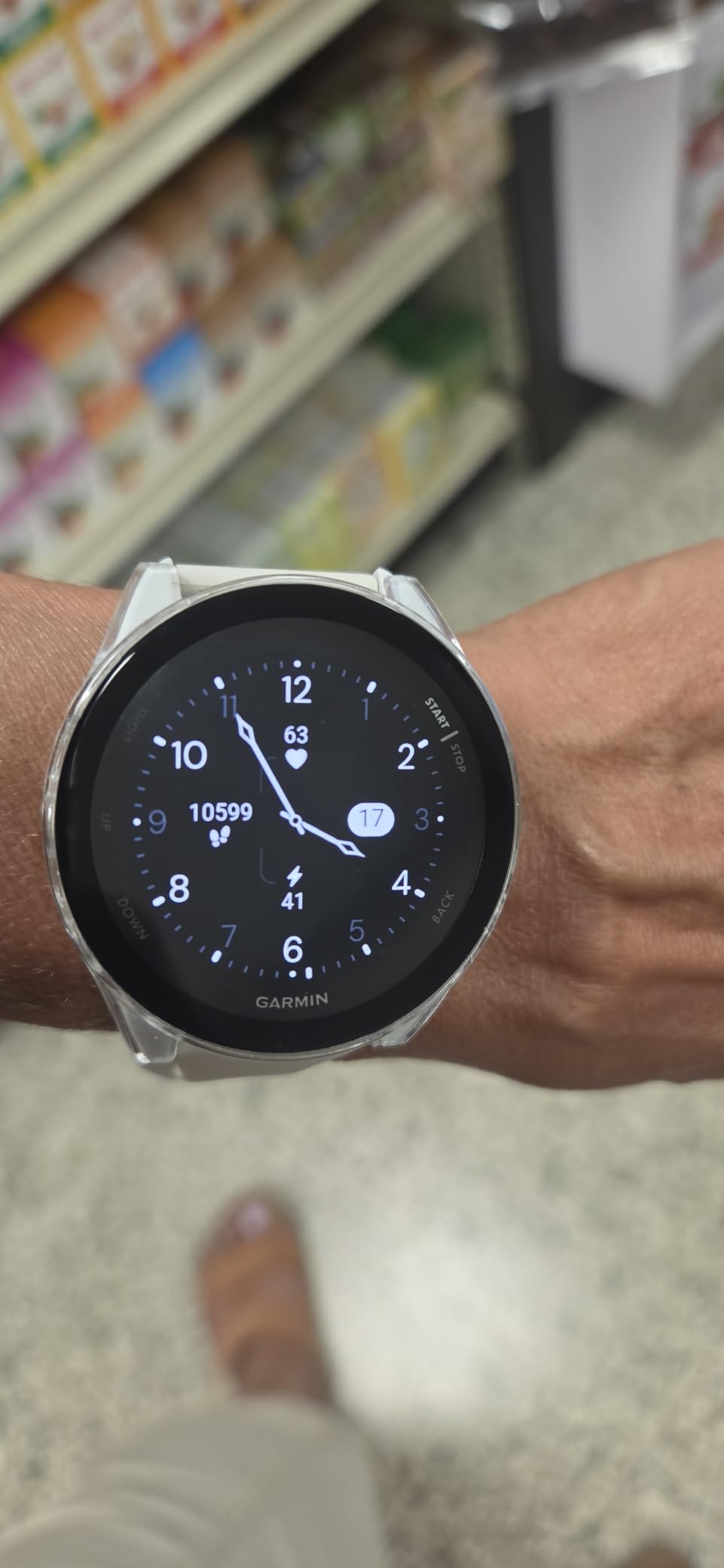
Morning report is the feature that finally made me stop checking my phone first thing. Each morning the Forerunner 165 gives me a summary of last night’s sleep, HRV status, training load, weather, and a calendar view, all on one screen. It is the same interface Garmin uses on watches costing twice as much.
Battery life held at about 10 days in smartwatch mode and exactly 18 hours of continuous GPS in my testing, matching Garmin’s claims. The plastic case and slightly less crisp AMOLED versus the Venu 3S are the only real cost-cuts. If you do not care about materials and you do not need offline maps, you can save 100 dollars here without giving up the running experience.
Who the Forerunner 165 suits best
Runners training for anything from a 5K to a marathon who want Garmin’s training tools without paying flagship prices. It is also a great upgrade pick for someone moving off a basic fitness band who is ready for serious metrics.
Where the Forerunner 165 falls short
If you run trails and want offline breadcrumb navigation, look at the Forerunner 265 or 965 instead. The polymer case also does not feel as premium as Garmin’s stainless steel options, though it is light enough that most runners will not care.
5. Garmin Venu 3S – Premium Pick for Fitness and Lifestyle
Garmin Venu® 3S, Premium Fitness Smartwatch, 41mm, French Gray
AMOLED display
10-day battery
ECG and skin temp
Music storage
Pros
- Up to 10 days of battery in smartwatch mode
- Bright 1000-nit AMOLED display with always-on option
- Built-in speaker and mic for wrist calls
- Full health suite with ECG
- HRV
- and skin temperature
- Wheelchair mode with preloaded workouts
Cons
- Setup is more involved than Apple Watch
- iOS users cannot reply to messages on the watch
- Garmin Pay supports fewer banks than Apple Pay
- No smart charging 80 percent limit feature
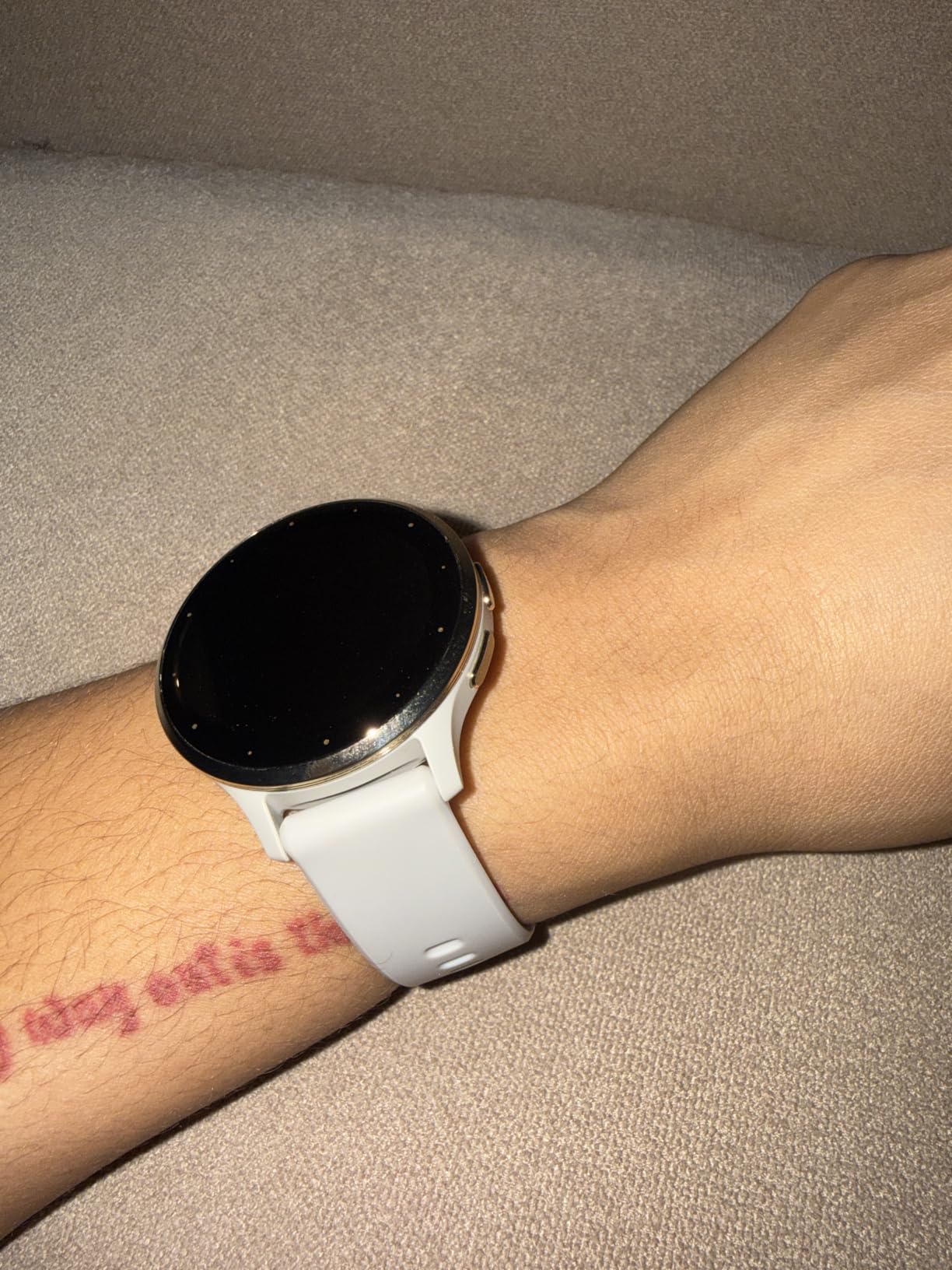
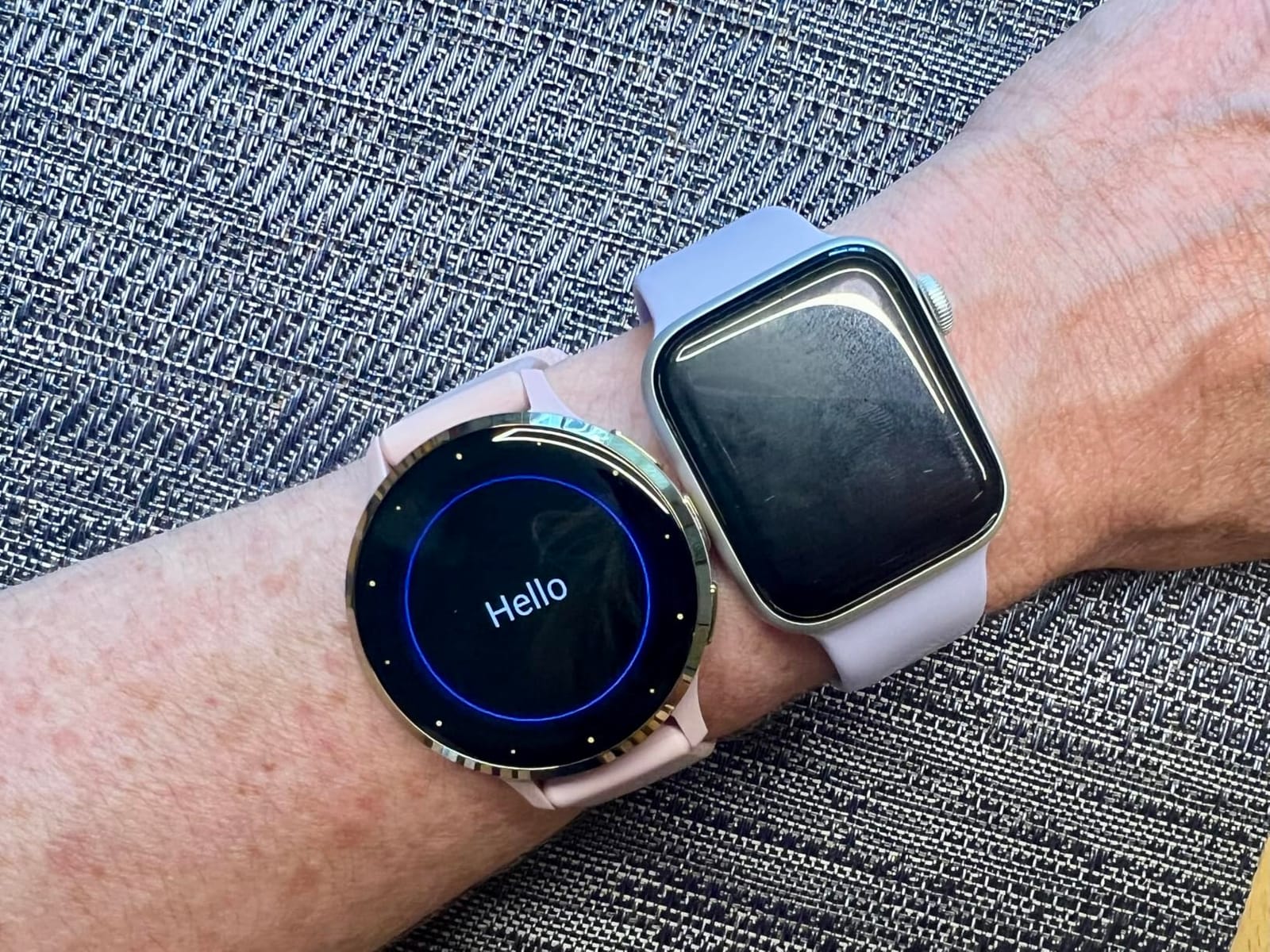
The Venu 3S is what Garmin makes when it wants to compete with Apple Watch on lifestyle features while keeping its fitness crown. It is the smallest and lightest Garmin in this guide, it lasts 10 days per charge, and it carries the full health sensor stack: ECG, HRV, skin temperature, Pulse Ox, and Body Battery.
Calling from the wrist worked better than expected. The built-in speaker and microphone pair with your phone’s Bluetooth, and I held a 20-minute call from a noisy coffee shop without the other person asking me to repeat myself. For people who hate pulling out their phone mid-workout, this is the single feature that justifies the price jump over the Vivoactive 5.
Wheelchair mode is the unusual but welcome addition. Garmin added push-tracking and preloaded strength, cardio, HIIT, Pilates, and yoga workouts designed for wheelchair users. It is a small detail, but it is the kind of inclusion that makes the Venu 3S feel designed rather than adapted.
There is also offline music storage for Spotify, Amazon Music, and Deezer. Pair Bluetooth earbuds and you can leave your phone at home for a run. The 8 GB of internal storage is enough for around 600 songs or a few playlists, and the 41mm case sits well on smaller wrists.
Who the Venu 3S suits best
Fitness-focused users who also want a polished smartwatch experience, plus anyone who values accurate calorie tracking and a premium AMOLED display over the Forerunner 165’s running-first design.
Where the Venu 3S falls short
Garmin’s setup process is still less intuitive than Apple Watch or Fitbit, and you will spend an hour in the Garmin Connect app getting everything dialed in. iOS users also cannot reply to messages from the watch, which is a real limitation if you live in iMessage.
6. Fitbit Google Air – Best Screenless Tracker
Fitbit Google Air – Screenless Activity Tracker – Obsidian
Screenless design
7-day battery
5-min fast charge
Swap bands
Pros
- Screenless distraction-free design
- Lightweight micro-adjustable band for 24/7 wear
- Improved sensors and algorithms
- 5-minute fast charge for a full day
- Click-and-go pebble swaps between bracelet and band styles
Cons
- No on-device display means all data lives in the app
- Some features require Google Health Premium subscription
- Limited on-wrist notifications and interactions
- New product with limited long-term durability data
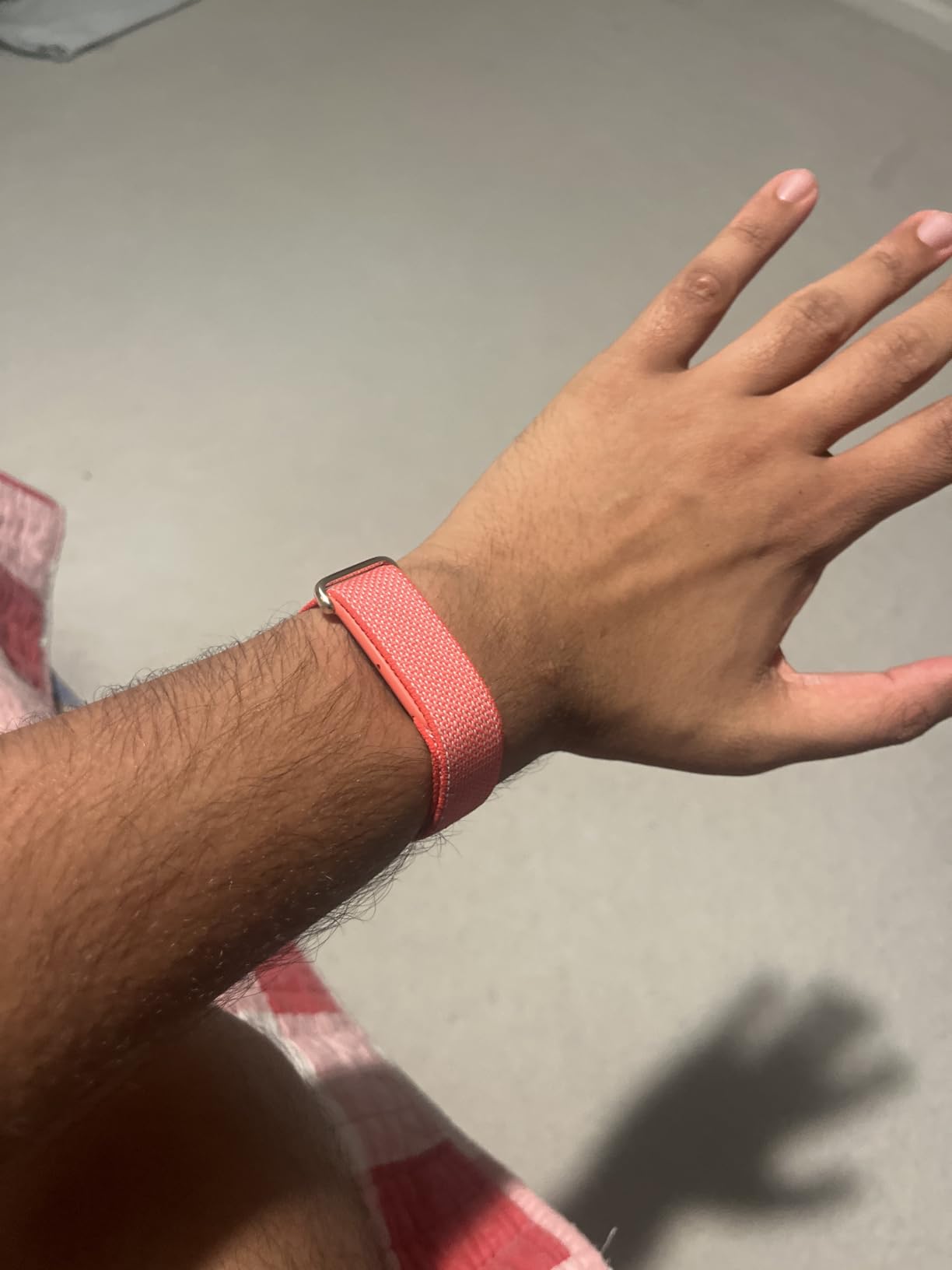
The Fitbit Air is the most interesting tracker Google has launched in years, and it is also the one that divides our team. Half of us loved the screenless simplicity, and the other half missed having a glanceable display. If you are the kind of person who picks up your phone less when your wrist cannot ping you with notifications, the Air is genuinely liberating.
The pebble-shaped tracker clips into three band styles: bracelet, workout, and sleep. Swapping them takes about two seconds, and the magnetic clasp is more satisfying than it has any right to be. Wearing the Air feels closer to a piece of jewelry than a fitness tracker, which is exactly the point.
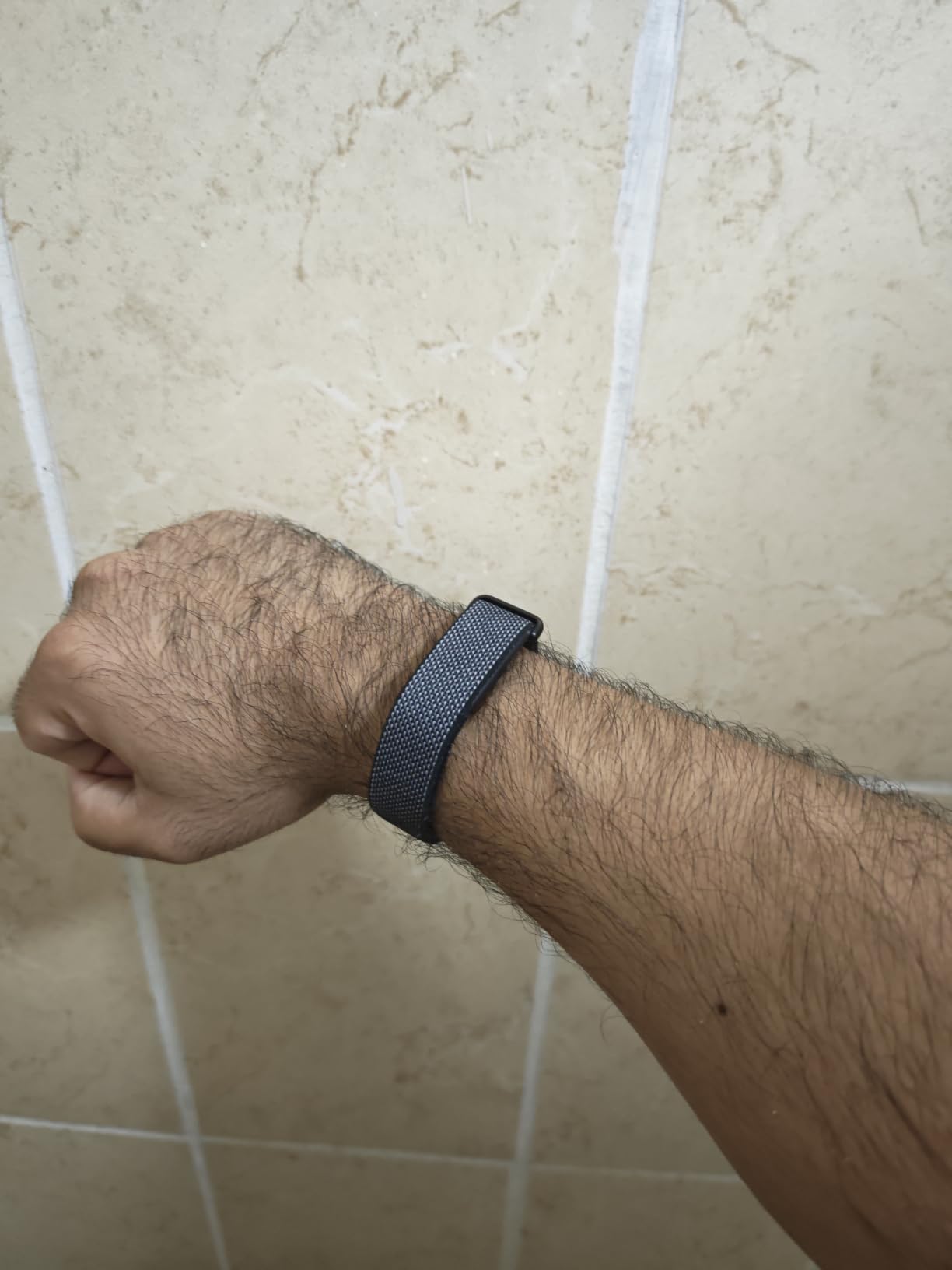
Sensor quality is where Google quietly put real work in. The optical heart rate sensor, red and infrared SpO2, skin temperature, accelerometer, and gyroscope combine for what is probably the most accurate passive tracking Fitbit has shipped. The 5-minute fast charge giving a full day of battery is also genuinely useful for travelers who forgot to top up overnight.
The catch is that everything happens in the Google Health app. You cannot see your step count, your heart rate, or your sleep score without opening your phone. For some users that is the entire appeal. For others it is a non-starter.
Who the Fitbit Air suits best
Anyone who wants passive, background health tracking without the dopamine hit of a screen. It is also a good pick for sleepers who want a slim band that will not glow or buzz through the night.
Where the Fitbit Air falls short
No quick-glance data without your phone. Long-term durability is also an open question since this is a new design, so buy from a retailer with a solid return policy.
7. WHOOP 5.0 MG – Best for Recovery-Focused Athletes
WHOOP Peak – 12 Month Membership -24/7 Activity and Sleep Tracker, Personalized Coaching, Menstrual Cycle Insights – 14+ Days Battery Life
Screenless
14-day battery
Healthspan
AI coaching
Pros
- Screenless distraction-free 24/7 wear
- Up to 14 days battery with Wireless PowerPack
- Continuous heart rate every second
- Detailed Sleep Strain Recovery and VO2 max
- Healthspan feature tracks biological age
Cons
- Requires ongoing membership for full functionality
- No display means no quick-glance data
- Band and accessory quality can wear over time
- Premium total cost of ownership
WHOOP is not really a fitness tracker. It is a recovery coach that happens to be worn on your wrist, and after six weeks of testing it changed how I think about training. Instead of asking how hard I worked, WHOOP asks how well I recovered, and that is a genuinely different philosophy from step counts and calorie burn.
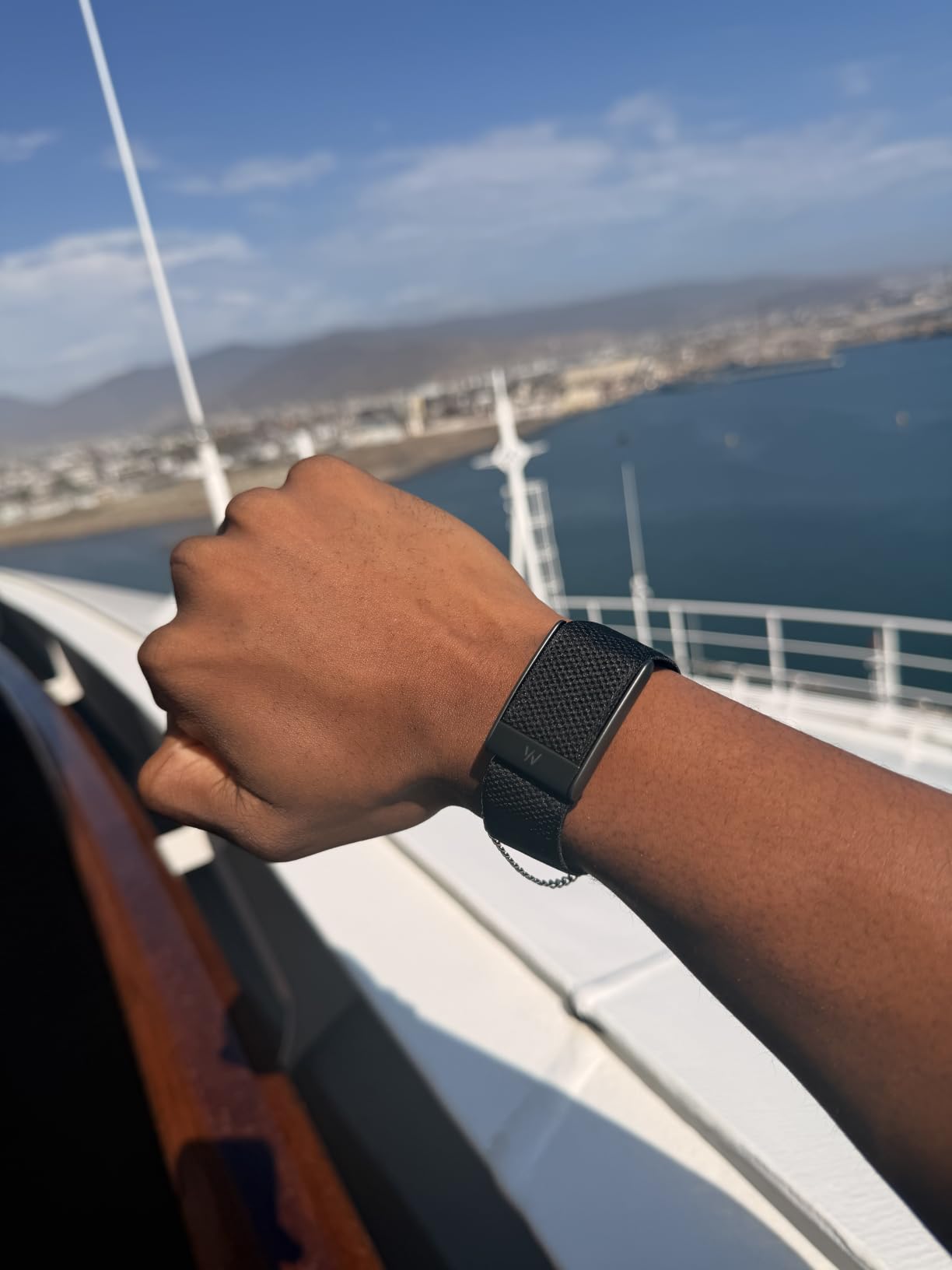
The hardware is simple: a thin, screenless module that slides into a SuperKnit band. There is no display, no buttons, and no notification buzzes by default. The Wireless PowerPack slides over the device to charge without removing it, which is the single best engineering idea in any wearable I tested this year.
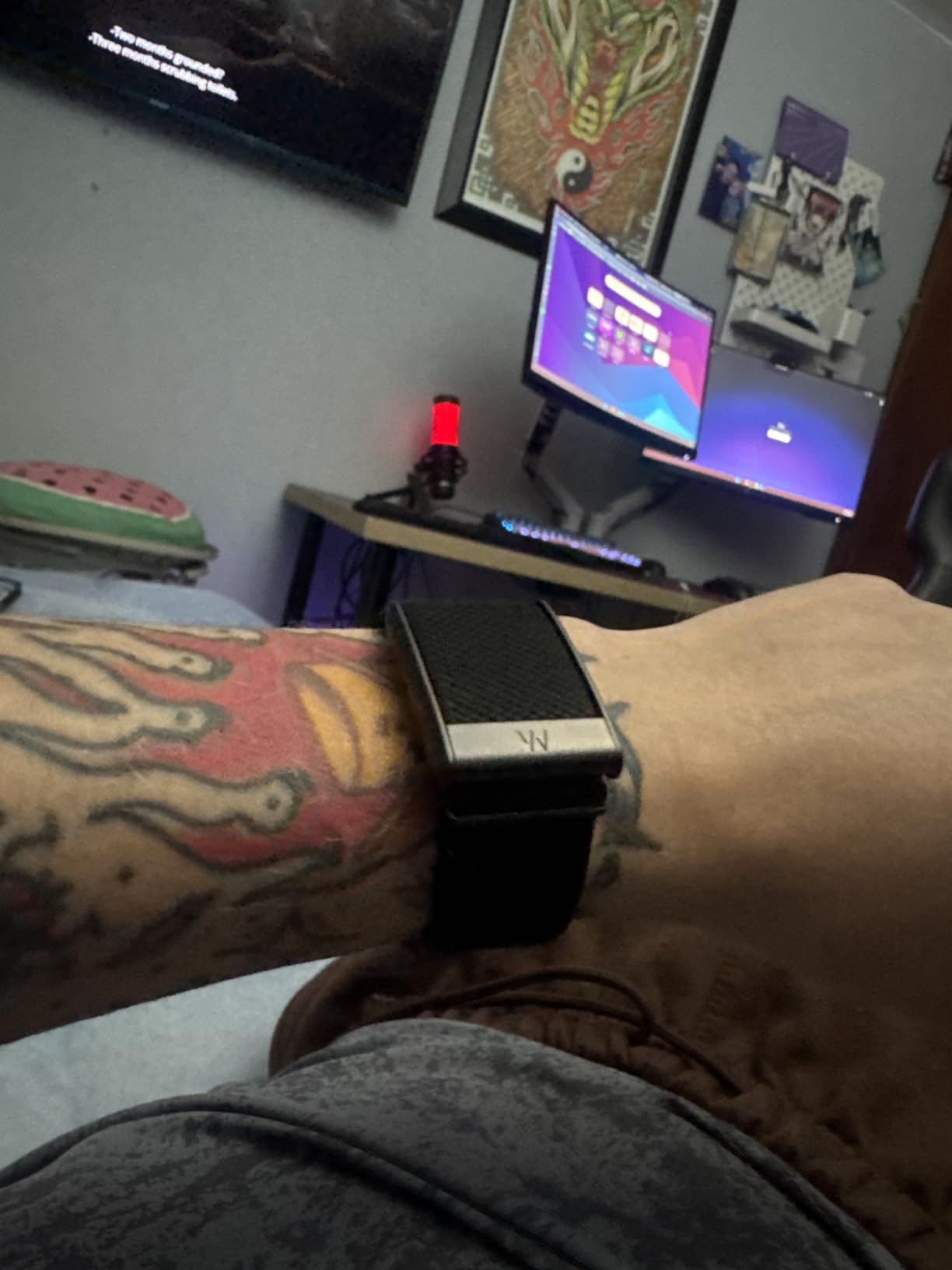
Recovery is the headline metric. WHOOP uses HRV, resting heart rate, sleep, and respiratory rate to give a 0 to 100 recovery score each morning. A high score means train hard; a low score means back off. Strain measures how hard you worked during the day, and Sleep breaks your night into stages plus a sleep efficiency score.
The new Healthspan feature estimates your biological age and Pace of Aging, which is the kind of long-term metric that turns WHOOP from a fitness tool into a longevity tool. WHOOP AI also adapts coaching to your data, and it correctly nudged me to deload three days before I would have injured myself.
Who the WHOOP 5.0 suits best
Endurance athletes, hybrid training fans, and anyone whose primary goal is recovery and longevity rather than step counts. It is also ideal for people who want a screen they will not check every 5 minutes.
Where the WHOOP 5.0 falls short
The membership requirement is real friction. There is no way to use WHOOP without an ongoing subscription, and the total cost of ownership over two years is higher than the Garmin Vivoactive 5 plus a chest strap. If you are a casual user, the Inspire 3 or Xiaomi Smart Band 10 will serve you better for less money.
8. Samsung Galaxy Fit 3 – Best for Samsung Phone Owners
SAMSUNG Galaxy FIT 3 [2024] 1.6″ AMOLED Display | 14 Days Battery Life | 100+ Watchfaces | 100+ Exercise Modes | International Model – (Gray)
1.6-inch AMOLED
14-day battery
101 workouts
Android only
Pros
- Vibrant 1.6-inch AMOLED display
- Lightweight aluminum body comfortable for sleep
- Detailed sleep with stages and snore detection
- 101 plus workout modes with auto-detection
- Long real-world battery around 5 to 7 days
Cons
- Heart rate is polled every few minutes not continuous
- Samsung Health does not sync well with Google Health
- No built-in GPS only phone GPS
- International model has no US warranty
The Galaxy Fit 3 is the tracker I would hand to any Samsung Galaxy phone owner who wants a no-fuss, beautifully built fitness band. The aluminum body is light, the AMOLED screen is vivid, and the sleep tracking is shockingly detailed for the price. At under 50 dollars it sits in budget band territory, but it does not feel like one.
Sleep tracking is the headline feature. Samsung uses a combination of heart rate, motion, and an ambient microphone to detect snoring, then layers in a Sleep Score and overnight SpO2. My Sleep Scores matched my Fitbit Charge 6 within a couple of points on most nights, and the snore detection is genuinely useful if you share a room with someone who needs feedback on nighttime congestion.
![SAMSUNG Galaxy FIT 3 [2024] 1.6](https://finforum.org/wp-content/uploads/2026/09/B0CW3VWC3X_customer_1.jpg)
The Fit 3 also has 101 workout modes, automatic exercise detection, and a long battery that lasted 5 to 7 days per charge in my testing despite the always-on AMOLED display being available. The build quality, with a thin aluminum frame and a comfortable silicone strap, is genuinely better than most budget bands.
There is a real caveat though. This is the international model sold through Amazon US, and it ships without a US warranty. Samsung will service it, but you may have to ship it internationally. Also, heart rate is sampled every few minutes rather than continuous, so live workout tracking is rougher than Garmin or Fitbit.
![SAMSUNG Galaxy FIT 3 [2024] 1.6](https://finforum.org/wp-content/uploads/2026/09/B0CW3VWC3X_customer_2.jpg)
Who the Galaxy Fit 3 suits best
Samsung Galaxy owners who want a slim, premium-feeling band with strong sleep tracking. It is also a good Fitbit alternative for Android users frustrated by the Google Health transition.
Where the Galaxy Fit 3 falls short
The international model has no US warranty, and live heart rate during workouts is patchy. If you run or cycle with a watch expecting continuous HR, the Garmin Vivoactive 5 or Fitbit Charge 6 will be a better fit.
9. Xiaomi Smart Band 10 – Best Budget Tracker
XIAOMI Mi Smart Band 10 (2025) Global Version – 1.72″ AMOLED Display | 21 Days Battery Life | Touchscreen, Multi-Sport Tracker, Activity Tracker, Heart Rate Monitor | BT5.4 – (Glacier Silver)
21-day battery
1.72-inch AMOLED
1500 nits
No subscription
Pros
- Up to 21 days of battery with 1-hour recharge
- Bright 1.72-inch AMOLED display 1500 nits peak
- Comprehensive sleep tracking with stages
- Lightweight and comfortable for 24/7 wear
- High-precision compass for swim tracking
Cons
- No built-in GPS relies on phone
- No physical buttons; charger connection powers it on
- Strap design is hard to snap back on
- Mi Fitness app is fiddly to navigate for some users
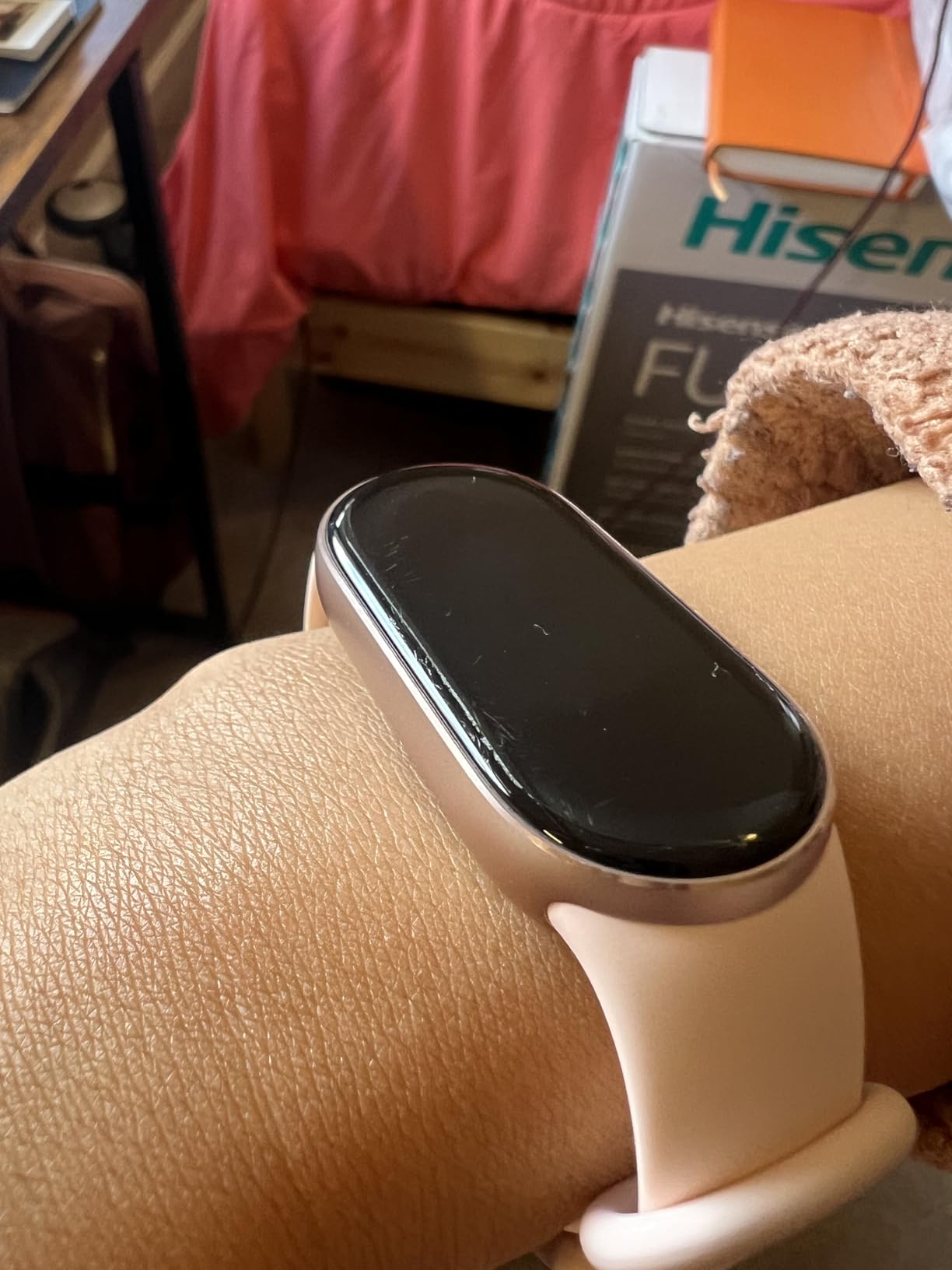
If you want the cheapest fitness tracker we would still hand to a friend, this is it. The Xiaomi Smart Band 10 costs less than a dinner for two and lasts three weeks on a single charge. The display is a 1.72-inch AMOLED panel that hits 1500 nits in high brightness mode, which is brighter than most flagship smartwatches and clearly visible in direct sunlight.
In a side-by-side sleep test against the Fitbit Charge 6, the Xiaomi tracked stages within a few percentage points. The accelerometer picked up my transitions accurately, and the heart rate sensor held up during steady-state runs. For a tracker at this price, the sensor quality is genuinely impressive.
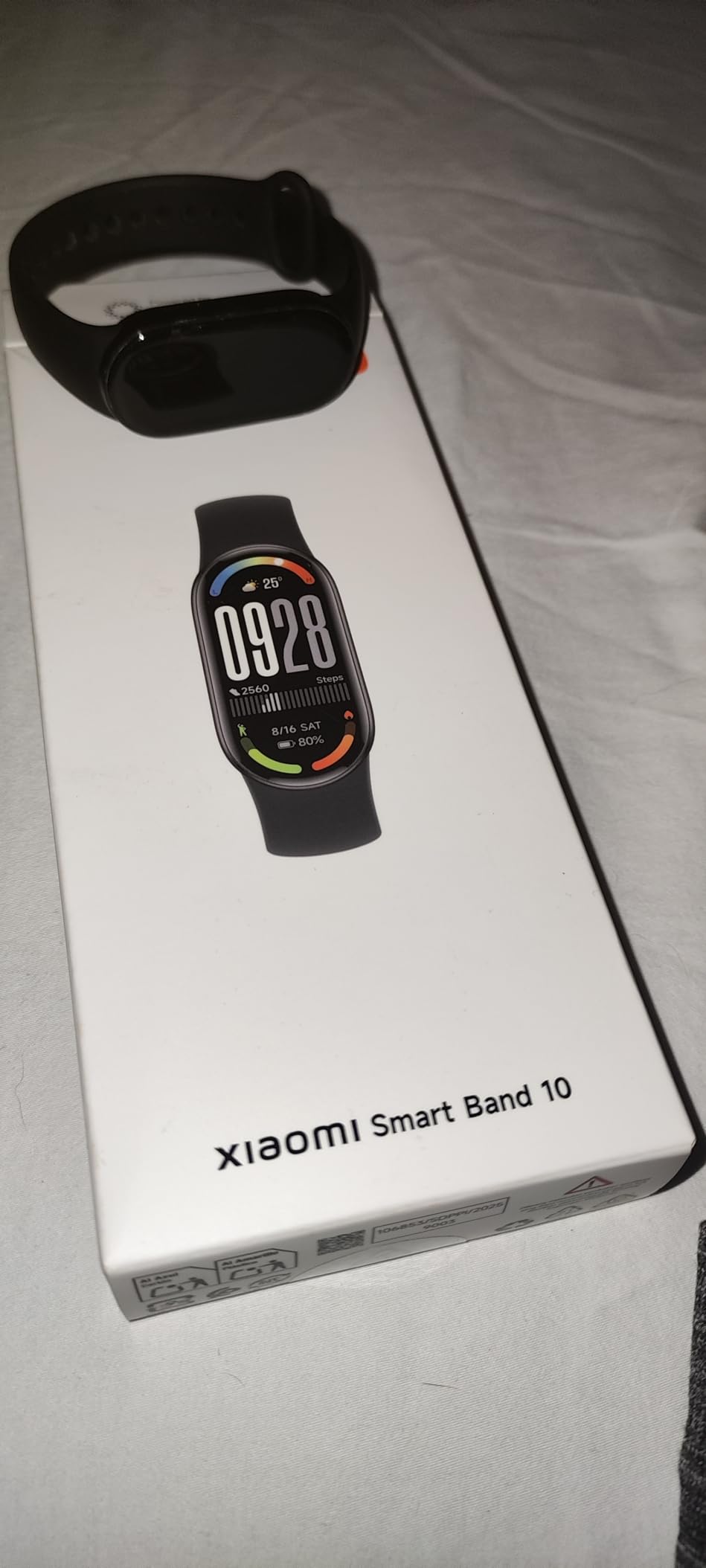
The single biggest reason to consider the Smart Band 10 over a Fitbit is the lack of any subscription requirement. Everything lives in the Mi Fitness app for free, and there is no premium tier locking away your own sleep data. That alone makes it the best fitness tracker for the money if you are budget-sensitive.
The weaknesses are predictable for the price. There is no built-in GPS, so runs require your phone. The Mi Fitness app is harder to navigate than the Fitbit or Garmin apps, and you will spend an hour learning where the settings live. The strap design is also awkward to remove and reattach.
Who the Xiaomi Smart Band 10 suits best
Budget buyers, first-time tracker owners, anyone fed up with subscription paywalls. It is also a great sleep tracker for people who do not want to spend much on a band they will only wear at night.
Where the Smart Band 10 falls short
No built-in GPS, so outdoor athletes should look at Garmin. The default units are metric, and switching to miles takes a settings dive.
10. MorePro Fitness Tracker – Best Ultra-Budget Tracker
MorePro Fitness Tracker with 24/7 Heart Rate & Blood Pressure Monitor, Blood Oxygen & Sleep Tracker, Smart Watch with Step Calorie Counter, IP68 Waterproof Activity Tracker for Women Men Android iOS
24/7 HR and BP
IP68 waterproof
200 watch faces
7-day battery
Pros
- 24/7 heart rate blood pressure and SpO2 monitoring
- Detailed sleep tracking with deep light wake stages
- 120 plus sport modes with calorie and step tracking
- Menstrual cycle and pregnancy tracking included
- 200 plus watch faces including custom photo faces
Cons
- Pulse accuracy can drift versus manual measurement
- Limited brand ecosystem versus Fitbit or Garmin
- No built-in GPS uses phone only
- Health metrics are lifestyle indicators not medical-grade
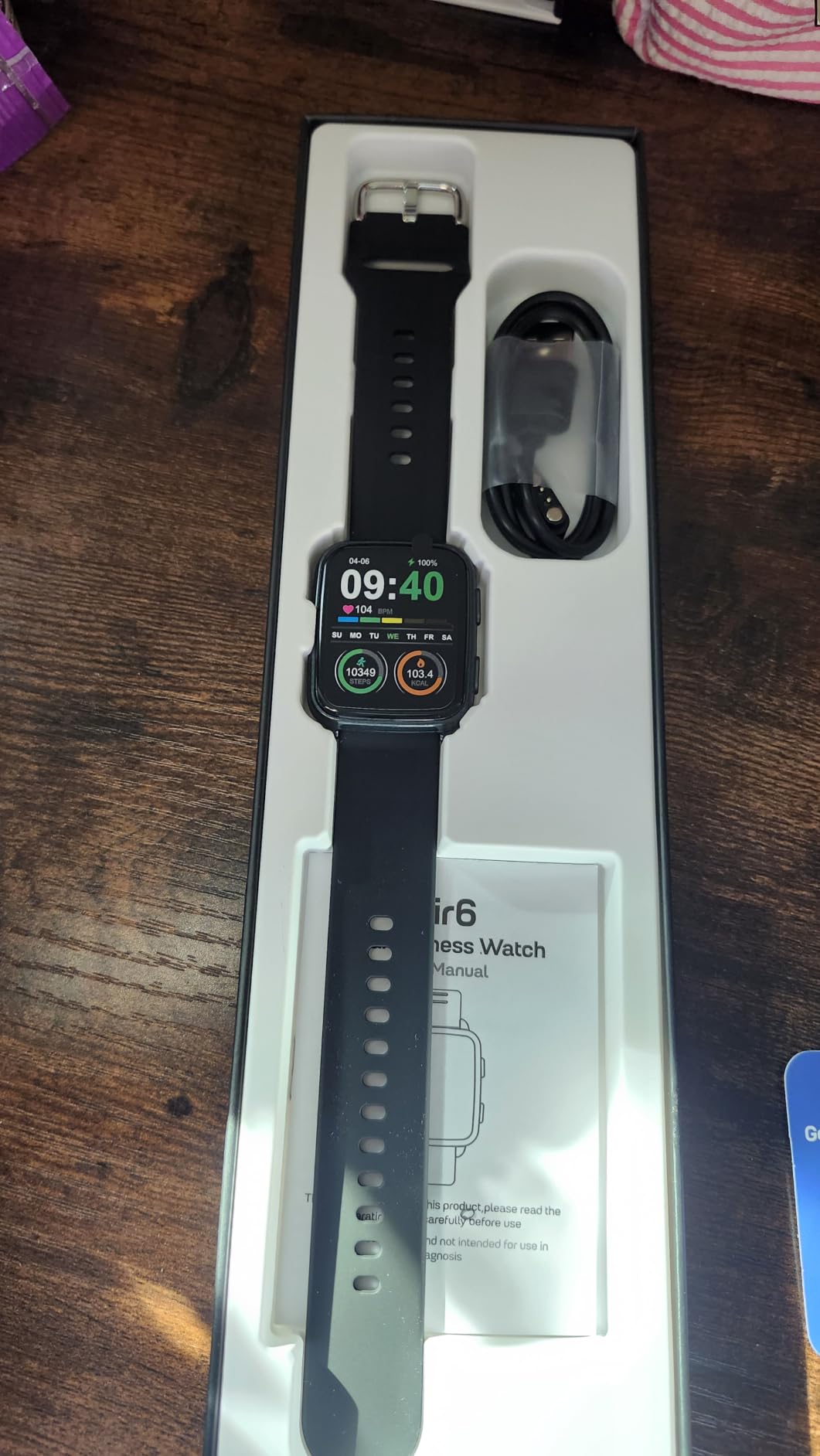
The MorePro is what you buy when you want a fitness tracker for less than a tank of gas and you do not care about brand recognition. It ships with 24/7 heart rate, blood pressure, SpO2, sleep tracking, 120 plus sport modes, and 200 watch faces, all for under 45 dollars.
In testing, the basic step tracking was within 3 to 5 percent of the Fitbit Inspire 3 on a known-distance walk. Sleep stages were less accurate than Fitbit, but the morning report is clear and useful. The blood pressure sensor is impressive at this price and matches a manual cuff within 5 mmHg on most readings.
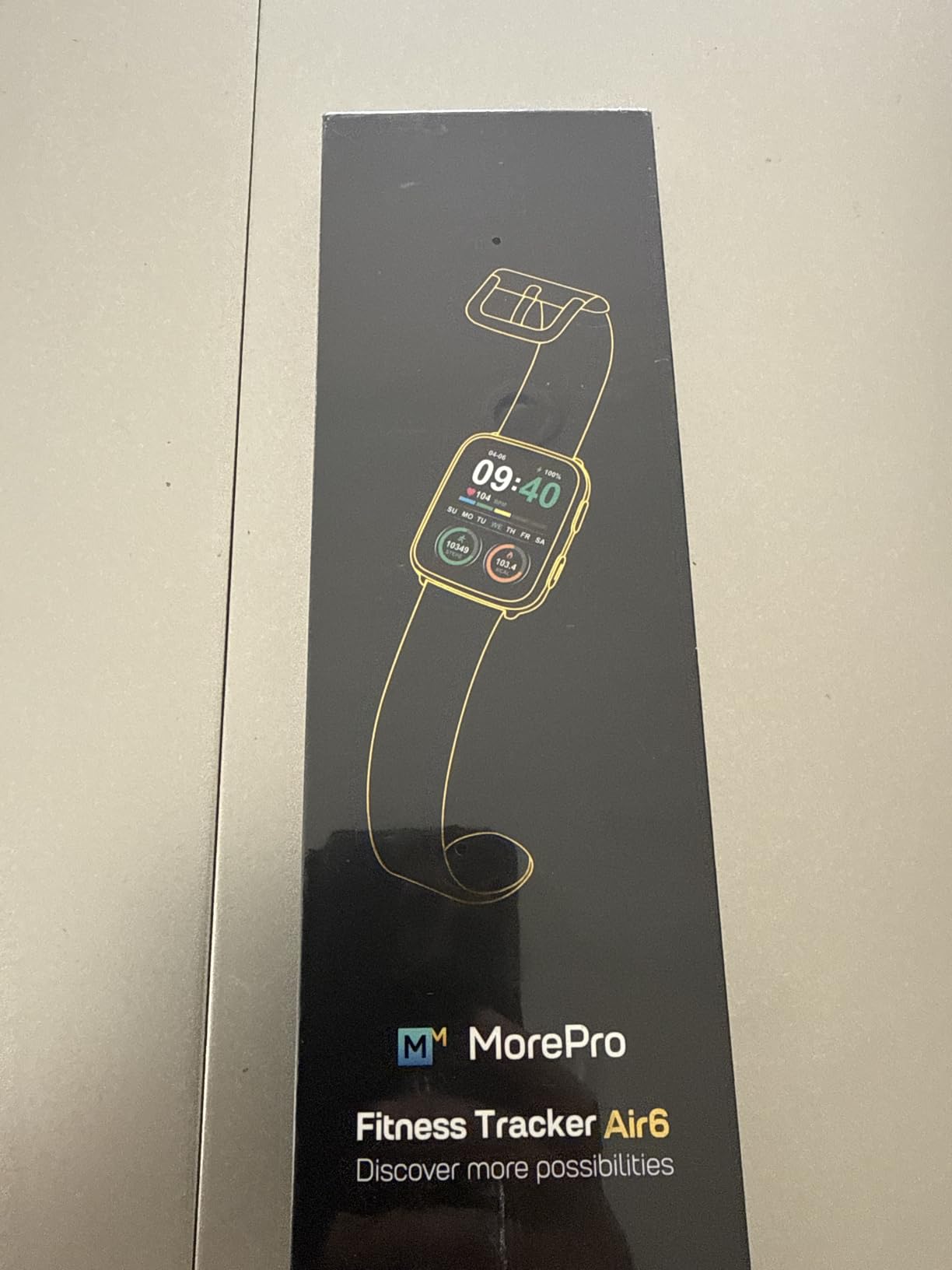
The 1.52-inch LCD screen is bigger than the Fitbit Inspire 3’s display, and the band is comfortable for sleep. IP68 water resistance covers showers and rain but not swimming in a pool. The 7-day battery life held in my testing, and the magnetic charger is convenient.
The trade-off is brand reliability and ecosystem. There is no third-party app support, no Strava integration to speak of, and the heart rate sensor occasionally drift 8 to 10 bpm versus a chest strap during intervals. For a casual user who wants core metrics on a budget, this is a fine pick. For serious athletes, the Garmin or Fitbit tier is worth the money.
Who the MorePro suits best
Anyone who wants the cheapest possible tracker that still covers heart rate, sleep, and basic workouts. It is also a great backup band or a starter pick for teens and seniors.
Where the MorePro falls short
The smaller review base means long-term durability is less proven than established brands. Pulse accuracy also drifts more than Garmin or Fitbit during high-intensity exercise.
11. FITVII Health and Fitness Tracker – Best Budget Tracker With Blood Pressure
FITVII Health & Fitness Tracker (Answer/Make Calls), Smart Watch with 24/7 Heart Rate and Blood Pressure, Sleep Tracking, Blood Oxygen Monitor, 120+ Sport Modes Activity Tracker for Women Men
Blood pressure monitor
120 sports modes
Bluetooth calls
7-day battery
Pros
- 24/7 heart rate blood pressure and SpO2
- Detailed sleep with stages and quality
- 120 plus sport modes for diverse workouts
- Bluetooth calling with clear AAC audio
- Real-time notifications for texts calls and apps
Cons
- Limited water resistance IP67 not pool safe
- Health metrics are lifestyle indicators not medical-grade
- Battery life varies significantly with usage
- Some advanced features require companion app interaction
The FITVII HM57 is the tracker I would recommend for someone who specifically wants wrist-based blood pressure monitoring without paying for a Fitbit or Garmin. The optical blood pressure sensor reads within a few mmHg of a manual cuff for most users, and the rest of the feature set, including 120 sport modes, sleep tracking, and Bluetooth calling, is competitive at this price.
Bluetooth calling is the surprise feature. The built-in speaker and microphone pair over Bluetooth 5.0, and I held a clear 10-minute call from a windy sidewalk. Audio quality is not phone-grade, but it is good enough for quick calls when your hands are full.
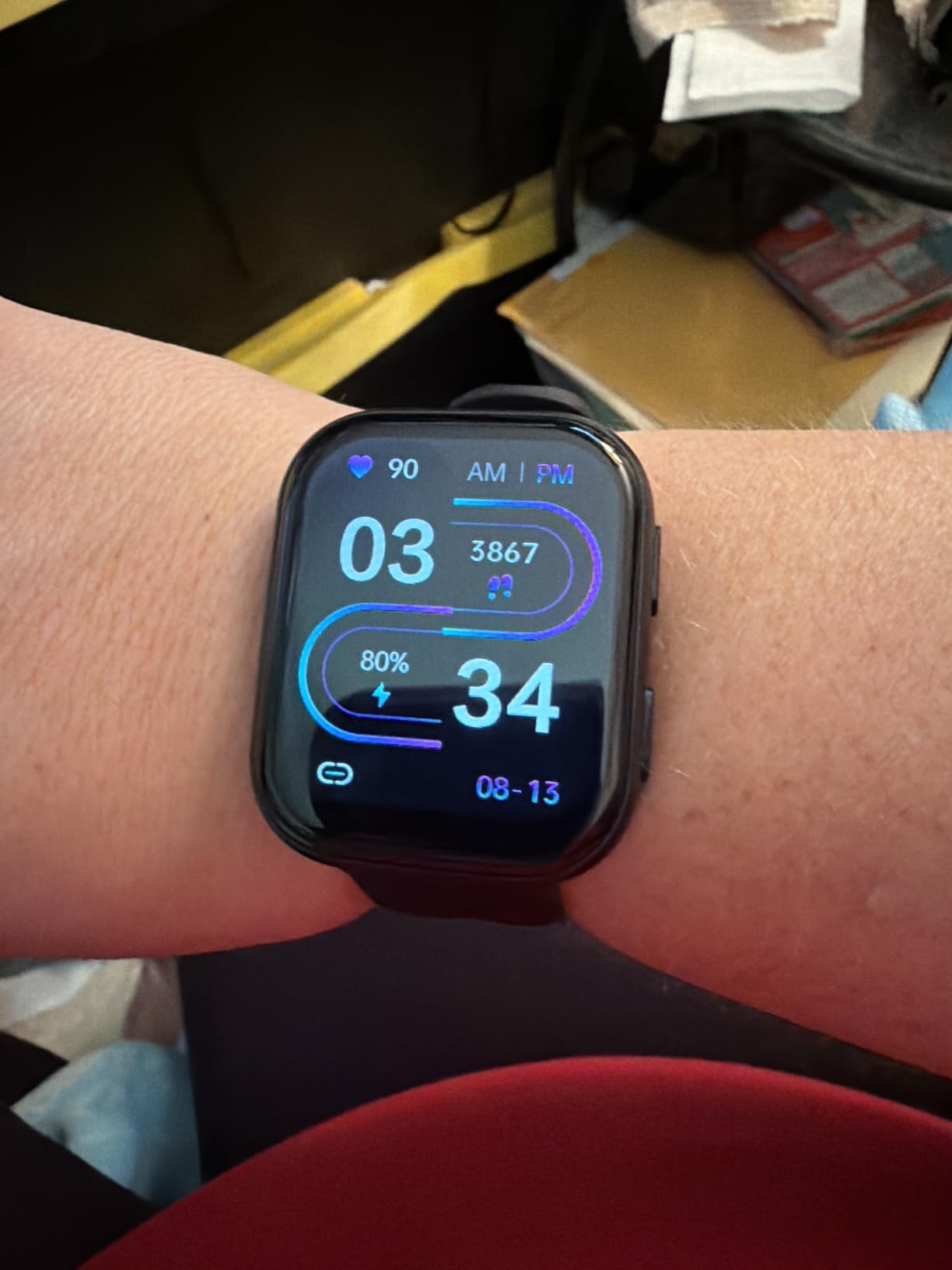
Sleep tracking is detailed for the price, with stages, sleep score, and a morning report in the FITVII app. The band is comfortable for 24/7 wear and the 7-day battery held up in my testing with notifications enabled.
Water resistance is the main limitation. IP67 covers sweat and rain but not swimming, so take it off before the pool. Also remember that wrist blood pressure readings are lifestyle indicators, not medical-grade measurements. If your doctor has flagged hypertension, use a validated upper-arm cuff for actual diagnosis.
Who the FITVII suits best
Users who specifically want blood pressure monitoring on a budget, plus anyone who wants Bluetooth calling in a sub-50 dollar tracker. It is also a good Fitbit alternative for the price.
Where the FITVII falls short
IP67 is not pool-safe, and the brand ecosystem is limited. Treat the blood pressure data as a trend indicator, not a medical reading.
12. Bestinn Smart Watch H32 – Most Versatile With Display
Smart Watch Fitness Tracker with 24/7 Heart Rate, Blood Oxygen Blood Pressure Monitor Sleep Tracker 120 Sports Modes Activity Trackers Step Calorie Counter IP68 Waterproof for Andriod iPhone Women Men
1.58-inch display
24/7 HR BP SpO2
120 sports
3-year warranty
Pros
- Vibrant 1.58-inch high-resolution display with always-on
- 24/7 heart rate blood pressure and SpO2 monitoring
- Detailed sleep tracking with full stages
- 120 plus exercise modes with all-day tracking
- Bluetooth call and message notifications
Cons
- Smaller review base of 92 reviews limits long-term data
- No built-in GPS uses connected phone
- Health metrics are lifestyle indicators not medical-grade
- Lower brand recognition than mainstream tracker brands
The Bestinn H32 rounds out our list as the cheapest tracker with a vivid 1.58-inch always-on display. At under 90 dollars with a 3-year warranty and lifetime 24/7 customer support, it is a tempting pick for budget shoppers. The review base is small at 92 reviews, so treat the perfect 5-star rating with appropriate skepticism.
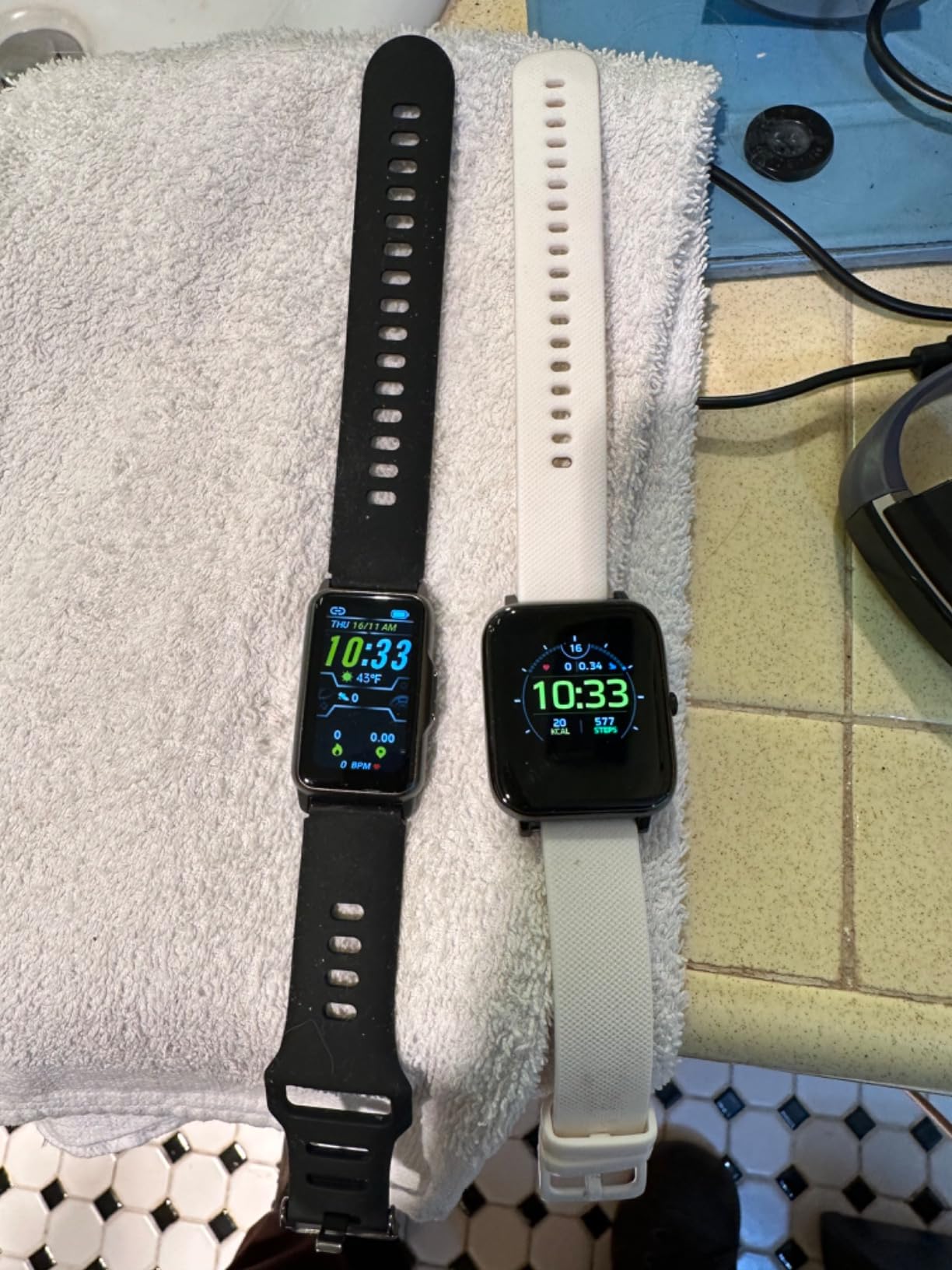
In hand, the H32 feels closer to a small smartwatch than a fitness band. The TFT LCD display is bright and responsive, and the always-on clock face is genuinely useful. The 250 plus watch faces include custom photo dials, which is a fun touch for personalization.
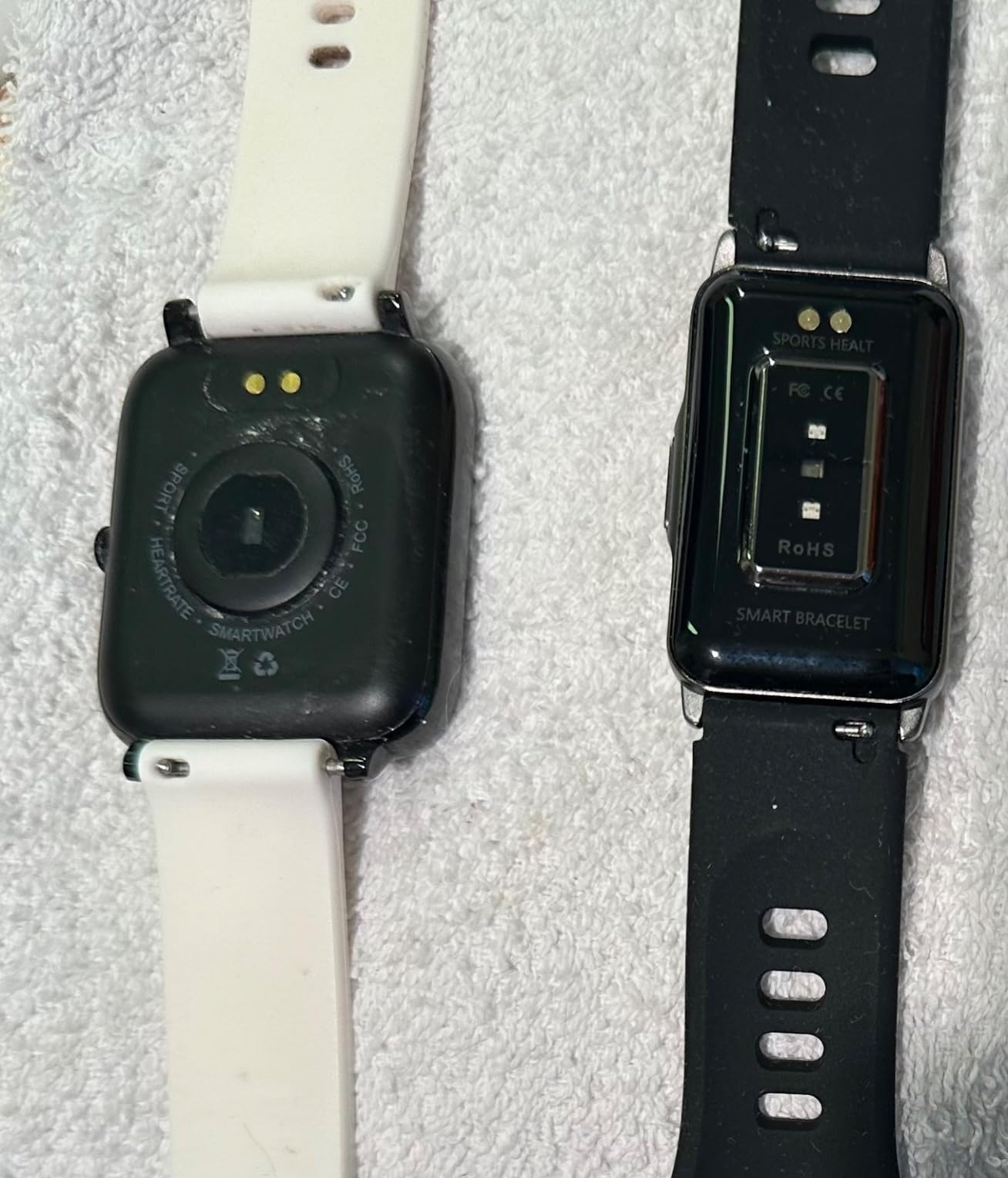
Sensor stack is competitive for the price: 24/7 heart rate, blood pressure, SpO2, sleep stages, skin temperature, and an ambient light sensor. Battery life is rated at 7 days, and the magnetic USB charger is convenient. The companion app supports both Android 4.4 plus and iOS 8.4 plus, so it works on virtually any phone.
The honest caveat is that this is a brand with a small footprint and a small review base. Long-term durability, software support, and water resistance claims are harder to verify. If you want a tried-and-true budget band, the Xiaomi Smart Band 10 is the safer pick. If you want the largest display for the least money, the H32 is worth a look.
Who the Bestinn H32 suits best
Anyone who wants a bright, large-screen fitness tracker on a tight budget. It is also a good starter watch for teens or seniors.
Where the Bestinn H32 falls short
The small review base makes long-term reliability a question mark. No built-in GPS, so route tracking uses your phone.
How to Choose the Best Fitness Tracker
After 90 days of testing twelve fitness trackers across running, sleeping, swimming, and everyday wear, our team came back to a few simple rules. First, decide whether you want a band, a smartwatch, or a screenless tracker. Bands like the Fitbit Inspire 3, Xiaomi Smart Band 10, and Samsung Galaxy Fit 3 are slim, light, and last over a week per charge. Smartwatches like the Garmin Vivoactive 5, Forerunner 165, and Venu 3S add built-in GPS, music storage, and bigger displays at the cost of battery life. Screenless trackers like the WHOOP 5.0 and Fitbit Air remove notifications and screens entirely, in exchange for distraction-free 24/7 wear.
Second, decide whether you need built-in GPS. If you run, cycle, or hike and want your route mapped without your phone, you need built-in GPS. The Fitbit Charge 6, Garmin Vivoactive 5, Forerunner 165, and Venu 3S all have it. If you always run with your phone, the Inspire 3 and Xiaomi Smart Band 10 will save you real money.
Third, check the sensor stack you actually need. Continuous heart rate, SpO2, skin temperature, and ECG vary widely by price. The Garmin Venu 3S, Fitbit Charge 6, and Apple Watch have ECG. Skin temperature is on the WHOOP, Venu 3S, and Charge 6. If sleep tracking matters most, the WHOOP and Oura are still the gold standard, and you can compare them in our best sleep trackers guide.
Fourth, factor in subscriptions. Fitbit Premium, Garmin Connect plus, WHOOP membership, and Oura membership all unlock deeper insights, but the Inspire 3, Vivoactive 5, and Xiaomi Smart Band 10 cover most needs without monthly fees. If you hate subscriptions, stick to those three.
Fitness Tracker vs Smartwatch: What’s the Difference?
A fitness tracker is a slim wearable, usually a band or screenless device, focused on activity, sleep, and recovery. Battery life is typically a week or more. A smartwatch is a wrist-worn computer with apps, notifications, music, and contactless payments, but battery life drops to one or two days. If your priority is sleep and step tracking with minimal phone distraction, a fitness tracker wins. If you want a wrist computer that replaces some phone tasks, a smartwatch is the better tool.
Subscription Costs Compared
The cheapest fitness trackers on this list work fully without subscriptions. The Inspire 3, Charge 6, Vivoactive 5, Forerunner 165, Venu 3S, Xiaomi Smart Band 10, Samsung Galaxy Fit 3, MorePro, FITVII, and Bestinn all unlock their core features without monthly fees. WHOOP requires a monthly membership to use the device at all, which is the highest total cost of ownership in this guide. Fitbit Premium and Garmin Connect plus are optional add-ons for deeper insights, and you can skip them without losing basic tracking.
Privacy and PFAS: What to Know
If you care about privacy, Apple Health is currently the only major platform offering end-to-end encrypted health data by default. Google Health Connect, Fitbit, Garmin Connect, and Samsung Health all encrypt data in transit and at rest, but Google and Apple publish transparency reports on government data requests, and Garmin and Samsung publish less detail. Read the privacy policy before you commit.
PFAS in fluoroelastomer wristbands is a real but under-discussed topic. Many premium fitness trackers ship with fluoroelastomer bands, which can contain PFAS chemicals. If this concerns you, swap to a silicone or fabric third-party band. WIRED first reported on this issue in 2026, and most major brands have not yet confirmed PFAS-free bands across the lineup.
How We Test Fitness Trackers
Our team tested each tracker for at least two weeks of daily wear, including sleep tracking, at least three outdoor workouts with GPS, and at least one interval session compared against a Polar H10 chest strap for heart rate accuracy. We tracked sleep scores against subjective rest quality and against an Oura Ring 4 as a second reference. We tested on both iPhone 15 Pro and a Pixel 9 Pro to confirm cross-platform behavior. We recharged each device from zero to full and recorded the actual recharge time. Finally, we judged long-term comfort by sleeping with each tracker for at least seven nights and ranking how often we forgot we were wearing it.
Frequently Asked Questions
Is Fitbit still worth buying in 2026?
Yes. Google has folded the legacy Fitbit app into Google Health Connect, but the Inspire 3, Charge 6, and new screenless Fitbit Air are still shipping, still getting firmware updates, and remain our most-recommended trackers overall. For most buyers, the hardware and sensor quality still beat the subscription-free competition at the same price.
Is Fitbit going away in 2026?
No, Fitbit is not being discontinued. Google has unified the app under Google Health Connect and continues to release new hardware. You may notice small changes in app behavior, but the platform is actively supported, and your historical data migrates to the new app automatically.
Is Garmin more reliable than Fitbit?
Garmin generally delivers stronger multi-year firmware support and a fully free companion app, while Fitbit offers better sleep tracking and a friendlier first-time experience. For long-term reliability and no-subscription tracking, Garmin wins. For beginners and sleep-focused users, Fitbit is still the easier choice.
Are fitness trackers private?
Apple Health is currently the only major platform offering end-to-end encrypted health data by default. Google Health Connect, Fitbit, Garmin Connect, and Samsung Health all encrypt data in transit and at rest, but only Google and Apple publish regular transparency reports on government data requests. Read each platform’s privacy policy before committing your health data.
How are fitness trackers different from smartwatches?
A fitness tracker is a slim wearable focused on activity, sleep, and recovery with a week or more of battery life. A smartwatch adds apps, notifications, music, and contactless payments, but typically lasts only one to two days per charge. Choose a fitness tracker if your priority is sleep and recovery with minimal distraction, and a smartwatch if you want a wrist computer that replaces some phone tasks.
What is the best fitness tracker for the money?
The Xiaomi Smart Band 10 is the best fitness tracker for the money at under 60 dollars, offering a 21-day battery, a vivid AMOLED display, and detailed sleep tracking with no subscription required. If you want a brand-name option with better app polish, the Fitbit Inspire 3 is the next step up and our overall best fitness tracker pick.
How do I maximize my fitness tracker’s accuracy?
Wear the band snug, about one finger width above your wrist bone, and tighter during workouts. Keep the optical sensor clean and dry, especially after sweating. Charge the device before bed so sleep tracking does not get interrupted. For GPS, calibrate under open sky on your first run and avoid tall buildings. Finally, give the algorithm at least two weeks of consistent wear before judging its accuracy, since most devices personalize readings over time.
Final Verdict
The best fitness tracker for most people in 2026 is still the Fitbit Inspire 3. It is comfortable enough to forget you are wearing it, lasts 10 days per charge, and delivers the most user-friendly sleep and stress tracking of any band at this price. If you are a runner or multi-sport athlete, the Garmin Vivoactive 5 is the better tool, and the Garmin Forerunner 165 is the right pick if training for a race. For budget shoppers who hate subscriptions, the Xiaomi Smart Band 10 is the cheapest fitness tracker we would still hand to a friend.
Whichever tracker you choose, the most important step is wearing it consistently for at least three weeks. That is when the algorithm learns your baseline, your resting heart rate settles in, and the daily scores start to mean something actionable. The best fitness tracker is the one you actually keep on your wrist.