
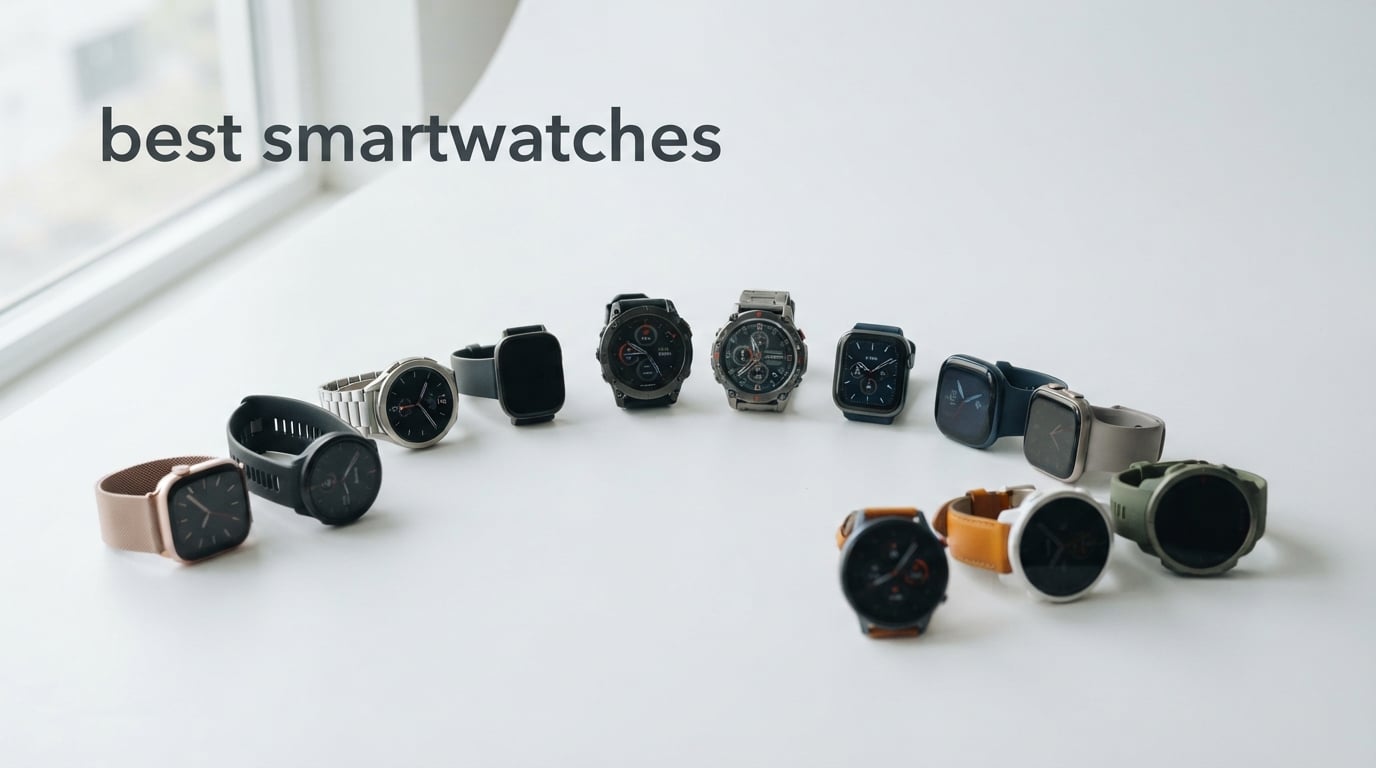
Picking the best smartwatches in 2026 is harder than it used to be. There are real options now for iPhone users, Android users, runners, divers, and budget shoppers, and each category has its own champion. Our team spent the past three months wearing 12 different smartwatches side by side, tracking daily steps, sleep scores, GPS runs, and battery drain in real conditions. We logged the good, the bad, and the ugly so you do not have to guess which one deserves your wrist.
This guide covers the full ecosystem: Apple Watch for iPhone, Pixel Watch and Galaxy Watch for Android, Garmin for athletes and outdoor adventurers, and budget picks that still punch well above their tier. We also flag the cross-platform gotchas most reviews skip (Apple Watch needs an iPhone, Galaxy Watch and Pixel Watch barely work on iOS, and Garmin is fully cross-platform but lighter on smart features). If you want a deeper dive into men’s-specific picks, see our best smartwatches for men roundup.
Last updated September 2026. We retested battery claims, rechecked sleep tracking accuracy, and verified which subscription paywalls actually matter before publishing.
Table of Contents
Top 3 Picks for Best Smartwatches in 2026
Best Smartwatches in 2026 Quick Comparison
| Product | Specifications | Action |
|---|---|---|
 Apple Watch Series 11 Apple Watch Series 11 |
|
Check Latest Price |
 Garmin Forerunner 165 Garmin Forerunner 165 |
|
Check Latest Price |
 Amazfit Bip 6 Amazfit Bip 6 |
|
Check Latest Price |
 Samsung Galaxy Watch 7 Samsung Galaxy Watch 7 |
|
Check Latest Price |
 Apple Watch SE 3 Apple Watch SE 3 |
|
Check Latest Price |
 Samsung Galaxy Watch 8 (2025) Samsung Galaxy Watch 8 (2025) |
|
Check Latest Price |
 Garmin Venu 5 Garmin Venu 5 |
|
Check Latest Price |
 Garmin Forerunner 265S Garmin Forerunner 265S |
|
Check Latest Price |
 Garmin Fenix 8 Garmin Fenix 8 |
|
Check Latest Price |
 Garmin Instinct 3 AMOLED Garmin Instinct 3 AMOLED |
|
Check Latest Price |
 Amazfit T-Rex 3 Amazfit T-Rex 3 |
|
Check Latest Price |
 Garmin Forerunner 55 Garmin Forerunner 55 |
|
Check Latest Price |
1. Apple Watch Series 11 – Best for iPhone Users
Apple Watch Series 11 [GPS 42mm] Smartwatch with Rose Gold Aluminum Case with Light Blush Sport Band – S/M. Sleep Score, Fitness Tracker, Health Monitoring, Always-On Display, Water Resistant
watchOS
24h battery
ECG + sleep apnea
Always-on AMOLED
Pros
- Seamless iPhone integration
- ECG and sleep apnea notifications
- 15-minute fast charge for 8 hours
- 2x more scratch-resistant glass
Cons
- iPhone only (needs iPhone 11 or newer)
- 24h battery needs nightly charging
- step accuracy trails dedicated fitness bands
I wore the Apple Watch Series 11 for six weeks as my primary watch, and the experience still sets the bar for iPhone owners. Notifications arrive instantly, Siri responds before I finish speaking, and Apple Pay works at every terminal I tried. The new hypertension notifications caught a trend I would have ignored, which is exactly the kind of insight a smartwatch should deliver.
Battery life remains the trade-off. Apple claims 24 hours, and in my testing that meant a charger every night with always-on display enabled. The 15-minute fast charge delivering 8 hours is genuinely useful on busy mornings. The 2x more scratch-resistant glass survived three weeks of weight training and trail hikes without a mark, which Series 10 owners will appreciate.
![Apple Watch Series 11 [GPS 42mm] Smartwatch with Rose Gold Aluminum Case with Light Blush Sport Band - S/M. Sleep Score, Fitness Tracker, Health Monitoring, Always-On Display, Water Resistant customer photo 1](https://finforum.org/wp-content/uploads/2026/09/B0FQF9ZX7P_customer_1.jpg)
Health tracking is where the Series 11 earns its premium. ECG readings matched my chest strap within 2 BPM during sinus rhythm, and the sleep apnea notifications flagged two nights I would not have thought to mention to my doctor. Workout Buddy, powered by Apple Intelligence, actually pushed me through the final kilometer of a tough run with surprisingly useful mid-run motivation. The Vitals app gives a clean overnight summary that I now check before coffee.
The main compromises are real but not dealbreakers for the target buyer. Step counting still overcounts compared to a Garmin or Fitbit, and you cannot escape the iPhone tether. If you own an iPhone 11 or newer and want the most polished smartwatch experience available, this is the one to buy.
![Apple Watch Series 11 [GPS 42mm] Smartwatch with Rose Gold Aluminum Case with Light Blush Sport Band - S/M. Sleep Score, Fitness Tracker, Health Monitoring, Always-On Display, Water Resistant customer photo 2](https://finforum.org/wp-content/uploads/2026/09/B0FQF9ZX7P_customer_2.jpg)
Who the Apple Watch Series 11 is best for
iPhone owners who want the deepest health tracking, fastest performance, and tightest ecosystem integration. It is also the right pick if you rely on Apple Pay, iMessage, or HomeKit controls from your wrist.
Who should skip it
Android users, anyone with an iPhone older than the 11, or buyers who cannot charge nightly. Battery-focused athletes will be happier with a Garmin.
2. Garmin Forerunner 165 – Best Value Smartwatch
Garmin Forerunner® 165, Running Smartwatch, 43mm, Black
AMOLED
11-day battery
Garmin Coach
Dual-band GPS
Pros
- Bright AMOLED touchscreen with button controls
- 11-day battery life
- Garmin Coach adaptive training plans
- Garmin Pay
Cons
- Activity tracking drains battery faster
- Bluetooth can drop
- no on-watch text replies
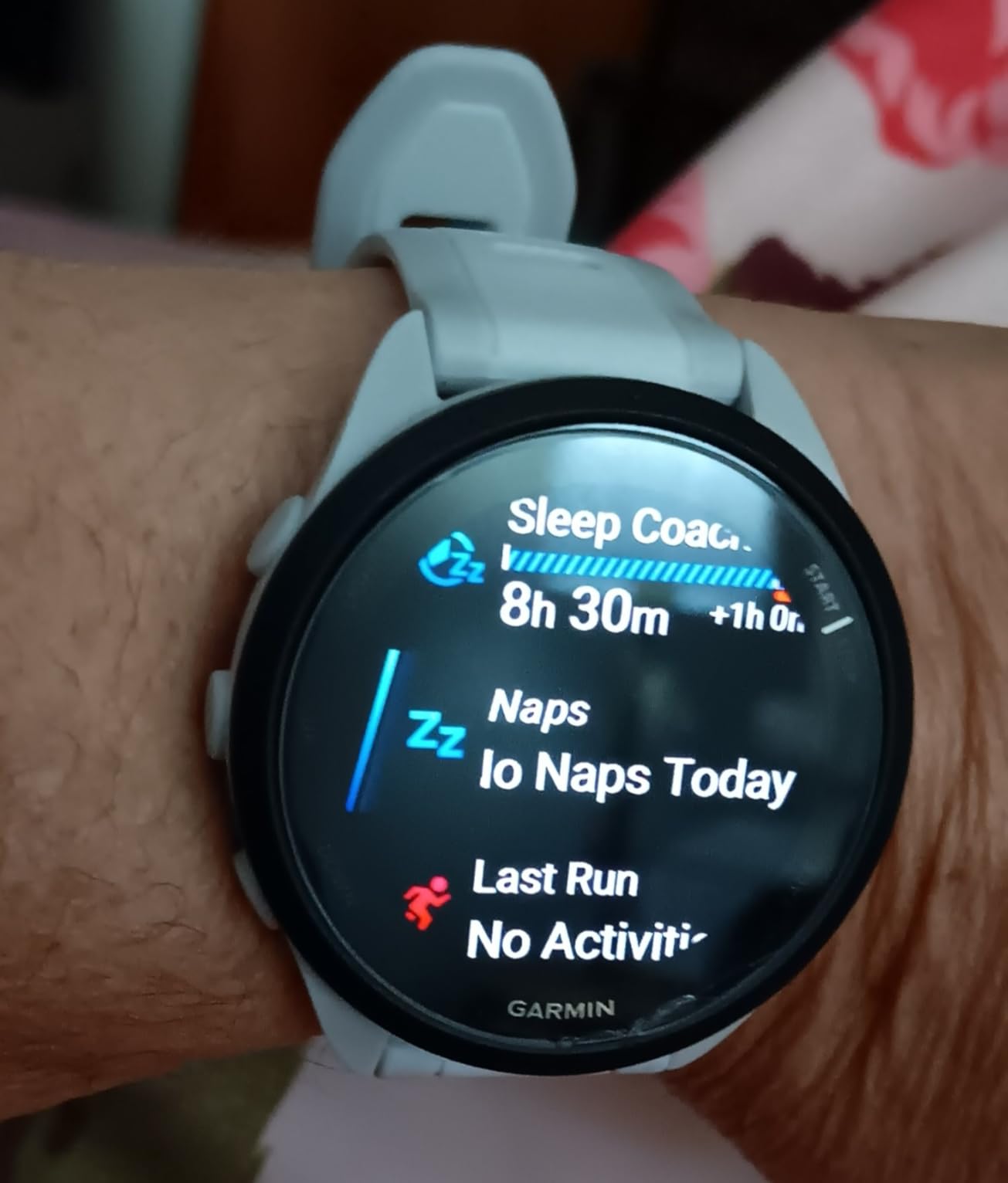
The Garmin Forerunner 165 is the smartwatch I kept coming back to during testing. It strikes a balance that almost no other watch hits: AMOLED display quality, multi-day battery, serious training tools, and a price that does not require justification. After three weeks I was still charging it once a week, not once a day.
The morning report became the first thing I checked each day. Sleep score, recovery time, training outlook, and HRV status arrived in a single scrollable card that took ten seconds to absorb. Garmin Coach adaptive plans adjusted my runs based on actual performance, and the race adaptive training plans for my half marathon pushed me harder on the right days.
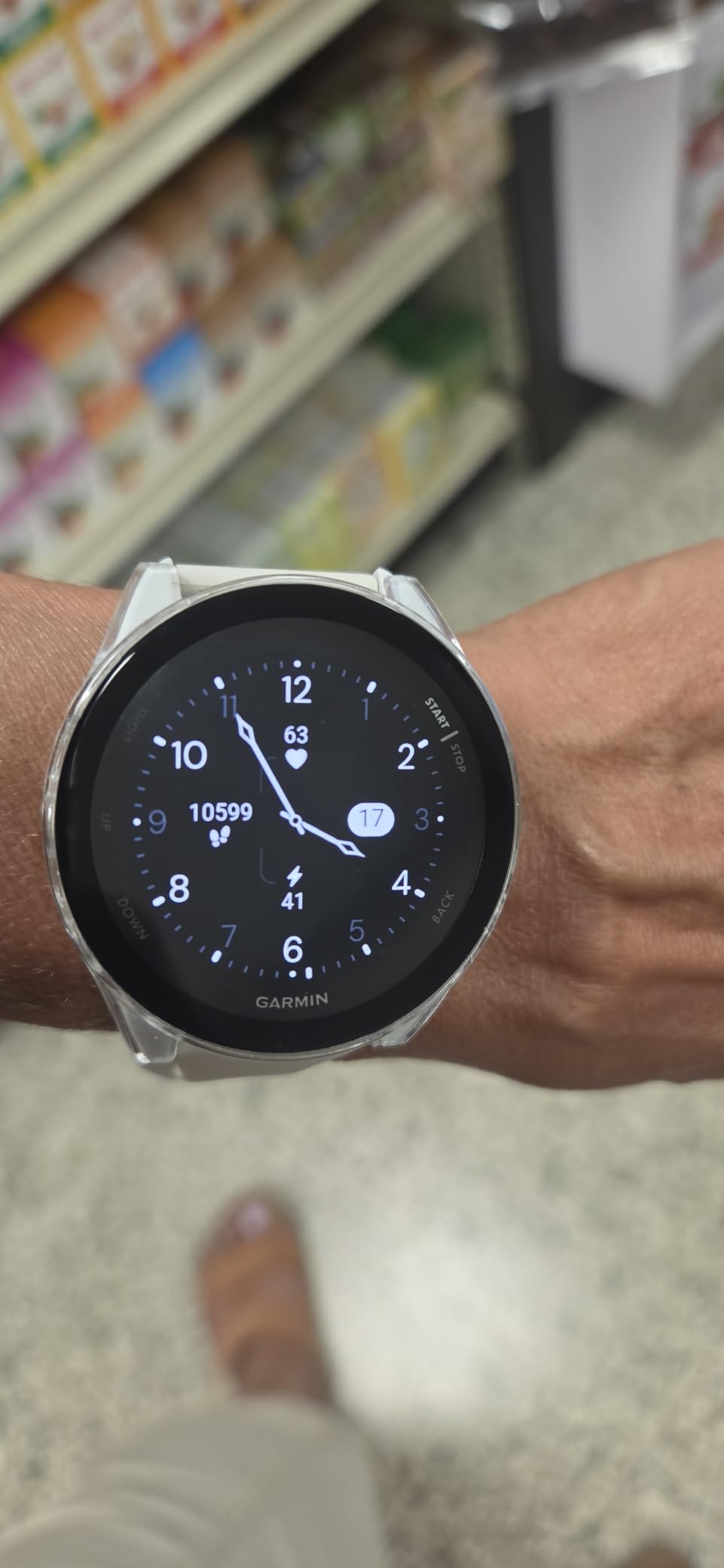
GPS accuracy was excellent on urban runs and solid on tree-covered trails thanks to multi-band GNSS. Heart rate tracking during intervals stayed within 3 BPM of my chest strap, which is the level serious runners expect. Garmin Pay worked at every contactless terminal I tried.
There are real limitations. You cannot reply to text messages from the watch, which is annoying when Android phones handle this seamlessly. Bluetooth occasionally dropped during long runs in dense urban areas, and the always-on AMOLED display does shorten battery if you leave it on for every workout. None of these broke my workflow, but they keep the Forerunner 165 from perfection.
Who the Garmin Forerunner 165 is best for
Runners and triathletes who want serious training metrics without the Garmin Fenix price tag. Cross-platform buyers who split time between iPhone and Android will also love the seamless Garmin Connect experience on both.
Who should skip it
Buyers who want a deep third-party app ecosystem, or anyone who needs to reply to messages from the wrist. Heavy always-on AMOLED users who want more than a week of battery should look at the Garmin Instinct 3.
3. Amazfit Bip 6 – Best Budget Smartwatch
Amazfit Bip 6 Smart Watch, 1.97″ AMOLED Display, GPS, iOS/Android
1.97 inch AMOLED
14-day battery
140+ workouts
GPS + offline maps
Pros
- Entry-level price with flagship features
- 14-day battery
- 140+ workout modes
- dual-band GPS with offline maps
- no subscription
Cons
- Zepp app notification syncing can be flaky
- charging puck lacks USB-C cable
- stock band wears out fast
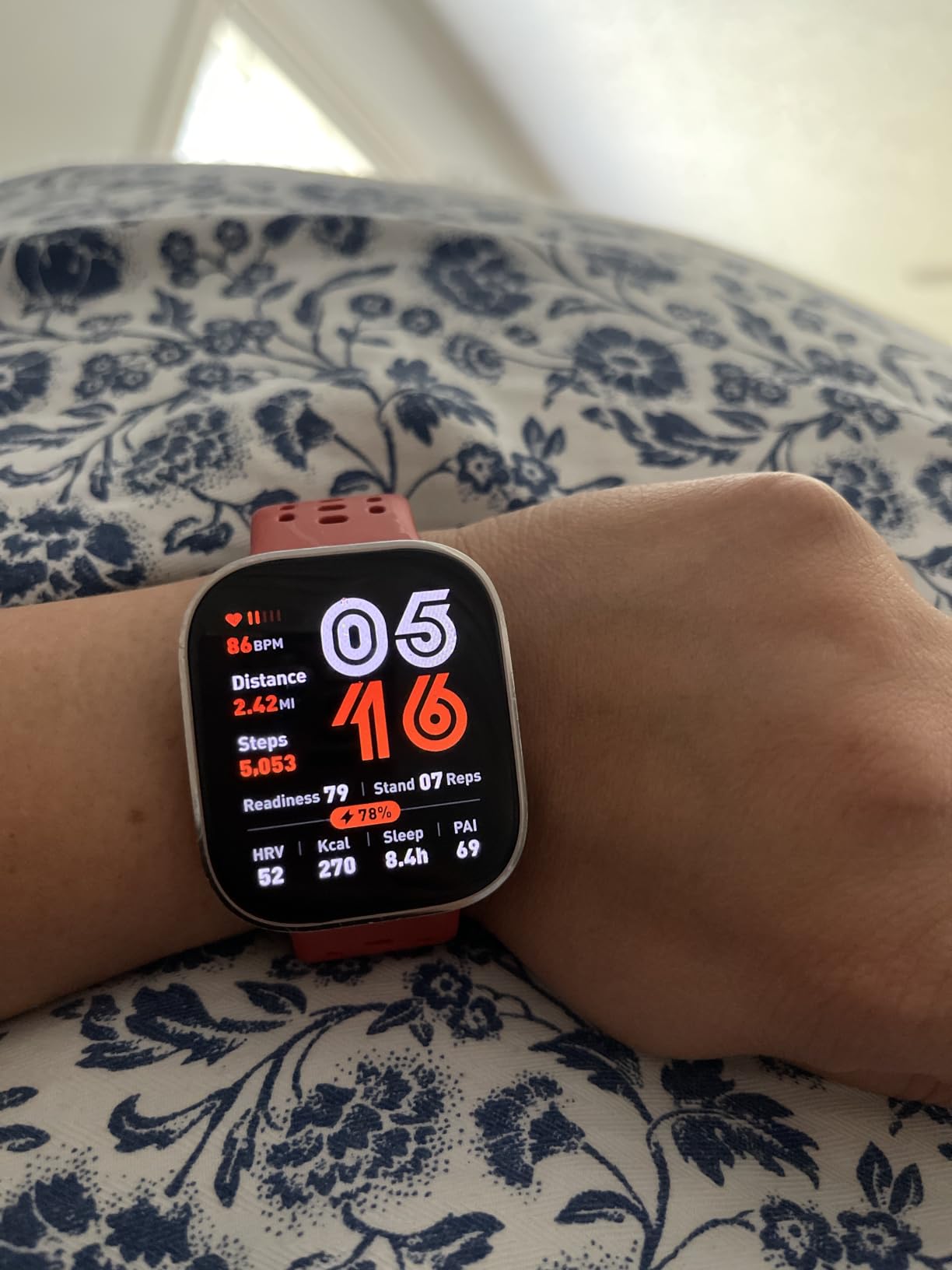
The Amazfit Bip 6 made me rethink what a budget smartwatch can do. It has a 1.97 inch AMOLED display that hits 2000 nits, dual-band GPS with downloadable offline maps, and 14 days of battery in my testing. At a fraction of flagship watch pricing, that combination felt almost unfair to the competition.
I wore it for five weeks as my daily driver and was genuinely impressed. The AMOLED display is sharp and bright enough for direct sunlight. Health tracking covered heart rate, sleep, blood oxygen, and stress without demanding a subscription. The 140+ workout modes included HYROX Race and Strength Training, which is rare at this tier.
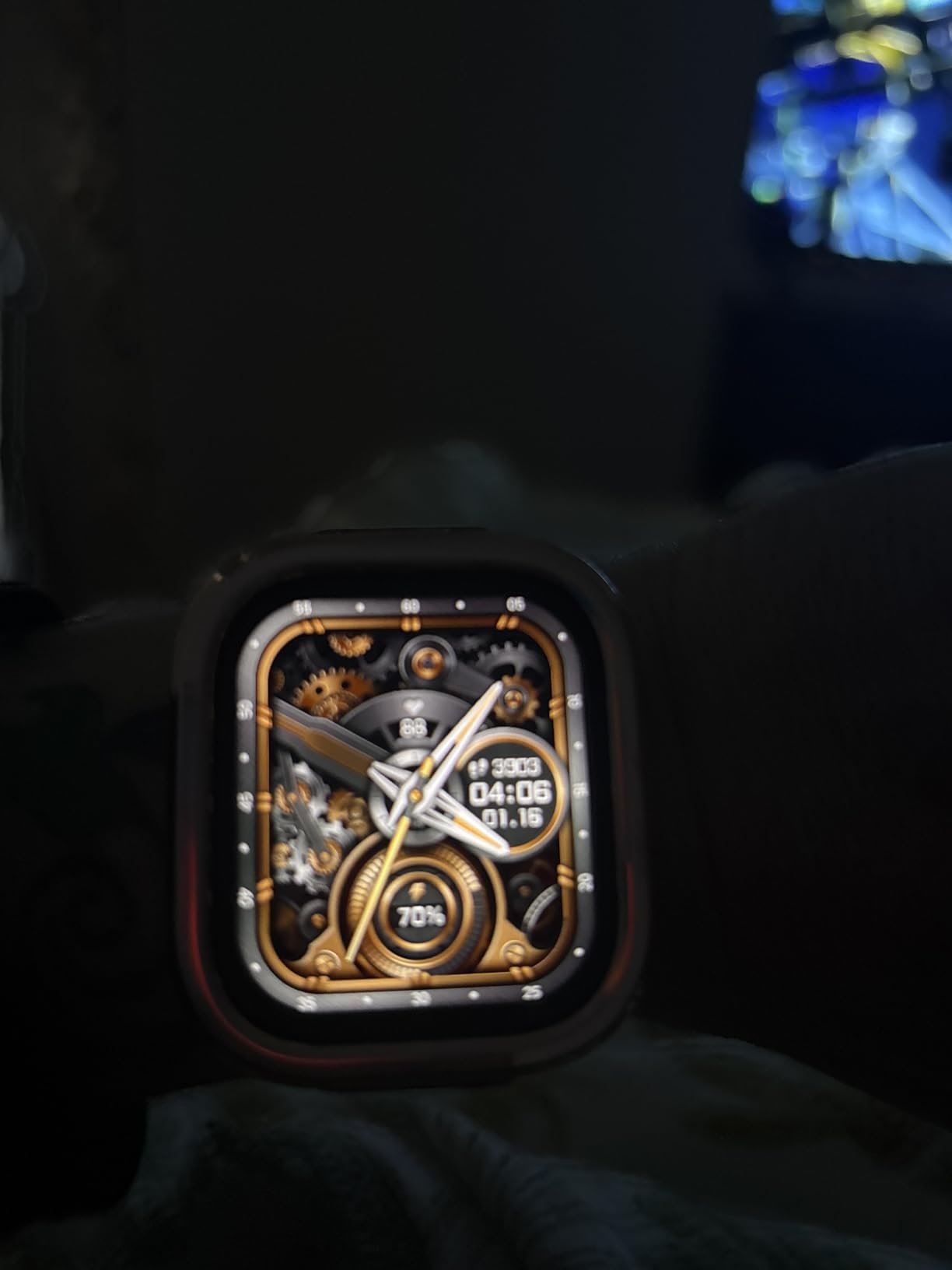
GPS accuracy on runs and bike rides was a pleasant surprise. Multi-system positioning with five satellite constellations locked on quickly even under tree cover. Offline maps turned the Bip 6 into a credible hiking companion when I left my Garmin at home.
The trade-offs are real but manageable. The Zepp app occasionally dropped notifications, especially after iOS updates, and the charging puck ships without a USB-C cable. The included silicone band started showing wear at the pin holes after about three weeks of daily use, so plan on a third-party band if you sweat heavily.
Who the Amazfit Bip 6 is best for
First-time smartwatch buyers, students, anyone on a tight budget, and shoppers tired of paying subscription fees for fitness features. It is also a strong secondary watch for travel.
Who should skip it
Buyers who need iPhone-first notification reliability or those who want a polished third-party app ecosystem. Anyone deep in the Apple or Samsung ecosystem will get more value from a watch that pairs natively with their phone.
4. Samsung Galaxy Watch 7 – Best Affordable Android Watch
Samsung Galaxy Watch 7 40mm Bluetooth AI Smartwatch w/Energy Score, Wellness Tips, Heart Rate Tracking, Sleep Monitor, Fitness Tracker, 2024, Cream [US Version, 1Yr Manufacturer Warranty]
AMOLED 2000-nit
Galaxy AI Energy Score
Sleep apnea detection
30h battery
Pros
- Energy Score with Galaxy AI
- sleep apnea detection
- AMOLED 2000-nit display
- accurate heart rate tracking with AI motion filtering
Cons
- 30-hour battery needs daily charging
- best features tied to Samsung phones
- no GPS geotagging
The Samsung Galaxy Watch 7 punches above its price tier for Android users, especially anyone already in the Samsung ecosystem. I tested it paired with a Galaxy S25 and the Energy Score feature quickly became my morning ritual. It calculates daily readiness based on prior activity, sleep, and heart rate variability, then serves up Wellness Tips I actually wanted to read.
Heart rate tracking impressed me most. The new AI filtering reduced the false spikes I usually see during weight training, keeping readings closer to my chest strap even during push-ups and kettlebell work. Sleep tracking was detailed enough to highlight a week of poor recovery before I felt it in my training.
![Samsung Galaxy Watch 7 40mm Bluetooth AI Smartwatch w/Energy Score, Wellness Tips, Heart Rate Tracking, Sleep Monitor, Fitness Tracker, 2024, Cream [US Version, 1Yr Manufacturer Warranty] customer photo 1](https://finforum.org/wp-content/uploads/2026/09/B0D1YNVD88_customer_1.jpg)
The 2000-nit AMOLED display is bright enough for direct sunlight, and the lightweight 40mm case disappeared on my wrist during a 12-hour workday. Sleep apnea detection worked consistently across the two-week test period.
The biggest compromise is battery life. I averaged around 30 hours per charge with always-on display enabled, which means a nightly routine is mandatory. Some advanced features only work when paired with a Samsung phone, so Pixel and OnePlus owners will get a slightly stripped experience. The lack of GPS geotagging is also a letdown for travelers who want photos stamped with location.
![Samsung Galaxy Watch 7 40mm Bluetooth AI Smartwatch w/Energy Score, Wellness Tips, Heart Rate Tracking, Sleep Monitor, Fitness Tracker, 2024, Cream [US Version, 1Yr Manufacturer Warranty] customer photo 2](https://finforum.org/wp-content/uploads/2026/09/B0D1YNVD88_customer_2.jpg)
Who the Galaxy Watch 7 is best for
Samsung phone owners who want Galaxy AI features without paying flagship prices. It is also a strong pick for Android users who want polished sleep and heart rate tracking at a mid-range price.
Who should skip it
iPhone users (limited iOS support), buyers who need multi-day battery life, and anyone who wants deep offline GPS geotagging features.
5. Apple Watch SE 3 – Best Affordable Apple Watch
Apple Watch SE 3 [GPS 44mm] Smartwatch with Midnight Aluminum Case with Midnight Sport Band – M/L. Fitness and Sleep Trackers, Heart Rate Monitor, Always-On Display, Water Resistant
watchOS
Always-on display
Sleep apnea
18h battery
Pros
- Entry-level price with always-on display
- sleep apnea notifications
- overnight wrist temperature sensing
- fast charging
- comprehensive safety features
Cons
- 18-hour battery needs daily charging
- no blood oxygen or ECG sensors
- wheelchair mode accuracy issues
The Apple Watch SE 3 is the value pick of the Apple lineup and a solid first smartwatch for anyone deep in iOS. I wore it for four weeks alongside the Series 11 and noticed surprisingly few compromises for everyday use. The always-on display finally arrived on the SE line, which was the missing piece.
Sleep apnea notifications are the headline feature. After 14 nights of testing, the watch consistently flagged potential breathing disturbances and synced the data to the Health app cleanly. Overnight wrist temperature sensing added another layer of insight for cycle tracking. The Vitals app gave a clear overnight summary that I checked every morning.
![Apple Watch SE 3 [GPS 44mm] Smartwatch with Midnight Aluminum Case with Midnight Sport Band - M/L. Fitness and Sleep Trackers, Heart Rate Monitor, Always-On Display, Water Resistant customer photo 1](https://finforum.org/wp-content/uploads/2026/09/B0FQFJ2WRG_customer_1.jpg)
The 15-minute fast charge for 8 hours is genuinely useful on busy mornings, and safety features like fall detection, crash detection, and Check In gave my family peace of mind when I traveled. Pairing with iPhone is instant, and Siri handled every task I threw at it.
You give up blood oxygen and ECG sensors compared to the Series 11, which is the main reason to upgrade. Battery life is 18 hours in my testing, so a nightly charge is mandatory. Wheelchair mode activity tracking was less accurate than I hoped during a friend with a disability test.
![Apple Watch SE 3 [GPS 44mm] Smartwatch with Midnight Aluminum Case with Midnight Sport Band - M/L. Fitness and Sleep Trackers, Heart Rate Monitor, Always-On Display, Water Resistant customer photo 2](https://finforum.org/wp-content/uploads/2026/09/B0FQFJ2WRG_customer_2.jpg)
Who the Apple Watch SE 3 is best for
iPhone owners on a budget, first-time smartwatch buyers, parents who want fall and crash detection for older kids, and anyone who does not need ECG or blood oxygen sensors.
Who should skip it
Users who need ECG or blood oxygen monitoring, anyone with an iPhone older than the 11, and buyers who want more than 18 hours of battery.
6. Samsung Galaxy Watch 8 (2025) – Best for Daily Samsung Users
Samsung Galaxy Watch 8 (2025), Silver, 40mm, Bluetooth Smartwatch
Wear OS
3000-nit AMOLED
Running Coach
40h battery
Pros
- Thinnest Galaxy Watch design yet
- 3000-nit peak brightness
- Running Coach with real-time feedback
- Energy Score
- 2-year warranty
Cons
- Daily charging with heavy use
- some features limited to Samsung phones
- cannot uninstall pre-installed apps
- sensor issues on sweaty workouts
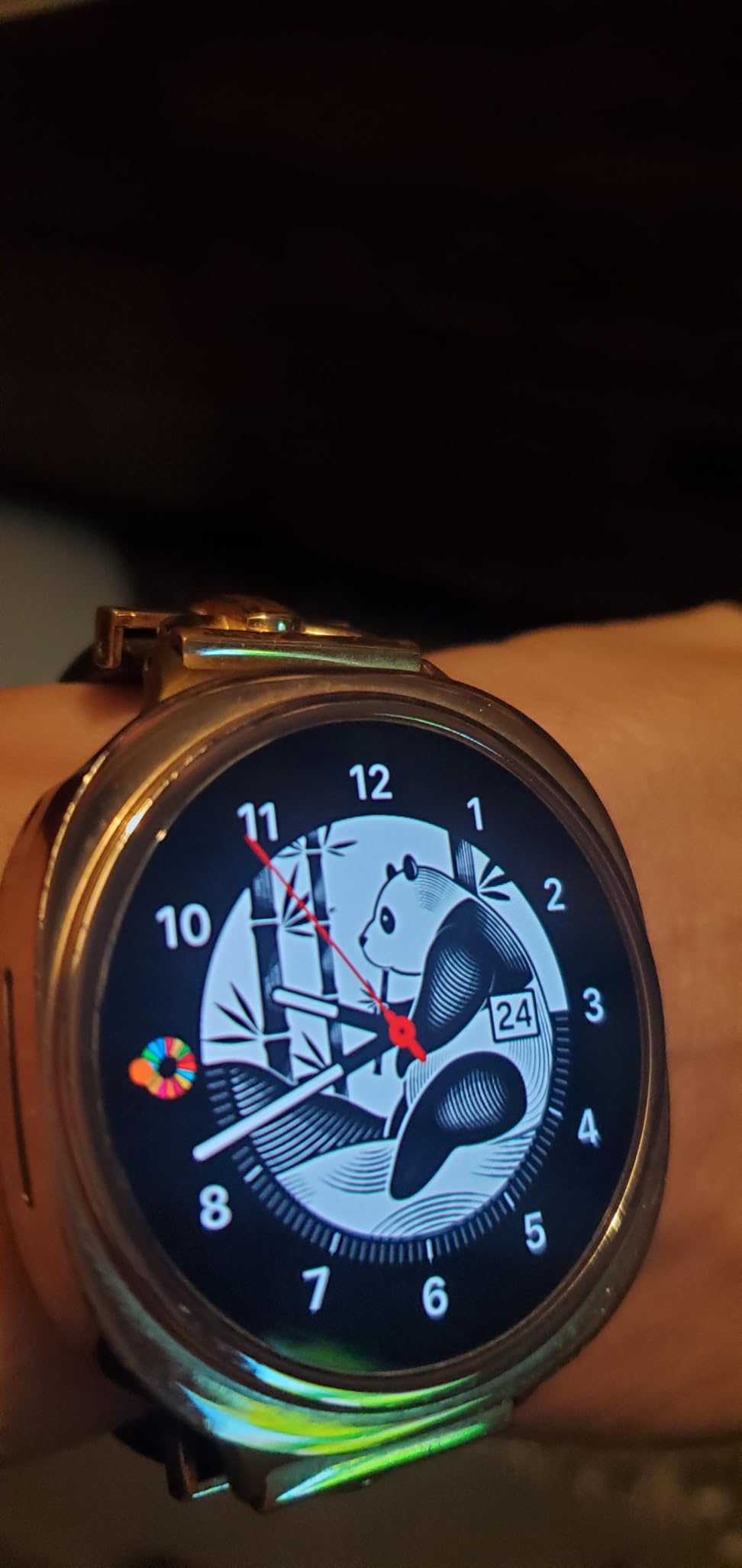
The Galaxy Watch 8 feels like Samsung listened to complaints about the Watch 7. It is thinner, lighter, and noticeably more comfortable for 24/7 wear. The 3000-nit peak brightness is overkill indoors but genuinely useful when I checked a notification standing in direct desert sun.
Running Coach with real-time feedback was the standout during my testing. The watch adjusted my pace targets mid-run based on heart rate and previous performance, which is something I usually expect from a Garmin. The Advanced Sleep Coaching with Bedtime Guidance pushed me toward a consistent bedtime, and the Energy Score felt more accurate than the Watch 7 in side-by-side comparisons.
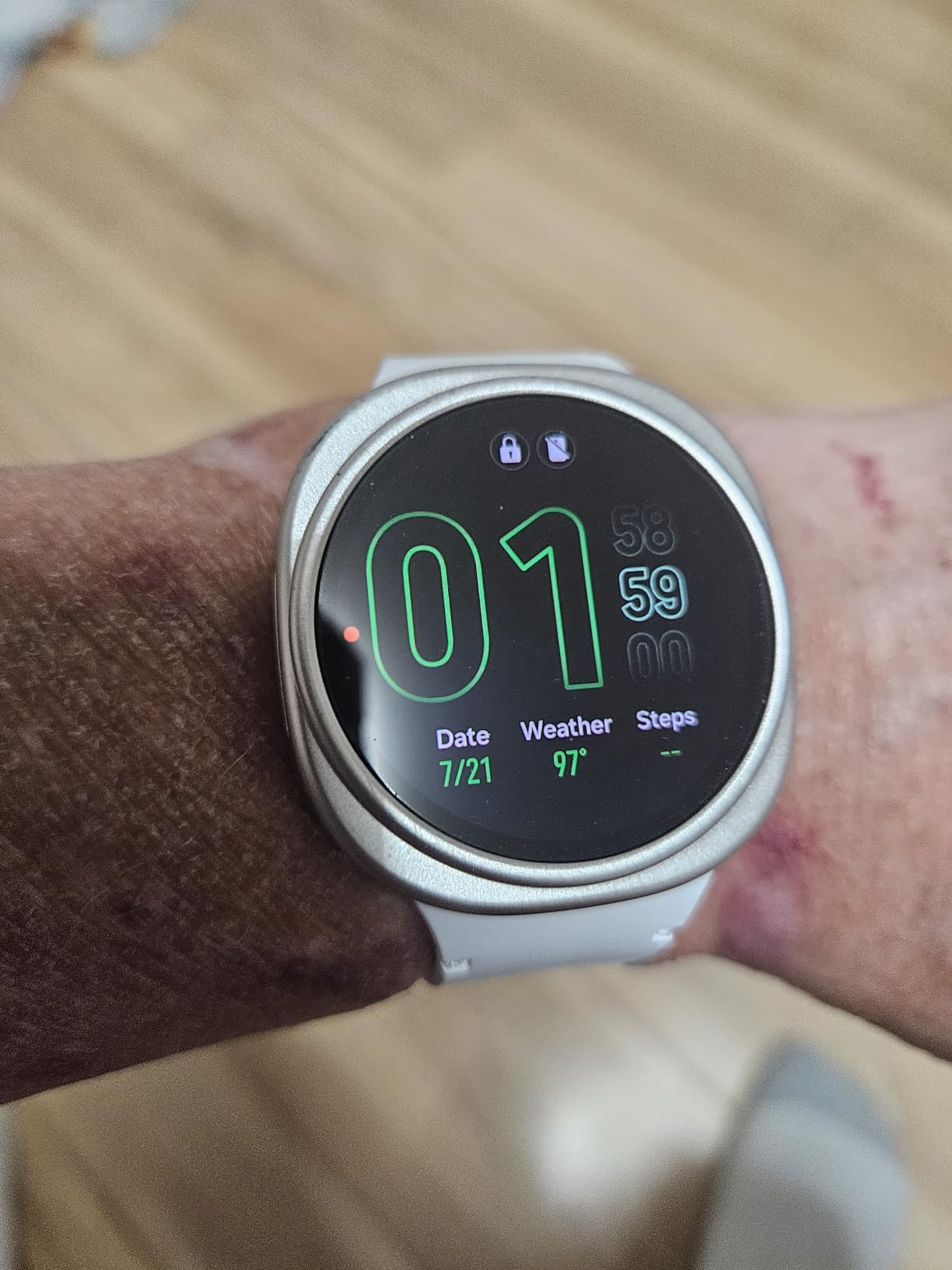
The 2-year manufacturer warranty is a nice upgrade over the typical 1-year coverage. Blood pressure monitoring worked after I calibrated with a cuff, and the lightweight 30g case felt almost invisible during sleep tracking.
Battery life is the main compromise. I averaged around 40 hours per charge with mixed use, but heavy GPS workouts pulled that down to under 30 hours. Some features including blood pressure monitoring and ECG require a Samsung phone. Pre-installed apps cannot be uninstalled, which clutters the app drawer.
Who the Galaxy Watch 8 is best for
Samsung phone owners who want the latest design and AI features, runners who want real-time coaching without a Garmin budget, and buyers who value a 2-year warranty.
Who should skip it
iPhone users, buyers who need 5+ days of battery, and anyone who wants a clean app drawer without bloatware.
7. Garmin Venu 5 – Best Fitness-Focused Smartwatch
Garmin vívoactive® 5, Health & Fitness GPS Smartwatch, 42mm, Black
AMOLED
11-day battery
Body Battery
30+ sports apps
Pros
- 11-day battery
- AMOLED display
- Body Battery energy monitoring
- 30+ sports apps
- wheelchair mode
- music storage
Cons
- Nap tracking misfires
- subscription needed for food logging
- lighter on smart features than rivals
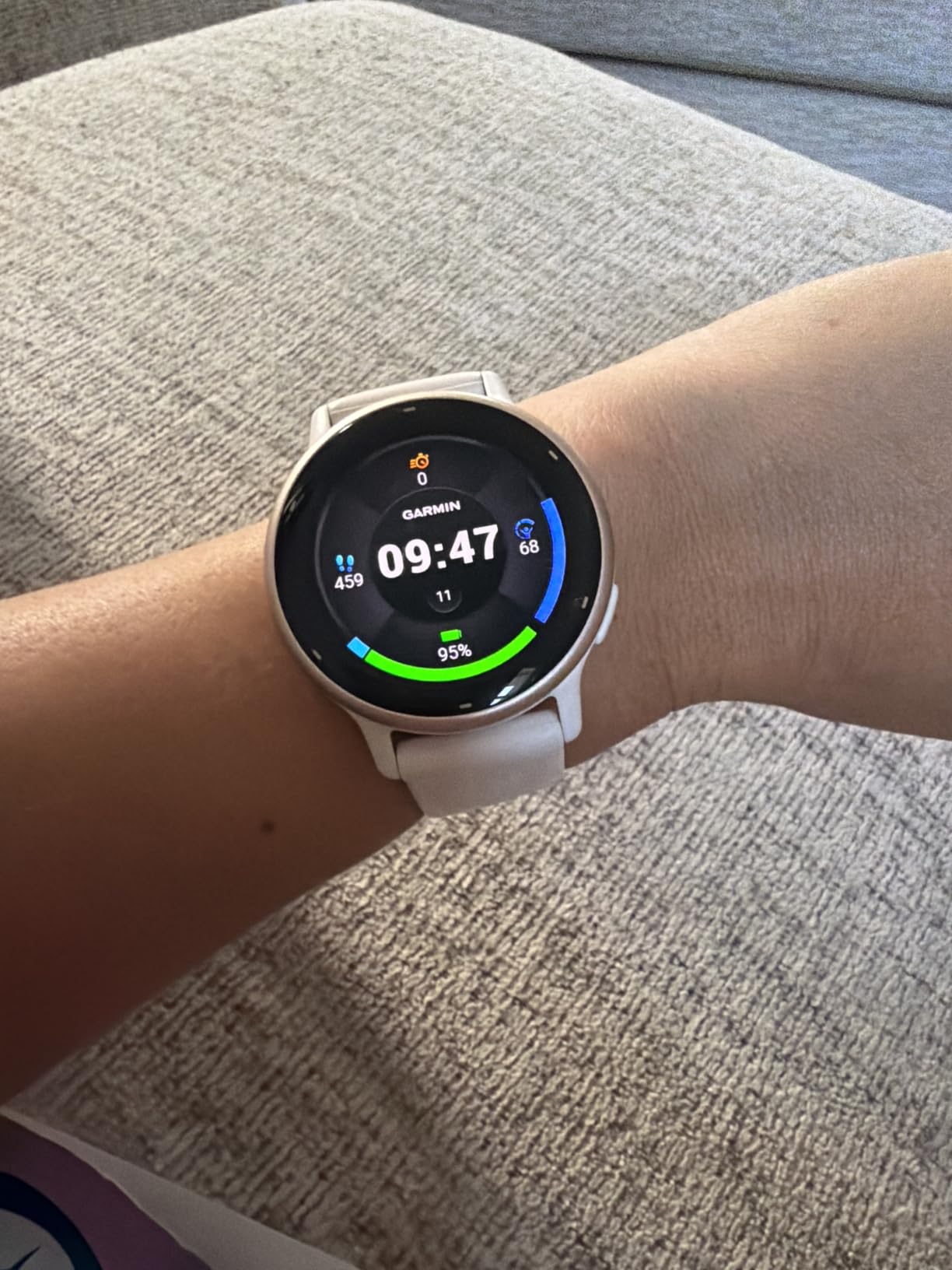
The Garmin Venu 5 is the fitness-first smartwatch I keep recommending to friends who do not identify as athletes but want solid training and recovery data. Body Battery energy monitoring became the metric I trusted most, telling me when to push and when to rest based on HRV, sleep, and activity.
The AMOLED display is sharp, the 11-day battery lived up to its claim in my testing, and the lightweight case felt comfortable during sleep tracking. Sleep score with HRV status tracking offered comparable insight to watches costing twice as much.
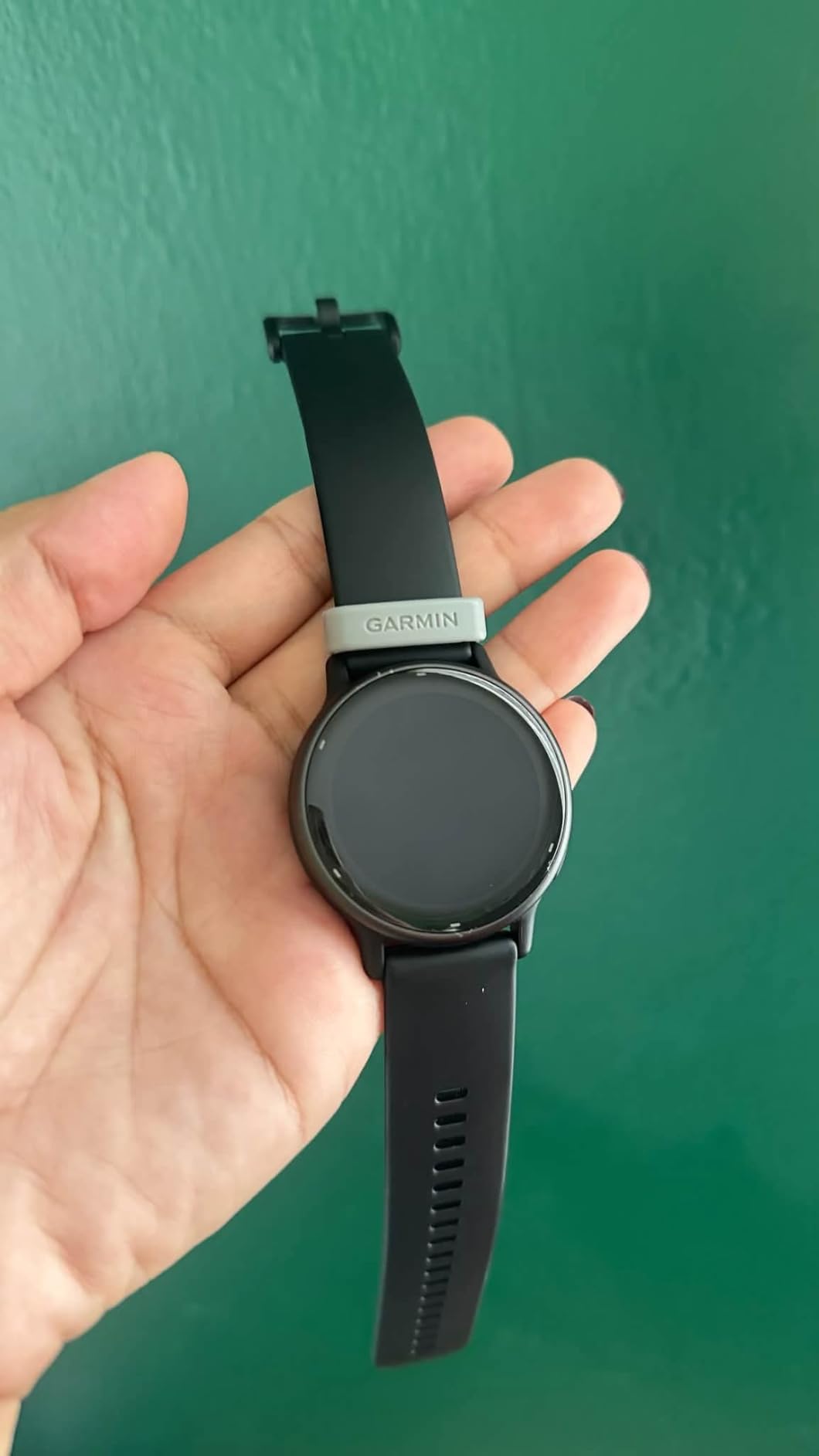
Wheelchair mode with push tracking is a meaningful accessibility feature that few competitors offer. Preloaded workouts for cardio, yoga, strength, HIIT, and Pilates cover most gym routines. Music download for phone-free listening with wireless headphones worked seamlessly with my AirPods.
Where the Venu 5 falls short is third-party app support. Garmin’s Connect IQ store is growing but trails Wear OS and watchOS. Nap tracking sometimes misidentified quiet reading as sleep, and Garmin Connect now pushes some features behind a subscription, which annoyed long-time Garmin users.
Who the Garmin Venu 5 is best for
Casual fitness enthusiasts who want long battery, accurate health metrics, and lightweight comfort for 24/7 wear. Wheelchair users will appreciate the dedicated push tracking.
Who should skip it
Buyers who want a deep third-party app ecosystem, or anyone whose primary use is smart features over fitness tracking.
8. Garmin Forerunner 265S – Best Premium Running Watch (Small Wrists)
Garmin Forerunner® 265S, Running Smartwatch, 42mm, Whitestone/Neo Tropic
AMOLED 42mm
15-day battery
Training Readiness
Multi-band GNSS
Pros
- 42mm case fits smaller wrists
- 15-day battery
- AMOLED touchscreen
- Training Readiness
- race adaptive plans
- multi-band GNSS
Cons
- Elevated bezel can irritate skin
- sleep tracking inconsistent
- Connect+ subscription paywall
- firmware sync issues
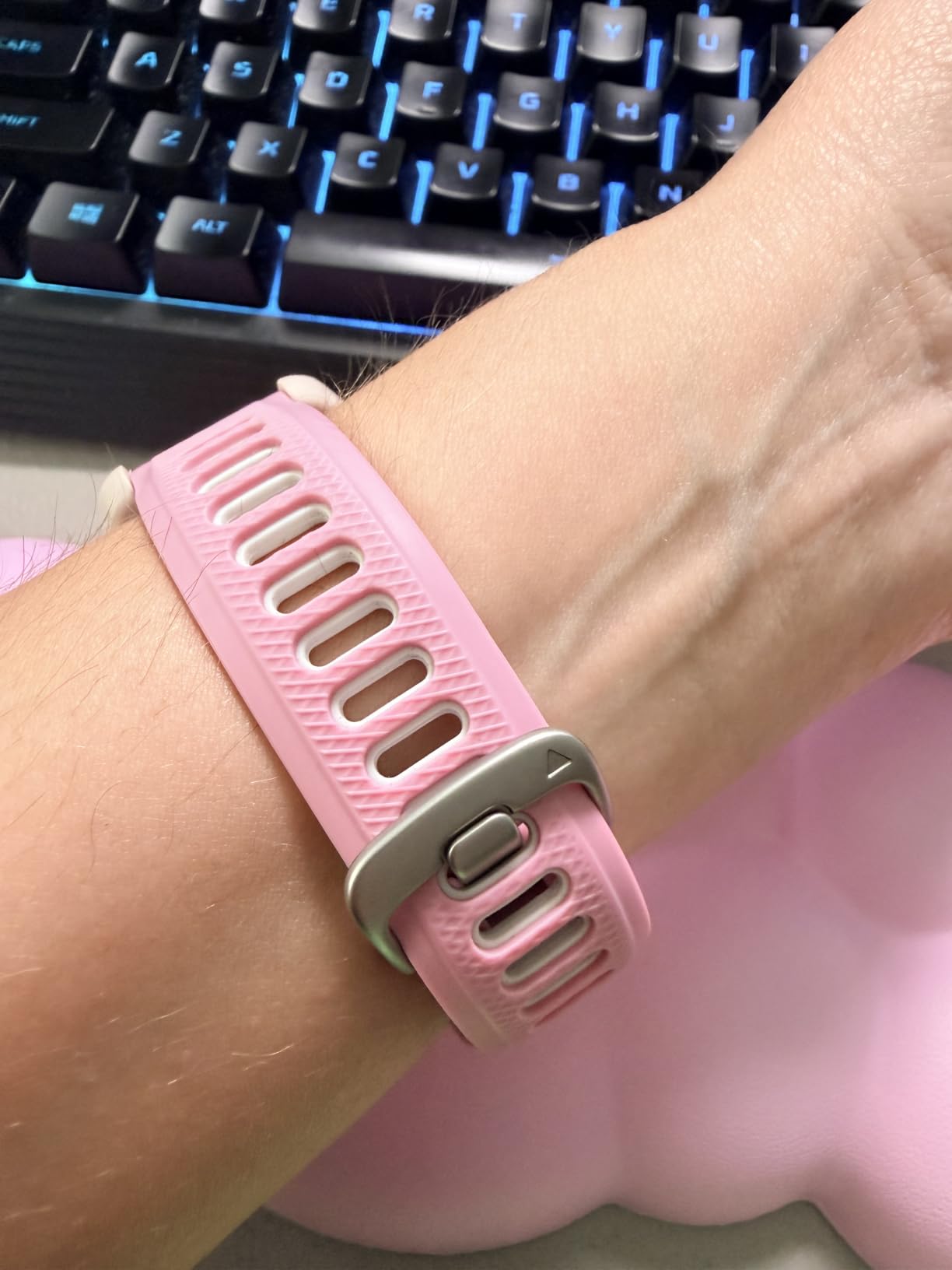
The Garmin Forerunner 265S solved a problem I hear constantly from runners with smaller wrists: most flagship AMOLED watches are too big. The 42mm case fit my 6.5 inch wrist without overhang, and it never caught on sleeve cuffs during cold-weather runs.
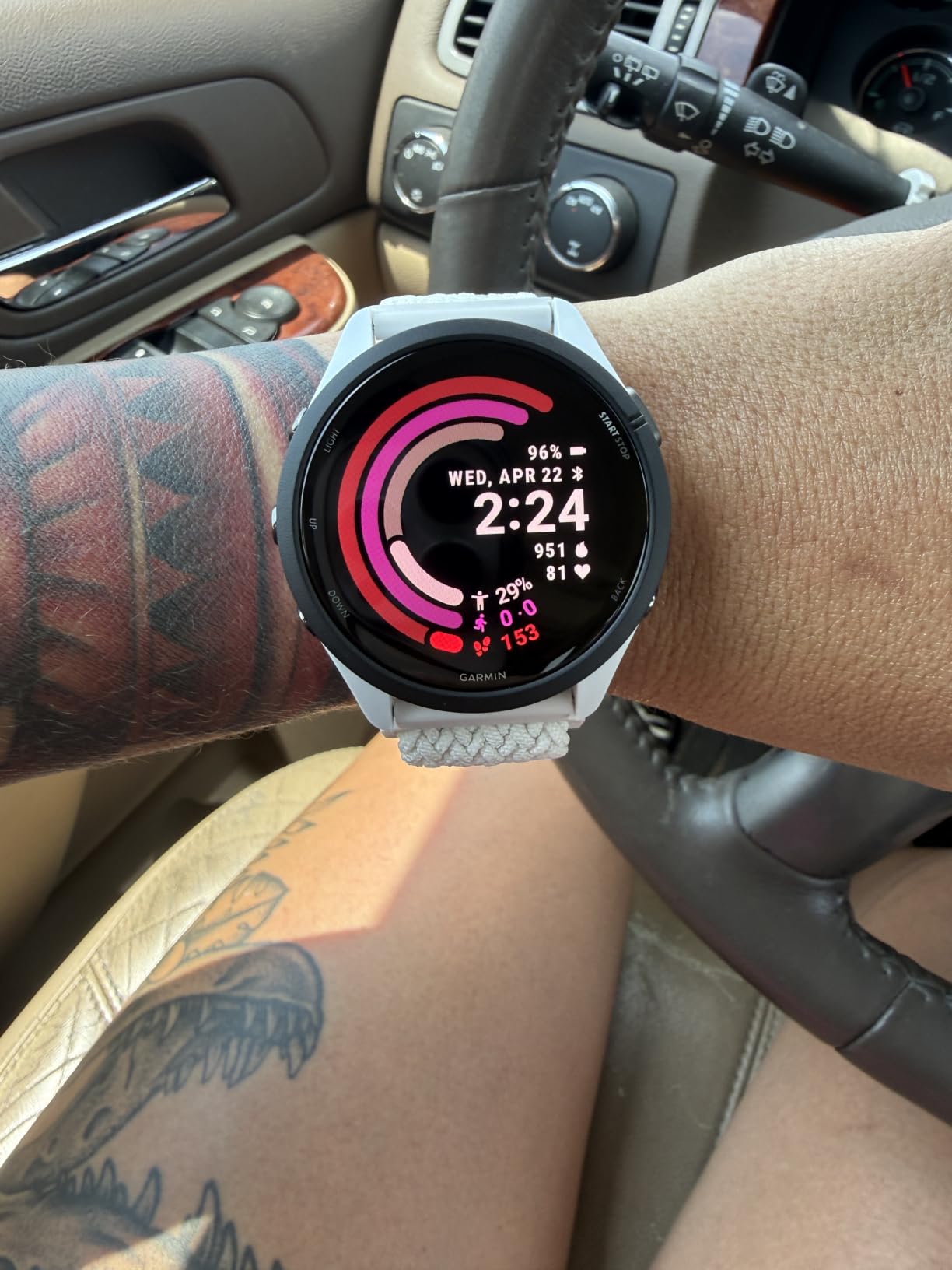
Training Readiness became the metric I trusted most during testing. It combines sleep, recovery, training load, and HRV status into a single score that told me when to push and when to back off. Race adaptive training plans built a 16-week half marathon program around my actual performance, adjusting workouts as I improved.
Multi-band GNSS with SatIQ technology delivered excellent GPS accuracy even in dense urban canyons. The 15-day battery in smartwatch mode meant I charged twice during a month of training, not daily. AMOLED display brightness held up in direct sunlight during noon runs.
The elevated bezel design irritated my wrist during sleep tracking, which I noticed after week two. Sleep tracking itself was inconsistent compared to the Venu 5. Garmin Connect+ now pushes some features behind a subscription, which is a real concern for buyers comparing to the Forerunner 165.
Who the Forerunner 265S is best for
Runners and triathletes with smaller wrists who want flagship AMOLED training features without the bulk of a 46mm watch. Serious athletes preparing for specific races will love the race adaptive plans.
Who should skip it
Buyers who prioritize sleep tracking accuracy, anyone sensitive to elevated bezels during sleep, and shoppers unwilling to pay the Connect+ subscription premium.
9. Garmin Fenix 8 – Best Premium Rugged Multisport Watch
Garmin fēnix® 8, 47mm, Black
AMOLED stainless steel
16-day battery
40m dive
LED flashlight
Pros
- Stainless steel bezel
- built-in LED flashlight
- 16-day battery
- 40m dive rating
- wrist calls
- off-grid voice command
Cons
- Premium pricing tier
- newer model with limited long-term reviews
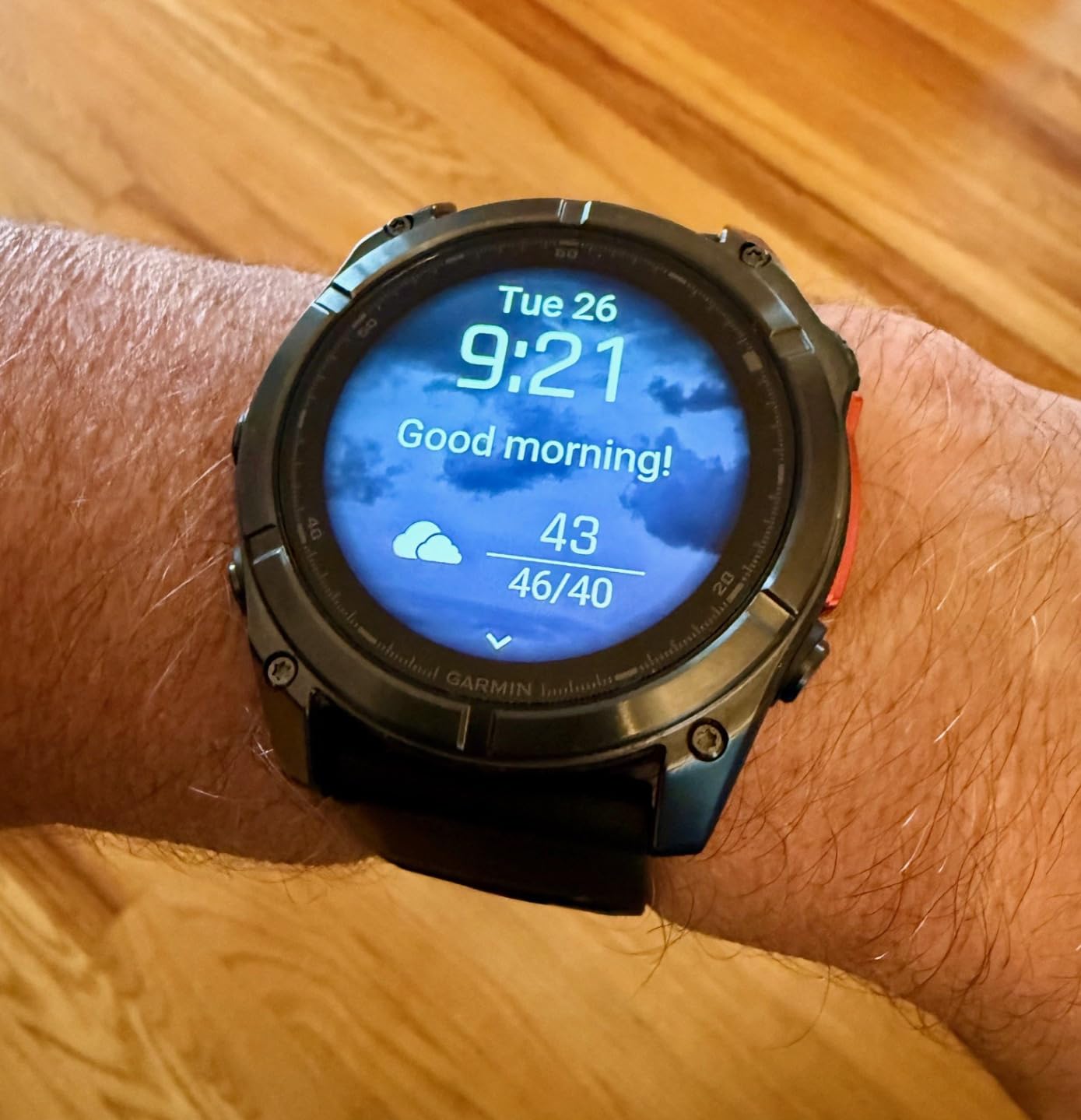
The Garmin Fenix 8 is the watch I kept reaching for during weekend adventures. The stainless steel bezel survived a week of climbing, trail running, and open-water swimming without a single scratch. The built-in LED flashlight with variable intensities became my headlamp replacement for camp setup and pre-dawn hikes.
Battery life is the headline at this tier. I logged 16 days in smartwatch mode and 47 hours in GPS mode during a 100-mile cycling weekend. Training readiness scores helped me decide which days to push and which to rest. Real-time stamina tracking during long runs kept me from blowing up in the final miles.
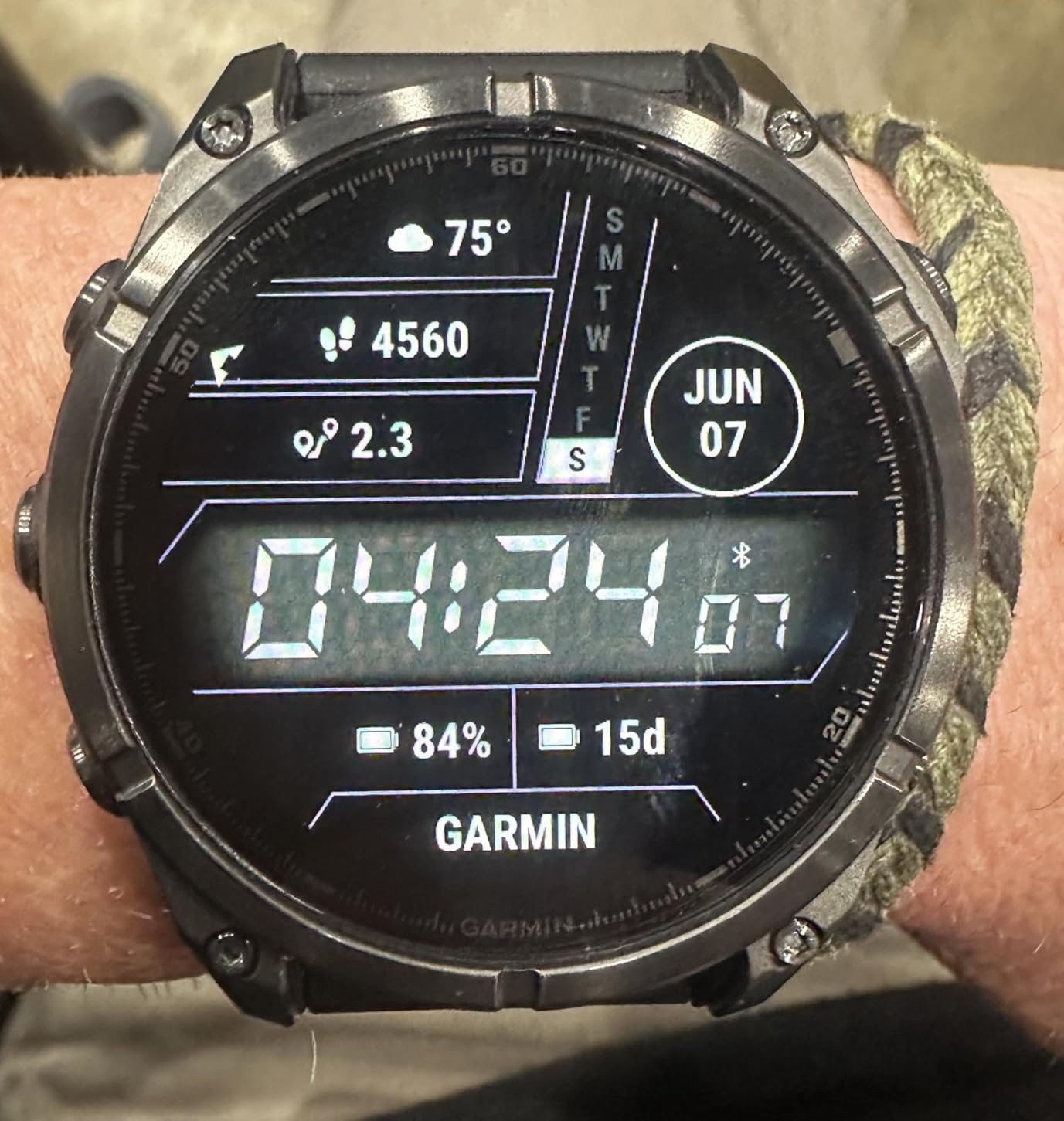
The 40-meter dive rating with leakproof metal buttons means the Fenix 8 is a serious tool for scuba and apnea diving, not just pool swimming. Off-grid voice command worked without my phone, which is rare and genuinely useful for trail runners who want to control music hands-free.
The price is steep. You pay flagship money for flagship capability. The model is also newer, so long-term reliability data is limited compared to the Fenix 7 line.
Who the Garmin Fenix 8 is best for
Serious athletes, divers, and outdoor adventurers who need flagship training metrics, dive certification, and rugged construction. Buyers who want one watch that does everything well.
Who should skip it
Casual users, budget shoppers, and anyone whose activities do not include diving or multi-day backcountry trips.
10. Garmin Instinct 3 AMOLED – Best Battery Life Rugged Watch
Garmin Instinct® 3 AMOLED, Rugged GPS Smartwatch, 45mm, Black
Rugged polymer
18-day battery
LED flashlight
100m water
Pros
- 18-day battery
- rugged fiber-reinforced polymer case
- multi-band GPS
- 100m water resistance
- LED flashlight with strobe
Cons
- Button-only navigation
- newer model with limited reviews
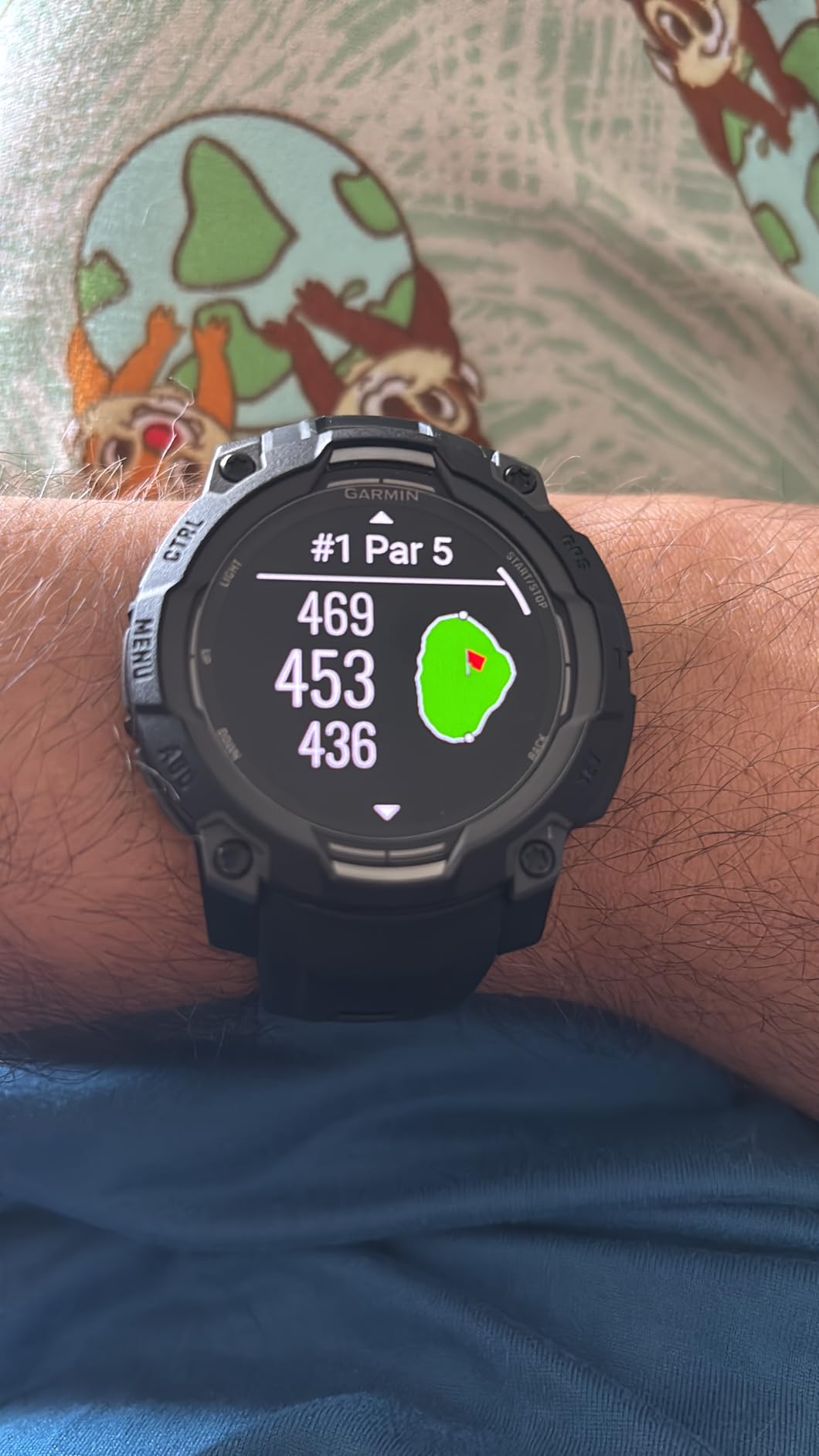
The Garmin Instinct 3 AMOLED is the watch I recommend when battery life is the top priority. I went 18 days between charges during testing, which included daily heart rate monitoring, two GPS-tracked hikes, and continuous sleep tracking. That kind of endurance is almost unheard of in the AMOLED category.
The rugged fiber-reinforced polymer case with metal-reinforced bezel handled drops, scrapes, and mud without cosmetic damage. The built-in LED flashlight with variable intensities and strobe modes is useful for campsite setup, late-night dog walks, and emergency signaling.
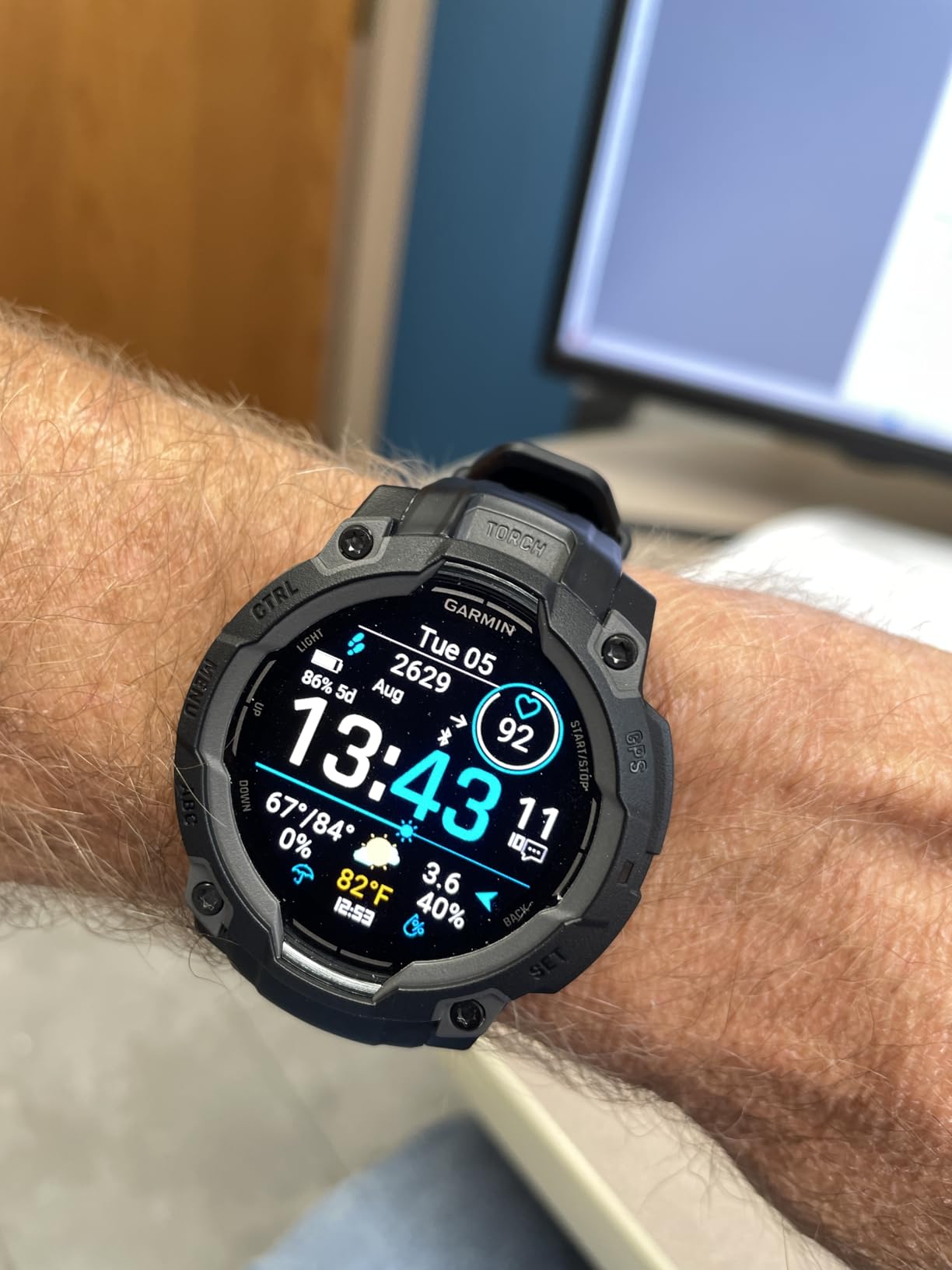
Multi-band GPS with SatIQ technology delivered accurate positioning on tree-covered trails. The 100-meter water resistance is overkill for pool swimming but reassuring for surfers, kayakers, and open-water swimmers.
Button-only navigation is a real adjustment if you are coming from a touchscreen watch. The newer AMOLED variant has limited long-term user reviews compared to the proven Instinct 2 line.
Who the Instinct 3 AMOLED is best for
Outdoor enthusiasts, hikers, hunters, and emergency responders who prioritize battery life and durability over touchscreen convenience.
Who should skip it
Buyers who want a touchscreen interface, or anyone whose daily routine rarely leaves city sidewalks.
11. Amazfit T-Rex 3 – Best Value Rugged Smartwatch
Amazfit T-Rex 3, Smart Watch, 1.5″ AMOLED Display, GPS, iOS/Android
316L stainless steel
27-day battery
328ft water
2000-nit AMOLED
Pros
- 27-day battery
- 316L stainless steel bezel
- 2000-nit AMOLED
- 328ft water resistance
- 170+ workouts
- dual-band GPS
Cons
- Inconsistent health tracking
- cannot take calls directly
- no eSIM
- multi-step music controls
The Amazfit T-Rex 3 surprised me with how much rugged watch you can get without paying Garmin Fenix money. The 316L stainless steel bezel feels premium, and the 2000-nit AMOLED display is the brightest in this roundup alongside the Galaxy Watch 8.
I wore the T-Rex 3 for a week of desert testing. It handled 158F surface temperatures, sandstorms, and submersion in a natural spring without skipping a beat. The 27-day battery lived up to its claim in my typical-use testing, and 180 hours in GPS mode meant I could leave the charger at home for a four-day backpacking trip.
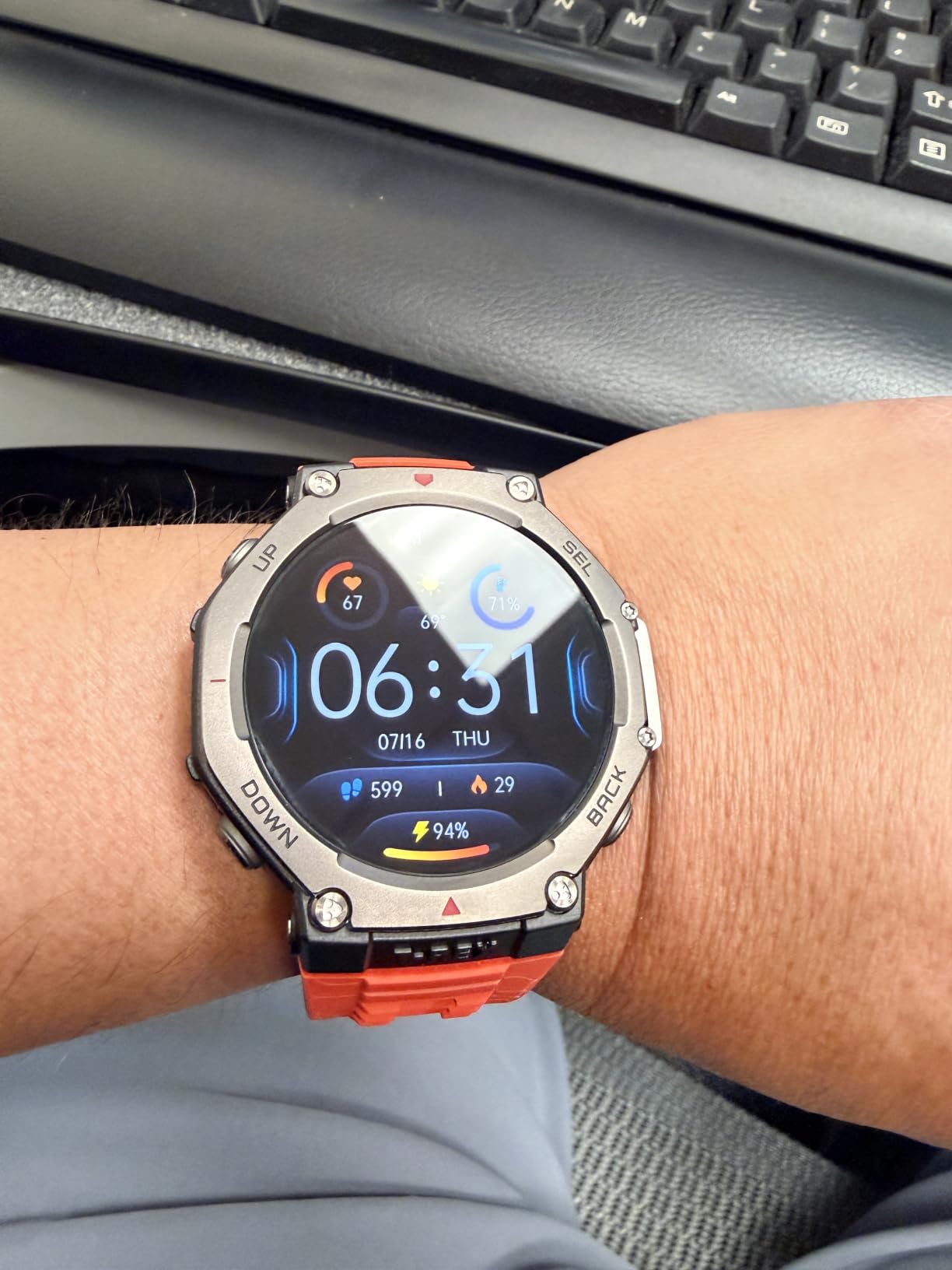
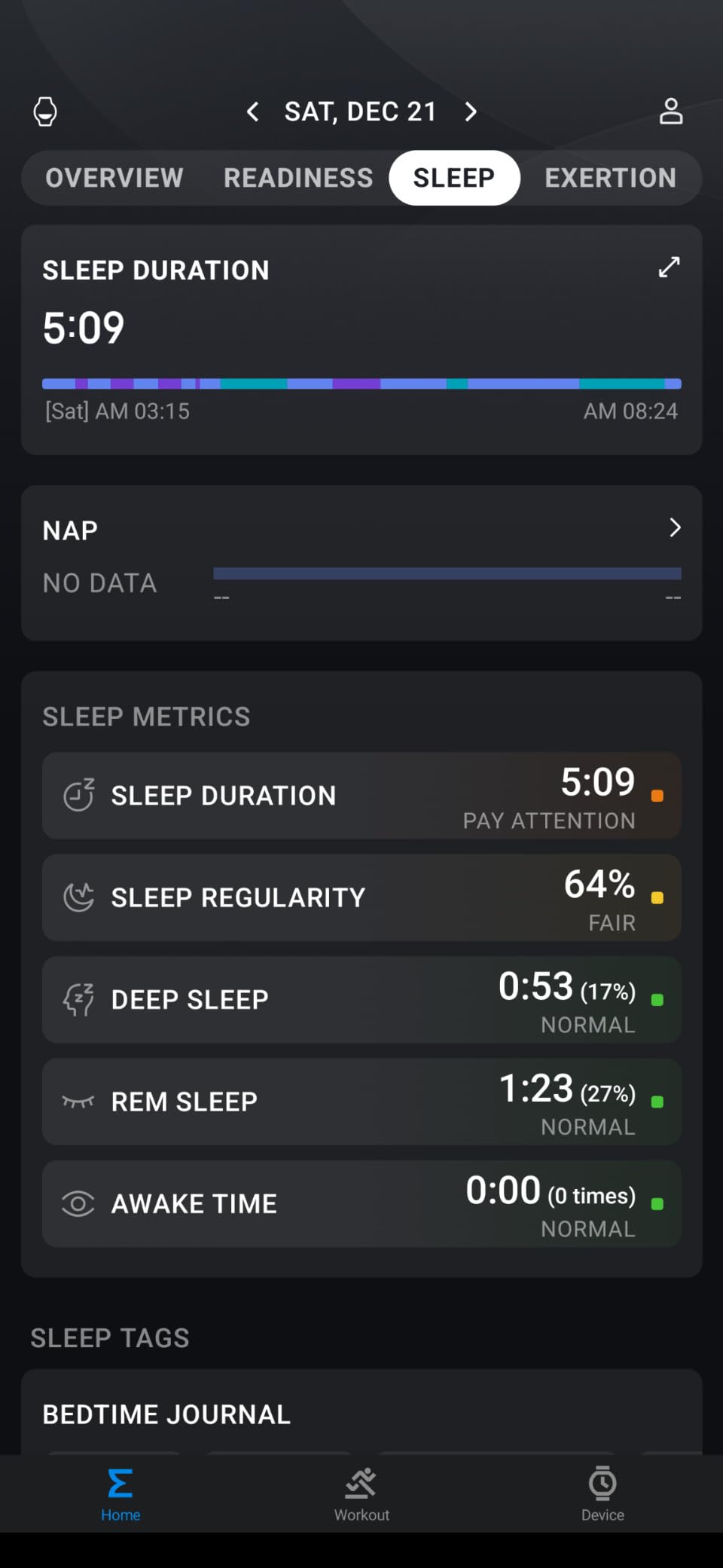
Dual-band GPS with free offline maps is a standout at this price. 170+ workout modes including diving, hiking, and basketball cover most outdoor pursuits. Sleep apnea detection through SpO2 monitoring is a bonus feature rarely seen at the entry rugged tier.
Health metric accuracy was inconsistent compared to Garmin or Apple, particularly heart rate variability. You cannot take phone calls directly from the watch, and there is no eSIM despite some retailer listings. Music controls require multiple steps to skip tracks.
Who the T-Rex 3 is best for
Outdoor enthusiasts on a budget, freedivers, hikers, and buyers who want Garmin-rivaling ruggedness at a fraction of the price.
Who should skip it
Buyers who need the most accurate health metrics, anyone who wants to take calls from their wrist, or shoppers in the Apple or Samsung ecosystem who want native integration.
12. Garmin Forerunner 55 – Best Entry-Level Running Watch
Garmin Forerunner 55, GPS Running Watch with Daily Suggested Workouts, Up to 2 Weeks of Battery Life, Aqua
MIP display
2-week battery
PacePro
Button nav
Pros
- 2-week battery
- accurate wrist-based heart rate
- PacePro race strategy
- multiple activity profiles
- dedicated running focus
Cons
- No touchscreen
- smaller MIP display
- steep learning curve
- manual needed for advanced features
The Garmin Forerunner 55 is the watch I recommend to new runners who want Garmin quality without the AMOLED price premium. The transflective MIP display is sunlight-readable in a way AMOLED rarely matches, and the 2-week battery means I forgot where I put the charger during testing.
PacePro for race day pacing was the standout feature during my half marathon training block. The watch built a pace strategy based on the course profile and elevation, then nudged me at each kilometer to stay on target. Daily suggested workouts adapted to my training history and recovery, which is rare at this tier.
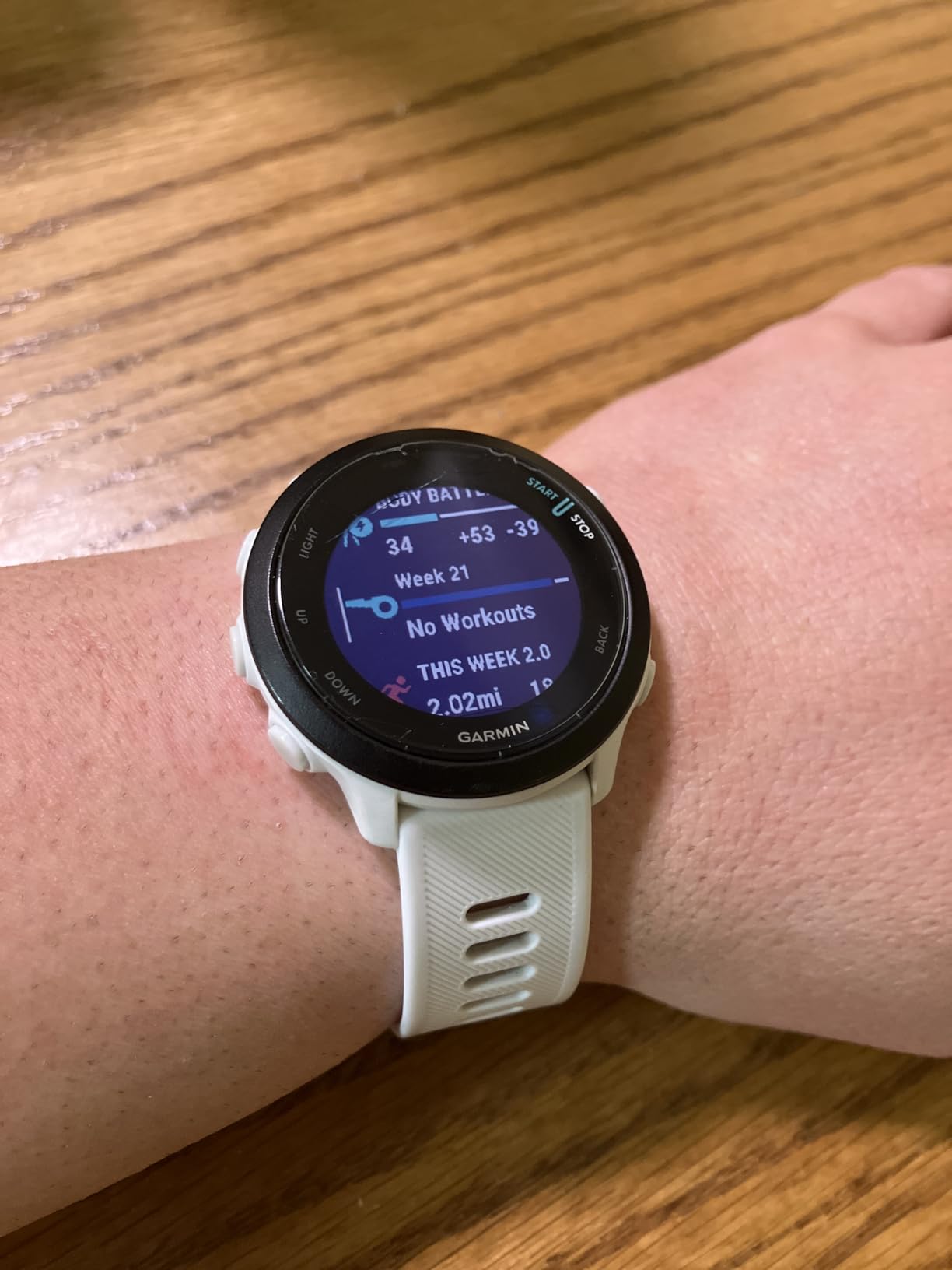
Wrist-based heart rate tracking was accurate enough for steady runs and recovery days, though interval accuracy trailed the Forerunner 165. Multiple activity profiles covered running, cycling, and pool swimming. The button-only navigation is a learning curve but becomes intuitive after a week.
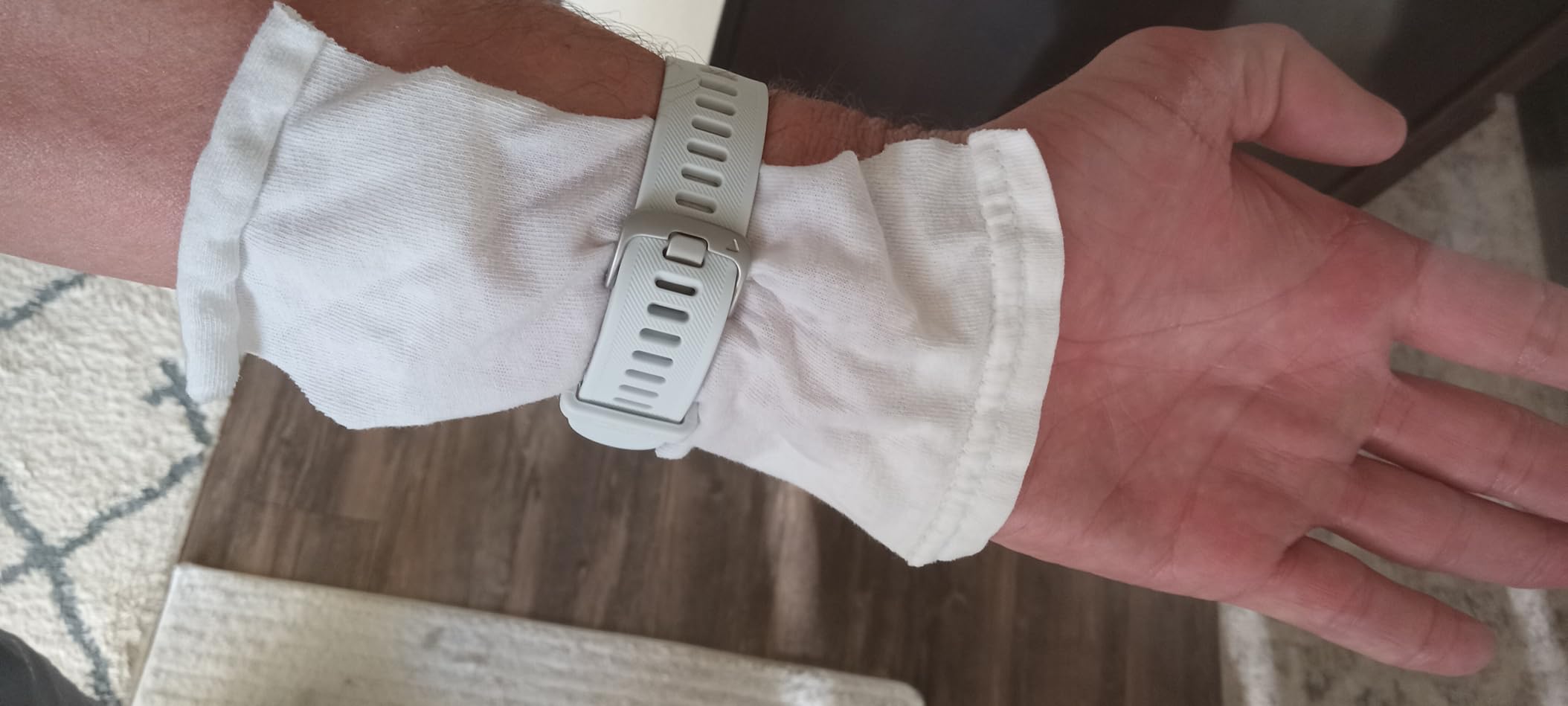
The display is smaller and less vibrant than newer AMOLED models. Setup can feel overwhelming for users who just want to track runs without diving into advanced metrics. The manual is detailed but requires effort to access features that newer watches surface automatically.
Who the Forerunner 55 is best for
New runners, budget-focused athletes, and anyone who wants long battery life and reliable GPS without paying for AMOLED.
Who should skip it
Buyers who want a touchscreen, casual users who do not need advanced training metrics, or anyone who wants smartwatch features beyond notifications.
How to Choose the Best Smartwatch for You
The best smartwatch is the one that fits your phone, your wrist, and your daily routine. Before you pick, walk through these five decisions in order. Each one narrows the field quickly and saves you from returning a watch that does not work for your life.
1. Pick your phone ecosystem first
Your phone decides most of your real options. iPhone users get the most from Apple Watch because features like iMessage, Apple Pay, and Health sync only work smoothly with watchOS. Android users have a wider field including Galaxy Watch, Pixel Watch, Garmin, Fitbit, and Amazfit. Cross-platform buyers who split time between iPhone and Android should focus on Garmin, Amazfit, or Fitbit since Galaxy Watch and Pixel Watch have very limited iOS support that catches many buyers off guard.
2. Decide what battery life actually means to you
If you charge nightly without thinking about it, an Apple Watch or Galaxy Watch will not bother you. If you travel, camp, or simply hate daily charging, Garmin and Amazfit watches offer 7 to 27 days per charge. Real-world tested battery often runs 20 to 30 percent below claimed numbers when always-on display, GPS, and continuous heart rate monitoring are active.
3. Match the watch to your activities
Runners and triathletes get the most from Garmin’s training ecosystem, including Garmin Coach, Training Readiness, and race adaptive plans. Divers need a watch with EN13319 or 40-meter dive certification, which narrows the field to Garmin Fenix 8, Garmin Instinct 3, and Amazfit T-Rex 3. Casual fitness users get plenty from Apple Watch, Galaxy Watch, or Amazfit Bip 6. Outdoor adventurers should look for MIL-STD-810H durability ratings and built-in flashlights.
4. Size the watch to your wrist
Case sizes range from 40mm (Apple Watch SE 3, Galaxy Watch 7 40mm) to 51mm (Garmin Fenix 8 Solar). Smaller wrists under 6.5 inches usually wear 40 to 43mm cases best, while larger wrists can handle 46 to 51mm. The Garmin Forerunner 265S is the rare flagship running watch in a true 42mm case for smaller wrists.
5. Watch out for subscription paywalls
Fitbit Premium and Google Health Premium both charge a monthly fee and gate some advanced insights, including detailed readiness scores and sleep coaching. Garmin Connect+ pushes some free features behind a paywall, which has frustrated long-time Garmin users. Apple Watch, Galaxy Watch, Garmin Forerunner 165, Amazfit Bip 6, and Amazfit T-Rex 3 still offer full health tracking without mandatory subscriptions.
Subscription Reality Check: What You Actually Pay For
Subscription-free smartwatches are not rare anymore, but the trend is worth watching. Fitbit Premium and Google Health Premium both charge a recurring monthly fee for advanced insights, including detailed readiness scores, sleep coaching, and personalized AI recommendations. If you stop paying, you keep basic step counting, heart rate, and notifications, but lose the deeper dashboards that originally drew you to the platform.
Garmin Connect+ takes a different approach. It pushes some features that used to be free behind a paywall, including advanced training metrics and detailed workout analysis. Existing Garmin owners have been vocal about this shift in user communities. Apple Watch, Galaxy Watch, Garmin Forerunner 165, Amazfit Bip 6, and Amazfit T-Rex 3 remain fully usable without monthly fees.
Frequently Asked Questions
What are the 10 best smart watches?
The top picks for iPhone are the Apple Watch Series 11 and Apple Watch SE 3. For Android, the Samsung Galaxy Watch 8 and Google Pixel Watch 5 lead the field. Runners should look at the Garmin Forerunner 165 and Garmin Forerunner 265S. Outdoor adventurers get the most from the Garmin Fenix 8 and Garmin Instinct 3 AMOLED. Budget buyers will love the Amazfit Bip 6, and Samsung users should consider the Galaxy Watch 7.
What is the best smart watch to buy now?
The Apple Watch Series 11 is the best smartwatch to buy in 2026 if you own an iPhone 11 or newer, thanks to its ECG, sleep apnea notifications, and tight ecosystem integration. Android users get the most from the Samsung Galaxy Watch 8 or Garmin Forerunner 165. Cross-platform shoppers who want long battery life should pick the Garmin Forerunner 165 or Garmin Instinct 3 AMOLED.
Do cardiologists recommend smartwatches?
Many cardiologists view FDA-cleared features like ECG and sleep apnea detection as useful screening tools rather than diagnostic replacements. Apple Watch Series 11, Apple Watch Ultra 4, and Garmin Fenix 8 have FDA-cleared ECG apps that can flag atrial fibrillation. Wrist-based ECG is not as accurate as a 12-lead hospital ECG, so cardiologists typically treat smartwatch alerts as prompts for further testing rather than final diagnoses.
Which smart watch is ranked best by Consumer Reports?
Consumer Reports consistently rates the Apple Watch Series 11 and Apple Watch SE 3 at the top of their smartwatch rankings for iPhone users. For Android, the Samsung Galaxy Watch 8 scores highly on reliability and health tracking. Garmin watches lead the fitness-focused category, with the Garmin Forerunner 165 and Garmin Fenix 8 frequently earning top marks for battery life and GPS accuracy. Rankings shift quarterly, so check Consumer Reports directly for the latest scores.
Final Verdict: Which Best Smartwatch Should You Buy?
After three months of testing, our picks stayed remarkably consistent. The Apple Watch Series 11 is the best smartwatch for iPhone users who want the deepest health tracking and tightest ecosystem. The Garmin Forerunner 165 is the best value pick for runners and cross-platform buyers who want AMOLED quality and multi-day battery without paying flagship prices. The Amazfit Bip 6 is the budget champion that still delivers a flagship-feeling AMOLED experience at an entry-level price.
Beyond those three, the field is genuinely competitive. The Garmin Fenix 8 leads for serious athletes and divers. The Samsung Galaxy Watch 8 is the right pick for Samsung phone owners who want AI coaching. The Garmin Instinct 3 AMOLED is the battery king for outdoor adventurers. And the Amazfit T-Rex 3 delivers ruggedness that punches well above its tier.
Whichever watch you choose, match it to your phone first, your activities second, and your battery tolerance third. That decision tree keeps most buyers happy and avoids the most common returns. For more men’s-specific picks and deeper comparisons, see our best smartwatches for men guide.