
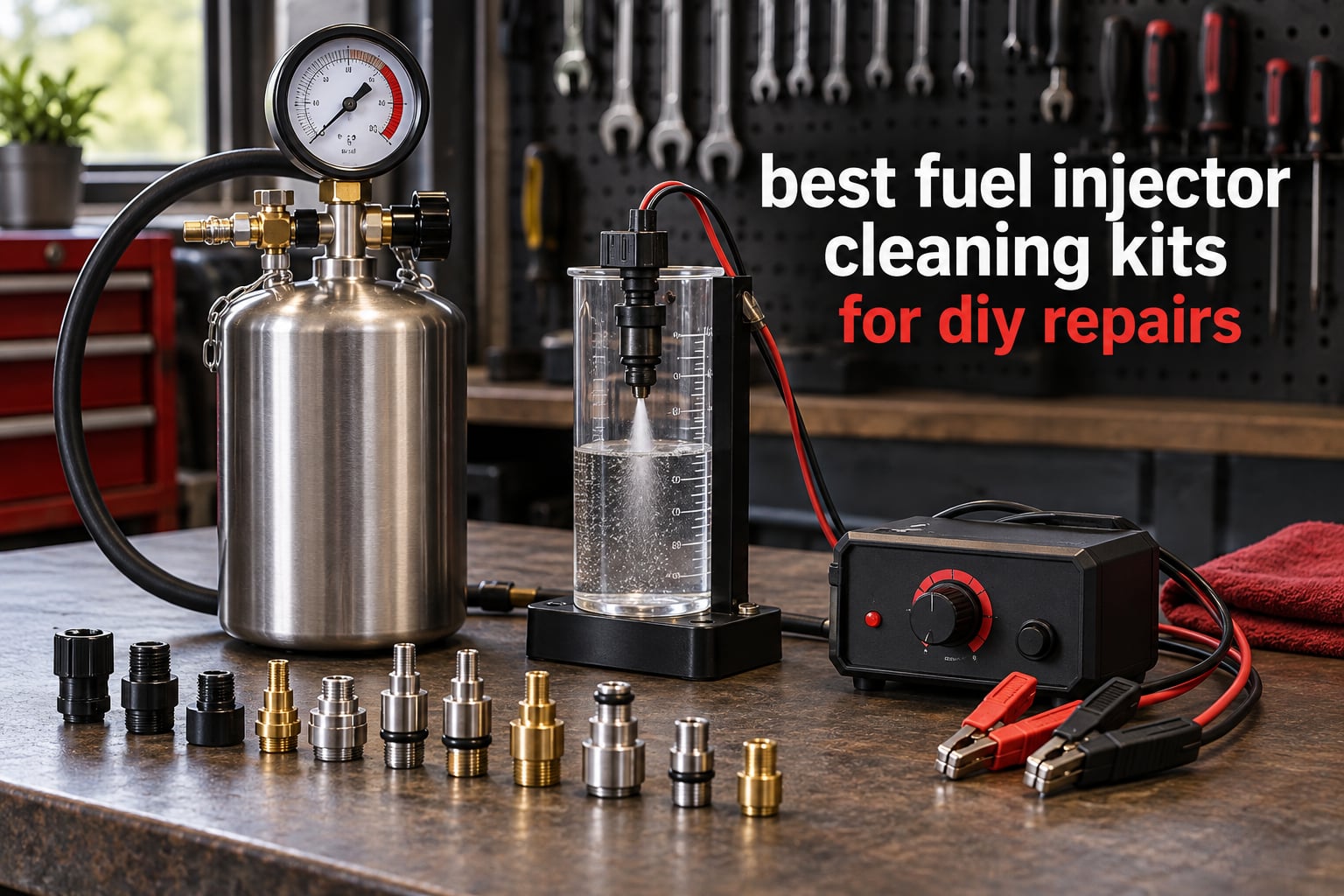
The best fuel injector cleaning kits for DIY repairs fall into three groups, and the right pick depends on how deep the problem goes. For most weekend mechanics, the allsun EM276SET is the best overall option because it pulses and tests injectors on a 12V battery with eight modes and more than 1,800 reviews behind it. The THIKPO TK-F4 is the best value pick, adding dual-channel testing and eight adapter sizes. If you want measured flow numbers rather than a yes-or-no answer, the FOXWELL JT200 is the only true diagnostic bench in this group.
That is the short answer. The longer answer is that a fuel injector cleaning kit is a pressurised canister, a set of size-matched adapters, and either a solvent or your own fuel. The canister pushes fluid backwards through the nozzle while the injector is pulsed at a set width, dissolving carbon off the tip and the intake valve without pulling the injector. Most operate non-dismantle, meaning the injectors stay bolted into the fuel rail.
Before you spend anything, confirm the injector is actually the problem. Rough idle that smooths with the throttle held slightly open, a stumble at low RPM, cold-start hesitation, rising long-term fuel trims, and a misfire code that returns after a cleared adaptation are the usual signs. If your spark plugs are fouled, your throttle body is dirty, or your MAF sensor is reporting nonsense, a cleaning kit will not fix any of it. Check the plugs and the throttle body first.
We compared ten of the most-reviewed injector cleaning kits available now, grouped them by tier, and pulled the honest drawbacks out of customer reviews for every one. The category splits cleanly: pulse testers and adapter kits for bench work, and pressurised canister machines for flushing a whole fuel system on the car. Updated for 2026, with ratings and review counts as listed at the time of writing.
Table of Contents
Top 3 Best Fuel Injector Cleaning Kits for DIY Repairs (October 2026)

allsun EM276SET Tester and Adapter Kit
- 8 pulse modes with 4 output types
- LED mode display
- Pair of 4.33 x 1.06 inch adapters
- 12V battery powered

THIKPO TK-F4 Universal Tester and Cleaner
- Tests 2 injectors at once
- 8 adapter sizes plus BMW and V.W/Audi
- 12V/5V drive selection
- 3-year warranty

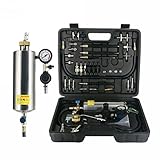
AUTOOL C100 150PSI Non-dismantle Machine
- 1000ml stainless steel canister
- Pressure adjustable to 150 PSI
- Brass fittings and rubber tubing
- Storage case included
All 10 Fuel Injector Cleaning Kits at a Glance
Everything below fits on one page. The pulse testers exercise an injector on the bench so you can see whether it sprays at all and whether it holds pressure. The canister machines flush the fuel rail, throttle body, intake manifold and catalytic converter in place under pressure. Ratings come from the product listings, and review counts matter more here than a five-star average on eight reviews.
| Product | Specifications | Action |
|---|---|---|
| allsun EM276SET Fuel Injector Tester and Adapter Kit |
|
Check Latest Price |
| THIKPO TK-F4 Universal Tester and Cleaner Kit |
|
Check Latest Price |
 KAISAL QC80 1000ML 150PSI Cleaning Kit KAISAL QC80 1000ML 150PSI Cleaning Kit |
|
Check Latest Price |
 FOXWELL JT200 Tester Cleaner FOXWELL JT200 Tester Cleaner |
|
Check Latest Price |
| AUTOOL C100 150PSI Non-dismantle Kit |
|
Check Latest Price |
 PACLVIO 4-Piece Adapter and Test Lead Kit PACLVIO 4-Piece Adapter and Test Lead Kit |
|
Check Latest Price |
 AUTOOL CT60 12V and 70V Tester Cleaner AUTOOL CT60 12V and 70V Tester Cleaner |
|
Check Latest Price |
 MR CARTOOL V55 5V/12V Tester Cleaner Kit MR CARTOOL V55 5V/12V Tester Cleaner Kit |
|
Check Latest Price |
 AUTOOL C100 1000ML 150PSI Tool Set AUTOOL C100 1000ML 150PSI Tool Set |
|
Check Latest Price |
 THIKPO TK-F6 Tester and Cleaner Kit THIKPO TK-F6 Tester and Cleaner Kit |
|
Check Latest Price |
1. allsun EM276SET Tester and Adapter Kit – Best Overall Pulse Tester
EM276SET Fuel Injector Tester & Adapter DIY Cleaning Tool Kit Set (Fuel Injector Tester + Adapter) Fuel System Cleaner Gasoline Engines
8 pulse modes, LED display, two 4.33 x 1.06 inch adapters, 12V battery powered, 165 g
Pros
- Highest review volume in the group at 1871 ratings
- Diagnose stuck or leaking injectors without removing them
- Long silicone cables give good bench reach
- Carrying bag and manual included
Cons
- Supplied spade connectors do not fit many Bosch-style injectors
- Effectively a two-person job while spraying
- Spray-can adapter hole is oversized and wastes solvent
The EM276SET is the kit most people end up with, and that is not an accident. It carries more ratings than anything else in this roundup by a wide margin, and the 5-star share sits at 67% with only 5% one-star. The core tool is a pulsing injector driver with eight modes built from four pulse signal types crossed with short, medium, long and continuous output, all shown on a large LED display.
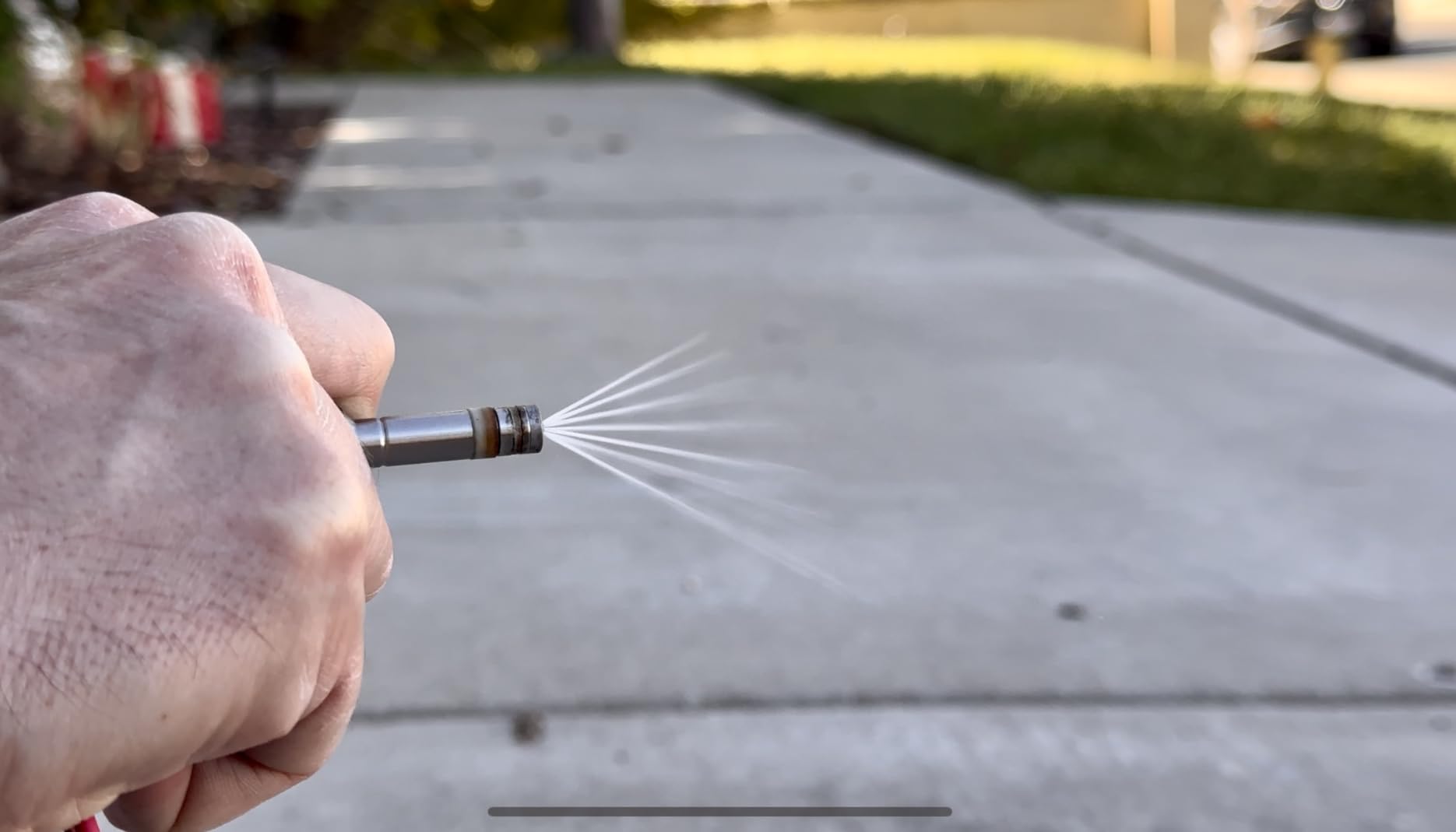
You clip the leads to a 12V vehicle battery, attach the test lead to an injector, and hold the pulse button. A healthy injector snaps and sprays. A gummy one dribbles, a leaking one streams, and a dead one does nothing at all. That diagnostic alone has saved plenty of people from ordering four new injectors when one was weak.
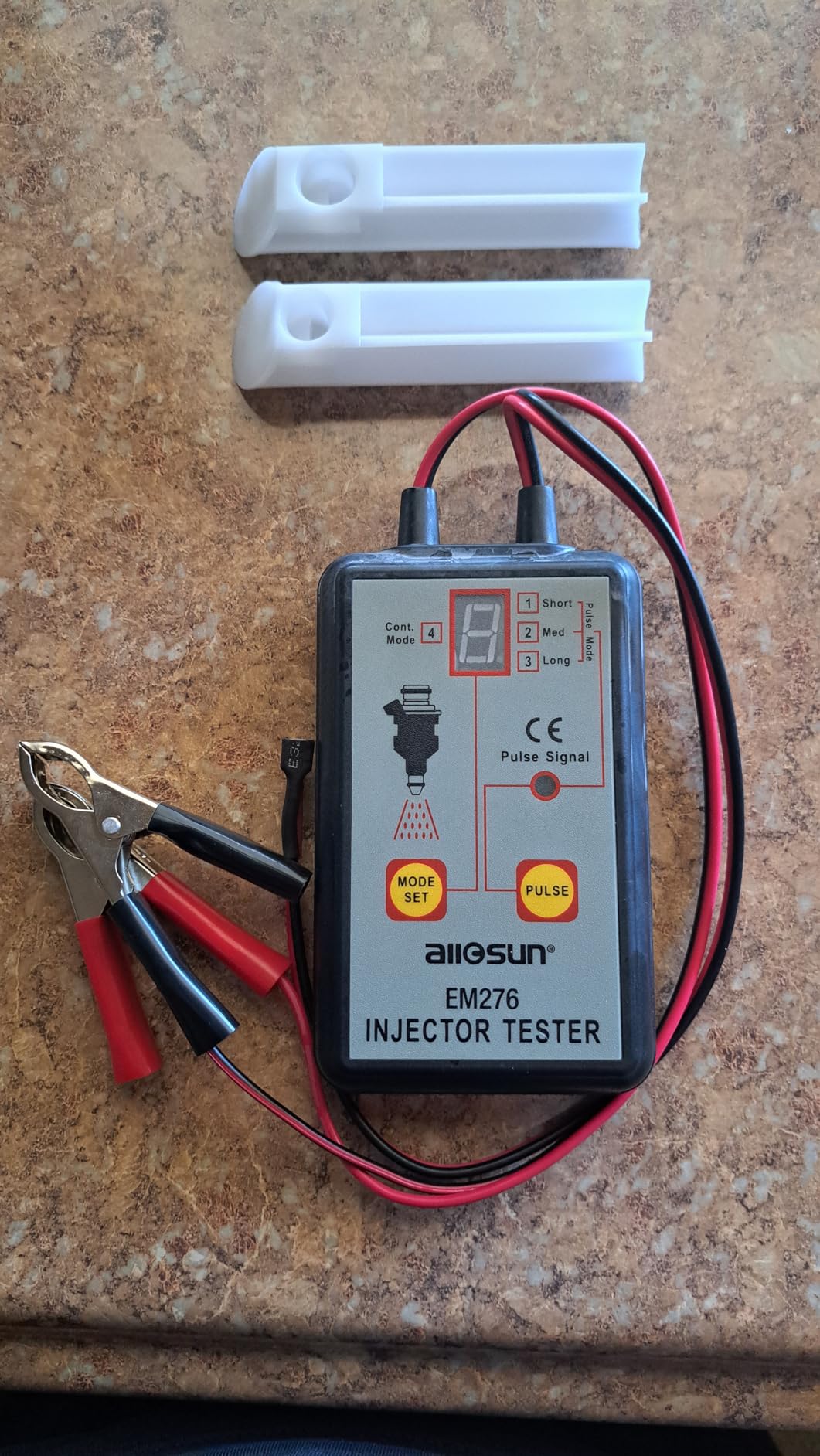
Reviewers like the ergonomics of the long silicone power and pulse cables, and the included adapters, storage bag and English manual make it a complete set rather than a bare device. Several owners pair it with a can of carburetor cleaner to flush injectors while the unit pulses them, which turns a tester into a cleaner.
The honest drawback is fluid handling, and it is shared across this whole category. The supplied blade connectors are often too large for Bosch-style injectors, so many owners swap in small alligator clips. The adapter opening is larger than most injector bodies, so you waste a surprising amount of solvent, and the injector can pop free and spray the bench if you are not holding it hard.
One reviewer reported solvent contact melting the plastic base unit. Keep the electronics away from the spray, use a separate catch container, and this becomes a tool you will keep for years.
Is the EM276SET worth buying over a cheaper adapter kit
Yes, if you want to know whether an injector works before you clean it. The pure adapter kits do not pulse anything, so they can only flush. The EM276SET gives you a pre-clean baseline and a post-clean comparison, which is the only way to know if a job worked. At 1871 ratings, it is also the least risky purchase in the category statistically.
Who should skip the EM276SET
Skip it if your engine is direct injection and you need to reach carbon behind the intake valves, because a bench pulse tester only treats the injector tip. It is also the wrong tool for diesel, and the manual says so. If you need flow numbers rather than a yes-or-no spray, look at the FOXWELL JT200 instead.
2. THIKPO TK-F4 Universal Tester and Cleaner Kit – Best Value for Two-Injector Work
THIKPO Universal Fuel Injector Tester and Cleaner Tool Kit, DIY Cleaning Tool Kit, 8 Pulse Modes, 4 Wire Dual Channel for 2 Fuel Injectors, 8 Size Cleaning Adapters, 12V/5V Drive
8 pulse modes at 12V/5V, dual channel, 8-size adapter set, 3-year warranty, 14 ounces
Pros
- Dual terminals test two injectors simultaneously
- 8 adapter sizes plus BMW N-series and V.W/Audi specialty adapters
- Reverse polarity and short circuit protection
- 3-year warranty
Cons
- Can adapters do not seal against common 3.25mm-stem cleaner cans
- Plastic control box smears if solvent is spilled on it
- It pulses injectors but does not measure performance
The TK-F4 is the one to pick if you are working on an engine with more than four cylinders and want to compare injectors against each other rather than against a guess. Two pairs of output terminals let you pulse two injectors at the same time, which makes a healthy-versus-sick comparison immediate instead of fiddly.
Eight pulse modes come from four signal output types crossed with two voltage levels, 12V and 5V, and an LCD shows which mode is active. The voltage choice matters more than most sellers admit, because 12V and 5V units respond very differently and a wrong setting can make a healthy injector look lazy.
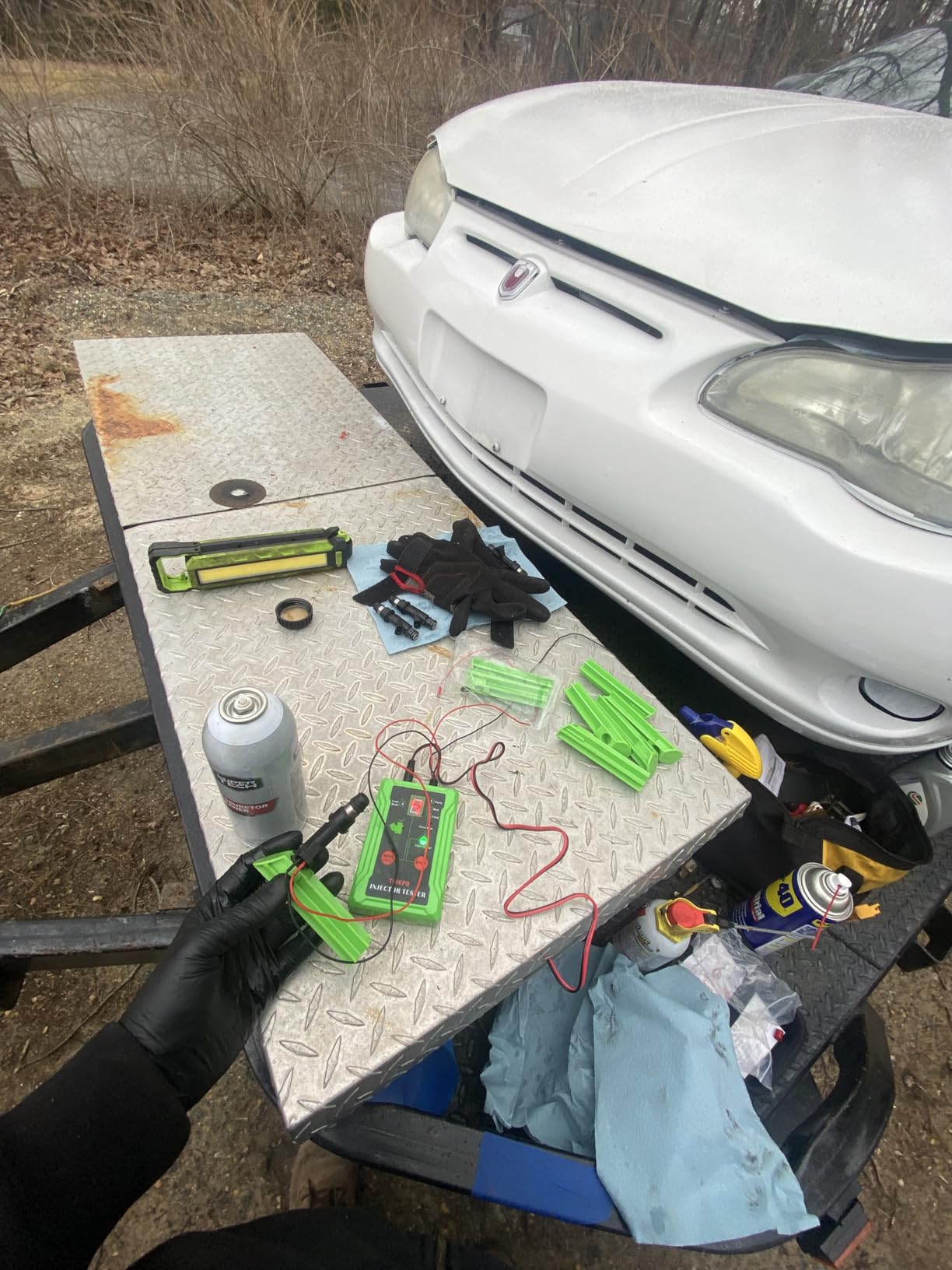
Adapter coverage is the strongest argument here. You get eight universal sizes plus two specialty pieces, one for V.W and Audi style bodies and one threaded for BMW N-series engines. That pairing of general and specific is unusual at this level. The 40-inch power cord and 20-inch leads also give you far more working room than most kits of this size.
What you give up is precision. This is an exerciser, not a diagnostic. It will tell you an injector is stuck or not stuck, and it will let you watch a spray pattern, but it will not tell you the injector delivers 1.3 cc per second when it should deliver 1.5. For that you need graduated cylinders.
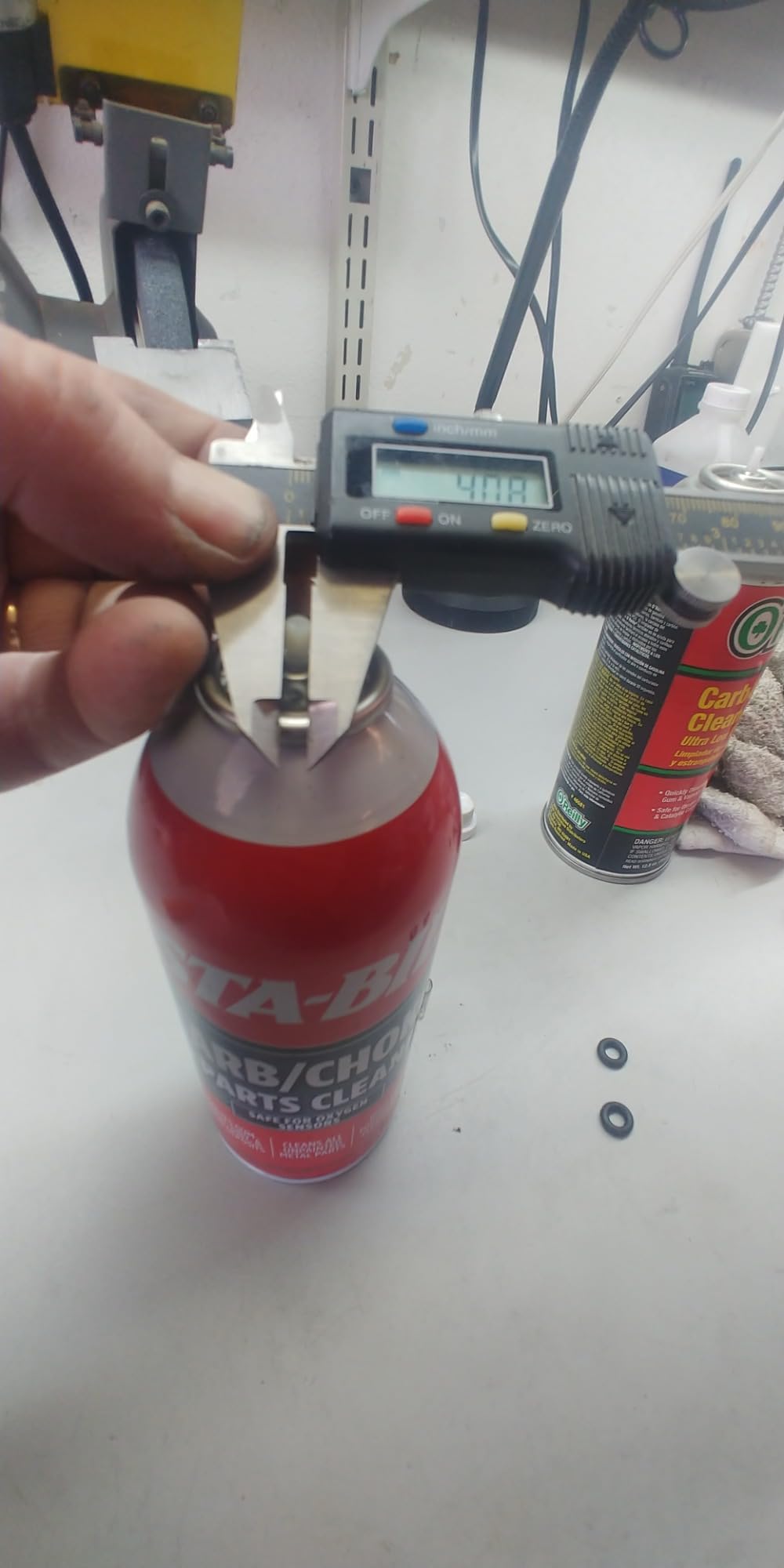
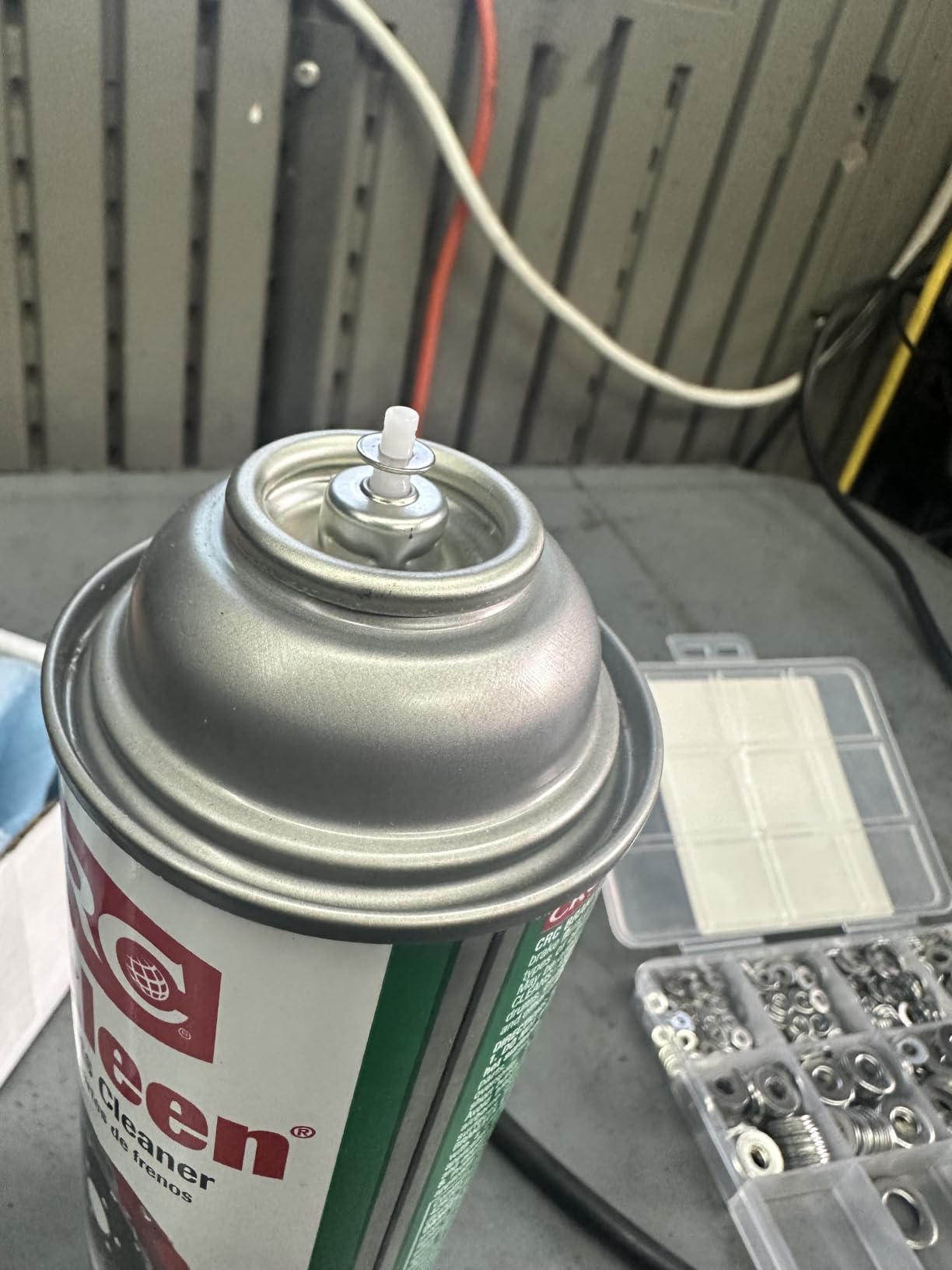
The sealing issue is the most common complaint and it is a genuine design limitation rather than bad luck. The adapters are built to seal against 4mm-stem cans, and most carb cleaner sold in the States sits on a 3.25mm stem. A washer shim is the usual workaround, and once fitted the tool performs well.
Can you clean injectors without removing them with the TK-F4
Not the way you can with a canister machine. The TK-F4 is built for injectors on the bench, in an adapter, with a spray can feeding fluid. For a non-dismantle flush of the fuel rail, intake manifold and catalytic converter, you want a pressurised canister unit like the AUTOOL C100 instead.
Who should skip the TK-F4
Skip it if you need measured flow data, because there is no measurement anywhere in the circuit. Buyers who plan to keep the control box near the spray should know the housing is plastic and will smear or deform if acetone-based cleaner lands on it. Set up on a tray, keep the can below the box, and it holds up fine.
3. KAISAL QC80 1000ML 150PSI Kit – Best for Intake and Catalyst Flushing
Fuel Injector Cleaner Tool Kit 1000ML 150PSI Disassembly-Free Fuel Injection System Cleaner Pressure Adjustment Fuel Injector Cleaning Machine with 20PC Adapter for Gasoline Car Throttle/Intake System
1000ml canister, 0-150 PSI dual-scale gauge, 20-piece adapter set, 3.83 pounds
Pros
- Flushes fuel system throttle body intake and catalytic converter without disassembly
- Pressure adjustable up to 150 PSI
- 20-piece adapter set covers GM Ford VW BMW BYD Audi and Hyundai
- Large tank means fewer refills
Cons
- Cleaning fluid is not included
- Gasoline engines only with no diesel support
- Return line and inlet line must be identified correctly or the flush will not work
The QC80 is a middle path. It is not a bench tester at all, it is a flushing machine, and that distinction matters. Rather than pulling an injector, you connect the canister to the fuel system and run solvent through the whole thing under pressure, cleaning the injectors, the throttle valve, the intake and the three-way catalytic converter in one pass.
Pressure control runs to 150 PSI on a dual-scale gauge reading 0-150 psi and 0-10 kg per square centimetre, with a regulating knob for dialing in the spray strength. High and low pressure modes let you do the gentle intake pass and the firmer rail pass with the same unit.
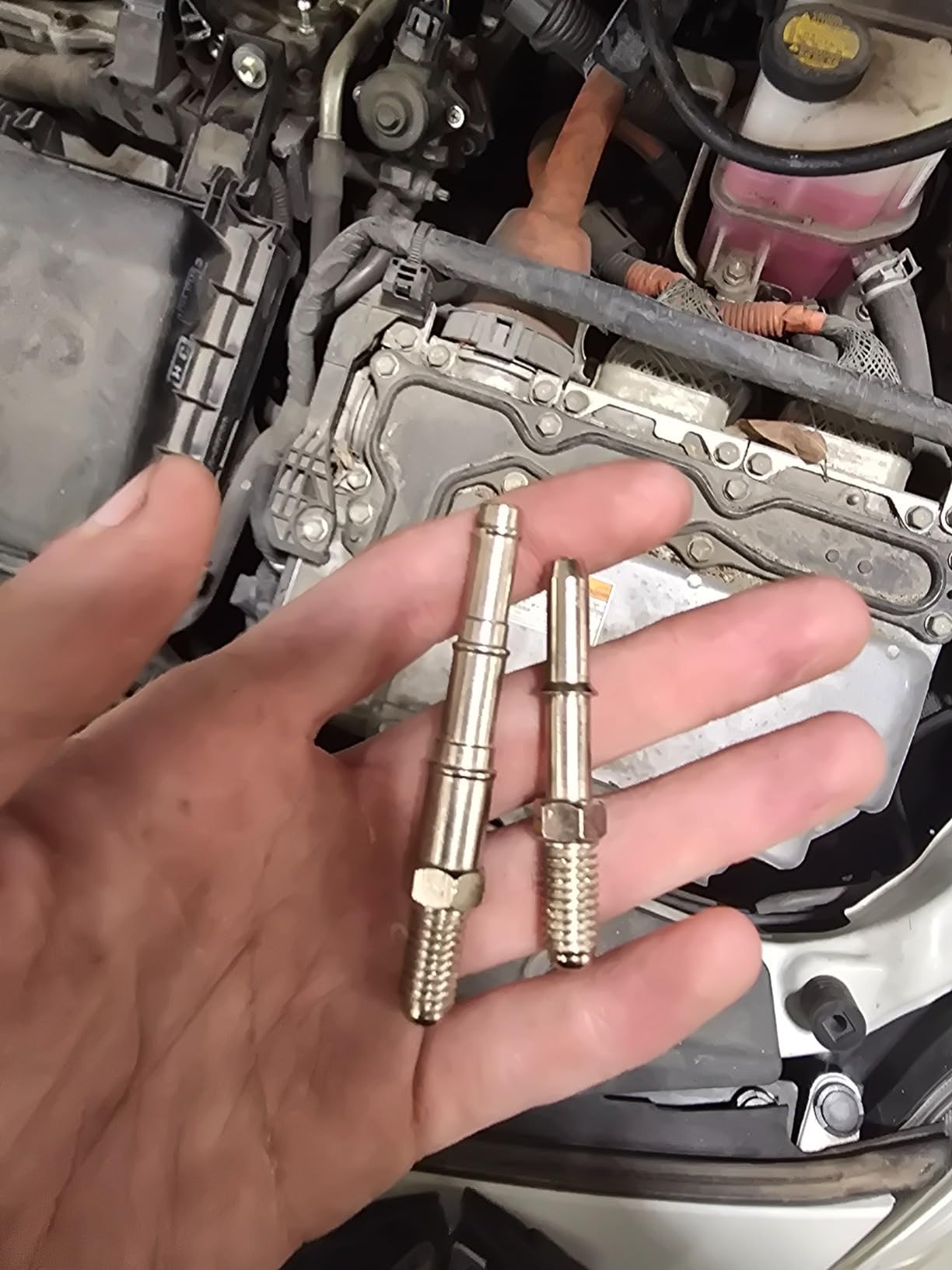
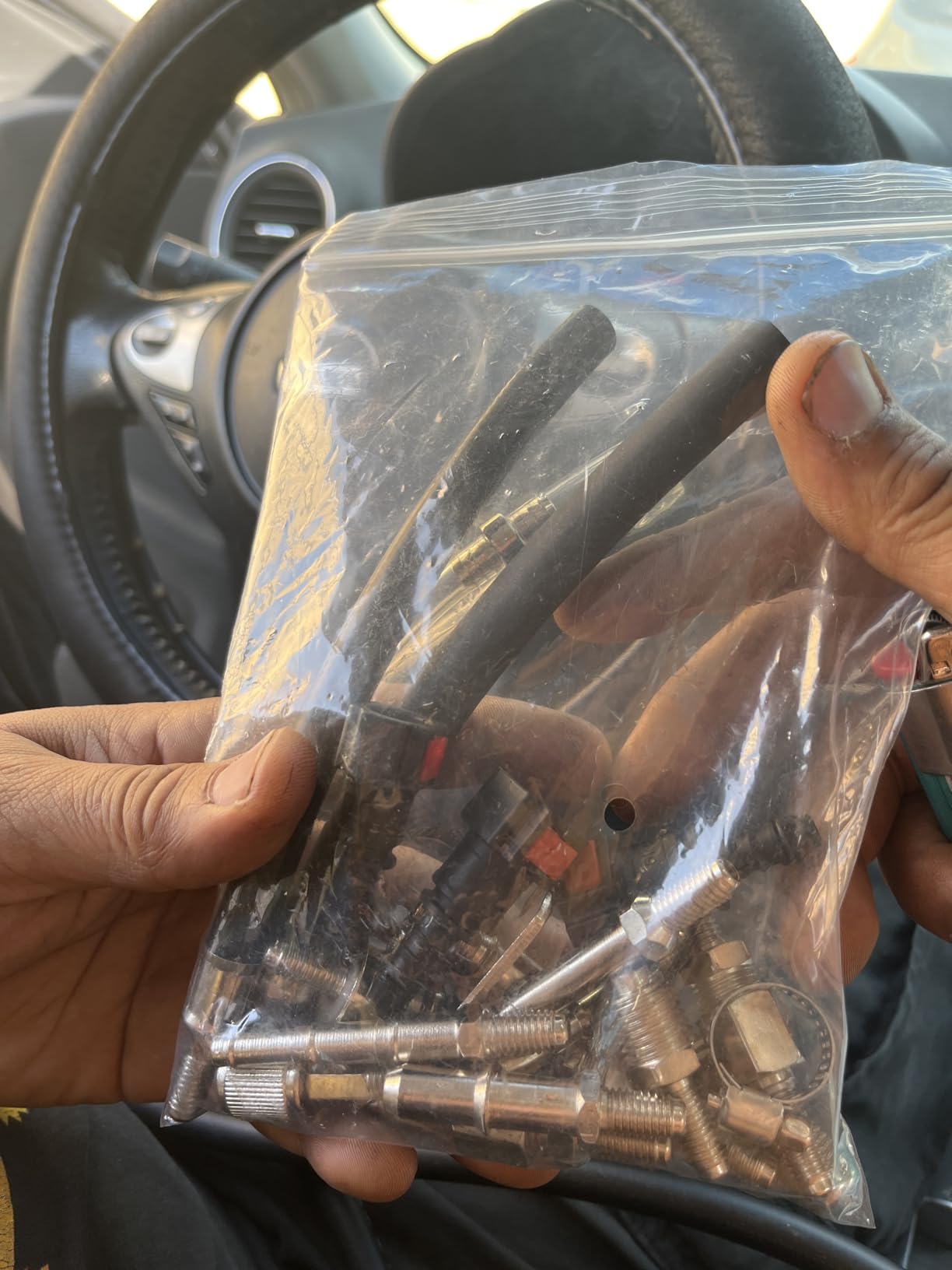
Twenty adapters and couplers is a serious count, and reviewers confirm they cover everything from GM and Ford through to BMW, BYD, Audi and Hyundai, plus light trucks. Brass fittings resist corrosion, and the oil lines are rated for aggressive cleaning fluids rather than just gasoline.
The hookup is where people get stuck. Carburetor and throttle systems need roughly 1-5 PSI of air, while EFI systems connect differently depending on whether you have a return line. The manual explains how to tell the inlet and return hoses apart: the inlet is larger and has a filter, the return is smaller and has a buffer. Get that backwards and the flush simply will not run.
Also budget for a bottle of injector cleaner, because the canister ships empty. That is standard across this tier, not a defect, but it catches out first-time buyers.
When is a non-dismantle canister the right choice
Choose it when the whole fuel system is dirty rather than one injector. Symptom patterns like a rough idle across all cylinders, a throttle body you have cleaned twice and it went straight back, or an ageing engine that has not had the rail flushed in a long time are the cases this tool handles and a bench tester cannot.
Who should skip the QC80
Skip it if you suspect a single dead injector, because a system flush will not identify which cylinder is at fault. It is also the wrong tool for diesel. If you dislike fiddling with return lines, an adapter-only kit is far less frustrating even though it does less.
4. FOXWELL JT200 Tester Cleaner – Best for Measuring Flow Rate
FOXWELL JT200 Fuel Injector Tester Cleaner – Visualize Spray Pattern & Flow
Graduated measuring cylinders, automatic RPM simulation or manual 100-9900 RPM, 9-14.5mm adapters, 7.87 pounds
Pros
- Visual spray pattern and graduated cylinders give real numbers
- Automatic engine RPM simulation reproduces real duty cycles
- Metal construction and sealed cylinders resist spills
- Owners report it found weak injectors and avoided replacing good parts
Cons
- Instructions are thin and setup needs trial and error
- Orange volume markings on an orange case are hard to read
- Small reservoir with a tiny filler hole and no test fluid included
The JT200 is the only real diagnostic bench here. Every other kit in this roundup tells you whether an injector sprays; this one shows you the spray pattern through a transparent cylinder and collects the output in a graduated vessel so you can compare volume against the manufacturer spec. That is the difference between cleaning and verifying a clean.
It simulates engine speed automatically from 500 to 6000 RPM in 100 RPM steps, or manually from 100 to 9900 RPM. Running two known-good injectors and one suspect at the same simulated RPM is how you catch a lazy unit that only shows itself off idle. Two injectors can be tested at a time with alternating firing.
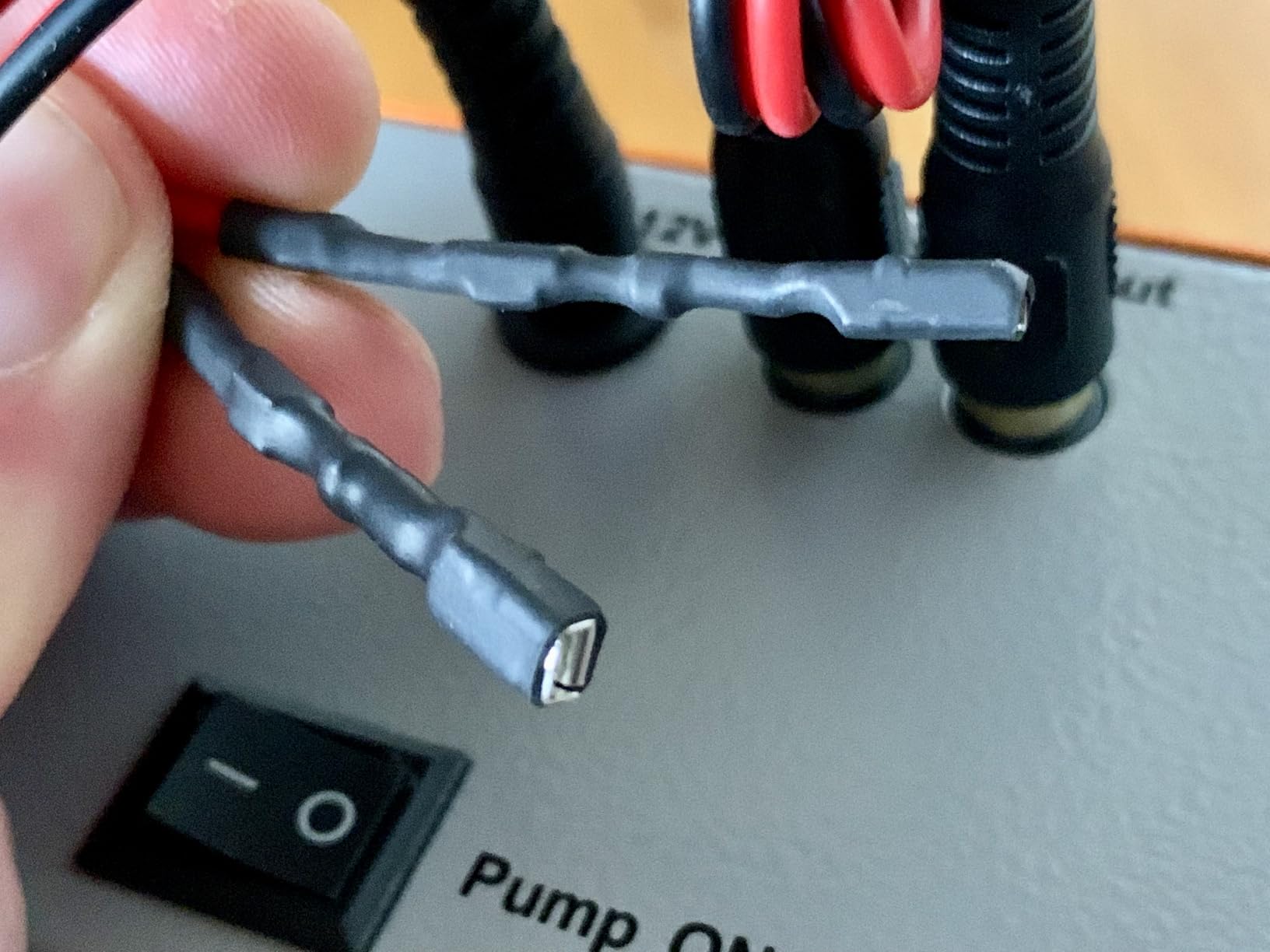
Long-form reviews from mechanics and marine techs describe the results as repeatable, which is the word that matters for a measuring device. Owners report it identified a weak injector in minutes and stopped them replacing an entire set. The 9-14.5mm adapter set covers traditional EFI and MPI top-feed injectors, and it runs off a 12V battery with clamp leads, so it works on motorcycles and pickups too.
Its 5-star share is 72% and its 1-star share is zero, though the review count of 90 is the smallest in the group. Judge it on the feature set rather than the volume.
Use ready-to-use bottled test fluid, not gasoline. Reviewers reported O-rings swelling when an unapproved fluid was used, which is exactly the kind of small mistake that turns a diagnostic tool into a parts bill.
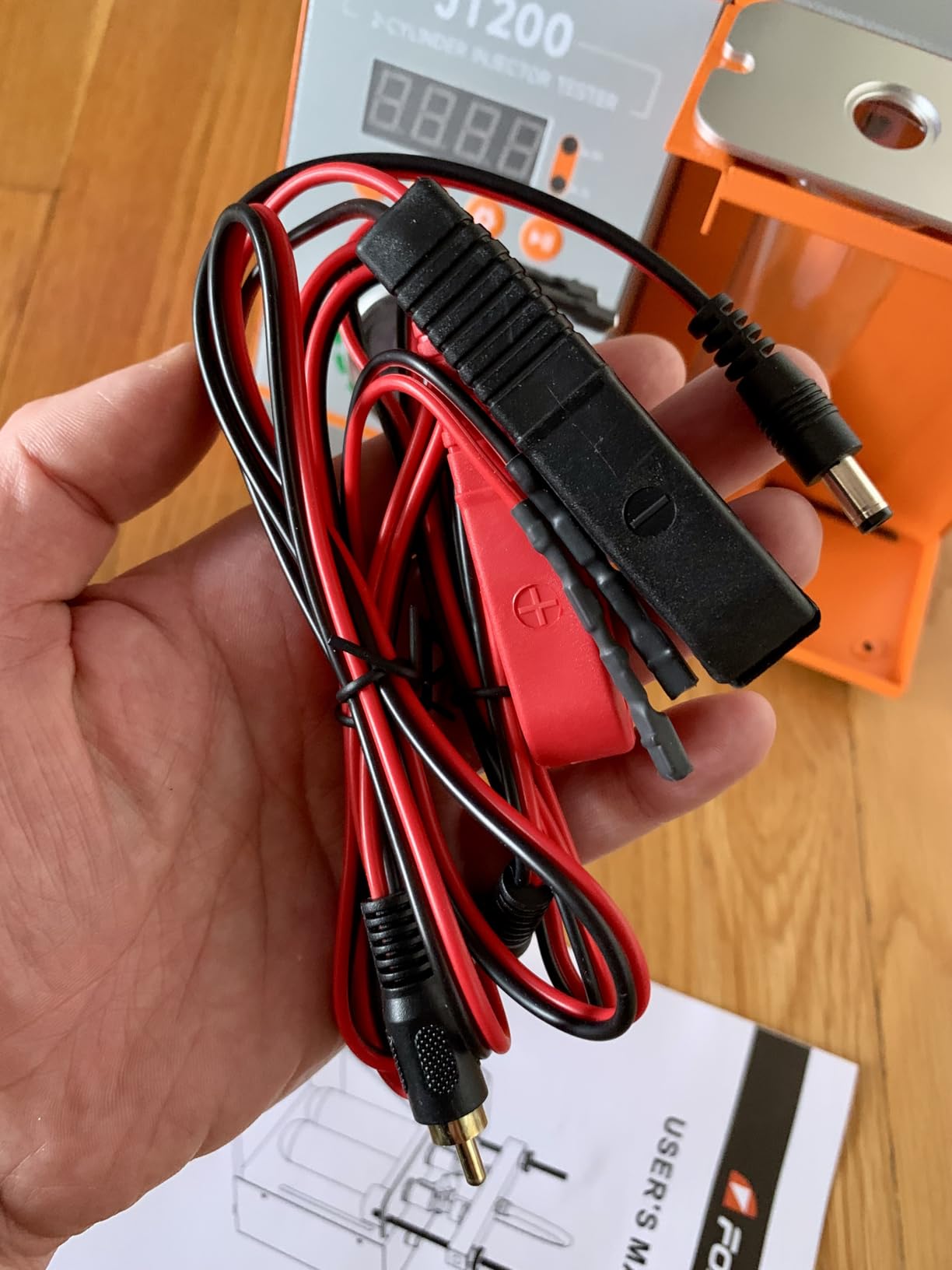
How do you read flow rate results from the JT200
Fill the cylinders, clamp on the injectors, set an RPM that matches your real operating point, and pulse. All four injectors on a healthy engine should deliver close to the same volume, usually within a few percentage points of each other. One that reads noticeably lower is under-delivering. One that reads higher after the engine is switched off is leaking, and that is a different fault with a different fix.
Who should skip the JT200
Skip it for GDI and diesel injectors, because the manufacturer excludes both. It is also overkill if you only intend to flush a car occasionally, and the small reservoir with its tiny filler hole is genuinely awkward to refill. Budget for test fluid and a proper funnel before you start.
5. AUTOOL C100 150PSI Non-dismantle Kit – Best for Working Technicians
AUTOOL Fuel Injector Cleaner Kit Fuel System Cleaner Non-dismantle 150PSI
1000ml stainless steel canister, 150 PSI adjustable gauge, brass fittings, storage case, 8.56 pounds
Pros
- Technicians report airtight fittings across repeated jobs
- Broadest adapter coverage for European Asian and American fuel rails
- Accurate gauges make on-vehicle flushing predictable
- Storage case with foam protects the regulator
Cons
- Cleaning fluid is not included
- Instructions assume you already know the setup
- Air pressure adjuster failed on one early unit
This C100 is the machine most working technicians in our research named as the one that does the job of far costlier shop equipment. The 74% five-star share backs that up. It runs high and low pressure cleaning of the fuel system, throttle valve, injectors, three-way catalytic converter, intake manifold and exhaust pipe, all without disassembly, and it clears carbon in roughly twenty minutes on a typical engine.
The build is where it separates from the generic canister kits. A 1000ml stainless steel canister resists corrosion and abrasion, brass main components and joints do not seize, and high-quality rubber tubing holds pressure. A special check valve releases gas and lets you add fluid without losing the charge.
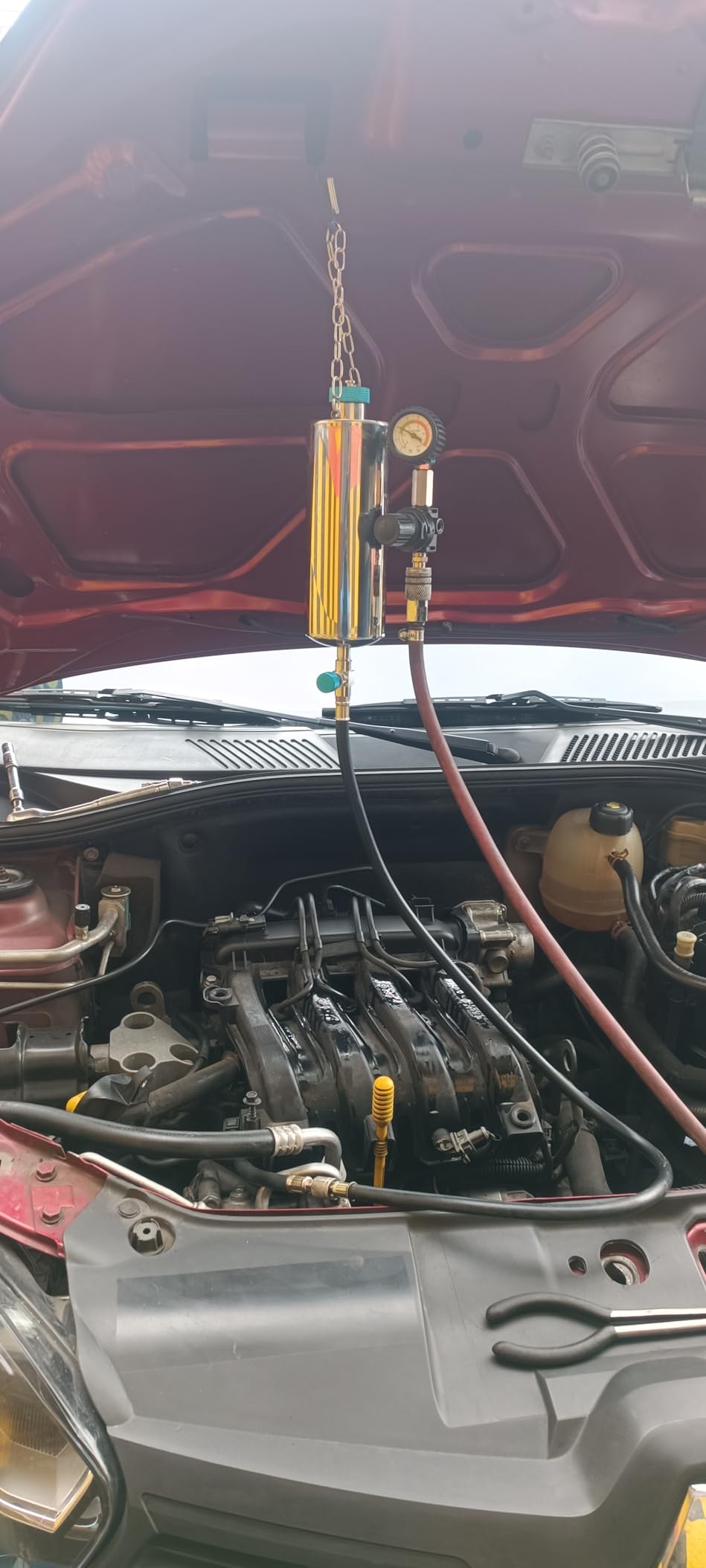
Owners across multiple vehicles document full jobs with improved idle and drivability afterwards, and leak-tight fittings are the single most praised feature. The blow-molded case with foam protects the regulator and gauge, which matters more than it sounds when you are hauling a rig between vehicles.
The weaknesses are practical rather than fundamental. There is no cleaning fluid in the box, the documentation is thin enough that most users learn the setup from videos, and there is no direct fitting for a GM fuel rail pressure port, so you improvise that connection yourself. A few early units had an air pressure adjuster fail.
One practical tip from owners: carry a separate pressure gauge. Over-pressurising the regulator is avoidable, and watching the line rather than the canister gauge is how you do it.
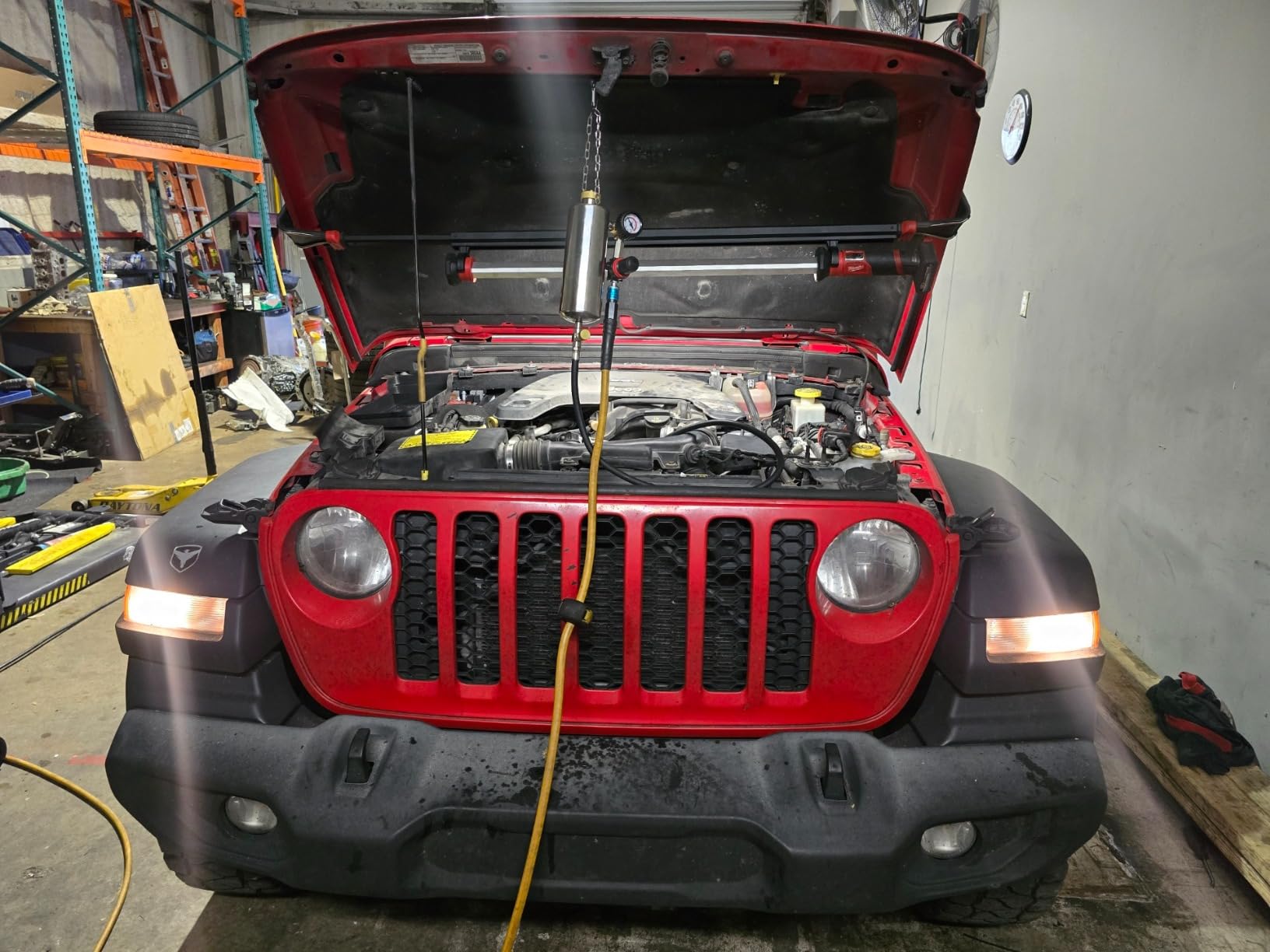
What does a non-dismantle canister machine actually reach
It reaches the injectors and everything between the tank and the exhaust, provided the injectors spray into an intake port. On a port fuel injected engine that means the valve face gets cleaned as the solvent passes. It does not reach carbon sitting on the back of a valve in a direct injection engine, because that deposit is on the combustion side and no amount of rail pressure will touch it.
Who should skip the AUTOOL C100
Skip it for diesel, for GDI intake valve carbon, and for anyone who does not already know how to identify a fuel return line. It is also more machine than you need if you are only pulling two injectors off one motorcycle. The bench testers cover that job in a corner of a bench.
6. PACLVIO 4-Piece Adapter and Test Lead Kit – Best Budget Entry Point
PACLVIO 4Pcs Fuel Injector Cleaner Kit, Universal Fuel Injector Flush Cleaner Adapter DIY Cleaning Tool Kit with Test Lead, for Car Fuel Injector Tester Fuel Pump Pressure Test
4 pieces including 2 can adapters and a test lead, 12-24V compatibility, 5.6 ounces
Pros
- Lowest cost way to flush injectors already out of the engine
- Very simple to set up once you find the sealing orientation
- Users report a visible difference between clean and clogged injectors
- Wide stated fitment across cars motorcycles ATVs and small watercraft
Cons
- Effectively a three-handed tool while pulsing
- No reliable can seal so cleaner sprays everywhere
- Plastic connectors melt under acetone-based carb cleaner
Sometimes you have already pulled the injectors, you have a can of carb cleaner open on the bench, and you want to flush the tips tonight. That is the entire use case for this kit. It is two can adapters and a test lead with clips, and that is genuinely all it is.
You clip the lead to a 12V or 24V source, hold the injector in the adapter, open the solenoid, and solvent pushes through the nozzle into a sampler. Owners report being able to see the difference between a clean and a clogged injector with their own eyes, which is the most useful thing a kit this simple can do.
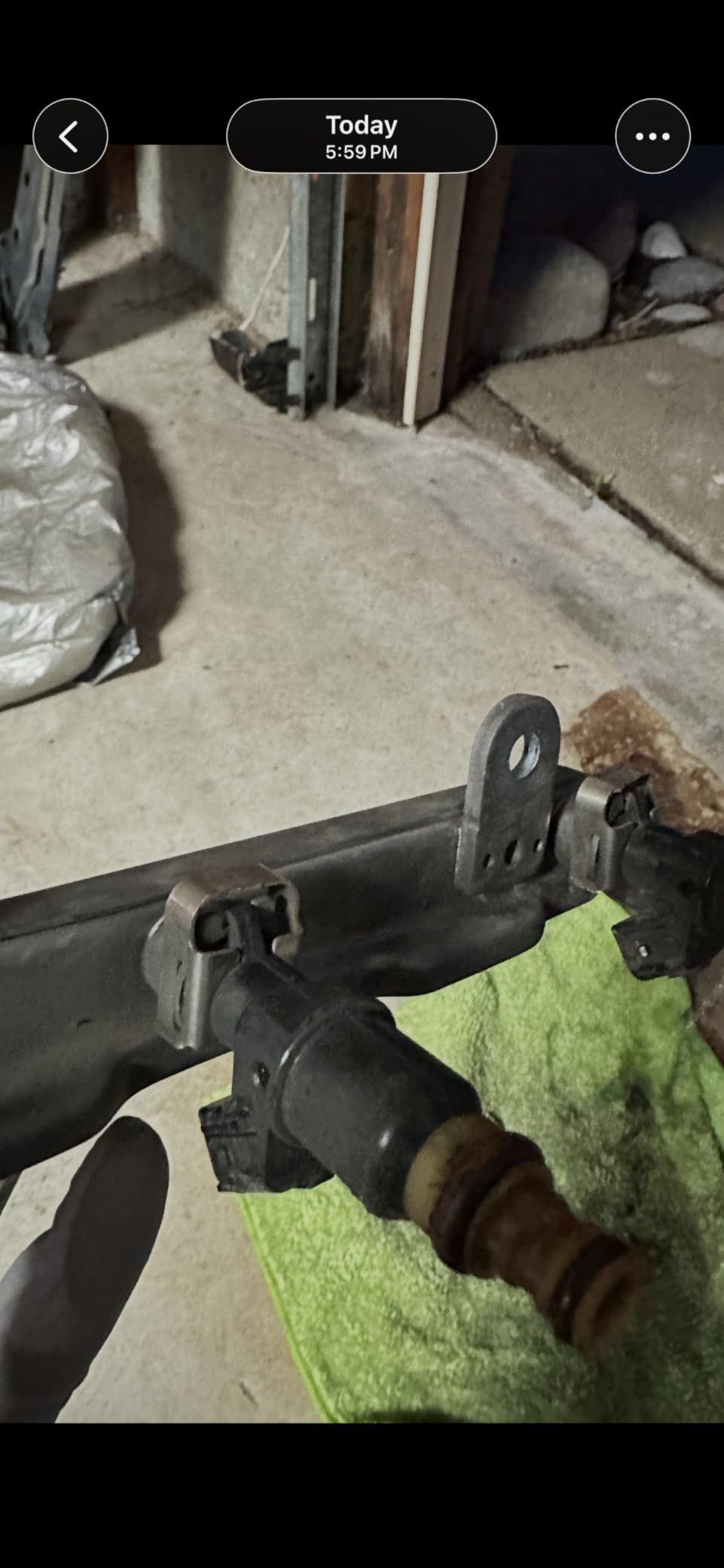
The 16% three-star share is the honest signal here. It reflects setup friction rather than a broken product: the joint design has anti-slip polygonal grooves, and the alligator clips have a wide opening and strong bite, so once the injector sits flush it stays put. Before that, it fights you.
Expect to waste solvent. There is no reliable seal around the can, so cleaner sprays out alongside the injector, and the plastic electrical connectors deform if acetone-based carb cleaner lands on them. Put a tray underneath, keep the clips on the far side of the spray, and this is a perfectly serviceable bench tool.
Instructions are minimal, so this is a kit to learn from a short setup video rather than a manual.
Can you actually clean injectors with just adapters and a test lead
Yes, for light carbon on injectors you have already removed. The lead supplies the pulse that opens the injector, the adapter seals the can to the injector body, and the solvent does the dissolving. What you cannot do is measure anything, test a mounted injector, or flush a fuel rail.
Who should skip the PACLVIO kit
Skip it if you have never done this before, because there is no margin for the fumbled-hold-and-spray-everywhere learning curve that this style demands. Anyone working around a hot engine, with one pair of hands, will also find it frustrating. For a first-timer, spend a little more and buy something with a reservoir.
7. AUTOOL CT60 12V and 70V Tester Cleaner – Best for 70V Injectors
AUTOOL Fuel Injector Tester and Cleaner 12V&70V Fuel Injector Cleaner Kit Fuel Injector Cleaning Kit for GDI, Adjustable Pulse Width RPM & Time, Two Injectors Test Simultaneously
12V and 70V drive options, 600-4000 rpm frequency, 0-99 minute run time, LCD display
Pros
- Only kit here that drives 70V high-pressure injectors as well as 12V units
- Adjustable pulse width frequency and run time
- Dual channel makes spray pattern and angle comparison easy
- Can upgrade older AUTOOL testers
Cons
- Lowest rated at 4.1 with a 12% one-star share
- Reports of units failing or not driving injectors reliably
- Limited guidance on the adjustable parameters
- Cleaner and power supply not included
The CT60 has the most ambitious feature list in this roundup, and the least satisfied owners. It offers 12V and 70V drive options, meaning it can actuate high-pressure diesel and GDI injectors as well as standard gasoline units, and it pairs with ultrasonic cleaners through its GDI drive mode.
Control granularity is the draw. Frequency is adjustable from 600 to 4000 RPM, run time from 0 to 99 minutes, and pulse width is variable, all shown live on a digital LCD. Two injectors can be driven at once so you can compare spray pattern and spray angle side by side, which is a genuinely useful trick when one cylinder is misbehaving.
The problem is that all those parameters arrive with thin instructions, and users report units that failed or simply would not drive injectors reliably. The 4.1 average and 12% one-star share are the weakest in the group, and that is a real durability signal rather than noise.
Is 70V drive worth the extra complexity
Only if you actually work on high-pressure injectors. For a port fuel injected gasoline engine, a fixed 12V pulse tester does the same job with fewer ways to get it wrong. If you maintain diesel or modern GDI hardware, this is the only kit here that opens the door, and the ability to upgrade an older AUTOOL unit with the drive mode adds value if you already own one.
Who should skip the CT60
Skip it if you want a purchase you will pick up and use without research, because the depth of settings punishes guesswork. It is also the wrong tool for measuring flow, since the LCD reports settings rather than output volume. Anyone with a tight budget should know the cleaner and the 12V power supply are not in the box.
8. MR CARTOOL V55 5V/12V Tester Cleaner Kit – Best for Motorcycles
MRCARTOOL Fuel Injector Tester 5V/12V 8 Modes Cleaner Kit for GDI/FSI/EFI
8 pulse modes with 12V/5V selection, 6 nozzle adapters, dual pulse output, 40 inch cord
Pros
- Broadest stated compatibility in the budget tier across GDI FSI SPFI TBI EFI CFI L-JET MPFI and LPG
- 40 inch cord gives good bench reach
- Dual pulse output tests two injectors at once
- 90-day warranty and round-the-clock support
Cons
- Adapters do not fit most modern spray can styles without a washer
- Poor can sealing sends carb cleaner everywhere
- One unit arrived dead and shorted with no signal
The V55 lists the widest compatibility of any budget kit here, naming GDI, FSI, SPFI, TBI, EFI, CFI, L-JET, MPFI and LPG injectors across cars and motorcycles. In practice owners confirm the fit on specific machines, including a 2005 Lexus RX 330 and a Mitsubishi Outlander V6, so the claim is not purely aspirational.
Eight pulse modes combine four signal output types with 12V and 5V voltage selection, an LCD shows the active mode, and two pairs of pulse terminals test two injectors simultaneously. The 40-inch cord is longer than most and gives you room to work around a bench rather than over it.
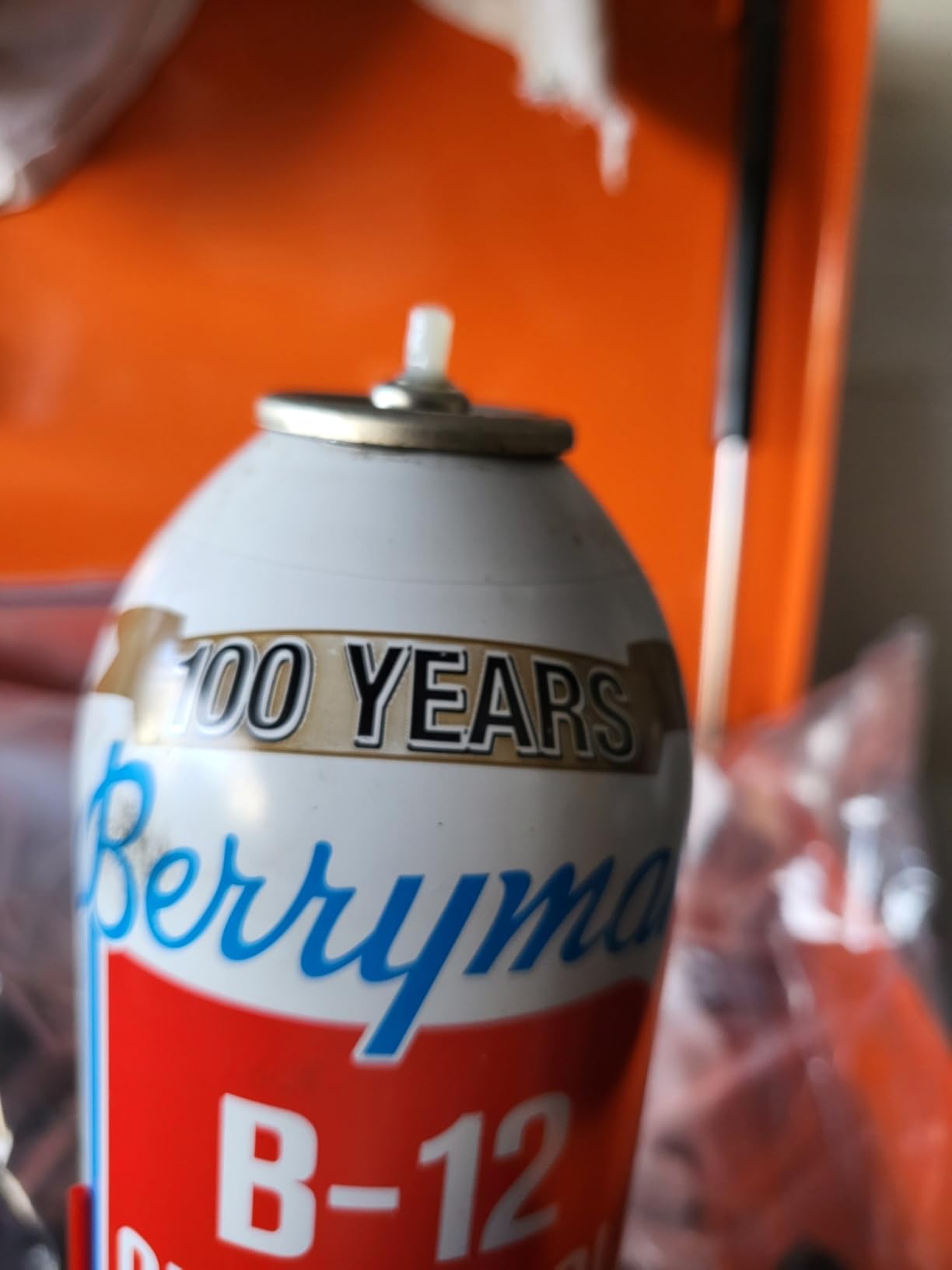
At 73% five-star this is a well-regarded budget tool, and buyers who watch one setup video before starting report a much smoother experience than those who read the manual. The 90-day warranty is short compared to the 3-year coverage on the THIKPO and AUTOOL units, which matters if you are buying for occasional rather than weekly use.
The recurring gripes are the same can-sealing problem that runs through this whole adapter-style category, plus injectors popping out when they are not held firmly. A washer is the standard fix for the can stem. One unit arrived dead and shorted out, which is an isolated failure but worth knowing about.
Is the V55 suitable for a motorcycle rather than a car
Yes, and it is one of the few in this roundup that says so on the box. Six nozzle adapters cover most car and motorcycle injectors, and the 5V drive option matters for small high-impedance units found on older bikes. Owners use these on small engines regularly, which is a different job from flushing a V8 rail.
Who should skip the V55
Skip it if you need certainty rather than a working pulse, since the unit only indicates blocked, leaking, damaged or burnt out and does not quantify anything. Anyone who dislikes trial-and-error setup should know the English-only instructions do not explain how the plastic adapter sits in the flow path.
9. AUTOOL C100 1000ML 150PSI Tool Set – The Long-Running Proven Design
Fuel Injector Cleaner Kit, Non-dismantle 1000ML 150PSI Fuel Injector Tester and Fuel System Cleaner Tool Set Cleaning Machine, Automotive Intake Valve Manifold Throttle Converter Cleaner
1000ml stainless steel canister, 150 PSI adjustable gauge, brass fittings, storage box, gasoline only
Pros
- Design listed since 2017 so service life is well documented
- Lowest one-star share in the group at 3%
- A 30-year veteran mechanic reports it matches far costlier shop tools
- Handles throttle body and EFI systems with or without a return line
Cons
- Instructions are simplistic and some setups need an improvised air connector
- Accessory quality is only fair
- Case does not keep its fittings in place
- Air fitting is an odd size and very hard to remove
This listing for the AUTOOL C100 has been available since 2017, and that longevity is itself the strongest review. Its one-star share is 3%, the lowest in the roundup, and the four-star share of 20% is the highest, which is what you want to see from a tool people keep for years rather than try once.
Functionally it covers the same ground as the newer C100: non-dismantle cleaning of the fuel system, intake system and three-way catalytic converter, high and low pressure modes, an adjustable gauge to 150 PSI, and a 1000ml stainless steel canister that resists corrosion and abrasion. One-way check valves seal the gas charge, and the brass fittings with rubber hose are reported as non-leaking.
A 30-year veteran mechanic in the review data says it does the job of a far more expensive shop tool. For most working mechanics that is the entire case for buying it. The adapter range covers European, Asian and American cars and light trucks, and it handles systems both with and without a fuel return line.
Why buy this listing rather than the newer AUTOOL C100
Both are the same machine generation, so compare the included accessories and the warranty support rather than the headline specs. This listing has the longer documented life; the newer one tends to carry a stronger warranty and a more complete case. If you already own an AUTOOL, neither adds much beyond what you have.
Who should skip this AUTOOL C100
Skip it if documentation matters more than hardware, because the instructions are minimal and some owners improvised the air supply connector on their own setup. The blow-molded case also will not hold its fittings in place, and the air fitting is an odd size that owners report being very hard to remove. Budget a small parts drawer for the pieces you will lose.
10. THIKPO TK-F6 Tester and Cleaner Kit – Compact Pick with a Reset Switch
THIKPO Fuel Injector Tester and Cleaner Tool Kit, DIY Cleaning Tool Kit
8 pulse modes at 12V/5V, reset function, dual output terminals, 3-year warranty, 14.4 ounces
Pros
- Cheapest full-featured pulse tester with the same modes as pricier kits
- Reset switch speeds up mode changes
- Used successfully on a Yamaha Waverunner as well as car injectors
- Reverse polarity and short circuit protection
Cons
- Highest one-star share among pulse testers at 14%
- Units reported stopping working after a few months
- Instructions do not explain when to use high or low voltage
- Cleaner sprays out of the can adapter
The TK-F6 is the same feature set as the more expensive THIKPO kit at a lower cost, and plenty of owners clean injectors successfully with it. Eight pulse modes from four signal types crossed with 12V and 5V, dual output terminals, and a reset switch that lets you change modes faster than comparable budget testers.
Adapter coverage includes universal sizes plus two specialty pieces, one for V.W and Audi style bodies and one threaded for BMW N-series engines. Owners report it working on cars and on a Yamaha Waverunner, which tells you the pulse range is broad enough for small engines as well as automotive hardware.
Durability is the concern, and the numbers back that up. A 14% one-star share is the highest among the pulse testers here, with units reported as no longer delivering power after only a handful of uses. One owner’s Audi injectors would not power up on it even though other injectors worked fine, so fitment is genuinely injector-specific.
Its small footprint at 14.4 ounces and a 6.54 x 5.83 inch package is the quiet advantage. It is the easiest of the budget testers to keep in a drawer and take out when a single injector needs checking, and the 3-year warranty is the longest in that tier.
Is the TK-F6 a reasonable first injector cleaning purchase
On features, yes. It matches the mode count and voltage options of kits costing meaningfully more, and the reset switch is a real convenience. On longevity, it is the weakest of the group, so if you plan to do this regularly rather than once a year, a machine with a metal case and a longer track record will serve you better.
Who should skip the TK-F6
Skip it if you are buying a tool you will still be using in three years, given the failure pattern in the reviews. Buyers who will not spend five minutes watching a setup video will also struggle, because the instructions do not explain when high or low voltage is correct. Note too that forcing a tight fit can distort injector O-rings, which creates a leak problem later.
How to Use a Fuel Injector Cleaning Kit
Read this once before you open a box. The procedure differs for a bench pulse tester and a non-dismantle canister, but the safety rules are identical for both. Work in a ventilated space, keep a fire extinguisher within reach, and never smoke near solvent.
1. Confirm the fault. Read fuel trims, check for misfire codes, and inspect the spark plugs. If the plugs are oily or the throttle body is filthy, deal with that first rather than blaming the injectors.
2. Depressurise. Relieve fuel pressure at the rail test port before opening anything. For a bench job, remove the injectors and keep them bagged and labelled by cylinder position.
3. Inspect each injector by hand. Look for carbon crust on the tip and check the two O-rings for swelling, tearing or a hard set. A swollen O-ring will not seal in any adapter, and no amount of solvent fixes it.
4. Select the adapter. Match the adapter to the injector body diameter, not to the can. If the injector rocks in the adapter or gaps appear, the seal will fail and you will spray solvent instead of flushing the nozzle.
5. Fill the canister. Use a purpose-made injector cleaner or carburetor cleaner. Do not substitute general-purpose solvent, and keep the electronics in these kits away from the spray.
6. Set the pressure. For intake and throttle work, stay low, typically 1-5 PSI. For rail and injector work, step up gradually and watch the line with a separate gauge rather than trusting the canister dial alone.
7. Pulse and flush. Hold the injector hard in the adapter, pulse it for a set number of seconds, then release. Watch the discharge. Strong, even spray means clean. Dribbling means blocked. A hard steady stream with the engine off means leaking.
8. Verify. Reassemble, clear the adaptation, and road test. Then look for evidence: smoother idle, no stumble, cold-start behaviour restored, and fuel trims moved back toward zero. Without that check you have cleaned something and learned nothing.
If you are new to this and want a walkthrough in a different format, our guides to other hands-on maintenance projects follow the same structure we use here: what the tool does, what it cannot do, and who should skip it. If you would rather spend a weekend on the house first, our DIY home security guide for renters covers kit selection and setup in similar depth.
Additive vs Machine: Which One Actually Works
Take a bottle instead of a machine when the problem is light and the goal is prevention. Fuel system additives and injector cleaners are cheap, they run through the whole system under normal driving, and they will loosen light deposits. That is an honest, reasonable use. A user on a Porsche and 944 forum board put it more bluntly than we will: for a bottle of cleaner there is no logic in spending thousands on equipment.
Take a machine when you have evidence. If one cylinder misfires, if fuel trims have crept well past their normal band, or if the engine has sat for years, an additive will not fix a physically carbon-choked nozzle. Machines deliver solvent at pressure, in the reverse direction of normal spray, which is a fundamentally different action from a can of treatment sloshing through the rail.
Real experiences in forum data split the same way. Owners on classic car boards prefer additives and cite mechanic practice on boats and motorcycles, where fuel volume and idle quality are easy to see change. Meanwhile technicians running canister machines report full jobs on different vehicles with documented improvement in idle and drivability, plus one avoided replacing a set of injectors because the bench found a single weak unit.
The honest position is that neither camp is wrong, and the forum consensus is not as sceptical as the loudest voices suggest. Stacking a fuel system cleaner followed later by an injector cleaner is not wasteful in the way people fear, but it is also not required if your problem is solved by the first step. Diagnose first, then pick the smallest tool that addresses the fault you actually have.
Buying Guide: How to Choose the Right Kit
Start by deciding whether you want to diagnose or to flush. A pulse tester answers whether an injector is blocked, leaking or dead. A pressurised canister machine answers whether the fuel system, throttle body, intake and catalytic converter are clean. Buying a canister because you wanted a tester is the most common and most expensive mistake in this category.
Next, match the engine type. Every kit in this roundup is gasoline-only except the AUTOOL CT60, and the FOXWELL JT200 explicitly excludes GDI. For a port fuel injected engine, any of the canister machines will clean injector tips and valve faces. For a direct injection engine with carbon on the back of the intake valves, a rail flush will not reach it, and you need a different approach or professional help.
Then check the adapters, because this is the part that decides whether the kit works on your car. Adapters are sized by injector body diameter, and the specialty pieces matter more than the count. A set of 20 generic sizes that includes nothing for your brand is worth less than eight correct ones. Confirm fitment for your make before you buy, especially for V.W, Audi and BMW N-series bodies.
Pressure control is the next filter. A fixed 100 PSI canister works for most flushes. Adjustable pressure down to 1-5 PSI matters if you also want to clean a throttle body or carburetor without forcing solvent past seals. Nothing in this roundup goes beyond 150 PSI, which is more than adequate for gasoline injection and safely below what would damage a rail.
Volume and refill are practical matters. A 1000ml canister is the common size and means fewer refills on a full system. The FOXWELL bench has a small reservoir with a tiny filler hole, which owners flag as awkward, so consider refill friction if you will use it often.
On measurement, decide whether you need numbers. Only the JT200 gives you graduated volume and a visual spray pattern, which is what makes a before-and-after comparison possible. Everything else is a functional pulse. If your goal is to avoid buying four injectors when one is weak, that difference is worth the step up in tool class.
Finally, consider warranty and manufacturer stance. Some manufacturers are relaxed about injector cleaning as maintenance, while others treat a non-dismantle flush on a newer vehicle as work that could complicate a powertrain warranty claim. On cars still under warranty, check with your dealer before connecting anything to the fuel rail, and keep the receipt for the solvent either way. The same careful approach applies to other entry-level diagnostic purchases, such as the educational electronics kits we ranked, where reading the spec sheet before buying saves the same kind of frustration.
What Destroys Fuel Injectors and What Not to Use
WD-40 does not clean fuel injectors. It is a water displacing lubricant, not a solvent, and injecting it into a fuel rail leaves an oily film on the injector tip, promotes carbon rather than removing it, and can upset the injector driver’s expectations. It is the most repeated question we saw and the clearest myth in this category.
The real damage list is short and worth knowing. Wrong solvent is number one, since general-purpose degreasers and anything not rated for fuel injection can swell injector O-rings and attack plastics. Over-pressurising a rail can rupture a seal or force fuel where it does not belong, so step pressure up gradually and watch a line gauge. Disassembling injectors without an ultrasonic cleaner and the correct rebuild kit will damage the seats and the internal screens, and a dismantled injector that is not rebuilt correctly may never seal again.
There is also a mechanical one. Adding a cleaning adapter to an injector that is still installed and then energising it at high pressure can push solvent past the seals into the cylinder, which risks hydro-locking on a cranking engine. Pull the injectors for bench cleaning or use a proper non-dismantle procedure, and never pulse an injector against a running or cranking engine.
Two more cautions. A plastic control box and acetone-based carb cleaner do not mix, and the melted housing reviews describe across this group are all avoidable by keeping the electronics below and away from the spray. And do not use unapproved test fluid in a measuring bench, because O-ring swelling in the graduated cylinders corrupts the reading you paid for.
On garage equipment beyond fuel tools, our picks for other hands-on projects follow the same standard we applied here, and you can see the format in our window cleaning robot guide as well.
Frequently Asked Questions
What is the best DIY fuel injector cleaner?
For most DIY mechanics the allsun EM276SET is the best overall option, because it pulses and tests injectors on a 12V vehicle battery with eight pulse modes, ships with adapters and a carrying bag, and carries more customer ratings than any other kit in our roundup. If you need to compare two injectors at once, the THIKPO TK-F4 adds dual-channel testing and eight adapter sizes. If you want measured flow numbers rather than a yes-or-no spray, the FOXWELL JT200 is the only true diagnostic bench in the group.
Do any fuel injector cleaners actually work?
Yes, when the fault matches the tool. An additive works for light deposits across a whole fuel system. A pulse tester and adapter work on injectors that are already out of the engine. A pressurised canister machine works on an installed fuel rail, throttle body, intake and catalytic converter. None of them can reach carbon on the back of a direct injection intake valve, and none of them fix dirty spark plugs, a fouled throttle body or a failing oxygen sensor.
Can I do fuel injector cleaning myself?
Almost always, for a port fuel injected gasoline engine. Depressurise the system, inspect each injector tip and O-ring, match an adapter to the injector body, fill the canister with purpose-made cleaner, set pressure low for intake work and higher for rail work, then pulse and observe the discharge. You will need a 12V battery as a power source, ventilation, a fire extinguisher, and roughly an hour including disassembly and reassembly.
Will WD-40 clean injectors?
No. WD-40 is a water-displacing lubricant, not a solvent, and it leaves an oily film on the injector tip that promotes carbon rather than removing it. Use a purpose-made fuel injector cleaner or carburetor cleaner rated for the fuel system. The same warning applies to general-purpose degreasers, which can swell injector O-rings and attack plastic components in the cleaning tool itself.
What destroys fuel injectors?
The common causes are the wrong solvent, over-pressurising the fuel rail, and dismantling injectors without an ultrasonic cleaner and the correct rebuild kit. Cleaning solvent sprayed onto the plastic housing of a pulse tester will deform or melt the control box, and an unapproved test fluid can swell O-rings inside a measuring bench. A solvent-driven misfire on a cranking engine can also hydro-lock the cylinder, so never pulse a mounted injector under compression.
Is fuel injector cleaning actually worth it?
It depends on the evidence. If fuel trims have drifted well outside their normal band, one cylinder is misfiring, or the engine has sat unused for years, a bench test or a canister flush addresses a physical blockage that an additive cannot. If the engine runs cleanly and you are preparing for storage or a long trip, a bottle of fuel system additive is a sensible preventive step. Diagnose first, then buy the smallest tool that solves the actual fault.
Conclusion
After working through ten of the best-reviewed fuel injector cleaning kits for DIY repairs, the allsun EM276SET remains our top pick, with 1871 ratings, eight pulse modes and the widest evidence base of anything we looked at. The THIKPO TK-F4 is the smarter buy when you need to test two injectors at once, and the FOXWELL JT200 is worth the jump when you want measured flow rather than a guess. Whichever one you choose, diagnose before you buy, keep the solvent away from the plastics, and confirm the job worked with a road test and a look at your fuel trims.
If you are just starting out and want more hands-on maintenance projects to learn on, our other DIY kit guides are written the same way. Last reviewed in 2026.