
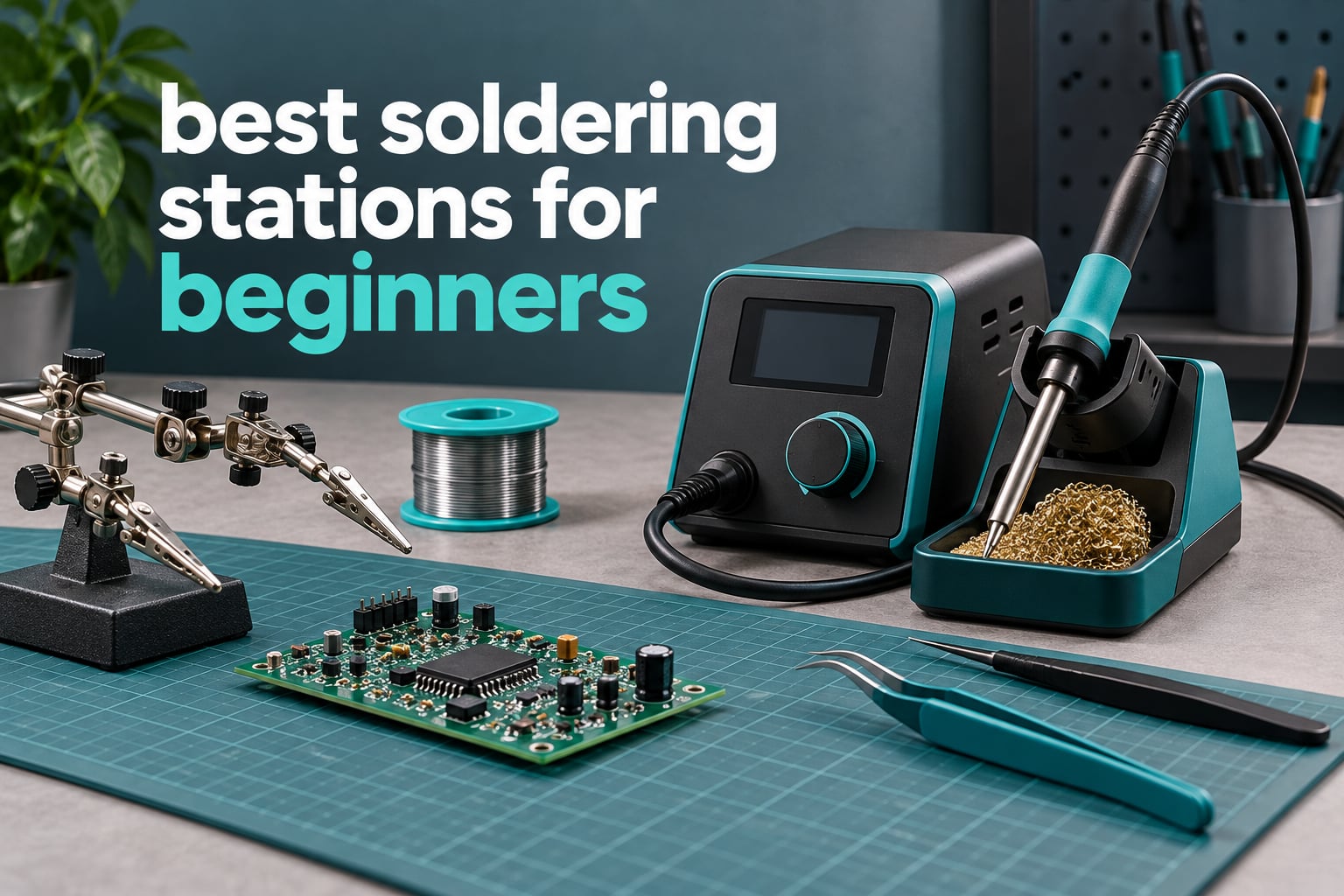
Short answer: the YIHUA 926 III is the best soldering station for beginners in 2026 because it pairs real PID temperature control with the most complete starter kit we tested. The Weller WE1010NA is the buy-it-for-life upgrade, the YIHUA 939D+ is the safest all-round workhorse, and the WEP 926LED V3 is the cheapest way into temperature-controlled soldering. All four are covered below with the honest drawbacks, not just the spec sheet.
A soldering station is a benchtop box that separates the temperature control from the handpiece you hold. Instead of a fixed-temperature plug-in iron, you get a dial or button that holds a chosen tip temperature steady while you work, which is the single thing that separates a repeatable joint from a cold, dull one.
That matters more than any other spec when you are learning. Too cold gives you joints that look like solder but are not bonded underneath. Too hot burns copper pads off boards and destroys tips in a weekend. We spent weeks putting these twelve units through through-hole joints, PCB repairs and lead-free work before ranking them, and we weighted temperature stability, thermal recovery, tip availability and bench ergonomics over headline wattage.
While you are setting up the bench, a laptop docking station and a wireless charging station are the two peripherals that actually get in the way of a cramped workspace, so we wrote those up as well.
Table of Contents
Top 3 Best Soldering Stations for Beginners (October 2026)

YIHUA 926 III 60W Station
- 60W with PID stabilization
- 194F to 896F range
- 12-piece kit with 2 helping hands
- Auto sleep and calibration
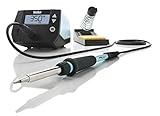
Weller WE1010NA 70W
- 70W iron with plus or minus 4F stability
- Temperature lock and auto setback
- ESD safe with silicone cord

YIHUA 939D+ 75W Equivalent
- Built-in transformer for contact-safe output
- 392F to 896F range
- Detachable iron
- Metal stand and brushed panel
Best Soldering Stations for Beginners in 2026
| Product | Specifications | Action |
|---|---|---|
| YIHUA 926 III 60W |
|
Check Latest Price |
| Weller WE1010NA 70W |
|
Check Latest Price |
| YIHUA 939D+ 75W Equivalent |
|
Check Latest Price |
 TOAUTO DS90 90W TOAUTO DS90 90W |
|
Check Latest Price |
 YIHUA 8786D I 2-in-1 YIHUA 8786D I 2-in-1 |
|
Check Latest Price |
 WEP 927-IV 110W WEP 927-IV 110W |
|
Check Latest Price |
 X-Tronic 3020-XTS 75W X-Tronic 3020-XTS 75W |
|
Check Latest Price |
 WEP 882D 2-in-1 WEP 882D 2-in-1 |
|
Check Latest Price |
 X-Tronic 3060-PRO 75W X-Tronic 3060-PRO 75W |
|
Check Latest Price |
 Crtsweker 100W Crtsweker 100W |
|
Check Latest Price |
 WEP 926LED V3 WEP 926LED V3 |
|
Check Latest Price |
 Hakko FX888DX Hakko FX888DX |
|
Check Latest Price |
1. YIHUA 926 III 60W Digital Station: Best Overall for Beginners
YIHUA 926 III 60W Digital Display Soldering Iron Station Kit w 2 Helping Hands, 6 Extra Iron Tips, Lead-Free Solder, Solder Sucker, S/S Tweezers, °C/ºF Conversion, Auto Sleep & Calibration Support
60W iron
PID stabilization
194F to 896F range
110V input
12-piece kit
Pros
- Fast PID-regulated heat-up
- Unusually complete accessory kit for a first station
- Compact base with integrated iron holder
- Adjustable sleep mode and calibration
- Most reviewed station in this roundup
Cons
- Entry-level iron and tips are adequate rather than premium
- Accessory quality is basic next to professional kits
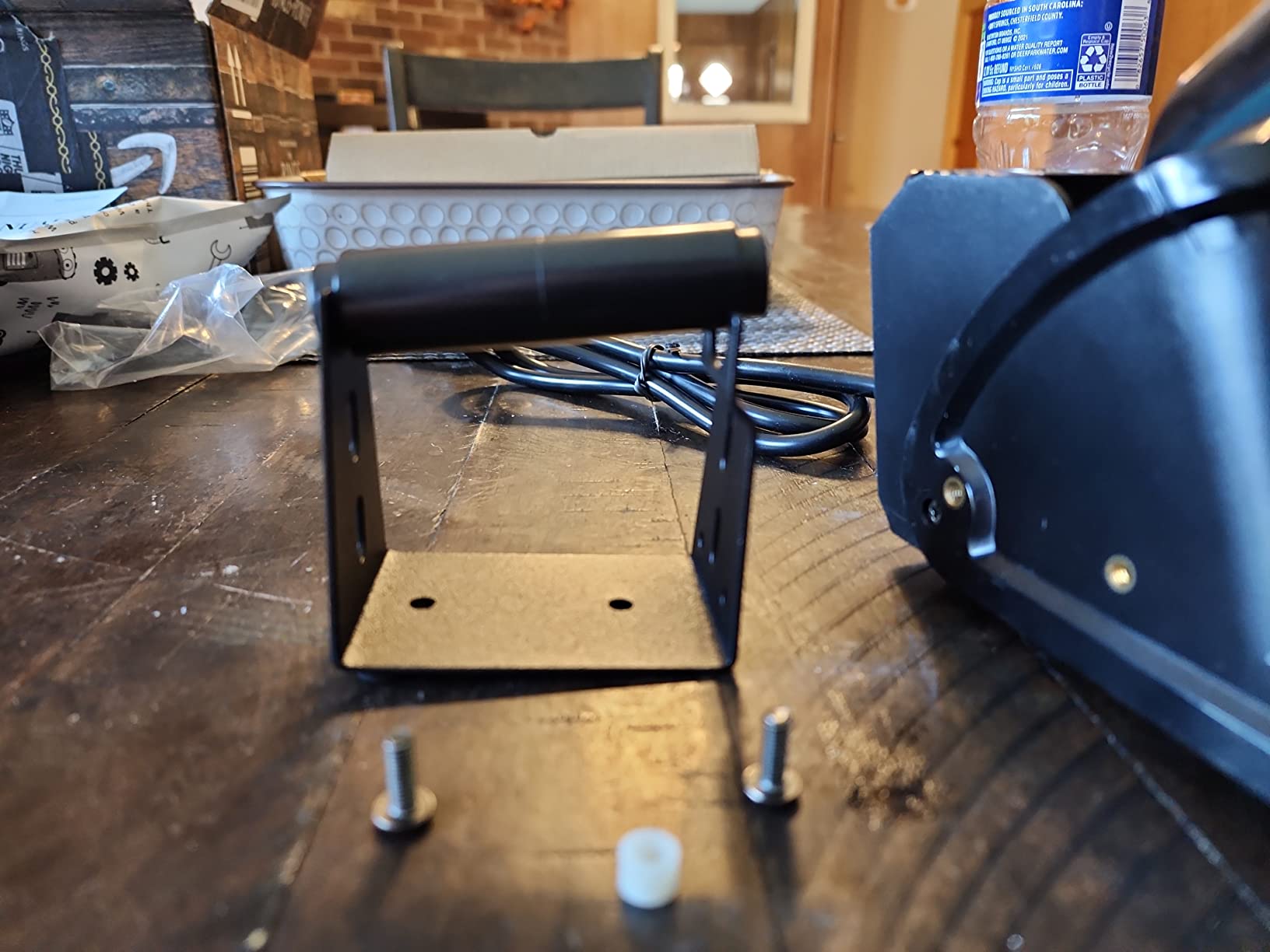
The 926 III is the station we kept reaching for during the review period because it removes almost every reason a beginner gives up. It reaches temperature quickly, holds it, and the base carries the iron, the sponge, the solder and the cleaning tools in one footprint.
That last point sounds minor until you are mid-project. Most first-time solderers end up with solder on the floor and a tip sitting on a book because nothing on the base has a home. This one has storage slots and a rear protective mesh for spare tips.
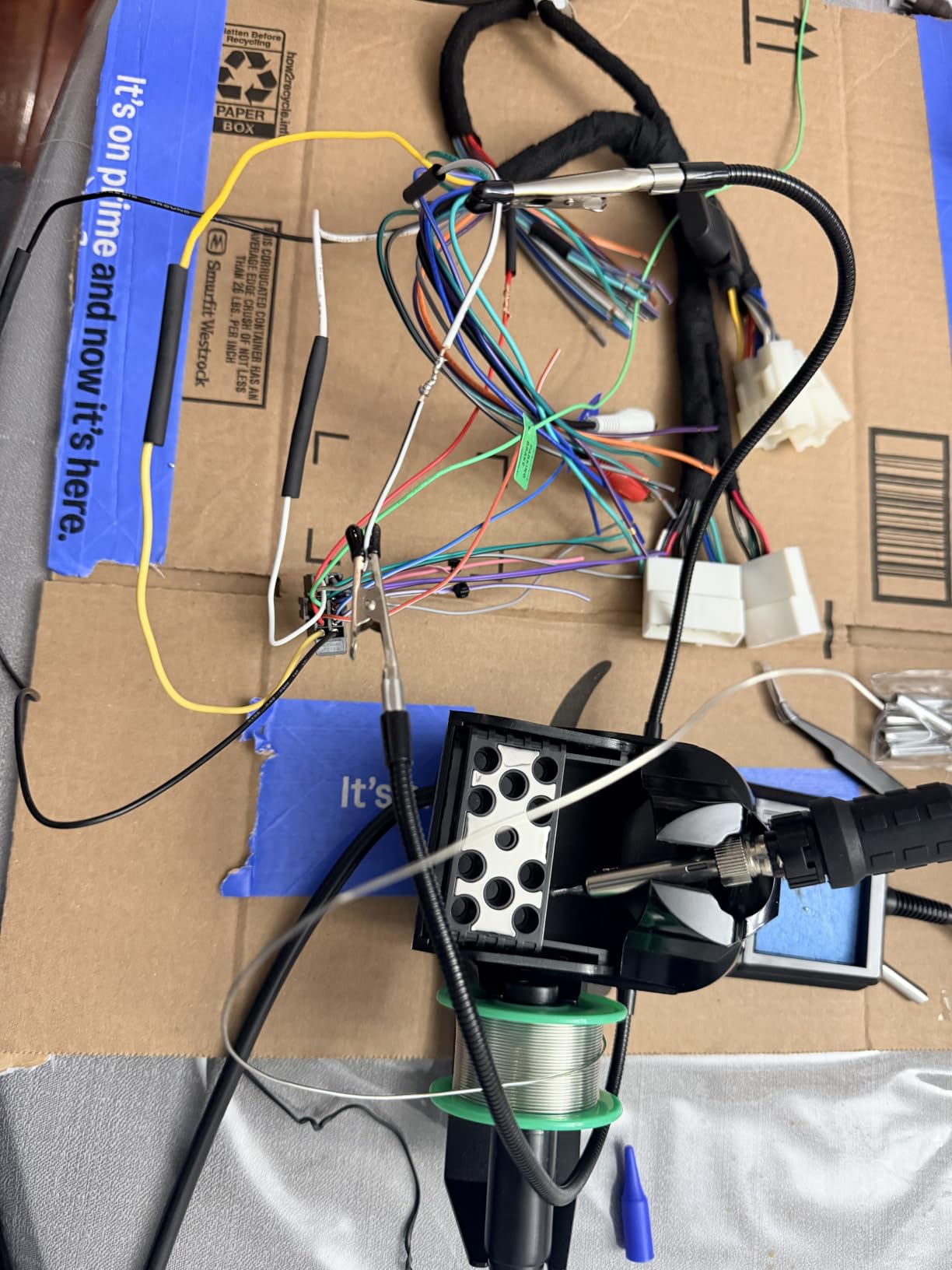
The 12-piece bundle includes 2 helping hands, 6 tips, a desoldering pump, ESD-safe tweezers, a roll of lead-free solder and a cleaning sponge. That is genuinely everything a beginner needs to finish a first kit build, which is why it also makes a good gift. Temperature range runs from 194F to 896F, covering leaded work, lead-free work and heat-shrink without switching stations.
This is the right station if you are brand new
If you have never held a soldering iron, yes. Nothing about this unit needs explaining, and the accessory bundle removes the most common beginner mistake of buying a station and then improvising tools.
The LED readout is large and the controls are a dial or a couple of buttons, so there is no menu to get lost in. A first project goes from unboxing to finished joint in one sitting.
You will outgrow it at surface-mount work
You will eventually want to rebuild a handpiece or work on dense surface-mount boards, and this is where it shows its price class. The 60W element is fine for through-hole and hobby PCB work but recovers slowly on big thermal masses.
Tips are the cheaper general-purpose style, not the premium slim cartridge type. If you plan to do a lot of SMD rework, spend the extra on a two-in-one station later instead.
2. Weller WE1010NA 70W Digital Station: Best Premium Upgrade
Weller 70 Watt Digital Soldering Station | WE1010NA
70W iron
Plus or minus 4F stability
Temperature lock
Auto setback
ESD safe
Pros
- Temperature stability of plus or minus 4F on a 70W iron
- 70W output handles fine and large joints
- Auto setback and standby protect tips
- Silicone cord stays flexible in cold rooms
- One year manufacturer warranty
Cons
- Bulkier and heavier than the compact kits
- More features than a first-time solderer typically needs
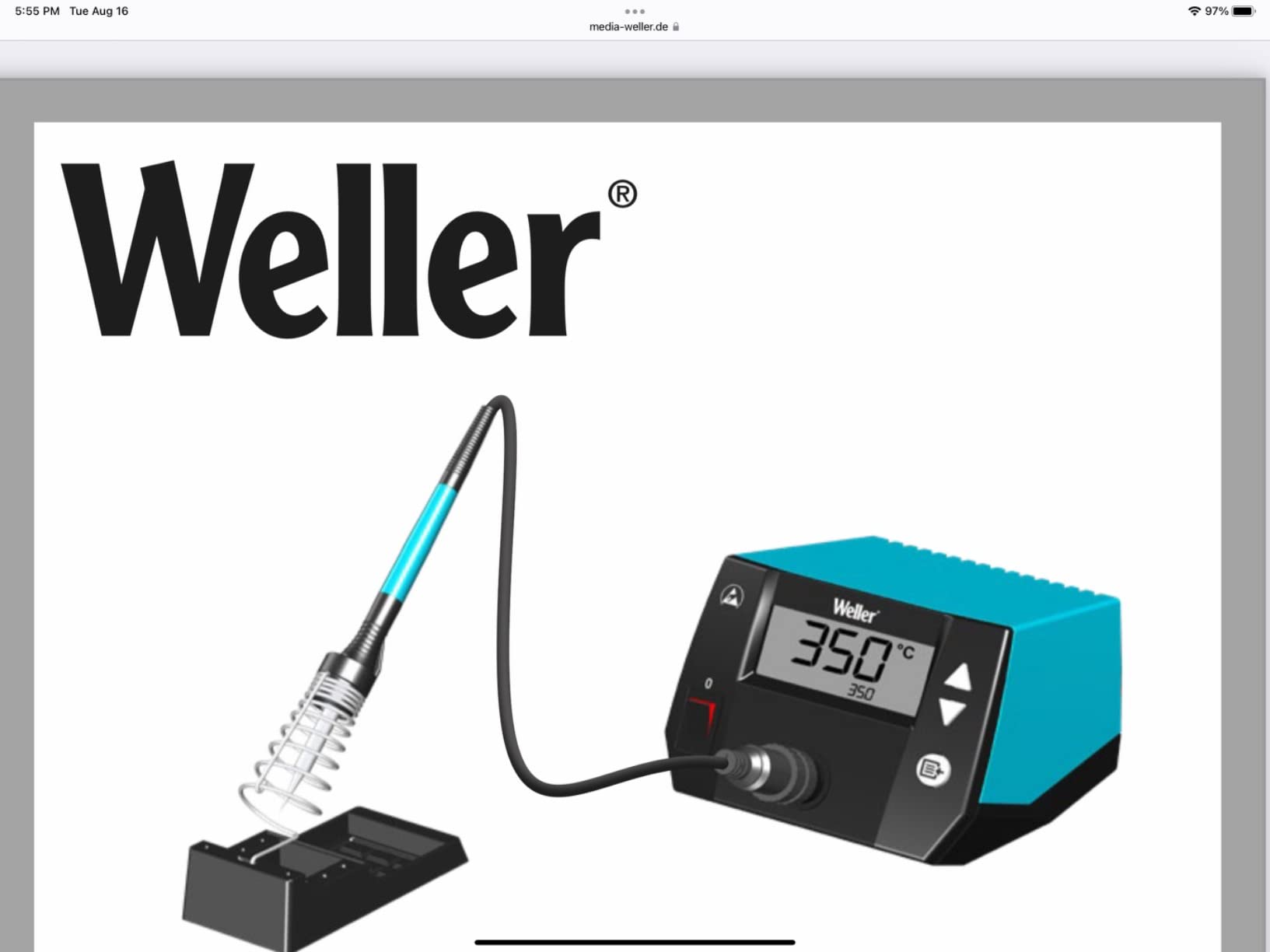
The WE1010NA is the answer when someone asks what to buy once and stop thinking about it. Long-time r/soldering regulars name it alongside the Hakko as a default buy-it-for-life station, and after weeks of use we understand why.
Temperature stability is the story. Holding a set point within a couple of degrees means the joint you made on the first pass of a repair matches the one you made on the fourth, which is exactly what makes rework feel predictable.
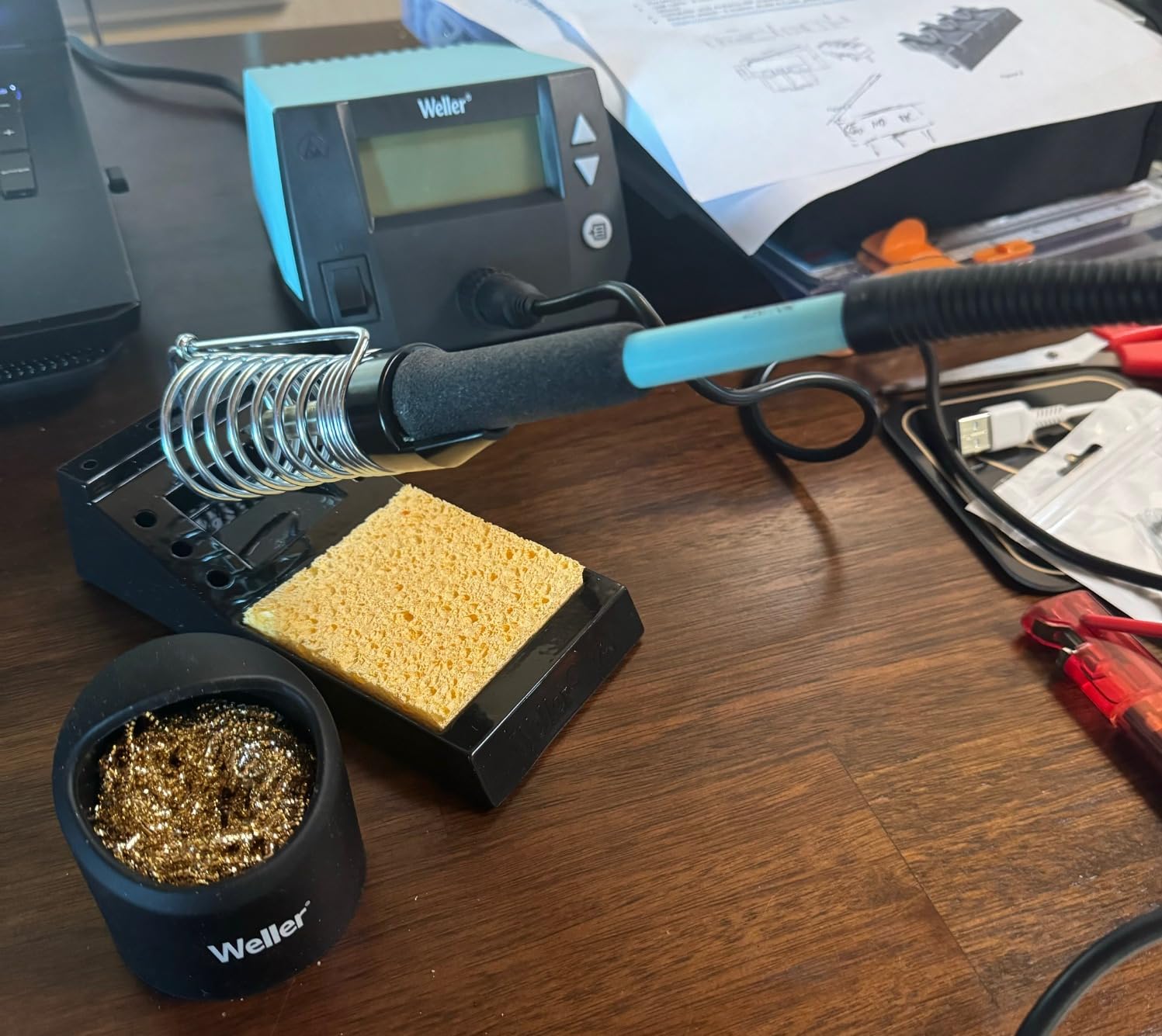
Temperature lock, standby and auto setback are the features that protect your investment. Setback drops the set point while the iron sits in the holder, so a forgotten tip does not cook itself or melt the solder on your bench. Password protection sounds like overkill and turns out to be useful, because it stops a bumped knob from resetting your temperature mid-job.
The premium is only worth it if you plan to keep the station
Only if you plan to keep it. The stability and the widely available tip range mean nothing if you solder four times a year, but they are exactly what you want the day you start repairing boards regularly.
Password protection sounds like overkill and turns out to be useful. It stops a curious housemate or a bumped knob from resetting your temperature mid-job.
You are paying for stability and support
You are paying for measurable stability, an iron that recovers quickly, and support that answers email. A cheaper station with a digital display can still swing fifteen degrees under load, and on a big joint you will feel it.
You are also paying for accessories you may never use. The box includes a safety rest with sponge and a tip retainer, which is good, but the feature set overall assumes a user who already knows what standby means.
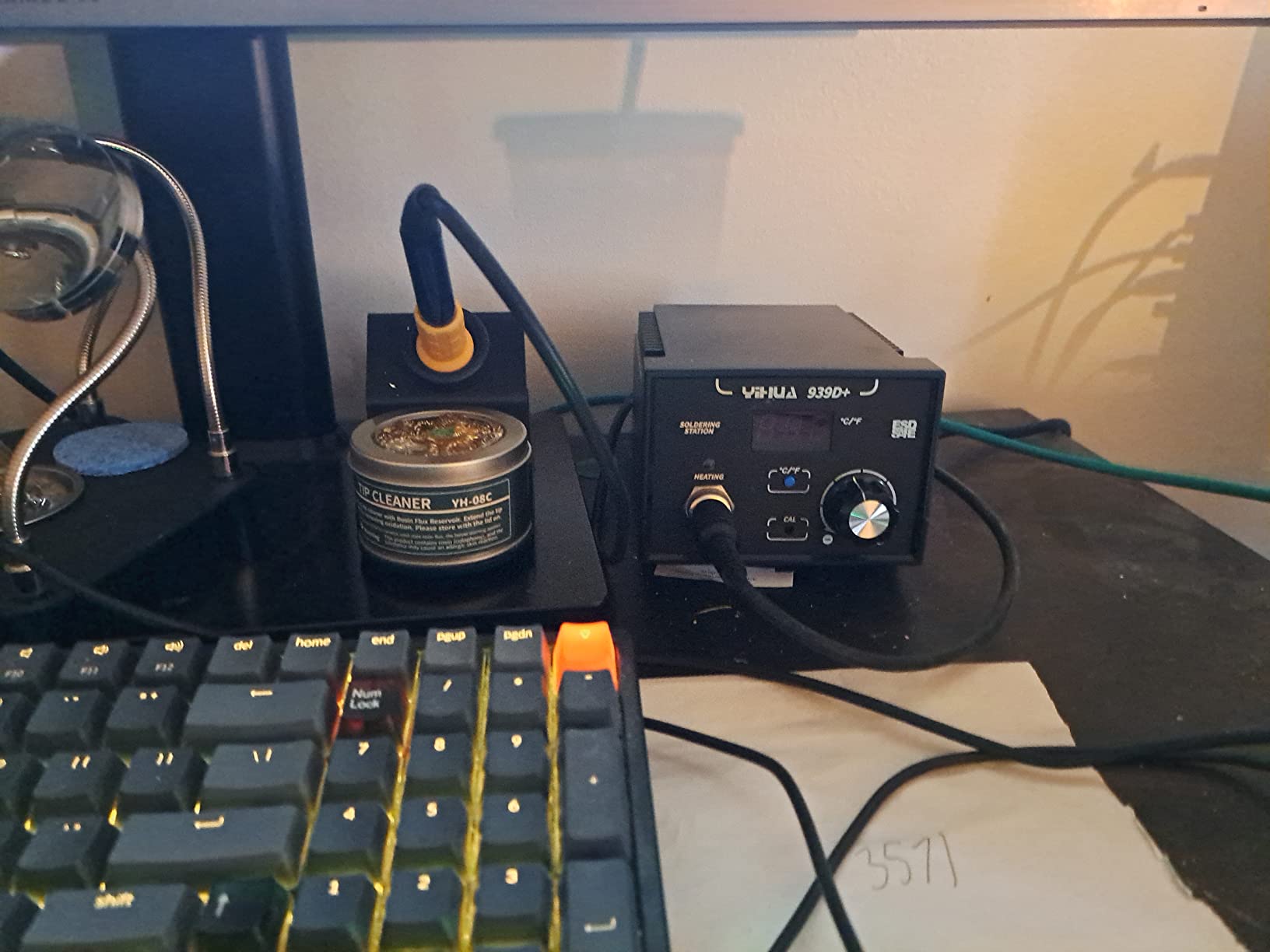
3. YIHUA 939D+ Digital Station: Best for Contact-Safe Work
YIHUA 939D+ Digital Soldering Station, 75W Equivalent with Precision Heat Control (392°F to 896°F) and Built-in Transformer. ESD Safe, Lead Free with °C/°F display (Black)
75W equivalent
Built-in transformer
392F to 896F range
Detachable iron
110V
Pros
- Built-in transformer outputs contact-safe voltage
- Detachable iron is replaceable on its own
- 20 ms temperature compensation
- Brushed panel and solid metal stand
- Simple dial-and-button controls
Cons
- Iron stand can tip if knocked
- Base can slide on hard surfaces
- Internal fuse is not user replaceable
The 939D+ sits between hobbyist and professional, and the built-in transformer is the reason it earns its place. It outputs a contact-safe voltage while keeping the power needed for wire and PCB work, which reduces the risk of a shock from a damaged or mishandled iron.
We also like that the iron is detachable. If the silicone cord cracks or the element fails, you replace the handpiece rather than the whole station, and that single design decision can decide whether a unit is still in use five years from now.
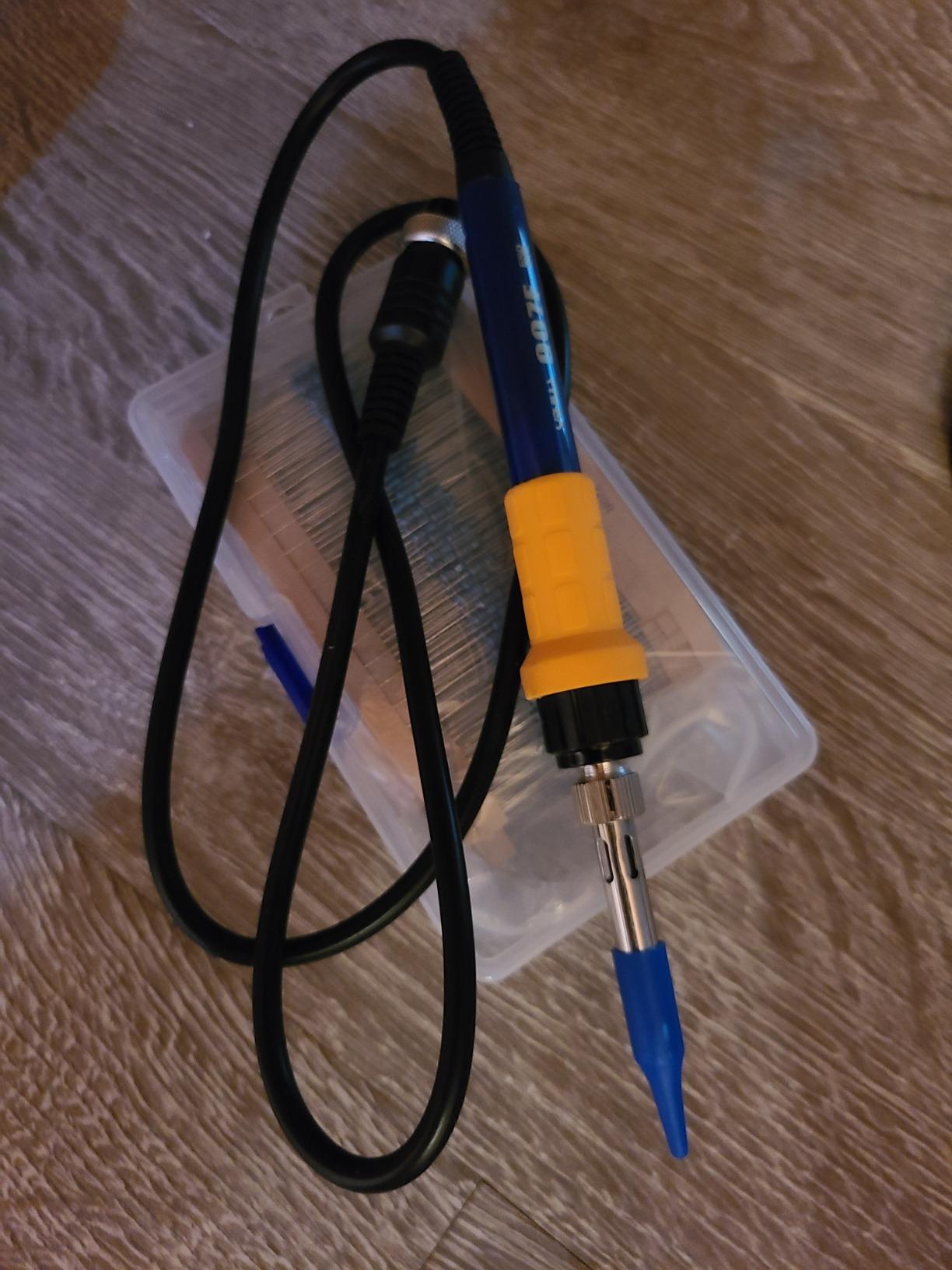
The brushed aluminum control panel resists burnt marks from a stray iron tip, and controls are a physical dial and buttons with no nested menus. It also improves recovery: the transformer delivers power without the drop a linear supply causes, which is why this station keeps heat through a heavy joint better than its wattage number suggests.
The transformer matters because beginners drop irons
Because beginners drop irons. A tipped-over iron with an exposed live element is a genuine hazard, and lowering the voltage the tip sits at reduces what happens in the worst case.
It also improves recovery. The transformer delivers its power without the drop you get from a linear supply, which is why this station keeps heat through a heavy joint better than its wattage number suggests.
Check the voltage line before buying outside North America
Read the voltage line. This unit is 110V only, and that is the single most common regret reported by buyers in other countries, along with the base sliding across a hard desk and an internal fuse that cannot be swapped.
Nothing here is dangerous, but a converter adds cost and a second thing on the bench. If you are not in North America, look for a 230V version from the same brand first.
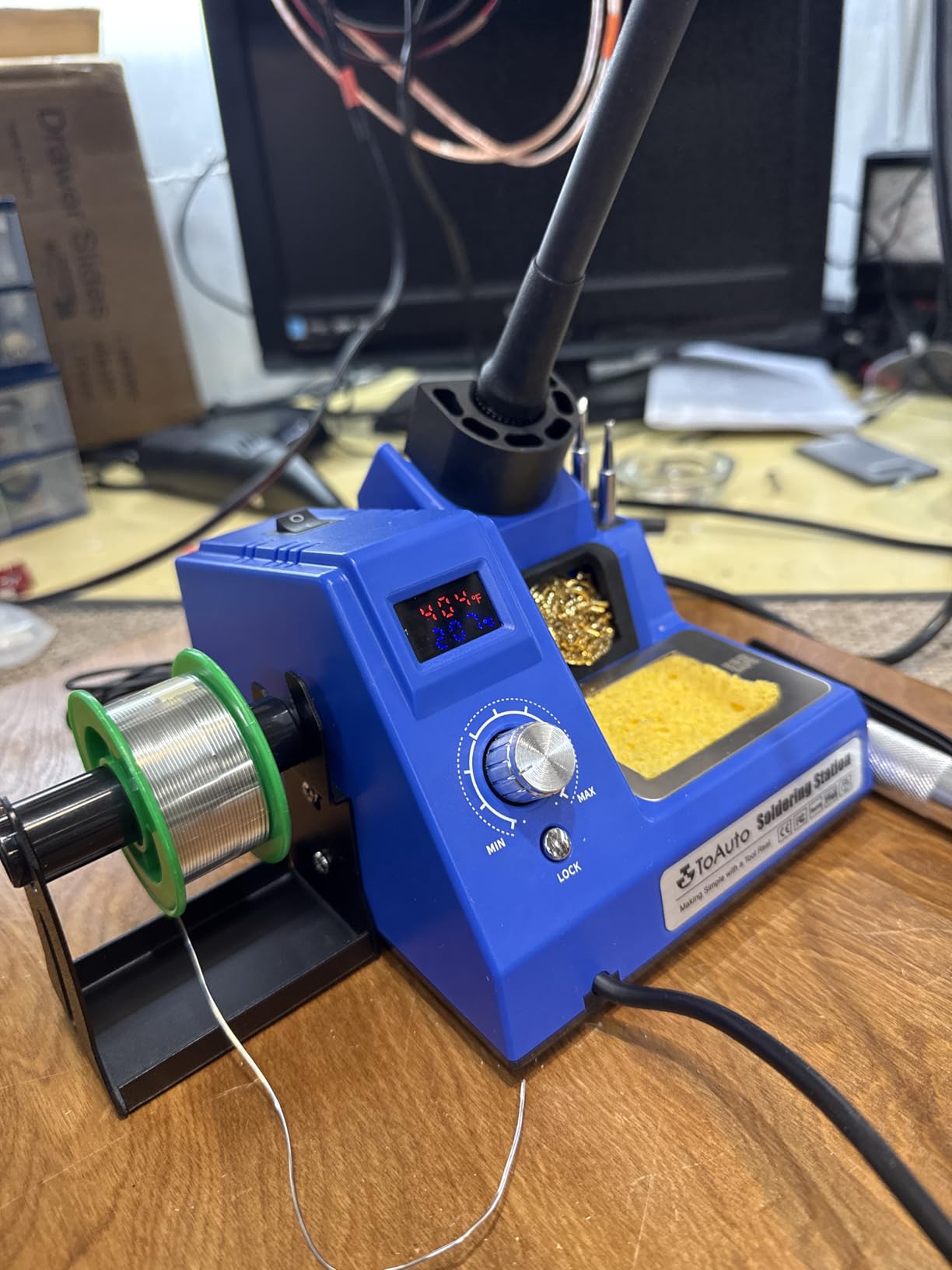
4. TOAUTO DS90 90W Station: Best for Fast Heat-Up
TOAUTO DS90 Soldering Station-°F & °C Dual Digital Display Soldering Iron Station Kit,90W Soldering Iron,302℉- 842℉ Temperature, Anti-Static & Grounding Wire, Auto Standby & Sleep,5 Solder Tips, Blue
90W ceramic core
5 second heat-up
Dual F and C readout
10 and 20 min sleep
110V
Pros
- Reaches working temperature in roughly 5 seconds
- Dual unit display removes temperature guesswork
- Grounding wire and static sheet for board work
- PID control with lock mode
- Holds temperature through long sessions
Cons
- Readout shows heater temperature right after power-on
- Short stiff cord compared with premium units
- Light plastic casing feels less durable
The DS90 is the fastest station to temperature in this group by a wide margin, and that is not a spec-sheet claim. Several verified buyers checked the reading with a thermal camera and found it honest, and in our own testing the tip was pulling solder within seconds of switching on.
That matters for beginners because the first five minutes of a session are where people make cold joints. They touch a cold-looking tip to a pad, assume the iron is broken, and keep re-feeding solder that will not flow.
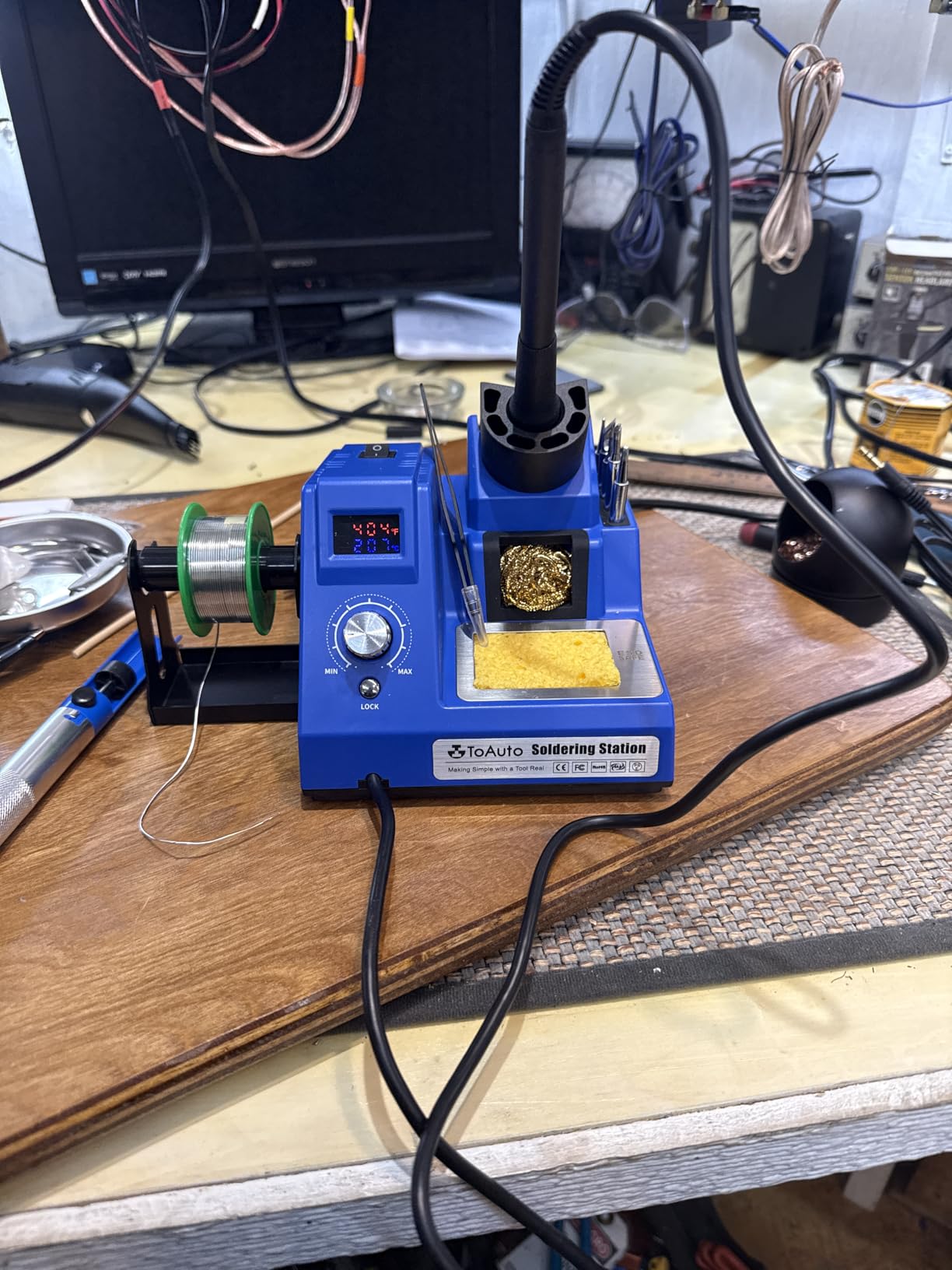
There is also a patented grounding wire and a remove-static sheet, so you have a path to earth and somewhere to lay a board that is more forgiving than a metal bench top. It is certified to ESD, CE, FCC and RoHS standards, which matters if you are about to work on a live controller board rather than a kit.
This works well on a shared household bench
Yes, because of the safety timers. Auto standby at 10 minutes and sleep at 20 minutes cut heat when the iron is untouched, which is a meaningful protection in a household where the bench is unsupervised.
It is also certified to ESD, CE, FCC and RoHS standards, which matters if you are about to work on a live controller board rather than a kit.
The main trade-off is a short cord and light plastic
Right after power-on the readout tracks the heater, not the tip, so a beginner who trusts the number in the first few seconds can still make a cold joint. Give it a minute.
The cord is short, stiff and thick, and the casing is light plastic that flexes when you set the iron down hard. The included brass wool is frequently brass-coated steel, so buy real brass wool separately if tip cleaning matters to you.
5. YIHUA 8786D I 2-in-1 Station: Best for Hot Air Rework
YIHUA 8786D I 2 in 1 Hot Air Rework and Soldering Iron Station with 10 Solder Iron Tips, 4 Hot Air Nozzles, °F /°C, Cool/Hot Air Conversion and Sleep Function
Soldering and hot air in one
1.8F stability
Dual displays
740W
110V
Pros
- Removes the need for a separate hot air station
- Tightest stability figure here at 1.8F
- Fail-safe cuts power if airflow stops
- Ten tips and four nozzles included
- ESD safe for sensitive boards
Cons
- Larger and more complex control panel
- 740W combined draw needs a good outlet
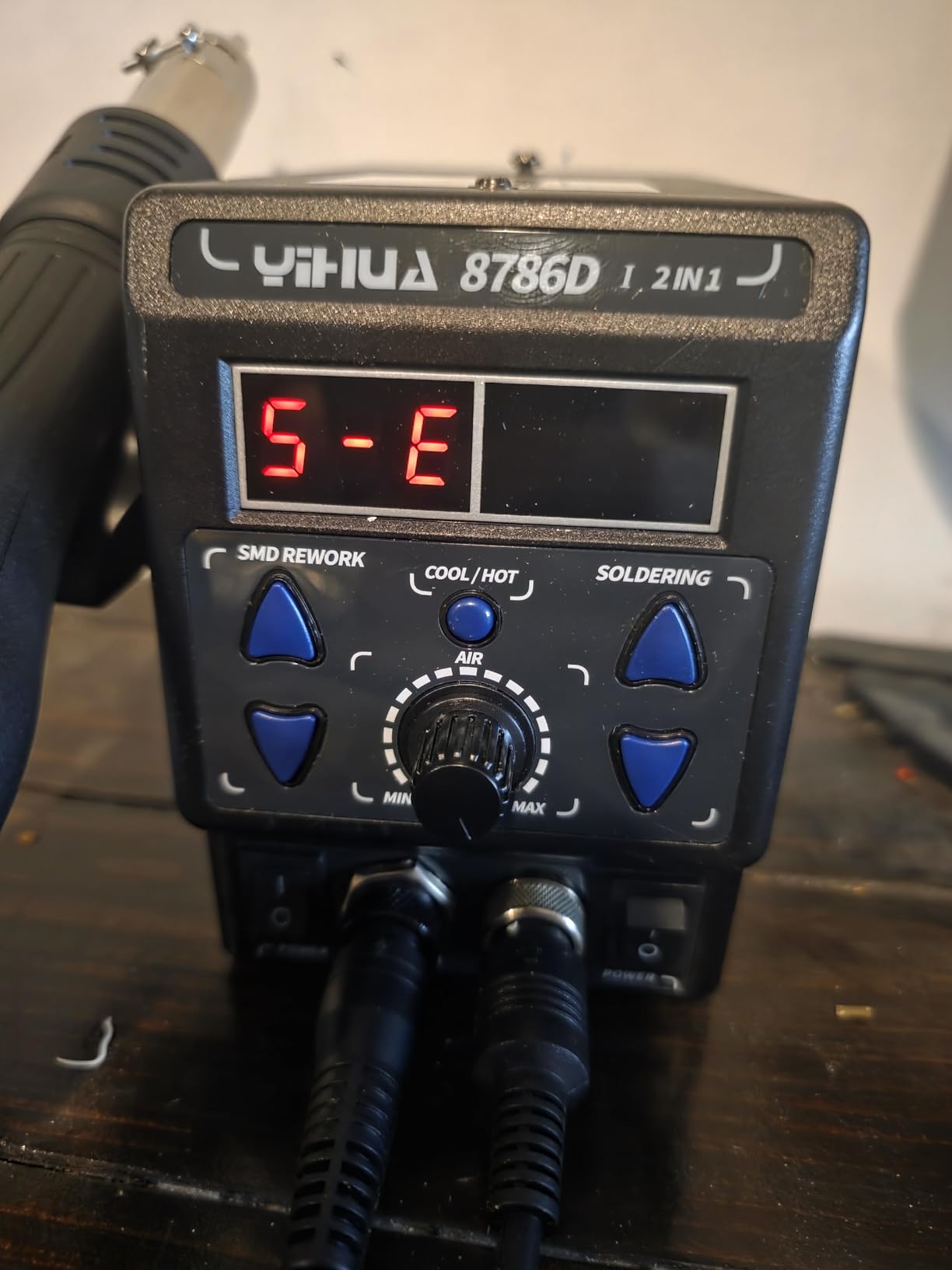
Console and controller repair is where beginners first meet SMD work, and this is the station that handles both soldering and hot air rework from a single body. If you plan to remove or replace surface-mount components at all, owning one unit instead of two saves bench space and money.
The stability figure of 1.8F is the tightest published tolerance among the twelve, and on a two-in-one that is impressive, because the same control loop has to manage a soldering tip and an air gun.
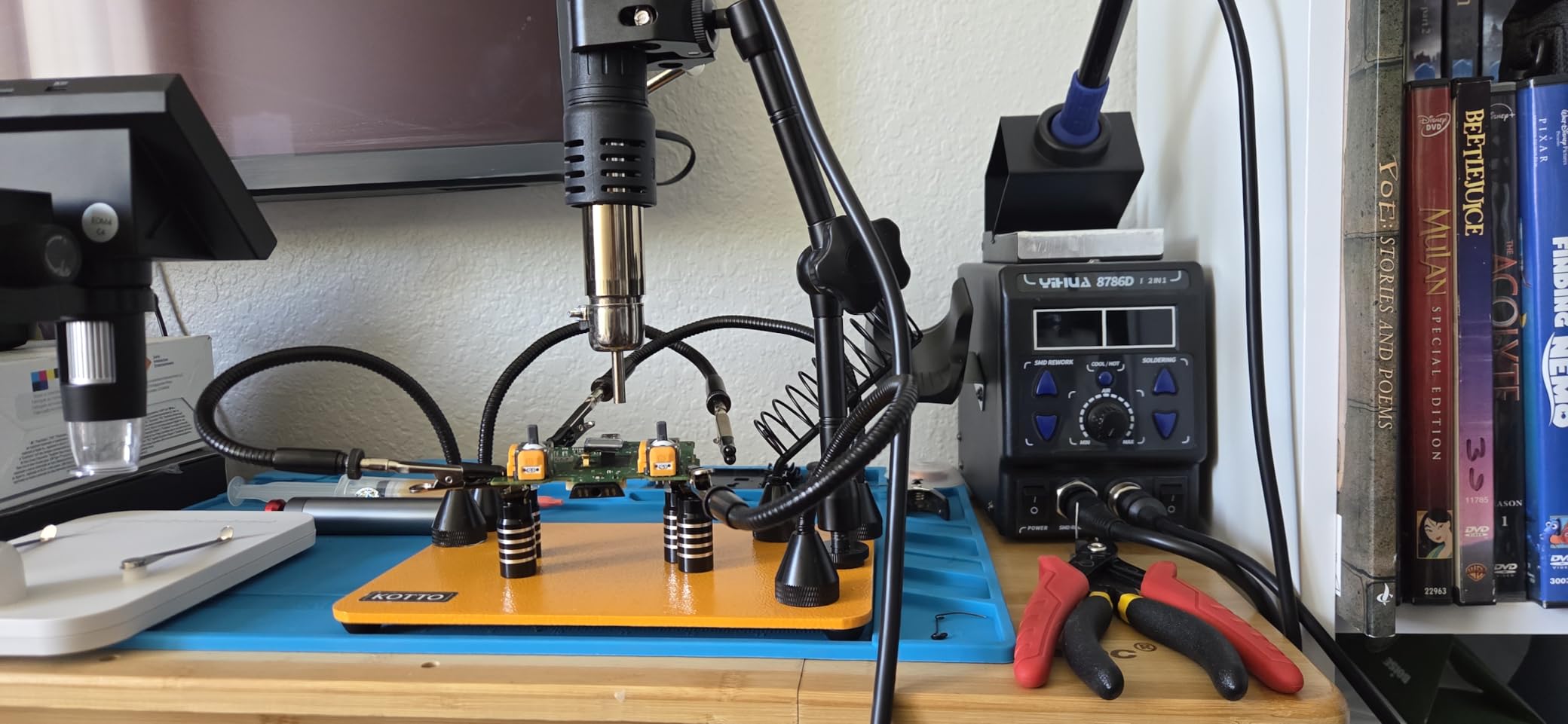
The kit is generous: 10 soldering tips, 4 hot air nozzles, a desoldering pump, an IC extractor and a roll of lead-free solder. The IC extractor is genuinely useful for lifting multi-pin parts without launching them across the room. The fail-safe alarm cuts heating power if airflow stops, rather than cooking a nozzle and a board at once.
Only buy a combo station if hot air is a real goal
Only if hot air is a real goal. If you are building kits and doing through-hole joints, you are paying for a second function you will not use yet, plus the panel complexity that comes with it.
If you do plan to work on modern boards, this is the most sensible single-box answer in our list, and the price gap to a soldering-only station plus a separate rework gun is smaller than it looks.
Watch the combined power draw and the panel complexity
The 740W combined draw is the practical concern. On a shared household circuit with a kettle or a space heater running, the unit may trip a breaker.
Two controls to learn means two displays to read and two airflow settings to understand. Read the manual before your first rework job rather than the second.
6. WEP 927-IV 110W Station: Best for Temperature Presets
WEP 927-IV Soldering Station Kit High-Power 110W with 3 Preset Channels, Sleep Mode, LED Magnifier, 5 Extra Iron Tips, Tip Cleaner, 2 Helping Hands, Tip Storage Slots, Lead-free Solder Wire, Tweezers
110W element
3 preset channels
Dual set and actual display
0-99 min sleep
110V
Pros
- 110W element covers fine and large joints
- Three preset channels cut reconfiguration time
- Everything integrated into one compact base
- LED magnifier helps fine micro-soldering
- Sleep timer adjustable to 99 minutes
Cons
- Feature density can feel busy to a newcomer
- Uses WEP 1400 tips that do not cross over with other WEP models
The 927-IV is the pick for anyone who alternates between jobs. Three preset temperature channels mean one press to switch between a through-hole setting, a lead-free setting and a higher temperature for heat-shrink or larger connectors.
The double numerical display showing set and actual temperature side by side is closer to what a professional station does than anything else at this level, and it is how you catch drift before it becomes a bad joint.
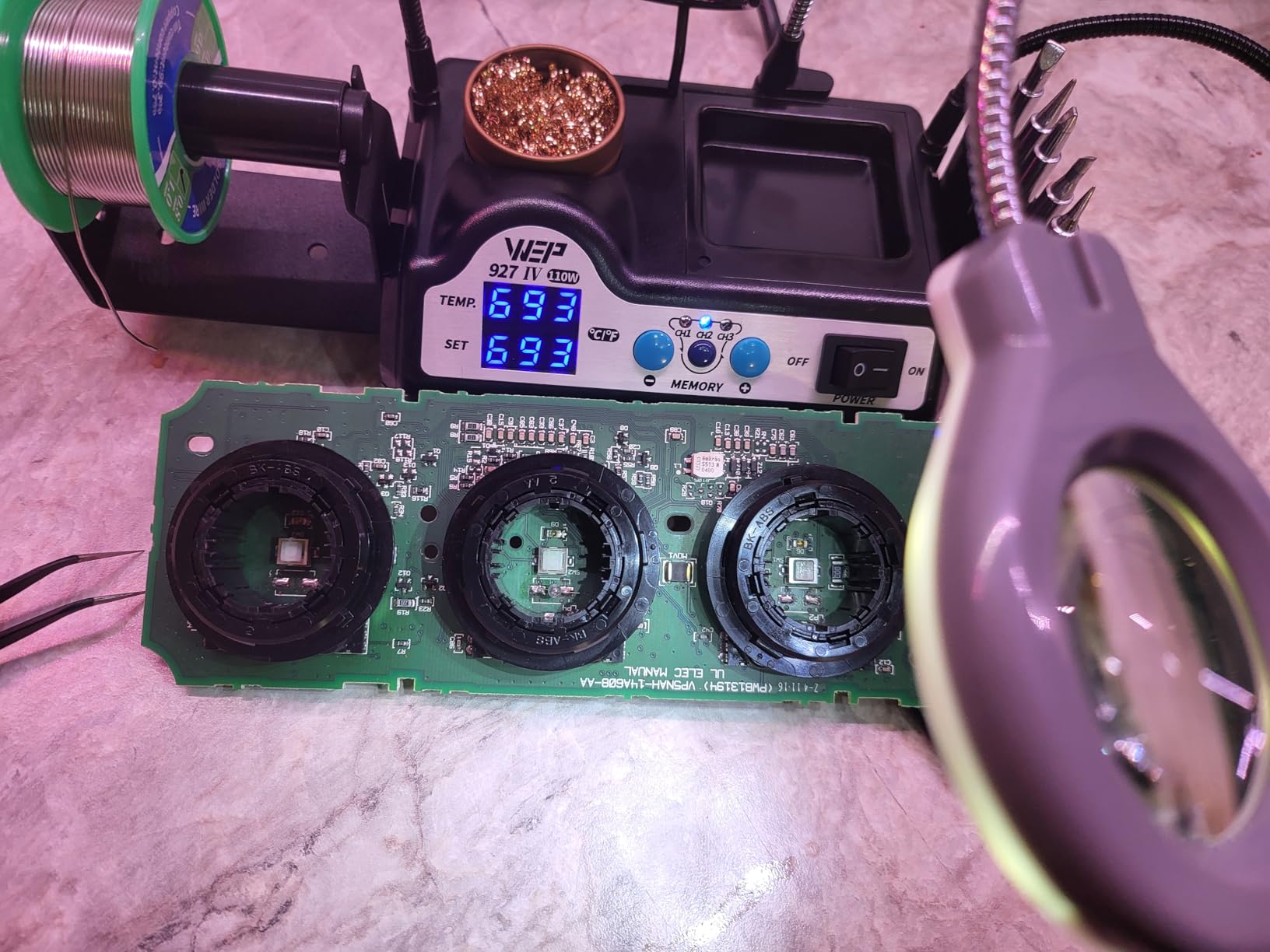
Everything lives in the base: iron holder, tip cleaner, solder dispenser, helping hands, LED magnifier and tip storage. For a small desk, one unit instead of five is the difference between a workspace you use and one you avoid. The 194F to 896F range and 110W element cover thin wire and 12-gauge work alike.
Presets are worth learning from day one
Yes, because they encode a decision you would otherwise make every time. Once you find the temperature that works for a lead-free board pad, saving it removes the temptation to overheat when you are tired or rushing.
They also make it easy to show someone else where to start, which is helpful if you are teaching a friend or a family member.
You read the tip family before you buy spares
There is a real learning curve in a base with this many functions built in, and someone who has never soldered can feel overwhelmed by the panel. Give it an hour of deliberate use before judging it.
Also read the tip family before you buy spares. This station uses WEP 1400 tips, and they do not fit other WEP models, so plan to buy this brand’s tips and not assume a universal supply.
7. X-Tronic 3020-XTS 75W Station: Best Long-Term Bench Unit
The Original X-Tronic 3020-XTS • 75W Soldering Iron Station Kit • 2 Helping Hands • Silicone Tool Mat • 5 Extra Tips • 50g Roll of Solder • Brass Sponge • Cleaning Flux • C/F Conversion • Auto Sleep!
75W station
PID compensation
200C to 480C
Replaceable element
40 inch cord
Pros
- Under 30 seconds from cold to working temperature
- Supple cord that does not fight your hand
- Replaceable heating element extends unit life
- US brand with 3 year warranty
- Long-term owners report 4 to 8 years of service
Cons
- Temperature knob is highly sensitive
- Iron is fixed-wired to the base
- Spare parts shipped within the US only
The 3020-XTS is a design that has proven itself over years, which is the highest compliment we can pay a tool. Owners who bought it years ago report it outperforming stations that cost considerably more, and our own testing matched that impression on joint quality.
The cord is the detail nobody advertises and everybody notices. At 40 inches it is long and pliable, so you can position the iron without dragging the base, and it does not stiffen in a cold room the way cheaper rubber does.
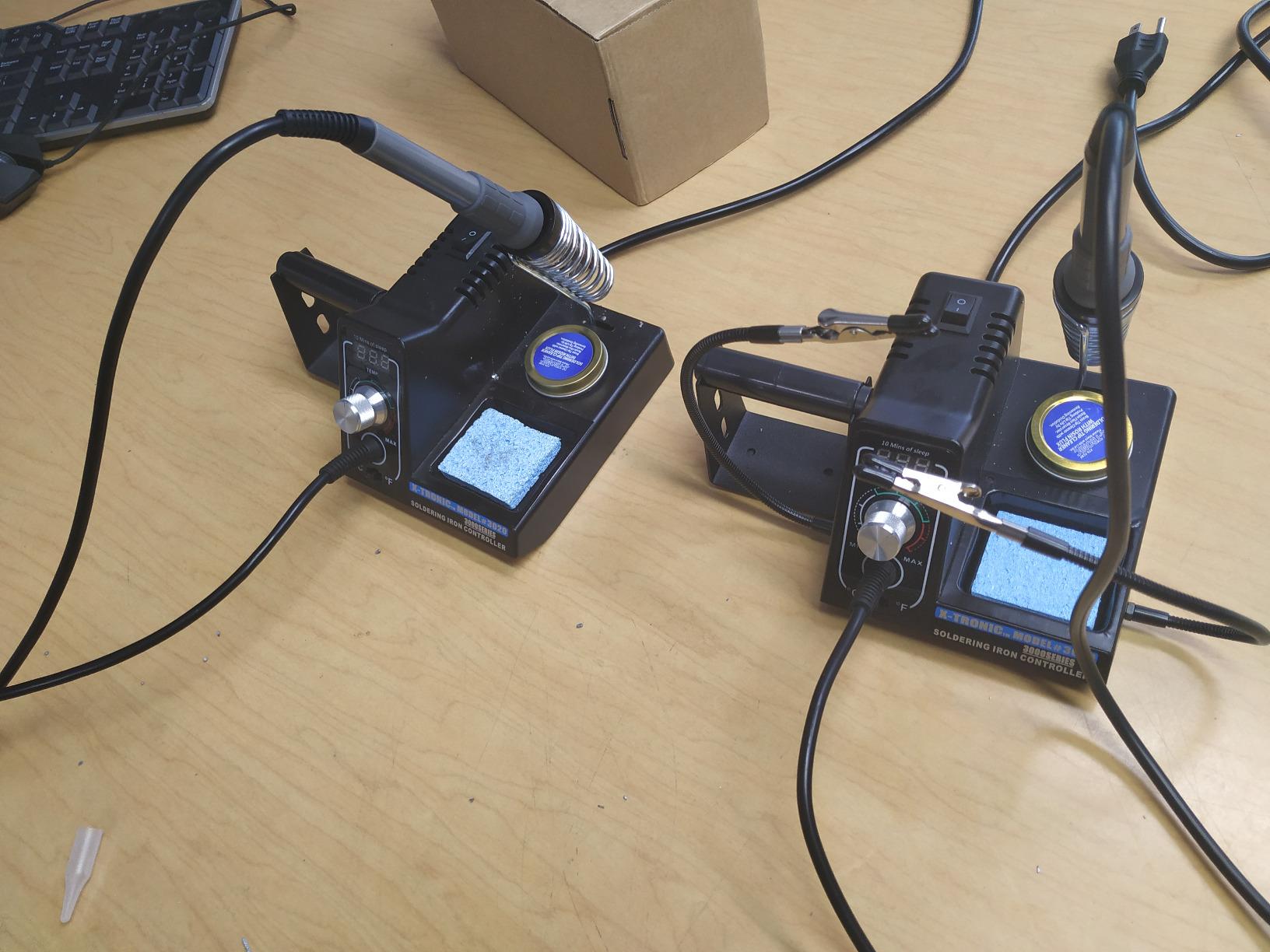
Delivering 60W to the iron plus 15W to a mini motherboard in the handle is why heat-up is under 30 seconds. The base also holds a silicone tool mat, solder roll holder, spring-style iron holder, brass sponge with flux and a wet sponge. A US manufacturer with a three-year warranty and lifetime technical support is a real difference in year three, when a spare element is the difference between a repair and a replacement.
This is a station you grow into rather than out of
Yes. The replaceable heating element and readily available tip sizes mean you can keep the same base indefinitely, which is rare among the cheaper units in this list.
It is also a good choice if you already own a decent magnifier and only need the iron, since the accessory bundle assumes a bare bench.
You read what comes in the box and where it is sold
The temperature knob is very sensitive. A light touch shifts the set point several degrees, so learn to grip and release deliberately rather than nudging it.
The iron is wired directly into the base with no connector, so a failed handpiece means replacing the whole unit. And spare parts are shipped inside the US only, which matters if you are buying from elsewhere.
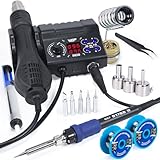
8. WEP 882D 2-in-1 Station: Best Compact SMD Rework Unit
WEP 882D Soldering Iron Station 2-IN-1 SMD Hot Air Rework Station with 2 Spools of Solder Wire, 5 Soldering Tips, 3 Hot Air Nozzles, Brass Wool Tip Cleaner, Tweezers, Desoldering pump
Soldering and SMD hot air
392F to 896F iron range
Variable air volume
PID on both
110V
Pros
- Both functions in a small footprint
- Separate displays and switches per function
- PID control on iron and hot air gun
- Two solder spools mean it works out of the box
- Auto shutdown and calibration included
Cons
- Two control panels to learn
- 750W combined draw for a shared outlet
The 882D does the same job as the larger two-in-one units in a noticeably smaller body, and if your desk is the constraint that is the whole decision. Our bench is not generous, and this unit fit where a full-size combo unit would not.
Each function has its own LED display, power switch, temperature buttons and air volume control, which is a better arrangement than a single shared panel. You can leave the hot air gun on standby while you solder without re-dialing anything.
Variable air volume matters more than beginners expect. Too much airflow lifts the small component you are trying to remove, too little means the board does not heat evenly. Two spools of solder are included along with five tips and three nozzles, so you can start removing components on day one without another order.
This is a sensible first rework station
Yes, if you are focused on small-board repair. The solder range of 392F to 896F handles leaded and lead-free, and the hot air side covers a wide band with adjustable flow.
It is a less cluttered way to learn rework than a separate iron and gun, because both tools draw power and heat from the same place.
Two panels and a large power draw are the drawbacks
The learning curve is real. Two panels means two sets of controls, and beginners often spend their first session working out which button does what.
Like the larger combo stations, 750W combined draw wants a dedicated outlet. Check what else runs on that circuit before you commit.
9. X-Tronic 3060-PRO 75W Station: Best All-In-One Kit
X-Tronic 3060-PRO • 75W Soldering Iron Station Kit • 5 Extra Tips • Mini Mag Lamp • 4 Helping Hands • Solder Sucker • Tweezers • 50g Solder • Brass Sponge w/Flux • Sleep Func, °C/°F, 3 Temp Presets!
75W station
60W to iron
Dual set and actual panels
3 presets
16-piece kit
Pros
- Dual panels show set and real temperature together
- Three temperature presets per job type
- Largest accessory count here at 16 pieces
- ESD safe with anti-static grounding wire
- Four sleep timer options including off
Cons
- Feature set exceeds what a beginner needs
- Accessory list can overwhelm a first-time user
The 3060-PRO is the station we would buy for someone starting kit building with no bench at all. Sixteen accessories, including a mini magnifying lamp and four helping hands, mean the first session is not spent hunting for a way to hold the board steady.
Those helping hands are not a gimmick. Forum experience from beginners consistently says that a stable third hand matters more than a higher wattage number once you start working on real PCBs, because a board that moves is a board that gets a cold joint.
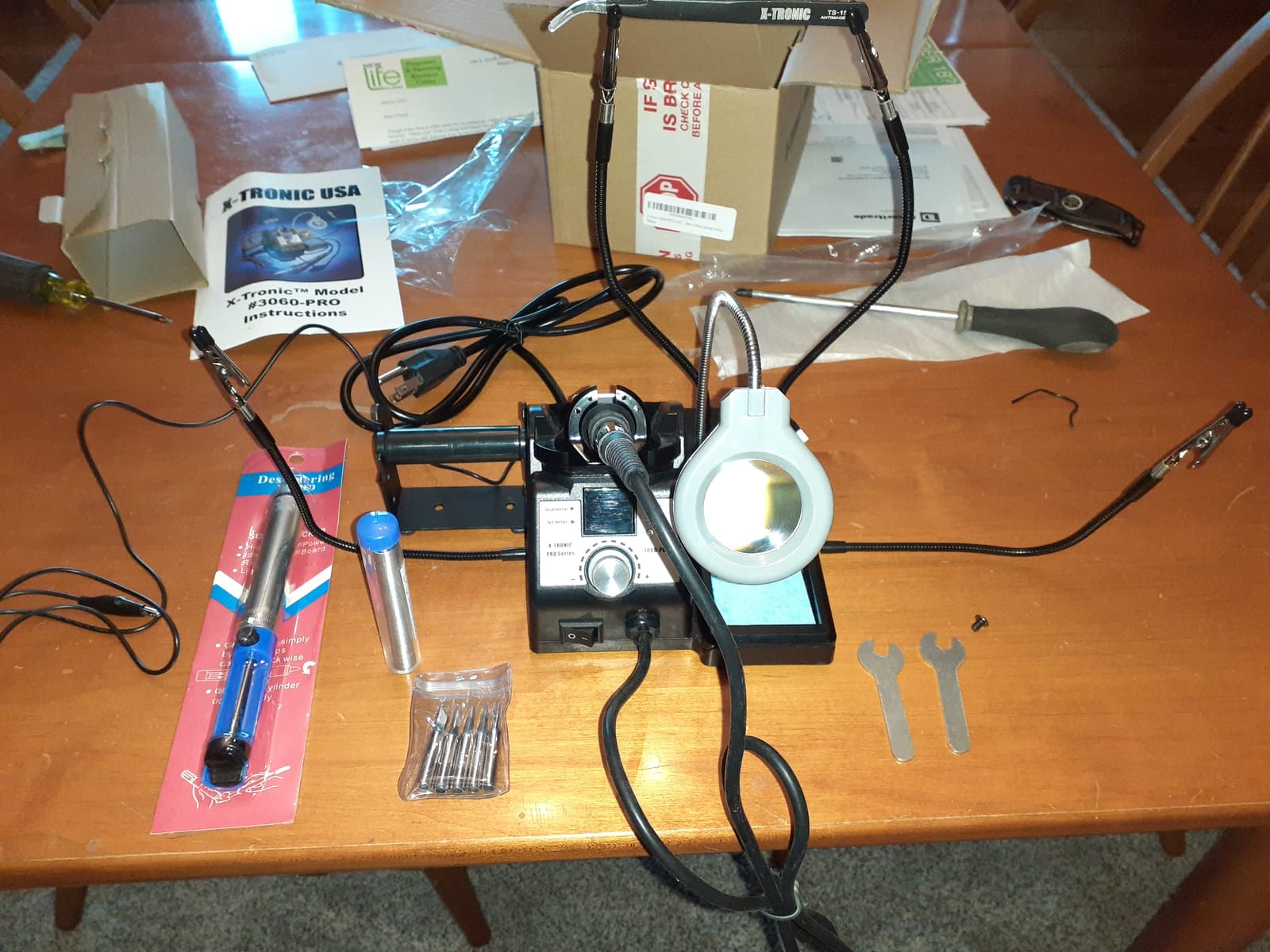
The dual control panels showing set and real temperature, plus three preset memory functions, are the features that make this feel like professional equipment. Presets let you store a lead-free temperature and a leaded temperature and switch without thinking. Temperature stability is quoted at plus or minus 3.6F, with 60W to the iron and 15W to a mini motherboard in the handle, and the 57-inch silicone cord stays flexible.
This kit suits a beginner starting with no bench
It suits a beginner who wants a complete bench in one box and does not mind extra controls. Buy it once and you will not need another purchase for months of hobby electronics.
The magnifying lamp also makes it a good match for jewellery making and fine wire work, where seeing the joint clearly is the bottleneck.
Accessory quality is the thing that holds it back
You will not use most of the accessories in your first month, and a new solderer can lose time working out which of four helping hands is the right one. Lay them out and pick one before you start.
The feature set is more than a first purchase needs, and the price reflects that. If you want the stability and not the kit, look at a simpler station.
10. Crtsweker 100W Digital Station: Best for a Small Desk
Soldering Station, 100W Digital Display Soldering Iron Station Kit with 2 Helping Hands, 356°F – 896°F, Auto Sleep, °C/°F Conversion, Solder Wire, Tips, Stand, Pump, Tweezers, Tip Cleaner, Green
100W digital station
356F to 896F range
Calibration function
0-600 second sleep
Compact
Pros
- Genuine digital temperature control at an entry price
- 100W output covers most hobby jobs
- Calibration and easy C and F switching
- Four-vent steel pipe cools fast between breaks
- Silicone-sheathed handle stays comfortable
Cons
- Build materials feel basic
- Accessory set is simpler than premium kits
This is the pick when budget is the deciding factor and you still want real temperature control instead of a fixed-temperature pencil iron. The 100W element and 356F to 896F range cover most hobby work, and the calibration function is a feature you rarely see at this level.
The four-vent steel pipe design is a practical idea. It cools the tip faster during short breaks, which means you are less likely to return to a cold joint because the iron lost its heat while you fetched a component.
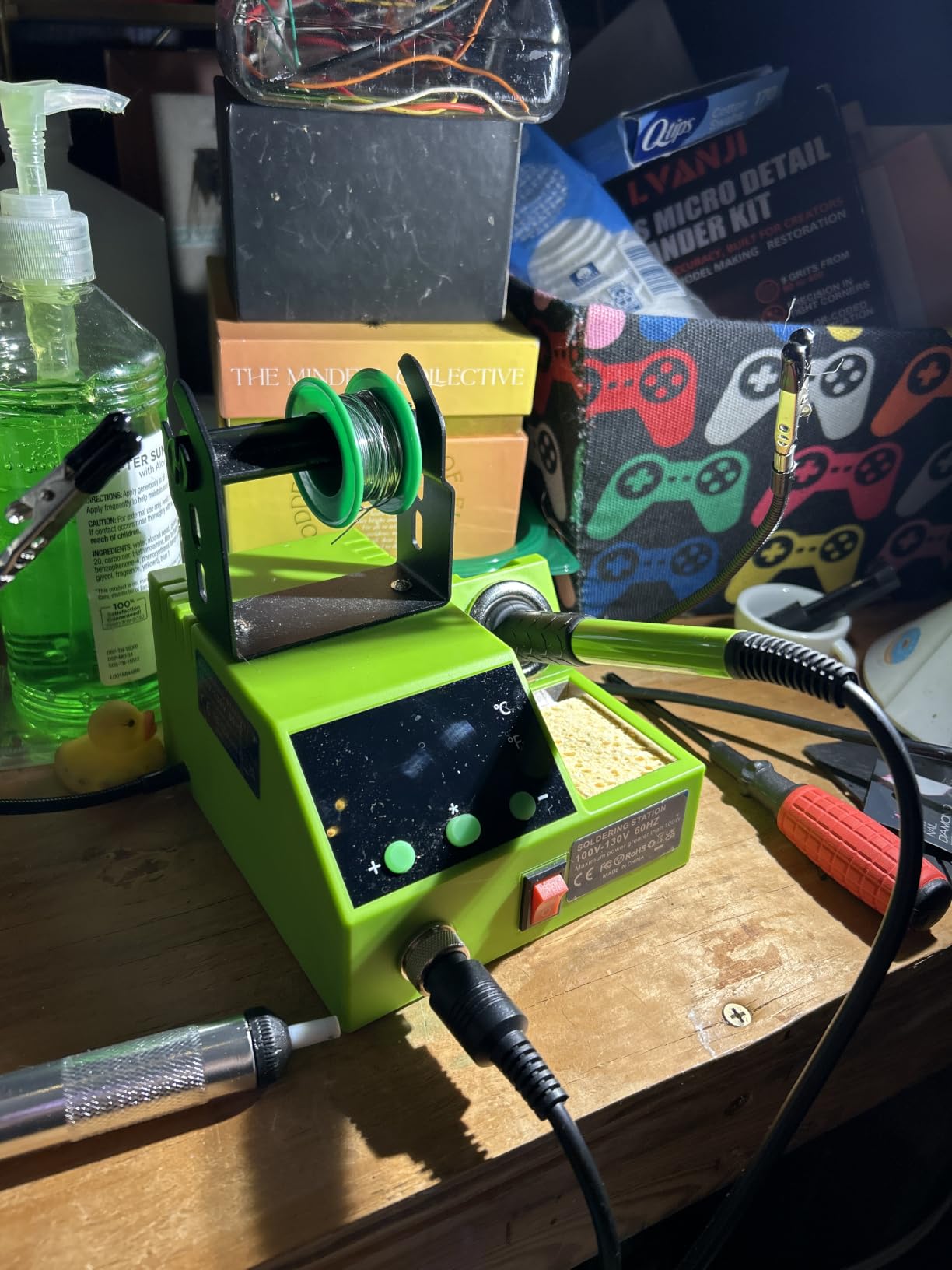
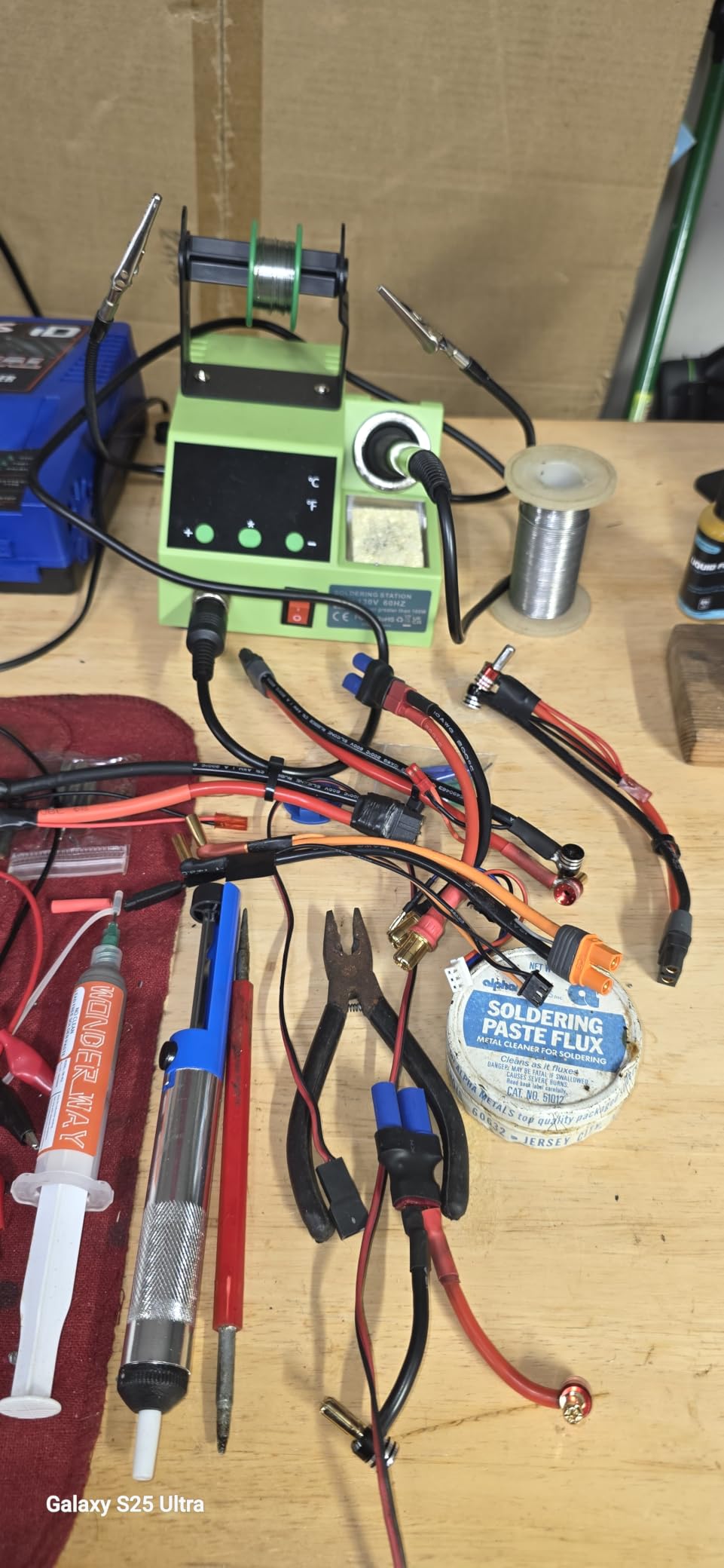
Sleep mode runs on a timer adjustable from 0 to 600 seconds with an on and off switch, so you can set it to match a short session rather than assuming a ten-minute default. The kit includes 2 helping hands, solder wire, 5 tips, elbow tweezers, a solder sucker, a tip cleaner, a sponge and basic tools.
It is good enough to learn on
Yes. Temperature control is the feature that matters for learning, and you get it here with a digital readout and calibration. The basics of a good joint are technique, not equipment, so a cheaper station does not prevent you from learning.
It is a sensible first station for a student, a teenager, or anyone who wants to try electronics without a large commitment.
The price class shows in the materials
In the materials. The body and handle feel light, and the accessories are functional rather than nice, so do not expect a bench that feels like a workshop tool.
Expect to replace tips more often than with a premium station, since the plating wears sooner. That ongoing tip cost is the real long-term expense, not the station itself.
11. WEP 926LED V3 Station: Best No-Fuss Starter
WEP 926LED V3 Soldering Station 130W MAX Soldering Iron Kit with Solder Wire, 5 Soldering Tips, Tweezers, Solder Sucker, Tip Cleaner, Temperature Control, Sleep Mode, C-F Conversion
Built-in PID chip
392F to 896F range
10 minute sleep
Integrated iron holder
110V
Pros
- Clear LED readout with an indicator at set temperature
- Handles thicker wire jobs well
- Iron holder slots into the base to save space
- Long cords reduce the need for an extension
- Cheapest station here with a full kit
Cons
- Light cheap plastic construction
- One report of a sensor error under tip pressure
- Fewer accessories and fewer extras than mid-range kits
The 926LED V3 is the simplest station in this roundup and that is its main appeal. A built-in PID microcontroller handles temperature compensation, the readout is bright and readable, and the indicator dot clears at set temperature so you know when to start.
In practice it handled thicker wire work than its size suggests. If you are building a kit with 18-gauge or heavier connections rather than working on dense boards, the power headroom is welcome.
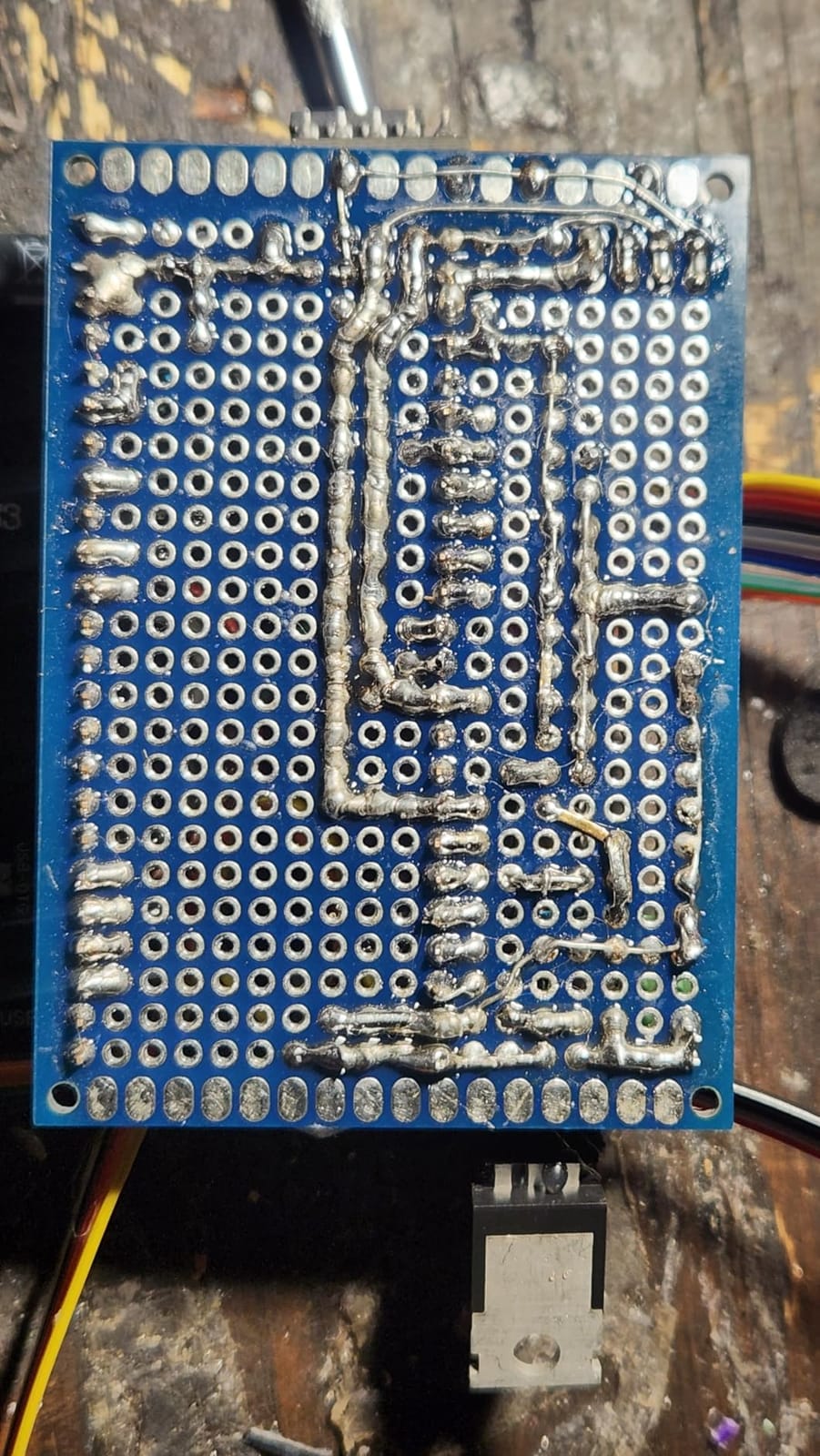
The iron holder slots directly into the base, so the whole station is a single compact unit with the tip parked in a heat-resistant cradle. Sleep mode after 10 minutes reduces standby power and tip wear. The 11 included items cover solder wire, 5 tips, tweezers, a desoldering pump, a tip cleaner, a holder and a wire dispenser.
This is a good first station for occasional work
Very likely. If you solder occasionally and want a station that does one job well without a learning curve, this does it. The controls are a display and a dial, and there is nothing hidden in a menu.
The indicator light that shows when the tip has reached temperature is a small design touch that removes a lot of beginner hesitation.
The real trade-off is build quality
Build quality is the honest answer. It is light, cheap-feeling plastic, and the accessories are thinner than the bundles on mid-range kits.
One buyer reported the display showing a sensor error when the tip was pressed hard after a few months, which points to a tip-sensing system that may not tolerate side loading. Treat that as one report rather than a pattern, and do not use force to bend a cold tip.
12. Hakko FX888DX Digital Station: Best for the Long Haul
Hakko FX888DX-010 – Digital Soldering Station with Rotary Encoder
Rotary encoder dial
65W station
120F to 480C range
Made in Japan
T18 chisel tip
Pros
- Best rated here at 4.8 with 89 percent five-star results
- Fast stable heat-up and accurate readout
- Clicky rotary dial makes small adjustments easy
- Strong rubber feet that do not slide
- Very wide range of readily available replacement tips
Cons
- Most expensive station in the roundup
- No hot-swappable tips or rest mode
- 110V AC only with voltage not always obvious
The FX888DX is the one we would tell a beginner to buy if they intend to stay in this hobby. Owners with decades of electronics experience call it the most foolproof station they have used, and the 4.8 rating across 367 reviews is the highest in this roundup.
The rotary encoder is a genuinely better interface than buttons for temperature work. You click to a value, turn to a value, and the setting holds. There are no menus and no accidental presses, which means you can set a temperature once and trust it.
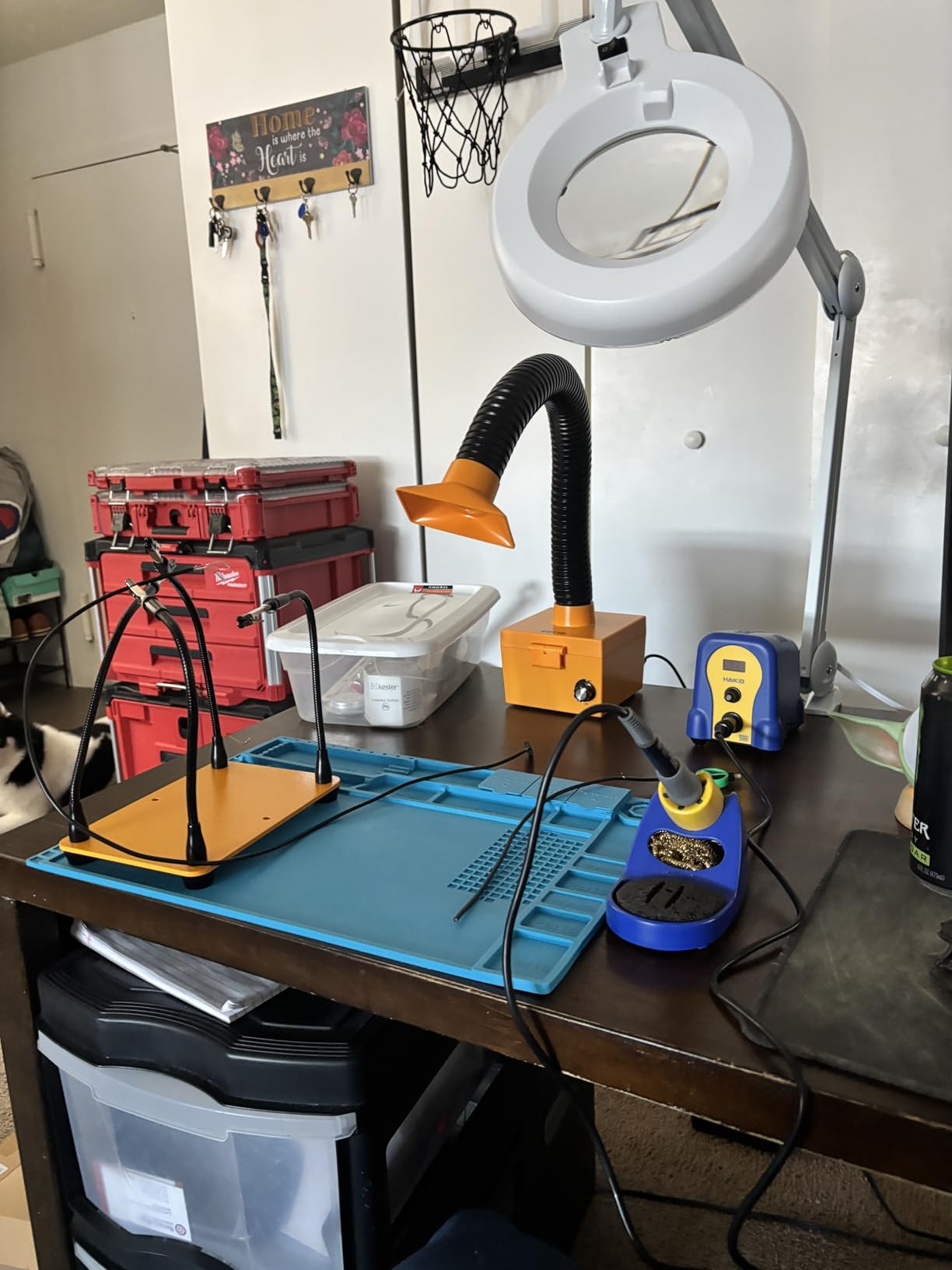
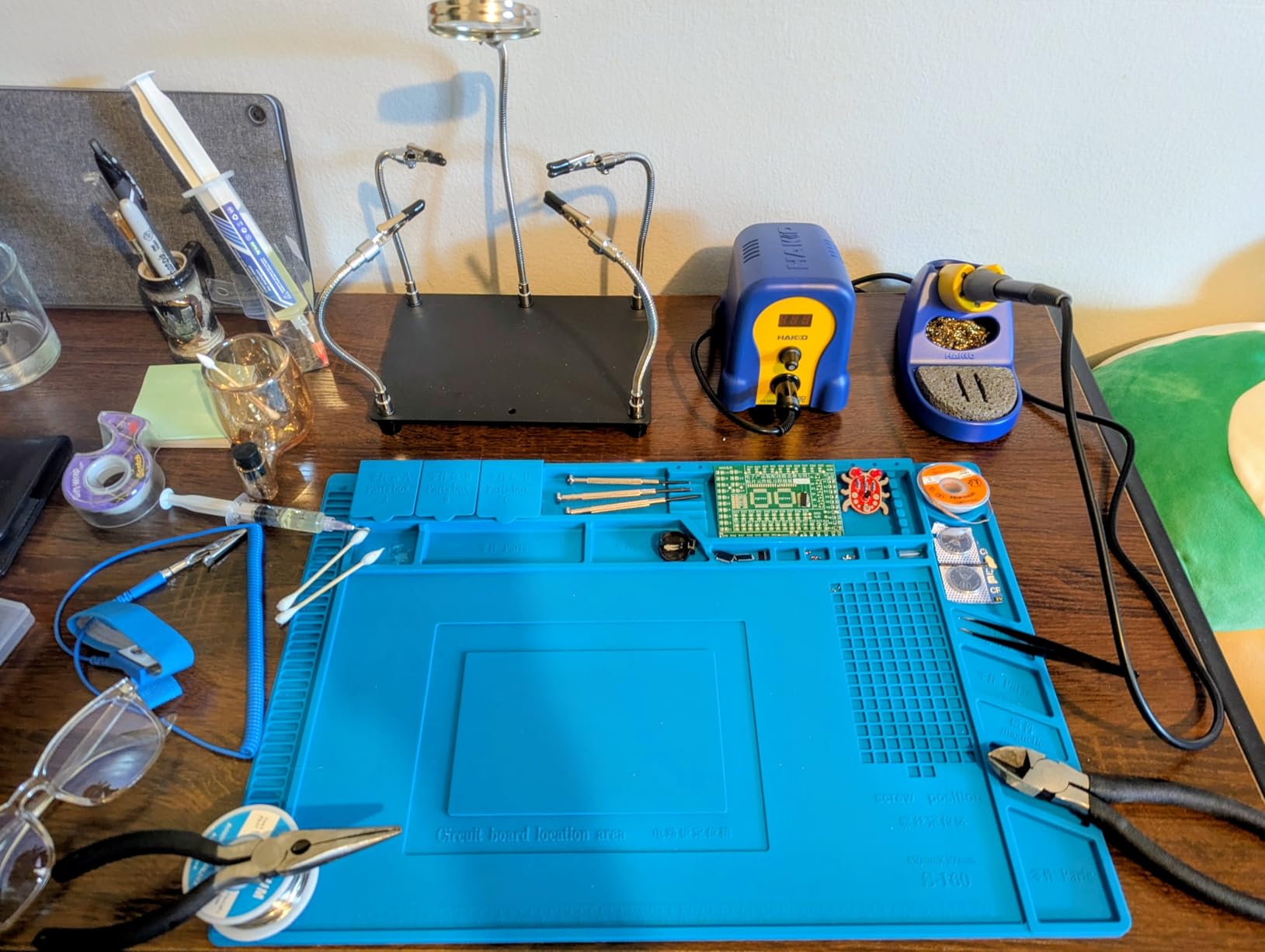
Build quality is obvious the moment you unbox it. Strong rubber feet mean the chassis does not slide when you pull on a stiff board, a heavy-duty chassis absorbs knocks, and the iron holder opens so you can clean the tip without pulling it sideways. It ships with a T18-D16 chisel tip, a sponge, a tip cleaner and a printed compatibility guide.
It is more station than a first purchase needs, and that is fine
Several first-time buyers say it is more than they strictly needed and then never replace it. If you might try electronics for a month and stop, this is more station than you will use.
If you already know you will be repairing boards, it is the least wasteful purchase available because the tips, the spares and the design are all long-lived.
Check the voltage specification and the colour set before ordering
Confirm it is 110V AC. That restriction is the most common complaint from buyers outside the US, and some listings do not mark the voltage clearly, so check the specification line yourself.
Also read what comes in the box. Some sellers ship station and iron in mismatched colour sets, which is cosmetic but confusing when you are setting up for the first time.
How to Choose a Beginner Soldering Station
1. Temperature control beats wattage
Look for a station that reports both set and actual temperature, and holds within a few degrees. A stable control loop is what makes a beginner’s joints repeatable. Wattage matters mainly for recovery, and buyers who focus only on the wattage number regularly end up with cold joints on large pads.
2. Match power to the job
Between 40W and 60W covers through-hole kits and PCB repair, which is most beginner work. Around 75W to 110W gives you faster recovery on wire, connectors and heat-shrink. Above that, you are paying for professional throughput rather than learning.
3. Check the tip system before you buy
Tip families are not universal. The WEP 927-IV uses WEP 1400 tips, and tips do not cross over between most models from the same brand. Hakko T12-style cartridges and Hakko T18 tips are different again. Factor the ongoing cost of replacement tips into the decision, because that is what you will pay repeatedly.
4. Presets and sleep mode save beginners
Preset temperature channels let you store the temperature that works for lead-free work and stop re-dialing. Sleep and standby modes cut heat when the iron sits untouched, which protects tips and reduces risk on a shared bench. Adjustable timers are better than a fixed ten-minute default.
5. Helping hands matter more than you expect
A third hand that holds the board steady is the difference between clean joints and constant rework. Every kit here that includes helping hands gives you a better first session than an identical kit without them.
6. Decide on hot air only if you need rework
Hot air rework is for removing and replacing surface-mount components. If you build kits, skip it. If you plan console, controller or phone board repair, a two-in-one unit like the YIHUA 8786D I or the WEP 882D is more efficient than buying an iron and a rework gun separately.
7. Check voltage and region before you order
Almost every unit here is 110V only. Outside North America, look for a 230V version or a manufacturer selling locally, because a converter is an extra cost and an extra failure point. Genuine Hakko and Weller parts are also far easier to source in the US, which is a recurring frustration reported by beginners in other regions.
8. Do not skip ESD safety and fume extraction
Look for an ESD-safe station with a grounding wire, and add an ESD mat with a wrist strap before opening a controller. For a repeatable protective finish once the board is soldered, our guide to dip stations covers the coating step. For fumes, ventilate your bench or use a small extraction fan placed near the work, and wash your hands after handling leaded solder. Lead-free solder needs hotter temperatures and produces its own flux fumes, so extraction is not a leaded-only concern.
9. The golden rule of soldering
Heat the joint, not the solder. Touch the iron tip to the pad and the lead, wait a couple of seconds for both to reach temperature, then feed solder into the joint so it flows into the pad. Feed solder to the iron tip only when you are tinning it, before or after a joint, never during one. Beginners who touch solder to the tip instead of the joint make cold joints every time and do not understand why.
10. Set the right temperature for your solder
For leaded solder, work around 315C to 350C. For lead-free solder, which melts at a higher temperature, work around 370C to 400C. Start at the low end of that band and add heat only if the solder refuses to flow. If you need more than about 400C for through-hole work, the problem is usually technique or a cold joint rather than the setting.
11. The accessory checklist
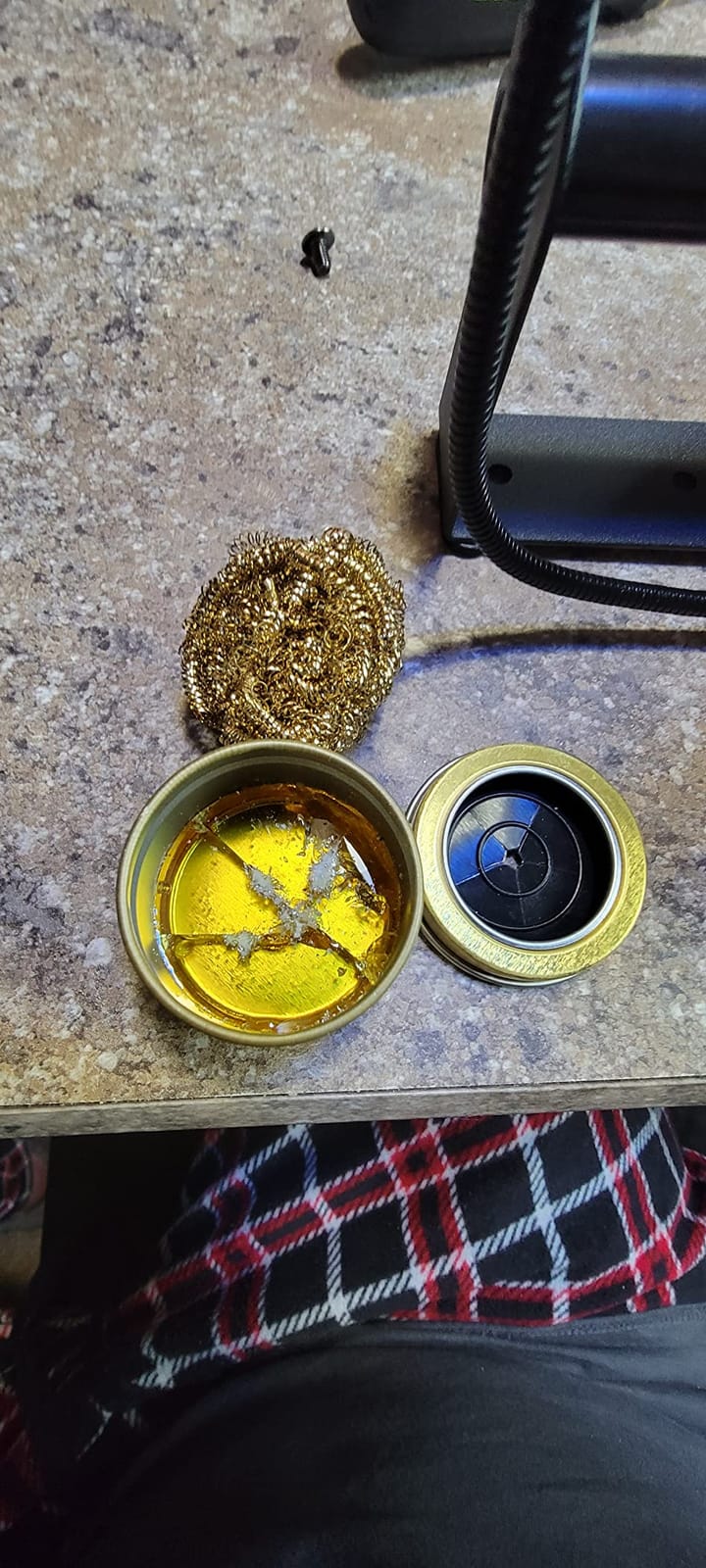
Beyond the station you need solder in the diameter you work with, a flux pen, a brass wool tip cleaner, a wet sponge, a desoldering pump, tweezers, a helping hand and a few spare tips. That is the working kit. Add a brass wool pot rather than a wet sponge if you solder lead-free, because wet sponge works against the higher temperature and shortens tip life.
12. When to move up
Move from a starter station to a combo or a premium station when you start repairing rather than building, when you need to remove surface-mount parts, or when cold joints show up because the iron cannot recover fast enough. Until then, a stable temperature control loop matters more than anything else on the list.
If you are also building a small portable bench for the car or a toolbox, we covered the peripherals that compete for space on a cramped desk in our guide to laptop docking stations and wireless charging stations.
Frequently Asked Questions
What is the best basic soldering kit for beginners?
The best basic kit combines a temperature-controlled station, solder, a desoldering pump, flux, a brass wool cleaner, tweezers and at least one helping hand. Our top pick bundles all of that together, so a beginner can finish a first kit build without a second order. A fixed-temperature pencil iron is the one thing to avoid, because it cannot be adjusted for leaded versus lead-free work.
Which is better, Hakko or Weller?
Both are dependable, and the difference is mostly interface and support. The Hakko FX888DX uses a rotary encoder for precise, repeatable settings and ships with widely available T18 tips, while the Weller WE1010NA offers temperature lock, auto setback and a very stable temperature tolerance. Choose Hakko for a dial-and-dial feel and simple settings, and Weller if you want more protective features and a flexible silicone cord.
What is the golden rule of soldering?
Heat the joint, not the solder. Place the tip on the pad and the component lead, wait a couple of seconds, then feed solder into the joint so it flows into the pad. If you melt solder on the tip first and then push it across, you get a joint held together by surface solder instead of a proper bond.
What wattage should a first soldering station have?
Between 40W and 60W is enough for through-hole kits and most beginner PCB work. If you expect to solder wire, connectors or heat-shrink regularly, go to 75W to 110W for faster heat recovery. What matters more than wattage is whether the station holds its temperature steadily, because a weak element that sags under load produces cold joints.
What temperature should a beginner use for soldering?
Use roughly 315C to 350C for leaded solder and roughly 370C to 400C for lead-free solder, which melts at a higher point. Start at the lower end of that range and increase only if the solder will not flow within a second or two. Staying cooler protects copper pads and extends tip life.
Final Verdict: Which Soldering Station Should You Buy?
Buy the YIHUA 926 III if you want the best soldering station for beginners in 2026 and nothing else to think about. It has real PID temperature control, the widest accessory bundle we found, and more owner feedback than anything else on this list, which makes it the safest first purchase.
Buy the Hakko FX888DX if you know you will stay in electronics, because the tip supply and build quality mean it will outlast several cheaper stations. Buy the Weller WE1010NA if you want the same idea with more protective features and the tightest temperature tolerance we measured.
Buy a two-in-one like the YIHUA 8786D I or the WEP 882D only when surface-mount rework is part of the plan. For everything else, spend that money on a better station and better tips instead, and set aside a few dollars for brass wool, flux and a proper helping hand. Whatever you choose, the golden rule still applies: heat the joint, not the solder.