
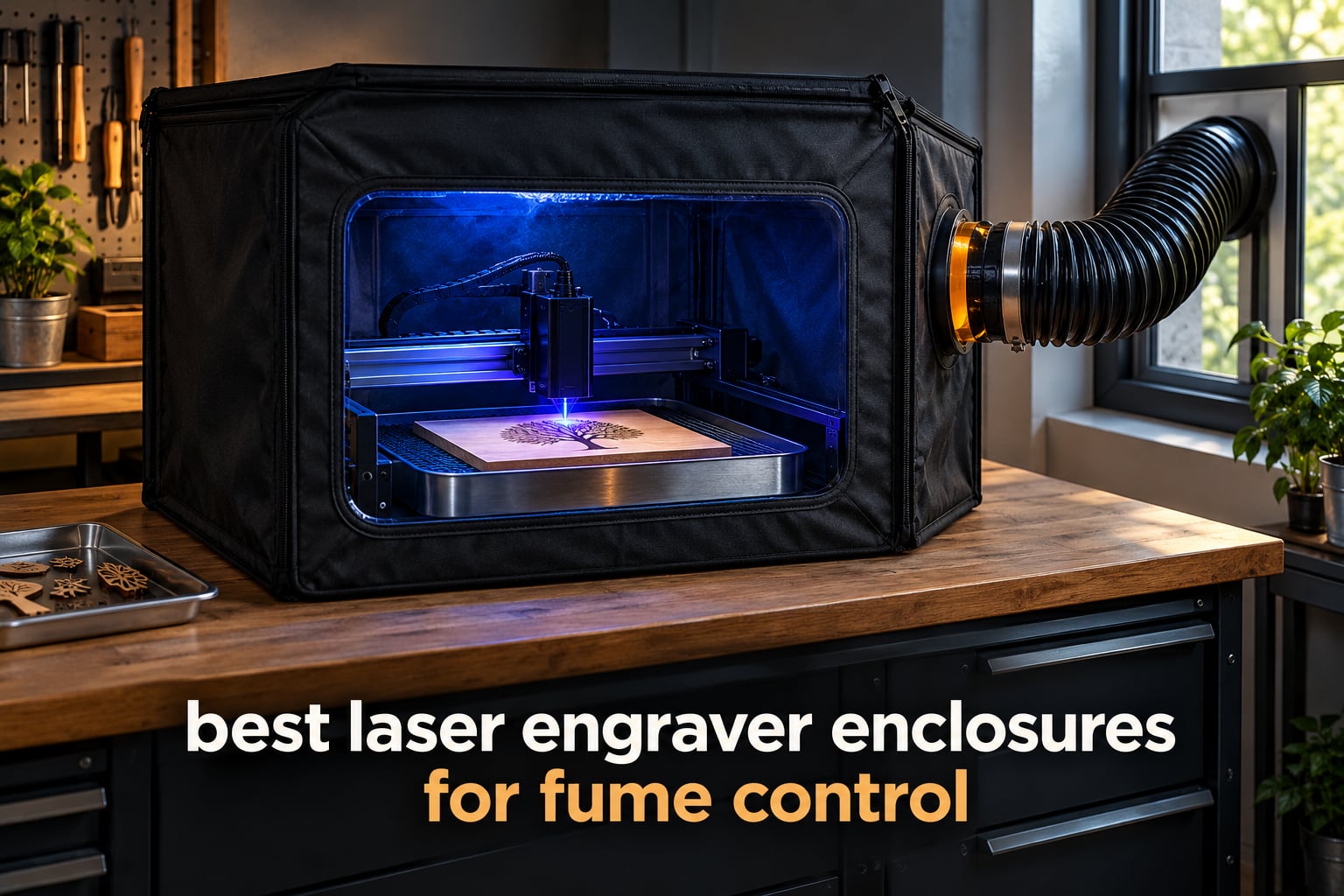
Smoke from a laser engraver is not a smell problem. Cutting MDF, plywood or acrylic releases fine particulate plus invisible volatile organic compounds, and that plume drifts across a room in seconds. If you are searching for the best laser engraver enclosures for fume control in 2026, the decision is less about the tent fabric and more about where the air goes. We spent weeks comparing ten enclosures built for this exact job, and the pattern was clear: the enclosure’s job is to hold the fumes close enough for the fan to catch them, and the duct or filter’s job is to move that captured air out of your breathing zone.
Our honest conclusion up front, because it is the part most roundups leave out. Ducting outside beats filtering inside, every time, because filtered air still returns to the room and carbon saturates silently. But a lot of people have no exterior wall to vent through, and a recirculating setup is a reasonable second-best answer. If that describes you, the best diode laser engravers worth enclosing are the ones with a sealed bed and a rear exhaust port you can plumb into.
We compared all ten on the things that actually change your air: interior volume, whether there is a real bottom panel, fan specification, duct port size, fire rating of the interior material, and whether the whole thing holds its shape. We also logged the fit problem that trips up most buyers, which is a camera or laser module mounted above the bed. Every pick below is written with that in mind.
Table of Contents
Top 3 Best Laser Engraver Enclosures for Fume Control (October 2026)

Skouphy Integrated Enclosure
- 28.3 in square interior
- 4000 RPM fan plus 3-layer duct
- Fully sealed bottom
- LED light strip

Skouphy Fireproof Tent
- 28.3 in square interior
- High-pull exhaust fan
- Integrated bottom stitching
- 5W LED strip

Crafit Cabinet Enclosure
- Furniture-style cabinet and stand
- 20W fan with 2 m duct
- Switch-controlled power strip
- Light-filtering panels
All 10 Laser Engraver Enclosures Compared in 2026
| Product | Specifications | Action |
|---|---|---|
| Skouphy Integrated Enclosure |
|
Check Latest Price |
 HOCENWAY 3-in-1 Enclosure HOCENWAY 3-in-1 Enclosure |
|
Check Latest Price |
| Crafit Cabinet Enclosure |
|
Check Latest Price |
 Lutyr Pro 2.0 Enclosure Lutyr Pro 2.0 Enclosure |
|
Check Latest Price |
 LONGER Large Size Enclosure LONGER Large Size Enclosure |
|
Check Latest Price |
 VEVOR 31.5 Inch Enclosure VEVOR 31.5 Inch Enclosure |
|
Check Latest Price |
| Skouphy Fireproof Tent |
|
Check Latest Price |
 Genmitsu Kortek Enclosure Genmitsu Kortek Enclosure |
|
Check Latest Price |
 ACMER MINI Enclosure ACMER MINI Enclosure |
|
Check Latest Price |
 PrintSure Steel Frame Enclosure PrintSure Steel Frame Enclosure |
|
Check Latest Price |
1. Skouphy Integrated Enclosure Review – Best Overall Fume Control
Laser Engraver Integrated Enclosure with LED Light, Fireproof and Dustproof Protective Cover 28.3 * 28.3 * 15.7, Exhaust Fan 4000RPM and Pipe, Against Smoke Odor and Noise Eye Protection-Black
28.3 x 28.3 x 15.7 in interior
4000 RPM fan with 3-layer duct
Sealed bottom and LED strip
Pros
- Sealed bottom stops smoke and dust escaping
- Generous 28.3 in square footprint clears most frames
- LED strip is bright enough to watch the cut
- Includes fan and light at this tier
- Folds flat for storage
Cons
- Fan is loud and rated modest by several owners
- No printed assembly instructions
- Velcro duct run is short and detaches easily
This is the enclosure we came back to. Across 289 ratings it holds a 4.5 average, and that review volume is the reason we trust the pattern of complaints more than any other tent in this group. Owners consistently single out the same feature: a bottom panel that is genuinely integrated rather than a loose sheet, which is what stops debris settling on the machine bed and smoke creeping out underneath.
The footprint is 28.3 by 28.3 by 15.7 inches, and the manufacturer names xTool D1, D1 Pro, Ortur, Sculpfun and Atomstack machines as compatible. The taller profile than most tents also means a rotary roller can sit under the head, which is a real advantage for anyone doing tumbler work or cutting rings.
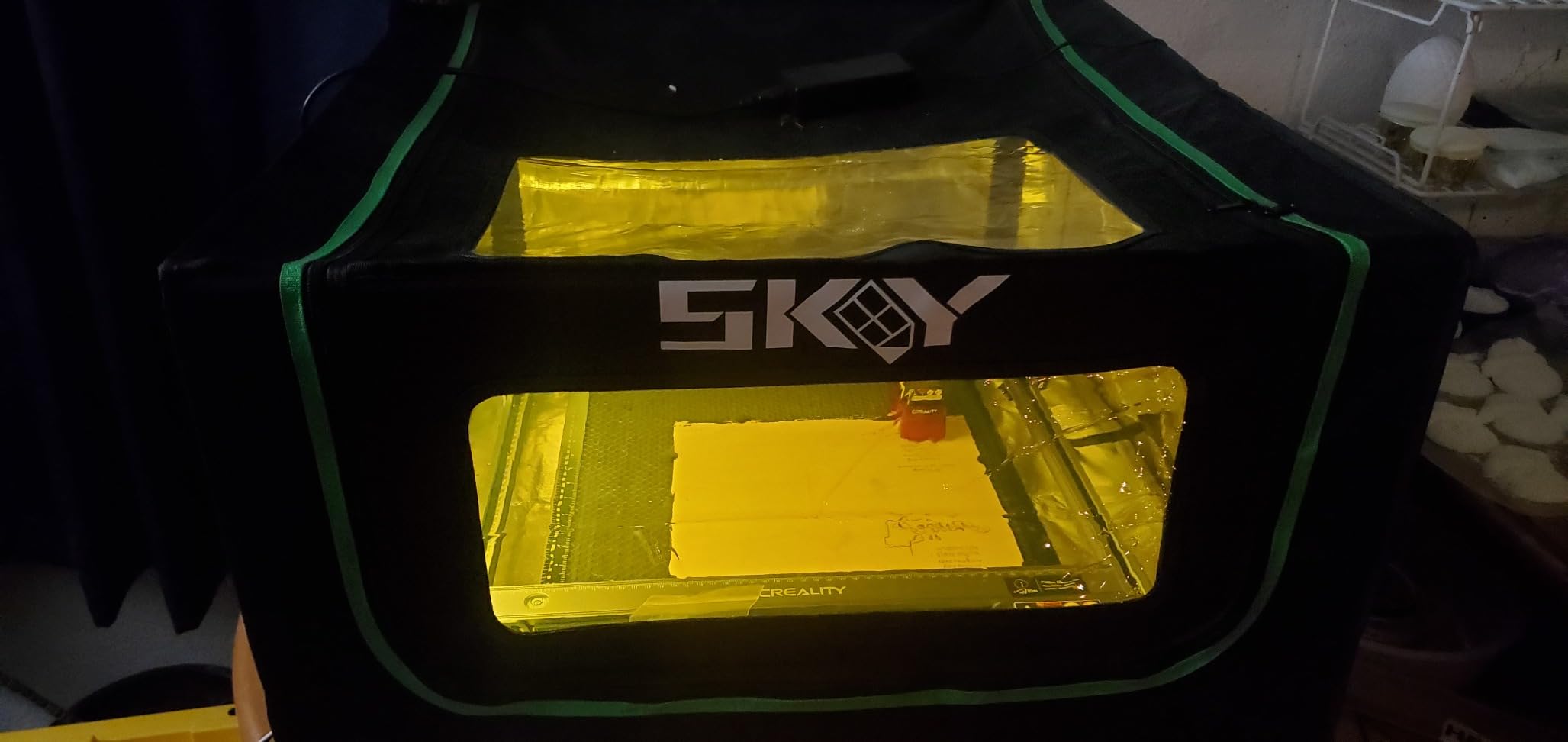
The exhaust kit is a 4000 RPM fan paired with a three-layer composite smoke duct. That duct matters more than it sounds, because smoke particles cling to the inside wall of a cheap hose and you smell the residue for weeks. Buyers running a window vent report that the fan plus duct moved fumes outdoors effectively, and the included LED strip means you are not cutting blind on a dark bench.
Assembly takes somewhere between 45 and 60 minutes and the frame folds flat afterwards, which matters if your laser lives in a corner of a spare room rather than a dedicated workshop. The cloth is an aluminum-mold Oxford fabric over iron support rods, and the whole thing carries a one year warranty.
The honest weakness is the fan. Several owners describe it as loud and not very strong, and one reviewer reported missing hardware and uncertainty about whether the bottom panel shipped with their variant. Both are fixable. A fan swap is a ten minute job, and it is the single upgrade most owners in this category make anyway.
Will it fit your machine and your room
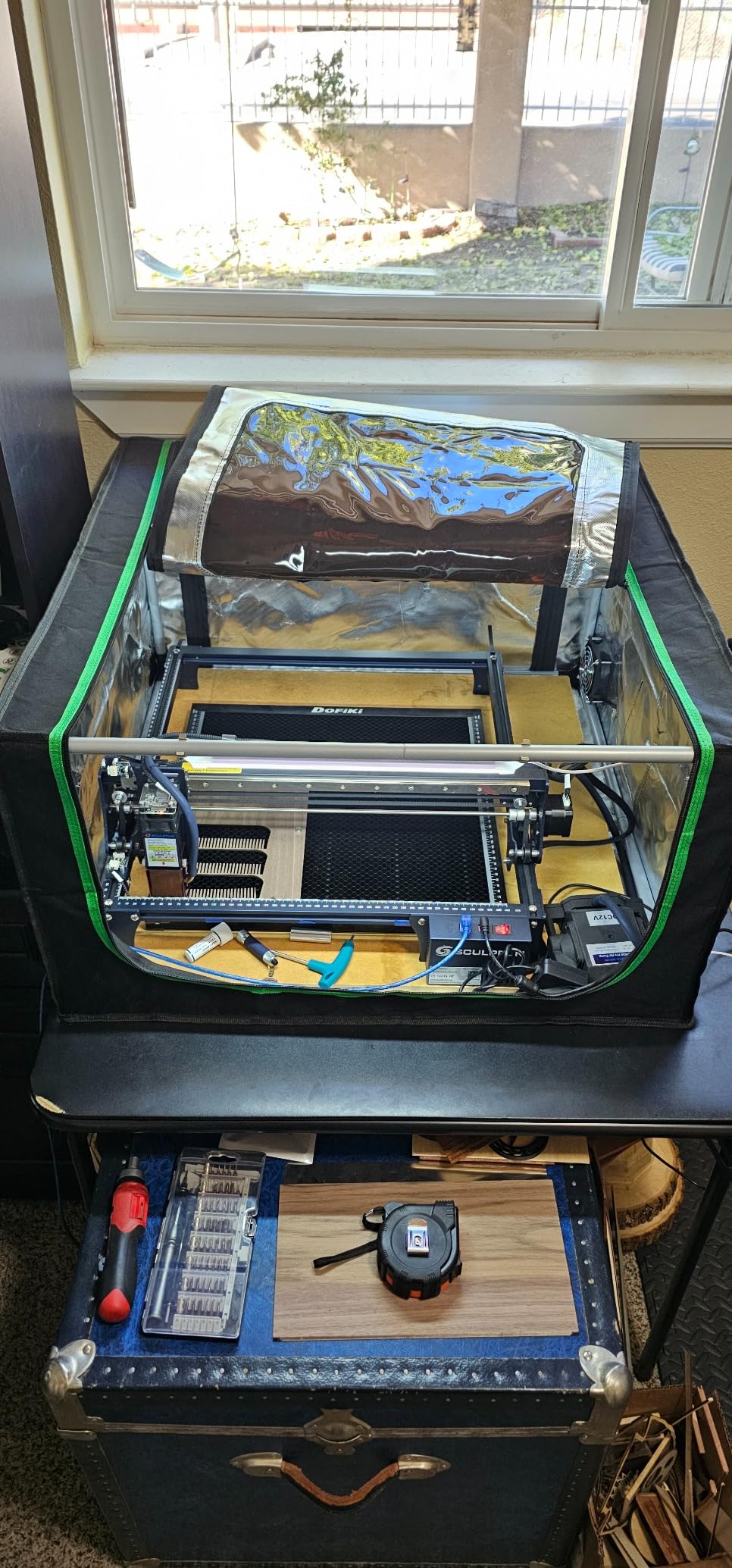
Measure the machine’s full external height including any camera arm, then add a few inches. At 15.7 inches of internal height this tent clears most 400 mm class engravers, but a camera kit or a raised laser module can eat that clearance. Check the mount, not just the bed.
Because it folds flat, this is also the option that works for a renter who needs the bench back on a Sunday. Set it up for a job, fold it, store it against a wall. The 20W-plus electronics of a modern engraver and a 4000 RPM fan are a lot of noise for a small apartment, so plan where it lives.
When to choose something else
Skip this one if you need certified laser-light containment rather than smoke capture. It is a fume enclosure, not a safety enclosure, and no fabric tent in this group can honestly claim to be an interlocked safety cabinet for a high-power machine.
Also skip it if you run a full-size 30W frame with a large bed. The 28.3 inch square footprint gets tight, and the LONGER or VEVOR options below give you materially more working room. For a desktop engraver or a mid-size diode machine, this is the one we would buy first.
2. HOCENWAY 3-in-1 Enclosure Review – Best for Multi-Use Maker Benches
3-in-1 Multifunctional 3D Printer Enclosure Laser Engraver Eye Protective Shield Cover Resin 3D Printer Fireproof Tent with Fume Extractor Smoker Absorber Filament Dryer Dust Cover (3in1 Tent)
535W x 635L x 750H mm interior
1.5 m 75 mm smoke pipe
Brown filter membrane and 5W LED
Pros
- One tent covers resin
- some FDM and small laser work
- Real exhaust port with 1.5 m of pipe
- Removable brown membrane filters UV and blue light
- Stabilises temperature for ABS and PETG printing
Cons
- No fan included
- 75 mm duct is narrow for the volume
- Interior constrains larger laser machines
- Bulky and non-folding
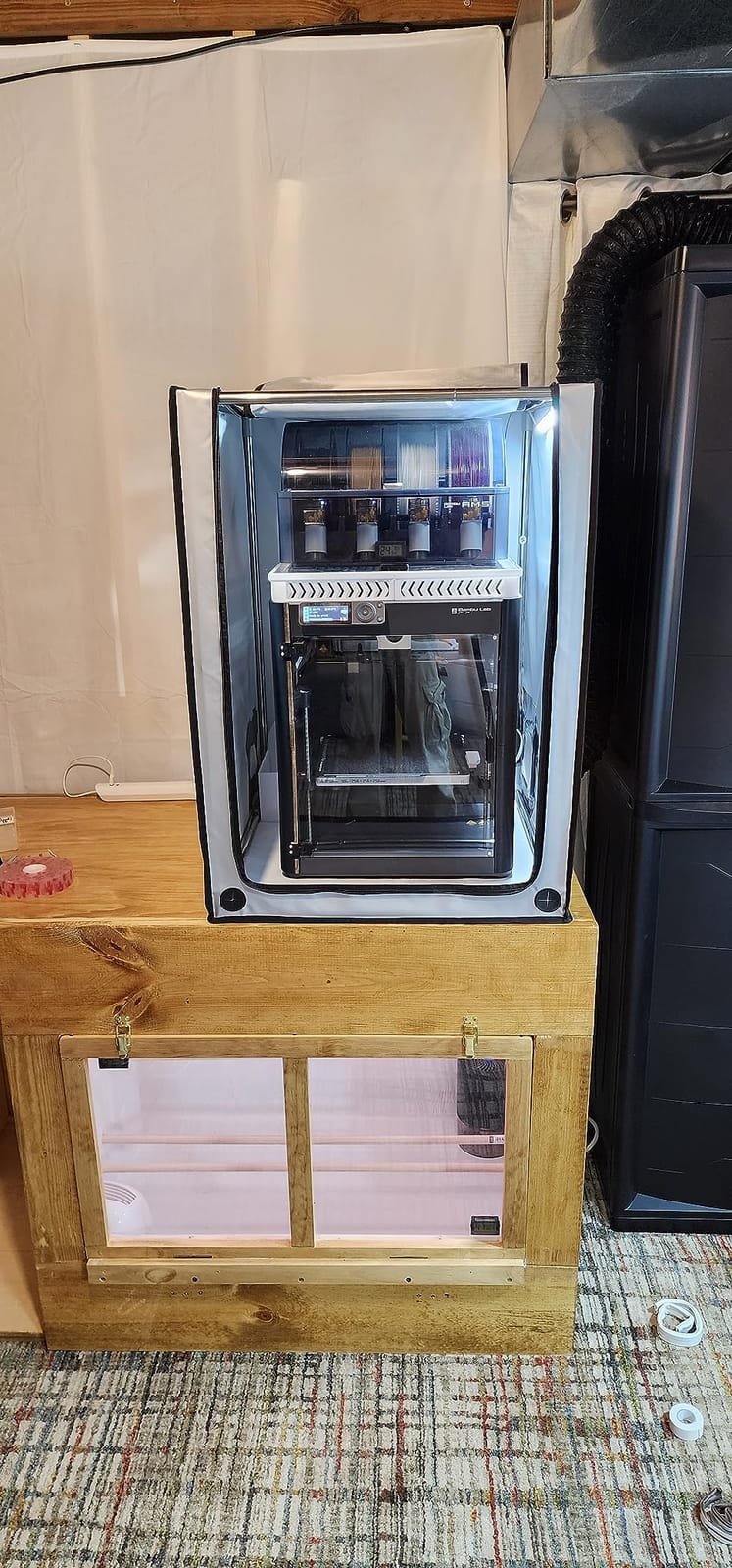
This tent does something the others do not, which is look after a resin printer and a small laser at the same time. It holds a 4.2 average across 121 ratings, and reading the reviews the purchase intent is mostly printing: people wanted warmer chambers and less warping, and treat the laser venting as a bonus rather than the reason they bought it.
Internal dimensions are 500 mm wide by 635 mm deep by 750 mm high. The package includes a 1.5 m length of 75 mm smoke exhaust pipe, a removable brown filter membrane for UV and blue light filtering, and a 5W USB LED. That is a genuine fume path on paper.
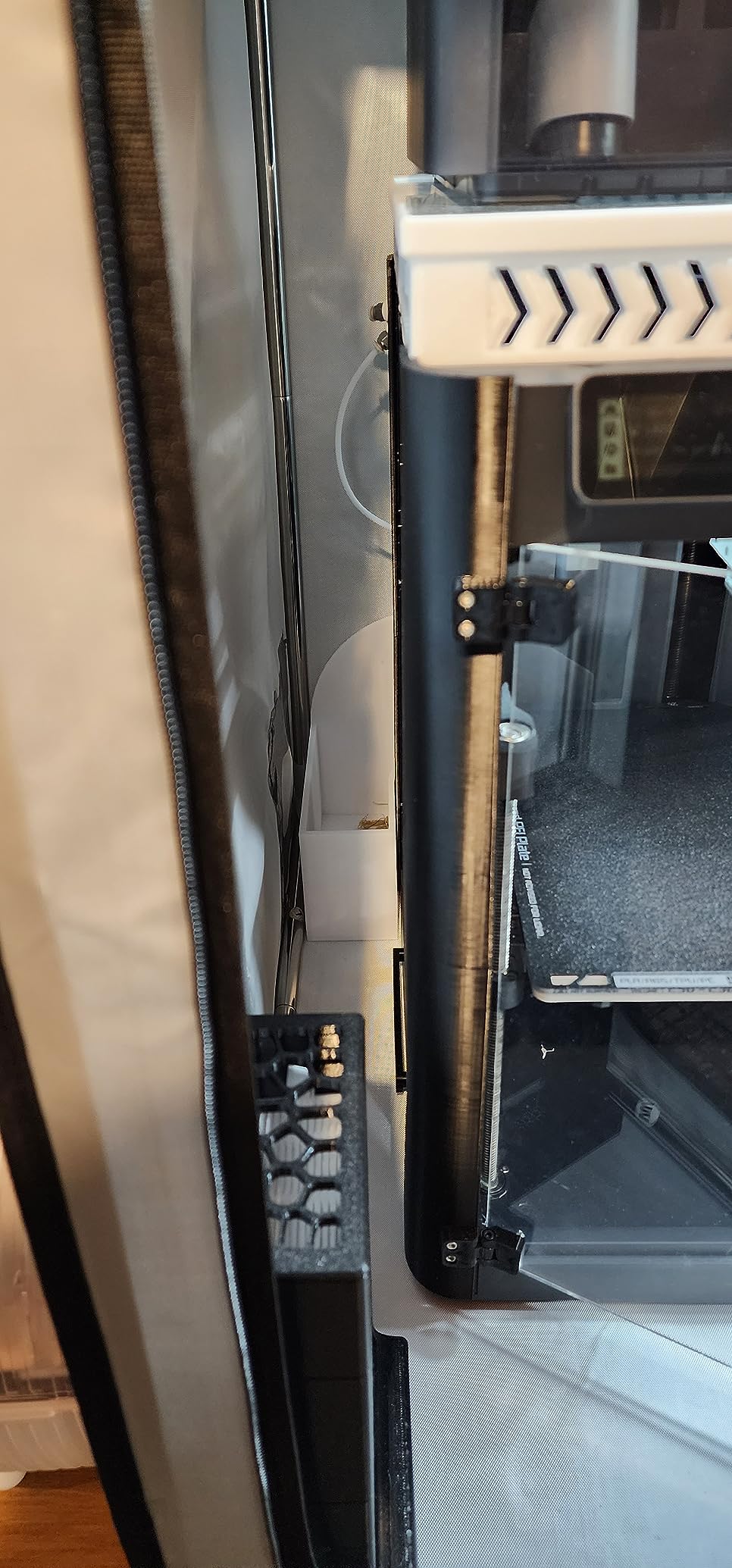
On paper, though. No fan ships in the box. The exhaust port and the pipe are fittings, and you need to supply extraction from elsewhere, which is the single fact that decides whether this works for your situation. Pair it with a recirculating purifier and it is a good bench tent. Pair it with nothing and you have a smoke trap that fills up.
The 75 mm duct is also narrow relative to a 750 mm tall chamber. That is not a dealbreaker for engraving small wood and acrylic pieces, but on a long job with heavy charring you will notice the chamber taking several minutes to clear.
Two more practical notes from owners. The form factor is rigid and bulky rather than folding, so it claims permanent bench space. And the fabric is described as fireproof and waterproof, which is exactly what you want from a tent that also sits next to a resin wash station.
When the shared bench makes sense
If you already own a resin printer or an Ender 3 class FDM machine, this pays for itself twice over. Temperature stability cuts warp on ABS and PETG, and the enclosure doubles as a guard around a hotend and a moving bed, which matters if children or pets share the room.
The pattern is simple: buy this if your laser is a small engraver doing light jobs, and you need the ventilation more for the printer than for the laser. If your laser work is the main event, the dedicated tents further down this list put more air through the chamber.
When to choose something else
Do not buy it if you need strong extraction during long cutting runs, because there is no fan and the duct is small. Do not buy it if you have a 400 mm class machine, as the interior footprint is sized for small machines and you will be fighting the walls.
Also skip it if bench space is tight. A rigid 750 mm tall tent does not tuck away. The Skouphy above folds flat and does the same job with an actual fan in the box.
3. Crafit Cabinet Enclosure Review – Best Workstation Upgrade
Crafit Laser Engraver Enclosure Cabinet with Exhaust & Light Filtering
24.8W x 27.1D x 12.6H in interior
20W fan with 2 m duct
3-outlet switch-controlled power strip
Pros
- Also replaces a stand
- shelf and storage unit
- 20W fan and 2 m duct visibly cut indoor fumes
- Light-filtering panels give multi-side visibility
- Magnetic doors and cable management holes
- One switch runs engraver fan laptop and air assist
Cons
- Ships unsealed so gaps need taping
- Two to three hours of assembly
- Reported missing hinge and snapped magnet bolt
- 25 kg is very heavy to move
The Crafit is the only product here that is furniture. It is a cabinet with a laser bay inside, a shelf underneath for blanks, and a stand you would otherwise buy separately. Buyers justify the spend on what it replaces as much as on what it does, and at 4.2 across 35 ratings the sentiment is warm.
The interior bay measures 24.8 inches wide by 27.1 deep by 12.6 high, which fits most engravers and cutters. Extraction is a 20W fan with a 2 m flexible exhaust pipe, and several owners report engraving indoors without setting off a nuisance smoke alarm, which is the single most useful data point in the reviews.
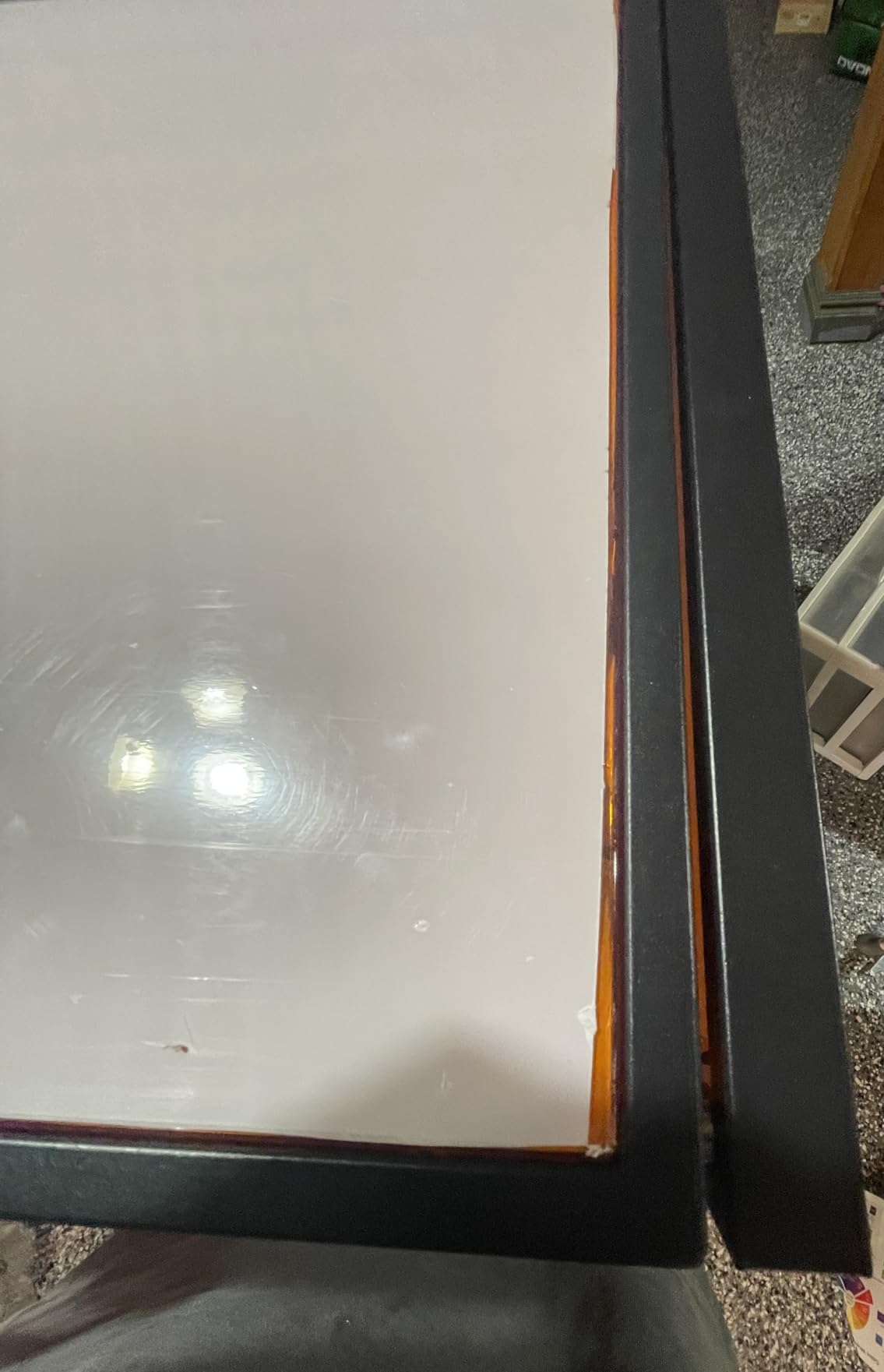
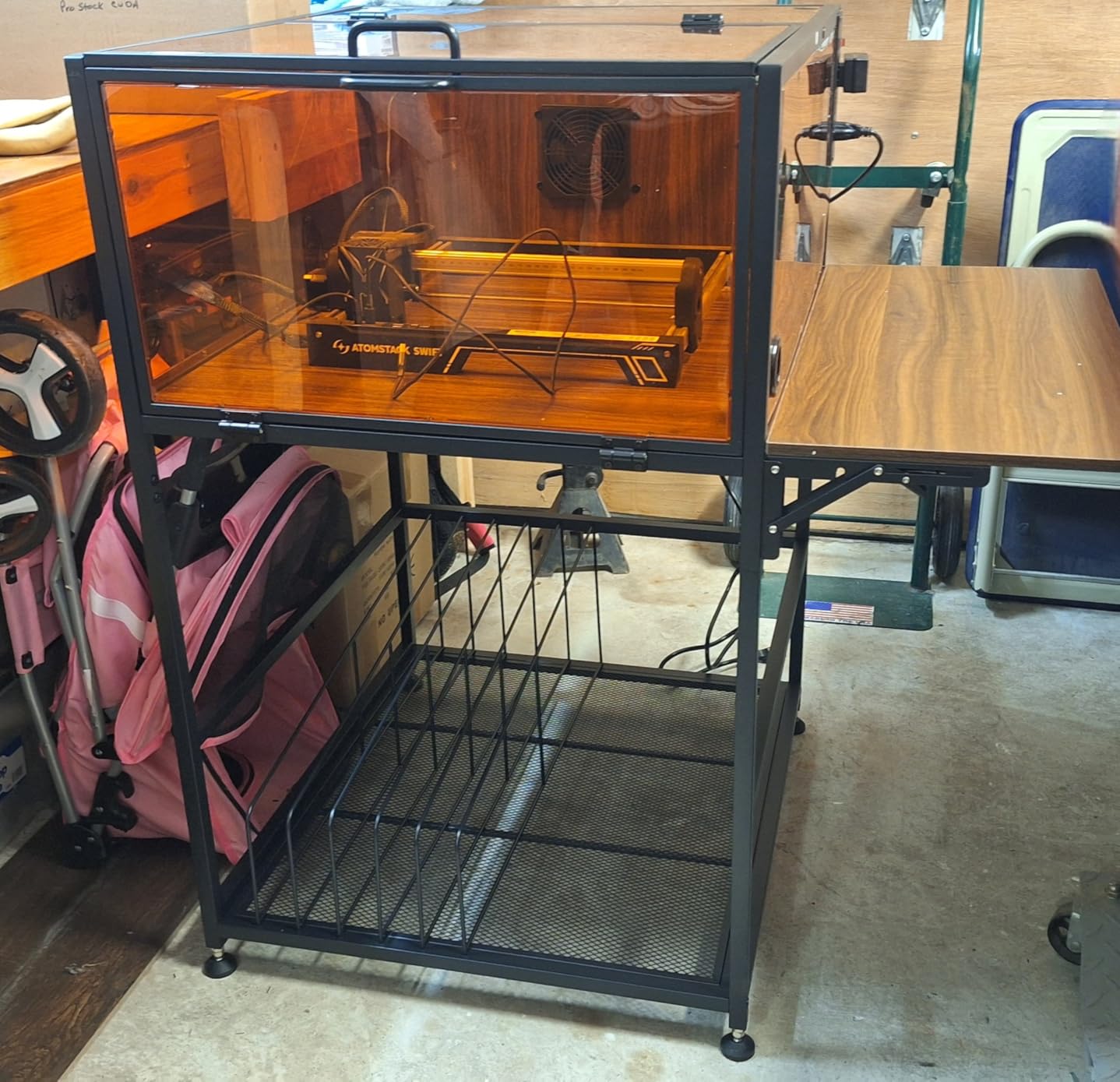
The visibility is genuinely better than a cloth tent. Semi-transparent thickened light-filtering panels sit on multiple sides plus the top, so you can watch a job from an angle without leaning over a dark window. The switch-controlled power strip with three AC outlets runs the engraver, the fan, a laptop and the air assist from one switch, which removes the cable spaghetti that normally makes an enclosed setup awkward.
Construction is a metal frame with thickened heat-resistant wood panels, adjustable foot pads for uneven floors, four cable management holes, magnetic doors for one-hand access, and a drop-down side panel that holds a laptop and air assist kit. Printed instructions and a build video are included, and net weight is 25 kg.
The catch is sealing. This cabinet is not factory-sealed, and owners add door seal tape to close the edge gaps before extraction will pull properly. Some panels also ship with gaps by design, which means you still need a make-up air inlet for the airflow to move in one direction. A few small quality control issues are reported too, including a missing hinge and a magnet mount bolt that snapped.
When the workstation value is real
Buy this if your current setup is an engraver balanced on a spare table with stock stacked around it. You are getting a stand, a storage rack with dividers, a work surface and a fume enclosure in one package, and the under-shelf divider rack that holds wood sheets upright is a detail someone thought about.
It is also the option that makes an enclosed laser practical in a small office, because the fumes stay contained near the machine instead of drifting toward desks. The noise reduction from a wood and metal cabinet is meaningfully better than fabric, too, and a member of the r/Laserengraving community describes the neighbourhood complaints that push people toward enclosures in the first place.
When to choose something else
Skip it if you need to move the enclosure regularly. At 25 kg it is a two-person job, and 2 to 3 hours of assembly is realistic rather than optimistic. Several near-identical parts can also be fitted the wrong way, so budget an unhurried evening.
Skip it if you are on a tight budget and only need smoke control. You are paying a premium for furniture features, and a fabric tent with a fan will handle the air better per unit spent. This one is for the person who has decided to build a proper bench rather than clear a corner.
4. Lutyr Pro 2.0 Enclosure Review – Best Value Tent for Home Studios
Official Laser Engraver Enclousre Pro,Upgrade Flame Retardant and Smoke-Proof Protective Cover, Effectively Isolating Smok, 28.3 x 28.3X 15.7in Foldable Enclousre Tent for Most Engraving Machine
28.3 x 28.3 x 15.7 in interior
4000 RPM fan
Flame-retardant inner cloth
Pros
- Flame-retardant inner cloth tested against open flame
- Metal support rods add real rigidity
- Large square footprint fits a rotary roller
- Owners report smoke and odour held in effectively
Cons
- Fan mounts low and can be blocked by a machine frame
- Top front cross-bar intrudes on the work area
- Fan too weak for full evacuation without an upgrade
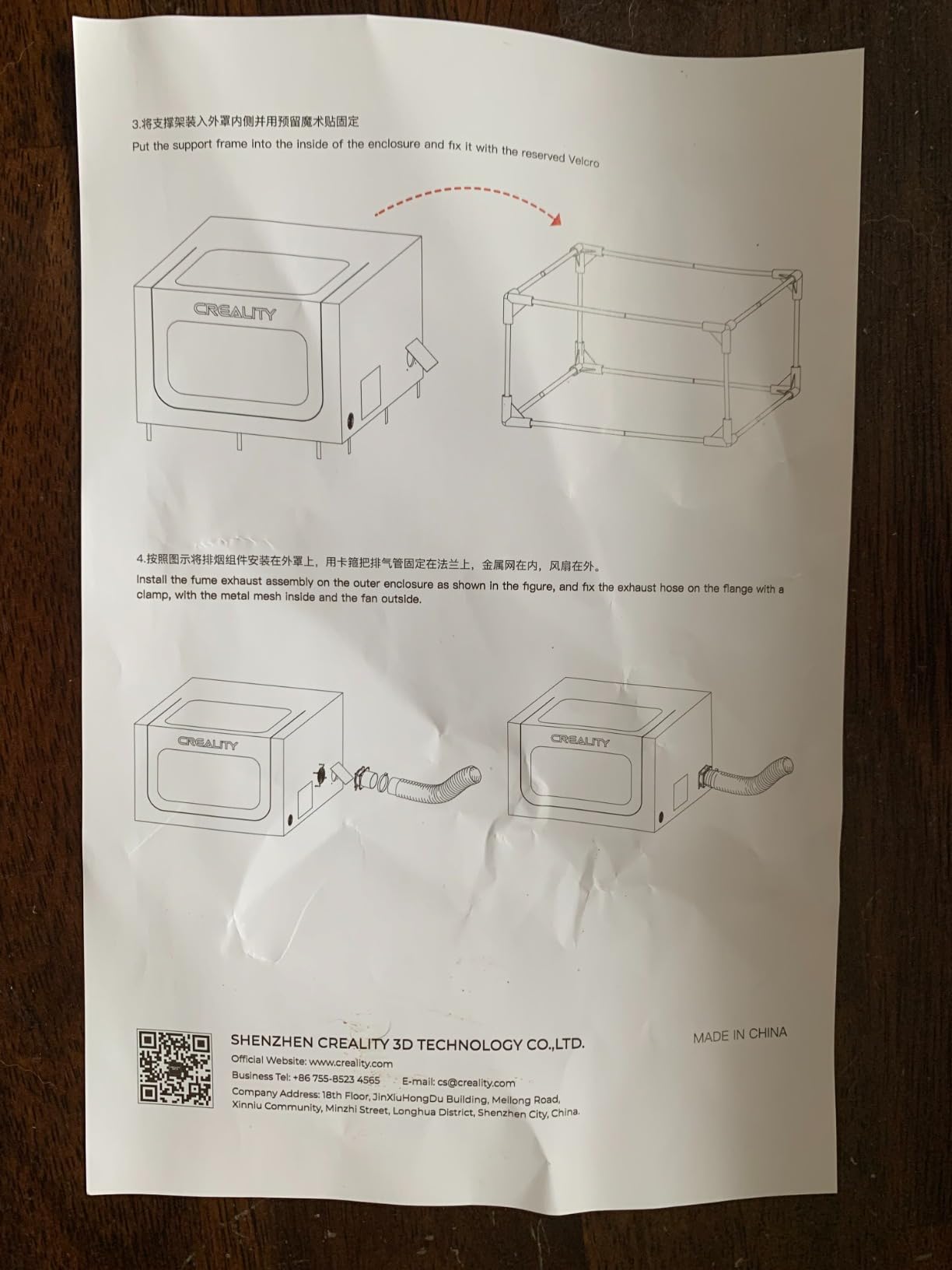
- Thin customer service and no assembly guide
This is the second-generation version of one of the most copied tents on the market, and the updates are visible. Metal support rods replace the flimsy ones, and the fan was pushed to 4000 RPM. It holds 4.5 across 24 ratings, a small sample but a clean one, with 89 percent of ratings at four or five stars.
Interior space is 28.3 by 28.3 by 15.7 inches, and the manufacturer names xTool D1, D1 Pro, Creality CR-Laser Falcon, Ortur, Sculpfun and Atomstack as compatible. The higher profile allows a rotary roller to be fitted, which the marketing explicitly calls out and which we agree is a genuine practical gain.
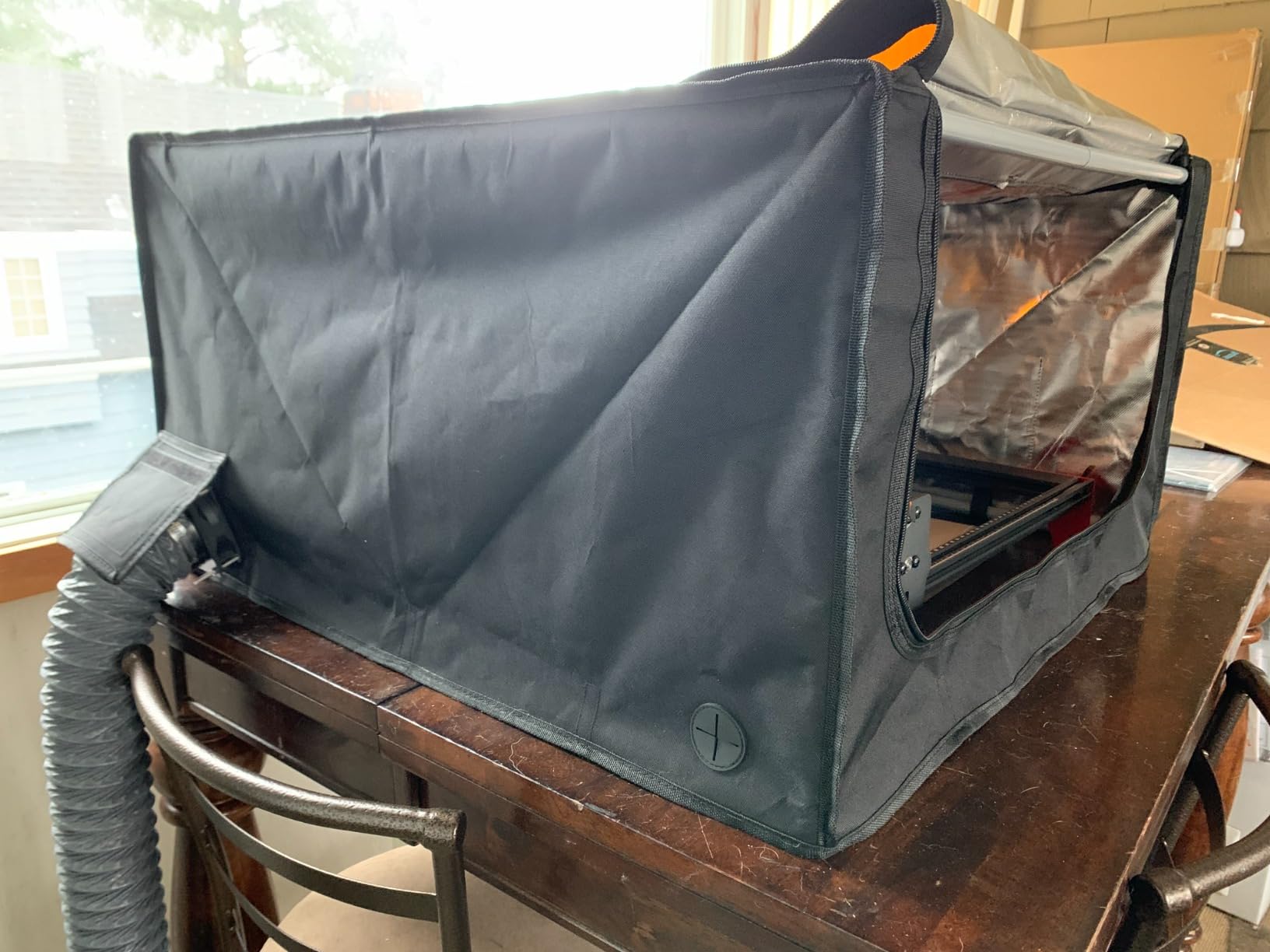
The fire specification is the thing that sets it apart from similar tents. The inner cloth is described as flame-retardant, able to withstand an open flame for a few minutes without damage, and the closed structure is claimed to isolate the large majority of smoke and odour. For a home studio that is the relevant claim, because the fire risk with an enclosed laser is a smoldering ember rather than a flare.
Visibility is good through the window on the square-profile design, and the frame is light enough to install without tools and to move between rooms. Several owners bought a second unit, which tells you something about satisfaction.
The most substantive feedback is mechanical rather than electrical. The fan mounts low enough that some machine frames partially block the airflow path, and the top front cross-bar gets in the way of the working area. Owners who want full evacuation replace the fan with a higher-flow unit, and a 50 CFM fan swap is the most commonly recommended modification.
What the flame-retardant cloth actually buys you
It buys you time. A tent that holds its shape and resists ignition for a few minutes gives you the window to hit the power switch, reach in and move a smoldering scrap. A tent that melts into the frame does not. That difference only matters once, and once is enough.
It does not buy you a safety rating. A flame-retardant fabric enclosure is still a fabric enclosure, and it is not a substitute for an interlocked cabinet. If you are running a high-power fibre laser, look at the Genmitsu further down and read our fire safety section before deciding.
When to choose something else
Skip it if you already own a machine whose frame sits high and blocks a low-mounted fan. Check where your extraction port is before ordering, because the mounting position is the main design constraint in this tent.
Skip it if you plan to add a camera module above the bed without removing it later. Nothing on the list except the Genmitsu is pre-fitted for a camera, and a camera arm plus a 15.7 inch ceiling is a tight fit. If your machine needs the camera permanently, budget for the extra height first.
5. LONGER Large Size Enclosure Review – Best Fit for the B1 Series
LONGER Laser Engraver Large Size Enclosure with Vent, 31 * 28.7 * 20.8 Inches (790 * 730 * 530 MM) for Most Laser Engraving Machine Insulates Against Smoke and Odor, Noise Reduction, Eye Protection
31 x 28.7 x 20.8 in interior
Built-in exhaust fan
Full solid bottom panel
Pros
- Tallest and largest working volume in the group
- Real solid bottom panel
- Fire-retardant and easy-clean materials
- Large transparent panel for monitoring
Cons
- Weak fan that takes 3 to 4 minutes to clear the bay
- Included hose is a tight fit
- Instructions poor with unlabelled parts and wrong screws
- Zipper lid strains to close over the B1 frame
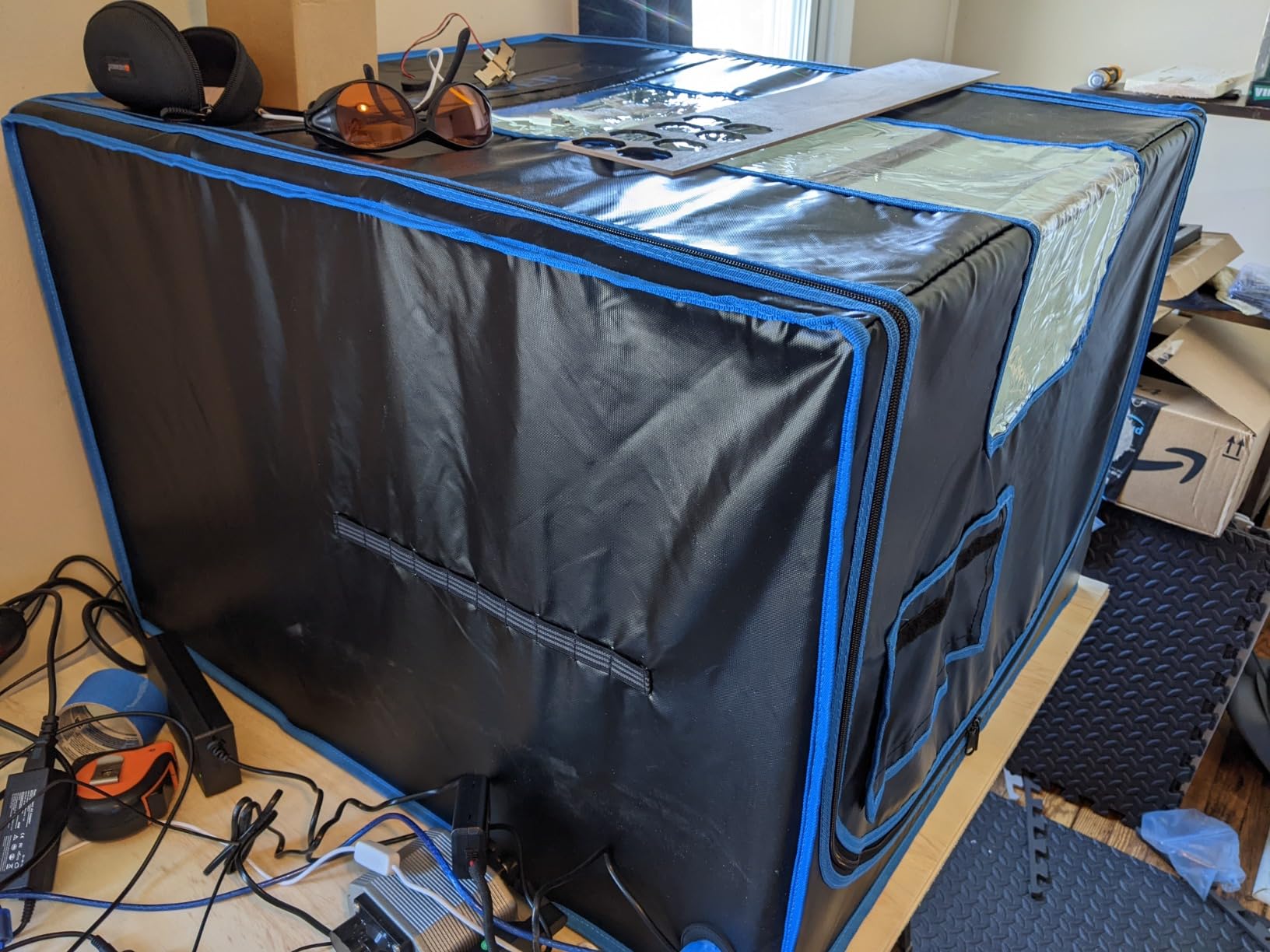
The LONGER is built around the B1 series frames, and it is noticeably taller and deeper than the 28.3 inch tents. Interior space is quoted at 31 by 28.7 by 20.8 inches, which is 790 by 730 by 530 millimetres. The 20.8 inch height is the number that matters, because it is the difference between fitting a tall frame with a lift and crouching to work.
It rates 4.4 across 14 ratings, with no ratings below three stars. Owners accept it as a well-sized, good-value enclosure and call out the included bottom panel as a real advantage, since several competing tents have no floor at all.
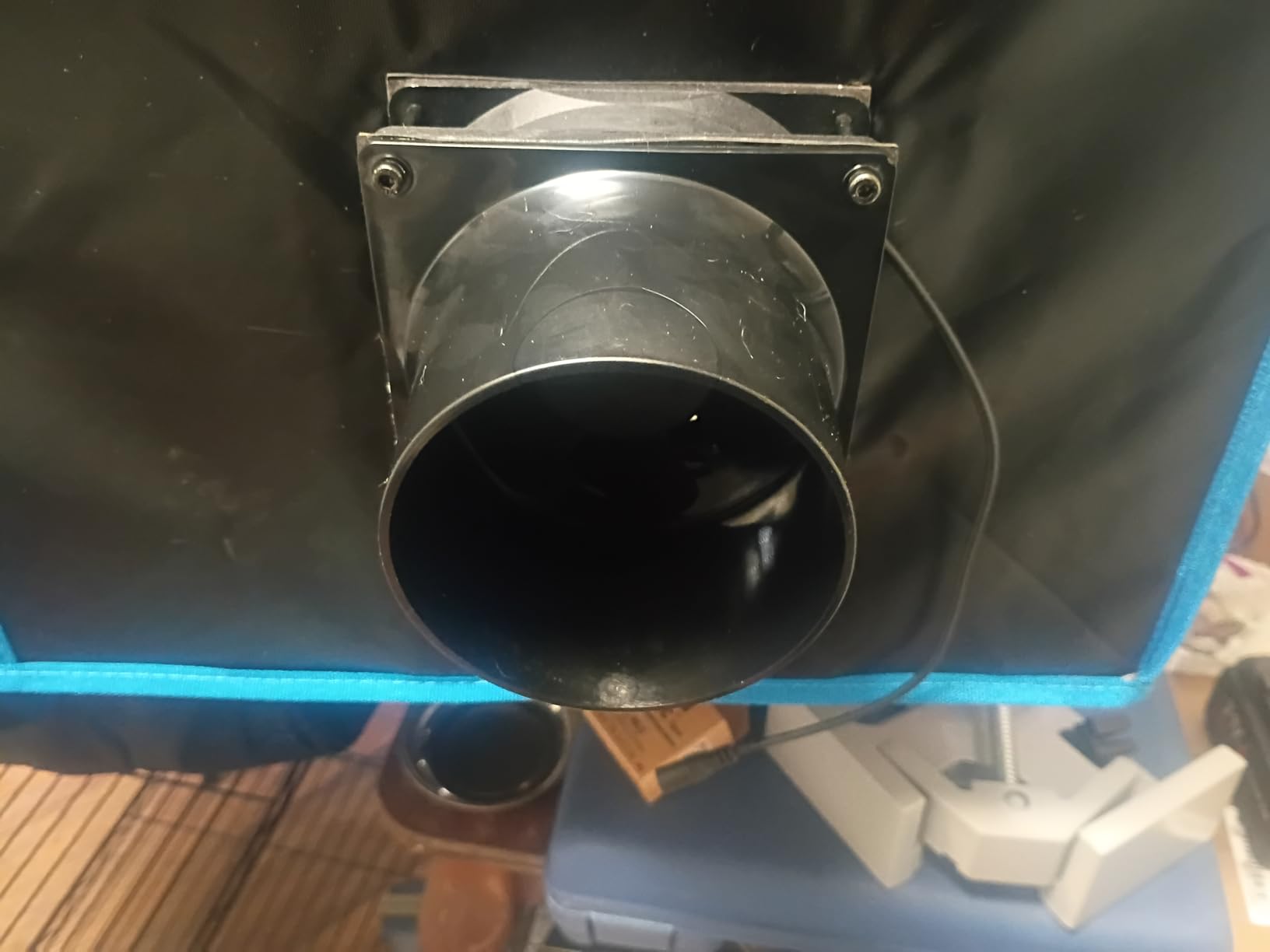
On smoke performance the feedback is specific and useful. Owners report that the built-in fan vents smoke effectively enough to cut the wood odour down noticeably in an office setting, which is the use case most people buying an enclosure actually have. The materials are described as fire-retardant and easy to clean, and a large transparent panel lets you watch the cut.
Two themes dominate the negative feedback. The first is the fan, which several owners say is weak enough that it takes three to four minutes to clear the chamber after a job, and most of them plan to upgrade to a higher-flow unit within a month. The included hose is a tight, awkward fit over the duct and some replace it with standard four inch dryer exhaust hose.
The second theme is documentation. Parts ship unlabelled, forcing buyers to work out which rod goes where, and one reviewer reports the wrong screw type in the kit, so the written and pictured assembly steps do not match. A long-term owner felt the frame and tarp construction was loose and suggested a wooden DIY enclosure instead. The brand does offer one year of free parts replacement with a 48 hour response, which is better support than most in this category.
Whether the extra height is worth the weaker fan
For a B1 owner, yes without much debate. A 20.8 inch interior is the difference between a comfortable bay and a cramped one, and the bottom panel means debris stays in the tent rather than on the machine. If you are moving to a larger frame later, the height is the spec you cannot retrofit.
For anyone else, the fan is the deciding factor. Three to four minutes to clear a chamber is a long time when you want to run a second job, and the fix is easy but real work. Budget for a fan swap from the start rather than discovering it in week three.
When to choose something else
Skip it if you dislike unlabelled parts. Plenty of people will happily spend an evening reverse-engineering a frame, but if assembly is going to frustrate you, pick a tent that ships printed instructions, even if the instructions are thin.
Skip it if you are on a 15W or 20W diode machine in a small room. The extra volume means more air to move, and a modest fan in a larger chamber moves less of it. Match the chamber size to the fan rather than buying the biggest tent on the list.
6. VEVOR 31.5 Inch Enclosure Review – Best for the Largest Interior
VEVOR Laser Engraver Enclosure, 31.5 x 31.5 x 19.6″, Flame Retardant and Fireproof Protective Cover, with Exhaust Fan and Pipe, Insulates Smoke, Noise and Eye Protection, Fits for Most Laser Engraver
31.5 x 31.5 x 19.6 in interior
4000 RPM fan, ports both sides
500 mm tool strips on each side
Pros
- Largest stated interior in the group
- Tool-free fold that stores flat
- 500 mm adjustable tool strips on both sides
- Exhaust ports on both sides for flexible routing
Cons
- Frame and fabric described as flimsy
- No bottom panel
- One reviewer found the fan far too weak
- Only 10 ratings including two 1-star reviews
The VEVOR quotes the largest interior in this group at 31.5 by 31.5 by 19.6 inches, which is 800 by 800 by 500 millimetres. That square footprint with a 19.6 inch ceiling leaves room for a rotary attachment and for taller workpieces, and it is the tent we would choose for a machine with a lot of clearance hardware hanging over the bed.
It rates 4.1 across 10 ratings, and we want to be careful with that number. The distribution is bimodal: 78 percent five-star and 22 percent one-star, with nothing in between. With a review base that thin, treat the rating as weak evidence either way and read the specific complaints instead.
On the positive side, several European buyers report quick and easy assembly with effective smoke control. The fold is genuinely tool-free, it stores flat and carries without reinstallation, and there are 500 mm adjustable fastener strips on each side for holding tools and blanks within reach. Exhaust ports on both sides mean you can route the duct to whichever wall is closer, which is a practical detail that saves metres of hose.
On the negative side, the frame and fabric are described as flimsy by at least one reviewer, the bottom panel is absent, and one reviewer judged the ventilation fan far too weak and the opening poorly designed. Effectiveness of smoke isolation is contested between European and US buyers. It is also the heaviest fabric tent in the set at 14.11 pounds, which undercuts the lightweight messaging in the listing.
When the dual exhaust ports matter
Ports on both sides are the feature most likely to change your setup. If the nearest exterior wall is to the right of the machine, a one metre duct crosses the room instead of three. Shorter duct runs mean less static pressure loss and a quieter install, which is where most of the real performance lives.
The tool strips are the other underappreciated part. Inside a big chamber with a solid top, the working area is awkward to light and awkward to reach. Two adjustable rails at 500 mm each turn an empty box into a usable bay.
When to choose something else
Skip it if containment matters more than interior size. With no bottom panel, smoke and debris have a clear path straight onto the bench and out of the tent, and that undermines the whole point of enclosing a machine indoors.
Skip it if you need a reliable read on quality. Ten ratings is not enough to know whether the flimsiness complaints or the easy-assembly praise reflect the typical experience. If the largest interior is your priority, the LONGER gives you a similar footprint with a real bottom and a more informative review history.
7. Skouphy Fireproof Laser Engraver Tent Review – Best Fan Pull in the Group
Skouphy Laser Engraver Tent, Fireproof and Dustproof Protective Enclosure with Exhaust Fan and Pipe for Most Laser Cutter, Insulates Against Smoke, Odor and Noise 28.3 x 28.3 x 15,7 inch
28.3 x 28.3 x 15.7 in interior
High-pull fan with composite smoke pipe
5W LED strip and integrated base
Pros
- Fan has genuine pulling power by owner accounts
- Highest rated enclosure here at 4.9
- Integrated bottom stitching holds smoke in
- Includes both fan and LED at this tier
- Light fiberglass rod frame assembles fast
Cons
- Light clips do not hold and need taping
- Do not run the fan with the tent fully zipped shut
- One front support bar is tricky to fit
- Fan speed listed inconsistently at 4000 and 4500 RPM
This tent rates 4.9 across 12 ratings, and every one of those ratings is four stars or better, which is unusual in a category where thin review counts are normal. The reason owners buy it over a cheaper tent-only product is stated plainly in the reviews: the fan has real pulling power, and the light is included too.
Interior dimensions are the same 28.3 by 28.3 by 15.7 inches as the other Skouphy, and the compatibility list covers xTool D1 and D1 Pro, Creality CR-Laser Falcon, Ortur, Sculpfun and Atomstack. Owners also report it fitting the Elegoo Phecda and the Ortur LM3.
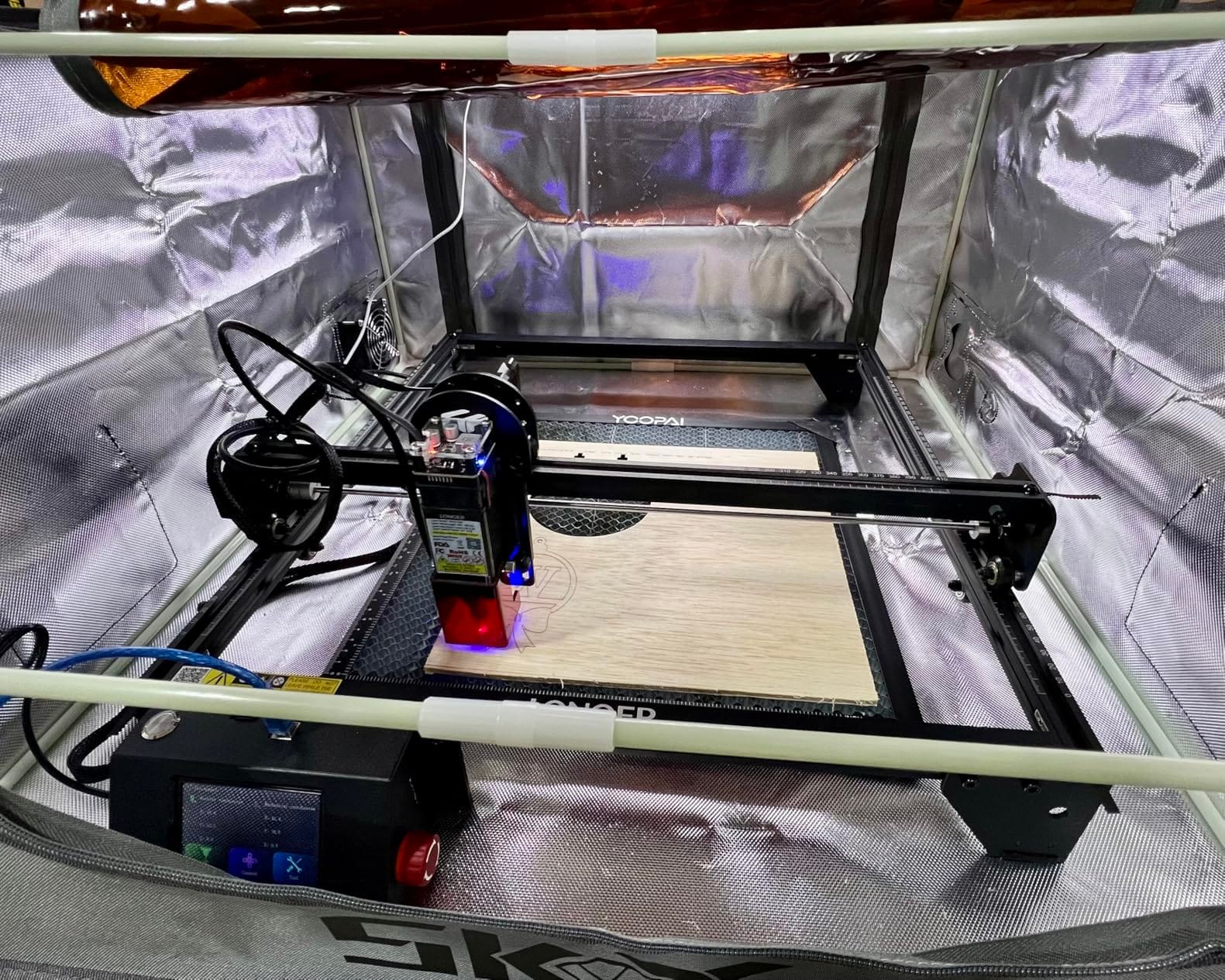
The exhaust uses a three-layer composite smoke pipe, upgraded to discourage smoke and dust from sticking to the inner wall, which reduces the residual odour that lingers in a cheap hose. The 5W light strip is bright enough to follow a cut, and the thickened PVC window filters blue light from the beam.
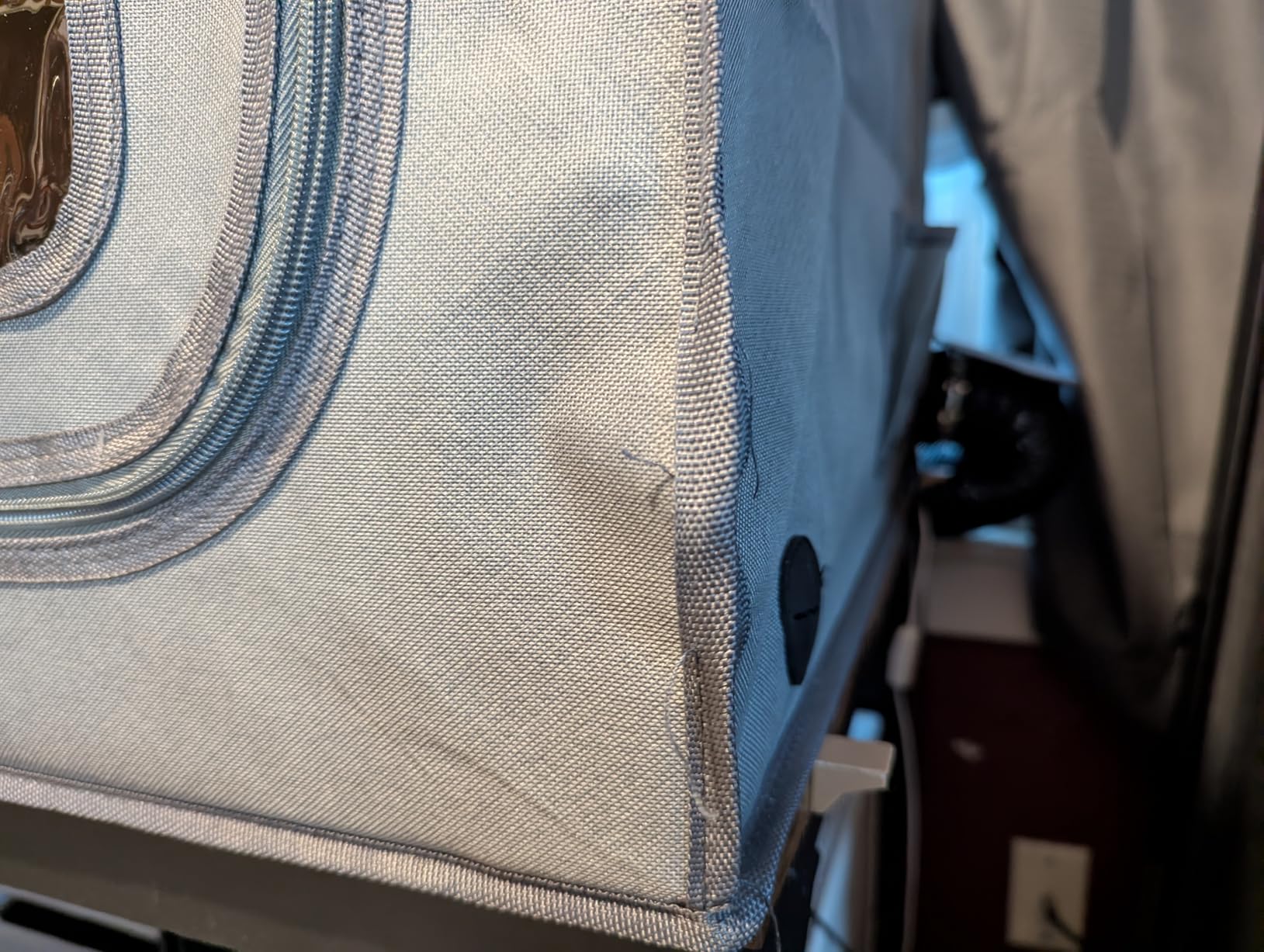
The frame is different from the sibling tent. Support rods use a lightweight fiberglass fishing-rod material over aluminum-mold Oxford cloth, which reduces weight and improves support strength while staying easy to install and carry. Integrated bottom stitching on the base is designed to stop smoke escaping and to collect debris rather than letting it settle on the machine.
There is one operating instruction that matters more than anything else in this review. Do not zip the tent fully closed while the fan is running. The negative pressure pulls the side walls inward and can collapse the tent against the machine, so leave a vent or run it partly open until you have plumbed a duct.
The other defect is small but consistent: the light clips are poor and do not hold their grip, so owners tape the light in place. One front support bar is also fiddly to fit, and the fan grill has to be oriented outward or it blocks the fan. The listing quotes the fan at 4000 RPM in one place and 4500 in another, which is a minor documentation wobble rather than a functional problem.
What the fan pull changes in practice
It changes clearance time, which is the number you feel. A weak fan in a sealed tent means the chamber stays hazy after a job, you crack a panel to let air out, and the extraction stops working exactly when you open the enclosure. A fan with real pull keeps a mild negative pressure and clears the bay between cuts.
That is also why the zip warning matters so much. A strong fan in a fully sealed soft-sided tent does not ventilate, it implodes. Pair this with a duct and the strong fan is an advantage. Run it closed and it is a liability.
When to choose something else
Skip it if you need any kind of rigid structure or certified light containment. A fiberglass rod tent keeps its shape while you are setting up and loses it if a dog leans on it. For screening stray laser light, the acrylic Genmitsu below is a different category entirely.
Skip it if you need a lot of internal volume. At 28.3 inches square this is a mid-size bay, and larger frames will crowd the walls. Twelve reviews is also a small base, so treat the 4.9 as encouraging rather than proven.
8. Genmitsu Kortek Enclosure Review – Best for Genuine Laser Safety
Genmitsu Laser Engraver Enclosure for Kortek, 362.7 × 294.6 × 210.3 mm
Custom fit for the Genmitsu Kortek
Built-in limit switch halts the laser
Built-in fan with duct port
Pros
- Only rigid purpose-built enclosure in the group
- Limit switch stops the laser when the lid opens
- Built-in fan plus dedicated duct port
- Lid is pre-fitted for camera modules
- Connects to off-brand extractors too
Cons
- Fits the Kortek and nothing else
- Will not clear a Kortek with an enlarged bed
- 3 mm acrylic is thin
- Small hinges are a likely failure point
This is the only rigid enclosure in the group and the only one with a real safety interlock. It is an acrylic box rather than a fabric tent, measuring 14.28 by 11.6 by 8.28 inches, custom fitted to the Genmitsu Kortek at 362.7 by 294.6 by 210.3 millimetres. It rates 4.9 across seven reviews.
What makes it different is the built-in limit switch. When the hinged lid opens, the integrated switch halts laser operation, which is a genuine protection layer during material loading, positioning and routine adjustments. No fabric tent in this list can do that, and it is the feature that moves this from a fume accessory to a safety enclosure.
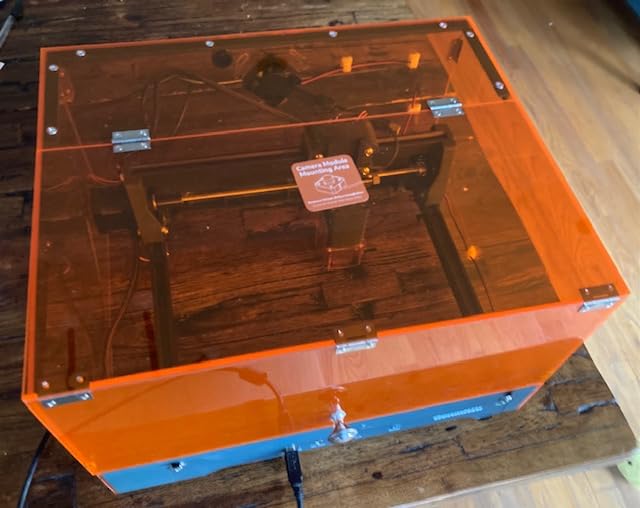
Ventilation is a built-in fan with a dedicated duct port, and the enclosure is designed to connect with the Genmitsu MD2 smoke purifier. Owners confirm the MD2 connection is not proprietary, so an off-brand fume extractor works just as well. A tinted acrylic lid gives a clear view of the job while the enclosure stays closed, and the panels are around 3 millimetres thick.
The camera compatibility is the quiet winner. The lid is pre-fitted for compatible camera modules, so adding a camera does not mean buying a new enclosure. That directly answers the problem raised on the LightBurn community forum, where owners with a camera module above the bed found that off-the-shelf enclosures would not physically fit their machines.
Assembly takes about twenty minutes and the footprint is compact, with full access to the front cables and room to reach in and adjust workpieces. A one year manufacturer warranty applies. The trade-off is total inflexibility: this serves the Kortek and nothing else, and it will not clear a Kortek fitted with an aftermarket enlarged bed.
When rigid beats fabric
Choose rigid when light containment is the priority: a high-power machine in a shared room, a classroom, or any setup where someone might lean in while the laser is running. The tinted acrylic screens scattered light in a way cloth never will, and the interlock means the beam stops the moment the lid moves.
Choose rigid also when your machine is small. At 14.28 by 11.6 by 8.28 inches, a 2.9 pound box is proportionate to a desktop engraver, where a 28 inch fabric tent is mostly empty air you are trying to ventilate.
When to choose something else
Skip it if your machine is anything other than a Kortek, and skip it if you have plans to enlarge the bed. The three millimetre acrylic is functional but thin, and the small hinges are the part most likely to give out first on a box that gets opened twenty times a day.
Also consider that a small interior means cable management matters. Owners report leads catching during movement if the routing is not tidy behind the machine, so plan your cable path before you close the lid for the first time.
9. ACMER MINI Enclosure Review – Best Heat Resistance for Mini Machines
ACMER MINI Laser Engraver Protective Enclosure for Acmer S1, Fire-Resistant Silicone Fiberglass Cover, Transparent Viewing Panel, Compatible with Laser Engravers up to 300×300×230 mm
Fits engravers up to 300 x 300 x 230 mm
Silicone-coated fiberglass to 1832F
Transparent viewing panel
Pros
- Strongest published heat rating in the group at 1832F
- Sized specifically for mini engravers such as the S1
- Transparent panel for monitoring
- Roomy inside for taller pieces and rotary attachments
- Instructions included
Cons
- No fan or ducting included
- Only traps smoke rather than exhausting it
- Limited to machines up to 300 x 300 x 230 mm
- Only three ratings
The headline number on this one is the material. It is built from flame-retardant fiberglass fabric with a double-sided silicone coating rated to 1832F, which is the highest published heat rating among everything we tested. For an enclosure that will occasionally contain a burning scrap from a laser pass, that is a real specification rather than a marketing adjective.
The fit is purpose-built for small machines. It accommodates mini laser engravers up to 300 by 300 by 230 millimetres, which covers the ACMER S1 and similar, and the roomy interior still takes taller items and rotary attachments despite the compact footprint. The package is 14 by 13.4 by 3.23 inches and weighs 4.3 pounds.
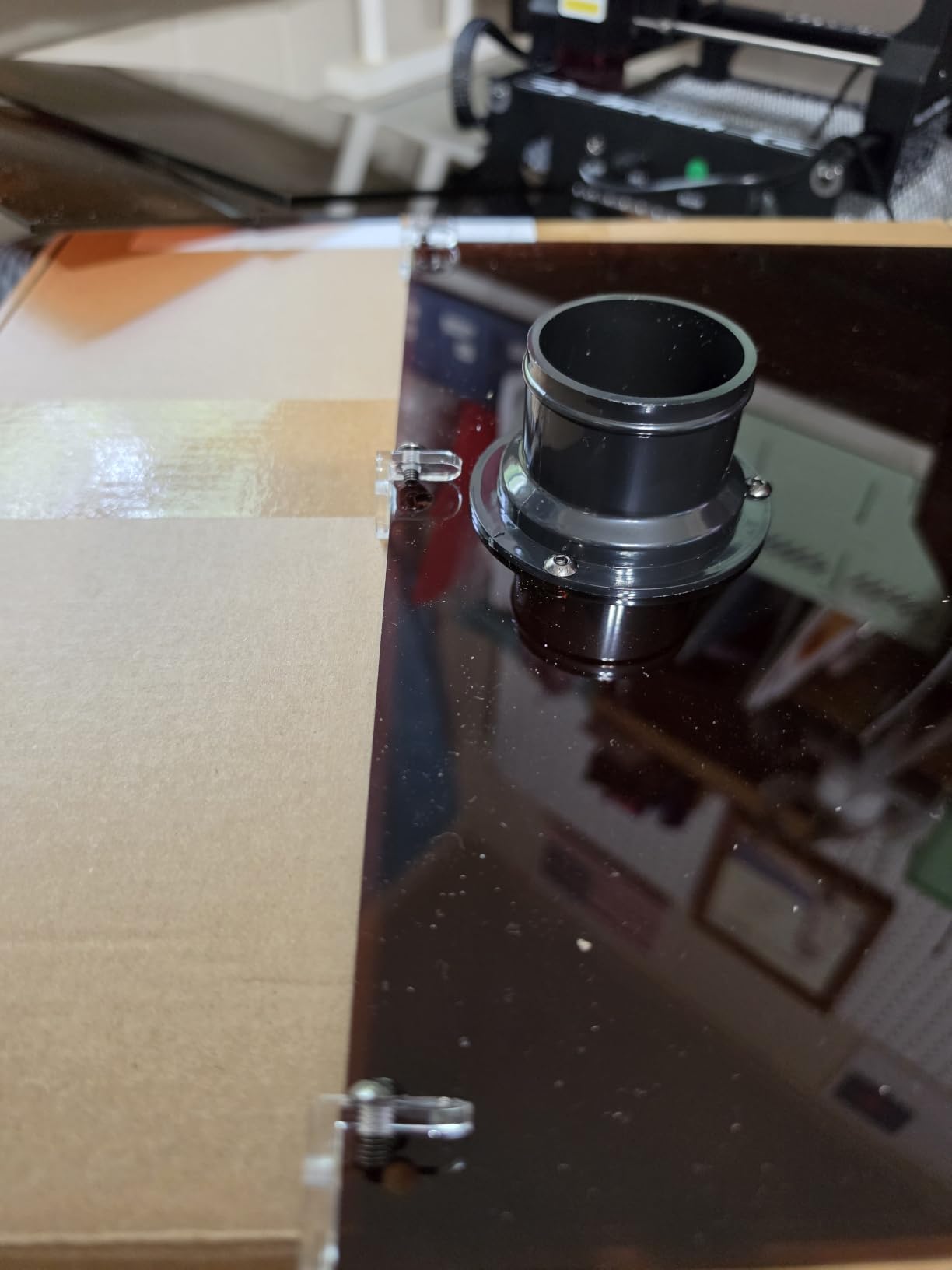
It rates 5.0, but that comes from three ratings with no written customer feedback surfaced. Read the 5.0 as essentially unproven and make your decision on the specification instead, which is where the case for it actually lives.
The limitation is structural rather than fixable. There is no fan and no ducting, so the enclosure traps smoke, dust and debris inside rather than moving them anywhere. It is designed to work with an external ventilation system when additional airflow is needed, which makes it a containment box that you must pair with a fume extractor rather than a complete fume control solution. On a long job, smoke will build up inside regardless.
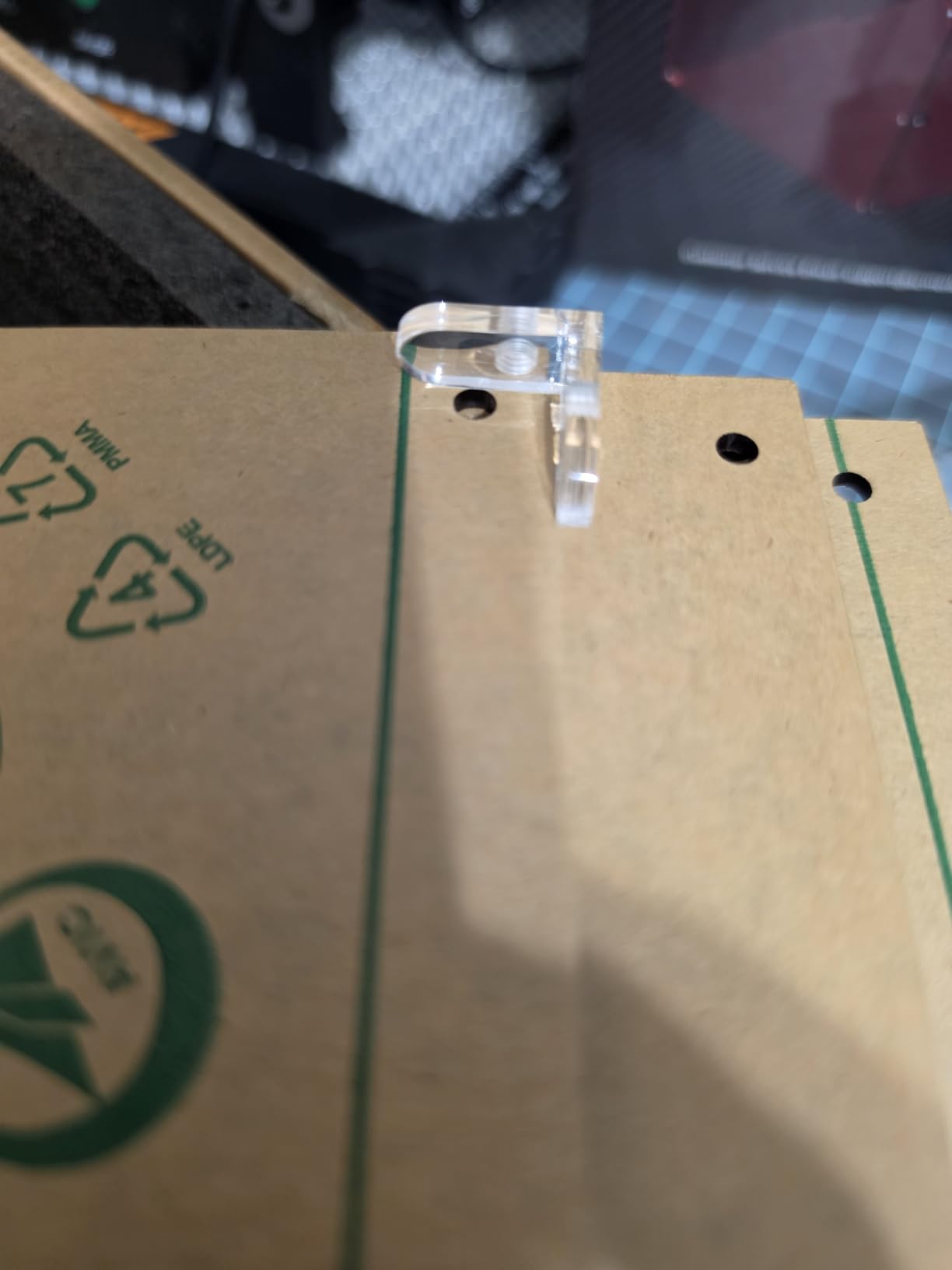
When a heat rating is the deciding factor
Choose it when you are running thin, highly combustible stock. Paper, thin plywood, fabric and small plastics produce the kind of ember that turns a fire risk into a fire, and a silicone-coated fiberglass skin that tolerates 1832F gives you a real margin rather than a hopeful one.
Choose it also if you are tired of over-cubing a small machine. Wrapping a 300 millimetre engraver in a 28 inch tent means ventilating a volume far larger than the source, which is inefficient. A close-fitting box plus a good extractor moves less air for the same result.
When to choose something else
Skip it as your only fume control. An enclosure with no fan is not ventilation, and a member of the r/Laserengraving thread on fume extraction makes the obvious point that extractors exist precisely because there is often no option for real ventilation in a given space.
Skip it if you own anything larger than a mini engraver. The 300 by 300 by 230 millimetre ceiling is a hard limit, and three reviews is not enough evidence to buy blind on a machine you will use daily.
10. PrintSure Steel Frame Enclosure Review – Best for Adjustable Fan Speed
Laser Engraver Cutter Cover with Ventilation, 27x27x19” Fire-Resistant Fabric, Steel Frame, 90mm DC Fan with Speed Control, 2m Smoke Pipe
27 x 27 x 19 in interior
12V DC fan with speed controller
16 mm stainless steel pipe frame
Pros
- Only enclosure here with a fan speed controller
- Stainless steel frame is sturdier than rod tents
- Front air inlet plus outlets on both sides
- 100 mm cable holes on each side
- Also shields the machine from pets and children
Cons
- Only two ratings and no written feedback
- Smaller 27 in footprint than the 28.3 to 31.5 in rivals
- No integrated LED light
- Heaviest fabric tent at 5.72 lb
The PrintSure does one thing no other enclosure here does: the 12V DC fan comes with a speed controller. That is a small feature with a large effect on real use. Dial extraction up for a long MDF cut and down for a light acrylic job, and you reduce both noise and the energy spent moving air you do not need moved.
Interior space is 27 by 27 by 19 inches, or 700 by 700 by 500 millimetres, with a 27.56 inch external footprint and a weight of 5.72 pounds. That is smaller than most rivals in the group, so it is a snug enclosure for a mid-size machine rather than a roomy one, and the reduced headroom is the trade for the smaller footprint.
Structurally it is the most solidly built fabric tent here. The frame is 16 millimetre stainless steel pipe, which is a step up from the aluminium or fiberglass rod frames used elsewhere in this list. The fabric is silicone-coated composite fiberglass described as fire-resistant and high temperature resistant.
The airflow design is the other stand-out. There is a 100 millimetre square air outlet and a cable hole on each side, plus a dedicated front air inlet, which produces a properly balanced path through the chamber rather than air swirling in from a random gap. A 100 millimetre vent port and a 2 metre smoke pipe ship in the box, and a brown PVC laser protective film gives a usable view while filtering bright light.
It rates 5.0 from two ratings with no written reviews, so there is effectively no customer evidence to draw on. Every claim above comes from the listing rather than from owners, and you should weigh it that way. The machine-fit and airflow design are still worth a look if you are comparing on paper.
Why a speed controller changes the workflow
Noise and energy, first. A fan at full speed all day is a constant drone in a domestic or classroom space, and a community member on the LightBurn forum described exactly that as an irritating dealbreaker. A controller lets you drop the fan to a lower setting for light engraving and the short engraving jobs that make up most of a hobby workload.
Second, matching. Extraction needs change with the material. A thin plywood job produces a lot of particulate and relatively little gas, so particulate filtration does the work. Acrylic and MDF need the carbon layer to do its job, and more air does not fix a saturated filter. Being able to vary the flow is a way to stop yourself from over-ventilating a job that did not need it.
When to choose something else
Skip it if you need more room. At 27 inches square with 19 inches of height, it is the tightest interior among the larger tents here, and there is less room for a rotary unit or for reaching around a tall frame.
Skip it if you want evidence rather than a specification sheet. Two ratings is not a buying history, and the balanced airflow design is appealing on paper but unverified in use. If you want documented owner experience, the Skouphy at the top of this list has 289 ratings describing the same class of product.
Enclosure vs. Fume Extractor vs. Both: Which Layer Does the Work
The best fume extractor for a laser engraver is the one matched to your room, but the enclosure still does the majority of the capture work. Here is the honest split of labour. The enclosure shrinks the volume and holds the plume within reach of the intake. The extractor moves the air. A filter removes what the air carries. Neither layer substitutes for the other.
An extractor alone works, and plenty of people run one on an open bench. It works because a decent unit pulls a large volume of room air, and over a long enough period the concentration falls. The problem is efficiency. You are moving cubic metres of ambient air to clear grams of contamination, and the smell will often still reach you at the machine because you are standing in the plume, not in the extracted volume.
An enclosure alone does almost nothing for air quality. It is a bag that holds fumes in, and holding is not removing. A passive enclosure with no fan just relocates the problem from your kitchen to a small box that saturates and then leaks.
Both together is the correct answer, and this is why we keep recommending an enclosure with a duct port even when the enclosure is a cheap fabric tent. The fabric tent is a capture device. The duct and the filter are the removal device. Confusing the two is why some buyers end up with a small purifier struggling to clear a whole workshop while a great enclosure sits unused in the corner.
One practical note from r/lasercutting discussions: rigid galvanised steel ducting is the recommended duct material, and PVC ducting is actively advised against. That advice is worth taking at face value, because PVC is also on the never-cut list, and the last thing you want is a hose degrading in an exhaust line.
Materials You Should Never Laser Cut
Any enclosure only makes a machine as safe as the material inside it, and several extremely common workshop materials release gas that a carbon filter is not designed to fully neutralise. Here is the list to print and keep near the machine.
PVC and vinyl. Never cut these. PVC releases hydrogen chloride gas when heated, which corrodes the machine, damages the extraction duct and is genuinely dangerous to breathe. Decorative vinyl, self-adhesive sheet and some leather backing all qualify. This is the single most important line on this page.
Polycarbonate. It looks like acrylic and machines beautifully, but it is a different plastic. Heated polycarbonate degrades and releases products that make a carbon filter saturate far faster than expected.
ABS and other styrenes. The HOCENWAY tent in this list is marketed partly on keeping ABS and PETG prints warm and stable, and the same chemistry that smells sharp during ordinary 3D printing is the reason styrenes are a poor laser stock. The fumes are unpleasant enough that users describe the smell as the warning signal.
Chromium-tanned leather. Common on craft leather and a frequent cause of the bad smell people blame on the machine. Vegetable-tanned is the safer option, and testing a scrap first is cheap insurance.
Unknown plastics. If you cannot identify the polymer, do not cut it. A quick scrape test on an offcut, or simply cutting a small corner in a well-ventilated space, takes a minute and answers the question.
Fire Safety Inside an Enclosed Laser
An enclosure improves fume control and makes a fire slightly more dangerous at the same time. You have removed the convection path that carries heat away, so a smoldering ember that would have self-extinguished on an open bench now sits in a closed box with a fan running. Every tent on this list is a reason to think about fire response, not a reason to relax.
Three habits do most of the work. Keep a metal scrap tray or an aluminium plate under the workpiece so embers land on a non-combustible surface. Never leave a job unattended in an enclosed chamber, because the whole point of the enclosure is that nobody sees it. And leave the fan running for several minutes after the job ends, so residual heat and any smolder fragment are pulled away from the walls.
Material choice is the fourth habit. A flame-retardant interior, like the silicone-coated fiberglass on the ACMER MINI at 1832F, buys you minutes rather than seconds. That is the difference between reaching in and moving a burning scrap and losing the tent.
Do you need a fume hood to laser cut metal? For fibre laser metal work, yes, and you need more than a hood. Metal dust is a different hazard from wood fume, it is heavier, and it settles. A fibre laser safety enclosure with rated optical protection is a different product category from the tents on this list, and the Genmitsu here is the only one with an interlock, which is why it earns its place despite serving a single machine.
Ducting Outside vs. Filtering Inside: The Honest Comparison
Ducting outside is better, and the reason is not that outside air is cleaner. It is that filtered air still comes back into the room, and because carbon saturates silently, you will be breathing an unfiltered plume weeks after the filter stopped working. A duct removes the problem rather than managing it.
The obstacles are real, though. There is often no exterior wall in the right place, rental agreements and planning restrictions can block a penetrative install, and a long duct run with many bends loses airflow to static pressure. If you can reach a wall or a window in one short run, do it. Rigid galvanised steel is the duct material that the fabrication laser groups recommend.
Filtering inside is the second-best answer and it is not a bad one. A three-stage unit with a pre-filter, a HEPA filter and a substantial activated carbon layer will handle wood and acrylic fume in a normal room for a long time. The failures are predictable: carbon saturation with no warning, and an extraction zone that is too far from the cut.
The distance point is the one people miss. Capture velocity falls off roughly with the square of the distance from the intake, so an extractor sitting across the room is far less effective than the same unit on the bench beside the bed. A member of the LightBurn community forum described exactly this, noting that extraction works well for a fixed operation such as a polishing wheel but poorly for a moving gantry, and that air assist pushes smoke down the cut channel and away from a distant intake.
Installation: Make Extraction Actually Work
Most disappointing extraction results are installation problems, not product problems. Four things fix the majority of cases, and none of them require buying a better enclosure.
Keep the duct run short and straight. Every metre and every bend costs airflow. A one metre straight run outperforms a four metre run with four elbows by a wide margin. If you can only manage a long run, choose rigid duct over flexible hose wherever the route allows it.
Give it a make-up air inlet. An extraction system needs to draw replacement air from somewhere. If the tent is sealed on every side, air comes in through gaps you did not choose, and the extraction is weak and unpredictable. Most of the tents here have a zip opening or a port for exactly this reason, and a partially open side is correct during setup.
Set a run-on timer. Extraction should keep running for several minutes after the job ends. Fumes continue to off-gas as material cools, and the last few minutes are when the peak concentration enters the room. Where your software allows an auto start and stop signal, use it; otherwise set a timer.
Mind the air assist interaction. Air assist fires down the kerf and pushes smoke along the channel under the material, and channelled cutting decks shoot that smoke at speed away from the intake. If capture is poor, reducing the assist pressure slightly and letting the extraction pull the plume often works better than a stronger fan. A slatted surround that guides smoke toward the intake is the fix the community builds when a bigger extractor does not solve it.
One last thing under the machine itself: put it on a hard, non-combustible, non-reflective surface. A reflective bench plate can direct beam energy back toward the machine, and a plywood bench is a fire waiting for a bad cut. This is the direct answer to the question of what to put under a laser engraver, and it is also the cheapest safety improvement available.
Buying Guide: How to Choose a Laser Engraver Enclosure
After working through ten of these, the criteria that actually predict whether an enclosure will do its job are surprisingly short. Here is the checklist we use, in order of importance.
1. Interior dimensions against your machine, not the bed. Measure the full external footprint and add the height of any camera arm, lift or rotary attachment. Most fit problems raised on forums are about vertical clearance, not length. The Genmitsu is the exception that proves the rule: it fits exactly one machine, which is why it works so well on it.
2. Whether there is a bottom panel. A solid or integrated bottom stops debris settling on the bed and smoke leaking underneath. The LONGER and the Skouphy have one. The VEVOR does not. This is a cheap, decisive differentiator.
3. Duct port size and fan specification. A 75 mm port limits airflow badly compared with 100 mm, and a fan rated only by RPM tells you little. A speed controller is a genuine advantage. If you can specify the unit, ask for a published CFM or m³/h figure rather than a marketing phrase about strong suction.
4. Fire rating of the interior material. Flame-retardant cloth is a modest claim; a silicone-coated fiberglass rating in the region of 1000C is a real specification. For a home or school machine, treat this as a requirement rather than a nice-to-have.
5. Whether it folds and how much bench it claims. A foldable frame can be stored in a corner. A rigid 750 mm tent cannot. In a small apartment, that difference decides whether the enclosure stays in use or ends up in a cupboard.
6. Interlock and light containment. Only the Genmitsu has a limit switch that halts the laser when the lid opens. If you are working with anyone else nearby, or running above eye level, this is the criterion that matters most and the one most tents cannot meet.
7. Noise. A constant fan drone is a genuine dealbreaker in a domestic setting, and it is why the PrintSure controller is worth looking at. A soft-sided tent also dampens the machine noise itself, which helps with neighbours as well as with your own concentration.
8. Make-up air and viewing. You need a way to let air in and a way to see the cut. Light-filtering windows and a tinted lid protect your eyes from blue light; multiple panels are better than one, and the Crafit and VEVOR do this better than the tents.
9. Filtered recirculation compatibility. Even if you plan to duct outside, check whether the enclosure connects to a purifier, and how. The Genmitsu accepts off-brand extractors, which tells you something about how closed that ecosystem is.
Finally, the ongoing cost. If you filter rather than duct, budget replacement filters on a schedule you set yourself, because nothing will remind you. Carbon saturation is invisible, and the failure mode is a slow return to breathing an untreated plume. If you are still choosing a machine, the diode laser engraver comparison covers which models have a sealed bed and a clean rear exhaust port worth building an enclosure around.
Frequently Asked Questions
What is the best ventilation system for laser engraving?
A sealed enclosure with a rear duct port, ducted outside where possible, with a filtered recirculation unit as the fallback. Capture velocity falls off roughly with the square of the distance from the intake, so a small confined volume is extracted far more effectively than an open room. Inside the enclosure, air passes a pre-filter, a HEPA filter for particulate, then activated carbon for VOCs.
Do I need an enclosure for my laser engraver?
If you cut MDF, plywood, acrylic or leather indoors, yes. An enclosure shrinks the volume the fumes occupy and holds the plume within reach of the extraction intake, which is where most of the benefit comes from. For fibre laser metal work it is essential. For a diode engraver doing light acrylic jobs, it is a strong recommendation rather than a requirement.
What materials should I never laser cut?
Never cut PVC or vinyl, which release hydrogen chloride gas when heated. Also avoid polycarbonate, ABS and other styrenes, and chromium-tanned leather, which is a common cause of strong odour. If you cannot identify the polymer, test a small offcut in a ventilated space first.
Is a laser engraver enclosure worth it?
For most indoor users, yes, mainly because it keeps the plume near the extraction intake and out of the rest of the room. The benefit grows with the number of people in the space. The exception is a very small machine doing light jobs in a well-ventilated workshop, where a good extractor alone is sufficient.
What size enclosure do I need for my laser engraver?
Measure the full external footprint of the machine, not the work area, and add the height of any camera arm, lift or rotary attachment. A 28.3 inch square bay clears most 400 mm class desktop engravers. A 31 by 28.7 by 20.8 inch bay is needed for larger 30W frames with extra clearance hardware.
How do I know when to change a carbon filter?
You usually do not get a warning, which is the problem. Activated carbon saturates silently with no colour change, no alarm and no smell. Set a replacement interval based on how often you cut gas-producing materials such as MDF and acrylic, and keep a spare on hand rather than testing by smell.
Can I vent my laser engraver out a window?
Yes, and it is the best outcome available indoors. Keep the duct run short and straight, use rigid duct rather than flexible hose, and expect some loss of airflow through every metre and every bend. A partial screen rather than a fully open window reduces draughts that disturb the extraction path.
Are cheap laser engraver enclosures safe?
They are safe for smoke capture but not for laser light containment. A fabric tent rated flame-retardant can give you minutes in a smoldering fire, but only a rigid enclosure with an interlock stops the beam when a lid opens. Check the interior material rating and whether a bottom panel is included, and treat any claim of safety certification sceptically.
How loud is a laser engraver enclosure?
It depends almost entirely on the fan, and soft-sided tents do dampen the machine noise itself. A constant fan drone is a common complaint in domestic and classroom settings. A fan with a speed controller lets you run lower airflow on light jobs, and a heavier cabinet with wood and metal panels reduces overall noise better than fabric.
Do you need a fume hood to laser cut metal?
For fibre laser metal work, yes, and you need more than a hood. Metal dust is heavier than wood fume and settles on surfaces, so containment and rated optical protection matter. An interlocked rigid enclosure is the appropriate product category, not a fabric tent, regardless of how good the extraction is.
Bottom Line: Which Laser Engraver Enclosure to Buy in 2026
For most people, the Skouphy Integrated Enclosure is the pick. It has the largest body of real owner feedback in the group at 289 ratings, a genuinely sealed bottom, a usable 28.3 inch square bay, and it folds flat. The fan is the weak point and you will probably replace it, but the rest of the package is right.
Buy the Lutyr Pro 2.0 instead if fire rating on the interior cloth matters more to you than the fan specification, and the Crafit cabinet if you are building a proper bench and want storage and a power strip in the same box. Choose the Genmitsu Kortek if you own that machine and light containment with an interlock is your concern, and the ACMER MINI if you run a small engraver on combustible stock and will pair it with a separate extractor.
Whatever you choose, duct outside if the building allows it, leave a make-up air inlet open, run the fan for several minutes after every job, and keep a metal tray under the workpiece. Those four habits deliver more clean air than the enclosure brand you pick.