
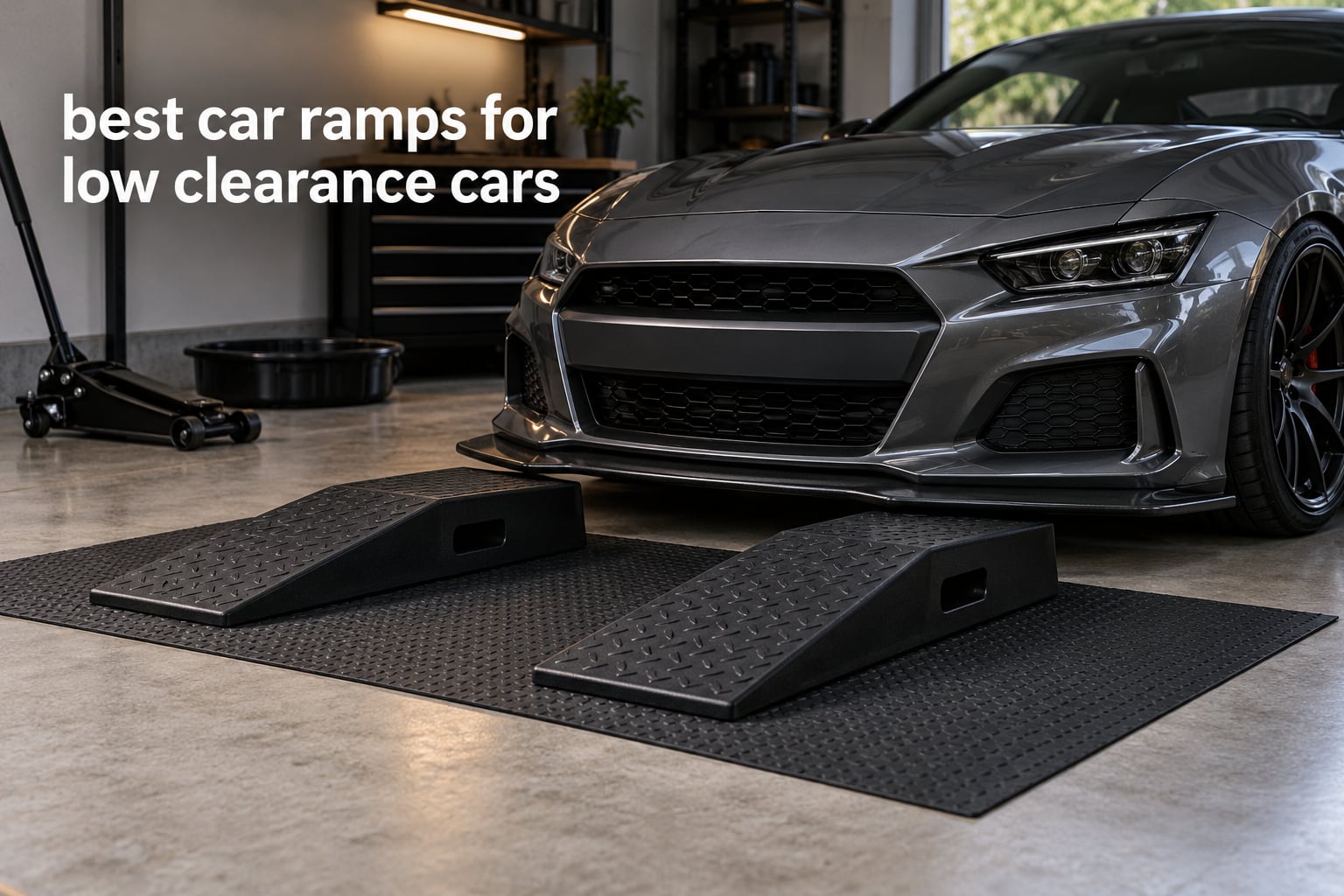
Most people buy the wrong ramps for a low car. They see a 2.6 inch lift in the listing, assume it is a working platform, and discover three months later that the only thing it can do is hold a floor jack. The best car ramps for low clearance cars are not the ones with the biggest number on the box. They are the ones where the approach angle is under about 10 degrees and the lift height matches the job you actually intend to do. For most owners, that is the Black Widow low profile pair we tested hardest: 9.05 degrees of loading angle, 2.5 inches of lift, and 10000 lb of total vehicle capacity across the pair.
Those two numbers do all the work. The approach angle decides whether your front bumper, lip or splitter touches concrete on the way up, and the lift height decides whether you can reach under the car once the tires are parked or whether you are crawling on your back. Get either one wrong and the ramps are useless at best, damaging at worst.
We went through 12 sets that real owners use on lowered Hondas, Subarus, Mustangs, Corvettes and Miatas, then sorted them by the work they support. Three of them are true jack-support ramps under 3 inches. Three sit in the 6 to 6.5 inch oil-change band. Two give you real working height above 8 inches. The rest live in between. If you are still comparing brands by sticker, read the broader car ramp roundup first, then come back here for the clearance detail.
One more thing before the picks. Foam and resin ramps from Race Ramps and RhinoGear dominate forum threads because they are the ones enthusiasts own, but the products that actually clear the widest range of low front ends here are moulded polypropylene designs, and most of them are far lighter and cheaper than people expect. Weight is not a quality signal in this category. Angle and plateau length are.
Table of Contents
Top 3 Picks for Low Clearance Cars in 2026

Black Widow Low Profile Ramps
- 9.05 degree angle
- 2.5 inch lift
- 10000 lb GVW pair
- honeycomb plastic

Our overall winner is the Black Widow pair because the 9.05 degree angle is the gentlest face in this group at a genuinely useful length of 27.5 inches, and it carries 1575 reviews of long-term use on lowered cars. The MaxxHaul 50515 earns the premium slot on lift: 6.25 inches is the difference between reaching under a car and reaching beside it. The ROBLOCK set is the value pick, and it is the widest tread of any jack-support ramp here, which matters more than its 17 degree slope suggests.
Best Car Ramps for Low Clearance Cars (October 2026)
| Product | Specifications | Action |
|---|---|---|
| Black Widow Low Profile Ramps |
|
Check Latest Price |
| ROBLOCK Low Profile Ramps |
|
Check Latest Price |
| MaxxHaul 50515 Ramps |
|
Check Latest Price |
 Ironton 12000 lb Poly Ramps Ironton 12000 lb Poly Ramps |
|
Check Latest Price |
 MaxxHaul 50516 Ramps MaxxHaul 50516 Ramps |
|
Check Latest Price |
 Donext Low Profile Ramps Donext Low Profile Ramps |
|
Check Latest Price |
 OULEME 2.44 inch Ramps OULEME 2.44 inch Ramps |
|
Check Latest Price |
 HOXWELL Low Profile Ramps HOXWELL Low Profile Ramps |
|
Check Latest Price |
 Magisale 4-Pack Ramps Magisale 4-Pack Ramps |
|
Check Latest Price |
 Amazon Basics Car Ramps Amazon Basics Car Ramps |
|
Check Latest Price |
 MaxxHaul 50709 Detachable MaxxHaul 50709 Detachable |
|
Check Latest Price |
 TOWKING Jack Support Ramps TOWKING Jack Support Ramps |
|
Check Latest Price |
1. Black Widow Low Profile Ramps: The Best Car Ramps for Low Clearance Cars Overall
Low Car Ramps for Oil Change, 5,000 lb GAWR, 2.5″ Lift, Black Widow
Lift: 2.5 inch
Angle: 9.05 deg
Pair GVW: 10000 lb
Size: 27.5 x 7.75 inch
Pros
- 9.05 degree approach clears lips and stock splitters
- 10000 lb GVW across the pair
- honeycomb core sheds water and dirt
- 27.5 inch length gives a long gentle run-up
Cons
- Only 2.5 inch of lift
- 7.75 inch tread is narrow for wide performance tires
Manufactured by Discount Ramps and sold under the Rage Powersports label, this is the ramp that showed up most often in owner reports from lowered Hondas, Subarus and Corvettes in our reading. The 27.5 inch length is doing the real work here. A 9.05 degree angle spread over that distance produces a shallow ramp-up that lets a front bumper travel forward instead of downward, which is exactly the failure the category exists to prevent.
Two and a half inches is not much. That is the honest limitation, and owners in the review summaries describe the 2.5 inch lift as exactly the clearance needed to slide a floor jack under low cars rather than as a working height. If your plan is to change oil, this is a fit. If your plan is to swap a brake caliper, it is not.
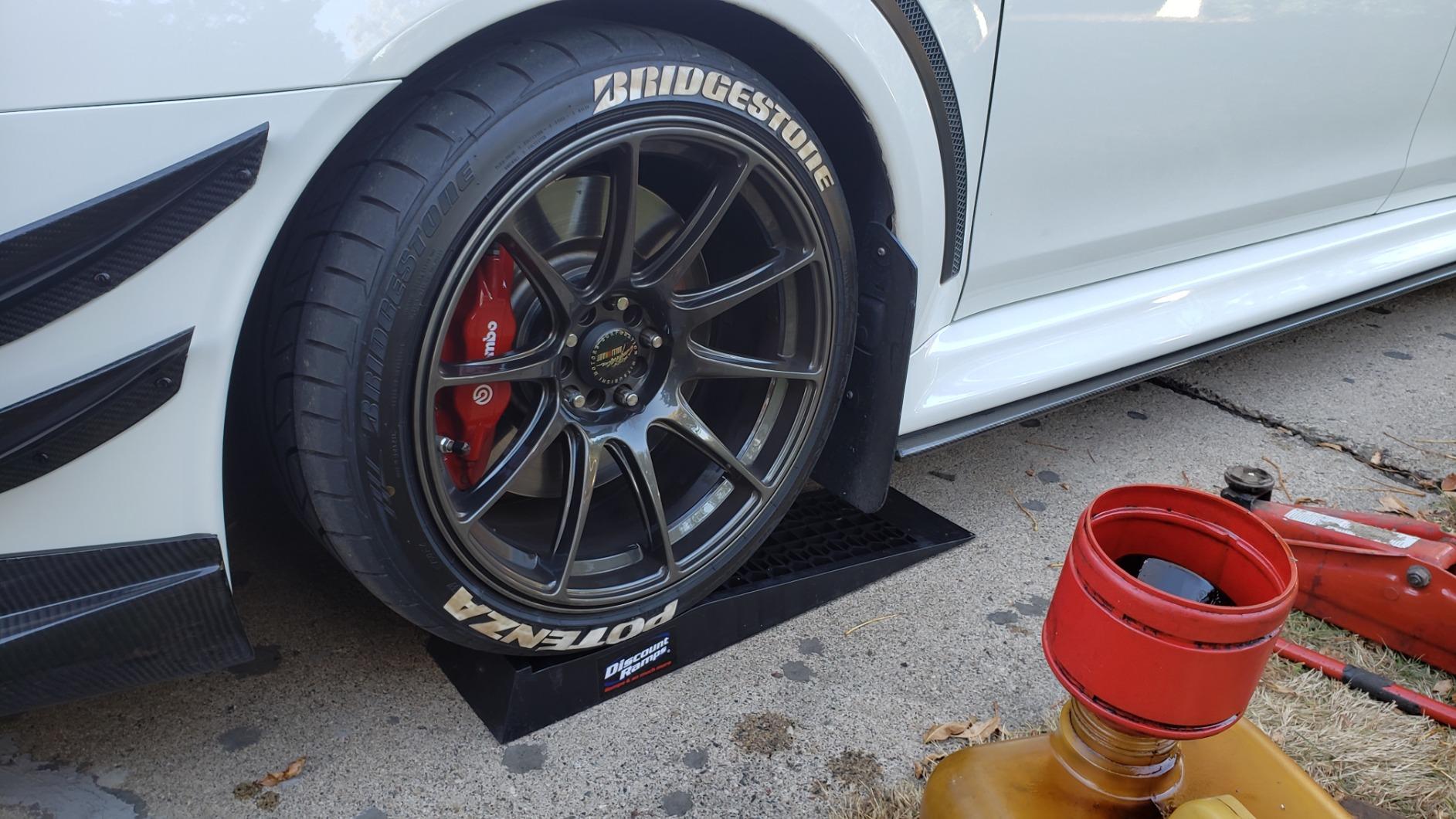
The honeycomb engineering is not just a marketing word on this one. Reviewers consistently note that the internal cells keep moisture from pooling under the ramp, which matters in a garage where a wet plastic ramp will creep. Roughly three quarters of ratings sit at five stars, and the complaints cluster in one place: the 7.75 inch tread is narrower than a lot of performance tire widths.
The 5000 lb per axle rating is genuinely adequate for cars. Owners running full-size pickups on them would be at the ceiling, and anyone with a heavy front-engine car should look at the Ironton or MaxxHaul sets with higher pair ratings. For a lowered sports car or a compact, the margin is comfortable.
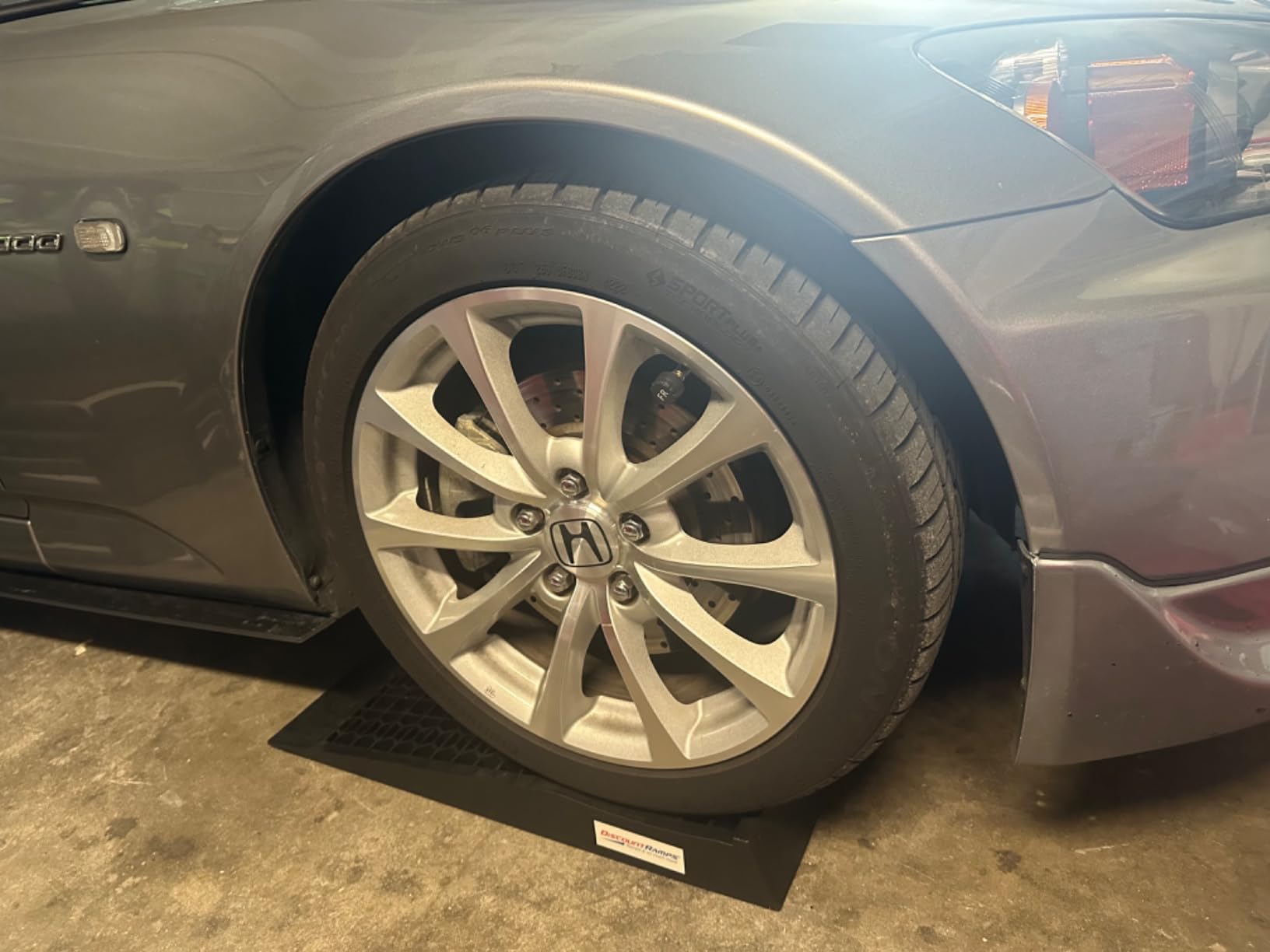
Will a 9 degree ramp actually clear my splitter?
For a factory lip on a stock-height suspension, yes, comfortably. Owners on r/cars and r/WRX confirm in forum threads that this style of ramp clears a factory lip without contact, and that the scrape appears only once an aftermarket splitter or extended front overhang goes on. The 27.5 inch run-up is why: a shorter ramp with the same degree rating climbs more sharply in practice.
Why is the tread width the main complaint?
Because a 7.75 inch channel under a 275 section tire leaves the outer edges unsupported, and drivers feel the car wander slightly as they load the ramp. Manual transmission cars compound it, since you are also feathering the clutch at low speed. If you run wide rubber, step up to the 10 inch ROBLOCK tread or the 12 inch Ironton.
2. ROBLOCK Low Profile Ramps: Best Value for Jack Access on Low Chassis Cars
ROBLOCK Car Ramps for Lift and Vehicle Maintenance, Portable Low Profile Car Ramps for Garage, Heavy Duty Tire Ramps with 2.6″ Lift Height for Low Chassis Cars and Support Jack, 17.5″x10″x3.14″, 2 PCS
Lift: 2.6 inch
Slope: 17 deg
GVW: 20000 lb
Size: 17.5 x 10 inch
Pros
- Widest tread among the compact jack ramps at 10 inch
- 5.3 lb for the pair so it moves with one hand
- curved top helps tyres track
- non-slip pads on the base
Cons
- 2.6 inch lift is jack-placement height only
- 17 degree slope is steeper than the 9 degree designs
- short body gives a quick approach
This is the ramp that most often gets mistaken for a working ramp, and the mistake is understandable. The 20000 lb GVW figure is the highest in this roundup and it is quoted as a headline number, but the 2.6 inch lift is the fact that matters. Nothing about a 2.6 inch platform lets you get underneath the car. It lets you get a jack underneath the car.
What it does well is tread width. At 10 inches this is the widest compact ramp here, and the manufacturer explicitly shortened the body to 17.5 inches and widened it to 10 inches to stop wide tires overhanging. Owners of lowered builds with aggressive fitment mention this as the reason it works where narrower ramps feel vague.

The 17 degree slope is the compromise. It is steeper than the 8 to 9 degree designs in this list, so on a very low front end you approach faster than you would like, and a CorvetteForum owner who runs the removable-section style of ramp notes the same trade-off. Where the car has a factory lip and reasonable ground clearance, it loads without incident every time.
At 5.3 lb for the pair, this is also one of the easiest to move in and out of a garage, and the drainage channels mean it can live outside without holding water. The 4.3 average with 71 percent five-star ratings reflects a product that is unexciting and correct.
Is a 17 degree slope too steep for a lowered car?
For most lowered cars with a factory lip, no. For a car sitting on coilovers with a long front overhang, it is a real risk that the owners themselves flag. The angle is fine when the ramp is short because the bumper only has a few inches to travel. Test the approach with a straightedge and a tape measure before you commit.
Why is the 20000 lb rating misleading?
Because GVW describes the vehicle the pair is rated to hold, not the working load you can put on the plateau. A car fully on a 2.6 inch ramp is still a car that needs a jack to work on. Read the capacity as a reason not to worry about cracking the plastic, not as permission to get underneath.
3. MaxxHaul 50515: Best Lift Height for Oil Changes Under a Low Car
MaxxHaul 50515 6.25″ Lift Car Ramps, 2-Pack – 6, 500lb GVW, Deep Grooved Surface for Stable Tire Placement, Heavy-Duty, Black
Lift: 6.25 inch
Pair capacity: 6500 lb
Size: 35.5 x 12 inch
Weight: 20.1 lb
Pros
- 6.25 inch lift gives real room under the car
- deep grooves and a wheel depression resist roll-back
- 83 percent of ratings are five star
- holds rigid under load
Cons
- 20.1 lb per pair is heavy to reposition
- base stops can creep on smooth concrete
- 8.25 inch overall height rules it out for slammed cars
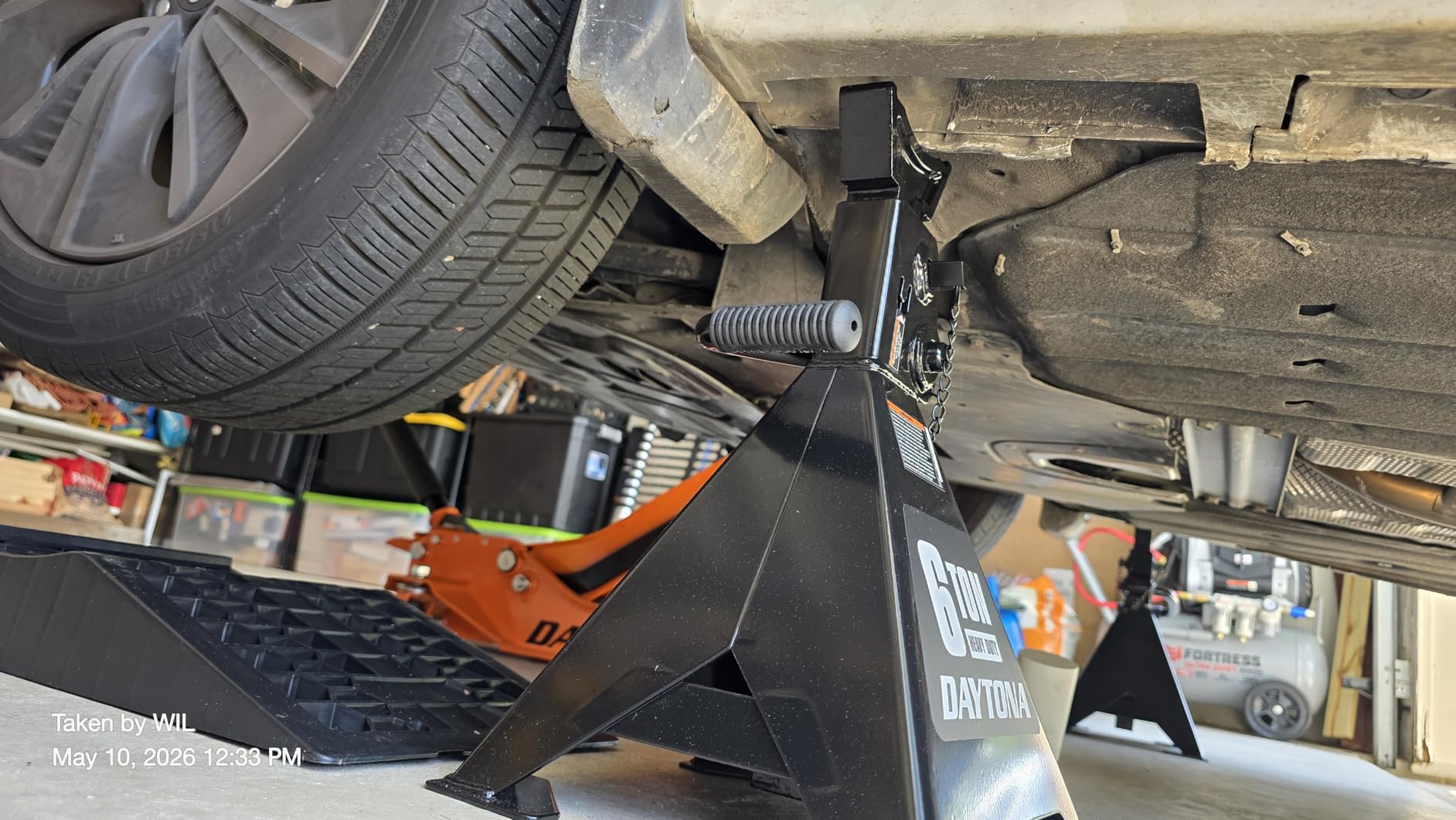
This is where the tiers stop being theoretical. A 6.25 inch lift is the difference between crouching beside the car and crouching under it, and the review summaries for this set are dominated by owners of lowered vehicles using it for oil changes, fluid drains and underbody inspection. Several describe draining fluids with a pan placed under the car rather than holding it at an angle.
The 35.5 inch length also gives a longer approach than most, which helps the low front ends. The trade is weight: 20.1 lb for the pair is real mass, and it is the reason people do not leave these out on the driveway. The ribs and grid surface feel rigid under vehicle weight, with no reported flex, and the wheel depression at the top gives clear feedback that the tire is fully seated.
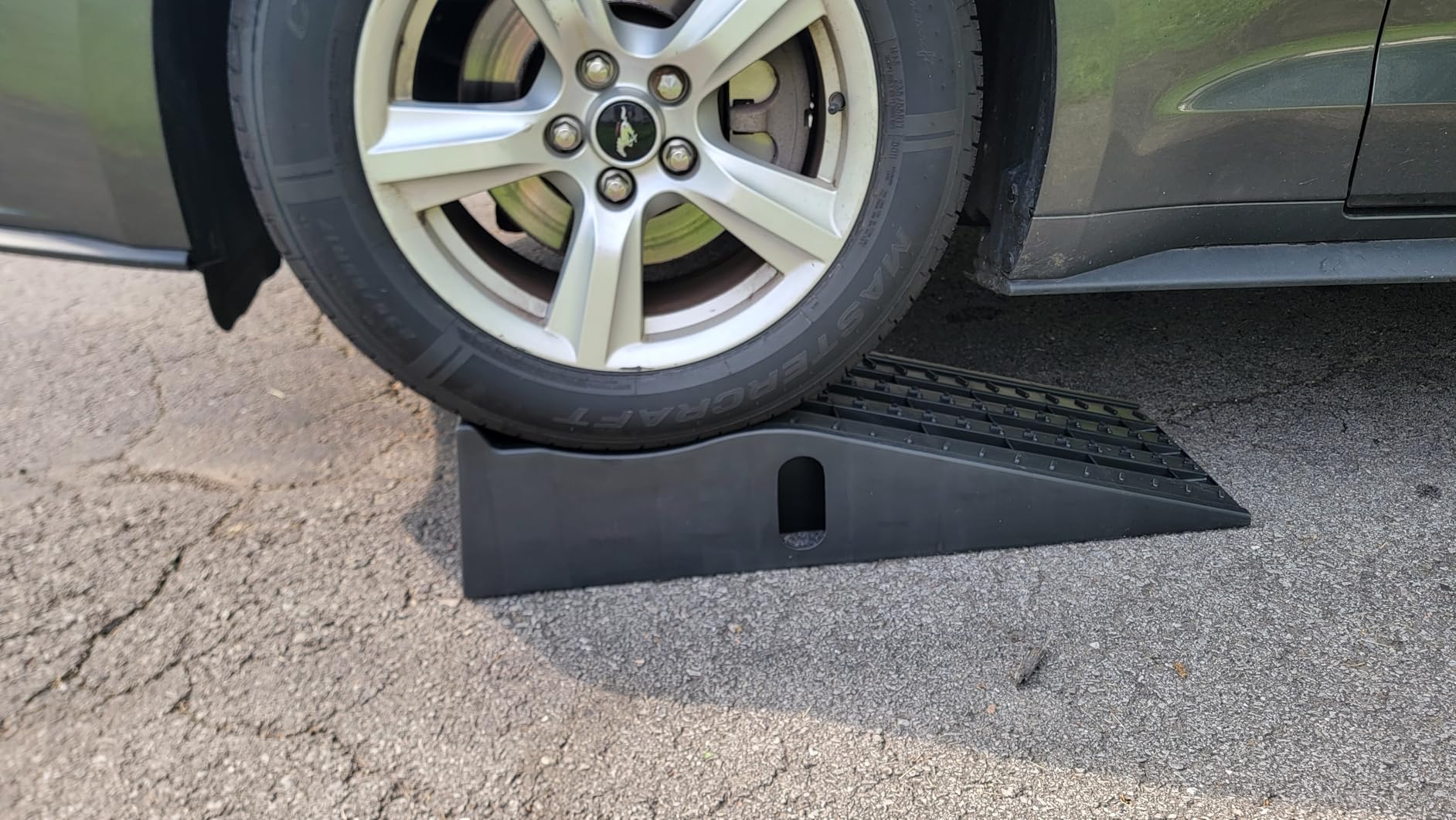
Rubber stops on the base are the standard anti-slip feature in this category and their effectiveness varies with the floor. The most common criticism in reviews is that the stops move slightly on smooth sealed concrete, which is the same complaint that shows up across foam and resin ramps. The fix is the same: put a mat under them.
Capacity is 3250 lb per ramp, which covers most cars including a loaded small SUV front axle. It is not the highest rating in this roundup, but the reviews do not show failures from capacity. They show complaints about weight and about the base creeping.
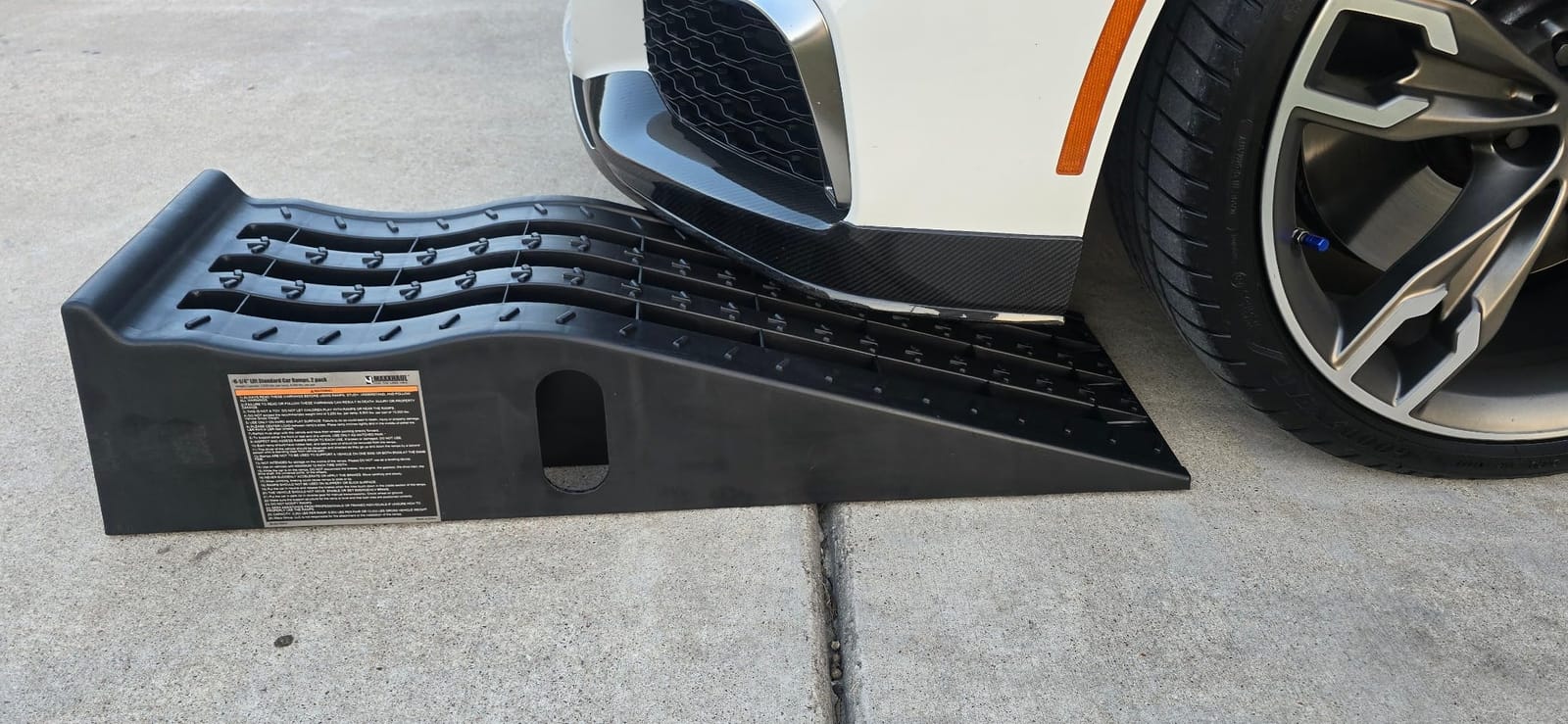
Is 6.25 inch enough clearance to change oil?
Yes, and it is the first lift tier in this roundup where you can genuinely get under the car rather than reach beside it. You still need to chock the rear wheels and engage the parking brake, because one axle is elevated and the car can roll. Owners in the review data describe it as enough for a drain plug and a filter change without lying on a creeper.
Can a 6 inch ramp bottom out on a lowered car?
Not from the approach, because the 35.5 inch length keeps the climb shallow. The risk is the opposite one: on a car with a very low front lip, the lip can contact the ramp face on the way up even though the ramp itself is long. Several owners with lowered cars mention bridging the face with a plank to stop the lip catching.
4. Ironton 12000 lb Poly Ramps: Best Heavy Duty Capacity That Will Not Rust
Ironton Poly Car Ramp Set, 2-Pc.
Lift: 8.5 inch tall
Pair GVW: 12000 lb
Size: 35.5 x 12 inch
Weight: 20.6 lb
Pros
- 12000 lb GVW covers pickups vans and SUVs
- poly construction will not corrode in salted climates
- 12 inch tread fits almost any tyre width
- rubber feet anchor the base
Cons
- 8.5 inch height is far too tall for ultra-low cars
- 20.6 lb per pair is heavy
- not a low-clearance choice despite the rating
We are including this set because it wins on something none of the others can offer, which is corrosion resistance. Steel ramps rust in salted climates and eventually the welds are the weak point. High-impact poly with a honeycomb internal structure does not, and owners in northern climates call that out specifically in the review summaries.
At 12000 lb across the pair, or 6000 lb per ramp, it also handles the heaviest front axle in this roundup. The non-skid tread pattern and rubber ground feet are what keep it planted while you load it, and reviews describe it holding up across cars, SUVs, trucks and vans without complaint about flex or cracking.
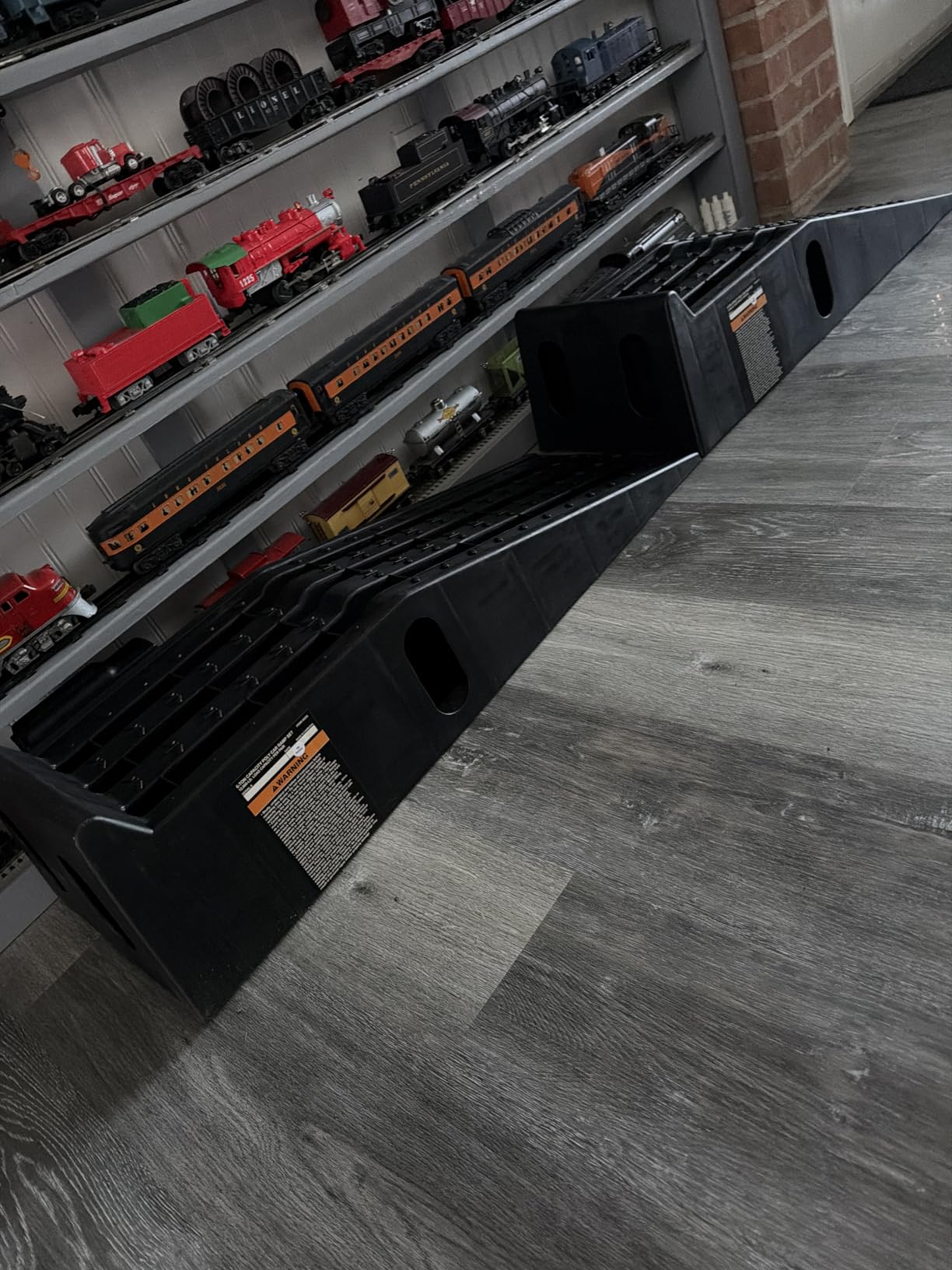
Being straight with you about where it belongs: at 8.5 inches tall and 35.5 inches long, this is not a low-clearance ramp. It is listed in this roundup as the pick for owners whose low clearance problem is a heavy vehicle rather than a slammed sports car, and reviewers are consistent that its taller profile suits raised vehicles more than extremely low ones. A car sitting on aggressive lowering will not drive onto it.
The 4.6 average with 80 percent five-star ratings and essentially no two-star reviews is worth noting. The complaints that exist are about weight and height, not about failure.
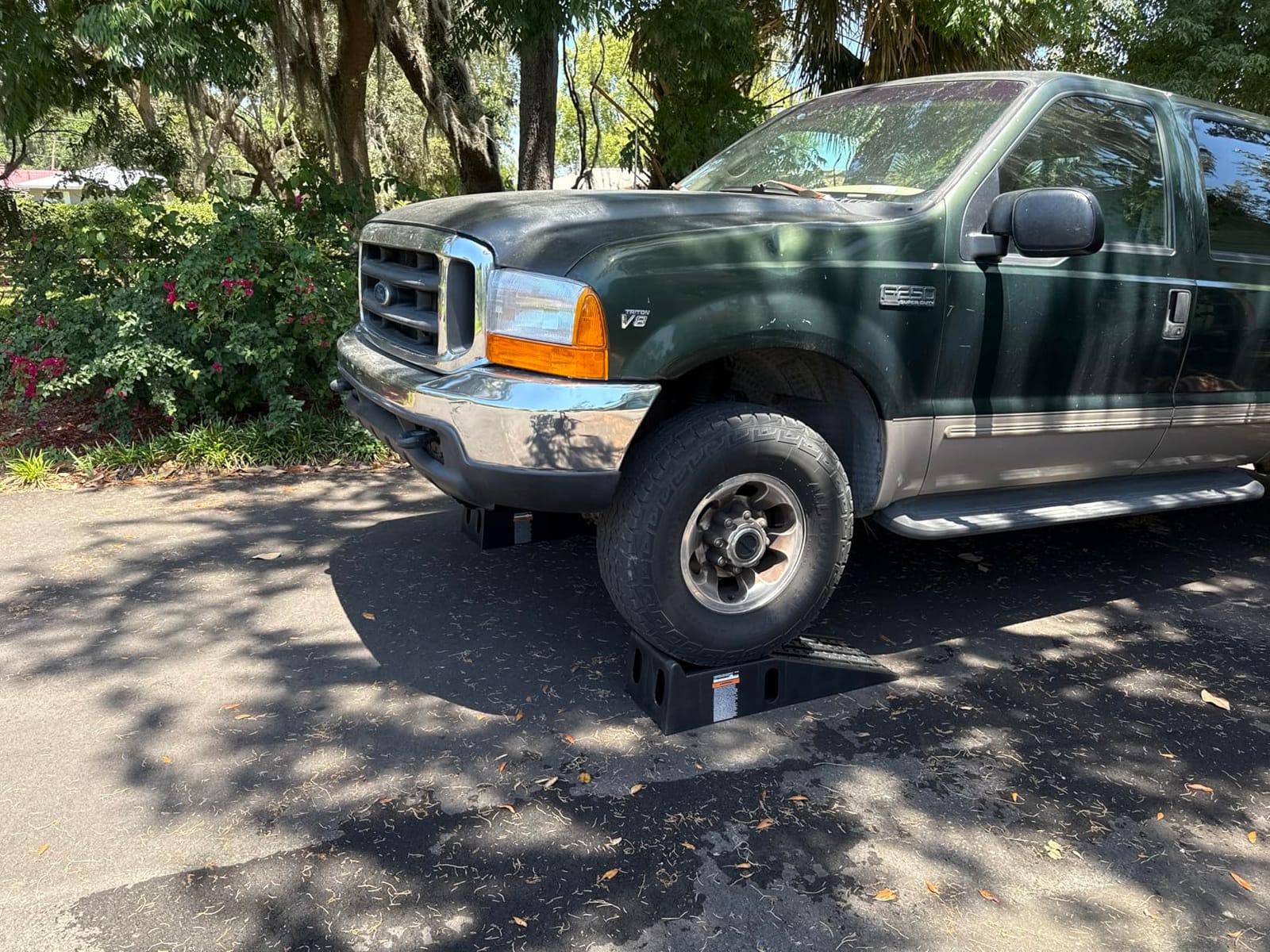
Do I need 12000 lb of capacity for a sports car?
No. A lowered Miata or BRZ will not come close to the limit. Capacity only becomes the deciding spec for pickups, vans and full-size SUVs, or for anyone planning to put a second vehicle on the same ramps. Judge these on height and width instead when your car weighs under 3500 lb.
Is poly the right material for a salted driveway?
Yes, and this is the main argument for it. Poly will not corrode, will not pit in road salt and will not develop the rust scale that turns steel ramp surfaces into abrasive. The compromise is that poly can crack if dropped on a hard edge or exposed to a sharp impact, and it fades and warps in prolonged sun.
5. MaxxHaul 50516: Budget Jack Clearance for the Tightest Budgets
MaxxHaul 50516 4,400 lb. Capacity Low Profile Car Ramps, 2-Count, Black (Pack of 1)
Lift: 2.5 inch
Angle: 9.05 deg
Pair capacity: 4400 lb
Size: 27 x 7.75 inch
Pros
- Same shallow 9.05 degree angle as our top pick
- very light and simple to store
- honeycomb channels drain moisture and wipe clean
- 27 inch length suits compact cars
Cons
- Lowest pair rating here at 4400 lb
- 7.75 inch tread leaves wide tyres partly unsupported
- 2.5 inch lift is jack placement only
The appeal here is straightforward. You get the same 9.05 degree loading angle as our overall winner, on a 27 inch ramp, for the least money of any set in this roundup that still clears a low front end. Owners treat it as an entry-level jack-clearance ramp and rate it accordingly, with 78 percent five-star ratings.
What you give up is capacity and tread. 4400 lb across the pair is the lowest rating here, which is fine for a compact car and marginal for anything heavier. The 7.75 inch tread is the same narrow channel as the Black Widow set, and reviewers with wider fitment report the outer edges of the tyre running past the support.
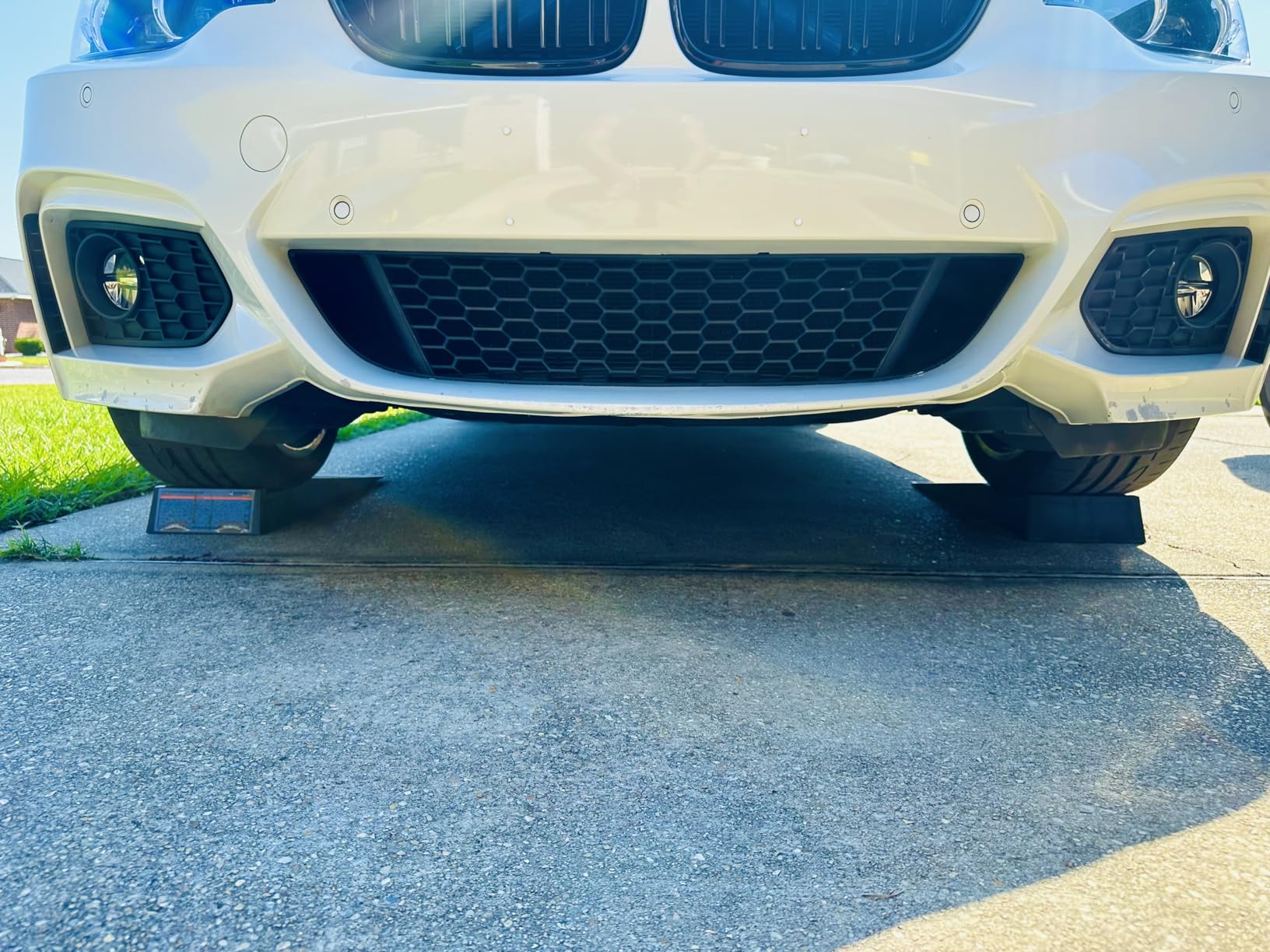
The honeycomb channels do two jobs: they keep moisture from building up under the ramp, and they make it easy to knock dirt out. That is a real advantage over solid mouldings in a garage where the ramp sits on concrete through the week. The material is heavy-duty plastic, and the listed weight is the lowest of any set here.
One product detail worth knowing: this model comes in extended and compact lengths, so check the dimensions against your floor space before you order. The 90 day manufacturer warranty is the shortest in this group.
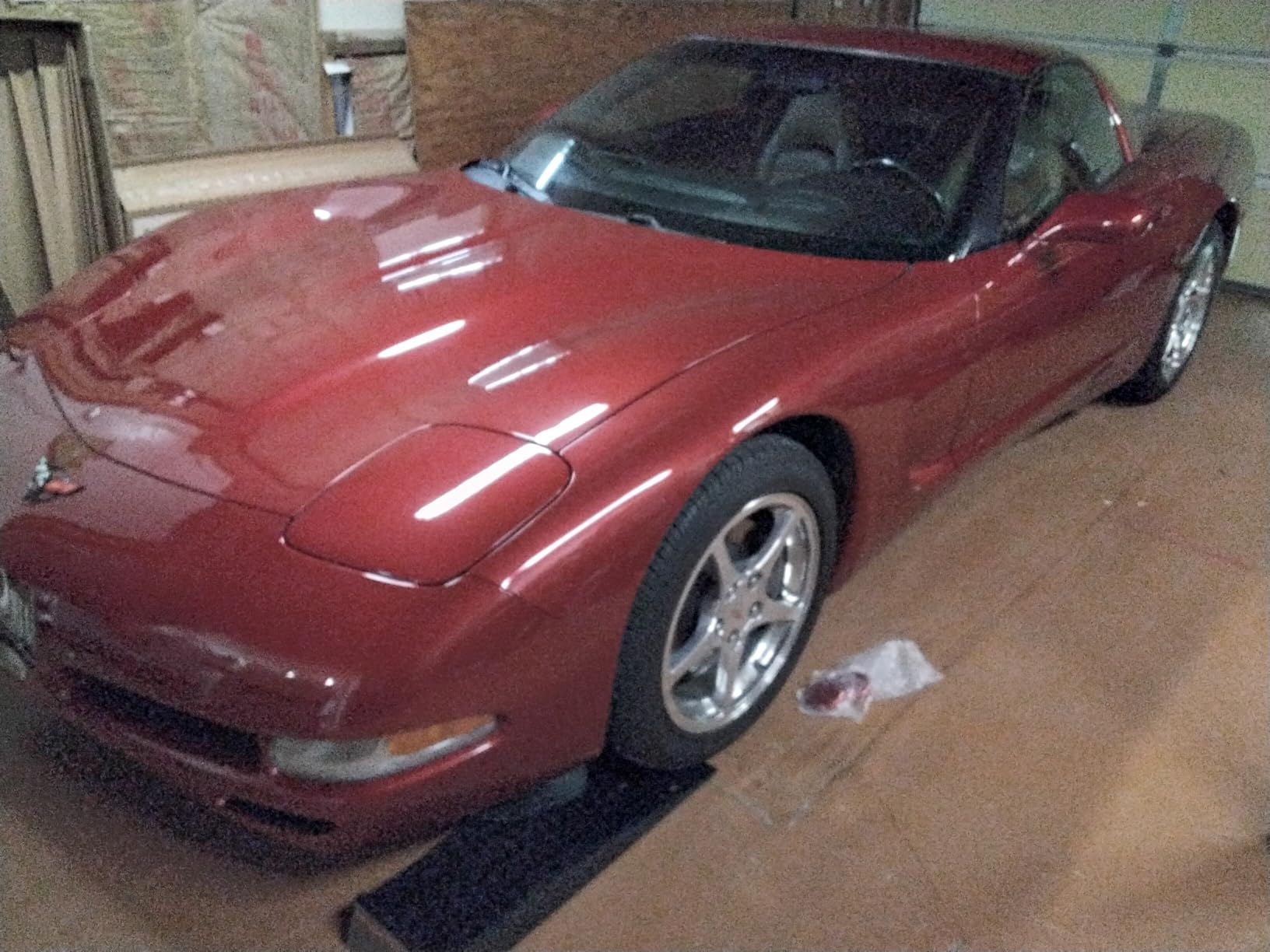
Is 4400 lb enough for my car?
For a small car, yes. Divide the number in two and you get 2200 lb per ramp, which is the load on each front tire as you climb. Most hatchbacks and compact sedans sit well under that. Full-size pickups, large SUVs and anything with a heavy front end should look at a higher-rated set.
How do these compare with the Black Widow pair?
Same angle, essentially the same length, same 2.5 inch lift and the same 7.75 inch tread. The differences are capacity, where the Black Widow pair rates 10000 lb GVW against 4400 lb here, and the honeycomb moulding detail. If your car is a normal-weight compact, either works and the cheaper one is the rational buy.
6. Donext Low Profile Ramps: Best for Track Day Cars and Spare Changing
Donext Ramps Low Profile Plastic Car Service Ramps 3 Ton Truck Vehicle – 2 Pack
Lift: 3 inch
Angle: 8.3 deg
Capacity: 6600 lb
Weight: under 5 lb for the set
Pros
- 8.3 degree angle is the second gentlest here
- under 5 lb for the pair so it fits in a boot or spare wheel well
- nested top catches the tyre
- 6600 lb capacity is solid
Cons
- 3 inch lift will not let you work underneath unaided
- can shoot out from under the wheel on slick floors
- plastic chips if dropped
Reviewers of this set are overwhelmingly drift and lowered-car owners, and the reason shows up in how they use it. At under 5 lb for the pair, this lives in the boot. It is the set owners report using to change a spare at a track or to reach a low-profile jack point in a paddock, not something they leave under a car for a weekend.
The 8.3 degree angle is notable because it is achieved on a 27.2 inch body without the mass of the taller ramps. That combination of angle and lightness is unusual. Most gentle ramps in this category are heavy, and the weight is what stops them sliding.
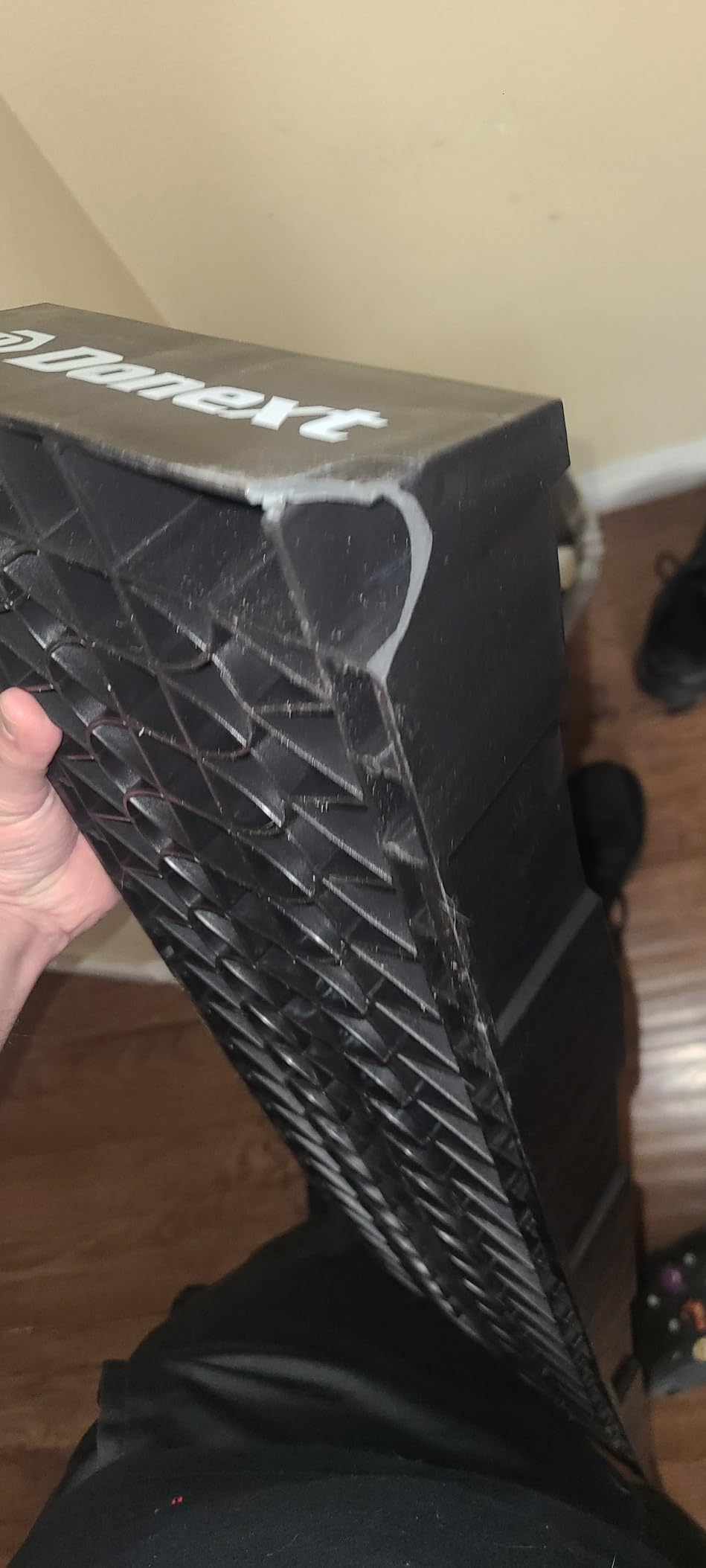
The honest warning in the review data is about movement. Owners explicitly caution that the ramps can shoot out from under the wheel on a slick floor without something underneath, and several add a silicone mat to solve it. That is a light ramp doing a light ramp job: the low mass that makes it portable is the same thing that lets it move.
Buyers also state plainly that the 3 inch lift positions the car for jacking and is not sufficient for working underneath. Treat that as the design intent rather than a defect. At 6600 lb the capacity is a genuine 3 ton rating, which is more than a light sports car needs.
Are lightweight ramps more likely to slide?
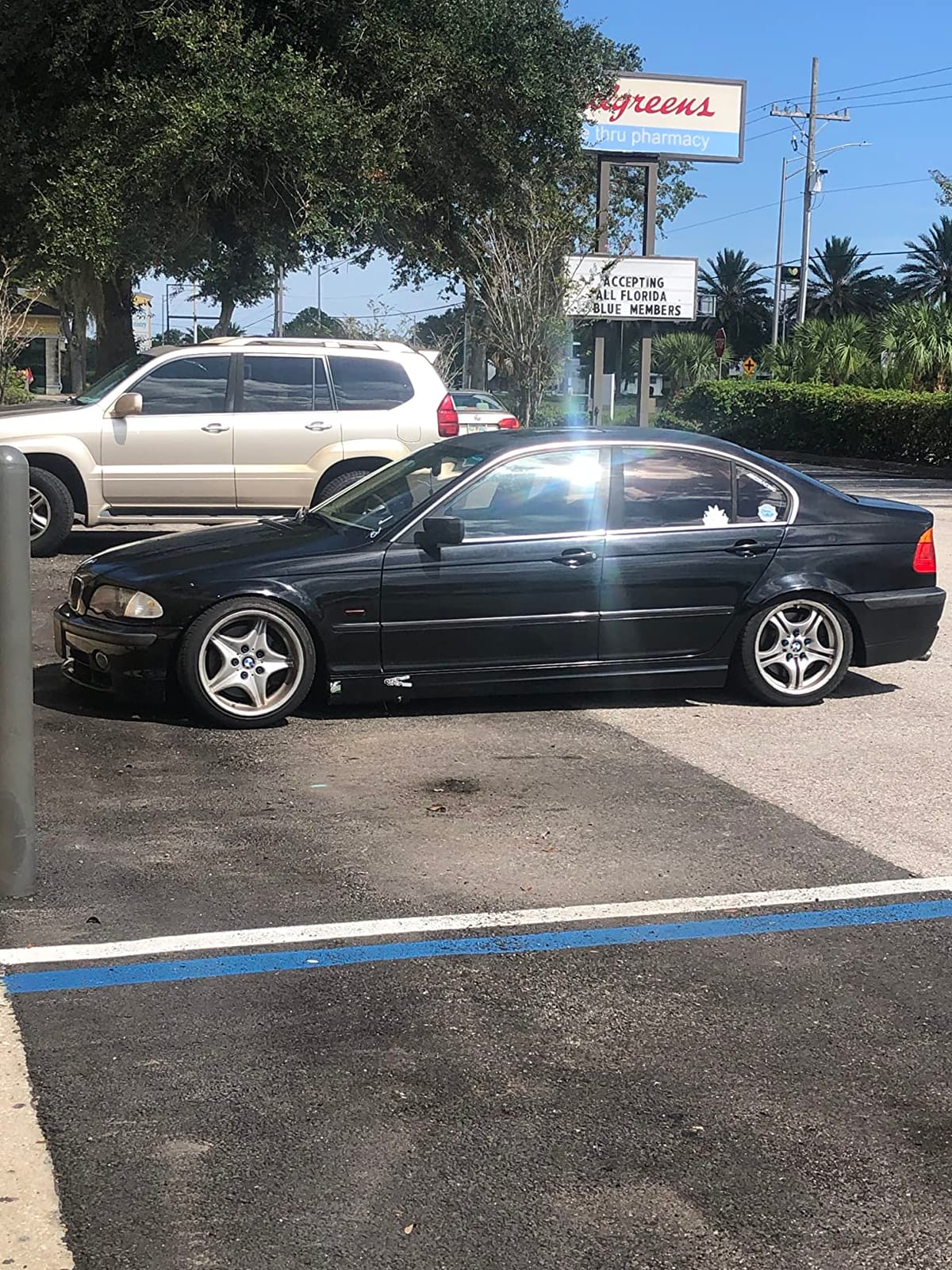
Significantly, yes, and the review data for this set confirms it directly. Friction between a moulded plastic base and sealed concrete is low, and a heavier ramp presses down harder. If you are pairing light ramps with an oil change on a slick floor, put a rubber mat under them from the start rather than waiting for the ramp to move once.
Why is 8.3 degrees better than 9 degrees?
Marginally, and the difference only matters on a very low front end. The more useful comparison is against the 17 degree designs: on the same 27 inch body, 8.3 degrees means the bumper travels forward at a much gentler rate, which is the difference between a clean load and a scuffed lip on a slammed car.
7. OULEME 2.44 Inch Ramps: Shortest Body for the Tightest Jack Access
OULEME 2.44″ Lift Low Profile Car Service Tire Ramps, 17″x9.5″x3.1″, 2PK
Lift: 2.44 inch
Angle: 17 deg
Pair capacity: 12300 lb
Size: 17 x 9.5 inch
Pros
- Short 17 inch body leaves the jack area completely open
- 9.5 inch tread is wide for the size
- curved top and bulged end stop the car sliding back
- 12300 lb pair rating
Cons
- Lowest lift height in this roundup at 2.44 inch
- 17 degree angle is the steeper face
- not suitable for raised trucks or SUVs
The design logic here is that length is a luxury when the only thing you need the ramp to do is hold a car still while a jack moves underneath it. At 17 inches long, this leaves the whole area beside and behind the tire free, which is the exact space a trolley jack needs to reach a side jacking point on a lowered car.
Owners reviewing lowered cars describe the shortened, widened design as keeping bumpers and splitters clear, and 77 percent of ratings are five stars. The 6 ton figure comes from new polypropylene that is light but high strength, and a small share of reviewers question long-term durability on larger vehicles.
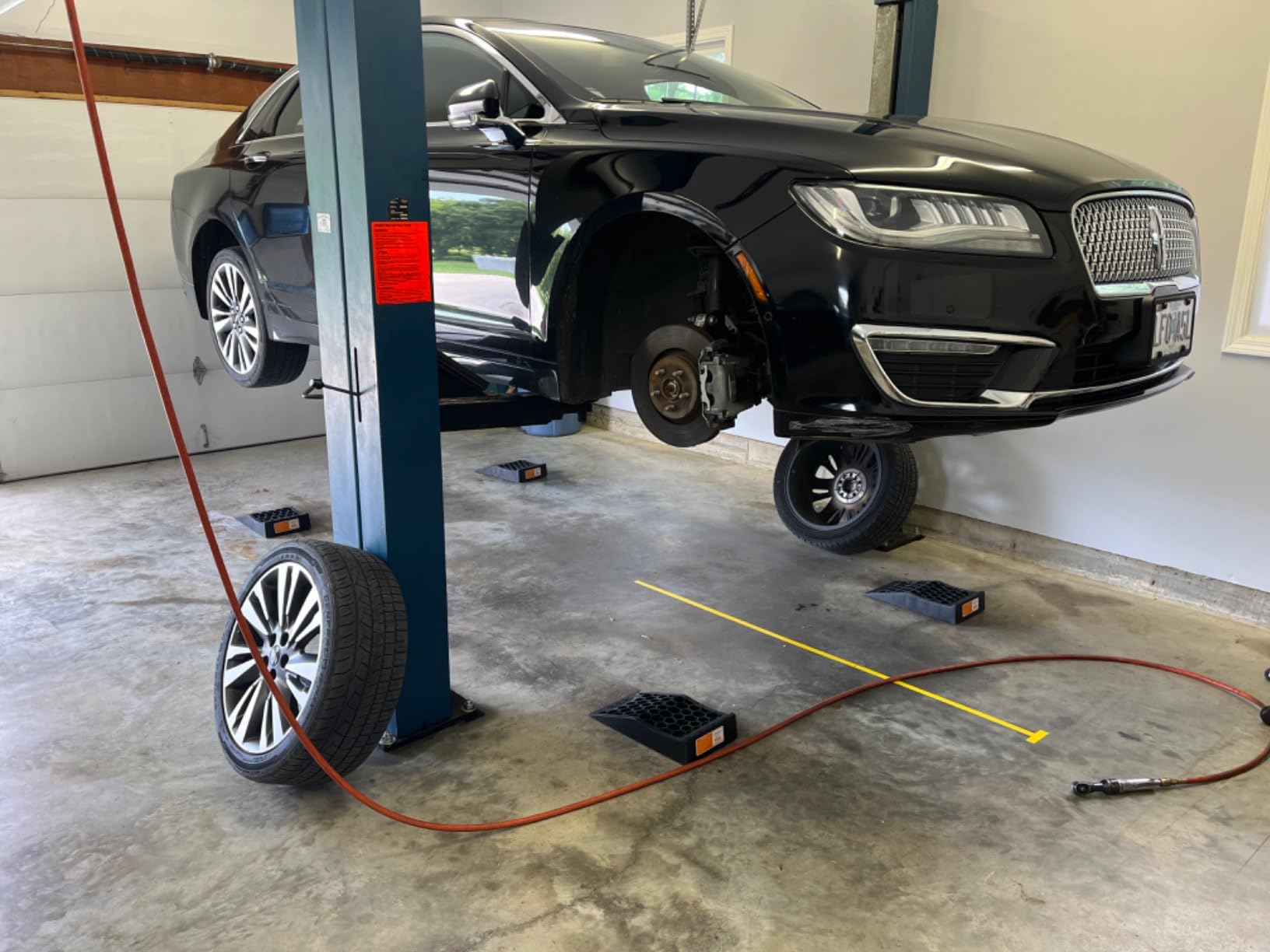
Two design details are worth paying attention to. The curved top guides the tyre onto the ramp rather than letting it catch a sharp edge, and the bulged end exists specifically to stop a driver driving across the end of the ramp in the wrong direction, which is a real hazard on a compact design sitting in a tight garage.
The 17 degree angle is the compromise for that short body, and 2.44 inch is the least lift in this roundup. Where the Black Widow pair reaches 2.5 inches on a 27.5 inch length, this reaches slightly less on 17 inches. If your car is slammed to the floor, the difference between those two numbers is the difference between getting the jack in and not.
Is a 17 inch ramp too short to load safely?
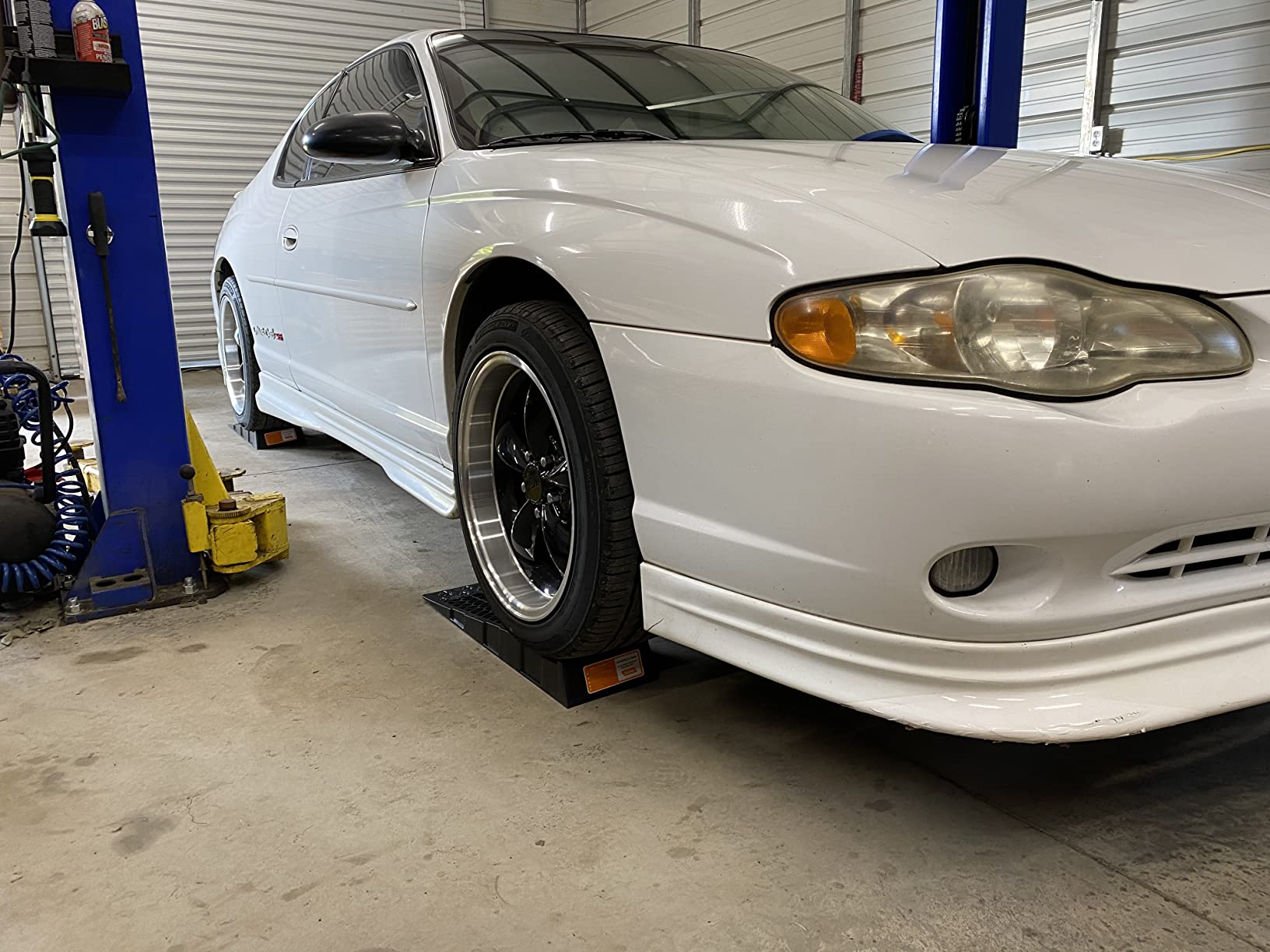
It is short, and the 17 degree face is steeper because of it. On a stock-height or mildly lowered car the load is uneventful. On a car sitting very low with an aftermarket front lip, owners in the same category report that approach length matters more than the printed angle, which is the argument for a 27 inch design at 8 to 9 degrees instead.
When does the shortest body win?
When floor space is the constraint. In a small single-car garage where a 35 inch ramp will not fit with the door open, the 17 inch body means the jack can be positioned anywhere along the sill. That freedom of jack placement is worth more than lift height for people who only change oil.
8. HOXWELL Low Profile Ramps: Best Wide Tread at a Light 5.3 Pounds
HOXWELL Car Ramps for Jack Support and Lift Vehicle Maintenance, Lightweight Low Profile Car Ramps for Garage, Heavy Duty Tire Ramps for Low Chassis Cars, 17.5”x10”x3.14” (2PCS)
Lift: 2.6 inch
Slope: 17 deg
Stated GVW: 20000 lb
Size: 17.5 x 10 inch
Pros
- Works from the front or rear of the tyre when a splitter blocks entry
- 10 inch stated tread avoids overhang
- 5.3 lb per pair
- curved top grips the tyre
Cons
- Listed 10 inch width measures nearer 9.5 inch
- 2.6 inch lift is barely enough for some users
- not shop grade for larger vehicles
The distinguishing feature in the review data is entry side. Owners of lowered Miatas and Mustang GTs describe using these from the rear of the tyre when a front splitter or long front overhang makes approaching from the front awkward. That flexibility is the reason this set appears in a low-clearance roundup at all.
It shares its core dimensions with the ROBLOCK design, and shares the 17 degree slope and 2.6 inch lift. Where it differs in practice is the width question. The listing states 10 inches, and a recurring note across reviews is that the measured width comes out closer to 9.5 inches, which is a rounding issue rather than a defect but matters if you are counting on tyre support.
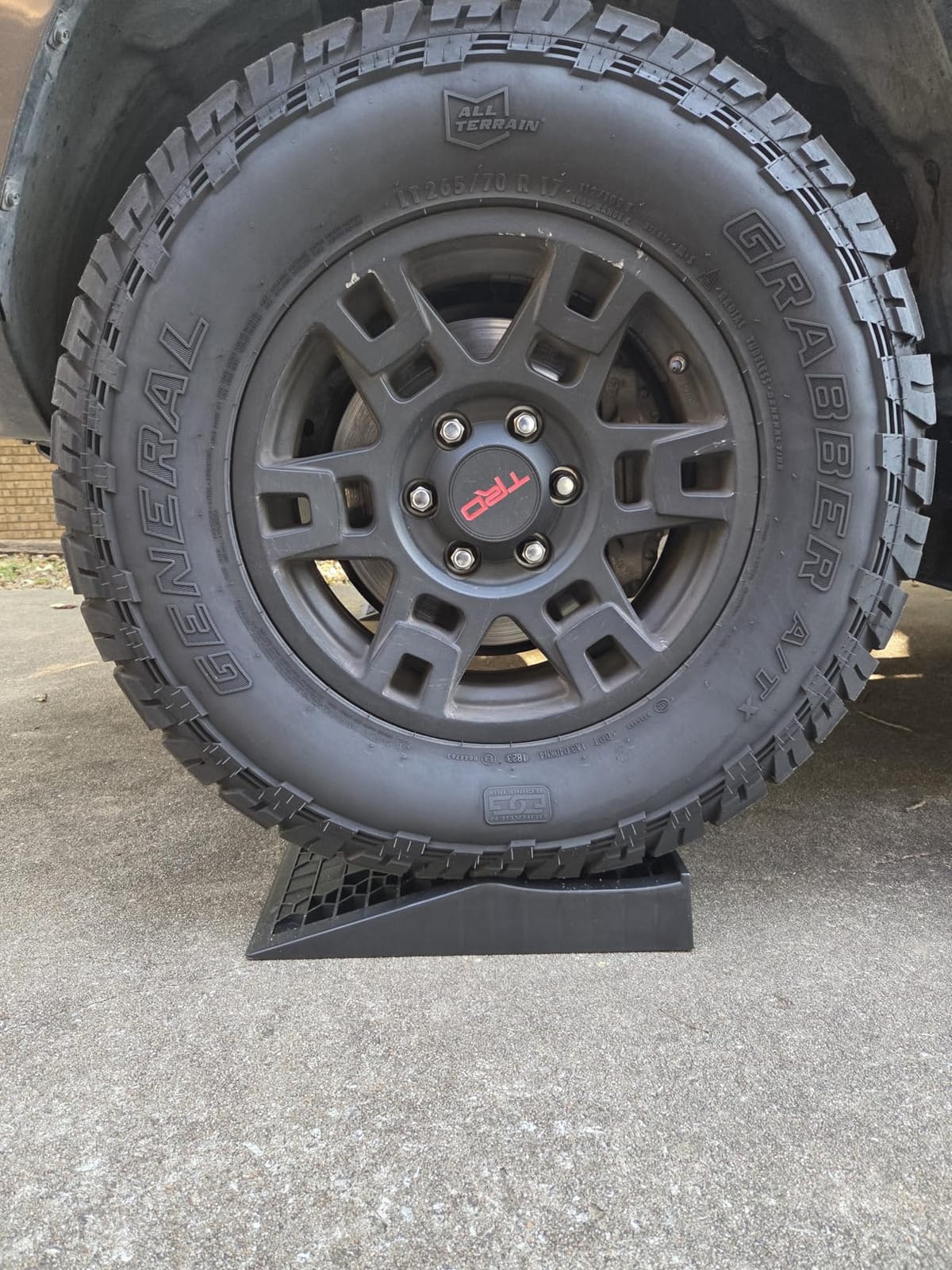
The 20000 lb GVW figure appears here as well, and it should be read the same way as on the ROBLOCK set. It describes vehicle capacity, not working height. The practical result is that a 2.6 inch lift, 5.3 lb pair is a tool for reaching a jack point, and the 72 percent five-star rating reflects buyers who understood that from the start.
Disappointment is the recurring emotional note in the reviews. Buyers who expected working clearance find 2.6 inches is barely enough, and the design is not intended for long support periods under a heavy vehicle. For a lightweight sports car needing a jack underneath, it does the job at a fraction of the weight of the taller sets.
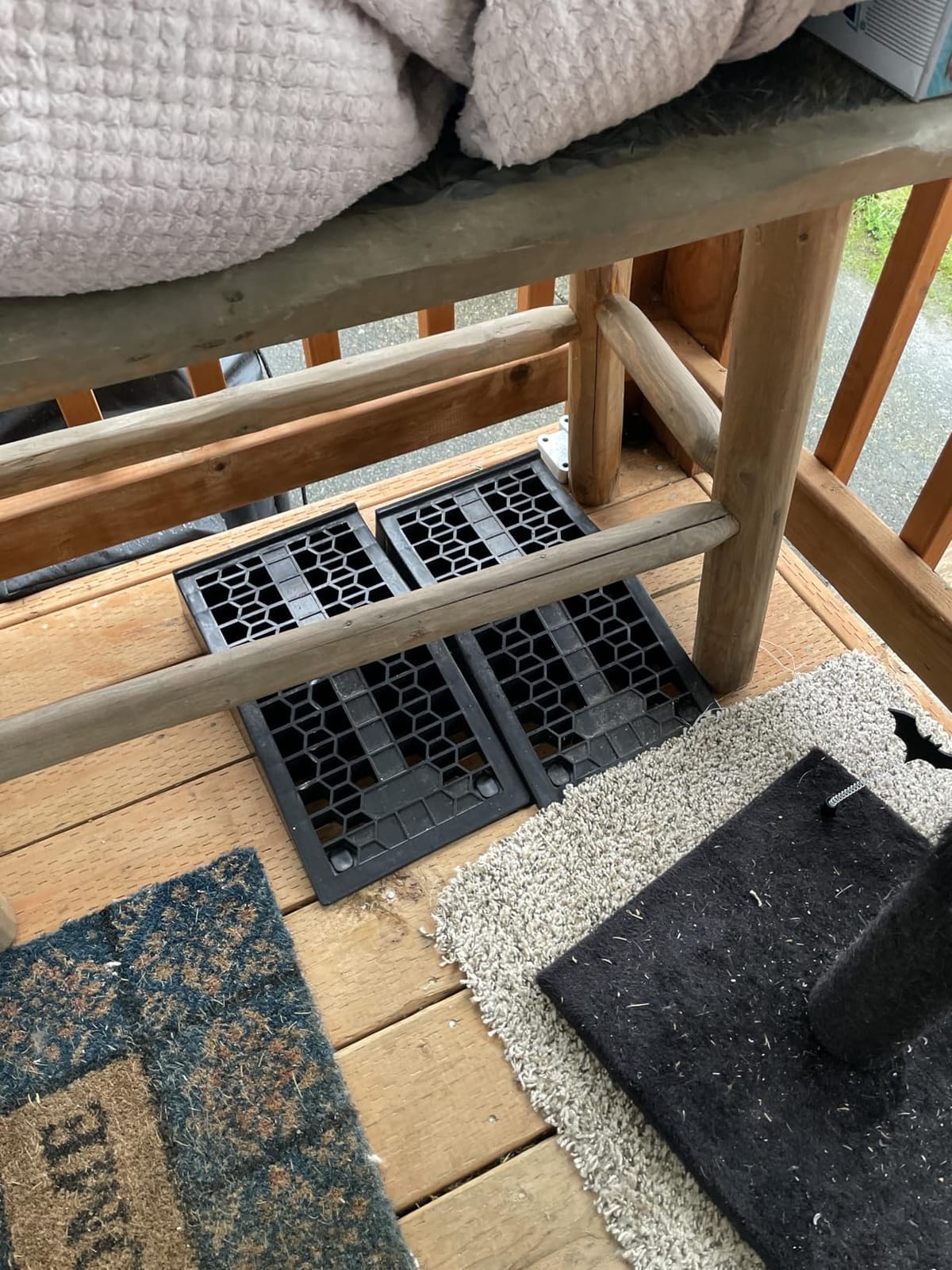
Does approach angle matter more than width on a very low car?
On the very lowest cars, yes. Width decides whether the car feels stable once it is on the ramp, and that is a comfort and safety issue. Angle decides whether the front end survives the drive up, and that is a damage issue. Buy for the angle first, then use the widest ramp your space allows.
Is the stated width accurate?
Close enough for most purposes, but not exact. Reviewers measuring the ramp report nearer 9.5 inches against a listed 10 inches. If your tyre is close to 10 inches wide, check whether the channel supports it or plan to run the front tyre nearer the centre channel of the ramp.
9. Magisale 4-Pack Ramps: Best Set for Front and Rear Oil Changes at Once
Magisale Low Profile Plastic Car Service Ramps 6 Ton Heavy Duty Truck Vehicle Ramps for Oil Changes& Maintenance- 4 Pack
Lift: 2.6 inch
Inclination: 8.3 deg
Capacity: 13200 lb
Set: 4 pieces at 16 lb
Pros
- Four ramps let you work front and rear simultaneously
- 8.3 degree inclination is gentle on low bumpers
- 13200 lb capacity covers trucks and vans
- honeycomb channels keep it clean
Cons
- 2.6 inch lift suits jack placement rather than working underneath
- 16 lb for four ramps is bulky
- longer 27.2 inch body takes more floor space
Four ramps solve a problem two ramps create. With a pair, you lift one axle, chock, work, then reposition. With four, the car sits level front to rear, which matters for an oil change because the drain angle and the filter position both behave differently on a car that is level rather than nose-up.
That is the main draw in the reviews, and it is a real one. Owners describe using two at the front and two at the rear so the vehicle sits level for the drain, and it also lets you service two cars with one set. At 8.3 degrees inclination on a 27.2 inch body, the approach is gentle enough for low clearance bumpers.
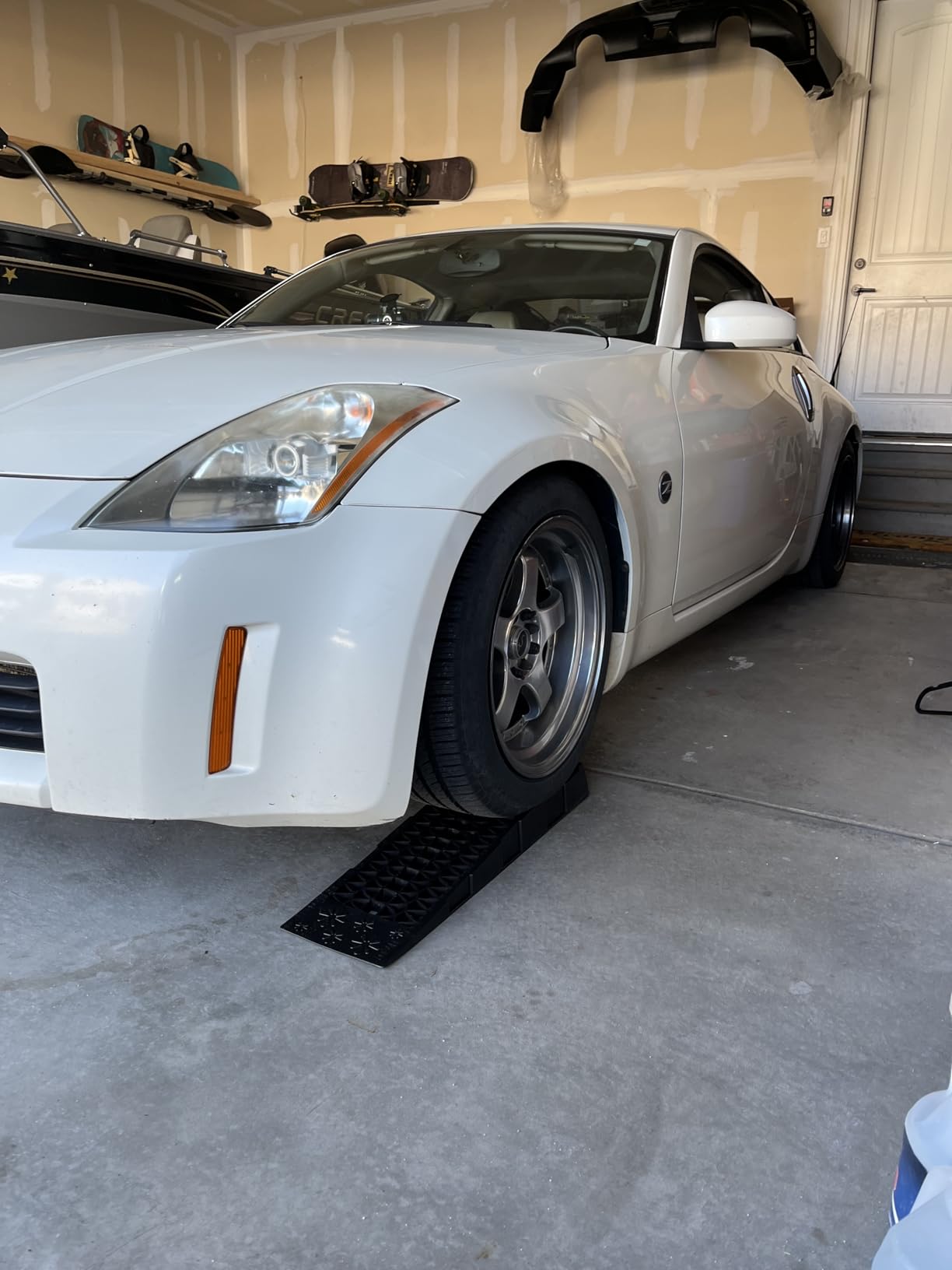
Capacity is 13200 lb for the set, which covers cars, trucks and vans with margin. The honeycomb channels do the same moisture and dirt work as the smaller sets, and the curved top with a bulged end prevents a car from sliding back down or driving across the ramp end.
Two cautions from the review data. The 2.6 inch lift is jack-placement height, so a level car on these ramps is still a car that needs a jack to work on, and the 16 lb total weight for four ramps is the heaviest handling load in this roundup relative to what it does.
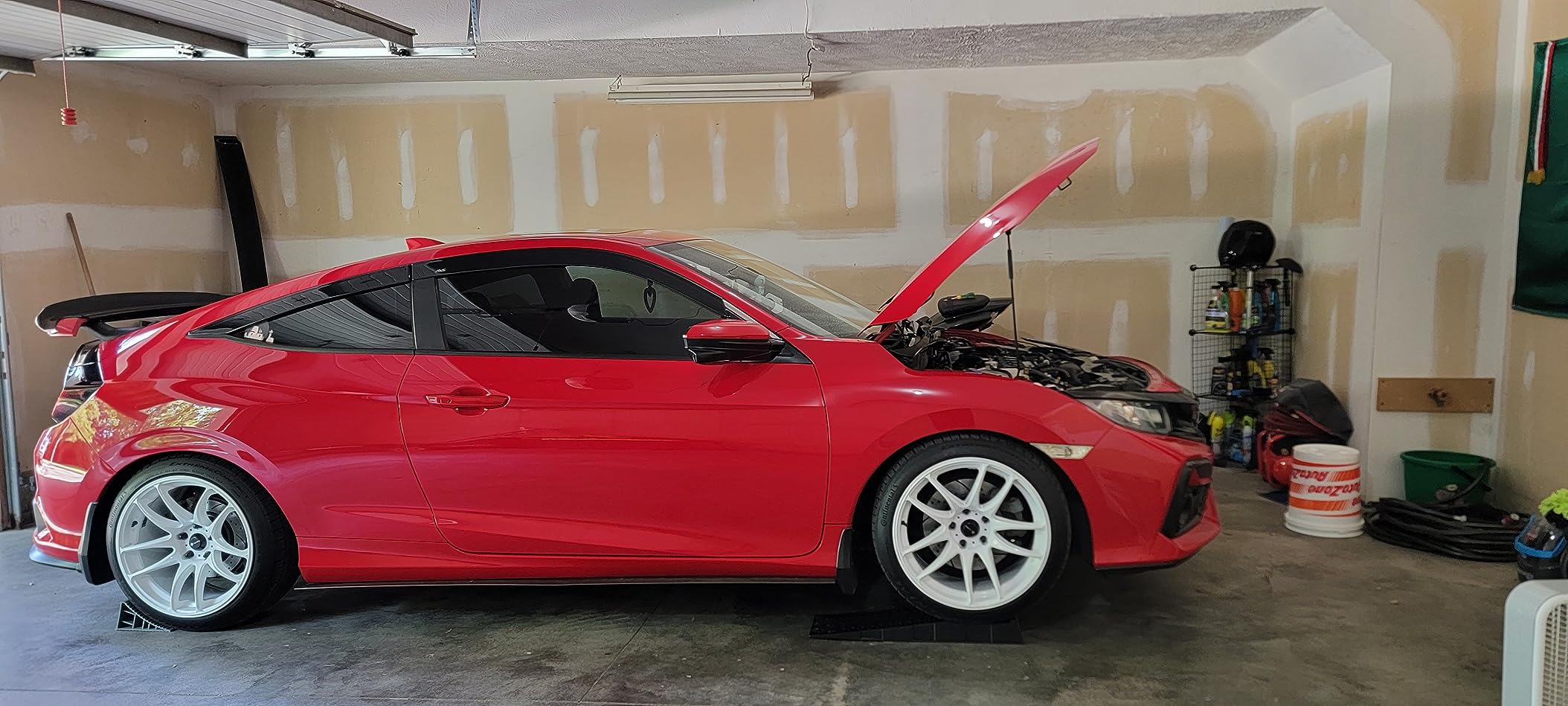
Does the car need to be level for an oil change?
It helps. A car sitting nose-up on a pair of front ramps sends fluid toward the rear, which makes draining from a front drain plug slow and can leave volume in the oil pan. Running four ramps keeps the car level, so the drain empties faster and the filter seats the way the manufacturer intended.
Is 2.6 inches of lift enough if the car is level?
It gives you a uniform 2.6 inches everywhere rather than one raised axle, which is a more comfortable working height than the geometry suggests. It is still not enough to lie under the car. The four-ramp format solves the level-versus-nose-up problem, not the clearance problem.
10. Amazon Basics Low Profile Ramps: Best Working Height for Underbody Access
Amazon Basics Low Profile Car Ramps for Oil Changes & Home Garage Lifts, 3,250 Lbs Capacity Per Ramp, Textured Traction Surface, Black, 2-Pack
Lift: 8.07 inch
Per ramp: 3250 lb
Size: 35.51 x 11.97 inch
Weight: 9.24 lb each
Pros
- 8.07 inch height gives genuine underbody access
- 11.97 inch tread stops wide tyres overhanging
- rubber feet hold position under load
- 9.24 lb each is light for the height
Cons
- Large footprint needs dedicated storage
- very low front bumpers can catch the incline
- can mark concrete or asphalt
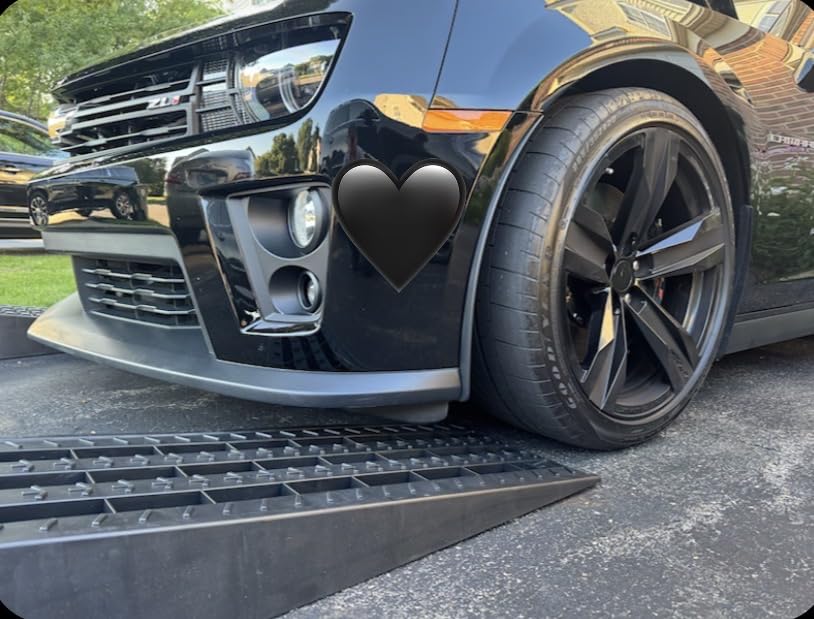
This set answers the question a lot of low profile listings avoid. Eight inches of lift is a working height, not a jack height, and the review summaries for these ramps describe exactly that: oil changes, rust treatment and underbody access on lowered cars, SUVs and trucks with room to actually roll underneath.
What is unusual for that height is the weight. At 9.24 lb per ramp, these are lighter than most 6 to 8 inch sets in this roundup, which makes them far easier to move into position than the 20 lb pairs. The width is the other differentiator, since 11.97 inches keeps the tyre fully supported on cars that reviewers name specifically, including lowered BMWs and Porsche 911s.
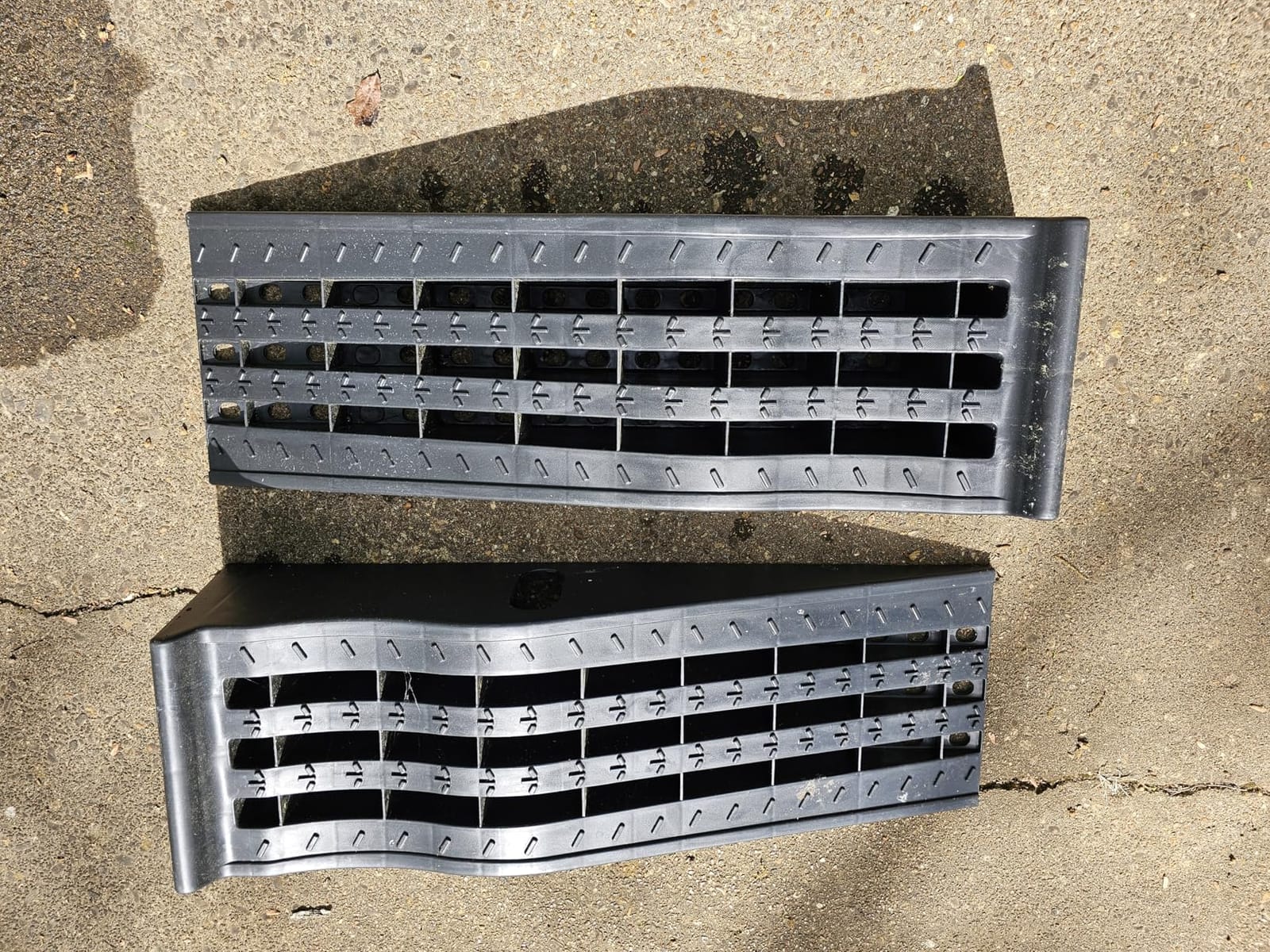
The rubber base stops and textured surface are the two features owners praise most, and the wheel depression at the top is what stops a car rolling back down. The rating pattern sits at 76 percent five-star, and the value-for-height argument comes up repeatedly.
The two honest caveats are footprint and surface. At 35.51 inches long, this is a big object to keep in a garage, and reviewers report that the ramps can mark concrete or an asphalt driveway. Owners with very low front bumpers also mention needing a plank or a length of timber across the ramp face so the lip does not catch the transition.
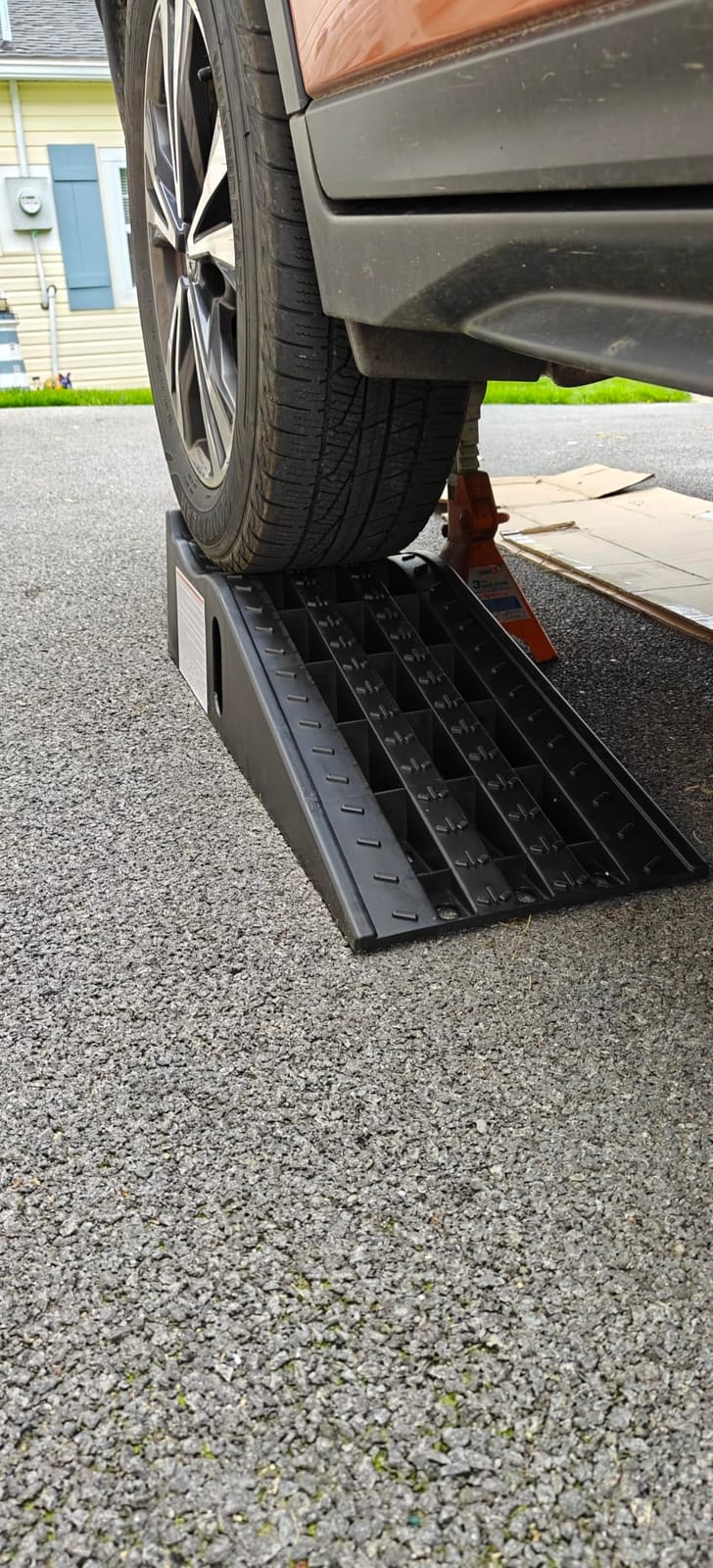
Is 8 inches of lift genuinely usable for underbody work?
It is the difference between sliding a creeper under and reaching over the sill. At this height you can get a creeper under the car, place a drain pan and read underneath without lying on a hard floor. You still cannot remove a wheel, which needs a jack at a rated support point.
Will very low front bumpers catch this ramp?
Some will, and reviewers are upfront about the workaround. Bridging the ramp face with a plank or a length of timber gives the bumper a flat path to travel instead of the moulded transition. It is a two-minute fix and it is the standard advice in the low-clearance ramp community for any ramp over 8 inches tall.
11. MaxxHaul 50709 Detachable Ramps: Best Split Design for Jack Access
MaxxHaul 50709 Detachable Extendable Car Ramp Set, Portable Car Ramps With 3,250 lbs Maximum Weight Capacity Per Ramp 6,500 lbs Per Pair
Lift: 6.5 inch
Incline: 9.5 deg
Pair capacity: 6500 lb
Size: 52.5 x 15 inch
Pros
- Detachable section lifts off to free the space under the car
- can be extended with add-on sections
- 9.5 degree incline with a 6.5 inch lift
- built-in side handle
Cons
- 52.5 inch length is bulky to store and long to position
- extension sections are separate purchases
- must sit on hard smooth level surfaces
This is the design that answers the split-style question directly. The rear section lifts away, so once the car is on the ramp you have a clear run to your side jacking point without crawling under anything. It is the closest thing in this roundup to the split ramps that track and drift owners discuss on forum, and it is the only one here that also accepts extension sections.
Getting 6.5 inches of lift on a 9.5 degree incline is the number that separates it from the 2.6 inch sets. That combination means the ramp is long enough to stay gentle and tall enough to give working clearance, which is why owners pair it with a low profile trolley jack rather than relying on the ramp alone.
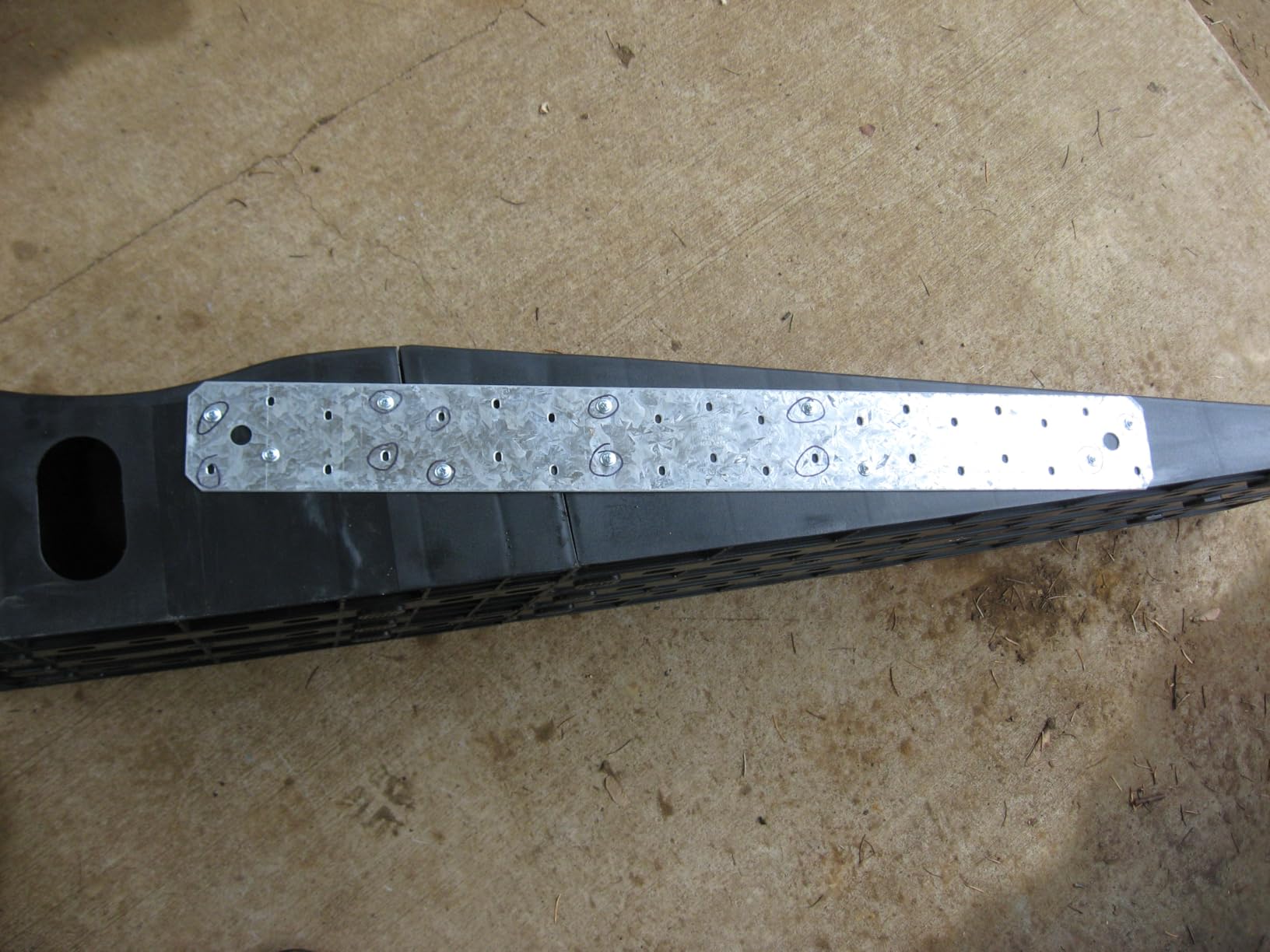
The runner section has a protruding tab that seats into notches in the front section, so the joint stays connected when the car is loaded. Buyers single out the built-in side handle as a real improvement, because a 33 lb ramp without one is a genuinely awkward object to lift, and industrial grade polypropylene is what keeps the weight manageable at that length.
The 4.6 rating across 299 reviews is the highest average in this roundup. The complaints are practical rather than structural: the set is bulky, extensions cost extra, and the manufacturer specifies a hard, smooth, level surface only. It is a shop or dedicated garage ramp rather than something for a driveway.
Is a detachable ramp safer than a solid one?
It is more useful rather than safer. Removing the section removes material between you and the car, which means a jack can reach a jacking point directly and you are not working around a fixed plateau. The safety gain comes from jack placement being possible, and from you not needing to lift one end of a 6.5 inch ramp to get it out of the way.
What do the extension sections actually do?
They add length to the run-up, which lowers the effective approach angle further and is the fix for cars with an extremely low nose. They are sold separately, so budget for them at the time of purchase if your front overhang is the problem. They are not a height extension, and they do not add lift.
12. TOWKING 2.6 Inch Jack Support Ramps: Best Lightweight Pair for Small Garages
TOWKING 2.6″ Lift Low Profile Car Ramps for Maintenance, Jack Support Only
Lift: 2.6 inch
Slope: 17 deg
Width: 9.3 inch
Rated: 13000 lb at 5.9 lb
Pros
- 5.9 lb for the pair stores on its side or hangs easily
- 9.3 inch platform suits wider sport tyres
- six rubber anti-slip pads at the base
- hollow mesh core is easy to grip
Cons
- Sold as jack support only
- not a platform to work under
- 17 inch length is short so the run-up is quick
- not extendable or detachable
The product name says it plainly: jack support only. That honesty is the reason it is worth including. At 2.6 inches with a 17 degree slope on a 17.2 inch body, there is no scenario in which you work under this car, and anyone who buys it expecting a working platform will be disappointed within a day.
Used correctly, it is very good at its actual job. Six heavy-duty rubber pads at the base resist sliding on a garage floor, the 9.3 inch width is generous for a compact design, and the 13000 lb rating gives plenty of headroom for a car of any realistic weight.
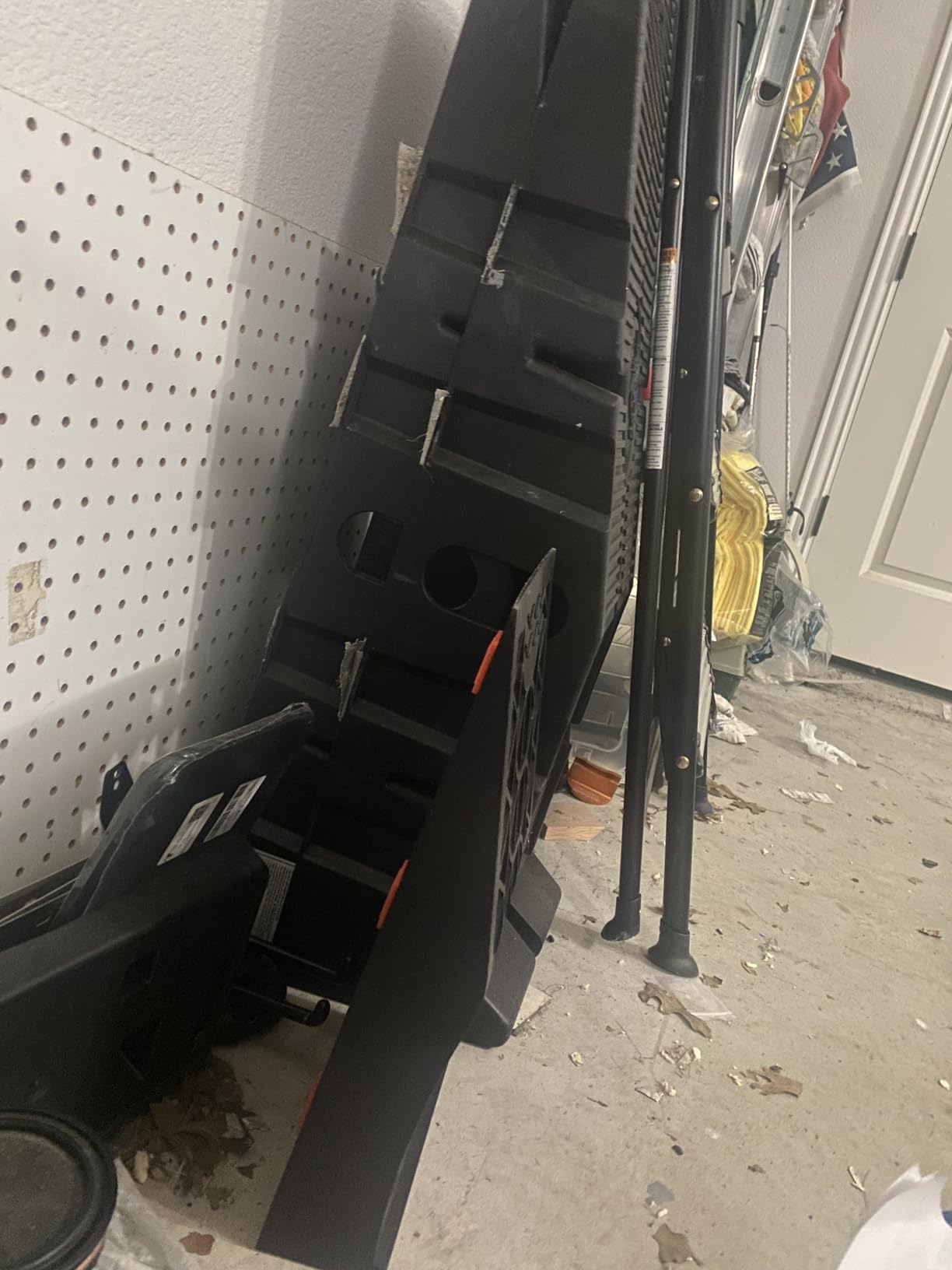
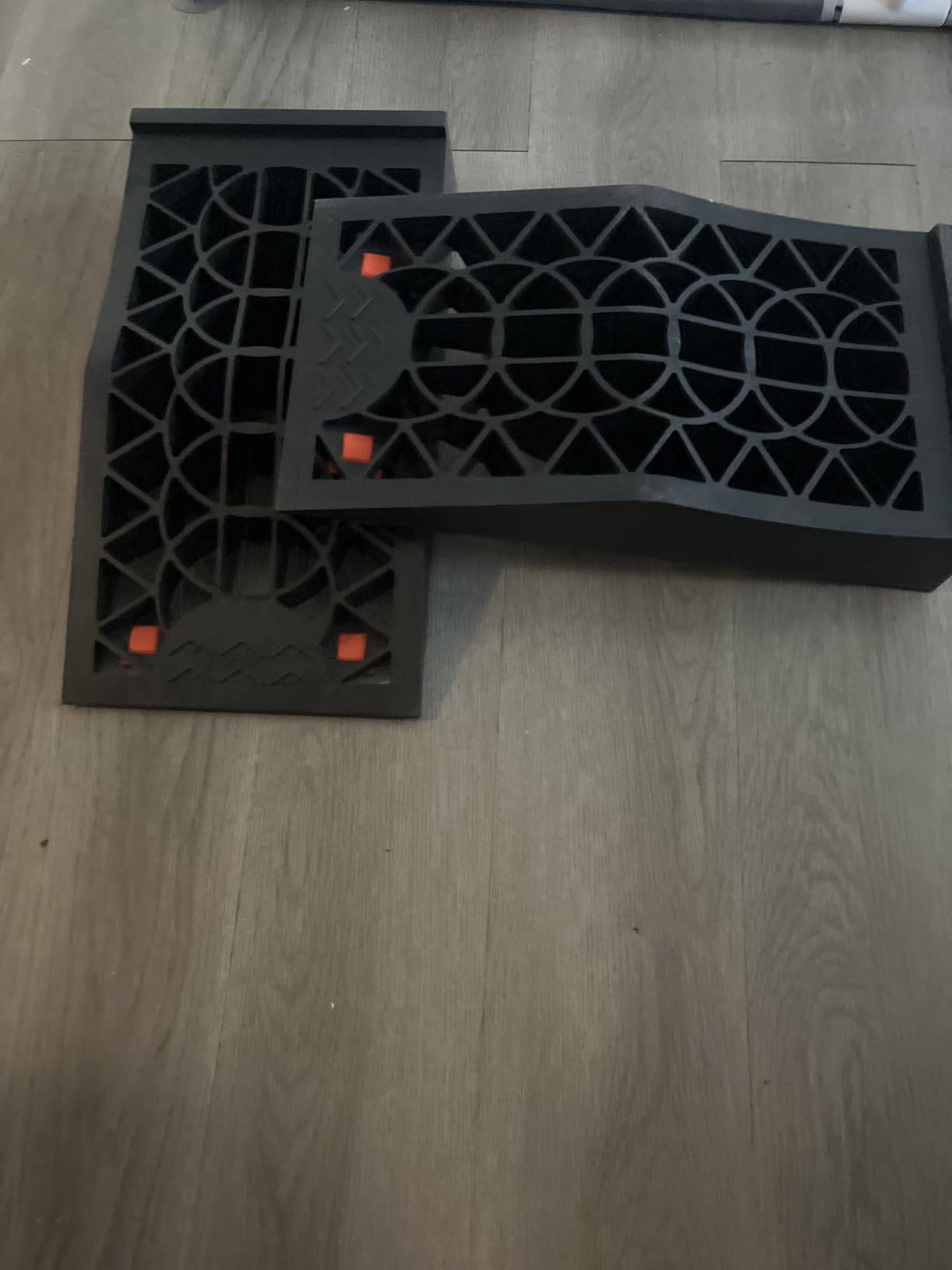
The hollow mesh grid core is a thoughtful moulding choice. It cuts weight, gives you somewhere to grab the ramp with one hand, and lets the pair stand on edge against a wall when not in use. At 5.9 lb the pair is one of the easiest in this roundup to move, which matters in a garage where the ramp lives in a corner between jobs.
The 4.5 rating across 213 reviews is solid, and the single caveat the reviews raise is the one the listing already states. It is a jack-support aid rather than a stand-alone work platform, and the 17 inch length means less run-up than the 27 inch designs if your nose is very low.
How short is too short for a very low car?
Roughly 17 inches, because the shorter the body the steeper the practical climb even at the same printed angle. If your car has a factory lip and normal ride height, a 17 inch ramp loads fine. If it sits on coilovers with an aftermarket front lip, buy the 27 inch design at 8 to 9 degrees instead and accept the extra weight.
Why do ramp pairs come in such different weights?
Because the moulding thickness and the length of the body drive it. A 17 inch compact ramp can be hollow and light; a 52 inch detachable ramp has to be solid enough to carry the same load over a much longer lever. Weight in this category is a function of size and duty, not quality.
How Much Lift Height Do You Actually Need?
Match the lift height to the job, because the three tiers in this category are not interchangeable. Under 3 inches is a jack-support height. Between 6 and 6.5 inches is an oil-change height that lets you get under the car. Above 8 inches is a working height for underbody inspection, exhaust work and treating rust. Buying a jack-support ramp and expecting a working platform is the single most common complaint we found in the review data, and it is a purchase error rather than a product failure.
Approach angle is the second decisive spec. Under 10 degrees is the safe zone for low front ends, and the reason is geometric rather than marketing. A ramp face at 9 degrees over 27 inches gives the bumper a long, shallow path forward, so the lowest point of the car moves up slowly and the lip never has to travel down into the incline. The 17 degree designs here achieve their short length by climbing quickly, which is fine on a stock-height car and risky on a slammed one.
Weight capacity needs a different kind of reading. Divide the pair rating by two to get the load per ramp, then compare that against roughly half your vehicle weight. A 10000 lb pair rating sounds generous until you realise it works out to 5000 lb per ramp, which a small car never approaches. Conversely, a 4400 lb pair rating is comfortable for a hatchback and marginal for a full-size SUV, and no car in this roundup will actually break any of these ramps at the axle load involved.
Material decides grip, weight and what ages them. Polypropylene and poly are light, will not corrode and shed water through honeycomb channels, but they can crack from a sharp impact. Steel is heavy and stays planted on a floor, and it corrodes in salted climates. Rubber is the grippiest and heaviest. Foam is the lightest and slides most. The full car ramp comparison covers the other material categories in more depth, including the longer loading formats used for mobility scooter ramps for vans where lift height and deck length are chosen differently.
Ramp width follows the tyre, not the car. Measure your widest tyre and pick a tread that is at least that wide, because a tyre overhanging a ramp channel loses support and feels vague to drive. If you run 275 section rubber, the 10 inch and 12 inch treads in this roundup are the right side of that line and the 7.75 inch channels are not.
Which Ramps Fit Which Low Clearance Car?
Match the car to the angle, not the other way round. A stock or mildly lowered Mustang with a factory splitter and a long front overhang wants the gentlest angle available and the longest run-up, which puts the 27 inch designs at 8.3 and 9.05 degrees in front of the 17 degree compact ramps. A WRX or STI with a front lip sits close behind, and owners on r/WRX report the 9 degree designs clearing a factory lip while an extended aftermarket front lip needs the longest option available.
A C8 Corvette has the lowest nose in this group and the longest front overhang, which makes it the hardest car here to load. Owners on CorvetteForum consistently reach for the longest ramps they can find, and rear-heavy mid-engined cars carry a second risk: high lift on one axle can let the car tip, which is why they run them at the front for short jobs and use a jack once loaded. A Miata ND, a BRZ or a GR86 is far easier, and the compact 17 inch designs load onto all three without drama.
BMW M cars and a Porsche 911 present the width problem rather than the angle problem. The 12 inch Ironton and the 11.97 inch Amazon Basics tread keep wide rubber fully supported, and owners in the review data name lowered BMWs and 911s specifically as cases where a narrow channel felt vague. A Civic Type R and a Tesla Model 3 both load onto almost anything in this roundup, since neither has the approach geometry that makes this category difficult.
An older low classic such as an S2000 is a special case. It has very low clearance and narrow tyres, so the angle and lift height matter a great deal while width does not, which points to the long gentle designs even though the tyre would sit easily on anything. Measure before you commit, because the published approach angle of a car is the number to match, and the ramp angle in degrees should be at or below it.
Why Ramps Slide on a Garage Floor and How to Stop It
The reason is material physics rather than a defect in any one product. Moulded plastic, resin and foam on sealed concrete or an epoxy floor have very little friction, and the load from a car pressing down is the only thing holding the ramp in place. A light ramp with a light car is the worst case, and that is exactly the combination owners complain about. Reviews across this roundup repeatedly describe ramps creeping or shifting on smooth surfaces, and lightweight designs report it most often.
The fix owners use is a rubber mat under the ramp. A CorvetteForum owner running 72 inch ramps on a garage floor reports they slid until he laid RV rubber shelf liner underneath, after which they stayed put. Others in the same category use a silicone mat with the same result. Cut a piece slightly larger than the ramp footprint so the mat, not the ramp, is what meets the floor.
Two other habits help. Load the ramps on a level surface and never on a driveway crown, because a slope turns a creeping ramp into a departing one. And put the wheel chocks on the rear wheels before the parking brake, in that order, so the car cannot roll back down while you are under it.
Ramps, Jack Stands or a QuickJack?
Ramps are safer than jack stands for the jobs they are designed for, and less safe for the jobs they are not. A ramp set on a hard, level surface with the parking brake on and chocks behind the rear wheels cannot fail in the way a badly rated stand can, because the tyre is physically supported over its full width. A jack stand has no such redundancy, and stands are unforgiving of a bad surface.
Ramps are not sufficient for anything involving a wheel. Removing a wheel needs the car supported at a rated jacking point with a rated jack, and the honest limit of every ramp in this roundup is that it lifts one axle. Owners on r/GR86 raise the same point when they ask whether ramps are worth it at all versus lifting a single side, and the answer is yes for fluids and inspection, no for anything involving suspension geometry.
A QuickJack sits at the other end of the range. Owners in the community report lifting a car roughly 20 inches, which is far more usable than any ramp, at a price several times higher and with its own user-error drop stories in the forums. If you want to do brake work at home regularly, that is the tool that removes the limitation rather than a better ramp.
Whatever you use, follow the same order every time. Park on a hard level surface, set the ramps square and centred on the tyre path, crawl up with the wheels straight and the throttle barely open, engage the parking brake, chock the rear wheels, and only then get underneath. Never stack ramp extensions or cribbing blocks to gain extra height, because the failure is progressive rather than sudden, and a block that shifts does so under load.
Frequently Asked Questions
What are the best ramps for low-profile cars?
The best ramps for a low-profile car combine an approach angle under about 10 degrees with a lift height matched to the job. For jack access and oil changes on a lowered car, the Black Widow pair at 9.05 degrees and 2.5 inches of lift is the strongest all-round choice. For working under the car, the MaxxHaul 50515 at 6.25 inches of lift gives real clearance. For the very lowest noses, the 8.3 degree Donext set gives the gentlest long approach in a lightweight body.
How much height do you need for a car ramp?
It depends entirely on the job. Under 3 inches of lift is jack-support height: it just raises the car enough to slide a trolley jack underneath. Between 6 and 6.5 inches lets you get a creeper under the car for an oil change or underbody inspection. Above 8 inches is a working height for exhaust work, rust treatment and inspection, but it is also the height at which very low front bumpers start to catch the ramp face on the way up.
Are car ramps safer than jack stands?
For the jobs ramps are designed for, yes. A ramp supports the tyre across its full width on a hard level surface, with the parking brake engaged and chocks behind the rear wheels, and has no load rating to get wrong. Jack stands have no such redundancy and depend entirely on correct placement and surface. Ramps are not a substitute for a rated jack and support points when a wheel has to come off, because a ramp only ever lifts one axle.
Can I change oil on car ramps?
Yes, provided you have 6 inches of lift or more and the car sits level. Running a four-ramp set front and rear keeps the vehicle level so the oil drains fully and the filter seats correctly, while a front pair leaves the car nose-up and slows the drain. At 2.5 or 2.6 inches of lift you cannot work underneath, so those ramps only position the car for a jack. Always chock the rear wheels and engage the parking brake first.
Why do my car ramps slide on my garage floor?
Because moulded plastic, resin and foam have very little friction on sealed concrete or epoxy, and the car’s weight is the only thing holding them down. Light ramps carrying a light car are the worst case, and reviews across this roundup describe creeping on smooth floors most often with the lightest sets. Laying a rubber mat or a sheet of RV shelf liner underneath stops it, as owners on CorvetteForum report. Always load ramps on a level surface, never on a driveway crown.
What approach angle do I need for a lowered car?
Under 10 degrees, and the longer the ramp body the better. A 9 degree face spread over 27 inches lifts the lowest point of the bumper very slowly, so a lip or splitter never has to travel down into the incline. The compact 17 degree ramps in this category achieve their short length by climbing quickly, which is acceptable on a stock-height car but risky on one sitting on coilovers. Match the ramp angle against your car’s published approach angle, and the ramp should be at or below it.
Final Verdict: The Best Car Ramps for Low Clearance Cars in 2026
The best car ramps for low clearance cars in 2026 come down to two numbers: keep the approach angle under 10 degrees and buy the lift height you need for the job, not the job you wish you had. The Black Widow pair at 9.05 degrees and 2.5 inches of lift is the one we would put in a garage first, because the long gentle body clears lips and stock splitters and it carries the largest review base in this group.
Take the MaxxHaul 50515 if you want to get underneath the car, the ROBLOCK or TOWKING sets if a jack is all you need and floor space is tight, the Magisale four-pack if you want the car level for an oil change, and the Amazon Basics or MaxxHaul 50709 if you work under cars regularly. Check your tyre width before you order, put a rubber mat under whatever you buy, and never stack extensions to gain height.